From Bun to Bow: 34 Dance Recital Hairstyles That Stay Put From Warm-Up to Final Bow
A dance recital is the one night when your hair has a job to do. It has to survive the warm-up, the nerves, the sweat under hot stage lights, a pirouette that spins your whole body around, and maybe a costume change in under three minutes — and still look clean and finished when you take your final bow. Nobody in the audience should be thinking about your hair at all, which is exactly why it matters so much: the best recital hairstyles are the ones that disappear into the performance and let the dancing speak. A bun that wobbles, a ponytail that swings into your face mid-turn, or a braid that unravels halfway through the number will pull the audience’s eye away from everything you worked so hard to perfect.
This guide gathers 34 dance recital hairstyles for women, chosen for the stage rather than the street: styles that hold through turns and jumps, that sit neatly under a hairpiece or a bow, that photograph cleanly from the back rows, and that can be built at home the night before or in the dressing room with a handful of pins. Eight guides first walk you through what actually matters on recital day: a bun that survives pirouettes, the foundation every secure style is built on, quick changes between numbers, sweat-proofing under hot lights, how stage lighting changes the way hair reads, the right style for every age group, what judges and audiences actually notice, and the small kit that saves the day when something slips. Whether you are dancing ballet, jazz, tap, lyrical, or hip hop, there is a style here that will stay put from warm-up to final bow.
Building a Bun That Survives Pirouettes
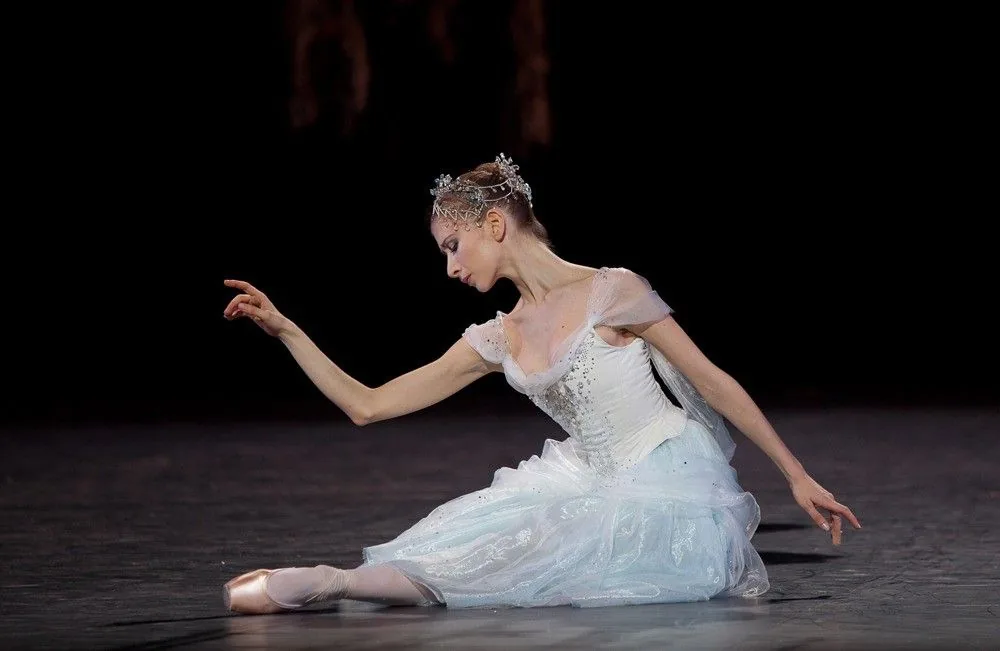
A pirouette is the hardest test any hairstyle will ever face: the head whips around, the body spins, and every loose end is pulled outward by the turn. A bun that survives it is built in layers, not held together by hope. Start with a tight ponytail at the crown, wrap the hair around a bun form or your own twist, and pin it in a triangle — one pin at the top, one at each side — so the weight is shared instead of hanging from a single point. Finish with a hairnet that matches your hair colour, because a net does the quiet work of holding flyaways that pins cannot reach.
The most common mistake is building the bun too high and too loose, so it sits like a hat instead of a part of the head. A recital bun should feel snug, almost too tight, when you first put it in; it relaxes a little as you warm up, and that is exactly the slack you want to build in. Test it before the day: do ten turns in your kitchen, then look in the mirror. If nothing has moved, the bun is ready for the stage. If it has, add two more pins and a second net, and test it again.
The Bun Foundation Every Secure Style Starts With
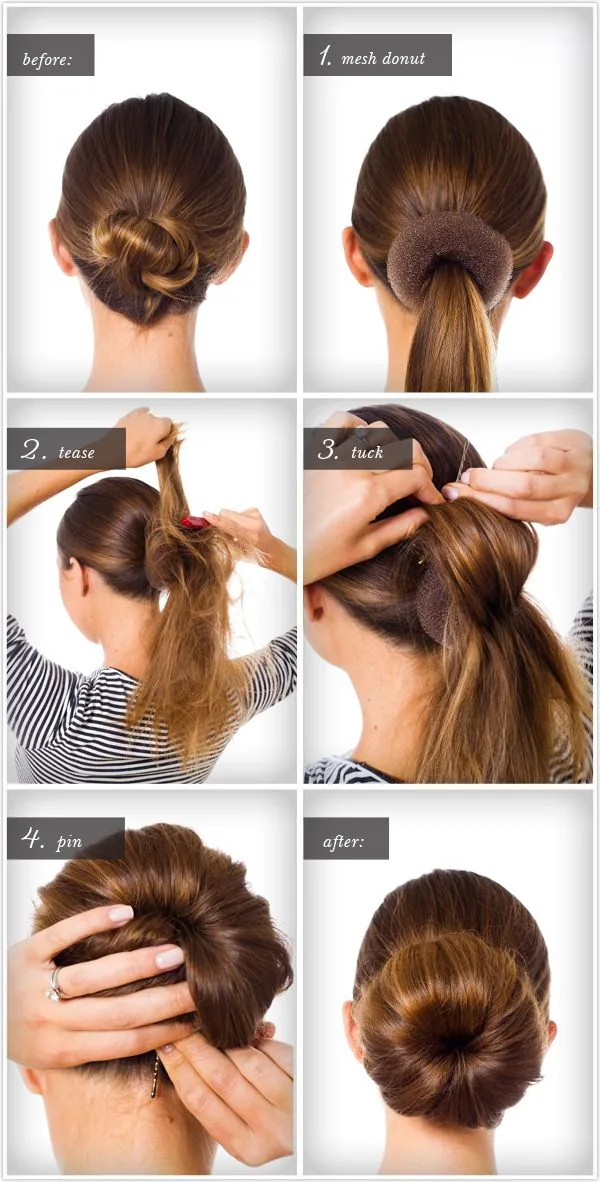
Every secure recital style, from a braided crown to a stage ponytail, starts the same way: clean, slightly damp hair pulled back without a single bump, and a base that will not move. Wash the hair the night before, not the morning of, because freshly washed hair is too slippery to pin; day-old hair grips pins and braids far better. Brush it back with a boar-bristle brush, smooth the sides with a little gel on your fingertips, and secure the ponytail with a thick elastic wrapped three times — never two, never four.
Pros: a solid foundation means every style you build on top of it lasts longer and needs fewer pins. Cons: it takes ten extra minutes, and on recital morning ten minutes feels like an hour. What to ask your stylist, if you use one: ask them to build the base with pins that match your hair colour and to show you where the anchor pins sit, so you can push one back in yourself between numbers. A good foundation is invisible, and that is the whole point — the audience sees a clean line, not the work underneath it.
Quick Changes Between Numbers
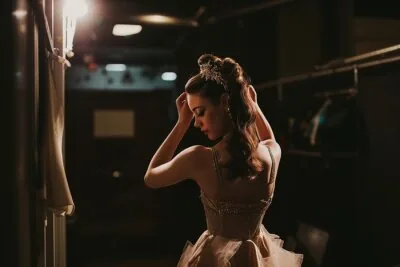
Some recitals give you a full act to change; others give you ninety seconds and a curtain. A quick-change hairstyle is one that transforms rather than starting over: a low bun that drops into a ponytail when you pull two pins, a braided crown that becomes a side braid when you unpin one end, or a high ponytail that curls under into a chignon with a single twist. Build the first look with the second one already inside it, and practise the change at home with a timer running, the same way you practise the dance.
Time and cost: a quick-change look costs nothing extra, just planning. Keep the change kit in a small bag at the side of the stage — spare pins, one elastic, a travel-size hairspray, and the accessory for the second number — and lay everything out in the order you will need it. The dancers who panic backstage are the ones digging through a bag for a pin; the ones who glide through it are the ones who rehearsed the change three times at home and know it takes forty seconds.
Sweat-Proofing Your Hair Under Hot Stage Lights
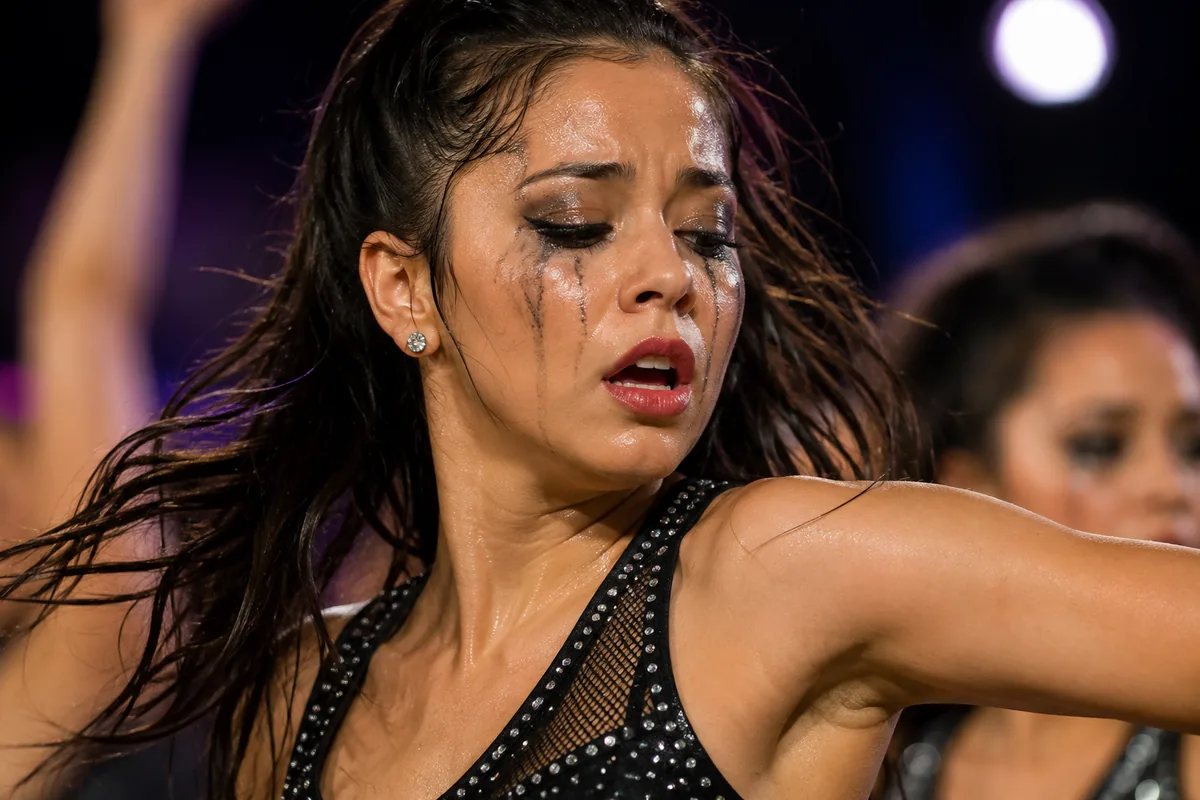
Stage lights are hot, dancing is exercise, and sweat is the enemy of every hairstyle. The fix is not more hairspray — spray melts, flakes, and turns white under lights when sweat gets to it. The fix is structure: braids and twists hold through sweat because the hair is locked into itself, while a smooth style held only by spray will loosen from the hairline first. Start with a light leave-in conditioner instead of heavy cream, use a strong-hold gel at the hairline where sweat starts, and save the hairspray for a light mist at the very end.
Who should avoid what: if you sweat heavily, avoid styles that depend on a perfectly smooth crown, like a slicked-back bun with no texture, because the first bead of sweat will show as a frizz halo. A braided base, a textured twist, or a style with a little volume at the front hides sweat far better. And pack a small towel and a travel-size dry shampoo in your recital bag — a quick pat at the hairline and a puff of dry shampoo between numbers resets the look without rebuilding it.
How Stage Lighting Changes the Way Your Hair Reads
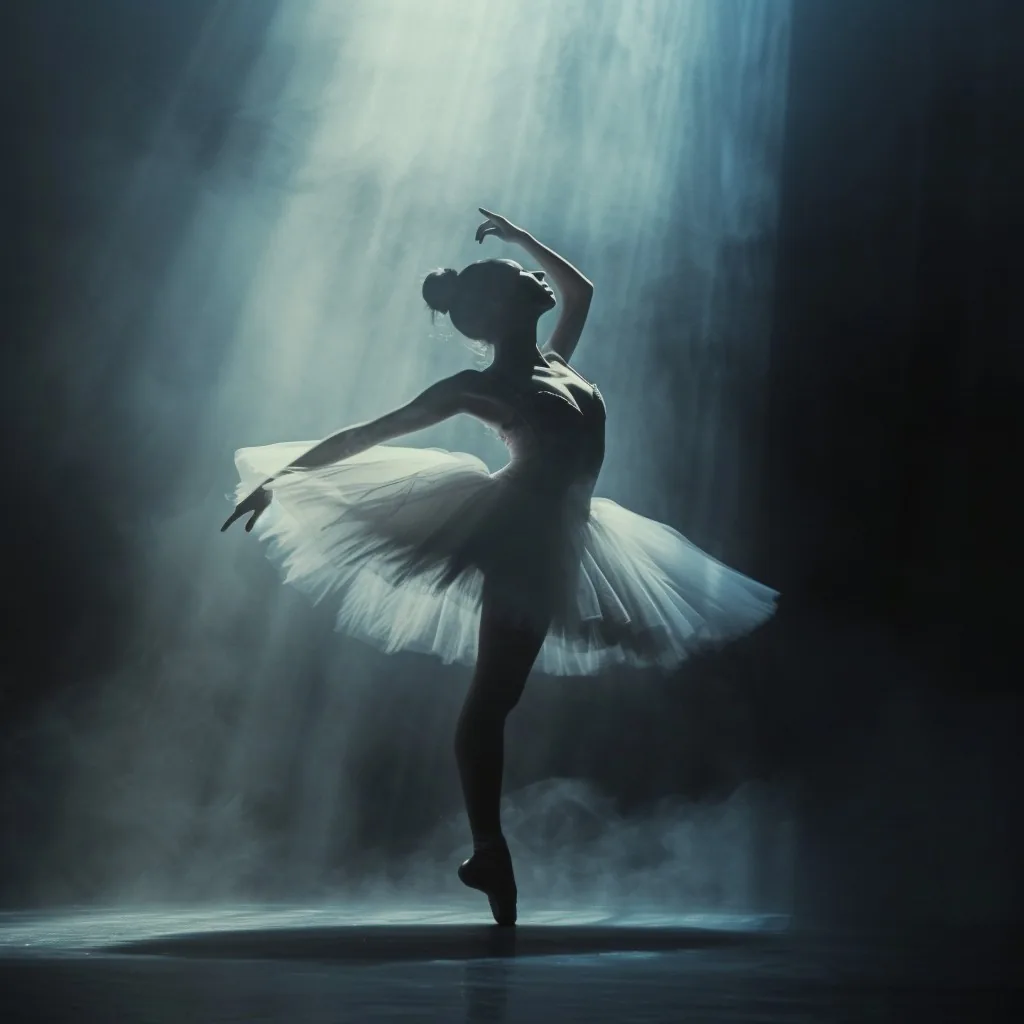
Under stage lights, hair behaves differently than it does in your bathroom mirror. Bright white light washes out soft colour and makes flyaways glow like a halo, warm amber light deepens reds and golds, and coloured gels can turn a blonde bun pink or a brown braid almost black. That is why the cleanest styles photograph best: a smooth bun with no stray hairs reads as a single clean shape from the back rows, while a loose, textured style can dissolve into a blur of light and shadow. If you can, do a dress rehearsal under the real lights and look at a phone photo from the audience’s distance before you commit to a style.
Quick verdict: shine is your friend on stage, frizz is not. A light shine spray or a drop of serum smoothed over the finished style catches the light and makes the shape read clearly from far away. Skip glitter and sparkle sprays unless the number calls for them — under a spotlight they scatter light in every direction and can look messy in photos. One neat accessory, a bow or a pearl pin, catches the light in a controlled way and gives the audience’s eye somewhere to land.
Recital Hairstyles by Age Group
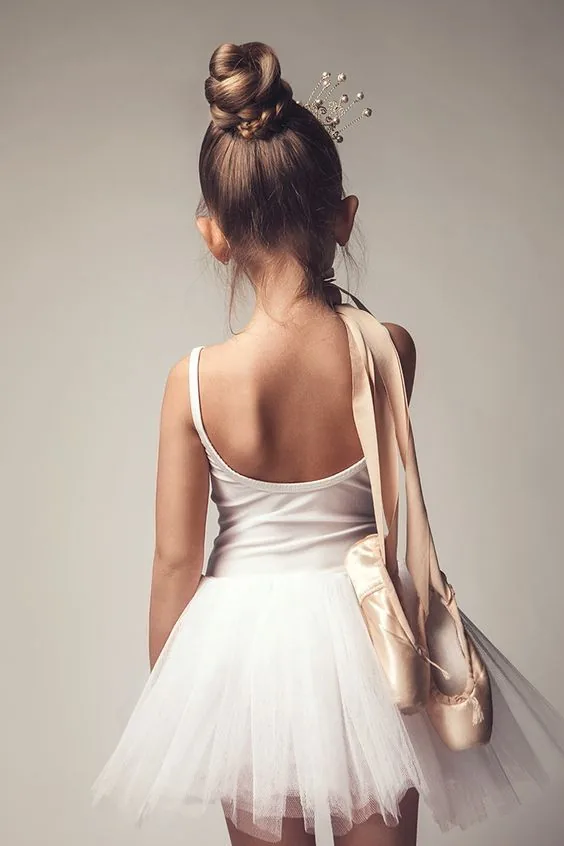
The right recital hairstyle depends on who is wearing it, and the rules change with age. Little dancers, under eight or so, need styles that are comfortable and simple: a classic bun or a braided crown, built softly so it does not pull or hurt, with no tiny pins that can slip out and scratch. They will fidget, they will sweat, and they may need their hair redone between numbers, so choose a style a parent can rebuild in two minutes backstage. Older children and teens can handle tighter, more structured styles — a sleek ponytail, a French twist, a braided bun — and they can usually fix a loose pin themselves.
For adult dancers, the choice opens up: the style can be part of the character of the piece, from a vintage pin-curl updo for a jazz number to a sharp, sculpted ponytail for hip hop. The one rule that never changes is comfort — if a style pulls, itches, or gives you a headache in rehearsal, it will be worse under lights with adrenaline. Age changes the style; it never changes the test, which is whether you forget about your hair the moment the music starts.
What Judges and Audiences Actually Notice
Judges do not score your hairstyle, but they notice it the way they notice everything: as part of the whole picture. What they actually see is cleanliness. A dancer with a neat bun, smooth sides, and no flyaways looks finished and disciplined before she takes a single step; a dancer with hair falling in her face or a bun sliding sideways looks unprepared, and that first impression colours everything that follows. In a competition, where dancers are scored on presentation as well as technique, a clean line from head to toe is worth more than any elaborate style.
Common mistakes: the biggest one is choosing a style that is too complicated for the dancer to maintain, so it falls apart mid-number and the dancer spends the rest of the piece thinking about it instead of dancing. The second is an accessory that is too big or too bright — a bow the size of a dinner plate or a clip that catches the light and flashes the judges every time the dancer turns. Keep the style neat, the accessory modest, and the hairline clean, and the judges will see the dancing, which is the point.
The Recital-Day Hair Kit That Saves the Day
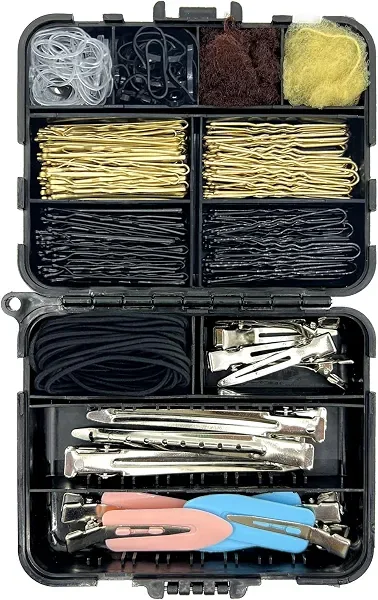
Every dancer needs a small hair kit in the dressing room, and it should be packed the night before, not thrown together in the morning. The essentials: bobby pins in your hair colour (at least twenty, because they vanish), U-shaped hairpins for buns, two thick elastics and two thin ones, a hairnet that matches your hair, a travel-size strong-hold hairspray, a small bottle of gel, a fine-tooth comb, a brush, and a hand mirror. Add a spare bow or accessory identical to the one you are wearing, because accessories break and get lost at the worst possible moment.
Maintenance between numbers: check the bun after every dance, not just when something feels wrong — press it gently, look for pins that have worked their way out, and smooth the hairline with a fingertip of gel. A two-minute check between numbers is the difference between a style that holds all night and one that gives up during the finale. Pack it all in a small zip bag with your name on it, and keep it in the same place every time, so your hands find it in the dark backstage without thinking.
1. The Classic Ballet Bun
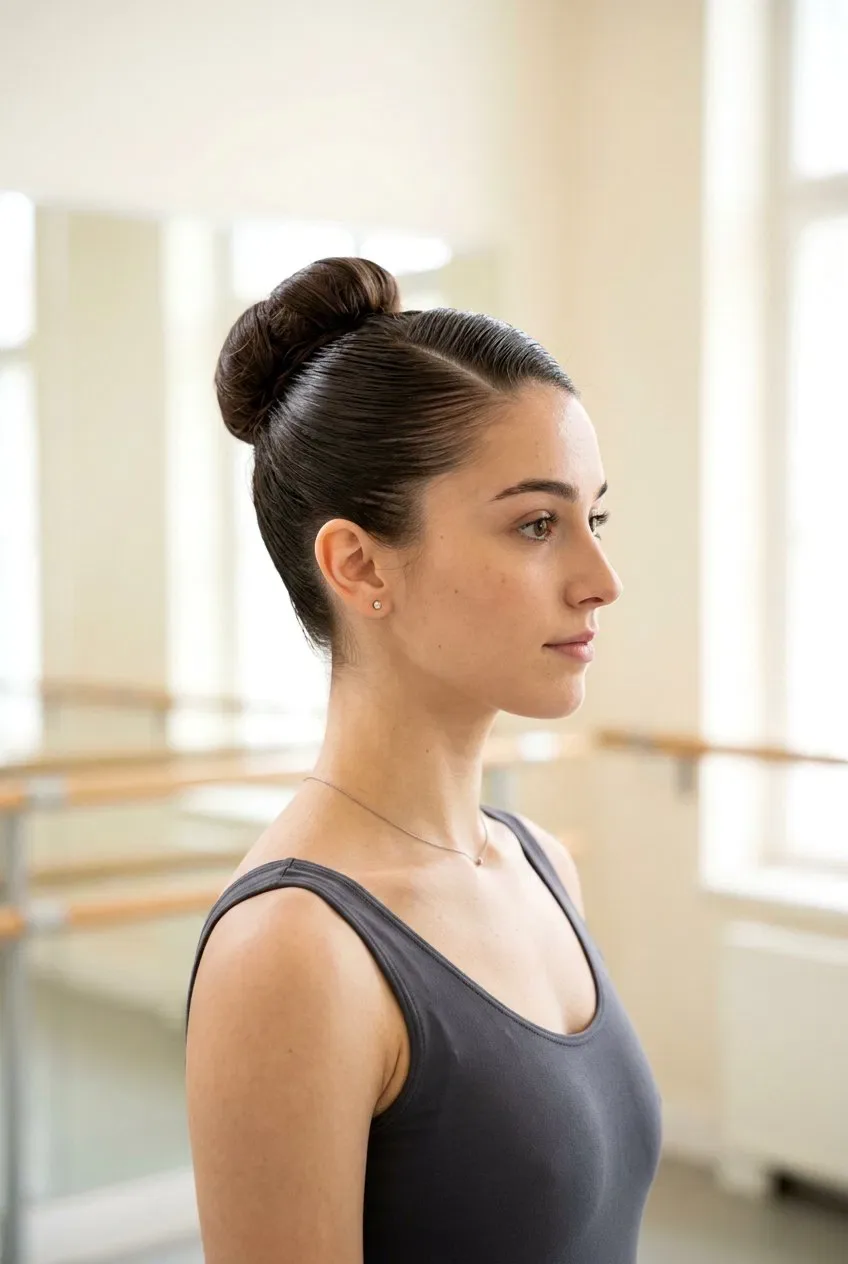
The classic ballet bun is the style every other recital hairstyle is measured against, and for good reason: it is neat, it is timeless, it stays put through anything, and it suits every dancer, every costume, and every kind of ballet. Pull the hair into a high ponytail at the crown, twist it around itself, pin it flat, and cover it with a hairnet. The bun should sit at the very top of the head, not at the back, so the line from the neck to the crown stays long and elegant — the silhouette is the whole point of the style.
Best for: ballet, especially classical pieces, and any recital where the teacher asks for a standard bun. How to style: work with day-old hair, brush it back with a boar-bristle brush, and smooth the sides with gel on your fingertips before you put the elastic in. Pin the bun with U-shaped pins pushed in from the outside edge toward the centre, then wrap the net around it and pin the net, not just the bun. A well-built classic bun takes fifteen minutes and will hold for a whole recital without a single adjustment.
2. The Braided Ballet Bun
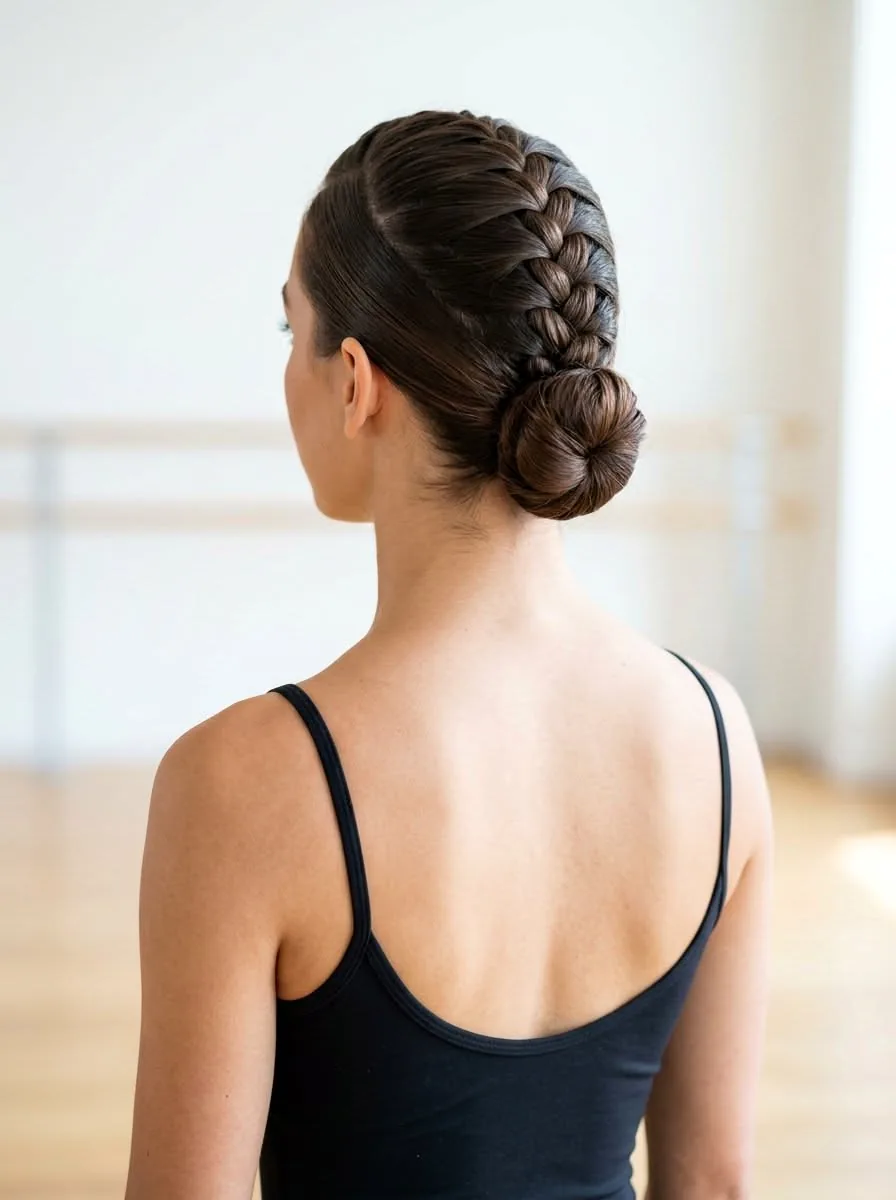
The braided ballet bun is the classic bun with extra grip built in: instead of twisting a plain ponytail into a bun, you braid it first, and the braid locks the hair into itself so it cannot slip or loosen, even through the sweatiest number. It is the style to choose when the classic bun keeps coming undone, or when the dancer has thick, heavy hair that pulls a plain bun loose. The braid also adds a beautiful texture that shows up in photos, a ring of woven detail that looks far more elaborate than the ten extra minutes it takes.
Pros: it holds better than a plain bun on thick or slippery hair, and it looks finished from every angle, including from behind where the audience sits. Cons: it takes longer to build, and taking it out at the end of the night means unbraiding a tight braid, which needs patience and conditioner. Common mistake: braiding too loosely, which defeats the whole purpose — keep the braid firm and even all the way down, then wrap it in a flat circle and pin through the braid itself, not just around it.
3. The Sleek High Performance Ponytail
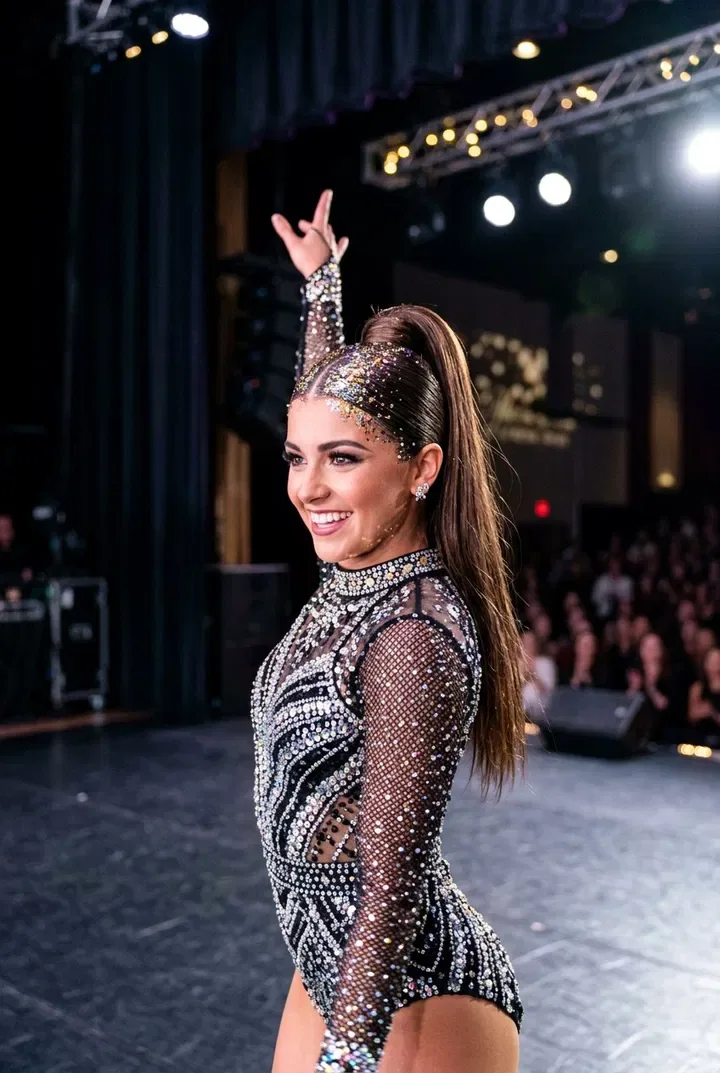
A sleek high ponytail is the workhorse of jazz, hip hop, and contemporary recitals: it moves with the dancer, it shows off the neck and shoulders, and it reads clearly from the back rows. The trick is the word sleek — the crown must be perfectly smooth, with no bumps and no flyaways, or the whole style looks unfinished under stage lights. Brush the hair up and back with gel, secure it high at the crown with a thick elastic, then wrap a small section of hair around the elastic and pin it underneath so the band disappears.
Who should avoid it: dancers with very fine hair may find a high ponytail slips forward during turns, and dancers with a sensitive scalp may find the tension uncomfortable over a long recital. If the ponytail is for a fast, high-energy number, add a second elastic a few inches down the tail — it stops the hair whipping around and gives you a handle to re-tighten between numbers. Cost and time: about ten minutes, one elastic, and a handful of pins, which makes it one of the cheapest stage styles there is.
4. The Braided Crown
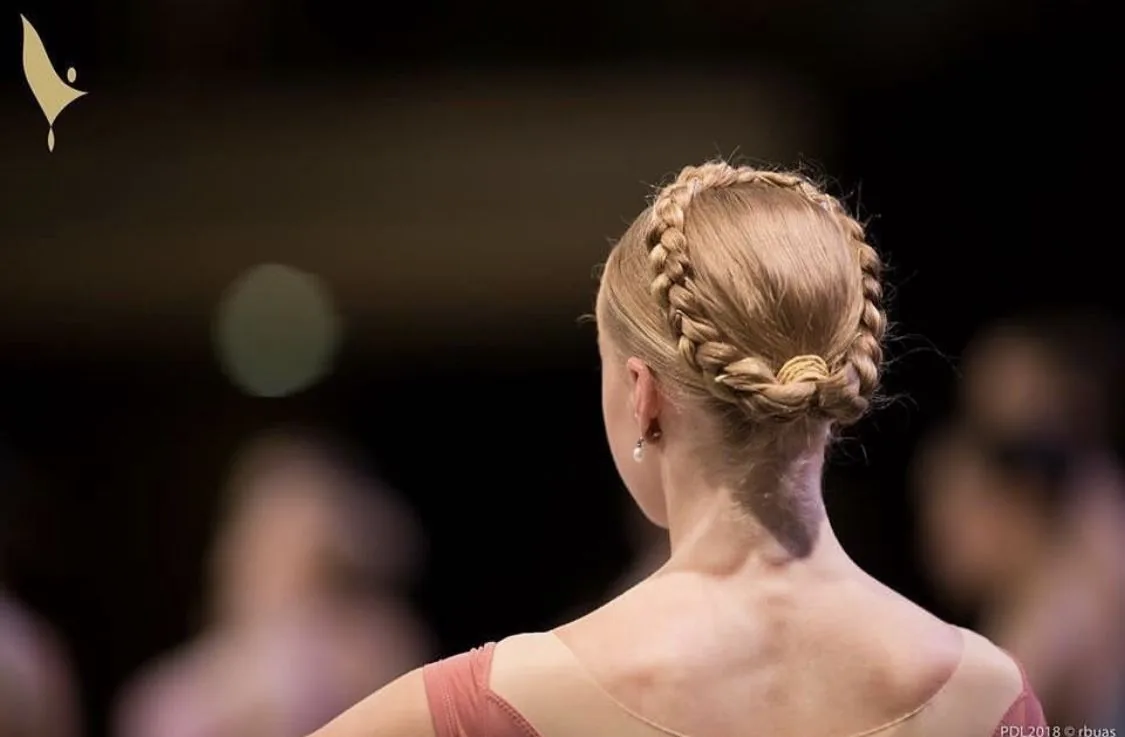
A braided crown wraps a braid around the head like a headband made of hair, and it is one of the most secure styles a dancer can wear — the braid is anchored at a dozen points around the head, so no single movement can pull it loose. It suits lyrical and contemporary pieces beautifully, and it keeps every strand off the face and neck, which matters when a number involves floor work or lifts. Start with a Dutch braid at one ear, work it around the hairline, and pin the end underneath where it started.
Quick verdict: if you can braid, this is a top-three recital style; if you cannot, practise on a friend for a week before the recital, because a crown built in a rush will be uneven and will show in photos. Maintenance: almost none — once the crown is pinned, it stays, and the only thing to check between numbers is the hairline, where a fingertip of gel smooths any flyaways. It also hides a multitude of sins, including grown-out layers and a bad haircut, which is why teachers love it for group numbers where every dancer needs to look identical.
5. The Stage French Twist
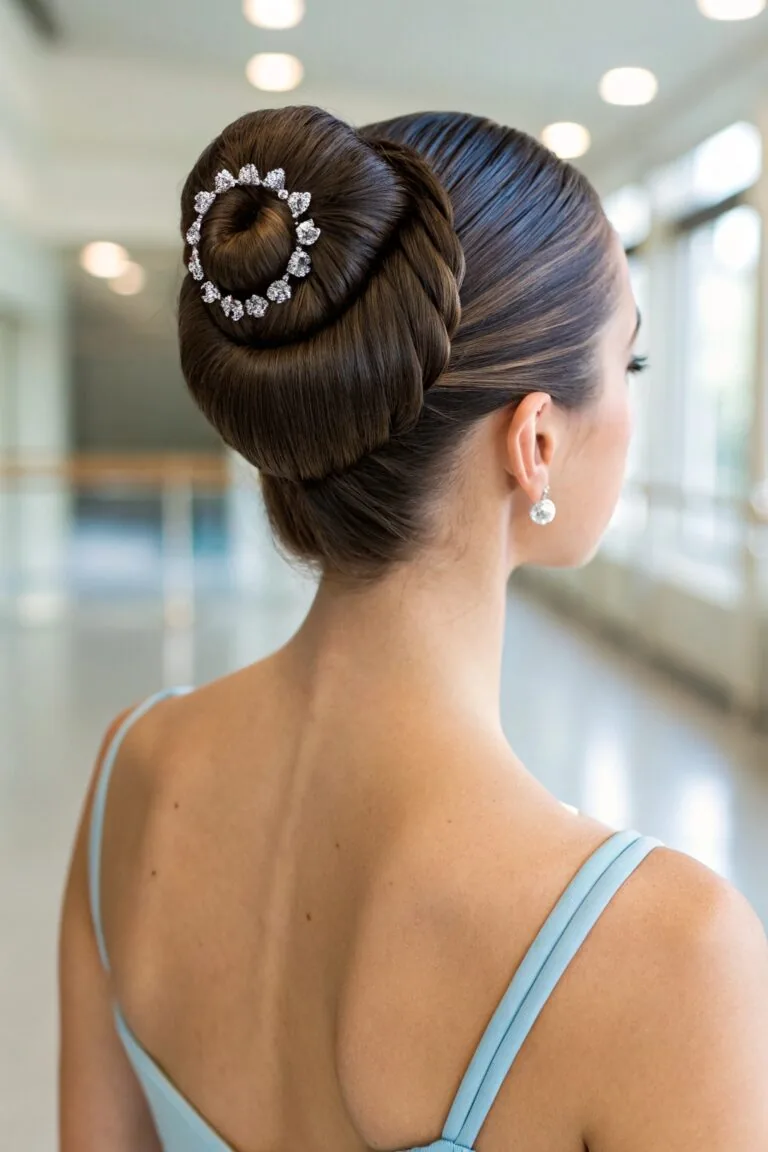
The French twist is the most grown-up style on this list, and it belongs on the stage for jazz, ballroom, and theatrical numbers where the dancer needs to look polished and dramatic. Gather the hair low at the nape, twist it upward in a single smooth roll, and pin it along the fold with long hairpins, tucking the ends inside. The finished shape is a clean vertical line that lengthens the neck and looks extraordinary from the side — which is where the audience sees it most during a turn.
Best for: older teens and adult dancers, especially in formal or theatrical pieces. What to ask your stylist: ask them to pin the twist with pins that go in horizontally, across the fold, because vertical pins slide out when the dancer moves her head. A French twist needs medium to long hair; on short hair it will not hold, and on very thick hair it can feel heavy. Practise it twice before the recital — it looks simple and is not, and the second attempt is always neater than the first.
6. The Low Chignon With a Satin Bow
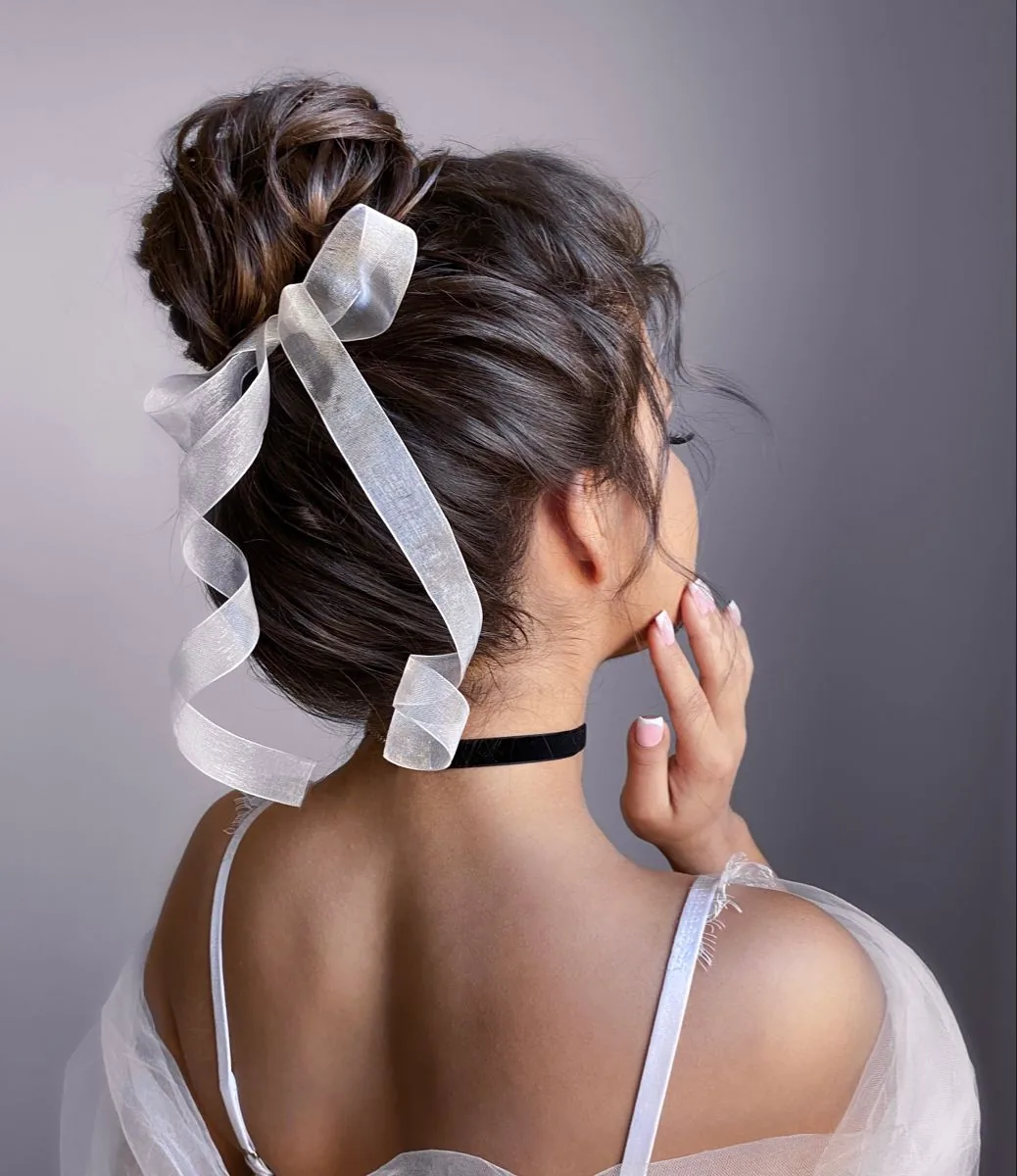
A low chignon with a satin bow is the recital classic for little dancers and the prettiest finish for a lyrical number: a soft bun at the nape, a bow in the costume’s colour sitting on top of it, and a clean, sweet silhouette that photographs beautifully. Build the chignon low and flat, not round and high, so the bow sits on it instead of sliding off, and choose a bow with a clip or a comb, not a bare elastic, so it grips the hair. The bow should match the costume — same colour family, not a clash — and it should be no wider than the bun itself.
Pros: it is fast to build, comfortable to wear, and it looks finished even on very young dancers. Cons: a bow can slip if it is only held by an elastic, and a big bow can catch the light and distract from the dancing. Common mistake: putting the bow on first and the bun second — always build the bun, pin it, and then add the bow last, so you can place it exactly where it looks best and pin through the bow’s base into the bun.
7. Double Dutch Braids
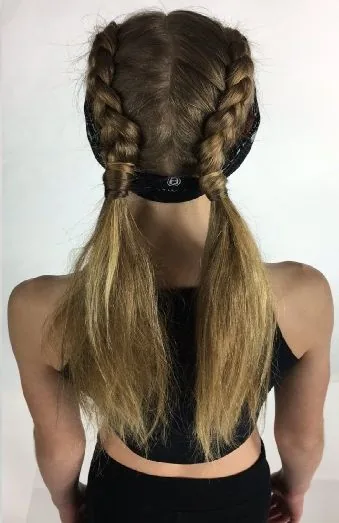
Double Dutch braids — two braids running from the hairline to the nape — are the most secure style in this whole guide for a high-energy number. Because the hair is divided and braided tight against the scalp, there is almost nothing left to come loose, and the style survives jumps, tumbles, and floor work that would destroy a bun. They are a favourite for hip hop and jazz recitals, and they look sharp and modern on stage, especially with a little shine spray to catch the lights.
How to style: part the hair cleanly down the middle with a tail comb, braid each side in a Dutch braid — under, not over, so the braid sits on top of the hair — and secure the ends with small elastics, tucking them under or wrapping them into tiny buns. Time: about twenty minutes for a practised braider, thirty for a beginner, so build them early and let them settle. They also last: braids done the night before still look perfect the next evening, which makes them the best choice when recital day is a rush.
8. The Bubble Braid Ponytail
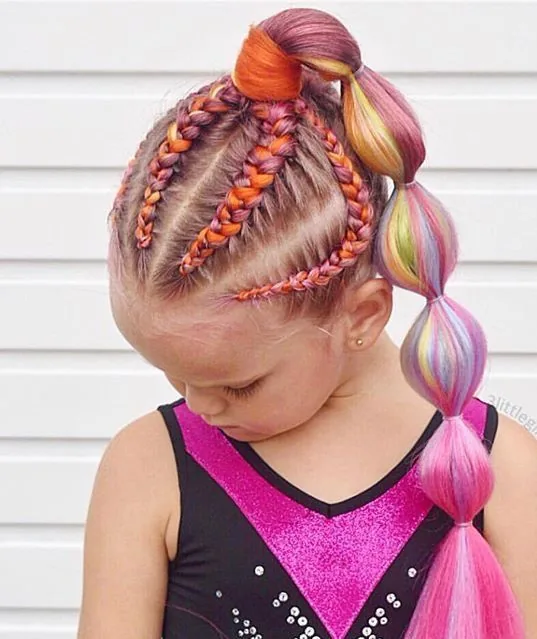
The bubble braid ponytail turns an ordinary ponytail into a stage piece: a high ponytail divided into sections by small elastics, each section gently pulled out into a round bubble. It moves beautifully, it catches the light, and it is made for fun, high-energy numbers where the hair is part of the performance. It also solves a real problem — a plain ponytail can swing into the face during fast turns, but a bubble braid has weight and structure, so it swings as one piece and stays behind the dancer.
Quick verdict: great for jazz and hip hop, wrong for classical ballet, where a bubble braid would look out of place. Maintenance is easy: if a bubble flattens, pull it out again with your fingertips between numbers. Who should avoid it: dancers with very fine hair, because the bubbles need volume to hold their shape — a little texturising spray at the roots before you start helps enormously. And keep the elastics small and clear or matching, so the audience sees bubbles, not bands.
9. The Half-Up Braided Crown
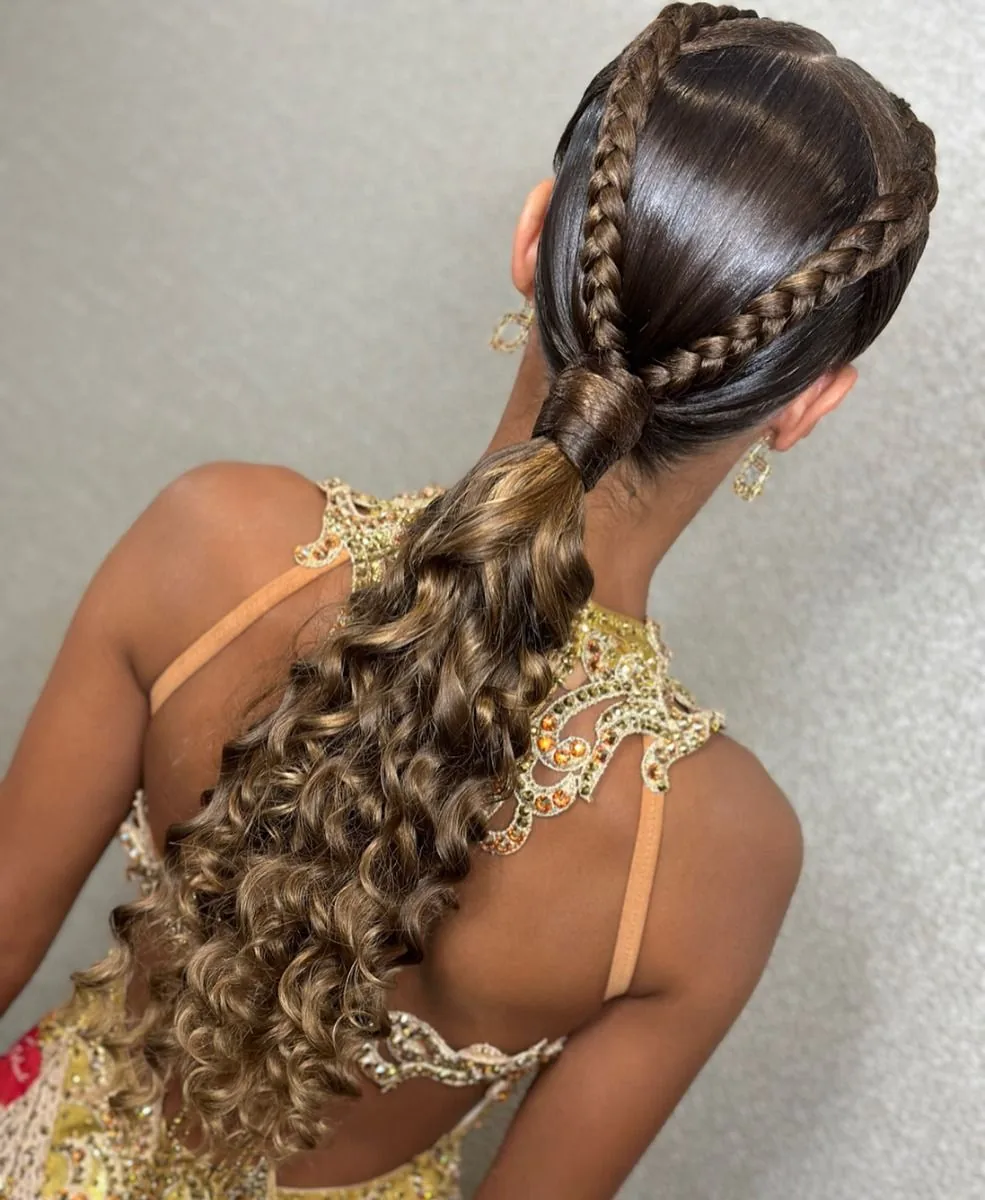
The half-up braided crown is the answer when a dancer wants her hair down for a lyrical or contemporary piece but still needs it off her face: two small braids from each side meet at the back of the head and pin together, leaving the rest of the hair loose to move. It looks romantic and soft, and the braid acts as a headband that stops the hair falling forward during floor work. The loose hair should be curled lightly or smoothed with serum, because straight, flyaway ends will tangle under stage lights and sweat.
Best for: lyrical, contemporary, and modern dance, where movement of the hair is part of the choreography. Common mistake: making the braids too thick, which pulls the style into a heavy crown instead of a light accent — keep each braid about an inch wide and pin it flat against the head. And spray the loose lengths lightly, not heavily, so the hair still moves; a half-up style that is glued solid loses the whole reason for wearing it.
10. The Low Twisted Bun
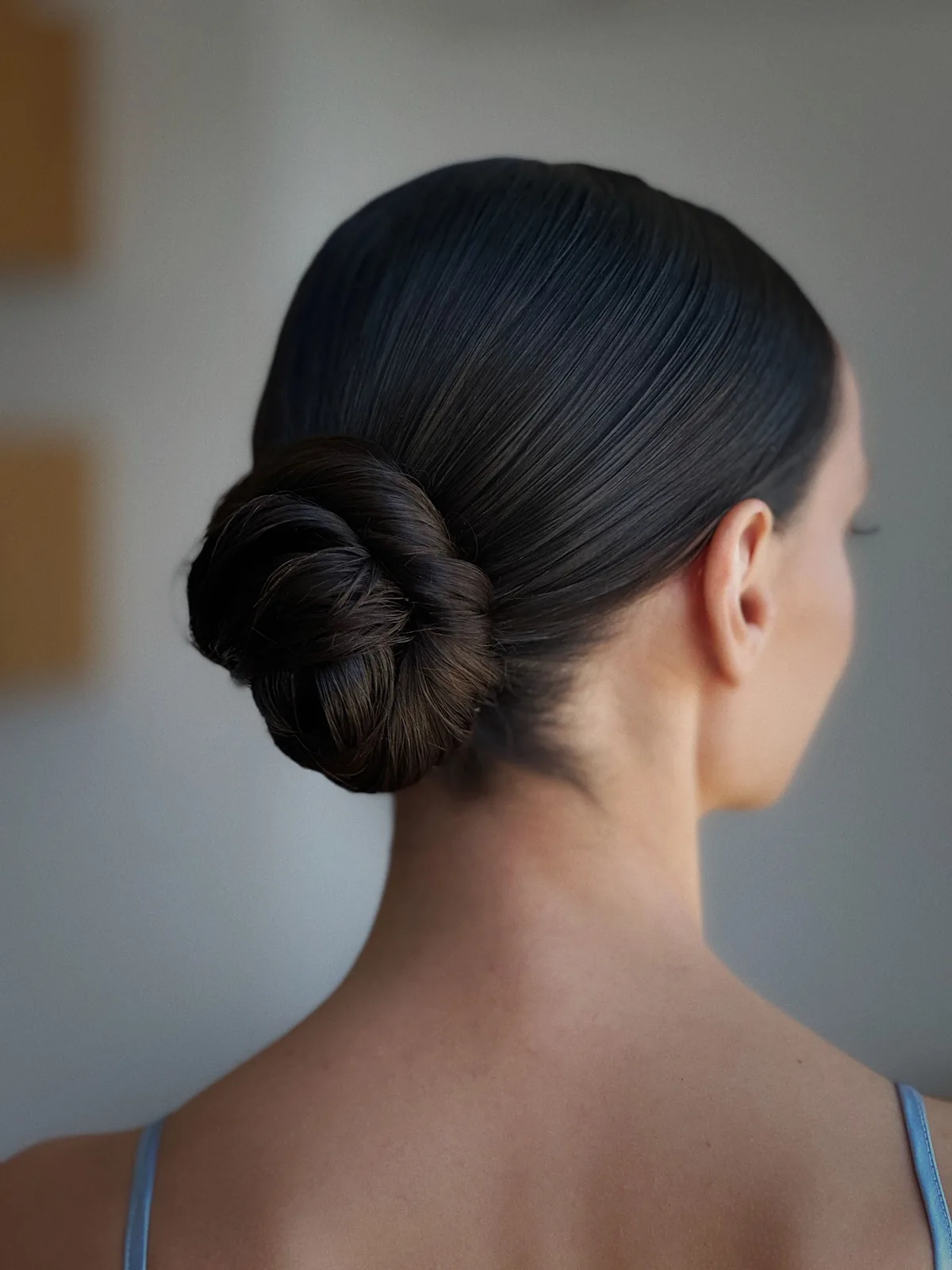
The low twisted bun is the quiet, elegant cousin of the classic bun: the hair is divided into two sections, each twisted, and the twists are wrapped around each other at the nape. The result is a bun with a beautiful rope-like texture that looks intricate and holds like a braid, because the twists lock against each other. It suits ballroom, lyrical, and theatrical numbers, and it sits low enough to work with costumes that have high necklines or headpieces.
Pros: it is more forgiving than a plain bun — uneven twists still look intentional — and it holds well on hair that is too slippery for a smooth bun. Cons: it needs a little length, at least shoulder-length, to twist properly, and it can feel heavy on very thick hair. How to style: twist each section in the same direction, then wrap them in opposite directions around each other, which locks the twist in place. Pin through the centre of the bun and finish with a net, and it will survive a whole evening.
11. The High Top Knot
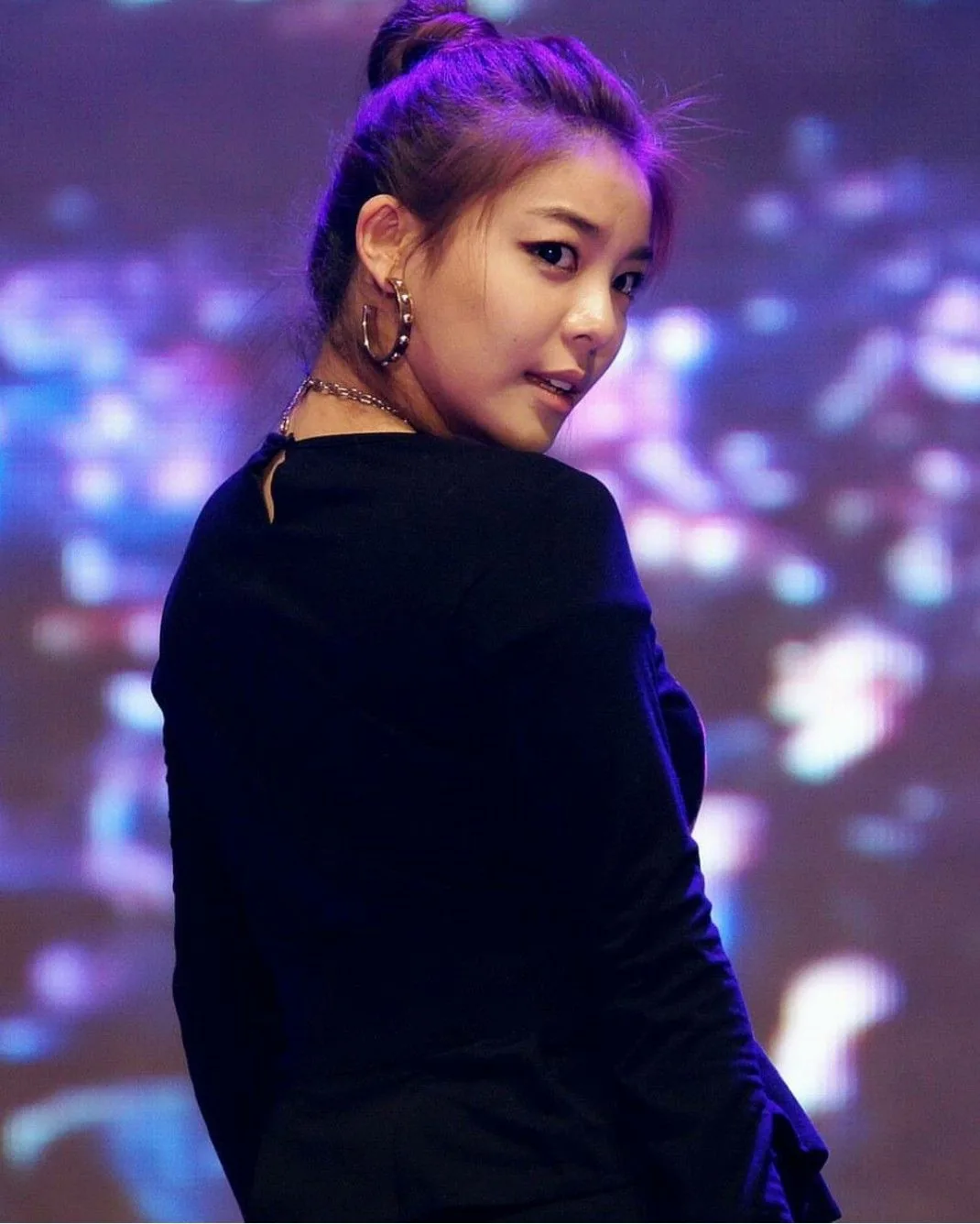
The high top knot is the boldest bun on this list: a tight knot sitting right on top of the head, sharp, sculptural, and impossible to miss from the back rows. It is made for jazz, hip hop, and contemporary numbers where the dancer wants a strong, graphic silhouette, and it photographs like a exclamation mark — clean, confident, and modern. Build it on a high ponytail, wrap the hair around a small bun form, and pin it flat so the knot is a smooth dome, not a lumpy ball.
Who should avoid it: dancers with a round face or a short neck may find a top knot exaggerates both, and it pulls the hairline tight, so anyone with a sensitive scalp should loosen it slightly and add a second net instead of more tension. Time and cost: ten minutes and a bun form that costs almost nothing. The top knot is also a brilliant quick-change base — pull out two pins and it drops into a high ponytail for the next number.
12. The Side-Swept Chignon
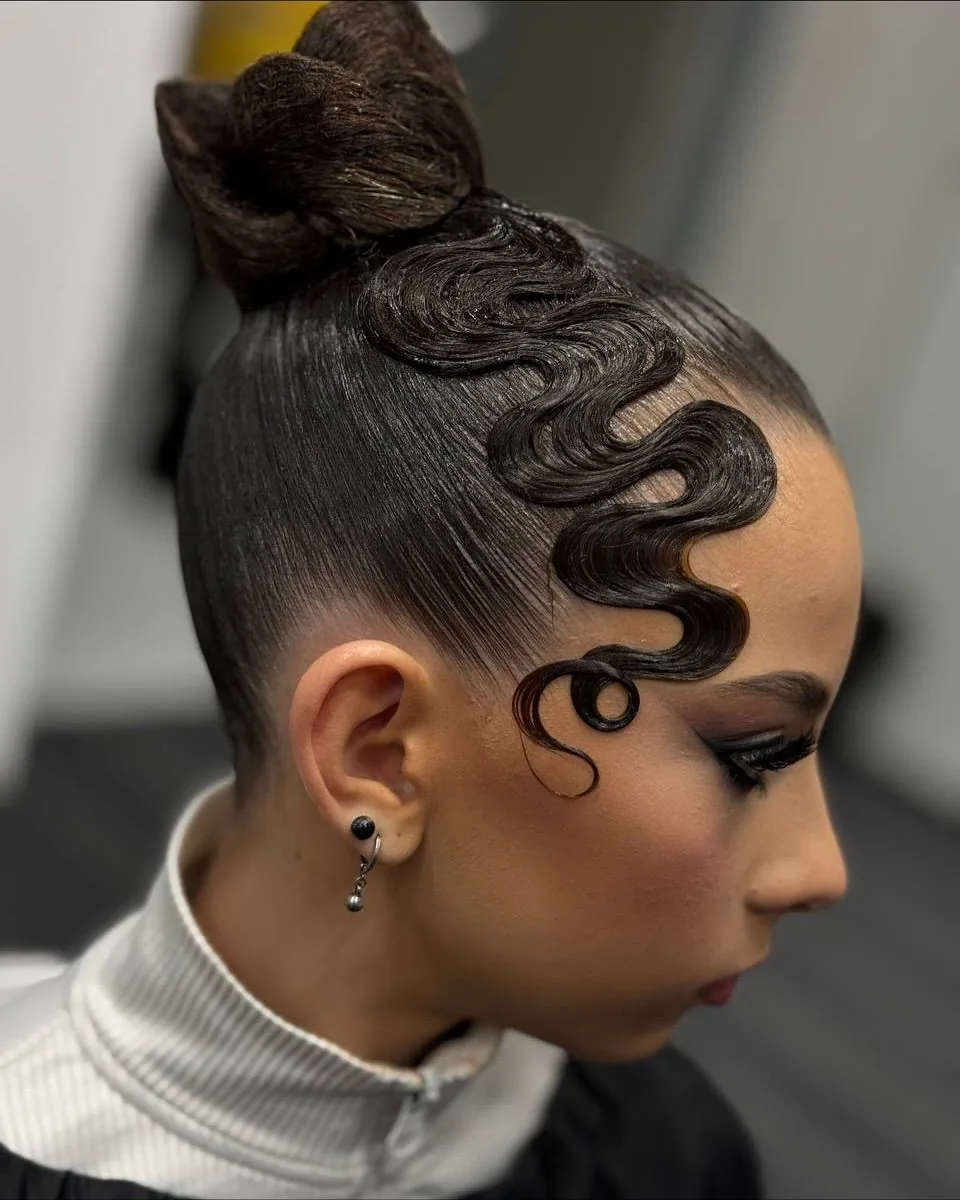
The side-swept chignon takes the low bun and moves it to one side, over one shoulder, which changes the whole line of the style: it is softer, more romantic, and it shows beautifully in profile, which is where a dancer spends half the number. Sweep the hair to one side, gather it low behind the ear, and roll it into a flat chignon, pinning it so the bulk sits just below the earlobe. It is a lovely choice for a waltz, a ballroom number, or a lyrical piece with slow, sweeping movement.
Quick verdict: elegant and photogenic, but it is a one-sided style, so it needs to sit on the side the audience sees most — check the choreography before you choose left or right. Maintenance: check it between numbers, because a side chignon can drift toward the centre as the dancer moves. One anchor pin pushed horizontally through the chignon into the hair at the nape will hold it in place all evening.
13. The Fishtail Braid Ponytail
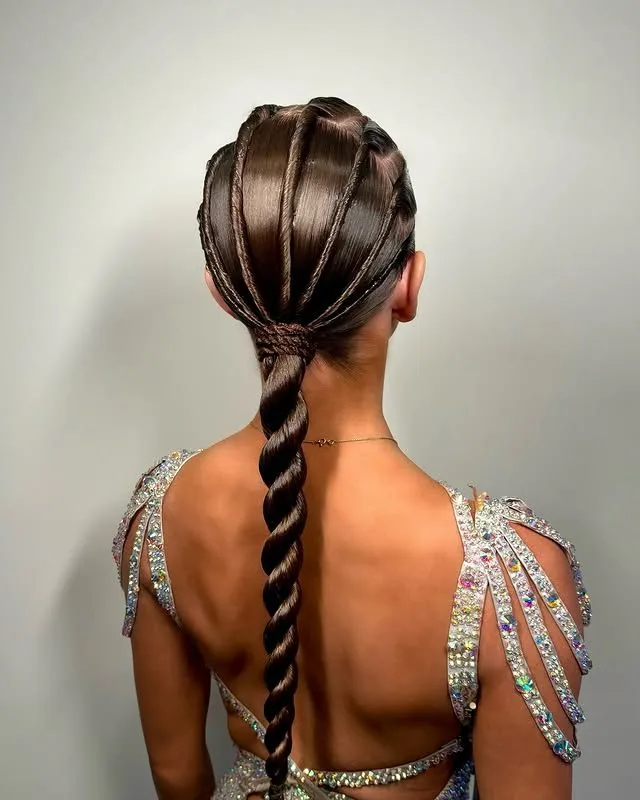
The fishtail braid ponytail is the prettiest braid a dancer can wear on stage: a high ponytail braided in the fine, woven fishtail pattern, which looks like a rope of hair and catches the light with every movement. It is tighter and flatter than a normal braid, so it does not swing or bounce the way a three-strand braid does, and it stays neat through turns and jumps. It is a wonderful choice for a jazz or lyrical number where the hair needs to be secure but still look like a feature, not just a practicality.
How to style: start with a high ponytail, divide it into two sections, and cross small pieces from the outside of each section to the inside of the other, keeping the pieces small and even for the finest weave. It takes practice — your first fishtail will be slow — so learn it a week before the recital, not the night before. Cost: nothing but time and patience, and the result is a braid that looks far more expensive than it is.
14. The Vintage Pin-Curl Updo
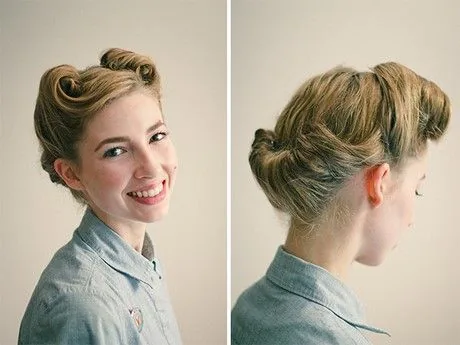
The vintage pin-curl updo is pure theatre: sculpted curls pinned into a structured shape, a nod to the 1940s and 50s, and the perfect style for a jazz, tap, or musical-theatre number with a retro theme. The curls are set with pin curls the night before or with a curling iron the morning of, then brushed out into soft waves and pinned into an updo that holds its shape like a sculpture. It is the most characterful style on this list, and it tells the audience what kind of number they are about to see before the music starts.
Pros: it is unforgettable, it photographs beautifully, and it holds its shape because the curls are pinned, not just sprayed. Cons: it is the slowest style here, taking forty-five minutes or more, and it needs setting lotion or mousse to hold the curl. Common mistake: brushing the curls out too hard, which turns a sculpted wave into frizz — brush gently, with a soft brush, and pin the shape while the hair is still warm from the iron.
15. The Romantic Low Bun With Loose Curls
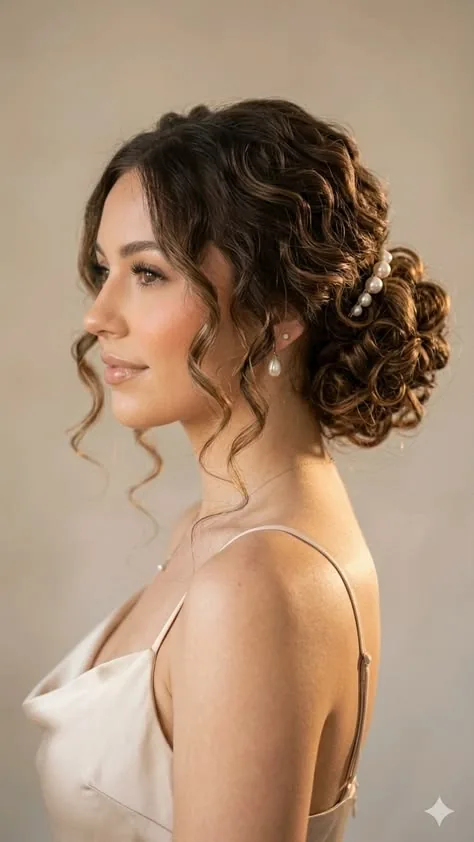
The romantic low bun with loose curls is the softest style on this list, and it suits lyrical and ballet numbers where the dancing is slow and the mood is tender: a low bun at the nape, a few curled strands pulled loose around the face, and a shape that looks effortless even though it is carefully built. The loose curls are the key — they soften the face and catch the light — but they must be pinned at the root, not just left hanging, or they will fall into the dancer’s eyes mid-turn.
Best for: dancers with naturally curly or wavy hair, who get the texture for free, and for lyrical pieces where the hair should move a little. Who should avoid it: dancers in fast, athletic numbers, where loose curls become a distraction and a hazard. Maintenance: a quick check between numbers — re-curl one strand with your fingers, smooth the hairline, and carry on. It is a style that looks better slightly imperfect, which makes it wonderfully forgiving on a long recital night.
16. The Braided Low Ponytail
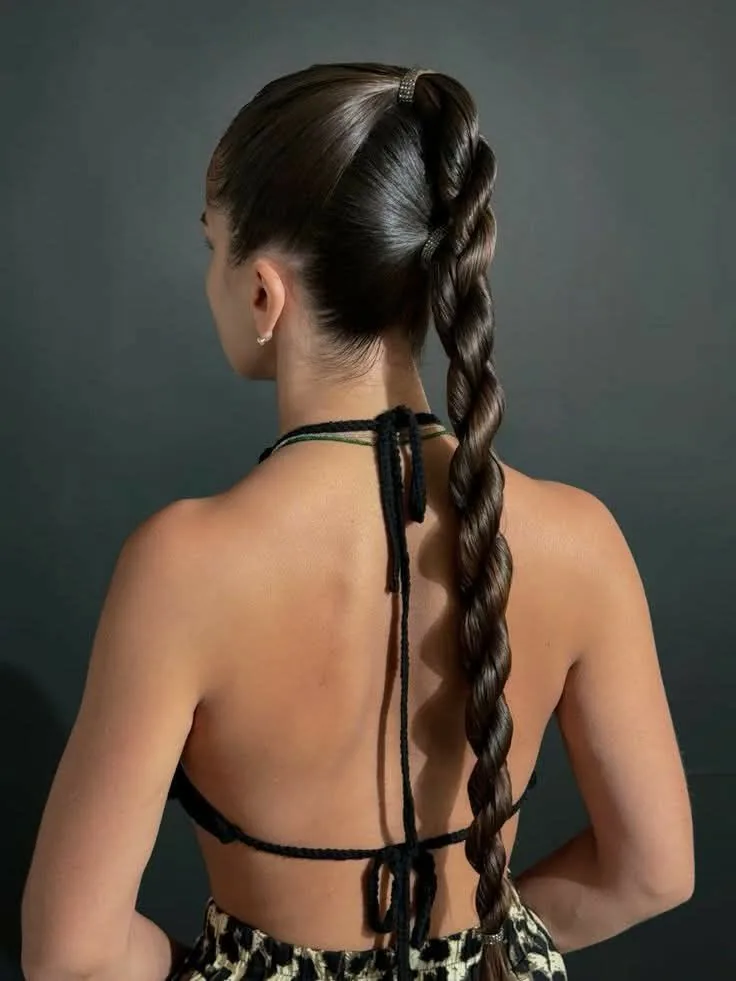
The braided low ponytail is the simplest secure style a dancer can wear: a low ponytail at the nape, braided down its length, and finished with a small elastic wrapped in hair. It keeps every strand out of the face and off the neck, it survives any choreography, and it looks neat and finished from every seat in the house. It is the style teachers reach for when a group number needs twenty dancers to look identical, because it is fast, it is forgiving, and it works on almost every hair type and length.
Quick verdict: if you only learn one recital style, learn this one — it takes five minutes, it never fails, and it suits everything from ballet to hip hop. Add a ribbon or a small bow at the elastic for a recital finish, or wrap the base with a strand of hair for a more polished look. The only thing to watch is the braid itself: keep it firm and even, and pin the end underneath if it is long enough to swing into the dancer’s back during turns.
17. The Sleek Low Ponytail With a Hair Wrap
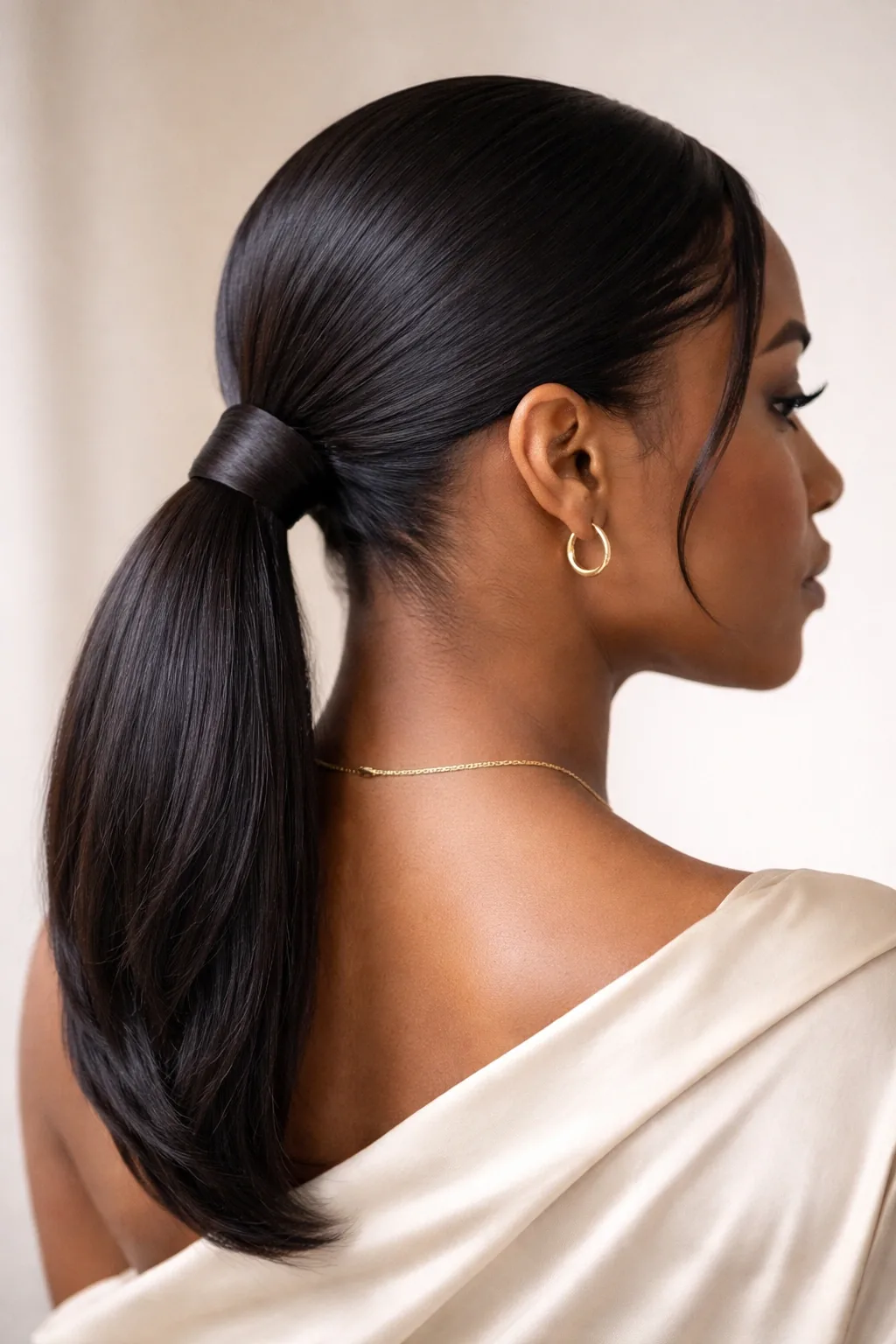
The sleek low ponytail with a hair wrap is the minimalist’s stage style: a perfectly smooth ponytail at the nape, with a strand of hair wrapped around the elastic so there is no band visible at all. It is the kind of style that looks simple and is not — the smoothness is the whole achievement, and it reads as calm, controlled, and professional under stage lights. It suits contemporary and modern dance beautifully, where the choreography is clean and the costume is simple, and the hair should match that restraint.
How to style: the secret is the brush and the gel. Brush the hair back with a boar-bristle brush, smooth the crown with a fine-tooth comb, and use a light gel on the hairline to kill flyaways. Secure the ponytail low, then take a thin strand from underneath, wrap it around the elastic three times, and pin it underneath. Common mistake: wrapping the strand too thickly, which makes a visible bulge — keep it thin, and the wrap will look like the ponytail grew that way.
18. The Voluminous Stage Updo
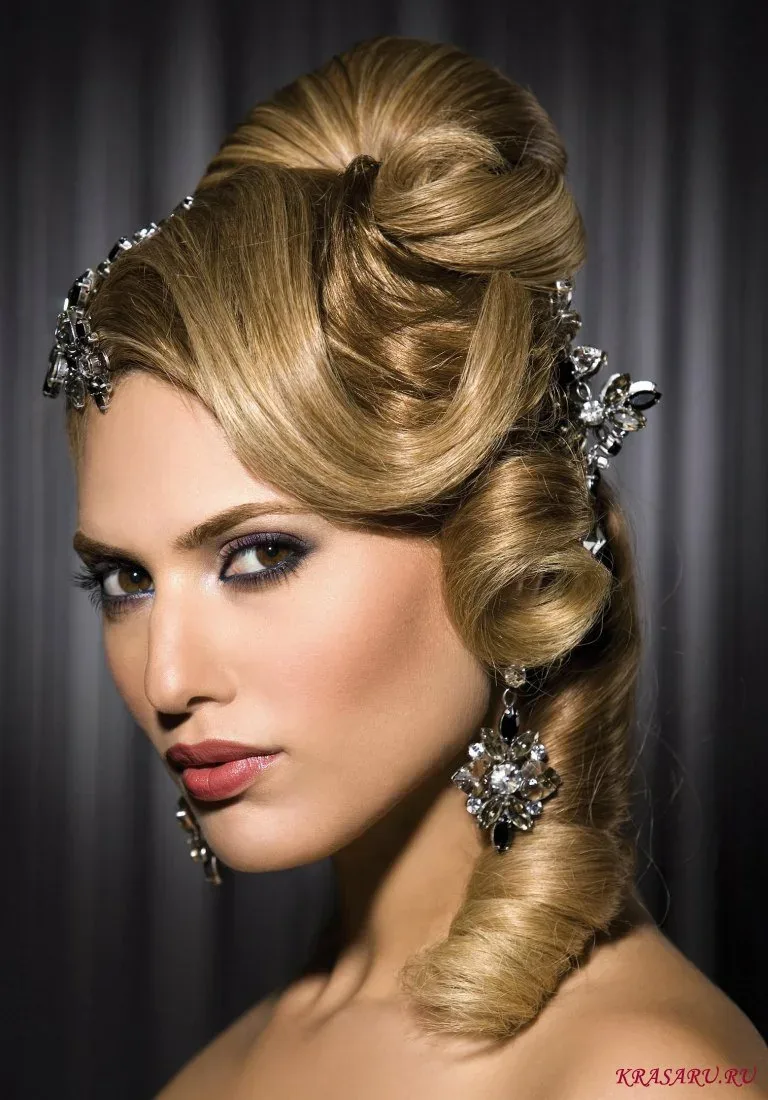
The voluminous stage updo is the showstopper: height at the crown, soft volume through the bun, and a shape that can be seen from the very back row of the theatre. It is built on backcombing — gently teasing the hair at the roots for volume — then smoothing the top layer over it and pinning the whole shape into a large, soft bun. It suits dramatic numbers, theatrical pieces, and any performance where the dancer needs to command the stage, and it photographs with real presence.
Pros: it gives instant glamour and stage presence, and it works beautifully on fine hair that would otherwise fall flat. Cons: backcombing is hard on the hair if it is done roughly, and the style is heavier than a flat bun, so it needs more pins and a net to stay secure. What to ask your stylist: ask them to backcomb in small sections and to smooth the top layer carefully, so the volume looks soft rather than messy. And always use a strong-hold spray at the end — volume without hold will collapse by the second number.
19. The Milkmaid Braid
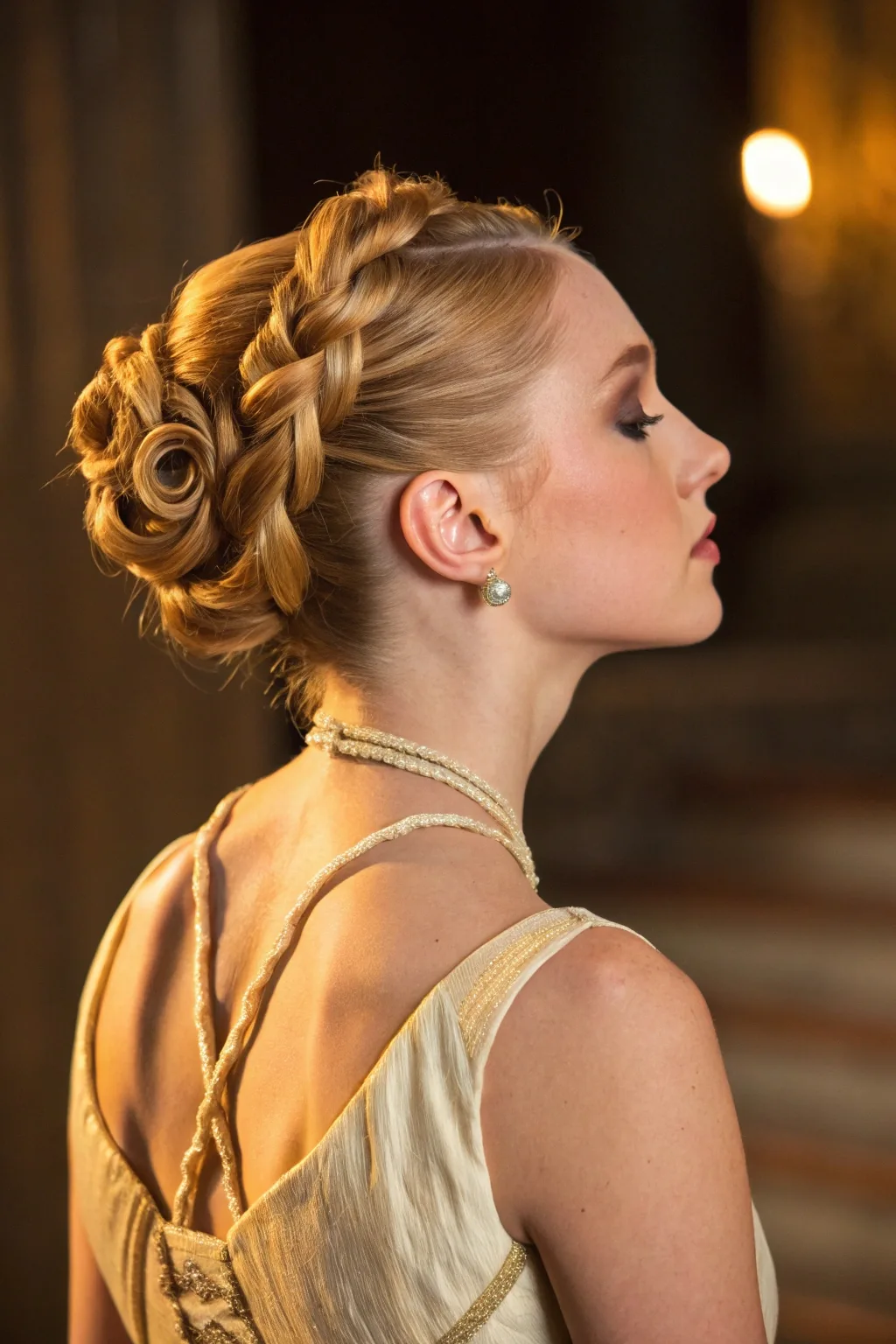
The milkmaid braid is a braided crown’s folk-dance cousin: two braids crossed over the top of the head and pinned at the sides, forming a halo of braid that frames the face and keeps every strand locked away. It is a wonderful choice for character dances, folk numbers, and story ballets where the dancer is playing a village girl or a shepherdess, because the style is part of the costume — it tells the audience who the character is before she moves. It is also one of the most secure styles here, since the braids cross and anchor each other.
Best for: folk, character, and story ballet, and for dancers with long hair who want a style that will not move at all. How to style: braid two low pigtails, cross them over the top of the head, and pin each one behind the opposite ear, tucking the ends underneath. The braids should be pulled out slightly — pancaked — to look full and soft, not thin and tight. It takes about fifteen minutes and a dozen pins, and once it is in, it will not move until you take it out.
20. The Waterfall Braid Half-Up
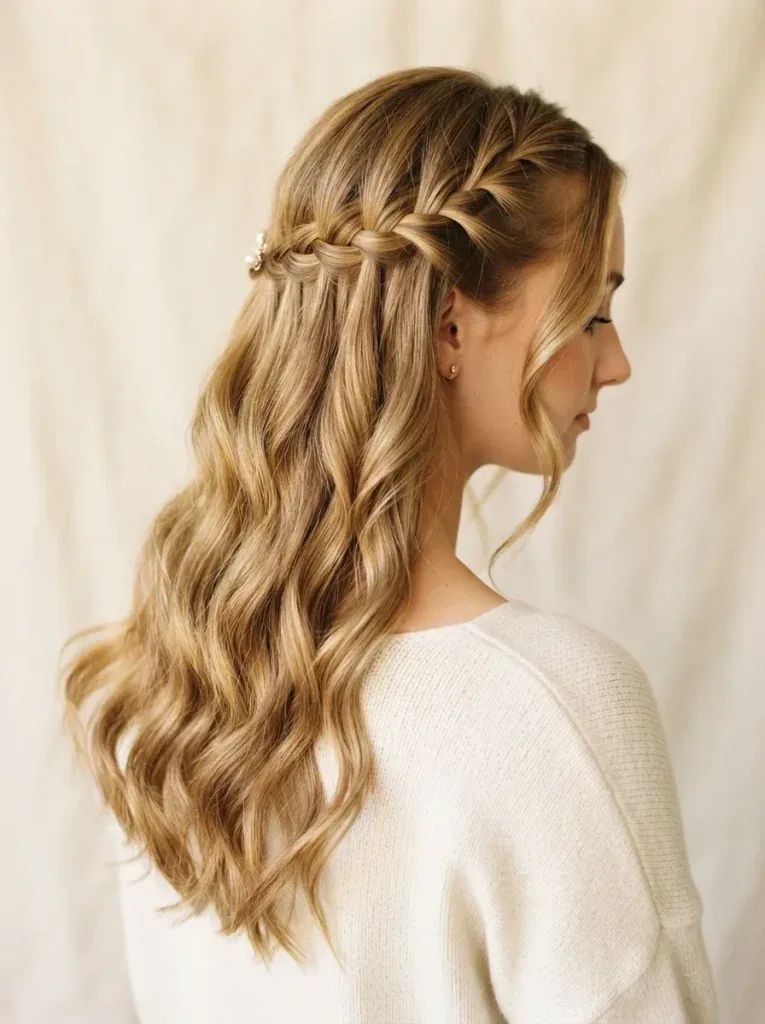
The waterfall braid half-up is the most delicate style on this list: a braid that runs across the back of the head, dropping strands through it like water falling, while the rest of the hair flows loose below. It looks magical on stage, especially under lights, because the dropped strands catch the light as the dancer moves. It suits lyrical and contemporary pieces where the hair is meant to move, and it is a beautiful choice for a solo, where the audience’s eye is on one dancer and the detail of the braid can be appreciated.
Quick verdict: stunning, but it is the least secure half-up style here — the dropped strands are loose by design, and they can tangle during fast movement. Keep it for slow, lyrical numbers, and pin the braid itself firmly at both ends with pins hidden in the hair. Who should avoid it: dancers in group numbers, where the loose strands can catch on a partner’s costume during lifts. For a solo lyrical piece, though, there is nothing prettier.
21. The Side Braid Over the Shoulder
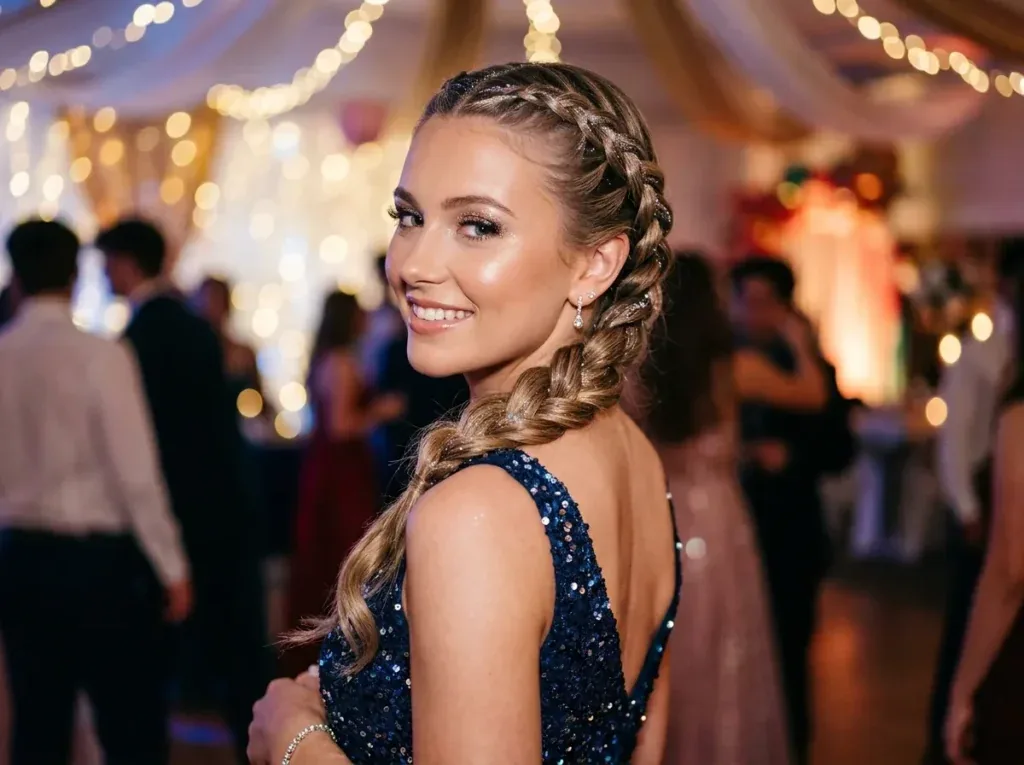
The side braid over the shoulder is the relaxed, romantic option for a lyrical or contemporary number: all the hair swept to one side and braided loosely, resting on the collarbone where it moves gently with the dancer. It is softer than a ponytail and more casual than a bun, and it suits a piece where the mood is tender or dreamy. The braid should be pulled out slightly to look full, and the end should be finished with a small elastic wrapped in a strand of hair or a ribbon in the costume’s colour.
Common mistake: braiding it too tightly, which makes it look severe instead of soft — a side braid should feel relaxed, with a few face-framing strands left out at the front. Maintenance: almost none, but check the elastic between numbers, because a loose braid can slip forward and the end can swing during turns. It is also a kind style for dancers who dislike the tight pull of a bun, since the weight of the hair rests on the shoulder instead of pulling at the scalp.
22. The Ballerina Bun With a Hairnet
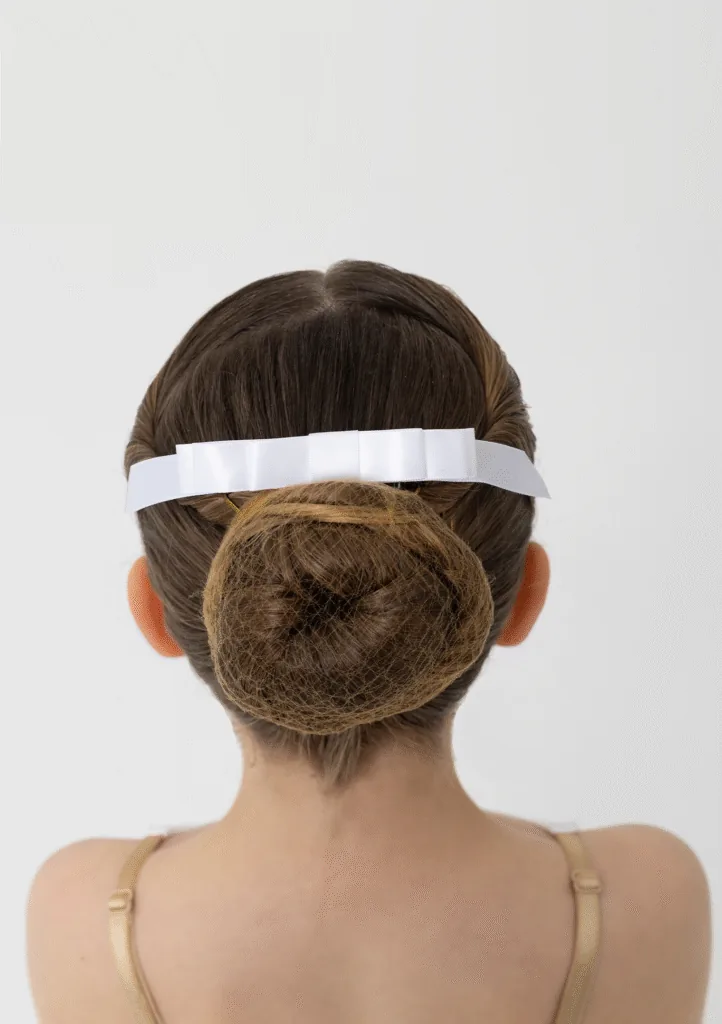
The ballerina bun with a hairnet is the examination standard, the style teachers demand for ballet exams and the one most recitals ask for by name — and the hairnet is not an optional extra, it is the whole secret. The net wraps the bun completely, holds every stray strand, and gives the bun its smooth, finished shape. Choose a net that matches your hair colour exactly, not a shade lighter or darker, and wrap it twice around the bun, pinning it at the base, the top, and both sides so it cannot slide.
Pros: it is the most secure bun in existence, it photographs as a perfect smooth circle, and it meets every teacher’s dress code. Cons: a net that is too small will squeeze the bun out of shape, and a net in the wrong colour will show up in every photo. Time: fifteen minutes once you know the routine, and it is worth rehearsing the routine itself — ponytail, twist, pin, net, pin again — until your hands can do it without thinking, because on recital morning you will be doing it with nerves.
23. The Braided Top Knot
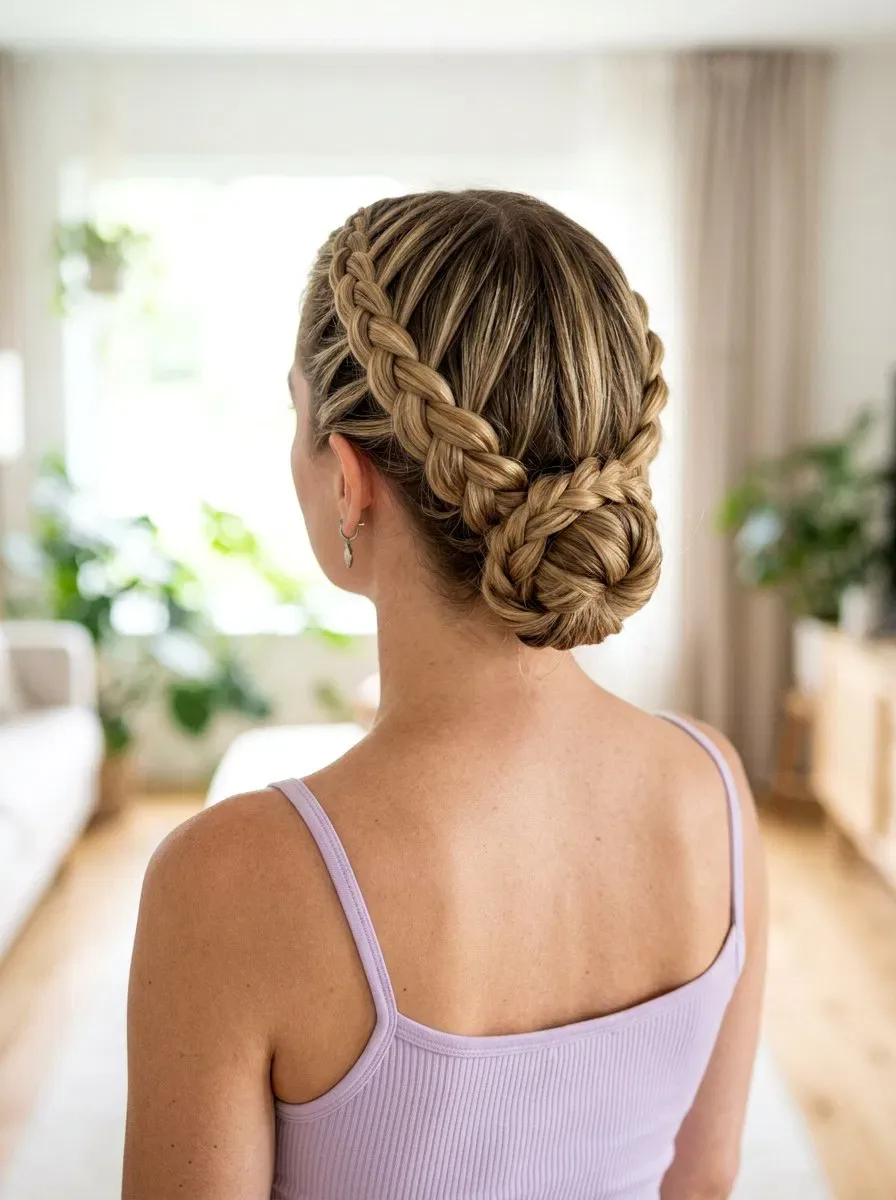
The braided top knot combines two of the most secure techniques in this guide — a braid and a top knot — into one style that will not move for anything. Braid the ponytail, wrap it into a knot on top of the head, and pin through the braid: the result is a sculptural knot with a woven texture that looks deliberate and expensive, and holds so well that some dancers wear it for a whole weekend of performances without rebuilding it. It is a strong choice for hip hop, jazz, and contemporary numbers where the silhouette needs to be sharp.
Best for: dancers with thick hair, who get the fullest, most impressive knot, and for long recital days with multiple numbers. Who should avoid it: dancers with very fine hair, where the knot can look small and thin — a bun form underneath will fix that, giving the braid something to wrap around. Cost: nothing but pins and practice. And like the plain top knot, it drops into a braided ponytail in seconds, which makes it a useful quick-change base.
24. The Low Bun With Pearl Pins
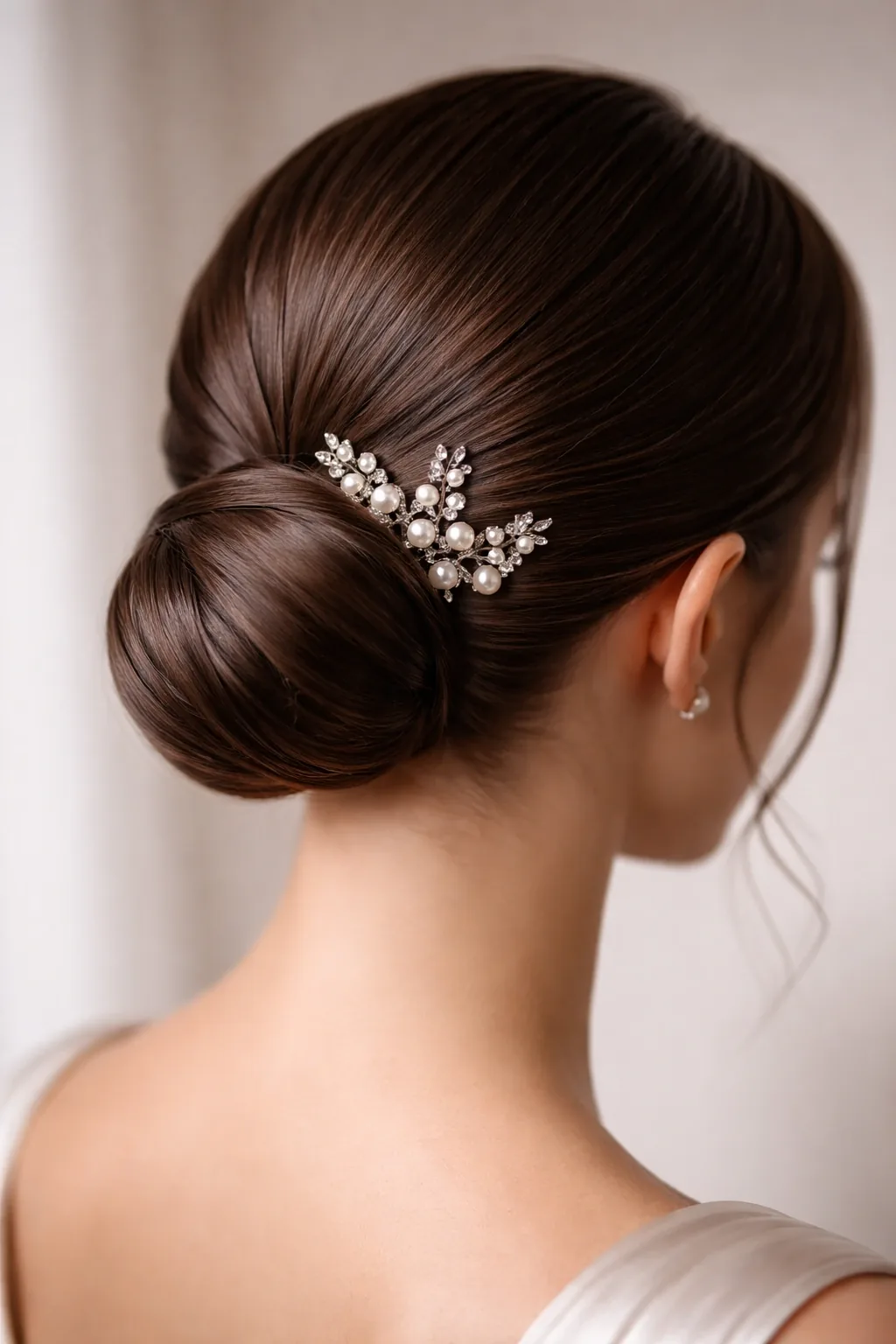
The low bun with pearl pins is the classic bun dressed up for a special number: a smooth, low bun at the nape, finished with three or five pearl pins pushed in along the top edge, catching the light every time the dancer turns her head. The pearls do two jobs at once — they are decoration, and they are extra anchors, pinning the bun more securely than plain pins would. It is a lovely choice for a waltz, a ballroom piece, or a formal recital where the costume is elegant and the hair should match.
How to style: build the bun first, pin it plain, and add the pearls last, spacing them evenly along the top curve of the bun. Quick verdict: a small change with a big effect, and one of the easiest ways to make a simple bun look like a special-occasion style. Common mistake: using too many pearls, which turns an elegant accent into a costume — three is classic, five is generous, and more than that starts to look like a crown. Keep the pearls the same size, and match them to the costume’s colour, not to each other.
25. The Curly High Puff
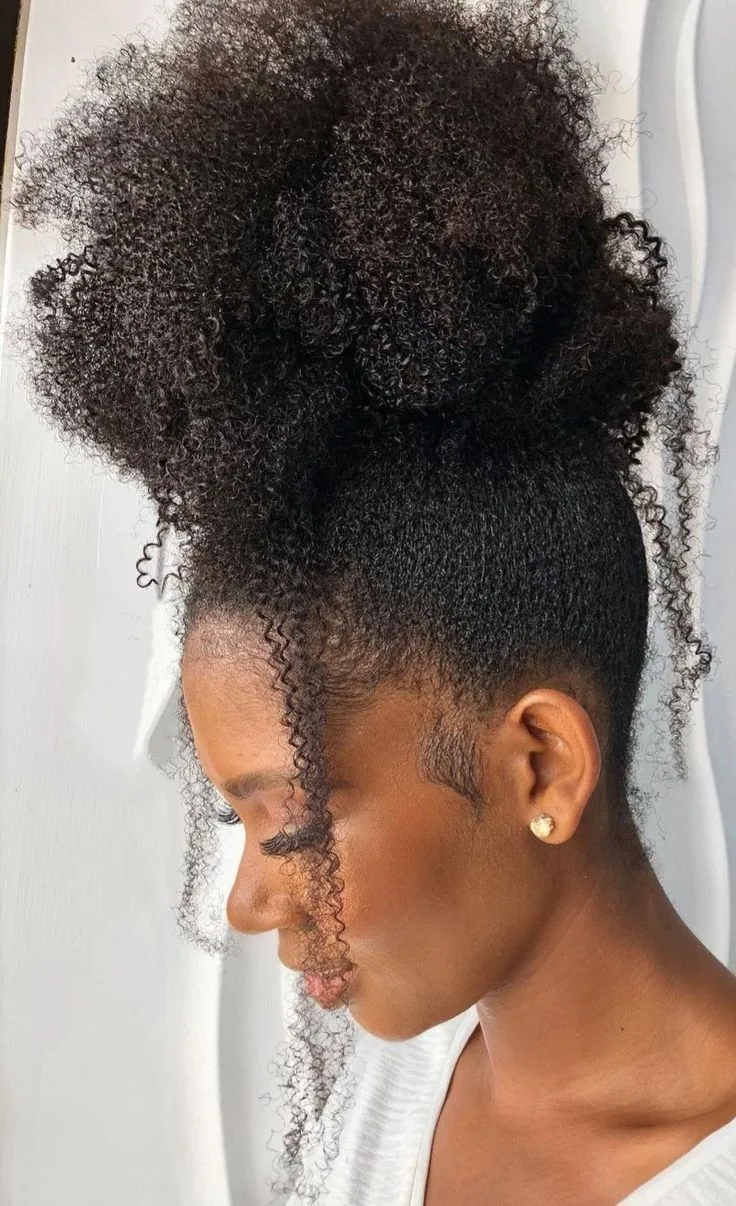
The curly high puff is the natural-hair stage style: the curls gathered high on the crown into a full, round puff, with the edges smoothed and the shape kept neat. It is beautiful, it is bold, and it is built for movement — the puff moves as one piece and holds its shape through turns and jumps, because the curls support each other. For dancers with natural curls, it is also the most comfortable stage style, since it works with the hair’s texture instead of fighting it with heat and tension.
How to style: moisturise the curls first, gather them with a soft elastic or a puff cuff rather than a tight band, and smooth the edges with gel on a soft brush. Pros: it needs no heat, it holds its shape all night, and it looks incredible under stage lights. Cons: it can be hard to pin a headpiece or a bow into a puff, so choose accessories that clip rather than pin. And never straighten natural hair just for a recital — a style that works with the texture will always hold better than one that fights it.
26. The Twisted Low Updo
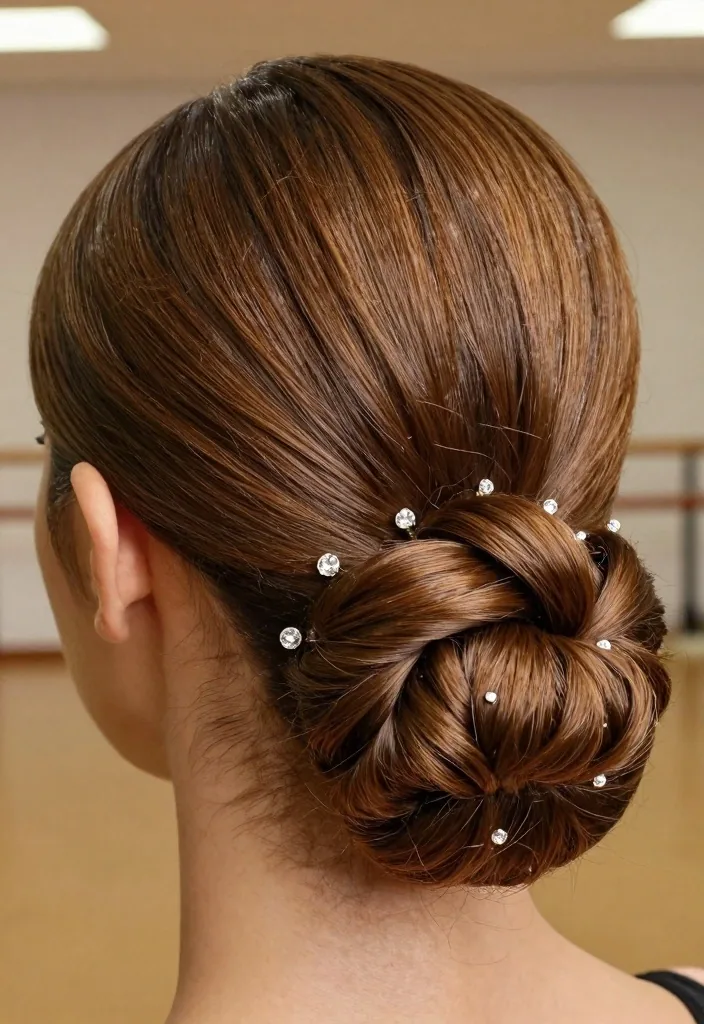
The twisted low updo is the style for dancers who want an updo that looks soft and romantic but holds like a braid: sections of hair twisted and pinned into a low, loose shape at the nape, with the twists visible as a woven pattern. It is more forgiving than a smooth bun, because the twists hide unevenness, and it is more interesting to look at from behind, where the audience sees it most. It suits ballroom, lyrical, and theatrical numbers, and it works on hair that is too short for a full bun but long enough to twist.
Best for: medium-length hair, and dancers who find a plain bun boring but need the same security. Time: about twenty minutes, and it helps to work with a little texturising spray so the twists grip each other. Common mistake: twisting too loosely, which lets the updo sag by the second number — twist firmly, pin each twist as you go, and finish with a light spray. The finished shape should feel solid when you press it, not soft and wobbly.
27. The Wavy Half-Up With a Bow
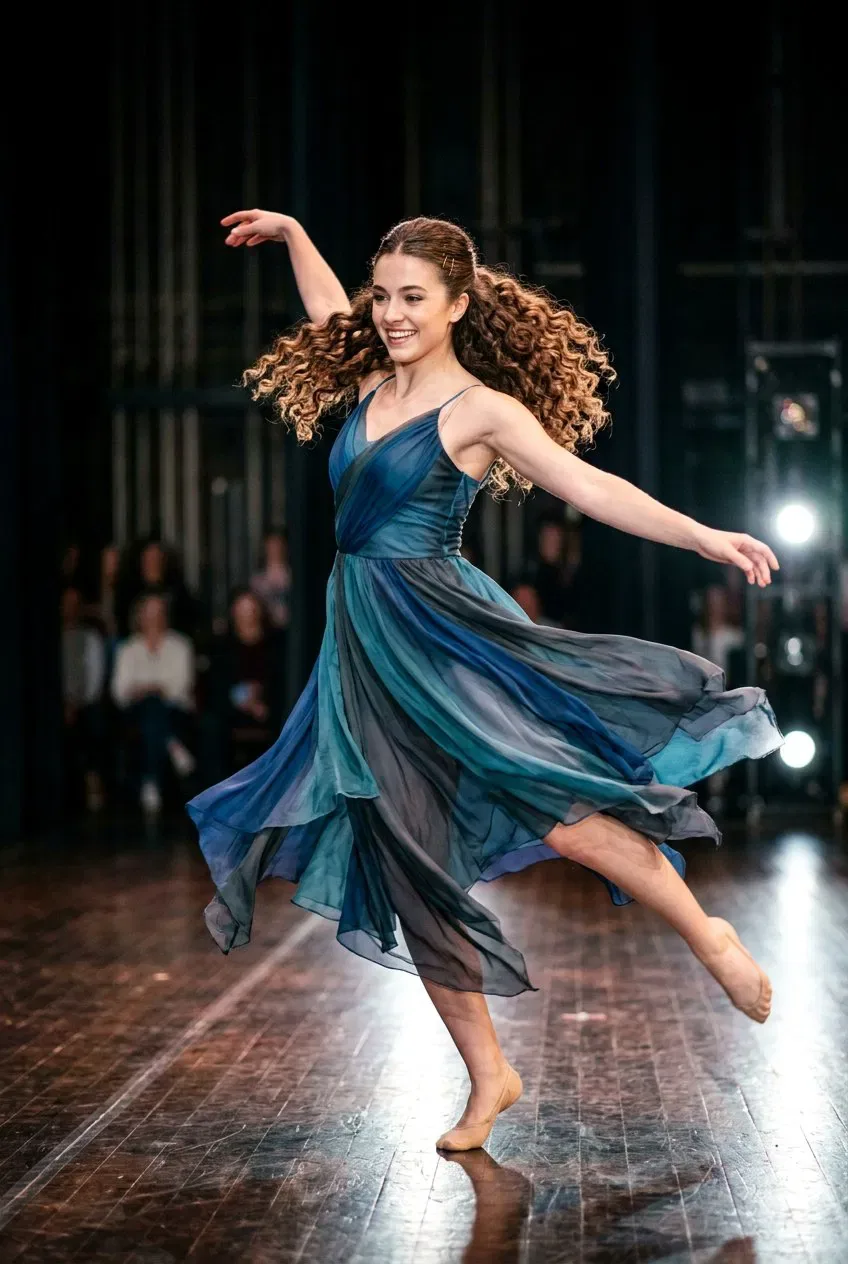
The wavy half-up with a bow is the sweetest style on this list and a favourite for young dancers: the top half of the hair pulled back and tied with a bow in the costume’s colour, the rest left down in soft waves. It keeps the hair off the face, it shows off the bow, and it lets a young dancer feel like herself on stage instead of a miniature adult. The bow should be a clip bow, not a tied ribbon, so it cannot come undone mid-number, and it should sit at the crown, not at the back, so the audience can see it.
Quick verdict: perfect for little dancers and for cheerful, light numbers; wrong for serious ballet or fast jazz, where loose hair gets in the way. Maintenance: the waves will drop a little under the lights, so curl them a touch tighter than you want them to look, and carry a spare bow in the kit — bows are the single most commonly lost item backstage. A wavy half-up with a bow is also the easiest style to rebuild between numbers, which is why teachers love it for group dances.
28. The Sleek Bob With a Sparkle Clip
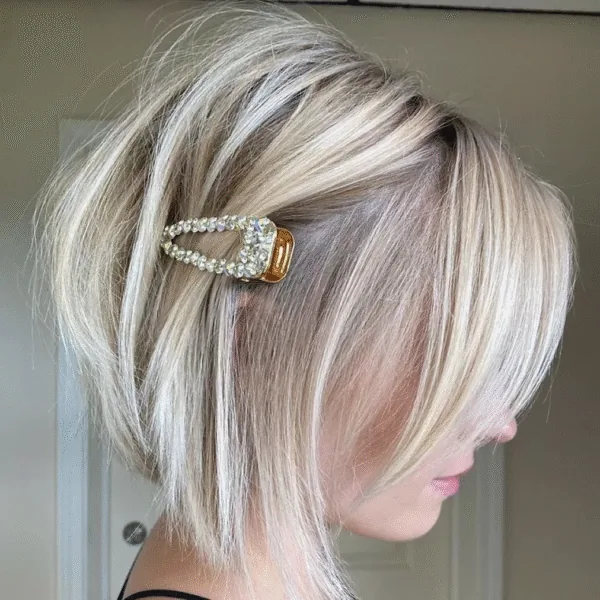
Short hair can be a recital style too, and the sleek bob with a sparkle clip proves it: a smooth, sharp bob, tucked behind one ear, with a single sparkle clip holding the front back and catching the light. It is clean, modern, and graphic, and it suits jazz and contemporary numbers where the dancer wants a strong, confident look. The bob needs to be truly sleek — flat-ironed, smoothed with serum, and sprayed lightly — because a bob with flyaways looks unfinished under lights.
Pros: it takes five minutes, it needs no pins in the back, and it will not come undone, because there is nothing to come undone. Cons: a bob cannot be pulled back if the choreography involves floor work or lifts, so it suits upright numbers best. Who should avoid it: dancers whose bob is growing out past the chin, where it starts to fall into the face — at that length, a clip on both sides or a small half-up will work better. One clip is the rule; two sparkle clips start to look like a costume.
29. The Pixie With a Glitter Part
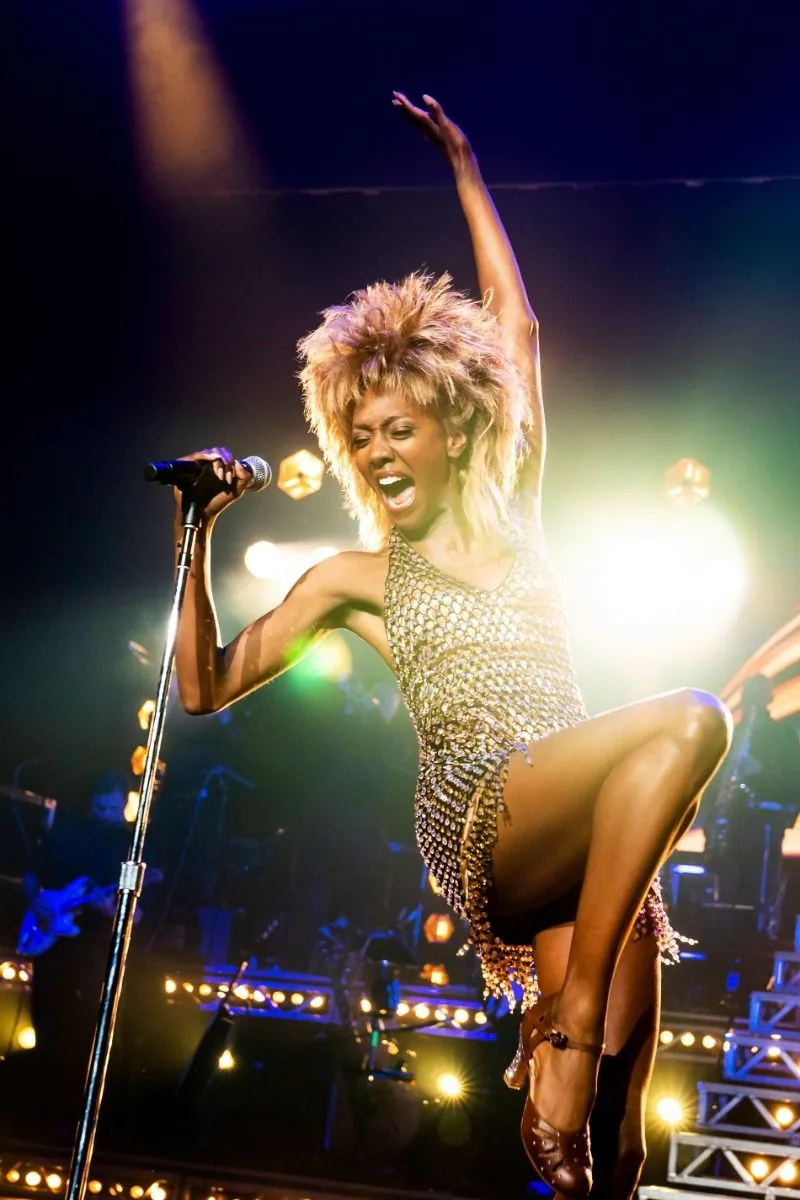
The pixie with a glitter part is the boldest short-hair stage look: a sharp pixie cut, a clean side part, and a line of hair glitter along the part that catches the spotlight every time the dancer turns. It is made for jazz, hip hop, and theatrical numbers where the dancer wants to look fierce and modern, and it needs no pins, no elastics, and no maintenance at all — the style is the cut, and the glitter is the costume. Apply the glitter with a little gel so it stays put through sweat, and keep it to the part line only, so it reads as a deliberate detail rather than a mess.
Best for: confident dancers with a pixie cut who want their hair to be part of the performance. Common mistake: using craft glitter instead of cosmetic hair glitter, which is coarser and can irritate the scalp — buy the cosmetic kind, and test it on the skin first. Time and cost: five minutes and a small pot of glitter that will last a whole season. And the pixie itself is the most practical recital haircut of all: it never falls in the face, it never needs re-pinning, and it dries in minutes after a sweaty number.
30. Loose Waves With Secure Sides
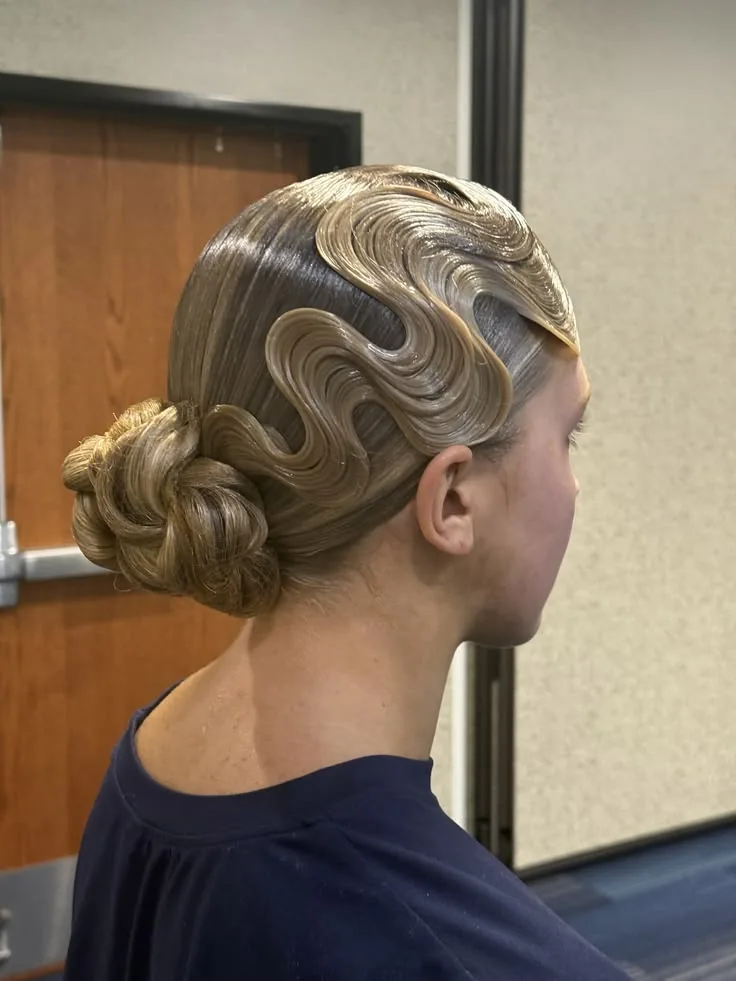
Loose waves with secure sides is the compromise every lyrical dancer wants: the hair down and moving, but the front pinned back so it never falls into the face. Take the two front sections, twist them back, and pin them flat behind the ears with pins that match the hair colour; the rest of the hair falls in soft waves over the shoulders. The waves move beautifully in a slow, lyrical piece, and the pinned sides mean the dancer never has to push hair out of her eyes mid-number, which is the fastest way to break character.
How to style: curl the hair in large sections with a wide-barrel iron, brush the curls out into soft waves, and pin the sides with two pins each, crossed in an X so they cannot slide. Quick verdict: gorgeous for lyrical and contemporary solos, risky for fast group numbers where the loose hair can catch on a partner. Maintenance: a quick brush-through between numbers and a check that the pins are still crossed. It is a style that looks effortless, and the effort is all in the pinning.
31. The Dutch Braid Crown
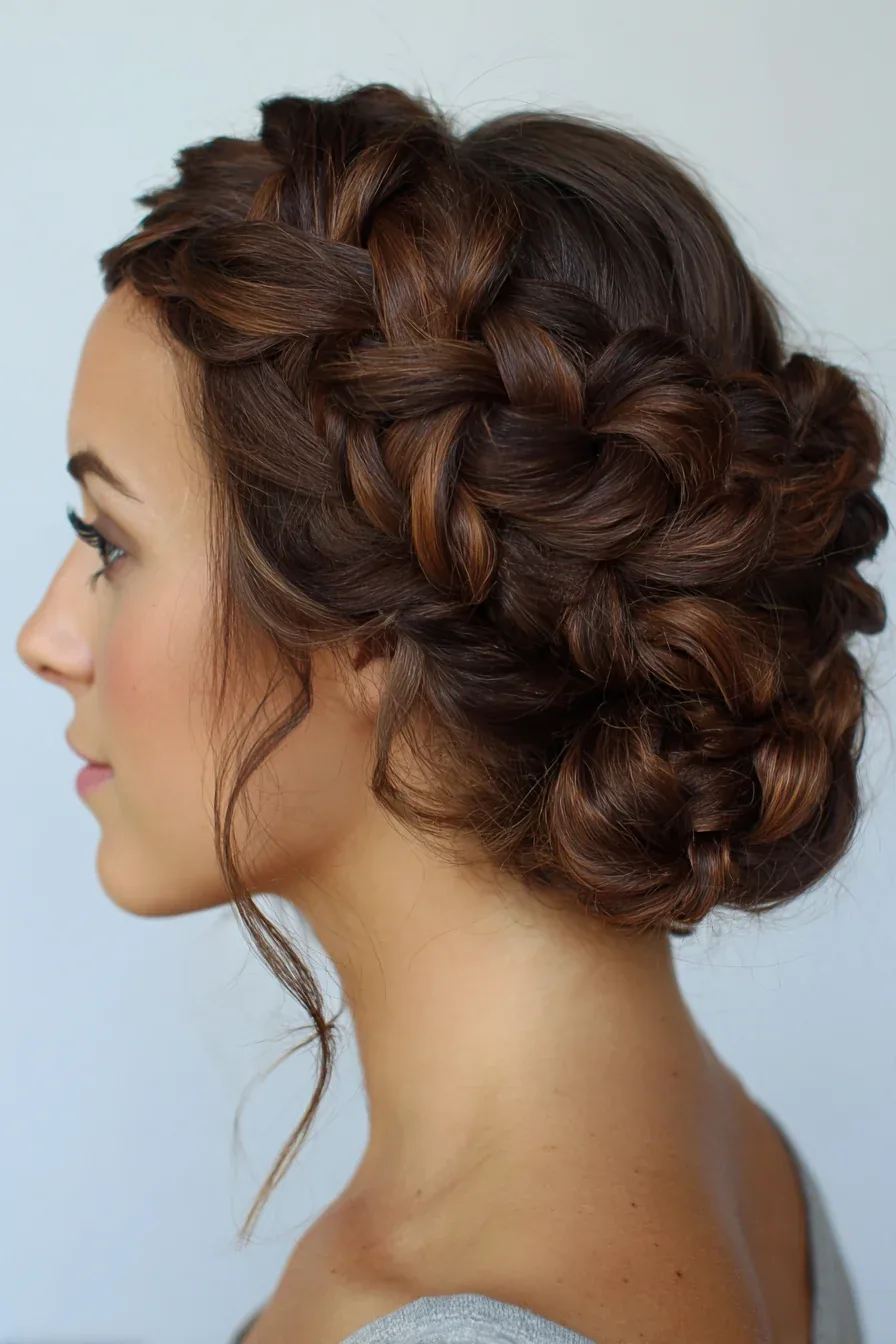
The Dutch braid crown is the braided crown with extra dimension: because a Dutch braid is woven under instead of over, the braid sits on top of the hair like a raised rope, and the crown looks bolder, more sculpted, and more visible from the back rows. It is the crown to choose when the audience is far away, or when the costume is simple and the hair needs to carry more of the look. Start at one ear, braid around the hairline, and pin the end underneath, pulling the braid out slightly to make it look full.
Pros: it is the most visible and most secure crown style, and it hides flyaways completely. Cons: it takes the longest to build of any crown, about twenty-five minutes, and it needs a confident braider — an uneven Dutch braid shows more than an uneven French braid. What to ask your stylist: ask them to keep the tension even all the way around, because a crown that is tight at the front and loose at the back will slide. Once it is in, though, it will hold through anything, including a finale with lifts.
32. The Wrapped Low Bun
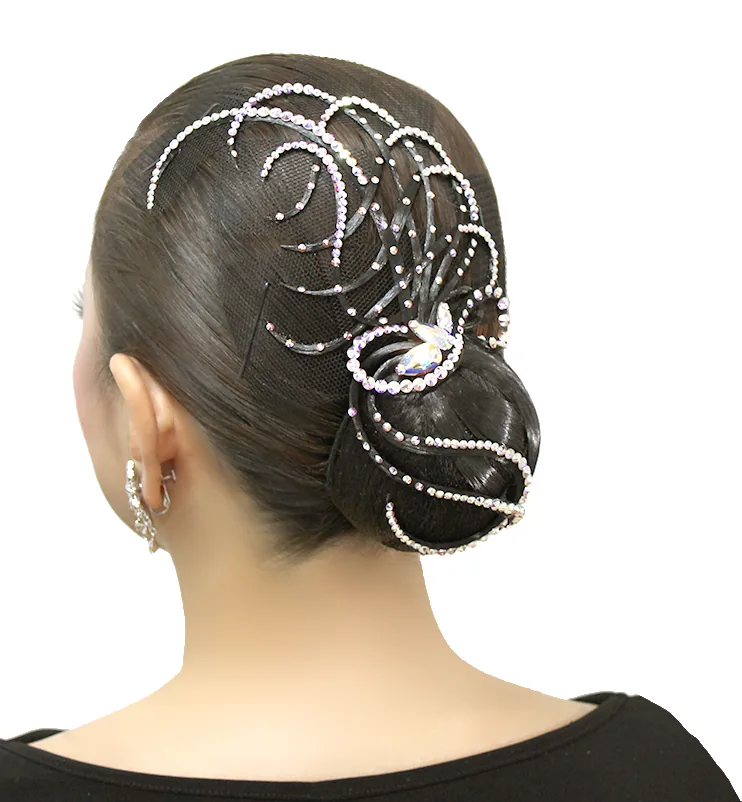
The wrapped low bun is the classic bun’s elegant variation: a low bun at the nape, with a wide section of hair wrapped around its base like a band, hiding the elastic and the pins completely. The wrap gives the bun a clean, finished look from every angle, and it adds an extra layer of hold, because the wrapped hair presses the bun flat against the head. It is a beautiful choice for ballroom and formal numbers, and it works on hair that is too fine for a plain bun, since the wrap adds bulk and grip.
How to style: build a low ponytail, leave out a wide section from underneath, twist the ponytail into a bun, then wrap the spare section around the base and pin it underneath. Common mistake: wrapping too tightly, which squeezes the bun out of shape — wrap firmly but not hard, and pin the end underneath where it cannot be seen. Time: about fifteen minutes. The wrapped bun is also a good choice for dancers with layers, because the wrap catches the short pieces that would otherwise stick out of a plain bun.
33. Side-Swept Curls With Hidden Pins
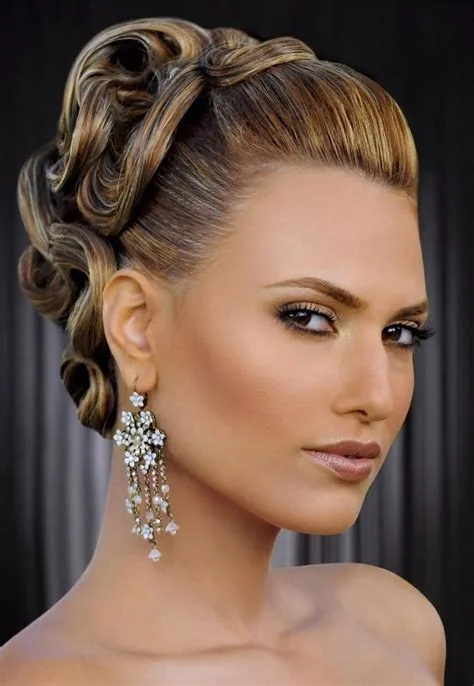
Side-swept curls with hidden pins are the old-Hollywood stage look: all the hair swept to one side in deep, glossy curls, pinned invisibly at the back so the shape holds even when the dancer turns. It is glamorous, it is dramatic, and it suits a waltz, a ballroom number, or a theatrical piece where the dancer is playing a character with old-fashioned elegance. The curls are set with a large iron, brushed into waves, and pinned at the nape with pins hidden inside the curl, so the audience sees a waterfall of hair and none of the work.
Best for: adult dancers and formal numbers, and for dancers with long, thick hair that holds a curl well. Who should avoid it: dancers with fine hair that drops a curl in minutes — a little setting lotion and a cooler iron will help, but a style that depends on curls needs hair that keeps them. Maintenance: check the hidden pins between numbers, because a pin that works loose will show in the curl. And keep a small brush in the kit: one gentle brush-through restores the wave without breaking it.
34. Double Buns for the Stage
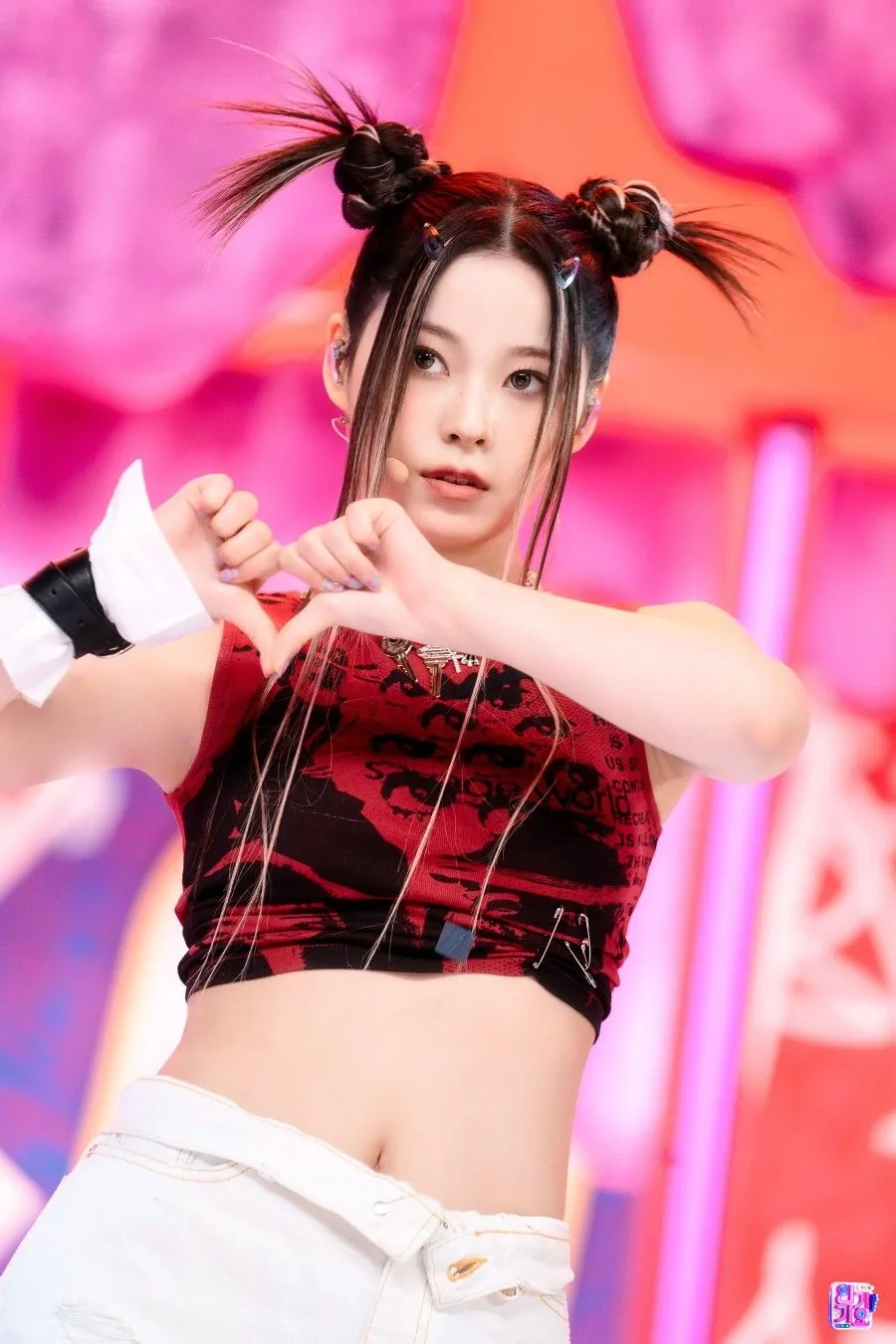
Double buns — two neat buns sitting high on either side of the head — are the playful finale of this list, and they belong on stage for jazz, hip hop, and character numbers where the dancer wants to look fun and full of energy. They are also surprisingly practical: two small buns are lighter and more secure than one big one, and they balance each other, so the style never slides to one side. Part the hair down the middle, build a bun on each side at the same height, and cover both with nets. Symmetry is everything — if one bun sits higher than the other, the whole style looks lopsided from the audience.
Quick verdict: joyful, secure, and perfect for young dancers and high-energy numbers; wrong for classical ballet, where a single bun is the rule. Pros: they are comfortable, they hold through anything, and they look adorable in photos. Cons: they take twice the pins and twice the time of a single bun, and they need a mirror check from behind, because you cannot feel whether they match. Build them early, check them in two mirrors, and they will carry the dancer through the liveliest number of the night.
How do I keep my dance recital hairstyle from falling out?
Keep your dance recital hairstyle from falling out by building it on a secure foundation: day-old hair, a tight ponytail base, pins pushed in from the outside edge toward the centre, and a hairnet over any bun. Braids and twists hold better than smooth styles held only by spray, because the hair locks into itself. Test the style with ten turns at home before the recital, and add two more pins and a second net if anything moves.
What is the best hairstyle for a ballet recital?
The best hairstyle for a ballet recital is the classic ballet bun, built high at the crown with a hairnet that matches your hair colour. It is the style teachers ask for, it is neat from every angle, and it stays put through turns, jumps, and a whole evening under stage lights. For very young dancers, a low chignon with a satin bow is a softer alternative that is just as secure.
Can I do my own hair for a dance recital?
Yes, you can do your own hair for a dance recital — most recital styles, including the classic bun, the braided crown, and the low ponytail, are designed to be built at home with a brush, pins, and a hairnet. Practise the style twice before the day, work with day-old hair, and give yourself thirty minutes so you are not rushing. For a complicated style like a French twist or a vintage pin-curl updo, a stylist or a practised friend is worth it.
How early should I do my recital hair?
Do your recital hair one to two hours before the performance, and build braids the night before if you can, since braids hold overnight and still look perfect the next evening. Doing it too early means the style loosens before you dance; doing it too late means rushing, and rushed hair never holds. For a long recital day with several numbers, build the most secure style first and plan quick changes between numbers rather than rebuilding from scratch.
What hair accessories are allowed at a dance recital?
Most recitals allow a bow, a hairpiece, or a few pins that match the costume, but many teachers ban large accessories, glitter, and anything that could fall off on stage. Always check with the teacher before the day. As a rule, the accessory should match the costume’s colour, be no wider than the bun or ponytail it sits on, and be clipped or pinned securely, never just tied on.
How do I stop flyaways under stage lights?
Stop flyaways under stage lights by smoothing the hairline with a little gel on your fingertips before you build the style, then covering any bun with a hairnet and finishing with a light mist of strong-hold hairspray. Stage lights make every stray hair glow, so a hairnet is essential, not optional. Between numbers, smooth the hairline again with a fingertip of gel — it takes ten seconds and makes the style look freshly done.
Should I wash my hair on recital day?
No, do not wash your hair on recital day — wash it the night before instead. Freshly washed hair is too clean and slippery to pin, and braids and buns built on it will loosen within an hour. Day-old hair has natural grip, holds pins and braids far better, and styles faster. If your hair feels oily, a puff of dry shampoo at the roots is enough, and it adds grip as well as freshness.
What hairstyle works for short hair at a dance recital?
For short hair at a dance recital, a sleek bob with a sparkle clip or a pixie with a glitter part both work beautifully and need no pins at all. If the hair is long enough to gather, a small half-up style with the front sections pinned back keeps it off the face. Short hair is actually the most practical recital hair: it never falls in the face, never needs re-pinning, and dries in minutes after a sweaty number.
How do I do a quick hair change between dance numbers?
Do a quick hair change between dance numbers by building the second look inside the first: a low bun that drops into a ponytail when you pull two pins, a braided crown that becomes a side braid when you unpin one end, or a top knot that falls into a high ponytail. Practise the change at home with a timer, keep the spare pins and the second accessory in a small bag at the side of the stage, and lay everything out in the order you will need it.
How many bobby pins do I need for a recital bun?
You need at least eight to ten bobby pins for a recital bun — three at the base in a triangle, two at each side, and a few spares — plus a hairnet and U-shaped pins for extra hold. Pack at least twenty pins in your recital kit, because pins vanish backstage, and always use pins that match your hair colour so they disappear into the style instead of showing up in photos.
Conclusion
A dance recital is the one night when your hair has a real job to do, and the 34 hairstyles in this guide are all chosen with that job in mind: styles that hold through pirouettes and jumps, that sit neatly under a bow or a hairpiece, that photograph cleanly from the back rows, and that let you forget about your hair the moment the music starts. From the classic ballet bun to the braided crown, from a sleek performance ponytail to a pair of playful double buns, there is a style here for every kind of dance, every age, and every length of hair — and every one of them can be built at home with a brush, a handful of pins, and a little practice.
Start with the guides, not the gallery. Think about what your recital actually holds — the kind of dance, the number of costume changes, the heat of the stage lights, and how much time you have backstage — and pick the style family that fits it. Build it on day-old hair, pin it in a triangle, cover it with a net, and test it with ten turns in your kitchen before the day. Pack the small kit the night before, check the bun between numbers, and choose the version that feels like you at your best. Your hair should be the least of your worries on stage. Now it can be.