From Barre to Hip-Hop: 41 Hairstyles for a Dance Class That Stay Put Through Every Routine
Walk into any dance studio ten minutes before class and you will see the same quiet ritual at the mirrors: dancers twisting, pinning, braiding and re-doing their hair one last time before the music starts. It looks like vanity, but it is pure practicality. A loose strand across the eyes ruins a turn, a bun that slips mid-combination breaks your focus, and hair that falls into your face during a jump is not just annoying, it is a safety issue. That is why the right hairstyles for a dance class matter as much as the right shoes. The best dance hair disappears the moment class begins, so all you think about is the choreography.
This guide gathers 41 styles built for real classes, not the stage: buns that survive pirouettes and floor work, braids that hold through hip-hop isolations, ponytails that stay put through jumps, and quick fixes for the ten minutes between back-to-back classes. Whether you dance ballet, jazz, hip-hop, tap, contemporary or ballroom, and whether your hair is long, short, curly or fine, you will find a style that holds from warm-up to cool-down. Each idea comes with honest notes on what it survives, what it cannot, and how long it takes, so you can walk into class knowing your hair will behave while you dance.
How Each Dance Style Changes What Your Hair Must Do
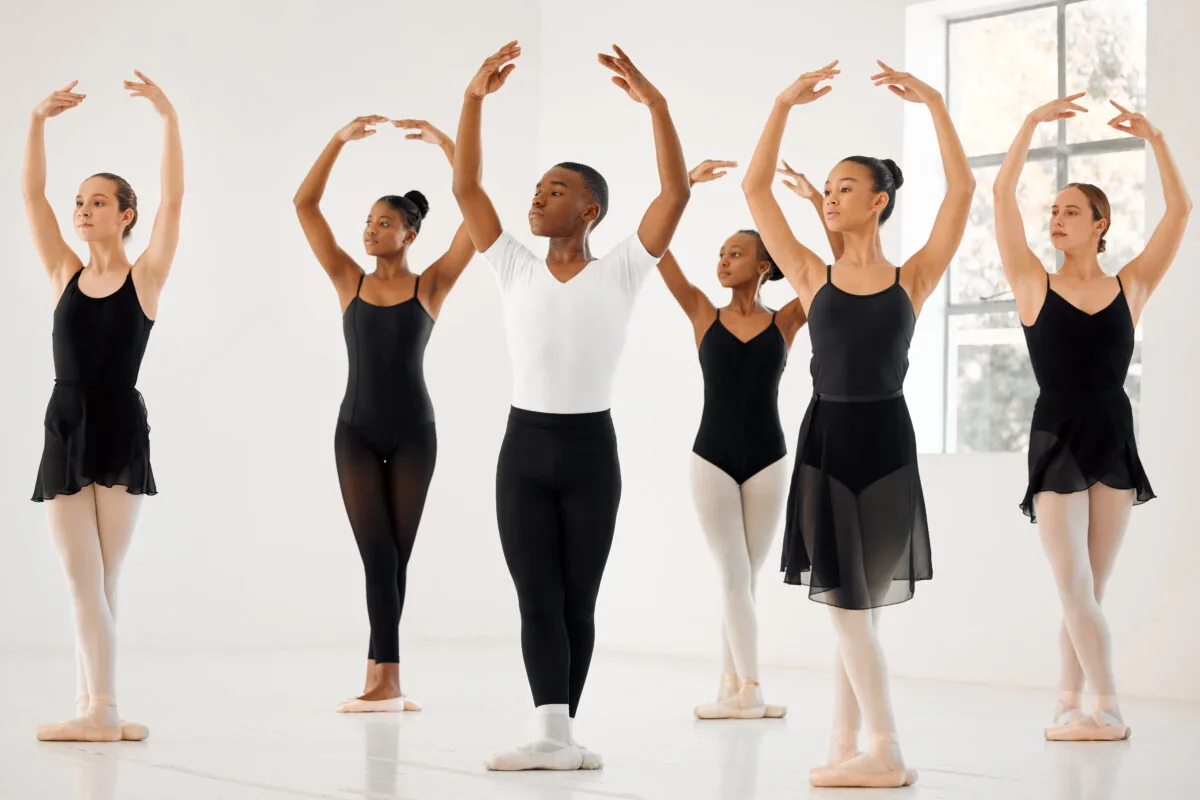
Ballet asks the most of your hair: the head must stay still and elegant through turns, the neck line must be clean, and nothing may move at all. A classic bun is not a tradition for its own sake, it is engineering. Jazz is looser but faster, with head rolls, isolations and sharp direction changes that test every pin. Hip-hop is the most violent test of all, with popping, locking, head spins and floor work that will destroy any style held together by hope alone.
Tap keeps the head relatively still, so you can get away with softer styles, but the constant bouncing loosens elastics over an hour. Contemporary and lyrical involve floor work, rolls and inversions, which means your hair will touch the floor, so it must be fully contained or it will pick up dust and tangle. Ballroom is the opposite problem: the style must look polished from every angle while surviving quickstep and jive. Before you pick a style, name your class. A bun that is perfect for ballet may be far too rigid for hip-hop, and a ponytail that flies beautifully in contemporary will unravel in a tap class.
The Spin-and-Jump Test: Does Your Style Actually Stay Put?
Every style in this guide should pass one simple test before you trust it in class. Stand in the middle of your room, do four turns in a row, then jump five times, then roll your head slowly in a circle. If anything has moved, loosened or started to slip, the style is not class-ready. It is better to discover that at home than halfway through a combination when your teacher is watching.
The test also tells you where the weak point is. If the bun sags, you need more pins through the centre rather than around the edge. If the front pieces fall, you need a headband or a braided front section, not more hairspray. If the elastic slides down, the hair was too smooth or too heavy for that elastic, and a fabric-covered band or a second elastic will fix it. Test every new style the night before class, not ten minutes before it starts, and always test it with the same pins and products you will actually use.
Sweat-Proofing: Hair That Survives a Full Hour of Cardio Dance
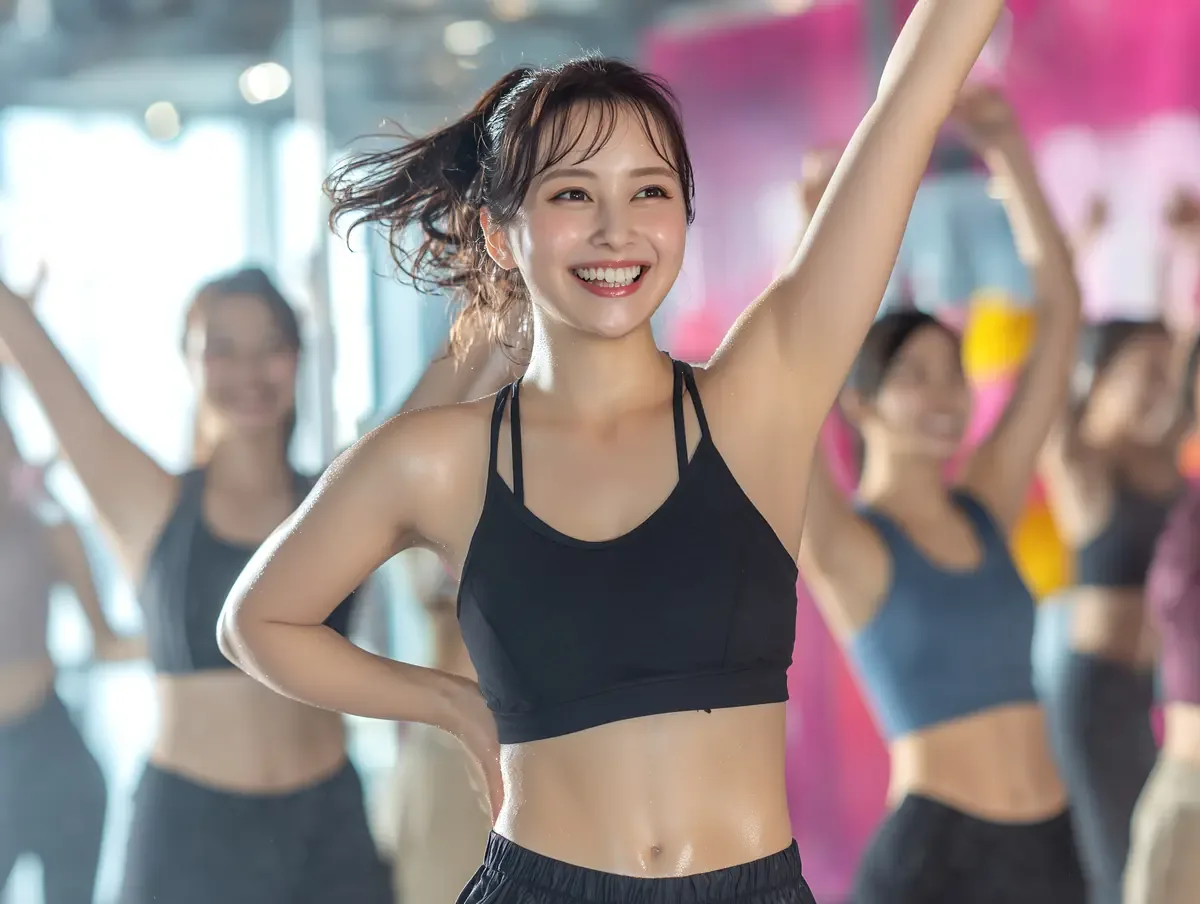
Dance is exercise, and exercise means sweat, and sweat is the quiet enemy of every hairstyle. It loosens pins, softens hairspray, makes the hairline frizzy and turns a sleek bun into a halo of flyaways by the halfway mark. The fix starts before class: dry shampoo at the roots absorbs sweat before it starts, a light mist of strong-hold spray sets the style, and a fabric headband or sweatband at the hairline catches the worst of it.
The style itself matters just as much as the products. Braids handle sweat better than buns, because the hair is locked to the scalp in sections and cannot slide as a single mass. Ponytails with a wrapped base survive sweat better than bare elastics, which slip when damp. And whatever you wear, carry a small towel and a spare elastic in your dance bag. A thirty-second reset at the water break, re-pin the front, tighten the elastic, smooth the flyaways, saves the second half of class.
Class Hair vs Recital Hair: What Changes and What Stays
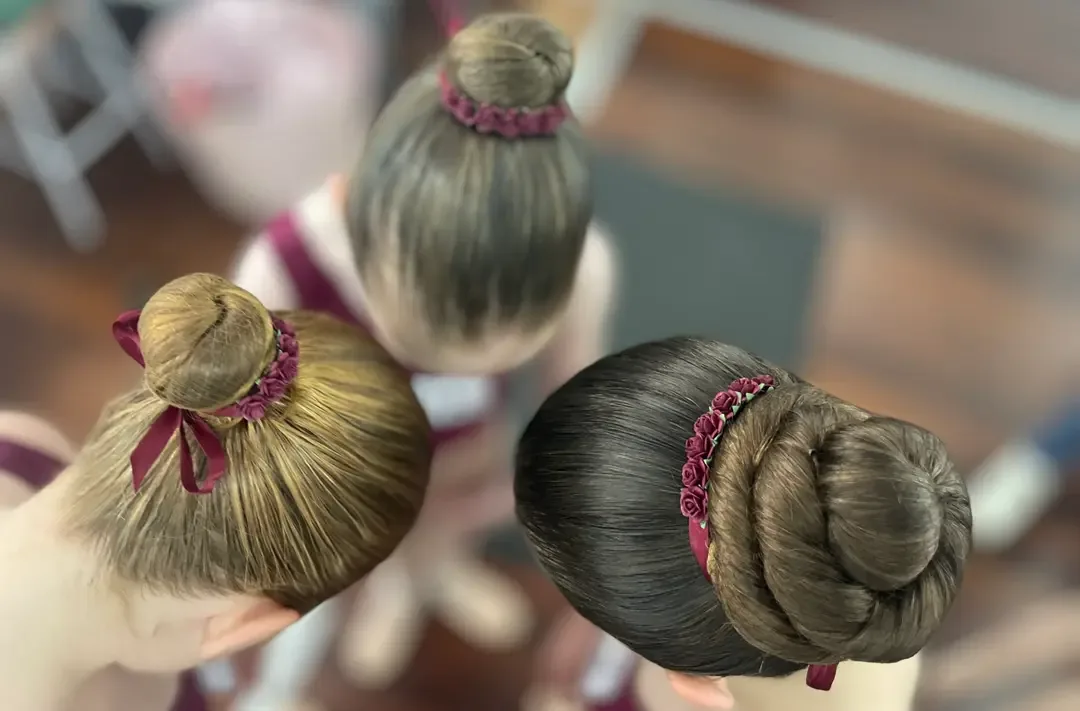
Class hair and recital hair look similar from the audience, but they solve different problems. Recital hair is built to be seen: slicked, sprayed, jewelled, photographed from the front row, and it only has to survive one performance. Class hair is built to be forgotten: comfortable for two hours, quick to do at 7 a.m., easy to redo in a hallway, and gentle enough to wear five days a week without breaking your hair.
That changes the rules. In class, a hairnet is optional and often skipped, because nobody is judging the silhouette from the back row. Gel is lighter, because you will wash it out tonight and do it all again tomorrow. Pins are fewer, because a style that needs twelve pins to survive class is a style that will hurt by the end of the week. The overlap is the foundation: the same bun, the same braid, the same ponytail, just done faster, softer and with less product. Master the class version first, and the recital version is only a matter of adding shine.
Quick Styles Between Back-to-Back Classes
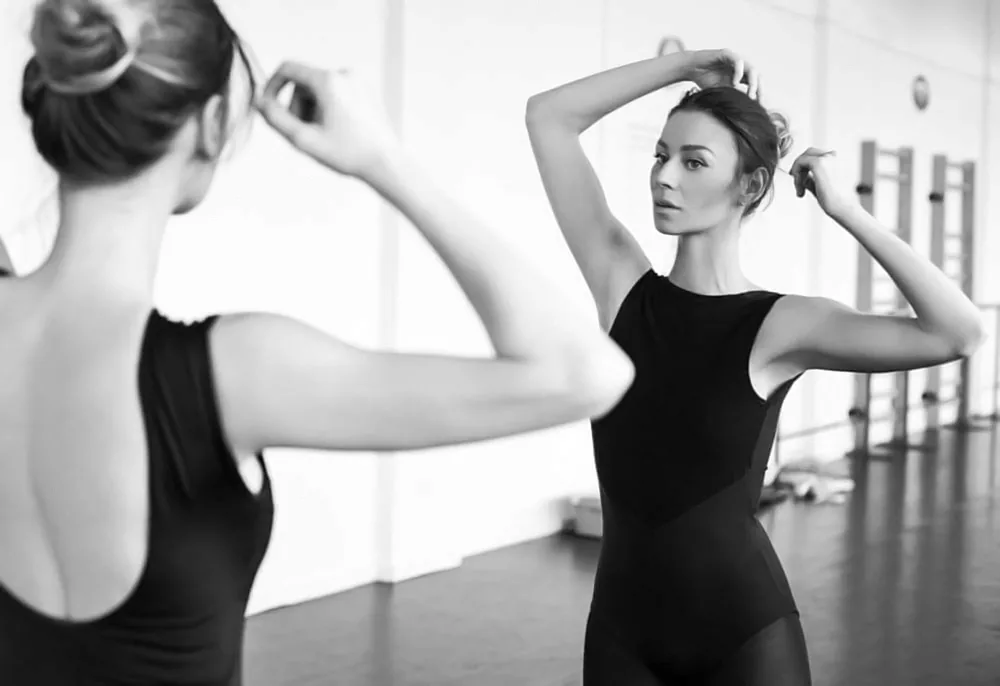
Back-to-back classes are the hardest hair problem in dance, because you get ten minutes, a crowded hallway and damp hands, and you are expected to walk into the next class looking ready. The trick is to choose your second style before the first class even starts. A braid can become a bun by coiling it. A ponytail can become a top knot with one twist. A bun can be loosened into a low ponytail without a single new pin.
Keep a tiny kit in your dance bag and never unpack it: three bobby pins, two spare elastics, one claw clip, a mini brush and a travel dry shampoo. The claw clip is the hero here, because it turns any half-undone style into a secure twist in five seconds. Do not attempt a full re-braid between classes; it takes too long and you will be late. Save the full restyle for home, and use the ten minutes for a reset, not a rebuild.
Hair Accessories That Stay Put (and the Ones That Fly Off)
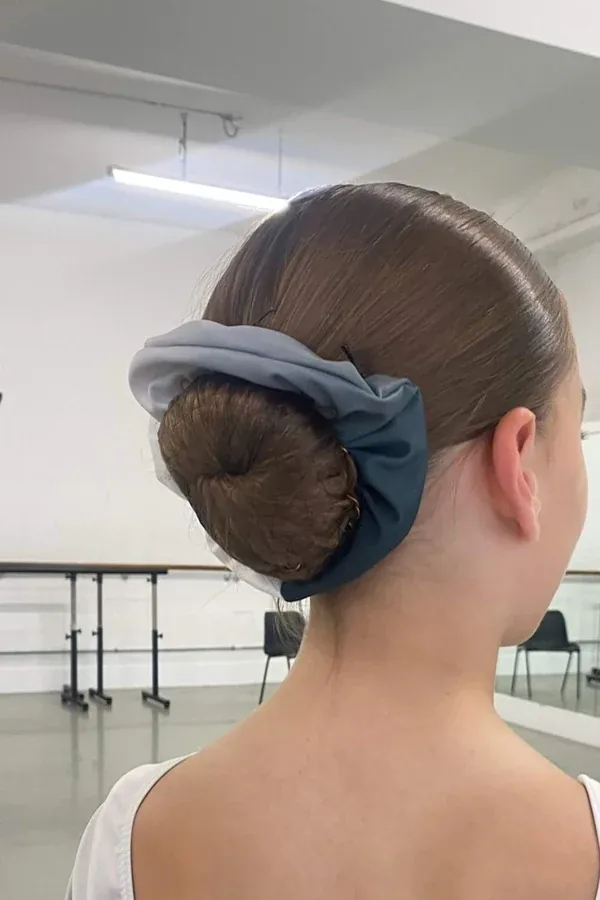
Not all hair accessories survive a dance class. Bobby pins with a wavy grip hold; straight, cheap pins slide out within minutes. Fabric-covered elastics grip damp hair; thin rubber bands snap or slide. Large claw clips hold a twist through jumps; small decorative clips pop open on the first turn. The rule is simple: if an accessory was designed for looking pretty at a desk, it will not survive a plié.
The winners are boring but reliable. U-shaped hairpins, crossed bobby pins, satin scrunchies, wide fabric headbands and matte claw clips. Hairnets are worth having for ballet, even in class, because they flatten flyaways and hold a bun through turns better than spray alone. Avoid anything metal and thin, anything with a heavy jewel, and anything that dangles: it will either fall out, hurt when it hits the floor, or catch on another dancer. Test every accessory with the spin-and-jump test before class day.
Styles by Hair Length and Texture
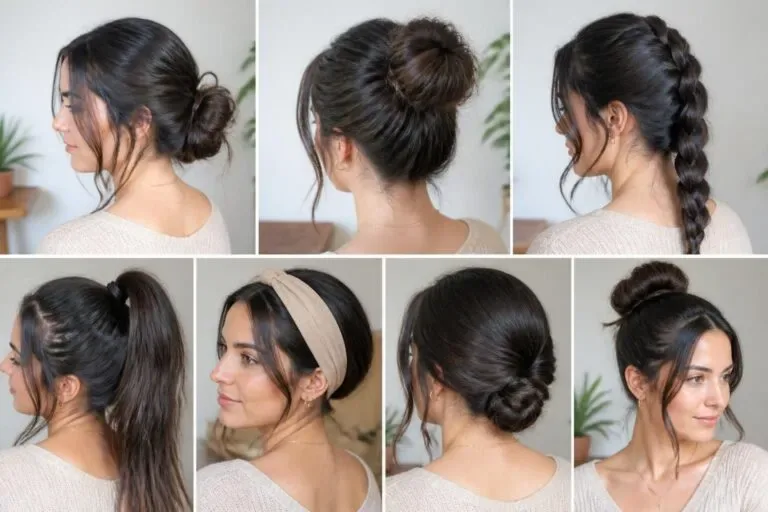
Long hair has the most options and the most risk in a dance class. It can be braided, bunned, twisted and coiled, but it is also heavy, and a heavy bun pulls at the neck during an hour of turns. Split the weight: two braids instead of one, a braided bun instead of a plain bun, or a low style instead of a high one. Medium hair is the sweet spot, long enough to braid and bun, short enough to stay light, and it suits almost every style in this guide.
Short hair is the easiest in class, since a pixie or a bob barely moves, but the front pieces still need managing with a headband or clips. Curly hair needs the most care: it must be contained without being pulled flat, so pineapple updos, high puffs and loose braids work better than tight ponytails. Fine, straight hair is the slipperiest, so it needs texture first, a little dry shampoo or texturising spray, before any pin will hold. Whatever your hair, the test is the same: turn, jump, shake, and check that nothing moves.
The After-Class Refresh: From Sweaty Bun to Street Hair
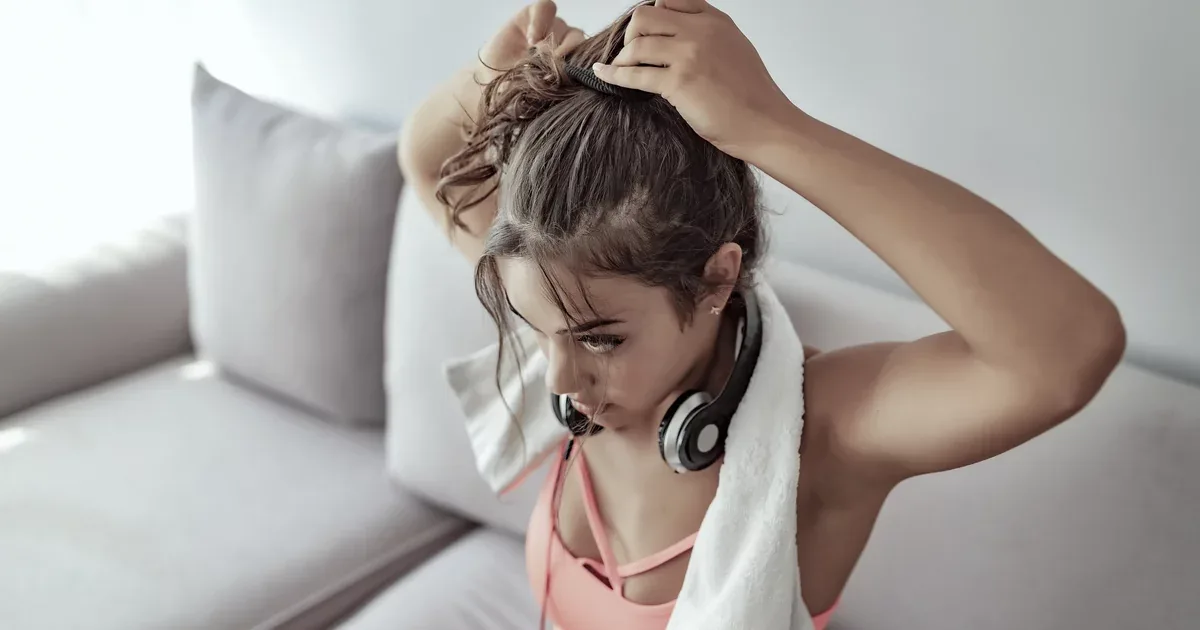
The class ends, the bun comes down, and the hair underneath is damp, dented and flattened. The after-class refresh is a small ritual that turns sweaty dance hair back into normal hair in five minutes. Start with dry shampoo at the roots, massaged in and brushed through, which absorbs the sweat and lifts the flatness. Then brush the hair out gently, working from the ends upward so you do not drag tangles through damp hair.
If you are heading straight out, a loose low ponytail or a soft braid hides the worst of the dampness and looks intentional rather than exhausted. A silk scarf or a headband covers a frizzy hairline and adds polish in seconds. At home, rinse rather than shampoo every time if you dance daily: water alone removes sweat, and a full wash every day strips the hair. Save the deep wash for two or three times a week, condition the ends, and your hair will survive a full dance schedule without breaking.
The Everyday Ballet Bun
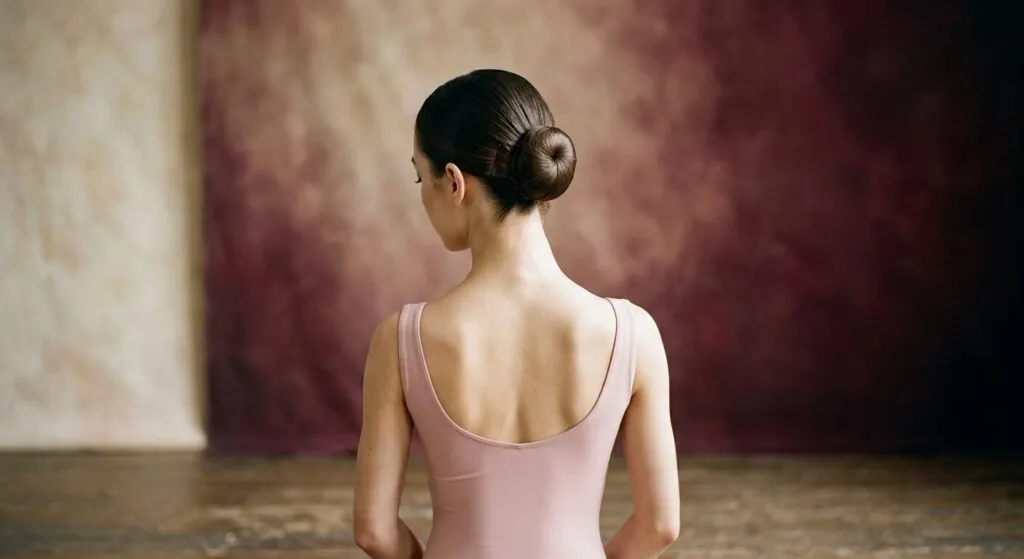
Best for: ballet class, and the first style every dancer should master. The everyday ballet bun sits high and centred, so the neck line stays clean and the head can turn freely without hair shifting your balance. Unlike a recital bun, the class version skips the heavy gel and the hairnet, so it takes two minutes and does not hurt by the end of the week.
How to style: brush the hair into a high ponytail, twist it into a coil and wrap it flat against the head, pinning through the centre of the coil with U-shaped pins rather than around the edge. Finish with a light mist of spray, not a helmet of it. Common mistake: building the bun too high, which pulls at the hairline during turns. Place it at the crown, where the head balances naturally, and it will stay comfortable for the whole class.
Maintenance: a ballet bun rarely needs attention mid-class, but if it starts to sag, push one pin vertically through the middle of the coil instead of rebuilding it. A bun that sits flat and centred also photographs well in class videos, and it leaves the neck free so you stay cool through barre work.
The Sock Bun for Extra Hold Through Turns
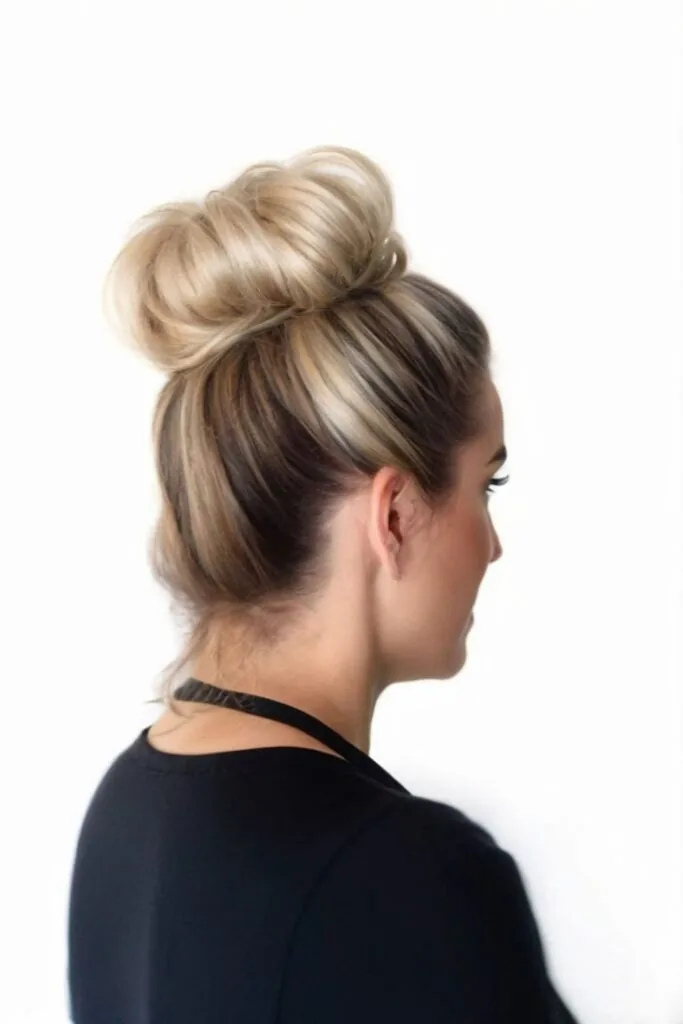
A sock bun looks like an ordinary ballet bun, but it hides a small secret: a fabric donut that gives the bun its shape and, more importantly, its grip. The donut spreads the hair evenly, so the weight is balanced and the bun does not slide to one side during turns. For dancers whose hair is fine or slippery, it is the difference between a bun that lasts and one that unravels by the second combination.
Pros and cons: it is quick once you have practised, it gives a perfectly round shape every time, and it holds through pirouettes better than a plain coil. The downside is bulk: a very large donut can look oversized on a small head, so choose a donut that matches your hair thickness. Who should avoid it: nobody for practical reasons, but if your hair is very thick, a donut adds unnecessary weight, and a plain coiled bun will hold just as well.
Cost and time: a donut costs almost nothing and lasts for years, and the style takes about three minutes. Quick verdict: the most reliable bun in this guide for dancers who turn a lot, and the best fix for a bun that always slides.
The Braided Ballet Bun
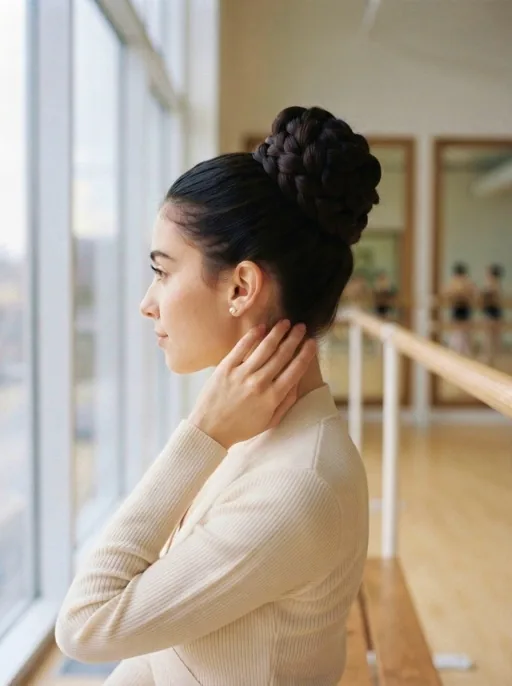
This style braids the hair first and then coils the braid into a bun, so the hair is locked twice over: the braid holds the length, and the bun holds the braid. It is the style to choose for long classes, exam days and any session where you will not get a proper break to fix your hair. It also looks more interesting than a plain bun, which matters in classes where the teacher watches the line of the body from every angle.
Best for: long or thick hair that escapes from ordinary buns. The braid stops the bun from unravelling, and the bun stops the braid from swinging. Maintenance: almost none, which is the point. Common mistake: coiling the braid too tightly, which makes the bun stick out and catch on a leotard strap. Coil it flat against the head and pin through the braid itself, not just around it, and it will sit neatly for hours.
The High Ponytail That Survives Jumps
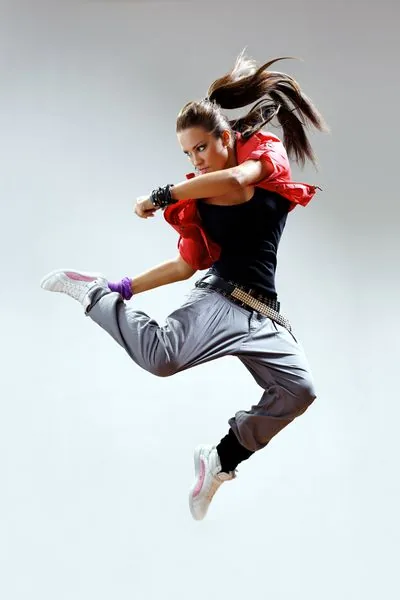
A high ponytail is the natural choice for jazz and hip-hop, where the hair is allowed to move, but a plain ponytail will not survive a jumping combination. The trick is the anchor: two elastics instead of one, the second placed a centimetre below the first, and a strand of hair wrapped around the base to stop the whole thing sliding down. The ponytail still swings, which looks great in jazz, but it swings as one controlled unit instead of unravelling.
How to style: gather the hair high, secure it with a strong fabric elastic, then add the second elastic and wrap a thin strand around both, pinning the end underneath. Who should avoid it: anyone with very heavy hair that pulls at the crown after half an hour. For heavy hair, a lower ponytail or a braided ponytail shares the weight better and hurts less by the end of class.
Quick verdict: the most fun ponytail in this guide, and the only high ponytail that genuinely survives a full hour of jumps.
A Low Ponytail with a Wrapped Base
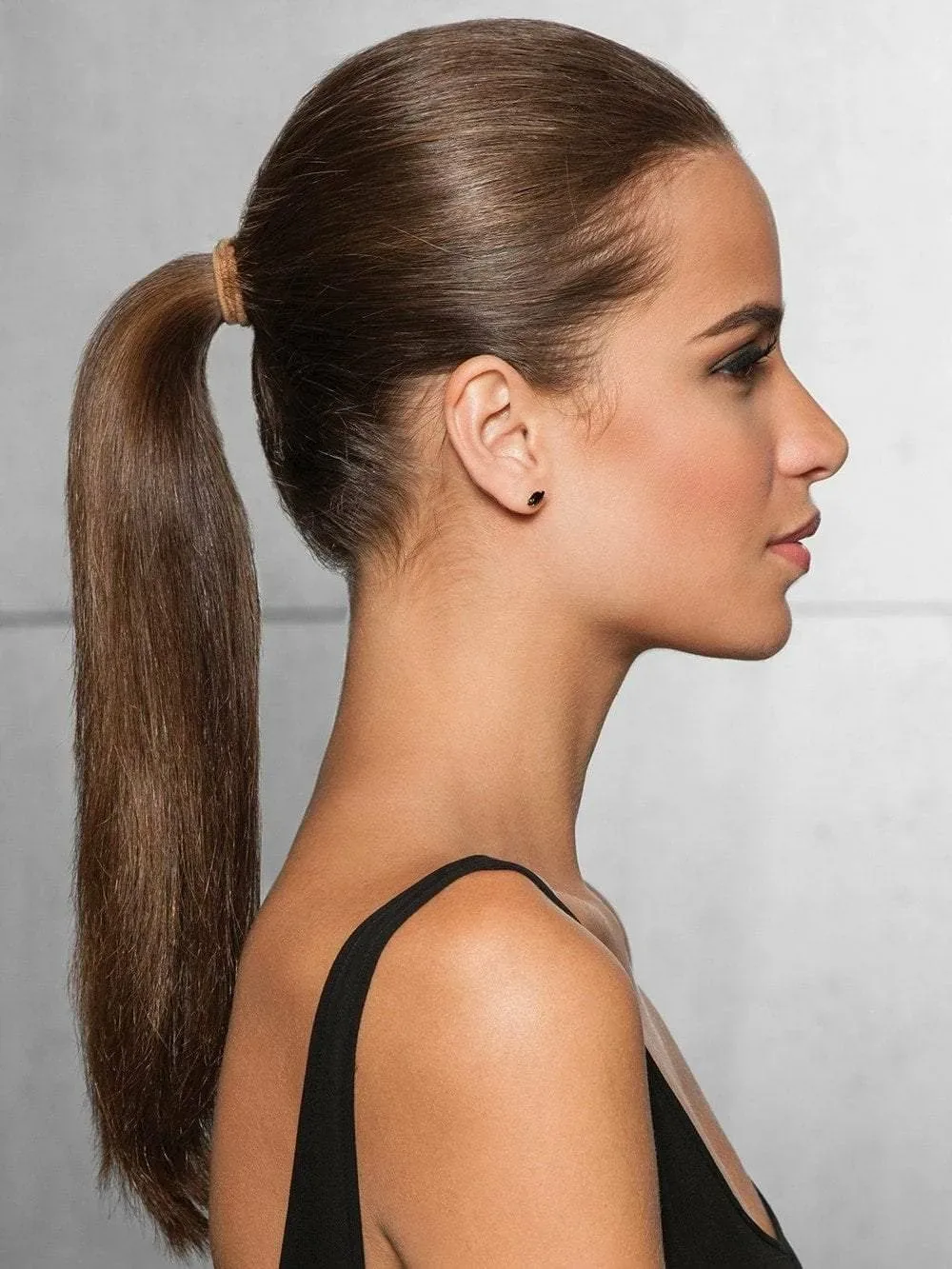
A low ponytail is the quiet, reliable cousin of the high ponytail, and in a dance class it is often the smarter choice. It sits at the nape, below the leotard strap, it does not swing into your face during turns, and it does not pull on the crown during a long session. Wrapping the base with a strand of hair makes it look intentional rather than thrown together, and the wrap anchors the elastic so it cannot slide down as you sweat.
Pros and cons: it is comfortable for hours, gentle on fine hair, and easy to redo in seconds between classes. The trade-off is that it is less secure than a bun for very long hair, so braid the tail if your hair passes your shoulders. Best for: tap, ballroom and adult beginner classes, where the head stays relatively still and comfort matters more than maximum hold.
Maintenance: almost none. If the tail starts to frizz by the end of class, smooth it with a drop of serum on your palms rather than re-brushing, which only creates more flyaways on sweaty hair.
Double French Braids for Hip-Hop
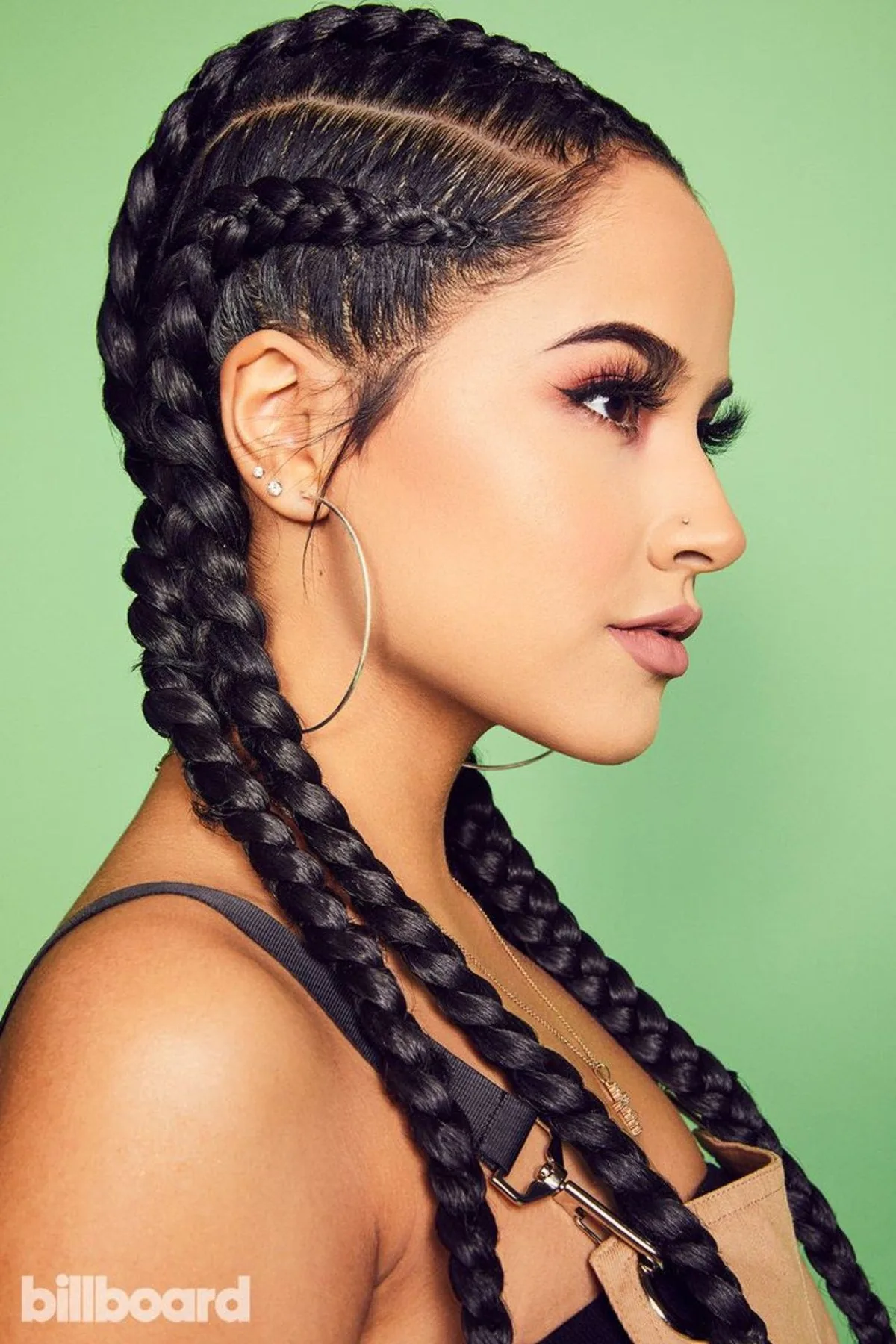
Two French braids are the hip-hop dancer’s best friend, because they split the weight evenly, sit flat against the head, and survive popping, locking, head movements and floor work without budging. Nothing hangs loose, nothing swings into your face during an isolation, and the braids actually get more secure as the class goes on. They are also the style that looks most at home in a hip-hop studio, where a ballet bun would look out of place.
Cost and time: about five minutes once you have practised, and no tools beyond two elastics. What to ask your stylist: ask for the braids to start high at the crown so they stay visible and secure, and to finish with the tails tucked into a low bun for a fully contained version on floor-work days. Common mistake: braiding too loosely at the top, which lets the crown puff out and catch on a head spin. Start tight at the hairline and ease off only near the ends.
The Dutch Braid Crown
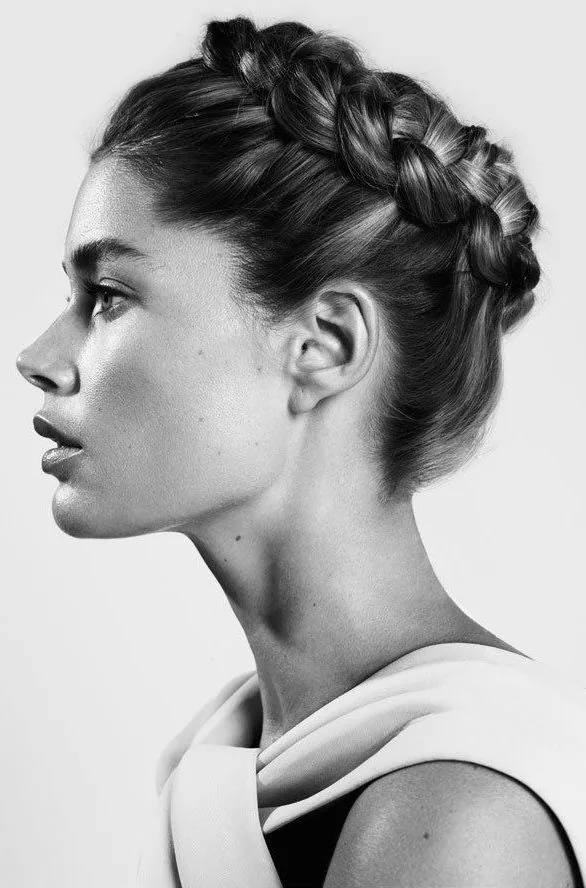
A Dutch braid crown runs around the head like a headband, so there is no tail at all to fall forward, swing during a turn, or catch on the floor during contemporary floor work. It is one of the most secure styles you can wear to any dance class, and it looks far more elaborate than the effort it takes, which makes it a favourite for lyrical and contemporary classes where the hair is part of the visual line.
Best for: medium to long hair, and anyone who hates ponytails. The crown suits round and oval faces especially well, since it adds height at the top. Maintenance: pin the end of the braid under the start with two crossed bobby pins, and mist with hairspray before class. If a piece escapes during floor work, tuck it back and add one pin rather than redoing the whole crown.
Who should avoid it: dancers with very short layers at the front, since short pieces will not reach the braid and will fall into the eyes. Grow the front out first, or pair the crown with a fabric headband to catch the strays.
The Bubble Braid for Jazz Class
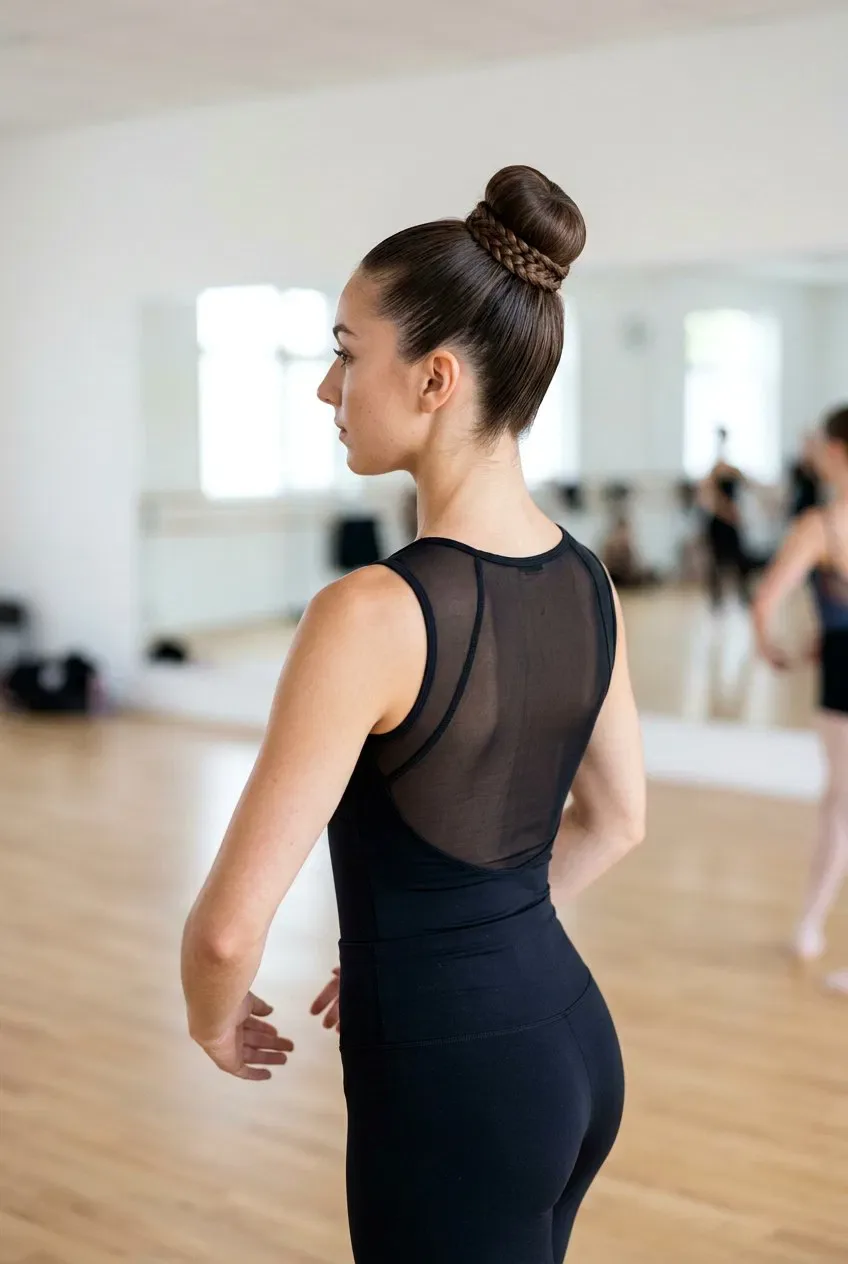
The bubble braid is pure fun, and it is surprisingly class-friendly. Because the hair is divided into sections by elastics all the way down, nothing hangs loose, and each bubble is anchored, so the style does not slide forward during head rolls or sharp jazz isolations. It also moves beautifully, which matters in jazz, where the hair is part of the performance even in class.
How to style: make a high or low ponytail, then add elastics every few inches down the tail and gently pull each section wider to form the bubbles. Who should avoid it: anyone with very fine hair, since the bubbles can look thin and the elastics can snag. Use fabric-covered elastics and a little texturising spray first, and the bubbles will hold their shape for the whole class.
Quick verdict: the most playful style in this guide that still passes the spin-and-jump test, and a great choice for jazz and musical theatre classes.
A Fishtail Braid for Contemporary
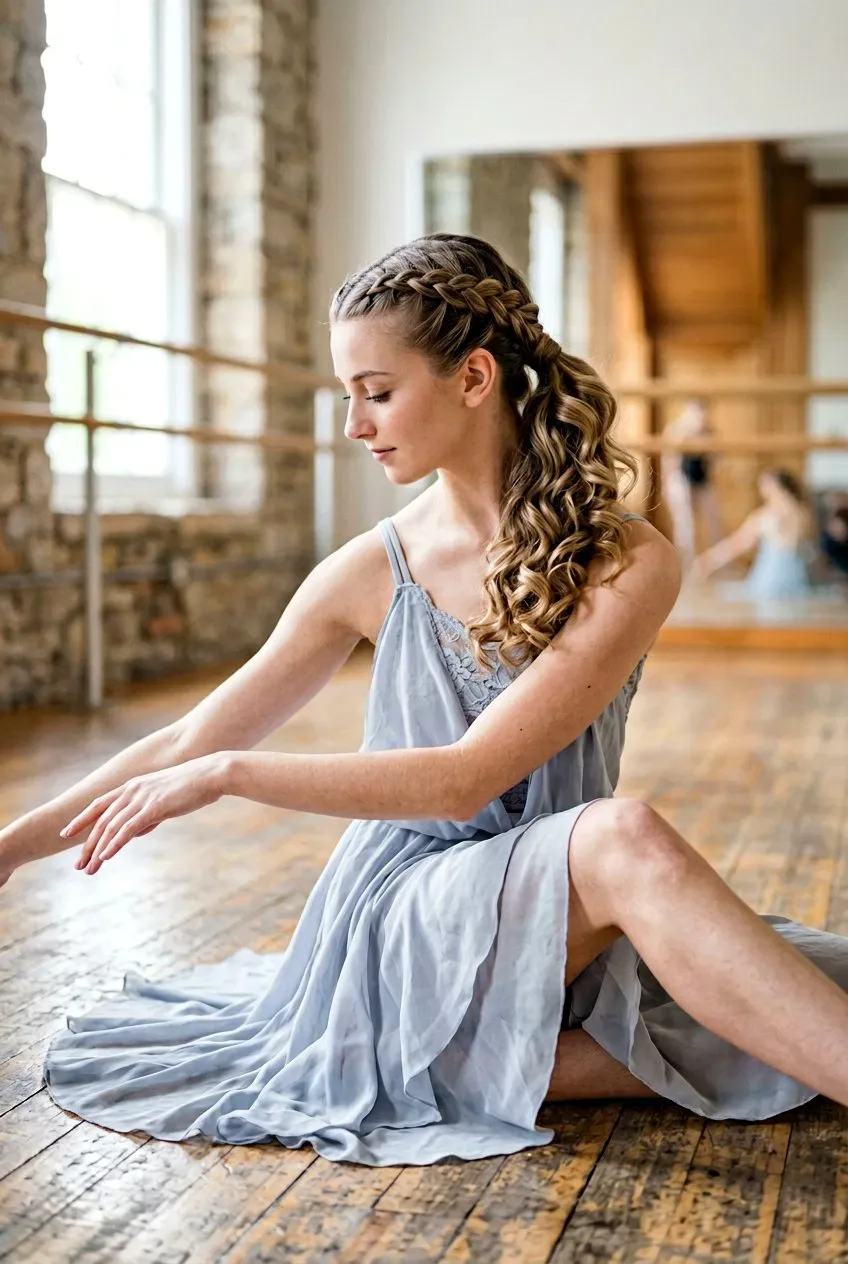
A fishtail braid is made of fine, woven sections that hold together better than a regular three-strand braid, so it survives the rolls, inversions and floor work of contemporary class without unravelling. Worn over one shoulder or down the back, it keeps the length contained while still showing the texture of the hair, which suits contemporary’s softer, more expressive line.
Best for: long, thick hair, where the fishtail pattern really shows. Common mistake: letting the braid hang free during floor work. A free braid will drag on the floor, pick up dust and tangle. Pin the braid to your shoulder or coil it into a low bun before any floor combination, and unpin it again for standing work. Maintenance: if the braid loosens by the end of class, you can re-braid just the last few inches without undoing the whole thing.
The Messy Top Knot Between Classes
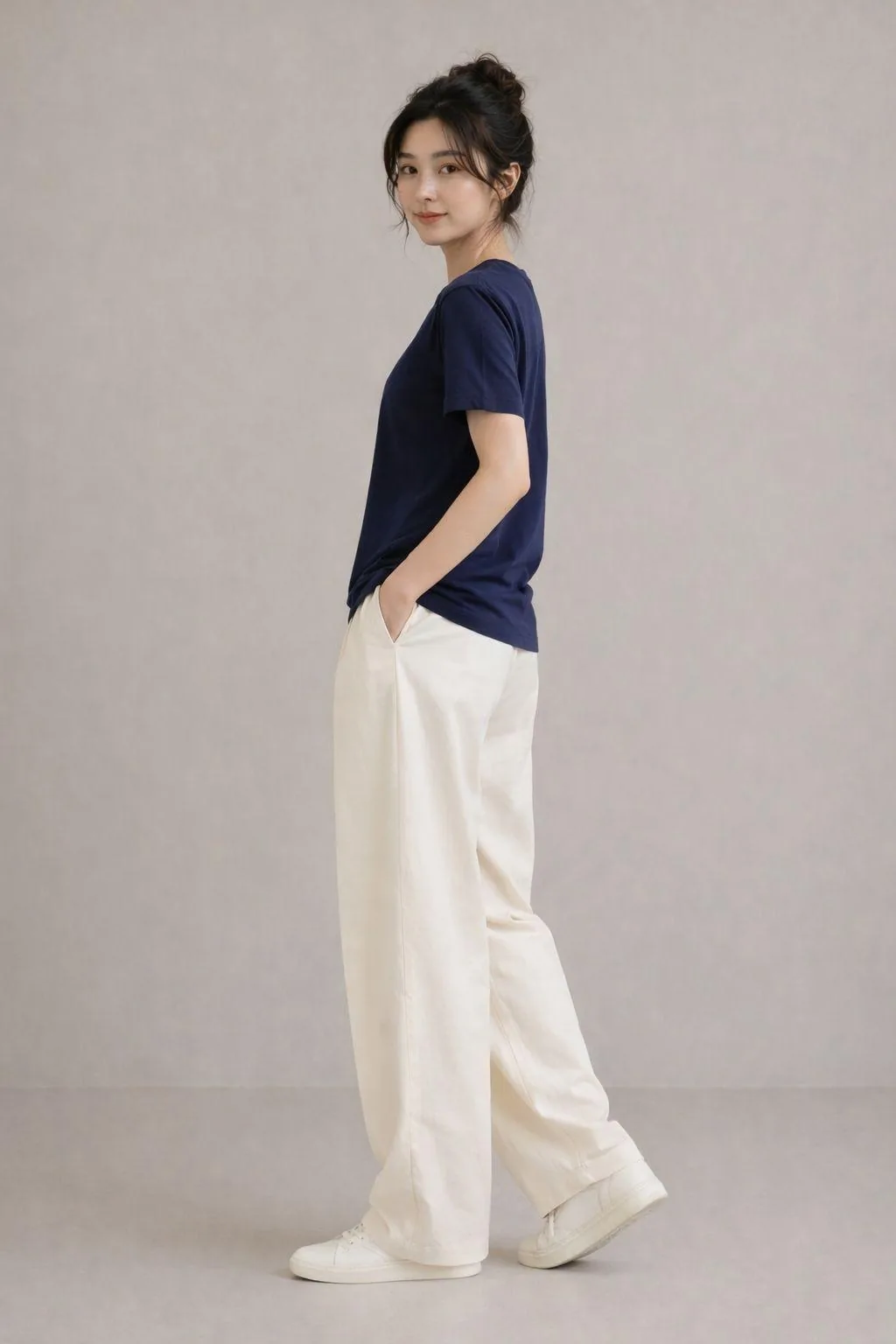
The messy top knot is the style most dancers actually wear between classes, even if they do not call it that. It is fast, it is comfortable, and it keeps the hair right out of the way while you stretch, drink water and wait for the next teacher. The one refinement that makes it class-ready is pinning the face-framing pieces back, so the loose strands that usually fall forward are secured before you walk in.
How to style: gather the hair high, twist it loosely and pin it into a soft knot, then take the two front pieces and pin them back behind your ears with flat clips. Common mistake: making the knot too tight, which pulls at the hairline and hurts after an hour. A messy top knot should feel loose and easy; if it aches, rebuild it lower and looser.
Cost and time: under a minute, no tools beyond an elastic and two pins. Quick verdict: the fastest genuine dance style in this guide, and the best emergency fix in the hallway.
The Sleek Chignon for Adult Ballet
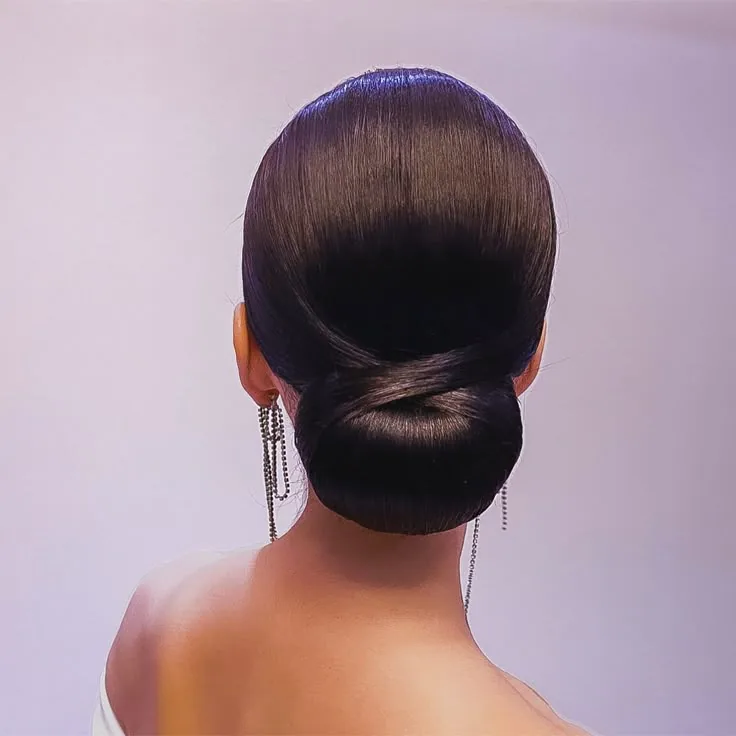
A sleek chignon is the most elegant style in this guide, and it earns its place because it is also one of the most secure. The hair is smoothed back, twisted and pinned low, so there are no flyaways to catch on a turn and no loose ends to fall into your eyes at the barre. It suits adult ballet classes, evening classes and any session where you want to look polished as well as practical.
How to style: smooth the hair back with a little serum, twist it into a low roll and pin it flat with U-shaped pins. Maintenance: a sleek style shows every stray hair, so carry a small comb and a couple of pins in your dance bag. If the chignon loosens, re-pin the base rather than rebuilding it, and a light mist of hairspray will reset the smooth finish in seconds.
Pros and cons: it looks beautiful and holds for hours, but it is not a sweaty-class style: heavy perspiration will break the sleek finish faster than it breaks a braid. Save the chignon for ballet and ballroom, and choose a braid for cardio-heavy classes.
The Claw Clip Twist for Quick Changes
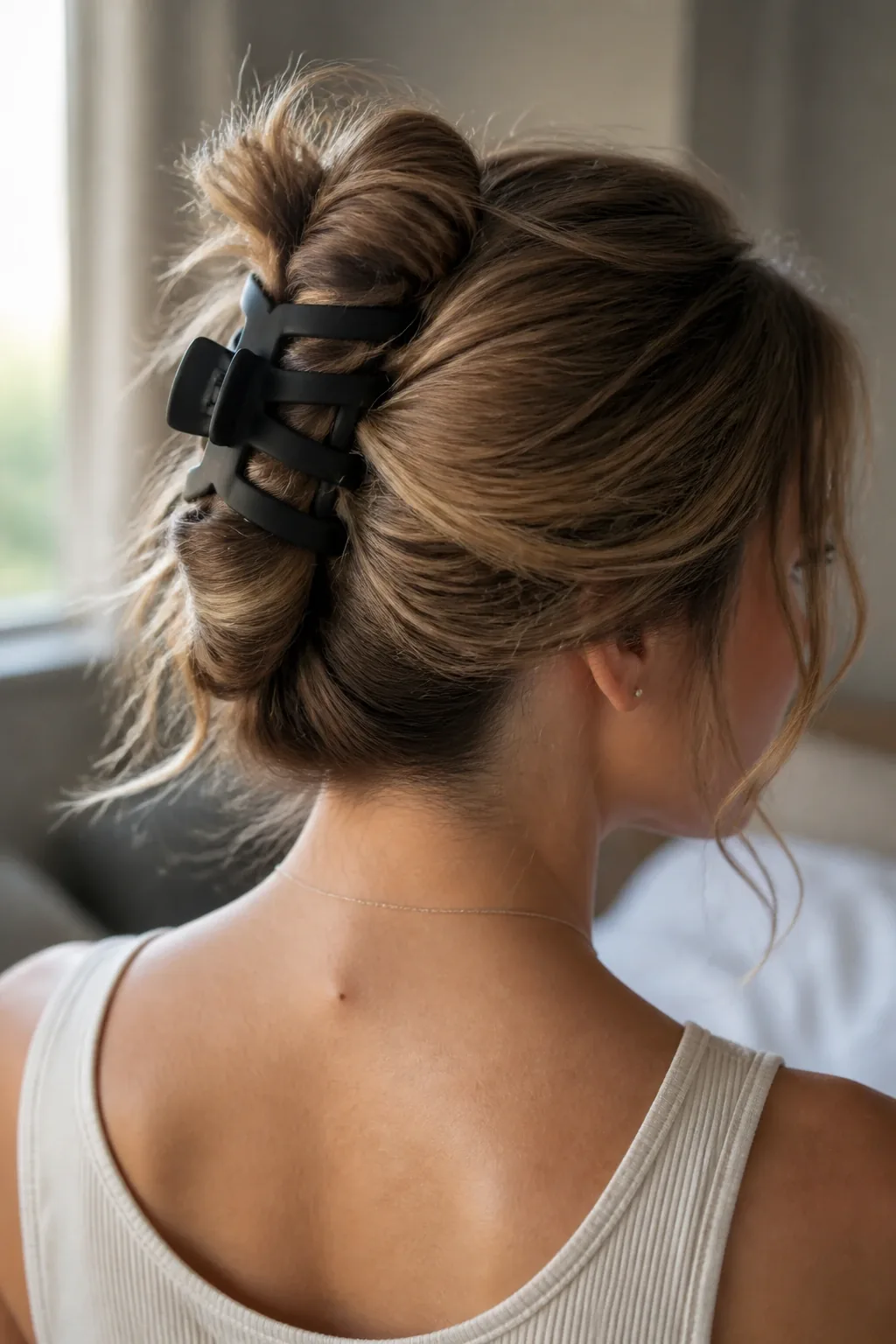
If you only learn one dance hairstyle, make it this one. Twist the hair up, fold it, clip it, done in under ten seconds, and it holds through a whole class. The claw clip grips even damp hair, which matters when you are sweaty between classes, and it is the easiest style in this whole guide to redo in a hallway without a mirror.
Cost and time: one large claw clip costs very little and lasts for years, and the style itself takes less than a minute, even on thick hair. What to ask for: if you are getting your hair cut before a dance term, ask your stylist to keep enough length for a twist, since even a short twist holds better than loose hair. Choose a matte clip rather than a shiny one: it grips better when your hands are damp, and sweat shows less on matte plastic.
Who should avoid it: dancers doing head spins or heavy floor work, where a hard clip can press uncomfortably against the floor. For those classes, swap the clip for a soft scrunchie twist instead.
The Half-Up Top Knot
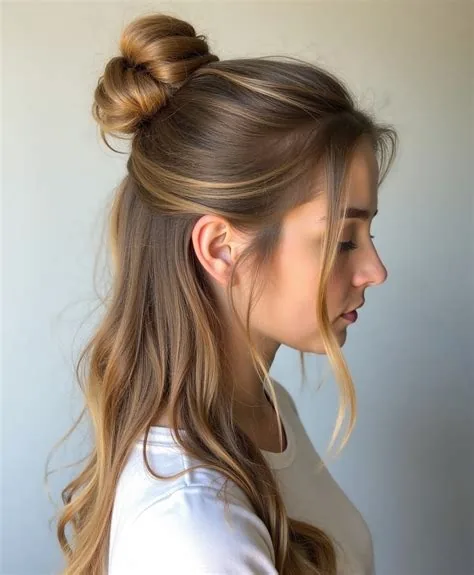
The half-up top knot is the compromise style: the top half of your hair is secured out of your face, while the bottom half stays loose and looks relaxed. It works well for shorter classes and for lyrical sessions, where you move more slowly and lean forward less. It is also one of the quickest styles here, taking under a minute, which makes it a good choice when you are running late.
Pros and cons: it keeps the front pieces out of your eyes and looks effortlessly stylish. The catch is the loose bottom half, which can still fly into your face during turns and jumps. Who should avoid it: dancers in hip-hop, jazz or any class with fast head movements. If you love this look, save it for lyrical, ballroom or stretching sessions, and choose a full updo for high-energy days.
How to style it well: secure the top section with a small elastic first, then twist it into a knot and pin it, rather than trying to knot loose hair. The elastic gives the knot something to grip, and the style will survive a whole lyrical class without slipping.
The Low Twisted Bun
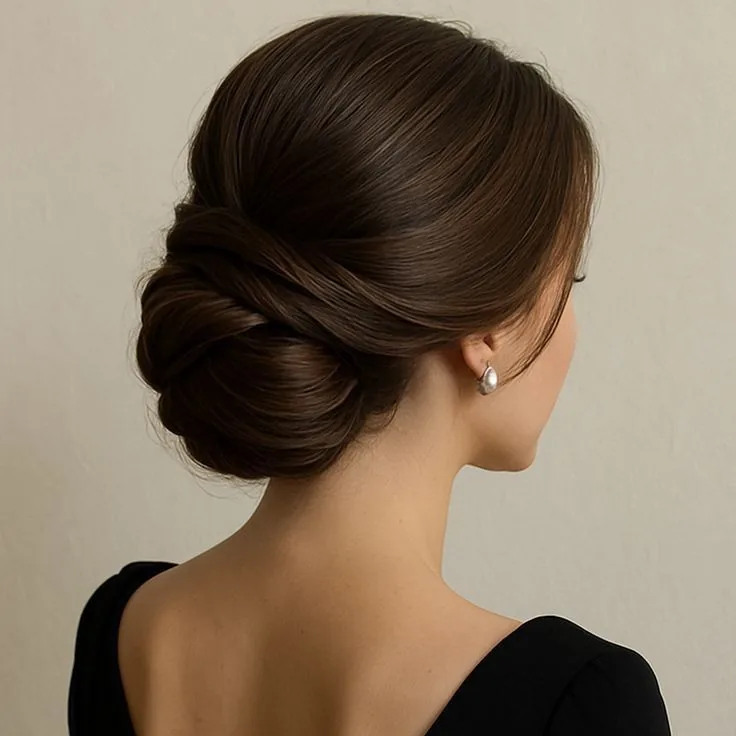
A low twisted bun is the softer sister of the classic low bun. Instead of coiling the hair, you twist two sections around each other and pin the twist low at the nape. It has a lovely, rope-like texture that looks more interesting than a plain bun, and the twist itself grips the hair, so it holds even on smooth, fine hair that usually slips out of pins during turns.
How to style: part the hair, twist each side towards the back, cross the twists over each other and pin the ends underneath. Common mistake: twisting too loosely at the nape, which lets the bun sag by the end of class. Keep the first twist firm, and the rest will follow. A single U-shaped pin through the centre of the twist is worth more than five pins around the edge.
Best for: fine or slippery hair, and for dancers who find ordinary buns uncomfortable. The low position keeps the weight off the crown, so it stays comfortable through a long class and under a leotard strap.
The Braided Low Bun
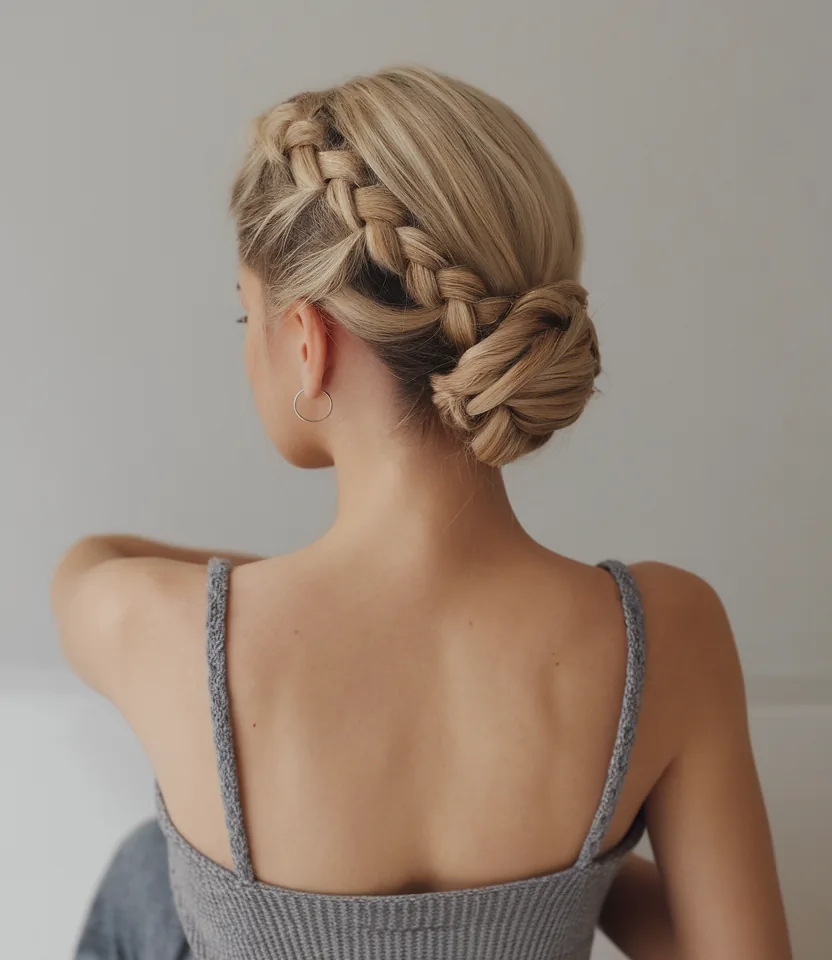
This style combines the two most reliable dance techniques, a braid and a bun, into one. You braid the hair first, then coil the braid into a low bun, so the hair is locked twice over. It is the style to choose for an all-day dance intensive, an exam, or any class where you will not get a proper break to fix your hair.
Best for: long or thick hair that escapes from ordinary buns. The braid stops the bun from unravelling, and the bun stops the braid from swinging. Common mistake: coiling the braid too tightly, which makes the bun stick out and catch on a leotard strap. Coil it flat against the head and pin through the braid itself, not just around it, and it will sit neatly for hours.
Cost and time: about five minutes to build, and it repays that investment by never needing a mid-class fix. If you can only master one style before a dance term, make it this one, because it works for ballet, contemporary, tap and ballroom alike.
Space Buns for Hip-Hop Class
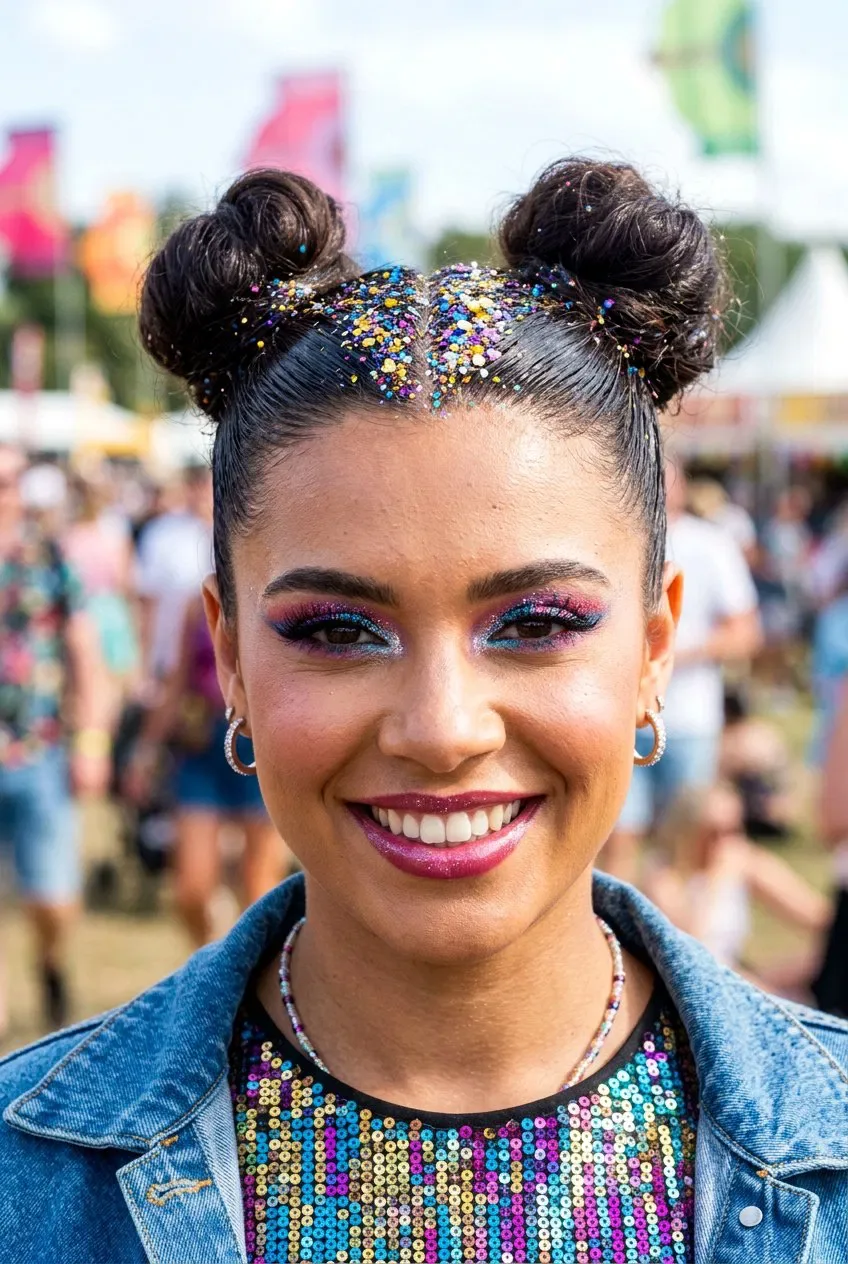
Space buns are the most playful style in this guide, and they are surprisingly practical for hip-hop. Two small buns sit high on either side of the head, so nothing hangs anywhere near your face during isolations, the weight is perfectly balanced, and the style survives a whole class without a single fix. They are a favourite for hip-hop socials, dance battles and anyone who likes their class look to have a sense of fun.
Best for: medium to long hair, and for anyone whose single bun always slides to one side. Common mistake: placing the buns too low, which makes them look like earmuffs and lets them catch on a hoodie or a leotard strap. Place them high, at the corners of the crown, and secure each one with its own elastic and two pins. Quick verdict: cute, comfortable and completely turn-proof.
The Curly Pineapple Updo
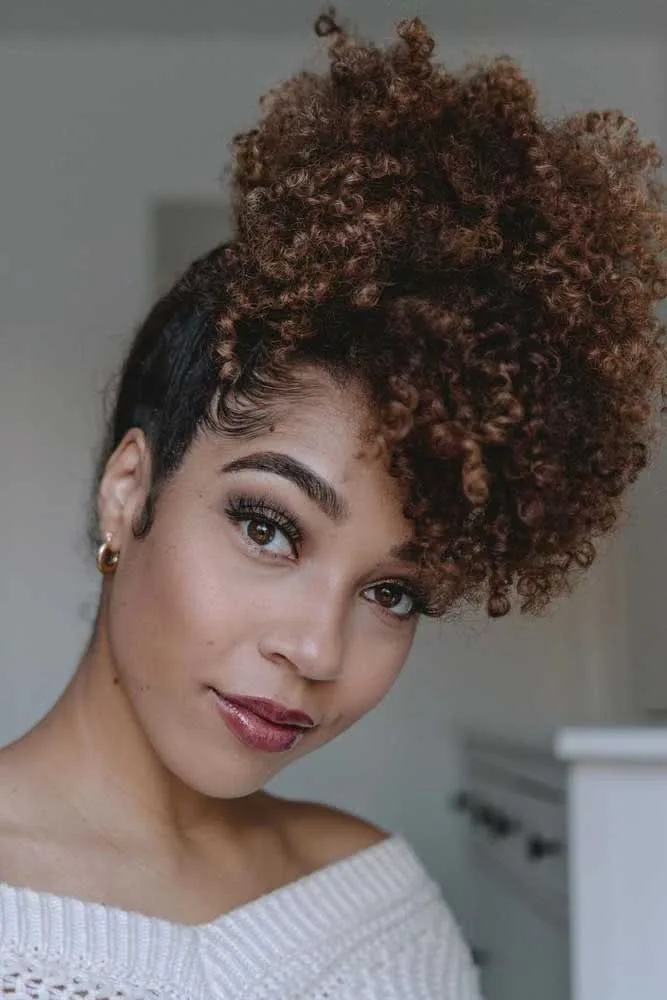
Curly hair and dance class can be a difficult combination, because sweat clings to curls and loose curls fall forward constantly during turns. The pineapple updo solves both problems: all the curls are gathered high on top of the head, away from the face, and the curls themselves are contained in one soft pile. It protects the curl pattern, too, since the hair is not being pulled flat or crushed under a strap.
How to style: flip your head forward, gather the curls loosely at the very top and secure them with a satin scrunchie, which is gentler on curls than a plain elastic. Maintenance: a silk scarf over the top adds sweat protection and keeps the pineapple from flopping forward during jumps. After class, refresh the curls with a little water and leave-in conditioner rather than washing straight away.
Who should avoid it: dancers doing head spins or floor work, where a high pile of curls can press uncomfortably. For those classes, a low curly bun is the safer choice.
The Curly High Puff
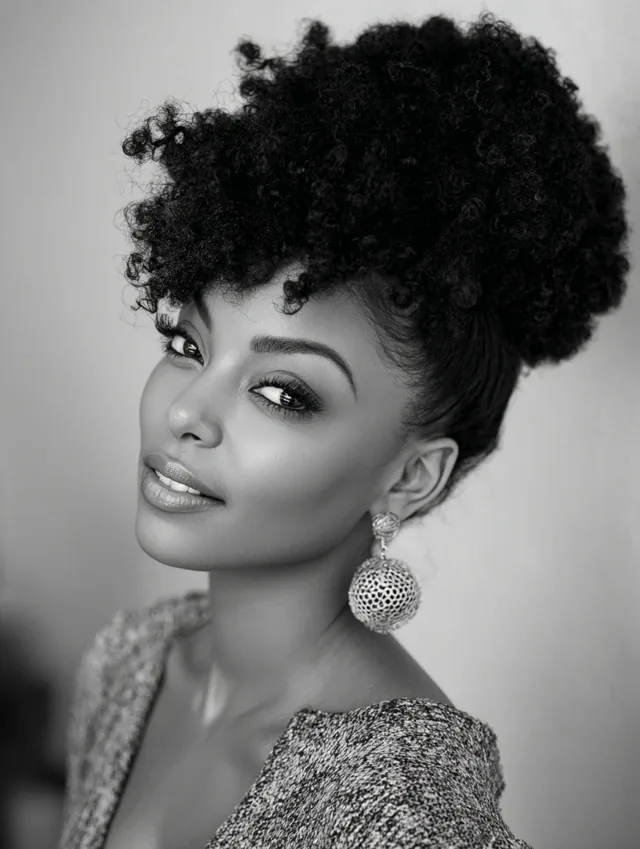
The high puff is the simplest curly style in this guide, and for many curly dancers it is the only one they ever need. The hair is gathered into a soft, round puff at the crown, held by a wide fabric band or a satin scrunchie, with the curls left free on top. It keeps the face clear, it shows off the curls, and it takes less than a minute, which matters on a busy dance morning.
Pros and cons: it is fast, gentle on the curl pattern, and comfortable for hours. The trade-off is hold: a puff is less secure than a braided style, so it suits lyrical, tap and ballroom better than hip-hop or fast jazz. How to make it hold: use a wide, soft band rather than a thin elastic, and pin the front edges with two flat clips. A little gel smoothed over the hairline keeps the edges neat through the whole class.
Maintenance: after class, fluff the puff back up with your fingers and a little leave-in conditioner. Never brush a puff out dry, or you will break the curl pattern and create frizz.
The Rope Braid Ponytail
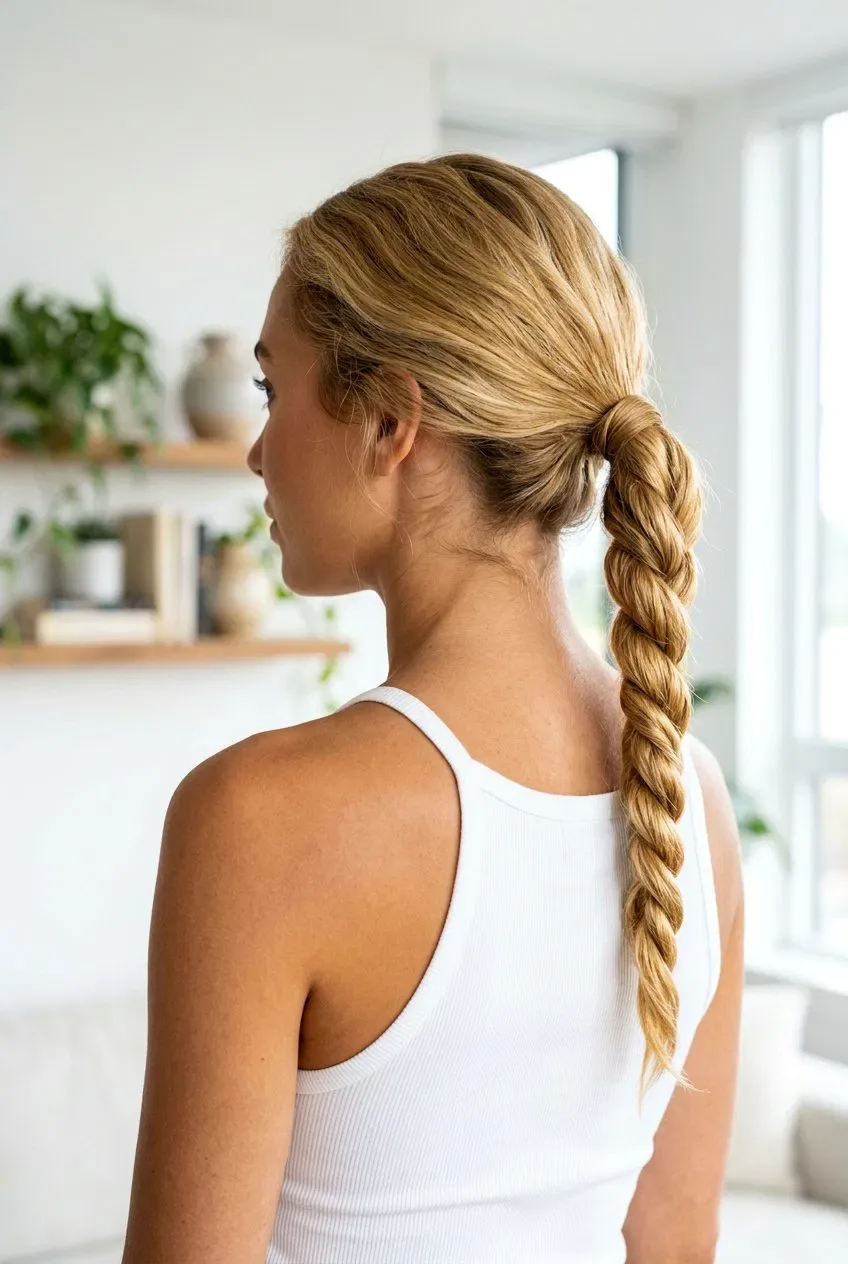
A rope braid is made by twisting two sections of hair around each other, and it is one of the fastest braids to learn. As a ponytail, it keeps the tail compact and controlled, so it does not swing into your face or shed flyaways the way a loose ponytail does during turns. It looks neat, a little bit sporty, and it holds up beautifully through a long class.
Best for: straight or slightly wavy hair, where the rope texture shows clearly. How to style: gather the hair into a ponytail, split it in two, twist each section the same way, then twist them around each other in the opposite direction and secure the end. Quick verdict: quicker than a French braid, more secure than a plain ponytail, and a great first braid to learn.
Maintenance: a rope braid holds its shape well, but the end can start to unravel if the elastic is loose. Use a small, snag-free elastic and wrap it twice, and check it once halfway through class. If your hair is layered, a light mist of hairspray before braiding will stop the shorter layers from poking out of the twist.
The French Twist for Ballroom
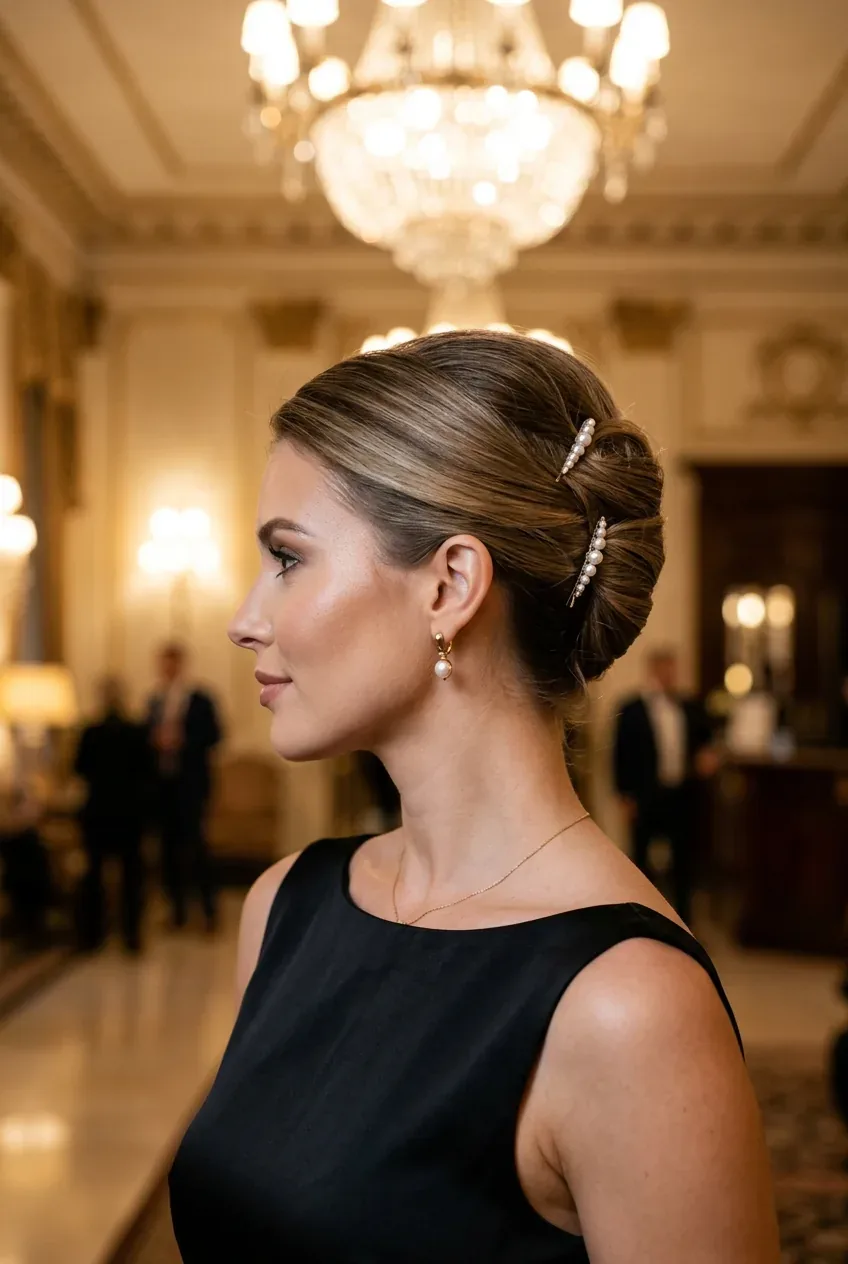
The French twist is the classic updo for a reason: it is elegant, it is secure, and it has survived decades of formal occasions for good reason. In a ballroom class it works beautifully, because the whole length of the hair is folded up and pinned vertically, leaving nothing to swing during a quickstep or dip during a tango. It suits evening classes and social dances where you want to look polished.
Best for: medium to long hair, and anyone who finds buns uncomfortable. Maintenance: the twist needs a few strong pins to hold through a long session, so use U-shaped pins rather than flat bobby pins, and push them in from opposite directions so they lock against each other. If the twist loosens, a single extra pin at the base will usually rescue it.
Who should avoid it: dancers in hip-hop, jazz or contemporary, where the head moves fast and a vertical twist can work loose. Save the French twist for ballroom, ballet and social dance, where the head stays upright and the style can shine.
The Side Braid for Tap Class
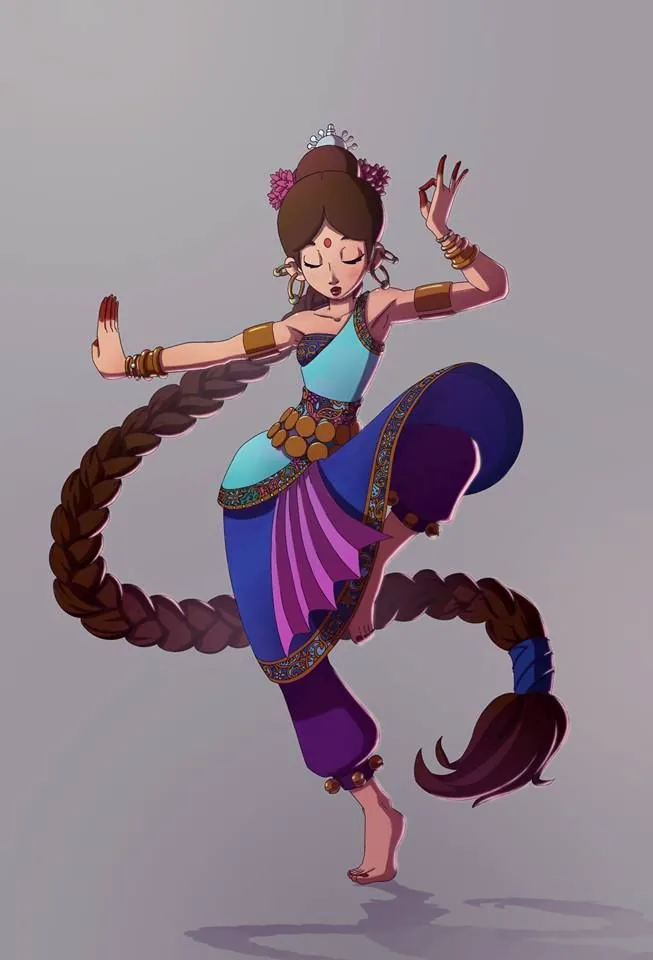
A side braid is pretty and practical, and in a tap class it is one of the best choices you can make. Tap keeps the head relatively still, so a braid worn over one shoulder stays exactly where you put it, and the constant bouncing of tap steps loosens elastics far less when the hair is braided than when it is in a ponytail. The braid also keeps the length visible, which looks lovely in class videos.
Best for: medium-length hair and anyone growing out bangs, since the braid pulls the front pieces back naturally. What to ask for: a braid that starts high at the temple, so it stays visible and secure, and finishes with the tail pinned to your shoulder with a small clip while you dance. Unclip it for the class photograph at the end.
Common mistake: braiding too loosely, so the braid unravels by the second half of class. Tap is rhythmic and repetitive, and a loose braid will work itself open. Braid it firmly, finish with a snag-free elastic, and it will hold to the last step.
The Crown Braid for Folk and Character Dance
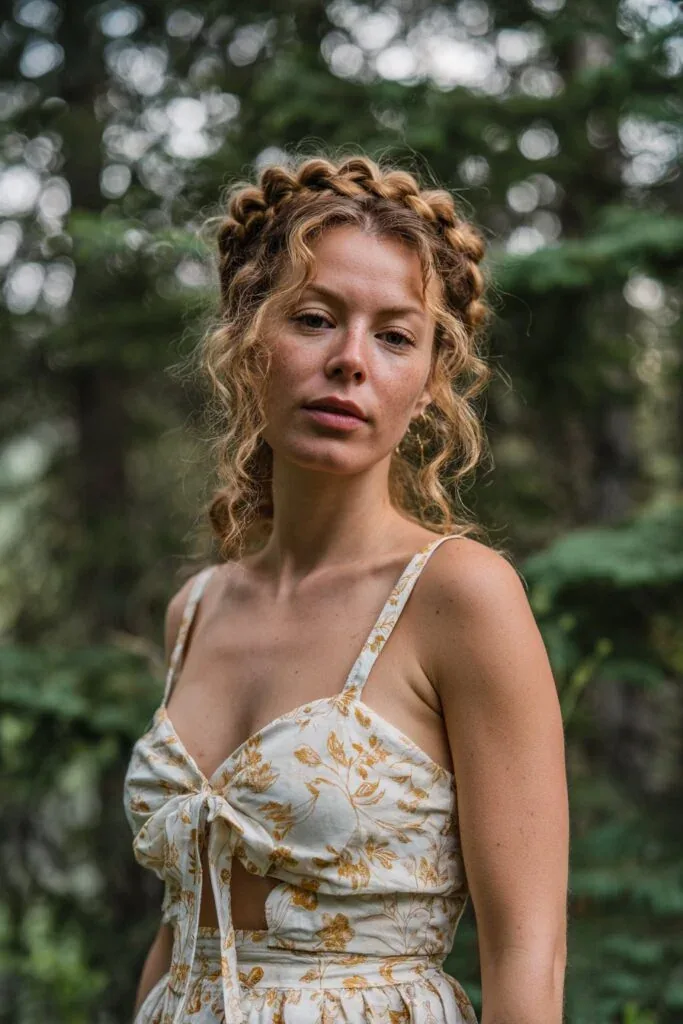
A crown braid wraps the hair around the head like a halo, so there is no tail, no swing and nothing to fall forward during the quick turns and partner work of folk and character dance. It is one of the most secure styles in this guide, and it is also traditional in many folk dance forms, which makes it a natural fit for character classes where the hair is part of the costume.
Common mistake: braiding the crown too loosely so it slides down over the ears by the second hour. Braid it snugly against the scalp and pin the join at the back with two crossed pins. Maintenance: if you have very thick hair, split it into two braids and wrap them in opposite directions: the crown will lie flatter and feel lighter on your head.
Quick verdict: the most secure braid in this guide for folk and character dance, and a beautiful style for any class where the hair needs to stay completely contained.
A Low Bun with a Silk Scarf
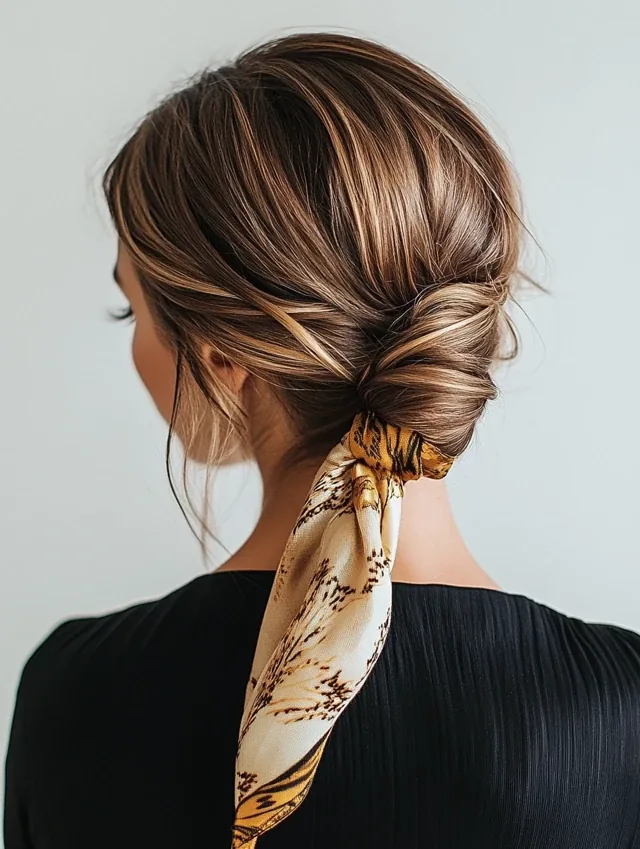
This is the style for the dancer who wants to look like she tried, without actually trying very hard. A loose, soft bun keeps the hair up and out of the way, while a silk scarf wrapped around the base catches sweat, hides flyaways and adds a splash of colour that photographs beautifully against a leotard. It is relaxed, pretty and genuinely practical.
How to style: gather the hair into a low, loose bun and pin it softly so it keeps its shape. Fold a silk scarf into a band and wrap it around the base of the bun, tying it at the side or tucking the ends in. Common mistake: wrapping the scarf too tightly, which pulls the bun flat and gives you a headache by the second hour. Keep it snug but comfortable, and carry a spare scarf in your bag.
Best for: lyrical, ballroom and adult beginner classes, where the pace is gentler and the scarf will not be shaken loose. For high-energy classes, tuck the scarf ends in firmly or skip the scarf and use a fabric headband instead.
A Pixie Cut with a Headband
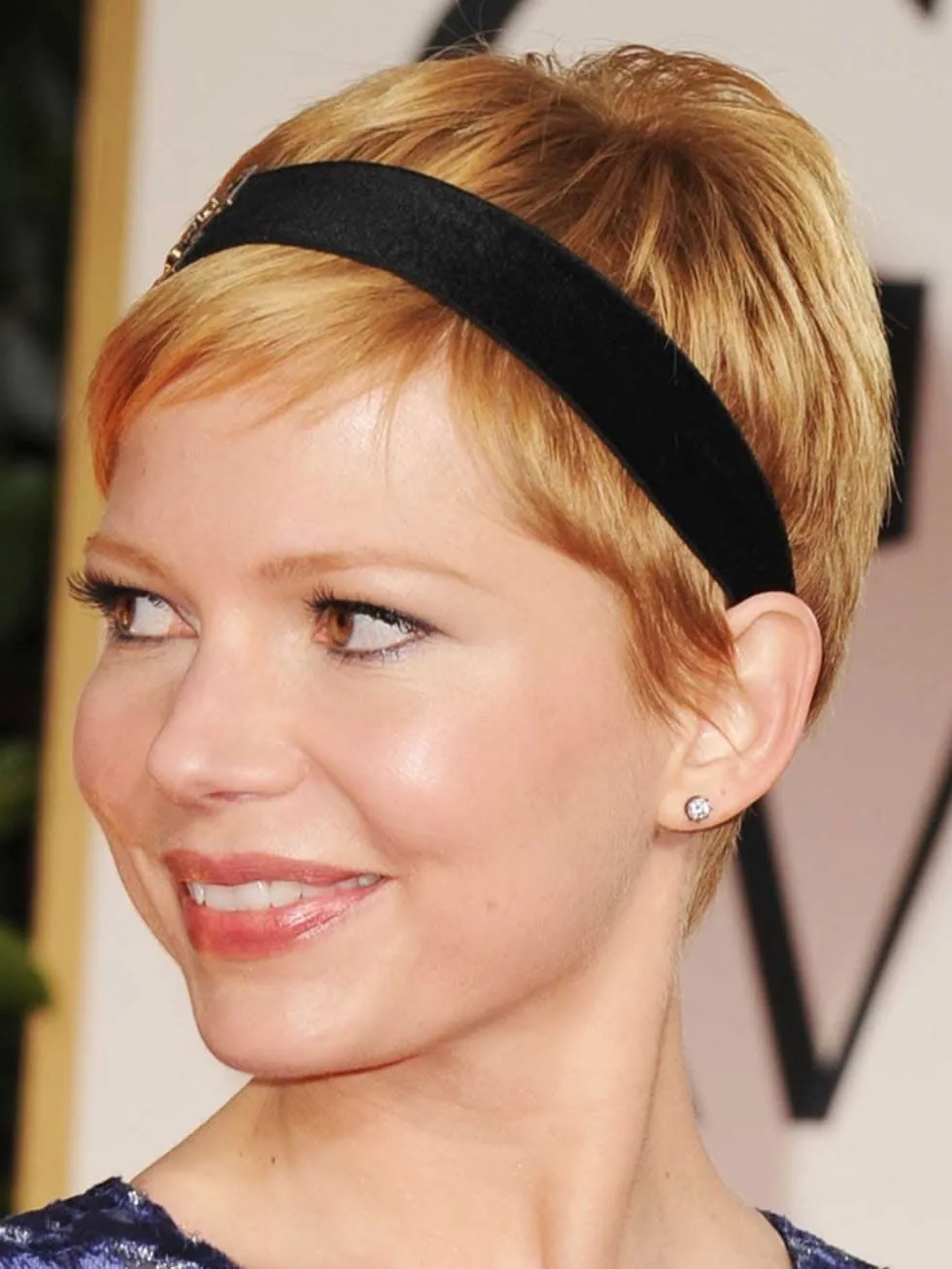
A pixie cut is the ultimate dance haircut: nothing reaches your face, nothing needs pinning, and sweat has almost nowhere to hide. Add a headband and you have the front pieces handled too, plus a pop of colour that makes the whole look feel finished. It is the style for dancers who want to think about their hair as little as possible.
Pros and cons: zero mid-class maintenance, fast washing afterwards, and it always looks neat. The trade-off is styling range: you cannot braid or bun a pixie, so the headband and clips are your main tools. Who should avoid it: nobody for practical reasons, but if you love long hair, this is a big commitment. Try a faux-pixie pin-up first to see if you like the feeling.
What to ask for: a fabric headband rather than a thin metal one, since fabric grips better once you start sweating and does not slide. Keep a spare in your dance bag, because a sweaty headband is easy to swap and a fresh one feels wonderful halfway through a long class.
A Short Bob with Clips
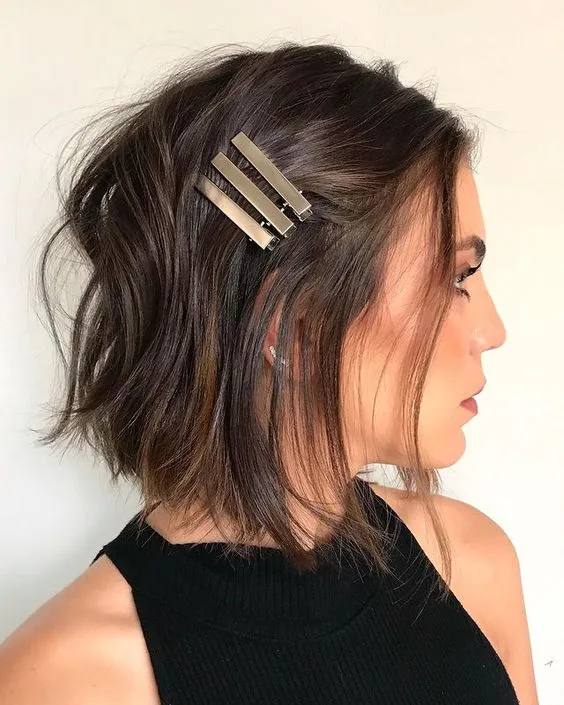
A short bob sits just above the shoulders, which is almost the perfect dance length: short enough to stay out of your face during turns, long enough to feel feminine and versatile. Two flat clips at the front keep the face-framing pieces back while you dance, and they double as a style statement, since decorative clips are very much in fashion.
Maintenance: almost none. Cost and time: a bob needs a trim every six weeks to keep its shape, but daily styling takes under two minutes. If your bob is growing out and the ends start brushing your face during turns, switch to a low ponytail or a claw clip for high-energy days until your next trim.
Best for: tap, ballroom and lyrical classes, where the head moves gently. For hip-hop or fast jazz, add a fabric headband as well, because the clips alone may not survive a full hour of sharp head movements.
A Textured Lob Tucked Behind the Ears
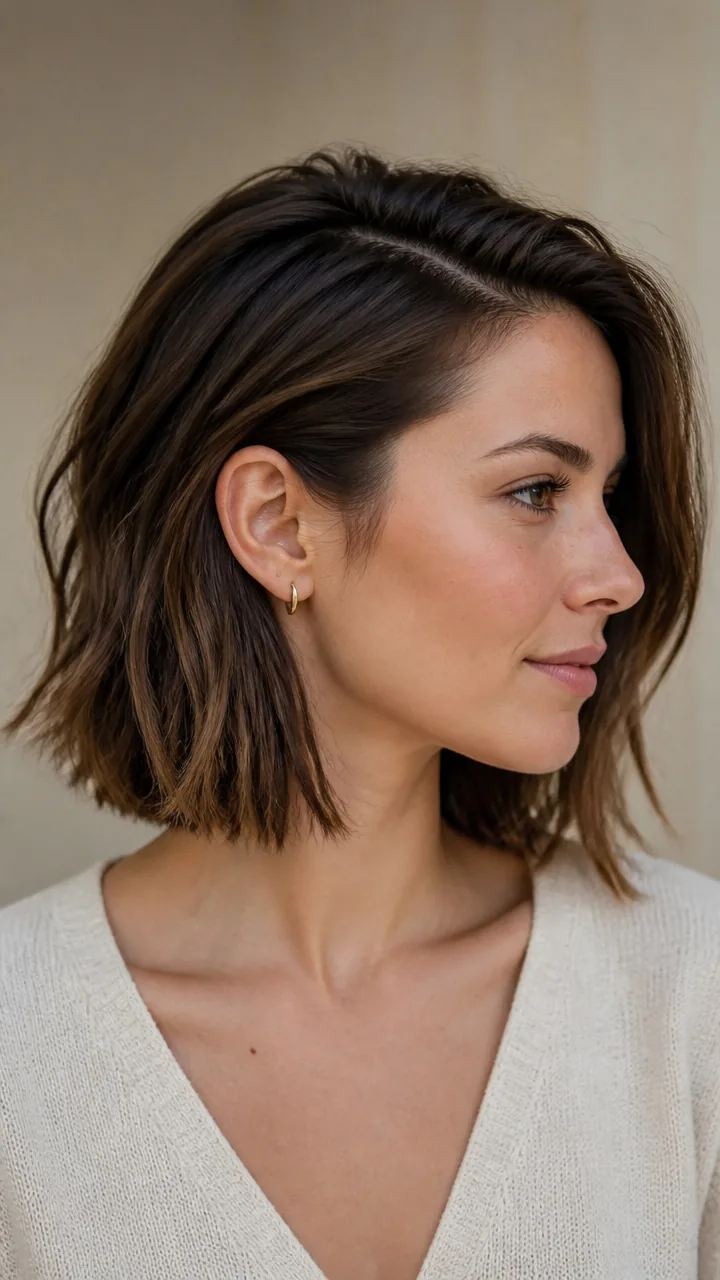
A textured lob is one of the best haircuts for a regular dancer, because it is short enough to stay out of trouble on its own. Tucked behind the ears, it frames the face, stays clear during turns and needs almost no styling at all. It is the lowest-maintenance style in this guide, and it looks good even after an hour of sweaty class.
Pros and cons: no pins, no elastics, no mid-class fixes, and it dries quickly after the post-class wash. The only catch is the front pieces, which can fall forward when you look down during floor work. Two small clips at the temples solve that in seconds. Quick verdict: if you are thinking of cutting your hair shorter for a dance term, this is the cut to ask for.
Who should avoid it: dancers who love long-hair styles like braids and buns, since a lob cannot do either. If you are not ready to cut, a faux lob, pinning long hair up underneath, gives you the same feeling for one class.
Sleek Straight Hair in a Low Ponytail
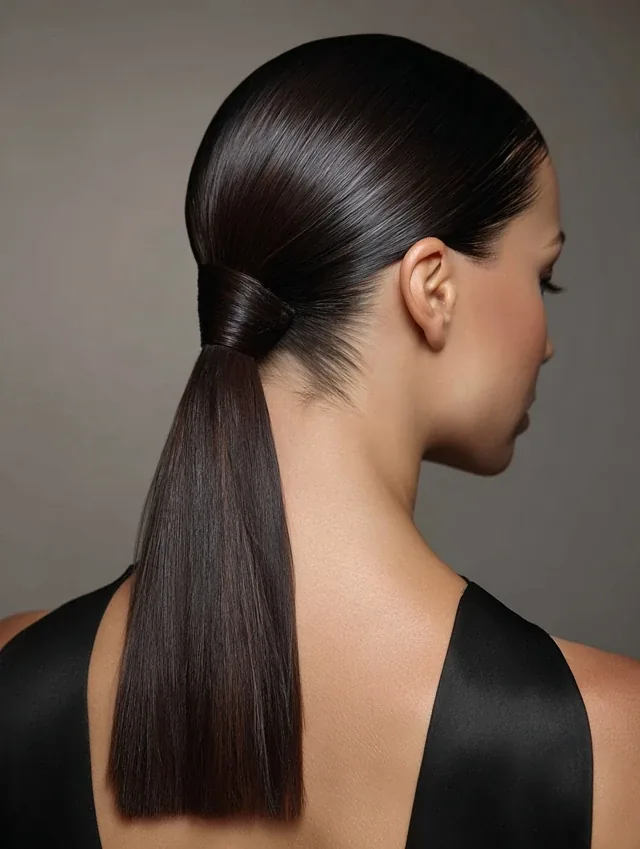
Straight hair slips out of pins more easily than any other hair type, which is why a sleek low ponytail is such a good dance choice for it. The ponytail gathers everything into one secure bundle, the sleek finish keeps flyaways down, and a little serum adds shine without making the hair slippery. It is simple, it is chic, and it stays put through turns and jumps.
Best for: straight and fine hair, where braids and twists tend to slide out. What to ask your stylist: ask for a cut with slightly blunt ends, which sit more neatly in a ponytail than heavily layered ends. Quick verdict: the lowest-fuss style in this guide for straight hair, and one that looks just as good at the end of class as at the start.
Maintenance: if the ponytail starts to slide, add a second elastic a centimetre below the first rather than pulling the whole thing tighter. A second elastic shares the grip and stops the ponytail dropping without giving you a headache.
A Curly Half-Up Claw Clip
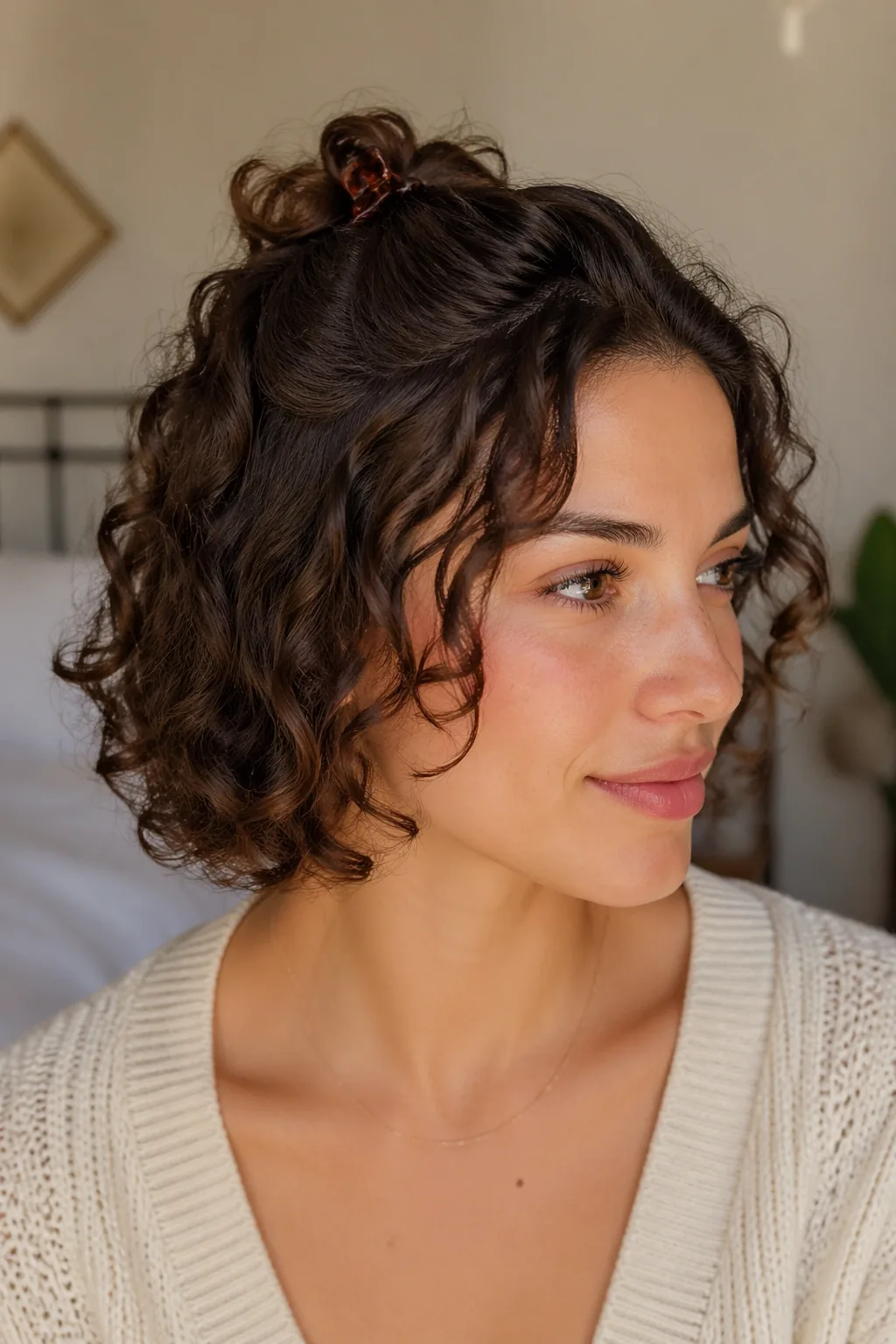
Curly hair has a mind of its own in a dance studio, and a half-up claw clip is one of the kindest ways to manage it. The top section is clipped up and out of your face, while the curls underneath keep their shape and bounce. The clip grips curls well because the texture itself helps it hold, and it is far gentler than pulling curls into a tight ponytail.
How to style: gather the top half of the curls, twist them once and clip them with a large claw clip. Maintenance: after class, refresh the curls with water and a little leave-in conditioner rather than brushing them out. Common mistake: using a clip that is too small, which pops open halfway through class. Choose a clip that spans the full width of the gathered section.
Best for: lyrical, tap and ballroom, where the head moves gently. For hip-hop or fast jazz, use a full updo instead, because a half-up style can still let the lower curls fly into your face during sharp movements.
Double Buns with Ribbons
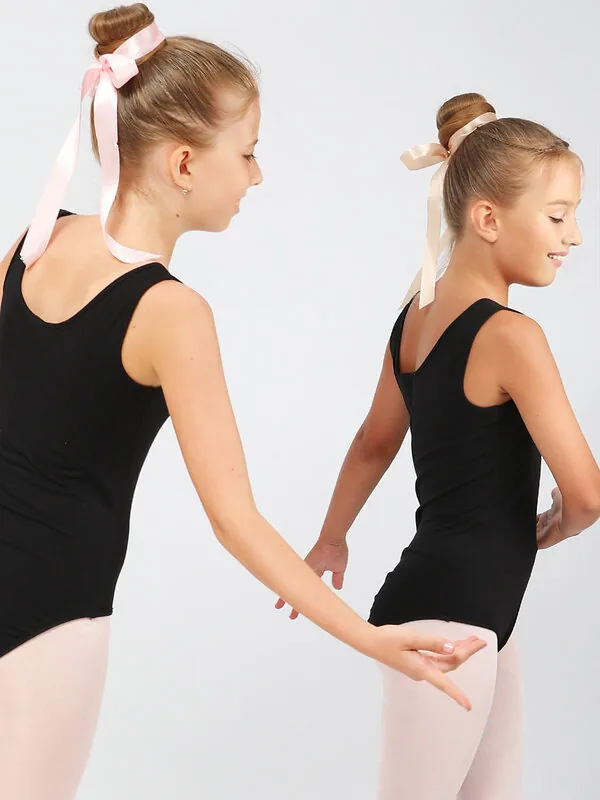
Double buns with ribbons are the classic young dancer’s style, and they work for the same reason space buns do: two small buns balance the weight, nothing hangs near the face, and the style survives a whole class without a fix. The ribbons add a soft, traditional ballet touch, and they can be matched to the leotard or the class colours, which younger dancers love.
Best for: younger dancers and anyone who wants a sweet, traditional ballet look. The buns suit medium to long hair, and the ribbons help the buns stay visible and secure. How to style: part the hair down the middle, make two high buns at the corners of the crown, and tie a ribbon around the base of each one. Pin the ribbon ends flat so they do not flap during turns.
Maintenance: almost none. Common mistake: placing the buns too low, which makes them look like earmuffs and lets them catch on a leotard strap. Place them high, at the corners of the crown, and secure each one with its own elastic and two pins.
The Braided Headband Style
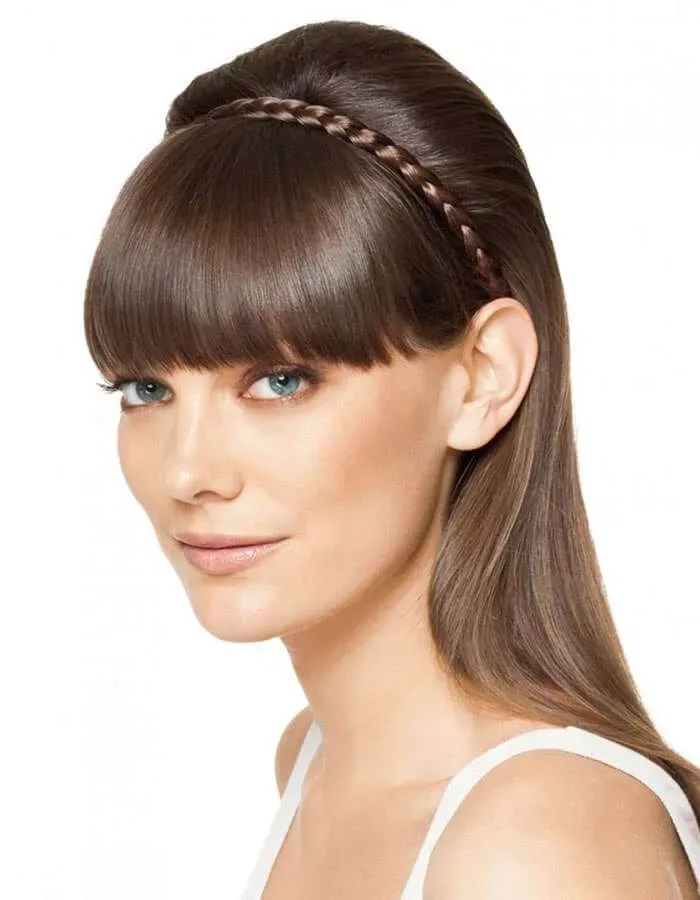
A braided headband is a small braid worn across the front of the hair like a hairband, and it solves the most common dance hair problem: the front pieces falling into your eyes during turns. It works with the rest of the hair worn up or down, so it pairs with almost every other style in this guide, and it looks lovely in its own right.
How to style: take a section of hair from behind one ear, braid it, and bring it across the front of your head, pinning it behind the other ear. Pros and cons: it holds the front back all class with no elastic and no headband to slip. The catch is that it takes a little practice to braid neatly across the front, so try it at home once before class day.
Best for: dancers growing out bangs, and anyone whose front pieces always escape. Pair it with a bun for ballet, a ponytail for jazz, or loose hair for lyrical, and the front stays put in every case.
Side-Swept Waves Pinned for Ballroom
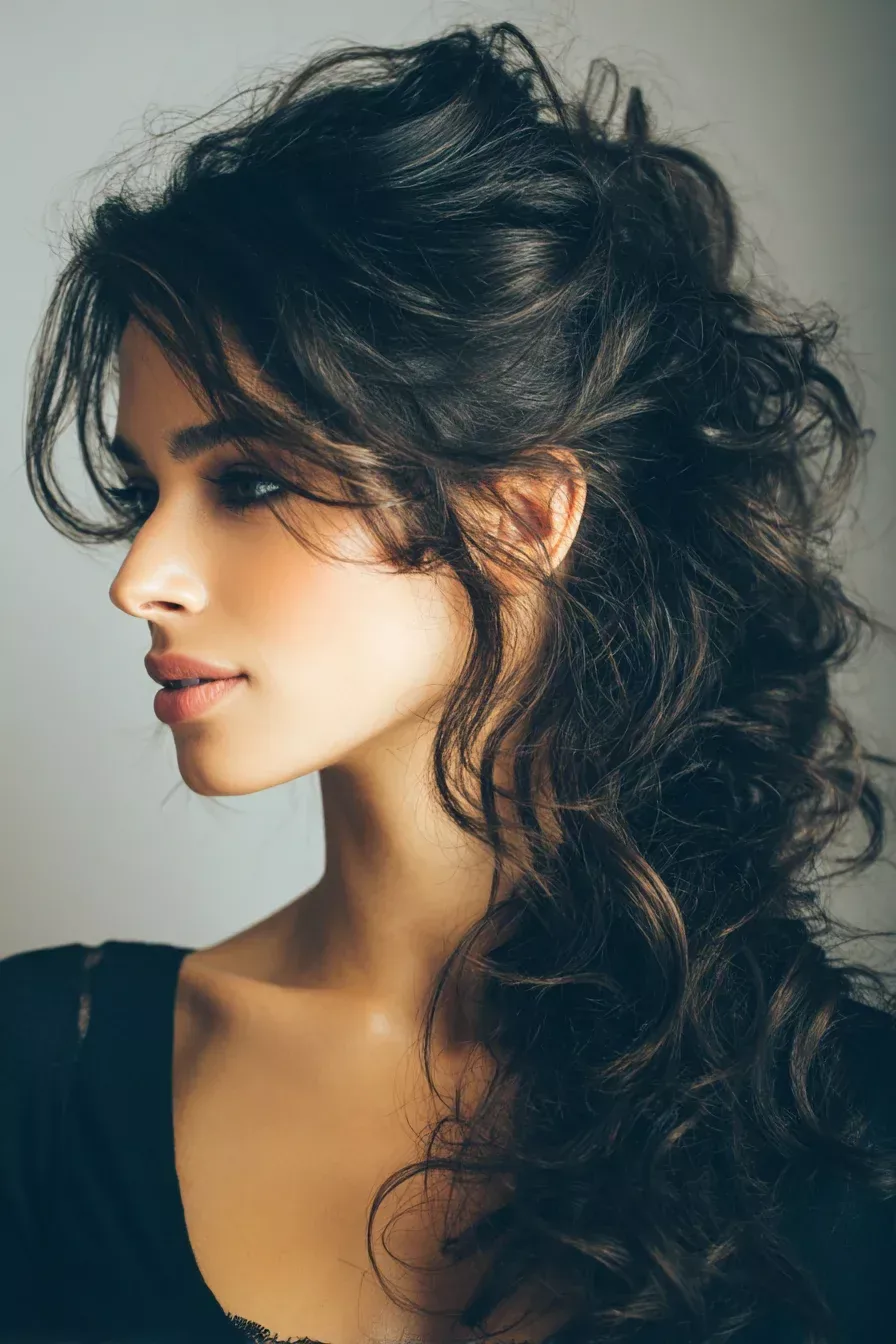
Side-swept waves look soft and romantic, and with the right pinning they can work in a ballroom class too. The key is to pin the waves back on one side, so the hair sweeps across the face but never falls forward during a turn. It is a good choice for ballroom and social dance, where you move upright and the hair is part of the elegant line.
Who should avoid it: anyone in hip-hop, jazz or contemporary, since loose waves and fast head movements are a bad combination. How to style: sweep the waves to one side, pin the top section flat with two crossed bobby pins, and mist with a flexible-hold spray so the waves can move without falling. Save this one for the days when your head stays mostly upright.
Quick verdict: the prettiest loose style in this guide, and the right choice when the class is as much about looking elegant as it is about moving fast.
A High Bun with a Scrunchie
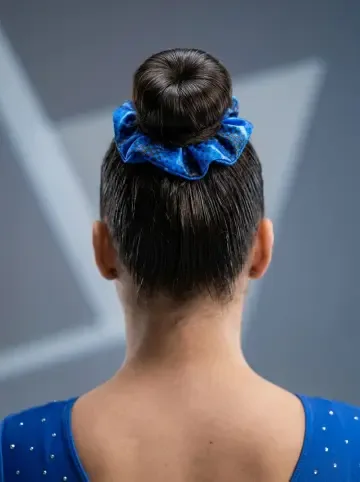
A high bun with a scrunchie is the cheerful, comfortable classic. The scrunchie is gentler than a plain elastic, so it does not dent or break the hair, and it holds a bun securely even when your hands are damp with sweat. A satin or velvet scrunchie also catches less dust than a fabric one with a rough texture, and it does not slip the way a thin elastic does once you start sweating.
Pros and cons: it keeps the neck cool, it takes thirty seconds, and it suits every hair type. The downside is height: a very high bun can catch on a hoodie or a leotard strap, so wear the bun slightly lower if your class involves a lot of floor work. What to ask for: a scrunchie in a dark colour, since sweat and studio dust show up fast on pale fabric.
Maintenance: if the bun starts to sag, tighten the scrunchie by wrapping it once more rather than rebuilding the bun. A scrunchie bun is the easiest style in this guide to fix mid-class.
A Dutch Braid into a Low Bun
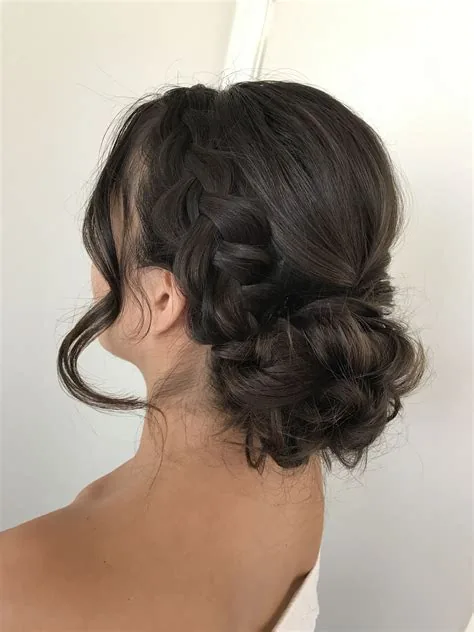
Start with a Dutch braid at the crown and finish by coiling the end into a low bun, and you get the most secure style in this entire guide. The braid locks the front and crown, the bun locks the ends, and there is genuinely nothing left to fall forward during turns, jumps or floor work. Experienced dancers wear this to all-day intensives and exam days, and it still looks neat at the end.
Best for: long, thick hair that defeats ordinary buns. Maintenance: almost none, which is the point. Cost and time: about five minutes to build, and it repays that investment by never needing a mid-class fix. If you can only master one style before a dance term, make it this one.
Common mistake: braiding too loosely at the crown, which lets the braid puff out and catch during turns. Start the Dutch braid tight at the hairline, keep the tension even all the way down, and coil the bun flat against the nape.
A Messy Bun with Pinned Face-Framing Pieces
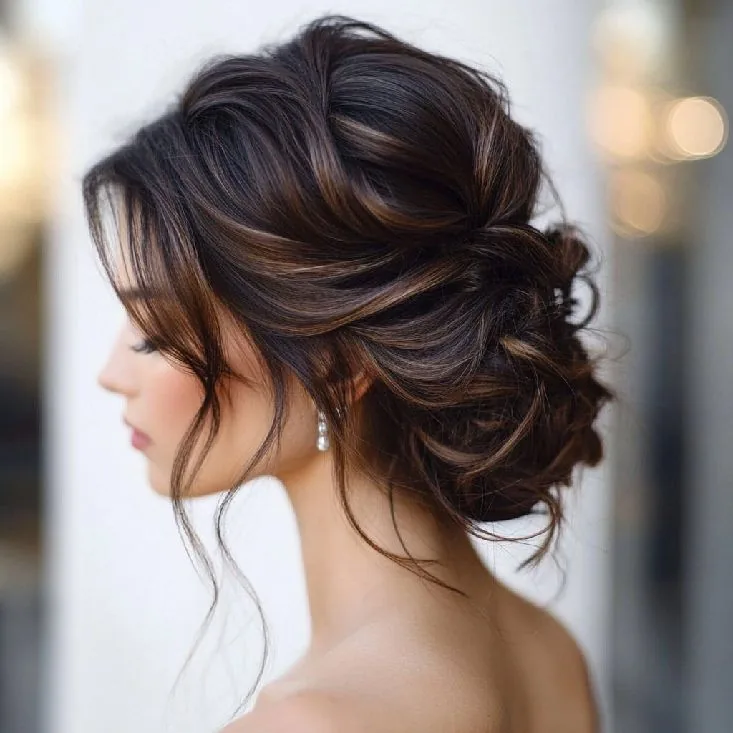
A messy bun is the style most dancers actually wear, even if they do not call it that. It is fast, it is comfortable, and it keeps the hair right out of the way. The one refinement that makes it class-ready is pinning the face-framing pieces back, so the loose strands that usually fall forward during turns are secured before you walk into the studio.
How to style: gather the hair high, twist it loosely and pin it into a soft knot, then take the two front pieces and pin them back behind your ears with flat clips. Common mistake: making the knot too tight, which pulls at the hairline and hurts after an hour. A messy bun should feel loose and easy; if it aches, rebuild it lower and looser.
Best for: lyrical, contemporary and adult beginner classes, where the pace is gentler and a soft bun will not be shaken loose. For hip-hop or fast jazz, choose a braided style instead, because a messy bun is the first style to unravel under sharp head movements.
The Waterfall Braid Half-Up for Lyrical
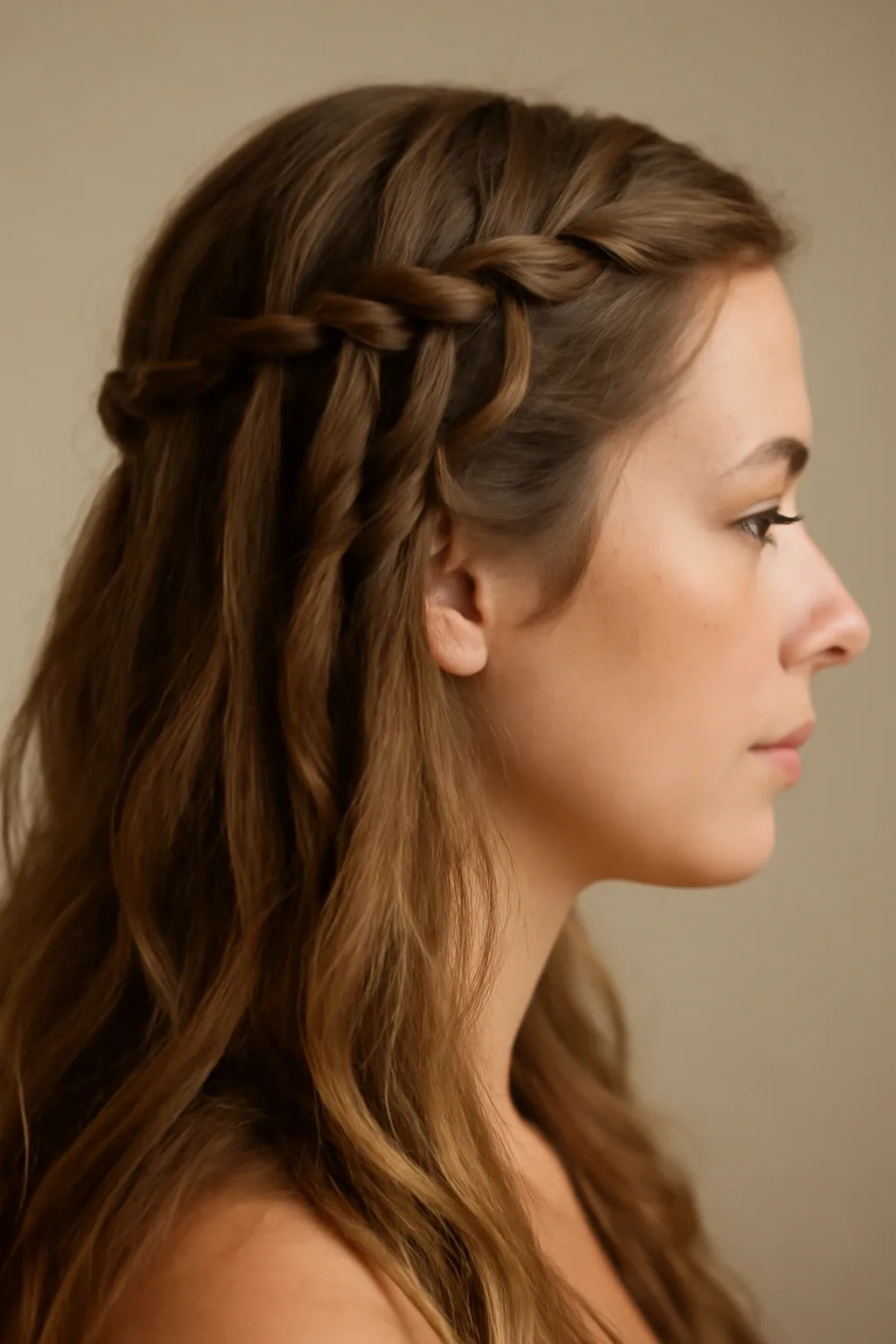
The waterfall braid is the most romantic braid in this guide: strands cascade down through the braid like water, leaving soft waves loose underneath. It is a natural fit for lyrical dance, where the movement is flowing and expressive and the hair is allowed to move with it. It also keeps the front pieces back, which is the part that matters most in class.
Best for: long, wavy hair, where the waterfall effect really shows. Common mistake: wearing it to a fast class. The loose lower half will fly into your face during turns and jumps, so save the waterfall braid for lyrical, ballroom and stretching sessions, and choose a full updo for high-energy days.
How to style: start a French braid at one temple, dropping the bottom strand each time and picking up a new one, and finish by pinning the braid at the back of the head. It takes a little practice, so try it at home once before class day, and keep two spare pins in your dance bag.
A Low Ponytail with a Braided Wrap
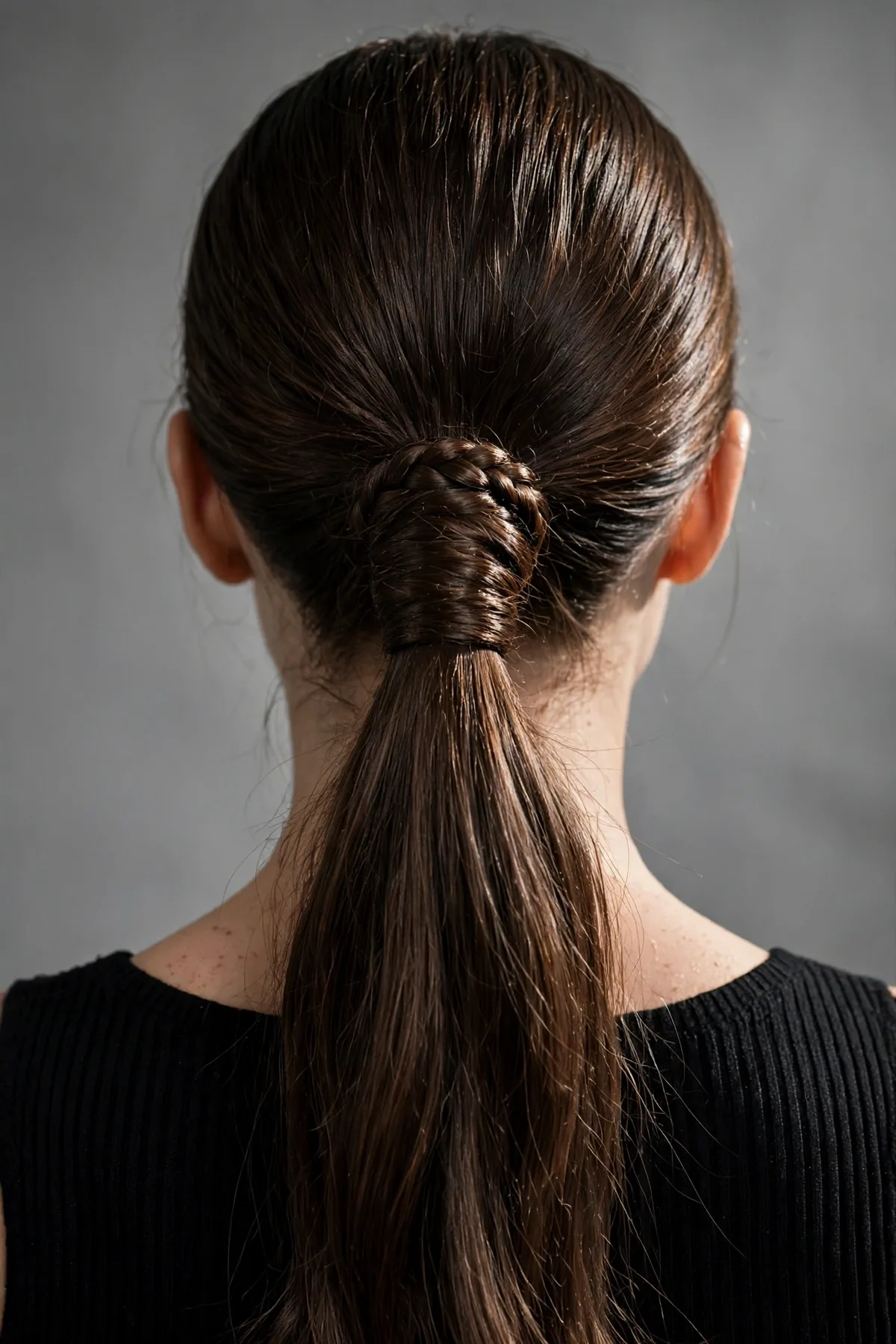
Take a low ponytail, wrap a thin braid around its base instead of a plain strand of hair, and you have a style that looks far more considered than the effort it took. The braided wrap anchors the ponytail, stops the elastic from sliding down as you sweat, and adds a pretty detail that shows in class videos and photographs.
Pros and cons: it is comfortable for hours, gentle on the hair, and easy to redo in seconds. The trade-off is the same as any ponytail: a long tail can swing forward during turns. Who should avoid it: dancers with waist-length hair, unless they braid the tail as well. For everyone else, this is one of the easiest ways to look polished in class.
Maintenance: if the wrap starts to loosen, re-pin the end of the braid underneath the ponytail rather than rebuilding the whole style. A single pin is usually enough to rescue it for the rest of the class.
The Twisted Low Updo
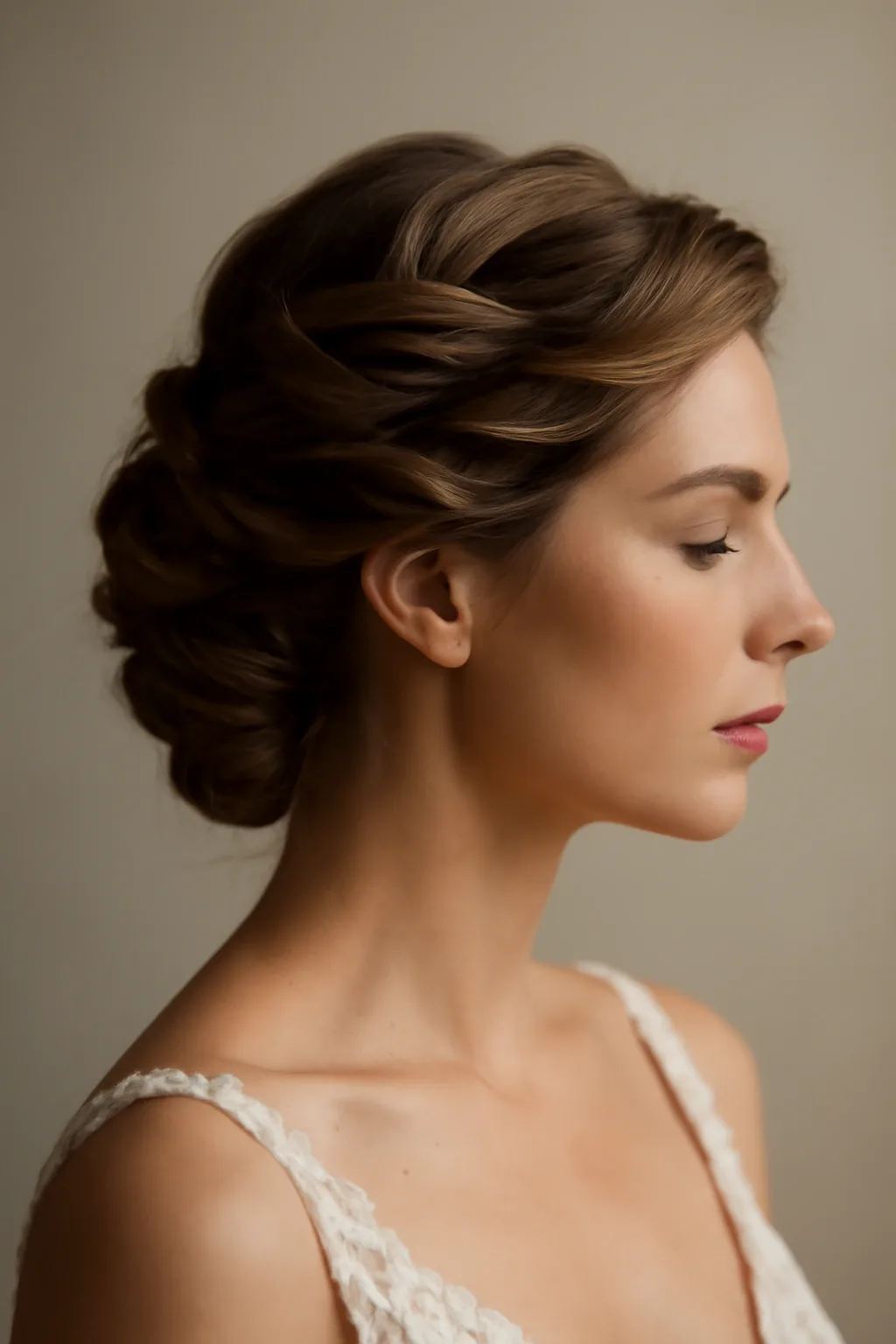
The twisted low updo is a softer, more romantic alternative to the French twist. The hair is divided into sections, twisted towards the back and pinned low at the nape, so the whole length is contained but the texture stays visible. It is secure enough for ballet and ballroom, and pretty enough for an evening class or a dance social.
How to style: part the hair, twist each side towards the back, cross the twists over each other and pin the ends underneath with U-shaped pins. Common mistake: twisting too loosely at the nape, which lets the updo sag by the end of class. Keep the first twist firm, and the rest will follow.
Best for: medium to long hair, and dancers who find buns uncomfortable but still need a fully contained style. The low position keeps the weight off the crown, so it stays comfortable through a long class.
The Chin-Length Bob with a Sweatband
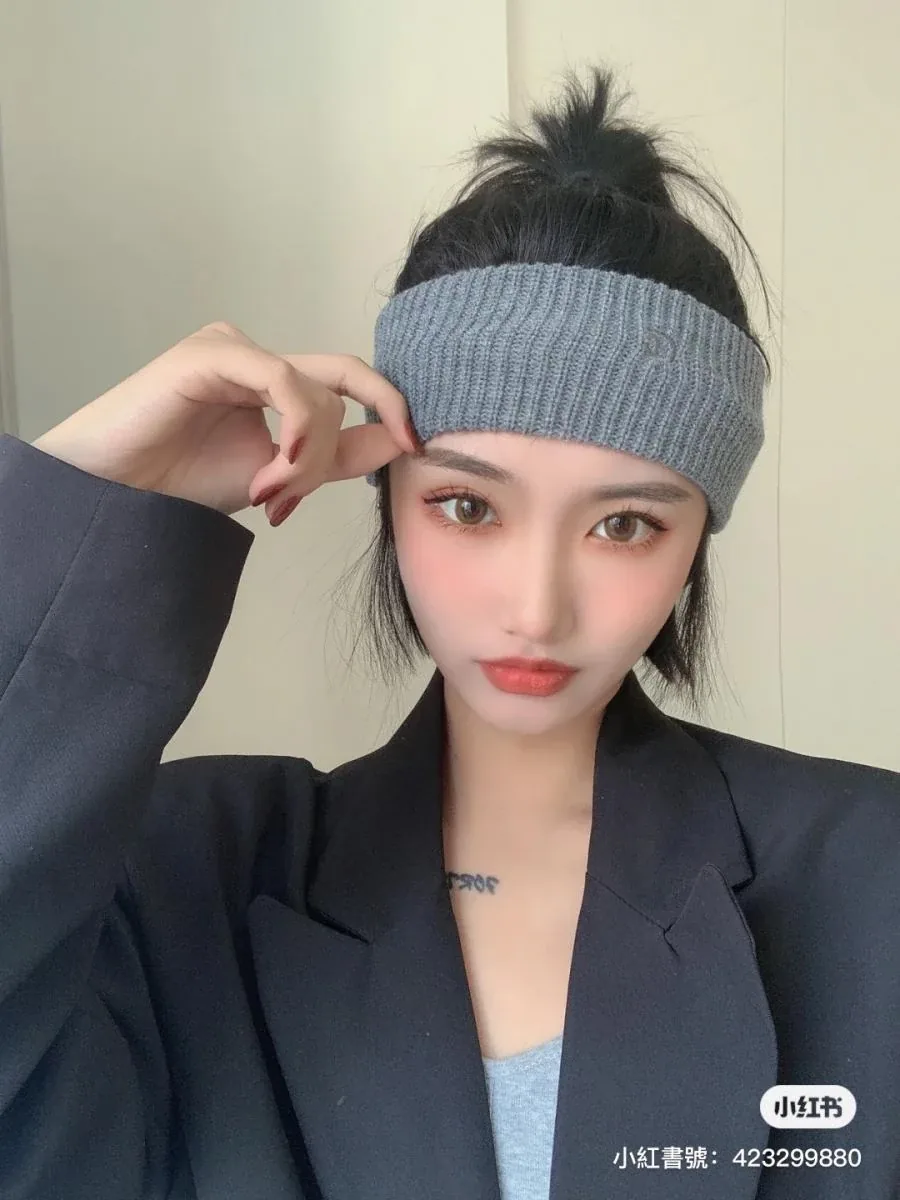
A chin-length bob is short enough to stay out of your face during turns, but the front pieces can still fall forward when you sweat. A wide fabric sweatband solves that completely: it holds the front back, absorbs sweat before it reaches your eyes, and adds a sporty touch that suits jazz and hip-hop classes perfectly.
Pros and cons: no pins, no elastics, almost no styling, and the sweatband does two jobs at once. The only catch is that a sweatband can slip if it is too loose, so choose one with a grippy inner lining and test it with the spin-and-jump test before class. Quick verdict: the best short-hair solution in this guide for sweaty, high-energy classes.
Maintenance: carry a spare sweatband in your dance bag. A sweaty band is easy to swap, and a fresh one feels wonderful halfway through a long class. Wash the bands after every class, or they will hold onto sweat and odour.
The Braided Top Knot
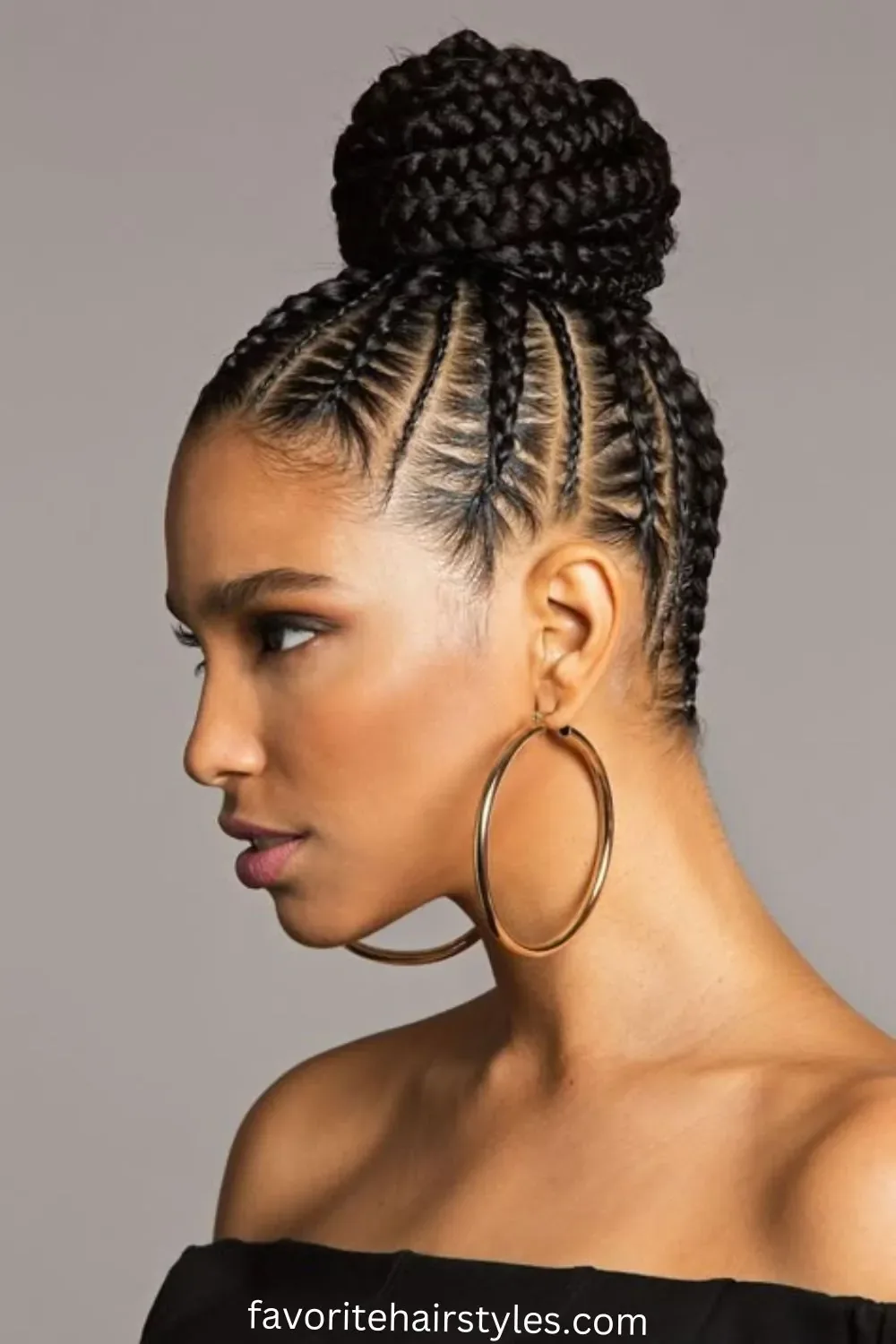
The braided top knot combines a braid and a top knot into one style that is both secure and striking. Braid the ponytail first, then coil the braid into a knot on top of the head, and you get a style that holds through turns, jumps and floor work, and looks far more polished than an ordinary top knot. It is a favourite for jazz and contemporary classes, where the hair is visible from every angle.
Best for: long hair, where the braid has enough length to coil neatly. How to style: gather the hair into a high ponytail, braid it to the ends, then coil the braid around its own base and pin through the braid itself. Common mistake: coiling the braid too loosely, so the knot slides to one side during turns. Pin through the centre of the knot with a U-shaped pin, and it will stay put.
Cost and time: about four minutes, and no tools beyond an elastic and two pins. Quick verdict: the most secure top knot in this guide, and a great choice when a plain bun feels too boring.
Wavy Half-Up with a Bow for Musical Theatre
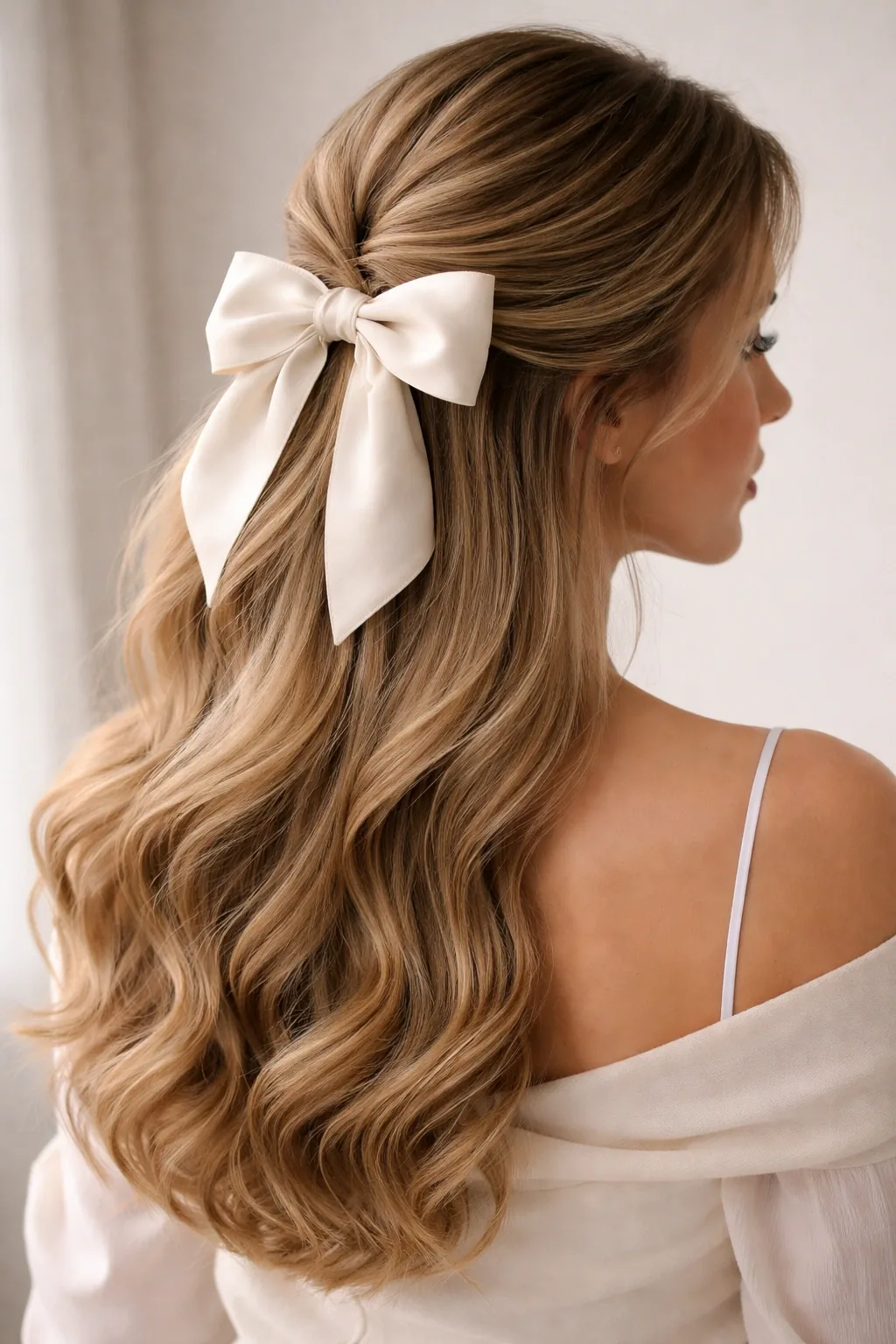
Musical theatre dance needs hair that can act: it must look like a character, survive a full number, and still look good in the wings. A wavy half-up with a bow does all three. The top half is secured out of the face, the waves underneath move beautifully with the choreography, and the bow adds a theatrical touch that reads from the back row, even in class.
Best for: musical theatre, jazz and lyrical classes, where the hair is part of the performance. Common mistake: wearing it to a class with fast turns or floor work, where the loose lower half will fly into your face. Save the half-up bow for upright, expressive classes, and choose a full updo for high-energy days.
How to style: curl the lower half into soft waves, gather the top section and secure it with a small elastic, then tie a fabric bow over the elastic. Choose a bow with a clip or a tie, not a pin alone, so it cannot fly off during a jump.
The Quick Slicked Bun for Damp Hair
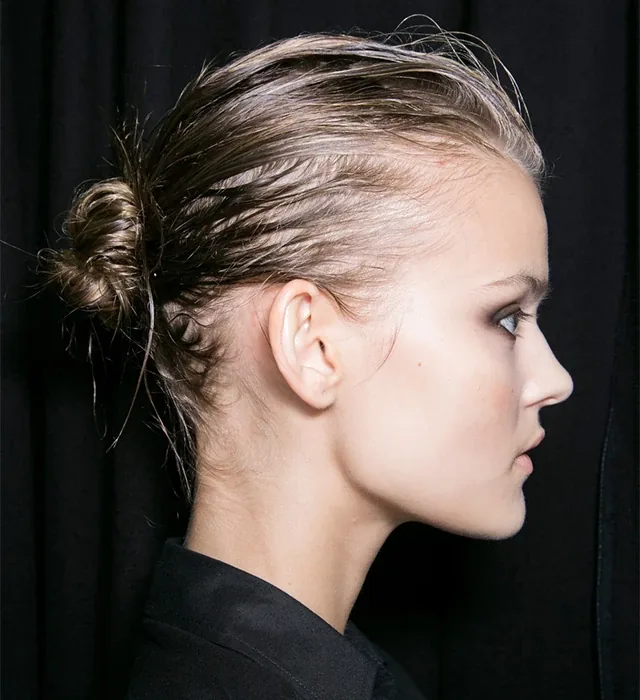
Sometimes you walk into class with damp hair: straight from the shower, from the pool, or from a sweaty warm-up in the previous class. A slicked bun turns that problem into an advantage. Damp hair is easier to smooth, easier to control and easier to pin than dry hair, so a slicked bun built on wet hair is often the most secure style you will wear all week.
How to style: brush the damp hair back with a little gel or leave-in conditioner, gather it into a low or high bun, and pin it flat. The dampness keeps flyaways down without any spray, and as the hair dries inside the bun it sets into soft waves for later. Common mistake: using too much gel, which leaves the hair crunchy and flaky once it dries. A pea-sized amount is enough.
Best for: back-to-back classes, morning classes after a shower, and anyone whose hair is too slippery to hold a bun when dry. Quick verdict: the fastest rescue style in this guide, and the one to reach for when your hair is already wet.
Can I wear my hair down to a dance class?
No, not for most dance classes. Loose hair falls into your face during turns, flies during jumps and can be a safety issue in partner work and floor work. Save loose styles for lyrical or stretching sessions, where you move slowly and upright, and wear your hair up for ballet, jazz, hip-hop, tap and contemporary.
What is the best hairstyle for ballet class?
The classic ballet bun is the best choice for ballet class, because it sits high and centred, keeps the neck line clean and does not move at all during turns. A braided ballet bun or a sock bun is even more secure for long classes and exam days. Keep it simple in class: skip the heavy gel and the hairnet unless your teacher asks for them.
How do I keep my bun from falling out during turns?
Pin through the centre of the bun with U-shaped pins rather than around the edge, use two elastics instead of one, and test the style at home with four turns in a row before class. If the bun still sags, a sock bun or a braided bun will hold better, because the donut or the braid gives the pins something solid to grip.
What hairstyle is best for hip-hop dance class?
Double French braids are the best choice for hip-hop, because they sit flat against the head, split the weight evenly and survive popping, locking, head movements and floor work. Space buns and a high ponytail with a wrapped base are good alternatives. Avoid loose styles and decorative clips, which will not survive a full hip-hop class.
How do I stop sweat ruining my hair in dance class?
Apply dry shampoo at the roots before class, use a fabric headband or sweatband at the hairline, and choose a braid rather than a bun, since braids handle sweat better. Carry a spare elastic and a small towel in your dance bag, and do a thirty-second reset at the water break: re-pin the front, tighten the elastic and smooth the flyaways.
What should I do with curly hair for dance class?
Gather the curls into a pineapple updo or a high puff with a satin scrunchie, and add a silk scarf for sweat protection. Avoid tight ponytails, which stretch the curl pattern, and refresh the curls after class with water and leave-in conditioner instead of brushing them out. A curly half-up claw clip works well for gentler classes like lyrical and tap.
Can I wear a claw clip to dance class?
Yes, for most classes. A large matte claw clip holds a twist securely through ballet, jazz, tap and lyrical, and it is the fastest style to redo between classes. Avoid claw clips for head spins or heavy floor work, where a hard clip can press uncomfortably against the floor, and choose a clip that spans the full width of the gathered hair so it cannot pop open.
How do I fix my hair between two dance classes?
Do a reset, not a rebuild. Re-pin the front pieces, tighten the elastic, smooth the flyaways with a little water or serum, and if the style is too far gone, twist it into a claw clip twist, which takes ten seconds. Keep three bobby pins, two spare elastics, a claw clip and a mini brush in your dance bag, and never unpack the kit.
What hairstyle works for short hair in dance class?
Short hair is already class-friendly. A pixie or a bob barely moves during turns, so you mainly need to manage the front pieces with a fabric headband, a sweatband or two flat clips. A chin-length bob with a sweatband is the best short-hair choice for sweaty, high-energy classes, while a textured lob tucked behind the ears suits gentler classes.
Do I need a hairnet for dance class?
Usually not. Hairnets are standard for ballet exams and recitals, but most teachers do not require them for regular class, and a well-pinned bun holds fine without one. A hairnet is worth having in your dance bag, though: it flattens flyaways, holds a bun through turns better than spray alone, and it is the quickest fix for a bun that keeps slipping.
Walk In Ready, Dance It Out, Hair Still in Place
Dance is at its best when you forget everything except the music, and the right hairstyle is what lets you do that. Whether you choose the everyday ballet bun, a pair of double French braids, a ten-second claw clip twist or a slicked bun for damp hair, the test is always the same: turn four times, jump five times, and check that nothing moves. If it holds through that, it will hold through barre work, combinations, floor work and the final cool-down, and you can spend the whole class thinking about your dancing instead of your hair.
So before your next class, pick one style from this guide, practise it once at home, and pack your tiny dance hair kit: three pins, two spare elastics and a claw clip in your dance bag. Your future self, warmed up, in rhythm and halfway through a combination she loves, will be glad you did. These hairstyles for a dance class are not about looking perfect in a sweaty studio. They are about giving your dancing room to breathe, one secure, comfortable, turn-proof style at a time.