The Grown-Up Bob: 41 Long Bob Haircuts for Women That Hit the Collarbone Perfectly
There is a reason the lob never really goes out of style. It is the grown-up bob — long enough to tie back on a busy morning, short enough to feel light and modern, and sitting right at the collarbone where it frames the face without hiding it. These long bob haircuts for women are the cut for everyone who has outgrown a short bob but is not ready to commit to long hair again.
A lob works because it is a compromise that feels like a choice. It suits straight, wavy, curly, fine and thick hair, it flatters round, oval, square and heart faces, and it looks polished with a ten-minute blow-dry or deliberately undone with a little texture spray. It is also the easiest cut to grow out gracefully, which is why so many women land on it and stay there for years.
This guide starts with the decisions — how to pick your length, how a lob differs from a bob and from long hair, which tools you actually need, and how to grow a bob into a lob without an awkward stage — and then gives you 41 long bob haircuts for women to choose from, for every texture, face shape, age and occasion.
Choosing Your Lob Length
A lob is not one length. It can end at the jaw, graze the collarbone, or brush the tops of the shoulders, and each length behaves differently. Collarbone length is the classic lob — long enough to pull into a low ponytail, short enough to keep its shape. Chin length leans closer to a bob and feels sharper, while shoulder length leans toward long hair and needs more styling to stop it flipping out.

The pros of collarbone length are versatility and forgiveness: it suits most face shapes, holds a wave, and grows out without a strange in-between stage. The cons are that it can feel neither-here-nor-there if you wanted a dramatic change, and very thick hair at this length can look heavy without internal layers. Shorter lobs feel bolder and lighter but cannot be tied up; longer lobs feel softer but demand more blow-drying.
The most common mistake is choosing a length from a photo without checking where it will fall on your own neck. A cut that grazes the collarbone on a model with a long neck can sit at the jaw on you. Always ask your stylist to show you the length on your own hair with a comb before they cut, and remember hair shrinks as it dries, especially wavy and curly hair.
Maintenance is simple: a trim every six to eight weeks keeps the ends blunt and the shape intentional. Between cuts, a little texturising spray at the roots keeps the length from looking flat, and a silk pillowcase reduces the morning frizz that makes a lob look longer on one side than the other.
Quick verdict: if you are unsure, start at the collarbone. It is the most forgiving lob length, the easiest to style, and the simplest to adjust — shorter or longer — at your next appointment.
Lob vs Bob vs Long Hair: Which One Is Right for You?
A bob ends around the jaw or chin, a lob ends around the collarbone, and long hair passes the shoulders — and those few inches change everything about how the cut behaves. A bob is a statement: sharp, graphic, and very visible. A lob is a quieter choice that reads as polished without shouting. Long hair is the most versatile for updos but the heaviest to maintain and the easiest to hide behind.
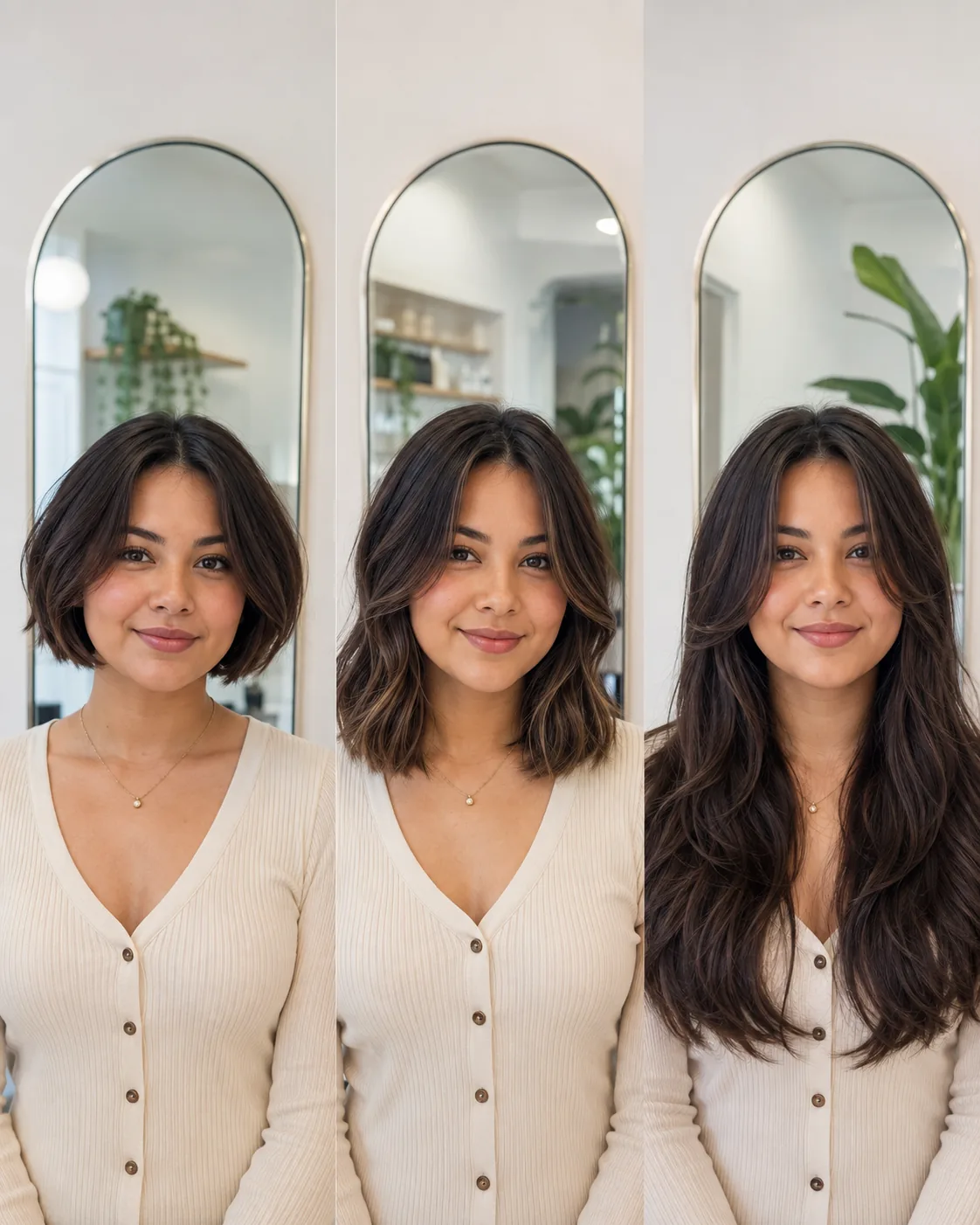
The lob wins on balance. It gives you the lightness and modern feel of a bob with the styling options of longer hair: you can tie it up, braid it, curl it, or wear it straight. The bob wins if you want a bold change and love a sharp silhouette; long hair wins if you love elaborate updos and do not mind the drying time. The lob’s only real con is that it is not dramatic — if you want heads to turn, a shorter bob does that faster.
A common mistake is growing a bob out and assuming it will become a lob on its own. It will not, not neatly: the ends grow unevenly, the shape goes triangular, and the back can end up longer than the front. A grow-out needs at least one shaping cut in the middle, where the stylist re-balances the outline and removes the bulk that builds up at the corners.
Maintenance sits in the middle too. A bob needs a trim every four to six weeks to hold its line; long hair can go ten to twelve weeks. A lob is happy at six to eight weeks, and the grow-out between trims looks intentional rather than neglected, which is half the reason women choose it.
Quick verdict: choose the bob for drama, long hair for versatility, and the lob for the best of both. If you want a cut you can forget about for two months and still love, the lob is the answer.
The Lob for Your Face Shape
The lob flatters almost every face shape because its length does the balancing work for you. It ends below the jaw, which lengthens a round face; it adds width at the sides, which softens a long face; and its ends can be curved in or flipped out to widen or narrow exactly where you need it. The trick is in the details — the part, the layers, and where the volume sits.

For a round face, a centre part with longer front pieces and volume at the crown is the most slimming, while a blunt, chin-skimming lob can make the face look wider. For a long face, a side part with waves at cheekbone level adds width. For a square face, soft layers and a side part soften the jaw; for a heart face, volume at the ends balances a wider forehead.
The biggest mistake is copying a lob from a celebrity with a different face shape. A blunt lob with a centre part looks stunning on an oval face and can look severe on a square one. Take the photo to your stylist, but ask them what they would change for your face — a good stylist will adjust the part, the layering and the finish, and the result will look like the photo, only better on you.
Maintenance depends on the shape you chose. A blunt lob needs regular trims to keep its edge; a layered lob is more forgiving and can stretch a week or two longer. Either way, styling takes minutes: the shape is doing the work, not the products.
Quick verdict: the lob is the most forgiving cut for face shapes, but the details matter. Centre part and length for round faces, waves and width for long faces, soft layers for square faces — and always let your stylist adapt the photo to you.
Styling Tools for a Lob: What You Actually Need
A lob is one of the easiest cuts to style, and you do not need a drawer full of tools to do it well. The essentials are a good hairdryer with a nozzle, a round brush for volume, a flat iron for a sleek finish, and a texture spray for the undone look. Everything else — curling wands, hot rollers, crimpers — is optional, and most lob wearers never touch them.
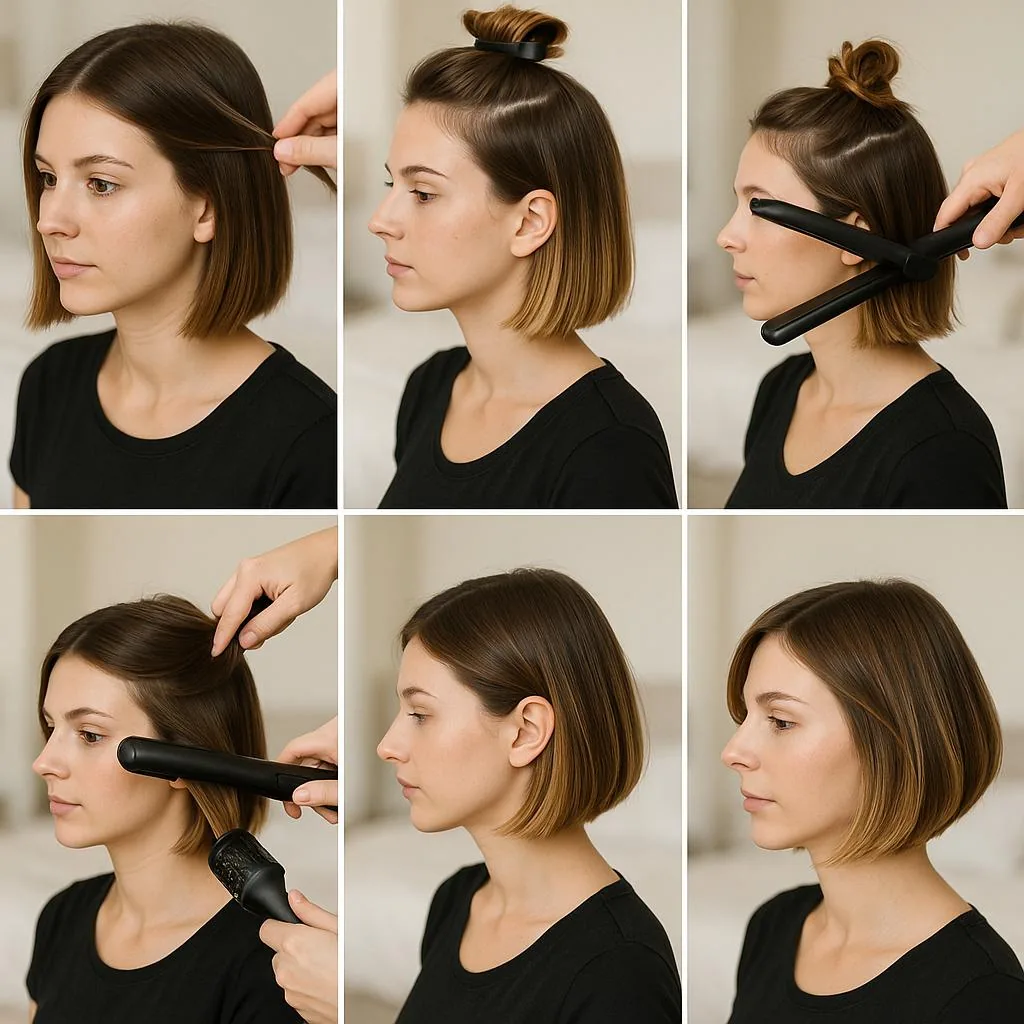
The pros of a lob are that it dries fast and holds a style with very little effort. Ten minutes with a round brush gives you a bouncy blowout; five minutes with a flat iron gives you a sleek, straight finish; and air-drying with a little sea-salt spray gives you the beachy lob that looks like you tried much harder than you did. The con is that a lob shows a bad blow-dry more than long hair does, because there is less length to hide behind.
The most common mistake is using too much heat, too close to the ends. A lob’s ends are its signature — if they are fried and frayed, the whole cut looks tired. Always use a heat protectant, keep the flat iron moving, and turn the ends under or out in one smooth pass rather than clamping and holding. And never straighten a lob bone-straight every day; the cut looks better with a little bend in it.
Maintenance is about the tools as much as the hair. Clean your round brush weekly, replace a flat iron that snags, and keep a travel-size texture spray in your bag for midday refreshes. A quick blast of dry shampoo at the roots on day two or three revives a lob faster than re-styling the whole head.
Quick verdict: dryer, round brush, flat iron, texture spray — that is the whole kit. Master those four and your lob will look salon-finished every morning in under ten minutes.
Growing Out a Bob Into a Lob
Growing a bob into a lob is the most graceful grow-out in hair, because the lob is the natural next stop. The awkward stage is shorter than with most grow-outs: the bob’s sharp line softens, the ends reach the collarbone, and suddenly you have a lob. The whole journey usually takes three to five months, depending on how short the bob was and how fast your hair grows.
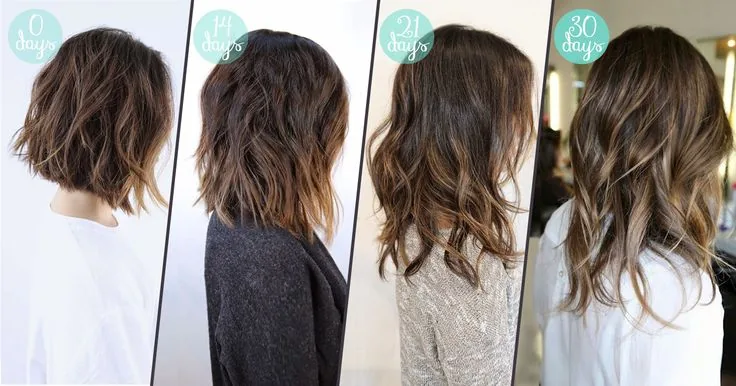
The pros are that you never have to hide your hair while it grows — every stage looks like a deliberate cut, especially if you keep the shape tidy. The cons are the in-between weeks when the back flips out and the front feels too long; that is when most women give up and cut it short again. Push through that fortnight and the lob arrives.
The common mistake is refusing all trims during the grow-out. Hair that is never trimmed grows unevenly and splits at the ends, so it looks scruffy rather than long. The right move is a dusting every eight weeks — a few millimetres off the ends, plus a shaping cut to keep the outline balanced — which costs you almost no length and keeps the grow-out looking intentional.
Maintenance during the grow-out is mostly about the ends. A weekly hair mask, a little oil on the tips, and sleeping with the hair in a loose braid all protect the length you are working so hard to gain. Avoid tight ponytails, which snap the fragile new length at the nape.
Quick verdict: grow it out, but keep trimming the ends. Three to five months of patience, one shaping cut in the middle, and your bob becomes a lob without ever looking like a mistake.
Salon vs DIY Trims: What to Do at Home and What Not To
A lob is tempting to trim at home because it is short enough to see and the ends are right there in front of you. A tiny dusting of split ends between salon visits is genuinely doable — but a real shape cut is not, and the difference between the two is what keeps a lob looking expensive instead of homemade.
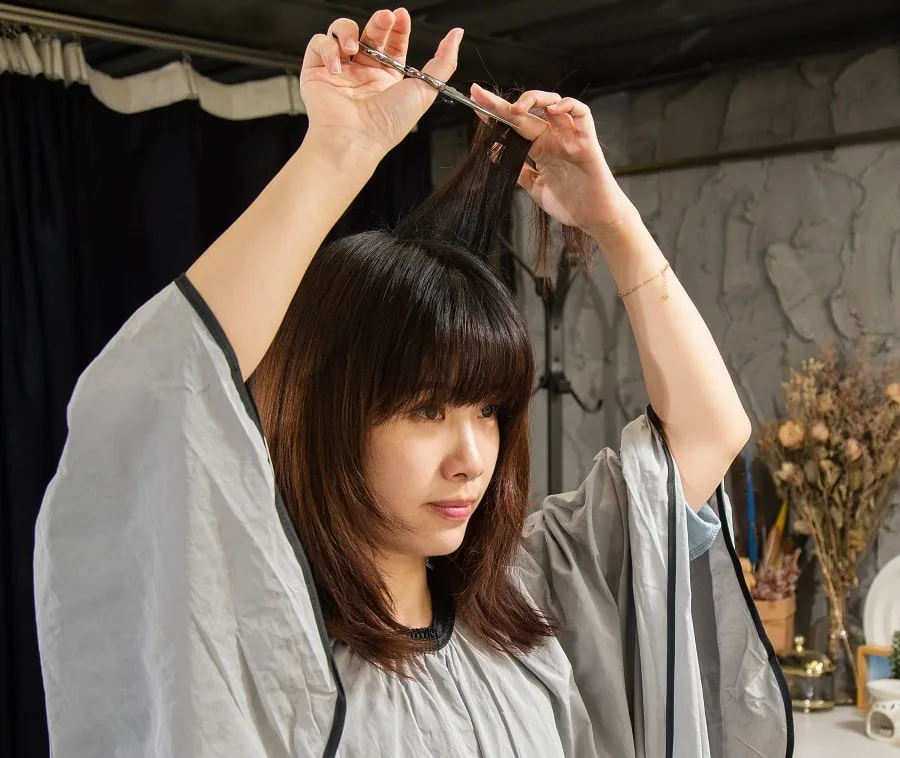
The pros of a home dusting are obvious: it is free, it takes five minutes, and it keeps split ends from travelling up the hair shaft. The cons are equally obvious: it is very easy to cut one side shorter than the other, to create a step, or to snip too much off the front pieces that frame your face. A lob’s blunt line shows every error, because there is no length to hide behind.
The most common mistake is cutting wet hair, which shrinks as it dries and ends up shorter than planned — sometimes by a full inch on wavy hair. The second is using kitchen scissors, which crush the hair shaft instead of cutting it cleanly and cause more split ends than they remove. If you trim at home, use proper hair scissors, cut dry hair, and take off less than you think you need.
Maintenance means knowing your limits: dust the ends at home, but leave the outline, the layers and the back to your stylist every six to eight weeks. A salon trim also resets the shape, which a home dusting cannot do, and it is the shape that makes a lob look like a lob.
Quick verdict: dust the ends at home with real hair scissors on dry hair — and leave the cut itself to the salon. A lob is cheap to maintain, but a bad home cut costs far more to fix than a salon trim.
The Lob for Every Hair Texture
One of the lob’s greatest strengths is that it works on every texture, but it works differently on each one. Straight hair makes a lob look sharp and graphic; wavy hair gives it movement and softness; curly hair gives it volume and personality; fine hair looks fuller at this length; thick hair looks lighter with the right layers. The cut adapts to the texture, not the other way round.
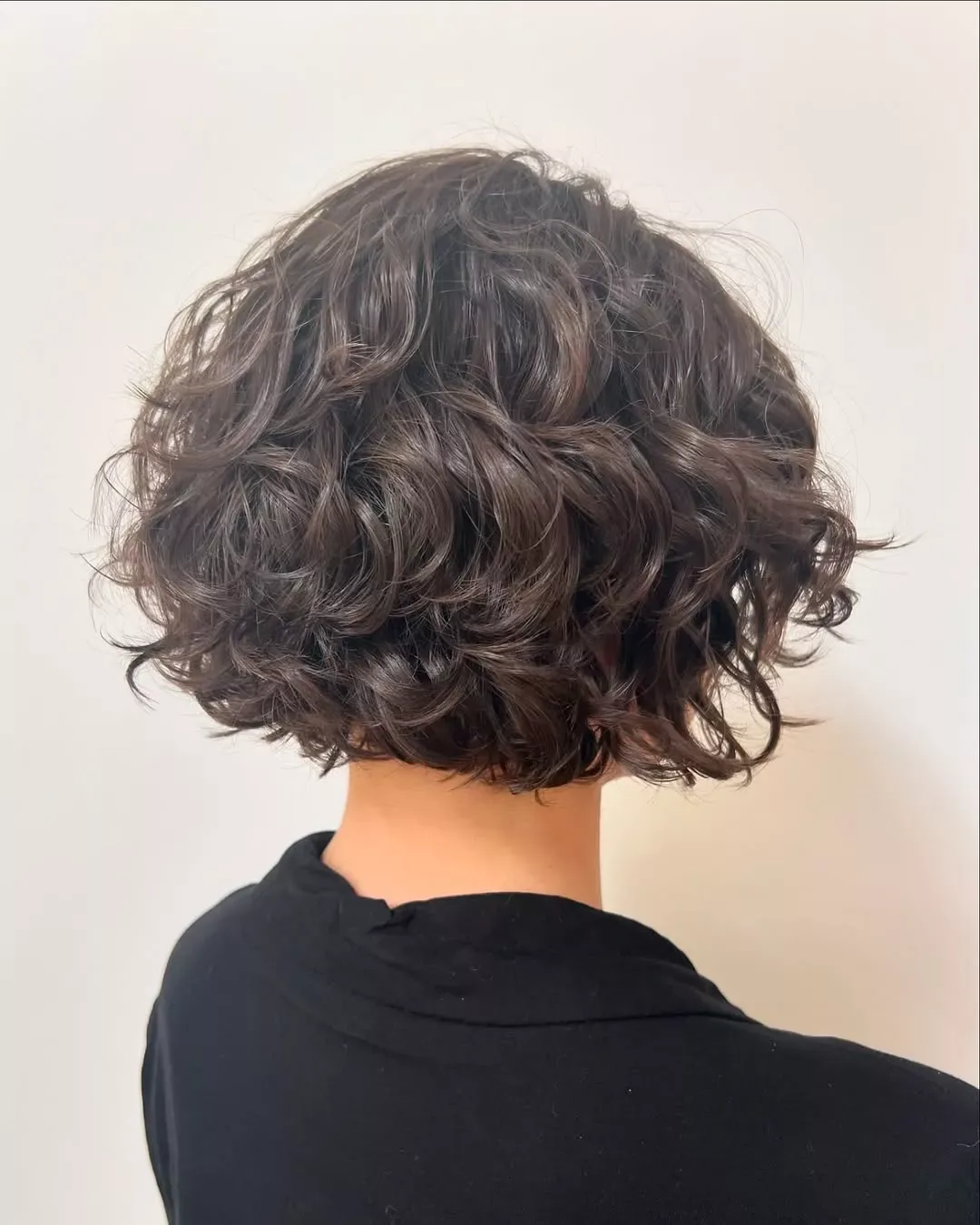
The pros are clear: fine hair gains the illusion of thickness because the ends sit at one length; thick hair loses bulk because the weight is gone; wavy hair finds its natural pattern at collarbone length; curly hair keeps its curl pattern without the triangle shape that longer curly hair can develop. The cons are texture-specific: straight lobs can look flat without styling, and very curly lobs can shrink up shorter than expected.
The common mistake is cutting a lob the same way for every texture. A blunt cut on thick, wavy hair can puff out into a triangle; a heavily layered cut on fine hair can make the ends look wispy and thin. Ask your stylist to cut your hair dry, or at least to account for your texture — a curly lob should be cut curl by curl, and a fine-hair lob should keep its weight at the ends.
Maintenance varies by texture. Straight lobs need a smoothing product and a quick flat-iron pass; wavy lobs need a texture spray and a scrunch; curly lobs need a curl cream and a diffuser; fine lobs need a volumising mousse at the roots. The cut is the same — the styling is where the texture gets its say.
Quick verdict: there is a lob for every texture, but no single lob for all of them. Tell your stylist your texture, your routine, and how much styling you will actually do — then let them shape the cut around that.
Your Lob Maintenance Schedule
A lob is a low-maintenance cut, but low maintenance is not no maintenance. The schedule that keeps a lob looking intentional is simple: a salon trim every six to eight weeks, a deep-conditioning mask once a week, a clarifying wash once a month, and a daily routine that takes under ten minutes. That is the whole system, and it works.
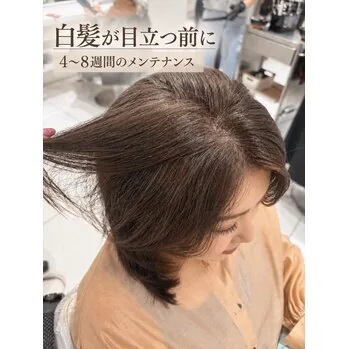
The pros of the schedule are that it is short and predictable — you always know what your hair needs and when. A trim every six to eight weeks keeps the ends blunt and the shape clean; a weekly mask keeps the ends soft; a monthly clarifying wash removes the product build-up that makes a lob look dull. The con is only that it requires booking the trim in advance, because a lob that goes twelve weeks without a cut starts to look like long hair that lost its way.
The most common mistake is skipping the trim because the lob still looks fine. It does look fine — for a while. Then the ends thin out, the shape goes soft, and the cut that once looked sharp now looks like a grow-out. By the time you notice, you need a bigger cut to restore the shape. Booking the next trim before you leave the salon is the easiest way to never fall behind.
Maintenance between trims is mostly about the ends. A drop of hair oil on the tips after washing, a silk pillowcase at night, and a heat protectant before any hot tool will keep the ends healthy for the full eight weeks. If the ends start to feel rough, that is your hair asking for the trim a week early.
Quick verdict: trim every six to eight weeks, mask weekly, clarify monthly, and book the next appointment before you leave. A lob asks very little — give it that little, and it will look good every single day.
The Classic Straight Lob
The classic straight lob is the original grown-up bob: one clean length, collarbone-skimming, with ends that fall perfectly straight. It is the cut that made the lob famous, and it is still the one stylists recommend first, because it suits almost everyone and never looks dated.
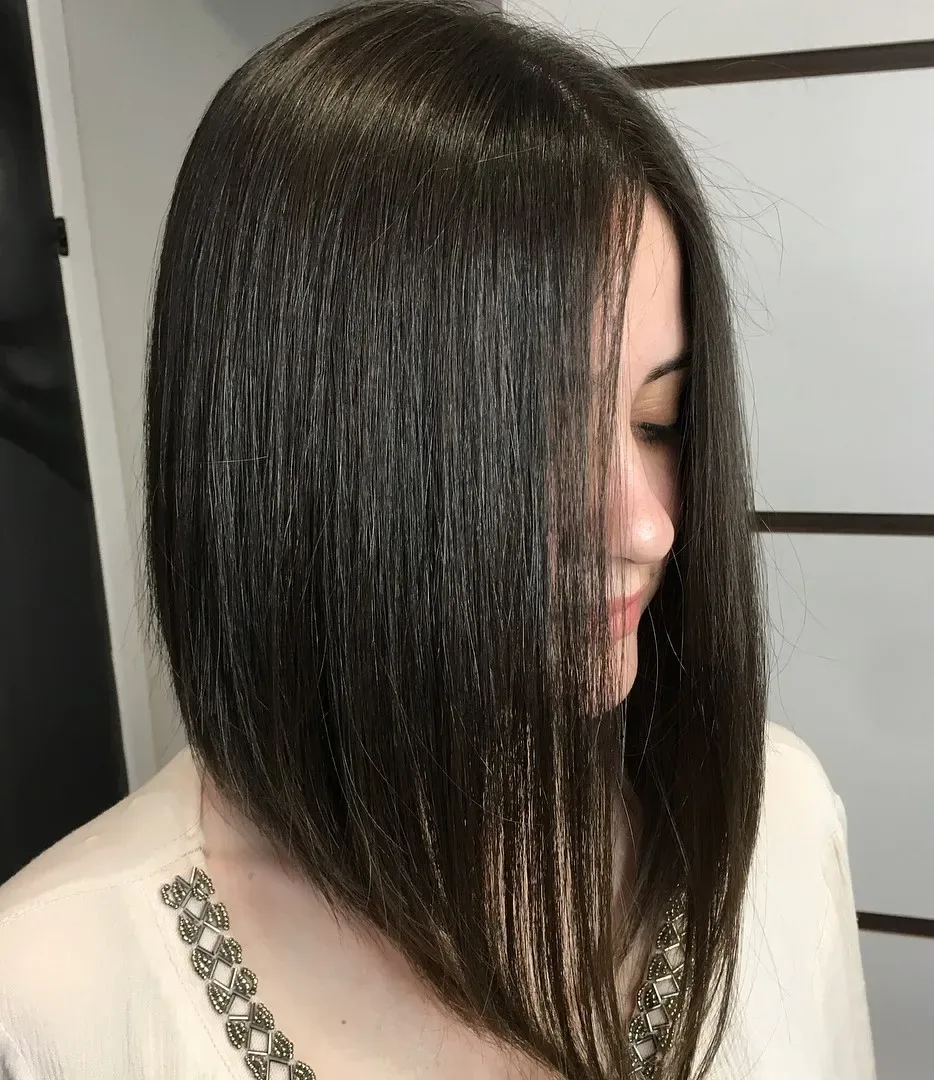
The pros are its polish and its simplicity. It looks expensive with almost no effort, it photographs beautifully, and it works for the office, a wedding, or a school run without changing a thing. The cons are that it can look flat on very fine hair, and it shows a bad blow-dry more than a textured cut does — the straight line leaves nowhere to hide.
The most common mistake is cutting it too blunt on thick hair, which makes the ends kick out and the shape go triangular. Ask for subtle internal layers or a slight undercut at the nape, and the straight lob will sit flat and clean instead of flaring. The second mistake is skipping heat protectant — straight hair shows damage at the ends first.
Maintenance is a trim every six to eight weeks and a quick flat-iron pass on the ends after washing. A smoothing serum on damp hair keeps the finish glossy, and a silk pillowcase stops the morning kinks that a straight lob shows more than any other cut.
Quick verdict: the safest, smartest first lob. If you want one cut that works everywhere and never goes out of style, this is it.
The Wavy Lob
The wavy lob is the lob at its most relaxed: collarbone length with soft, natural-looking waves running through it. It is the cut for women who want to look styled without looking styled, and it is the easiest lob to maintain, because the waves do most of the work.
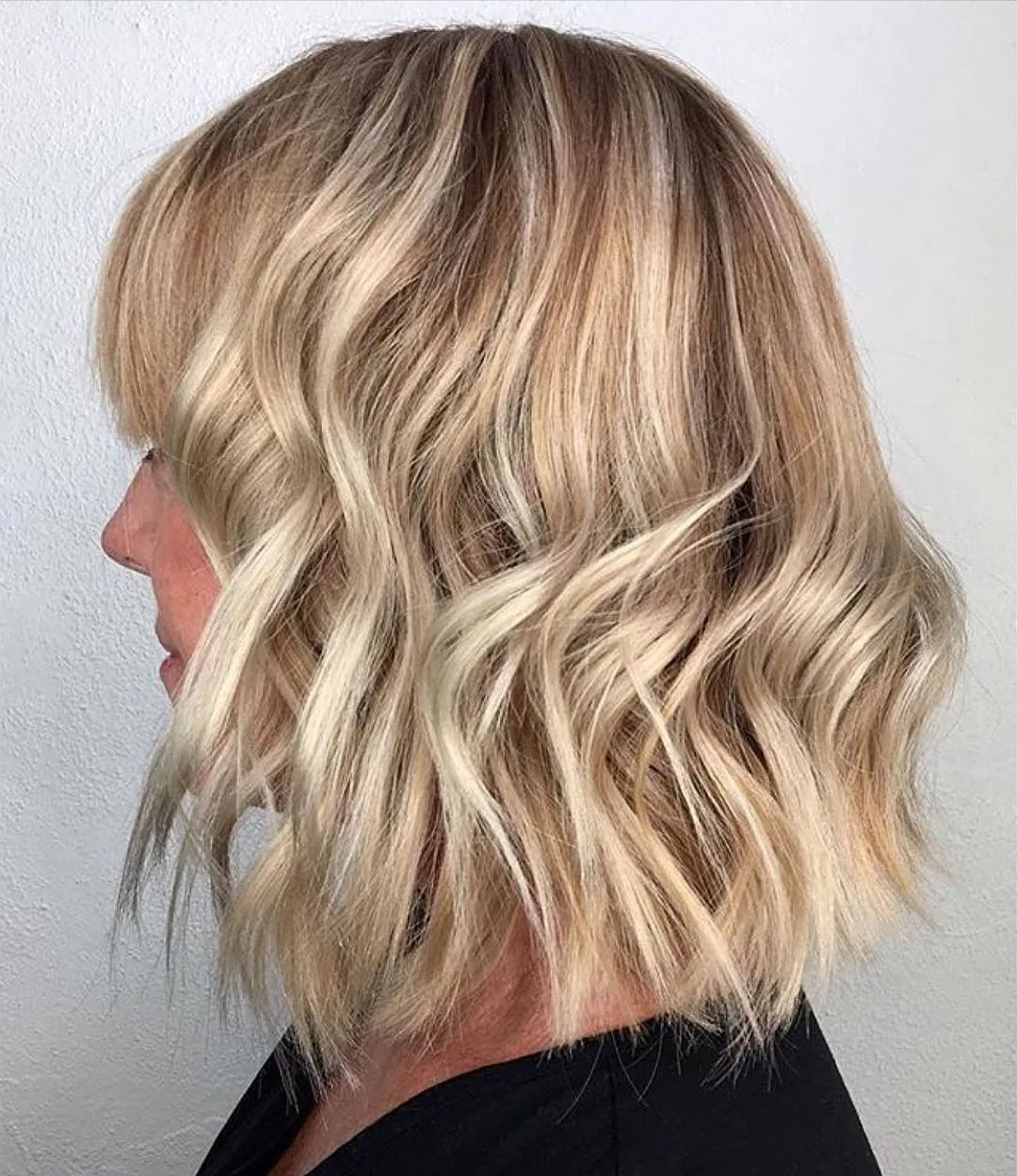
The pros are movement and forgiveness. Waves hide a multitude of sins — a missed trim, a bad hair day, a humid afternoon — and they make fine hair look thicker and thick hair look lighter. The cons are that the waves need a little encouragement on straight hair, and very humid weather can turn soft waves into frizz if you skip a smoothing product.
The common mistake is over-curling the waves with a wand, which makes the lob look done-up rather than effortless. The trick is to curl alternate sections in opposite directions, leave the last inch of each end straight, and brush the curls out with your fingers, not a brush. Less is more — two or three waves per side is enough.
Maintenance is a texture spray on damp hair and a scrunch, then air-dry or diffuse. A trim every seven to eight weeks keeps the waves from going stringy at the ends, and a weekly mask keeps the waves soft instead of crunchy.
Quick verdict: the lob for women who want to look good with the least effort. Wash, scrunch, go — the waves do the rest.
The Blunt Lob
The blunt lob cuts every hair to exactly the same length, and that single, sharp line is the whole point. It is bold, graphic, and modern — the lob for women who like their hair to look deliberate. On straight hair it is almost architectural; on wavy hair it is softened just enough to stay wearable.
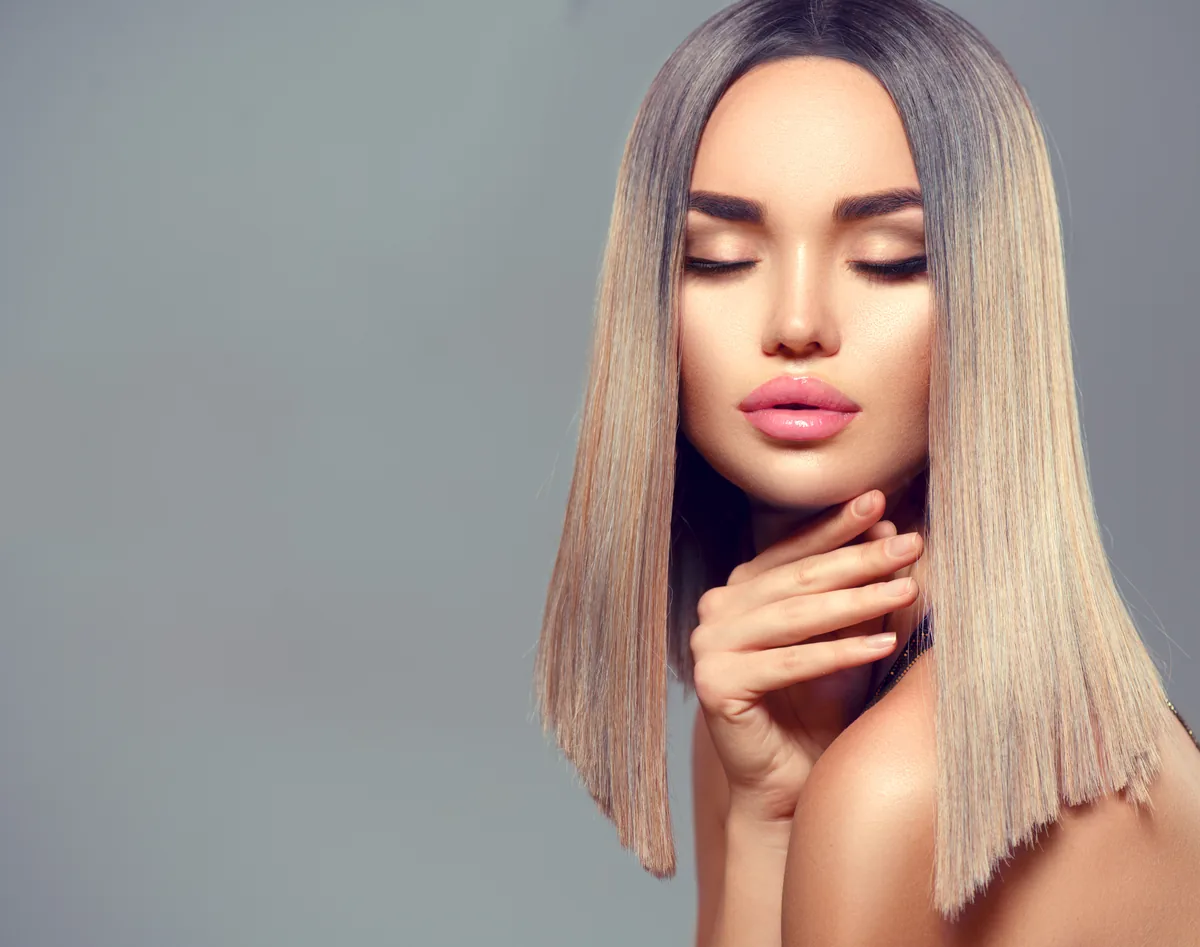
The pros are impact and thickness. A blunt cut makes fine hair look twice as thick, because all the weight sits at the ends, and it makes the lob look intentional even on a day when you have done nothing to it. The cons are that it needs regular trims to hold its edge, and on very thick hair it can look heavy without some hidden weight removal underneath.
The most common mistake is cutting a blunt lob on curly or very wavy hair without accounting for shrinkage — it dries shorter and wider than expected. The other is letting it grow past the shoulders without a trim, at which point the blunt line becomes a heavy shelf. Keep it at the collarbone and it stays sharp.
Maintenance is a trim every six weeks, without fail, and a smoothing serum to keep the ends sitting together. A flat iron pass on the very ends after drying keeps the line crisp, and a silk scrunchie at night stops the ends from bending in different directions.
Quick verdict: the boldest lob, and the best one for fine hair. If you want your hair to look thicker and your cut to look deliberate, go blunt.
The Layered Lob
The layered lob adds long, soft layers through the lengths, so the cut moves when you do. It is the lob for women who find a blunt cut too heavy or too severe, and it is the best choice for thick hair, because the layers remove weight without removing length.
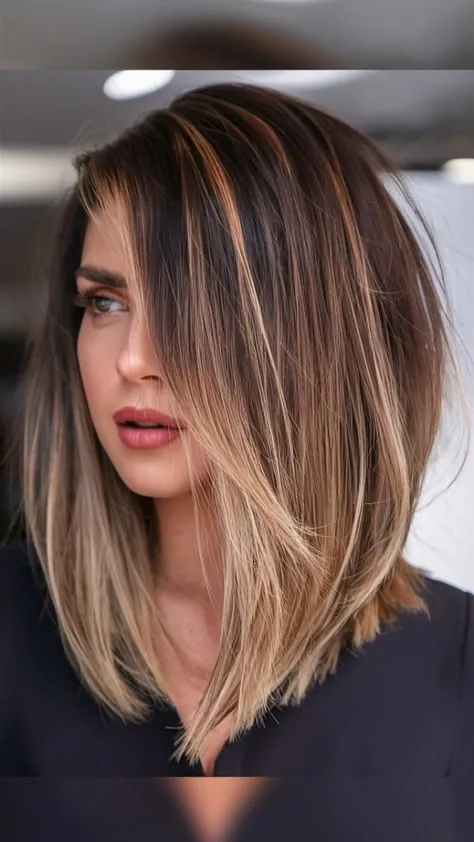
The pros are movement, lightness, and forgiveness. Layers make the lob look good air-dried, they stop thick hair from going triangular, and they make the grow-out between trims almost invisible. The cons are that too many layers can make fine hair look thin at the ends, and a layered lob needs a stylist who understands long layers — short, choppy ones turn it into a shag.
The most common mistake is asking for layers and getting a shag instead. Be specific: long layers that start at the cheekbone or below, not at the crown. The second mistake is over-thinning, which leaves the ends wispy. Ask your stylist to keep the weight at the ends and only remove bulk from underneath.
Maintenance is a trim every seven to eight weeks, and the layers do most of the styling for you. A round brush at the ends gives the layers shape, and a texture spray stops them from looking too neat. The grow-out is the most forgiving of any lob.
Quick verdict: the most versatile lob for thick hair, and the most forgiving grow-out. If a blunt lob feels too heavy, layers are the answer.
The Textured Lob
The textured lob is a lob with the ends point-cut and broken up, so the outline looks soft and lived-in rather than sharp. It is the cut for women who love the lob’s length but want it to feel casual, modern, and a little bit undone — the lob you would wear with jeans and a leather jacket.
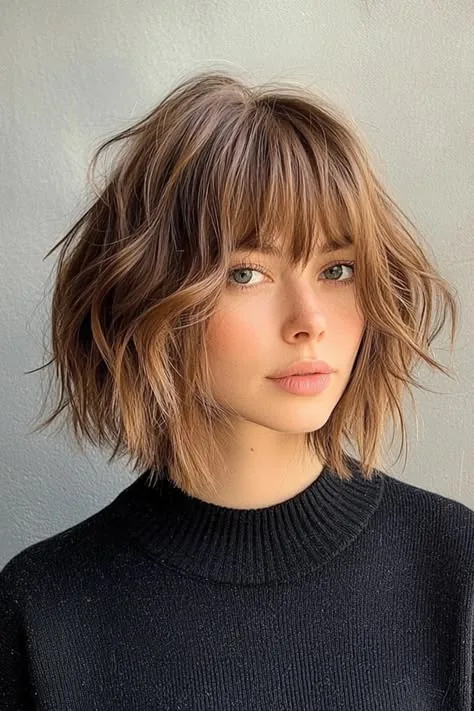
The pros are that it suits almost every texture, it hides split ends between trims, and it looks good with almost no styling. The cons are that it can look messy rather than textured if the point-cutting is overdone, and on very fine hair it can remove too much weight from the ends.
The most common mistake is confusing texture with thinning. Texture is about the shape of the ends; thinning is about removing bulk. A good textured lob has broken-up ends and fullness through the lengths, not wispy, see-through tips. Ask your stylist to point-cut the last inch only, and to keep the interior full.
Maintenance is a trim every seven to eight weeks and a texture spray on damp hair. Air-drying works beautifully on a textured lob — scrunch, let it dry, and the cut does the rest. A weekly mask keeps the point-cut ends from looking dry.
Quick verdict: the casual, modern lob. If you want a cut that looks good on a no-effort day, this is the one.
The A-Line Lob
The A-line lob is shorter at the back and longer at the front, so the hair angles down toward the face. It is the most flattering lob for a round or full face, because the longer front pieces draw the eye downward and lengthen everything, and it is the most dramatic lob from the side.
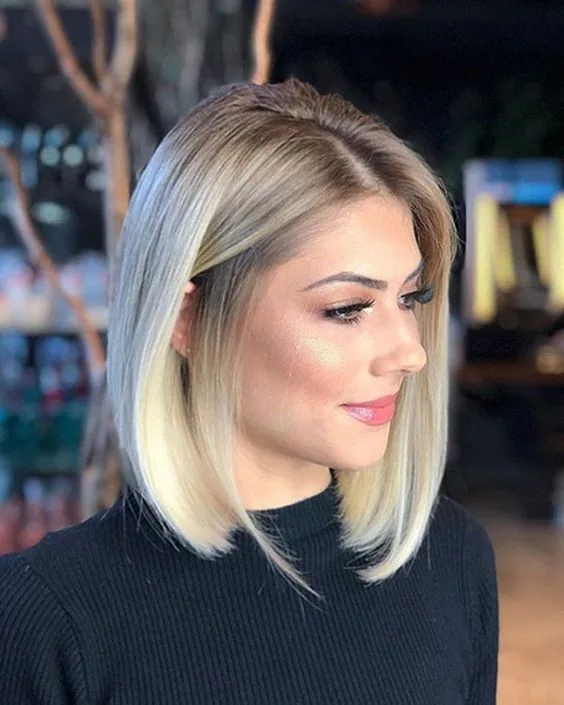
The pros are its slimming effect and its style. The angle gives the cut a shape that a one-length lob does not have, and it looks polished even when you have done nothing to it. The cons are that the angle needs maintaining — as it grows out, the line softens and the drama fades — and it is harder to tie up, because the front pieces are longer than the back.
The most common mistake is making the angle too steep, which turns the lob into a graduated bob and leaves the back too short to sit properly. A gentle angle — the front just an inch or two longer than the back — is the most flattering and the easiest to grow out.
Maintenance is a trim every six weeks to keep the angle crisp, and a flat iron pass on the front pieces to emphasise the line. The back needs a round brush to stop it flipping out, especially on the first morning after a wash.
Quick verdict: the most flattering lob for round faces, and the most dramatic from the side. Keep the angle gentle and the trims regular, and it stays stunning.
The Lob with Curtain Bangs
Curtain bangs part in the middle and sweep to either side, framing the face like curtains, and they are the lob’s best friend. The combination is soft, romantic, and very forgiving — the bangs hide a high forehead, soften a strong jaw, and make the whole cut look finished even when the rest of the hair is simply air-dried.
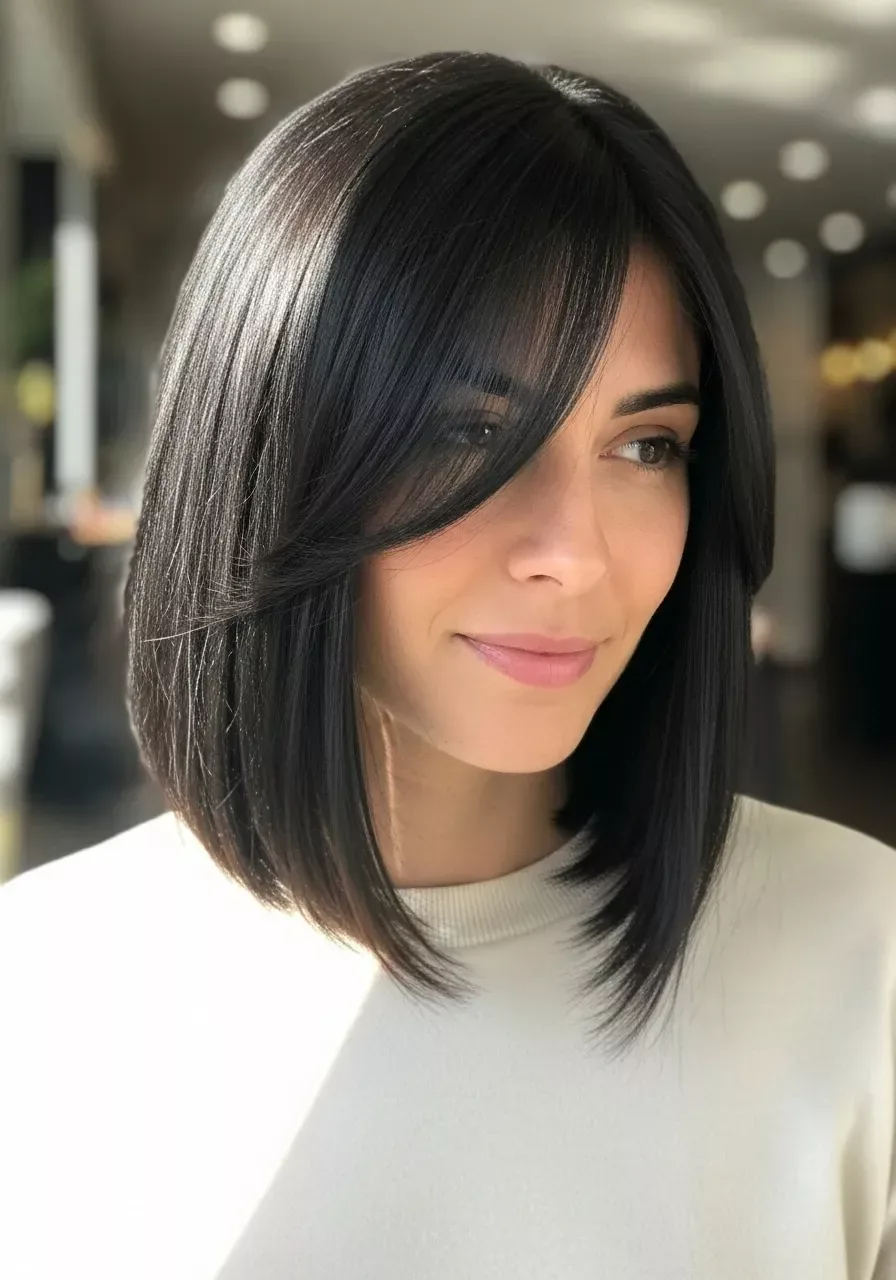
The pros are versatility and face-framing. Curtain bangs grow out gracefully, they can be pinned back on a bad day, and they make a lob look styled with almost no effort. The cons are that they need a trim every three to four weeks to stay at the right length, and they can look greasy faster than the rest of the hair, because they sit on the forehead.
The most common mistake is cutting curtain bangs too short, which turns them into a fringe and loses the sweep. They should start at the cheekbone or below and get longer toward the sides. The second mistake is blow-drying them flat against the forehead — dry them with a round brush, sweeping them away from the face, so they fall open.
Maintenance is a quick bang trim between full cuts, and dry shampoo on the bangs on day two. A round brush and a cool shot from the dryer set the sweep, and a single bobby pin on each side is all you need on a lazy day.
Quick verdict: the softest, most romantic lob. If you want face-framing without the commitment of a full fringe, curtain bangs are the answer.
The Lob with Side-Swept Bangs
Side-swept bangs fall across the forehead from a deep side part, and they give a lob a polished, grown-up feel. They are the most versatile fringe for a lob — they suit every face shape, they grow out without an awkward stage, and they can be swept to either side depending on your mood.

The pros are softness and flexibility. Side-swept bangs soften a square jaw, balance a long face, and make a lob look finished with very little styling. The cons are that they fall in your eyes as they grow, and they need a little styling every morning — they do not just fall into place on their own.
The most common mistake is cutting them too blunt and too heavy, which turns a soft sweep into a wall of hair. Side-swept bangs should be feathered at the ends and light enough to move. The second mistake is blow-drying them straight down; sweep them across the forehead with a round brush so they sit at an angle.
Maintenance is a bang trim every four weeks and a quick round-brush pass each morning. Dry shampoo at the roots keeps them from going flat by lunchtime, and a bobby pin is the easiest fix on a day when they will not behave.
Quick verdict: the most flexible fringe for a lob. Soft, grown-up, and easy to grow out — the safe way to try bangs.
The Lob with a Full Fringe
A full fringe with a lob is a bold, fashion-forward combination — a straight-across fringe that ends at the brows, paired with collarbone-length hair. It is the look for women who want their hair to make a statement, and it suits oval and long faces best, where the fringe shortens the face beautifully.

The pros are impact and youthfulness. A full fringe takes years off, it makes the eyes the focus, and it turns a simple lob into a look. The cons are commitment: a full fringe needs trimming every three weeks, it needs styling every morning, and it is the hardest fringe to grow out.
The most common mistake is cutting the fringe too wide or too short, which makes it look like a helmet. A full fringe should sit just at the brows, be slightly longer at the sides, and be light enough to move. The second mistake is cutting it wet — fringe hair shrinks as it dries, sometimes by half an inch.
Maintenance is a fringe trim every three weeks, a round brush every morning, and dry shampoo on the fringe between washes. Keep the fringe off your forehead at night with a soft headband, and it will behave better in the morning.
Quick verdict: the boldest fringe for a lob, and the most high-maintenance. If you love the look and will commit to the trims, it is unforgettable.
The Asymmetrical Lob
The asymmetrical lob is longer on one side than the other, and that single difference makes it the most fashion-forward lob in this guide. It is edgy without being extreme, and it suits women who want their hair to look intentional and a little bit daring — the lob for a creative workplace or a night out.
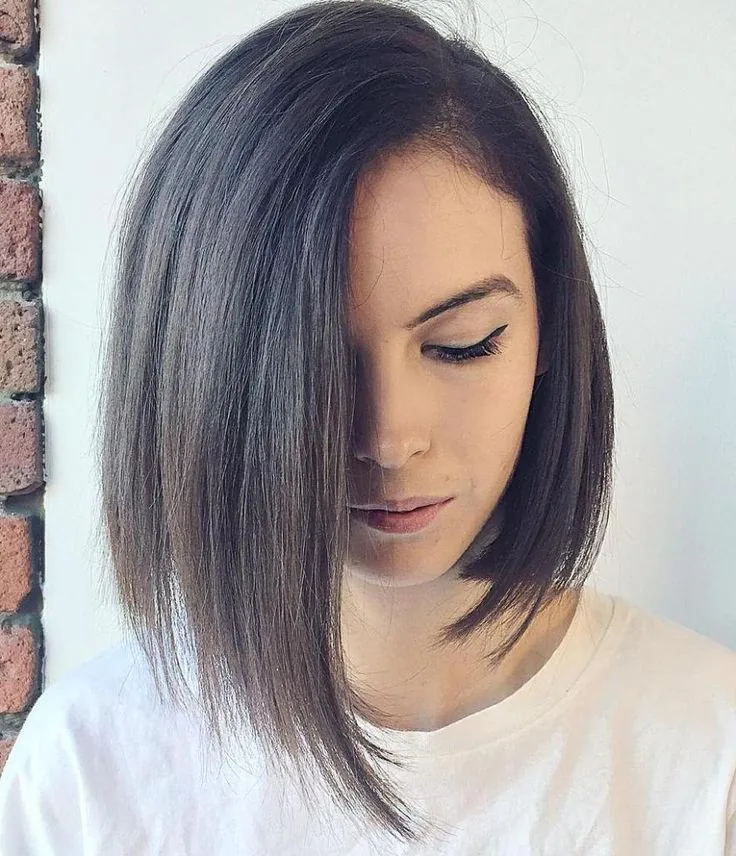
The pros are style and slimming. The longer side draws the eye diagonally across the face, which is flattering on round and square faces, and the cut looks deliberate even when the styling is minimal. The cons are that it needs regular trims to keep the asymmetry clear, and it is the hardest lob to tie up neatly, because the two sides are different lengths.
The most common mistake is making the difference too subtle, so it looks like a cutting error rather than a choice. The asymmetry should be clear — at least an inch and a half difference — and the longer side should be the side you part your hair away from, so it falls naturally.
Maintenance is a trim every six weeks and a flat iron pass to show off the line. The longer side is the feature, so keep it smooth and glossy, and let the shorter side sit naturally behind the ear or tucked back.
Quick verdict: the edgiest lob, and the most flattering on round faces. Make the asymmetry obvious, keep it trimmed, and it always looks deliberate.
The Lob with Face-Framing Layers
Face-framing layers are the shortest layers in a lob, starting at the cheekbone and curving around the face, and they are the single most flattering detail you can add to a lob. They soften the jaw, highlight the cheekbones, and make the cut look like it was designed for your face — because it was.

The pros are instant polish and versatility. Face-framing layers work on every texture, they make a lob look styled even when it is air-dried, and they grow out beautifully. The cons are that they need a stylist who understands face shapes — layers cut too short can look like a shag, and layers cut too long do nothing at all.
The most common mistake is starting the layers too high, at the eye or above, which shortens the face and looks dated. The layers should start at the cheekbone or the jaw, and get longer as they move down. The second mistake is cutting them the same length on both sides when your part is off-centre — the layers should follow your part.
Maintenance is a trim every seven to eight weeks, and the layers do most of the styling themselves. A round brush swept away from the face sets the layers in place, and a texture spray stops them from looking too neat.
Quick verdict: the most flattering detail for any lob. If you add only one thing to a plain lob, make it face-framing layers.
The Curly Lob
The curly lob is collarbone length on naturally curly hair, and it is one of the best cuts for curls, because the length is short enough to keep the curls bouncy and long enough to show their pattern. It avoids the triangle shape that longer curly hair can develop, and it lets the curls sit where they want to sit.
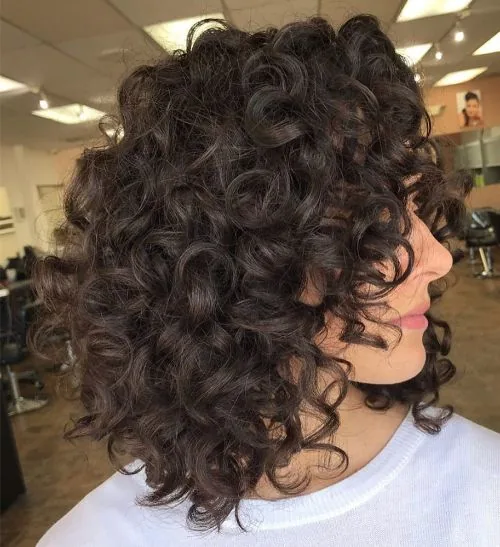
The pros are volume, shape, and ease. Curls at lob length have bounce and definition, the cut is wash-and-go friendly, and it looks full without any backcombing. The cons are shrinkage — a curly lob can dry two or three inches shorter than it was cut — and humidity, which can turn defined curls into frizz if you skip a curl cream.
The most common mistake is cutting a curly lob wet and straight, which is how you end up with a cut that is far too short when it dries. A curly lob should be cut dry, curl by curl, so the stylist can see exactly where each curl will fall. The second mistake is layering it like straight hair, which creates a pyramid shape.
Maintenance is a curl cream on wet hair, a diffuser on low heat, and a trim every eight to ten weeks. Sleep on a silk pillowcase or in a pineapple ponytail to protect the curl pattern, and refresh day-two curls with a spritz of water and a little cream.
Quick verdict: the best length for curly hair. Cut it dry, cream it, diffuse it, and let the curls do the talking.
The Lob for Fine Hair
Fine hair and the lob are a perfect match, because collarbone length is where fine hair looks its fullest. Shorter, and there is not enough hair to create shape; longer, and the weight pulls the roots flat. The lob sits in the sweet spot, and a blunt or lightly layered cut makes fine hair look twice as thick.

The pros are fullness and lift. A blunt lob makes the ends look dense, a little root volume goes a long way at this length, and the cut dries in minutes. The cons are that fine hair shows oil faster, so day-two hair can look flat, and too many layers will make the ends look wispy and thin.
The most common mistake is over-layering fine hair in the hope of creating volume. Layers remove weight, and fine hair has no weight to spare. Keep the cut blunt or add only long, face-framing layers, and get the volume from styling — a volumising mousse at the roots and a round brush — not from the cut.
Maintenance is a trim every six weeks to keep the ends dense, a volumising mousse on damp roots, and dry shampoo on day two. Wash with a lightweight shampoo, skip heavy conditioners on the roots, and blow-dry upside down for instant lift.
Quick verdict: the best cut for fine hair. Keep it blunt, keep the ends dense, and let styling — not layers — create the volume.
The Lob for Thick Hair
Thick hair at lob length can be glorious or overwhelming, and the difference is all in the cut. With the right internal layers and weight removal, a lob makes thick hair feel light, move beautifully, and dry in a reasonable time. Without them, it becomes a heavy triangle that fights you every morning.
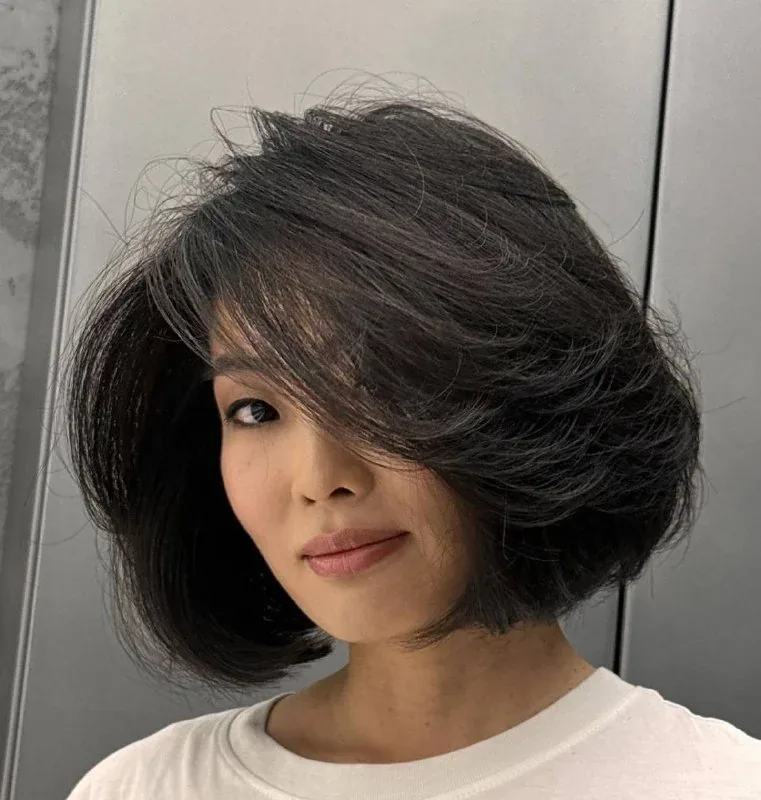
The pros are that thick hair holds a lob’s shape beautifully, it looks full and healthy, and it can take layers, texture, and colour without looking thin. The cons are bulk at the nape, long drying times, and the fact that a blunt cut on thick hair can flare out at the ends.
The most common mistake is cutting a thick-hair lob blunt with no internal work. Ask your stylist for hidden layers underneath, or for slide-cutting through the mid-lengths, which removes bulk without changing the outline. The second mistake is leaving it too long — a thick lob that passes the shoulders loses its shape and gains weight.
Maintenance is a trim every six to eight weeks, a smoothing cream on damp hair, and a round brush to control the ends. A weekly mask keeps thick hair soft, and a silk pillowcase reduces the morning volume that thick hair wakes up with.
Quick verdict: the lob tames thick hair beautifully — but only with internal layers. Ask for weight removal underneath, and the cut will feel half as heavy.
The Lob for Wavy Hair
Wavy hair and the lob were made for each other. Collarbone length is where a natural wave pattern shows at its best — long enough to form a wave, short enough to keep it from being pulled straight by its own weight. It is the most low-effort lob of all, because the texture is already there.

The pros are ease and movement. A wavy lob looks styled with almost no work, it holds a wave all day, and it forgives a missed trim better than any straight cut. The cons are that the waves can be inconsistent — straighter underneath, wavier on top — and humidity can turn soft waves into frizz.
The most common mistake is cutting a wavy lob straight and wet, which ignores the wave pattern entirely. Ask your stylist to cut it with your natural wave in mind, and to point-cut the ends so the waves fall softly instead of in a hard line. The second mistake is brushing it dry, which breaks the waves into frizz — use your fingers instead.
Maintenance is a texture spray or a curl cream on damp hair, a scrunch, and air-dry or diffuse. A trim every seven to eight weeks keeps the waves from going stringy, and a weekly mask keeps them soft and defined.
Quick verdict: the easiest lob to live with. If your hair has a natural wave, the lob lets it shine with almost no effort.
The Lob with Balayage
Balayage on a lob is hand-painted colour that is lighter at the ends and softer at the roots, and it is the most popular colour for a lob for a simple reason: the length is short enough to show the colour off, and the grow-out is so soft that you can go months between appointments.
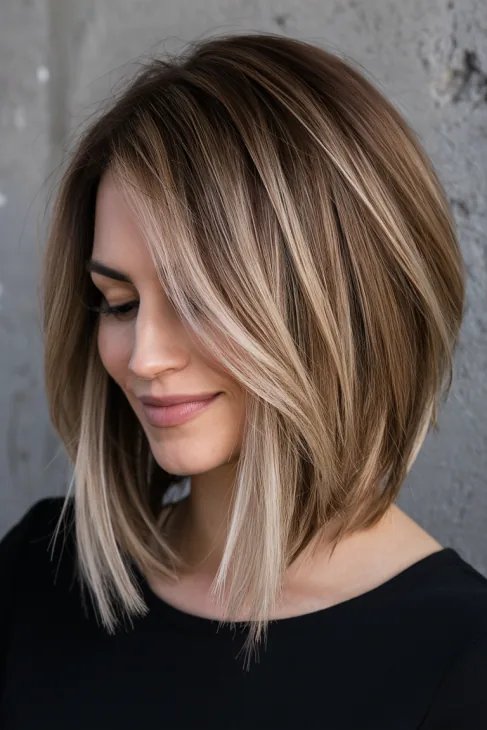
The pros are dimension and low maintenance. Balayage adds depth and movement to a lob, it makes fine hair look thicker, and it grows out without a harsh line. The cons are the cost of the initial appointment and the fact that lightened ends need more care — a purple shampoo and a weekly mask are not optional.
The most common mistake is going too light too fast, which leaves the ends brassy and damaged. Build the lightness over two appointments if your hair is dark, and ask for a toner that matches your skin tone — ashy on cool skin, golden on warm skin. The second mistake is balayage that starts too high, which looks like grown-out highlights.
Maintenance is a toner every eight to ten weeks, a purple shampoo once a week, and a deep mask weekly. The cut itself needs its usual trim every six to eight weeks, and the ends — being lightened — will thank you for a drop of oil after every wash.
Quick verdict: the prettiest colour for a lob, and the easiest to grow out. Go lighter gradually, tone it well, and the colour will do half the styling for you.
The Lob with Highlights
Highlights on a lob add light and dimension in fine, woven strands, and they are the classic way to make a lob look brighter and more expensive. They work on every base colour, from dark brown to blonde, and they make the cut look fuller and more textured without changing its shape.
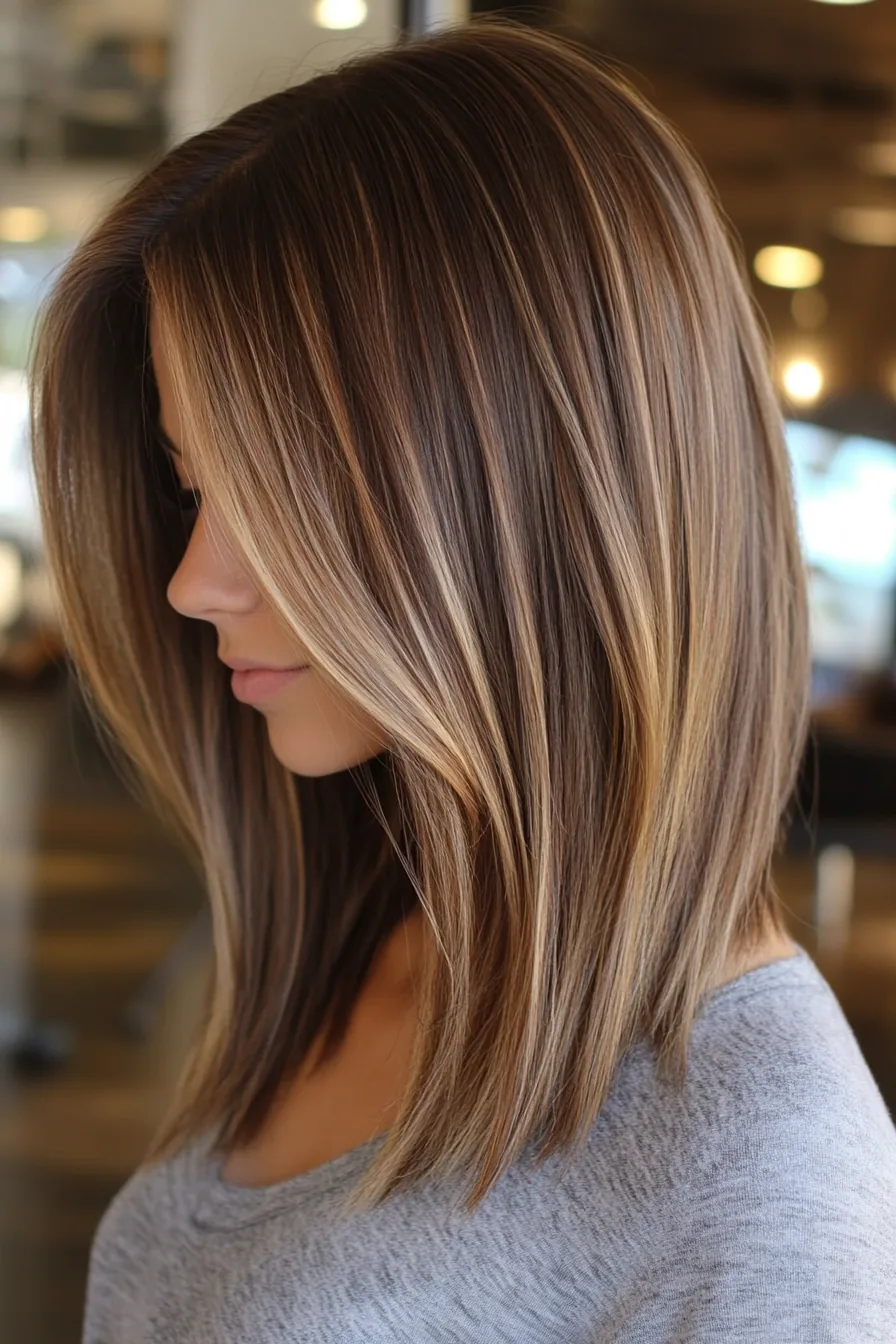
The pros are brightness and dimension. Highlights lift the face, add movement to a one-length lob, and make fine hair look thicker. The cons are maintenance — highlights need a touch-up every eight to twelve weeks — and the fact that over-highlighted hair can look stripy if the foils are placed too evenly.
The most common mistake is highlights that are too chunky or too uniform, which looks dated. Ask for fine, woven highlights with variation in tone — some lighter, some closer to your base colour — and for the brightest pieces around the face, where they do the most good. The second mistake is skipping toner, which leaves the highlights brassy within weeks.
Maintenance is a root touch-up every eight to twelve weeks, a purple shampoo for blonde highlights, and a weekly mask. The cut needs its usual trim, and the highlighted ends need a little extra oil to stay soft.
Quick verdict: the classic way to brighten a lob. Fine, varied highlights around the face — toned, not brassy — make the whole cut glow.
The Lob with a Money Piece
A money piece is a pair of bright, face-framing highlights at the front of the hair, and on a lob it is a small change with a big effect. It brightens the face, draws attention to the eyes, and makes the whole cut look fresh — all for the price of two foils and twenty minutes in the chair.
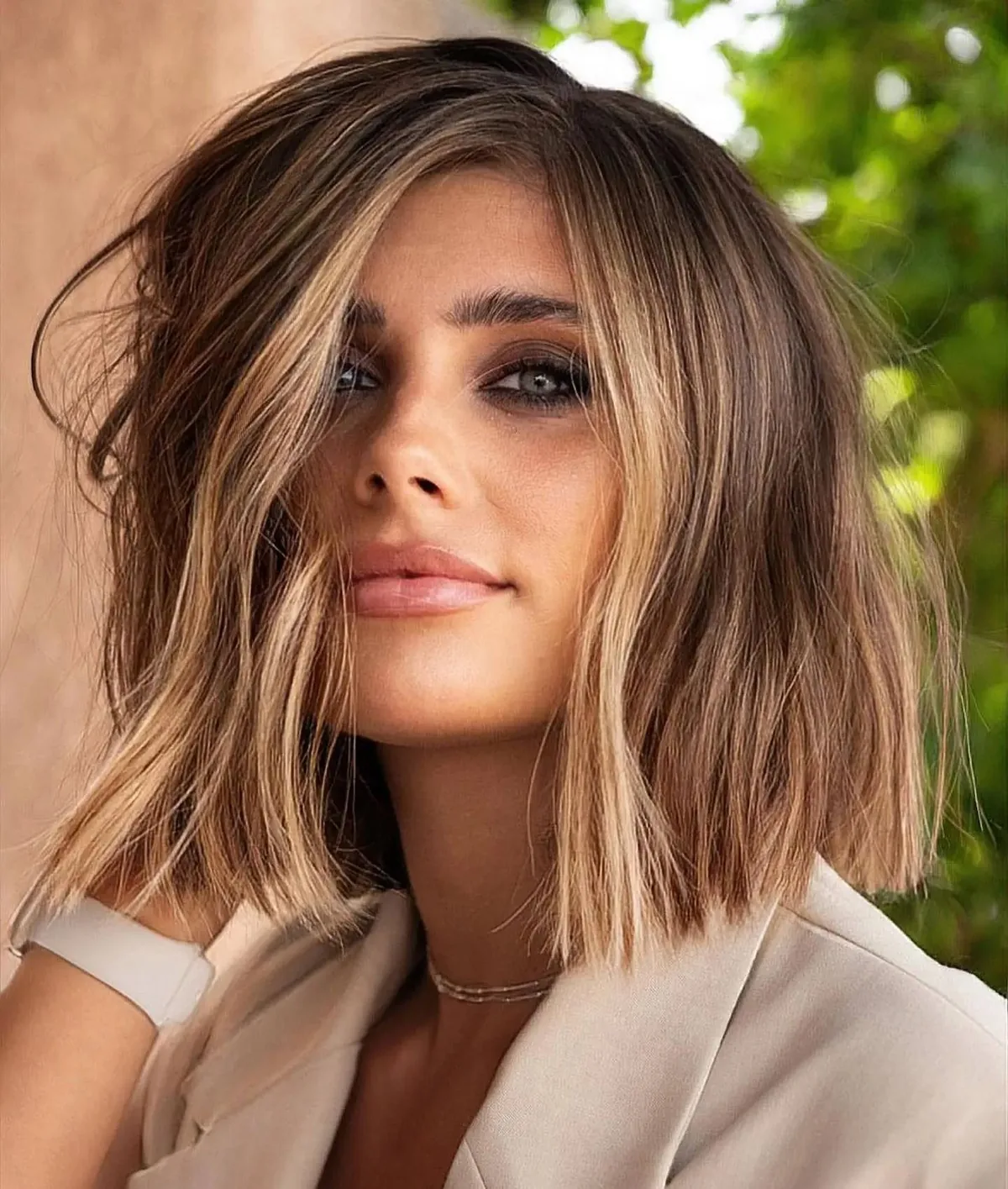
The pros are impact and value. A money piece is the cheapest colour service that still transforms a cut, it grows out softly, and it can be refreshed in a single short appointment. The cons are that it is a bold look — if you want subtle, this is not it — and it needs toning, or it can go brassy faster than the rest of the hair.
The most common mistake is making the money piece too wide, which turns it into a stripe, or too light, which looks harsh against a dark base. It should be about an inch wide on each side, two or three levels lighter than your base, and blended at the roots so it grows out without a line.
Maintenance is a toner every six to eight weeks and a purple shampoo once a week if the piece is blonde. The cut itself needs its usual trim, and the money piece is the part of the hair that shows damage first, so keep it conditioned.
Quick verdict: the smallest colour change with the biggest payoff. Two bright front pieces, well toned, make a lob look brand new.
The Lob with an Undercut
An undercut on a lob is a short, clippered section hidden underneath the hair at the nape, and it is the secret weapon for thick hair. From the front and the side, the lob looks completely normal; from underneath, a whole layer of bulk has quietly disappeared, and the cut feels half as heavy.
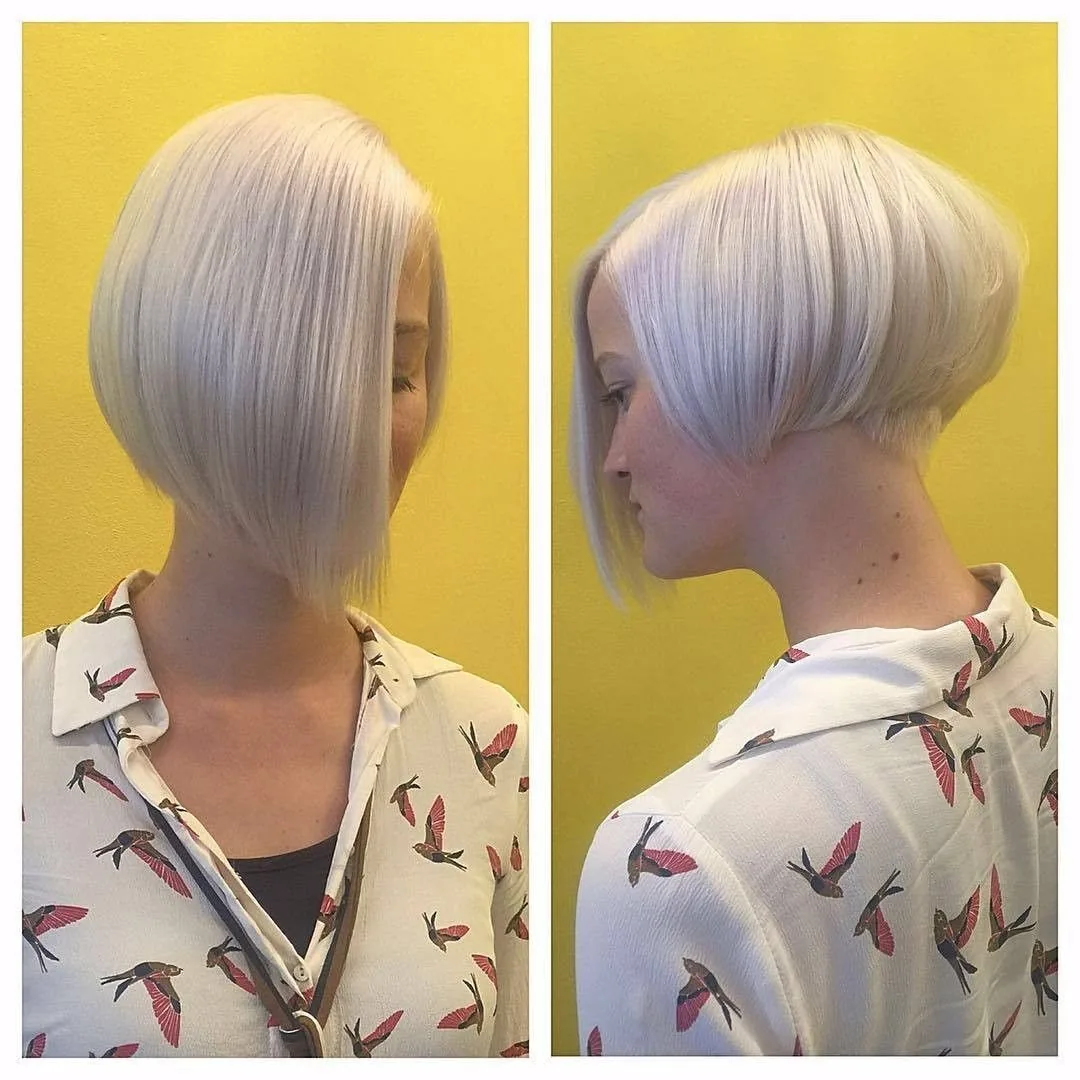
The pros are lightness and coolness. An undercut removes the weight that makes a thick lob flare out, it keeps the neck cool in summer, and it is completely invisible when the hair is down. The cons are that it needs clippering every four to five weeks to stay neat, and it is a commitment — growing it out takes months.
The most common mistake is cutting the undercut too high, so it shows when the hair moves or when you tie it up. It should sit low at the nape, no higher than the bottom inch of the hair, so it stays hidden. The second mistake is an undercut on fine hair, which removes weight that fine hair cannot spare.
Maintenance is a clipper touch-up every four to five weeks and a trim of the lob itself every six to eight weeks. The undercut needs no styling at all — it is hidden — but it does need sunscreen on the nape in summer, because the skin there is suddenly exposed.
Quick verdict: the hidden fix for thick hair. If your lob feels heavy at the nape, an undercut removes the weight without changing the look.
The Lob with Choppy Ends
Choppy ends are cut with a razor or point-cutting to create uneven, piece-y tips, and they give a lob an edgy, modern feel. It is the lob for women who want their hair to look a little bit rock-and-roll — the cut you would wear with boots and a leather jacket, not a ballgown.

The pros are texture and attitude. Choppy ends make a lob look lived-in and modern, they add movement to straight hair, and they hide split ends between trims. The cons are that they can look messy rather than edgy if overdone, and on fine hair they can make the ends look thin.
The most common mistake is chopping the ends too aggressively, which leaves the lob looking ragged instead of textured. The choppiness should be in the last inch only, with the interior of the cut left full. The second mistake is pairing choppy ends with too many layers, which turns the whole cut into a shag.
Maintenance is a trim every seven to eight weeks and a texture spray to emphasise the piece-y ends. A flat iron can smooth the choppiness out on a day when you want a cleaner look, and a weekly mask keeps the razor-cut ends from looking dry.
Quick verdict: the edgy lob. Keep the choppiness in the last inch, keep the interior full, and it looks modern, not messy.
The Lob for a Round Face
A round face and a lob are a natural match, because the lob’s length does the slimming work for you. Ending below the jaw, it lengthens the face; worn with a centre part and longer front pieces, it draws the eye down; and with volume at the crown, it adds height that balances the width.

The pros are that the cut is naturally flattering — the length alone does most of the work. Add a centre part and face-framing layers, and the effect is even stronger. The cons are that the wrong lob can work against you: a blunt, chin-length cut with a side part adds width exactly where a round face does not need it.
The most common mistake is choosing a lob that ends at the jaw, which is the widest point of a round face and makes it look wider. The lob should end at the collarbone or below, with the front pieces longer than the back. The second mistake is too much volume at the sides, which widens the face — keep the volume at the crown instead.
Maintenance is a trim every six to eight weeks and a round brush at the crown for height. A centre part is the most slimming, and a texture spray at the roots keeps the crown from falling flat by afternoon.
Quick verdict: the most flattering cut for a round face — as long as it ends below the jaw. Collarbone length, centre part, volume on top, and the face looks longer instantly.
The Lob for an Oval Face
An oval face is the most versatile face shape, and the lob is the most versatile cut — together, they are almost unfair. Almost any lob works on an oval face: blunt, layered, wavy, straight, with bangs or without. The only real decision is which version you like best, because the face will flatter all of them.
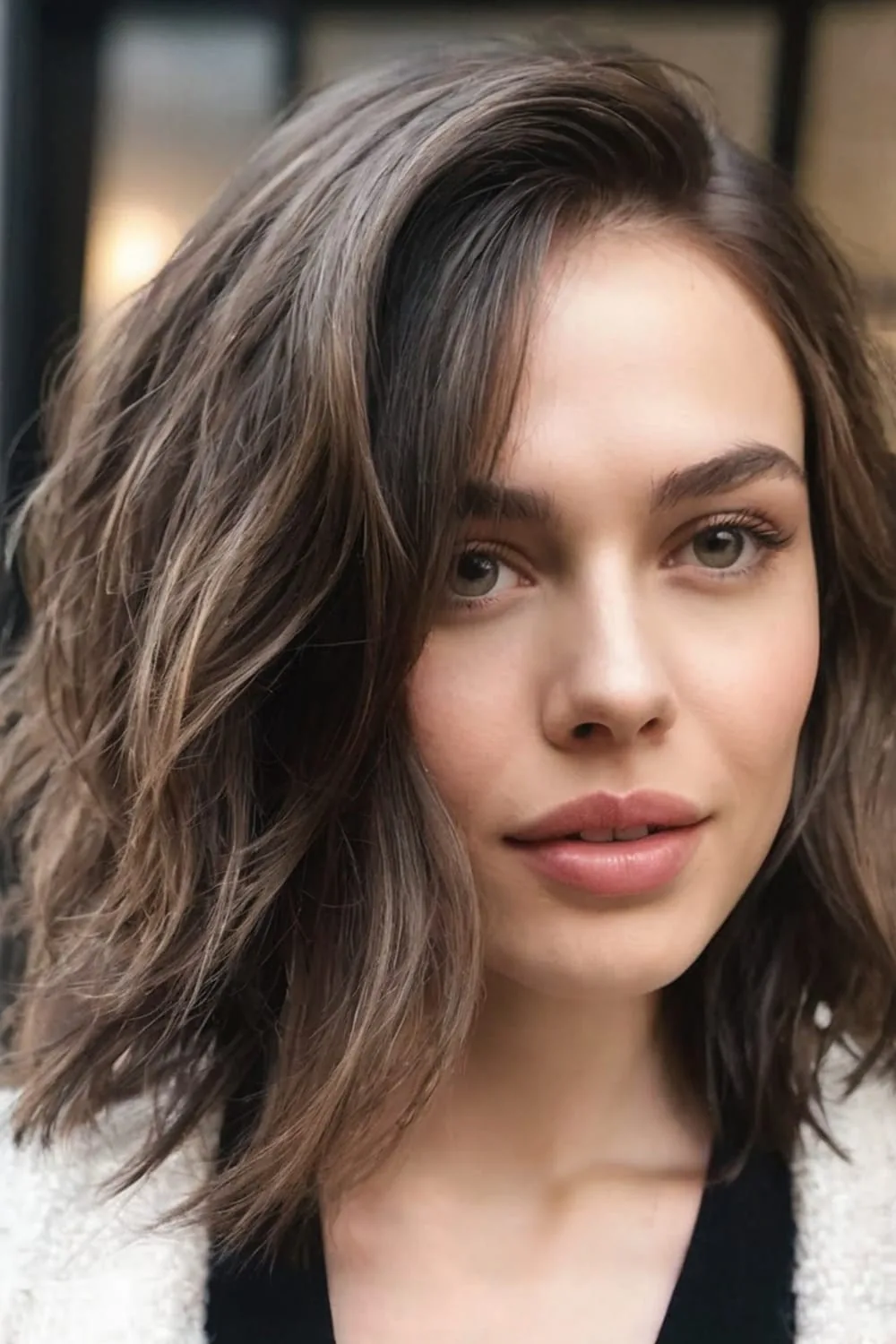
The pros are freedom and balance. An oval face can take a centre part, a side part, a blunt line, or soft layers, and each one looks intentional. The cons are few: a very long lob can make an oval face look longer, and a heavy fringe can shorten it too much — but both are easy to avoid.
The most common mistake is overthinking it. Oval-faced women often ask for a cut that corrects a problem they do not have, and end up with layers or angles that fight the face’s natural balance. The best lob for an oval face is usually the simplest one — a clean, collarbone-length cut with a part that suits your features.
Maintenance is a trim every six to eight weeks and whatever styling you enjoy — the cut does not demand a particular routine. A round brush gives it polish, a texture spray gives it ease, and air-drying gives it a relaxed finish that still looks deliberate.
Quick verdict: the lucky combination. If you have an oval face, pick the lob you love most — the face will do the rest.
The Lob for a Square Face
A square face has a strong jaw and a broad forehead, and the right lob softens both. Soft layers, a side part, and waves at cheekbone level all round off the angles, while a blunt, centre-parted lob can emphasise them. The lob’s length is already on your side — it ends below the jaw, which is exactly where you want the eye to travel.

The pros are softness and balance. A layered, wavy lob with a side part makes a square face look softer and more oval, and the cut is easy to style. The cons are that the wrong lob — blunt, straight, centre-parted — can make the jaw look stronger, which is the opposite of what most square-faced women want.
The most common mistake is a blunt lob with no layers, which frames the jaw like a picture frame and draws attention to it. Add soft, face-framing layers that start at the cheekbone, and choose a side part over a centre part. The second mistake is tucking the hair behind the ears, which exposes the jawline completely.
Maintenance is a trim every six to eight weeks and a round brush or a curling wand to create soft waves at the cheekbones. A texture spray keeps the waves soft rather than stiff, and a side part is worth setting with a little product so it stays put.
Quick verdict: soften, do not sharpen. Layers, a side part, and waves at the cheekbones turn a square face soft and balanced.
The Lob for a Heart Face
A heart face is wider at the forehead and narrower at the chin, and the lob balances it by adding volume where the face is narrow — at the ends. A lob with volume and waves at the jaw and collarbone fills out the lower half of the face, while a side part and soft layers take attention away from a wide forehead.

The pros are balance and softness. The lob’s length is perfect for a heart face, because the ends sit exactly where the face needs width. The cons are that a lob with too much volume at the crown can make the forehead look wider, and a centre part can emphasise the forehead’s width.
The most common mistake is a lob that is all volume on top and flat at the ends, which is the opposite of what a heart face needs. Keep the crown smooth and put the volume at the ends — waves, curls, or a flipped-out finish all work. The second mistake is a heavy, straight fringe, which shortens the face and makes the chin look narrower.
Maintenance is a trim every six to eight weeks and a round brush or wand to create volume at the ends. A side part is the most flattering, and a texture spray at the ends keeps the volume from falling flat.
Quick verdict: volume at the ends, not the crown. A lob that fills out at the jaw balances a heart face beautifully.
The Lob for a Long Face
A long face needs width, and the lob provides it. Waves at cheekbone level, a side part, and volume at the sides all widen the face, while a centre part and straight, flat hair can make it look longer. The lob’s collarbone length is already a good choice — it stops well above the length that would drag a long face down.

The pros are that the lob is naturally widening when it is styled with waves and a side part. The cons are that a straight, centre-parted lob is one of the least flattering cuts for a long face, because it adds length on top of length.
The most common mistake is a lob that is too long and too straight. If your face is long, keep the lob at the collarbone or above, add waves, and consider curtain bangs or a side-swept fringe, which shorten the face visually. The second mistake is volume at the crown, which adds height a long face does not need.
Maintenance is a trim every six to eight weeks and a curling wand or round brush to create width at the sides. A texture spray keeps the waves soft, and a side part should be set with a little product so it does not drift back to the centre.
Quick verdict: widen, do not lengthen. Waves at the cheekbones, a side part, and a collarbone length make a long face look balanced.
The Lob Over 40
The lob is the most popular cut for women over 40, and it is easy to see why. It is polished without being fussy, modern without trying too hard, and it suits the hair changes that come with this decade — a little less volume, a little more texture, and a need for a cut that looks good with minimal effort.

The pros are polish and practicality. A lob over 40 looks intentional and current, it works with grey blending and lowlights, and it is short enough to style in ten minutes. The cons are that a very blunt lob can look severe as the face softens with age, and a lob that is too long can drag the features down.
The most common mistake is a cut that is too harsh — a blunt, straight lob with no layers can look severe on a face that has softened. Soft layers, a side part, and a little movement at the ends keep the cut youthful without trying to look young. The second mistake is colour that is too dark and flat, which can look harsh against the skin.
Maintenance is a trim every six to seven weeks, a root touch-up if you colour, and a weekly mask to keep the hair soft. A round brush at the ends gives the lob lift, and a little texture spray keeps it from looking too neat.
Quick verdict: the grown-up cut for grown-up women. Soft layers, a side part, and a little movement — polished, modern, and effortless.
The Lob Over 50
The lob over 50 is about looking current, not young. It is a cut that respects the hair you have now — perhaps finer, perhaps greyer, perhaps with a different texture than it had at 30 — and makes the most of it. A collarbone-length lob with soft layers and a little volume is flattering at any age, and it is particularly good at 50-plus.
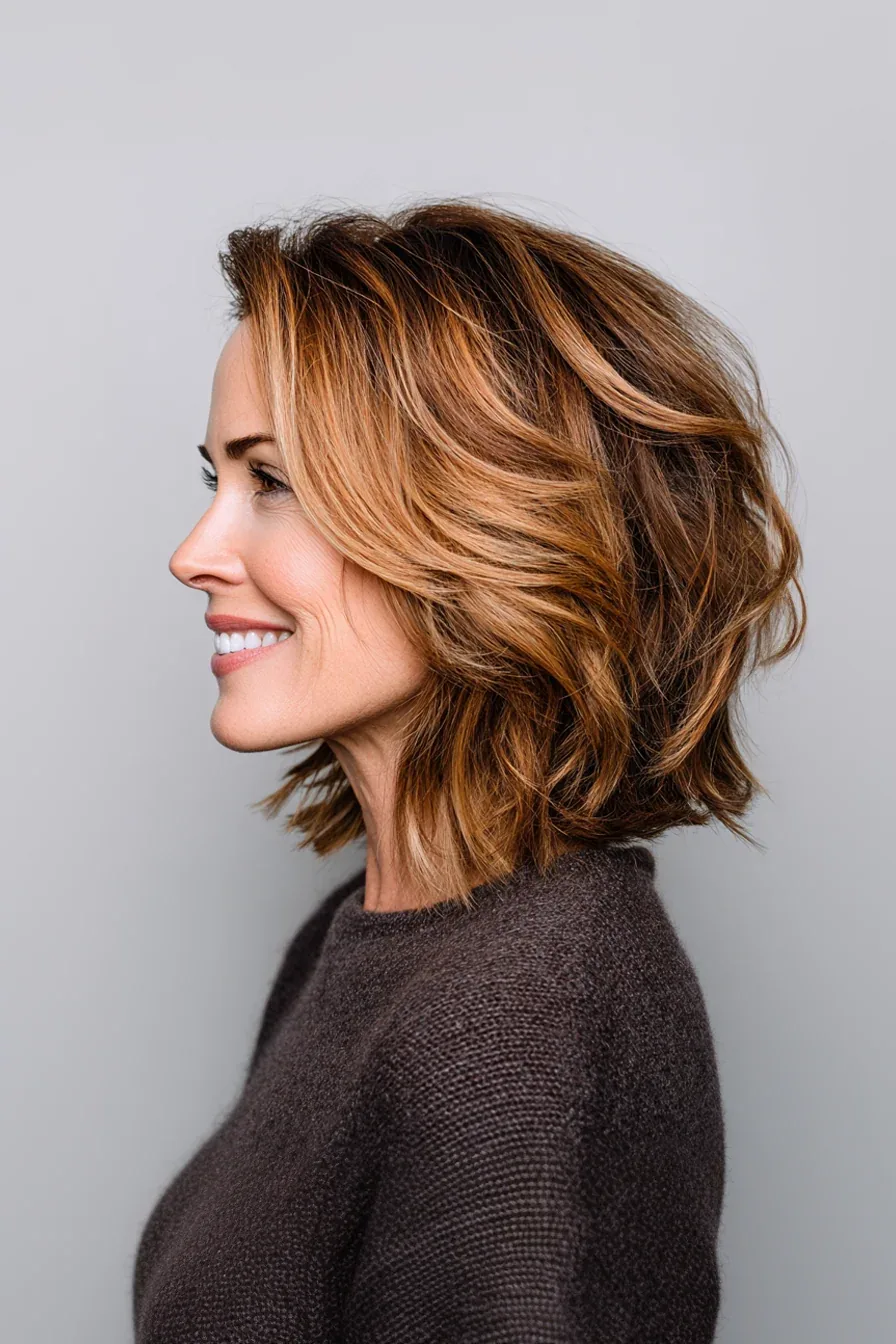
The pros are that the lob is light, easy to style, and modern. It lifts the face, it works beautifully with silver and grey, and it does not demand the maintenance that longer hair does. The cons are that very fine hair can look thin at the ends if the cut is over-layered, and a lob that is too long can look tired rather than elegant.
The most common mistake is cutting the hair too short in the belief that older women should have short hair. A lob is the perfect middle ground — it is short enough to be easy and long enough to be feminine. The second mistake is a cut with no layers at all, which can look heavy and flat on hair that has lost volume.
Maintenance is a trim every six weeks, a volumising mousse at the roots, and a colour or gloss to keep grey looking bright rather than dull. A round brush gives the lob lift, and a silk pillowcase protects fine hair overnight.
Quick verdict: the perfect cut for 50-plus. Not too short, not too long — just a modern, flattering lob that works with your hair as it is now.
The Lob Over 60
The lob over 60 is a cut that looks elegant, modern, and completely unbothered by age. It works with silver hair, with fine hair, and with the softer face shapes of this decade, and it is one of the easiest cuts to maintain — which matters when you want your hair to look good without spending an hour on it.
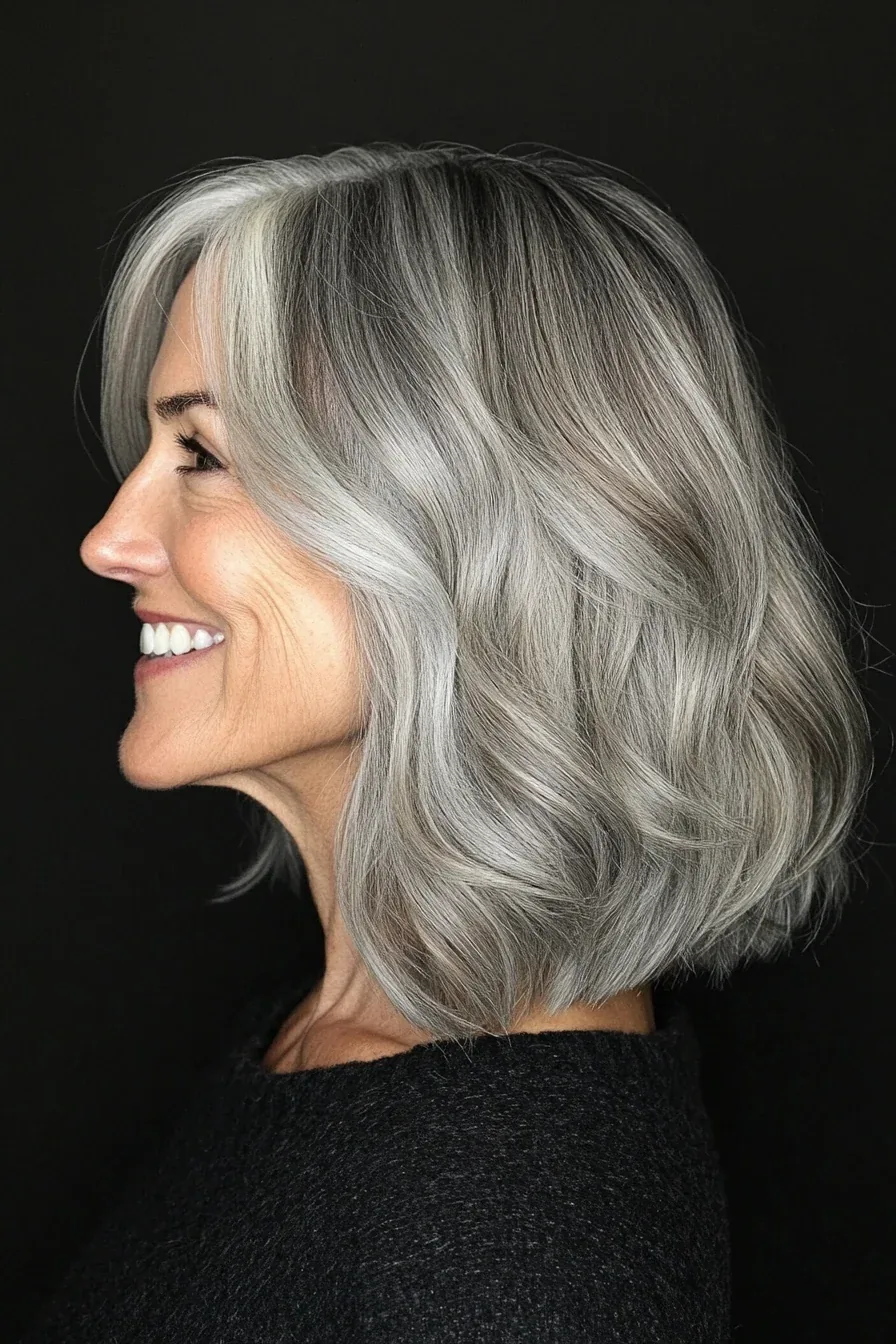
The pros are ease and elegance. A lob at this age looks polished with a ten-minute blow-dry, it shows off silver beautifully, and it is long enough to feel feminine and short enough to be practical. The cons are that fine hair needs a blunt cut to look full, and a lob that is too layered can look thin.
The most common mistake is a cut that is too severe — a blunt, straight lob with no softness can look harsh on a face that has softened with age. Soft layers around the face, a side part, and a little wave at the ends keep the cut gentle. The second mistake is colour that fights the silver instead of embracing it — a gloss or a silver-enhancing shampoo makes grey look luminous.
Maintenance is a trim every six weeks, a volumising mousse at the roots, and a purple shampoo once a week to keep silver bright. A round brush gives the lob shape, and a weekly mask keeps fine hair soft.
Quick verdict: elegant, easy, and modern. A soft-layered lob with a side part is the most flattering cut for women over 60.
The Lob with a Middle Part
A middle part with a lob is the most symmetrical, polished version of the cut — the hair falls evenly on both sides, the face is framed equally, and the whole look reads as clean and modern. It is the lob for women who like symmetry and a sleek finish, and it suits oval and heart faces best.
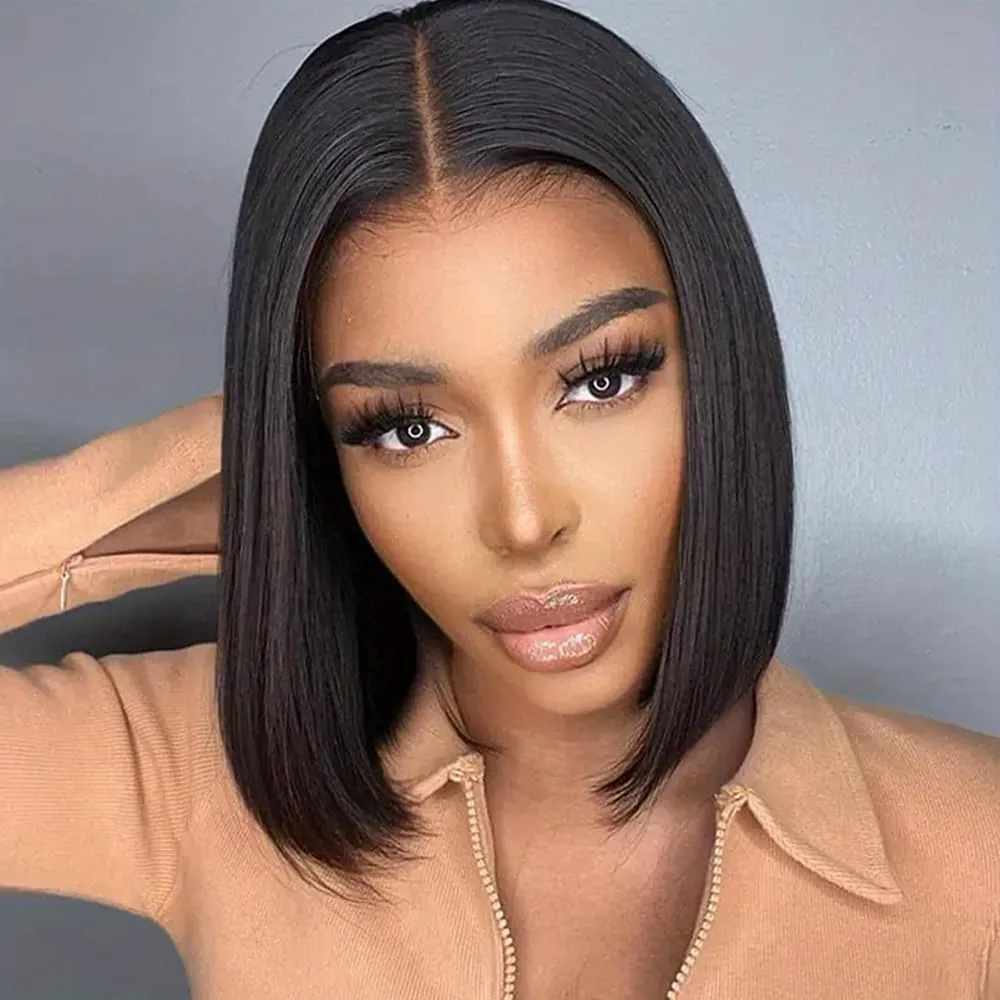
The pros are balance and polish. A middle part makes a lob look intentional and expensive, and it shows off a good cut better than any other part. The cons are that it can emphasise asymmetry in the face, and on a round or square face it can look severe without soft layers to break it up.
The most common mistake is a middle part on hair that naturally falls to the side, which fights the cut all day. Train the part by blow-drying the roots in the middle while the hair is damp, and use a little product to hold it. The second mistake is a middle part with no face-framing layers, which can look like a curtain.
Maintenance is a trim every six to eight weeks and a quick flat-iron pass to keep the lengths even. A smoothing serum keeps the part clean, and a round brush at the ends stops the two sides from falling at different lengths.
Quick verdict: the sleekest, most symmetrical lob. If your face is balanced and you like a clean finish, the middle part is the one.
The Lob with a Side Part
A side part with a lob is the most flattering part for most faces, because it creates asymmetry that softens the features and adds volume at the crown. It is the lob for women who want a little drama without a fringe, and it works on every texture from straight to curly.
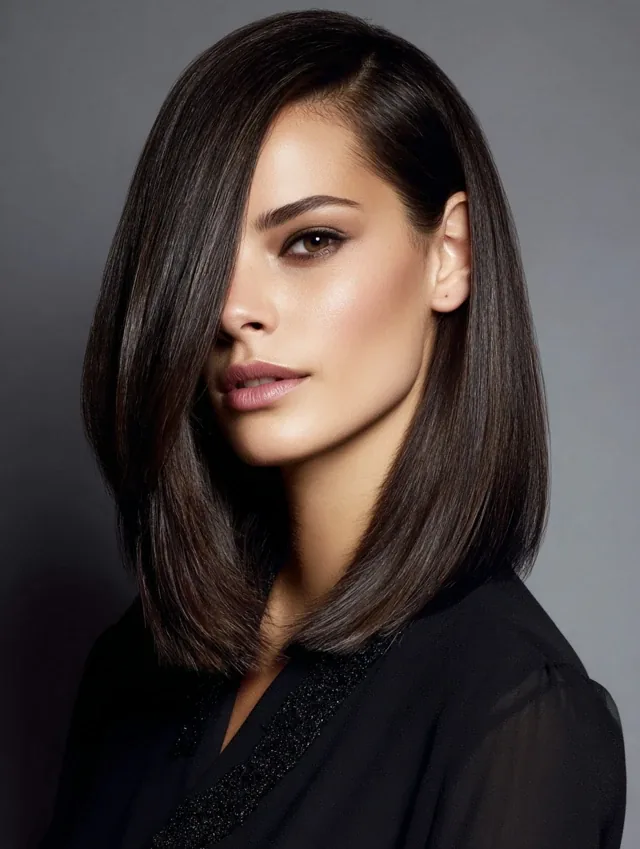
The pros are volume and softness. A side part lifts the roots, adds movement, and makes the cut look fuller — it is the easiest way to add volume to a lob without any product. The cons are that it needs to be set while the hair is damp, or it drifts back to the middle, and it can look lopsided if the part is too deep.
The most common mistake is parting the hair too close to the ear, which makes one side look much heavier than the other. A side part should sit above the arch of the eyebrow, not at the temple. The second mistake is blow-drying the hair in the wrong direction, which fights the part all day.
Maintenance is a trim every six to eight weeks and a quick blow-dry with the roots lifted on the heavy side. A little volumising mousse at the roots keeps the lift, and a texture spray stops the part from going flat by afternoon.
Quick verdict: the most flattering part for most faces. A side part adds volume, softens the features, and makes a lob look fuller instantly.
The Lob with a Deep Side Part
A deep side part takes the side part further — the hair is swept dramatically to one side, creating volume, glamour, and a red-carpet feel. It is the lob for evenings out, for weddings, and for women who want their hair to look like an event, not an everyday cut.
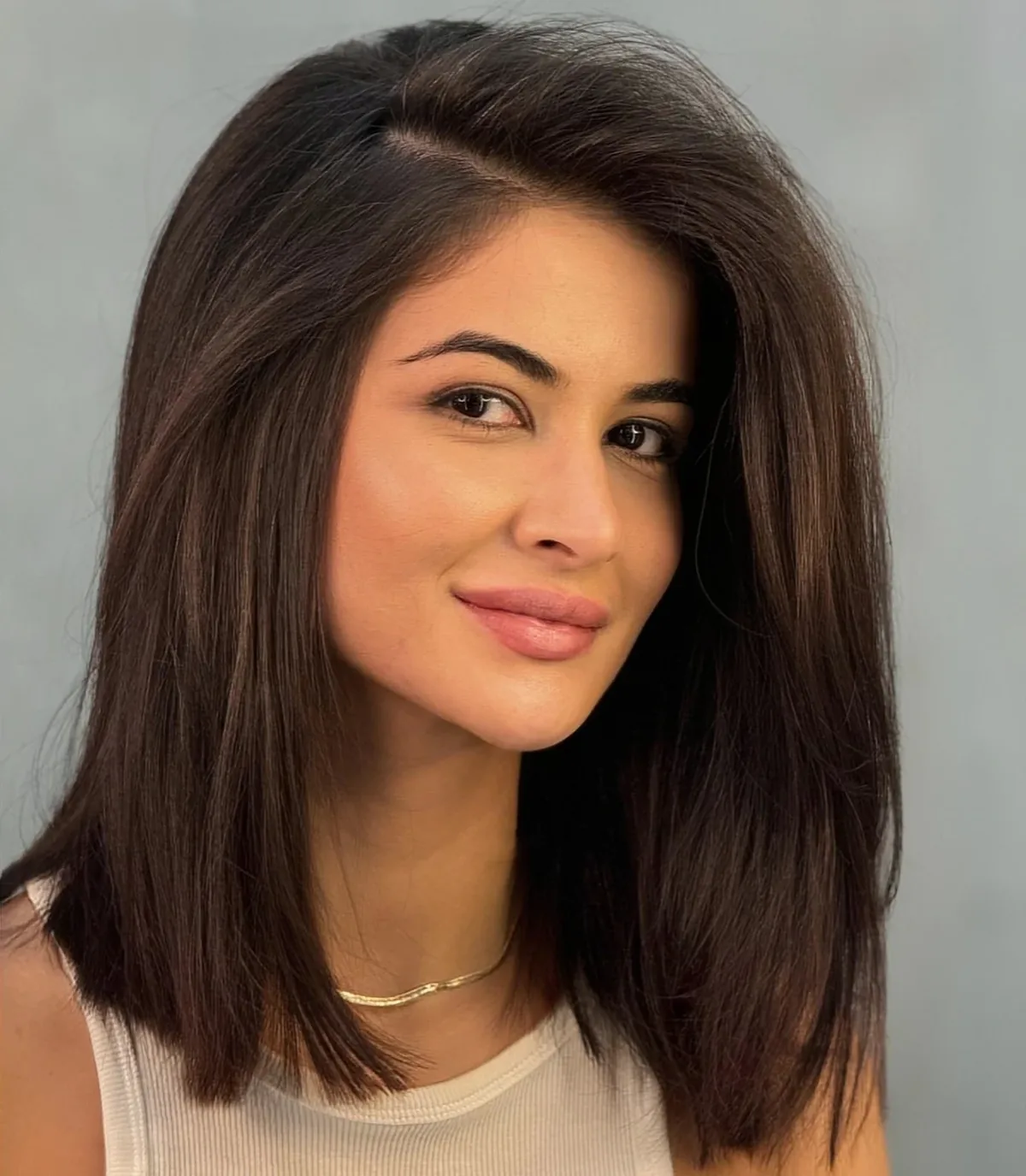
The pros are glamour and volume. A deep side part creates instant lift at the crown, it makes the hair look thicker, and it turns a simple lob into a statement. The cons are that it needs styling to stay in place, and it can look too much for a casual day — this is a part for occasions, not for the school run.
The most common mistake is a deep side part that is not set properly, so it falls back to the middle within an hour. Set it while the hair is damp, blow-dry the roots in the direction of the part, and use a little hairspray at the roots. The second mistake is pairing it with a blunt cut, which can look severe — soft layers suit a deep side part better.
Maintenance is a trim every six to eight weeks and a styling session whenever you wear the part. A round brush and a cool shot from the dryer set the sweep, and a bobby pin hidden underneath keeps the heavy side in place.
Quick verdict: the glamorous lob. For evenings and occasions, a deep side part turns a simple lob into a red-carpet look.
The Lob with Swoop Bangs
Swoop bangs are long, side-swept bangs that curve across the forehead in a single graceful arc, and they are the most glamorous fringe you can pair with a lob. They suit round and square faces beautifully, they hide a high forehead, and they make the whole cut look polished and intentional.

The pros are drama and softness. Swoop bangs add a focal point to a lob, they frame the eyes, and they grow out more gracefully than a full fringe. The cons are that they need styling every morning — they do not fall into a swoop on their own — and they can fall in your eyes as they grow.
The most common mistake is cutting swoop bangs too short, which turns them into a side fringe and loses the curve. They should start at the brow and sweep past the cheekbone. The second mistake is blow-drying them straight down; dry them with a large round brush, curving them across the forehead, and finish with a cool shot.
Maintenance is a bang trim every four weeks and a round-brush pass each morning. A little hairspray at the roots keeps the swoop in place, and a bobby pin is the easiest fix on a day when the swoop will not cooperate.
Quick verdict: the most glamorous fringe for a lob. If you want drama with softness, the swoop is the fringe to try.
The Shaggy Lob
The shaggy lob is a lob with short, choppy layers through the crown and lots of texture, and it is the most rock-and-roll version of the cut. It is the lob for women who want movement, attitude, and a cut that looks good messy — the lob you would wear to a concert, not a board meeting.
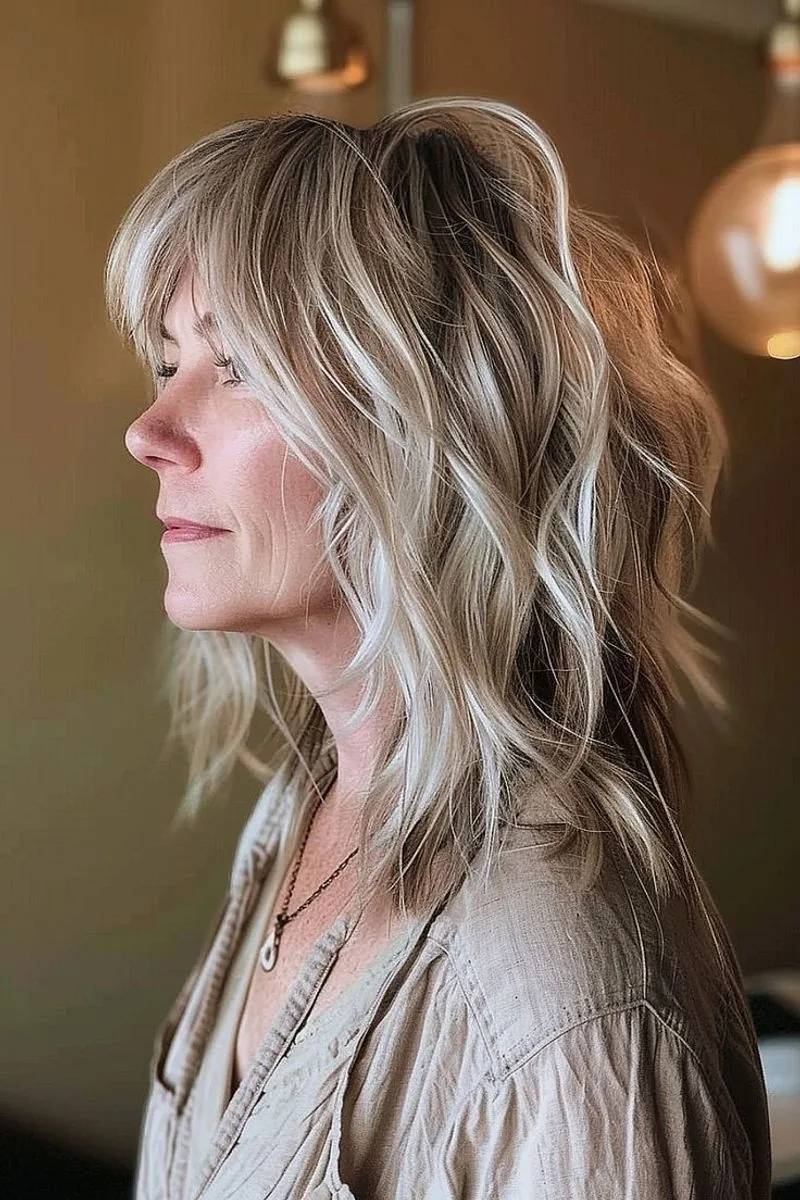
The pros are volume and personality. A shaggy lob gives fine hair instant texture, it looks great air-dried, and it is the most forgiving grow-out of any lob, because the layers are meant to look uneven. The cons are that it can look messy rather than shaggy if the layers are wrong, and it is not the right cut for a formal workplace.
The most common mistake is a shag that is too short on top, which turns the lob into a mullet. The layers should be long enough to blend into the lengths, not sit on top of them like a cap. The second mistake is over-thinning, which leaves the ends wispy.
Maintenance is a trim every seven to eight weeks and a texture spray on damp hair. Air-drying is the shaggy lob’s best friend — scrunch, let it dry, and the cut does the rest. A weekly mask keeps the layered ends soft.
Quick verdict: the coolest lob. If you want texture, movement, and a cut that looks good messy, the shaggy lob is the one.
The Lob with Feathered Ends
Feathered ends are cut at an angle so the tips of the hair flick outward in soft, feathery points, and they give a lob a light, airy finish. It is the lob for women who want movement without layers — the ends do the work, and the rest of the cut stays clean and simple.
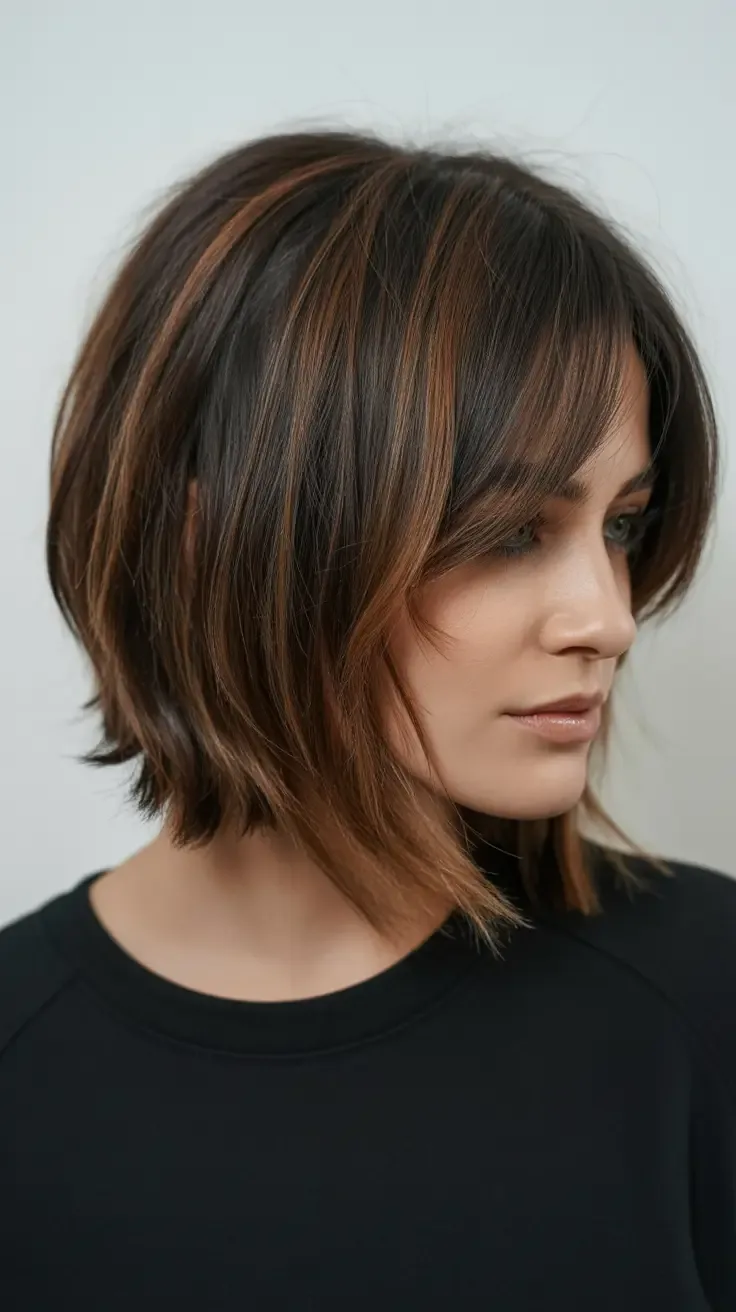
The pros are lightness and movement. Feathered ends make a lob look soft and bouncy, they suit fine hair by adding the illusion of volume, and they are easy to style with a round brush. The cons are that they need regular trims to stay feathery, and on very thick hair they can flare out too much.
The most common mistake is feathering the ends too aggressively, which makes the lob look thin and wispy. The feathering should be subtle — a slight angle on the last inch, not a razor through the lengths. The second mistake is using a flat iron on feathered ends, which kills the flick.
Maintenance is a trim every six to seven weeks and a round brush to set the flick. Blow-dry the ends outward with a round brush, and finish with a light-hold spray so the feathering stays soft all day.
Quick verdict: the lightest, airiest lob. If you want movement without layers, feathered ends are the answer.
The Lob with Beach Waves
Beach waves on a lob are loose, tousled waves that look like you have just come back from the sea — even if you have just come back from the office. It is the most popular lob style on social media, and the most requested in salons, because it looks effortless and suits almost everyone.
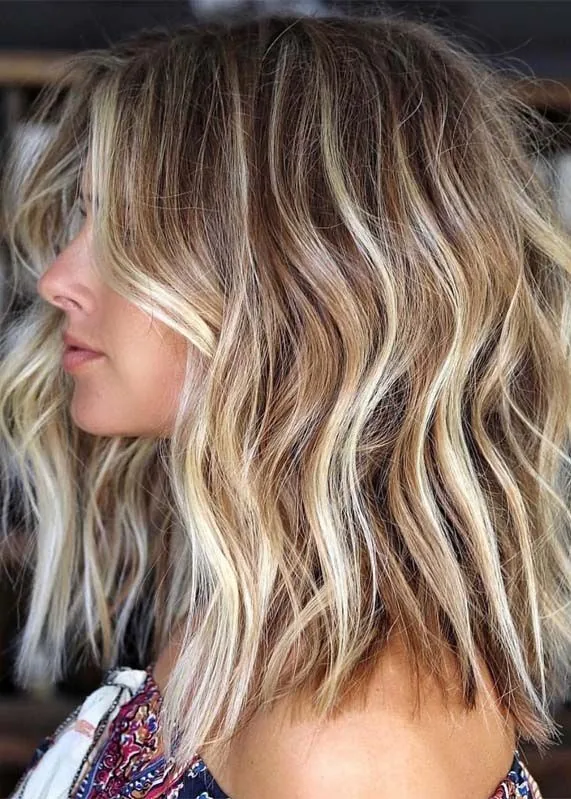
The pros are ease and universality. Beach waves suit every face shape, they make fine hair look thicker, and they look good on day-two hair — sometimes better than on day one. The cons are that they need a little product and technique on straight hair, and humidity can turn beach waves into frizz.
The most common mistake is curling the hair too neatly with a wand, which makes it look like a formal curl rather than a beach wave. Use a flat iron or a large-barrel wand, curl alternate sections in opposite directions, leave the ends straight, and break the waves up with your fingers and a texture spray.
Maintenance is a texture spray or sea-salt spray on damp hair, a scrunch, and air-dry or diffuse. A trim every seven to eight weeks keeps the waves from going stringy, and a weekly mask keeps the ends soft.
Quick verdict: the most popular lob for a reason. Tousled, effortless, and flattering on everyone — the beach wave lob is a classic.
The Lob with Curls
Curls on a lob are bouncy, defined curls through collarbone-length hair, and they are the most glamorous version of the cut. Whether your curls are natural or created with a wand, a lob is the perfect length for them — short enough to keep the bounce, long enough to show the curl pattern.
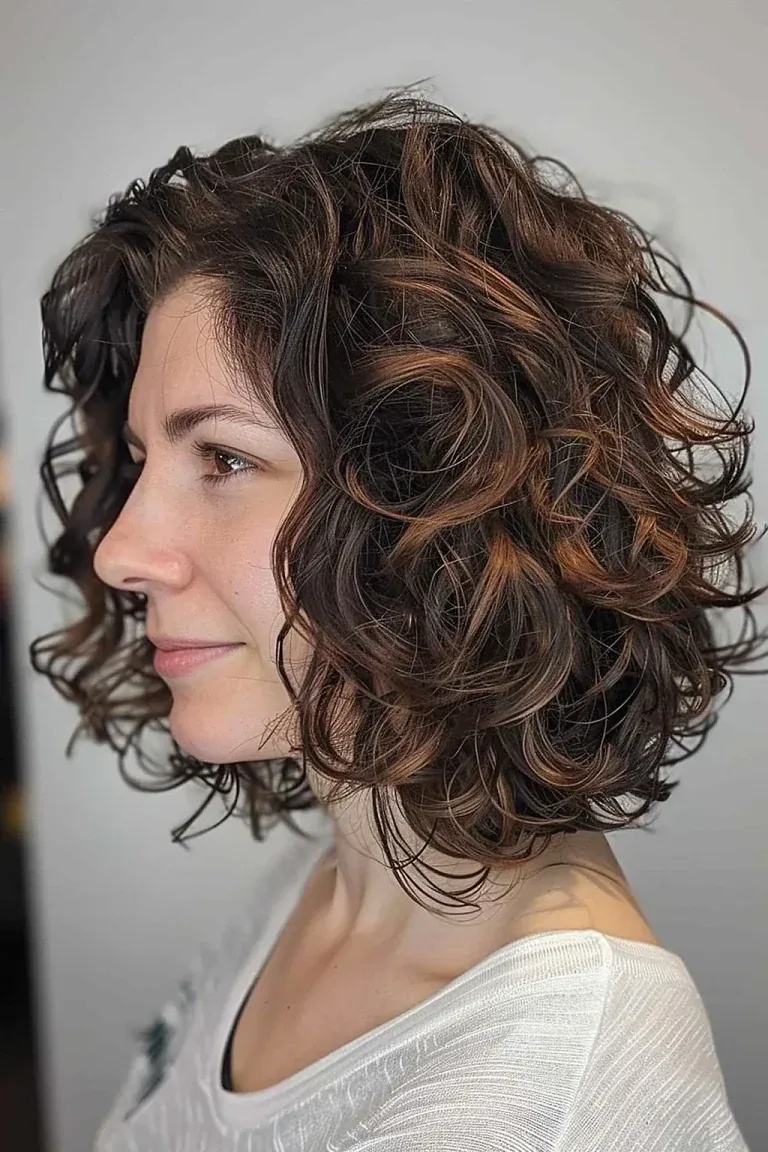
The pros are volume and glamour. Curls make a lob look full and festive, they suit special occasions, and they hold their shape well at this length. The cons are that curls need heat or a curling routine, and they can fall flat in humidity if you skip a holding product.
The most common mistake is curling the hair in the same direction, which makes the curls clump together into one big wave. Curl alternate sections in opposite directions, use a medium barrel, and break the curls up gently with your fingers once they are cool. The second mistake is brushing the curls out, which turns them into frizz.
Maintenance is a curl cream or a light-hold mousse on damp hair, a diffuser or a wand, and a trim every seven to eight weeks. A silk pillowcase protects the curls overnight, and a spritz of water revives day-two curls.
Quick verdict: the most glamorous lob. Bouncy, defined curls at collarbone length are a look that never fails.
The Sleek Straight Lob
The sleek straight lob is the polished, glass-hair version of the cut — every strand smooth, glossy, and perfectly straight. It is the lob for women who love a sharp, expensive-looking finish, and it is the most striking lob in photographs, because the shine is the whole point.
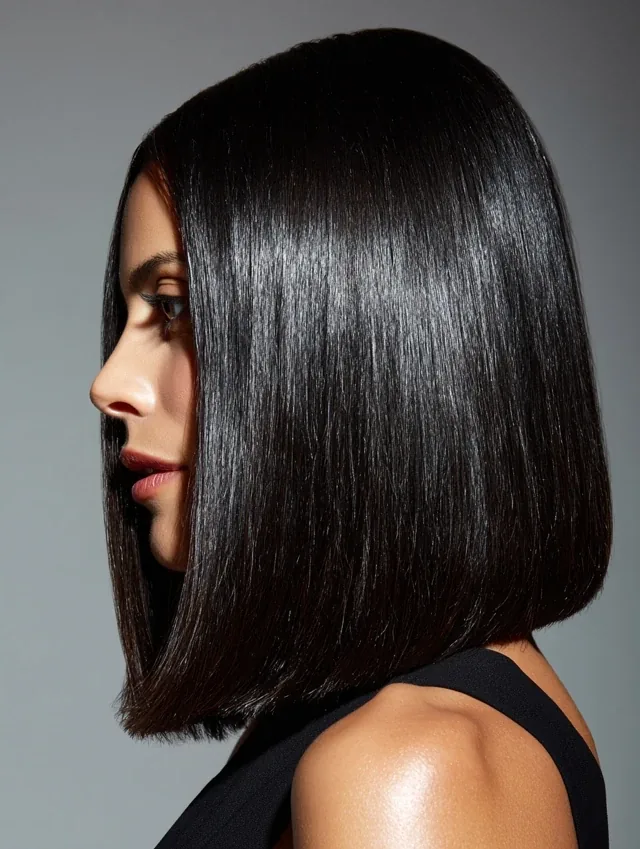
The pros are polish and impact. A sleek lob looks incredibly expensive, it suits the office and formal occasions, and it shows off a good cut and good colour better than any other finish. The cons are that it shows every flaw — a missed trim, a split end, a dull patch — and it needs heat styling every time you wash it.
The most common mistake is skipping heat protectant, which is how a sleek lob ends up with fried, frayed ends that ruin the whole look. The second is straightening the hair when it is still damp, which damages the hair and leaves it frizzy. Always blow-dry fully first, then flat-iron in smooth, single passes.
Maintenance is a trim every six weeks, a smoothing serum on damp hair, and a shine spray to finish. A silk pillowcase stops the morning kinks, and a weekly mask keeps the ends glossy instead of dry.
Quick verdict: the most polished lob, and the most demanding. If you love a glossy, expensive finish and will commit to the heat styling, it is stunning.
The Lob with a Volume Blowout
A volume blowout on a lob is big, bouncy, salon-finished hair — the kind that turns heads when you walk into a room. It is the lob for special occasions, for date nights, and for women who love the feeling of freshly blow-dried hair, and it is easier to achieve at lob length than at any other length.
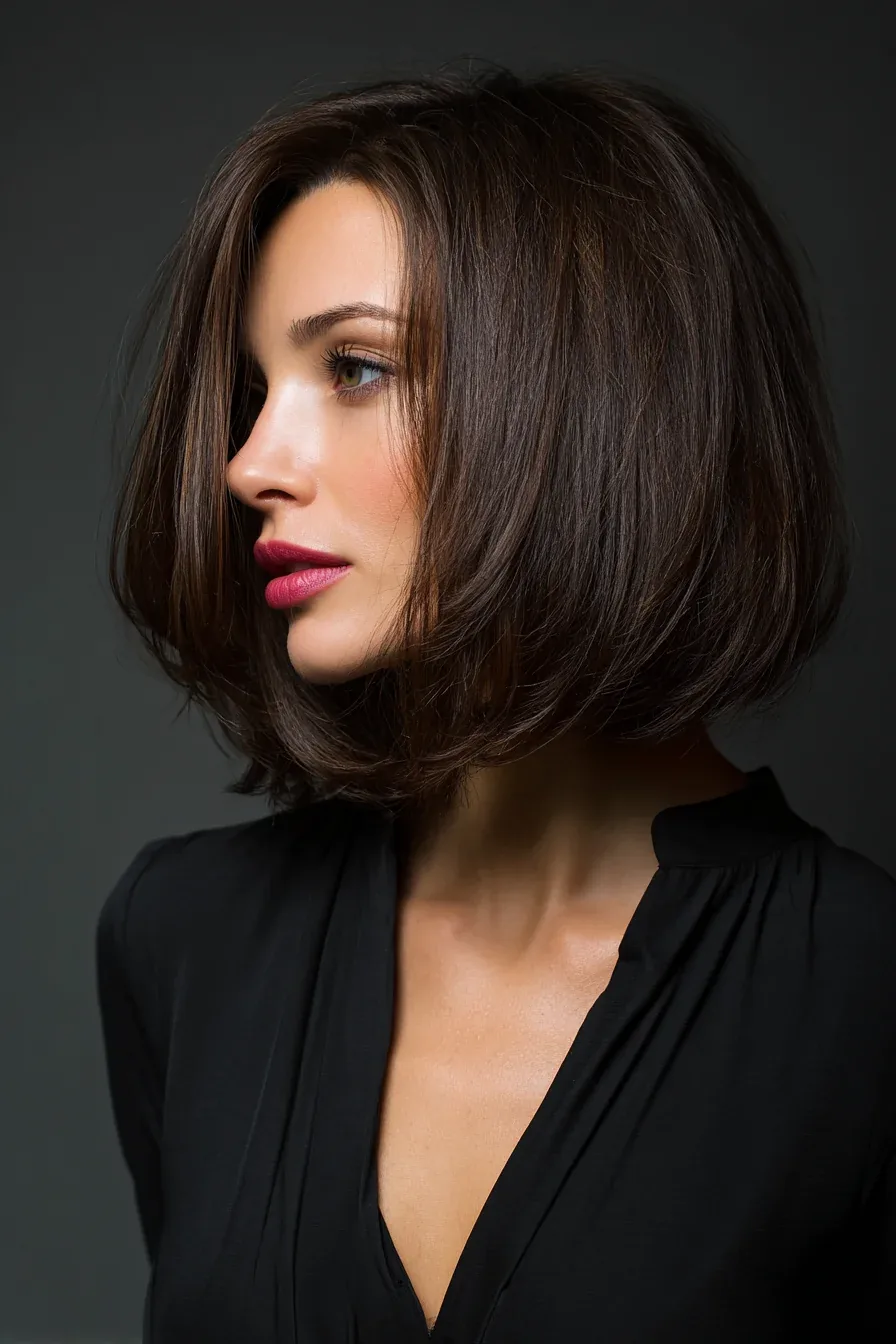
The pros are volume and glamour. A blowout makes fine hair look thick, it gives the lob movement and shine, and it lasts two or three days with a little dry shampoo. The cons are the time it takes — fifteen to twenty minutes — and the fact that humidity can undo it faster than any other style.
The most common mistake is blow-drying the hair in the wrong direction, which flattens the roots instead of lifting them. Dry the roots upward with a round brush, working in sections, and finish each section with a cool shot to set the volume.
Maintenance is a volumising mousse on damp roots, a round brush, and a cool shot to set. A silk pillowcase protects the blowout overnight, and dry shampoo at the roots on day two brings the volume back.
Quick verdict: the most glamorous everyday lob. Fifteen minutes with a round brush, and your lob looks like you just left the salon.
The Lob for a Wedding Guest
A lob is the perfect length for a wedding guest, because it is long enough to style up and short enough to look polished down. You can wear it in soft waves, a low chignon, a half-up twist, or a sleek straight finish — and each one looks elegant without upstaging the bride.
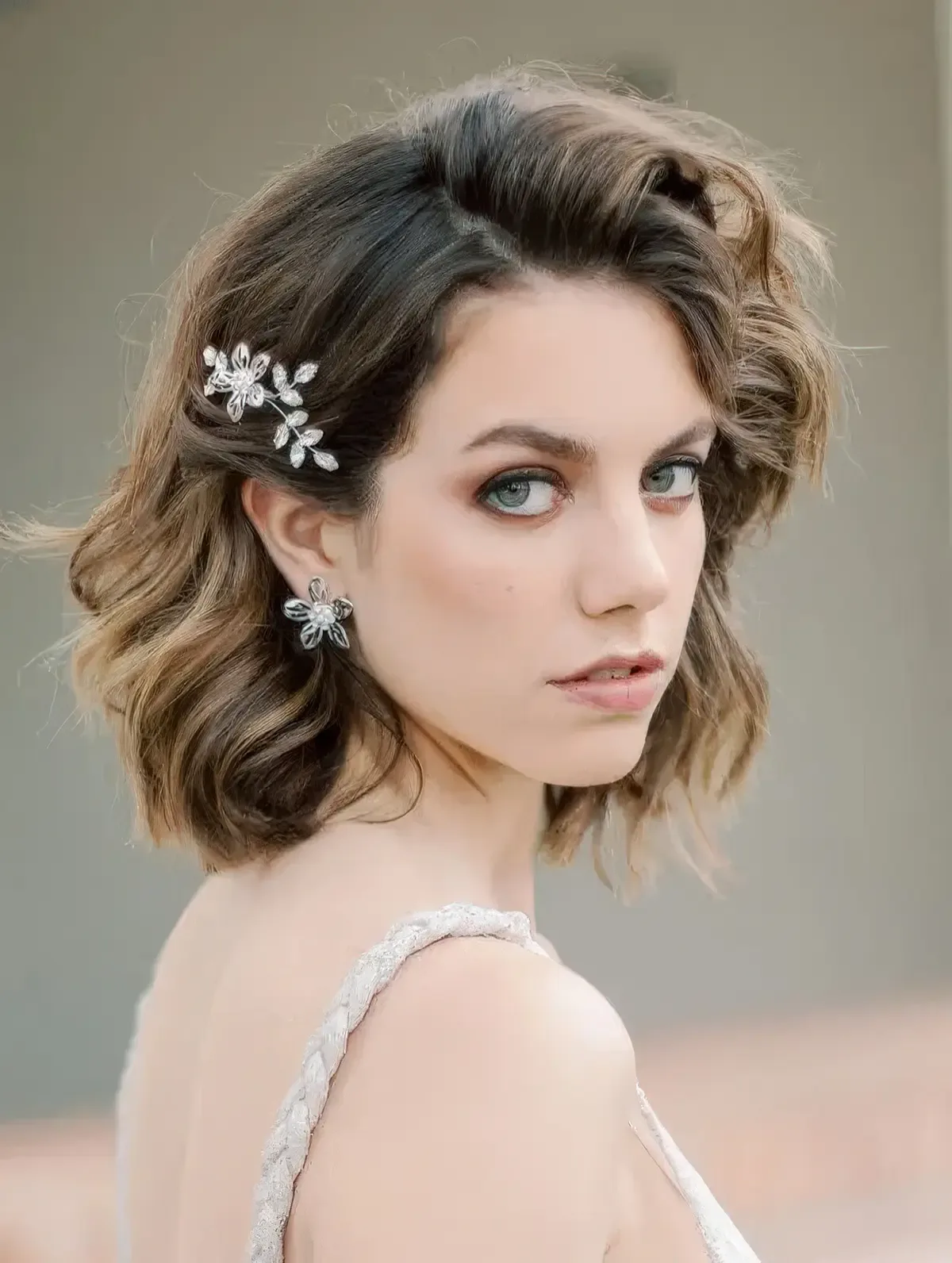
The pros are versatility and elegance. A lob can be dressed up with a pin, a braid, or a curl, and it photographs beautifully. The cons are that it needs a little more styling than an everyday lob, and a humid wedding venue can undo a blowout faster than you would like.
The most common mistake is choosing a style that is too elaborate for a wedding guest. You are not the bride — a soft wave, a low bun, or a half-up twist is elegant and appropriate, while an elaborate updo can look like you are competing. The second mistake is trying a new style on the day; practise it once before the wedding.
Maintenance is a trim the week before the wedding, a deep mask the night before, and a styling session on the day. A few bobby pins and a travel-size hairspray in your clutch will save the style through the dancing.
Quick verdict: the perfect wedding-guest cut. Soft waves or a low chignon, a pretty pin, and you are ready for the photos.
The Lob for Work
The lob is the ideal work haircut, because it is professional without being boring and polished without being fussy. It sits neatly under a blazer, it looks good on a video call, and it takes ten minutes to style in the morning — which is exactly what a working woman needs.

The pros are professionalism and speed. A lob looks intentional and current, it works in every workplace from a creative studio to a law firm, and it is short enough to style quickly. The cons are few: a very textured or shaggy lob can look too casual for a formal office, so keep the work lob clean and simple.
The most common mistake is a work lob that is too long and too loose, which can look unfinished in a professional setting. Keep it at the collarbone, keep the ends neat, and choose a finish that suits your workplace — sleek for formal, soft waves for creative.
Maintenance is a trim every six to eight weeks and a ten-minute morning routine — a quick blow-dry, a flat-iron pass on the ends, and a smoothing serum. A low ponytail or a clip is the easiest way to keep a lob tidy on a long day.
Quick verdict: the perfect work cut. Professional, polished, and ready in ten minutes — the lob earns its place in the office.
The Low-Maintenance Grow-Out Lob
The low-maintenance grow-out lob is a lob designed to look good as it grows — soft layers, a lived-in texture, and a shape that does not fall apart between trims. It is the lob for women who want to visit the salon four times a year, not eight, and still love their hair every day in between.
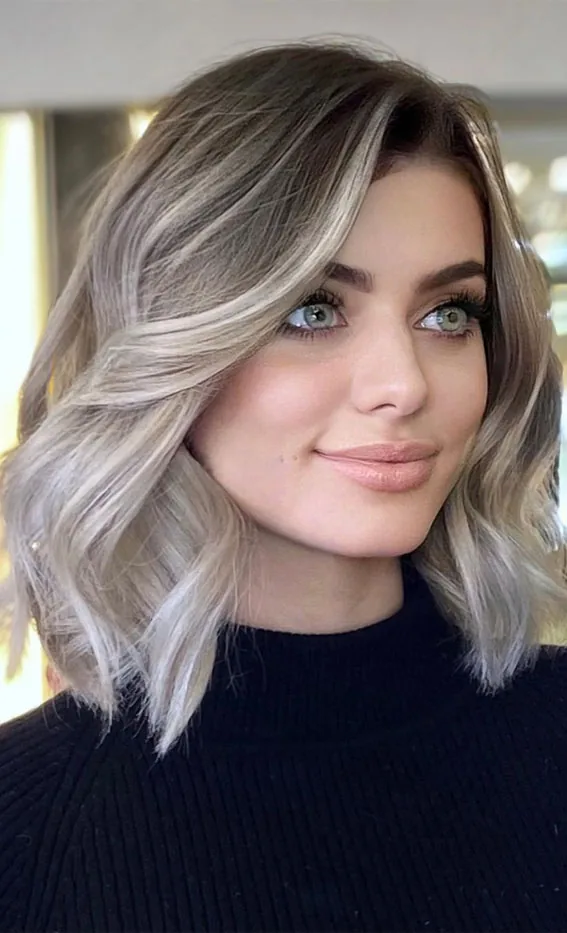
The pros are freedom and forgiveness. A grow-out lob looks intentional at every length, it needs no daily styling, and it saves you time and money. The cons are that it will never look as sharp as a freshly cut blunt lob, and it needs the right cut to work — a blunt lob grown out looks neglected, while a layered lob grown out looks deliberate.
The most common mistake is choosing a blunt cut and then skipping trims, which is how a lob turns into long hair with no shape. A grow-out lob needs long layers and a soft outline from the start, so the shape holds as the length increases. The second mistake is never trimming at all — even a grow-out lob needs a dusting every ten to twelve weeks.
Maintenance is a dusting every ten to twelve weeks, a weekly mask, and a texture spray for the days when the grow-out looks a little flat. Air-drying is the grow-out lob’s best friend, and a silk scrunchie keeps it tidy without a crease.
Quick verdict: the lob for busy women. Soft layers, a lived-in texture, and a trim every three months — that is all it asks.
What is a long bob haircut for women?
A long bob haircut for women, usually called a lob, is a bob that ends around the collarbone instead of the chin. It is long enough to tie back and short enough to feel light, and it suits almost every face shape and hair texture.
How long is a lob?
A lob usually ends at the collarbone, which is roughly 12 to 14 inches from the crown on most women. Shorter lobs end at the jaw, longer ones brush the shoulders, but collarbone length is the classic lob.
Does a lob suit a round face?
Yes — a lob is one of the most flattering cuts for a round face, as long as it ends below the jaw. A centre part, longer front pieces, and volume at the crown all make a round face look longer and slimmer.
Can you tie up a lob?
Yes, a collarbone-length lob can be pulled into a low ponytail, a small bun, or a half-up style. A chin-length lob is harder to tie up, so if you want that option, ask for collarbone length or longer.
How often should a lob be trimmed?
A lob needs a trim every six to eight weeks to keep its shape and its ends healthy. A blunt lob needs the shorter end of that range, while a layered or textured lob can stretch to eight weeks.
Is a lob good for fine hair?
Yes — a lob is one of the best cuts for fine hair. A blunt lob makes the ends look dense and full, and collarbone length is where fine hair looks its thickest, because the weight is not pulling the roots flat.
Is a lob good for thick hair?
Yes, with the right cut. A lob on thick hair needs internal layers or weight removal underneath, or it can look heavy and triangular. With that work done, a lob makes thick hair feel light and easy to style.
What is the difference between a bob and a lob?
A bob ends around the jaw or chin, while a lob ends around the collarbone. The lob is longer, easier to tie up, easier to grow out, and more versatile to style, while the bob is sharper and more dramatic.
How do you style a lob at home?
A lob styles in under ten minutes. Blow-dry with a round brush for volume, flat-iron the ends for a sleek finish, or scrunch with a texture spray for beach waves. Air-drying with a little product works too, especially on wavy hair.
How long does it take to grow a bob into a lob?
Growing a bob into a lob usually takes three to five months, depending on how short the bob was. A shaping cut in the middle keeps the grow-out tidy, and a dusting every eight weeks protects the ends.
Conclusion
The lob earns its reputation as the grown-up bob because it asks so little and gives so much. It suits almost every face shape, every texture, and every age, it styles in ten minutes, it grows out gracefully, and it looks polished whether you blow-dry it, wave it, or simply let it air-dry. That is why so many women who try a lob never go back to a shorter bob or to long hair.
The best long bob haircuts for women are the ones that fit your life, not just your face. Choose the length that suits your neck and your routine, the layers that suit your texture, and the finish that suits your mornings. Start at the collarbone if you are unsure, keep the trims regular, and enjoy the cut that suits almost everyone.
Pick your favourite from these 41 styles, book the appointment, and let your hair grow up — just a little. The lob is waiting, and it is the easiest good hair decision you will make this year.