Hairstyles for Color-Treated Hair That Show Off Your Color Without Fading It
Dyed hair is not the same as virgin hair, and it should not be styled the same way. Color-treated hair fades a little with every wash, dries out faster under heat, and shows every dull patch when the style is wrong. But when the style is right, the payoff is huge: the same dye job can look richer, deeper and more expensive, because the cut and the styling are doing half the work of showing it off. That is what these hairstyles for color-treated hair are built around — styles that make the color the star, without washing it down the drain.
The secret is choosing styles that work with colored hair instead of against it. Loose, soft styles show off dimension and let balayage, highlights and lowlights catch the light as you move. Protective updos and braids keep freshly colored ends tucked away from sun, friction and over-styling, so the color lasts longer between salon visits. And low-effort, second-day styles mean fewer washes, which is the single easiest way to keep color from fading.
This guide starts with the color-care thinking — how to wash less, use less heat, pick styles that show off dimension, blend roots as they grow out, and know when it is time to go back to the salon — and then gives you 37 styles to choose from, for blondes, brunettes, reds and vivid colors, for short hair, long hair and curly hair, for fresh color and for color that is a few weeks old. Pick the one that matches your color today, and let your hair look like the investment it is.
Why Color-Treated Hair Needs Different Styles
Color-treated hair is more porous than natural hair, because the dyeing process lifts the cuticle so color can get in — and that open cuticle also lets color and moisture escape. That is why dyed hair fades, feels drier, tangles more easily and reacts more strongly to heat and sun. A style that is effortless on virgin hair can be the style that strips the color fastest on dyed hair.
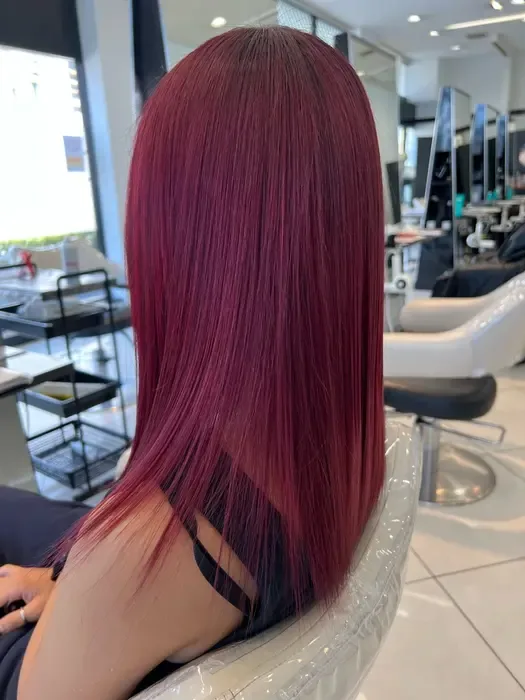
Tight, high-tension styles are the first problem. A slicked-back ponytail pulled hard every day stresses the most fragile part of colored hair — the mid-lengths and ends — and the friction at the elastic creates breakage that looks like fading. Heat is the second problem: a flat iron at full temperature on freshly colored hair can dull the tone in a single pass, especially on reds and coppers, which are the fastest-fading shades of all.
The styles that work best for colored hair share three things. They are gentle on the hair, so they do not snap or rub the cuticle. They need little or no heat, so the color stays sealed in. And they show off the color — soft movement, open layers and face-framing pieces that let different tones catch the light, instead of a single flat surface that hides the dimension you paid for.
Quick verdict: treat colored hair like a favorite silk blouse, not a cotton T-shirt. Gentle styles, low heat and movement that shows the color will keep a dye job looking fresh for weeks longer than a style that fights it.
Washing Less: Styles That Stretch Your Color
Every wash takes a little color with it, so the cheapest color protection there is costs nothing: wash less often. Most colorists recommend washing color-treated hair two or three times a week at most, with cool or lukewarm water, and letting the days in between do the styling work. The styles in this guide are built for that rhythm — they look better, not worse, on second- and third-day hair.
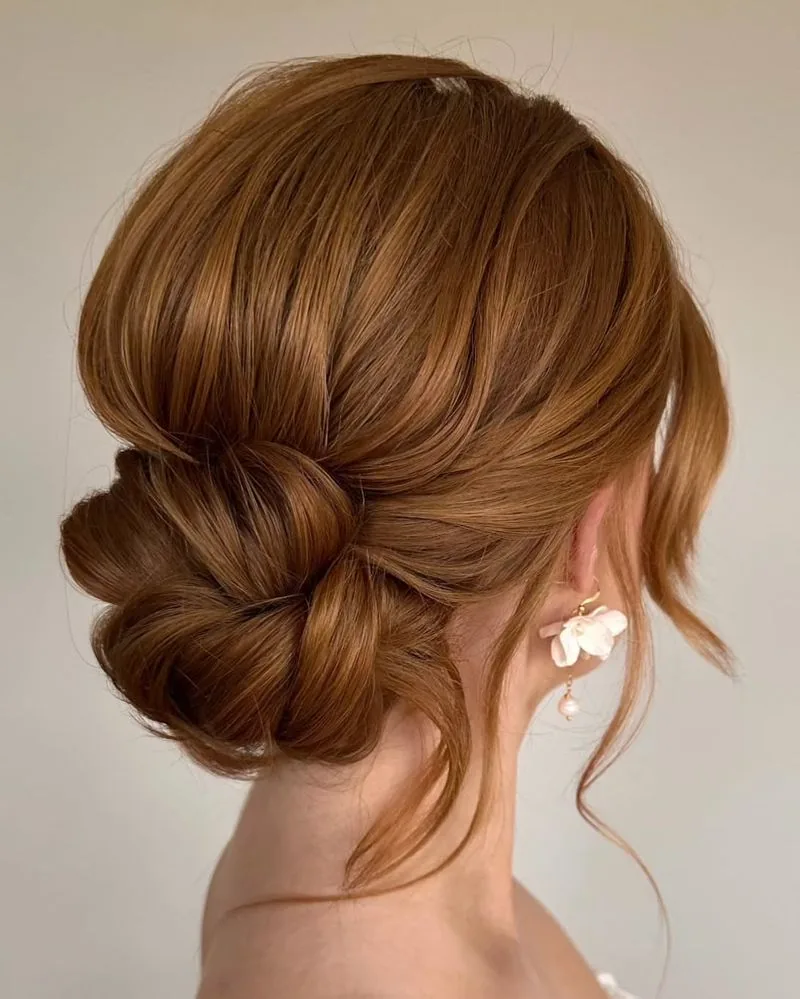
Day-old hair has grip, which is exactly what braids, buns and twists need. Freshly washed colored hair is slippery and soft, so styles slide out; second-day hair holds a braid without a dozen pins and keeps a bun in place all day. A little dry shampoo at the roots on day two or three absorbs oil and adds volume, and it also protects the color by keeping you out of the shower.
Plan the week around your wash days. Wash day is for loose, glossy styles that show off freshly cleaned color — a blowout or soft waves. Day two is for half-up styles and low ponytails. Day three is for braids and buns, which hide oily roots completely and protect the ends. By the time you wash again, the color has had three days of rest instead of three washes of wear.
Quick verdict: fewer washes, smarter styles. If a style only works on freshly washed hair, it is costing you color every time you wear it — choose the styles that love day-two and day-three hair instead.
Heat Damage and Color-Safe Heat Styling
Heat is the fastest way to fade color after washing. A flat iron, curling wand or hot blow-dryer opens the cuticle and lets dye molecules escape, and the damage is worst on the shades that are already the most fragile — reds, coppers, fashion colors and lightened blondes. That does not mean giving up heat entirely, but it does mean using it like a precision tool instead of a daily habit.
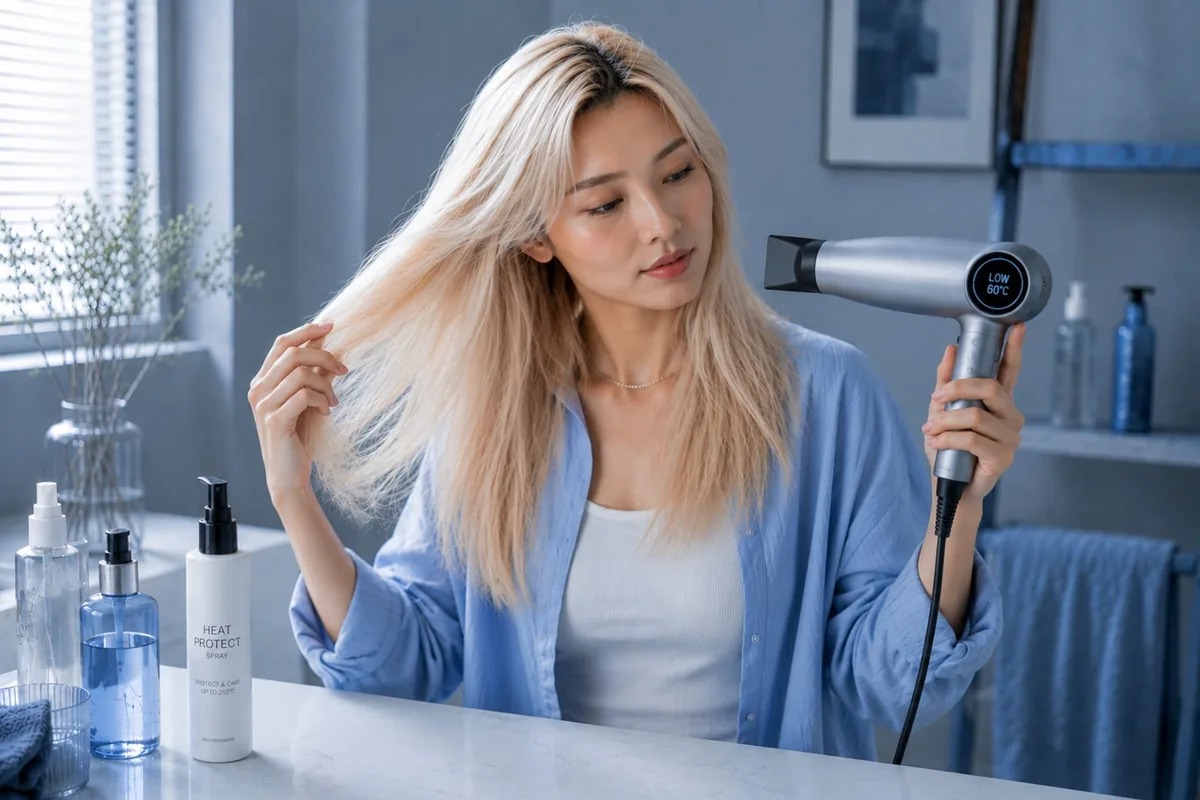
The rules are simple and they work. Always use a heat protectant made for color-treated hair, and let it dry for a minute before the hot tool touches the hair. Keep the temperature at or below 350°F (about 175°C) — most color holds fine there, and hotter settings add fade without adding style. Work in one smooth pass instead of going over the same section again and again, and let each section cool before you touch it, because hair sets its shape as it cools.
Better still, build a heat-free week into your routine. Heatless waves from an overnight braid, a silk scarf wrap, or rollers set on damp hair give you movement with zero color loss. Save the hot tools for the days that matter — a night out, a photo, a special event — and let the everyday styles be the gentle ones.
Quick verdict: protect it, keep it cool, and use it sparingly. One protected, low-heat styling session a week fades color far less than five hot sessions, and your hair will feel the difference before your color does.
Styles That Show Off Dimension, Balayage and Highlights
Balayage, highlights and lowlights are painted to catch the light as the hair moves, so the worst thing you can do with dimensional color is pin it into a flat, tight style that hides all of it. Dimension needs movement — waves, curls, layers and pieces that fall at different lengths — so the lighter and darker tones take turns catching the light.
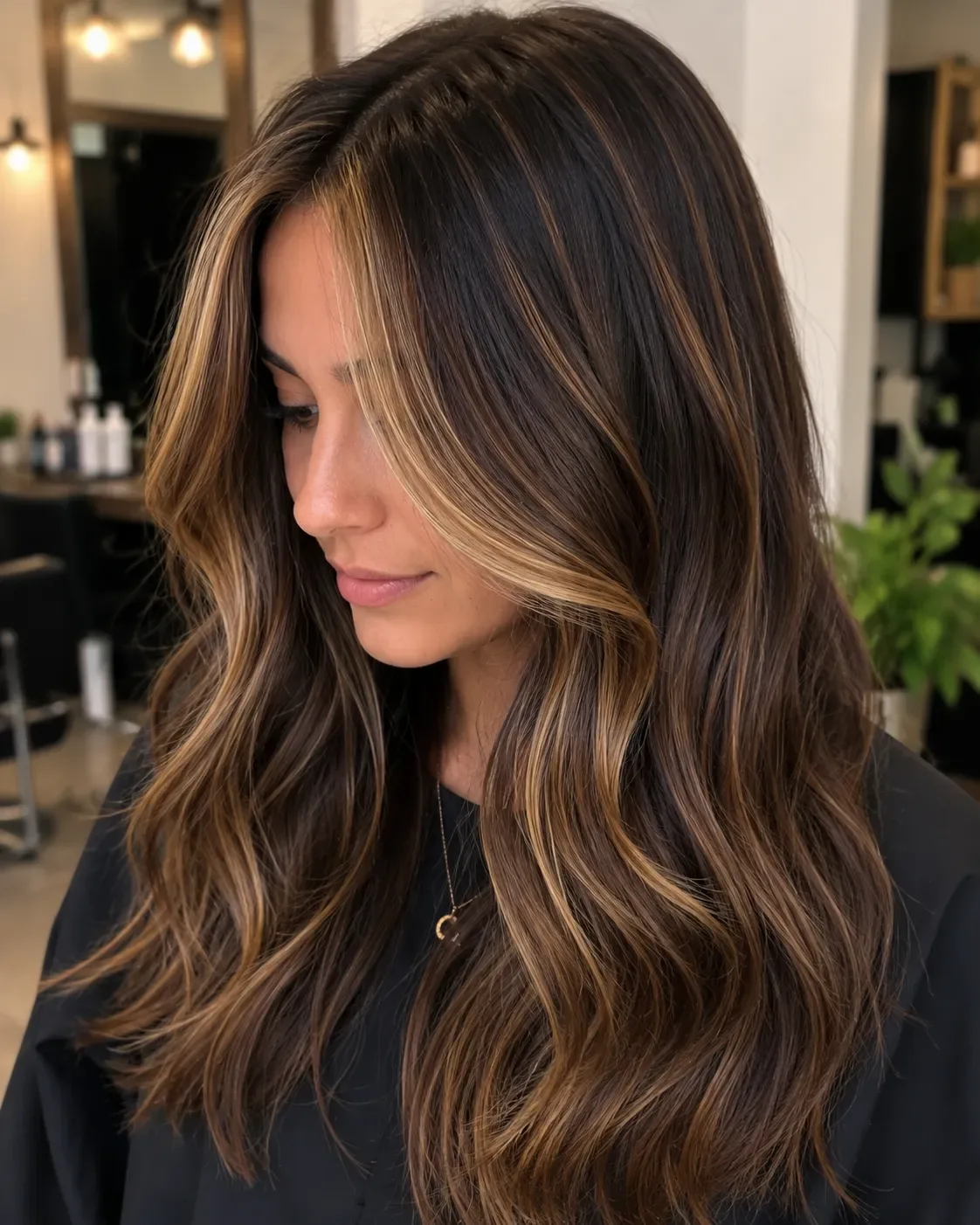
Loose waves are the classic choice for a reason: every bend in the wave shows a different tone, and the color looks deeper and more expensive than it does when the hair is straight. Braids do the same job in a different way — a loose fishtail or French braid weaves the light and dark pieces together so the dimension runs through the whole braid. Even a simple half-up style works, because the top layer pulled back reveals the lighter pieces underneath.
Face-framing pieces matter most of all. The lightest pieces around the face are what people actually see, so styles that leave those pieces free — curtain bangs, soft tendrils, a side part with a sweeping fringe — make the whole color job look brighter. Pulling every strand back into a severe bun hides the money piece entirely.
Quick verdict: if you paid for dimension, show it. Choose styles with movement, loose braids and free face-framing pieces, and let the light do the work your colorist started.
Roots and Grow-Out: Styles That Blend the Gap
Roots are not a disaster — they are just a phase, and the right style can stretch that phase by weeks. The trick is to break up the straight line where the natural color meets the dyed color. Any style with texture, volume at the crown, or a zigzag part softens that line so the eye never lands on it.
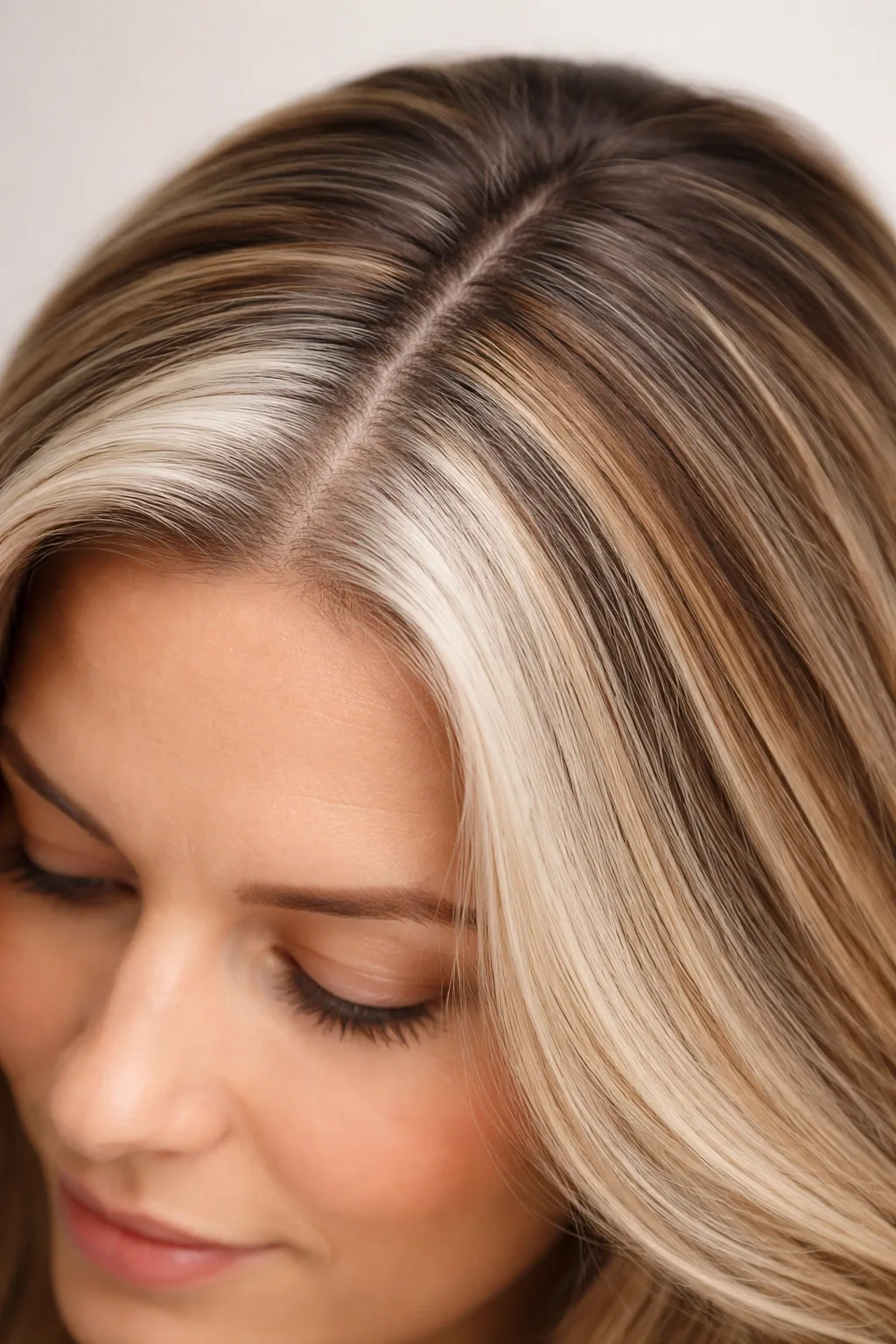
A deep side part or a zigzag part is the fastest fix, because it moves the eye away from the straight root line and adds volume exactly where the roots show. Texture helps too: waves, curls and crimped sections scatter the light, so the contrast between root and color reads as intentional dimension instead of grow-out. Braids that start a little lower on the head, rather than pulled tight from the scalp, hide the root line completely.
Updos are the grow-out hero. A messy bun, a braided crown or a twisted chignon pulls the hair up and back, so the roots are covered by the style itself rather than on display. Add a headband, a scarf or a clip at the crown and nobody will look twice — and a little root powder or color spray at the part line buys you another week or two between appointments.
Quick verdict: break the line, add texture, go up. The styles that hide roots best are the ones with movement at the crown and volume where the color changes — and they look deliberate, not like a cover-up.
Gloss, Shine and Color-Safe Products
Color-treated hair loses shine before it loses color, because a roughed-up cuticle scatters light instead of reflecting it. That dull, matte look is what makes a dye job look old even when the color itself is still there. Gloss is the fix — a clear or tinted gloss treatment smooths the cuticle, seals in color and brings back the mirror shine, and it can be done at the salon or at home.

At home, the routine is simple: a sulfate-free, color-safe shampoo, a conditioner that you leave in for a full two minutes, and a weekly deep mask or gloss treatment. A pea-sized drop of shine serum or hair oil smoothed over the surface — never the roots — adds instant gloss to any style, and a cool rinse at the end of a wash closes the cuticle so the shine stays.
Products matter more than tools here. Sulfates strip color fast, so check the label and choose color-safe formulas. Purple shampoo keeps blonde from going brassy, but use it once a week at most, because overuse can dull the tone. And skip the heavy waxes and sticky sprays that build up on colored hair and need a harsh wash to remove — a light, color-safe spray holds a style without costing you color.
Quick verdict: shine is a treatment, not a styling product. A weekly gloss or mask, color-safe washing and one drop of serum will make any style in this guide look like a fresh salon visit.
When to Go Back to the Salon
Even the best styles cannot save color that is truly done. Knowing when to book the salon — and what to ask for when you get there — saves you from months of styles that are working too hard to hide a dye job that has simply run its course.
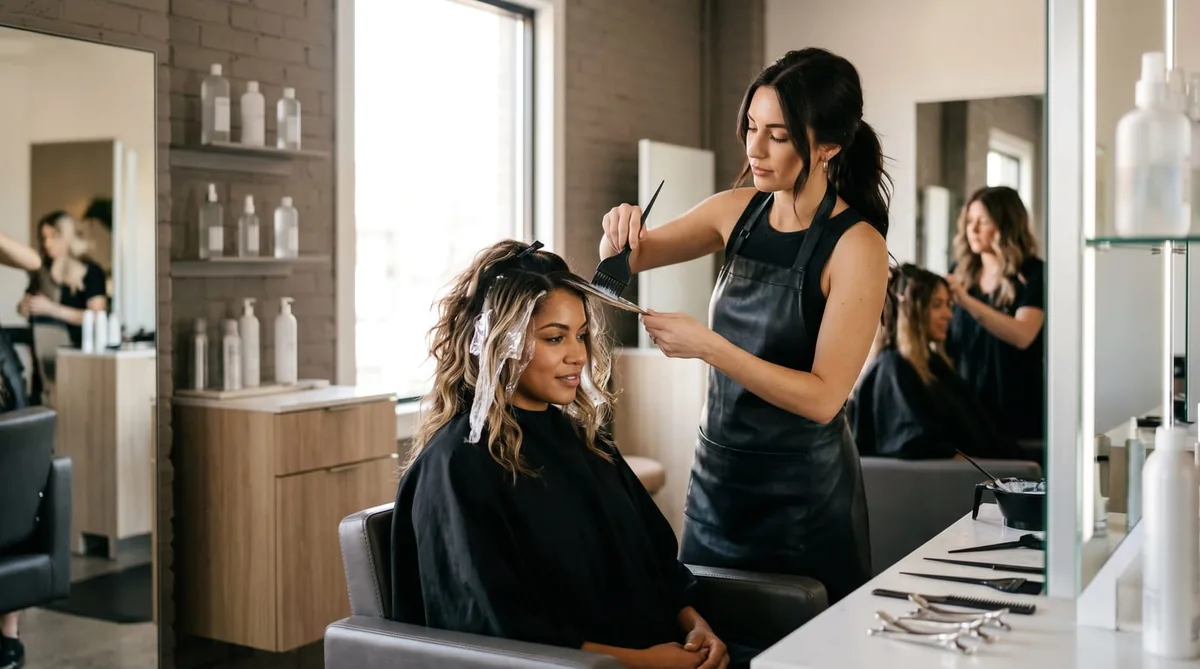
The signs are clear. The color looks flat and one-dimensional even after a gloss treatment, the ends are noticeably lighter or brassier than the roots, the fade is uneven with patches of different tones, or the grow-out line is wider than an inch and no style hides it anymore. Red and vivid colors usually need a refresh every four to six weeks; blondes need a toner every six to eight weeks; brunettes and balayage can often stretch to ten or twelve.
Ask for the right service, not just a full redo. A gloss or toner refreshes tone without a full dye, a root melt blends the grow-out line, and a partial highlight or face-frame refresh brightens the pieces people actually see — all cheaper and gentler than starting over. Bring a photo of your hair on its best day so your stylist can see the target, not just the fade.
Quick verdict: styles stretch color, they do not replace it. When gloss stops working, the tone is uneven, or the roots win every style you try, book the salon — and ask for a gloss, a melt or a partial refresh before you pay for a full color.
Fading: Styles That Hide Fade and Revive Color
Fading happens to every dye job — the question is how gracefully it happens. The good news is that a faded color can still look beautiful, because faded color is usually softer, lighter and more lived-in, which suits a whole family of relaxed styles that a sharp, fresh dye job would overpower.
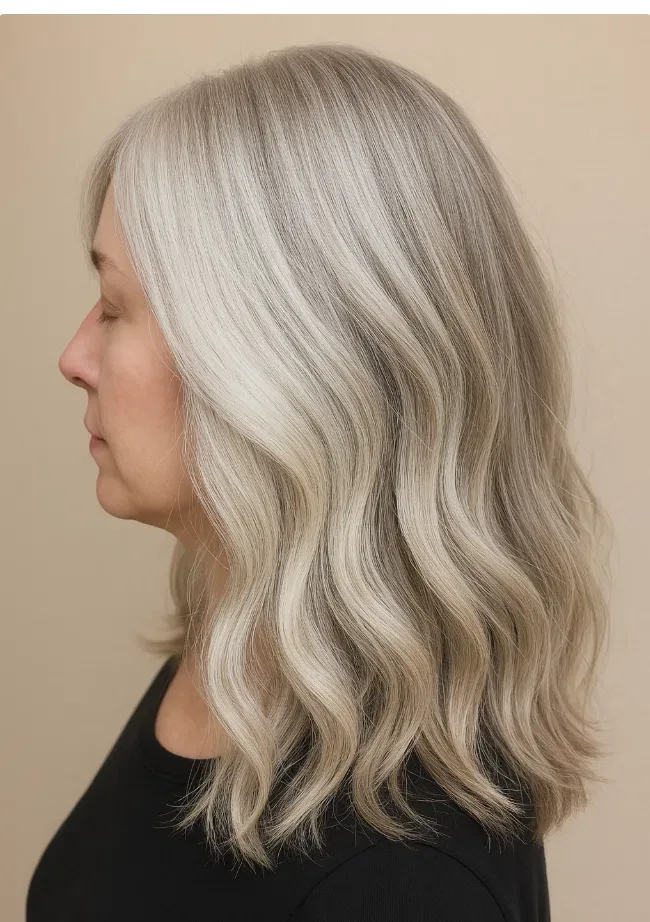
Soft, textured styles are the best camouflage for fading. Beachy waves, tousled layers and loose braids scatter the light, so uneven fading reads as natural sun-kissed variation instead of a patchy dye job. A deep side part or a braid that mixes the lighter faded ends with the deeper roots makes the fade look like intentional dimension. Shine helps too — a gloss serum over a wavy style makes faded color glow again.
The styles to avoid when color has faded are the flat, severe ones: a pin-straight center part or a tight slicked bun shows every uneven patch and every brassy tone, because there is nowhere for the eye to go but the color itself. If the fade is mostly at the ends, an updo that tucks the ends away — a bun, a chignon, a braided updo — hides the worst of it in one move.
Quick verdict: texture hides fade, shine revives it, updos tuck it away. Work with the softer color you have now, not against it, and the fade becomes a lived-in look instead of a problem to fix.
1. The Glossy Blowout That Shows Off Dimension
A glossy blowout is the simplest way to make color-treated hair look expensive. The smooth, rounded shape reflects light evenly, so every tone in the color — the highlights, the lowlights, the depth at the roots — shows up clearly instead of getting lost in frizz or texture.
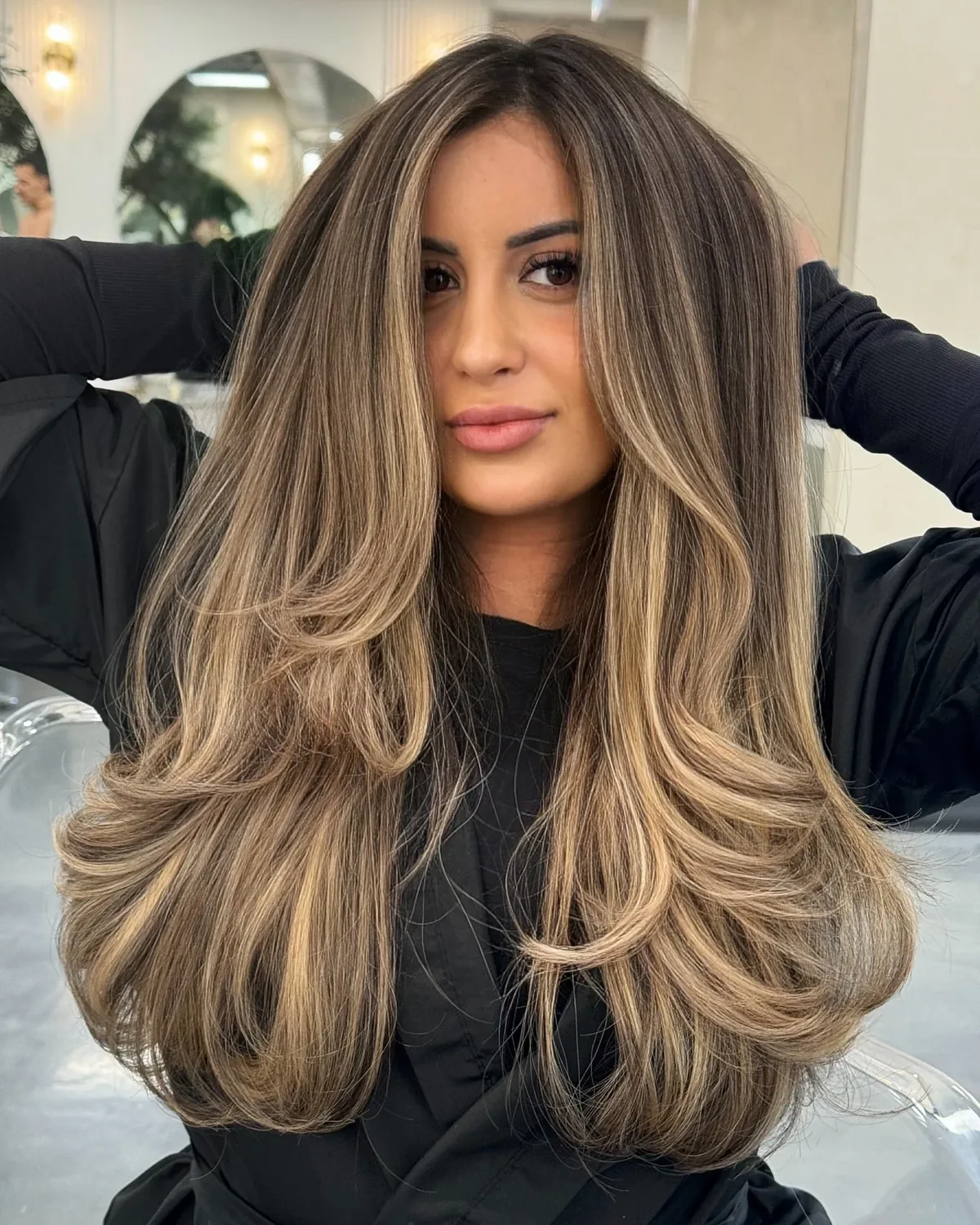
Pros: Shows off every tone in dimensional color; adds shine that makes color look fresh; works for blondes, brunettes and reds alike.
Cons: Needs heat, so it must be done with protectant and a moderate temperature; the shine fades by day two on fine hair.
Who it suits: Women with balayage, highlights or any multi-tonal color who want a polished, salon-fresh look.
Who should avoid it: Anyone who wants a zero-heat week, or whose color is very freshly dyed and still settling — wait 48 hours before a hot blowout.
Maintenance: Blow-dry with a round brush and a color-safe heat protectant, finish with a cool shot, and smooth one drop of shine serum over the surface. Refresh on day two with dry shampoo at the roots only.
2. Soft Balayage Waves
Soft balayage waves are the style balayage was invented for. The loose, S-shaped bends let the lighter painted ends catch the light while the deeper roots stay rich, so the color looks hand-painted and effortless — which, of course, is exactly the point.
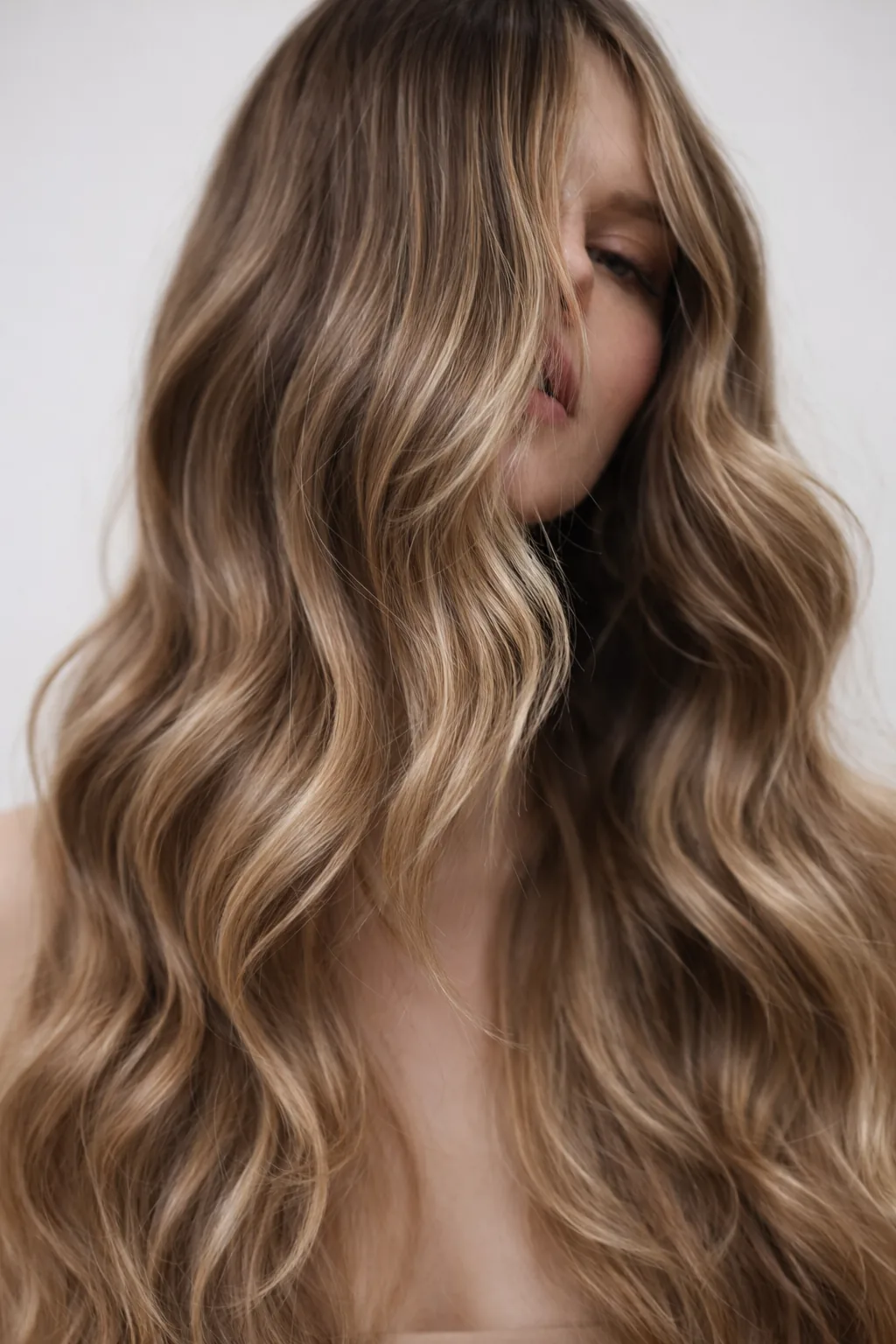
Pros: Makes balayage look deeper and more natural; hides uneven fading; needs only a wand or an overnight braid.
Cons: Waves drop out fast on very straight, fine hair; too much heat styling fades the lighter pieces first.
Who it suits: Anyone with balayage, ombre or painted highlights, especially medium to long hair.
Who should avoid it: Very short hair that cannot wrap around a wand, or hair so damaged that any heat is a bad idea.
Maintenance: Use a large-barrel wand at a moderate temperature, wrap sections away from the face, and let each wave cool before brushing through gently. A color-safe texturizing spray holds the wave without a second heat pass.
3. The Low Loose Bun for Fresh Color
A low, loose bun is the kindest style you can wear in the first days after a color appointment. It keeps the freshly dyed ends tucked away from sun, wind and friction, it needs no heat at all, and the soft, undone shape shows off the color at the crown and the face-framing pieces.
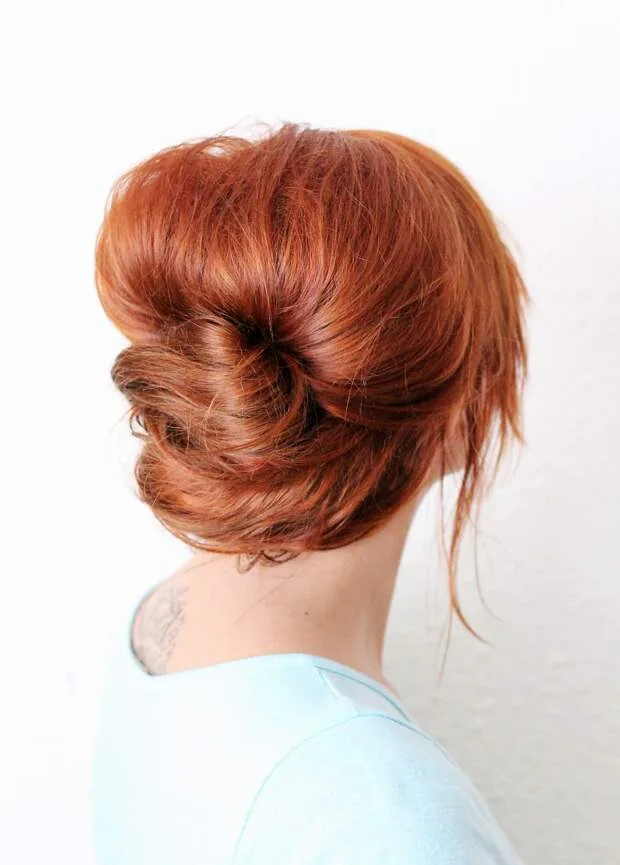
Pros: Zero heat, zero friction on the ends; hides fresh color from sun damage; looks polished in five minutes.
Cons: Can look messy rather than relaxed if the hair is very slippery; needs pins that match the hair color.
Who it suits: Freshly colored hair of any shade, and anyone who wants a protective style that still looks finished.
Who should avoid it: Anyone who needs a style that stays tight through a workout — this one is soft by design.
Maintenance: Gather the hair low at the nape, twist loosely, pin at three points, and pull out two face-framing strands. Use a silk scrunchie instead of an elastic to avoid dents and breakage.
4. The Half-Up Twist That Frames Highlights
A half-up twist takes the top section of hair, twists it back and pins it, and leaves the rest down — which is exactly the shape that shows off highlights. The pulled-back top reveals the lighter pieces underneath, while the loose lengths show the full range of tones.
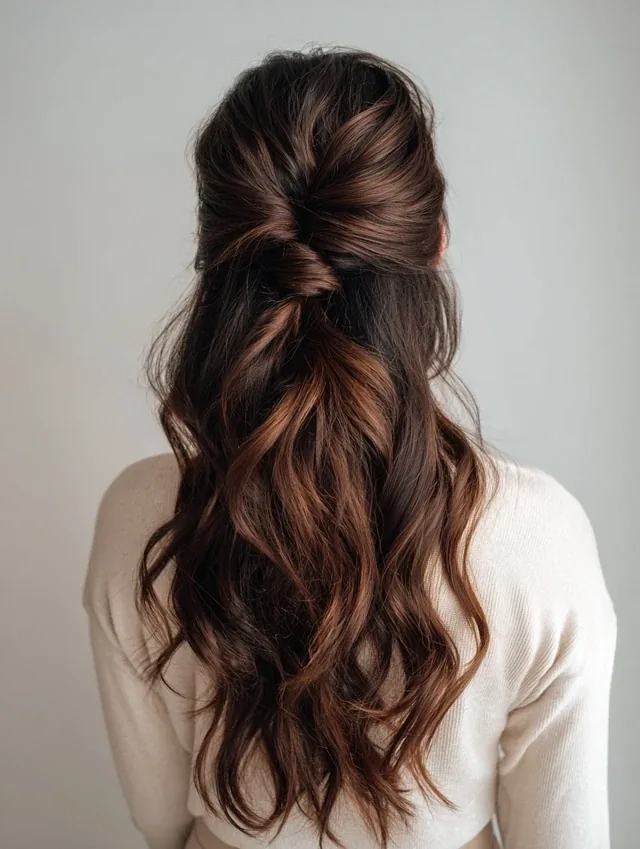
Pros: Shows off highlights and face-framing color; keeps hair out of the face; works on second-day hair.
Cons: The twist can slip on very smooth, freshly washed hair; heavy hair can pull it loose by evening.
Who it suits: Highlighted, balayaged or face-framed hair, and anyone growing out bangs.
Who should avoid it: Very short hair that cannot gather a top section, or very heavy hair that needs a stronger hold.
Maintenance: Twist two sections from the temples, cross them at the back of the crown and pin with two bobby pins in an X. A little dry shampoo at the crown before twisting gives grip and volume.
5. Sleek Glass Hair for Maximum Shine
Glass hair — pin-straight, mirror-smooth, high-shine hair — is the ultimate test of a color job, because there is nowhere for dullness or uneven tone to hide. When the color is rich and the cuticle is smooth, glass hair looks like liquid color, and it photographs beautifully.
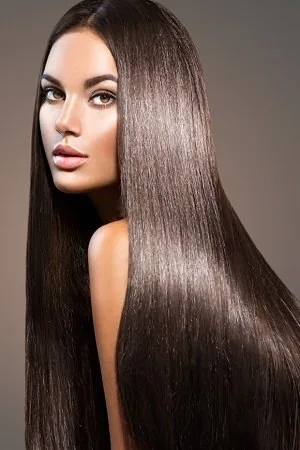
Pros: Makes rich, even color look its absolute best; shows off shine and gloss; looks striking on brunettes and vivid colors.
Cons: Shows every flaw in faded or uneven color; needs heat and a flat iron; falls flat in humidity.
Who it suits: Even, rich color — deep brunette, black, copper or a vivid shade — with hair healthy enough for one careful heat pass.
Who should avoid it: Faded, patchy or very damaged color, or anyone avoiding heat this week.
Maintenance: Use a color-safe heat protectant, flat-iron in single slow passes at a moderate temperature, and finish with a drop of shine serum. A gloss treatment the day before makes the biggest difference of all.
6. The Textured Lob for Grown-Out Color
A textured lob is the grown-out color hero. The choppy, piecey ends break up the line where the old color meets the new growth, and the texture scatters light so the contrast reads as intentional lived-in color instead of roots that need attention.
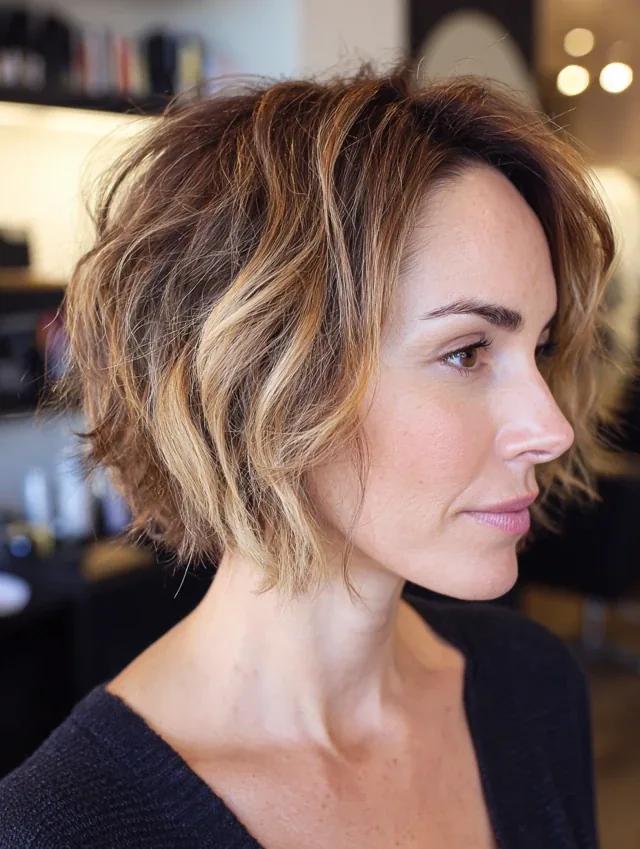
Pros: Hides grow-out and fading better than almost any cut; light and easy to style; suits most face shapes.
Cons: Needs a trim every six to eight weeks to keep the texture; very curly hair will need extra styling time.
Who it suits: Anyone between color appointments, with balayage, root shadow or grown-out highlights.
Who should avoid it: Anyone who wants to keep long hair, or whose color is freshly done and does not need hiding yet.
Maintenance: Scrunch in a color-safe mousse on damp hair and let it air-dry, or use a flat iron to bend random pieces in opposite directions. A zigzag part adds extra root camouflage.
7. The Braided Crown That Shows Dimension
A braided crown weaves the hair around the head like a halo, and because the braid pulls pieces from every layer, it mixes the light and dark tones of dimensional color together in one continuous ribbon. It is one of the prettiest ways to show off highlights — and it is also a fully protective style.
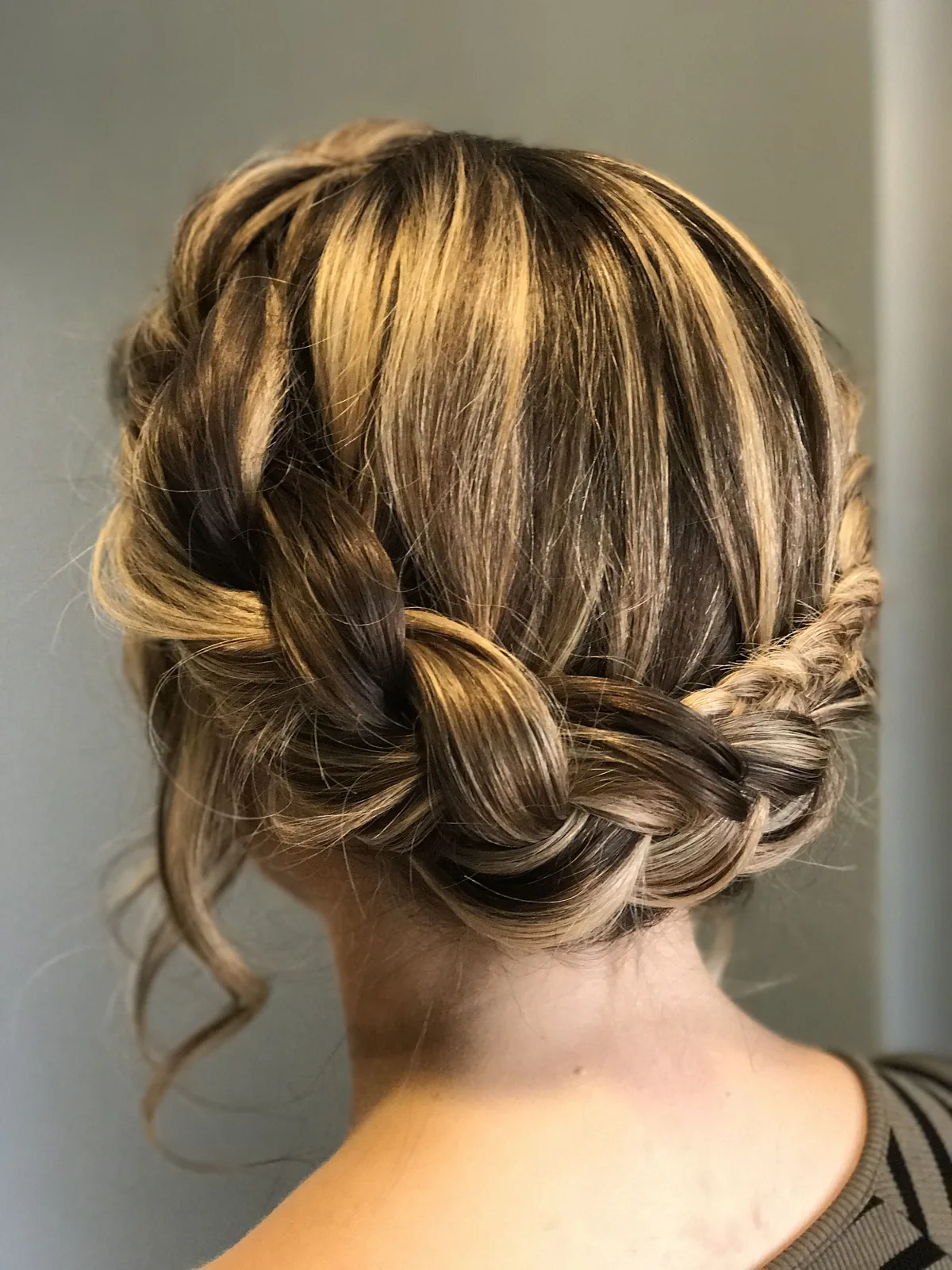
Pros: Shows dimension in every strand; protects ends completely; holds all day with no heat.
Cons: Takes practice and ten minutes to learn; very short hair cannot reach around the head.
Who it suits: Long or medium hair with highlights, balayage or two-tone color, for weddings, parties or long days out.
Who should avoid it: Short hair, or anyone in a hurry — save this one for a day when you have ten unhurried minutes.
Maintenance: Braid two Dutch braids from the temples, bring them around the crown and pin where they meet. Pull the braid edges out gently for fullness, and finish with a light color-safe spray.
8. Curtain Bangs With a Color Melt
Curtain bangs parted in the middle and swept to each side frame the face like curtains, and with a color melt — where the color fades seamlessly from darker roots to lighter ends — they are the softest way to wear dyed hair. The bangs show the lightest pieces right where the eye lands first.
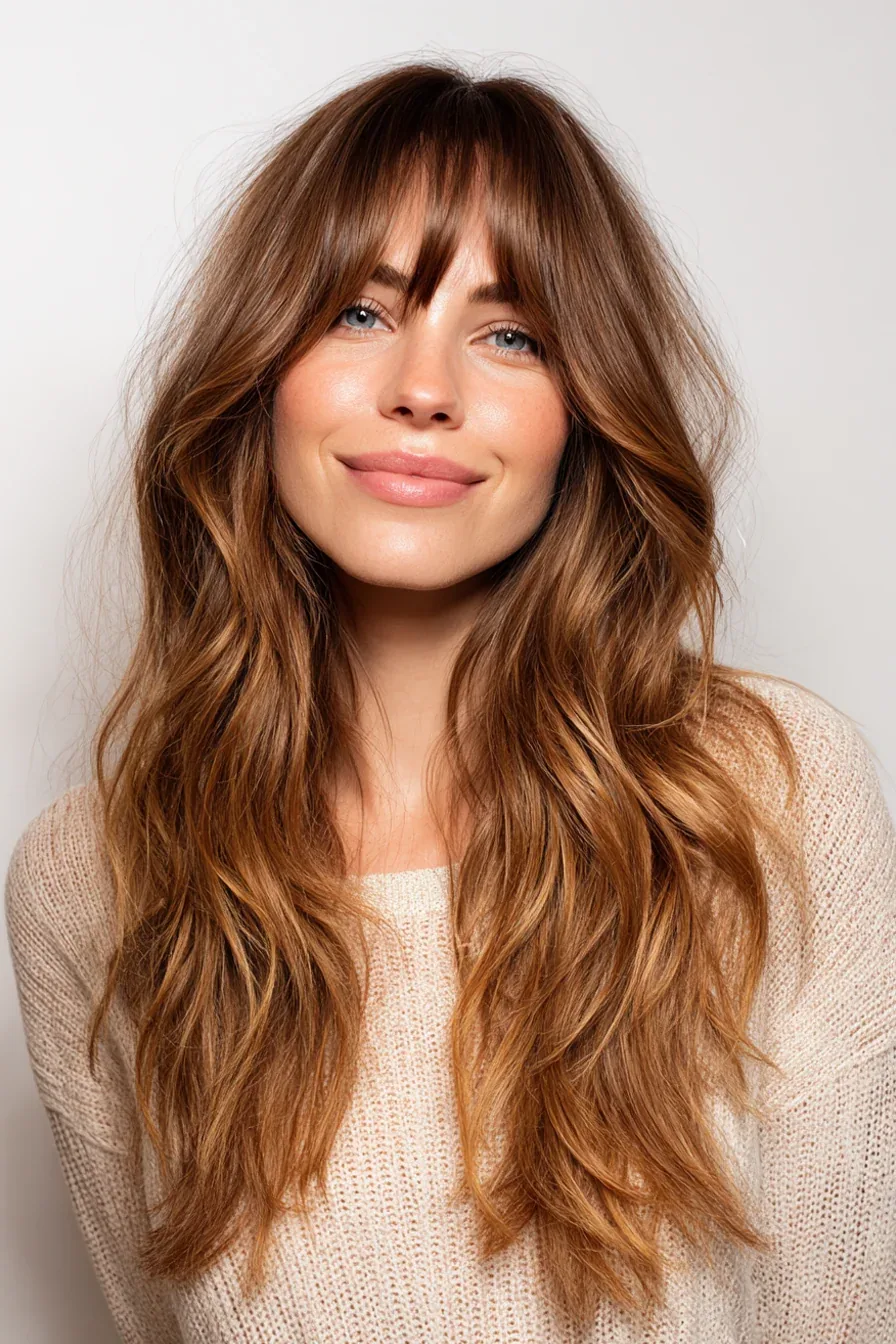
Pros: Draws attention to the face and the lightest color; softens the root line; grows out gracefully.
Cons: Bangs need trimming every few weeks; they can look oily faster on color-treated hair.
Who it suits: Women with a color melt, root shadow or face-framing highlights who want a soft, modern frame.
Who should avoid it: Anyone who hates trimming bangs or who wears a tight hat or helmet most days.
Maintenance: Blow-dry the bangs forward with a round brush, then sweep them to each side with your fingers. A dry shampoo mist at the roots keeps them fresh between washes.
9. The French Braid That Saves Color
A French braid is the lowest-fade style in this whole guide. It gathers the hair into one protected plait, so the colored ends are tucked away from sun, wind and rubbing against clothes, and it needs no heat, no washing and no restyling — you can wear it for a day, sleep in it, and wake up with soft waves.
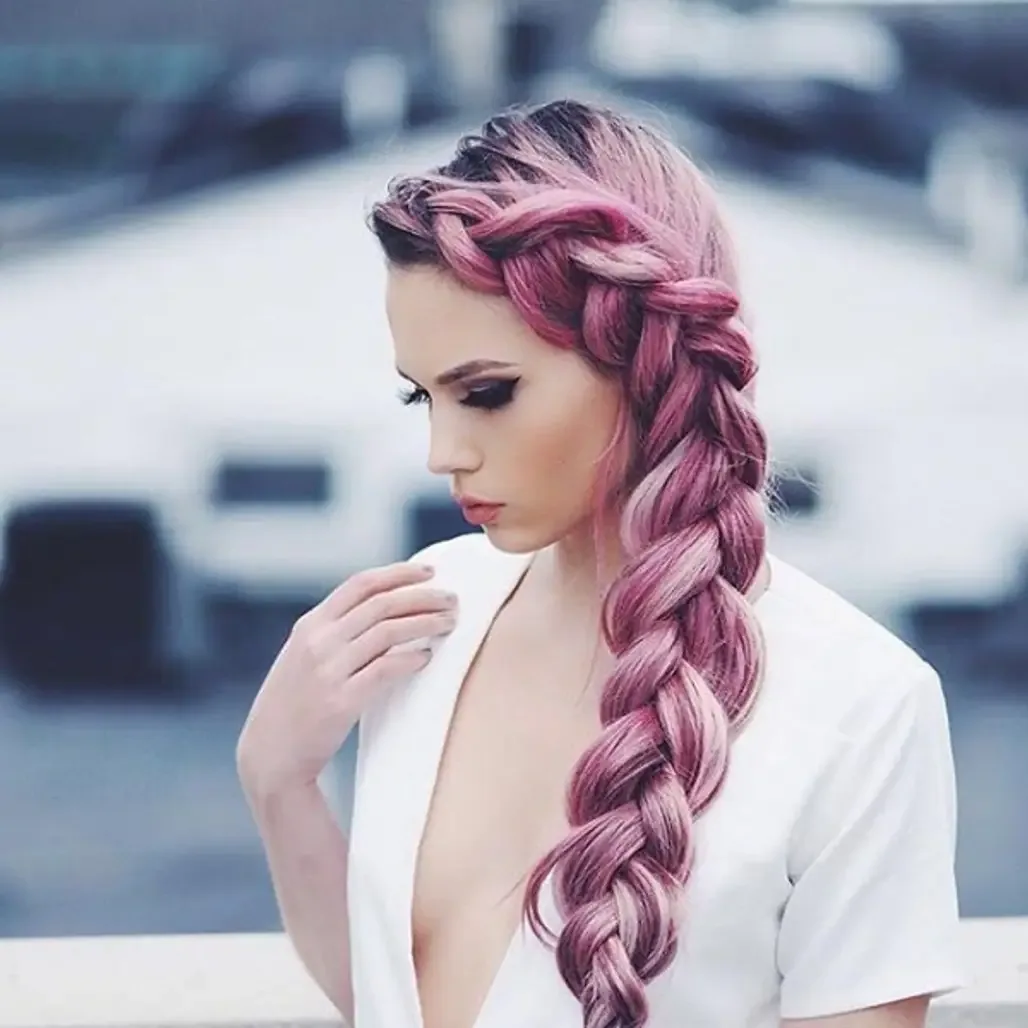
Pros: Maximum color protection; no heat; lasts from day to night and into the next morning as waves.
Cons: Can look plain without an accessory; tight braiding on wet hair can stress fragile colored strands.
Who it suits: Anyone who wants to stretch color between washes, protect long dyed hair overnight, or travel without styling tools.
Who should avoid it: Very short hair that cannot braid, or anyone with a sensitive scalp that dislikes tension.
Maintenance: Braid on dry or slightly damp hair, keep the tension even and gentle, and secure with a silk scrunchie. Undo it the next morning for heatless waves that show off the color.
10. The Messy Low Ponytail for Second-Day Hair
The messy low ponytail is the second-day hero for color-treated hair. It gathers the hair at the nape, hides oily roots under a little volume at the crown, and leaves the colored lengths free to move — and because day-old hair has grip, this ponytail actually holds better than it does on freshly washed hair.
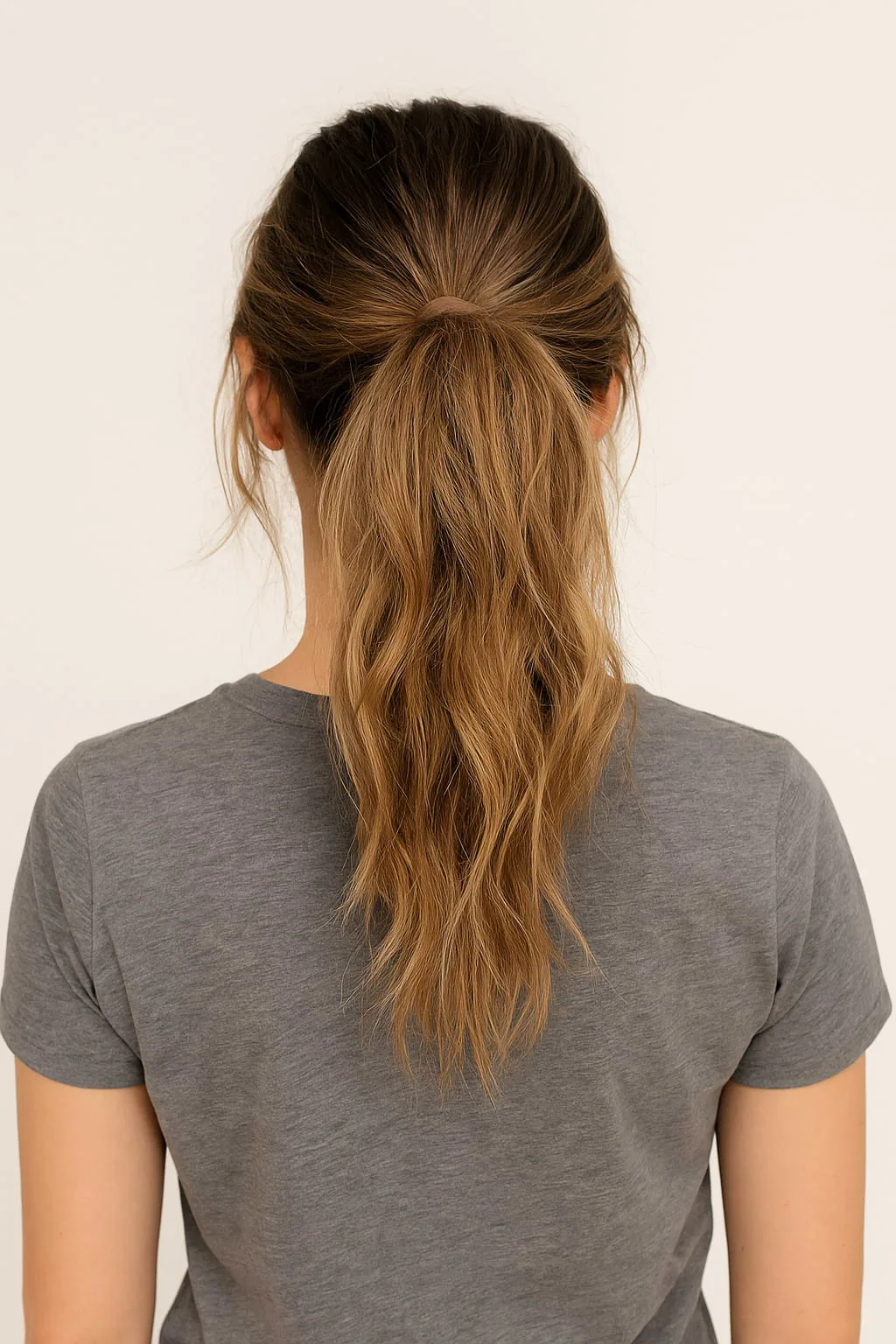
Pros: Perfect for wash-day two and three; hides oily roots; takes two minutes and no heat.
Cons: A tight elastic can dent and snap colored hair; a very high ponytail shows the root line more.
Who it suits: Anyone skipping a wash to protect color, with medium to long hair of any shade.
Who should avoid it: Anyone who needs a formal or very polished look — this one is deliberately relaxed.
Maintenance: Tease the crown lightly, gather the hair low, secure with a silk scrunchie, and wrap a strand around the base. Pull out a few face-framing pieces to soften the front.
11. Lived-In Layers for Balayage
Lived-in layers are cut to grow out gracefully, with the shortest pieces around the face and longer layers through the back — and that shape is made for balayage. Each layer ends at a different length, so the lighter painted pieces sit at different heights and the color looks layered and expensive from every angle.
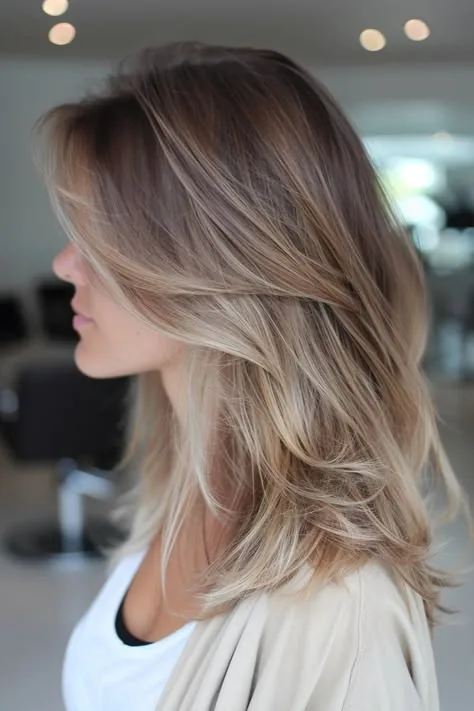
Pros: Makes balayage look deeper; grows out without a harsh line; adds movement with no daily styling.
Cons: Needs a skilled colorist to place the balayage with the layers; very fine hair can look thin in layers.
Who it suits: Medium to long hair with balayage or painted highlights, especially if you stretch appointments.
Who should avoid it: Very fine hair that needs blunt ends for fullness, or anyone who wants a single-length look.
Maintenance: Blow-dry with a round brush, flipping the ends out on some layers and under on others. A color-safe leave-in conditioner keeps the layered ends from looking dry.
12. Soft Curls for Red Color
Red is the fastest-fading color there is, so red hair needs styles that show it off without costing it. Soft curls are the answer: the round shape catches light on every curve, making red look rich and glowing, and a curl set with a low-heat wand or heatless rollers gives you the look without the fade.
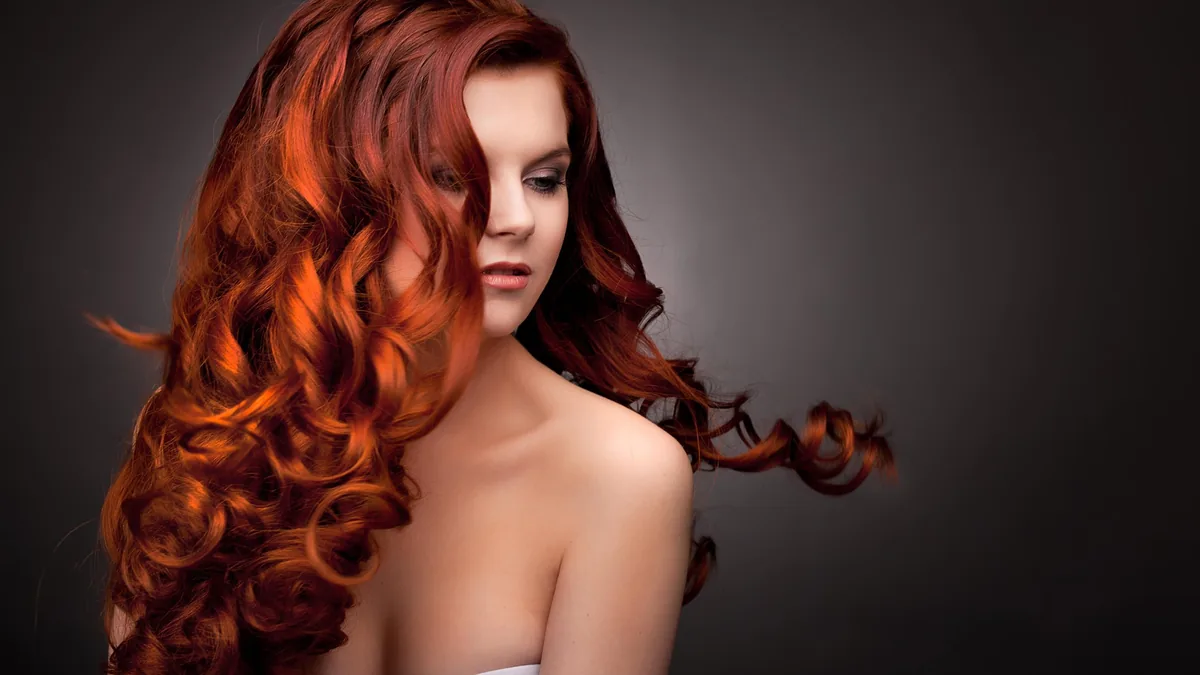
Pros: Makes red look richer and deeper; curls hold well on color-treated hair; heatless options protect the shade.
Cons: Red fades with heat, sun and hot water, so curls need cool water and protectant every time.
Who it suits: Red, copper and auburn hair of any length, especially when the color is fresh and vivid.
Who should avoid it: Anyone who wants a wash-and-go style — curls need a little setting time.
Maintenance: Use a large wand at a low temperature with color-safe protectant, or set heatless curls overnight in a loose braid. Cool water washes and a color-depositing conditioner keep the red alive longer.
13. The Blunt Bob in Rich Brunette
A blunt bob cut to one clean length makes brunette color look deeper and glossier than any layered cut can, because the solid edge reflects light like a sheet. On color-treated brunette hair, the blunt line is what turns a simple brown into a rich, expensive-looking shade.
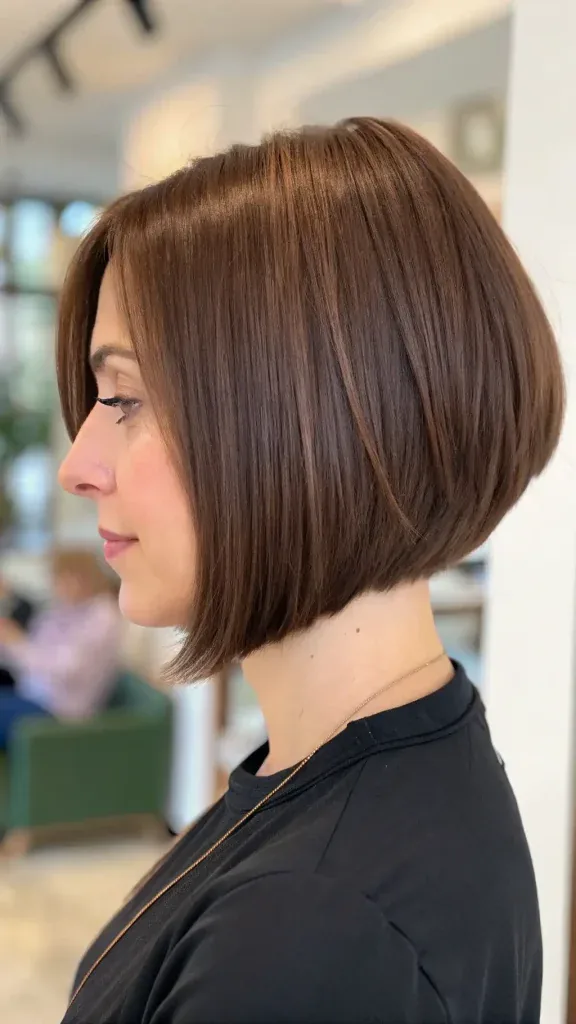
Pros: Makes brunette color look rich and even; the blunt edge hides split, faded ends; easy to style straight.
Cons: Shows the root line clearly, so it needs regular root care; blunt ends need trims to stay sharp.
Who it suits: Rich brunette, espresso or chocolate color with straight or slightly wavy hair.
Who should avoid it: Anyone growing out color with a strong root contrast, or very curly hair that will not sit blunt.
Maintenance: Blow-dry straight with a paddle brush and a color-safe heat protectant, and tuck the ends under slightly. A gloss treatment every few weeks keeps the brown deep and shiny.
14. Side-Swept Waves for Blonde Color
Side-swept waves push all the hair to one side, which piles the blonde tones together into one glowing sweep — and that is exactly how blonde looks its brightest. The deep side part also adds volume at the crown, which hides the darker root shadow that blondes grow out between appointments.
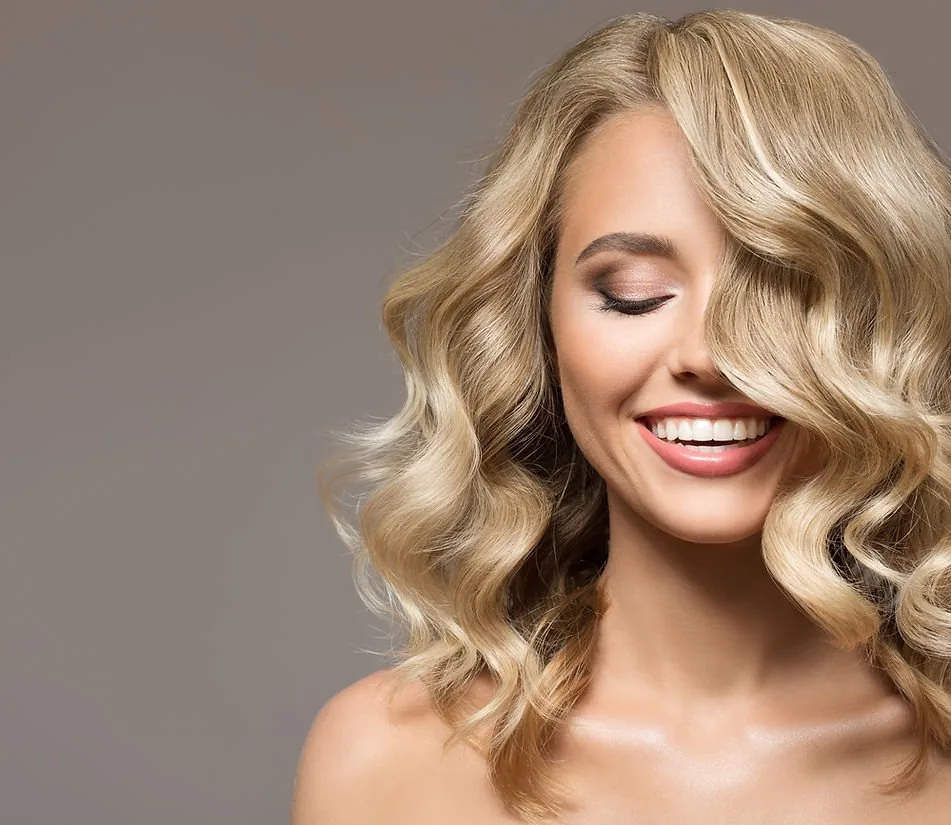
Pros: Makes blonde look brighter and fuller; hides root shadow; looks glamorous with minimal effort.
Cons: Blonde is fragile, so waves need low heat and a purple shampoo routine to stay bright, not brassy.
Who it suits: Blonde, honey or caramel hair, especially with a root shadow or lived-in blonde.
Who should avoid it: Anyone avoiding heat entirely, or with very dark roots that need a toner before styling.
Maintenance: Part deeply on one side, wave the hair away from the face with a large wand, and brush through gently. Purple shampoo once a week keeps the tone cool and bright.
15. The High Ponytail That Pops Color
A high ponytail pulls all the color up and back into one bold sweep, so a vivid shade — or a rich brunette with bright face-framing pieces — reads as one confident statement instead of scattered tones. It also lifts the face, shows the neckline, and keeps the colored ends off the shoulders and out of the sun.
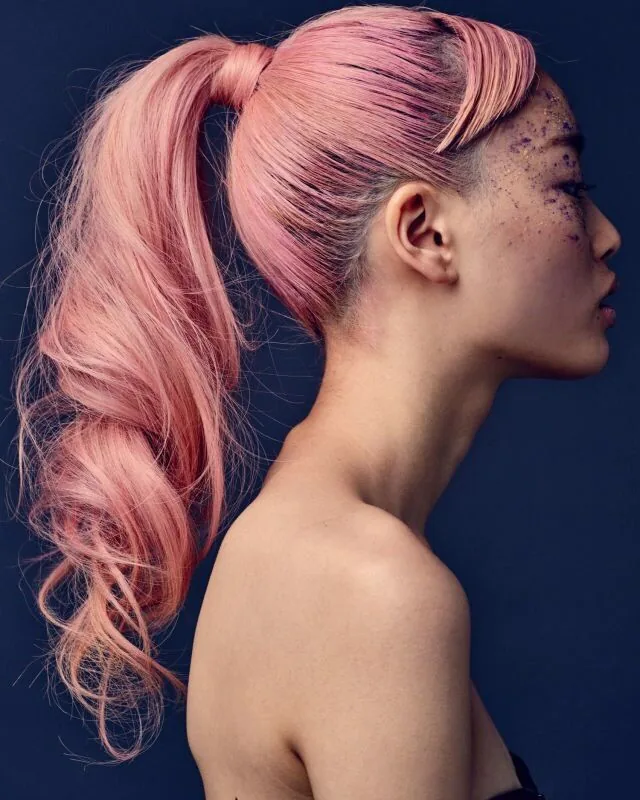
Pros: Shows off vivid or bright color dramatically; keeps ends protected and off the shoulders; lifts the whole face.
Cons: High tension can stress fragile colored hair if worn every day; can show the root line at the crown.
Who it suits: Vivid colors, bright blondes and bold face-framing highlights, for a night out or a statement day.
Who should avoid it: Anyone with a sensitive hairline, very fine hair, or color that is fading unevenly at the roots.
Maintenance: Gather the hair high with a soft brush, secure with a silk scrunchie, and wrap a strand around the base. Alternate with low styles during the week so the hairline gets a rest.
16. The Milkmaid Braid, Protective and Pretty
A milkmaid braid wraps two braids across the crown like a headband, and it is one of the most protective styles a color-treated head can wear. Every colored end is tucked away, nothing rubs against clothing or a pillow, and the braid itself shows off the dimension of the color in a continuous woven band.
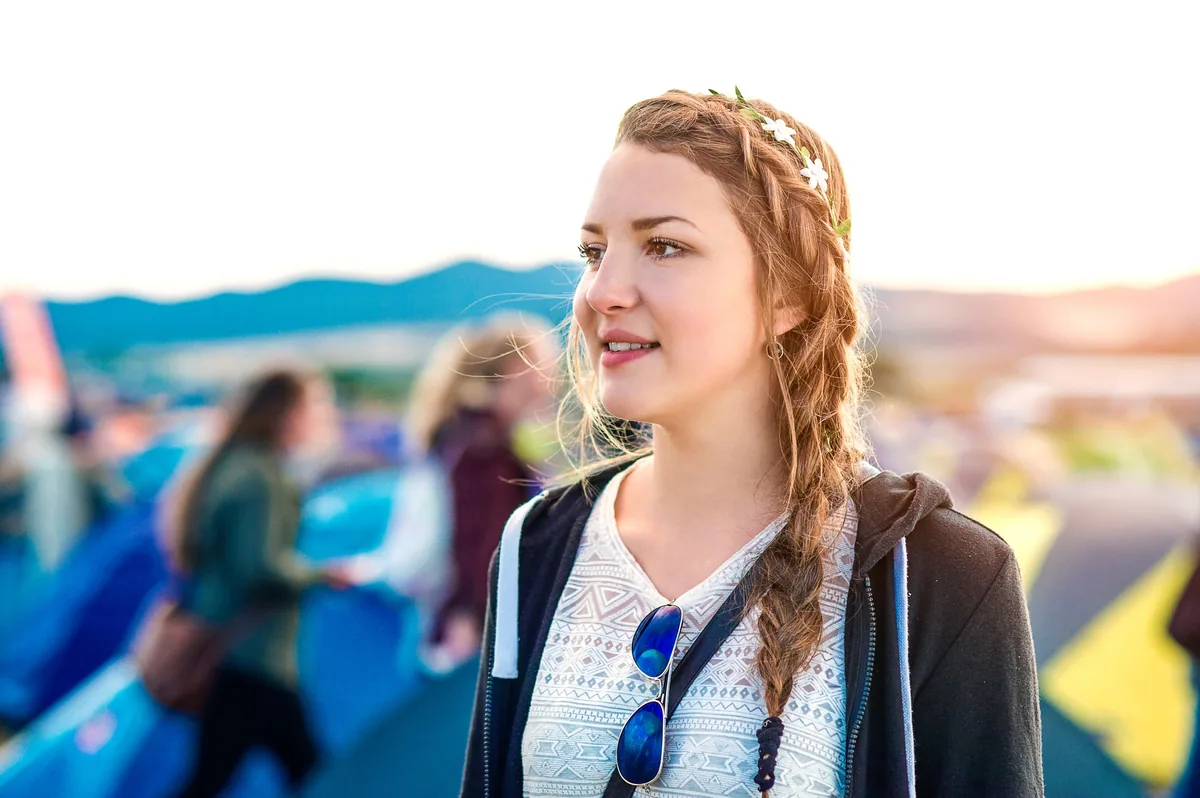
Pros: Full protection for colored ends; shows dimension beautifully; lasts all day and overnight.
Cons: Takes ten minutes and some practice; needs enough length to wrap across the crown.
Who it suits: Long or medium color-treated hair, for festivals, weddings, travel or any long day.
Who should avoid it: Short hair, or anyone who wants a five-minute style — this one is worth the ten minutes.
Maintenance: Braid two low pigtail braids, bring each one up and across the crown, and pin where they cross. Pull the braid edges out gently so the color shows in the weave.
17. The Twisted Low Chignon
A twisted low chignon takes two sections of hair, twists them toward each other and coils them into a low bun — and the twist is what makes it perfect for color-treated hair. The twisting motion pulls the lighter and darker pieces to the surface in turns, so the updo shows the full range of the color instead of hiding it in a flat bun.
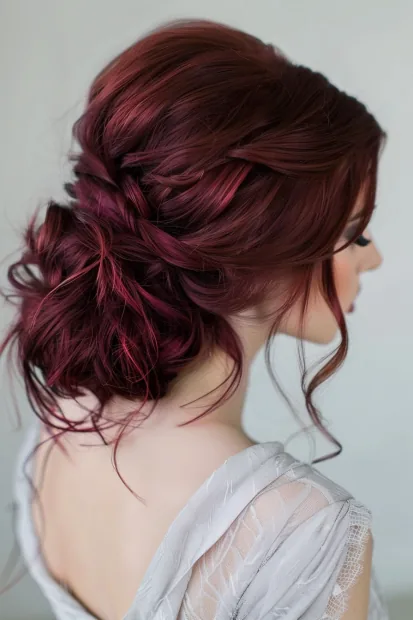
Pros: Shows dimension in an updo; no heat; elegant enough for a wedding or a formal dinner.
Cons: Needs pins that hold well in slippery colored hair; can loosen if the twists are not secured at the center.
Who it suits: Dimensional color — highlights, balayage or lowlights — for formal events and evenings out.
Who should avoid it: Very short hair that cannot twist and coil, or a casual day when a simpler bun would do.
Maintenance: Twist each side section toward the back, coil them together at the nape, and pin in four places. A small sparkle pin at the twist shows off the color beautifully.
18. Beachy Waves for Sun-Kissed Color
Beachy waves are loose, tousled and slightly undone — and they are the natural partner of sun-kissed, lived-in color. The texture breaks up the hair so the lighter pieces look like they came from the sun, and the style actually improves as the color fades a little, because the fade reads as extra sun-lightening.
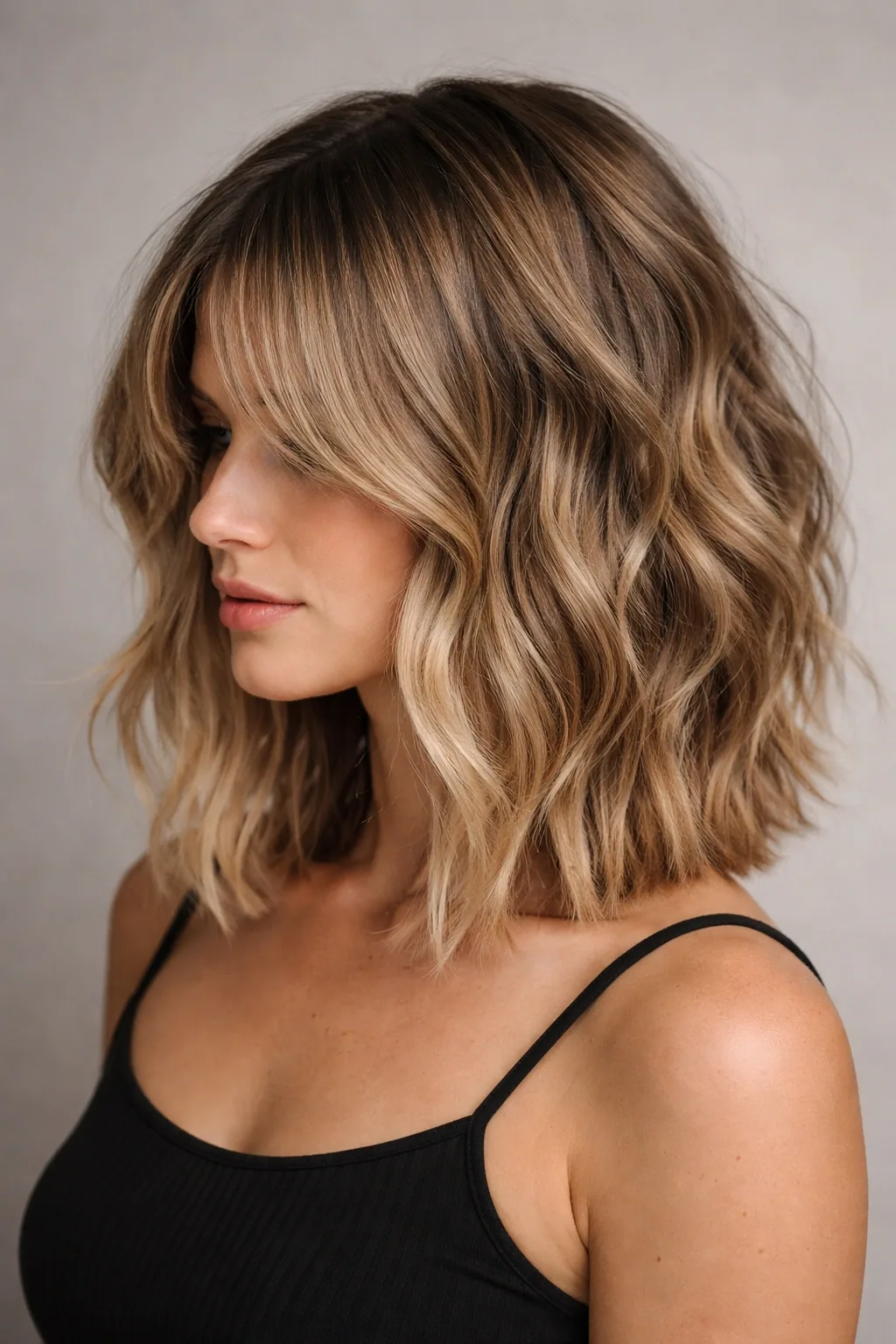
Pros: Makes faded color look intentional and sun-kissed; needs almost no heat; suits holidays and weekends.
Cons: Sun and salt water fade color fast, so this style needs UV protection and a color-safe leave-in.
Who it suits: Sun-kissed blonde, caramel balayage and light brown hair, especially in summer.
Who should avoid it: Very dark, even color that needs a polished look, or hair that is already badly sun-damaged.
Maintenance: Scrunch a color-safe sea-salt spray or mousse into damp hair and let it air-dry, or braid it damp overnight. A UV-protectant spray before going outside protects the color.
19. The Pixie in Bold Color
A pixie cut with bold color is a statement that needs no styling tricks at all — the color is the style. Short, sharp and vivid, a pixie in copper, platinum, cherry or a fashion shade puts the color front and center, and because the hair is short, the color stays vivid longer with less product and less damage.
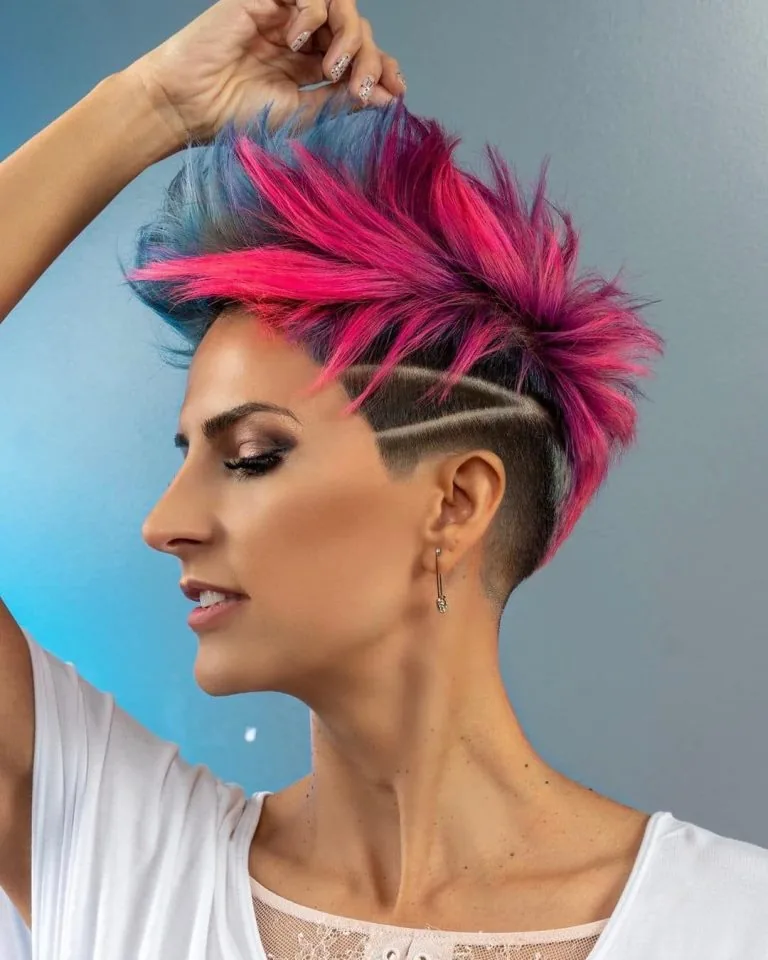
Pros: Bold color looks its best on short hair; fast to wash and style; the color stays vivid with less upkeep.
Cons: Short hair shows roots fast, so bold pixies need frequent touch-ups; very little styling variety.
Who it suits: Confident wearers of bold, vivid or platinum color who love a short, sharp cut.
Who should avoid it: Anyone who wants to hide roots for months, or who changes styles often and needs length to play with.
Maintenance: Style with a pea-sized amount of color-safe pomade for texture, and refresh the color with a color-depositing conditioner between salon visits. A root touch-up every three to four weeks keeps it sharp.
20. Long Layers With a Copper Glow
Long layers in a copper shade glow like autumn light, because each layer catches the sun at a different angle and the copper tones shift from deep auburn in the shadows to bright penny in the light. Layers are what stop long copper hair from looking flat and one-note.
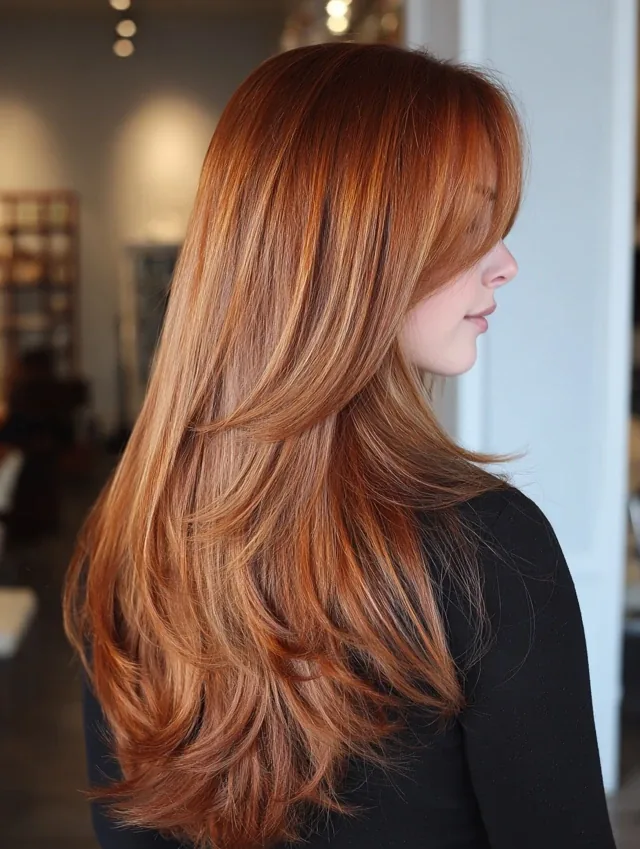
Pros: Makes copper and auburn look luminous; layers add movement without losing length; grows out gracefully.
Cons: Copper fades fast, so layers need cool washes and a color-depositing conditioner to stay bright.
Who it suits: Copper, auburn and ginger hair, long or medium length, with or without highlights.
Who should avoid it: Anyone who wants a blunt, heavy look, or who cannot commit to the extra care copper demands.
Maintenance: Blow-dry the layers with a round brush, turning the ends out on the top layers and under on the bottom ones. A color-depositing copper conditioner once a week keeps the glow alive.
21. The Waterfall Braid for Highlights
A waterfall braid lets strands of hair fall through the braid like water through a lattice, and those falling strands are the highlighted pieces — so the braid shows off the highlights in a way no other style does. It is delicate, romantic and surprisingly easy once you learn the drop-and-pick-up rhythm.
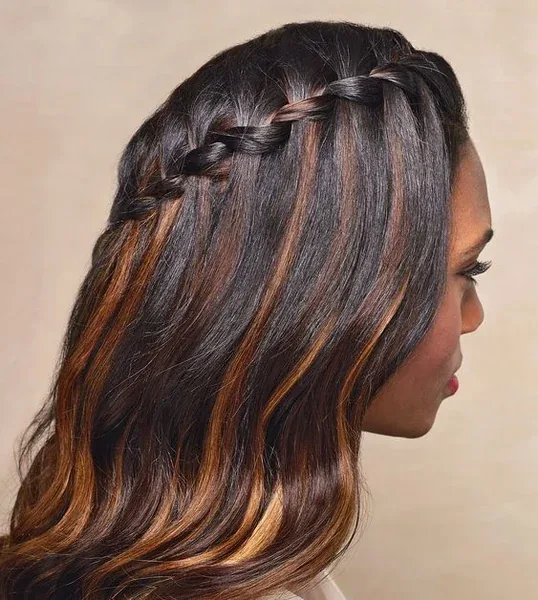
Pros: Shows highlights better than almost any braid; romantic and photogenic; holds without heat.
Cons: Takes practice to learn; the dropped strands can frizz on dry, color-treated hair.
Who it suits: Highlighted or balayaged hair for weddings, parties, photos and special days.
Who should avoid it: Very short hair, or a windy day when loose falling strands will tangle.
Maintenance: Braid across the back of the head, dropping the top strand each time and picking up a new one below it. Smooth a drop of serum over the falling strands so the highlights shine.
22. The Claw Clip Updo That Is Color-Safe
A claw clip updo is the gentlest updo there is for color-treated hair. There is no elastic pulling at the strands, no pins scraping the cuticle, and no heat — just a twist, a fold and a clip. It is also the fastest protective style, done in under a minute, which makes it the everyday hero of this guide.
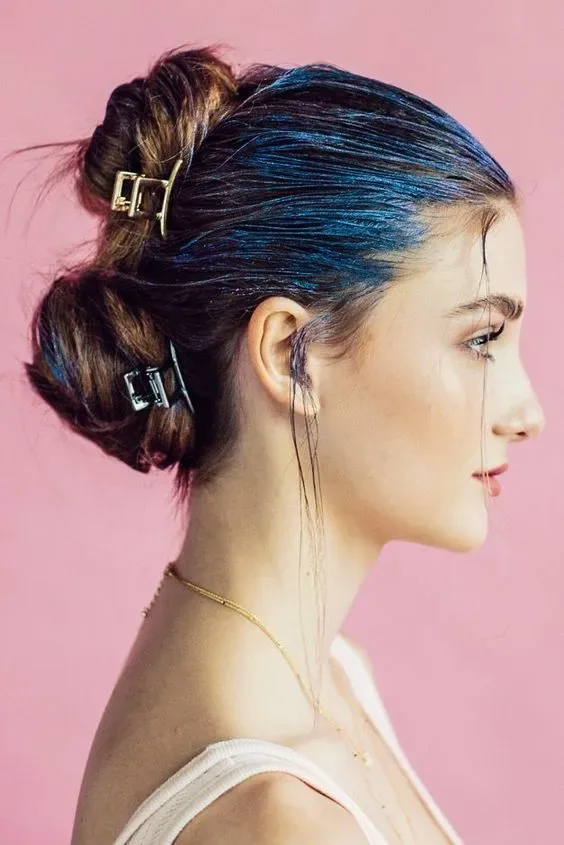
Pros: Zero elastic damage; no heat; done in a minute; protects ends and stretches time between washes.
Cons: Heavy hair can slip out of a small clip; the style is casual, not formal.
Who it suits: Anyone with medium to long color-treated hair who wants a daily protective style.
Who should avoid it: Very short hair that cannot twist up, or a formal event that needs a polished updo.
Maintenance: Twist the hair up at the back, fold it over, and clip it with a large claw clip. Use a smooth, snag-free clip and avoid metal teeth that can catch fragile colored strands.
23. The Bubble Ponytail for Vivid Color
A bubble ponytail divides a ponytail into puffed sections with elastics, and each bubble shows off the color in a round, glossy puff — which makes vivid shades look playful and dimensional instead of flat. It is a fun, young style that turns a simple ponytail into a color showcase.
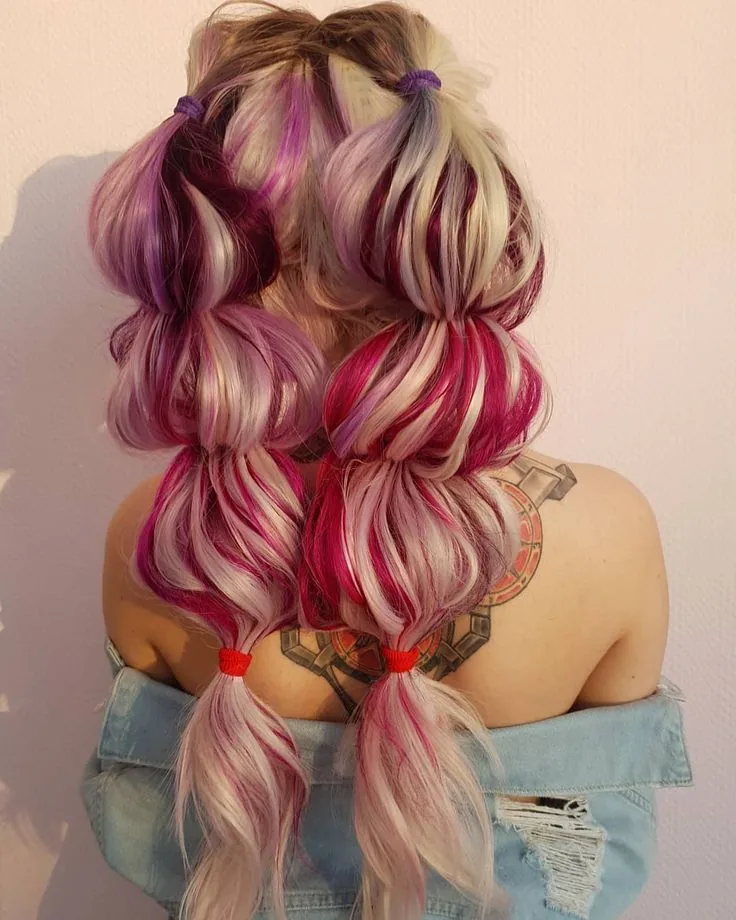
Pros: Makes vivid color look dimensional and fun; protects the ends; holds all day.
Cons: Needs several elastics, which can dent colored hair if they are tight; takes a few minutes to section evenly.
Who it suits: Vivid colors — pink, purple, blue, cherry — and anyone who wants a playful, photo-ready style.
Who should avoid it: Anyone with very fine hair that will not hold a bubble, or a formal setting that needs a classic style.
Maintenance: Secure a high or low ponytail, add elastics every two inches, and gently pull each section out into a bubble. Use soft, snag-free elastics and remove them carefully.
24. The Soft Updo That Blends Roots
A soft updo is the grown-out roots answer for a formal day. The hair is swept up loosely, with volume at the crown and soft pieces around the face, so the root line is broken up by texture and shadow instead of sitting in a straight, obvious line. Nobody sees roots — they see a soft, romantic updo.
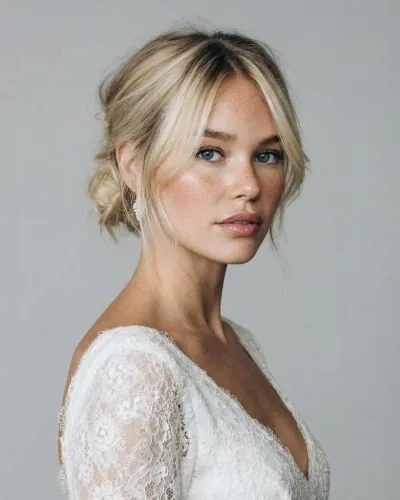
Pros: Hides roots beautifully; looks formal without being severe; works on second- or third-day hair.
Cons: Needs pins and a little practice to keep it soft rather than messy; heavy hair can pull loose.
Who it suits: Anyone between color appointments who has a wedding, a party or a formal dinner to attend.
Who should avoid it: Very short hair that cannot be swept up, or anyone who needs a style that survives a workout.
Maintenance: Tease the crown, sweep the hair up loosely, pin it in place and pull out face-framing strands. A dusting of root powder at the part line finishes the camouflage.
25. The Halo Braid for Dimensional Color
A halo braid circles the head like a crown, and because it gathers hair from all around, it mixes every tone of a dimensional color job into one continuous braid. It is elegant, it lasts all day, and it keeps every colored end protected — the rare style that is both a showpiece and a protective style at once.
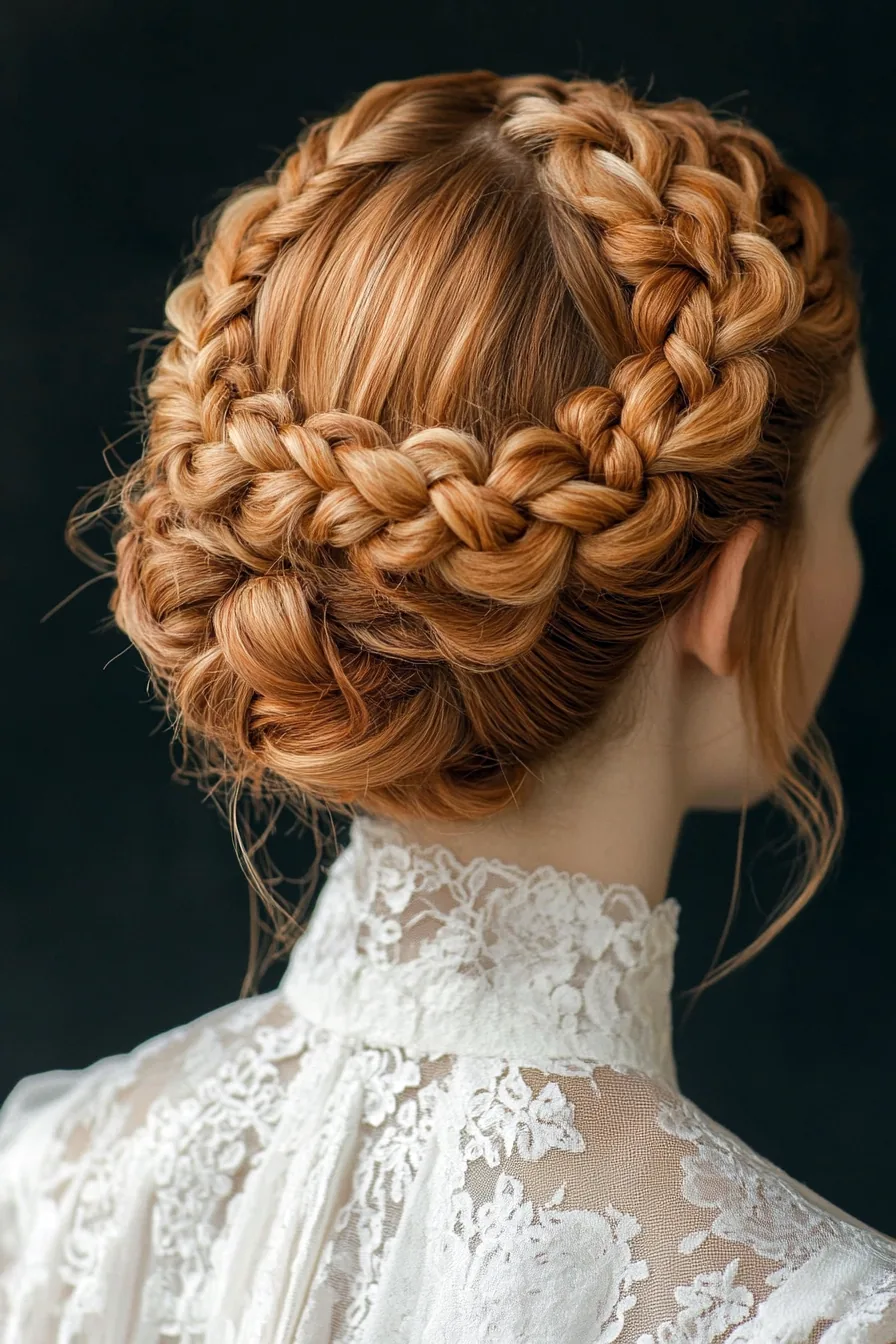
Pros: Shows dimension in a full circle; protects all the ends; lasts from morning to night.
Cons: Needs length and a little braiding skill; can feel tight on a sensitive scalp if braided too firmly.
Who it suits: Long or medium hair with highlights, balayage or lowlights, for weddings, festivals and long days.
Who should avoid it: Short hair, or anyone who dislikes the feeling of a braid across the forehead.
Maintenance: Braid a Dutch braid around the head from one temple to the other, pin the tail underneath, and gently pull the braid edges out for fullness. Finish with a light color-safe spray.
26. The Wavy Bob for Ash Blonde
A wavy bob in ash blonde is cool, modern and quietly expensive-looking, because the waves soften the cool tone and stop it from looking flat or grey. The bob length keeps the color concentrated and glossy, and the waves show off the ash and silver tones as they catch the light.
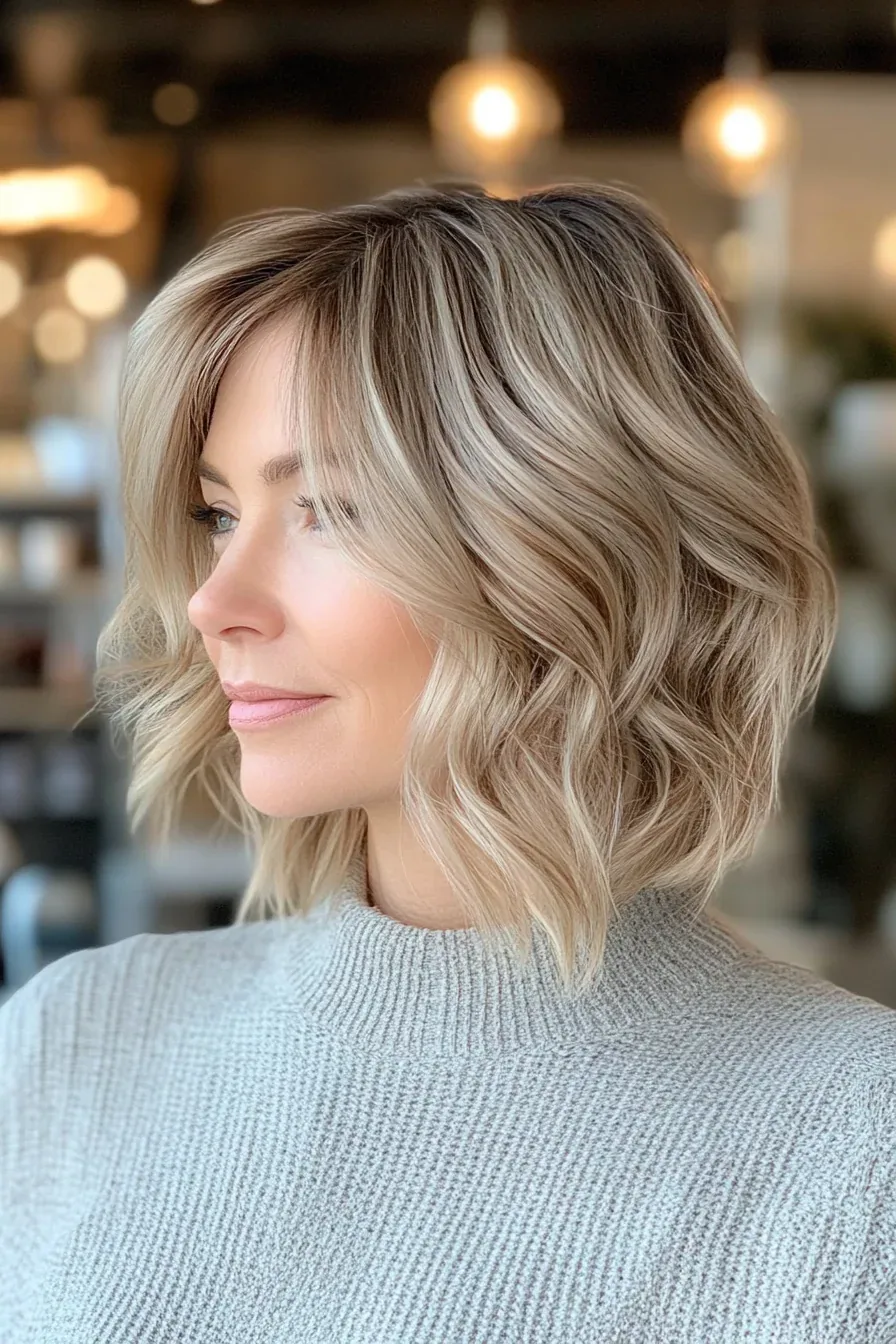
Pros: Makes ash blonde look soft and dimensional; the bob length keeps color looking fresh; easy to wave with a flat iron.
Cons: Ash blonde needs purple shampoo and toner to stay cool; waves drop out in humidity.
Who it suits: Ash blonde, silver blonde or cool-toned hair at bob length.
Who should avoid it: Warm-toned hair that fights ash, or anyone who wants a wash-and-go style with no tools.
Maintenance: Wave random sections with a flat iron, bending alternate pieces in opposite directions, and brush through gently. Purple shampoo once a week keeps the tone cool.
27. The Low Puff for Natural Color
A low puff gathers curly, color-treated hair into a soft cloud at the nape — and it is one of the gentlest styles for dyed curls. There is no heat, no brushing out the curl pattern, and the puff shows off the color in a round, full shape that makes even a subtle dye job look rich.
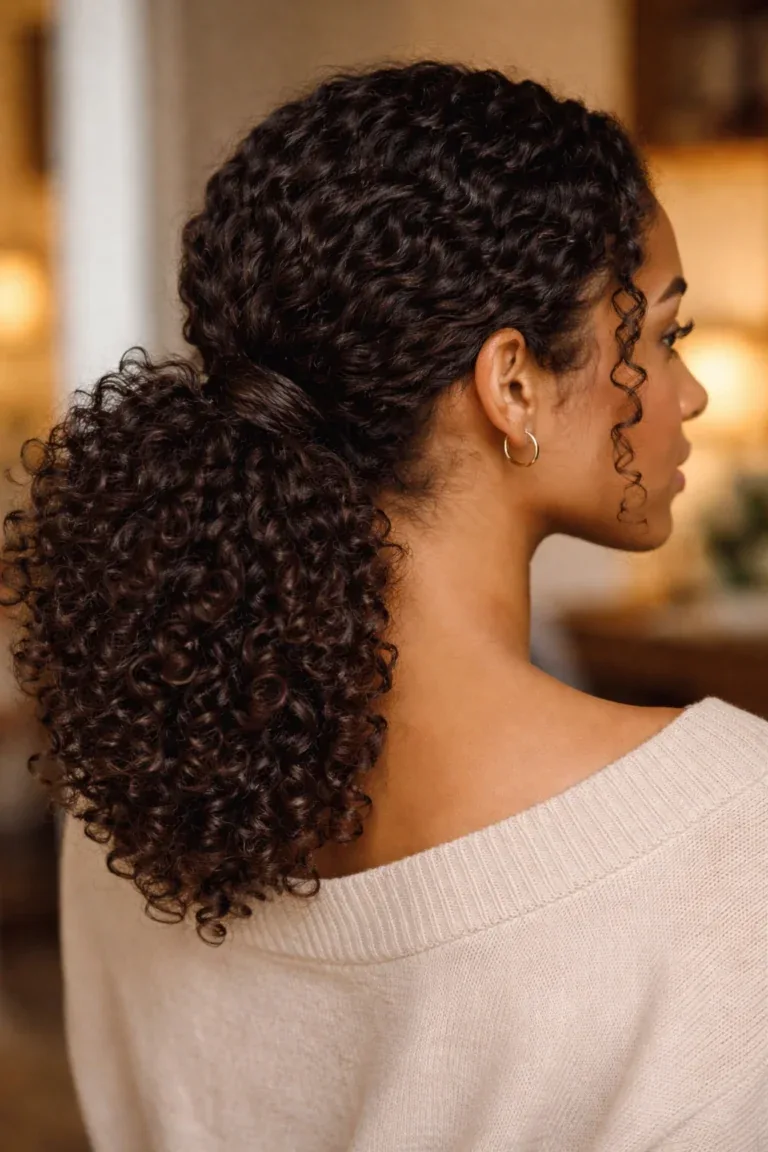
Pros: Protects dyed curls with zero heat; shows off color in a full, round shape; quick and comfortable.
Cons: Needs a soft, wide band to avoid dents; very short curls may not gather into a puff yet.
Who it suits: Curly and coily color-treated hair, especially with a gloss, a rinse or a subtle color change.
Who should avoid it: Straight hair, or anyone who wants the curls stretched out rather than gathered up.
Maintenance: Gather the curls low with a silk scrunchie or a wide satin band, leaving the edges soft. A little color-safe curl cream on the ends keeps the color glossy.
28. The Rope Braid for Glossy Ends
A rope braid twists two sections around each other like a rope, and the twisting motion makes the hair look glossy and rope-like — which is exactly what shows off a fresh gloss or a rich, even color. It is simpler than a French braid, faster to learn, and it protects the colored ends completely.
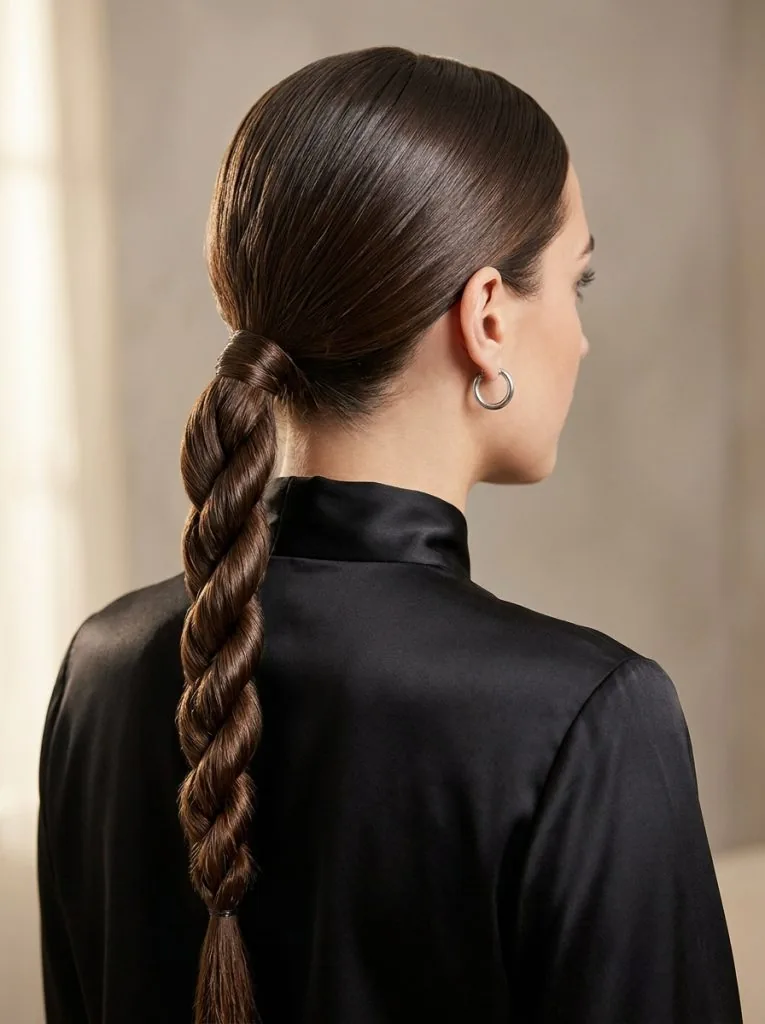
Pros: Shows off gloss and shine; simpler than a three-strand braid; protects the ends.
Cons: Can unravel at the bottom if the elastic is loose; very layered hair can poke out of the twist.
Who it suits: Glossy, even color — brunette, black, copper or a fresh gloss treatment — on medium to long hair.
Who should avoid it: Very short or heavily layered hair that will not stay in a two-strand twist.
Maintenance: Divide the hair in two, twist each section the same way, then twist them around each other the opposite way and secure. Pull the twist edges out slightly for fullness.
29. The Side Braid With Face-Framing Pieces
A side braid swept over one shoulder puts the color where people can see it — draped across the collarbone, catching the light with every turn of the head. The face-framing pieces left loose at the front show off the lightest highlights, while the braid itself weaves the tones together.
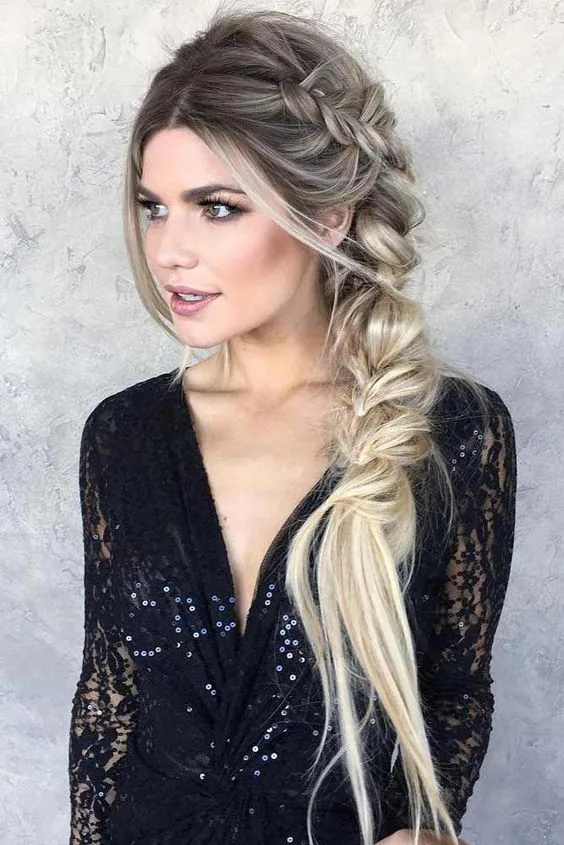
Pros: Puts color on display over one shoulder; shows off face-framing highlights; no heat needed.
Cons: Can look lopsided if the braid is not placed well; the braid can loosen on slippery, freshly washed hair.
Who it suits: Highlighted or balayaged hair, especially with face-framing pieces, for everyday wear or a casual evening.
Who should avoid it: Very short hair, or anyone who needs a symmetrical, formal style.
Maintenance: Part the hair on the opposite side, braid loosely over the shoulder, and pull out two face-framing strands. A ribbon tied at the end adds a pretty, color-safe finish.
30. Voluminous Curls for Dimensional Color
Voluminous curls turn dimensional color into a show: every curl is a ring of light and shadow, and the lighter tones sit on the outside of each curl while the deeper tones hide inside, so the color looks three-dimensional from every angle. It is the most dramatic way to wear highlights.
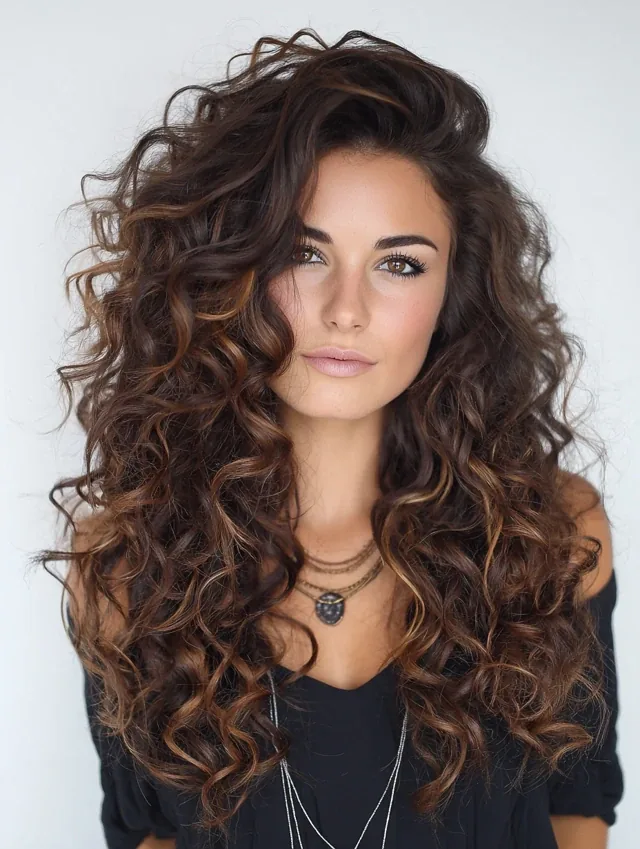
Pros: Makes dimension look dramatic and three-dimensional; adds volume that hides thin, faded ends.
Cons: Needs heat or rollers and setting time; curls can drop in humidity and need a color-safe spray to hold.
Who it suits: Highlighted, balayaged or multi-tonal hair that wants maximum impact for a party or a photo.
Who should avoid it: Anyone avoiding heat, or with very fine hair that will not hold a curl.
Maintenance: Set curls with a medium wand at a moderate temperature, pin each curl to cool, then release and shake out gently. A light color-safe spray holds the volume without stiffness.
31. The Sleek Low Ponytail for Shine
A sleek low ponytail is the minimalist way to show off color-treated shine. The hair is smoothed back into one clean line at the nape, so the color reads as one glossy, uninterrupted surface — and a gloss treatment or a shine serum makes it look like liquid.
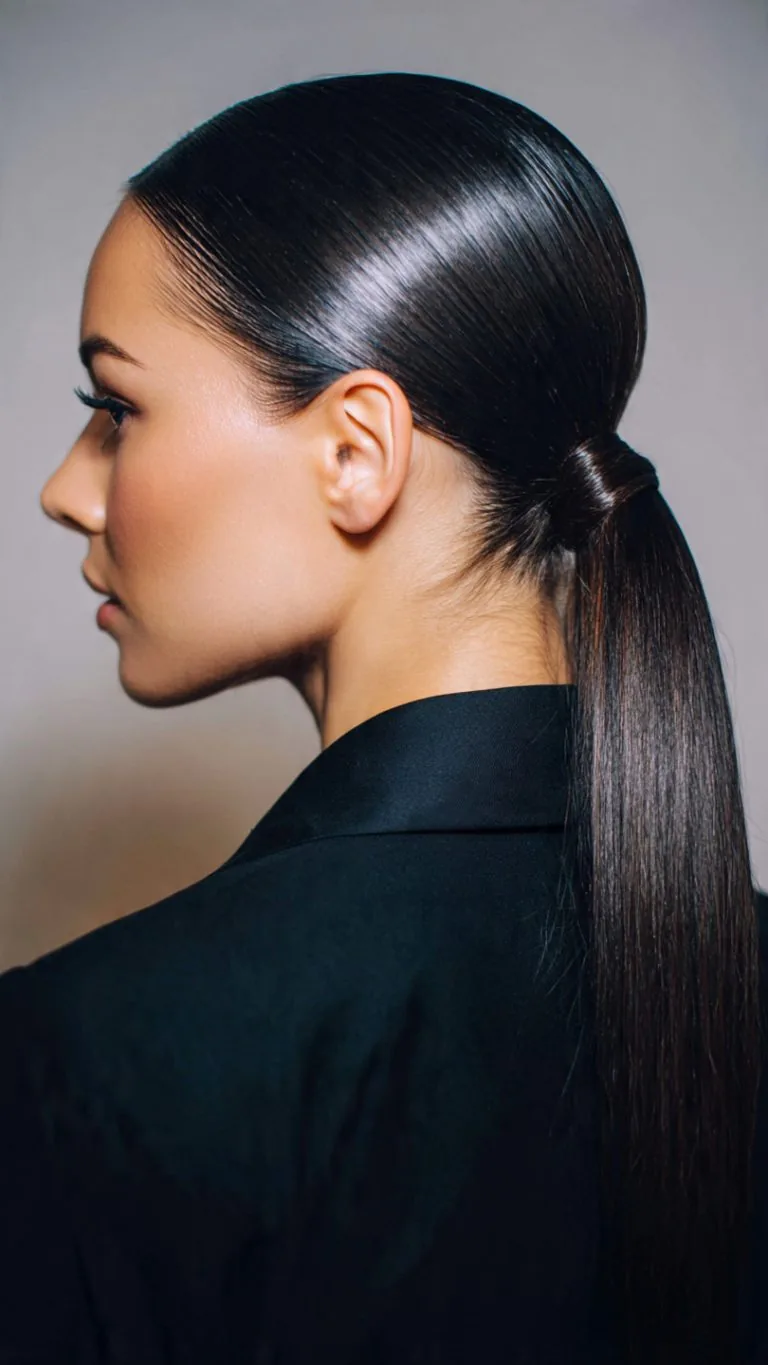
Pros: Shows off shine and even color; polished and professional; protects the ends in one smooth bundle.
Cons: Shows the root line and any uneven fading clearly; needs heat or smoothing to look truly sleek.
Who it suits: Even, rich color with a fresh gloss, for work, formal events or a polished everyday look.
Who should avoid it: Faded or patchy color, or anyone who wants to hide roots today.
Maintenance: Smooth the hair back with a brush and a drop of serum, secure low at the nape with a silk scrunchie, and wrap a strand around the base. A cool shot from the dryer sets the shine.
32. The Half-Up Bun for Day-Three Hair
A half-up bun is the day-three lifesaver for color-treated hair. The top half is twisted into a small bun that hides oily roots and adds height, while the bottom half hangs loose and shows off the color — and because third-day hair has the most grip, this bun holds better than it ever does on wash day.
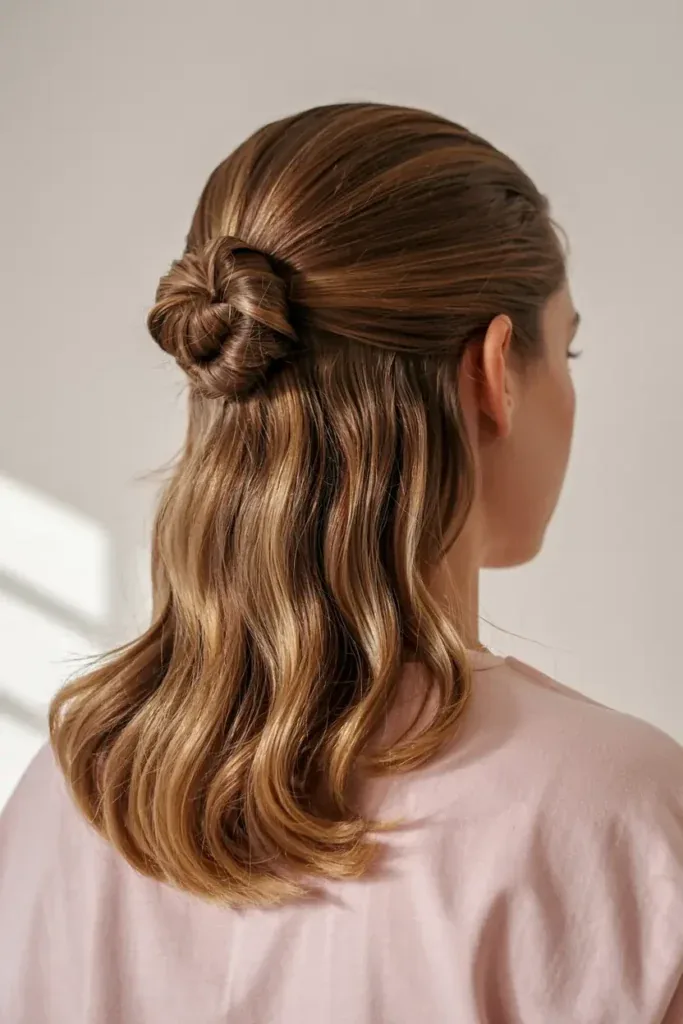
Pros: Hides oily roots on day three; shows off the color in the loose lengths; takes three minutes, no heat.
Cons: Can look top-heavy on very thick hair; the bun can slip if the hair is too clean.
Who it suits: Anyone stretching washes to protect color, with medium to long hair.
Who should avoid it: Very short hair that cannot gather a top bun, or a formal event that needs a polished updo.
Maintenance: Gather the top half, twist it into a small bun at the crown, pin it, and leave the rest down. Dry shampoo at the roots before gathering adds grip and freshness.
33. The Fishtail Braid With a Color Ribbon
A fishtail braid weaves fine pieces into a herringbone pattern, and the fine weave shows off every tone in a dimensional color job — it is like looking at the color through a kaleidoscope. Tying a ribbon in a tone that matches or contrasts the color at the end turns the braid into a finished, photo-ready style.
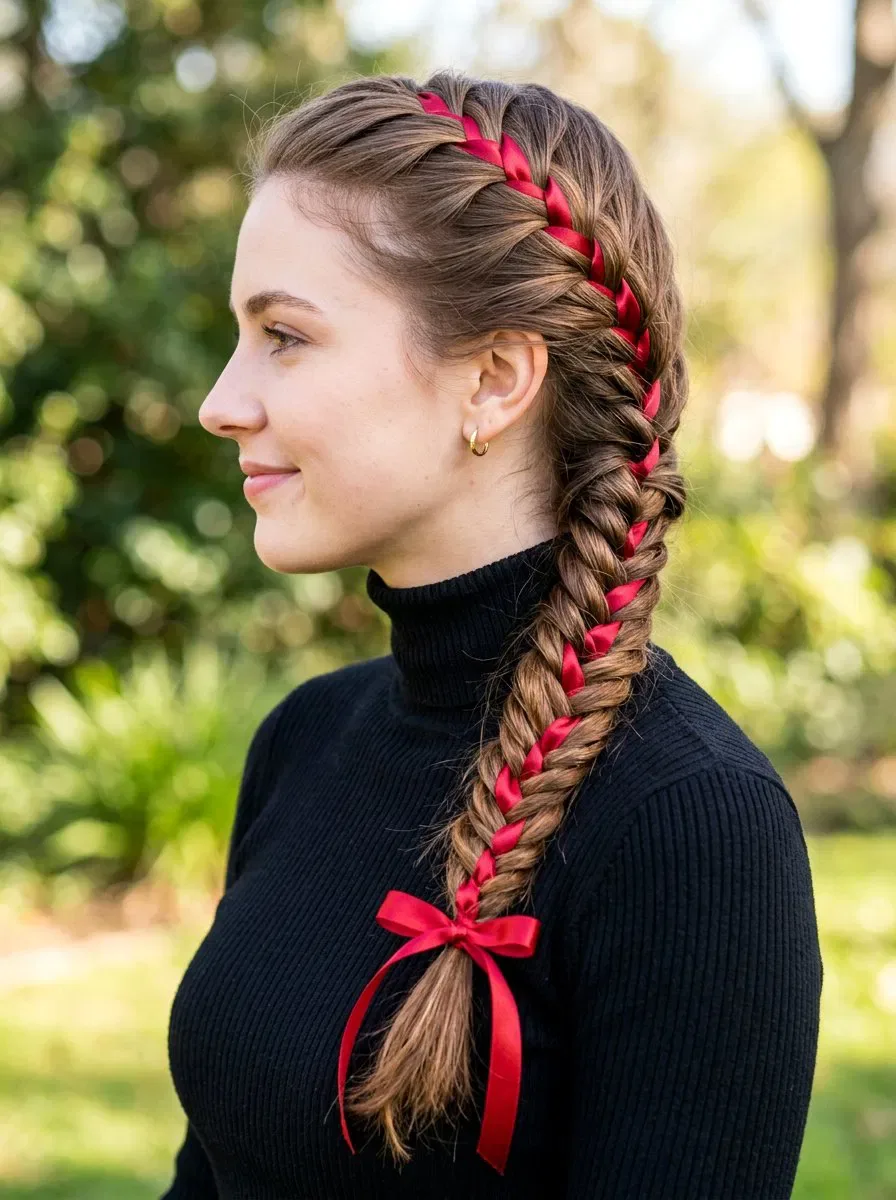
Pros: Shows dimension in a fine, detailed weave; the ribbon adds a color accent; protects the ends.
Cons: Takes longer than a regular braid and needs patience; fine pieces can frizz on dry colored hair.
Who it suits: Dimensional color — highlights, balayage, lowlights — for parties, photos and special days.
Who should avoid it: Anyone in a hurry, or with very short hair that cannot fishtail.
Maintenance: Divide the hair in two, pass small pieces from the outside of each side to the inside of the other, and keep the pieces fine for the prettiest weave. Tie a ribbon at the end and pull the braid edges out gently.
34. The Short Shag With a Color Pop
A short shag is choppy, layered and full of movement — and that movement is what makes a pop of color work. Whether the pop is a vivid panel, a bright fringe or a bold money piece, the shag’s layers break it up so the color looks edgy and deliberate instead of a single flat block.
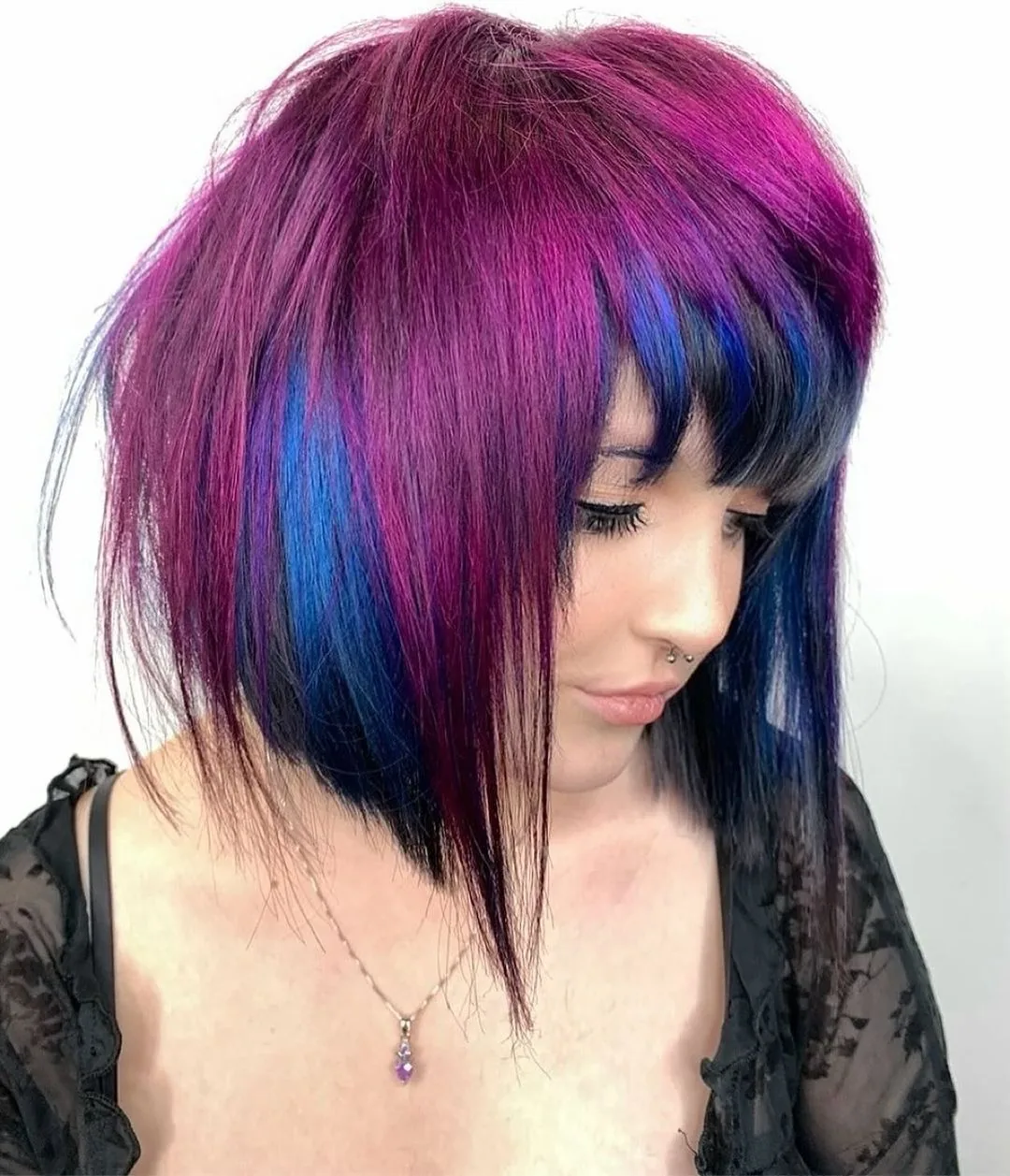
Pros: Makes a bold color pop look edgy and modern; layers hide grow-out; fast to style.
Cons: Needs regular trims to keep the shape; a vivid pop fades fast and needs color-depositing care.
Who it suits: Short hair with a vivid panel, a bright fringe or a bold money piece.
Who should avoid it: Anyone who wants a classic, polished look, or who cannot commit to vivid-color upkeep.
Maintenance: Scrunch in a color-safe texturizing cream and let it air-dry, or rough-dry with your fingers for extra texture. A color-depositing conditioner keeps the pop bright.
35. The Elegant Chignon for Evening Color
An elegant chignon is the evening answer for color-treated hair. The hair is coiled low and smooth, the surface catches the light like polished stone, and the updo shows off the richest, deepest tones of the color — especially on brunettes, coppers and deep reds under evening light.
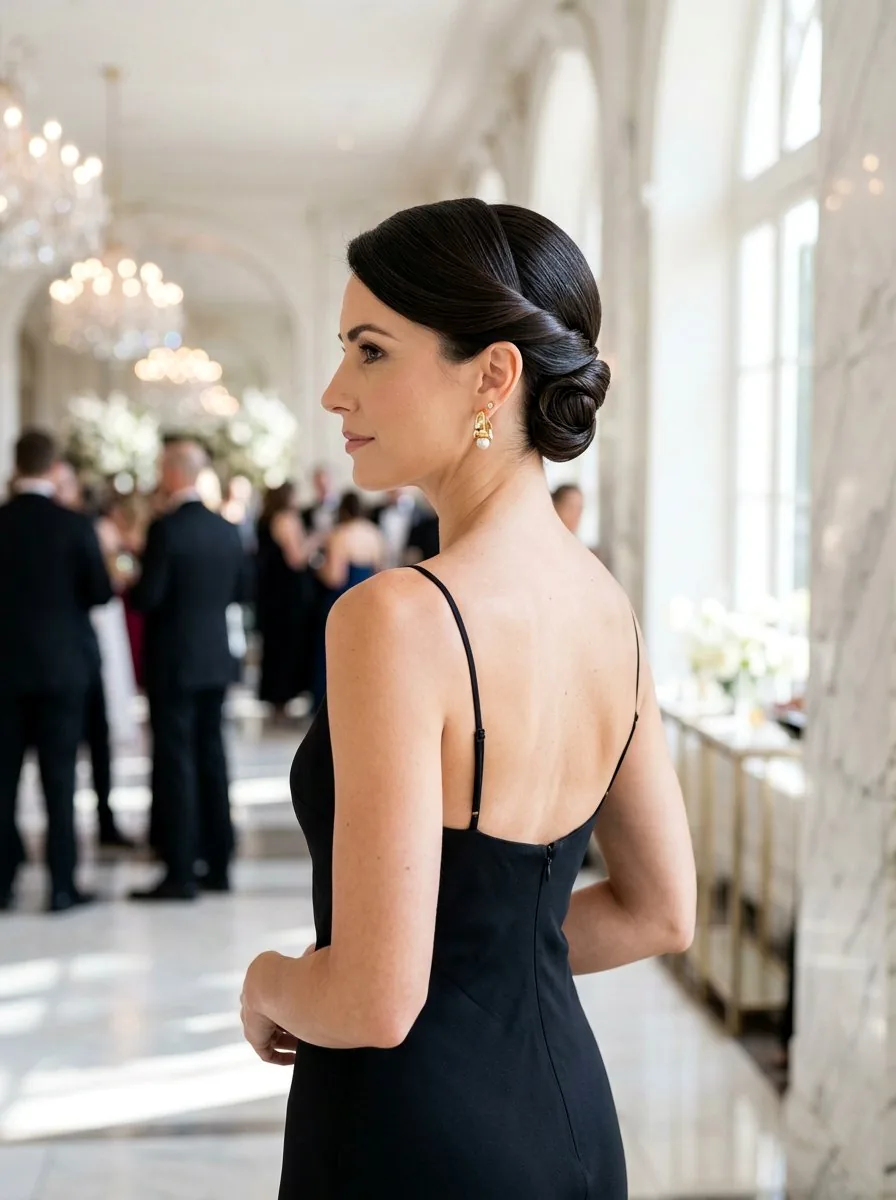
Pros: Shows off rich, deep color elegantly; no heat needed once pinned; holds all evening.
Cons: Needs pins and a steady hand; can look severe if pulled too tight or too smooth.
Who it suits: Rich, deep color — brunette, copper, burgundy or deep red — for weddings, galas and formal dinners.
Who should avoid it: Very short hair, or a casual day when a simpler bun would be more comfortable.
Maintenance: Smooth the hair back, coil it low at the nape, pin in four places, and add one elegant pin or a small flower. A drop of serum over the surface gives it an evening glow.
36. Loose Waves With a Root Shadow
Loose waves with a root shadow are the lowest-maintenance way to wear color-treated hair, because the shadow at the roots is part of the design. The darker roots blend into the lighter lengths through soft waves, so grow-out looks intentional for weeks — and the waves show off the transition instead of hiding it.
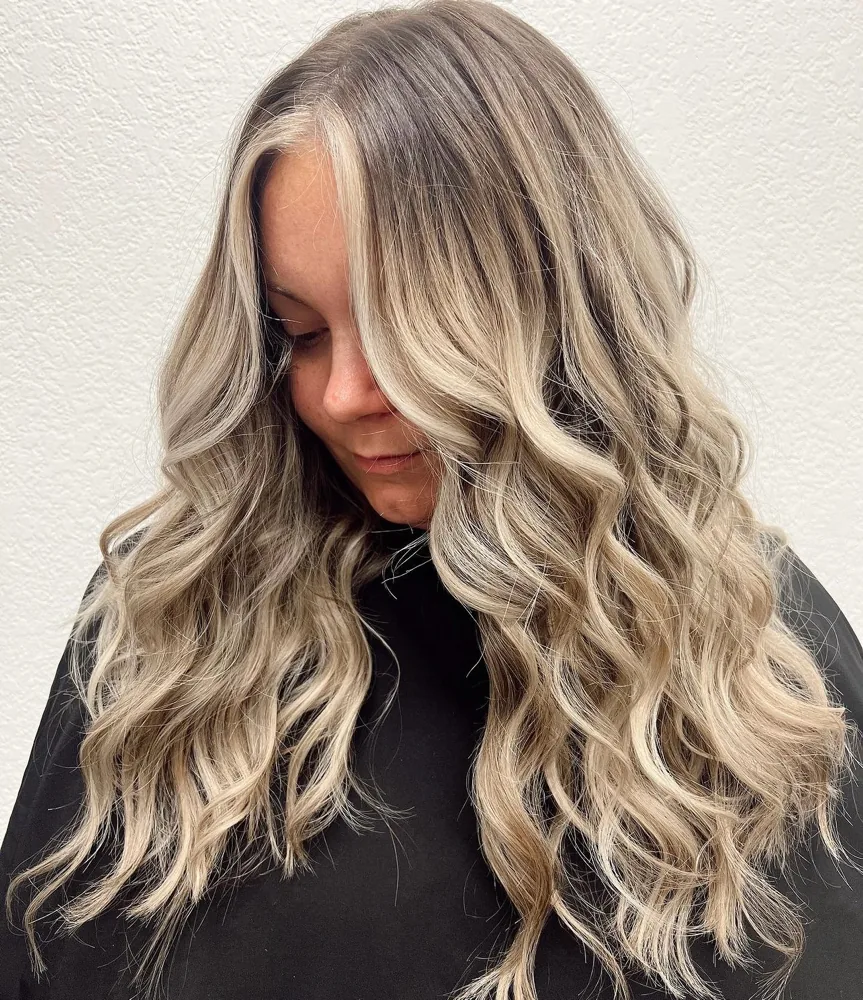
Pros: Grow-out looks intentional; waves show off the color blend; stretches appointments by weeks.
Cons: Needs a colorist who places the shadow well; waves need a little setting time on straight hair.
Who it suits: Anyone with a root shadow, shadow root or lived-in color who wants to stretch time between appointments.
Who should avoid it: Anyone with a sharp, high-contrast root line that has not been blended yet.
Maintenance: Wave the lengths with a large wand, leaving the roots straight, and brush through gently so the waves blend into the shadow. A zigzag part makes the grow-out even softer.
37. The Braided Low Bun, Protective and Polished
A braided low bun is the final protective style in this guide, and it is the one to wear when your color needs a full rest. The hair is braided first, then coiled into a low bun, so every colored end is tucked away twice over — protected from sun, friction and styling — and the braided texture shows the dimension of the color even in an updo.
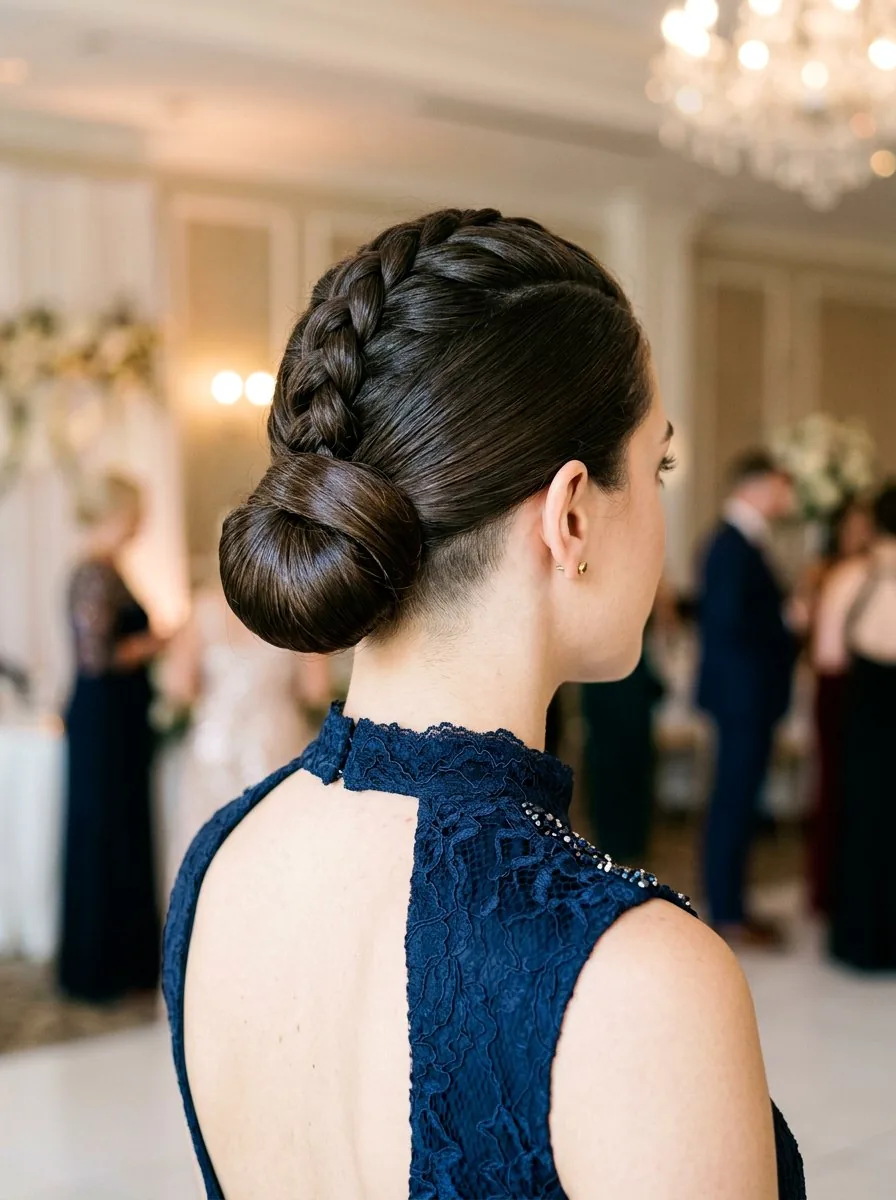
Pros: Double protection for colored ends; shows dimension in an updo; holds all day with no heat.
Cons: Takes a few minutes longer than a plain bun; needs enough length to braid and coil.
Who it suits: Anyone giving color-treated hair a rest — after a fresh color, before a salon visit, or on a long travel day.
Who should avoid it: Very short hair that cannot braid, or anyone who wants their hair down to show off the color.
Maintenance: Braid the hair low, coil the braid into a bun at the nape, and pin in four places. Pull the braid edges out slightly before coiling so the color shows through the bun.
How often should I wash color-treated hair?
Wash color-treated hair two or three times a week at most, with cool or lukewarm water and a sulfate-free, color-safe shampoo. Every wash takes a little color with it, so fewer washes — with dry shampoo and protective styles like braids and buns on the days between — is the single easiest way to keep your color vivid for longer.
What are the best hairstyles for color-treated hair?
The best hairstyles for color-treated hair are soft, low-heat styles that show off dimension and protect the ends: loose waves, low buns, braids, half-up twists and claw clip updos. They let balayage, highlights and rich color catch the light, while keeping freshly colored ends tucked away from sun, friction and over-styling.
How do I stop my hair color from fading so fast?
Wash less often with cool water, use sulfate-free color-safe products, always apply a heat protectant before hot tools, keep the temperature at or below 350°F, and protect your hair from the sun with a UV spray or a hat. A gloss treatment every few weeks seals the cuticle and brings back shine and tone.
Can I use heat tools on color-treated hair?
Yes, but sparingly and with protection. Always use a color-safe heat protectant, keep the temperature moderate, work in single passes, and let each section cool before touching it. Save hot tools for special days and use heatless styles — overnight braids, rollers, air-drying — for everyday wear.
What hairstyles show off balayage and highlights best?
Loose waves, waterfall braids, fishtail braids, half-up twists and braided crowns show off balayage and highlights best, because they let the light and dark tones move and catch the light. Flat, tight styles hide dimension, while styles with movement and loose, face-framing pieces make the color look deeper and more expensive.
How do I hide roots while my color grows out?
Break up the root line with a zigzag or deep side part, add texture with waves or curls, and wear updos like a messy bun, a braided crown or a soft chignon that cover the roots. A little root powder or color spray at the part line buys another week or two, and a root melt at the salon blends the line completely.
Is a gloss treatment good for color-treated hair?
Yes — a gloss treatment is one of the best things you can do for color-treated hair. A clear gloss smooths the cuticle, seals in color and restores shine, while a tinted gloss refreshes the tone between full color appointments. You can get one at the salon or use an at-home gloss every few weeks.
What is the best hairstyle for freshly dyed hair?
The best hairstyle for freshly dyed hair is a low, loose bun, a soft braid or a claw clip updo — styles with no heat, no tight tension and no friction on the ends. Wait at least 48 hours before using hot tools on fresh color, and keep the hair out of the sun and away from chlorine for the first few days.
Does braiding color-treated hair help it last longer?
Yes. Braids protect color-treated hair by tucking the ends away from sun, wind and friction, and they need no heat and no washing to look good. A loose braid worn during the day or slept in overnight is one of the simplest ways to stretch your color between washes and salon visits.
When should I go back to the salon for my color?
Go back when gloss treatments no longer revive the shine, the tone looks flat or uneven, the ends are noticeably brassier than the roots, or the grow-out line is wider than an inch and no style hides it. Reds and vivid colors usually need a refresh every four to six weeks, blondes need a toner every six to eight weeks, and balayage can often stretch to ten or twelve weeks.
Conclusion
Color-treated hair asks a little more of you — fewer washes, cooler water, gentler styles, less heat — and it pays you back every single time. The right style does not just look good on dyed hair; it protects the color, shows off the dimension, hides the roots while they grow, and makes a dye job look like it cost twice what it did. That is the whole idea behind these hairstyles for color-treated hair: styles that work with your color, not against it.
Start with the easy wins. Wash two or three times a week, not every day. Reach for a braid, a low bun or a claw clip on the days between washes, and save the hot tools for the days that truly deserve them. Add a gloss treatment every few weeks, keep a color-safe heat protectant by the mirror, and let loose waves and soft braids do the work of showing off your balayage, your highlights or your rich, even shade.
Your color is an investment, and these 37 styles are how you protect it — one gentle, glossy, color-smart style at a time. Pick your favorite for today, try a protective braid tomorrow, and book the salon when the gloss stops working and the roots win. Your hair will thank you, and your color will show it.