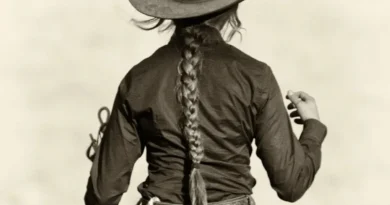
Fast Feet, Faster Hair: Hairstyles for a Squash Game That Stay Put Through Every Rally
Squash is fast, sweaty and played in a small indoor court where there is nowhere for loose hair to hide. One rally can mean a sprint to the front wall, a lunge, a twist and a sprint back again — and if a strand falls across your eyes mid-rally, you lose the point before you even see the ball. The best hairstyles for a squash game are built for exactly that: they hold through sweat, sit flat under a headband or visor, and keep every strand away from your face from the first serve to the last game.
This guide starts with the court basics — sweat, headbands, short hair and long hair — then works through 33 styles that actually survive a squash match. Some are five-minute braids, some are smarter ponytails, and a few are cuts that make every game easier. Pick the one that fits your hair length, your headband and the way you play.
Why Squash Hair Is Different From Gym Hair
What it is: Squash is not a steady jog on a treadmill. It is short, explosive bursts in a warm indoor court: sprint, stop, lunge, twist, sprint again. Your hair gets shaken, sweated on and whipped around in every direction, all within a few seconds.
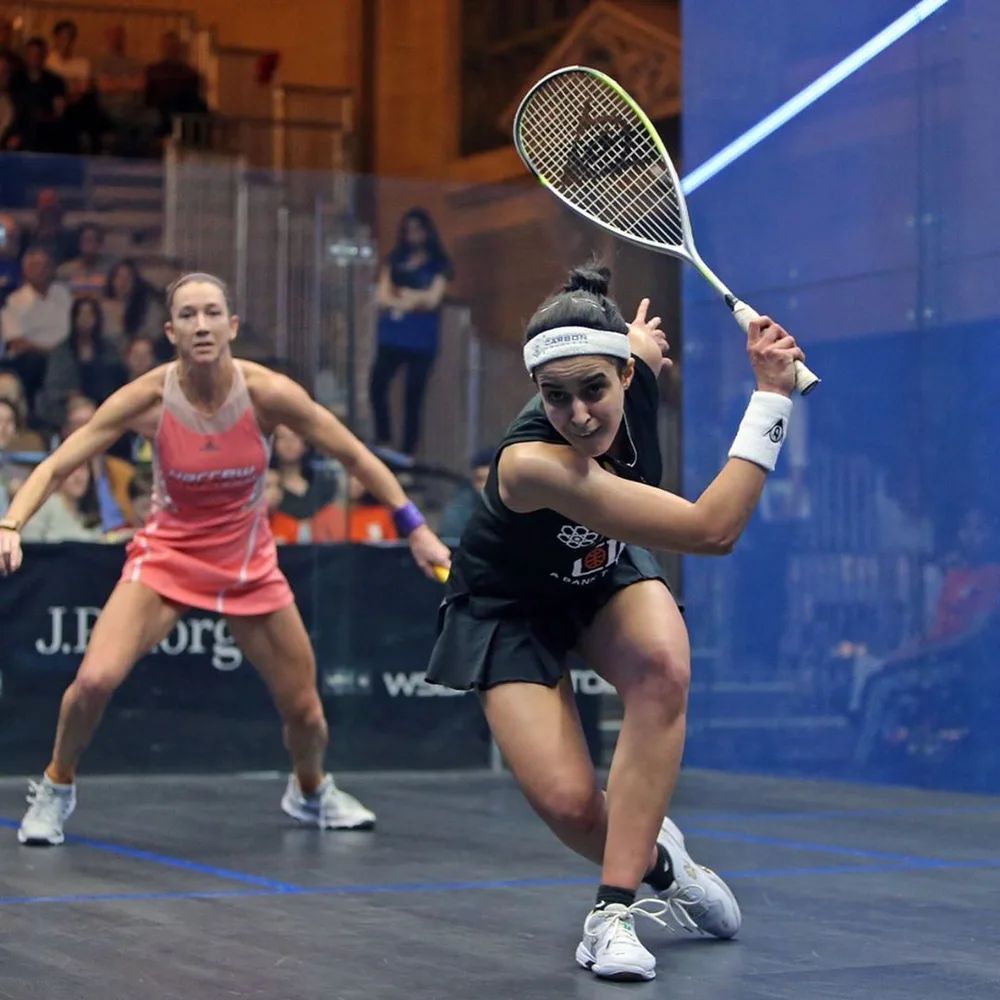
Pros and cons: The upside is that a squash court is sheltered, so there is no wind to fight — a contained style stays contained. The downside is the heat and the stop-start movement, which loosen a weak style faster than a steady run ever would.
Common mistakes: The classic error is wearing your usual gym ponytail and discovering halfway through the first game that it has slipped to one side and the loose layers are in your eyes. Another is a style that is fine standing still but falls apart the first time you lunge for a drop shot.
Maintenance and quick verdict: Do a rally test before your match: ten quick side-to-side sprints, a few lunges, and a hard shake of your head. Verdict: if it moves in the warm-up, it will fail in the match — fix it before the first serve.
Sweat Happens: Keeping Hair Dry-ish and Out of Your Eyes
What it is: An indoor squash court warms up fast, and a hard match means serious sweat. Sweat wets the roots, loosens ties and sends the hairline strands straight down into your eyes at the worst possible moment.
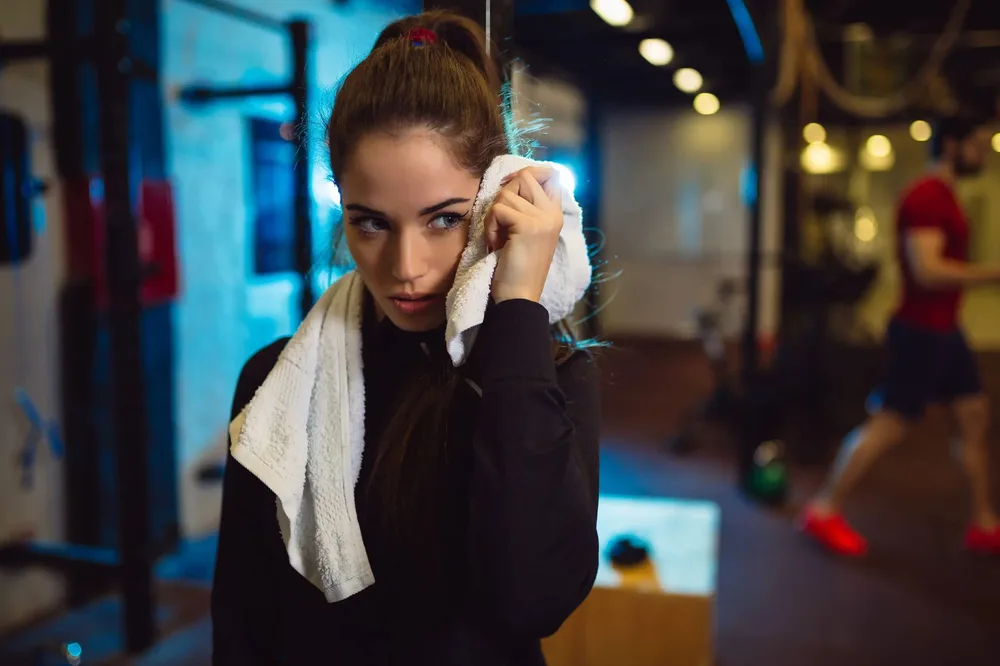
Pros and cons: Sweat is unavoidable, but it is manageable: a style that pins the hairline back and a headband that catches the drip will carry you through a match. The downside is that heavy product plus sweat turns greasy quickly, so light hold beats heavy hold on court.
Common mistakes: Loading the hair with gel or wax before a match is the usual error — it slides once you sweat and can drip near your eyes. Skipping the headband is the second: even a thin one catches the sweat that would otherwise run down your forehead.
Maintenance and quick verdict: Keep a small towel courtside and a spare tie in your bag, and re-tie during the break between games if the base has loosened. Verdict: pin the hairline, wear the headband, and keep the product light.
Headbands and Visors: Making Them Work With Your Style
What it is: A headband is the squash player’s best friend: it holds back the fringe, catches sweat and keeps the hairline tidy. A visor does the same job with a little shade from the court lights. Either way, your hairstyle has to work with it, not against it.
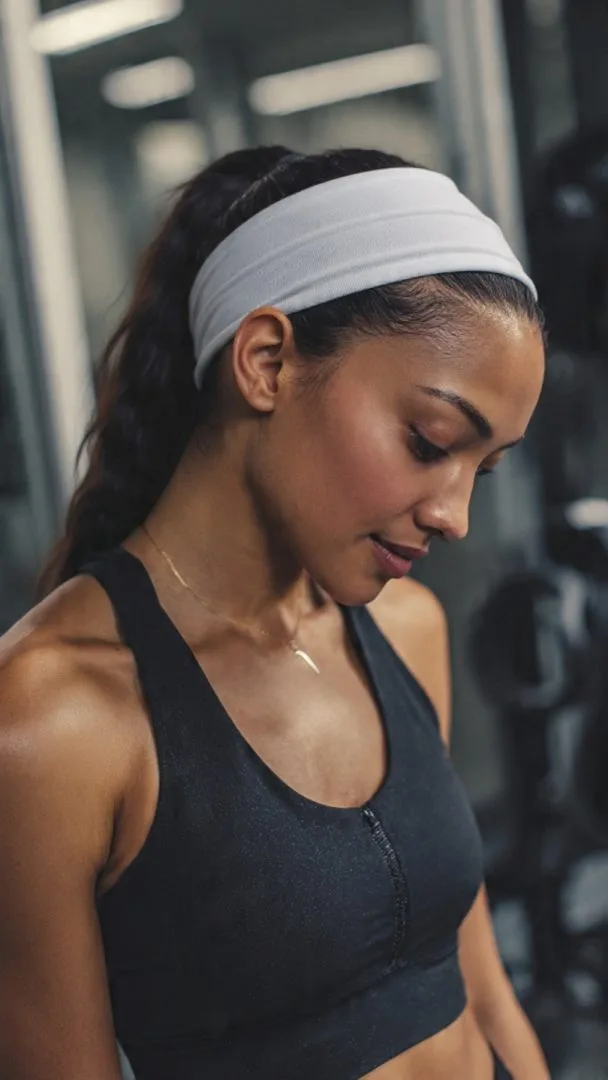
Pros and cons: A headband lets you wear looser styles that would otherwise fall forward, and it adds grip that helps a ponytail stay put. The trade-off is fit: a thick band over a high bun or a bulky braid can slip, and a band that is too tight gives you a headache by the second game.
Common mistakes: Putting the headband on top of a bulky knot, so it slides up with every sprint, is the main error. Another is wearing the band over loose layers instead of under them, so the layers still escape. Slide the band on first, then tuck the front layers back over it or pin them flat.
Maintenance and quick verdict: Carry two headbands — one to play in, one dry spare for the next match — and wash them regularly, since they soak up sweat. Verdict: thin, grippy and flat beats thick and fancy on a squash court.
Short Hair on Court: Less to Manage, Still a Plan
What it is: Short hair is the lowest-maintenance option for squash, but it still needs a plan. A pixie or short bob will not snag on anything, yet the fringe and the nape can still fall into your eyes when you look up at a high ball.
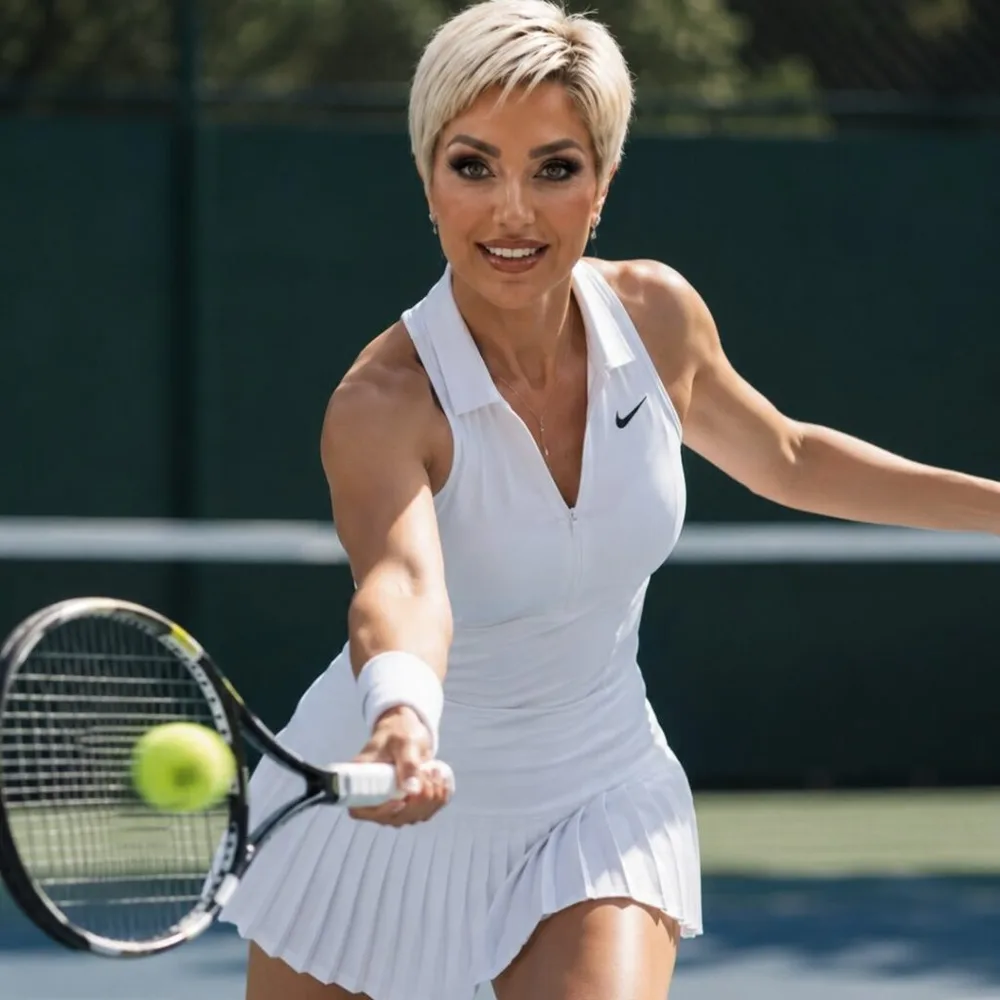
Pros and cons: Short hair dries fast, washes fast and never needs a heavy tie. The downside is that you cannot tie back the bits that do fall forward, so clips and a headband matter more, not less.
Common mistakes: Assuming short hair needs nothing is the usual error. A fringe that is fine at the cafe becomes a curtain when you lunge and look up, and product that holds at home can turn greasy in a warm court.
Maintenance and quick verdict: Keep two flat clips and a thin headband in your squash bag, and use a light matte product rather than a heavy wax. Verdict: short hair is easy, not automatic — bring the clips.
Long Hair on Court: Taming Length Without a Whip
What it is: Long hair needs containing, not just tying. A single ponytail leaves a long tail that swings with every sprint, whips across your shoulders on a turn, and can even flick sweat into your own eyes.
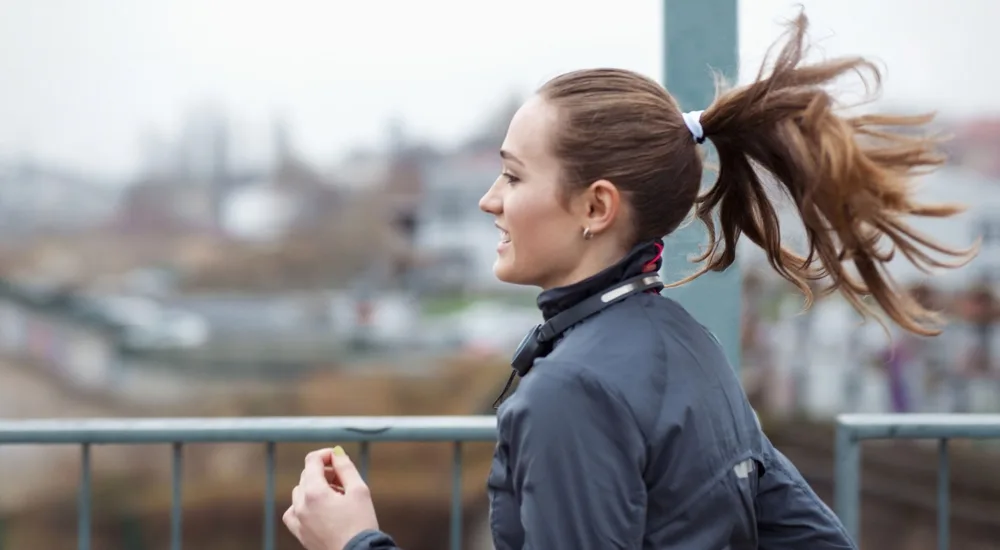
Pros and cons: Long hair gives you the most styling options, from braids to buns to wrapped ponytails. The risk is the tail itself: loose length is the one thing most likely to distract you mid-rally.
Common mistakes: Tying long hair high and leaving the tail free is the classic mistake, closely followed by a bun placed where a headband needs to sit. Fold the tail up, braid it, or coil it low, and always do the rally test before your match.
Maintenance and quick verdict: Trim split ends regularly, since sweat and friction punish damaged ends first, and carry a spare tie for the walk home. Verdict: long hair plays beautifully — braided, folded or coiled, never loose.
Curly and Coily Hair: Playing Without the Frizz Fight
What it is: Curly and coily hair has natural volume and spring, which is lovely off the court and a tangle risk on it. The goal is to contain the curl pattern without crushing it flat or pulling it painfully tight.
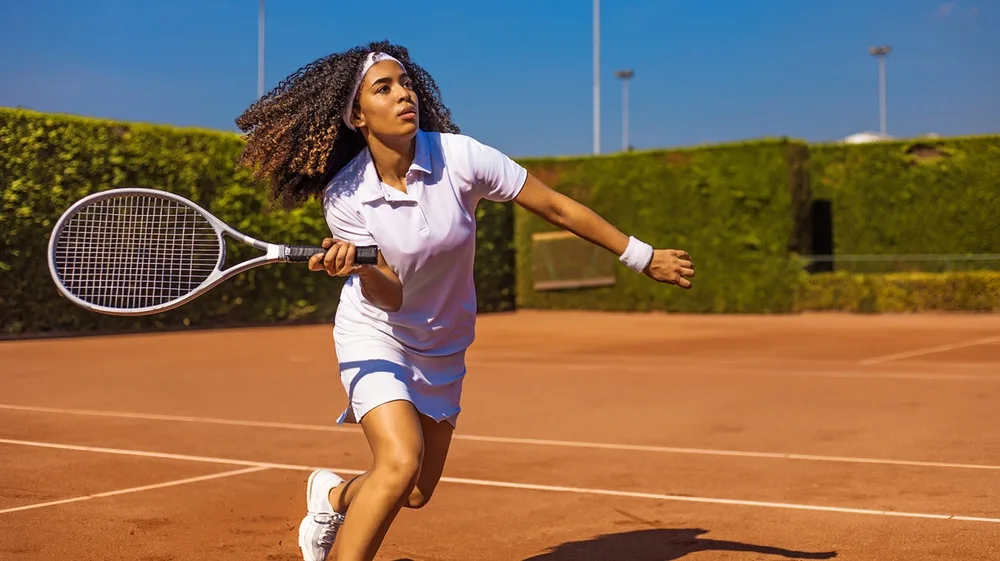
Pros and cons: Curls hold braids and twists well, and a contained curl style often survives a whole match better than straight hair does. The downside is that sweat and headband friction can turn a neat style into a frizz halo within one game.
Common mistakes: Brushing curls dry before a match breaks the pattern and creates frizz before you even start. Pulling curls into a tight, slick ponytail can also ache at the roots. Work with damp, conditioned hair, braid or twist loosely, and save the detangling for wash day.
Maintenance and quick verdict: A satin-lined headband or a light leave-in under the band reduces friction, and a gentle wash after the match removes the sweat without stripping curls. Verdict: contain, do not fight, your curl pattern.
The Five-Minute Pre-Match Hair Routine
What it is: A pre-match routine is a short checklist, not a full styling session: brush, secure, pin the hairline, headband on, rally test. Five minutes before you step on court, done properly, saves you three games of fussing with your hair.
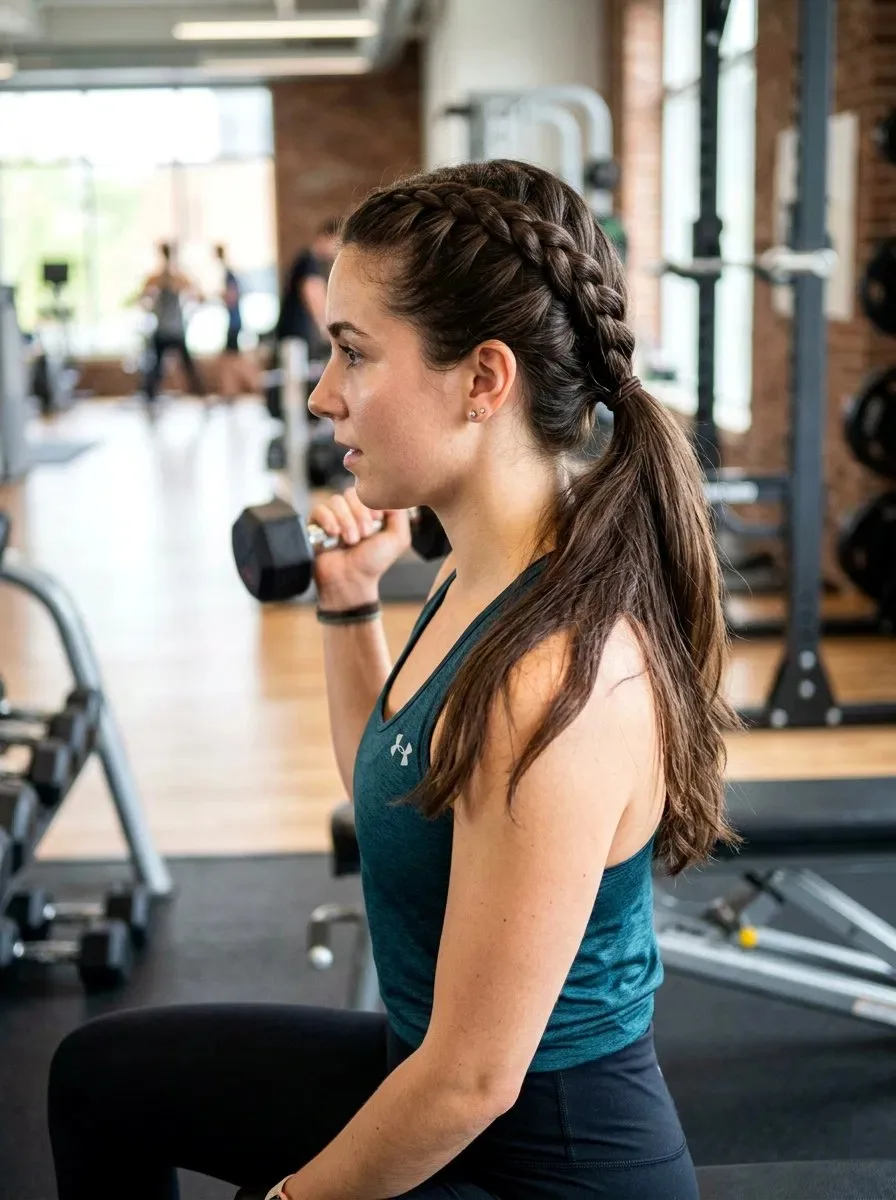
Pros and cons: The upside is a style you can forget about for the whole match, plus less sweat in your eyes from the first rally. The only downside is the five minutes themselves — which is why so many players skip it and pay for it in the second game.
Common mistakes: Styling on soaking wet hair is the main error: it is heavy, stretches the style, and dries unevenly under a headband. Styling on completely dry, slippery hair is the second — a little grip, from second-day hair or a touch of texture spray, holds far better.
Maintenance and quick verdict: Pack a small court kit and keep it in your squash bag: two snag-free ties, four flat pins, a headband and a spare. Verdict: brush, secure, pin, band, test — five minutes, every match.
After the Match: Wash Day for Sweaty Court Hair
What it is: Wash day after squash is a reset, not a punishment. The job is to get sweat and salt out, restore moisture, and detangle without snapping the ends that took the most friction from the headband and the ties.
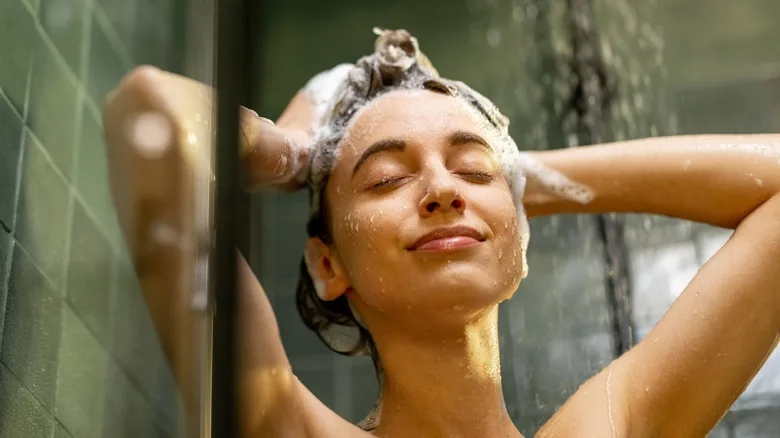
Pros and cons: A proper post-match wash leaves hair soft and ready for the next game, and it is the single best thing you can do for hair that plays several times a week. The only downside is time, which is why so many players skip it and pay for it later in breakage.
Common mistakes: Brushing dry, sweaty hair straight after a match is the worst offender — it drags salt through the strands and snaps them. Hot water on sweaty, tangled hair makes knots worse. Rinse with lukewarm water, work conditioner through the lengths, then shampoo.
Maintenance and quick verdict: Deep-condition once a week if you play often, and keep a wide-tooth comb in your wash bag. Verdict: rinse, condition, detangle, shampoo — in that order — and your hair will forgive the court.
1. The High Ponytail
What it is: The high ponytail gathers all the hair at the crown and ties it up high, keeping the neck cool and the hair in one swinging unit. It is the fastest squash style there is, and the one most players reach for first.
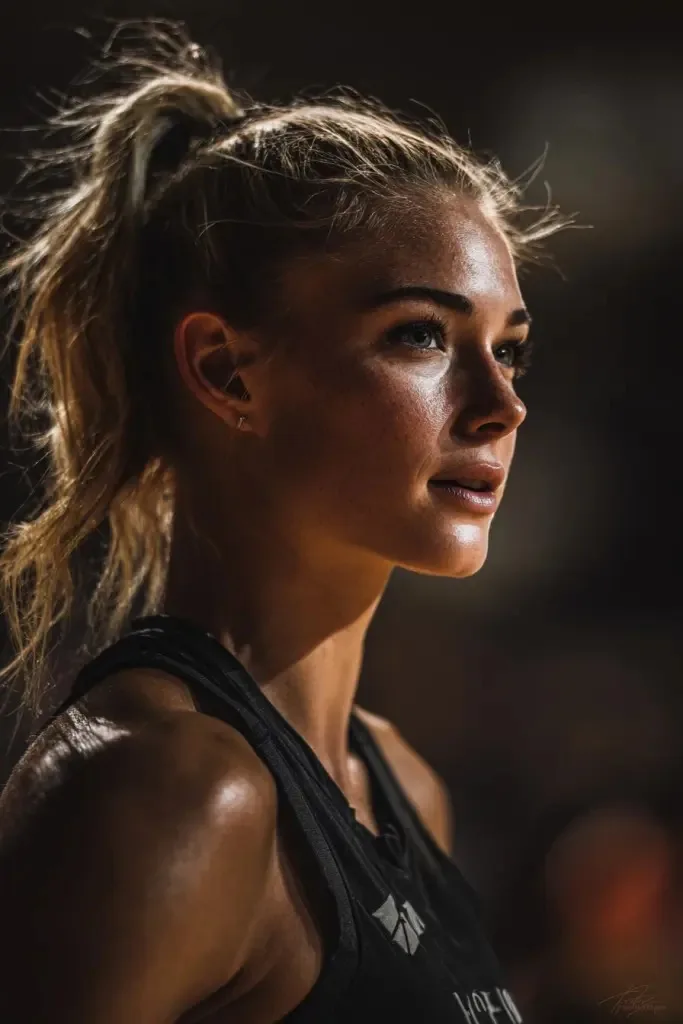
Best for: Short matches, warm courts and players who want hair off the neck in seconds. It suits medium to long hair, works with a headband, and is easy to redo between games.
How to style: Brush the hair smooth, gather it at the crown, and secure it with a strong snag-free tie wrapped twice. Smooth the hairline with your fingers, add a thin headband, and anchor any loose layers with a flat pin.
What to ask: Ask your stylist for long layers that gather cleanly into a high tie without short pieces escaping at the nape, and for a cut that keeps the fringe long enough to tuck behind a headband.
Quick verdict: Great for a fast game and a hot court. Just remember the tail swings on a sprint, so braid it or tie it again halfway down for a long match.
2. The Low Ponytail
What it is: The low ponytail sits at the nape, below the headband line, and is the most headband-friendly ponytail of all. It keeps the hair contained without creating a bump anywhere a band needs to sit.
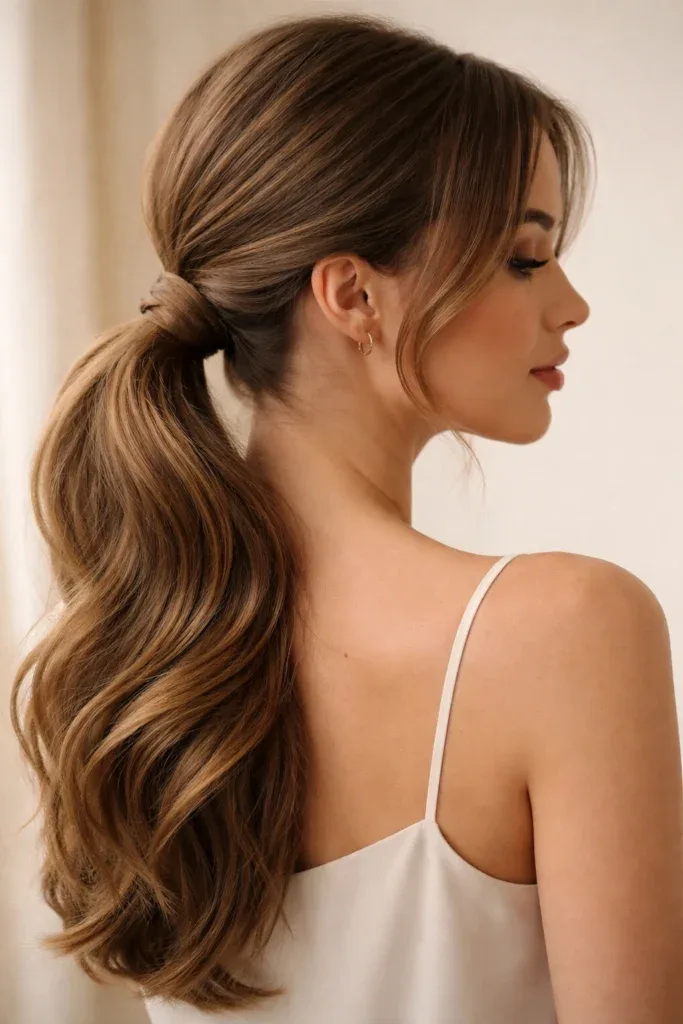
Best for: Long rallies, players who wear a headband or visor, and anyone whose high ponytail slips during sprints. It suits almost every hair type and length.
How to style: Brush the hair back smoothly, gather it low at the nape and tie it firmly with a snag-free elastic. Put the headband on first if you wear one, then smooth the hairline over it and pin any flyaways flat.
What to ask: Ask your stylist to keep the nape layers long enough to reach the tie, so no short pieces pop out mid-rally, and for a blunt-ish cut at the ends so the tail looks tidy rather than wispy.
Quick verdict: The safest ponytail for squash. Simple, comfortable and reliable — just manage the tail with a second tie or a loose braid on long hair.
3. The French Braid
What it is: The French braid starts at the crown and picks up hair as it travels down, locking everything into one flat plait that hugs the head. It is the classic court braid for good reason.
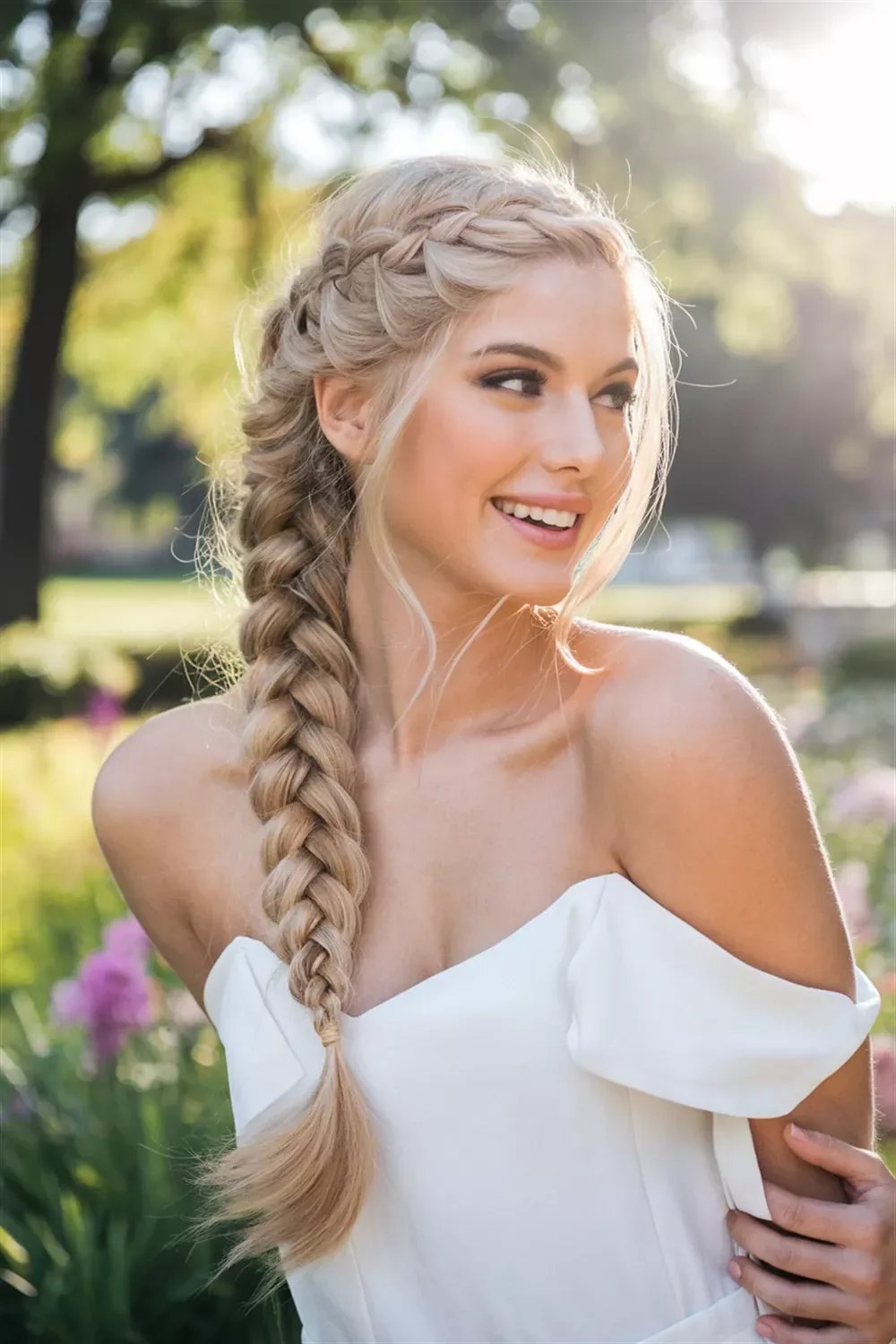
Best for: Hard matches, long rallies and players who hate re-doing their hair between games. It holds for hours, lies flat under a headband, and keeps even short layers contained.
How to style: Start at the hairline, pick up small even sections as you braid down, and keep the tension steady. Finish with a strong elastic, tuck the tail under if it is long, and smooth the hairline with a headband.
What to ask: Ask your stylist for face-framing layers long enough to reach into the braid, and for a cut with no very short pieces at the crown that would slip out during a sprint.
Quick verdict: The gold standard for squash hair. Learn it once and it will carry you through every match.
4. The Dutch Braid
What it is: The Dutch braid is the French braid turned inside out: the strands cross under instead of over, so the plait sits raised on the surface of the hair. It looks bolder and grips just as well.
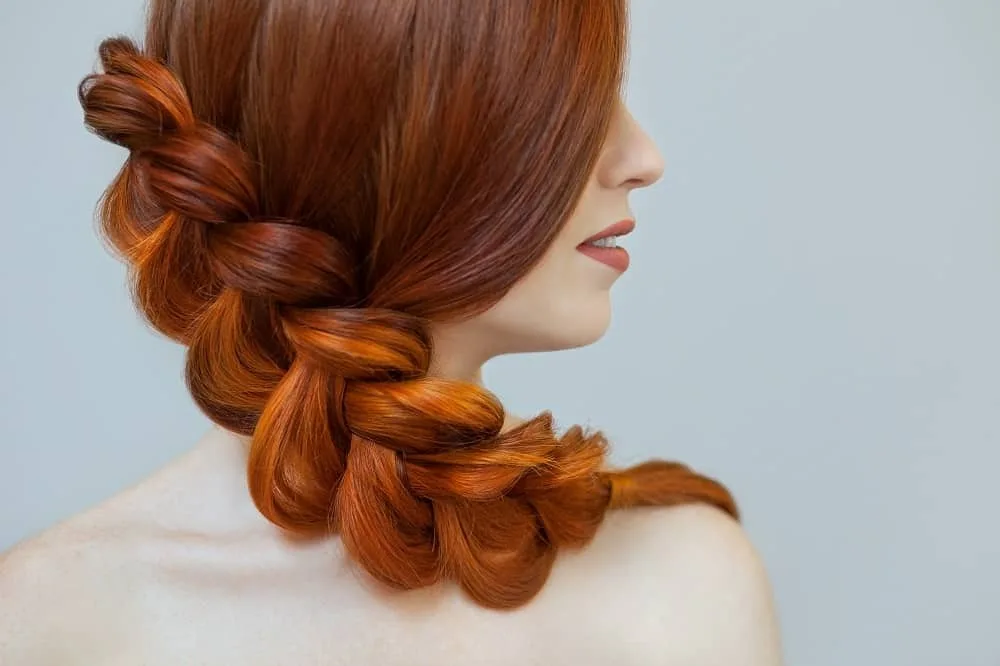
Best for: Fine or slippery hair that slides out of a French braid, and players who want a braid with extra grip. It holds through sweat and hard sprints.
How to style: Cross each section under the middle strand, keeping the sections even and the tension firm. Angle the braid slightly to one side if a headband sits across the crown, and finish with a strong tie.
What to ask: Ask your stylist whether your hair has enough grip for a raised braid, and for layers that sit inside the plait rather than poking out of it at the sides.
Quick verdict: Excellent grip and a striking look. Best when the braid runs low or to the side, clear of the headband.
5. Double Dutch Braids
What it is: Double Dutch braids split the hair into two plaits, one on each side, running from the hairline to the nape. They spread the weight evenly and keep both sides of the head contained.
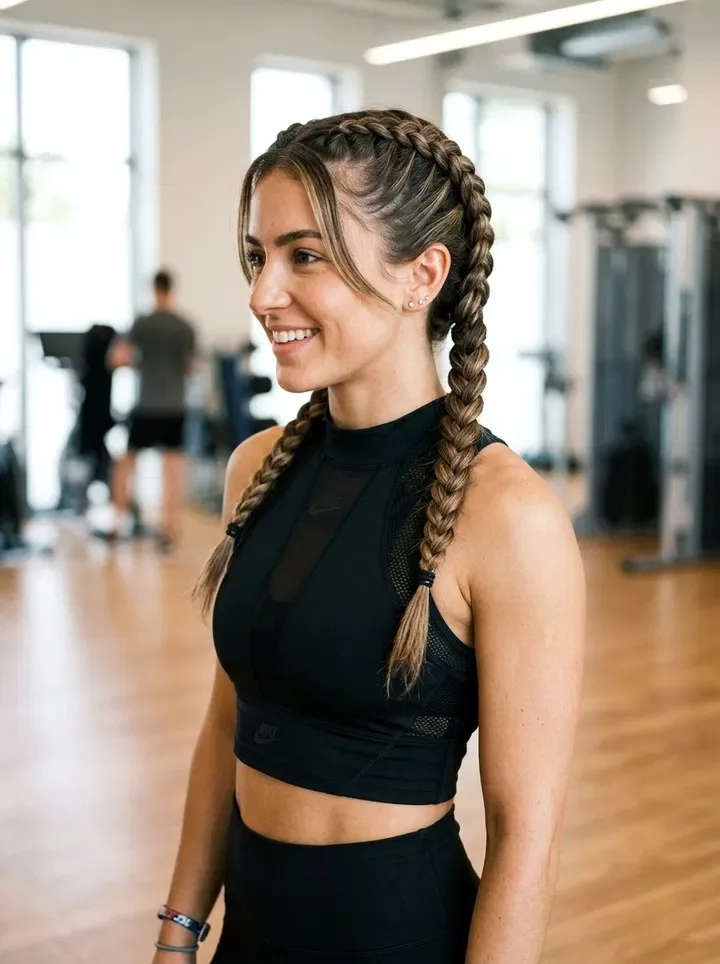
Best for: Long matches, tournament days and players with thick hair. Two braids balance better than one, survive sweat and sprints, and sit flat under a headband.
How to style: Part the hair straight down the middle, braid each side firmly from the hairline to the nape, and tie both tails at the same length. A headband over the top keeps the part and the hairline tidy.
What to ask: Ask your stylist for a cut that parts cleanly down the middle, with no short layers at the temples that would escape the braids during a rally.
Quick verdict: One of the most reliable squash styles ever made. Worth the extra five minutes, every time.
6. The Fishtail Braid
What it is: The fishtail braid weaves two sections into a fine, herringbone-style plait that looks intricate and holds the hair in a slim, flat tail. It works best on medium to long hair.
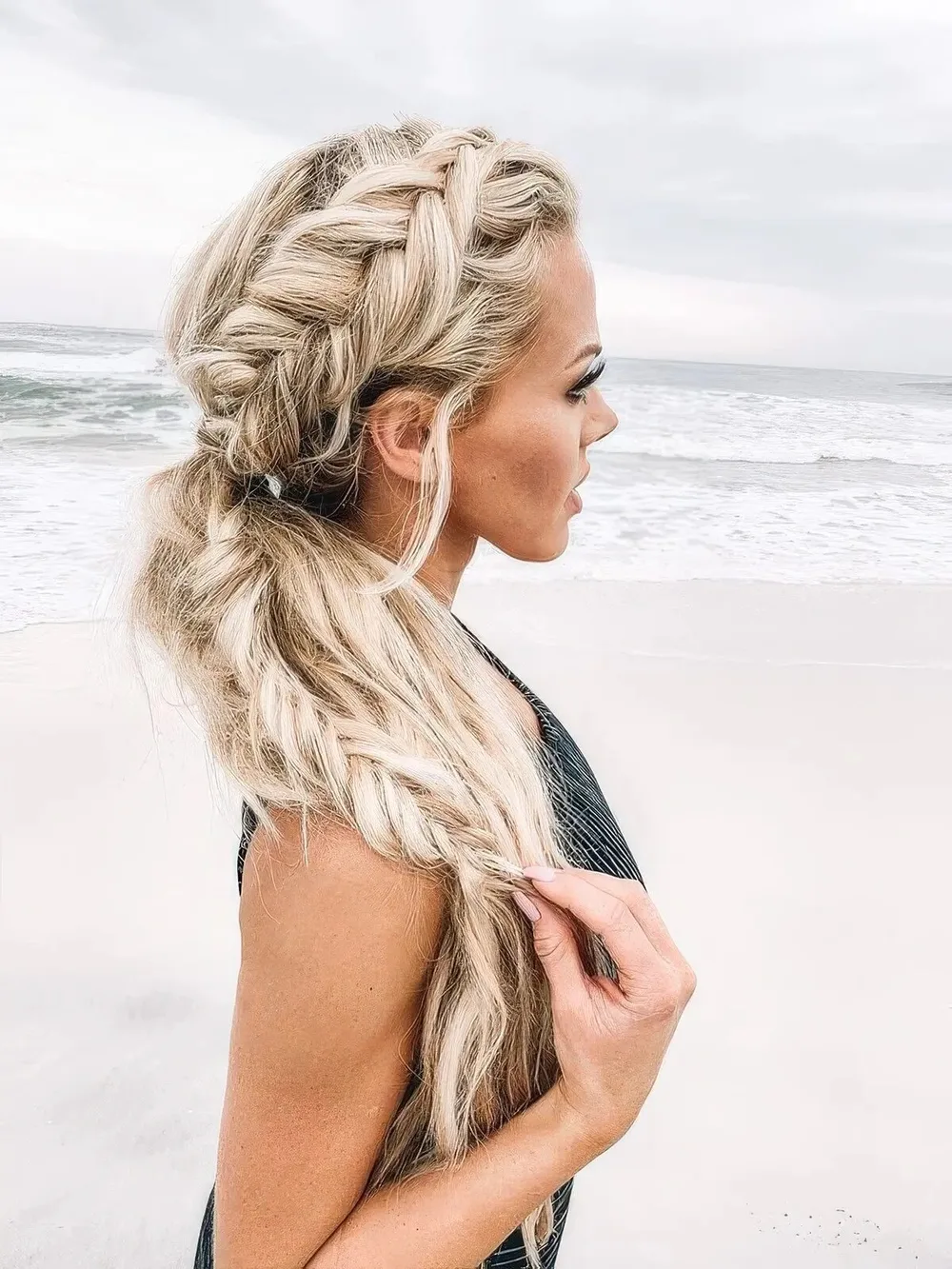
Best for: Friendly games and club nights, when you want a style that looks polished as well as practical. It lies flat against the back and holds well once finished.
How to style: Split the hair into two sections, take small pieces from the outside of each section and cross them over, and keep the pieces small and even. Start low, tie firmly, and add a headband for the hairline.
What to ask: Ask your stylist to keep the ends blunt enough to hold a fine braid, and whether your hair length is enough for a fishtail that reaches past the shoulders.
Quick verdict: Beautiful and secure on long hair, best for shorter sessions or as a second style after the hard games are done.
7. The Bubble Braid
What it is: The bubble braid is a ponytail divided into puffed sections by elastics spaced down its length. It looks playful, but on court it is genuinely practical: each elastic stops the hair sliding.
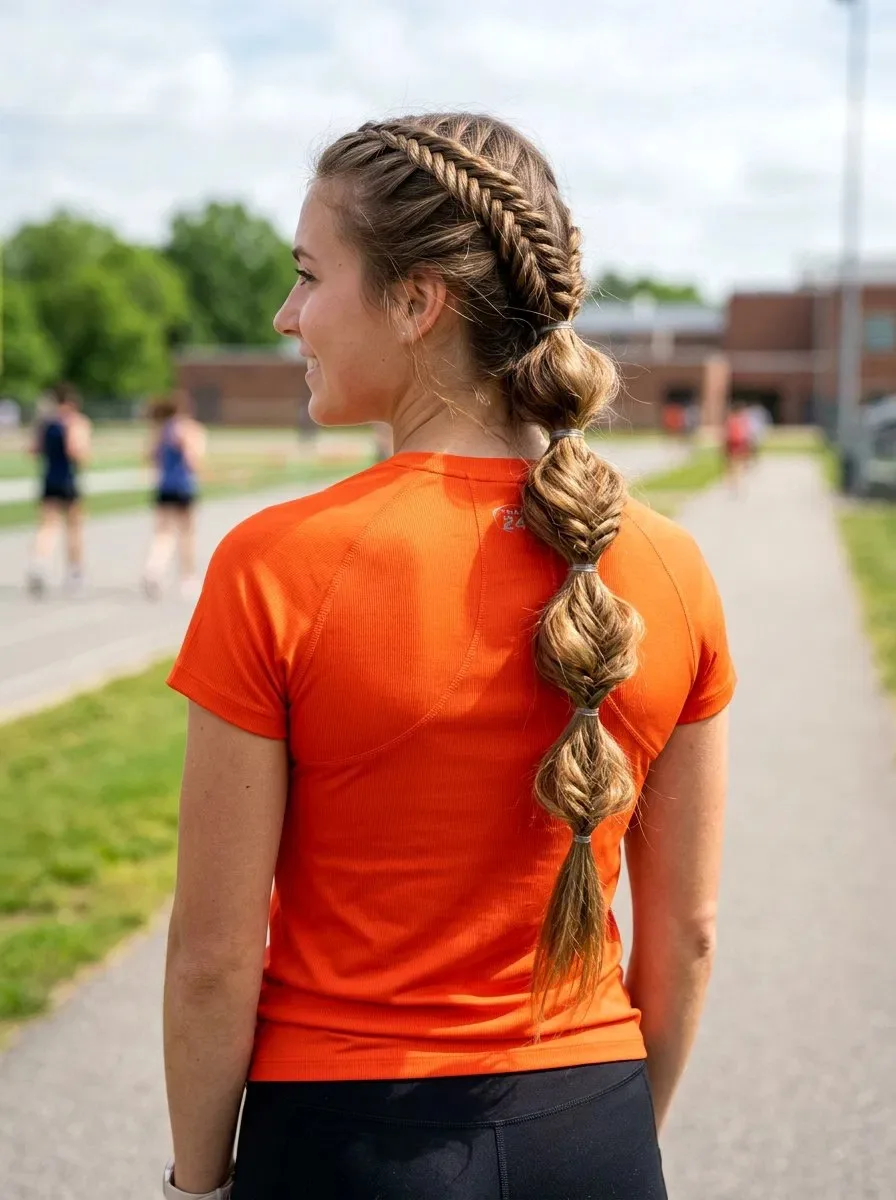
Best for: Long hair, casual games and players who like a style with personality. It contains long hair in neat segments and survives movement well.
How to style: Tie a ponytail, then add snag-free elastics at even intervals down the tail, gently puffing each section. Keep the bubbles modest rather than huge, and wear a headband for the hairline.
What to ask: Ask your stylist for layers that sit inside a ponytail without escaping, and for advice on the right elastic spacing for your hair thickness.
Quick verdict: Fun, secure and easy. A great choice for long hair on club nights and friendly matches.
8. The Rope Braid
What it is: The rope braid twists two sections around each other into a tight, rope-like plait. It is one of the fastest braids to do, and it holds with surprising strength.
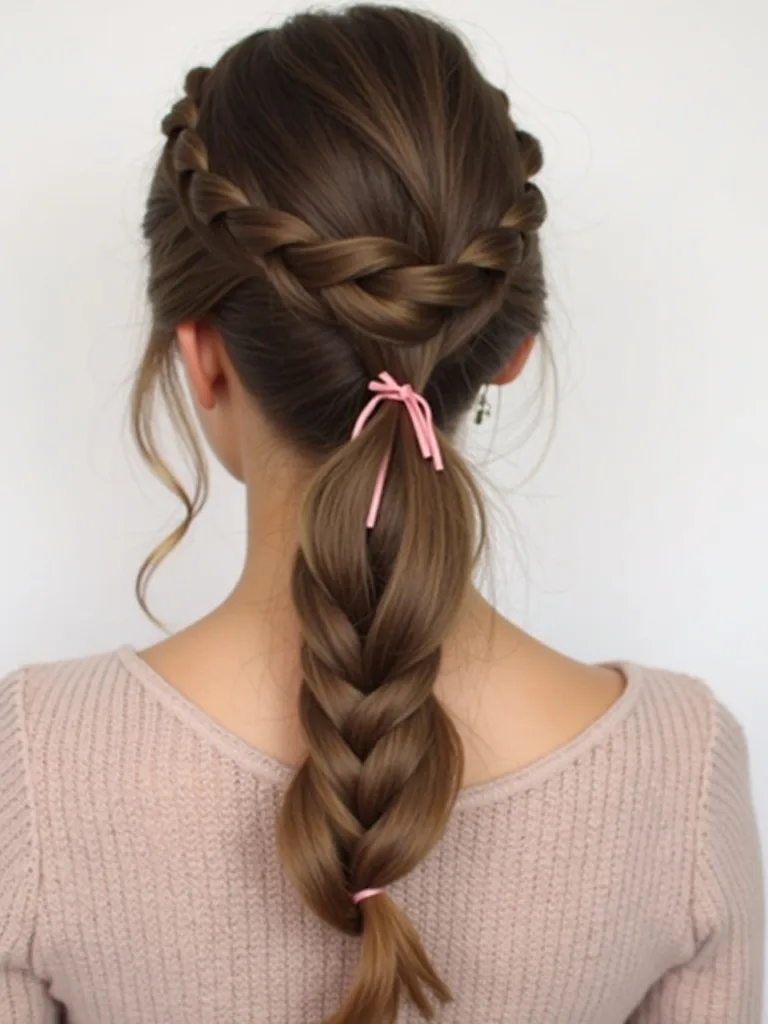
Best for: Thick hair, quick turnarounds between games, and players who want a braid in under a minute. It lies flat and works well under a headband.
How to style: Split the hair into two sections, twist each one the same way, then wrap them around each other firmly and tie with a strong elastic. A little pomade on the ends keeps flyaways down.
What to ask: Ask your stylist whether your hair twists cleanly without unravelling, and for a cut that keeps the ends even so the rope braid finishes neatly.
Quick verdict: The fastest secure braid for thick hair. Quick to make, quick to redo, and very court-friendly.
9. The Crown Braid
What it is: The crown braid runs around the head like a halo, picking up hair as it goes and pinning the whole style in place. It keeps every layer off the face and neck at once.
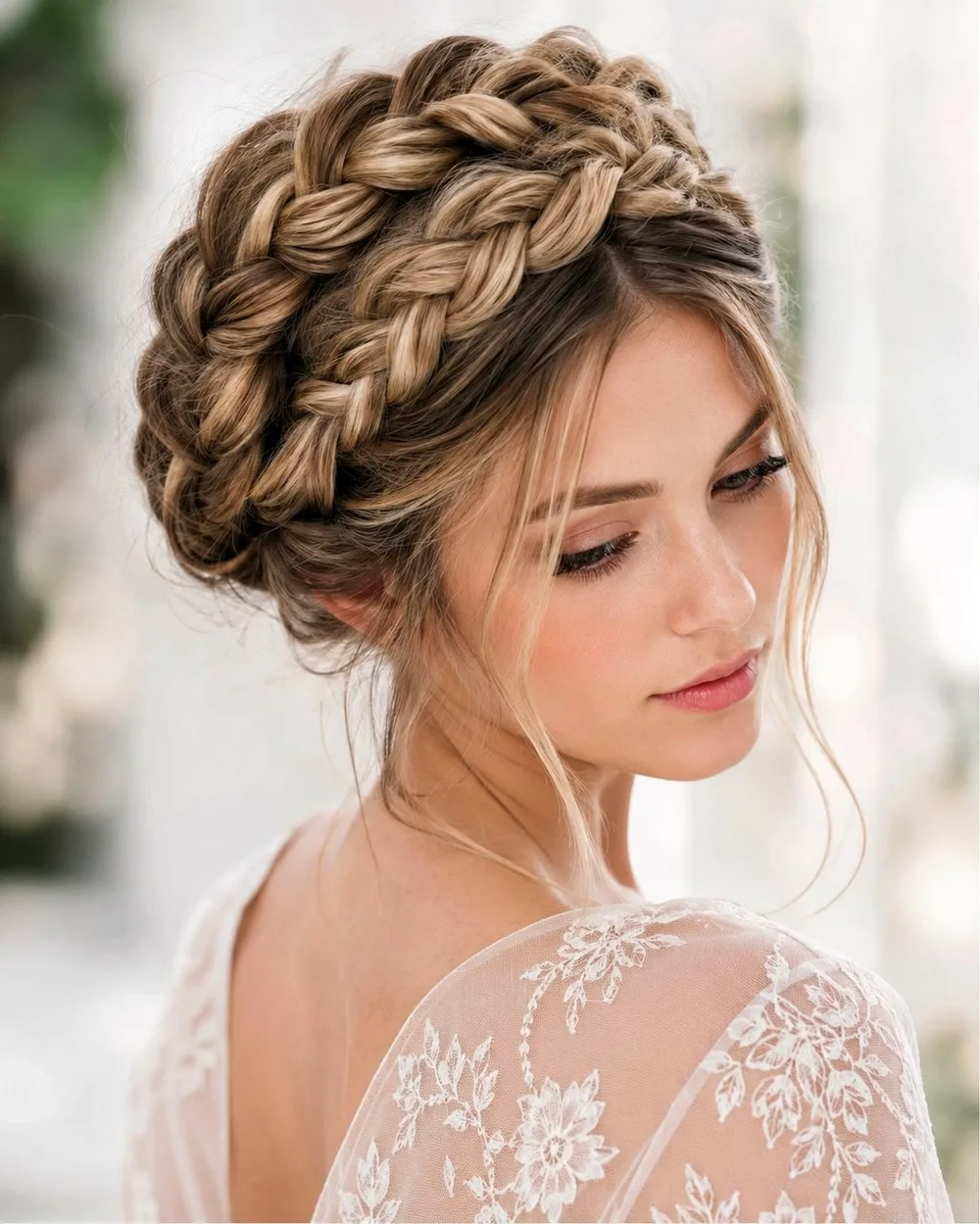
Best for: Players with layers that always escape, and long matches where you cannot afford a single strand in your eyes. It sits flat under a headband.
How to style: Braid around the head from one side to the other, picking up hair as you go, and pin the braid every few inches with flat, snag-free pins. Check the back in a mirror before you play.
What to ask: Ask your stylist for a lesson-style walkthrough if you are learning it, and for layers long enough to reach around the head without short pieces popping out.
Quick verdict: Elegant and extremely secure once pinned properly. Best for players who already braid confidently.
10. Boxer Braids
What it is: Boxer braids are tight double Dutch braids worn close to the scalp, borrowed from the boxing gym and made for hard movement. They are built to stay put through sweat, impact and hours of effort.
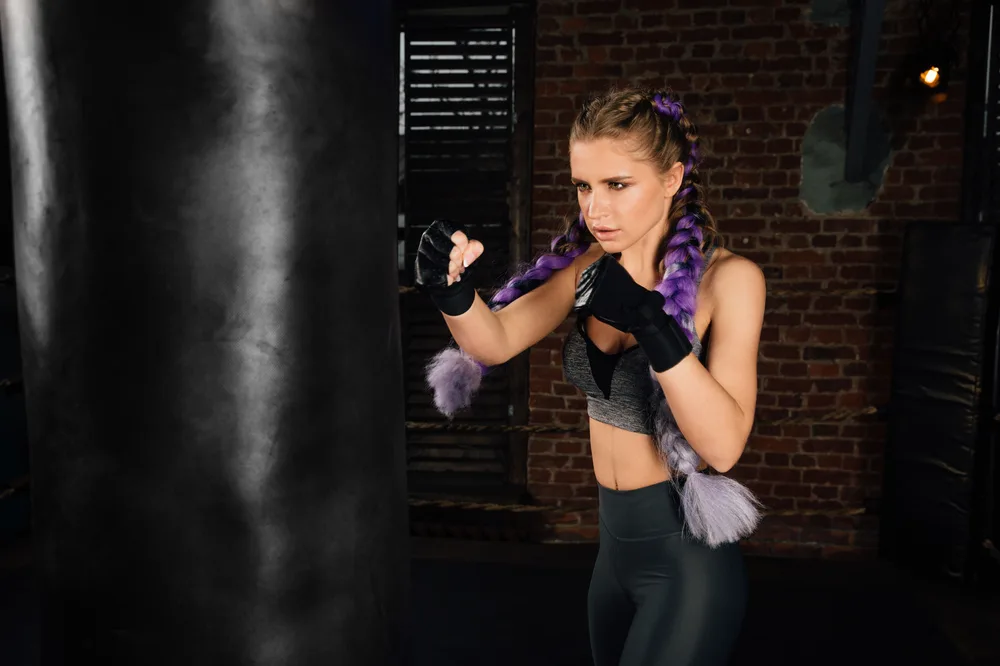
Best for: Tournament days, intense matches and players who sweat heavily. They are among the most secure styles in this post and lie flat under a headband.
How to style: Part the hair down the middle, braid each side tightly but comfortably from the hairline to the nape, and ease the tension slightly at the temples. Tie both tails at the same length.
What to ask: Ask your stylist or braider to keep the tension firm but comfortable, and for a centre part that suits your face shape so the braids sit evenly.
Quick verdict: The toughest braid in the book. Ideal for long, sweaty match days — just do not braid them painfully tight.
11. The Messy Bun
What it is: The messy bun is a loose, twisted coil pinned up with a deliberately relaxed finish. On court it only works when the mess is controlled — a truly loose bun falls apart with the first lunge.
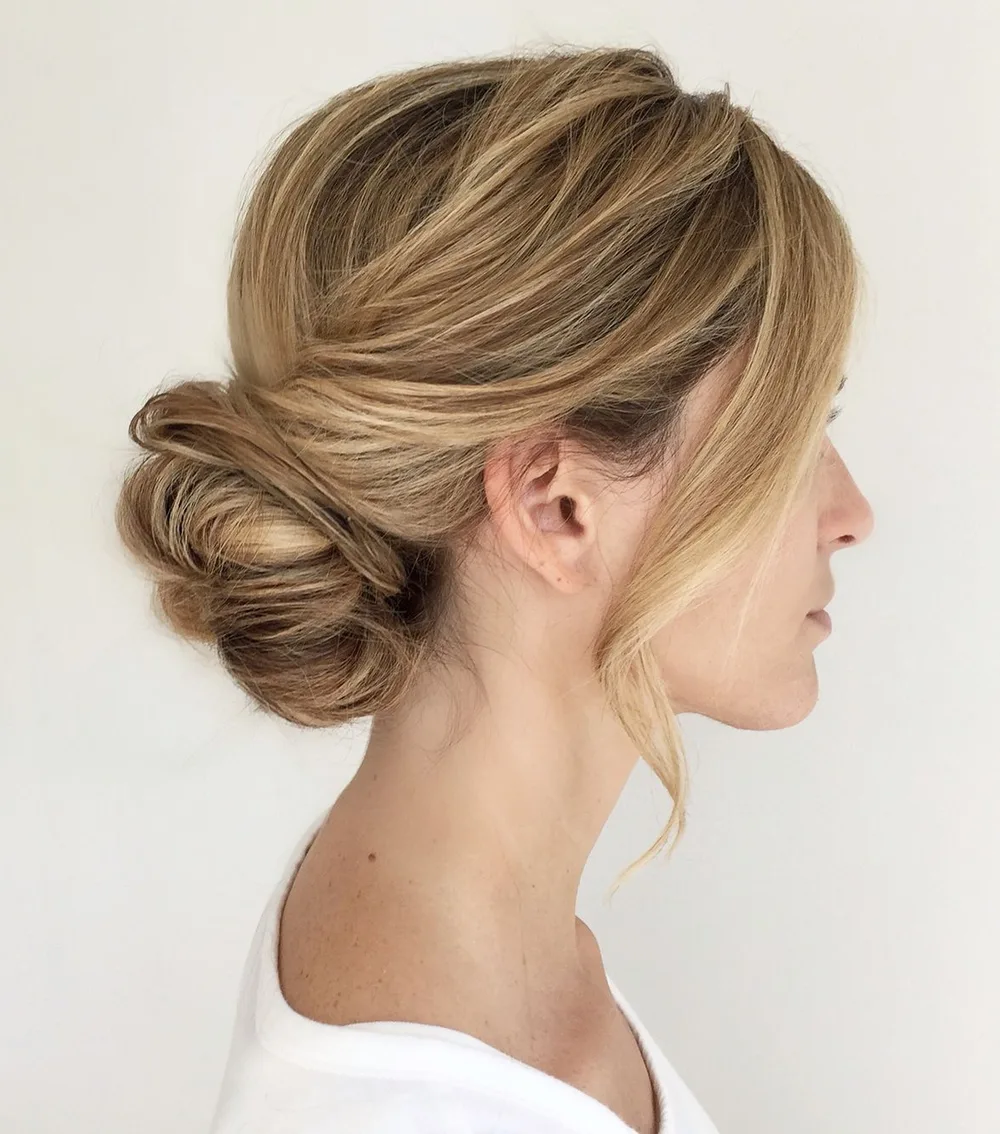
Best for: Casual games and warm-ups, when you want hair up fast and do not mind re-pinning between games. A low messy bun works far better than a high one on court.
How to style: Gather the hair low, twist it into a coil and pin it with at least three pins, tucking the ends in so nothing dangles. Wear a headband to catch the loose pieces at the hairline.
What to ask: Ask your stylist for a cut with enough length to coil without the ends springing out, and for long layers that tuck into a bun rather than escaping it.
Quick verdict: Fine for friendly games if worn low and pinned well. Not the pick for a long competitive match.
12. The Low Bun
What it is: The low bun coils the hair into a neat knot at the nape, below the headband line. It is the bun that actually works with a headband, because it sits where nothing needs to press.

Best for: Competitive matches, players who wear a visor, and anyone who wants a tidy style that survives a whole match. It suits almost every hair type.
How to style: Brush the hair smooth, gather it low, twist it into a coil and pin it in at least three places. Put the headband on first, then smooth the hairline over it.
What to ask: Ask your stylist for a low bun that holds on your hair texture, and for a cut that keeps the nape tidy so the bun sits flat against the head.
Quick verdict: The best bun for squash. Neat, comfortable and dependable — the bun to choose on match days.
13. The Top Knot
What it is: The top knot piles the hair into a tight bun at the very crown. Unlike helmet sports, squash has no shell to fight with, so a top knot is genuinely playable — as long as it is compact.
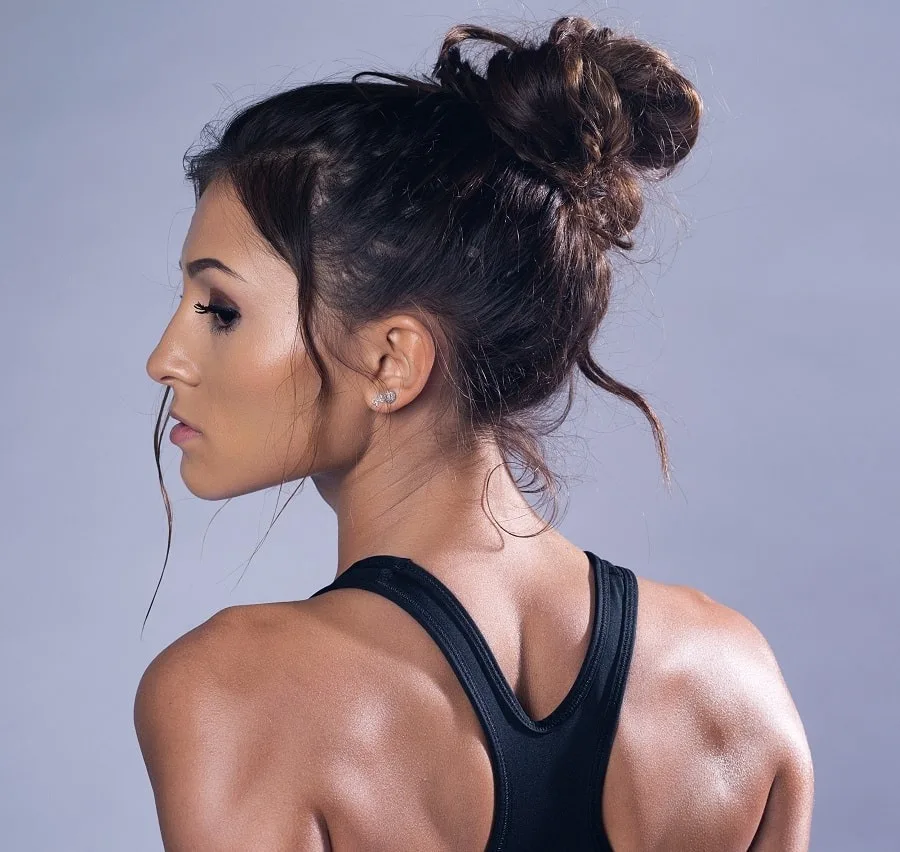
Best for: Hot courts, short hair that is growing out, and players who want every strand off the neck. It keeps hair completely clear of the face and the headband sits neatly below it.
How to style: Gather the hair high, twist it into a compact knot and pin it firmly with two or three pins. Keep the knot small and tight so it does not wobble on a sprint, and add a headband for the hairline.
What to ask: Ask your stylist whether your hair is long enough for a secure top knot, and for a cut that gathers cleanly to the crown without short pieces escaping at the sides.
Quick verdict: Great style for squash, where there is no helmet to fight. Keep it compact and pinned, and it will hold all match.
14. Space Buns
What it is: Space buns are two small buns, one on each side of the head, usually worn high. They are fun and balanced, and on a squash court their height is no problem at all.
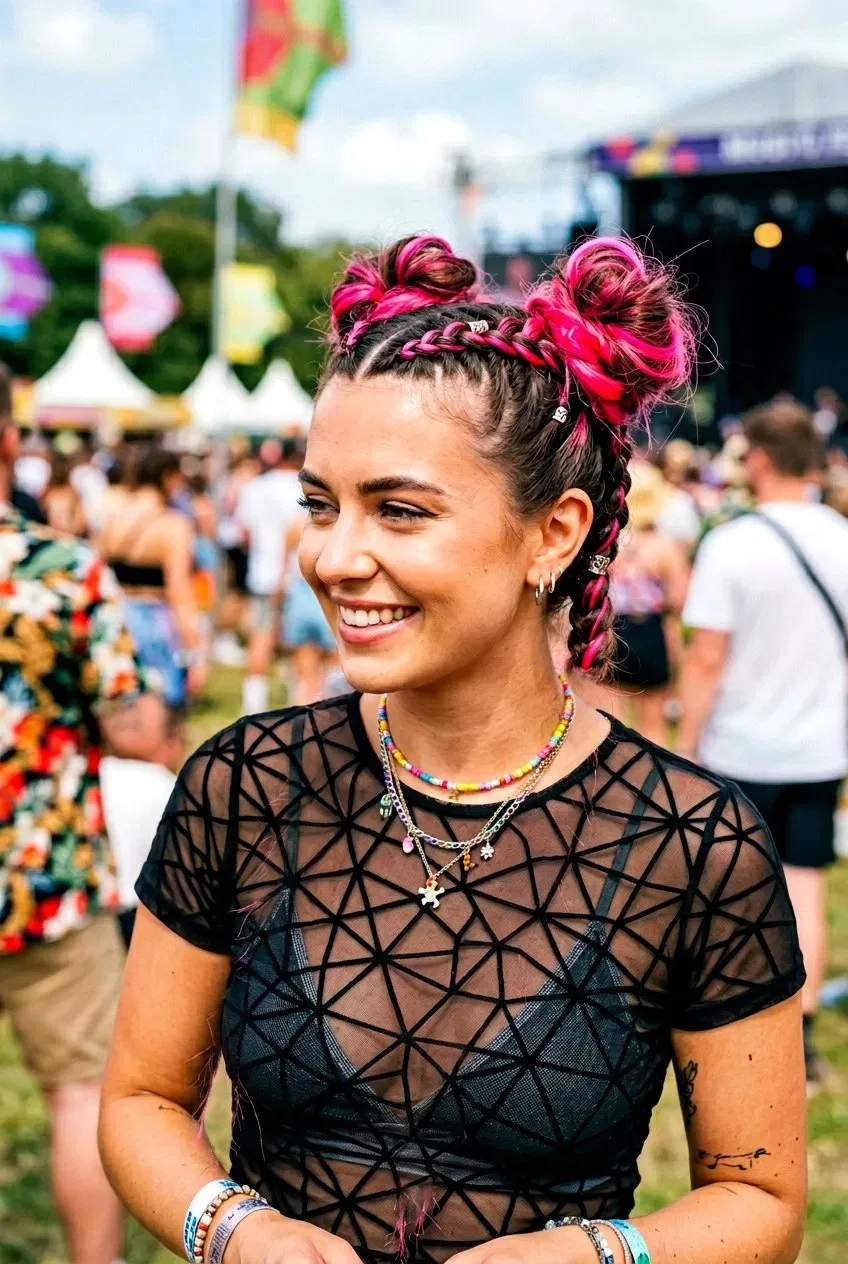
Best for: Club nights, friendly games and players who want a playful style that still stays put. They distribute weight evenly and keep hair off the neck.
How to style: Part the hair down the middle, gather each side into a bun at ear level or higher, and use two ties and two pins per bun so neither one sags. A headband keeps the part tidy.
What to ask: Ask your stylist for a straight centre part that suits your face, and for layers that gather evenly into two buns without one side ending up thinner.
Quick verdict: Wear them high or low — either works on court. Fun, balanced and secure when pinned well.
15. The Half-Up Ponytail
What it is: The half-up ponytail ties back only the top section of hair, leaving the rest down. It clears the face while keeping some length free — which is both its charm and its problem on court.

Best for: Easy rallies, warm-ups and coaching sessions, when the pace is gentler. It is quick, pretty and keeps the fringe out of your eyes.
How to style: Tie the top section firmly at the crown, pin back any loose layers at the sides, and wear a headband to catch the hairline. Carry a spare tie so you can gather the rest up if the game speeds up.
What to ask: Ask your stylist for top layers long enough to reach the tie, and for a cut where the loose lower half does not fall forward over your shoulders during a lunge.
Quick verdict: Lovely for easy sessions and the warm-up. For a serious match, gather the rest of the hair up too.
16. The Half-Up Braid
What it is: The half-up braid plaits the top section of hair into a short braid, leaving the rest down. It is prettier than a half-up ponytail and slightly more secure, but it shares the same loose-length problem.
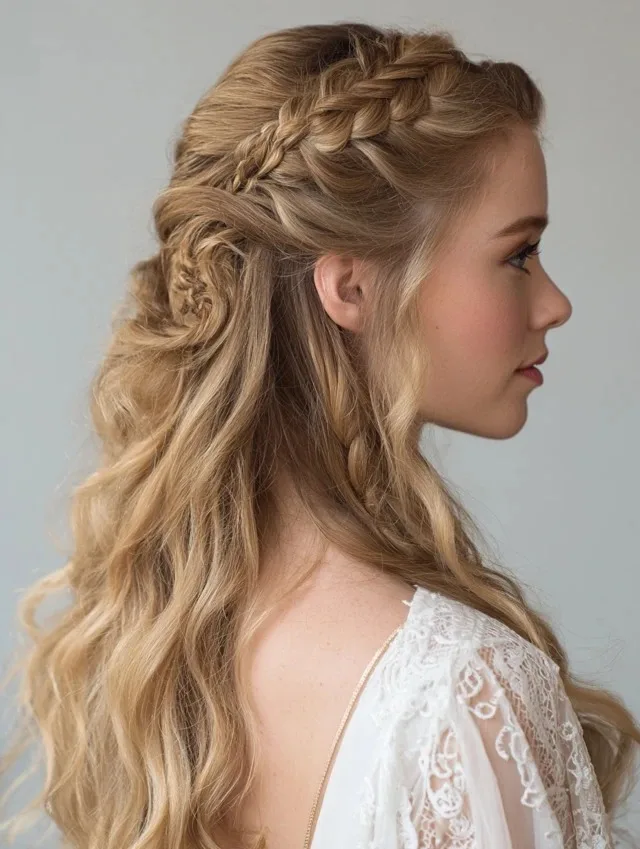
Best for: Casual games and social squash nights, when you want a polished look without a full updo. It holds the front layers beautifully.
How to style: Braid the top section firmly from the hairline, tie it well, and pin the braid’s tail flat. Wear a headband for the fringe, and keep a spare tie handy for a full ponytail if the match heats up.
What to ask: Ask your stylist for front layers that braid cleanly into a half-up style, and whether your hair length suits a braid that ends above the shoulders.
Quick verdict: A good warm-up and casual-game style. For a long match, braid the whole head instead.
17. The Claw Clip Twist
What it is: The claw clip twist gathers the hair, twists it up and holds it with a large claw clip. It is the fastest updo there is, and the clip makes it easy to redo in seconds between games.
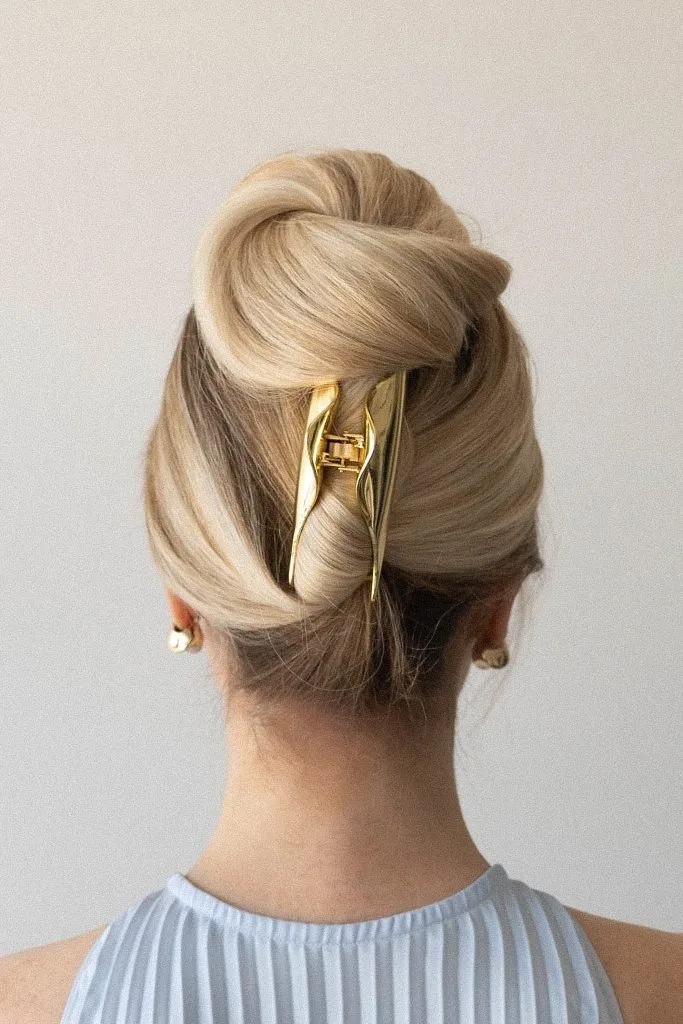
Best for: Between-game fixes, coaching sessions and players who want an instant updo. It is comfortable and keeps hair off the neck.
How to style: Twist the hair firmly upward, clip it low at the back of the head, and test it with a shake before you play. Choose a strong, flat clip, and carry a tie as backup in case the clip pops open on a lunge.
What to ask: Ask your stylist whether your hair thickness suits a claw clip, and for a cut with enough length for a twist that the clip can grip firmly.
Quick verdict: Handy for the club and for coaching, less reliable for hard competitive squash. Keep a tie in your pocket as plan B.
18. The Scrunchie Ponytail
What it is: The scrunchie ponytail is a regular ponytail tied with a soft fabric scrunchie instead of a thin elastic. The fabric grips without cutting into the hair, which matters on a long match day.
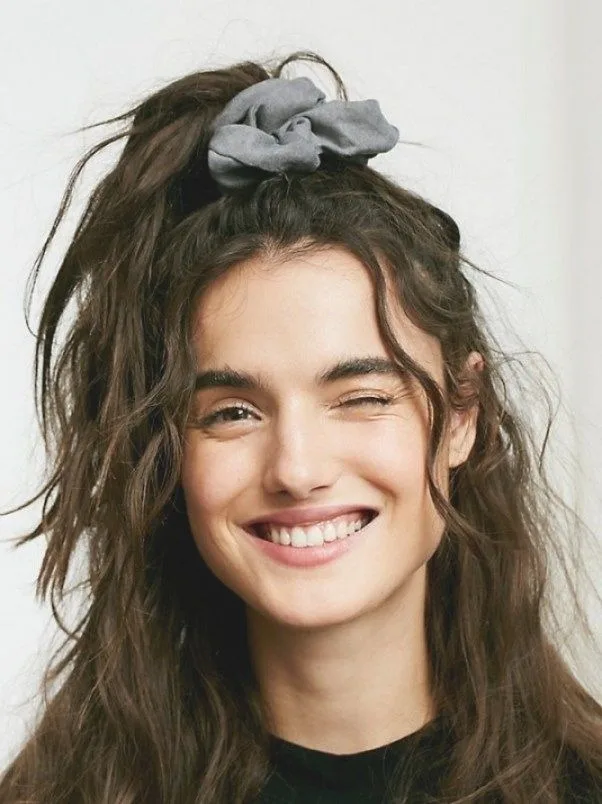
Best for: Long tournament days, players with thick hair, and anyone who hates the dent a thin elastic leaves. It is gentler on the hair and holds well.
How to style: Choose a medium scrunchie, wrap it twice around a low or mid-height ponytail, and smooth the hairline with a headband. Avoid an oversized scrunchie under a headband strap.
What to ask: Ask your stylist whether a scrunchie or a strong elastic suits your hair thickness better, and for a cut that gathers smoothly without a bump at the crown.
Quick verdict: A kinder, comfortable ponytail. Great for long days, as long as the scrunchie is not too bulky for your headband.
19. The Braided Ponytail
What it is: The braided ponytail ties the hair up first, then braids the tail. It combines the speed of a ponytail with the security of a braid, and the tail can no longer swing freely.
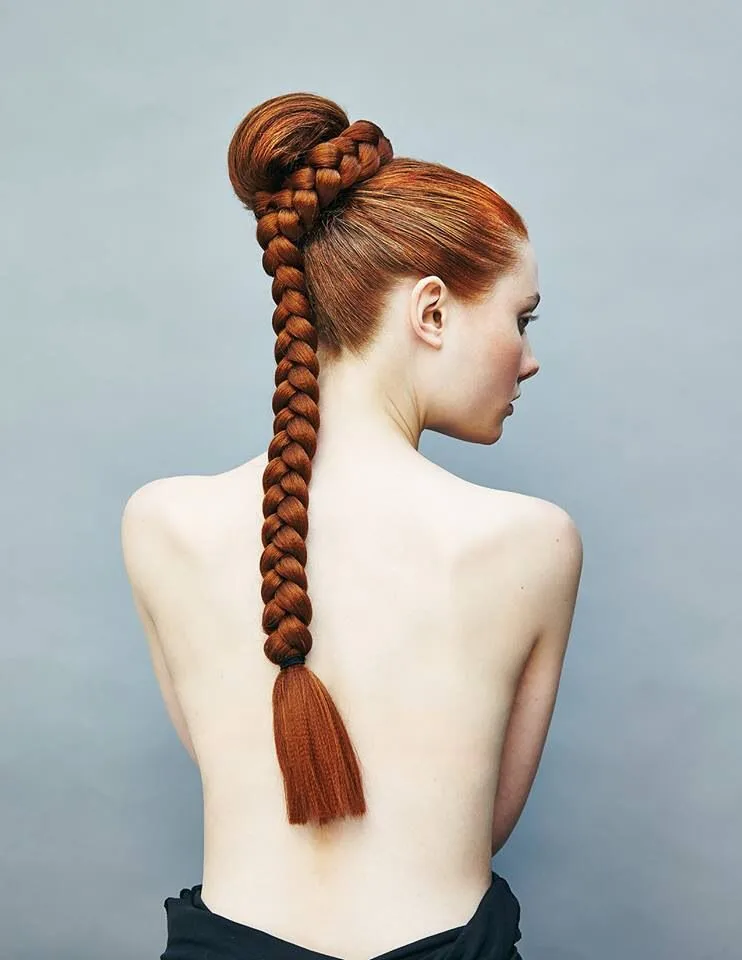
Best for: Fast players, long rallies and anyone whose ponytail tail whips around on sprints. It is quick to make and very secure.
How to style: Tie a firm ponytail at mid-height or low, braid the tail to the end, and finish with a strong tie. Wear a headband for the hairline and check the base between games.
What to ask: Ask your stylist for ends that braid cleanly to the tip, and for layers long enough to stay inside the ponytail rather than escaping at the sides.
Quick verdict: One of the best compromises in this post. Fast, secure and headband-friendly when worn low.
20. The Side Braid
What it is: The side braid sweeps the hair over one shoulder and plaits it down the side, keeping the length in front where you can see it — and where it stays clear of your back and your swing.
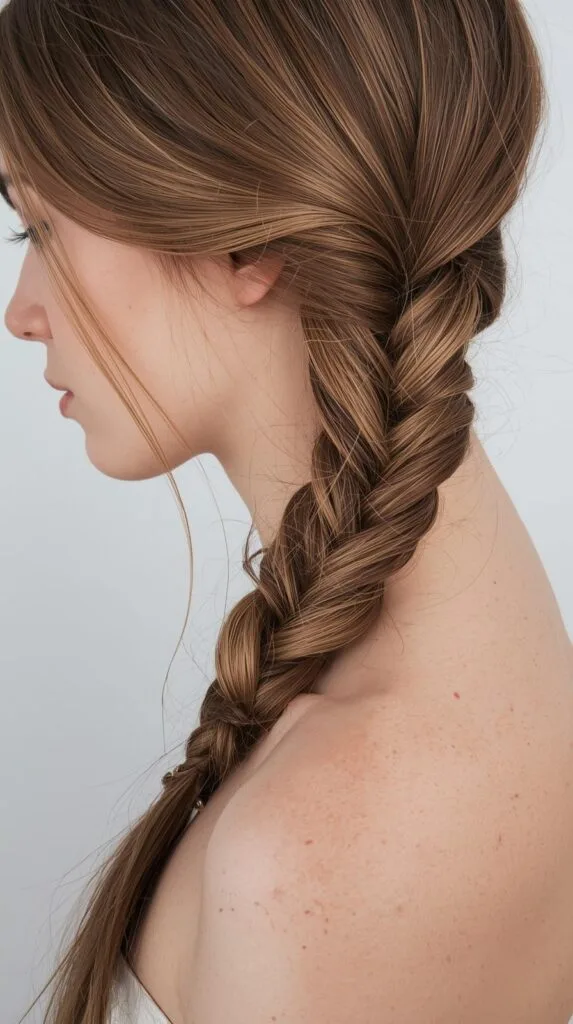
Best for: Coaching sessions, warm-ups and easy games, when you want the braid visible and easy to check. It lies flat under a headband.
How to style: Sweep the hair to one side, start the braid at the nape and braid firmly down over the shoulder. Tie it well and tuck the tail into your top or clip it back if it swings during a rally.
What to ask: Ask your stylist for a side part or layers that sweep naturally to one side, so the braid starts without a fight against your hair’s natural fall.
Quick verdict: Great for warm-ups and easy games. For fast competitive squash, pin the tail back or switch to a braid down the back.
21. Milkmaid Braids
What it is: Milkmaid braids are two braids wrapped up and pinned across the top of the head like a crown. They keep every strand contained and look wonderfully old-fashioned.
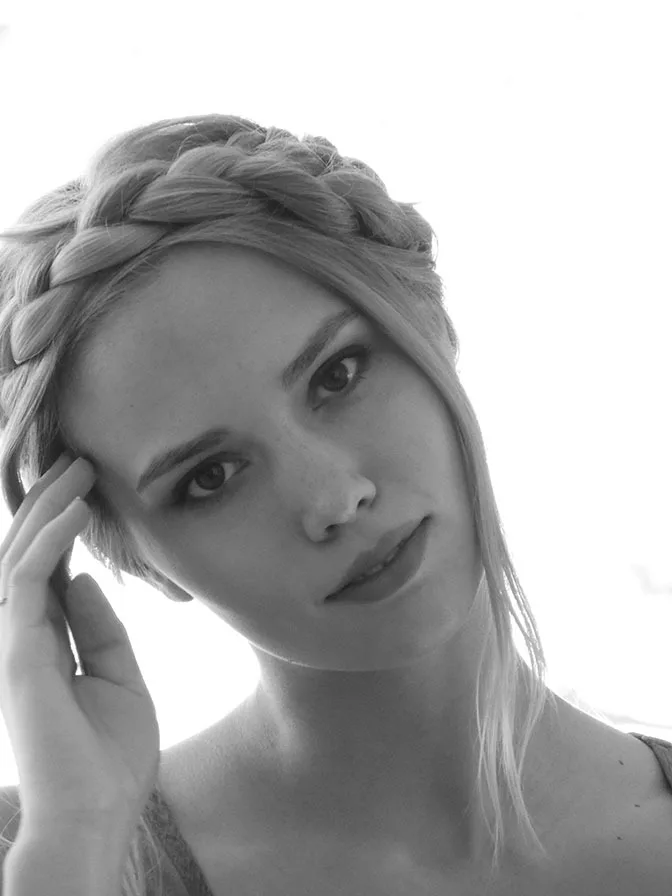
Best for: Long match days and players with long hair who want everything pinned away. They contain all the hair and sit flat under a headband.
How to style: Braid two low plaits, wrap each one up and across the top of the head, and pin at several points along each braid. Check the back before you play and keep spare pins in your bag.
What to ask: Ask your stylist whether your hair is long enough to wrap across the crown, and for a cut with no short layers at the nape that would slip out of the braids.
Quick verdict: Secure, headband-friendly and beautiful. Worth learning if you play squash with long hair regularly.
22. Cornrows
What it is: Cornrows are tight braids woven flat against the scalp in neat rows, from the hairline to the nape. They are a protective style that can last for days or weeks.
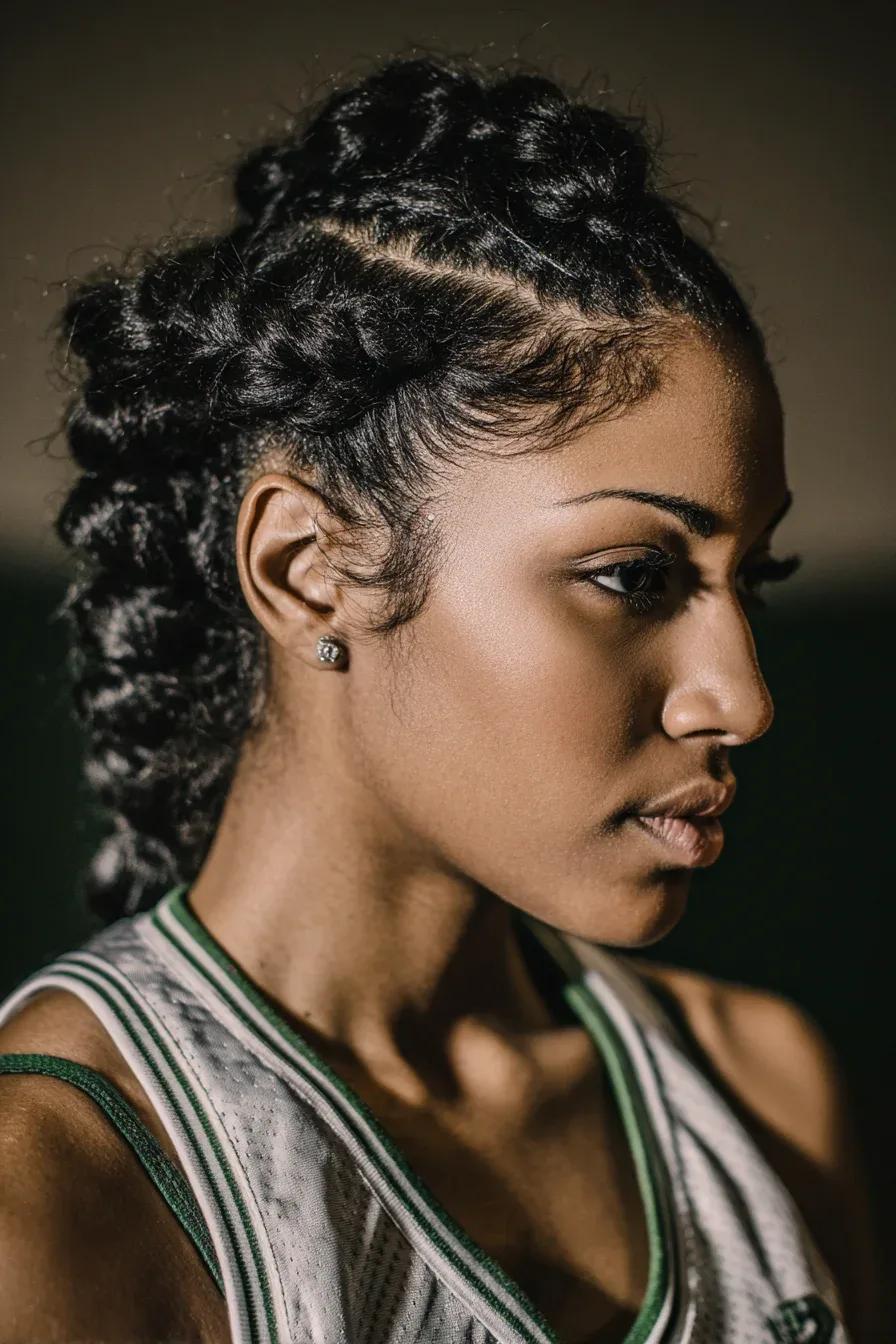
Best for: Tournament weeks, regular players and coily or curly hair. They are superb on court — completely flat, nothing to snag, and no daily restyling.
How to style: Cornrows need a skilled braider, so book them before a tournament week rather than on match day. Keep the tension comfortable, wash the scalp gently after playing, and wear a headband for sweat.
What to ask: Ask your braider for rows that sit flat under a headband, a comfortable tension at the hairline, and how long the style will last with regular squash.
Quick verdict: One of the very best squash styles for coily and curly hair. Flat, secure and long-lasting — get the tension right.
23. Flat Twists
What it is: Flat twists are two-strand twists worked flat against the scalp, like cornrows but twisted instead of braided. They give the same flat, contained finish with a softer feel.
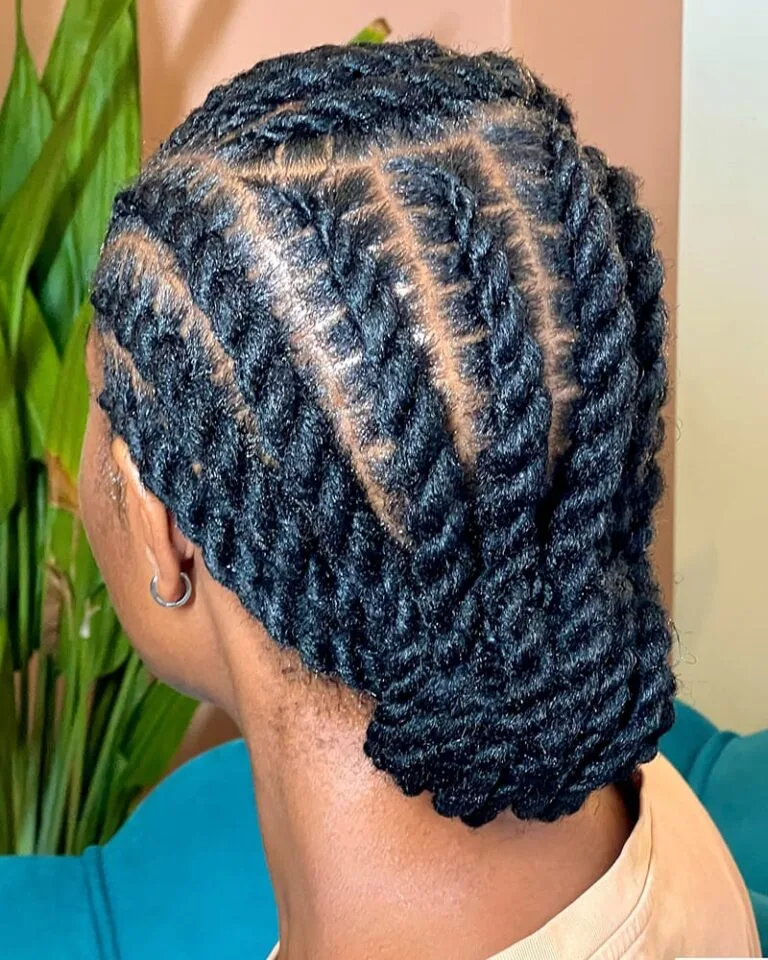
Best for: Curly and coily hair, players who find cornrows too tight, and multi-day squash trips. They lie flat under a headband and protect the hair.
How to style: Twist firmly in neat rows from the hairline back, secure the ends well, and pin any row that starts to lift. Moisturise the hair before twisting so the rows hold.
What to ask: Ask your stylist whether flat twists or cornrows suit your hair texture better, and how to keep the twists neat through several sweaty matches.
Quick verdict: A softer alternative to cornrows with the same headband-friendly shape. Excellent for curly and coily hair.
24. The Twisted Low Ponytail
What it is: The twisted low ponytail splits the hair into two sections, twists each one, and ties them together low at the nape. The twist adds grip that a plain ponytail lacks.
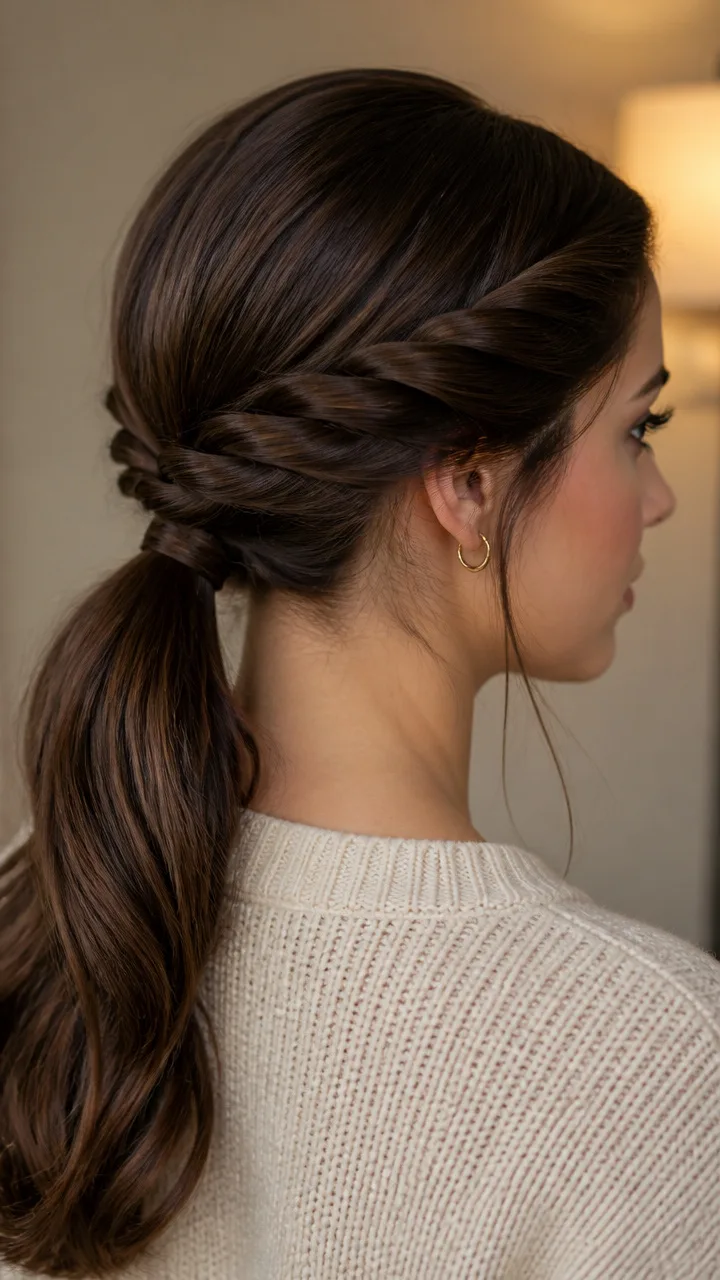
Best for: Fine or slippery hair that slides out of a plain ponytail, and players who want a quick upgrade with no extra tools. It sits below the headband line.
How to style: Split the hair in two, twist both sections the same way, cross them firmly and tie with a strong elastic. Add a headband for the hairline and re-twist between games if it starts to sag.
What to ask: Ask your stylist whether your hair twists cleanly or tends to unravel, and for a cut with even ends so the twist finishes neatly.
Quick verdict: A simple upgrade on the plain low ponytail. A little more grip for almost no extra effort.
25. The Slicked-Back Ponytail
What it is: The slicked-back ponytail brushes all the hair smoothly back from the face and ties it low or mid-height, with no loose layers at all. It is the cleanest ponytail in this post.
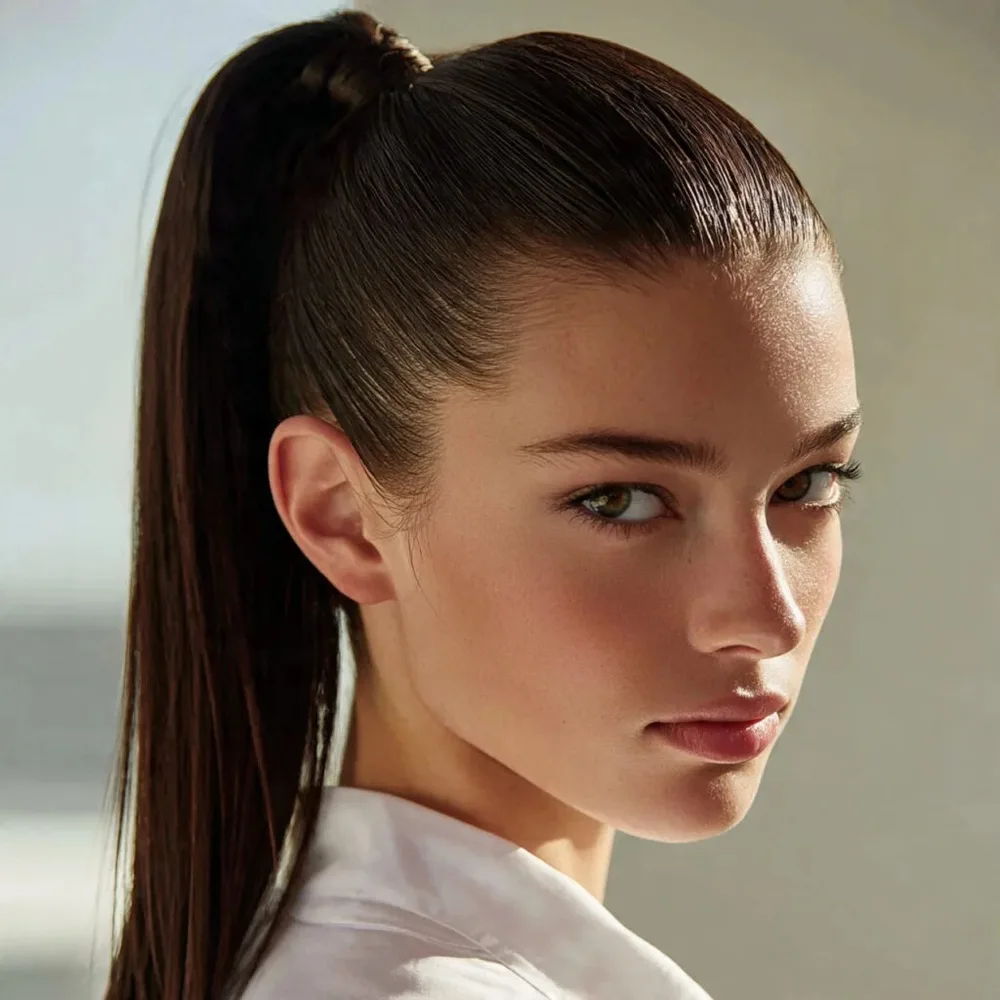
Best for: Players with a fringe that will not stay put, and matches where you cannot afford a single strand in your eyes. The headband sits neatly over the smooth hair.
How to style: Brush the hair back evenly with a light gel or smoothing cream, tie it low or mid-height, and smooth the hairline with a brush. Keep the tension comfortable and the product light.
What to ask: Ask your stylist for a light-hold product that survives sweat without turning greasy, and for a cut where the front layers reach the tie without escaping.
Quick verdict: The tidiest ponytail for squash. Use light product, keep it comfortable, and it will stay out of your way all match.
26. The Braided Bun
What it is: The braided bun braids the hair first, then coils the braid into a bun at the nape. The braid gives the bun structure, so it holds far better than a bun made from loose hair.
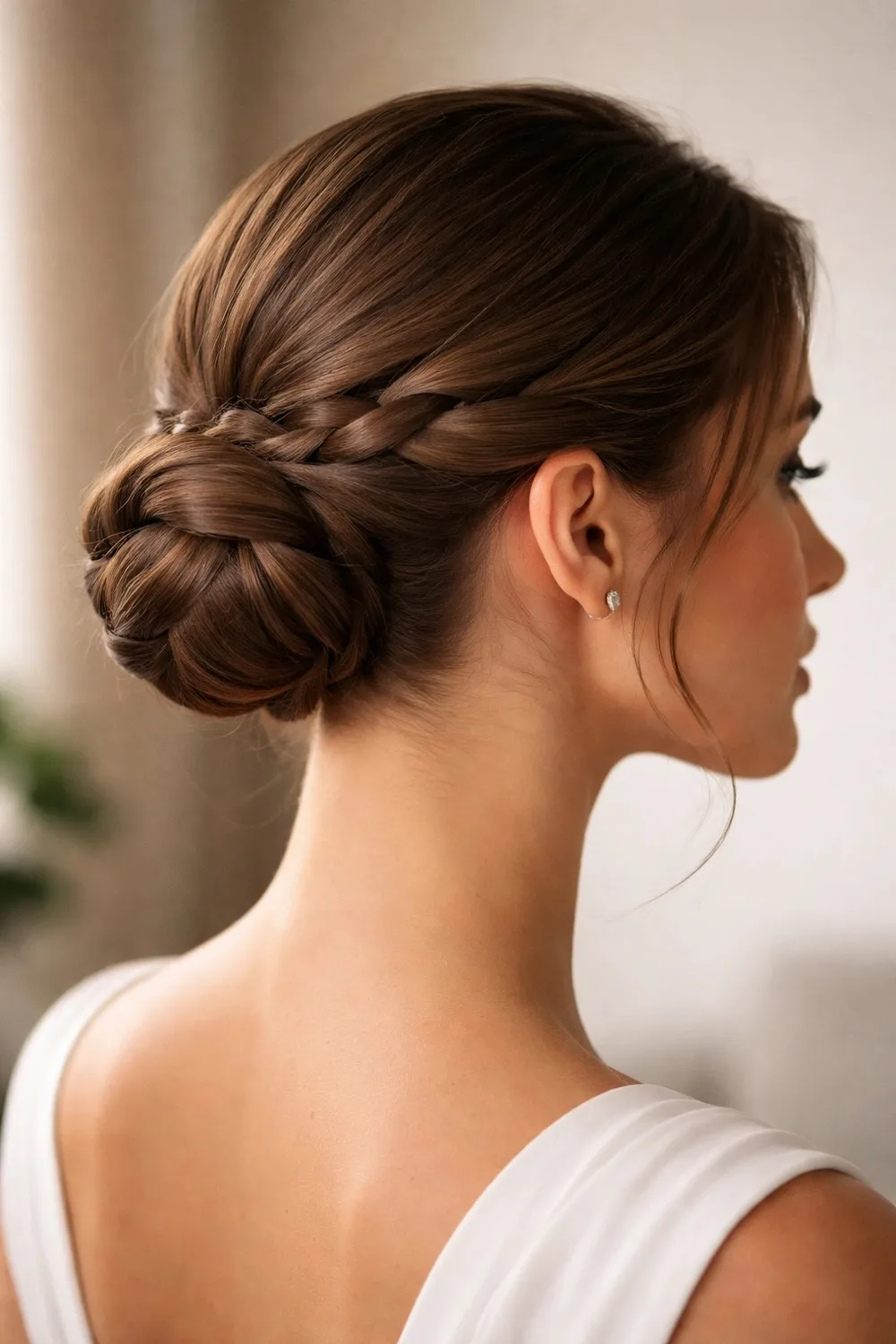
Best for: Long competitive matches and players whose plain buns always sag by the second game. It is very secure and sits low and flat.
How to style: Braid the hair low, coil the braid into a bun at the nape, pin in several places and tuck the tail of the braid inside the coil. Wear a headband for the hairline.
What to ask: Ask your stylist whether your hair is thick enough for a braided bun that is not too heavy, and for a cut that braids cleanly from the nape.
Quick verdict: The most secure bun in this post. Ideal for long matches when a plain bun would sag or come undone.
27. Pigtail Braids
What it is: Pigtail braids are two braids worn low on either side, like double braids with a younger, playful feel. They balance the hair evenly and keep both sides contained.
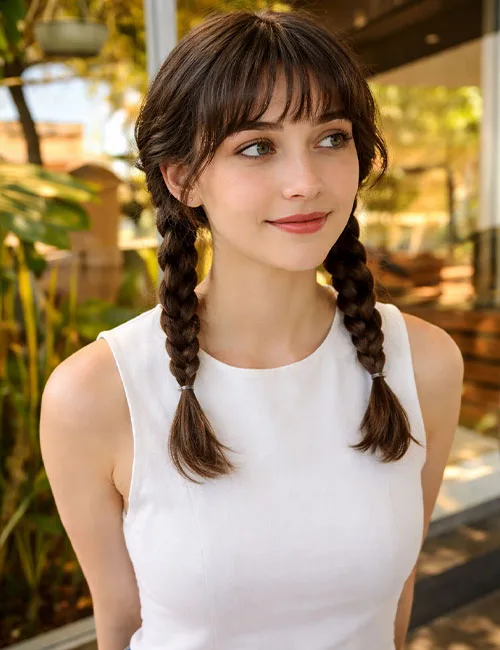
Best for: Club nights, friendly games and players who like their braids where they can see them. They are balanced, secure and easy to check.
How to style: Part the hair straight down the middle, braid each side firmly and tie the tails short or tuck them in so they do not swing during a rally. A headband keeps the part tidy.
What to ask: Ask your stylist for a straight centre part that suits you, and for layers that braid evenly on both sides without one side ending up thinner.
Quick verdict: Fun, balanced and reliable. A good choice for social squash and for players who like their braids visible.
28. The Headband Braid
What it is: The headband braid is a small plait worked along the hairline, from one side to the other, acting like a braided headband. It pins back the fringe and front layers that usually escape.
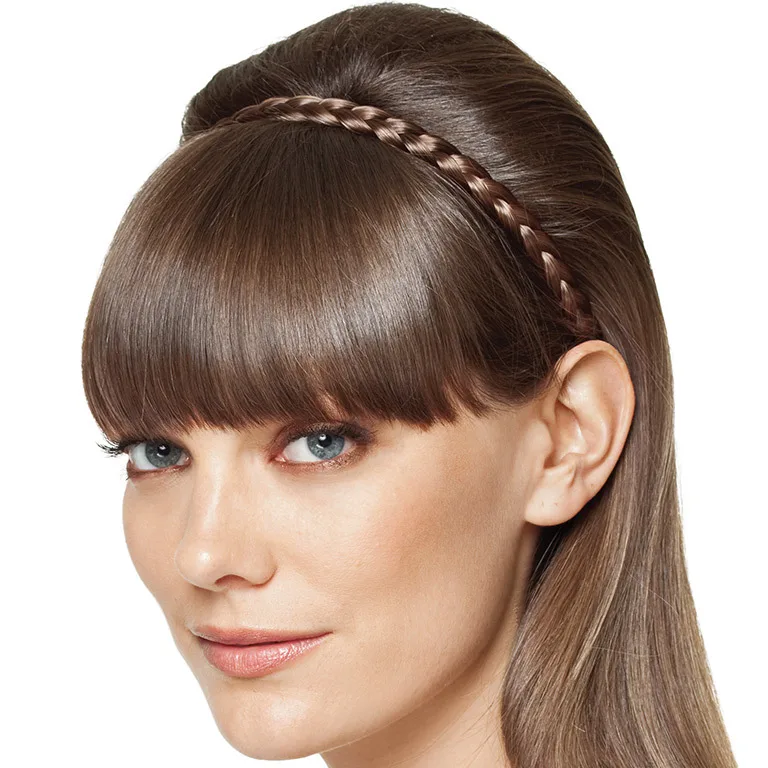
Best for: Players with a fringe that falls forward on every lunge. It works with almost any other style underneath and pairs perfectly with a real headband.
How to style: Braid firmly along the hairline from one side to the other and pin both ends flat behind the ears. Wear your usual ponytail or bun underneath, and add a thin headband over the top for sweat.
What to ask: Ask your stylist to show you the braid along your own hairline once, and whether your fringe length is enough to reach into the plait.
Quick verdict: A brilliant add-on rather than a full style. Pair it with a ponytail or braid and your fringe problem is solved.
29. The French Twist
What it is: The French twist sweeps the hair up and rolls it into a vertical twist pinned along the back of the head. It is elegant, compact and completely contained.
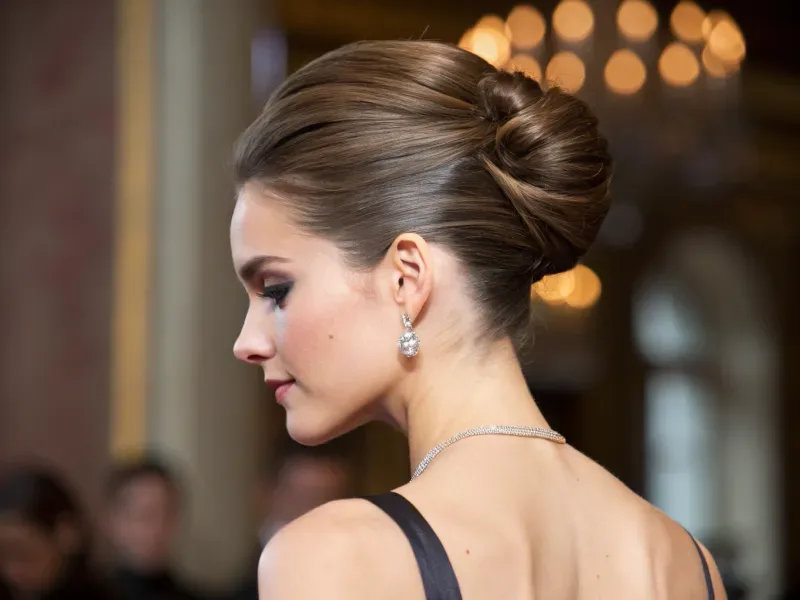
Best for: Club dinners after a match, social squash evenings and players who want one style for court and afterwards. There is no tail to snag or swing.
How to style: Sweep the hair up, roll it into a low vertical twist and pin along the whole length with plenty of pins. Roll it low so it sits comfortably, and check the back before you play.
What to ask: Ask your stylist to teach you the roll once in the chair, and whether your hair length and thickness suit a twist that holds through a match.
Quick verdict: Elegant and secure when worn low and pinned well. A surprisingly practical choice for a player who already knows the twist.
30. The Chignon
What it is: The chignon is a low, rolled bun at the nape, softer and looser than a tight bun. It is the classic low updo, and on court its low placement is its greatest strength.
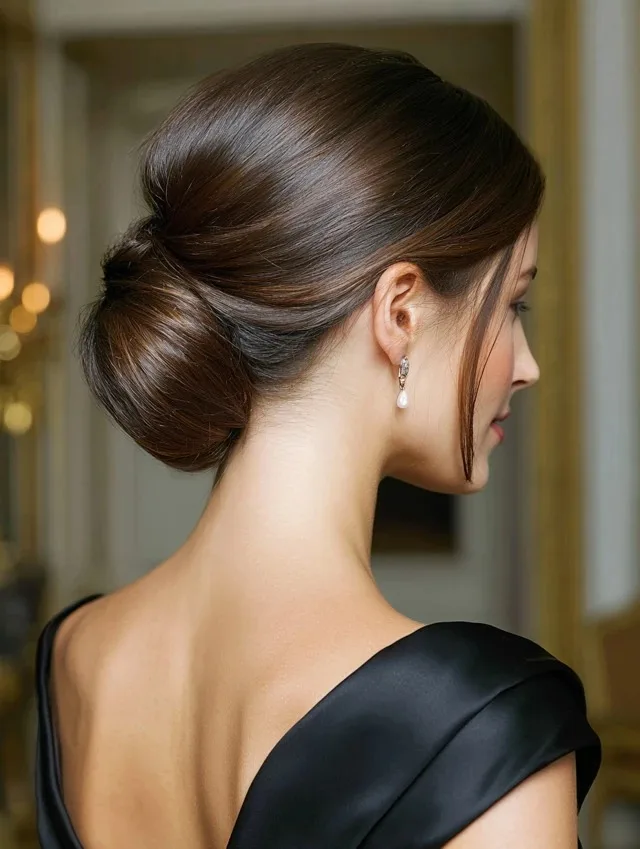
Best for: Social matches, club nights and players who want a softer look than a tight bun. It sits below the headband and keeps the neck cool.
How to style: Roll the hair firmly at the nape, pin in several places, and use a tie as the base so the pins are not doing all the work. Smooth flyaways with a touch of cream and add a headband.
What to ask: Ask your stylist for a chignon that holds on your hair texture, and for a cut where the rolled ends tuck in neatly rather than springing out.
Quick verdict: A graceful, headband-friendly updo. Best for shorter sessions or for players who do not mind re-pinning.
31. Bantu Knots
What it is: Bantu knots are small sections of hair twisted and coiled into tight knots across the head. They are a protective style that keeps the hair completely contained.
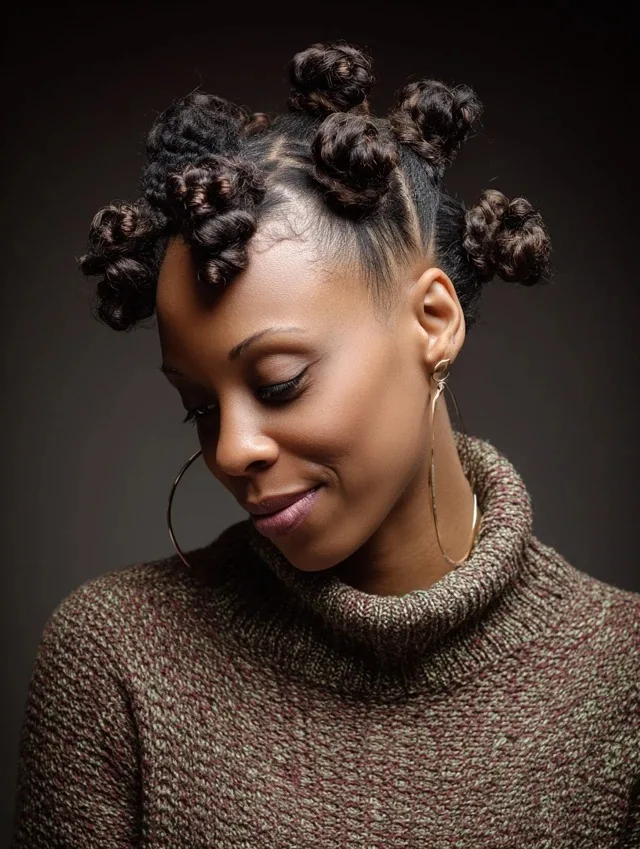
Best for: Coily hair, tournament weeks and players who want a style that lasts several match days. They lie close to the head and fit easily under a headband.
How to style: Section the hair, twist each section and coil it into a knot, keeping the tension comfortable at the scalp. Moisturise the scalp, cover the knots at night, and rinse out sweat after playing.
What to ask: Ask your stylist or braider for knots sized to sit flat under a headband, and how to care for them through a week of sweaty matches.
Quick verdict: Flat, secure and protective. An excellent squash style for coily hair, as long as the tension stays comfortable.
32. The Halo Braid
What it is: The halo braid is a single braid wrapped all the way around the head and pinned in place, like a crown. It contains the whole head of hair in one continuous circle.
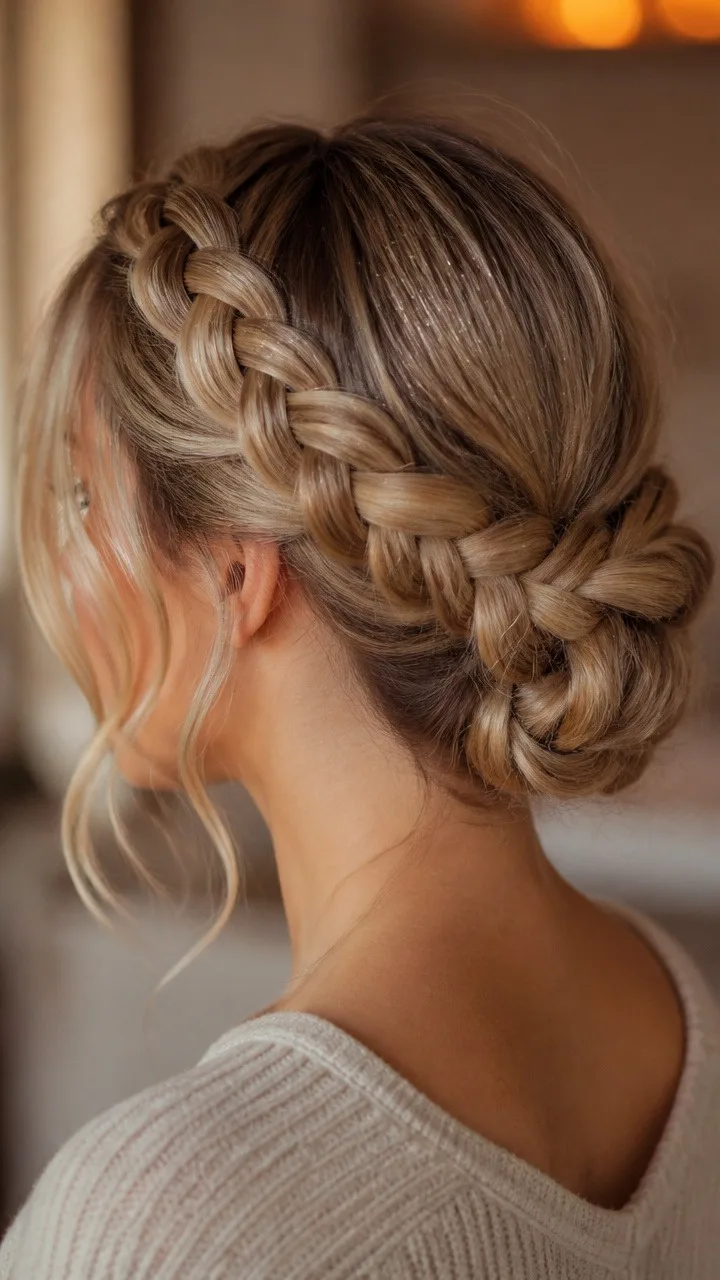
Best for: Long hair, long match days and players who want the most secure style in this post. It sits flat under a headband and keeps every layer off the face.
How to style: Braid from one side around the whole head, pin along the whole circle a few inches apart, and check the back in a mirror. Practise at home before trusting it on a long match day.
What to ask: Ask your stylist whether your hair is long enough to wrap the whole head, and for layers that stay inside the braid rather than escaping at the nape.
Quick verdict: One of the most secure styles here, if you have the length and the patience to pin it properly.
33. The Pixie Cut
What it is: The pixie cut is short all over, with a little length on top. It is the ultimate low-maintenance squash cut: nothing to tie, nothing to snag, nothing to come undone.
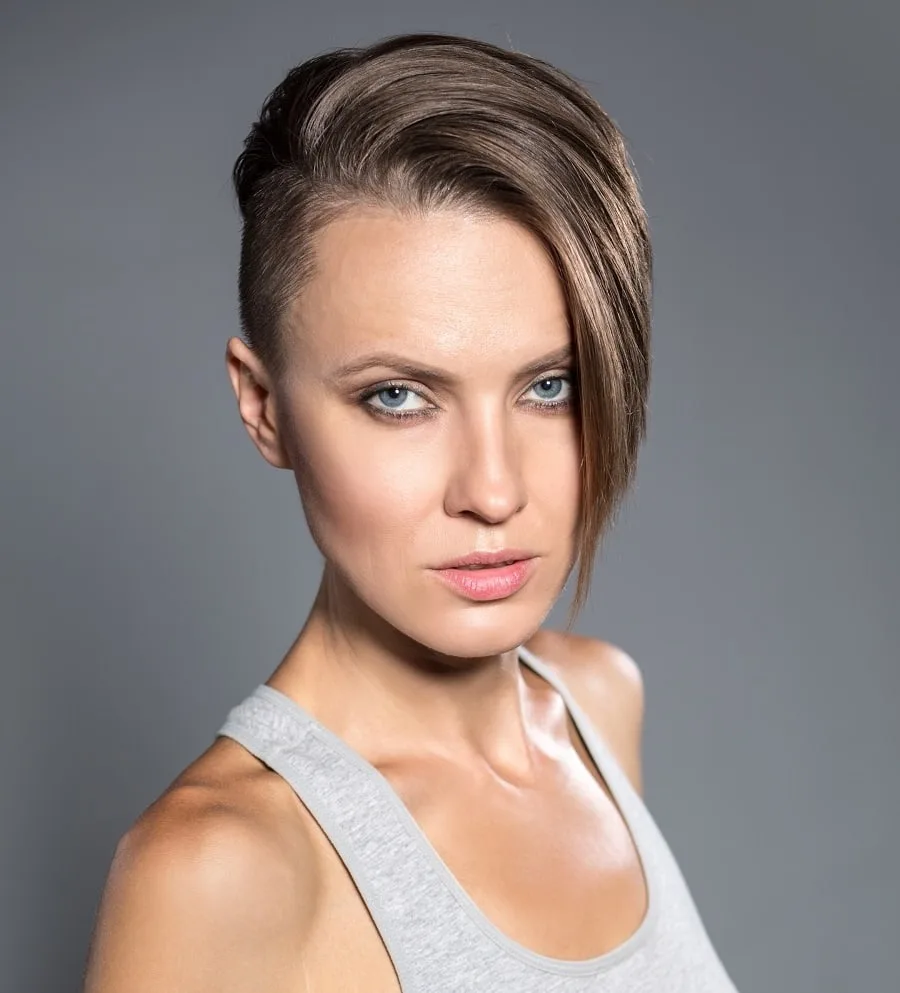
Best for: Regular players who want zero hair fuss, hot courts and anyone tired of re-doing their hair between games. It dries in minutes and fits under a headband with no bulk at all.
How to style: Wash, add a little light matte product, and sweep the top into place. Keep two flat clips and a thin headband in your squash bag for the fringe, which is the only part that can still fall into your eyes.
What to ask: Ask your stylist for a pixie with a fringe you can sweep to the side or pin back, and for a cut that grows out gracefully between trims.
Quick verdict: The easiest squash haircut there is. Bring two clips for the fringe and you are done.
What is the best hairstyle for a squash game?
A French braid or double Dutch braids are the best hairstyles for a squash game for most players. They hold through sprints and lunges, keep hair out of your eyes, and sit flat under a headband. A low ponytail or a low bun works well too if you prefer something faster.
Can I wear a ponytail for squash?
Yes, a low ponytail is one of the best choices for squash because it sits below the headband and stays put during sprints. A high ponytail also works, but braid the tail or add a second tie so it does not whip around during a rally.
How do I keep my hair out of my face during squash?
Braid the front layers back, use a headband braid or a thin headband, and pin any escaping pieces flat with snag-free pins. A French braid or a slicked-back ponytail solves the problem at the source, rather than fighting loose strands mid-rally.
Should I wear a headband for squash?
Yes, a thin, grippy headband is one of the most useful things you can wear for squash. It holds back the fringe, catches sweat before it reaches your eyes, and adds grip that helps a ponytail or braid stay put. Carry a dry spare for your next match.
What hairstyle is best for long hair in squash?
A French braid, double Dutch braids or a braided ponytail are the best choices for long hair in squash. They contain the whole length so the tail cannot swing, whip or distract you during a rally. A low braided bun is another excellent option.
Can I wear a bun for squash?
Yes, if the bun sits low at the nape or is kept compact on top. A low bun or a braided bun fits below the headband and stays comfortable all match. A loose, high messy bun can unravel during a lunge, so pin it well and wear it low for competitive games.
How do I stop my braids coming loose during squash?
Braid on slightly damp hair with a little grip, keep the tension even, and finish with a strong snag-free elastic. Tuck the tail under or braid to the very end, and re-braid rather than trying to patch a braid that has gone slack.
What should I do about sweat in my hair after squash?
Rinse your hair with lukewarm water first, then work conditioner through the lengths before you shampoo. Do not brush dry, sweaty hair, as that drags salt through the strands and causes breakage. A leave-in conditioner before playing helps sweat wash out more easily.
Is it better to play squash with wet or dry hair?
Slightly damp hair is best for braiding, because it grips better and holds longer. Soaking wet hair is heavy, stretches the style, and dries unevenly under a headband. Dry hair works fine for ponytails and buns, especially with a little texture spray for grip.
What hair ties are best for squash?
Snag-free fabric ties and strong elastics without metal joins are best, because they grip without tearing the hair. A scrunchie is gentler for long tournament days, while a thick elastic holds a heavy braid. Carry a spare in your squash bag.
Conclusion
The right style for you is the one that passes the court tests: it stays put through sprints and lunges, it keeps your hair out of your eyes, and it works with your headband rather than against it. For most players, that means a French braid, double Dutch braids or a low braided ponytail — and for the rest, a low bun or a well-placed ponytail does the job. The best hairstyles for a squash game are not the prettiest ones in the mirror; they are the ones you forget about completely once the rally starts.
Try two or three styles from this guide in practice games first, do the rally test before your match, and keep a spare tie, a few pins and a dry headband in your squash bag. Once you find the style that holds through sweat, sprints and a long match, stick with it — and let your hair be the last thing you think about when you reach for the next shot.