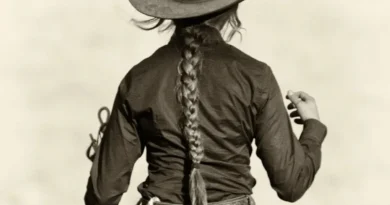
Denim, Dust and Good Hair: Hairstyles for a Country Concert That Last From the First Song to the Encore
A country concert is not a salon appointment. You arrive in the afternoon sun, stand in a dusty festival field, dance through the opening acts, and you are still there when the headliner takes the stage under the lights. The best hairstyles for a country concert are built for that whole day: they sit happily under a cowboy hat, they do not fall apart when you two-step, and they still look good in a golden-hour photo when the sun drops behind the stage.
This guide starts with the hat, dust and dancing basics every concert-goer should know, then works through 31 styles that actually last from the first song to the encore. Some are five-minute braids, some are simple ponytails placed so a hat still fits, and a few are cuts that make a long festival day easier. Pick the one that fits your hair length, your hat and how hard you plan to dance.
Cowboy Hats and Hair: How to Wear Both
What it is: A cowboy hat changes every hairstyle decision, because the hat has to sit level and comfortable for hours. Hair should lie flat where the brim rests, with no bun or knot pressing against the crown and no bulky tie sitting where the hat band grips.

Pros and cons: The payoff is comfort and the look itself: a hat that sits properly shades your face, keeps dust out of your hair and finishes the outfit. The trade-off is that high buns and top knots are mostly out, and you may need to relearn a style you have worn for years.
Common mistakes: The classic error is a ponytail at the exact height of the hat band, so the hat tilts every time you move. Another is leaving loose strands at the nape, where they tangle in the hat’s inner band. Test the fit at home: put the hat on, dance around the room, and tip your head back before you trust a style in a field.
Maintenance and quick verdict: Keep a spare tie and a couple of pins in your pocket or bag, and re-check the hat fit after the first set, when sweat has loosened things. Verdict: if a style and a hat fight each other, the hat wins — change the style.
Dust, Heat and Sweat: What a Festival Field Does to Hair
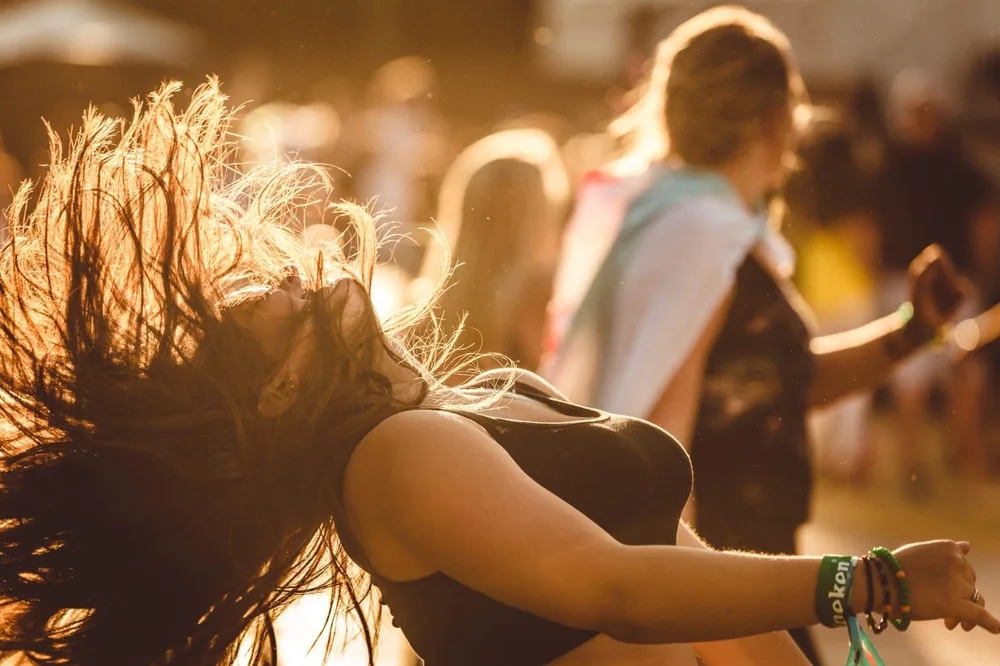
What it is: A country concert is hard on hair in a very specific way. Dust from the field coats the strands, the afternoon sun dries them out, sweat wets the roots and then dries salty, and a hat traps heat so the whole lot bakes together for hours.
Pros and cons: The upside is that dust and sweat are both washable, and a contained style limits the damage to the ends rather than the roots. The downside is that repeated dust without proper washing leaves hair dull, tangled and prone to breakage, especially at the ends and around the hairline.
Common mistakes: Brushing dry, dusty hair straight after the show is the worst offender — it drags the dust through the strands and snaps them. Skipping a wash for days after a big outdoor day is a close second. Rinse first, detangle gently with conditioner in, and only then shampoo.
Maintenance and quick verdict: A light leave-in conditioner before the concert helps dust slide off, and a proper wash after sorts out the rest. Verdict: treat concert hair like sports hair — contain it, rinse it, then wash it properly.
Dancing All Day: Styles That Survive Two-Stepping
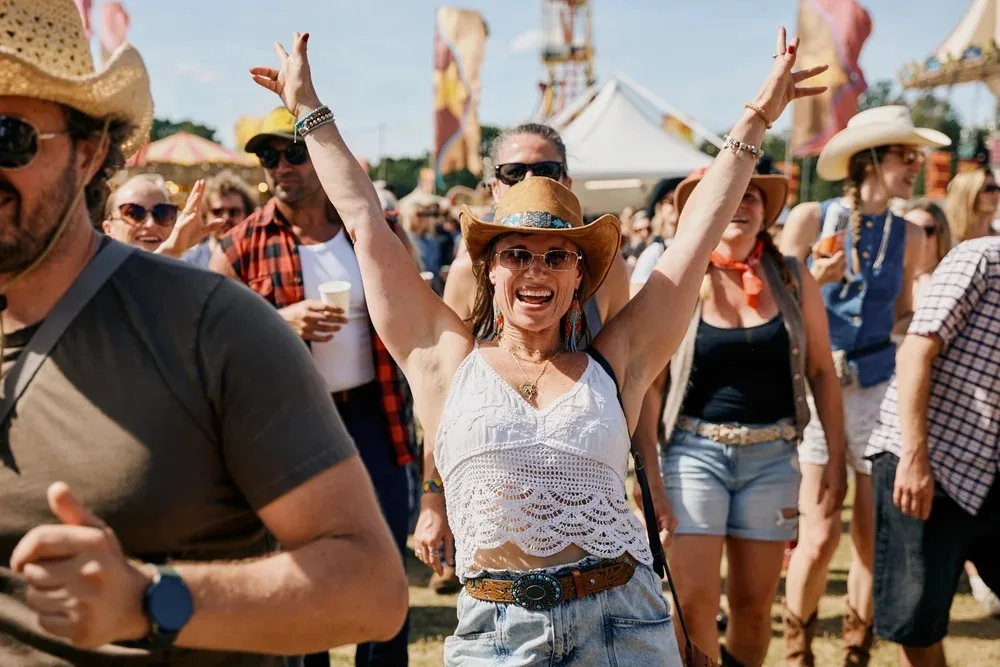
What it is: Every style in this post passes three tests. It stays put without constant fixing, it keeps hair out of your face while you dance, and it works with a cowboy hat rather than against it.
Pros and cons: A style that passes all three lets you forget your hair completely and enjoy the music. The cost is a little more prep time before you leave and a few more pins or ties than a lazy at-home style — a fair trade for not having to re-do your hair halfway through the headliner’s set.
Common mistakes: Concert-goers usually break one rule: they choose a pretty style that falls apart, a secure style that sits under the hat crown, or a hat-friendly style that leaves face-framing strands loose. If any one rule fails on a test dance at home, the style fails, however good it looks in the mirror.
Maintenance and quick verdict: Do a five-minute shake test before you leave — jump, spin, tip your head back, and tug the style. Verdict: secure, clear of your face, hat-friendly. Miss one, pick another style.
Bandanas: The Country Concert Essential
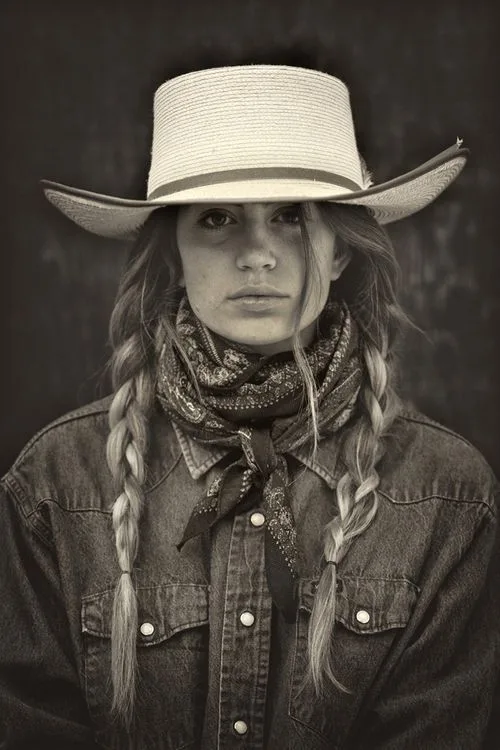
What it is: A bandana is the hardest-working accessory at a country concert. Folded into a headband it keeps sweat and loose strands out of your eyes, tied over a ponytail it adds colour, and worn as a neckerchief it doubles as a dust mask when the field kicks up.
Pros and cons: Bandanas are cheap, light and endlessly reusable, and they protect the hairline from sun and dust better than almost anything else. The downside is bulk: a thick knot under a hat can tilt it, and a bandana that is too loose slides down over your eyes mid-dance.
Common mistakes: Tying the knot right where the hat band sits is the main error, and so is using a slippery satin bandana that will not stay put. Keep the knot low or to the side, choose cotton, and pin the bandana in place if you plan to dance hard.
Maintenance and quick verdict: Pack a spare bandana, since the first one will be dusty and sweaty by sunset, and wash them both when you get home. Verdict: one bandana in your hair, one in your bag — you will use both.
Short Hair at a Country Concert: Less to Manage, Still a Plan
What it is: Short hair is the lowest-maintenance option in a festival field, but it still needs a plan. A pixie or short bob will not snag on anything, yet the fringe and the nape can still fall into your eyes or under a hat band.
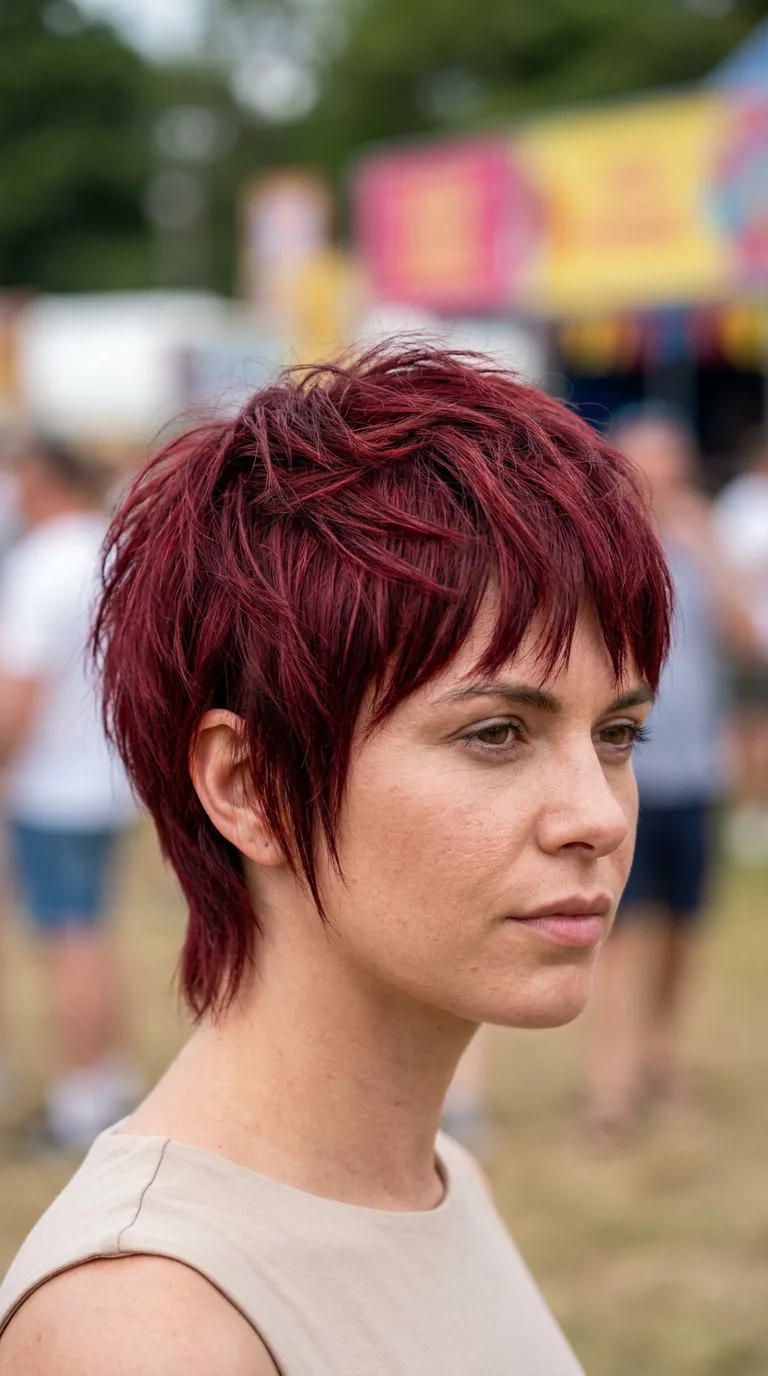
Pros and cons: Short hair dries fast, washes fast, and never needs a heavy tie. The downside is that you cannot tie back the bits that do fall forward, so a bandana, clips or a hat matter more, not less.
Common mistakes: Assuming short hair needs nothing is the usual error. A fringe that is fine at the tailgate becomes a curtain when you tip your head back to watch the stage, and product that holds at home can turn greasy under a hat in the heat.
Maintenance and quick verdict: Keep two flat clips and a thin bandana in your bag, and use a light matte product rather than a heavy wax. Verdict: short hair is easy, not automatic — bring the clips.
Long Hair at a Country Concert: Taming Length Without a Snag
What it is: Long hair needs containing, not just tying. A single ponytail leaves a long tail that swings while you dance, catches the wind and can drop into your drink or brush a stranger’s shoulder, so length should be braided, folded or coiled.
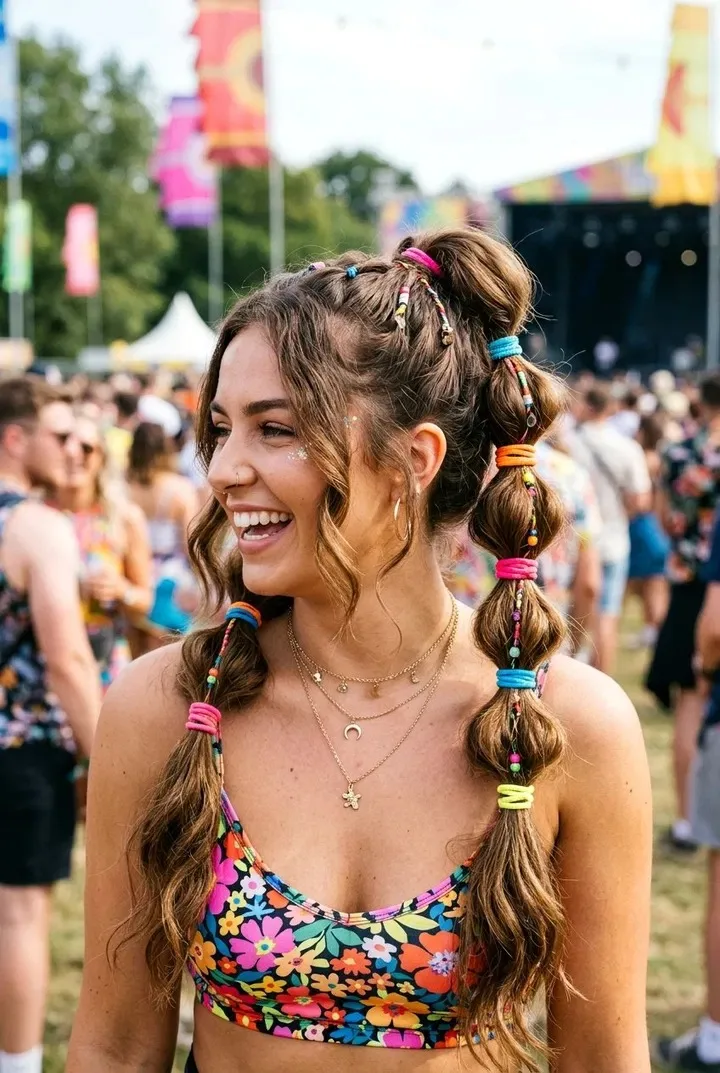
Pros and cons: Long hair gives you the most styling options, from braids to buns to wrapped ponytails. The risk is the tail itself: loose length is the one thing most likely to tangle, snag or distract you mid-dance.
Common mistakes: Tying long hair high and leaving the tail free is the classic mistake, closely followed by a bun placed where the hat crown sits. Fold the tail up, braid it, or coil it low, and always check the back of your head against the hat before you leave.
Maintenance and quick verdict: Trim split ends regularly, since dust and friction punish damaged ends first, and carry a spare tie for the walk back to the car. Verdict: long hair dances beautifully — braided, folded or coiled, never loose.
Curly and Coily Hair: Concert Day Without the Frizz Fight
What it is: Curly and coily hair has natural volume and spring, which is lovely off the field and a tangle risk on it. The goal is to contain the curl pattern without crushing it flat under a hat or pulling it painfully tight.
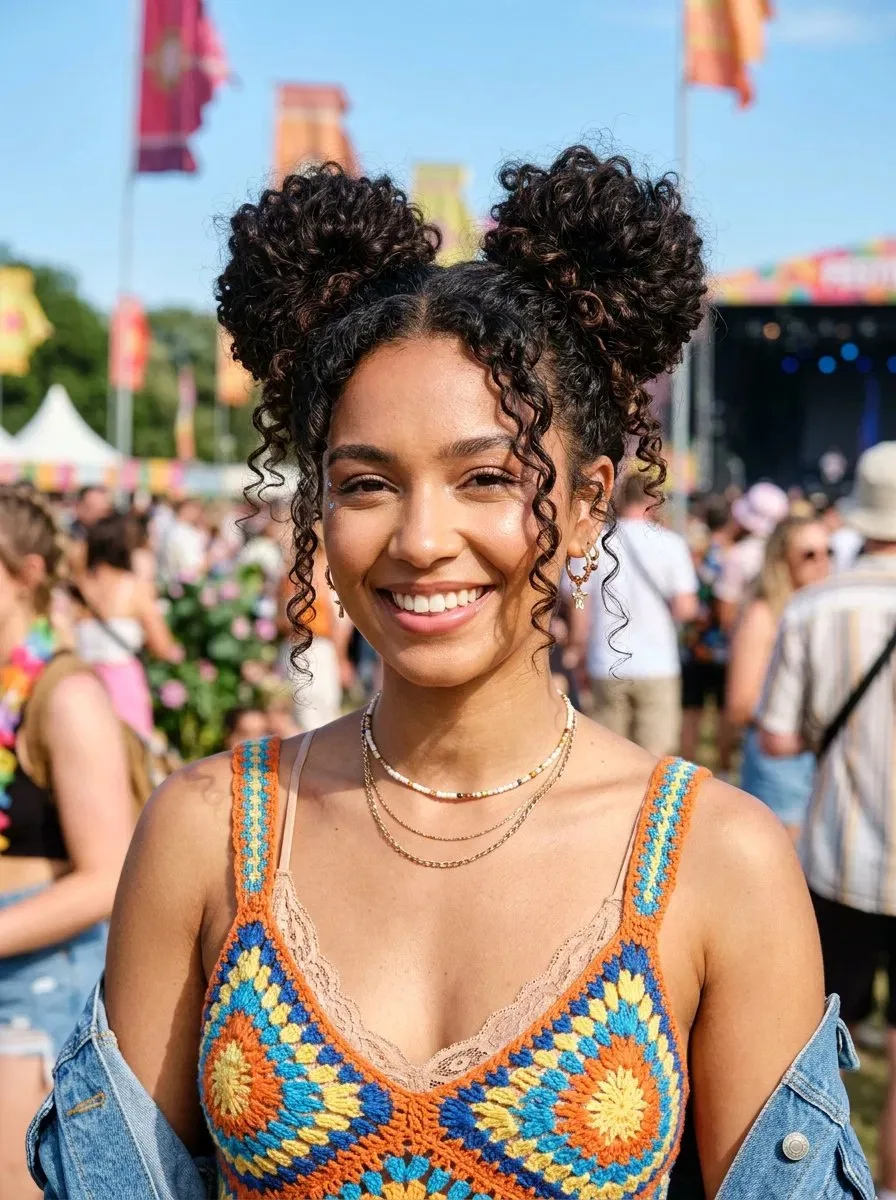
Pros and cons: Curls hold braids and twists well, and a contained curl style often survives a whole concert better than straight hair does. The downside is that sweat and hat friction can turn a neat style into a frizz halo within an hour, and dust is harder to wash out of dense curls.
Common mistakes: Brushing curls dry before a concert breaks the pattern and creates frizz before you even arrive. Pulling curls into a tight, slick ponytail can also ache at the roots. Work with damp, conditioned hair, braid or twist loosely, and save the detangling for wash day.
Maintenance and quick verdict: A satin-lined hat band or a light leave-in under the hat reduces friction, and a gentle co-wash after the concert removes dust without stripping curls. Verdict: contain, do not fight, your curl pattern.
After the Encore: Wash Day for Dusty, Sweaty Hair
What it is: Wash day after a country concert is a reset, not a punishment. The job is to get dust and salt out, restore moisture, and detangle without snapping the ends that took the most friction from the hat and the dancing.
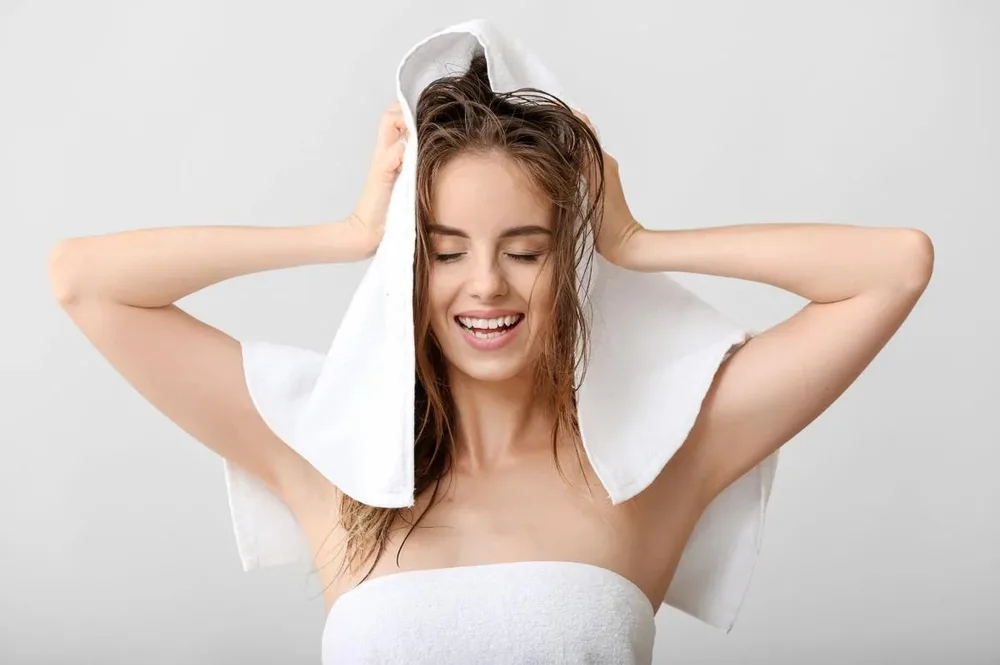
Pros and cons: A proper post-concert wash leaves hair soft and ready for the next show, and it is the single best thing you can do for hair that spends whole days in festival fields. The only downside is time, which is why so many people skip it and pay for it later in breakage.
Common mistakes: Shampooing dusty hair without rinsing first just moves the dust around, and hot water on sweaty, tangled hair makes knots worse. Rinse with lukewarm water, work conditioner through the lengths before you shampoo, and detangle from the ends upward.
Maintenance and quick verdict: Deep-condition once a week if you go to concerts often, and keep a wide-tooth comb in your wash bag. Verdict: rinse, condition, detangle, shampoo — in that order — and your hair will forgive the festival field.
1. The High Ponytail Under a Cowboy Hat
What it is: The high ponytail gathers all the hair at the crown and ties it up high, keeping the neck cool and the hair in one swinging unit. At a country concert it only works when the hat sits above it, not over it, so placement is everything.

Pros and cons: It is quick, cool and easy to redo between sets, and it keeps hair off the neck on hot afternoons. The cons are real in a field, though: the tail swings while you dance, it can catch the wind, and a high tie can sit awkwardly under a hat’s crown.
Common mistakes: Tying it at the exact height of the hat band is the main error, and using a thin elastic that slips is the second. Wrap the tie twice, anchor it with a pin, and if the hat pushes the ponytail forward, wear the hat tilted back or drop the placement an inch or two.
Maintenance: Brush the hair smooth before tying, keep a spare elastic in your pocket, and re-tie after the first set, when sweat has loosened the base. A fabric-covered tie grips better and dents the hair less.
Quick verdict: Great for the tailgate and for dancing without a hat. With a hat on, test the placement first — or braid the tail.
2. The Low Ponytail
What it is: The low ponytail sits at the nape, below the hat line, and is the most hat-friendly ponytail of all. It keeps the hair contained without creating a bump anywhere the hat needs to sit.
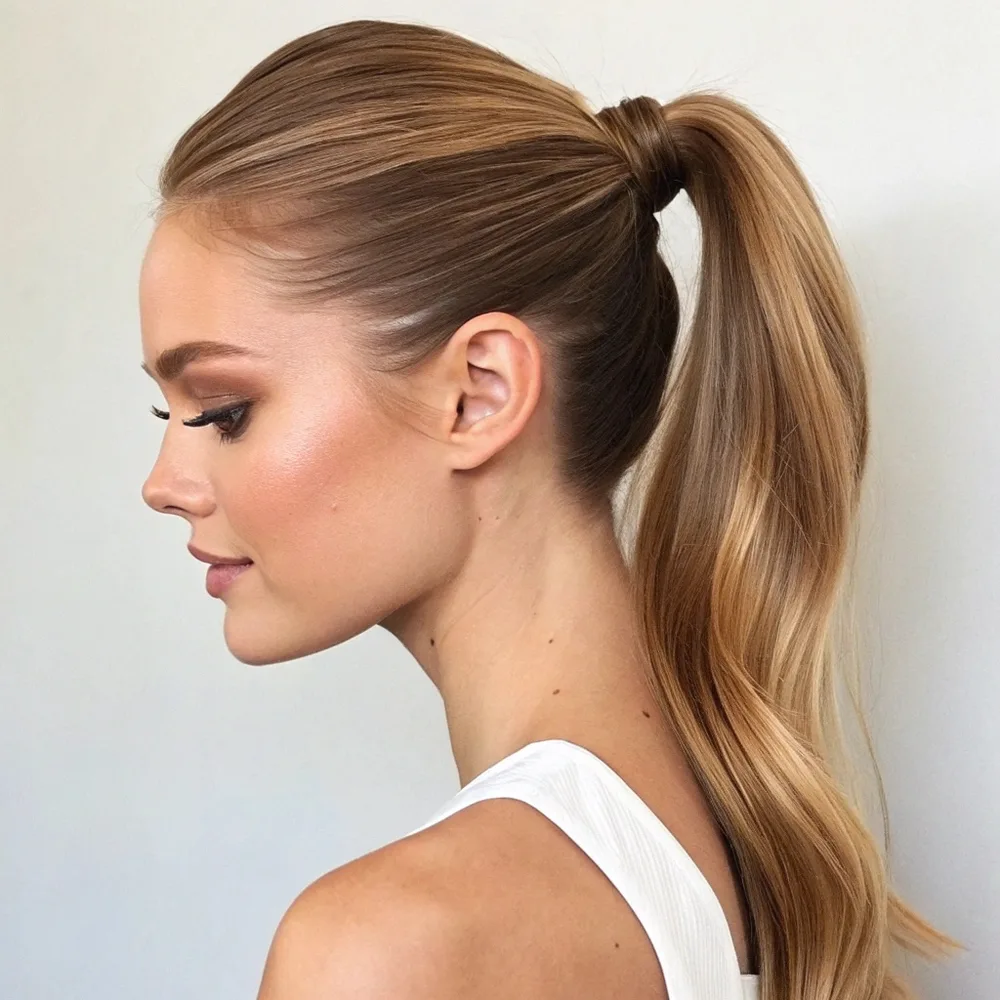
Pros and cons: The hat sits flat, the band stays comfortable, and the style suits almost every hair type. The downside is a long tail that can swing onto your back and shoulders, and on a crowded dance floor it can brush the person behind you.
Common mistakes: Leaving the tail completely loose on a long day is the usual problem, and so is tying it so loosely that it sags by the second set. A second tie halfway down the tail, or a loose braid, fixes both issues.
Maintenance: Smooth the nape with a brush or your fingers, secure with a snag-free tie, and check the tail before each set. A little smoothing cream keeps flyaways out of your eyes without making the hair greasy.
Quick verdict: The safest ponytail for a hat-wearing concert day. Simple, comfortable and reliable — just manage the tail.
3. The French Braid
What it is: The French braid starts at the crown and picks up hair as it travels down, locking everything into one flat plait that hugs the head. It is the classic festival braid for good reason.
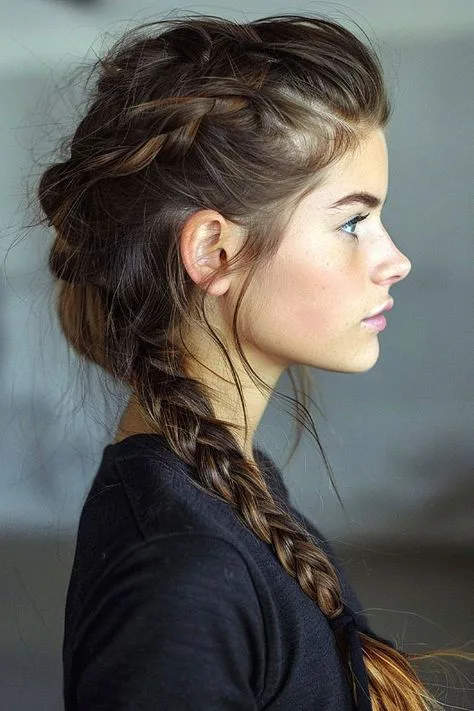
Pros and cons: It holds for hours, lies flat under a hat, and keeps even short face-framing layers contained. The only real con is the skill and time it takes — a rushed French braid unravels, and a very tight one can ache at the hairline by the encore.
Common mistakes: Starting too loosely at the front lets layers escape into the dust and wind, and braiding too tightly at the temples causes a headache by mid-show. Keep the tension even, finish with a strong elastic, and tuck the tail under or braid it to the very end.
Maintenance: Braid on slightly damp hair for extra grip, carry a spare elastic, and undo the braid gently after the concert, finger-combing before you brush. A light leave-in before braiding helps dust wash out later.
Quick verdict: The gold standard for concert hair. Learn it once and it will carry you through every festival season.
4. The Dutch Braid
What it is: The Dutch braid is the French braid turned inside out: the strands cross under instead of over, so the plait sits raised on the surface of the hair. It looks bolder and grips just as well.
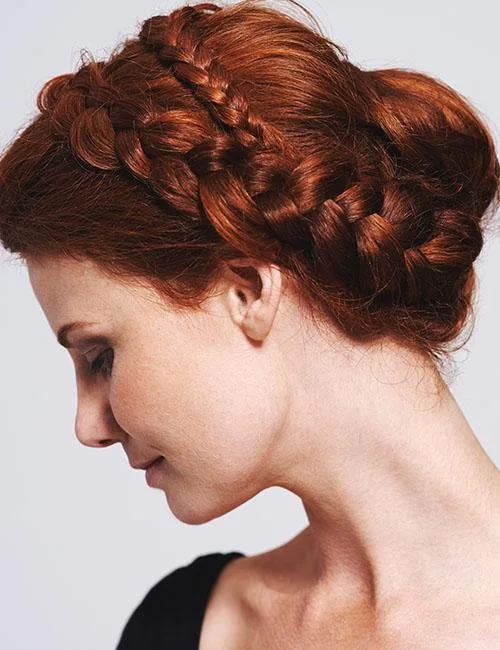
Pros and cons: It holds even better than a French braid on slippery or fine hair, because the raised plait locks the sections in place. The trade-off is bulk — the raised braid can press against a hat if it runs over the crown, so placement matters.
Common mistakes: Running the braid straight over the crown, where the hat sits, is the main error. Angle it slightly to one side or start it lower, and keep the sections even so the braid does not pull to one side as you dance.
Maintenance: A little texture spray or dry shampoo at the roots helps fine hair grip, and a strong elastic at the end stops the tail unravelling. Re-braid rather than patching a braid that has loosened halfway through the day.
Quick verdict: Excellent grip and a striking look. Best when the braid runs low or to the side, clear of the hat crown.
5. Double Dutch Braids
What it is: Double Dutch braids split the hair into two plaits, one on each side, running from the hairline to the nape. They spread the weight evenly and keep both sides of the head contained.
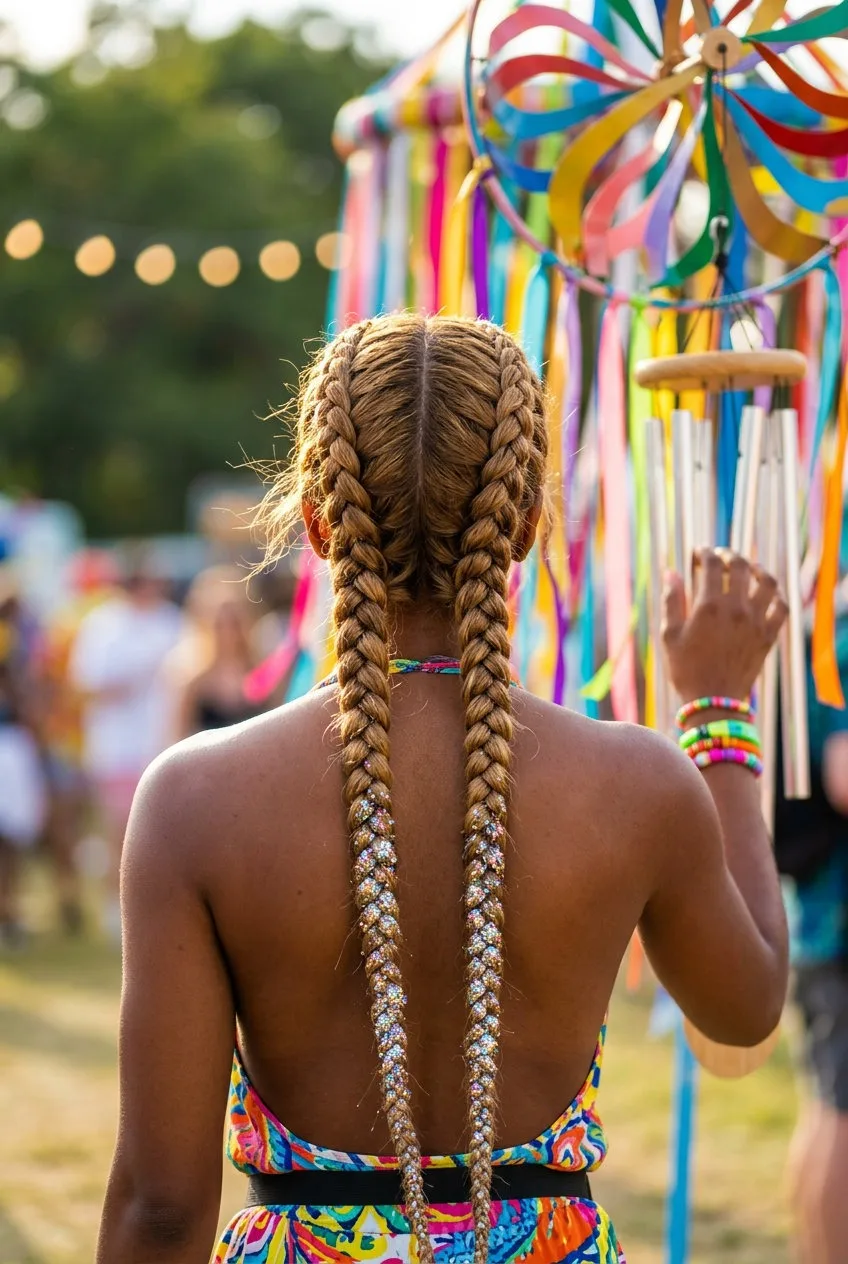
Pros and cons: Two braids balance better than one, survive sweat, dust and dancing, and look great under a hat because they lie flat. The con is time — two neat braids take twice as long — and the centre part needs to be straight or the braids sit unevenly in photos.
Common mistakes: Making the part crooked, braiding one side tighter than the other, and leaving the tails too long and loose. Take your time with the part, match the tension, and tie both tails at the same length.
Maintenance: Braid on clean, slightly damp hair, use matching snag-free elastics, and undo both braids gently after the show. The waves left behind make a good next-day style on their own.
Quick verdict: One of the most reliable concert styles ever made. Worth the extra five minutes, every time.
6. The Fishtail Braid
What it is: The fishtail braid weaves two sections into a fine, herringbone-style plait that looks intricate and holds the hair in a slim, flat tail. It works best on medium to long hair.
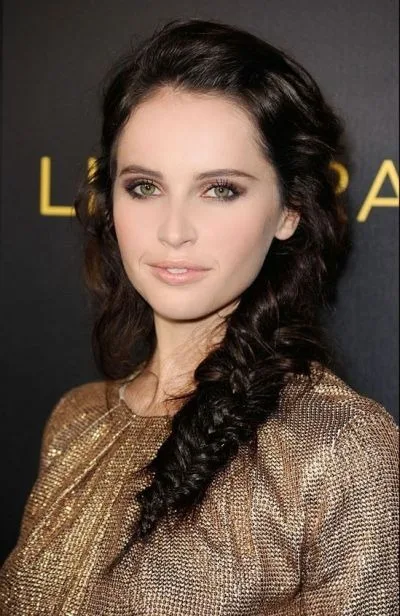
Pros and cons: It is slim and elegant, lies flat against the back, and photographs beautifully at golden hour. The downside is that it takes longer than a three-strand braid and can loosen if the sections are not kept small and even.
Common mistakes: Taking sections that are too big makes the braid fall apart, and starting it too high leaves a bump under the hat. Start low, keep the pieces small, and pull the braid gently at the end to even it out.
Maintenance: A fishtail holds best on hair with a little grip — second-day hair or a touch of texture spray. Carry a spare elastic, and re-do it rather than trying to rescue a braid that has gone slack.
Quick verdict: Beautiful and secure on long hair, best for shorter shows or as a second style after the dancing is done.
7. The Bubble Braid
What it is: The bubble braid is a ponytail divided into puffed sections by elastics spaced down its length. It looks playful, but in a festival field it is genuinely practical: each elastic stops the hair sliding.
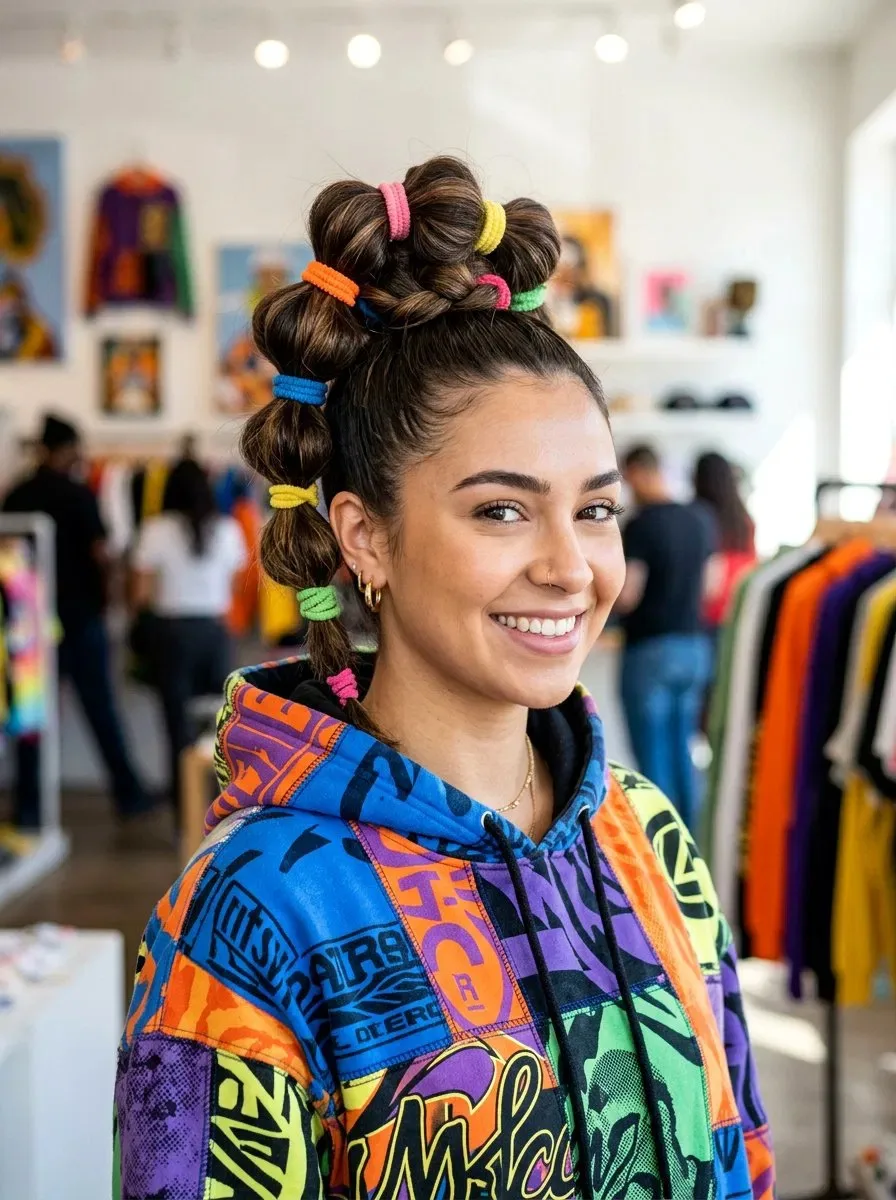
Pros and cons: It contains long hair in neat segments, survives movement well, and is easy to redo with a handful of elastics. The con is the number of elastics — each one is a potential snag point — and the bubbles can catch the wind on exposed fields.
Common mistakes: Spacing the elastics too far apart lets the bubbles collapse, and using cheap elastics that snap mid-dance is a real nuisance. Use strong, snag-free ties and keep the bubbles modest rather than huge.
Maintenance: Remove the elastics one at a time after the concert and finger-detangle before brushing, since each tie leaves a small dent. Keep spare ties in your bag for the walk back.
Quick verdict: Fun, secure and easy. A great choice for long hair on a festival day.
8. The Rope Braid
What it is: The rope braid twists two sections around each other into a tight, rope-like plait. It is one of the fastest braids to do, and it holds with surprising strength.
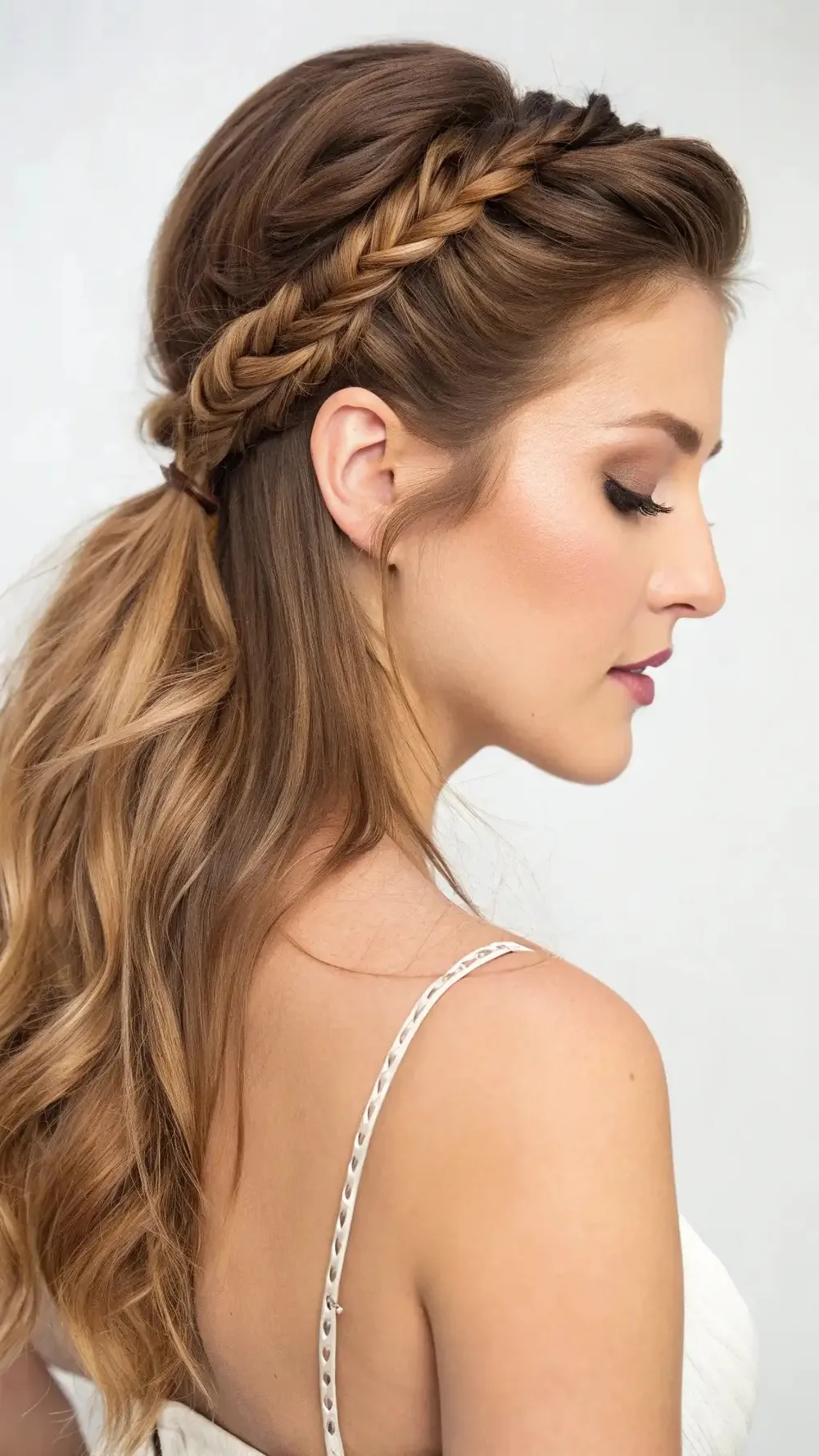
Pros and cons: It takes a minute to make, lies flat, and works well on thick hair that resists other braids. The downside is that it can unravel from the ends if the elastic is weak, and it needs a firm twist to stay put through a whole set.
Common mistakes: Twisting in the wrong direction lets the whole braid unwind, and finishing with a flimsy elastic guarantees a loose tail. Twist both sections the same way, wrap them firmly, and use a strong tie.
Maintenance: The rope braid is easy to redo between sets, so do not fight a loosening one — take it out and twist it again. A little pomade on the ends keeps flyaways down in the wind.
Quick verdict: The fastest secure braid for thick hair. Quick to make, quick to redo, and very concert-friendly.
9. The Crown Braid
What it is: The crown braid runs around the head like a halo, picking up hair as it goes and pinning the whole style in place. It keeps every layer off the face and neck at once.
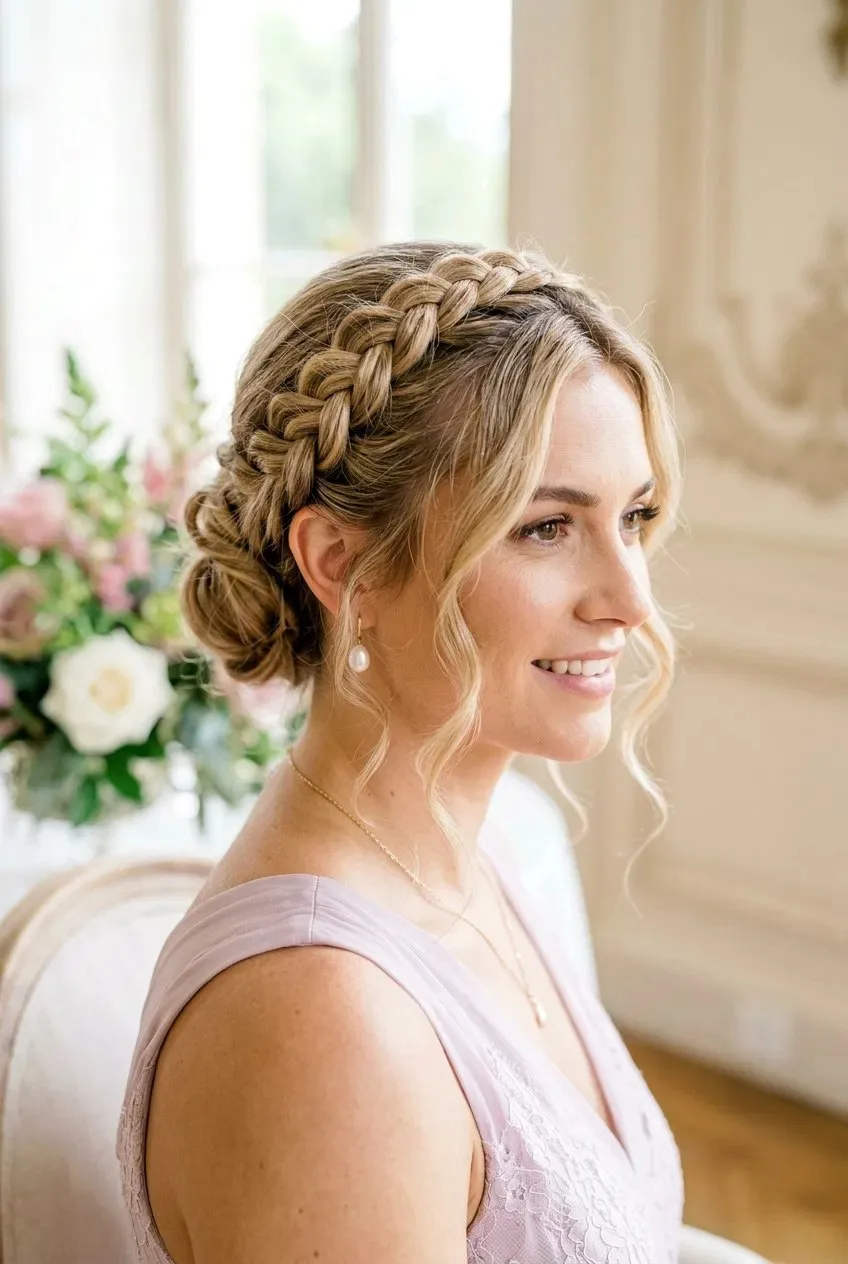
Pros and cons: It is superb at containing short layers and flyaways, and it sits flat under a hat. The con is the pin count — it needs several pins to stay put — and it takes practice to get the circle even.
Common mistakes: Using too few pins is the main failure, and braiding too loosely lets the crown slip down at the back. Pin every few inches with flat, snag-free pins, and check the back in a mirror before you leave.
Maintenance: Keep spare pins in your bag, and take the braid out gently, removing pins before you pull anything. A light hairspray at the hairline helps on windy festival fields.
Quick verdict: Elegant and extremely secure once pinned properly. Best for concert-goers who already braid confidently.
10. Boxer Braids
What it is: Boxer braids are tight double Dutch braids worn close to the scalp, borrowed from the boxing gym and made for hard movement. They are built to stay put through sweat, dancing and hours in the sun.
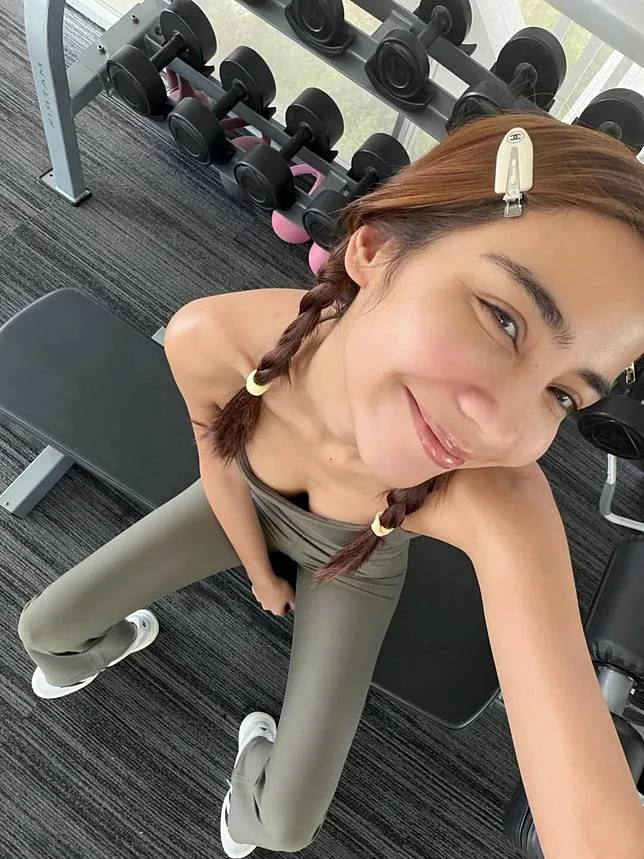
Pros and cons: They are among the most secure styles in this post, they lie flat under a hat, and they protect the hair from dust and tangling. The downside is tension — braided too tightly, they ache at the hairline and can stress the roots.
Common mistakes: Braiding at full tension all the way to the ends is the classic error, as is skipping the part check. Keep the tension firm but comfortable, and ease off slightly at the temples.
Maintenance: Boxer braids can last a couple of days if you protect them at night, but do not sleep in a dusty pair — rinse and re-braid. Undo them gently and condition the lengths.
Quick verdict: The toughest braid in the book. Ideal for long, sweaty, all-day concerts — just do not braid them painfully tight.
11. The Messy Bun
What it is: The messy bun is a loose, twisted coil pinned up high or low, with a deliberately relaxed finish. At a concert it only works when the mess is controlled — a truly loose bun falls apart fast on the dance floor.
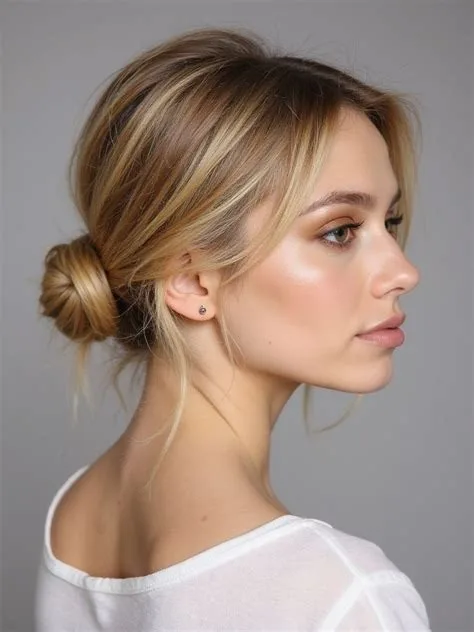
Pros and cons: It is fast, cool and easy, and a low messy bun can sit happily below a hat. The con is security: a high messy bun collides with the hat, and a loose one unravels with the first spin.
Common mistakes: Wearing it high under a hat is the big one, followed by using a single pin to hold the whole thing. Go low, use at least three pins, and tuck the ends in so nothing dangles.
Maintenance: Re-pin between sets and keep a spare tie handy. A messy bun is a between-sets style as much as a concert style, so treat it as something you will fix more than once.
Quick verdict: Fine for a relaxed afternoon set if worn low and pinned well. Not the pick for a long night of dancing.
12. The Low Bun
What it is: The low bun coils the hair into a neat knot at the nape, below the hat line. It is the bun that actually works with a cowboy hat, because it sits where nothing needs to press.
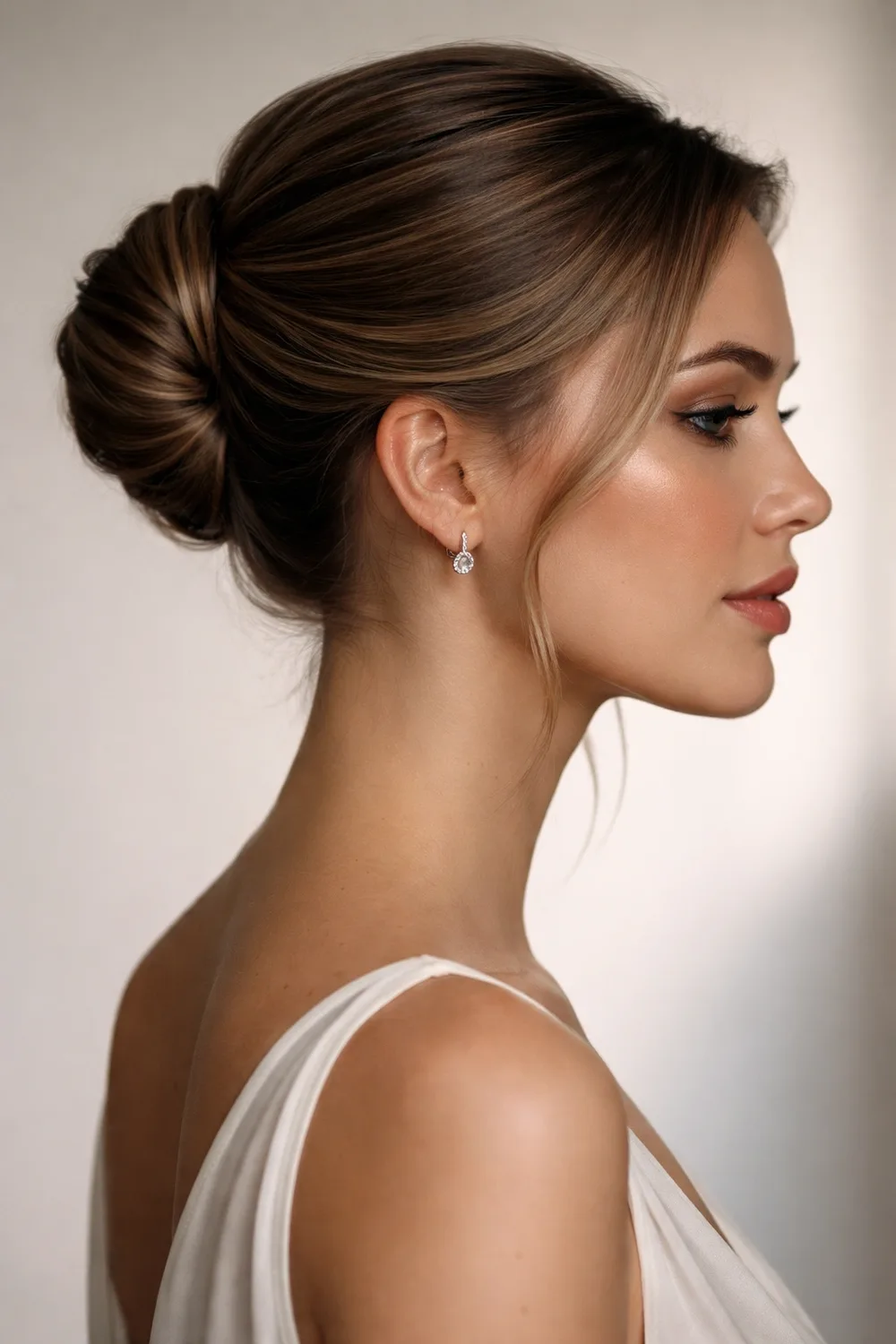
Pros and cons: It is hat-friendly, tidy and secure, and it keeps the neck cool without a swinging tail. The downside is that a heavy bun can sag by the end of a long day, and a very thick bun can press against a high collar or denim jacket.
Common mistakes: Pinning the bun with too few pins, or twisting it so tightly that it pulls at the nape. Use a strong tie, coil evenly, and anchor with pins in at least three places.
Maintenance: A low bun holds best on hair with a little grip, so second-day hair is ideal. Smooth flyaways with a touch of cream, and re-pin after the first set.
Quick verdict: The best bun for a hat-wearing concert day. Neat, comfortable and dependable — the bun to choose for the headliner.
13. The Top Knot
What it is: The top knot piles the hair into a tight bun at the very crown. It is a favourite off the field, but at a concert it has one obvious problem: it sits exactly where a cowboy hat needs to be.
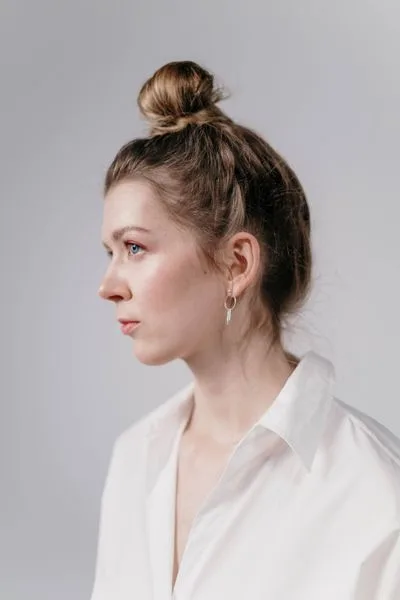
Pros and cons: It keeps hair completely off the face and neck and looks sharp in photos. The con is decisive for hat wearers — a top knot under a hat is uncomfortable, pushes the hat forward, and ruins the fit.
Common mistakes: Wearing a top knot with a hat at all is the mistake. Even a small knot creates a pressure point, and loosening the hat to fit around it is never the answer.
Maintenance: Save the top knot for hat-free dancing, or for the after-party once the hat comes off. If you must wear it, pin it firmly and keep the knot compact.
Quick verdict: Great style, wrong tool for a hat day. Use it after the concert, not during it.
14. Space Buns
What it is: Space buns are two small buns, one on each side of the head, usually worn high. They are fun and balanced, but their height is exactly what makes them tricky under a hat.
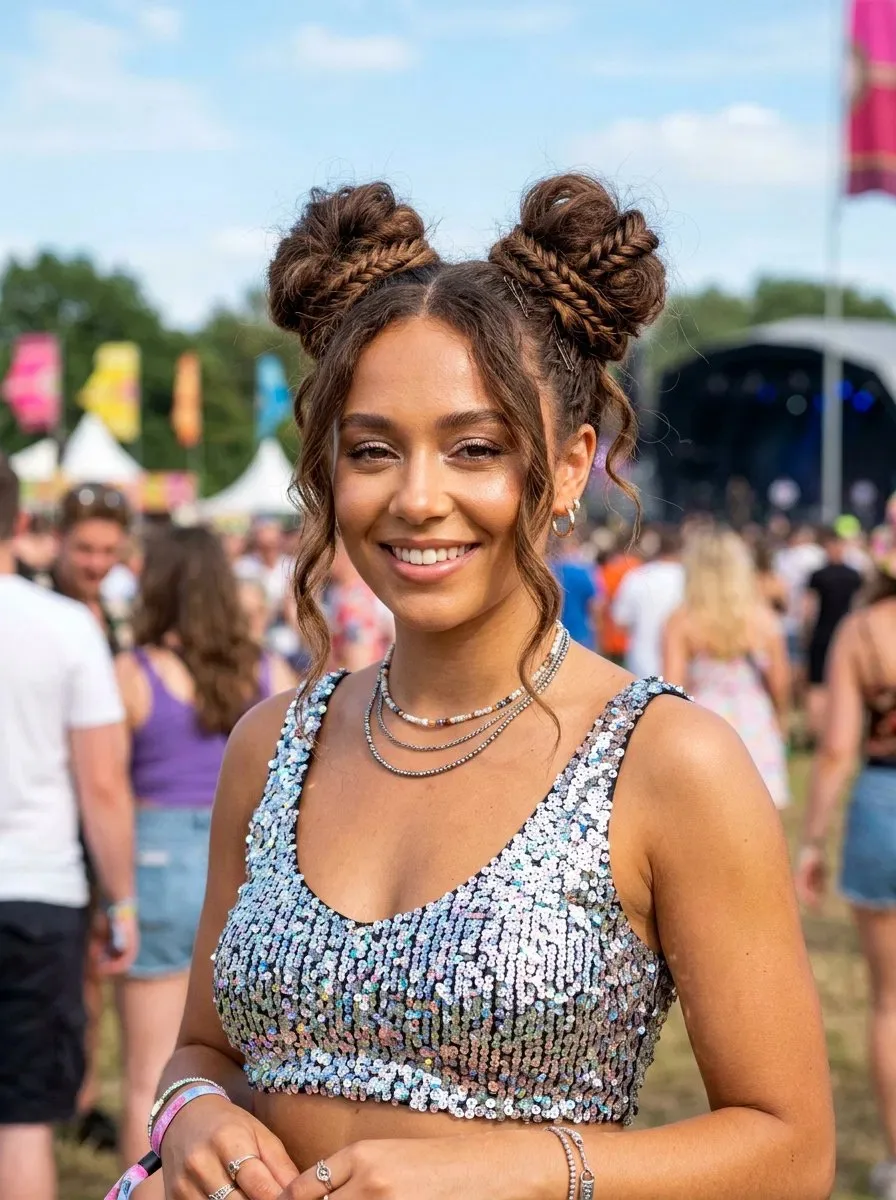
Pros and cons: They distribute weight evenly, keep hair off the neck, and stay put when pinned well. The downside is hat fit: high space buns push against the crown, while low space buns solve that problem completely.
Common mistakes: Placing the buns high and then forcing a hat over them. Drop them to ear level or lower, and use two ties and two pins per bun so neither one sags.
Maintenance: Space buns are easy to redo between sets, and the waves they leave behind are a bonus. Keep the part straight so the buns sit evenly in photos.
Quick verdict: Wear them low for a concert and they work well. Wear them high and the hat will tell you it was a mistake.
15. The Half-Up Ponytail
What it is: The half-up ponytail ties back only the top section of hair, leaving the rest down. It clears the face while keeping some length free — which is both its charm and its problem in a dusty field.
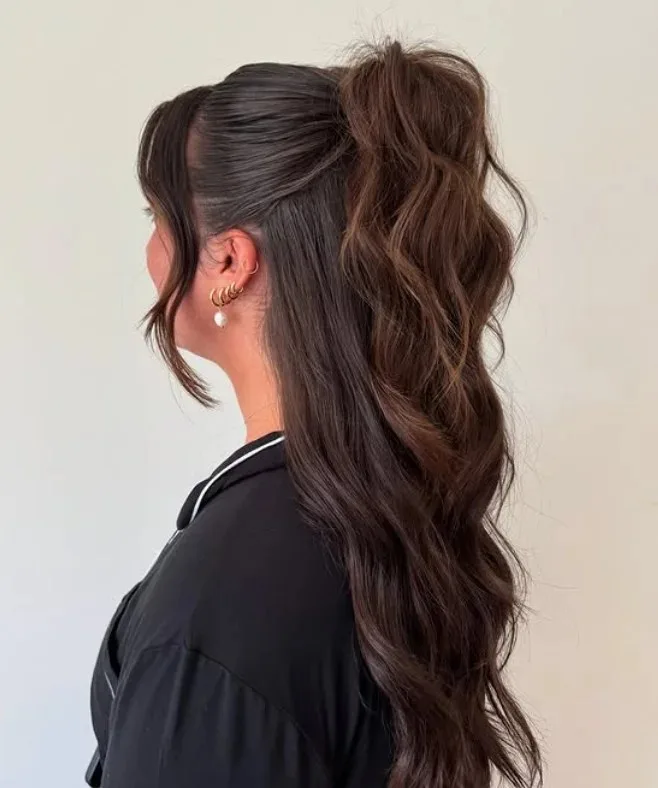
Pros and cons: It is quick, pretty and keeps the fringe out of your eyes. The con is the loose lower half, which swings, catches wind and dust, and can fall forward when you tip your head back to watch the stage.
Common mistakes: Wearing it on a long, windy day, where the loose hair becomes a distraction. It suits short afternoon sets far better than a full day-to-night concert.
Maintenance: Tie the top section firmly, pin back any loose layers, and carry a tie so you can gather the rest up if the wind picks up. A little smoothing cream tames the flyaways.
Quick verdict: Lovely for easy sets and the tailgate. For a full concert day, gather the rest of the hair up too.
16. The Half-Up Braid
What it is: The half-up braid plaits the top section of hair into a short braid, leaving the rest down. It is prettier than a half-up ponytail and slightly more secure, but it shares the same loose-length problem.
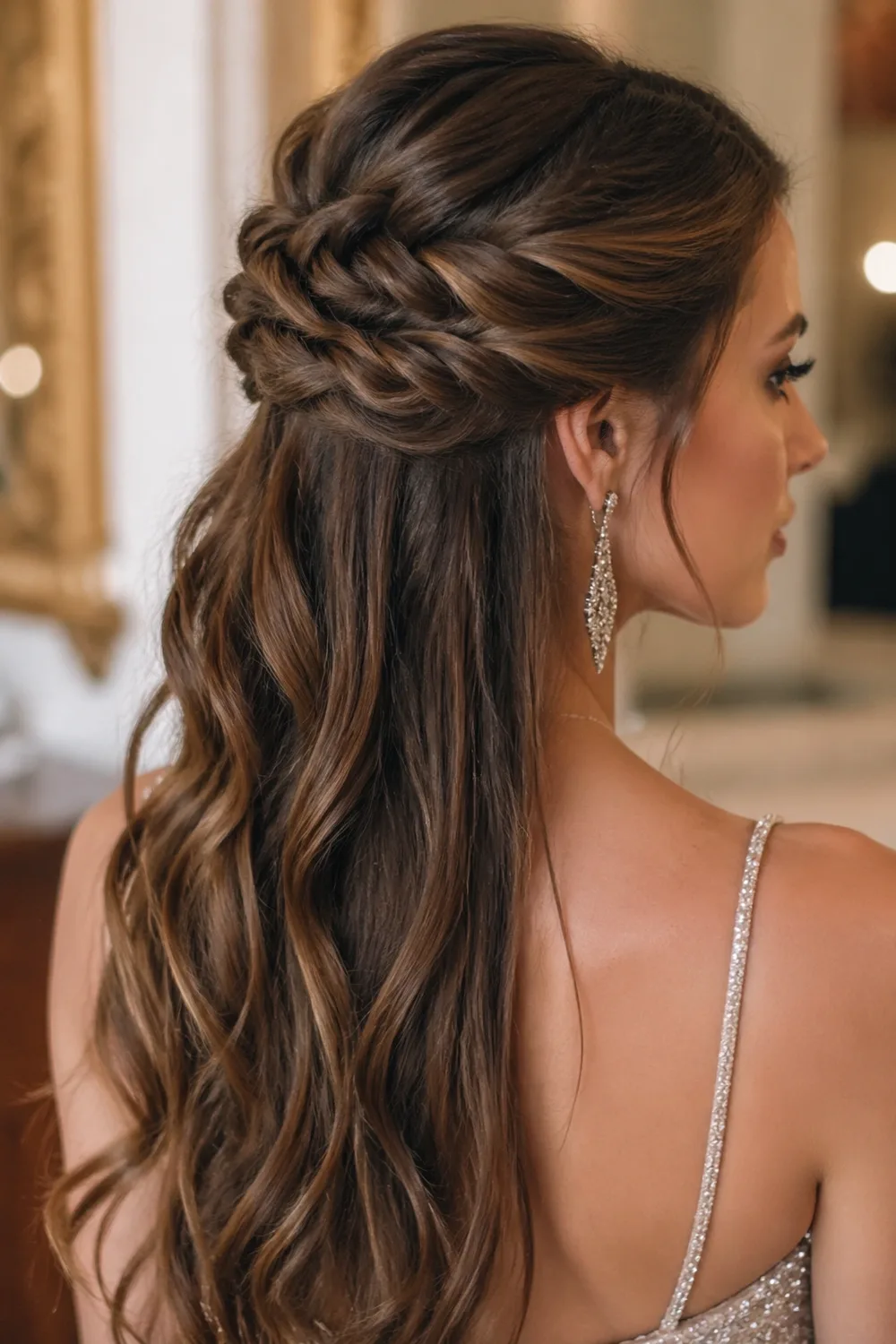
Pros and cons: It holds the front layers beautifully and looks polished with very little effort. The downside, again, is the hair left down, which can swing into your face, catch dust or tangle while you dance.
Common mistakes: Leaving the braid too loose so it unravels, and forgetting the lower half entirely. Braid firmly, tie it well, and treat this as a short-set style rather than an all-day one.
Maintenance: Pin the braid’s tail flat, keep a spare tie for a full ponytail if conditions change, and brush the loose length out after the show to stop tangles forming.
Quick verdict: A good afternoon and golden-hour style. For a long night, braid the whole head instead.
17. The Claw Clip Twist
What it is: The claw clip twist gathers the hair, twists it up and holds it with a large claw clip. It is the fastest updo there is, and the clip makes it easy to redo in seconds.
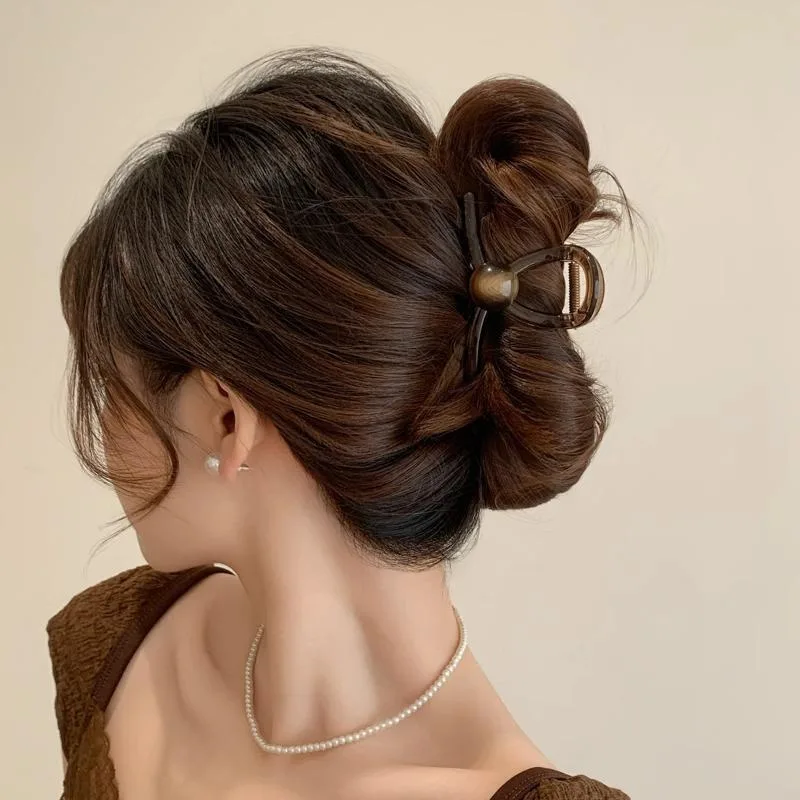
Pros and cons: It is instant, comfortable and keeps hair off the neck. The cons are security and hat fit: a big clip can press against a hat, and a hard spin on the dance floor can pop a clip open.
Common mistakes: Using a cheap clip that springs open, or placing the clip high under the hat. Choose a strong, flat clip, wear the twist low, and test it with a shake before you leave.
Maintenance: Carry a spare clip and a tie as backup, since a broken clip ends the style instantly. Twist the hair firmly so the clip has something solid to grip.
Quick verdict: Handy for the tailgate and for easy sets, less reliable for hard dancing. Keep a tie in your pocket as plan B.
18. The Scrunchie Ponytail
What it is: The scrunchie ponytail is a regular ponytail tied with a soft fabric scrunchie instead of a thin elastic. The fabric grips without cutting into the hair, which matters on a long day.
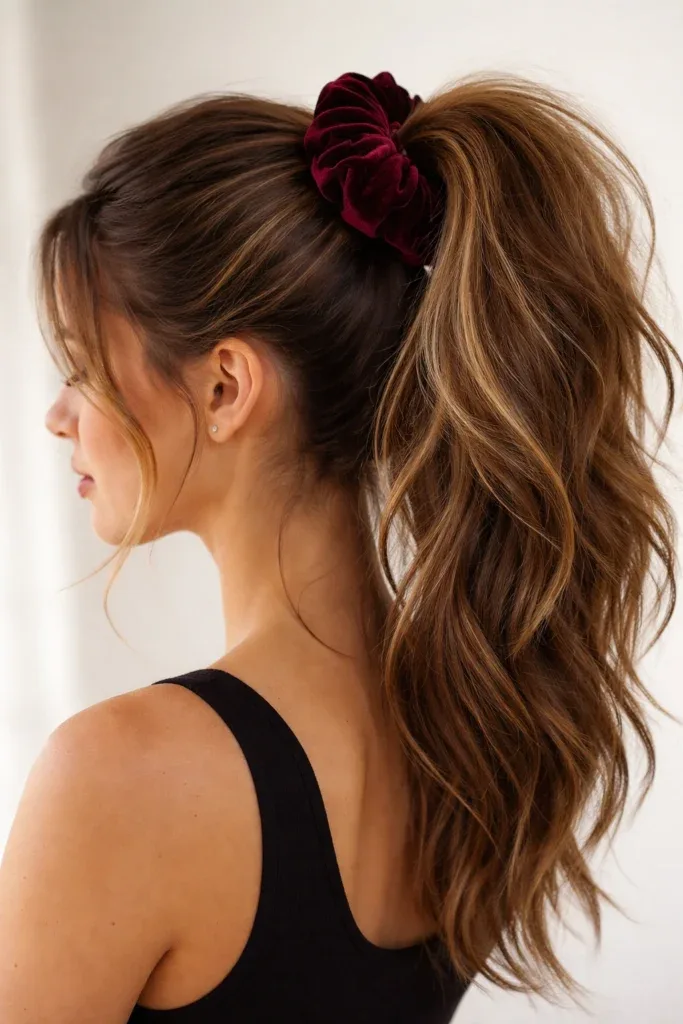
Pros and cons: It is gentler on the hair, holds well, and does not leave a sharp dent. The downside is bulk: a big scrunchie can sit awkwardly under a hat band, and a loose scrunchie slips faster than a tight elastic.
Common mistakes: Using an oversized scrunchie under a hat, or wrapping it only once so it slides. Choose a medium scrunchie, wrap it twice, and place the ponytail low or to the side of the hat band.
Maintenance: Wash scrunchies regularly — they absorb sweat and dust — and keep a spare in your bag. A scrunchie ponytail is easy to re-tie between sets.
Quick verdict: A kinder, comfortable ponytail. Great for long days, as long as the scrunchie is not too bulky for your hat.
19. The Braided Ponytail
What it is: The braided ponytail ties the hair up first, then braids the tail. It combines the speed of a ponytail with the security of a braid, and the tail can no longer swing freely.
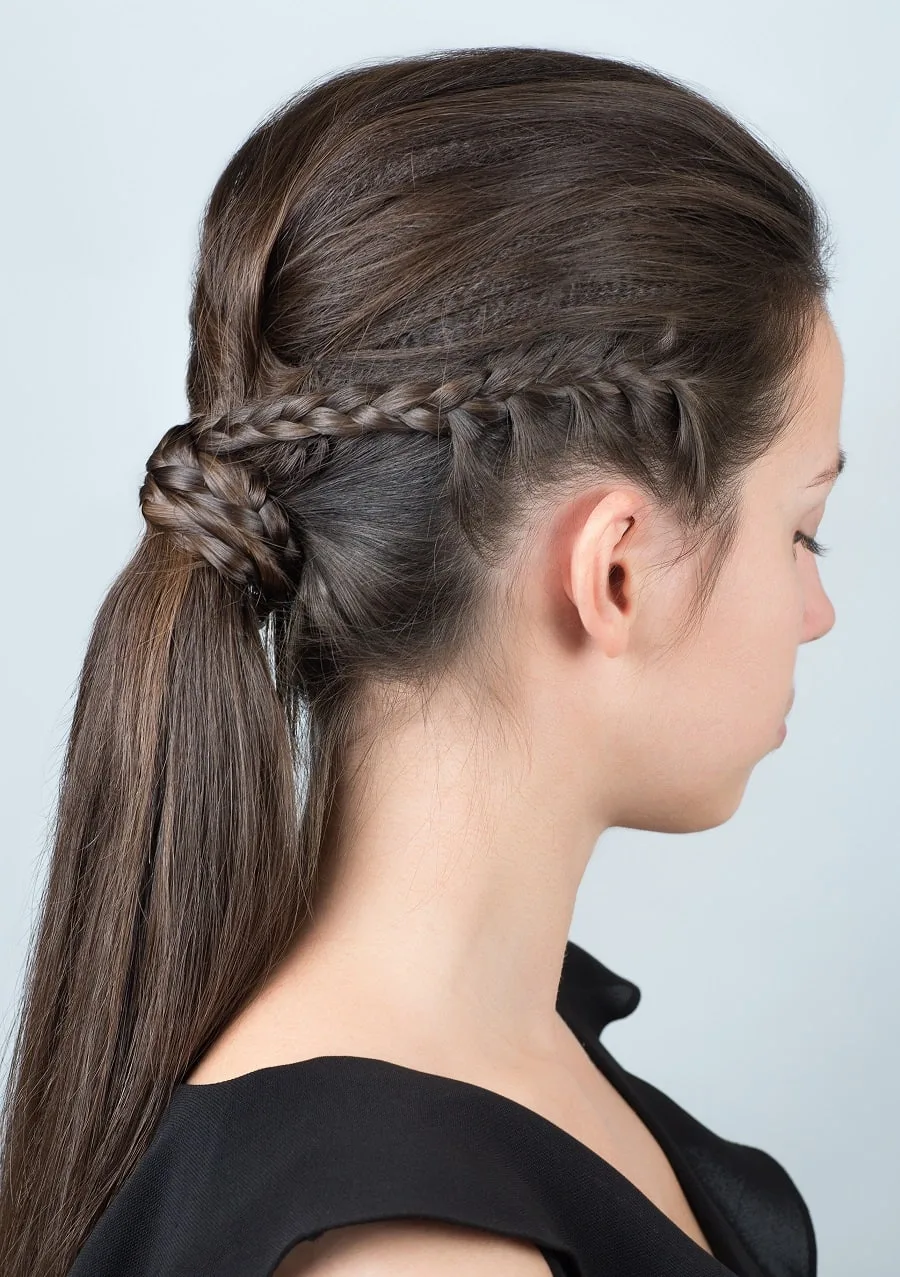
Pros and cons: It is quick to make, very secure, and the braided tail does not whip around or catch dust. The con is placement: a high braided ponytail can still clash with a hat crown, so low or mid-height works best.
Common mistakes: Braiding the tail loosely, which defeats the purpose, and using a weak elastic at the base so the whole thing sags. Tie the base firmly, braid to the end, and finish with a strong tie.
Maintenance: This is an easy style to redo between sets, and the braid protects the tail from tangling. Undo it gently and finger-detangle before brushing.
Quick verdict: One of the best compromises in this post. Fast, secure and hat-friendly when worn low.
20. The Side Braid
What it is: The side braid sweeps the hair over one shoulder and plaits it down the side, keeping the length in front where you can see it — and where it stays clear of your back and your boots.

Pros and cons: It keeps the braid visible and out of the way of a backpack or denim jacket, and it lies flat under a hat. The downside is that on a crowded dance floor the braid can fall forward over your shoulder and into your line of sight.
Common mistakes: Letting the braid hang too loosely so it swings, and starting it too high so it pulls at the hairline. Start at the nape, braid firmly, and tuck the tail into your top or clip it back if it swings.
Maintenance: A side braid is easy to check and redo, since it sits in front of you. Keep a spare elastic handy and re-braid if it loosens.
Quick verdict: Great for the tailgate, photos and easy sets. For hard dancing, pin the tail back or switch to a braid down the back.
21. Milkmaid Braids
What it is: Milkmaid braids are two braids wrapped up and pinned across the top of the head like a crown. They keep every strand contained and look wonderfully old-fashioned with a denim dress.
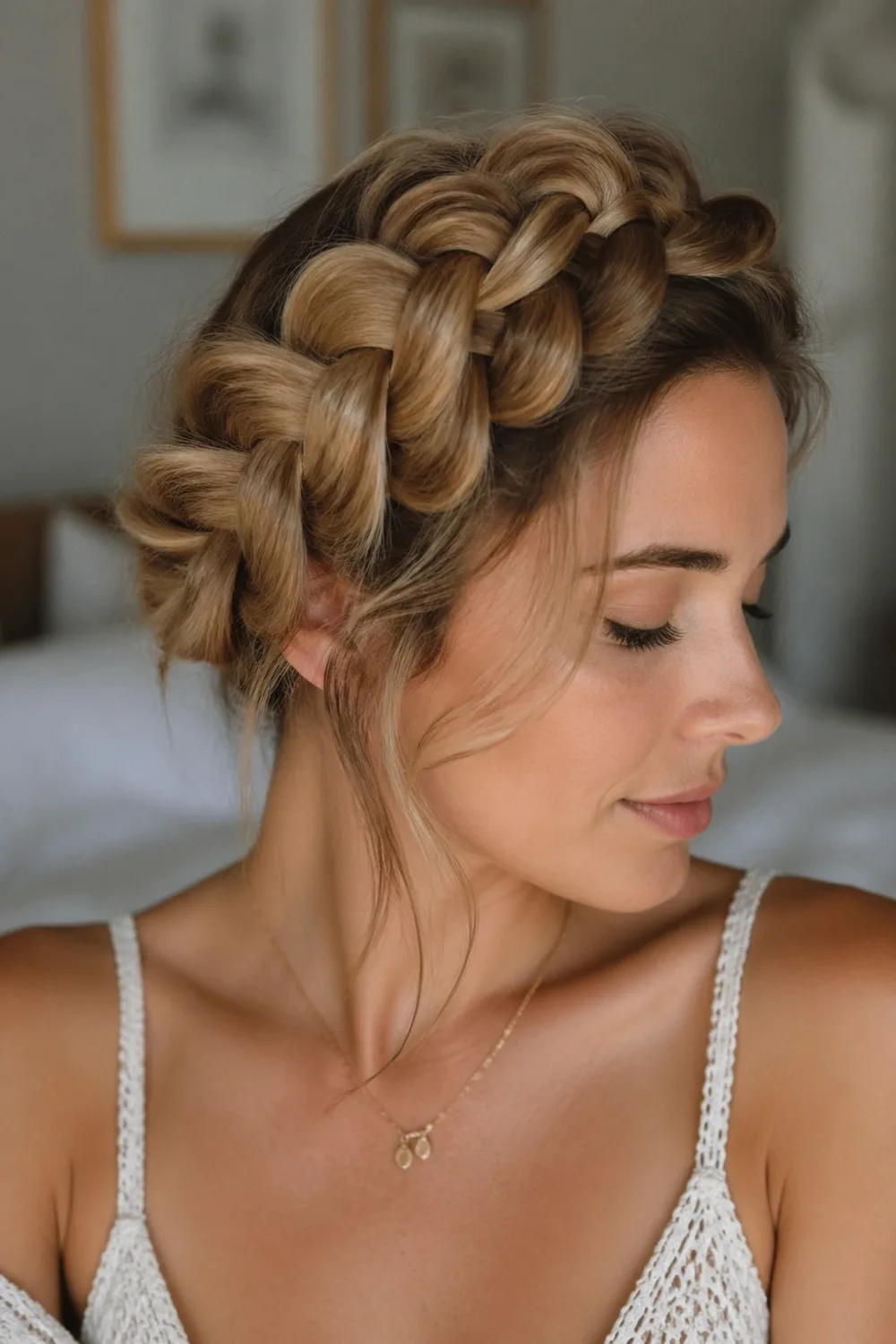
Pros and cons: They contain all the hair, sit flat under a hat, and survive a long day well. The con is the pin count and the time — this is not a five-minute style unless you have practised it.
Common mistakes: Using too few pins so the braids slide down, and wrapping them unevenly so one side sits higher. Pin at several points along each braid and check the back before you leave.
Maintenance: Milkmaid braids hold best on hair with some grip, so braid on second-day hair or use a little texture spray. Remove the pins first, then undo the braids gently.
Quick verdict: Secure, hat-friendly and beautiful. Worth learning if you go to country concerts with long hair regularly.
22. Cornrows
What it is: Cornrows are tight braids woven flat against the scalp in neat rows, from the hairline to the nape. They are a protective style that can last for days or weeks.
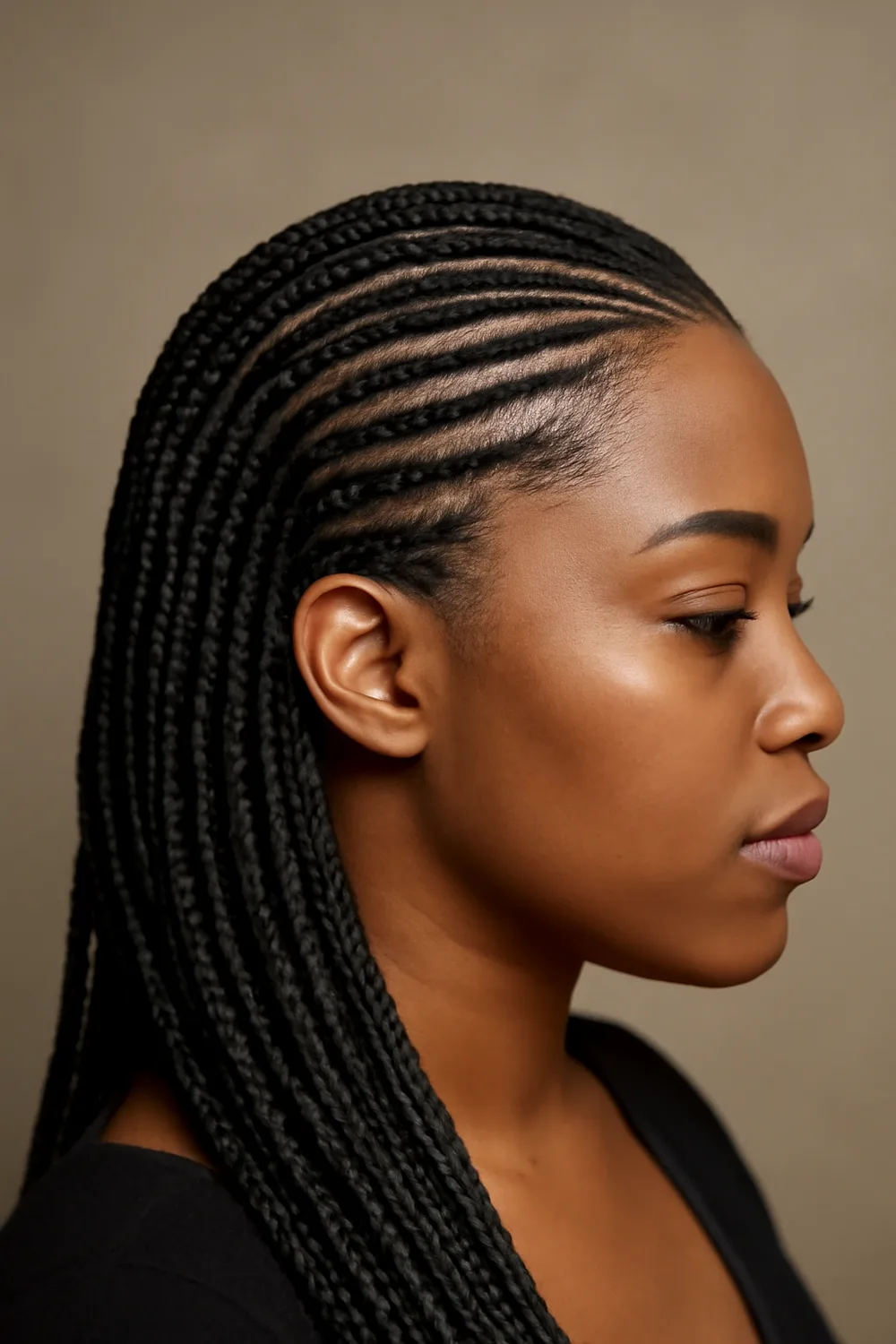
Pros and cons: They are superb under a hat — completely flat, nothing to snag, and no daily restyling. The downside is that they need a skilled braider, and rows that are too tight can ache and stress the hairline.
Common mistakes: Braiding too tightly at the edges, and leaving cornrows in too long without washing the scalp after a dusty day. Keep the tension comfortable, wash the scalp gently, and take them out before they start to mat at the roots.
Maintenance: Oil the scalp lightly, cover the rows at night with a satin scarf, and rinse out dust and sweat after the concert. A good set of cornrows is low-maintenance for days at a time.
Quick verdict: One of the very best concert styles for coily and curly hair. Flat, secure and long-lasting — get the tension right.
23. Flat Twists
What it is: Flat twists are two-strand twists worked flat against the scalp, like cornrows but twisted instead of braided. They give the same flat, contained finish with a softer feel.
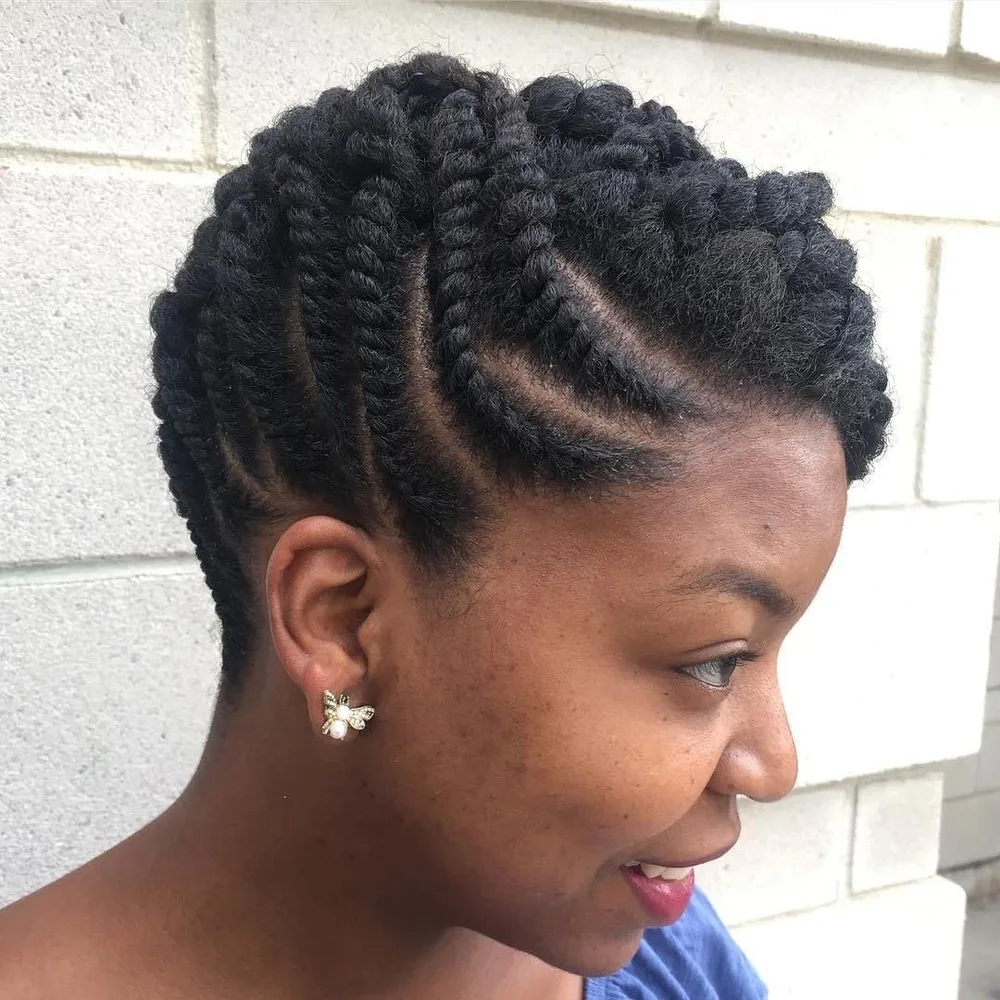
Pros and cons: They lie flat under a hat, protect the hair, and are gentler on the scalp than very tight braids. The con is hold — twists can unravel faster than braids, especially on fine or slippery hair.
Common mistakes: Twisting too loosely so the rows come undone, and skipping the ends, which unravel first. Twist firmly, secure the ends well, and pin any row that starts to lift.
Maintenance: Flat twists last best when the hair is moisturised before twisting, and a satin covering at night keeps them neat. Undo them gently and detangle with conditioner after the concert.
Quick verdict: A softer alternative to cornrows with the same hat-friendly shape. Excellent for curly and coily hair.
24. The Twisted Low Ponytail
What it is: The twisted low ponytail splits the hair into two sections, twists each one, and ties them together low at the nape. The twist adds grip that a plain ponytail lacks.
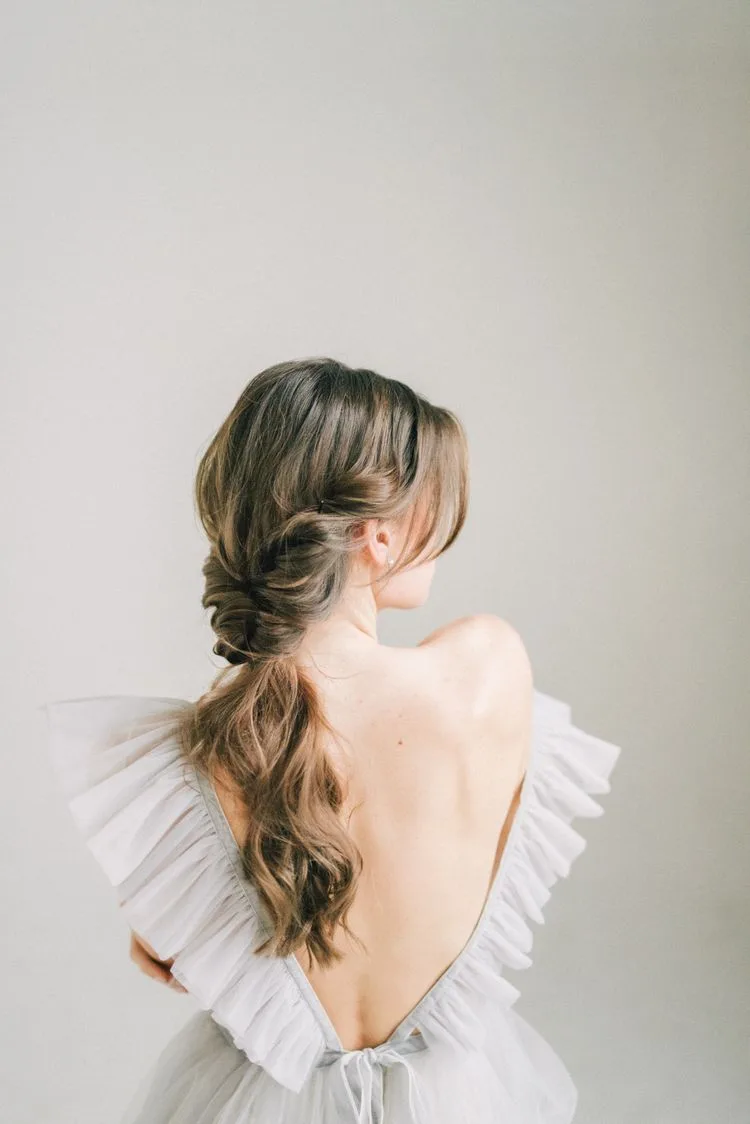
Pros and cons: It is more secure than a plain low ponytail, still quick to make, and sits below the hat line. The downside is that the twist can loosen if the hair is very smooth, and the tail still needs managing on long days.
Common mistakes: Twisting in opposite directions so the sections fight each other, and tying the base too loosely. Twist both sections the same way, cross them firmly, and anchor with a strong tie.
Maintenance: This style holds best on hair with a little texture, so a touch of dry shampoo at the roots helps. Re-twist between sets if it starts to sag.
Quick verdict: A simple upgrade on the plain low ponytail. A little more grip for almost no extra effort.
25. The Slicked-Back Ponytail
What it is: The slicked-back ponytail brushes all the hair smoothly back from the face and ties it low or mid-height, with no loose layers at all. It is the cleanest ponytail in this post.
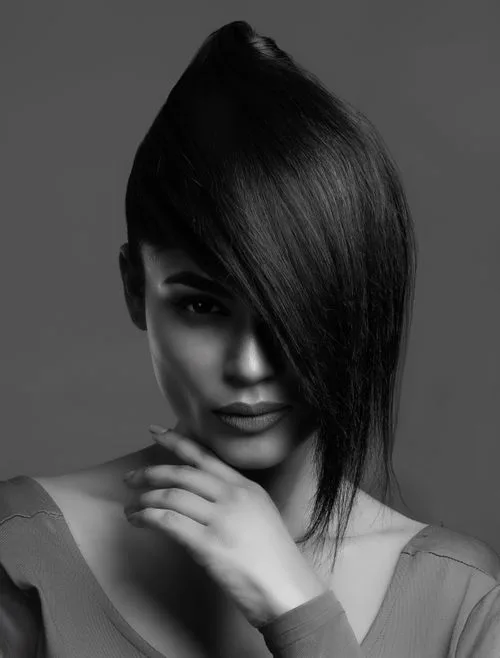
Pros and cons: Nothing falls into your eyes, the hat sits neatly over the smooth hair, and the style looks polished in golden-hour photos. The con is product: too much gel or wax under a hat turns greasy and heavy in the heat.
Common mistakes: Overloading the hair with product, and pulling the hair back so tightly that it aches. Use a light gel or smoothing cream, brush the hair back evenly, and keep the tension comfortable.
Maintenance: Wash the product out properly after the concert — gel plus dust is a stubborn combination. A clarifying wash once in a while keeps the roots clean.
Quick verdict: The tidiest ponytail for a concert. Use light product, keep it comfortable, and it will stay out of your way all day.
26. The Braided Bun
What it is: The braided bun braids the hair first, then coils the braid into a bun at the nape. The braid gives the bun structure, so it holds far better than a bun made from loose hair.
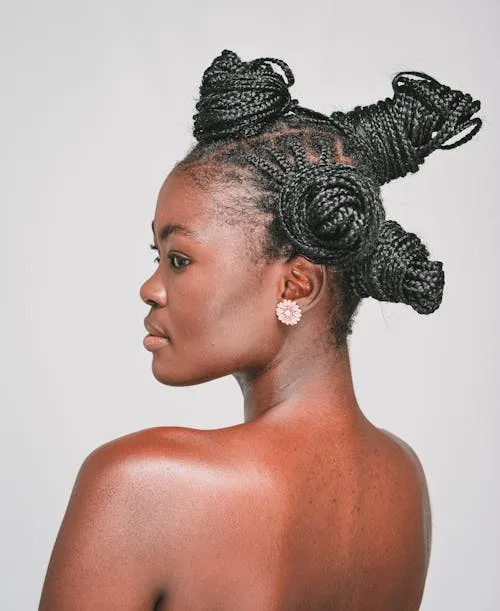
Pros and cons: It is very secure, sits low and flat, and the coiled braid does not unravel easily. The downside is time — you are making a braid and a bun — and a thick braid makes a heavy bun.
Common mistakes: Coiling the bun too high, where it meets the hat, and pinning it with too few pins. Coil it low, pin in several places, and tuck the tail of the braid inside the coil.
Maintenance: A braided bun holds best on hair with grip, and it is easy to re-pin between sets. Undo the bun first, then the braid, and detangle gently.
Quick verdict: The most secure bun in this post. Ideal for a full day when a plain bun would sag or come undone.
27. Pigtail Braids
What it is: Pigtail braids are two braids worn low on either side, like double braids with a younger, playful feel. They balance the hair evenly and keep both sides contained.

Pros and cons: They are balanced, secure and easy to check, since both braids sit where you can see them. The con is length: two loose tails can swing, so they need tying or tucking on a crowded dance floor.
Common mistakes: Leaving the tails long and free, and parting the hair crookedly so the braids sit unevenly. Keep the part straight, braid firmly, and tie the tails short or tuck them in.
Maintenance: Pigtail braids are quick to redo and the waves they leave are a bonus next-day style. Use matching elastics and undo them gently after the show.
Quick verdict: Fun, balanced and reliable. A good choice for a festival day and for concert-goers who like their braids where they can see them.
28. The Headband Braid
What it is: The headband braid is a small plait worked along the hairline, from one side to the other, acting like a braided headband. It pins back the fringe and front layers that usually escape.
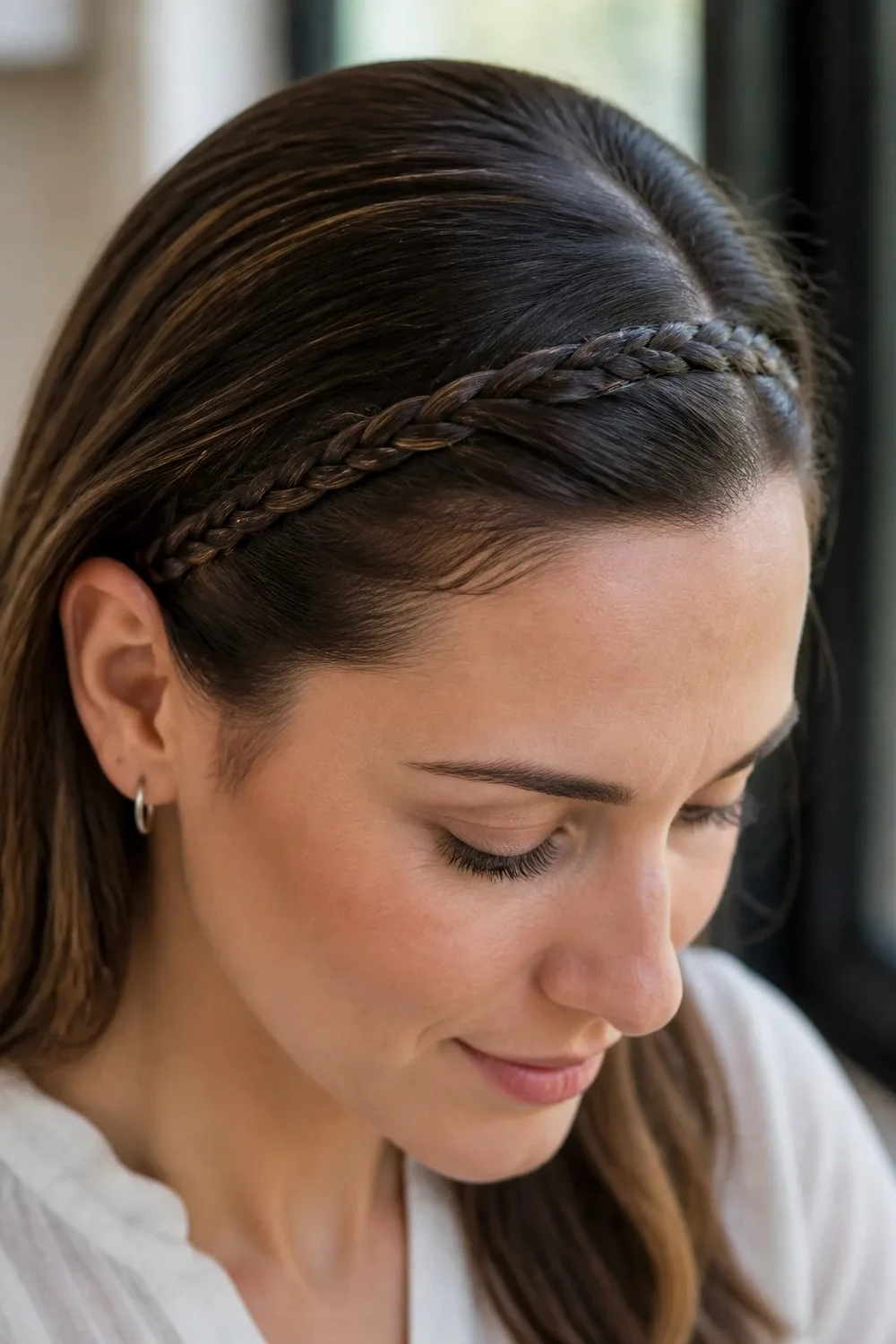
Pros and cons: It is the best fix for a fringe that will not stay back, and it works with almost any other style underneath. The con is that it only controls the front — the rest of the hair still needs its own style.
Common mistakes: Braiding it too loosely so it slips down, and forgetting to pin the ends securely behind the ears. Braid firmly along the hairline and pin both ends flat.
Maintenance: A headband braid holds best on slightly damp hair, and a couple of flat pins keep it in place all day. It pairs well with a low ponytail or a bun.
Quick verdict: A brilliant add-on rather than a full style. Pair it with a ponytail or braid and your fringe problem is solved.
29. The Waterfall Braid
What it is: The waterfall braid lets strands drop through the plait as it travels, creating a cascading effect with loose hair falling below. It is beautiful — and the loosest braid in this post.
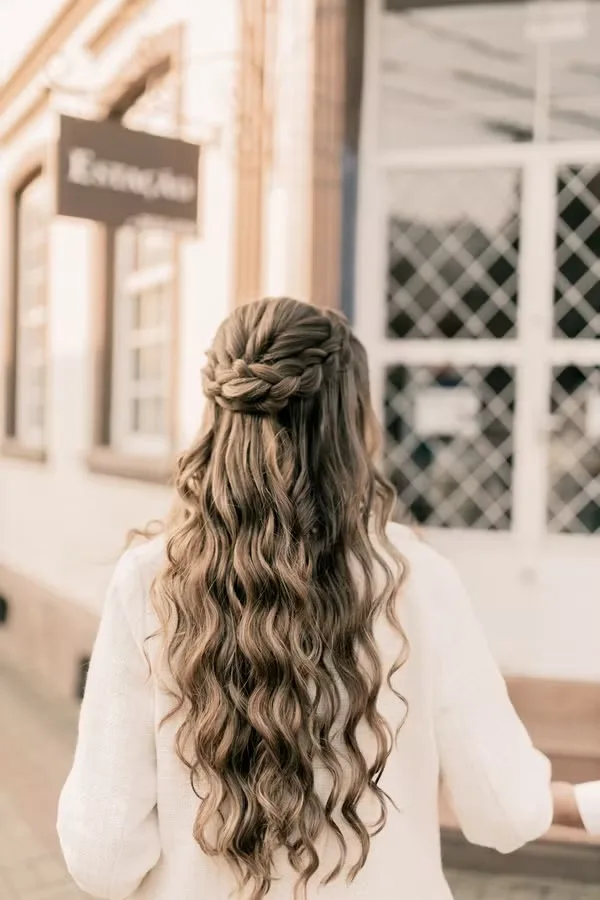
Pros and cons: It looks stunning and keeps the front layers neatly braided. The con is obvious in a field: the dropped strands are loose hair, and loose hair is exactly what concert styles are meant to avoid.
Common mistakes: Wearing it for a full day of dancing at all. The falling strands blow across the face, catch the wind and tangle in the dust. Save it for photos, the tailgate and the after-party.
Maintenance: If you do wear it for a short, easy set, pin the dropped strands back and keep a tie handy to gather everything up. Otherwise, enjoy it off the dance floor.
Quick verdict: Gorgeous, but not a dancing style. Keep it for after the encore — your fringe will thank you.
30. The French Twist
What it is: The French twist sweeps the hair up and rolls it into a vertical twist pinned along the back of the head. It is elegant, compact and completely contained.
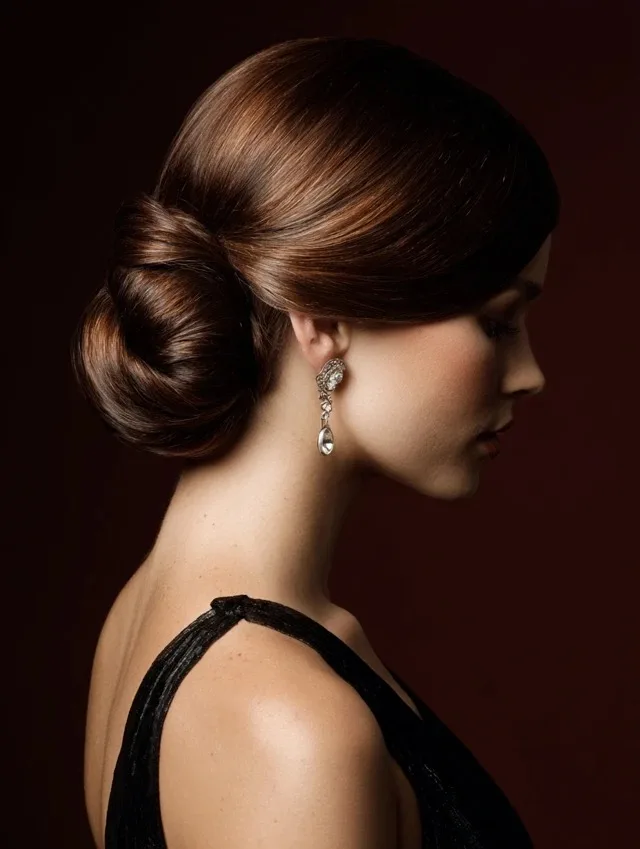
Pros and cons: It holds the hair in a slim, flat shape that sits well under a hat when worn low, and there is no tail to snag. The con is the pin count and the skill — a French twist needs practice and plenty of pins.
Common mistakes: Using too few pins, and twisting it too high so it meets the hat crown. Roll it low, pin along the whole length, and check the back before you leave.
Maintenance: A French twist holds best on hair with some length and grip. Carry spare pins, and take it out by removing the pins first, never by pulling.
Quick verdict: Elegant and secure when worn low and pinned well. A surprisingly practical choice for a concert-goer who already knows the twist.
31. Loose Waves Under a Cowboy Hat
What it is: Loose waves worn down under a cowboy hat are the classic country-concert look: soft, moving hair, a hat tilted just so, and nothing pinned or braided at all. It is the look in the photo at the top of this post.
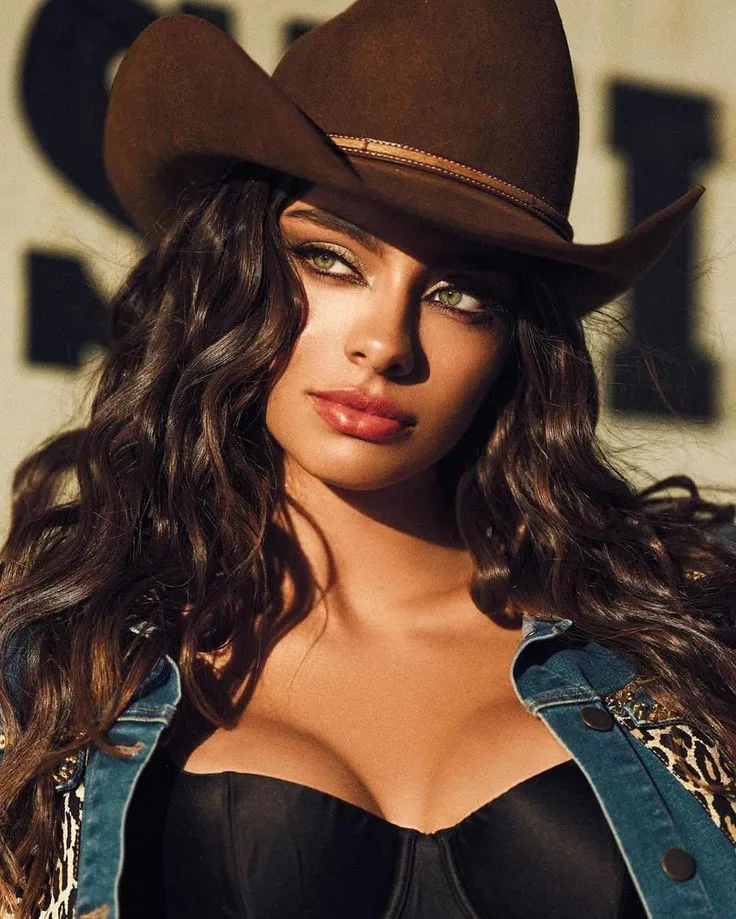
Pros and cons: It is the most photogenic style here, it moves beautifully when you dance, and it needs almost no prep. The con is the obvious one: loose hair in a dusty, windy field tangles, blows across your face and picks up dust all day.
Common mistakes: Wearing loose waves on a windy day with no backup plan, and skipping any product at all. A light wave spray and a texturising cream help, and a hat that fits snugly keeps the front layers out of your eyes.
Maintenance: Carry a tie and a bandana so you can gather the hair up the moment the wind picks up, and brush it out gently after the show before you wash it. A leave-in conditioner before the concert keeps the dust from matting the waves.
Quick verdict: The look everyone wants in the golden-hour photo — just bring a tie for when the dancing starts.
Can I wear a cowboy hat with a ponytail?
Yes, if you place the ponytail low. A low ponytail sits below the hat band and the crown, so the hat stays level and comfortable. A high ponytail can push the hat forward, so drop the placement to the nape or wear the hat tilted back.
What is the best hairstyle for a country concert?
A French braid or double Dutch braids are hard to beat for a country concert. They hold through dancing, keep hair out of your face, survive dust and sweat, and sit flat under a cowboy hat. A low ponytail or a low bun works well too if you prefer something faster.
How do I keep my hair out of my face while dancing?
Braid the front layers back, use a headband braid or a bandana, and pin any escaping pieces flat with snag-free pins. A slicked-back ponytail or a French braid solves the problem at the source, rather than fighting loose strands mid-dance.
Can I wear a bun with a cowboy hat?
Yes, if the bun sits low at the nape. A low bun or a braided bun fits below the hat line and stays comfortable all day. A high bun or a top knot presses against the hat crown and should be saved for hat-free dancing or the after-party.
How do I stop braids coming loose at a concert?
Braid on slightly damp hair with a little grip, keep the tension even, and finish with a strong snag-free elastic. Tuck the tail under or braid to the very end, and re-braid rather than trying to patch a braid that has gone slack.
What should I do about dust in my hair after a concert?
Rinse the hair with lukewarm water first, then work conditioner through the lengths before you shampoo. Do not brush dry, dusty hair, as that drags the dust through the strands and causes breakage. A leave-in conditioner before the concert helps dust wash out more easily.
Is it better to go to a concert with wet or dry hair?
Slightly damp hair is best for braiding, because it grips better and holds longer. Soaking wet hair is heavy, stretches the style, and takes longer to dry under a hat. Dry hair works fine for ponytails and buns, especially with a little texture spray for grip.
How do I protect curly hair at a country concert?
Contain the curls in braids, twists or a low bun, rather than pulling them into a tight slick ponytail. Work with damp, conditioned hair, use a satin-lined hat band or a light leave-in under the hat, and detangle gently with conditioner after the show.
What hair ties are best for a concert?
Snag-free fabric ties and strong elastics without metal joins are best, because they grip without tearing the hair. A scrunchie is gentler for long days, while a thick elastic holds a heavy braid. Carry a spare in your pocket or bag.
Can I wear a bandana with a cowboy hat?
Yes, a thin cotton bandana under the hat keeps sweat and loose strands out of your eyes and protects your hairline from dust. Keep the knot low or to the side so it does not tilt the hat, and pack a spare bandana for when the first one gets dusty.
Conclusion
The right style for you is the one that passes the three tests: it stays put, it keeps your hair out of your face while you dance, and it works with your cowboy hat. For most concert-goers, that means a French braid, double Dutch braids or a low braided ponytail — and for the rest, a low bun or a well-placed ponytail does the job. The best hairstyles for a country concert are not the prettiest ones in the mirror; they are the ones you forget about completely once the music starts.
Try two or three styles from this guide before the big day, do the shake test at home, and keep a spare tie, a few pins and a bandana in your bag. Once you find the style that holds through dust, heat, sweat and a long night of dancing, stick with it — and let your hair be the last thing you think about when the headliner walks on stage.