Hairstyles for Sailing That Stay Put Through Wind, Spray and a Working Deck
On a sailboat, the wind is the stylist. It does not ask what you want, it does not wait for you to finish, and it will undo in ten seconds what took you twenty minutes in front of a mirror. That is why hairstyles for sailing are chosen the way sailors choose rope and rigging: for strength, for simplicity, and for how they behave when conditions change. A good sailing style stays out of your eyes on a tack, stays out of the winch when you are grinding, and still looks decent when you step ashore for dinner at the marina.
This guide is built for active sailing, not for posing on a yacht. Every style here has been picked for crewing, racing, deck work and long days under the sun, with braids, buns and ponytails that work with a cap, a buff and a life jacket instead of fighting them. You will find eight practical guides first, then 37 styles, each with honest notes on what goes wrong, how to look after it, and how long it takes.
Before you pick a style, think about your job on the boat. The helm needs clear vision and nothing loose near the wheel. The foredeck needs hair fully contained, because a loose strand in a gust can blind you at the worst moment. The pit crew needs something that survives bending, hauling and ducking under the boom.
Sailing Hair Basics: Start With the Wind in Mind
The first rule of hair on a boat is that loose hair is a hazard, not just a nuisance. Wind at 15 knots turns long hair into a blindfold, and salt spray turns it into a tangled mat within an hour.
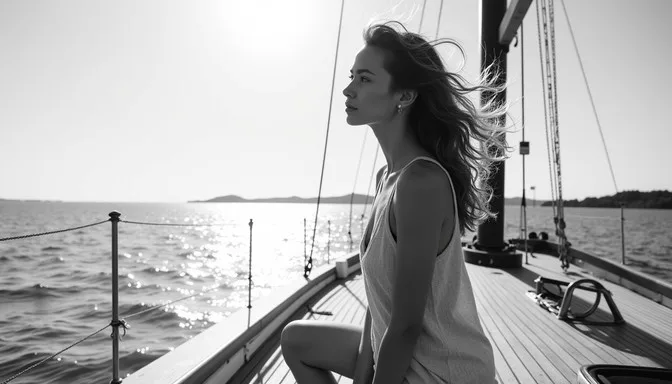
What it is: A simple pre-sail routine: detangle, add a little leave-in conditioner, then braid, bun or tie hair back before you leave the dock. The routine takes five minutes and saves an hour of painful brushing later.
Common mistakes: Leaving hair down for the first leg and planning to tie it up later, using a single thin elastic that snaps under tension.
Maintenance: Re-braid or re-tie at lunch or between races.
Cost and time: Almost nothing. A pack of snag-free elastics, a leave-in spray and a wide-tooth comb cost very little, and the routine takes about five minutes.
Quick verdict: The single most useful habit in this whole guide. Secure hair before the wind decides for you.
Wind and Spray: What Actually Happens to Hair on the Water
Wind does not just blow hair around, it knots it. Every gust pushes strands across each other, and salt spray then dries on top, gluing the tangles in place.
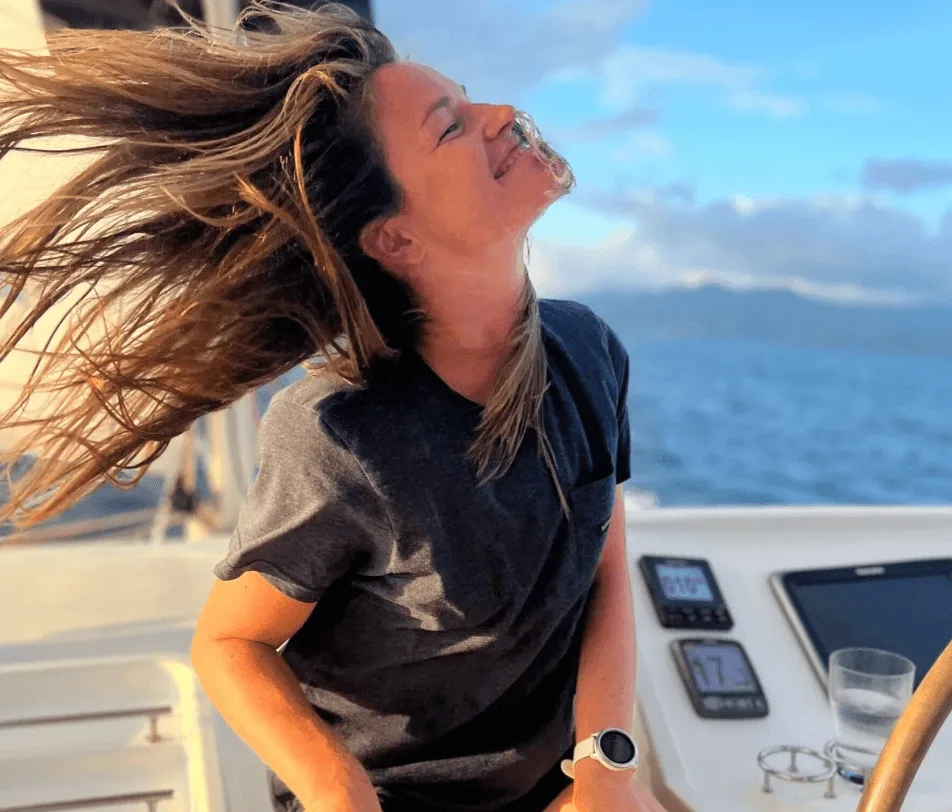
What it is: The honest physics of sailing hair: wind plus spray plus sun equals knots, dryness and frizz. Braids limit how far strands can travel, which is why they beat loose styles every time in a blow.
Common mistakes: Brushing dry, salty hair hard when you get ashore, which snaps it, and tying wet hair tightly.
Maintenance: Rinse with fresh water as soon as you can, even a quick deck-shower rinse helps.
Cost and time: Free on the boat if you use the fresh-water rinse, plus a few minutes ashore. A small bottle of leave-in conditioner is the only extra worth carrying.
Quick verdict: Respect the wind and it stops being your enemy. Braid it, rinse it, and never fight a tangle while it is still full of salt.
Sun and Salt Protection for Hair on Deck
Hours of reflected sun off the water fade colour, dry out ends and make hair feel like straw by the end of a regatta week. Salt does the same job from the other direction, pulling moisture out of the hair shaft every time spray dries on it.

What it is: A light protective layer before you sail: a leave-in conditioner or hair oil on the lengths, sunscreen on the part line and ears, and a hat or buff for the longest sun exposure.
Common mistakes: Putting heavy oil on the roots, which makes hair slippery so braids fall out, and forgetting the part line.
Maintenance: Reapply a little leave-in at midday if you are out all day, and rinse salt out at the end of every sail rather than letting it sit overnight.
Cost and time: A leave-in spray and a small bottle of hair oil cost little and last a whole season. Application takes two minutes before you cast off.
Quick verdict: Cheap insurance. Two minutes of protection saves a week of dry, faded ends.
Hats and Life Jackets: Fitting Hair Around Your Safety Gear
A sailing hairstyle has to work with your safety gear, not against it. A life jacket collar pushes a high bun forward and can shove a ponytail into your neck, while a cap needs a low ponytail or a braid that threads through the back.
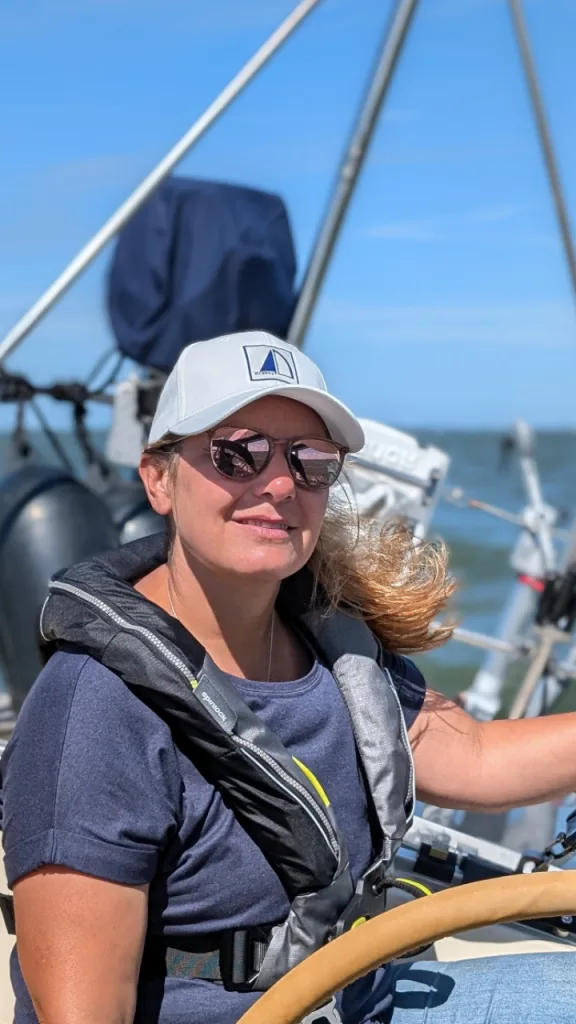
What it is: Choosing styles by their height and bulk: low buns and low ponytails sit under a life jacket collar, braids lie flat under a cap, and a buff keeps flyaways down without adding bulk.
Common mistakes: A high top knot that the life jacket collar keeps knocking loose, a cap worn over a bulky braid that lifts the cap off in a gust.
Maintenance: Check the fit every time you put the jacket on.
Cost and time: No extra cost. A cap with a ponytail opening and a thin buff are inexpensive and worth having in your sailing bag.
Quick verdict: Safety gear wins every argument. If the style fights the jacket, change the style, never the jacket.
Short Hair on Deck
Short hair is the easiest hair to sail with, but it is not maintenance-free. A pixie or bob still blows into the eyes in a gust, still gets stiff with salt, and still burns at the part line.

What it is: Short cuts worn with a light hold product, a side part tucked behind the ears, and a cap or buff for the worst of the wind. The cut does most of the work, so the styling can stay minimal.
Common mistakes: Using too much wax or gel, which goes sticky with spray, and skipping sun protection on the scalp.
Maintenance: Rinse after sailing and add a drop of leave-in.
Cost and time: A small tub of light styling cream lasts months. Styling takes one or two minutes, which is why short hair is a favourite for early race starts.
Quick verdict: The low-effort champion. Add a cap, protect the part, and short hair is almost sail-proof.
Long Hair on Deck
Long hair is beautiful on a boat and a liability if it is loose. It catches on winch handles, wraps around sheets, and whips across your face on every tack.
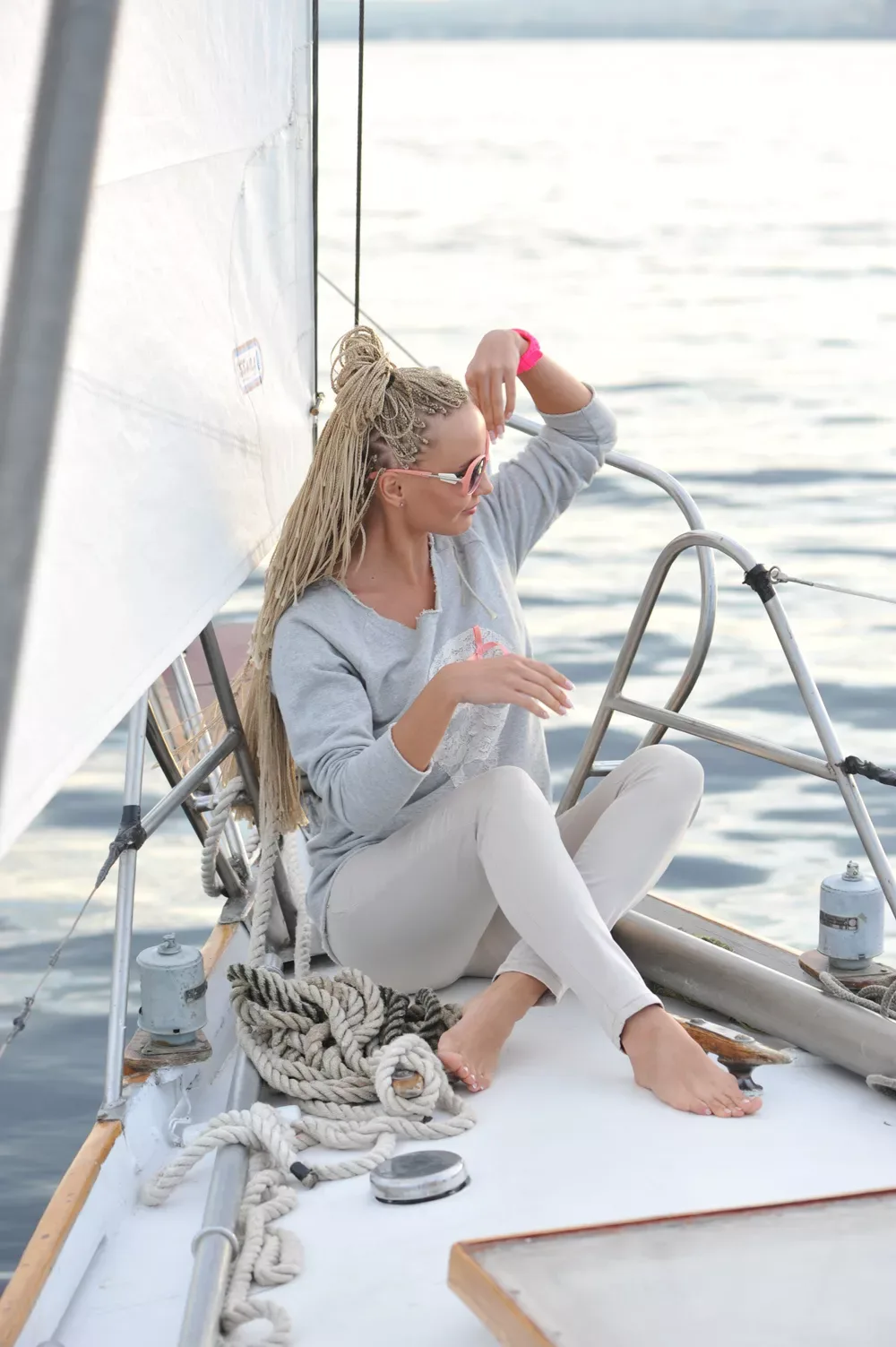
What it is: A containment plan for long hair: a braid for working days, a low bun for formal or evening sails, and a ponytail only when it is high and tight enough not to whip. The braid is the default because it keeps the ends together.
Common mistakes: A loose ponytail that seems fine at the dock and becomes a whip in 20 knots.
Maintenance: Braid loosely enough that the style survives the day, then undo it ashore, rinse, and let it dry down.
Cost and time: A few elastics and a comb. Braiding takes three to five minutes once you have practised, and a bun takes about two.
Quick verdict: Long hair sails brilliantly when it is braided. Keep it contained and it is an asset, not a hazard.
Curly Hair on Deck
Curly hair and sailing are a complicated pair. Wind pulls curls apart, spray dries them into frizz, and a tight style can crush the curl pattern for the rest of the day.

What it is: Protective styling for curls: braids, twists, a pineapple updo or a low puff that keeps the curl clumps together instead of letting the wind separate them. A little leave-in or curl cream before styling helps the pattern hold.
Common mistakes: Brushing curls dry on the boat, which turns them into a halo of frizz, and pulling curls into a very tight ponytail.
Maintenance: Refresh with water and a little leave-in rather than re-brushing.
Cost and time: A leave-in conditioner and a satin scarf are the only extras. Styling takes five to ten minutes, and wash day is the longer job, not the daily style.
Quick verdict: Curls love braids and pineapples on the water. Protect the clumps and the wind cannot pull them apart.
After-Sail Wash Day: Rinsing Out Salt and Sun
Wash day after sailing is not about deep cleaning every time, it is about getting the salt out gently. Salt left in hair keeps drawing moisture out overnight, so even one rinse makes a real difference.

What it is: A gentle post-sail routine: rinse with fresh water, use a mild shampoo or a co-wash, condition the lengths, detangle while the conditioner is in, and let hair air-dry. A weekly deeper treatment keeps ends healthy through a sailing season.
Common mistakes: Using a strong clarifying shampoo after every sail, which dries hair out further, and going to bed with wet, salty hair still tied up.
Maintenance: On light sailing days a water rinse and conditioner alone is enough.
Cost and time: A gentle shampoo, conditioner and a wide-tooth comb. The rinse takes five minutes, the full wash about fifteen.
Quick verdict: Rinse first, wash gently, condition always. Your hair will thank you by the end of the season.
The High Ponytail
The high ponytail is the first style most sailors reach for, and for good reason. It lifts every strand off the neck, keeps hair clear of the collar of a life jacket, and takes less than a minute.

What it is: Hair gathered high at the crown and secured with a strong elastic, with the tail falling straight down the back. It suits medium to long hair and works under a cap if the ponytail sits just below the cap line.
Common mistakes: Tying it so tight it gives you a headache by midday, using a thin elastic that snaps when the tail whips in a gust.
Maintenance: Re-tie at lunch and swap the elastic position slightly each day to avoid a permanent dent.
Cost and time: Under a minute, and the cost is a pack of elastics. It is the fastest reliable style in this guide.
Quick verdict: Fast, cool and practical. Just keep it tight enough to survive a gust and loose enough to survive the day.
The Low Ponytail Under a Cap
A low ponytail threaded through a cap is the classic deck look because it solves two problems at once: the cap shades your face and the ponytail keeps hair contained. It is the style you will see most on race crews, because it works with the gear everyone already wears.
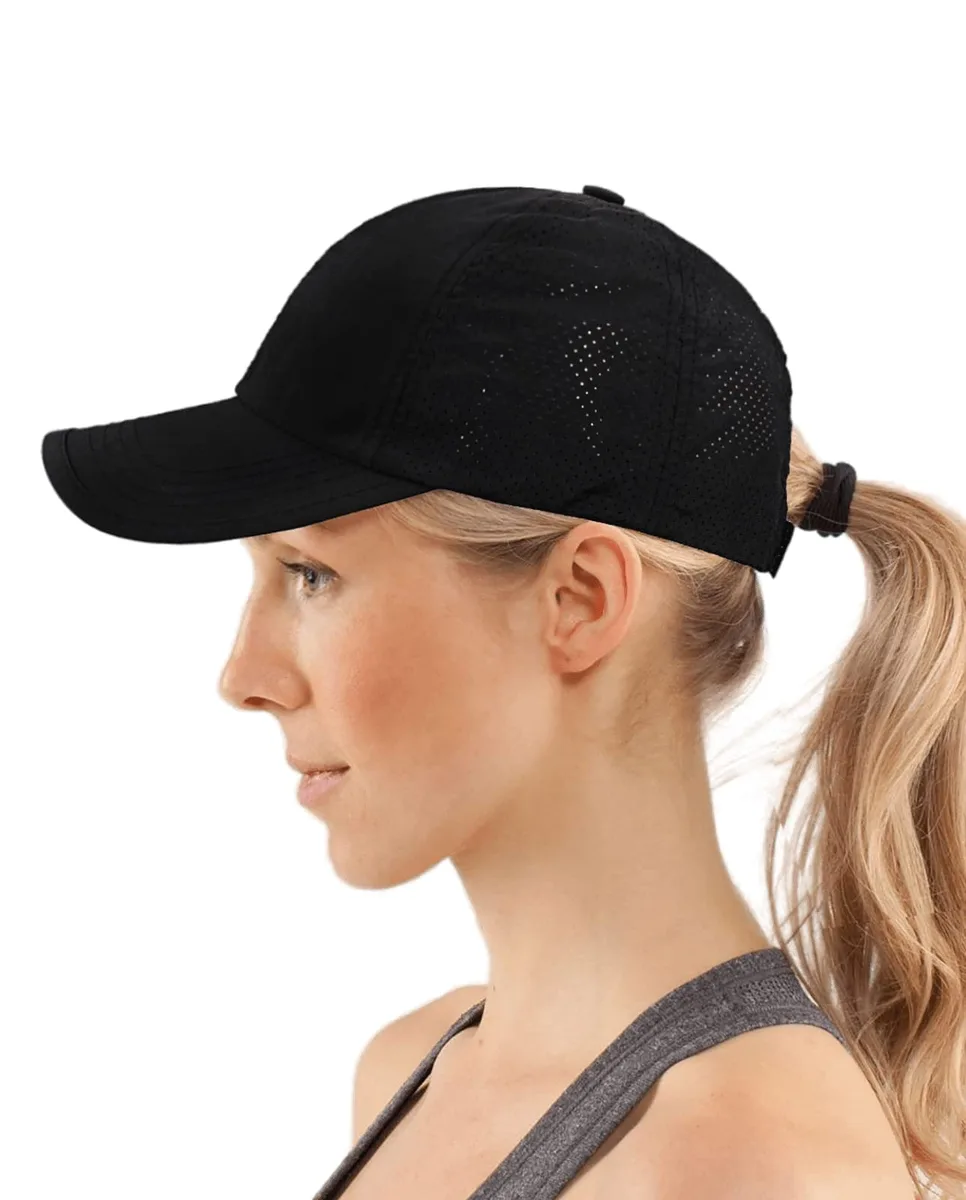
What it is: Hair gathered low at the nape and pulled through the opening at the back of a baseball cap. The cap holds the top flat, the ponytail holds the length, and nothing flaps around.
Common mistakes: A cap that is too tight and pushes the ponytail down into the life jacket collar.
Maintenance: Almost none during the day. Shake the cap off ashore, brush out, and the style is done.
Cost and time: About a minute, plus a cap with a ponytail opening, which costs very little and lasts for seasons.
Quick verdict: The crew favourite. Simple, sun-smart and completely compatible with a life jacket.
Double French Braids
Double French braids are the gold standard for a working sail. Two braids running from the hairline to the nape lock every strand down, survive a full day of tacking, and still look neat at the marina bar afterwards.
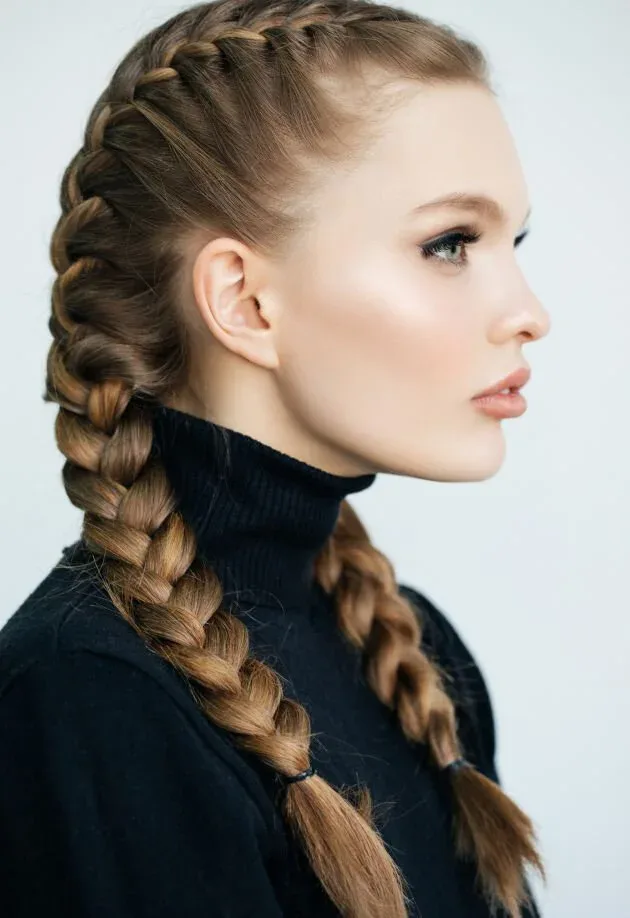
What it is: Hair parted down the middle and French-braided on each side from the front hairline to the nape, then finished as two braids down the back. It suits medium to long hair of almost any texture.
Common mistakes: Braiding too loosely at the hairline so the front escapes in the wind, and finishing with elastics that are too small for thick hair.
Maintenance: Very little.
Cost and time: Five to ten minutes and two elastics. Practise at home first, because braiding your own hair neatly takes a few tries.
Quick verdict: The most wind-proof style in this guide. Learn it once and you will use it every regatta.
The Single French Braid
One French braid down the back is the simpler cousin of the double braid, and it is just as useful on deck. It keeps the full length in one contained rope, stays clear of winches and sheets, and is quick enough to do on the dock while the crew casts off.
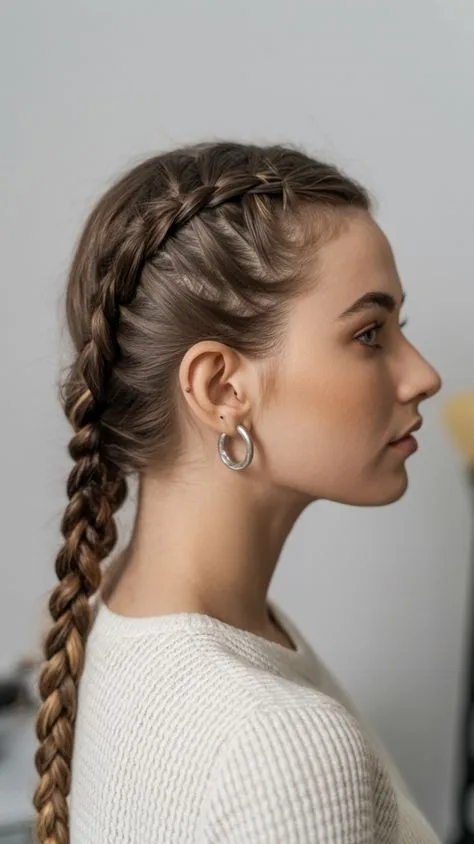
What it is: A single French braid starting at the crown and running down the centre of the back, gathering hair as it goes. It works best on medium to long hair and holds well under a cap or buff.
Common mistakes: Starting the braid too low, so the top layers escape, and braiding over hair that has not been detangled.
Maintenance: Check the end elastic once during the day.
Cost and time: Three to five minutes and one elastic. It is the fastest braid in the guide and the easiest to learn.
Quick verdict: Simple, fast and genuinely wind-proof. A perfect everyday sailing braid.
The Dutch Braid
A Dutch braid is a French braid turned inside out, so the braid sits on top of the hair instead of tucked inside it. On a boat that raised profile is a real advantage: it grips tighter, holds longer, and is easier to check at a glance when you are wondering if your style is still holding.
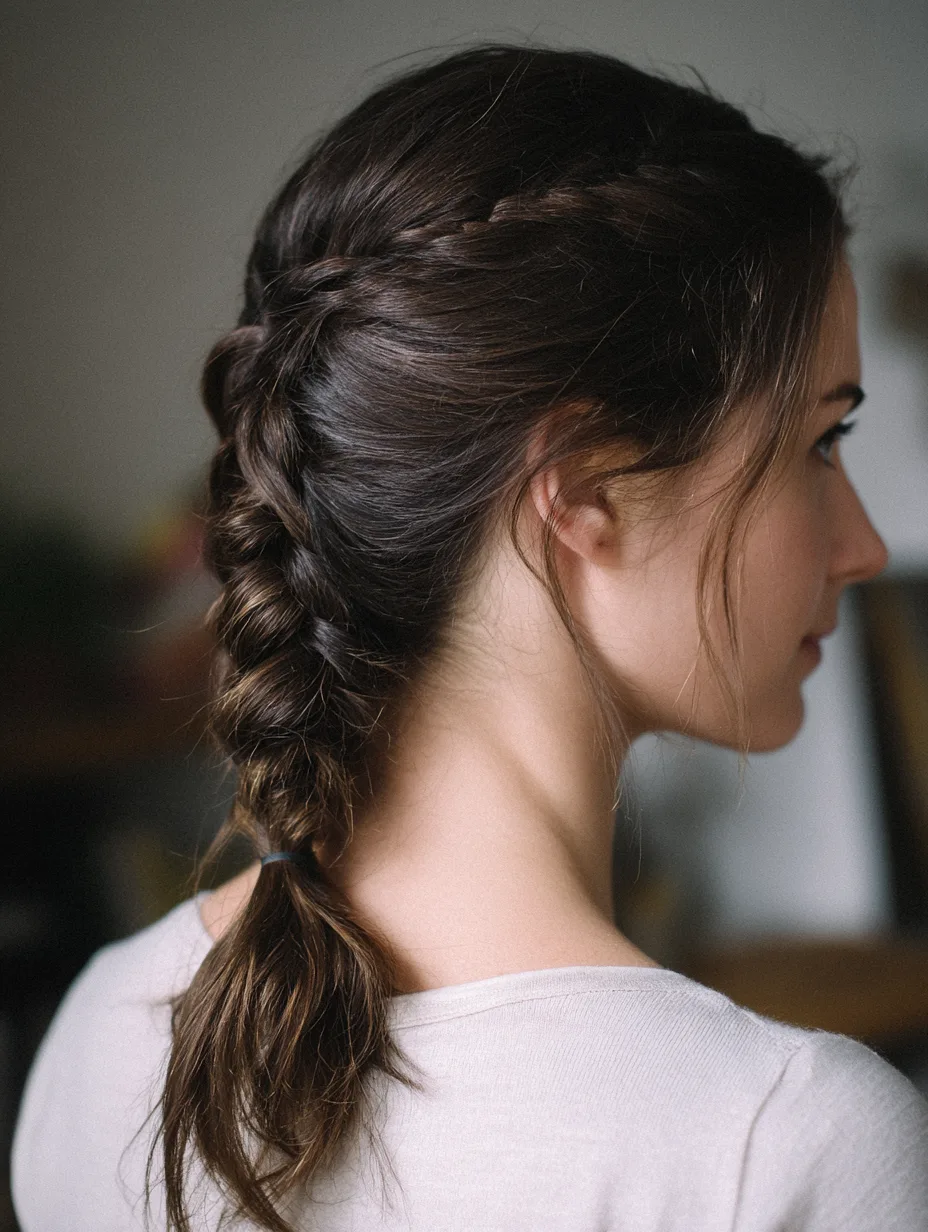
What it is: A reverse French braid where each section passes under the last, creating a raised braid that sits proud of the head. It suits thick hair especially well, because the structure holds heavy hair in place.
Common mistakes: Pulling the braid too tight at the hairline, which hurts after hours under a cap, and making the sections uneven.
Maintenance: Holds all day with no attention.
Cost and time: Five to eight minutes and one or two elastics. Slightly slower than a French braid, but it lasts longer in strong wind.
Quick verdict: The heavy-duty braid. If your hair is thick or the forecast is strong, choose Dutch over French.
The Fishtail Braid
The fishtail braid looks intricate, but it is just two sections woven back and forth, and it is one of the best styles for a long day on the water. Because it uses small sections, it grips fine hair that slips out of ordinary braids, and the finished braid lies flat enough to sit under a life jacket.
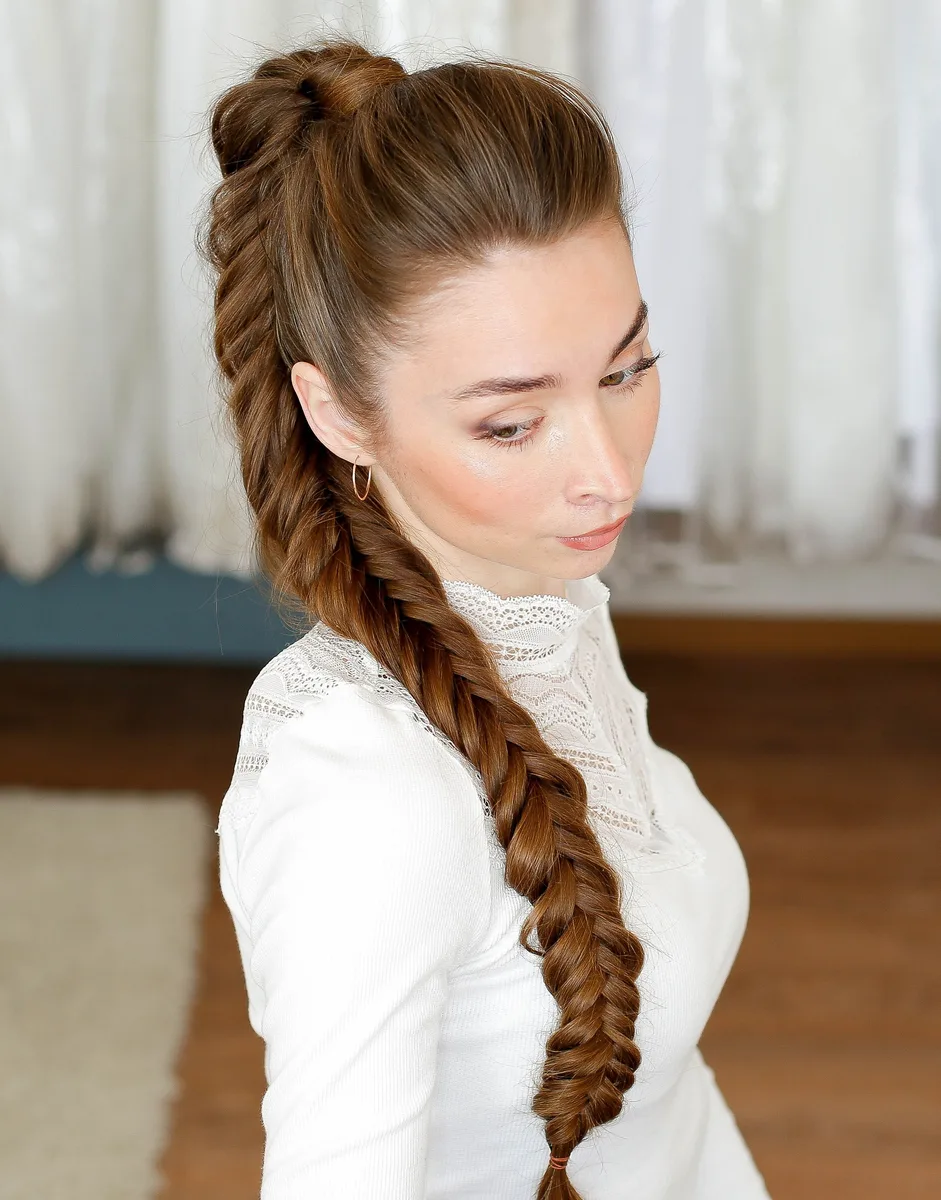
What it is: Hair divided into two sections, with small strands crossed from one side to the other all the way down. The result is a flat, herringbone-style braid that looks detailed and holds very securely.
Common mistakes: Taking sections that are too big, which makes the braid look like a normal three-strand braid and loosens faster.
Maintenance: Very low. The fishtail tightens as it settles, so it often looks better at midday than it did at the dock.
Cost and time: Eight to twelve minutes and one elastic. Slower than a French braid, so practise it before race day, not on it.
Quick verdict: Beautiful and surprisingly tough. Best for fine hair and for days when you want the braid to look as good as it performs.
The Rope Braid
A rope braid is the quickest braid you can do on a moving boat, and sometimes that is all that matters. Two sections twisted around each other make a neat rope that holds well, and you can do it one-handed while holding a sheet with the other, which is a genuine skill on a busy foredeck.
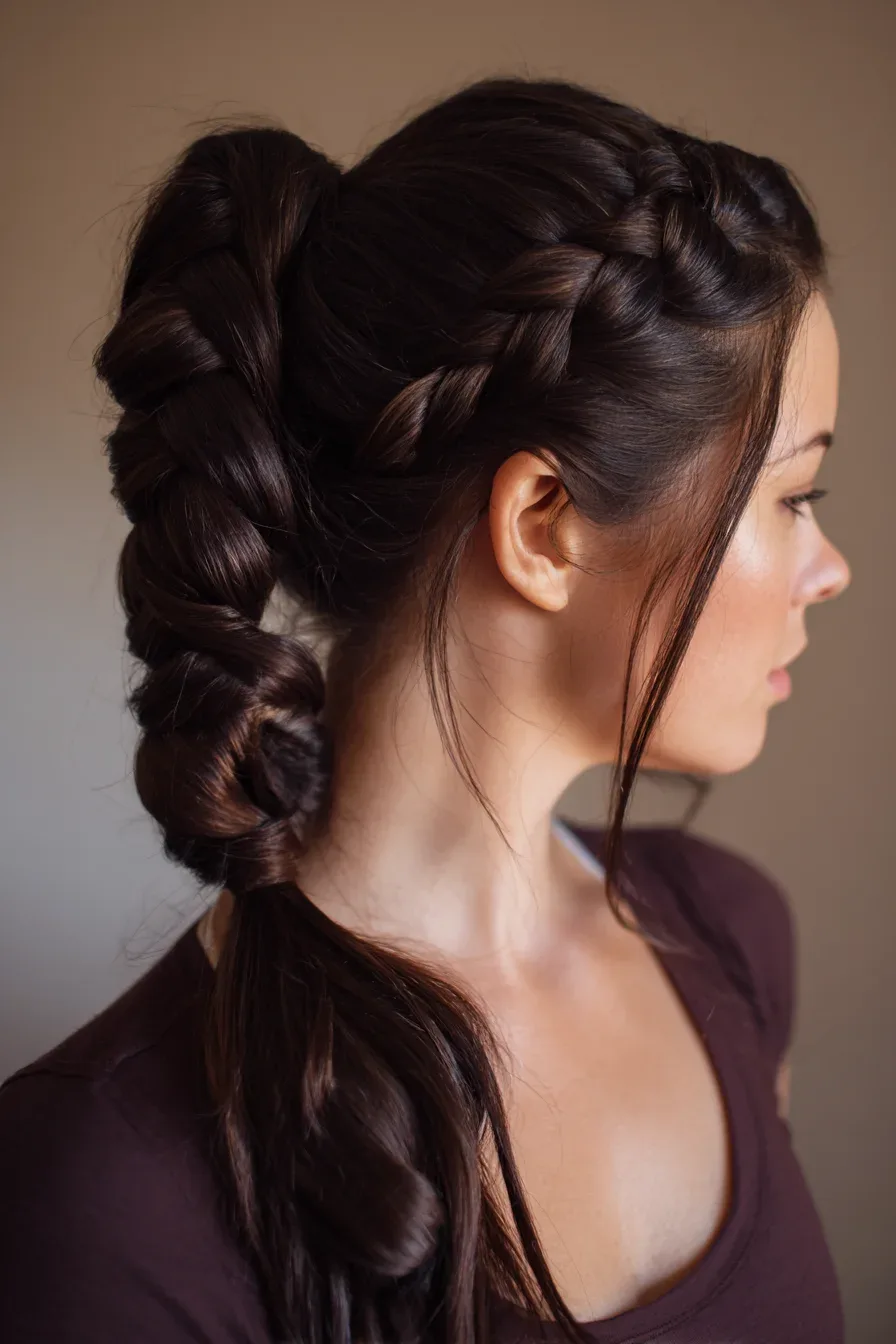
What it is: Hair divided into two sections, each twisted in the same direction, then twisted around each other in the opposite direction. The opposing twists lock the braid together without needing many pins.
Common mistakes: Twisting both sections in opposite directions, which makes the braid unravel the moment you let go.
Maintenance: Check the end elastic after a strong gust.
Cost and time: Two to three minutes and one elastic. The fastest braid in this guide, and the easiest to redo on the water.
Quick verdict: The emergency braid. Learn it for the days when the wind picks up and you need hair contained right now.
Boxer Braids for Racing
Boxer braids are double Dutch braids worn tight and close to the head, and they are built for racing. Nothing hangs loose, nothing can catch, and the style survives hiking, ducking and a dunking in spray.
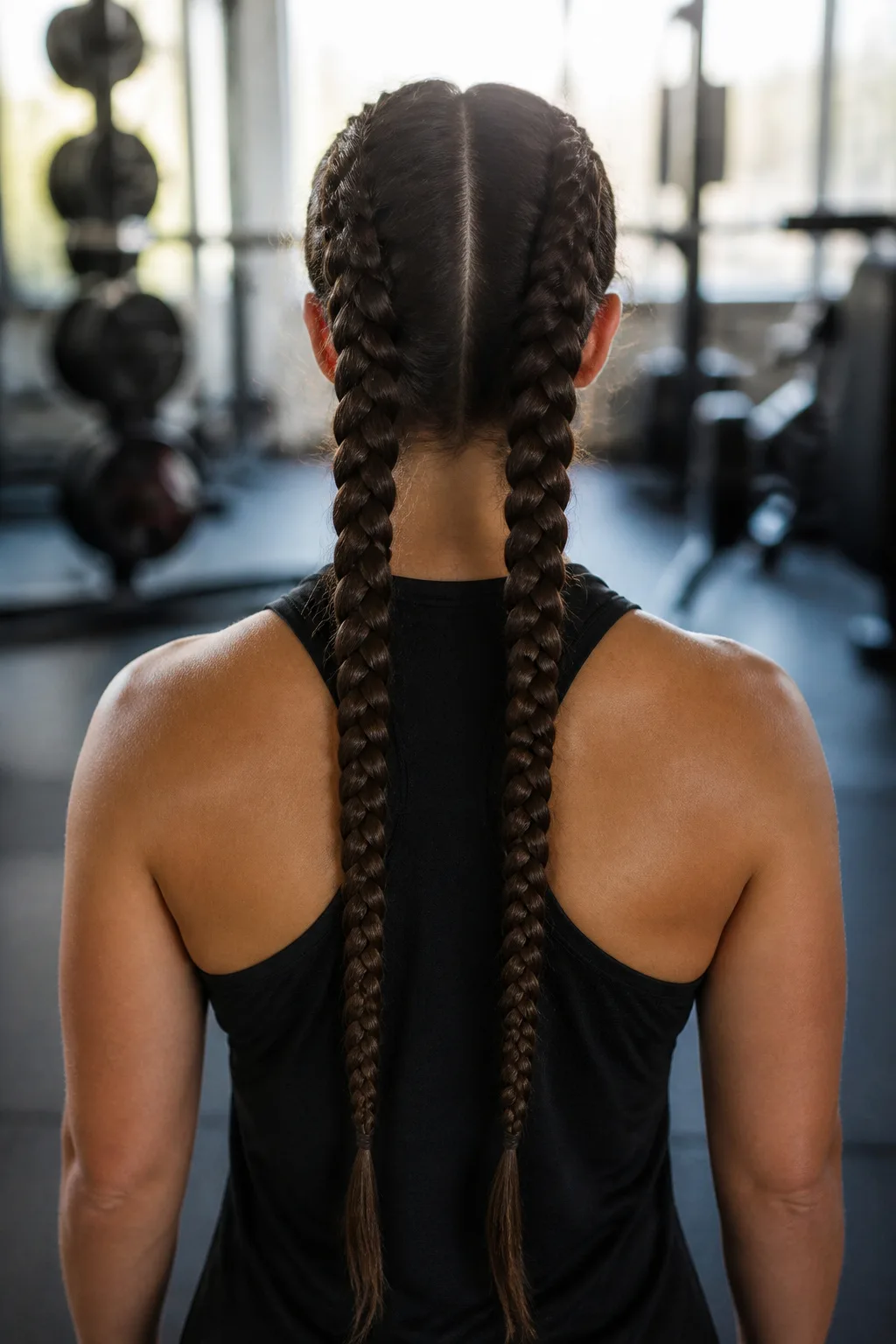
What it is: Two tight Dutch braids from the hairline to the nape, finished as braids down the back or tucked under. The tight fit is the whole point: the style is designed not to move at all.
Common mistakes: Braiding so tight it causes a headache or pulls at the hairline, and wearing boxer braids for several days in a row without a break.
Maintenance: None during the race.
Cost and time: Ten to fifteen minutes and two elastics. It is the slowest braid here, so do it at home before you reach the boat.
Quick verdict: The race-day armour. Maximum hold, zero loose hair, and total confidence on the foredeck.
The Low Bun at the Nape
A low bun at the nape is the quiet workhorse of sailing hair. It sits below the life jacket collar, it does not catch the wind, and it keeps the full length of your hair in one neat package.
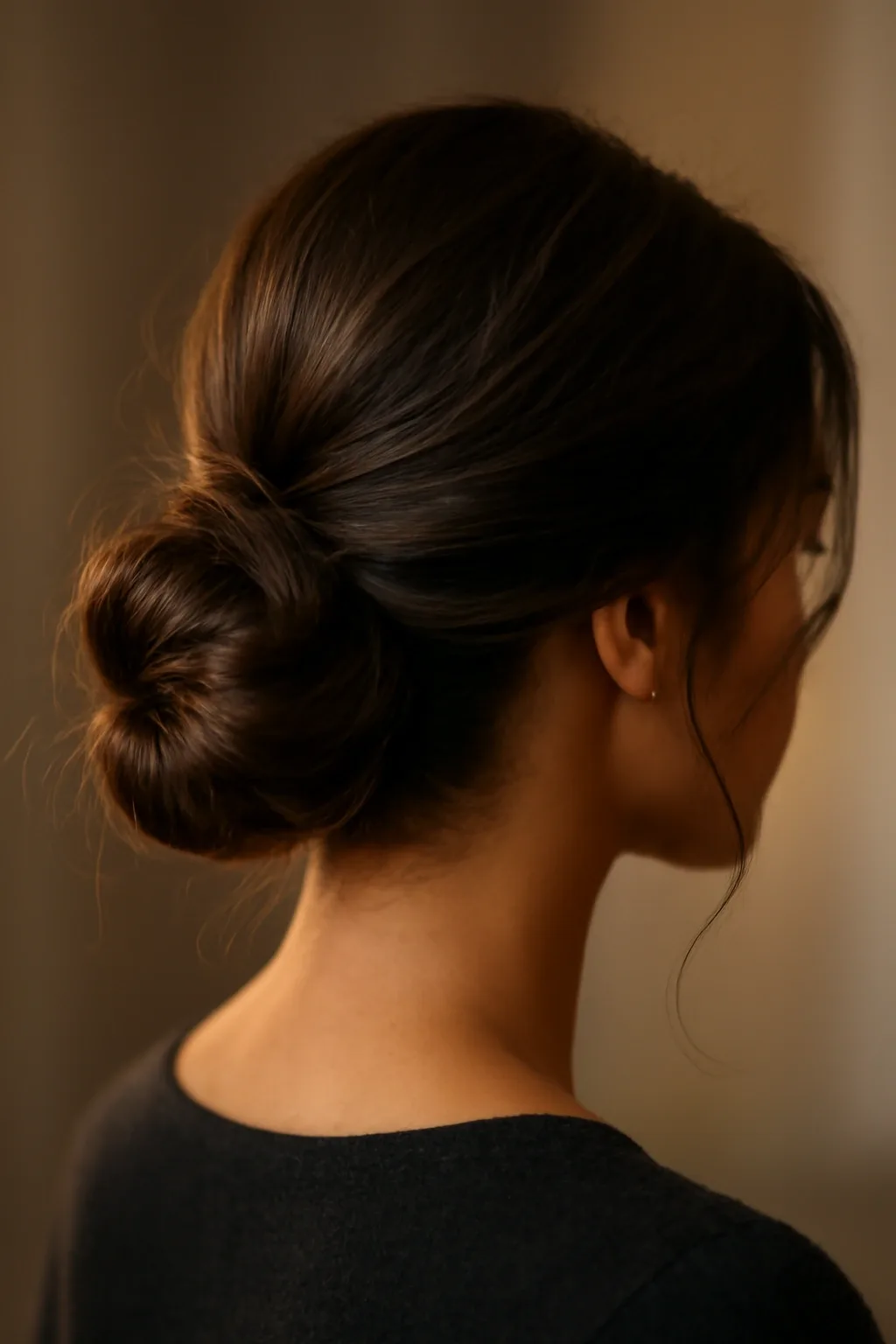
What it is: Hair gathered low at the nape and twisted or coiled into a bun, secured with pins or a second elastic. It suits medium to long hair and works with or without a cap.
Common mistakes: Using too few pins, so the bun sags by midday.
Maintenance: Carry two spare pins.
Cost and time: Two to three minutes, a few pins and an elastic. It is one of the cheapest styles here.
Quick verdict: Neat, low and completely out of the way. The best bun for life jacket days.
The High Top Knot
The high top knot is the hottest-day style. It gets every strand off your neck and shoulders, keeps hair far from the waterline when you lean over the side, and dries quickly if it gets splashed.
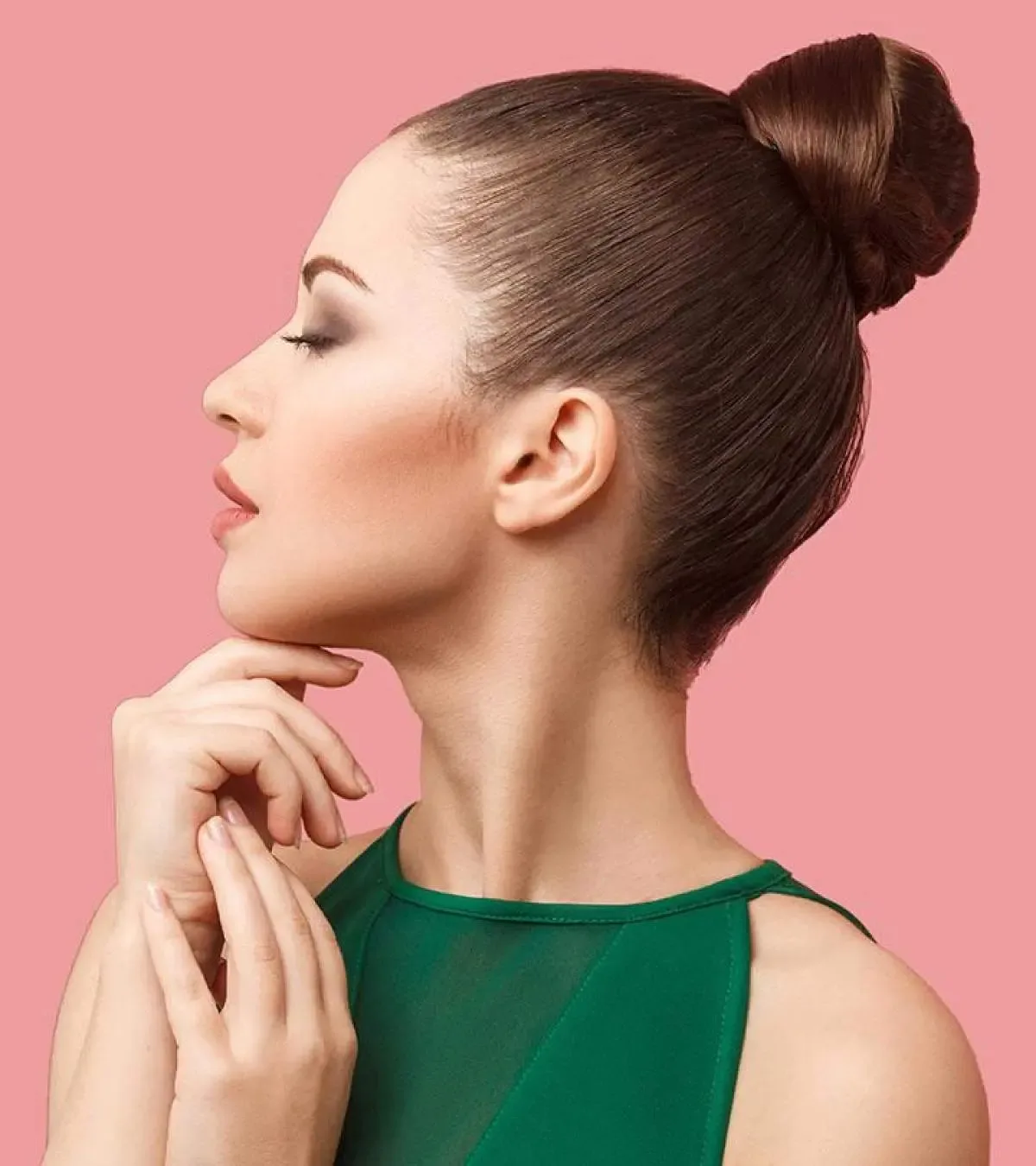
What it is: Hair gathered high on the crown, twisted and coiled into a knot, then pinned. It suits medium to long hair and is best for light-wind days, since a top knot can work loose in a strong gust.
Common mistakes: Wearing it under a life jacket, whose collar knocks it forward, and pulling it so tight it aches.
Maintenance: Check the pins after a gusty spell.
Cost and time: Two minutes, an elastic and two or three pins. Very cheap and very fast.
Quick verdict: The best hot-day bun. Keep it for light air and anchor days, and choose a lower bun when the wind builds.
The Messy Deck Bun
The messy deck bun is the honest version of the top knot: quick, forgiving and made for real life on a boat. It does not need to be perfect, because the wind will mess it up anyway, and that is the point.
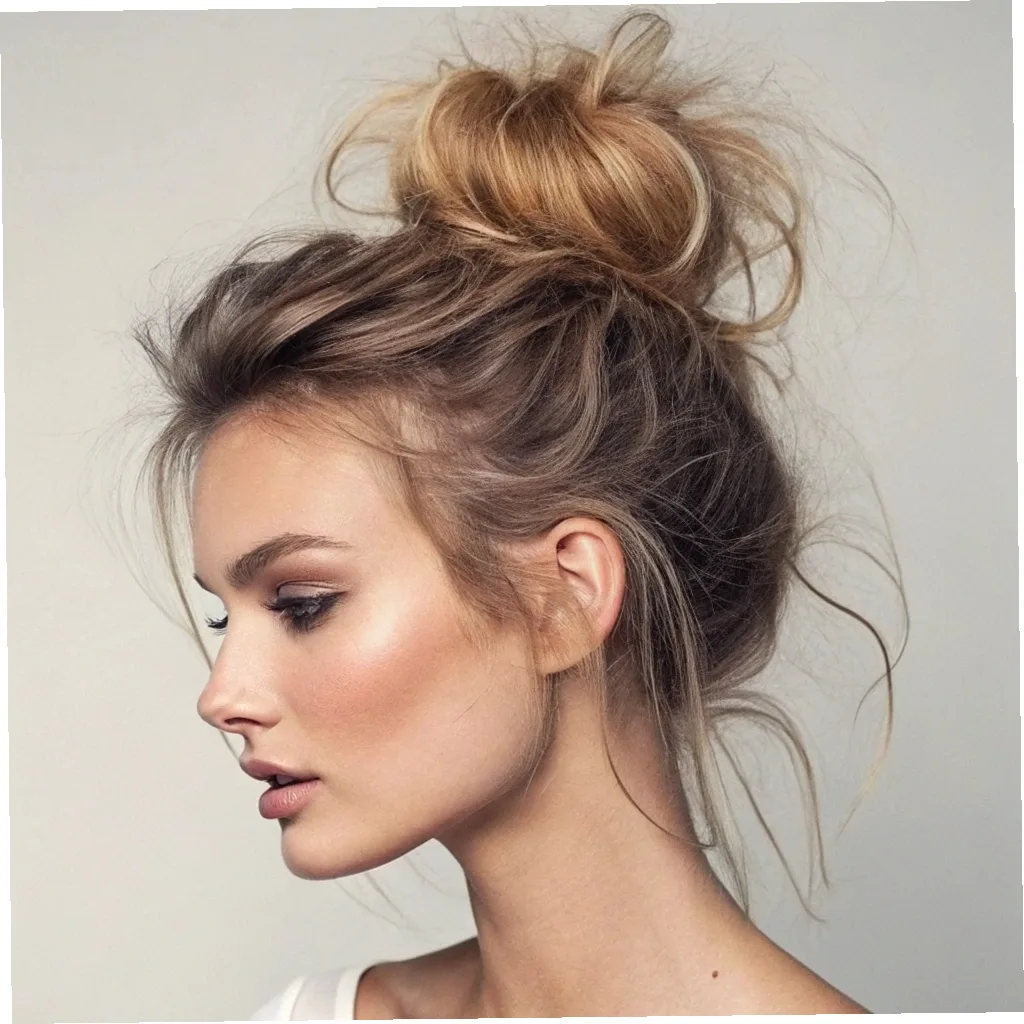
What it is: A loose bun gathered quickly at the crown or back of the head, secured with an elastic and a couple of pins, with a few face-framing strands left loose on purpose. It suits medium to long hair.
Common mistakes: Leaving it so loose it falls out at the first tack, and trying to make it look deliberately messy.
Maintenance: Almost none. If it loosens, take it down and redo it in thirty seconds.
Cost and time: One minute, an elastic and a pin or two. The fastest bun in this guide.
Quick verdict: Perfect for lazy anchor days and quick turnarounds. Do not trust it in a race, but love it everywhere else.
The Braided Low Bun
The braided low bun takes the best of two styles and puts them together: a braid to lock the hair down, then a bun to keep the ends contained. It is one of the most secure styles in this guide, and it looks polished enough for an evening sail or a dinner ashore.
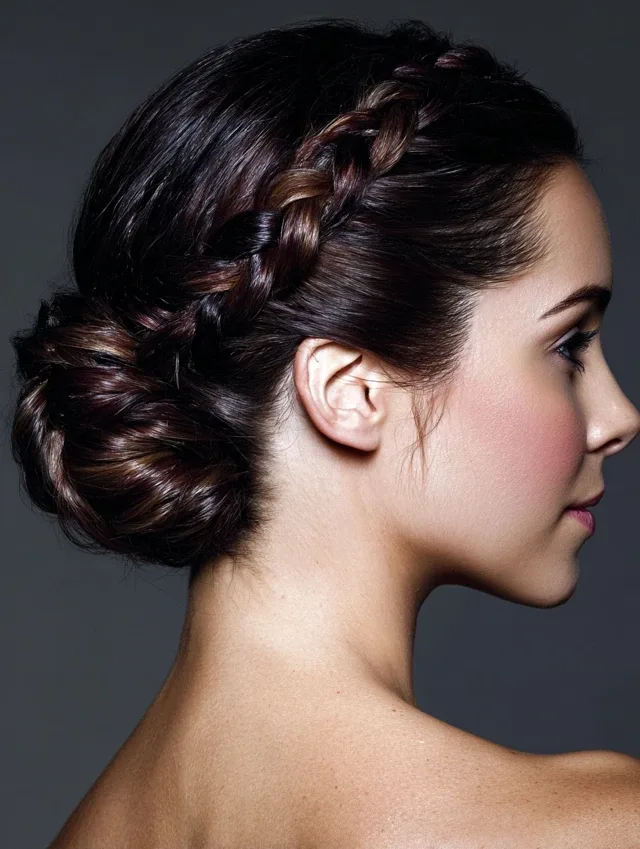
What it is: Hair braided first, usually a single braid or two braids, then coiled into a low bun at the nape and pinned. The braid gives the bun grip, so it holds far longer than a plain bun.
Common mistakes: Braiding too loosely, so the bun still slips, and using pins that are too short for thick hair.
Maintenance: Very little.
Cost and time: Eight to ten minutes, an elastic and several pins. Slower than a plain bun, but it lasts twice as long.
Quick verdict: The secure bun. Choose it when you want a bun that will still be there at sunset.
The Twisted Crown Braid
The twisted crown braid wraps around the head like a headband made of your own hair, keeping the front completely clear of your face. That makes it ideal for the helm, where you need an unobstructed view, and for the foredeck, where you are looking up at the sails all day.
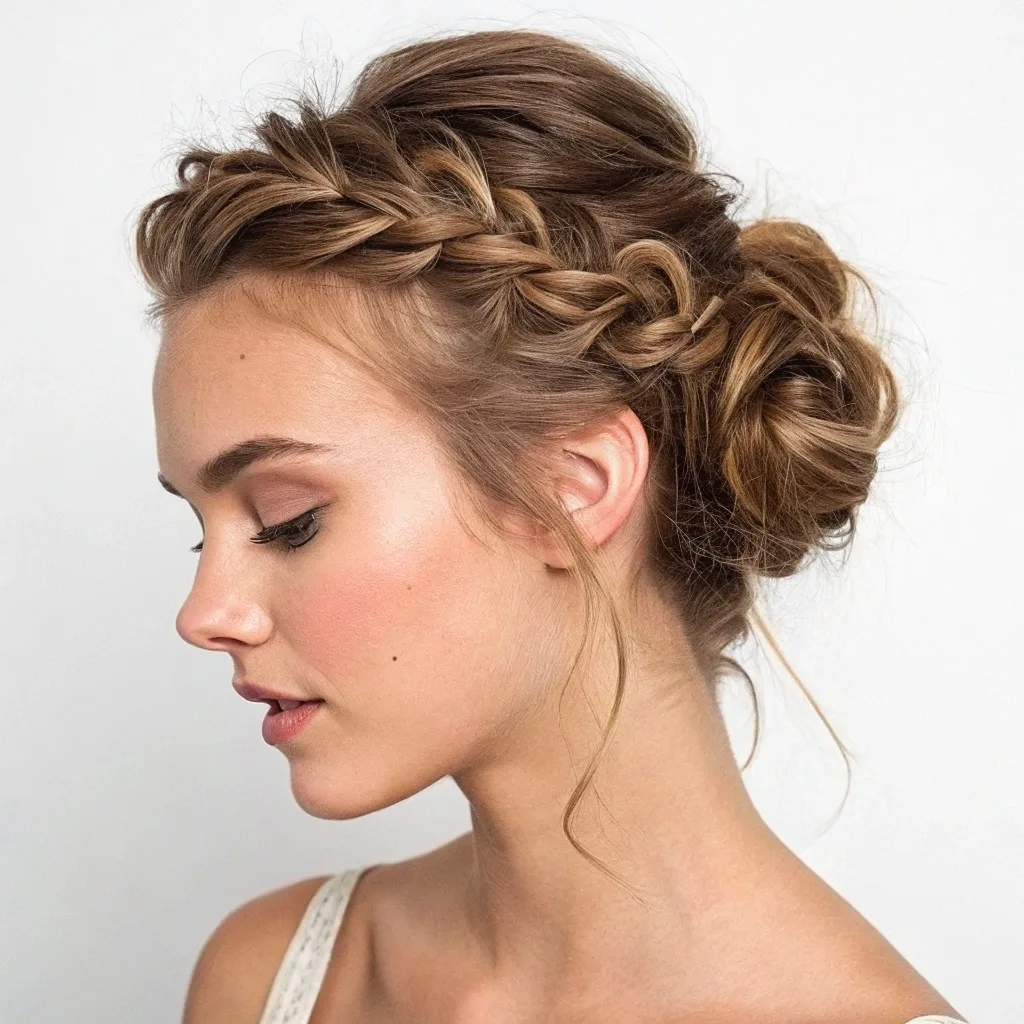
What it is: Two twisted sections, one from each side of the head, brought around and pinned to form a crown. The rest of the hair can be braided, bunned or left in a low ponytail behind it.
Common mistakes: Twisting in the wrong direction, which makes the twist unravel, and pinning the crown too far back.
Maintenance: Check the pins once at midday.
Cost and time: Eight to ten minutes and four or five pins. It takes practice, so try it at home before a sailing day.
Quick verdict: The clearest view in this guide. Perfect for the helm and for anyone who hates hair in their face.
The Headband Braid
A headband braid is a small braid worn across the front of the head, doing the job of a headband without any extra gear. It keeps the hairline tidy, stops short front layers from blowing into your eyes, and adds a pretty detail to an otherwise practical sailing style.
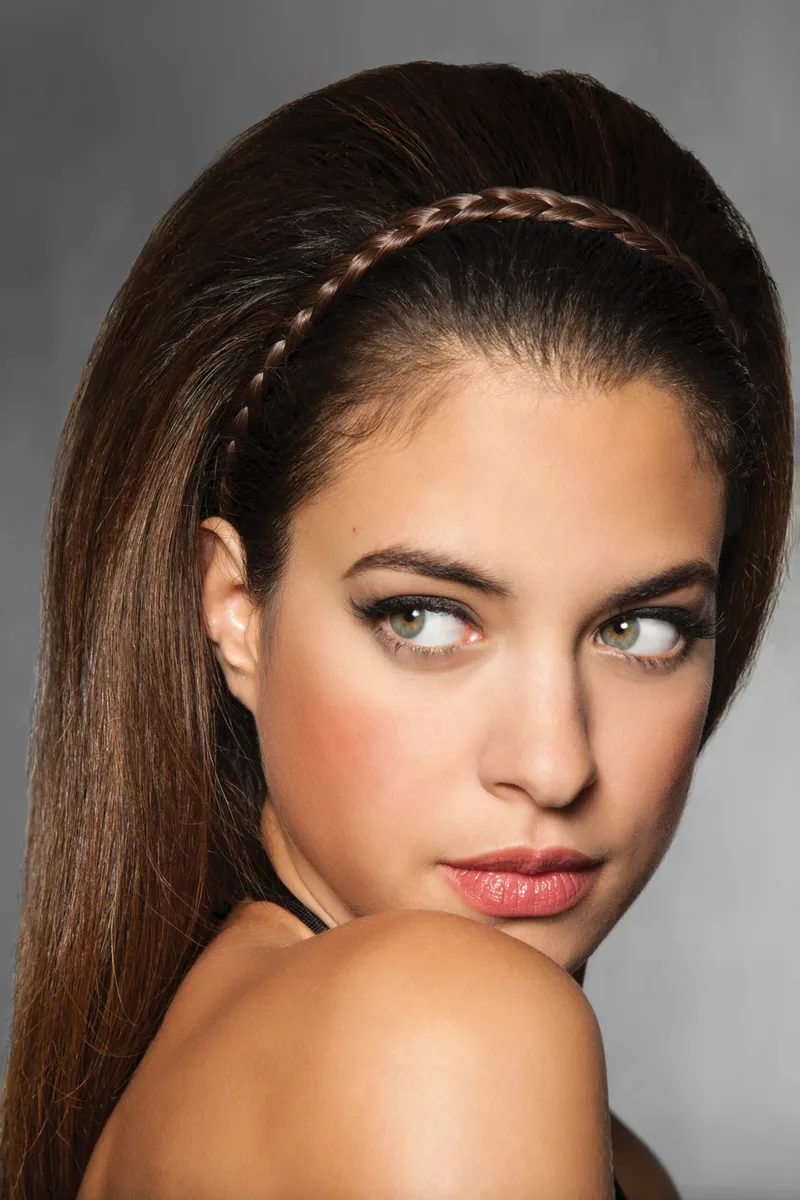
What it is: A thin braid made from the front section of hair, running from one ear across the forehead to the other, then pinned behind the ear. The rest of the hair is worn in a ponytail, braid or bun.
Common mistakes: Making the braid too thick, so it looks like a headband sitting on top of the hair instead of blending in, and forgetting to pin the end securely.
Maintenance: Low. The braid is short and anchored at both ends, so it holds well.
Cost and time: Five minutes and two pins. A small effort for a big improvement in comfort and looks.
Quick verdict: The prettiest practical detail here. It keeps the front tidy and the rest of the style can be as simple as you like.
The Side Braid Over One Shoulder
A side braid over one shoulder keeps your hair in front of you, where you can see it and keep it out of the way. That matters on deck, because a braid down your back can catch on a winch or a sheet without you noticing, while a side braid is always in your line of sight.
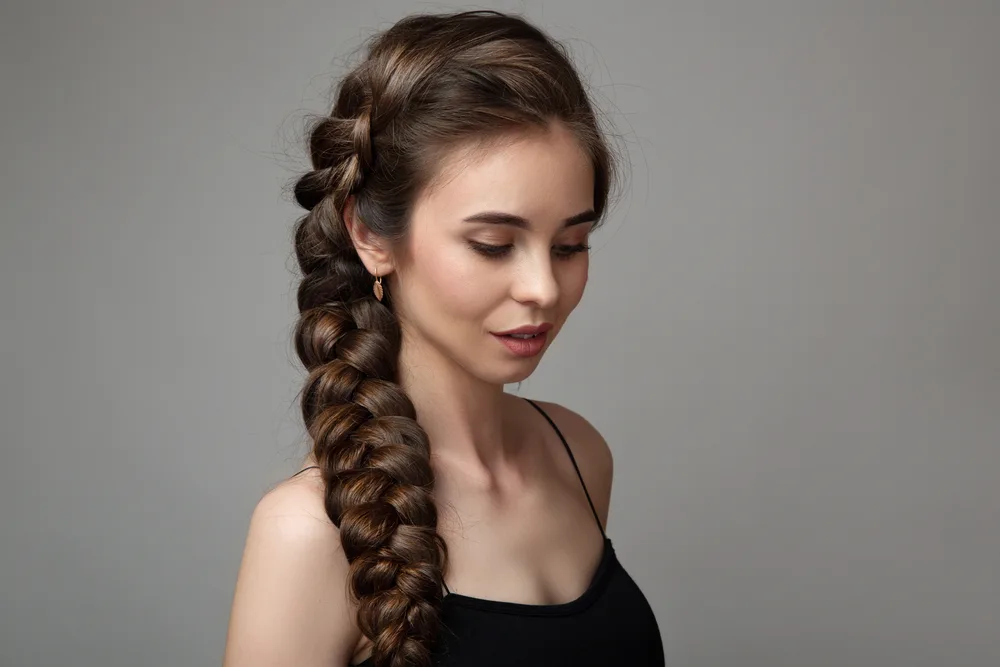
What it is: Hair swept to one side and braided over the shoulder, usually a three-strand or fishtail braid. It suits medium to long hair and is easy to redo without a mirror.
Common mistakes: Letting the braid hang on the windward side, where it whips across your face.
Maintenance: Very low.
Cost and time: Three to five minutes and one elastic. One of the easiest braids to do on yourself.
Quick verdict: The visible braid. Keep it on the leeward side and it is one of the safest styles on deck.
The Bubble Ponytail
The bubble ponytail turns a plain ponytail into a series of neat puffs, and each elastic in the chain stops the hair from whipping. It is fun, it photographs well, and it is far more wind-proof than it looks, because the hair is divided into short, controlled sections.
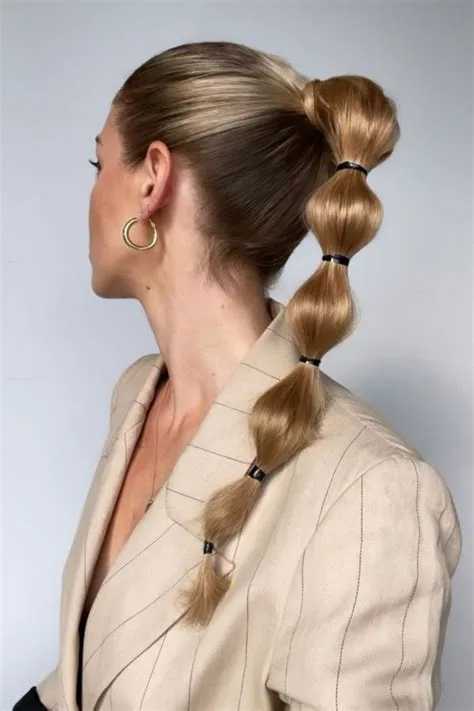
What it is: A ponytail divided by several elastics spaced down its length, with each section gently pulled out to form a bubble. It suits medium to long hair and works best on hair with some volume.
Common mistakes: Spacing the elastics too far apart, so the bubbles collapse in the wind, and pulling the bubbles out too aggressively.
Maintenance: Low during the day, but take the elastics out one at a time ashore, because pulling them all out at once can snap fine hair.
Cost and time: Five minutes and four or five elastics. Cheap, quick and cheerful.
Quick verdict: Playful but practical. A great choice for a social sail or a day when you want the style to look as good as it works.
The Braided Ponytail
The braided ponytail combines the speed of a ponytail with the security of a braid. You tie the hair up first, then braid the tail, so the whole style takes minutes and the braid keeps the tail from whipping around in a gust.
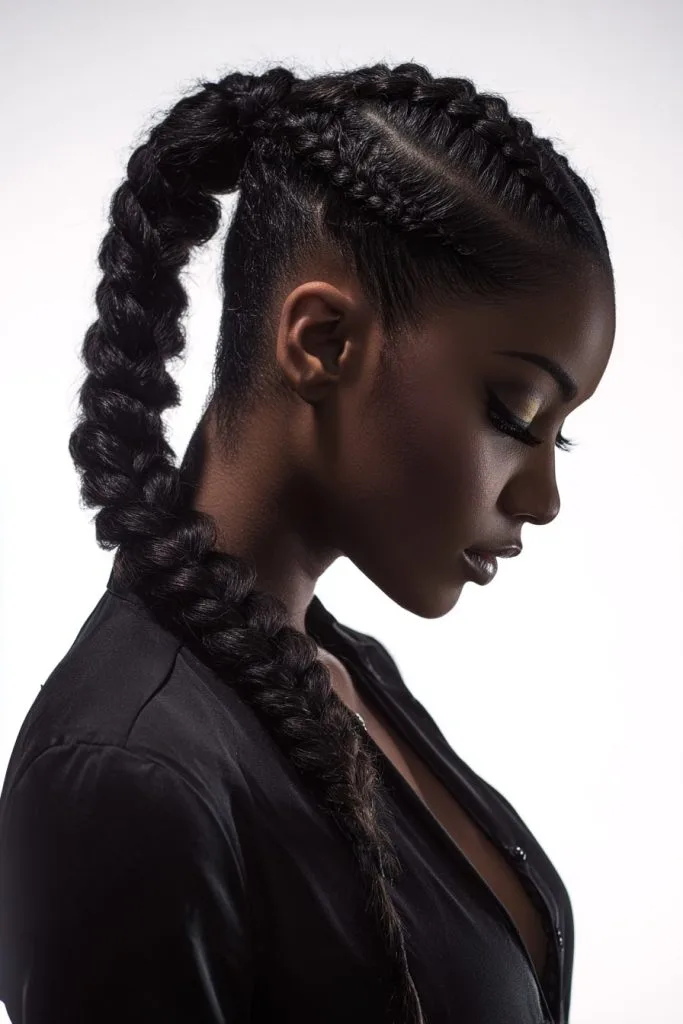
What it is: A ponytail, high or low, with the tail braided down its length and secured with a second elastic. It suits medium to long hair and is easy to do without a mirror.
Common mistakes: Braiding the tail too loosely, so it still whips, and tying the ponytail too high for a life jacket, whose collar pushes it forward.
Maintenance: Very low.
Cost and time: Three to four minutes and two elastics. One of the best returns on effort in this guide.
Quick verdict: Fast, secure and tidy. The ideal compromise when you want a ponytail that actually stays put.
Twin Braided Pigtails
Twin braided pigtails split the hair into two even braids, one on each side, and that balance is their strength. The weight is even, nothing pulls to one side, and each braid is short enough that it cannot whip far.
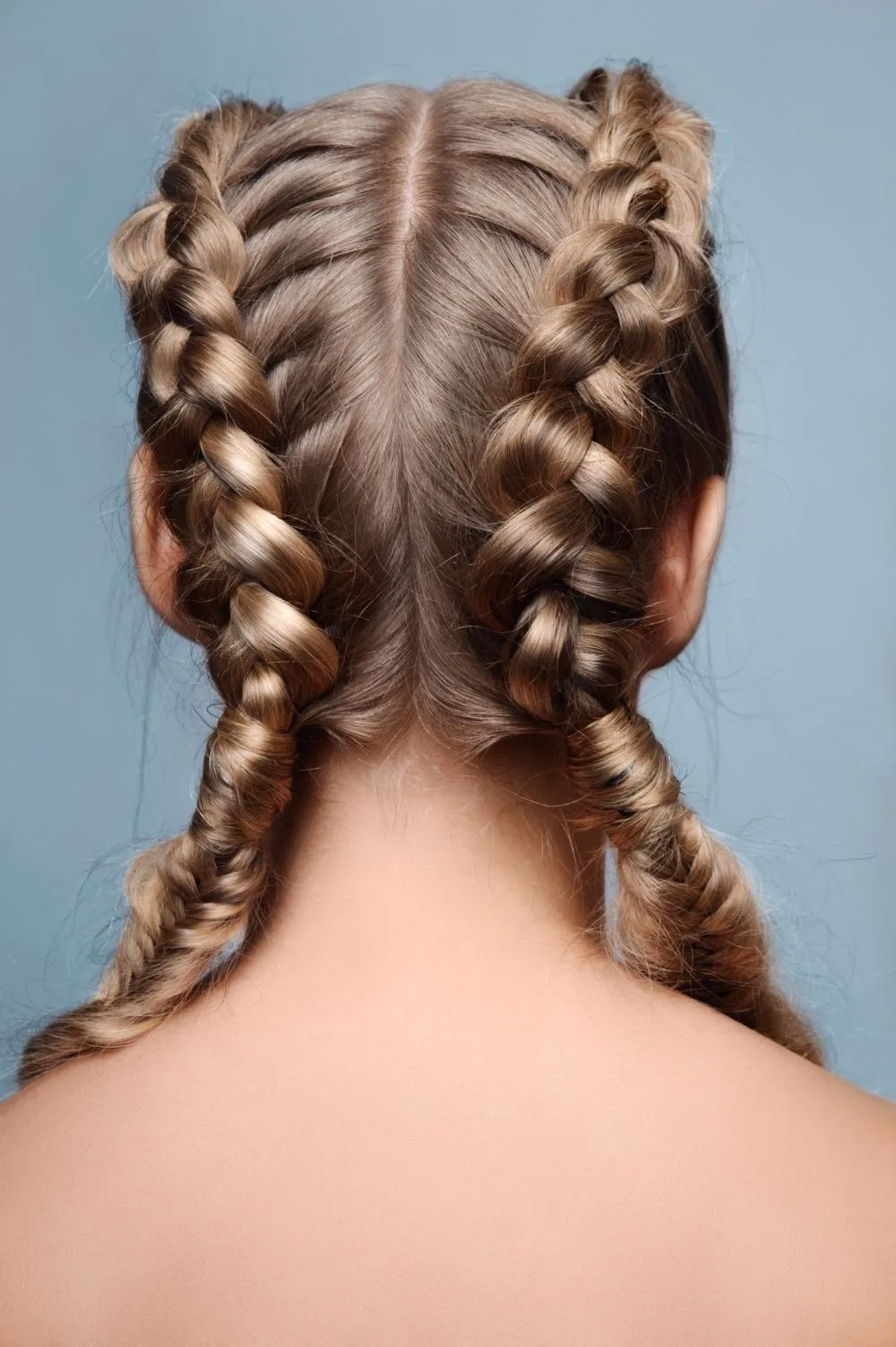
What it is: Hair parted down the middle and braided into two pigtails, usually French or Dutch braids that start at the hairline. It suits medium to long hair and works well under a cap.
Common mistakes: Making the part crooked, which makes the braids uneven and one side loosen first, and leaving the pigtails too long.
Maintenance: Very low.
Cost and time: Eight to twelve minutes and two elastics. Slower than a single braid, but the balance and hold are worth it.
Quick verdict: Balanced, secure and fun. A great choice for long days and for anyone whose hair is too heavy for one braid.
The Slicked-Back Wet Look
The slicked-back wet look stops fighting the spray and uses it instead. Hair is combed straight back with a little gel or cream, so salt water and wind cannot make it look worse, because the style is already meant to look wet.
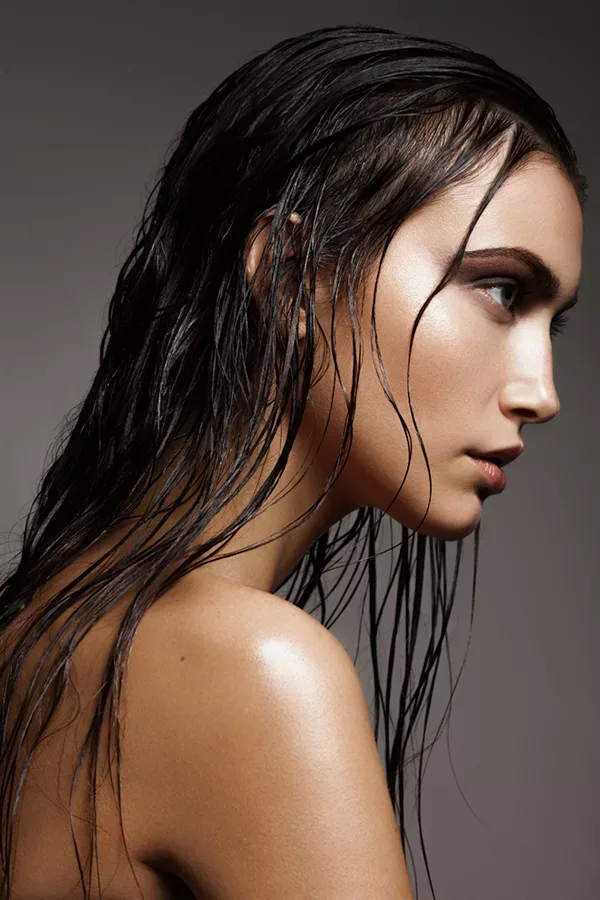
What it is: Hair combed back from the forehead with a light-hold gel or cream, then either left down behind the ears or gathered into a low ponytail or bun. It suits short to medium hair best, and any texture.
Common mistakes: Using too much product, which goes stiff and flaky when the salt dries, and slicking hair back over a sunburnt part line.
Maintenance: Refresh with a little water and a drop of cream.
Cost and time: Two minutes and a small amount of gel or cream. Very cheap and very fast.
Quick verdict: The spray-proof style. If the sea is going to wet your hair anyway, wear it wet on purpose.
The Sleek Low Ponytail
The sleek low ponytail is the tidy version of the everyday ponytail, and it is the one to choose when the sail ends with dinner ashore. Hair is smoothed back, tied low at the nape, and the tail falls straight, so the style looks polished even after hours in the wind.
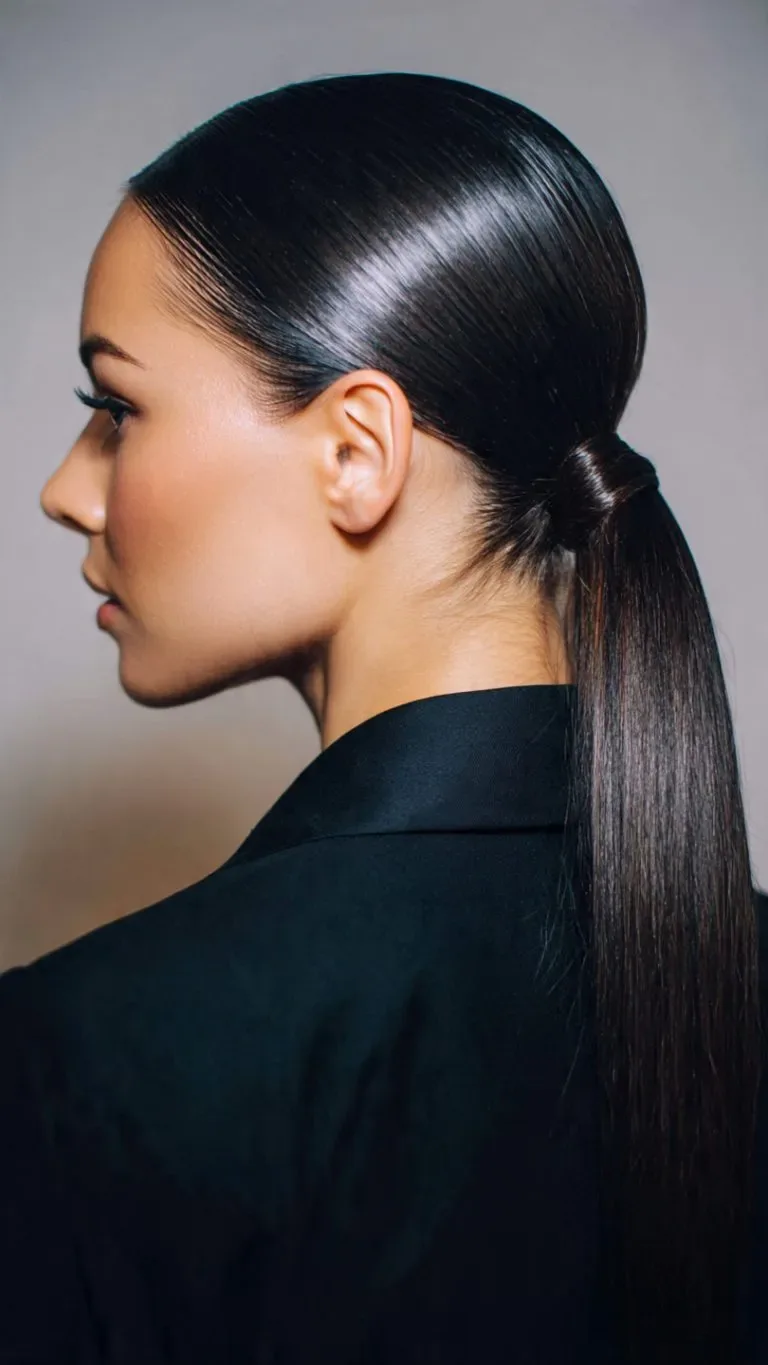
What it is: Hair brushed smooth and gathered low at the nape, secured with an elastic, sometimes with a strand of hair wrapped around the elastic to hide it. It suits straight to wavy hair best.
Common mistakes: Smoothing with a brush on dry hair, which creates flyaways, and tying it so low it catches on the life jacket.
Maintenance: Smooth flyaways with a little water or serum at lunch.
Cost and time: Two to three minutes, an elastic and a little serum. Very low effort for a polished result.
Quick verdict: The polished ponytail. Best for evening sails and days that end somewhere smart.
The Half-Up Top Knot
The half-up top knot takes the top half of your hair out of your face and leaves the rest down, which is a good compromise on a calm day. The knot keeps your vision clear at the helm, while the loose length stays cool in a light breeze.
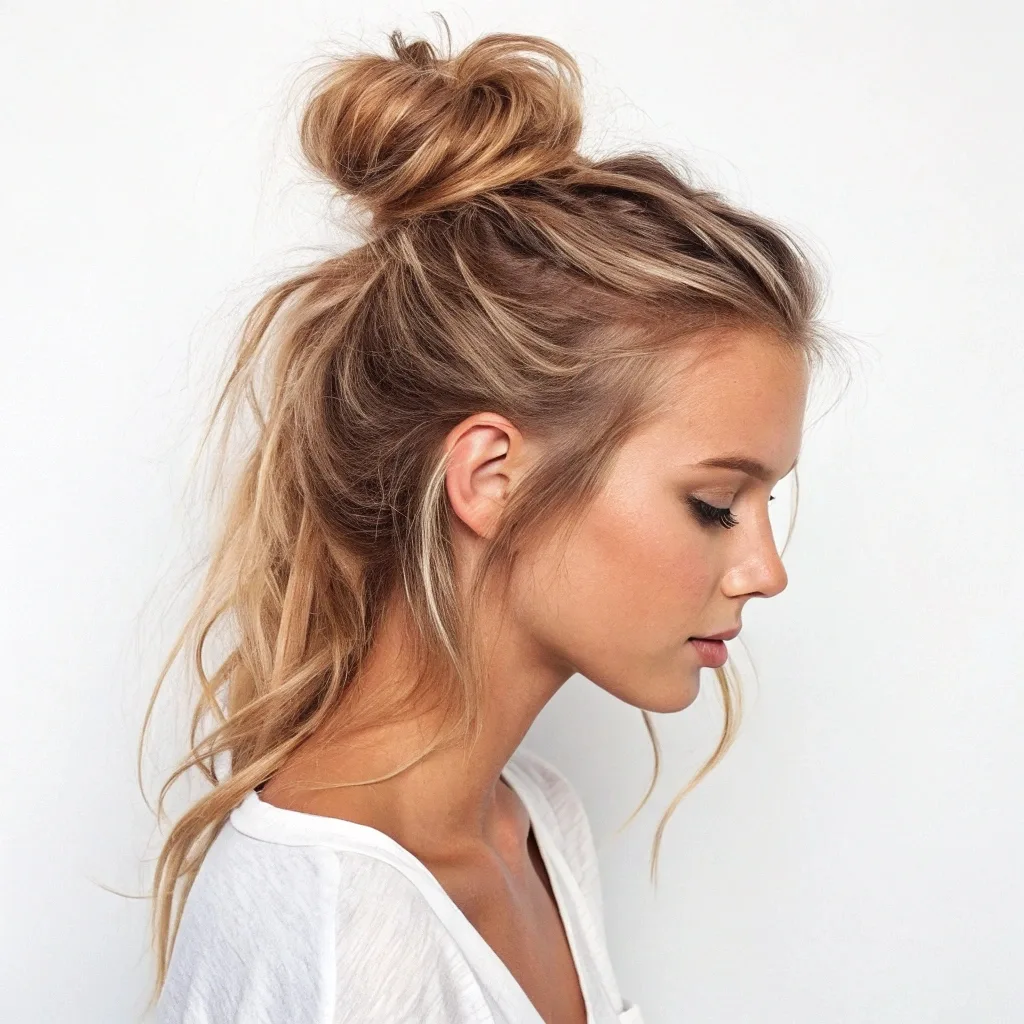
What it is: The top section of hair gathered into a small knot at the crown, with the rest left loose. It suits medium to long hair and works best when the wind is light.
Common mistakes: Taking too little hair into the knot, so it slips.
Maintenance: Easy to redo, but plan to redo it.
Cost and time: Two minutes and one elastic. Fast and pretty, with a clear wind limit.
Quick verdict: Lovely in light air, useless in a blow. Know the forecast before you choose it.
The Half-Up Braided Crown
The half-up braided crown is the sturdier cousin of the half-up top knot. Instead of a knot, a braid runs across the top of the head, holding the front hair back securely while the rest falls loose behind.
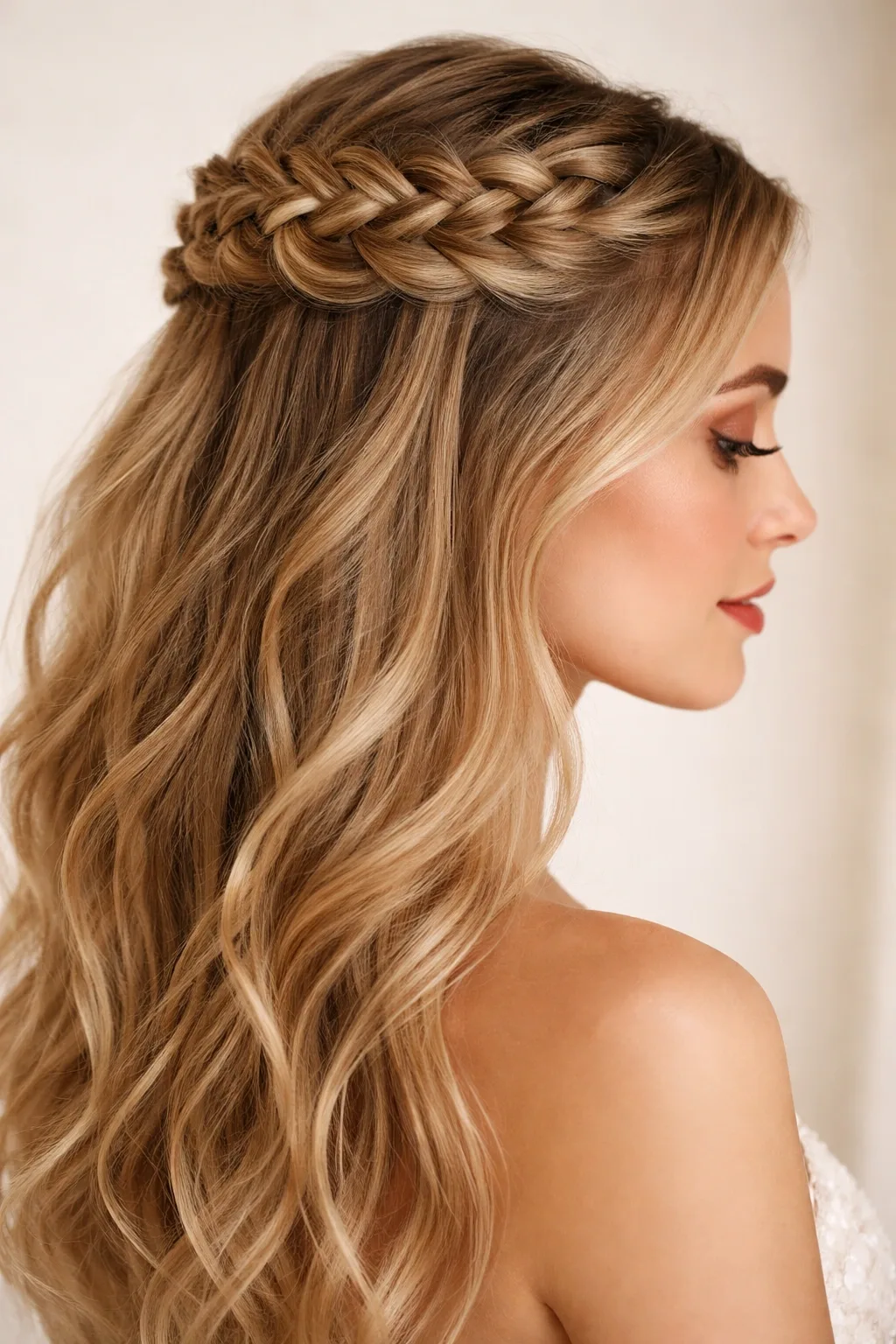
What it is: Two braids or twists from the front, brought together at the back of the crown and pinned, with the remaining hair left down. It suits medium to long hair and is best for calm days and evening sails.
Common mistakes: Pinning the braids too loosely, so they slide down, and choosing it for a race day, when the loose hair will tangle and the braid will not be enough.
Maintenance: Check the pins at midday.
Cost and time: Eight to ten minutes and three or four pins. Slower than a top knot, but much more secure.
Quick verdict: The pretty half-up that actually holds. Save it for light air and it will not let you down.
The Claw Clip Twist
The claw clip twist is the fastest updo on a boat, and it is the one you can do with one hand while the other holds a line. Twist the hair up, clip it, and you are done.
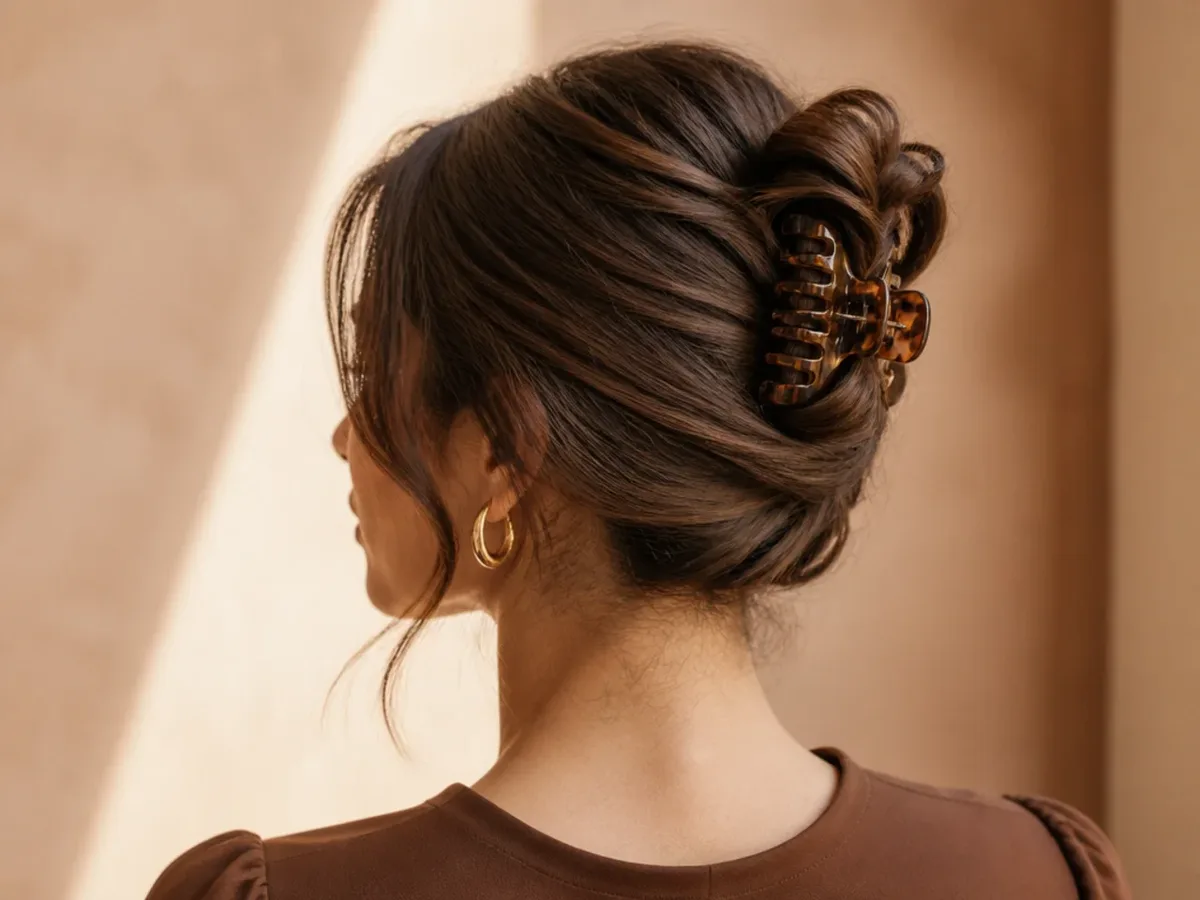
What it is: Hair twisted up the back of the head and secured with a large claw clip. It suits medium to long hair and works best on hair with some texture, which grips the clip.
Common mistakes: Using a clip that is too small for thick hair, so it pops open in a gust, and twisting the hair too tightly.
Maintenance: Carry a spare clip.
Cost and time: Thirty seconds and one claw clip. The fastest style in this guide by a long way.
Quick verdict: The thirty-second updo. Perfect for calm days and quick fixes, but not for a race.
The Low Twisted Chignon
The low twisted chignon is the elegant answer to a windy day. Hair is twisted, not braided, into a low roll at the nape, and the twist gives it a smooth, polished finish that looks deliberate even after hours on the water.
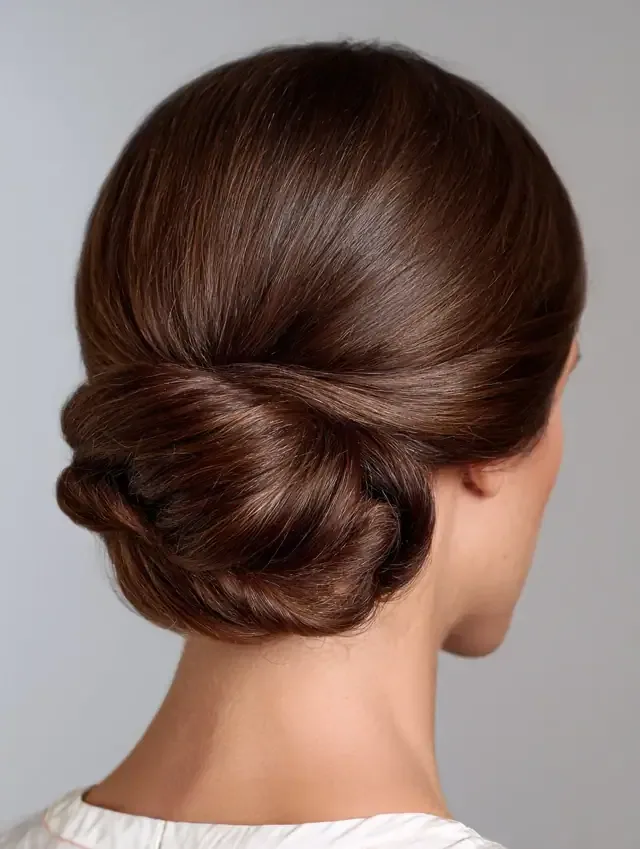
What it is: Hair gathered low, twisted into a roll and pinned flat against the nape. It suits medium to long hair and sits neatly under a life jacket collar.
Common mistakes: Twisting in the wrong direction, which makes the roll unravel, and using too few pins.
Maintenance: Check the pins once after the first hour.
Cost and time: Five to eight minutes and four or five pins. A little slower than a bun, but much more polished.
Quick verdict: The elegant low updo. Choose it when the sail ends somewhere worth dressing up for.
The Bandana-Wrapped Ponytail
A bandana wrapped around a ponytail does three jobs at once: it holds flyaways down, it protects the hair from sun, and it stops the ponytail from whipping. It is also the easiest way to add colour to a practical sailing outfit, and it costs almost nothing.
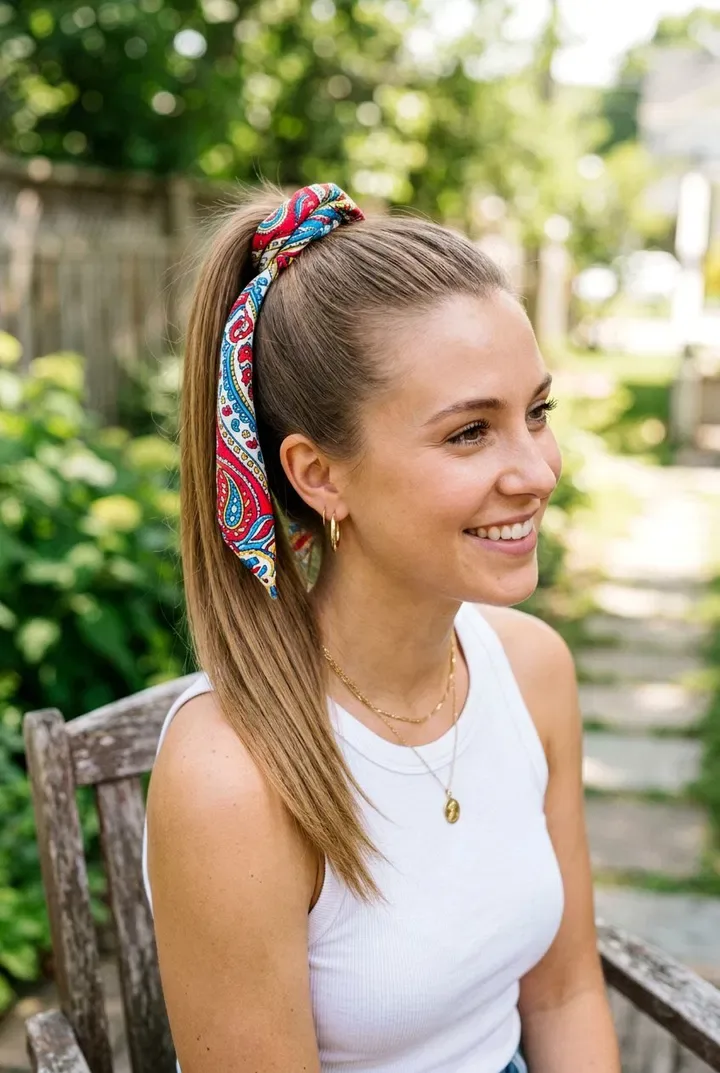
What it is: A bandana folded and tied around the base of a ponytail, or worn as a headband with the ponytail below it. It suits any hair length that can be tied back and any texture.
Common mistakes: Tying the bandana too loosely, so it slides off in the wind.
Maintenance: None during the day.
Cost and time: Two minutes, an elastic and a bandana. One of the cheapest styles in this guide.
Quick verdict: Colourful, practical and nearly free. A sailing bag essential.
The Neck Gaiter Braid
A neck gaiter, or buff, worn over a braid is the wind-proof layer that sailors swear by. The braid holds the hair, the gaiter holds the braid, and together they keep every strand contained even in a full gale.
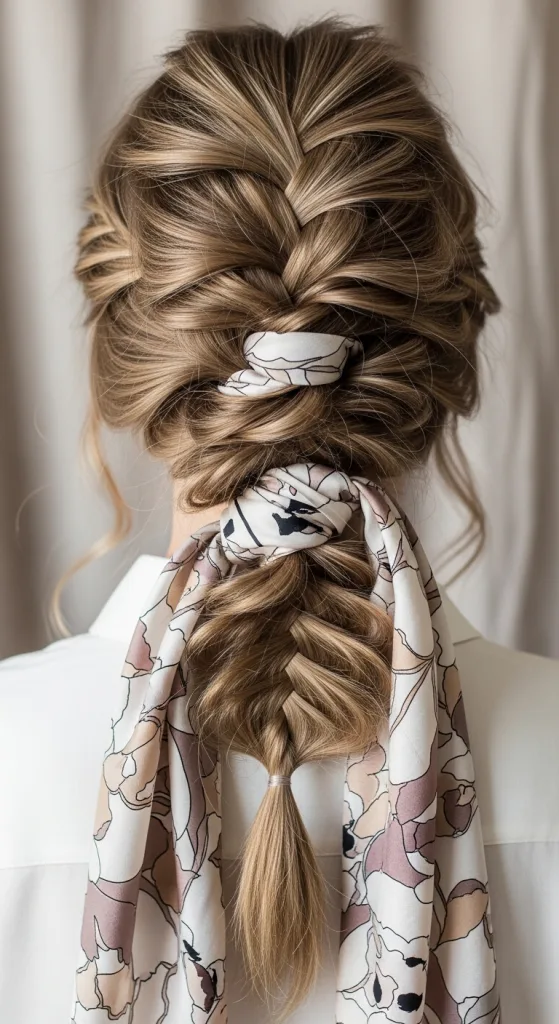
What it is: A braid, usually a single French or Dutch braid, worn with a lightweight neck gaiter pulled up over the hair or wrapped around the braid. The gaiter can also be worn as a headband to hold the front down.
Common mistakes: Using a thick, hot gaiter on a sunny day, which overheats you, and pulling the gaiter too tight.
Maintenance: None.
Cost and time: A few minutes for the braid, plus a lightweight gaiter that costs very little and lasts for years.
Quick verdict: The rough-weather system. When the forecast is serious, braid it and cover it.
The Short Pixie With Sea-Salt Texture
A short pixie with sea-salt texture is sailing hair at its simplest. The cut is short enough that the wind cannot tangle it, the salt spray adds natural texture, and a little product is all you need to keep it looking deliberate.
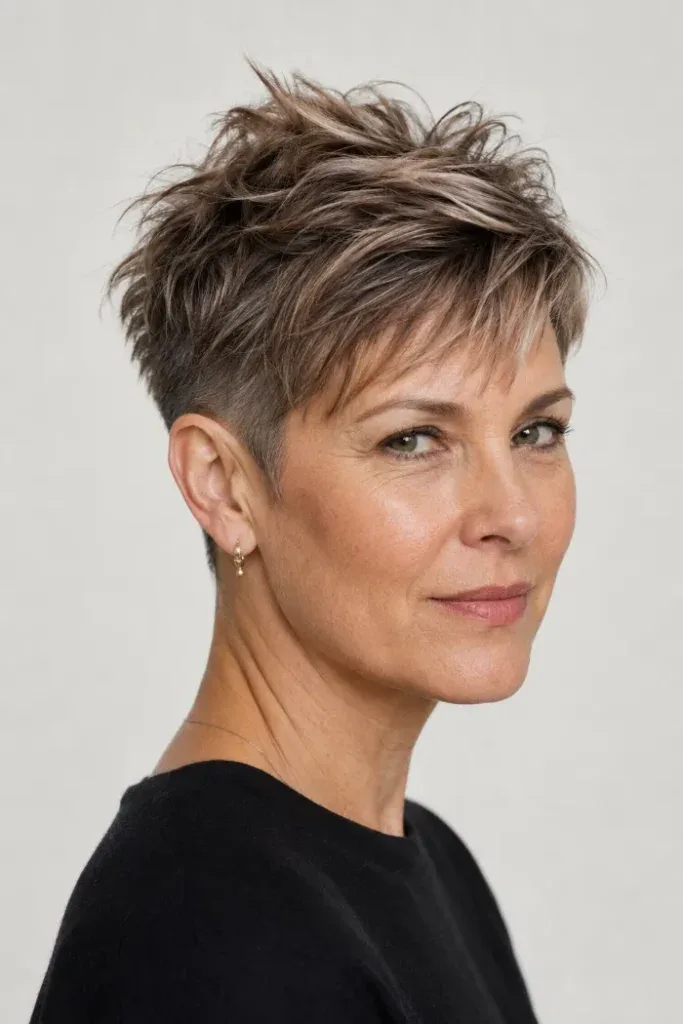
What it is: A short pixie cut worn with a little sea-salt spray or light styling cream, tousled into place with the fingers. It suits straight to wavy hair and is ideal for hot, windy days.
Common mistakes: Using too much product, which makes short hair look greasy in the sun, and skipping sunscreen on the scalp.
Maintenance: Rinse after sailing and add a drop of cream.
Cost and time: One minute and a small amount of product. The cut itself is the investment, and it pays off every sailing day.
Quick verdict: The forget-about-it cut. If you sail often, a pixie is the lowest-maintenance choice you can make.
The Textured Bob Tucked Behind the Ears
A textured bob tucked behind the ears is the short style that still feels like a style. The tuck keeps the front out of your eyes, the texture stops it looking flat after a windy leg, and the length is short enough that it dries in minutes after a splash of spray.
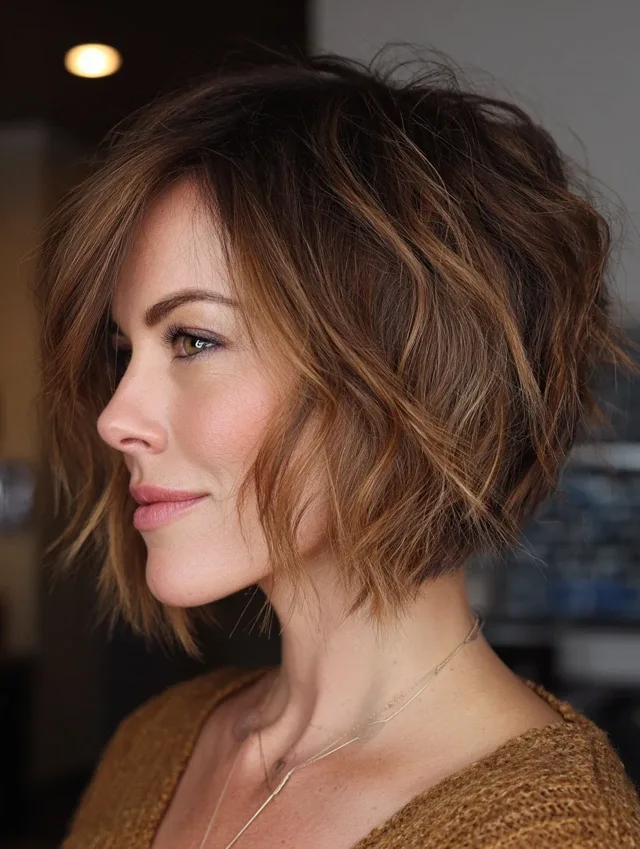
What it is: A chin-to-shoulder bob with layers for texture, worn with the front sections tucked behind the ears. It suits straight to wavy hair and works well with a cap on sunny days.
Common mistakes: Tucking hair behind the ears when it is wet with salt water, which leaves it stiff and crunchy, and skipping the tuck.
Maintenance: Rinse and finger-dry.
Cost and time: One to two minutes and a little product. The cut does the work, so the styling stays minimal.
Quick verdict: Neat, quick and flattering. The best bob for a working deck.
The Chin-Length Bob Under a Cap
A chin-length bob under a cap is the sun-smart short style. The cap shades your face and scalp, the bob sits neatly below it, and the whole combination is so low-maintenance that you can sail all day without thinking about your hair once.
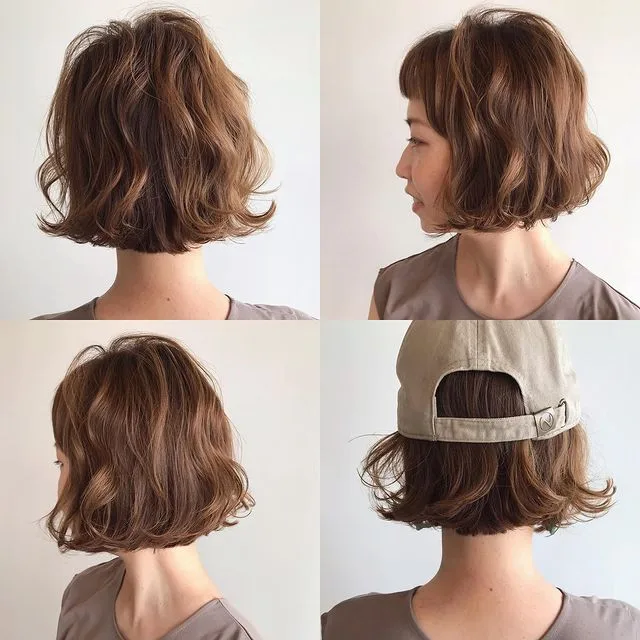
What it is: A chin-length bob worn under a baseball cap, with the back of the bob tucked under the cap strap. It suits straight to wavy hair and is ideal for long sunny sails.
Common mistakes: A cap that is too tight and flattens the bob into a strange shape, and a bob cut too bluntly.
Maintenance: None during the day.
Cost and time: Under a minute, plus a cap. The simplest style in this section.
Quick verdict: Sun protection and style in one. The easiest short-hair choice for a long day on the water.
The Curly Pineapple Updo
The curly pineapple updo piles the curls high on top of the head, keeping them off the neck and out of the spray while protecting the curl pattern. It is the classic curly-hair protective style, and on a boat it works because the curls are contained but not crushed.
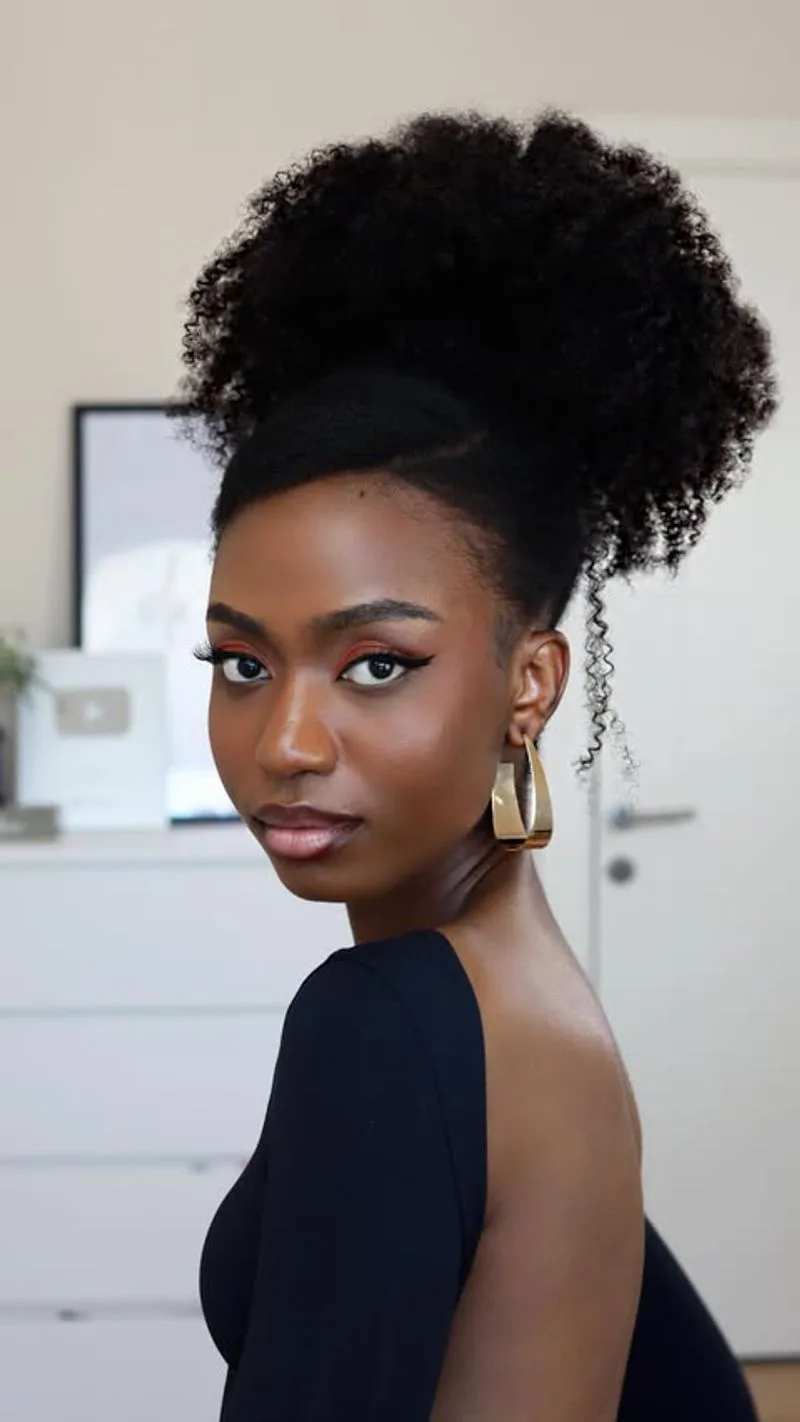
What it is: Curls gathered loosely high on the crown and secured with a scrunchie, so the curls fall forward like a pineapple top. It suits medium to long curly hair and is best for light to moderate wind.
Common mistakes: Pulling the pineapple too tight, which flattens the curls and causes breakage.
Maintenance: Refresh with water and leave-in rather than brushing.
Cost and time: Two minutes and a silk scrunchie. Very fast and very gentle on curls.
Quick verdict: The curly-hair classic. Gentle, quick and protective, with a clear wind limit.
The Curly Low Puff
The curly low puff gathers the curls into a soft puff at the nape, keeping them contained and off the neck while letting the curl pattern show. It is lower and more secure than a pineapple, so it works better in wind, and it sits neatly under a life jacket collar.
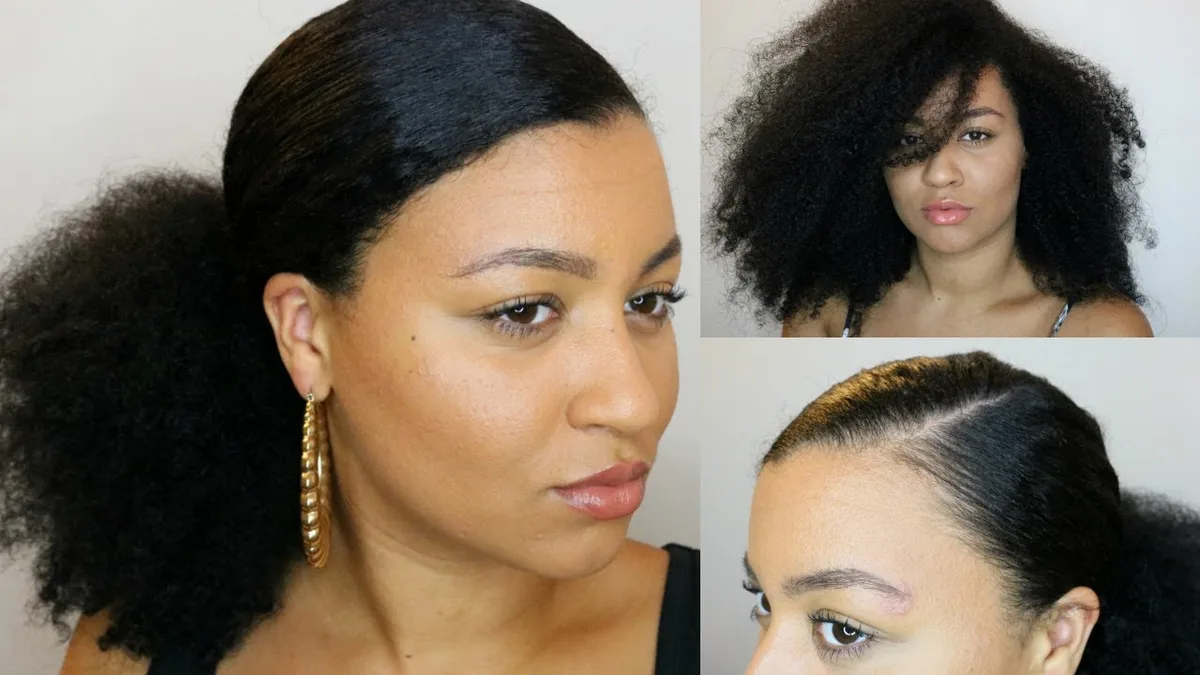
What it is: Curls smoothed gently back and gathered into a low puff at the nape with a scrunchie or band. It suits medium to long curly hair and works with a cap or buff.
Common mistakes: Brushing the curls to smooth them, which creates frizz, and pulling the puff too tight.
Maintenance: Refresh with water and leave-in.
Cost and time: Three to five minutes, a scrunchie and a little leave-in. Quick and gentle.
Quick verdict: The secure curly style. Lower than a pineapple, tougher in wind, and kind to the hairline.
Cornrows for Race Day
Cornrows are the ultimate protective style for race day. The hair is braided tight to the scalp in neat rows, so nothing moves, nothing tangles, and the style survives days of wind, spray and sun.
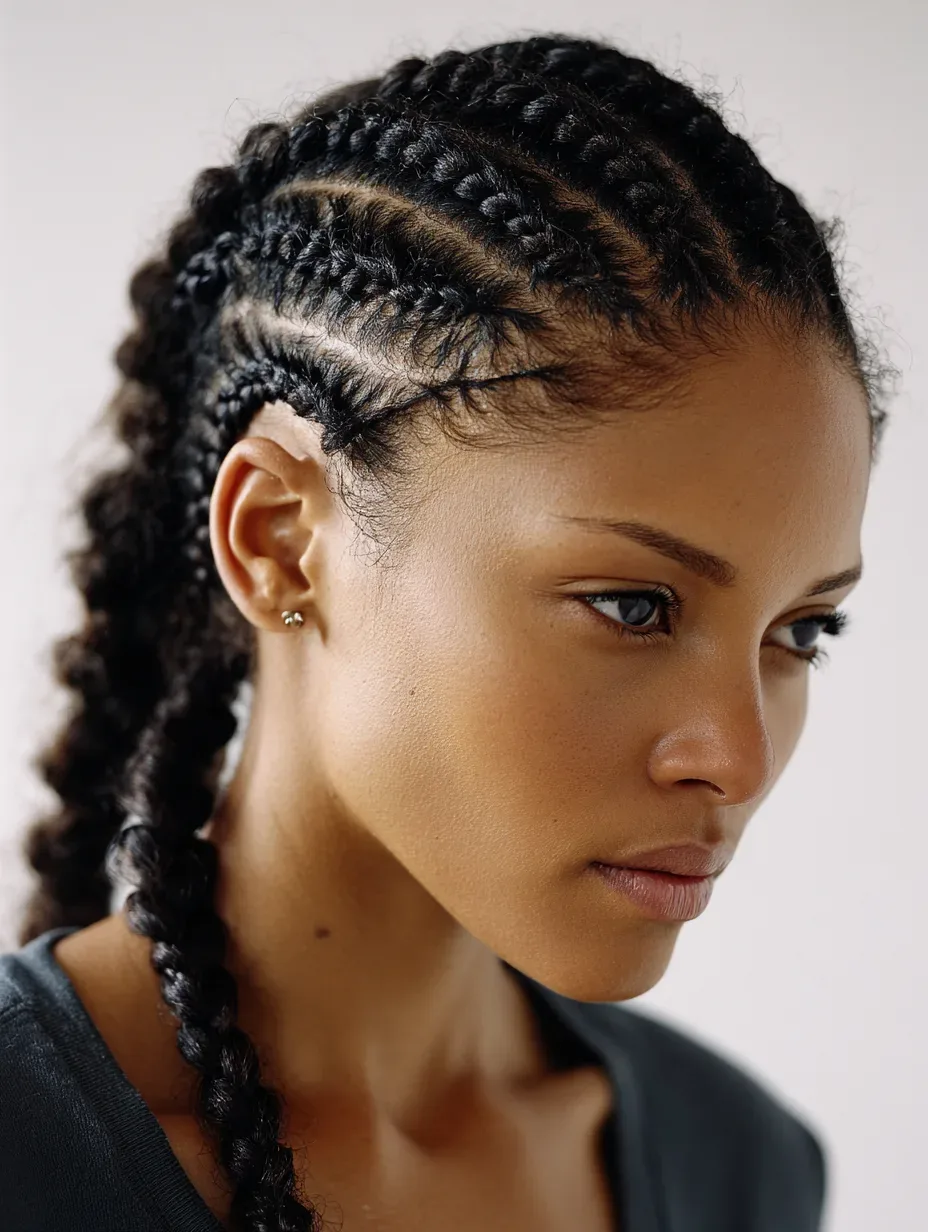
What it is: Hair braided in narrow rows close to the scalp, running from the front hairline to the back, then finished as braids or gathered into a low bun. It suits textured and curly hair best.
Common mistakes: Braiding too tightly at the hairline, which causes pain and breakage, and leaving cornrows in for too long without washing the scalp.
Maintenance: Very little during the race.
Cost and time: One to three hours at a salon, or longer at home, and the style lasts one to two weeks. The upfront time is the price of days of freedom.
Quick verdict: The multi-day champion. Invest the time before the regatta and forget about your hair until it is over.
Two-Strand Twists
Two-strand twists are the gentler alternative to braids for textured hair. Two sections of hair are twisted around each other, which is quicker and easier on the scalp than cornrows, and the twists hold well under a cap or buff on a windy day.
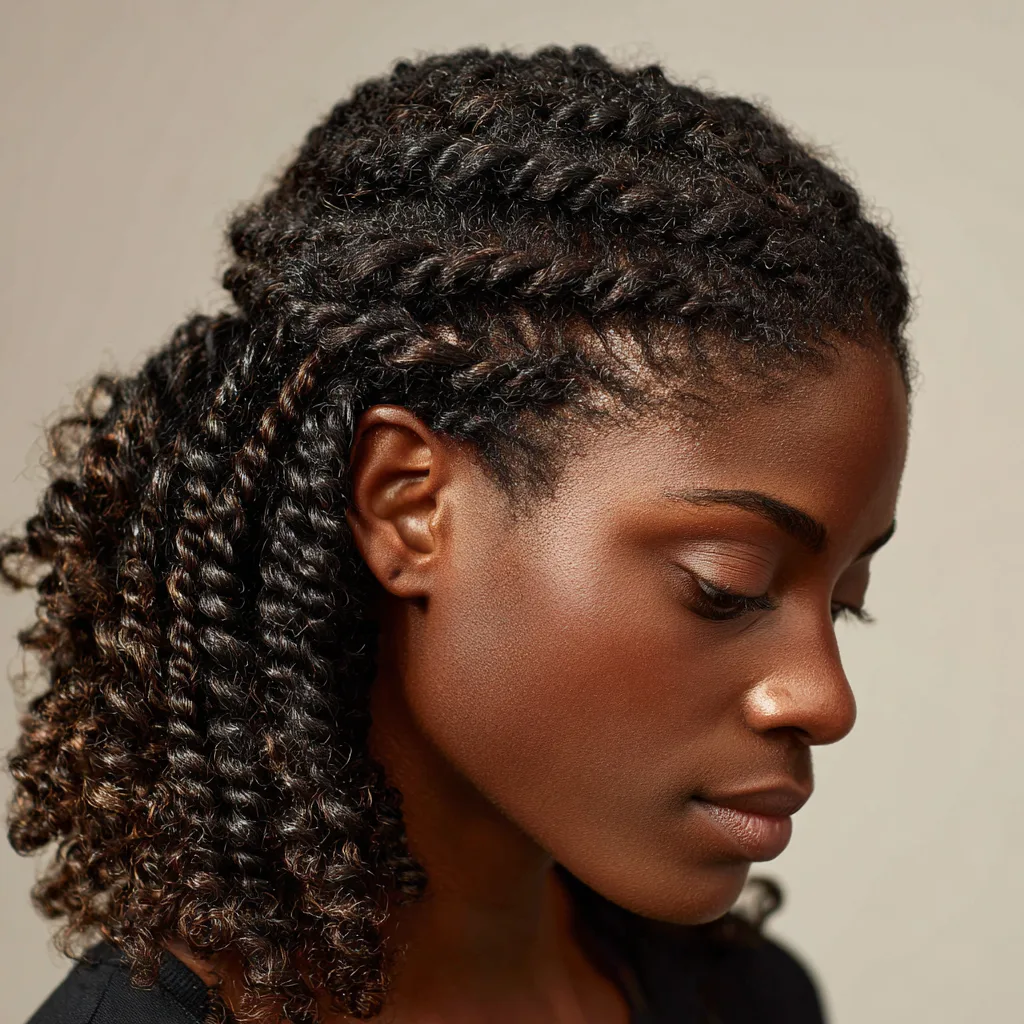
What it is: Hair divided into sections, each split in two and twisted around itself, then secured at the ends. The twists can be worn loose, gathered into a bun, or pinned up for sailing.
Common mistakes: Twisting on dry hair without product, so the twists unravel, and making the sections too big.
Maintenance: Refresh the edges with a little gel and retwist any loose ends at night.
Cost and time: One to two hours to install, and the style lasts up to a week. A good investment for a sailing holiday.
Quick verdict: Gentle, protective and versatile. A great choice for textured hair on a multi-day trip.
Flat Twists Into a Low Bun
Flat twists into a low bun combine the scalp-hugging security of cornrows with the neat finish of a bun. The twists run flat along the head, keeping the front tidy, and the ends gather into a low bun that sits comfortably under a life jacket.
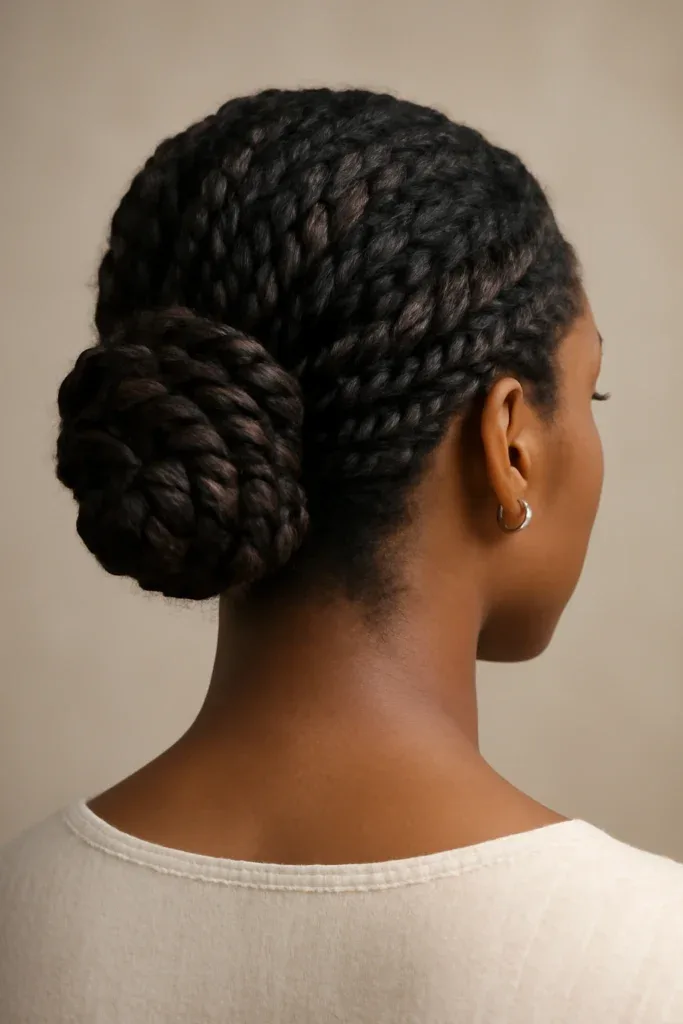
What it is: Flat twists worked along the scalp from the front to the nape, then gathered into a low bun. It suits textured and curly hair and holds well in wind and spray.
Common mistakes: Twisting too tightly at the hairline, and making the bun too heavy.
Maintenance: Very low.
Cost and time: One to two hours to install, lasting up to a week. The bun finish makes it look polished enough for an evening ashore.
Quick verdict: Secure, neat and long-lasting. The protective style that still looks dressed up.
The Classic French Twist
The classic French twist is the most elegant style in this guide, and it is more practical on a boat than it looks. The hair is rolled up the back of the head and pinned, so nothing hangs loose, and the smooth finish survives wind far better than a loose style.
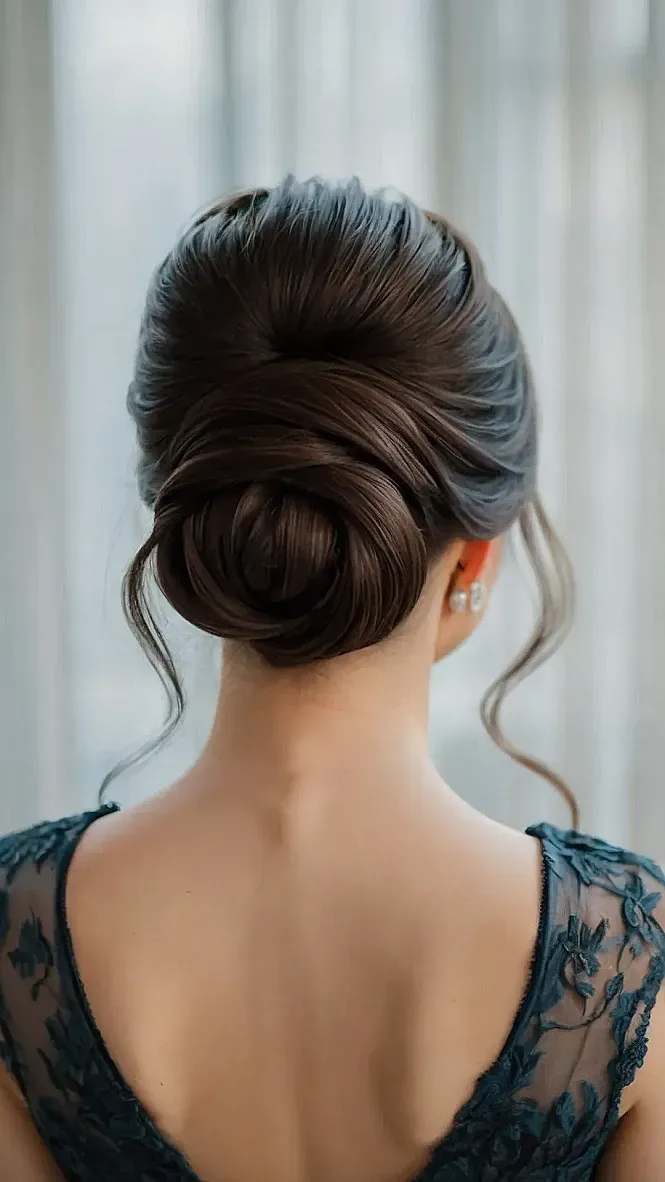
What it is: Hair swept to one side, rolled up the back of the head and pinned in a vertical twist. It suits medium to long hair and is best for calm evenings rather than race days.
Common mistakes: Using too few pins, so the twist slides down, and trying it on very slippery, freshly washed hair.
Maintenance: Check the pins after the first hour.
Cost and time: Five to ten minutes and several pins. It takes practice, so try it at home before a special sail.
Quick verdict: The formal twist. Elegant, secure and surprisingly wind-resistant when it is pinned well.
Double Braided Buns
Double braided buns split the hair into two braided buns, one on each side of the head, and the balance makes them very secure. Each bun is small and light, so nothing pulls, and the braids lock the hair down before the buns are even formed.
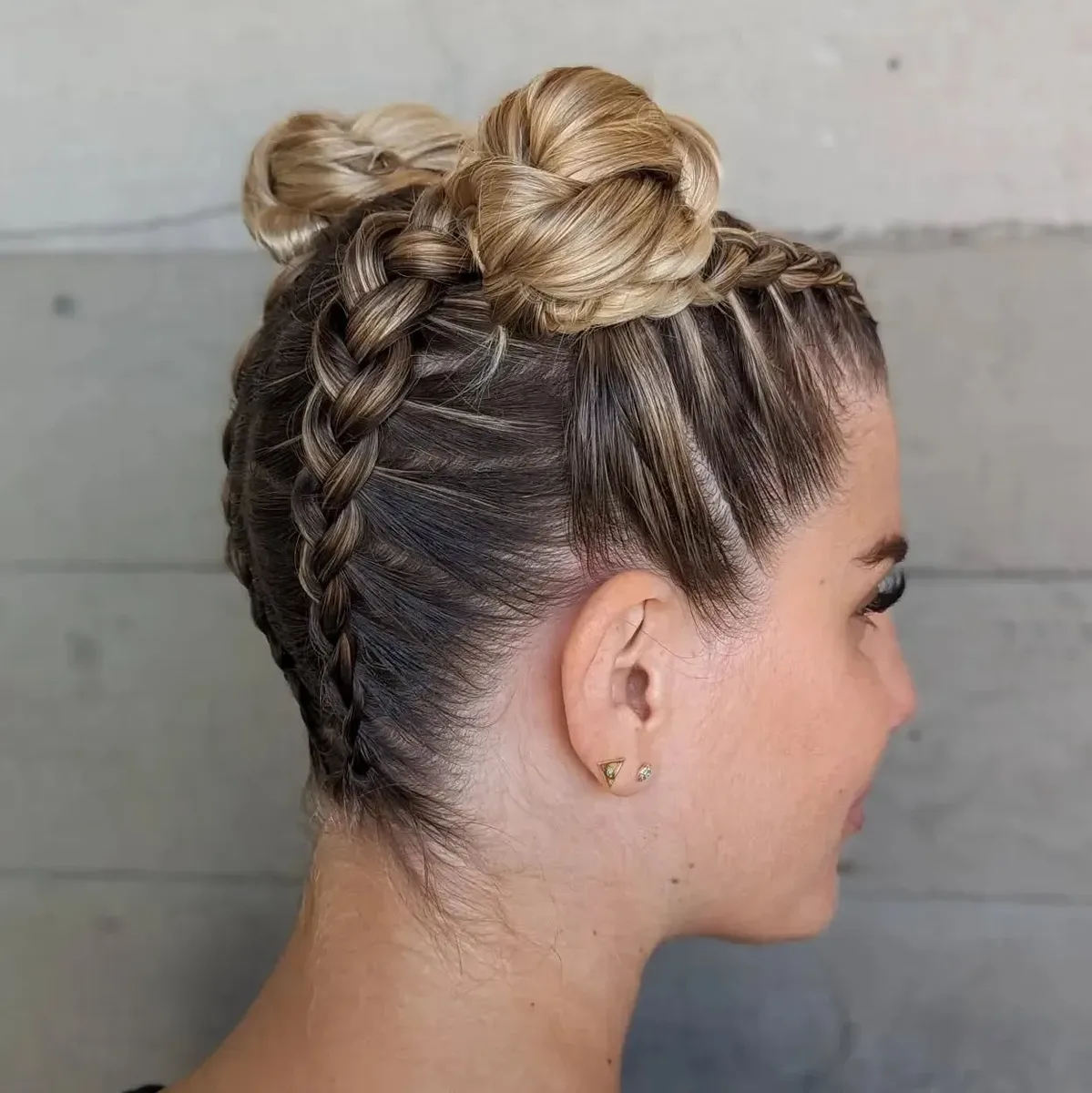
What it is: Hair parted down the middle, braided on each side, then coiled into two buns. The buns can sit high for a fun look or low for a more practical one under a cap.
Common mistakes: Making the buns too big and heavy, so they pull and loosen.
Maintenance: Very low.
Cost and time: Ten to fifteen minutes and two elastics plus pins. Slower than a single bun, but twice as secure.
Quick verdict: Fun and functional. A great choice for a long, active day when you want hair fully out of the way.
The Braided Halo for Long Hair
The braided halo wraps a braid around the whole head like a crown, keeping every strand up and off the neck. For very long hair, it is the only style that contains the full length without a heavy bun pulling at the scalp, and it looks beautiful at the end of a long day on the water.
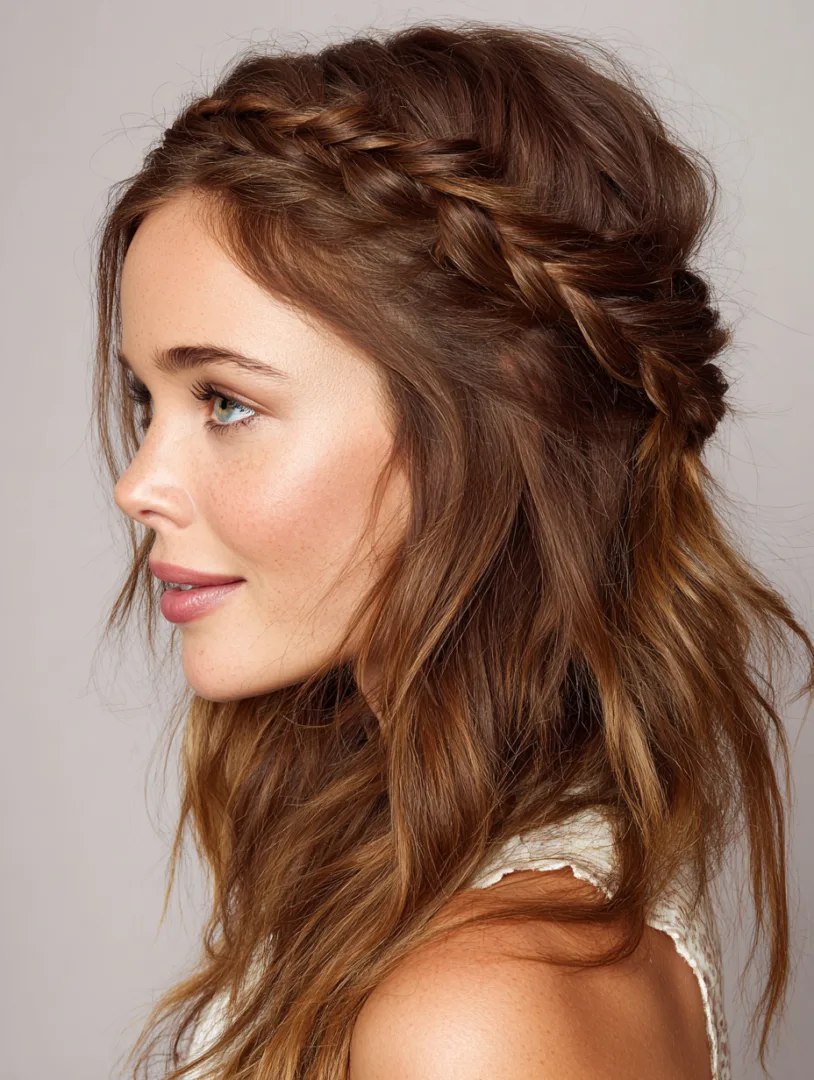
What it is: A long braid, usually a Dutch or French braid, wrapped around the head and pinned to form a halo. It suits long and very long hair and works well under a buff or cap.
Common mistakes: Making the braid too tight, which causes a headache, and pinning the halo too loosely.
Maintenance: Check the pins at midday.
Cost and time: Ten to fifteen minutes and several pins. It takes practice, but it is the most secure way to wear very long hair on a boat.
Quick verdict: The long-hair solution. Beautiful, balanced and completely out of the way.
What is the best hairstyle for sailing?
Double French braids or boxer braids are the best hairstyles for sailing, because they lock every strand down, survive wind and spray, work under a cap and a life jacket, and hold all day without attention. For short hair, a pixie or a bob under a cap is the equivalent choice.
How do I keep my hair from tangling in the wind while sailing?
Braid your hair before you leave the dock, add a little leave-in conditioner, and cover it with a buff or cap in strong wind. Braids stop strands from crossing and knotting, and a quick fresh-water rinse after sailing stops salt from gluing the tangles in place.
Can I wear my hair down while sailing?
You can on a calm day at anchor, but it is not a good idea while you are working the boat. Loose hair blows across your eyes, catches on winches and sheets, and tangles badly in salt spray.
What should I wear on my head while sailing?
A baseball cap with a ponytail opening, a lightweight buff or a bandana are the best choices. They shade your face, hold flyaways down and work with braids and low buns.
How do I protect my hair from salt water and sun?
Apply a leave-in conditioner or a little hair oil before sailing, wear a hat or buff for long sun exposure, and put sunscreen on your part line. Rinse with fresh water as soon as you can after sailing, and condition the lengths every time.
Will a life jacket ruin my hairstyle?
It will if the style is too high or too bulky. Low buns, low ponytails and braids sit below the life jacket collar and survive fine, while high top knots get knocked forward.
What hairstyle works best for long hair on a sailboat?
A single French or Dutch braid is the best choice for long hair on a sailboat, because it keeps the full length in one contained unit that cannot catch on anything. A braided low bun or a braided halo are good alternatives when you want the ends tucked away completely.
What hairstyle works best for curly hair while sailing?
Protective styles work best for curly hair while sailing: braids, twists, a low puff or a pineapple updo. They keep the curl clumps together so the wind cannot pull them apart into frizz, and a little leave-in conditioner helps the pattern hold.
How do I wash my hair after sailing?
Rinse with fresh water first, then use a gentle shampoo or a co-wash, condition the lengths, and detangle while the conditioner is in. Let your hair air-dry.
Can I sail with braids for several days?
Yes, braids, cornrows and twists can be worn for several days on a sailing trip. Rinse the scalp with fresh water, use a little oil to keep it comfortable, and re-braid any loose edges at night.
Sailing Hair That Works as Hard as You Do
The best hairstyles for sailing are not the prettiest styles in the mirror, they are the ones that still look good after eight hours of wind, spray and deck work. Braids win most days, low buns win on life jacket days, and short hair wins for anyone who wants to forget about styling entirely.
Pick one style from this guide and practise it at home before your next sail. Learn the double French braid if your hair is long, the low bun if you wear a life jacket, and the pineapple or low puff if your hair is curly. Pack spare elastics, a few pins and a buff, and you will spend your day sailing instead of fighting your hair. The wind will still be the stylist on your boat, but this time you will have chosen the style first.