Table Tennis Hairstyles That Stay Put Through Fast Rallies and Sweaty Matches
Table tennis looks gentle from the stands and feels anything but once you are at the table. A rally can flip from a soft push to a full forehand loop in half a second, your head snaps side to side tracking the ball, and the spin on every shot means you are constantly ducking, reaching and twisting. That is why hairstyles for table tennis have to be built for speed first and looks second: a style that stays put through quick head turns, keeps every strand out of your eyes at the net, and does not slide loose into a sweaty tangle by the third game is worth far more than one that only looks good in the club car park.
The indoor hall adds its own problems. There is no breeze to cool you down, the lights are bright and warm, and a long match leaves sweat running down the hairline, the temples and the nape of the neck. Loose hair sticks to a damp neck, whips across the face on a backhand, and distracts you at exactly the moment a spinning serve is coming at you. Ping pong is a game of millimetres and split-second reads, so the last thing you need is a curtain of hair falling over one eye as the ball kicks sideways off the table.
This guide starts with the table-tennis thinking: what hall heat does to your hair, how to manage sweat between games, which grips and headbands actually hold, and what works for short, long and curly hair. Then it gives you 34 styles for players and fans, from a fast club night to a relaxed doubles evening with friends. Pick one, practise it once at home, and walk up to the table knowing your hair is already sorted.
Table-Tennis Hair Basics: What Your Hair Faces at the Table
What it is: the starting point for every style in this guide. Table tennis asks your hair to survive rapid head turns, sudden lunges, sweat under warm hall lights, and hours of play with barely a break between games. A good table-tennis style anchors the hair at two or three points, keeps the front layers off the face, and uses a shape that gets better, not worse, as it gets damp.
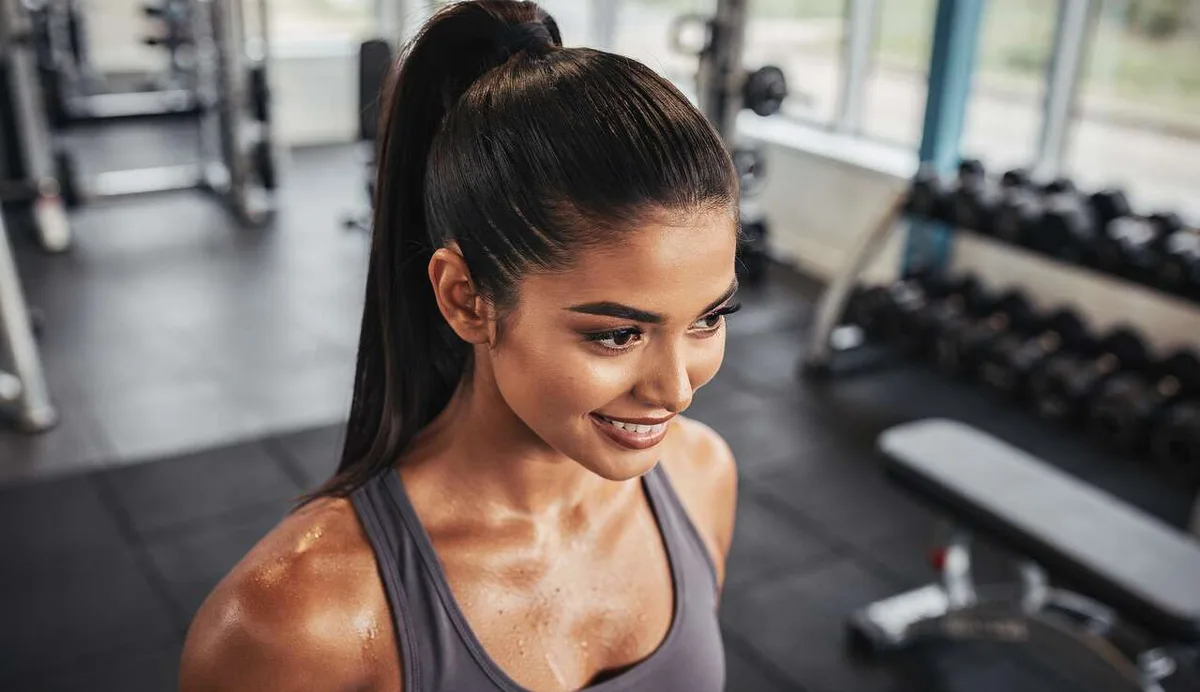
Best for: every player, whatever your level. Beginners who are still learning footwork move their heads even more than advanced players, so a secure base matters from your very first club night.
How to style: start with hair that has a little grip — day-old hair, or a dusting of dry shampoo at the roots. Anchor the bulk of the hair first with a braid or a bun, then pin back the front layers, and finish with a light-hold spray rather than a heavy gel.
What to ask: ask your stylist for a cut with layers that tuck behind the ears and a fringe that can be pinned back, so you are never fighting your own hair mid-rally.
Quick verdict: anchor in two places, keep the face clear, and let grip do the work. A simple secure style beats a pretty loose one every single match.
Sweat Management: Keeping Your Hair Dry Through Long Matches
What it is: the sweat problem, and how to beat it. Hall heat plus constant movement means sweat at the hairline, the temples and the nape, and damp hair goes limp, loses its grip on pins and elastics, and sticks to the skin. Sweat management is mostly preparation: what you put in your hair before the match matters far more than what you do during it.

Best for: players in warm halls, long tournament days, and anyone whose hair goes flat the moment it gets damp.
How to style: wash the night before rather than the morning of the match so the hair has natural grip. Add dry shampoo at the roots, keep the nape clear with a braid or low bun, and carry a small towel and two spare elastics in your kit bag for the break between games.
What to ask: ask for a lightweight, sweat-resistant styling product recommendation — a dry texturising spray rather than a cream or oil, which mixes with sweat and weighs hair down.
Quick verdict: dry, grippy hair outlasts any amount of product once the sweat starts. Prepare the night before and your style will survive the whole match.
Headbands and Grip: The Small Kit That Holds Everything Together
What it is: the headband and grip kit every table-tennis player should own. A good sports headband catches sweat before it reaches your eyes, holds back flyaways and short layers, and gives a ponytail or braid a second anchor point. Grip products — dry shampoo, texturising spray, a little pomade on the edges — stop elastics sliding out of smooth, fine hair.
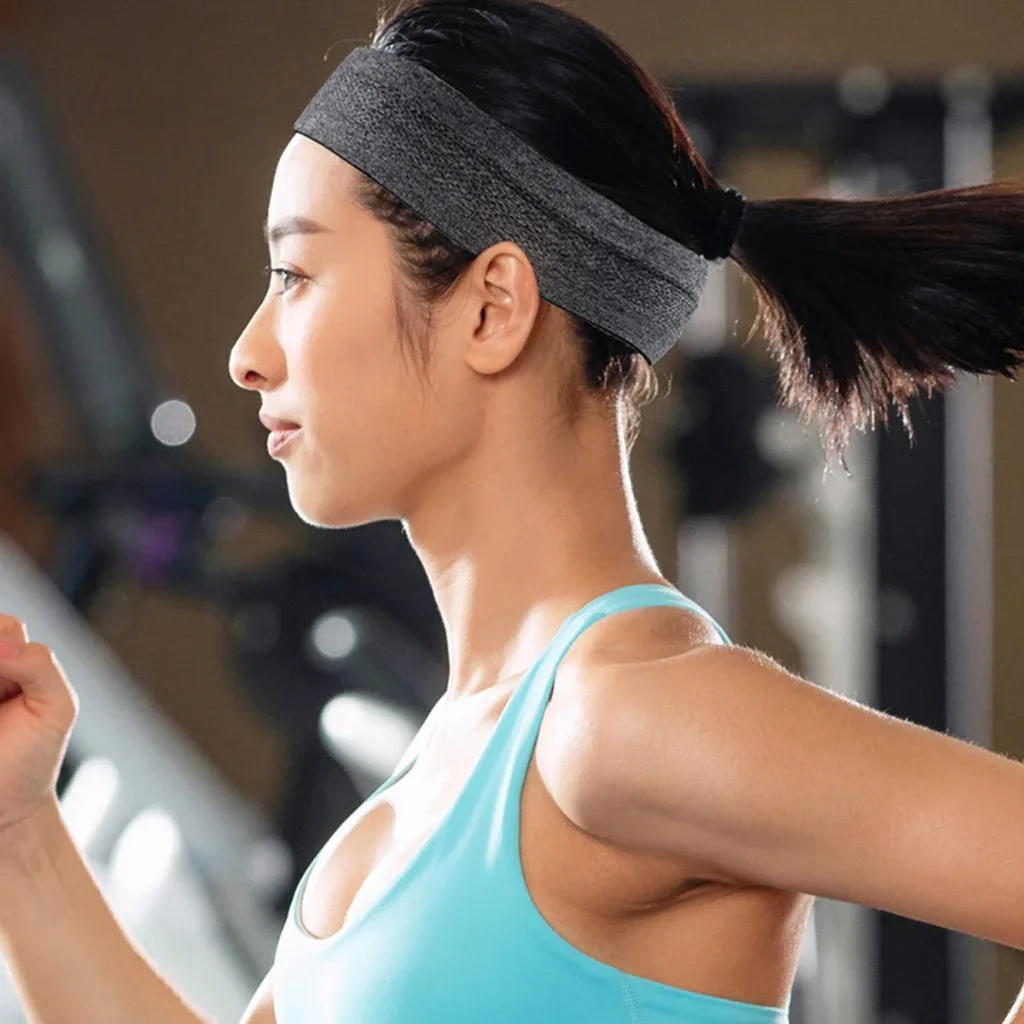
Best for: players with layers, a fringe, or fine hair that slips out of elastics, and anyone who plays under bright hall lights where sweat drips fast.
How to style: fit the headband over the hairline, not across the forehead, so it catches sweat without sliding down. Use a wide fabric band for long matches and a thin elastic one for a quick club night. Twist the front layers back and tuck them under the band.
What to ask: ask your stylist which grip products suit your hair type — fine hair needs a dry spray, thick hair needs a stronger elastic and a wider band.
Quick verdict: a headband is the cheapest upgrade in table tennis. One good band and a spare elastic in your bag solve half of all hair problems at the table.
Short Hair for Table Tennis: Pixies, Bobs and Everything In Between
What it is: why short hair is the easiest table-tennis hair of all — and where it still needs help. A pixie or a chin-length bob cannot whip across your face or tangle at the nape, which removes the two biggest distractions in a rally. The trade-off is the fringe and the layers around the ears, which sweat can plaster across the forehead.
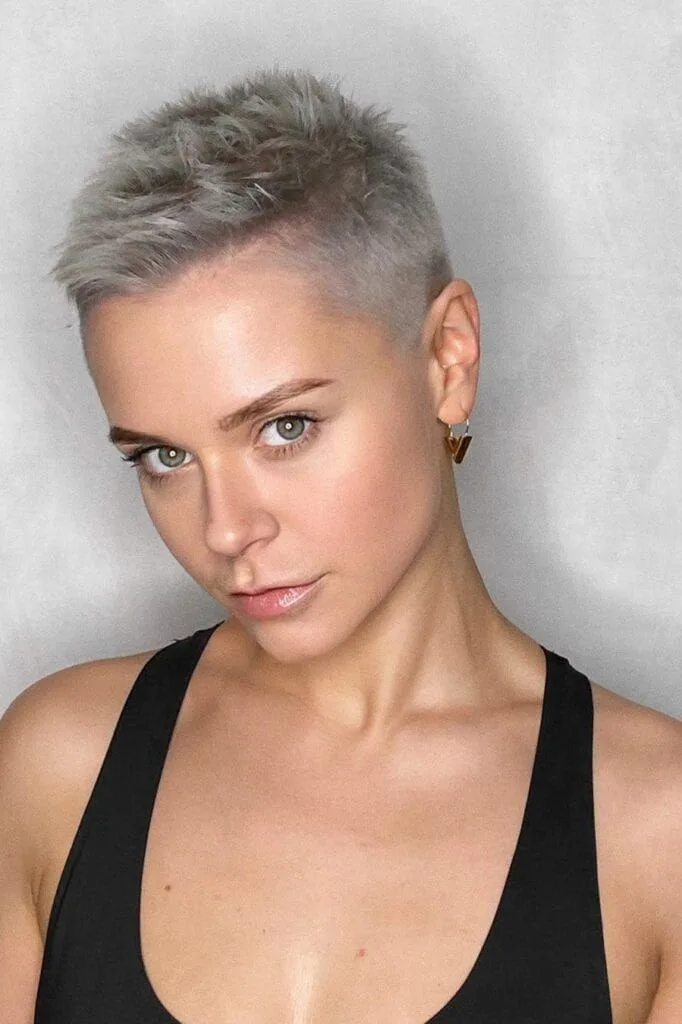
Best for: players who want zero fuss between points, anyone growing out a pixie, and hot halls where long hair feels like a scarf.
How to style: use a little pomade or wax to push the fringe to one side, add a thin headband or two small clips at the temples, and keep a travel-size dry shampoo in your bag for the hairline.
What to ask: ask for a cut that keeps the fringe long enough to tuck behind the ears and the nape tapered, so nothing tickles your neck when you sweat.
Quick verdict: short hair is the low-maintenance champion at the table. A headband and a dab of wax are all it takes to make it match-proof.
Long Hair for Table Tennis: Braids, Buns and Ponytails That Hold
What it is: the long-hair playbook. Long hair has weight, and weight is your enemy in a fast rally: a heavy ponytail swings with every head turn and pulls at the roots, while loose long hair tangles at the nape within a game. The fix is to split the weight — braid it, coil it into a bun, or anchor it at two points so no single elastic carries everything.
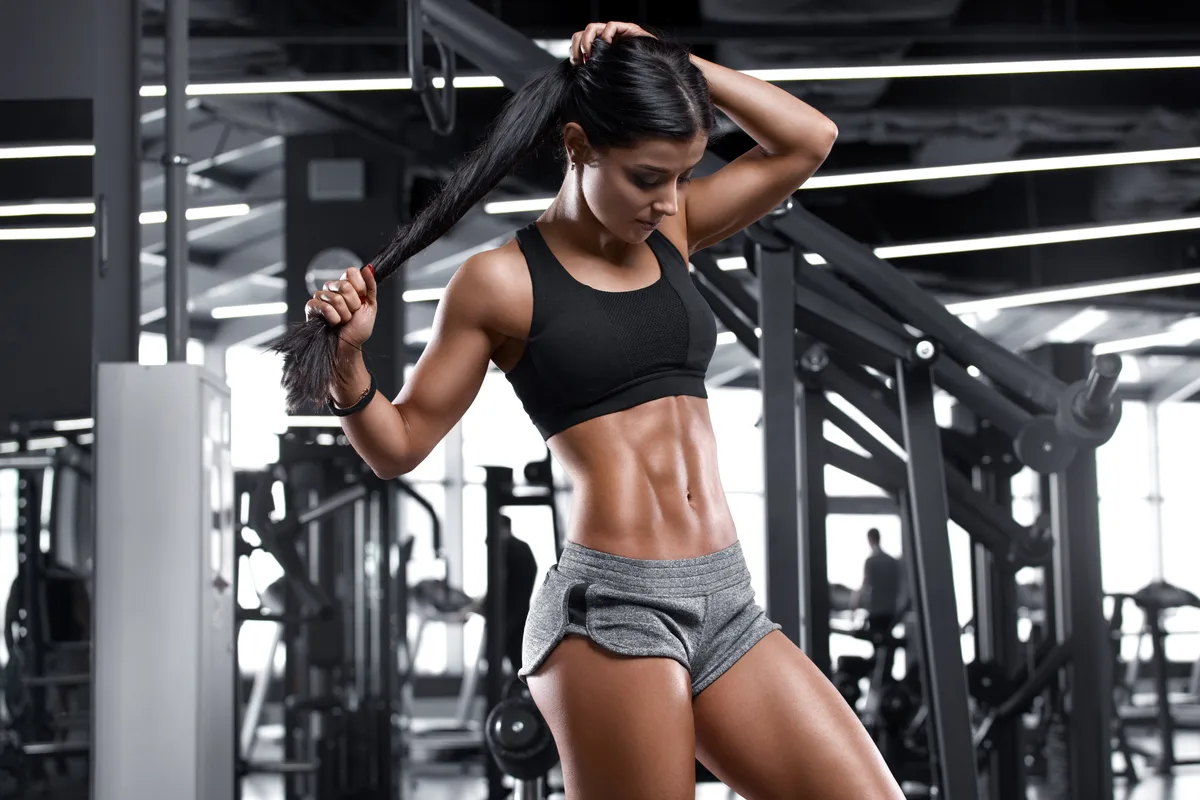
Best for: players with hair past the shoulders who want to keep their length without it costing them points.
How to style: braid the hair first, then coil the braid into a bun or tie it off as a ponytail, so the weight is spread along the braid. Use a thick, snag-free elastic and a second one as backup, and pin the braid flat against the head at the nape.
What to ask: ask your stylist to thin the very ends slightly if your hair is heavy, and to show you a braid-to-bun that you can do yourself in under two minutes.
Quick verdict: braid first, then bun or tie. Splitting the weight is the difference between hair you forget about and hair you are fighting all match.
Curly Hair for Table Tennis: Keeping Curls Defined and Out of the Way
What it is: the curly-hair challenge at the table. Curls have natural volume and spring, which is beautiful — and which also means they bounce into your eyes on every lunge and frizz up fast in a warm, sweaty hall. The answer is not to fight the curl but to gather it high, where its volume works for you instead of against you.
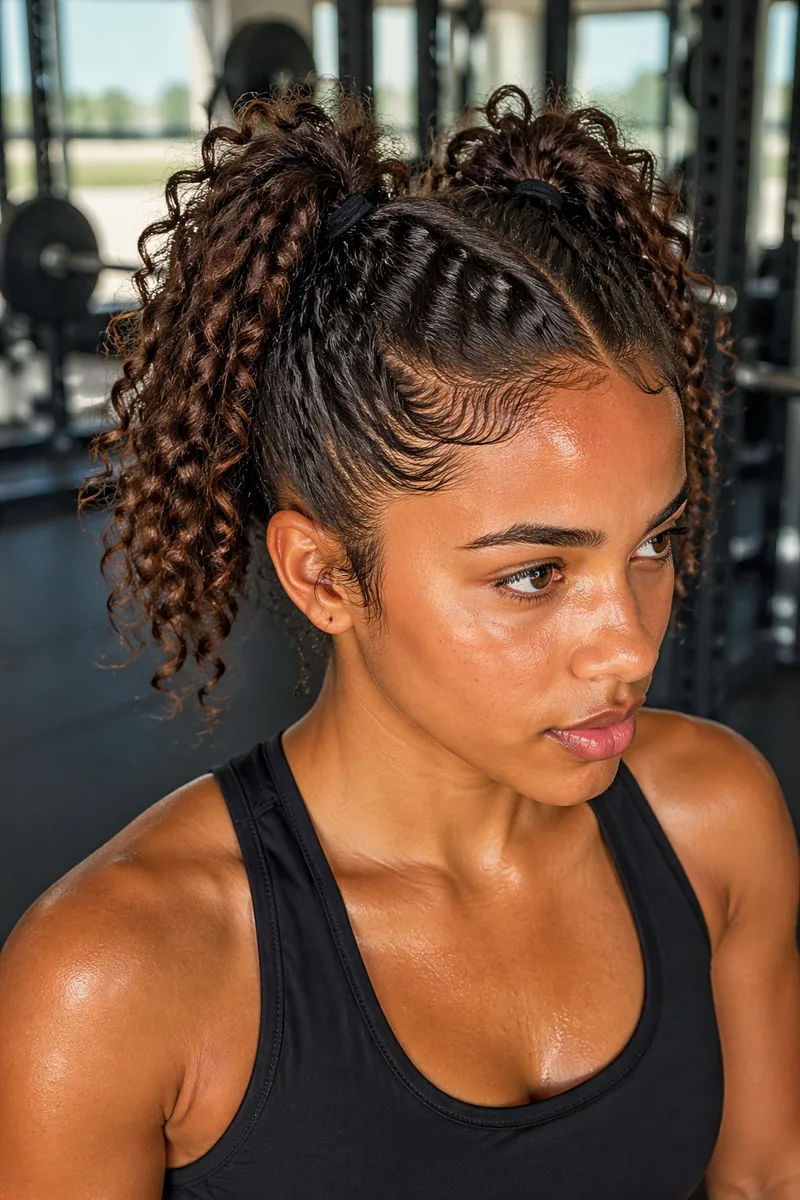
Best for: curly and coily hair of every length, and anyone whose curls go frizzy the moment the hall heats up.
How to style: gather curls into a high pineapple or a puff on top of the head, using a satin scrunchie that will not snag. Smooth the edges with a little gel on a soft brush, and use a wide headband to catch sweat at the hairline.
What to ask: ask for a curly cut with layers that sit well when gathered up, and a leave-in product that holds definition without going crunchy when it dries.
Quick verdict: go high and let the curls bounce where they cannot reach your eyes. A pineapple updo is the curly player’s best friend at the table.
Pre-Match Prep: The Five-Minute Routine Before You Play
What it is: the five-minute routine that stops hair problems before they start. Most table-tennis hair disasters — a ponytail sliding out mid-rally, a braid unravelling at the nape, a fringe in the eyes on match point — come from rushing the style in the car park. Five calm minutes at home fixes all of them.
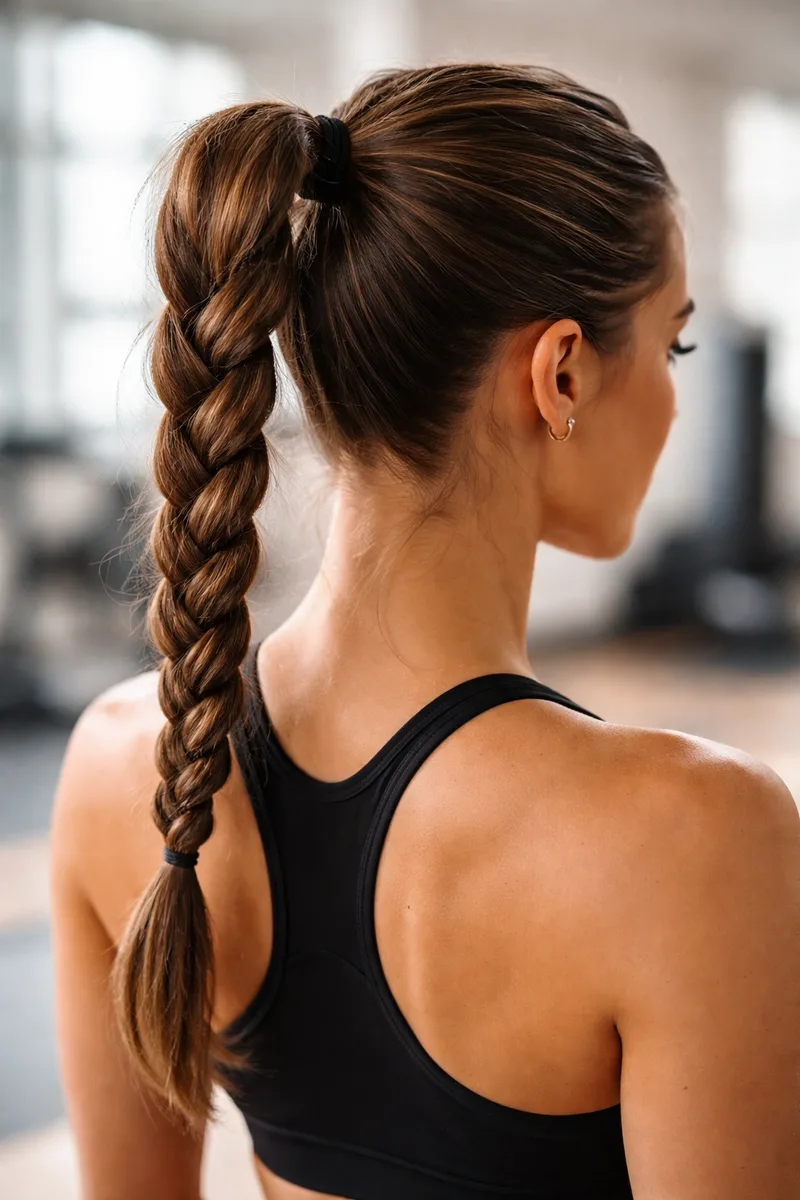
Best for: club nights, league matches and tournaments, and anyone who has ever lost a point while pushing hair out of their face.
How to style: brush the hair through, add dry shampoo at the roots, build your braid or bun, pin the front layers back, fit your headband, then shake your head hard side to side. If anything moves, fix it now, not at the table.
What to ask: ask your stylist for one style you can do in five minutes with your eyes closed — a go-to match style beats a complicated one you cannot repeat under pressure.
Quick verdict: practise the style at home, shake-test it before you leave, and pack a spare elastic. Five minutes of prep buys you a whole match of not thinking about your hair.
After-Match Wash Day: Recovering Hair After a Sweaty Session
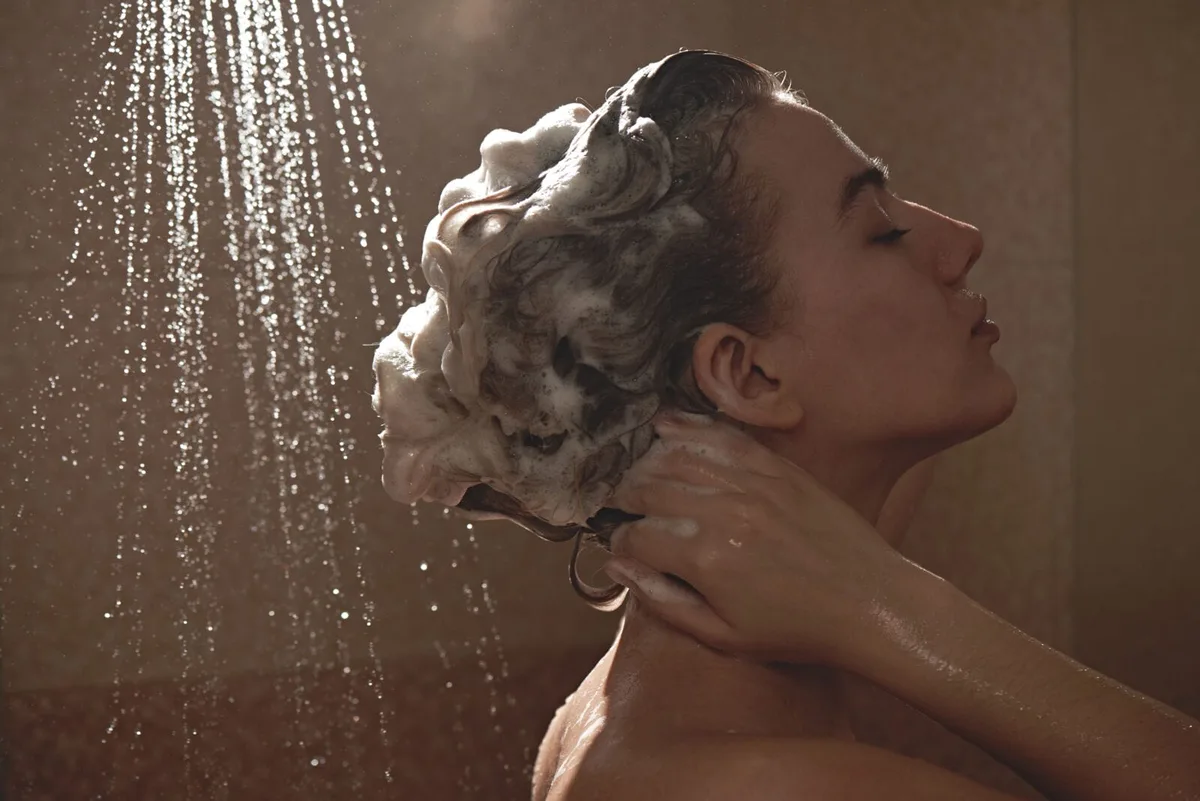
What it is: the recovery routine for hair that has been through a sweaty match. Sweat, hall dust and styling product build up fast, and leaving them in overnight dries the hair out and irritates the scalp. Wash day does not have to be a full ritual — a quick, gentle reset is enough after most club nights.
Best for: anyone who plays several times a week, and hair that feels dry, tangled or itchy after matches.
How to style: rinse with lukewarm water first, then wash with a gentle shampoo, massaging the scalp where sweat has dried. Condition the mid-lengths and ends only, detangle with a wide-tooth comb while the conditioner is in, and let the hair air-dry in a loose braid.
What to ask: ask your stylist about a clarifying shampoo for once a week if you play often, and a leave-in conditioner that protects the ends from repeated tying and braiding.
Quick verdict: rinse, wash gently, condition the ends, and braid it loose to dry. Your hair will thank you at the next match.
1. The High Ponytail
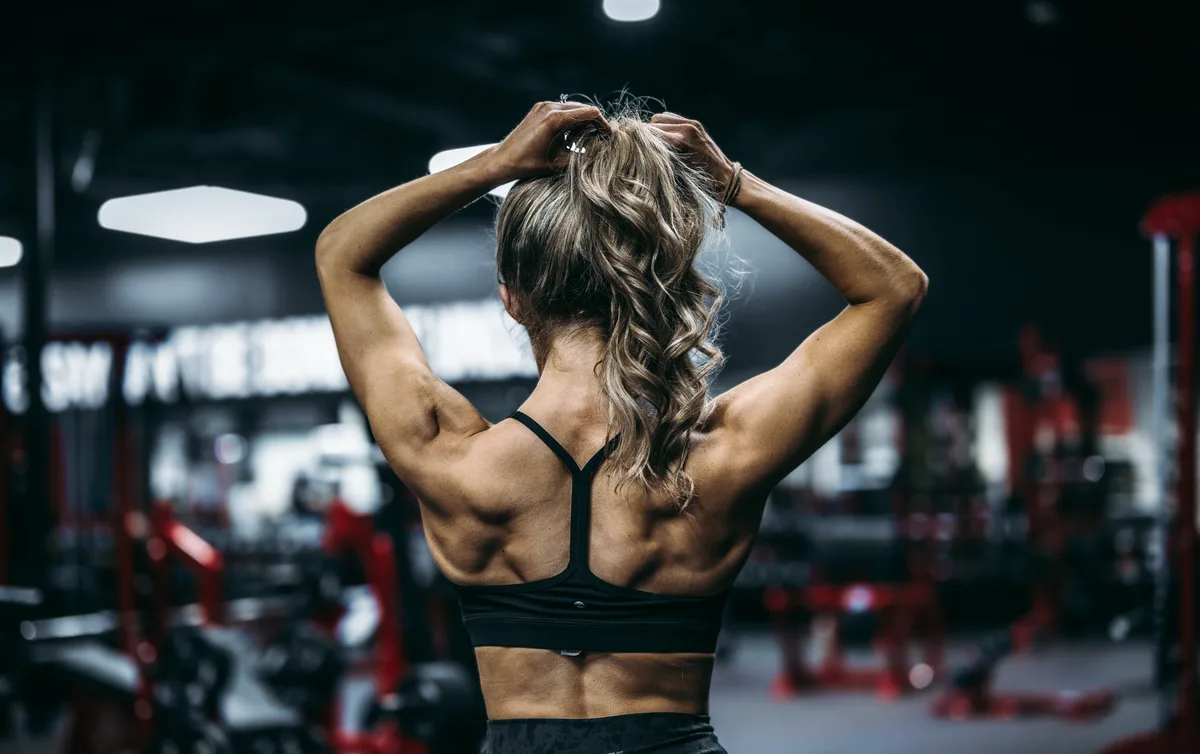
What it is: the classic table-tennis ponytail, tied high at the crown so the hair swings behind you instead of across your face. It is the first style most players try, and for good reason: it takes thirty seconds, it keeps the nape clear, and it works with almost every hair length from shoulder to waist.
Best for: medium to long hair, fast rallies, and players who want a no-thinking style they can redo between games in seconds.
How to style: brush the hair up to the crown and secure it with a thick, snag-free elastic, wrapping it twice for grip. Smooth the sides with a soft brush and a little pomade, and take a small strand from underneath the ponytail and wrap it around the elastic for a polished finish.
What to ask: ask your stylist to keep the layers around the face long enough to reach the ponytail, so you do not end up with loose wisps falling forward on every backhand.
Quick verdict: the high ponytail is the reliable default for a reason. Quick, secure and endlessly redoable — just pack a spare elastic.
2. The Low Ponytail
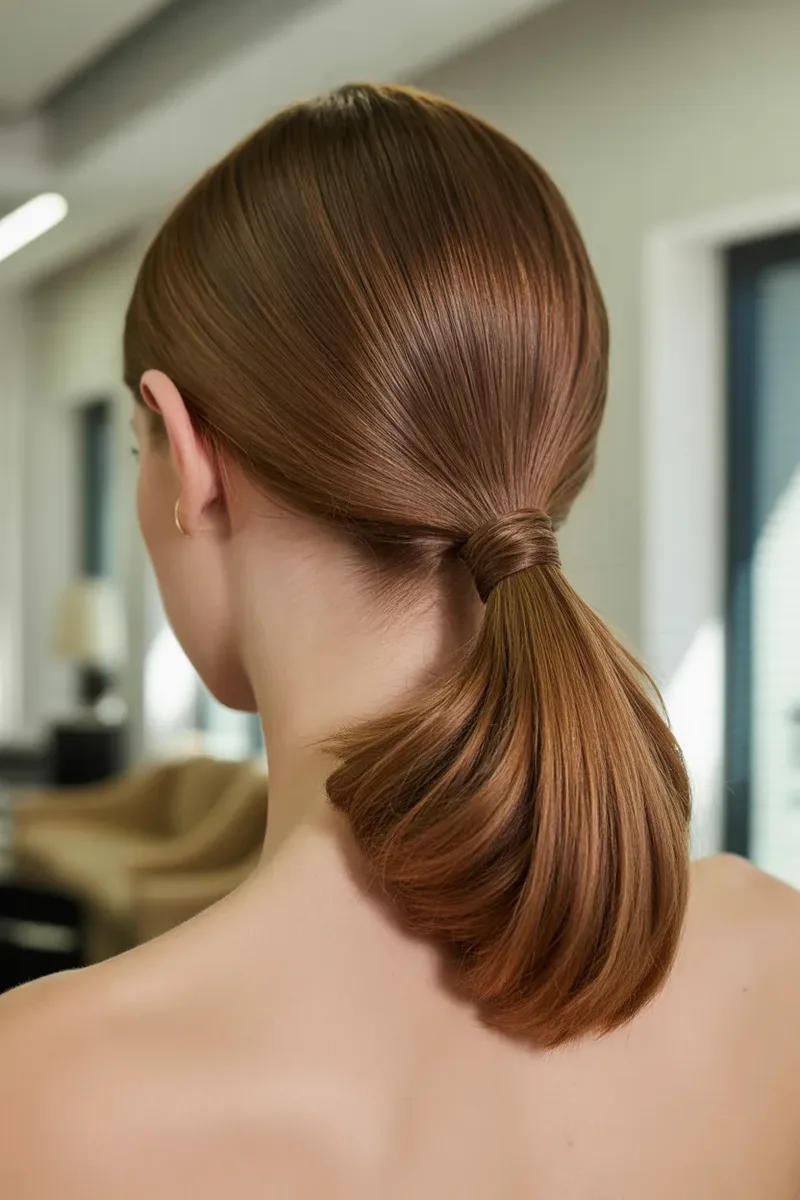
What it is: a ponytail tied low at the nape, sitting flat against the neck instead of swinging from the crown. It is calmer than a high ponytail, which makes it perfect for players who find a swinging ponytail distracting when they track the ball.
Best for: fine or slippery hair that slides out of high ponytails, and players who prefer a quiet, steady style with no swing.
How to style: part the hair in the middle or slightly to one side, brush it smoothly back, and secure it low with a strong elastic. Add a little texturising spray at the roots first for grip, and pin the sides flat if your layers are short.
What to ask: ask for a cut where the shortest layers still reach a low ponytail, so nothing escapes at the temples mid-match.
Quick verdict: calm, flat and dependable. The low ponytail trades drama for control, and at the table, control wins.
3. The Bubble Braid Ponytail
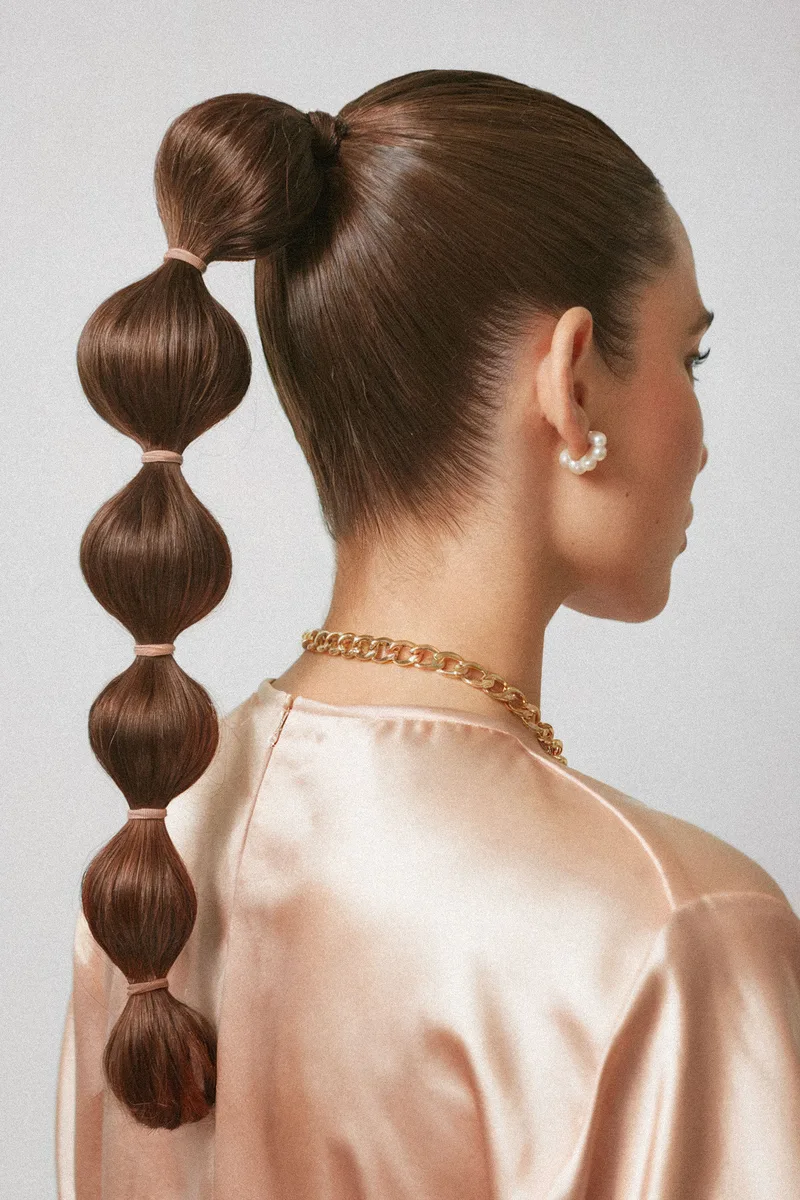
What it is: a high ponytail divided into puffed sections with small elastics, giving a playful bubble effect down its length. It looks fun and it is genuinely practical: each bubble is anchored, so the ponytail cannot swing as one heavy weight, and it holds its shape through long rallies.
Best for: long, thick hair, club nights with friends, and players who want a style with personality that still survives a match.
How to style: tie a high ponytail, then add small elastics every few inches down its length. Gently pull each section outwards to puff it into a bubble, and tug the bubbles slightly to the sides so they sit evenly.
What to ask: ask your stylist whether your hair is thick enough for defined bubbles, or whether a little backcombing inside each section will help it hold.
Quick verdict: playful on the outside, practical underneath. The bubbles break up the weight and keep the ponytail from whipping around.
4. The French Braid
What it is: the single braid that starts at the crown and picks up hair as it travels down the back of the head. It is the most secure way to wear long hair at the table: the braid lies flat, nothing swings, and the whole style is anchored at a dozen points instead of one.
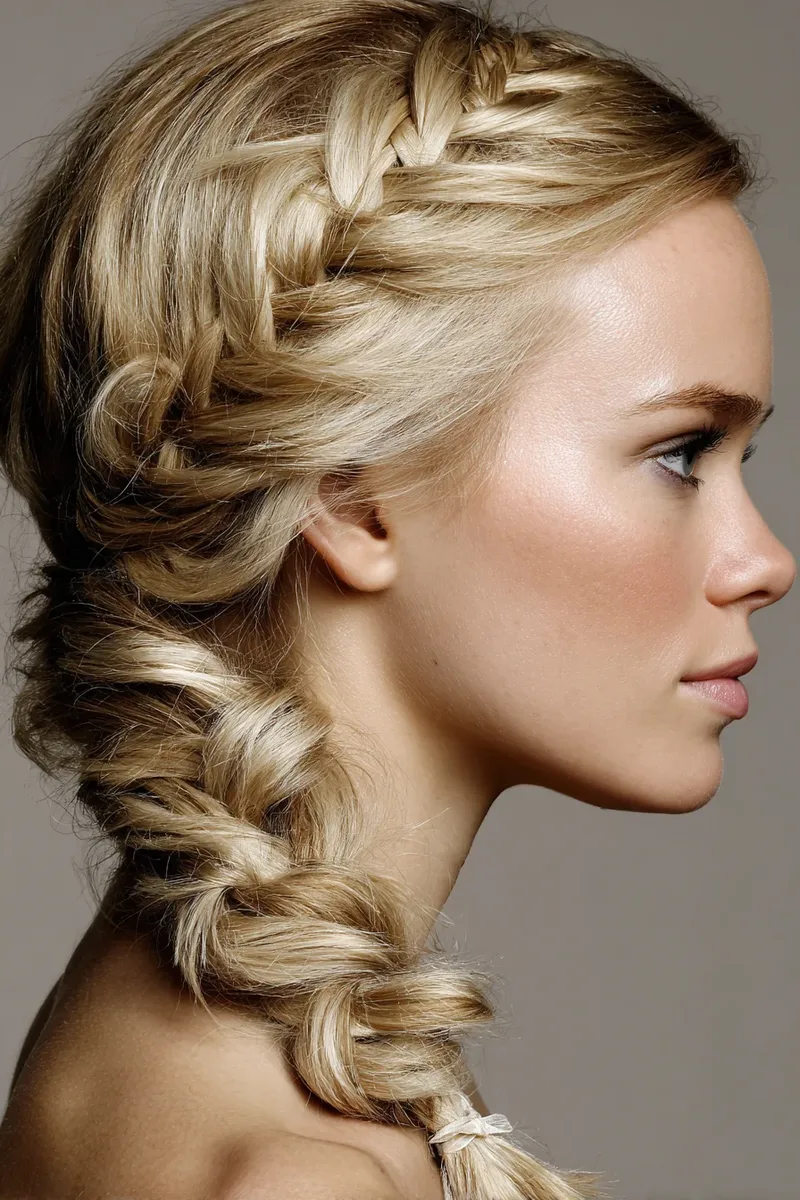
Best for: long hair, long tournament days, and players who hate re-doing their hair between games.
How to style: start at the front hairline and braid back, adding small sections from each side as you go. Keep the tension even and a little firm at the nape, then tie the end off and tuck it under, or coil it into a small bun for extra security.
What to ask: ask your stylist to show you the finger placement for a French braid once, slowly — after three practises at home you will be able to do it without a mirror.
Quick verdict: the gold standard for long hair at the table. Flat, secure and comfortable for hours, with nothing left to distract you.
5. The Dutch Braid
What it is: a French braid in reverse, with the strands crossed under instead of over, so the braid sits on top of the hair like a raised rope. It grips even better than a French braid on smooth or fine hair, and it looks bolder, which makes it a favourite for players who like their style to make a statement.
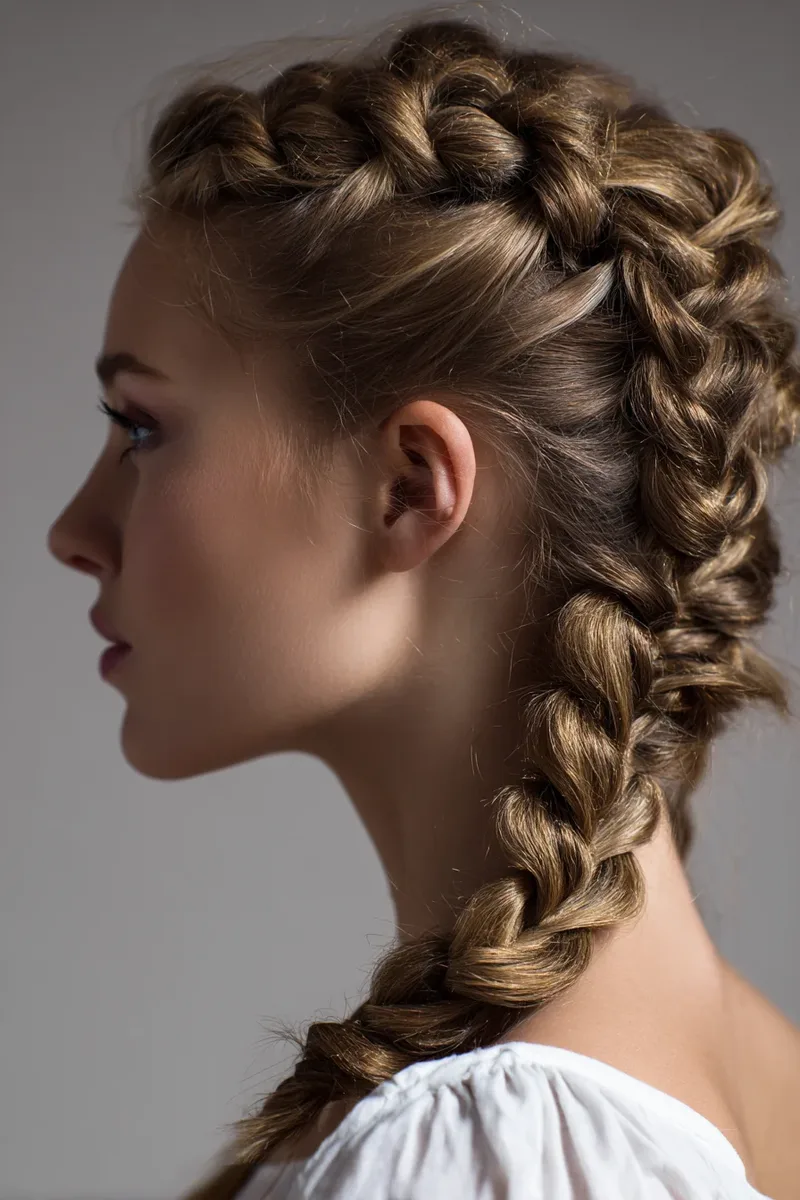
Best for: fine or slippery hair that escapes from other braids, and players who want a braid that reads clearly from across the hall.
How to style: cross the side strands under the middle strand as you braid back from the hairline, adding hair from each side. Pull the braid gently wider at the end for a fuller look, and finish with a small elastic and a spritz of light-hold spray.
What to ask: ask for a lesson in under-braiding if you have only ever done French braids — the hand movement is the mirror image, and it clicks after one demonstration.
Quick verdict: the Dutch braid holds like a seatbelt and looks like a statement. If your hair is slippery, this is the braid to learn.
6. Classic Braided Pigtails
What it is: two braids, one on each side, parted down the middle. Pigtails split the weight of long hair in half, so each side is light and easy to ignore, and they keep the hair completely off the neck — a blessing in a warm hall.
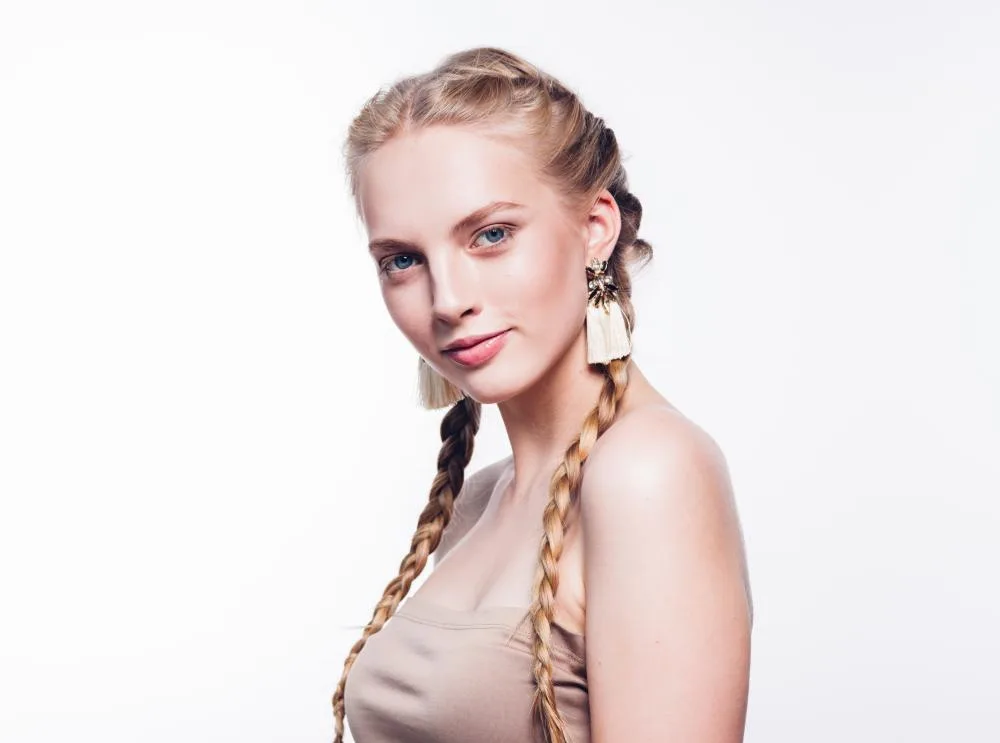
Best for: thick or heavy hair, hot halls, and players who find a single heavy braid pulls at their scalp.
How to style: part the hair cleanly down the middle, braid each side from the temple down, and tie both ends at the same length. Keep the braids a little loose at the front so they do not pull, and firm at the nape so they stay put.
What to ask: ask your stylist for a centre part that suits your face shape, since a sharp middle part is the whole look here.
Quick verdict: half the weight on each side, nothing on the neck, and a style that stays comfortable for a whole tournament day.
7. The Messy Bun
What it is: a bun twisted up loosely and pinned in place, with a few soft pieces left out around the face. It is the relaxed club-night choice: it takes a minute, it keeps all the hair off the neck, and it looks intentionally effortless rather than undone.
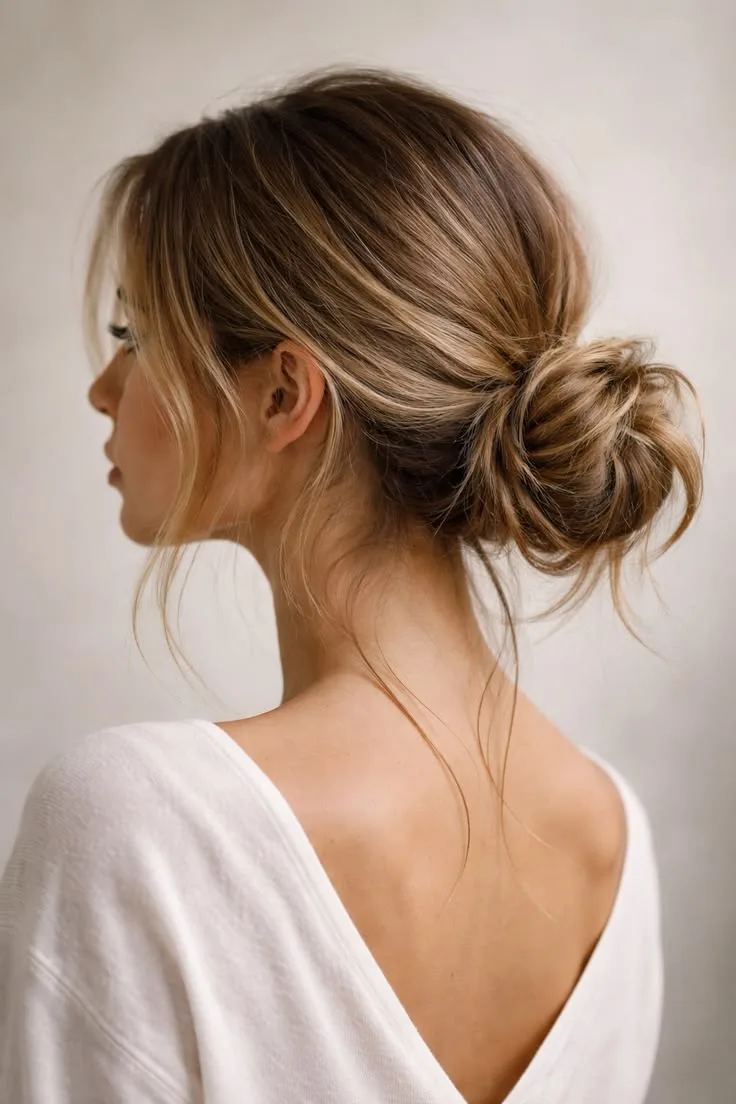
Best for: medium to long hair, casual club nights, and players who want everything off the neck without a severe, scraped-back look.
How to style: gather the hair high, twist it loosely, coil it around its own base and pin it with two or three bobby pins. Pull a few face-framing pieces loose and set them with a little spray so they do not fall forward during a rally.
What to ask: ask your stylist for layers that fall softly around the face when the bun is up, so the loose pieces look deliberate rather than escaped.
Quick verdict: fast, comfortable and forgiving. The messy bun is the style you reach for when you want to play, not to fuss.
8. The Sleek Top Knot
What it is: a high, smooth bun sitting right on top of the head, with every strand brushed back and locked in place. It is the most polished match-day style in this guide: nothing moves, nothing swings, and the whole head feels light and clear.
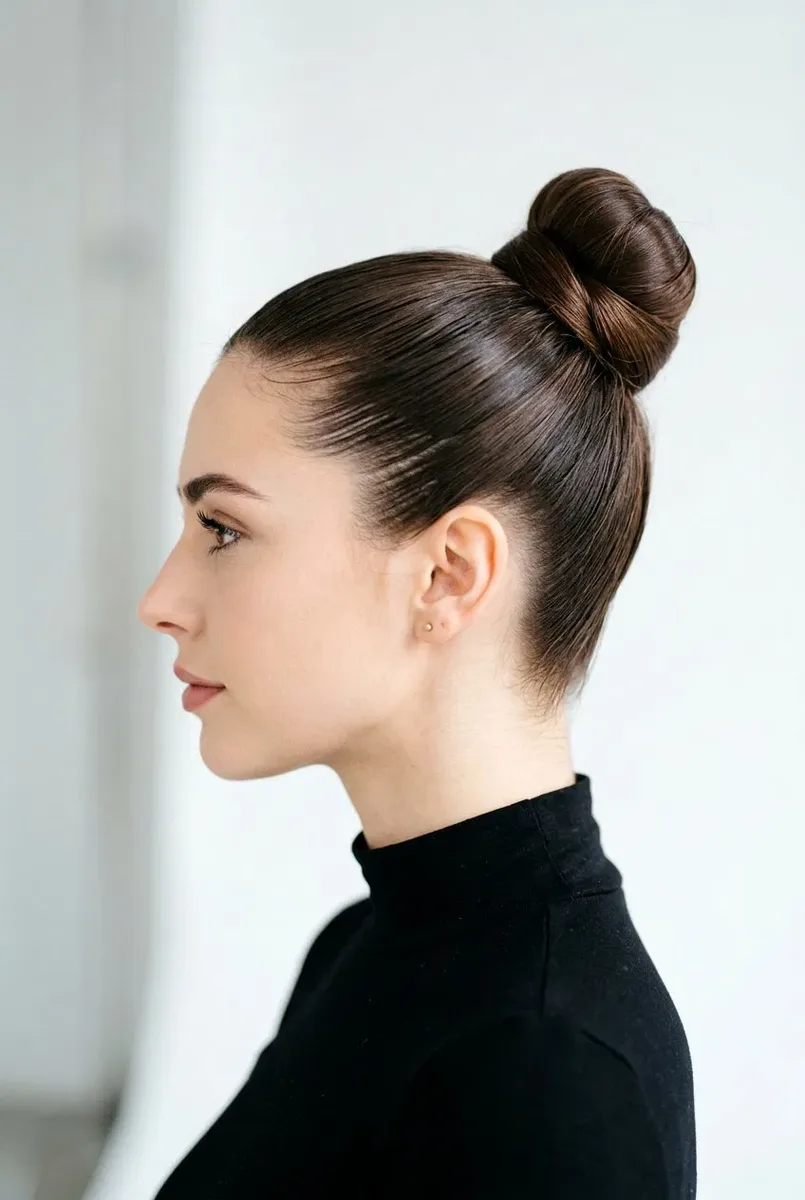
Best for: league matches and tournaments, thick hair, and players who want a sharp, professional look that also happens to be the most practical.
How to style: brush the hair up with a boar-bristle brush, smooth the sides with a little gel, twist the length into a tight coil and pin it firmly. Finish with a strong-hold spray and check the knot by shaking your head — if it wobbles, add another pin.
What to ask: ask for a smoothing product that holds through sweat without flaking, since a flaky top knot is worse than a loose one.
Quick verdict: the sharpest and most secure bun you can wear. If you want to look like you mean business at the table, this is the one.
9. The Low Bun
What it is: a bun coiled low at the nape, sitting flat and quiet against the neck. It is the understated cousin of the top knot: just as secure, but softer, lower and easier on the scalp over a long evening of play.
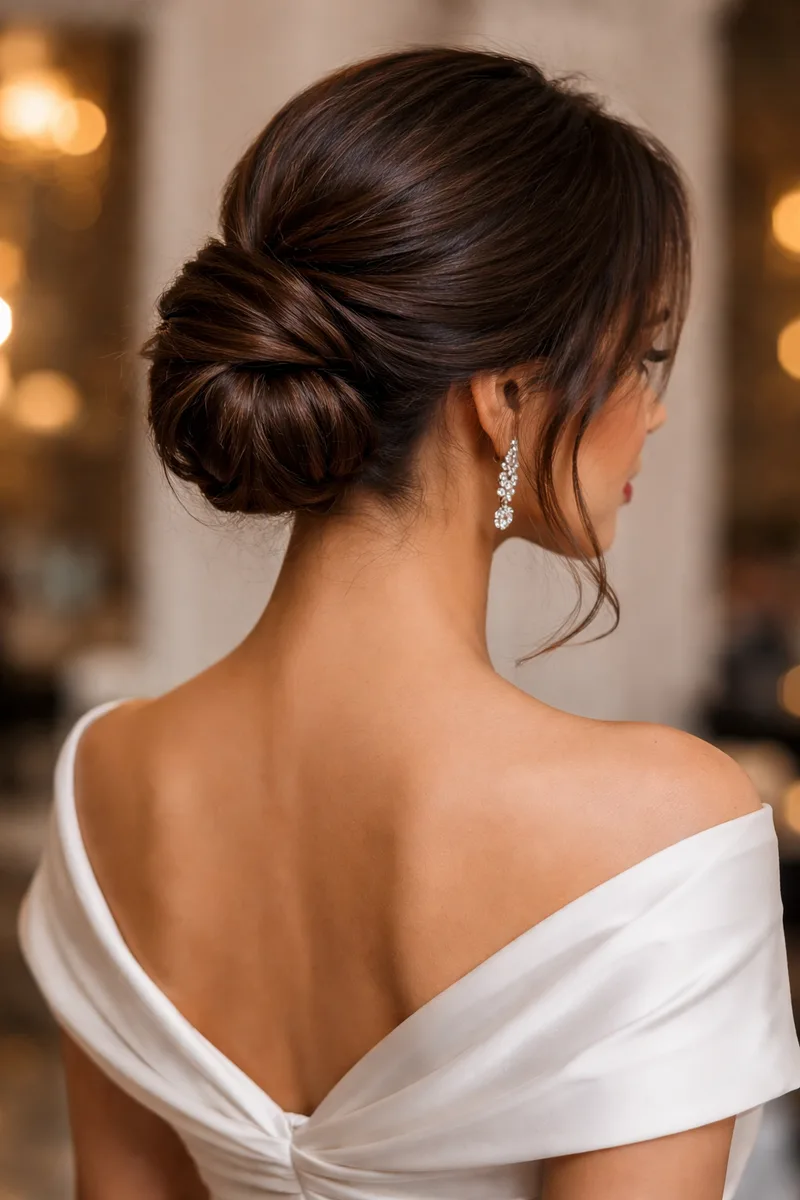
Best for: players with a sensitive scalp, long matches, and anyone who finds high buns give them a headache by the third game.
How to style: gather the hair at the nape, twist it into a coil and pin it flat against the head. Use a hair donut for a fuller shape if your hair is fine, and smooth the crown with a brush so the top stays tidy.
What to ask: ask your stylist to show you a low bun that uses the weight of the hair itself to stay put, so you need fewer pins and less pulling.
Quick verdict: quiet, comfortable and secure. The low bun is the style for players who want to forget their hair exists for three hours.
10. Double Space Buns
What it is: two small buns, one on each side of the crown, giving a fun, symmetrical look that splits the hair’s weight in half. They are playful, but they are also genuinely practical: each bun is small and light, so nothing pulls, and the style survives lunges and quick head turns easily.
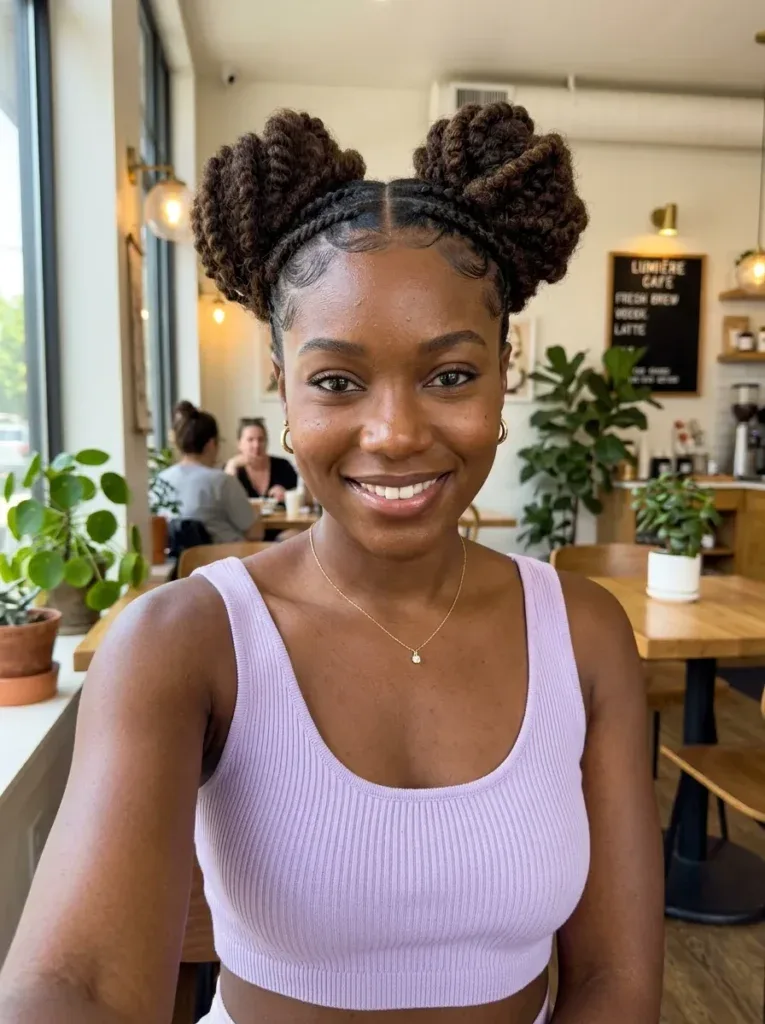
Best for: medium-length hair, doubles nights with friends, and players who want a light, bouncy style with real personality.
How to style: part the hair down the middle, gather each side high, twist and coil into a bun, and pin each one firmly. Keep the buns the same size by splitting the hair evenly at the part.
What to ask: ask your stylist where to place the buns for your head shape — a little higher reads playful, a little lower reads softer.
Quick verdict: light, balanced and full of character. Space buns prove a practical match style can still be fun.
11. The Half-Up Half-Down
What it is: the top half of the hair pulled up and secured while the rest falls loose. It keeps the front layers and the fringe out of your eyes while letting the length show — the best compromise for players who do not want to tie everything up.
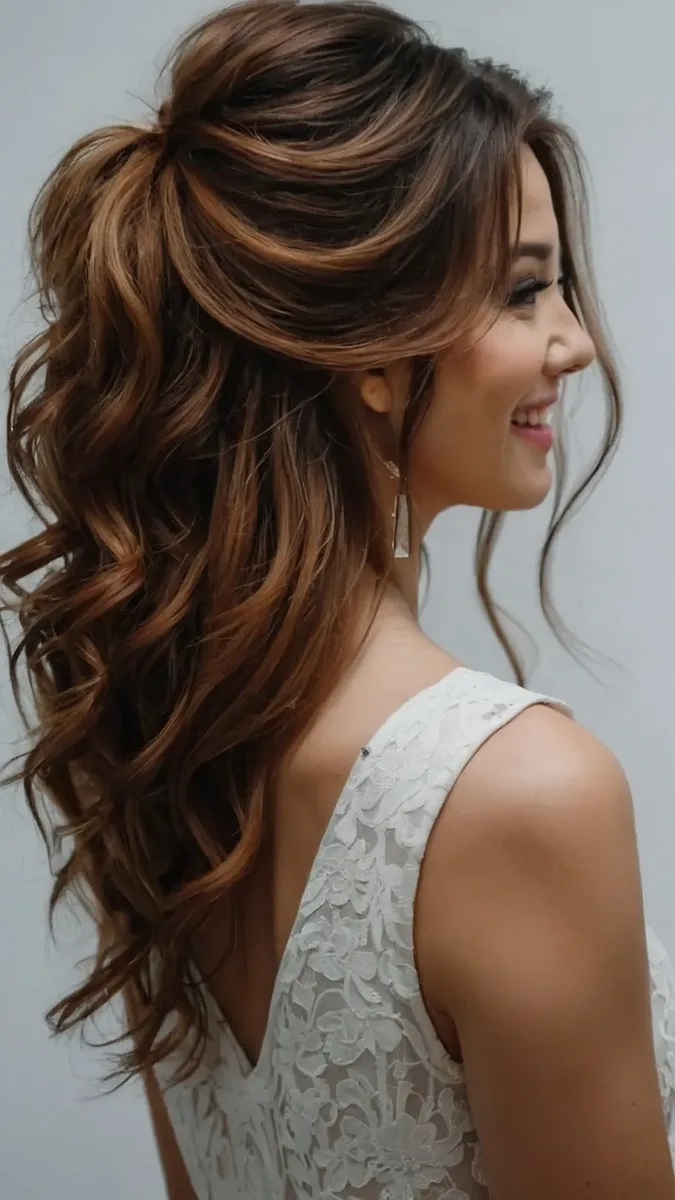
Best for: casual games, social club nights, and medium-length hair where a full updo feels like too much.
How to style: take the hair from the temples upward, twist or braid it back, and secure it at the crown with a small elastic or clip. Leave the lower half loose and smooth, and pin back any layers that fall forward.
What to ask: ask for face-framing layers that stay behind the ears when the top half is up, so the loose hair does not drift into your line of sight.
Quick verdict: the best of both worlds for a relaxed game. Secure on top, free underneath — just save it for social nights, not tournaments.
12. The Claw Clip Twist
What it is: the hair twisted up and held with a large claw clip, the five-second style that has taken over club nights everywhere. It lifts everything off the neck, it needs no elastic, and it can be redone between games without a mirror.
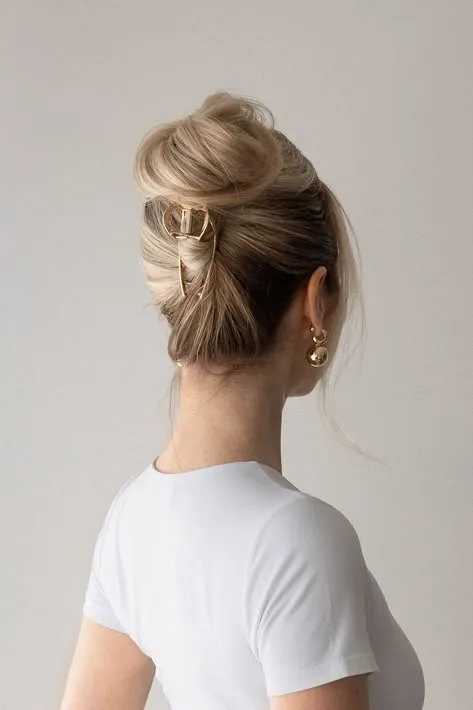
Best for: medium to long hair, players who hate elastics, and anyone who wants a style they can fix in the break between games.
How to style: gather the hair at the back, twist it upward, fold the ends over, and clamp the claw clip over the twist. Choose a large, strong clip with teeth that grip, and carry a spare in your kit bag.
What to ask: ask your stylist whether your hair is thick enough for one large clip or better with two medium ones for extra grip.
Quick verdict: the fastest style in this guide. Twist, clip, play — and re-clip in seconds if a rally knocks it loose.
13. The Headband Tuck
What it is: the hair tucked up and under a wide headband, with the ends rolled and hidden. It looks elegant, almost vintage, and it is surprisingly secure: the band holds the weight while the tuck keeps the ends from swinging.
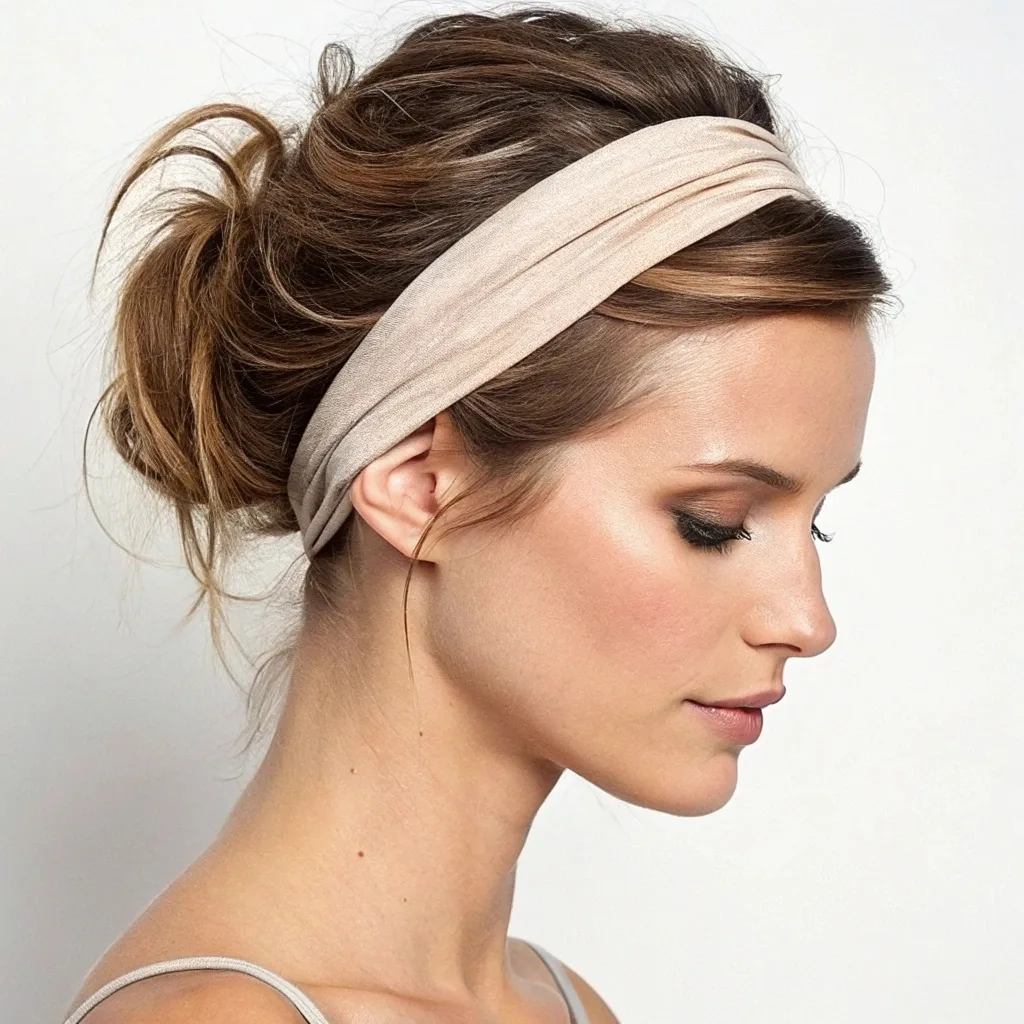
Best for: medium-length hair, players who like a polished look, and warm halls where a tucked style keeps the neck cool.
How to style: place a wide, stretchy headband over the hair, then take sections from the sides and tuck them up and under the band, working from front to back. Pin the tuck at the nape and smooth the crown.
What to ask: ask for a headband with silicone grip on the inside if your hair is smooth, so the band does not ride up during play.
Quick verdict: elegant and quietly secure. The headband tuck is proof that a match style can look like you dressed up for it.
14. The Sweatband Style
What it is: a style built around a proper athletic sweatband, worn across the forehead to catch sweat before it drips into your eyes. It is the most functional look in this guide — the band does the work of a headband and a towel at once, and the hair underneath can be anything from a ponytail to a braid.
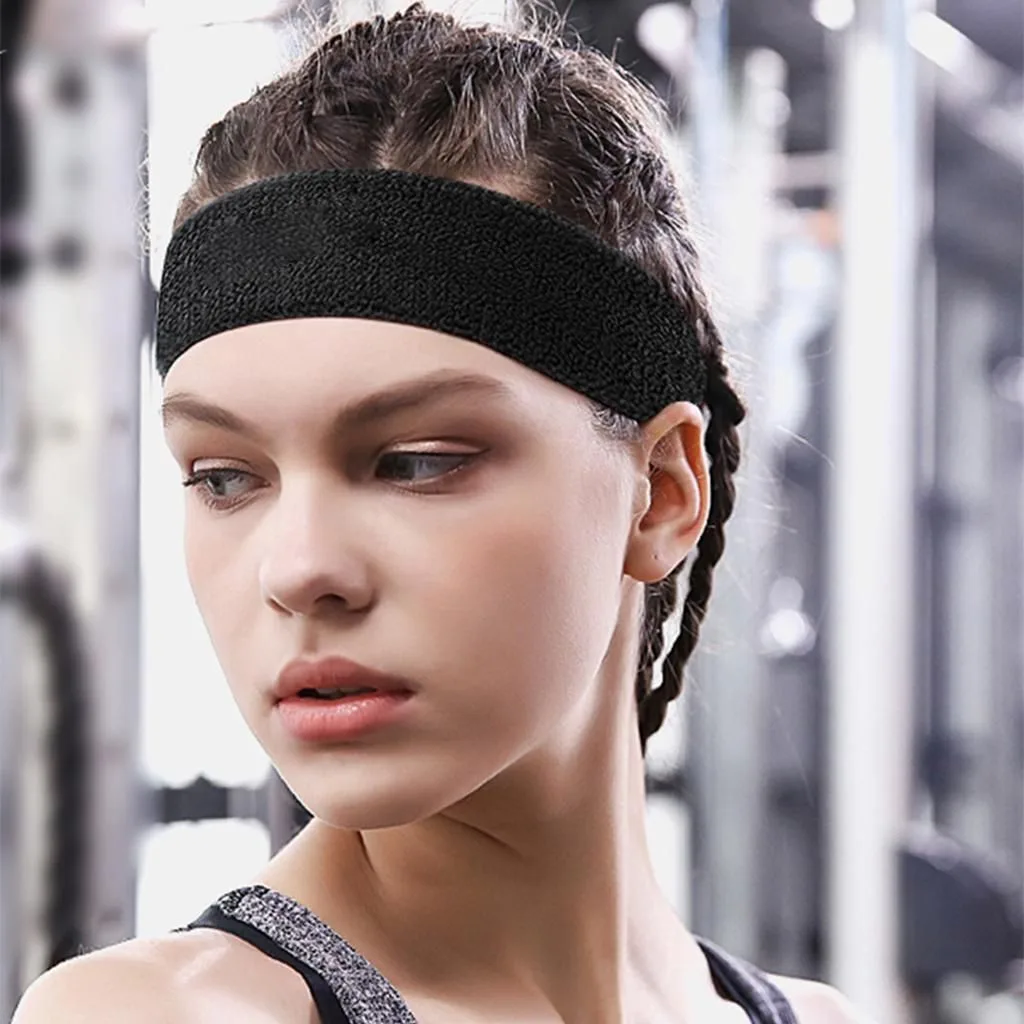
Best for: heavy sweaters, long tournament days, and players who have lost points to sweat in their eyes.
How to style: tie the hair back first in a ponytail or braid, then fit a wide terry-cloth sweatband across the forehead, just above the eyebrows. Keep a second band in your bag and swap it between matches.
What to ask: ask your stylist for a ponytail or braid that sits comfortably under a band, with the front layers tucked back so nothing escapes below it.
Quick verdict: pure function, and proud of it. If sweat is your biggest problem at the table, the sweatband is your answer.
15. The Braided Crown
What it is: a braid wrapped around the head like a crown, pinning the hair up and away from the face entirely. It is the most regal style in this guide, and one of the most secure: the braid is pinned at a dozen points around the head, so nothing can come loose in a rally.
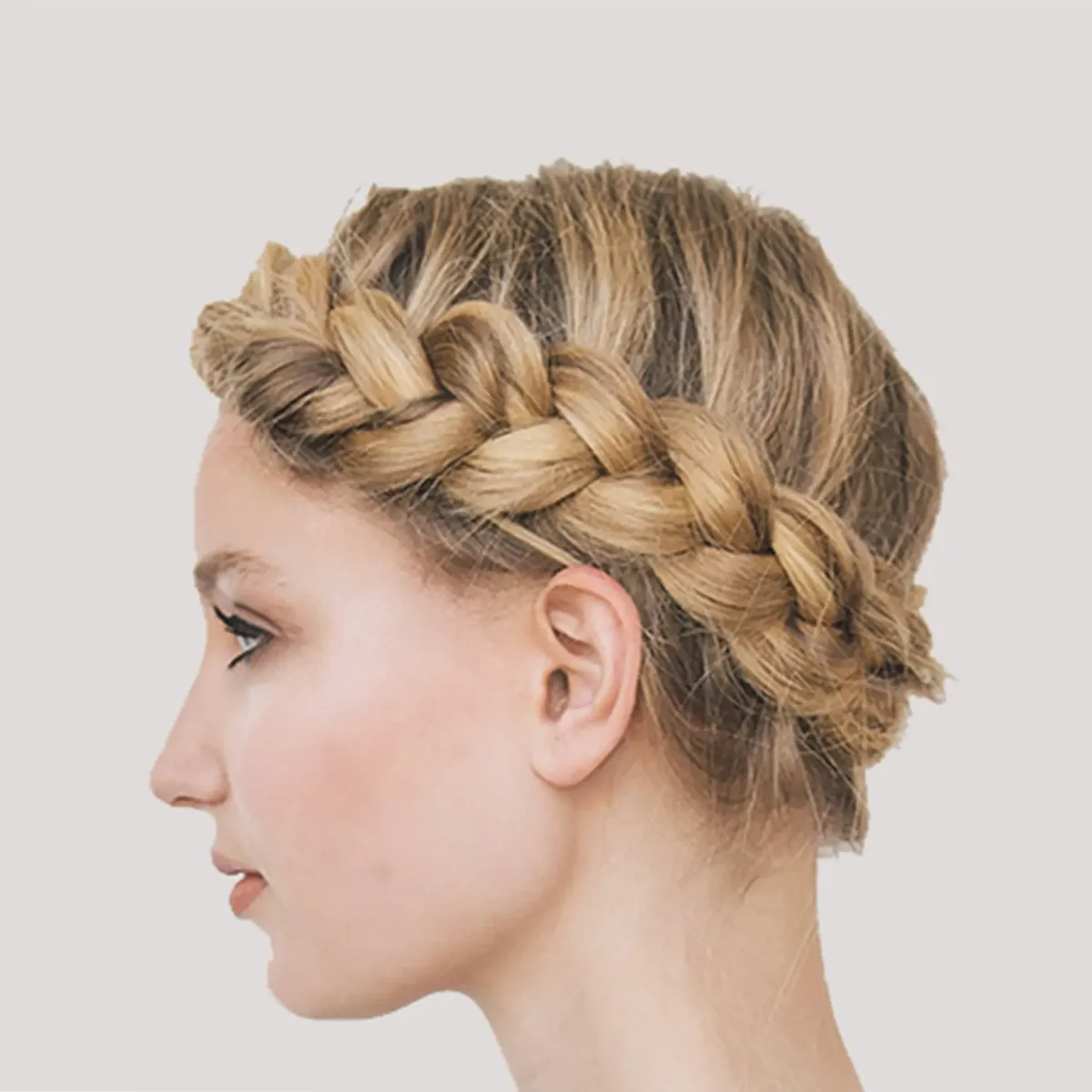
Best for: long hair, special club events, and players who want a style that will not move no matter how long the match runs.
How to style: braid the hair into two braids, then wrap each one around the head in opposite directions and pin them in place. Tuck the ends under the braid and finish with a light spray.
What to ask: ask your stylist to practise the crown wrap with you once — the pinning pattern is the trick, and one demonstration makes it easy.
Quick verdict: a crown that actually earns its name. Beautiful, secure, and the last style in this guide that will ever come undone mid-match.
16. The Fishtail Braid
What it is: a braid woven from two sections with small strands crossed over, giving a fine, herringbone pattern down its length. It lies flat and tight against the head, which makes it excellent for table tennis — and it looks intricate enough that people will assume it took far longer than it did.
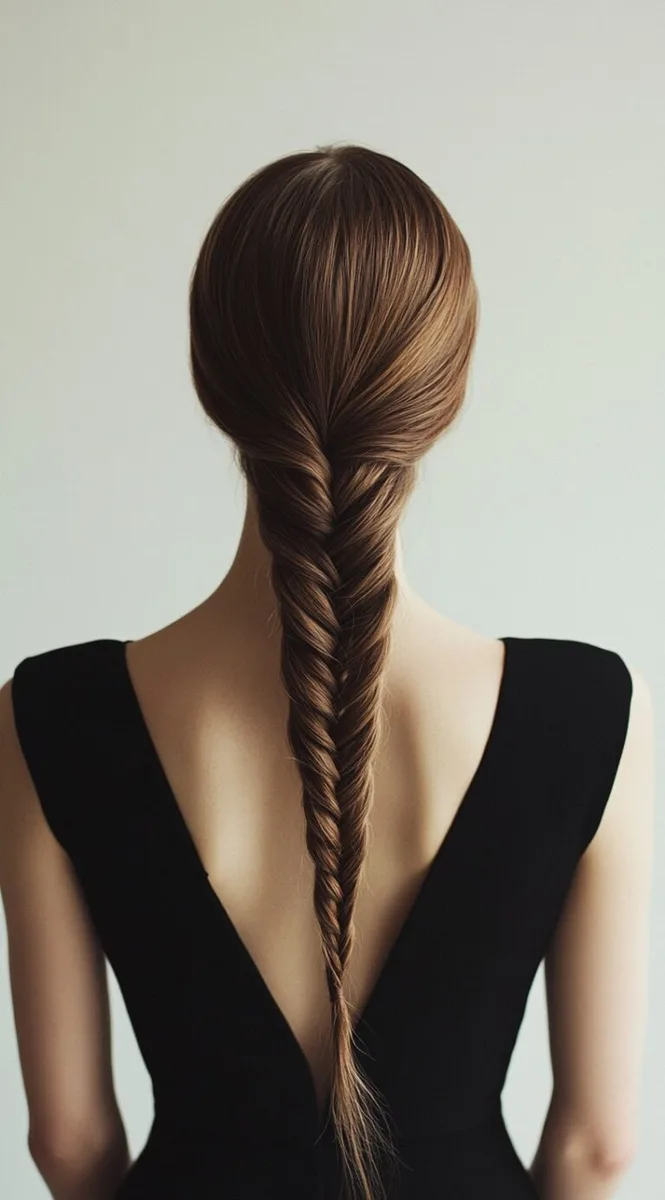
Best for: long, smooth hair, players who like detail, and matches where you want a braid that lies completely flat.
How to style: split the ponytail into two sections and cross small strands from the outside of each section to the inside of the other, working down steadily. Keep the strands small and even, tie off the end, and gently pull the braid wider for fullness.
What to ask: ask your stylist to show you the two-strand rhythm once — it feels awkward for the first minute and natural after that.
Quick verdict: flat, tight and beautiful. The fishtail is the braid for players who want detail without bulk.
17. The Side Braid
What it is: a braid that runs over one shoulder instead of down the back, keeping the hair visible and the neck completely clear. It is softer than a back braid and easier to check and fix, since you can see it without a mirror.
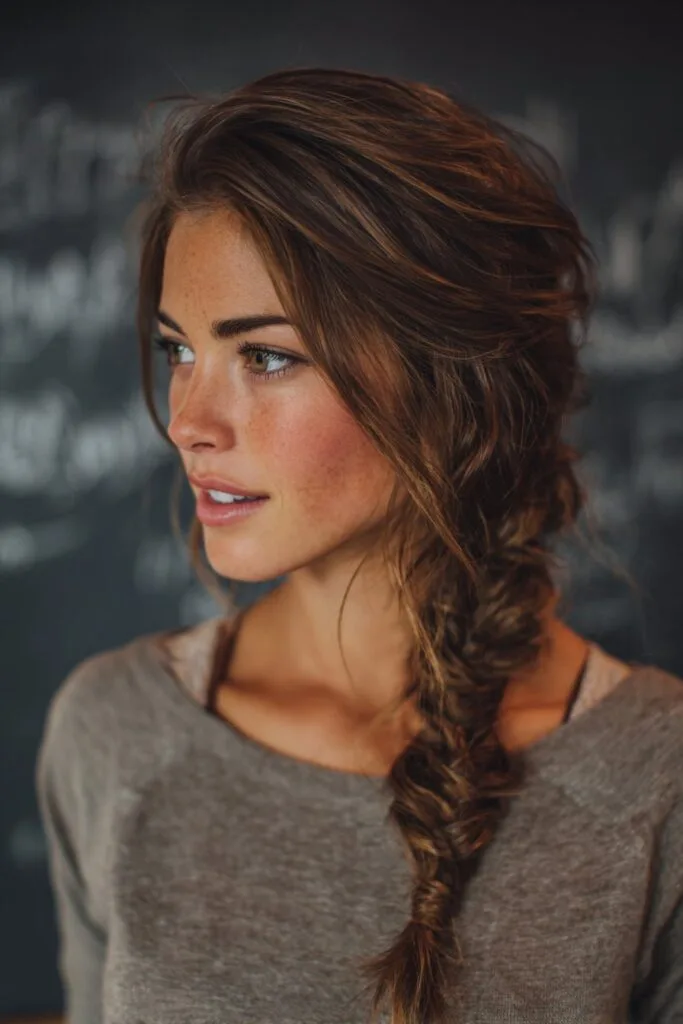
Best for: long hair, players who like to see their style, and casual matches where a relaxed look suits the mood.
How to style: sweep all the hair to one side, braid loosely from behind the ear down over the shoulder, and tie it off with a small elastic. Pull a few strands loose at the front for softness.
What to ask: ask for layers that fall naturally to one side, so the braid sits over the shoulder without fighting the cut.
Quick verdict: relaxed, visible and easy to fix. The side braid is the low-effort way to keep long hair completely out of the game.
18. Boxer Braids
What it is: two tight Dutch braids running from the hairline to the nape, the style borrowed from boxing and perfect for table tennis for the same reasons: nothing moves, nothing swings, and the hair is locked flat against the head through every lunge and twist.
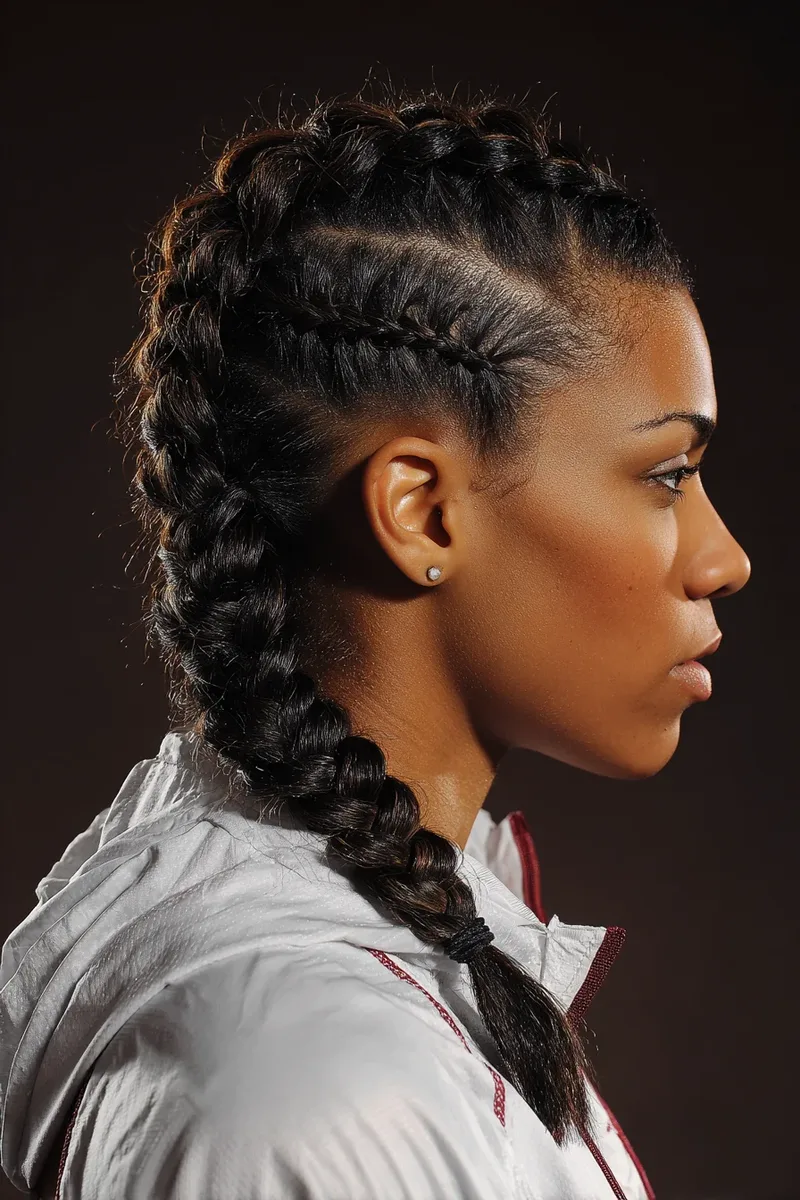
Best for: intense matches, thick hair, and players who want the single most secure style in this guide.
How to style: part the hair down the middle, Dutch-braid each side from the front hairline back, adding hair as you go. Tie both braids off at the nape and tuck the ends under, or leave them as short tails.
What to ask: ask your stylist to keep the braids tight at the hairline and slightly looser at the nape, so they hold without pulling at your scalp.
Quick verdict: the toughest style here. Boxer braids are built for fighters — and for rallies that feel like a fight.
19. The Short Pixie Cut
What it is: a short, textured pixie that sits close to the head and needs almost nothing to stay in place. It is the ultimate low-maintenance table-tennis cut: no ponytail, no pins, no re-doing anything between games.
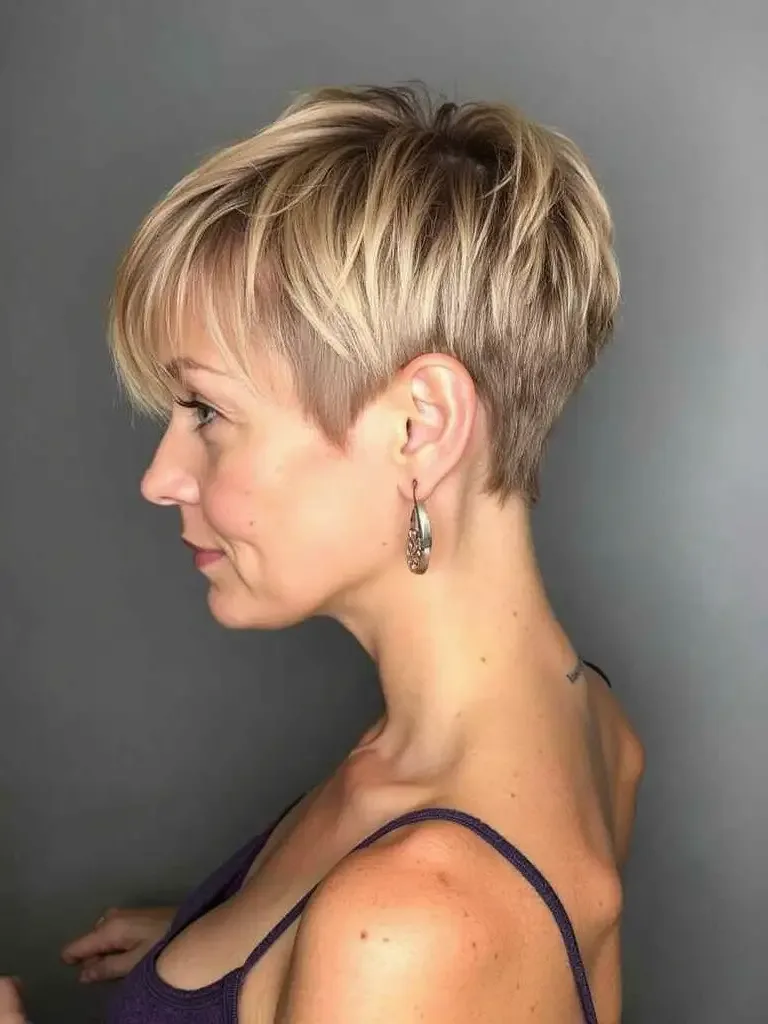
Best for: players who want to forget about hair entirely, hot halls, and anyone ready for a genuinely short cut.
How to style: work a pea-sized amount of wax or pomade through the top, push the fringe to one side, and let the texture do the rest. A quick finger-comb between games is the only maintenance it needs.
What to ask: ask for texture through the top and a tapered nape, so the cut grows out gracefully between appointments.
Quick verdict: the shortest route to never thinking about your hair at the table. Wash, wax, play.
20. The Textured Bob
What it is: a bob with choppy, textured ends that sits around the jaw and moves with you instead of against you. It is short enough to stay out of the way and long enough to tuck behind the ears, which is the sweet spot for table tennis.
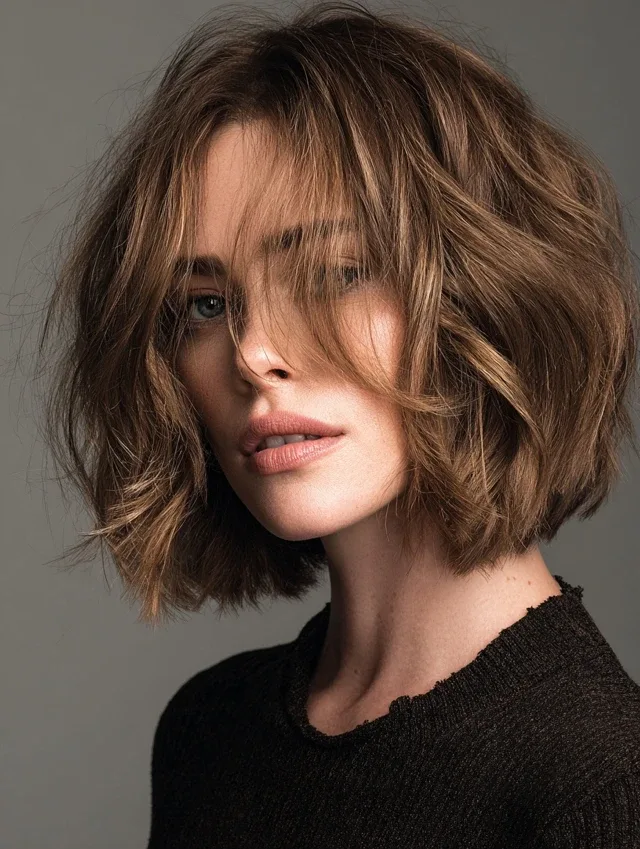
Best for: medium-thick hair, players growing out a pixie, and anyone who wants a cut with style that still plays well.
How to style: add a little texturising spray, scrunch the ends for movement, and tuck the front sections behind the ears. A thin headband keeps the fringe back on sweaty days.
What to ask: ask for textured ends rather than a blunt line, so the bob moves naturally and does not swing as one heavy sheet.
Quick verdict: the bob that plays as well as it looks. Short enough to ignore, long enough to tuck, and full of movement.
21. The Chin-Length Bob
What it is: a neat bob that ends right at the chin, with a clean line and a smooth finish. It frames the face beautifully and, at this length, it cannot fall forward into your eyes or tangle at the nape — it simply sits where you put it.
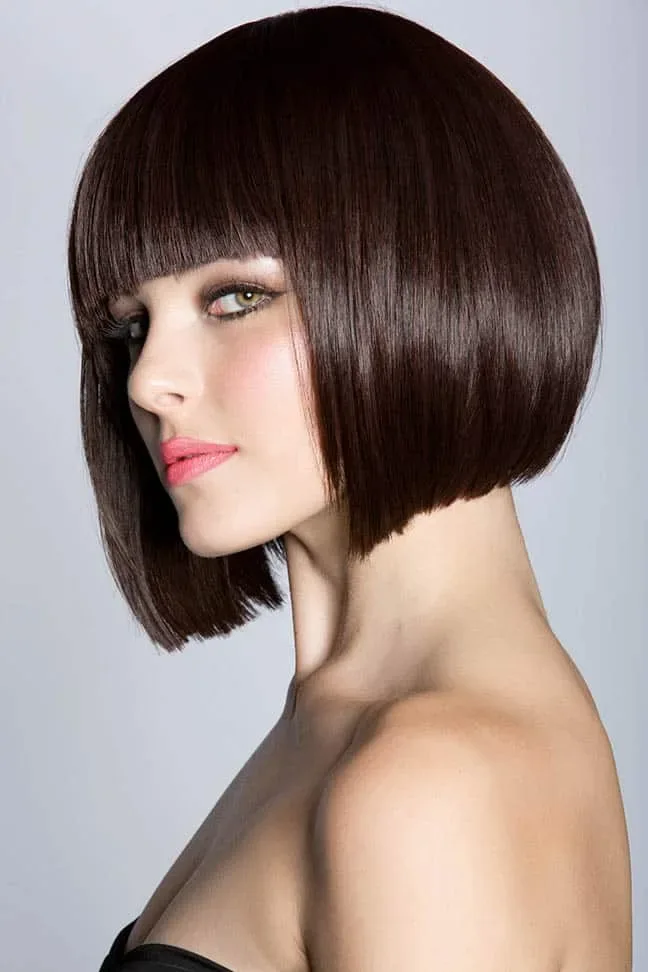
Best for: straight or slightly wavy hair, players who like a polished look, and anyone whose hair is too short for a ponytail but too long for a pixie.
How to style: blow-dry with a round brush for a smooth finish, tuck the front sections behind the ears, and add two small clips at the temples if the fringe is growing out.
What to ask: ask for a length that just clears the shoulders when you turn your head, so the bob never brushes your neck during a rally.
Quick verdict: neat, polished and completely fuss-free. The chin-length bob is the cut for players who like their hair to behave.
22. The Curly Puff
What it is: curls gathered into a single round puff, usually high on the head or at the crown, letting the curl pattern shine while keeping every strand out of the face. It is joyful, bold and practical all at once.
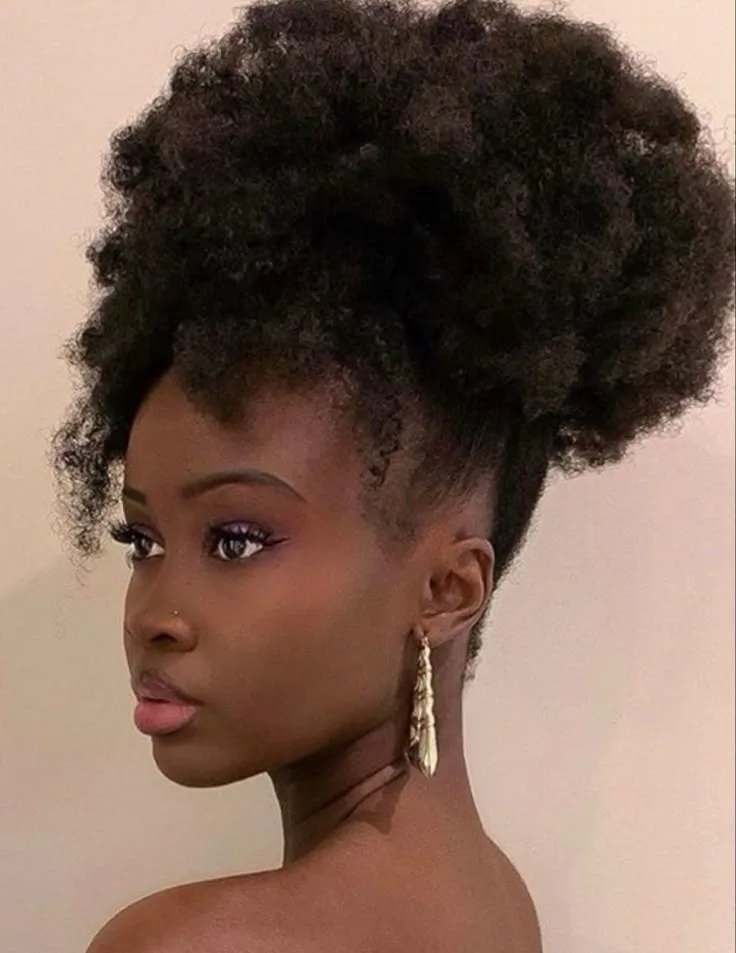
Best for: curly and coily hair, players who love their volume, and hot halls where a puff keeps the neck completely clear.
How to style: gather the curls with a wide-tooth comb or your fingers, secure them with a satin scrunchie, and shape the puff by gently pulling curls outward. Smooth the edges with gel on a soft brush.
What to ask: ask your stylist for a cut that keeps the curls full when gathered, with layers that support the puff’s round shape.
Quick verdict: volume, proudly on display, and not a curl in your eyes. The puff is the curly player’s power style.
23. The Pineapple Updo
What it is: curls piled high on top of the head like a pineapple, secured loosely at the crown so the curls cascade forward and to the sides. It keeps the curls off the neck and out of the eyes while protecting the curl pattern from being crushed.
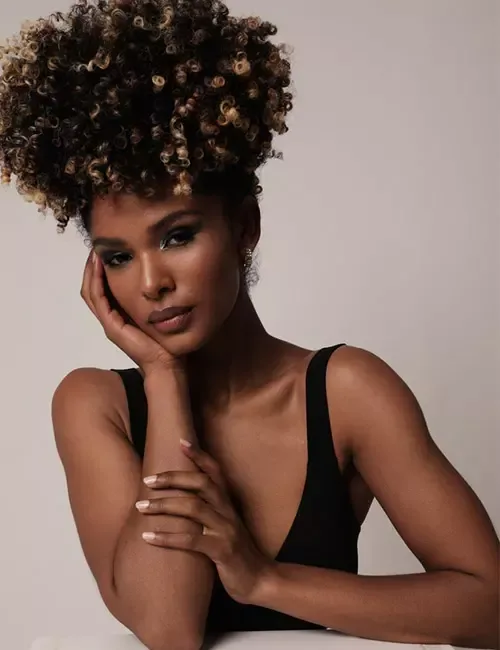
Best for: curly hair of medium to long length, and players who want to protect their curl definition through a match.
How to style: flip the head forward, gather the curls loosely at the very top, and secure them with a satin scrunchie. Let the curls fall naturally forward, and use a headband to catch sweat at the hairline.
What to ask: ask for a leave-in product that keeps curls defined without crunch, so the pineapple holds its shape without going stiff.
Quick verdict: the curls stay high, the neck stays cool, and the pattern stays intact. A pineapple is the smartest way to play with curls.
24. Cornrows
What it is: tight braids woven flat against the scalp in neat rows, the most durable style in this guide. Cornrows can last for weeks, they do not move at all during play, and they keep the scalp cool and the hair completely controlled.
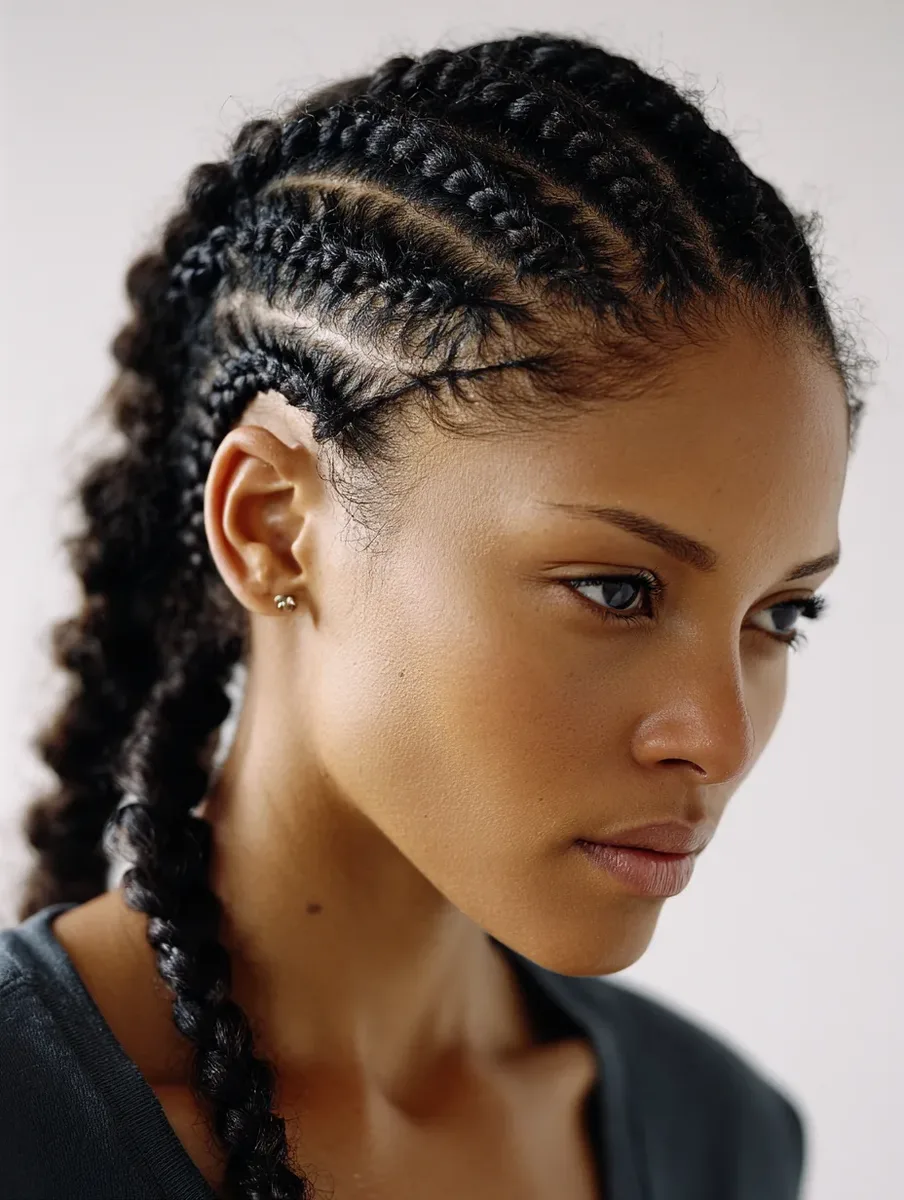
Best for: players who want a style that lasts through a whole tournament week, and anyone who prefers to style once and forget about it.
How to style: cornrows are best done by a braider — book an appointment before a tournament week. Between sessions, keep the scalp moisturised with a light oil and cover the rows with a satin scarf at night.
What to ask: ask your braider for rows that run straight back from the hairline, with tension that holds without pulling, and a finish you can gather into a low ponytail.
Quick verdict: set it and forget it. Cornrows are the longest-lasting, most secure style you can wear to the table.
25. Box Braids Pulled Back
What it is: box braids gathered back into a ponytail or bun, keeping their length and beauty while removing every distraction. The braids themselves are already secure; pulling them back simply gets them off the shoulders and out of the rally.
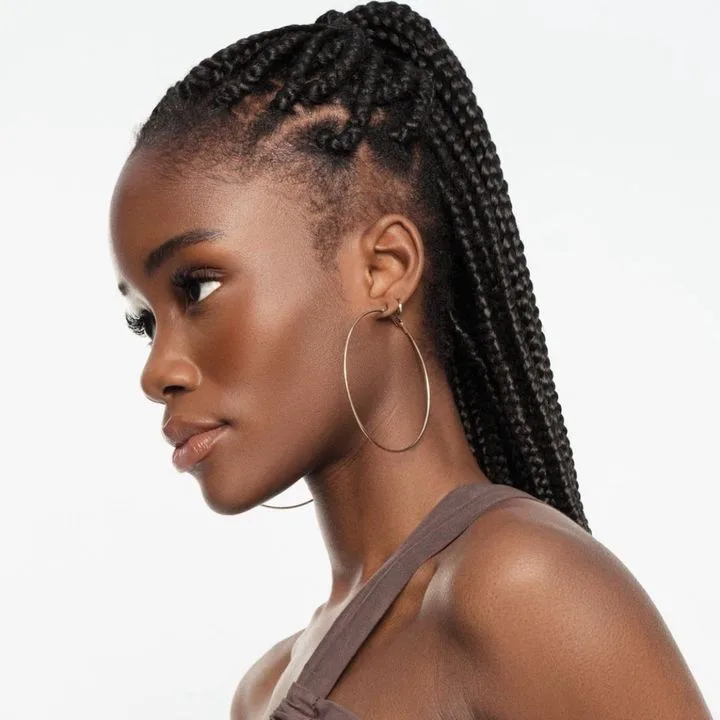
Best for: long box braids, tournament weeks, and players who want a protective style that also plays hard.
How to style: gather the braids at the crown or nape and secure them with a large, snag-free elastic. Wrap one braid around the base to hide the elastic, and pin back any short braids at the hairline.
What to ask: ask your braider for braids light enough to gather comfortably, and a length that sits neatly in a ponytail without swinging too far.
Quick verdict: the braids stay beautiful and the game stays clear. Pulled back, box braids are a tournament-ready style.
26. The Sleek Straight Back
What it is: the hair brushed smoothly straight back from the face and secured at the nape, with a glossy, polished finish. It is the simplest way to get every strand out of your eyes, and it looks sharp enough for any match.
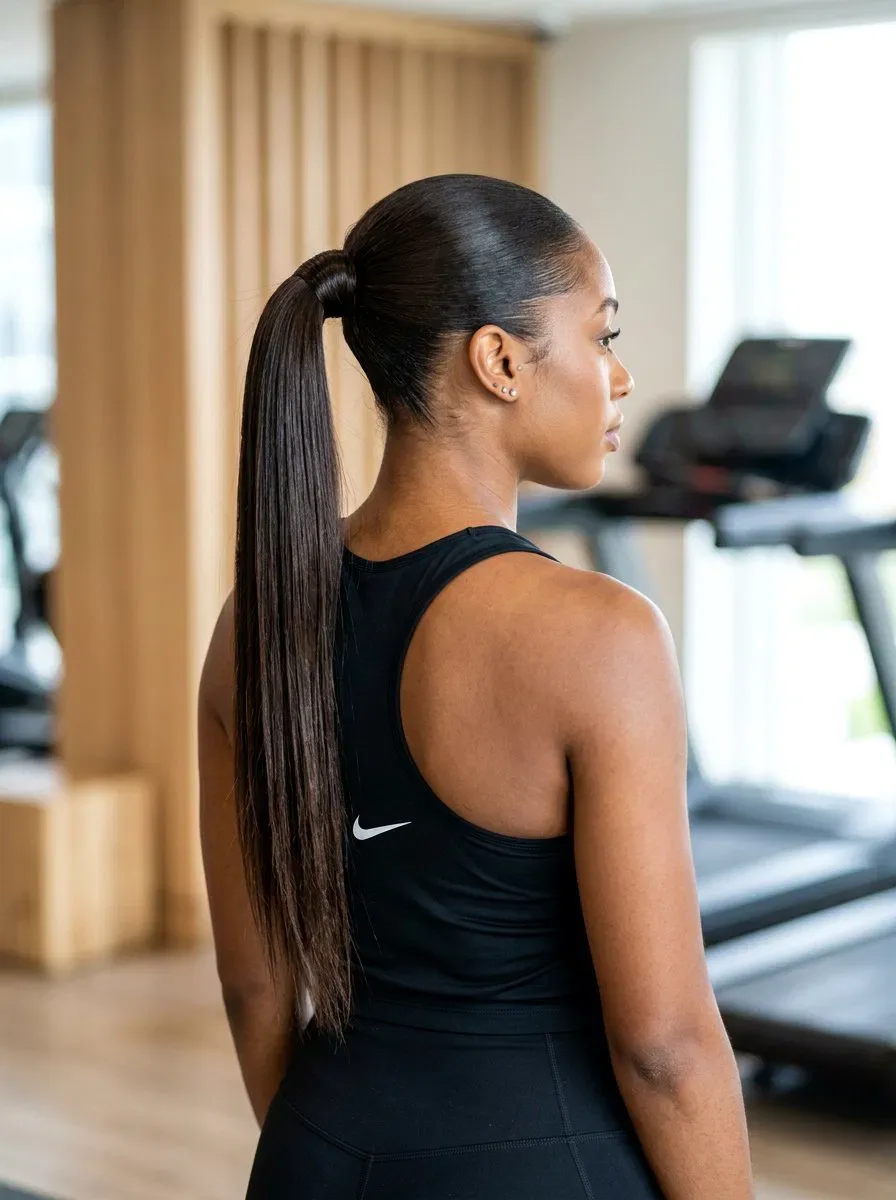
Best for: straight or fine hair, players who like a clean look, and anyone whose fringe keeps falling forward.
How to style: brush the hair back with a smoothing gel or pomade, secure it low with a strong elastic, and smooth any flyaways with a toothbrush-sized brush and a little spray.
What to ask: ask your stylist for a smoothing product that resists sweat without going sticky, since a sticky finish attracts hall dust.
Quick verdict: clean, sharp and completely out of the way. The sleek straight back is the no-nonsense answer to a falling fringe.
27. The Twisted Low Ponytail
What it is: a low ponytail with a twist — literally. Two sections of hair are twisted around each other before being tied off, which adds grip, texture and a touch of elegance to the simplest ponytail in the book.
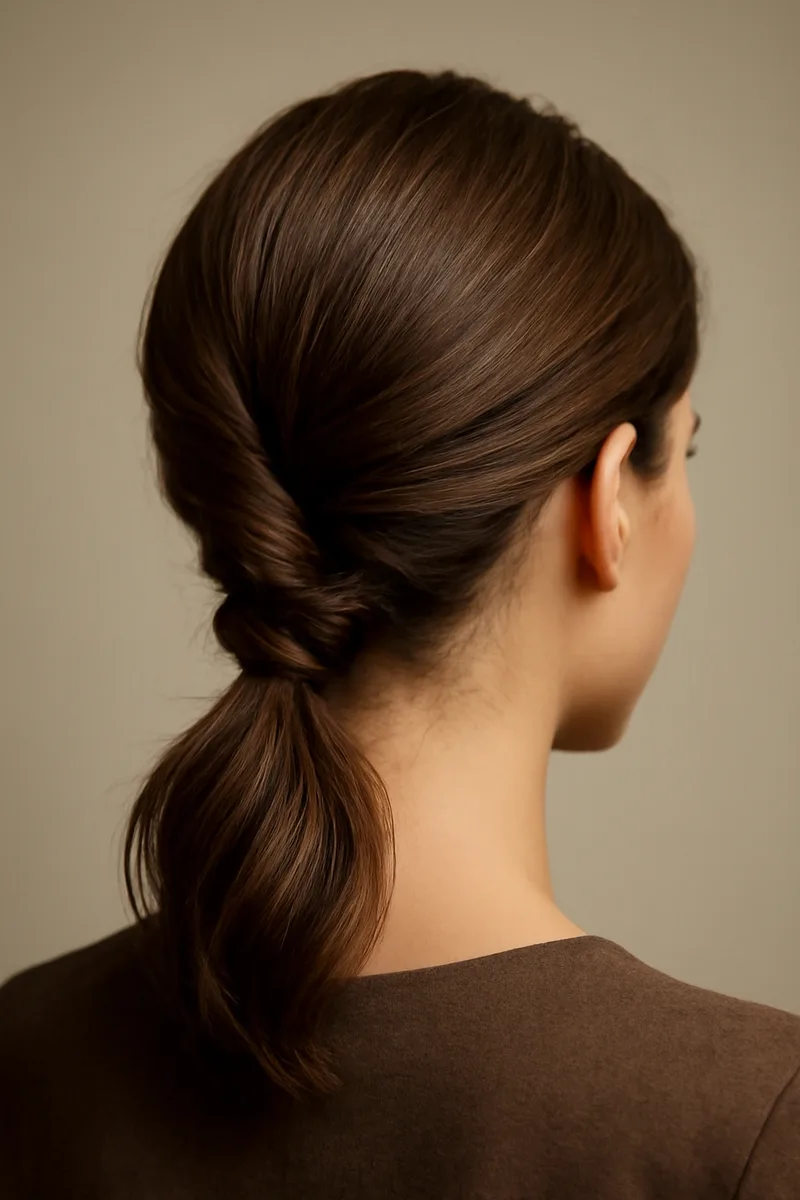
Best for: medium-length hair, players who find plain ponytails slip out, and anyone who wants a low ponytail with a little more style.
How to style: split the hair into two sections at the nape, twist each one inward, then twist the two twists together and tie off. The interlocking twist grips itself, so it holds far better than a plain elastic.
What to ask: ask your stylist to show you the two-twist rhythm — it takes one demonstration and then becomes a thirty-second habit.
Quick verdict: a small twist that makes a big difference. The twisted ponytail grips itself and stays put through every rally.
28. The Rope Braid Ponytail
What it is: a ponytail braided into a rope by twisting two sections around each other all the way down. It is tighter and flatter than a regular braid, so it swings less, tangles less, and holds its shape through the longest matches.
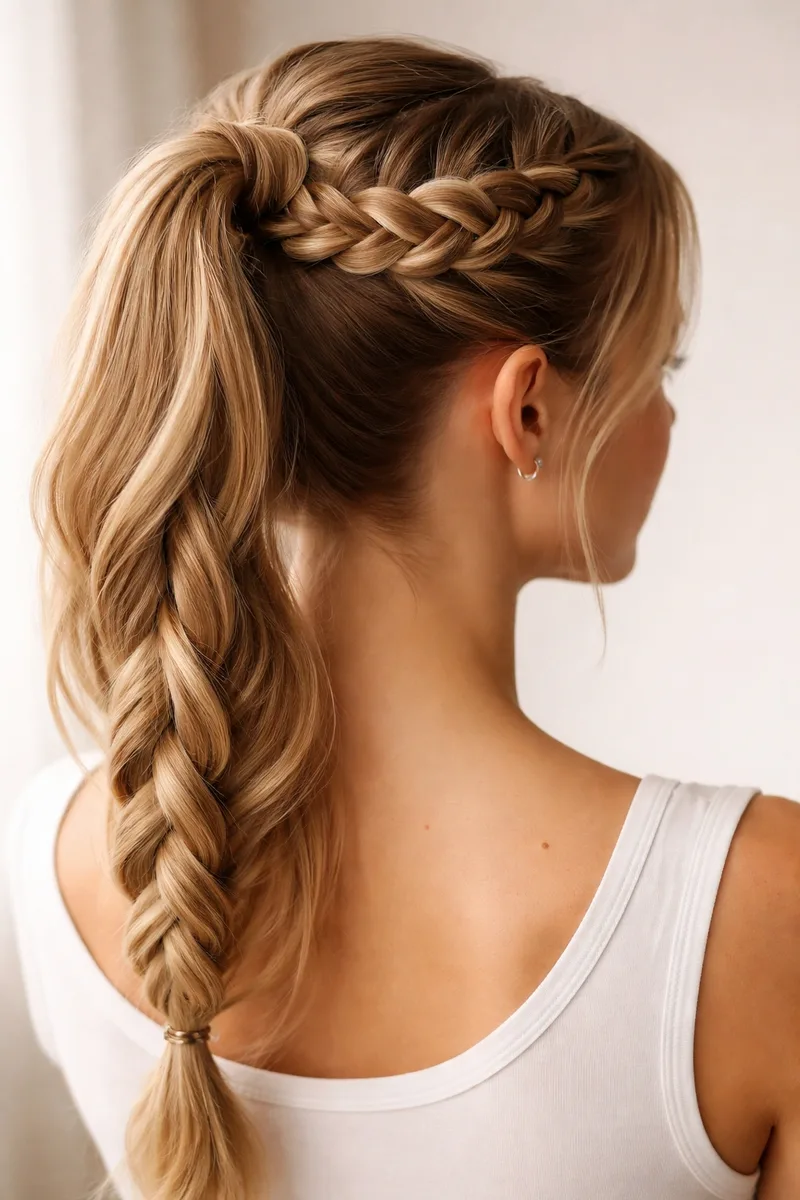
Best for: long hair, players who hate ponytail swing, and anyone who wants a braid they can do in under a minute.
How to style: tie a ponytail first, split it into two sections, twist each section the same way, then twist the two together in the opposite direction and tie off. The opposing twists lock each other in place.
What to ask: ask for a demonstration of the twist directions — same way for the sections, opposite way for the rope — and it will click immediately.
Quick verdict: the fastest braid that actually stays braided. A rope braid ponytail is a one-minute style with all-match staying power.
29. The Braided Bun
What it is: a braid coiled into a bun, combining the grip of a braid with the compactness of a bun. It is one of the most secure styles in this guide: the braid cannot unravel once it is pinned into a coil, and the bun cannot swing because it is flat against the head.
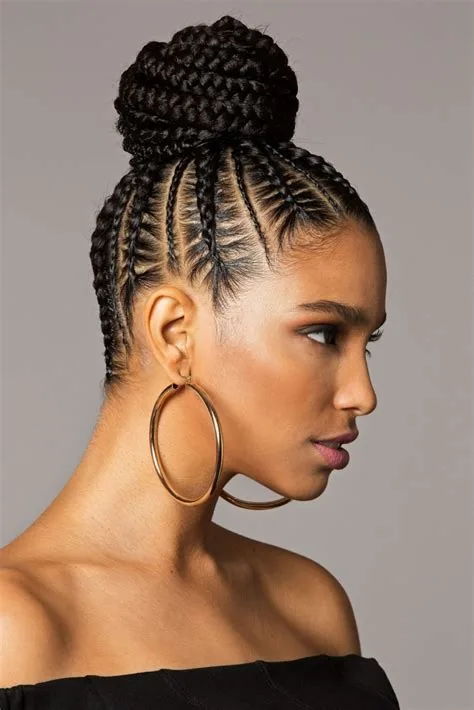
Best for: long, heavy hair, long matches, and players who want the single most bombproof updo here.
How to style: braid the hair into a single braid, coil the braid around its base, and pin it firmly with four or five bobby pins placed like the points of a star. Finish with a light spray.
What to ask: ask your stylist for a braided bun that sits at the crown for maximum clearance, or at the nape if you prefer a lower, softer feel.
Quick verdict: a braid and a bun, each making the other stronger. If one style has to survive a five-game match, this is the one.
30. The Scarf-Wrapped Ponytail
What it is: a ponytail with a silk or satin scarf wrapped around its base, sometimes trailing down the length. It looks chic, it hides the elastic, and — usefully — the scarf adds grip and stops the elastic sliding on smooth hair.
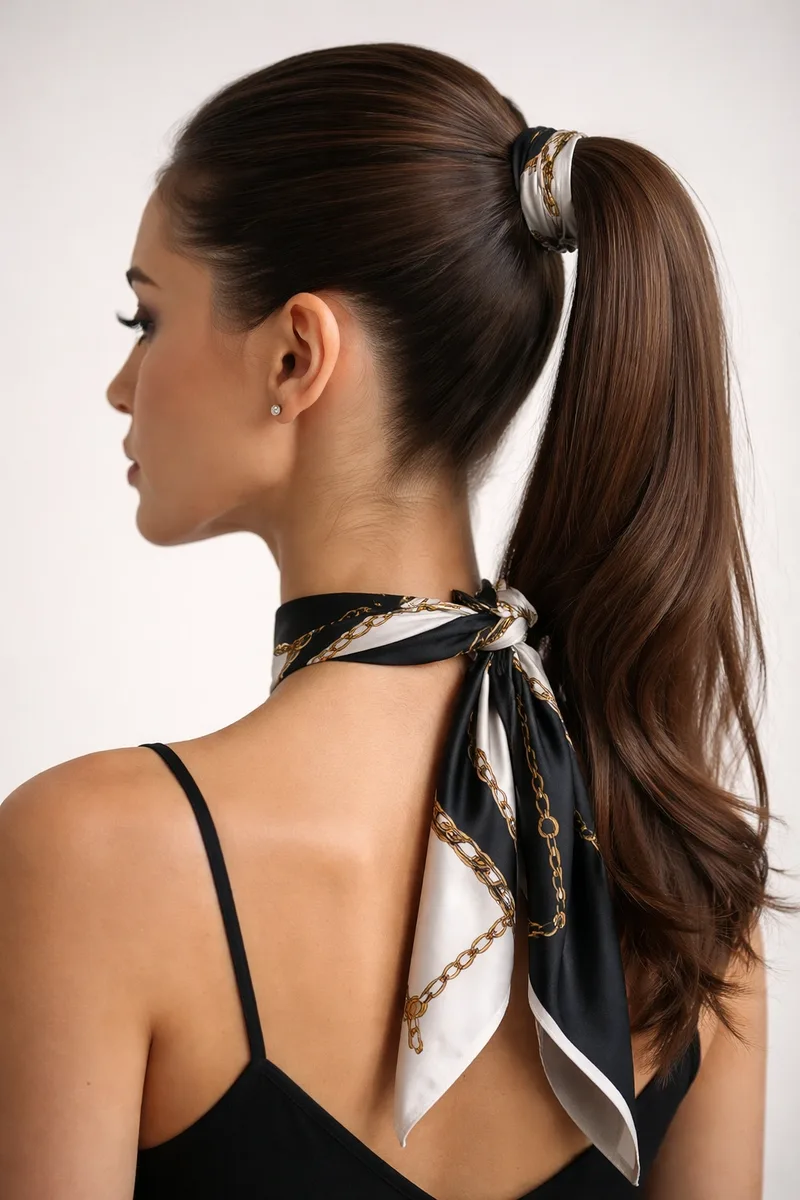
Best for: players who like a touch of style with their sport, social club nights, and smooth hair that needs extra grip at the base.
How to style: tie the ponytail, then wrap a narrow scarf around the base two or three times and knot it underneath. Tuck the ends in for play, or let a short tail hang for a social game.
What to ask: ask your stylist which scarf fabrics grip best — silk looks beautiful but satin holds better on smooth hair.
Quick verdict: pretty and practical in equal measure. The scarf hides the elastic, adds grip, and makes a simple ponytail feel finished.
31. The Slicked-Back Wet Look
What it is: the hair slicked straight back with gel for a glossy, wet finish that does not move a millimetre. It is the boldest look in this guide — runway style brought to the table — and it is also one of the most practical, since gelled hair cannot fall anywhere.
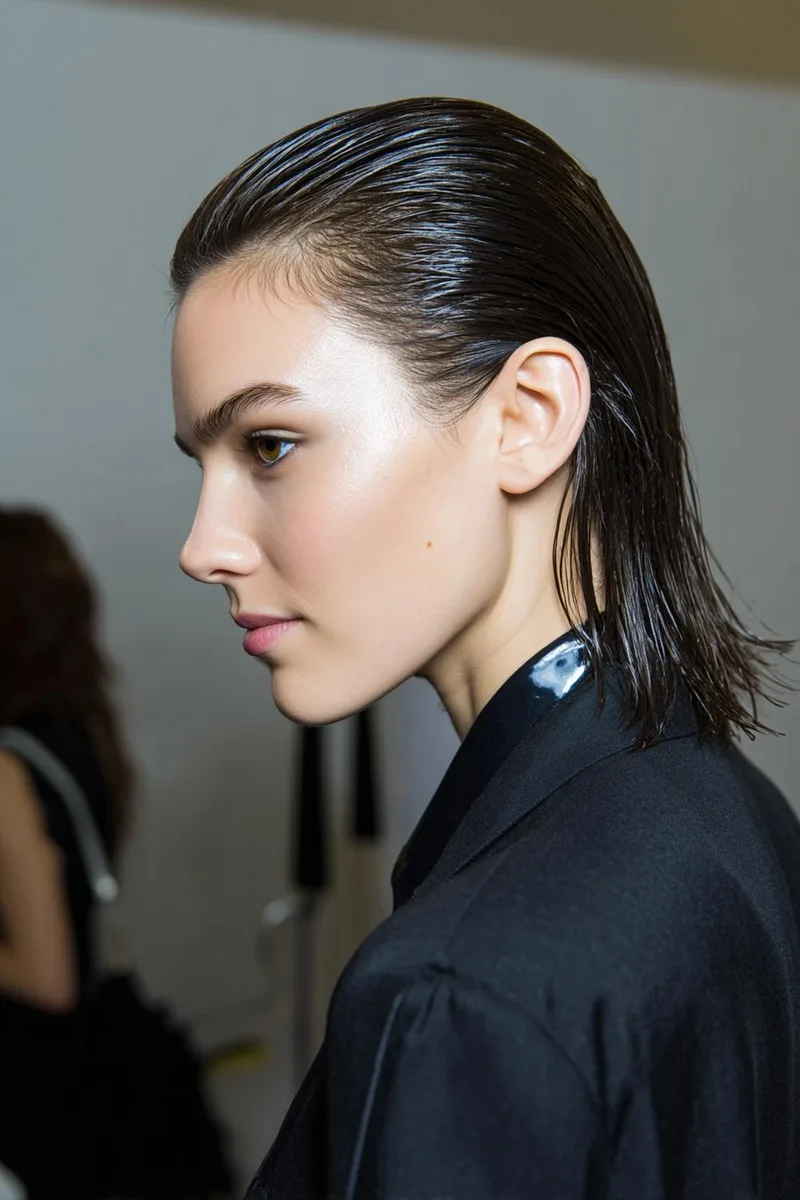
Best for: confident players, evening club events, and anyone whose hair is too short to tie back but too long to leave loose.
How to style: work gel through damp hair from the hairline back, comb it smooth with a fine-tooth comb, and let it set. Add a little extra gel at the temples and the nape, where sweat hits first.
What to ask: ask for a gel that holds through sweat without flaking or going white, and a shampoo that washes it out easily afterwards.
Quick verdict: bold, glossy and completely immovable. The wet look is a statement — and a statement that survives every rally.
32. Double Dutch Braids into a Bun
What it is: two Dutch braids that meet at the crown and coil together into a single bun. It combines the flat, locked-in grip of Dutch braids with the compact finish of a bun, so the whole style is anchored from the hairline to the crown.
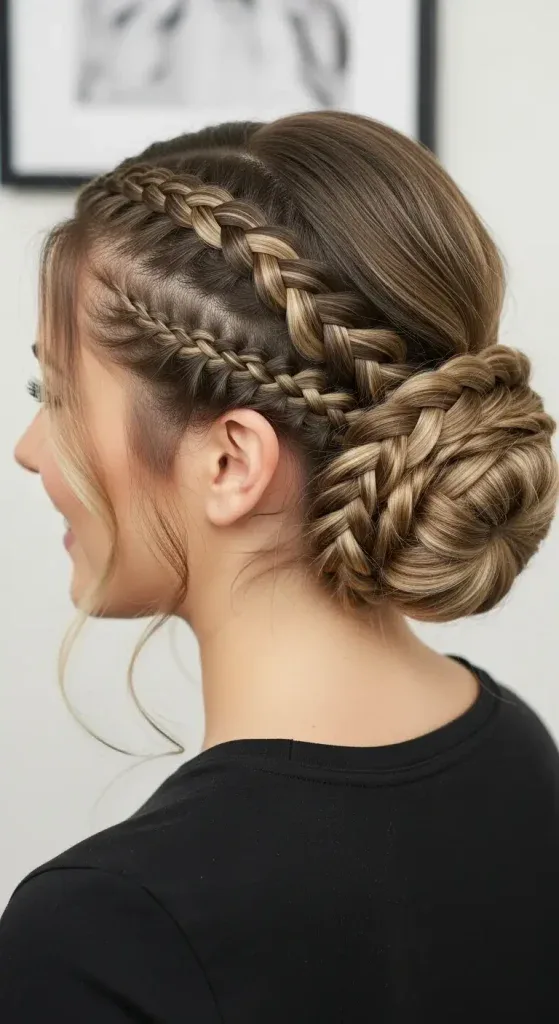
Best for: long or thick hair, tournament days, and players who want the security of braids with the neatness of a bun.
How to style: Dutch-braid each side from the hairline to the crown, gather the two braids together, twist them into a bun and pin firmly. Smooth the hairline with a little gel.
What to ask: ask your stylist to show you where the two braids should meet, since the placement decides whether the bun sits high and neat or low and soft.
Quick verdict: braids plus bun, the best of both. This is the style for the longest, hardest days at the table.
33. The Side-Swept Pixie
What it is: a pixie cut with the top swept to one side, giving soft movement and a little drama while staying short enough to never need a tie or a pin. It is the pixie for players who like a bit of shape with their short hair.
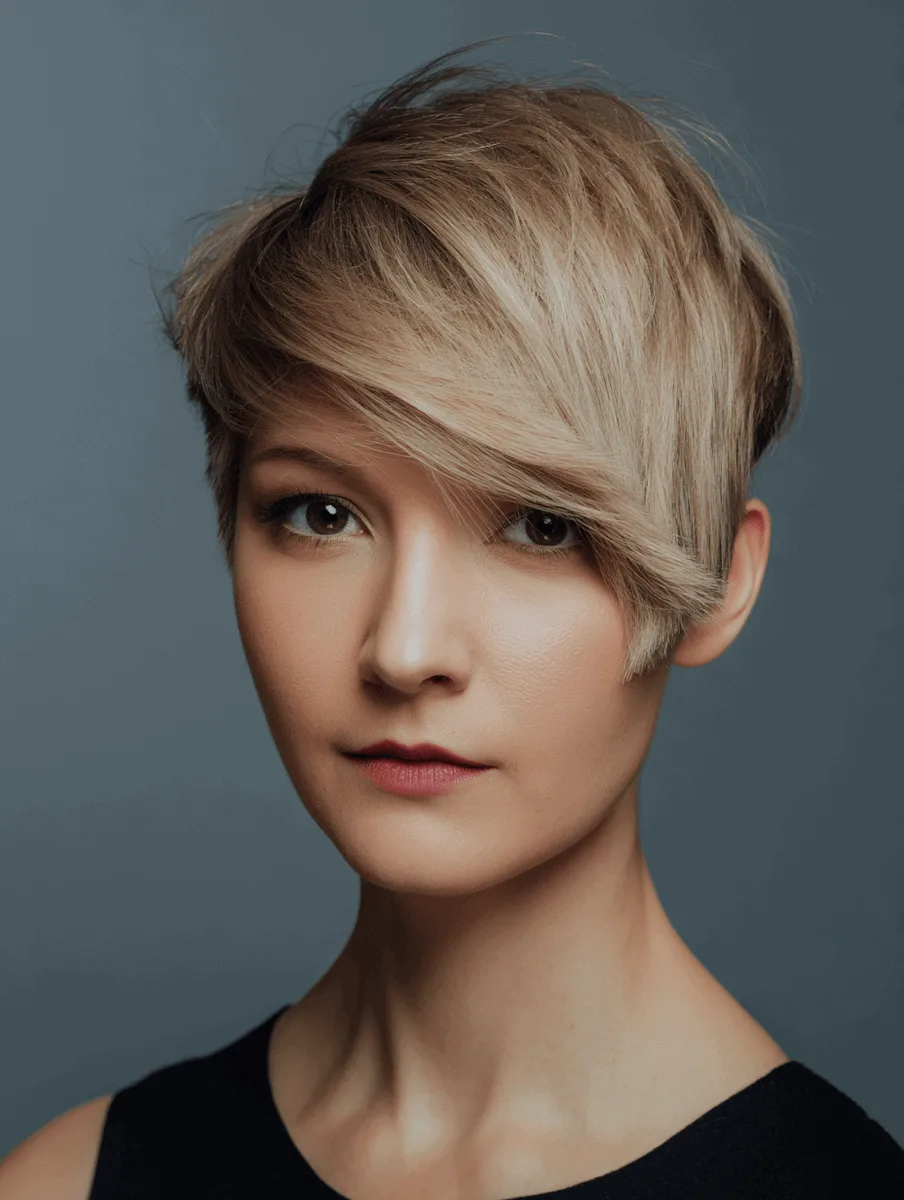
Best for: short hair with natural movement, players who want a styled look with zero maintenance, and anyone growing a pixie into a bob.
How to style: blow-dry the top to one side with a small round brush, add a pea-sized amount of wax for definition, and let the sweep fall naturally. A single clip holds it if the hall gets hot.
What to ask: ask for a longer top with shorter sides, so the sweep has length to work with while the sides stay out of the way.
Quick verdict: short, swept and full of movement. The side-swept pixie is proof that short hair can still have a style of its own.
34. Loose Waves with a Headband
What it is: soft, loose waves worn down with a headband holding the front back — the most relaxed style in this guide, and the best choice for a social game where you want to look like yourself, not like you are about to compete.
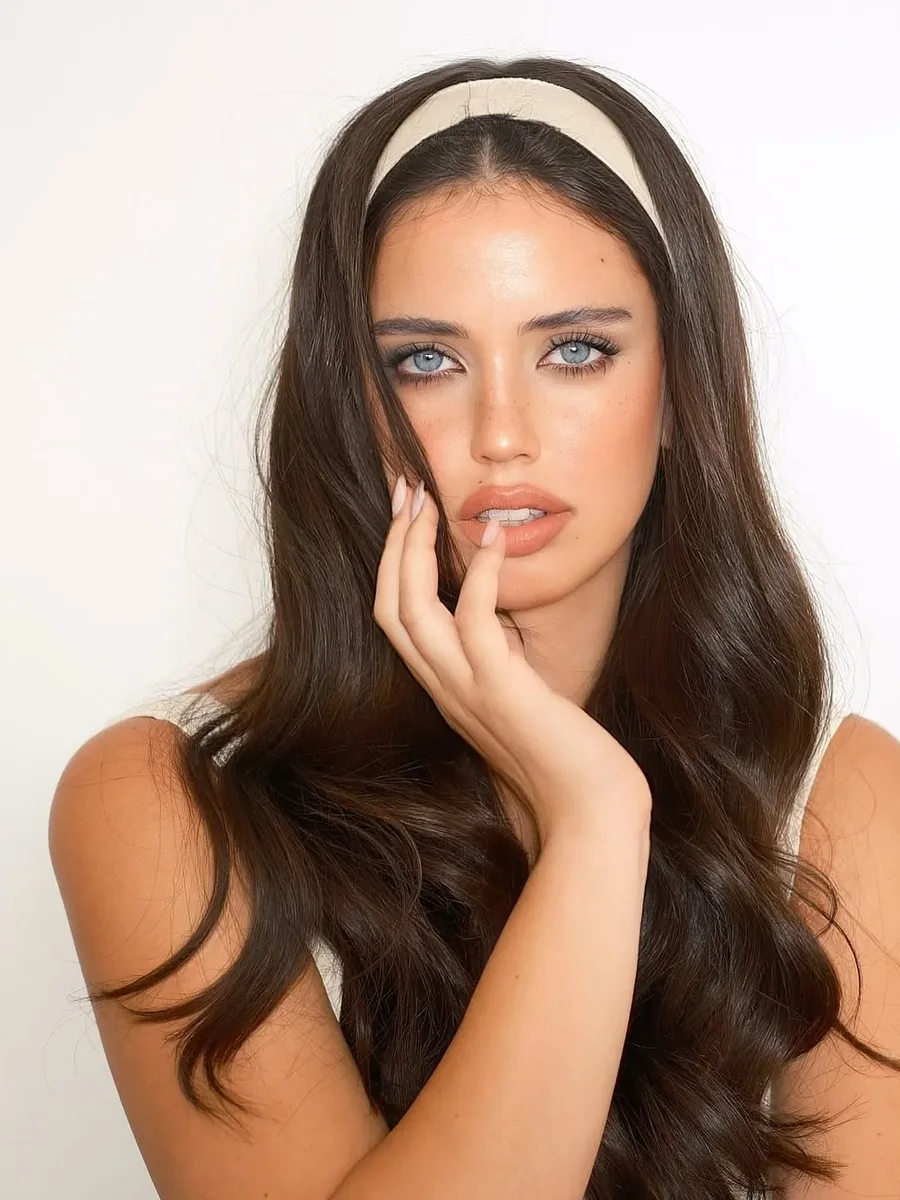
Best for: social games, doubles evenings with friends, and wavy hair that falls naturally into soft movement.
How to style: add a little texturising spray, scrunch the waves, and fit a wide headband to keep the front layers off the face. Keep a spare elastic in your pocket in case the game gets competitive.
What to ask: ask your stylist for long layers that encourage natural waves, so the style needs almost no heat or effort.
Quick verdict: the relaxed way to play. Loose waves and a headband are perfect for a friendly game — just save the braids for match day.
Can I play table tennis with my hair down?
Yes, you can — but only if your hair is short or held back at the front. Long loose hair will fall across your face during rallies, stick to a sweaty neck, and distract you at the worst moments. For a casual social game, loose waves with a headband work well; for a competitive match, tie it up.
What is the best hairstyle for table tennis?
A French braid or boxer braids are the best all-round choice: they lie flat, they are anchored at many points, and they survive sweat and quick head turns without coming loose. If braids are not your thing, a sleek top knot or a high ponytail with a headband is a close second.
How do I stop my hair falling in my face during a match?
Anchor the front layers separately from the main style. Pin the fringe back with two crossed bobby pins, tuck the temple layers under a headband, or braid the front section back into the main style. A headband plus pins is the most reliable combination.
What hairstyle is best for sweaty table tennis matches?
Styles that keep the nape clear and the hair off the skin: a French braid, a top knot, or cornrows. Add dry shampoo at the roots before the match, wear a terry sweatband to catch sweat at the hairline, and keep a towel and spare elastics in your kit bag.
Can I wear a ponytail for table tennis?
Yes — a high ponytail is one of the most popular table tennis styles. Use a thick, snag-free elastic, wrap it twice, and add a headband to catch the front layers. A bubble braid ponytail or a rope braid ponytail swings less than a plain one, which many players prefer.
What should I do with short hair for table tennis?
Short hair is the easiest table tennis hair: a pixie or chin-length bob barely needs styling. Push the fringe to one side with a little wax, add a thin headband or two small clips at the temples, and you are ready to play.
How do I keep curly hair under control while playing ping pong?
Gather curls high into a pineapple updo or a curly puff, where the volume sits above your eyeline instead of falling into it. Use a satin scrunchie, smooth the edges with a little gel, and wear a wide headband to catch sweat at the hairline.
Should I wash my hair before or after a table tennis match?
After, not before. Freshly washed hair is slippery and styles slide out of it. Wash the night before a match so the hair has natural grip, style it in the morning, and wash again after the match to remove sweat and product.
What is the best headband for table tennis?
A wide fabric sports headband with silicone grip on the inside holds best and catches the most sweat. For very sweaty matches, a terry-cloth sweatband across the forehead works even better. Carry a spare — a soaked headband slides and stops working.
How do I stop my braid coming loose during a match?
Braid on hair with grip — day-old hair or dry shampoo at the roots — keep the tension even and firm at the nape, and tie the end off with a small, strong elastic. Tucking the end of the braid into a bun adds a second anchor that stops it unravelling.
Find Your Match-Day Style and Play Without Distractions
The best hairstyles for table tennis are the ones you stop noticing the moment the first ball is served. A French braid that lies flat through a five-game match, a top knot that does not wobble on a forehand loop, a pineapple updo that keeps curls high and eyes clear — each one works because it was built for the way table tennis actually moves: fast head turns, sudden lunges, warm hall air and sweat.
Start with the basics in this guide: grip at the roots, an anchor at two points, the front layers pinned back, and a headband in your bag. Then pick one style from the list, practise it once at home, and shake-test it before you leave for the club. If it survives the shake test, it will survive the match.
And remember, the point of all of this is the game itself. The right style does not win you points — but the wrong one can cost you them. Sort your hair before you pick up the paddle, and then forget about it completely and play your game.