Invisible Layers: Seamless Blending for Natural Movement
In the world of animation, visual effects, and even advanced robotics, the ultimate goal is often deceptively simple: to make the artificial feel utterly real. We marvel at a dragon’s flight, empathize with a digital character’s tears, or accept a robot’s graceful stride. Yet, this believability hinges not on what we see, but on what we don’t. The true magic lies in the invisible layers—the intricate, hidden techniques that seamlessly blend disparate elements into a cohesive, natural whole. This is the art and science of seamless blending for natural movement, a discipline where technical precision meets intuitive artistry.
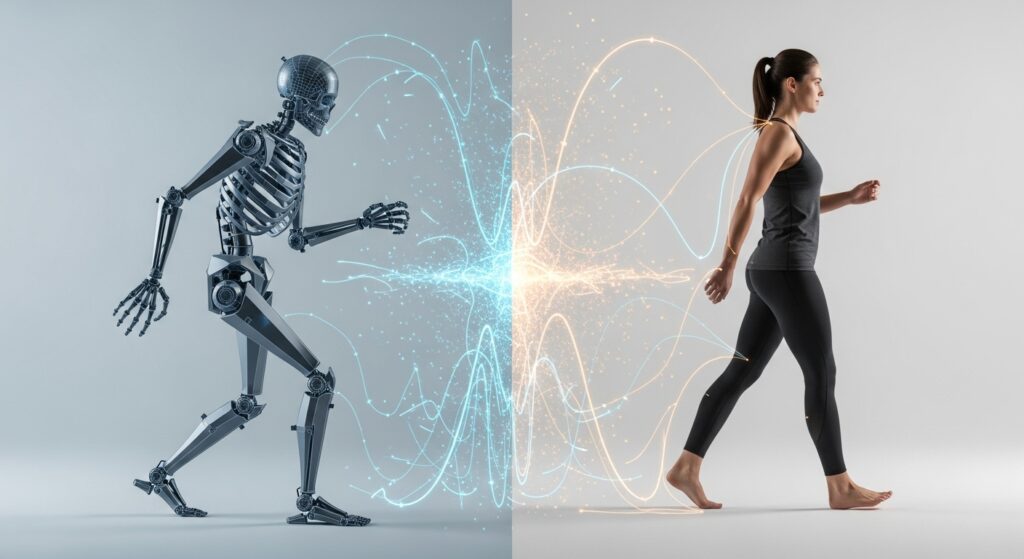
The Foundation: Understanding the Principles of Natural Motion
Before any software is opened, one must understand the bedrock of real-world movement. Animators and engineers have long studied the 12 Principles of Animation, established by Disney’s pioneers. For seamless blending, several of these are paramount. Squash and Stretch gives the illusion of weight and volume. Anticipation prepares the viewer for a main action, making it feel intentional. Follow-Through and Overlapping Action ensure that not all parts of a body or object stop at the same time, mimicking the drag and flow of materials.
But beyond these classic principles lies a deeper layer: the study of biomechanics and physics. How does a muscle group sequentially engage? How does a cloth sleeve lag behind a swift arm movement? How does a foot roll from heel to toe, distributing weight? This granular understanding of cause and effect is the first invisible layer. It’s the reference footage, the motion-capture data of real actors, and the painstaking observation of life itself that informs every digital decision.
The Technical Canvas: Rigging and the Magic of the In-Between
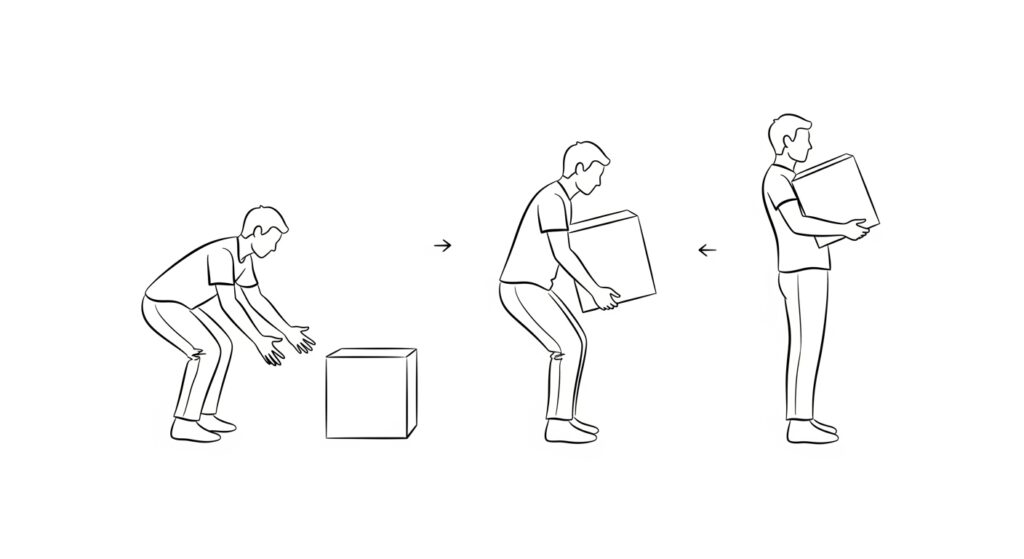
With principles in mind, we enter the technical realm. Here, the key invisible layer is the rig—the digital skeleton and control system beneath a character’s skin. A well-built rig is a masterpiece of concealed complexity. It’s not just bones; it’s sophisticated systems of inverse kinematics (IK) for intuitive limb placement, blend shapes for facial expressions, and dynamic simulations for secondary elements like hair and clothing.
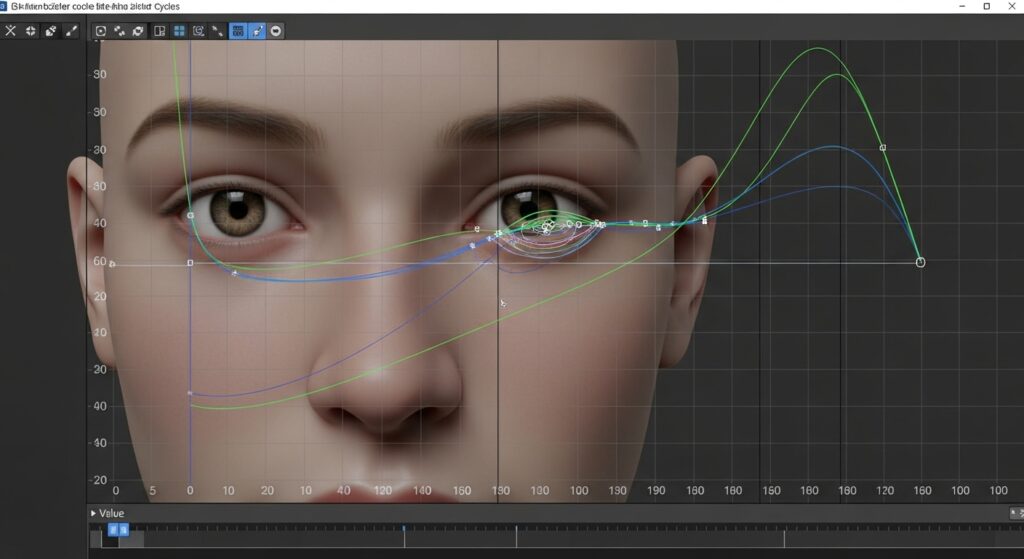
Seamless blending happens in the rig’s ability to interpolate between poses. The software calculates the “in-between” frames, but the artist’s skill lies in editing those interpolations to avoid the dreaded “floaty” or robotic motion. This involves manipulating animation curves in the graph editor—making an ease-in feel like muscle tension building and an ease-out feel like gradual deceleration. This curve data is a critical invisible layer; its smoothness directly translates to the perceived naturalness of the movement on screen.
The Layer of Context: Environmental Interaction and Weight
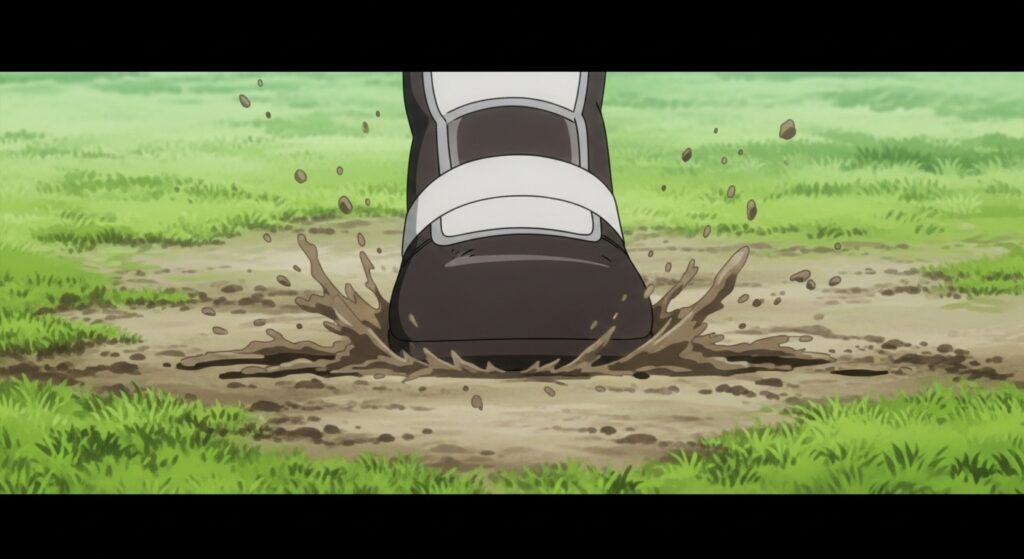
Nothing breaks immersion faster than a character that seems disconnected from its world. The next invisible layer is environmental interaction. A foot must not slide on the ground; it must plant, pivot, and push off. A hand grasping a cup must deform slightly around it. This is achieved through constraints, collision detection, and often, good old-fashioned keyframe adjustment to lock contacts convincingly.
Weight is communicated through this interaction. It’s a combination of timing, spacing, and the affected body parts. A heavy object lifted requires not just slow movement, but a whole-body engagement—a shift in the center of gravity, a strain in the spine, a tightening of the neck. The seamless blend here is between the character’s intent and the physical reality of its environment. Special effects like particle dust kicked up from a footfall or subtle sound design synchronized with impact are also part of this layer, reinforcing the physical truth the eyes perceive.
The Subtle Symphony: Micro-Movements and the Illusion of Life
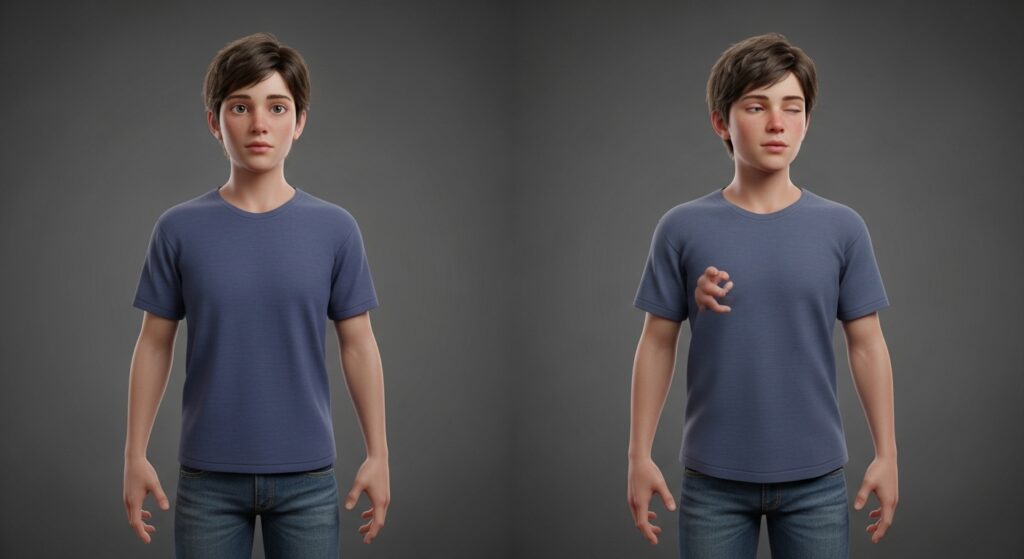
Even with perfect physics, a character can feel like a well-animated statue. The layer that injects true life is often the most subtle: micro-movements. Also called “secondary animation” or “live surface,” these are the tiny, involuntary motions that signal a living, breathing being. It’s the slight rise and fall of a chest with breath. It’s the constant, tiny adjustments in balance when standing idle. It’s the eye darts and blinks that precede a thought.
In visual effects, this is analogous to the integration of CGI into live footage. It’s the match-moving that perfectly aligns digital and real camera motion. It’s the meticulous color grading and lighting that ensures a digital creature picks up the exact blue tint of the moonlight in a live-action plate. It’s the grain and slight lens imperfection added to the CGI layer to degrade it to the quality of the source footage, making it belong. This seamless blend isn’t about adding perfection; it’s about adding appropriate, believable imperfection.
Beyond Character: Blending in the Broader World
The philosophy of invisible layers extends far beyond character animation. It applies to any element that must move naturally within a scene. In motion graphics, it’s the easing and choreography of UI elements that feel responsive and fluid. In architectural visualization, it’s the simulated sunlight moving across a floor and the way people move through a space without collision. In data visualization, it’s the smooth transition between graph states that helps the viewer follow the story of the data.
In all these cases, the seamless blend is a cognitive aid. It reduces mental friction for the viewer, allowing them to focus on the message, the story, or the emotion, rather than the mechanics of the medium. The movement becomes an intuitive guide, not a distraction.
The Future of the Invisible: AI and Adaptive Movement
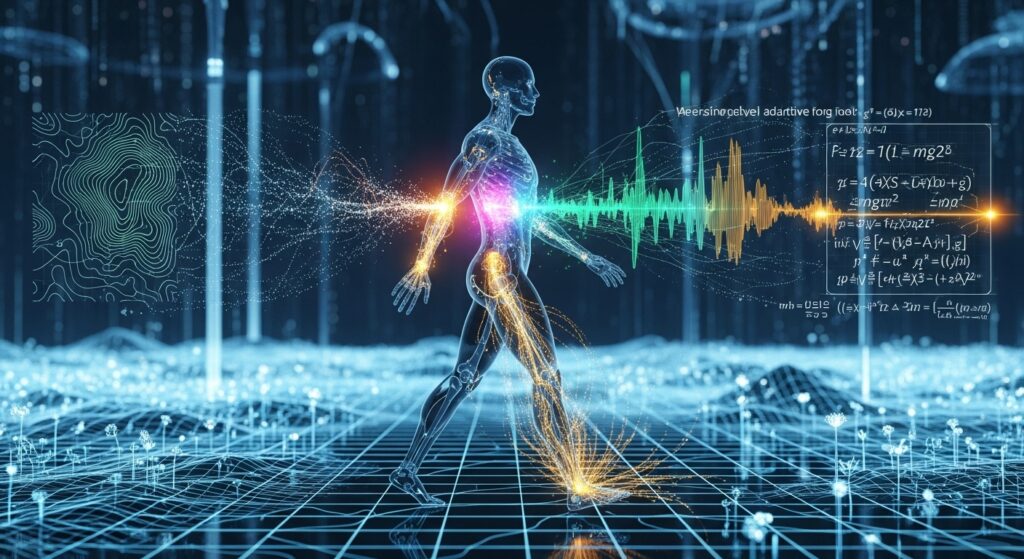
As we look forward, the invisible layers are becoming even more profound and automated. Machine learning and AI are now being used to analyze vast datasets of real motion to generate or refine animations. Procedural animation systems can create infinitely variable, context-aware movements—think of a video game character navigating a rocky terrain, with each footstep adapting seamlessly to the angle of the rock.
The future of seamless blending lies in adaptive layers. Systems that don’t just play back pre-recorded motion but synthesize it in real-time based on environmental stimuli, emotional state, and physical goals. The blend will happen not just between keyframes, but between behavioral states, making digital beings not just animated, but truly autonomous in their naturalism. The ultimate goal remains the same: to hide the machinery so completely that all we are left with is the wonder of movement itself.
Conclusion: The Art of Hiding the Work
The pursuit of natural movement through seamless blending is a testament to a beautiful paradox in creative technology: the greatest effort is often spent to appear effortless. It is a multidisciplinary dance of art, science, and obsessive attention to detail. From the foundational principles of motion to the cutting edge of adaptive AI, each invisible layer builds upon the last to create that final, magical result—a moment on screen that feels so truthful, so inevitable, that we forget we are looking at layers of code and pixels.
So, the next time you are captivated by the fluid grace of an animated character or convinced by a stunning visual effect, take a moment to look for the invisible. Appreciate the hidden layers of craftsmanship that blend together to create the sublime illusion of life. For in that seamless integration lies the true artistry of the digital age.