The Hialeah Bob: Miami Suburb Style
In the sprawling, sun-drenched mosaic of Miami, style is a language. It’s spoken in the pastel hues of Art Deco, the crisp linen of a South Beach suit, and the vibrant patterns of Little Havana. But drive northwest, into the heart of Miami-Dade’s most iconic suburb, and you’ll encounter a hairstyle that has become a cultural shorthand: The Hialeah Bob. More than just a cut, it’s a statement—a perfect blend of suburban practicality, Latinx flair, and unapologetic boldness that tells a story of identity, community, and self-expression.
Anatomy of an Icon: Deconstructing the Cut
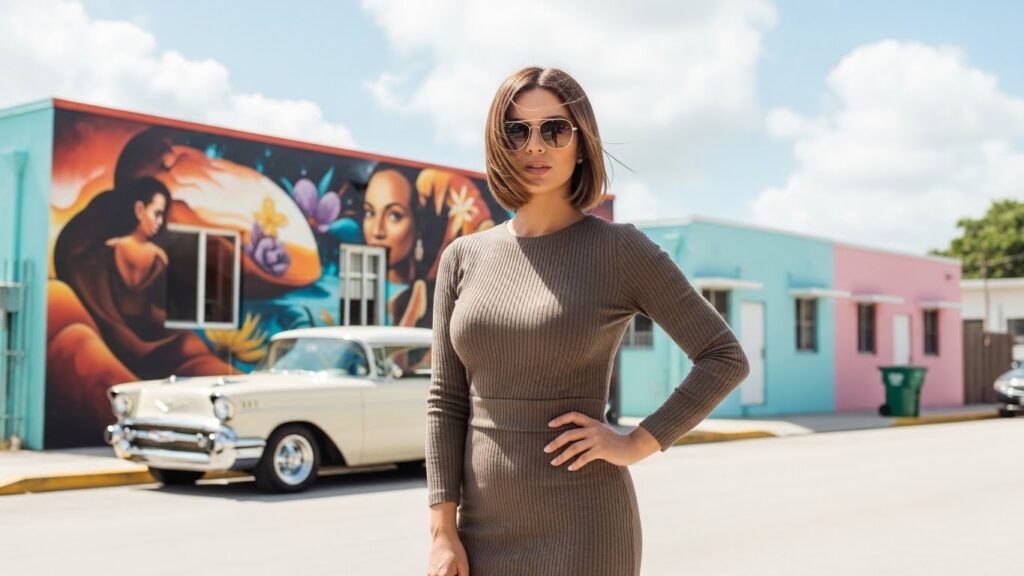
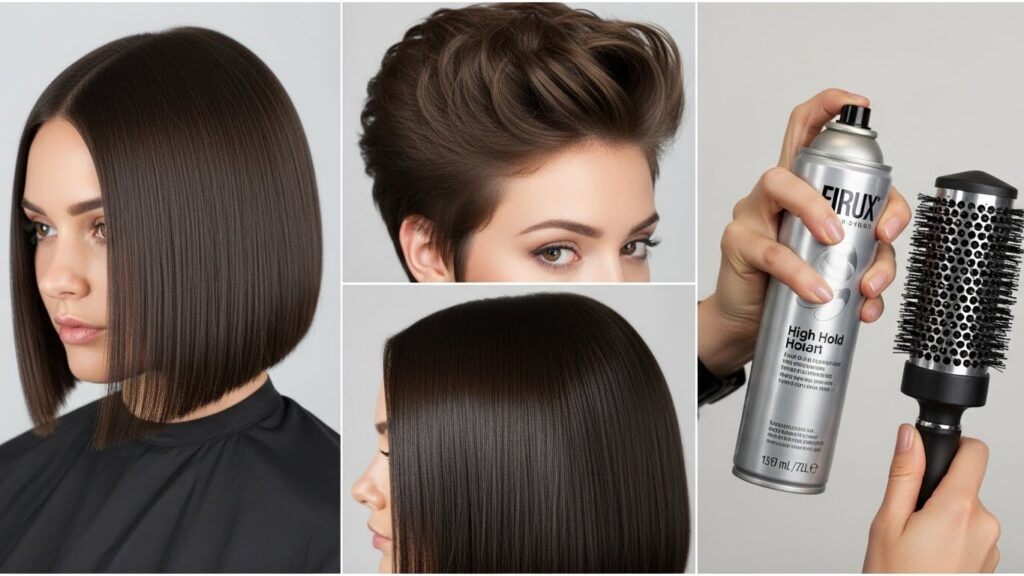
So, what exactly defines a Hialeah Bob? It’s a specific formula, a set of unwritten codes that stylists in the area know by heart. First and foremost, it’s a chin-length or slightly shorter blunt cut. This isn’t about wispy, textured ends. The line is severe, clean, and definitive, as if drawn with a ruler. This sharp baseline creates the foundation for the style’s most important feature: volume.
The volume is not an accident of wind; it’s engineered. It starts at the roots, often with strategic layering or teasing (though the ends remain blunt), and is perfected with a symphony of high-quality products. You’ll find a reliance on strong-hold hairsprays, volumizing mousses, and smoothing serums to combat the ever-present Miami humidity, which is viewed not as an enemy, but as a challenge to be masterfully conquered.
Finally, there is the finish. The Hialeah Bob is always impeccably groomed. It shines with health, whether it’s jet black, rich espresso, or adorned with honey-blonde highlights (a beloved choice known locally as ‘chunks’ or ‘tiger stripes’). The hair swings as a single, heavy, luxurious unit. It’s a look that says, “I spent time on this, and it was worth every second.”
Roots in the 305: The Cultural and Historical Context
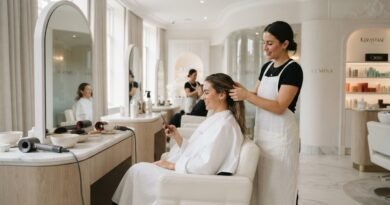
To understand the Hialeah Bob is to understand Hialeah itself. A city with deep Cuban and, more broadly, Latin American roots, Hialeah is a place of immense pride, tight-knit families, and entrepreneurial spirit. The style emerged as a reflection of these values. It’s polished enough for church, a business meeting, or a night out at a salsa club. It bridges generations, seen on abuelas, mothers, and daughters alike, often styled by the same trusted salon artist who has been in the family for years.
The bob’s popularity also intersects with the rise of Spanish-language media in Miami. Telenovela stars and news anchors on channels like Univision and Telemundo, many broadcasting from Miami studios, often sported sophisticated, camera-ready versions of this bob. It became associated with success, poise, and media-ready beauty—a accessible glamour for the everyday woman. Furthermore, in a community where personal presentation is closely tied to respect and social standing, a well-executed bob signals care, effort, and status.

More Than Hair: A Symbol of Identity and Attitude
The Hialeah Bob transcends aesthetics; it carries an attitude. It’s the hairstyle of the woman who runs the household, manages the family business, and hosts the holiday Nochebuena feast for 30 people—all without a hair out of place. There’s a toughness to it, a resilience that mirrors the immigrant experience of building a new life. It’s a armor of beauty, projecting order and control in a chaotic world.
It also represents a specific kind of femininity—one that is strong, curated, and powerful. It rejects the notion that low-maintenance is the only valid form of beauty. Instead, it celebrates the art of maintenance as a form of self-love and cultural expression. The bob says, “I am here, I am seen, and I take myself seriously.” In a suburb often stereotyped or overlooked by the flashier parts of Miami, the Hialeah Bob is a bold, collective statement of identity.

Getting the Look: Maintenance and Modern Interpretations
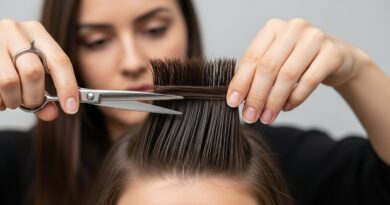
Adopting a Hialeah Bob is a commitment. Maintenance is key, with trims needed every 4-6 weeks to preserve that sharp, blunt line. The styling ritual is sacred: a round brush, a powerful blow-dryer, and that final, sealing mist of hairspray are non-negotiable tools. Many devotees swear by specific salon brands available primarily in Latin American beauty supply stores, products formulated to battle humidity and hold a style for days.
While the classic version remains timeless, modern interpretations have emerged. Younger generations might play with curtain bangs or face-framing layers to soften the severity. The “glass hair” trend—with its ultra-sleek, high-shine finish—finds a natural home in the Hialeah Bob aesthetic. Color has also become a bigger playground, with balayage, vivid money pieces, and rich coppers updating the traditional dark base. Yet, through all these evolutions, the core principles of volume, precision, and polish remain untouched.

The Bob in the Wild: Spotting the Style
To truly appreciate the Hialeah Bob, you must see it in its natural habitat. It’s the crown of the woman arguing passionately at the ventanilla of the local bank. It sways perfectly in sync with the walk of a mother navigating the crowded aisles of Sedano’s supermarket. It’s present at every quinceañera, wedding, and birthday party at the local salón de banquetes. It’s in the front row of a city council meeting and in the driver’s seat of a spotlessly clean SUV.
This ubiquity is its power. It’s a unifying thread in a diverse community, a visual dialect that residents recognize instantly. For outsiders, it becomes a memorable marker of place—a hairstyle so specific and so confidently worn that it becomes synonymous with the energy of Hialeah itself: vibrant, resilient, and proudly distinct.

Conclusion: A Cut That Cuts Through Noise
In the end, the Hialeah Bob is far more than a suburban hairstyle. It is a cultural artifact, a badge of honor, and a masterpiece of everyday engineering. It challenges minimalist beauty standards, embracing instead a philosophy of maximal care and deliberate presentation. It tells a story of migration, adaptation, and the creation of a new aesthetic on one’s own terms.
So, the next time you find yourself in Miami, look beyond the beaches and the neon. Take the Palmetto Expressway into Hialeah. Observe the women. You’ll see it—the sharp line, the impossible volume, the flawless swing. That’s the Hialeah Bob. It’s not just hair. It’s history, attitude, and home, all cut, dried, and sprayed into perfect, powerful shape.