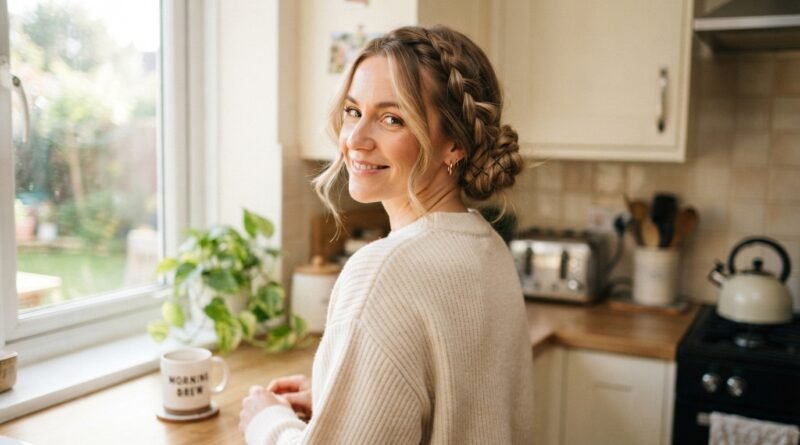
Braided Styles That Actually Work Well for Thin Fine Hair
I have fine, thin hair. I have spent years watching braid tutorials that end with a gorgeous, thick plait and thinking, that will never work on me. Then I figured out the actual rules.
Here’s the truth: braids are one of the best things you can do with thin, fine hair. They add the illusion of density, they hide greasy roots, and they hold a shape way longer than loose waves ever will.
This post is all the braided styles that genuinely work on fine hair, plus the prep tricks that make them look fuller. No teasing combs required if you don’t want them.
Grab a coffee and a couple of clear elastics. Let’s do this.
Why Braids Are Actually Made for Fine Hair

Fine hair has one real enemy: gravity. Loose styles fall flat by lunch. Braids give your hair structure, so it holds a shape all day without a ton of product.
Here’s what braids do for thin hair:
- Create the illusion of density by stacking strands
- Hide oil at the roots on day two or three
- Stretch your wash days and protect your ends
- Work with almost every 2026 hairstyles trend, from old money hair to romantic goth
One rule before we start: tension matters. Fine hair snaps easily, so we’re going for soft and full, never tight.
The Prep Step Nobody Talks About
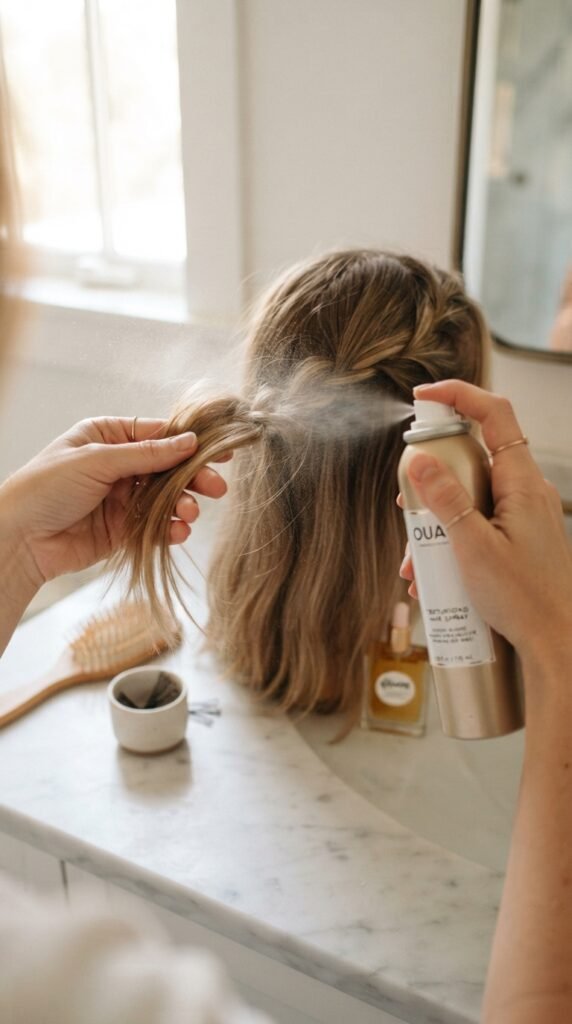
You cannot braid fine hair the same way you braid thick hair. It needs grip before you start, or everything slides apart.
My two-minute prep:
- Spray a little texturizing spray or dry shampoo at the roots.
- Comb everything smooth so there are no tangles.
- Add a pea-sized drop of lightweight cream to the ends only.
Skip heavy oils. They make thin hair look stringy and slippery, and your braid will fall out by noon. Do this one step and your braid lasts twice as long.
Tease Gently, Then Braid Over It
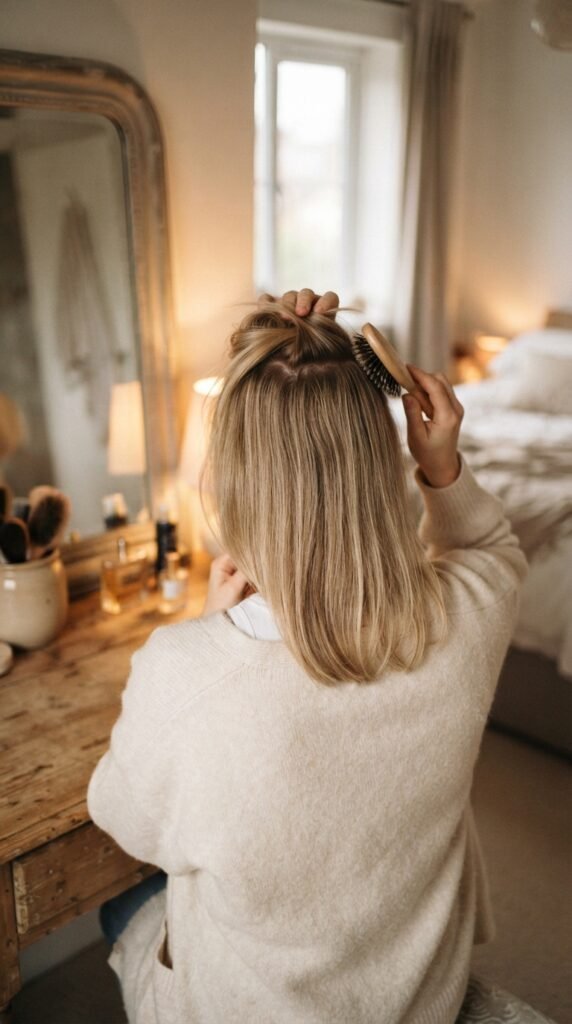
Most thin-hair braid tutorials skip this, and it’s the difference between flat and full. You don’t need a lot of teasing, just a little lift where the braid sits.
- Lift the top section of hair and gently backcomb three or four times.
- Use a soft bristle brush, not a fine comb.
- Spray lightly, then smooth only the very top layer.
The teased section stays hidden underneath. Your braid looks thicker, and your hair stays safe because you’re not ripping through it.
Two-Strand Twists: The Volume Cheat Code
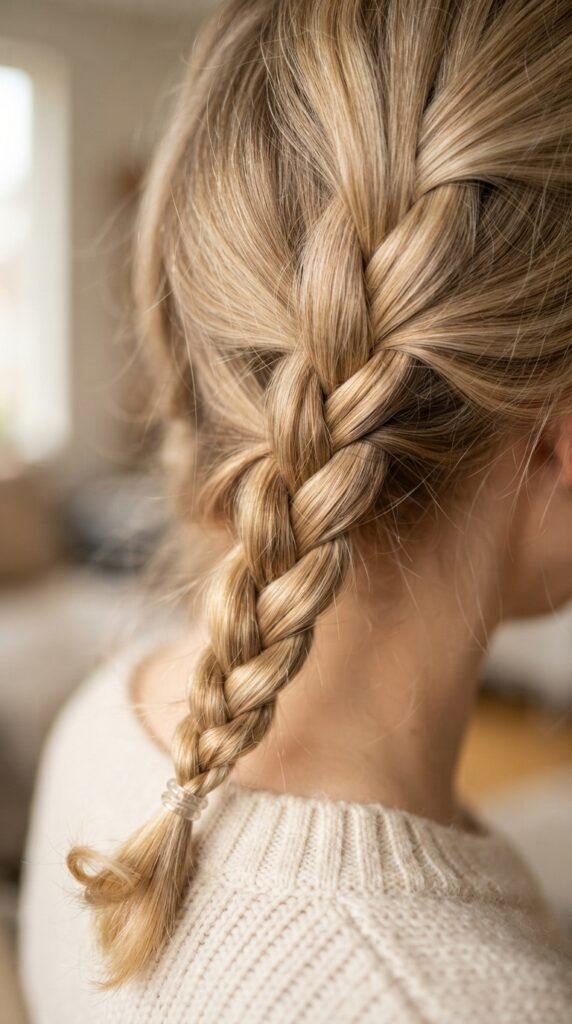
If traditional braids keep coming out skinny, try a two-strand twist instead. It uses fewer sections, so thin hair looks fuller with less work.
- Split your hair into two even sections.
- Twist each section away from your face.
- Wrap the two twists around each other down the length.
- Pull the edges apart gently with your fingers.
Two-strand twists look soft and romantic, and they photograph larger than they are. Bonus: they’re the easiest style to redo after a nap.
Dutch Braid vs French Braid on Fine Hair
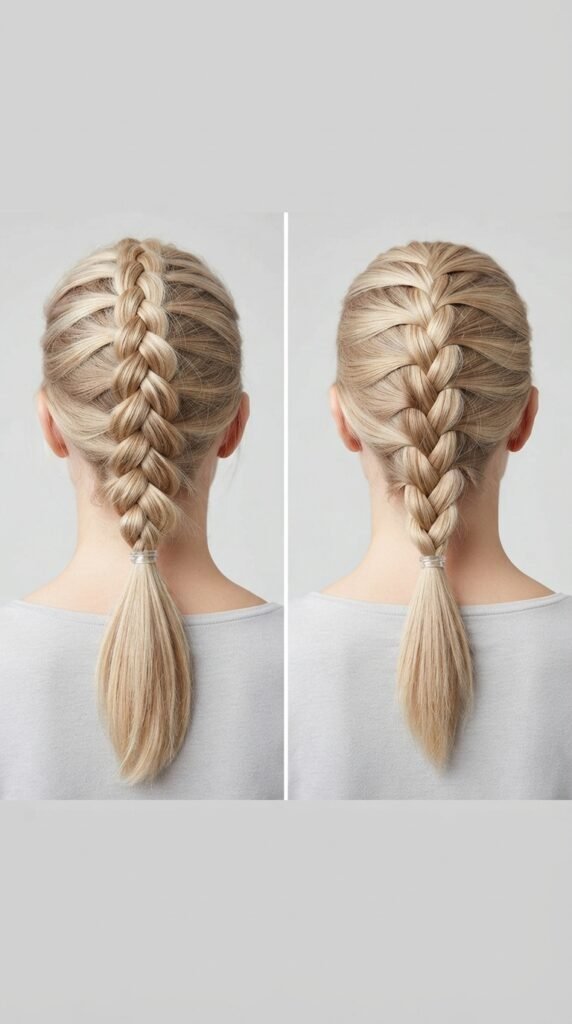
Both work, but they do different things.
- Dutch braid: braided under instead of over, so it sits on top of your hair. It reads thicker and more graphic.
- French braid: sits flatter against the head. Great for sleek old money hair and formal looks.
For thin hair, I usually reach for the Dutch braid. The raised structure hides sparse spots and gives you a fuller silhouette from the back.
Try one on each side of your part and see which you like better. Most fine-haired people pick Dutch, every time.
The Pancake Method (Your Biggest Volume Trick)

This is the trick that changed everything for me. After you finish any braid, gently pull the edges of each section outward.
- Pinch the braid with one hand to hold the shape.
- Use two fingers to tug the outer loop of each crossing.
- Work from the bottom up, a little at a time.
- Stop before it looks messy, then spray lightly.
This “pancaking” makes one thin braid look twice as thick. Do it on Dutch braids, milkmaids, and crown braids especially.
The Quiet Luxury Bob Braid
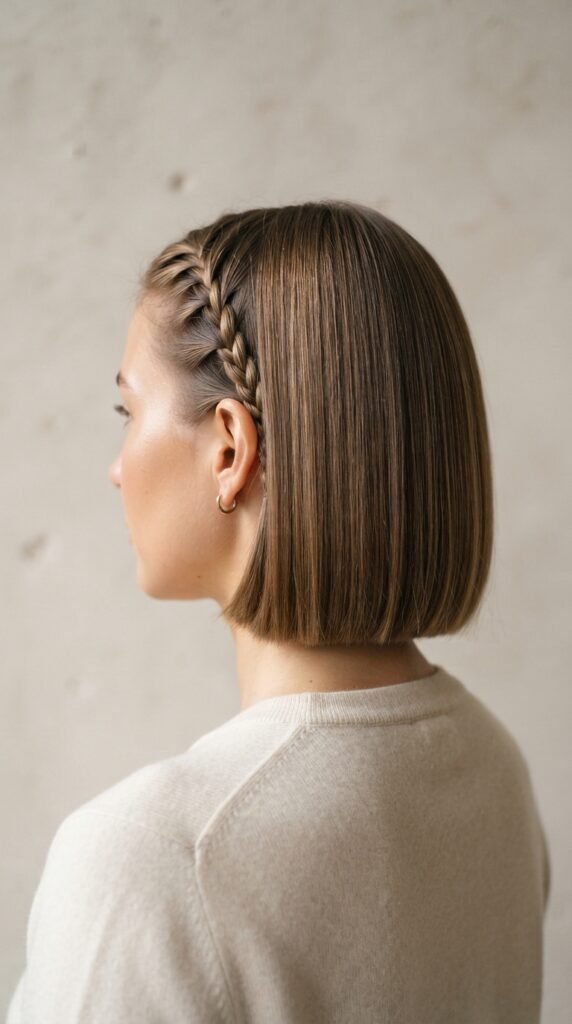
Got a short cut? You’re not left out. The quiet luxury bob works beautifully with one small braid tucked at the side.
How to do it:
- Part your hair on the side.
- Take a one-inch section near your temple.
- Braid it loosely and pin it back behind your ear.
- Leave the rest of the bob smooth and glossy.
It’s minimal, expensive-looking, and takes about ninety seconds. Pair it with a pearl stud and you’re done. This is my go-to when I want to look put together without trying.
Old Money Hair: The Sleek Low Braid
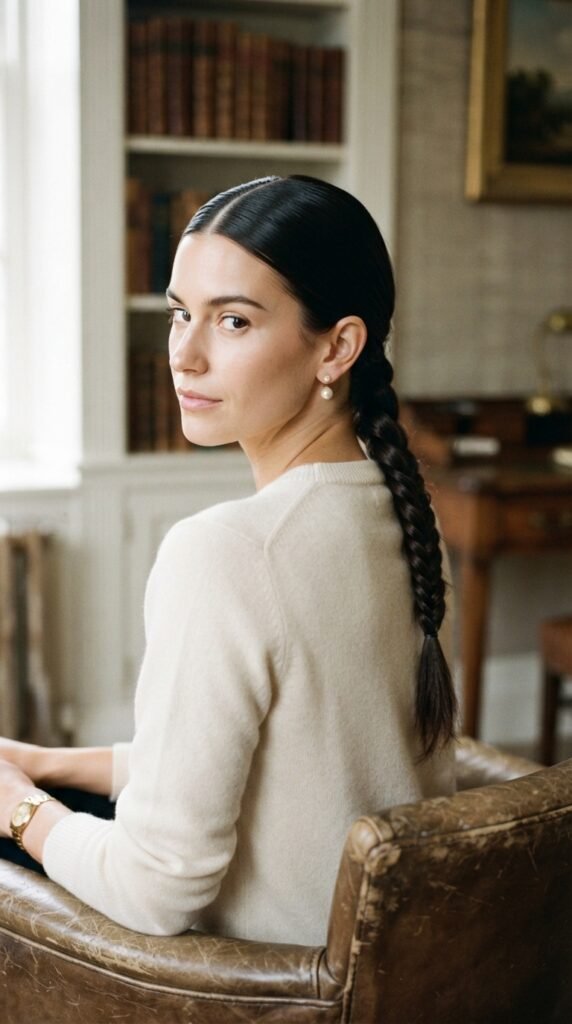
Old money hair is all about polish: smooth roots, glossy shine, nothing fussy. A low braid at the nape is the easiest way to get there with fine hair.
- Brush everything back into a low ponytail.
- Secure with a clear elastic.
- Braid loosely, then pancake the sides.
- Wrap a small strand of hair around the elastic to hide it.
Use a little shine serum on the top layer, and keep a few soft face-framing pieces out. That contrast is what makes the look feel expensive rather than severe.
The Asymmetrical Lob Braid
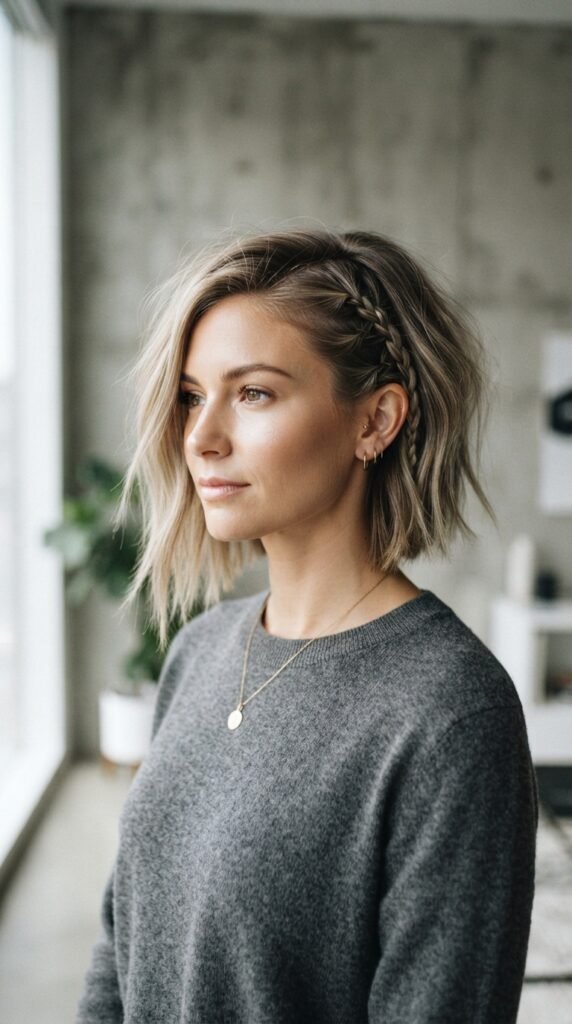
The asymmetrical lob is everywhere right now, and it’s genuinely great for fine hair because the uneven length adds visual weight.
To style it:
- Keep your deep side part.
- Braid a small section along the shorter side.
- Pin it under the longer side so it peeks out slightly.
- Add a soft bend to the ends with a wand.
The braid adds texture, the asymmetry adds volume. Together they make fine hair look like it has more of everything.
Hime Cut Meets Braids
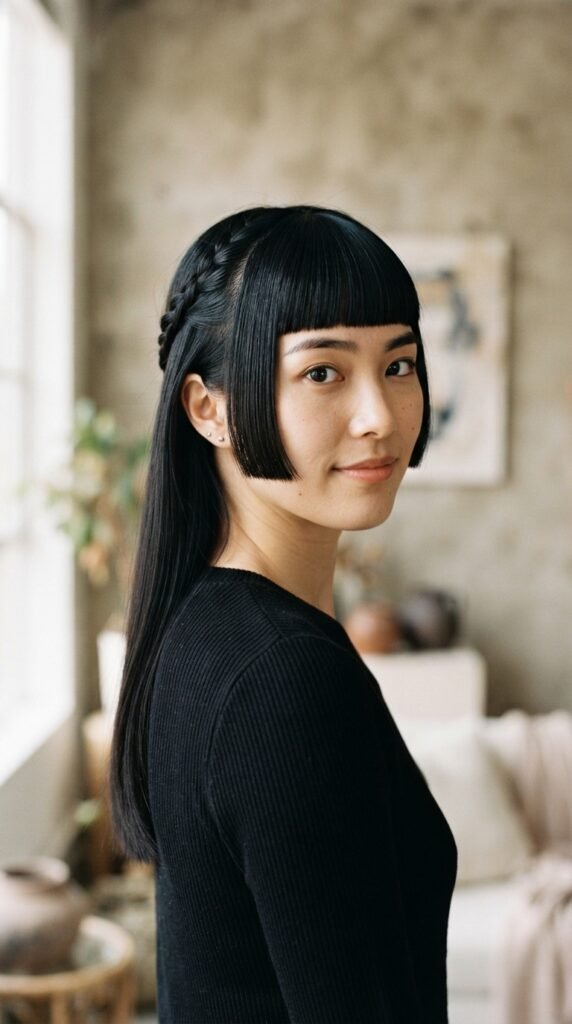
The hime cut is that Japanese style with blunt side pieces and long back length. On fine hair, it gives you instant structure, and braids make it even better.
Try this:
- Keep your blunt side pieces out and smooth.
- Braid the back section into a loose low braid.
- Pancake it for width.
- Let the side pieces frame your face untouched.
The blunt edges add thickness at the sides while the braid handles the back. It’s clean, slightly dramatic, and very 2026.
Romantic Goth Hairstyles: Braided Crown with Ribbon
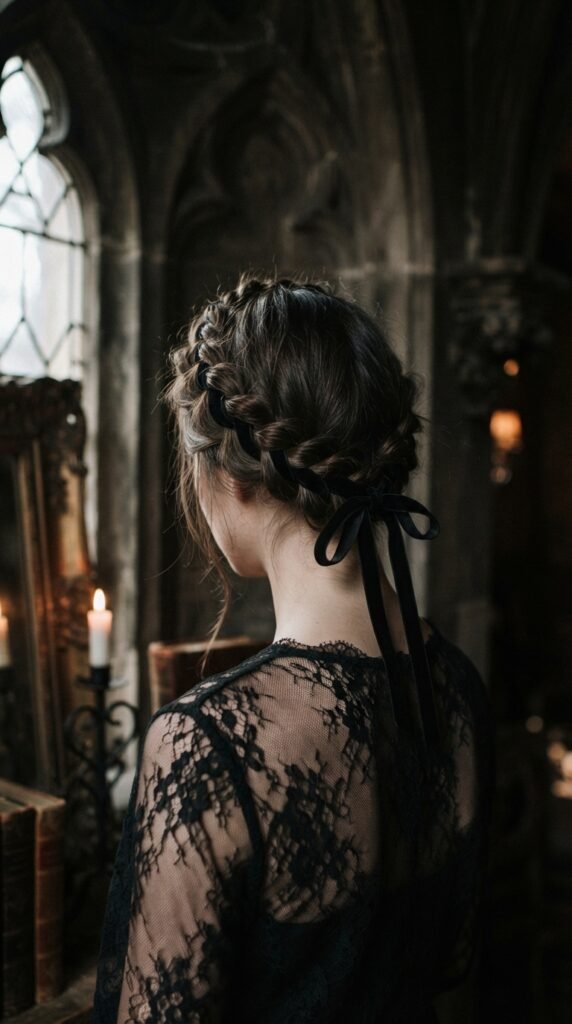
Romantic goth hairstyles love a braided crown, and thin hair wears it well because the braid sits flat against the head. That means no gaps and no shine-through.
- Braid two loose braids, one on each side.
- Cross them over the top of your head.
- Pin at the crown and tuck the ends.
- Weave a thin velvet ribbon through the braid.
Black or deep burgundy ribbon reads the most romantic. Keep the front soft with a few loose pieces, and you get that moody, vintage feel without needing thick hair.
Glitchy Glam Hair: Micro Braids and Sleek Edges

Glitchy glam hair is playful and a little futuristic. Think tiny accent braids, sharp edges, wet-look gel, and a slightly off-kilter finish.
Here’s how I do it on fine hair:
- Slick the front with gel and a soft brush.
- Take four or five tiny sections near the part.
- Micro braid each one and leave them hanging loose.
- Spritz with shine spray and don’t over-smooth.
The micro braids add texture and chaos without needing density. It’s a fun, low-effort look for a night out.
The Vampire Haircut, Braided

The vampire haircut is all about sharp layers, curtain bangs, and a slightly moody vibe. Braids calm it down and make it wearable for daytime.
- Keep the curtain bangs out and styled forward.
- Braid a small section at each temple.
- Pull them back and pin behind the ears.
- Leave the rest of the layers loose.
The braids frame your face and add a soft edge to a sharp cut. Fine hair gets structure at the front, which is exactly where thin hair usually shows most.
The Side Braid That Never Looks Sparse

The classic side braid goes flat and see-through on thin hair fast. The fix is starting it lower and keeping it loose.
- Gather hair into a low side ponytail behind one ear.
- Braid only from there down, loosely.
- Pancake every section outward.
- Pull a few soft pieces loose around the face.
Starting lower means fewer strands have to cover more ground. The loose finish hides gaps and looks romantic rather than thin. It’s my most-worn style for a reason.
Milkmaid Braids Without the Flatness
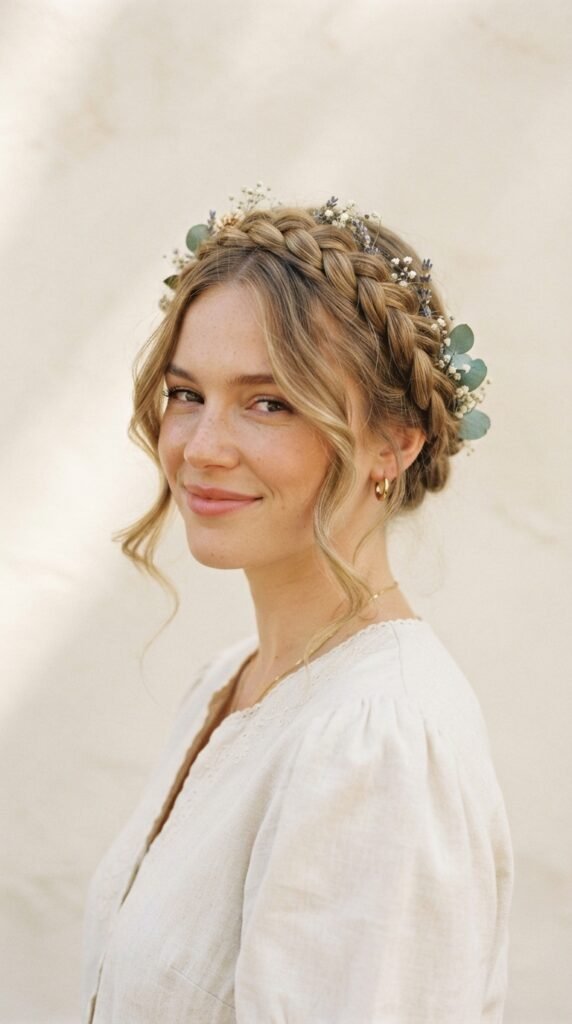
Milkmaid braids can look plastered to your head if you’re not careful. Two small changes keep them full.
- Braid each side loosely, then pancake hard.
- Cross them higher than you think, near the crown.
- Pin at the ends, not the middle, so they stay puffy.
Add a few loose face-framing pieces and a soft wave at the ends. This look plays so well with romantic goth hairstyles and soft cottagecore outfits alike. Fine hair actually does well here because thinner braids pin flat and stay put.
Fishtail Braids on Fine Hair
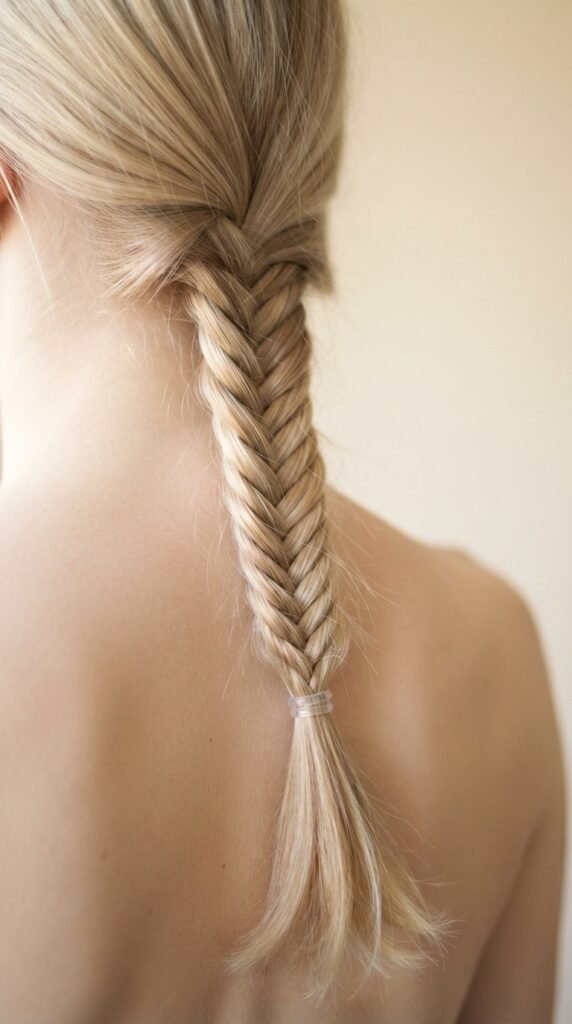
The fishtail has a reputation for looking thin, but that’s because most people braid it too tightly. On fine hair, you want a big, sloppy fishtail.
- Split hair into two sections.
- Take a thin strand from the outside of one side.
- Cross it over to the other side.
- Repeat, keeping your tension deliberately loose.
Then pancake the whole thing. A loose fishtail on thin hair looks delicate and intentional, not sparse. It’s gorgeous on a low ponytail, too.
The Braided Headband Hack
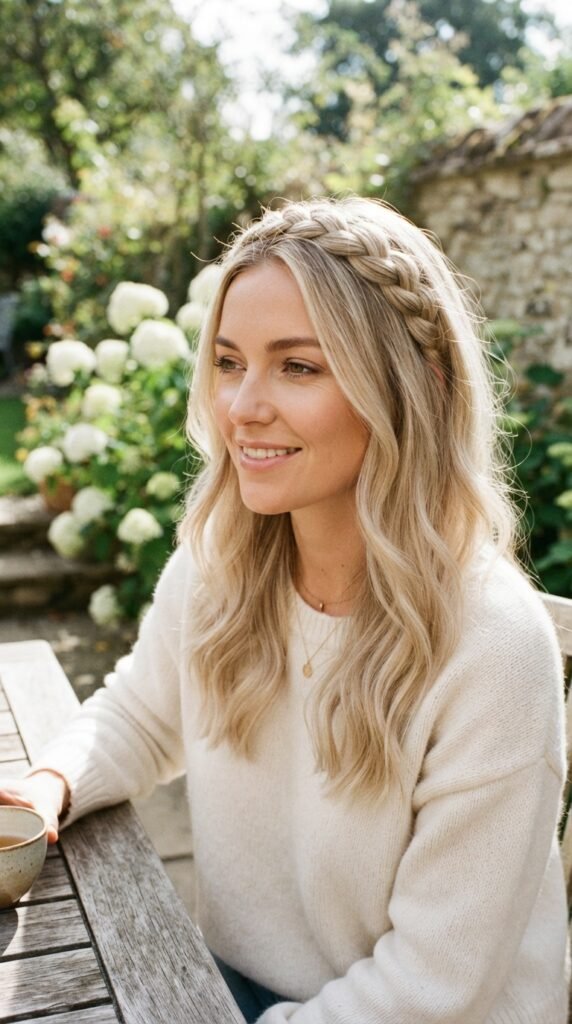
This is the fastest way to fake thickness around your hairline. You don’t braid your actual hair at all, which means zero tension and zero damage.
- Take a small section from behind your ear.
- Braid it loosely and pancake it wide.
- Lay it across your head like a headband.
- Pin it on the other side, hiding the end.
Because the braid sits on top of your hair, it adds visible volume exactly where thin hair shows the most. It works on any length, even a short bob.
Bubble Braids: All Volume, No Tension
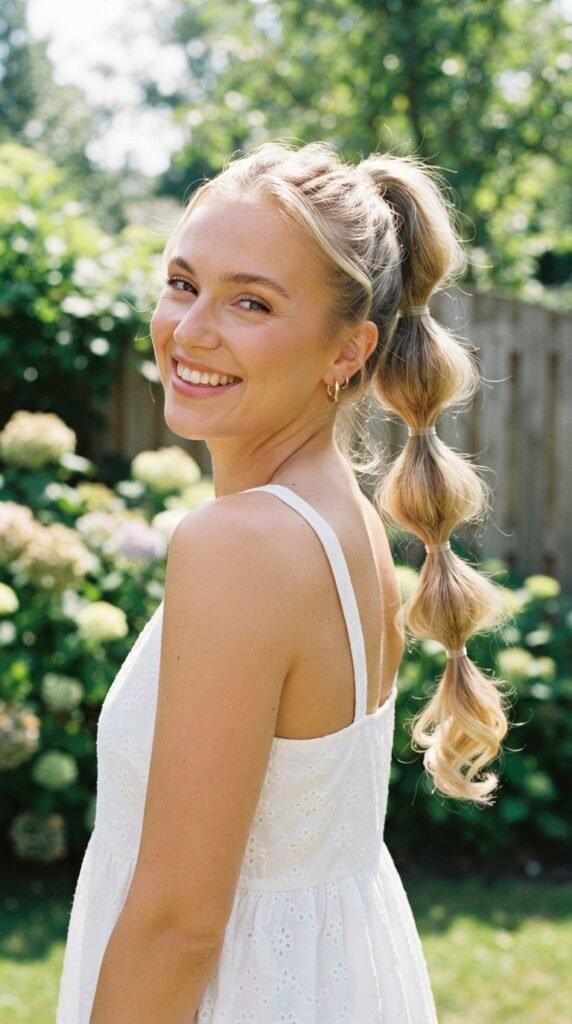
Bubble braids are having a moment, and they’re perfect for fine hair. You’re not braiding at all, just sectioning and puffing.
- Pull hair into a ponytail.
- Add clear elastics down the length, a few inches apart.
- Gently pull each section outward to make a bubble.
- Spray lightly to hold.
No tension on the scalp, tons of volume, and it looks way more interesting than a plain pony. It’s one of the best 2026 hairstyles for thin hair, hands down.
Half-Up Braided Crown
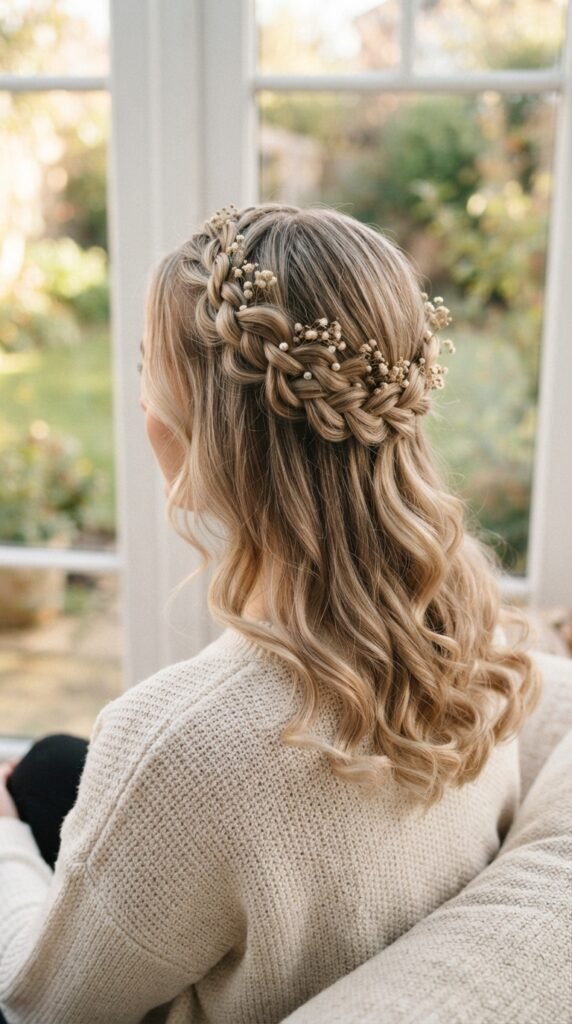
This is the style I wear when I want to look like I tried. It’s simple, romantic, and it hides thin spots at the crown.
- Take two sections from above each ear.
- Braid each one loosely toward the back.
- Cross and pin them at the crown.
- Pancake both braids for width.
Leave the rest of your hair down with a soft wave. The braid adds height at the top, which is exactly where fine hair usually needs help. Add a small pearl pin if you’re feeling fancy.
Braids for Day Three Hair
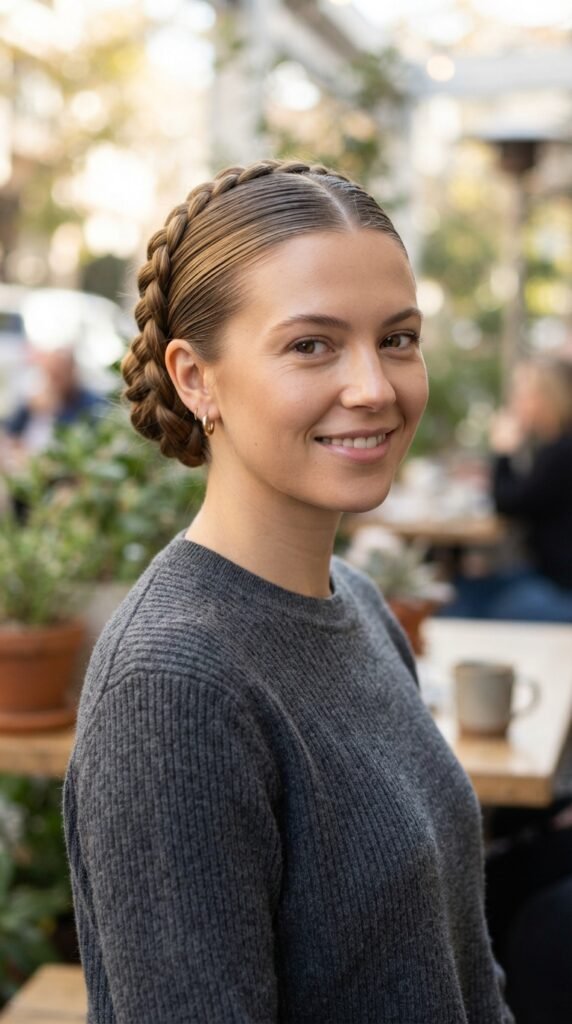
Greasy roots and fine hair are a rough combo, but braids are the fix. The key is making the slicked part look intentional.
- Spray dry shampoo on the roots and let it sit for a minute.
- Brush everything back tightly.
- Braid low and loose.
- Pancake, then slick the top with a tiny bit of gel.
A sleek front with a full braid at the back is a cheat code. It looks like a deliberate old money hair moment, not like you skipped a wash.
Overnight Braids and Sleep Protection

Braids are also a great way to protect fine hair while you sleep. Just keep them loose and gentle.
- Braid loosely, never tight.
- Use a silk scrunchie instead of a tight elastic.
- Sleep on a silk or satin pillowcase.
- Skip the braid entirely if your scalp feels sore.
You’ll wake up with soft waves and fewer tangles. Fine hair breaks easily, so anything that reduces friction at night is a win. Bonus: morning hair takes about two minutes.
Products That Actually Help
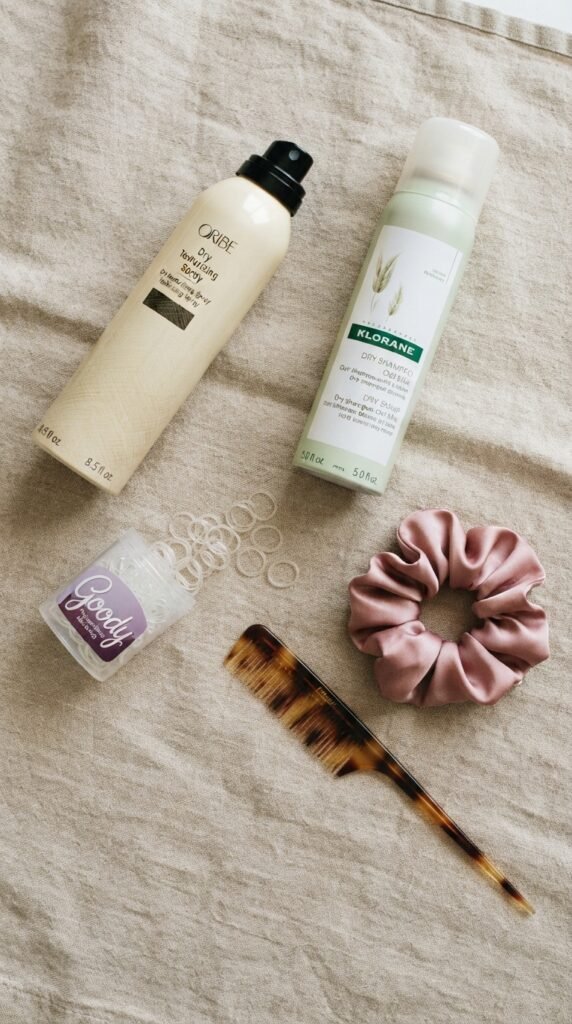
You don’t need much, and less is genuinely more with fine hair.
- Texturizing spray: adds grip without weight.
- Dry shampoo: for volume and stretching wash days.
- Lightweight shine serum: ends only, never roots.
- Clear elastics: invisible and gentle.
- Soft bristle brush: smooths without pulling.
Avoid heavy pomades, thick creams, and anything with a lot of oil near your scalp. They flatten fine hair fast and make braids look stringy within hours.
Accessories That Fake Thickness
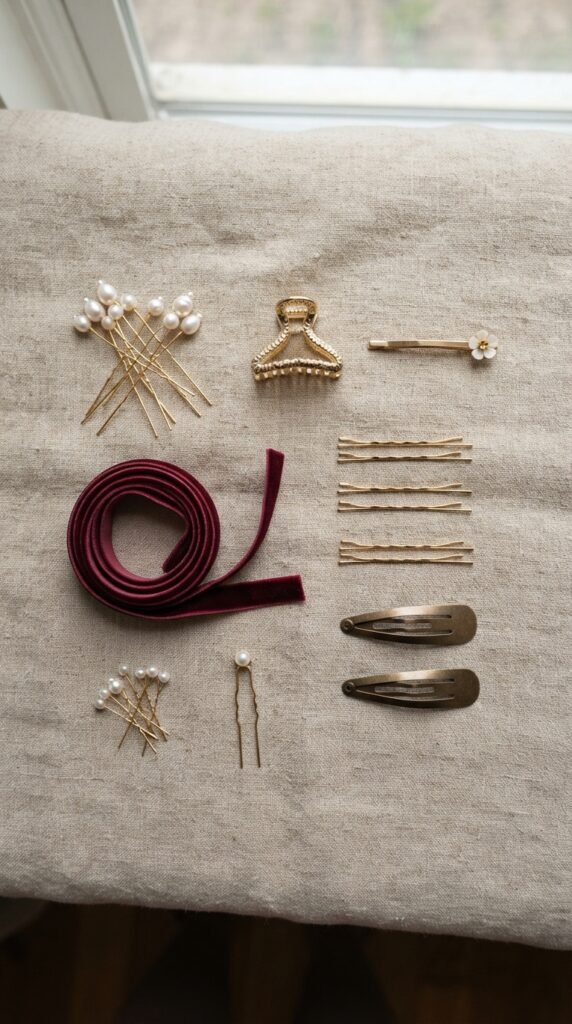
The right accessory can add more volume than any product. Here’s what I keep in my drawer.
- Thin velvet ribbon: woven through a braid, adds width instantly.
- Small pearl pins: a quiet luxury touch along a braid.
- Mini claw clips: hold a braid without crushing it.
- Bobby pins matched to your hair color: disappear completely.
Choose pieces that are smaller than you think. Chunky accessories overwhelm fine hair and make it look thinner by comparison.
How to Take Braids Out Without Breakage
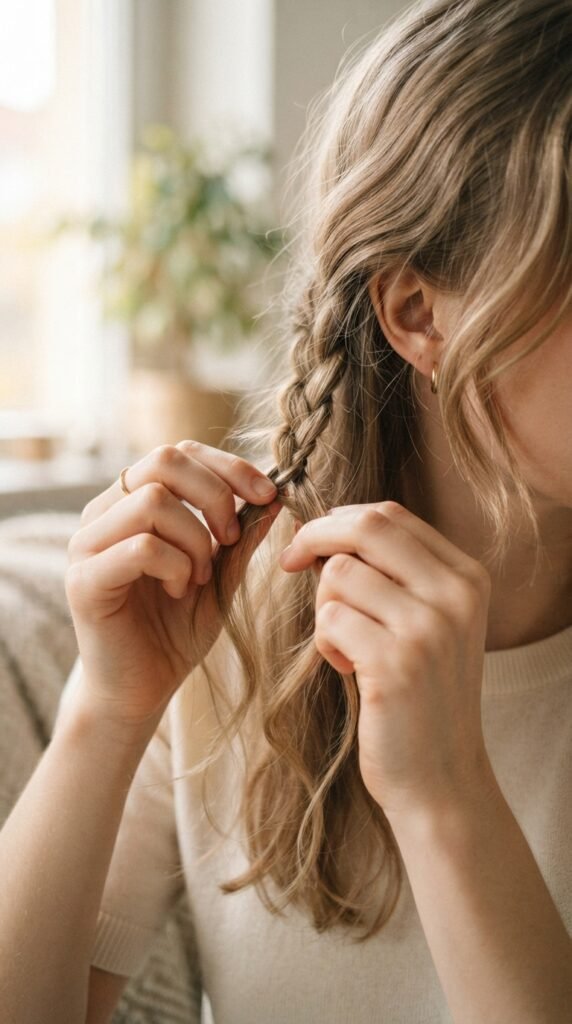
This part matters more than the braiding itself. Ripping out a braid is how fine hair ends up damaged.
- Spray a little leave-in conditioner or water on the braid.
- Undo the elastic gently, never pull it down the length.
- Use your fingers to unravel from the bottom up.
- Comb through slowly, starting at the ends.
If you hit a snag, stop and work it loose with your fingers. Patience here saves you inches later.
2026 Hairstyles: Braided Trends Worth Trying
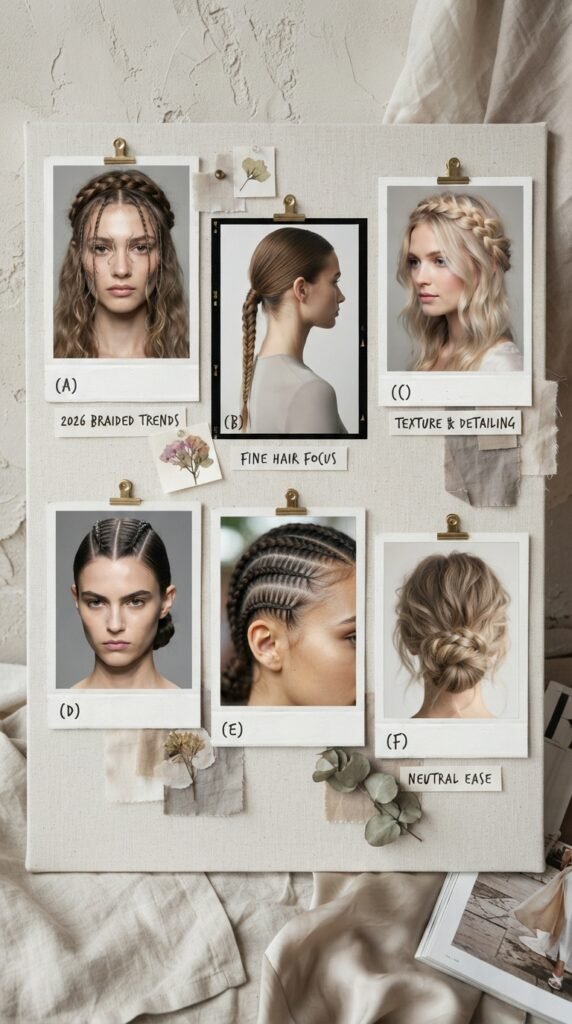
Braids are showing up all over the 2026 hairstyles lineup, and most of them play nicely with fine hair.
- Soft, undone Dutch braids with lots of pancaking
- Sleek low braids for the old money hair look
- Ribbon-woven crowns for romantic goth hairstyles
- Micro braid accents for glitchy glam hair
- Bubble braids and braided headbands for everyday volume
Pick one and make it yours. Trends look best when they’re adapted to your hair, not forced onto it.
Five-Minute Braided Looks for Busy Mornings

Some days you have five minutes. These are the styles that still work.
- Braided headband: two minutes, done.
- Low pancaked braid: three minutes, looks expensive.
- Two mini side braids: four minutes, hides greasy roots.
- Bubble ponytail: five minutes, all volume.
Keep clear elastics on your nightstand and texturizing spray in your bag. The biggest barrier is just starting.
Wrapping It Up
Fine hair and braids are a better match than most people think. You just need grip before you start, gentle tension, and a whole lot of pancaking. That’s honestly the whole secret.
Try one style this week. Start with the braided headband if you’re nervous, then work up to a Dutch braid. It gets easier fast, I promise.
Save this post to Pinterest so you have it next time you’re standing in front of the mirror at 7 a.m. And tell me in the comments: which braid are you trying first? I read every single one.