Gloves On, Hair Locked In: 31 Hairstyles for a Boxing Class That Stay Put Through Every Round
Boxing is the worst possible workout for loose hair. You are ducking, weaving, throwing hooks and skipping rope, and every stray strand ends up stuck to a sweaty forehead or across your eyes at the exact moment you need to see a punch coming. That is why hairstyles for a boxing class are not about looking pretty — they are about staying safe, staying cool and staying focused for the full round.
A good boxing hairstyle does three things at once. It keeps every strand away from your face and neck, it survives sweat without sliding loose, and it sits flat enough to fit comfortably under headgear or a headband. Braids, tight buns and high ponytails do this best, because they lock the hair in place instead of asking a single elastic to do all the work.
This guide starts with the thinking — how to pick a style for your hair length, which products actually survive sweat, and how to fit hair under headgear — and then gives you 31 styles to choose from, for short, medium and long hair, straight, wavy and curly textures, and every kind of boxing class from bag work to sparring. Pick one, practise it once at home, and walk into your next class knowing your hair is already sorted.
Why Your Hair Matters More in Boxing Than in Any Other Workout
In most workouts, loose hair is an annoyance. In boxing, it is a hazard. A strand across your eyes blocks your vision for a split second, and a split second is all a punch needs. Hair falling onto your neck traps sweat and heat, and hair that comes loose mid-round means stopping to fix it while your coach is counting combinations.
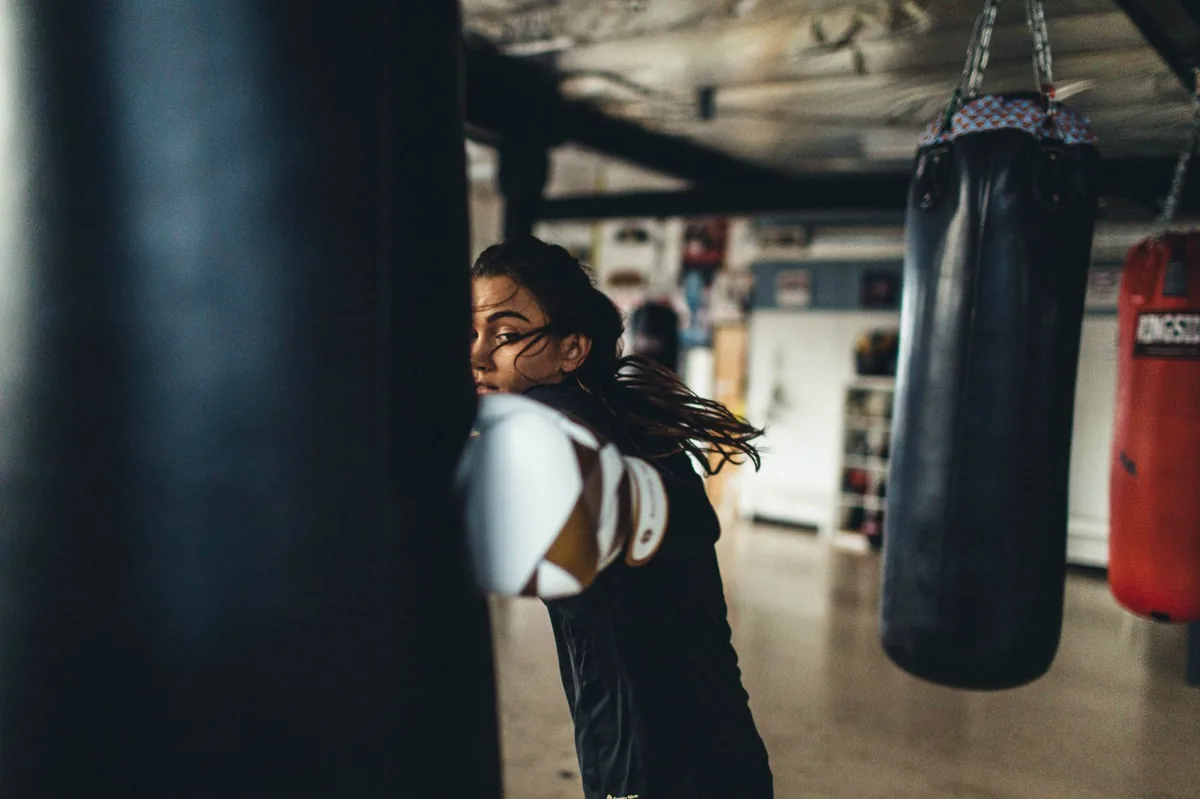
Common mistake: treating boxing hair like gym hair. A loose ponytail that survives a treadmill session will not survive three minutes of bobbing, weaving and skipping. Boxing moves your head in every direction, so the style needs to anchor the hair at several points, not just one.
Maintenance: check your style before every round, not just at the start of class. A quick tug test — pull gently at the base of the braid or bun — tells you in two seconds whether it will hold. If it shifts, re-pin it now rather than mid-combination.
Quick verdict: if your hair can survive a round of shadowboxing without you touching it once, it is ready for class. If you reach up to push it back even once, pick a tighter style.
Choosing a Style for Your Hair Length
Short hair, medium hair and long hair need completely different boxing styles, and the most common mistake is copying a style built for a different length. Short hair needs a headband and pins to control the front layers. Medium hair suits a low bun or a single braid. Long hair needs a braid or a braided ponytail, because a plain ponytail swings and slaps with every punch.
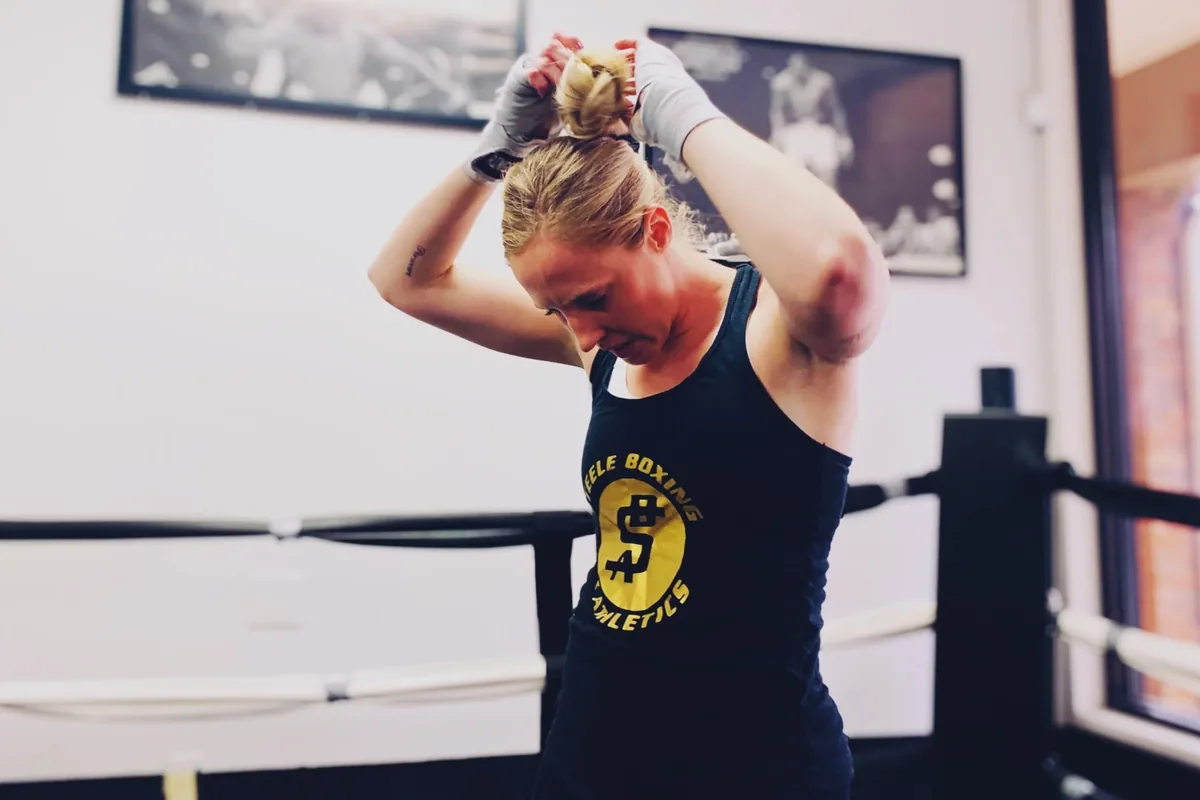
Common mistake: forcing long hair into a short-hair style. A top knot on very long hair becomes heavy, pulls at the roots and slides loose as you sweat. Long hair needs its weight distributed — a braid does that, a single knot does not.
Maintenance: keep a small kit in your gym bag: two spare elastics, four bobby pins and a mini brush. Hair behaves differently when it is sweaty, and the style that worked at home may need one extra pin by round two.
Quick verdict: match the style to the length you actually have today, not the length you wish you had. The right style for your length will feel light and forgettable — and forgettable is exactly what you want in a boxing class.
Sweat-Proof Products That Actually Hold
Sweat is the enemy of every hairstyle, and boxing produces more of it than almost any other workout. The products that work are the ones that grip damp hair and stay flexible: a strong-hold gel for the hairline, a texturising spray for grip before braiding, and a light hairspray to finish. Heavy oils and leave-in creams are the opposite of what you want — they make hair slippery and heavy.
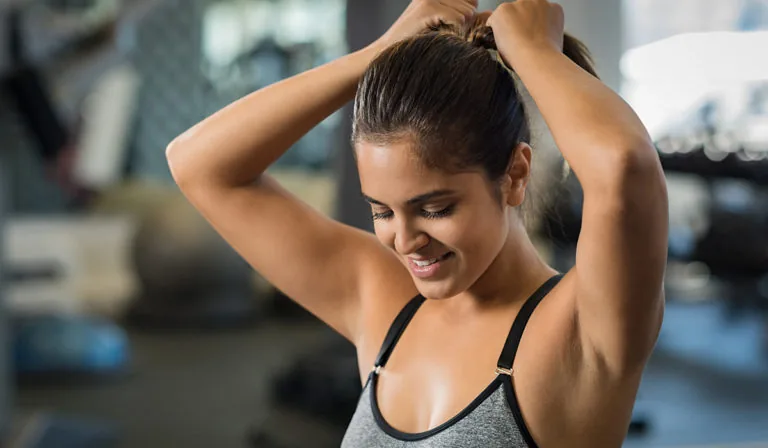
Common mistake: loading on product the night before and hoping it lasts. Product works best applied to clean, slightly damp hair just before you style it, so it dries into the style. Too much product makes hair sticky, attracts dust from the gym floor and leaves a residue that is hard to wash out.
Maintenance: use less than you think. A pea-sized amount of gel smoothed over the hairline and a light mist of spray over the finished style is enough. If your hair still slips, the problem is usually the technique, not the product — add another pin or a second elastic before adding more gel.
Quick verdict: one gel, one spray and good pins beat a shelf full of products. Buy the smallest sizes first and test them in one class before committing to a full bottle.
Fitting Your Hair Under Headgear and Hand Wraps
Headgear changes everything about boxing hair. A style that sits high on the crown will press against the padding, slide forward and give you a headache within a round. The styles that work under headgear sit low and flat: low braids, a low bun at the nape, or two flat braids that follow the shape of your head.
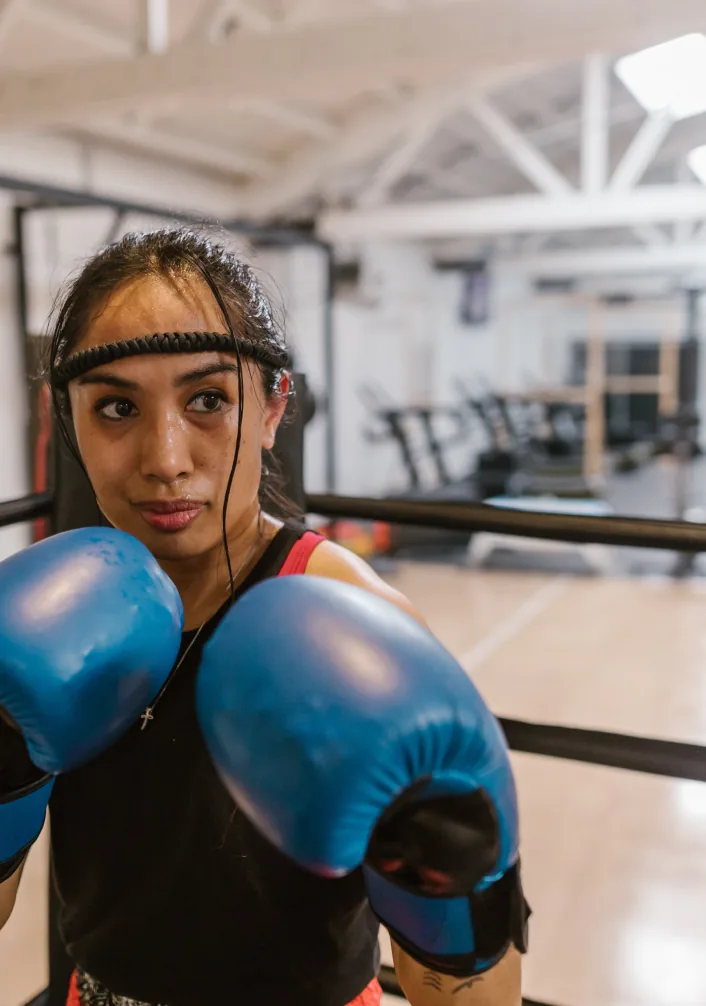
Common mistake: wearing a high bun or a top knot under headgear. The padding pushes the bun forward, the bun pushes the headgear down over your eyes, and you spend the round adjusting both. If your class uses headgear, build the style low from the start.
Maintenance: put the headgear on at home before class and check the fit with your chosen style. Adjust the straps once, note the setting, and you will not waste class time fiddling with it. A thin, moisture-wicking headband under the headgear stops sweat running into your eyes.
Quick verdict: low and flat wins under headgear every time. Save the high styles for bag work and pad work, where nothing is pressing on your head.
Braids Versus Buns Versus Ponytails: Which Holds Best?
If you could only learn one boxing hairstyle, learn a braid. Braids distribute the weight of your hair along its whole length, so no single point takes all the pull, and they survive sweat, head movement and even headgear better than any other style. Buns come second — secure, but they concentrate weight in one spot. Ponytails come last, because they swing, loosen and slap with every punch.
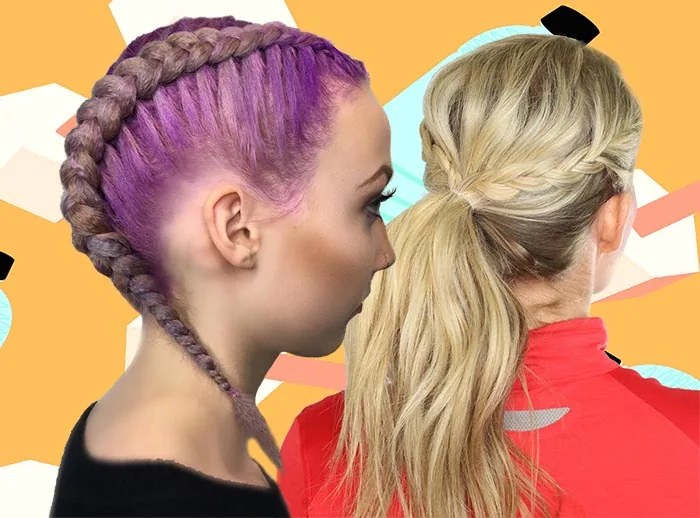
Common mistake: choosing a ponytail because it is fastest. It is fastest to tie and fastest to fall apart. A ponytail that feels secure at the start of class is usually hanging by a thread by the third round, and re-tying it with gloves on is almost impossible.
Maintenance: whatever style you choose, secure it in two places, not one. A braid finished with two elastics, or a bun pinned at four points, will outlast a style held by a single elastic by a whole class. Two points of failure have to fail before the style does.
Quick verdict: braids first, buns second, ponytails only if they are braided or wrapped. If you are short on time, a single French braid takes ninety seconds and outlasts a five-second ponytail by an hour.
Hair Care After a Sweaty Class: Wash Day Done Right
A boxing class leaves your hair soaked in sweat, and sweat left to dry in hair causes itching, breakage and a smell that no dry shampoo can hide. The fix is simple but not optional: rinse your hair the same day, even if you do not do a full wash. Water alone removes most of the salt, and a gentle shampoo once or twice a week handles the rest.
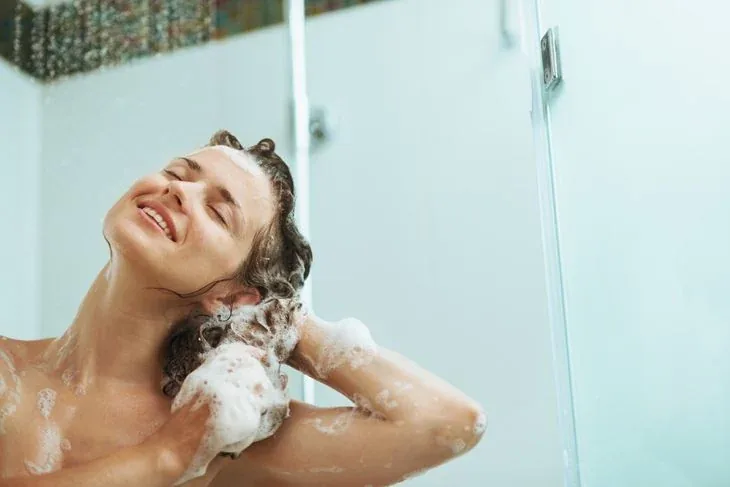
Common mistake: reaching for dry shampoo instead of water after every class. Dry shampoo absorbs oil, not salt, and layering it over sweat for days clogs the scalp and makes hair brittle. Save it for the days you genuinely cannot wash, not as a daily habit.
Maintenance: on heavy training weeks, wash with a gentle, sulphate-free shampoo and always condition the ends. Braid your hair loosely overnight after washing so it dries without tangling, and never tie wet hair tightly — wet hair stretches and snaps far more easily than dry hair.
Quick verdict: rinse today, wash properly a few times a week, and your hair will survive daily boxing. Skip the rinse and the damage shows up within a month.
What to Pack in Your Gym Bag for Your Hair
The difference between a good hair day and a bad one in boxing is often just what is in your gym bag. The essentials fit in a small pouch: three strong elastics, six bobby pins, two small claw clips, a sweat-wicking headband, a mini brush and a travel-size dry shampoo for the journey home. That is everything you need to fix any style between rounds.
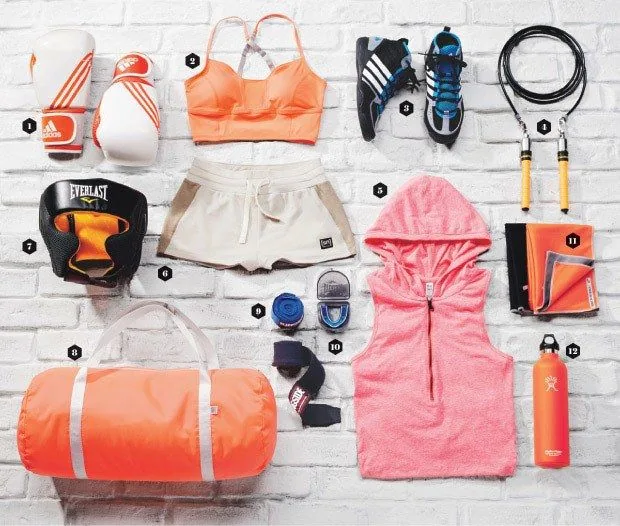
Common mistake: packing one elastic and hoping for the best. Elastics snap, pins get lost on the gym floor, and a headband left at home cannot be borrowed mid-class. Spares weigh nothing and save the whole session when something fails.
Maintenance: check your pouch once a week and replace what you used. Elastics lose their stretch after a few months, and a tired elastic is the most common reason a style falls apart mid-round. Keep the pouch in the same pocket every time so you can find it with gloves on.
Quick verdict: a five-minute pack the night before beats a mid-class hair emergency. Treat the hair pouch like your hand wraps — part of the kit, not an afterthought.
The Mistakes That Ruin a Round (and How to Avoid Them)
Most boxing hair failures come from the same handful of mistakes: tying the style too tight, using pins that slide out when you sweat, leaving the front layers loose, or choosing a style you have never practised. Each one is easy to avoid once you know it, and each one costs you a round if you do not.
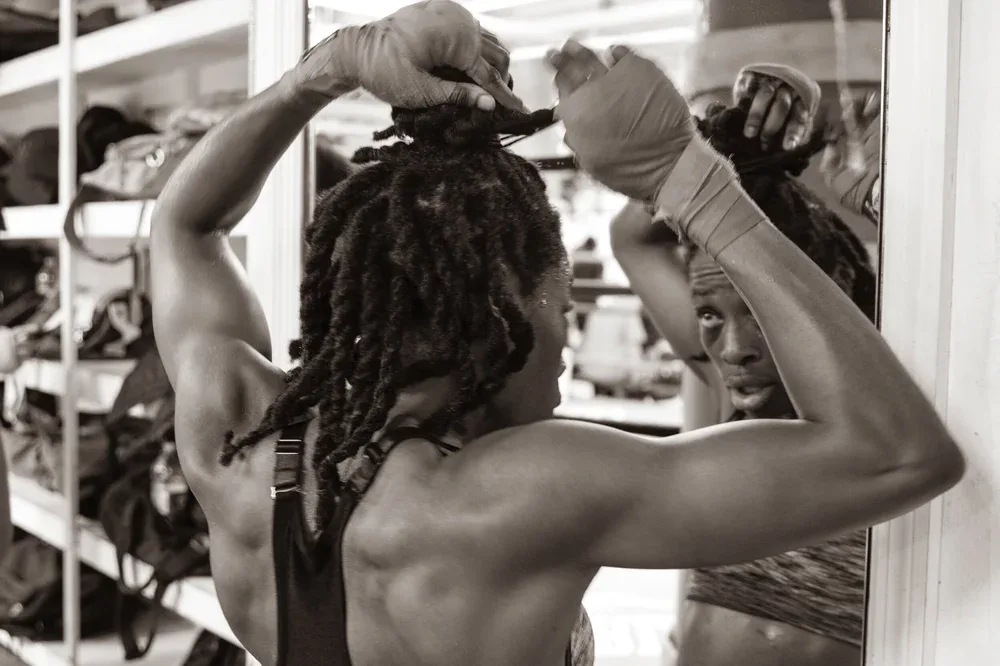
Common mistake: tying hair so tight it gives you a headache by round two. A style should feel secure, not painful. If your scalp aches, the tension is too high — loosen it slightly and add a pin instead of pulling harder. Pain distracts you just as much as loose hair does.
Maintenance: practise a new style at home first, ideally the day before class. A style you have done once will take three minutes; a style you are trying for the first time takes fifteen and usually fails. Your first attempt should never be in the gym.
Quick verdict: secure but comfortable, practised not improvised, pinned in two places, and checked before round one. Get those four right and your hair will be the last thing you think about in class — which is exactly the point.
1. High Braided Ponytail
A high braided ponytail is the classic boxing style for a reason: the ponytail lifts the hair off your neck, and the braid stops it swinging. Gather the hair high on the crown, secure it firmly, then braid the tail to the ends and finish with a second elastic. The result stays put through skipping, bag work and footwork drills.
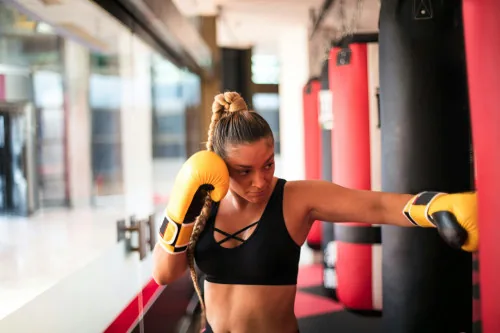
Common mistakes: braiding too loosely so the tail unravels by round two, or placing the ponytail too far back so it thumps against your neck with every punch. Keep the braid snug and the ponytail high enough that the tail clears your shoulders.
Maintenance: a quick spray of light hairspray over the braid before class adds grip without stiffness. Between rounds, give the braid one gentle tug to check the elastic at the end — it is the first thing to slip.
Quick verdict: fast, secure and flattering on almost everyone. If you learn only one style from this list, make it this one.
2. Tight French Braid
A single French braid is the simplest sweat-proof style there is. It pulls the hair flat against the head, keeps the front layers under control and distributes the weight evenly, so nothing pulls or slips as you move. Start at the hairline, add hair as you go, and braid right down to the nape before finishing the tail.
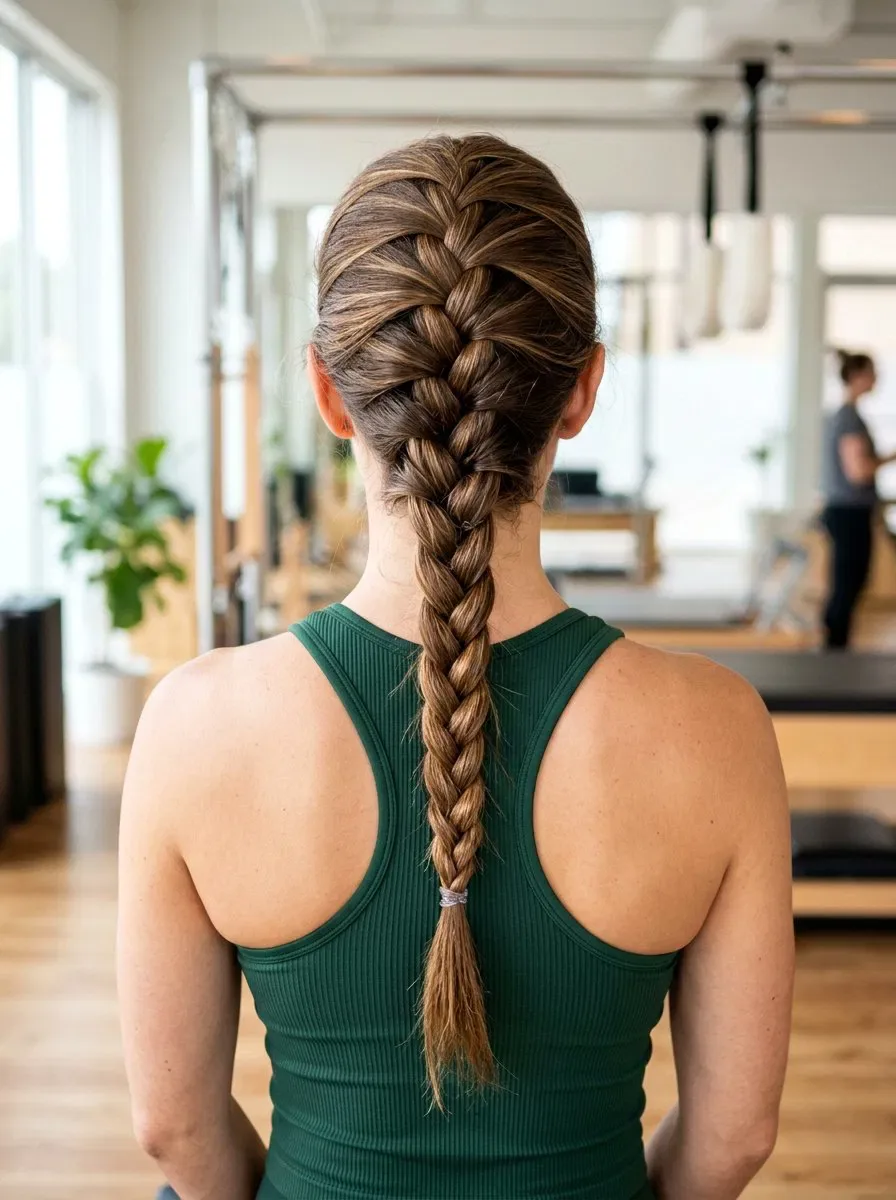
Common mistakes: starting the braid too far back, which leaves the front layers free to fall into your eyes, or braiding with uneven tension so one side loosens first. Begin at the very front hairline and keep each section the same size.
Maintenance: this style needs almost no upkeep during class — that is its charm. If a few baby hairs escape at the hairline, smooth them with a little gel between rounds rather than re-braiding.
Quick verdict: the ninety-second style that outlasts almost everything else here. Perfect for beginners and for anyone whose hair will not hold a bun.
3. Double Dutch Braids (Boxer Braids)
Boxer braids are the style the sport is named after, and they earn the name. Two Dutch braids, one on each side, sit flat against the head, keep every strand contained and look fierce with gloves on. Part the hair down the middle, braid each side from the hairline to the nape, and secure both tails.
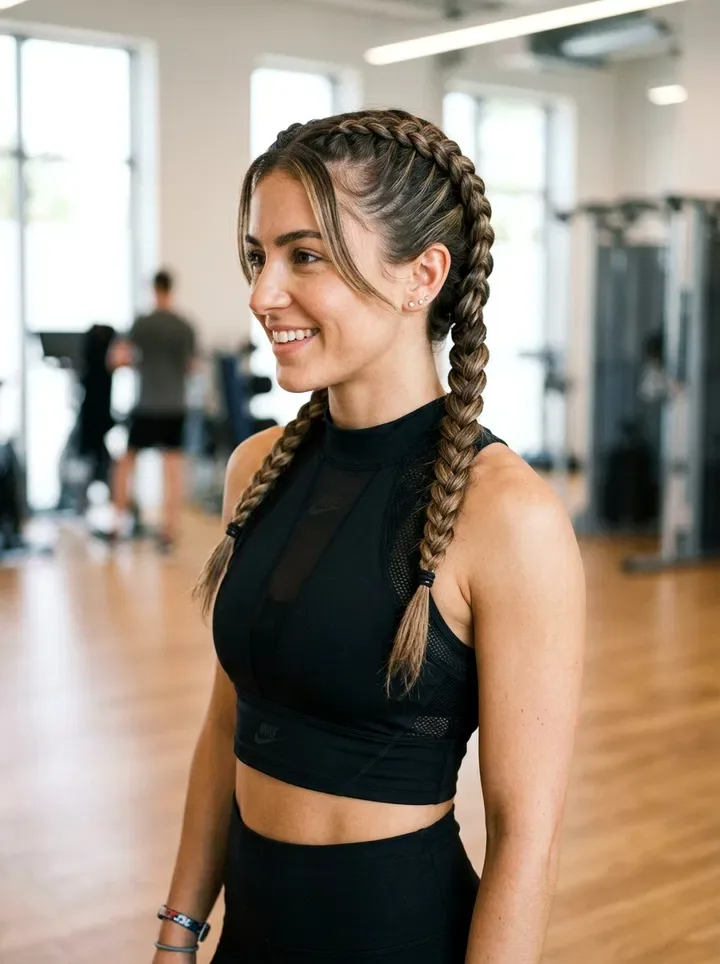
Common mistakes: a wonky centre part, which makes the whole style look uneven, or braiding one side tighter than the other. Take thirty seconds to get the part straight with a comb — it makes the difference between sharp and scruffy.
Maintenance: boxer braids hold so well you can wear them for two days, but wash them out after a sweaty class. Salt dries into the braid and makes the hair rough if you leave it in overnight.
Quick verdict: the most boxing-appropriate style on this list. Secure, symmetrical and built for head movement in every direction.
4. Low Sleek Bun
A low sleek bun sits at the nape of the neck, out of the way of headgear, gloves and skipping ropes. Brush the hair smooth, gather it low, twist it into a bun and pin it in at least four places. It is neat, quiet and completely forgettable once you start moving — which is the highest praise a boxing style can get.
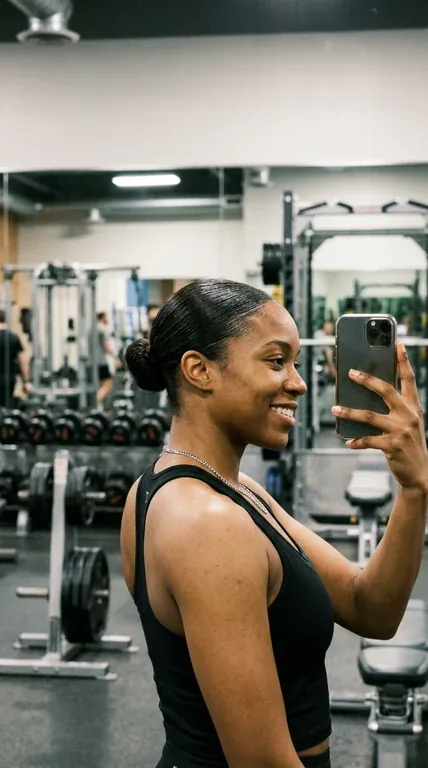
Common mistakes: pinning the bun with only one or two pins, so it droops as you sweat, or leaving the sides loose so flyaways escape. Pin at the top, bottom and both sides, and smooth the hairline with gel first.
Maintenance: a bun that starts to sag can usually be saved with two extra pins between rounds. Keep the pins in your gym bag, not in your locker, so you can reach them quickly.
Quick verdict: elegant, low-profile and headgear-friendly. The best choice when your class includes sparring or headgear work.
5. High Top Knot
A high top knot gets every strand up and off your neck, which feels wonderful in a hot, crowded boxing gym. Gather the hair at the very crown, twist it around itself and pin it firmly. It keeps you cool, keeps hair out of your face and takes less than a minute once you have practised it.
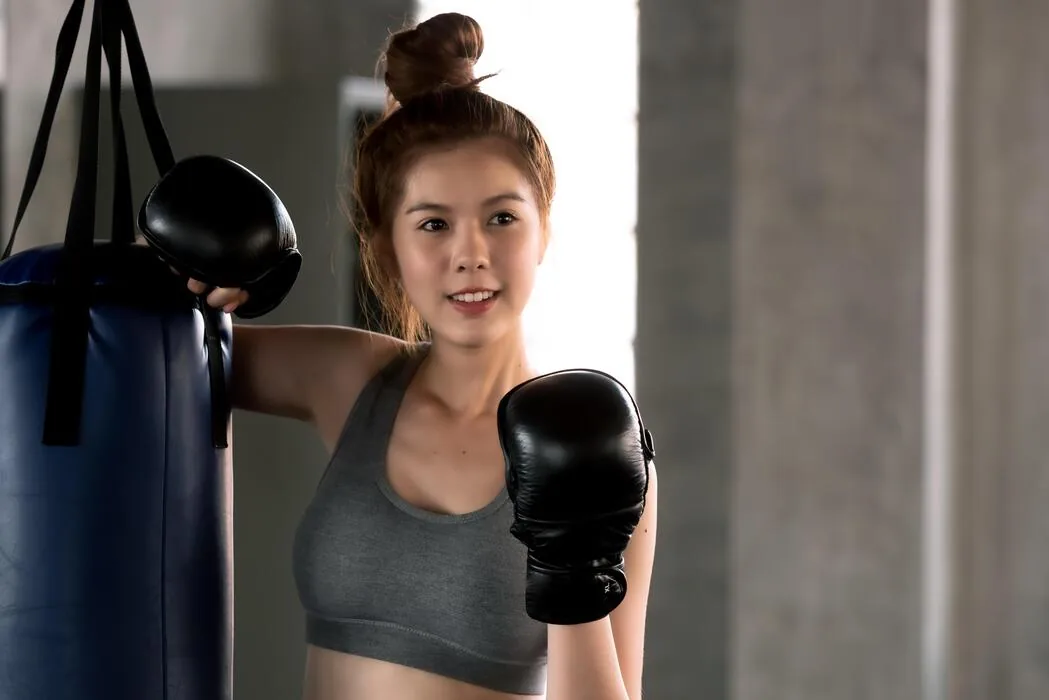
Common mistakes: building the knot too loosely so it wobbles with every duck and weave, or making it too heavy on long hair so it pulls at the roots. On long hair, braid the ponytail first and then wrap it — the braid keeps the knot compact and light.
Maintenance: check the knot after the warm-up, when sweat starts. A knot that survives the warm-up will usually survive the class, but one that has already shifted needs re-pinning before the bag work starts.
Quick verdict: brilliant for bag work and pad work, less so under headgear. Use it when nothing is pressing on your head.
6. Bubble Braid Ponytail
A bubble braid ponytail looks fun and holds surprisingly well. Tie a high ponytail, add elastics every few inches down the tail, and gently pull each section out to form bubbles. The elastics break the tail into short, controlled sections, so it cannot swing as one heavy weight.
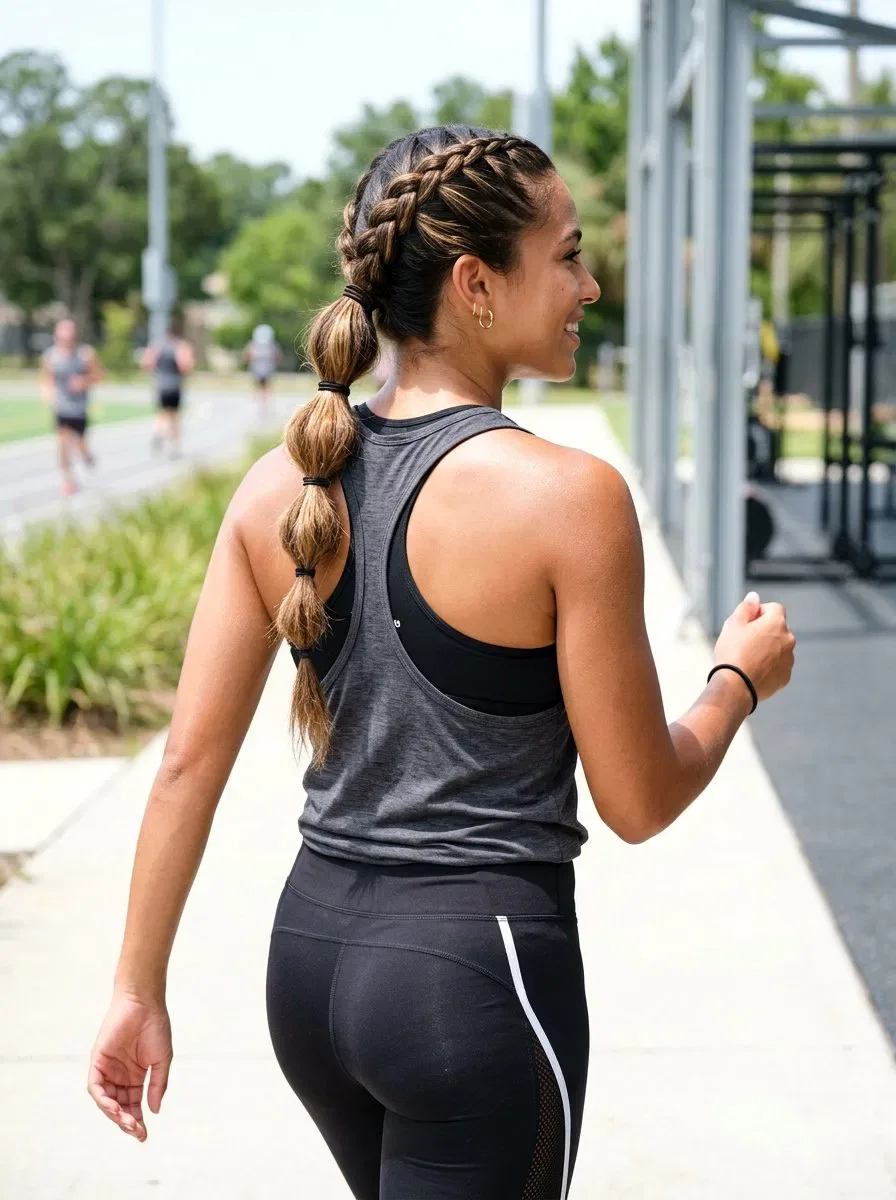
Common mistakes: spacing the elastics too far apart, which lets each bubble sag, or pulling the bubbles out too aggressively so the whole thing loosens. Keep the sections short and the tugging gentle.
Maintenance: this style is easy to repair mid-class — if one bubble collapses, just re-tighten that elastic. Carry two spare elastics in your pocket for exactly this reason.
Quick verdict: playful, secure and much tougher than it looks. A good choice when you want something a little different from a plain braid.
7. Fishtail Braid
A fishtail braid weaves the hair into a tight, flat plait that barely moves once it is finished. It suits medium to long hair and looks more polished than a regular braid, which makes it a favourite for classes followed by errands or coffee. Take two sections, cross small pieces over alternately, and keep the tension even all the way down.
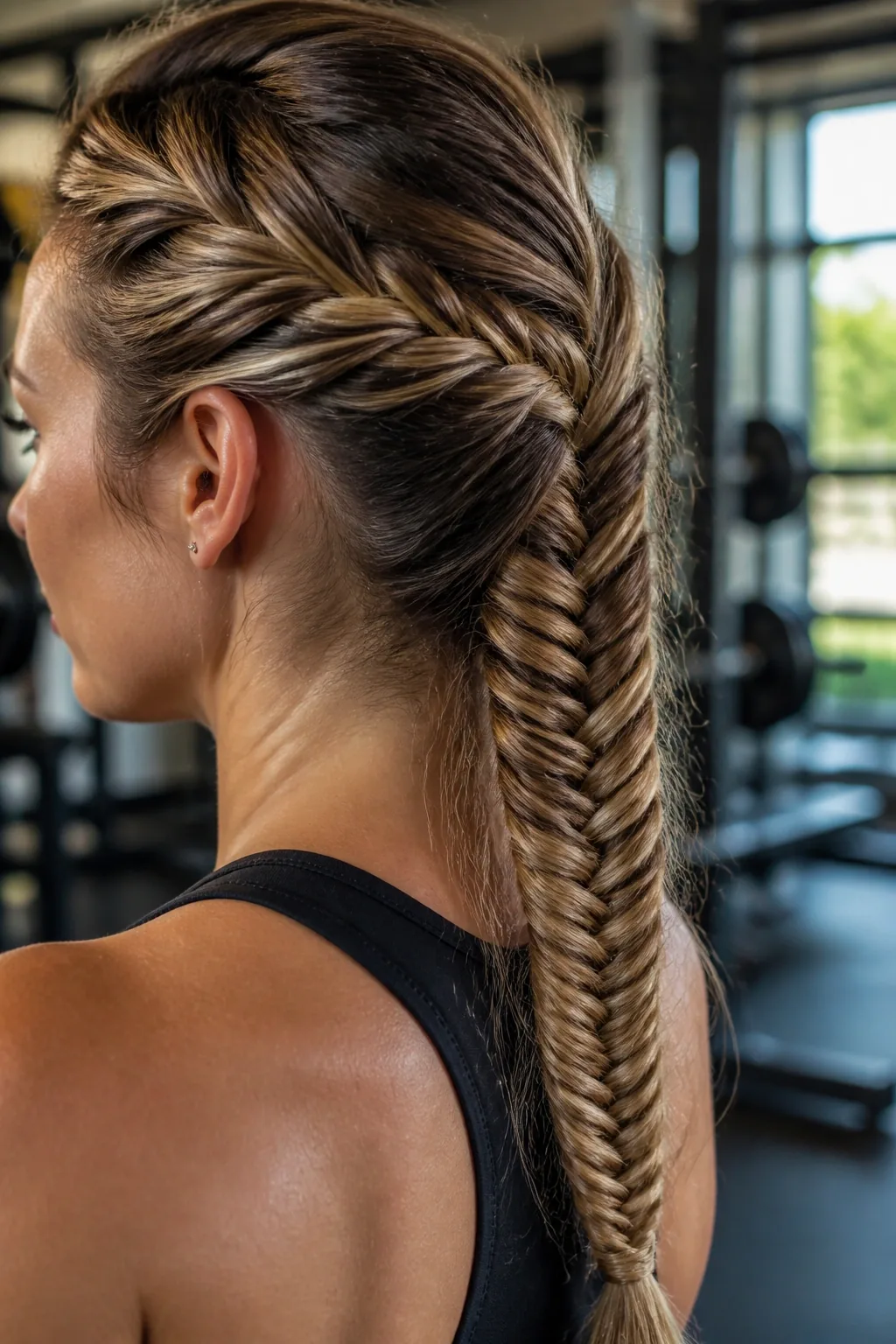
Common mistakes: taking pieces that are too big, which makes the braid loose and lumpy, or braiding too slowly so the top sections slacken before you finish. Small pieces and steady tension are the whole secret.
Maintenance: a fishtail loosens less than a three-strand braid, so it needs little attention during class. If the end elastic slips, replace it between rounds and carry on.
Quick verdict: beautiful, secure and surprisingly tough. Worth the extra minute it takes to braid.
8. Cornrows
Cornrows are the most secure hairstyle in boxing, full stop. Braided flat against the scalp in neat rows, they cannot swing, slip or fall into your eyes, and they survive sweat, headgear and the hardest rounds without moving at all. They also protect natural hair during weeks of heavy training.
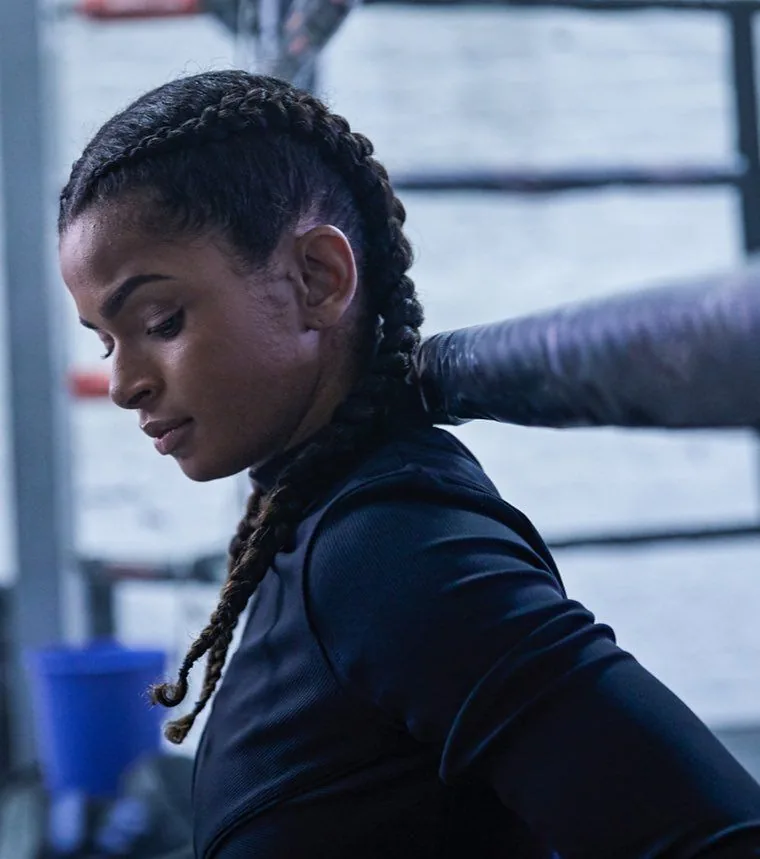
Common mistakes: braiding them too tight at the hairline, which causes pain and can damage the edges, or leaving them in too long after sweaty classes. Comfort matters more than neatness — if it hurts, it is too tight.
Maintenance: rinse the scalp after class and use a light scalp oil to keep it comfortable. Cornrows can last one to two weeks, but wash them properly at least once a week when you train hard.
Quick verdict: the toughest, longest-lasting style here. If you box several times a week, cornrows are the lowest-effort answer.
9. Slicked-Back Low Ponytail
A slicked-back low ponytail is the minimalist boxing style: gel the hair flat, gather it low at the nape and secure it tightly. Nothing sticks up, nothing swings, and the style sits perfectly flat under headgear. It looks sharp, takes two minutes and works on almost every hair length.
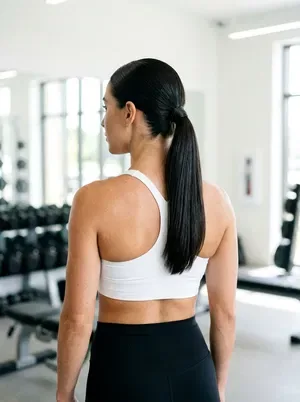
Common mistakes: using too little gel so the sides puff out as you sweat, or tying the ponytail too loosely so it slides down. Gel the hair while it is slightly damp, and wrap the elastic twice for a firm hold.
Maintenance: this is a one-check style — look in the mirror after the warm-up and smooth any escaping strands with a wet hand. A tiny bit of gel in your gym bag handles the rest.
Quick verdict: clean, fast and headgear-ready. The best low-effort option for short and medium hair.
10. Double French Braids into Low Buns
Two French braids that end in two small low buns give you the security of braids with the neatness of a bun. Braid each side from the hairline to the nape, then twist each tail into a small bun and pin it. Nothing hangs down to swing, and the weight is split evenly across both sides.
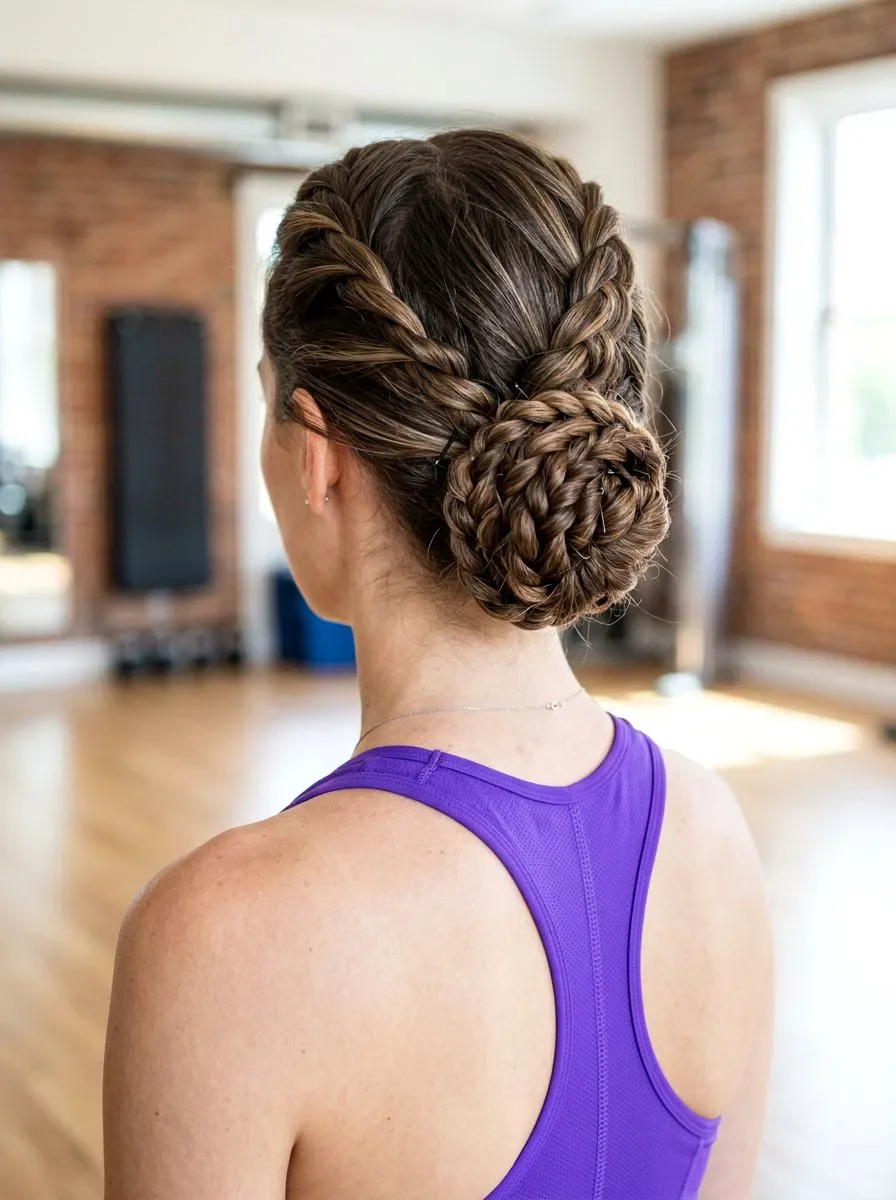
Common mistakes: making the buns too big, which makes them wobble, or braiding the two sides at different heights. Keep the buns small and the parting straight, and the style will sit flat all class.
Maintenance: four pins per bun is the rule — two at the top, two at the bottom. If a bun starts to droop, one extra pin at the base usually saves it.
Quick verdict: one of the most secure styles here, and it looks great too. Ideal for long classes and sparring days.
11. Braided Crown
A braided crown wraps a braid around the head like a headband, pinning the front layers back and keeping everything off the face. Braid from one side, wrap the braid across the forehead and pin it behind the opposite ear. It is elegant, completely secure at the front and surprisingly comfortable under headgear.
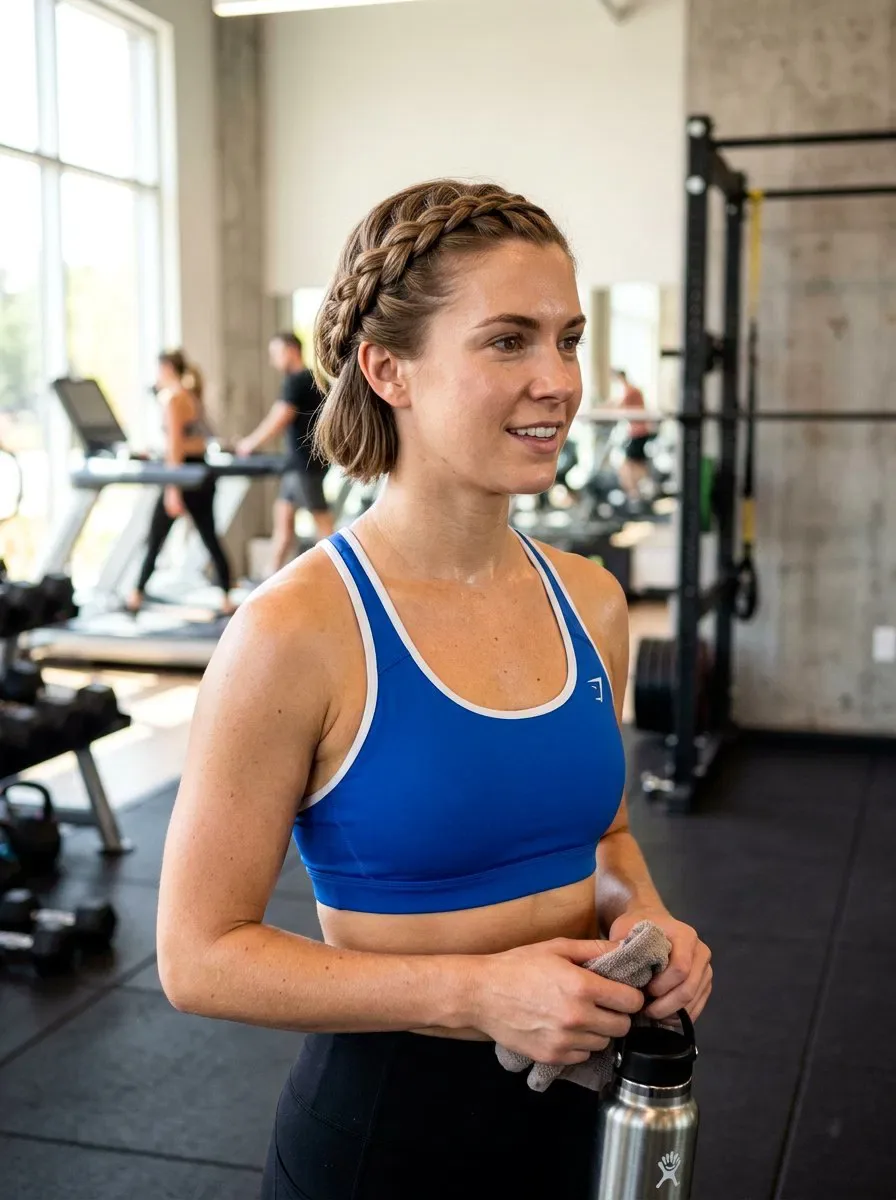
Common mistakes: braiding too loosely so the crown slides forward as you sweat, or pinning it with too few pins. The crown needs a pin every few inches, hidden under the braid, to stay put through a full class.
Maintenance: this style pairs well with a low bun or a low ponytail at the back. Check the pins after the warm-up — the crown is the first part to shift if it is going to.
Quick verdict: beautiful and practical at once. Best for medium and long hair, and for anyone whose front layers refuse to stay back.
12. Side Braid
A side braid sweeps all the hair over one shoulder and braids it down, keeping it clear of your face and your gloves. It is quick, comfortable and kinder on the neck than a high style, because the weight hangs to the side instead of pulling straight back. Gather the hair over one shoulder, braid it loosely or tightly, and secure the end.
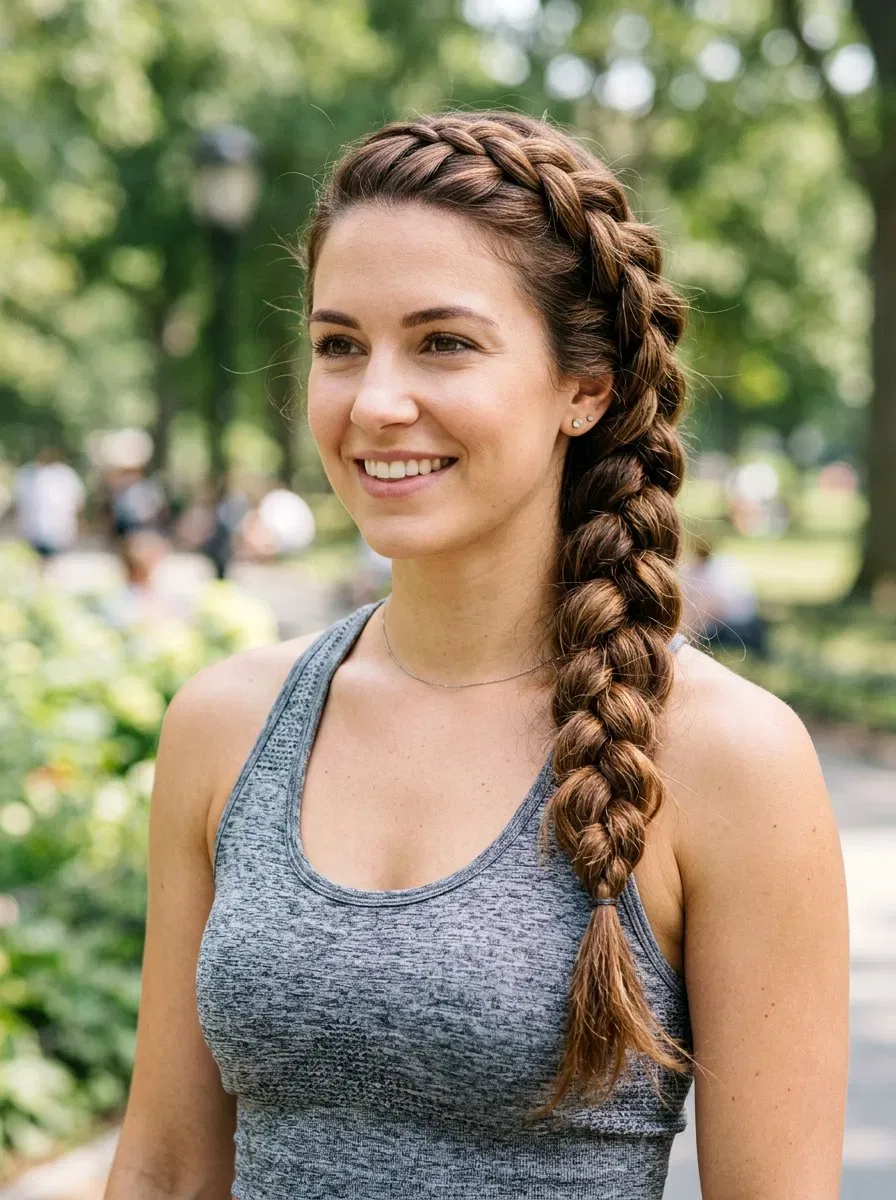
Common mistakes: letting the braid fall forward over the chest, where it gets in the way of punches, or braiding so loosely that it unravels. Tuck the finished braid behind the shoulder and keep the tension firm.
Maintenance: a side braid is easy to redo between rounds if it loosens, which is part of its charm. One elastic and thirty seconds is all a repair takes.
Quick verdict: relaxed, quick and easy to fix. Better for pad work and bag work than for sparring, where a centred style stays more balanced.
13. Low Braided Bun
A low braided bun combines the two most secure ideas in this guide: braid the hair first, then wrap the braid into a bun at the nape. The braid stops the bun unravelling, and the bun stops the braid swinging. It is compact, flat and completely unbothered by headgear.
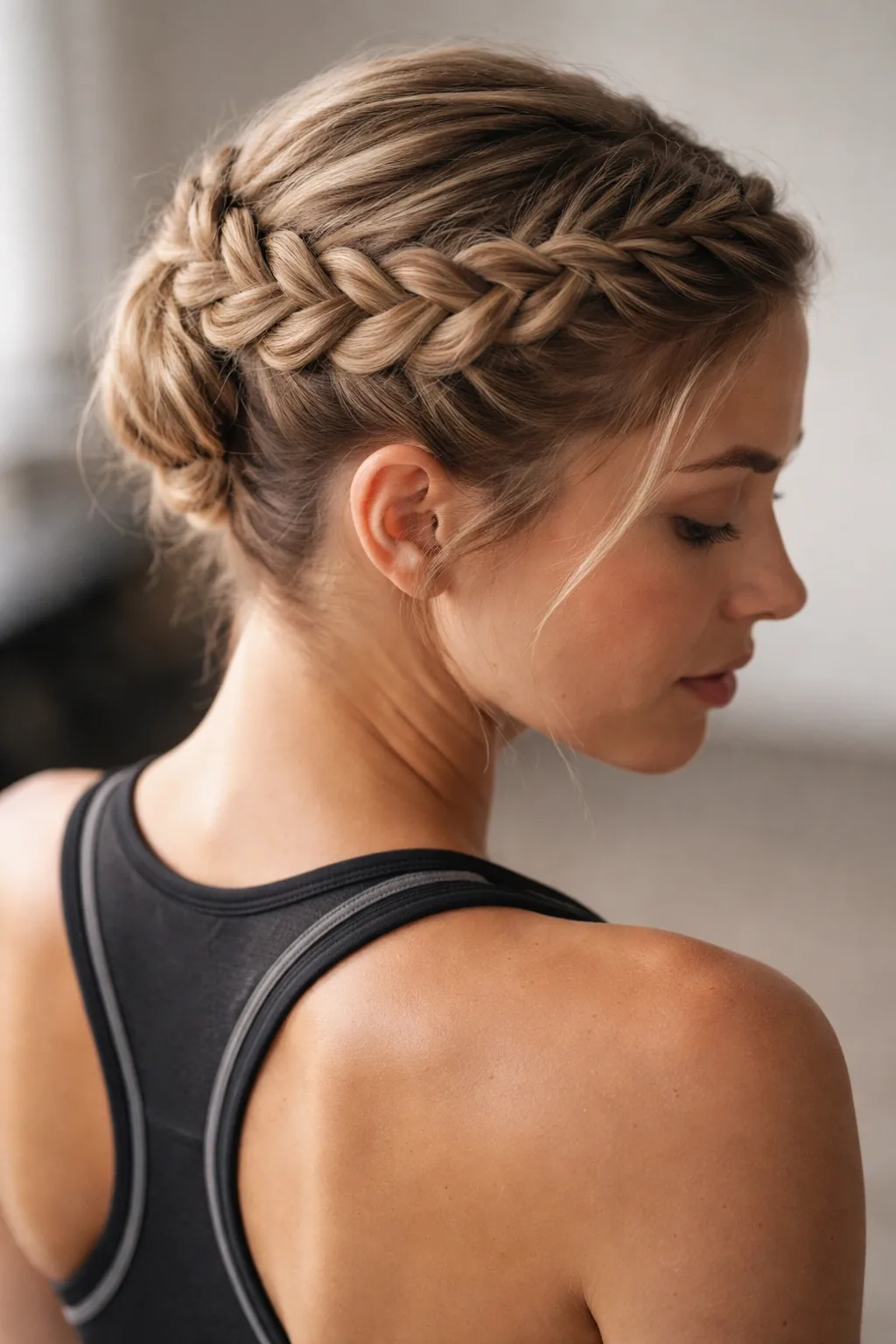
Common mistakes: wrapping the bun too loosely so it sags, or skipping the pins because the braid feels secure on its own. A braid can still slide — pin the bun at four points and it will not move.
Maintenance: this is a set-and-forget style. Once it is pinned, you should not need to touch it again until the cool-down, which makes it ideal for long classes.
Quick verdict: one of the most reliable styles on this list. If your hair is long enough to braid, this is a top-three choice.
14. Half-Up Top Knot
A half-up top knot takes the top half of the hair up into a small knot and leaves the rest down — but in boxing, the rest must be braided or tied too, or it will fly everywhere. Knot the top section, then braid the lower section into a single plait or a low ponytail. You get the face-clearing lift of a knot with none of the loose hair.
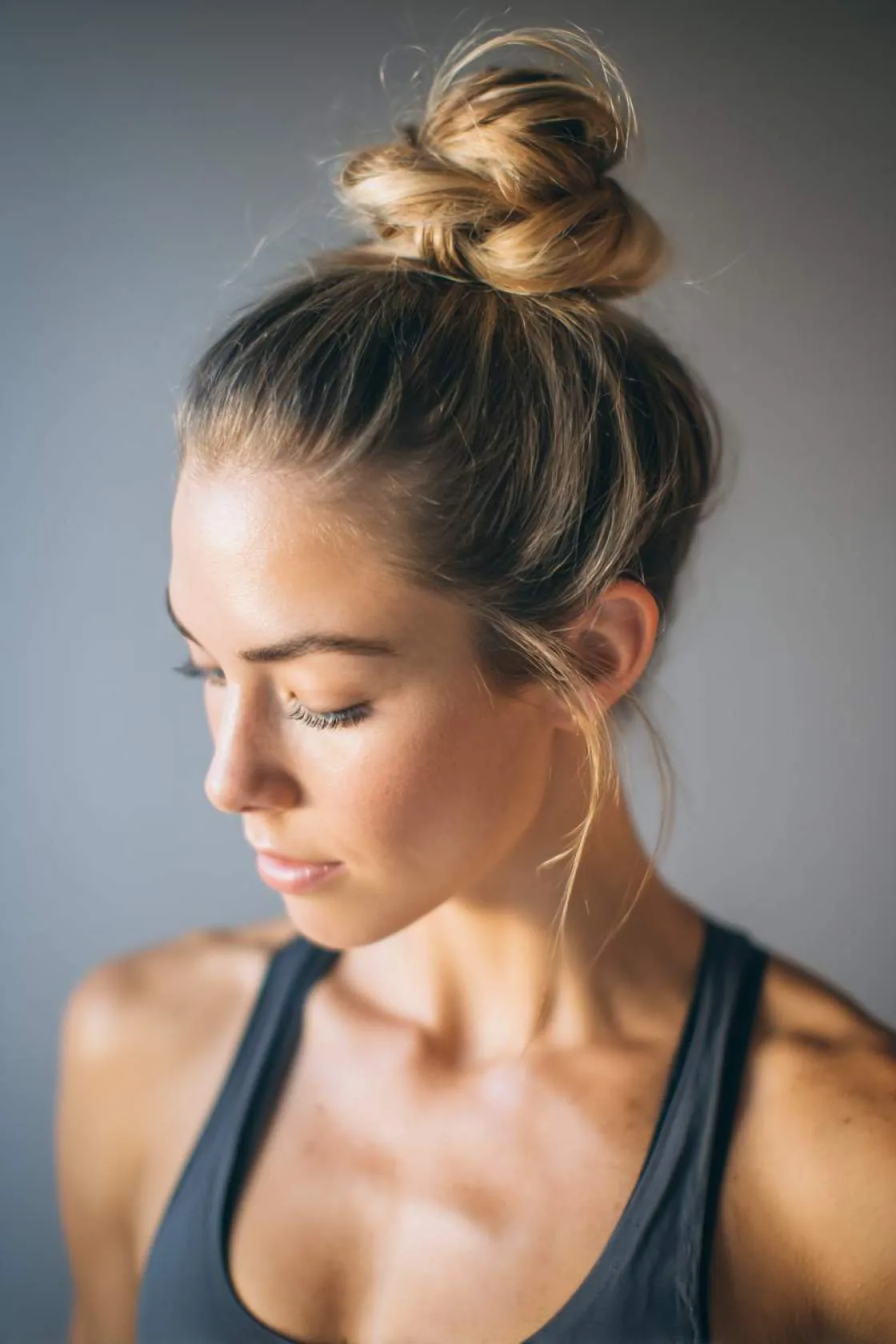
Common mistakes: leaving the bottom half completely loose, which defeats the whole purpose, or making the top knot too big so it unbalances the style. Keep the knot small and deal with the bottom half properly.
Maintenance: the knot is the part to watch — if it loosens, re-pin it between rounds. The braided lower half will look after itself.
Quick verdict: a good compromise for medium hair. Just remember the rule: in boxing, no hair stays loose.
15. Two-Strand Twists
Two-strand twists are a gentle, protective style that works beautifully for natural and textured hair in boxing. Twist two sections of hair around each other from root to tip, working across the head in rows or gathering them into a low bun. They are lighter than braids, kinder on the scalp and easy to refresh.
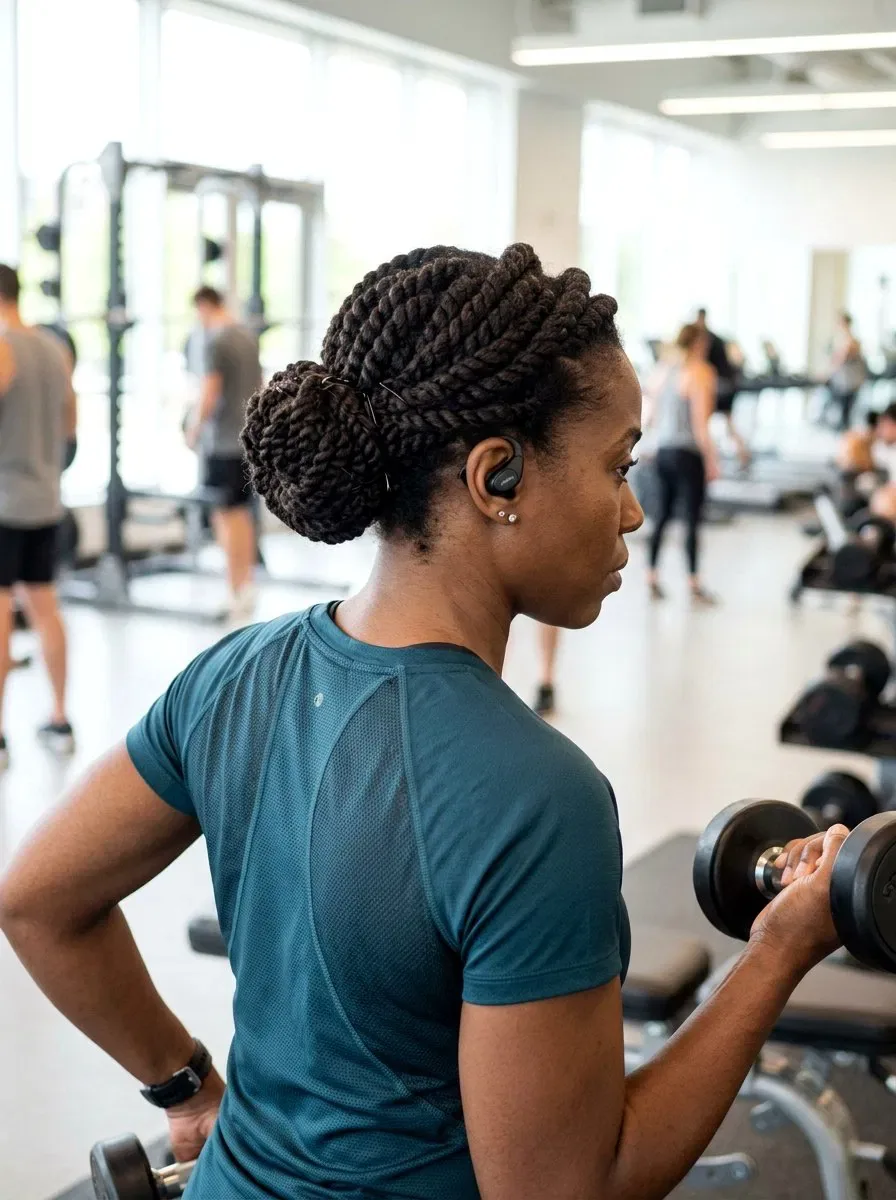
Common mistakes: twisting on dry hair, which makes the twists frizzy and loose, or making the sections too large so they unravel. Twist on damp, moisturised hair with small, even sections.
Maintenance: twists last several days if you protect them at night with a satin scarf, but rinse the scalp after sweaty classes. A light oil on the scalp between washes keeps them comfortable.
Quick verdict: gentle, protective and secure. A lovely option for textured hair that wants a break from tight braiding.
16. Flat Twist Updo
A flat twist updo twists the hair flat against the scalp in neat rows, then gathers the ends into a low bun. It gives the same flat, secure feeling as cornrows but is quicker to do and easier to take out. It sits beautifully under headgear and keeps every strand contained.
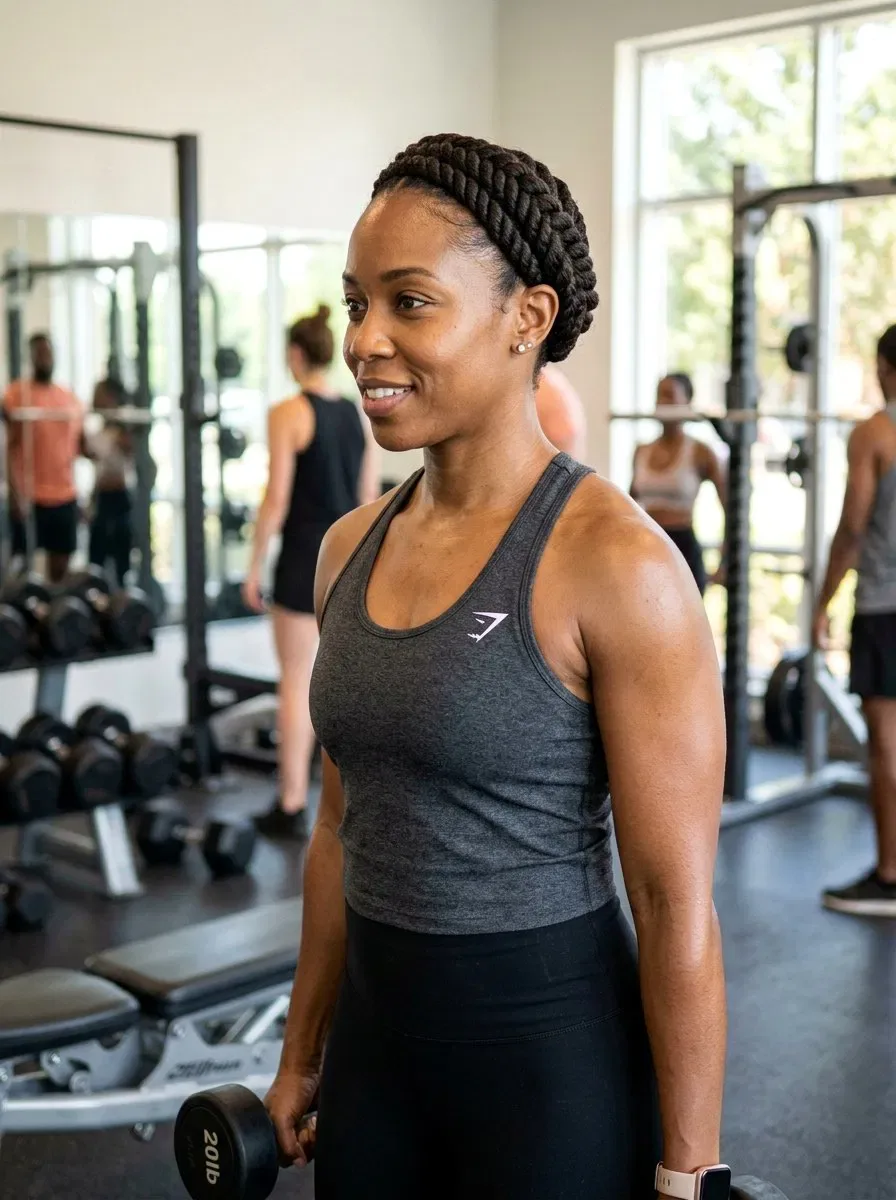
Common mistakes: twisting too tightly at the edges, which causes discomfort, or leaving the ends loose so they unravel. Twist firmly but comfortably, and tuck the ends into the bun.
Maintenance: flat twists hold for a few days and are easy to refresh one row at a time. After class, rinse the scalp and let the twists dry fully before covering them.
Quick verdict: cornrows’ quicker, gentler cousin. Excellent for textured hair and for anyone learning to braid flat styles.
17. High Puff
A high puff gathers natural or curly hair into a soft, rounded shape at the crown, held by a wide band or a puff cuff. It keeps the curls up and out of the face while letting them keep their shape, and it feels light and free compared with a tight bun.
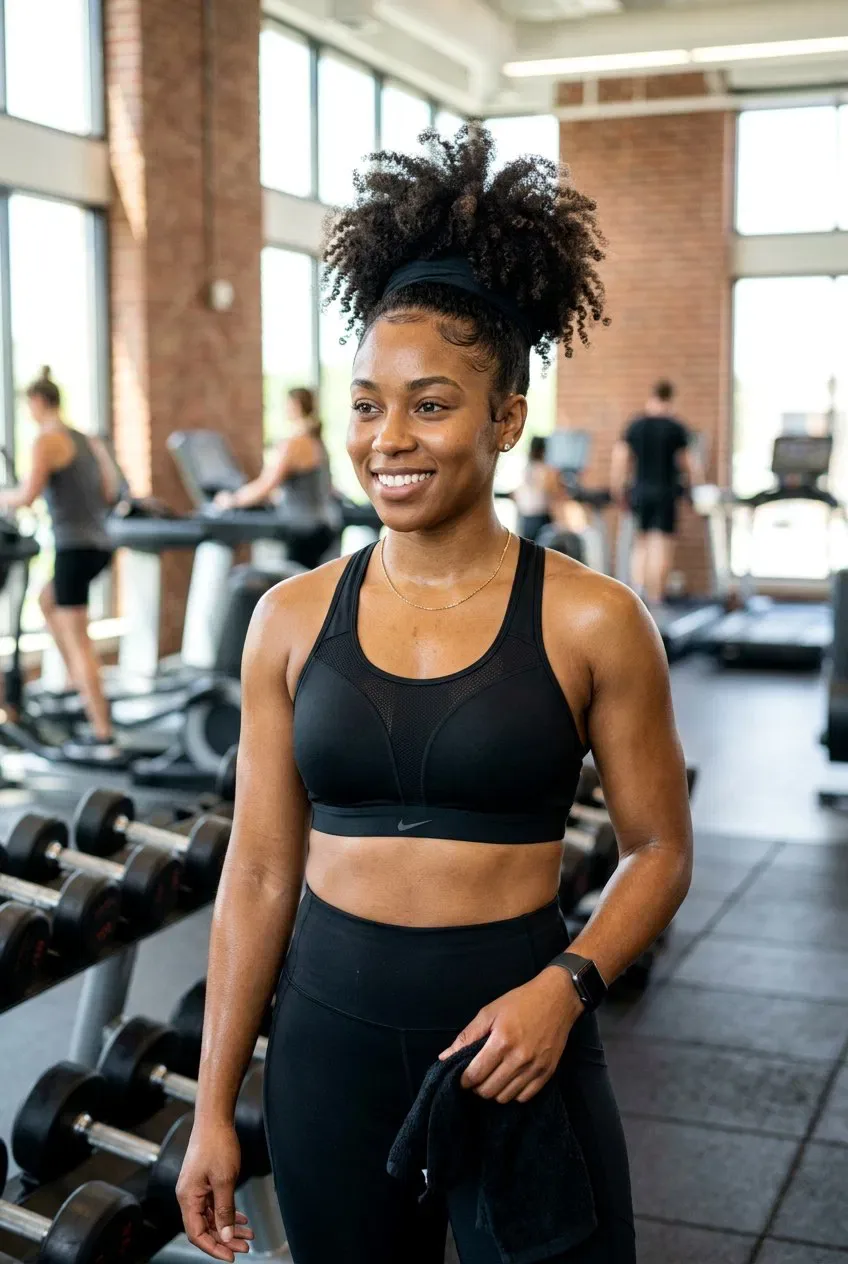
Common mistakes: pulling the puff too tight, which flattens the curls and strains the edges, or using a narrow elastic that digs in. A wide, soft band distributes the pressure and keeps the puff full.
Maintenance: a puff can loosen as you sweat, so check the band after the warm-up. A quick fluff with your fingers between rounds restores the shape without a full redo.
Quick verdict: joyful, light and perfect for curly and coily hair. Best for bag work and classes without headgear.
18. Braided Pigtails
Braided pigtails split the hair into two braids, one on each side, keeping the weight balanced and the neck cool. They are playful, practical and very secure, because each braid is short and light enough that it cannot swing hard or pull loose. Part the hair down the middle and braid each side to the ends.
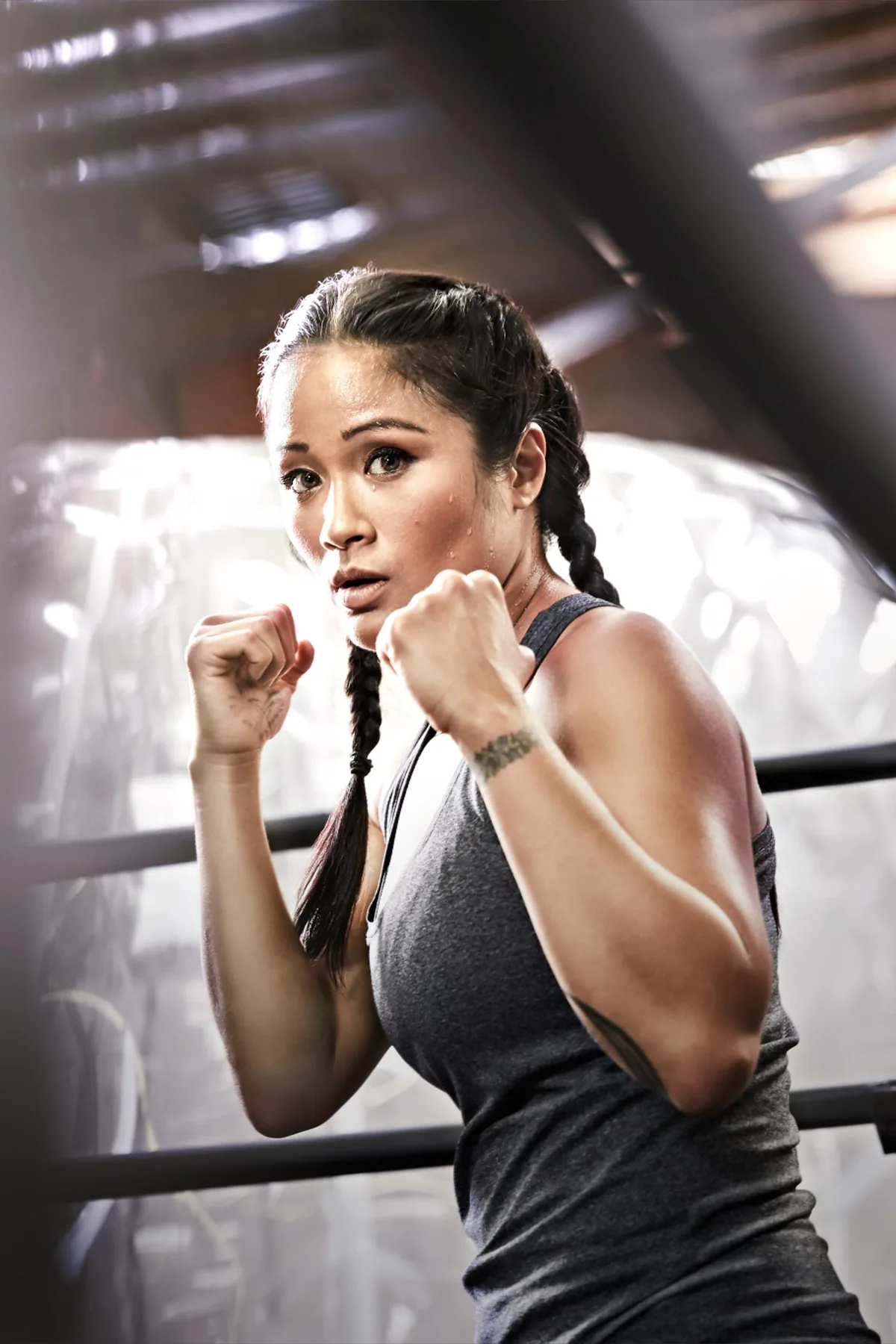
Common mistakes: parting the hair unevenly, or braiding the pigtails too low so they swing forward over the shoulders. Start the braids high enough that they sit behind the ears.
Maintenance: pigtails are easy to fix one side at a time between rounds. If one side loosens, re-braid just that side — the other will hold fine.
Quick verdict: fun, balanced and secure. A great choice for long hair and for anyone who finds a single braid too heavy.
19. Rope Braid Ponytail
A rope braid ponytail twists two sections of a ponytail around each other like a rope, which locks the tail into a tight, compact shape. It is faster than a three-strand braid, holds its shape well and swings far less than a loose ponytail.
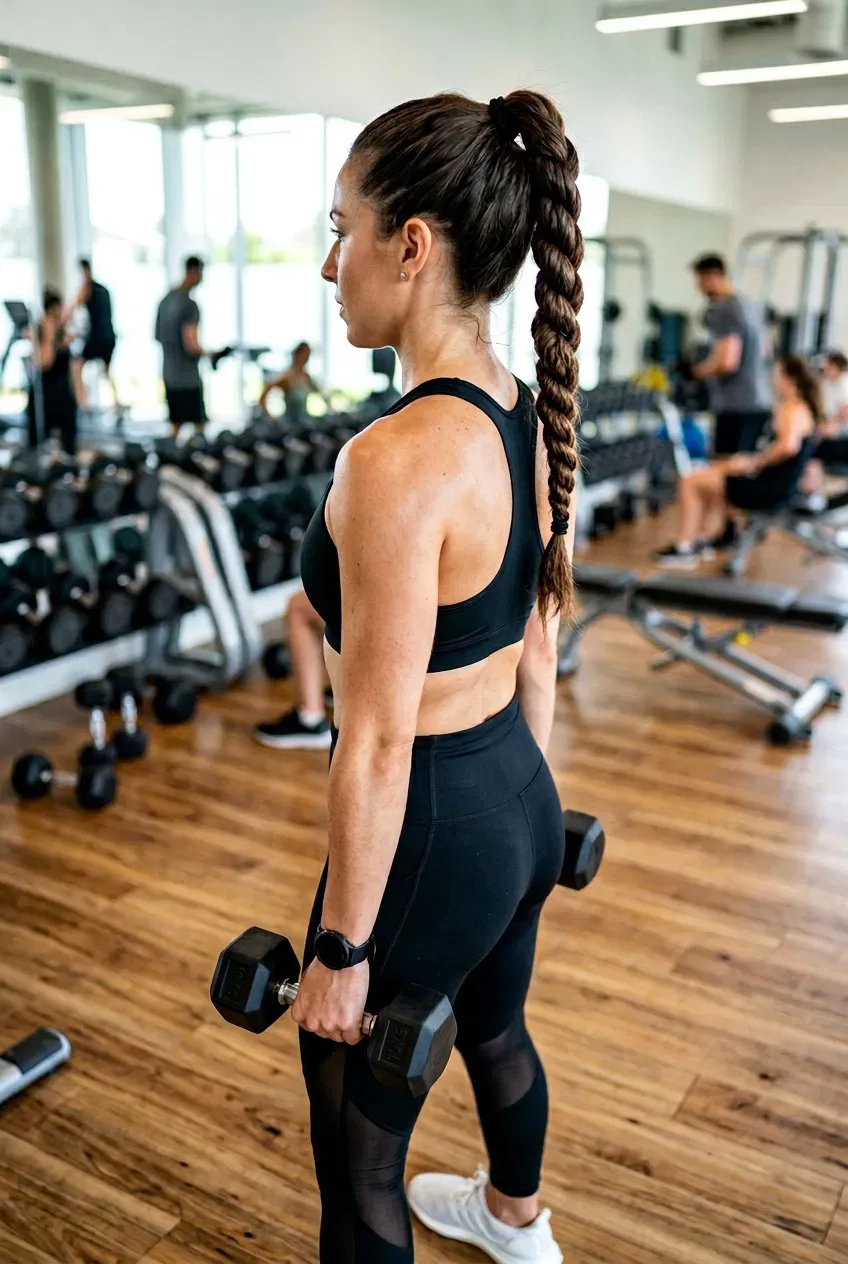
Common mistakes: twisting both sections in the same direction, which makes the rope unravel, or letting the ponytail base loosen while you twist. Twist the sections one way and wrap them the other way, and keep the base elastic tight.
Maintenance: the rope holds its shape with little help, but check the end elastic after the warm-up. If it has slipped, replace it and give the rope a quick re-twist.
Quick verdict: quick, tidy and tougher than a plain ponytail. A good backup style when you are short on time.
20. Sleek Middle-Part Low Bun
A sleek middle-part low bun is the polished cousin of the low bun: a dead-straight centre part, gelled sides and a neat bun at the nape. It looks intentional and elegant, sits flat under headgear and keeps the hairline completely under control.
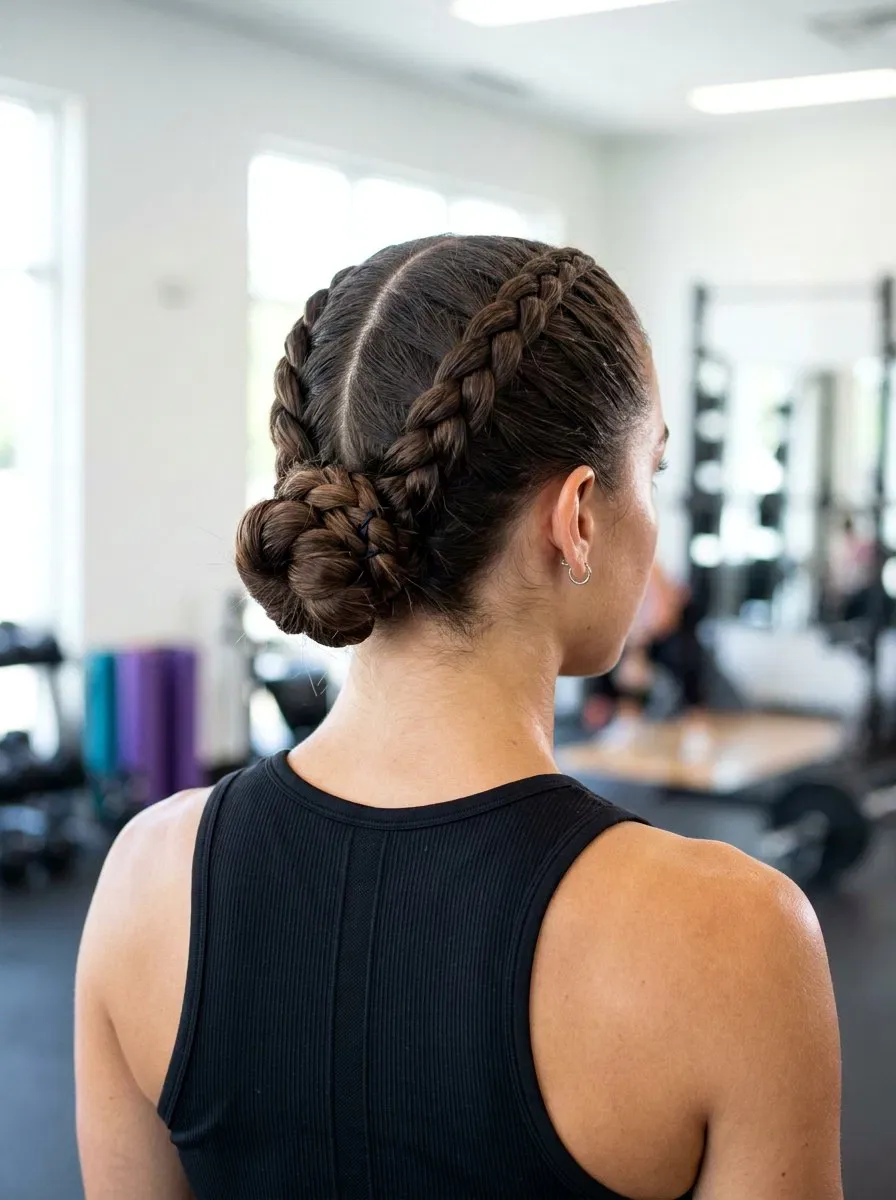
Common mistakes: a crooked part, which is very visible in a style this clean, or skimping on gel so the sides puff out with sweat. Take the time to part with a comb and gel the hair while it is damp.
Maintenance: smooth any flyaways with a wet hand or a touch of gel between rounds. The bun itself needs no attention if it is pinned properly.
Quick verdict: the most polished style here, and one of the most secure. Lovely for classes followed by somewhere you need to look smart.
21. Twisted Low Bun
A twisted low bun splits the hair into two sections, twists each one and wraps them together into a bun at the nape. The twist adds grip, so the bun holds better than a plain wrapped bun, and the style looks softer and more textured than a sleek bun.
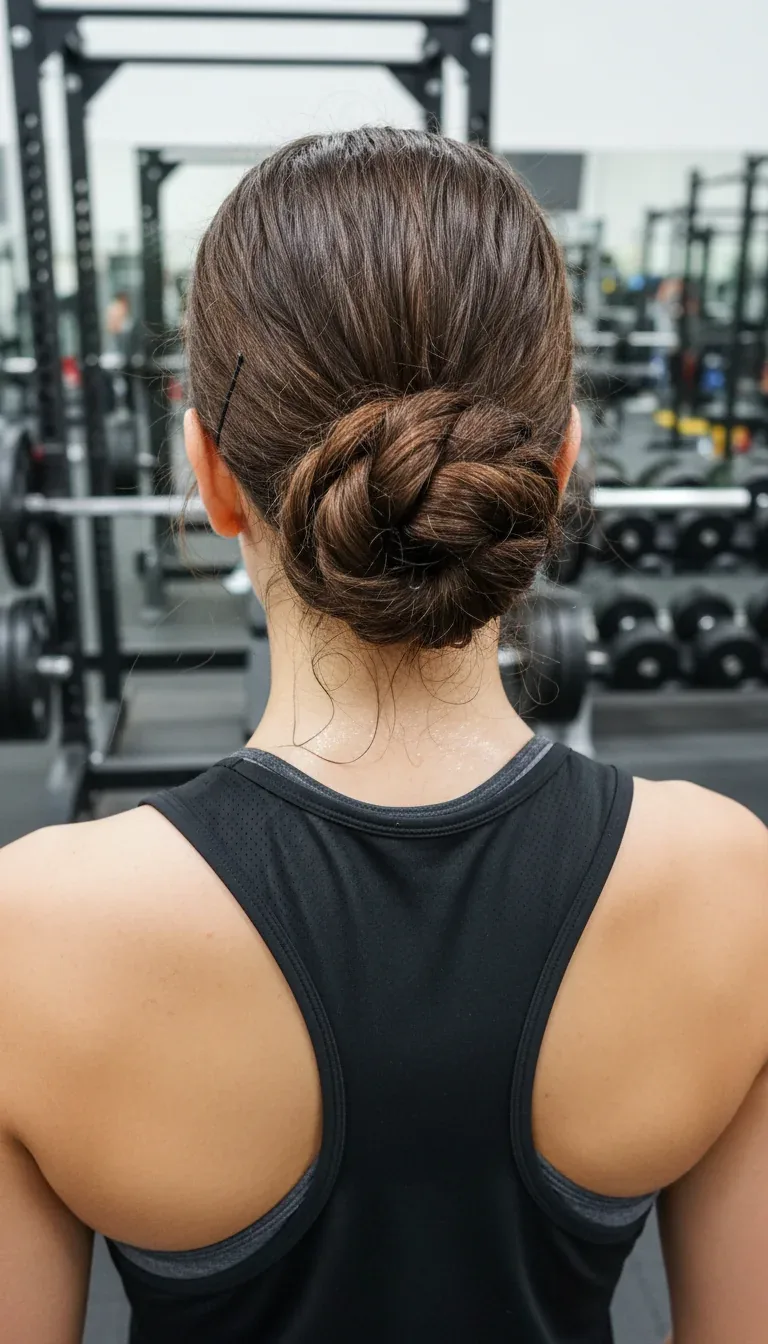
Common mistakes: twisting the sections in opposite directions, which makes the bun unravel, or wrapping too loosely so it sags. Twist both sections the same way and pin the bun firmly at four points.
Maintenance: this bun is forgiving — if it loosens slightly it still looks intentional. One extra pin at the base is usually all a repair needs.
Quick verdict: soft, secure and easy to do. A lovely middle ground between a sleek bun and a braid.
22. Chunky Braid
A chunky braid uses big sections for a thick, bold plait that sits flat down the back and barely moves. It is one of the fastest braids to do — three big sections, a few crosses, done — and the weight of the braid itself helps it stay put through a whole class.
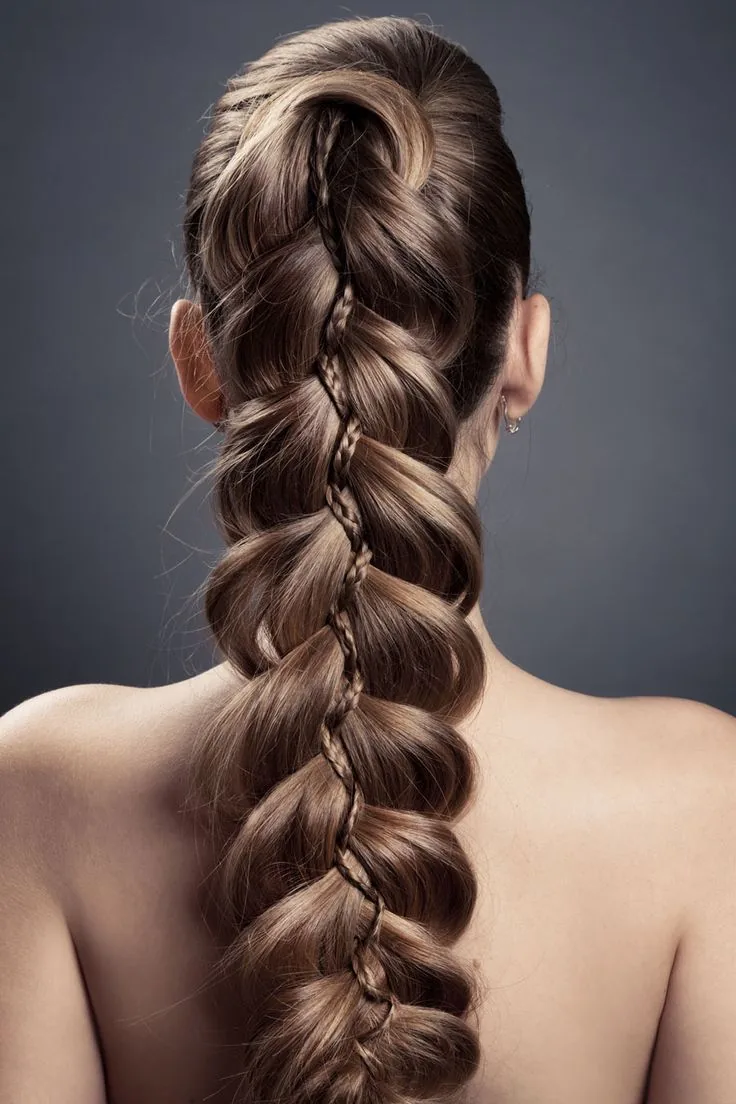
Common mistakes: making the sections uneven, which makes the braid lopsided, or leaving the end too long and unbraided. Keep the sections equal and braid right to the tips.
Maintenance: a chunky braid needs almost no upkeep, but the end elastic is the weak point. Double it up before class and you will not think about it again.
Quick verdict: bold, fast and very secure. The best braid for anyone who finds thin braids fiddly or slow.
23. Braid into High Bun
Braiding the hair first and then wrapping the braid into a high bun gives you a knot that cannot unravel. The braid locks the hair together, and the bun keeps it up and off your neck. It is compact, light for its size and far more secure than a plain top knot.
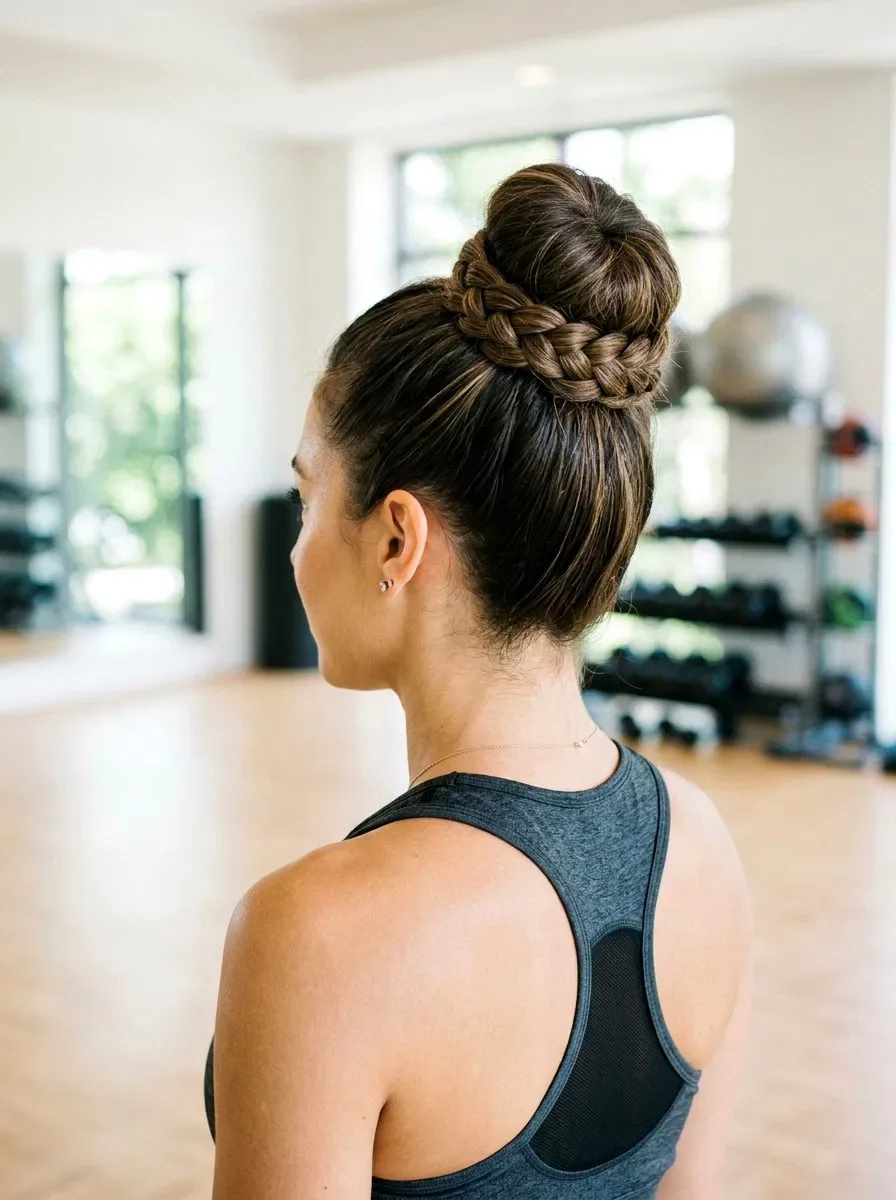
Common mistakes: wrapping the bun too loosely, or using too few pins because the braid feels secure. The braid helps, but the bun still needs four pins to stay put through ducking and weaving.
Maintenance: check the bun after the warm-up, when sweat starts. If it has shifted at all, re-pin it before the bag work — a bun that survives the warm-up will survive the class.
Quick verdict: the top knot, fixed. All of the coolness, none of the wobble.
24. Low Twisted Ponytail
A low twisted ponytail twists the hair at the nape before securing it, which adds grip and stops the ponytail sliding down. Gather the hair low, split it into two sections, twist them together and secure the ends. The twist keeps the style tidy and the tail controlled.
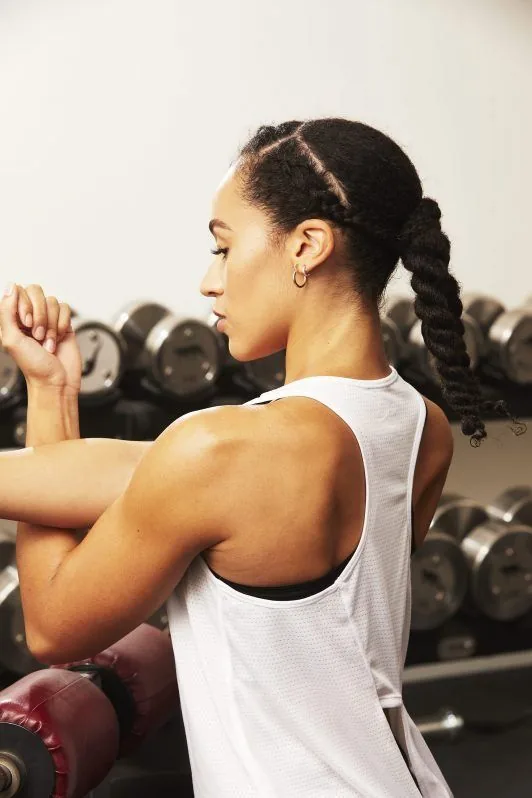
Common mistakes: twisting too loosely so the ponytail unravels, or tying it too high so it swings. Keep the twist firm and the ponytail low, and the style will stay quiet all class.
Maintenance: a quick re-twist between rounds takes ten seconds and restores the style completely. Carry a spare elastic in case the first one stretches out.
Quick verdict: simple, tidy and headgear-friendly. A good everyday boxing style for medium hair.
25. Boxer Braids with Coloured Elastics
Boxer braids with coloured elastics are the classic double Dutch braids with a small, fun twist: bright elastics at the ends, or threaded through the braid. The colour makes the style easy to spot in class photos, and the extra elastics add extra hold along the length of the braid.
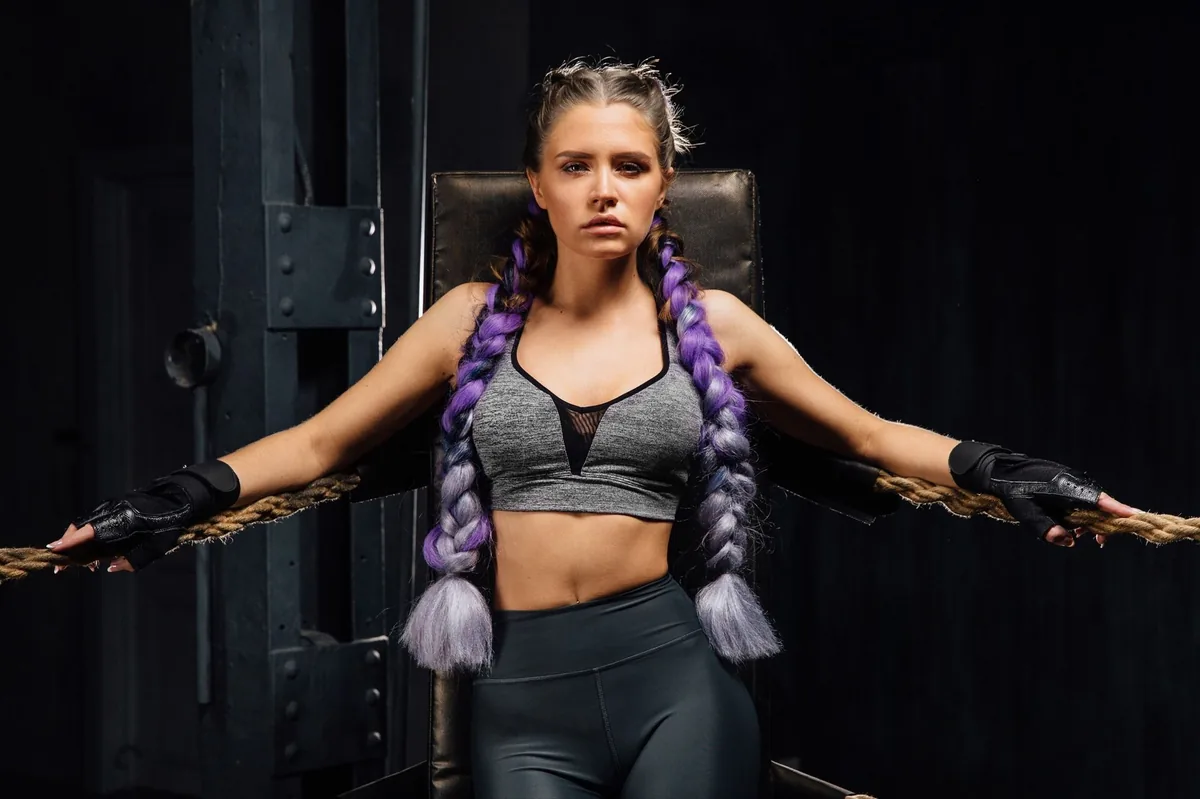
Common mistakes: threading elastics so tightly they snag the hair, or choosing elastics with metal joins that catch and break strands. Use snag-free elastics and keep any threading loose enough to slide out easily.
Maintenance: the extra elastics mean extra places to check, but each one is a backup — if one fails, the braid still holds. Remove them gently after class to avoid pulling hairs out.
Quick verdict: the same unbeatable boxer braids, with personality. Fun, secure and impossible to lose track of in a busy gym.
26. Short Hair Slicked Back with Headband
Short hair cannot be braided or bunned, but it can still be locked down. Gel the front layers back, add a wide, non-slip headband, and pin any escaping pieces flat. The headband does the work a braid would do on longer hair, keeping the fringe out of your eyes and the sweat out of your face.
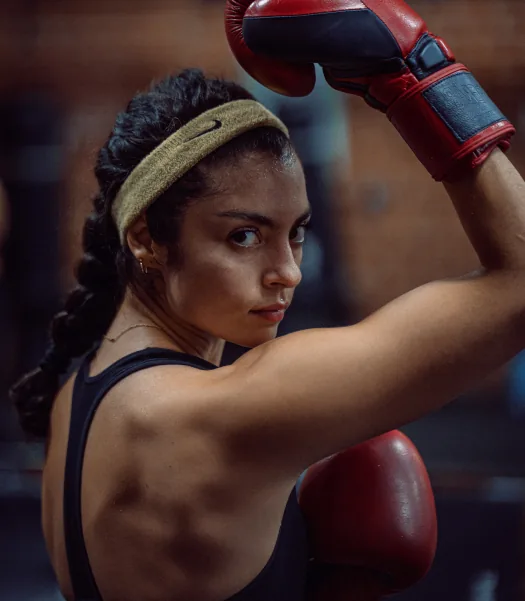
Common mistakes: choosing a headband that slides, or skipping the gel and relying on the headband alone. A headband on un-gelled hair slips within minutes — gel the hairline first, then add the band.
Maintenance: carry a spare headband in your gym bag. Headbands stretch with sweat, and a fresh one between rounds is a two-second fix that saves the whole session.
Quick verdict: the best answer for short hair. Simple, cheap and completely effective when the gel and the band work together.
27. Curly Pineapple Updo
A pineapple updo gathers curly hair into a loose, high puff at the very top of the head, keeping the curls off the neck and out of the face while protecting their shape. It is the curly-haired boxer’s best friend: quick, gentle and kind to the curl pattern.
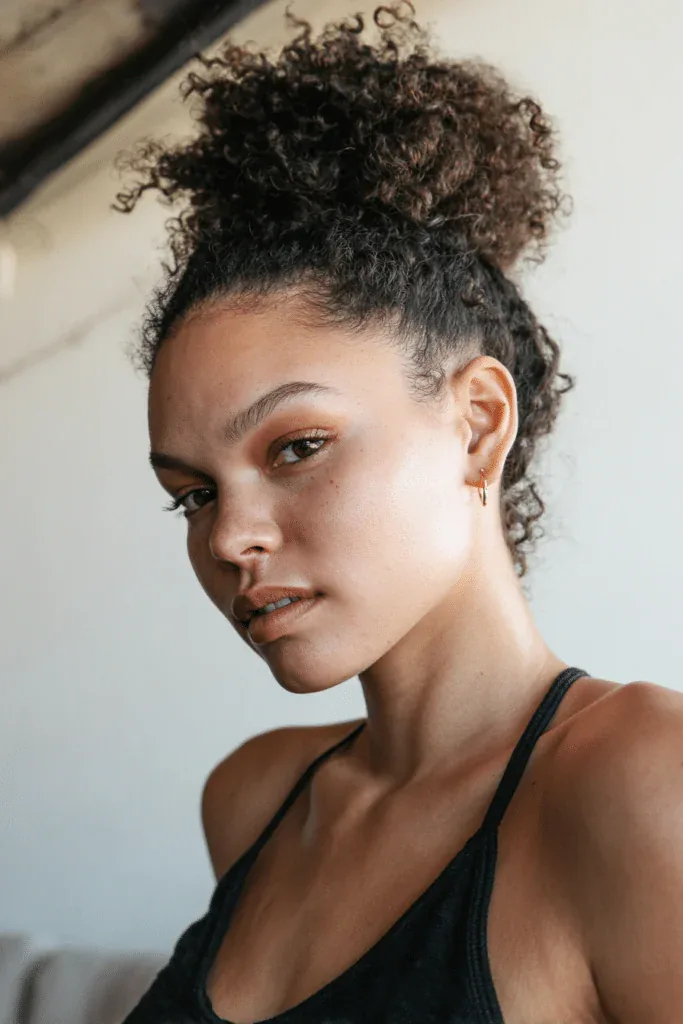
Common mistakes: pulling the pineapple too tight, which flattens the curls and strains the roots, or using a narrow elastic that leaves a dent. A loose, wide band or a silk scrunchie keeps the curls intact.
Maintenance: after class, let the curls down and scrunch them with a little water or curl cream to revive the shape. Never brush dry curls after a sweaty class — it turns them into frizz.
Quick verdict: quick, gentle and curl-friendly. Perfect for curly hair on bag-work days.
28. Braided Headband with Low Ponytail
A braided headband is a thin braid across the hairline that pins the front layers back, paired with a low ponytail for the rest of the hair. The braid acts as a built-in headband that cannot slip, and the low ponytail keeps the weight down and out of the way.
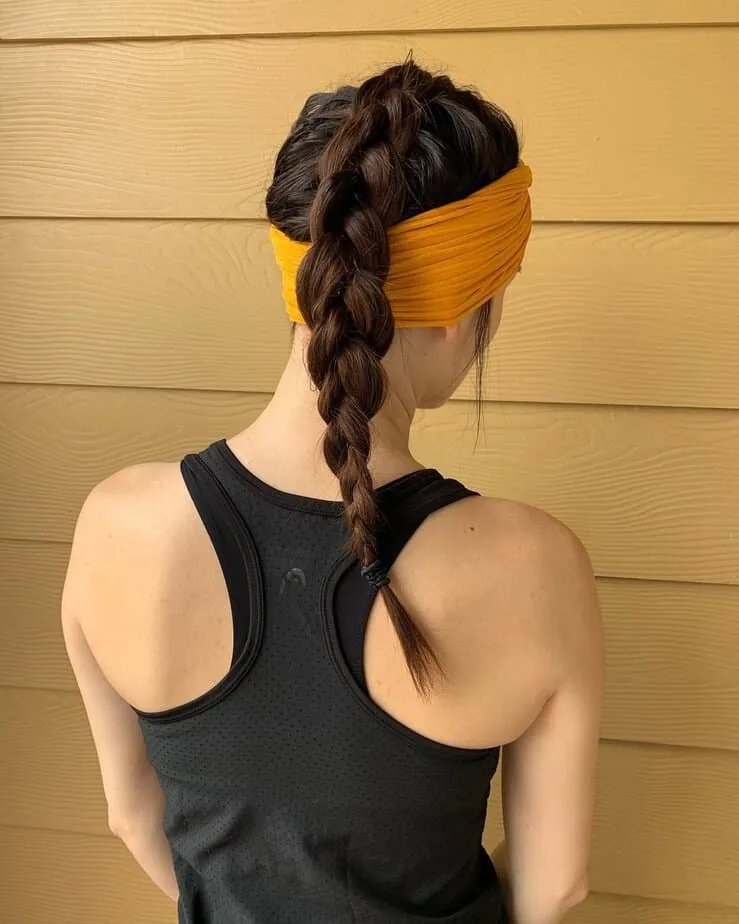
Common mistakes: braiding the headband too loosely so it slides forward, or making the ponytail too high so it fights with the braid. Braid the headband snugly and keep the ponytail low.
Maintenance: the headband braid is the part to check — if it has shifted, re-pin it between rounds. The ponytail will look after itself.
Quick verdict: clever, secure and pretty. A lovely choice when a plain headband keeps sliding off.
29. Double Buns (Space Buns)
Double buns split the hair into two small buns, one on each side of the crown, keeping the weight balanced and the neck completely clear. They are compact, secure and surprisingly practical — each bun is small enough that it cannot wobble, and together they hold all the hair.
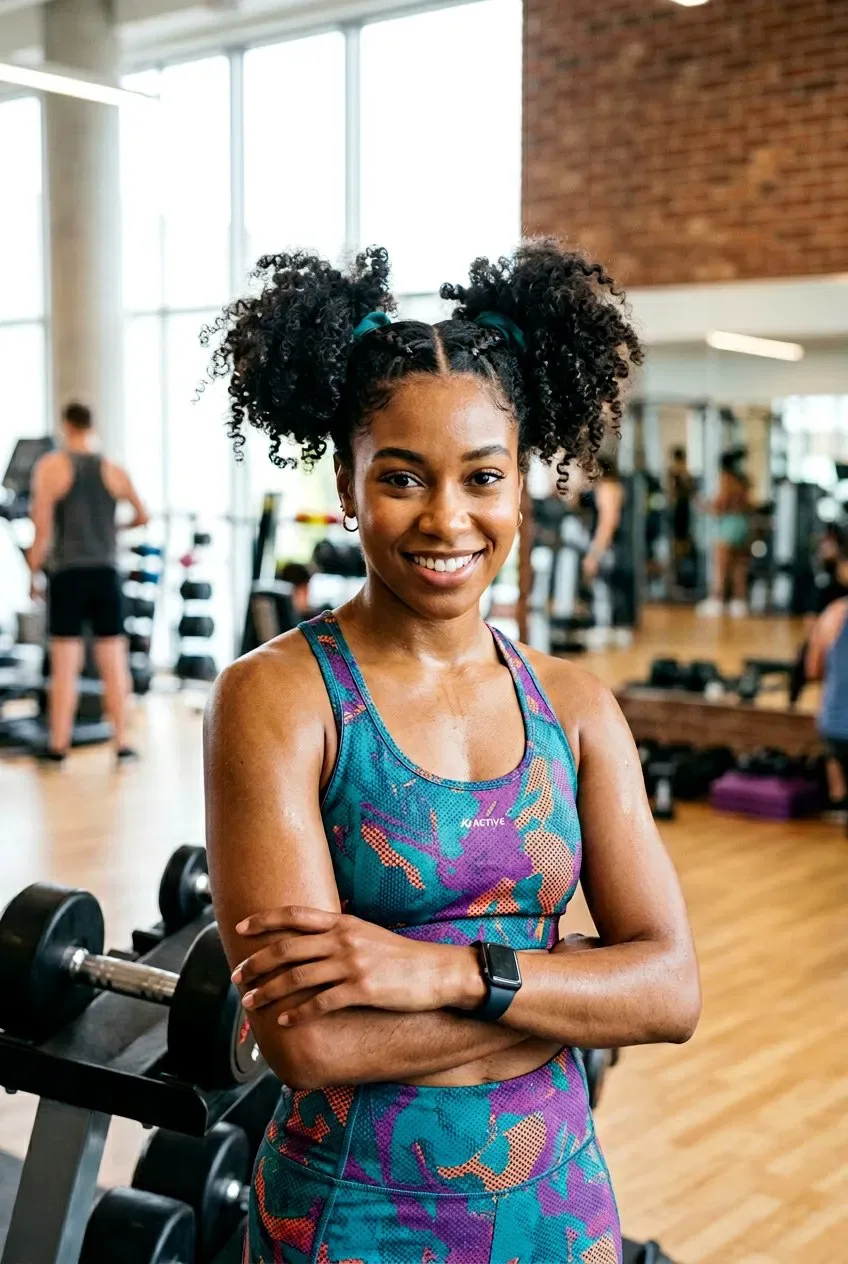
Common mistakes: making the buns uneven, or placing them too high so they press against headgear. Keep them at mid-crown height and check the parting is straight before you start.
Maintenance: four pins per bun is the rule. If one bun loosens, re-pin just that side — the other will hold while you fix it.
Quick verdict: fun, balanced and very secure. A great choice for medium and long hair, and for classes without headgear.
30. Dutch Braid into Ponytail
A Dutch braid that runs from the hairline to the crown and then becomes a ponytail gives you the best of both styles: the front is locked flat by the braid, and the back is free in a ponytail that cannot pull loose because the braid anchors it. It is secure, comfortable and looks sharp.
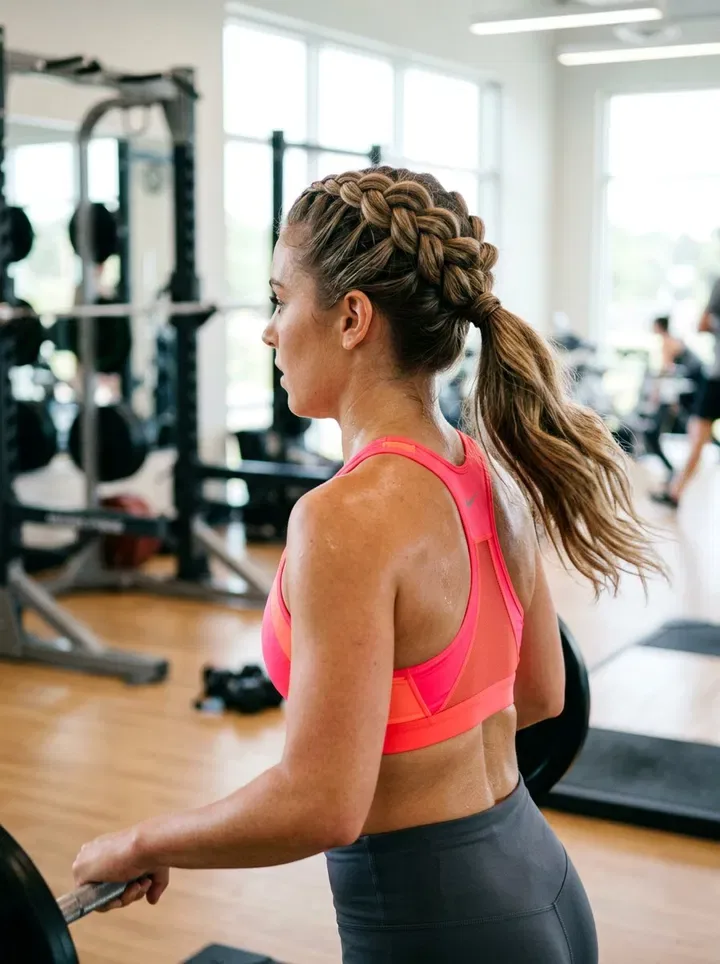
Common mistakes: ending the braid too early, which leaves the front layers loose, or tying the ponytail too loosely so it slides. Braid right to the crown before gathering the ponytail, and wrap the elastic twice.
Maintenance: the braid does most of the holding, so the ponytail needs little attention. A quick tug at the base between rounds tells you if the elastic needs replacing.
Quick verdict: one of the smartest hybrid styles here. The braid does the work, the ponytail keeps it simple.
31. Low Ponytail with Wrap-Around Braid
A low ponytail with a wrap-around braid takes a small section of hair from the ponytail, braids it and wraps it around the elastic to hide it. The wrap adds grip at the base — the point where ponytails usually fail — and turns a plain ponytail into something that looks finished.
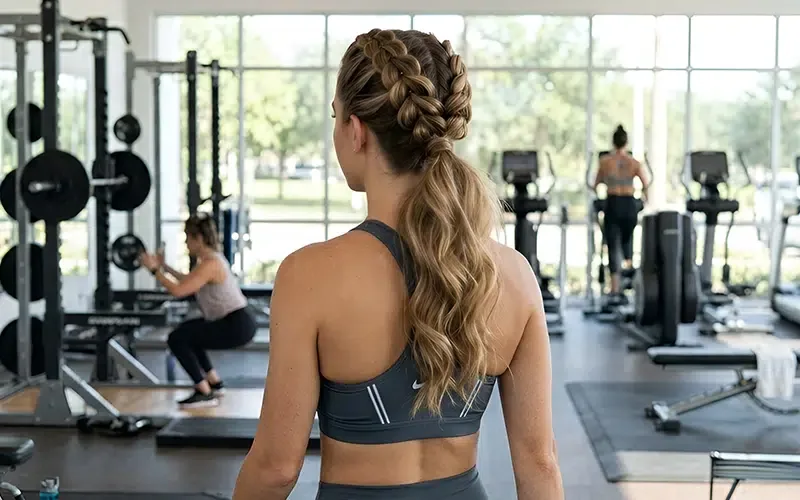
Common mistakes: wrapping the braid too loosely so it slides off the elastic, or taking too much hair for the wrap so the ponytail thins out. A thin braid, wrapped tightly and pinned underneath, is all you need.
Maintenance: pin the end of the wrap underneath the ponytail with one bobby pin. If it comes loose, re-wrap it between rounds — it takes twenty seconds.
Quick verdict: the plain ponytail, upgraded. A small detail that adds real hold and a polished finish.
What is the best hairstyle for a boxing class?
A braid is the best hairstyle for a boxing class — a French braid, Dutch braid or boxer braids. Braids keep every strand contained, survive sweat and head movement, and fit under headgear. A low bun is the next best choice.
Can I wear my hair down to a boxing class?
No — hair worn down will fall into your face, block your vision and trap heat on your neck. Always tie it up, braid it or bun it before class, even if your hair is short.
How do I keep my hair from falling out during boxing?
Braid it rather than tying a plain ponytail, secure it in at least two places, and use bobby pins at the base of the style. Gel on the hairline and a sweat-wicking headband add extra hold.
What hairstyle works under boxing headgear?
Low, flat styles work best under headgear: a low bun, a low braid, cornrows or two flat Dutch braids. Avoid high buns and top knots, which press against the padding and push the headgear down.
How do I stop sweat ruining my hair after boxing?
Rinse your hair with water the same day, even if you do not shampoo. Wash properly a few times a week with a gentle shampoo, condition the ends, and avoid piling dry shampoo over sweat day after day.
What should I do with short hair for boxing?
Gel the front layers back, add a wide non-slip headband and pin any escaping pieces flat. A headband plus gel is the most reliable short-hair combination for boxing.
Are boxer braids actually good for boxing?
Yes — boxer braids were made for the sport. Two Dutch braids sit flat against the head, keep all the hair contained and survive sweat, head movement and headgear better than almost any other style.
Can I wear a claw clip to a boxing class?
A claw clip is fine for the warm-up, but it is not secure enough for bag work or sparring — it can snap or fly out when you duck or take a hit. Use braids or a pinned bun for the main class, and save the claw clip for the cool-down.
How tight should my hair be for boxing?
Secure but not painful. If your scalp aches or you get a headache, the style is too tight — loosen it slightly and add a pin instead of pulling harder. Comfort matters as much as hold.
How often should I wash my hair if I box every day?
Rinse with water after every class and shampoo two to three times a week, or more if your scalp feels itchy. A gentle, sulphate-free shampoo and conditioner on the ends will keep daily training from drying your hair out.
Conclusion
The right hairstyle will not win you a round, but the wrong one can certainly lose you one. Hair in your eyes, hair stuck to a sweaty neck, hair coming loose halfway through a combination — each one steals a little focus, and focus is everything in boxing. The 31 hairstyles for a boxing class in this guide all do the same simple job: they get your hair out of the way and keep it there, so you can think about your footwork, your guard and your next punch instead.
Start with a braid. A single French braid or a pair of boxer braids will carry you through almost any class, on almost any hair, with almost no practice. Once that feels easy, try a low braided bun for sparring days and a high braided ponytail for bag work. Keep your gym bag stocked with spare elastics and pins, rinse your hair after class, and practise any new style at home before you wear it to the gym. Your hair is sorted — now go and enjoy the class.