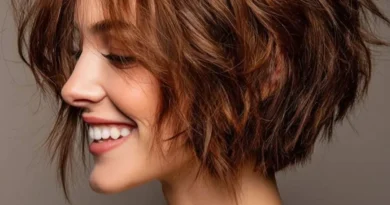
Dance Freer, Sweat Happier: Hairstyles for a Zumba Class That Stay Put Through Every Song
There is a moment in every Zumba class, about ten minutes in, when the music gets faster, the room gets warmer, and your hair makes its first escape attempt. A strand falls across your eyes during a salsa step, your ponytail slides sideways on a jump, and by the cool-down your carefully styled morning looks like it went through a spin cycle. That is exactly why the right hairstyles for a zumba class matter as much as the right shoes. The best Zumba hair disappears the moment the music starts, so all you think about is the beat, the steps and the joy of moving.
Zumba is not a gentle workout. It is an hour of jumping, spinning, shaking, sweating and laughing, usually in a warm room full of people moving in every direction. A style that looks lovely in the mirror at home can fall apart before the second song, so this guide picks only styles that hold up under real class conditions: braids that lock the hair to your scalp, buns that sit flat and secure, ponytails anchored so they swing instead of slipping, and quick fixes for the ten minutes between songs. Whether your hair is long, short, curly, fine or thick, and whether you take a gentle Gold class or a high-energy Strong session, there is a look here that will still look good in the class photo afterwards.
Pick one style that fits your hair length and how hard you plan to dance, try it once at home before class day, and pack two spare elastics and a few bobby pins in your gym bag. The 33 hairstyles for a zumba class below cover every length and texture, plus the practical know-how first — sweat-proofing, accessories that actually stay put, and the after-class refresh — so you can walk into the studio knowing your hair is already sorted, whatever the playlist does.
Sweat-Proofing Your Hair Before the First Song
Sweat is the quiet enemy of every Zumba hairstyle. It loosens pins, softens hairspray, makes the hairline frizzy and turns a sleek style into a halo of flyaways by the halfway mark, and a Zumba class produces more sweat than almost any other workout because the room is warm, the music never stops and the whole body keeps moving. The fix starts before class, not during it: dry shampoo at the roots absorbs sweat before it starts, a light mist of strong-hold spray sets the style, and a fabric headband or sweatband at the hairline catches the worst of it before it reaches your face.
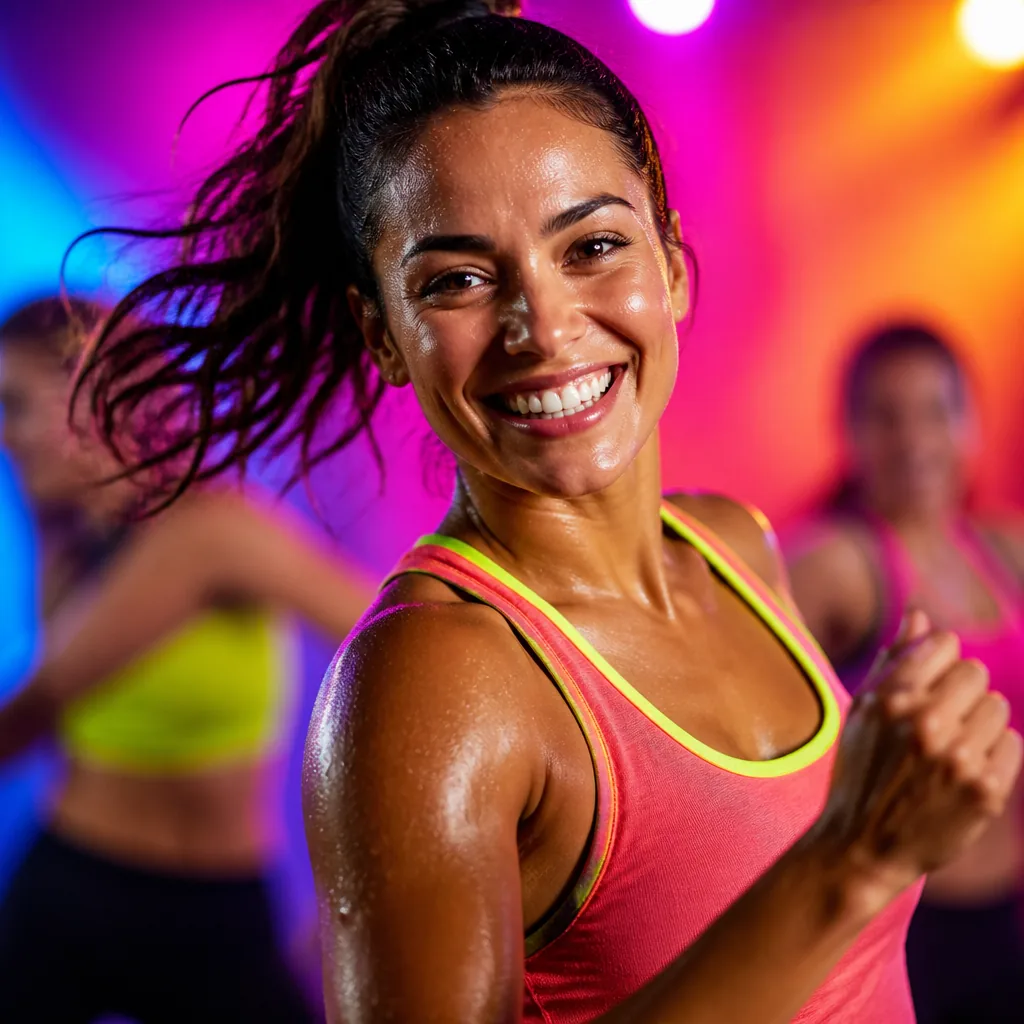
Best for: everyone who sweats a lot, anyone with a frizzy hairline, and dancers who take back-to-back classes. The routine takes two minutes and it works on every hair type. Put the dry shampoo in before you style, not after, so it sits at the roots where the sweat starts, and keep the spray light: a helmet of hairspray will flake when you sweat, while a light mist holds without cracking.
How to style: start with day-old or second-day hair if you can, since it grips better than freshly washed hair. Work a little dry shampoo or texturising powder through the roots, brush it out, then build your style on that grippy base. Finish with a sweatband or a wide fabric headband at the hairline, and pack a mini dry shampoo and two spare pins in your gym bag for the water break. What to ask: ask your stylist for a cut that holds texture well, since blunt, heavy ends slip out of pins faster than layered ends when you sweat.
The Bounce Test: Will Your Style Survive an Hour of Jumping?
Every style in this guide should pass one simple test before you trust it in a Zumba class. Stand in the middle of your room, jump five times in a row, then shake your head side to side, then do a quick spin. If anything has moved, loosened or started to slip, the style is not class-ready, and it is far better to discover that at home than halfway through a merengue when the whole class is watching.
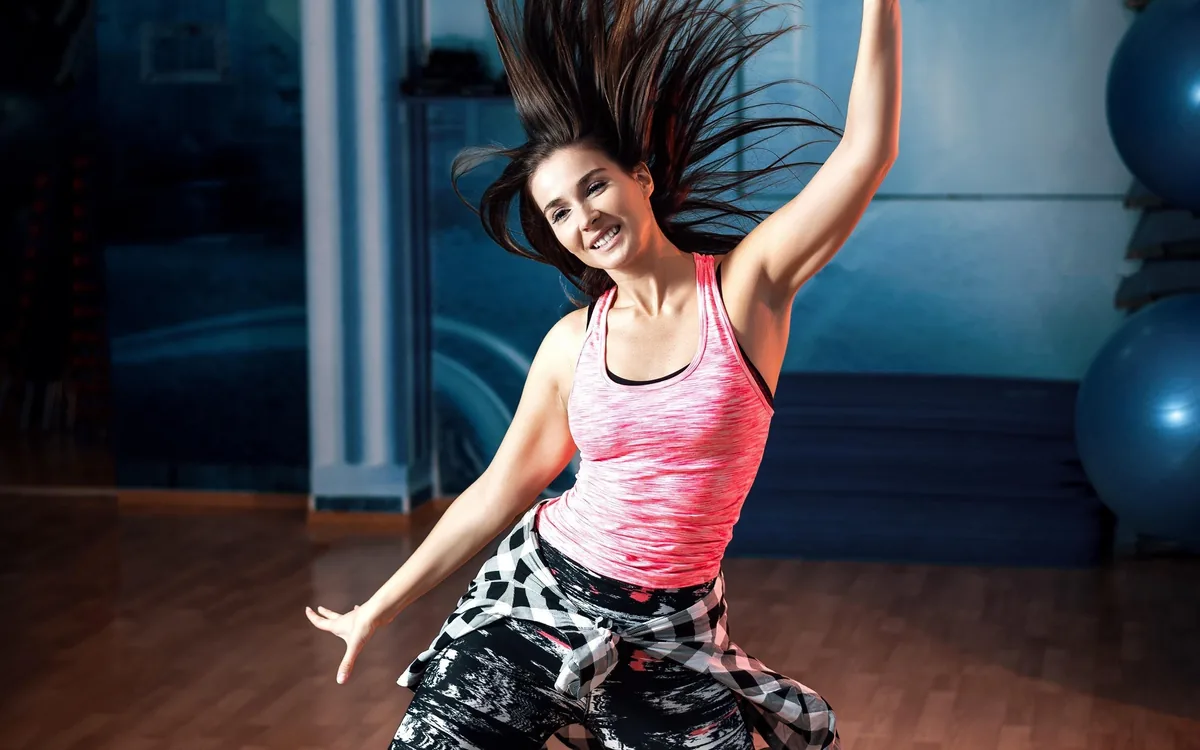
Best for: testing any new style the night before class, especially buns and ponytails that feel secure in the mirror but have never been jumped in. The test takes thirty seconds and it tells you exactly where the weak point is, so you fix the right thing instead of adding more hairspray and hoping.
How to style: if the bun sags, you need more pins through the centre rather than around the edge. If the front pieces fall, you need a braided front section or a headband, not more spray. If the elastic slides down, the hair was too smooth or too heavy for that elastic, and a fabric-covered band or a second elastic will fix it. What to ask: ask a friend to watch the back of your head while you jump, since the back is where most styles fail first and you cannot see it yourself.
Matching Your Hairstyle to the Class Intensity
Not every Zumba class asks the same of your hair. A gentle Zumba Gold class, with slower steps and smaller movements, lets you wear softer styles: a loose low ponytail, a half-up look, even soft waves with a headband will survive it happily. A standard Zumba Fitness class is the middle ground, with steady jumping and turning that calls for a proper updo. A high-intensity Strong session or a Zumba Toning class with weights is the hardest test of all, with fast direction changes and heavy sweating that only fully contained styles can survive.
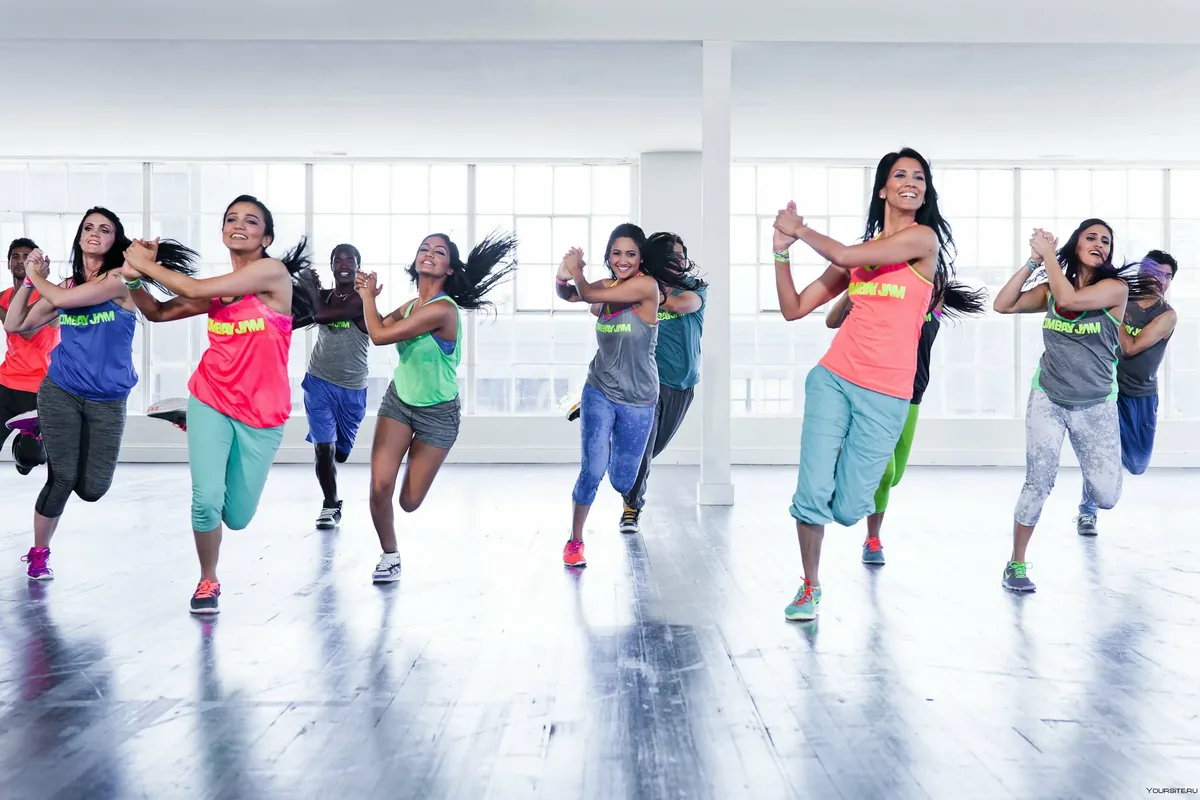
Best for: anyone who takes more than one kind of class, and beginners who are not sure how hard their class will be. When in doubt, style for the hardest class you might take that day, since a secure braid looks just as good in a gentle class, while a loose style will not survive a hard one.
How to style: check the class description before you leave the house and pick accordingly: contained braids and buns for high intensity, anchored ponytails for standard classes, softer half-up styles only for Gold and low-impact sessions. What to ask: ask your instructor how intense the class runs, especially for a new class or a guest instructor, and keep one spare elastic on your wrist so you can tighten a ponytail mid-class without leaving the floor.
Accessories That Stay Put (and the Ones That Fly Off Mid-Song)
Not all hair accessories survive a Zumba class. Bobby pins with a wavy grip hold, while straight, cheap pins slide out within minutes. Fabric-covered elastics grip damp hair, while thin rubber bands snap or slide. Large claw clips hold a twist through jumps, while small decorative clips pop open on the first turn. The rule is simple: if an accessory was designed for looking pretty at a desk, it will not survive an hour of dancing.
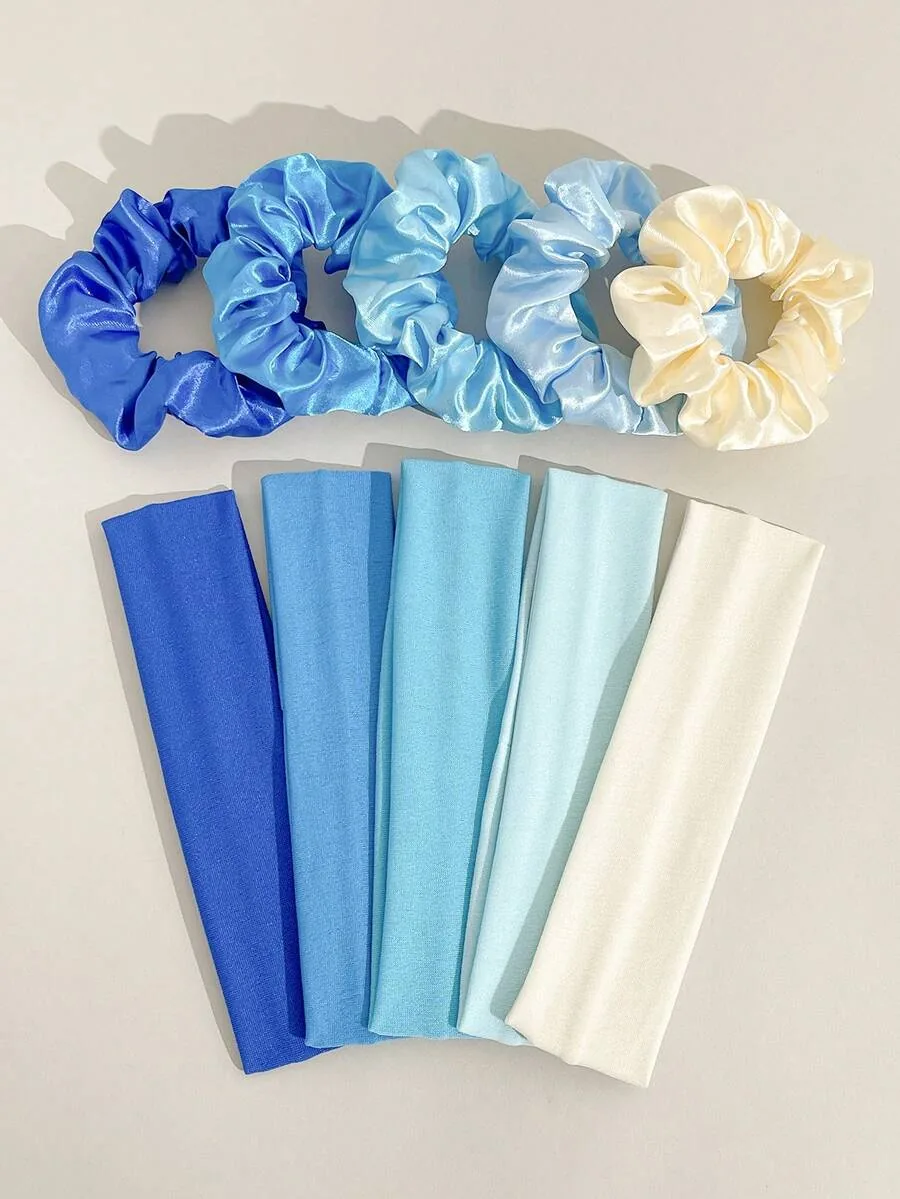
Best for: anyone whose clips and pins keep disappearing on the studio floor. The winners are boring but reliable: U-shaped hairpins, crossed bobby pins, satin scrunchies, wide fabric headbands and matte claw clips, all of which grip better when your hands and hair are damp.
How to style: cross two bobby pins over each other at the anchor point instead of using them singly, since the cross locks the hair in place. Choose a sweatband in a dark colour or your class colours, since a white band shows sweat quickly. What to ask: avoid anything metal and thin, anything with a heavy jewel, and anything that dangles, since it will either fall out, hurt when it hits the floor, or catch on another dancer. Test every new accessory with the bounce test before class day.
Styles by Hair Length and Texture
Long hair has the most options and the most risk in a Zumba class. It can be braided, bunned, twisted and coiled, but it is also heavy, and a heavy bun pulls at the neck during an hour of jumping. Split the weight: two braids instead of one, a braided bun instead of a plain bun, or a low style instead of a high one. Medium hair is the sweet spot, long enough to braid and bun, short enough to stay light, and it suits almost every style in this guide.
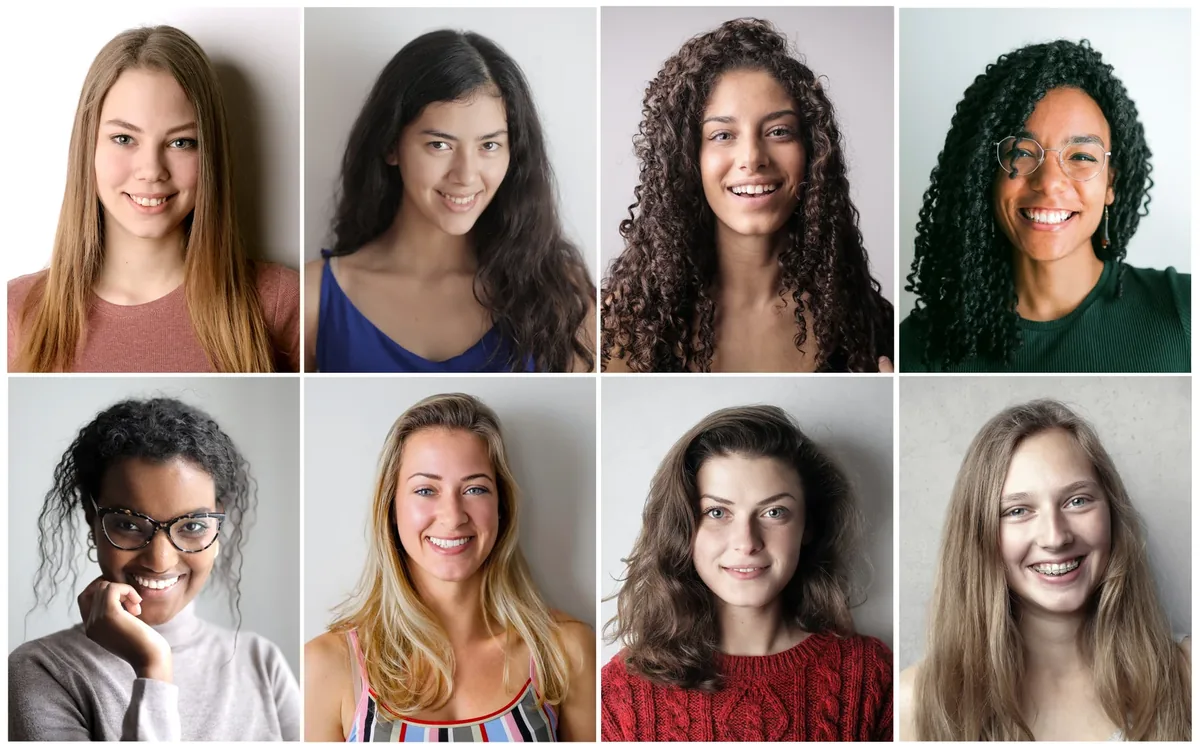
Best for: anyone choosing between two styles and not sure which suits their hair. Short hair is the easiest in class, since a pixie or a bob barely moves, but the front pieces still need managing with a headband or clips. Curly hair needs the most care: it must be contained without being pulled flat, so pineapple updos, high puffs and loose braids work better than tight ponytails.
How to style: fine, straight hair is the slipperiest, so it needs texture first, a little dry shampoo or texturising spray, before any pin will hold. Thick hair needs stronger elastics and more pins, but it holds a style once it is in. What to ask: ask your stylist which lengths suit your texture for an active lifestyle, since a cut that looks great still can be a nightmare to contain in class.
Quick Fixes Between Songs: The 30-Second Hair Reset
Zumba classes rarely give you a proper break, but the water break between songs is enough for a thirty-second hair reset, and that reset can save the second half of the class. The trick is to know your one fix before the class starts: re-pin the front, tighten the elastic, smooth the flyaways, and you are back on the floor before the next song begins. Trying to rebuild a whole style mid-class takes too long and you will miss the steps.
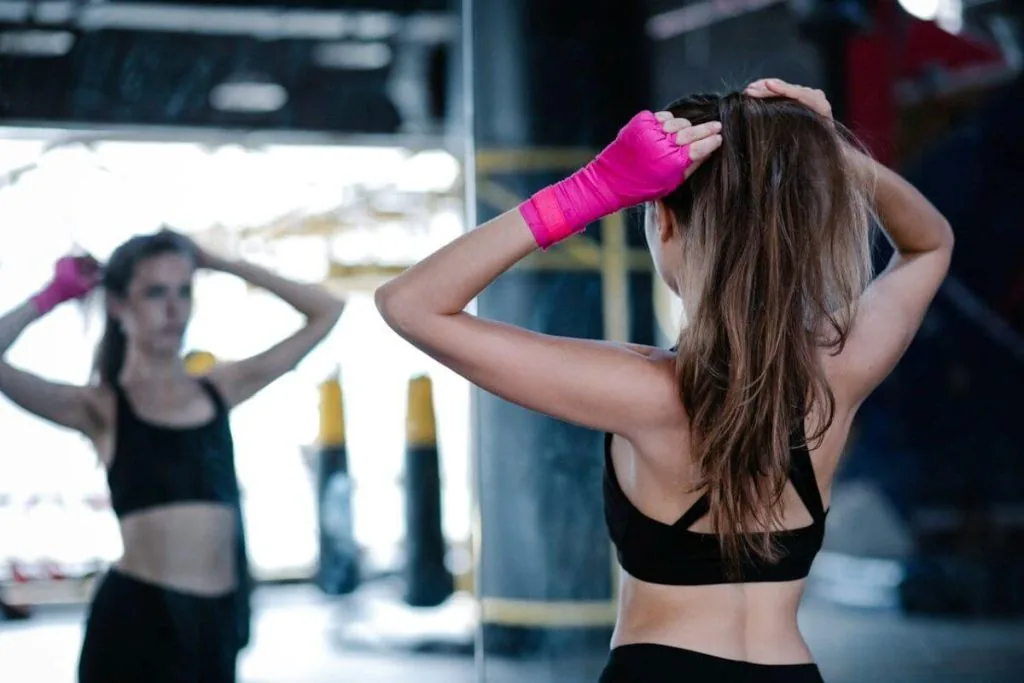
Best for: anyone whose style loosens halfway through, and dancers in back-to-back classes who get ten minutes in a crowded hallway. Keep a tiny kit in your gym bag and never unpack it: three bobby pins, two spare elastics, one claw clip, a mini brush and a travel dry shampoo.
How to style: the claw clip is the hero here, because it turns any half-undone style into a secure twist in five seconds. If your ponytail has slid down, gather it again and add the second elastic below the first instead of replacing the whole thing. What to ask: ask yourself which part of your style fails first, and pack the fix for that part specifically, since a kit built around your own weak point beats a generic one every time.
The After-Class Refresh: From Sweaty to Street-Ready
The class ends, the bun comes down, and the hair underneath is damp, dented and flattened. The after-class refresh is a small ritual that turns sweaty Zumba hair back into normal hair in five minutes, and it starts with dry shampoo at the roots, massaged in and brushed through, which absorbs the sweat and lifts the flatness. Then brush the hair out gently, working from the ends upward so you do not drag tangles through damp hair.
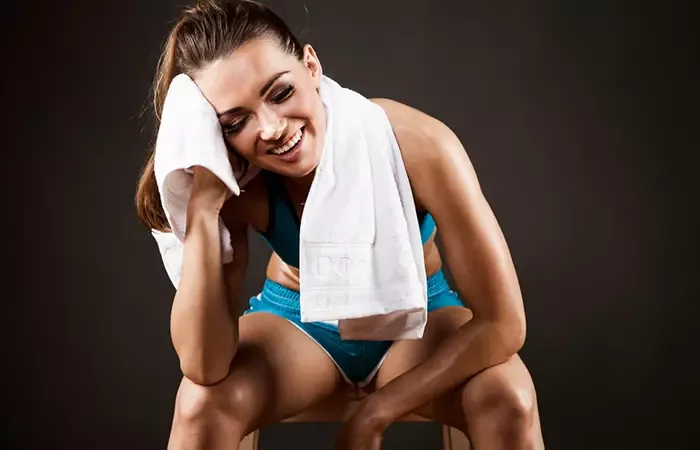
Best for: anyone heading straight to work, lunch or the school run after class. If you are heading out, a loose low ponytail or a soft braid hides the worst of the dampness and looks intentional rather than exhausted, and a silk scarf or a headband covers a frizzy hairline and adds polish in seconds.
How to style: at home, rinse rather than shampoo every time if you dance several days a week, since water alone removes sweat and a full wash every day strips the hair. Save the deep wash for two or three times a week, condition the ends, and your hair will survive a full Zumba schedule without breaking. What to ask: ask your stylist about a lightweight leave-in conditioner for the ends, since sweat and frequent washing dry the ends out first.
Keeping Your Hair Healthy When You Zumba Every Week
Dancing three or four times a week is wonderful for your body, but it is hard on your hair. Frequent washing, tight elastics, sweat and heat all add up, and the damage shows first as breakage around the hairline, where the same tight ponytail pulls in the same place every class. The fix is variety: change your style every class, change where the ponytail sits, and never wear the same tight style two days in a row.
Best for: regulars who dance several times a week and anyone noticing breakage or thinning at the hairline. Loose braids are the gentlest regular style, since they distribute the pull across the whole head instead of concentrating it at one elastic, and a silk or satin scrunchie is kinder than a plain elastic on damp hair.
How to style: use a weekly deep-conditioning mask on the ends, keep heat styling to a minimum on class days, and let your hair dry naturally when you can. What to ask: ask your stylist for a trim every six to eight weeks to keep split ends from travelling up, and mention how often you dance, since a stylist who knows your routine can cut for it instead of against it.
1. The High Ponytail That Survives Every Jump
The high ponytail is the classic Zumba hairstyle for a reason: it keeps every strand off your neck, it swings with the music, and it takes less than a minute to do. The trouble is that a plain ponytail will not survive an hour of jumping, since sweat loosens the elastic and the whole thing slides down by the third song. The fix is the anchor: two elastics instead of one, the second placed a centimetre below the first, and a strand of hair wrapped around the base to stop the whole thing slipping.
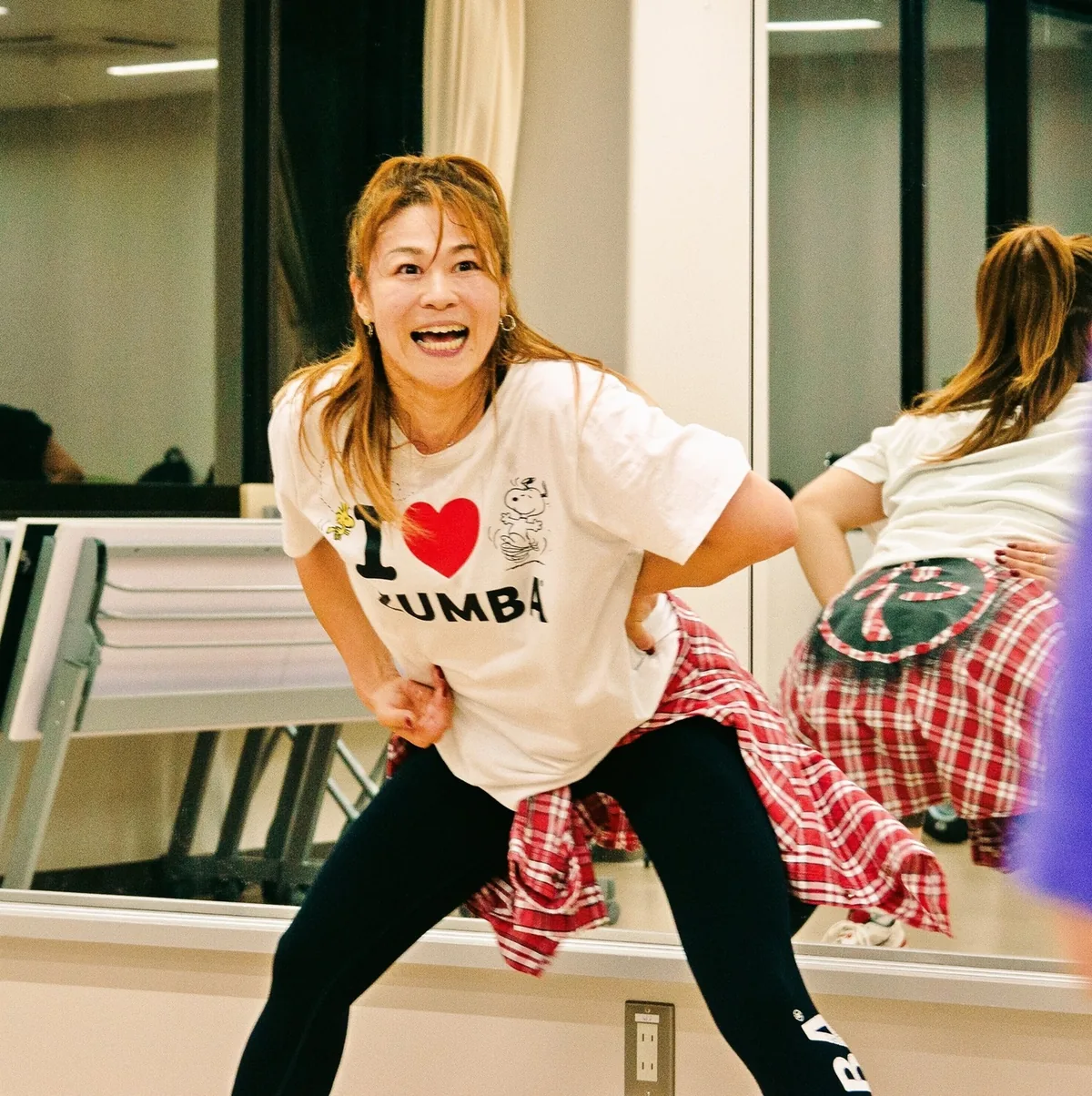
Best for: medium to long hair, high-energy classes, and anyone who hates hair on their neck while dancing. The high ponytail suits oval and heart-shaped faces especially well, since it lifts the face and shows the cheekbones, and it works on straight, wavy and curly hair alike.
How to style: gather the hair high at the crown, secure it with a strong fabric elastic, then add the second elastic and wrap a thin strand around both, pinning the end underneath. What to ask: ask your stylist to keep the layers long around the crown, since short layers slip out of a high ponytail first when you jump.
2. Double Dutch Braids for Maximum Hold
Two Dutch braids are the most secure style in this whole guide, because they split the weight evenly, sit flat against the head, and survive jumping, spinning, shaking and floor work without budging. Nothing hangs loose, nothing swings into your face during a fast turn, and the braids actually get more secure as the class goes on. They are also the style that looks most at home in a Zumba studio, where a neat bun can feel too formal for the party atmosphere.
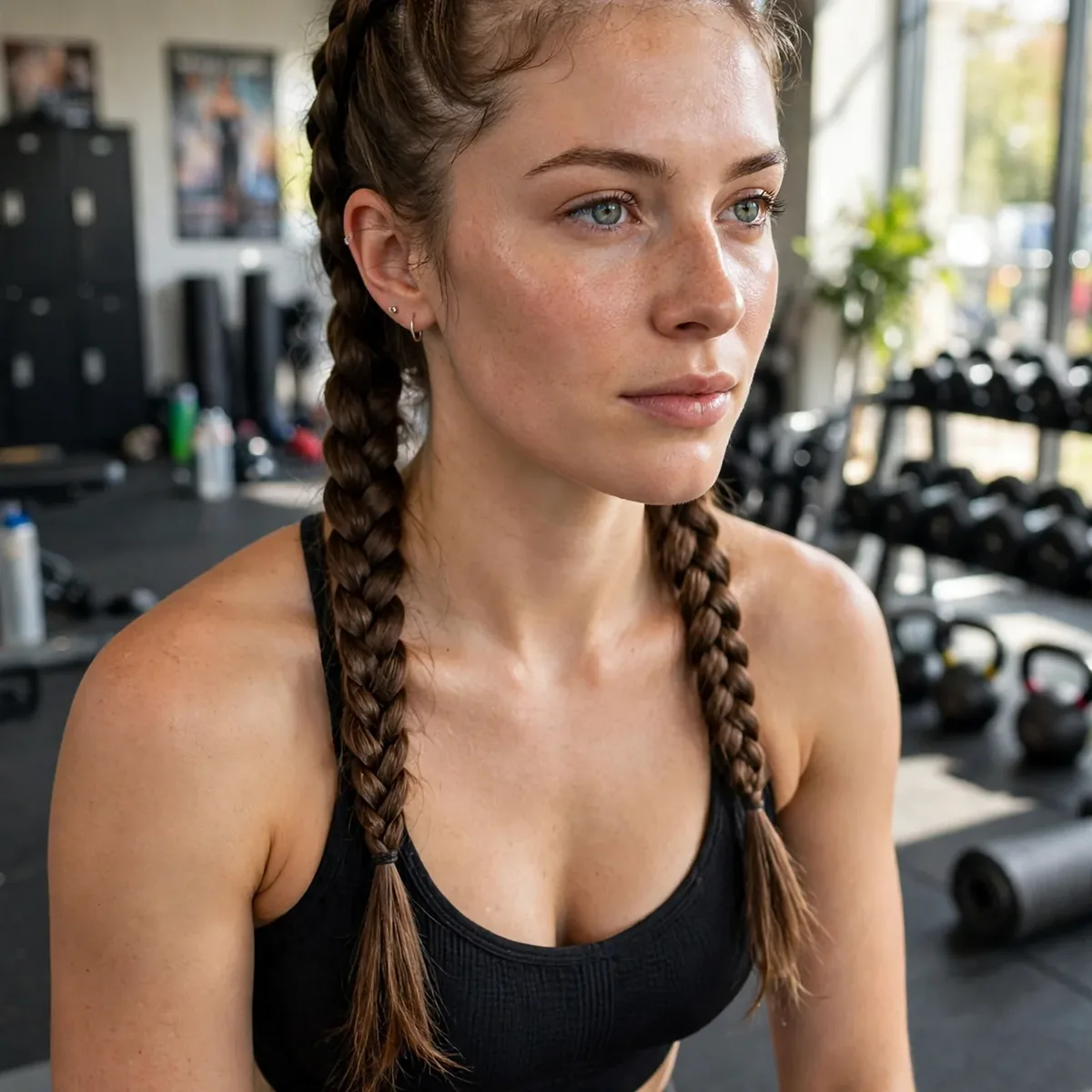
Best for: long or thick hair, high-intensity classes, and anyone whose hair escapes from every other style. The braids suit every face shape, since the centre part and the flat braids frame the face neatly, and they work beautifully on wavy and curly hair too.
How to style: part the hair down the middle, braid each side tightly from the hairline to the nape, and finish with small elastics, tucking the tails into a low bun for a fully contained version. What to ask: ask for the braids to start high at the crown so they stay visible and secure, and for the tails to be tucked away on floor-work days.
3. The Messy Top Knot That Stays Put
The messy top knot looks effortless, and in a Zumba class it is one of the most practical styles you can wear. It keeps the hair right out of the way while you dance, it sits high enough that it never touches your neck, and it takes under a minute to build. The one refinement that makes it class-ready is pinning the face-framing pieces back, so the loose strands that usually fall forward during a spin are secured before you walk in.
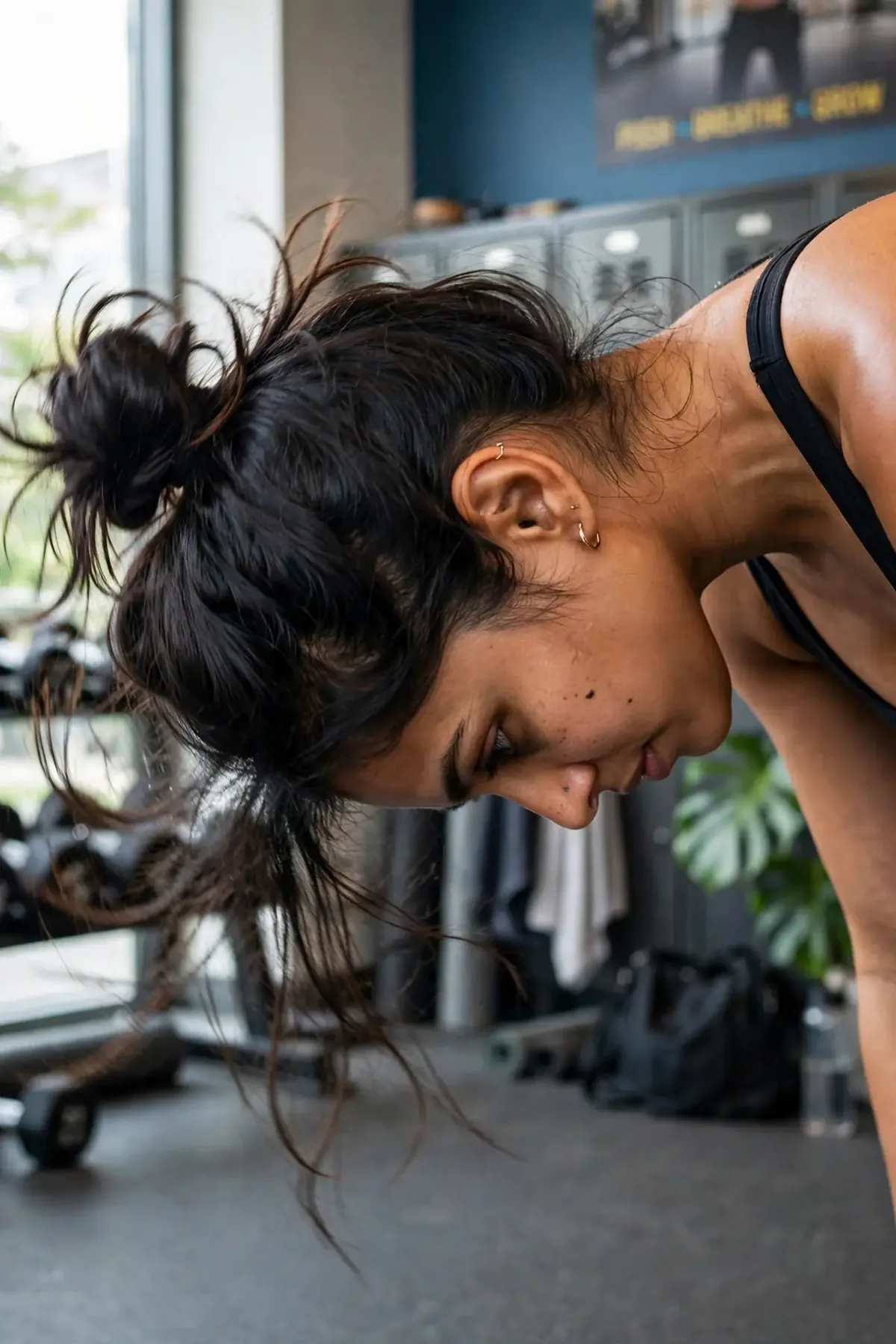
Best for: medium to long hair, busy mornings, and anyone who wants a style that looks relaxed rather than severe. The top knot flatters round faces by adding height, and it works on straight, wavy and curly hair, though curly hair holds the knot best of all.
How to style: gather the hair high, twist it loosely and pin it into a soft knot, then take the two front pieces and pin them back behind your ears with flat clips. What to ask: ask your stylist to keep enough length for a knot, since even a short knot holds better than loose hair, and choose a matte elastic rather than a shiny one, since it grips better when your hands are damp.
4. The Bubble Braid That Moves With the Music
The bubble braid is pure fun, and it is surprisingly class-friendly. Because the hair is divided into sections by elastics all the way down, nothing hangs loose, and each bubble is anchored, so the style does not slide forward during head movements or sharp direction changes. It also moves beautifully, which matters in Zumba, where the hair is part of the party even in class.
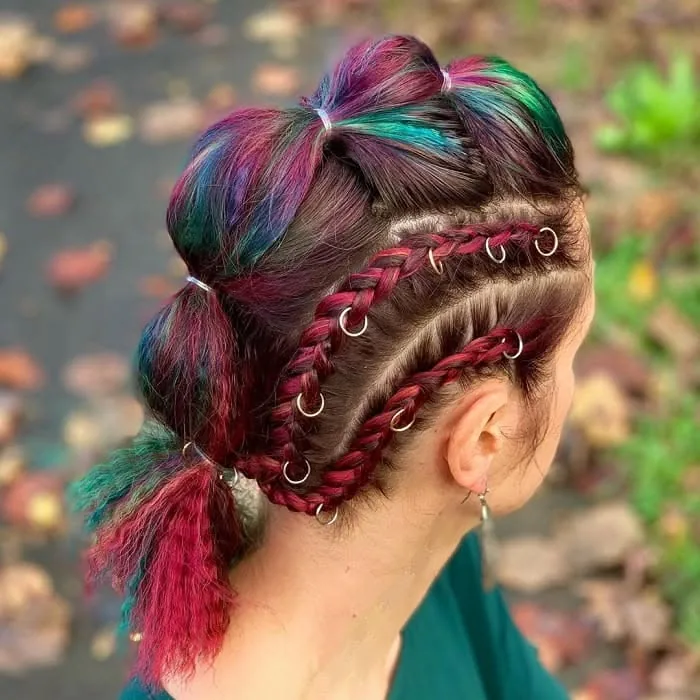
Best for: long hair, dancers who want a playful look, and anyone bored of the same ponytail every class. The bubbles suit thick hair best, since they look full and round, and the style photographs brilliantly in class photos.
How to style: make a high or low ponytail, then add elastics every few inches down the tail and gently pull each section wider to form the bubbles. What to ask: ask for fabric-covered elastics and a little texturising spray first, since fine hair needs grip before the bubbles will hold their shape for a whole class.
5. The Low Braided Bun for All-Day Hold
This style combines the two most reliable techniques, a braid and a bun, into one. You braid the hair first, then coil the braid into a low bun, so the hair is locked twice over. It is the style to choose for a double class, a Zumba marathon or any session where you will not get a proper break to fix your hair, and it sits low at the nape, so it never pulls at the crown during an hour of jumping.
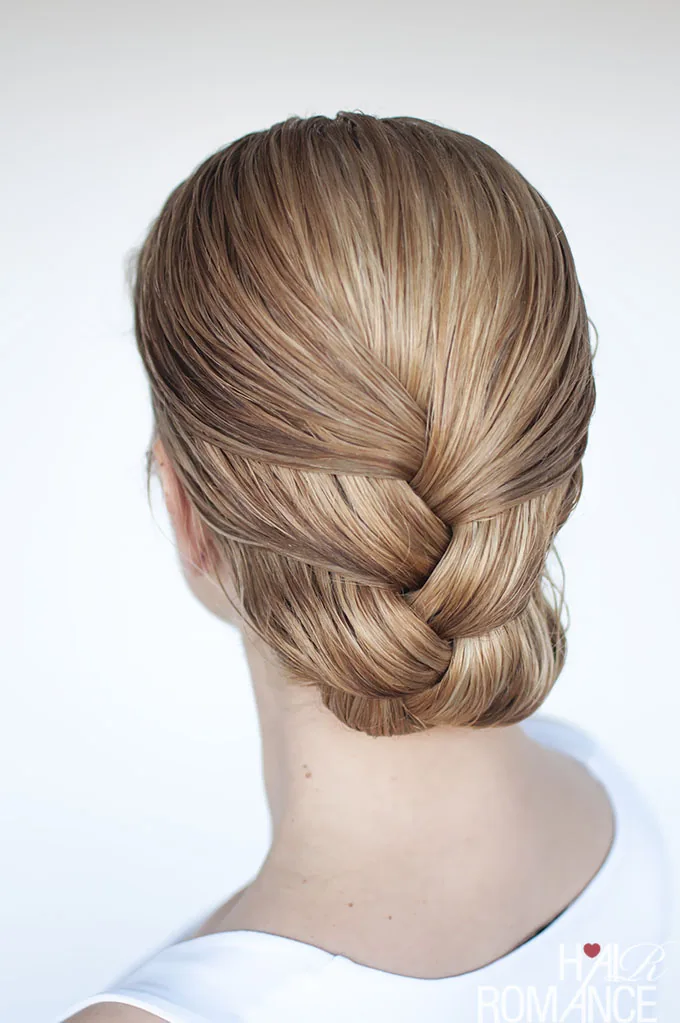
Best for: long or thick hair that escapes from ordinary buns, and dancers who hate stopping to fix their hair. The low position keeps the weight off the crown, so it stays comfortable through a long class, and it suits every face shape.
How to style: braid the hair loosely from the nape, coil the braid flat against the head and pin through the braid itself, not just around it. What to ask: ask your stylist to show you the coil-and-pin technique once, since pinning through the braid is the step most people get wrong, and it is what makes the bun last for hours.
6. Boxer Braids With a Pop of Colour
Boxer braids are the sporty cousin of the double Dutch braid, and with a ribbon woven through each braid they become the most Zumba-looking style in this guide. The braids lock the hair flat to the scalp, the ribbons add colour that matches your outfit or your class theme, and nothing moves for the whole hour. It is the style to choose for a themed class, a charity dance event or any day you want your hair to be part of the fun.
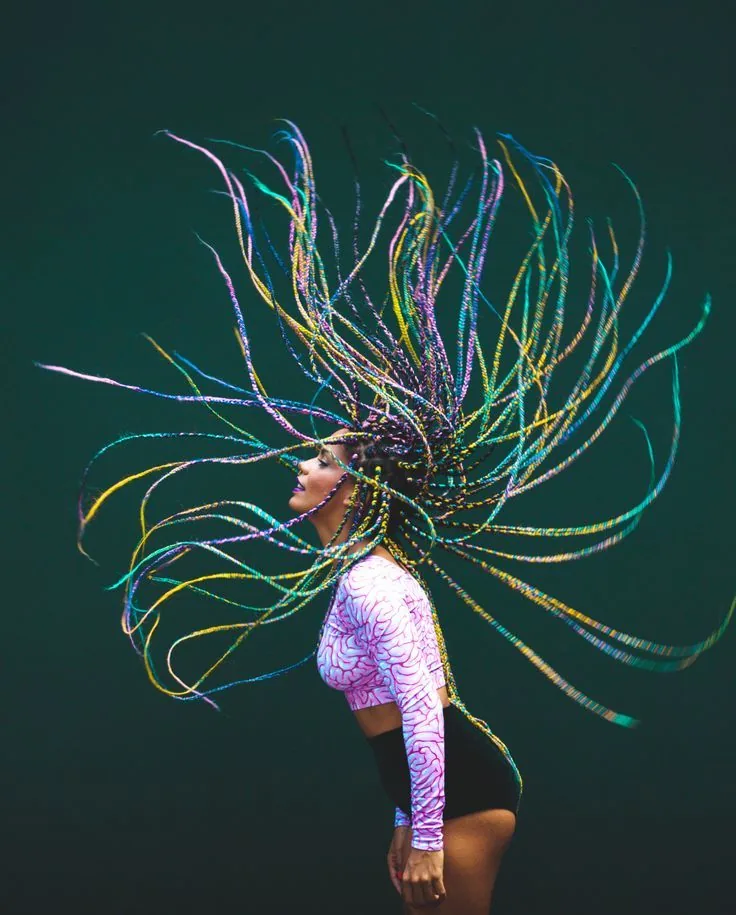
Best for: long hair, themed classes, and anyone who loves colour. The ribbons suit every hair texture, and they are a kind way to add colour without dye, since they wash out with the braid and damage nothing.
How to style: weave a ribbon into each braid from the crown, matching the ribbon to your top or your shoes, and finish with small elastics. What to ask: ask for the braids to be finished tight at the nape so the ribbons do not slip, and keep the ribbon short enough that it cannot catch on anything while you dance.
7. The Curly High Puff That Celebrates Your Curls
A high puff is the simplest and most joyful style for curly hair in a Zumba class. The curls are gathered high on the crown, the puff bounces with the music, and nothing is pulled flat or straightened against its nature. It keeps the hair off the neck, it takes seconds to do, and it looks better as the class goes on, since the movement gives the curls more life rather than flattening them.
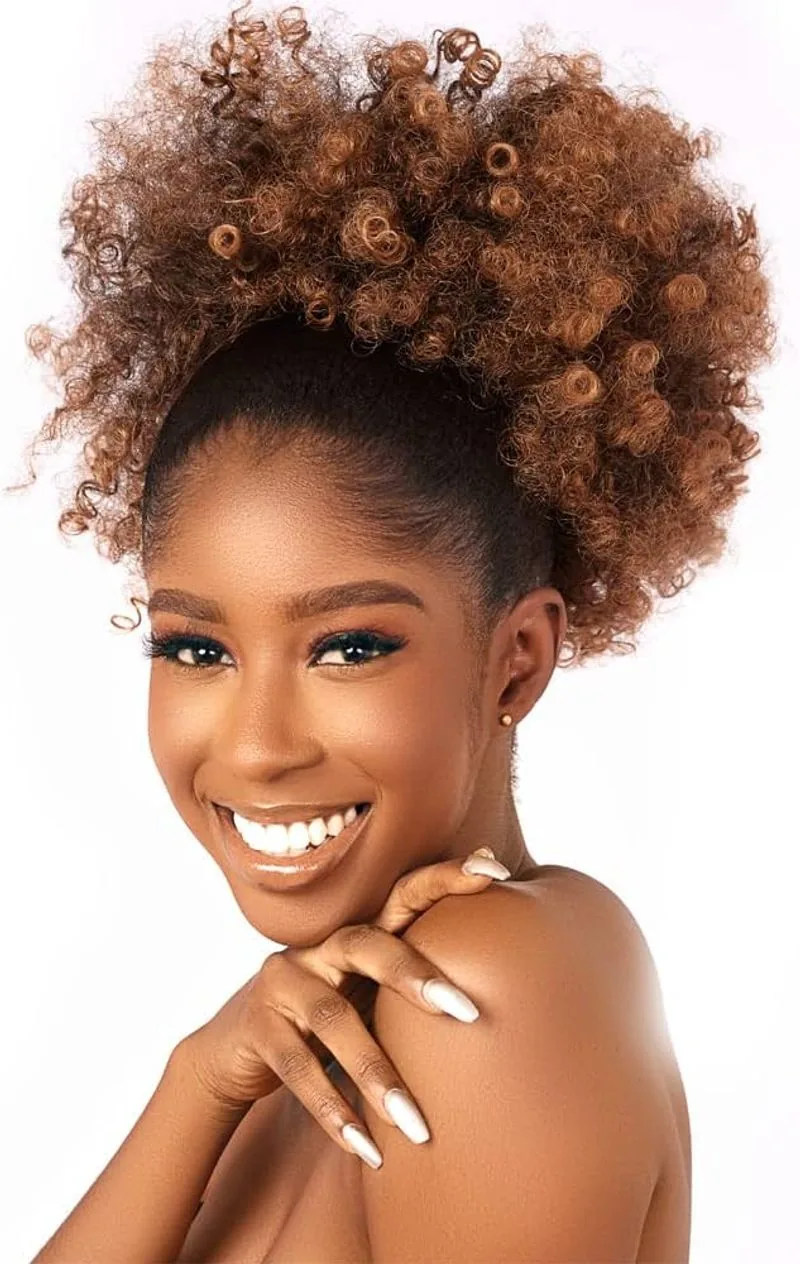
Best for: curly and coily hair of any length, and anyone who wants a style that works with their texture instead of fighting it. The puff flatters round and oval faces, and it is the gentlest updo in this guide, since it pulls evenly and never concentrates the tension in one place.
How to style: gather the curls with a satin scrunchie or a stretchy headband, leaving the front hairline soft, and pin any escaping curls at the nape. What to ask: ask your stylist for a shape that puffs evenly, since an uneven cut makes the puff lopsided, and avoid tight elastics on curly hair, which snap curls and cause breakage.
8. The Sleek Low Ponytail for a Polished Look
A sleek low ponytail is the quiet, reliable cousin of the high ponytail, and in a Zumba class it is often the smarter choice. It sits at the nape, below the shoulders, it does not swing into your face during turns, and it does not pull on the crown during a long session. A little serum smoothed over the top makes it look polished and intentional, and the low position means it survives sweat far better than a high style.
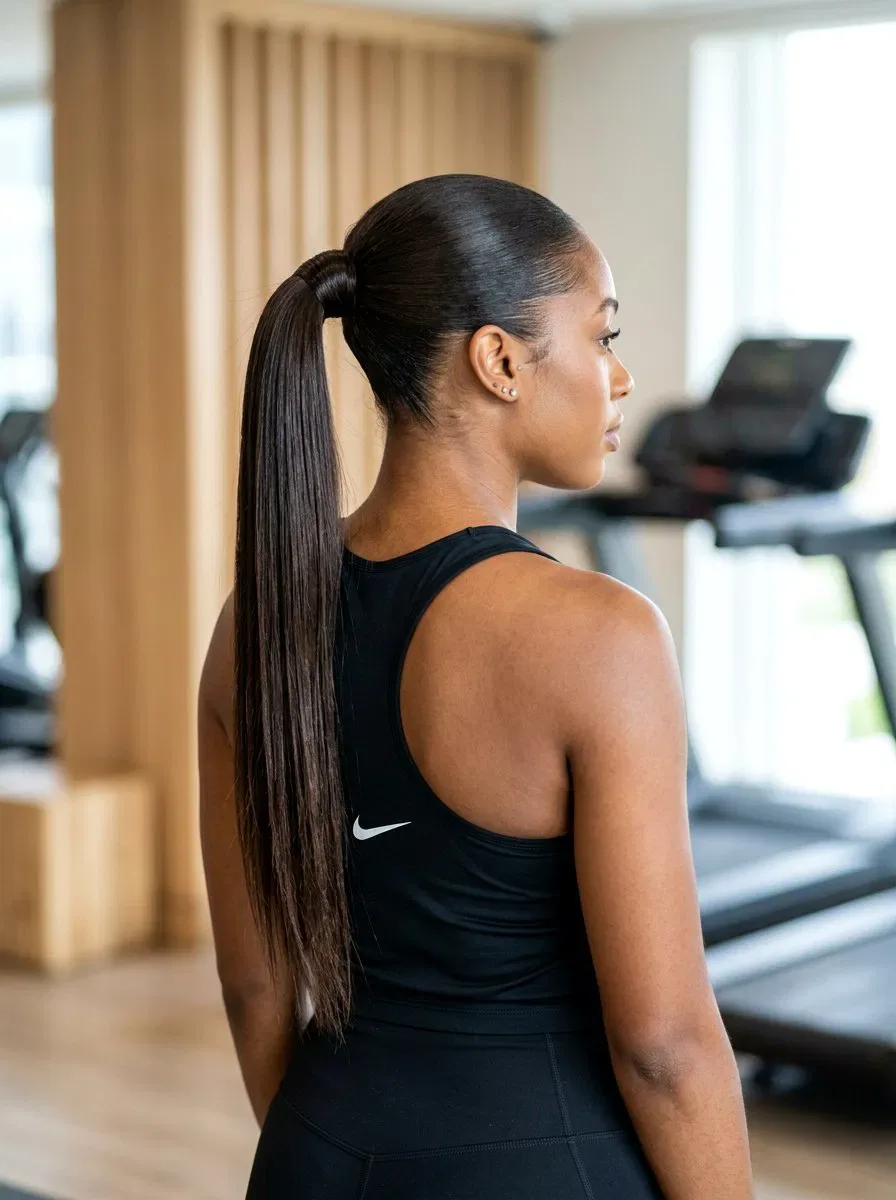
Best for: straight or wavy hair, low-impact and Gold classes, and anyone who wants to look polished without trying hard. The sleek finish suits oval and square faces, since the smooth lines balance the jaw, and it is gentle on fine hair.
How to style: smooth the hair back with a little serum, secure it low with a fabric elastic, and wrap a thin strand around the base to hide the elastic. What to ask: ask your stylist for a cut with clean, blunt ends, since blunt ends make a low ponytail look thicker and neater than wispy layers.
9. Space Buns for Double the Fun
Space buns are the most playful style in this guide, and they are far more practical than they look. Two buns split the weight of the hair evenly, so neither side pulls, and each bun is small enough to stay secure through jumping and spinning. They keep every strand off the neck and face, they photograph brilliantly, and they are the style most likely to make the whole class smile.
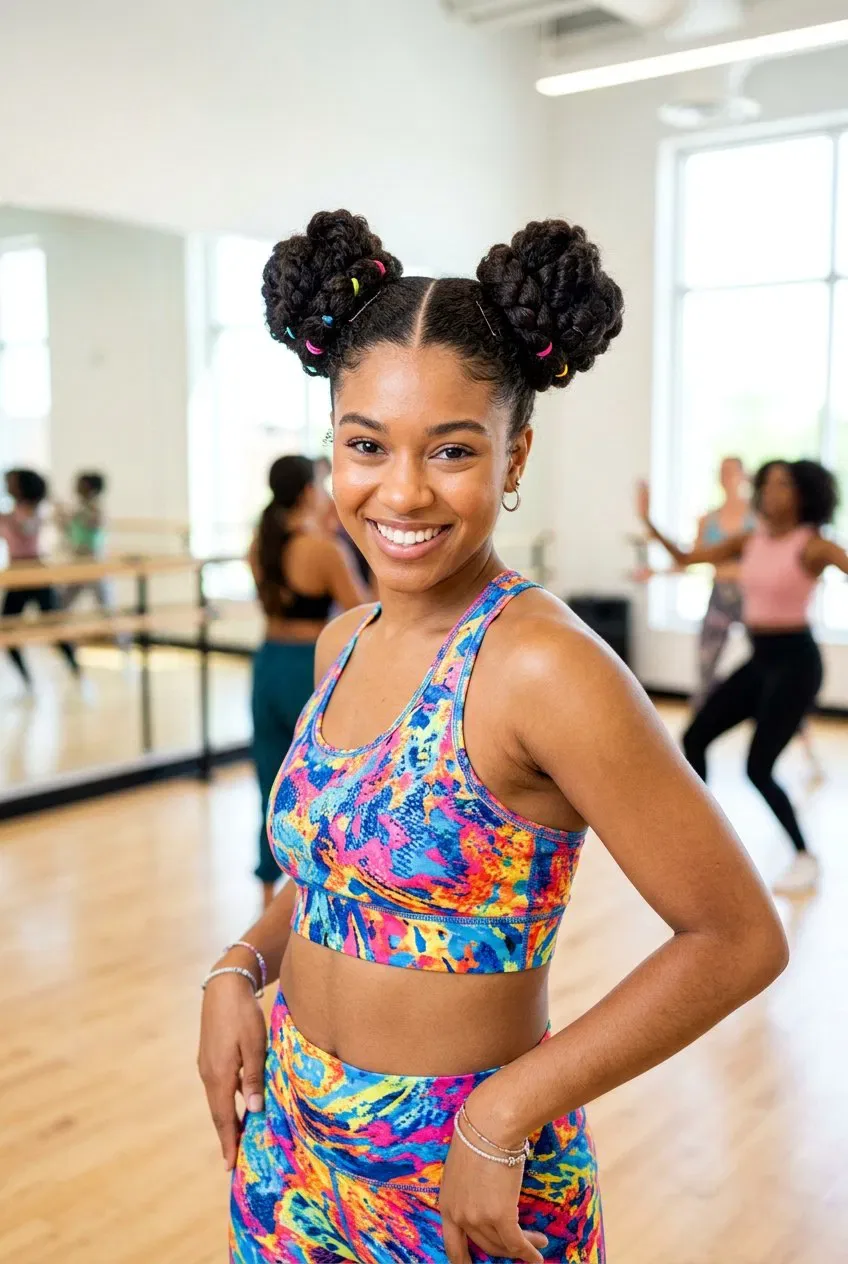
Best for: medium to long hair, themed classes and dance parties, and anyone with thick hair that is too heavy for a single bun. The two-bun split suits round faces by adding height on both sides, and the style works on straight, wavy and curly hair.
How to style: part the hair down the middle, twist each side into a bun at the crown, and pin through the centre of each bun. What to ask: ask for the buns to sit at the same height, since uneven buns are the most common mistake, and use a little texturising spray first if your hair is fine, so the buns grip instead of slipping.
10. The French Braid Ponytail
A French braid that flows into a ponytail is one of the smartest Zumba styles there is. The braid locks the front and crown flat to the scalp, so no strands fall into your eyes, while the ponytail keeps the length swinging freely behind you. It is secure, it is comfortable, and it looks far more elaborate than the five minutes it takes to build.
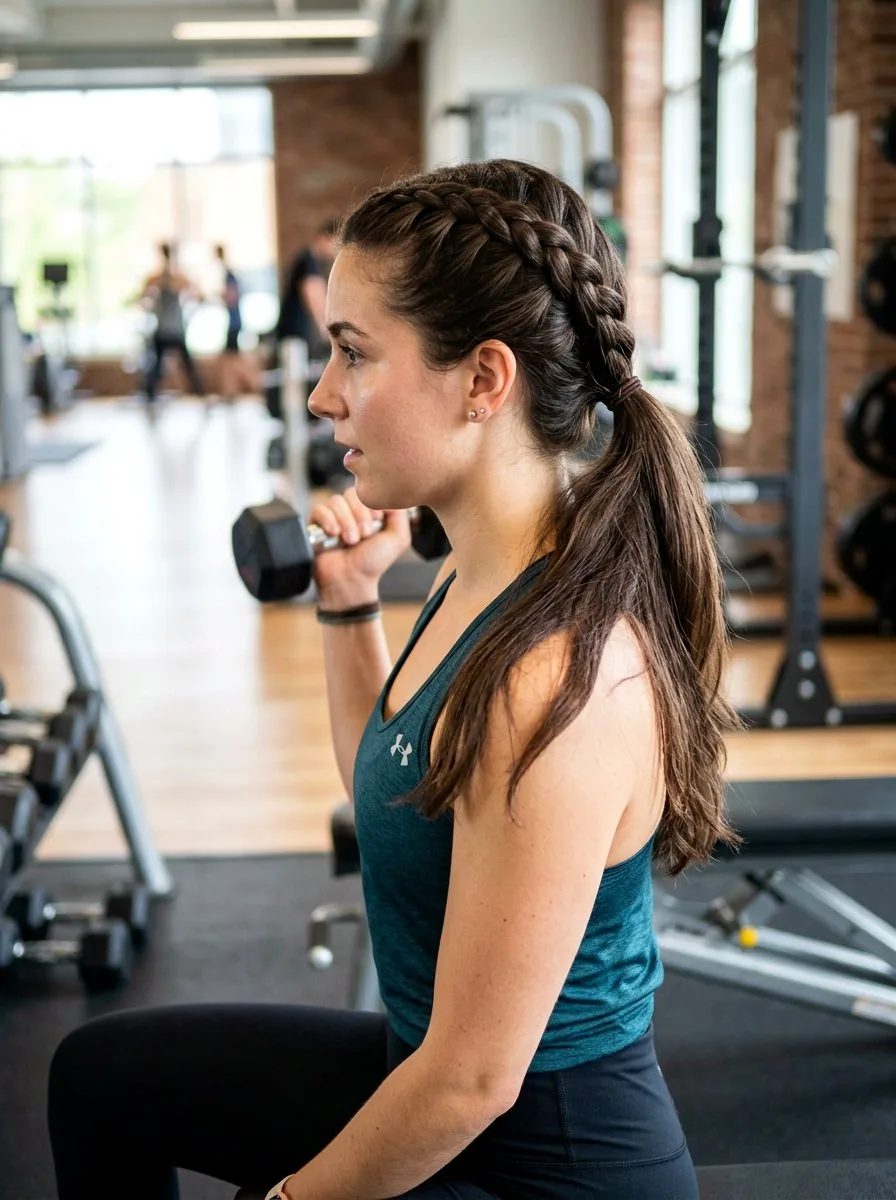
Best for: medium to long hair, and anyone whose front pieces always escape from a plain ponytail. The braid suits every face shape, and it is especially good for wavy hair, since the braid pattern shows beautifully in the texture.
How to style: start the braid at the hairline and work it back to the crown, then gather the rest into a ponytail and secure it with two elastics. What to ask: ask your stylist to show you where to start the braid, since starting too low lets the front pieces escape, while starting at the hairline locks everything in place.
11. The Fishtail Braid That Holds Its Shape
A fishtail braid is made of fine, woven sections that hold together better than a regular three-strand braid, so it survives the jumping, turning and shaking of a Zumba class without unravelling. Worn over one shoulder or down the back, it keeps the length contained while still showing the texture of the hair, which suits Zumba’s softer, more expressive moments between the fast songs.
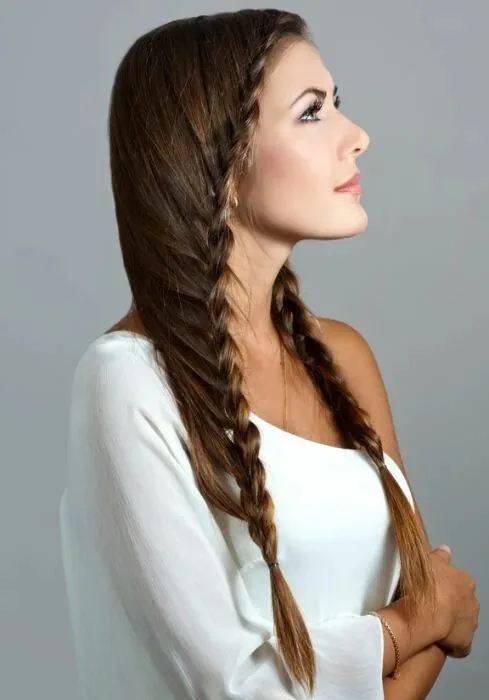
Best for: long, thick hair, where the fishtail pattern really shows, and dancers who want a style that looks romantic rather than sporty. The fine weave suits straight and wavy hair best, since the pattern is clearest there.
How to style: split the hair into two sections and cross small pieces from each side to the other, keeping the tension even all the way down. What to ask: ask for the braid to be finished with a fabric elastic and a wrap of hair around it, since a bare elastic slides on a fishtail faster than on a thicker braid.
12. The Half-Up Top Knot for Shorter Classes
The half-up top knot is the compromise style: the top half of your hair is secured out of your face, while the bottom half stays loose and looks relaxed. It works well for shorter classes and for low-impact sessions, where you move more slowly and lean forward less, and it is one of the quickest styles here, taking under a minute, which makes it a good choice when you are running late.
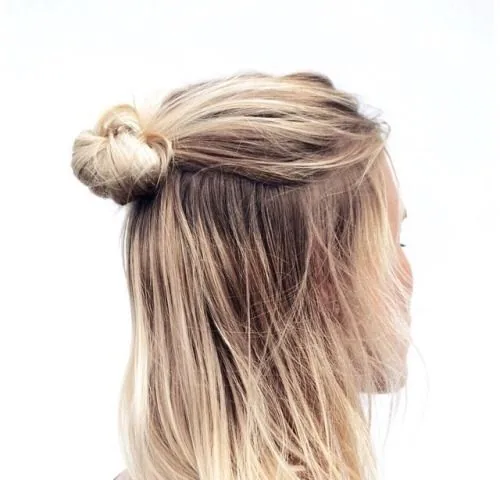
Best for: medium-length hair, low-impact classes, and anyone who likes the look of loose hair but hates it in their eyes. The top knot adds height, which flatters round faces, and the loose bottom half softens square jawlines.
How to style: secure the top section with a small elastic first, then twist it into a knot and pin it, rather than trying to knot loose hair. What to ask: ask your stylist whether your layers are long enough for the top section, since short layers at the crown will slip out of a half-up knot during a fast song.
13. The Claw Clip Twist for Ten-Second Hair
If you only learn one Zumba hairstyle, make it this one. Twist the hair up, fold it, clip it, done in under ten seconds, and it holds through a whole class. The claw clip grips even damp hair, which matters when you are sweaty between songs, and it is the easiest style in this whole guide to redo in a hallway without a mirror.
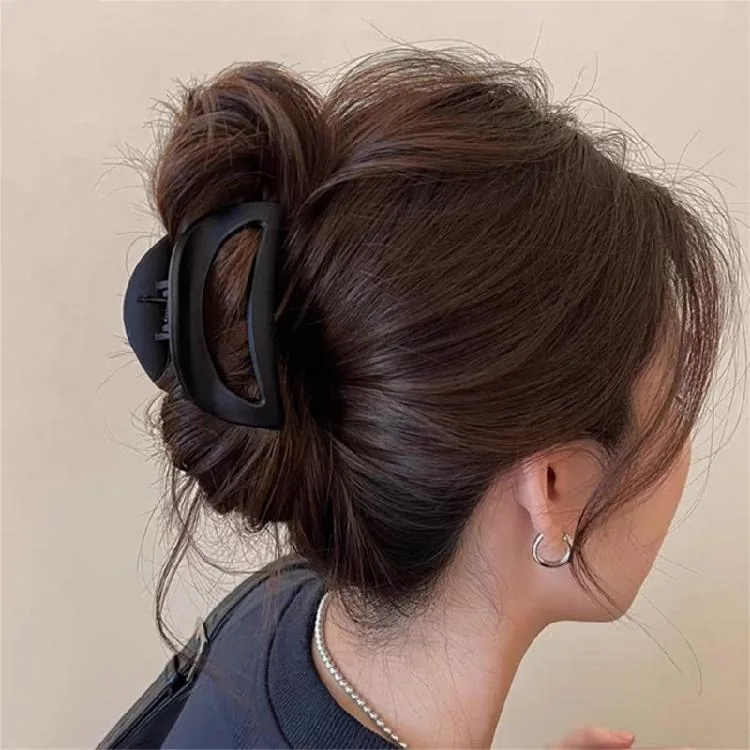
Best for: medium to long hair, back-to-back classes, and anyone who is always running late. The twist suits every face shape, and it is the gentlest updo here, since the clip distributes the hold instead of pulling at one elastic.
How to style: twist the hair up the back of the head, fold the ends down, and clip over the fold with a large matte claw clip. What to ask: ask for a matte clip rather than a shiny one, since it grips better when your hands are damp, and choose a large clip for thick hair, since a small clip will pop open on the first jump.
14. The Braided Crown That Locks Everything In
A braided crown runs around the head like a headband, so there is no tail at all to fall forward, swing during a turn, or catch on anything while you dance. It is one of the most secure styles you can wear to any fitness class, and it looks far more elaborate than the effort it takes, which makes it a favourite for dancers who want to look polished without spending twenty minutes on their hair.
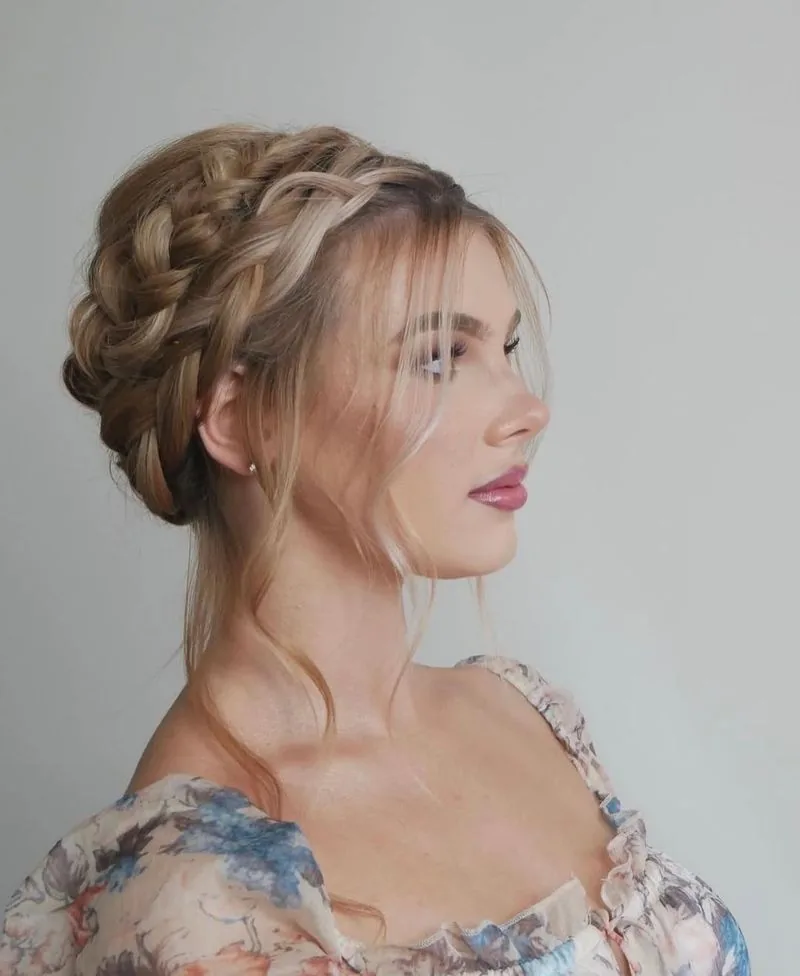
Best for: medium to long hair, and anyone who hates ponytails. The crown suits round and oval faces especially well, since it adds height at the top, and it works on straight, wavy and curly hair.
How to style: braid the hair around the head from one ear to the other, pinning the end under the start with two crossed bobby pins, and mist with hairspray before class. What to ask: ask your stylist to show you the crown on your own hair once, since the first attempt is always the hardest, and after that it takes five minutes.
15. The Low Messy Bun for a Relaxed Class
A low messy bun is the style most dancers actually wear to a relaxed class, even if they do not call it that. It is fast, it is comfortable, and it keeps the hair right out of the way while you stretch and dance. The low position means it never pulls at the crown, and the messy texture means it looks better as the class goes on, since a few escaping strands just add to the relaxed feel.
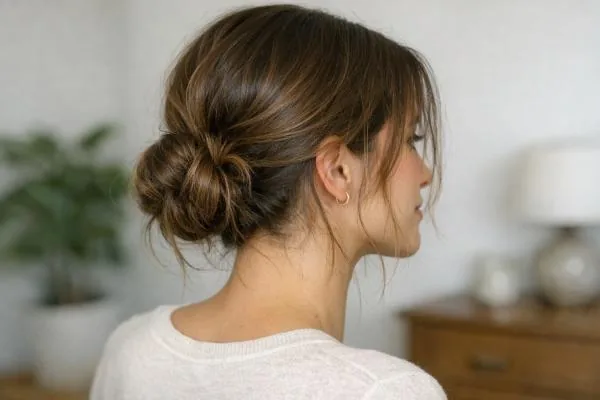
Best for: medium to long hair, low-impact classes, and anyone who finds high buns uncomfortable. The low bun suits long faces by keeping the height down, and it is kind to fine hair, since it never pulls hard at the roots.
How to style: gather the hair low at the nape, twist it loosely and pin it into a soft bun, leaving a few face-framing pieces out on purpose. What to ask: ask your stylist for layers that frame the face, since the whole charm of a messy bun is the soft pieces around the face, and without them it just looks undone.
16. The Side Braid That Stays Out of the Way
A side braid is a simple idea with a big advantage in a Zumba class: the braid sits over one shoulder, so it never bounces against your back, never swings into your face during a turn, and never gets caught under a bag strap. It is quick to build, it holds for the whole hour, and it looks softer and more romantic than a ponytail, which makes it a lovely choice for an evening class.
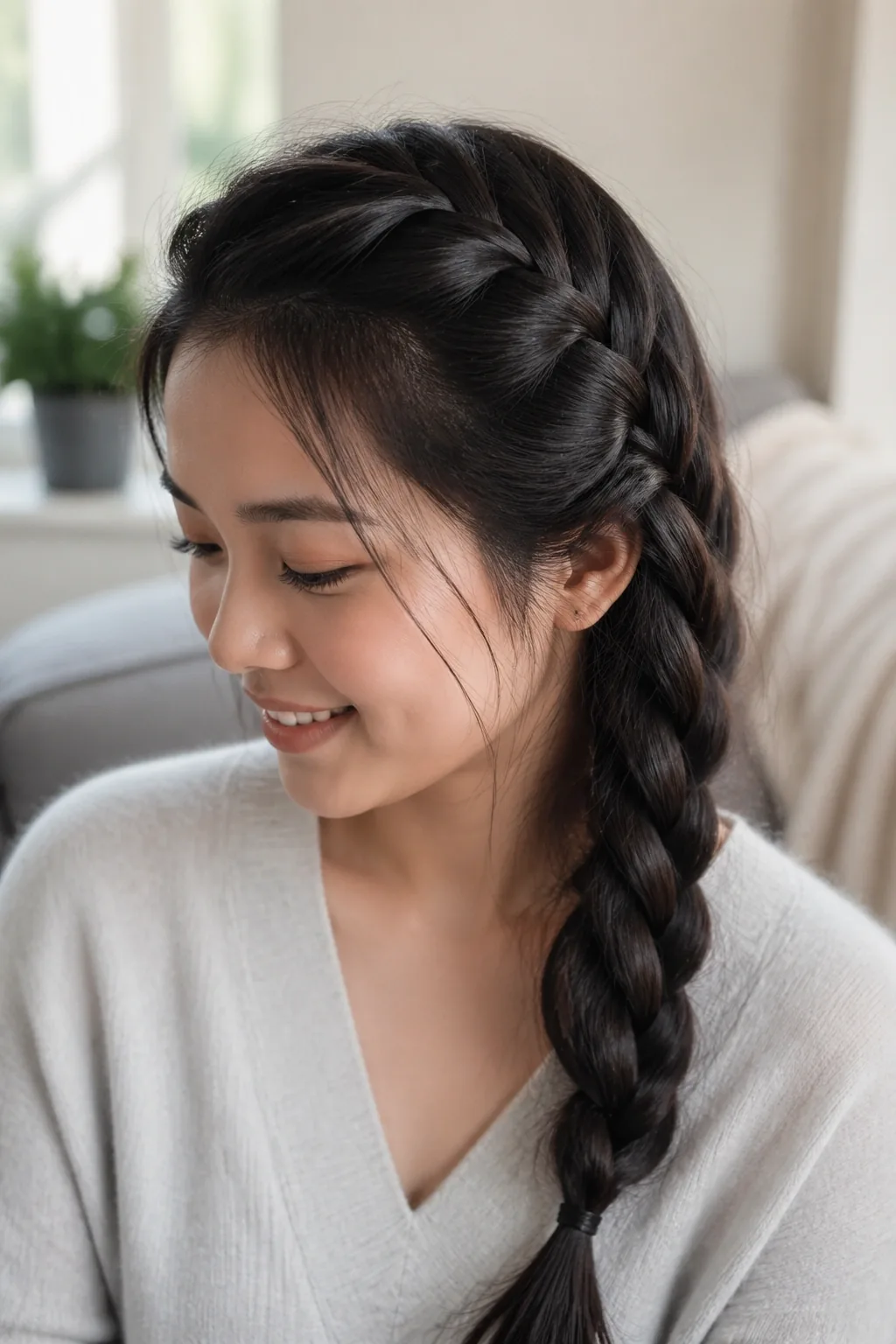
Best for: long hair, and anyone whose ponytail bounces annoyingly against their back. The side braid suits oval and heart-shaped faces, and it works on straight, wavy and curly hair, though the braid pattern shows best on straight hair.
How to style: sweep all the hair to one side, braid it loosely from behind the ear, and finish with a fabric elastic. What to ask: ask for the braid to start behind the ear rather than at the nape, since starting higher keeps the braid from sliding forward onto your chest while you dance.
17. The Pineapple Updo for Curly Hair
The pineapple updo gathers the curls high on the crown, like the leaves of a pineapple, so the curls stay bouncy and defined while the neck and face stay completely clear. It is the gentlest way to contain curly hair for a workout, since nothing is pulled flat or straightened, and the curls actually look better after an hour of dancing, since the movement gives them more volume.
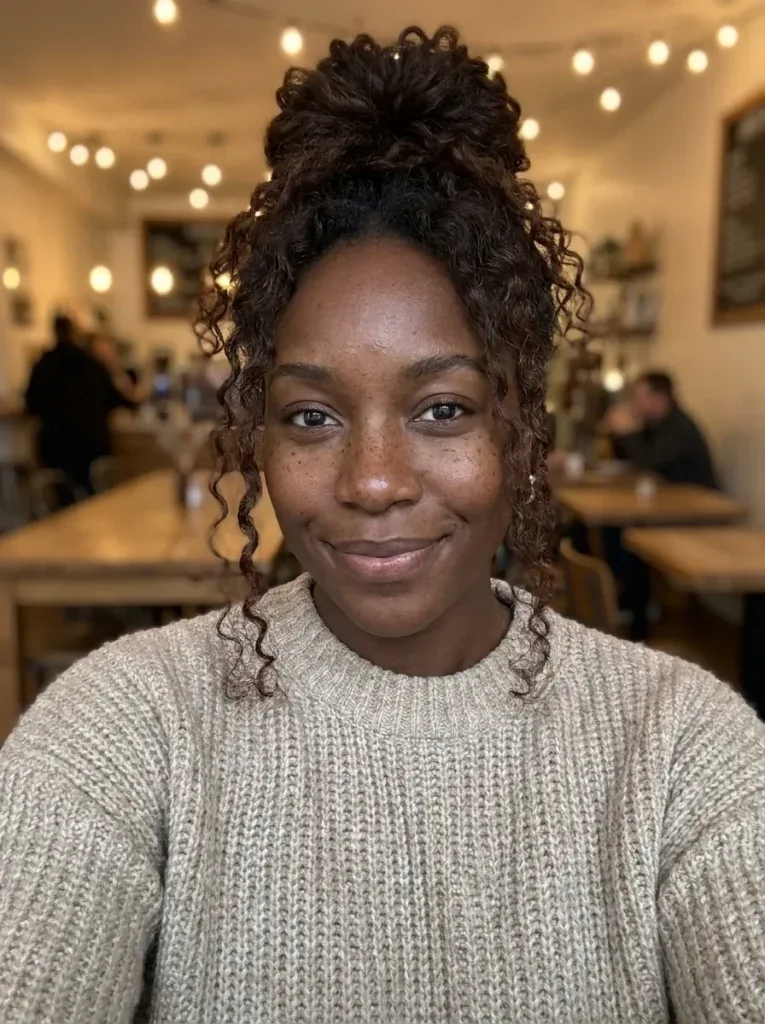
Best for: curly and coily hair of any length, and anyone who wants to protect their curl pattern while they exercise. The high position flatters round faces, and the style is so quick that it works even on the busiest mornings.
How to style: gather the curls loosely with a satin scrunchie at the very top of the crown, letting the curls fall forward naturally, and pin any escaping curls at the nape. What to ask: ask your stylist for a cut that layers the curls so they fall evenly around the pineapple, since an uneven cut makes the updo lopsided.
18. Two Low Buns for Even Weight
Two low buns are the quiet, practical version of space buns. They sit at the nape instead of the crown, so they never pull, never bounce against your head during a jump, and never catch on anything. The weight is split evenly between the two sides, which makes them the most comfortable double style in this guide, and they look neat and tidy from every angle.
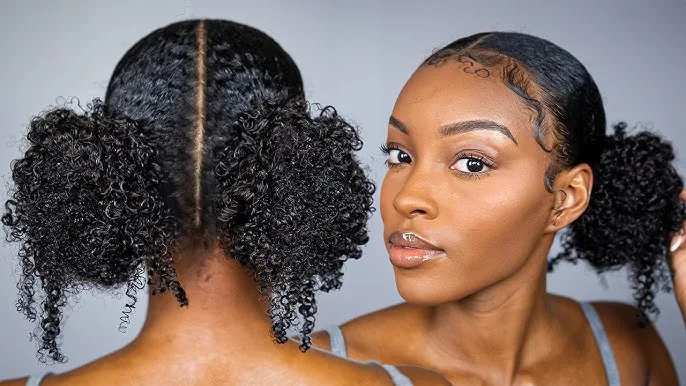
Best for: thick hair that is too heavy for a single bun, and anyone who finds high buns give them a headache. The low position suits long faces, and the style works on straight, wavy and curly hair alike.
How to style: part the hair down the middle, twist each side into a low bun at the nape, and pin through the centre of each bun. What to ask: ask for the buns to sit at the same height and the same size, since matching buns are the whole point, and use two elastics per bun if your hair is very thick.
19. The Rope Braid Ponytail
A rope braid ponytail twists two sections of hair around each other like a rope, so the ponytail is locked along its whole length instead of hanging loose. It swings as one controlled unit instead of unravelling, it looks far more interesting than a plain ponytail, and it takes only a minute longer to build. It is the style to choose when you want a ponytail that actually survives the whole class.
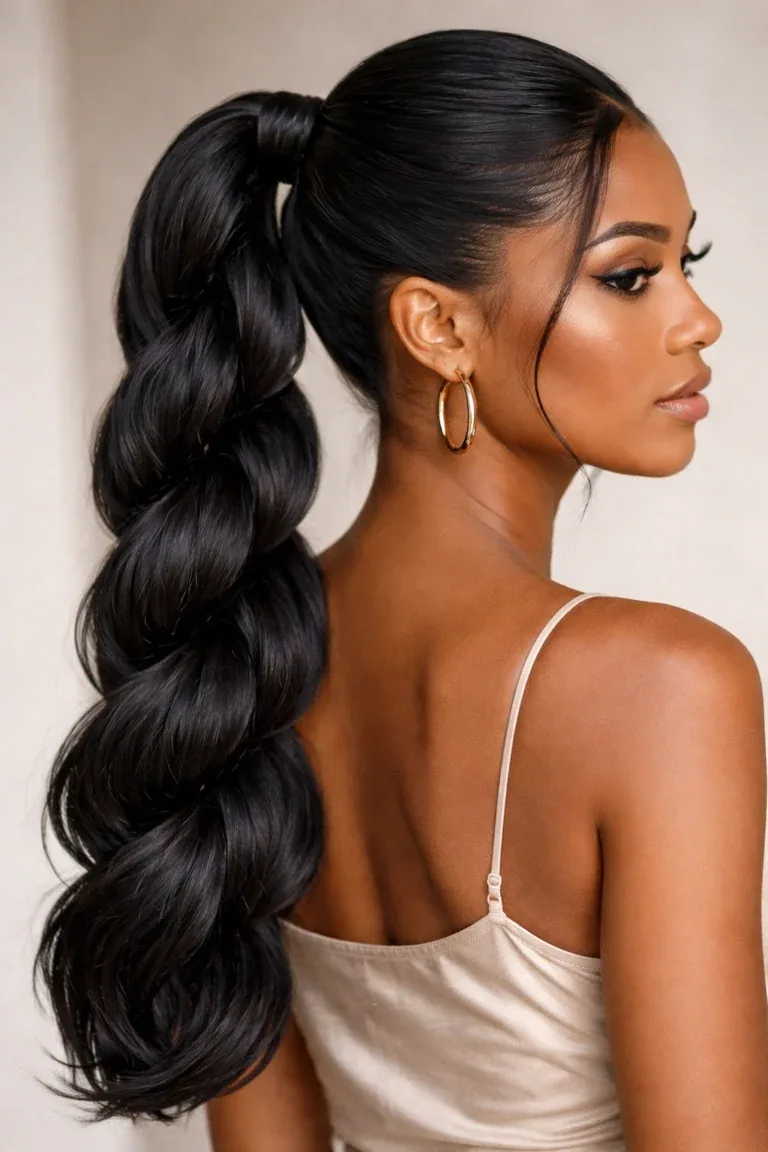
Best for: medium to long hair, and anyone whose ponytail always comes loose by the third song. The rope texture suits thick hair best, since the twist shows clearly, and the style flatters every face shape.
How to style: make a high ponytail, split it into two sections, twist each section the same way, then twist them around each other the opposite way and secure the ends. What to ask: ask your stylist to show you the twist direction once, since twisting the wrong way makes the rope unravel, and twisting the right way locks it tight.
20. The Slicked-Back Bun for a Clean Finish
A slicked-back bun is the most polished style in this guide, and it earns its place because it is also one of the most secure. The hair is smoothed back with a little gel or serum, twisted and pinned into a bun, so there are no flyaways to catch on a turn and no loose ends to fall into your eyes. It suits evening classes and any session where you want to look put-together as well as practical.
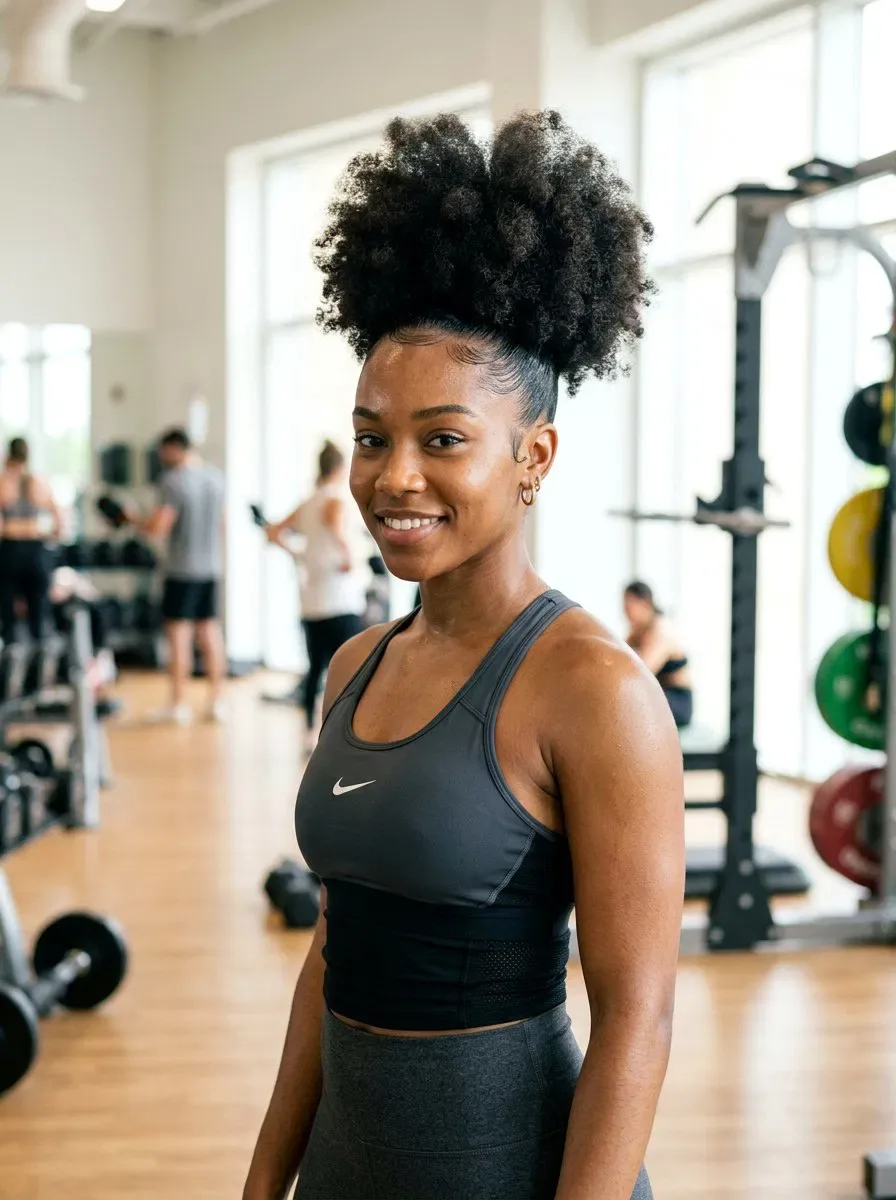
Best for: straight or wavy hair, and anyone with a frizzy hairline that escapes from every other style. The sleek finish suits oval and square faces, and it photographs beautifully in class photos.
How to style: smooth the hair back with a little gel, twist it into a bun at the crown or the nape, and pin it flat with U-shaped pins. What to ask: ask your stylist for a lightweight gel that holds without flaking, since heavy gel flakes when you sweat, and a light gel holds the sleek finish all class.
21. The Short Pixie With a Headband
Short hair is the easiest hair to dance in, since a pixie barely moves at all, but the front pieces still need managing, and that is where a headband earns its place. A wide fabric headband keeps the fringe off your forehead, catches the sweat before it reaches your eyes, and adds a pop of colour that makes the whole outfit look intentional.
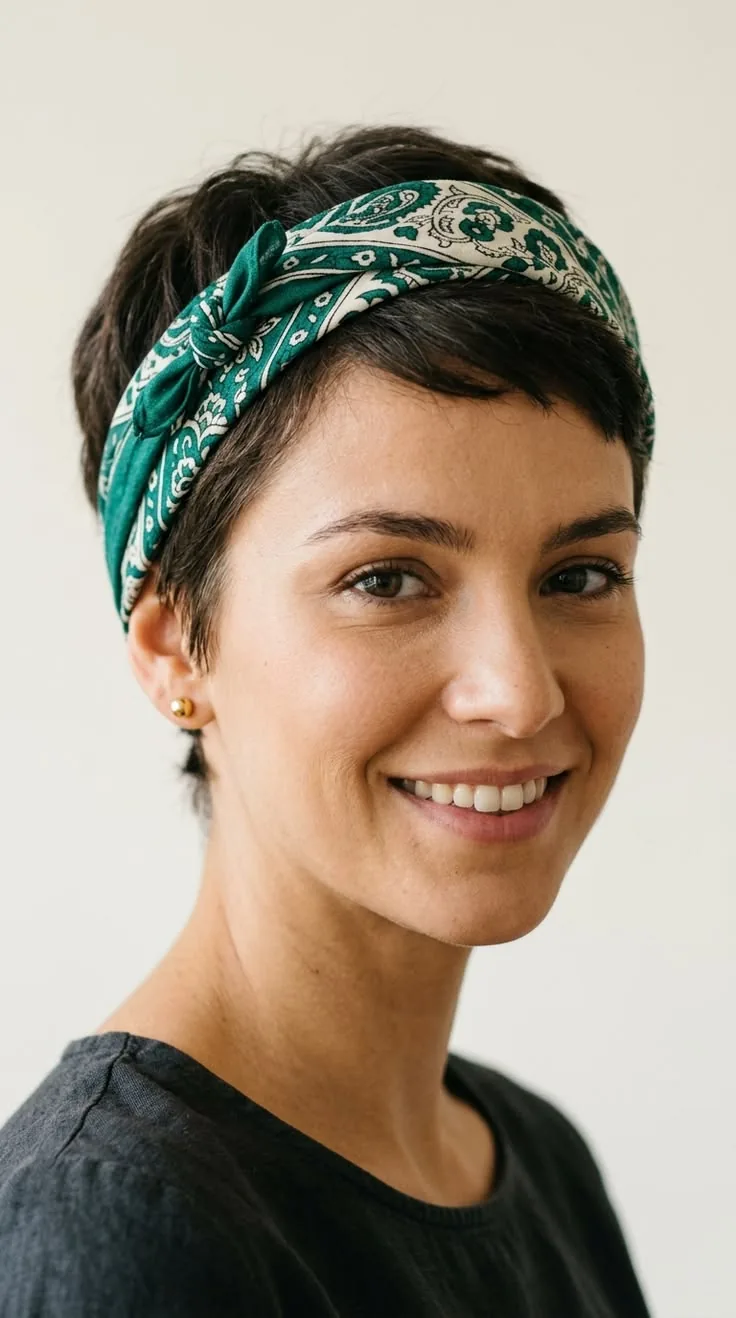
Best for: pixie cuts, short bobs and anyone growing out a fringe. The headband suits every face shape, and it is the fastest style in this guide, taking ten seconds from start to finish.
How to style: place the headband behind the hairline, not on it, so it holds the fringe back without sliding forward when you jump. What to ask: ask your stylist for a pixie with a little length at the front, since a longer fringe can be swept to the side and pinned, while a very short fringe has nowhere to go.
22. The Wavy Lob With a Sweatband
A wavy lob, the long bob that sits just past the shoulders, is one of the most popular cuts for active women, and with a sweatband it becomes a genuinely class-ready style. The sweatband holds the front pieces back and catches the sweat, while the waves are short enough that they never tangle around your neck, and the whole look takes seconds to put together.
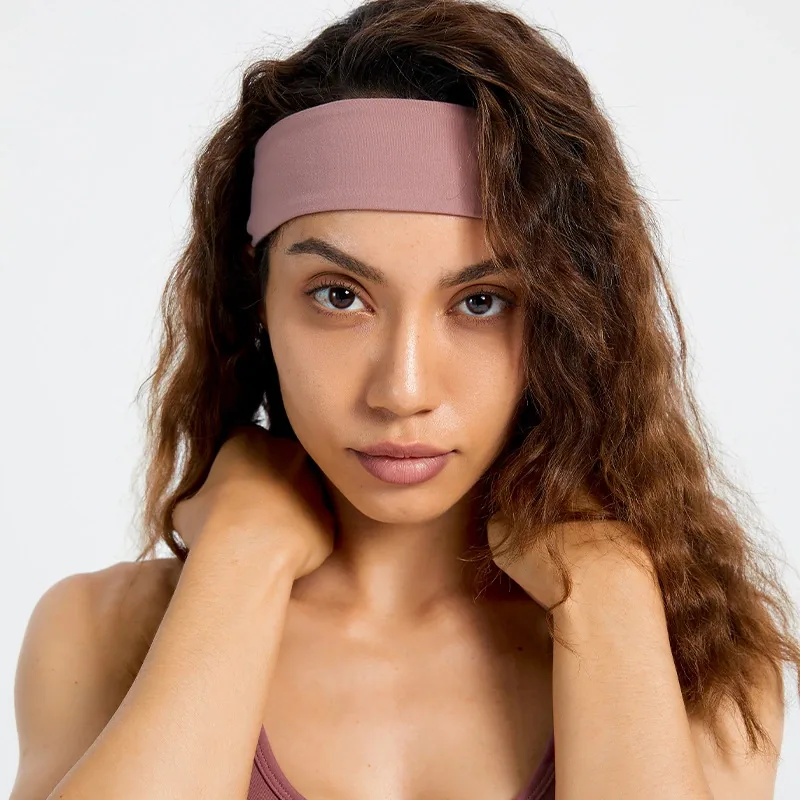
Best for: medium-length wavy hair, and anyone who does not want to put their hair up every class. The lob suits oval and heart-shaped faces, and the waves add volume that makes the style look fuller than it is.
How to style: add a little texturising spray to the waves, place a wide fabric sweatband behind the hairline, and let the waves fall naturally. What to ask: ask your stylist for long layers that keep the waves from falling into your face, since blunt, heavy ends at the front will drop forward during a jump.
23. Cornrows for Weeks of Worry-Free Classes
Cornrows are the longest-lasting style in this guide, since they are braided flat to the scalp and can stay in for weeks with care. Nothing moves, nothing falls into your eyes, and you never have to think about your hair before class at all: you just show up and dance. They are the style to choose if you dance several times a week and want your hair completely sorted between washes.
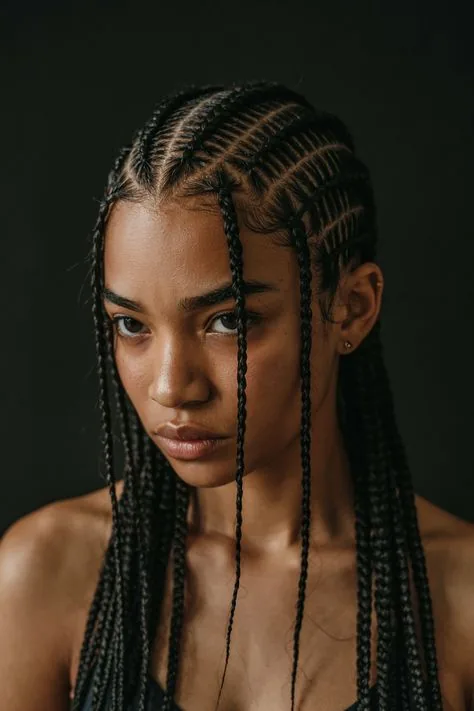
Best for: natural and textured hair, and regulars who dance three or more times a week. Cornrows suit every face shape, and they protect the hair from the daily stress of styling, washing and sweating.
How to style: cornrows are best done by a braider, since the flat, even rows take skill to get right, and they should be kept moisturised with a light oil along the parts. What to ask: ask your braider for rows that are not too tight at the hairline, since tight rows cause breakage, and ask how to sleep in them with a satin scarf so they last longer.
24. Double Bubble Ponytails for a Playful Class
Double bubble ponytails take the bubble braid and split it in two, so each side bounces independently and the whole style moves with the music. They are playful, they are secure, and they are the style most likely to get a compliment from the instructor. Each ponytail is anchored by elastics all the way down, so nothing slides or unravels during an hour of jumping.
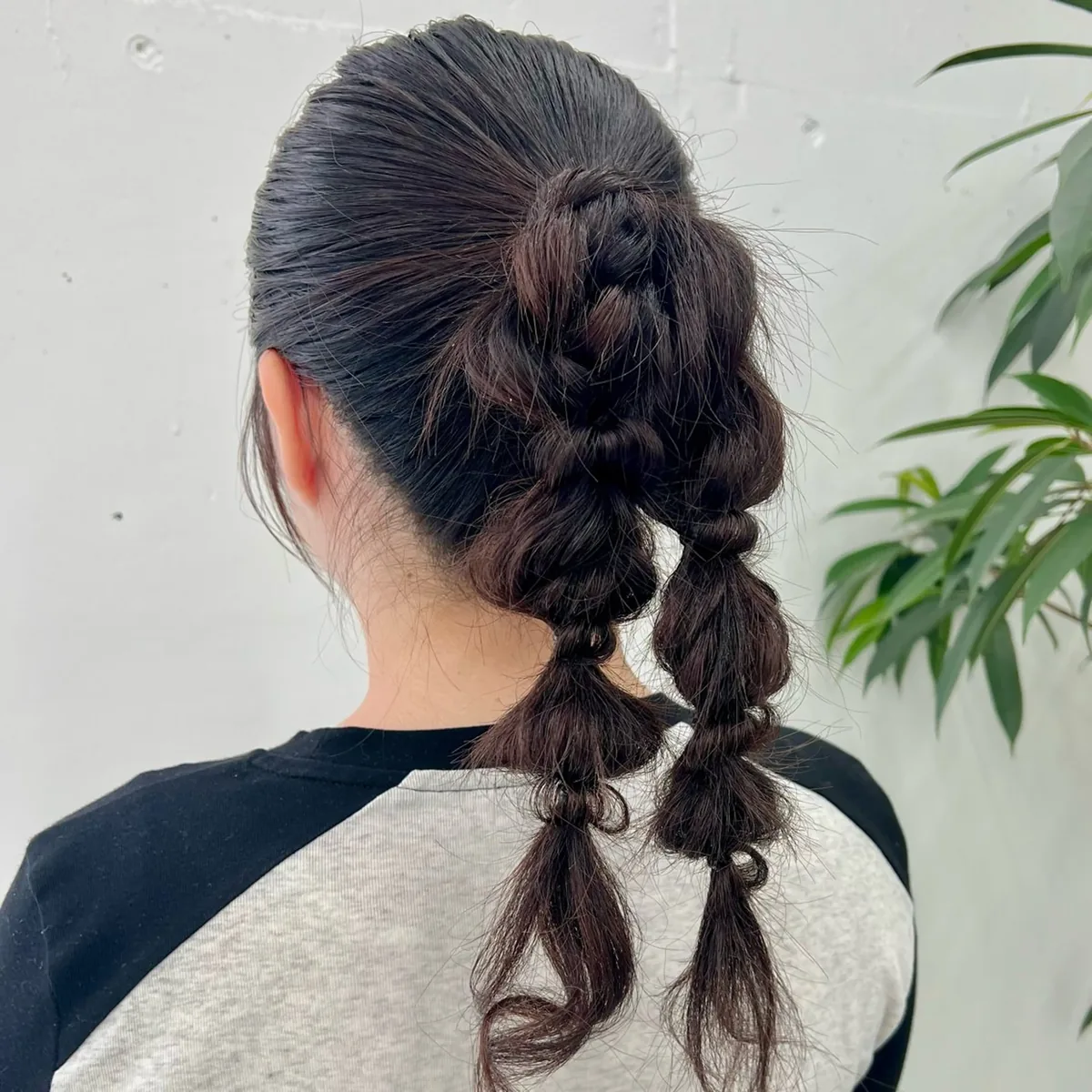
Best for: medium to long hair, themed classes and dance parties, and anyone who wants a fun style that still holds. The two-sided split suits round faces by adding width at the sides, and the style works on straight and wavy hair.
How to style: part the hair down the middle, make a ponytail on each side, then add elastics every few inches and pull each section wider to form the bubbles. What to ask: ask for fabric-covered elastics, since rubber bands snag and snap on a bubble style, and keep the bubbles even on both sides so the style looks balanced.
25. The Braided Ponytail With a Wrapped Base
A braided ponytail with a wrapped base is the most polished ponytail in this guide. The braid locks the length so it cannot tangle or frizz, the wrap hides the elastic and anchors the whole style, and the result looks like you spent twenty minutes on your hair when it took five. It is the style to choose for a special class, a dance event or any day you want to look your best while you sweat.
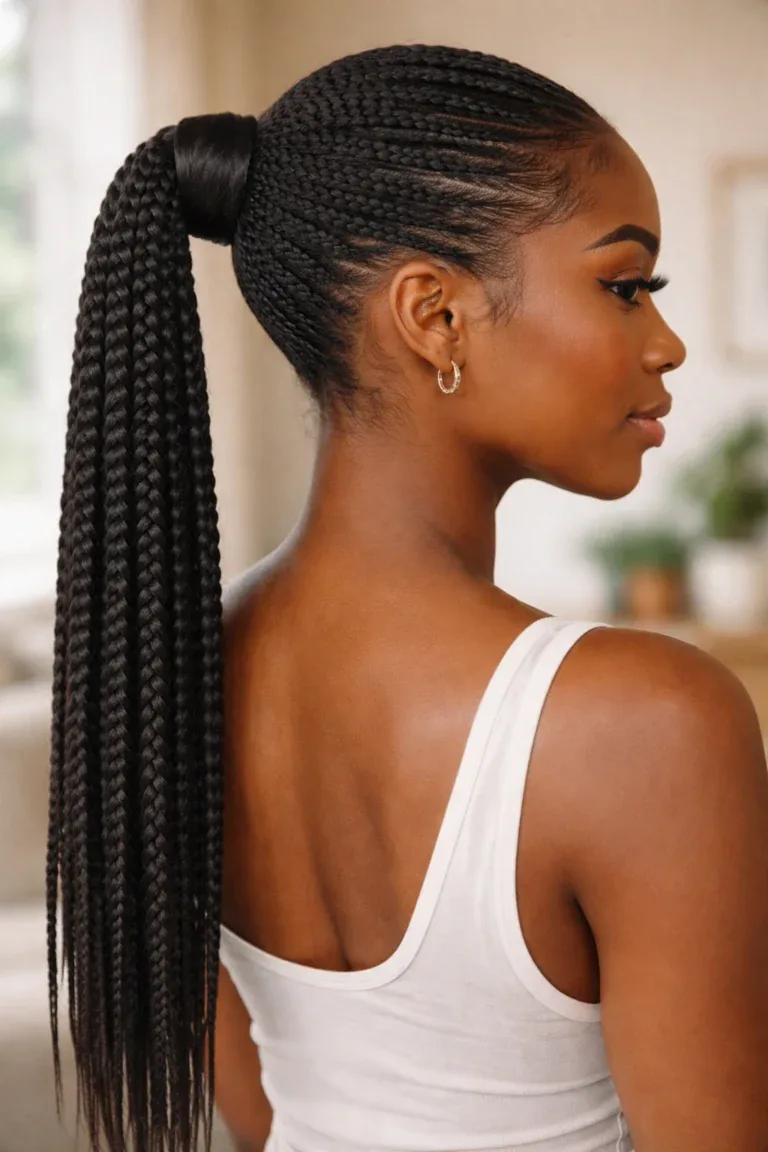
Best for: long hair, and anyone whose ponytail always looks messy by the end of class. The braid suits every face shape, and the wrapped base adds a touch of elegance that a bare elastic never has.
How to style: braid the ponytail loosely, secure the ends, then wrap a thin strand of hair around the base and pin the end underneath. What to ask: ask your stylist to show you the wrap once, since a wrap that is too loose slides off, and a wrap that is pinned through the elastic stays put all class.
26. The Top Knot With a Braided Front
A top knot with a braided front solves the one problem every top knot has: the front pieces that fall into your eyes during a spin. The braid runs from the hairline back into the knot, locking the front flat to the scalp, while the knot itself keeps the length completely out of the way. It is secure, it is stylish, and it looks far more complicated than it is.
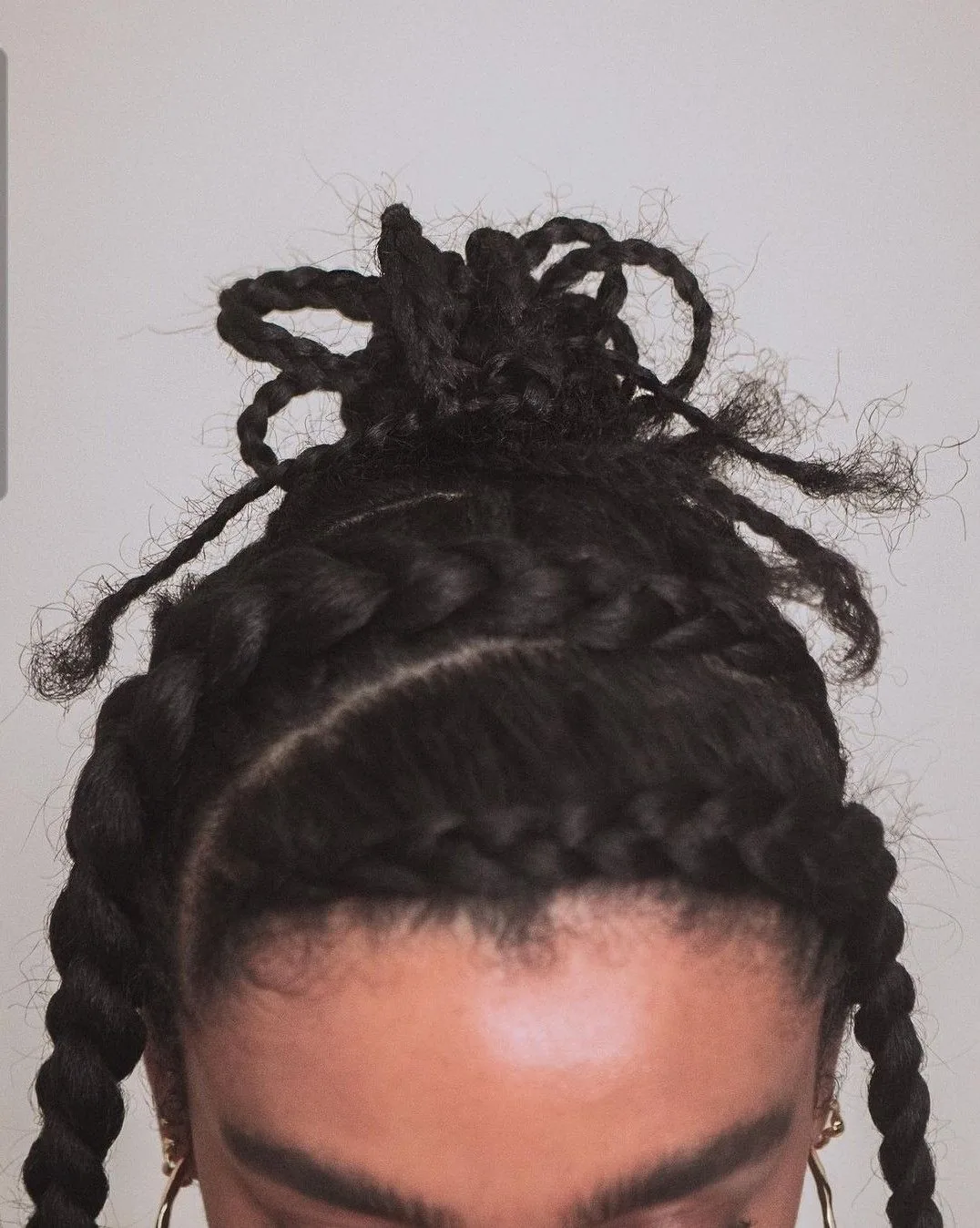
Best for: medium to long hair, and anyone whose fringe always escapes from a bun. The braided front suits oval and heart-shaped faces, and it works on straight, wavy and curly hair alike.
How to style: braid a small section from the hairline back to the crown, then gather all the hair into a top knot, pinning the braid into the base of the knot. What to ask: ask your stylist for a front section that is long enough to reach the crown, since a short front section will not reach the knot and will fall out mid-class.
27. The Low Twisted Chignon for Evening Classes
A low twisted chignon is the softer sister of the classic low bun. Instead of coiling the hair, you twist two sections around each other and pin the twist low at the nape, so it has a lovely, rope-like texture that looks more interesting than a plain bun, and the twist itself grips the hair, so it holds even on smooth, fine hair that usually slips out of pins during a class.
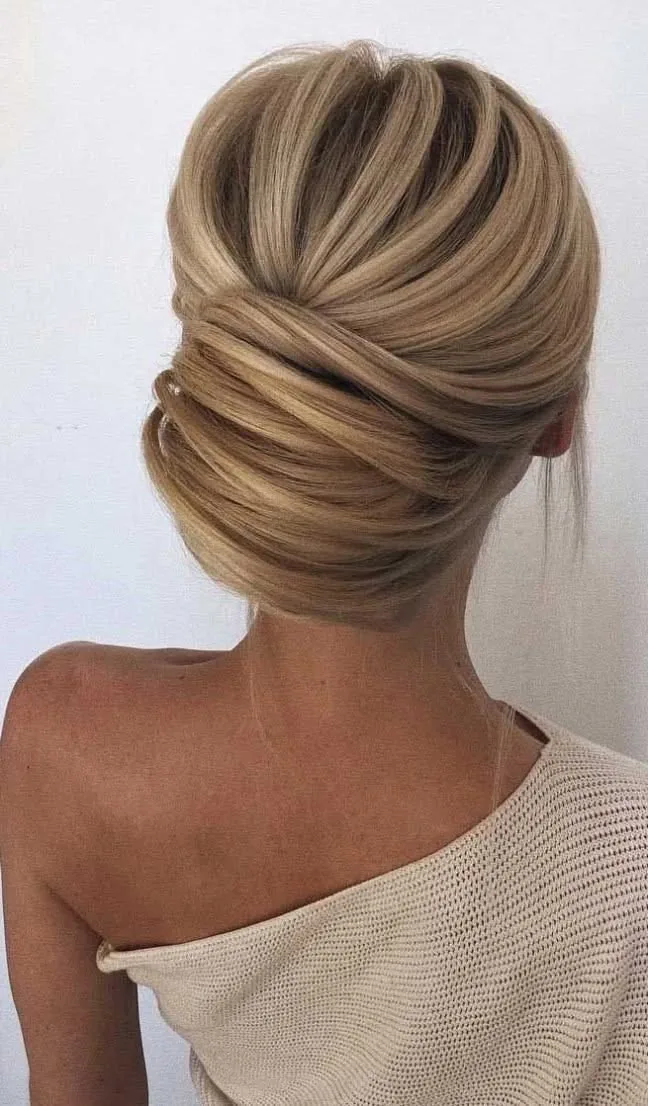
Best for: fine or slippery hair, evening classes, and anyone who finds ordinary buns uncomfortable. The low position keeps the weight off the crown, so it stays comfortable through a long class, and it suits oval and square faces.
How to style: part the hair, twist each side towards the back, cross the twists over each other and pin the ends underneath. What to ask: ask your stylist to show you the twist-and-cross technique, since the first twist must be firm or the chignon will sag, and one U-shaped pin through the centre is worth more than five pins around the edge.
28. The Scarf-Wrapped Bun for Colour and Hold
A scarf-wrapped bun takes an ordinary bun and adds two things at once: colour and grip. The scarf wraps around the base of the bun, holding it firmly in place, while the bright fabric adds a pop of colour that matches your outfit and makes the whole look feel festive. It is the style to choose for a themed class, a dance party or any day you want your hair to be part of the celebration.
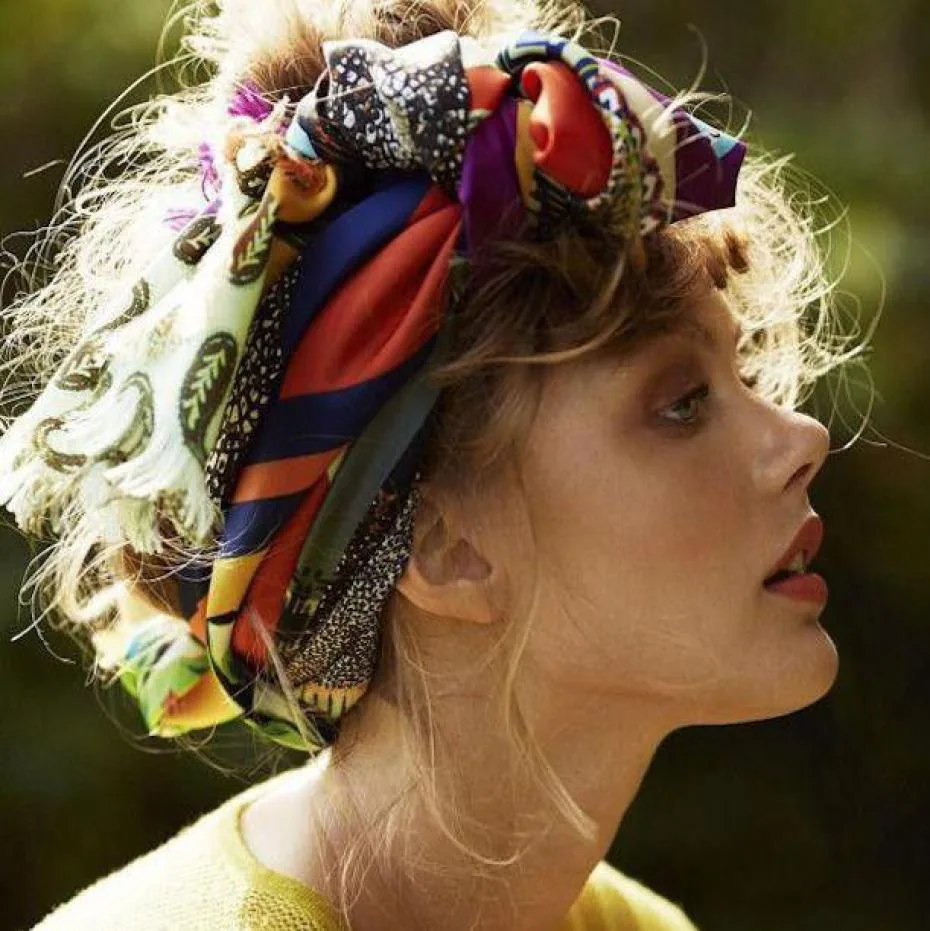
Best for: medium to long hair, and anyone who loves colour. The scarf suits every face shape, and it is a kind way to add colour without dye, since it comes out with the bun and damages nothing.
How to style: build a bun first, then wrap a silk or satin scarf around its base, tucking the ends in and pinning them flat. What to ask: ask for a scarf that is long enough to wrap twice around the bun, since a single wrap slips, and choose a silk or satin fabric, since cotton slides off sweaty hair.
29. Bantu Knots for a Bold, Secure Style
Bantu knots are small, coiled buns dotted across the head, and they are one of the most secure styles you can wear to a Zumba class. Each knot is anchored independently, so even if one loosens, the rest stay put, and nothing hangs loose to fall into your eyes. They are bold, they are beautiful, and they celebrate natural texture instead of hiding it.
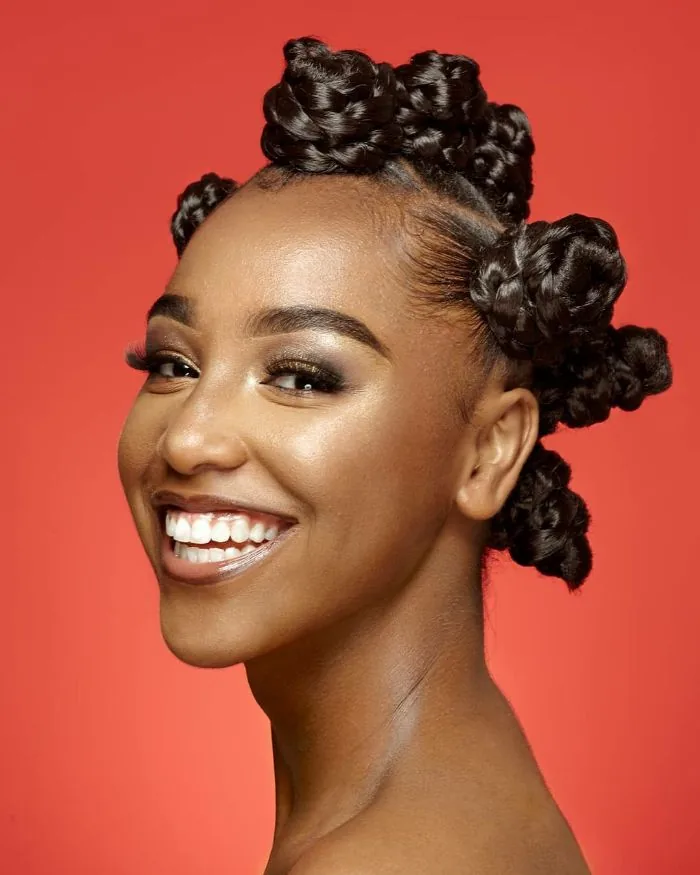
Best for: natural and textured hair, and anyone who wants a style that makes a statement. Bantu knots suit every face shape, and they double as a heat-free curl method, since taking them out leaves defined, bouncy curls.
How to style: part the hair into sections, twist each section into a small coil and pin it flat against the head. What to ask: ask your stylist or braider for even sections, since even knots look intentional and uneven knots look accidental, and moisturise the ends before coiling so they do not dry out in the knots.
30. Braided Pigtails for a Fun, Sporty Look
Braided pigtails are the sporty, playful answer to the double braid, and they are one of the most secure styles in this guide. Two braids split the weight evenly, sit flat against the head, and survive every jump and spin without budging, while the pigtail tails add a youthful energy that fits the Zumba party atmosphere perfectly.
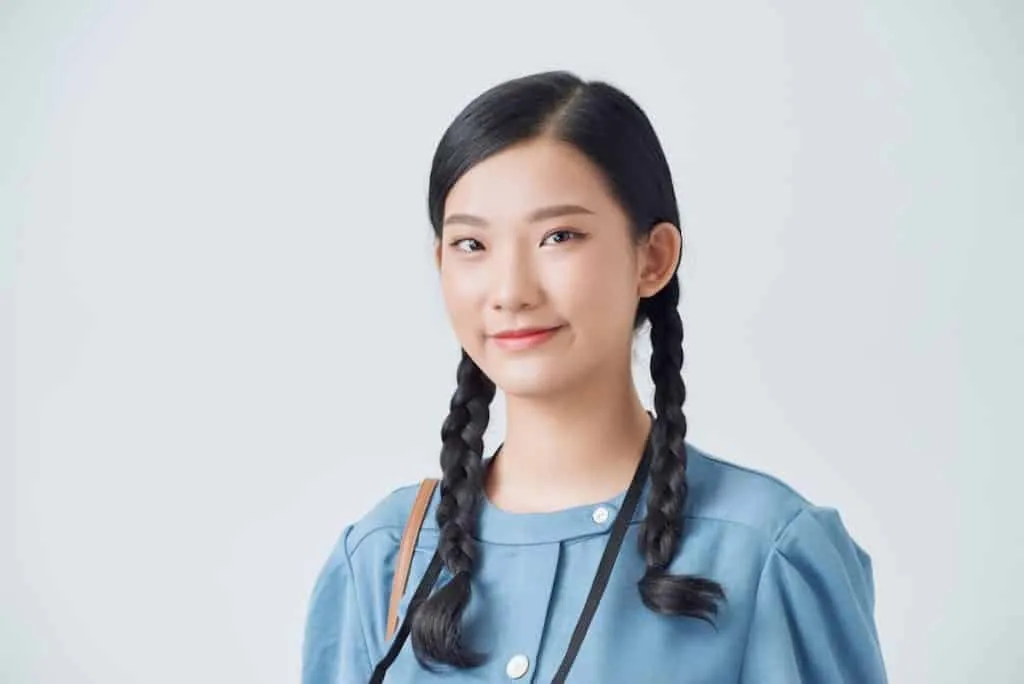
Best for: long hair, and anyone who wants a fun style that still holds through a hard class. The two-sided split suits round and oval faces, and the style works on straight, wavy and curly hair.
How to style: part the hair down the middle, braid each side from the hairline to the nape, and finish with small elastics. What to ask: ask for the braids to start high at the crown so they stay visible, and for the tails to be tucked into small buns if you prefer a fully contained version.
31. The Textured Bob With Flat Clips
A textured bob is short enough that it barely moves in a Zumba class, but the front pieces still need managing, and flat clips are the answer. Two or three flat clips pinned back from the hairline keep the fringe off your forehead, add a touch of sparkle, and take ten seconds to place. The texture of the bob does the rest, since the layers move with the music instead of falling flat.
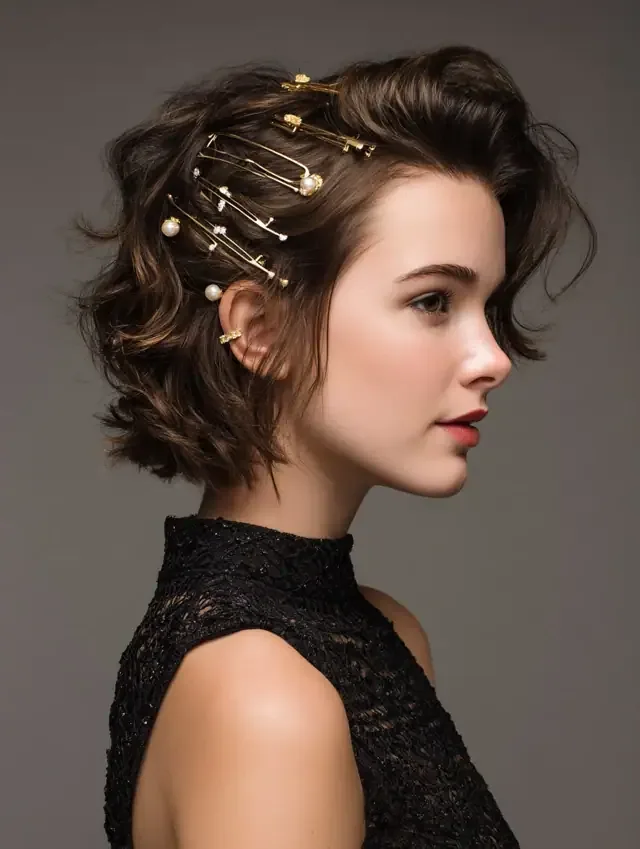
Best for: short to medium hair, bobs and lobs, and anyone growing out a fringe. The clips suit every face shape, and the style is the fastest in this guide after the pixie headband.
How to style: add a little texturising spray to the bob, then pin the front pieces back with flat clips placed behind the hairline. What to ask: ask your stylist for layers that fall away from the face, since layers that fall forward will need clipping every few songs, and layers that fall back stay put on their own.
32. Goddess Braids for a Regal, Secure Style
Goddess braids are thick, raised braids that sit proudly on the head, and they are one of the most striking styles in this guide. They lock the hair flat to the scalp, so nothing moves for the whole class, and they look regal and polished from every angle, which makes them a favourite for special classes, dance events and anyone who wants their hair to be the outfit.
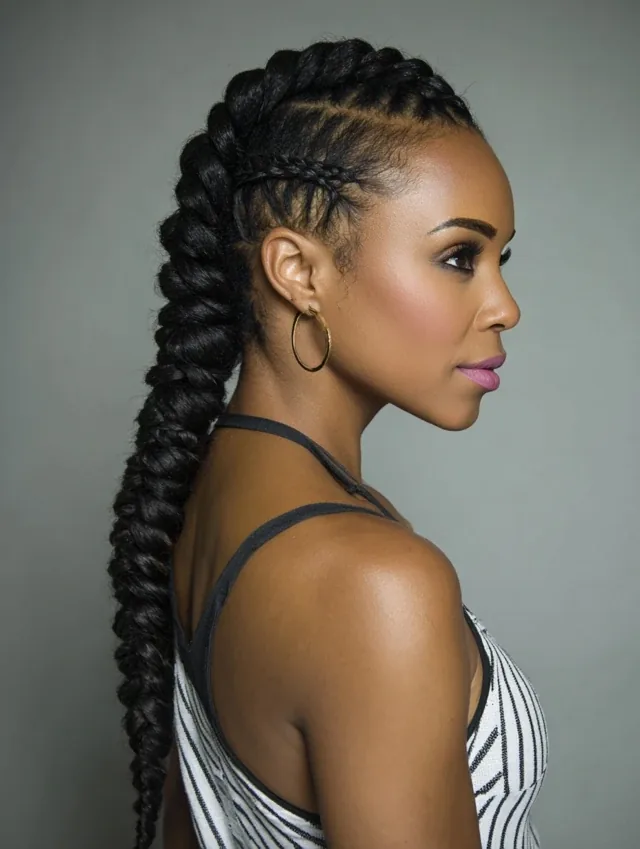
Best for: natural and textured hair, and anyone who wants a long-lasting style that survives a whole week of classes. The thick braids suit every face shape, and they protect the hair from daily styling stress.
How to style: goddess braids are best done by a braider, since the thick, even rows take skill to get right, and they should be kept moisturised with a light oil along the parts. What to ask: ask your braider for braids that are not too tight at the hairline, since tight braids cause breakage, and ask how long they will last with your class schedule so you can plan the next appointment.
33. The High Bun With a Headband for the Final Song
A high bun with a headband is the style to choose when you want everything locked down and nothing left to chance. The bun keeps the length completely out of the way, the headband locks the hairline flat and catches the sweat, and together they survive the fastest, sweatiest final song of the class without a single strand escaping. It is simple, it is secure, and it looks clean and athletic from every angle.
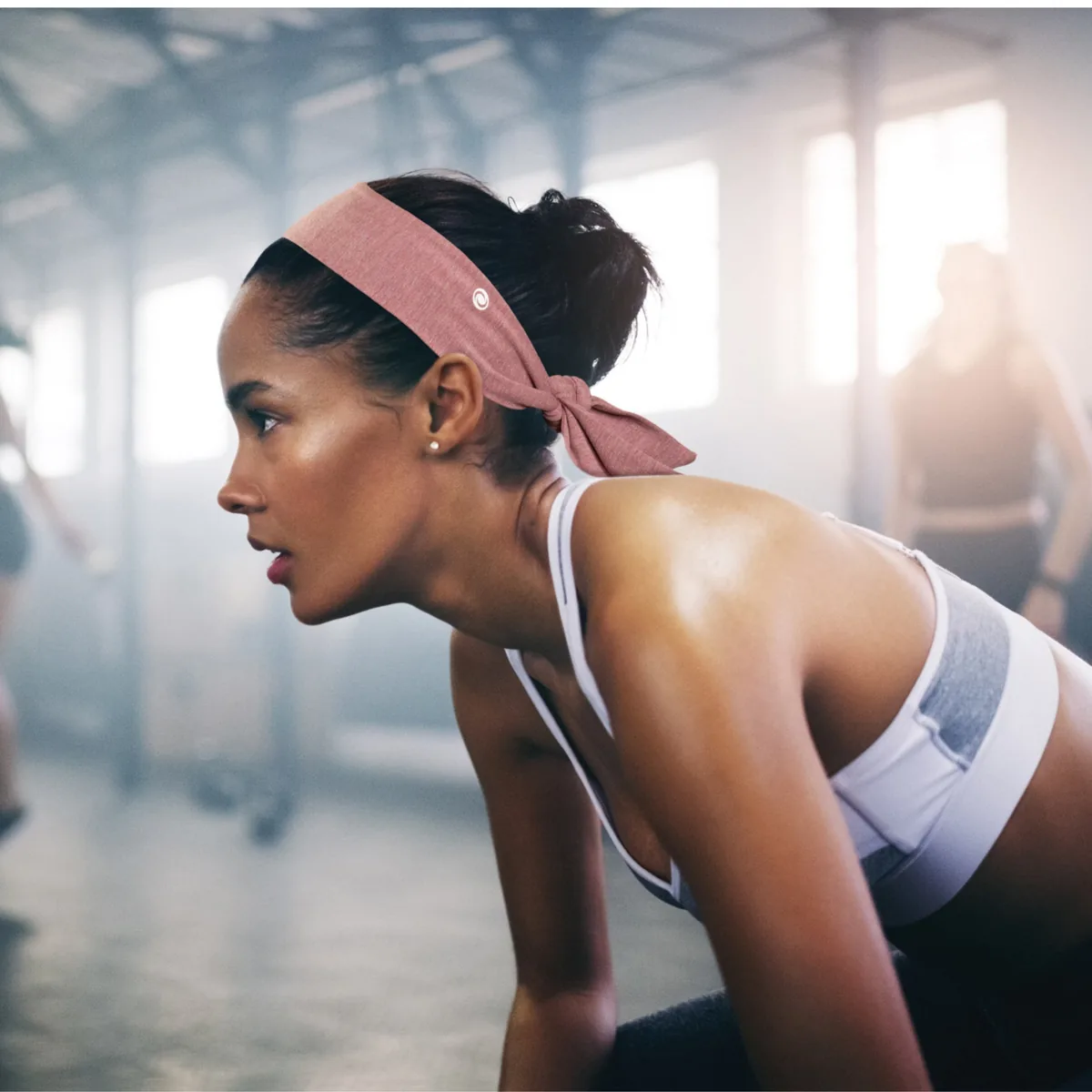
Best for: medium to long hair, high-intensity classes, and anyone whose hairline frizz ruins every other style. The high bun adds height that flatters round faces, and the headband suits every face shape.
How to style: build a high bun at the crown, pin it through the centre, then place a wide fabric headband behind the hairline. What to ask: ask your stylist for a bun that sits at the crown rather than the very top of the head, since a bun that is too high pulls at the hairline during jumps, while a crown bun stays comfortable for the whole class.
What is the best hairstyle for a Zumba class?
A secure braid, bun or anchored ponytail is the best hairstyle for a Zumba class. Double Dutch braids and a low braided bun hold best through jumping and sweating, while a high ponytail with two elastics is the quickest option that still survives the whole hour.
How do I keep my hair from falling out during Zumba?
Start with day-old hair or dry shampoo for grip, use fabric-covered elastics and crossed bobby pins, and test the style with the bounce test at home: jump five times and spin, and fix whatever moves before class day.
Can I wear my hair down to a Zumba class?
You can, but it is not recommended. Loose hair falls into your eyes, sticks to sweaty skin and tangles during fast turns. If you love the look of loose hair, choose a half-up top knot instead, which keeps the front out of your face while the rest stays down.
What hairstyle is best for curly hair in Zumba?
A high puff or a pineapple updo is best for curly hair in Zumba, since they work with the curl pattern instead of fighting it. Loose braids and Bantu knots are also excellent, while tight ponytails should be avoided because they pull and break curls.
How do I stop sweat ruining my hairstyle?
Use dry shampoo at the roots before styling, finish with a light mist of strong-hold spray, and wear a fabric headband or sweatband at the hairline to catch sweat before it reaches your face. Pack a mini dry shampoo and spare pins for the water break.
What hair accessories should I wear to Zumba?
Fabric-covered elastics, satin scrunchies, wide fabric headbands, crossed bobby pins and large matte claw clips all stay put in a Zumba class. Avoid thin rubber bands, small decorative clips and anything heavy or dangling, since they slide out or fall off mid-song.
Is a bun or a braid better for Zumba?
A braid holds better than a bun for most people, since the hair is locked to the scalp in sections and cannot slide as one mass. A braided bun combines both and is the most secure option of all, while a plain bun is best for low-impact classes.
How should I wear short hair to a Zumba class?
Short hair needs very little styling for Zumba. A wide fabric headband or a few flat clips keep the fringe off your forehead, and a little texturising spray stops the layers from falling into your eyes during fast turns.
How do I refresh my hair after a Zumba class?
Massage dry shampoo into the roots, brush it through, and put the hair into a loose low ponytail or a soft braid. A silk scarf or headband covers a frizzy hairline, and at home a water rinse removes sweat without a full wash.
Will dancing Zumba every week damage my hair?
Zumba will not damage your hair if you vary your styles, avoid the same tight ponytail every class, and use satin scrunchies instead of plain elastics. Deep-condition the ends weekly, rinse rather than shampoo after every class, and trim split ends every six to eight weeks.
Conclusion
Zumba is a party, and your hair should be ready to dance, not something you have to think about between songs. The styles in this guide all pass the same test: they hold through jumping, spinning, sweating and laughing, and they still look good in the class photo afterwards. Whether you choose the double Dutch braids, the braided bun, the high ponytail or the curly puff, the rule is the same, so pick the style that fits your hair, test it at home, pack your spare elastics, and let the music do the rest.
Try one new style this week and see how it feels by the final song, because the best hairstyles for a zumba class are the ones you forget you are wearing. When your hair stays put, you dance freer, you sweat happier, and you enjoy every song that little bit more, which is exactly what Zumba is for.