How to Pick a Fringe Style That Suits Thin Hair
Thin hair and bangs can feel like a tricky mix. I get it. You want the cute fringe, but you are scared it will look flat, stringy, or see-through by noon.
Here is the good news: a fringe can actually make thin hair look fuller. The trick is picking the right shape, weight, and length for your hairline and density.
In this post, I am walking you through how to choose a fringe that works with thin hair, not against it. We will talk face shape, density, styling, and the 2026 hairstyles that are actually flattering.
Grab a mirror and a coffee. This will take you five minutes, and you will leave with a clear plan.
Start With Your Density, Not the Trend

Before you fall in love with a fringe photo, check your density. Density is how many hairs you have per square inch, and it matters way more than texture when it comes to bangs.
- Fine and low density: go wispy and piecey
- Fine but medium density: blunt-ish edges can work
- Thin at the temples: keep the sides longer and softer
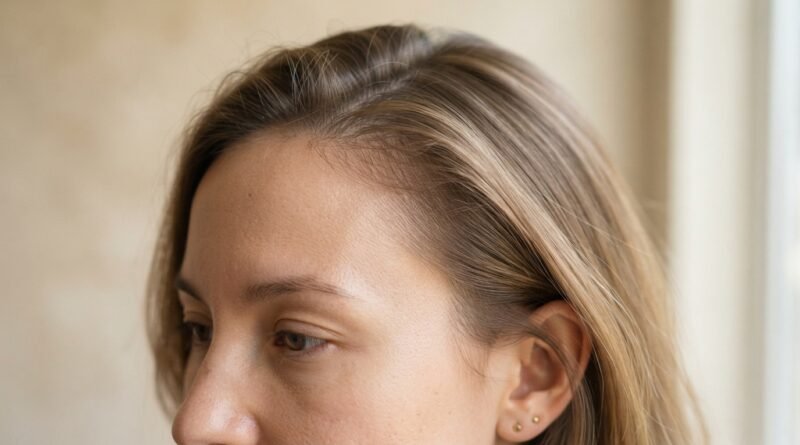
Run your fingers along your hairline. If you can see a lot of scalp, a heavy fringe will show every gap. If it feels thick along the front, you have more room to play.
Figure Out Your Hairline and Parting

Your hairline decides where bangs want to sit. A cowlick or a strong widow’s peak will fight you if you ignore it.
Part your hair where it naturally falls, then look at the shape of your front hairline. Round, square, and M-shaped hairlines all take fringe differently.
- Cowlick in front: let it win and build the fringe around it
- High hairline: a soft fringe shortens the forehead nicely
- Low hairline: keep the fringe short and see-through
Work with the grain of your hair, not against it. It saves you ten minutes every single morning.
The Quiet Luxury Bob With a Soft Fringe

The quiet luxury bob is everywhere right now, and it is a dream for thin hair. Short hair automatically looks fuller because the ends are not dragging it down.
Add a soft, see-through fringe and you get that polished, expensive feel without any weight pulling your hair flat.
- Ask for a blunt-ish line with light point cutting at the ends
- Keep the fringe just below the brow so it stays airy
- Skip thick, dense layers that thin out the body
This is the fringe I recommend to almost every friend with fine hair who wants a big change.
Go Blunt If Your Hair Is Fine But Dense
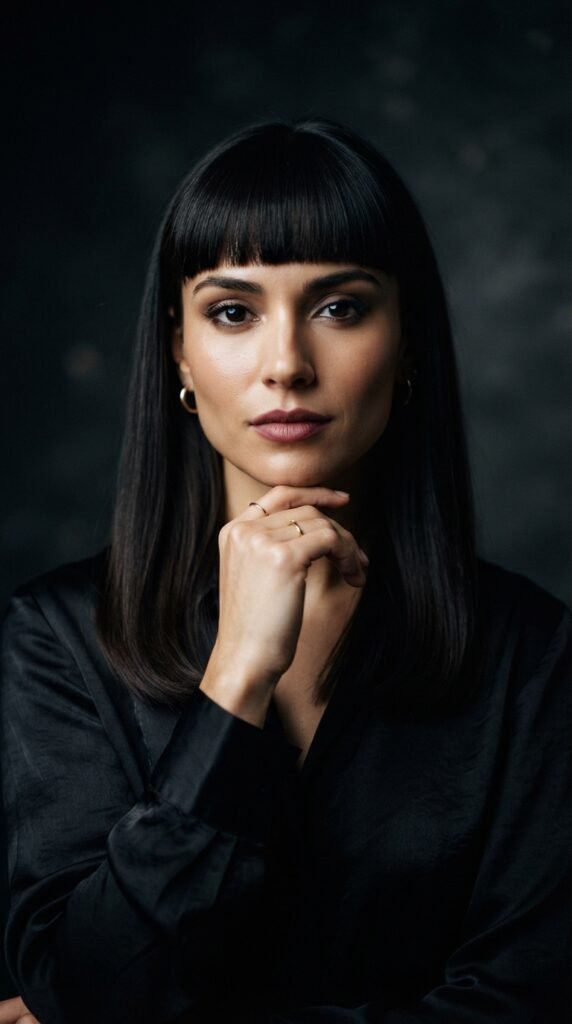
Here is a rule people get wrong: thin hair does not always mean no blunt bangs. If your strands are fine but you have a lot of them, a blunt fringe can look amazing.
The key is density. Blunt bangs create a solid line, which reads as thickness to the eye. It is one of the fastest optical tricks out there.
- Great for fine hair with medium to high density
- Avoid if you have visible thinning along the hairline
- Ask your stylist to leave a little softness at the edges
Take a photo of your hairline in bright light and show your stylist. They will tell you in one second if blunt is safe.
Thin Fringe, Big Difference: Wispy Curtain Bangs

Curtain bangs are the safest fringe for thin hair. They are split in the middle, so the hair falls away from the face instead of clumping together.
Because they taper at the sides, they blend into your length and never look stringy. That is the whole point.
- Keep the shortest point at your cheekbone or nose bridge
- Ask for face-framing pieces that flow into the rest
- Style with a round brush for two minutes max
They also grow out beautifully, which is a big deal if you change your mind. Curtain bangs are the low-risk, high-reward fringe of 2026.
Why the Asymmetrical Lob Is a Safe Bet

The asymmetrical lob is a gorgeous middle ground. One side is longer, so the weight is never evenly pulling your hair flat.
Pair it with a side-swept fringe and you get volume at the root without any extra styling tools.
- Great for fine hair that tends to fall flat on one side
- Disguises thinning at the temples and part line
- Looks intentional even on a messy day
Ask for soft texture through the ends, not choppy layers. Soft texture adds movement, while choppy layers thin out fine hair.
The Hime Cut for Straight, Thin Hair
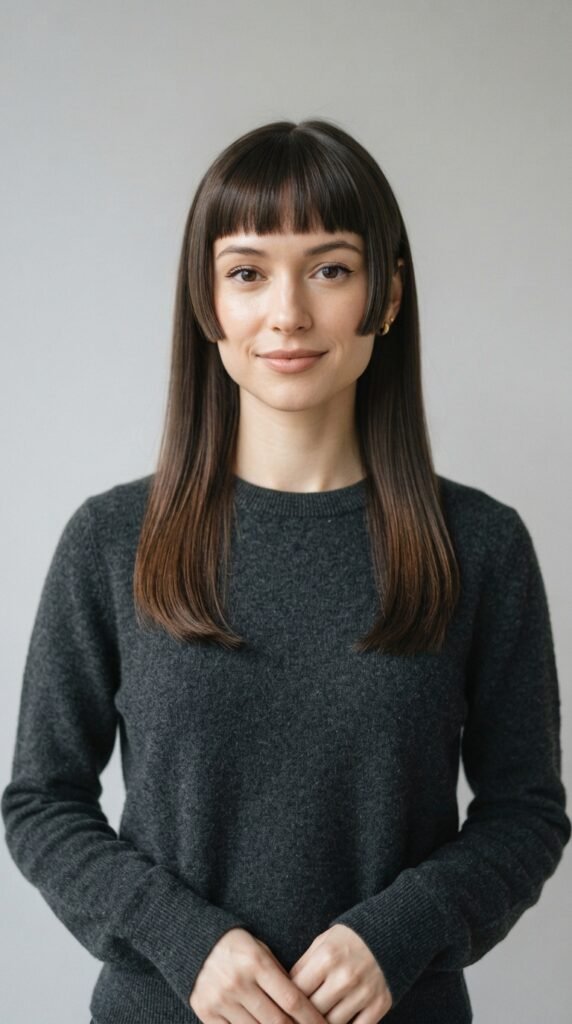
The hime cut is having a moment again, and it is honestly made for straight, thin hair. The silhouette does all the work for you.
It is a straight fringe with two blunt cheek-length pieces on the sides, plus long hair in the back. That frame of blunt pieces makes thin hair look deliberate.
- Best on straight or slightly wavy hair
- Ask for side pieces level with your cheekbone
- Keep the back smooth, not layered
If your hair has a wave, you can still wear it. Just ask your stylist to soften the side pieces so they do not stick out.
Romantic Goth Hairstyles With Sheer Bangs

Romantic goth hairstyles love a soft fringe. The vibe is moody and delicate, which pairs perfectly with fine hair instead of fighting it.
Think sheer bangs, dark color, and lots of gentle movement. Nothing heavy, nothing blunt to the point of looking harsh.
- Sheer bangs across the brow, not dense
- Long face-framing pieces that taper down
- Deep color to add shine and depth
Dark tones reflect light beautifully, which makes every strand look thicker. It is one of my favorite tricks for fine hair.
Try a Vampire Haircut With a Side-Swept Fringe

The vampire haircut is all about length, layers, and a little drama. Add a side-swept fringe and thin hair looks instantly fuller.
Side-swept bangs create a diagonal line across the forehead. Diagonals always look thicker than straight lines because there is no visible gap.
- Keep the fringe long, sweeping past the brow
- Build volume at the crown with soft layers
- Use a deep, rich color for extra shine
This one works on almost every face shape. Just keep the shortest point around your cheekbone so it stays flattering.
Glitchy Glam Hair: Play With Texture and Layers

Glitchy glam hair is fun, edgy, and surprisingly forgiving on fine strands. It is all about texture, sharp edges, and a little controlled chaos.
A micro fringe or a jagged, uneven fringe fits this look perfectly. Uneven lines hide thinning because there is no solid edge to compare against.
- Ask for point-cut, piecey ends
- Use texturizing spray instead of heavy creams
- Keep the rest of the hair sleek for contrast
Texture is your best friend with thin hair. It creates the illusion of more strands without adding weight.
Skip Heavy Blunt Bangs (And What to Do Instead)
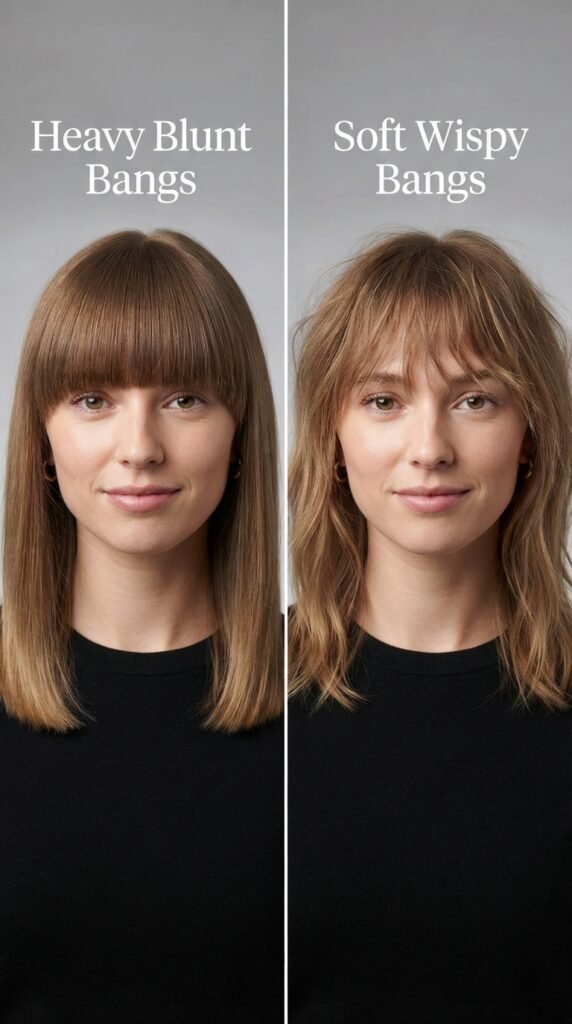
I want to be honest with you: heavy, dense blunt bangs are usually a no for thin hair. They separate into gaps and expose the scalp.
If you already have them, do not panic. You have options that do not involve waiting six months.
- Ask your stylist to point-cut and thin the ends
- Push them to the side while they grow
- Add a root volume spray for lift
Next time, go for a lighter weight fringe with a little taper. Same vibe, way more flattering.
How to Fake Thickness With a Micro Fringe

A micro fringe is short, sitting well above the brow. It sounds risky, but on fine hair it can be genius.
Short bangs use less hair, so they do not steal density from the rest of your head. That means your length stays full while your forehead gets a fresh look.
- Great if you have a high forehead
- Not ideal if you have a cowlick right at the front
- Style with a tiny flat iron and light hairspray
It is bold, but it is one of the most flattering fringe shapes for fine hair in 2026.
Face Shape Basics for Fringe Picking
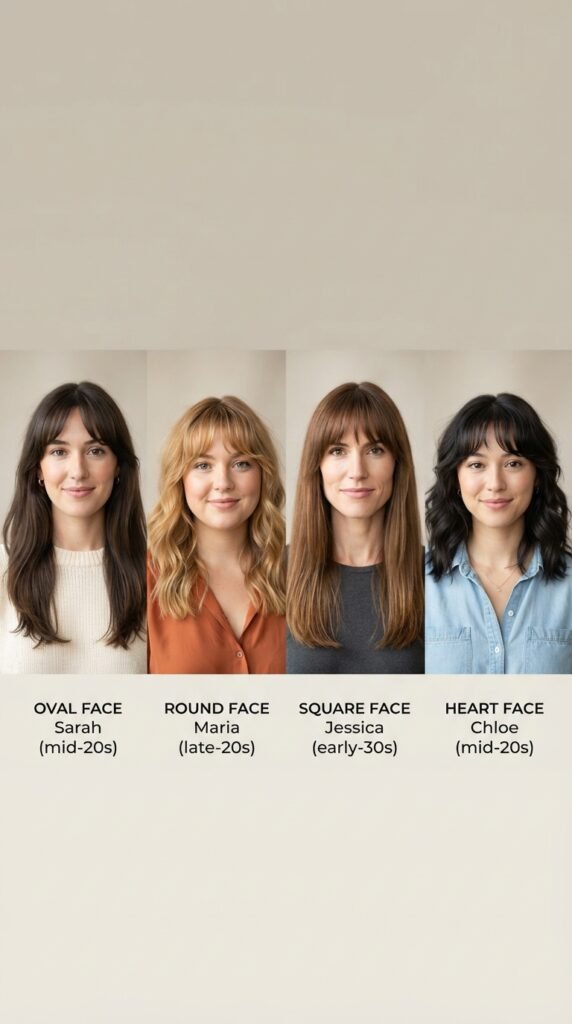
Face shape matters, but it is not a rulebook. It is more like a nudge in the right direction.
- Round face: longer fringe that hits below the cheekbone
- Oval face: almost anything, lucky you
- Square face: soft, curved bangs to soften the jaw
- Heart face: side-swept or curtain bangs
- Long face: a fuller fringe shortens things nicely
Use this as a starting point, then adjust for your density. Your hairline always gets the final vote.
The 2026 Hairstyles Edit: What’s Actually Working

Every year brings new trends, but only a few of them actually work on thin hair. Here is what I am seeing and loving right now.
- Quiet luxury bobs with soft edges
- Curtain bangs on long fine hair
- Asymmetrical lobs with side fringes
- Hime cut silhouettes on straight hair
- Romantic goth hairstyles with sheer bangs
Notice a pattern? Soft edges, visible movement, and no heavy weight. That is the sweet spot for 2026 hairstyles and thin hair.
Old Money Hair Meets a Soft Fringe
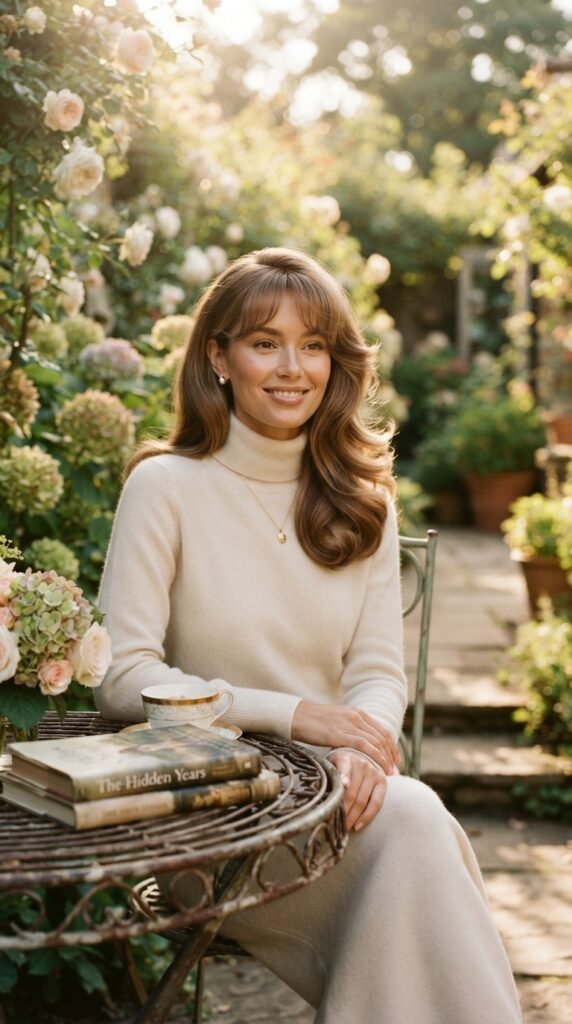
Old money hair is polished, healthy, and effortless. The secret is shine, not volume, and that is great news for fine hair.
Pair it with a soft, see-through fringe and you get that refined, understated look without any bulk.
- Invest in a gloss treatment for shine
- Blow dry with a round brush for smoothness
- Keep the fringe light and slightly separated
Thin hair actually shines more easily than thick hair. Lean into that. Shine reads as health, and health reads as expensive.
Bangs on a Cowlick: What Works

Cowlicks are stubborn, but they are not a dealbreaker. You just have to stop fighting them.
Find where the cowlick pushes the hair, then build your fringe around that direction. A stylist who works with it will give you a fringe that basically styles itself.
- Side-swept bangs hide a front cowlick easily
- Longer curtain bangs weigh down the lift
- Avoid short, blunt fringes right on the swirl
If your cowlick is strong, ask for a consultation first. Ten minutes of planning saves months of frustration.
Ask Your Stylist These Three Questions

Your stylist wants to give you what you want, but they need good information. Bring photos and ask these three things.
- How much density do I have at the front hairline?
- Will this fringe work with my natural growth pattern?
- How often will I need trims to keep it looking good?
Those answers tell you everything. Most fine-hair fringes need a trim every four to six weeks, so factor that into your budget and schedule.
How to Style a Fringe With Thin Hair Every Morning

Good news: thin hair dries fast. Your fringe routine can be under three minutes once you have a system.
- Mist the fringe with water or a light heat protectant
- Blow dry with a small round brush, lifting at the root
- Finish with a tiny amount of dry texture spray
Skip the heavy creams and oils. They clump fine strands together and make gaps look worse, which is the exact opposite of what you want.
Lift at the root is the whole game. Everything else is just polish.
Products That Help (And What to Avoid)
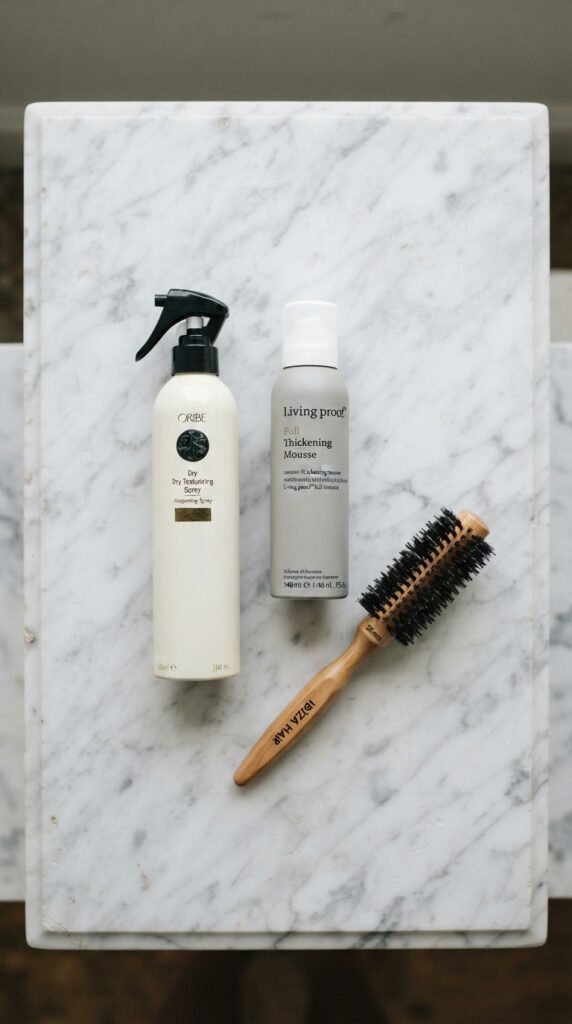
The right products can double how full your fringe looks. The wrong ones will flatten it in seconds.
- Reach for: dry texture spray, root lift mousse, lightweight volumizing powder
- Avoid: heavy oils, thick pomades, dense curl creams
- Use dry shampoo at the roots for grip, not just for grease
Apply products at the root and mid-length, never right at the ends of your fringe. That is where clumping happens.
Less is genuinely more here. Two small sprays beat one big one.
Grow-Out Plan for a Fringe You Regret

If you already cut the fringe and hate it, breathe. It happens to everyone, including me, twice.
- Weeks one to four: pin it to the side or twist with a clip
- Weeks five to eight: style it as curtain bangs
- Weeks nine and beyond: blend it into face-framing layers
Biotin gummies will not speed this up. Trims will. Getting the ends shaped every few weeks keeps it wearable the whole way through.
Quick Cheat Sheet by Hair Type
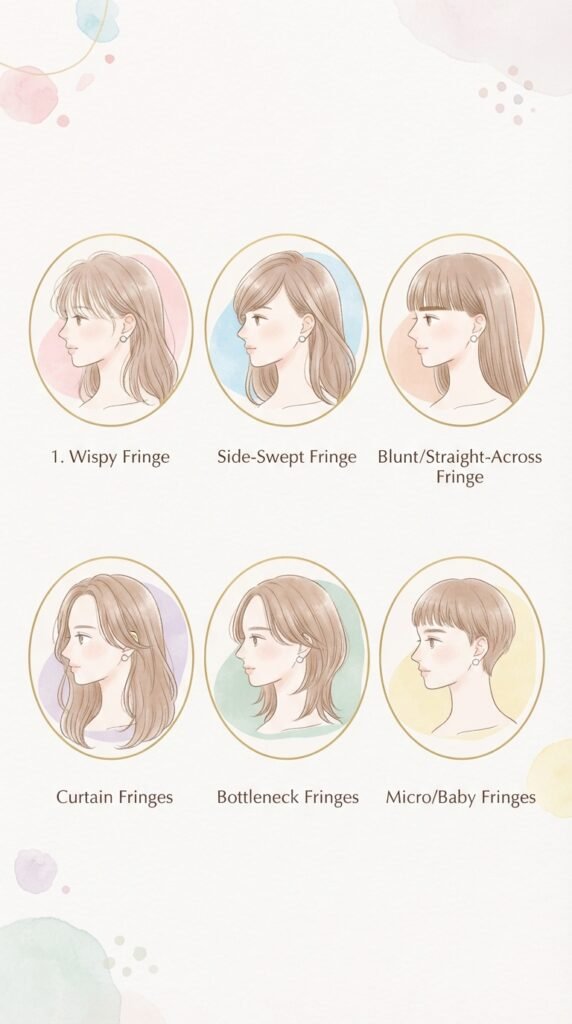
Here is the fast version, so you can screenshot this and go.
- Fine and straight: curtain bangs, micro fringe, hime cut
- Fine and wavy: soft side-swept fringe, asymmetrical lob
- Fine and thinning at the front: long face-framing pieces only
- Fine but dense: blunt-ish fringe with soft edges
- Fine and curly: skip the fringe, add face-framing layers
Most people with thin hair do best with a light, tapered fringe that moves. When in doubt, go softer and longer.
A Sweet Little Send-Off
Thin hair does not mean you have to skip the fringe. It just means you pick a shape that works with your density, your hairline, and your morning routine.
Start soft, keep it light, and let your stylist know your density. That one conversation changes everything.
Save this post to Pinterest so you have it ready before your next salon visit. And tell me in the comments: have you tried a fringe with thin hair, and what actually worked for you?