How to Get Alysa Liu’s Viral Halo Hair from the 2026 Winter Olympics (Step-by-Step Guide)
She skated into history, and into our Pinterest boards. Here’s everything you need to know to get Alysa Liu’s iconic tree-ring halo hair at home.
Table of Contents
- What Is Alysa Liu’s Halo Hair?
- Why Did This Hairstyle Go Viral?
- The Meaning Behind the Tree-Ring Stripes
- Who Is Alysa Liu?
- Everything You Need Before You Start
- Step 1: Start with the Right Base Color
- Step 2: Section Your Hair Into 4 Quadrants
- Step 3: Apply Your Depth (Dark) Color
- Step 4: Create Horizontal Stripe Subsections
- Step 5: Bleaching the Halo Stripes
- Step 6: Tone to Your Desired Blonde Shade
- Step 7: Style and Finish the Look
- Blonde Shade Options for Your Halo
- How to Do This on Very Dark or Black Hair
- How to Maintain Halo Hair
- DIY vs. Salon: What Alysa Did
- How to Add a New Ring Each Year Like Alysa
- Best Products for Halo Hair
- Halo Hair Variations to Try in 2026
- Frequently Asked Questions
Okay, can we just take a moment? Because when Alysa Liu glided onto the ice at the 2026 Milano Cortina Winter Olympics, the internet collectively stopped scrolling and said: wait, what is on her head and how do I get it?
Here at Booming Press, we are obsessed with hair that tells a story, and Alysa’s tree-ring halo hair is the most meaningful, most photogenic, most completely our vibe hair trend we’ve seen in years. The moment she won gold (America’s first gold in women’s figure skating in 24 years!), we knew we had to break down exactly how this style works.
So we did the research, talked to the expert colorists who’ve been recreating it in salons, and we’re laying out every single step for you. Whether you book a salon appointment or DIY it at home like Alysa, this is your complete guide.
1. What Is Alysa Liu’s Halo Hair?
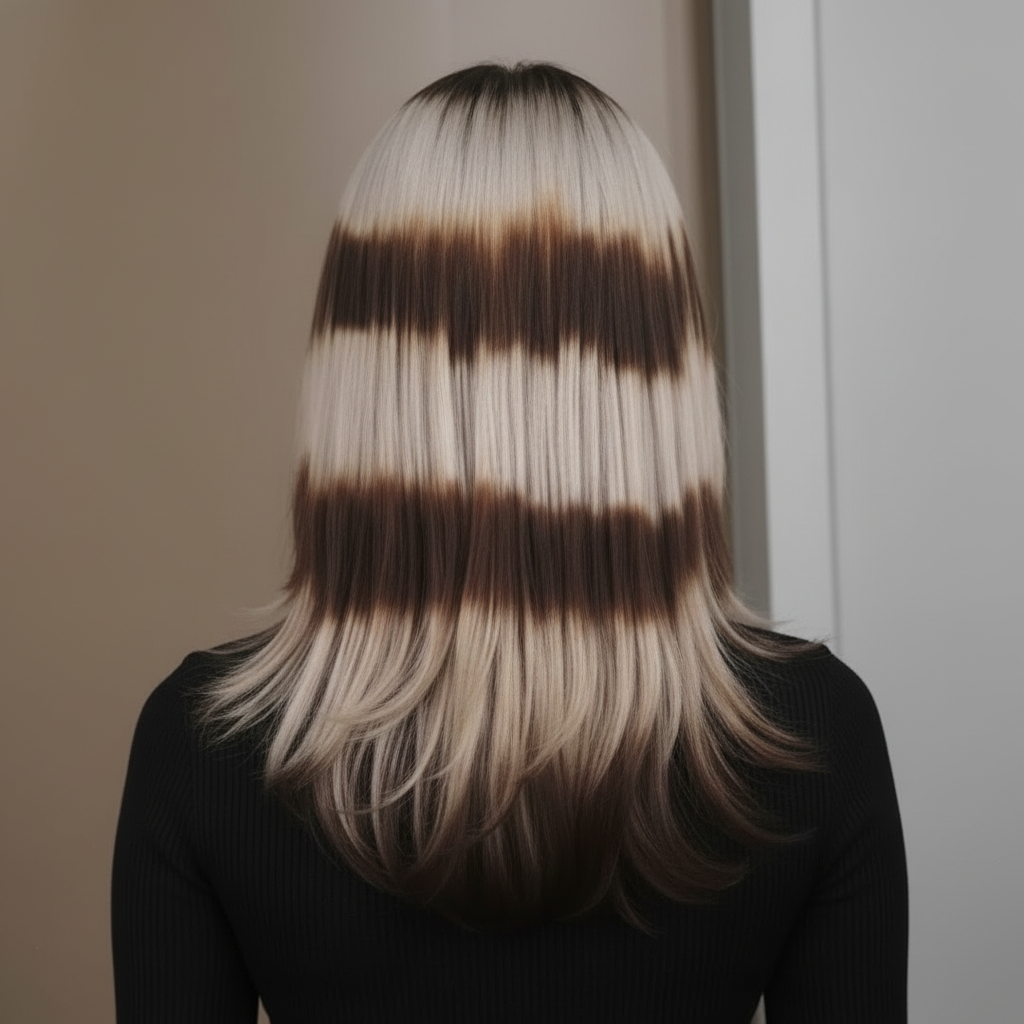
Alysa Liu’s signature look, officially called halo hair by her hairstylist Kelsey Miller, is a color technique where alternating horizontal bands of dark brunette and bright blonde circle the entire head like rings. Think of it like the stripes on a bumblebee, but make it fashion.
The technical finish is a high-contrast, choppy pattern similar to early-2000s foil highlights, but instead of scattered pieces, the stripes wrap all the way around the head in clean horizontal halos. Alysa’s version features three distinct bands: deep brunette roots transitioning into warm milk-tea-colored rings, accented by brighter platinum blonde transition lines.

2. Why Did This Hairstyle Go Viral?
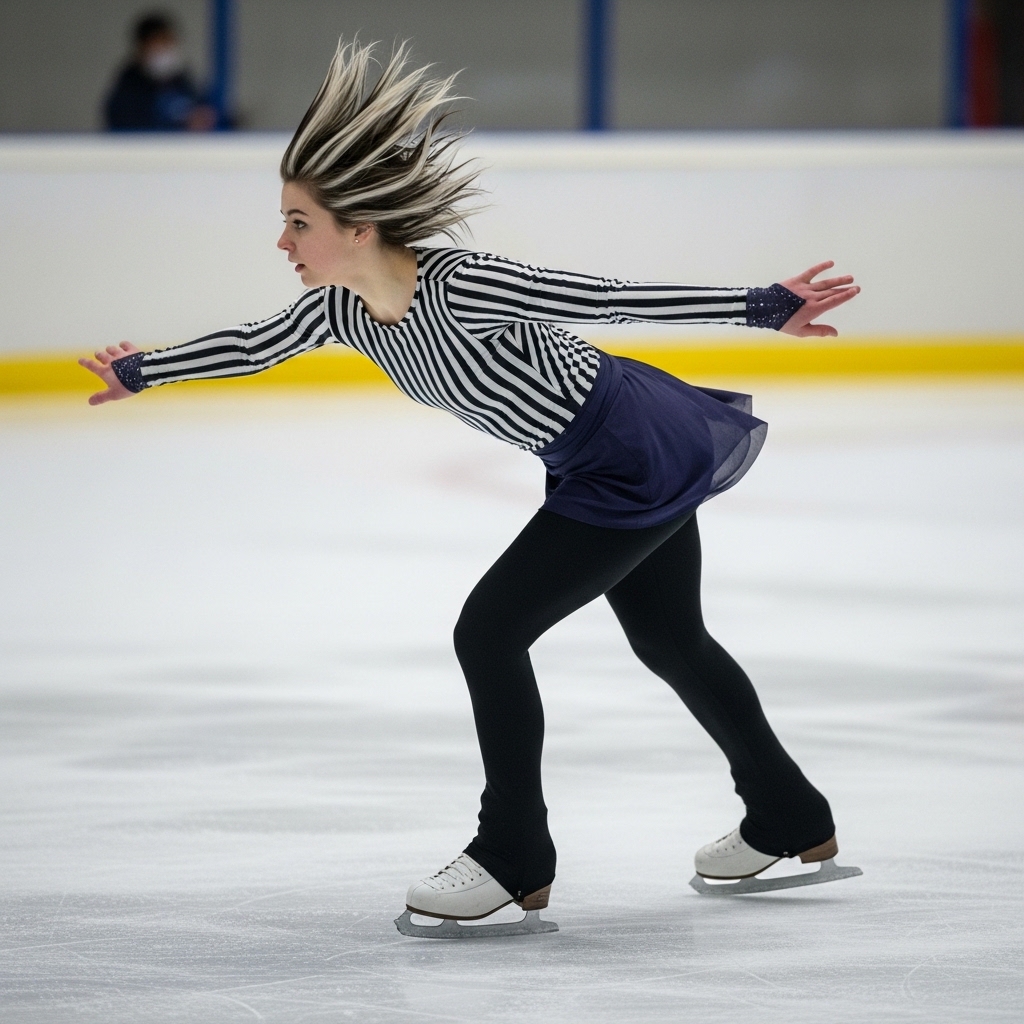
In a word: authenticity. When Alysa Liu competed at the 2026 Winter Olympics, she wasn’t performing a sanitized, picture-perfect version of a figure skater. She showed up with bold, alternative style, a nose piercing, an infectious smile, and hair that looked like it came straight from an underground Brooklyn salon, while also skating the performance of her life.
Hairstylists across the country reported an immediate surge in requests the week she won gold. Emily Walters, a Minneapolis hairstylist, said customers began walking in specifically asking for “the Alysa Liu.” Emmett Palmer, who specializes in alternative hairstyles including stripes and patterns, said it was exciting to see someone use their hair as genuine self-expression in such a high-pressure arena.
“She’s showing that hairstyles can reflect personal narratives instead of conforming to expected standards,” Palmer said, and that hit us right in the heart, honestly.
Team Booming Press’ Take: What makes a hair trend actually go viral on Pinterest isn’t just the look, it’s the story behind it. Alysa’s halo hair has both, which is why we’re still pinning it weeks later.
3. The Meaning Behind the Tree-Ring Stripes
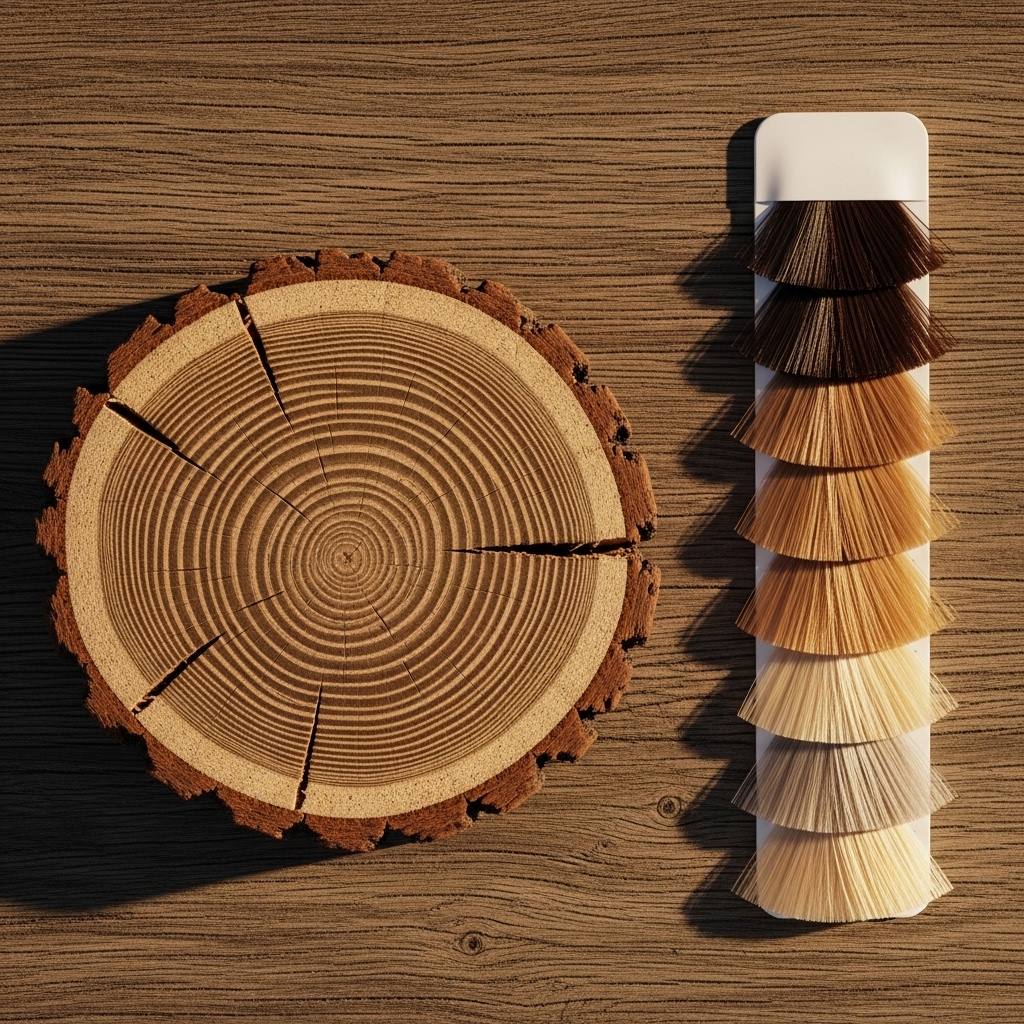
This is the part that makes us tear up a little, and we’re not even ashamed about it. In a TikTok conversation with Paralympian Haven Shepherd on February 10, 2026, Alysa explained the concept simply: “I just want to be a tree.”
Each blonde stripe in her hair represents a year of her life, like the annual growth rings inside a tree trunk. She started the hairstyle in late 2023, adding her first ring at her ends. A second ring followed in winter 2024. Then in December 2025, just before heading to the Olympics, she added her third ring and had it brightened from an orangish ginger to a clean milk-tea blonde.
She told NBC Olympics: “So I do this every year. I add a stripe. It’s going to be like this for a year. And then next wintertime, like end of December, I do another ring.”
Her plan? To keep growing. Possibly through the 2030 Winter Olympics in the French Alps, which would give her four rings. The living timeline is a visual diary, a symbol of growth, resilience, and returning to herself after taking a two-year break from skating.
We challenge you to find a more beautiful reason to dye your hair. We’ll wait.
4. Who Is Alysa Liu?
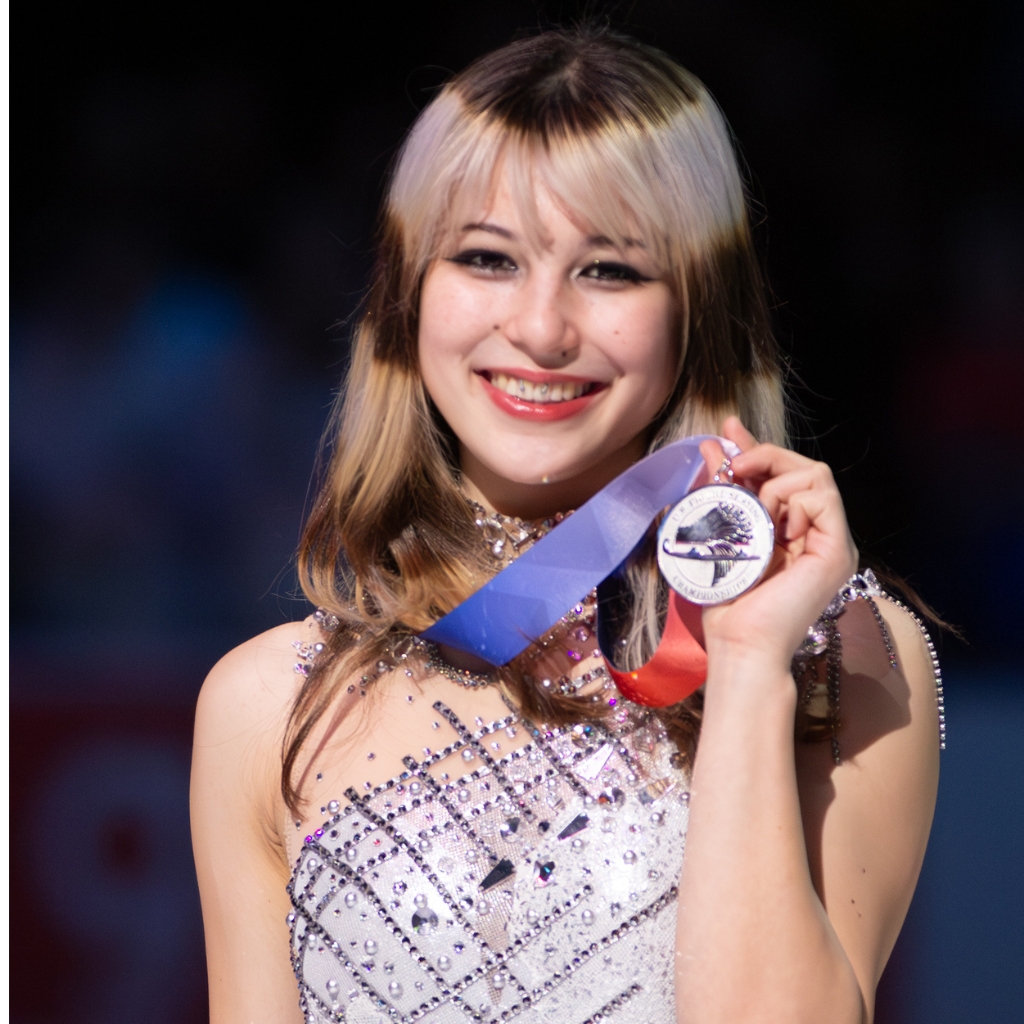
In case you were somehow offline during the 2026 Winter Olympics (we forgive you), here’s the quick Alysa Liu recap that matters for your hair inspiration journey.
Alysa Liu, 20, became the youngest-ever U.S. women’s national figure skating champion when she won at just 13 years old. She retired from competitive skating in 2022, then came back two years later, on her own terms, with her own style. In February 2026, she made history at the Milano Cortina Winter Games by winning gold in the Women’s Single Skating event, the first American woman to do so since 2002.
She also won gold in the team event alongside Ilia Malinin, Madison Chock, and others. She scored two golds total, then broke one of the medals and had to swap it. (We love her for the chaos, too.)
But beyond the medals, Alysa represented something bigger: the idea that you can be authentically yourself in one of the world’s most traditionally image-conscious sports, and win.
5. Everything You Need Before You Start
Before we dive into the steps, let’s talk supplies. Getting the right products makes the difference between halo hair and hair damage, so don’t skip this section.
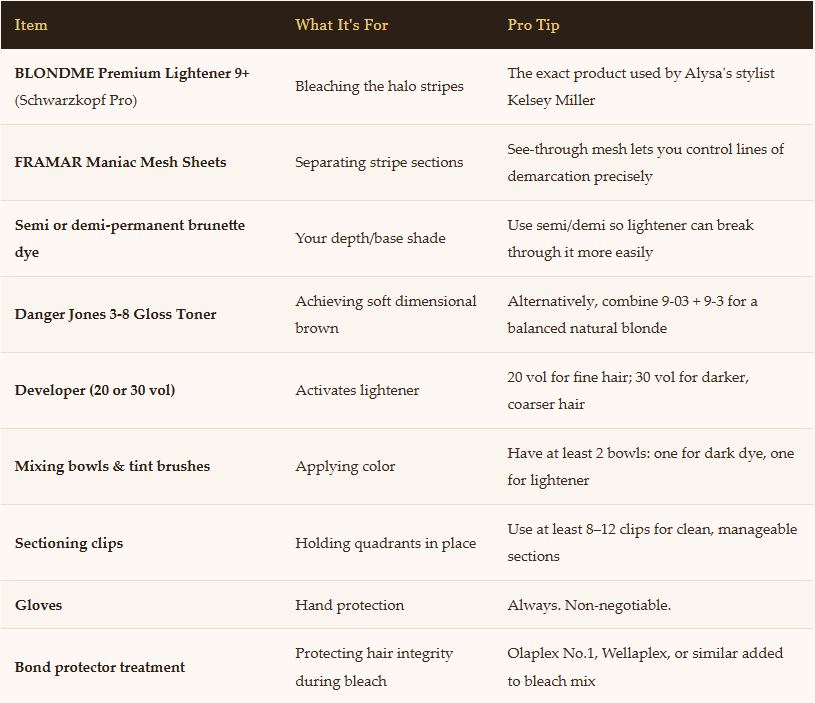
⚠️ Heads up from Team Booming Press: If your hair is already color-treated, very dark (natural black), or damaged, please see a professional colorist for the bleach steps. Overlapping bleach on previously lightened hair can cause breakage. Alysa herself said her dark hair made it “really hard to get it lighter.”
6. Step 1: Start with the Right Base Color
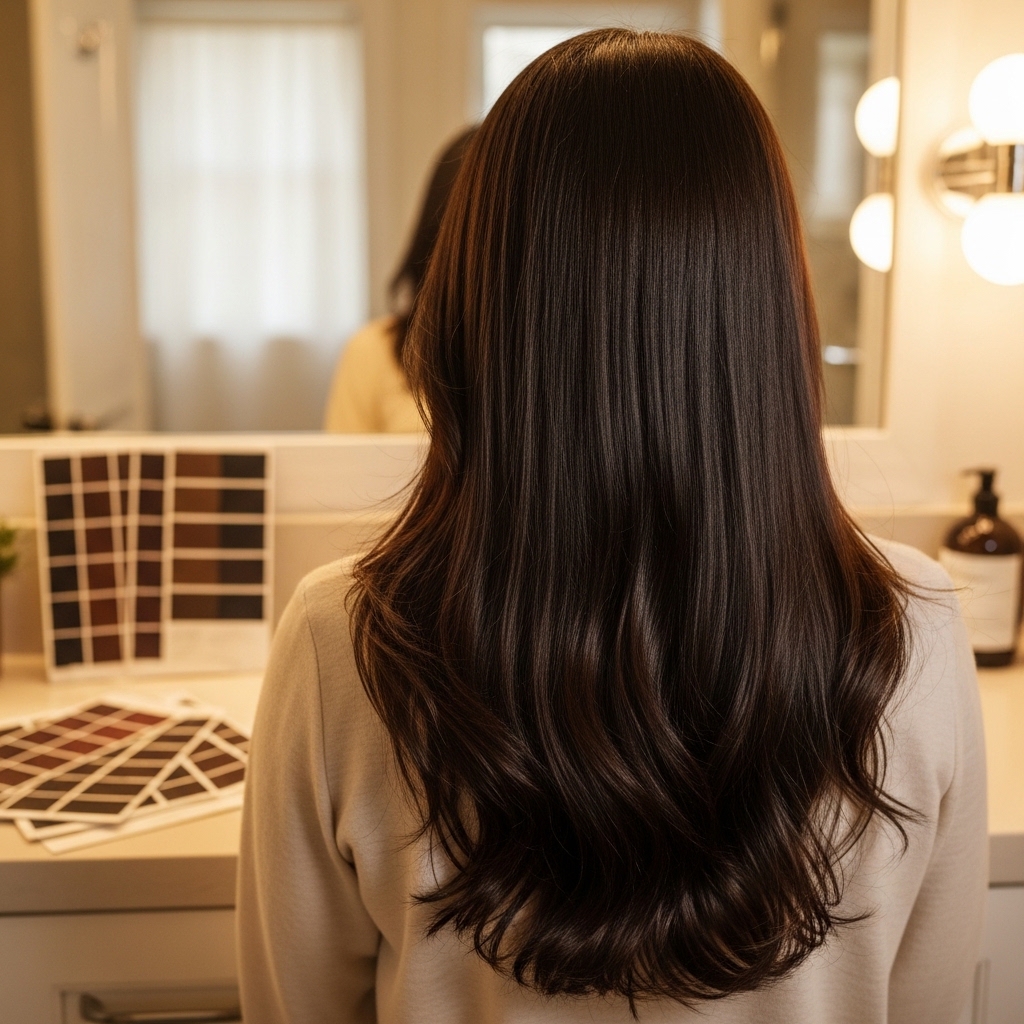
The halo hair effect lives and dies by contrast. You need a rich, deep brunette or near-black base to make those blonde rings pop. Alysa’s natural hair is a dark brown, which is the ideal starting canvas.
If your hair is already a medium or dark brown, you may be able to go straight to the stripe step. If it’s lighter, consider adding a semi-permanent dark brunette shade first to deepen the base. A semi or demi-permanent formula is ideal because it allows bleach to work through it more easily when you’re ready to add the rings.
Celebrity colorist Gregory Patterson recommends thinking of it this way: “This can be natural, artificial, you just want to ensure there is enough contrast for the effect to work.” The more contrast between your base and your blonde, the more striking the halo result.
7. Step 2: Section Your Hair Into 4 Quadrants
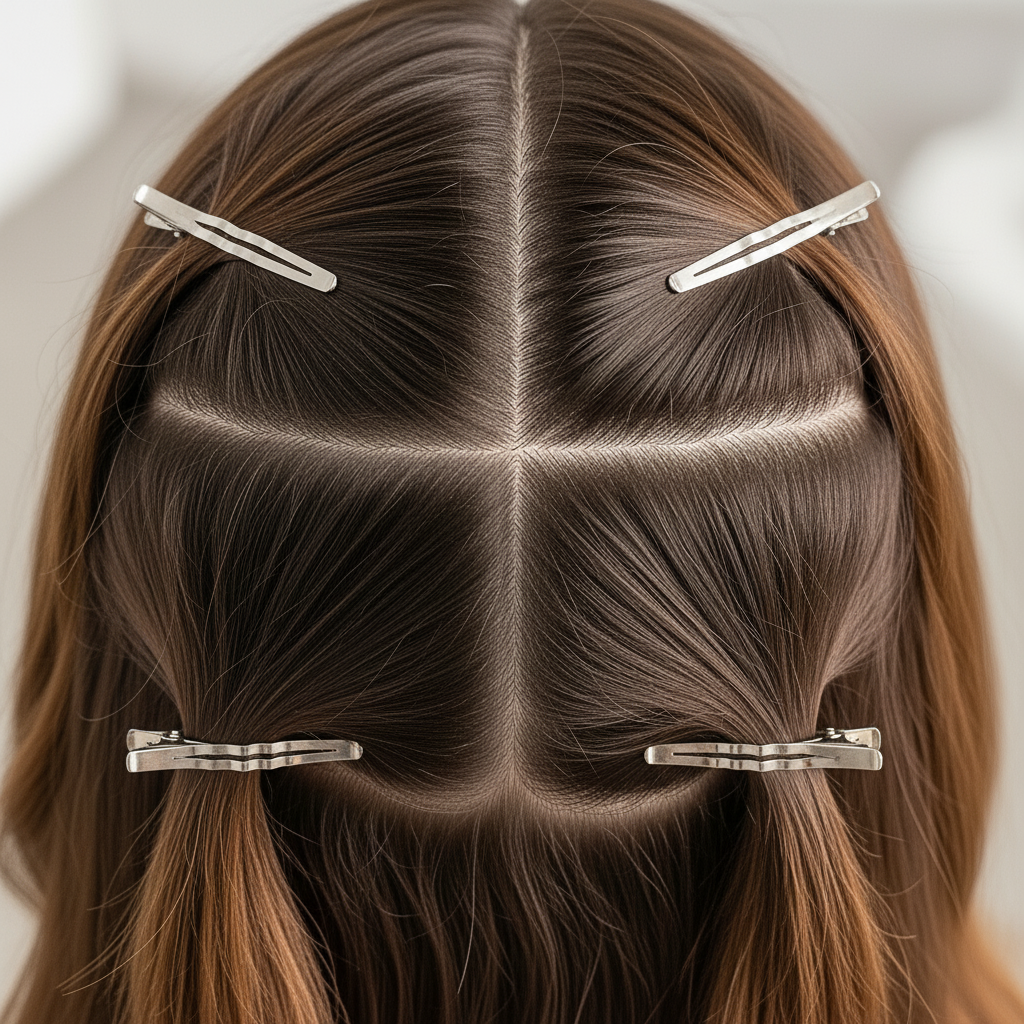
This is the most important foundational step, and the one most DIYers skip. Don’t. Proper sectioning is what gives you those clean, even horizontal halos instead of a muddy mess.
Part your hair down the center from forehead to nape, then create a horizontal part from ear to ear. This gives you four clean quadrants: front left, front right, back left, back right. Clip each section up and out of the way.
You’ll work each quadrant individually, which keeps the horizontal stripe pattern consistent all the way around your head. This is exactly how the professionals approached Alysa’s hair, methodically, one section at a time.
Team Booming Press Tip: Work on the back sections first. It’s harder to see the back, so completing it while your arms are fresh and you have the most patience gives you the best results.
8. Step 3: Apply Your Depth (Dark) Color
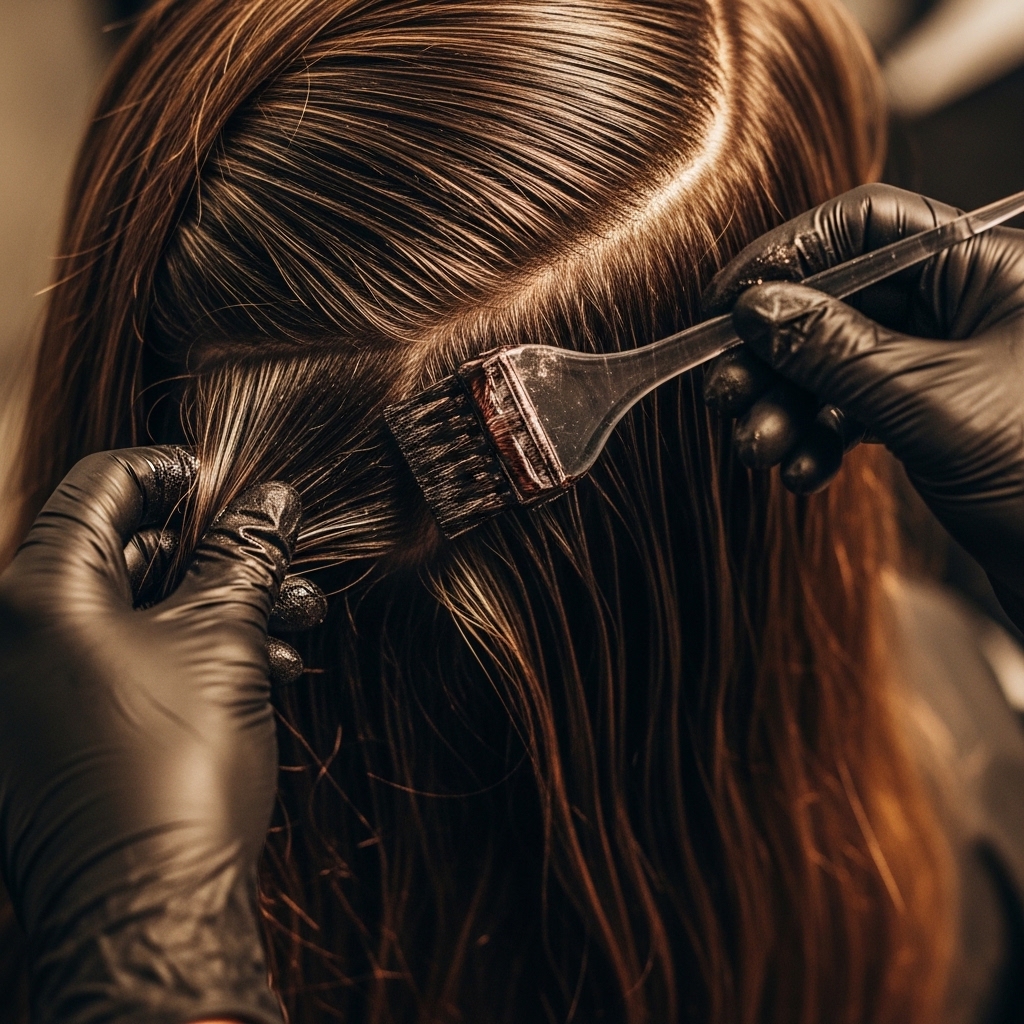
Before the lightener touches your hair, you need to establish your dark base. Mix and apply your semi or demi-permanent brunette shade all over your hair, working it through from roots to ends. This ensures an even, consistent dark canvas for the blonde stripes to contrast against.
Process according to the product’s directions, then rinse, shampoo, and dry your hair thoroughly before moving on. Applying bleach on top of wet hair dilutes the lightener and gives you unpredictable results, always start the bleach application on dry hair.
If your natural hair is already a rich, even dark brown or near-black, you can skip the base dye step and go straight to sectioning for your stripes.
9. Step 4: Create Horizontal Stripe Subsections
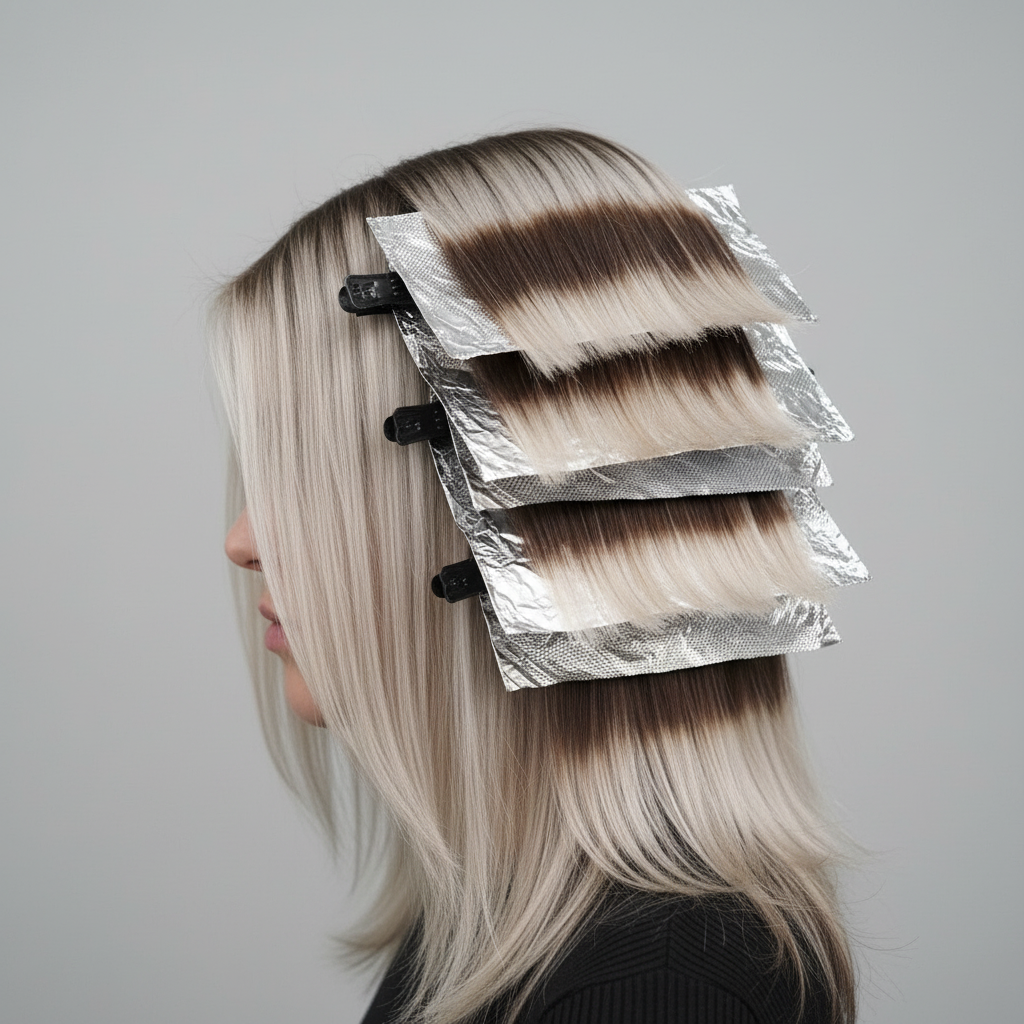
This is where the magic actually happens. Working within one quadrant at a time, take horizontal subsections that are ¼ to ½ inch thick. These are the sections that will receive bleach. The sections in between, the same thickness, stay dark and receive no bleach.
Use your FRAMAR Maniac Mesh sheets to separate each section. The mesh is see-through, which means you can visually check your line of demarcation (the exact edge where the blonde will start and stop) as you work. This level of precision is what separates a clean halo from a blurry, muddy result.
Colorist Kelly Novobielski recommends the mesh specifically because it helps you “see through each layer, build strategically, and precisely control your lines.” Think of each subsection as a ring of your tree, it needs to be clean, consistent, and deliberate.
Booming Press Tip: Place a mesh sheet under your bleach section AND one on top of it to fully isolate the stripe. This stops the lightener from bleeding onto adjacent dark sections.
10. Step 5: Bleaching the Halo Stripes
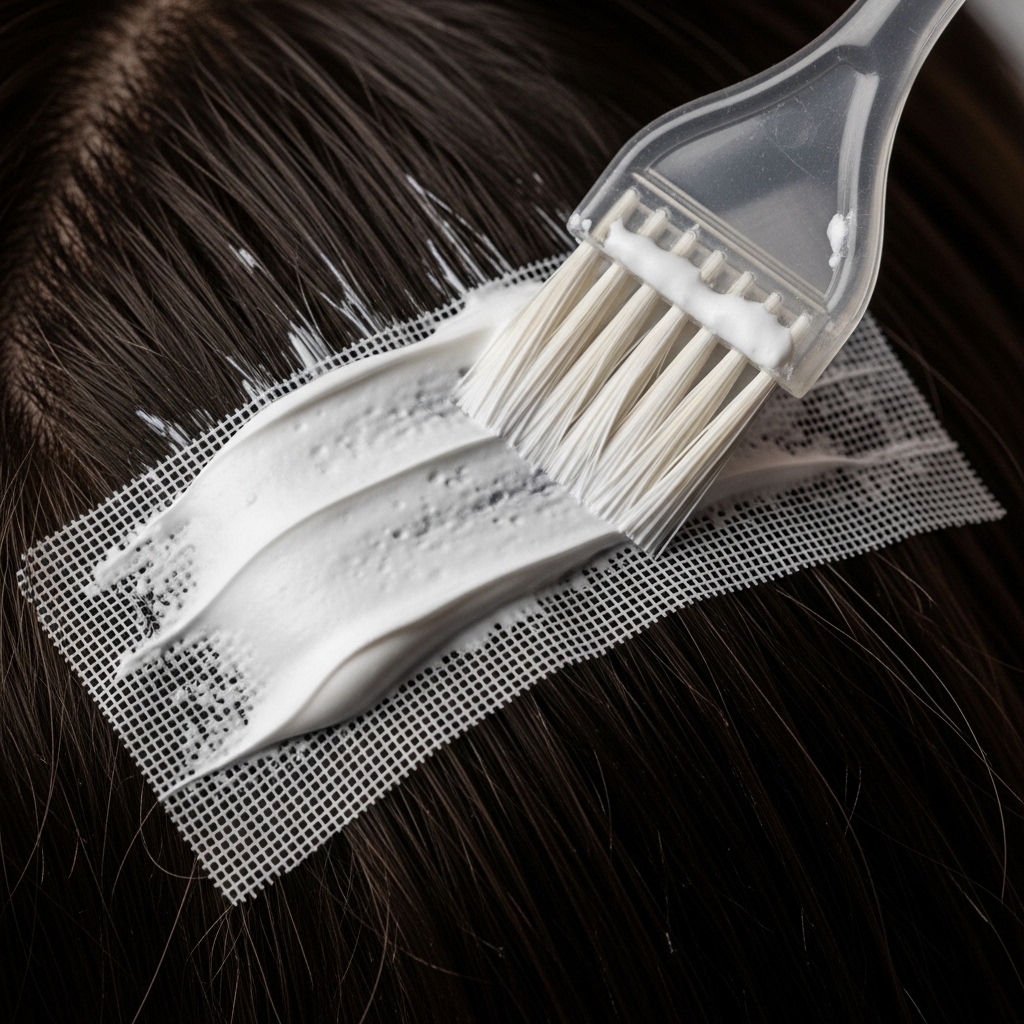
Mix your bleach powder (BLONDME Premium Lightener 9+ is the pro recommendation) with your developer. For very dark hair like Alysa’s, you’ll likely need 30-volume developer. For medium brown hair, 20-volume is generally sufficient.
Working from the back of the head and moving forward, paint and saturate each selected horizontal subsection with bleach. Make sure every strand in that section is fully coated, uneven saturation leads to patchy blonde stripes, not the clean halo you’re going for.
Drop each new section down after applying, and separate it with the mesh before moving to the next stripe. Continue working methodically upward toward the crown. Once all your selected stripes are saturated, set a timer and check every 10 minutes.
⚠️ Important: Alysa confirmed that her hair being so dark made it “really hard to get it lighter”, even with two rounds of bleach. If your hair doesn’t lift enough in one session, wait two full weeks before bleaching again. Never double-process the same day if the hair looks stressed.
11. Step 6: Tone to Your Desired Blonde Shade
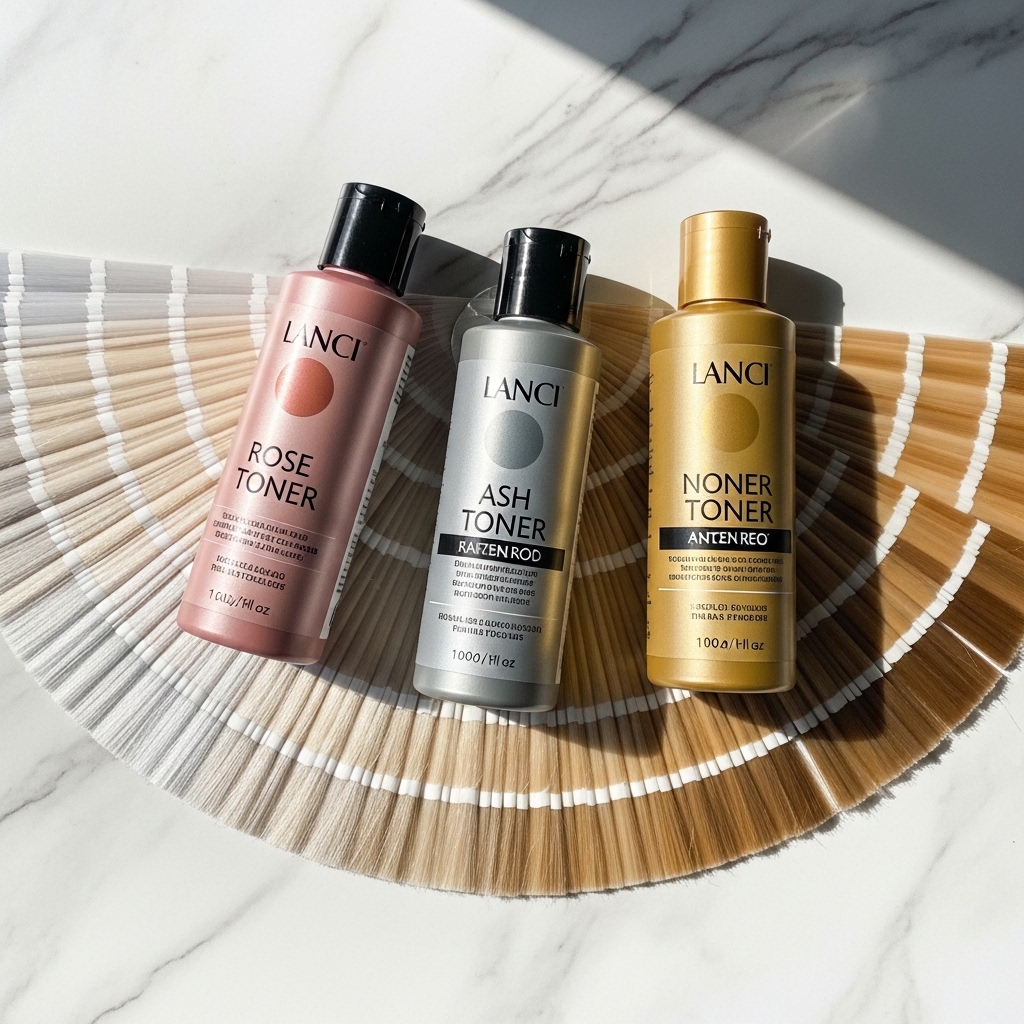
Once your stripes have lifted and you’ve rinsed out the bleach thoroughly, it’s time to tone. This is the step that takes brassy yellow or orange results and turns them into the beautiful milk-tea, warm platinum, or cool ash blonde you actually want.
For Alysa’s exact look, Kelsey Miller started with a ginger-toned stripe and later upgraded it to a warmer milk-tea color. Novobielski suggests two toner options depending on your preference:
- Danger Jones 3-8 Gloss TonerApply for a “soft, dimensional brown” that blends slightly into the dark sections for a lived-in effect.
- Danger Jones 9-03 + 9-3 mixedCombine for a “balanced, natural-looking blonde” that’s bright and clean without going too cool or too warm.
Apply toner to your lightened sections only, avoiding the dark sections. Process for the time indicated on the product, rinse, and then follow with a nourishing conditioner or bond treatment. Your stripes should now be a beautiful, toned blonde, no orange in sight.
12. Step 7: Style and Finish the Look
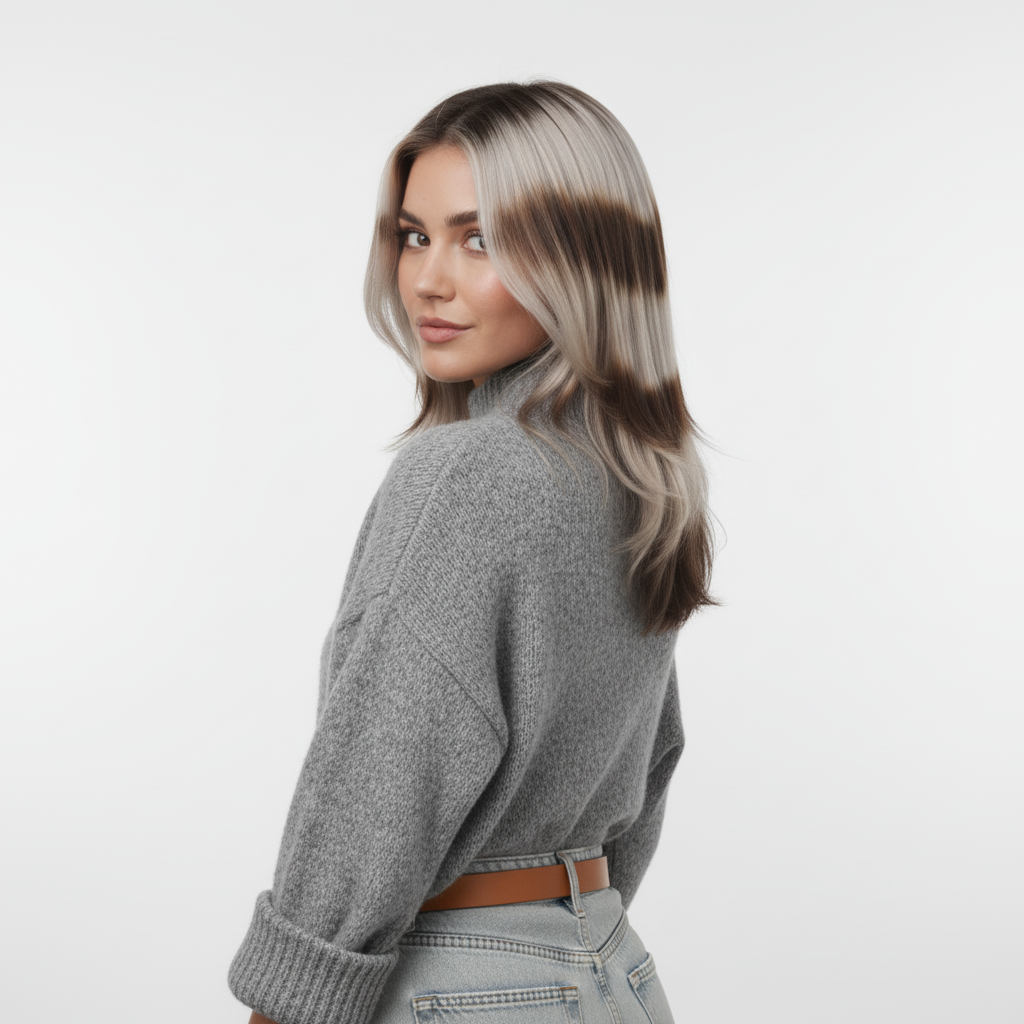
After all that coloring effort, the finish line is finally here, and the styling step for halo hair is honestly refreshingly simple. The stripes do the work for you.
Alysa typically wears her halo hair loose and slightly textured, a middle part or curtain-bang framing, the lengths falling in natural waves or slightly air-dried. The style doesn’t need heavy styling because the color pattern itself is the statement.
To style your finished halo hair, try these approaches:
- Air dry with a leave-in conditionerto enhance the natural wave and keep the stripes defined without frizz.
- Use a wide-tooth comb through damp hairto keep the horizontal banding looking clean and separated as it dries.
- Add a light diffuseron low heat to enhance waves without disrupting the stripe pattern.
- Avoid heavy oils or serumsdirectly on the blonde sections, they can make the lighter stripes look dull or greasy in photos.
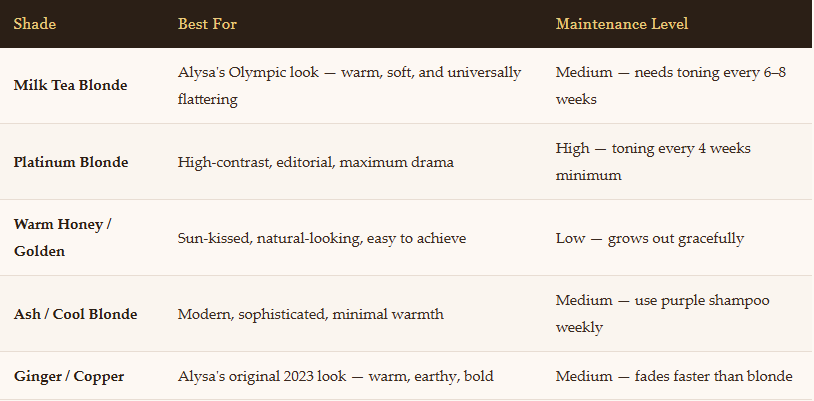
13. Blonde Shade Options for Your Halo
One of the best things about halo hair is that you can customize the blonde shade to match your vibe completely. Here’s a quick breakdown of the most popular options:
14. How to Do This on Very Dark or Black Hair

If your hair is naturally black or very dark brown, you can absolutely rock halo hair, but the bleaching process is going to take more time, care, and potentially professional help. This is exactly what Alysa experienced.
Very dark hair typically needs two rounds of bleaching to reach a true blonde. The first session will usually lift the hair to an orange or brassy yellow. The second session (after a two-week minimum rest) can lift it to the pale yellow stage needed for clean toning.
If you have natural black hair and want Alysa’s exact milk-tea result, we genuinely recommend seeing a colorist for the bleach portion. You can absolutely do the sectioning and touch-up toning yourself at home, but the initial lift is best left to someone with experience managing multiple bleach sessions on dark hair.
Team Booming Press Silver Lining: On very dark hair, even a single partially-lifted ginger or warm honey stripe looks incredible. Alysa’s first rings were ginger against brunette, and they were stunning. Don’t feel pressured to go platinum.
15. How to Maintain Halo Hair
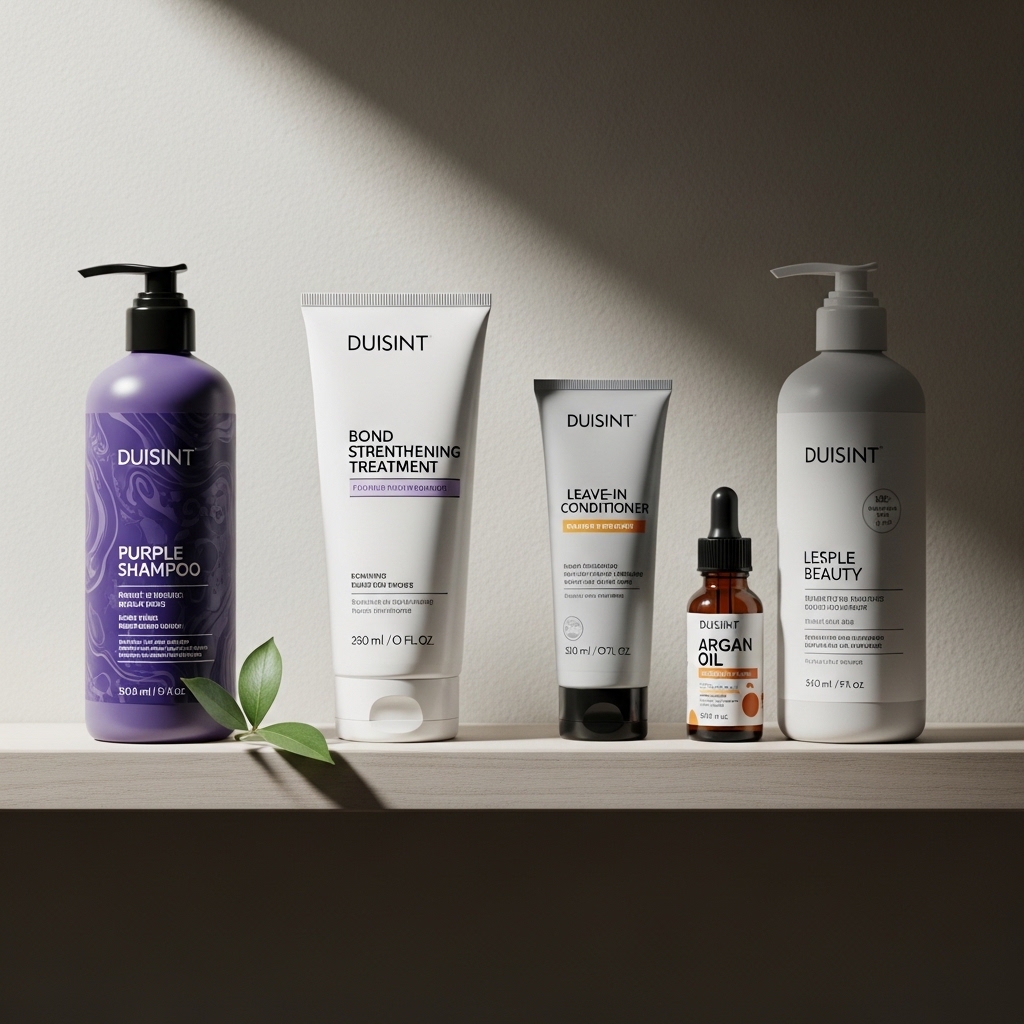
Halo hair looks stunning fresh, and with the right maintenance routine, it can stay beautiful for months. Here’s what your post-color care should look like:
- Purple Shampoo Weekly:Use a purple or blue-tinted shampoo on the blonde sections once a week to neutralize brassiness and keep the color fresh.
- Bond Treatment Bi-Weekly:Use Olaplex No.3, K18, or similar bond repair treatment every two weeks to maintain the structural integrity of your bleached stripes.
- Wash in Cool Water:Hot water strips color faster. Always rinse in lukewarm or cool water to preserve both the brunette depth and the blonde brightness.
- Gloss or Toner Refresh:Every 6–8 weeks, apply a clear gloss or your chosen toner shade to the blonde sections to refresh the color between major salon visits.
- Heat Protection Always:Never apply heat tools to your hair, especially the bleached sections, without a heat protectant spray. Bleached hair is more vulnerable to heat damage.
The halo hair look grows out beautifully because the dark root is always visible and intentional. You don’t need to rush back to the salon, the natural grow-out is part of the look’s charm.
16. DIY vs. Salon: What Alysa Actually Did
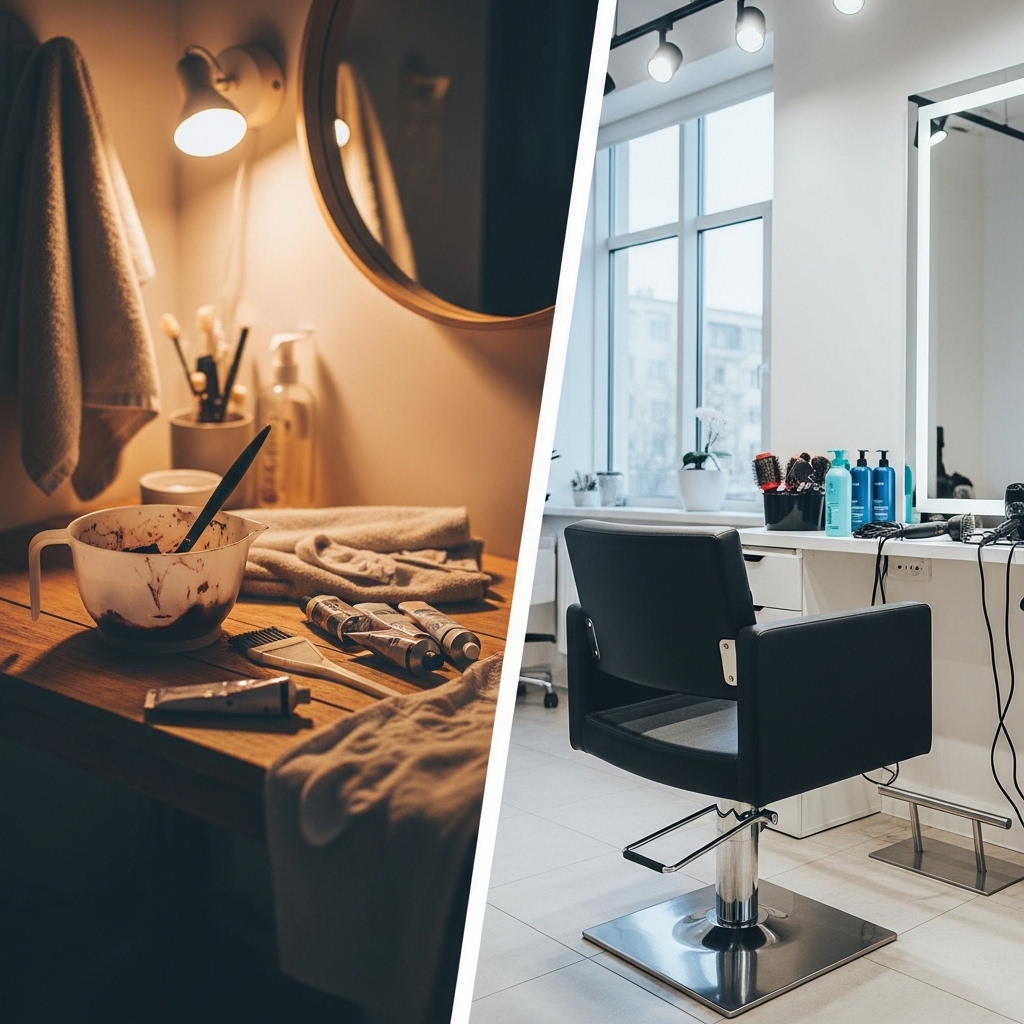
Let’s be real about what Alysa did, because it’s actually a great model for most of us. She DIY’d the initial ring placement herself at home, the sectioning, the application, the basic bleach. She’s been doing it since 2023.
But when she wanted to upgrade from her original ginger-toned rings to the brighter milk-tea blonde for the Olympics, she worked with professional colorist Kelsey Miller. Miller used Schwarzkopf’s BLONDME Premium Lightener 9+ and the entire process took about five hours in the salon.
The practical takeaway for you: DIY is absolutely possible for the placement and subtle ring additions, especially if your hair is medium brown and you’re going for a ginger or warm honey result. For lifting dark hair to platinum or milk-tea blonde, the professional route is worth every penny for the health of your hair.
Budget-Friendly Compromise: Do the sectioning and dark base color yourself at home (saves time and product cost), then book a salon appointment for just the lightening and toning steps. Many colorists will work on your pre-sectioned hair.
17. How to Add a New Ring Each Year (Like Alysa Does)

One of the most joyful things about Alysa’s hairstyle is that it’s intentionally unfinished, it grows and evolves with her. If you want to adopt this living-timeline approach yourself, here’s how to make it work:
Alysa adds her new ring every December, around the end of the year. The previous rings naturally grow out and sit higher on the shaft as the months pass. The new ring starts fresh at the lowest point of the hair, her ends or lower shaft, and the cycle continues.
Over years, you’d end up with multiple rings climbing up your hair length: the oldest at the top (or grown out and gone), the newest at the bottom. Each ring literally marks time passing. It’s the most poetic hair system we’ve ever heard of, and Team Booming Press is fully here for it as an annual December tradition.
Your New Year’s Tradition: Every December 31st, add a new ring. Document it. Make a whole moment of it. Your hair becomes your personal growth journal, and honestly, that’s more meaningful than any New Year’s resolution.
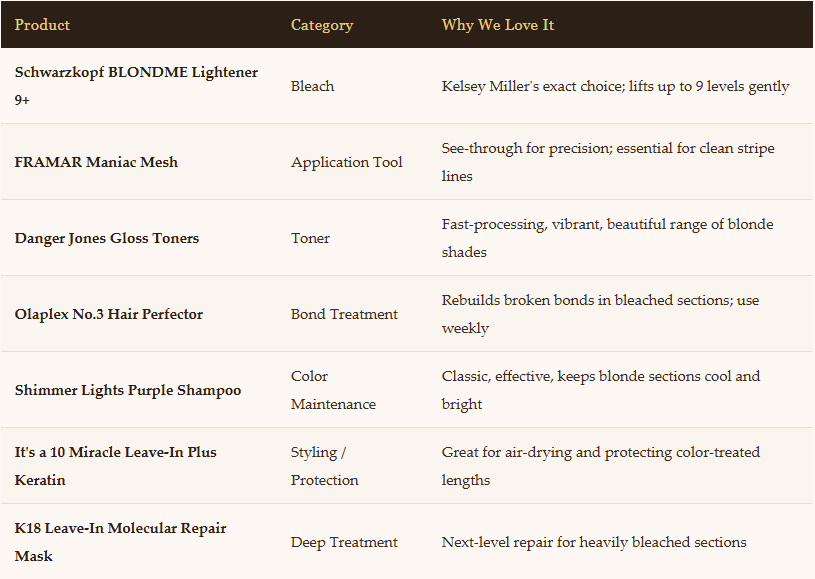
18. Best Products for Halo Hair in 2026
We’ve compiled the products most recommended by professional colorists for achieving and maintaining the halo look, so you don’t have to research it all yourself.
19. Halo Hair Variations to Try in 2026
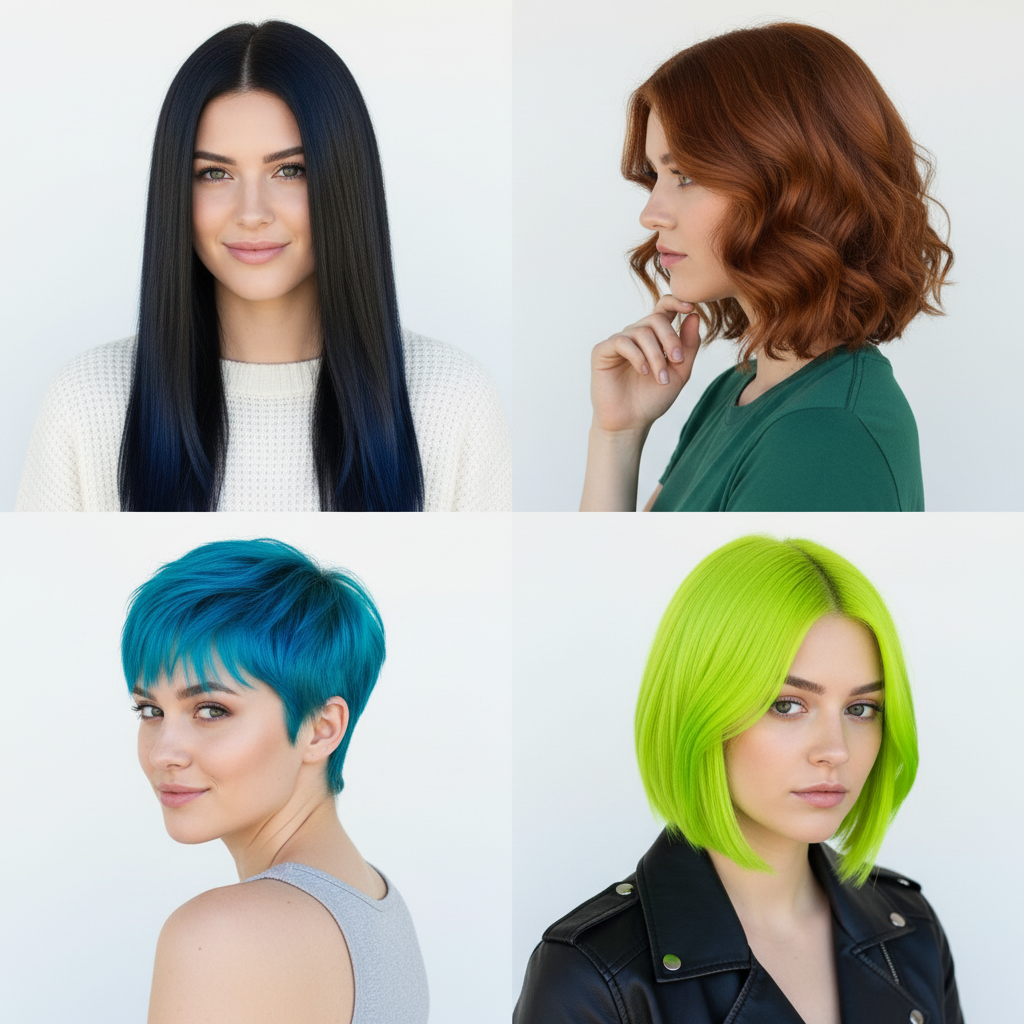
The halo hair concept is endlessly customizable. Once you understand the technique, horizontal rings, alternating shades, precision sectioning, the only limit is your color palette. Here are some of our favorite variations worth bookmarking right now:
- Pastel Halo:Instead of blonde rings, tone to a soft lavender, baby pink, or mint. Stunning on lighter brunettes or previously lightened hair.
- Copper Halo:Alysa’s original ginger-toned version. Less bleach required, gorgeous on warm and dark complexions.
- Micro Halo (Short Hair):The same technique adapted for bobs or lobs. One or two thin rings on shorter lengths has huge visual impact.
- Triple Contrast Halo:Use three shades, dark brunette, medium caramel, and platinum, for a more gradual, dimensional effect.
- Cobalt or Blue Halo:For the brave among us, midnight blue rings against black hair is an absolute look. No bleach needed if you use a direct dye formula.
Booming Press Team Says: Save your favorite variation on Pinterest before your salon appointment, a visual reference is worth more than any written description when you’re talking to your colorist.
20. Frequently Asked Questions About Halo Hair

Q: What is Alysa Liu’s hairstyle called?
It’s officially called halo hair, a term coined by her hairstylist Kelsey Miller. The look features alternating horizontal bands of dark brunette and blonde that encircle the entire head, resembling a halo (or the rings inside a tree trunk).
Q: What does Alysa Liu’s hair symbolize?
Each blonde stripe represents one year of personal growth in Alysa’s life. She first started the look in late 2023 and adds one new ring every December, a tradition inspired by the annual growth rings inside a tree trunk. At the 2026 Olympics, she had three rings.
Q: What products were used on Alysa Liu’s hair?
Hairstylist Kelsey Miller used Schwarzkopf Professional’s BLONDME Premium Lightener 9+ for the bleaching. Colorist Kelly Novobielski recommended FRAMAR Maniac Mesh for clean sectioning, and Danger Jones toners for the final blonde shade (3-8 for soft dimensional brown; 9-03 + 9-3 for balanced natural blonde).
Q: Can I do halo hair at home?
Alysa Liu DIY’d the first few rings herself at home. For medium to dark brown hair going for a copper or honey blonde result, yes, it’s very doable at home with the right supplies. However, if your hair is very dark and you want the milk-tea or platinum result Alysa had at the 2026 Olympics, a professional colorist is recommended for the bleach portion.
Q: How long does halo hair take?
Kelsey Miller reported the process took approximately five hours for Alysa, including application, processing, toning, and finishing. A DIY session on medium-length hair may take 3–4 hours if you’re organized and prepared.
Q: Is halo hair the same as raccoon hair?
Not quite. Alysa said she originally considered raccoon stripes, but chose the halo style instead. Raccoon stripes tend to be chunkier and less structured. Halo hair specifically features horizontal bands that fully circle the head, a cleaner, more controlled version of the high-contrast stripe trend.
Q: Will halo hair work on short hair?
Absolutely, you just need at least 4–6 inches of length for a visible horizontal stripe to read clearly. On a lob or bob, even a single thin ring creates a striking, modern effect.
Final Notes From Team Booming Press
Alysa Liu didn’t just win two gold medals in Milan. She showed the world that self-expression and high performance aren’t opposites, they’re the same thing wearing different shoes. Her halo hair isn’t just a hairstyle trend. It’s a philosophy: add a new ring every year. Keep growing. Keep becoming.
Here at Booming Press, we’ve been obsessed with hair that means something for as long as we’ve been pinning. And Alysa’s tree-ring halo hair? It’s the most meaningful hair we’ve seen in years. We hope this guide gives you everything you need to try it yourself, whether you DIY it in your bathroom this December or book a salon appointment tomorrow morning.
Either way: your hair, your rings, your story. We can’t wait to see it.
Drop your halo hair results in the comments below, or find us on Pinterest at @boomingpress_ and tag us in your transformation. We repin everything we love.
— With so much love, Booming Press
Team Booming Press
We’re the team behind boomingpress.com — your go-to corner of the internet for hairstyles, skincare, outfits, and all things beauty. Based in the US and obsessed with Pinterest, we cover everything from trending salon techniques to DIY tutorials you can actually do at home. Follow along for weekly beauty content that’s honest, fun, and always on-trend.