Faux Hawk Hairstyles for Women: Mohawk Attitude Without the Shave
A faux hawk is the best kind of rebellion: all the attitude of a mohawk, none of the commitment. The sides stay — swept up, pinned flat, braided tight or faded short — while the centre rises into a bold strip of height, texture or curls. It is the hairstyle for a woman who wants to look edgy without shaving her head, dramatic without spending an hour in front of the mirror, and different without giving up the hair she loves. A faux hawk can be soft enough for the office and sharp enough for a festival, and the same head of hair can wear both versions in the same week. That is the whole point: it is a shape you build, not a cut you commit to.
This guide gathers 37 faux hawk hairstyles for women, from the classic updo and the French braid faux hawk to curly, undercut, soft work-friendly and glam red-carpet versions — plus looks for short, medium and long hair, fine and thick hair, straight and curly hair, and occasions from weddings to festivals. Eight guides explain what a faux hawk really is, how the main shapes differ, how to build height that lasts, how the style changes with length, how colour and accessories transform it, and the mistakes that make a faux hawk fall flat. One honest note first: a faux hawk does ask for a little grip — pins, product and a bit of teasing — and height needs maintenance through the day. Both are easy once you know the tricks, and this guide covers them all.
What a Faux Hawk Really Is — and How It Differs from a Mohawk
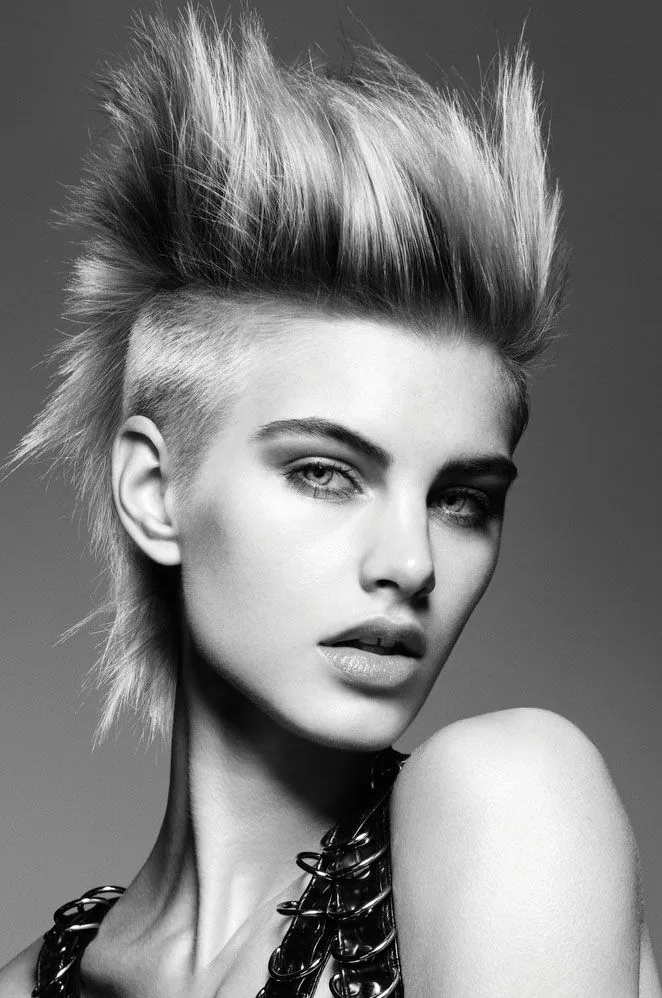
A faux hawk — sometimes called a fohawk — is a mohawk look built without shaving the sides. The centre strip of hair is lifted, teased, braided or pinned into height, while the sides are smoothed, slicked, braided or pinned flat so the silhouette reads as a mohawk from the front and the side. The classic mohawk, by contrast, is a cut: the sides are shaved or buzzed down, leaving only the centre strip standing. A faux hawk gives you the same bold outline with your length intact, which means you can wear it on Saturday and wear your hair down on Monday, and nobody would know.
That reversibility is why the faux hawk suits so many women. It works on short hair, where the centre is spiked or tousled upward; on long hair, where the centre is braided or pinned into a raised ridge; and on curly hair, where the curls themselves make the height. The sides can be anything from slicked-back and glossy to braided tight against the head, and the centre can be sleek, messy, curly, braided or coloured. The only rule is the silhouette: narrow at the sides, high in the middle. Once you see that shape, you will start spotting faux hawks everywhere — on red carpets, in offices, at weddings — because it is one of the most versatile edgy styles there is.
Faux Hawk Shapes — Updo, Braid, Undercut and Soft
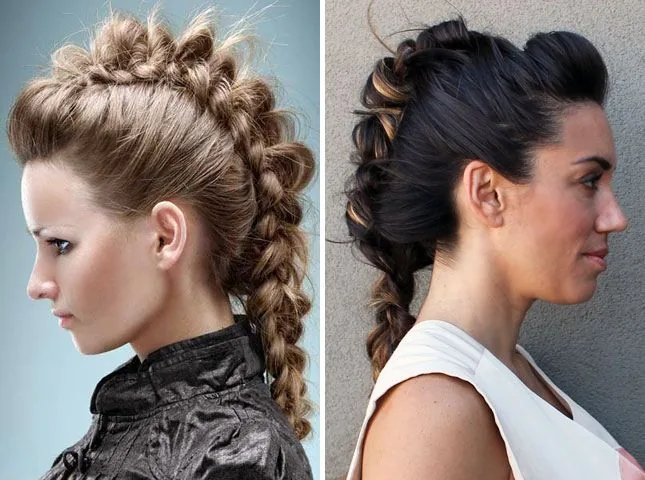
The updo faux hawk is the classic: the sides are pinned or slicked flat and the centre is teased and pinned into a raised ridge running front to back. It is the most dramatic shape, it photographs beautifully, and it is the version most women picture when they hear the words faux hawk. The braid faux hawk is softer and more practical: a French or Dutch braid runs down the centre of the head, and the hair pulled into it creates height without any teasing, while the sides are braided or smoothed away. It is the best faux hawk for a long day, because a braid holds its shape for hours.
The undercut faux hawk is the boldest version that still keeps most of your length: one or both sides are faded or shaved short, so the height in the centre has a real contrast, but the top stays long enough to wear down another day — almost. The soft faux hawk is the quietest of the four: the centre is lifted just a little, the sides are swept back rather than pinned flat, and the whole effect is a gentle ridge of volume rather than a spike. It is the version for work, for a first date, or for any day when you want a hint of edge rather than a headline. Four shapes, four attitudes — dramatic, practical, bold and subtle — and the right one is the one that matches how much edge you want today.
How to Build Height That Lasts All Day
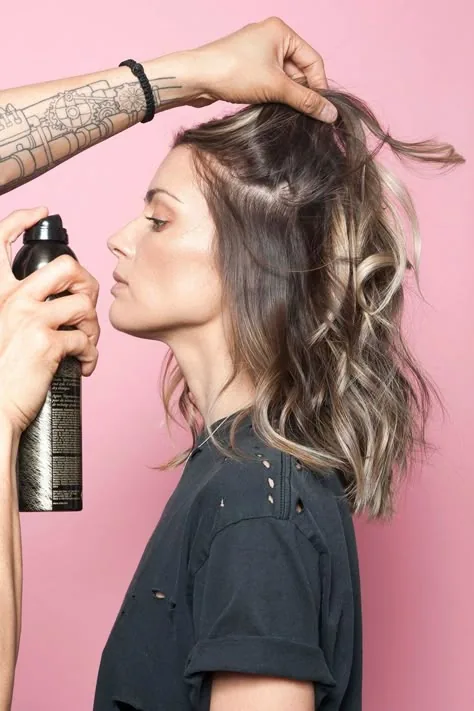
Height is the whole point of a faux hawk, and it lasts when it is built in layers rather than forced in one go. Start with second-day hair or a little dry shampoo at the roots, because freshly washed, slippery hair will not hold a tease. Backcomb small sections at the crown, one at a time, pushing the comb down toward the scalp in short strokes, then smooth only the very top layer so the lift stays hidden underneath. Pin the teased section in place with bobby pins crossed in an X — crossed pins grip far better than a single pin — and work from the front to the back, building a ridge one section at a time.
Product is the second half of the hold. A volumising mousse worked through damp roots before blow-drying gives the hair a grip that lasts, a light texturising spray adds friction between the strands, and a flexible-hold hairspray misted over the finished shape keeps it in place without making it crunchy. Avoid heavy oils and serums near the crown, because weight is the enemy of height — keep those on the ends only. In humidity, a little extra hairspray at the roots and a quick midday pin check will save the style. And at the end of the day, take the pins out gently, brush the tease out from the ends upward, and let the hair rest — height that is built kindly comes out easily.
Faux Hawk on Different Lengths — Short, Medium and Long
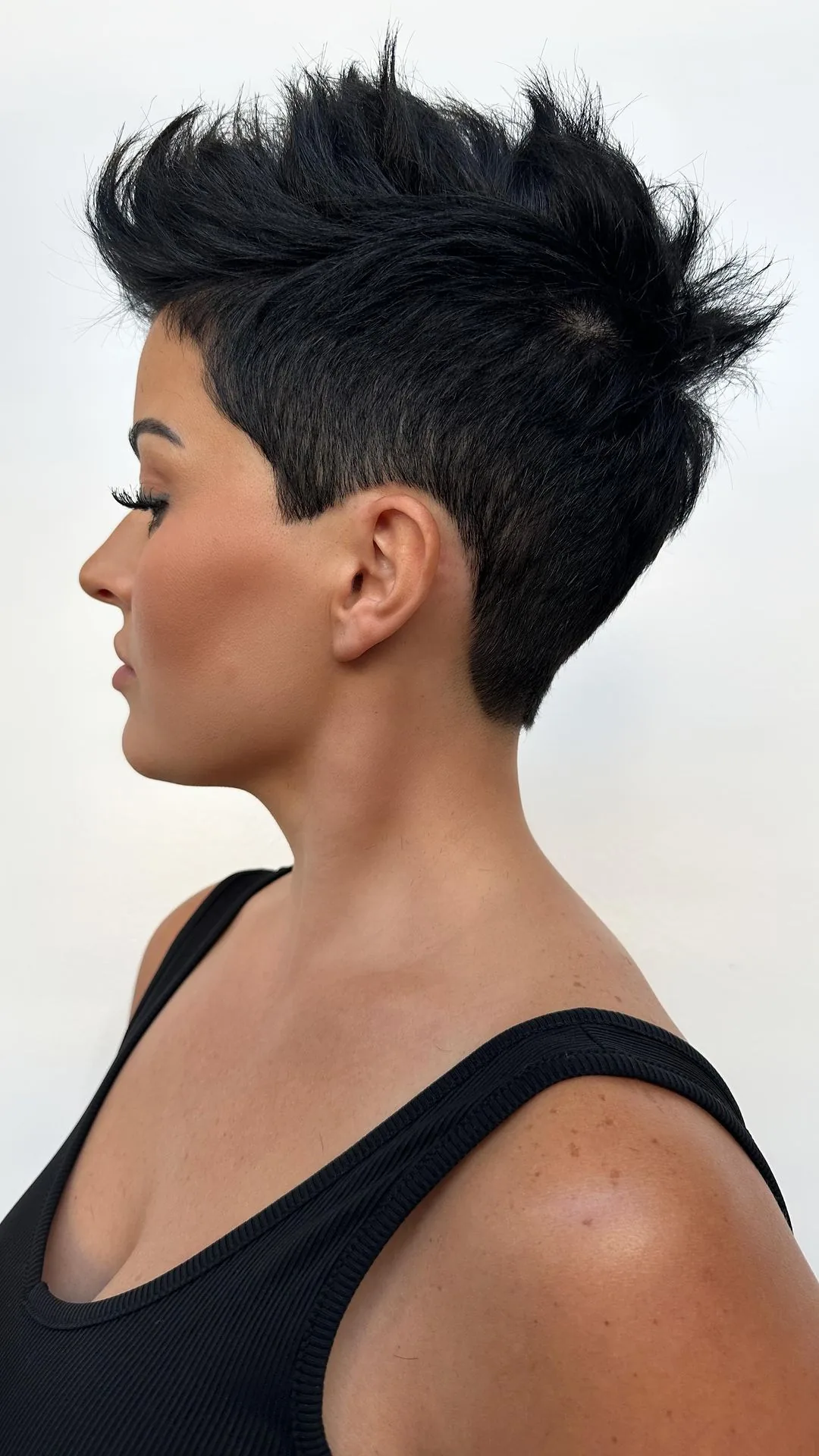
A faux hawk on short hair is the easiest version of all: the centre is simply pushed upward with a little wax or pomade, and the sides are smoothed down, so the whole style takes five minutes and a dab of product. A pixie faux hawk is the boldest short version — the top is left longer and spiked or tousled, while the sides are faded or slicked — and it is the look that makes short hair feel dramatic rather than plain. Short faux hawks need almost no pins, which is their great advantage, and they refresh with a quick re-tousle and a little more product through the day.
A medium-length faux hawk is the most versatile length: long enough to braid, pin or tease into a real ridge, short enough that the style does not get heavy and fall flat. Most of the styles in this guide live at medium length, and it is the best length to experiment at. A long faux hawk is the most dramatic — a braided or pinned ridge running the full length of the head, or a high ponytail with a teased crown — but it is also the heaviest, so it needs more pins, more product, and a braid or a ponytail to anchor it. The honest truth is that length adds drama and weight in equal measure, so pin more than you think you need, and let a braid do the heavy lifting on long hair.
Faux Hawk with Colour, Twists and Accessories
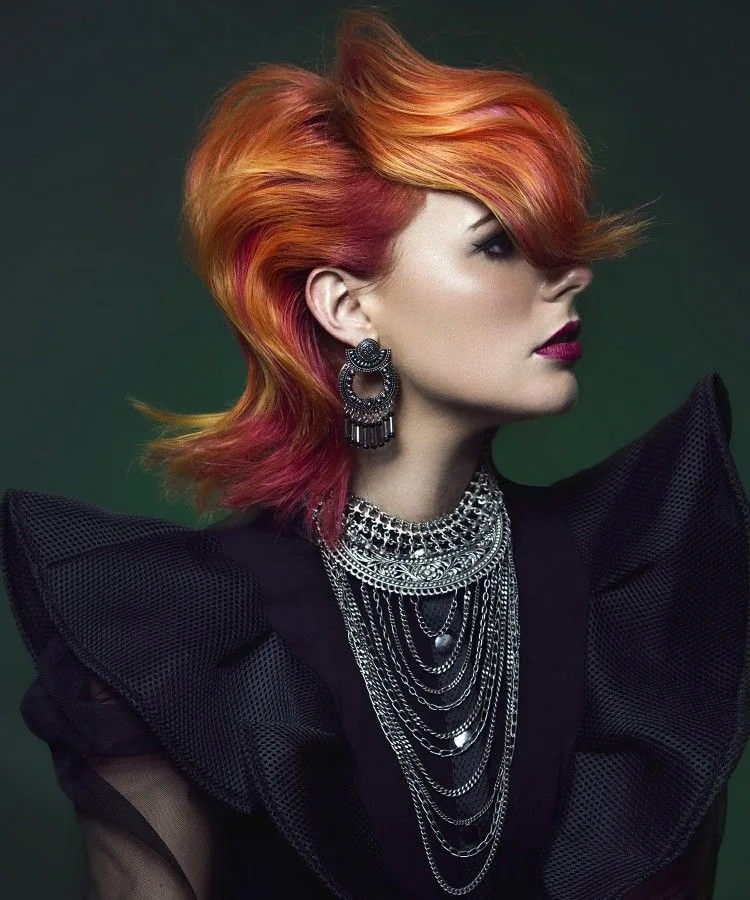
Colour changes a faux hawk completely, because the raised centre catches the light in a way flat hair never does. A few blonde highlights along the ridge make the height look three-dimensional; a bold colour — copper, burgundy, pink or blue — turns the centre strip into a statement; and a dark root with lighter ends makes the shape look taller than it is. The safest way to colour a faux hawk is to colour the centre strip and leave the sides natural, which gives you the drama without a full-head commitment, and lets you grow it out with less obvious regrowth.
Twists, braids and accessories are the other ways to transform a faux hawk without changing its length. Flat twists or cornrows along the sides sharpen the mohawk outline, a few small braids woven into the centre add detail, and accessories should be chosen to match the attitude: slim metal cuffs or rings on a braid, a thin headband pushed back from the face, or a scatter of bobby pins worn as decoration rather than hidden away. The rule is one accent at a time — a coloured faux hawk with gold cuffs is a statement, a coloured faux hawk with cuffs, a scarf and a headband is a costume. Let the shape do the talking, and let the accent finish the sentence.
Faux Hawk for Work, Weddings and Nights Out

A faux hawk can be perfectly professional, and the version that works at work is the soft one: a gentle ridge of volume, sides swept back smoothly, no visible teasing and no bright colour. It reads as a polished, deliberate style — a voluminous updo with a modern edge — rather than a rebellious statement, and it holds up through a long day if it is pinned well. Keep accessories minimal at work, keep the height modest, and the faux hawk becomes a quietly confident office style. If your workplace is conservative, the soft faux hawk or a low braided faux hawk is the safest shape.
For a wedding, the faux hawk becomes a crown: a sleek, sculpted ridge with soft curls, or a braided faux hawk with fresh flowers or pearl pins, looks extraordinary with a gown and photographs beautifully because the shape is so strong. Brides often choose a soft, romantic faux hawk — height with softness, not spikes — and add one elegant accent. For a night out, the rules reverse: go bold, go high, go coloured, because the evening is when a faux hawk earns its keep. Whatever the occasion, do a trial run first and wear the style for a full day before the event, because a faux hawk that has been built and tested will hold its line far better than one tried for the first time on the morning of the day.
Growing Out a Faux Hawk — and Growing Into One
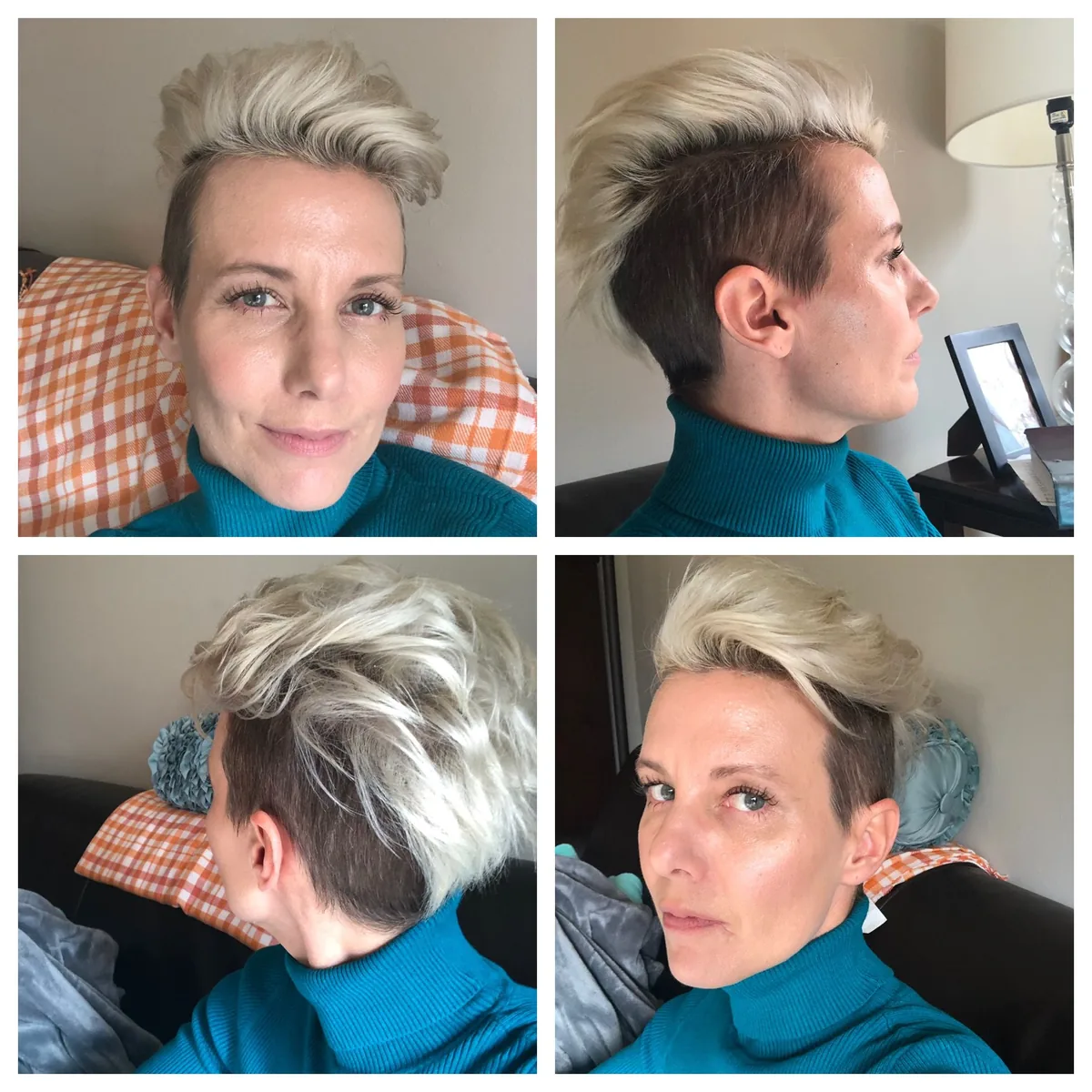
Growing out a faux hawk depends on which kind you have. A pinned or braided faux hawk needs no growing out at all — you simply stop pinning it, and your hair is back to normal the next morning. That is the great advantage of the non-cut versions, and it is why most women start there. An undercut faux hawk is a different story: the shaved side has to grow out, and it will go through awkward stages — the fuzzy in-between length, the side that sticks out, the stage where one side is longer than the other. It grows at roughly half an inch a month, so a short undercut takes a few months to blend back in.
The trick to growing out an undercut side is to use the faux hawk itself as camouflage: slick the growing side back with gel, braid it flat against the head, or pin it under the longer top hair, so the awkward length is hidden while it grows. Regular trims of the longer hair keep the shape balanced as the short side catches up, and a little patience goes a long way — the in-between stage is temporary, and it is shorter than most women fear. Going the other way — growing into a faux hawk from a pixie or a bob — is easier: let the top grow a little longer than the sides, keep the sides trimmed or slicked, and one day the ridge is simply there. Either direction, the faux hawk is forgiving, because it is a shape you build, not a cut you are stuck with.
Common Faux Hawk Mistakes and How to Fix Them
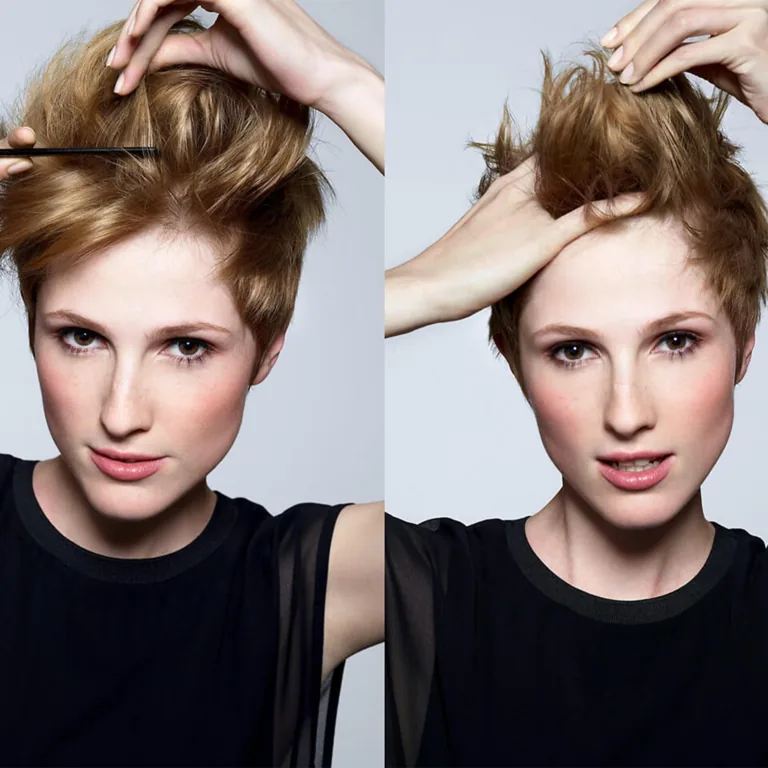
The most common faux hawk mistake is building height on slippery, freshly washed hair — the tease slides out, the pins slip, and the ridge collapses within an hour. The fix is second-day hair or dry shampoo at the roots, which gives the hair the grip it needs. The second mistake is teasing too hard in one big section, which creates a tangled knot that is painful to brush out; tease in small sections, gently, and smooth only the top layer. The third mistake is using too few pins — a faux hawk held by two pins will not survive a windy walk, so use crossed pins, more than you think you need, and hide them under the hair.
The other mistakes are about balance and product. Making the ridge too tall for your face can overwhelm your features — the height should suit your face length, not compete with it. Using too much hairspray makes the style stiff and crunchy, so mist lightly and let the pins do the work. And forgetting the sides is the mistake that turns a faux hawk into a bad hair day: the sides need to be smooth, slicked or braided, because a raised centre with messy sides just looks unfinished. Fix the sides first, then build the height, and the whole style falls into place. A faux hawk is a shape with two parts — the ridge and the sides — and both of them need attention.
1. The Classic Faux Hawk Updo
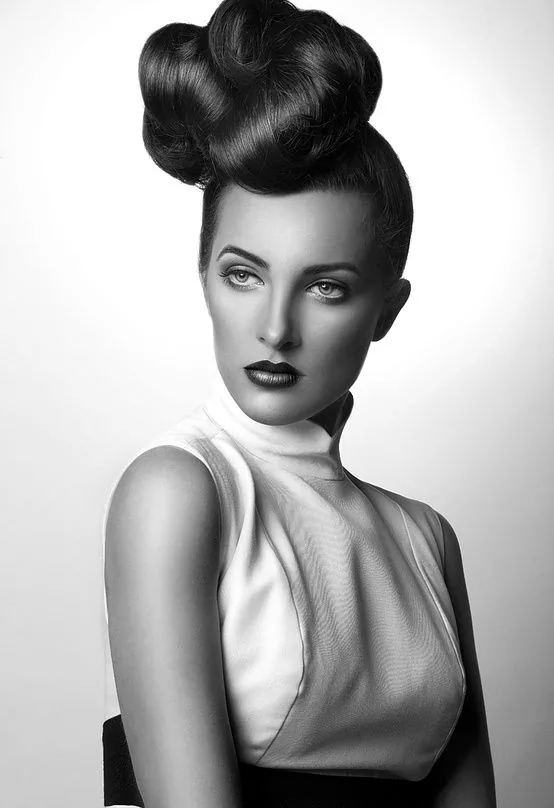
The classic faux hawk updo is the original: the sides are slicked or pinned flat, and the centre is teased and pinned into a raised ridge running from the forehead to the nape. It is the style that defines the look — bold, sculpted and instantly recognisable — and it works because the silhouette is so clear: narrow at the sides, high in the middle, with a clean line from every angle. There is nothing fussy about it, just height, pins and confidence, and it shows off the face completely while giving the neck a long, elegant line.
Best for: women who want the full faux hawk statement for a night out, a party or a photoshoot. How to style it: work on second-day hair, tease the crown in small sections, pin the ridge with crossed bobby pins, and smooth only the top layer. What to ask your stylist: for a cut with a longer centre and shorter sides, so the ridge builds easily at home. Maintenance is a morning build of ten to fifteen minutes and a midday pin check. The quick verdict: the classic updo is the faux hawk in its purest form — dramatic, simple and impossible to ignore.
2. The Soft Faux Hawk
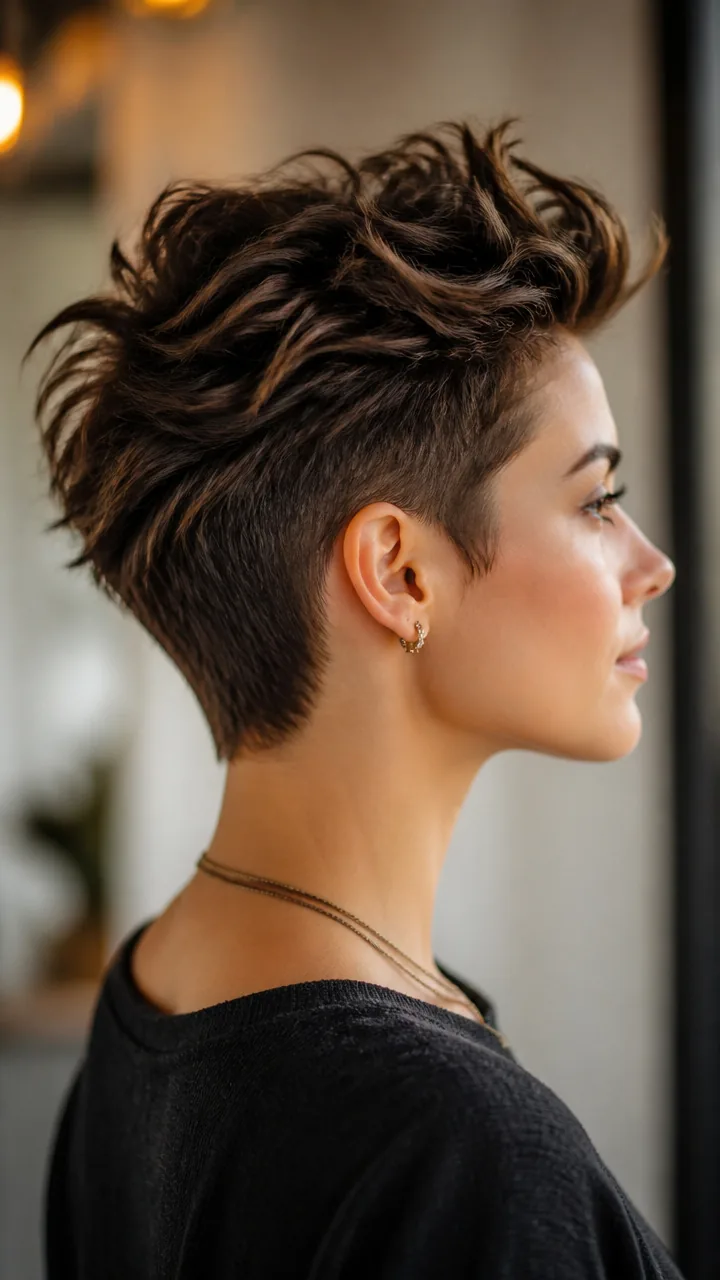
The soft faux hawk is the quiet version of the look: the centre is lifted just a little, the sides are swept back rather than pinned flat, and the whole effect is a gentle ridge of volume rather than a spike. It is the faux hawk for women who like the idea of edge but not the drama — a hint of height, a whisper of attitude, and a style that reads as a polished, voluminous updo to anyone who is not looking closely. It works beautifully on medium and long hair, and it is the version that survives a full working day without a single pin slipping.
Best for: the office, a first date, or any day when you want a little edge without a headline. How to style it: blow-dry the crown with a round brush for lift, smooth the sides back with a little cream, and pin just the front section for height. Pros: it takes five minutes, it suits every face shape, and it grows out invisibly. Cons: it will not read as a faux hawk in photographs, so if you want the drama, go bolder. The quick verdict: the soft faux hawk is the everyday gateway to the style — try this first, and go taller when you are ready.
3. The Faux Hawk with Shaved Sides
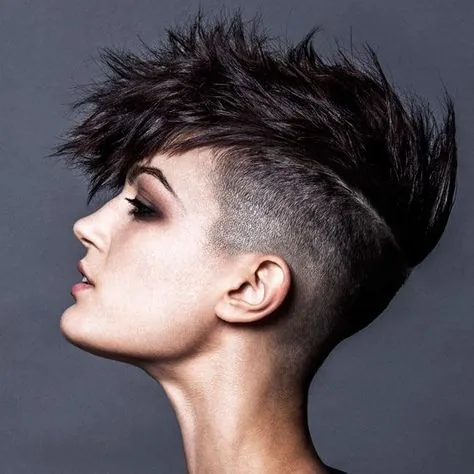
The faux hawk with shaved sides is the closest you can get to a real mohawk without committing to one: both sides are buzzed short, the centre strip stays long, and the contrast between the shaved sides and the raised centre is what makes the style so striking. It is bold, it is unmistakable, and it is the version that turns heads on the street as well as in photographs. The centre can be worn sleek, curly, spiked or braided, and each version gives the same cut a completely different mood — which is the great advantage of keeping the length on top.
Best for: women who want real edge and do not mind a cut that takes months to grow out. What to ask your stylist: how short the sides should be — a number-one buzz is dramatic, a number-three fade is softer — and whether to keep the fade neat at the nape. Maintenance: the sides need a buzz every two to three weeks to stay sharp, while the top is styled daily in five to ten minutes. Who should avoid it: anyone with a job interview next week, because this one is a commitment. The quick verdict: shaved sides make the faux hawk permanent, so be sure — but if you are sure, nothing else looks like it.
4. The Faux Hawk with an Undercut
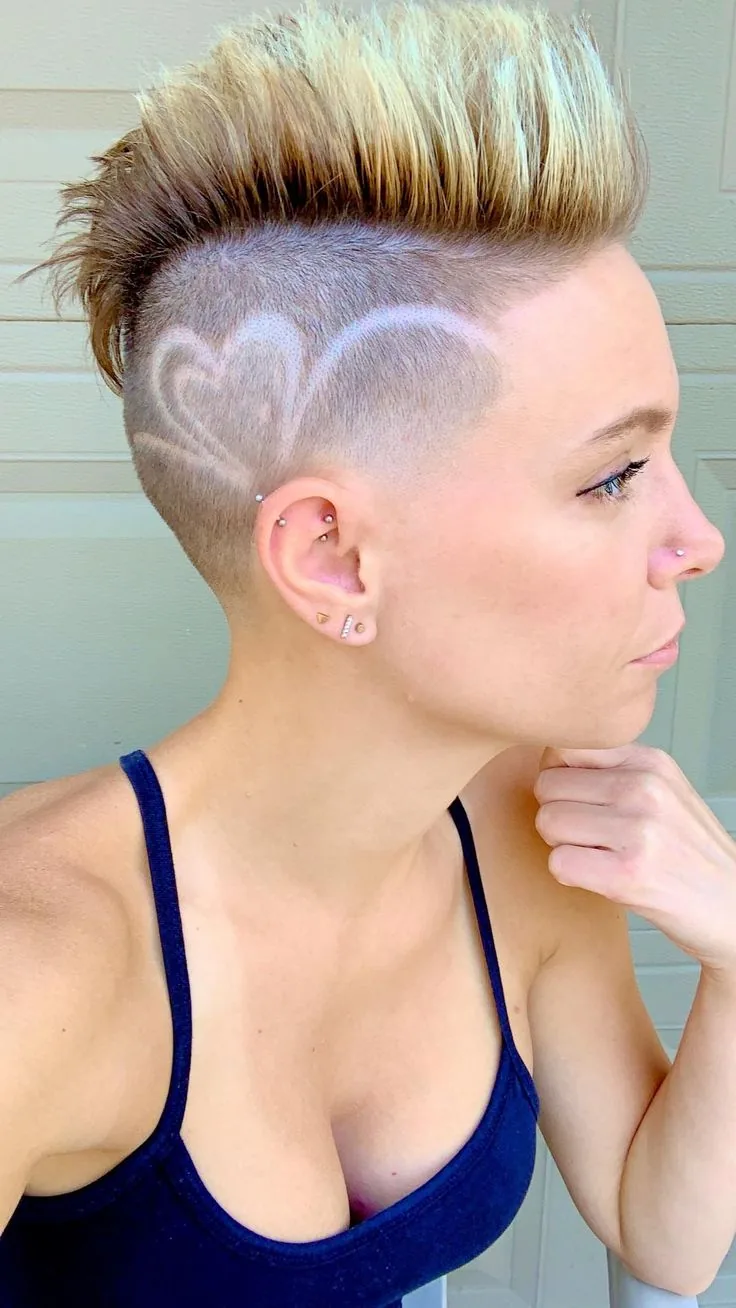
The faux hawk with an undercut keeps one side long and shaves or fades the other, so the style is asymmetric — edgy on one side, soft on the other — and the centre ridge gets its height from the contrast. It is the most fashionable version of the faux hawk right now, because the undercut can be hidden under the longer hair when you want a conventional look, and revealed when you sweep the hair to one side. Some women add a design to the undercut — a line, a pattern, a star — which turns the hidden side into a secret detail.
Best for: women who want edge with an escape route, because the undercut hides under the top layer. How to style it: sweep the long side over to cover the undercut for work, or sweep it the other way to show it off. Pros: two looks from one cut, and the shaved side keeps the hair cool in summer. Cons: the undercut grows out in a few weeks and needs regular fading, and the grow-out stage is awkward. Maintenance is a fade every three to four weeks and five minutes of styling a day. The quick verdict: an undercut faux hawk is the cleverest edgy cut — bold when you want it, invisible when you do not.
5. The French Braid Faux Hawk
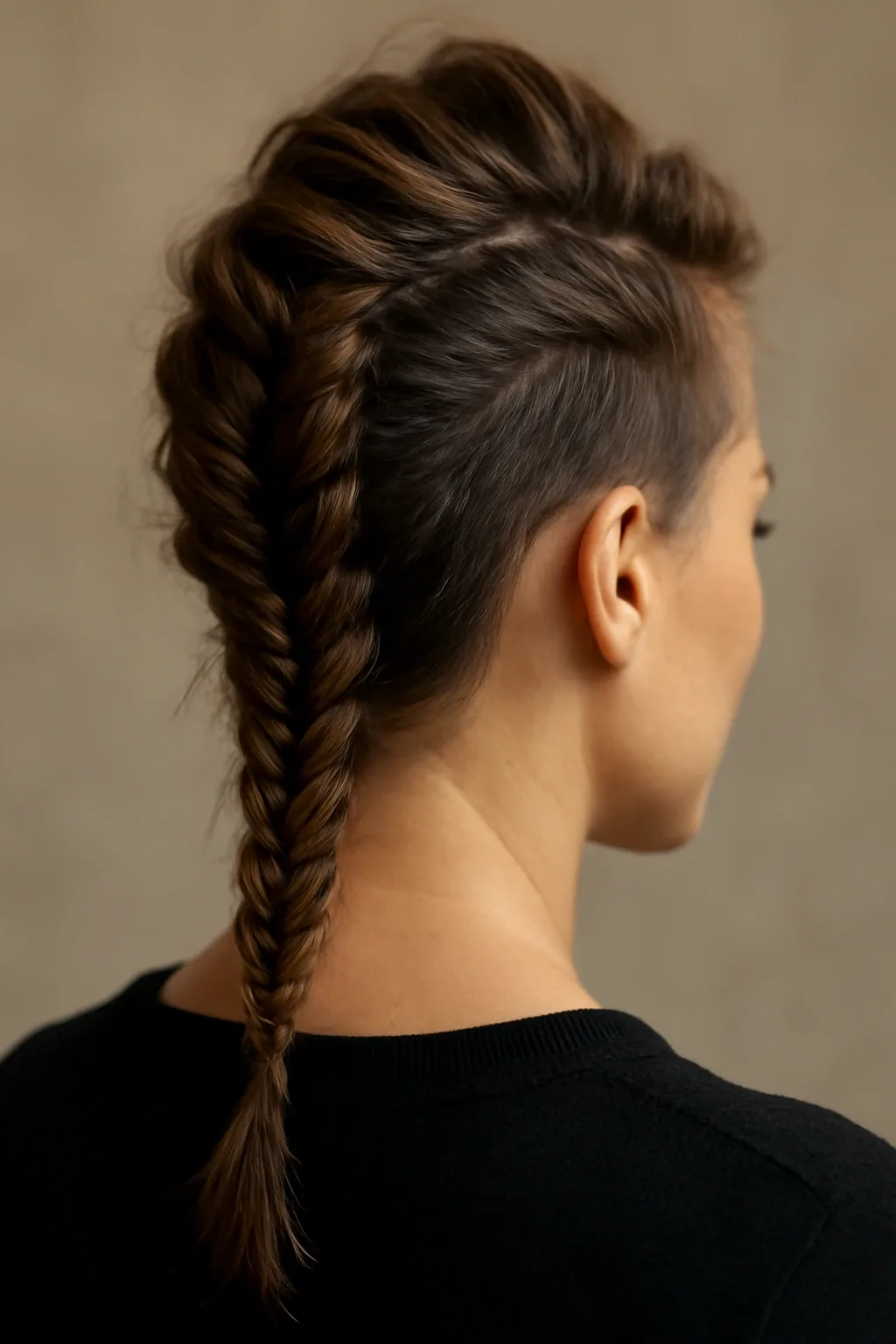
The French braid faux hawk is the most practical faux hawk there is: a French braid runs down the centre of the head, and the hair pulled into it creates a raised ridge without any teasing, while the sides are braided or smoothed away. It is the version that holds its shape for hours — through a workout, a long day, a festival — because a braid is structure, not just styling. It looks intricate and deliberate, and it suits every hair type, from straight to curly, because the braid itself does the work of creating the height.
Best for: long days, festivals, holidays and anyone who wants a faux hawk that will not collapse by lunchtime. How to style it: part the sides away, French-braid the centre strip from the hairline to the nape, then gently pull the braid apart — pancaking — to make it wider and taller. Time: ten to fifteen minutes once you have practised it, and the cost is nothing beyond your usual products. Common mistake: braiding too tightly, which flattens the ridge — keep it firm at the roots and looser as you go. The quick verdict: if you can French-braid, you can wear a faux hawk all day, every day.
6. The Dutch Braid Faux Hawk
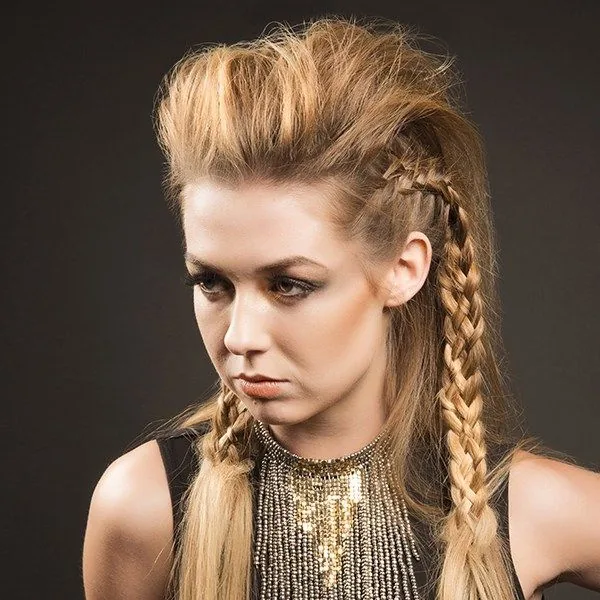
The Dutch braid faux hawk is the French braid’s bolder sister: the braid is built outward, with the strands crossed under instead of over, so it sits on top of the hair like a raised rope running down the centre of the head. That raised braid is the height — no teasing, no pins, just the braid itself — and it gives the faux hawk a sculpted, three-dimensional outline that photographs beautifully. It is the version to choose when you want the braid to be the star, not just the structure.
Best for: women who want a statement braid and a faux hawk in one style, and for thick hair, where the braid has enough volume to really stand out. How to style it: Dutch-braid the centre strip, pulling the sides in as you go, and pancake the braid gently for width. Pros: it lasts all day, it needs no heat, and it looks expensive. Cons: it takes practice — your first Dutch braid will be slower and messier than your tenth. Maintenance is a re-braid every day or two, and the style doubles as a protective style overnight. The quick verdict: the Dutch braid faux hawk is the most sculptural braided version — learn it once, wear it forever.
7. The Curly Faux Hawk
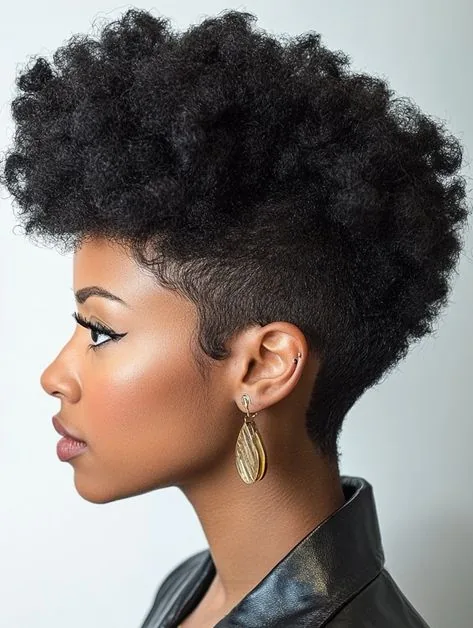
The curly faux hawk is the easiest faux hawk to build, because the curls do half the work: the sides are smoothed or pinned flat, and the curls in the centre are lifted and shaped into a high, bouncy ridge. Curly hair has natural volume, so the height comes from the texture itself rather than from teasing, and the result is softer and more romantic than a spiked faux hawk — a cloud of curls with a mohawk outline. It suits natural curls of every kind, from loose waves to tight coils, and it looks wonderful with the curls left defined and glossy.
Best for: curly and wavy hair, and women who want height without heat or heavy teasing. How to style it: apply curl cream to damp hair, diffuse the centre upward, pin the sides flat with bobby pins, and let the curls fall into the ridge. What to ask your stylist: for layers in the centre that let the curls stack upward, and shorter sides that keep the outline clean. Maintenance is a morning refresh with a water spritz and a little curl cream, and a satin bonnet at night. The quick verdict: if your hair is curly, the faux hawk is already half-built — just pin the sides and let the curls rise.
8. The Wavy Faux Hawk
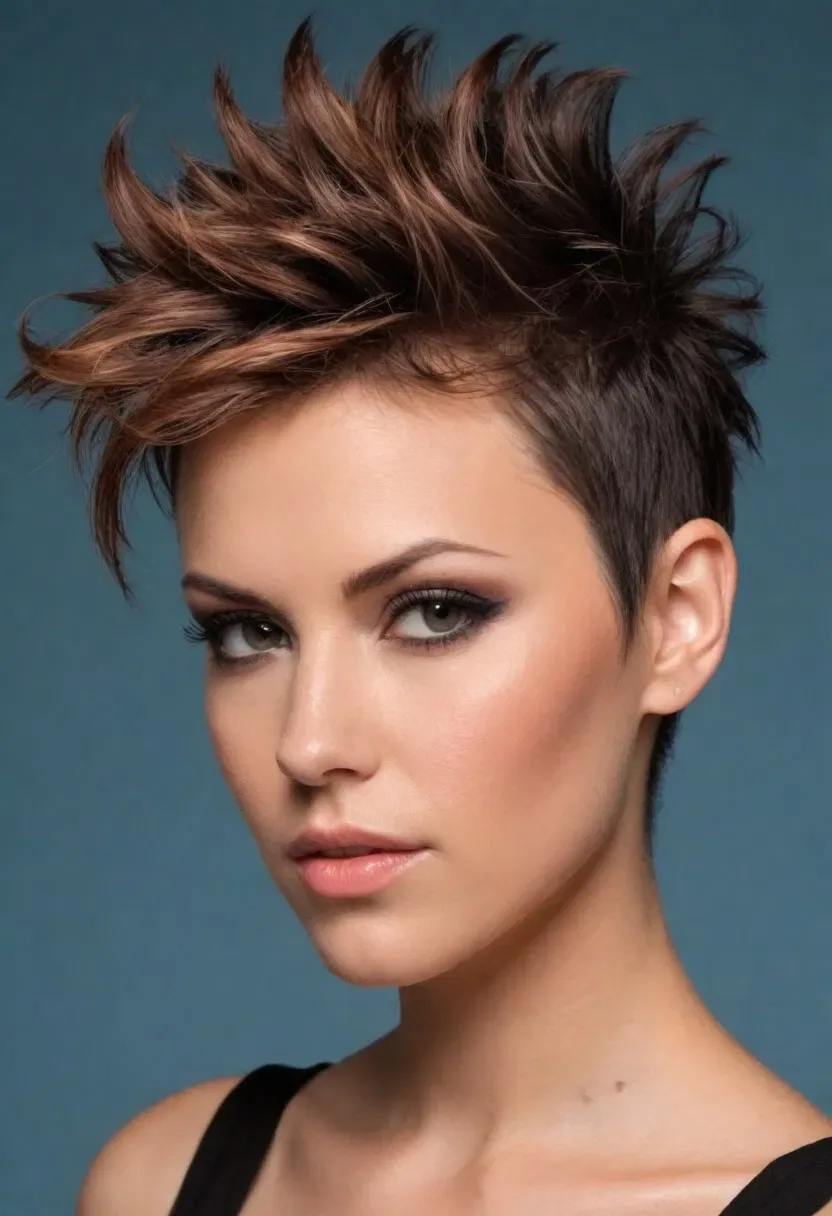
The wavy faux hawk is the relaxed, beachy version of the look: the centre is tousled into soft, textured waves, the sides are smoothed back, and the whole style has a lived-in, effortless feel rather than a sculpted one. It is the faux hawk for women who like their edge a little softer — the ridge is there, but it is made of waves and texture, not spikes and structure. It works beautifully on naturally wavy hair, and on straight hair with a little help from a curling wand or a texturising spray.
Best for: weekends, holidays and anyone who wants a faux hawk that looks undone rather than overdone. How to style it: wave the centre with a large-barrel curling wand, tousle with your fingers, add texturising spray, and pin the sides back loosely. Pros: it is forgiving — a wave out of place just looks more textured — and it takes ten minutes. Cons: it is the least structured faux hawk, so it will soften through the day. Maintenance is a quick re-tousle and a spritz of spray at midday. The quick verdict: the wavy faux hawk is edge with a shrug — the easiest dramatic style to wear.
9. The Pixie Faux Hawk
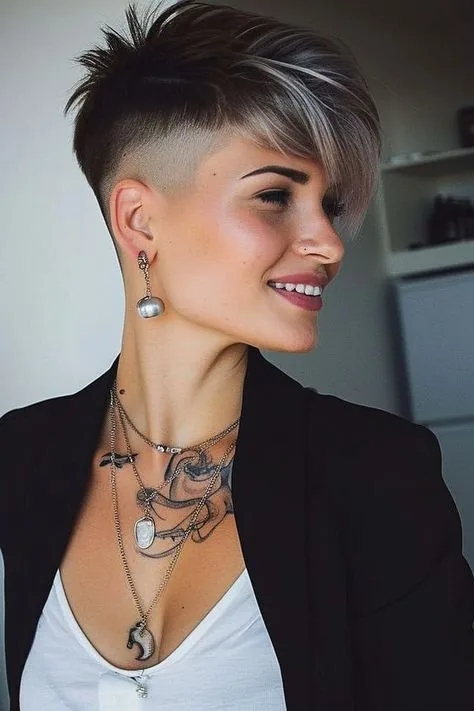
The pixie faux hawk is short hair at its boldest: the top is left longer and pushed upward into spikes or a tousled ridge, while the sides are faded, slicked or cropped short. It is the look that makes a pixie feel dramatic rather than plain, and it is the fastest faux hawk of all — five minutes, a dab of wax, and you are done. The pixie faux hawk suits strong features, because the face is fully on show, and it pairs beautifully with statement earrings and a bold lip, which balance the short, edgy hair.
Best for: short hair, and women who want maximum impact with minimum styling time. How to style it: work a pea-sized amount of wax or pomade through the top, push it upward and slightly forward, and smooth the sides down with the same product. What to ask your stylist: for a pixie with a longer top and shorter sides, so the ridge builds in one motion. Maintenance is a trim every four to six weeks and a daily five-minute style. Who should avoid it: anyone growing out a pixie, because the in-between lengths fight the ridge. The quick verdict: the pixie faux hawk proves that short hair can be the edgiest hair of all.
10. The Faux Hawk for Long Hair
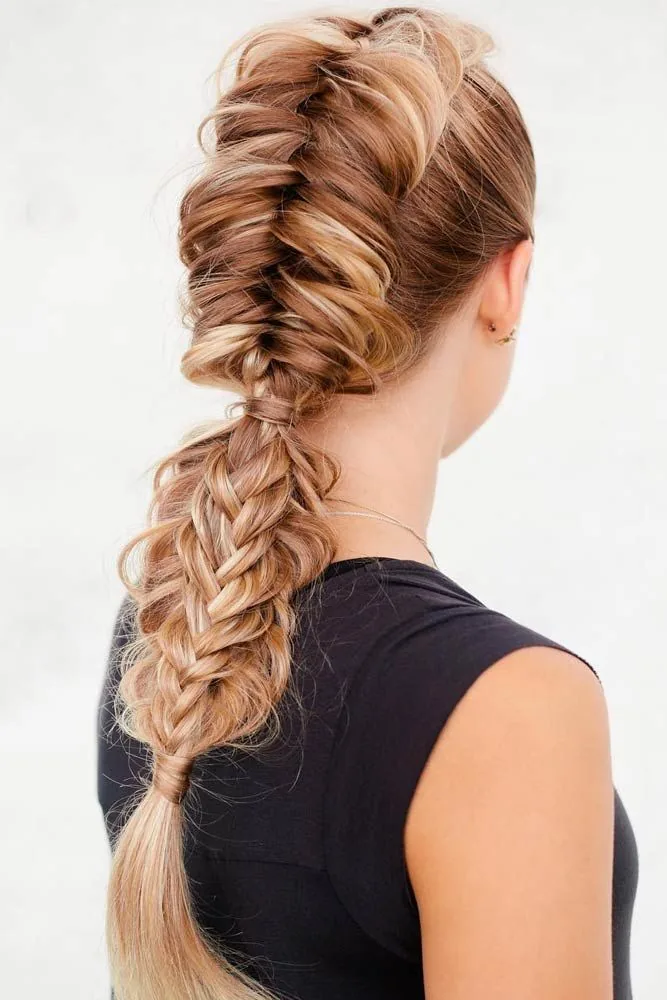
The faux hawk for long hair is the most dramatic version: a ridge running the full length of the head, built from a braid, a pinned-up centre, or a high ponytail with a teased crown. Long hair gives the faux hawk its greatest height and its longest silhouette, and it photographs like a red-carpet style, because the ridge has room to be sculpted. The trade-off is weight — long hair is heavy, and a tall ridge built from long hair will fall flat unless it is anchored properly, so a braid or a ponytail is the smart way to build it.
Best for: special occasions, weddings and photoshoots, when the drama is worth the effort. How to style it: braid the centre or gather the hair into a high ponytail, then tease the crown and pin the ridge in sections, using more pins than you think you need. Pros: the most striking faux hawk of all, with endless variation. Cons: it takes twenty to thirty minutes, and it needs a strong-hold product and a midday check. Maintenance is a braid or ponytail base, and the style comes down easily at night. The quick verdict: long hair makes the tallest faux hawk — just anchor it well, and it will hold.
11. The Faux Hawk Ponytail
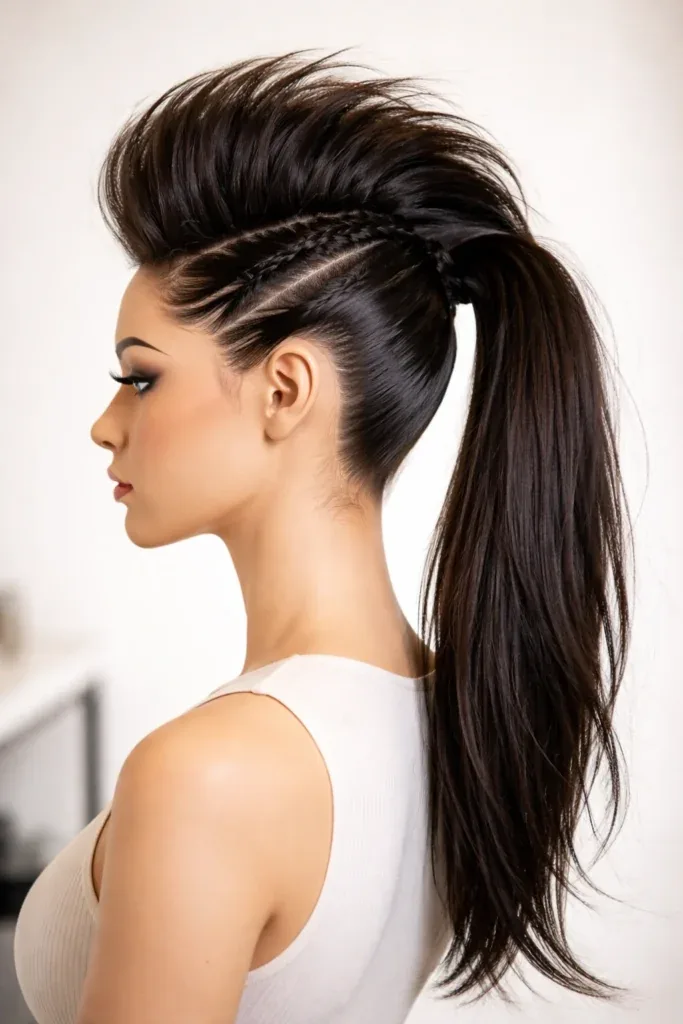
The faux hawk ponytail is the sporty version of the look: the hair is pulled into a high ponytail, the crown is teased for height, and the sides are slicked back, so the ponytail itself becomes the raised centre strip. It is practical, it keeps the hair off the face and neck, and it is the faux hawk you can wear to the gym, on a run, or on a hot day without a single pin slipping. It also suits every hair length from medium to long, and it is the version most women reach for first, because a ponytail is already in their routine.
Best for: workouts, hot weather, busy days and anyone who wants a faux hawk in five minutes. How to style it: tease the crown, gather the hair high, secure with a strong elastic, wrap a strand around the base, and smooth the sides with gel. Pros: it stays put all day, it needs no pins, and it looks intentional rather than thrown together. Cons: a tight ponytail worn every day can strain the hairline, so vary the height and give your edges a rest. Maintenance is a re-tie at midday and a gentle take-down at night. The quick verdict: the faux hawk ponytail is the everyday athlete of the family — fast, practical and quietly edgy.
12. The Faux Hawk Top Knot
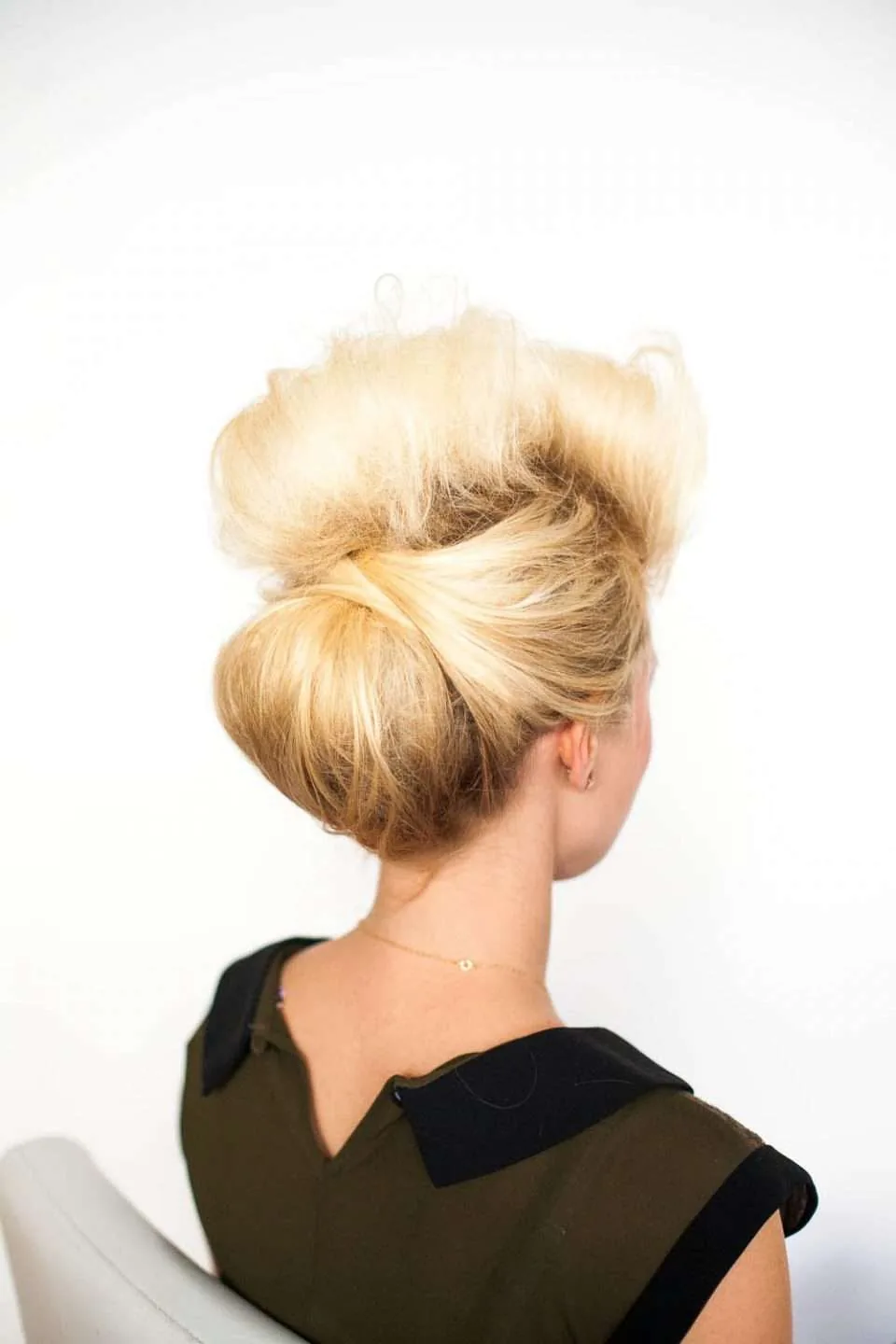
The faux hawk top knot takes the ridge and gathers it into a knot on top of the head: the sides are slicked or braided flat, the centre is pulled up and twisted into a bun, and the result is a high, sculptural knot with a mohawk outline. It is the most architectural faux hawk — a clean, bold shape that looks deliberate from every angle — and it suits a night out, a party or a photoshoot, when you want your hair to be a statement rather than a background. It also keeps the hair completely off the face, which makes it practical as well as dramatic.
Best for: evenings out, parties and women with medium to long hair who want height with structure. How to style it: slick the sides back, gather the centre into a high ponytail, twist it into a knot and pin it securely, then tease the front slightly for height. Pros: it holds all evening, it photographs beautifully, and it needs no touch-ups. Cons: it takes fifteen to twenty minutes, and a tight knot can ache by the end of the night. Maintenance is a firm pinning and a little hairspray, and the style comes down easily. The quick verdict: the top knot faux hawk is a sculpture you can wear — bold, clean and unforgettable.
13. The Faux Hawk with Bangs
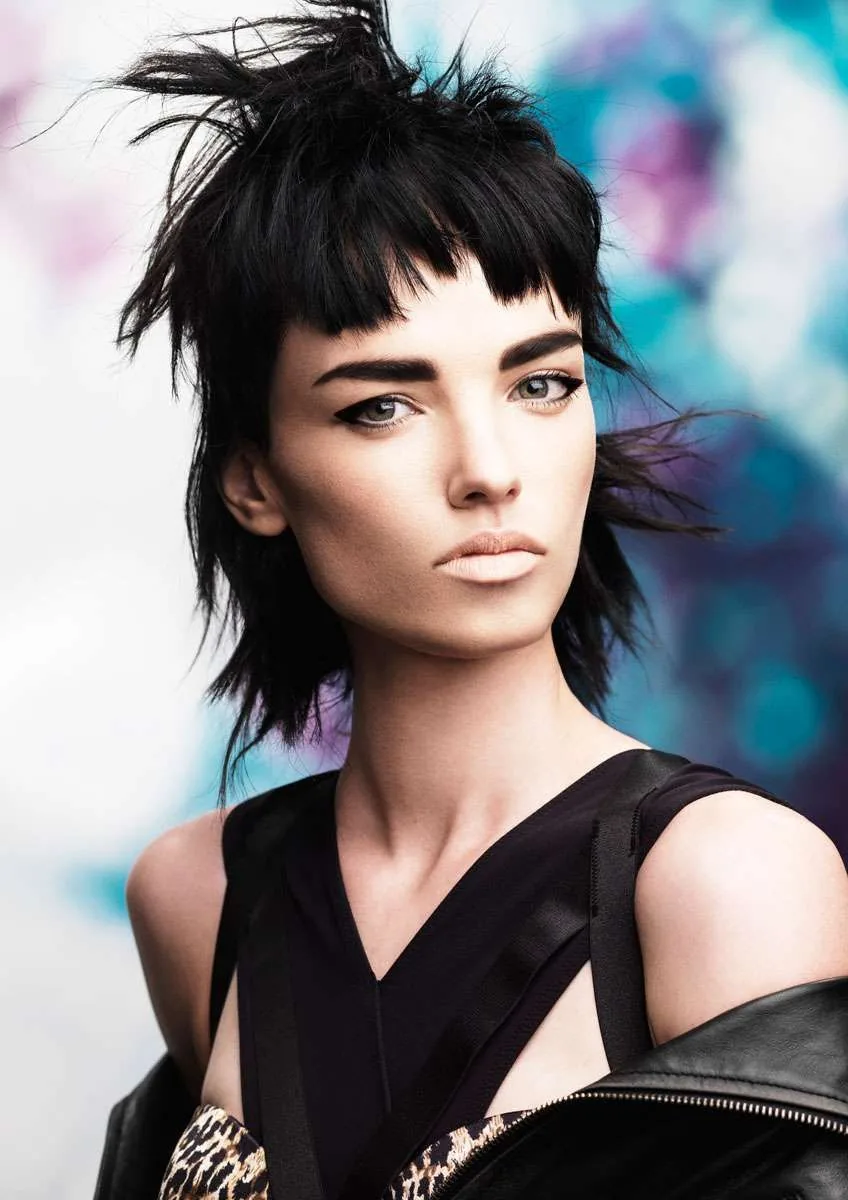
The faux hawk with bangs is a softer, more playful take on the look: a fringe of hair falls across the forehead while the centre rises behind it into the ridge. The bangs break up the height, give the face a frame, and add a youthful, romantic touch that suits almost everyone. They can be short and choppy, sitting just above the brow, or longer and swept to one side, blending into the ridge — and they are the detail that turns a familiar shape into something new.
Best for: oval, long and heart-shaped faces, where the fringe shortens the forehead and balances the height. How to style it: style the bangs first — blow-dry them forward, then build the ridge behind them, so the two parts do not fight each other. Maintenance: the bangs need the most attention, because they frizz first in humidity, so a little leave-in and a quick finger-comb in the morning keeps them defined. A small trim every four to six weeks keeps them above the eyes. The quick verdict: bangs soften the faux hawk without weakening it — edge with a fringe.
14. The Side-Swept Faux Hawk
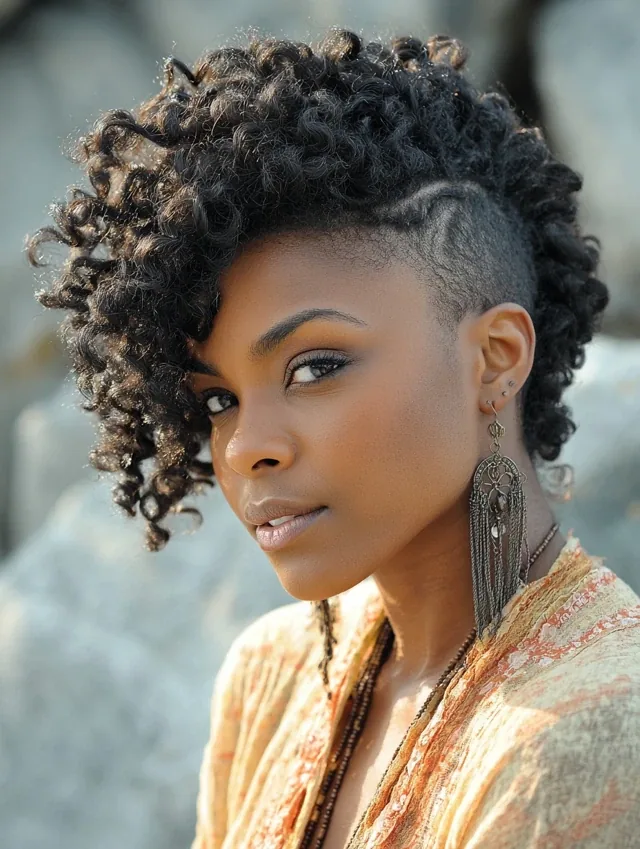
The side-swept faux hawk is the glamorous version: the ridge is built off-centre, swept to one side, so the silhouette is asymmetric and the hair falls in a dramatic diagonal across the head. It is the faux hawk for a long dress, a dramatic neckline, or any evening when you want to look like you stepped out of another era — old-Hollywood glamour with a modern edge. The sweep changes everything: it creates a diagonal line across the face, it adds volume on one side, and it gives the style a polished, red-carpet quality.
Best for: round and square faces, because the diagonal sweep breaks up symmetry and softens a strong jaw. How to style it: part the hair deeply on one side, build the ridge on the fuller side, and pin the shorter side flat. Pros: it is the most elegant faux hawk, and it suits formal occasions beautifully. Cons: it needs more pins than a centred ridge, because the weight sits on one side. Maintenance is a morning build and a midday pin check. The quick verdict: sweep it to the side and the faux hawk becomes evening hair.
15. The Big-Volume Teased Faux Hawk
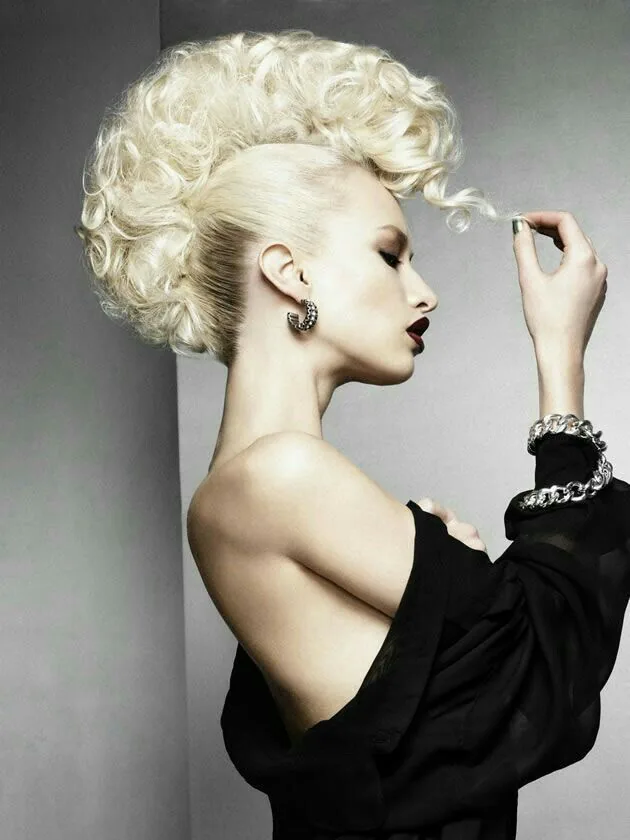
The big-volume teased faux hawk is the tallest faux hawk in this guide: the centre is backcombed into a high, full ridge, the sides are slicked flat, and the contrast between the height and the sides is as dramatic as it gets. It is the style for a night out, a concert, a photoshoot — any moment when you want your hair to be the first thing anyone notices. It needs dense hair or a little help from extensions to reach its full height, and it looks most striking when the ridge is smooth on top and full underneath, like a sculpted wave.
Best for: thick, dense hair and women who want maximum drama. How to style it: tease in small sections from the front to the back, smooth only the top layer, and pin each section before moving on. Time: fifteen to twenty minutes, and the cost is mostly in the products — a good volumising mousse and a flexible-hold spray. Common mistake: teasing one big section, which tangles and collapses; small sections hold better and brush out more easily. The quick verdict: the big-volume faux hawk is not subtle, and it is not trying to be — go tall or go home.
16. The Sleek Polished Faux Hawk
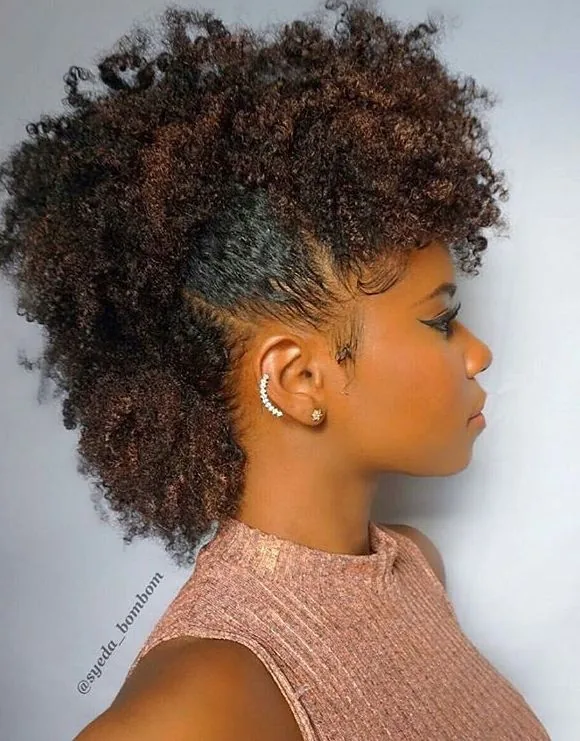
The sleek polished faux hawk is the refined version: the ridge is smooth, glossy and sculpted, the sides are slicked back with gel, and the whole style has a clean, almost architectural line. It is the faux hawk for a formal event, a black-tie evening, or any occasion when you want edge without mess — the height is there, but it is controlled, deliberate and gleaming. It pairs beautifully with strong makeup, a bold lip and statement earrings, because the hair itself is so clean that the face becomes the focus.
Best for: straight hair, formal events and women who love clean lines. How to style it: flat-iron the centre smooth, apply a little gel or pomade, build the ridge with pins, and finish with a shine spray. Pros: it looks expensive, it photographs beautifully, and it holds its shape for hours. Cons: it shows every flyaway, so it needs a smoothing product and a quick check before you leave. Maintenance is a morning build of ten to fifteen minutes and a shine-spray touch-up. The quick verdict: the sleek faux hawk is edge in evening dress — polished, precise and quietly powerful.
17. The Messy Textured Faux Hawk
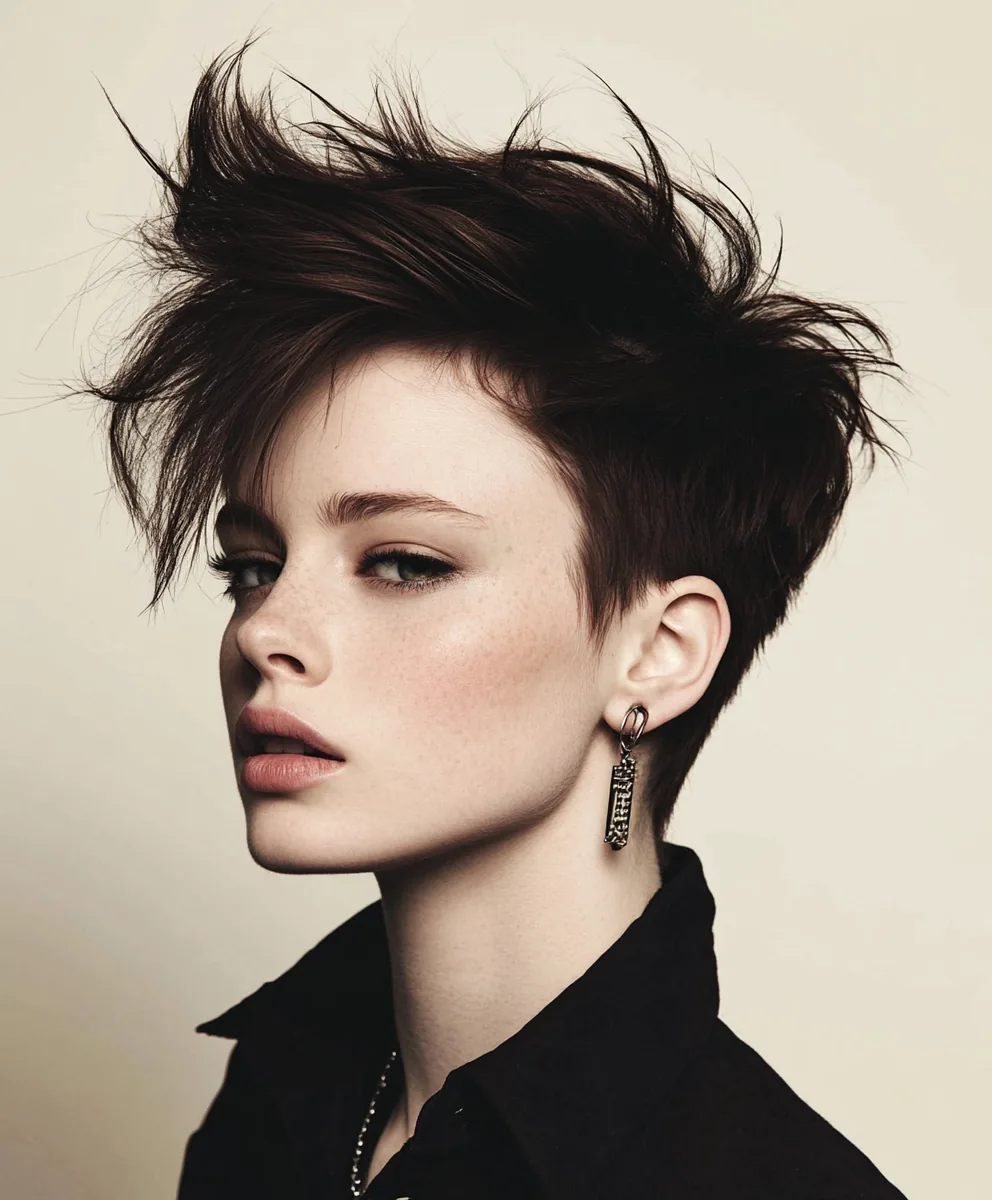
The messy textured faux hawk is the undone version: the ridge is tousled, piecey and deliberately imperfect, the sides are loosely pinned rather than slicked, and the whole style has a rock-and-roll, just-rolled-out-of-bed energy. It is the faux hawk for women who like their edge a little rough — the height is there, but it is made of texture and movement, not structure. It works beautifully on medium and short hair, and it is the most forgiving faux hawk, because a strand out of place just looks more textured.
Best for: concerts, weekends and anyone who wants a faux hawk that looks effortless. How to style it: add texturising spray to damp hair, rough-dry it upward, pinch pieces of the ridge with a little wax, and pin the sides loosely. Pros: it takes ten minutes, it hides mistakes, and it gets better as the day goes on. Cons: it will not suit a formal occasion, and it needs texture to work — very fine, straight hair may need a salt spray first. Maintenance is a quick re-tousle at midday. The quick verdict: the messy faux hawk is the easiest dramatic style to wear — imperfection is the point.
18. The Faux Hawk for Thick Hair
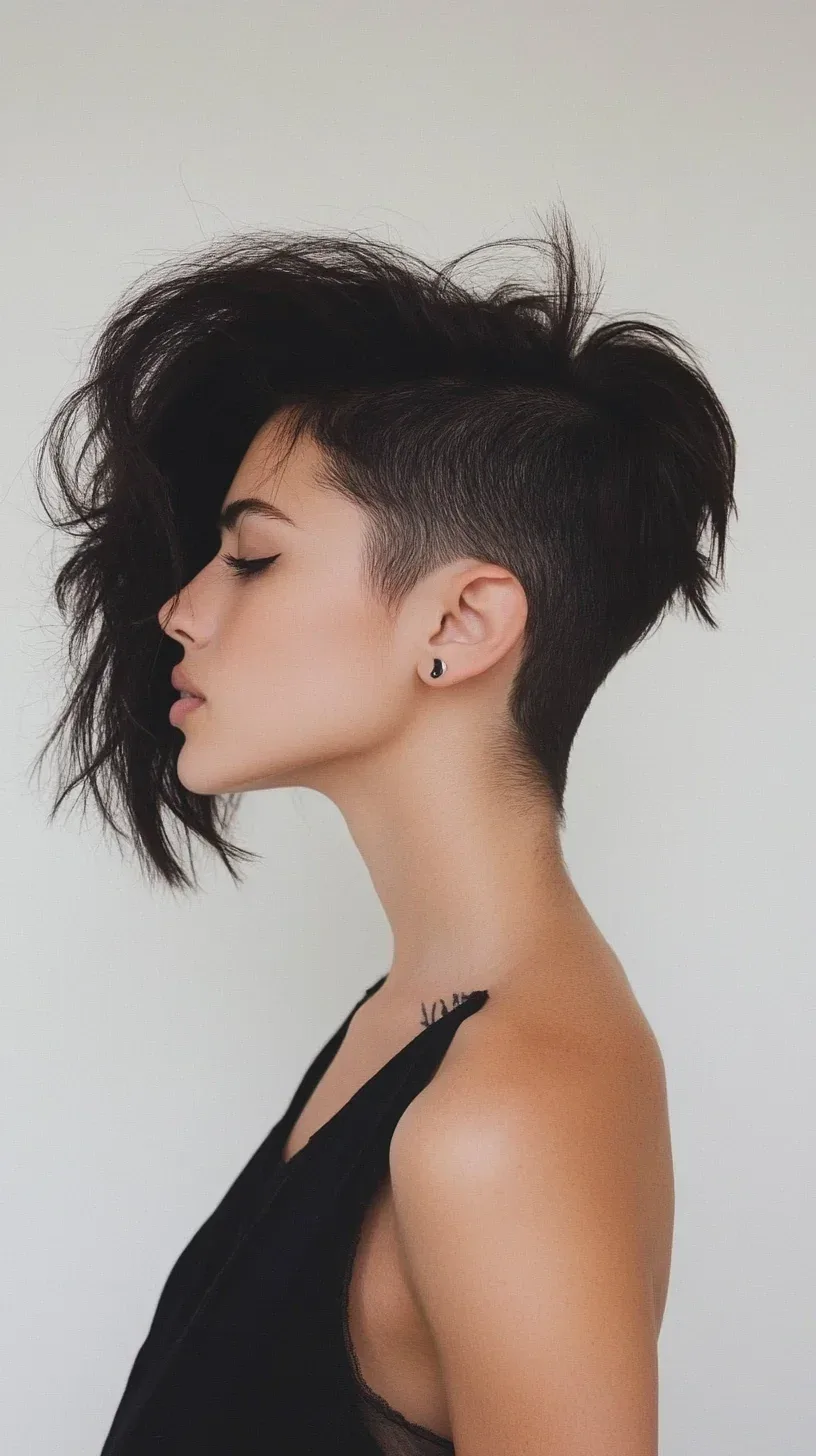
The faux hawk for thick hair is the style in its fullest glory: thick hair gives the ridge its height, its width and its presence, and it holds a tease with almost no effort, because the density does the work. A thick-haired faux hawk looks big, sculpted and completely unmistakable, and it is the hair type that makes the classic updo look like the pictures — full, even and dramatic. The challenge is not volume but weight: a thick ridge is heavy, and it needs to be pinned properly, or it will slide downward over the course of the day.
Best for: thick, dense hair, and women who want the biggest faux hawk with the least effort. How to style it: section the hair before teasing, pin each section as you go, and use crossed pins — thick hair needs more pins than fine hair. Maintenance: a daily build of ten to fifteen minutes, and a shape-up trim every six to eight weeks to keep the sides neat. Cost is low, because thick hair needs less product to hold its shape. Common mistake: using too little product and too few pins, and watching the ridge sink by lunchtime. The quick verdict: if your hair is thick, the faux hawk is your natural destiny — just pin it well.
19. The Faux Hawk for Fine Hair
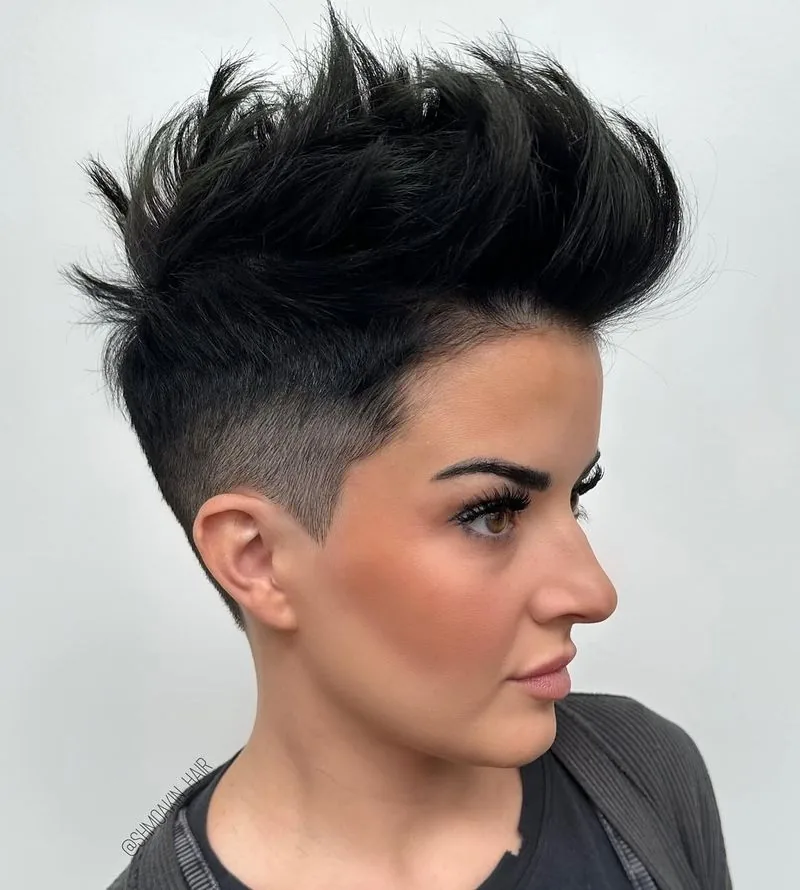
The faux hawk for fine hair is proof that the style is not only for thick hair: with the right tricks, finer hair makes a beautiful, soft faux hawk with its own kind of elegance. The key is to work with the volume you have rather than chasing someone else’s — a shorter, softer ridge looks fuller than a tall one on fine hair, and a braid or a twist gives the centre structure that teasing alone cannot. Dry shampoo at the roots adds grip and lift, and a light texturising spray keeps the strands from sliding apart.
Best for: fine, low-density hair, and women who have been told a faux hawk is not for them. How to style it: start with dry shampoo, tease gently in small sections, and choose a braided or twisted centre rather than a tall teased ridge. Pros: a shorter ridge suits fine hair beautifully, and the style is light and comfortable. Cons: the height will be modest, and it needs a midday refresh. Who should avoid the tall teased version: very fine hair, which will not hold it — go braided instead. The quick verdict: fine hair can wear a faux hawk, in a softer shape, with lighter products — and it will look lovely.
20. The Faux Hawk for Straight Hair
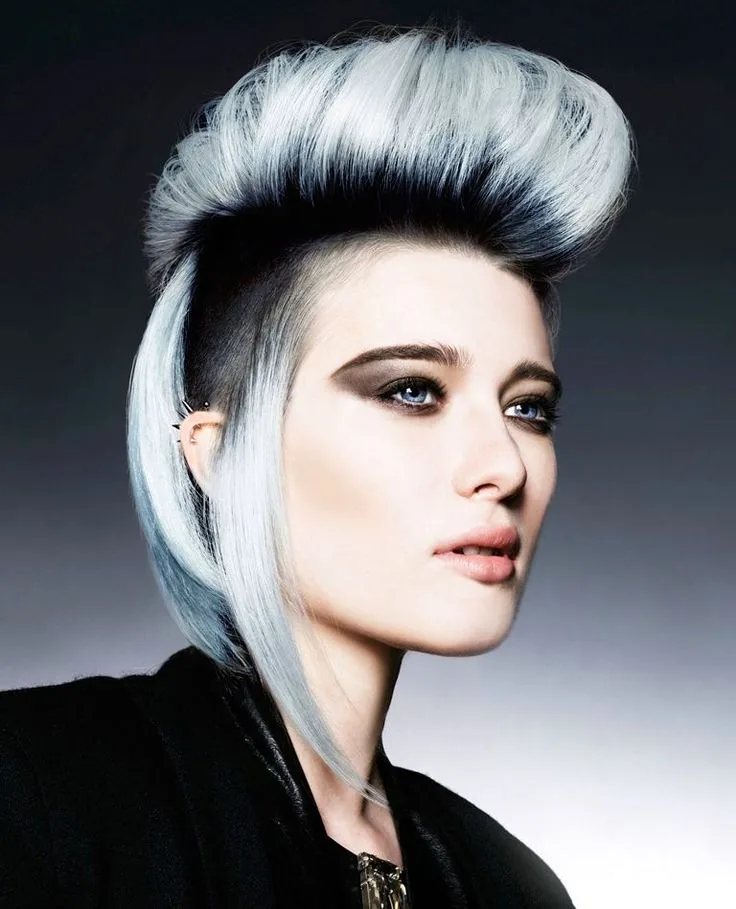
The faux hawk for straight hair is the cleanest version of the look: straight hair makes a smooth, glossy ridge with a sharp outline, and the sides slick back without a fight, so the silhouette is crisp and deliberate. It is the style that suits the sleek and polished versions best, and it photographs beautifully, because the smooth surface catches the light along the ridge. The challenge is grip — straight hair is slippery, and a teased ridge can slide out — so dry shampoo, mousse and crossed pins are essential, not optional.
Best for: straight hair and women who love a polished, graphic shape. How to style it: apply mousse to damp roots, blow-dry upward, add dry shampoo, tease in small sections and pin with crossed pins. Maintenance: a morning build of ten minutes, and a quick pin check at midday, because straight hair lets pins slip. Common mistake: building the ridge on freshly washed hair with no product — it will fall flat within an hour. The quick verdict: straight hair makes the sharpest faux hawk, as long as you give it something to grip.
21. The Faux Hawk with Blonde Highlights
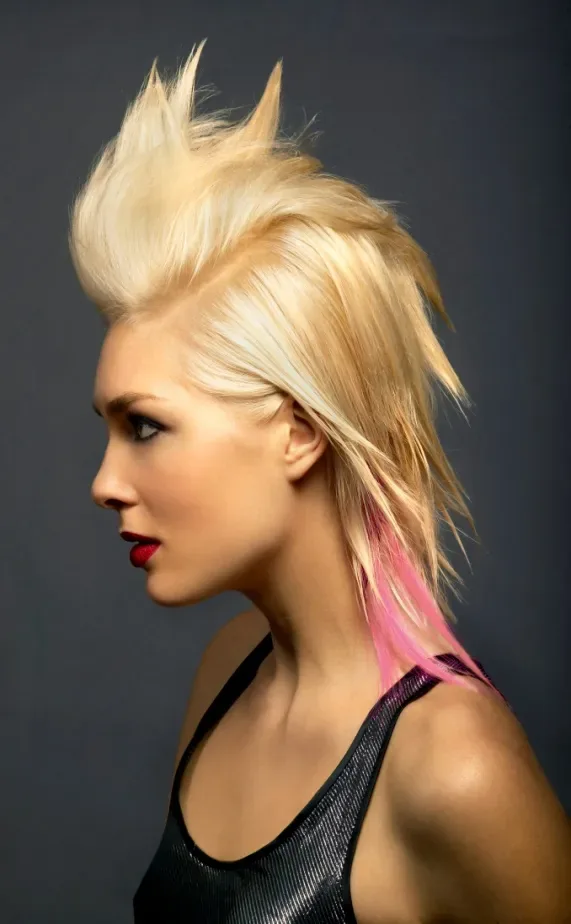
The faux hawk with blonde highlights is sunshine on the ridge: the sides stay natural and dark, and the centre strip is lightened with blonde highlights, so the height looks three-dimensional and the shape catches the light. It is the most flattering colour for a faux hawk, because the lighter centre makes the ridge look taller and the texture more visible from across the room, and the dark sides keep the look grounded. It suits a summer holiday, a new season, or any moment when you want your faux hawk to feel lighter and brighter.
Best for: women who want colour without a full-head commitment, and for dark hair, where the contrast is most striking. How to style it: ask your stylist for highlights placed only along the centre strip, so the colour follows the ridge. Maintenance: coloured hair needs a weekly deep-condition, and the highlights need a toner or touch-up every eight to twelve weeks. Cost is a salon highlighting service — more than a home rinse, but worth it, because lightening only the centre evenly is a professional skill. The quick verdict: blonde highlights make the ridge glow — colour exactly where the height is.
22. The Faux Hawk in Bold Colour
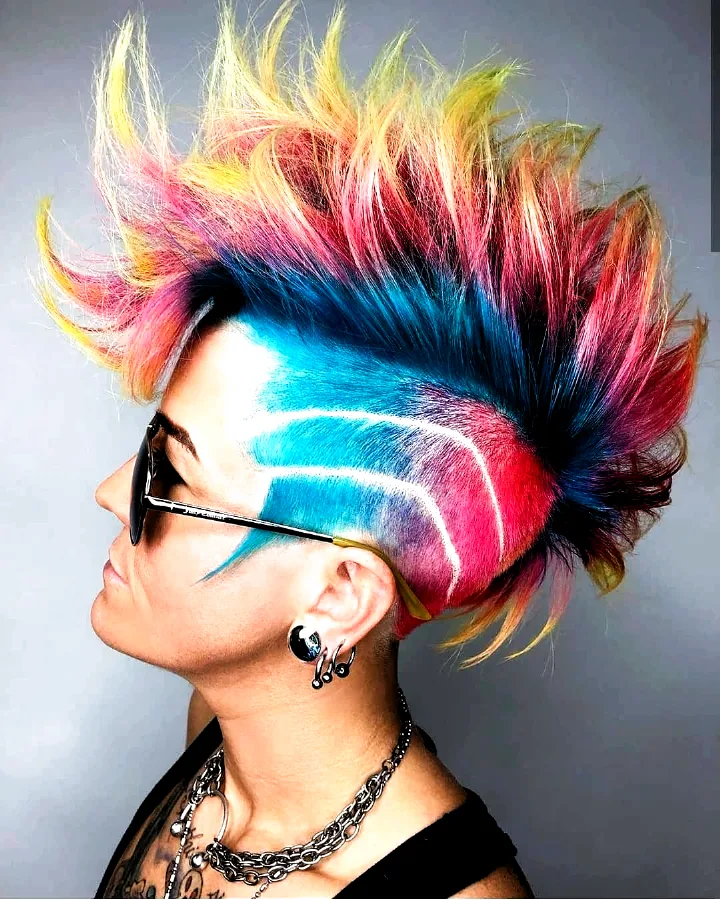
The faux hawk in bold colour is the loudest style in this guide: a copper, burgundy, pink or blue centre strip that makes the whole silhouette glow, like a flag planted on top of the head. Bold colour is a statement — it does not whisper, it announces — and on a faux hawk it is extraordinary, because the raised ridge multiplies the colour into a strip of pure drama. It suits women who love attention, who want their hair to be a conversation, and who are ready for the upkeep that bold colour demands, because bright shades fade faster than any other.
Best for: festivals, photoshoots and anyone who wants the boldest faux hawk possible. How to style it: colour the centre strip only, keep the sides natural, and let the colour do the talking. Maintenance: a colour-safe shampoo, cold-water rinses, a weekly deep-condition, and a colour top-up every four to six weeks. Cost is a full salon colour service — this is not a home dye job, because colouring only the centre evenly is a professional skill. Who should avoid it: anyone with a conservative workplace, because this one is impossible to hide. The quick verdict: bold colour turns the faux hawk into a headline — wear it if you mean it.
23. The Faux Hawk for a Wedding
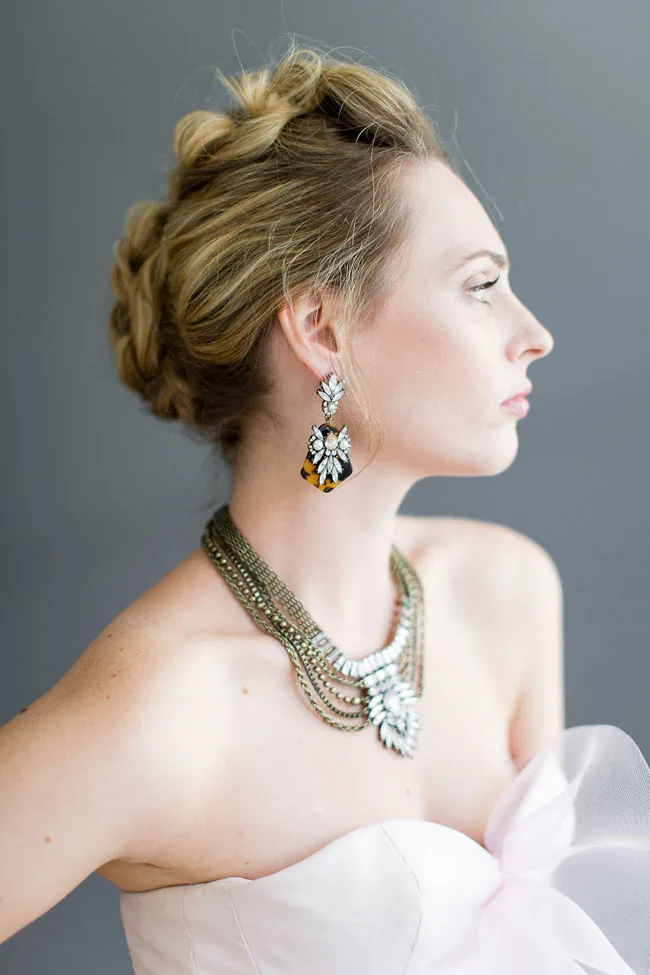
The faux hawk for a wedding is the style at its most romantic: a soft, sculpted ridge with gentle curls, the sides smoothed or braided, and one elegant accent — fresh flowers, pearl pins or a delicate headpiece. It looks extraordinary with a gown, because the height elongates the neck and balances the dress, and it photographs beautifully, because the shape is so strong. Brides often choose a soft faux hawk rather than a spiked one — height with softness, not drama — and add a veil pinned at the back of the ridge, which sits perfectly on the raised centre.
Best for: brides and wedding guests who want an updo with personality. How to style it: build a soft ridge, curl the ends gently, add pearl pins or small flowers, and do a full trial run with the dress and veil. Maintenance: a trial run is essential, and the style should be worn for a full day before the wedding to test its hold. Cost is a salon bridal styling service, which is worth it for the most photographed day of your life. Common mistake: trying a spiked faux hawk for the first time on the wedding morning — go soft, go tested, go beautiful. The quick verdict: a wedding faux hawk is a crown with an edge — romantic, sculpted and unforgettable.
24. The Faux Hawk for the Office
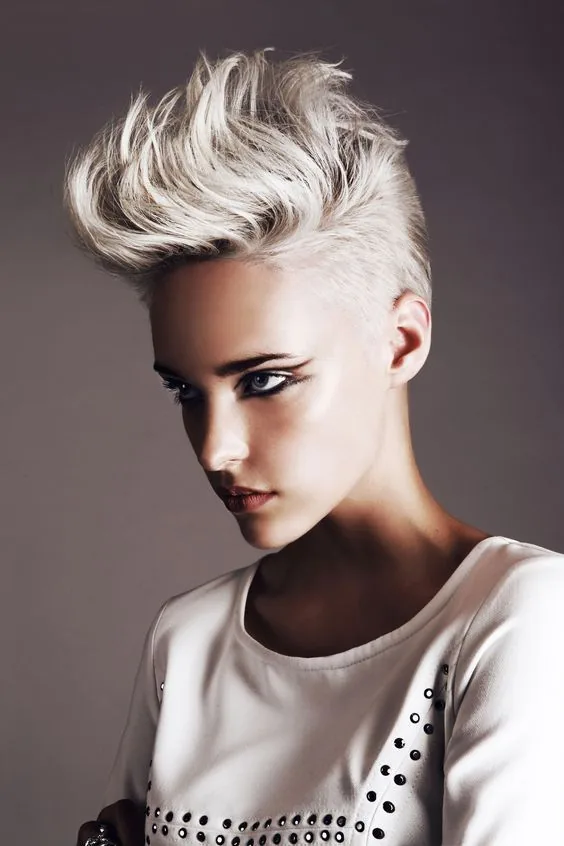
The faux hawk for the office is the soft version, worn professionally: a gentle ridge of volume, sides swept back smoothly, no visible teasing and no bright colour. It reads as a polished, deliberate style — a voluminous updo with a modern edge — rather than a rebellious statement, and it holds up through a long day if it is pinned well. It is the version that proves a faux hawk can be work-appropriate, as long as the height is modest and the finish is neat.
Best for: professional settings and women who want edge without a conversation with HR. How to style it: keep the height low, smooth the sides with cream, pin the ridge flat at the back, and skip the bright colour and heavy accessories. Pros: it looks intentional and polished, and it lasts all day. Cons: it will not read as a faux hawk to anyone who is not looking closely — which, at work, is the point. Maintenance is a five-minute morning build and no touch-ups. The quick verdict: the office faux hawk is edge in a blazer — quiet, confident and completely professional.
25. The Faux Hawk for a Night Out
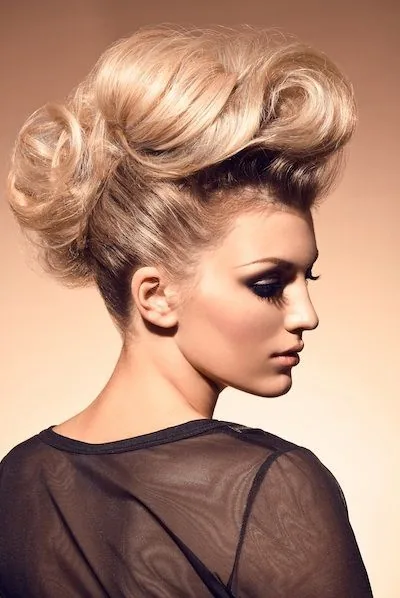
The faux hawk for a night out is the style with the gloves off: tall, bold, a little messy, and built to be seen in low light. The ridge goes high, the sides go slick, and a little glitter, a bold lip or a statement earring finishes the look. It is the version that earns its keep after dark, when the height catches the light and the silhouette stands out in a crowd. It does not need to last all day — it needs to last all evening, which is a much easier job, and it can be as dramatic as you dare.
Best for: parties, concerts, dates and any night when you want to be noticed. How to style it: tease the crown high, slick the sides with gel, add a texturising spray for grip, and finish with a strong-hold hairspray. Pros: maximum impact, and it photographs brilliantly in evening light. Cons: it will need a wash the next morning, because the product and teasing do not survive the night. Maintenance is a fifteen-minute build and no mid-evening touch-ups if it is pinned well. The quick verdict: the night-out faux hawk is the style at its boldest — go high, go glossy, go out.
26. The Festival Faux Hawk
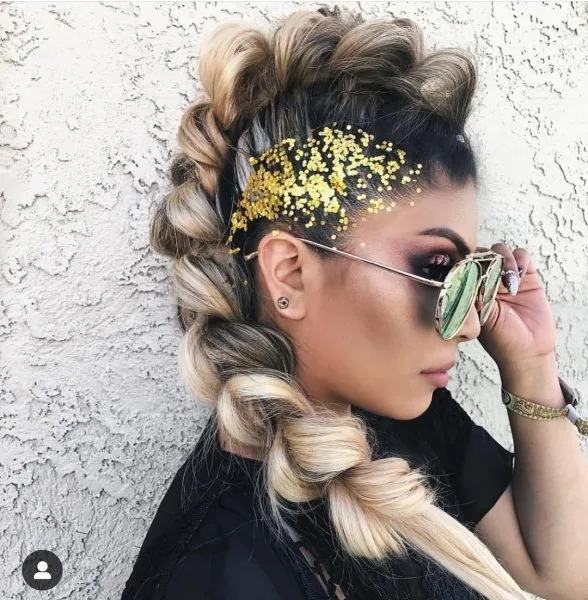
The festival faux hawk is the most playful version: a braided or teased ridge, glitter along the part, coloured extensions, beads or cuffs woven into the centre, and sides braided tight so the whole style survives a long day in the sun. It is the style for music festivals, holidays and any day when the dress code is fun — the faux hawk as a costume piece, built to be photographed. It is also the most practical festival style, because a braided ridge holds its shape through heat, dancing and dust, when a teased one would collapse.
Best for: festivals, holidays and outdoor events. How to style it: braid the centre, add glitter or temporary colour spray, weave in a few beads or cuffs, and braid the sides flat. Pros: it lasts all day, it needs no touch-ups, and it looks better as it loosens. Cons: glitter gets everywhere, and temporary colour can transfer to clothes. Maintenance is a morning braid and nothing else. The quick verdict: the festival faux hawk is the style at its most joyful — braid it, glitter it, wear it all day.
27. The Twist Faux Hawk
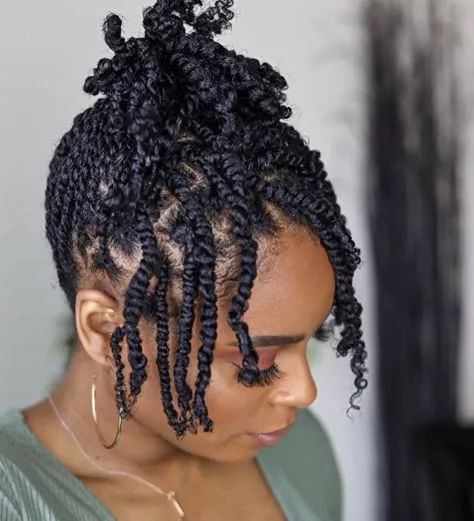
The twist faux hawk is built from twists rather than braids: the sides are flat-twisted against the head, and the centre is twisted or left loose and lifted into a ridge. It is a beautiful style on textured and curly hair, because the twists add pattern and detail while the centre keeps its volume, and it is also a protective style — the ends are tucked away in the twists, so the hair is protected while it looks dramatic. It suits festivals, holidays and everyday wear, and it lasts for days with nightly protection.
Best for: curly and textured hair, and women who want a protective style with an edge. How to style it: flat-twist the sides from the hairline to the crown, then twist or pin the centre into a ridge. Pros: it lasts three to five days, it protects the ends, and it looks intricate. Cons: the twists take thirty to sixty minutes to install, so it is not a five-minute style. Maintenance is a satin bonnet at night and a morning pick at the roots. The quick verdict: the twist faux hawk is the protective version — edge that looks after your hair while it looks good.
28. The Faux Hawk with Cornrows
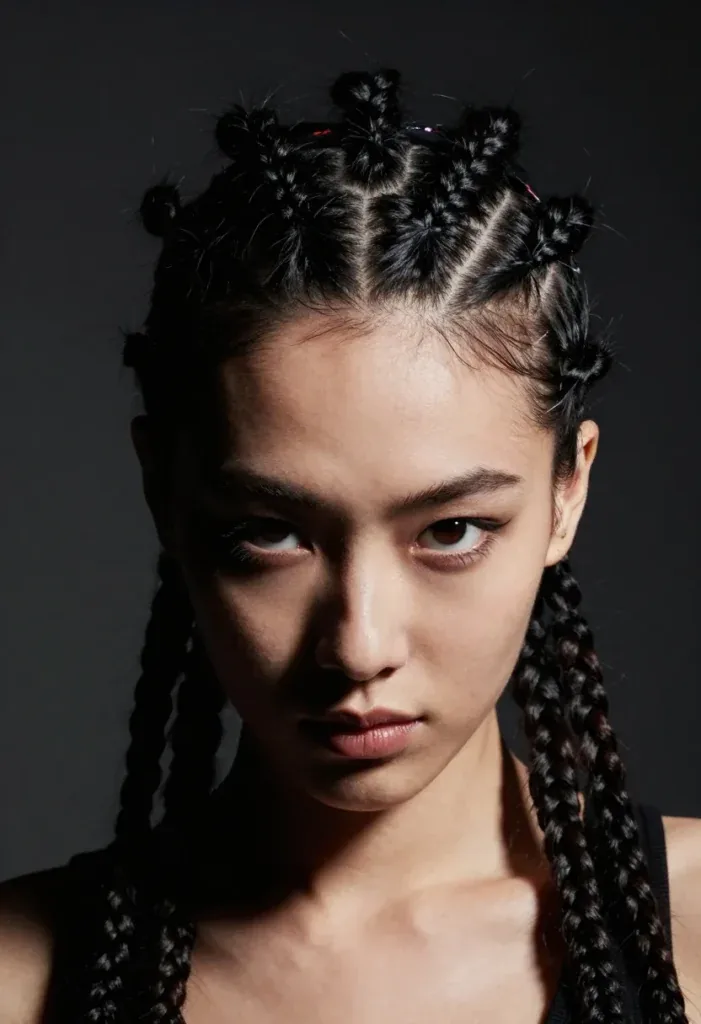
The faux hawk with cornrows is a half-up style with real edge: the sides are braided into neat cornrows, while the centre is left long and lifted into a ridge. The cornrows give the style structure and detail at the sides, and the raised centre gives it height and softness — a combination that looks deliberate, stylish and completely modern. The cornrows can be straight back, curved, or in a zigzag pattern, and they can be as few as two or as many as six, depending on how much detail you want.
Best for: women who want structure at the sides and volume in the centre, and for textured hair, where cornrows hold beautifully. How to style it: cornrow the sides from the hairline toward the centre, then tease, curl or braid the centre into a ridge. Maintenance: the cornrows need redoing every one to two weeks, and the centre needs daily styling. Cost is a modest salon or braider service for the cornrows, while the centre is do-it-yourself. Common mistake: braiding the cornrows too tightly, which strains the hairline — keep them firm but comfortable. The quick verdict: cornrows sharpen the faux hawk’s outline like nothing else.
29. The Faux Hawk with Accessories
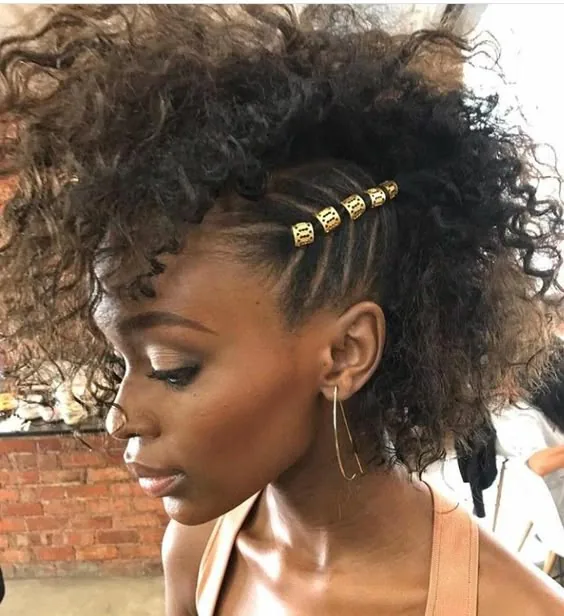
The faux hawk with accessories is the quickest transformation in this guide: one accent, and the whole style changes. Slim metal cuffs or rings threaded onto a braided ridge, a scatter of decorative bobby pins worn as jewellery, a thin headband pushed back from the face, or a few pearl pins along the part — each one gives the same ridge a completely different mood. Accessories work with every faux hawk length, and they are the easiest way to dress the style up for an evening or down for the day.
Best for: anyone who wants a different faux hawk every day without a different cut. How to style it: build the ridge first, then add one accent — cuffs on a braid, pins along the part, or a headband at the front. Pros: it takes seconds, it costs little, and it changes the whole look. Cons: heavy accessories can drag the ridge down, so keep them light. Common mistake: adding three accents at once — one is a statement, three is a costume. The quick verdict: accessories are the faux hawk’s jewellery — one piece, worn well, is enough.
30. The Faux Hawk Bob
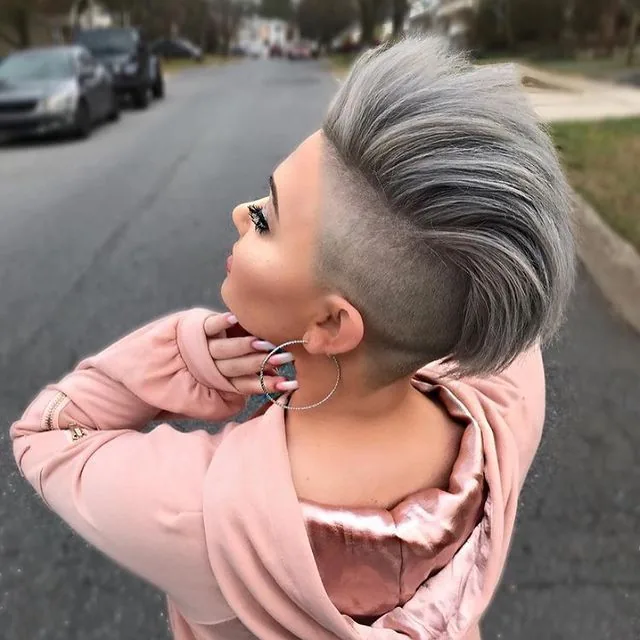
The faux hawk bob is the style for women who love a bob but want an edge: the bob’s length stays, the sides are tucked or pinned flat, and the crown is lifted into a short ridge. It is the most wearable faux hawk in this guide, because the bob is already a classic, and the ridge is just a lift on top of it — a bob with attitude, rather than a mohawk with length. It suits medium-length bobs best, where there is enough hair to lift, and it works on straight, wavy and curly bobs alike.
Best for: bob wearers who want a change without a new cut. How to style it: pin the sides back behind the ears, tease the crown gently, and let the bob’s ends frame the face. Pros: it takes five minutes, it suits every face shape, and it washes out the same night. Cons: the ridge will be modest on a short bob, so if you want drama, go longer. Maintenance is a morning build and a bob trim every six to eight weeks. The quick verdict: the faux hawk bob proves you do not need long hair to wear the style — a bob and a little lift is enough.
31. The Faux Hawk for a Round Face
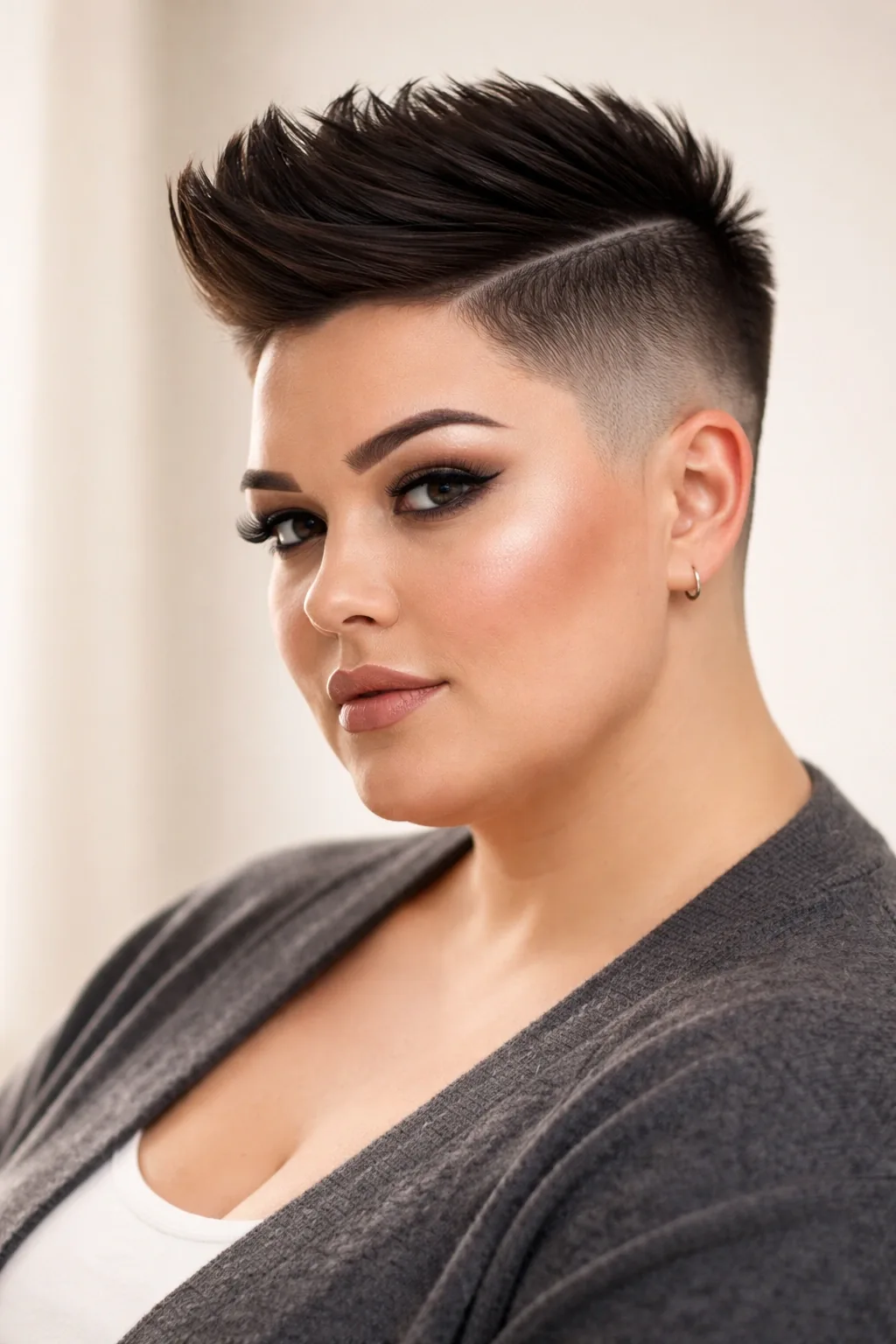
The faux hawk for a round face is the style at its most flattering: height on top lengthens the face, and the narrow sides slim the outline, so the roundness is balanced rather than emphasised. It is the haircut trick that stylists reach for when a client wants her face to look longer — add height, keep the sides tight, and the whole face changes shape. The key is to keep the ridge tall and the sides flat, because width at the sides would only add to the roundness, while height draws the eye upward.
Best for: round faces, and anyone who wants their face to look longer and slimmer. How to style it: build the ridge as tall as you comfortably can, slick the sides flat, and avoid volume at the cheeks. What to ask your stylist: for a cut with a longer centre and shorter sides, so the shape builds itself. Maintenance is a daily build of ten minutes and a trim every few weeks to keep the sides neat. Common mistake: adding volume at the sides, which widens the face — keep the sides flat and let the top do the work. The quick verdict: for a round face, the faux hawk is not just edgy — it is the most flattering shape in this guide.
32. The Faux Hawk for an Oval Face
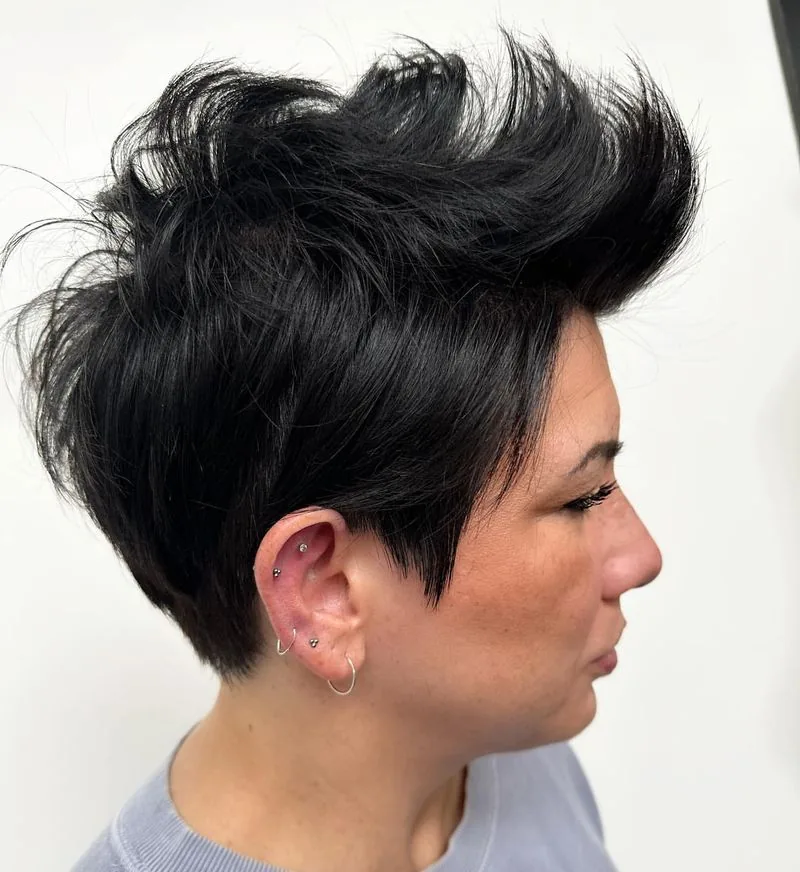
The faux hawk for an oval face is the easiest version to wear, because an oval face suits almost every height and shape — the ridge can be tall or soft, centred or swept, and the face will still look balanced. That freedom is the point: on an oval face, the faux hawk is a playground, and you can try the boldest versions without worrying about the proportions. A tall, spiked ridge looks dramatic; a soft, side-swept ridge looks elegant; and both suit the same face, which means you can change the attitude day by day.
Best for: oval faces, and women who want to experiment with every version of the style. How to style it: try the tall version first, because it suits an oval face best, then soften it for work with a side sweep. Pros: every faux hawk in this guide suits you, so the choice is about mood, not face shape. Cons: none, really — the oval face is the faux hawk’s easiest canvas. Maintenance is whatever the version you choose needs, from five minutes for a soft ridge to twenty for a tall one. The quick verdict: if your face is oval, the faux hawk is yours to play with — try them all.
33. The Faux Hawk for a Square or Long Face
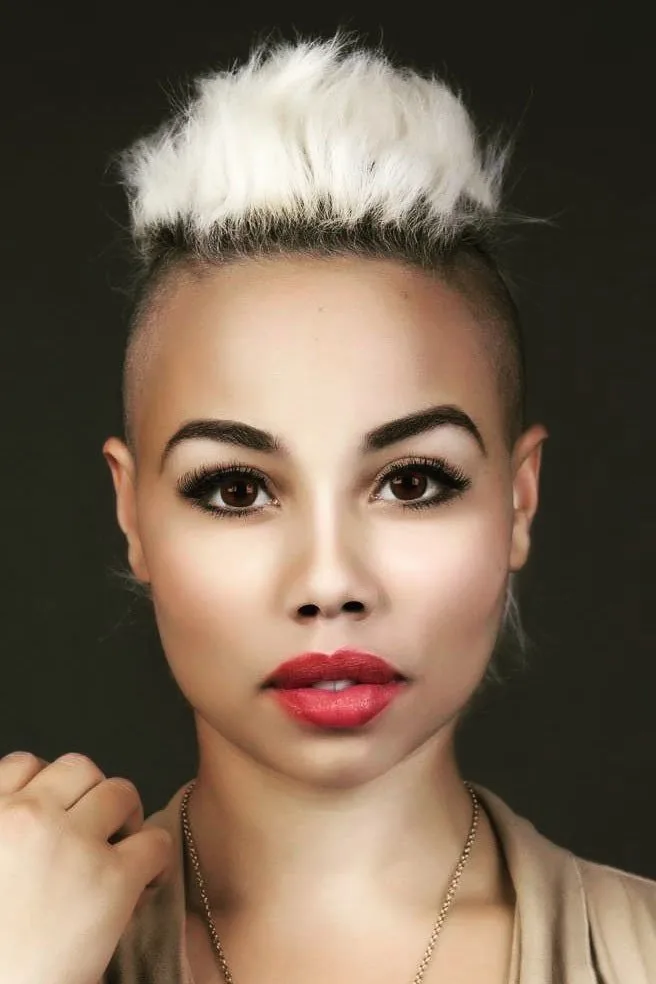
The faux hawk for a square or long face needs a softer hand: on a square face, the ridge should be soft and textured rather than tall and spiky, because sharp height can emphasise a strong jaw; on a long face, the ridge should be wide rather than tall, because extra height lengthens the face further. The trick in both cases is balance — soften the ridge, add a little width at the sides, and let the texture do the work that height would do on another face. A wavy or curly faux hawk is often the best choice here, because the texture softens the lines.
Best for: square and long faces, where a softer ridge flatters more than a tall one. How to style it: keep the ridge low and wide, add soft waves or curls, and let a few pieces fall at the sides to soften the jaw. What to ask your stylist: for layers in the centre that create width rather than height. Common mistake: building the tallest ridge possible on a long face, which only makes the face look longer. The quick verdict: on a square or long face, the faux hawk works best when it is soft and wide — edge with balance.
34. The Half-Up Faux Hawk
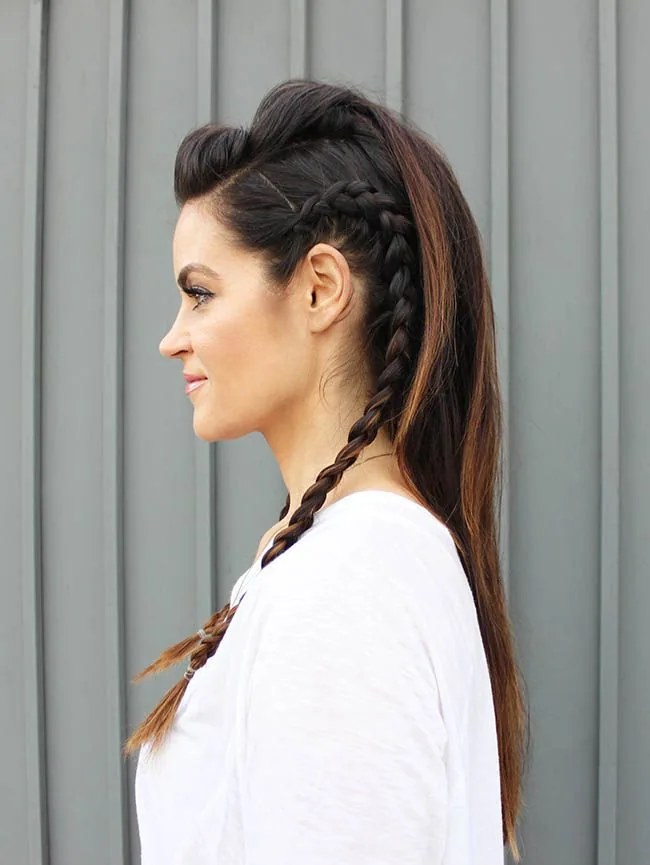
The half-up faux hawk is the gentlest way into the style: the top half of the hair is pulled up into a ridge, and the bottom half is left down, so the silhouette reads as a faux hawk from the front and as flowing hair from the back. It is the version for women who want the edge without giving up their length, and it suits long and medium hair beautifully, because the hair left down gives the style softness and movement. It is also the easiest faux hawk to build, because only half the hair needs pinning.
Best for: long hair, first-time faux hawk wearers, and anyone who wants edge with length. How to style it: section the top half, braid or tease it into a ridge, pin it securely, and leave the rest down. Pros: it takes ten minutes, it suits every face shape, and it comes down easily at night. Cons: the ridge will be smaller than a full faux hawk, because only half the hair is involved. Maintenance is a morning build and a quick pin check. The quick verdict: the half-up faux hawk is the style’s gentlest introduction — half edge, half flowing hair, all you.
35. The Faux Hawk Bun
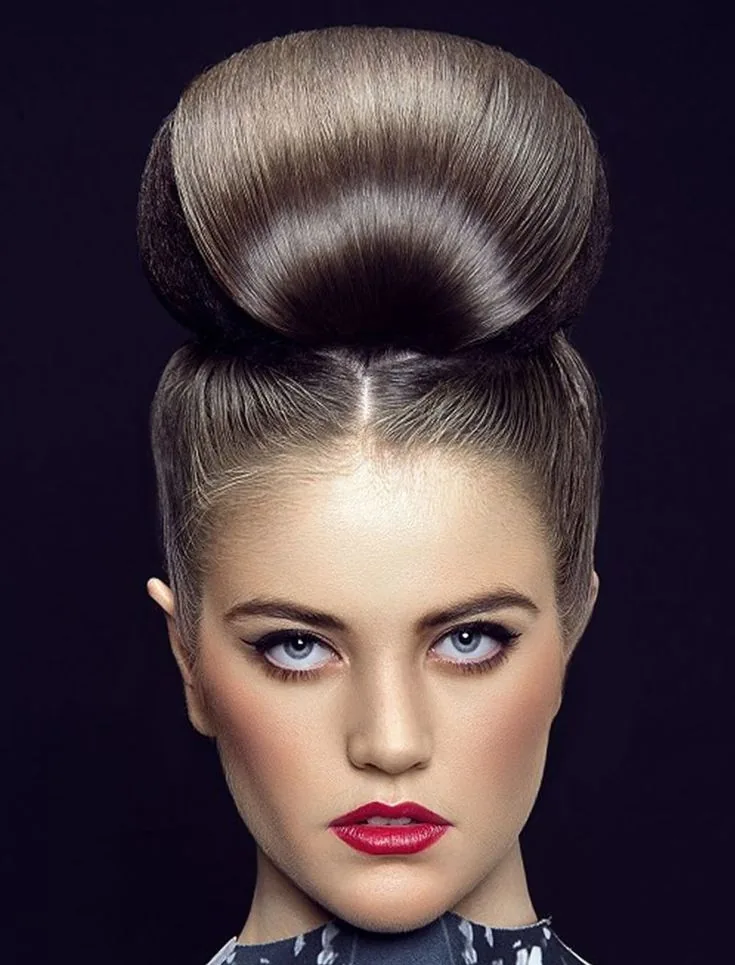
The faux hawk bun is the updo version of the style: the sides are slicked or braided flat, and the centre is gathered into a bun — or a series of small buns — running down the middle of the head. It is the most elegant faux hawk, because a bun is inherently polished, and the mohawk outline gives it an edge that a plain bun never has. It suits weddings, formal evenings and nights out, and it keeps the hair completely off the face and neck, which makes it practical as well as dramatic.
Best for: formal occasions and women with medium to long hair who want an updo with personality. How to style it: slick the sides back, gather the centre into a high bun, pin it securely, and tease the front slightly for height. Pros: it holds all evening, it photographs beautifully, and it needs no touch-ups. Cons: it takes fifteen to twenty minutes, and it needs a lot of pins. Maintenance is a firm pinning and a little hairspray. The quick verdict: the faux hawk bun is the updo with an edge — polished, sculpted and quietly rebellious.
36. The Glam Red-Carpet Faux Hawk
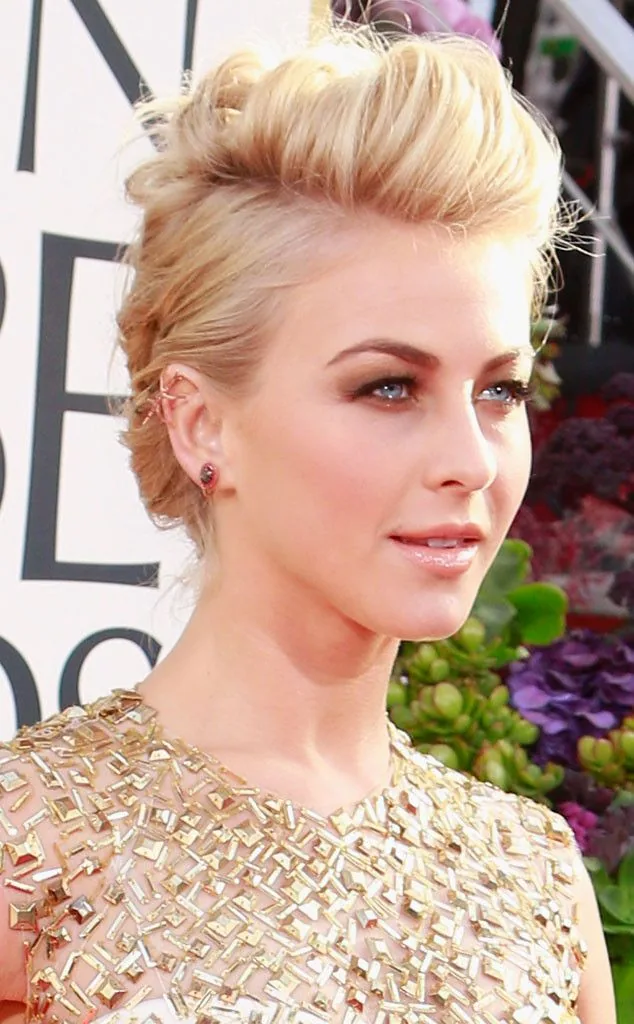
The glam red-carpet faux hawk is the style at its most luxurious: a tall, sculpted ridge, glossy and smooth, with soft curls at the ends, the sides slicked to a shine, and one show-stopping accent — a jewelled pin, a deep side part, or a sweep of old-Hollywood waves. It is the version celebrities wear to premieres and award shows, because it photographs like a sculpture and it makes the whole outfit look more dramatic. It is not an everyday style — it is a moment, built for cameras and bright lights.
Best for: red-carpet moments, photoshoots and the most special nights of the year. How to style it: book a stylist, because this is a salon-built style — a smooth, sculpted ridge, a glossy finish, and a trial run before the event. Pros: it is the most glamorous faux hawk there is, and it photographs beautifully. Cons: it takes an hour or more, it costs a salon styling service, and it needs a professional to hold its shape. Maintenance is a trial run and a stylist on call. The quick verdict: the glam faux hawk is not a hairstyle, it is an entrance — save it for the nights that deserve one.
37. The Frohawk — Natural Curls in a Faux Hawk
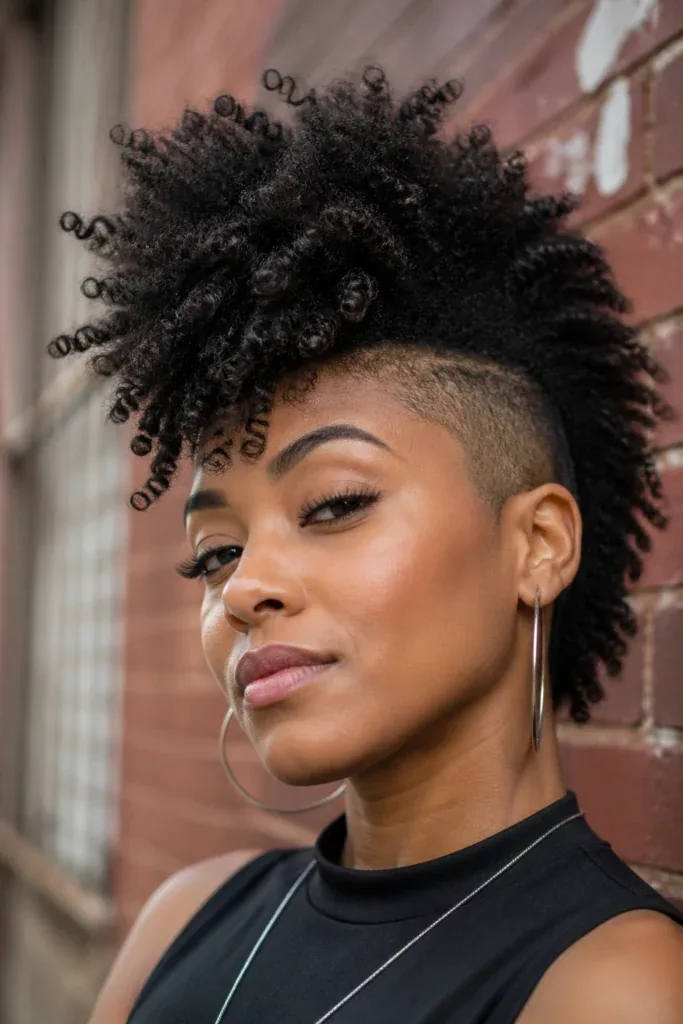
The frohawk is the faux hawk for natural, curly and coily hair: the sides are braided, twisted or pinned flat, and the curls in the centre are picked out and shaped into a high, glorious ridge. It is the most joyful version of the style, because the curls themselves make the height — no teasing, no heat, just the natural texture lifted and shaped. It suits every curl pattern, from loose curls to tight coils, and it looks extraordinary, because the ridge is made of hundreds of individual curls catching the light.
Best for: natural curly and coily hair, and women who want height without heat or heavy styling. How to style it: moisturise the curls, pick the centre out gently, pin or braid the sides flat, and shape the ridge with your fingers. What to ask your stylist: for a cut with a longer centre and shorter sides, so the ridge builds itself. Maintenance is a morning pick, a water spritz to refresh the curls, and a satin bonnet at night. Common mistake: picking the curls when they are wet, which stretches them and flattens the ridge — pick them dry. The quick verdict: the frohawk is the faux hawk in its most natural form — your curls, lifted, shaped and proud.
What is a faux hawk hairstyle?
A faux hawk is a mohawk-inspired hairstyle in which the centre strip of hair is lifted into a ridge of height, while the sides are smoothed, pinned, braided or faded flat — without shaving the sides. The silhouette is narrow at the sides and high in the middle, just like a mohawk, but the length stays intact, so you can wear it one day and wear your hair down the next.
How is a faux hawk different from a mohawk?
A mohawk is a cut: the sides are shaved or buzzed, leaving only the centre strip. A faux hawk is a style: the sides are pinned, slicked or braided flat, and the centre is teased, braided or pinned into height. A mohawk is permanent until it grows out; a faux hawk washes out the same night. The only versions that blur the line are the shaved-sides and undercut faux hawks, which do involve a cut.
Do I need to shave the sides for a faux hawk?
No, you do not need to shave the sides for a faux hawk — most versions are built with pins, braids or gel, and the sides stay long. Shaving is only for the shaved-sides and undercut versions, which are the boldest options. If you are trying a faux hawk for the first time, start with a pinned or braided version, which needs no cutting at all.
How long does a faux hawk take to style?
A soft or pixie faux hawk takes about five minutes, a classic teased updo takes ten to fifteen minutes, and a braided faux hawk takes ten to twenty minutes depending on your braiding speed. Long-hair and glam versions can take twenty to thirty minutes or more. With practice, most women halve their time within a couple of weeks.
Will a faux hawk suit a round face?
Yes, a faux hawk suits a round face very well — height on top lengthens the face, and flat sides slim the outline. Build the ridge as tall as you comfortably can, keep the sides slicked flat, and avoid adding volume at the cheeks. It is one of the most flattering styles for a round face, because the shape itself corrects the proportions.
How do I make my faux hawk last all day?
To make a faux hawk last all day, start with second-day hair or dry shampoo at the roots, tease in small sections, use crossed bobby pins, and finish with a flexible-hold hairspray. Braided faux hawks last longest, because a braid is structure rather than styling. Carry two spare pins for a midday check, and avoid touching the ridge once it is built.
Can I wear a faux hawk with short hair?
Yes, you can wear a faux hawk with short hair — the pixie faux hawk is one of the best versions, and it takes only five minutes with a little wax or pomade. Short hair needs almost no pins, because the centre is simply pushed upward and the sides are smoothed down. A bob faux hawk is another good short option, with the crown lifted and the sides pinned back.
How do I do a faux hawk without heat?
To do a faux hawk without heat, braid the centre into a French or Dutch braid, twist the sides flat, or pin the sides back and let the centre’s natural texture make the height. Curly and wavy hair needs no heat at all — just pin the sides and lift the curls. A little dry shampoo and texturising spray give grip without any hot tools.
Is a faux hawk professional enough for work?
Yes, a soft faux hawk is professional enough for work — a gentle ridge of volume with smooth sides reads as a polished, deliberate updo rather than a rebellious statement. Keep the height modest, skip bright colours and heavy accessories, and choose the soft or braided version. The shaved-sides and bold-colour versions are better saved for outside work.
How do I take a faux hawk down at the end of the day?
To take a faux hawk down, remove the pins one at a time, starting at the back, and brush the teased sections out gently from the ends upward — never yank a pin through teased hair. A little leave-in conditioner or oil on the ends helps the brush glide through. If you used a lot of product, wash your hair the next morning, and let it rest before styling it again.
Conclusion
The faux hawk is the rare hairstyle that asks for almost nothing and gives back so much: a little height, a few pins, and suddenly your hair has an attitude it did not have yesterday. It is the mohawk without the shave, the drama without the commitment, the edge you can wear to a festival on Saturday and soften for the office on Monday. Behind the height is a simple truth — the faux hawk is a shape, not a cut, and a shape can be built, changed and rebuilt as often as you like. Every style in this guide is a variation on that shape: braided or teased, curly or sleek, soft or bold, for work or for a wedding.
Start with the version that feels like you — the soft faux hawk, if you are not sure, or the French braid faux hawk, if you want one that lasts all day — and learn its tricks: second-day hair, small teased sections, crossed pins, and sides that are smooth before the ridge goes up. Wear it tall, wear it soft, wear it coloured, wear it curled. And when someone asks how you got your hair to look like that, tell them the truth: you did not cut anything off. You just lifted the middle, flattened the sides, and let your hair be a little bit brave. The faux hawk has always been the hairstyle for women who want to stand out without standing apart. Wear it that way.