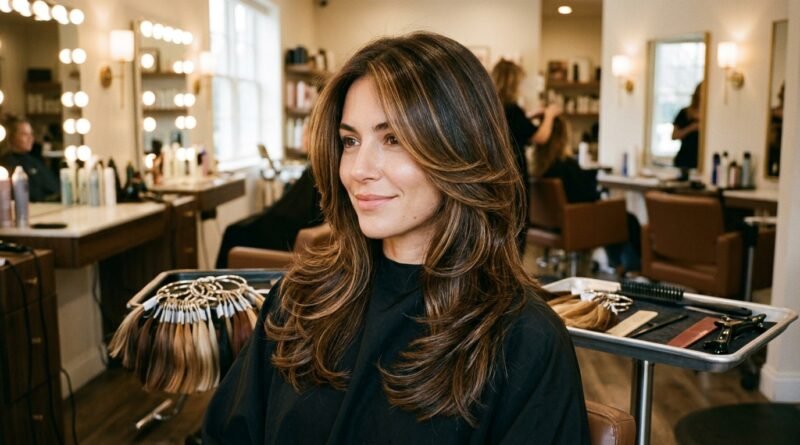
Feathered Face Framing Layers Moving Gracefully Around The High Cheekbones
I have a soft spot for haircuts that do the work for you. Feathered face framing layers are exactly that. They skim your cheekbones, lift your eyes, and make every turn of your head look a little more graceful. It is the kind of style you notice in a coffee shop and then screenshot for your stylist.
If you have high cheekbones, this cut can feel like it was made for you. The feathering softens hard angles, adds movement, and keeps the whole shape from feeling heavy. It also plays well with 2026 hairstyles, old money hair, and even romantic goth hairstyles.
I am sharing the exact tips I give friends: what to ask for, how to style it, and how to keep it looking expensive. No guesswork. Just a pretty, wearable cut that moves beautifully around your face.
What Feathered Face Framing Layers Really Are
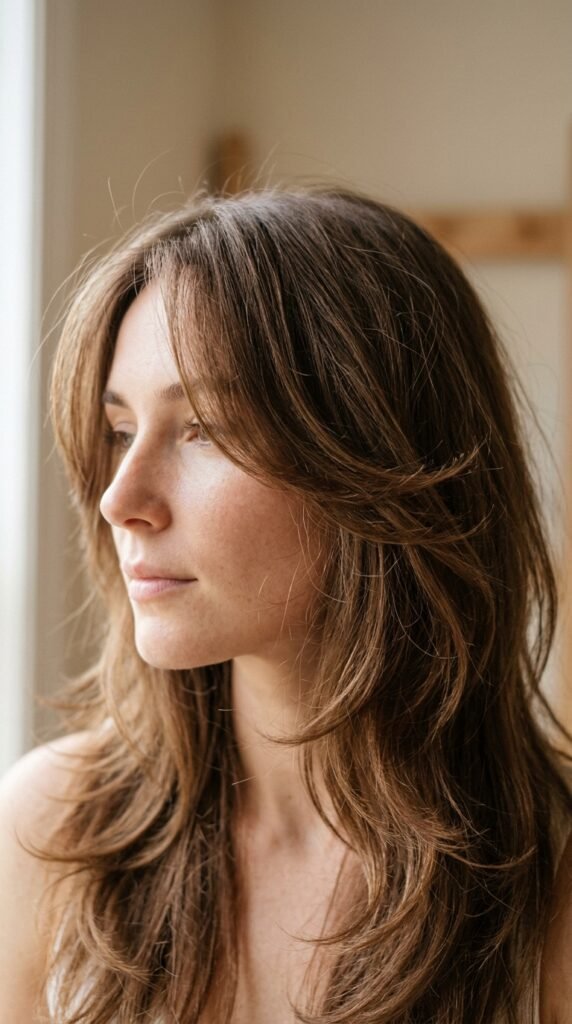
Feathered face framing layers are soft pieces cut around your cheekbones, jaw, and chin. They are not blunt. They are not heavy. They taper so the ends almost whisper around your face.
This cut uses texturizing to remove weight while keeping length. The goal is graceful movement, not a choppy shelf. It works on straight, wavy, and curly hair when done right.
Think of them as a gentle frame, not a separate layer. Quick facts:
- Start at cheekbone or just below
- Blend into the rest of your hair
- Use soft points, not hard lines
- Keep the shortest piece around your high cheekbone
Why High Cheekbones Love This Shape

High cheekbones are a gift. But blunt layers can hide them or make the face look wider. Feathering changes that because it follows the bone instead of fighting it.
The shortest pieces land near your cheekbone and draw the eye up. Longer feathered pieces then fall toward the jaw, creating a soft diagonal line. That diagonal is what makes the face look lifted.
This is why this cut feels so flattering in photos. If you have high cheekbones, ask for:
- Face framing that starts at the cheekbone
- Soft, tapered ends
- A little movement through the mid-lengths
- No heavy, one-length sides
The 2026 Hairstyles Energy Behind It
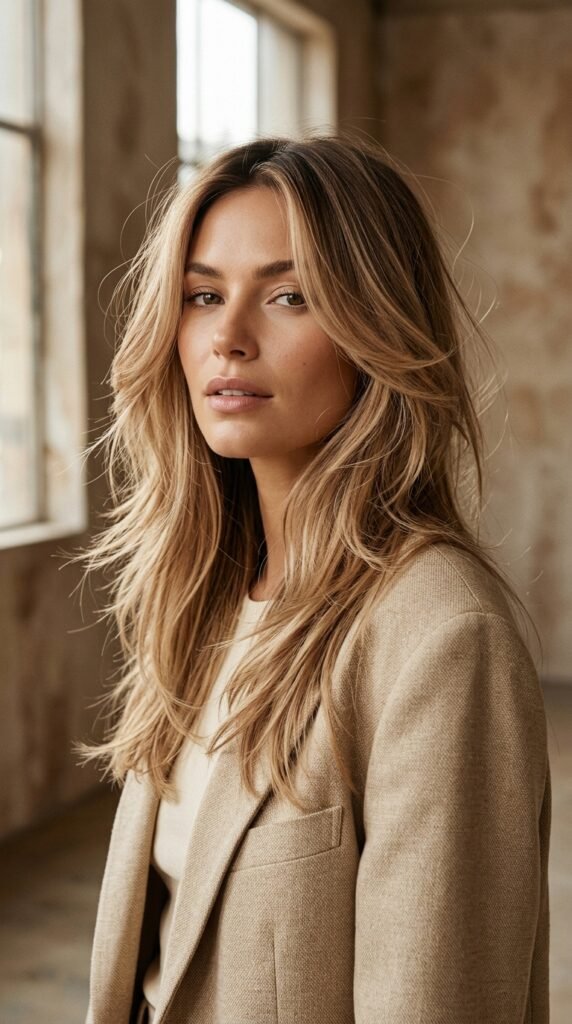
2026 hairstyles are all about quiet movement. Nothing stiff. Nothing overdone. Feathered face framing layers fit right in because they look natural but polished.
You will see this cut with old money hair, soft blowouts, and even glitchy glam hair. It is versatile enough for a clean girl morning and a romantic goth hairstyles night.
The best part? It grows out beautifully. Trend notes for 2026:
- Soft face framing over heavy curtain bangs
- Airy layers that move when you walk
- Polished roots with lived-in ends
- Quiet luxury bob energy, but longer
How To Ask Your Stylist For This Cut
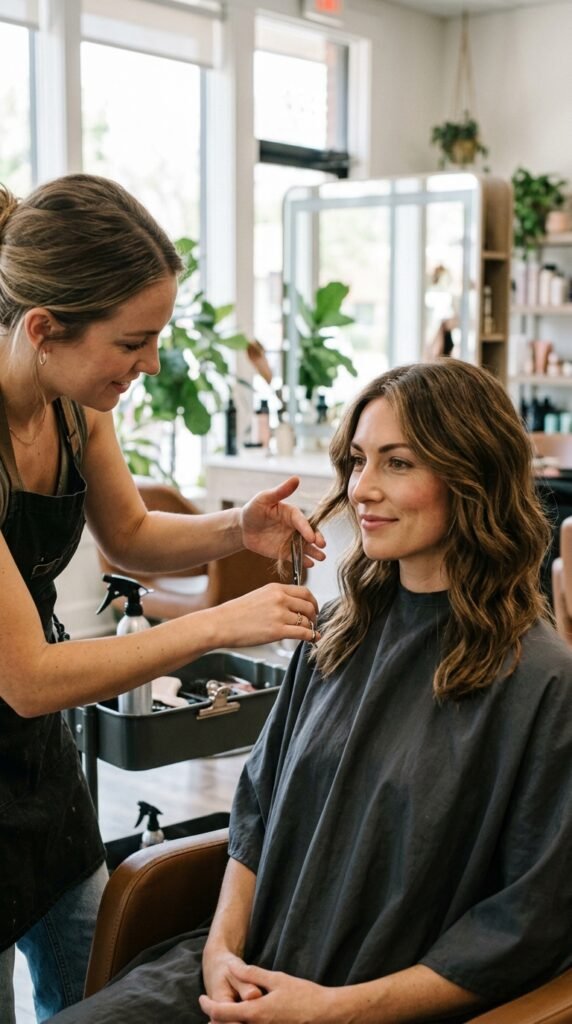
Bring photos, but also bring words. Stylists love clear language. Ask for feathered face framing layers that start at your high cheekbones and taper softly toward your chin or collarbone.
Then say what you do not want: no blunt shelf, no heavy side panels, no choppy short pieces. The more specific you are, the happier you will be.
A good stylist will repeat it back to you. Use this simple script:
- Show one inspiration photo and one no-go photo.
- Point to where you want the shortest layer to hit.
- Ask for soft point-cutting or slide-cutting.
- Request a dry cut if your hair is wavy or curly.
Best Hair Lengths For Feathered Face Framing Layers

This cut works at almost any length. The key is how the layers blend. Short hair gets more lift. Long hair gets more romance.
A quiet luxury bob can handle soft feathering around the cheekbones. An asymmetrical lob looks amazing with one side slightly shorter. Even long hair can wear this cut without losing thickness.
Ask your stylist to keep the ends full, not thin. Length guide:
- Chin length: soft and bold
- Shoulder length: easiest to style
- Collarbone length: very old money hair
- Long layers: dreamy and low-maintenance
That keeps the shape wearable for months.
How To Style It With A Quiet Luxury Bob
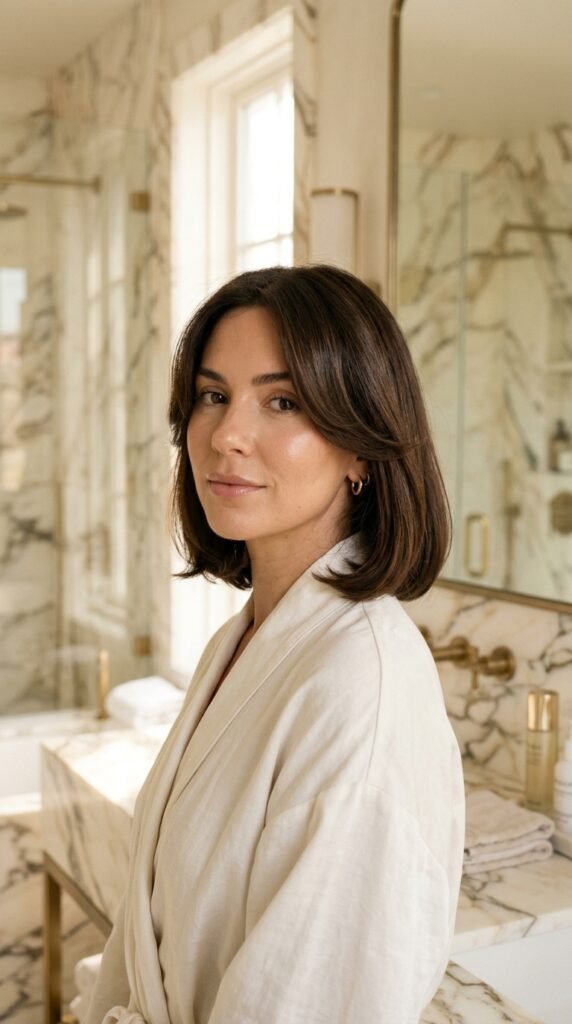
A quiet luxury bob is clean, smooth, and expensive-looking. Add feathered face framing layers, and it stops feeling too perfect. That tiny bit of movement is what makes it modern.
Style the bob with a center or slight side part. Blow-dry the face framing pieces away from your cheeks. Then use a small round brush to curve the ends under or slightly out.
Less is more with this look. Keep it polished:
- Use a heat protectant first.
- Keep roots smooth and lifted.
- Feather only the front pieces.
- Finish with a light shine spray.
Old Money Hair Meets Feathered Layers
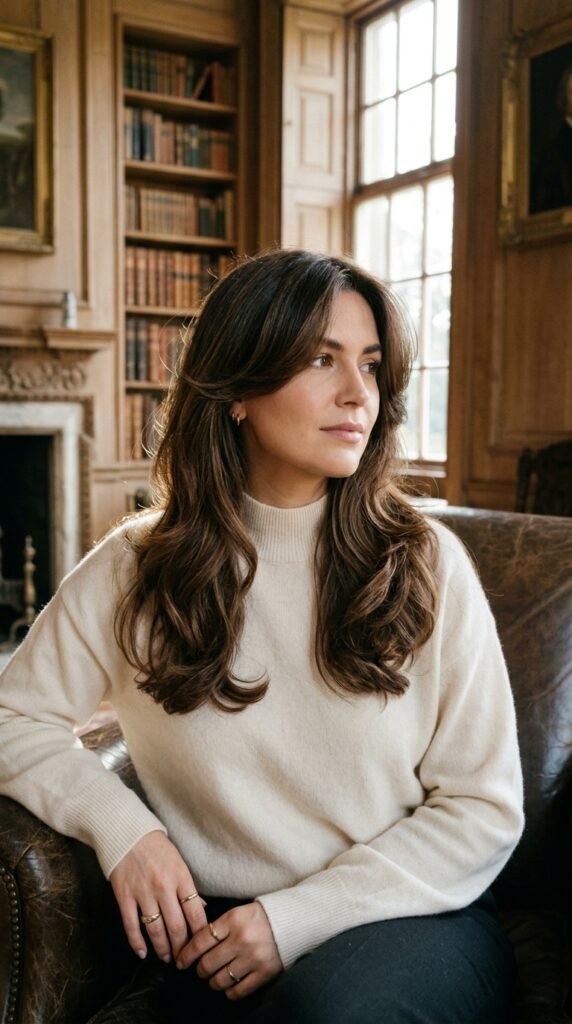
Old money hair is never trying too hard. It looks healthy, brushed, and effortless. Feathered face framing layers are a natural match because they add softness without looking trendy.
Think creamy blondes, rich brunettes, and soft chocolate tones. The cut should look like it grew that way. No harsh lines, no obvious steps.
Pair it with a glossy finish and a simple gold earring. It reads instantly expensive. To get the vibe:
- Keep your color glossy and low-contrast.
- Blow-dry with a round brush.
- Use a paddle brush for smooth ends.
- Skip heavy gel or crunchy spray.
Asymmetrical Lob With Soft Feathering
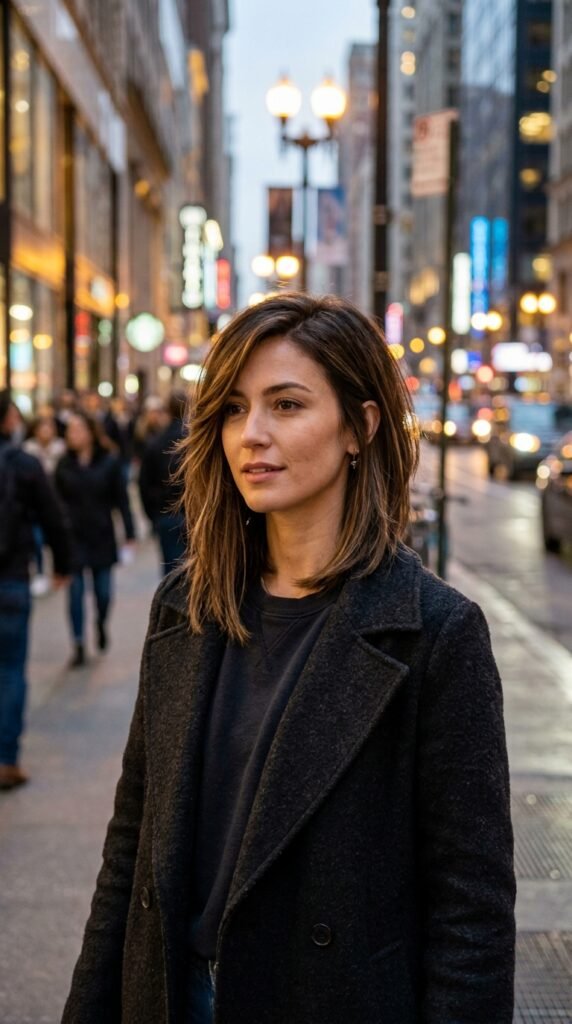
An asymmetrical lob is a little edgy, a little elegant. When you add feathered face framing layers, it becomes flattering on almost everyone. The uneven length keeps things interesting without looking messy.
Ask for one side to sit slightly longer than the other. The shorter side can skim your high cheekbone. The longer side can sweep toward your jaw.
It also gives fine hair more energy. Why it works:
- Great for fine hair that needs movement.
- Works with straight or wavy textures.
- Looks expensive with a glossy finish.
- Pair with a deep side part for drama.
Hime Cut Inspired Face Framing
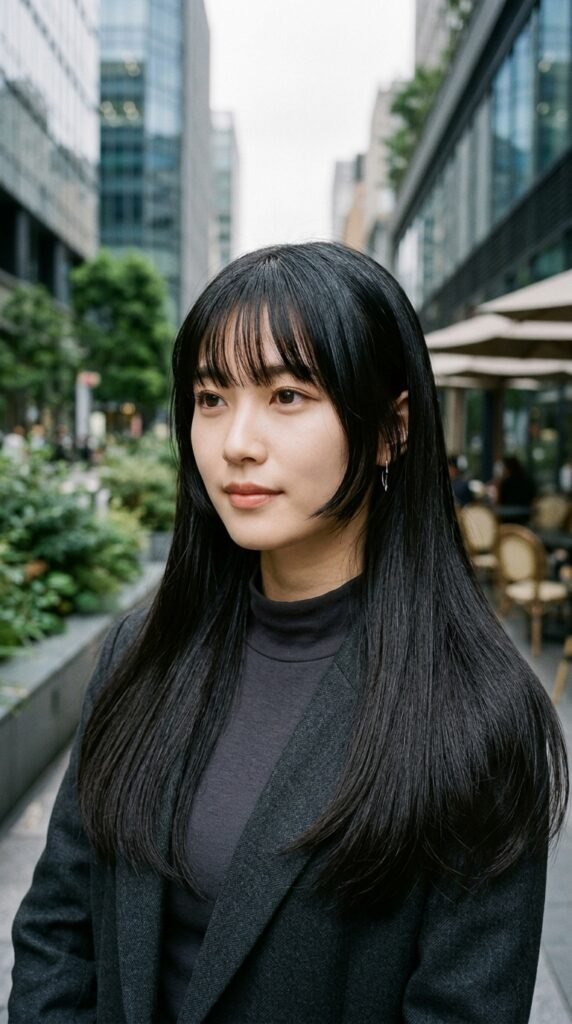
The hime cut is known for blunt side pieces and a longer back. You can soften that idea with feathered face framing layers if blunt edges feel too severe.
Keep the side pieces cheekbone-skimming but taper the ends. You still get the striking frame, just with more graceful movement. It is a beautiful bridge between bold and wearable.
Ask for softness at the very ends. The back can stay long and dramatic. Try this:
- Keep the back long and healthy.
- Feather only the side pieces.
- Use a flat iron for a smooth finish.
- Add a tiny bend at the ends.
Vampire Haircut With Feathered Movement
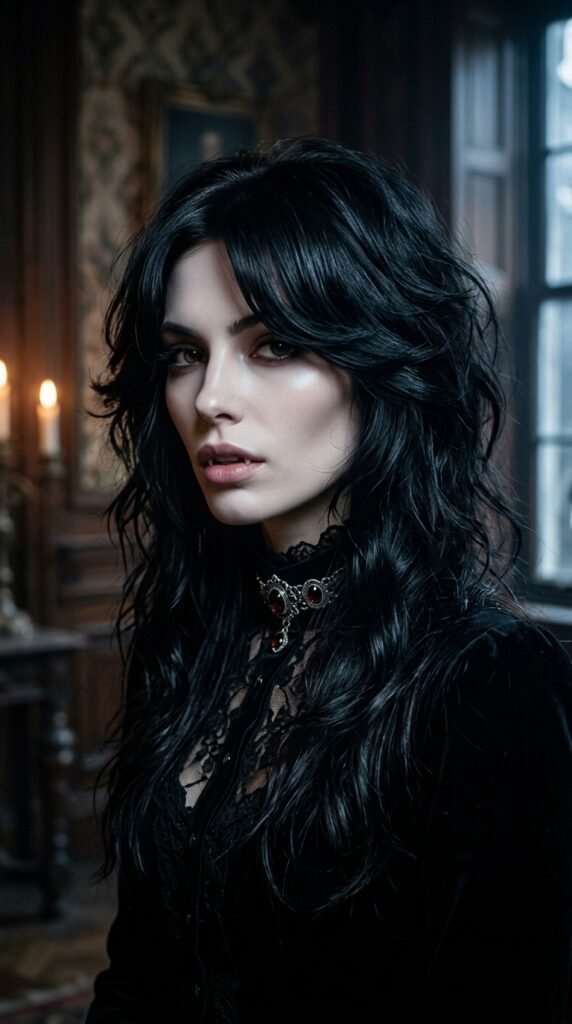
The vampire haircut is moody, layered, and a little dramatic. It often has strong face framing and lots of movement. Feathered layers make it softer and easier to wear every day.
Ask for longer face framing pieces that taper around the cheekbones. Keep the ends piecey but not thin. The goal is mysterious, not messy.
A deep side part adds instant drama. Keep the front smooth for contrast. That contrast is very vampire. Styling tips:
- Use a dark, glossy color.
- Blow-dry with a round brush for lift.
- Add texture at the ends only.
- Keep the sides smooth near the cheekbones.
Romantic Goth Hairstyles With Soft Layers

Romantic goth hairstyles are soft, dark, and dreamy. They love volume, texture, and face framing that feels poetic. Feathered layers around high cheekbones are perfect for this mood.
You can wear them with waves, braids, or a messy bun. The soft pieces in front keep the look romantic instead of harsh. It is a beautiful way to blend goth style with everyday hair.
A velvet ribbon or tiny clip makes it special. Try these touches:
- Use a deep plum or black cherry gloss.
- Add loose waves with a curling iron.
- Pin one side back with a small clip.
- Leave the feathered pieces out.
Glitchy Glam Hair And Face Framing Pieces

Glitchy glam hair is all about sleek shine and unexpected texture. It can be smooth on top and slightly messy at the ends. Feathered face framing layers add a pretty contrast to that futuristic vibe.
Keep the layers sharp near the cheekbones, then let them soften toward the chin. This mix of clean and soft is very 2026 hairstyles.
Use a fine-tooth comb for the roots. Then break up the ends with your fingers. How to style it:
- Use a glossy serum on the roots.
- Add a texturizing spray to the ends.
- Create a wet look in front.
- Let the edges stay soft.
Curtain Bangs vs Feathered Layers
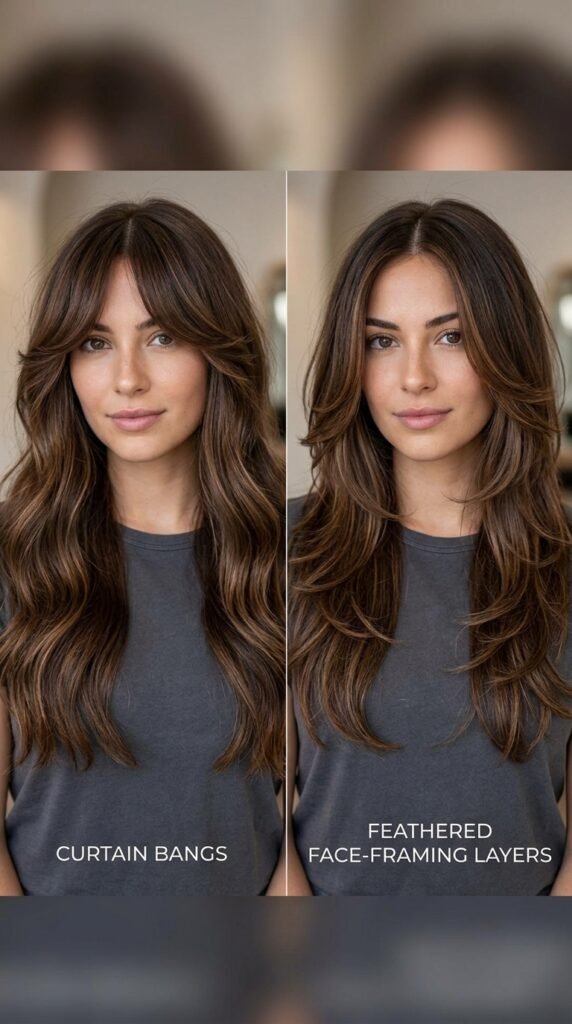
Curtain bangs are beautiful, but they are not the same as feathered face framing layers. Curtain bangs usually start at the center part and sweep outward. Feathered layers blend into the rest of your hair and taper more softly.
If you want a low-maintenance grow-out, choose feathered layers. If you want a stronger focal point, choose curtain bangs. You can also ask for both, as long as the stylist blends them.
The best choice depends on your morning routine. Quick compare:
- Curtain bangs: bold, face-first.
- Feathered layers: soft, blended.
- Both: romantic and full.
- Ask for a seamless connection.
How To Make Layers Move Gracefully, Not Choppy
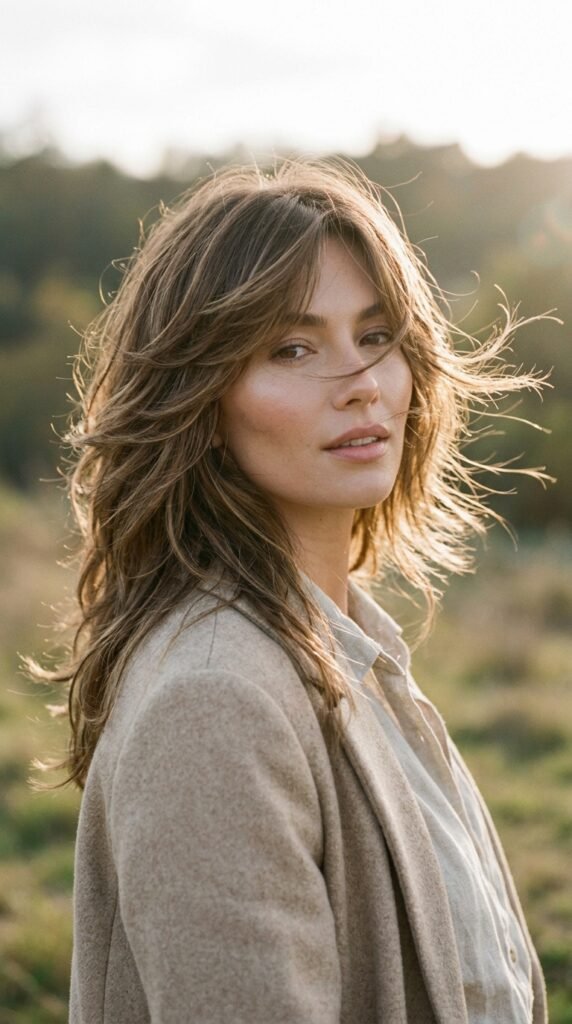
Graceful movement comes from the cut. If the layers are too thick or too short, they will look choppy. If they are point-cut and blended, they will flow.
Tell your stylist you want softness, not steps. Ask them to check the cut while your hair is dry. That is when you can see how the layers really fall around your high cheekbones.
Dry cutting is a game changer for wavy hair. Ask for this:
- Ask for point-cutting, not blunt cutting.
- Keep the shortest layer around the cheekbone.
- Blend the next layer down toward the jaw.
- Check the shape with natural movement.
Best Products For Soft Separation
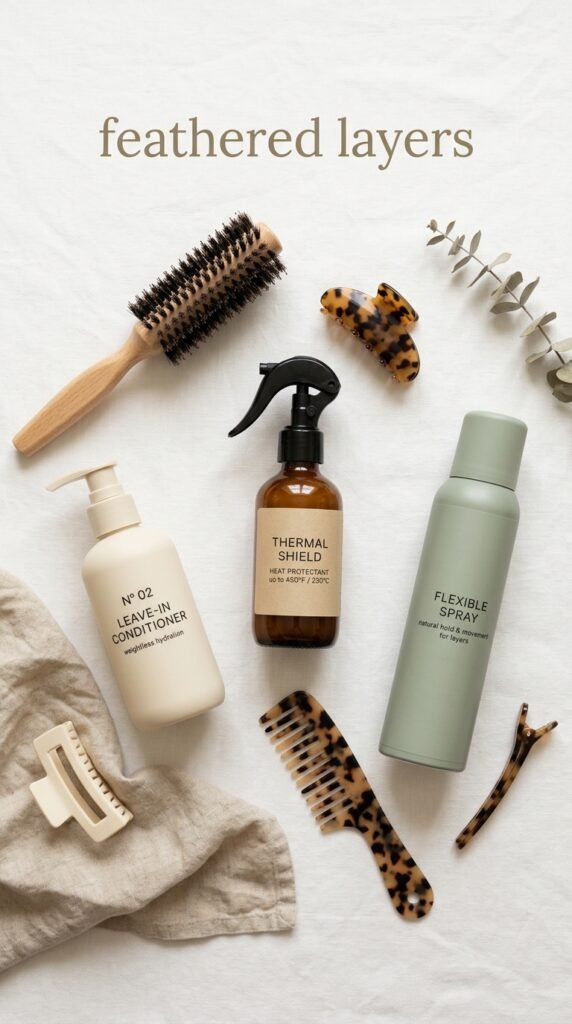
You do not need ten products. You need a few that add separation without crunch. Feathered layers look best when they are touchable.
Use a light leave-in conditioner, a heat protectant, and a flexible hold spray. For shine, a drop of lightweight oil on the ends is enough.
Apply everything from mid-lengths to ends. Keep roots clean and light. That keeps the shape bouncy. My short list:
- Leave-in conditioner for smoothness.
- Heat protectant before blow-drying.
- Sea salt spray for texture, used lightly.
- Flexible hairspray for hold.
- Shine oil only on the ends.
Blow-Dry Technique For High Cheekbones
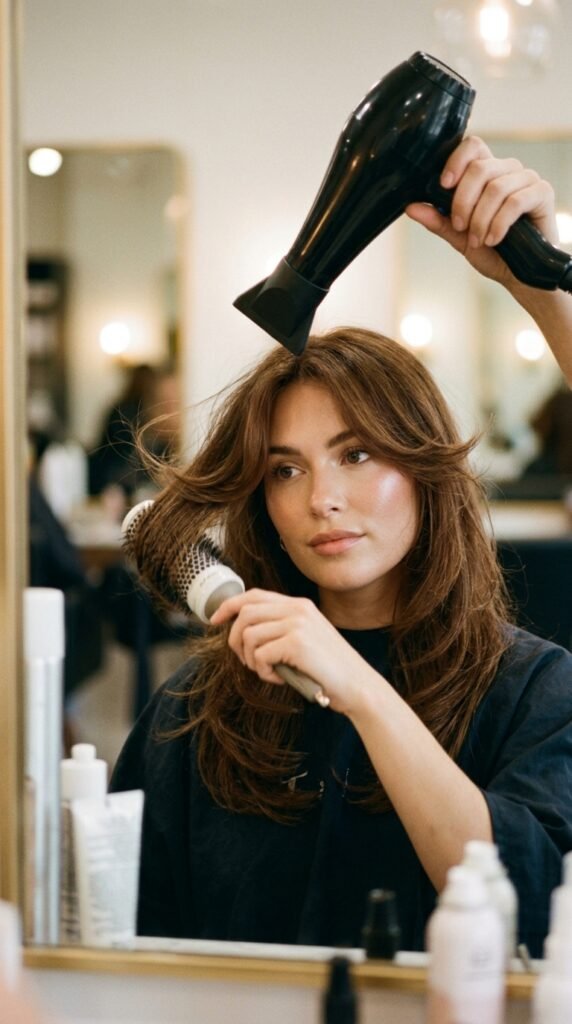
Blow-drying is where the magic happens. Start with damp hair and apply heat protectant. Use a round brush to lift the roots and smooth the face framing pieces away from your cheeks.
Point the nozzle down the hair shaft. When you reach the cheekbone area, roll the brush slightly outward. That creates a soft curve that highlights your bone structure.
Finish with cool air for shine. Step by step:
- Rough-dry until 70 percent dry.
- Section hair around the face.
- Blow-dry each piece away from the cheek.
- Finish with cool air to set the shape.
Heatless Overnight Methods

If you want movement without heat, try heatless methods. They are gentle and give you that effortless 2026 hairstyles look. Feathered layers respond beautifully to soft bends.
Use a silk headband, foam rollers, or a robe tie. Wrap small sections around the band and sleep. In the morning, take it down and shake gently.
Do not brush the curls out. Use your fingers to shape the front. A little oil tames any frizz. Tips for best results:
- Keep sections small around the face.
- Do not wrap too tightly.
- Use a silk pillowcase.
- Separate with fingers, not a brush.
How To Keep Layers Looking Expensive
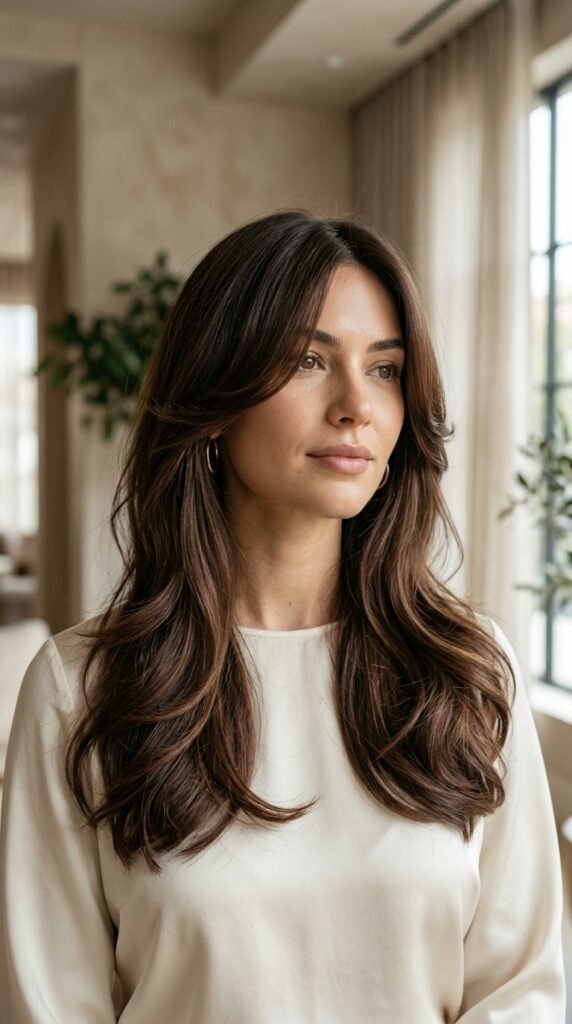
Expensive-looking hair is usually healthy hair. Feathered layers can look cheap if the ends are dry or the color is brassy. Keep your trims regular and your ends hydrated.
Use a weekly mask, sleep on silk, and avoid overly hot tools. A gloss every few weeks adds shine and makes the layers catch the light.
Healthy hair reflects light better. That is the real luxury. It also makes styling faster. So you save time and heat damage. Easy habits:
- Trim every 8 to 12 weeks.
- Use a weekly hydrating mask.
- Add a color gloss for shine.
- Keep heat tools on medium.
Face Shape Guide: High Cheekbones, Round, Oval
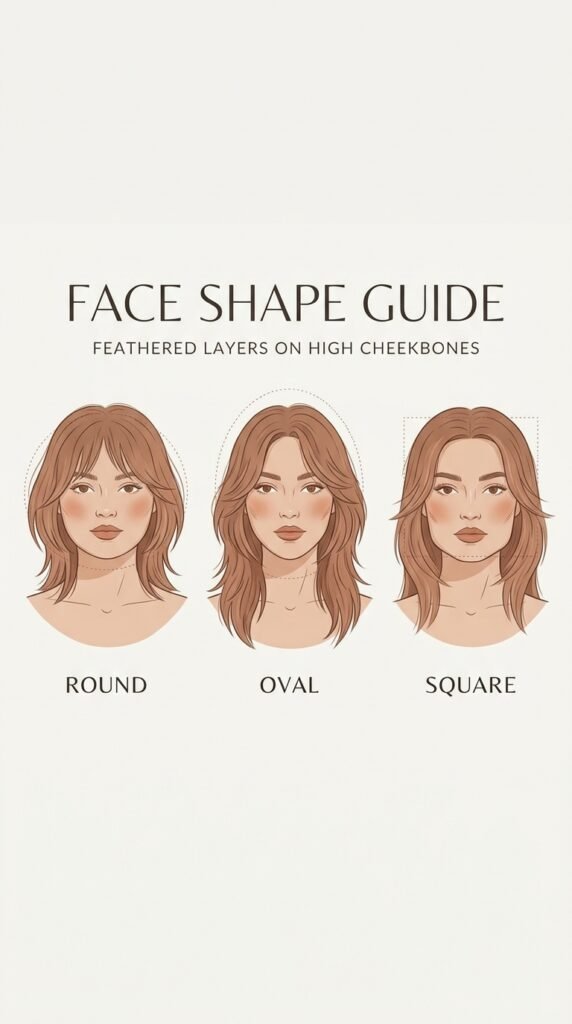
Feathered face framing layers are flattering, but placement matters. For high cheekbones, start the shortest layer right at the bone. For round faces, start slightly below the cheekbone to elongate.
For oval faces, you can start at the cheekbone or chin. For square jaws, keep the layers soft and avoid blunt edges near the jawline.
Heart shapes look best with chin-length softness. Long faces can handle cheekbone layers. When in doubt, go softer. Quick guide:
- High cheekbones: cheekbone start.
- Round: below cheekbone, longer pieces.
- Oval: almost anywhere.
- Square: soft, tapered ends.
Hair Color Ideas That Showcase The Layers
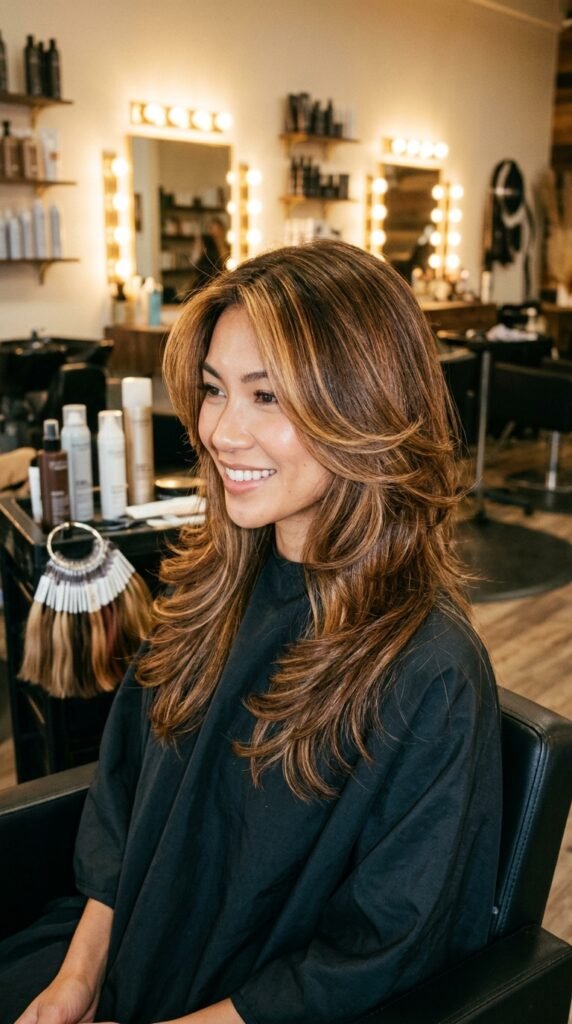
Color can make feathered layers pop. Soft highlights around the face catch the light and draw attention to your cheekbones. Low-contrast balayage keeps it old money hair.
If you want something moodier, try black cherry, espresso, or smoky mauve. These tones look gorgeous with romantic goth hairstyles and vampire haircut vibes.
A face-framing highlight should be subtle. You want glow, not stripes. Ask for a gloss on top. That adds mirror-like shine. Color ideas:
- Champagne blonde face frame.
- Soft caramel on brown hair.
- Black cherry for depth.
- Mushroom blonde for quiet luxury.
Maintenance And Salon Schedule
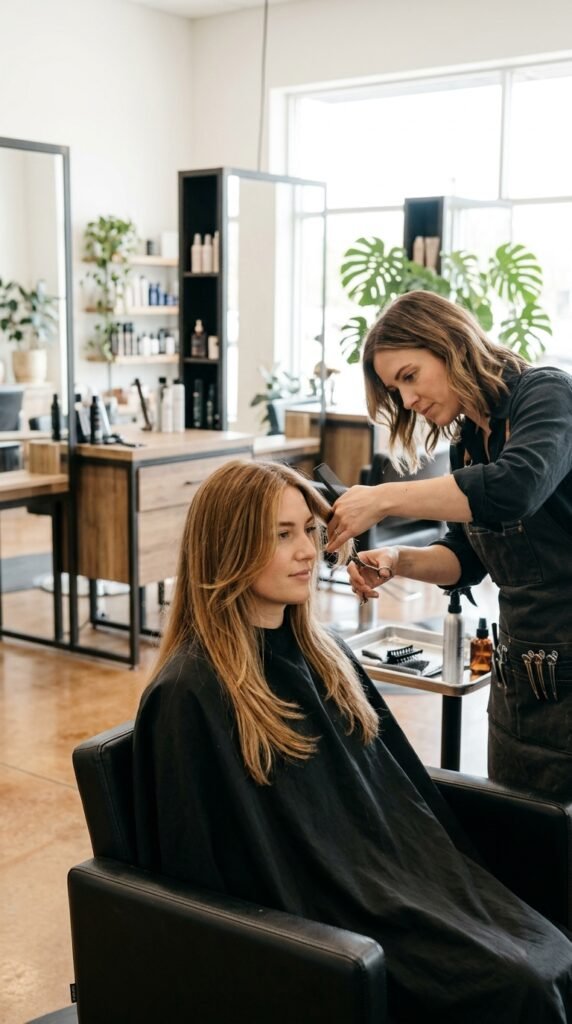
Feathered layers grow out pretty gracefully, but they still need maintenance. A trim every 8 to 12 weeks keeps the shape fresh. If you have fine hair, you may need a trim every 8 weeks.
Ask your stylist to dust the ends and re-blend the face framing pieces. You do not always need a full cut. A quick cleanup keeps the movement alive.
Book your next visit before you leave. Future you will thank you. Keep this schedule:
- Trim every 8 to 12 weeks.
- Re-blend face framing each visit.
- Refresh color gloss every 4 to 6 weeks.
- Take photos when you love it.
Common Mistakes To Avoid
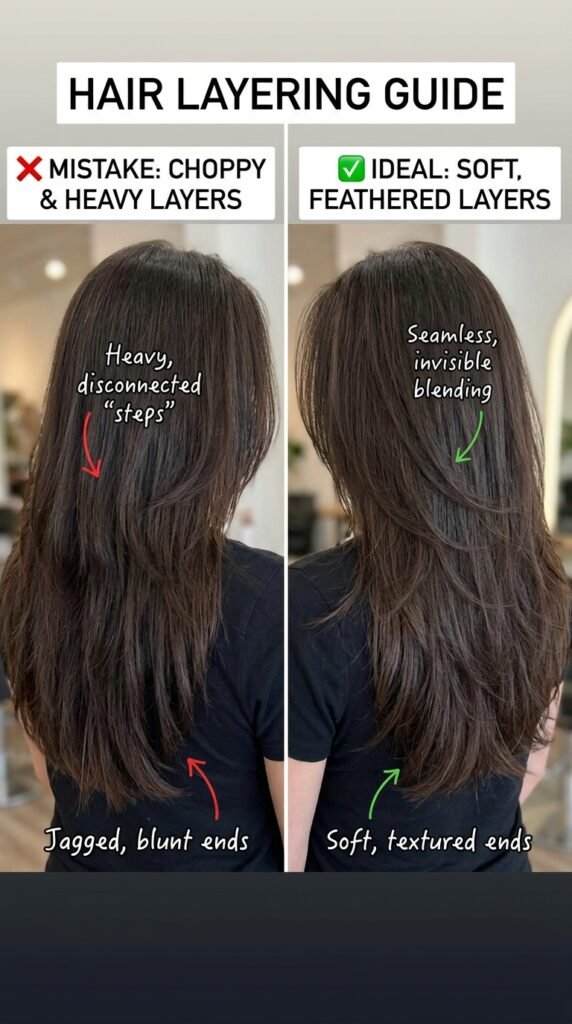
The biggest mistake is asking for too many short layers. That creates a shelf and kills the graceful movement. Another mistake is cutting the face framing too wide. It should be a soft frame, not thick curtains.
Also avoid heavy products. They weigh down the feathering and make it look greasy. Keep styling light and touchable.
Too much heat can also fry the ends. Use heat protection every single time. And do not skip trims. Avoid these:
- Too short: choppy.
- Too thick: heavy.
- Too much product: flat.
- Too blunt: harsh.
Quick 5-Minute Morning Routine
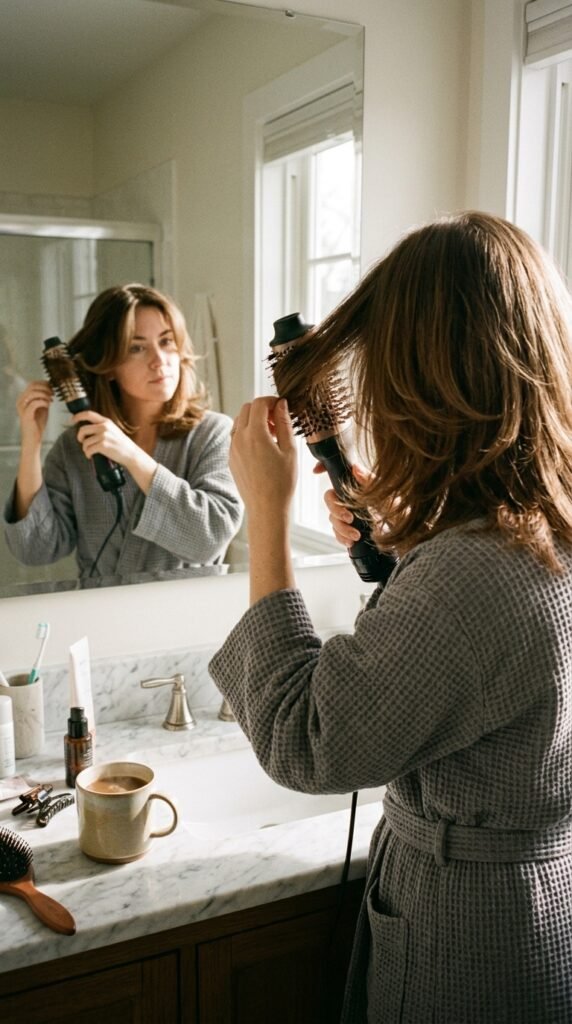
Mornings are busy, so keep it simple. Spritz your face framing pieces with water or a leave-in mist. Then use a round brush and blow-dry just the front for two minutes.
Add a little dry shampoo at the roots if needed. Finish with a light oil on the ends. That is it. You will look polished without a full styling session.
Focus on the pieces around your cheekbones. They set the whole vibe. Do this:
- Mist the face framing pieces.
- Blow-dry away from the face.
- Add dry shampoo at roots.
- Oil the ends lightly.
When To Get A Trim
Do not wait until your layers look stringy. Get a trim when the ends feel dry, when the shape feels heavy, or when your face framing pieces stop falling where you want them.
For most people, that is every 8 to 12 weeks. If you heat style often, go closer to 8 weeks. If your hair grows slowly, 12 weeks is fine.
A fresh trim makes styling easier. It also keeps layers looking intentional. Signs you need a trim:
- Dry ends: trim now.
- Heavy sides: re-blend.
- Lost shape: trim and style.
- Special event: book one week before.
Feathered face framing layers are one of those cuts that quietly change everything. They soften your features, highlight high cheekbones, and move with you instead of sitting stiff. Whether you love a quiet luxury bob, an asymmetrical lob, or romantic goth hairstyles, this shape can fit your world.
Take your favorite photo to your stylist. Be clear about softness, movement, and where you want the shortest layer to land. Then enjoy the way your hair catches the light every time you turn your head.
Save this post to Pinterest so you can find it before your next salon visit. And tell me in the comments: would you try feathered face framing layers with your high cheekbones?