Hair Growth Vitamins: Which Ones Actually Help?
You stare into the mirror, noticing the part in your hair looks a little wider than it used to. You find more strands than you’d like in your brush, the shower drain, and, mysteriously, on your keyboard. The quest for thicker, longer, healthier hair is a journey millions of us are on, and the supplement aisle is often our first stop. It’s a world brimming with promises, from “rapid growth” elixirs to “miracle” formulas.
But amidst the marketing hype, a crucial question remains: which hair growth vitamins actually work?
The truth is, while no pill can instantly transform you into a shampoo commercial star, certain vitamins and minerals play fundamental roles in the hair growth cycle. A deficiency in these key nutrients can absolutely lead to hair loss, thinning, and lackluster strands. This comprehensive guide will cut through the noise, exploring the science behind the most talked-about hair growth vitamins and helping you understand which ones are worth your investment.

Understanding the Hair Growth Cycle: The Foundation
Before we dive into specific vitamins, it’s essential to understand how hair grows. Your hair follicles are incredibly dynamic organs that cycle through three distinct phases:
Anagen (Growth Phase): This is the active growth period, lasting anywhere from 2 to 7 years. The length of your anagen phase largely determines your maximum hair length. During this time, cells in the root of the hair are dividing rapidly, adding to the hair shaft.
Catagen (Transition Phase): A short transitional stage that lasts about 2-3 weeks. Hair growth slows, and the hair follicle shrinks and detaches from the blood supply.
Telogen (Resting Phase): This is the final phase, lasting around 3 months. The hair doesn’t grow but remains in the follicle. At the end of this phase, the hair sheds, and a new hair begins to grow, restarting the anagen phase.
At any given time, about 85-90% of your hair is in the anagen phase, while the remainder is in the telogen phase, which is why it’s normal to shed 50-100 hairs a day. Hair loss or thinning occurs when this cycle is disrupted—when the anagen phase shortens, or when a higher percentage of hairs enter the telogen phase prematurely. Vitamins and minerals support this entire process by providing the building blocks and enzymatic co-factors necessary for healthy cell division and follicle function.
The Power Players: Vitamins That Fuel Hair Growth
Let’s get into the specifics. These are the vitamins that have the most substantial scientific backing for their role in hair health.
Biotin (Vitamin B7)
Biotin is arguably the most famous vitamin associated with hair growth, and for good reason. It’s a water-soluble B-vitamin that acts as a critical cofactor for enzymes involved in the synthesis of fatty acids, amino acids, and glucose. Since hair is primarily made of a protein called keratin, adequate biotin is essential for its production.
The Evidence: Biotin’s reputation is strongest in cases of deficiency. A biotin deficiency can unambiguously cause hair loss, and supplementation in these individuals leads to remarkable recovery. For individuals with normal biotin levels, the evidence for dramatic hair growth is less conclusive, but it is still considered a vital nutrient for maintaining healthy hair, skin, and nails. It helps strengthen the hair shaft, potentially reducing breakage.
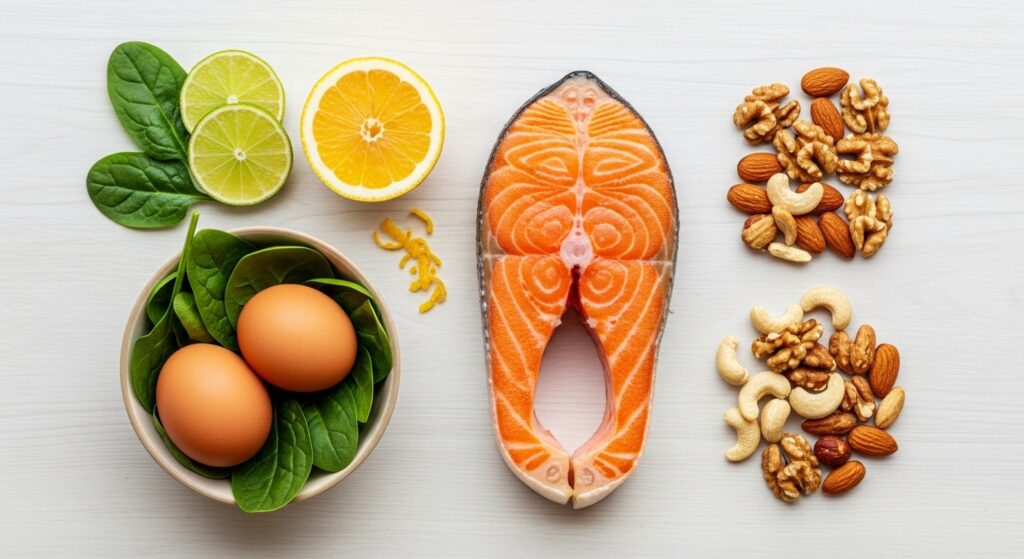
Food Sources: Eggs (especially the yolk), almonds, cauliflower, mushrooms, sweet potatoes, and spinach.
Vitamin D
Often called the “sunshine vitamin,” Vitamin D’s role extends far beyond bone health. Research has uncovered a fascinating link between Vitamin D and hair follicle cycling. Hair follicles have receptors for Vitamin D, and it is believed to play a role in initiating the anagen (growth) phase.
The Evidence: Studies have shown that people with hair loss conditions, such as alopecia areata and female pattern hair loss, often have low levels of Vitamin D. While more research is needed to establish if supplementation can reverse hair loss in non-deficient individuals, maintaining adequate levels is considered crucial for overall follicle health and function.
Food Sources: Fatty fish (salmon, mackerel), fortified dairy and plant milks, and egg yolks. Sun exposure is also a primary source.
Iron
While not a vitamin, iron is a mineral so crucial that it cannot be overlooked. Iron helps red blood cells carry oxygen to your body’s cells, including your hair follicles. Without sufficient oxygen, these follicles can become “starved,” leading to disrupted growth and shedding.
The Evidence: Iron deficiency (with or without anemia) is a well-known cause of telogen effluvium, a condition where more hairs than normal enter the shedding phase. This is particularly common in women, especially those with heavy menstrual cycles. Correcting an iron deficiency can significantly reduce hair shedding and help restore normal growth. Important: Always get your iron levels checked by a doctor before supplementing, as too much iron can be dangerous.
Food Sources: Red meat, spinach, lentils, beans, and fortified cereals.
The Supporting Cast: Other Crucial Nutrients
Beyond the headline-grabbers, several other nutrients play vital supporting roles in the complex process of hair growth.
Vitamin C
This antioxidant powerhouse does two important jobs for your hair. First, it is essential for the production of collagen, a structural protein that makes up the connective tissue that surrounds and anchors hair follicles. Second, it dramatically enhances the absorption of non-heme (plant-based) iron, making it a perfect partner for iron in your hair health regimen.
Zinc
Zinc is involved in DNA and RNA transcription, which is vital for the rapid cell division that happens in the hair follicle during the anagen phase. It also plays a role in the repair and maintenance of oil glands around the follicles. Both zinc deficiency and excess have been linked to hair loss, so balance is key.
Vitamin A
Vitamin A is necessary for cell growth, including hair, which is the fastest-growing tissue in the human body. It also helps skin glands produce sebum, an oily substance that moisturizes the scalp and keeps hair healthy. However, too much preformed Vitamin A (retinol) can actually trigger hair loss, so it’s best to focus on getting it from your diet rather than high-dose supplements.
Other B Vitamins
The B-vitamin family is a team. Beyond Biotin (B7), other members contribute significantly:
Vitamin B12 and Folate (B9) are crucial for red blood cell formation and DNA synthesis, directly impacting the health of rapidly dividing follicle cells. A deficiency in either can lead to hair loss.
Niacin (B3) helps improve blood circulation to the scalp, potentially delivering more nutrients to the follicles.
The Big Question: Should You Take a Hair Growth Supplement?
Walking down the supplement aisle can be overwhelming. The answer isn’t a simple yes or no; it depends entirely on your individual circumstances.
Consider a supplement if:
You have a diagnosed nutritional deficiency (e.g., low iron, ferritin, or Vitamin D).
You have dietary restrictions that make it hard to get enough of these key nutrients (e.g., a vegan or vegetarian diet, which can be low in B12, iron, and biotin).
You are experiencing significant hair shedding and your doctor has ruled out underlying medical conditions.
A word of caution: More is not always better. Megadoses of certain vitamins and minerals can be toxic and may even cause hair loss. Always look for a supplement that provides around 100% of the Daily Value (DV) for most ingredients, unless a specific deficiency requires a therapeutic dose under medical supervision.

Beyond the Pill: A Holistic Approach to Hair Health
Vitamins are powerful tools, but they are just one piece of the puzzle. For truly healthy hair, you must address the bigger picture.
Nourish from the Inside: The foundation of healthy hair is a balanced, nutrient-dense diet. Focus on lean proteins, healthy fats, and a rainbow of fruits and vegetables. Your hair is a reflection of your overall nutritional status.
Manage Stress: Chronic stress is a major trigger for telogen effluvium (shedding). Practices like meditation, yoga, and regular exercise can help keep your stress hormones in check and your hair on your head.
Handle with Care: Be gentle with your hair. Avoid excessive heat styling, harsh chemical treatments, and tight hairstyles that pull on the follicles. Use a gentle shampoo and a good conditioner.
Prioritize Sleep and Hydration: Your body repairs itself during sleep, and this includes your hair follicles. Staying hydrated ensures that nutrients are transported efficiently to your cells.
The Final Verdict
So, which hair growth vitamins actually help? The answer is not a single magic bullet, but a synergistic combination. Biotin, Vitamin D, and Iron are the top-tier nutrients with the clearest links to hair growth, particularly if you are deficient. Vitamin C, Zinc, and the B-vitamin family provide essential support for the biological machinery behind strong, healthy hair.
The most effective approach is a targeted one. Before investing in a cabinet full of supplements, consider speaking with a healthcare provider or a dermatologist. A simple blood test can identify any specific deficiencies you may have, allowing you to supplement strategically and effectively.