35 Best Haircuts for Thick Wavy Hair That Remove Weight Without Losing Volume
The best haircuts for thick wavy hair use long, internal layers to remove weight from inside the hair, while keeping the ends strong. A layered lob, a soft shag, or long layers with face-framing pieces all work, because they let the wave pattern spring up instead of being dragged down by bulk. The key is hidden weight removal, not thinning the surface.
In this guide, you will find 35 haircuts for thick wavy hair, from long layers and shags to lobs, bobs and low-maintenance cuts. Each style explains why it works for thick waves, who it suits best, how to style it at home, and exactly what to ask your stylist, so you can take the idea straight to the salon.
Key Takeaways
- Remove weight inside, not on the surface: Internal, invisible layers are the fix for thick wavy hair. Surface razor-thinning usually makes frizz worse.
- Keep the ends strong: A strong perimeter stops the hair from looking thin or wispy at the bottom.
- Layers should be long: Chin-length or longer layers open the wave pattern without creating a puffy top.
- The triangle is a shape problem: Flat on top and wide at the bottom means you need interior bulk removed at the ends, not more volume on top.
- Dry cutting helps: If wet cuts never dry as expected, ask for a dry cut so the stylist sees your real wave pattern.
How Thick Wavy Hair Behaves
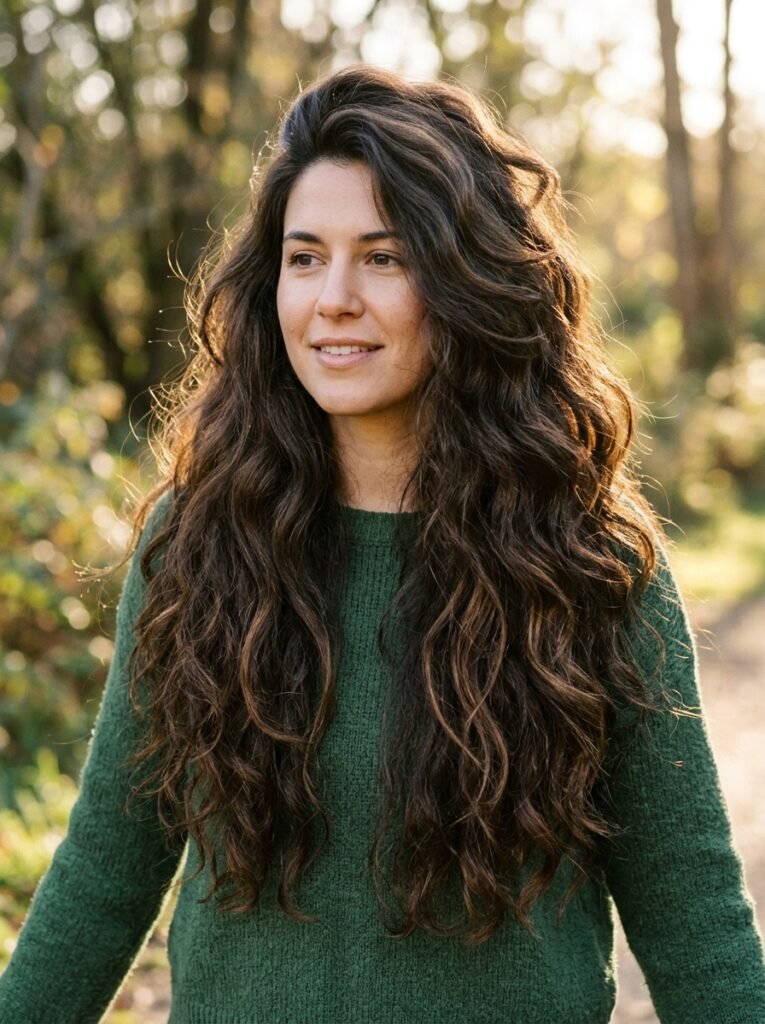
Thick wavy hair is dense, which means there are a lot of hairs, and each wave has its own bend. That density is a gift, because it gives natural body, but it also creates three common problems. First, weight: long, dense hair pulls the wave flat on top and makes drying slow. Second, the triangle: when the ends are heavier than the top, the hair dries flat at the roots and wide at the bottom, like a bell. Third, frizz: when the surface is thinned or cut too short, the outer hairs puff up instead of sitting in smooth waves.
Understanding that pattern explains why the right cut matters more than the right product. A product can smooth frizz for a day, but only a cut that removes hidden weight and keeps the perimeter strong will stop the triangle and let the waves form properly every wash.
The Golden Rule for Thick Wavy Hair
Remove weight from inside, keep the outside smooth, and keep the ends strong. Your stylist should take bulk out in hidden layers underneath, not by carving the top layer with a razor. The top layer stays smooth so frizz stays down, the interior layers let the waves spring, and the strong ends keep the cut looking thick and healthy.
Two things to avoid follow from that rule. Avoid true one-length cuts with no interior work, because they keep all the weight and the triangle with it. And avoid short stacked layers or heavy surface thinning on very dense hair, because they add puff at the top or frizz at the surface. Long layers, interior layers and a strong perimeter are the combination that works again and again for thick wavy hair.
Quick Picks by Length and by Goal
- Short: Layered bob for thick wavy hair, French bob for relaxed waves, textured pixie-bob.
- Medium: Textured lob with interior layers, blunt lob with choppy interior layers, shoulder-length shag, collarbone cut with long layers.
- Long: Long layers with internal weight removal, U-shaped long cut, V-shaped long layers, long shag with curtain bangs.
- Less bulk: Long layers with internal weight removal, wavy shag, modern wolf cut.
- Less frizz: Dry-cut wavy layers, defined waves with diffuser-friendly layers, long layers with face-framing layers.
- Low maintenance: Low-maintenance long layers (air-dry cut), collarbone cut with long layers, messy bun-friendly layered cut.
- More definition: Defined waves with diffuser-friendly layers, dry-cut wavy layers, beach waves cut.
- Faster drying: Textured lob, layered bob, shoulder-length shag.
1. Long Layers with Internal Weight Removal
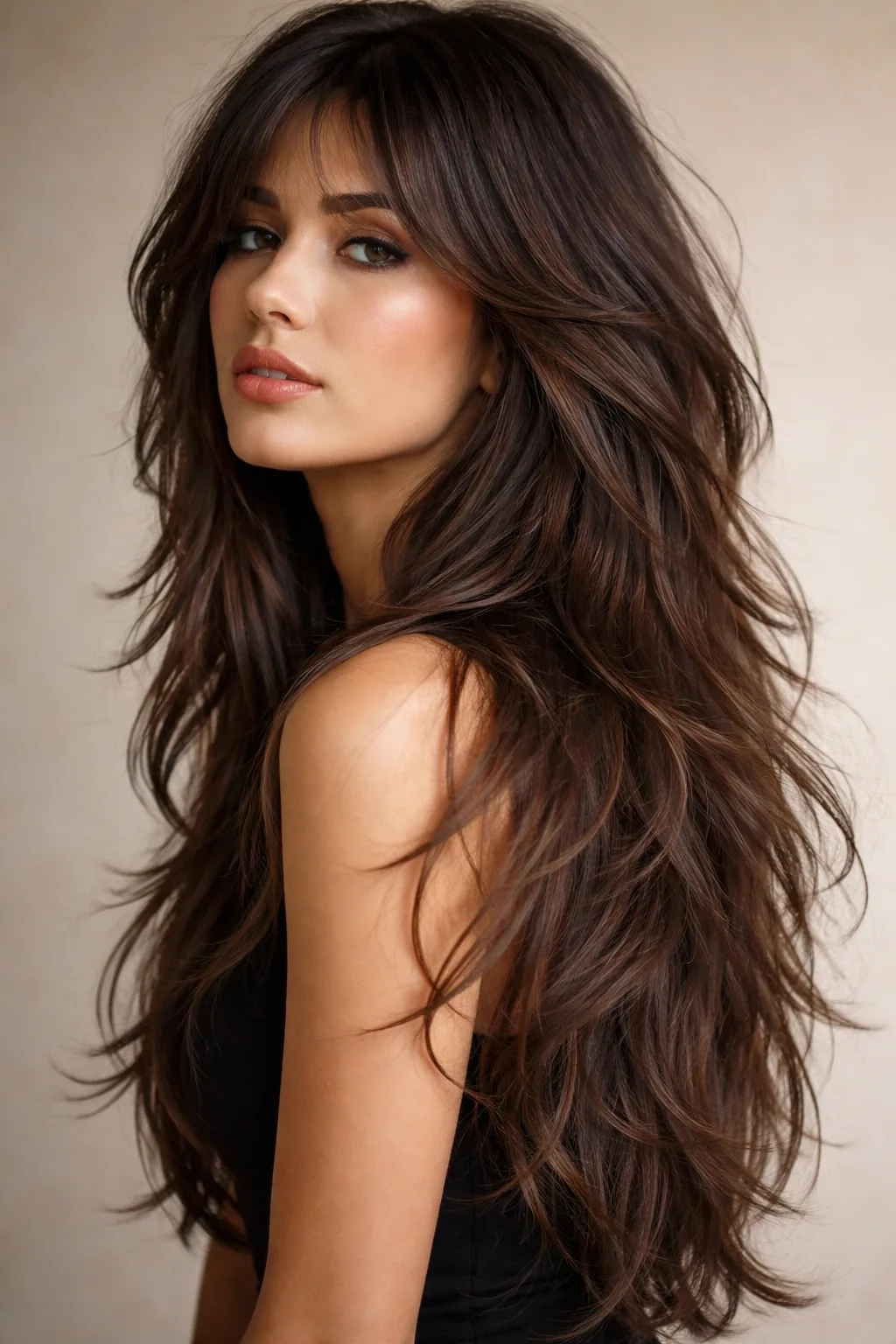
This is the single most useful cut for thick wavy hair. Instead of thinning the surface, your stylist removes weight from inside the hair, in hidden, invisible layers. The outside stays smooth and the ends stay strong, but the bulk underneath disappears. That lets the wave pattern spring up instead of being dragged down by weight, and it stops the hair from drying into a heavy, flat sheet.
Best for: Thick, dense, medium to long wavy hair. Best if your hair feels heavy, takes forever to dry, or flattens on top and puffs at the ends.
How to style: 1. Apply leave-in cream to damp hair. 2. Scrunch upward to encourage the wave. 3. Diffuse on low heat or air-dry. 4. Break the cast gently with a drop of oil once dry.
What to ask your stylist: Ask for long layers with internal, invisible weight removal, not surface thinning. Say: keep the perimeter strong and the ends full.
2. Long Layers with Face-Framing Layers
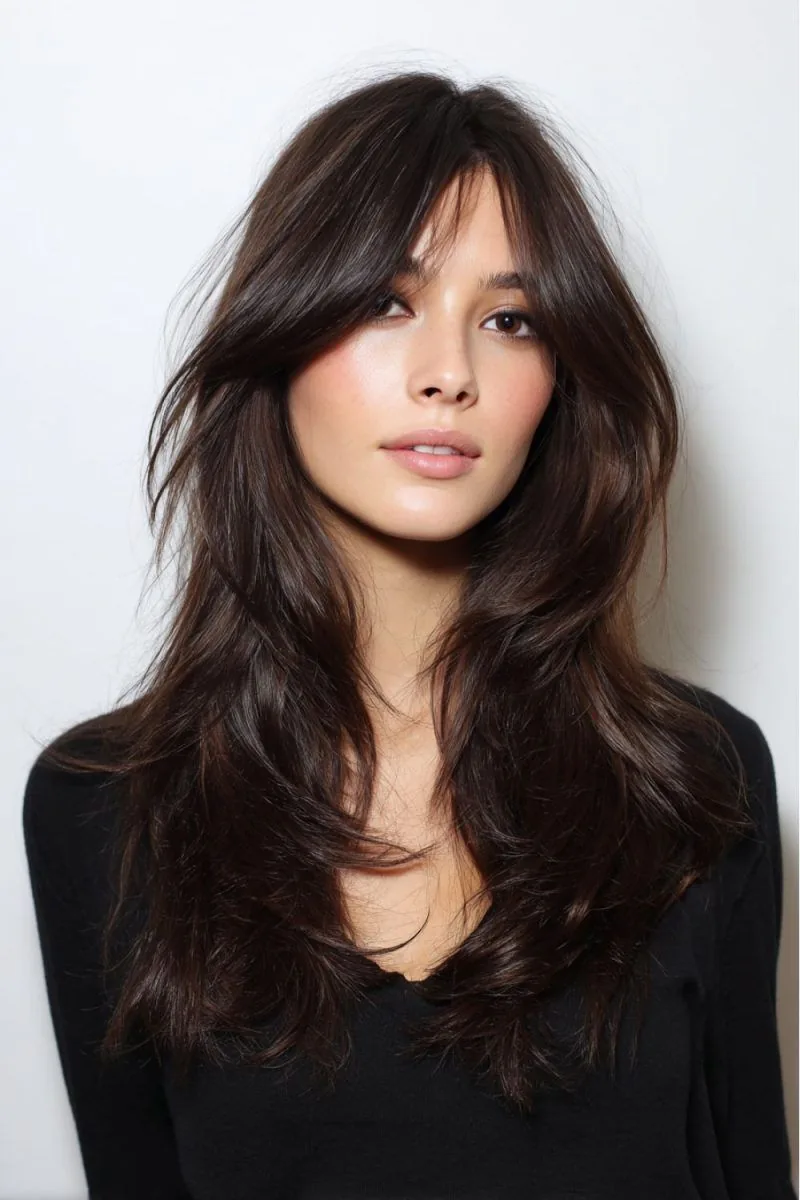
Face-framing layers open up the front of the cut, so thick wavy hair does not hide your face or fall forward in one heavy curtain. The shortest pieces start around the chin or collarbone and blend into long layers at the back. The result is lighter around the face, with waves that move freely, while the length at the back keeps the cut looking full and healthy.
Best for: Long, thick wavy hair. Great if your front sections feel heavy or your waves disappear near your face.
How to style: 1. Apply curl cream to damp hair. 2. Twist the face-framing pieces away from the face while drying. 3. Diffuse or air-dry. 4. Shake the front pieces out for soft movement.
What to ask your stylist: Ask for face-framing layers starting at the chin, blending into long layers. Keep the front pieces long enough to tuck behind the ears.
3. Wavy Shag Cut
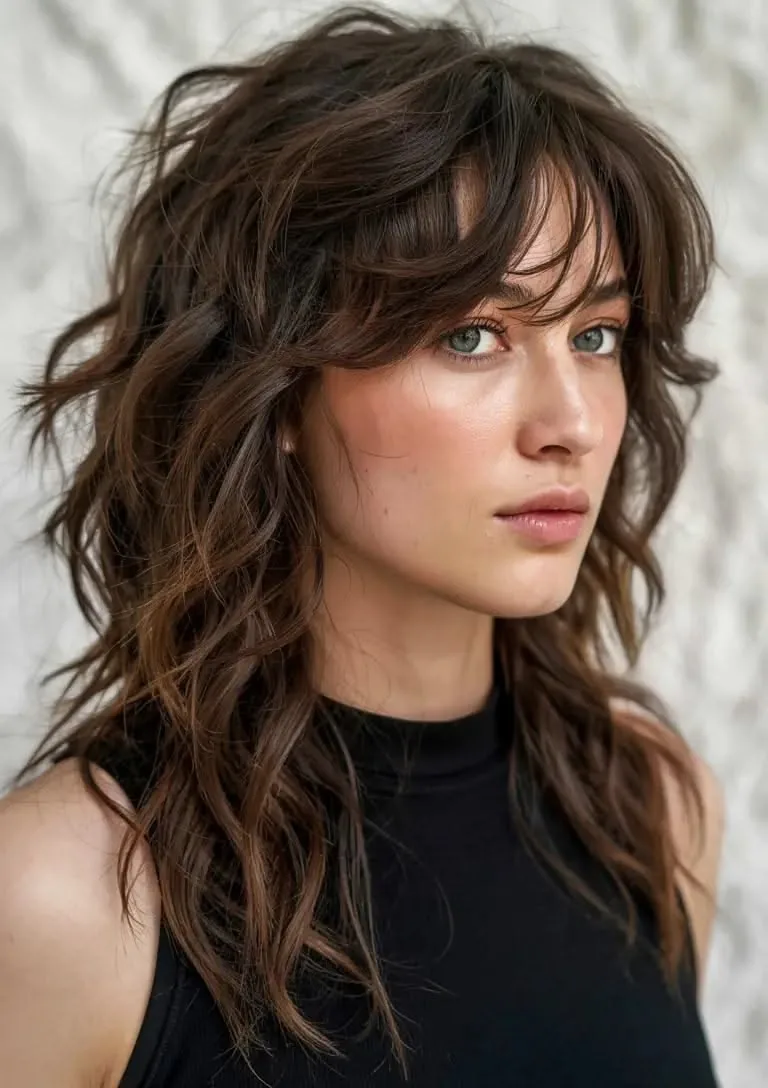
A shag is made for wavy texture. Its choppy, feathered layers are cut all through the hair, which removes bulk, creates movement and lets each wave find its own shape. On thick hair, a soft shag stops the dreaded triangle, because volume is distributed through the lengths instead of piling up at the ends. It looks relaxed, modern and intentionally undone, never stiff.
Best for: Thick, wavy and wavy-curly hair, medium to long. Best if you want texture and movement with less styling effort.
How to style: 1. Work texturising cream through damp hair. 2. Scrunch and diffuse or air-dry. 3. Shake the layers out with your fingers. 4. Add a little wax to the ends for definition.
What to ask your stylist: Ask for a soft wavy shag with layers through the lengths and interior weight removed. Avoid a very short, bulky shag on top.
4. Modern Wolf Cut for Wavy Hair
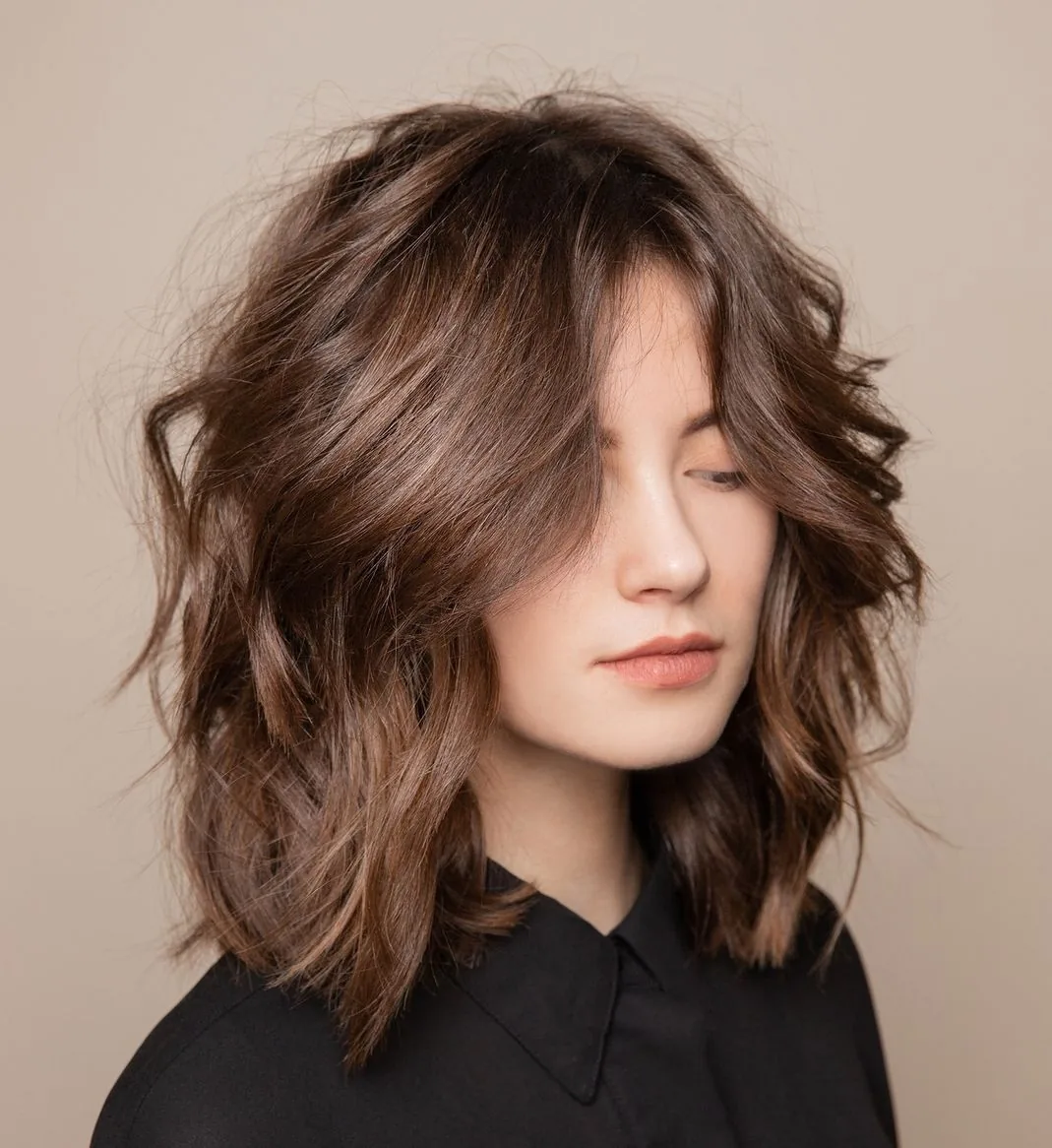
The modern wolf cut is a softer, wearable version of the shag, with shorter layers on top and longer layers underneath. On thick wavy hair it is brilliant at removing weight, because the shorter top layers lift the wave while the longer layers keep the ends from looking thin. Keep the top layers long enough to avoid a mushroom shape, and the cut looks edgy without being extreme.
Best for: Thick wavy hair, medium to long. Best if you like an edgy, textured look that still grows out well.
How to style: 1. Apply mousse or curl cream to damp hair. 2. Diffuse upside down for lift. 3. Scrunch the shorter layers for texture. 4. Finish with a light-hold spray.
What to ask your stylist: Ask for a modern, soft wolf cut with long top layers and interior thinning. Say: no razor-thinned surface, and keep the ends strong.
5. Textured Lob with Interior Layers
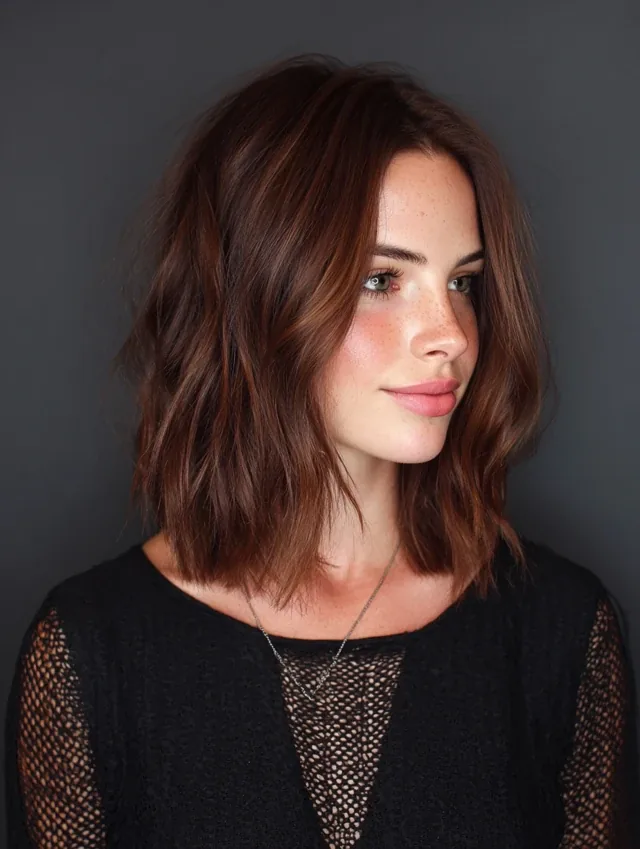
A lob, or long bob, is a great reset for thick wavy hair that has grown heavy and shapeless. Interior layers remove the hidden bulk, while the textured ends keep the wave lively and the perimeter looking full. It sits between the chin and the shoulders, dries faster than long hair, and still ties up easily. It is one of the most flattering medium haircuts for thick wavy hair.
Best for: Thick wavy hair, medium length. Ideal if long hair feels too heavy but a short bob feels too brave.
How to style: 1. Apply leave-in cream and a little mousse to damp hair. 2. Diffuse or air-dry, scrunching as you go. 3. Bend a few front pieces with a wand if needed. 4. Shake out for a lived-in finish.
What to ask your stylist: Ask for a textured lob with interior layers and a strong perimeter. Keep the length at or just below the shoulders.
6. Blunt Lob with Choppy Interior Layers
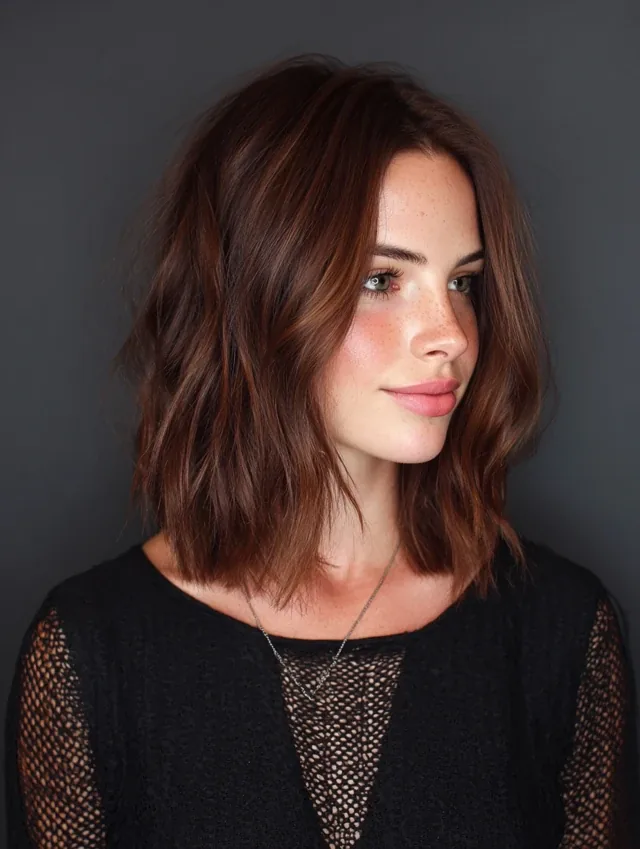
This cut looks blunt and polished from the outside, but hides choppy interior layers inside. That combination is ideal for thick wavy hair: you get the clean, thick-looking ends of a blunt cut, without the weight that usually comes with it. The interior layers let the waves move and spring, so the lob does not dry into a solid, heavy block.
Best for: Thick, dense wavy hair. Best if you love a blunt finish but hate the bulk.
How to style: 1. Smooth the top with a paddle brush while blow-drying. 2. Scrunch the ends with curl cream. 3. Diffuse on low heat. 4. Add shine serum to the ends only.
What to ask your stylist: Ask for a blunt-looking lob with choppy interior layers. Say: blunt perimeter, hidden weight removal inside, no surface razor work.
7. Layered Bob for Thick Wavy Hair
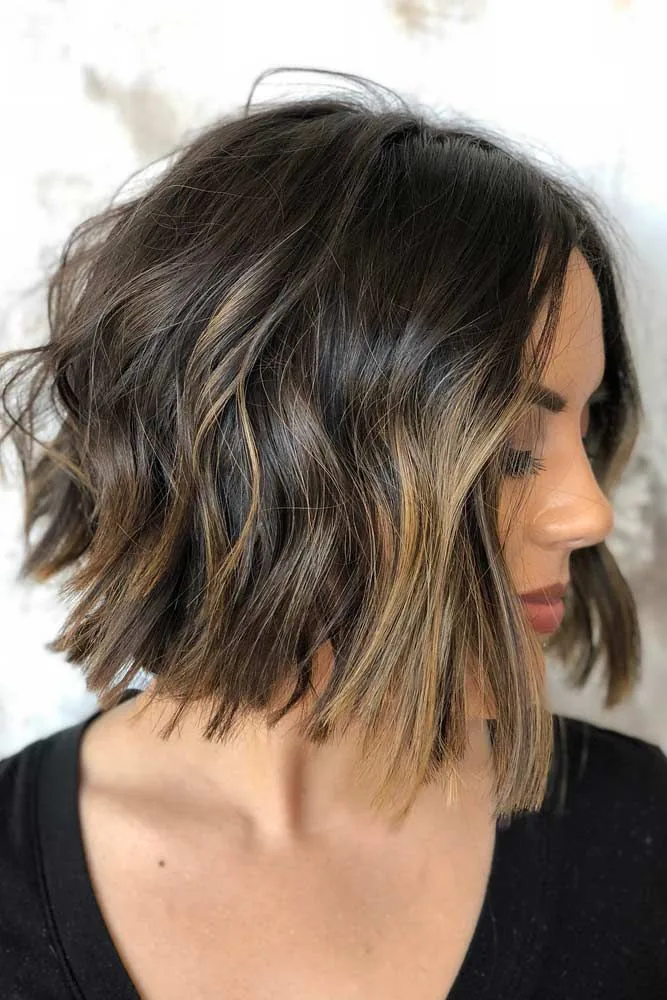
A layered bob works for thick wavy hair when the layers are long and interior, not short and stacked. The bob length keeps the hair light and quick to dry, while the layers stop it from puffing out into a triangle. The waves give the bob natural body, so you do not need to style it perfectly every day. It is a smart, fresh cut that still feels soft.
Best for: Thick wavy hair, chin to jaw length. Great for a shorter cut that is easy to live with.
How to style: 1. Apply curl cream to damp hair. 2. Diffuse with the head tilted for volume at the roots. 3. Scrunch the ends. 4. Tuck one side behind the ear for a lighter look.
What to ask your stylist: Ask for a layered bob with long interior layers and a soft, strong perimeter. Avoid short stacked layers on very dense hair.
8. French Bob for Relaxed Waves
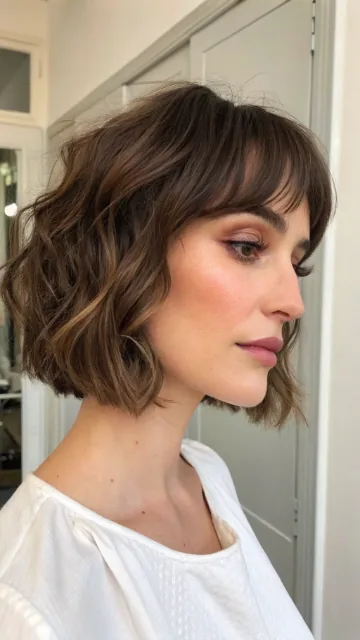
The French bob is short, chic and slightly undone, and it suits relaxed waves beautifully. On thick hair, keep it at jaw length with light interior layers, so the waves have room to move without puffing out. The finish is effortless and Parisian, with texture instead of a perfect, polished shape. It is a confident short cut that does not need much daily styling.
Best for: Thick wavy hair, fine to medium density at the ends. Best for a low-effort, chic short cut.
How to style: 1. Air-dry or diffuse with curl cream. 2. Scrunch for natural texture. 3. Sweep any fringe to one side. 4. Refresh on day two with a little water and cream.
What to ask your stylist: Ask for a French bob at the jaw with light interior layers. Keep the texture soft and the ends slightly piecey, not blunt and heavy.
9. Graduated Bob
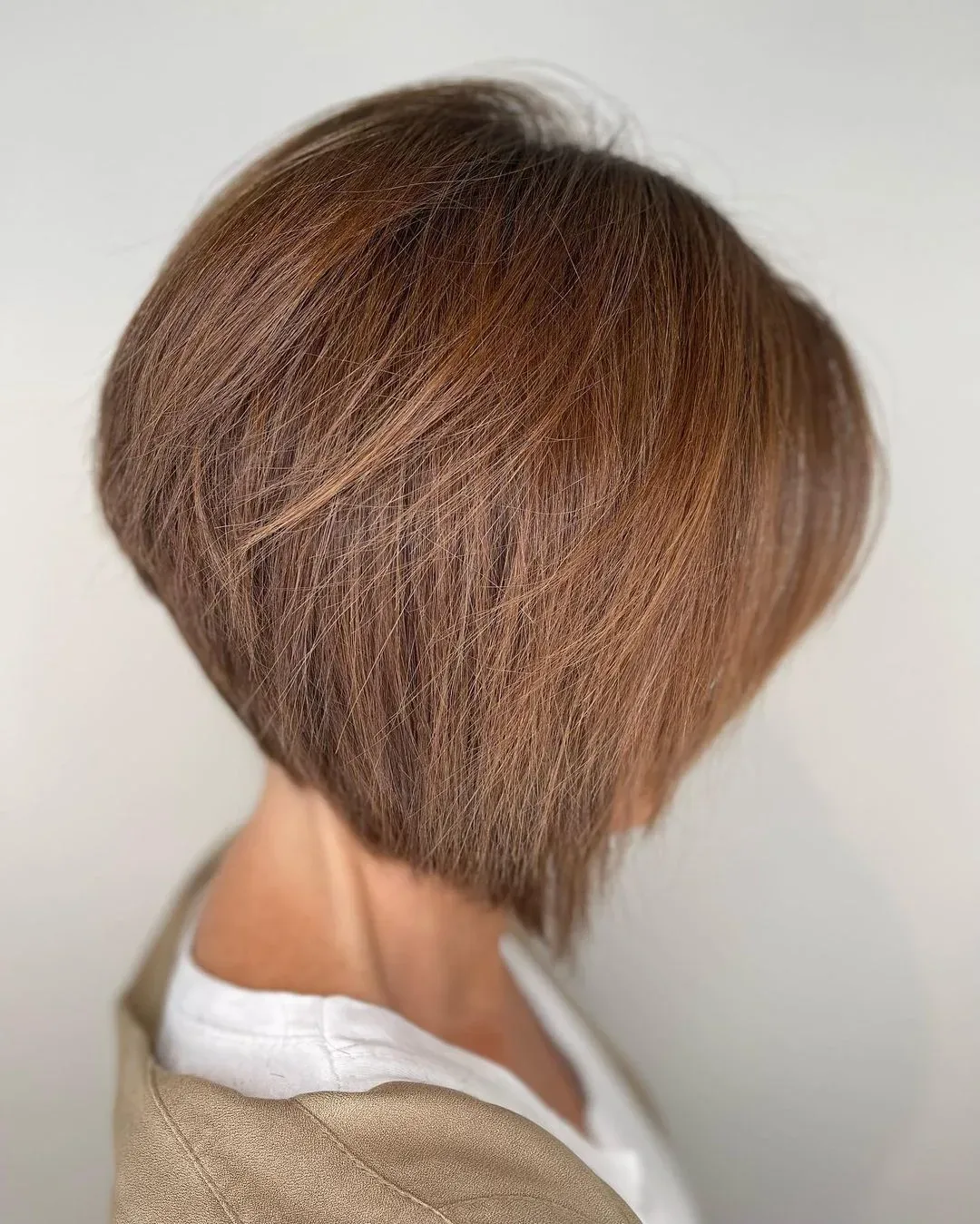
A graduated bob is shorter at the back and gradually longer toward the front. On thick wavy hair, that shape gives structure and lift at the nape while the longer front pieces keep the waves soft around the face. The graduation must be gentle, not steep, or the back can look too stacked and bulky. Done softly, it is a polished bob with natural wave movement.
Best for: Thick wavy hair, short to medium. Best if you want a structured bob with lift at the back.
How to style: 1. Blow-dry the back smooth with a round brush. 2. Scrunch the front waves with cream. 3. Diffuse the lengths on low heat. 4. Finish with a light spray.
What to ask your stylist: Ask for a soft graduated bob, gentle graduation at the back, longer at the front. No steep stacking on dense hair.
10. Stacked Bob with Soft Nape
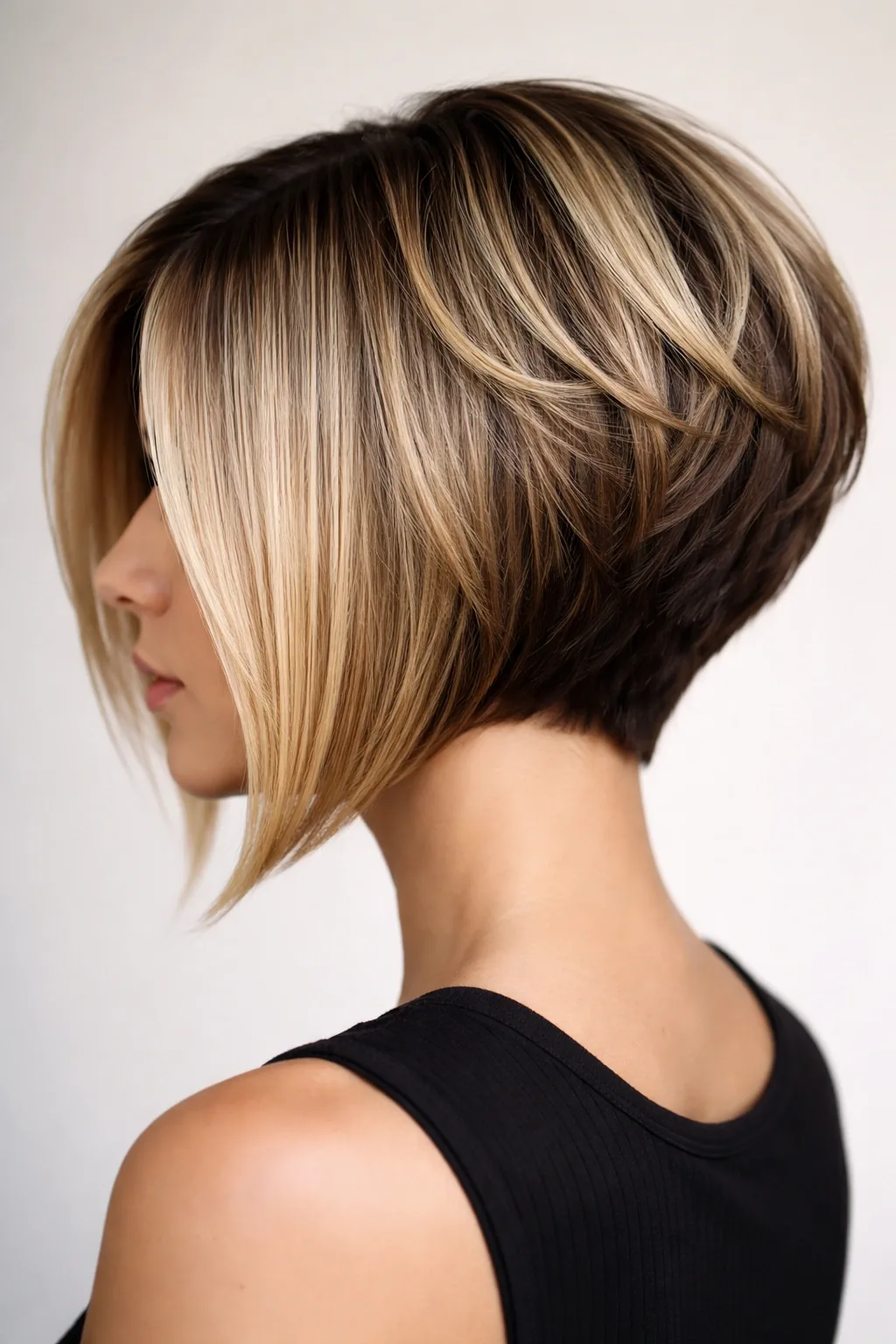
A stacked bob usually means layers piled at the back, which can be risky on very thick hair. The safe version keeps the nape soft and the stacking gentle, with interior weight removed so the back does not mushroom. The front stays longer and wavy, which balances the shape. If your hair is extremely dense, ask your stylist to be honest about whether a stacked bob will work for you.
Best for: Medium-density thick wavy hair. Best if you like a rounded bob shape with lift.
How to style: 1. Blow-dry the nape smooth and flat. 2. Scrunch the front and lengths. 3. Diffuse on low heat. 4. Smooth flyaways with a drop of serum.
What to ask your stylist: Ask for a soft stacked bob with a flat nape and interior weight removal. Say: gentle stacking only, no bulk at the back.
11. Collarbone Cut with Long Layers
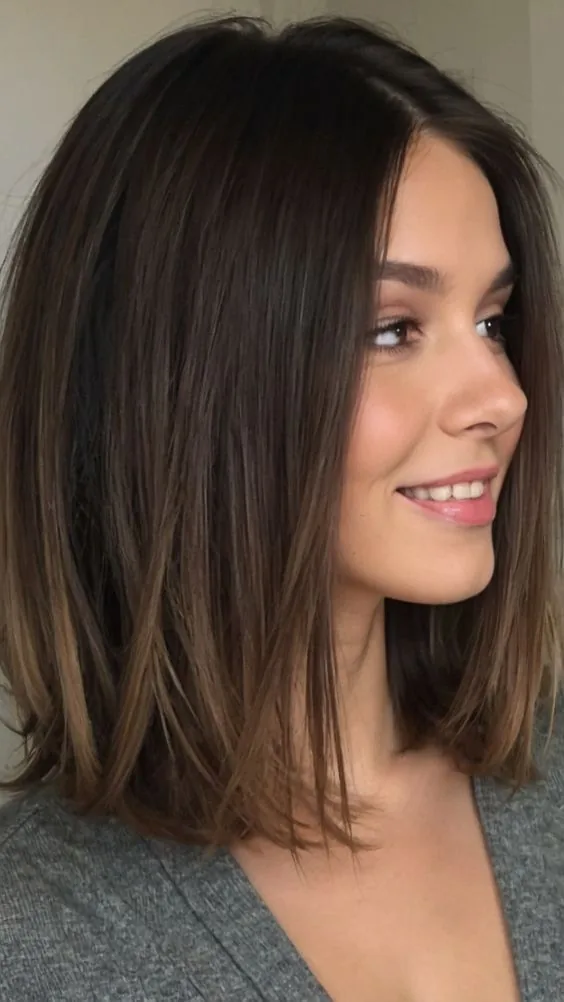
The collarbone cut is the sweet spot for thick wavy hair: long enough to weigh the waves down just enough to stop frizz, short enough to dry in reasonable time. Long layers through the lengths remove hidden bulk and let the wave pattern open up. It is flattering, versatile and easy to tie up, and it grows out gracefully without losing its shape.
Best for: Thick wavy hair, all densities. Ideal as a first layered cut for thick waves.
How to style: 1. Apply leave-in cream to damp hair. 2. Diffuse or air-dry, scrunching upward. 3. Wrap a few front pieces around a wand for definition. 4. Shake out gently.
What to ask your stylist: Ask for a collarbone-length cut with long layers and internal weight removal. Keep the ends strong, not thinned out.
12. U-Shaped Long Cut
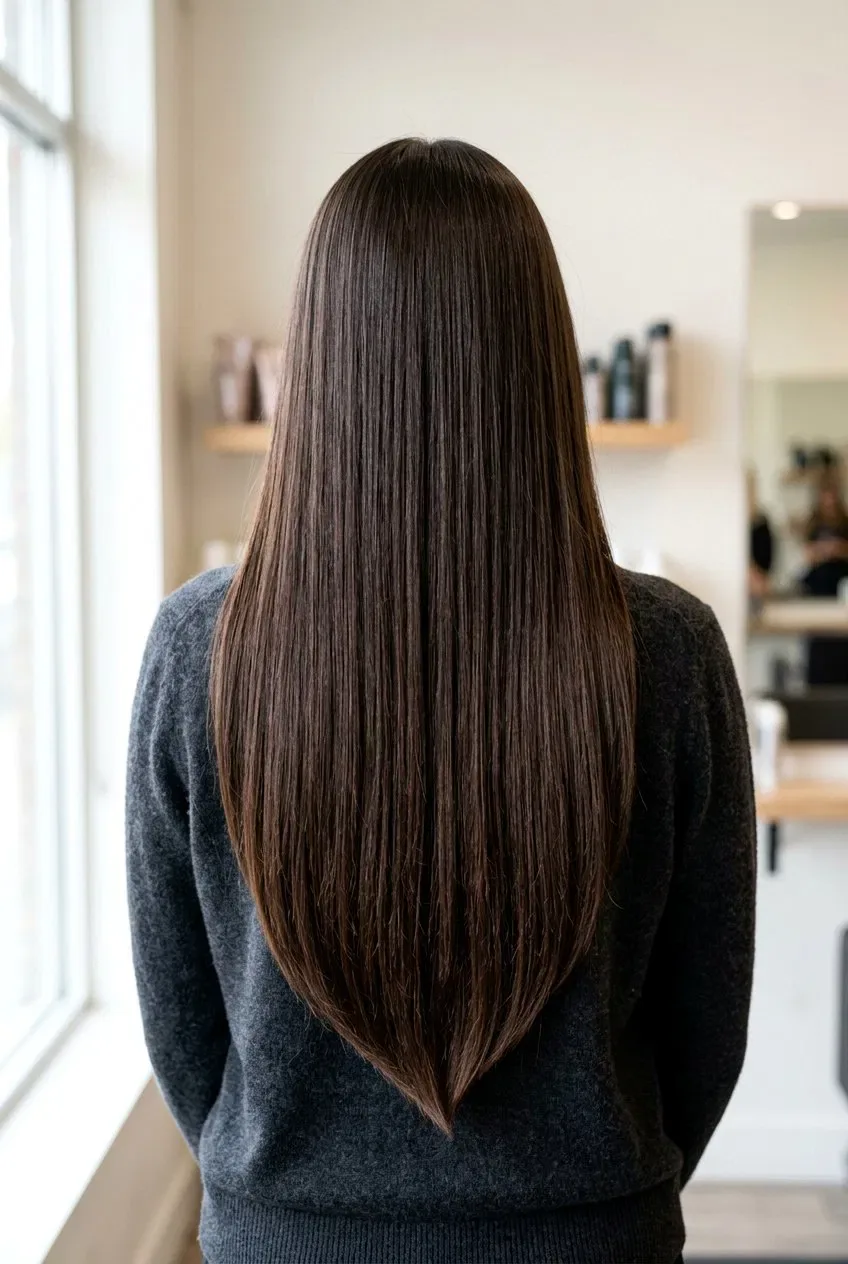
A U-shaped cut keeps the hair longest in the middle of the back and slightly shorter at the sides, forming a soft U. On thick wavy hair, that shape stops the ends from looking like a heavy, straight shelf, and it lets the waves fall in a rounded, natural way. Add long interior layers and the cut feels lighter without losing the thick, healthy look at the ends.
Best for: Long, thick wavy hair. Best if you want to keep length but lose the heavy, blocky ends.
How to style: 1. Apply curl cream to damp hair. 2. Diffuse in sections, scrunching upward. 3. Once dry, shake the waves out. 4. Add oil to the ends for shine.
What to ask your stylist: Ask for a U-shaped perimeter with long interior layers. Keep the centre length, just soften the shape at the sides.
13. V-Shaped Long Layers
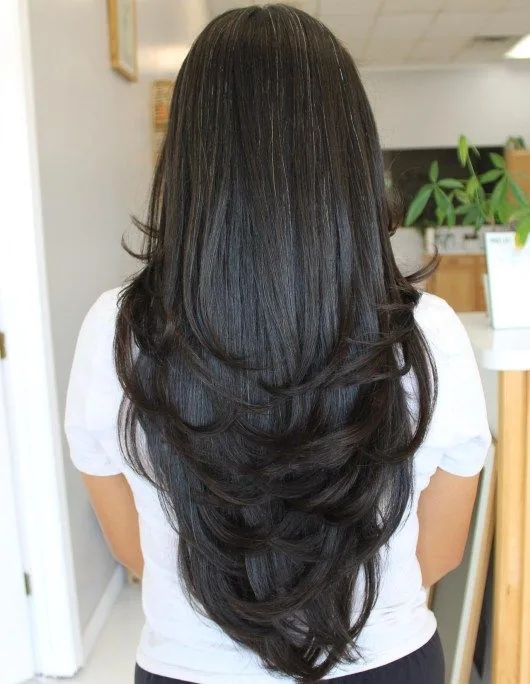
A V-shaped cut is longest at the centre back and angles up toward the face, which gives long thick wavy hair a lighter, more tapered silhouette. The V shape removes visual weight from the sides and lets the waves cascade instead of sitting in one heavy mass. It is a good choice if you love long hair but find a straight-across cut too heavy and flat at the ends.
Best for: Long, thick wavy hair. Best if you want dramatic length with a lighter shape.
How to style: 1. Apply leave-in cream to damp hair. 2. Diffuse in large sections. 3. Once dry, brush the waves out lightly for softness. 4. Add a little oil to the longest ends.
What to ask your stylist: Ask for a V-shaped cut with long layers, not short choppy layers. Keep the front pieces long enough to frame the face softly.
14. Butterfly Cut for Thick Waves
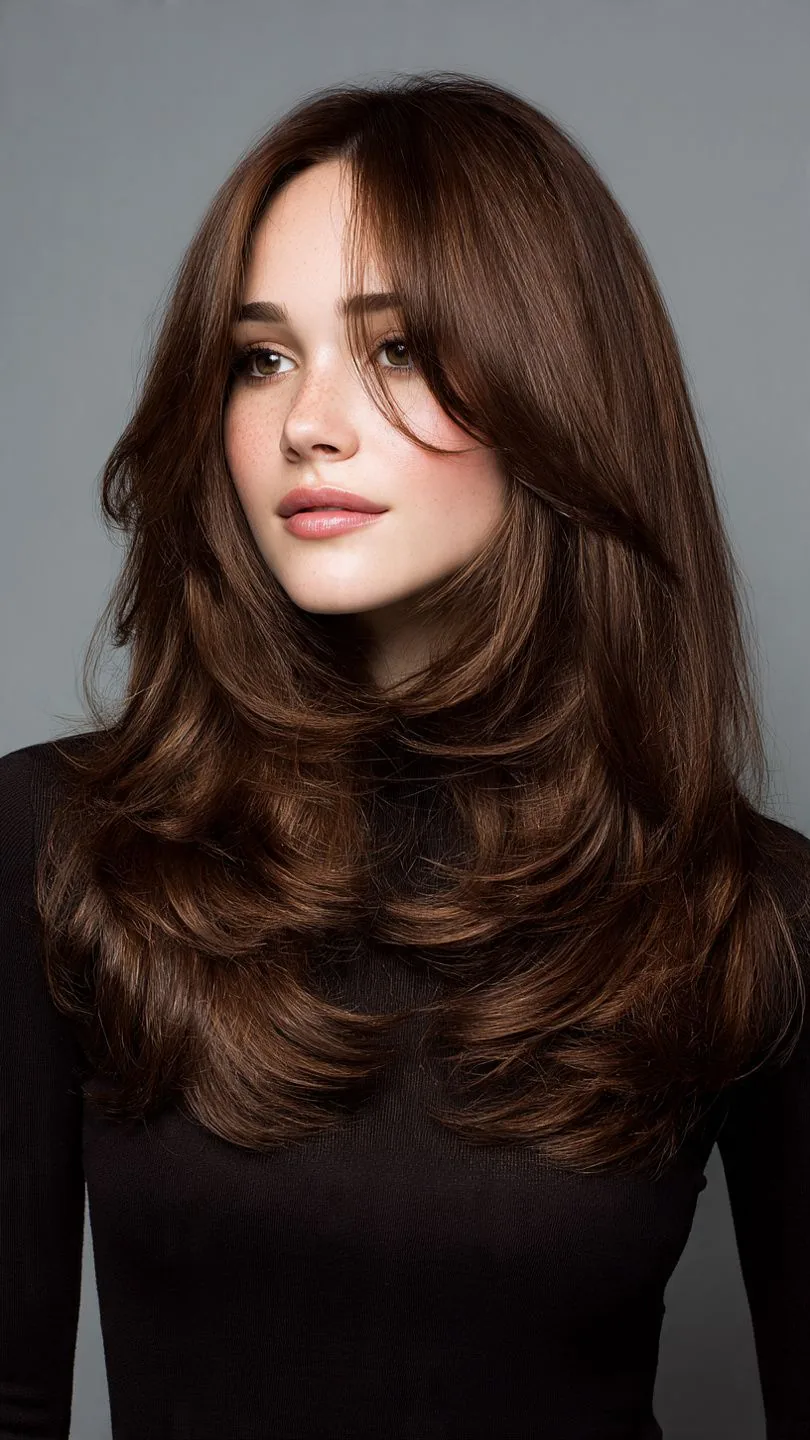
The butterfly cut has short face-framing layers on top and long layers underneath, so it looks short when tied up and long when worn down. On thick wavy hair, keep the short layers at chin length or longer, or the top can puff up. Done right, it gives bounce, movement and a beautiful blowout shape, while the interior layers keep the bulk under control.
Best for: Thick wavy long hair. Best for a bouncy, blowout-style cut.
How to style: 1. Blow-dry with a large round brush, flipping the short layers out. 2. Curl the long layers loosely. 3. Brush out for soft volume. 4. Finish with flexible-hold spray.
What to ask your stylist: Ask for a butterfly cut with the shortest layers starting at the chin. Say: no short crown layers, and remove weight inside, not on the surface.
15. Feathered Layers (Shoulder Length)
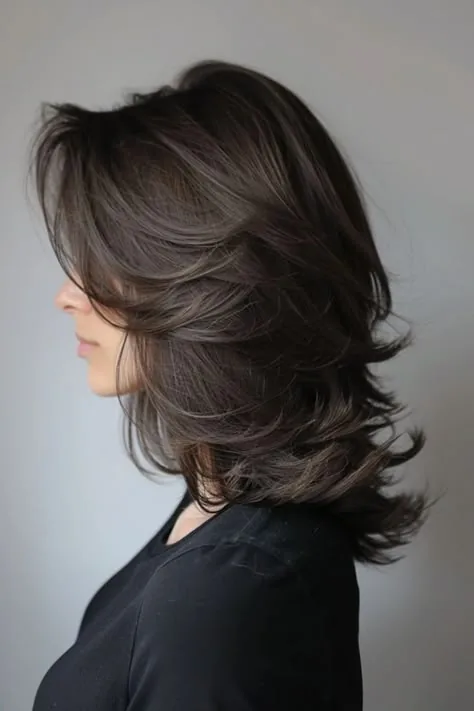
Feathered layers are soft, wispy layers cut to flick outward and inward, giving shoulder-length thick wavy hair lightness and movement. The feathering breaks up the bulk at the ends without thinning them to nothing. It is a great medium cut because it looks styled even when you just air-dry, and it stops the hair from forming a solid, triangular shape.
Best for: Thick wavy hair, shoulder length. Great for a soft, feathered medium cut.
How to style: 1. Apply light curl cream to damp hair. 2. Blow-dry with a round brush, flicking the ends. 3. Scrunch the lengths for wave. 4. Finish with a light spray.
What to ask your stylist: Ask for feathered layers at shoulder length with interior weight removal. Keep the ends feathered, not razor-thinned.
16. Feathered Long Layers
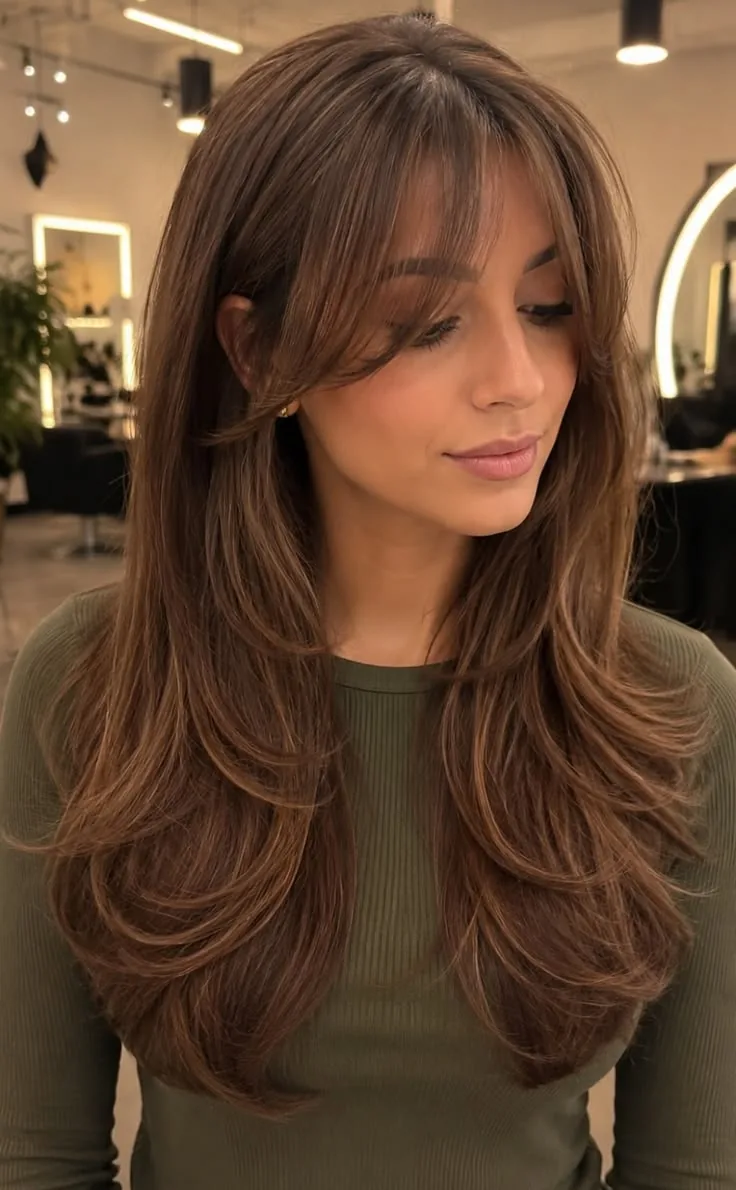
Feathered long layers work like a softer version of classic long layers, with ends that taper gently instead of ending in a blunt line. On thick wavy hair, feathering removes weight from the ends and lets the waves move freely, so the hair does not feel like a heavy curtain. It is elegant, easy to style and very forgiving as it grows out.
Best for: Long, thick wavy hair. Best if you want long hair that feels lighter and moves well.
How to style: 1. Apply curl cream to damp hair. 2. Diffuse or air-dry. 3. Wrap a few sections around a wand for definition. 4. Brush out lightly for soft feathering.
What to ask your stylist: Ask for feathered long layers with a soft, tapered perimeter. Avoid a blunt, heavy bottom edge.
17. Curtain Bangs with Long Wavy Layers

Curtain bangs part in the middle and sweep to each side, opening up the face while the long wavy layers keep the rest of the hair full. On thick wavy hair, keep the curtain bangs long, starting at the cheekbone, so they blend into the layers instead of puffing up as a separate fringe. The result is soft, face-framing and very easy to grow out.
Best for: Long, thick wavy hair. Best if you want a fringe without a high-maintenance commitment.
How to style: 1. Blow-dry the bangs forward, then sweep them to each side. 2. Diffuse the lengths. 3. Use dry shampoo at the roots for lift. 4. Keep the part soft, not harsh.
What to ask your stylist: Ask for long curtain bangs starting at the cheekbone, blending into long layers. Keep them long enough to tuck behind the ears.
18. Side-Swept Bangs with Wavy Lob
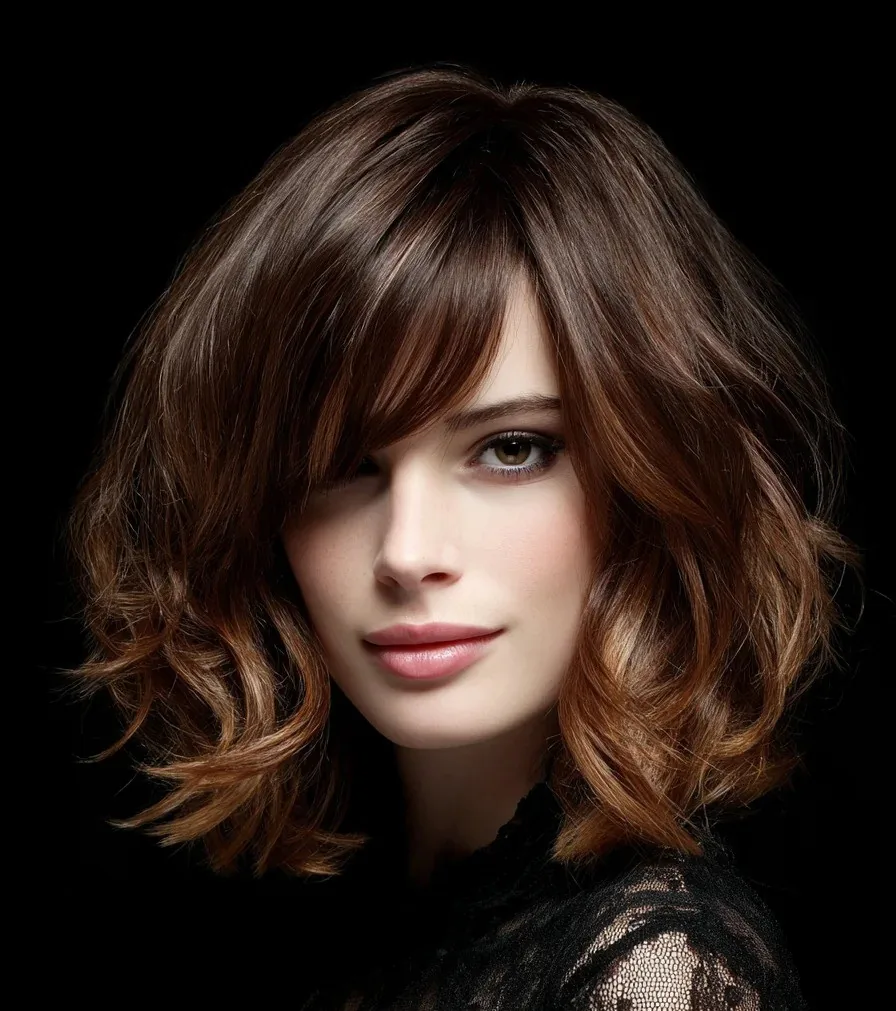
Side-swept bangs fall diagonally across the forehead, which breaks up the bulk at the front of thick wavy hair and adds a flattering angle. Paired with a wavy lob, the cut stays light, modern and easy to style. The diagonal fringe also helps the waves fall naturally to one side, instead of parting in a heavy, flat centre line.
Best for: Thick wavy hair, medium length. Great for an everyday lob with a soft fringe.
How to style: 1. Blow-dry the fringe to one side with a round brush. 2. Diffuse the lob, scrunching as you go. 3. Bend the ends slightly under. 4. Set with a light spray.
What to ask your stylist: Ask for long side-swept bangs that blend into the lob layers. Keep the fringe soft and long, not short and choppy.
19. Wispy Bangs with Thick Waves
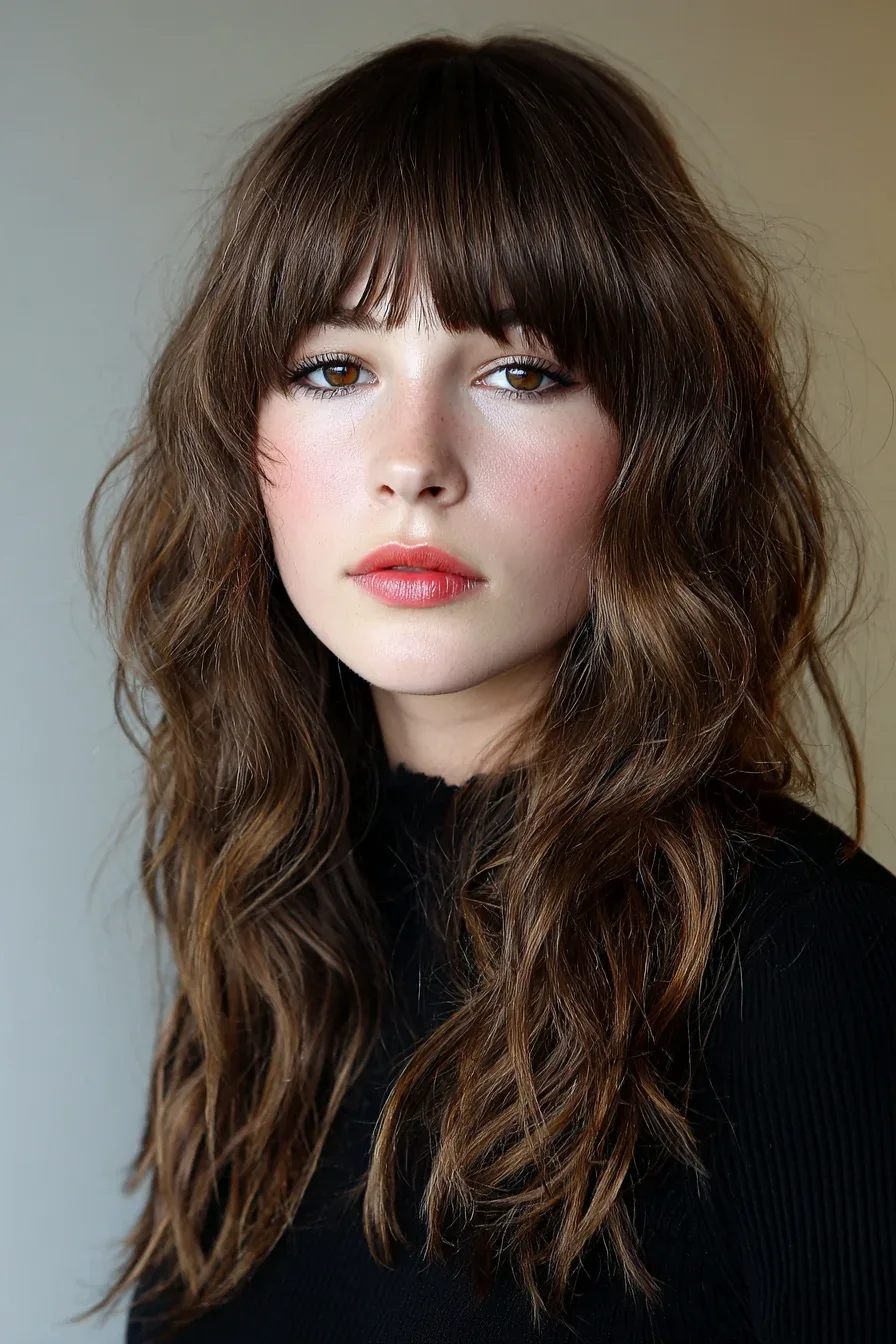
Wispy bangs are light and see-through, so they work on thick wavy hair without adding a heavy block of fringe. They soften the hairline, break up the front bulk and let the waves take centre stage. Keep them long and feathered, and ask your stylist to point-cut them, so they do not puff up as they dry. They are a low-commitment way to change the front of your cut.
Best for: Thick wavy hair, any length. Best if you want a fringe that does not add bulk.
How to style: 1. Blow-dry the bangs forward with your fingers. 2. Let them fall naturally. 3. Trim any piece that pokes into the eyes. 4. Use dry shampoo to keep the fringe fresh.
What to ask your stylist: Ask for wispy, point-cut bangs, long and feathered. Avoid a thick, blunt fringe on dense wavy hair.
20. Deep Side Part Long Waves
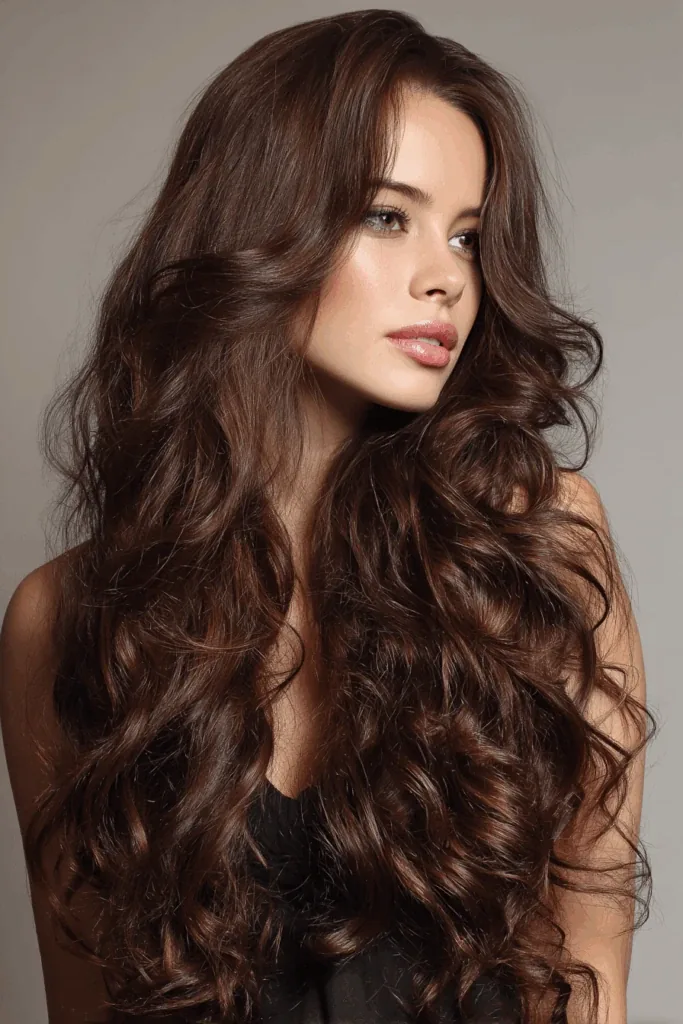
A deep side part is a simple, free way to change thick wavy hair. It shifts the weight to one side, adds instant root lift and stops the hair from parting flat in the middle. With long layers underneath, the waves fall in a full, glamorous shape instead of a heavy, even curtain. It is a great styling trick to use with almost any long layered cut.
Best for: Long, thick wavy hair. Best for instant volume and a glamorous finish.
How to style: 1. Part the hair deeply to one side while damp. 2. Apply root mousse to the lifted side. 3. Diffuse, lifting the roots. 4. Set the part with a light spray.
What to ask your stylist: Ask your stylist to cut the layers so they work with a side part, with the front pieces long enough to sweep across.
21. Beach Waves Cut (Medium-Long Layers)
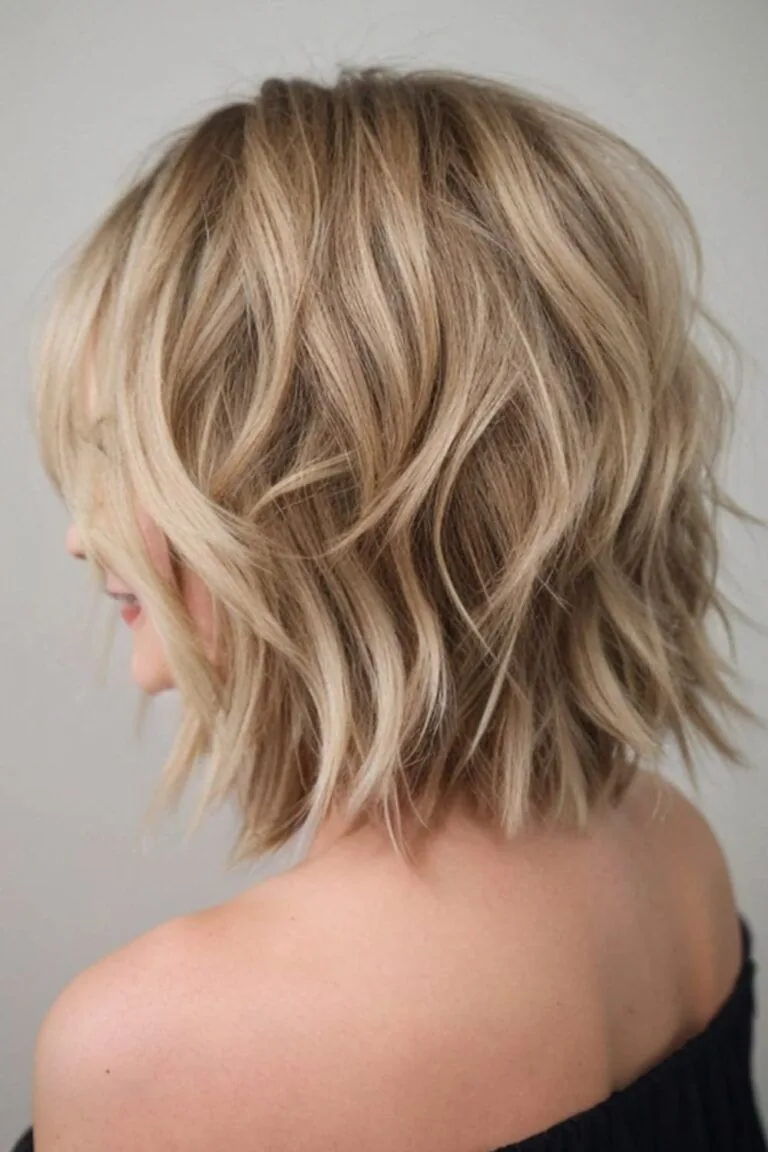
A beach waves cut is built around medium-long layers that let the natural wave form loose, tousled waves. On thick hair, the layers must be long and interior, or the waves can turn into a big, frizzy mass. With the right layers, the cut looks effortless and beachy, dries quickly with a diffuser, and does not need perfect styling to look good.
Best for: Thick wavy hair, medium to long. Best for a relaxed, tousled look.
How to style: 1. Apply sea salt spray or curl cream to damp hair. 2. Scrunch and diffuse or air-dry. 3. Twist a few sections around a wand for definition. 4. Shake out for a beachy finish.
What to ask your stylist: Ask for medium-long layers with interior weight removal, cut to encourage loose beach waves. No short surface layers.
22. Defined Waves with Diffuser-Friendly Layers
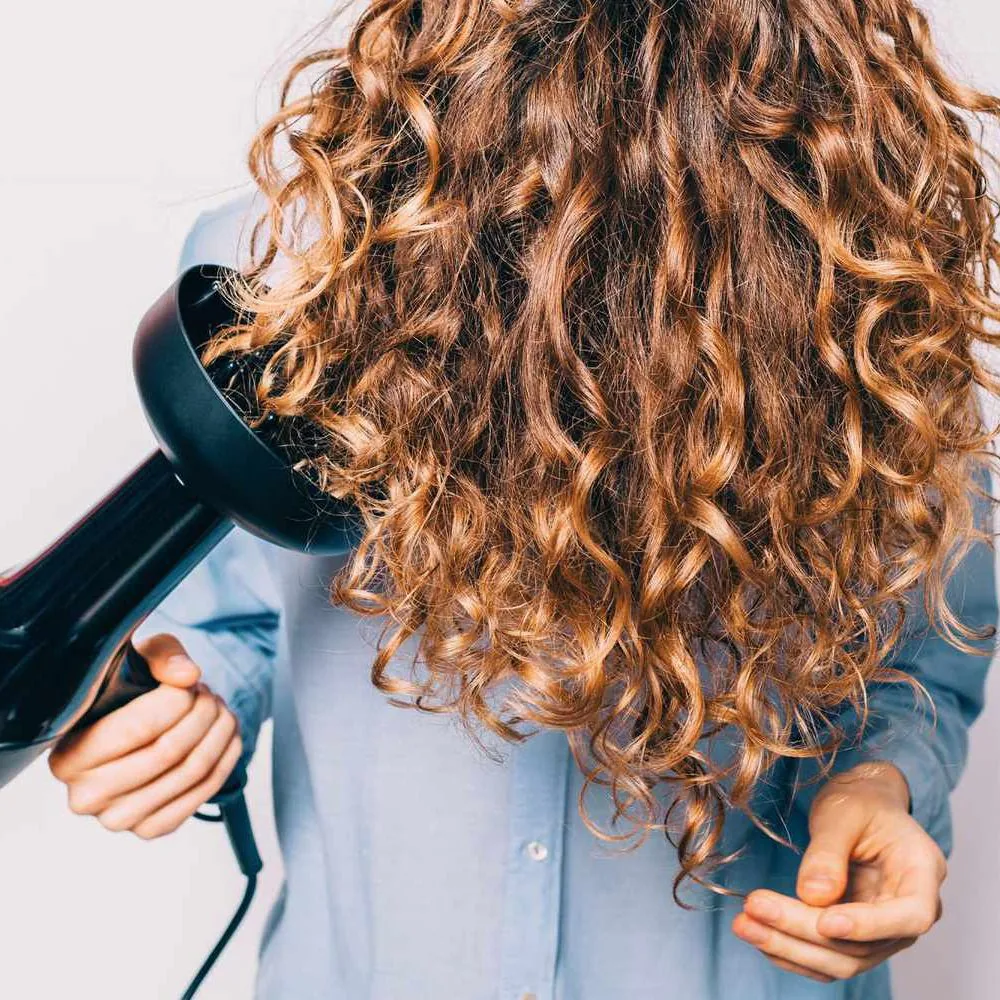
This cut is designed around how you actually dry your hair. Layers are cut so that, when you diffuse, each wave clumps and defines instead of frizzing into one big shape. The layers are longer and more spaced out than in a shag, which keeps the definition clean. It is ideal if you diffuse most days and want consistent, defined waves without a lot of extra styling.
Best for: Thick wavy hair that is diffused regularly. Best for defined, clumped waves.
How to style: 1. Apply curl cream and a little gel to very wet hair. 2. Scrunch upward. 3. Diffuse on low heat without touching the hair too much. 4. Break the cast with oil once fully dry.
What to ask your stylist: Ask for diffuser-friendly layers, spaced out and long, with interior weight removed. Tell your stylist you diffuse, so they can cut for that routine.
23. Dry-Cut Wavy Layers
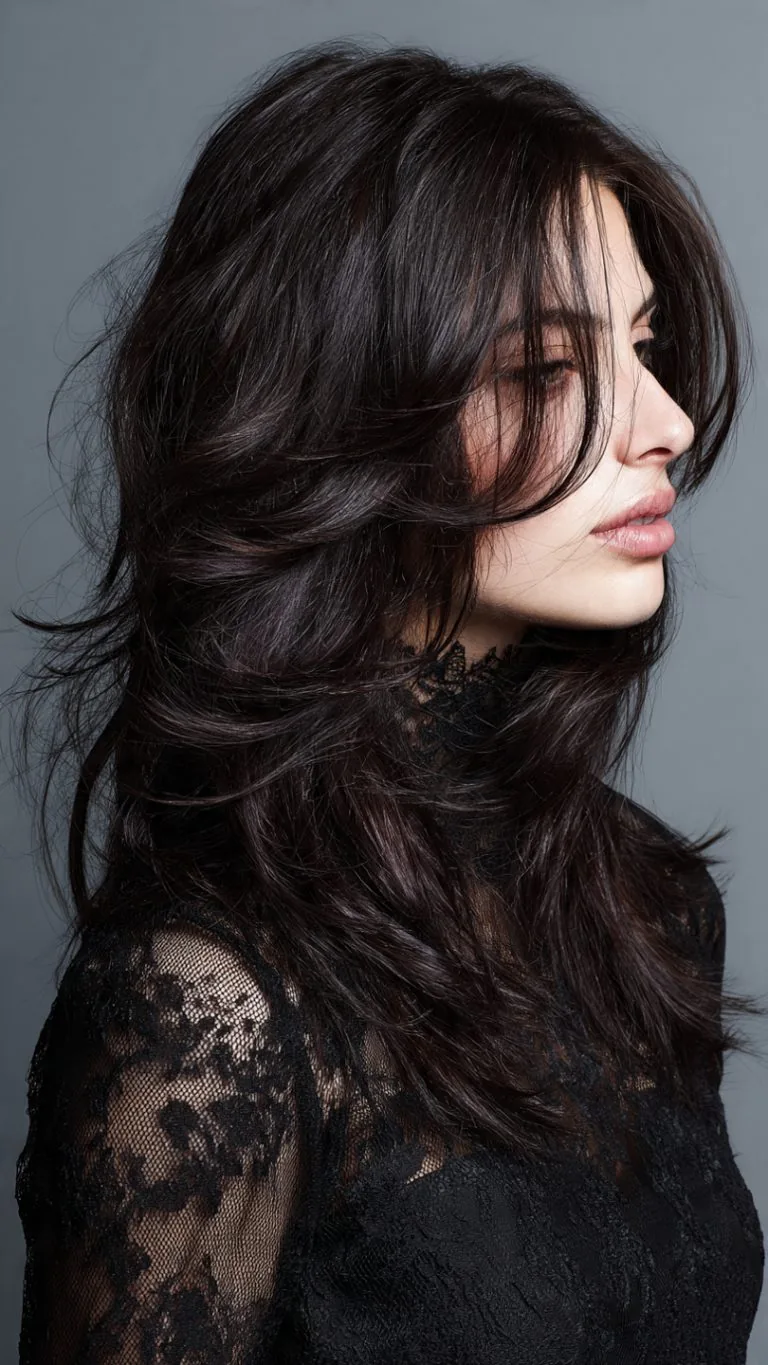
A dry cut is done on dry, natural waves, so your stylist can see exactly how each wave falls and where the bulk sits. For thick wavy hair, this is often the most accurate way to cut, because wet hair stretches and shrinks as it dries. The stylist removes weight where it is actually needed, layer by layer, and the result is a cut that looks right on day one, not just on wash day.
Best for: Thick wavy and wavy-curly hair. Best if wet cuts never seem to dry the way you expected.
How to style: 1. Arrive with your hair dry and styled as usual. 2. Ask the stylist to cut curl by curl or section by section. 3. At home, style as usual with cream and a diffuser. 4. Book a dry trim to keep the shape.
What to ask your stylist: Ask for a dry cut for wavy hair, with weight removed section by section. Bring photos of your hair on a good day and a bad day.
24. Rounded Wavy Cut (No Triangle)
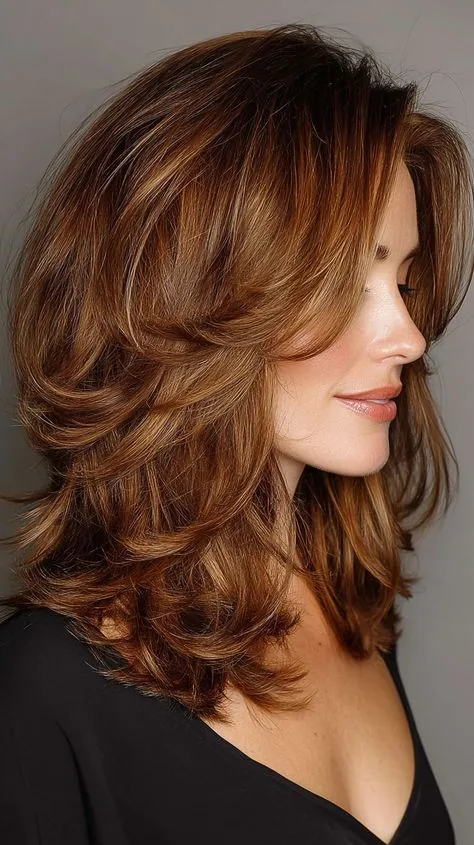
A rounded cut is shaped specifically to avoid the triangle effect: flat on top, wide at the bottom. The stylist rounds the silhouette, removes interior bulk at the ends and keeps the top smooth, so the waves form a soft, rounded shape instead of a bell. It is a shape-first cut, and it works best when the layers are planned around your wave pattern, not just cut to a set length.
Best for: Thick wavy hair that goes triangular easily. Best if shape, not length, is your main problem.
How to style: 1. Apply cream to damp hair. 2. Diffuse, lifting the roots slightly. 3. Scrunch the ends to round the shape. 4. Smooth the top with a drop of serum.
What to ask your stylist: Ask for a rounded silhouette with interior weight removed at the ends. Say: no triangle, keep the top smooth and the shape rounded.
25. Shoulder-Length Shag
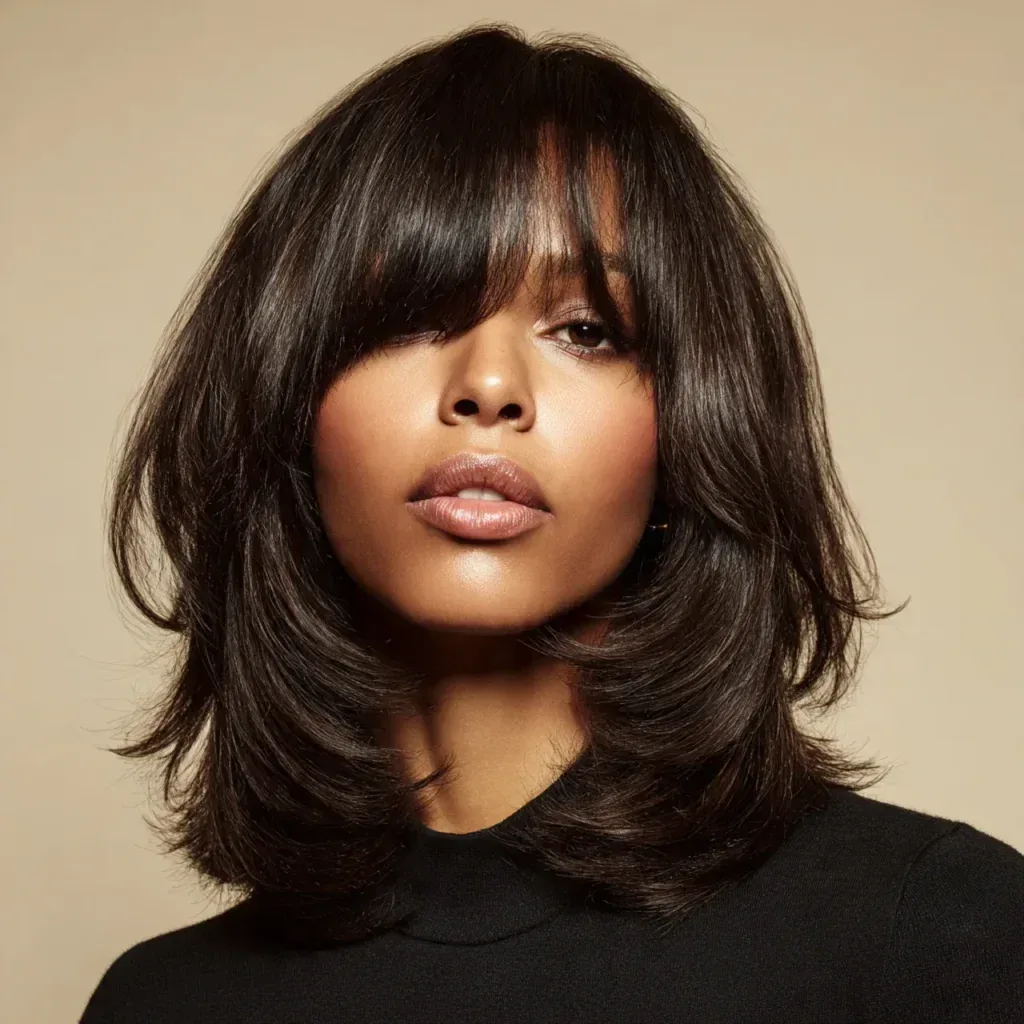
A shoulder-length shag is a shorter, punchier version of the long shag, with layers all through the hair and a soft, textured finish. On thick wavy hair it removes a lot of bulk quickly, dries fast and gives instant movement. Keep the layers soft rather than very short, or the cut can look too choppy. It is a great medium cut for anyone who wants texture without long hair maintenance.
Best for: Thick wavy hair, shoulder length. Best for a textured, easy medium cut.
How to style: 1. Apply texturising cream to damp hair. 2. Diffuse or air-dry. 3. Scrunch the layers. 4. Add wax to the ends for definition.
What to ask your stylist: Ask for a shoulder-length shag with soft layers and interior weight removal. Keep the shortest layers at chin length or longer.
26. Above-the-Shoulder Wolf Cut

An above-the-shoulder wolf cut is a bold, short version of the wolf cut, with shorter top layers and a textured, piecey finish. On thick wavy hair it works only if the top layers stay long enough and the interior bulk is removed, or it can puff up. Done well, it is edgy, full of movement and very quick to style, with waves that do most of the work.
Best for: Thick wavy hair, short to medium. Best for a bold, textured short cut.
How to style: 1. Apply mousse to damp hair. 2. Diffuse upside down for lift. 3. Scrunch the top layers. 4. Finish with texturising spray.
What to ask your stylist: Ask for an above-shoulder wolf cut with long top layers and interior thinning. Be honest about density: very dense hair may need a longer version.
27. Textured Pixie-Bob for Thick Waves
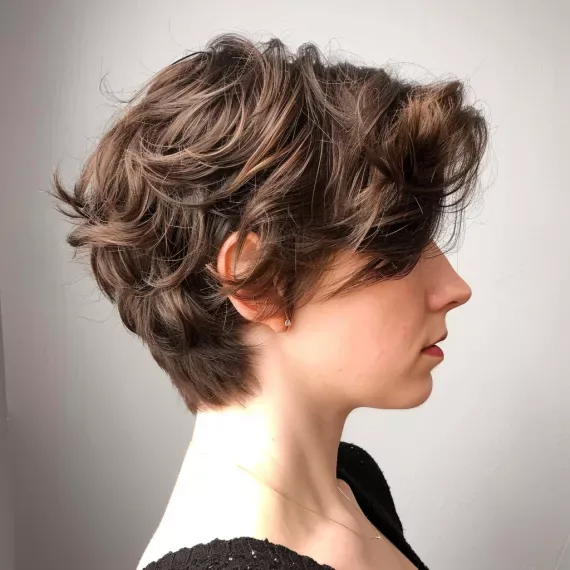
A pixie-bob, or bixie, blends a pixie and a bob: shorter at the back, longer and wavy at the front. On thick wavy hair, the texture does the styling for you, and the longer front pieces keep the cut soft around the face. Interior layers are essential, or the back can look too bulky. It is a brave short cut that still feels feminine and easy to grow out.
Best for: Thick wavy hair, short. Best if you want a short cut with wave and texture.
How to style: 1. Apply curl cream to damp hair. 2. Diffuse or air-dry, scrunching. 3. Sweep the front to one side. 4. Add texturising spray for a piecey finish.
What to ask your stylist: Ask for a textured pixie-bob with jaw-length front pieces and interior weight removal. Keep the nape soft, not stacked and bulky.
28. Curly-Wavy Shag with Curtain Fringe
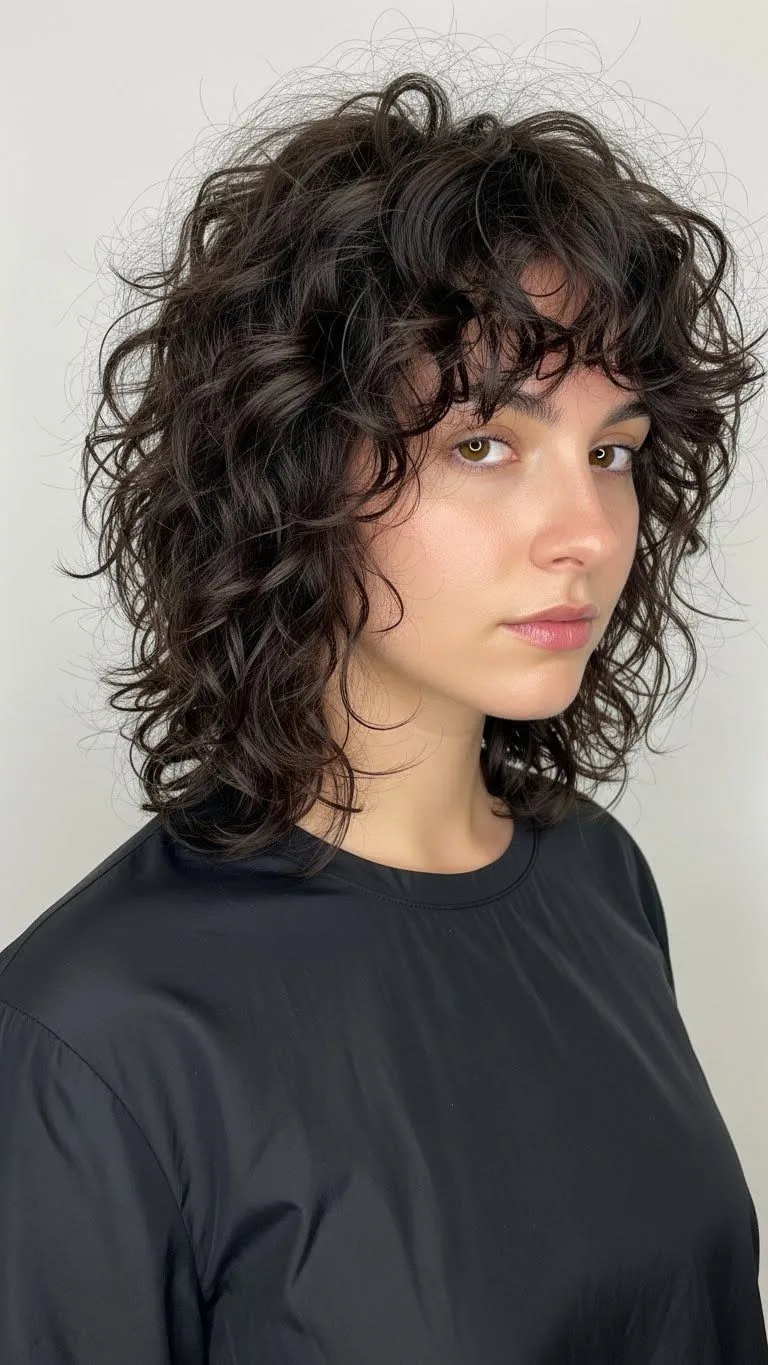
This shag is made for hair that sits between wavy and curly, with layers that let each curl-wave clump naturally and a curtain fringe that frames the face. The shag removes bulk through the lengths, while the curtain fringe opens up the front without a heavy fringe. It is a great cut if your hair is wavier underneath and curlier on top, or vice versa.
Best for: Wavy-curly thick hair, medium to long. Best for mixed wave-curl texture.
How to style: 1. Apply curl cream to very wet hair. 2. Scrunch and diffuse on low heat. 3. Sweep the curtain fringe to each side. 4. Break the cast with oil once dry.
What to ask your stylist: Ask for a curly-wavy shag with a long curtain fringe and interior weight removal. Tell your stylist about your mixed texture.
29. Long Shag with Curtain Bangs

A long shag keeps the length but adds shaggy layers through the mid-lengths and ends, plus curtain bangs at the front. On thick wavy hair, that combination removes bulk, adds movement and frames the face, all without losing length. It is a good middle ground between a classic long layered cut and a full shag, and it grows out very gracefully.
Best for: Long, thick wavy hair. Best for long hair with shaggy movement.
How to style: 1. Apply texturising cream to damp hair. 2. Diffuse or air-dry. 3. Sweep the curtain bangs to each side. 4. Scrunch the lengths for shaggy texture.
What to ask your stylist: Ask for a long shag with curtain bangs and interior weight removal. Keep the shortest layers at chin length or longer.
30. Low-Maintenance Long Layers (Air-Dry Cut)
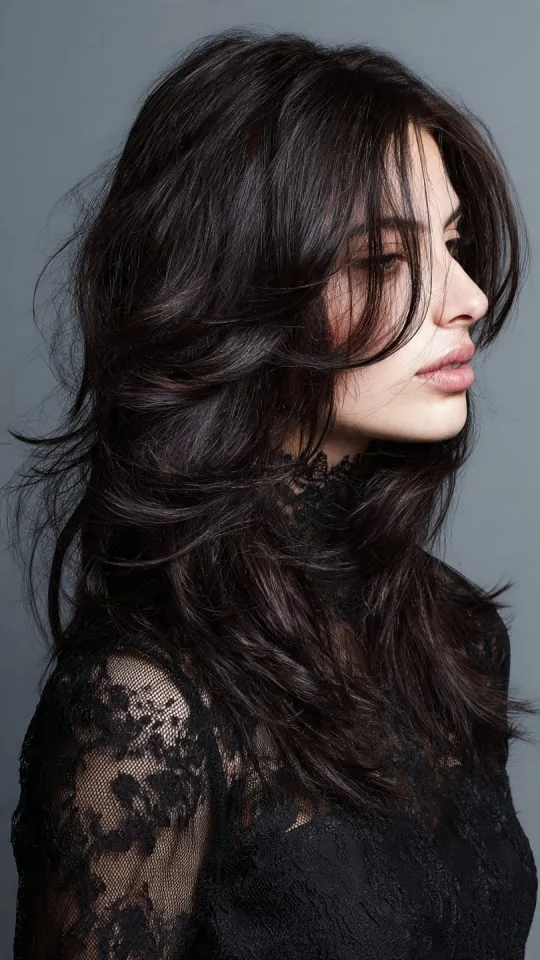
An air-dry cut is planned so your hair looks good with almost no styling: long layers, interior weight removal and a strong perimeter, cut to work with your natural wave as it dries. It is the best choice if you rarely blow-dry or diffuse, because the cut does the work instead of the styling. Wash, add cream, scrunch and go, and the shape still holds.
Best for: Thick wavy hair, long. Best if you air-dry most days and want a wash-and-go cut.
How to style: 1. Wash and apply leave-in cream. 2. Scrunch upward. 3. Air-dry without touching too much. 4. Shake out once fully dry.
What to ask your stylist: Ask for a low-maintenance, air-dry cut: long layers, interior weight removal, strong ends. Tell your stylist you air-dry, so they cut for that.
31. Half-Up Friendly Long Layers
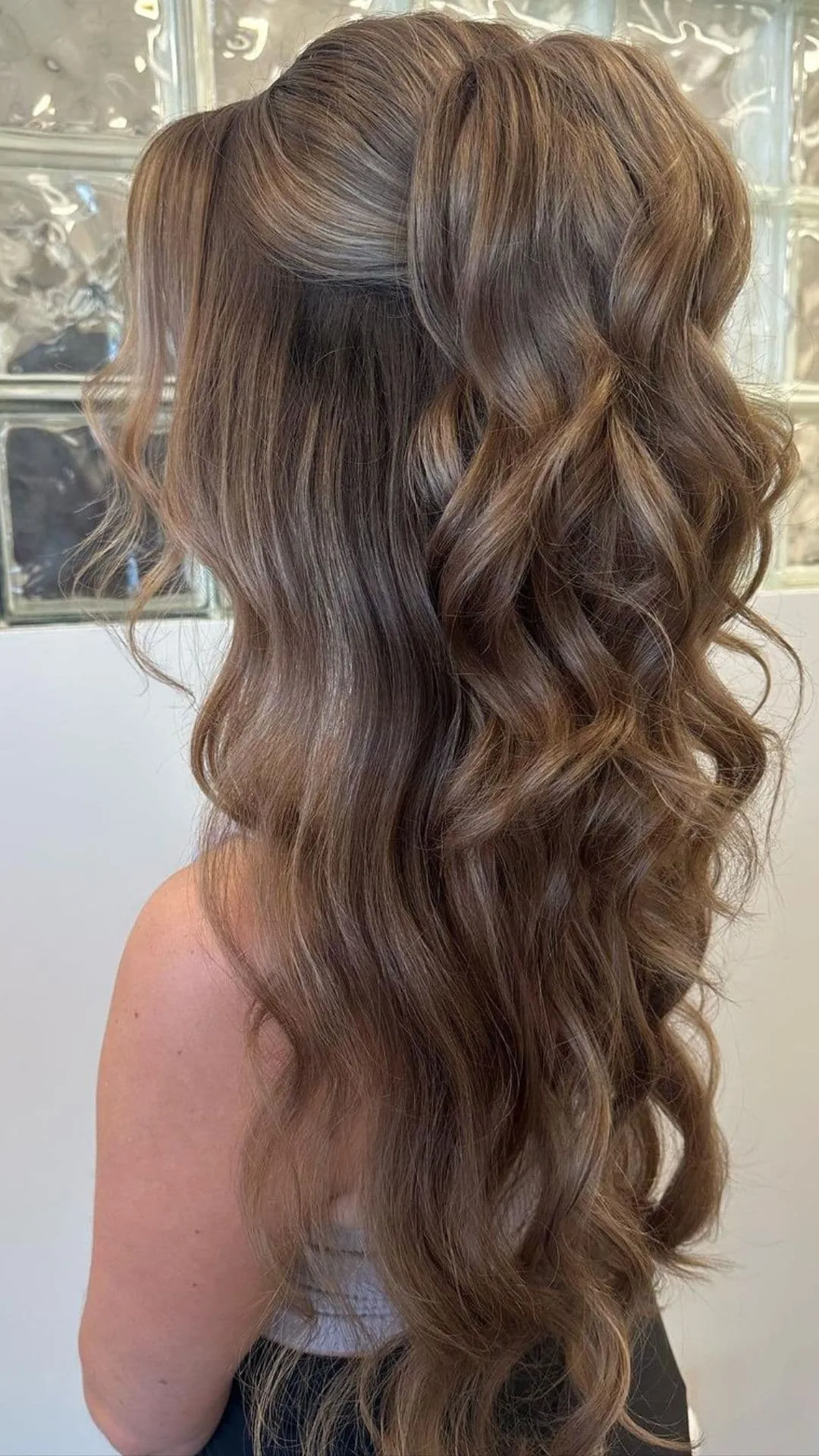
Some layered cuts fall apart when you tie half the hair up, with short pieces poking out everywhere. A half-up friendly cut keeps the top layers long enough to stay in a half-up style, while the interior layers still remove bulk. The front pieces frame the face softly, and the rest of the hair falls in waves. It is a practical cut if you wear your hair half-up most days.
Best for: Long, thick wavy hair. Best if you wear half-up styles often.
How to style: 1. Apply cream to damp hair and diffuse. 2. Gather the top half loosely. 3. Leave face-framing pieces out. 4. Secure with a soft tie, not a tight band.
What to ask your stylist: Ask for long layers that stay in a half-up style, with the shortest top layers at chin length or longer.
32. Braid-Friendly Long Layers
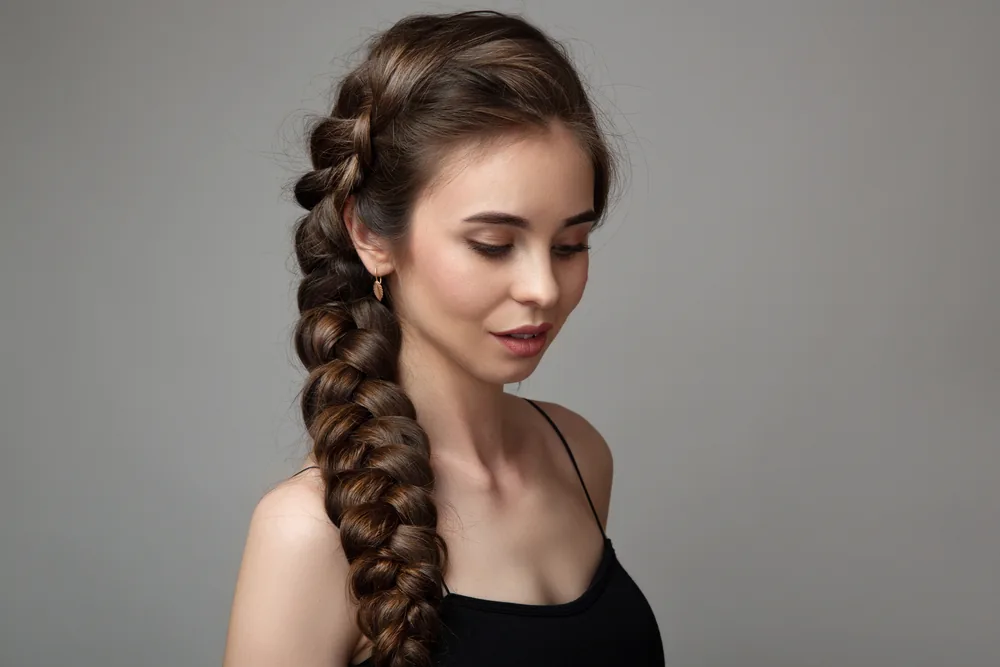
Braids need length and a strong perimeter to look full, but thick wavy hair also needs interior layers to stop the braid from feeling too heavy. A braid-friendly cut keeps the ends thick and the layers long, so braids look full and stay together, while the hidden interior layers keep the overall hair lighter. Short, choppy layers are the enemy of a good braid, so avoid them here.
Best for: Long, thick wavy hair. Best if you braid your hair often.
How to style: 1. Apply a little cream to damp hair and diffuse. 2. Braid loosely, not tightly. 3. Pull a few pieces out for softness. 4. Secure with a soft band.
What to ask your stylist: Ask for braid-friendly long layers: long layers, strong ends, interior weight removal only. No short surface layers.
33. Messy Bun-Friendly Layered Cut
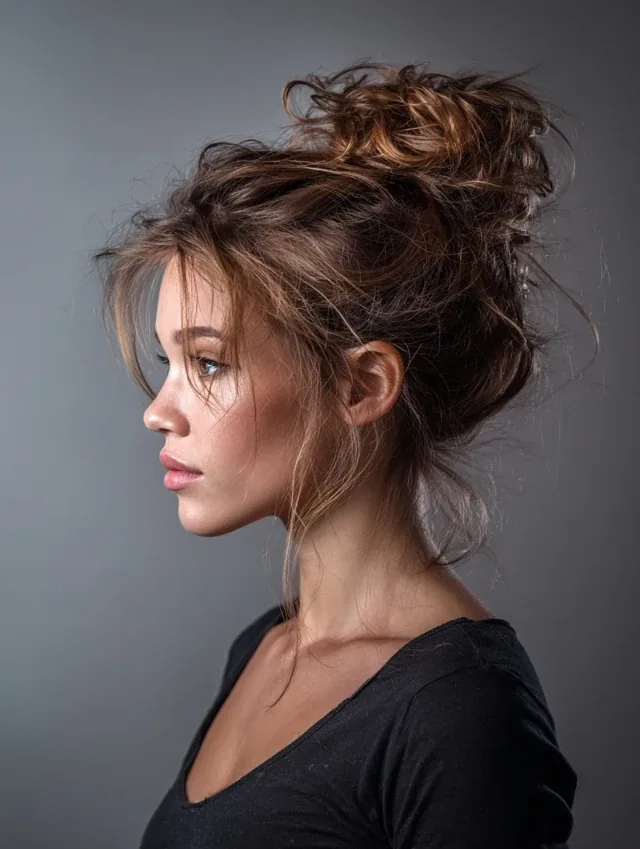
A messy bun needs enough length to wrap and enough texture to stay put, but thick wavy hair can make a bun feel huge and heavy. A bun-friendly layered cut keeps the length, removes interior bulk and leaves soft face-framing pieces out, so the bun sits comfortably and looks intentionally messy, not like a heavy knot. It is a practical everyday cut for busy days.
Best for: Thick wavy hair, medium to long. Best if you wear messy buns often.
How to style: 1. Apply cream and diffuse or air-dry. 2. Gather the hair loosely at the back. 3. Twist and pin loosely, leaving soft pieces out. 4. Pull a few strands free around the face.
What to ask your stylist: Ask for a messy bun-friendly cut: long layers, interior weight removal, soft face-framing pieces. Keep enough length to wrap comfortably.
34. Sleek Blowout Lob for Thick Waves
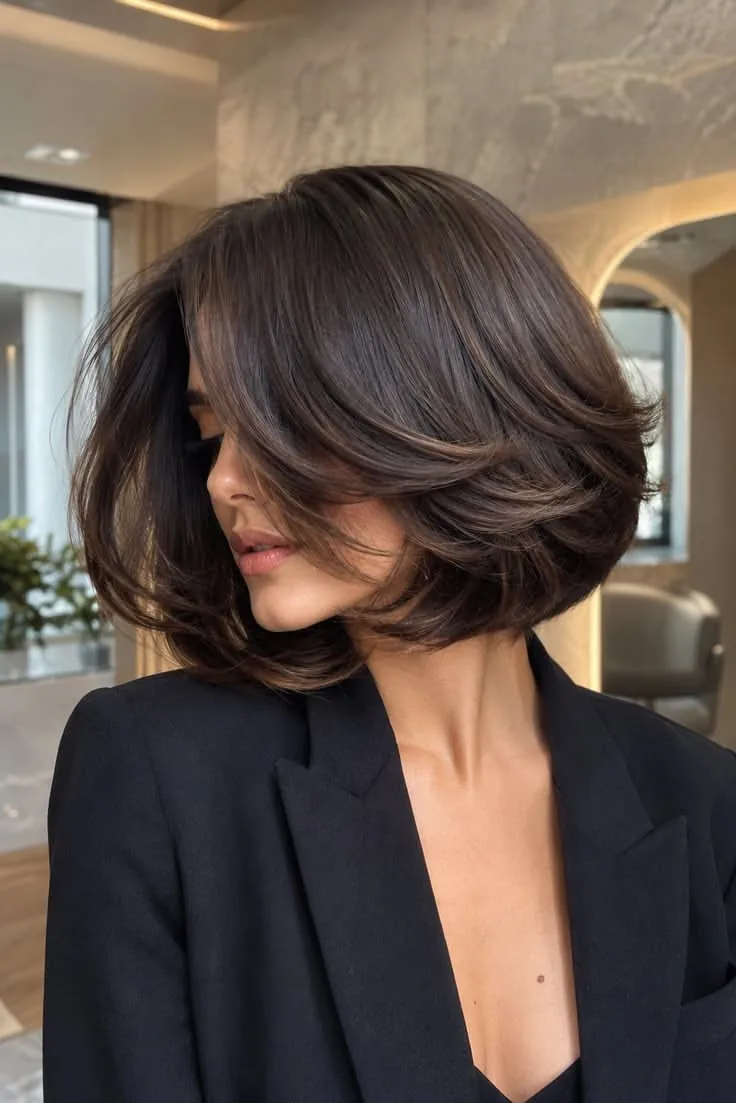
A sleek blowout lob is the polished version of a wavy lob: smooth on top, bouncy at the ends, with interior layers that keep it from feeling heavy. It takes more styling time than an air-dry cut, but it is worth it for work, events or a special occasion. The interior layers are what make the blowout last, because the hair is not fighting its own weight as it dries smooth.
Best for: Thick wavy hair, medium length. Best for a polished, blowout finish.
How to style: 1. Apply smoothing cream and heat protectant. 2. Blow-dry in sections with a large round brush. 3. Curl the ends under or out. 4. Finish with shine spray.
What to ask your stylist: Ask for a blowout lob with interior layers and a strong perimeter. Tell your stylist you blow-dry smooth, so they cut for that finish.
35. Long Waves with Balayage-Friendly Layers
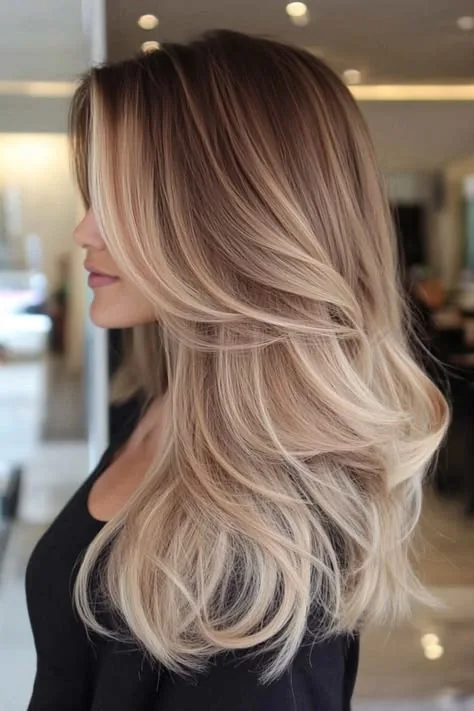
Balayage looks best on long wavy hair when the layers are long and soft, because the colour can melt through the waves instead of sitting in harsh blocks. Interior layers remove bulk without chopping the ends, so the balayage stays smooth and the waves stay full. It is a great cut-and-colour combination if you want dimension without a high-maintenance colour routine.
Best for: Long, thick wavy hair. Best if you have or want balayage or soft highlights.
How to style: 1. Apply cream to damp hair and diffuse. 2. Scrunch for natural waves. 3. Use a colour-safe shampoo. 4. Add oil to the ends for shine and definition.
What to ask your stylist: Ask for long, balayage-friendly layers with interior weight removal. Tell your colourist where you want the lightest pieces to fall.
Haircuts to Avoid for Thick Wavy Hair (and How to Tweak Them If You Love One)
There are no banned haircuts, only shapes that need tweaking for thick wavy hair. If you love one of these, the tweak in brackets usually makes it work.
- True one-length cut with no interior work: Keeps all the weight, so the hair goes triangular and dries slowly. Tweak: add long interior layers and keep the perimeter strong.
- Heavy surface razor-thinning: Thins the outside layer, which often makes frizz and flyaways worse. Tweak: ask for internal weight removal instead, with the surface left smooth.
- Short stacked layers on very dense hair: Can pile bulk at the back and create a mushroom shape. Tweak: keep stacking gentle, the nape soft, and the front longer.
- Very short layers at the crown: Add puff on top while the ends stay heavy, which worsens the triangle. Tweak: keep the shortest layers at chin length or longer.
- Blunt, heavy fringe on dense waves: Can puff up and need constant styling. Tweak: choose long curtain, side-swept or wispy bangs instead.
- Super-short pixie with no texture plan: Thick waves can puff out with nowhere to go. Tweak: keep a longer, textured pixie-bob with interior layers.
Best Picks by Goal
- Less bulk: Long layers with internal weight removal, wavy shag cut, modern wolf cut for wavy hair.
- Less frizz: Dry-cut wavy layers, defined waves with diffuser-friendly layers, feathered long layers.
- Faster drying: Textured lob with interior layers, layered bob for thick wavy hair, shoulder-length shag.
- More definition: Defined waves with diffuser-friendly layers, dry-cut wavy layers, beach waves cut.
- Low maintenance: Low-maintenance long layers (air-dry cut), collarbone cut with long layers, half-up friendly long layers.
Styling Routine for Thick Wavy Hair
Wash: Wash with a moisturising shampoo and conditioner, and detangle gently with conditioner in, using fingers or a wide-tooth comb. Avoid rough towel-drying, which breaks the wave pattern and creates frizz.
Cream: On very wet hair, apply leave-in cream first, then a little curl cream or mousse. Rake it through, then scrunch upward to encourage the wave. This order keeps the hair moisturised without weighing it down.
Dry: Diffuse on low heat, without touching the hair too much, or air-dry if you have time. Once the hair is fully dry, break any gel cast gently with a drop of oil. Do not brush dry wavy hair, or it will frizz.
Refresh: On day two or three, mist the hair lightly with water, add a tiny amount of cream to the ends, scrunch, and let it dry. A silk pillowcase or loose braid overnight also helps waves last longer.
What to Ask Your Stylist: Checklist
- Show 2 to 3 photos of the exact length, layer length and finish you want, on hair like yours.
- Say: I have thick wavy hair, so I want internal weight removal, not surface thinning.
- Say: keep the perimeter strong and the ends full.
- For layers, say: long layers, starting at the chin or collarbone, not short crown layers.
- Tell them how you dry your hair: diffuse, air-dry or blow-dry, so they cut for that routine.
- Ask whether a dry cut would suit your wave pattern better than a wet cut.
- Ask how often to trim to keep the shape, usually every 8 to 12 weeks for long layers, 6 to 8 weeks for bobs and lobs.
- Ask what product to use at home, and how much, so the style is easy to recreate.
Frequently Asked Questions (FAQs)
What is the best haircut for thick wavy hair?
The best haircut for thick wavy hair is usually long layers with internal weight removal, a textured lob, or a soft shag. All three remove hidden bulk, let the wave pattern spring up, and keep the ends strong. The right choice depends on your length: long layers for long hair, a textured lob for medium hair, and a layered bob for short hair.
Should thick wavy hair be layered or cut straight?
Thick wavy hair almost always benefits from layers, but they should be long and interior. A straight, one-length cut keeps all the weight and often dries into a triangle shape. Long layers with hidden weight removal give movement and definition without thinning the ends.
How do I stop thick wavy hair going triangular?
Stop the triangle by removing interior bulk at the ends, keeping the top smooth, and avoiding short crown layers. A rounded or U-shaped cut with long interior layers helps the waves form a soft, rounded silhouette instead of a flat top and wide bottom.
What haircuts should thick wavy hair avoid?
Thick wavy hair should usually avoid true one-length cuts with no interior work, heavy surface razor-thinning, and short stacked layers on very dense hair. These either keep too much weight or create frizz and puff. Most can be tweaked with interior layers and a strong perimeter.
How do I reduce frizz in thick wavy hair?
Reduce frizz by keeping the surface layer smooth, using leave-in cream on very wet hair, and avoiding brushing dry waves. Diffuse on low heat without touching the hair too much, and break any gel cast with oil once fully dry. A dry cut can also help, because it removes weight where frizz actually forms.
How often should I trim thick wavy hair?
Most thick wavy cuts look best with a trim every 8 to 12 weeks for long layers, and every 6 to 8 weeks for bobs and lobs. Regular trims keep the shape, stop the ends from getting too heavy, and prevent the triangle from coming back as the hair grows.
Is a shag good for thick wavy hair?
Yes, a soft shag is one of the best cuts for thick wavy hair, because its layers remove bulk and let each wave find its own shape. Keep the layers soft and the shortest layers at chin length or longer, and ask for interior weight removal so the top does not puff up.
Should I get bangs with thick wavy hair?
Yes, if the bangs are long and soft. Long curtain bangs, side-swept bangs and wispy bangs work well on thick wavy hair, because they blend into the layers. Avoid a thick, blunt fringe, which can puff up and need constant styling on dense waves.
Can thick wavy hair be cut dry?
Yes, and for many people it is better. A dry cut lets the stylist see your real wave pattern and remove weight exactly where it is needed, instead of guessing how wet hair will shrink as it dries. Arrive with your hair dry and styled as usual for the most accurate result.
What is the lowest maintenance haircut for thick wavy hair?
The lowest maintenance cut is long layers planned as an air-dry cut, with interior weight removal and a strong perimeter. Wash, add cream, scrunch and air-dry, and the shape still holds. A collarbone cut with long layers is a good medium-length version of the same idea.
Conclusion
Thick wavy hair does not need to be thinned into submission. It needs a cut that respects its density: long, internal layers that remove hidden weight, a smooth surface that keeps frizz down, and strong ends that keep the hair looking thick and healthy. That one idea works for long layers, shags, lobs, bobs and low-maintenance cuts alike.
Pick the style from this list that fits your length, your drying routine and how much styling time you have each morning. Save a photo, take the what-to-ask line for that style to your stylist, and enjoy waves that form properly every wash, not just on salon day.
Which of these 35 haircuts for thick wavy hair will you try next? Tell us in the comments, and share this guide with a friend whose thick waves need a lighter, better-shaped cut.