Flat, Fixed and Out of Your Face: Hairstyles for a Barre Class That Survive Every Pulse, Plank and Floor Sequence
A barre class is not like other workouts, and your hair knows it. You are pulsing at the barre, folding over your legs, lying flat on your back for core work, then rolling up again — and a high bun that felt fine at the start becomes a hard lump digging into the back of your head the moment you lie down. That is why hairstyles for a barre class need a different rulebook from gym hair: everything must lie flat.
The best barre styles sit low and close to the head. A low bun at the nape, a flat braid down the back, or a wide headband with the hair pinned away will survive every plié, pulse and plank without pressing into your skull, sliding forward into your eyes, or coming loose on the mat. Light sweat, small movements and lots of floor work reward secure, low-profile styles — not tall, heavy ones.
This guide starts with the thinking — what makes a style barre-proof, how to pass the lying-flat test, and which products hold through a sweaty pulse sequence — and then gives you 38 styles for short, medium and long hair, straight, wavy and curly textures, and every kind of barre class from a gentle first session to a fast-paced cardio barre. Try one at home first, lie down in it, and walk into class knowing your hair is already sorted.
What Makes a Hairstyle Barre-Proof
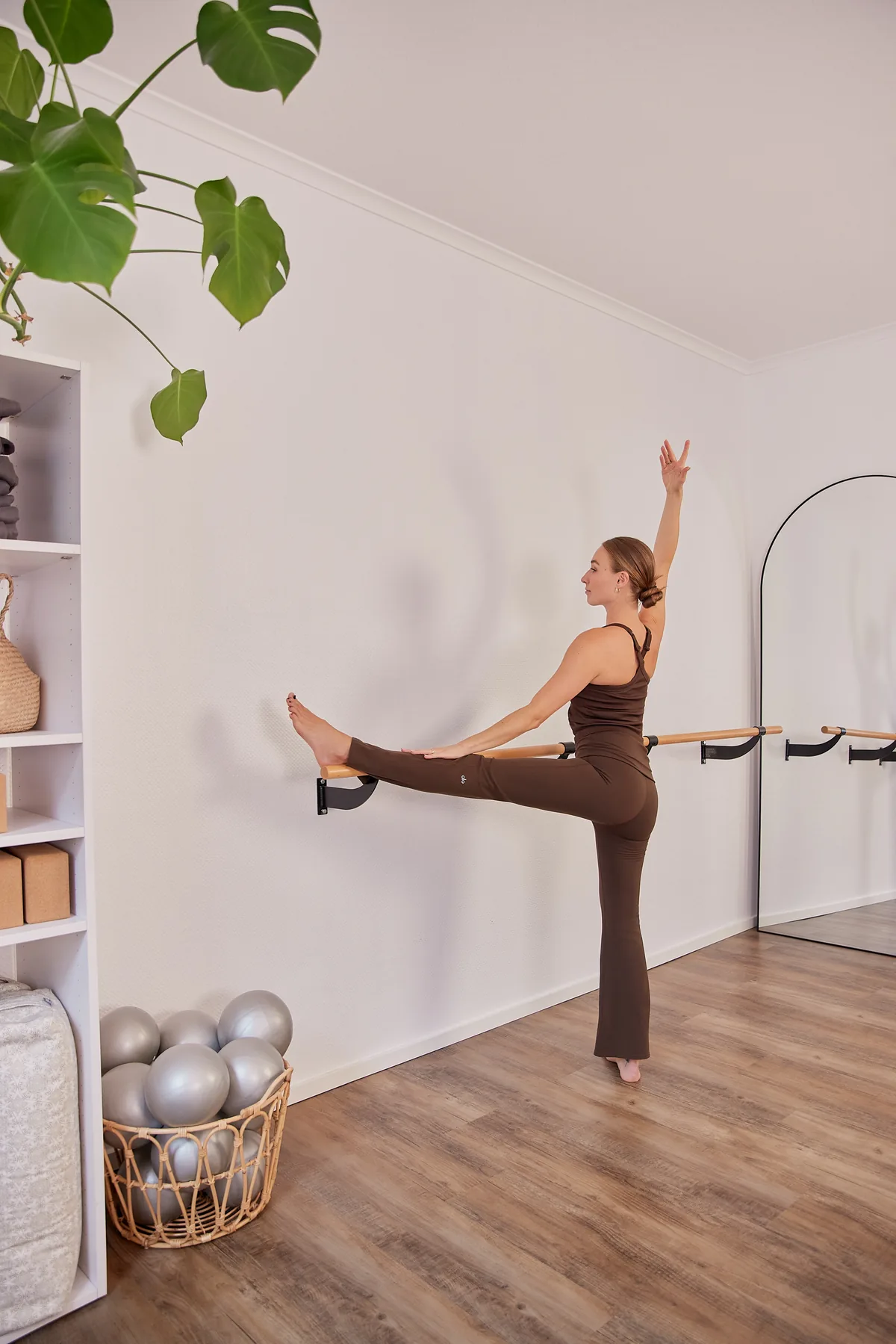
A barre-proof style passes three tests at once. It lies flat enough that you can rest the back of your head on the mat without a lump, it stays put through dozens of tiny pulsing movements that loosen ordinary styles, and it keeps every strand out of your face while you fold forward over the barre. If a style fails any one of these, it will fail in class.
Common mistake: choosing a style that works standing up and never testing it lying down. A top knot, a high ponytail and even a mid-height bun all press into the mat and push your head forward, which strains the neck during core work. Always lie flat on the floor for thirty seconds before you leave home.
Quick verdict: low, flat and anchored in at least two places. A low braid or a low bun with a headband is the safest starting point for any barre class, and you can build from there once you know what your hair does on the mat.
The Lying-Flat Test: Try It Before You Leave Home
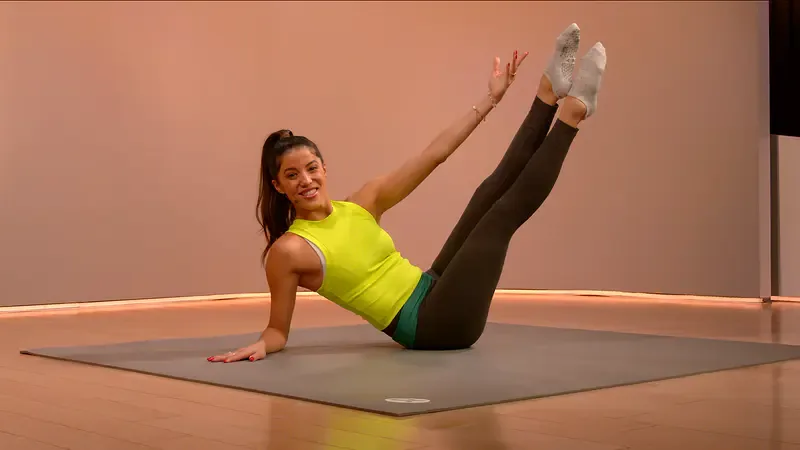
The lying-flat test takes one minute and saves a whole class of discomfort. Style your hair, lie on your back on a firm floor, and rest your head the way you would during mat work. If you feel any lump, bump or pressure point, the style will hurt by the third core sequence — change it now, not mid-class.
Common mistake: testing the style by shaking your head while standing. Barre is mostly small, slow movements and long holds, so a style can survive a head shake and still come apart during twenty minutes of floor work. The floor test is the only one that matters, because the floor is where the style meets the mat.
Quick verdict: if you forget the style is there while lying flat, it passes. If you are aware of it at all — a pin digging in, a bun pressing, a braid sliding — re-do it lower and flatter before class.
Sweat and Grip: Products That Hold Through Pulses
Barre sweat is light but steady: a warm studio, small pulsing muscles and a headband that traps heat. The products that work are light and flexible — a pea-sized amount of strong-hold gel smoothed over the hairline, a texturising spray for grip before braiding, and a light mist of hairspray to finish. Heavy oils and thick leave-in creams make hair slippery and heavy, which is the opposite of what you want.
Common mistake: using dry shampoo as a styling product before class. Dry shampoo absorbs oil but adds grit, and on damp, sweaty hair it can clump and make braids slip. Save it for the journey home, and style clean, slightly damp hair with gel and spray instead.
Quick verdict: gel for the hairline, spray for grip, pins for insurance. One of each beats a shelf of products, and less product almost always holds better than more in a barre class.
Hair by Length: Short, Medium and Long at the Barre
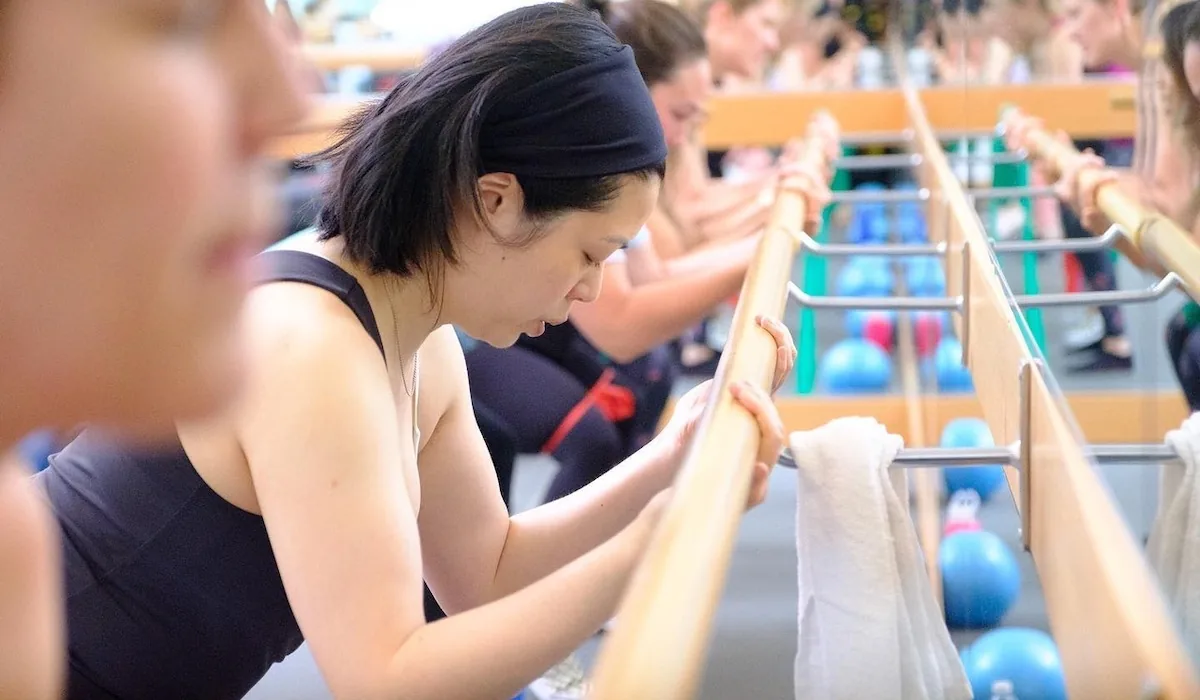
Short hair needs pins and a headband more than it needs a style: the front layers are the ones that fall into your eyes during fold-overs, so pin them back flat and let a wide, grippy headband do the rest. Medium hair suits a low bun or a single braid, which lie flat and hold without much weight. Long hair needs a braid or a braided bun, because a plain ponytail swings during pulses and a heavy bun presses into the mat.
Common mistake: copying a style built for a different length. A top knot on very long hair becomes heavy, pulls at the roots and slides loose as you sweat, while a low bun on very short hair simply falls apart. Match the style to the length you have today, not the length you wish you had.
Quick verdict: short hair, pin and headband; medium hair, low bun or braid; long hair, braid it first, then bun or tie it. The right style for your length will feel light and forgettable on the mat.
Braids Versus Buns Versus Ponytails at the Barre
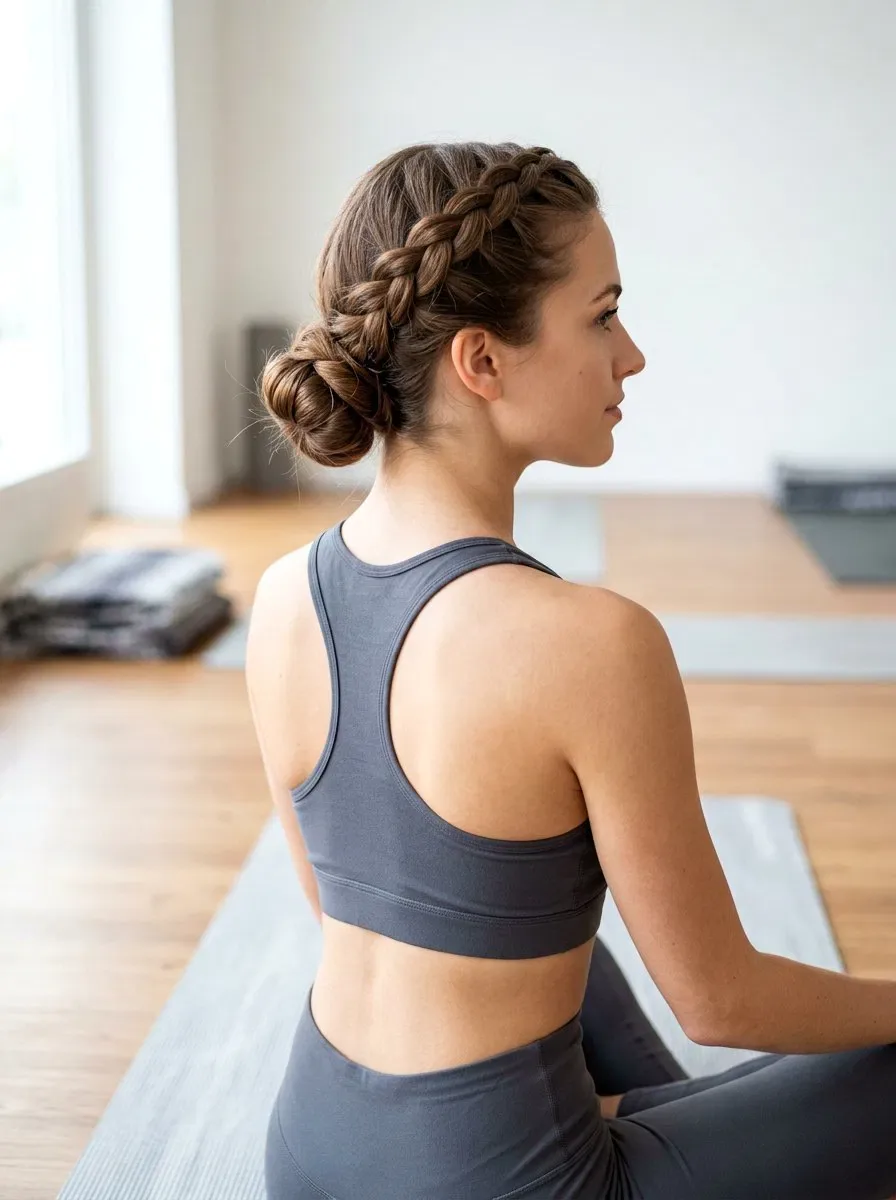
If you could only learn one barre style, learn a braid. Braids distribute the weight of your hair along its whole length, lie flat against the head, and survive sweat and floor work better than any other style. Buns come second — secure and tidy, but they concentrate weight in one spot and can press into the mat. Ponytails come last, because they swing during pulses and their single elastic loosens with every fold-over.
Common mistake: choosing a ponytail because it is fastest. It is fastest to tie and fastest to fall apart, and re-tying it between barre sequences means losing your place at the barre. A single French braid takes ninety seconds and outlasts a five-second ponytail by the whole class.
Quick verdict: braids first, low buns second, ponytails only if they are braided or wrapped low. If you are short on time, braid the hair first and worry about the bun later — the braid is doing the real work.
Headbands, Grip Socks and the Rest of the Barre Kit
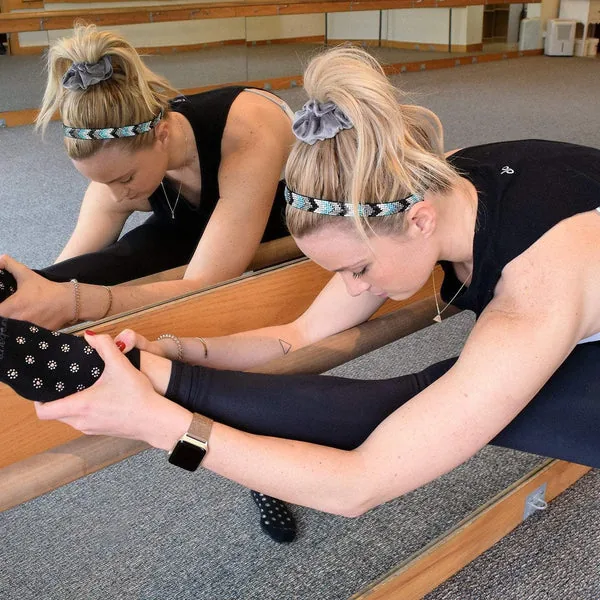
A barre class has its own small kit, and hair is part of it. A wide fabric headband with a silicone grip strip keeps the hairline tidy through sweat, two or three bobby pins rescue any style between sequences, and grip socks keep your feet steady on the floor while your hair stays out of the way. Pack them in the same pouch every time so you can find them without looking.
Common mistake: wearing a narrow, slippery headband that rides up and off within ten minutes. Thin elastic bands are made for looking neat, not for holding hair through a workout. Choose a wide fabric band with grip on the inside, and test it through a full practice session at home before relying on it in class.
Quick verdict: wide grippy headband, three pins, two spare elastics, grip socks. That is the whole barre hair kit, and it fits in a pocket. Treat it like your socks — part of the class, not an afterthought.
Post-Class Refresh: From Studio to Street in Five Minutes
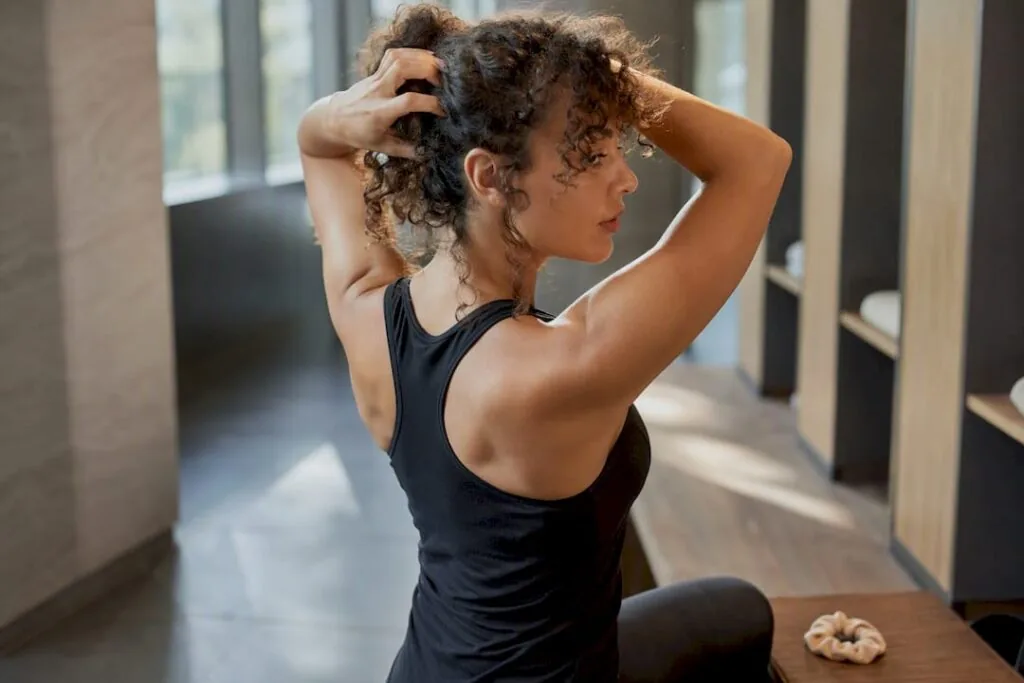
Barre leaves hair lightly damp rather than soaked, which makes the refresh easy. Undo the style, shake the hair out at the roots, and mist a little dry shampoo through the crown if you need it. A quick brush, a low loose bun or a soft braid, and you are presentable for coffee or errands without a full wash.
Common mistake: re-tying sweaty hair tightly straight after class. Damp hair stretches and snaps far more easily than dry hair, so a tight post-class ponytail causes breakage at the hairline. Let the hair dry loosely first, and only style it again once it feels dry to the touch.
Quick verdict: shake it out, dry shampoo at the roots only, then a loose style. If you are heading home, rinse the sweat out the same day — salt left to dry in hair causes itching and dullness within a week.
The Mistakes That Ruin a Barre Class (and How to Avoid Them)
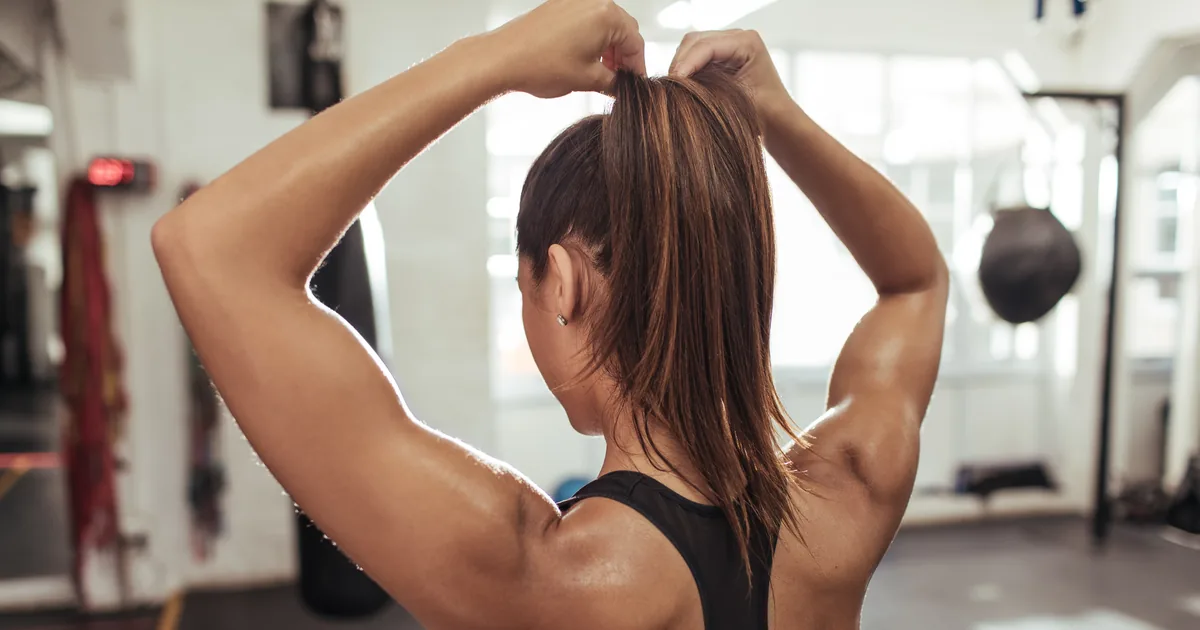
Most barre hair failures come from the same handful of mistakes: a bun placed too high, pins that slide out when you sweat, front layers left loose to fall during fold-overs, or a style you have never practised. Each one is easy to avoid once you know it, and each one costs you focus during the class if you do not.
Common mistake: tying hair so tight it gives you a headache by the second sequence. A barre style should feel secure, not painful. If your scalp aches, loosen it slightly and add a pin instead of pulling harder — pain distracts you just as much as loose hair does.
Quick verdict: low and flat, practised at home, pinned in two places, and tested lying down. Get those four right and your hair will be the last thing you think about in class — which is exactly the point.
1. Low Sleek Bun at the Nape
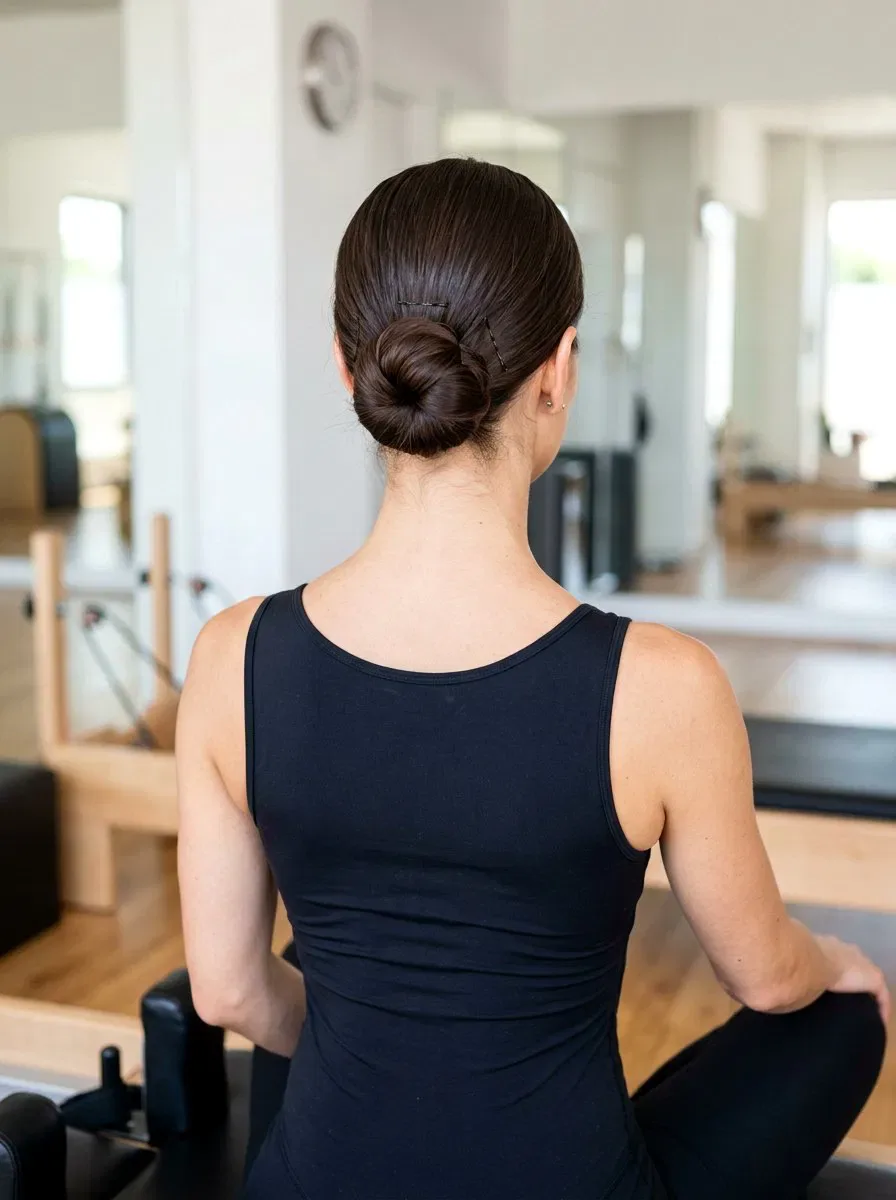
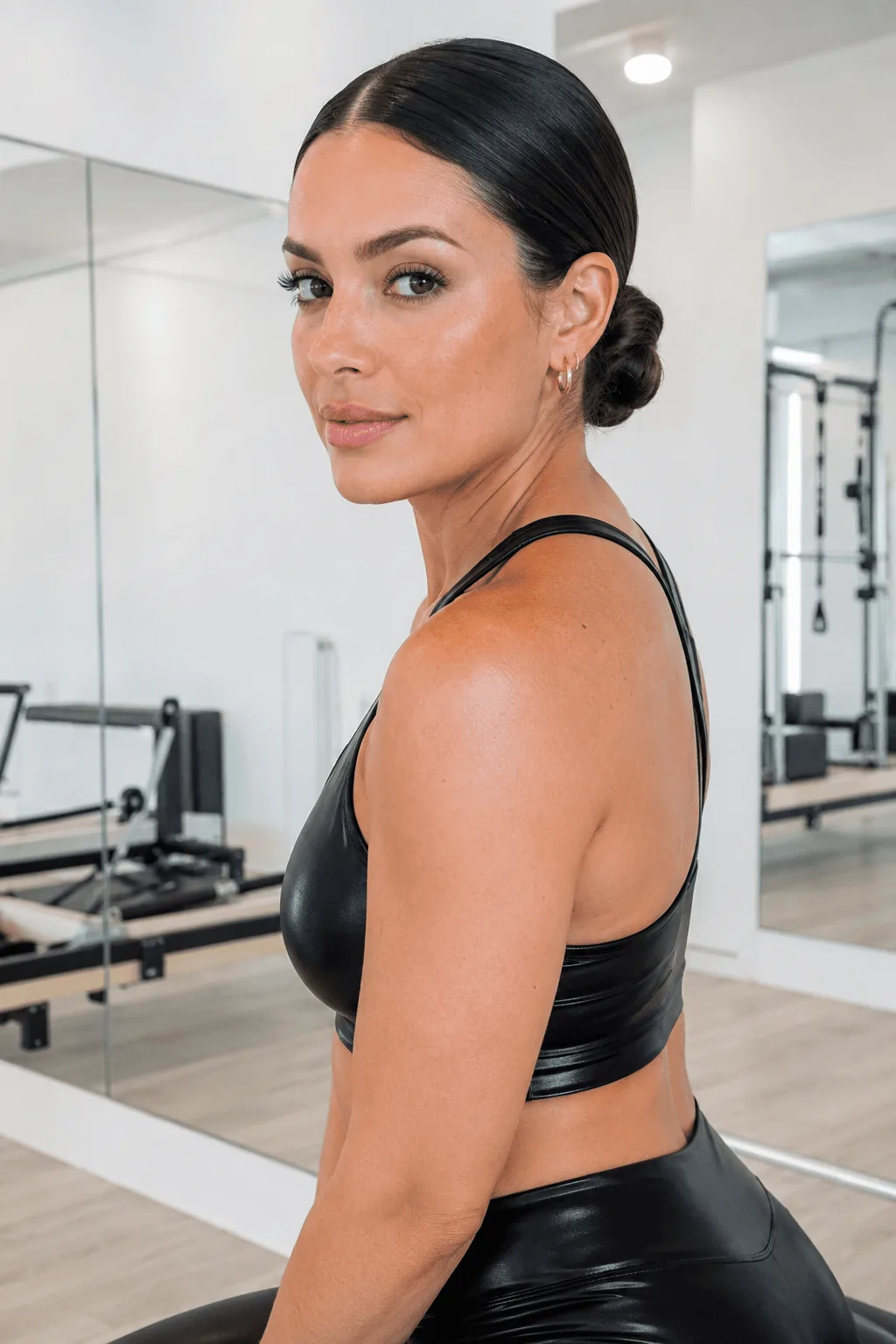
The low sleek bun is the single most reliable barre style there is. Brushed smooth, gathered at the nape and pinned in at least four places, it lies completely flat when you lie on your back, keeps every strand off your neck during pulses, and never swings during fold-overs. It is neat, quiet and forgettable once class starts — the highest praise a barre style can earn.
Pros: lies perfectly flat on the mat, survives sweat and floor work, works on straight, wavy and curly hair, and looks polished enough for after class too.
Cons: needs several pins to stay secure on thick hair, and can feel plain if you like a more styled look; very short hair will not reach a bun.
Who it suits: everyone with medium or long hair, especially first-timers who want one style they can trust in any barre class.
2. Double French Braids
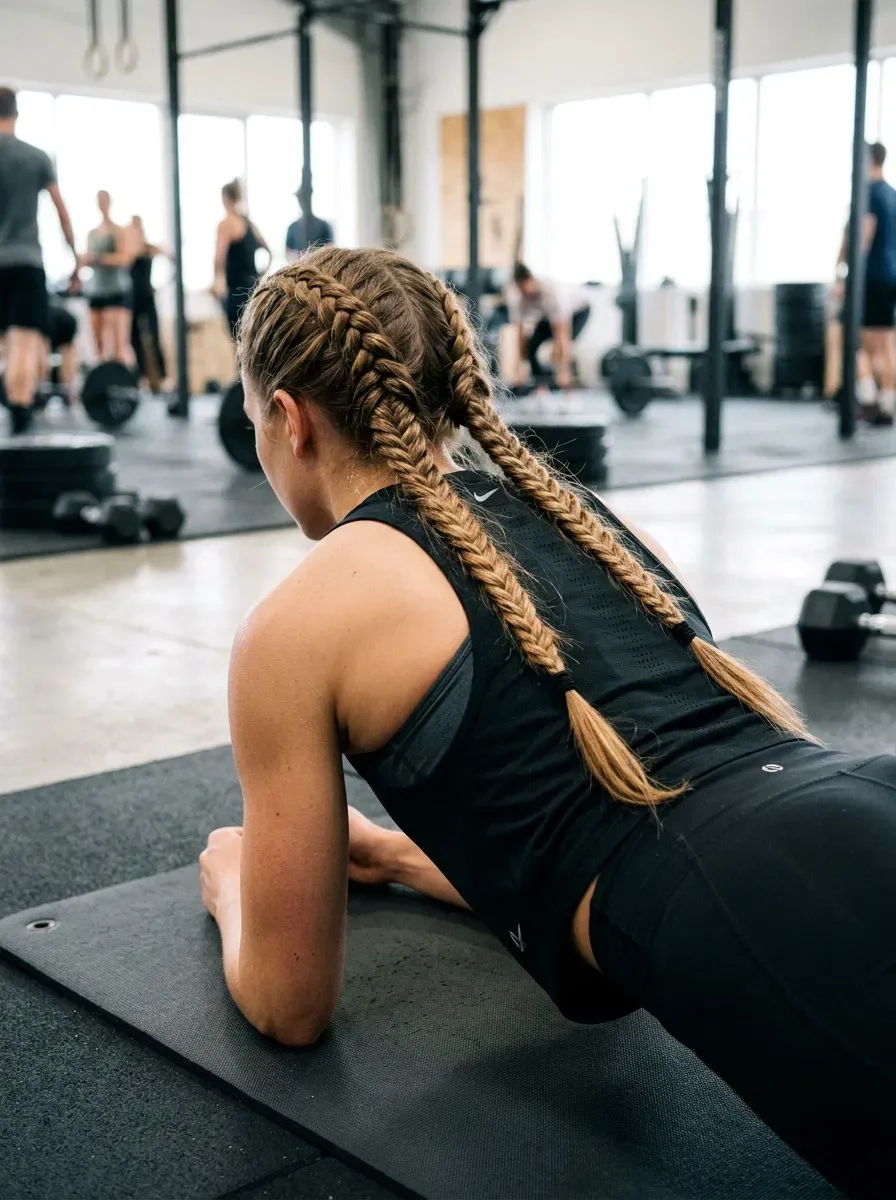
Two French braids, one on each side, are a barre class favourite because they sit flat against the head and hold every layer. Part the hair down the middle, braid each side from the hairline to the nape, and secure both tails low. Nothing falls forward during fold-overs, nothing presses into the mat, and the style survives the whole class without a single touch-up.
Pros: completely flat for floor work, holds fine layers and baby hairs, distributes weight evenly so nothing pulls, and lasts from class to errands.
Cons: takes a few minutes and some practice to get even, and a wonky centre part shows; hard to do on very short hair.
Who it suits: medium and long hair of any texture, especially anyone whose front layers always escape during fold-overs.
3. Single Tight French Braid
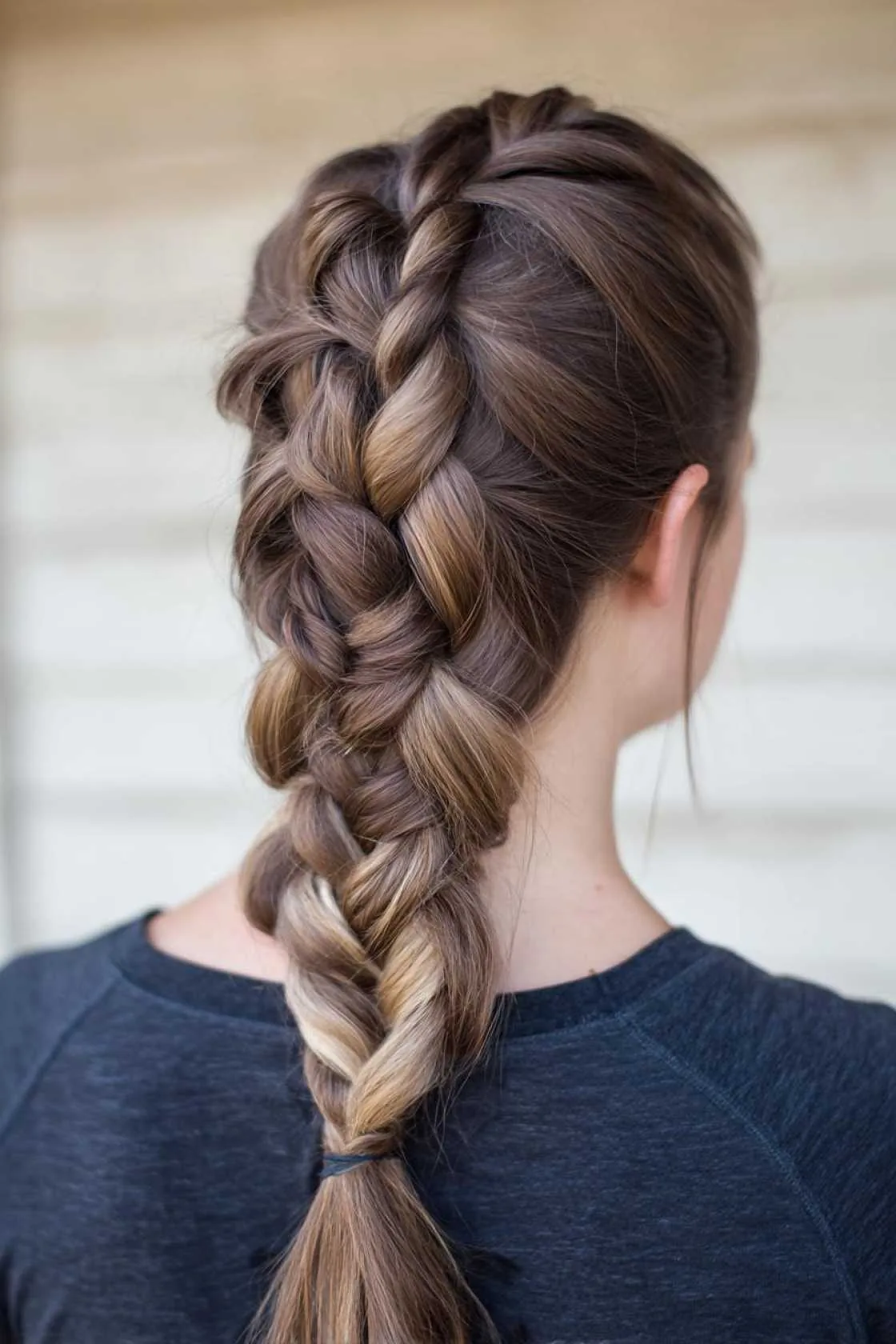
A single French braid down the centre of the head is the simplest sweat-proof barre style. It pulls the hair flat, keeps the front layers under control and spreads the weight evenly, so nothing pulls or slips as you pulse, plank and roll up from the mat. Start at the hairline, add hair as you go, and braid right down to the ends.
Pros: ninety seconds once practised, lies flat on the mat, needs no pins, and survives sweat better than almost any other style.
Cons: can feel tight across the scalp if braided too firmly, and the tail can tickle the neck during floor work if left loose.
Who it suits: beginners, anyone with layers that will not stay in a bun, and long hair that needs its weight spread out.
4. Low Braided Ponytail
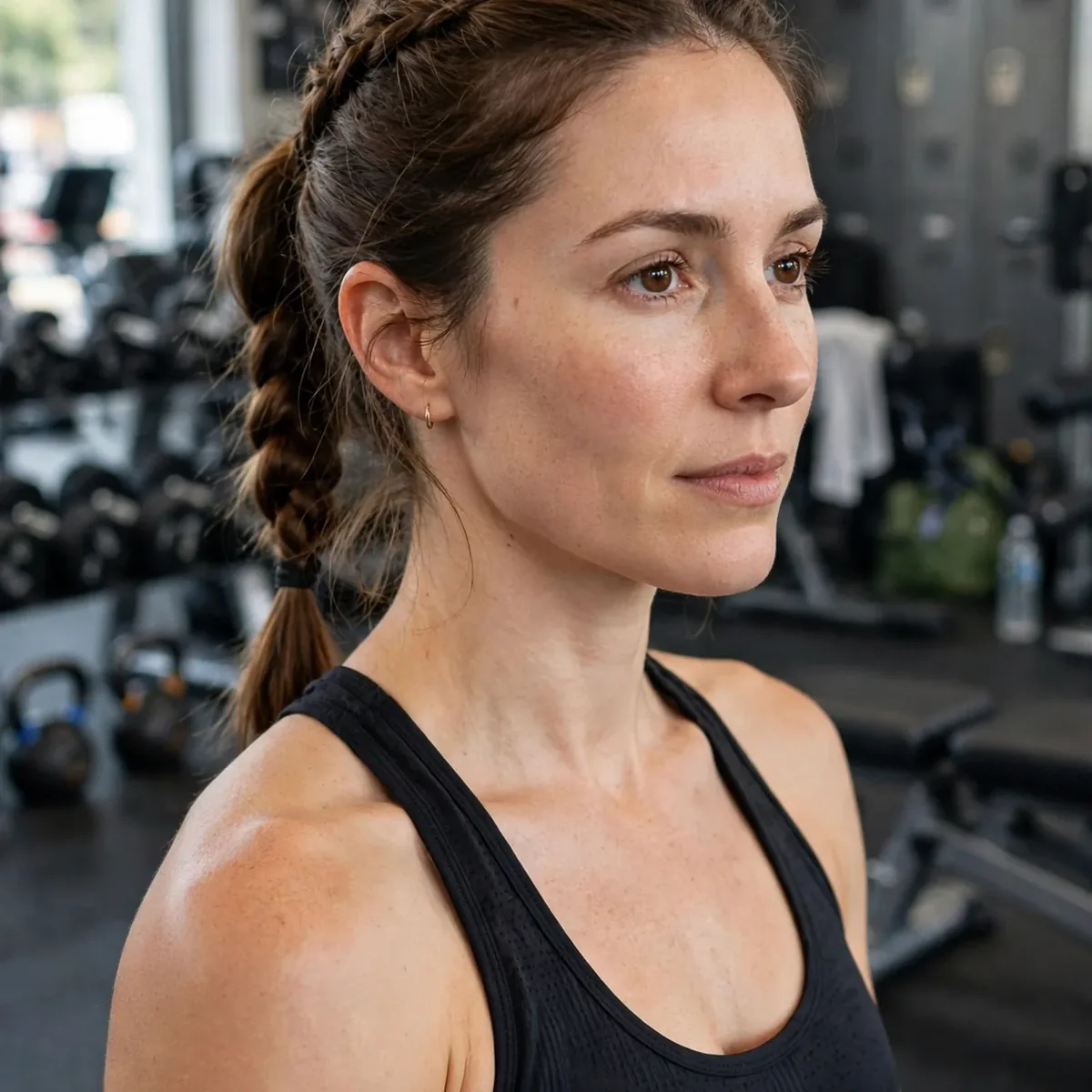
A low braided ponytail gives you the security of a braid with the ease of a ponytail, and it lies flat enough for mat work. Gather the hair low at the nape, secure it, then braid the tail to the ends and finish with a second elastic. The braid stops the tail swinging during pulses, and the low placement means nothing digs into the mat when you lie down.
Pros: quick to do, flat enough for floor work, and the braid keeps the tail controlled through every sequence.
Cons: the tail can still shift under your shoulders during core work, and a loose braid unravels by the second half of class.
Who it suits: long hair that is too heavy for a bun, and anyone who wants a braid without the time a French braid takes.
5. Flat Dutch Braid
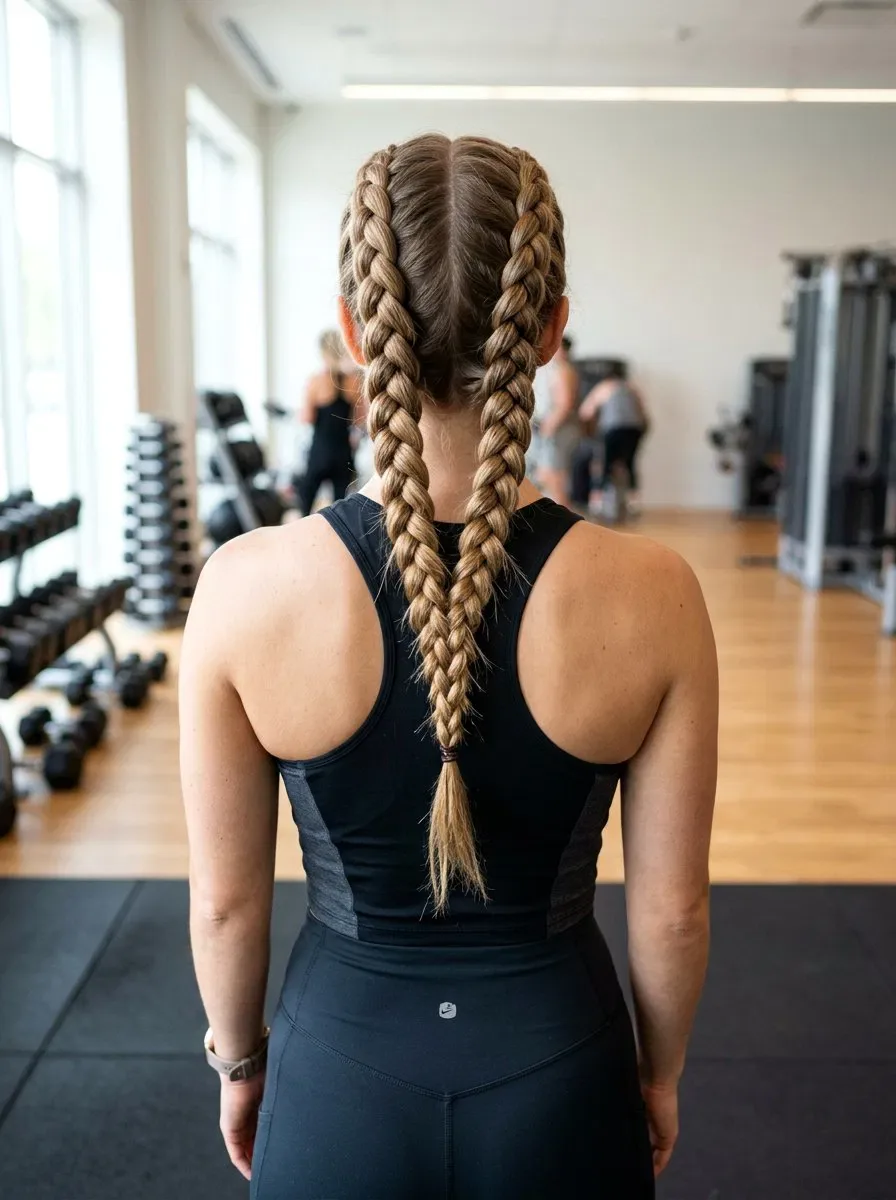
A Dutch braid — the inside-out cousin of the French braid — sits in a raised ridge, so braid it snugly and keep it low and centred for barre. Worked from the hairline down the back of the head, it grips the hair firmly, holds layers in place, and stays put through pulses, planks and every roll-up from the mat.
Pros: grips hair very firmly, looks polished, and holds thick or layered hair that slips out of a French braid.
Cons: the raised ridge can press slightly into the mat if braided too loosely; it takes practice to keep the tension even.
Who it suits: thick, layered or slippery hair, and anyone who finds a French braid slides loose by the end of class.
6. Two Low Braided Buns
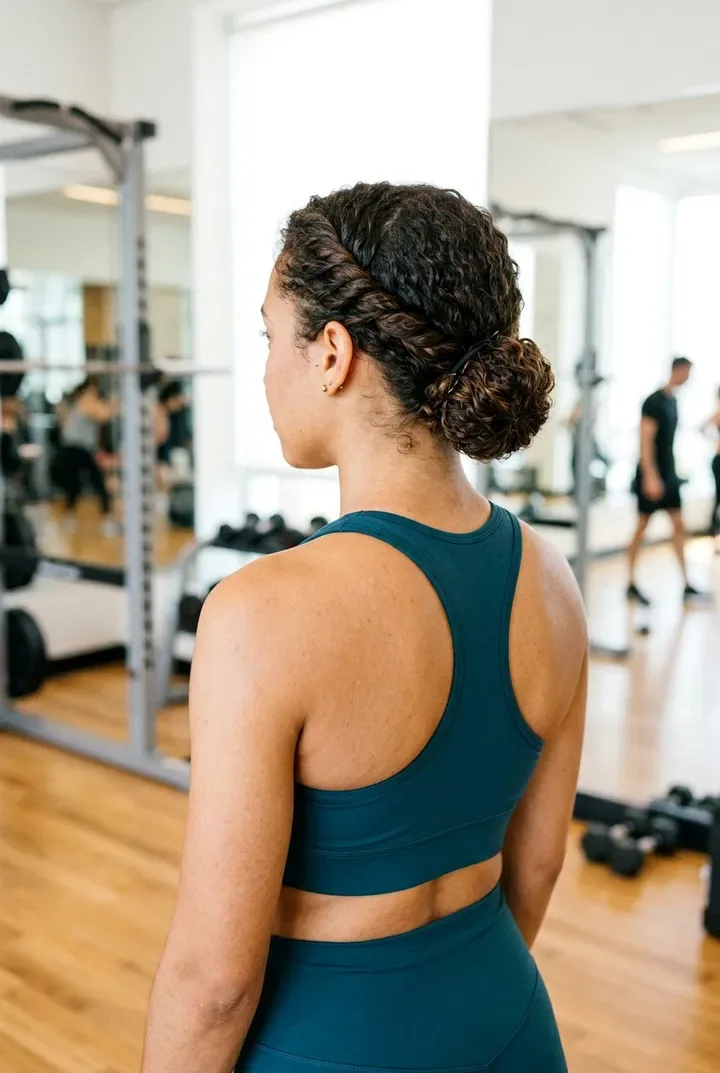
Two low braided buns sit at the nape, one on each side, and they are flatter and more secure than a single bun. Braid each side low, coil the braid into a small bun and pin it flat. The weight is split in two, nothing sits on the crown, and you can lie on your back without feeling either bun.
Pros: very flat for mat work, splits the weight of thick hair, and stays secure through long floor sequences.
Cons: takes longer than a single bun and needs more pins; uneven parting shows more than with one bun.
Who it suits: thick or heavy hair that pulls in a single bun, and anyone who wants a playful style that is still fully barre-proof.
7. Slicked-Back Low Ponytail
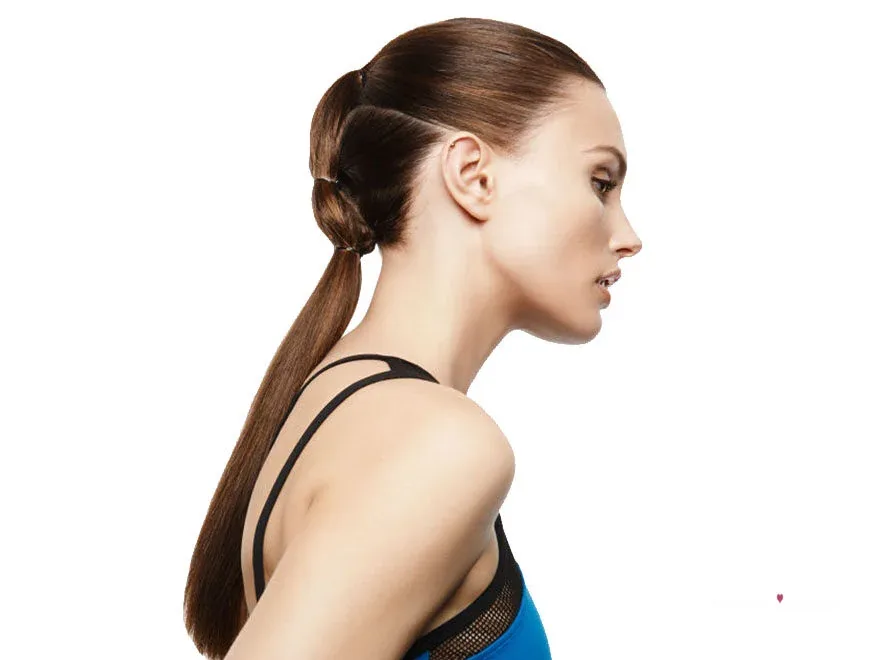
A slicked-back low ponytail is the fastest barre style that actually works. Smooth the hair back with a little gel, gather it low at the nape and secure it firmly, then wrap a small section of hair around the elastic to hide it. It keeps the hairline tidy, the neck cool, and the hair out of your face during fold-overs.
Pros: takes under a minute, looks sleek and intentional, and works well under a headband for extra hold.
Cons: a single elastic can loosen during long pulse sequences, and the tail can swing or catch under your shoulders on the mat.
Who it suits: straight or fine hair, short-on-time mornings, and anyone pairing the style with a wide headband.
8. Braided Low Bun
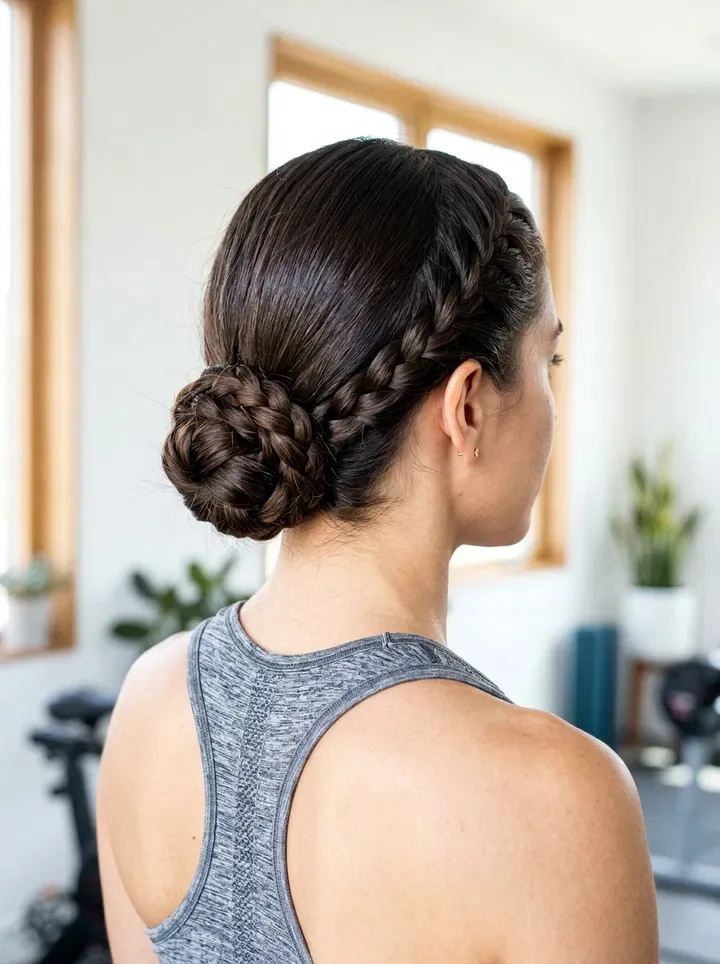
A braided low bun combines the two most reliable barre techniques: braid first, then coil. Braid the ponytail, wrap it into a flat bun at the nape and pin it at four points. The braid keeps the bun compact and light, the low placement keeps it off the mat, and the style holds through sweat, pulses and floor work without shifting.
Pros: extremely secure, compact and flat, and the braid stops the bun unravelling even on slippery hair.
Cons: takes a few minutes longer than a plain bun, and very short hair will not braid far enough to coil.
Who it suits: long or slippery hair that will not hold a plain bun, and anyone heading to a longer or hotter barre class.
9. Headband and Low Ponytail Combo

A wide headband plus a low ponytail is the easiest fix for hair that will not stay put. The headband controls the hairline and the front layers, the low ponytail holds the length, and together they survive fold-overs, pulses and floor work. Choose a fabric band with a silicone grip strip so it stays put when you sweat.
Pros: very quick, controls flyaways and baby hairs, and the headband adds a second anchor so the ponytail loosens less.
Cons: a narrow or slippery band rides up and off; the ponytail tail can still swing during faster sequences.
Who it suits: medium hair, fine hair that slips out of braids, and anyone whose hairline frizz is the main problem in class.
10. Wide Fabric Headband with a Loose Low Bun
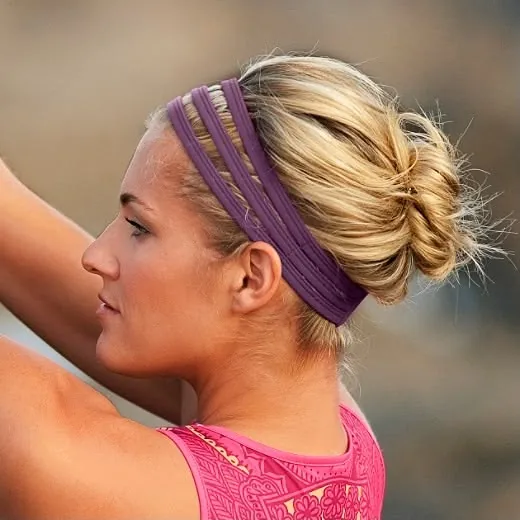
For a softer barre look, pair a wide fabric headband with a loose low bun. The headband does the holding at the front, so the bun can be gentle and comfortable at the nape. It keeps the hair out of your face during fold-overs, lies flat on the mat, and feels far less severe than a slicked-back style.
Pros: comfortable for a whole class, kind to the hairline, and looks soft and relaxed rather than severe.
Cons: a loose bun can sag during floor work, so it needs at least two pins; not secure enough for a fast cardio barre class.
Who it suits: a gentle or first barre class, sensitive scalps, and anyone who finds tight styles give them a headache.
11. Bubble Braid Low Ponytail
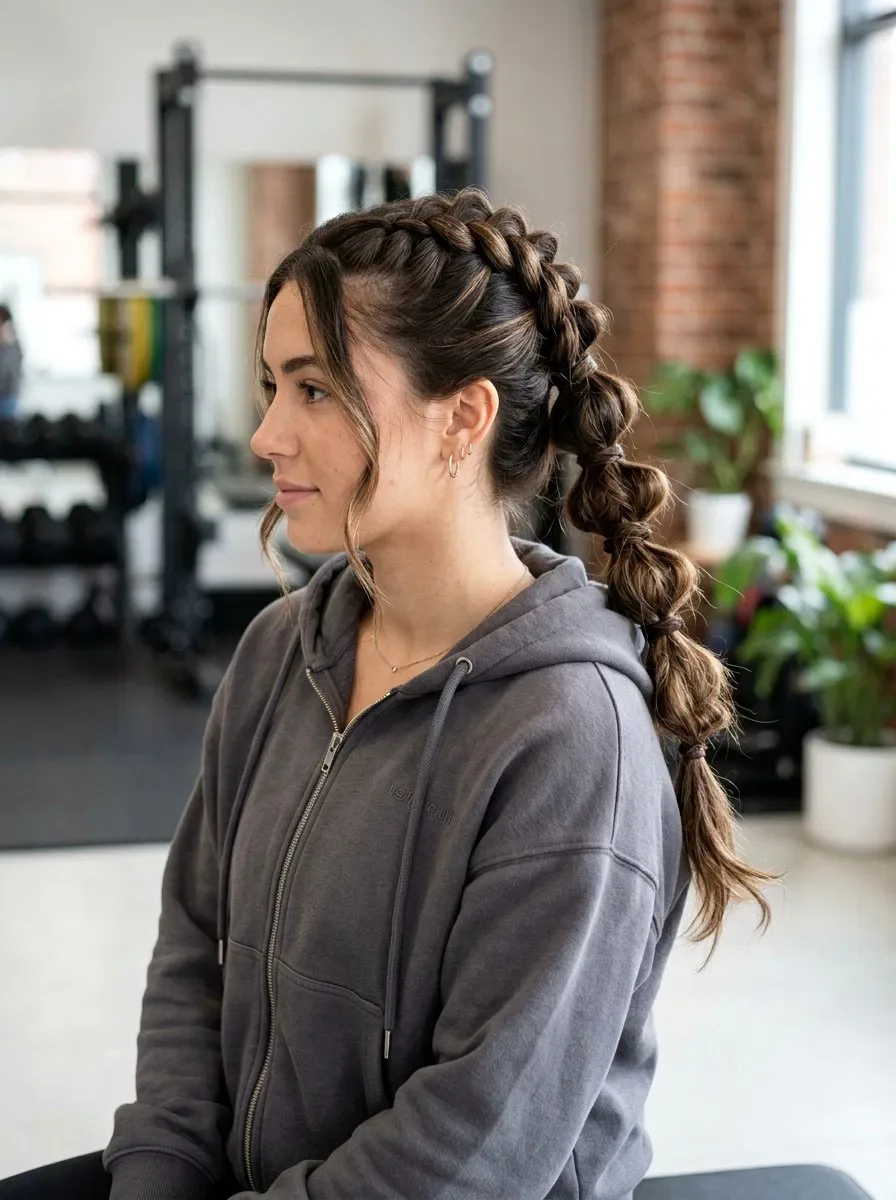
A bubble braid turns a low ponytail into a style that actually stays put. Tie the hair low, add elastics every few inches down the tail, and gently pull each section out to form bubbles. The elastics break the tail into short, controlled sections, so it cannot swing as one heavy weight during pulses or catch under your back on the mat.
Pros: playful but genuinely secure, easy to repair mid-class by re-tightening one elastic, and keeps the tail short and controlled.
Cons: needs several elastics, and pulling the bubbles out too hard loosens the whole style.
Who it suits: long hair, anyone bored of a plain ponytail, and a fun weekend barre class.
12. Fishtail Braid Down the Back
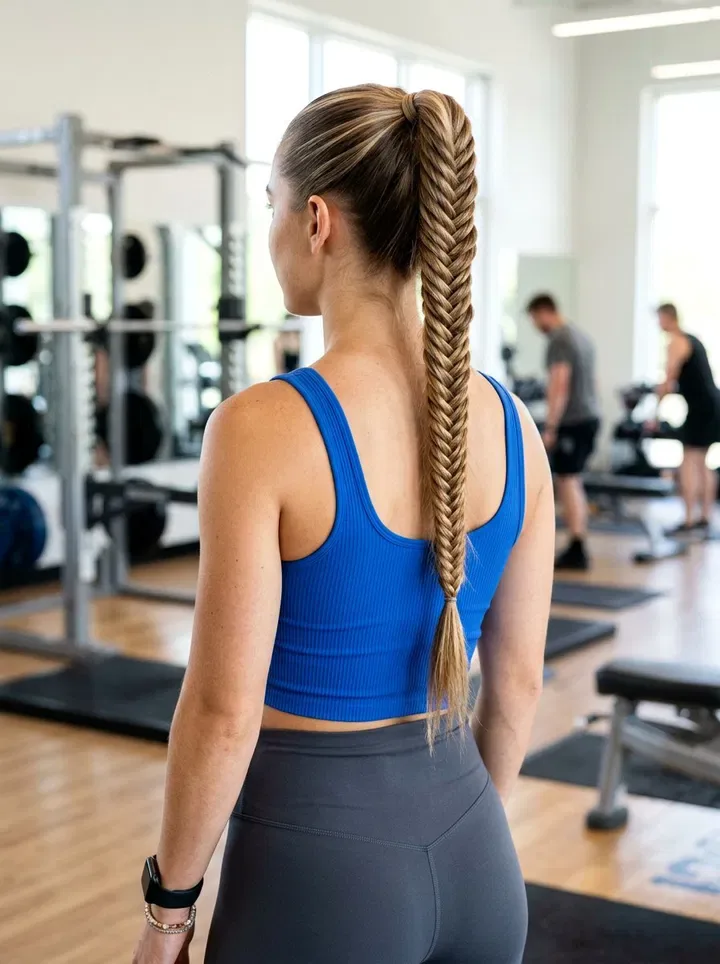
A fishtail braid looks intricate but is simple once you know the rhythm: split the tail in two and pass small pieces across from each side. Worn low down the back, it lies flat on the mat, holds the hair in a slim, controlled tail, and survives pulses and planks without unravelling.
Pros: very secure once finished, lies flat, and looks far more polished than the effort it takes.
Cons: slower to do than a three-strand braid, and it can loosen at the top if the first sections are not kept snug.
Who it suits: long hair, anyone who wants a pretty style that is still fully practical, and slower-paced barre classes where you have time to braid at home.
13. Cornrows for Barre
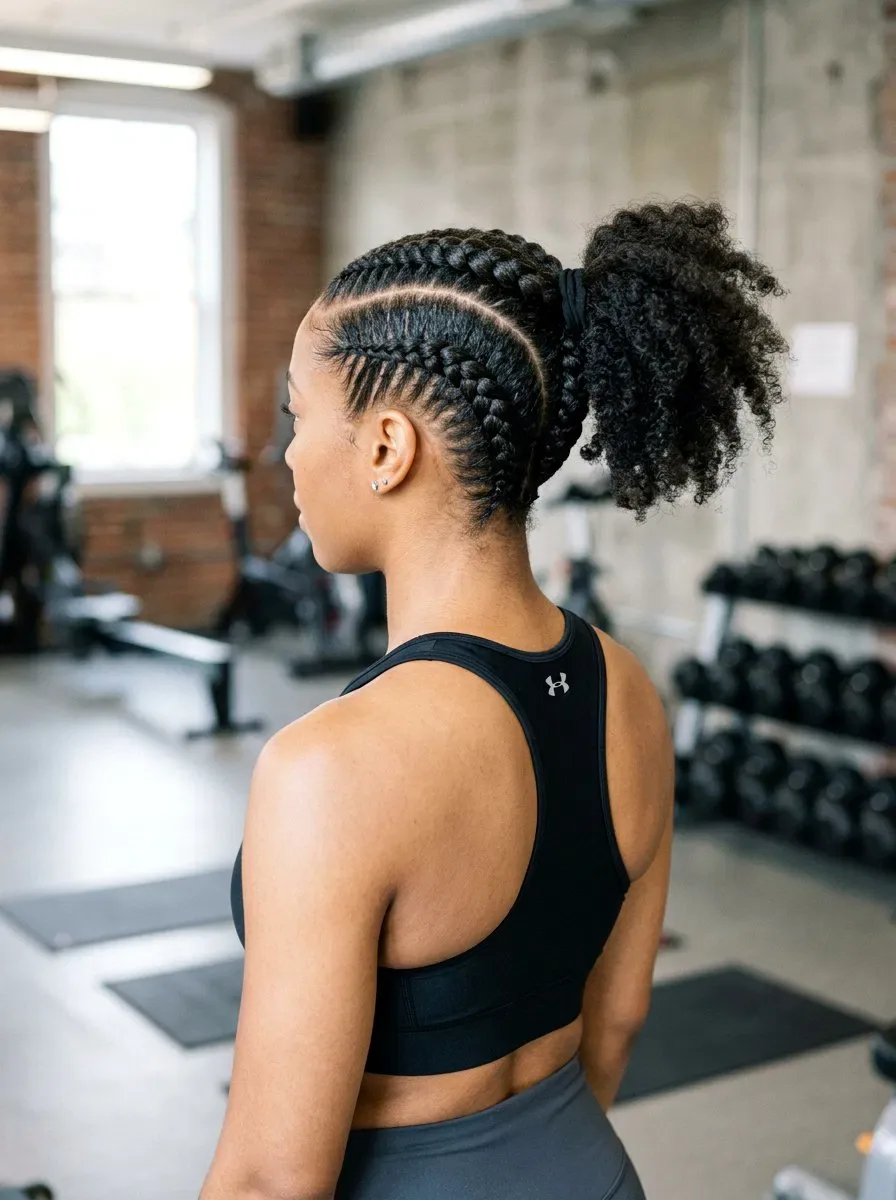
Cornrows are one of the most barre-proof styles of all: braided flat against the scalp, they cannot press into the mat, cannot fall into your face, and cannot come loose during pulses. They also protect the hair from sweat and friction, and they last for days, so you can go from class to class without re-styling.
Pros: completely flat for floor work, lasts for days, protects the hair, and needs no pins, bands or touch-ups in class.
Cons: takes time or a braider to install, and tight cornrows can ache if braided too firmly at the hairline.
Who it suits: anyone who trains several times a week, protective styling, and hair that needs to stay fully contained.
14. Twisted Low Bun
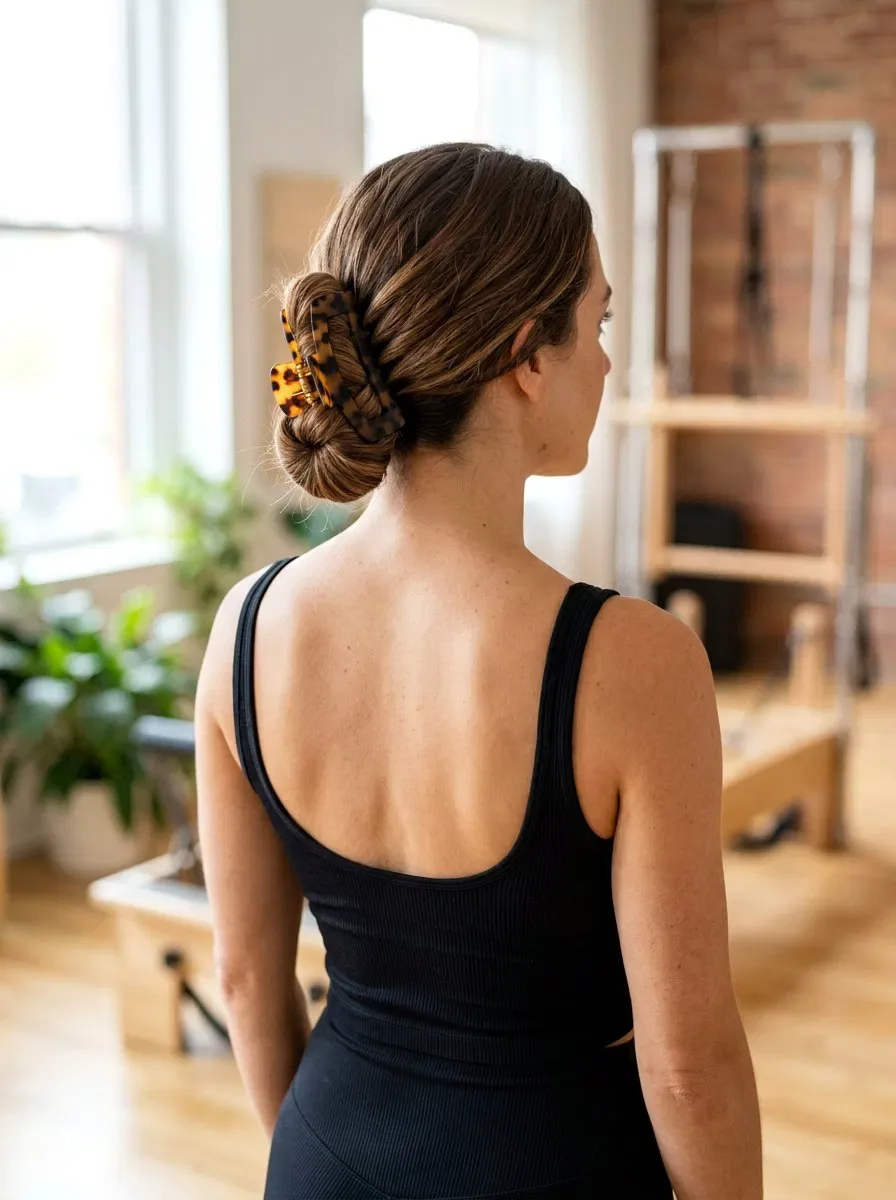
A twisted low bun is quicker than a braided bun and nearly as secure. Split the low ponytail in two, twist the sections around each other, coil the twist into a flat bun at the nape and pin it. The twist adds grip that a plain bun lacks, and the flat coil rests comfortably against the mat.
Pros: fast, flat and secure, and the twist stops the bun unravelling on slippery or fine hair.
Cons: can unwind if the twist is not pinned at both ends, and very thick hair makes a bulky coil.
Who it suits: fine or slippery hair, medium lengths, and anyone who finds braiding fiddly but wants more hold than a plain bun.
15. Rope Braid Ponytail
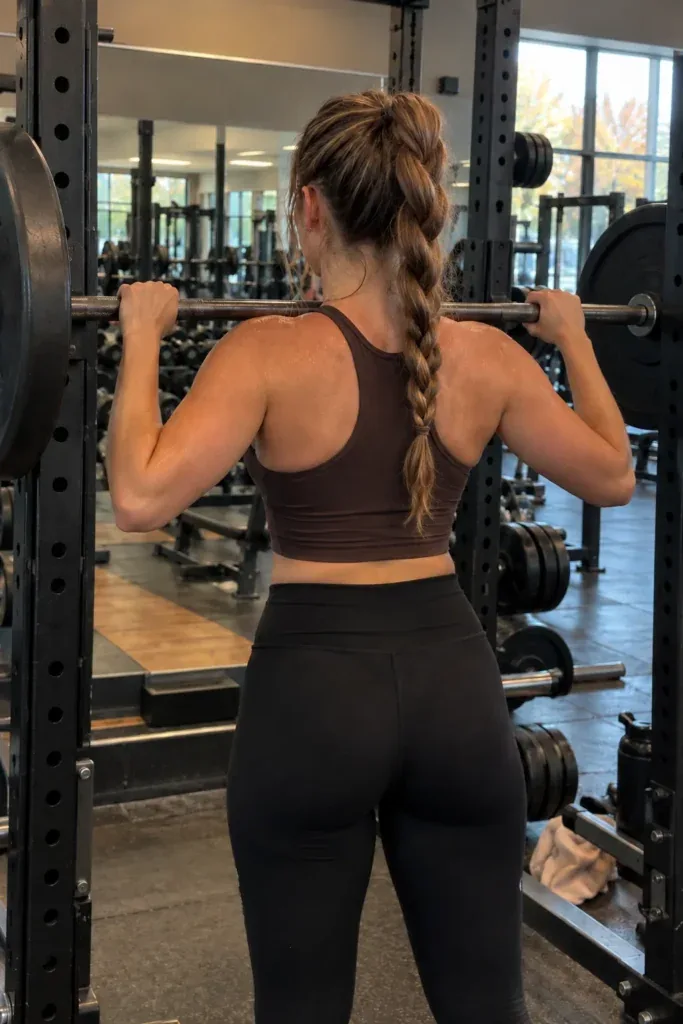
A rope braid is a two-strand twist that locks itself in place: twist each half of the tail the same way, then twist them together the opposite way. Worn low, it forms a slim, rope-like tail that does not swing during pulses, lies flat under your shoulders on the mat, and holds even on hair that slips out of ordinary braids.
Pros: very quick, locks itself in place, and holds slippery or fine hair better than a three-strand braid.
Cons: the ends can unravel if not secured with a strong elastic, and the rope can twist back on itself if the tension is uneven.
Who it suits: fine, silky or slippery hair, and long hair that needs a low, controlled tail for floor work.
16. Double Dutch Braids into Low Buns
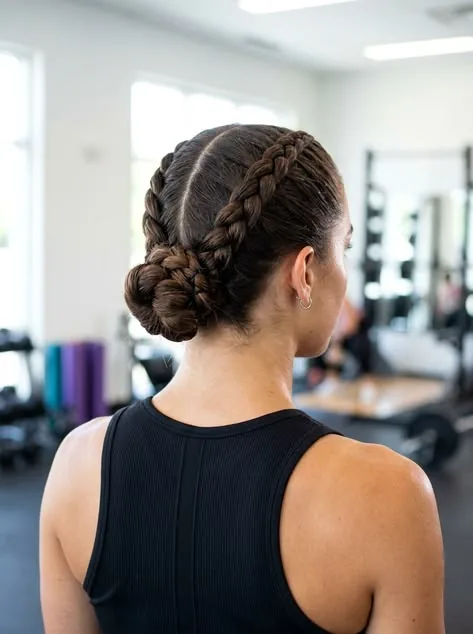
Braid two Dutch braids down each side, then coil each tail into a small flat bun at the nape. This is the most secure barre style on this list: every strand is braided in, the weight is split, and the two low buns sit flat enough to disappear against the mat. It survives the sweatiest, longest class without a touch-up.
Pros: maximum hold, completely flat, and keeps even the shortest front layers contained.
Cons: takes the longest to do, and needs practice to keep both sides even.
Who it suits: long or thick hair, hot studios, and anyone who wants to style once and forget about hair for the whole class.
17. Short Hair Slicked Back with Pins
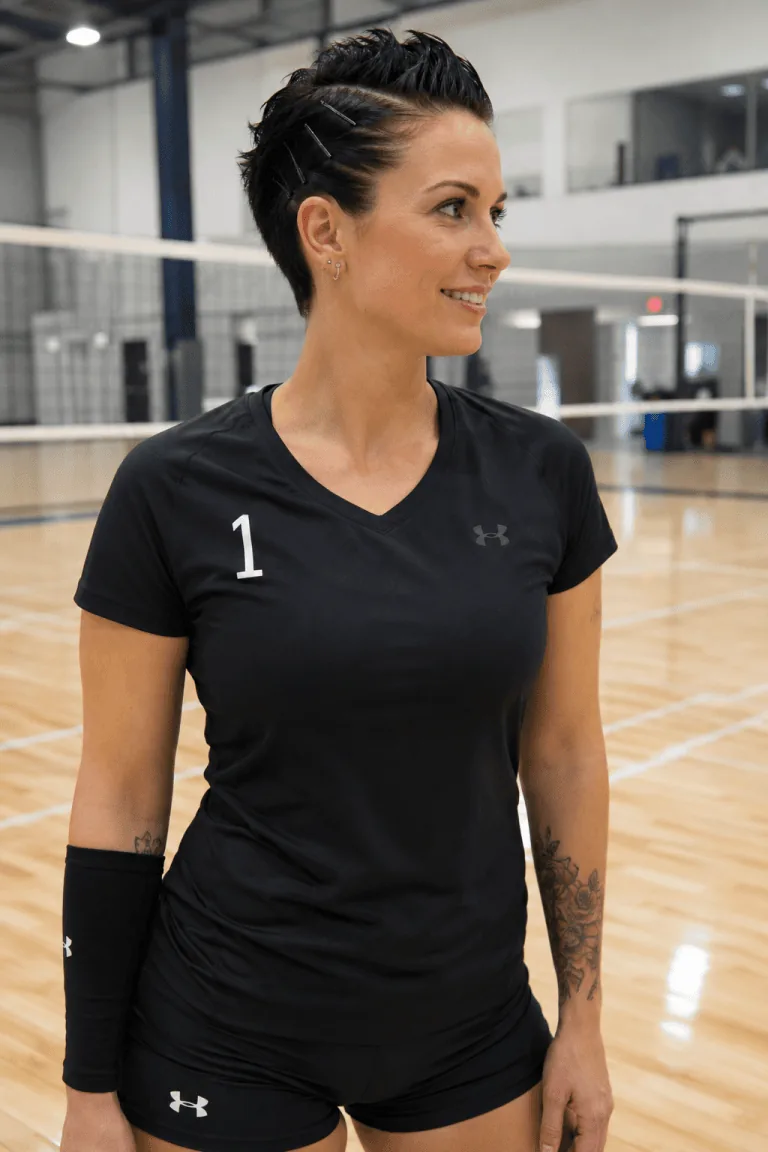
Short hair does not need a bun or a braid — it needs pins and gel. Smooth the front layers back with a little gel, pin the sides flat with crossed bobby pins, and add a wide headband for insurance. The style lies completely flat, nothing falls into your eyes during fold-overs, and there is nothing at the back to press into the mat.
Pros: nothing to press into the mat, very quick, and keeps even chin-length layers fully out of the face.
Cons: pins can slide on sweaty hair, so they need to be crossed and grippy; the style loosens if the gel is too light.
Who it suits: short, chin-length and bob-length hair, and anyone who cannot tie their hair up yet.
18. Curly Hair Low Pineapple, Flattened
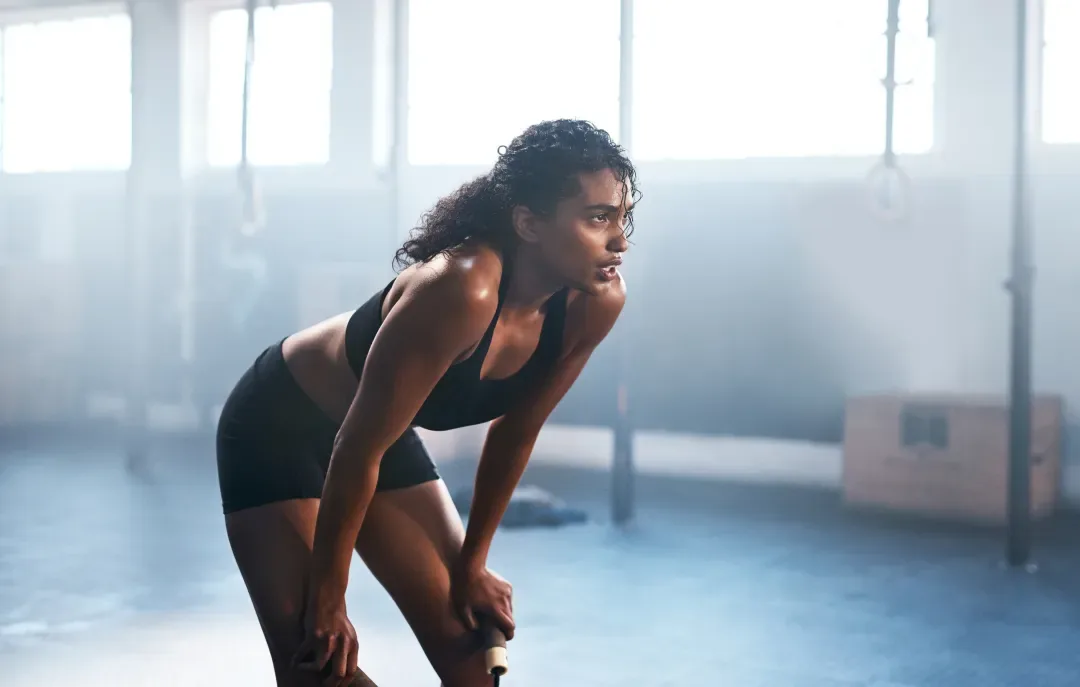
The classic pineapple puts curls high, which is useless at the barre — so wear it low. Gather the curls into a loose low ponytail at the nape, let the curls fall softly, and pin the front curls back flat. The curls stay defined, nothing presses into the mat, and the low placement keeps the weight off the crown during floor work.
Pros: protects curl pattern, lies flat, and keeps volume without a heavy bun pressing into the mat.
Cons: curls can still escape at the hairline during fold-overs, so pins or a headband are needed at the front.
Who it suits: curly and coily hair, and anyone who wants to keep their curls intact through class and after.
19. Half-Up Braided Crown
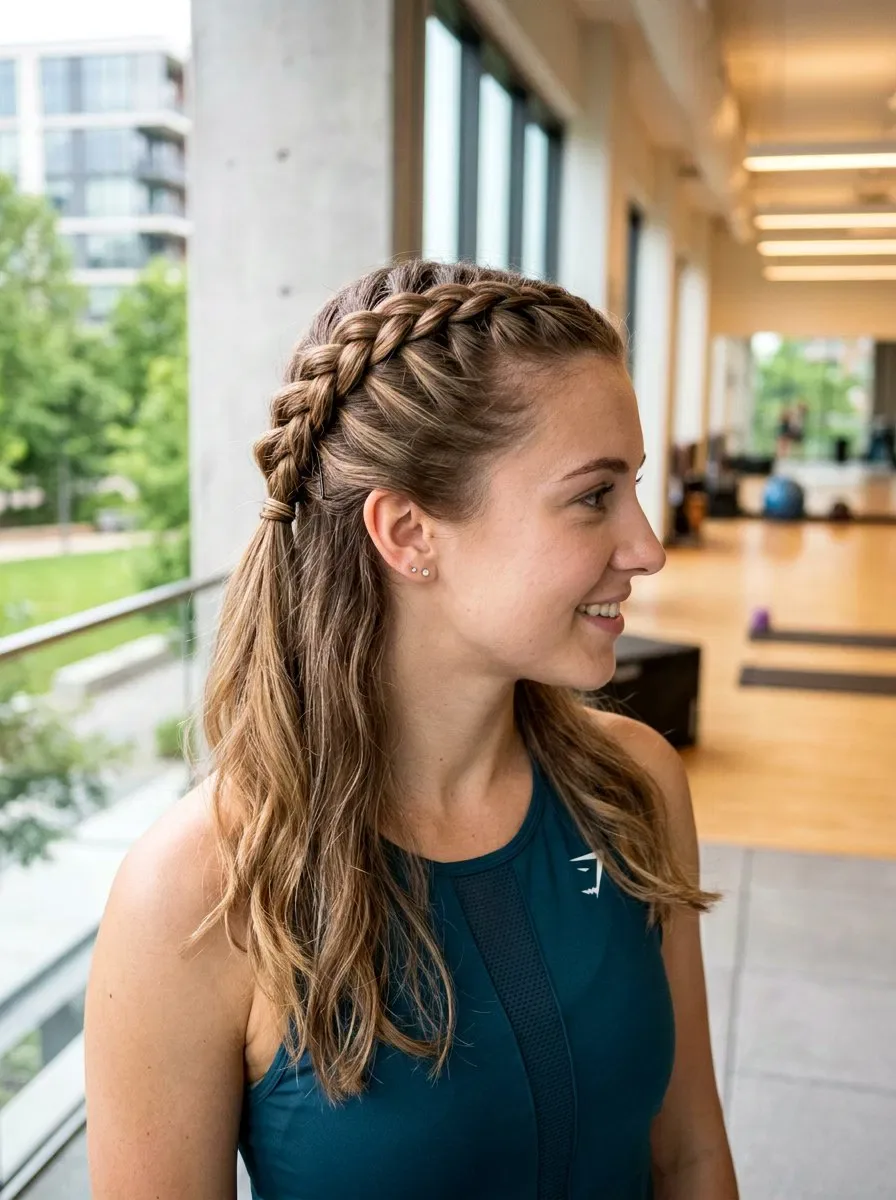
A half-up braided crown keeps the front hair completely out of the way while the rest stays low and loose. Braid a small section from each temple, join them at the back, and let the remaining hair fall or gather it into a low ponytail. The crown controls the layers that fall forward during fold-overs, and nothing sits high enough to press into the mat.
Pros: pretty and practical, controls the front layers, and works on hair too short for a full braid.
Cons: the loose length can still swing or catch under your shoulders on the mat, so pair it with a low tie for floor work.
Who it suits: medium hair, layered cuts, and anyone who wants the front controlled without tying all the hair up.
20. Braided Crown, Worn Flat
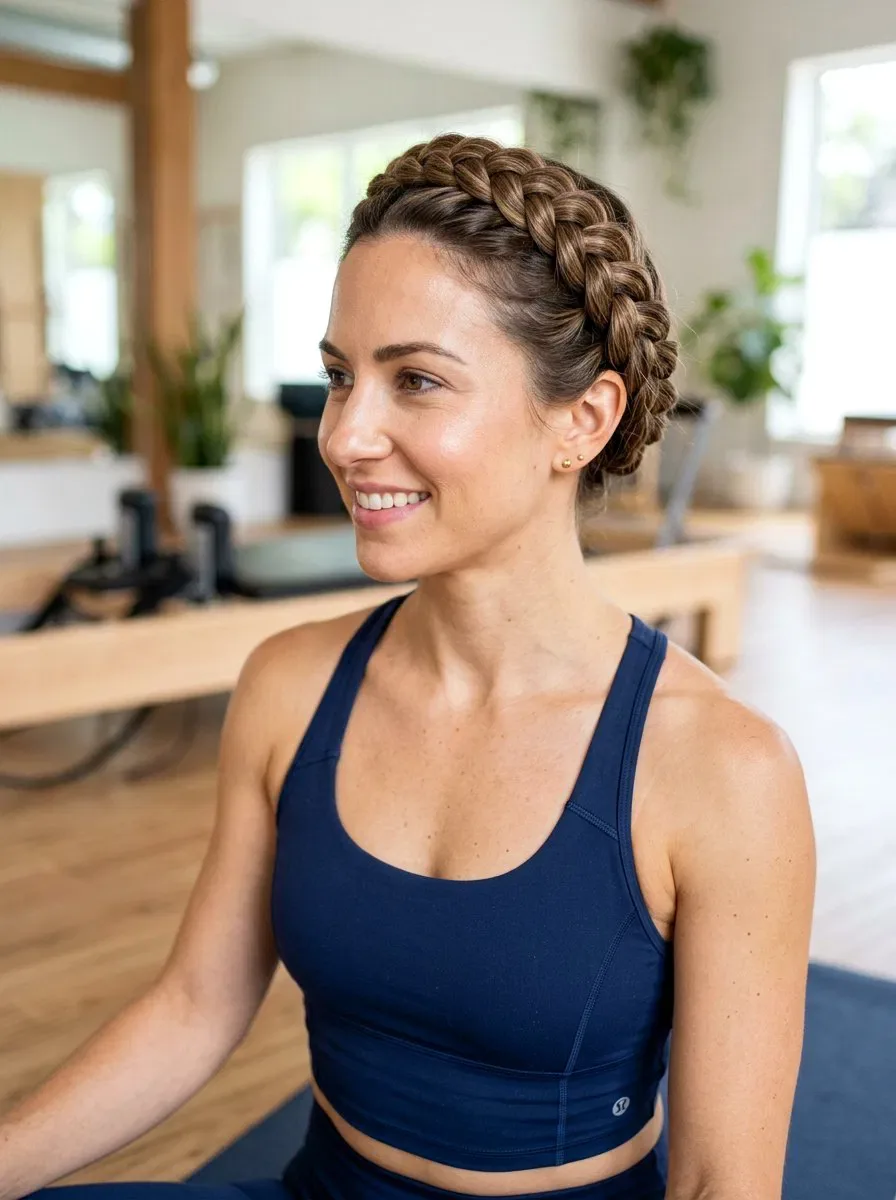
A braided crown wraps a braid around the head like a headband, pinning every strand flat. For barre, keep the braid low around the hairline and pin it snugly, then gather the remaining length into a low bun or braid. The crown acts as a built-in headband that cannot slip, and the whole style lies flat for mat work.
Pros: acts as its own headband, holds every layer, and looks elegant enough for straight after class.
Cons: needs medium to long hair and some braiding skill, and can ache if pinned too tightly at the temples.
Who it suits: medium and long hair, special-occasion barre classes, and anyone whose headbands always slip off.
21. Side Braid Tucked Low
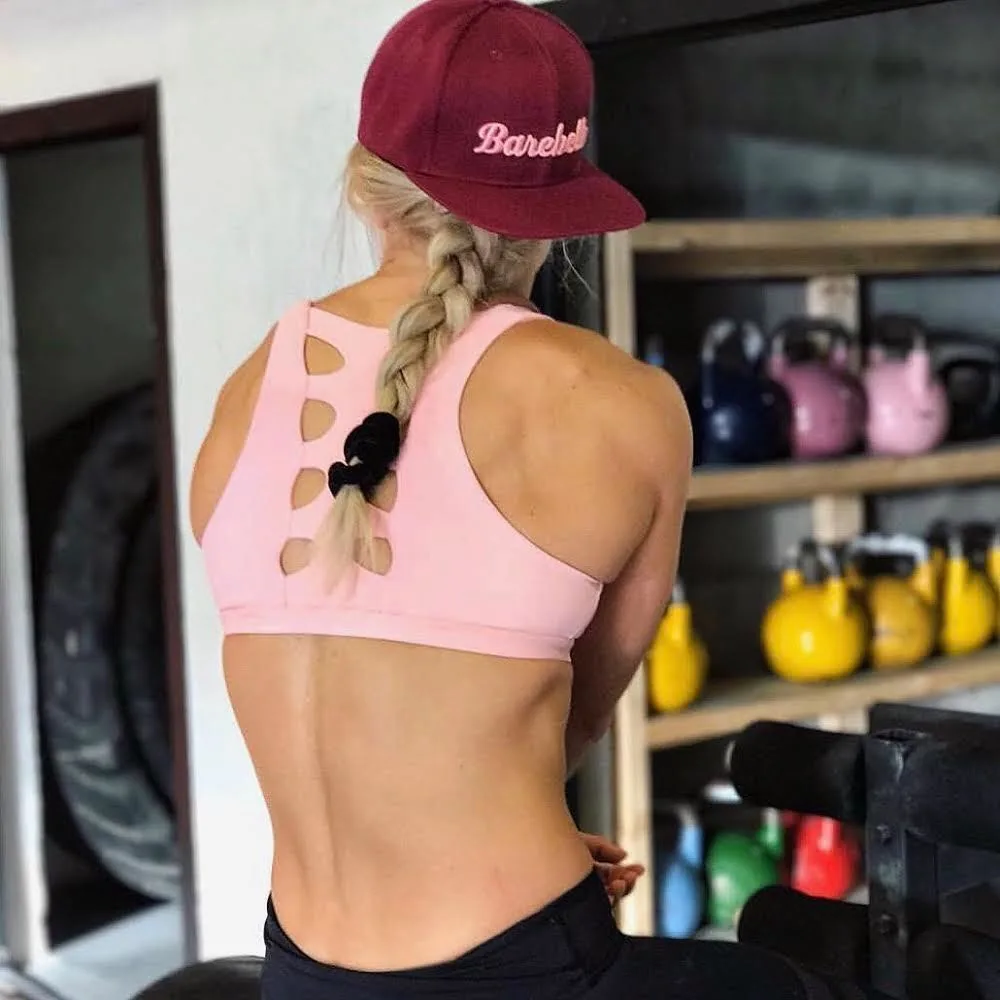
A side braid worn over one shoulder looks lovely standing up, but at the barre it needs to be tucked low and flat. Braid the hair to one side, bring the tail across the back of the neck, and pin it low so it rests flat during floor work. The braid stays out of your face during fold-overs and does not press into the mat.
Pros: flattering, easy to do, and keeps the hair in one controlled tail.
Cons: a side braid can slide forward during planks if not pinned, and the tail can tickle the neck on the mat.
Who it suits: long hair, anyone who finds centre braids uncomfortable, and slower barre classes.
22. Chunky Single Braid
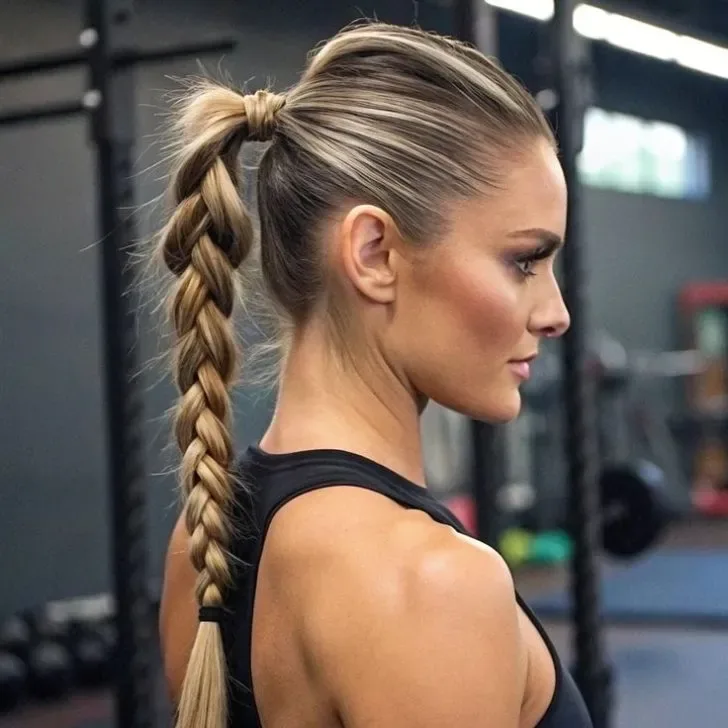
A chunky braid uses big, loose sections for a soft, full look that still holds. Gather the hair low, braid with wide sections, and secure the end firmly. The loose sections keep the braid comfortable and flat against the mat, while the single tail stays controlled through pulses and planks.
Pros: comfortable, quick, and gives fine hair the look of more volume.
Cons: loose sections can slip on silky hair, so it needs a firm elastic and a little texturising spray for grip.
Who it suits: fine hair that needs volume, and anyone who finds tight braids uncomfortable.
23. Braid into a Low Bun
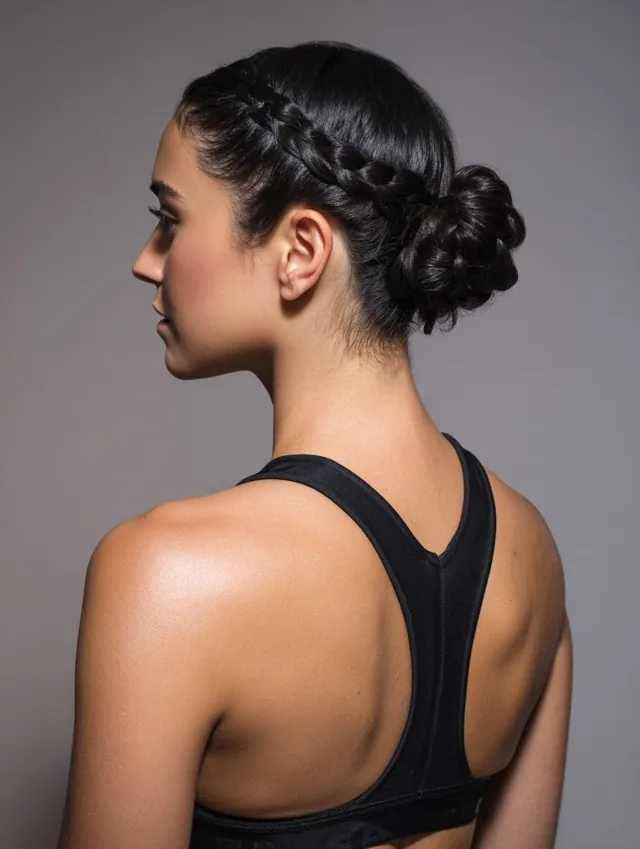
Start with a French or Dutch braid from the crown, then coil the finished tail into a flat bun at the nape. This is the barre classic for a reason: the braid holds the front and the crown, the bun holds the length, and the whole style sits low and flat. It survives sweat, pulses and every floor sequence without shifting.
Pros: holds the crown and the length, completely flat for the mat, and looks polished all day.
Cons: takes a few minutes and some braiding practice; very short hair will not reach the bun.
Who it suits: medium and long hair, and anyone who wants one style that works for any barre class.
24. Low Twisted Ponytail
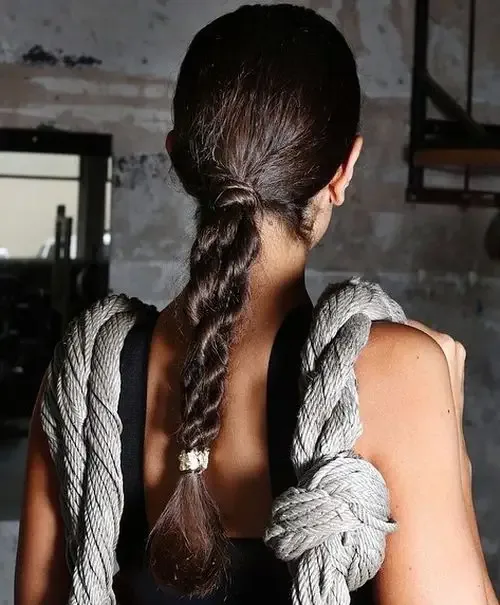
A low twisted ponytail adds grip to the simplest style. Split the low ponytail in two, twist the halves around each other, and secure the ends. The twist stops the tail swinging during pulses, keeps it slim enough to lie flat on the mat, and holds better than a plain ponytail on fine or slippery hair.
Pros: quick, flat, and far more secure than a plain ponytail.
Cons: the twist can unwind if the end elastic is weak, and the style looks plain from the front.
Who it suits: fine or slippery hair, and anyone who wants a ponytail that actually survives a barre class.
25. Two-Strand Twists Pulled Back
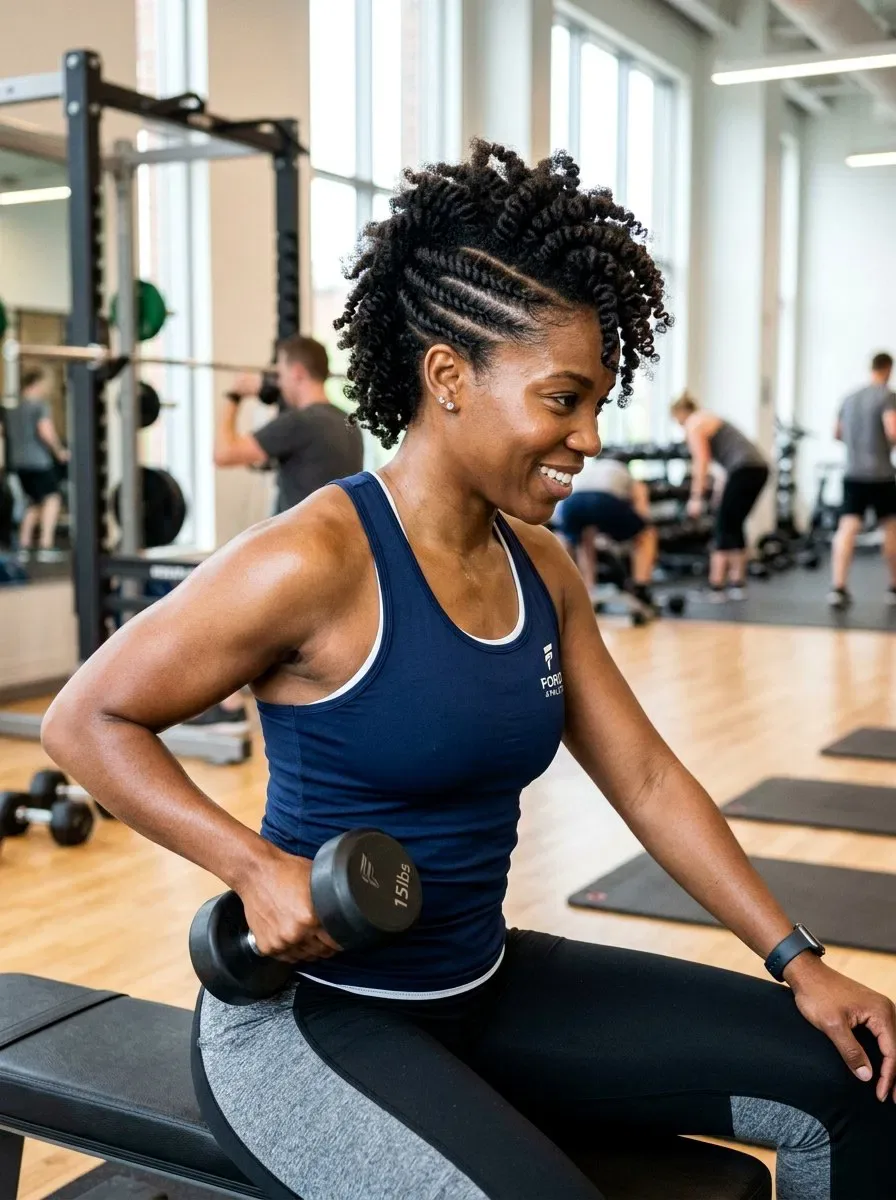
Two-strand twists are a gentle, protective way to keep hair flat and controlled at the barre. Twist small sections back from the hairline and pin them low, or twist the whole head into flat twists that lie against the scalp. The twists hold without pulling, survive sweat, and lie completely flat on the mat.
Pros: gentle on the scalp, protective, and completely flat for floor work.
Cons: takes time to do a full head, and individual twists can unravel if not pinned at the ends.
Who it suits: natural and textured hair, protective styling, and anyone with a sensitive scalp.
26. Flat Twist Updo
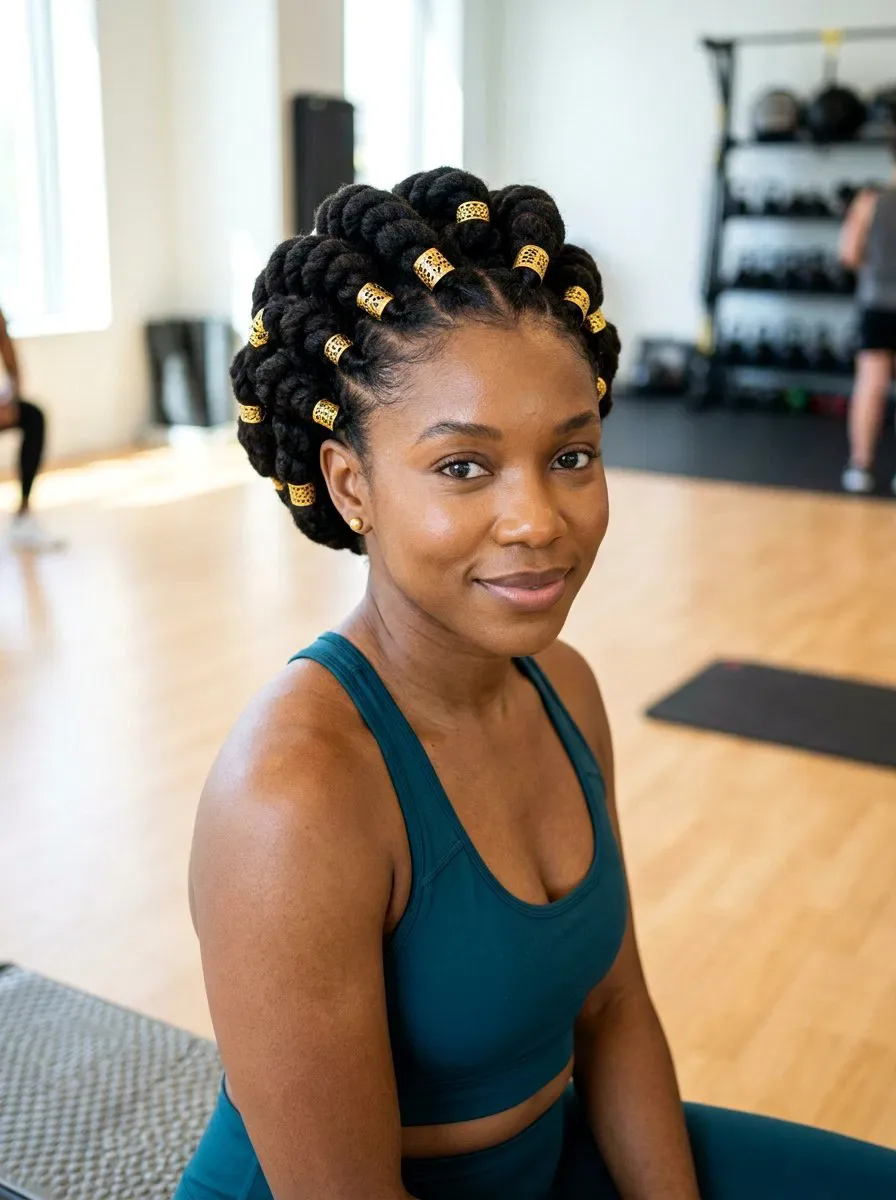
A flat twist updo twists the hair flat against the scalp and gathers it into a low bun or coil at the nape. Because every twist hugs the head, nothing sticks up, nothing presses into the mat, and the style holds through the sweatiest class. It is one of the flattest styles on this list.
Pros: extremely flat, very secure, and protective for textured hair.
Cons: needs skill or practice to get the twists even, and takes longer than a simple bun.
Who it suits: textured and coily hair, and anyone who wants a style that will not move at all in class.
27. Low Space Buns
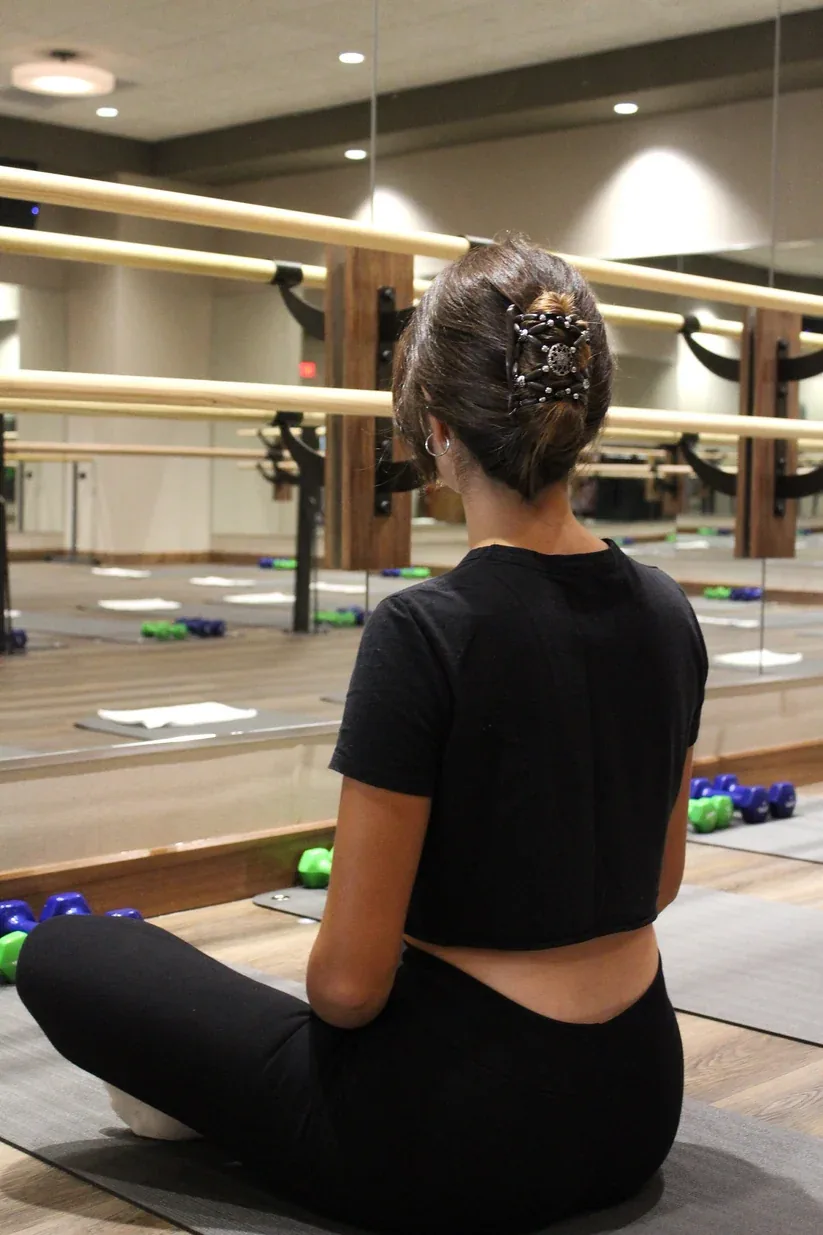
Space buns are usually worn high, but at the barre they belong low. Part the hair down the middle, make two small buns at the nape, and pin each one flat. The weight is split, nothing sits on the crown, and you can lie on your back without feeling either bun — while still getting the playful look.
Pros: fun and flat, splits the weight of thick hair, and stays secure through floor work.
Cons: high buns are a barre disaster, so placement matters; uneven parts show.
Who it suits: thick hair, younger barre fans, and a fun weekend class.
28. Dutch Braid into a Ponytail
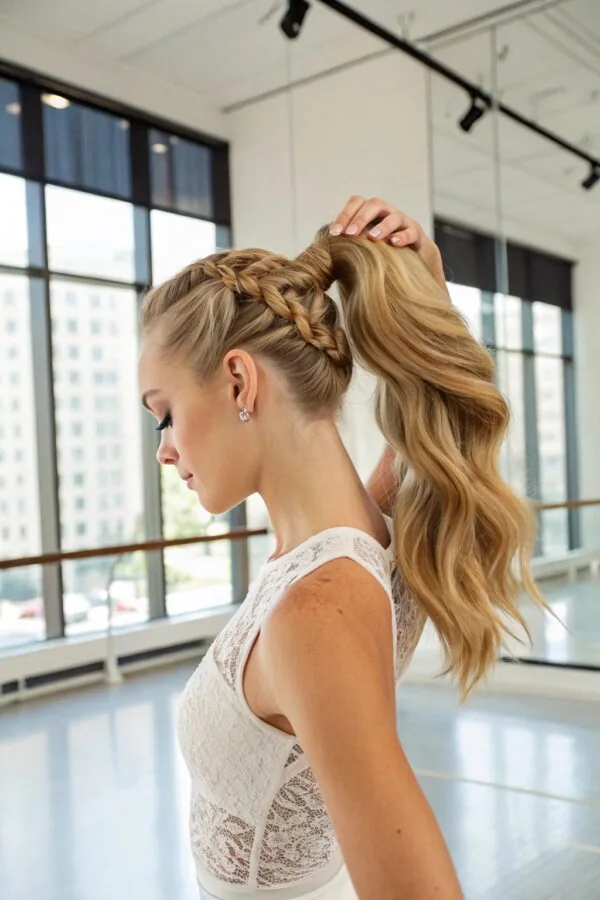
Braid a Dutch braid from the hairline to the crown, then gather the remaining hair into a low ponytail. The braid controls the front and the crown — the parts that fall forward during fold-overs — while the low ponytail keeps the length tidy and flat enough for the mat.
Pros: controls the hairline beautifully, and the ponytail is far more secure once the braid anchors it.
Cons: the ponytail tail can still swing in faster sequences, so keep it low and braided if your class is fast.
Who it suits: layered hair, anyone whose front layers always escape, and medium to long hair.
29. Low Ponytail with a Wrap-Around Braid
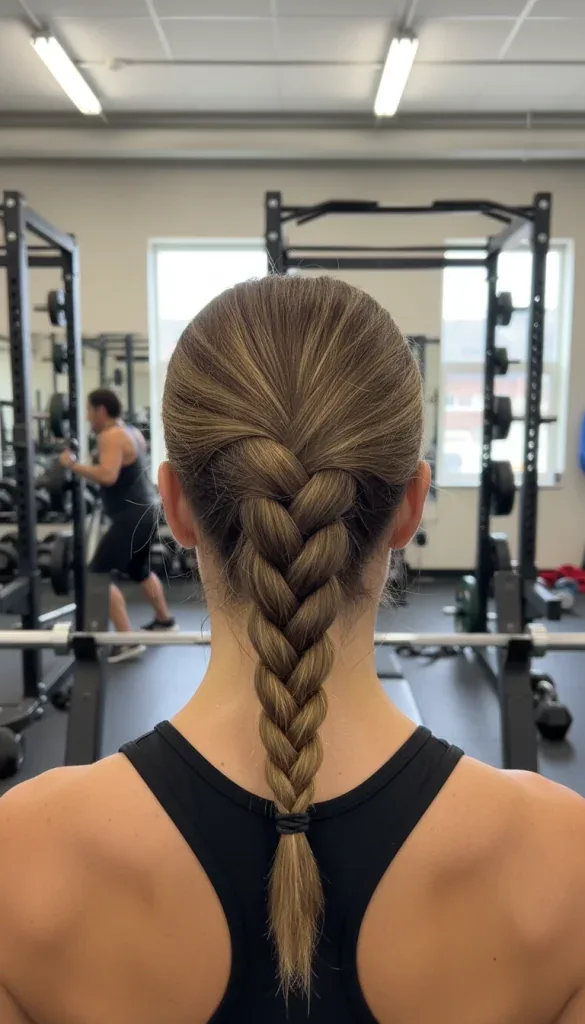
Take a low ponytail and wrap a thin braid around its base to hide the elastic and add a second anchor. The wrap stops the elastic sliding, keeps the ponytail sitting low and flat, and turns the plainest barre style into something that looks deliberate. Pin the end of the wrap underneath the ponytail.
Pros: hides the elastic, adds hold, and looks polished with almost no extra effort.
Cons: the wrap can come loose if not pinned well, and the tail can still swing during faster sequences.
Who it suits: straight hair, and anyone who wants a ponytail that looks finished rather than thrown together.
30. Slicked-Back Pixie with a Headband
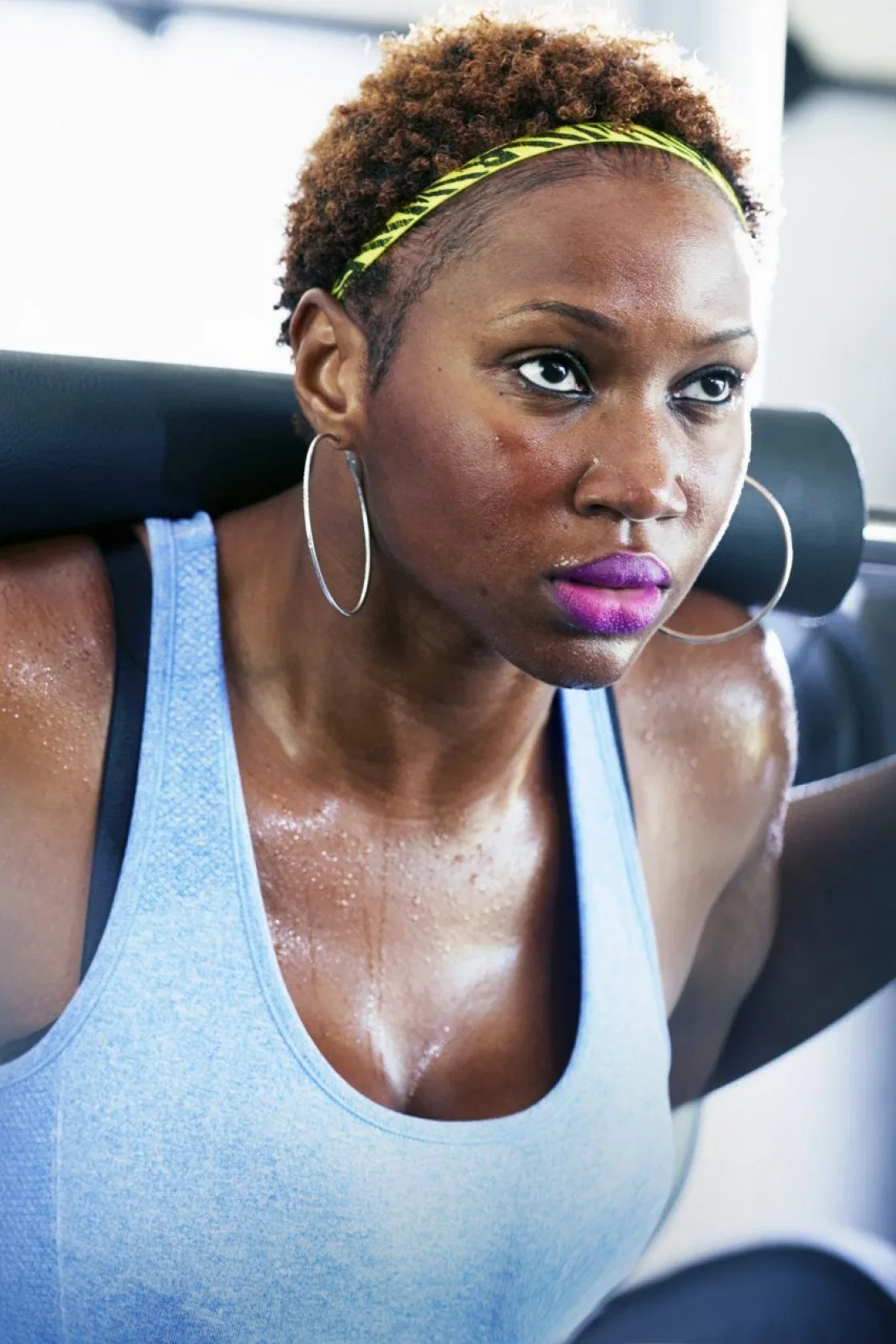
A pixie cut is already barre-friendly — there is nothing to press into the mat — but the front pieces still fall forward during fold-overs. Smooth them back with a little gel and add a wide fabric headband. The result is completely flat, fully out of your face, and the fastest barre style of all.
Pros: nothing at the back to worry about, very quick, and the headband adds grip and style.
Cons: needs gel and a headband every time, and the style collapses if the gel is too light for your texture.
Who it suits: pixie cuts and very short hair, and anyone who wants the simplest possible barre routine.
31. Soft Low Bun for Sensitive Scalps
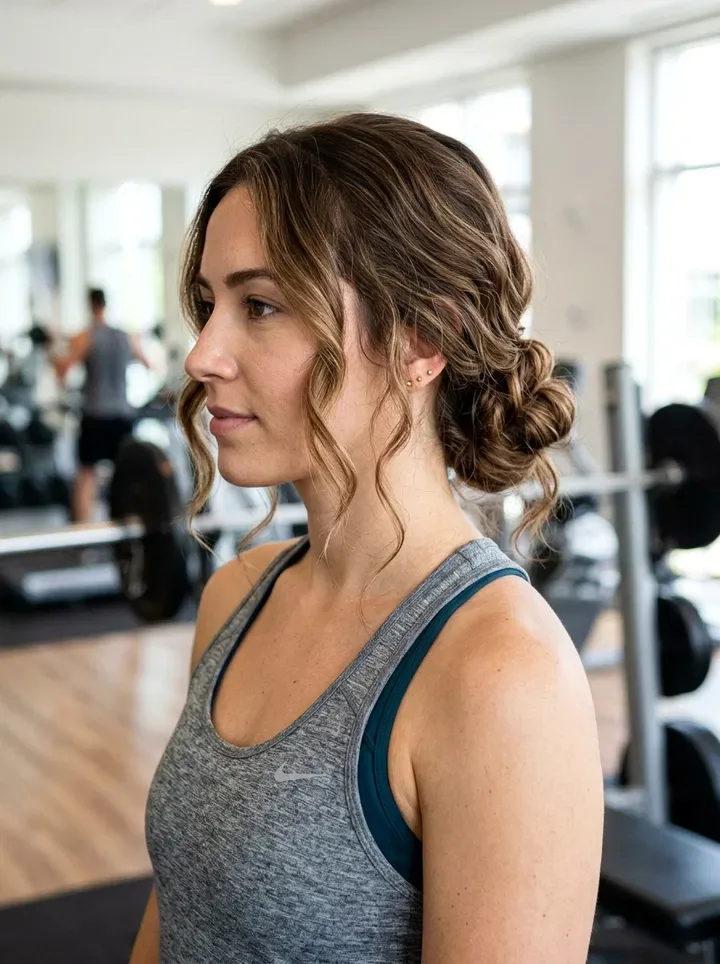
A soft low bun is the gentle version of the sleek bun: gathered loosely at the nape, twisted once, and pinned with two or three pins instead of pulled tight. It lies flat on the mat, keeps the hair off the neck, and never pulls at the roots — ideal if tight styles give you a headache by the second sequence.
Pros: comfortable for a whole class, kind to the scalp, and easy to redo between sequences.
Cons: can sag during long floor work, so it needs pins and a light mist of hairspray to hold.
Who it suits: sensitive scalps, fine hair, and gentle or beginner barre classes.
32. Braided Pigtails Tucked Low
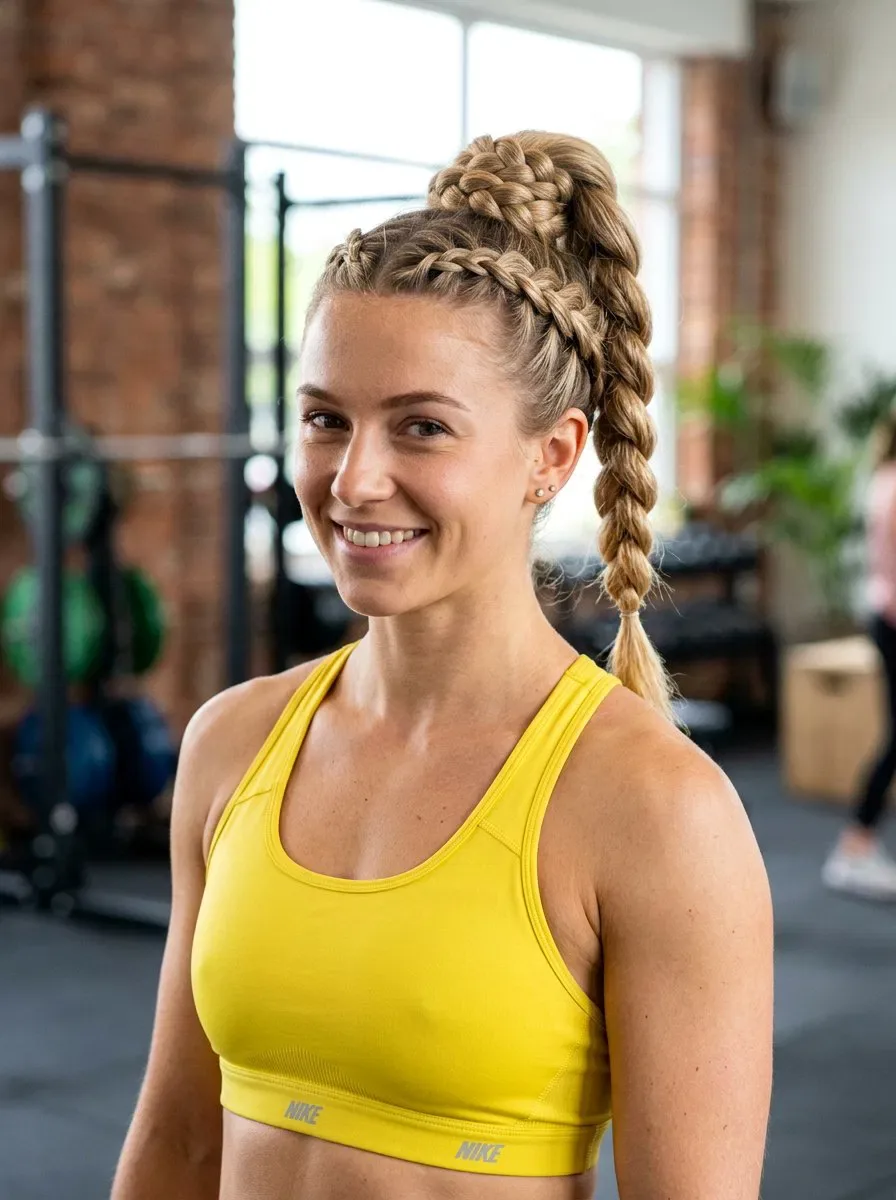
Two braids, one on each side, tucked low behind the shoulders are a barre-safe version of pigtails. Braid each side from the temple down, secure the ends, and pin the tails flat against the back so they do not swing forward during fold-overs or catch under you on the mat.
Pros: playful, flat, and keeps every strand contained on both sides.
Cons: the tails need pinning or they swing, and uneven braids show more than a single braid.
Who it suits: medium and long hair, and anyone who wants a fun style that still passes the lying-flat test.
33. Low Puff for Natural Hair
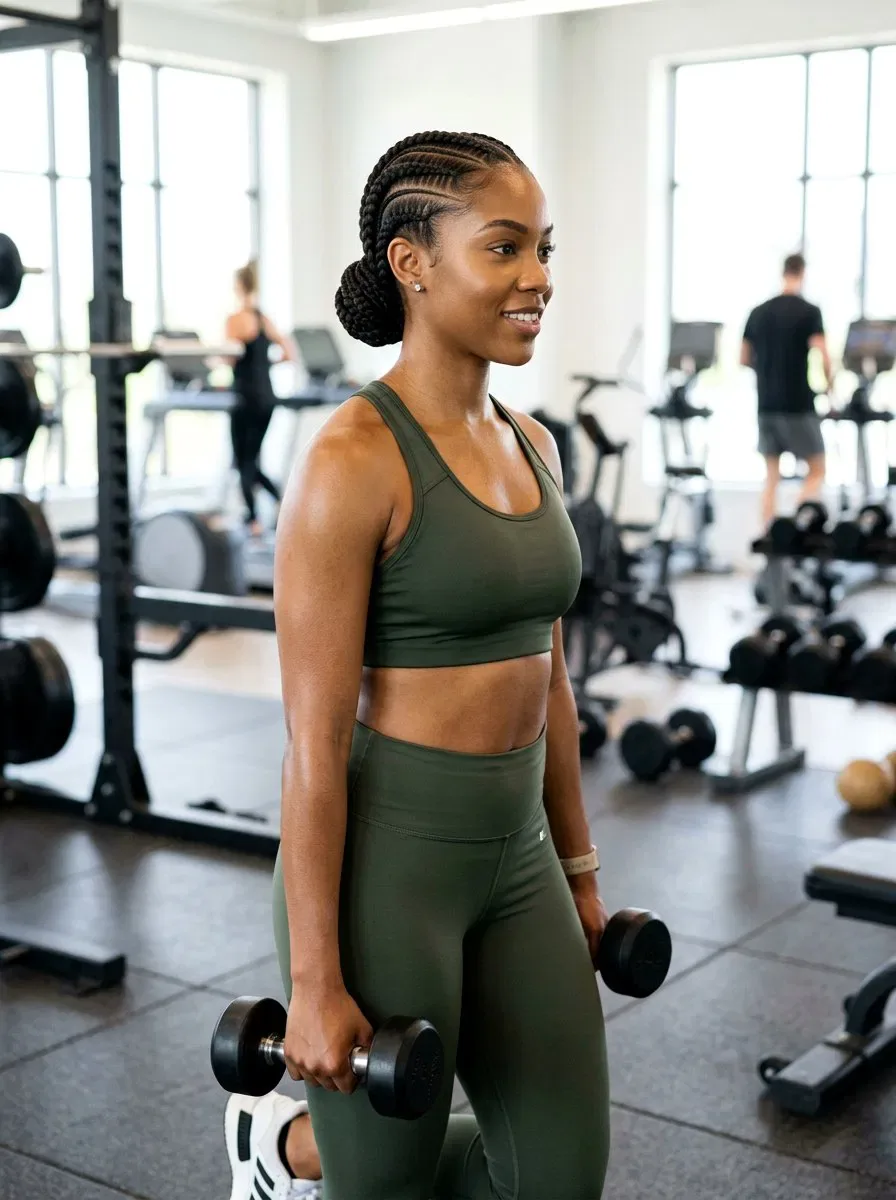
A low puff gathers natural hair into a soft, rounded shape at the nape — low enough to lie flat on the mat, high enough to keep the curls off the neck. Smooth the edges with gel and a soft brush, secure with a stretchy band, and pin any front curls back. The puff keeps volume while staying completely out of the way.
Pros: keeps curls and volume, lies flat, and is quick once you know your hair’s sweet spot.
Cons: the puff can flatten during long floor work, and the edges need gel or they frizz with sweat.
Who it suits: natural, curly and coily hair, and anyone who wants volume without a bun pressing into the mat.
34. Claw Clip Twist, Worn Low

A claw clip twist is the fastest barre style after a ponytail — but only if the clip sits low. Twist the hair up from the nape, fold it flat against the back of the head, and clip it low, not high. A flat metal or plastic clip lies almost flush, so you can rest your head on the mat without a hard lump digging in.
Pros: takes ten seconds, no elastics or pins needed, and easy to redo between sequences.
Cons: a high or bulky clip is painful on the mat, and the twist can slide out during long floor work if the clip is weak.
Who it suits: medium hair, and anyone who wants a no-fuss style for a gentle barre class.
35. Braided Headband with a Low Bun
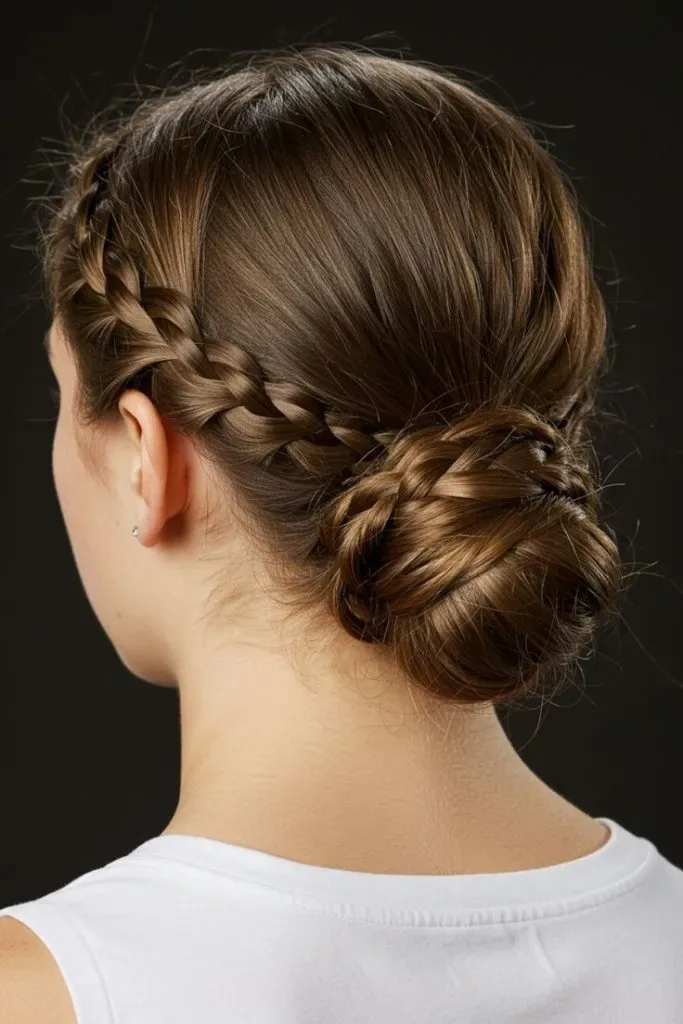
Braid a thin section from behind one ear, bring it across the hairline like a headband, and pin it behind the other ear — then gather the rest into a low bun. The braided headband controls the front layers better than any fabric band, it cannot slip off, and the low bun keeps the length flat for the mat.
Pros: the headband cannot slip, controls flyaways beautifully, and looks elegant.
Cons: needs enough length for the braid to reach across, and takes a few minutes to do neatly.
Who it suits: medium and long hair, and anyone whose fabric headbands always ride up in class.
36. Knotted Low Ponytail
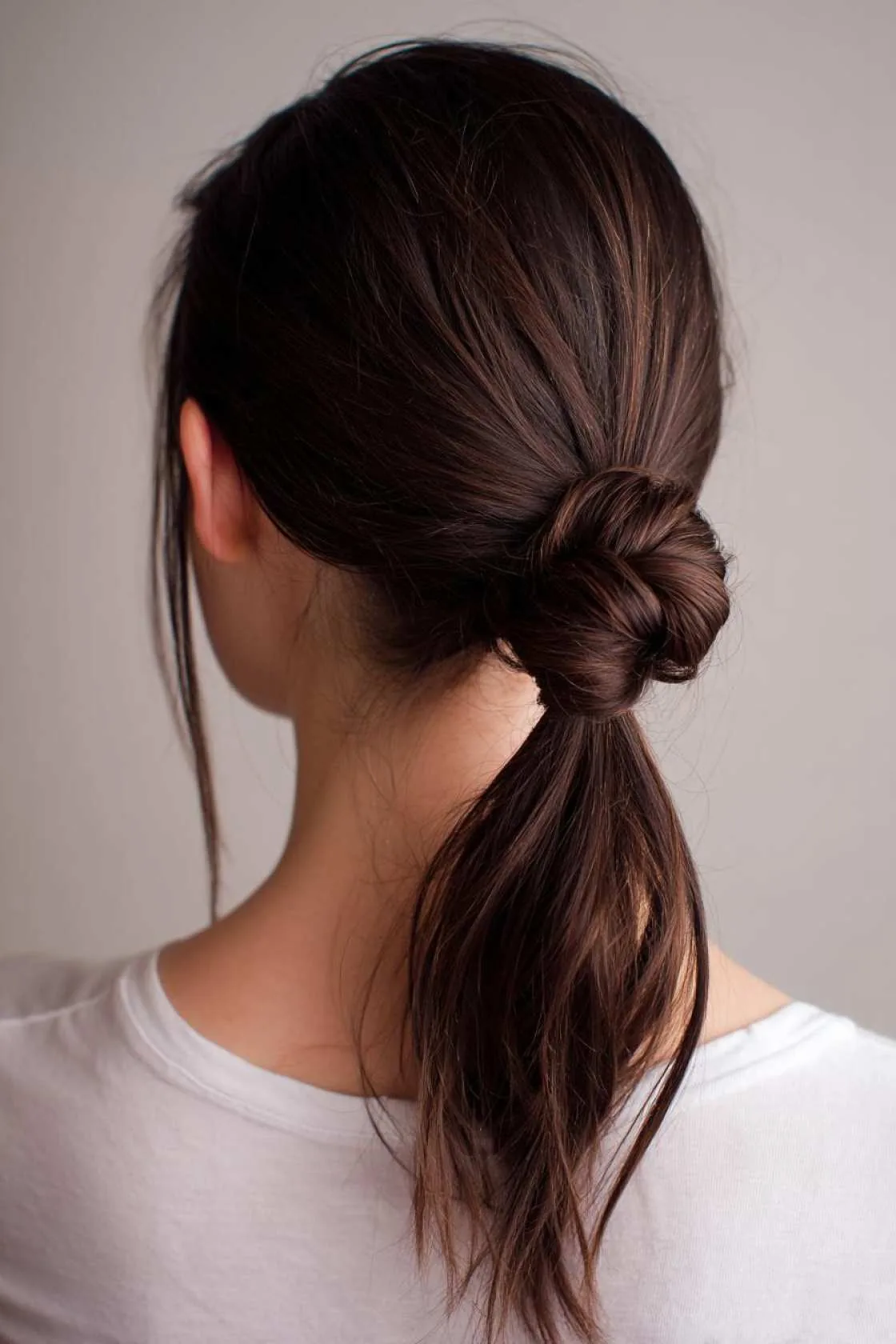
A knotted ponytail ties the hair itself into the style: split the low ponytail in two, tie the halves in a simple knot, and secure below the knot. The knot adds grip and stops the tail swinging, the low placement keeps it flat on the mat, and the style looks far more interesting than a plain ponytail.
Pros: adds grip without extra products, looks stylish, and keeps the tail short and controlled.
Cons: the knot can loosen on silky hair, and it is harder to undo after class if the hair is sweaty and tangled.
Who it suits: medium and long hair, and anyone who wants a ponytail with a little more hold and a little more style.
37. Low French Twist
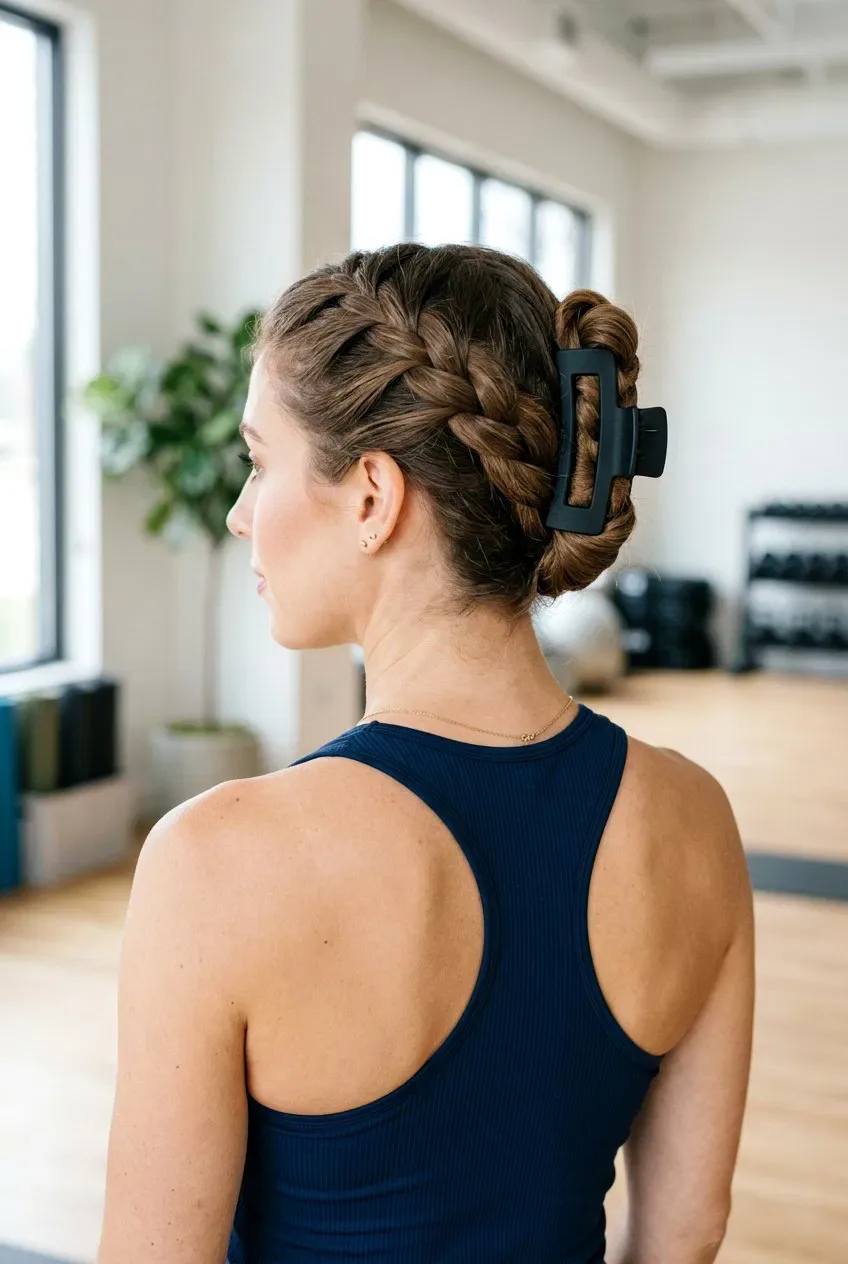
A French twist sounds formal, but worn low and loose it is a superb barre style. Gather the hair at the nape, twist it upward into a flat roll, and pin it along the twist. The roll lies flush against the head, nothing sticks out to press into the mat, and the style holds through pulses and planks.
Pros: completely flat, elegant, and holds the length without an elastic at the end.
Cons: needs several pins and some practice, and can unwind on very slippery hair.
Who it suits: medium and long hair, and anyone who wants an elegant barre style for a studio-to-dinner day.
38. Slicked-Back Wet-Look Low Bun
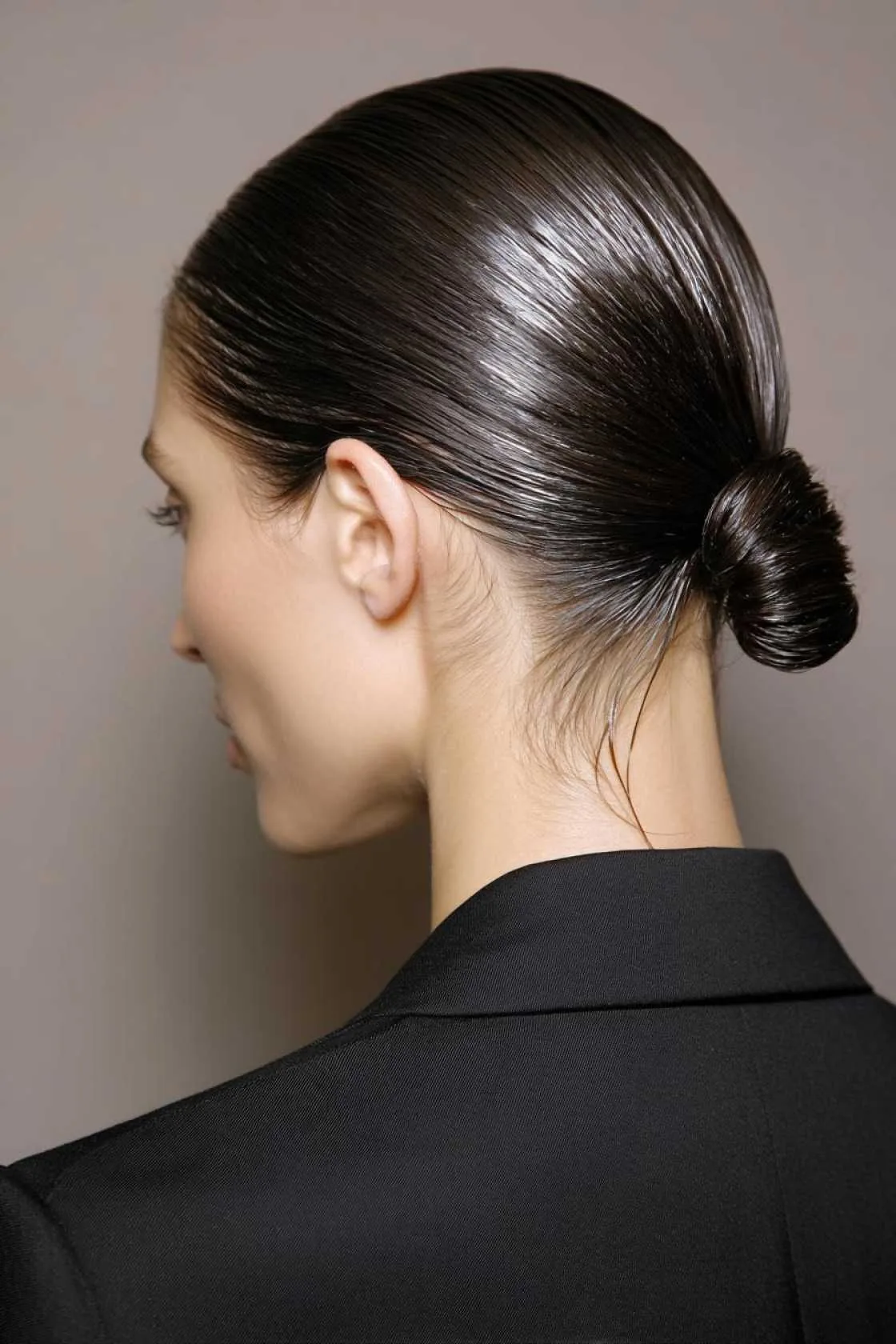
The wet-look low bun uses gel generously on purpose: smooth the hair back with a strong-hold gel, gather it low, and twist it into a flat bun. The gel keeps every flyaway down through sweat and pulses, the bun lies flat on the mat, and the glossy finish looks intentional rather than sweaty.
Pros: the most flyaway-proof style here, very flat, and looks polished even after a sweaty class.
Cons: uses more product than other styles, and needs a proper wash after class to remove the gel.
Who it suits: frizzy or flyaway-prone hair, humid studios, and anyone who wants zero stray hairs in class.
What is the best hairstyle for a barre class?
A low bun at the nape or a flat braid is the best hairstyle for a barre class. Both lie flat when you lie on your back for core work, keep hair out of your face during fold-overs, and survive pulses and sweat without coming loose. Avoid high buns and high ponytails, which press into the mat.
Can I wear my hair down to a barre class?
You can, but it is not a good idea. Loose hair falls into your face during fold-overs, sticks to a sweaty neck, and gets caught under your back on the mat. If you really want it down, pin the front layers back flat and keep the length tied low for floor work.
How do I stop my hair falling into my face during barre?
Braid the front layers back, smooth the hairline with gel, and add a wide fabric headband with a silicone grip strip. The combination of a braid, gel and a grippy headband holds the hairline through sweat, pulses and fold-overs better than any one of them alone.
What hairstyle works for short hair at barre?
For short hair, slick the front layers back with gel, pin the sides flat with crossed bobby pins, and add a wide headband. There is nothing at the back to press into the mat, so the only job is controlling the front — and pins plus a headband do that well.
What is the best barre hairstyle for curly hair?
A low pineapple, a low puff or two flat braids all work well for curly hair at barre. Keep the style low so it lies flat on the mat, pin the front curls back, and use a little gel on the edges to stop frizz as you sweat. Avoid high styles, which press into the mat and flatten the curls.
Why does my headband keep slipping off in barre class?
Most headbands slip because they are too narrow, too smooth or too loose. Choose a wide fabric band with a silicone grip strip on the inside, wear it over slightly damp or gelled hair rather than dry, slippery hair, and position it a finger’s width behind the hairline so it has something to grip.
Should I wash my hair after every barre class?
You should at least rinse it the same day. Barre sweat is light, but the salt dries into the hair and causes itching and dullness if left for days. A water rinse removes most of the salt; a gentle shampoo two or three times a week handles the rest. Save dry shampoo for days you genuinely cannot wash.
Do I need grip socks for a barre class?
Most studios ask you to wear grip socks or bare feet, and grip socks are the safer choice. They stop your feet sliding on the studio floor during pulses and planks, and they keep your feet warm on a cold floor. They have nothing to do with hair, but they are part of the same kit as your headband and pins.
What is the best hairstyle for fine hair at barre?
Fine hair holds best in a braid — a French braid, a Dutch braid or a braided low bun — because the braid gives the hair grip that a plain elastic cannot. Add a little texturising spray before braiding, use two elastics at the end, and pin the style in two places so it cannot slide loose.
How tight should my hair be for a barre class?
Secure, not painful. The style should stay put through pulses and floor work without pulling at your scalp. If your head aches by the second sequence, loosen the style slightly and add a pin instead of pulling harder — pain distracts you just as much as loose hair does.
Conclusion
The secret to great hairstyles for a barre class is simple: think flat, low and secure. A low bun, a flat braid or a headband with the hair pinned low will carry you through every plié, pulse, plank and floor sequence without pressing into the mat, sliding into your eyes, or coming loose halfway through class. Test any new style lying flat on the floor at home first — if you forget it is there, it is ready for the studio.
Pick one style from this list, practise it once before your next class, and keep a small kit of pins, elastics and a wide headband in your bag. Your hair will stop being something you think about in class, and that is exactly the point — in barre, your attention belongs on the movement, the music and the burn in your muscles, not on a strand of hair in your face.