Headrest-Proof Hair: 31 Long Flight Hairstyles to Sleep In and Land Looking Fresh
A long flight is the hardest test your hair will ever face, and it has nothing to do with how it looks when you board. Ten hours in a dry cabin, a headrest pressing against the back of your head, a nap with your cheek against the window, a meal tray, a bathroom queue, and then — minutes before landing — a mirror, a tired face, and hair that has been flattened, dried out, and tangled by recycled air. The hairstyles that survive a long flight are not the ones that look best in the departure lounge. They are the ones that still look good at the arrivals hall, after a headrest, a nap, and ten hours of air conditioning.
This guide gathers 31 long flight hairstyles, chosen for comfort first and looks second — because on a plane, comfort is what makes a style last. Low buns that never press against a headrest, braids you can sleep in without waking up to a dent, waves that spring back with a shake, and polished landing looks that take ten minutes in a tiny airplane bathroom. Eight guides first walk you through the ideas that matter: which styles survive a headrest, how to sleep on a plane without flattening your hair, how to beat dry cabin air, how to freshen up before landing, and what to pack in a carry-on hair kit that fits under the seat. Whether your flight is six hours or sixteen, there is a style here that lets you sleep, land, and look fresh.
Headrest-Proof Styles: Why Low Beats High at 35,000 Feet
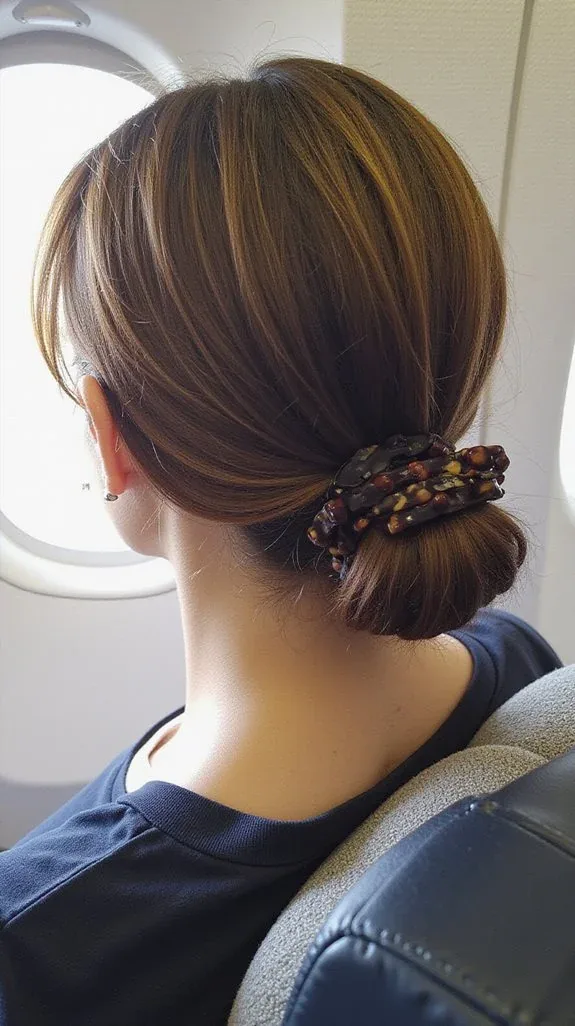
The headrest is the first thing your flight hairstyle has to survive, and it decides almost everything about what works on a plane. A high bun or a top knot presses straight into the headrest, which hurts within the hour, slides the style sideways, and leaves a dent you can feel for the rest of the flight. A low style — a low bun, a low ponytail, a braid that falls down your back — sits below the headrest, so you can lean back, sleep, and watch a film without your hair fighting the seat. That single rule, low not high, is the difference between a style that lasts the flight and one that is undone before the meal service.
The same logic applies to clips and accessories. A big claw clip at the back of your head is a small rock against a headrest, while a flat pin, a soft scrunchie, or a silk scarf wrapped around a low bun disappears against the seat. If you love wearing your hair up, bring the height down: a low knot at the nape does the same job as a top knot, and you can actually sleep in it. Quick verdict: build your flight style below the headrest line, keep the back of the head flat, and your hair will still be there when you land.
Sleeping on a Plane Without Flattening Your Hair
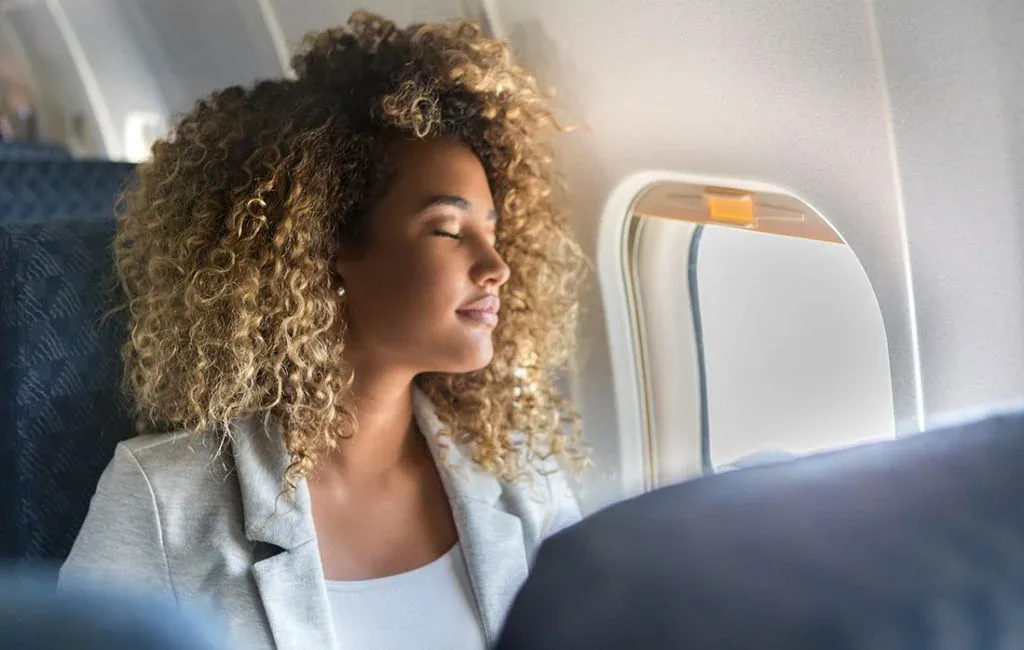
Sleeping on a plane is where most flight hairstyles die, because sleep presses the hair against the seat for hours and flattens anything with volume at the back. The styles that survive a nap are the ones with no volume to lose at the back of the head: a loose braid, two low braids, a low bun, or a silk-scarf wrap all keep the hair contained while you sleep, so you wake up with texture instead of a flat patch. A loose braid is the best sleeper of all — you can lean on it, roll onto it, and wake up to soft waves when you take it out before landing.
Two small habits make sleep-friendly hair much better. The first is a silk or satin scrunchie instead of a tight elastic: it holds without leaving a dent or a crease, so the style can be re-done in seconds when you wake. The second is a silk scarf or a travel pillow that keeps the hair off the seat fabric, which is rough enough to tangle fine hair over a long night. Common mistake: falling asleep with a high ponytail or a claw clip in, which wakes you up with a headache and a style that cannot be saved. Quick verdict: braid it loose, tie it soft, sleep on it — and let the nap do the styling for you.
Dry Cabin Air: Keeping Hair Soft on a Long Flight
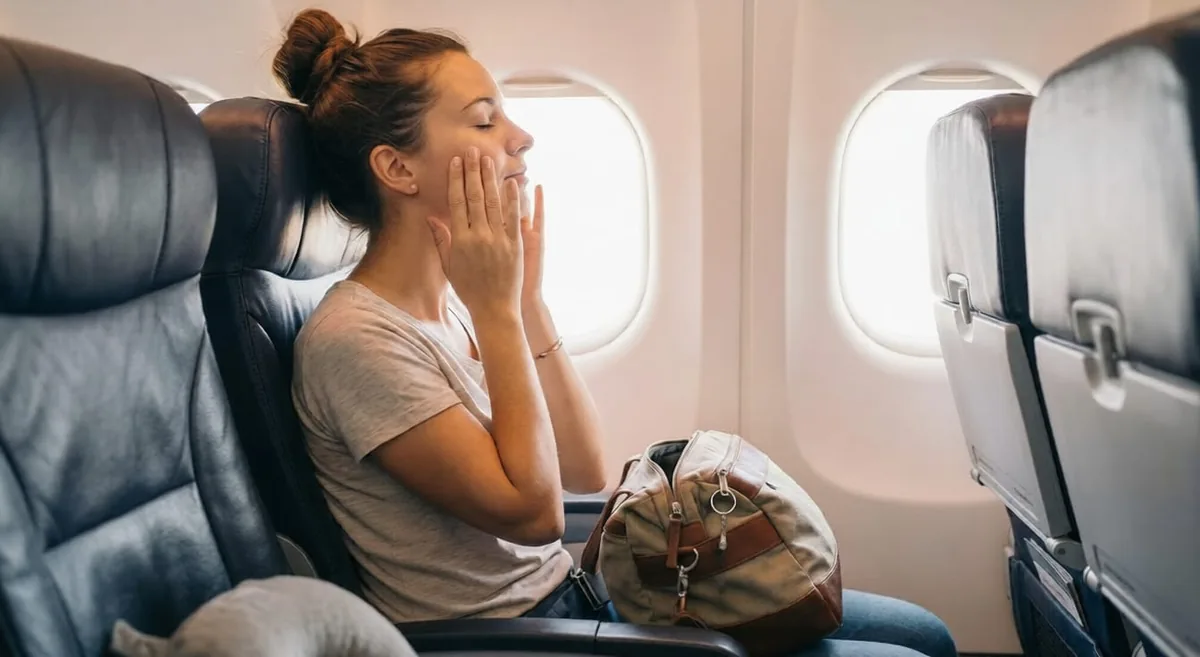
Cabin air on a long flight is drier than most deserts — around ten to twenty percent humidity — and it spends ten hours pulling moisture out of your hair. The result is familiar to anyone who flies: hair that feels rough, looks dull, and tangles at the ends, especially if it is coloured, bleached, or naturally dry. The fix is not a complicated routine, it is a single habit done at the right time: a little leave-in conditioner or hair oil on the lengths before you board, so the hair has a shield before the dry air starts its work.
What to do mid-flight matters too. A pea-sized amount of oil smoothed over the ends at the halfway point stops the tangling before it starts, and a quick finger-comb through the lengths keeps knots from forming. What to avoid: brushing dry, static hair mid-flight, which creates frizz and breakage, and washing your hair in the airplane bathroom, where the water is hard and the mirror is unkind. Pros and cons: a little oil before boarding costs nothing and changes the whole flight; too much oil, though, and the hair looks greasy on arrival. Quick verdict: oil the ends before you board, touch them up once mid-flight, and land with hair that still feels like hair.
Freshening Up Before Landing: The 10-Minute Arrival Reset
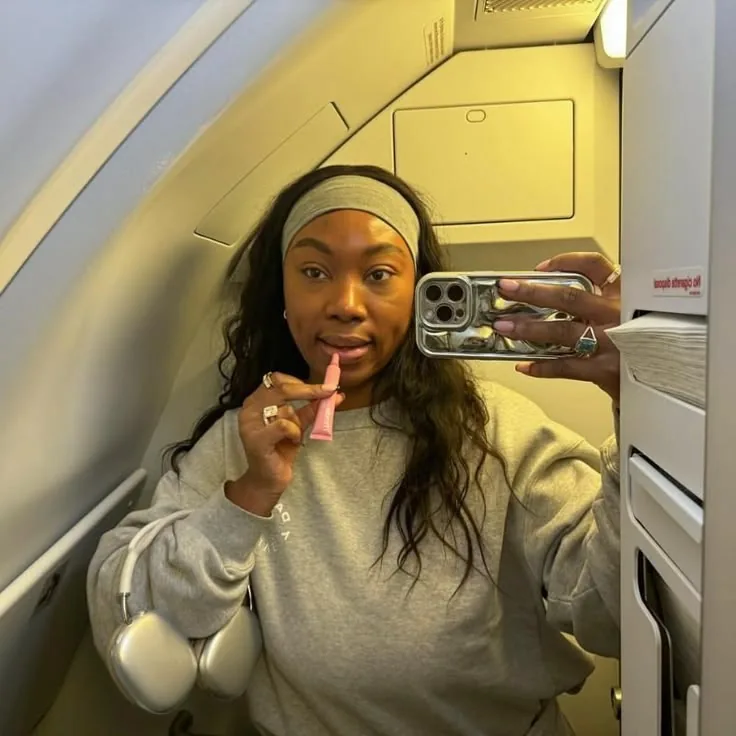
The last hour of a long flight is the most important hour for your hair, because it is the only hour when a little effort shows. A ten-minute reset in the airplane bathroom — or in your seat, if the queue is long — takes you from slept-in to presentable, and it needs almost nothing: dry shampoo at the roots, a quick re-braid or re-bun, a finger-comb through the lengths, and two soft pieces pulled out at the front. It is the difference between stepping off the plane looking like the flight, and stepping off looking like you have just arrived.
The order matters. Dry shampoo first, massaged into the roots and left for a minute before brushing it through — it absorbs the oil and adds the volume the headrest took away. Then re-do the style rather than patching it: take the braid or bun out completely, shake the hair out, and rebuild it fresh, because a rebuilt style always looks better than a fixed one. Finish with a drop of oil on the ends and a light mist of hairspray if you have it. Cost and time: ten minutes, one small can of dry shampoo, and no extra luggage. Quick verdict: do not fight the flight for ten hours — win the last ten minutes instead.
Security-Friendly Hair Accessories That Won’t Set Off Alarms
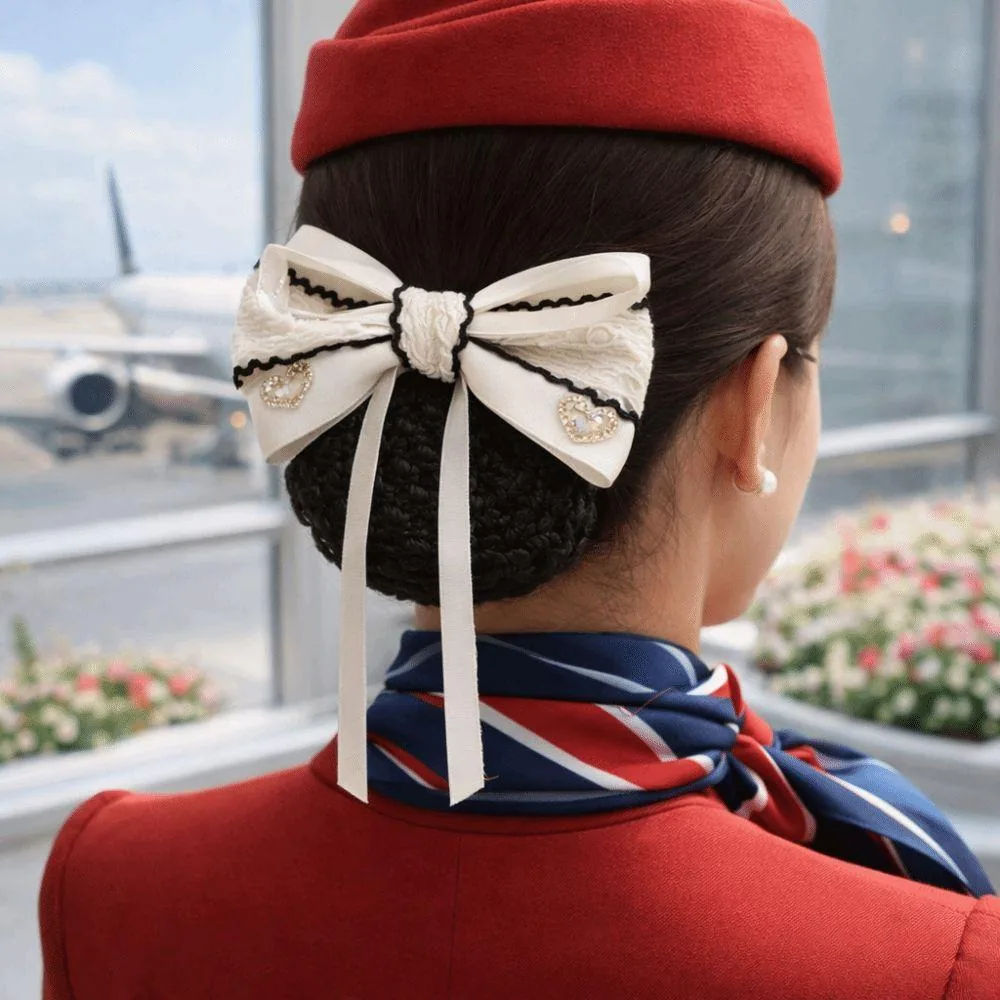
Metal hair accessories and airport security are a bad combination that most travellers discover at the worst moment — the scanner beeps, the line waits, and you are taking pins out of your hair in public. The rule is simple: fly with accessories that contain no metal, or as little as possible. Soft scrunchies, fabric headbands, silk scarves, plastic pins, and wooden combs all pass through security without a sound, while metal claw clips, heavy barrettes, and bobby pins with a metal core are the ones that beep.
The practical trick is to wear your flight style with soft accessories and keep any metal pins in your carry-on for after landing, when you can rebuild the style properly. A silk scarf is the best security-friendly accessory of all: it wraps a bun, covers a bad hair day, holds flyaways down, and doubles as a blanket on a cold flight. What to avoid: a style that depends on a dozen bobby pins to hold, because you will be asked to remove them — and rebuilding a pinned style in the departure lounge is no fun at all. Quick verdict: soft ties, fabric bands, silk scarves — fly metal-free and rebuild after landing.
What to Pack in Your Carry-On Hair Kit
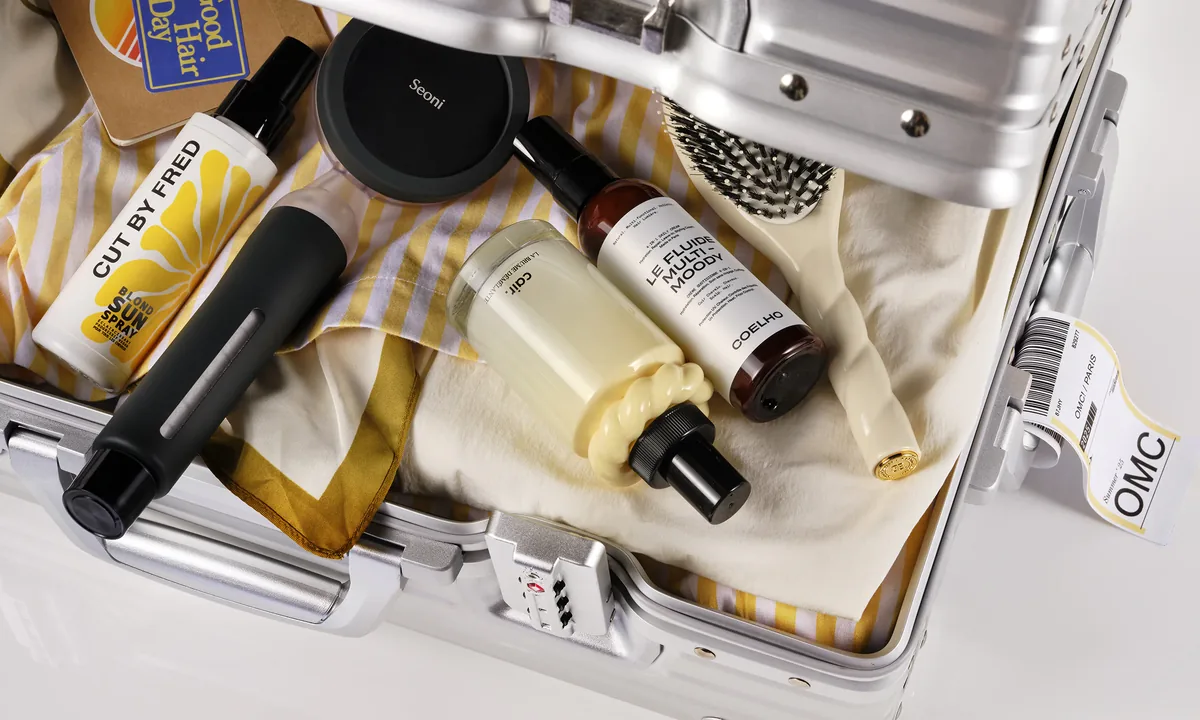
A long flight is the one trip where your hair kit has to fit under the seat in front of you, pass the liquids rule, and still do the job of a whole bathroom shelf. The good news is that a complete flight hair kit fits in a single small pouch: four soft scrunchies, six bobby pins in your hair colour, a travel-size dry shampoo, a small bottle of leave-in conditioner or hair oil, a mini hairspray, a wide-tooth comb, and a silk scarf. That is everything you need for every style in this guide, and it weighs almost nothing.
Two items earn their place above all the others. The first is dry shampoo: it is your morning volume, your mid-flight refresh, and your landing reset, all in one small can. The second is the silk scarf: it wraps a bun, covers a bad hair day, protects your hair from dry cabin air, and doubles as a pillow cover on an overnight flight. What not to pack: a full-size hairdryer or straightener (there is no plug at your seat), and any product in a bottle bigger than travel size — security will take it. Cost and time: one pouch, packed in five minutes before you leave. Quick verdict: scrunchies, pins, dry shampoo, leave-in, spray, comb, scarf — pack that pouch and forget about hair until landing.
Hairstyles by Flight Length: Short, Medium, Long-Haul
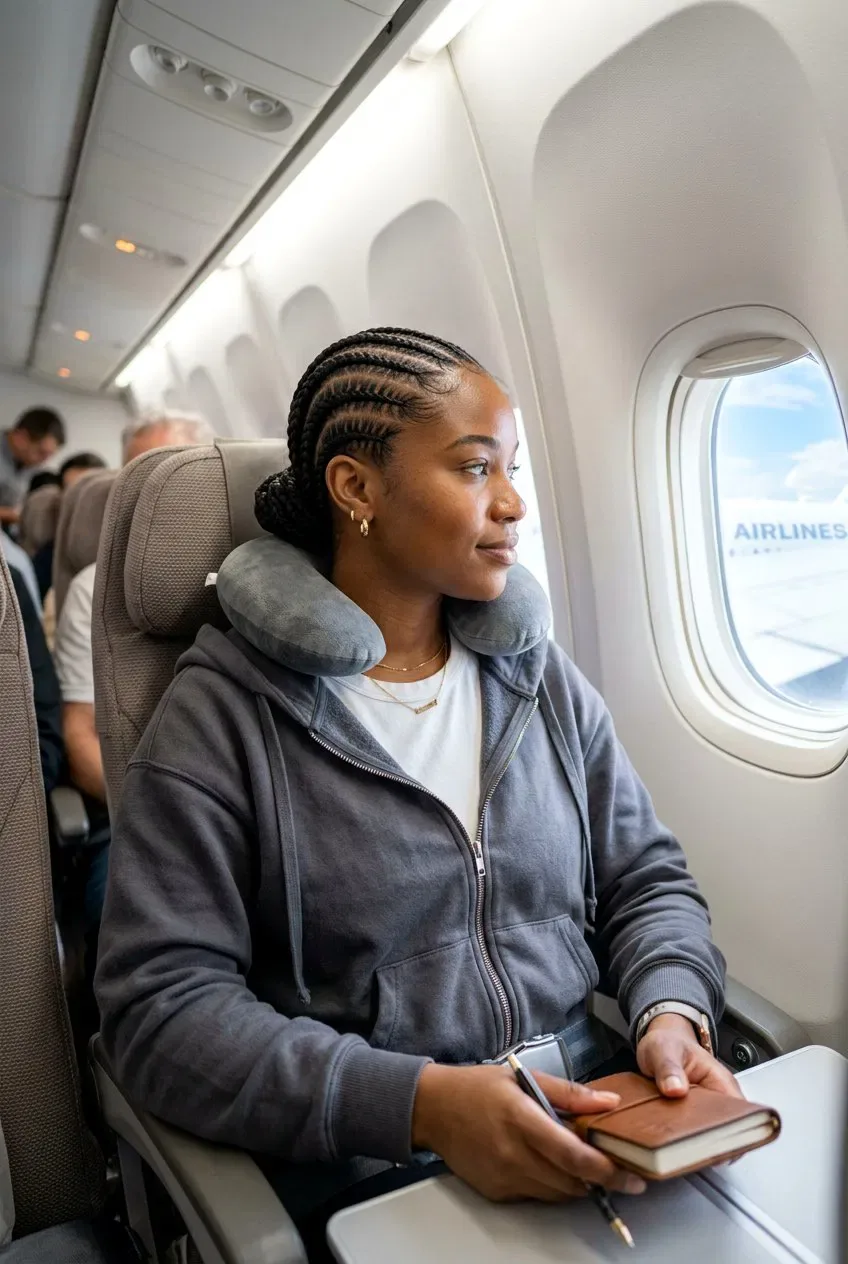
Not every flight needs the same hairstyle, and the mistake most travellers make is wearing a long-haul style on a short flight, or a short-flight style on a sixteen-hour journey. On a short flight of under three hours, almost anything works — the hair will not have time to flatten or dry out — so wear what you like and enjoy it. On a medium flight of four to seven hours, choose a style that survives one nap and a meal: a low bun, a loose braid, or a low ponytail, all of which hold for hours without attention.
On a long-haul flight of eight hours or more, the rules change completely. The style has to survive sleep, two meals, dry air, and a headrest for most of a day, so only the most secure, most comfortable styles qualify: a loose French braid, two low braids, a silk-scarf low bun, or a low bubble ponytail. These are the styles that look the same at hour ten as they did at hour one. Common mistake: boarding a long-haul flight in a fresh blowout, which is flat by hour three and frizzy by hour six. Quick verdict: short flight, wear anything; medium flight, wear a low bun or braid; long-haul, wear the braid you can sleep in.
Hair by Seat: Window, Middle, Aisle — What Works Where
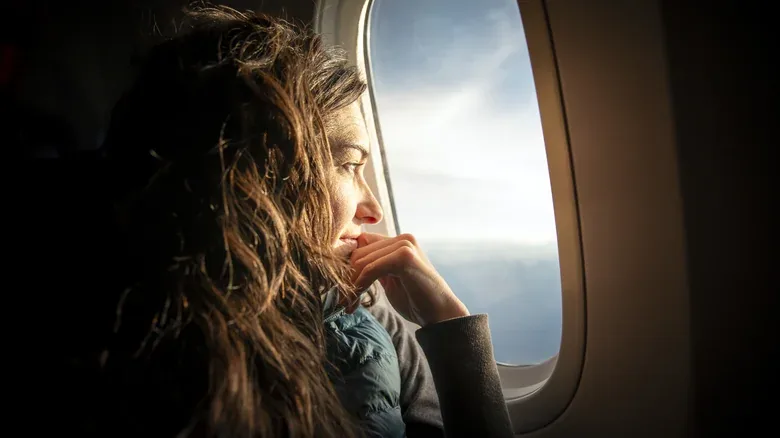
Your seat on the plane changes what your hair can do, and the women who arrive looking freshest are the ones who styled for their seat, not just for the flight. The window seat is the sleeper’s seat: you can lean against the wall and nap, so a loose braid or two low braids are perfect, because they survive being pressed against the window and wake up as soft waves. The middle seat is the hardest — no wall to lean on, neighbours on both sides — so a low bun or a low ponytail that keeps the hair contained and off your neighbours is the polite choice.
The aisle seat is the mover’s seat: you will stand up, let people past, and walk to the bathroom, so a style that stays neat through movement matters — a low bubble ponytail or a braided bun holds through all that standing and sitting. And in every seat, the same rule applies: keep the hair off the shared armrests and out of your neighbours’ space, because nothing ruins a flight faster than someone else’s hair in your meal. Pros and cons: the window seat lets you sleep in a braid, the aisle seat lets you move in a bun, the middle seat just needs containment. Quick verdict: window, braid it; middle, bun it; aisle, tie it down — and keep it off the armrests.
1. The Low Messy Bun for the Window Seat
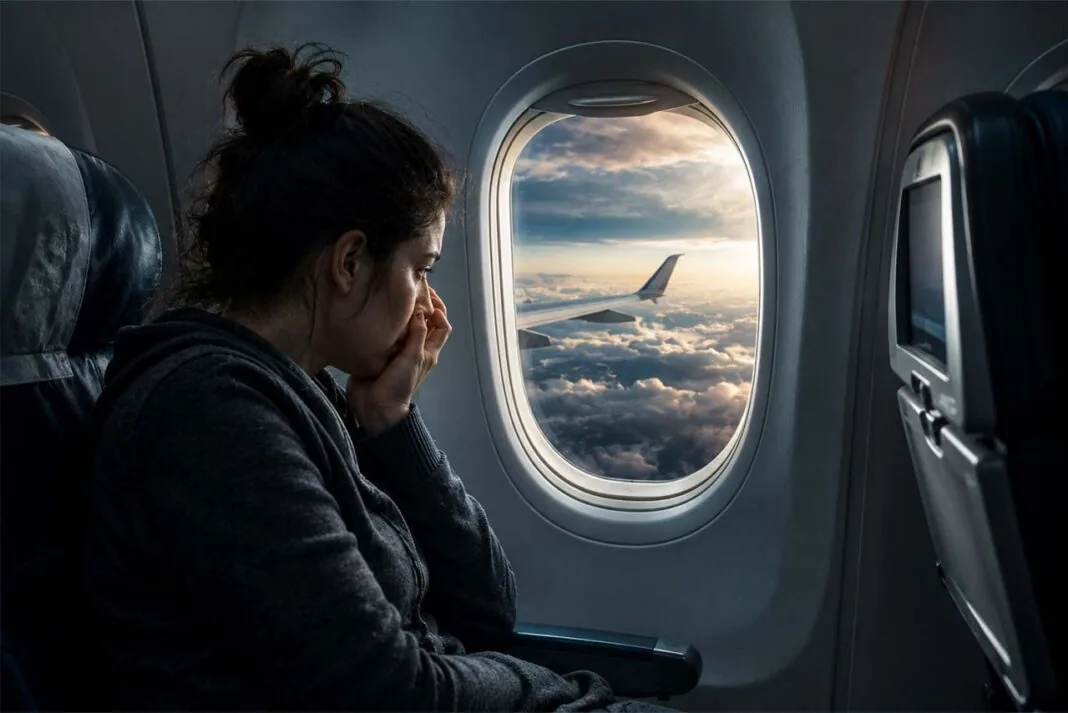
A low messy bun is the long-flight hairstyle that everything else is measured against, because it solves the three biggest plane problems at once: it sits below the headrest, so you can lean back and sleep; it keeps the hair off your neck in a warm cabin; and it looks better slightly undone than perfectly neat, so a nap cannot ruin it. The bun sits at the nape, well below where the headrest presses, and the looseness means the seat can tug at it for hours without leaving a dent or a frizz halo. Pull out two soft pieces at the front and the style looks deliberate rather than accidental — comfortable, pretty, and completely practical.
Best for: window seats, long-haul flights, and anyone who wants one style that works from boarding to baggage claim. How to style it: add a little texture spray, gather the hair loosely at the nape, twist it into a bun, pin it in two or three places with a soft scrunchie or flat pins, and pull out two pieces at the front. What to ask your stylist before the trip: nothing special — this is a styling choice, not a cut. Quick verdict: the window seat’s best friend, and the easiest style in this guide.
2. The French Braid That Survives a Nap
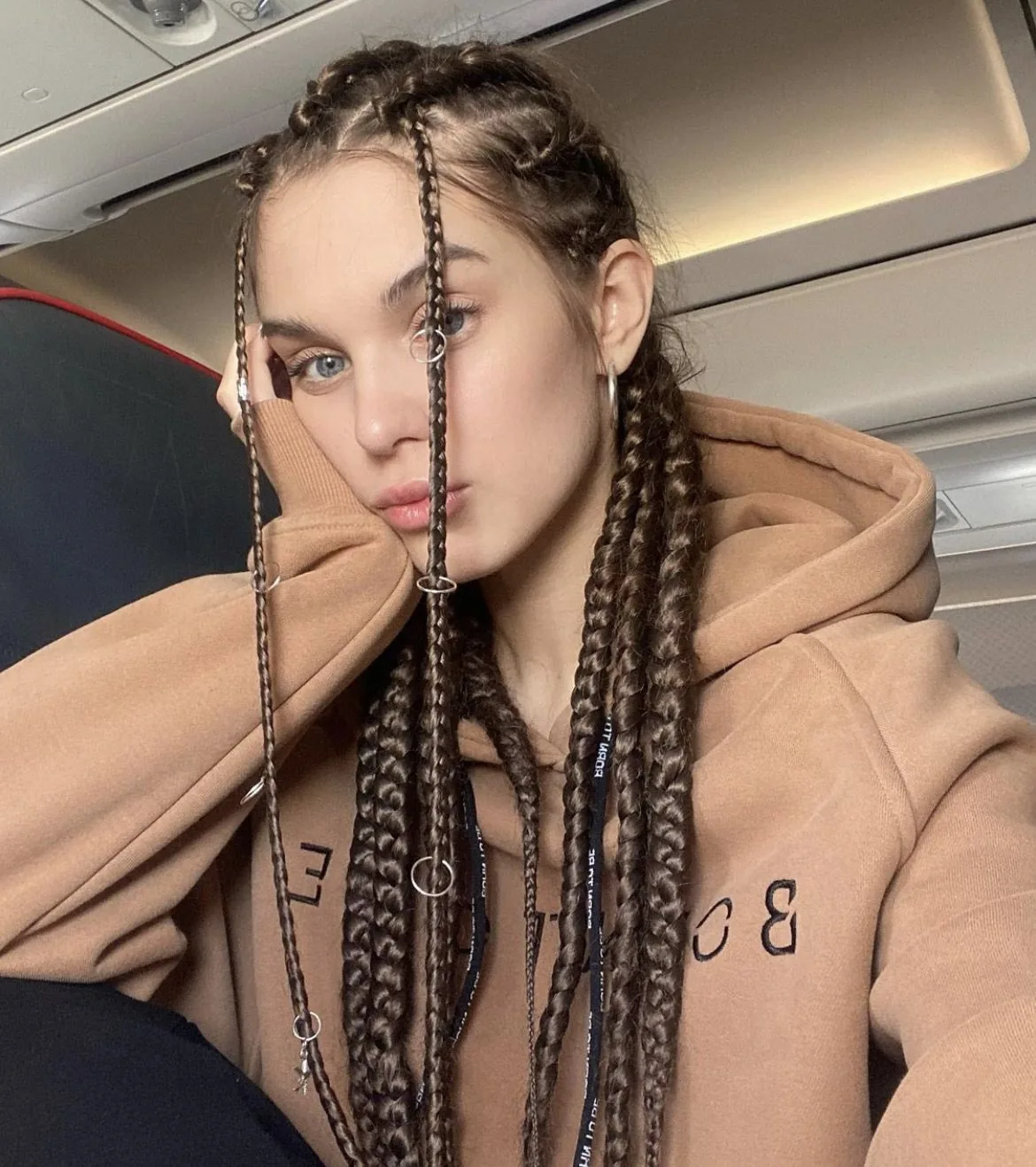
A classic French braid is the sleep-on-a-plane hairstyle, because it is the most secure style that still looks pretty — the braid starts at the crown and gathers the hair in as it goes, so every strand is anchored and nothing can escape, no matter how you lean, turn, or press your cheek against the window. It keeps the hair off the face and neck for hours, it survives a full night’s sleep in a seat, and when you take it out before landing you get soft waves for arrivals, which means one style does two jobs.
Best for: overnight flights, long days in the air, and anyone who hates re-doing their hair. How to style it: start at the crown, braid down the back adding hair from each side as you go, and tie with a soft silk scrunchie — then pull the edges of the braid out gently for fullness. Common mistake: braiding too tightly, which looks severe and gives you a headache by the second hour. Cost and time: free, and about five minutes. Quick verdict: braid it before boarding, sleep in it, undo it for landing waves.
3. The Low Ponytail With a Wrapped Base
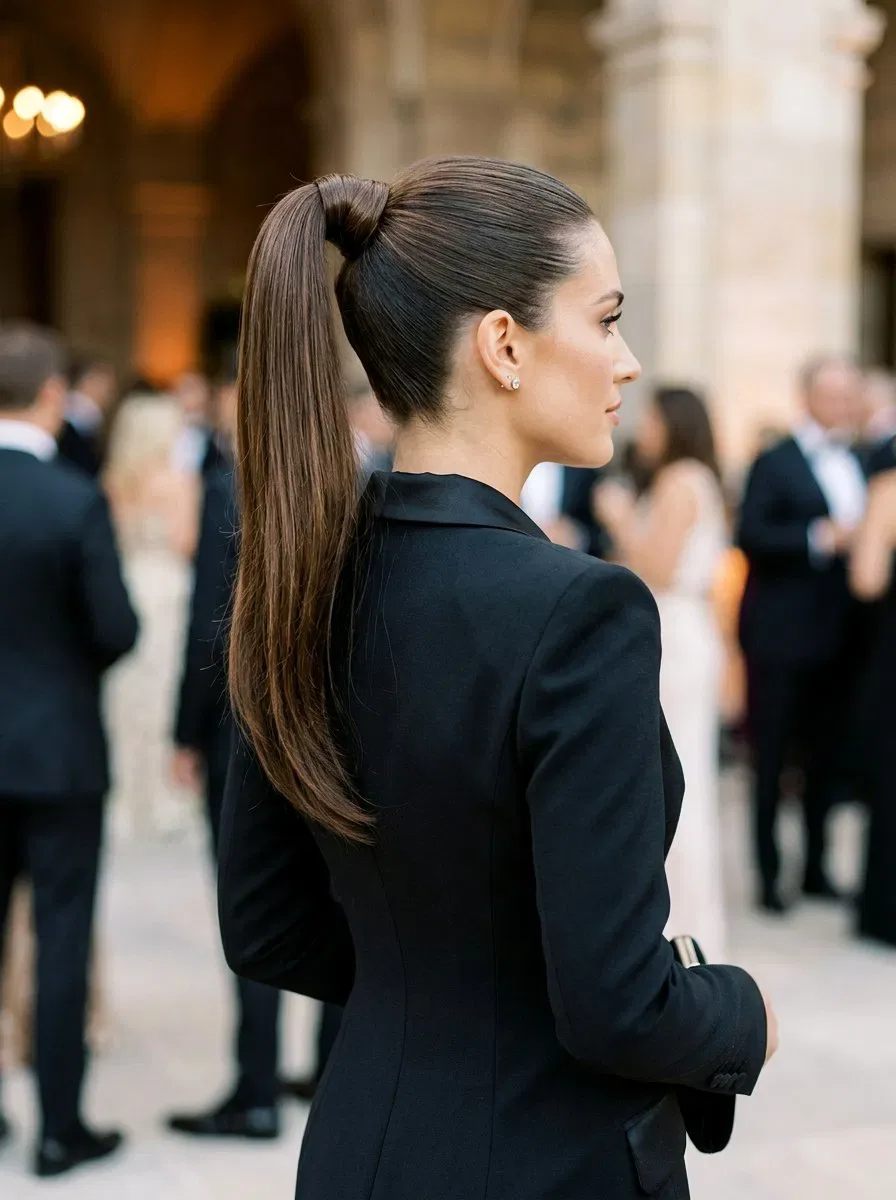
A low ponytail with a wrapped base is the most polished low-effort flight hairstyle — the ponytail sits low and smooth at the nape, a strand of hair is wrapped around the elastic to hide it, and the whole look reads as deliberate rather than thrown together. Because it sits below the headrest, you can lean back for the whole flight without a bump pressing into your skull, and because the hair is contained, it cannot tangle in the seat fabric or fall into your meal. It is the style for the traveller who wants to look put-together at arrivals without trying very hard.
How to style it: smooth the hair with a brush and a little serum, gather it low, secure it with a soft scrunchie, wrap a strand around the base and pin it underneath with a flat pin. Pros and cons: it takes two minutes, holds all flight, and suits every hair type — but a very sleek, very tight ponytail with nothing at the sides can look severe, so keep the front soft. Who should avoid it: nobody, though very short hair will need a lower, looser version. Quick verdict: two minutes to a ponytail that looks like you tried much harder.
4. The Silk-Scarf Low Bun
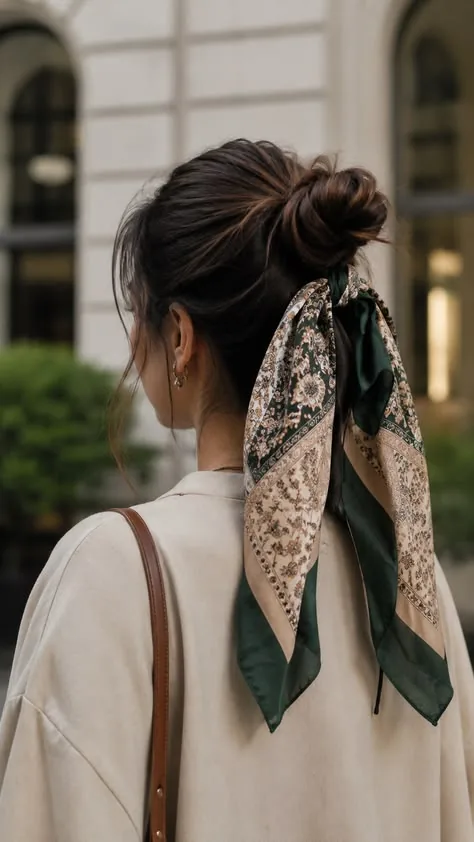
A silk scarf wrapped around a low bun is one of the most elegant long-flight hairstyles, and one of the most practical — and it does three jobs at once. The scarf adds colour and polish, it keeps flyaways in place in the dry cabin air, and it protects the hair from the rough seat fabric and the drying air, which keeps colour from fading and ends from tangling. Choose a scarf that picks up a colour in your outfit, wrap it around the base of the bun, and let the ends fall softly: it looks like a deliberate accessory, not a cover-up.
Best for: overnight flights, dry cabins, and anyone who wants an easy way to dress up a simple bun. How to style it: make a low bun first, then fold a silk scarf into a band, wrap it around the base of the bun, and tie it neatly. Pros and cons: it is quick, pretty, and practical, but the scarf needs to be silk or satin — cotton slips and creates friction. Maintenance: none on the flight — the scarf holds everything. Quick verdict: the fastest way to make a simple bun look special at 35,000 feet.
5. Two Low Braids for Sleeping Through the Flight
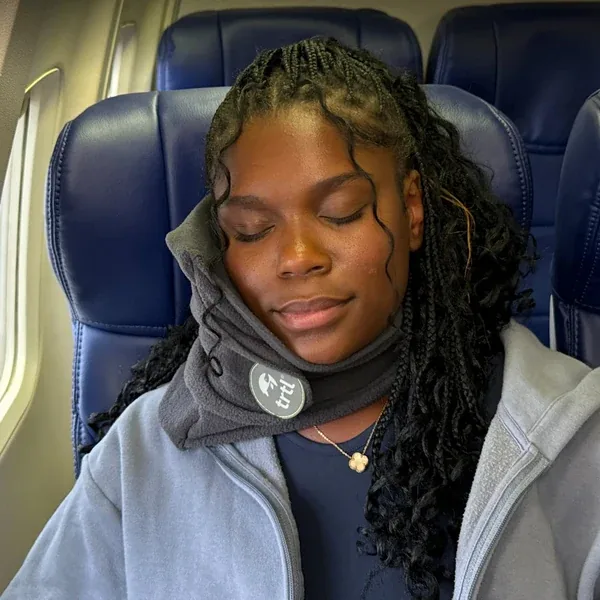
Two low braids are playful, practical, and surprisingly flattering on a long flight — the braids fall on either side of the face, the headrest presses against nothing but smooth hair between them, and the whole look has a relaxed, youthful energy that works for a red-eye, a daytime long-haul, or a connecting flight. The braids keep the hair completely contained, so dry air and seat fabric are no problem at all, and when you take them out before landing, you get easy waves for arrivals.
Best for: long hair, overnight flights, and anyone who wants a style that truly will not move. How to style it: part the hair in the middle, braid each side loosely, pull the edges out gently for fullness, and tie with soft scrunchies. Pros and cons: it holds all flight and survives sleep and headrests, but it takes about ten minutes and needs enough length to braid. Who should avoid it: very short hair. Quick verdict: the overnight-flight favourite.
6. The Low Half-Up Top Knot (Headrest-Friendly)
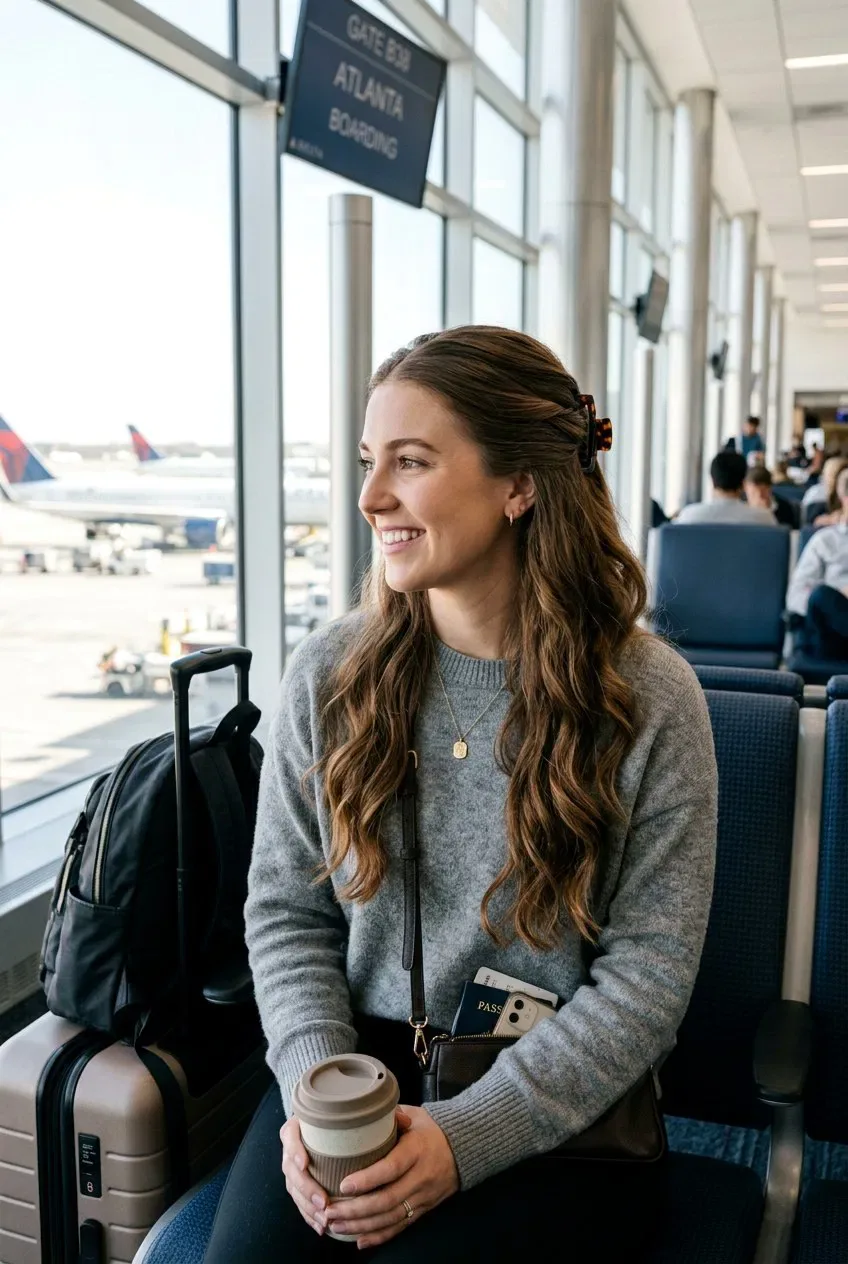
A low half-up knot is the headrest-friendly version of the top knot: the top half of the hair is gathered into a small knot that sits low at the back of the crown, not high on top, which keeps it out of your eyes and off your face without ever touching the headrest, while the bottom half falls in soft waves that add gentle width below the shoulders. The knot is anchored low, so leaning back cannot undo it, and the loose lengths move with you instead of fighting the seat — which means the style looks good after a nap rather than in spite of it.
Best for: medium to long hair, and women who like wearing their hair down but want it out of their face. How to style it: curl the lengths first, then gather the top section from temple to temple, twist it into a small low knot, and secure it with crossed flat pins or a small soft scrunchie. Common mistake: pulling the knot too high, which turns a headrest-friendly style into a headrest problem. Quick verdict: five minutes to a style that sleeps as well as it looks.
7. The Loose Side Braid Over One Shoulder
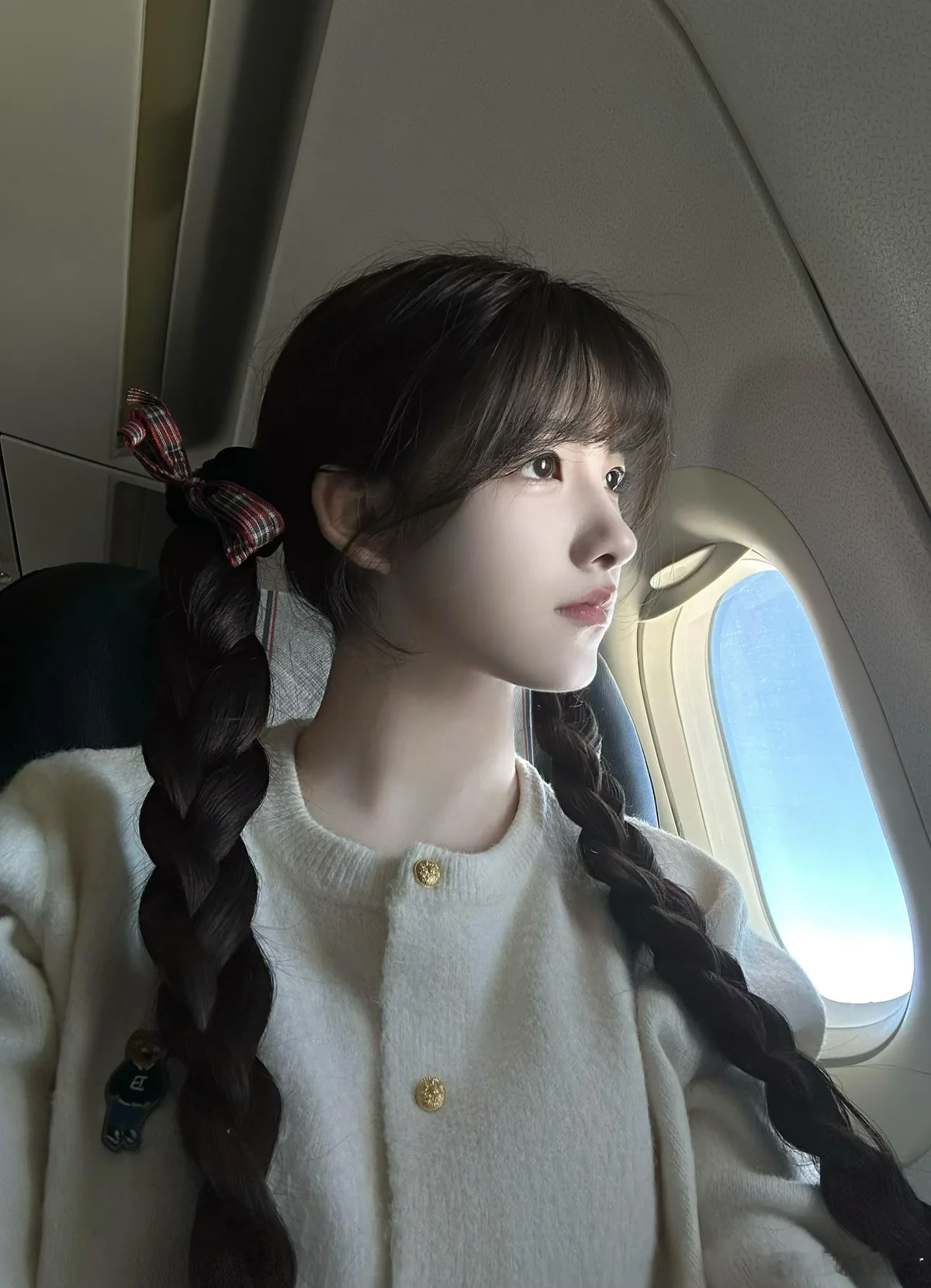
A loose side braid is the most comfortable way to wear long hair on a plane: the braid is swept over one shoulder, so it never touches the headrest at all, it keeps the hair out of the way while you eat, read, and sleep, and it catches the light in a way that a bun never does. It is romantic without being fussy, it holds its shape through a long flight, and it needs no pins at all — which makes it the easiest pretty style in the air.
How to style it: sweep the hair to one side, braid loosely, and gently pull the edges of the braid out to make it fuller, then tie with a soft scrunchie or a ribbon. Maintenance: almost none — if it loosens during the flight, just pull it out a little more. Common mistake: braiding too tightly, which looks severe rather than relaxed. Who should avoid it: very short hair, which cannot reach over the shoulder. Quick verdict: bring the hair forward, not back — that is the whole trick.
8. The Sleek Low Chignon for Landing
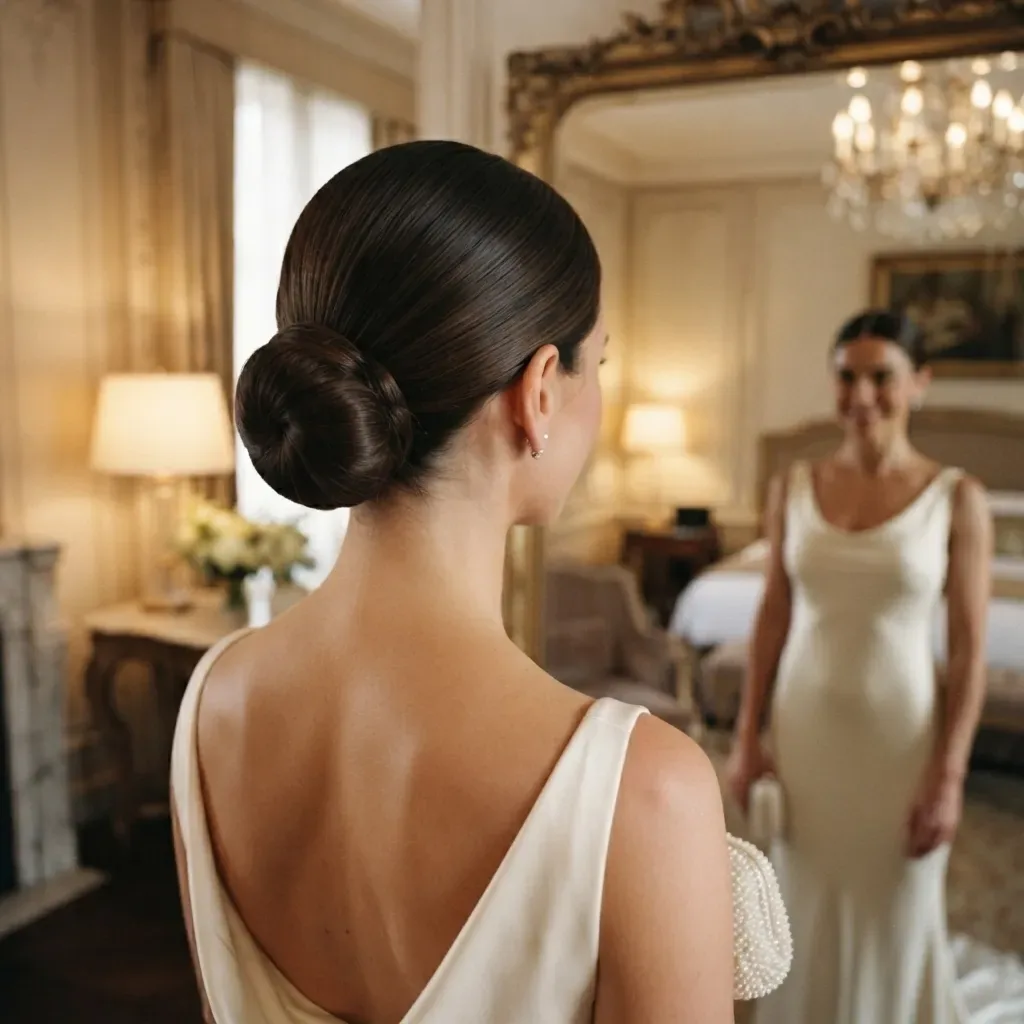
A sleek low chignon is the most elegant landing hairstyle — the smooth crown lets a pair of earrings show, the low chignon keeps the back neat under the arrivals-hall lights, and the whole look reads as polished, grown-up, and deliberate. It is the hairstyle for the moment you step off the plane and meet someone, and it works in a tiny airplane bathroom because it needs only a brush, a little gel, and three flat pins.
Best for: arriving for a meeting, a wedding, or any occasion when you want to look your best the moment you land. How to style it: part the hair in the centre or on one side, smooth it back with a brush and a little gel, gather it low, twist it into a chignon, and pin it in three places. Cost and time: about ten minutes — ideally done in the last hour of the flight. Common mistake: volume at the crown, which makes the chignon look lopsided. Quick verdict: the most polished landing hairstyle here.
9. The Textured Lob That Springs Back After a Nap
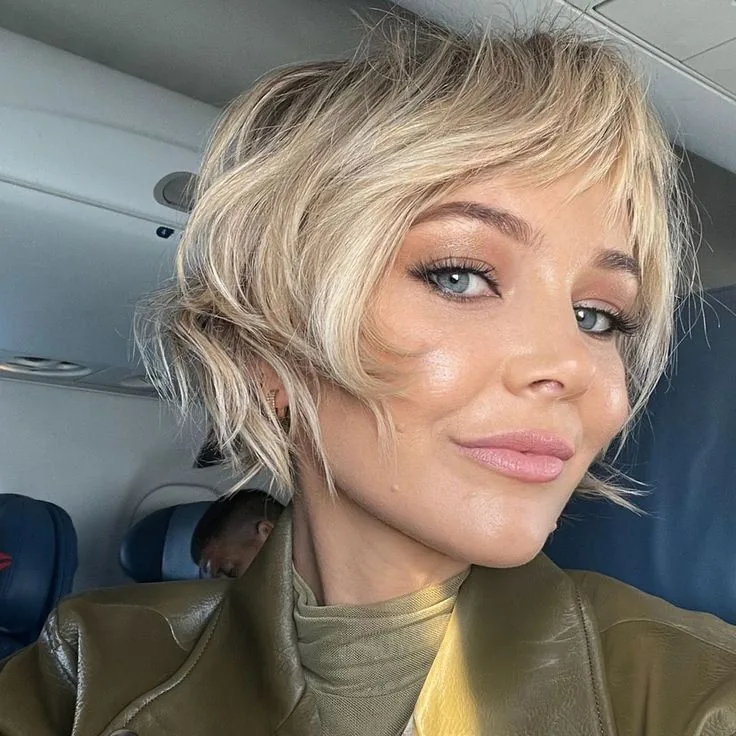
A textured lob is a long-flight combination that works because the lob ends right where the headrest stops pressing — at the shoulders — so a nap adds movement instead of mess. The layers keep the lob from lying flat, and when you wake up, a quick shake and a scrunch is all it takes to bring the texture back. It is low-maintenance, it is cool in a warm cabin, and it looks good with a travel outfit, a blazer, and a dinner dress alike.
Pros and cons: it is versatile, easy to style, and flattering on fine and thick hair alike, but the texture can look messy if the layers are cut too short, so ask for long, soft layers rather than choppy ones. How to style it: work a little texture cream through damp hair before boarding, scrunch the ends, and let it dry naturally in the cabin air. Maintenance: a trim every eight weeks keeps the shape. Quick verdict: wake up, shake, scrunch, land.
10. The Dutch Braid Crown for Long-Haul Comfort
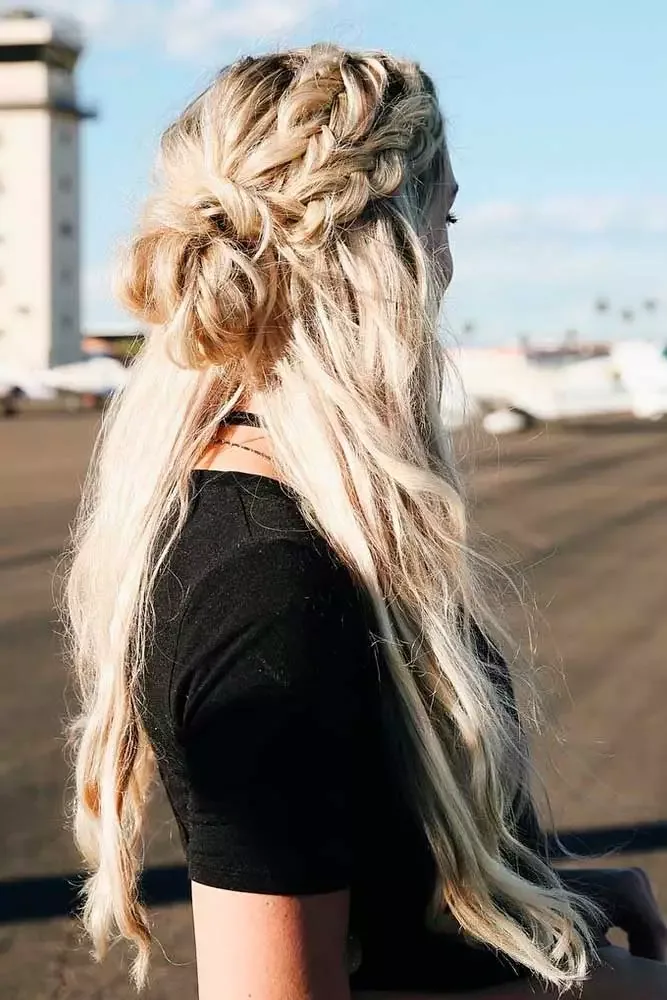
A Dutch braid crown is a beautiful long-flight combination because the braid runs around the head like a halo, keeping every strand off the face and neck, while the headrest presses against smooth, flat hair instead of a bump. The crown sits flat where the seat hits hardest, so nothing lifts or tangles, and the braid itself is completely secure — it will not move through sleep, turbulence, or a long walk to the bathroom. It has a gentle, graceful quality that suits an overnight flight or a daytime arrival alike.
What to ask your stylist before the trip: nothing — this is a styling skill, not a cut, but it does need enough length to wrap around the head. How to style it: part the hair in the middle, Dutch-braid each side toward the back, and pin the ends underneath each other with flat pins. Pros and cons: it holds all flight and looks stunning, but it takes practice — do a trial run the night before you fly. Quick verdict: the prettiest secure flight style in this guide.
11. The Low Bubble Ponytail for Turbulence-Proof Hair
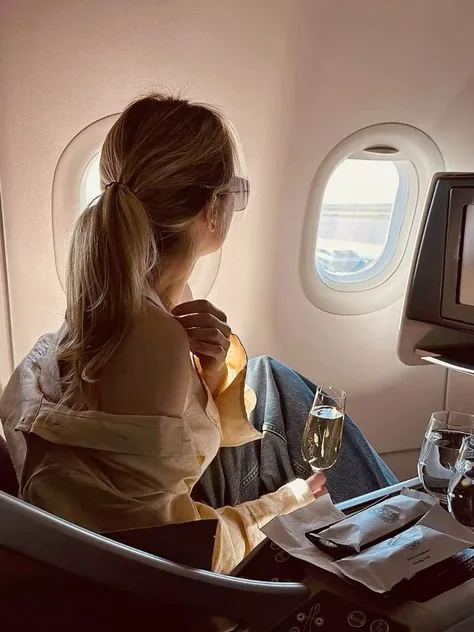
A low bubble ponytail is a playful twist on the classic flight ponytail, and it is surprisingly practical for a long flight. The ponytail is secured low at the nape, then tied again at intervals down its length, with each section gently pulled out to form soft bubbles — and because the hair is divided into sections, a nap or a bumpy patch of turbulence cannot undo the whole style at once. It is fun, it is secure, and it keeps long hair neatly contained from boarding to baggage claim.
Best for: long hair and women who want a ponytail with a little more personality. How to style it: gather the hair low, secure it, then add small soft elastics every few inches down the ponytail, pulling each section out gently for fullness. Pros and cons: it is secure, pretty, and fun, but it needs a few elastics and a little patience. Quick verdict: the ponytail, dressed up for a long-haul day.
12. Soft Waves You Can Refresh in Two Minutes
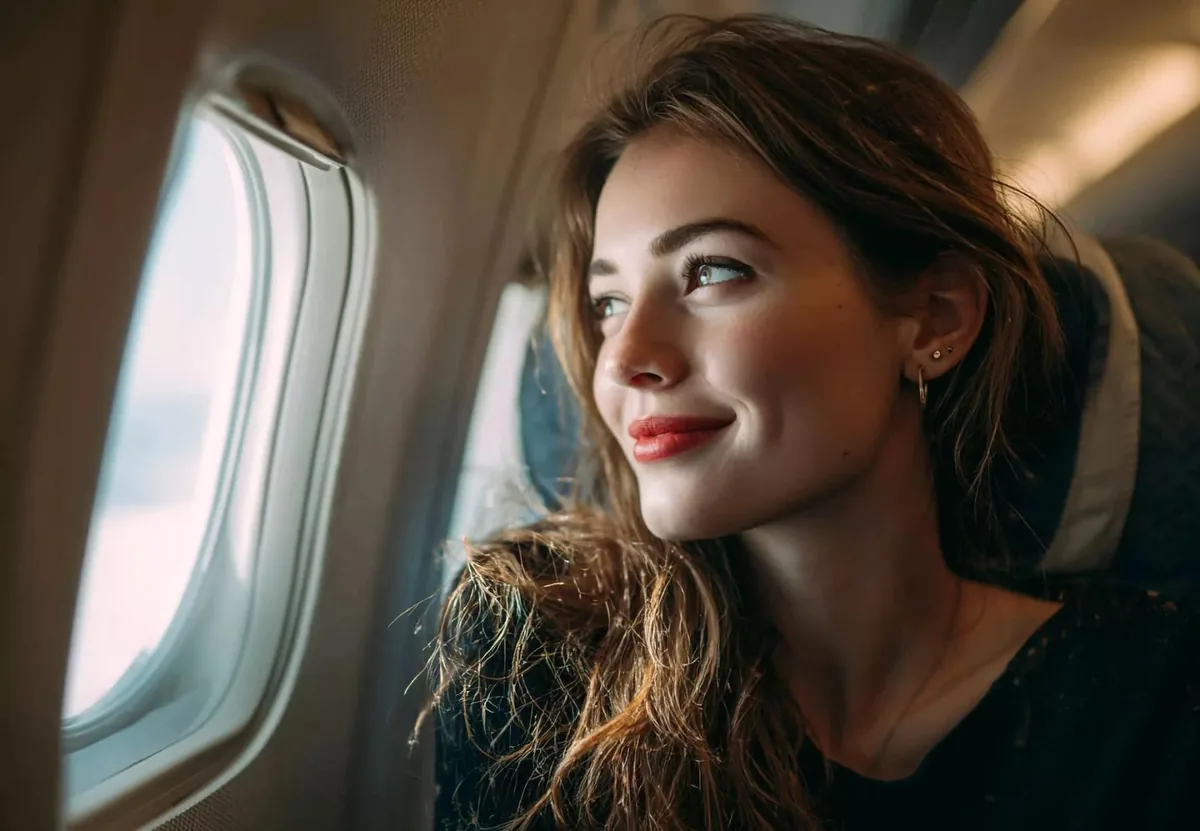
Soft waves are the most forgiving long-flight hairstyle for women who love wearing their hair down — the waves fall past the shoulders, the headrest moves through them instead of flattening them, and the slight dryness of cabin air actually adds the texture that a bottle of salt spray tries to imitate at home. It is the relaxed look in its purest form, and it refreshes in two minutes before landing: a shake, a scrunch with a little texture spray, and the waves are back.
How to style it: curl in large sections with a wide-barrel iron before boarding and brush the curls out into loose waves, or braid damp hair the night before and undo it at the gate. Pros and cons: it is effortless and it gets better with a little cabin dryness, but it will drop if the cabin is very warm, so keep a little texture spray in your carry-on. Maintenance: a leave-in conditioner on the ends keeps them from drying out in the cabin air. Quick verdict: let the cabin do the styling, then shake it back to life.
13. The Fishtail Braid for Long-Haul Comfort
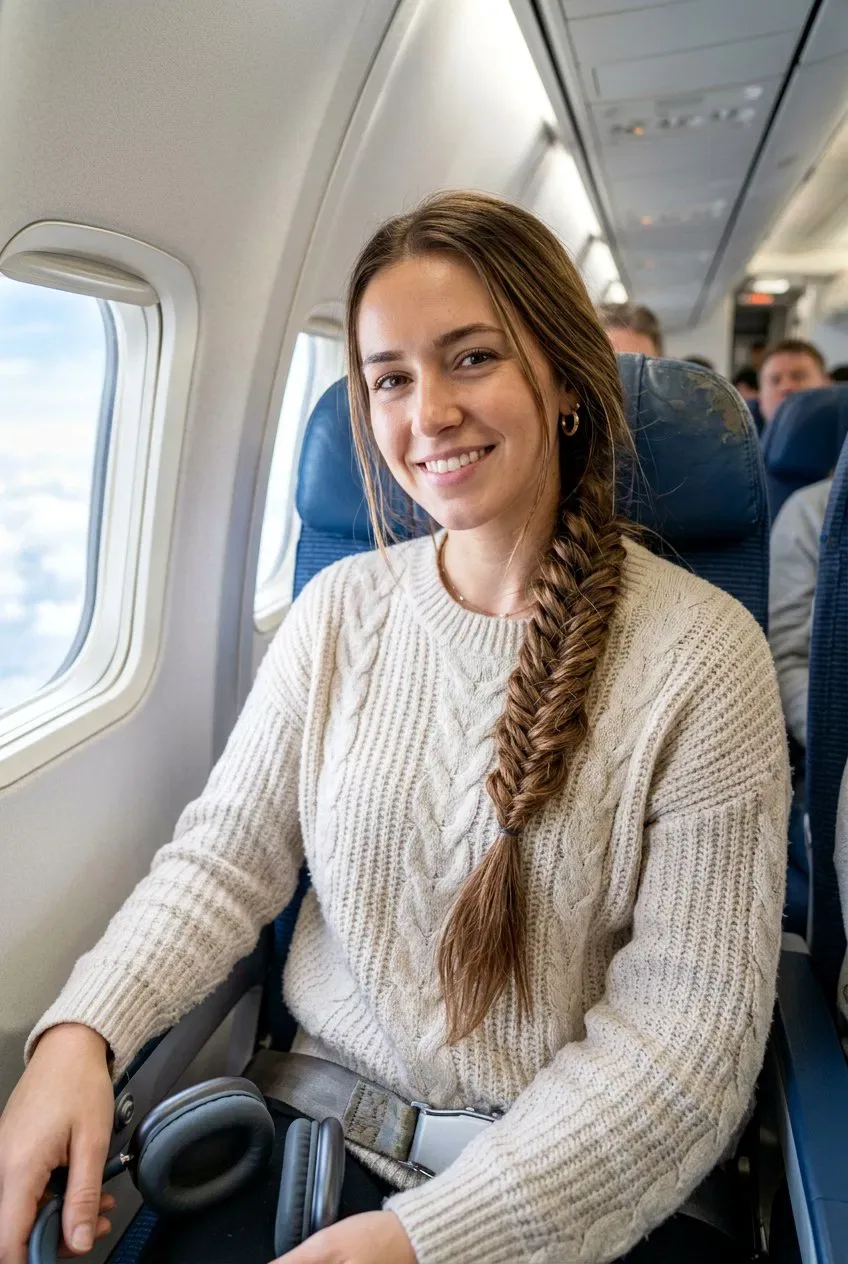
A fishtail braid is the long-haul hairstyle, because it looks intricate and romantic while being one of the most secure braids you can wear — the fine, lace-like weave holds its shape through sleep, dry air, and a headrest pressing against it for hours, and when it is pulled out gently it looks full and soft rather than tight and severe. Worn low and over one shoulder, it is pretty, it is practical, and it keeps long hair out of the way in a cramped seat — which is exactly what you want on a day of flying.
How to style it: gather the hair low to one side, split it in two, and fishtail-braid by taking small pieces from the outside of each half to the inside of the other, then pull the braid out gently for fullness. Pros and cons: it looks intricate and holds well, but it takes a little longer than an ordinary braid — about ten minutes. Who should avoid it: very short hair, which cannot fishtail. Quick verdict: the braid for women who like a little detail at 35,000 feet.
14. The Low Twisted Bun for Arrival Dinners
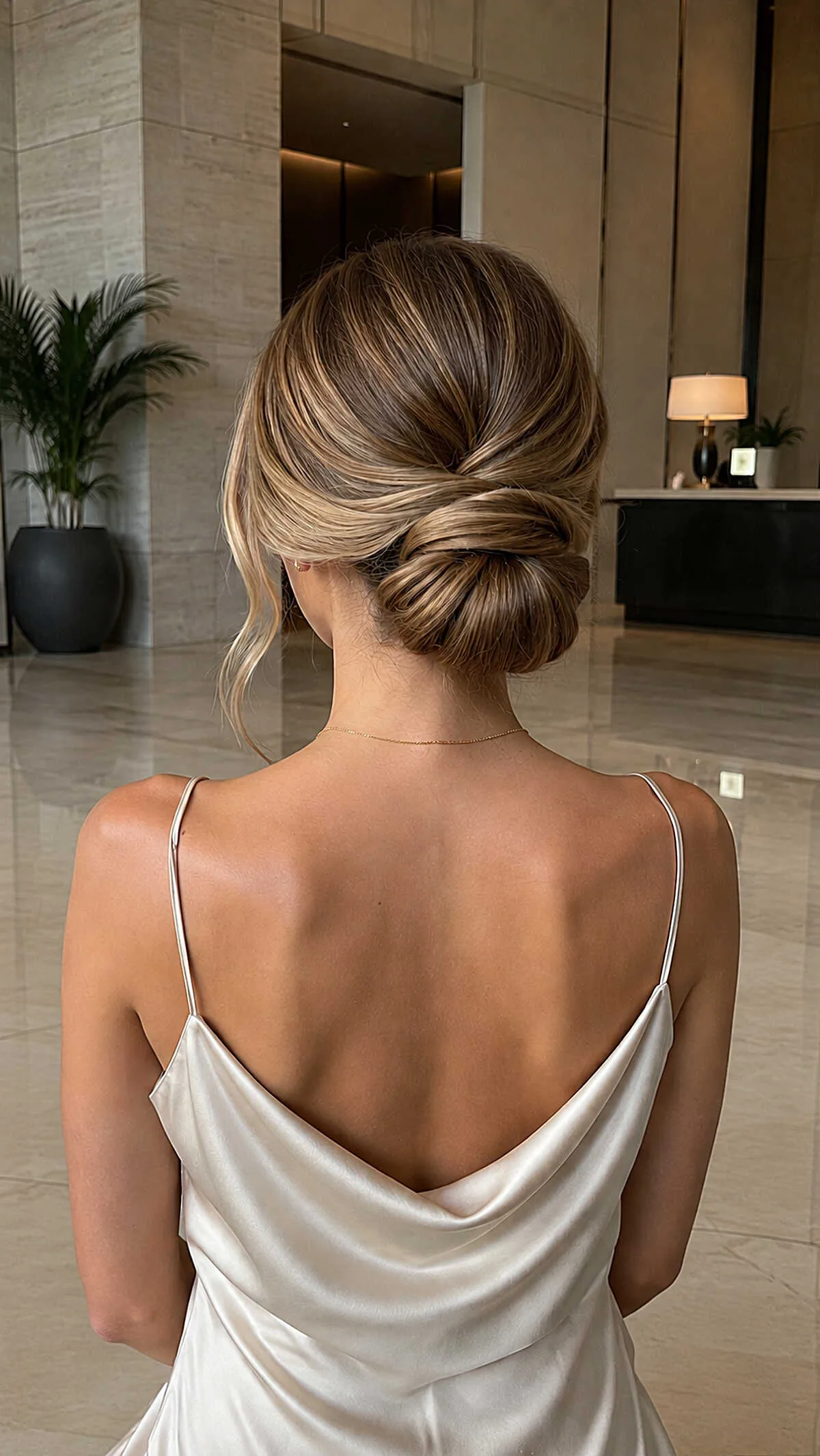
A low twisted bun is a quiet, elegant long-flight combination: the bun sits low at the nape, the twists give it lovely texture, and nothing about it fights the headrest. Because every twist is pinned separately with flat pins, it holds its shape for hours — even through a nap and a walk down the aisle — and it looks far more complicated than it is, which makes it a beautiful choice for a dinner on arrival night, a show, or an evening in the hotel lounge. It is the updo that looks like a salon visit but is really just three twists.
Best for: medium to long hair, and special evenings after landing. How to style it: divide the hair into three low sections, twist each one toward the centre, and pin the twists together at the nape, tucking the ends underneath. Pros and cons: it looks intricate and holds wonderfully, but it needs a mirror and a little patience the first time. Maintenance: none on the evening. Quick verdict: three twists, three pins, arrival-dinner ready.
15. The Wavy Bob That Never Flattens
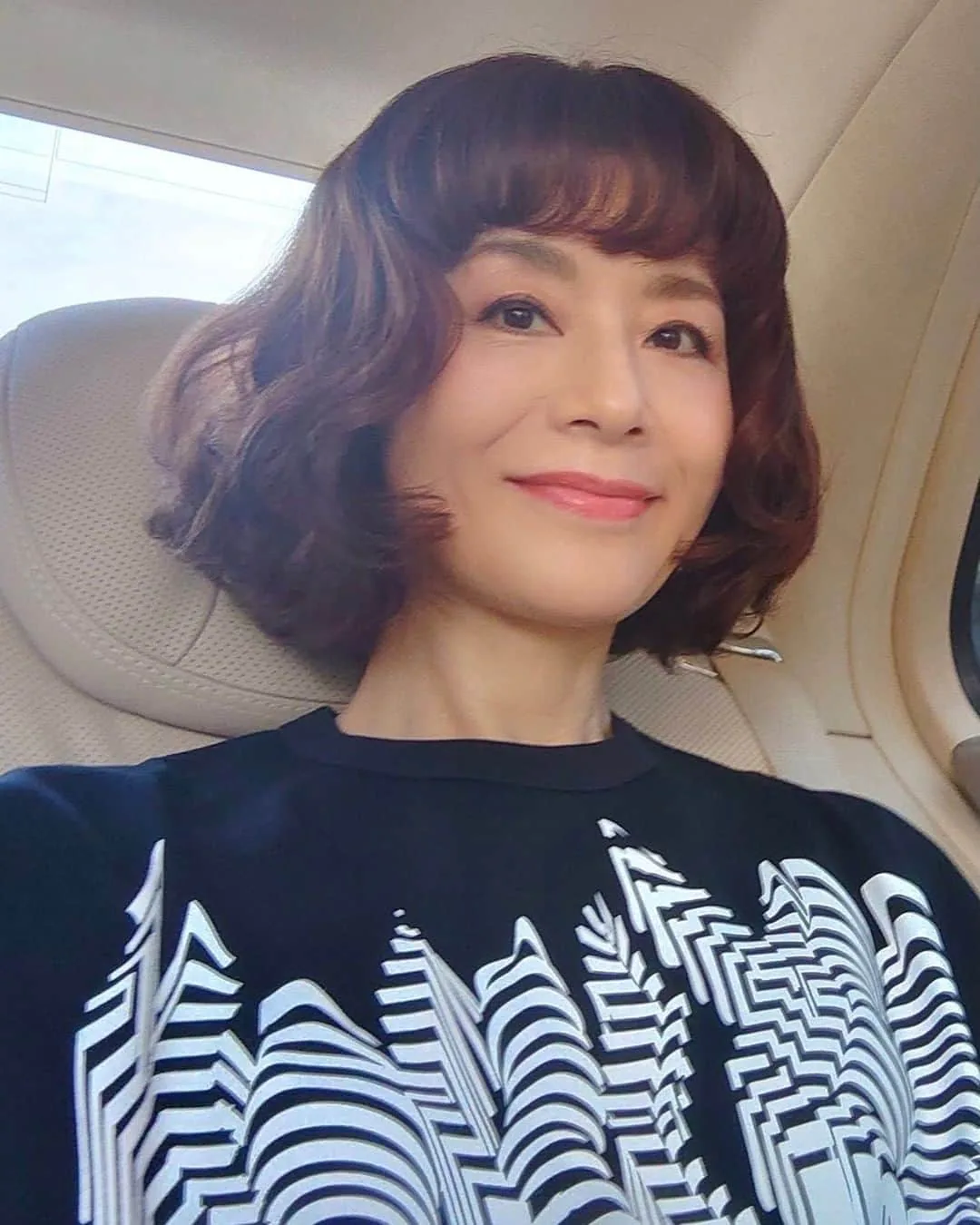
A wavy bob is the short-hair long-flight hairstyle that does everything: it dries in minutes, the dry cabin air adds exactly the texture it needs, and it never falls into your face or tangles around your neck in a cramped seat. The waves give the bob movement and softness, the length sits above the shoulders so the headrest cannot catch it, and it looks just as good with a travel outfit at boarding as it does with a dinner dress on arrival. For short hair, a long flight is the easiest journey there is — and a wavy bob is why.
Best for: short hair, and women who want the lowest-maintenance flight hair of all. How to style it: work a little texture spray through damp hair before boarding, scrunch the ends, and let it dry naturally — or curl a few sections with a small iron and brush them out. Pros and cons: it is effortless, cool, and flattering, but it needs a trim before you fly so the shape holds all flight. Quick verdict: the short-hair flight winner.
16. The Pinned-Back Half-Up for Reading and Resting
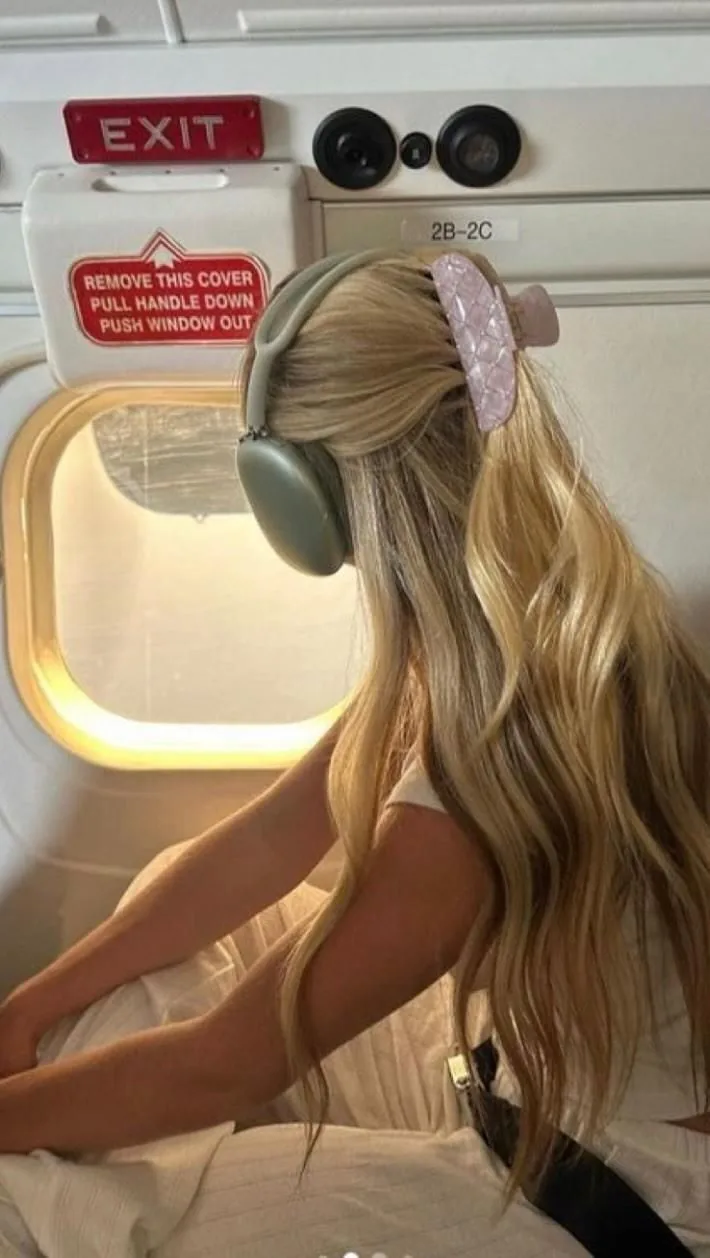
Pinning back the sides is the simplest way to wear your hair down on a long flight and still keep it out of your face. Two small sections are taken from each temple, twisted or braided back, and pinned behind the head with flat pins, while the rest of the hair falls in soft curls below the shoulders. It is romantic, it is practical, and the pins do the work while the curls do the pretty — and on a long flight, the pinned-back shape holds while loose hair would be falling forward every time you lean down to read.
How to style it: curl the hair first, take a section from each temple, twist them back, and pin them together behind the head with crossed flat pins. Pros and cons: it is quick, pretty, and secure, but it needs enough length to pin back — very short hair will need a different option. Maintenance: none on the flight. Who should avoid it: nobody — the pinned sections can be as small or as large as you like. Quick verdict: down, but out of your face — the best of both at cruising altitude.
17. The Rope Braid: The Most Secure Braid in the Air
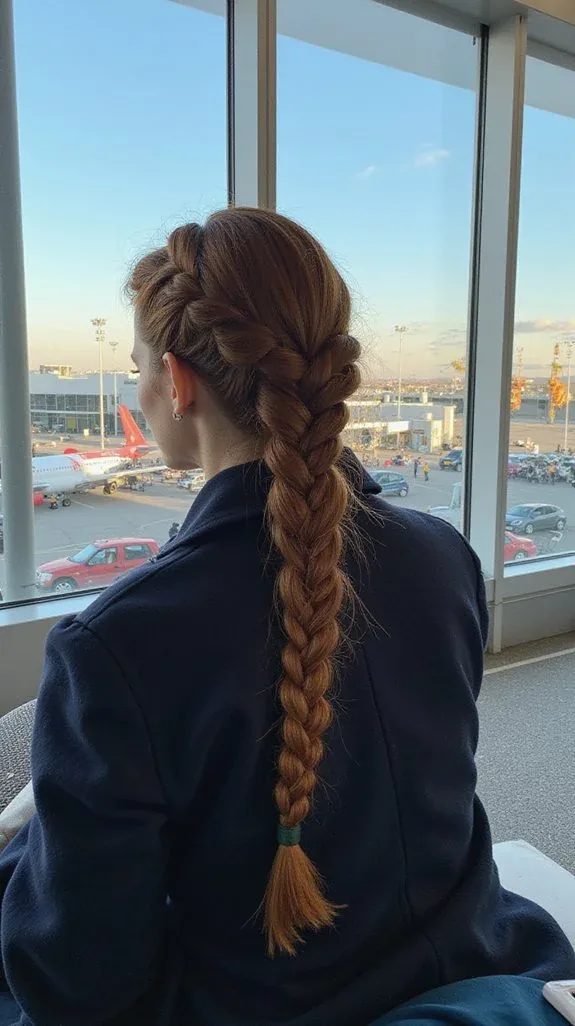
A rope braid is the long-flight hairstyle that most women have never tried — and it is the most secure braid there is. The hair is divided into two sections, each twisted in the same direction, and then the two twists are wound around each other in the opposite direction, which locks them together so tightly that sleep, turbulence, and a whole day in a seat cannot undo them. It looks sleek and modern, it takes about five minutes once you know the trick, and it is the braid to choose when the flight is long and the seat is cramped.
How to style it: gather the hair low to one side, divide it in two, twist each section in the same direction, then wind the two twists around each other in the opposite direction and tie with a soft scrunchie. Pros and cons: it is the most secure braid here and it looks sleek, but it does need a little practice — try it once before you fly. Who should avoid it: very short hair. Quick verdict: the secure braid you have not tried yet.
18. The Gibson Tuck for Vintage Arrival Glamour
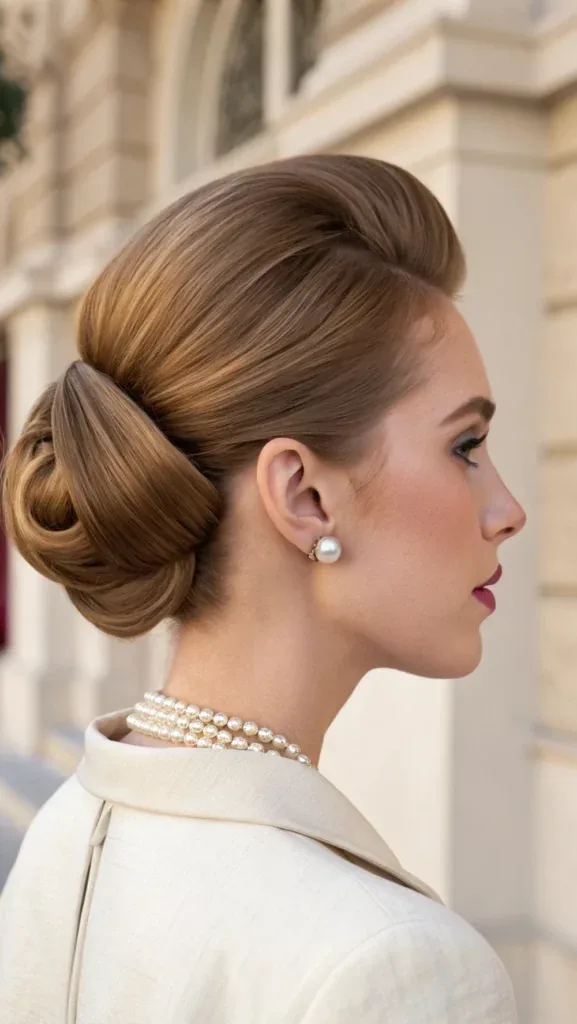
The Gibson tuck is a vintage style with real history behind it, and on a long flight it still looks lovely today. The hair is gathered low, looped up, and tucked into itself at the nape, creating a soft roll with no visible elastic and no pins showing, and the whole style sits close to the head, which means the headrest cannot catch it. It is graceful, modest, and a little bit romantic, and it holds beautifully because the tuck itself is the anchor — perfect for arriving at a formal occasion or a vintage-themed evening after landing.
How to style it: gather the hair into a low ponytail, loosen the scrunchie slightly, split the hair above it, and tuck the ponytail up and through the split, then pin the ends underneath with flat pins. Best for: medium to long hair, and women who love a vintage touch. Common mistake: tucking it too tightly, which makes the roll look stiff — keep it soft. Cost and time: five minutes and two pins. Quick verdict: a century-old hairstyle that still works perfectly at 35,000 feet.
19. Face-Framing Layers for the Arrivals Hall
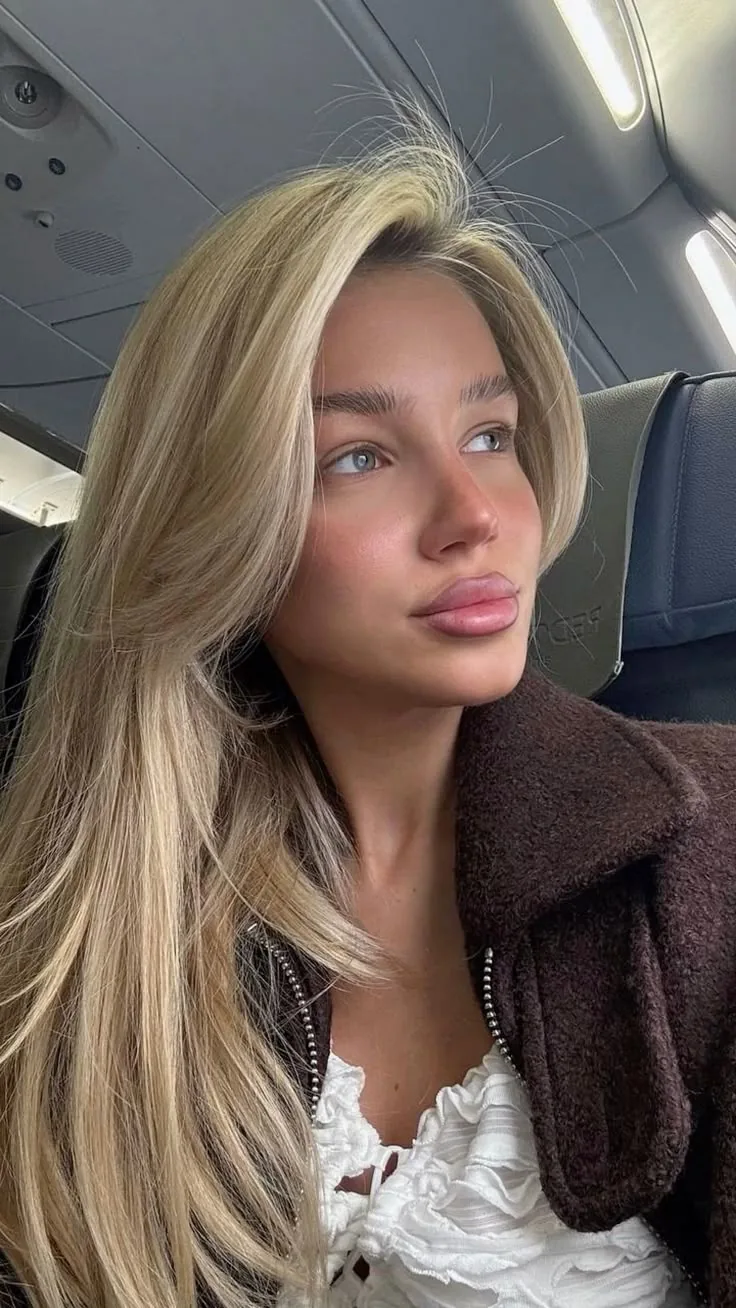
Face-framing layers are a beautiful long-flight style for women who love their long hair and do not want to pin it up. Two shorter pieces at the front — starting at the cheekbones and curving down past the chin — soften the face and keep the hair from falling in a flat curtain when you lean forward in your seat, while the layers through the back keep it light and moving. In the arrivals hall, with the lights and the cameras, the layers catch the light in a way that a one-length cut never does.
Best for: long hair, all textures, and women who want to keep their length. How to style it: blow-dry the front pieces with a round brush before boarding, curving them away from the face, and add a loose wave through the lengths. Common mistake: layers that start at the chin or lower, which do almost nothing for the face — they need to start at the cheekbones to work. Cost and time: a standard salon cut before you fly, about an hour. Quick verdict: the best way to wear long hair down in the air.
20. The Shoulder-Length Shag for Effortless Flights

A shoulder-length shag is the finishing touch of effortless flight hair — a modern, lived-in cut with soft, piecey layers that gives the hair movement and texture, and a style that a long flight only improves. The shag ends at the shoulders, so it never falls into your face in a cramped seat, and the layers keep it from lying flat against a headrest. When you wake up from a nap, a quick shake is all it takes to bring the shag back to life, because the texture was built into the cut.
Best for: most face shapes, and women who want a low-maintenance cut that still looks intentional. How to style it: work a little texture cream through damp hair before boarding, scrunch the ends, and let it dry naturally in the cabin air. What to ask your stylist before the trip: ask for long, soft layers rather than choppy ones, and for the shag to end at the collarbone. Common mistake: a shag cut too short and too blunt, which can look severe rather than soft. Quick verdict: the easiest polished flight cut here — wash, scrunch, board.
21. The Soft Fabric Headband Half-Up
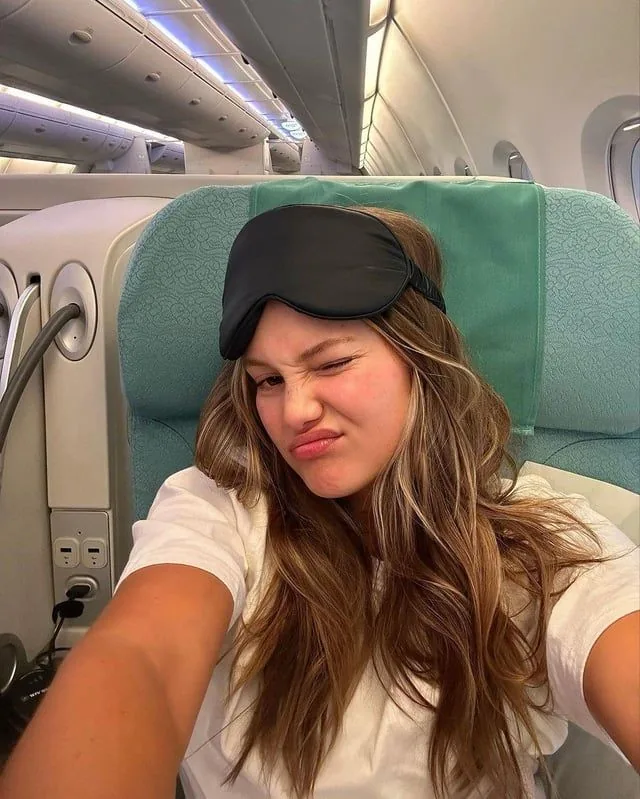
A soft fabric headband half-up is the long-flight lounging hairstyle: the top section is lifted and held back by a wide fabric headband, which keeps the hair out of your face while you read and rest, while the rest falls in soft waves that dry naturally in the cabin air. A wide fabric headband does double duty — it holds the hair and it absorbs sweat at the hairline, so the style stays comfortable through a long, warm flight, and it contains no metal, so it passes through security without a beep.
Best for: medium to long hair, and lazy long-haul days. How to style it: curl the lengths lightly before boarding, gather the top section from temple to temple, and slide a wide fabric headband into place, letting the top section fall softly over it. Pros and cons: it is comfortable, pretty, and needs no pins, but a narrow metal headband can give you a headache — choose fabric. Who should avoid it: nobody. Quick verdict: the laziest pretty style at cruising altitude.
22. The Twisted Half-Up for Golden-Hour Landings
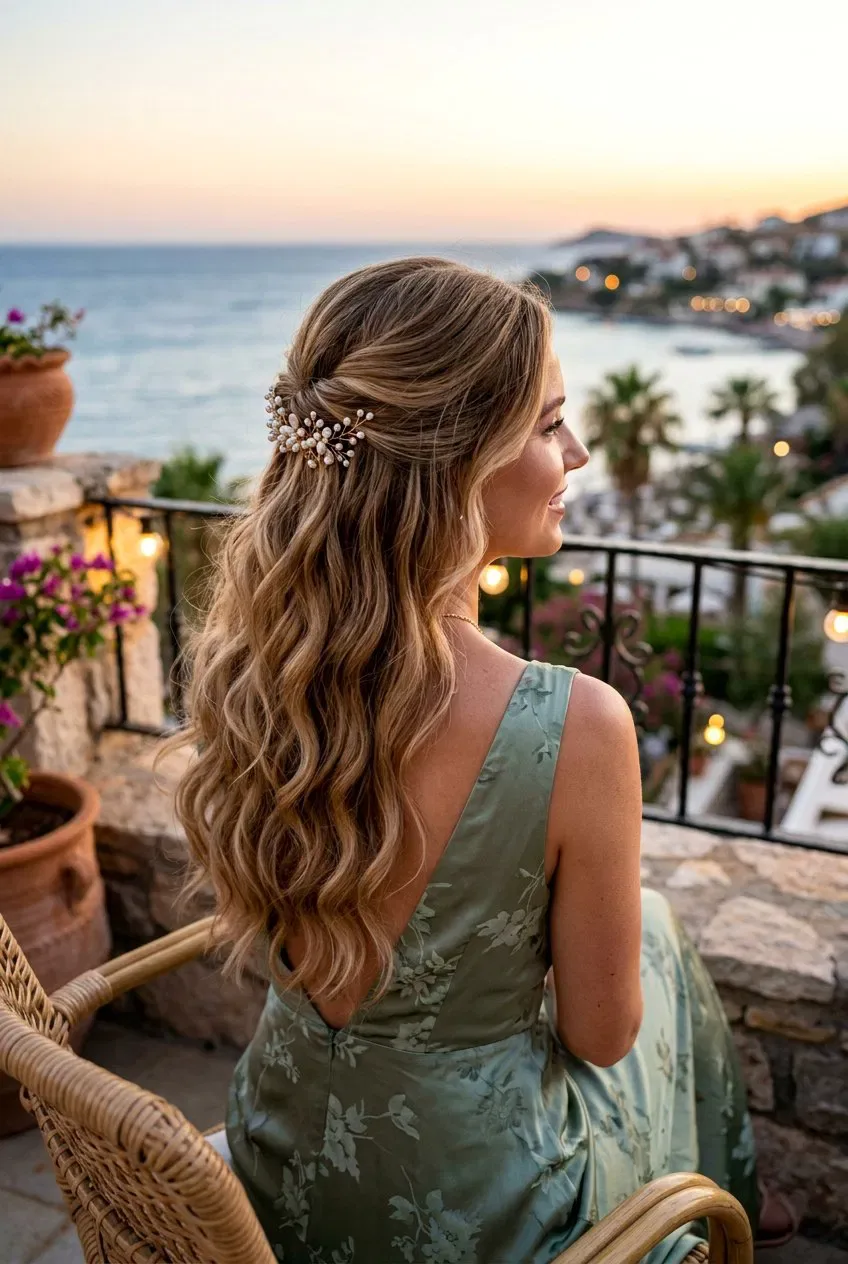
A twisted half-up is the golden-hour landing hairstyle: two sections are twisted back from the temples and joined behind the head, which frames the face and keeps the hair out of your eyes, while the rest falls in soft waves that catch the light as you step off the plane. It is simple, it is romantic, and it is the style that looks best in the warm light of an evening arrival — which is when everyone takes their first holiday photos.
How to style it: curl the lengths before boarding, take a section from each temple, twist them back, and join them behind the head with crossed flat pins or a small decorative clip. Best for: medium to long hair, and evening arrivals. Common mistake: twisting too tightly, which looks severe — keep the twists loose and soft. Cost and time: five minutes and two pins. Quick verdict: the golden-hour hairstyle, at the arrivals gate.
23. The Milkmaid Braid for Overnight Flights
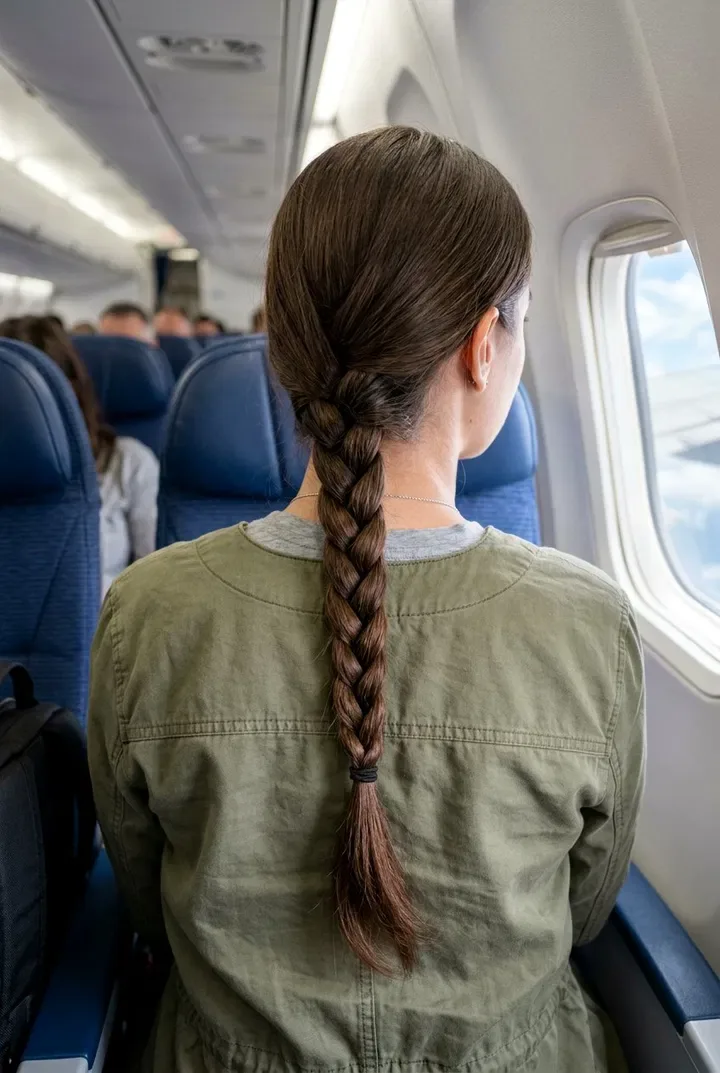
The milkmaid braid is a sweet, old-fashioned long-flight style that is also one of the most secure you can wear. Two braids are pinned up and across the crown with flat pins, and once they are pinned, nothing moves — not a headrest, not a nap against the window, not a long walk down the aisle. The style has a gentle, storybook quality that looks lovely with a travel outfit and a pair of earrings, and it keeps the hair completely off the neck on a warm overnight flight, which is a kindness in a heated cabin.
Best for: long hair, overnight flights, and women who want a style that truly will not move. How to style it: part the hair in the middle, braid each side, bring the braids up and across the crown, and pin the ends underneath each other. Common mistake: braiding too tightly, which can give you a headache — keep the braids loose and pull the edges out gently. Quick verdict: the most secure pretty flight style here — pinned, pretty, done.
24. The Elegant Low Ponytail for Business Arrivals
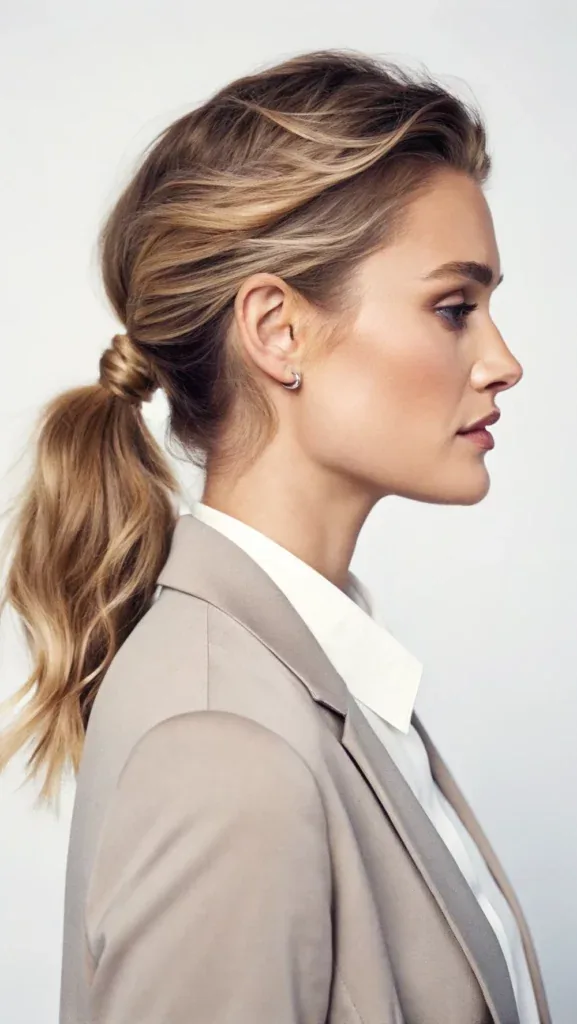
An elegant low ponytail is the business-arrival hairstyle for women who do not love updos: the ponytail sits low and smooth, a strand of hair is wrapped around the elastic to hide it, and the whole look reads as polished and deliberate rather than casual. It keeps the hair off the shoulders so a blazer or a pair of earrings can show, it holds through a long flight and a taxi ride, and it takes five minutes in an airplane bathroom — which leaves more time for the meeting itself.
How to style it: smooth the hair with a brush and a little serum, gather it low, secure it with a soft scrunchie, wrap a strand around the base and pin it underneath, and finish with a light mist of hairspray. Best for: long hair, and arrivals when an updo feels too much. Common mistake: a ponytail that is too high or too tight, which looks daytime-casual — keep it low and soft. Cost and time: five minutes. Quick verdict: business-ready, without the fuss of an updo.
25. The Loose Low Ponytail for Casual Travel Days
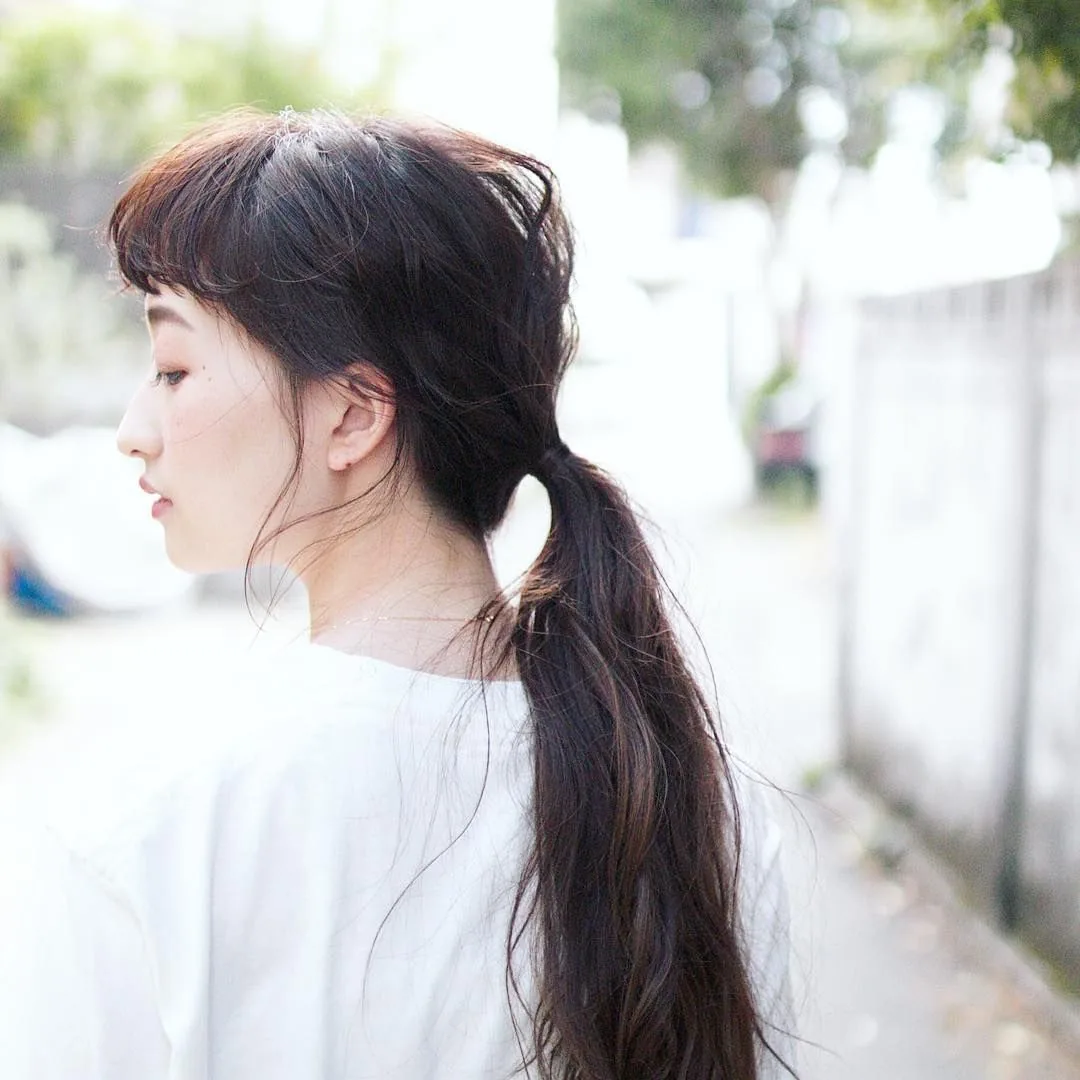
A loose low ponytail is the relaxed version of the sleek chignon — the same low placement, the same smooth crown, but with a softness that makes it feel easy rather than formal. The ponytail falls gently down the back, the headrest moves through it without tangling it, and a couple of face-framing pieces keep the whole look from feeling severe. It is the long-flight hairstyle for a day when you want to look polished without looking dressed up: boarding, a morning in the air, lunch at your seat.
How to style it: smooth the hair with a brush and a little serum, gather it loosely at the nape, secure it with a soft scrunchie, and pull out a couple of face-framing pieces. Pros and cons: it takes two minutes, holds all flight, and suits every hair type — but a very sleek, very tight ponytail with nothing at the sides can look severe, so keep the front soft. Cost and time: free, and two minutes. Quick verdict: the travel day, made easy.
26. The Braided Low Bun for Landing in Style
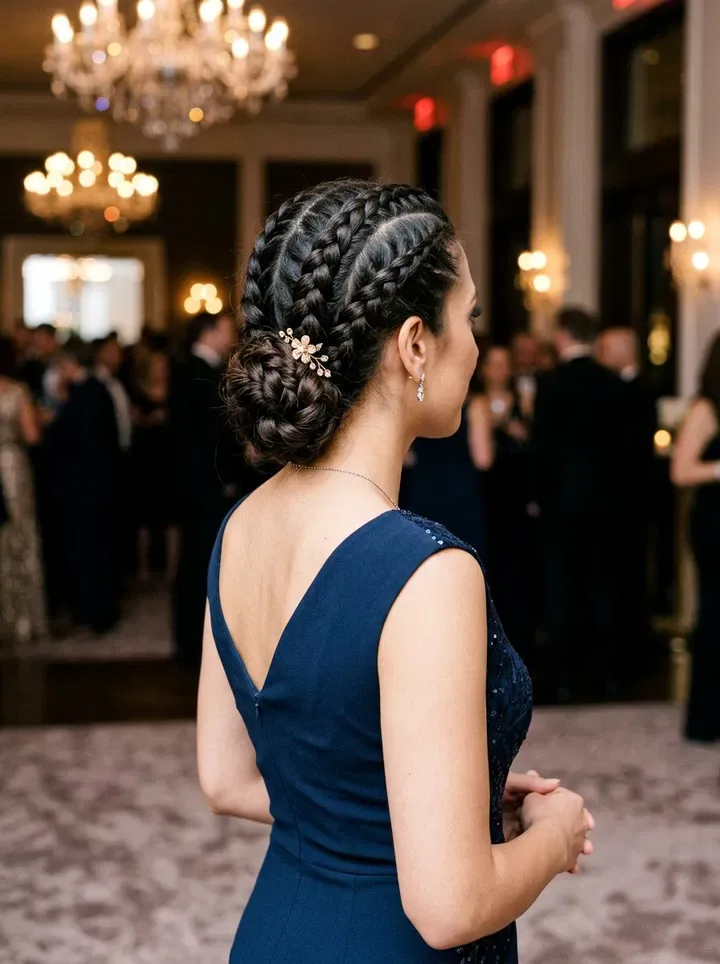
A braided low bun combines the two most reliable long-flight styles — a braid and a bun — into one, and the result is the most secure landing updo in this guide. The hair is braided first, then the braid is coiled into a low bun and pinned with flat pins, which gives the bun beautiful texture and makes it far more secure than an ordinary bun, because the braid itself holds the shape. It will not move through a nap, a meal, and a long walk through the airport, and it looks elegant from every angle.
Best for: medium to long hair, and arrivals when you want to look your best. How to style it: braid the hair low, coil the braid into a bun at the nape, and pin it in three places, tucking the end underneath. Maintenance: none on the flight — the braid holds everything. Common mistake: braiding too tightly, which makes the bun stiff rather than soft. Cost and time: about ten minutes. Quick verdict: two reliable styles, better together at landing.
27. The Side-Swept Pixie for Easy Mornings in the Air

A side-swept pixie is proof that short hair and long flights are a perfect match — the pixie is light, it has no bulk for the headrest to catch, and the side sweep gives the cabin air something to move without ruining the style. It needs no pinning at all, it survives a nap without a dent, and when you wake up, a quick run of the fingers through the pixie is all it takes to bring it back. It is chic, it is confident, and it is the lowest-maintenance hair in the air.
Best for: short hair, and women who love a bold, graphic look. How to style it: add a little texture paste before boarding, sweep the top to one side, and let the cabin air add the rest. Pros and cons: it is striking and very low maintenance once cut, but it is a commitment — growing a pixie out takes patience. Who should avoid it: nobody — a pixie suits a long flight at any age. Quick verdict: the chicest low-effort flight hairstyle in this guide.
28. The Low Tousled Knot for No-Plan Flight Days
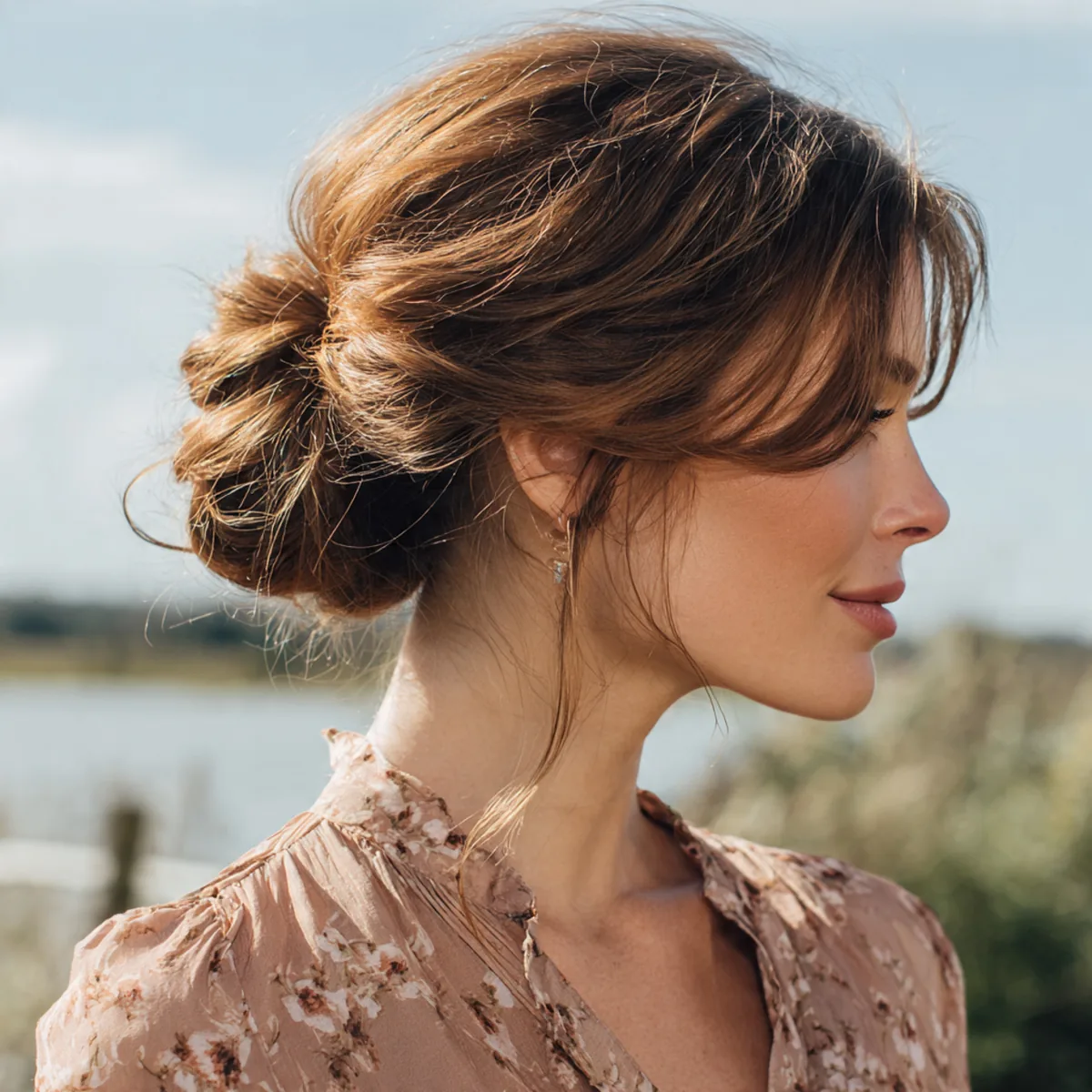
A low tousled knot is the no-plan flight-day hairstyle: the hair is gathered loosely at the nape, twisted into a knot, and pinned in place, which keeps it off the neck in a warm cabin and out of the way while you read, sleep, and wander to the bathroom. It is the most relaxed style in this guide — it takes two minutes, it needs no mirror, and it looks better the messier it gets, which is exactly what you want on a day with no plans at all except arriving.
How to style it: add texture spray, gather the hair loosely at the nape, twist it into a knot, pin it in two or three places, and pull out a few pieces around the face — do not smooth anything. Best for: long-haul days, long hair, and anyone who wants to forget about their hair entirely. Common mistake: making it too neat, which turns a tousled knot into a formal bun. Cost and time: two minutes. Quick verdict: the flight-day uniform.
29. The Boho Half-Up Braid for Holiday Arrivals
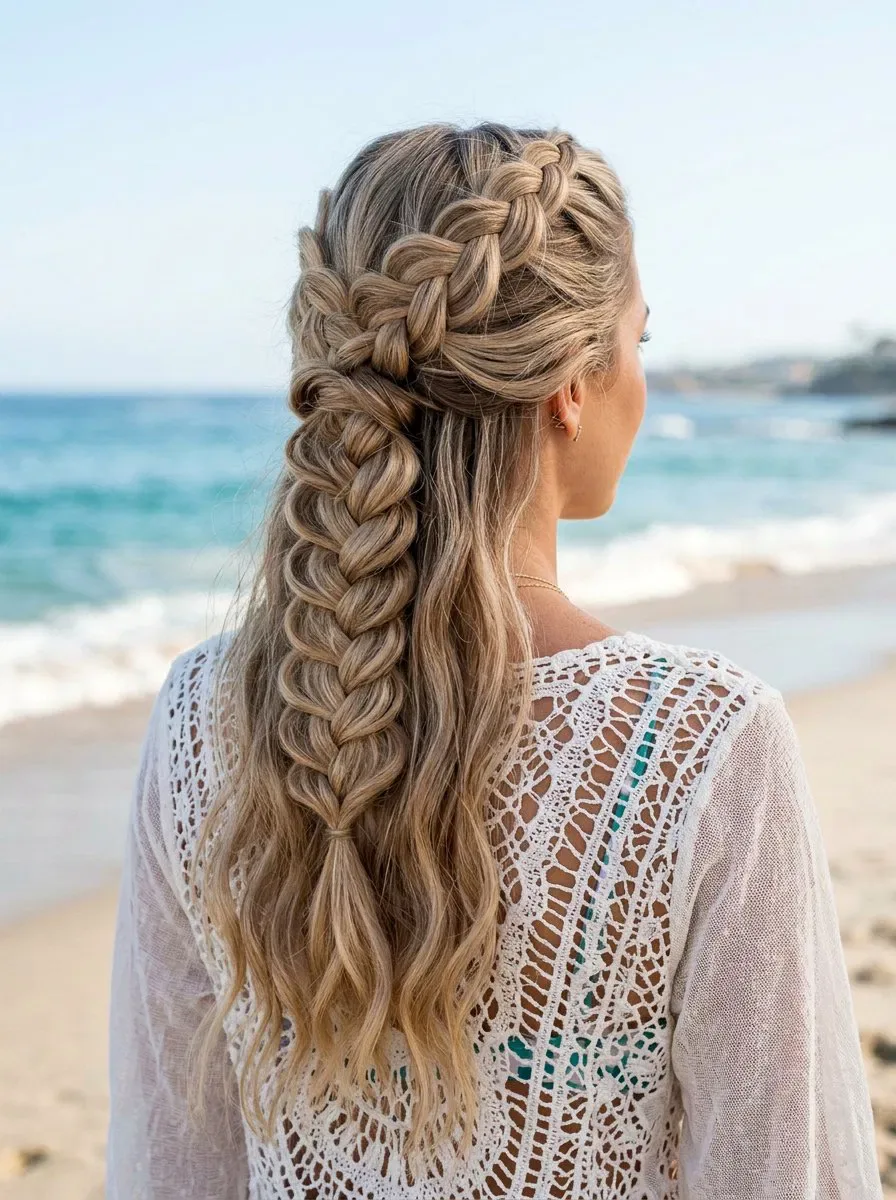
A boho half-up braid is the holiday-arrival hairstyle: the top section is braided loosely back from the face, which keeps the hair out of your eyes in the cabin, while the rest falls in soft waves that move with you as you walk through the airport. It has a relaxed, festival energy that suits a holiday, a beach trip, or a casual lunch after landing, and it is one of the few styles that looks better slightly messy — the looser it gets through the flight, the more boho it looks.
Best for: medium to long hair, and relaxed holiday plans. How to style it: take a section from each temple, braid them loosely toward the back, join them with a small soft scrunchie, and pull the braid out gently for fullness. Pros and cons: it is pretty, relaxed, and easy, but it needs a little length on top to braid. Maintenance: none — looseness is the point. Quick verdict: the holiday braid that gets better as the flight goes on.
30. Long Layers for Stepping Off the Plane
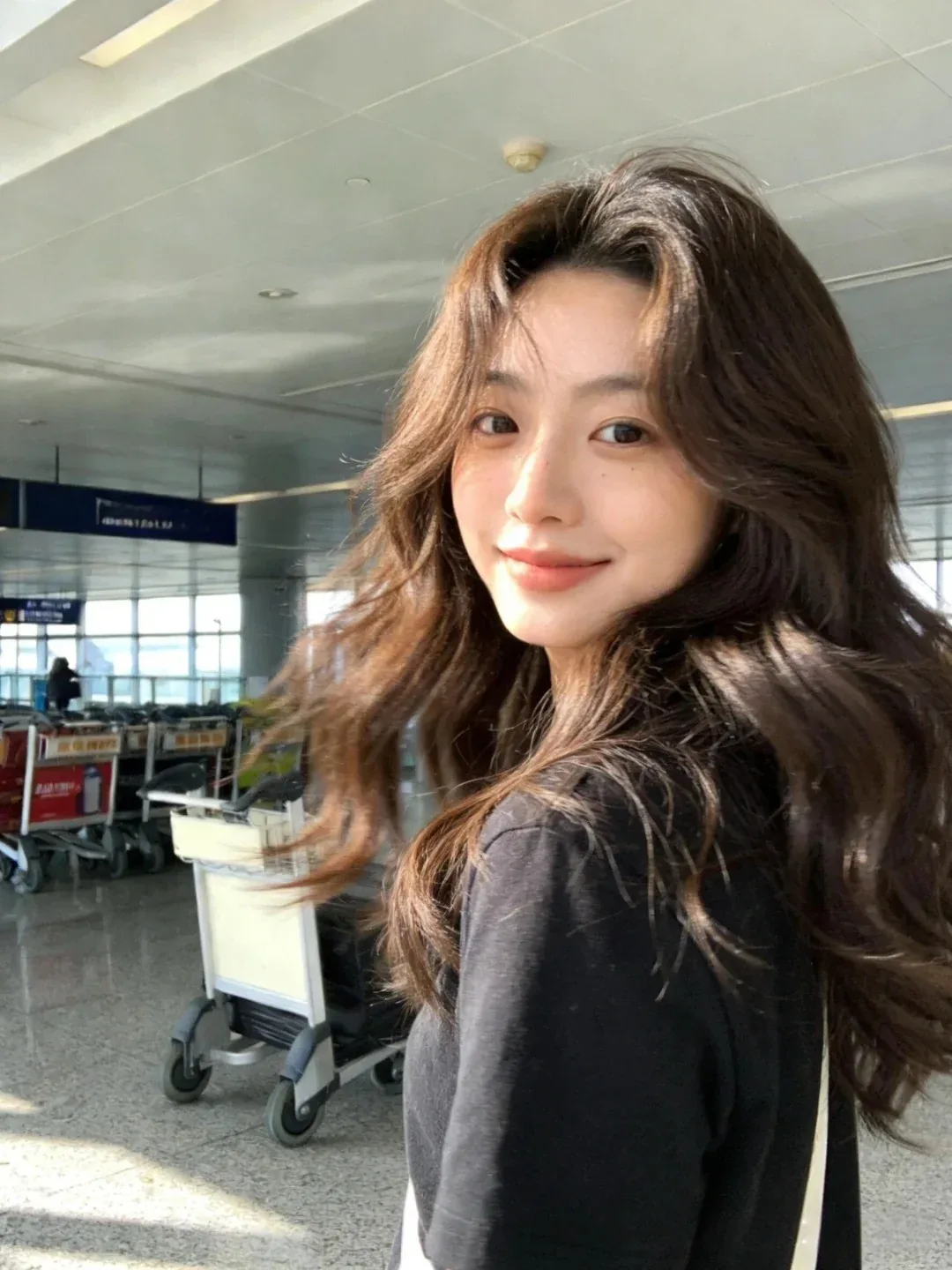
Long layers are the closing style of the down-hairstyles in this guide, and the one that sums up flight hair: the layers give long hair movement that catches the airport light, the face is framed softly on both sides, and the whole look is effortless in a way that only takes ten minutes to refresh before landing. At the arrivals gate, with the journey behind you and the holiday ahead, long layers do what no updo can — they move, they shine, and they look like the trip itself.
Best for: long hair, all textures, and the moment you step off the plane. How to style it: blow-dry the front pieces with a round brush before boarding, curving them away from the face, and add a loose wave through the lengths with a wide-barrel iron. What to ask your stylist before the trip: ask for long layers that start at the cheekbones, so the front pieces frame the face after hours in a seat. Maintenance: a leave-in conditioner on the ends keeps them soft in the cabin air. Quick verdict: the arrival style — save the refresh for the last hour, and let the layers do the rest.
31. The Voluminous Blowout Refresh for Landing
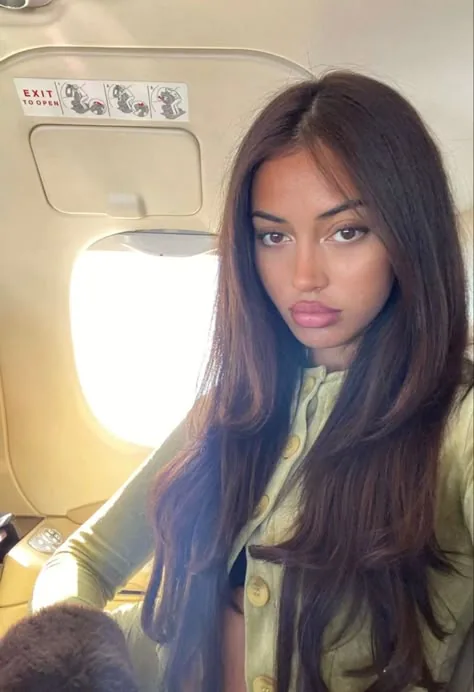
A voluminous blowout refresh is the glamour option for landing, and it works on a long flight because the volume is rebuilt in the last hour, not carried through ten hours of sitting. The blowout is smooth and full through the lengths, the crown stays smooth, and the airplane bathroom mirror is just big enough for a five-minute root refresh with dry shampoo and a quick brush-through. The result is a look that feels like a fresh salon visit, even after a night in a seat, and it photographs beautifully in the arrivals hall.
Best for: medium to long hair, and arrivals when you want to look your best. How to style it: before boarding, blow-dry in sections with a large round brush, turning the ends under and lifting the lengths; before landing, massage dry shampoo into the roots, brush through, and finish with a light-hold spray. Pros and cons: it is gorgeous and photographs beautifully, but it takes twenty to thirty minutes to create — so build it before boarding and only refresh it before landing. Maintenance: a volumising mousse on damp hair helps it last. Quick verdict: the glamour option — build it early, refresh it late.
What is the best hairstyle for a long flight?
The best hairstyle for a long flight is one that survives the headrest, a nap, and dry cabin air — a low bun, a braid, a low ponytail, or textured waves. These styles hold their shape against a headrest, stay neat through sleep, and still look good at arrivals. A low messy bun is the safest all-round choice, a French braid is the best for sleeping, and a sleek low chignon is the best for landing.
How do I sleep on a plane without ruining my hair?
Sleep on a plane in a loose braid or two low braids tied with a soft silk scrunchie, which keep the hair contained without leaving a dent or a crease. Avoid high ponytails, top knots, and metal claw clips, which press against the headrest and wake you up with a headache. A silk scarf over the braid adds extra protection from rough seat fabric, and when you wake up you can undo the braid for soft waves.
What hairstyle survives a headrest on a long flight?
The styles that survive a headrest are low, flat ones — a low bun, a low ponytail, a braid that falls down your back, or two low braids — because they sit below the headrest line and the seat presses against smooth hair, not a bump. Avoid high buns, top knots, and big clips at the back of the head, which press into the seat, slide sideways, and leave a dent you can feel for the rest of the flight.
How do I keep my hair from drying out on a long flight?
Prevent dry flight hair by working a little leave-in conditioner or hair oil through the lengths before you board, so the hair has a shield before the dry cabin air starts its work. Touch the ends up once mid-flight with a pea-sized amount of oil, and finger-comb the lengths to stop tangles forming. Do not brush dry, static hair mid-flight, which creates frizz, and do not wash your hair in the airplane bathroom.
What should I pack for my hair on a long flight?
Pack a small pouch with four soft scrunchies, six bobby pins in your hair colour, a travel-size dry shampoo, a small bottle of leave-in conditioner or hair oil, a mini hairspray, a wide-tooth comb, and a silk scarf. That is everything you need for every style in this guide. Do not pack a full-size hairdryer or straightener — there is no plug at your seat — or any product in a bottle bigger than travel size, which security will take.
How do I freshen up my hair before landing?
Freshen up your hair before landing in ten minutes: massage dry shampoo into the roots and leave it for a minute, then brush it through for volume. Take the braid or bun out completely, shake the hair out, and rebuild it fresh — a rebuilt style always looks better than a patched one. Finish with a drop of oil on the ends, two soft pieces pulled out at the front, and a light mist of hairspray if you have it.
Can I wear my hair down on a long flight?
Yes, you can wear your hair down on a long flight — textured waves, a textured lob, a wavy bob, and long layers all look wonderful after hours in a seat, because the headrest moves through texture instead of flattening it. The trick is to choose texture over smoothness: loose waves and layers survive a nap and dry air, while a perfectly straight, sleek style will flatten and frizz. Add a leave-in conditioner on the ends to keep them soft.
Will airport security stop my hair accessories?
Airport security can stop metal hair accessories — heavy metal claw clips, large metal barrettes, and bobby pins with a metal core are the ones that beep at the scanner. Fly with soft scrunchies, fabric headbands, silk scarves, plastic pins, and wooden combs, which pass through without a sound. Keep any metal pins in your carry-on and rebuild your style with them after landing, instead of wearing them through security.
What is the easiest hairstyle for a long flight?
The easiest hairstyle for a long flight is a low messy bun — it takes two minutes, needs only a few pins, sits below the headrest, cannot be ruined by a nap, and looks better slightly undone. For short hair, a wavy bob is just as easy: a little texture spray, a scrunch, and the cabin air does the rest. Both styles work from boarding to baggage claim with no mirror needed.
How do I stop my hair tangling on a long flight?
Stop flight tangles by wearing the hair contained — in a loose braid, a low bun, or a low ponytail — instead of loose, because loose hair rubs against seat fabric and tangles at the ends over hours in a seat. Oil the ends before boarding, finger-comb the lengths once mid-flight instead of brushing, and avoid woollen scarves or rough collars rubbing against loose hair. A silk scarf wrapped around a bun is the best tangle protection of all.
Conclusion
A long flight is the hardest test your hair will ever face — and the 31 hairstyles in this guide are all chosen with that in mind. Low buns that never press against a headrest, braids you can sleep in without waking up to a dent, waves that spring back with a shake, and polished landing looks that take ten minutes in a tiny airplane bathroom. The right long flight hairstyle does not demand your attention for ten hours — it lets you forget about your hair and enjoy the flight, the films, and the sleep.
Start with the guides, not the gallery. Think about which flight you are actually taking — its length, your seat, and whether you plan to sleep — and pick the style family that fits it. Pack the small carry-on hair kit, keep a travel-size dry shampoo in your seat pocket, and save your effort for the last ten minutes before landing. Your hair should be the least of your worries on a long flight. Now it can be.