Second Time Around, Styled Your Way: Hairstyles for a Second Wedding That Feel Elegant, Grown-Up and Entirely You
A second wedding is not a repeat performance. It is a fresh start, and that changes everything about the hair. There is no rulebook to follow this time, no family expectation to live up to, and no need to look like the bride you were twenty years ago — or the bride anyone else thinks you should be. The best hairstyles for a second wedding are the ones that feel like you, right now: elegant, grown-up, comfortable, and quietly confident.
That freedom is the whole point of this guide. Maybe you are marrying in a courthouse with ten guests, or in a garden with two hundred. Maybe you are forty, fifty, sixty or beyond, and you want a style that honours your age instead of hiding it. Maybe you loved your first wedding hair and want something completely different, or maybe you never got the style you really wanted the first time around. Whatever your story, your hair should reflect the woman you are today — not the one you were then.
This guide starts with the thinking — how to choose a look that feels like you, how to match it to the size and setting of your celebration, and what to do about a veil when there are no rules left to break — and then gives you 32 styles to choose from, for short, medium and long hair, for straight, wavy and curly textures, and for every kind of second celebration. Pick the one that makes you smile in the mirror, try it before the day, and walk down the aisle knowing your hair is already sorted.
Choosing a Look That Feels Like You, Not a Repeat of the First Time
The first question to ask yourself is not what is fashionable, but what feels like you. A second wedding is the one time you get to choose purely for yourself, without worrying about what a first wedding is supposed to look like. If you have always wanted your hair down and loose, wear it down. If you have always loved a sleek chignon, this is the day for it. The style that suits you best is the one you would choose on an ordinary good day, polished up a little.
How to decide: look at photographs of yourself on days when you loved your hair, not at bridal magazines. What do those photographs have in common — hair up or down, soft or sleek, a parting on the side or in the middle? That pattern is your answer. Bring those photographs to your stylist instead of a picture of a twenty-year-old model, and ask for a version that works with your hair as it is now.
Common mistake: copying your first wedding hairstyle out of habit, or choosing the exact opposite just to prove a point. Neither one is really a choice. The best second-wedding hair is not a reaction to the first wedding — it is a fresh decision, made for the person you are today.
Intimate Celebrations Versus Larger Second Weddings
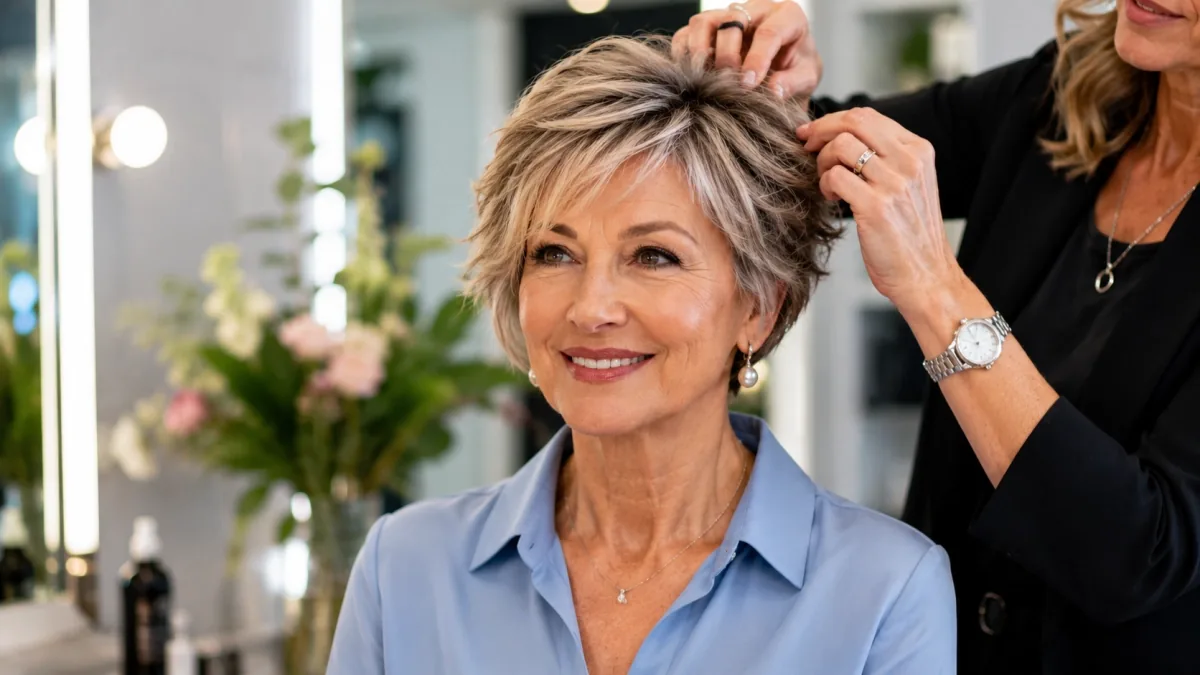
The size of your celebration should shape your hair, because hair that suits a courthouse looks very different from hair that suits a ballroom. For an intimate wedding — a registry office, a restaurant, a garden with close family — soft, simple styles shine: a low bun, loose waves, a polished bob. They look effortless in photographs and they suit a relaxed, joyful atmosphere.
Best for: courthouse and garden weddings, weekday ceremonies, and any celebration where you will be hugging every guest. Simple styles survive hugs, wind and happy tears better than elaborate ones, and they never look overdressed next to a simple dress.
What to ask your stylist: ask how the style will look in photographs taken close up, because intimate weddings mean close-up photographs. A style with a clean outline and a little softness around the face photographs beautifully at arm’s length, while a very tall or elaborate updo can dominate a small room.
Quick verdict: the smaller the wedding, the simpler the hair can be — and the more it should look like you. Save the drama for a big celebration, and let a small one be soft, warm and real.
Age-Appropriate Elegance: Looking Like Yourself, Only More Polished
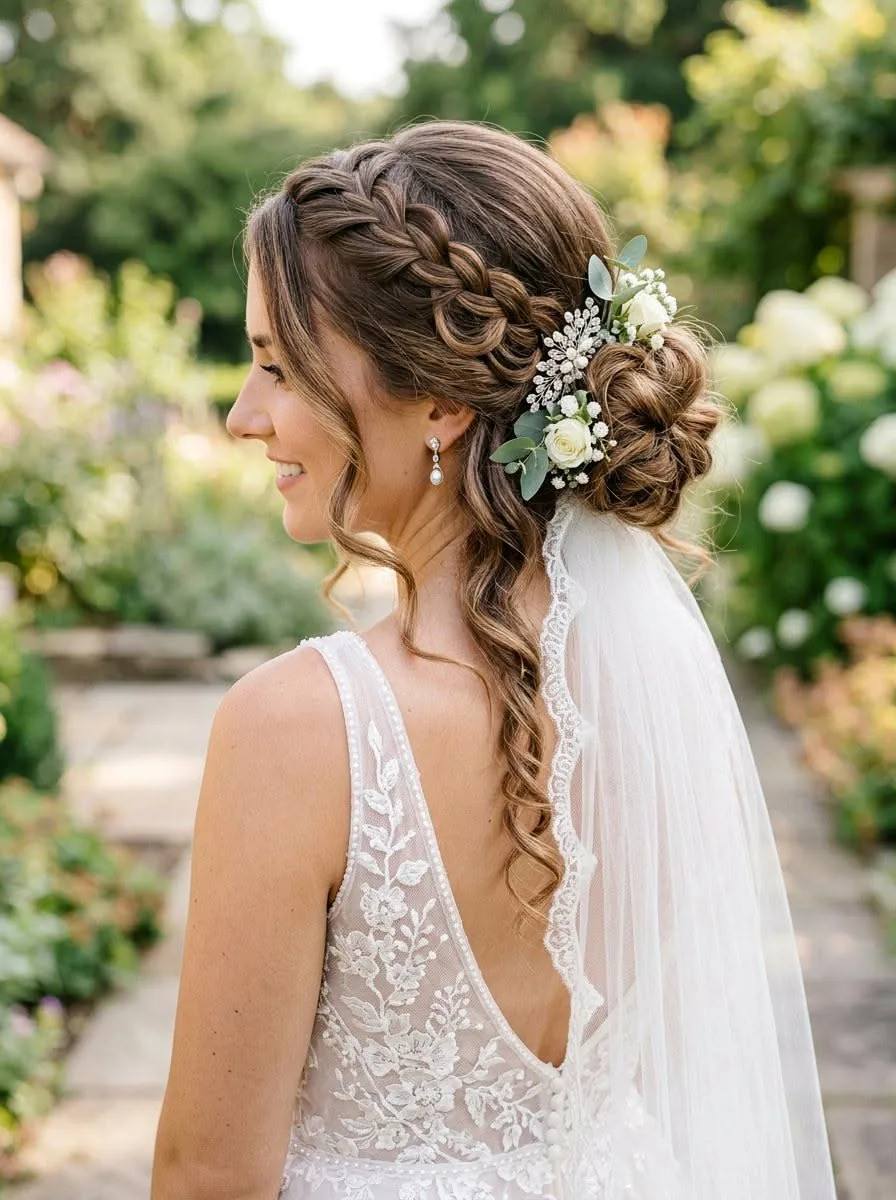
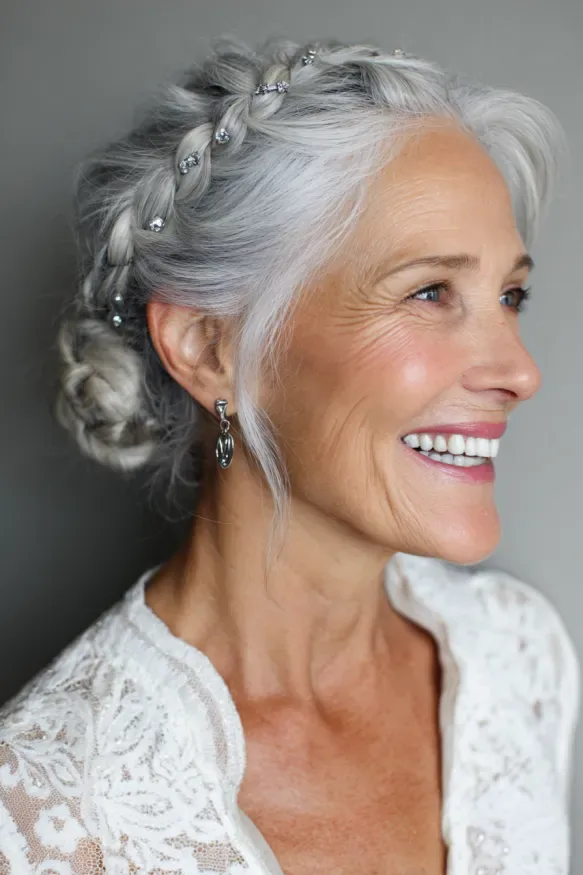
Age-appropriate does not mean boring, and it certainly does not mean hiding your age. It means choosing a style that works with your hair as it is now — perhaps a little finer, a little greyer, a little less willing to hold a curl for twelve hours — and making the most of it. The most elegant second-wedding hair at fifty or sixty is rarely the most elaborate; it is the most flattering.
Pros: softer styles, such as a low chignon, a textured bob or loose waves with face-framing pieces, flatter mature faces beautifully and move naturally. They also suit silver and grey hair wonderfully, because the softness of the style matches the softness of the colour.
Cons: very tight, scraped-back styles can look severe on a mature face, and very long, very straight hair can drag the features down. If you love length, add soft layers or a gentle wave so the hair frames your face instead of pulling it down.
What to ask your stylist: ask for volume at the crown and softness around the face, and be honest about how your hair behaves now. A good stylist will adjust the style to your hair’s real texture and thickness, not to the hair you had at twenty-five.
Working with a Veil — or Choosing No Veil at All
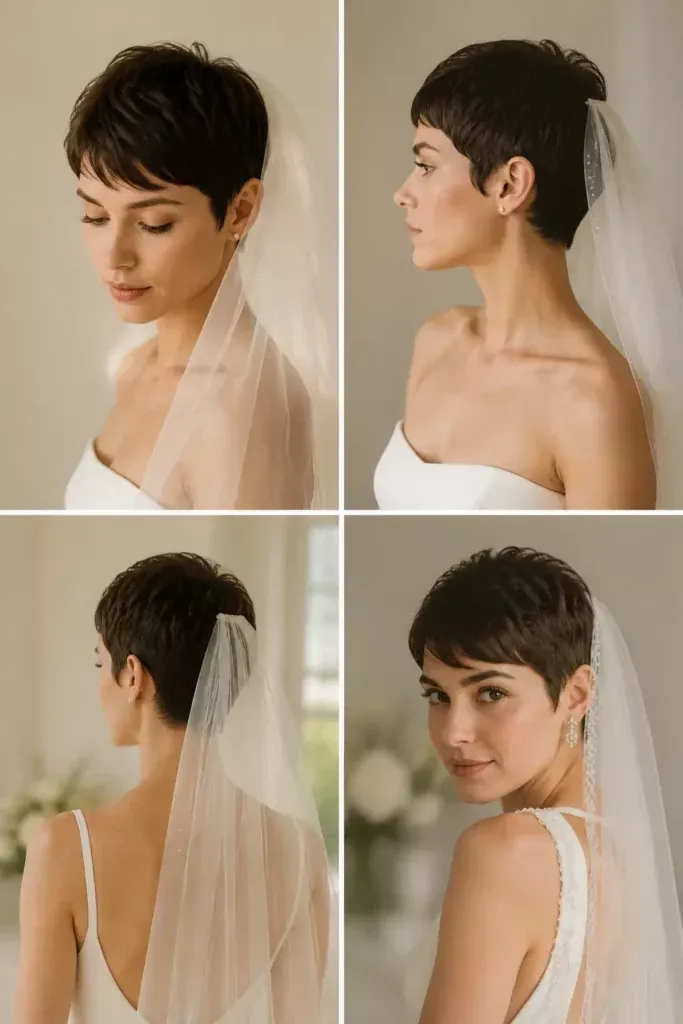
There is no rule that says a second-time bride must wear a veil, and no rule that says she must not. Some women loved their veil the first time and want one again; others feel a veil belongs to their first wedding and would rather wear their hair bare, with a comb, a flower or a simple pin. Both choices are right, and the hair simply has to work with the one you make.
How to style with a veil: a short blusher or fingertip veil suits a low bun, a chignon or a half-up style, because the veil can be anchored at the crown or just above the bun without hiding the style. A birdcage veil, meanwhile, suits short hair and bobs beautifully, and it adds vintage charm without any weight.
How to style without a veil: without a veil, your hair is the whole picture, so give it one beautiful detail — a pearl comb, a fresh flower, a delicate hair vine, or a simple sparkle pin. The detail should sit where the veil would have been, at the crown or the side, so the style still has a focal point.
Common mistake: choosing the veil first and the hairstyle second. Decide the hair first, then try veils with that exact style at your fitting, because a veil that suits a bun may overwhelm hair worn down, and vice versa.
From Courthouse to Garden: Matching Your Hair to the Venue
A courthouse, a beach, a garden and a grand hotel are four different weddings, and your hair should know which one it is attending. Outdoor venues mean wind, humidity and sunshine, so styles need hidden support and a little forgiveness. Indoor venues mean close-up photographs and controlled light, so the finish matters more than the hold.
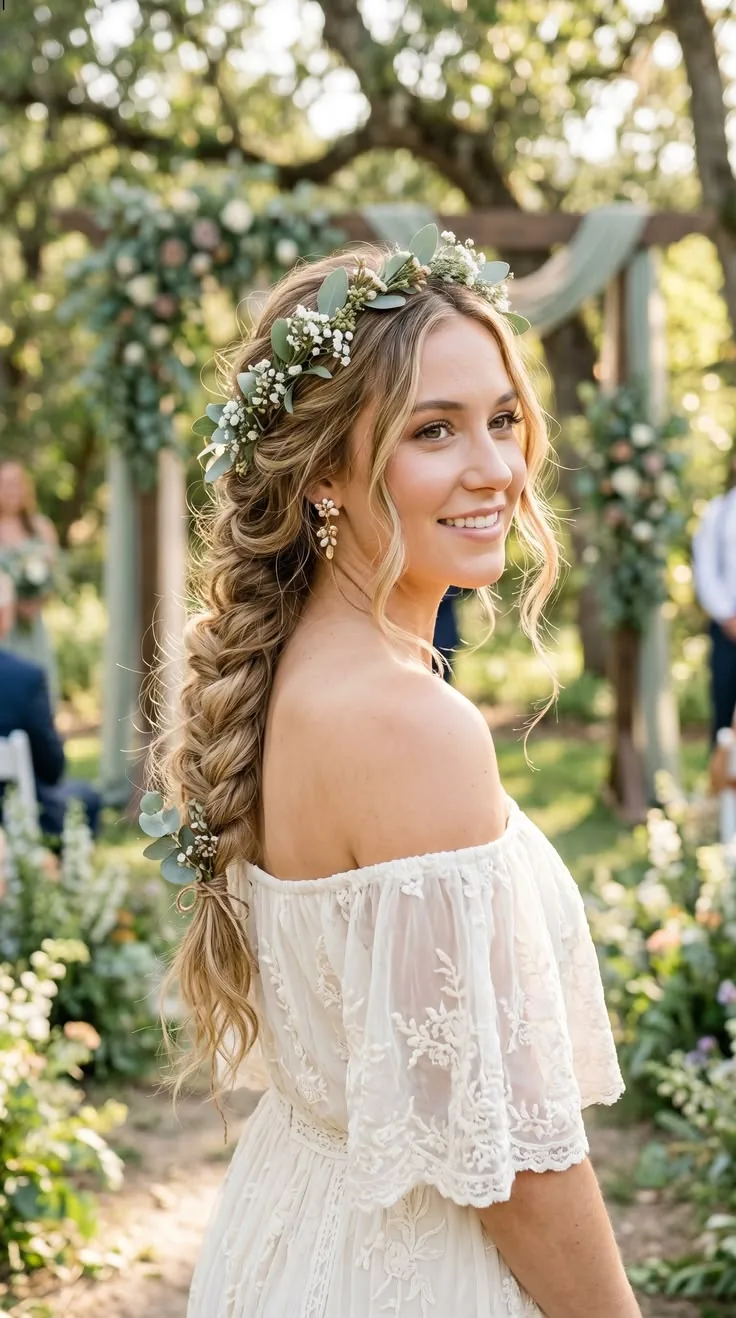
Best for: outdoor weddings — low buns, braided styles and half-up looks, all of which hold their shape in a breeze. Indoor weddings — sleek blow-dries, polished bobs and smooth updos, which show off their shine under indoor light.
Maintenance: for an outdoor ceremony, ask your stylist for extra pins and a strong but flexible spray, and carry two spare pins in your bag. For a beach wedding, a little texture is your friend — a style that is meant to look soft will still look good after an hour in sea air, while a perfectly smooth style will not.
Cost and time: venue does not change the price of the style much, but it does change the trial. If you can, do your trial outdoors in similar weather, so you know how the style behaves before the day.
Your Stylist Trial: What to Book, Bring and Ask
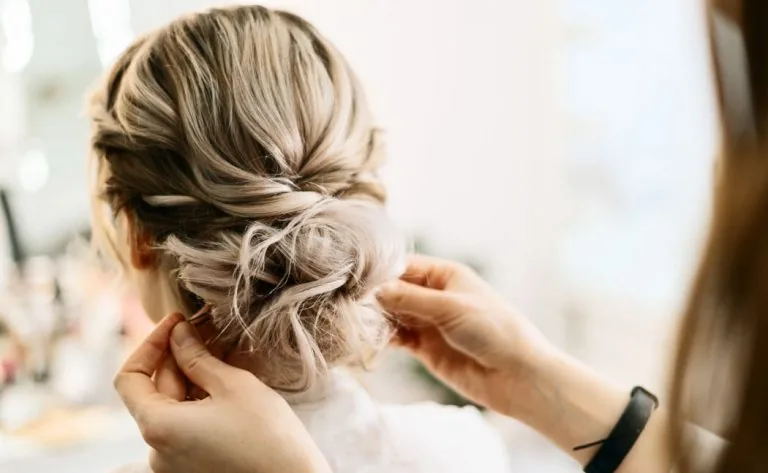
A hair trial is the single best investment you can make for a second wedding, and it matters even more than it did the first time, because you are choosing a style for who you are now. Book the trial at least a month before the wedding, wear a top with a similar neckline to your dress, and bring your veil, hair accessories and any photographs you love.
What to ask your stylist: how long will this style last, what will it look like after four hours, and what happens if it rains? Ask them to show you the back with a hand mirror, and take photographs from every angle, including a close-up of the face. Those photographs are what you will actually see in your wedding album.
Common mistake: having the trial with freshly washed hair when your wedding hair will be day-old, or vice versa. Tell your stylist exactly how you will wash your hair on the day, so the trial tests the real conditions.
Quick verdict: if you feel even slightly unsure after the trial, say so. A good stylist would rather adjust the style than watch you worry about it on the morning of your wedding.
Hair That Lasts from the Ceremony to the Last Dance
A second wedding can be a long day — a ceremony, photographs, a meal, speeches, and then dancing that goes on far longer than anyone planned. Your hair has to survive all of it, and the styles that last are the ones with hidden support built in from the start.
How to make it last: start with clean, fully dry hair, build the style on a foundation of pins rather than spray alone, and use a flexible-hold spray that lets the hair move without collapsing. Two crossed bobby pins hold far better than one, and a small clear elastic beats a loose fabric band every time.
Pros and cons: updos last longest and need the least attention, but they can feel formal. Hair worn down feels freer and photographs beautifully, but it will need a quick check after dancing. A half-up style is the honest compromise — the front stays secure while the back stays soft.
Who should avoid it: anyone whose hair drops a curl within an hour should avoid a style that depends entirely on curls holding. Choose a shape — a bun, a twist, a braid — that will still look good even if the curls relax.
Matching Your Hair to Your Dress, Neckline and Jewellery
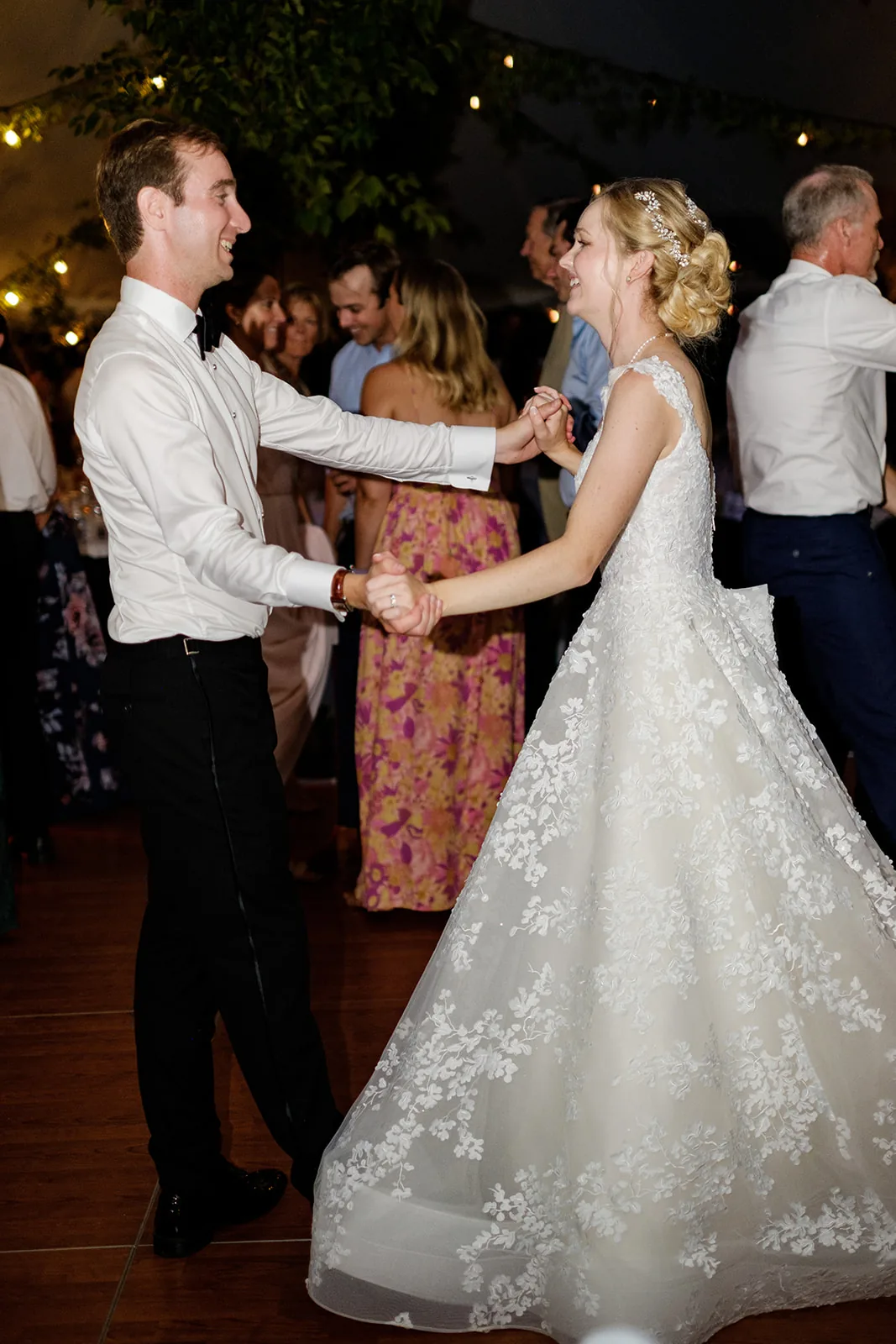
Hair and dress should agree with each other, and the neckline is where they meet. A high neckline or a detailed collar looks best with hair up, so the fabric and the hair are not competing for the same space. An open neckline, a V-neck or an off-the-shoulder dress can carry hair down, because the hair frames the neckline instead of hiding it.
Best for: a strapless or sweetheart dress — an updo or a half-up style that shows off your shoulders. A dress with a beautiful back — a low bun or a side-swept style that leaves the back visible. A simple, modern dress — sleek, polished hair that matches its clean lines.
What to ask your stylist: bring a photograph of your dress to the trial, and ask how the style will sit with your jewellery. Large earrings need hair pulled back or tucked behind the ears; a statement necklace needs a clear neckline; a delicate pendant suits almost any style.
Maintenance: once the dress and the hair agree, stop changing either one. The biggest mistake brides make is restyling at the last minute because of a photograph they saw online. Trust the combination you chose together.
1. The Soft Low Chignon
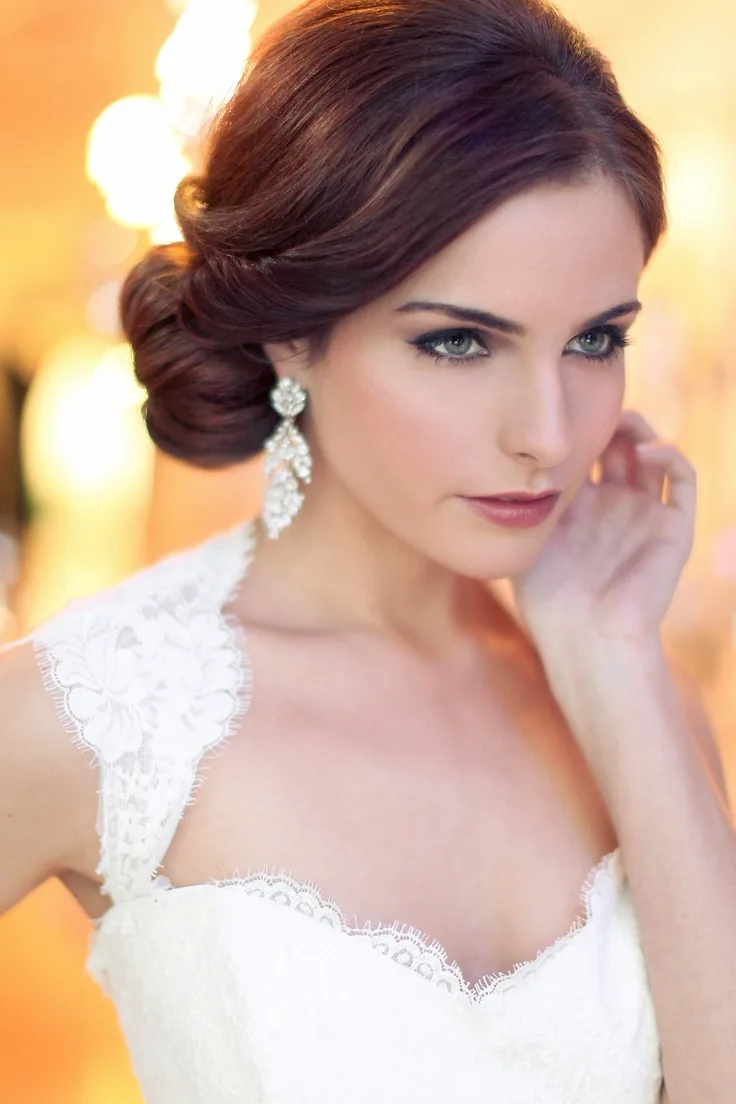
The soft low chignon is the classic second-wedding updo for a reason: it is elegant without being stiff, romantic without being fussy, and it suits almost every face. The hair is gathered low at the nape and rolled into a soft, relaxed bun, with a few gentle pieces left loose around the face.
Best for: medium and long hair, and anyone wearing a dress with a beautiful back or a high neckline. It is also a kind choice for finer hair, because the soft roll looks fuller than a tight bun.
How to style: gather the hair low, twist it gently upward into a roll, and pin it flat against the head. Tuck the ends inside the roll, pull out two slim face-framing pieces, and finish with a light mist of flexible-hold spray.
Quick verdict: if you want one style that is almost impossible to get wrong, this is it. It photographs beautifully from every angle and it will still look good at midnight.
2. The Romantic Loose Low Bun
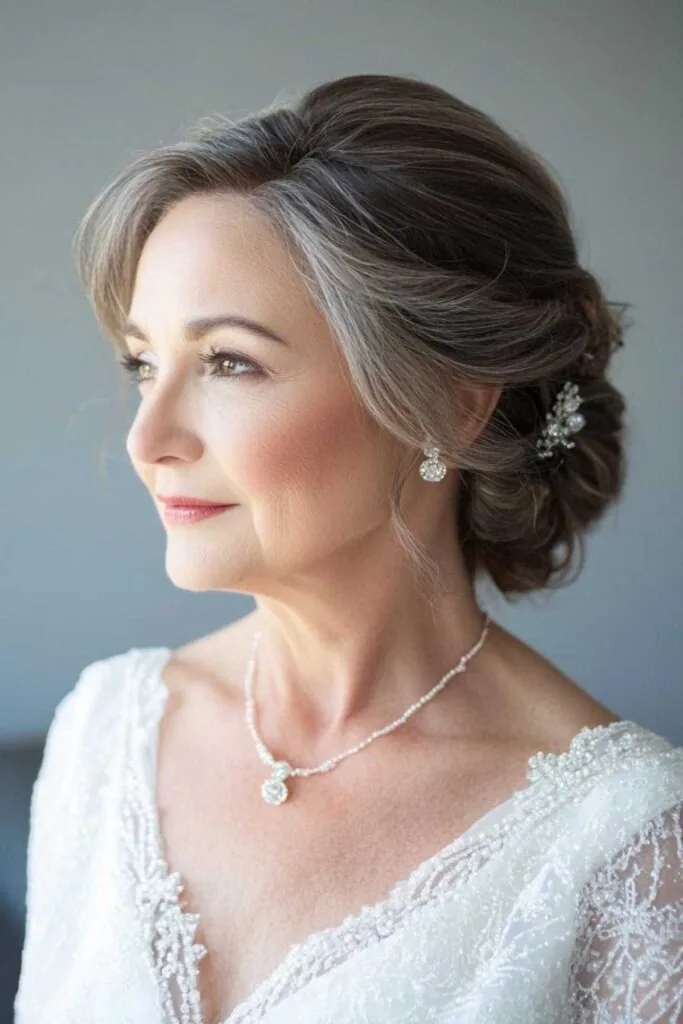
A loose low bun is the chignon’s softer, more relaxed sister. It sits at the nape, but the hair is left deliberately soft and textured, with gentle volume at the crown and pieces that fall naturally around the face. It is the style to choose when you want to look bridal without looking formal.
Pros: it is comfortable to wear for hours, it suits most face shapes, and it forgives a little movement — if a piece comes loose during the dancing, it simply looks more romantic. Cons: very fine hair may need a little texturising spray at the roots so the bun does not slip.
How to style: curl the hair loosely first, gather it low, and pin it in soft loops rather than one tight coil. Leave the front pieces out and curl them very lightly, so they frame the cheekbones.
What to ask your stylist: ask for the bun to be pinned with the weight distributed evenly, so it does not pull at one side of your head by the evening.
3. The Modern French Twist
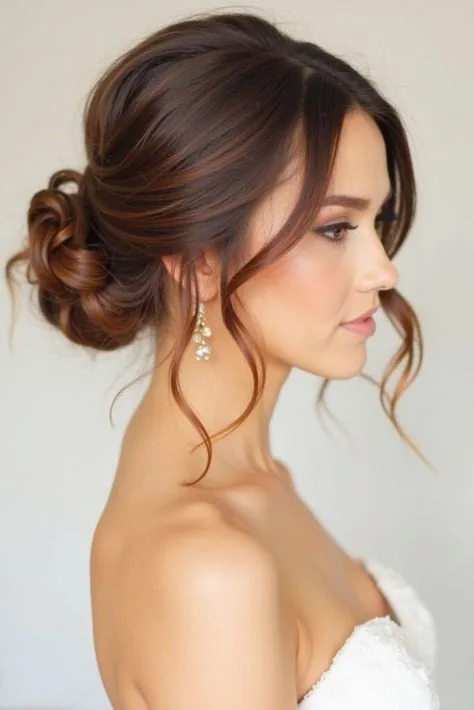
The French twist has had a modern update, and the new version is softer, looser and far more wearable than the severe roll of the past. The hair is swept up and tucked into a vertical twist, but the top is left with gentle volume and the sides are softened, so the whole style looks elegant rather than strict.
Best for: a formal second wedding, a grand hotel or a church ceremony, and anyone wearing a tailored or structured dress. It is also a beautiful choice if you want to show off your neck and shoulders.
Common mistake: making the twist too tight. A twist that pulls at your forehead will give you a headache by the speeches and can look severe in photographs. Keep the front smooth but comfortable, with a soft parting.
Cost and time: about twenty minutes once your stylist knows the technique, or a little longer if it is your first time. Practise it at the trial, not on the morning of the wedding.
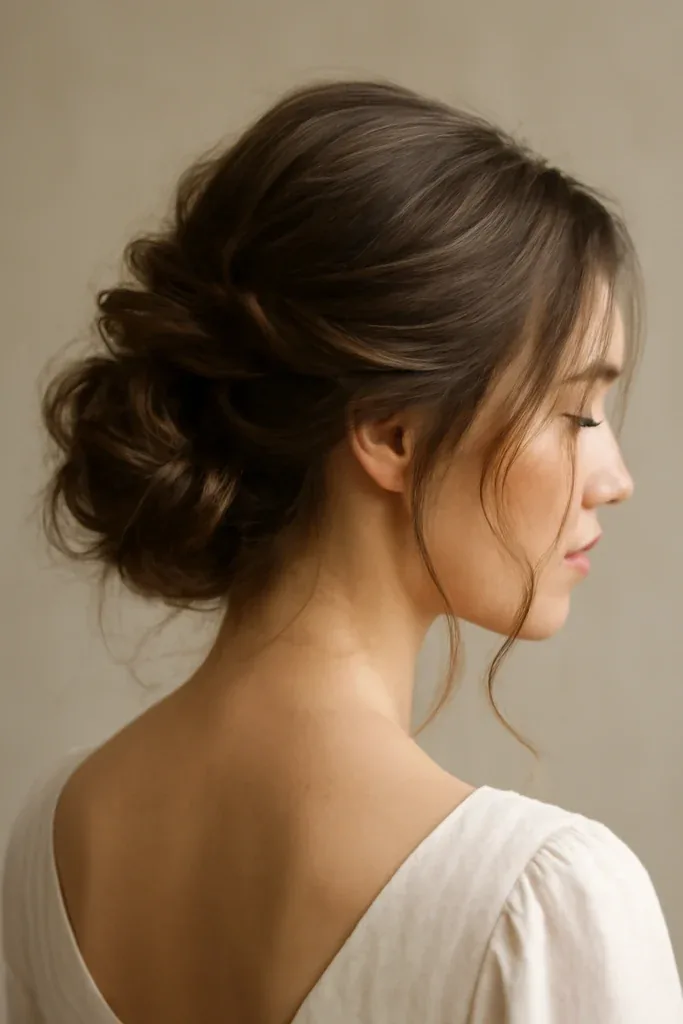
4. The Sleek Low Ponytail with a Hair Wrap
A sleek low ponytail sounds simple, and that is exactly its charm. Smooth at the top, gathered at the nape, with a strand of hair wrapped around the elastic to hide it, this style looks polished, modern and quietly expensive — and it is one of the most comfortable styles you can wear all day.
Best for: straight and slightly wavy hair, and anyone who wants a modern, unfussy look. It suits a simple, contemporary dress beautifully, and it is a wonderful choice for a courthouse or registry-office wedding.
How to style: brush the hair back smoothly, gather it at the nape, and secure it with a plain elastic. Take a thin strand from underneath the ponytail, wrap it around the elastic, and pin it underneath. Smooth any flyaways with a touch of serum on your palms.
Who should avoid it: anyone with very short layers that will not stay gathered. If pieces keep escaping, a low bun will hold better.
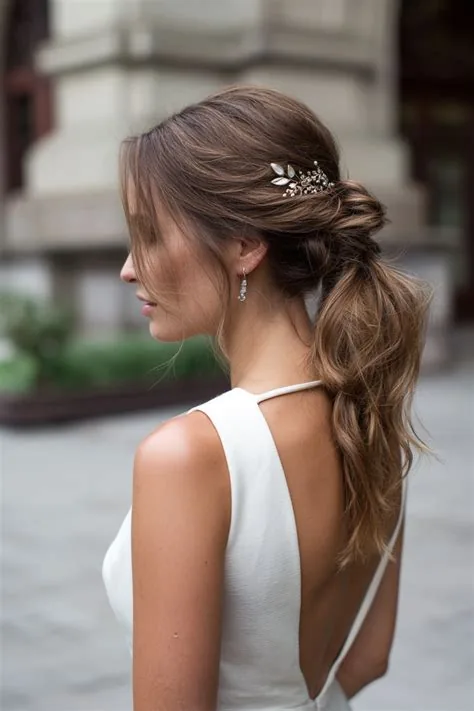
5. Half-Up, Half-Down Soft Waves
Half-up, half-down is the best of both worlds: the front is controlled and clear of your face, while the back stays soft, romantic and free. With gentle waves through the lengths, it is one of the most flattering second-wedding styles there is, and it suits almost every dress.
Best for: medium and long hair, and anyone who cannot decide between up and down. It is especially lovely for a garden or outdoor wedding, where the waves move beautifully in the breeze.
How to style: curl the hair in large, soft waves, then take a section from each temple, bring them to the back of the head, and pin them with two crossed bobby pins. Leave the rest of the hair loose and smooth the ends.
Maintenance: waves can drop in humidity, so finish with a light-hold spray and keep a small brush handy. If your hair drops curls quickly, ask your stylist to set the waves with rollers first.
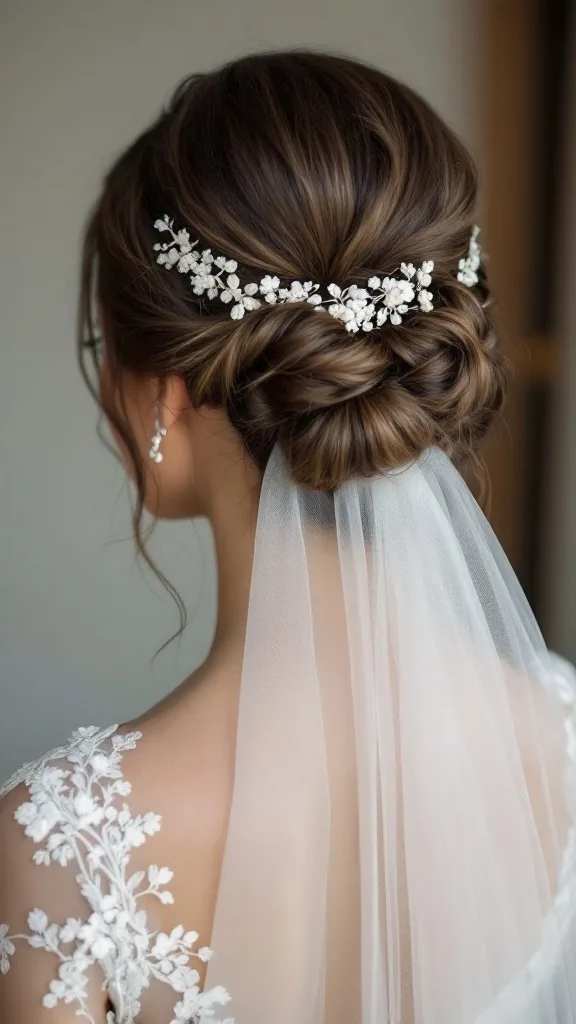
6. Side-Swept Hollywood Waves
Side-swept Hollywood waves are pure old-screen glamour, and they suit a second wedding beautifully because they are grown-up, confident and unmistakably celebratory. The hair is parted deeply on one side and swept over the opposite shoulder in smooth, glossy waves.
Pros: it flatters almost every face shape, it photographs spectacularly, and it pairs perfectly with statement earrings. Cons: it needs a little maintenance — wind can undo a side sweep, so one hidden pin on the swept side is essential outdoors.
How to style: create a deep side part, curl the hair in large sections all in the same direction, and brush the curls out into smooth waves. Pin the lighter side back neatly behind your ear.
Quick verdict: choose this style if you want your wedding photographs to look like a film still. It is glamorous, but it never looks like you are trying too hard.
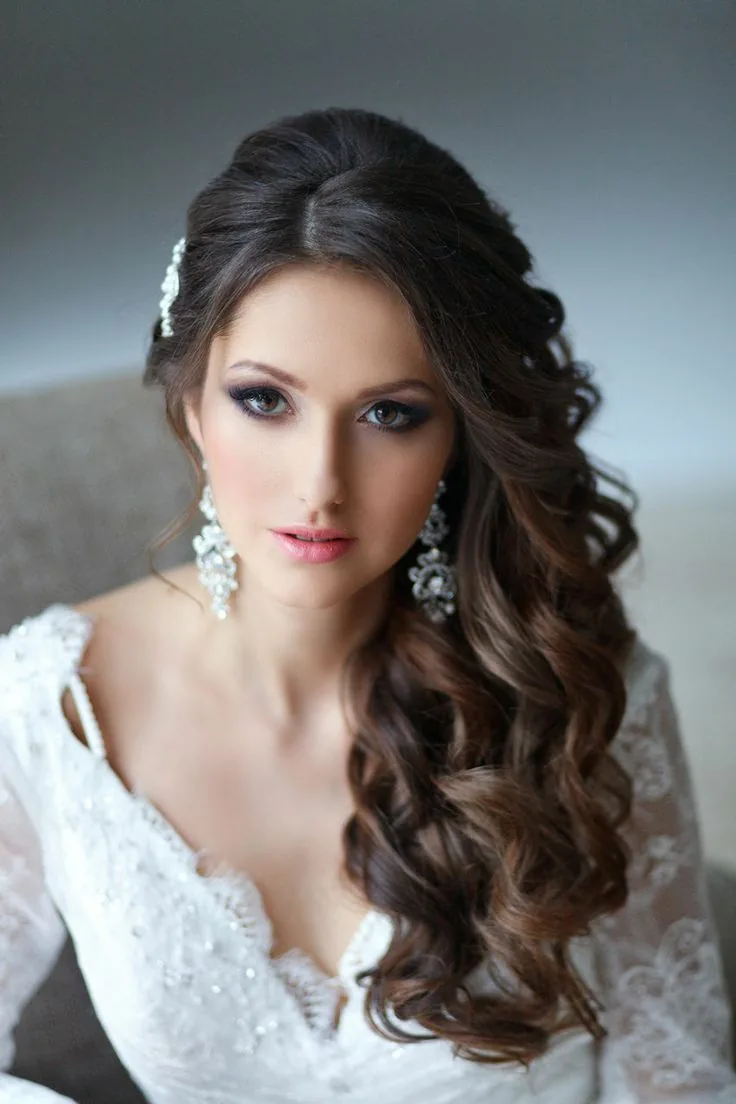
7. The Textured Low Bun with Face-Framing Pieces
A textured low bun is the relaxed, modern answer to the classic bun. The hair is gathered low and pinned in soft, piece-y loops, with slim strands left out at the front to frame the face. It looks effortless, but it is carefully built to last.
Best for: hair with a little natural texture, and anyone who finds a smooth bun too severe. It is a kind choice for a mature face, because the soft pieces around the face are flattering and forgiving.
Common mistake: pulling out too much hair at the front. Two slim pieces are romantic; a whole curtain of loose hair is a style that has fallen apart. Keep the pieces short — they should frame the cheekbones, not fall past the chin.
What to ask your stylist: ask them to build the bun with the texture first, then pin it, rather than pinning a smooth bun and pulling pieces out afterwards. The result holds far better.
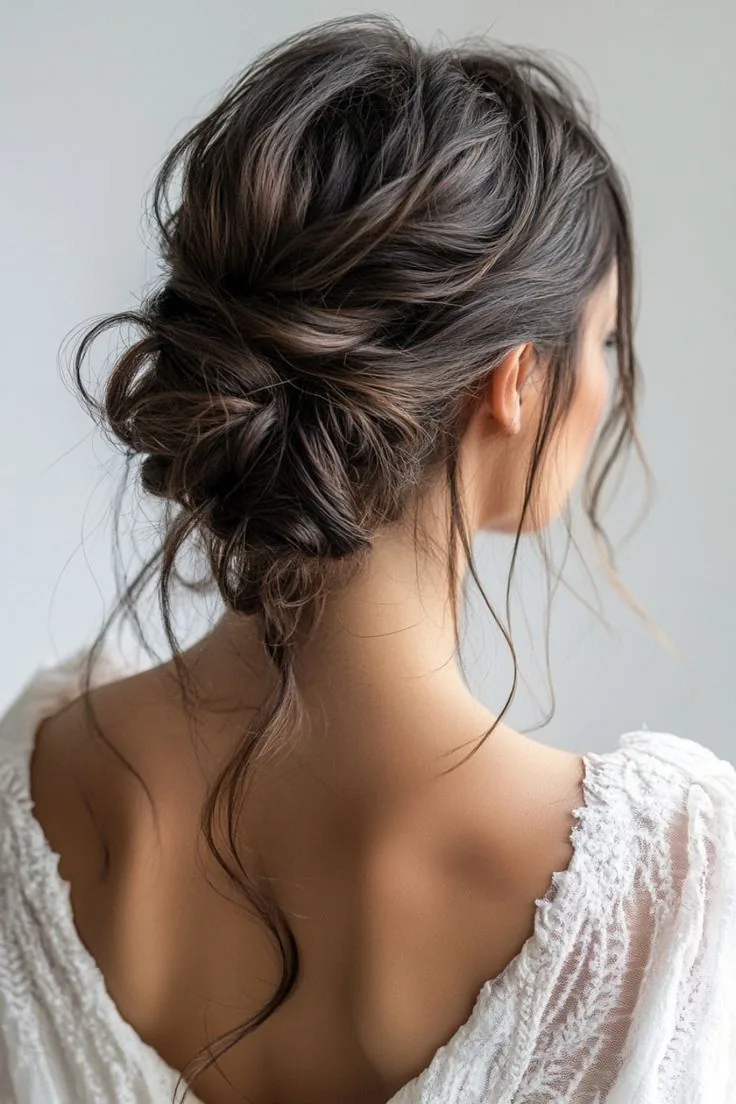
8. The Elegant Braided Crown
A braided crown sounds romantic, but kept slim and neat it is a surprisingly practical second-wedding style. It pulls all the front hair away from your face, it holds for hours, and it adds a touch of personality without looking fussy or young.
Best for: medium to long hair with a little natural texture, and anyone whose hair slips out of pins easily, because a braid grips itself. It suits a garden, boho or outdoor celebration beautifully.
How to style: braid a slim section from one temple, bring it across the crown, and pin it behind the opposite ear. Repeat from the other side if you like, and keep the braids close to the hairline so they read as a detail, not a headband.
Who should avoid it: anyone with very short hair or very fine hair that will not hold a braid. A half-up twist will give you the same feeling with less fuss.
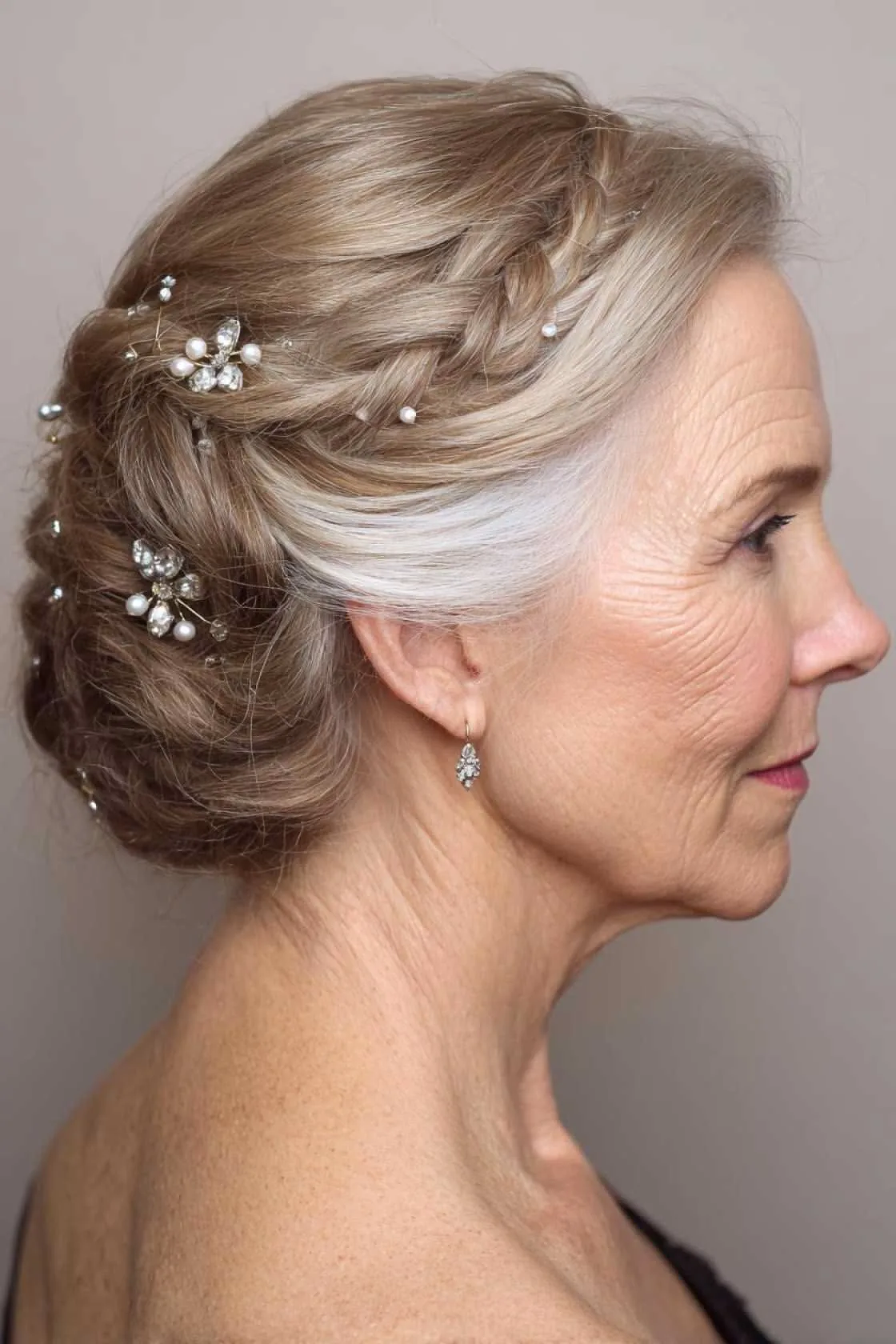
9. The Classic Bob with Soft Volume
A classic bob with soft volume at the crown is cheerful, confident and easy to wear — and it is one of the smartest choices for a second wedding. The volume stops the bob looking flat, and the short length means it will not move around or need adjusting during the ceremony.
Best for: fine hair, which benefits from a little lift, and anyone who wants a bob that looks lively rather than severe. It suits round and square faces particularly well.
How to style: blow-dry the crown with a round brush, lifting at the roots, and smooth the sides. A little volumising mousse at the roots before drying makes the lift last all day.
Maintenance: this style holds well, but a quick fluff at the crown with your fingers is all it needs if it drops during the day. Avoid brushing it flat.
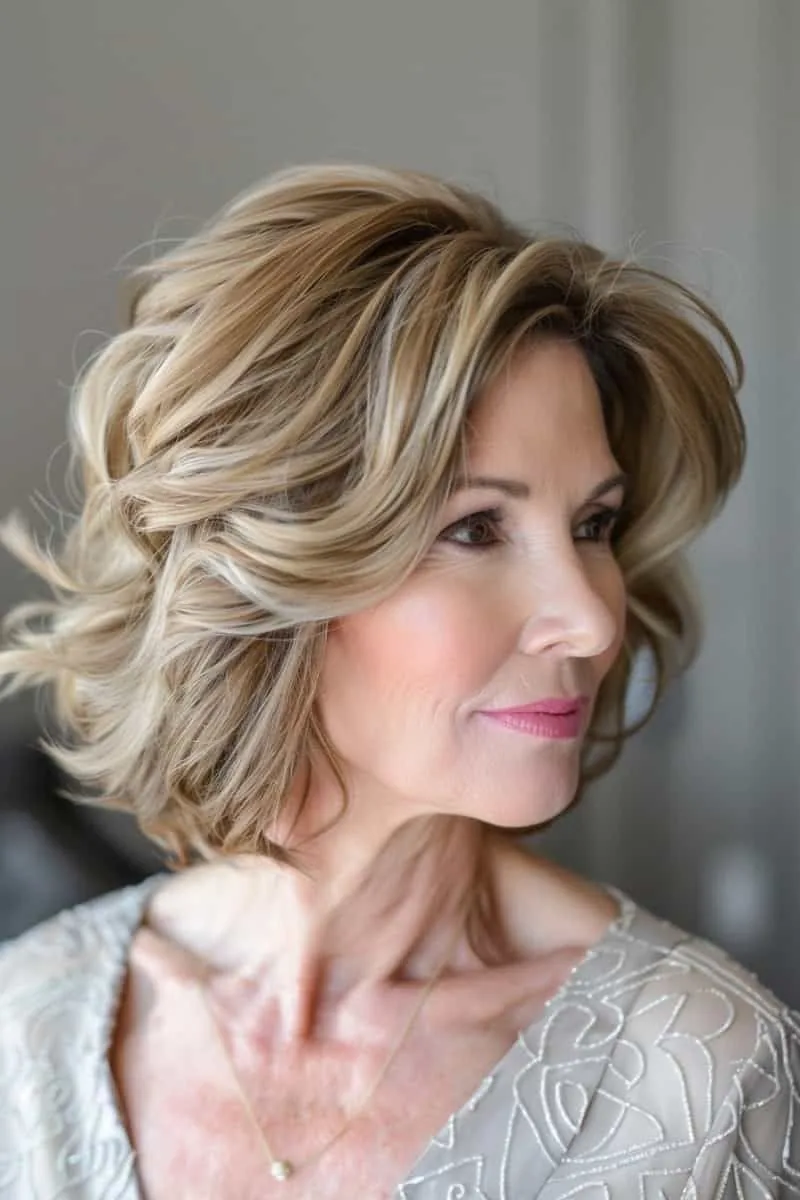
10. The Layered Lob with Gentle Waves
A layered lob — a long bob that sits around the collarbone — with gentle waves is one of the most flattering second-wedding cuts, because it looks modern without trying too hard. The layers give the style lightness and movement, and the waves stop it looking severe.
Pros: it dries quickly, it holds its shape all day, and it works with or without heat styling. Cons: at lob length, the ends can flick out if they catch on a collar, so check the back before the ceremony.
How to style: curl the hair in large, loose sections, brush the curls out into soft waves, and smooth the front pieces with a brush so they frame your face.
Cost and time: about fifteen minutes with a curling iron, or five if your hair is naturally wavy. A lob cut itself is a standard salon service, so there is no special expense involved.
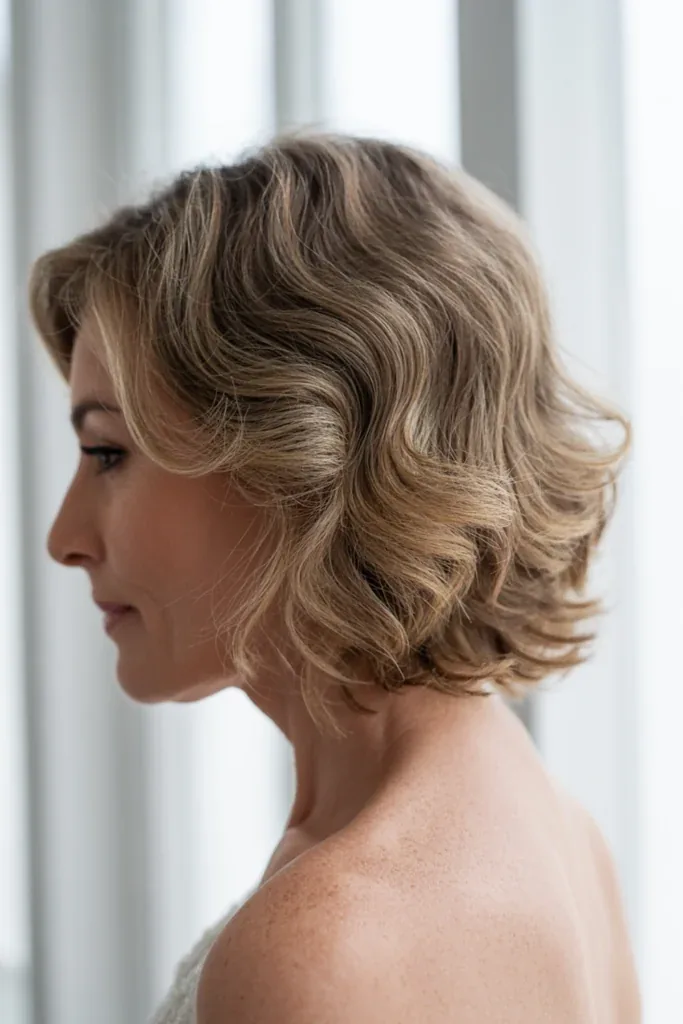
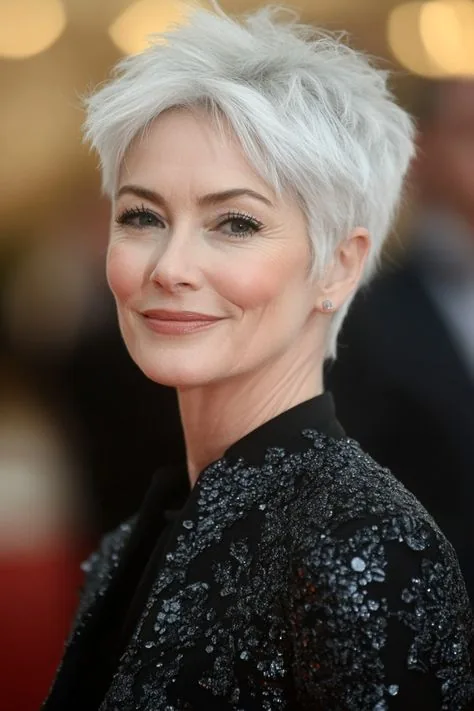
11. The Polished Pixie with Soft Texture
A polished pixie is one of the most confident choices a second-time bride can make. It shows your face completely, it needs no tying back, and it looks modern and self-assured. The key word is polished — a pixie that is smoothed and shaped reads very differently from one that is left to dry however it likes.
Best for: anyone with short hair who wants a low-maintenance wedding morning. It suits oval, heart-shaped and square faces beautifully, and it pairs wonderfully with statement earrings.
How to style: apply a small amount of styling cream to damp hair, smooth the top with your fingers or a brush, and define the parting. Add a little texture at the crown so the cut does not look flat.
What to ask your stylist: ask for a pixie with enough length on top to smooth back or sweep to the side, so you have options on the day itself.
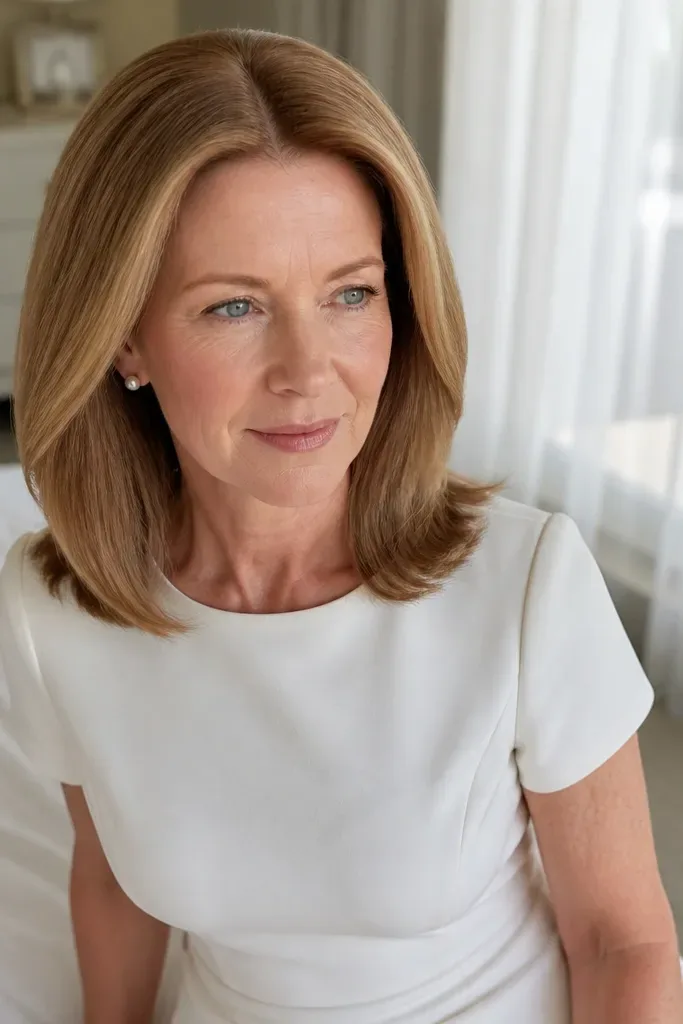
12. The Shoulder-Length Blowout
The classic shoulder-length blowout is the style most of us picture when we think of a polished wedding look: smooth, shiny, with a gentle curve at the ends and a little lift at the crown. It is timeless for a reason, and it suits a second wedding perfectly because it looks like the best version of your everyday hair.
Best for: medium hair that holds a blow-dry, and anyone who wants to wear their hair down in the most polished way possible. It suits almost every face shape.
How to style: blow-dry in sections with a round brush, lifting at the roots and turning the ends under. Finish with a cool shot from the dryer to set the shape, and a light spray.
Quick verdict: if you are unsure which style to choose, this is the safest down style on the list. It looks good on everyone, it photographs well, and it never looks overdone.
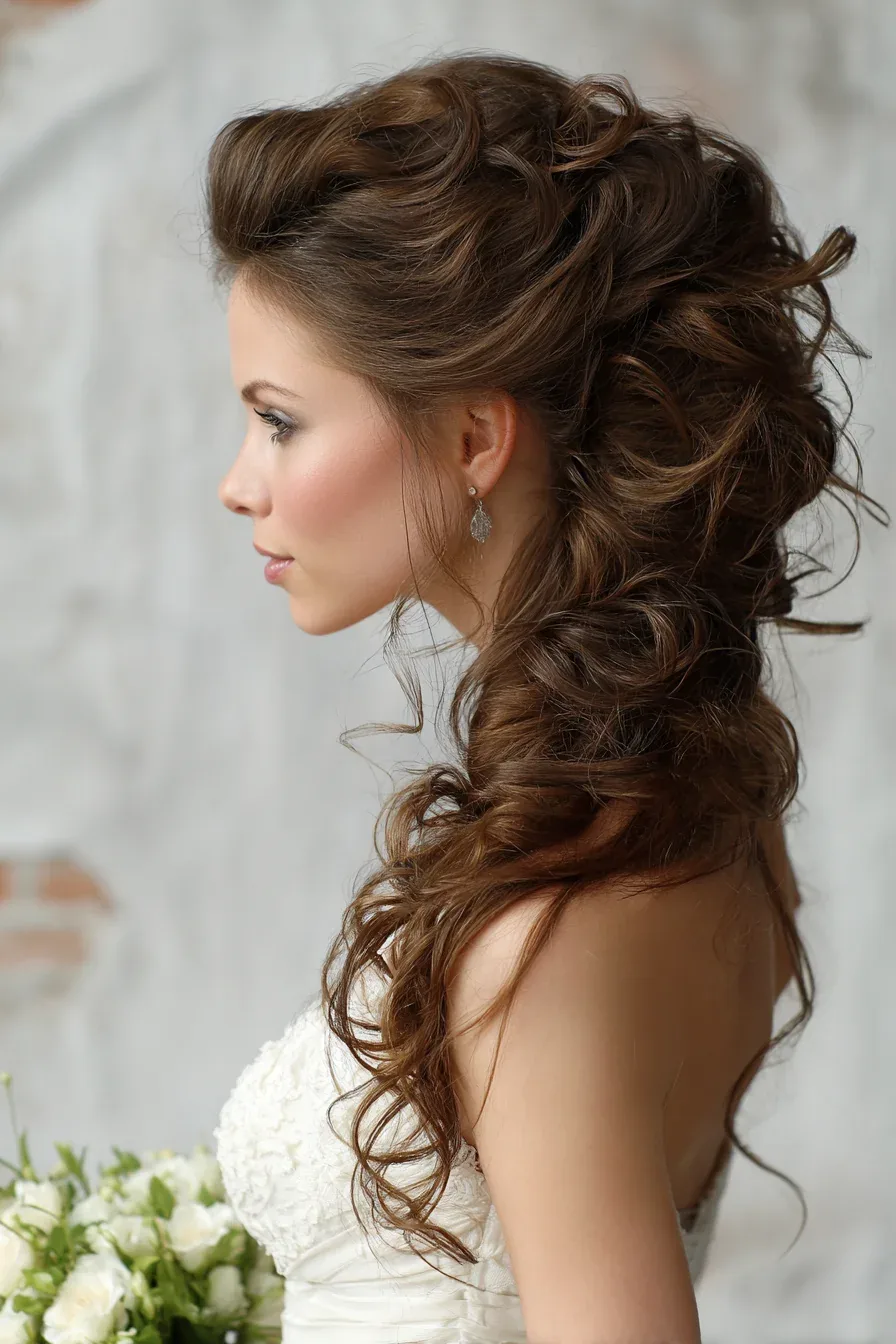
13. Soft Curls Pinned to One Side
Soft curls swept to one side are romantic, flattering and quietly dramatic. The asymmetry draws the eye, shows off your profile, and keeps the hair off one side of your face — which is exactly where the photographer will be standing.
Best for: medium and long hair, and anyone wearing a one-shoulder or asymmetric neckline. It is also a good choice if a centre part feels too severe for you.
How to style: curl the hair in large sections, sweep it all to one side, and pin it neatly behind the opposite ear. Smooth the swept side so the shape looks intentional, not accidental.
Common mistake: pinning only one small section and hoping the rest stays put. Use two or three pins, crossed, and a light spray — side-swept hair needs real support, not hope.
14. The Low Side Bun
A low side bun is a gentle twist on the classic low bun. Sitting just behind one ear, it adds a touch of asymmetry and elegance, and it looks particularly lovely from the side — which is how your guests will see you as you walk down the aisle.
Best for: medium and long hair, and anyone wearing a dress with a beautiful back or a one-shoulder neckline. It is also a good choice if a centre bun feels too severe for you.
Pros and cons: the pros are elegance, softness and a truly flattering silhouette. The only con is that a side bun can feel uneven if it is not pinned securely, so ask your stylist to balance the weight with pins on both sides.
Quick verdict: choose the side bun if you want your wedding look to feel a little special without being formal. It is elegant, but never stiff.
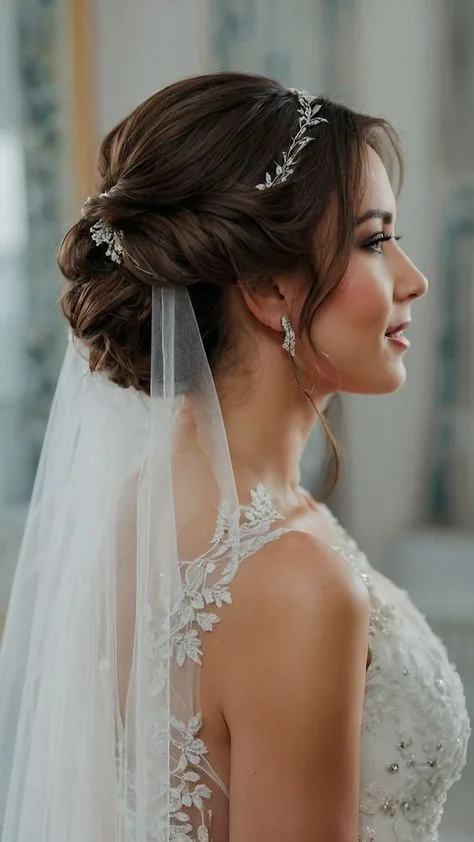
15. The Twisted Updo
A twisted updo is a softer, easier version of the chignon. Instead of a precise roll, the hair is twisted loosely and pinned into a relaxed shape, which gives the style a gentle, approachable feeling while still looking completely put together.
Best for: medium and long hair with a little texture. It is forgiving if your hair is not perfectly smooth, because the twist itself is the design.
How to style: gather the hair low, split it into two sections, twist each one, then twist them together and coil them into a soft shape. Pin it with bobby pins and pull out one or two tiny face-framing pieces if you like.
Cost and time: about ten minutes, no heat required, and no special products beyond pins and a light spray. It is one of the quickest elegant styles on this list.
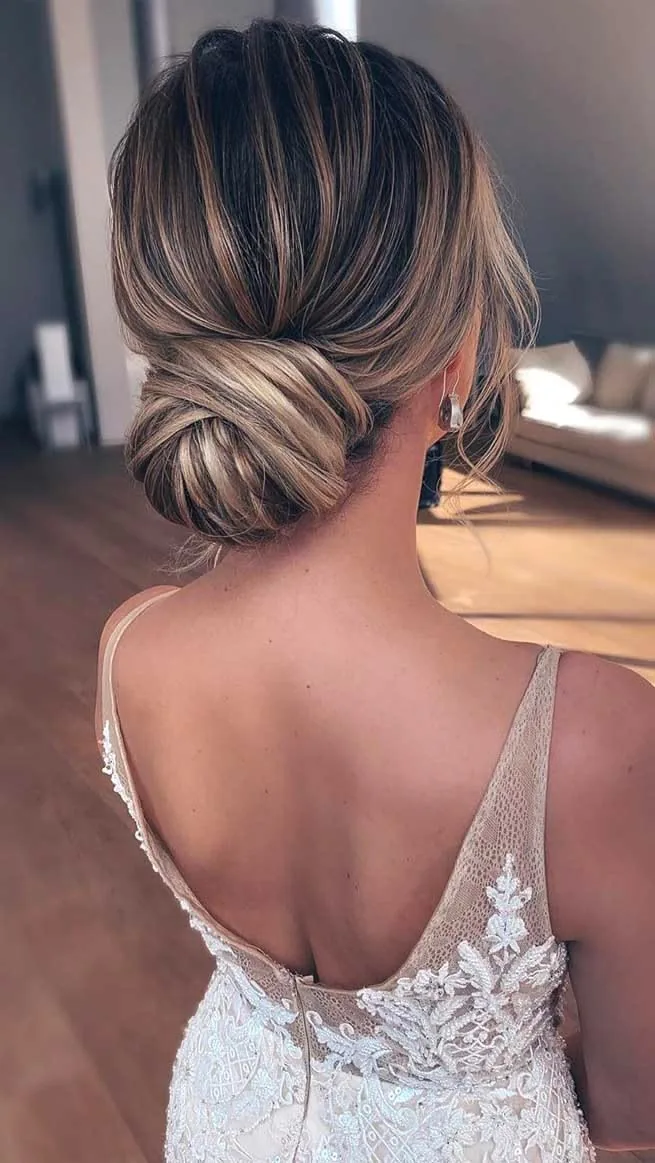
16. The Waterfall Braid, Half-Up
A waterfall braid is one of the prettiest half-up styles there is: a braid runs across the back of the head while strands of hair fall through it like water, creating a soft, romantic cascade. It is delicate, feminine and surprisingly secure.
Best for: long hair, and anyone who wants a braid that looks romantic rather than sporty. It suits a garden, beach or boho second wedding beautifully.
How to style: braid a section from one temple across the back of the head, letting a strand drop through the braid at each step, and pin the end behind the opposite ear. Curl the loose hair gently for softness.
Who should avoid it: anyone with very short layers, because the falling strands will not stay in the braid. A simple half-up twist will give you a similar feeling with less fuss.
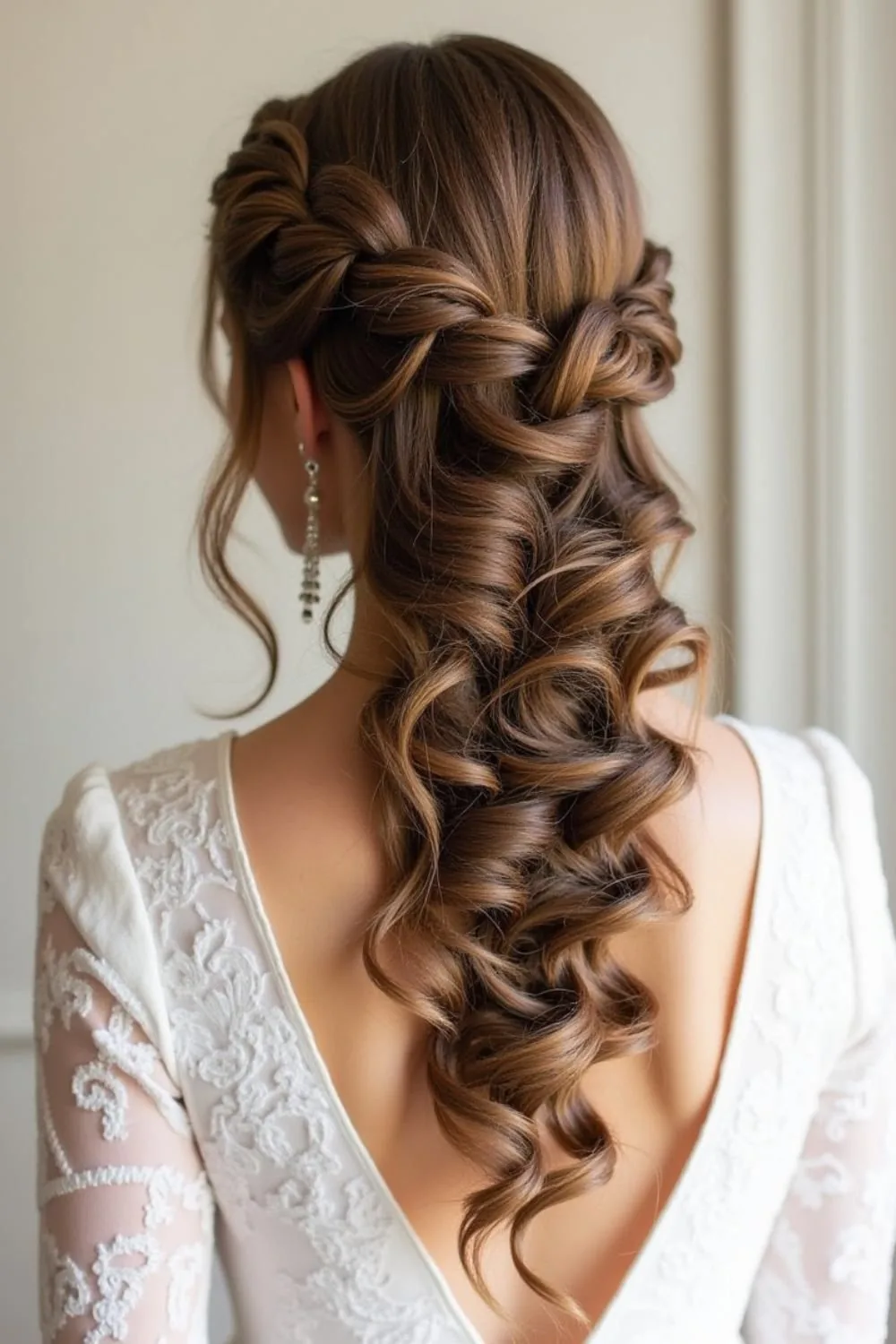
17. Sleek Straight Hair with a Middle Part
A clean middle part with sleek, straight hair is one of the most striking second-wedding looks, because it is so symmetrical and calm. It frames the face evenly, it photographs beautifully, and it suits a modern, minimal dress perfectly.
Best for: straight hair and oval or heart-shaped faces. It is also a good choice if you want to wear your hair down but still look extremely tidy.
How to style: part the hair in the centre while it is damp, blow-dry it straight, and finish with a straightener on the front sections. Tuck the hair behind your ears or let it fall straight — either works, as long as it is even on both sides.
Common mistake: an uneven middle part. Take ten seconds to check it in the mirror, because a crooked part is surprisingly noticeable on a sleek style.
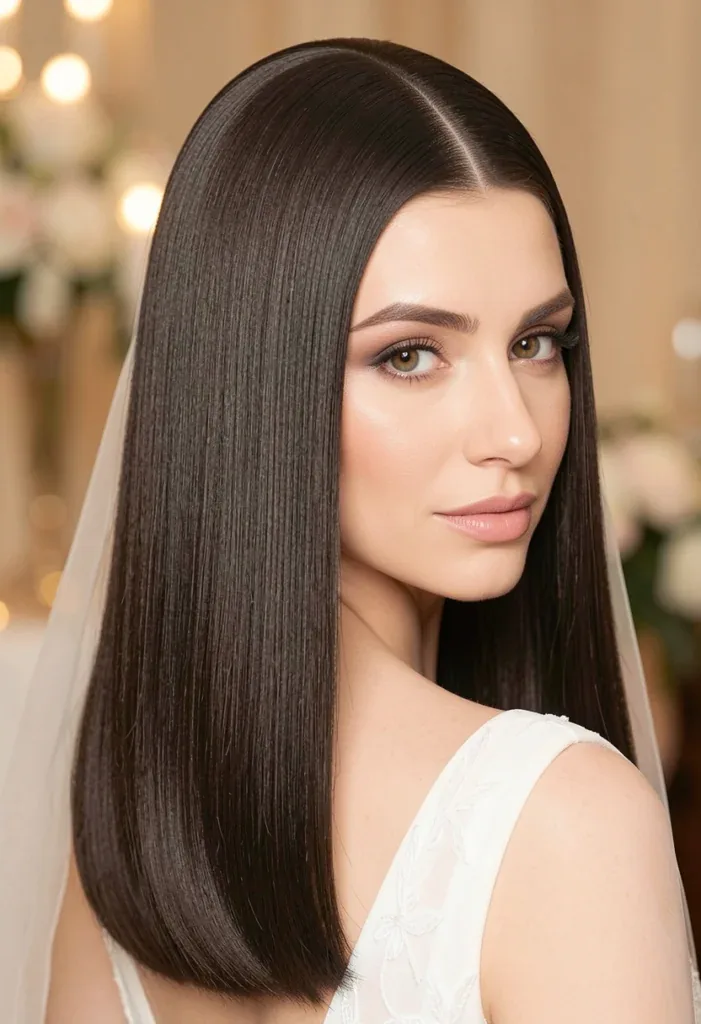
18. The Wavy Lob with Tucked Sides
Tucking the sides of a wavy lob behind your ears is a tiny change that makes a big difference. It opens up your face, shows your earrings and your smile, and stops the waves falling forward while you are talking to your guests.
Best for: wavy hair at lob length, and anyone who wants to wear their hair down but keep it out of the way. It suits a relaxed, intimate wedding perfectly.
How to style: enhance the waves with a little mousse, then tuck one or both sides behind your ears. If the hair keeps slipping forward, one hidden pin on each side will hold it.
Pros and cons: the pros are simplicity and a friendly, open look. The only con is that tucked hair can look flat at the sides, so add a little volume at the crown first.
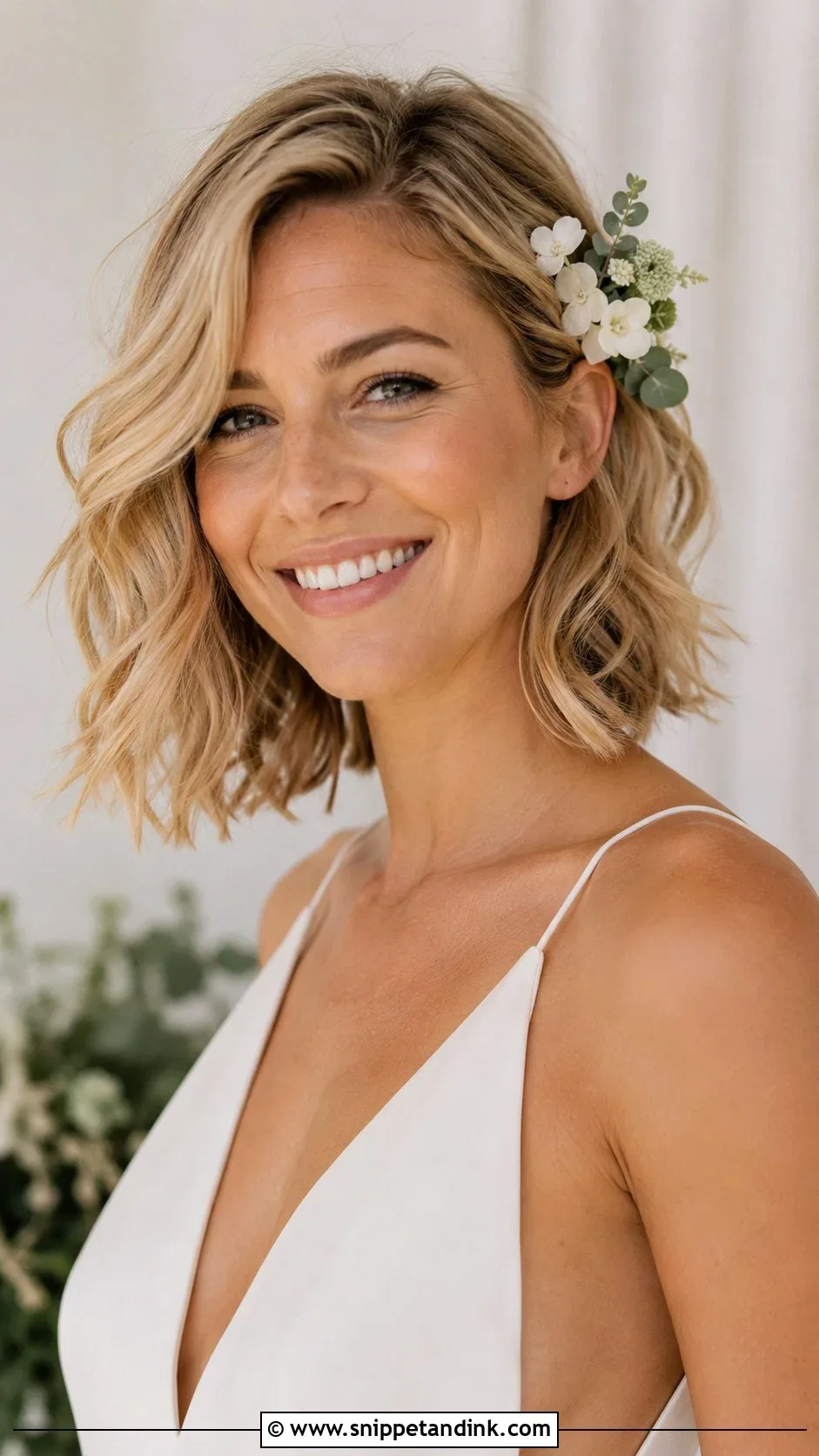
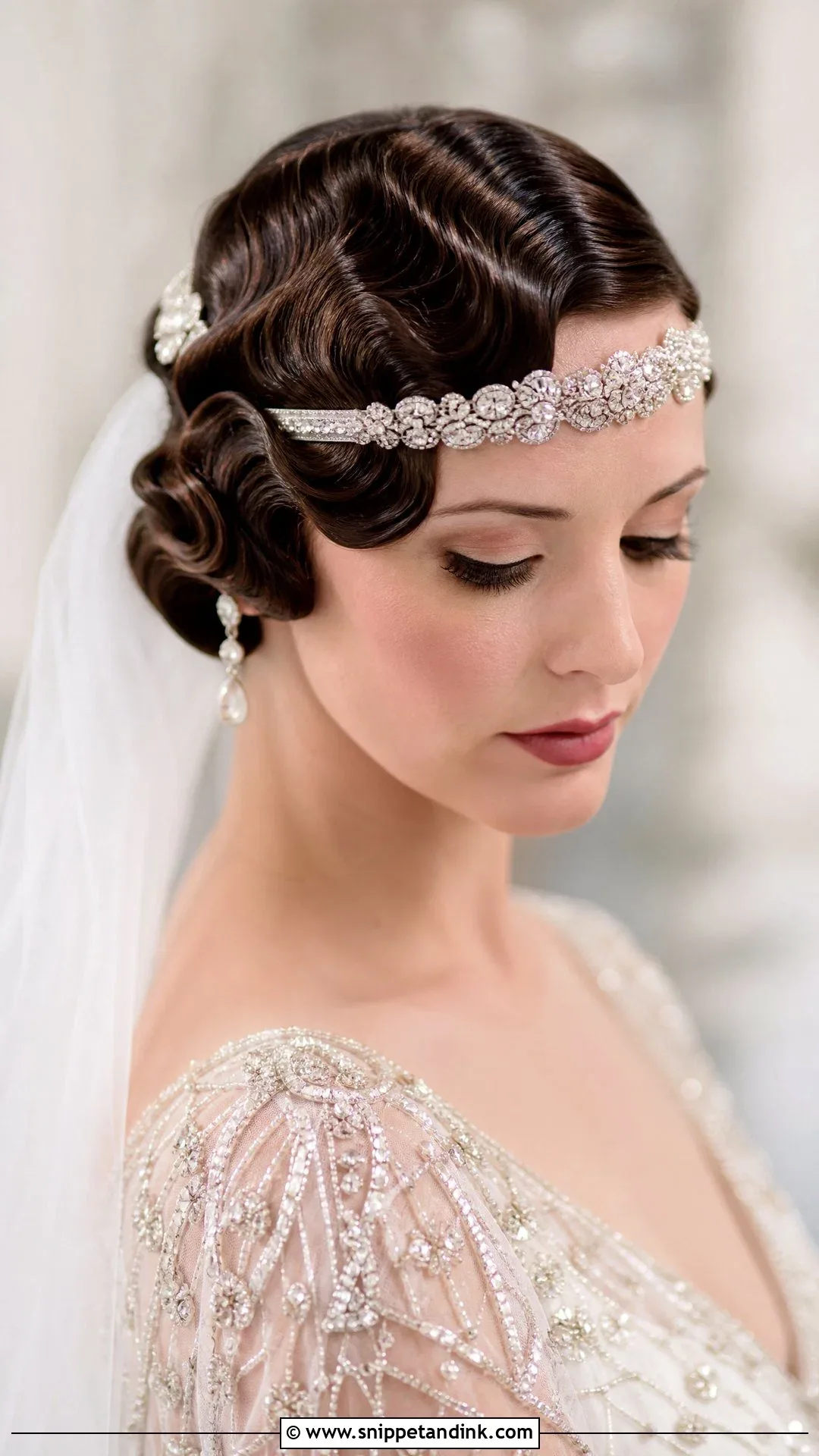
19. Vintage-Inspired Finger Waves, Modernised
Finger waves are pure vintage glamour, and the modern version is softer, looser and far more wearable than the original. The waves are sculpted close to the head at the front, then released into soft movement at the back, so the style feels like a nod to the past rather than a costume.
Best for: short and medium hair, a vintage-themed second wedding, and anyone who loves the glamour of the 1920s or 1940s. It pairs beautifully with a birdcage veil.
How to style: this is a stylist’s style, not a do-it-yourself one. The waves are set with gel and clips while the hair is damp, then released and brushed out gently. Book a trial, and bring a photograph of the exact wave pattern you love.
Cost and time: allow forty-five minutes to an hour, and expect to pay for a specialist styling session. It is worth it for the photographs alone.
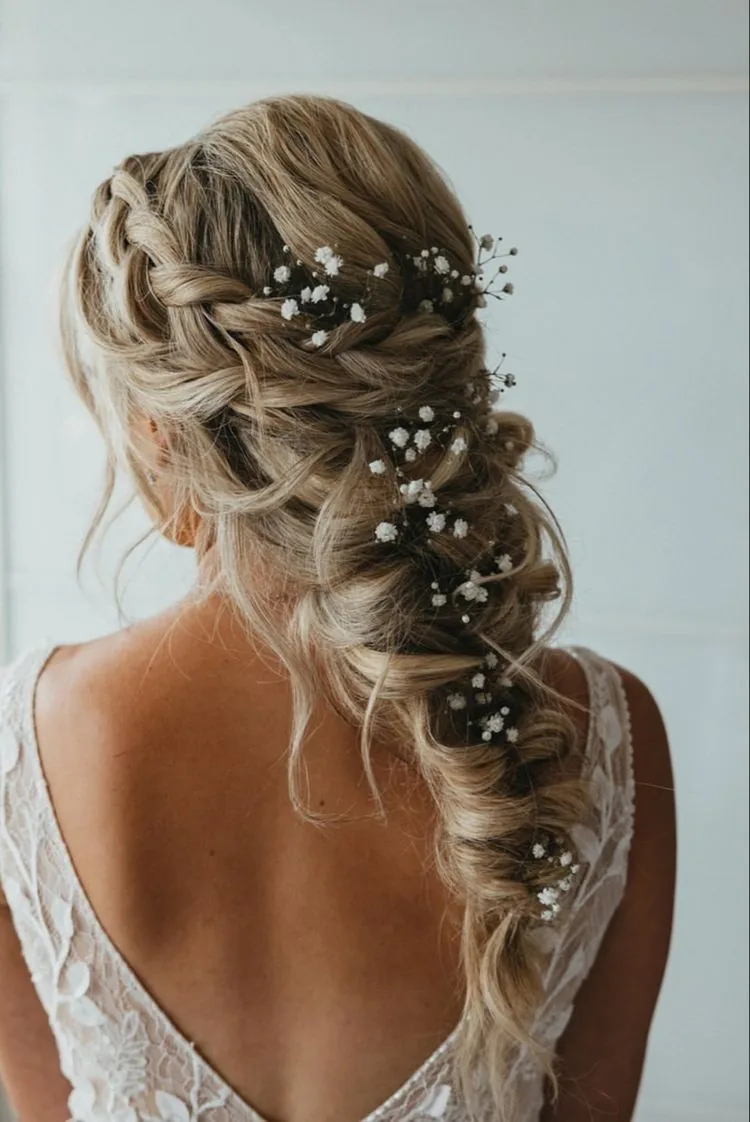
20. The Boho Loose Braid
A loose, boho braid is the most relaxed style on this list, and that is exactly why it works for a laid-back second wedding. The braid is kept soft and slightly undone, with pieces pulled out gently for texture, and it falls over one shoulder or down the back.
Best for: long hair, a garden, beach or festival-style wedding, and anyone who wants to feel comfortable and free on the day. It is also a kind choice for hair that does not hold a curl well.
How to style: gather the hair to one side, braid it loosely, and tie the end with a small clear elastic. Gently pull at the edges of the braid to soften it, and add a fresh flower or a delicate pin at the top.
Maintenance: a loose braid holds well, but check it after hugging your guests — a single pin at the top will keep it from sliding.
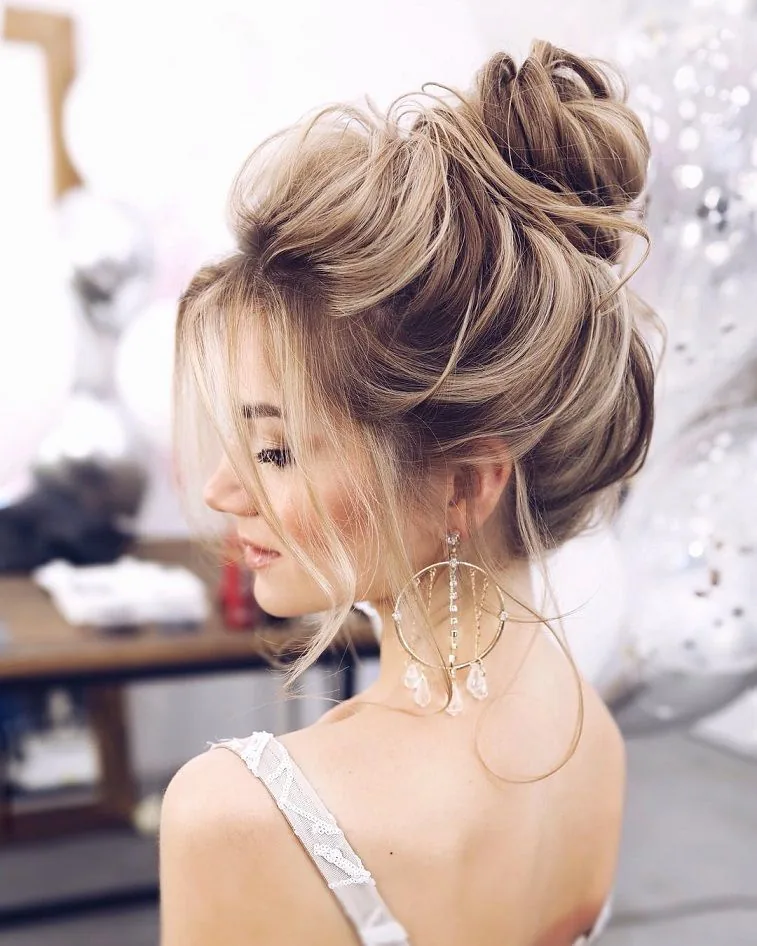
21. The High Soft Bun
A high bun is bolder than a low bun, and it works beautifully for a second wedding when it is kept soft and modest rather than huge. It lifts your face, shows your features, and keeps every strand completely out of the way — which is a gift on a hot day.
Best for: long and thick hair, and anyone whose low bun tends to slip. A high bun uses gravity in your favour, and it pairs well with a high-necked dress.
How to style: brush the hair up smoothly, twist it into a compact bun at the crown, and pin it securely. Keep the bun small and soft — this is not the moment for a giant topknot — and leave two slim pieces out at the front.
Who should avoid it: if a high bun gives you a headache, or if it makes you feel self-conscious, choose a low bun instead. Comfort matters more than height.
22. Curtain Bangs with Soft Layers
Curtain bangs are the gentlest kind of fringe, and they are a gift for second-wedding hair because they frame your face without covering it. Paired with soft layers, they give the whole style softness and shape while keeping your eyes fully visible.
Best for: long and medium hair, and anyone who wants a fringe without the commitment of a blunt cut. They suit round, square and heart-shaped faces particularly well.
How to style: blow-dry the bangs forward and then sweep each side outward with a round brush, so they part in the middle and curve away from your face. Keep the rest of the hair smooth or softly waved.
Who should avoid it: if your bangs go limp within an hour, or if you will be outdoors in wind, a swept-back style will be less trouble. Test curtain bangs on a normal day first.
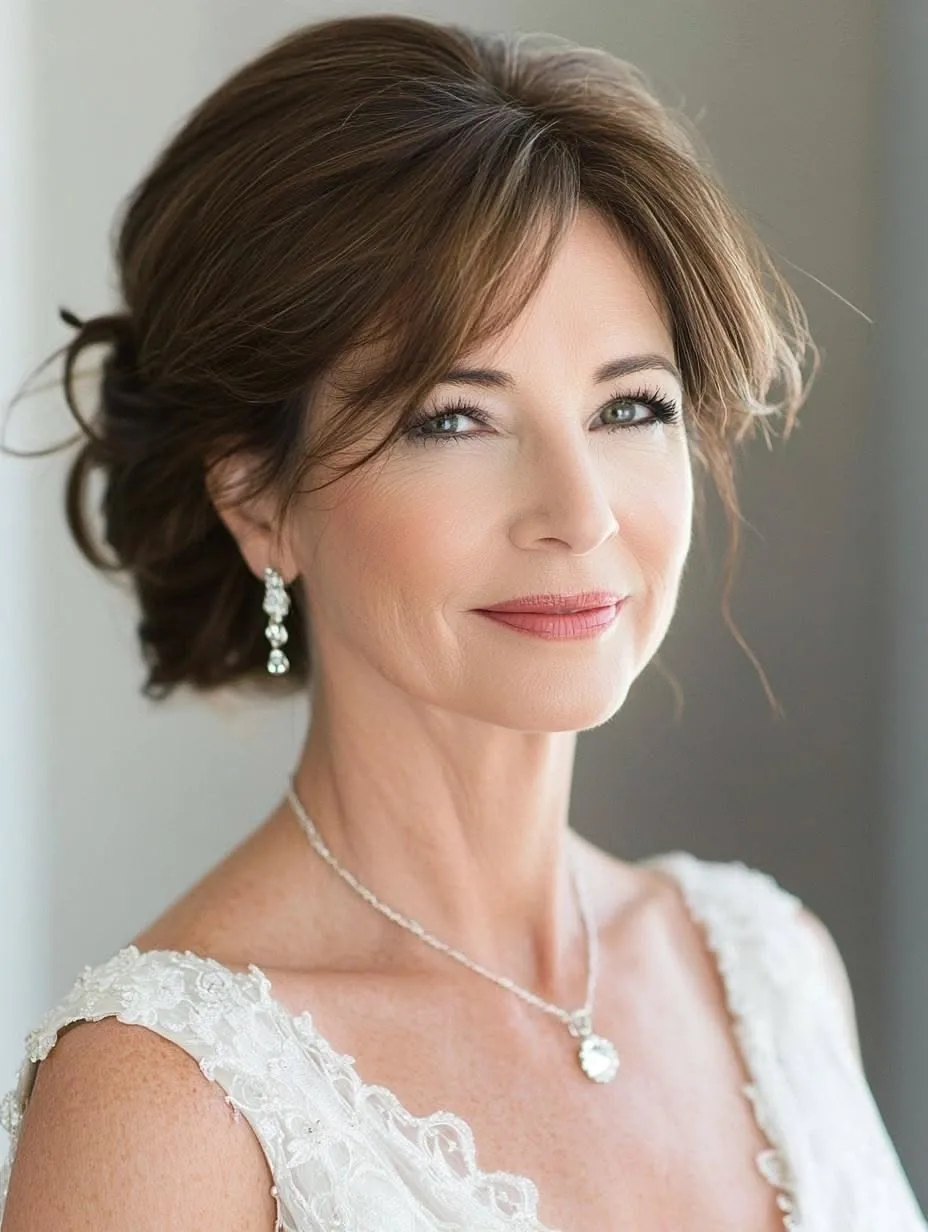
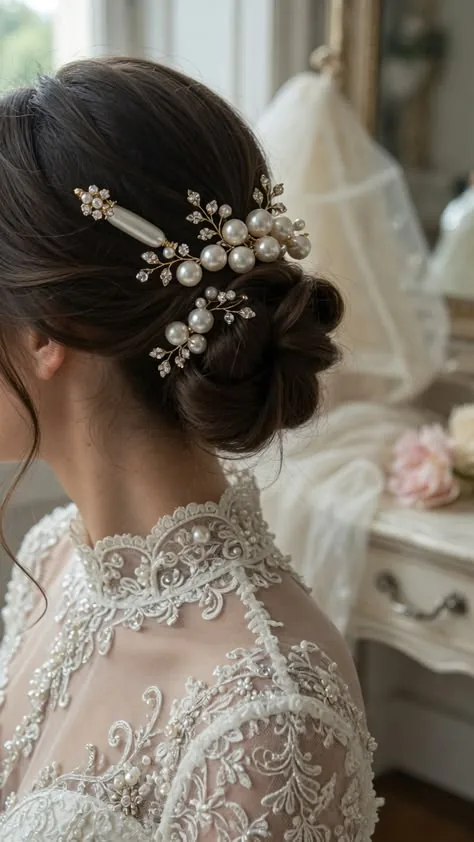
23. The Romantic Updo with Pearl Pins
Pearl pins turn a simple updo into a bridal style with almost no effort. The updo itself can be soft and simple — a low bun, a twist, a loose chignon — and the pearls add the sparkle, the romance and the sense of occasion.
Best for: anyone who wants a bridal detail without a veil or a tiara. Pearls suit every hair colour, including silver and grey, and they photograph beautifully in close-up.
How to style: build your chosen updo first, then place three or five pearl pins in a gentle curve above the bun or along the side. Step back and check the balance — the pins should look scattered, not lined up like soldiers.
Common mistake: using too many pins, or pins that are too large. A few small pearls are elegant; a whole constellation is a costume. Less is more.
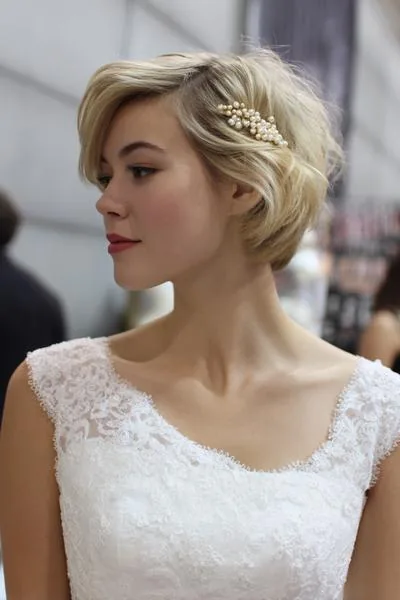
24. The Short Bob with a Side Sweep
A side part changes the whole feeling of a bob. It adds a little sweep across the forehead, softens a strong jawline, and gives the style a gentle, approachable shape that suits a joyful second wedding perfectly.
Pros: it flatters most face shapes, it adds volume at the crown without any teasing, and it looks intentional with very little effort. Cons: a deep side part can slide out of place if your hair is very fine, so it needs one hidden pin on the heavier side.
How to style: part the hair while it is damp, blow-dry the front section in the direction of the part, and tuck the lighter side neatly behind your ear. Finish with a pea-sized amount of smoothing cream.
What to ask your stylist: ask for soft, blended ends rather than a blunt line, so the bob moves naturally when you turn your head.
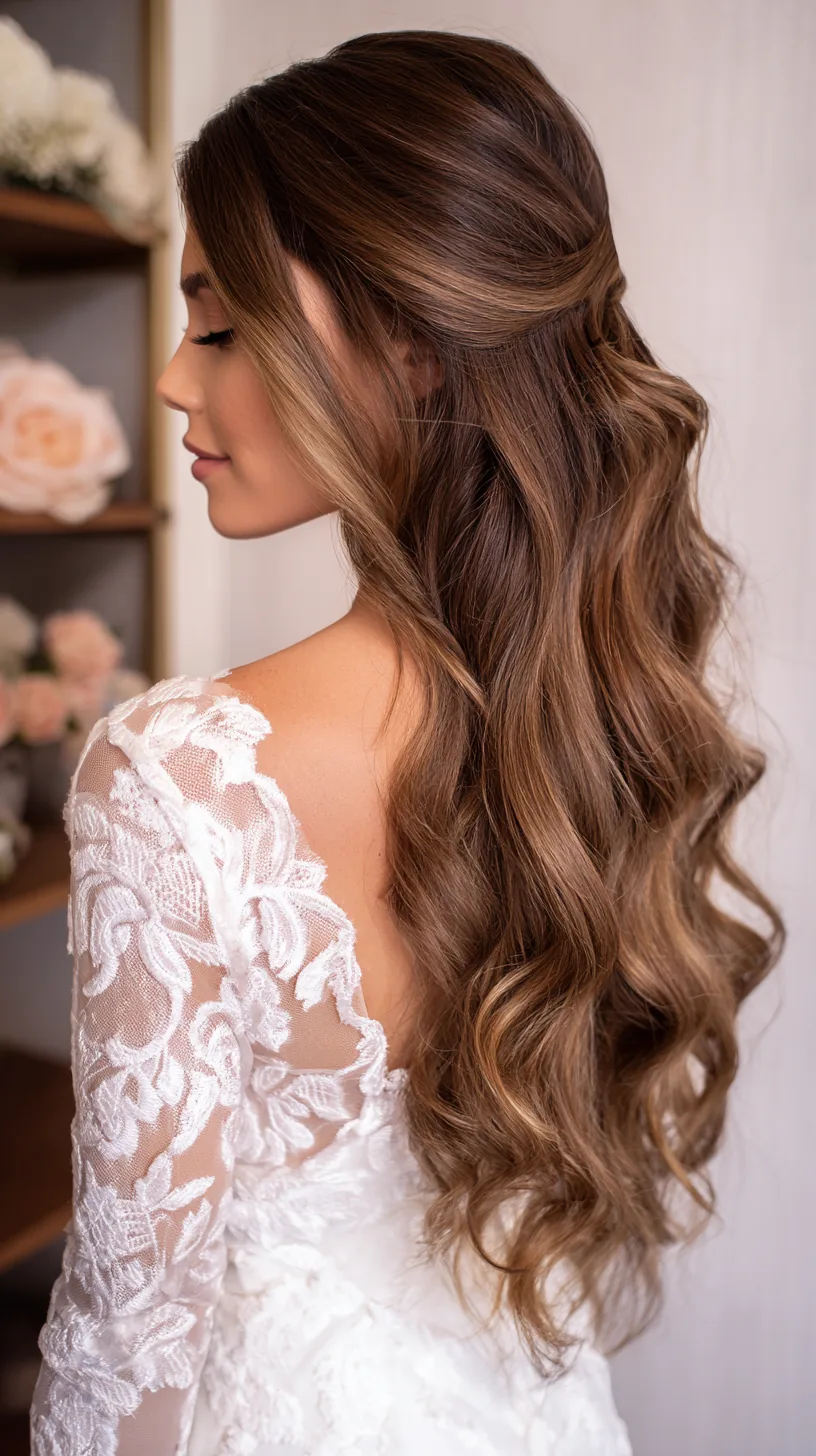
25. Long Layers with Soft Curls
Long layers with soft curls are romantic, feminine and wonderfully flattering — and they are the style many second-time brides choose when they simply want to look like themselves, only more so. The layers stop long hair looking heavy, and the curls add movement and shine.
Best for: long hair, especially thick hair that needs shaping. It suits most face shapes, and it is a kind option if you have a high forehead, because the layers soften it.
How to style: curl the hair in large sections, brush the curls out gently, and let the layers fall naturally. Pin one side back if it keeps falling forward.
Maintenance: this style needs a quick check after walking outdoors, because wind can undo soft curls. A single hidden pin on each side and a light spray will keep it in place all day.
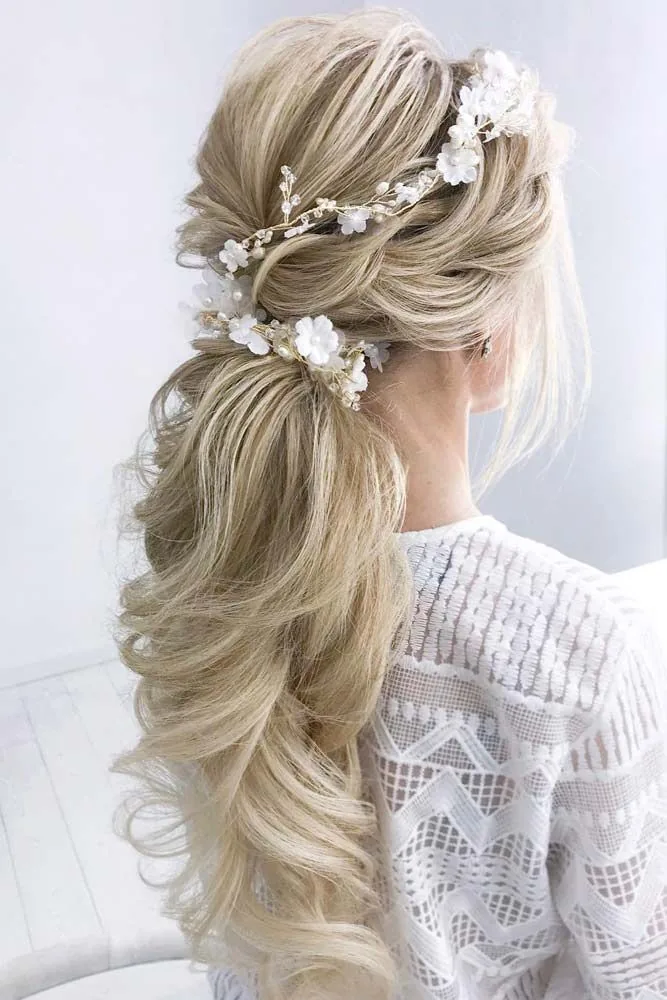
26. The Low Ponytail with Volume at the Crown
A low ponytail with a little volume at the crown is a world away from a school ponytail. The lift at the top gives the style shape and elegance, while the low ponytail keeps everything neat, comfortable and completely out of your way.
Best for: medium and long hair, and anyone who finds a flat ponytail too plain. It is a wonderful choice for a courthouse wedding, because it looks polished without looking overdressed.
How to style: backcomb the crown very gently, smooth the top layer over it, and gather the hair low at the nape. Secure it with a plain elastic and wrap a strand of hair around the elastic for a finished look.
Quick verdict: a small upgrade with a big payoff. It takes two extra minutes and looks twice as polished as a plain ponytail.
27. The Fishtail Braid into a Low Bun
A fishtail braid that flows into a low bun combines two neat ideas in one style. The braid controls the front, the bun controls the back, and together they create a style that will not move no matter how long the celebration runs.
Best for: long and medium hair, and anyone who likes braids but wants them to look grown-up. It is a practical choice for a day with photographs outdoors in the wind.
How to style: fishtail-braid a section from one temple along the hairline, bring it to the nape, and gather all the hair into a low bun. Pin the braid’s end into the bun so there are no loose ends.
Common mistake: braiding too tightly, which can pull at the hairline and cause a headache. Keep the braid firm but comfortable.
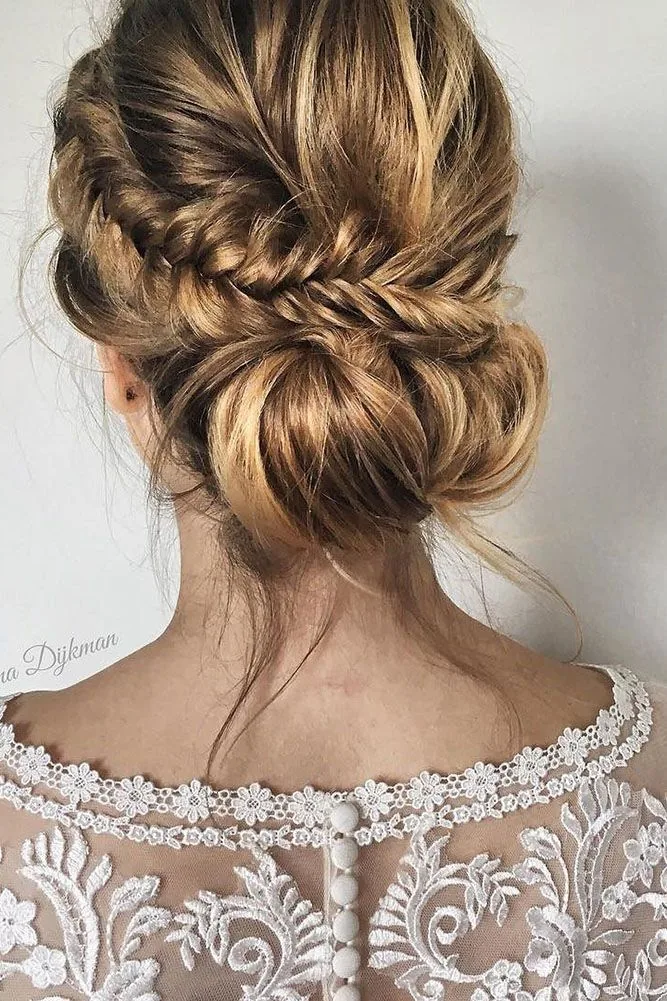
28. The Chignon with Fresh Flowers
Fresh flowers in a chignon are the most romantic detail a second-time bride can wear. A few small blooms — a sprig of gypsophila, a tiny rose, a sprig of lavender — tucked into a soft low chignon add colour, scent and a sense of occasion without any weight at all.
Best for: a garden, outdoor or spring wedding, and anyone who wants a natural, romantic detail instead of jewellery in the hair. Flowers suit every hair colour, and they look especially lovely against silver hair.
How to style: build the chignon first, then ask your florist for small, wired blooms that can be pinned in securely. Place them in a gentle cluster on one side, not spread evenly across the whole bun.
Maintenance: fresh flowers wilt, so ask your florist to prepare them on the morning of the wedding and keep them in water until the last moment. Carry one spare bloom in case one falls out during the dancing.
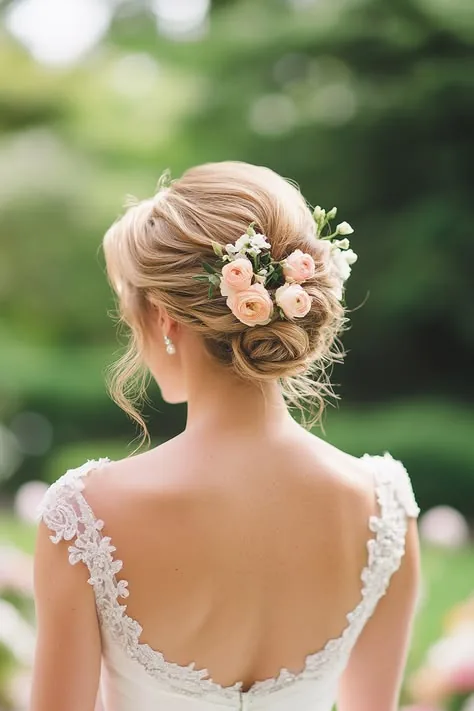
29. The Elegant Soft Topknot
A soft topknot is the high bun’s relaxed cousin: the hair is gathered high, but the bun is kept loose and textured, with soft pieces around the face. It is elegant, modern and surprisingly comfortable, and it shows off your face and your earrings beautifully.
Best for: long hair, a warm-weather wedding, and anyone who wants their hair completely off their neck. It pairs well with a high-necked or halter-neck dress.
Pros and cons: the pros are comfort, coolness and a clean, modern silhouette. The only con is that a topknot can look casual if it is too messy, so keep the shape neat and the front smooth.
What to ask your stylist: ask for the topknot to sit slightly back from the hairline, not right on top of your head, so it looks elegant rather than severe.
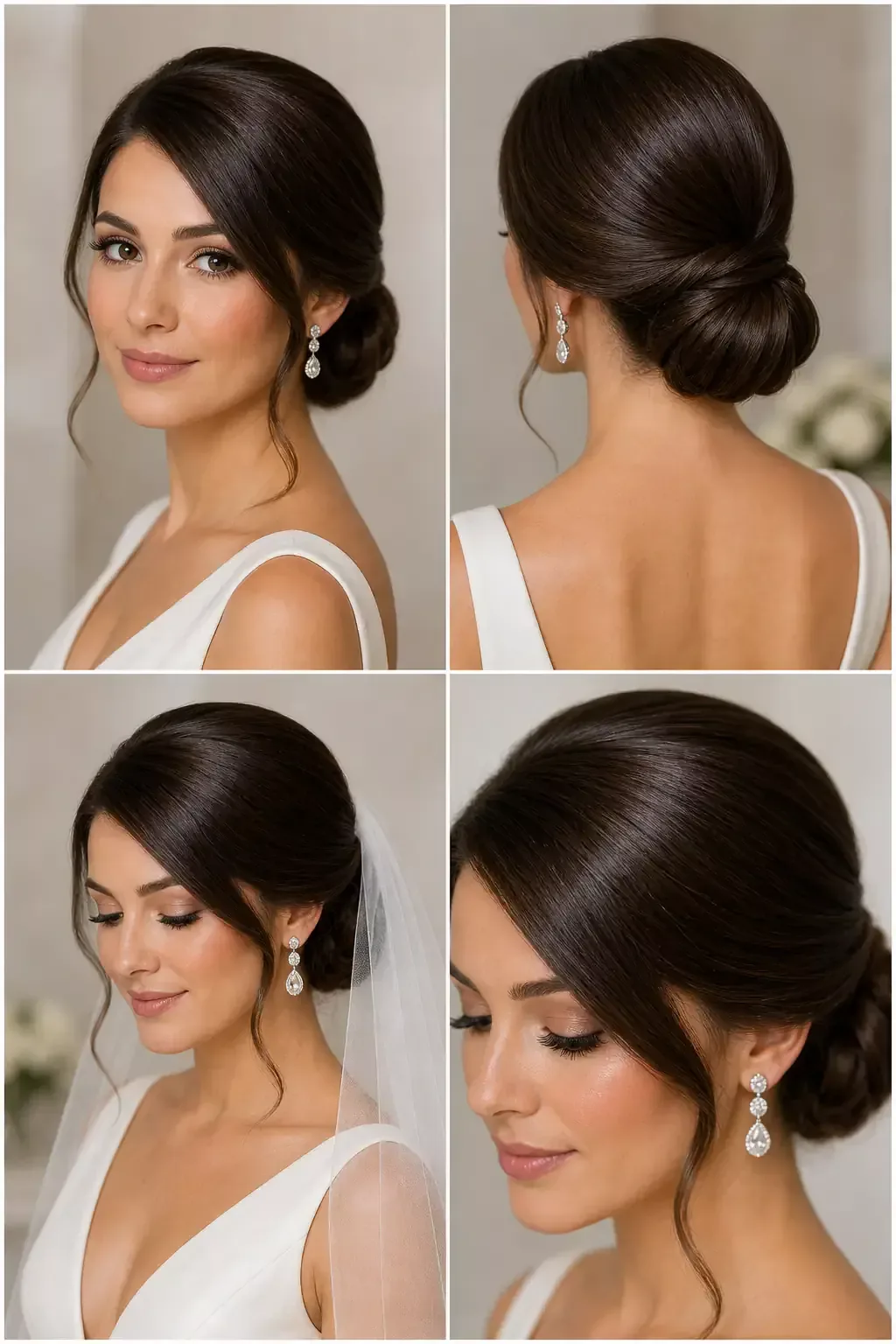
30. Defined Natural Curls in an Updo
Natural curls do not need to be straightened for a wedding. Well-defined curls, gathered into a soft updo, look confident, natural and polished — and they show that you are comfortable with your own hair, which is exactly the impression you want to give on your wedding day.
Best for: naturally curly and coily hair of any length. This style works with your texture instead of fighting it, which means it holds better and feels more comfortable all day.
How to style: define the curls with a curl cream on damp hair, let them dry naturally or with a diffuser, then gather them loosely into a low updo, leaving a few curls free around the face. Keep the pins hidden in the curls.
What to ask your stylist: ask for a cut that shapes the curls rather than thinning them out, so the curls sit in a neat, rounded shape around your face.
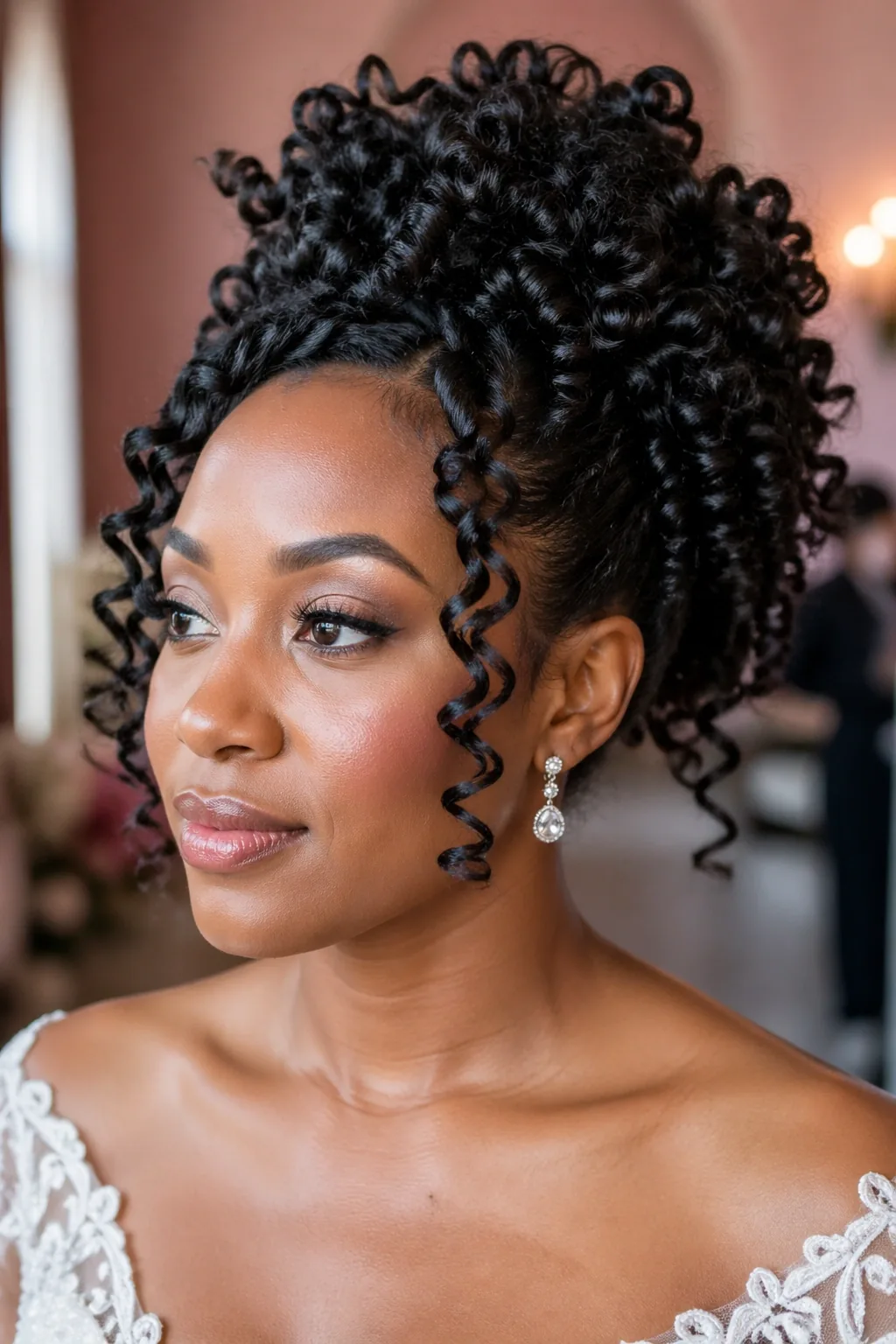
31. The Half-Up Twist with Tendrils
The half-up twist is the answer when you want your hair down but your face clear. Two small sections twisted back from the temples and pinned at the back keep the front tidy, while two slim tendrils left out at the front soften the whole look.
Best for: medium and long hair, and anyone whose hair looks better down than up. It is also a kind choice for wavy hair, because the twist controls the front without flattening the waves at the back.
How to style: pull the front tendrils out first, then take a section from each temple, twist each one back, cross them at the back of the head, and pin them with two crossed bobby pins. Curl the tendrils very lightly.
Common mistake: twisting too much hair back, which pulls the style into a half-ponytail and loses the softness. Keep the twisted sections slim — about two fingers wide each.
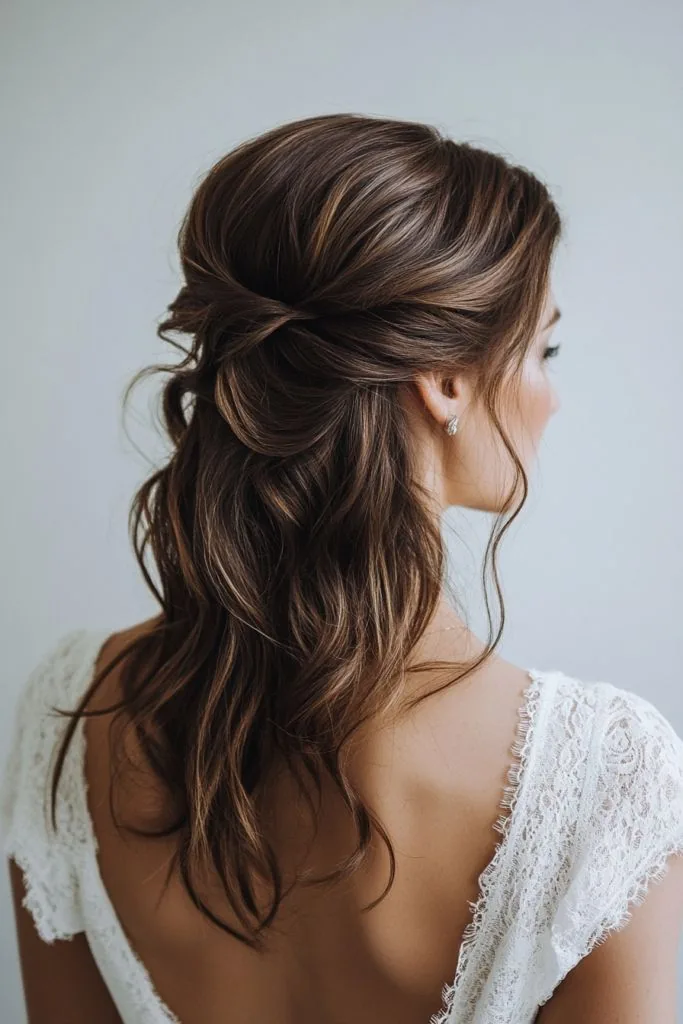
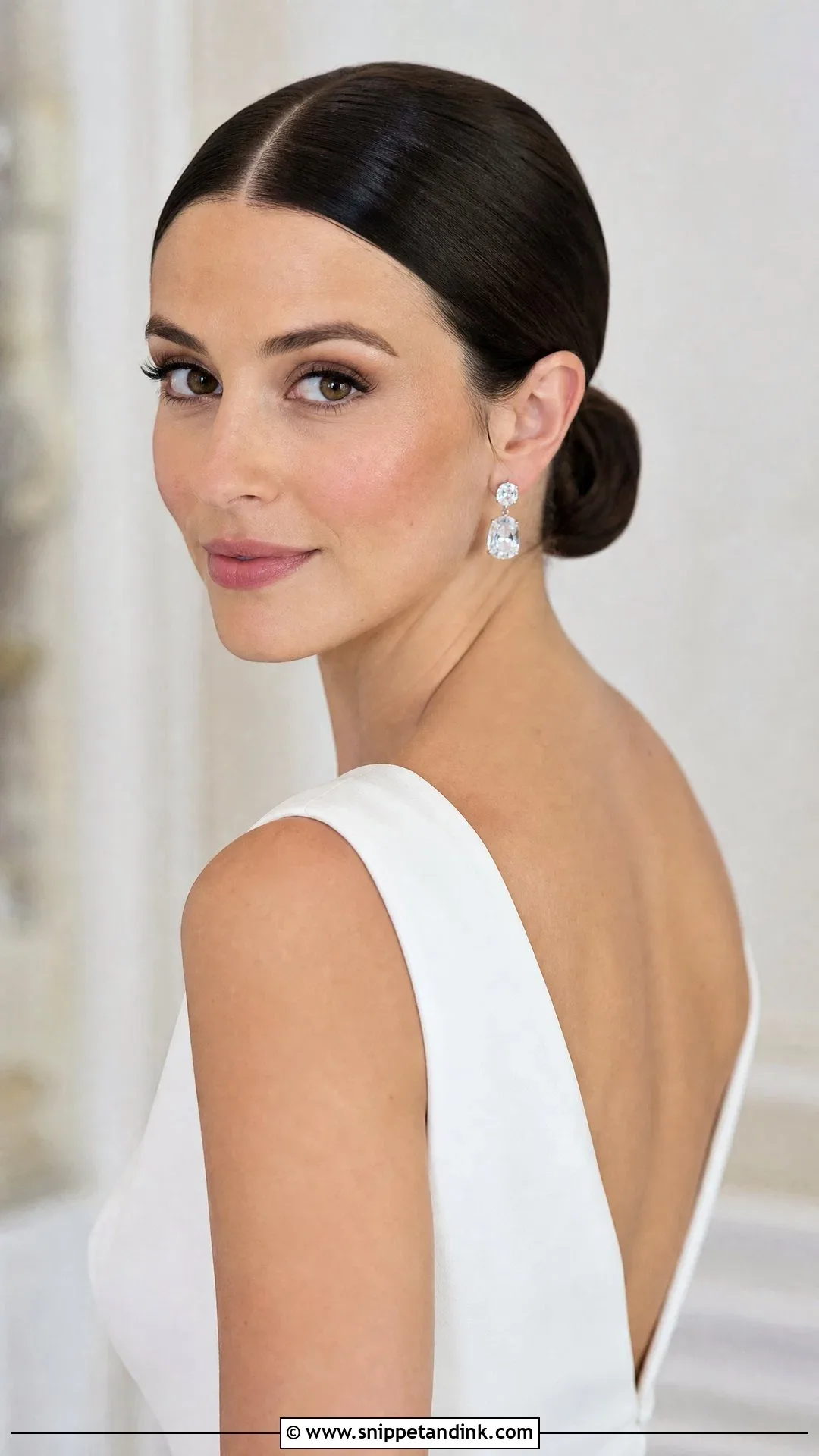
32. The Smooth Low Bun with a Centre Part
A smooth low bun with a clean centre part is the most understated style on this list, and sometimes understated is exactly right. It is symmetrical, calm and quietly elegant — the hairstyle equivalent of a perfectly tailored dress.
Best for: straight hair and oval or heart-shaped faces, and anyone wearing a modern, minimal dress. It is also a good choice if you want to wear a statement necklace or earrings, because the clean lines leave them fully visible.
How to style: part the hair in the centre while it is damp, brush it back smoothly, and gather it into a low bun at the nape. Smooth the top with a brush and a light mist of spray, and check the parting in the mirror — a crooked part is noticeable on a sleek style.
Quick verdict: choose this style if you want your wedding look to feel calm, confident and completely grown-up. It never tries too hard, and it never goes wrong.
What is the best hairstyle for a second wedding?
The best hairstyle is one that feels like you and suits your venue — a soft low chignon, a loose low bun, a half-up style with waves, or a polished bob are all excellent choices. Choose a style you have worn before and feel comfortable in, rather than trying something completely new on the day.
Can I wear a veil for a second wedding?
Yes, absolutely. There is no rule against a veil at a second wedding. A short blusher, a fingertip veil or a birdcage veil all suit a second celebration beautifully. If you would rather not wear one, a pearl comb, fresh flowers or a simple hair pin make a lovely alternative.
Should I wear my hair up or down for a second wedding?
Either can work. Wear it up if your hair is long, falls in your face, or slips easily — a low bun or chignon is the safest choice. Wear it down if it is short or medium and stays neat on its own, with a smooth blow-dry, soft waves or a tidy bob. The key is that it should not need adjusting during the ceremony.
What hairstyle suits a courthouse second wedding?
A sleek low ponytail, a polished bob, a low bun or a smooth blow-dry all suit a courthouse wedding perfectly. Keep it simple, polished and comfortable — you will be close to your guests and in close-up photographs, so a clean, neat style photographs best.
What is the best second wedding hairstyle for women over 50?
Soft, flattering styles work best — a low chignon, a textured bob, loose waves with face-framing pieces, or a soft low bun. Avoid very tight, scraped-back styles, which can look severe, and add a little volume at the crown and softness around the face.
Can I wear my hair down if it is short?
Yes — short hair is often the easiest to keep neat for a wedding. Smooth the crown, define your parting, add a little texture or volume, and make sure the cut looks freshly shaped. A polished pixie or a neat bob can be the smartest look in the room.
Should I have a hair trial before my second wedding?
Yes, a trial is the best investment you can make. Book it at least a month before the wedding, wear a top with a similar neckline to your dress, and bring your veil and hair accessories. Take photographs from every angle, including a close-up of your face.
Can I wear a tiara or a flower crown at a second wedding?
You can wear whatever makes you happy, but most second-time brides choose something softer — a pearl comb, a delicate hair vine, fresh flowers or a few pearl pins. A flower crown suits a garden or boho wedding, while a tiara suits a more formal celebration.
How do I keep my hairstyle lasting all day?
Start with clean, fully dry hair, build the style on pins rather than spray alone, and use a flexible-hold spray. Two crossed bobby pins hold far better than one, and a small clear elastic beats a loose fabric band. Carry two spare pins and a hair tie in your bag.
What hairstyles should I avoid for a second wedding?
Avoid styles that cover your face, need constant fixing, or feel like a costume — very tight updos, heavy wet-look gel, glitter spray, and brand-new drastic cuts or colours the day before. Also avoid anything that hides your face or makes you feel uncomfortable.
Conclusion
The best hairstyles for a second wedding are the ones that let you forget about your hair and focus on the person you are marrying. Whether you choose a soft low chignon, a romantic loose bun, a polished bob, a half-up style with waves or defined curls in a gentle updo, the goal is the same: elegant, grown-up hair that suits you, stays in place, and lets your guests see your face and your happiness.
Pick your style a month before, try it at a trial, and check it from the front, the side and the back. Pack two spare pins, wear a dress your hair agrees with, and then stop worrying about it. This wedding is yours — your choice, your style, your day. Walk down the aisle with your hair already sorted, and let the celebration be about you, the person you are today, and the life you are starting together.