Silver Hair, Beautifully Cut: 41 Hairstyles for Women Over 70
Seventy is the decade when hair finally stops being a chore and starts being a pleasure. There are no more rules to follow, no more trends to chase, no more colour appointments to keep up with unless you want them. What remains is the fun part: a cut with a beautiful shape, hair that is easy to look after, and silver that catches the light in a way no dye ever could. The best hairstyles for women over 70 are not about looking younger. They are about looking like yourself — comfortable, confident, and very much alive — with hair that suits your face, your texture, and the life you actually live.
This guide brings together 41 hairstyles for women over 70, from classic silver pixies and soft layered bobs to wash-and-go waves, elegant French twists, and updos made for weddings and family celebrations. Eight guides answer the questions that come up most at this age: how to embrace silver and grey, what to do about thinning hair, which cuts are truly wash-and-go, whether short or shoulder length suits you better, how perms and texture work now, which styles sit happily with glasses, what to wear to a special occasion, and what to ask your stylist. Every style comes with an honest note on upkeep, trim frequency, pros and cons, and who should skip it — so you can choose with confidence and enjoy the result.
Embracing Silver and Grey: Letting Your Colour Shine

Silver hair is not a consolation prize — it is one of the most striking colours a woman can wear, and at seventy it suits almost everyone. Natural grey comes in every shade, from bright white to soft pewter to a salt-and-pepper mix, and each one has its own beauty. A good cut makes the colour the star: layers that catch the light, a fringe that frames the eyes, ends that are healthy enough to shine. The women who look best with silver hair are not the ones who hide it — they are the ones who wear it with pride, keep it well conditioned, and choose a cut that shows it off.
Keeping silver beautiful takes very little effort, but it does take the right products. A purple or silver shampoo once a week keeps yellow tones away, and a deep conditioner once a fortnight keeps the hair soft and shiny, because grey hair can be coarser and drier than pigmented hair. If you are still growing out dye, ask your stylist for a blended cut — short layers, a soft fringe, or a gloss that eases the line between old colour and new silver. The transition takes patience, but the result is hair that is entirely yours, costs less to maintain, and looks wonderful in photographs. Silver is not giving up. It is arriving.
Thinning Hair at 70: Cuts and Tricks That Add Fullness
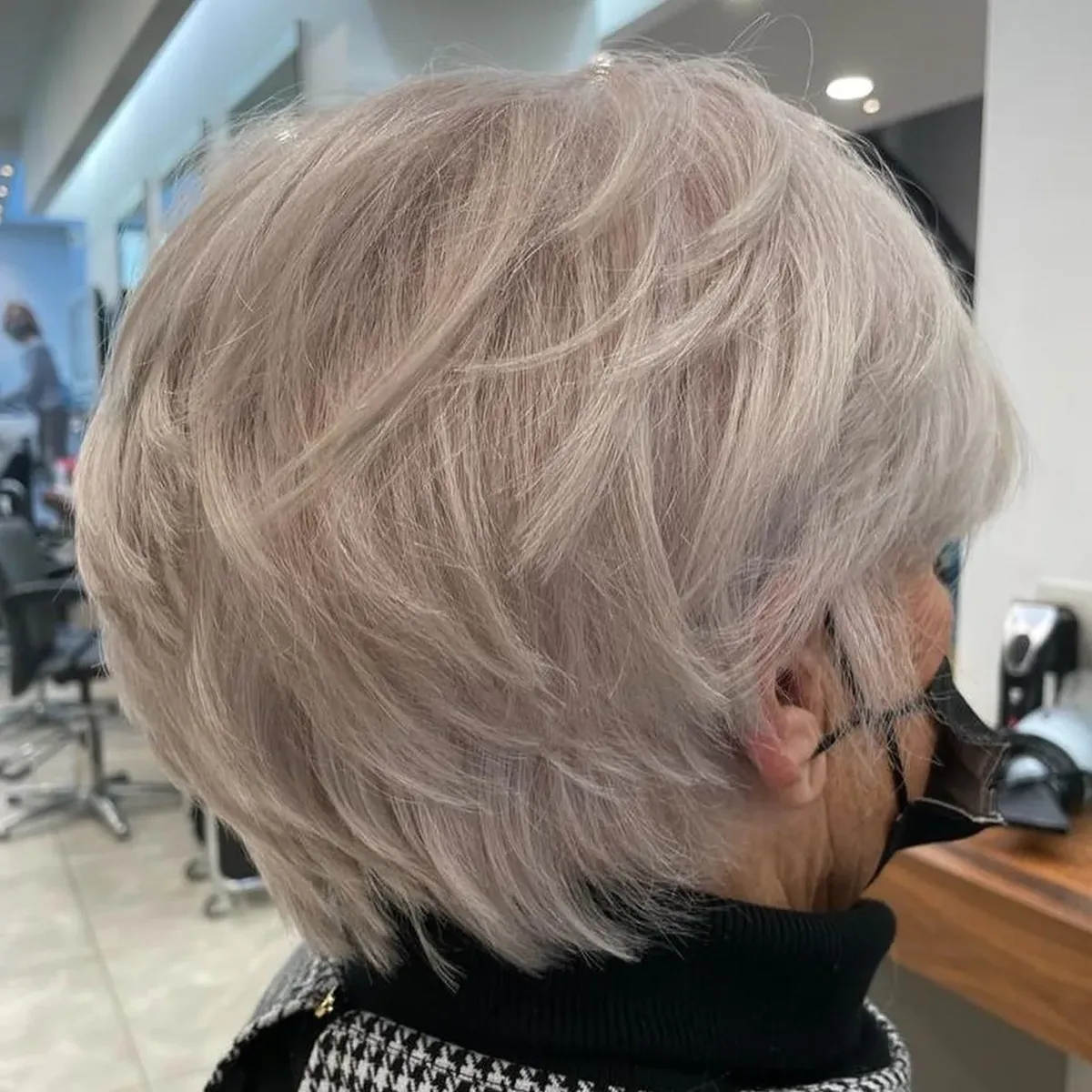
Thinning hair is one of the most common changes after seventy, and it is also one of the easiest to work around — the right cut can make fine hair look twice as full. The secret is shorter length and solid ends: a bob, a pixie, or a crop with blunt, point-cut ends stacks the hair up so it looks thick, while long hair with thin ends does the opposite and makes sparseness obvious. Layers help too, but only short, soft ones near the crown that create lift — long, wispy layers that thin out the ends are the enemy of fine hair. A side part, a little root lift, and a light volumising mousse finish the job.
There are a few daily habits that make a real difference. Wash with a volumising shampoo, condition only the ends, and avoid heavy oils and creams near the roots, which flatten fine hair. A round brush on the crown while blow-drying, or a few minutes with velcro rollers, gives lift that lasts all day. Dry shampoo between washes adds texture and grip. If thinning is sudden or patchy, it is worth mentioning to your doctor, because medication, thyroid changes, and vitamin deficiencies can all play a part — but for most women, the answer is simply a shorter, well-shaped cut and a lighter routine. Fullness at seventy is a styling choice, not a lost cause.
Wash-and-Go Cuts: Great Hair in Five Minutes
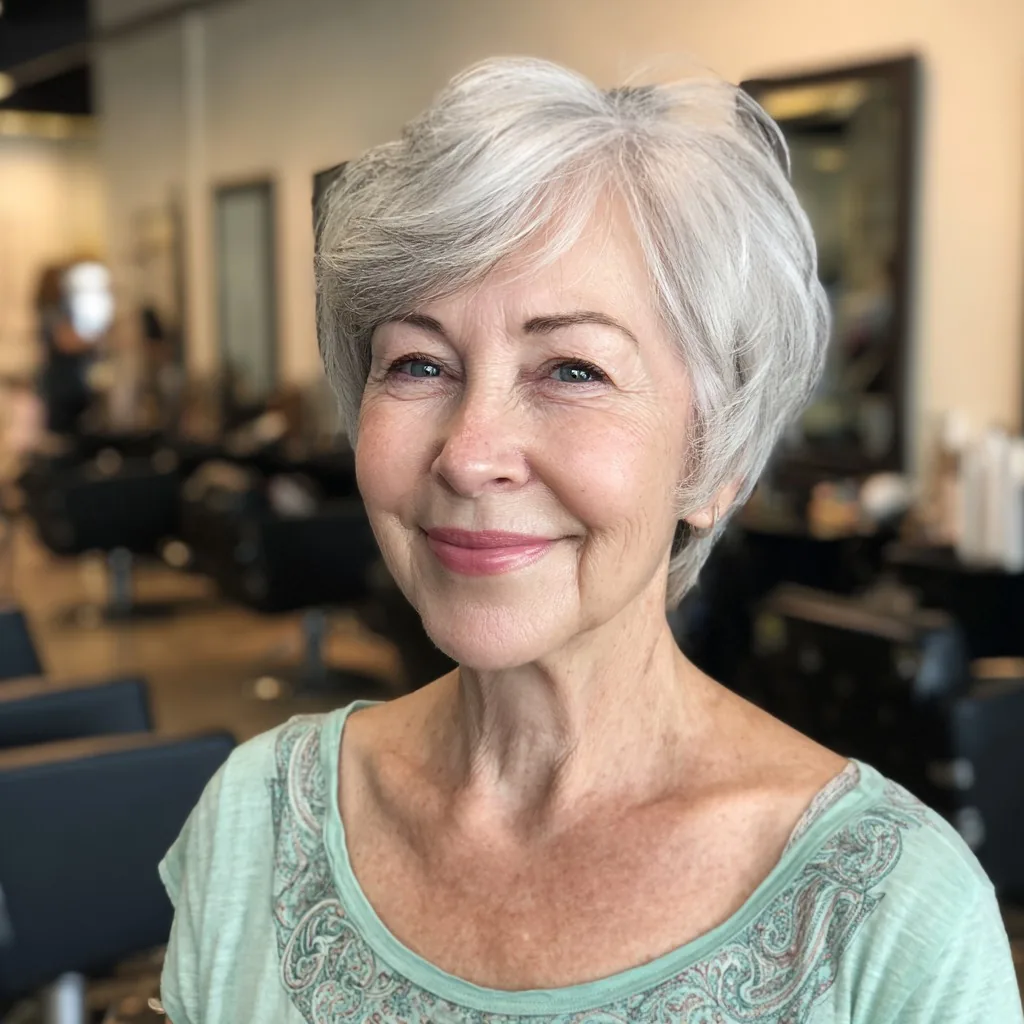
A wash-and-go cut is the greatest gift you can give yourself at seventy: hair that looks good with almost no effort, on the days when you have somewhere to be and the days when you do not. The best wash-and-go styles are short or chin-length, with the shape cut into the hair rather than created by styling — a textured pixie, a soft crop, a bob with built-in movement. Wash it, towel it dry, rub in a little cream or mousse, and let it air-dry. The cut does the work, and you get on with your morning. It is freedom in the form of a haircut.
Not every short cut is wash-and-go, so it is worth being specific with your stylist. Ask how the cut will look air-dried, not just blow-dried in the salon, and ask for layers that fall into place on their own rather than layers that need a round brush. Fine hair needs a light mousse for grip; wavy hair needs a curl cream to stop frizz; curly hair needs a leave-in conditioner. Keep a dry shampoo and a headband in the drawer for second-day hair, and keep trims regular — a wash-and-go cut only stays wash-and-go while its shape is fresh, so book every five to six weeks. Five minutes a day, no heat, no fuss, and hair that still turns heads.
Short or Shoulder Length at 70: How to Choose
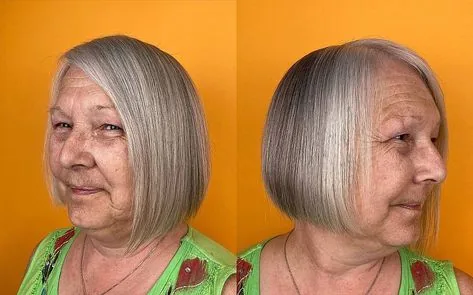
The short-versus-long question at seventy has no right answer — only a right answer for you, your hair, and your week. Short hair wins on ease: it dries in minutes, needs no heat, stays neat between trims, and shows off silver beautifully. It also lifts the face, because the eye is drawn up to the cheekbones and eyes rather than down to the ends. Shoulder-length hair wins on versatility: it can be tied back, pinned up, worn wavy or straight, and it suits women who like to change their style from day to day. Both can look wonderful. The choice is about how you live, not how old you are.
To decide, ask yourself three honest questions. First, how many minutes will you spend on your hair on a normal morning? If the answer is under five, go short. Second, do you like tying your hair back? If you reach for a clip or a band most days, keep enough length to tie — a lob or shoulder-length layers. Third, how is your hair’s thickness? Fine, thinning hair usually looks fuller short, while thick hair can carry length without looking straggly. Many women find the sweet spot is a chin-length or shoulder-length bob: short enough to be easy, long enough to tie back, and flattering on almost every face. Try the bob first — you can always go shorter, but growing it back takes months.
Perms and Texture: Soft Waves Without the Fuss
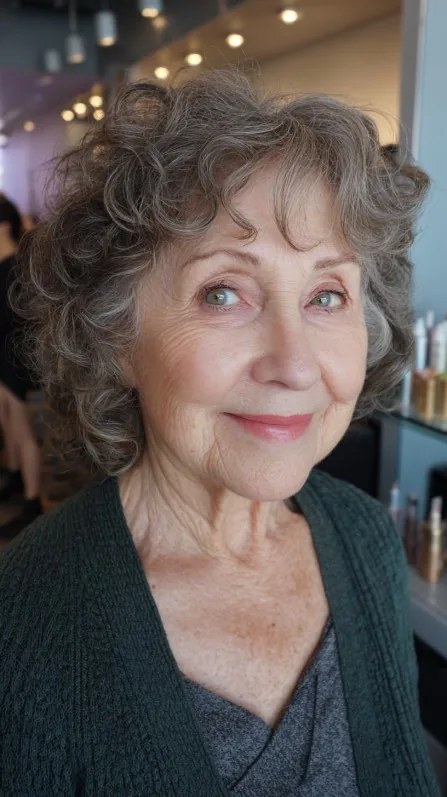
Perms have come a long way since the tight, frizzy curls of decades past, and a modern soft perm can be a wonderful option at seventy — especially for fine, straight hair that will not hold a wave on its own. Today’s perms use larger rollers and gentler solutions to create loose, soft body rather than tight curls, and they give thin hair volume and grip that lasts for months. A perm also makes styling easier: the hair holds its shape, dries with natural movement, and needs very little heat. For women who have always wanted waves but never had them, a perm is the closest thing to a permanent solution.
A perm is not right for everyone, and honesty matters here. It is a chemical treatment, so it can dry out already-dry grey hair, and it needs a stylist who still does perms regularly — ask how many they do a week, and ask to see photos of recent work. The upkeep is simple: a moisturising shampoo, a weekly mask, and no heat styling beyond a gentle rough-dry. Avoid a perm if your hair is very fine and fragile, or if you colour it heavily, because the combination can cause breakage. And if the word perm still brings back memories of a bad eighties curl, ask instead about a body wave or a root perm — the modern versions are softer, looser, and far more flattering than the ones you remember.
Glasses-Friendly Hairstyles: Frames and Fringes That Work Together
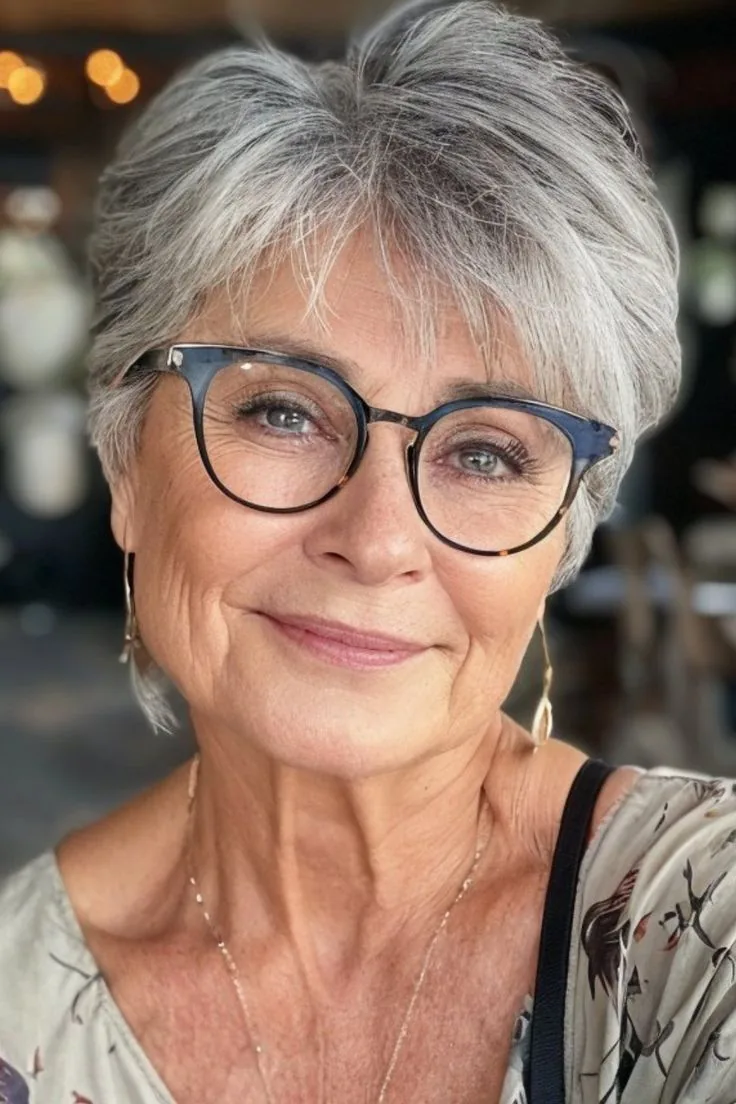
Glasses change the rules of a haircut, because the frames, the fringe, and the hair around the ears all occupy the same small space — and when they compete, the result is cluttered. The fix is simple: keep the hair around the temples light and short, choose a fringe that sits above or well below the frames rather than tangling with them, and let the glasses be the statement while the hair stays soft and simple. A pixie, a crop, or a bob with tucked-back sides all work beautifully with glasses, because they leave the frames visible and the face open. The hair and the glasses should complement each other, not fight over the same territory.
A few practical tips make the combination effortless. If your frames are bold and dark, a softer, lighter cut balances them; if your frames are rimless or light, a slightly stronger cut with more shape gives the face definition. Avoid long, heavy fringes that sit on top of the frames and push them down your nose, and avoid thick hair tucked behind the ears, which can push the arms of the glasses out. Bring your glasses to every haircut appointment and put them on before the stylist finishes — a good stylist will check the shape with your frames in place. The right pairing makes both the hair and the glasses look better, and it makes the whole face look considered rather than crowded.
Special-Occasion Styles for Weddings, Parties and Family Photos
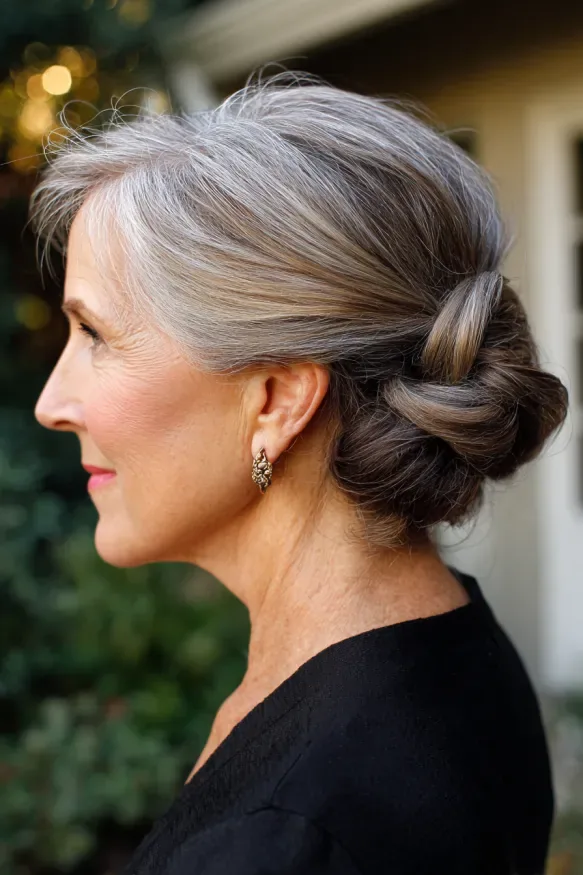
Special occasions at seventy — a grandchild’s wedding, a seventieth birthday, a family reunion, a milestone anniversary — deserve hair that feels a little more dressed up, and the good news is that it does not need to be complicated. A French twist, a low chignon, a romantic updo with soft curls, or a polished blowout with a deep side part all photograph beautifully and stay put through a whole day of hugging, dancing, and posing for photos. The secret is choosing a style that is a dressed-up version of your everyday cut, not a completely different hairstyle that feels like a costume. You should still look like you — just the most polished version.
Book a trial run if the occasion matters, especially for an updo, and bring the outfit or a photo of it so the stylist can match the style to the neckline and the jewellery. Soft is almost always better than severe: a few loose pieces around the face, a little volume at the crown, and pins that match your hair colour rather than standing out. If you are the mother or grandmother of the bride, a classic updo with a small comb or a fresh flower is timeless and photographs wonderfully. And remember the most important thing about occasion hair at seventy: it should be comfortable enough to forget about. The best compliment is not about the hair at all — it is that you look happy, relaxed, and entirely yourself.
What to Ask Your Stylist at 70
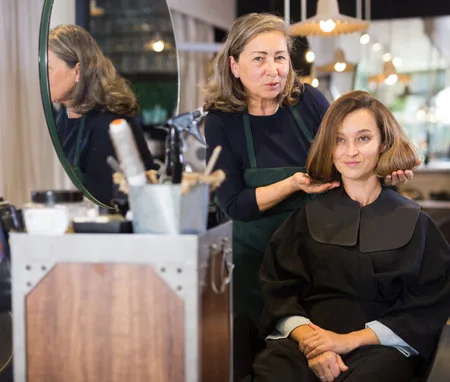
A good consultation matters more at seventy than at any other age, because your hair, your face, and your routine have all changed — and a stylist who knows those changes will cut for the woman in front of them, not for a photo of a twenty-year-old. Bring two or three photos of women with hair like yours: similar thickness, similar grey, similar face shape. Point at the specifics you like — where the layers start, how long the fringe is, how the back is shaped. Then describe your real routine honestly: how often you wash, whether you air-dry, how many minutes you will spend styling, and how often you can come back for trims.
Ask four questions before the scissors come out. First, how will this cut look air-dried, not just blow-dried in the salon? Second, how will it grow out — will it still look deliberate in eight weeks, or will it need a trim in four? Third, what will it cost in time and money to maintain, including colour or perms? Fourth, does my hair need anything different now — a gentler colour, a moisturising treatment, a different shampoo? A good stylist answers all four without hesitation and cuts a touch longer than planned, knowing hair springs up as it dries. Say what you do not want too: no heavy graduation, no layers so short they stick out, no fringe that needs daily heat. The consultation is the difference between a cut you love and a cut you grow out.
1. The Classic Silver Pixie
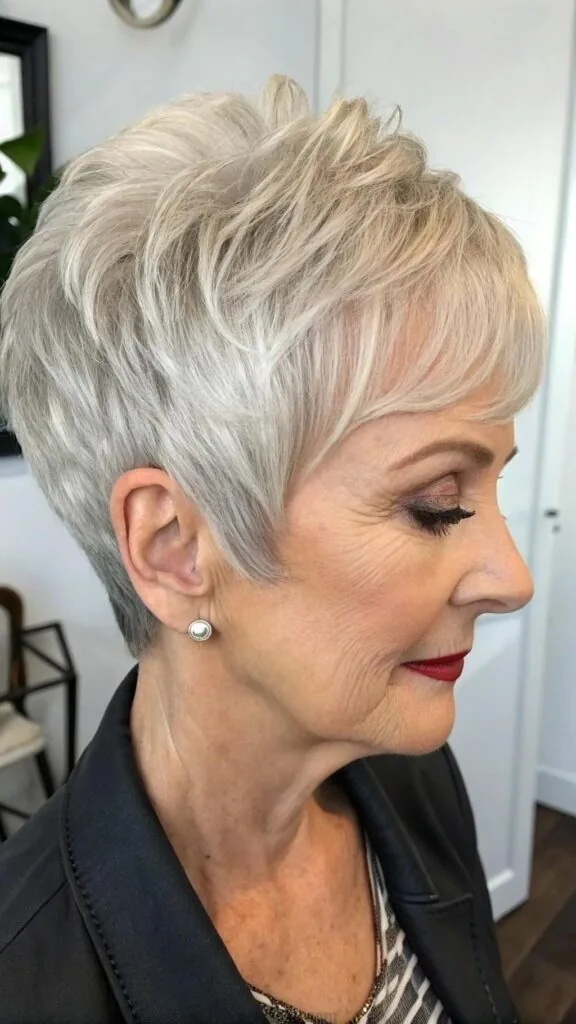
The classic silver pixie is the signature cut of this decade, and for good reason: it is chic, effortless, and it turns grey hair into a statement. Short at the back and sides with soft length on top, it opens up the face, shows off the cheekbones, and lets silver shine in a way longer hair never can. It flatters almost every face shape, suits glasses beautifully, and makes fine hair look thicker because the short ends stack up and hold their shape. It is the cut women choose when they want to feel polished with five minutes of effort — or none at all.
Upkeep is low, but it is regular: a trim every four to five weeks keeps the shape crisp, and a pea-sized amount of styling cream is usually all the styling it needs. Pros: dries in minutes, looks intentional even unstyled, costs little to maintain, and suits silver perfectly. Cons: it needs frequent trims to stay sharp, and it offers no bad-hair-day hiding place — you cannot tie it back. Who should skip it: women who love the feeling of longer hair, or anyone whose hair is very curly and hard to control at short length, because a pixie on tight curls can grow out into a shape that is hard to manage. For everyone else, it is the easiest excellent choice on this list.
2. The Soft Layered Bob
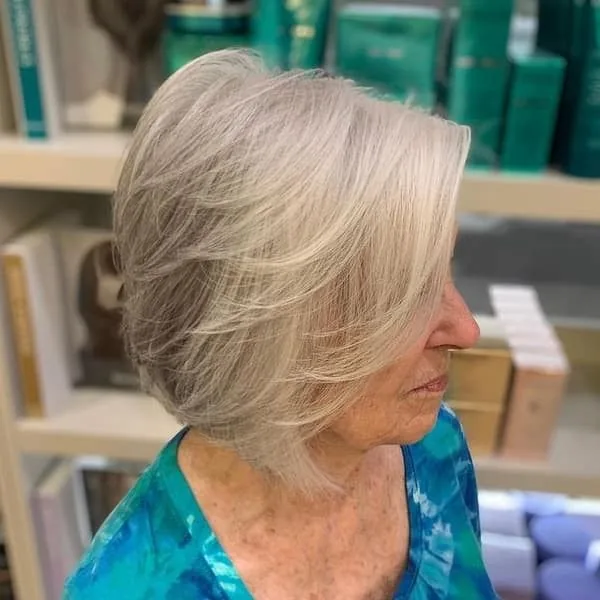
The soft layered bob is the most forgiving cut a woman over seventy can wear. It sits at or just below the chin, with gentle layers that give it movement and stop it looking like a helmet. It flatters round, square, and long faces alike, because the layers can be placed exactly where each face needs softness — at the cheekbones for a square jaw, below the chin for a round face, at the sides for a long face. It also suits silver hair wonderfully, because the layers catch the light and show off the natural variation in grey. It is elegant without being fussy, and it works for church, lunch, a wedding, or a quiet day at home.
Upkeep is low to medium: a trim every six to eight weeks, and about five minutes of styling — rough-dry with your fingers, smooth the front pieces, and go. Pros: suits almost everyone, grows out gracefully, can be tucked behind the ears or worn with a clip, and looks good air-dried. Cons: it needs a little styling to look its best, and very fine hair can look thin at the ends if the layers are cut too short. Who should skip it: women with very thick, coarse hair that puffs out at bob length — a longer cut or a graduated bob will control the volume better. For most women, this is the safest bob on the list.
3. The Chin-Length Silver Bob
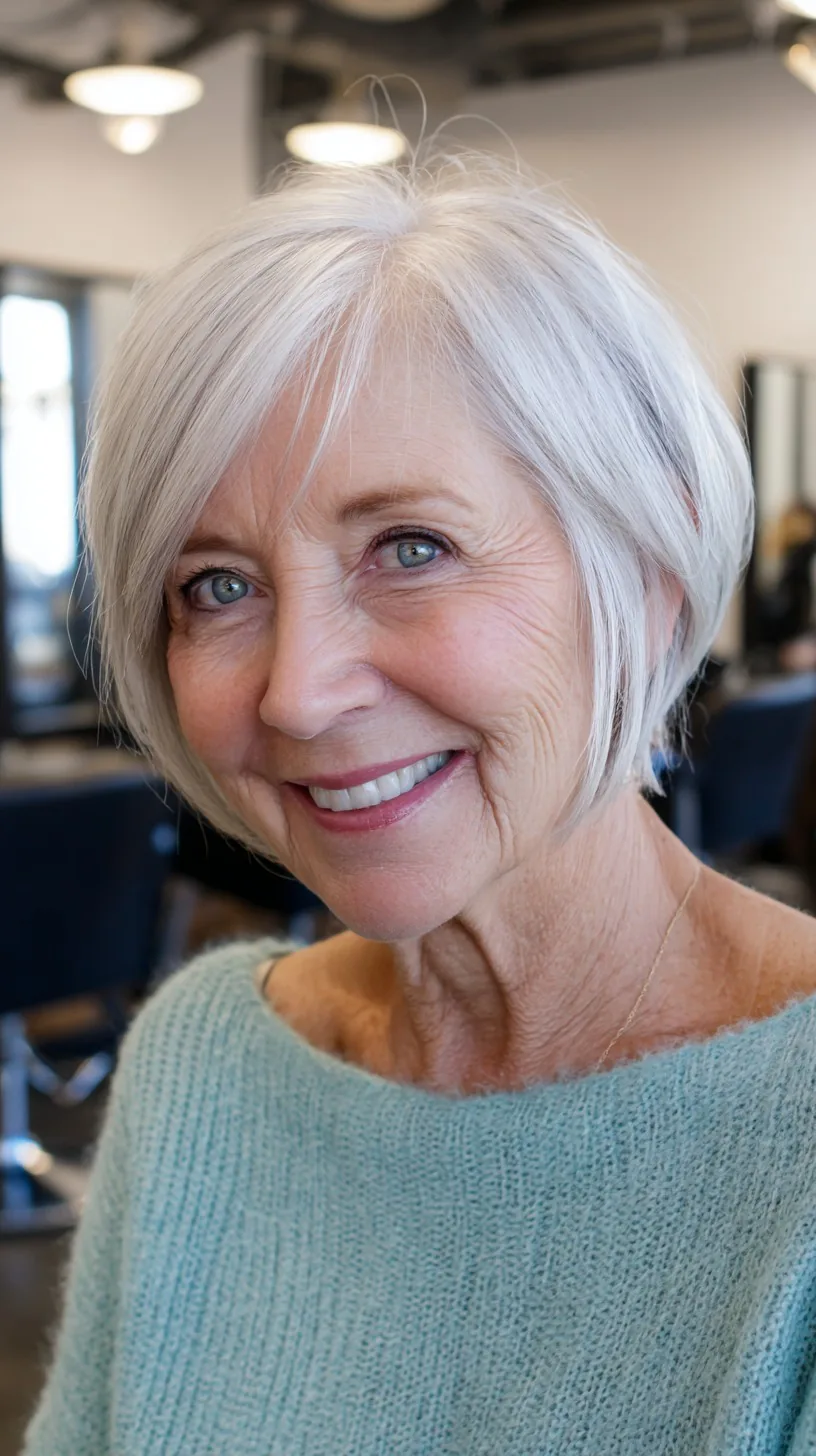
A chin-length silver bob is a classic for a reason: it is neat, it is flattering, and it frames the face like a picture frame. The length ends right at the chin, which draws the eye to the jawline and the smile, and the blunt or softly layered ends give fine hair a solid, full look. Silver hair at this length looks especially good, because the colour is concentrated in a neat, shining shape rather than spread thin over long hair. It is the cut that says you take care of yourself, without saying you spent hours on it.
Upkeep is low: a trim every six weeks, and a quick blow-dry or even a towel-dry with a little smoothing cream. Pros: very easy to style, suits glasses, looks polished with almost no effort, and makes thin hair look thicker. Cons: the length is fixed — it cannot be tied back on a bad day, and it needs regular trims or the ends start to flip out. Who should skip it: women with a very round face who dislike width at the cheeks, because a chin-length bob can add width exactly there — a slightly longer lob is a better choice. Everyone else will find it one of the most reliable cuts they have ever worn.
4. The Feathered Short Cut
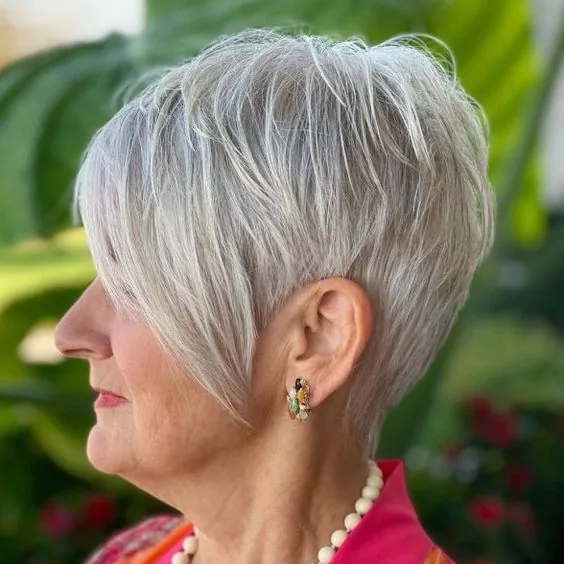
The feathered short cut is softness itself: short layers that are feathered at the ends so the hair falls gently around the face instead of sitting in a solid block. It flatters women over seventy because it is light and airy — it never looks heavy or severe, and it moves when you move, which keeps the whole look fresh and lively. It works beautifully on fine hair, because the feathering removes weight without removing length, and it works on silver hair because the wispy ends catch the light and show off the colour’s natural variation. It is the cut for women who want short hair that still feels feminine.
Upkeep is low to medium: a trim every five to six weeks, and a quick rough-dry with a little texturising spray or cream. Pros: very light and comfortable, suits fine hair, grows out softly, and looks good with glasses. Cons: it can look untidy if the layers grow out too long, and very thick hair can puff up unless the stylist thins it properly. Who should skip it: women who prefer a sharp, graphic shape — the feathered cut is deliberately soft, and if you like a strong line, a blunt bob will suit you better. For softness and ease, though, few cuts beat it.
5. The Wispy-Bangs Pixie
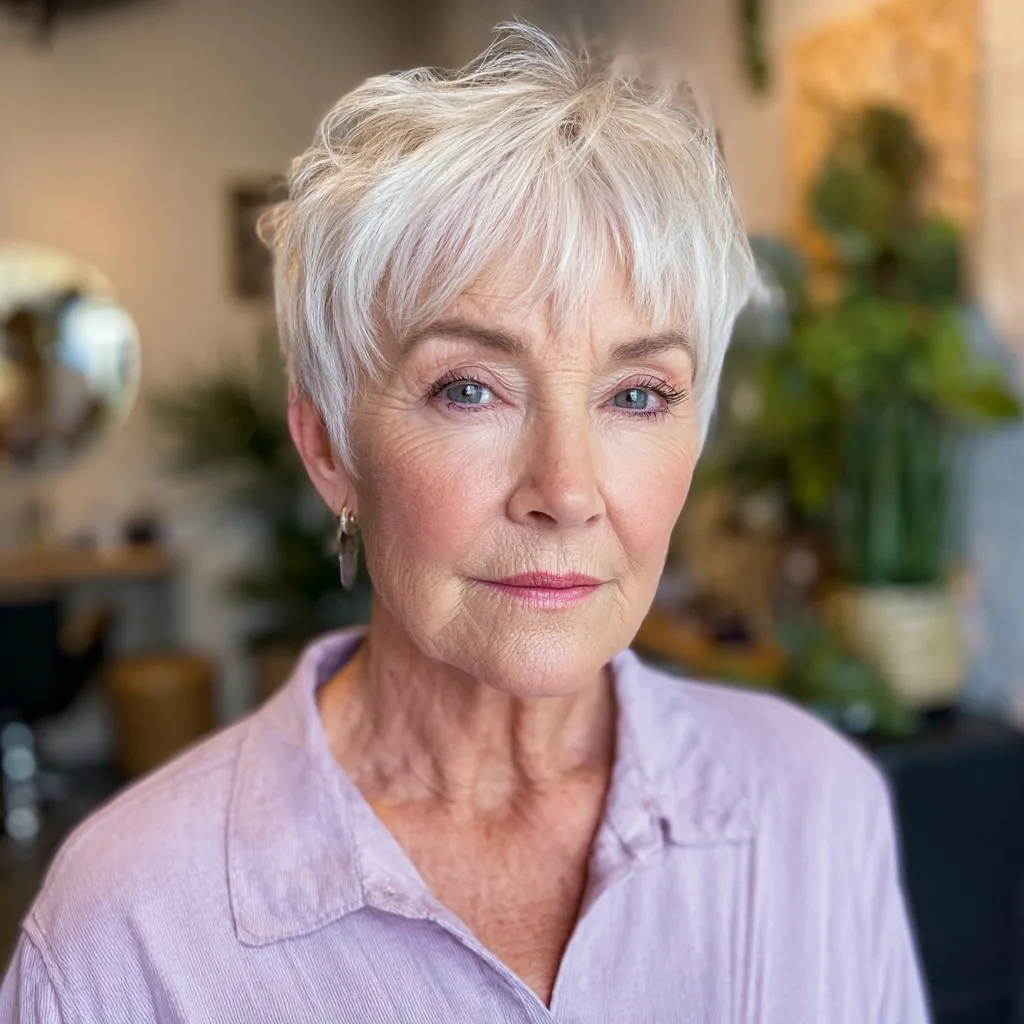
A pixie with wispy bangs is the softer sister of the classic pixie — same easy length, but with a light, feathery fringe that softens the forehead and frames the eyes. It flatters women over seventy because the fringe draws attention to the eyes and away from any lines on the forehead, and because it keeps the cut feeling feminine rather than severe. It suits silver hair especially well: the wispy pieces catch the light and show off the colour’s shine, and the whole cut looks fresh and modern rather than dated. It is a lovely choice for women who want short hair with a little softness in front.
Upkeep is low: a trim every four to six weeks, with the fringe tidied in between if it grows into the eyes — many salons do fringe trims free. Pros: dries in minutes, softens the forehead, suits glasses, and looks good with almost no styling. Cons: the fringe needs regular attention, and on very humid days wispy bangs can go limp or curl in unexpected directions. Who should skip it: women with a strong cowlick at the hairline, because a wispy fringe will fight the cowlick every morning — a side-swept fringe or a pixie without bangs is an easier choice. For everyone else, it is a gentle, flattering short cut.
6. The Curly Silver Bob
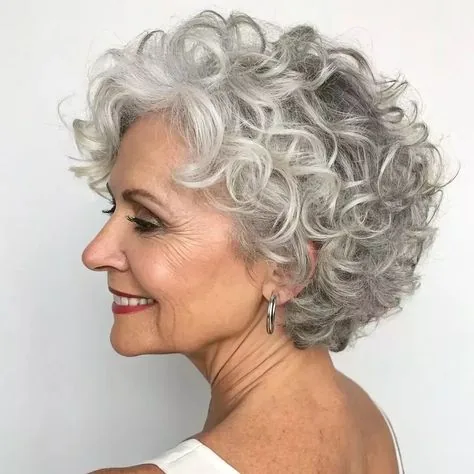
If your hair has natural curl, a curly silver bob is one of the most joyful cuts you can wear at seventy. The curls give the hair natural volume and movement, the bob length keeps them under control, and silver curls catch the light in a way that looks almost luminous. It flatters because it works with what your hair already does — instead of fighting the curl with straighteners, the cut lets it be itself. A good curly bob is shaped so the curls fall in a rounded, balanced silhouette, with no triangle effect and no heavy bottom.
Upkeep is low to medium: a trim every seven to eight weeks, and a routine built on moisture — a leave-in conditioner, a curl cream, and air-drying or diffusing on low heat. Pros: natural volume, no heat styling needed, looks wonderful in silver, and grows out gracefully. Cons: it needs the right products or it can frizz, and a bad cut on curly hair is harder to fix than on straight hair — find a stylist who cuts curls dry. Who should skip it: women whose curl pattern is very tight and who dislike volume, because a bob on tight curls can grow wide rather than long. For natural curls, though, this cut is a celebration.
7. Shoulder-Length Layers with Movement
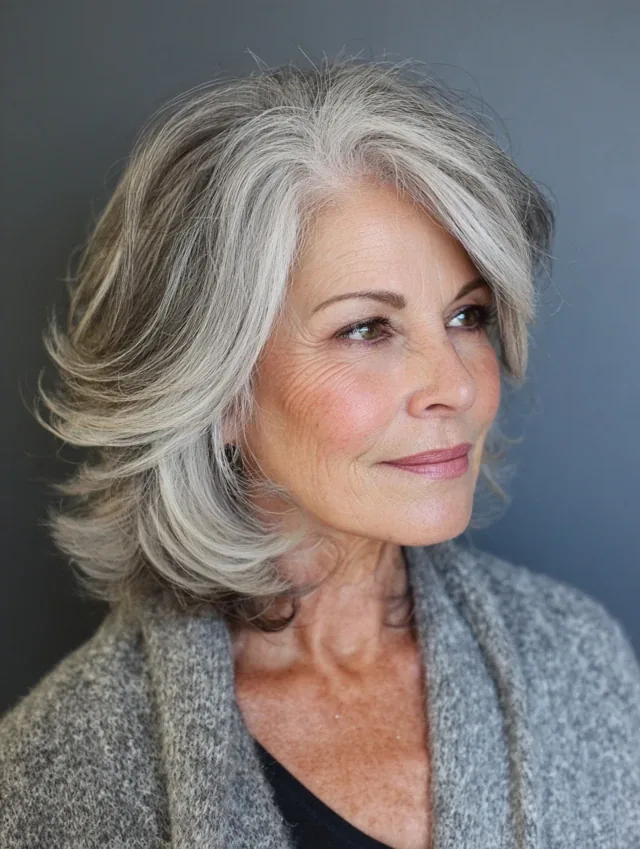
Shoulder-length layers are the answer for women over seventy who love their length and are not ready to give it up — and there is no reason they should. Layers that start at the cheekbone and fall softly to the shoulders give the hair movement and shape, so it never hangs flat or looks heavy. It flatters because it frames the face, softens the jawline, and can be worn straight, wavy, or tied back in a low ponytail. Silver hair at this length looks elegant and full, especially with a gloss or a few lowlights to add depth. It is the cut for women who want options.
Upkeep is medium: a trim every eight weeks to keep the layers fresh, and ten minutes of styling if you want it smooth — or five minutes with a little wave cream if you let it air-dry. Pros: versatile, can be tied back, suits most faces, and looks wonderful with silver. Cons: it is the most styling-dependent length on this list, and thin ends will show if trims are skipped. Who should skip it: women with very fine, thinning hair, because long layers can make the ends look sparse — a chin-length bob will look fuller. For thick or medium hair, shoulder-length layers are a beautiful, flexible choice.
8. The Silver Lob
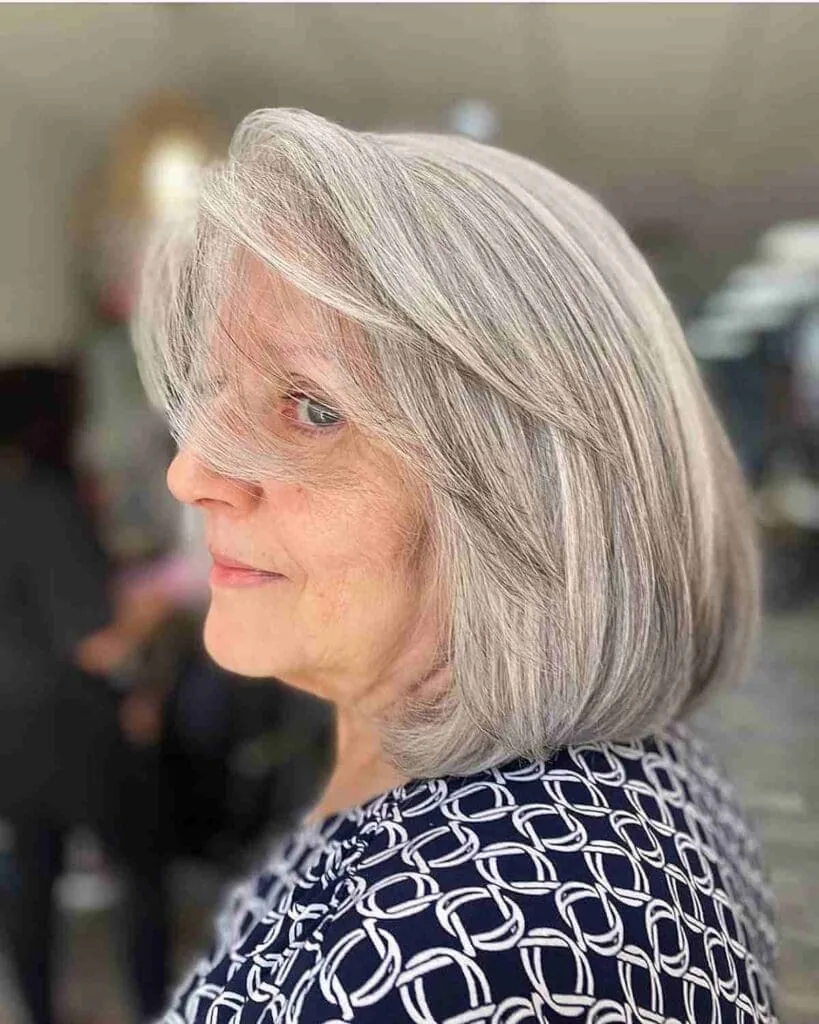
The silver lob — a long bob that ends at the collarbone — is the perfect middle ground for women over seventy: shorter than shoulder length, so it is easy, but long enough to tie back on a bad hair day. It flatters because the collarbone length elongates the neck and frames the face without adding width, and the blunt or softly layered ends make fine hair look full and healthy. Silver at lob length looks modern and intentional, especially with a deep side part or a soft wave through the ends. It is the cut that works for almost everyone, which is why stylists recommend it so often.
Upkeep is low to medium: a trim every seven to eight weeks, and about five minutes of styling — it looks good air-dried with a little cream, or smoothed with a round brush for a more polished finish. Pros: ties back, suits most faces, grows out well, and looks great with glasses. Cons: it needs regular trims or the ends start to flip, and very thick hair can look heavy unless the stylist removes some weight underneath. Who should skip it: women who want truly wash-and-go hair with no styling at all — a shorter crop is more forgiving. For a balance of ease and versatility, the lob is hard to beat.
9. The Textured Crop
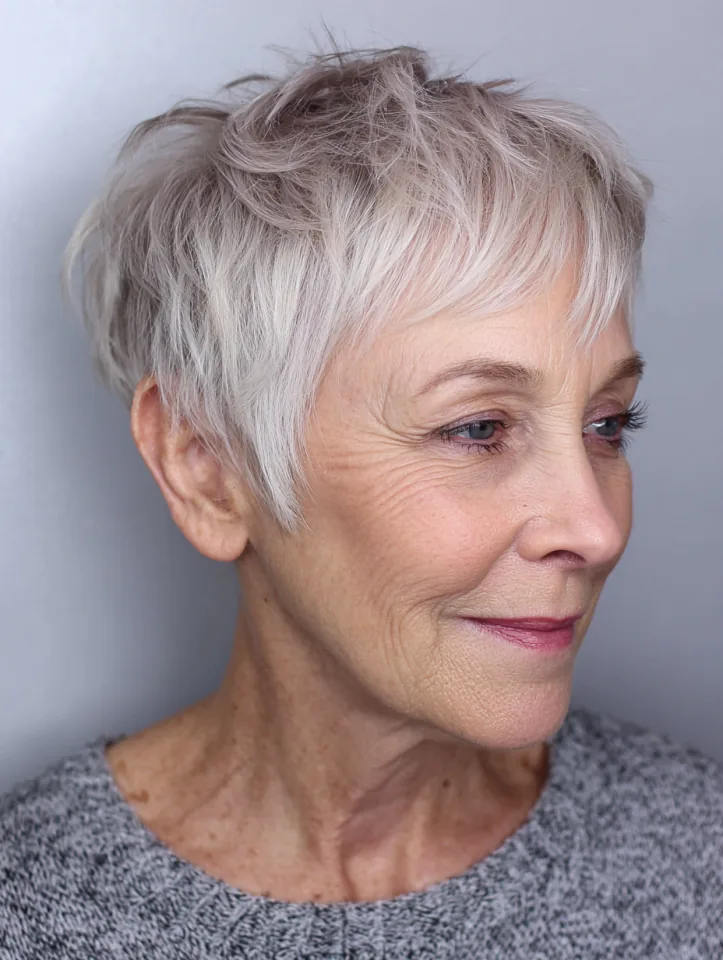
The textured crop is a short cut with attitude: choppy, piecey layers on top, short at the sides, and a finish that looks deliberately tousled rather than neat. It flatters women over seventy because the texture adds volume exactly where fine hair needs it — at the crown — and because it reads modern and confident rather than mumsy. Silver hair suits the crop beautifully, because the piecey ends show off the colour’s variation and shine. It is the cut for women who like their hair to look a little bit undone, in the best way.
Upkeep is low: a trim every five to six weeks, and a fingertip of texturising paste or wax rubbed through the top layers each morning — thirty seconds, no tools. Pros: very easy, adds volume to fine hair, looks modern, and suits glasses. Cons: it needs the paste to look intentional, or it can look messy rather than textured, and it offers no tying-back option. Who should skip it: women who prefer a smooth, polished finish, because the crop is deliberately rough around the edges — a classic pixie or a sleek bob will suit them better. For a low-effort cut with personality, the textured crop is a winner.
10. The Side-Swept Bangs Bob
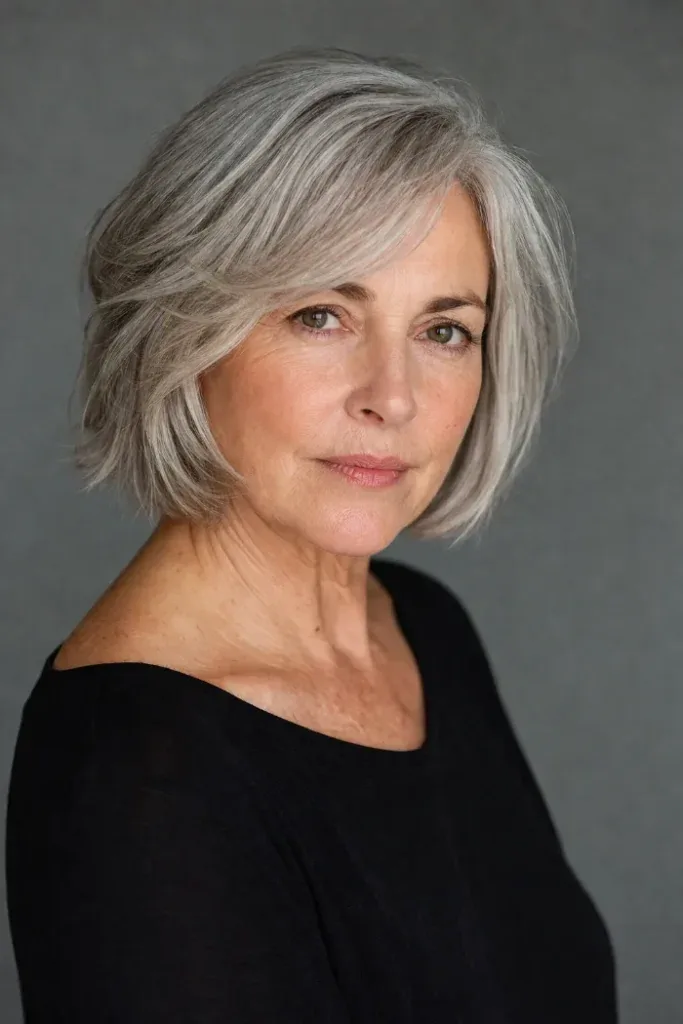
A bob with side-swept bangs is one of the most flattering combinations for women over seventy, because the diagonal line of the fringe does two jobs at once: it softens the forehead and it creates the illusion of lift. The fringe sweeps across the brow, drawing the eye up and across the face, while the bob itself frames the jawline. It suits silver hair well, because the sweeping fringe shows off the colour’s shine, and it suits glasses too, because the fringe sits above the frames rather than tangling with them. It is elegant, easy, and quietly glamorous.
Upkeep is low to medium: a trim every six weeks, with the fringe tidied every four weeks if it grows into the eyes. Pros: flatters almost every face shape, softens the forehead, works with glasses, and grows out gracefully — a side-swept fringe becomes face-framing layers as it grows. Cons: the fringe needs a quick blow-dry in the right direction each morning, or it can fall flat. Who should skip it: women with a very strong natural part on the opposite side, because the fringe will fight the part — ask your stylist to work with your natural parting instead. For most women, this is a lovely, forgiving bob.
11. The Elegant French Twist
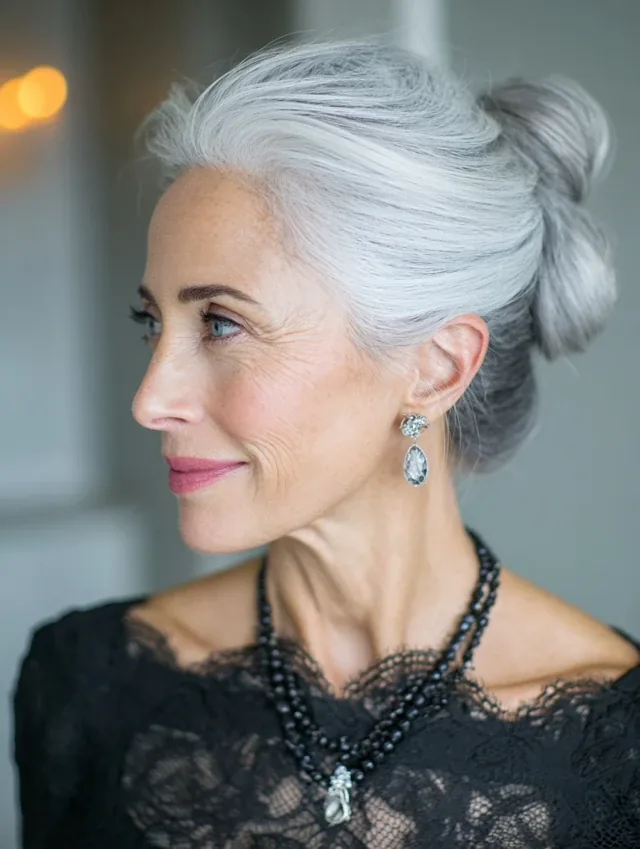
The French twist is the most elegant updo a woman over seventy can wear, and it has never gone out of style for a reason. The hair is swept up and twisted into a vertical roll at the back of the head, pinned in place, and finished with a few soft pieces around the face. It flatters because it lifts the whole face, elongates the neck, and looks deliberate and polished — the kind of style that suits a wedding, a formal dinner, or a family portrait. Silver hair in a French twist looks especially beautiful, because the smooth, shining roll shows off the colour like a piece of jewellery.
Upkeep is low on the day — it is a style, not a cut — but it does need shoulder-length hair or a little help from a hairpiece, and it takes practice or a stylist to get right. Pros: timeless, photographs beautifully, stays put all day, and suits every face shape. Cons: it needs length and pins, it can feel tight if pinned too firmly, and it is not a do-it-yourself style for most women. Who should skip it: women with very short hair, who cannot gather enough length — a low chignon or a romantic updo with a hairpiece is a better choice. For a special occasion, the French twist is unmatched.
12. The Low Silver Chignon
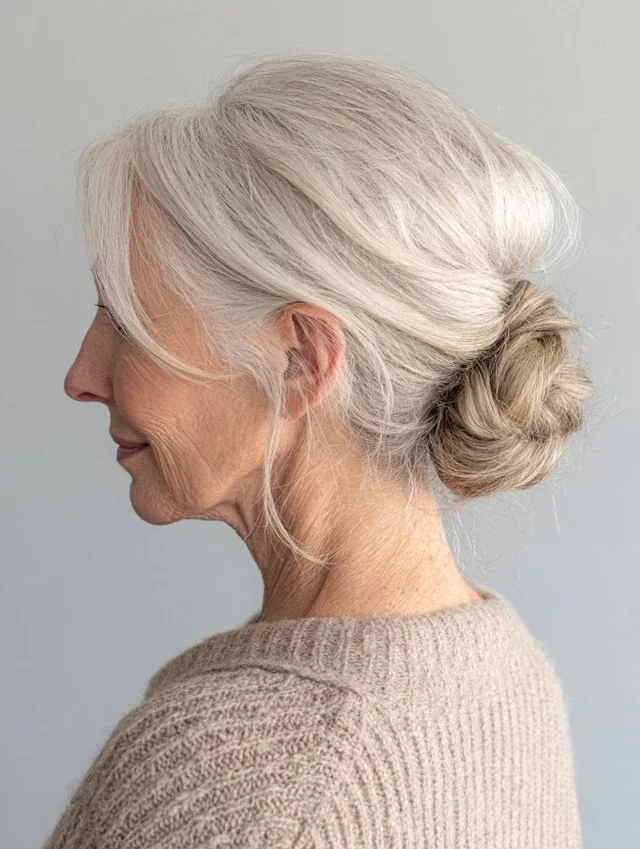
The low chignon is the quiet classic of this list: a neat bun sitting at the nape of the neck, soft, low, and endlessly elegant. It flatters women over seventy because it is gentle — nothing pulled tight, nothing severe — and because it frames the face with soft pieces while keeping the hair completely out of the way. Silver hair in a chignon looks like polished metal, smooth and shining, and the style suits everything from a wedding to a Sunday lunch. It is the hairstyle equivalent of a well-cut jacket: simple, correct, and always appropriate.
Upkeep is low: it is a style you can do yourself in two minutes with a few pins and a hair tie, and it needs only shoulder-length hair to work. Pros: easy to do, comfortable all day, suits every face, and looks wonderful with earrings and a necklace. Cons: it can look severe if pulled too tight, and it needs enough length to form a bun — very short hair cannot do it. Who should skip it: women who dislike the feeling of hair pinned up, or who have very fine hair that slips out of pins — a claw-clip updo is a looser, easier alternative. For a graceful everyday or occasion style, the chignon is a keeper.
13. Soft Perm Curls
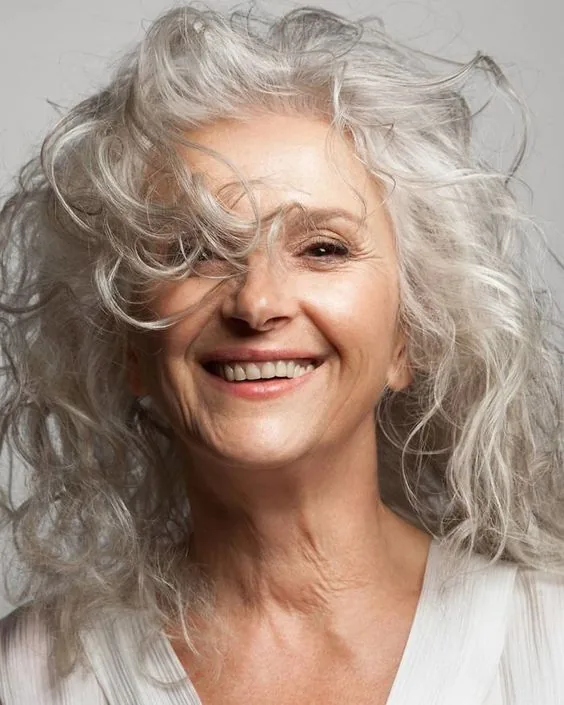
Soft perm curls are a gift for women over seventy with fine, straight hair that has never held a wave. A modern perm uses large rollers to create loose, soft curls rather than tight ringlets, and the result is hair with body, bounce, and movement that lasts for months. It flatters because curls add volume where fine hair needs it most, soften the face, and make silver hair look full and lively. It is also wonderfully low-effort: wash, scrunch in a little curl cream, and let it dry. The perm does the styling for you.
Upkeep is low to medium: a perm lasts three to four months, and the hair needs a moisturising shampoo and a weekly mask to stay soft. Pros: lasting volume, very little daily styling, suits fine hair, and looks lovely in silver. Cons: it is a chemical treatment that can dry out grey hair, and a bad perm is hard to undo — choose a stylist who does perms regularly and ask to see recent photos. Who should skip it: women with very fragile or heavily coloured hair, because the combination of perm and colour can cause breakage. For healthy, fine hair, a soft perm is one of the easiest ways to have good hair every day.
14. Wash-and-Go Waves
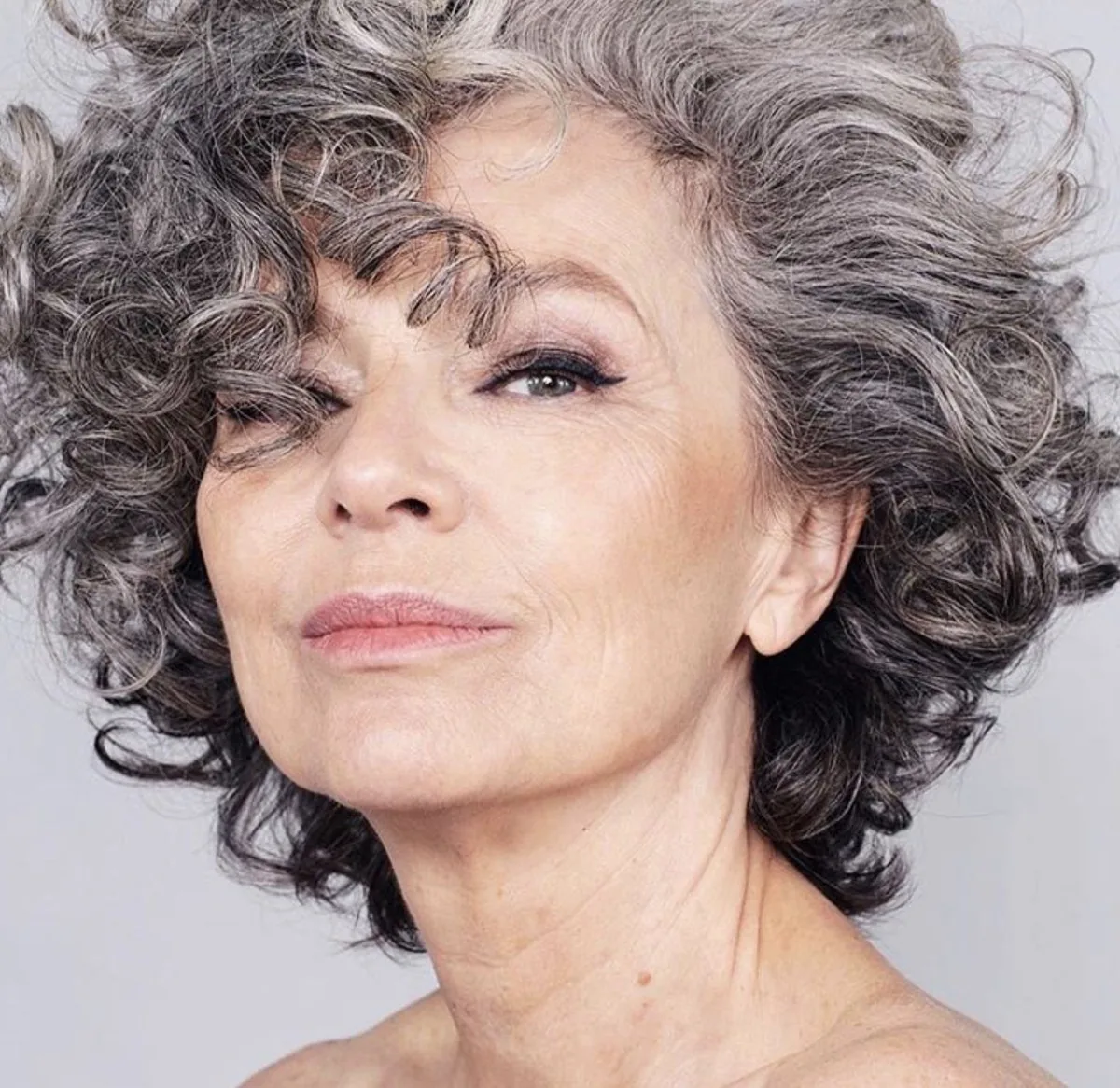
Wash-and-go waves are the simplest beautiful hairstyle on this list: a chin-length or shoulder-length cut with layers that encourage your hair’s natural wave, worn exactly as it dries. It flatters women over seventy because waves add softness and movement without any heat, and because the style looks relaxed and natural — like hair that happens to look good, rather than hair that has been worked on. Silver waves catch the light beautifully, and the whole look takes about two minutes: wash, scrunch in a little cream, and walk out the door.
Upkeep is low: a trim every seven to eight weeks, and no tools at all on most days. Pros: no heat, no fuss, suits natural wave, and grows out gracefully. Cons: it only works if your hair has some natural wave — very straight hair will fall flat, and very curly hair will need more control. Who should skip it: women with pin-straight hair who dislike using products, because wash-and-go waves need a wave to work with — a soft perm or a textured bob is a better route. For women with a natural wave, this is the easiest good hair of their life.
15. The Short Silver Shag
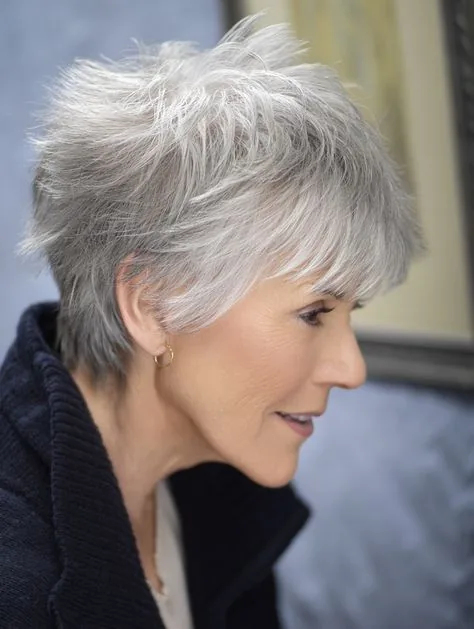
The short silver shag is a layered, choppy cut with a fringe and lots of texture — the rock-and-roll cousin of the classic bob, softened for seventy. It flatters because the layers create volume at the crown, the fringe frames the eyes, and the choppy ends keep the whole look light and modern rather than neat and dated. Silver hair suits the shag perfectly: the layers show off every shade of grey, from white to pewter, and the texture makes the hair look thick and full. It is a cut with personality, for women who like their hair to have a bit of edge.
Upkeep is low to medium: a trim every six weeks, and a fingertip of texturising cream scrunched through the layers each morning. Pros: adds volume, looks modern, suits silver, and is very forgiving as it grows out. Cons: it needs the cream to look intentional, and very thick hair can puff up unless the stylist thins it underneath. Who should skip it: women who prefer a smooth, polished finish — the shag is deliberately tousled, and a sleek bob or a classic pixie will suit them better. For a fun, low-effort cut with real character, the shag is hard to beat.
16. The Asymmetrical Bob
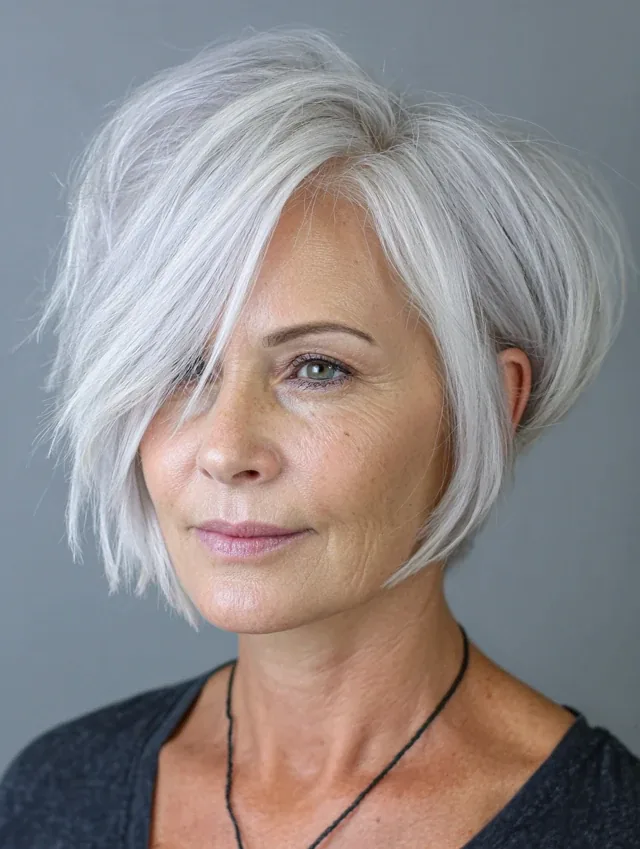
An asymmetrical bob — shorter on one side, longer on the other — is the most fashion-forward cut on this list, and it works beautifully at seventy for women who like a little drama. It flatters because the diagonal line draws the eye across the face, creates the illusion of length on the longer side, and gives the whole cut a modern, intentional shape. Silver hair in an asymmetrical bob looks striking, because the clean lines show off the colour’s shine. It is the cut for women who are often told they look younger than they are — and who enjoy it.
Upkeep is medium: a trim every five to six weeks to keep the asymmetry sharp, and a quick smooth with a flat iron or a round brush on the longer side. Pros: modern, flattering, suits silver, and photographs beautifully. Cons: it needs regular trims to keep its shape, and the asymmetry can look like a mistake if it grows out too long. Who should skip it: women who want a cut they can forget about for two months, because the asymmetry needs maintenance — a classic bob is a lower-effort choice. For a confident, contemporary look, the asymmetrical bob is a delight.
17. The Graduated Bob
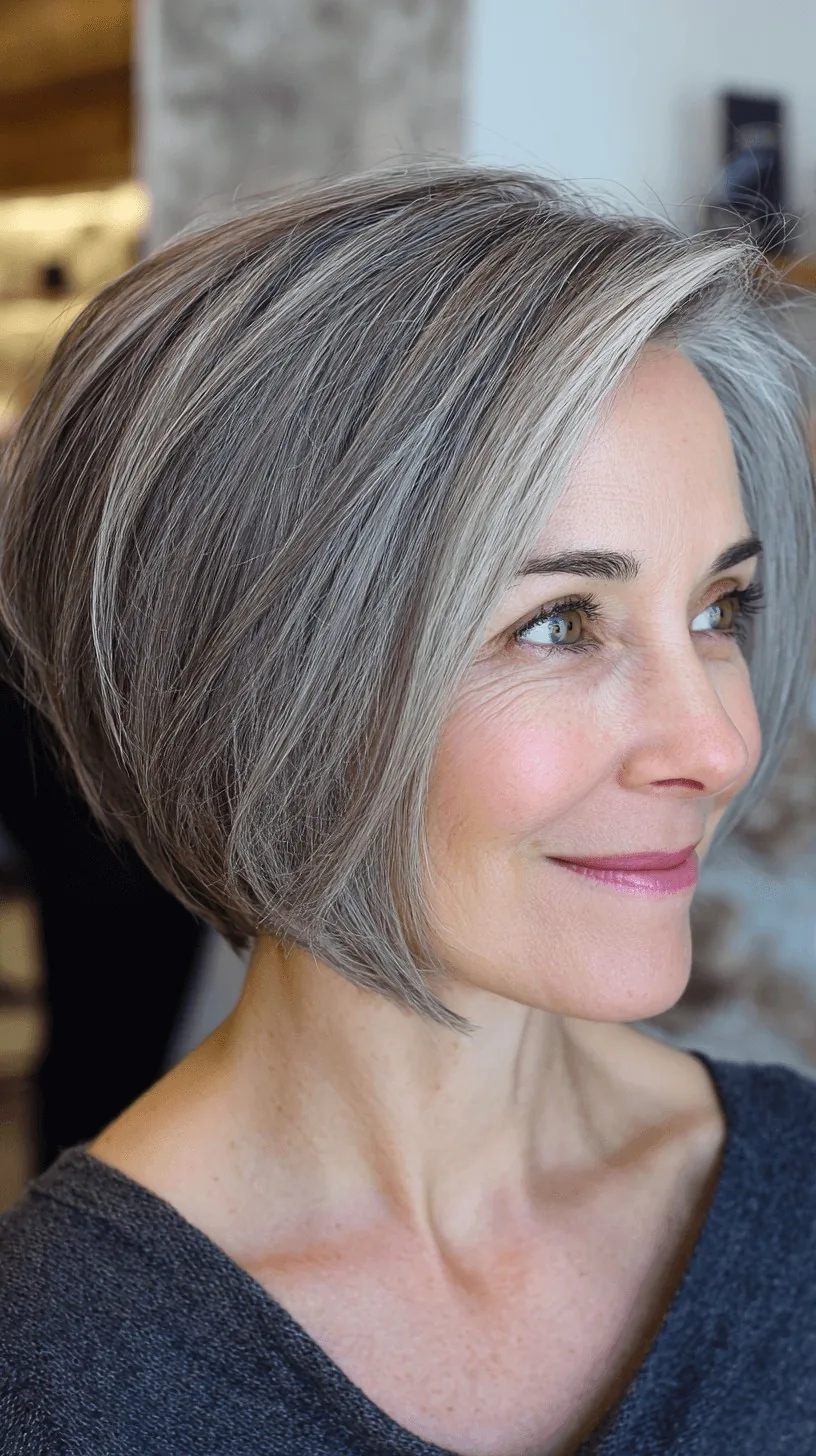
The graduated bob — shorter at the back, longer at the front, with stacked layers that build volume — is a classic salon cut that suits women over seventy particularly well. It flatters because the stacked back creates fullness and lift where fine hair needs it most, while the longer front pieces frame the face and soften the jawline. Silver hair in a graduated bob looks polished and expensive, because the shape is so clean and the colour so bright. It is a cut that looks like it was done by a professional, because it was — and it shows.
Upkeep is medium: a trim every five to six weeks to keep the graduation crisp, and a quick blow-dry with a round brush at the back. Pros: adds volume at the crown, frames the face, suits fine hair, and looks very polished. Cons: it needs styling to look its best, and it can look dated if the graduation is too severe — ask for a soft graduation, not a sharp stack. Who should skip it: women who want a truly wash-and-go cut, because the graduated bob needs a little blow-drying to hold its shape. For volume and polish in one cut, it is a wonderful choice.
18. The Layered Pixie-Bob
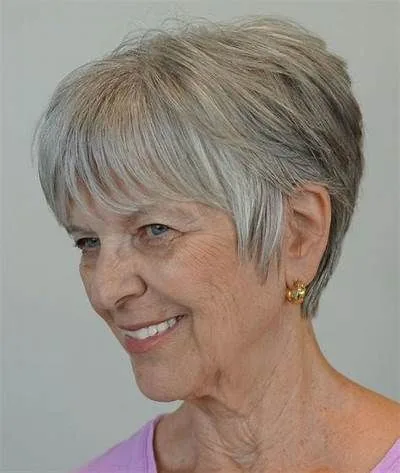
The pixie-bob — sometimes called a bixie — is the best of both worlds: the ease of a pixie with the softness of a bob. It is longer than a pixie, with length at the nape and around the ears, but shorter than a bob, with layers that give it shape and movement. It flatters women over seventy because it is light and easy, yet it still frames the face and can be tucked behind the ears or worn with a clip. Silver hair suits it beautifully, because the layers show off the colour’s depth and shine. It is the cut for women who cannot decide between short and shorter — and do not have to.
Upkeep is low to medium: a trim every six weeks, and a quick rough-dry with a little cream. Pros: easy, versatile, suits most faces, and grows out gracefully. Cons: it can look shapeless if the layers grow out too long, and it needs a stylist who understands the balance between pixie and bob. Who should skip it: women who want a very short, sharp pixie or a proper bob — the bixie is deliberately in between, and if you know exactly which one you want, get that one. For everyone torn between the two, the bixie is the perfect compromise.
19. The Soft Spiky Pixie
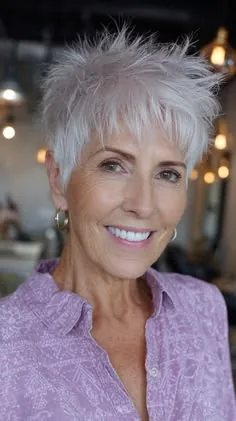
A soft spiky pixie is a short cut with short, piecey layers on top that are styled upwards and outwards — playful, modern, and full of life. It flatters women over seventy because the lift at the crown adds height and volume, the short sides keep it neat, and the whole cut reads confident and energetic rather than cautious. Silver hair in a spiky pixie looks fantastic, because the pieces catch the light and show off the colour’s brightness. It is the cut for women who have never been afraid of standing out — and do not intend to start now.
Upkeep is low: a trim every four to five weeks, and a fingertip of wax or paste to shape the pieces each morning. Pros: very easy, adds height and volume, suits silver, and looks modern. Cons: it needs the product to look intentional, and it is a bold look — it will get comments, which is a pro for most women who choose it. Who should skip it: women who prefer a soft, classic finish, because the spiky pixie is deliberately edgy — a classic pixie or a feathered cut will suit them better. For a fun, fearless short cut, this one is a joy.
20. The Ear-Length Bob
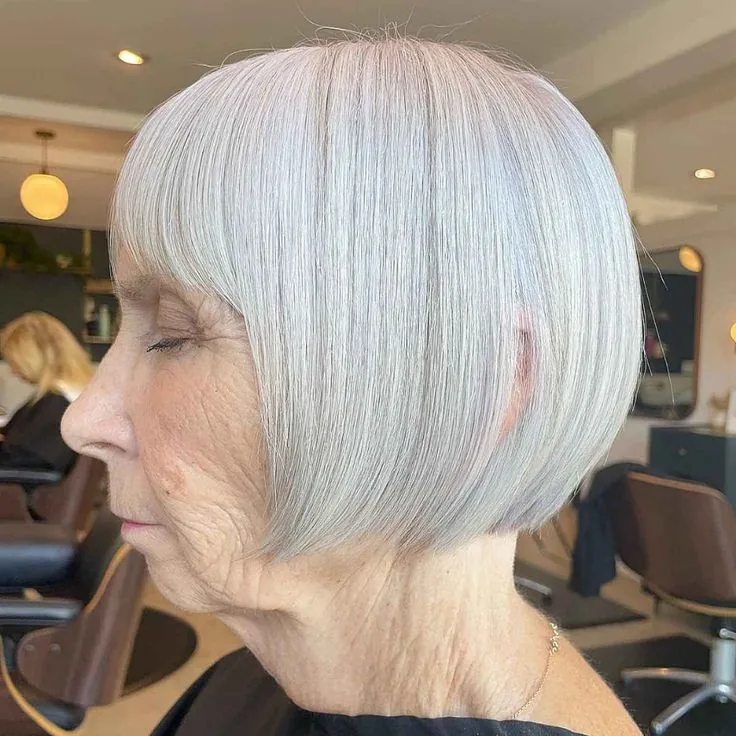
The ear-length bob is the shortest bob on this list, ending right at the ears with a neat, rounded shape. It flatters women over seventy because it is light, cool, and easy — no hair on the neck, no weight, no fuss — and because it opens up the face and shows off the cheekbones and the eyes. Silver hair at this length looks crisp and bright, and the cut suits glasses perfectly, because there is no hair competing with the frames. It is the cut for women who want the neatness of a bob with the freedom of a pixie.
Upkeep is low: a trim every five weeks, and a quick towel-dry with a little cream — no tools needed on most days. Pros: very easy, cool in summer, suits glasses, and makes fine hair look full. Cons: it needs frequent trims to stay neat, and it cannot be tied back. Who should skip it: women with a very long face, because the short length can emphasise length — a chin-length bob adds width and balance instead. For a neat, light, no-fuss cut, the ear-length bob is a lovely choice.
21. Long Silver Layers
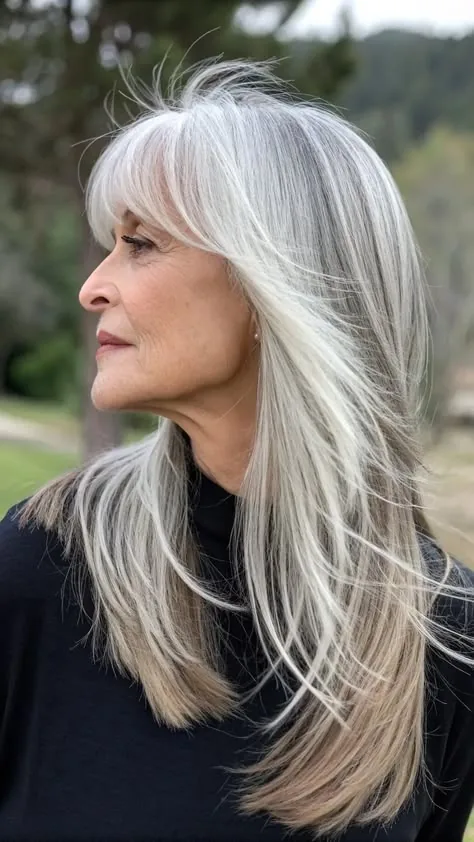
Long silver hair is a statement, and women over seventy who wear it well are some of the most striking women in any room. Long layers keep the hair from looking heavy or flat: the layers start at the cheekbone and fall softly, giving the hair movement and shape, while the length itself becomes the feature — a shining curtain of silver that turns heads. It flatters because it is unexpected, because it suits women with thick hair that can carry the length, and because it says, clearly, that you wear your hair the way you like it. Long silver hair is not ageing. It is magnificent.
Upkeep is medium to high: a trim every eight weeks to keep the ends healthy, a weekly deep conditioner, and a little more time to wash and dry. Pros: dramatic, versatile, can be worn up or down, and shows off silver at its best. Cons: it needs healthy ends — thin, straggly ends will undo the whole effect — and it takes longer to wash, dry, and style. Who should skip it: women with fine, thinning hair, because long layers will make the ends look sparse — a shoulder-length cut will look fuller. For thick, healthy hair, long silver layers are a showstopper.
22. The Half-Up Twist
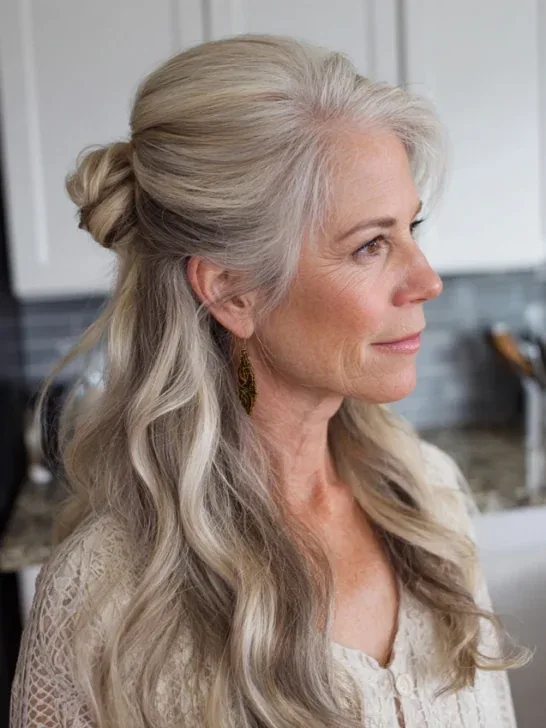
The half-up twist is a simple style with a big payoff: the top section of hair is twisted back and pinned, while the rest falls loose around the shoulders. It flatters women over seventy because it lifts the hair away from the face — opening up the eyes and the cheekbones — while keeping the softness of loose hair around the jawline. Silver hair in a half-up twist looks elegant and relaxed at the same time, and the style suits everything from a family lunch to a wedding. It takes two minutes, needs one pin, and makes any outfit look more considered.
Upkeep is low: it is a style, not a cut, and it works on any hair from chin length to long. Pros: easy to do, flattering, versatile, and keeps hair out of the eyes without a full updo. Cons: it needs enough length to twist and pin, and fine hair can slip out of the pin — a little texturising spray helps. Who should skip it: women with very short hair, who cannot gather a top section — a headband or a clip gives a similar lift with less length. For a quick, pretty style that works every time, the half-up twist is a keeper.
23. The Low Silver Ponytail
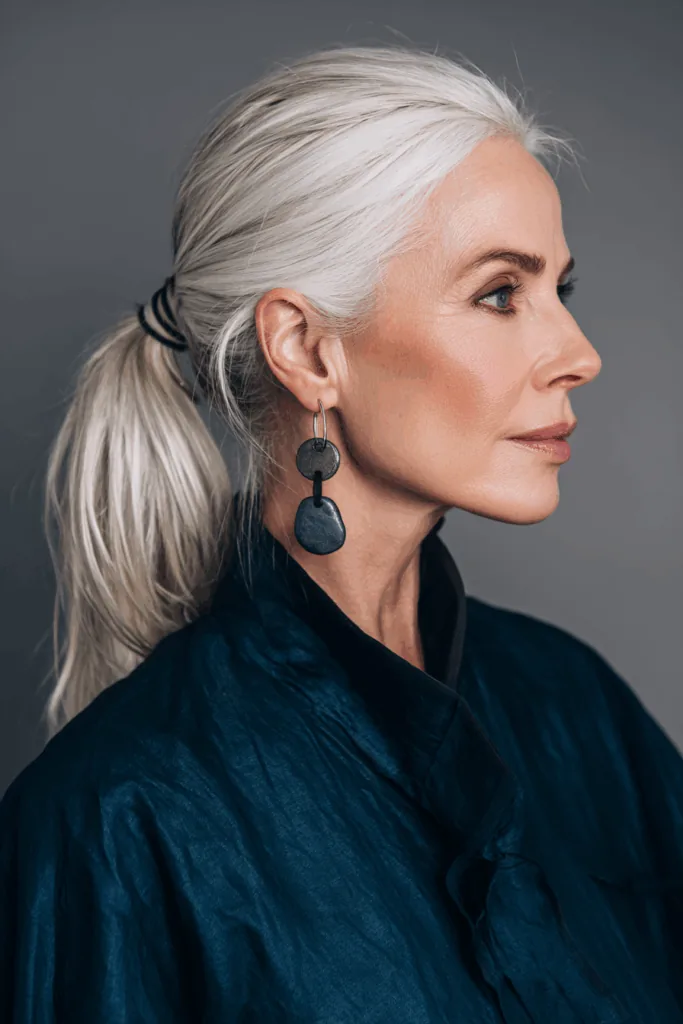
A low ponytail is the most useful hairstyle a woman over seventy can know: hair gathered at the nape, tied loosely, with a few soft pieces left around the face. It flatters because it is gentle — nothing pulled tight, nothing severe — and because it keeps the hair completely out of the way while still looking deliberate and pretty. Silver hair in a low ponytail looks polished and bright, and the style suits gardening, walking, lunch with friends, and everything in between. It is the hairstyle equivalent of a comfortable shoe: you reach for it every day because it works.
Upkeep is low: it needs shoulder-length hair and a soft, snag-free hair tie — never a tight elastic, which can break fine hair. Pros: takes thirty seconds, keeps hair out of the way, suits every face, and looks good with a scarf or a hat. Cons: it can look severe if pulled too tight, and it needs enough length to gather. Who should skip it: women who dislike the feeling of tied-back hair, or whose hair is too short to gather — a claw clip gives a similar result with less length. For an everyday style that never fails, the low ponytail is unbeatable.
24. The Braided Crown
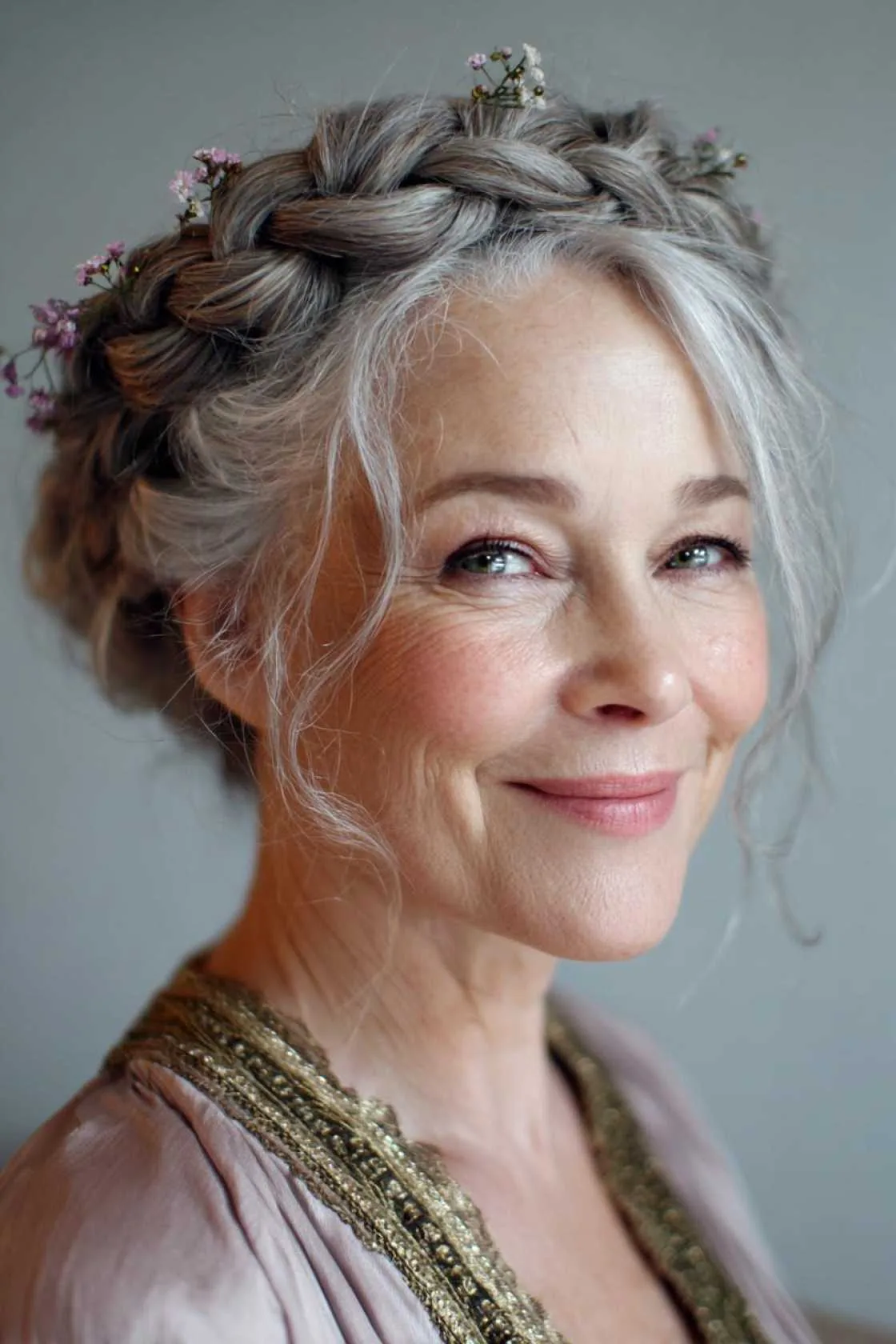
A braided crown — a braid wrapped around the head like a halo — is one of the prettiest styles a woman over seventy can wear, and it suits silver hair especially well, because the braid shows off every shade of grey in a woven pattern. It flatters because it lifts the hair away from the face, frames the features, and looks romantic and deliberate without being fussy. It is a lovely choice for a wedding, a christening, a garden party, or any day when you want to feel a little special. It also keeps the hair completely secure, which is a blessing on a windy day.
Upkeep is low on the day, but it does need shoulder-length hair and a little practice — or a helpful granddaughter. Pros: beautiful, secure, suits silver, and photographs wonderfully. Cons: it takes time to learn, and it needs enough length to braid and wrap. Who should skip it: women with very short hair, who cannot form a braid — a twisted headband or a braided headband accessory gives a similar look with no length needed. For a romantic, special style, the braided crown is a joy.
25. The Romantic Silver Updo
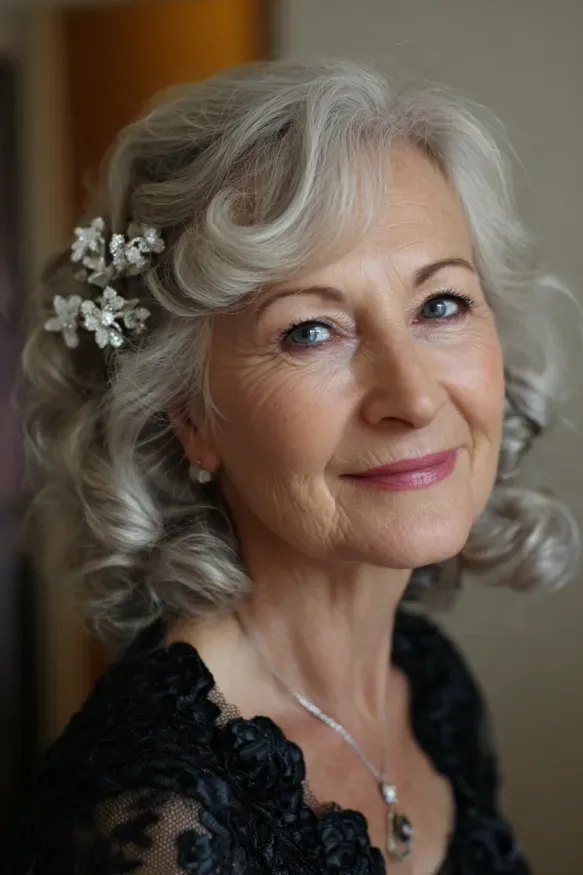
A romantic updo — soft curls pinned loosely at the back, with a few tendrils around the face — is the style for the occasions that matter most: a grandchild’s wedding, a seventieth birthday, a golden anniversary. It flatters women over seventy because it is soft rather than severe, with volume at the crown and movement around the face, and because silver curls pinned up look like something from a painting. It is the opposite of a tight, scraped-back bun: it is gentle, feminine, and made to be photographed. If you are the mother or grandmother of the bride, this is the style to ask for.
Upkeep is low on the day, but it is a salon style for most women — it needs shoulder-length hair, a few pins, and a stylist or a practised hand. Pros: beautiful, photographs wonderfully, stays put all day, and suits every face shape. Cons: it takes time and help to create, and it can fall apart if the pins are not secure — ask for extra pins and a light hairspray. Who should skip it: women with very short hair, who cannot gather enough length — a low chignon with a hairpiece, or a polished blowout, is a better choice. For a truly special day, the romantic updo is worth every minute.
26. Curtain Bangs with Soft Layers
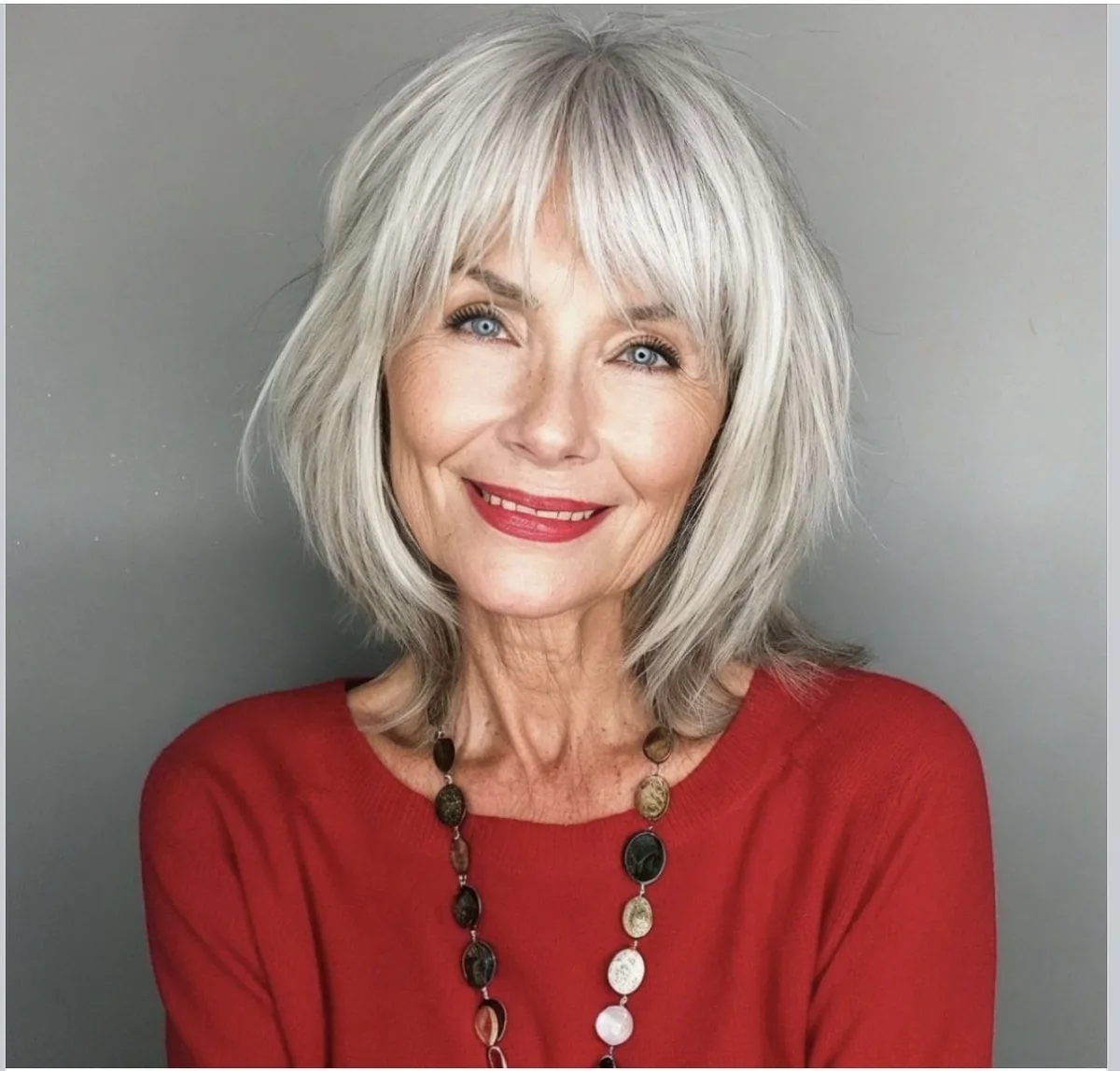
Curtain bangs — a fringe parted in the middle that sweeps to either side like curtains — are one of the most flattering fringes for women over seventy, because they soften the forehead without hiding it. Paired with soft layers, they frame the face, draw attention to the eyes, and grow out gracefully into face-framing layers, so there is no awkward in-between stage. Silver hair suits curtain bangs beautifully, because the sweeping pieces catch the light and show off the colour’s shine. It is a gentle, modern fringe that works on almost every face.
Upkeep is low to medium: a trim every six to eight weeks, with the bangs tidied every five weeks if they grow into the eyes. Pros: softens the forehead, suits glasses, grows out gracefully, and works with most lengths. Cons: the bangs need a quick blow-dry in the right direction each morning, or they can fall flat across the forehead. Who should skip it: women with a very strong cowlick at the centre part, because curtain bangs need a centre part to work — a side-swept fringe is an easier choice. For a soft, flattering fringe, curtain bangs are a lovely option.
27. The Rounded Bob
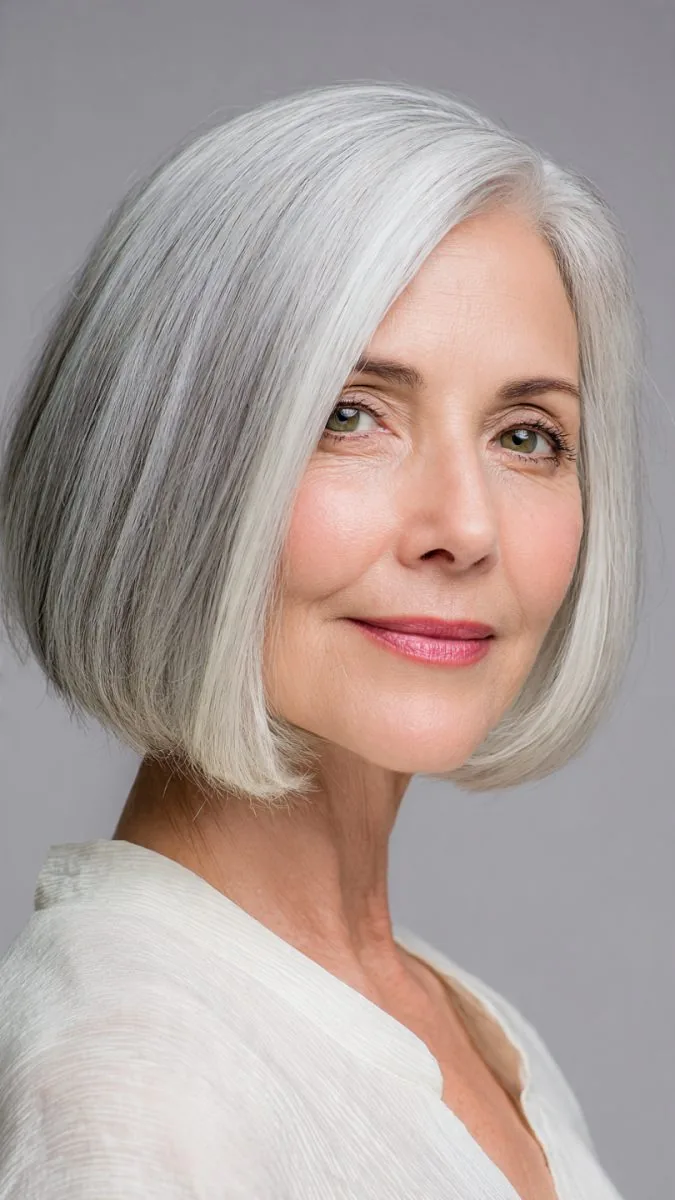
The rounded bob is a classic shape: a bob that curves under at the ends, creating a smooth, rounded silhouette that frames the face. It flatters women over seventy because the curved ends soften the jawline and the whole shape looks neat, polished, and intentional — the kind of cut that looks good from every angle. Silver hair in a rounded bob looks smooth and shining, and the cut suits women who like their hair to look finished rather than tousled. It is a timeless, ladylike style that has never really gone out of fashion.
Upkeep is medium: a trim every six weeks, and a quick blow-dry with a round brush to keep the ends curving under. Pros: very polished, suits most faces, looks wonderful in silver, and is easy to style once you know the technique. Cons: it needs the blow-dry to hold its shape, and it can look dated if the roundness is overdone — ask for a soft curve, not a bubble. Who should skip it: women who want a wash-and-go cut, because the rounded bob needs a little styling to look its best. For a classic, polished bob, this one is a beauty.
28. The Tousled Wavy Bob
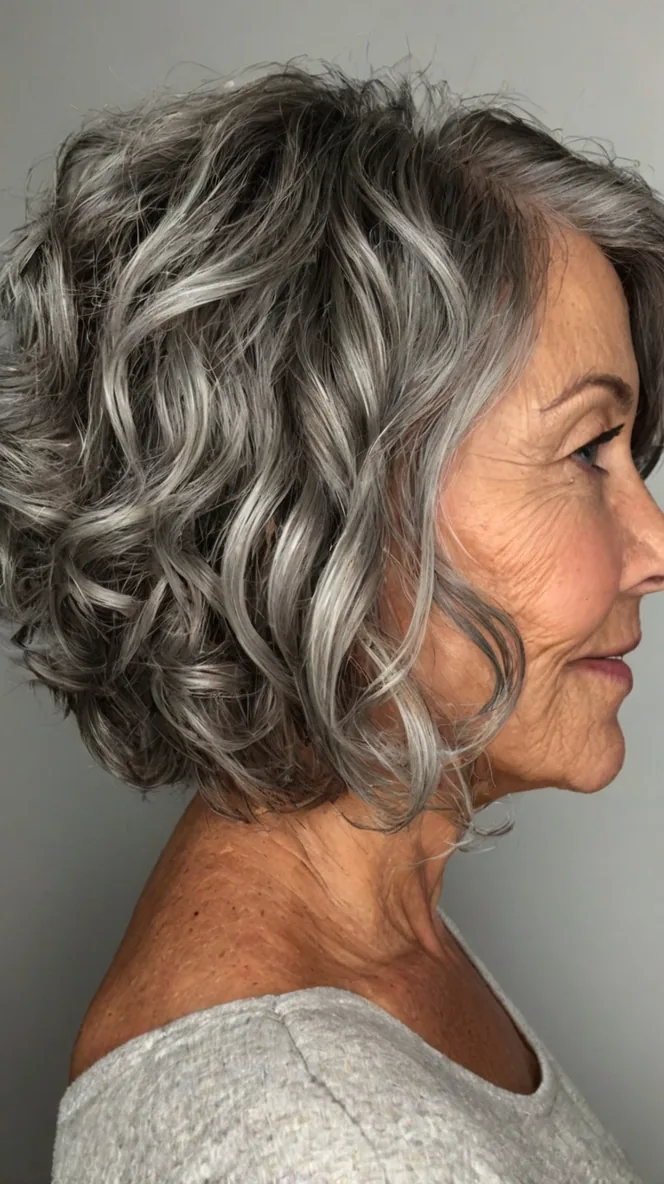
The tousled wavy bob is the relaxed cousin of the polished bob: chin-length or just below, with soft waves that look as if they happened by themselves. It flatters women over seventy because the waves add texture and volume, soften the face, and make the whole cut look effortless rather than overworked. Silver hair suits it wonderfully, because the waves catch the light and show off the colour’s variation. It is the cut for women who like their hair to look good without looking done — the kind of style that suits a lunch with friends, a walk by the sea, or a quiet afternoon at home.
Upkeep is low: a trim every seven to eight weeks, and a scrunch of wave cream on damp hair — no tools needed. Pros: easy, natural, suits silver, and grows out gracefully. Cons: it needs some natural wave or a little help from a curling iron, and very straight hair will fall flat. Who should skip it: women with pin-straight hair who dislike using products — a sleek bob or a soft perm is a better route. For a relaxed, modern bob with movement, the tousled wavy bob is a delight.
29. The Sleek Straight Bob
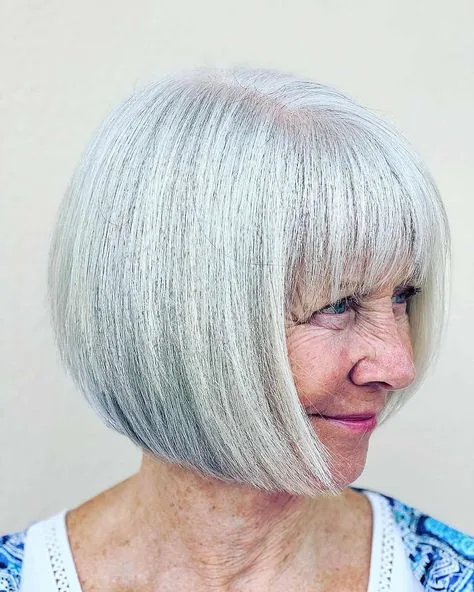
A sleek straight bob is the most polished cut on this list: a chin-length bob, blow-dried smooth, with a shine that looks almost liquid. It flatters women over seventy because the clean lines and the shine make the hair look healthy and expensive, and because the shape frames the face with a crisp, modern edge. Silver hair in a sleek bob looks extraordinary — the straight, smooth surface shows off the colour’s brightness like a mirror. It is the cut for women who like their hair to look finished, who enjoy a good blow-dry, and who appreciate a style that says, quietly, that they take care of themselves.
Upkeep is medium: a trim every six weeks, and a blow-dry with a flat brush or a quick pass with a straightener, plus a smoothing serum for shine. Pros: very polished, suits silver beautifully, frames the face, and looks wonderful with earrings. Cons: it needs daily heat styling to stay sleek, and it can look flat on very fine hair. Who should skip it: women who want a wash-and-go cut, or whose hair is very fine and limp — a textured bob or a layered pixie will give more volume with less effort. For a sleek, shining finish, this bob is unmatched.
30. The Deep Side-Part Crop
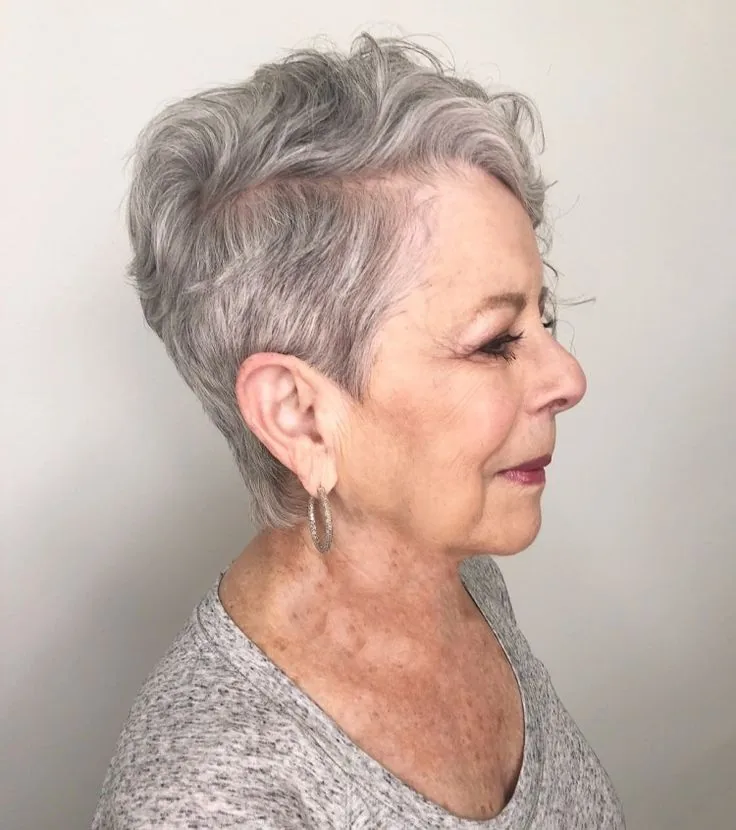
A deep side-part crop is a short cut with a strong, sweeping part — hair swept dramatically to one side, creating volume on top and a clean, elegant line. It flatters women over seventy because the deep part adds instant lift and drama, the sweep across the forehead softens lines, and the short length keeps everything easy. Silver hair suits it beautifully, because the sweeping top shows off the colour’s shine. It is a cut with quiet glamour, the kind of style that looks as good at a formal dinner as it does on a morning walk.
Upkeep is low: a trim every five to six weeks, and a quick comb-through in the morning — no tools needed. Pros: very easy, adds volume, suits silver, and looks elegant with glasses. Cons: it needs a natural part that cooperates, or the sweep will fall back — ask your stylist to work with your natural parting. Who should skip it: women whose hair parts stubbornly in the centre and will not stay swept to the side — a centre-parted pixie or a feathered cut is an easier choice. For a short cut with a touch of drama, the deep side-part crop is lovely.
31. The Soft Fauxhawk
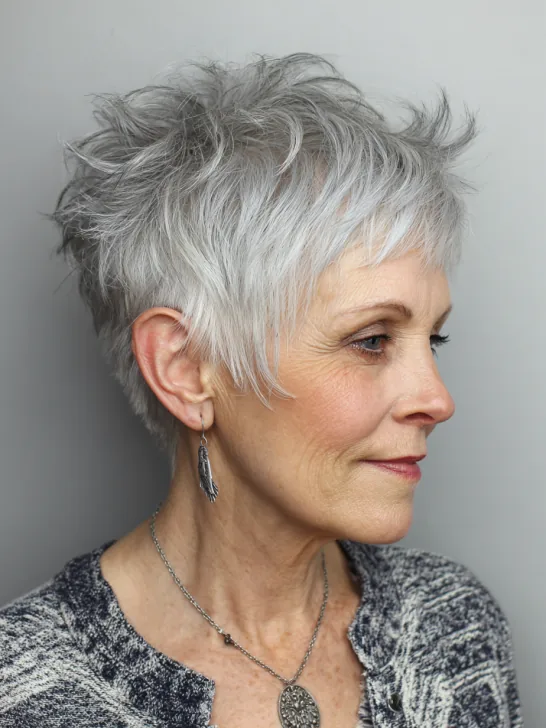
The soft fauxhawk is the boldest cut on this list — short at the sides, with length on top swept upwards and forwards into a gentle ridge — and it is also one of the most fun. It flatters women over seventy because the height on top adds length to the face, the short sides keep it neat, and the whole cut reads confident, modern, and full of life. Silver hair in a fauxhawk looks fantastic, because the textured top shows off the colour’s brightness. It is the cut for women who have always had a bit of edge, and who see no reason to lose it now.
Upkeep is low: a trim every four to five weeks, and a fingertip of wax or paste to shape the top each morning. Pros: very easy, adds height, suits silver, and gets compliments. Cons: it is a bold look that will draw attention, and it needs the product to hold its shape. Who should skip it: women who prefer a soft, classic finish — the fauxhawk is deliberately edgy, and a textured pixie or a feathered cut will suit them better. For a fearless, joyful short cut, the soft fauxhawk is a delight.
32. Vintage Pin Curls
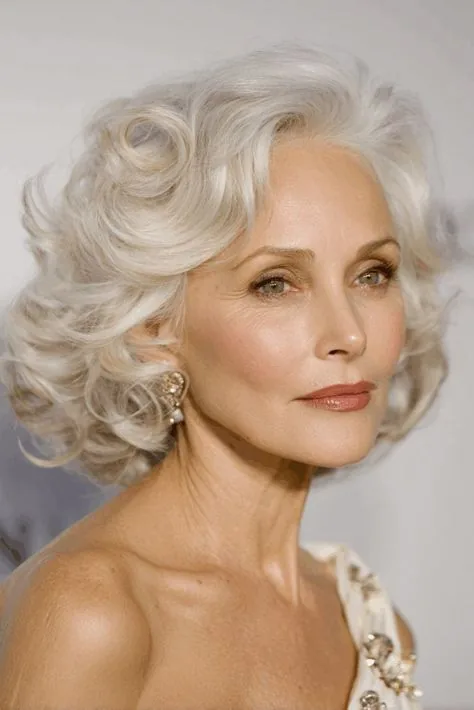
Vintage pin curls are a nod to the glamour of the forties and fifties — soft, sculpted curls set with pins, brushed out into waves that frame the face. They flatter women over seventy because they are the style many of us grew up with, and because they suit silver hair beautifully: the sculpted waves show off the colour’s shine, and the shape frames the face with a softness that is hard to beat. It is a lovely choice for a special occasion, a themed party, or any day when you want to feel a little bit glamorous. Pin curls are not old-fashioned. They are timeless.
Upkeep is medium on the day — it is a style, not a cut, and it takes time to set — but the result lasts for days with a silk scarf at night. Pros: beautiful, romantic, suits silver, and photographs wonderfully. Cons: it takes practice or a stylist, and it needs shoulder-length hair to work well. Who should skip it: women who dislike spending time on their hair, because pin curls are a project — a soft perm gives a similar wave with far less effort. For a touch of vintage glamour, pin curls are a joy.
33. The Soft Bouffant
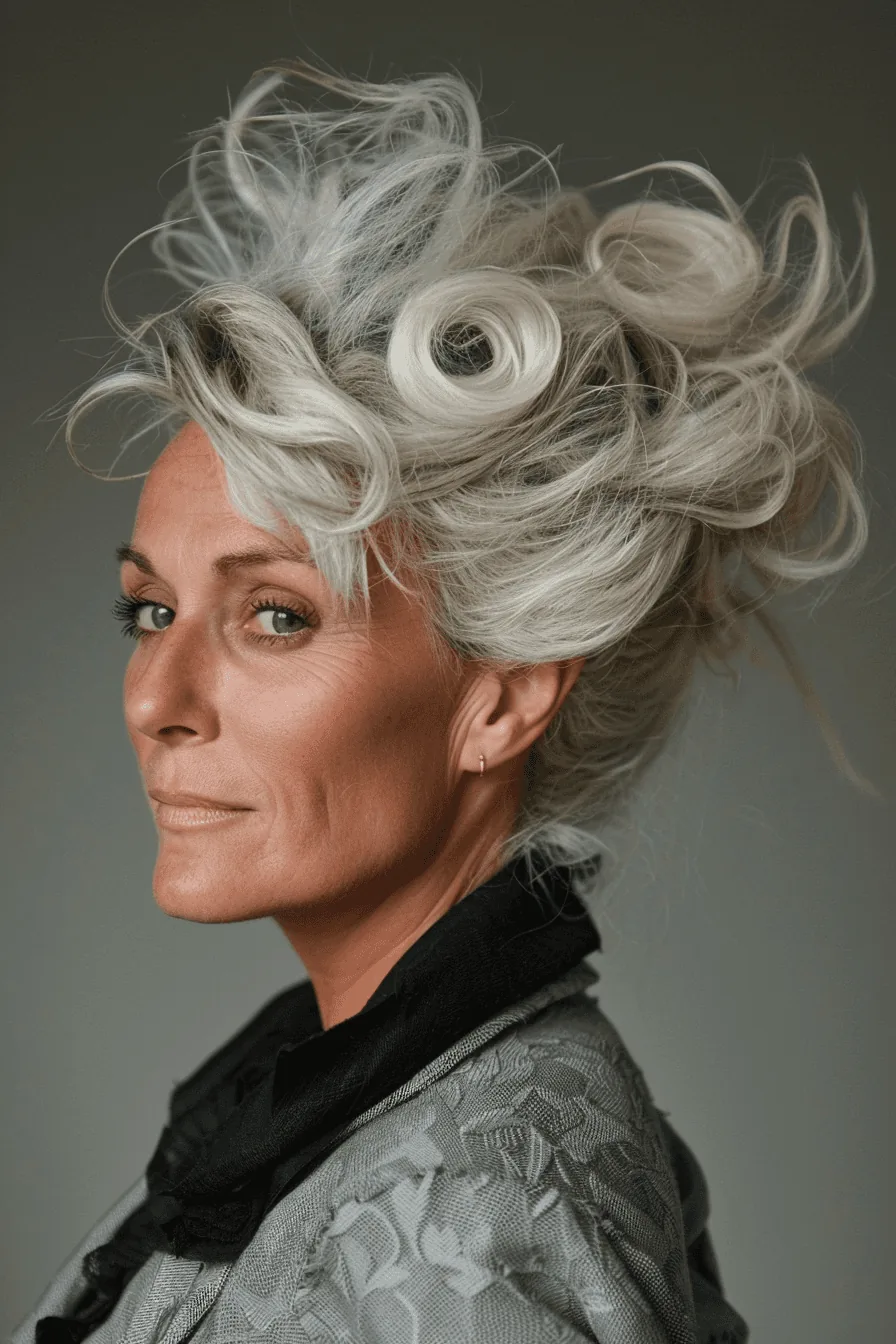
The soft bouffant is volume with manners: hair gently teased and smoothed at the crown, with soft waves or curls falling around the face. It flatters women over seventy because the height at the crown adds length to the face, the softness around the edges keeps it gentle, and the whole style reads elegant rather than dated — as long as it is soft, not stiff. Silver hair in a bouffant looks luminous, because the volume shows off the colour’s depth. It is a lovely choice for a formal occasion, a photograph, or any day when you want to feel a little bit taller.
Upkeep is medium: it is a style, not a cut, and it needs a layered bob or shoulder-length hair, a little backcombing, and a light hairspray. Pros: adds height, suits silver, photographs beautifully, and feels special. Cons: it needs styling each time, and over-teasing can damage fine hair — use a gentle touch and a soft brush. Who should skip it: women with very fine, fragile hair, because backcombing can cause breakage — a volumising mousse and a round brush give lift with less stress. For a special-occasion style with height, the soft bouffant is a classic.
34. The Claw-Clip Updo
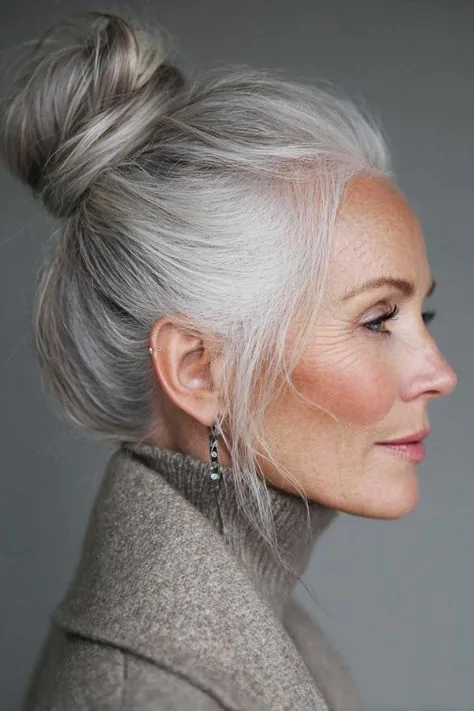
The claw-clip updo is the easiest updo there is: gather the hair, twist it up, and clip it in place. It flatters women over seventy because it is gentle — no pulling, no pins, no tight elastic — and because it keeps the hair completely out of the way while still looking deliberate and pretty. Silver hair in a claw clip looks bright and polished, and the style suits everything from gardening to a lunch out. It is the hairstyle for the days when you want your hair up and out of the way, without a fuss. Keep a clip in your bag and one by the front door, and you will use it every day.
Upkeep is low: it needs shoulder-length hair and a good-quality clip — a large, strong claw that grips without slipping. Pros: takes thirty seconds, comfortable all day, suits every face, and is gentle on fine hair. Cons: it can slip on very fine or silky hair, and it needs enough length to twist and clip. Who should skip it: women with very short hair, who cannot gather enough length — a headband or a small clip at the sides gives a similar tidy look. For an everyday updo that never fails, the claw clip is unbeatable.
35. The Headband-Friendly Crop
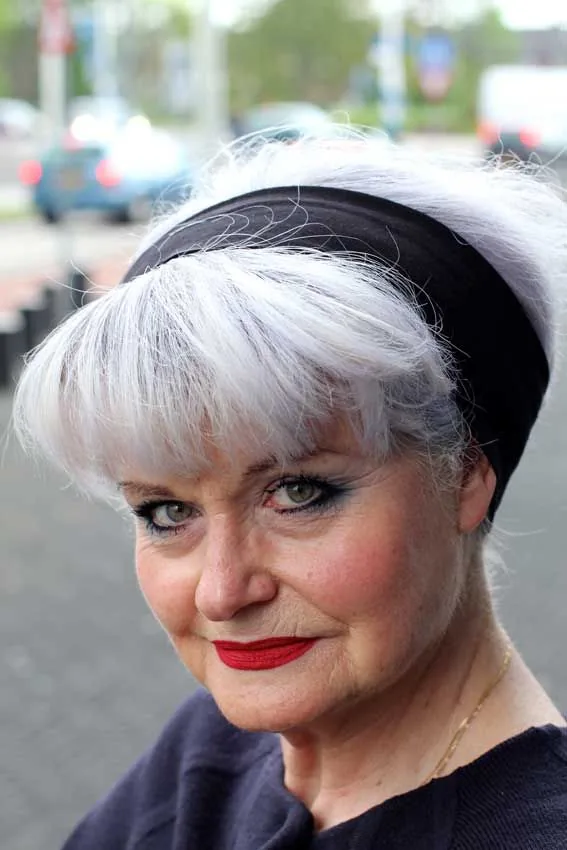
A headband-friendly crop is a short cut designed to work with accessories: short at the back and sides, with enough length on top to sit neatly under a headband, a scarf, or a hat. It flatters women over seventy because it is practical — a headband keeps the hair out of the eyes on a windy day, adds a touch of colour, and turns a simple cut into a finished look in seconds. Silver hair with a headband looks charming and fresh, and the combination suits everything from a walk in the park to a summer wedding. It is the cut for women who like a little help from their accessories.
Upkeep is low: a trim every five to six weeks, and a headband or two in a colour you love. Pros: very easy, versatile, suits silver, and looks good with hats and scarves too. Cons: the cut needs enough top length to work with a headband, and a tight headband can leave a mark — choose a soft, padded band. Who should skip it: women who dislike accessories in their hair — a plain pixie or a feathered cut gives the same ease with nothing extra. For a practical cut with a pretty finish, the headband-friendly crop is a lovely choice.
36. Face-Framing Layers on a Short Cut
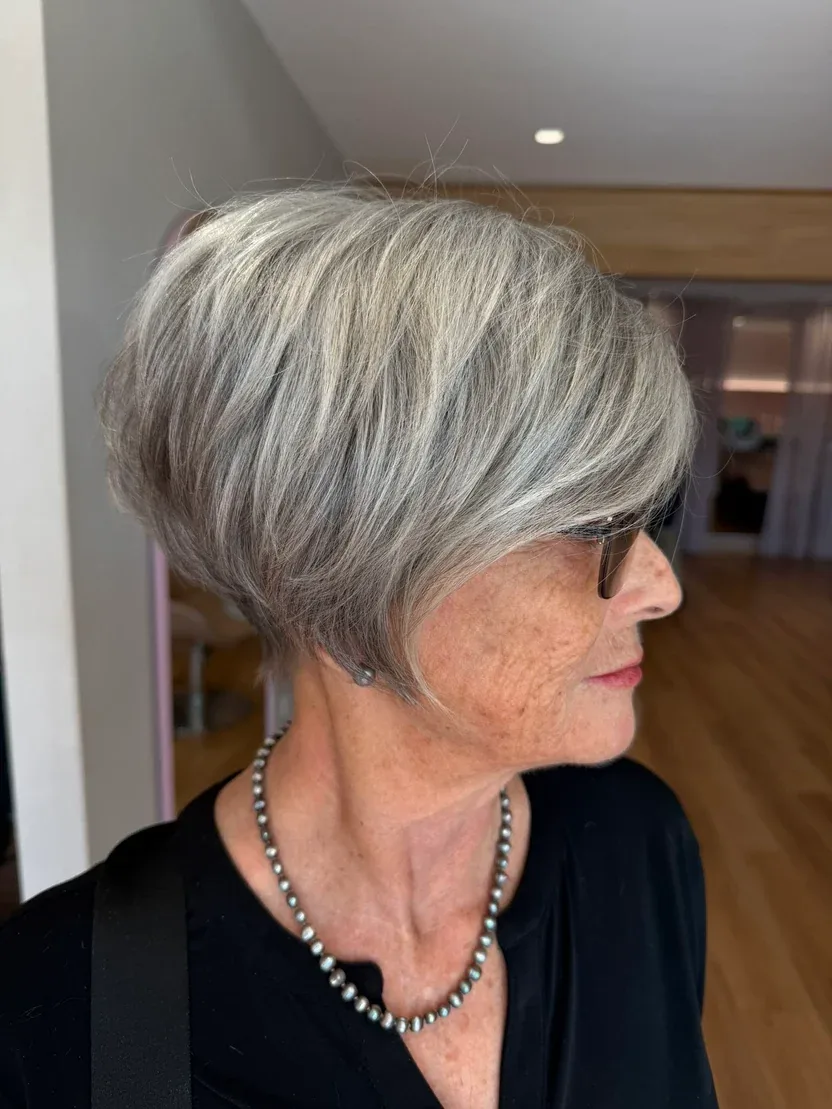
Face-framing layers are the secret weapon of a good short cut: longer pieces at the front that fall softly around the cheekbones and the jawline, softening the whole face. They flatter women over seventy because they draw attention to the eyes and the smile, soften the jawline, and add movement to a cut that might otherwise look too neat or too severe. Silver hair suits them beautifully, because the front pieces catch the light and show off the colour’s shine. It is a small detail that makes a big difference — the kind of thing a good stylist does without being asked.
Upkeep is low to medium: a trim every six weeks, and a quick smooth of the front pieces with a round brush or a flat iron. Pros: flatters every face, softens the jawline, suits silver, and works on most short cuts. Cons: the front pieces need a little styling to sit right, or they can fall flat. Who should skip it: women with very curly hair, because face-framing layers on tight curls can spring up and sit too short — a longer, softer layer is a better choice. For a short cut with a gentle finish, face-framing layers are a must.
37. The Volumised Short Bob
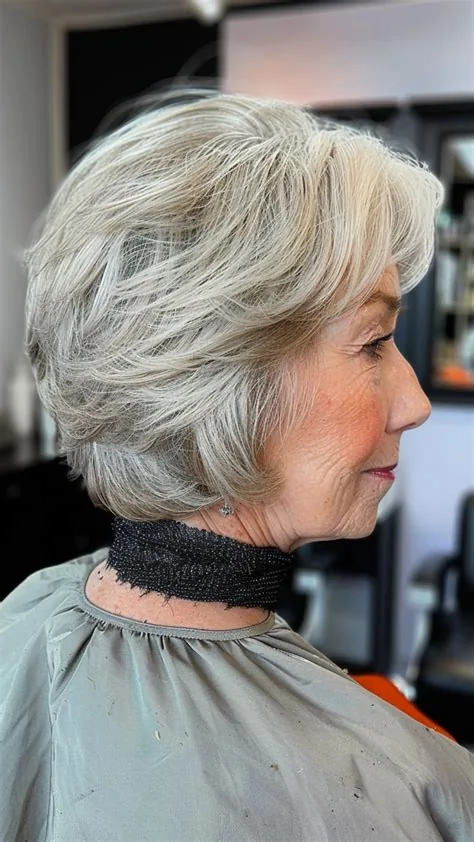
A volumised short bob is a chin-length bob with lift built in: layers at the crown, a round-brush blow-dry, and a finish that looks full and bouncy rather than flat. It flatters women over seventy because volume is the single most youthful thing hair can have — not youth in the sense of looking younger, but in the sense of looking alive, healthy, and full of energy. Silver hair in a volumised bob looks thick and bright, and the cut suits women with fine hair especially well, because the short length and the layers make the hair look twice as full as it is.
Upkeep is medium: a trim every six weeks, and a five-minute blow-dry with a round brush and a volumising mousse at the roots. Pros: adds volume, suits fine hair, looks polished, and photographs beautifully. Cons: it needs the blow-dry to hold its volume, and it can fall flat in humidity — a little dry shampoo at the roots helps. Who should skip it: women who want a truly wash-and-go cut, because the volumised bob needs a few minutes of styling each morning. For a full, bouncy bob with real presence, this one is a winner.
38. The Messy Textured Pixie
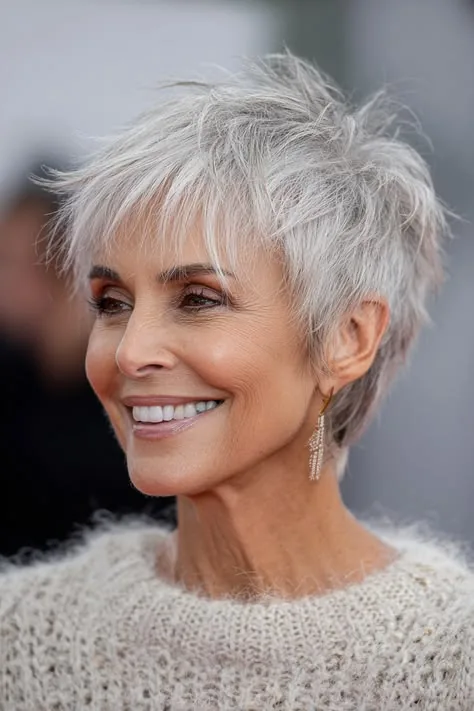
The messy textured pixie is a short cut that is meant to look a little undone: choppy layers, piecey ends, and a finish that looks as if you ran your fingers through it and walked out the door — because that is exactly what you did. It flatters women over seventy because the texture adds volume, the messiness adds character, and the whole cut reads modern and relaxed rather than neat and cautious. Silver hair suits it beautifully, because the piecey ends show off the colour’s variation. It is the cut for women who like their hair to have a bit of mischief in it.
Upkeep is low: a trim every five weeks, and a fingertip of texturising paste rubbed through the layers each morning. Pros: very easy, adds volume, looks modern, and suits silver. Cons: it needs the paste to look intentional, or it can look untidy rather than textured, and it offers no tying-back option. Who should skip it: women who prefer a smooth, polished finish — a classic pixie or a sleek bob will suit them better. For a playful, low-effort short cut, the messy pixie is a joy.
39. The Elegant Swept-Back Style
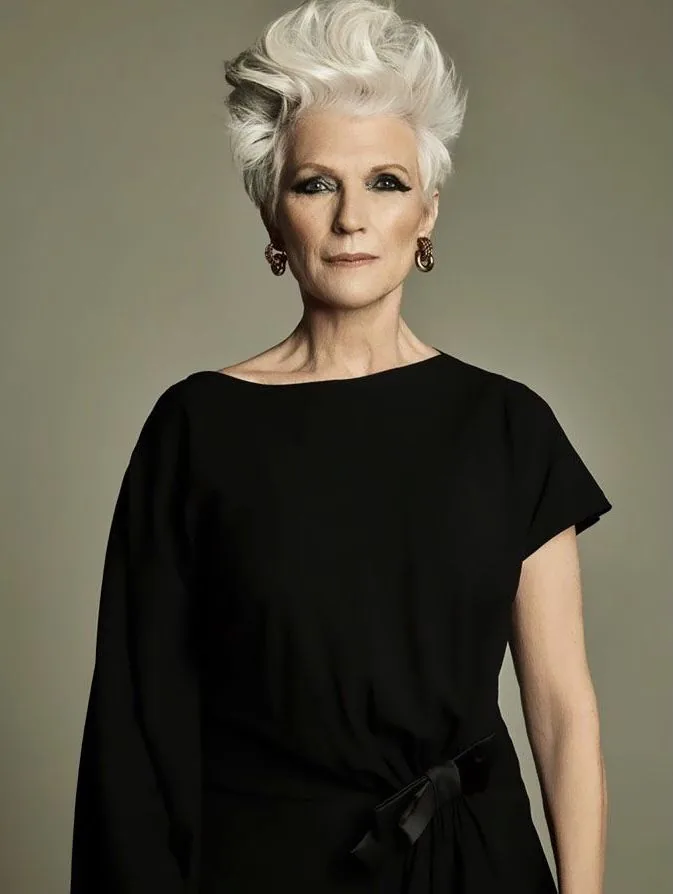
The elegant swept-back style is hair combed smoothly back from the face, with volume at the crown and soft length at the back — a look that is both classic and quietly dramatic. It flatters women over seventy because it opens up the whole face, shows off the cheekbones and the eyes, and creates a sense of height and presence. Silver hair swept back looks like polished metal, smooth and shining, and the style suits a formal occasion, a family photograph, or any day when you want to feel a little bit grand. It is the hairstyle equivalent of standing up straight: simple, confident, and very effective.
Upkeep is low to medium: it is a style, not a cut, and it needs chin-length or longer hair, a little volumising mousse, and a light hairspray to hold it. Pros: opens up the face, suits silver, photographs beautifully, and feels elegant. Cons: it needs the hairspray to stay in place, and it can feel severe if the hair is pulled too tight — keep it soft at the front. Who should skip it: women who dislike the feeling of hair held back from the face — a side part or a soft fringe gives a similar openness with less hold. For a graceful, confident style, the swept-back look is a beauty.
40. The Natural Silver Afro
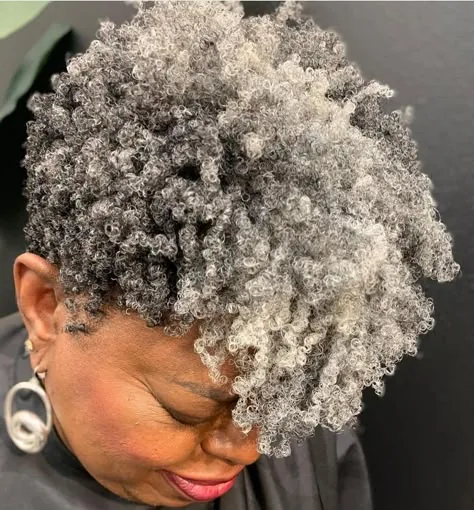
A natural silver afro is one of the most beautiful hairstyles a woman over seventy can wear: a rounded, full shape of natural curls, worn exactly as it grows, in a shining silver that catches the light from every angle. It flatters because it is entirely natural — no heat, no chemicals, no fighting the hair’s texture — and because the rounded shape frames the face with a softness and a symmetry that is hard to beat. Silver curls in an afro shape look regal, joyful, and completely individual. It is a style that says you know who you are, and you like what you see.
Upkeep is low to medium: a trim every eight to ten weeks to keep the shape round, and a routine built on moisture — a leave-in conditioner, a curl cream, and a silk scarf or pillowcase at night. Pros: natural, no heat, suits silver beautifully, and makes a wonderful statement. Cons: it needs regular moisture or it can dry out, and the shape needs a stylist who understands natural hair. Who should skip it: women whose hair is very fine and straight, because an afro needs natural curl and density to hold its shape. For natural curls worn with pride, the silver afro is magnificent.
41. The Silver Pageboy
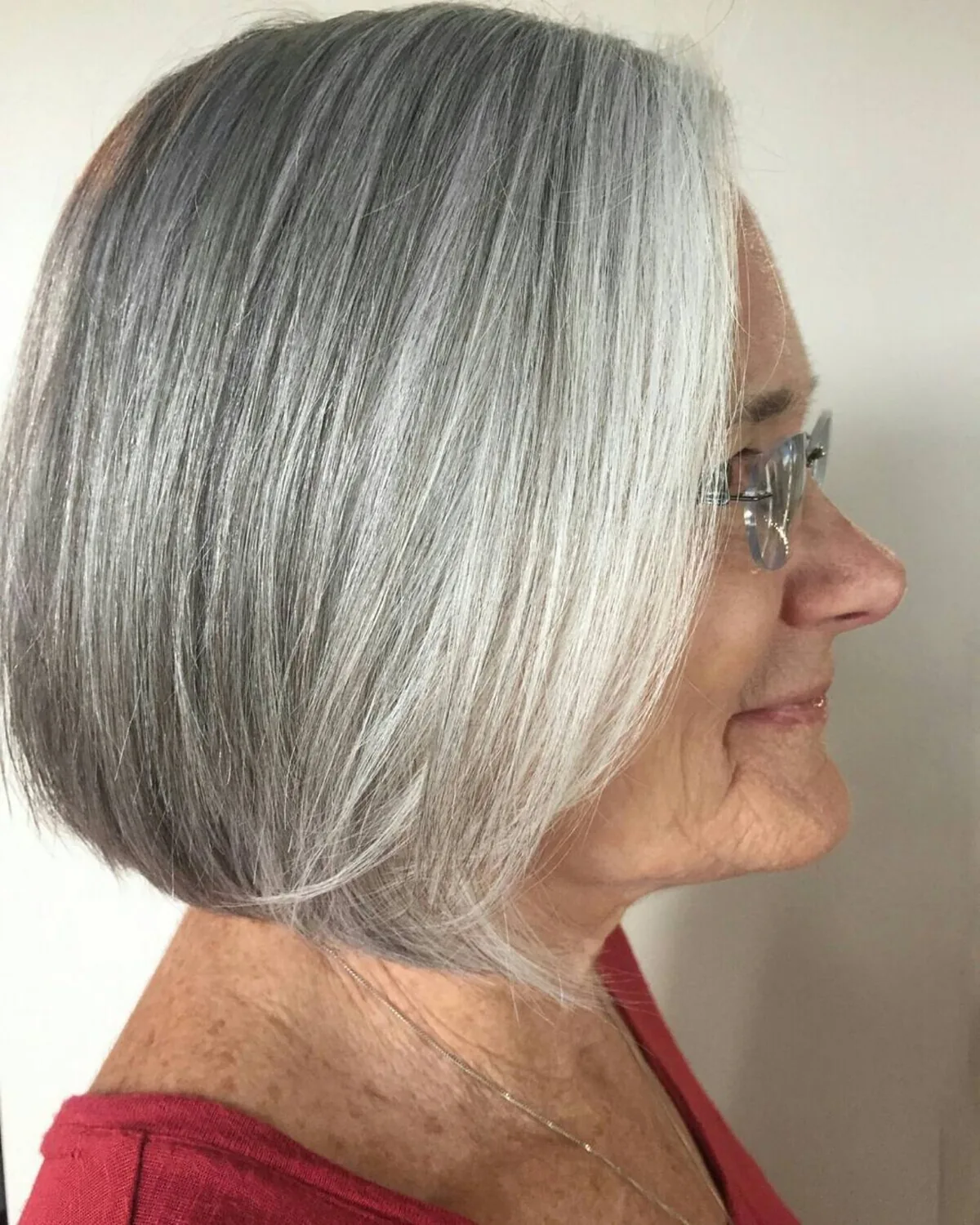
The silver pageboy is a classic that has been flattering women for generations: a chin-length cut with the ends turned under, a soft fringe or a side part, and a smooth, polished finish. It flatters women over seventy because it is neat, ladylike, and easy — the kind of cut that looks good every day with very little effort, and that suits silver hair perfectly, because the smooth surface shows off the colour’s shine. It is the cut for women who like their hair to look finished, who appreciate a classic shape, and who have no interest in chasing trends. The pageboy is not old-fashioned. It is timeless.
Upkeep is low to medium: a trim every six weeks, and a quick blow-dry with a round brush to keep the ends turned under. Pros: very neat, suits silver, easy to style, and looks wonderful with glasses. Cons: it needs the blow-dry to hold its shape, and it can look dated if the fringe is too heavy — ask for a soft, light fringe. Who should skip it: women who want a modern, textured look, because the pageboy is deliberately smooth and classic — a tousled bob or a textured pixie will suit them better. For a timeless, polished classic, the pageboy is a lovely choice.
What is the best hairstyle for a woman over 70?
The best hairstyle for a woman over 70 is a soft layered bob or a classic silver pixie, because both are easy to look after, flatter almost every face shape, and show off silver hair beautifully. A bob suits women who like a little length and versatility, while a pixie suits women who want the easiest possible routine. The right choice depends on your hair thickness, your face shape, and how many minutes you will spend styling each morning — but either cut is an excellent place to start.
Should women over 70 have short or long hair?
Women over 70 can wear short or long hair — there is no rule, only what suits you. Short hair is easier to wash, dry, and style, and it makes fine hair look fuller. Long hair is versatile and dramatic, especially in silver, but it needs healthy ends and more time to look after. Most women find the sweet spot is a chin-length or shoulder-length bob: short enough to be easy, long enough to tie back, and flattering on almost every face.
How can I make thin hair look thicker at 70?
To make thin hair look thicker at 70, choose a shorter cut with blunt, solid ends — a bob, a pixie, or a crop — because short ends stack up and look full. Add volume with a volumising mousse at the roots, a deep side part, and a little dry shampoo between washes. Avoid heavy conditioner on the roots, too many short layers that thin the ends, and over-straightening, which flattens the hair. A soft perm can also add lasting volume to fine, straight hair.
How do I transition to grey hair gracefully?
To transition to grey hair gracefully, ask your stylist for a shorter cut with soft layers, which removes dyed ends faster and blends the line between old colour and new silver. A gloss or a few lowlights can soften the demarcation line while the grey grows in, and a purple shampoo keeps the silver bright rather than yellow. The transition usually takes six to twelve months, depending on length — and the result is hair that is entirely yours, costs less to maintain, and looks wonderful.
How often should a woman over 70 get a haircut?
A woman over 70 should get a haircut every four to six weeks for a short pixie or crop, every six to eight weeks for a bob or shoulder-length cut, and every eight to ten weeks for long layers. Regular trims stop split ends before they travel up the hair and keep the cut’s shape fresh, which matters more as hair gets finer. A fringe needs a trim every four to six weeks, which many salons do free between cuts.
What hairstyles work best with glasses at 70?
The best hairstyles for glasses at 70 are a pixie, a crop, or a bob with tucked-back sides, because they leave the frames visible and keep the hair from competing with them. Keep the hair around the temples light and short, choose a fringe that sits above or well below the frames, and bring your glasses to every haircut so the stylist can check the shape with them on. Bold frames suit a softer cut, while light frames suit a cut with a little more shape.
Are perms a good idea for women over 70?
Perms can be a good idea for women over 70 with fine, straight hair that will not hold a wave, because a modern soft perm adds lasting volume and body with very little daily styling. Today’s perms use larger rollers and gentler solutions for loose, soft curls rather than tight ringlets. Avoid a perm if your hair is very fragile or heavily coloured, because the combination can cause breakage — and choose a stylist who does perms regularly and can show you recent photos of their work.
What is the easiest wash-and-go hairstyle for older women?
The easiest wash-and-go hairstyle for older women is a textured pixie or a short crop, because the shape is cut into the hair rather than created by styling. Wash it, towel it dry, rub in a little cream or mousse, and let it air-dry — the cut does the work. A chin-length bob with soft layers is the easiest wash-and-go option for women who want a little more length, as long as the layers fall into place on their own.
Can I wear bangs at 70?
Yes — bangs can look wonderful at 70, and the safest choices are curtain bangs, wispy bangs, or a side-swept fringe, all of which grow out gracefully and need almost no styling. A soft, brow-skimming fringe suits long faces and high foreheads, while a side-swept fringe softens square and round faces. Avoid a heavy, blunt fringe if you have a strong cowlick or dislike touching your hair before coffee — a side part with long face-framing pieces gives you the same softness with no upkeep.
What hairstyle is best for a 70th birthday or wedding?
The best hairstyle for a 70th birthday or wedding is a romantic updo, a French twist, or a low chignon, because all three photograph beautifully, stay put through a whole day, and look elegant without being severe. Choose a dressed-up version of your everyday cut rather than a completely different style, keep a few soft pieces around the face, and book a trial run if the occasion matters. A polished blowout with a deep side part is a lovely choice if you prefer to wear your hair down.
Conclusion
Hair at seventy is not something to manage, hide, or apologise for — it is something to enjoy. The best hairstyles for women over 70 are the ones that fit your real life: a cut with a beautiful shape, a routine you will actually keep, and silver hair worn with pride rather than covered up. Whether you choose a classic silver pixie, a soft layered bob, wash-and-go waves, or long silver layers, the cut is only half the story — the other half is keeping it trimmed, healthy, and shining, and wearing it like you mean it.
Start with the cut that fits your real week, not the cut you wish you had time for, and let your stylist cut it a touch longer than you think you want — you can always take more off. Bring photos of women with hair like yours, say what you do not want as well as what you do, and ask how the cut will look air-dried and how it will grow out. Then go home, shake your hair dry, and walk out the door. That is the whole secret of great hair at seventy: a cut that works with your life, not against it, and hair that looks like you — only more so.