
How I Recovered From a Bad Bleach Job Without Cutting It Short
We’ve all been there. You walk out of the salon (or your bathroom) with hair that’s more straw than silk. I’m talking about that bad bleach job we all fear. The one that snaps, feels like crunchy noodles, and looks like it belongs in a hay bale.
I was so close to chopping it all off. I had the scissors in my hand, Pinterest open to short cuts. But I didn’t cut it. And you don’t have to either. That’s the honest truth.
I figured out how to recover my length, strength, and shine without losing inches. It took patience, the right steps, and a few products that actually work. No salon chair required, though you’ll see I recommend one later. Here’s exactly what I did, step by step, so you can save your own beautiful hair too.
First, Breathe – You’re Not Alone

I remember staring at my frizzy, yellow-orange strands and feeling sick to my stomach. The panic is real. But here’s the thing: panic leads to bad decisions, like grabbing the scissors or reaching for more bleach. Don’t do it.
Instead, take a deep breath. Your hair is damaged, but it’s not ruined. What’s broken is the structure on the inside. That can be rebuilt and strengthened.
What you need right now is a plan. This is your plan. Follow it step by step, and your hair will thank you.
The Damage Report: What Actually Happened?
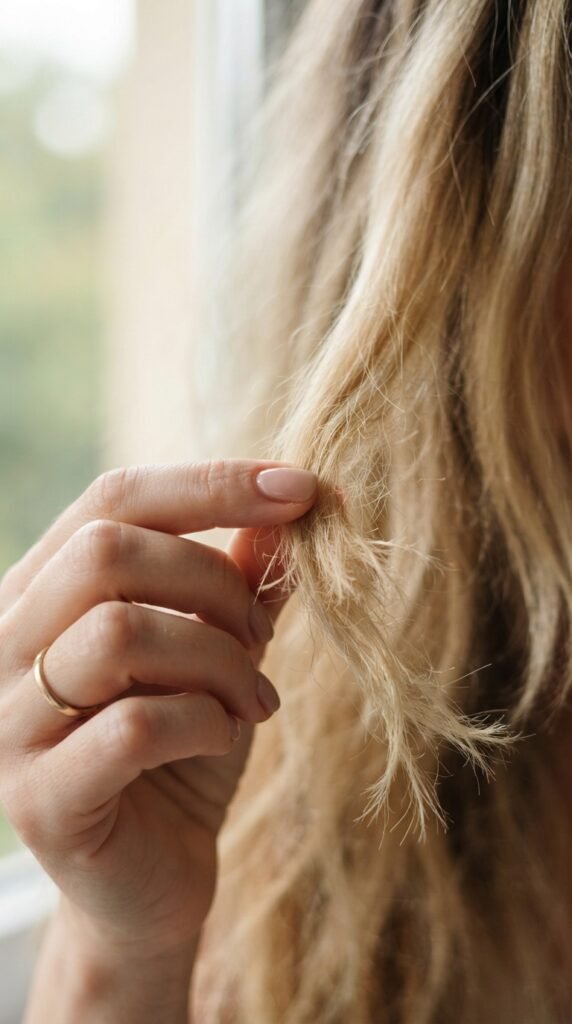
Bleach lifts your natural pigment by opening the cuticle. That’s the outer layer of your hair. When the cuticle is open and ruffled, you get that rough, sticky feeling. Then the inner cortex loses moisture and protein, which causes stretchiness and breakage.
In my case, my hair went from a level 6 to a level 10 in one sitting. That’s a massive lift. Too much. The result was mushy strands that stretched like gum.
Assess your own damage:
- Stretching means loss of protein
- Mushy when wet means severe damage
- Frizz plus brass means cuticle damage
- Knotting means damaged ends
Knowing this helps you pick the right fix.
The Golden Rule of Recovery: No More Bleach

Repeat after me: no more bleach. Not for a while, not even a little toner with bleach. Your hair needs a break. The worst thing you can do to fragile strands is hit them with more lifting chemicals.
I know it’s tempting. But adding more bleach to an already-open cuticle is like pouring gasoline on a fire.
Instead, you’ll use gentle toners and glosses later. Those add color and cancel the brass without further damage. That’s how you get your pretty shade back without sacrificing your length.
Give your hair a minimum six weeks before any chemical process. Your future self will hug you for it.
Bond Builders Are Your New Best Friend
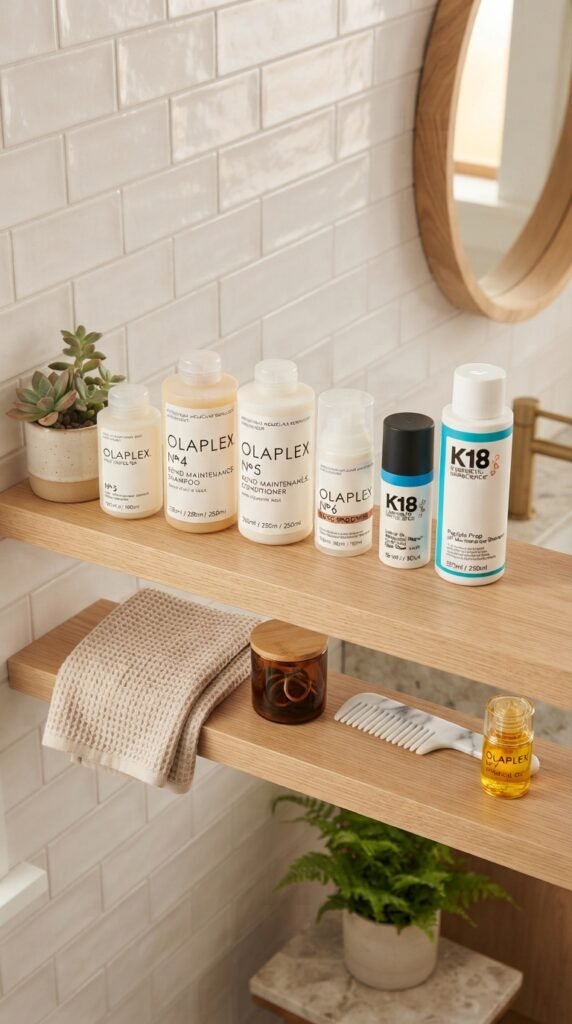
Bond builders changed the game for me. Products like Olaplex and K18 work on the disulfide bonds that bleach breaks inside your hair. They literally reconnect the broken structure.
I used a bond treatment once a week for the first month. I noticed a difference within two washes. My hair stopped stretching like chewing gum and started snapping back to normal.
Here’s what I recommend:
- K18 for quick four-minute masks
- Olaplex No. 3 for at-home maintenance
- Redken Acidic Bonding Concentrate for weekly use
Pick one and be consistent. Your hair needs repeated repairs, not a one-hit wonder.
Wash Day Rules (Don’t Skip These)

Washing damaged hair the wrong way can make it ten times worse. My biggest mistake was scrubbing my scalp hard and piling all my hair on top of my head. That tangles and mats fragile ends.
New rules:
- Wash with lukewarm water, never hot
- Use a sulfate-free shampoo
- Focus shampoo only on your roots
- Let conditioner sit for at least five minutes
- Squeeze, don’t wring, when drying
I also started washing every other day instead of daily. Less washing, more nourishing, always. Treat your hair like delicate silk, not rough cotton.
Deep Conditioning Like It’s a Full-Time Job
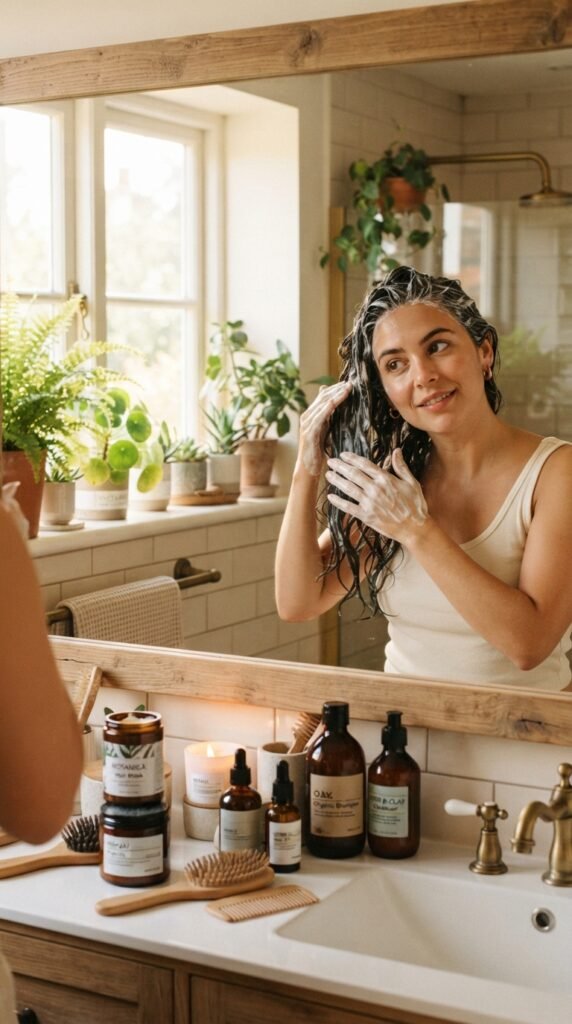
To recover from a bad bleach job without cutting it short, deep conditioning becomes a weekly ritual. I slathered on heavy masks and left them under a shower cap for 20 minutes. It felt ridiculous, but the results were undeniable.
Look for ingredients like:
- Shea butter
- Ceramides
- Hydrolyzed protein
- Hyaluronic acid for hair
Alternate between protein and moisture masks. Too much protein makes hair stiff. Too much moisture makes it weak. Balance is the sweet spot.
My favorite combo: a protein mask once a week and a moisture mask three days later. My hair went from crunchy to bouncy in about three weeks.
The Great Air-Dry Experiment

Put down the blow dryer. Seriously. Heat is your enemy right now, especially on freshly bleached strands. High temperature opens the cuticle even more and lets moisture escape.
So I tried something new: I let my hair air-dry. All the way. It took a while and looked a little rough at first. But after a few washes, the texture started changing for the better.
Tips for air-drying damaged hair:
- Squeeze out excess water with a microfibre towel
- Apply a leave-in conditioner while damp
- Use a wide-tooth comb, never a brush
- Don’t touch your hair until it’s fully dry
Air-drying won’t fix everything, but it stops the damage from getting worse.
Heat Styling? Let’s Chat (Temporarily)

Can you still straighten or curl? Yes, occasionally. But you have to be smart about it. Invest in a heat protectant that actually works. I used a spray plus a cream for extra layers of defense.
Keep the temperature below 300°F. High heat is too risky on compromised strands. And this is important: use heat on dry hair only. Wet or damp hair plus heat is a recipe for snapping. I learned that the hard way.
Limit heat styling to once a week max. For other days, try heatless waves or sleek low buns. Your hair gets a break, and you still look put together.
Toner to the Rescue
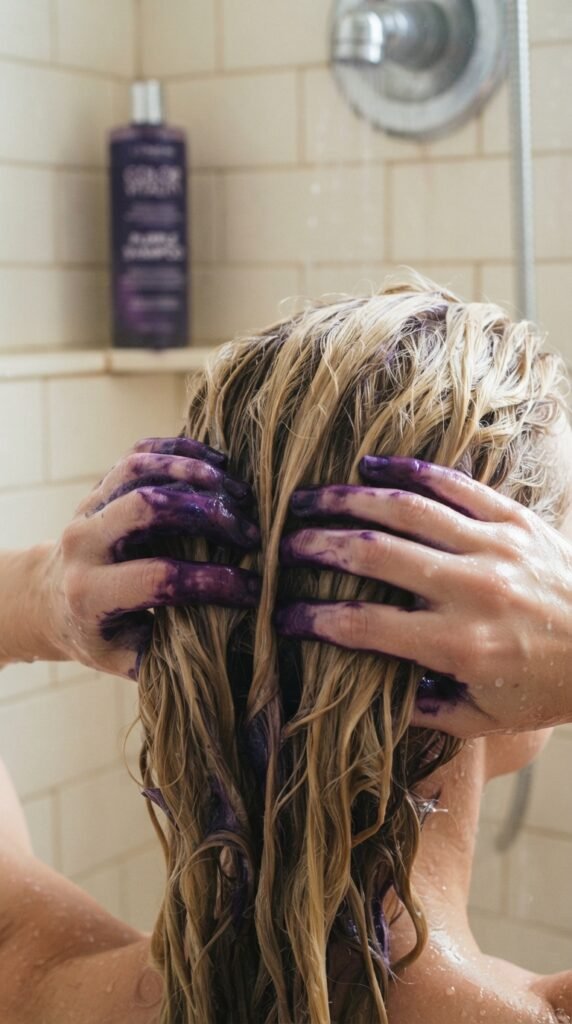
The brass was real. For a week I looked like a walking autumn leaf. Then I discovered toners that don’t require bleach. Purple shampoo helped a little, but a good violet toner neutralized the copper instantly.
No salon needed. At-home glossing toners are gentle when you follow instructions. They coat the outside of the hair instead of lifting the cuticle again.
What worked for me:
- Purple shampoo twice a week, left on for 3-5 minutes
- Blue shampoo if your brass leans orange
- A clear gloss to seal the color
Just be careful not to over-tone. Purple shampoo can leave a gray or lavender tint if left too long.
Gloss and Glaze: Secret Weapon

A gloss or glaze is the closest thing to a magic potion for unhealthy hair. It adds shine, smooths the cuticle, and refreshes color without any ammonia or bleach.
I used a clear gloss two weeks after my bleach disaster. The difference was shocking. My hair looked like a fresh salon visit, but I hadn’t touched harsh chemicals.
In 2026, glosses are everywhere. People are skipping heavy color corrections and using glosses to refresh their look while restoring shine. It’s the smartest move during recovery.
Grab a drugstore gloss kit or ask for an in-salon treatment. Either way, your hair will look healthier immediately.
Protective Styles That Actually Protect

Not all protective styles are equal. I used to think a high ponytail counted. Nope. Tight ponytails pulled on my fragile hairline and caused extra breakage.
What actually gives your hair a break:
- Loose braids, like a side or French braid
- A low bun with a silk scrunchie
- A satin-lined claw clip, used gently
- Two loose twists pinned across your head
I rotated these styles, especially at night. It kept my broken strands from tangling against my pillowcase. Remember: if a protective style hurts, it’s not protecting anything. Adjust it until it’s comfortable.
Sleep on Silk, Wake Up Better

I’ll never go back to a cotton pillowcase. Cotton creates friction. Friction on damaged hair means split ends and matted tangles every morning. Switching to silk was a total game-changer.
Here’s what helped me at night:
- Silk or satin pillowcase
- Loose braid or low bun
- A light leave-in oil on your ends
- A silk bonnet if you’re extra serious, I am
Honestly, the pillowcase alone made my hair look healthier by morning. Fewer tangles, less frizz, more shine. It costs less than a salon treatment and works while you sleep. That’s a no-brainer.
Trims, Not Cuts – Micro-Trims Save Length
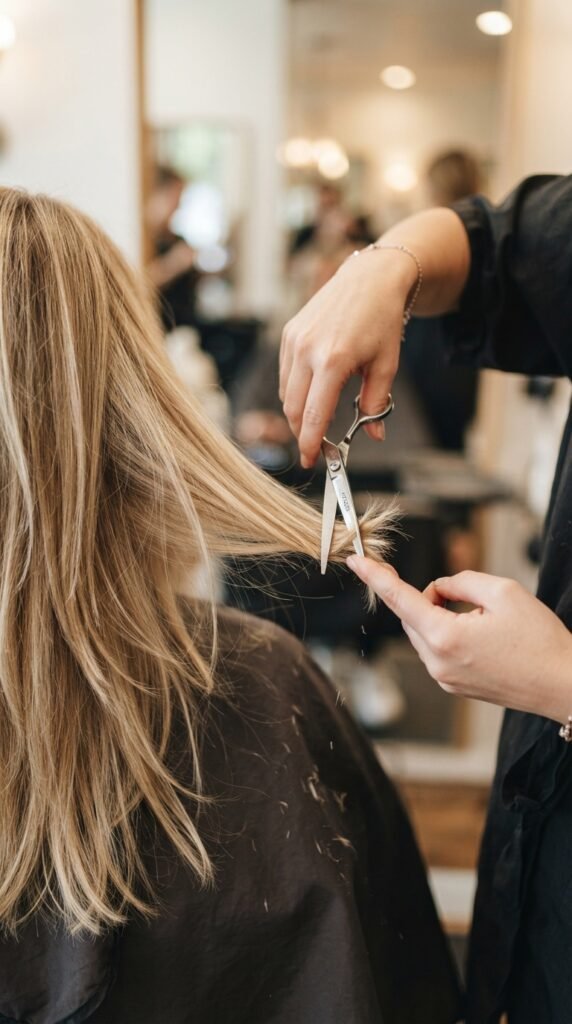
You don’t need a big chop to save your hair. I was convinced I’d need at least four inches off. But my stylist talked me into micro-trims: just a quarter inch every six weeks. Little snips, no dramatic loss.
Micro-trims keep your ends healthy without sacrificing the length you’re desperate to keep. Split ends travel upward, so snipping the first quarter inch stops the shredding from creeping higher.
Ask your stylist to:
- Cut only the very tips
- Dust the ends while hair is dry
- Avoid razors on fragile hair
I lost about half an inch in six months, but my hair kept getting longer. Best trade-off.
What to Tell Your Stylist Next Time
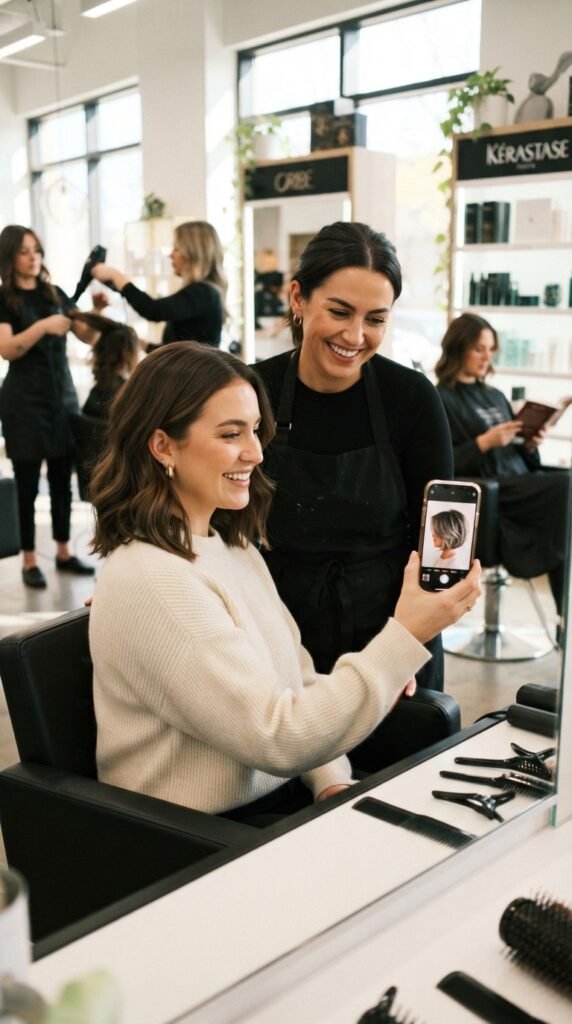
Communication changes everything. The second visit after my bleach disaster, I walked in with a clear list. My stylist whispered that I was her favorite type of client. Ha!
Bring this script:
- ‘No bleach on my lengths, only my regrowth’
- ‘I want to keep my length, so let’s do a micro-trim only’
- ‘Please avoid harsh toner on my fragile ends’
- ‘Can we use a bond builder during processing?’
Also bring photos of what you want. The goal isn’t a whole new look right now. It’s maintaining what you have while it grows out.
Products I Swear By (Drugstore + Splurge)
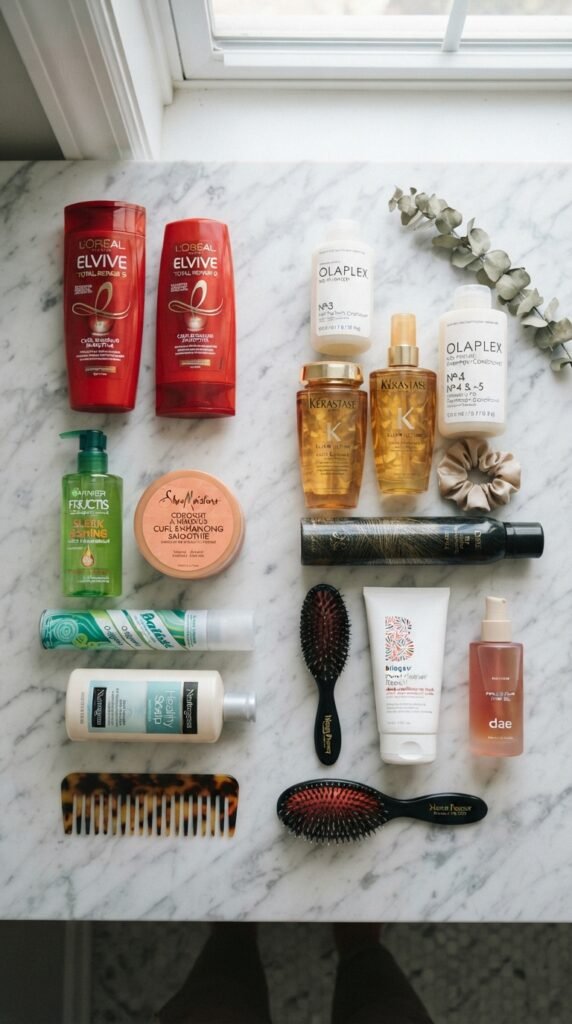
I tested a lot so you don’t have to. Some are cheap, some are pricier, but all are worth it if you’re serious about recovery.
Drugstore favorites:
- Elvive Total Repair 5
- Shea Moisture Manuka Honey Mask
- Aussie Miracle Curls for texture
Splurge-worthy picks:
- K18 Molecular Repair
- Olaplex No. 3 and No. 6
- Amika The Kure
The most important part is consistency. I set a reminder on my phone for wash days. Mix and match drugstore and salon brands; your wallet can breathe easy.
What About the Trendy Cuts? (2026 Hairstyles Edition)
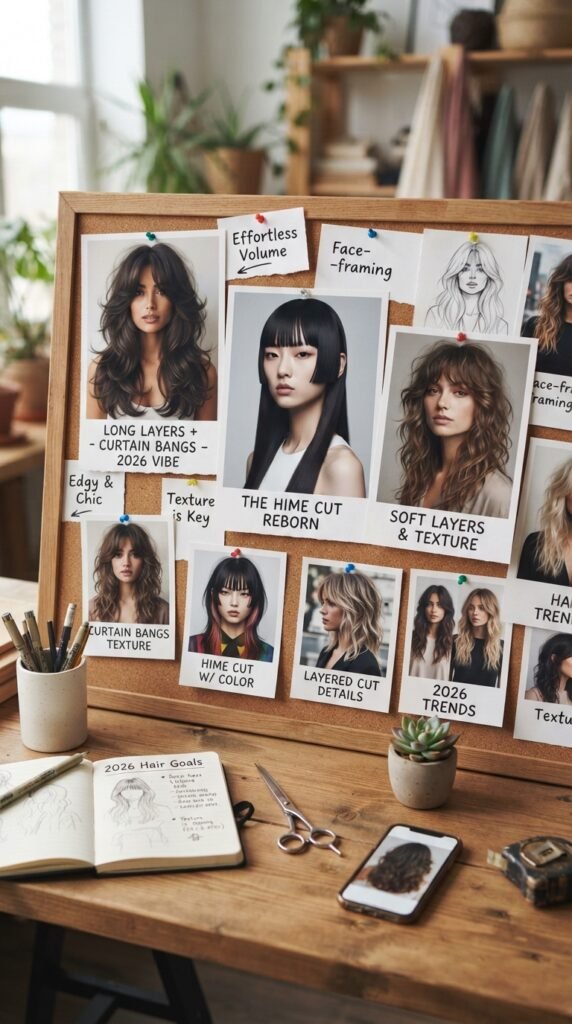
The internet is full of stunning 2026 hairstyles, and my feed was taunting me with cute cuts I couldn’t try. I was obsessed with old money hair and the quiet luxury bob. But I kept telling myself: I’m growing my hair out, not chopping it off.
Here’s the good news: many 2026 looks work on medium to long hair. You don’t need to chop everything off to join the trend.
Trends you can try without losing length:
- Long layers for movement
- Curtain bangs, go easy on them
- A subtle hime cut on long hair
- Glossy, sleek old-money blowouts
Your recovery hair can absolutely rock these trends.
The Old Money Hair Route

While my hair recovered, I leaned hard into the old money hair trend. Think shiny, expensive-looking, perfectly polished long hair. No fried texture required.
This is all about how you finish your hair, not how you cut it. A middle part, smooth blowout, and soft waves make damaged hair look intentionally sleek instead of matted.
My routine for old-money vibes:
- Apply a shine serum from mid-length to ends
- Blow-dry with a round brush on low heat
- Finish with a tiny drop of hair oil
- Brush through gently once dry
It took time, but the moment my hair looked like old money hair, my confidence doubled. Dress up your recovery.
The Quiet Luxury Bob / Asymmetrical Lob Option

I’m not going to pretend I didn’t think about the quiet luxury bob or an asymmetrical lob. Gorgeous cuts, but not worth the chop. For the first time, I considered cutting my hair.
But here’s the twist: I let my hair grow into a subtle asymmetrical lob without losing the back length. Just a little shaping around the front. That gave me a taste of the trend while keeping my length.
If your damage is truly too much, an asymmetrical lob can remove the worst ends while keeping a stylish shape. It’s a compromise. Don’t rush into scissors unless breakage is at shoulder length. Give your recovery time first.
Romantic Goth / Vampire Haircut Vibe

Once my strands felt stronger, I started playing with darker, moodier styles. Romantic goth hairstyles and the vampire haircut trend are huge right now, and they work beautifully with recovering hair.
The best part? Redoing a darker shade is actually protective. Darker dye coats the hair, filling in gaps. It made my strands feel thicker.
What I tried:
- A charcoal brown gloss
- A soft black demi-permanent dye
- A deep side part with loose waves
The drama made my old damaged yellowness disappear. I looked mysterious instead of messy. It’s the most fun way to recover from bleach damage, honestly.
Glitchy Glam Hair and Hime Cut Inspo
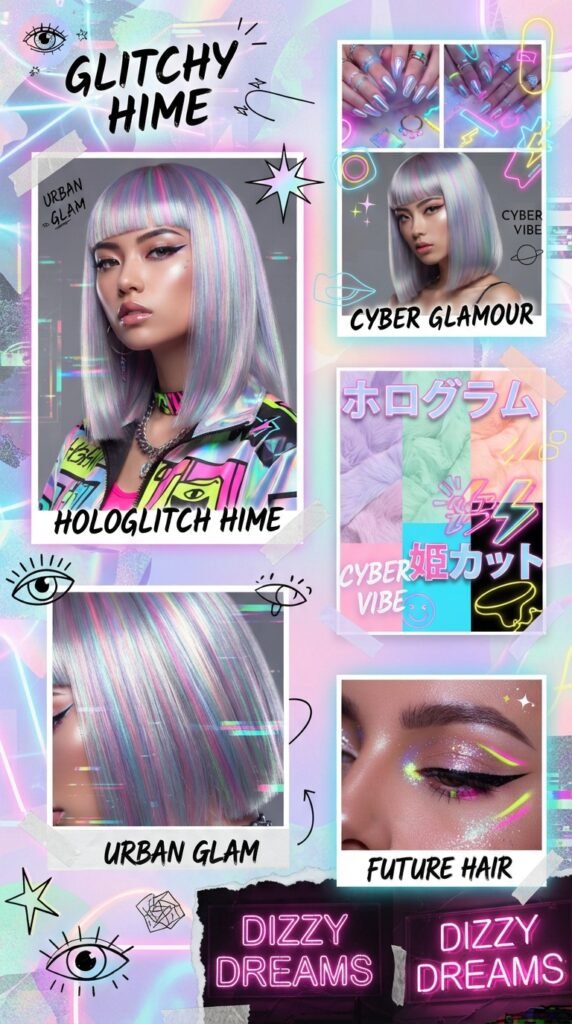
Okay, let’s talk about the fun 2026 trends. Glitchy glam hair is all about metallic, holographic lowlights that look like a temporary glitch in your color. And the hime cut, with its straight face-framing pieces, is another quirky option.
Here’s my honest take: while I was recovering, I didn’t risk these on fragile strands. Hime cut requires cutting face-framing pieces, which is fine. But glitchy glam involves color, which means chemicals. Not yet.
I saved these ideas for the future. You can too. Pin them, admire them, and wait until your recovery is solid. Your hair will survive to try these trends later.
Makeup and Styling While You Recover

Not gonna lie, there were days when my hair looked rough and I wanted to hide. So I shifted my focus to makeup and outfits. A bold lip or a sharp eyeliner draws eyes away from your hair. It’s not a secret; it’s styling math.
A few easy tricks:
- Wear gold hoops to frame your face
- Try a middle part for an elegant look
- Use a headband or silk scarf for polish
- Light concealer around your hairline helps clean up
This kept my confidence high while the hair fixed itself. You’re not cheating; you’re surviving. Fashion is armor. And honestly, it worked. People complimented my makeup more than ever.
When to See a Professional

Some damage needs an expert. I’m all for DIY, but there are signs you should call a salon. If your hair is breaking off at the root, or if it turns to mush when wet, please seek help. That’s a breaking point.
A professional colorist can:
- Assess the real level of damage
- Recommend a personalized repair routine
- Do a safe color correction if needed
- Decide if micro-trims are enough
I had one professional appointment three weeks into my recovery. It cost me a consult fee, but it saved me months of guessing. Don’t be embarrassed. Stylists have seen way worse. Your hair is fixable.
Timeline: What to Expect at Each Stage
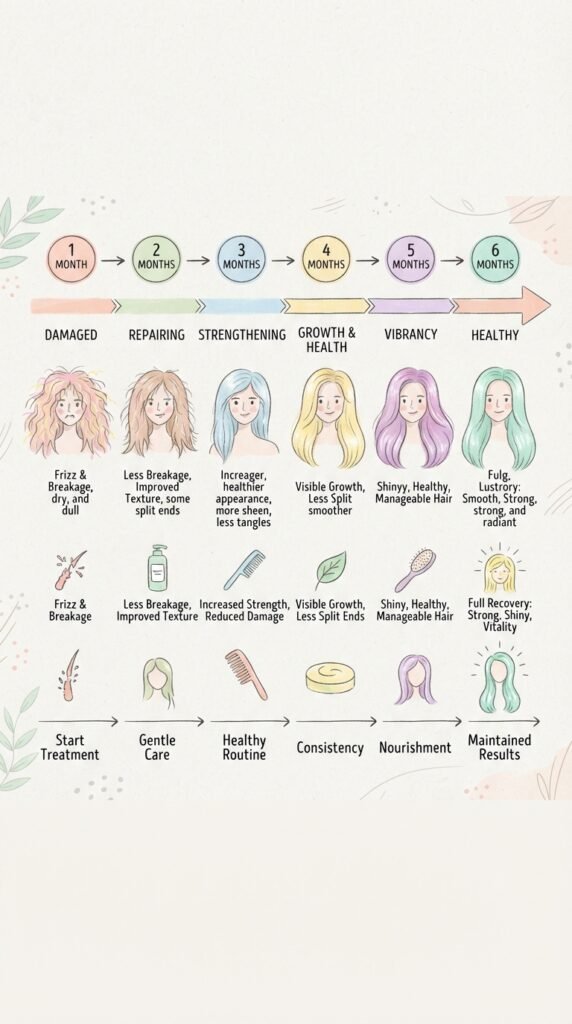
Here’s the realistic timeline so you don’t panic when your hair doesn’t fix overnight.
- Weeks 1-2: No visible improvement; hair still dry, but less breakage. Hang in there.
- Weeks 3-4: Hair feels softer and stops snapping. Fewer hairs in your brush.
- Weeks 5-8: Shine comes back. Toner balanced the brass. You can leave the house without a hat.
- Months 3-6: Ends are still dry but stable. Micro-trims help.
- Month 6+: You have a healthy length you can style again.
Recovery is slow, but it’s not hopeless. Every day you don’t reach for scissors is a step forward.
My Favorite Quick-Fix Hairstyles While Growing Out

Some days you’re just over it. I get it. That’s why I have a list of quick, easy styles that look intentional and hide damage.
Try these:
- Bubble ponytail with scrunchies
- Half-up, half-down with a claw clip
- Curtain bangs pinned with a bobby pin
- A slicked-back high bun with gel, not too tight
- French twist with a claw clip
These take under five minutes, a lifesaver on bad hair days. They also don’t tug or pull on fragile strands. Pretty and protective can coexist. I survived weeks using nothing but spiral scrunchies and claw clips. You’ll make it too.
What I’d Do Differently (Honest Lessons)

I want to give you the honesty I wish I had gotten. First, I would never ask for a double-process bleach in one sitting again. It’s not worth the risk. If a stylist says it’s too much, trust them.
Second, I’d patch test a strand before committing. One strand test would have shown me how much lift my hair could handle.
Third, I’d prep my hair before bleaching. Deep conditioning, protein masks, and trimming split ends beforehand make a huge difference. I can’t turn back time, but you can learn from my mistakes. This time, we recover.
A Warm Final Thought (From My Hair to Yours)
I could give you a million more tips, but the truth is simple: recovery is possible. I walked through the worst of it, and your hair can make it too. It won’t happen overnight, but it will. Be consistent, be patient, treat your strands like the precious things they are.
The length you love doesn’t have to go anywhere. Neither does your confidence. You’ll wake up one day excited about your hair again.
Save this post to Pinterest for the next hair crisis. Drop a comment below: have you ever had a bad bleach job? What saved your hair? I read every single one.