How to Get classic hair Hair That Looks Effortless (But Isn’t)
We’ve all seen her. The woman with hair that looks like it just fell into place, a cascade of perfect waves or a sleek, polished bob that seems utterly untouched by effort. It’s the kind of classic, timeless hair that whispers of good genes and easy mornings. But here’s the secret whispered back from hairstylists and beauty insiders: that look is almost never an accident.
True, “effortless” hair is one of the most sought-after and deceptive aesthetics in beauty. It’s a masterclass in controlled chaos, a carefully constructed illusion of nonchalance. The goal isn’t messy or unkempt; it’s hair that looks soft, touchable, and naturally beautiful, as if you simply ran your fingers through it and stepped out the door. The reality, however, involves a bit more strategy.
This guide is your backstage pass to achieving those classic, “effortless” hairstyles. We’re pulling back the curtain on the techniques, products, and little tricks that transform a high-maintenance routine into a low-key look. Get ready to learn how to put in the work so you can look like you didn’t.
The Foundation: It All Starts With Healthy Hair
You cannot build a beautiful, effortless-looking style on a foundation of damaged, thirsty hair. The very essence of this aesthetic is health. Think about it: hair that shines, moves, and feels soft is hair that looks inherently good, even on its most simple days. Dry, brittle, or frizzy hair fights against the “undone” ideal, constantly looking like it’s trying too hard to behave.
Your first and most crucial step is to invest in a solid hair care regimen tailored to your hair type. This means using a nourishing shampoo and conditioner, incorporating a weekly deep-conditioning treatment, and never, ever skipping heat protectant. Healthy hair is more pliable, holds style better, and has a natural luminosity that no highlighter spray can truly replicate. It’s the blank canvas upon which your effortless masterpiece will be painted.

The Secret Weapon: Mastering Texture
If healthy hair is the foundation, then texture is the architecture. Smooth, perfectly flat hair can often look “done,” while hair with movement, wave, and variation reads as natural and easy. The goal is to break up uniformity and introduce a lived-in feel.
This is where texturizing products become your best friend. Sea salt sprays impart a beachy, slightly gritty feel that gives hair body and separation. Texturizing mists and powders add volume at the root and a piecey, matte finish that prevents hair from looking slick or over-styled. The key is application: don’t spray and smooth. Spray and scrunch, or spray and tousle. Use your fingers, not a brush, to distribute the product and create those imperfect, perfectly placed waves and bends.

The Tools of the Trade: Strategic Styling
While we’re championing the “undone” look, the right tools are non-negotiable. The trick is to use them in a way that mimics the hand, not the machine.
The Curling Wand (Not Iron): For soft, Bardot-esque waves, a curling wand is superior to a clamp iron. The lack of a clamp means the ends remain loose and free, creating a more organic wave pattern. The technique is everything: wrap large, random sections of hair around the barrel, alternating the direction you wrap each section. Leave the very ends out. When you’re done, don’t touch them for at least ten minutes to let them set. Then, and only then, run your fingers through to break up the curls into soft, blended waves.
The Round Brush for Volume: That coveted “bend” at the ends of a bob or the root volume in a blowout comes from a round brush. The motion isn’t about creating a tight curl, but about guiding the hair into a soft curve as you blow-dry. Focus on lifting the roots away from the scalp for body and turning the ends under or out for a relaxed flip.
Your Own Two Hands: Never underestimate the power of your fingers as a styling tool. They are the ultimate device for creating a tousled, piecey finish. Use them to separate curls, fluff roots, and arrange strands in a way that looks artfully random.

Classic Styles, Effortless Interpretation
Let’s apply these principles to some timeless hairstyles. Here’s how to execute them with an effortless twist.
The Undone Blowout: Forget the glassy, helmet-like blowouts of the past. The modern blowout is soft, bouncy, and has a bit of flyaway. After blow-drying with a round brush for volume, go in with a large-barrel curling iron and add a few very loose waves throughout, concentrating on the mid-lengths to ends. Then, flip your head over and massage your roots with your fingertips to break up the perfection. Spritz with a texturizing spray for a lived-in hold.
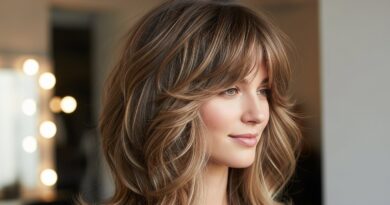
The “I Slept In These” Waves: This is the holy grail. Start with day-old hair that has some natural texture. If your hair is straight, use a texturizing spray as a base. Create waves with a curling wand using the random-direction technique mentioned above. Once cooled, run your fingers through thoroughly. Then, take a small amount of pomade or wax, rub it between your palms, and gently smooth it over the surface of your hair, focusing on the ends to tame any frizz and create separation. The result should be soft, romantic, and perfectly imperfect.
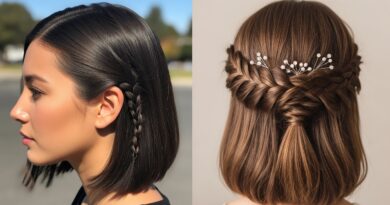
The Textured, Piecey Bob: A sharp, geometric bob can look severe. An effortless bob has movement. Ask your stylist for a cut with soft layers and textured ends. To style, apply a volumizing mousse to damp roots and blow-dry using your fingers to lift the hair at the root. Use a flat iron not to sleekly straighten, but to create slight bends and turns in random sections—twist the iron as you pull it through the ends. Finish with a light-hold hairspray you can scrunch to soften.

The Finishing Touches: Embracing Imperfection
This is the final, and perhaps most important, step in the process. You must learn to embrace a little imperfection. The goal is not a flawless, Instagram-filter finish.
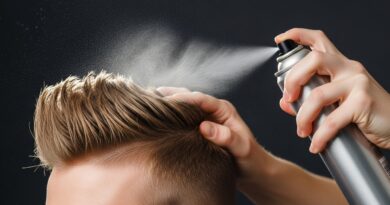
After you’ve styled your hair, walk away from the mirror for a few minutes. Let the style settle. When you return, resist the urge to neaten every single strand. A few face-framing pieces out of place? Leave them. A little bit of volume on one side and less on the other? It looks natural. Use a light-hold, flexible hairspray that allows for movement, not a super-hold lacquer that freeze-dries your hair into place. The beauty of this style is in its dynamism—it should look good from every angle, not just one.

The Ultimate Effortless Hack: Strategic “Second-Day” Hair
Often, the most effortless hair isn’t styled on the day you wear it. It’s styled the day before. Second-day (or even third-day) hair is a secret weapon because it has a natural accumulation of your hair’s natural oils and the memory of the previous day’s style, creating a softer, more malleable texture.
To master this, dry shampoo is essential. Spray it at the roots the night before or the morning of to absorb oil and add volume. Don’t just spray and leave it; massage it in with your fingertips to distribute it and lift the roots. Then, revive any waves or curls by spritzing with a mixture of water and a leave-in conditioner in a spray bottle, then scrunching. You’ll find your hair has a more integrated, natural-looking texture than it did on day one.

Conclusion: The Confidence of Looking Effortlessly You
Mastering the art of effortless, classic hair is a paradox. It requires knowledge, the right products, and a bit of practiced technique. But the result is worth every second. It’s a style that transcends trends, a look that says you’re polished without being pretentious, put-together without looking like you tried.
So, the next time you see someone with that perfect, “I woke up like this” hair, know that there’s a good chance they have a curling wand in their drawer and a texturizing spray on their shelf. They’ve simply learned the beautiful secret: that the pinnacle of style isn’t about looking like you spent hours, but about looking so naturally beautiful that no one could ever tell you did.