Lock 28 Dutch Fishtail Hybrids Merging Techniques for Complexity
Okay, let’s be real for a second. We all love a classic fishtail braid, and we all get a little obsessed with that perfect Dutch braid. But what if I told you there’s a secret third thing? A hybrid that takes the best of both worlds and turns your hair into a masterpiece without needing a salon appointment. I’m talking about the Lock 28 Dutch Fishtail Hybrid. It sounds technical, I know, but it’s just a clever way to weave two techniques together for a look that’s messy, intricate, and totally undone. In under fifteen minutes, you can have a braid that looks like you spent all morning on it. Let’s get into the good stuff.
Why We’re Talking About the Lock 28 Hybrid
This isn’t just a random braid. The “Lock 28” idea came from blending the tension of a Dutch braid (where the strands go *under* instead of over) with the loose, delicate picking of a fishtail. You get the structure and volume of a Dutch braid, but the wispy, romantic finish of a fishtail.
Think of it as the perfect middle ground for when you want your hair to look intentional but not stiff. It fits right in with the whole easy, lived-in vibe of 2026 hairstyles.
What You’ll Need Before You Start

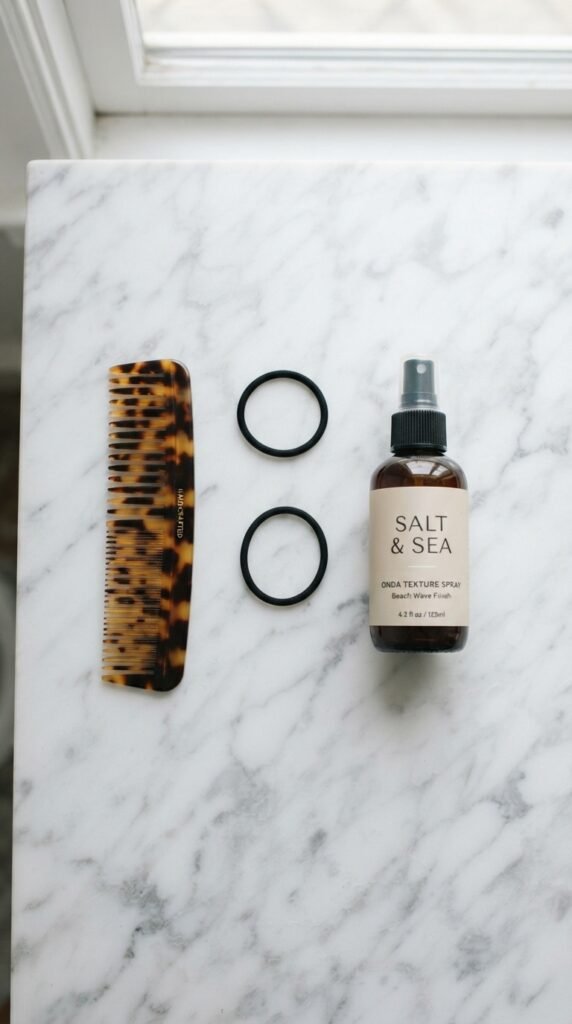
Keep it simple. You don’t need a ton of fancy tools for this. Just grab a rat-tail comb for clean sections, two tiny clear elastics, and your favorite texture spray.
- A spray bottle with water (if your hair is too clean)
- A bit of dry shampoo or sea salt spray for grip
- Patience (that’s the secret ingredient)
Step 1: Prepping Your Hair for Grip
Clean hair is slippery. For a braid like this to hold, you need texture. Spritz your hair with a sea salt spray or work a little dry shampoo through the roots. If you have fine hair like me, this step is non-negotiable.
It gives the strands something to grip onto, which makes the Dutch part way easier. Plus, it adds that perfect “second day” texture that makes old money hair look so effortlessly cool.
Step 2: The Dutch Start (Your Foundation)
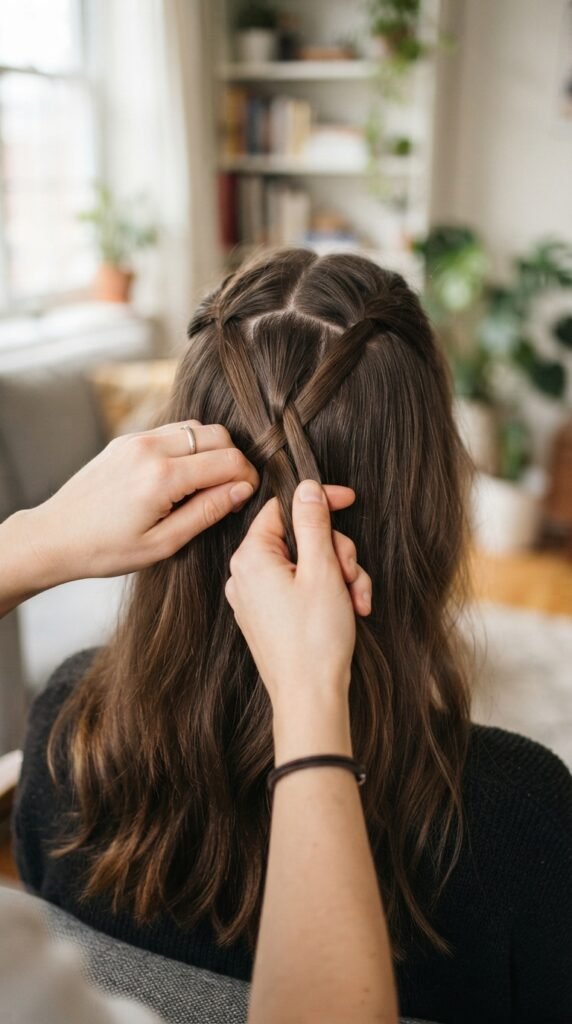
Start at your crown exactly like you would a normal Dutch braid. Take a small section, split it into three, and cross the left piece under the middle, then the right piece under the middle. Remember: under, not over.
This creates that raised 3D effect that makes the braid look thick and chunky. Keep the tension tight at the top so it doesn’t fall flat later. This is your anchor.
Step 3: The Fishtail Shift (Here’s the Magic)
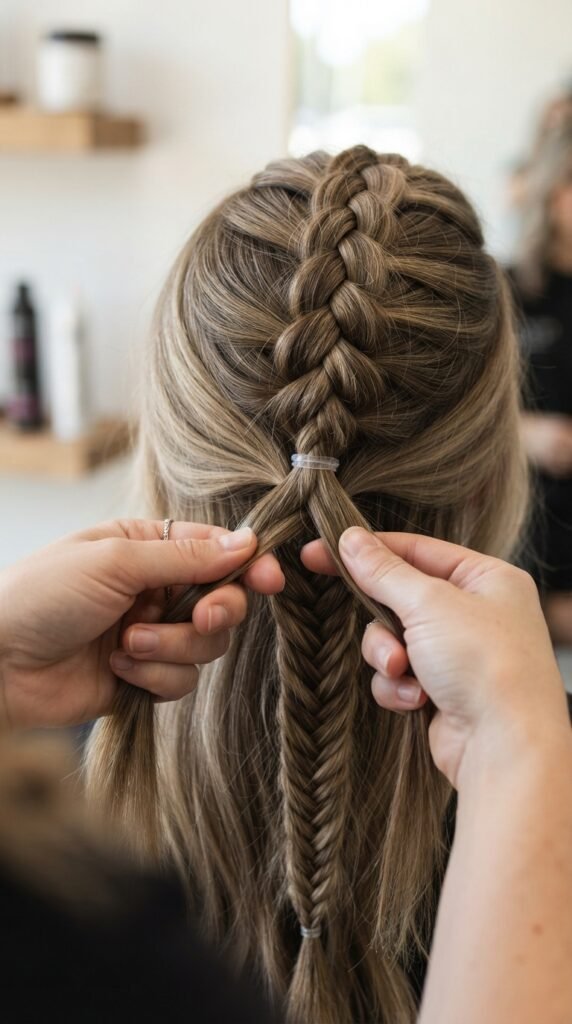
Here is where we merge. After about four or five Dutch crossings (roughly two inches down), stop adding new hair. You now have three loose strands. Take the middle strand and just let it drop for a second.
You are going to combine the left and right strands together. You now only have two big chunks of hair. Bingo. You just switched from a Dutch braid to a fishtail foundation.
Step 4: Weaving the Fishtail Body
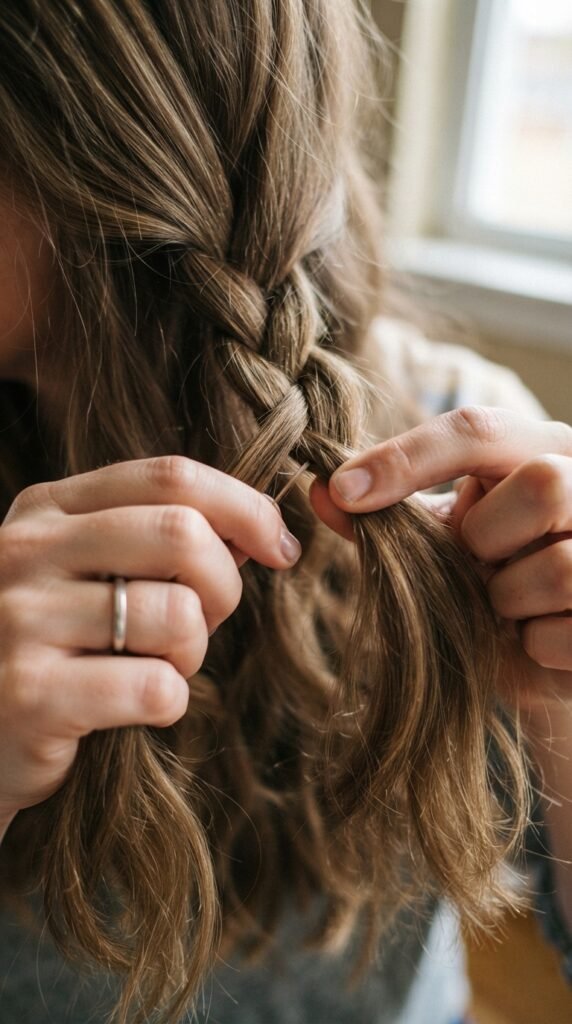
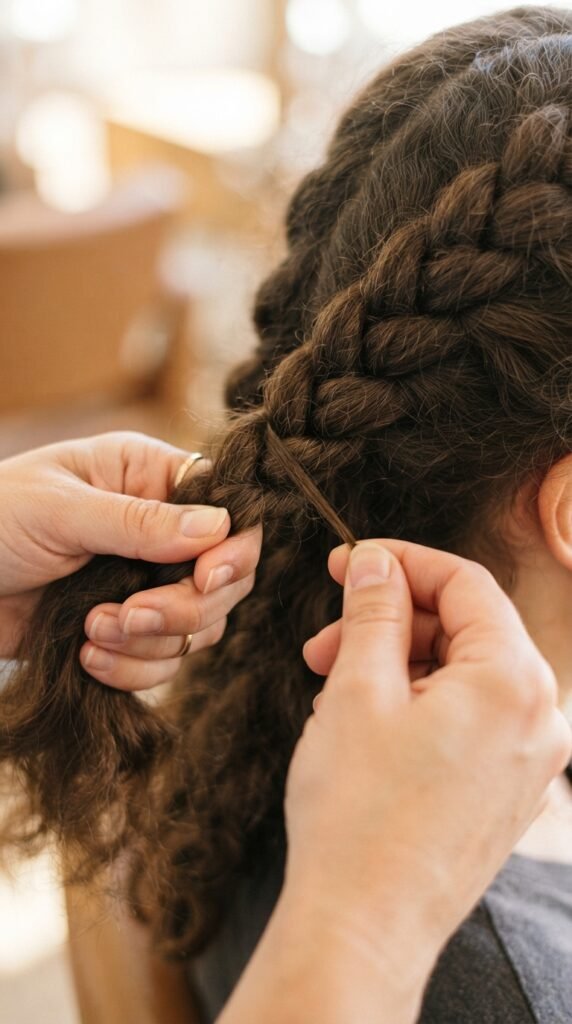
Now we are in fishtail territory. Take a tiny, thin strand from the very outside of the left section and cross it over to join the right section. Then take a tiny strand from the outside of the right section and cross it over to the left.
Keep those pieces small. The smaller the strand, the more defined the braid pattern. Keep going until you reach your nape. This is where the texture really shines.
Step 5: Securing the End
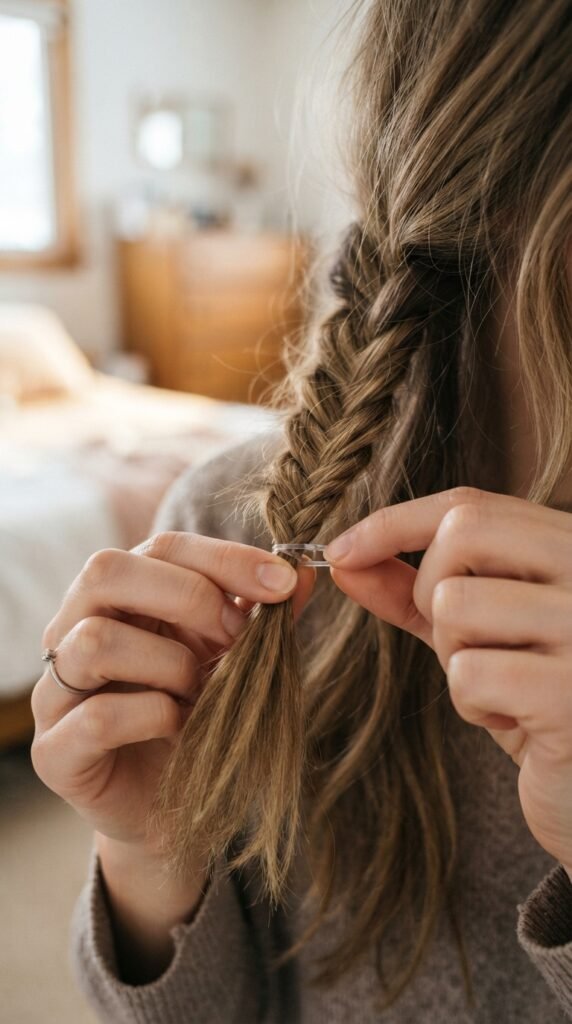
Once you run out of hair to cross, just tie it off with a clear elastic. Don’t use a thick one—you want this to disappear into the hair. Keep the end tight so the braid doesn’t unravel while you do the fun part.
Give yourself a little pat on the back. The hard weaving is done. Now we make it pretty.
Step 6: The “Pancaking” Method

This is where the Lock 28 gets its volume. Gently tug on the outer edges of the braid loops. Pull them outward, not upward. This is called pancaking, and it makes the braid look twice as thick as it actually is.
Don’t pull too tight on the fishtail part—keep it soft. The goal is controlled chaos. Think romantic goth hairstyles that look a little undone but very intentional.
Step 7: Face-Framing Pieces

No braid looks good if it’s scraped back too tight. Take your fingers and gently pull out a few pieces around your face. Soften the front. Let them fall naturally.
This gives that “I just threw this together” vibe that is huge in 2026 hairstyles. It also softens your jawline and makes the whole look more wearable for everyday.
Why This Works for Fine Hair
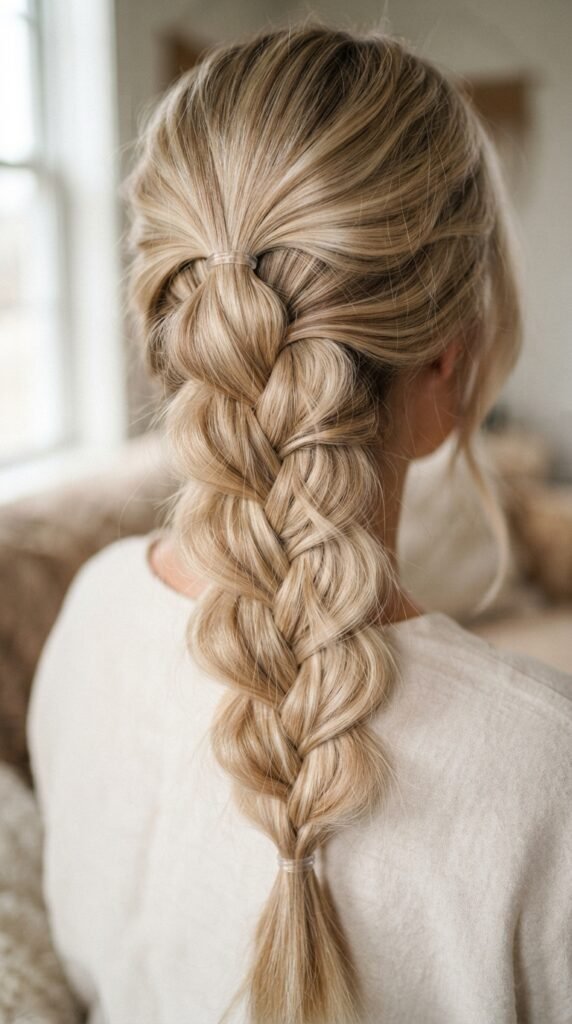
If you think braids aren’t for you because your hair is thin, think again. The Dutch base lifts the roots, while the fishtail section creates the illusion of thickness. It’s like optical illusion hair.
Pancaking (Step 6) is your best friend here. You can make a tiny braid look full and bouncy without adding any extensions. This is a total win for anyone who wants volume without weight.
How to Get the “Quiet Luxury” Finish

The quiet luxury bob is everywhere, but what about quiet luxury *braids*? The secret is in the finish. Keep the braid a little messy, but the overall silhouette clean. No flyaways sticking straight up.
Pair this braid with a silk ribbon or a simple low knot at the nape. It screams money without trying. It’s the kind of detail that looks expensive because it’s simple.
Adding a Glitchy Glam Twist
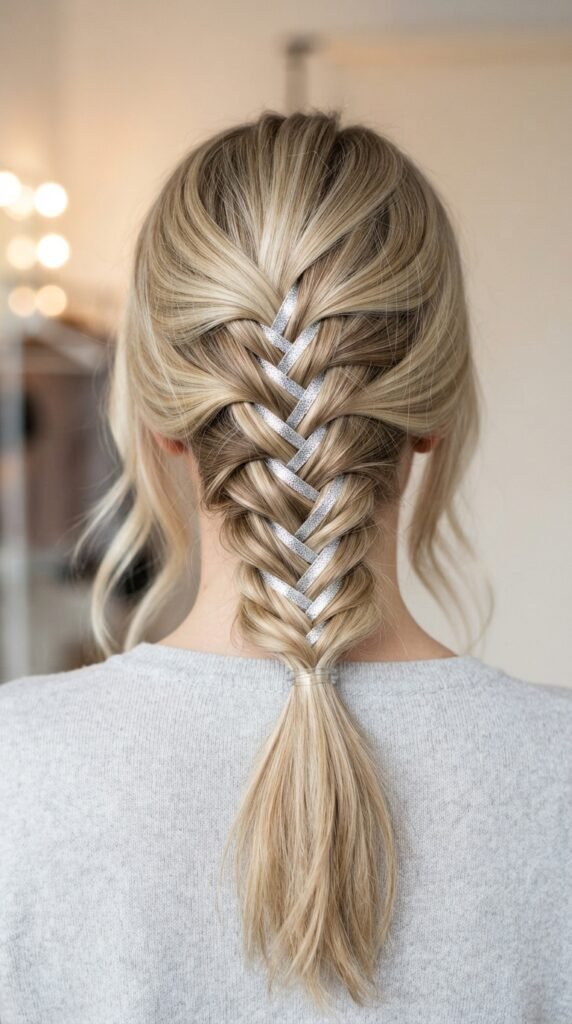
Feeling bold? This braid is the perfect canvas for glitchy glam hair. Take a thin strand of metallic thread or a silver ribbon and weave it in and out of the fishtail section as you braid.
It creates tiny pops of light that catch the eye. You don’t need to do the whole braid—just the middle section. It gives a high-fashion edge without looking like a costume.
Turning It into an Asymmetrical Lob Look
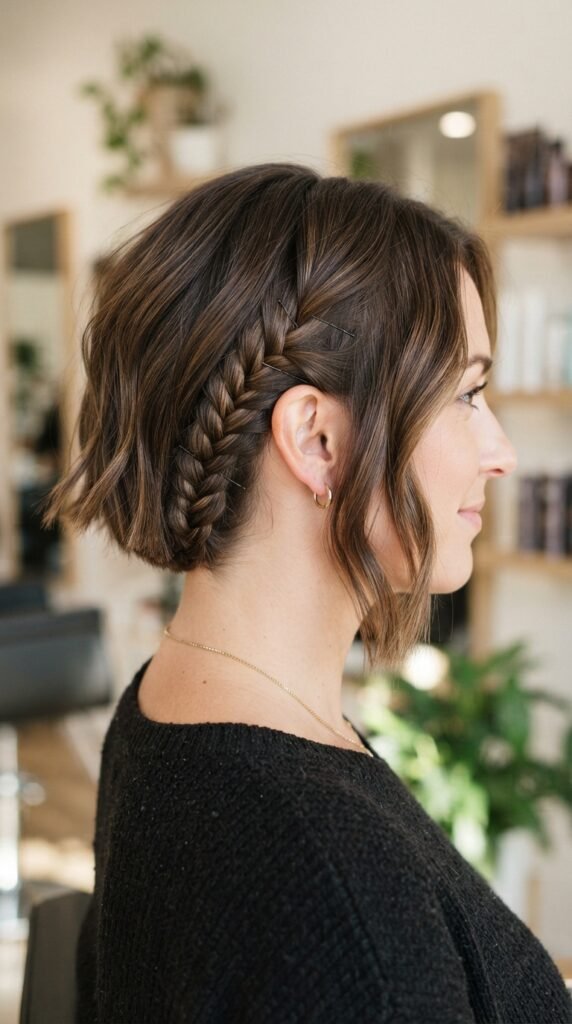
If you have an asymmetrical lob, don’t think you can’t braid. You just have to adapt. Instead of braiding all your hair, only braid the longer side. Start the Dutch part at your temple and let the fishtail fall over your shoulder.
You can pin the end behind your ear or let it hang. It feels fresh and modern, especially with choppy layers. It gives that short hair a whole new life.
The “Vampire Haircut” Connection

The vampire haircut is all about deep parts, sharp layers, and a little drama. This hybrid braid is the perfect accent. You don’t need to braid everything. Just braid a small section from your hairline and let it fall into the longer layers.
It adds that gothic, romantic texture without committing to a full head of braids. It’s like a little secret detail that only people close to you will see.
Why the Hime Cut Loves This Braid

The hime cut is iconic for those blunt cheek pieces. You don’t want to lose them in a braid. So, section off your front pieces first. Braid the back hair using this hybrid technique, then let the front pieces fall freely.
This gives you the classic anime-inspired silhouette but with a grown-up texture. It’s a great way to update a geometric cut for a softer, more bohemian day.
Keeping It Together All Day

Nothing is worse than a braid that falls apart by lunch. A light mist of hairspray is your friend here. Hold the can about twelve inches away and give the braid a quick once-over.
If you are worried about frizz, run a tiny bit of hair oil over your palms and smooth it over the braid. It tames baby hairs and adds a healthy shine that keeps the whole look polished.
Sleeping in Your Braid

This braid actually looks even better the next day. Sleeping in it helps the waves set. Just wrap it in a silk scarf or use a satin pillowcase to reduce friction.
When you take it out in the morning, you get these beautiful, messy waves that look like you spent hours on them. It’s a two-for-one hairstyle deal. Total win for busy mornings.
Accessorizing Without Overdoing It
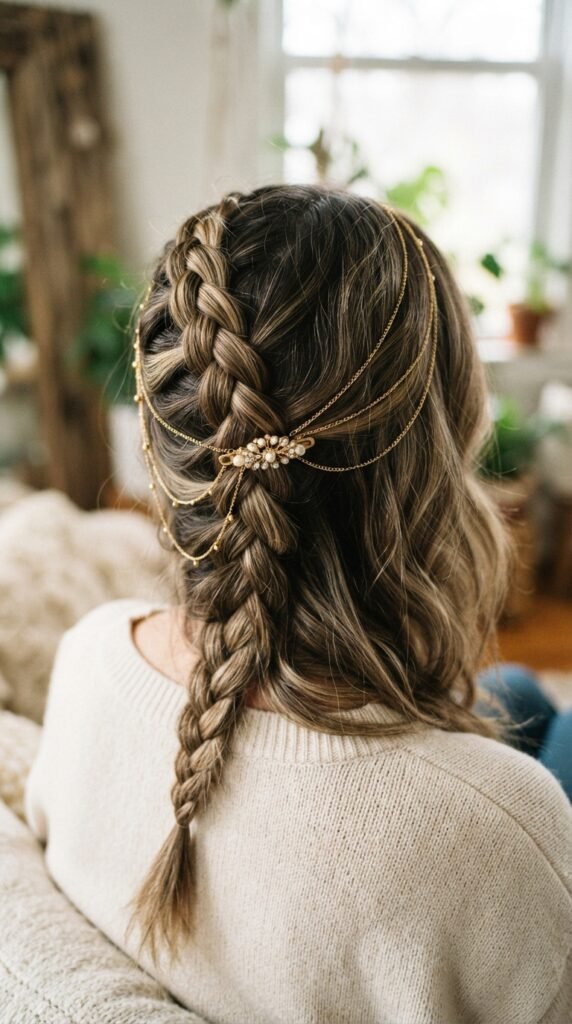
A single clip or a small pearl pin at the crown adds major polish. Don’t go overboard—one piece is plenty. Clip it right where the Dutch section meets the fishtail section to highlight the transition.
This draws the eye to the cool technique you used. It’s a subtle flex that says you know what you’re doing, even if you were just experimenting in the bathroom mirror.
Making It Work for Short Layers
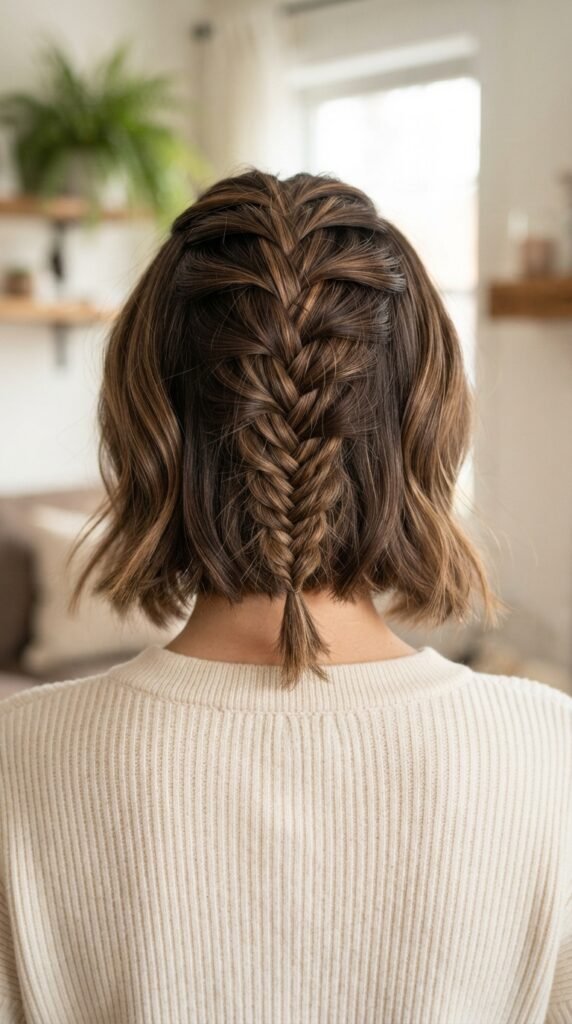
Short layers can be annoying because they fall out. But in this braid, those wispy layers become part of the charm. They stick out naturally and add that feathery, soft texture.
You don’t need to catch every single hair. Let the pieces that want to escape, escape. It looks more modern and less “I tried too hard.” Embrace the imperfections.
A Quick Word on Tension
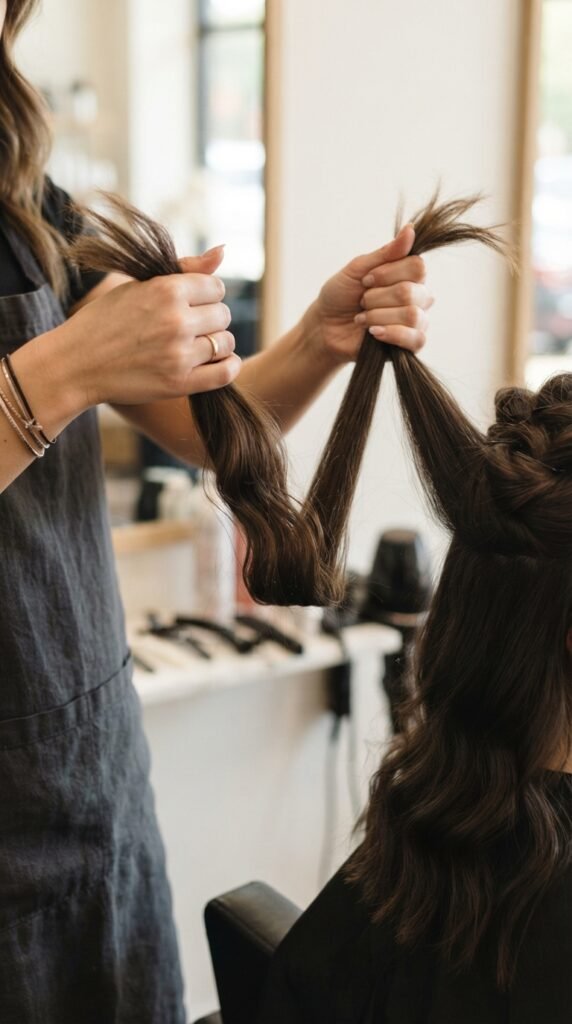
Too tight and you look like you are going to a ballet recital. Too loose and it falls apart. The sweet spot is a firm, even grip. Pull tight enough to see the pattern, but loose enough that you can pancake it later.
If you feel tension at your temples, you are pulling too hard. Loosen up. Your hair should still have natural movement around your face.
When to Wear This Style

This is not just a “special occasion” braid. It works for brunch, a day at the office, or a casual dinner. It dresses up or down depending on your accessories and outfit.
It bridges the gap between casual and dressy perfectly. You can wear it with a linen sundress or with a leather jacket and jeans. It’s incredibly versatile for real life.
Fixing Mistakes Without Starting Over

Did you pull a piece too tight? No worries. Just use the tip of your comb or your pinky finger to gently wiggle that section loose. You don’t need to undo the whole thing.
If you messed up a crossover, just pull the strand out and re-insert it. Hair is forgiving. Most people won’t notice a tiny mistake. The whole point is for it to look organic.
How This Braid Fits 2026 Trends
This year is all about texture and contrast. The Lock 28 hybrid hits every note. It has the structure of old money hair with the softness of romantic goth hairstyles and the edge of glitchy glam hair.
It is a master class in blending opposites. You don’t have to pick one style anymore. You can mix them all into one braid. That is the fun of where hair is heading in 2026.
So, that is the Lock 28 Dutch Fishtail Hybrid. It sounds fancy, but it is just a really clever way to get a complicated-looking braid without the headache. I promise, once you do it once, it becomes your new go-to. It makes you feel like you have a secret superpower in your morning routine.
Save this post to Pinterest so you have the steps ready for your next hair day. And drop a comment below—tell me which braid you normally struggle with: the Dutch or the Fishtail? I want to hear your wins and your fails. We are all learning together.