Low Manipulation Hairstyles For Restoring Over Processed Damaged Hair Strands
If your hair has been through it — bleach, box color, relaxers, heat tools, the whole lineup — you’re in the right place. I’ve been there. My strands snapped off in chunks and I could hear them crying every time I ran a brush through.
Here’s the good news: the fix isn’t a hundred new products. It’s doing less. Way less.
Low manipulation hairstyles give your hair what it actually needs after over-processing — rest. No tugging, no flat irons, no restyling every morning. Just gentle shapes that let your strands rebuild in peace.
In this post I’m sharing the low manipulation styles I used to grow my damaged hair back, plus how they fit right into 2026 hairstyles like the quiet luxury bob and old money hair. Let’s get into it.
What Low Manipulation Really Means

Low manipulation means you’re not constantly touching, combing, brushing, or heat styling your hair. That’s it. Fewer steps, fewer chances to snap fragile strands.
Think of over-processed hair like a scab. You wouldn’t scratch a scab all day and expect it to heal. Same energy.
- No daily brushing
- No daily washing
- No tight pulling or heavy tension
- No heat tools on repeat
You can still look put together. You just do it with styles that hold for two to four days.
Signs Your Hair Is Over-Processed
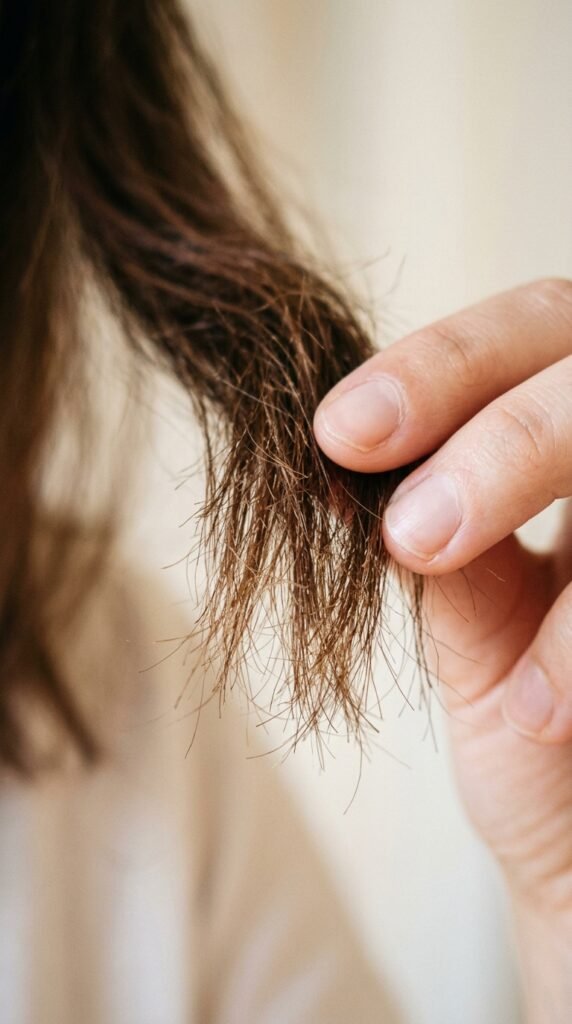
Before you change anything, let’s make sure we’re solving the right problem. Over-processed hair has a pretty obvious personality.
- Stretches like gum when wet, then snaps
- Feels straw-like even after deep conditioning
- Breaks in tiny pieces all over your bathroom floor
- Looks dull no matter how much shine spray you use
- Tangled within minutes of detangling
If three or more of these sound familiar, your hair has lost protein and moisture. It needs fewer touch points, not more products.
Why Rest Beats Repair Products
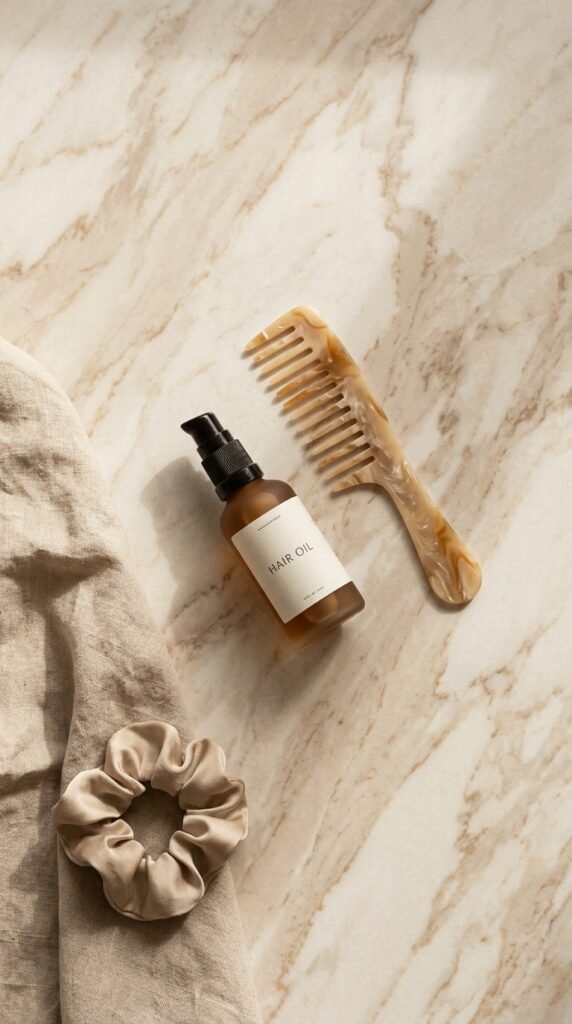
I wasted a lot of money on repair serums before I learned this. Products can help, but nothing rebuilds hair like leaving it alone. Hair is dead once it leaves the follicle, so the only real “repair” is prevention.
Every time you brush, flat iron, or re-braid tightly, you lose a few strands. Over months, that adds up to thin ends and no length retention.
Low manipulation cuts those losses way down. You keep what you grow.
The One Rule That Matters Most

If you remember nothing else from this post, remember this: stop touching your hair.
Every style you choose should answer one question — will this let me leave it alone for at least two days?
- Style it once
- Sleep protected
- Refresh minimally in the morning
- Repeat
That’s the entire system. Everything else is just details.
Your Gentle Wash Day Routine
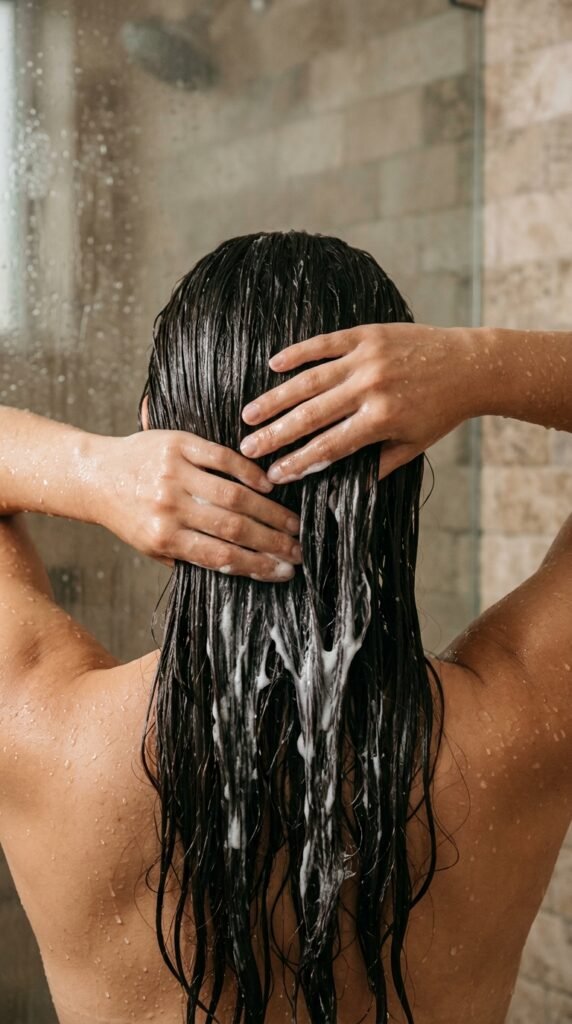
Wash day is where most damage happens. Let’s make it boring and safe.
- Pre-detangle dry hair with your fingers only
- Wash with a sulfate-free shampoo, focusing on the scalp
- Apply a deep conditioner mid-shaft to ends
- Rinse with cool water
- Detangle in the shower with conditioner still in, using a wide-tooth comb
- Wrap in a cotton t-shirt, never a rough towel
Once a week is plenty. Twice if your scalp gets oily. Skip the aggressive scrubbing.
Skip the Tight Styles

Tight braids, slicked-back ponytails, and glued edges are the enemy right now. Tension causes breakage at the hairline and mid-shaft, and over-processed hair breaks faster than healthy hair.
Swap tight for loose:
- Loose braids instead of cornrows
- Low buns instead of high, tight ponytails
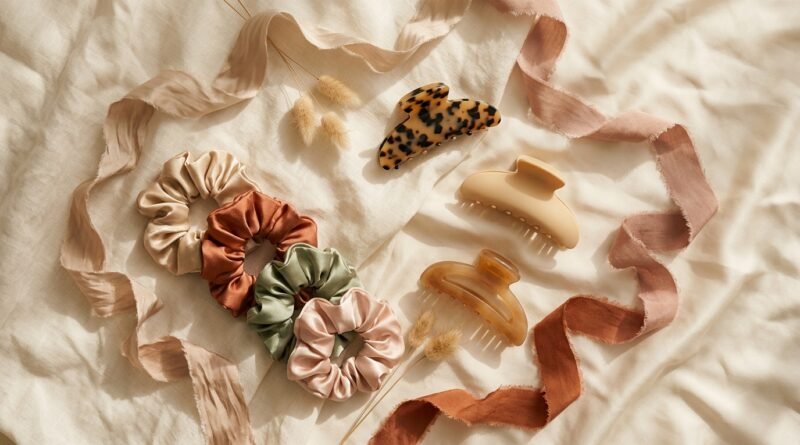
- Claw clips instead of elastics
- Silk scrunchies instead of rubber bands
If your scalp hurts at the end of the day, it’s too tight. Simple as that.
The Quiet Luxury Bob, Grown Out Gently

The quiet luxury bob is everywhere in 2026 hairstyles, and the good news is it’s naturally low manipulation. It’s blunt, chin to collarbone length, and needs almost no styling.
If your hair is damaged, ask your stylist for a blunt cut with no thinning. Blunt ends look thicker and hide breakage way better than layered ends.
Style it by air drying with a little leave-in, then letting it fall where it wants. That’s the whole routine. Elegant, easy, and gentle on fragile strands.
Old Money Hair on Damaged Strands

Old money hair is all about polish without effort. Think smooth, healthy-looking, lightly pulled back. The trick is you can absolutely fake it while your hair heals.
Here’s how:
- Air dry, then smooth with a tiny bit of lightweight oil
- Pull into a low bun or twist at the nape
- Use a silk scarf to set the front flat overnight
- Add a clip or a pin for polish
No heat, no tension, and it looks like you spent an hour on it. You didn’t.
The Asymmetrical Lob Is Your Best Friend

An asymmetrical lob is one of the smartest cuts for damaged hair. The uneven length hides thin spots and broken patches while still looking intentional and modern.
It’s also incredibly low effort. You can air dry it, tuck one side behind your ear, and go.
Ask for:
- A blunt perimeter with a slight angle
- Minimal layering, only where you need movement
- Length just above the shoulder so it doesn’t rub on clothes
Shoulder-rubbing causes friction breakage. Keep it above the collar and you keep more hair.
The Hime Cut for Fragile Ends

The hime cut is a Japanese style with blunt cheekbone-length side pieces and longer hair in the back. It looks striking, and here’s the low manipulation bonus — the shape does all the work.
You don’t need to style it. The blunt lines sit flat on their own. Air dry, a little oil on the ends, done.
Just make sure your stylist doesn’t over-thin the side pieces. Fine, fragile hair and thinning shears do not mix.
Romantic Goth Hairstyles Without Heat

Romantic goth hairstyles are having a moment, and most of them are secretly perfect for damaged hair. Soft braids, loose face frames, and half-up styles all work without a single heat tool.
Try this:
- Two loose braids pinned at the back for a romantic halo look
- Face-framing pieces left out of a low bun
- A velvet ribbon tied around a loose ponytail
- Finger waves set with a silk scarf overnight
Zero heat, zero tension, maximum drama. The best kind of style.
Glitchy Glam Hair, Low Manipulation Edition

Glitchy glam hair is playful, a little weird, and very 2026 hairstyles energy. Think sharp parted front pieces, tucked sections, and unexpected texture.
You can get the look without flat irons by setting small sections with a silk scarf or a foam roller overnight.
- Part sharply with a comb while wet
- Pin the front pieces flat to dry
- Add volume at the crown with a clip at the root
- Brush out gently with fingers only
It’s fun, it’s different, and your fragile ends never touch heat.
The Vampire Haircut and Why It’s Secretly Kind

The vampire haircut is dramatic, layered, and usually comes with a side part and sharp face framing. It sounds high maintenance, but it can actually be gentle.
The key is keeping most of the length and only adding soft layers around the face. Those face-framing pieces give you style, while the back stays protected and mostly untouched.
Air dry it with a leave-in cream, scrunch lightly, and let the layers do the talking. No round brush required.
Sleep Protection That Changes Everything
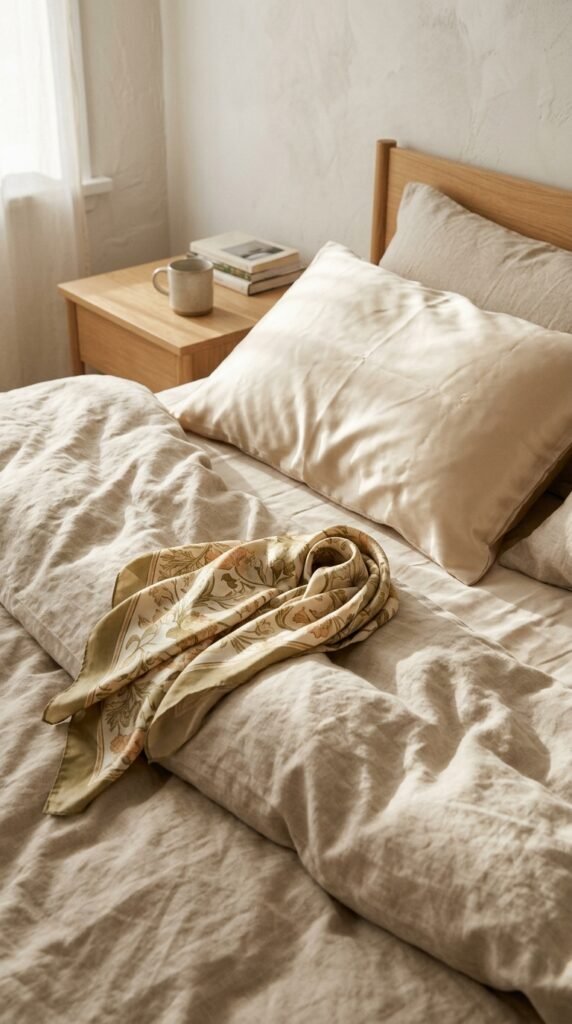
You spend a third of your life asleep. If your hair is grinding against a cotton pillowcase for eight hours, that’s a lot of damage.
Here’s what I do:
- Silk or satin pillowcase, always
- Loose braid or “pineapple” bun on top of my head
- Silk scarf or bonnet for extra protection
- Never sleep on wet hair if you can help it
This one habit made the biggest difference for me. My morning tangles basically disappeared.
2026 Hairstyles That Work With Healing Hair
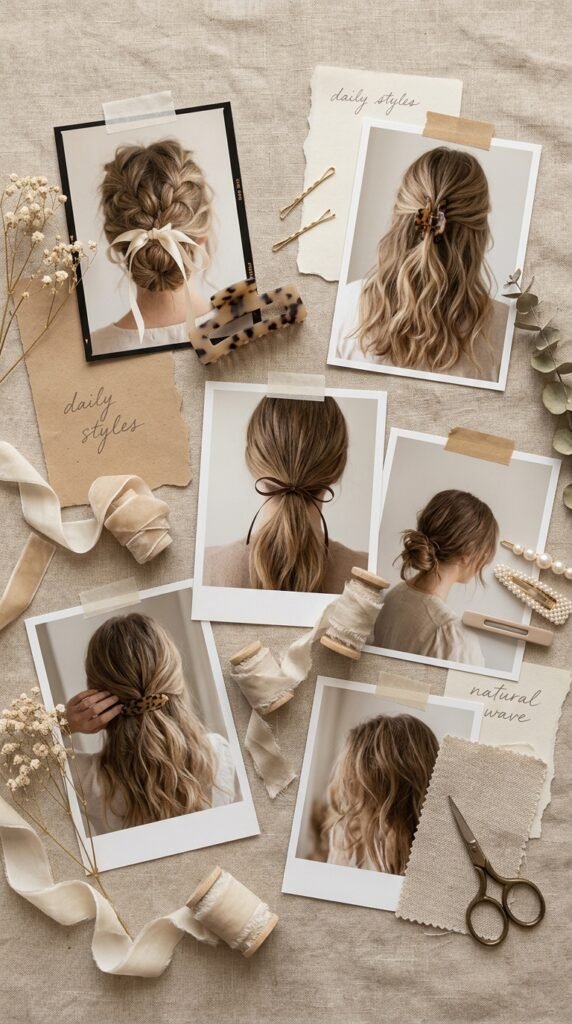
A lot of 2026 hairstyles happen to be low manipulation friendly. That’s genuinely lucky for us.
- The quiet luxury bob — blunt, low styling
- Old money hair — low buns and smooth air-dried texture
- The asymmetrical lob — hides damage, easy to wear
- Hime cut — shape does the work
- Romantic goth hairstyles — soft braids and pins
You don’t have to hide while your hair heals. You just have to pick shapes that don’t demand heat or tension.
Air Dry Only Days

Give yourself at least four air dry days a week. That means no blow dryer, no flat iron, no curling wand.
Air drying isn’t always fast, but it’s free and it’s gentle. Wrap your hair in a cotton t-shirt for 15 minutes first to soak up the extra water, then let it finish on its own.
Use that time to do something else. Read. Make coffee. Live your life. Your hair is working while you’re not.
Dusting Trims: Why Little Cuts Save Length
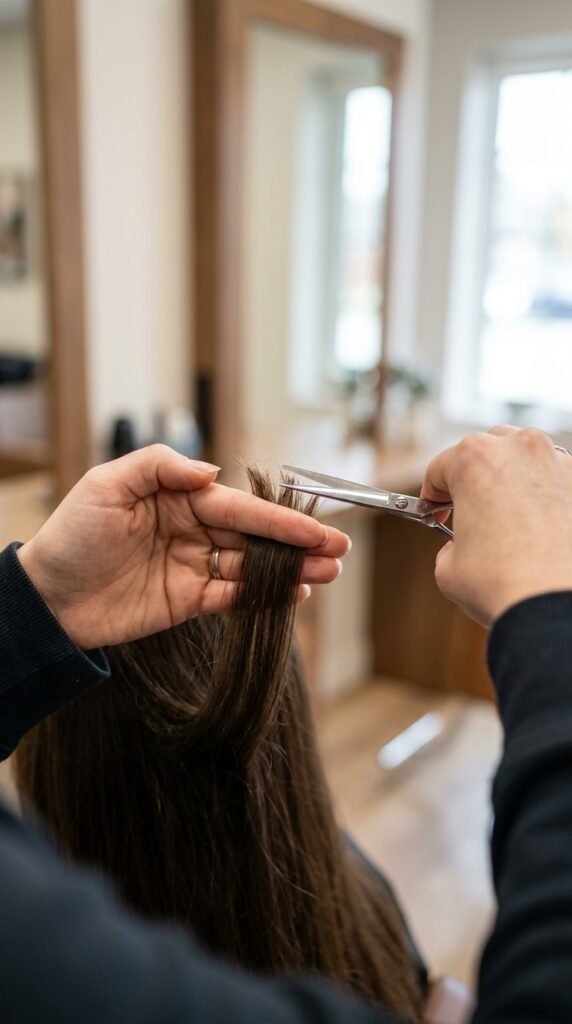
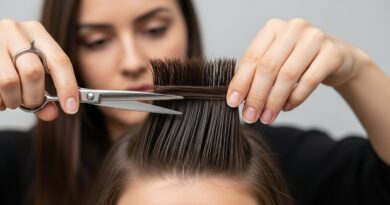
Split ends travel up the strand. If you ignore them, they’ll split higher and higher until you lose real length.
Dusting is just trimming the tiniest amount off the ends, usually a quarter inch or less. It’s not a big chop. It’s maintenance.
- Every 8 to 12 weeks
- Only the very ends
- Blunt cuts preferred over layered
- Skip the thinning shears
Little trims now mean real length later. I promise.
Protein vs Moisture: Don’t Overdo Either
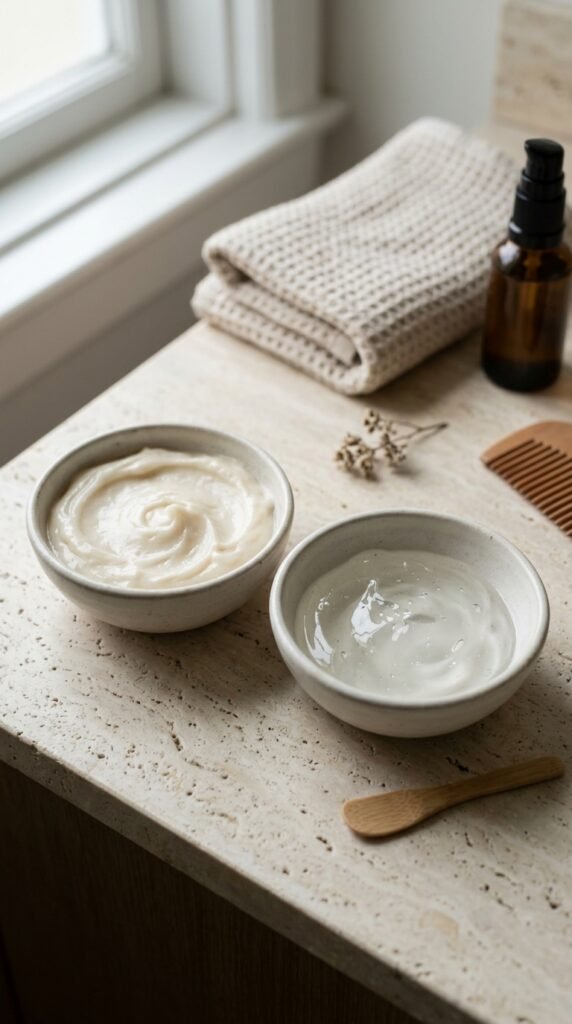
Damaged hair usually needs both protein and moisture, but too much of either causes problems.
- Too much protein: hair feels stiff, crunchy, and snaps
- Too much moisture: hair feels mushy, stretchy, and limp
Alternate them. One week do a protein treatment, next week do a deep moisture mask. Pay attention to how your hair feels after each one.
Your hair will tell you what it wants if you actually listen.
Scalp Care Counts Too

Healthy hair grows from a healthy scalp. Even if your ends are fried, a happy scalp means new growth coming in strong.
- Massage your scalp with fingertips for a few minutes a day
- Keep it clean but don’t over-wash
- Use a gentle clarifying wash once a month
- Avoid scratching with nails
Bonus: a scalp massage counts as low manipulation because it doesn’t tug the strands. Just don’t go wild with a brush.
Detangling Without Breaking
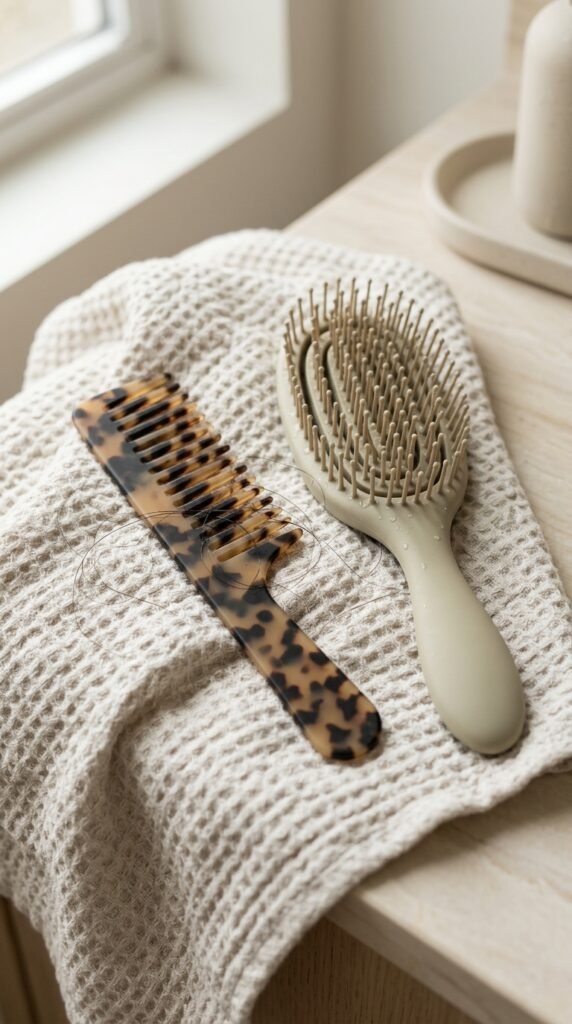
Detangling is where I lost the most hair in my early days. Here’s how to do it without the casualties.
- Start from the ends and work up
- Use your fingers first, always
- Add conditioner or leave-in for slip
- Use a wide-tooth comb, never a fine one
- Never detangle dry, brittle hair with force
If you hit a knot, stop. Work it out with your fingers slowly instead of yanking through it.
Accessories: What to Keep and What to Toss
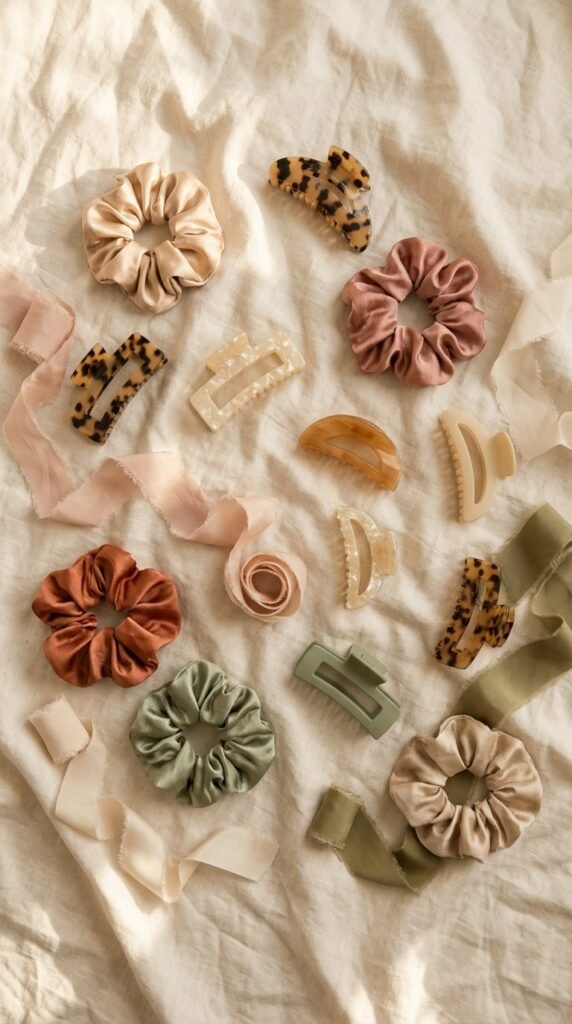
Your accessories can either help or hurt. Let’s sort them out.
Keep:
- Silk scrunchies
- Claw clips
- Plastic banana clips with smooth edges
- Satin ribbons
Toss:
- Rubber bands
- Metal barrettes with rough edges
- Tight elastic headbands
- Anything that leaves a dent in your hair
Small swap, big difference.
Heatless Styling Tricks

You can still get waves and volume without heat. Here are my favorites.
- Robe belt curls — wrap damp hair around a soft belt and sleep on it
- Foam rollers on the ends for a bouncy look
- Two braids overnight for soft texture
- Bantu knots for defined waves
- Silk scarf set for a smooth, sleek front
All of these take a few minutes at night and zero minutes in the morning. That’s the dream, honestly.
A Quick Weekly Low Manipulation Schedule
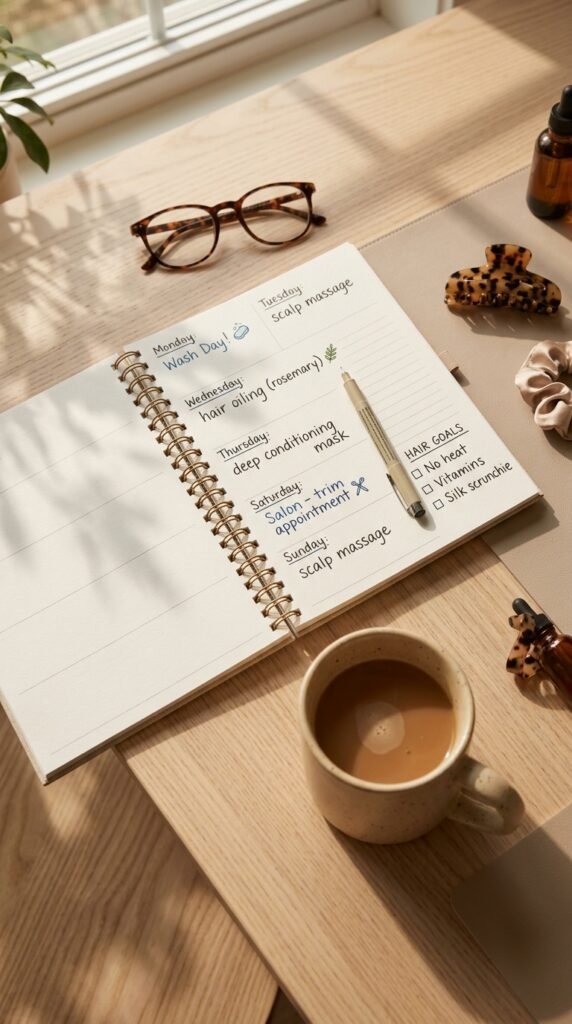
Here’s what my week looks like when I’m in healing mode.
- Sunday: wash day, deep condition, air dry
- Monday: loose braid or low bun, leave it alone
- Tuesday: refresh with a little leave-in, re-braid
- Wednesday: claw clip updo
- Thursday: wash if needed, or another bun
- Friday: heatless waves for the weekend
- Saturday: scalp massage, oil the ends
Boring? A little. Effective? Extremely.
How Long Until You See Results
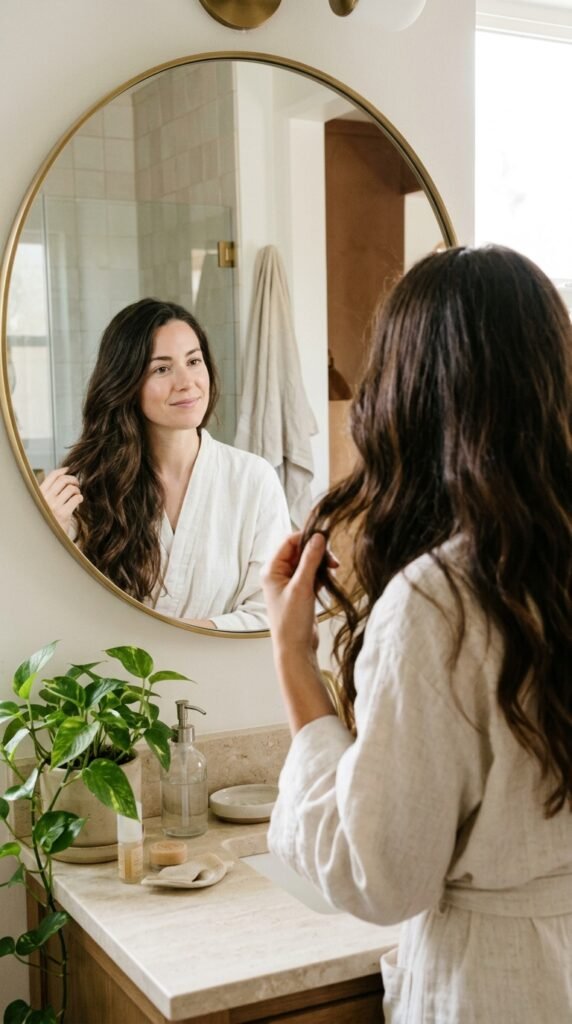
Real talk — this isn’t a two-week fix. Over-processed hair took months to get that way, and it’ll take months to bounce back.
- 2 to 4 weeks: less breakage, fewer tangles
- 2 to 3 months: softer texture, stronger strands
- 6 months: noticeable length retention
- 1 year: hair that finally feels like yours again
Take progress photos every month. You’ll see the difference even when it feels slow.
A Warm Send-Off
If your hair is damaged right now, take a breath. You’re not stuck here. You just need to stop fighting your hair and start letting it rest.
Low manipulation isn’t about deprivation. It’s about choosing styles that work with your hair instead of against it — quiet luxury bobs, soft goth braids, low buns, and everything in between.
Do less. Touch less. Trim a little. Moisturize often. Then wait. That’s the whole secret, and it works.
Save this post to Pinterest so you can come back to it on your next wash day — and tell me in the comments which style you’re trying first. I read every single one.