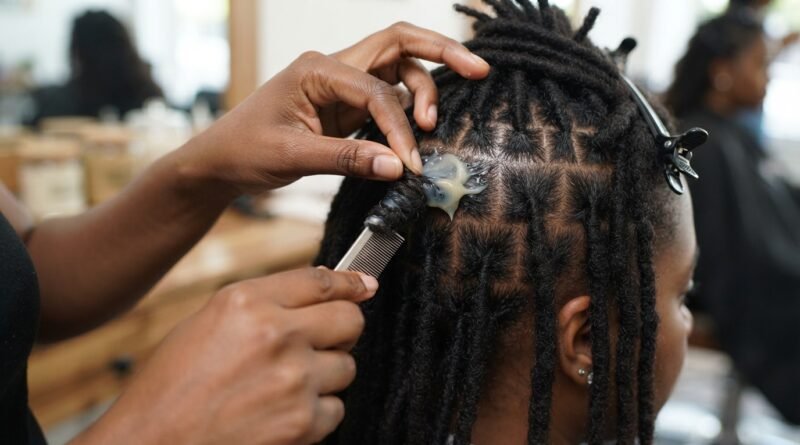
Maintain 25 Locs Retwisting Sessions Scheduled Monthly for Uniformity
If you’ve got locs, you already know the magic they bring—confidence, style, and that feeling of being exactly who you are. But keeping them looking fresh and uniform? That takes a little planning. I’ve been there, staring at my roots a few weeks in, wondering if I should push the retwist or just wear a cute headwrap. The truth is, sticking to a monthly retwisting schedule is the secret to maintaining that neat, polished look without the stress. And with 2026 hairstyles trending toward structured, intentional styles like old money hair and the quiet luxury bob, your locs can fit right in if you keep your sessions consistent. Let me walk you through exactly how to schedule and nail 25 retwisting sessions this year—so your locs stay uniform, healthy, and totally you.
Why Monthly Retwisting Matters for Uniformity
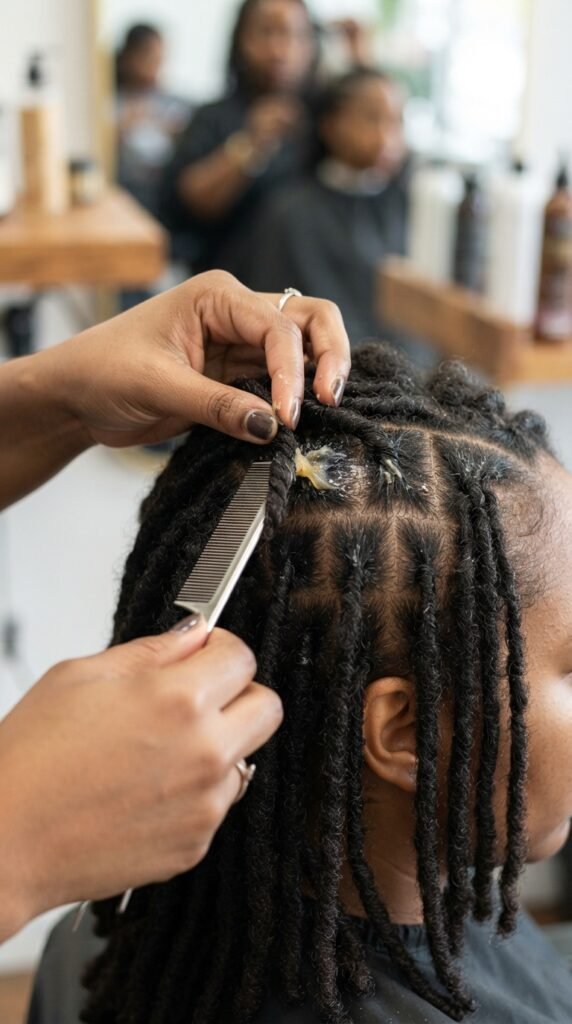
When you retwist your locs every month, you’re basically resetting the foundation. New growth can make roots look messy and uneven, especially if you like a crisp part or a sleek style. Monthly sessions catch that growth before it gets out of hand, so each loc sits in its rightful place.
Think of it like brushing your teeth—daily care matters, but that monthly deep clean keeps everything aligned. Plus, uniformity isn’t just about looks. It helps your locs lock evenly, preventing thin spots or bulges. For 2026 hairstyles like the asymmetrical lob or vampire haircut, uniform locs give you that sharp, intentional edge without extra effort.
How to Schedule 25 Retwisting Sessions in a Year

Twenty-five sessions over 12 months means you’re retwisting about twice a month, with a few breaks. That might sound like a lot, but it’s totally doable with a little planning. Start by picking a day—say the 1st and 15th of each month—and treating it like a non-negotiable date.
- Mark your calendar now for all 25 sessions—use phone alerts so you never forget.
- Keep your products ready: light gel, a spray bottle with water, and a wide-tooth comb.
- Give yourself 2-3 hours per session, depending on loc length and thickness.
Consistency is your best friend here. Even if you’re busy, a 30-minute quick retwist is better than skipping entirely.
The Best Products for Monthly Retwists

You don’t need a ton of fancy stuff—just the right basics. Look for a lightweight gel that won’t flake, a moisture spray to keep your locs soft, and a natural oil for your scalp. Heavy waxes can build up and make retwisting harder next month.
- Use a water-based gel—it holds without residue.
- Spray your locs lightly before twisting to reduce frizz.
- Rub oil on your fingertips before touching your scalp to prevent dryness.
I swear by a simple aloe vera gel and rose water mist. It keeps my locs happy and ready for any style, from romantic goth hairstyles to a sleek quiet luxury bob.
Prepping Your Locs Before Each Session
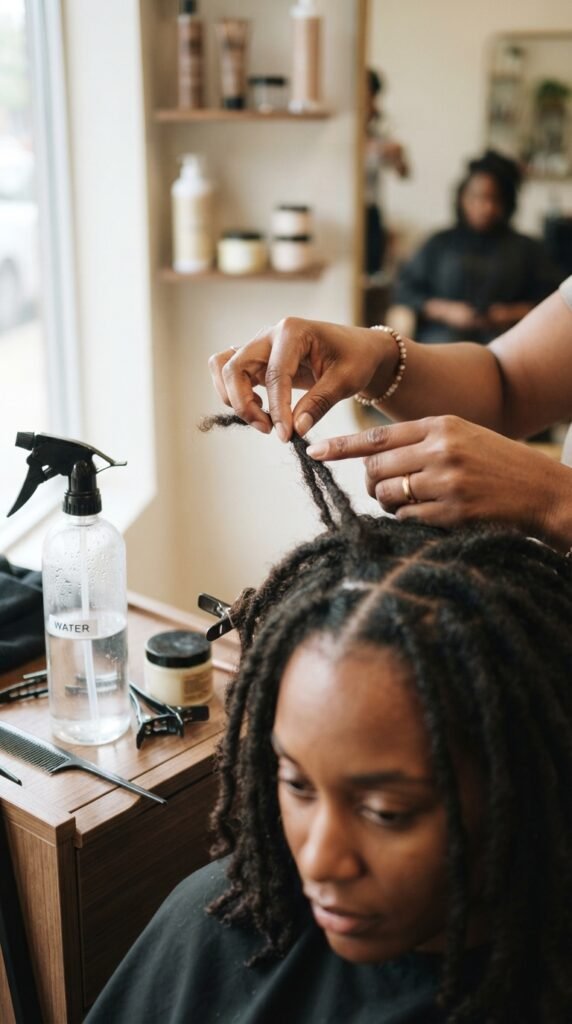
Never jump straight into retwisting dry locs—you’ll cause breakage and uneven tension. Start by dampening your locs with water or a leave-in conditioner spray. This softens the hair and makes the new growth easier to manipulate.
- Spray each section lightly until damp, not soaking wet.
- Use your fingers to separate any locs that have fused together.
- Let them air dry for 5 minutes before applying product.
This prepping step takes 10 minutes but saves you from headaches later. Plus, damp locs hold the retwist better, giving you that fresh-out-the-salon look for days.
Step-by-Step: How to Retwist Your Locs at Home

You don’t need a professional for every session—home retwists are easy once you get the rhythm. Start at the front, where your part is most visible, and work your way to the back. Take small sections for the neatest result.
- Apply a pea-sized amount of gel to the root of one loc.
- Twist the new growth in the same direction as your loc’s natural coil.
- Hold for 5 seconds to set the twist, then move on.
Don’t over-twist—it can cause tension and thinning. If you feel pulling, you’re going too tight. Practice makes perfect, and after a few sessions, you’ll be done in under an hour.
How to Keep Your Loc Parts Crisp and Clean
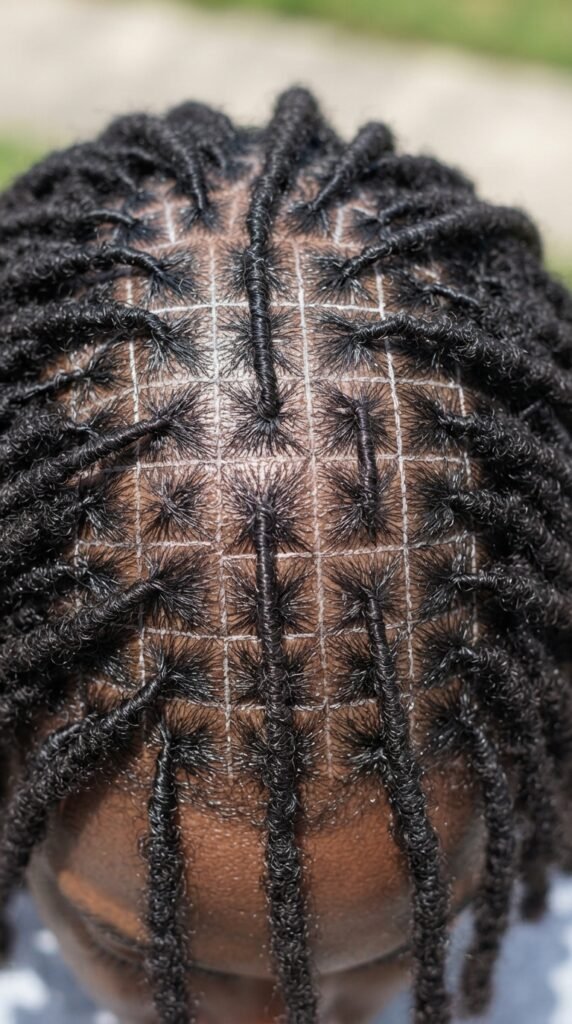
Uniform parts are the unsung heroes of polished locs. Even if your retwist is perfect, messy parts throw off the whole look. Use a rattail comb to define your parts before you start twisting—this keeps everything straight and even.
- Recreate your original part pattern every session for consistency.
- Use clips to hold sections out of the way as you work.
- If you want a change, try a zigzag part for a subtle update—great for 2026 hairstyles.
Crisp parts also make styles like the hime cut or asymmetrical lob look intentional, not accidental. A little precision goes a long way.
Styling Your Locs After a Fresh Retwist

After a retwist, your locs are at their most pliable—perfect for experimenting. I love doing a sleek low bun or letting them hang loose with a center part. For a bolder look, try a side-sweep or add a few small braids at the front.
Keep it simple the first few days to let the retwist set. Then, rock styles like a romantic goth hairstyle with dark accessories or a glitchy glam hair vibe with metallic clips. Your locs are a blank canvas right after a session—use that window to play.
When to Take a Break from Retwisting

Even with 25 scheduled sessions, it’s okay to skip one occasionally. If your scalp feels tender or your locs are overly dry, give them a break. Retwisting too often can lead to breakage, especially if you have fine or fragile hair.
- Listen to your scalp—if it hurts, pause.
- Use a silk scarf or bonnet between sessions to protect your edges.
- Take a full weekend off every few months to let your locs rest.
Your locs are a long-term relationship, not a sprint. A break here and there keeps them healthy and strong, which is the real secret to uniformity.
How to Fix Uneven Locs Between Sessions
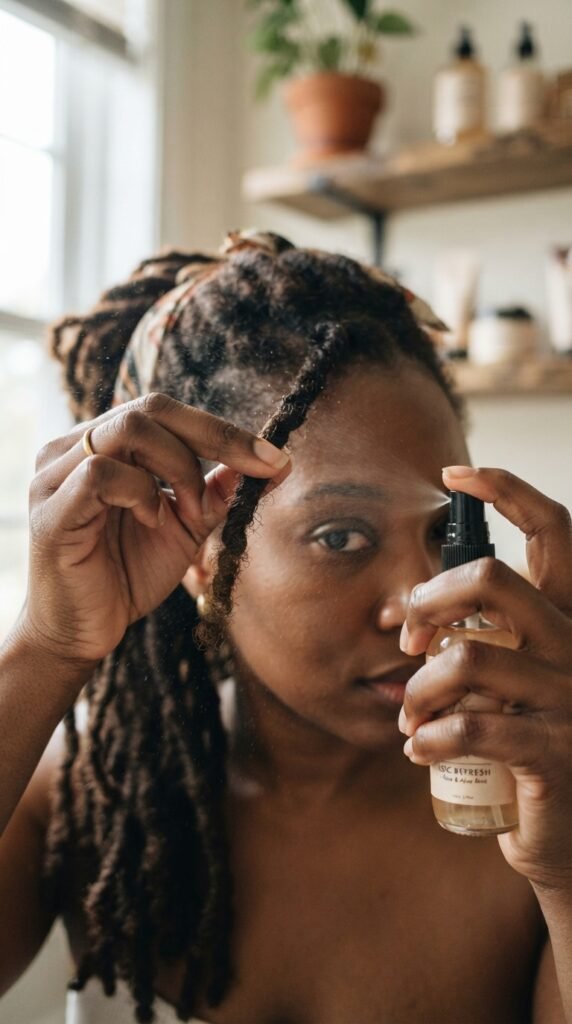
Sometimes a loc just decides to do its own thing—loose, fuzzy, or sticking out. Don’t wait for your next full session. Grab that loc, spray it lightly, and re-twist the root. It takes 30 seconds and keeps your look fresh.
- Dampen the unruly loc with water or a bit of gel.
- Twist the root firmly in the correct direction.
- Let it air dry or use a hooded dryer on low heat.
Spot-fixing between sessions is a game changer. It’s the tiny habit that makes your locs look intentional, not just “good enough.” And for styles like the vampire haircut or quiet luxury bob, every loc needs to be on point.
Protecting Your Locs While You Sleep

Your retwist work can unravel overnight if you don’t protect your locs. A silk or satin scarf is non-negotiable—cotton pillowcases cause friction and frizz. Pineapple your locs loosely on top of your head before wrapping for extra security.
- Use a silk bonnet if you toss and turn.
- Wrap your scarf tightly enough to stay on, but not so tight it pulls.
- Refresh the root twist in the morning with a quick spray.
Good sleep protection means your monthly session lasts longer. Plus, you wake up with locs that look like you just stepped out of a salon—perfect for that old money hair vibe.
Retwisting for Special Occasions and Events

Got a wedding, party, or big meeting? Schedule a retwist a few days before. This gives your locs time to settle, so they look natural and not too tight. You can then style them into something special like a twisted crown or a sleek side part.
For 2026 hairstyles, think about the event’s vibe. Romantic goth hairstyles work for evening events, while a shiny quiet luxury bob is perfect for daytime. Your locs can pull off any look when they’re uniform and fresh.
The Role of Scalp Care in Monthly Retwisting
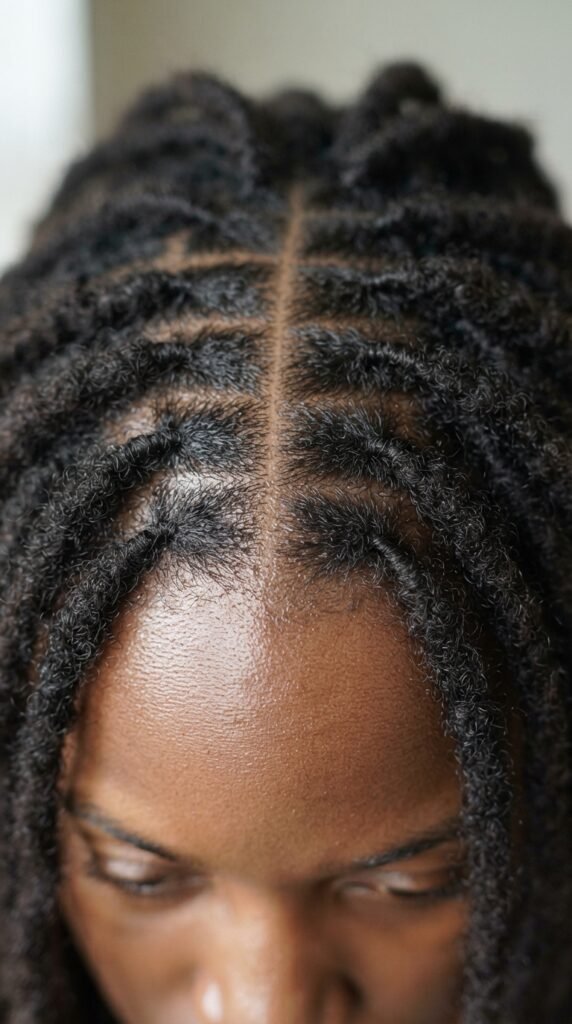
Your scalp is the foundation of your locs. If it’s dry or itchy, retwisting will feel like a chore. Between sessions, massage your scalp with natural oil—jojoba or coconut work wonders—to keep it healthy. Avoid heavy products that clog pores.
- Oil your scalp once a week, focusing on the parts.
- Wash your locs gently every 2-3 weeks to remove buildup.
- Never retwist dirty locs—clean hair holds the twist better.
A happy scalp means your locs grow strong and your retwists last. It’s the quiet hero of uniformity.
How to Adjust Your Schedule for Loc Length
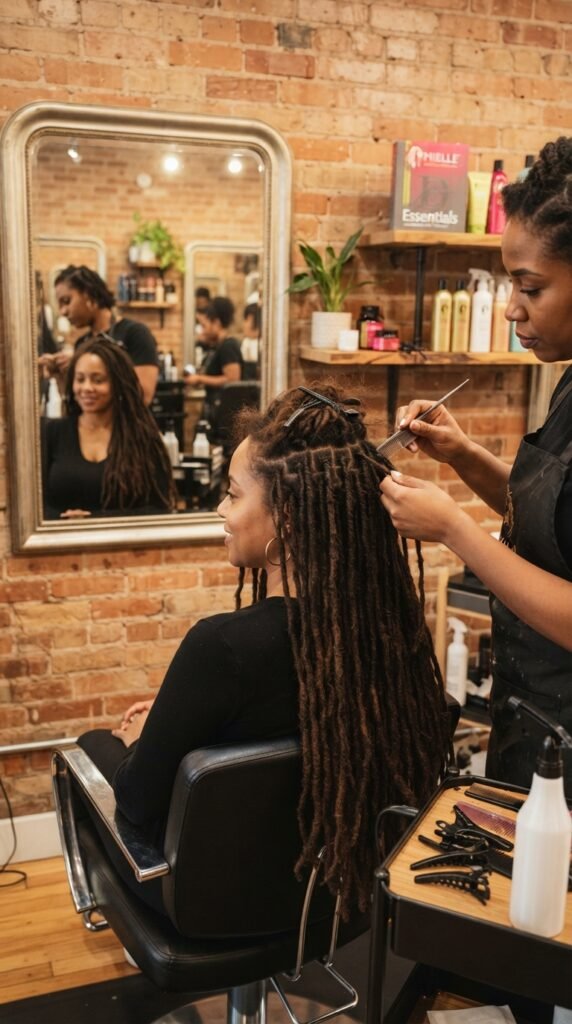
As your locs grow longer, retwisting takes more time—but the frequency stays the same. You might need to break sessions into two days, doing half your head one evening and the rest the next morning. That’s totally fine.
- For long locs, work in larger sections to save time.
- Use clips to keep finished sections out of the way.
- Enlist a friend or family member for the back sections.
Longer locs also mean more styling options, like the hime cut with layered fronts or an asymmetrical lob. Uniform retwists make those styles pop without extra effort.
Seasonal Adjustments for Retwisting

Your locs react differently to weather. In summer, humidity can loosen twists faster, so consider adding a light gel to hold. In winter, dry air makes locs brittle, so focus on moisture before each session.
- Summer: use a hold spray after retwisting to fight frizz.
- Winter: deep condition your locs the night before a retwist.
- Spring/Fall: stick to your regular routine.
Adjusting for seasons keeps your 25 sessions effective year-round. It’s a small tweak that pays off in consistent, beautiful locs.
Common Monthly Retwisting Mistakes to Avoid
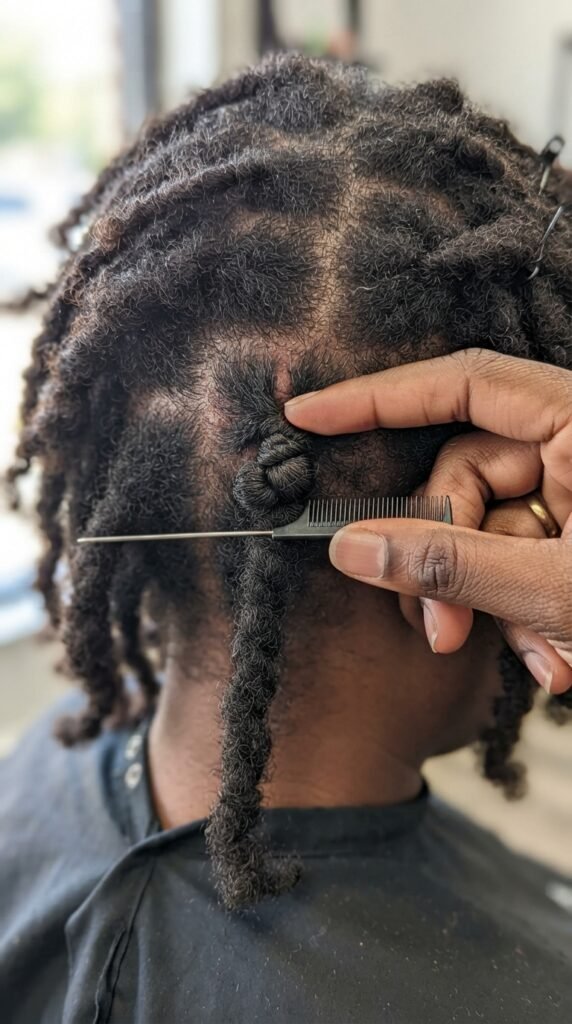
Even seasoned loc lovers make mistakes. The biggest one? Over-twisting. It can thin out your roots and cause breakage. Another is using too much gel—it flakes and makes your locs sticky.
- Twist only the new growth, not the entire loc.
- Use a dime-sized amount of product per loc.
- Dry your locs completely after retwisting to lock the shape.
These fixes are simple but make a huge difference. Avoid these, and your uniformity will be effortless.
How to Track Your Retwisting Progress
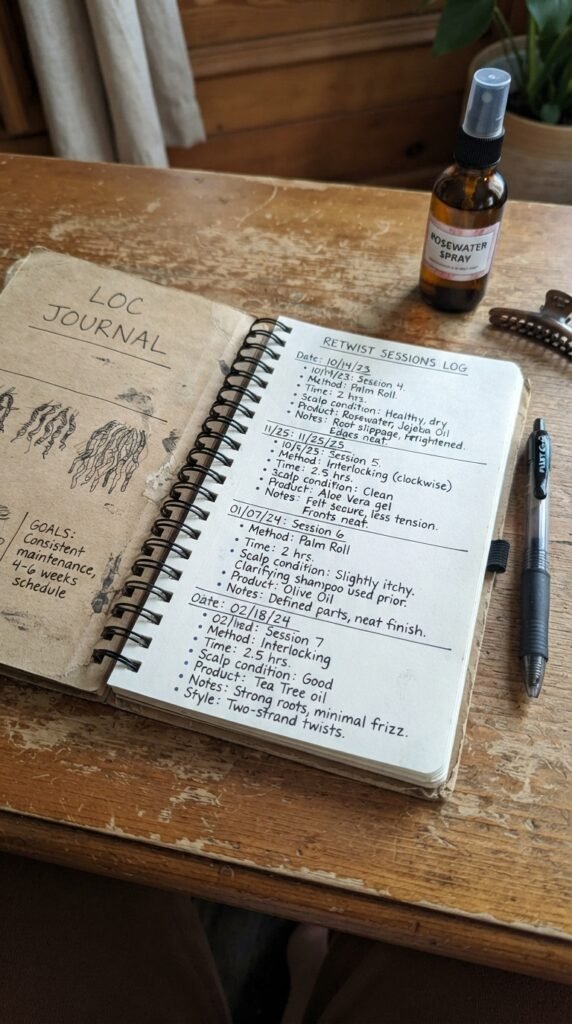
Keep a small journal or notes app to track each session. Write down the date, how your locs felt, and what product you used. Over time, you’ll notice patterns—like which products work best and when your locs need a break.
- Note any locs that consistently loosen for extra care.
- Take a photo after each session for visual progress.
- Adjust your schedule based on what you learn.
Tracking turns your retwisting into a habit, not a chore. Plus, looking back at your journey feels good—especially when you see how uniform and healthy your locs have become.
Incorporating Trending 2026 Hairstyles Into Your Locs

Your locs can absolutely rock 2026 trends. Try an asymmetrical lob by cutting a few front locs shorter—just make sure your retwist is fresh for that clean line. Or go for the glitchy glam hair look with metallic threads woven into a few locs.
For a more subtle vibe, the quiet luxury bob works with medium-length locs that hang just above the shoulders. And if you’re feeling edgy, a vampire haircut with sharp layers complements uniform locs beautifully. The key is a solid retwist foundation.
When to Visit a Professional for Retwisting
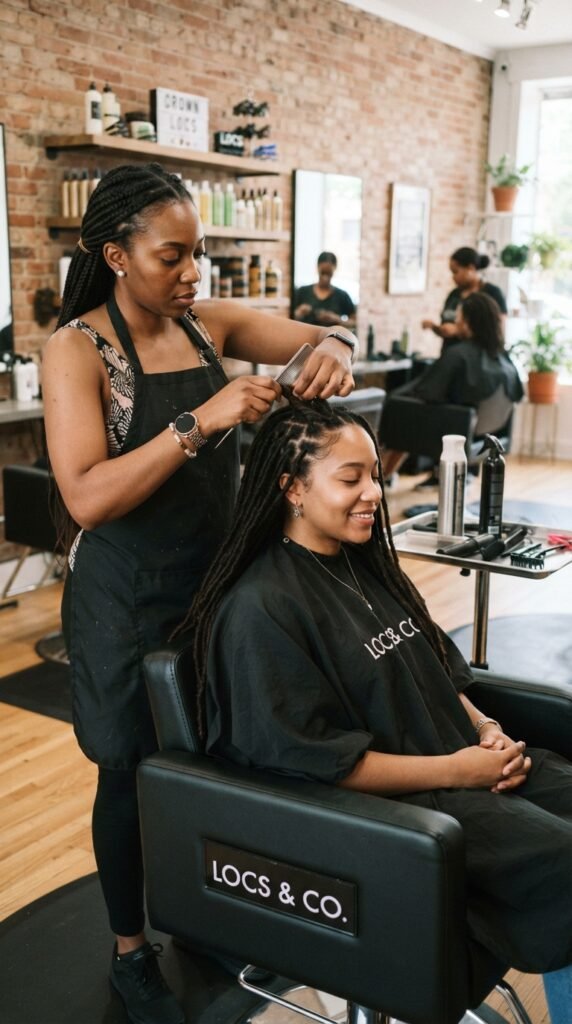
Even if you do most sessions at home, a professional touch every few months can reset your uniformity. They can catch uneven parts or tension issues you might miss. Aim for a pro session every 3-4 months, or right before a big event.
- Ask for a tight retwist but not painful—communication matters.
- Bring photos of your desired part pattern for clarity.
- Tip well and book your next appointment on the spot.
A pro session costs a little but saves you from long-term mistakes. It’s like a tune-up for your locs.
How to Refresh Locs Between Monthly Sessions

Halfway through the month, your locs might start looking a bit fuzzy. That’s normal. A quick refresh can extend your look without a full retwist. Simply mist your roots, palm-roll any loose sections, and let them air dry.
- Focus on the front and crown—the most visible areas.
- Use a light gel for stubborn roots.
- Wear a scarf at night to keep the refresh lasting.
This trick keeps you camera-ready for work or social plans. It’s the reason your locs always look intentional, even on week three.
The Emotional Side of Consistent Locs Care
There’s a real confidence boost that comes with uniform locs. When you look in the mirror and see neat, healthy hair, it changes how you walk into a room. That’s not shallow—it’s self-care. Your locs reflect your discipline and love for yourself.
Monthly retwisting isn’t just about styling. It’s a ritual that grounds you. In a world full of fast trends like romantic goth hairstyles or glitchy glam hair, your locs are a steady, beautiful constant. Take pride in that.
So here’s the thing—keeping 25 retwisting sessions scheduled monthly is totally doable. It just takes a little planning and a lot of love for your locs. Whether you’re going for old money hair elegance or a bold vampire haircut vibe, your uniform locs will carry you through every season. I’ve found that sticking to this rhythm not only keeps my hair looking its best but also gives me a moment to slow down and take care of myself. And honestly? That’s a win-win.
Now, before you start your next retwist, save this post to Pinterest so you can come back to it anytime you need a refresher. And drop a comment below—how many retwists do you aim for in a year? I’d love to hear your routine. Happy twisting, friend.