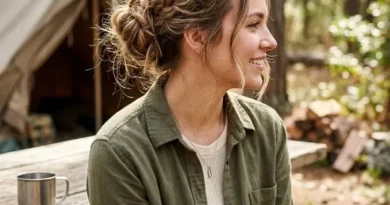
26.2 Miles, Zero Hair Drama: 33 Marathon Hairstyles for Women That Stay Put From Start Line to Finish
There is a moment, somewhere around mile 18, when every runner discovers whether her hair plan actually worked. The elastic that felt fine at the start line is now sawing at her scalp, the loose strands are plastered to her neck, and the ponytail she loved in the mirror is swinging like a metronome with every stride. The best marathon hairstyles for women are chosen long before race morning — they are tested on long training runs, built to handle sweat, wind, rain and hours of constant movement, and they stay comfortable when your legs are doing all the talking.
These 33 marathon hairstyles for women cover every hair length and texture, from high braided ponytails and double Dutch braids to low buns, cornrows and sweatband-friendly short styles. Eight guides first walk you through the practical side of race day: styles that survive 26.2 miles, how to stop bounce and headaches, a prep timeline, and what to pack in your race-day hair kit. Each style includes honest notes on how long it takes, what it costs, who it suits best and what can go wrong, so you can cross the finish line with your hair still doing its job.
Styles That Survive 26.2 Miles and Sweat
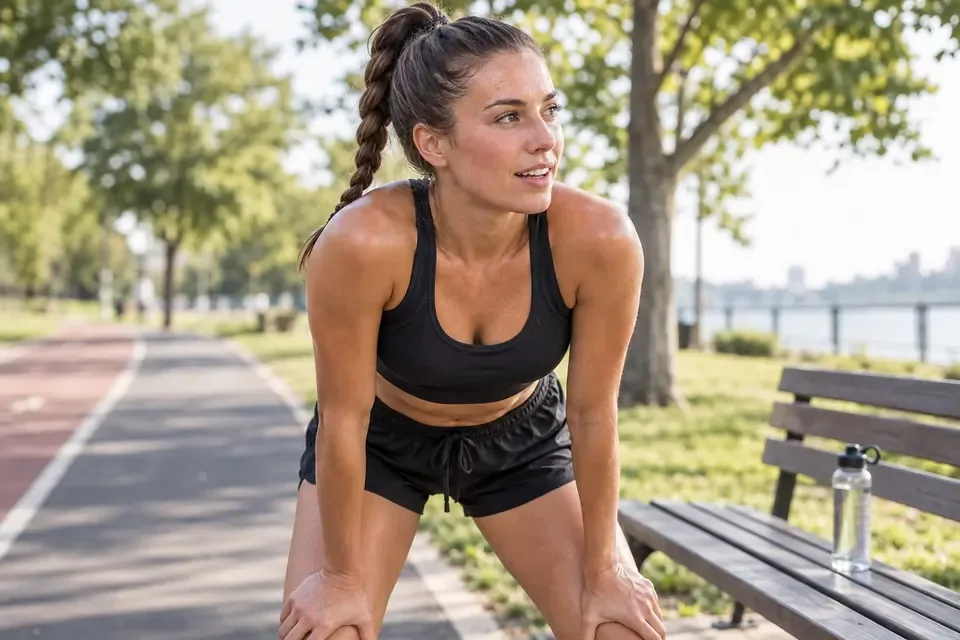
A marathon is not a 5K with a longer warm-up — it is four to six hours of sweat, friction and constant motion, and most hairstyles are not built for that. The styles that survive are the ones that lock the hair down in sections: braids, wrapped buns and ponytails anchored at two or more points. Loose waves, soft curls and anything that relies on hairspray alone will unravel by mile 10, and a style that depends on volume will collapse the first time you sweat through it.
Best for: any runner who has ever finished a long run with her hair in a different shape than she started. How to test it: wear the style on your longest training run, not just around the house — if it survives 18 miles, it will survive 26.2. Common mistake: choosing a style because it photographs well at the start line instead of one that holds up at mile 20. Quick verdict: if it needs more than two pins to stay put on a training run, it will not survive race day.
Preventing Bounce and Headaches on Race Day
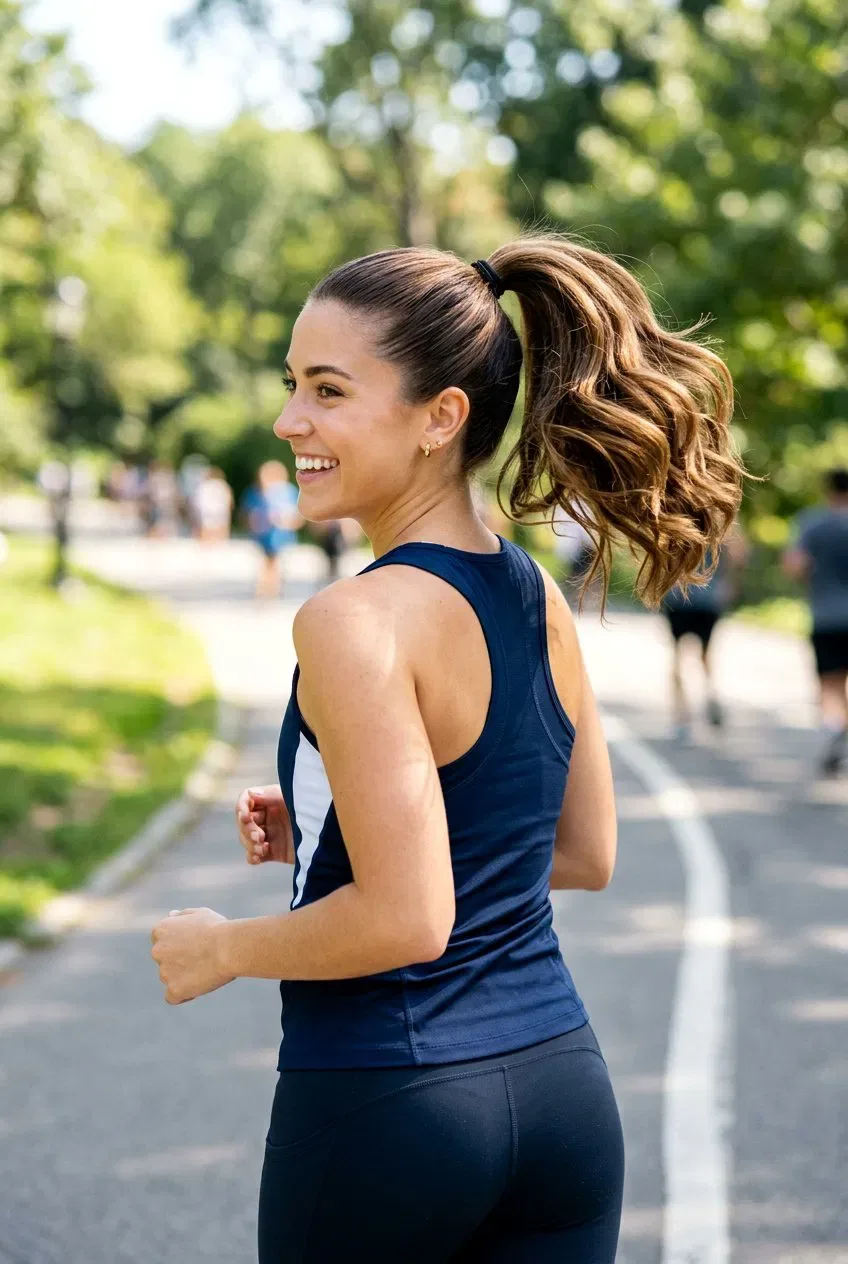
A ponytail that bounces is more than annoying — over 26.2 miles it can give you a genuine headache and even a sore neck. Bounce comes from weight swinging on a single anchor point, so the fix is to split the weight: braid the ponytail, anchor it at two points with elastics, or tuck the ends into a bun. A high ponytail bounces more than a low one, and wet hair bounces harder because water adds weight.
Pros: a braided or double-anchored ponytail cuts bounce almost completely and costs nothing extra. Cons: tighter styles can cause tension headaches if you pull too hard at the hairline, so keep the front soft. What to ask your stylist: how to distribute tension so the style holds without pulling. Maintenance: on race morning, do a ten-second bounce test — jog on the spot and feel whether the style moves. If it swings, add a second elastic halfway down.
Your Race-Day Hair Prep Timeline
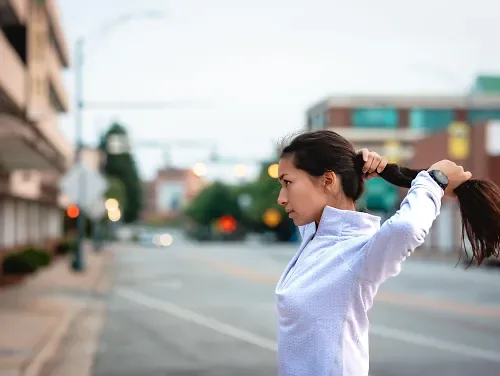
Race morning is no time to experiment, so your hair timeline should start days earlier. Wash your hair the evening before the race, not the morning of it — day-old hair has more grip, holds braids better and is less slippery under an elastic. The night before, lay out every elastic, pin and headband you will need, and do a full practice run of your chosen style so race morning is muscle memory, not guesswork.
Best for: first-time marathoners and anyone who gets nervous before a race. How to style it: on race morning, brush out tangles, apply a pea-sized amount of styling cream or gel to the hairline, then build the style exactly as practised. Common mistake: washing your hair on race morning and discovering your braids slide out by mile 5. Quick verdict: practise the style twice in training, then trust it and spend race morning on your warm-up, not your hair.
Styles for Long vs Short Hair on Race Day
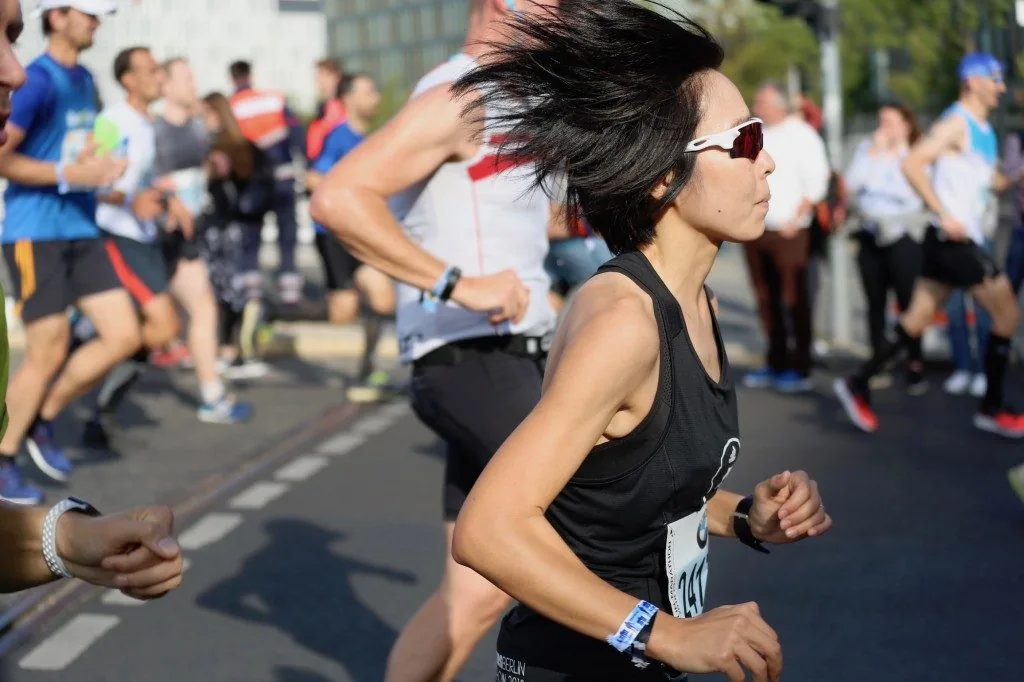
Long hair has the most options but also the most problems — it is heavier, bounces more and traps more sweat at the neck. Braids and buns are your best friends because they contain the length and spread the weight. Short hair has the opposite problem: there is not enough length to tie back, so flyaways and fringe become the enemy, and a sweatband, headband or a few well-placed clips do more than any updo can.
Best for: runners who have tried a style meant for the opposite hair length and watched it fail. Pros of braids for long hair: they keep every strand contained and dry faster at the finish. Cons: they take longer to build on race morning. What to ask your stylist: which containment style suits your exact length — a bob that cannot reach a ponytail needs clips and a band, not a bun. Quick verdict: match the style to your length, not to a photo of someone else’s hair.
Dealing With Humidity and Rain Mid-Race
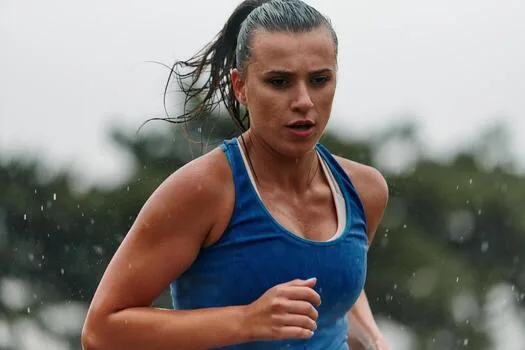
A dry-weather hairstyle and a wet-weather hairstyle are two different things, and marathon weather does not ask your permission. Humidity makes hair swell, frizz and slip out of elastics, while rain adds weight and turns loose styles into a sodden curtain. Braids and tight buns handle both far better than ponytails, because the hair is already woven together and has nowhere to go when it gets wet.
Best for: races in humid or unpredictable climates, and any runner who has watched her style dissolve in a downpour. How to style it: check the forecast the night before and, if rain is likely, choose a braid or bun and skip the hairspray, which turns sticky when wet. Common mistake: relying on a smoothing serum, which washes out in the first shower. Quick verdict: if the forecast is uncertain, pick the wet-weather style — a braid looks the same dry or soaked, and you will be glad you did.
Post-Race Hair Recovery: What to Do at the Finish

Your hair has spent hours soaked in sweat, salt and possibly rain, pressed under a cap or headband, and pulled tight at the scalp — it deserves some recovery of its own. Do not rip the style out at the finish line: undo braids and elastics gently, because sweat-dried hair is fragile and snaps easily. A proper wash with a clarifying shampoo removes salt and product build-up, followed by a deep conditioner or hair mask to replace the moisture the race took out.
Pros: a good post-race wash and mask leaves your hair softer than it was before the race. Cons: skipping the wash lets salt dry on the scalp, which can cause itching and flaking for days. What to ask your stylist: how often to use a clarifying shampoo if you train and race regularly. Maintenance: after the race, let your hair air-dry rather than blow-drying it, and give it a day off from tight styles. Quick verdict: undo gently, wash properly, condition deeply — your hair ran the marathon too.
What to Pack in a Race-Day Hair Kit
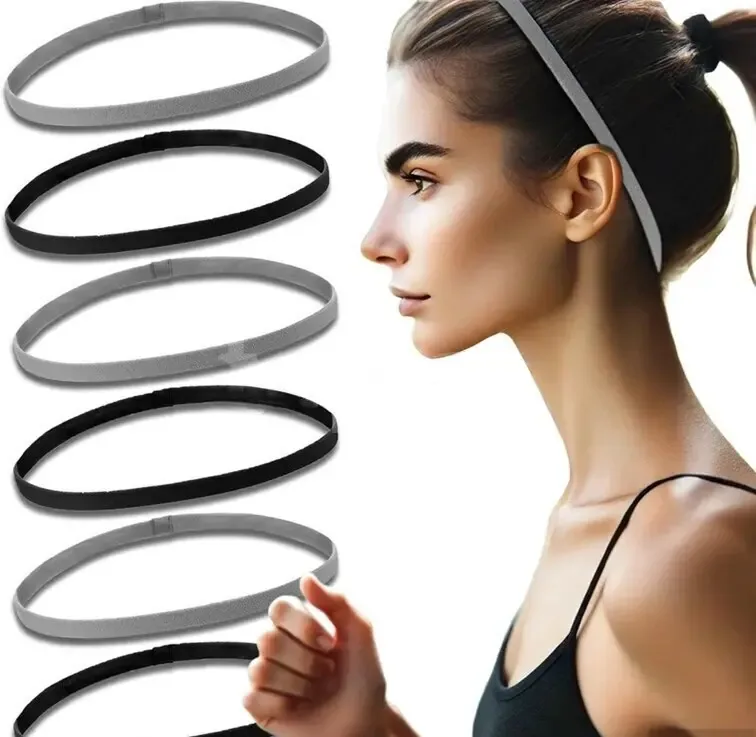
A race-day hair kit is small, cheap and worth its weight in gold when something goes wrong at mile 15. Pack two spare no-crease elastics, four bobby pins, a small pack of mini claw clips, a headband or sweatband, and a travel-size dry shampoo for after the race. Add a couple of safety pins — they can rescue a broken elastic, pin back a flyaway, or fix a race bib in a pinch — and a small tube of styling gel for the hairline.
Best for: every runner, but especially anyone whose style has ever failed mid-race. How to pack it: put the kit in a zip bag in your drop bag or running belt, not loose in your pocket where pins can escape. Common mistake: packing only one elastic — if it snaps, your whole style is gone. Cost: under $10 for the lot, and most of it lasts all season. Quick verdict: a ten-dollar kit can save a four-hour race, so there is no reason to run without one.
Styles That Work Under a Cap or Visor
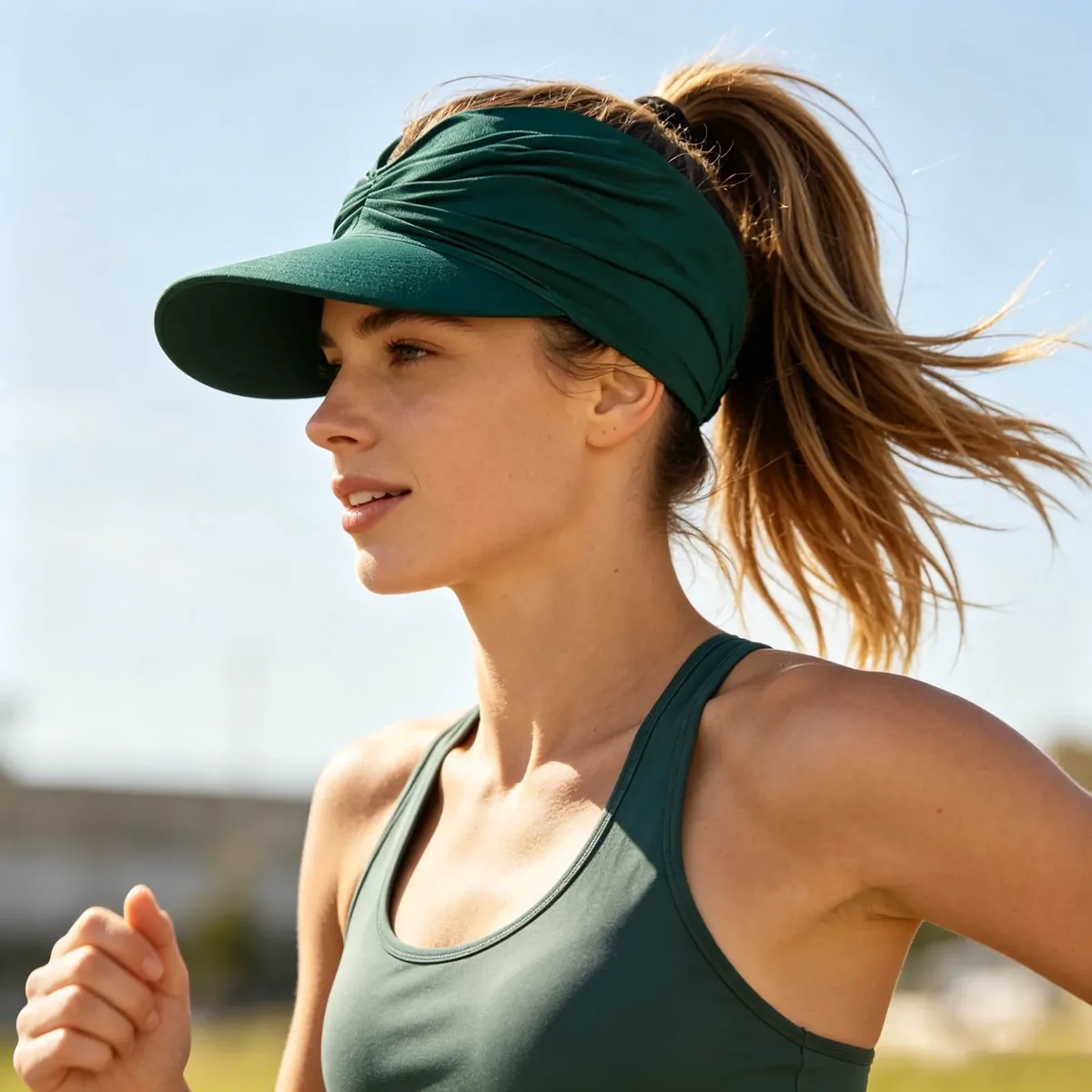
A cap or visor changes the rules: anything with height on top will fight the cap, and anything that sits where the cap’s strap goes will rub and slip. Low ponytails, low buns and braids that start below the cap line work best, because they sit clear of the band. A high bun under a cap gets squashed, pushes the cap forward and gives you a headache by mile 8, while a low braid threads neatly through the gap at the back of most running caps.
Best for: runners who race in sun, rain or cold and always wear a cap or visor. How to style it: put the cap on first, then build the style around it, so you know exactly where the band sits. Common mistake: styling your hair first and discovering the cap will not sit properly over it. Quick verdict: low and braided beats high and bulky every time a cap is involved — test the combination on a training run, not on race morning.
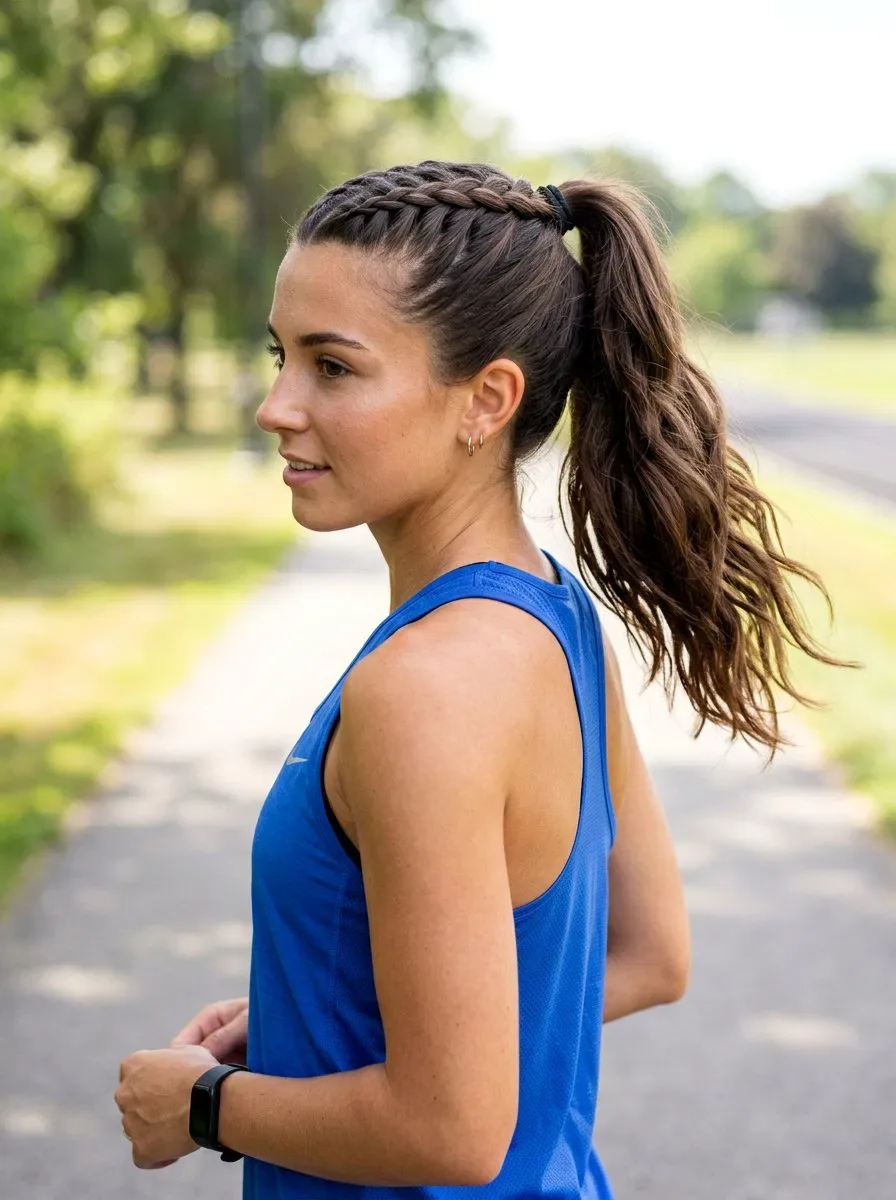
1. High Braided Ponytail
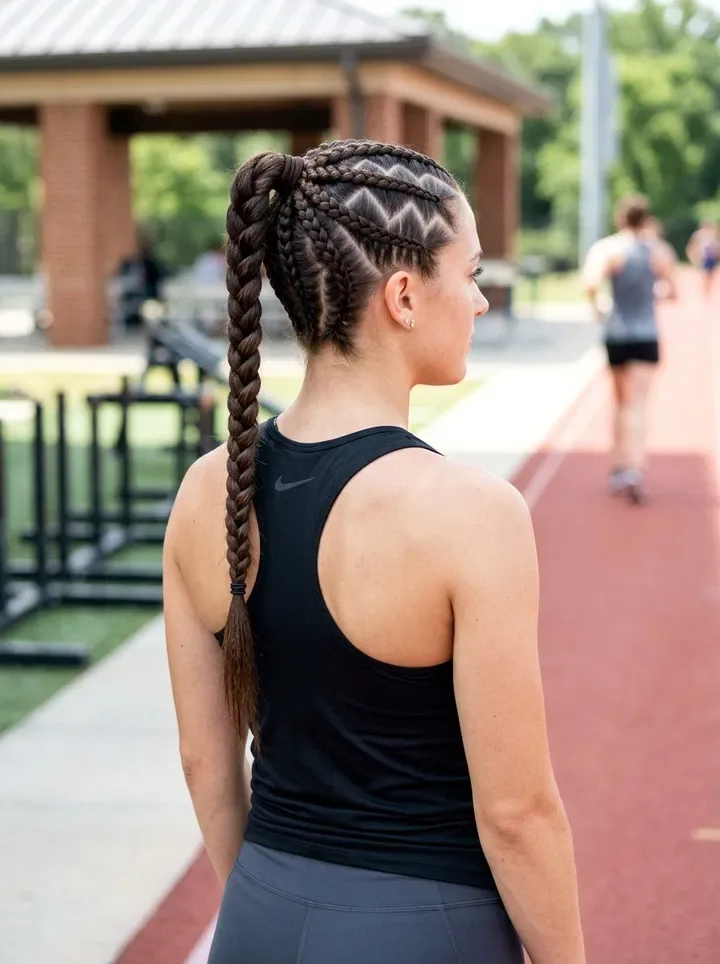
The high braided ponytail is the marathon classic for a reason: it takes the most practical race-day style there is and removes its one weakness. A plain high ponytail bounces and swings, but once the length is braided, the weight is locked into a single rope that barely moves, even at mile 22. It keeps hair off your neck, out of your face and away from your shoulders, and it looks sharp in finish-line photos.
Best for: long hair and anyone who loves a ponytail but hates the bounce. How to style: pull hair into a high ponytail, secure with a strong elastic, then braid the length and tie the end. Time: about 5 minutes. Common mistake: braiding too loosely, which lets the braid loosen and swing. Quick verdict: the safest upgrade you can make to a running ponytail.
2. Double Dutch Braids
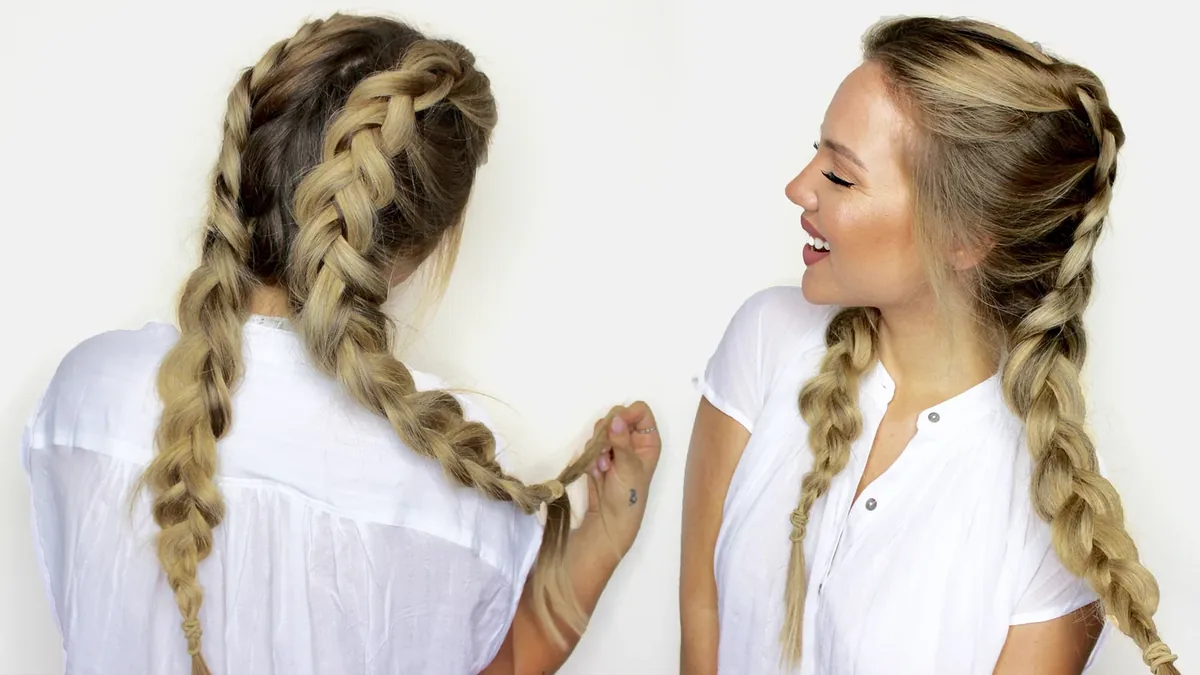
Double Dutch braids are the closest thing to a guarantee on race day. Two braids running from the hairline to the nape split the hair’s weight evenly, lock down every strand and do not move, however hard you run or how much you sweat. They work in rain, humidity and wind, they fit under a cap, and they still look neat at the finish line hours later.
Pros: maximum security, zero bounce, and no pins needed. Cons: they take 10 to 15 minutes to build, and tight braiding can ache if you pull too hard at the front. Who should avoid it: anyone with a very tender scalp or very short hair that cannot reach the nape. Cost: free at home, around $30 to $50 at a salon. Quick verdict: if you only trust one style for 26.2 miles, make it this one.
3. Low Braided Bun
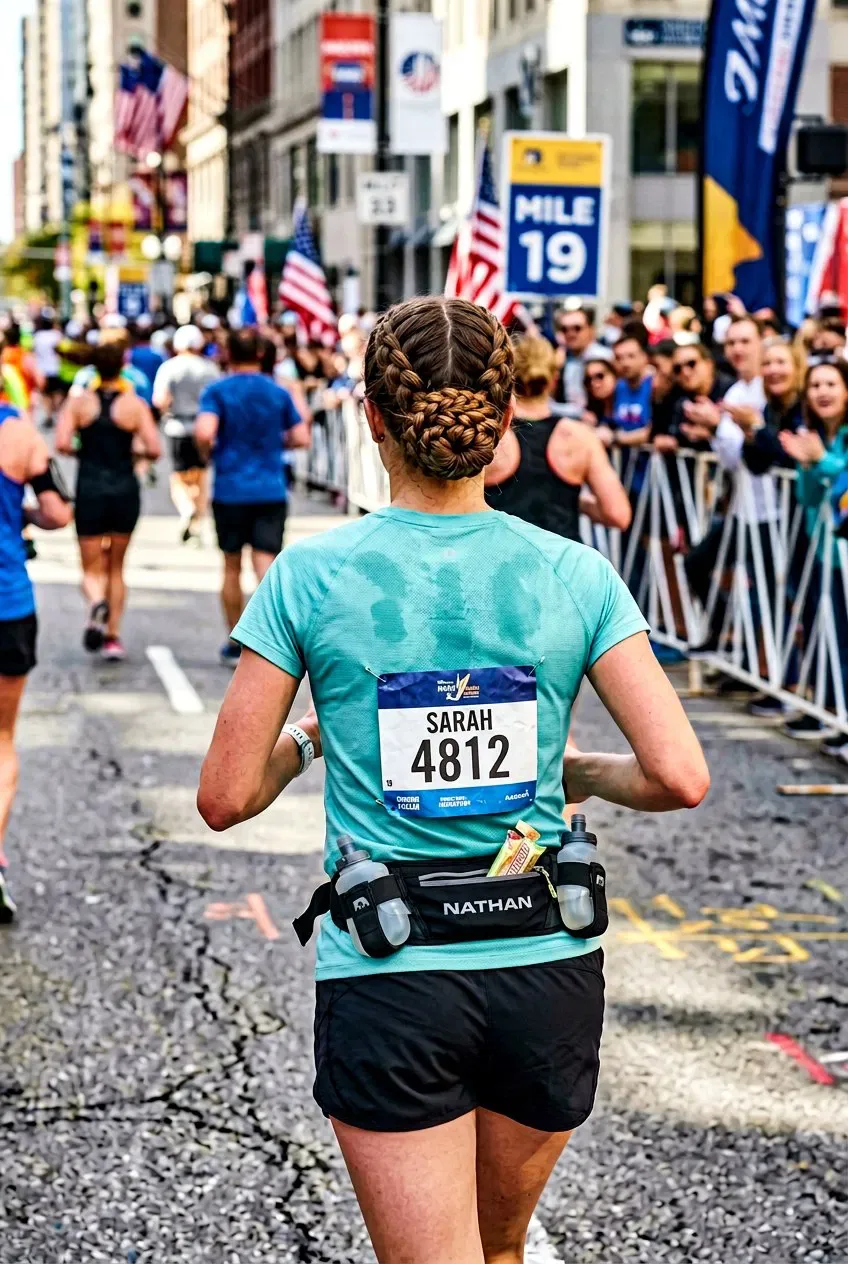
The low braided bun is the quiet achiever of marathon hair: nothing bounces, nothing swings, and nothing touches your neck. Braid the hair first, then coil it into a bun at the nape and pin it in place. The braid stops the bun from loosening, and the low position means it never fights a cap or a headband, and never pulls at the crown.
Best for: runners who find high styles give them headaches, and anyone racing in a cap. How to style: make a low ponytail, braid it, coil the braid flat against the nape and secure with pins. Maintenance: carry two spare pins in your kit — a bun this low is easy to re-pin mid-race. Common mistake: coiling the braid too loosely, so the bun sags by halfway. Quick verdict: calm, secure and completely forgettable in the best way.
4. Bubble Ponytail
The bubble ponytail turns a regular ponytail into a series of anchored sections, and that is exactly what makes it work for running. Each elastic breaks the swing into short, controlled segments, so the whole style moves far less than a single loose ponytail. It is fun, it photographs brilliantly at the start line, and it is one of the easiest secure styles to build on race morning.
Pros: quick to build, great for medium to long hair, and each bubble acts as a backup anchor if one elastic fails. Cons: the elastics can snag fine hair when you take them out, and the style is heavier than a braid. Time: about 6 minutes. Who should avoid it: very fine or fragile hair — use fabric elastics and be gentle removing them. Quick verdict: playful, practical and surprisingly race-proof.
5. French Braid Into a Low Ponytail
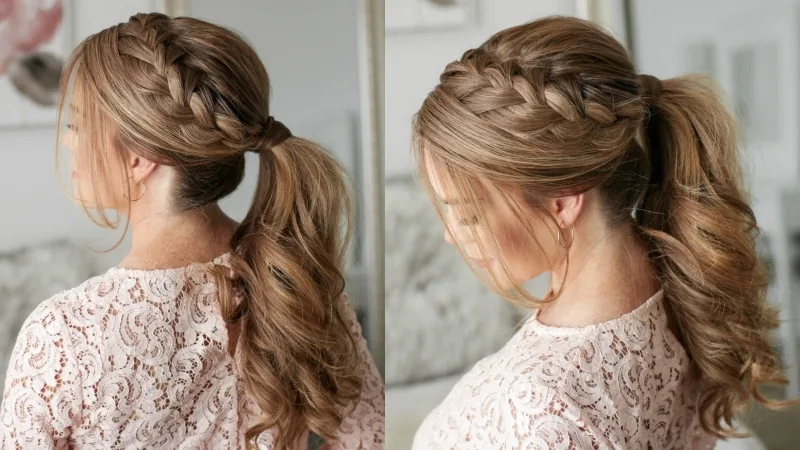
This style gives you the security of a braid where it matters most — at the crown and hairline — and the simplicity of a ponytail everywhere else. A French braid running down the back of the head locks the top section flat, so no strands escape into your face, and the low ponytail keeps the weight low and the bounce minimal.
Best for: runners with layers or face-framing pieces that always escape a plain ponytail. How to style: French braid from the crown to the nape, then gather everything into a low ponytail. Common mistake: starting the braid too far back, which leaves the front loose. Maintenance: a little gel on the hairline before braiding keeps flyaways down for hours. Quick verdict: the best of both worlds, and it takes under ten minutes.
6. Slicked-Back High Ponytail
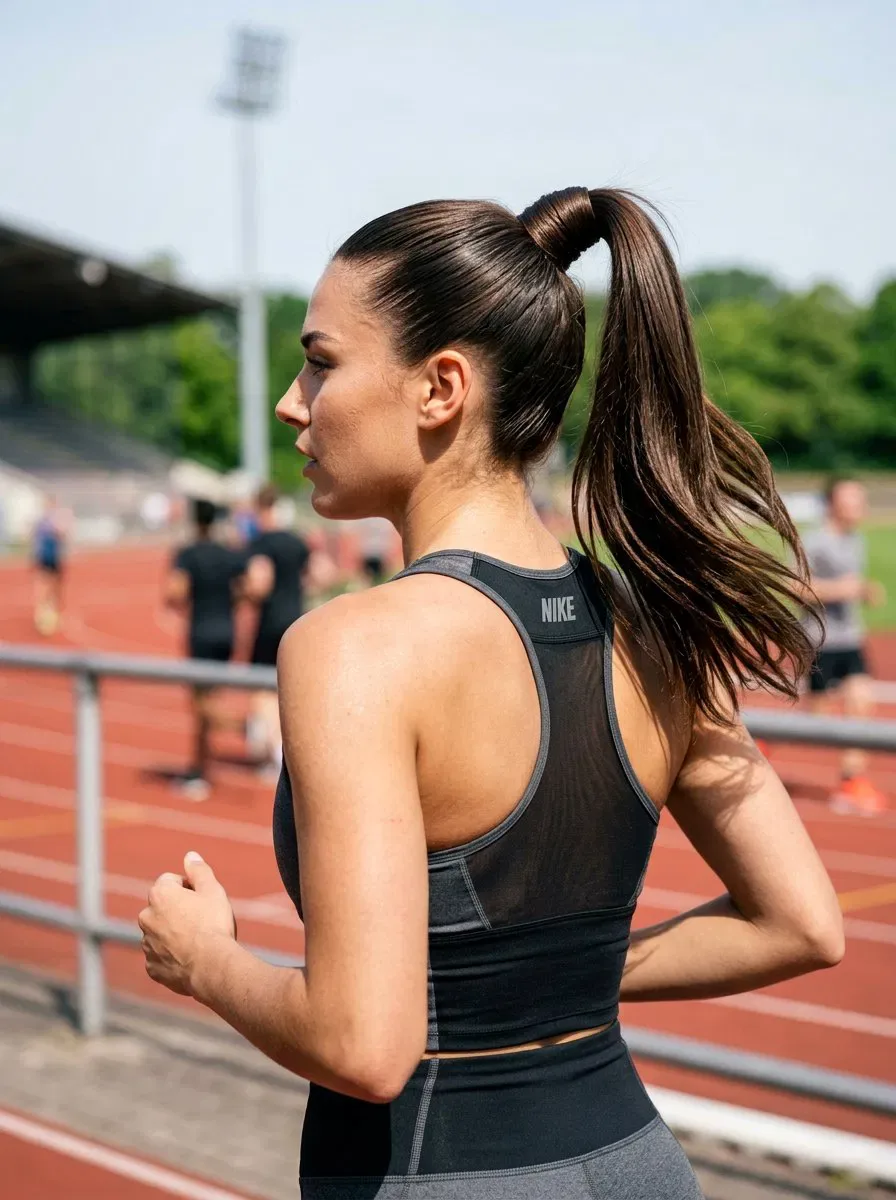
The slicked-back high ponytail is the gym favourite that translates well to race day, provided you build it properly. Gel or styling cream smooths every flyaway flat, the high anchor keeps hair off a sweaty neck, and the clean silhouette works beautifully under a visor. The trick is using enough product to hold the hairline without turning the style into a helmet.
Pros: sleek, fast to build, and nothing falls in your face. Cons: heavy gel plus hours of sweat can feel sticky, and the style needs a good wash afterwards. What to ask your stylist: a lightweight gel that holds without flaking. Who should avoid it: anyone who dislikes product in their hair — a braid will suit you better. Quick verdict: sharp and simple, but save it for cooler races if you hate the feel of gel.
7. Two French Braids Into a Bun
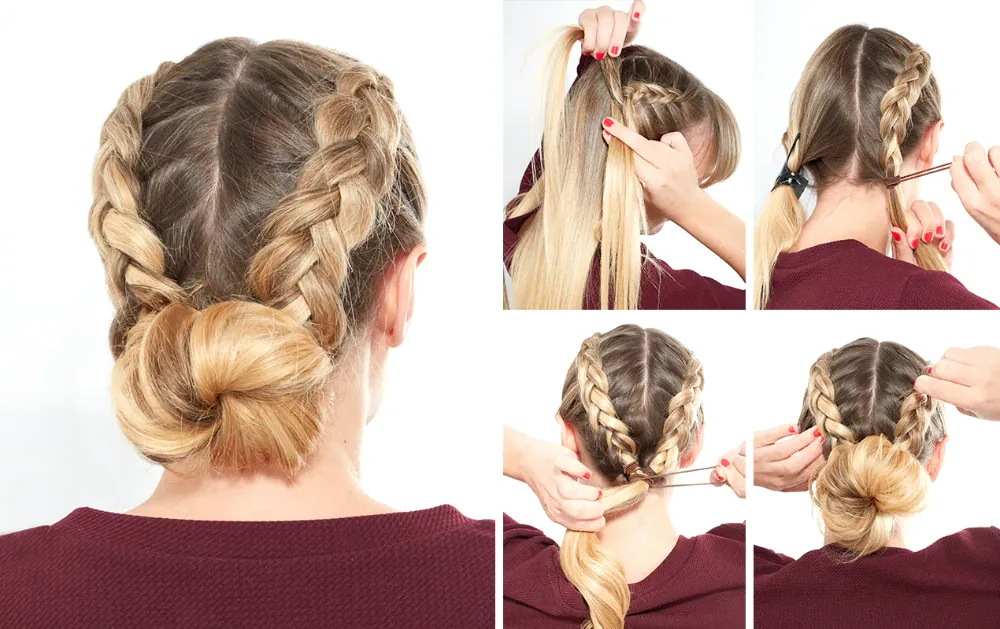
Two French braids that meet in a bun give you double security: the braids lock the hair down from the front, and the bun contains the ends so nothing swings at all. It is one of the most bombproof styles in this list — it survives rain, sweat, caps, headbands and a finish-line hug — and it looks polished enough for the post-race photos.
Best for: long, thick hair that overwhelms a single braid. How to style: part down the middle, French braid each side to the nape, then twist both ends together into a low bun. Time: 10 to 15 minutes, so practise it before race week. Common mistake: braiding the two sides unevenly, which makes the bun sit crooked. Quick verdict: the most secure style here, and worth the extra minutes.
8. Boxer Braids
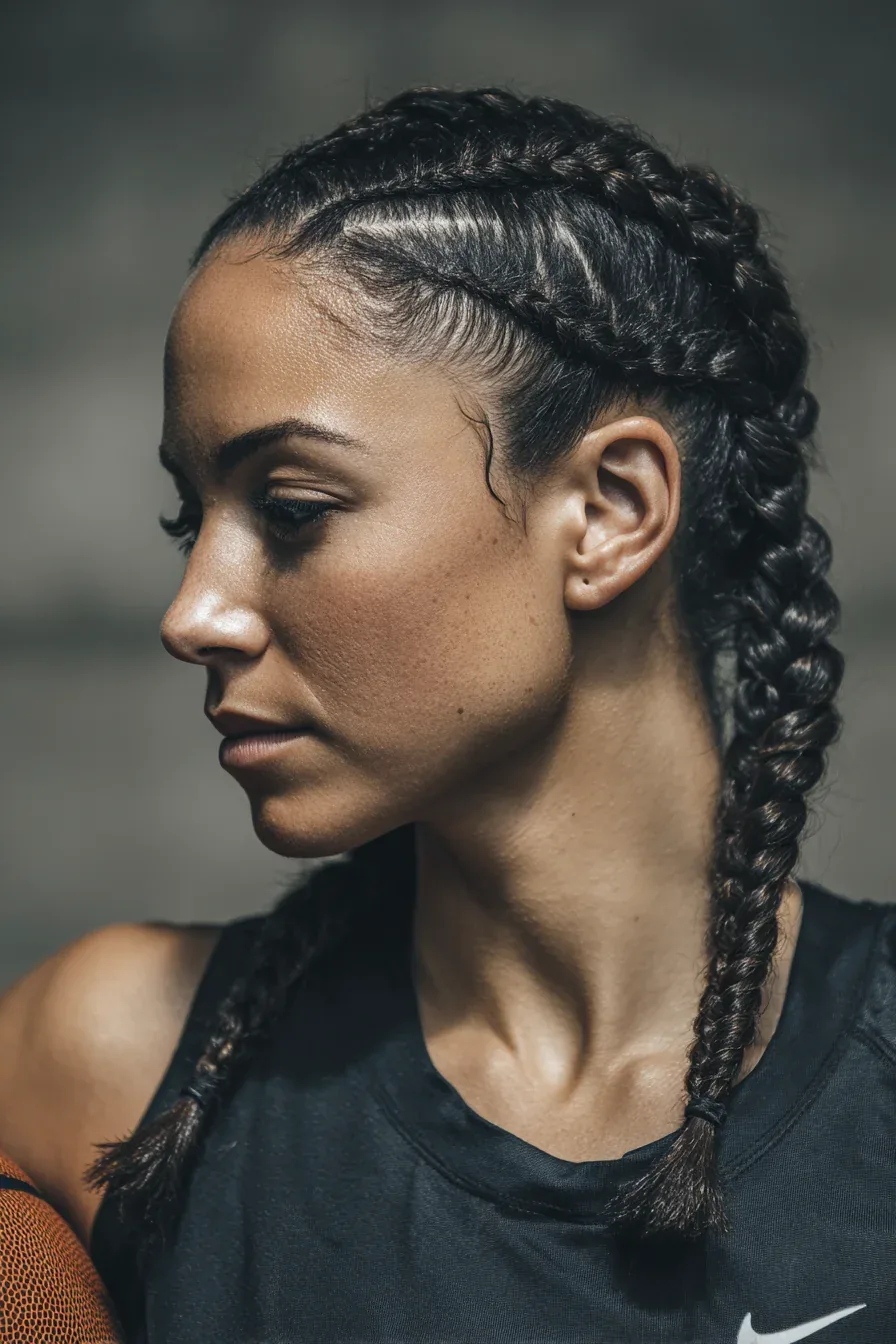
Boxer braids — tight double Dutch braids worn close to the scalp — were made for sport, and a marathon is the ultimate test. They do not move, they do not bounce, they keep sweat off your face, and they work on almost every hair type, including curly and coily hair. Once they are in, you can genuinely forget about your hair for the next four to six hours.
Pros: the most secure braided style for active wear, with no pins or elastics mid-length to fail. Cons: they pull at the hairline if braided too tightly, so keep the first few stitches gentle. Maintenance: none during the race — that is the point. Cost: free at home, $40 to $70 at a salon. Quick verdict: if your hair can be boxer-braided, it is hard to beat for a marathon.
9. Messy High Bun With a Braid Wrap
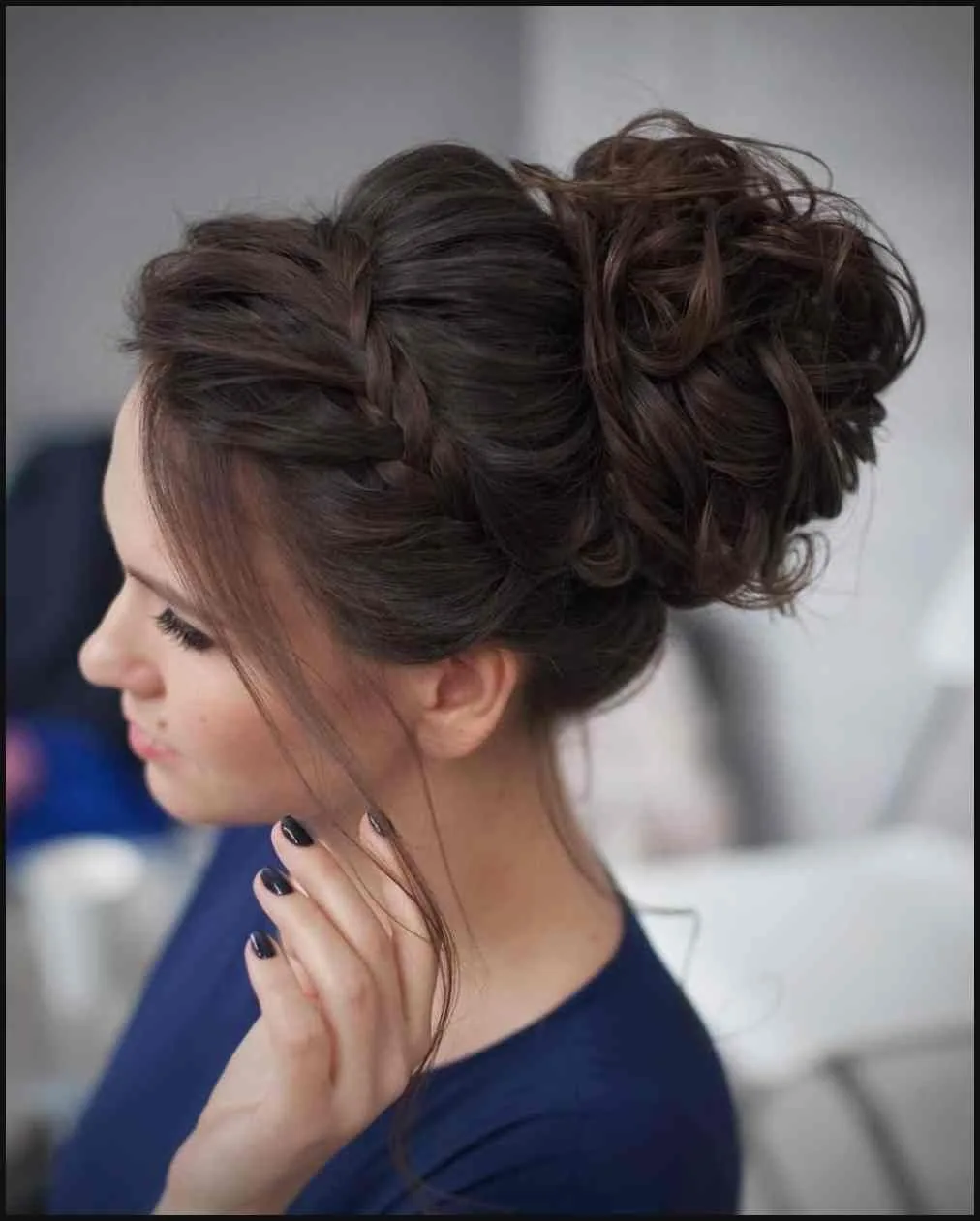
A messy high bun sounds like the opposite of a race-day style, but the braid wrap is what makes it work. Wrapping a thin braid around the base of the bun anchors it from every side, so the bun cannot slide or flop, while the slightly messy texture hides the fact that it has been through 26.2 miles. It keeps every strand off your neck and looks deliberately relaxed rather than fallen apart.
Best for: medium to long hair and runners who want a bun without the severe, scraped-back look. How to style: make a high bun, then braid a small section from underneath and wrap it around the base, pinning the end. Common mistake: skipping the wrap — without it, a messy bun will not survive mile 10. Quick verdict: relaxed on the surface, engineered underneath.
10. Low Sleek Ponytail
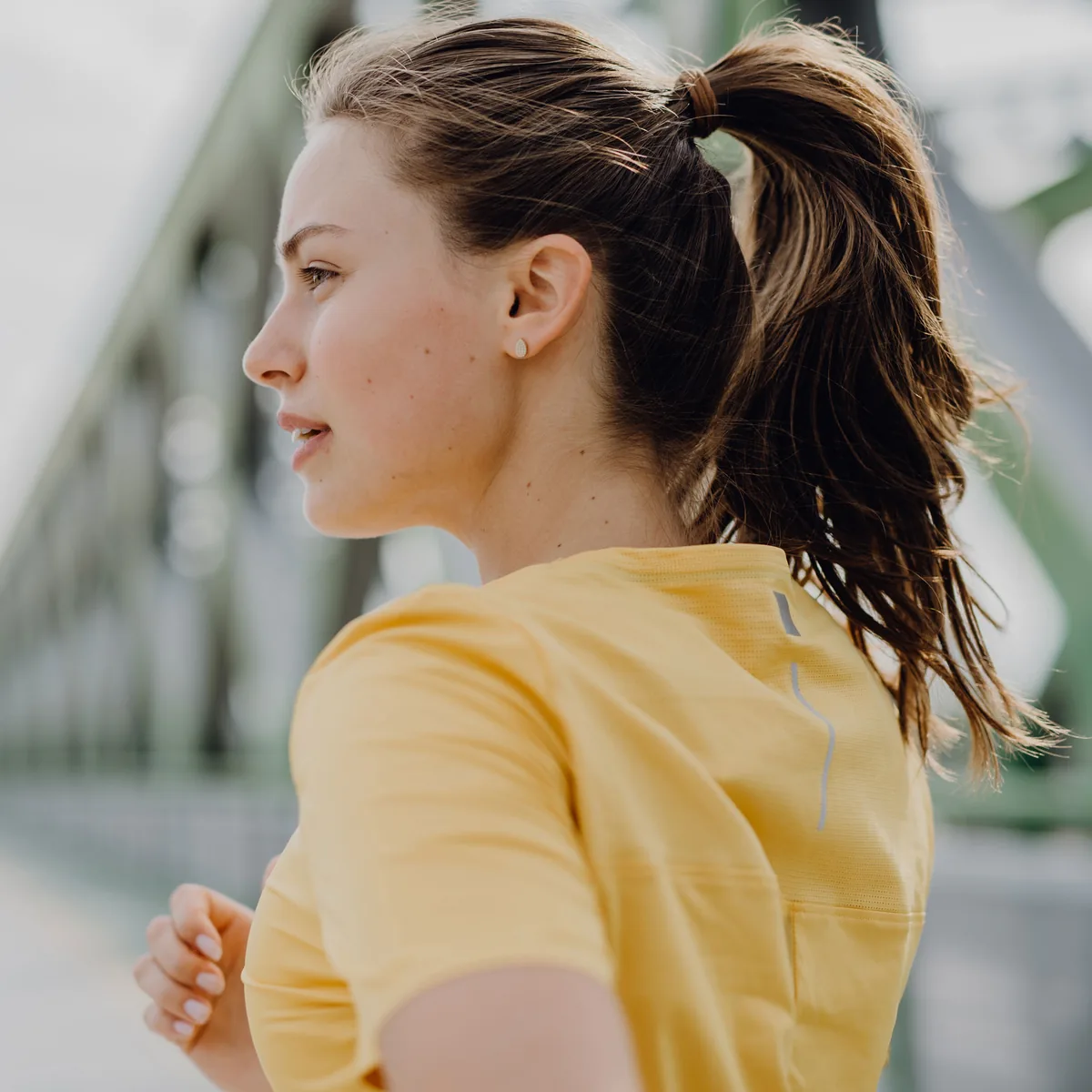
The low sleek ponytail is the simplest style on this list, and sometimes simple wins. Anchored at the nape, it has almost no bounce, it sits comfortably under any cap, and it never pulls at the crown the way a high ponytail can over four hours. A little smoothing cream keeps the crown tidy, and a wrapped section of hair around the elastic hides the band for a polished finish.
Pros: zero learning curve, comfortable for hours, and kind to your scalp. Cons: it is the least secure style here in heavy rain, and long layers may escape. Who should avoid it: very layered hair — a braid will contain the layers better. Time: 2 minutes. Quick verdict: the dependable fallback every runner should have in her back pocket.
11. Fishtail Braid
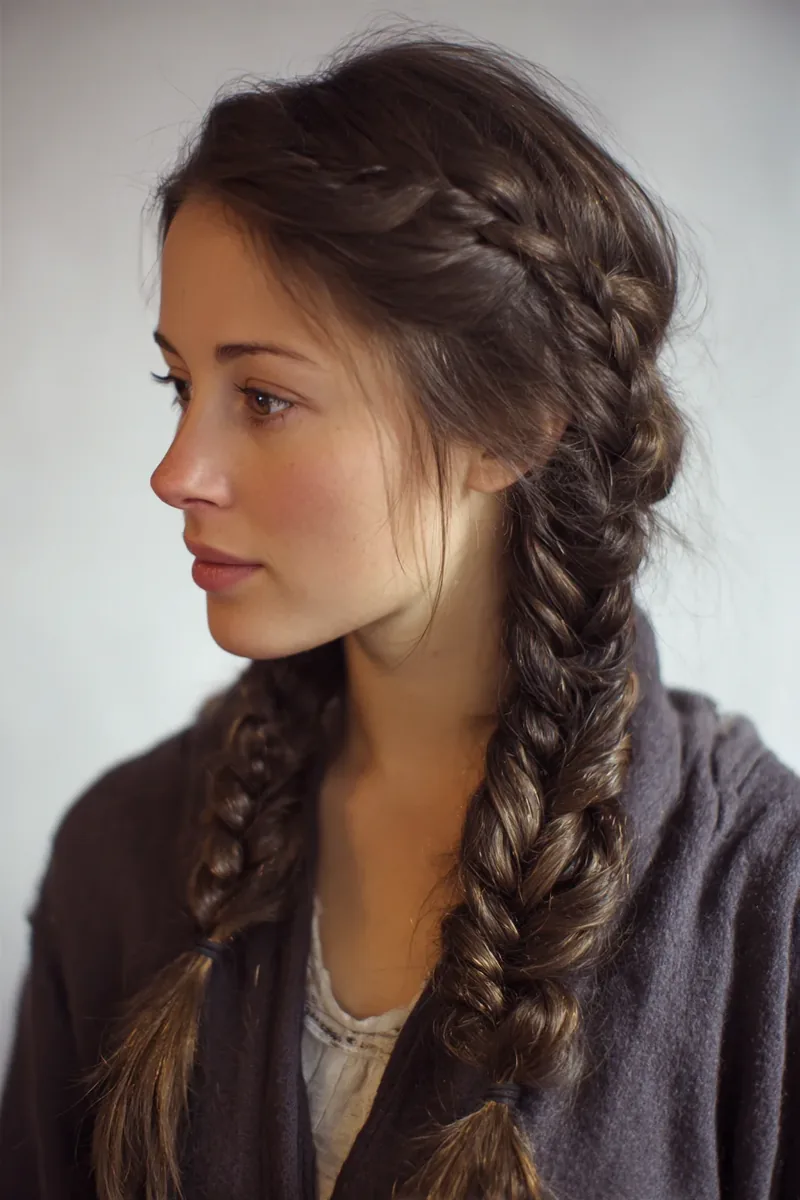
The fishtail braid looks intricate but it is really just two sections woven together, and that weave is remarkably good at staying put. It lies flatter than a three-strand braid, so it sits comfortably against your back and under a running vest, and it distributes weight evenly along its length, which means almost no swing. Pull it slightly loose for texture, or keep it tight for maximum security.
Best for: long hair, and runners who want a braid that looks special in race photos. How to style: gather hair to one side or down the back, split into two sections and cross small pieces from each side to the other. Time: 8 to 12 minutes. Common mistake: making it too loose on race day — a tighter fishtail survives sweat far better. Quick verdict: beautiful, flat, and far tougher than it looks.
12. Crown Braid
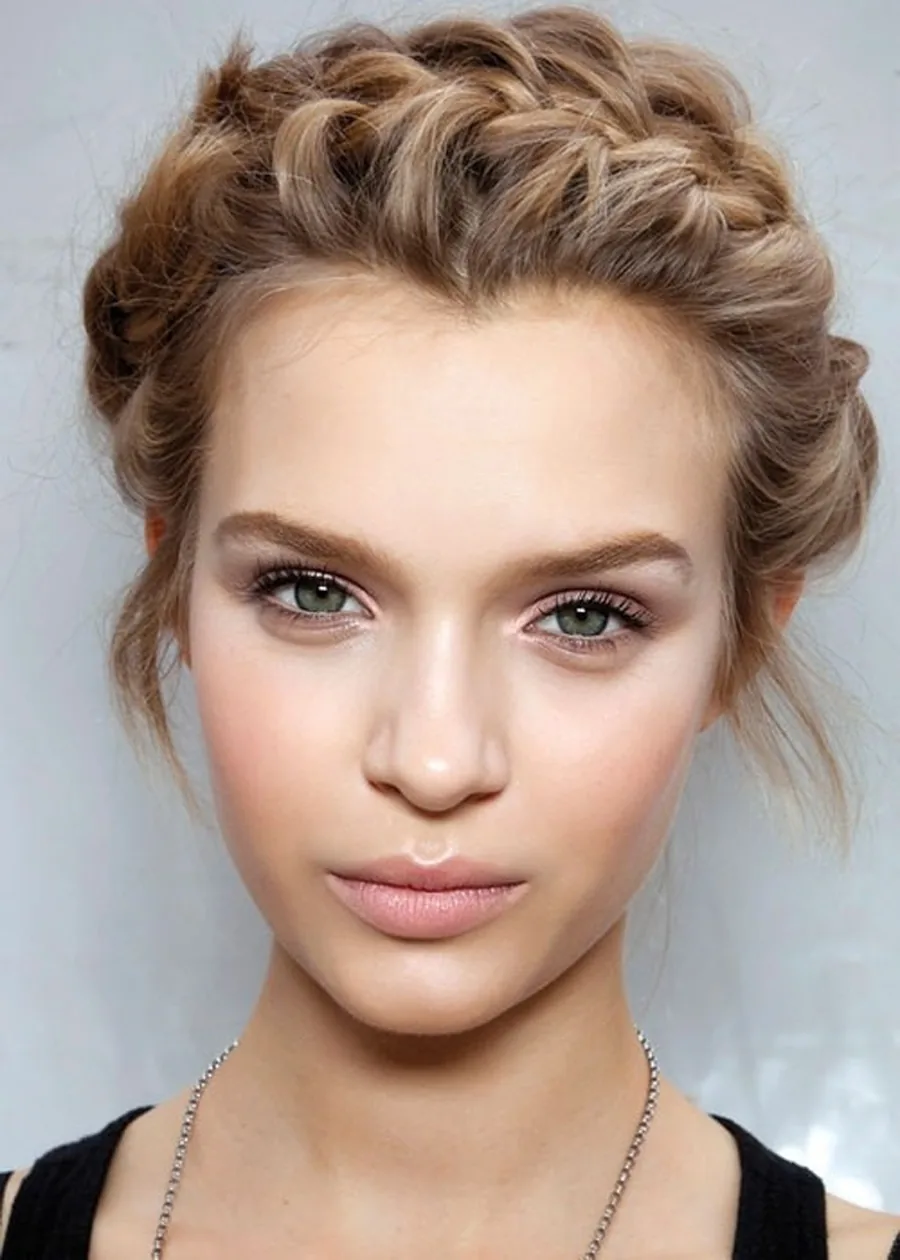
The crown braid wraps around the head like a headband made of your own hair, which makes it brilliant for running: nothing hangs down to bounce, nothing touches your neck, and the braid itself keeps the hairline completely clear. It works in heat, rain and wind, and it stays neat long after looser styles have given up.
Pros: total containment, no bounce at all, and no accessories needed. Cons: it takes practice and 15 minutes or more, and it needs enough length to wrap around the head. Who should avoid it: short hair that cannot reach around the crown — try a braided headband style instead. Cost: free at home once you have practised it. Quick verdict: the most elegant bombproof style on this list.
13. Half-Up Braided Ponytail
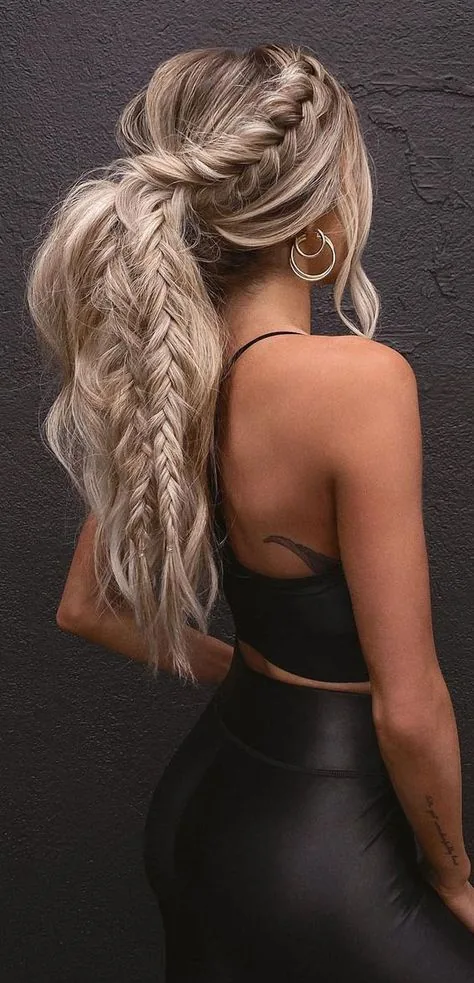
The half-up braided ponytail keeps the front of your hair completely contained while leaving the rest down — a good compromise if you hate the feeling of all your hair tied up but still need the face-framing strands out of the way. Braiding the top section and tying it back stops the front from falling forward with every stride, while the loose length can move freely behind you.
Best for: runners who overheat with a full updo and prefer some hair down. How to style: braid the top section from the crown, secure it at the back, and let the rest fall loose. Common mistake: choosing this for a hot or humid race — the loose length will soak up sweat and stick to your neck. Quick verdict: lovely for cool-weather races, but pick a full updo when it is hot.
14. Twisted Low Bun
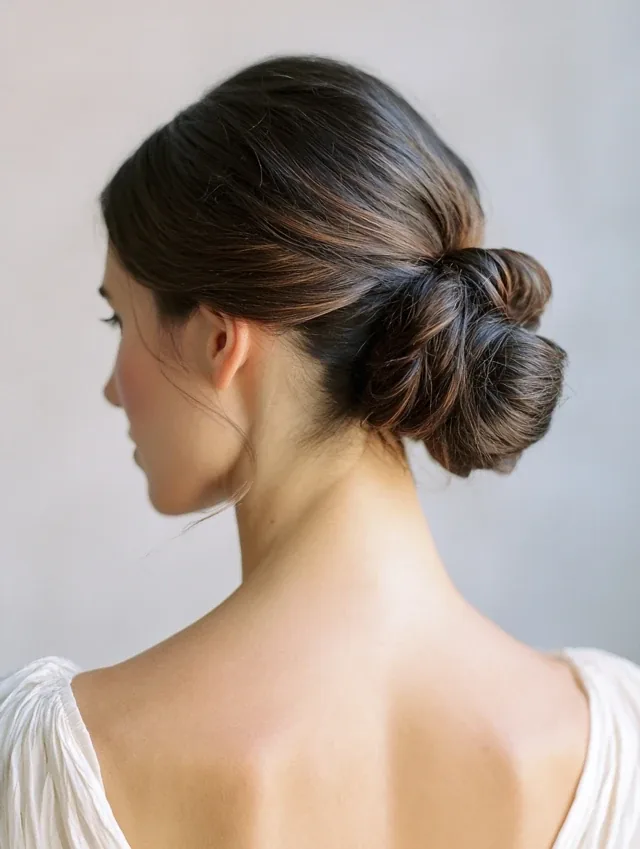
The twisted low bun is quicker than a braided bun and nearly as secure. Two or three sections twisted together and coiled at the nape create a bun with natural grip — the twists lock against each other, so the style resists loosening far better than a plain bun. It sits low enough for any cap, and it takes about five minutes on race morning.
Pros: fast, secure, and easy to rebuild mid-race if it ever loosens. Cons: twists can unravel on very straight, slippery hair — a little texture spray before twisting helps. Maintenance: two pins are all the backup you need. Who should avoid it: very fine, straight hair without any product for grip. Quick verdict: the five-minute bun that actually stays put.
15. Cornrows
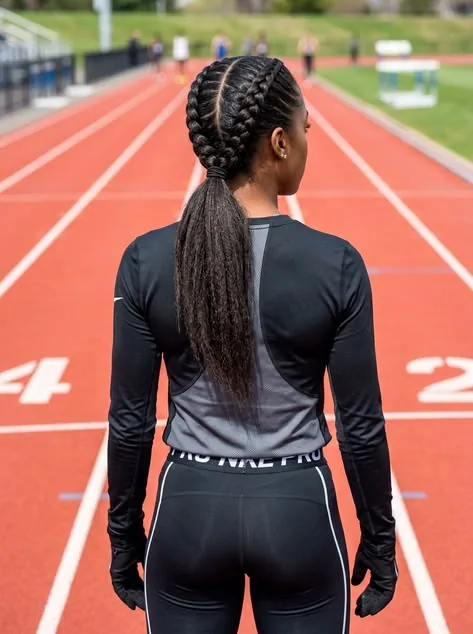
Cornrows are one of the most practical race-day styles ever invented: the hair is braided tight to the scalp in rows, so there is nothing to bounce, nothing to come loose, and nothing to re-do for days. They handle sweat, rain and heat better than almost any other style, they fit under caps and headbands, and they can last well beyond race day itself.
Pros: unbeatable security, zero race-day maintenance, and they protect the hair from sun and sweat damage. Cons: they take an hour or more to install and should be done by someone experienced. Cost: $60 to $150 at a salon depending on the pattern. Who should avoid it: anyone with a very sensitive scalp — ask for looser tension at the hairline. Quick verdict: the ultimate set-and-forget marathon style.
16. Bubble Braids Pigtails
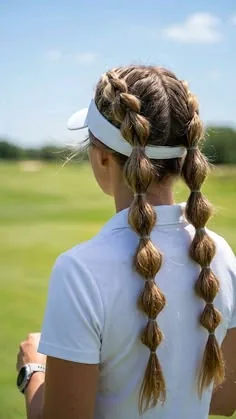
Bubble braids worn as pigtails split the hair’s weight into two sides, which cuts bounce dramatically compared with a single ponytail, and each bubble adds another anchor point. They are playful and fun for race day, they photograph brilliantly, and they are easy enough to build in under ten minutes — a good choice if you want a style with personality that still does the job.
Best for: medium to long hair and runners who like a fun race-day look. How to style: part down the middle, make two ponytails, then add elastics every few inches and puff each section. Common mistake: making the pigtails too high, which brings the bounce back. Quick verdict: fun, secure and far more practical than they look.
17. Side Braid
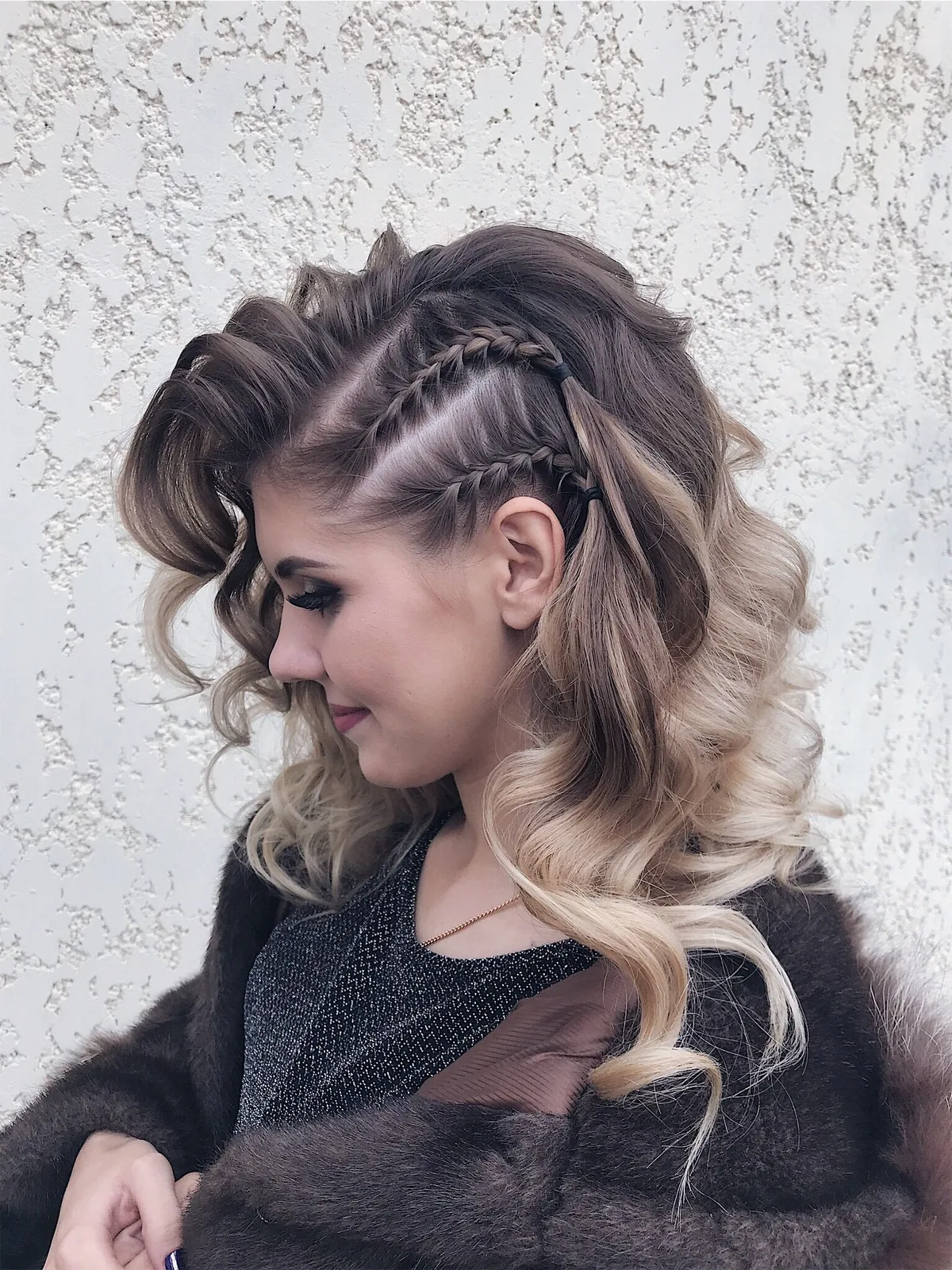
The side braid keeps your hair over one shoulder and completely out of the way of your running vest straps, which is a small detail that matters over 26.2 miles. A braid draped to the front is easy to check and adjust, it does not bounce against your back, and it keeps the hair off a sweaty neck. It works best as a Dutch or French braid started at the crown so the top stays locked down.
Pros: comfortable under a vest, easy to monitor, and no hair on your back at all. Cons: the braid can swing forward onto your chest if it is very long — tuck the end into your top or braid it tightly. Time: about 7 minutes. Who should avoid it: anyone who dislikes hair in front of their shoulder. Quick verdict: simple, comfortable and vest-friendly.
18. High Bun With a Scrunchie
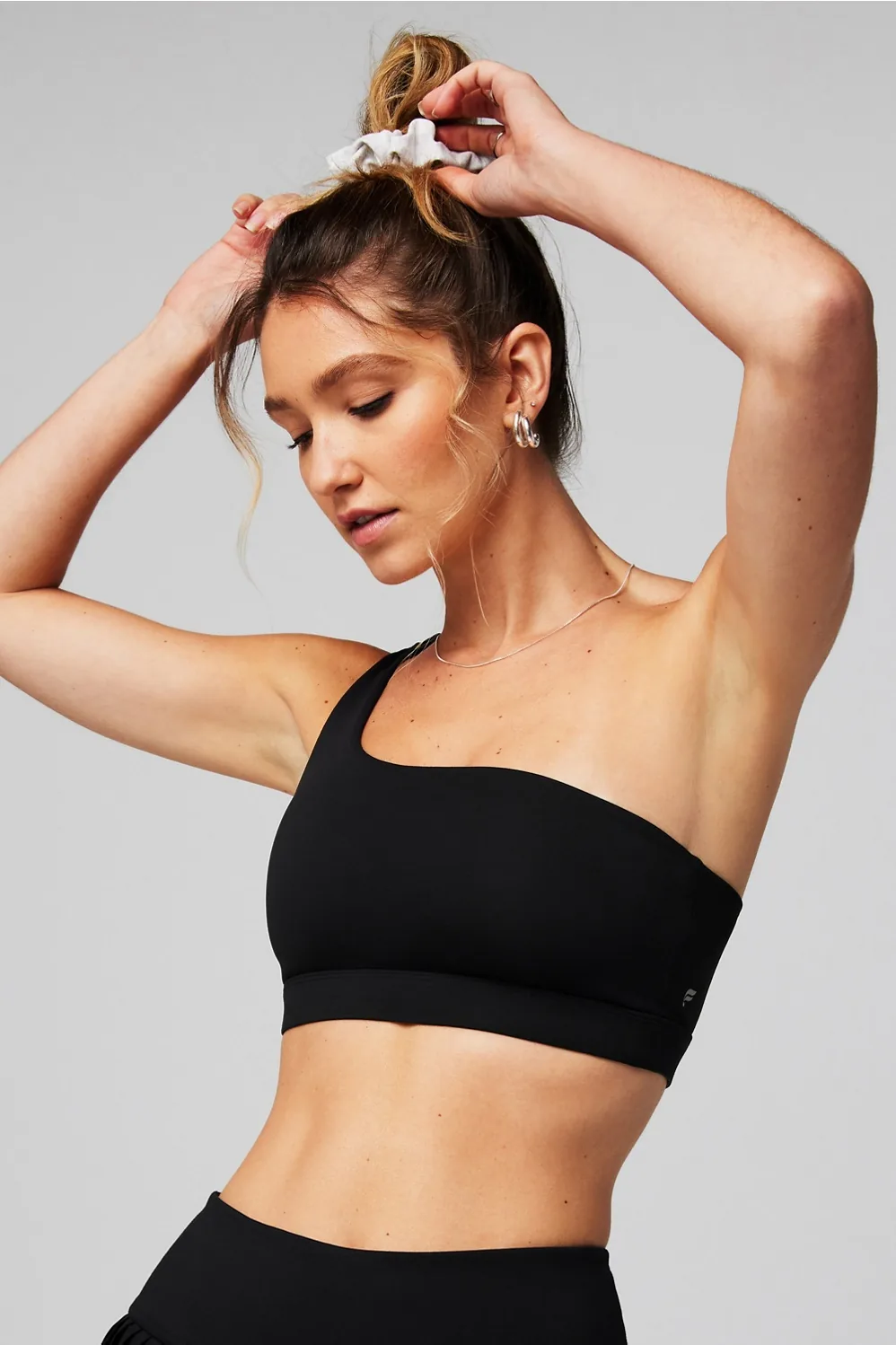
A high bun held with a scrunchie is the gym classic, and the scrunchie is the secret: fabric grips hair without the sharp pressure of a thin elastic, so it is kinder to your scalp over four hours and far less likely to snap. The bun keeps everything off your neck, and a scrunchie in a bright colour doubles as a race-day accessory.
Best for: thick hair that snaps thin elastics, and anyone prone to ponytail headaches. How to style: twist hair into a high bun, wrap a scrunchie around the base twice, and pin any loose ends. Common mistake: using a scrunchie that is too loose — it should feel snug, not sloppy. Maintenance: carry a spare scrunchie in your kit. Quick verdict: cheap, comfortable and kinder than an elastic.
19. Braided Headband Half-Up
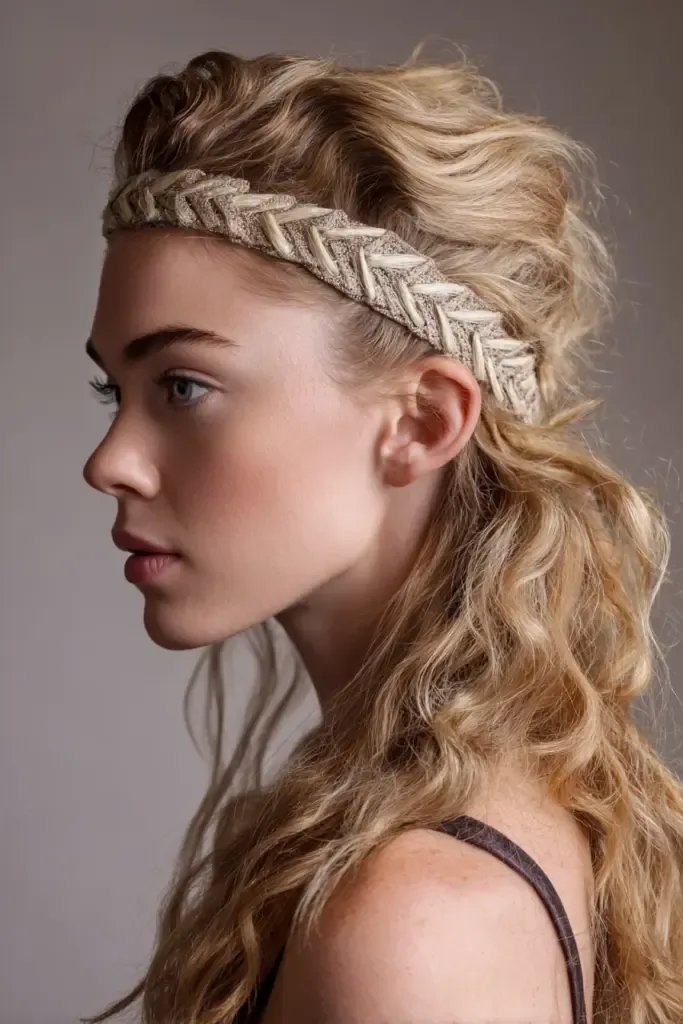
The braided headband half-up style is the answer for hair that is too short for a full updo but too long to leave loose. A braid worked across the front acts as a living headband, holding the fringe and face-framing layers back, while the rest of the hair stays down but out of your eyes. It is secure, pretty, and it works on bobs and lobs as well as longer hair.
Pros: keeps the front contained without needing length for a ponytail. Cons: the back is still loose, so it is best for cool races. What to ask your stylist: how to anchor the braid so it does not slide back as you sweat. Time: about 8 minutes. Quick verdict: the best race-day option for in-between lengths.
20. Low Chignon
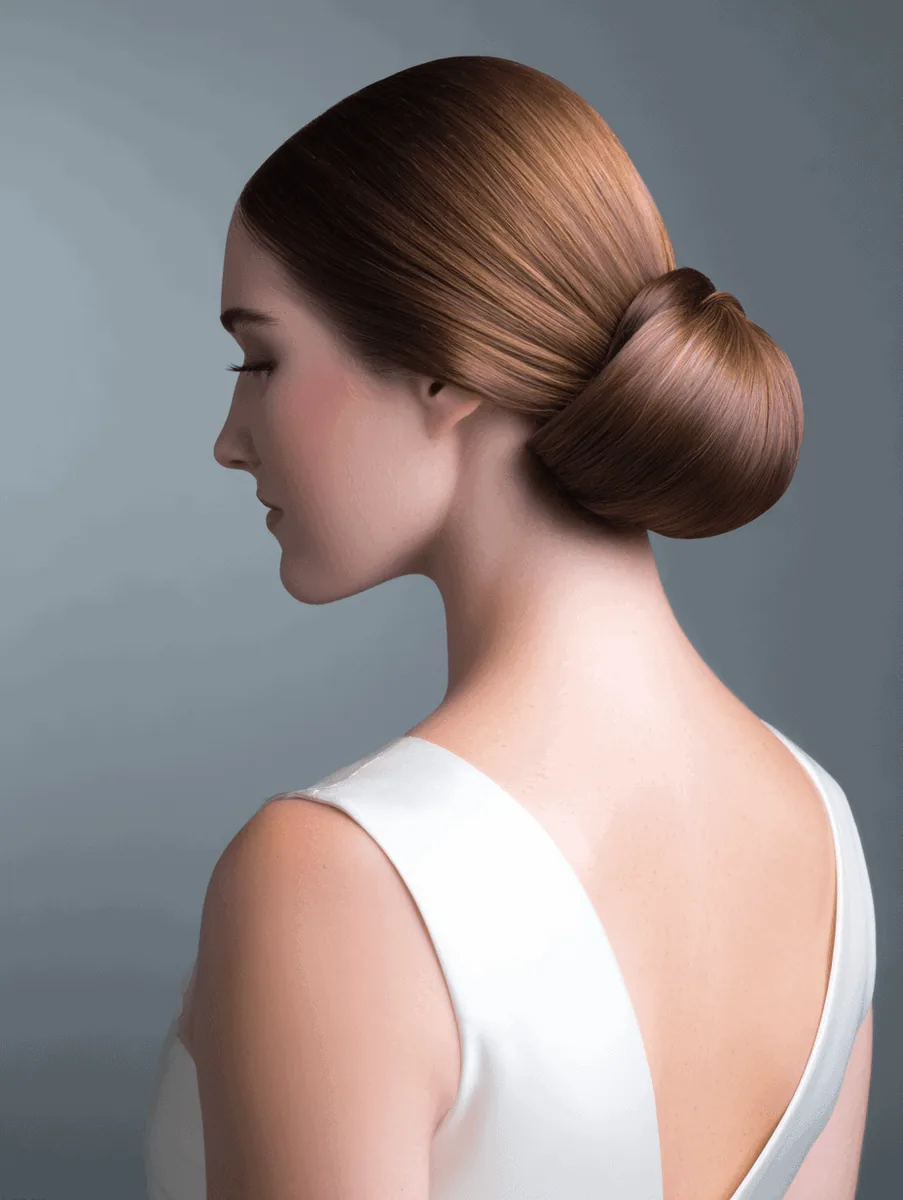
The low chignon is a rolled, tucked bun at the nape that looks polished and stays put because the hair is folded in on itself rather than piled up. It has no height to bounce, no length to swing, and it sits perfectly under a cap. It is the style to choose if you want to look put-together at the finish line without sacrificing a second of security.
Best for: medium to long hair and runners who want an elegant finish-line look. How to style: gather hair low, twist it upwards and tuck the ends in, pinning securely at the nape. Common mistake: not using enough pins — a chignon needs at least four to survive a marathon. Cost: free at home, $40 or so at a salon. Quick verdict: quiet, elegant and completely race-proof when pinned properly.
21. Double Bubble Ponytails
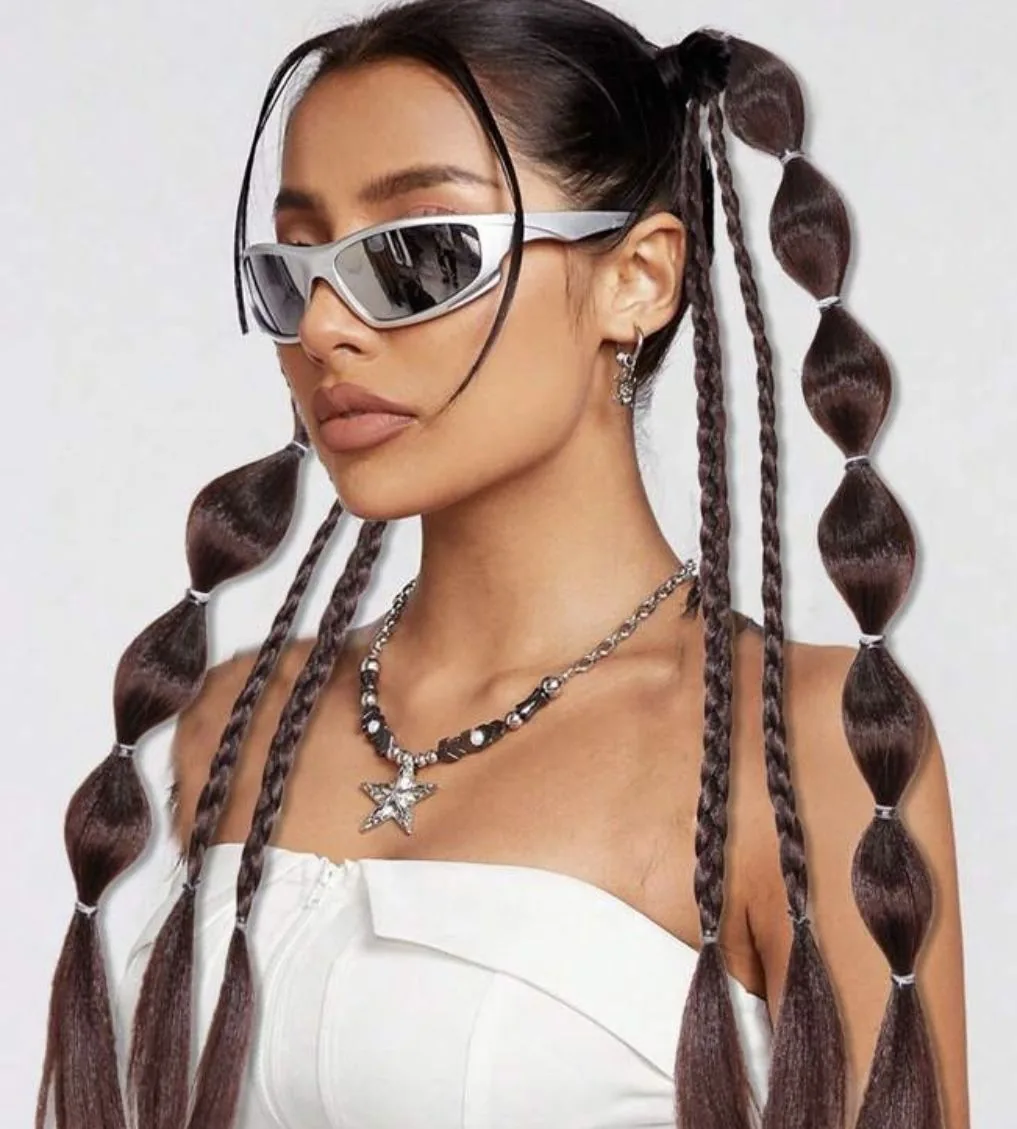
Double bubble ponytails take the bubble ponytail idea and split it in two, which is the most effective way to kill bounce without braiding. Each side carries half the weight, each bubble adds grip, and the whole style stays close to the head instead of swinging. It is a fun, high-energy look that suits the party atmosphere of a big-city marathon.
Pros: very low bounce, quick to build, and no braiding skill needed. Cons: it uses a lot of elastics, so pack spares. Time: about 8 minutes. Who should avoid it: very short hair that cannot reach two ponytails. Quick verdict: maximum fun, minimum bounce, zero braiding required.
22. Waterfall Braid Ponytail
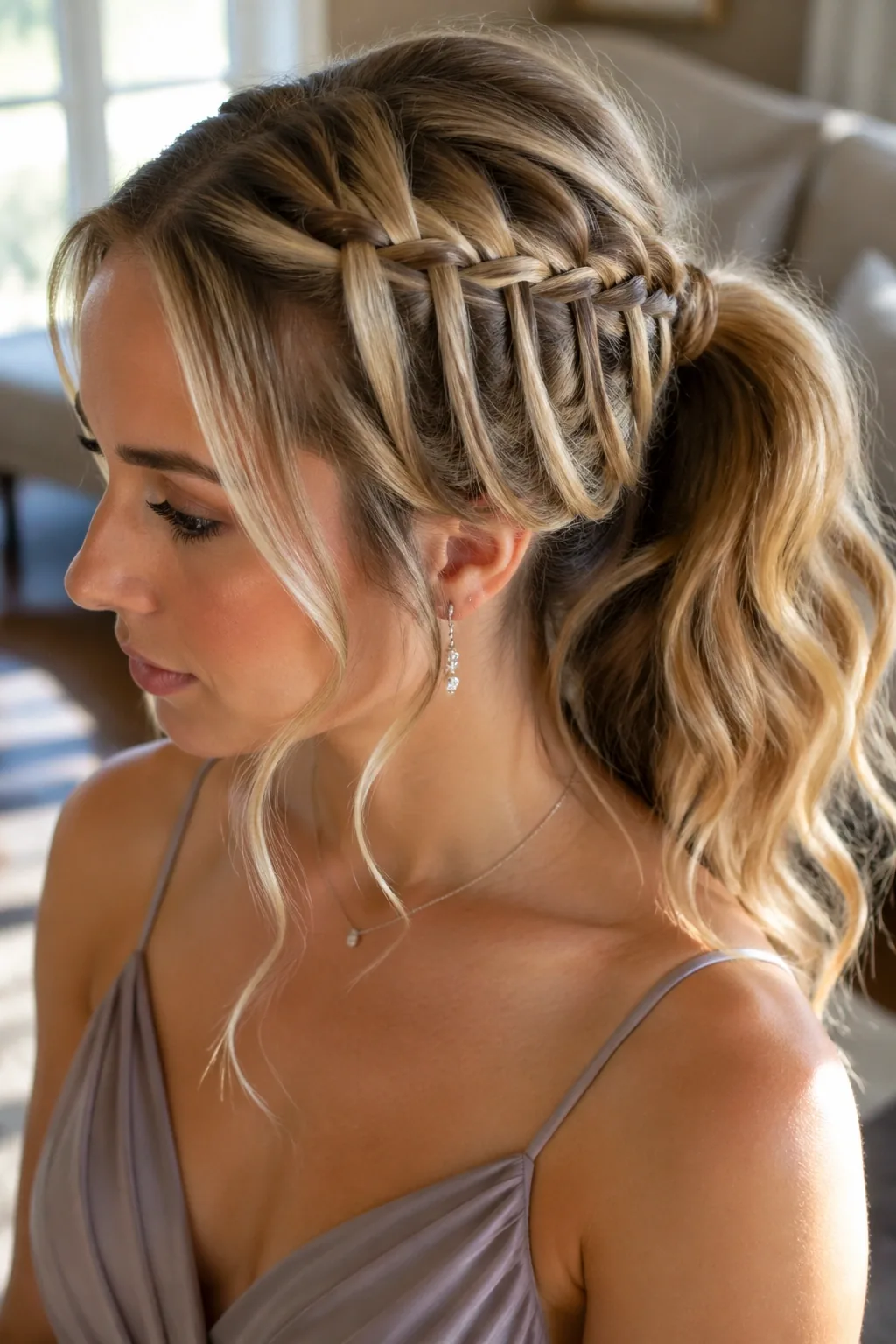
The waterfall braid ponytail starts with a braid across the crown that lets strands fall through it, then gathers everything into a secure ponytail. The braid section locks the front down — the part that usually comes loose first — while the ponytail keeps the rest contained. It looks far more complicated than it is, and it photographs beautifully.
Best for: runners who want a braid detail without committing to a full braid. How to style: waterfall braid across the crown, then gather all the hair into a mid-height ponytail. Common mistake: braiding too loosely at the crown, which lets the waterfall section unravel. Maintenance: a few pins at the braid’s end keep it anchored. Quick verdict: pretty at the front, practical everywhere else.
23. Sleek Ballerina Bun
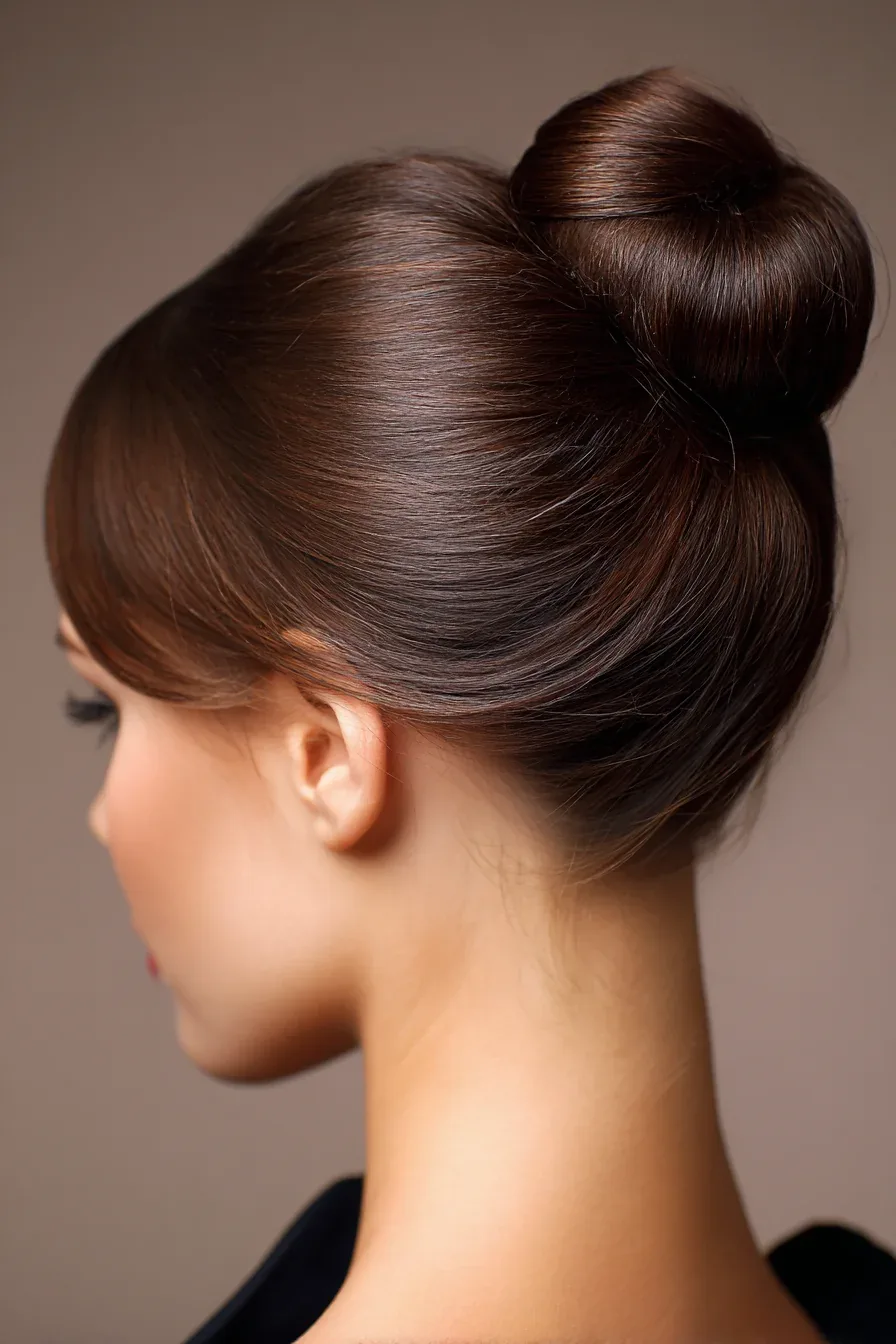
The sleek ballerina bun is the highest-security bun there is: every strand is smoothed back, twisted tight and pinned flat, so there is nothing to move at all. Dancers wear it through hours of performance, and runners can rely on it through hours of racing. It is severe, it is neat, and it will look exactly the same at mile 26 as it did at the start line.
Pros: total control, no bounce, and it fits under any cap or headband. Cons: the scraped-back tension can ache after a few hours — keep the front slightly softer if you are prone to headaches. Time: about 8 minutes with gel and a brush. Who should avoid it: anyone with a tender scalp or thinning at the hairline. Quick verdict: the bun for runners who want zero distractions.
24. Textured Low Ponytail With a Braid
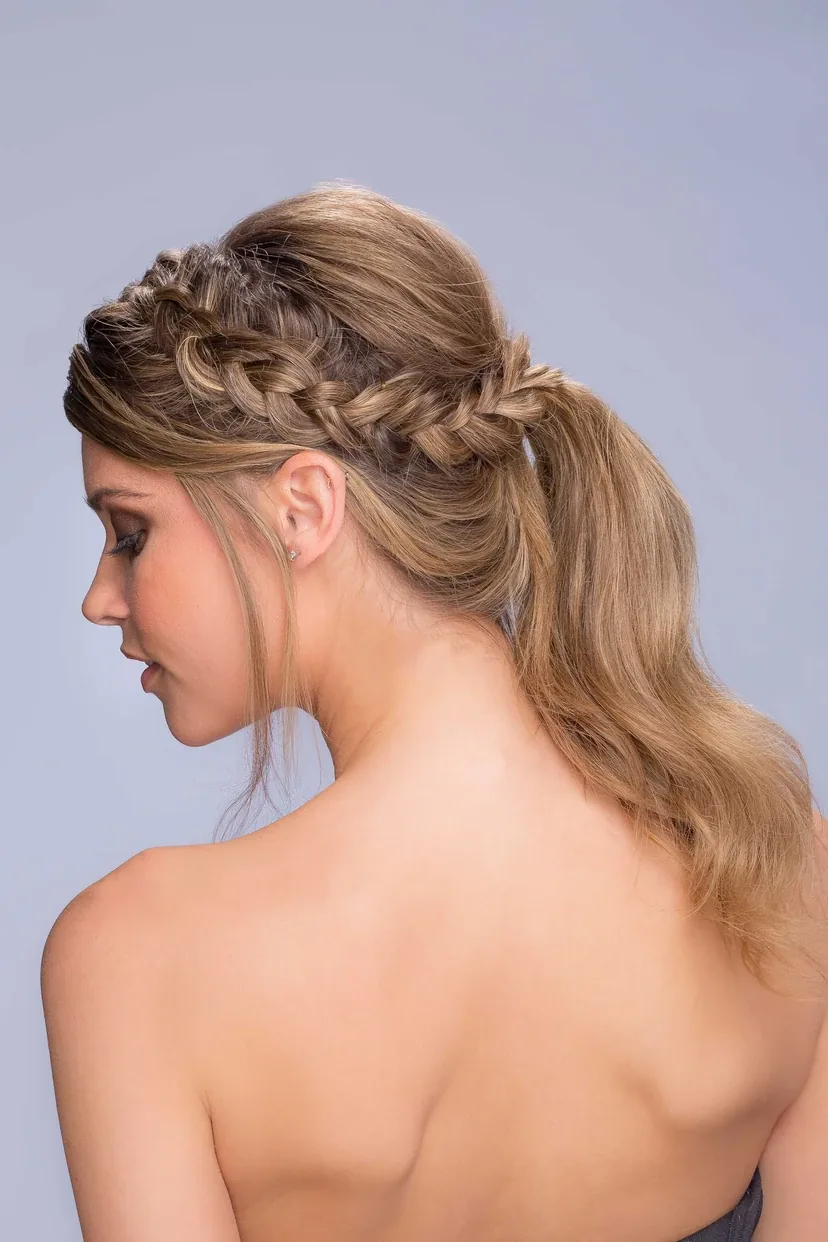
This style starts as a low ponytail, then adds a thin braid wrapped around the base or woven through the length. The texture gives the elastic something to grip, the braid adds a second anchor point, and the whole thing looks intentionally styled rather than thrown together. It is a good middle ground if a full braid feels like too much but a plain ponytail feels too little.
Best for: wavy or textured hair, which holds this style naturally. How to style: make a low ponytail, braid a small section from underneath and wrap it around the elastic, pinning the end. Common mistake: skipping the texture — on very straight hair, add a little spray first so the braid grips. Quick verdict: a small detail that makes a big difference to security.
25. French Twist Ponytail
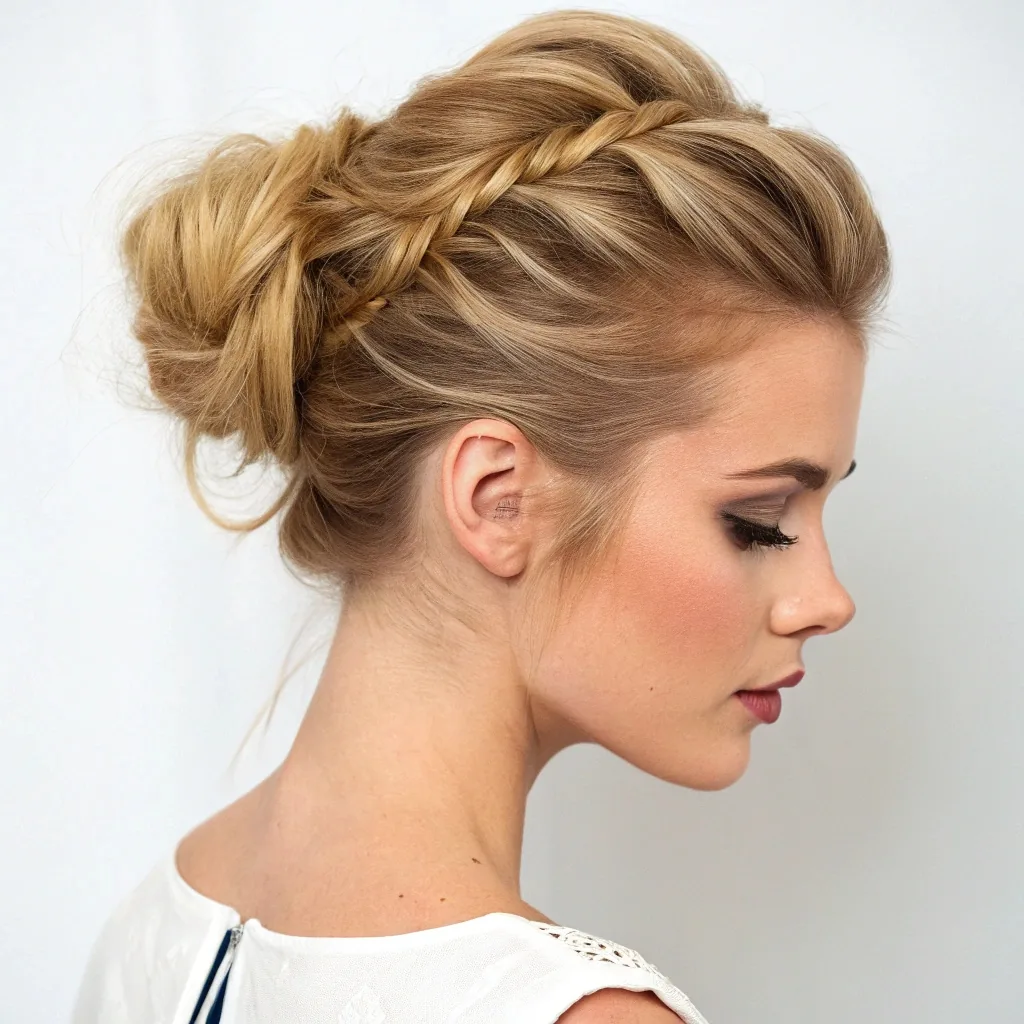
The French twist ponytail combines a classic twist with a ponytail: the hair is twisted up the back of the head and secured, with the ends left as a ponytail. The twist locks the bulk of the hair flat against the head, so the ponytail that remains is shorter, lighter and bounces far less. It is elegant, secure and surprisingly comfortable.
Pros: reduces ponytail length and bounce without losing the ponytail look. Cons: it needs pins and practice — do a trial run before race week. Time: about 10 minutes. Who should avoid it: very short hair that cannot twist. Cost: free at home, around $35 at a salon. Quick verdict: a classic with a practical twist, quite literally.
26. Pixie With a Headband
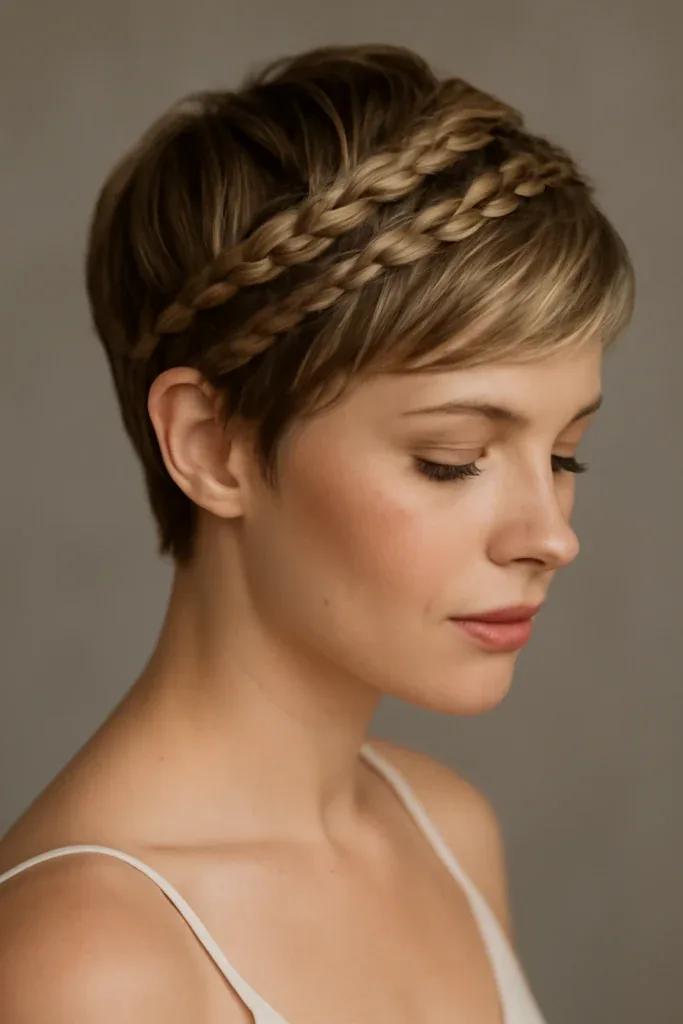
Short hair is a marathon advantage — there is almost nothing to bounce, tangle or overheat — and a pixie cut with a good headband is the simplest race-day style of all. The headband keeps the fringe out of your eyes and soaks up sweat at the hairline, while the pixie itself needs nothing more than a quick finger-comb at the finish.
Best for: pixie cuts and very short hair. How to style: choose a non-slip fabric headband, not a hard plastic one that will slide or pinch. Common mistake: a headband that is too loose — test it on a sweaty training run, because sweat changes the grip. Maintenance: none. Quick verdict: the lowest-maintenance style in this list, and proof that short hair wins on race day.
27. Short Bob With a Sweatband
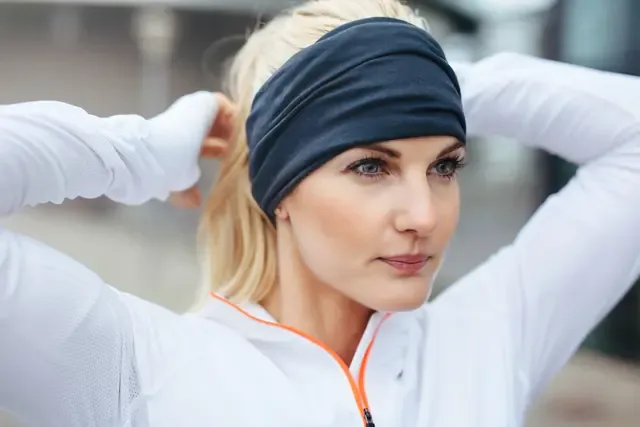
A short bob is too short to tie up and too long to ignore, which is where a sweatband earns its place. The band pushes the front back, stops sweat running into your eyes, and keeps the bob’s shape from collapsing as you heat up. Choose a wide, absorbent fabric band and wear it across the hairline, not pushed back like a fashion accessory.
Pros: keeps sweat and fringe out of your face, and the bob stays cool and light. Cons: a band that is too tight will give you a headache, so size matters. What to ask at the shop: look for moisture-wicking fabric rather than cotton, which gets heavy when wet. Time: 30 seconds. Quick verdict: the bob’s best friend on race day.
28. Curly Pineapple Updo
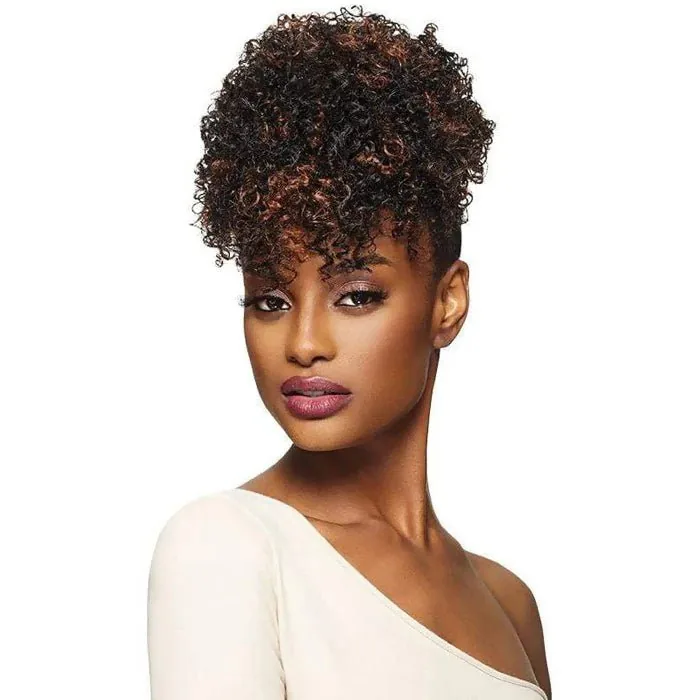
The pineapple updo gathers curly hair into a high, loose ponytail at the very top of the head, letting the curls fall forward like a fountain. For runners with curly hair it is a game-changer: the curls stay defined instead of being crushed, the style keeps hair off the neck, and a satin scrunchie protects the curl pattern from elastic damage.
Best for: curly and coily hair, especially medium to long curls. How to style: flip your head forward, gather the curls loosely at the crown and secure with a satin scrunchie. Common mistake: pulling it too tight, which flattens the curls and causes breakage. Maintenance: shake the curls out gently at the finish. Quick verdict: the curly runner’s best friend.
29. Goddess Braids
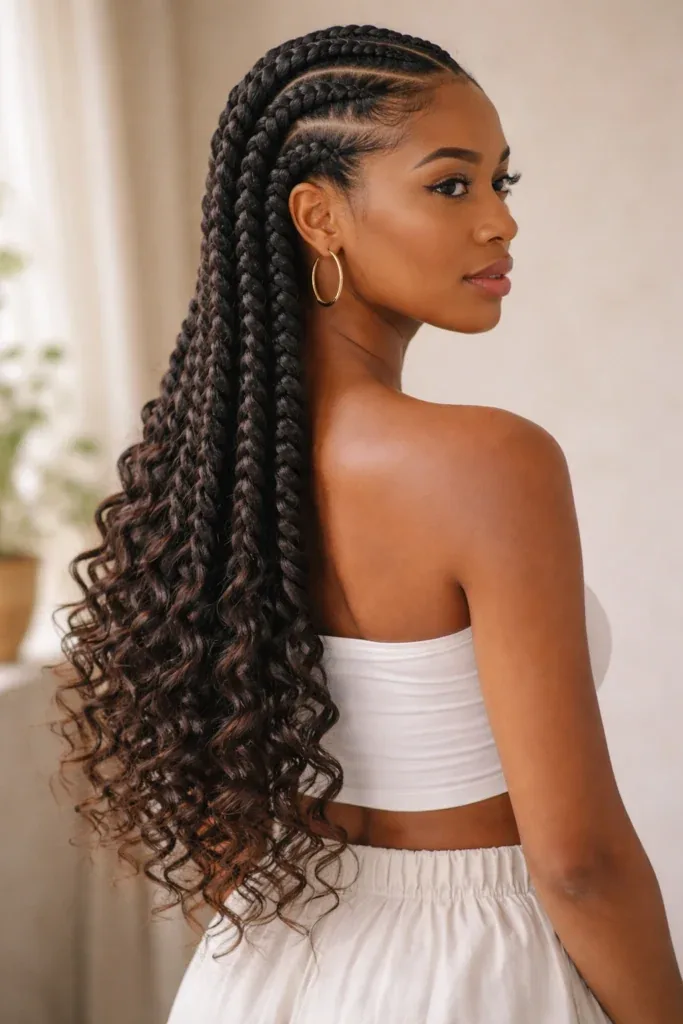
Goddess braids are large, raised cornrows that sit on top of the hair rather than flat against it, and they are as practical as they are beautiful. They keep every strand locked down for days, they handle sweat and rain without complaint, and they look striking in race photos. They are an investment in time, but they pay it back with zero race-day worry.
Pros: days of security, no maintenance during the race, and excellent protection for natural hair. Cons: installation takes one to three hours and should be done by a professional. Cost: $80 to $200 depending on length and detail. Who should avoid it: anyone who cannot sit for a long braiding session. Quick verdict: the most beautiful set-and-forget option here.
30. Rope Braid Ponytail
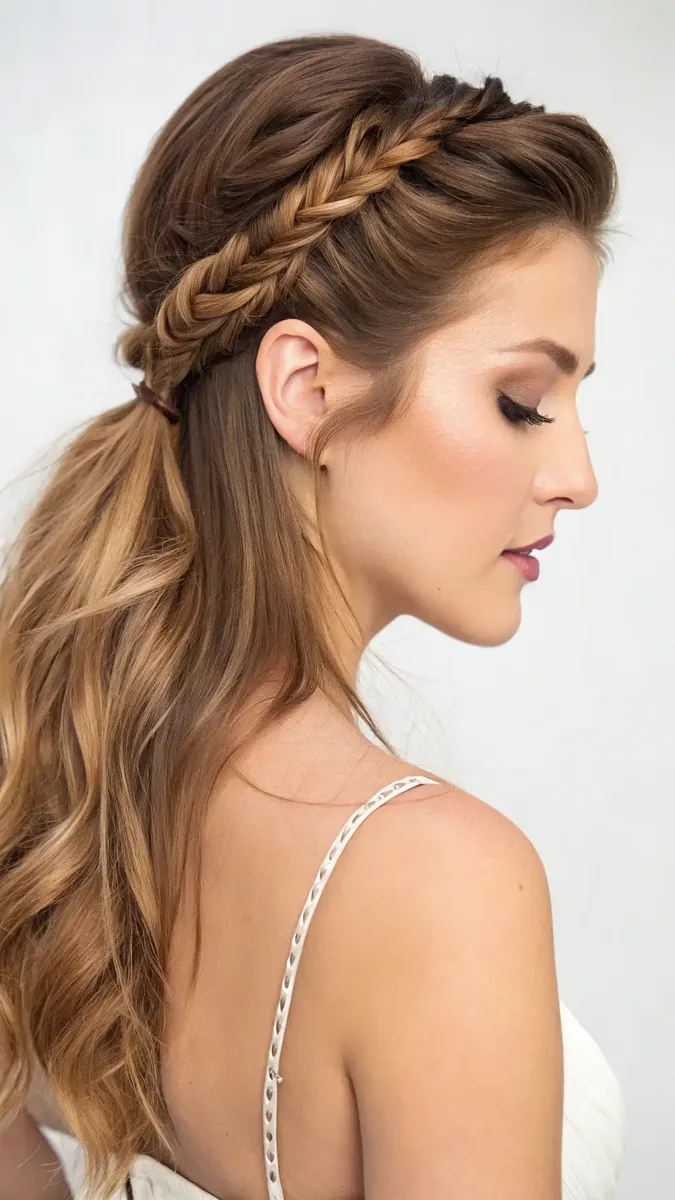
The rope braid ponytail is made by twisting two sections around each other, and the twist creates a natural spring that holds its shape under movement. It is faster to build than a three-strand braid, it lies neatly against the back, and it does not loosen the way a regular braid can when it gets sweaty. It is a great choice if you can twist but cannot French braid.
Best for: runners who want braid-level security without braiding skill. How to style: make a ponytail, split it in two, twist each section the same way, then twist them around each other and tie the end. Time: about 5 minutes. Common mistake: twisting the two sections in opposite directions, which makes the rope unravel. Quick verdict: the easiest braid in this list, and one of the toughest.
31. Twisted Crown Updo
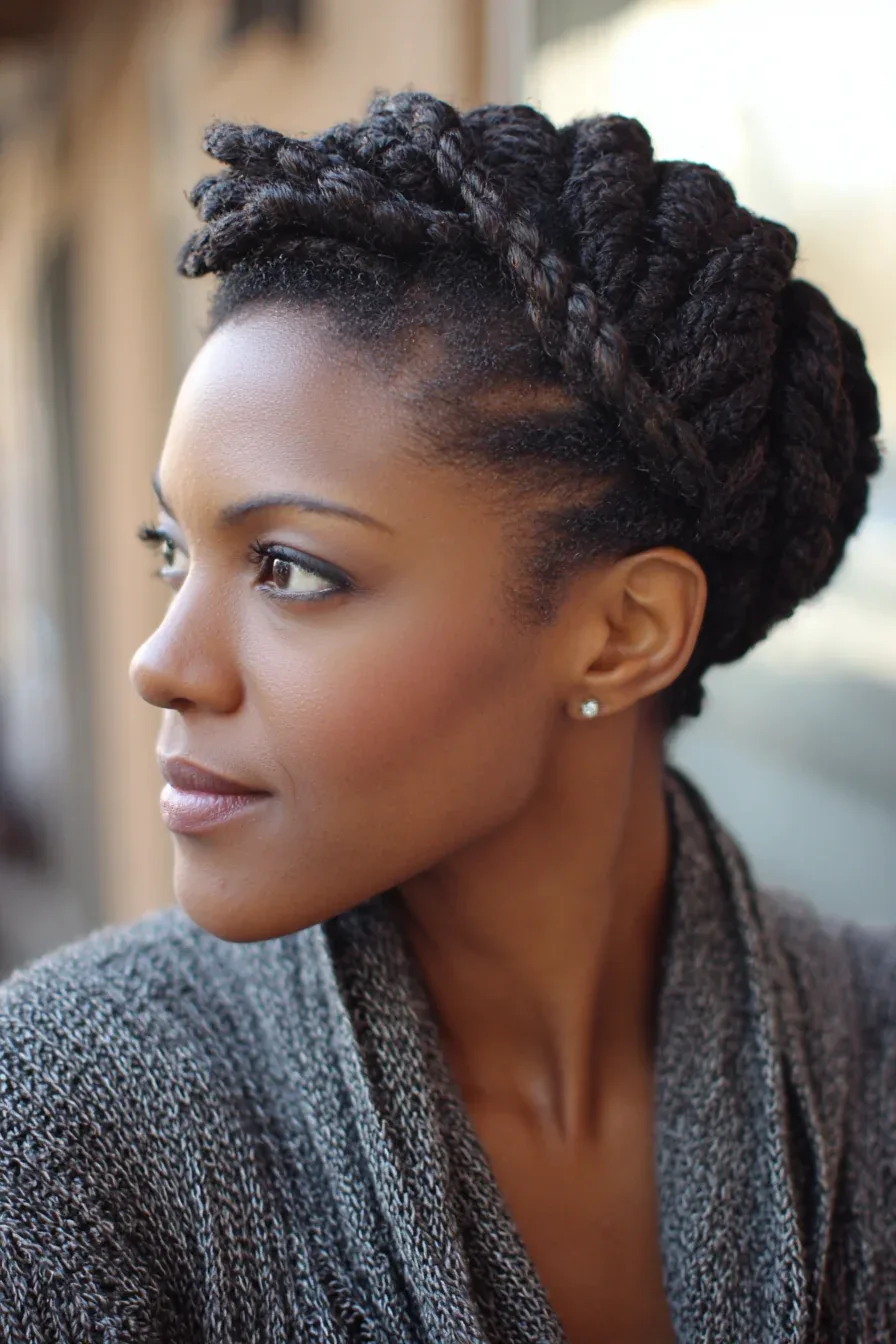
The twisted crown updo wraps two twisted sections around the head and pins them into a halo, giving you the containment of a crown braid without needing to braid at all. Twists are faster and easier than braids, the style keeps everything off your neck, and it stays put because the twists lock against each other at every pin point.
Pros: no braiding needed, total containment, and it looks elegant at the finish. Cons: it needs enough length to wrap around the head, and plenty of pins. Time: about 12 minutes. Who should avoid it: short hair — try the braided headband style instead. Quick verdict: crown-braid security for people who cannot braid.
32. Low Ponytail With a Wrapped Braid
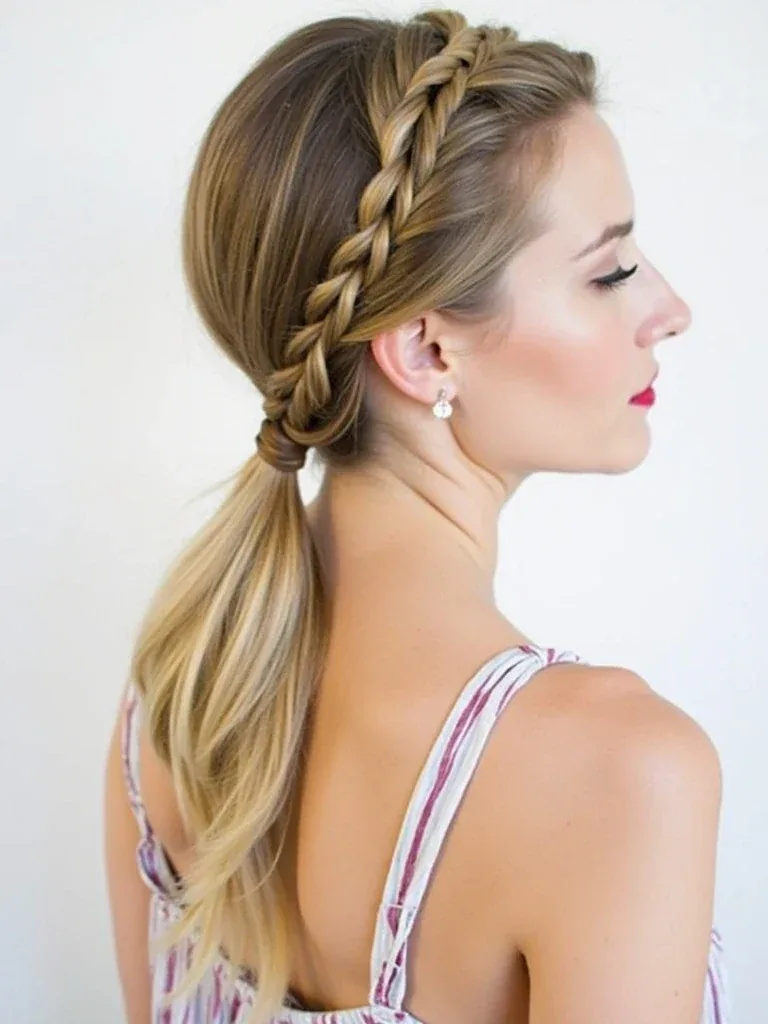
Wrapping a thin braid around the base of a low ponytail does two jobs at once: it hides the elastic for a polished finish, and it adds a second anchor that stops the ponytail from sliding down as you sweat. The low position means almost no bounce, and the braid detail makes a simple style look deliberate and finished.
Best for: runners who love a low ponytail but find it slips by halfway. How to style: make a low ponytail, braid a small under-section, wrap it around the base and pin the end underneath. Common mistake: wrapping too loosely — the braid should feel snug around the elastic. Maintenance: one spare pin in your kit is enough. Quick verdict: a two-minute upgrade that fixes the low ponytail’s only flaw.
33. Two-Strand Twists Into a Bun
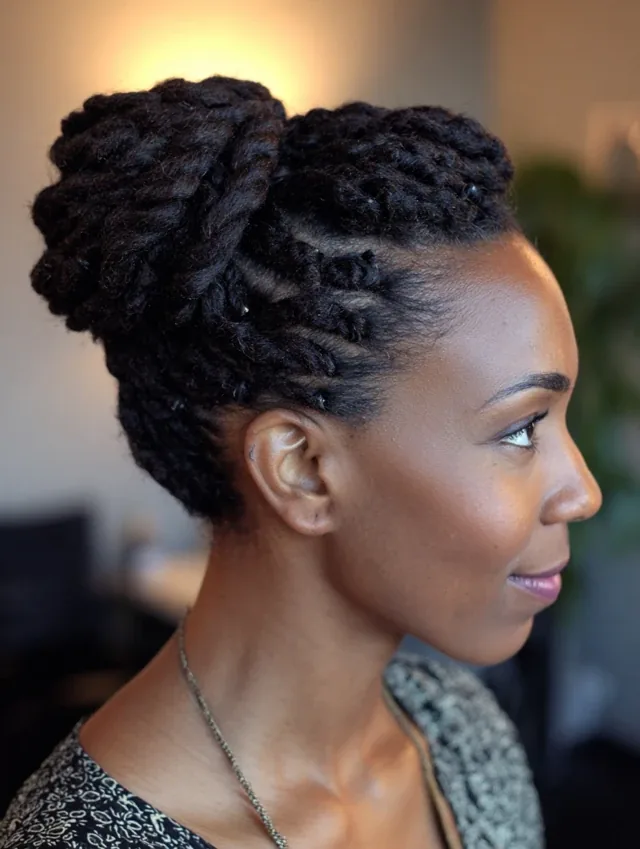
Two-strand twists gathered into a bun are a protective style that doubles as a race-day style: the twists keep the hair stretched and tangle-free, the bun contains everything, and the whole style can last for days after the race. It works beautifully on curly, coily and textured hair, and it needs no heat, no gel and no pins beyond a few for the bun.
Pros: protective, long-lasting, and zero bounce. Cons: twisting a full head takes time — do it the day before the race, not on race morning. Cost: free at home, $50 to $120 at a salon. Who should avoid it: anyone who needs a same-morning style — this one rewards planning. Quick verdict: plan ahead, and your hair will take care of itself on race day and beyond.
Can I wear my hair down for a marathon?
You can, but it is not a good idea. Hair worn down will stick to a sweaty neck, fall into your face and tangle badly over 26.2 miles, and it traps heat. A braid, bun or ponytail keeps you cooler and more comfortable, and your hair will thank you at the finish.
What is the best hairstyle for a marathon?
Double Dutch braids or boxer braids are the best all-round choice for most runners, because they lock every strand down, do not bounce and survive sweat and rain. If you cannot braid, a high braided ponytail or a low braided bun is the next best option.
How do I stop my ponytail from bouncing when I run?
Braid the ponytail, anchor it with a second elastic halfway down, or switch to a low ponytail or bun. Bounce comes from weight swinging on one anchor point, so splitting the weight or lowering the anchor fixes it.
Should I wash my hair before a marathon?
Wash it the evening before the race, not on race morning. Day-old hair has more grip and holds braids and buns far better than freshly washed, slippery hair. If your hair gets greasy quickly, use a little dry shampoo at the roots on race morning.
What hairstyle works best under a running cap?
Low styles work best: a low ponytail, low bun or braids that start below the cap line. High buns fight the cap, push it forward and cause headaches, so keep the height low and thread braids through the gap at the back of the cap.
How do I keep my hair out of my face while running?
Use a French or Dutch braid at the front, a headband or sweatband, or a slicked-back style with gel at the hairline. The braid is the most reliable option because it cannot slide off the way a headband can once you start sweating.
Can I wear a bun for a marathon?
Yes — a bun is one of the best marathon styles, as long as it is anchored properly. A braided bun, twisted bun or ballerina bun will stay put for the whole race. A loose, messy bun without pins or a braid wrap will fall apart, so build it securely and test it on a long run first.
What should I do with short hair for a marathon?
Use a sweatband or non-slip headband to keep the fringe back, add clips for any pieces that escape, and consider a braided headband if your hair is long enough. Short hair is actually an advantage — there is almost nothing to bounce or tangle.
How do I protect my hair from sweat damage during a marathon?
Braid or bun it to limit exposure, rinse with water as soon as you can after the race, then wash with a gentle or clarifying shampoo and follow with a deep conditioner. Leaving sweat and salt to dry on the hair makes it brittle, so do not skip the post-race wash.
What hair accessories should I pack for race day?
Pack two spare elastics, four bobby pins, a headband or sweatband, a couple of mini claw clips and a small tube of styling gel. Put them in a zip bag in your drop bag or running belt so you can fix a broken elastic or a loose braid mid-race.
Your Finish-Line Look Starts With the Right Marathon Hairstyles for Women
A marathon asks a lot of your body, and your hair is along for every mile of it. The runners who finish with their hair still in place are not lucky — they chose a style that was built for sweat, bounce and hours of movement, and they tested it on a long run before race day. Whether you pick double Dutch braids, a low braided bun, a braided ponytail or a simple sweatband-friendly bob, the rule is the same: secure it in sections, keep it off your neck, and never try anything new on race morning.
Pick one style from this list, wear it on your next long training run, and adjust it until you forget it is there. That is the real test of marathon hairstyles for women — not how they look in the mirror, but how they feel at mile 20. Get that right, and the only thing you will be thinking about at the finish line is the medal around your neck.