The Modern Mullet Is Back: A Mullet Haircut for Women Who Like a Little Edge
The mullet is back, and it is not the mullet you remember. The 80s version was a hard split — short and spiky on top, long and straight at the back, with no blending in between. The modern mullet for women keeps the idea and rebuilds the execution: softer layers, a fringe that flows into face-framing pieces, and a finish that can be sleek for work or messy for the weekend. It is a haircut with personality, and it is finally a haircut that flatters the person wearing it, not just the era it came from.
This guide walks through 31 modern mullet haircuts for women — classic, soft, shaggy, curly, wavy, straight, short and long, with bangs, colour and edge — and eight short guides on the questions women actually ask: how the modern mullet differs from the 80s one, how texture changes the cut, how to ask your stylist without regret, how to grow it out, which fringe to choose, which colours suit it, how often to trim it, and how to style it for work and weekends. Each style comes with honest notes on styling time, maintenance and who should think twice, so you can choose with confidence.
The Modern Mullet vs the 80s Mullet: What Actually Changed
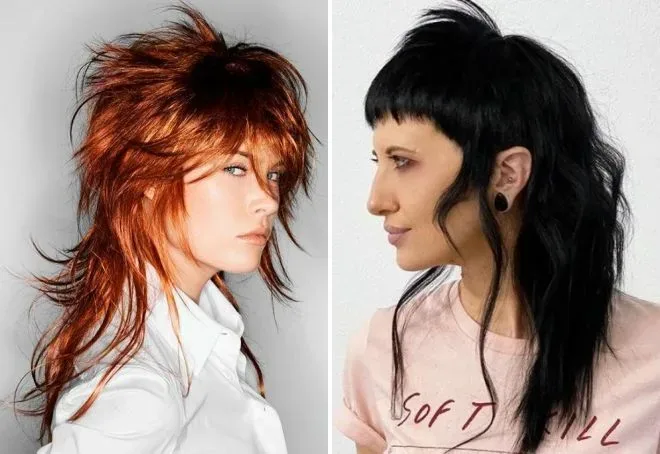
The 80s mullet was a hard split: short and spiky on top, long and straight at the back, with almost no blending between the two. It was a statement, and it was meant to look like two haircuts in one. The modern mullet for women keeps the same idea — shorter at the front, longer at the back — but it softens every edge. Layers connect the top to the back, the fringe blends into face-framing pieces, and the finish is textured rather than spiky.
The other big change is who wears it and how. In the 80s, a mullet was mostly a rock-star or sports-star look. Today it shows up on runways, in salons and on women who want a haircut with personality but still need to look polished at work. The modern version is also far more flexible: it can be soft and shaggy, sleek and sharp, curly, wavy or straight, and the length of the back can be anything from a few inches past the collar to halfway down the back.
Mullet for Straight, Wavy and Curly Hair: How Texture Changes the Cut
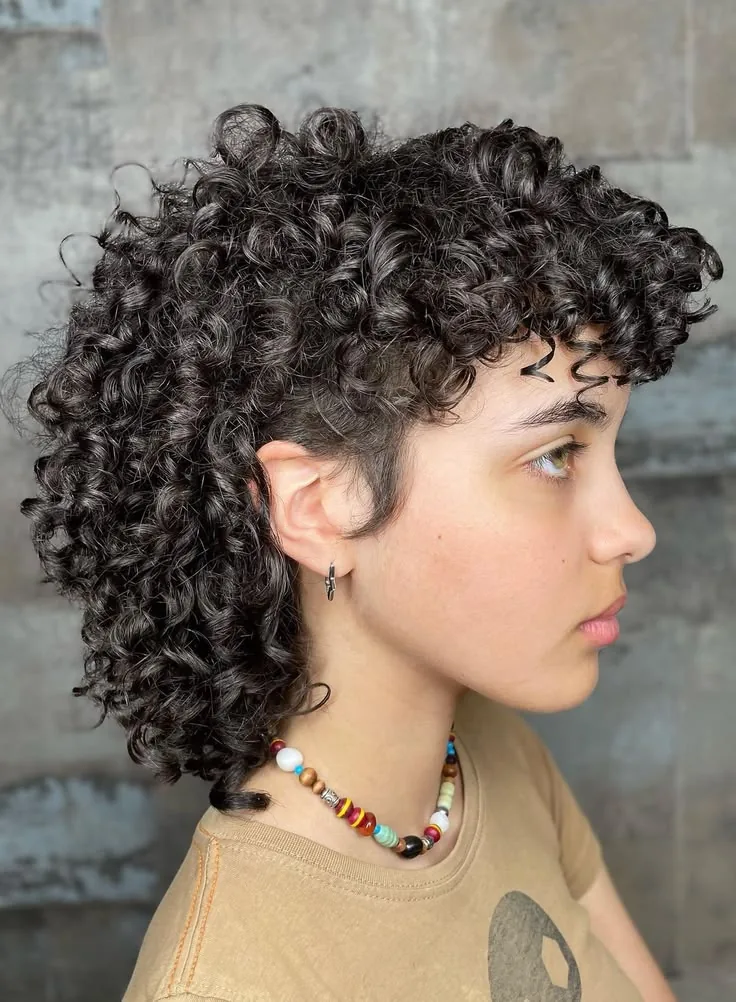
Texture decides what kind of mullet you get, more than any photo you show your stylist. On straight hair, a mullet looks sharp and graphic — every layer is visible, so the cut needs to be precise, and the back falls in a clean line. On wavy hair, the same cut softens naturally: the waves blur the layers, add volume at the crown and make the style look lived-in without much effort. On curly hair, a mullet is at its most dramatic, because the curls give the short top real height while the longer back keeps its spring.
The practical difference is styling time. A straight mullet takes about five minutes with a straightener or a round brush if you want it sleek, but it also shows every uneven strand. A wavy mullet is the lowest-maintenance of the three — scrunch in some texturising spray and go. A curly mullet needs curl cream on wet hair and hands off while it dries, but it rewards you with a shape that no other texture can copy. Tell your stylist your real texture, not the texture you wish you had, and ask them to cut curly hair dry if they can.
How to Ask Your Stylist for a Mullet Without Regret
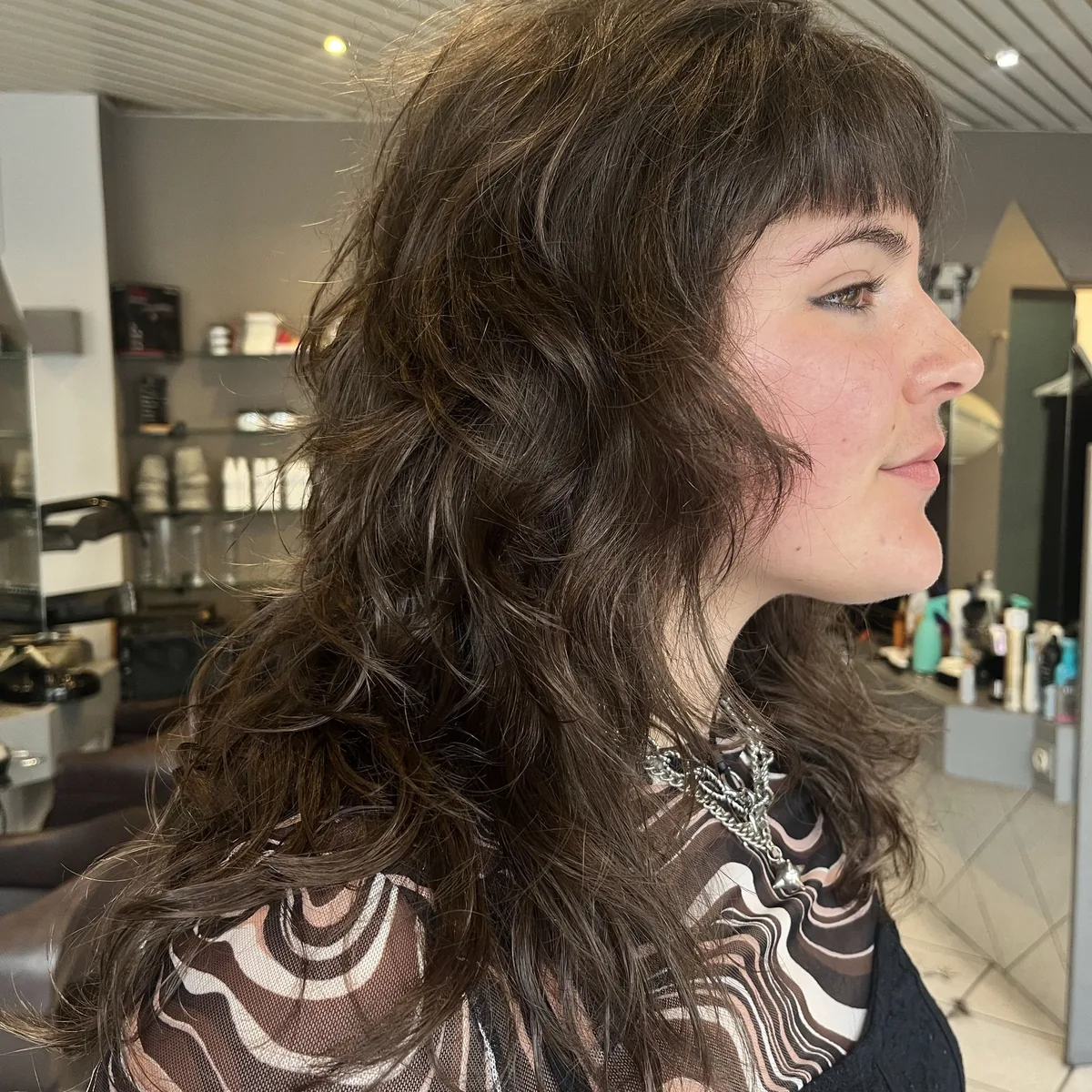
The biggest mullet regret is not the cut itself — it is a miscommunication. Saying just “give me a mullet” leaves too much open, because one stylist hears soft and shaggy and another hears sharp and punk. Go in with two or three photos of women with hair like yours, and point at the parts you like: the length of the fringe, how short the sides are, and how long you want the back. Then say the parts you do not want out loud, because “not too short on top” is as useful as any photo.
Ask three questions before the scissors come out: how short will the top be, how will this grow out, and how often will I need a trim? A good stylist will also ask about your morning routine, because a mullet that needs twenty minutes of styling will not suit a five-minute person. If you are nervous, ask for the softer version first — a soft mullet can always be made sharper at your next appointment, but a very short top cannot be undone in one visit.
Growing Out a Mullet: The Awkward Stage, Solved
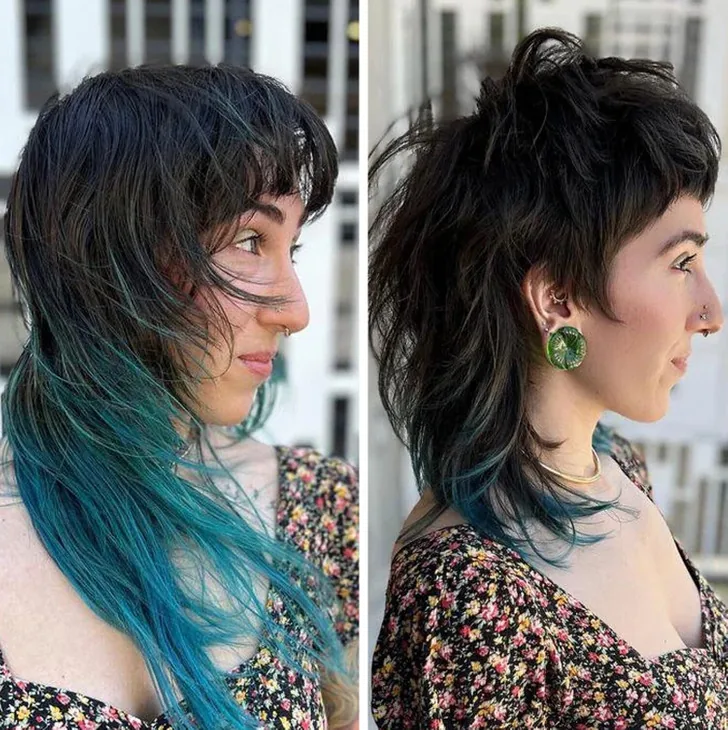
Growing out a mullet is easier than growing out a pixie, because the back is already long — the awkward part is the top catching up. The trick is to stop trimming the front and let the layers grow while you keep the back tidy, so the shape slowly turns into a shag and then into long layers. That middle stage lasts about three to six months, depending on how short the top was, and it is the point where most people give up and cut it all off again.
Two things make the grow-out bearable. First, regular small trims on the back only — every eight weeks — keep the ends healthy without touching the growing top. Second, styling products do the heavy lifting: a little texture spray gives the growing layers grip, and clips, headbands and half-up styles hide the in-between lengths on bad days. If the top is driving you mad, a fringe trim can buy you another month of patience without resetting the grow-out.
1. The Classic Modern Mullet

The classic modern mullet is the version most women mean when they say they want a mullet: short, textured layers on top, a soft fringe, and length that falls past the collar at the back. It is the 80s idea rebuilt with blending, so the top melts into the back instead of stopping in a hard line. It suits almost every face shape, and it is the safest first mullet because it is neither too soft nor too extreme.
Styling time: about five minutes. Work a pea-sized amount of styling cream or texture paste through damp hair, rough-dry it with your fingers, and let the layers fall where they want. Maintenance: a trim every five to six weeks keeps the top from growing over the fringe. Who should avoid it: nobody in particular — this is the mullet to start with, and it can be softened or sharpened later.
2. The Soft Mullet
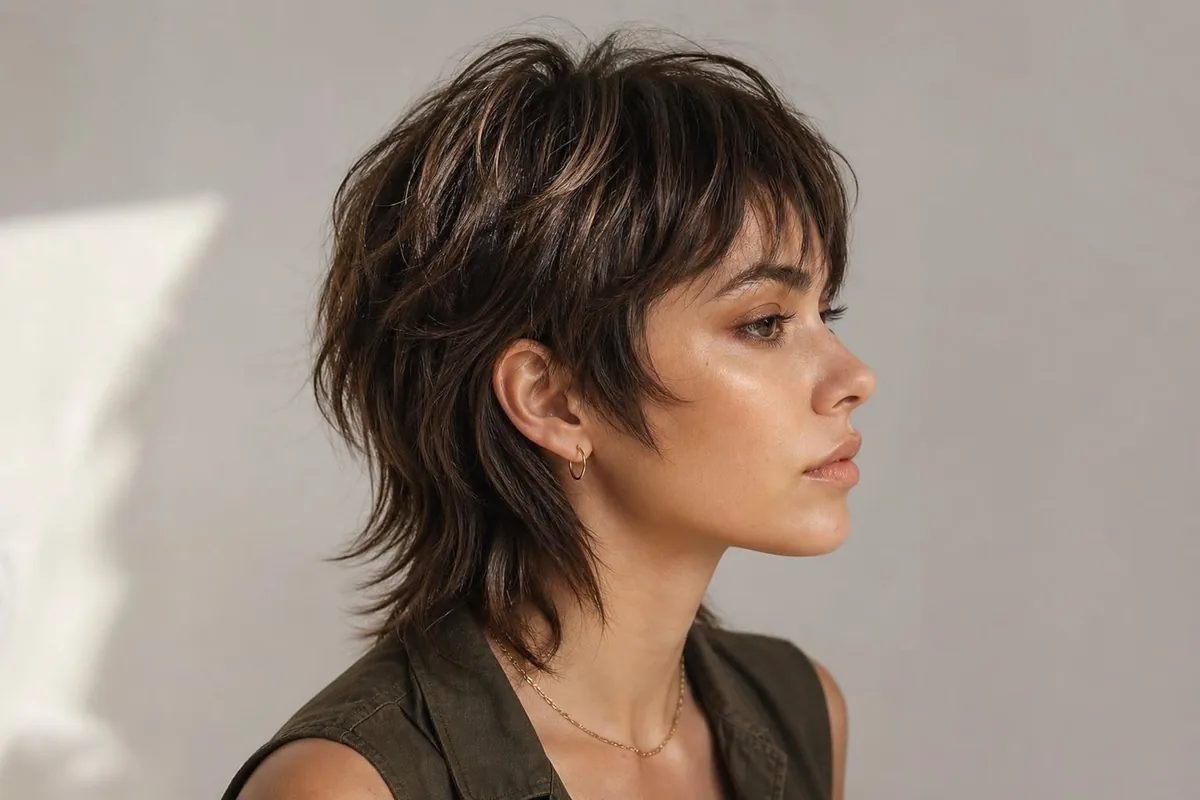
The soft mullet is the mullet for women who like the idea but not the attitude. The layers are longer, the fringe is wispy, and the back is only a few inches longer than the front, so from the side it reads as a shaggy layered cut with a little extra length. It is the version to choose if you work in a conservative office, or if you want to try the shape without announcing it to the room.
Styling time: three minutes, and some mornings none at all — air-dry with a little mousse and the layers do the work. Maintenance is light: trims every seven to eight weeks, because the soft edges grow out gracefully. Who should avoid it: women who want a dramatic change, because this one is deliberately subtle and can feel too close to a regular layered cut.
3. The Shaggy Mullet
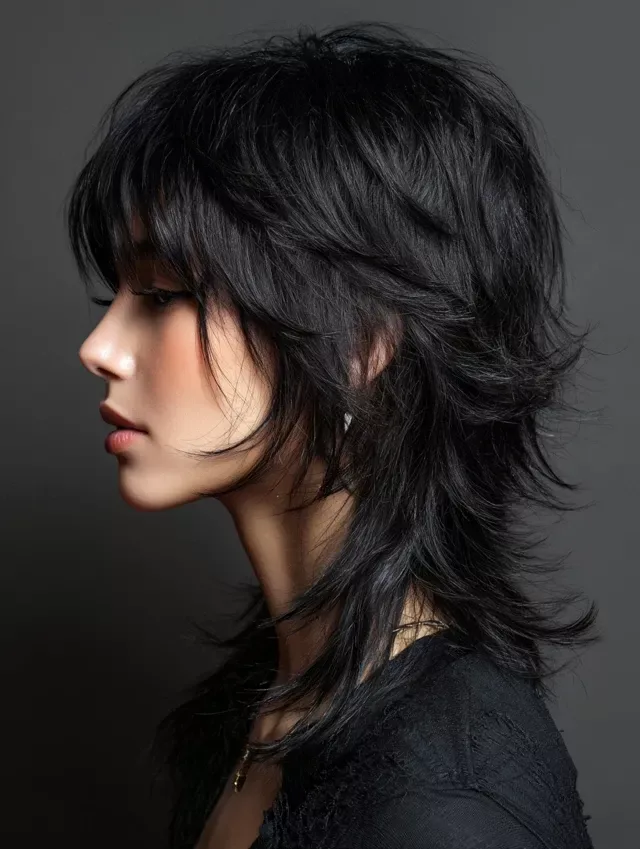
The shaggy mullet is where the mullet meets the shag: choppy layers everywhere, lots of texture, and a finish that looks deliberately undone. The top is cut with a razor or thinning shears so the ends taper into points, and the back is layered rather than left in one length. It is the best mullet for wavy and slightly curly hair, because the texture of the cut and the texture of the hair work together.
Styling time: two minutes — scrunch texturising spray into damp hair and let it air-dry. The shaggier it looks, the better it works, which makes it one of the most forgiving cuts on this list. Maintenance: trims every six to eight weeks, and a little dry shampoo at the roots on day two. Who should avoid it: very straight, fine hair, where the choppy layers can look thin instead of textured.
4. The Curly Mullet
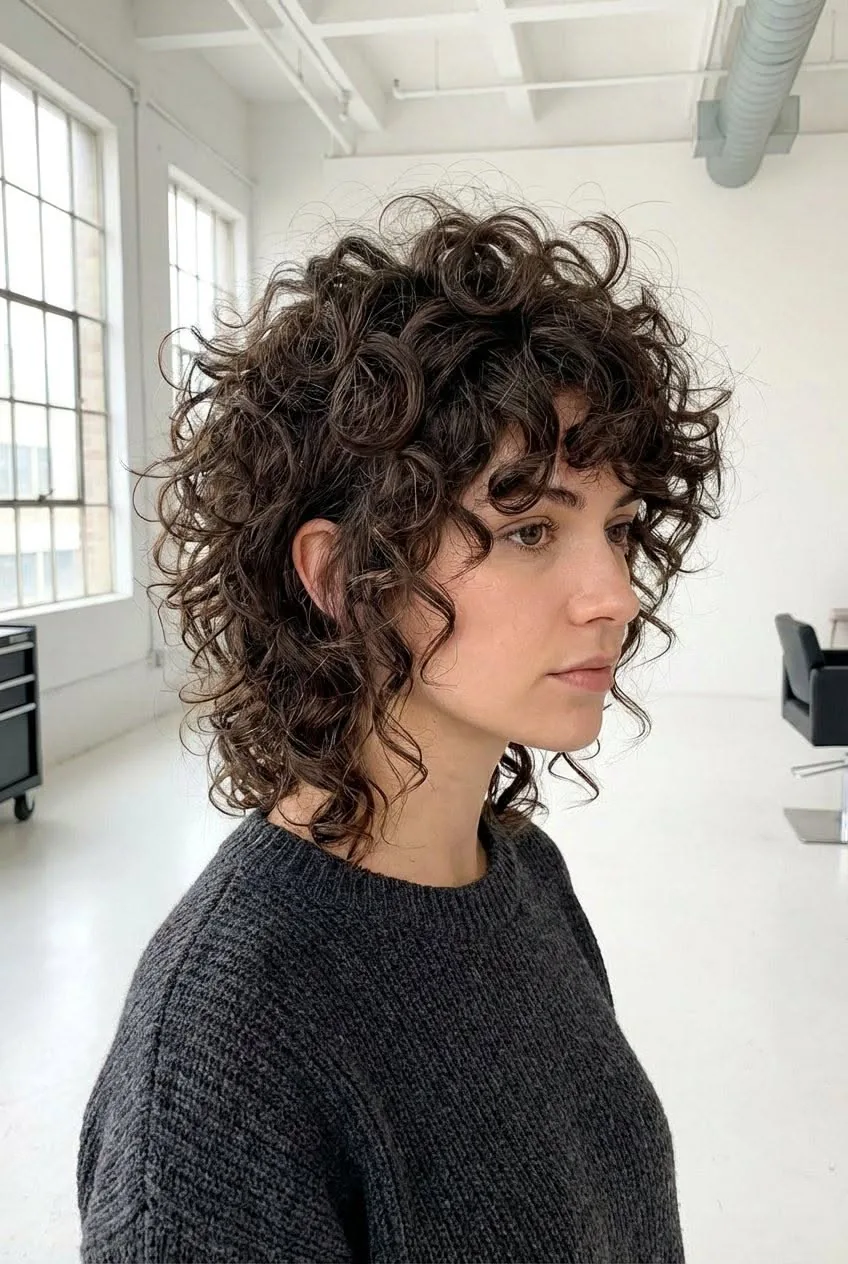
A curly mullet is one of the most striking versions of the cut, because curls give the short top real volume while the longer back keeps its spring. The key is a cut that respects the curl pattern — shaped dry, curl by curl, so the top does not shrink up shorter than planned and the back keeps its length. A wet cut on curly hair always ends up shorter, so ask your stylist to cut it dry if they know how.
Styling time: about ten minutes on wash day, then almost nothing on the days after. Scrunch curl cream through soaking-wet hair, then keep your hands off it until it dries — touching curls while they dry creates frizz. Maintenance: a trim every eight to ten weeks, and a weekly deep-conditioning mask, because curly hair dries out faster than straight hair. Who should avoid it: nobody, as long as the stylist understands curls.
5. The Wavy Mullet
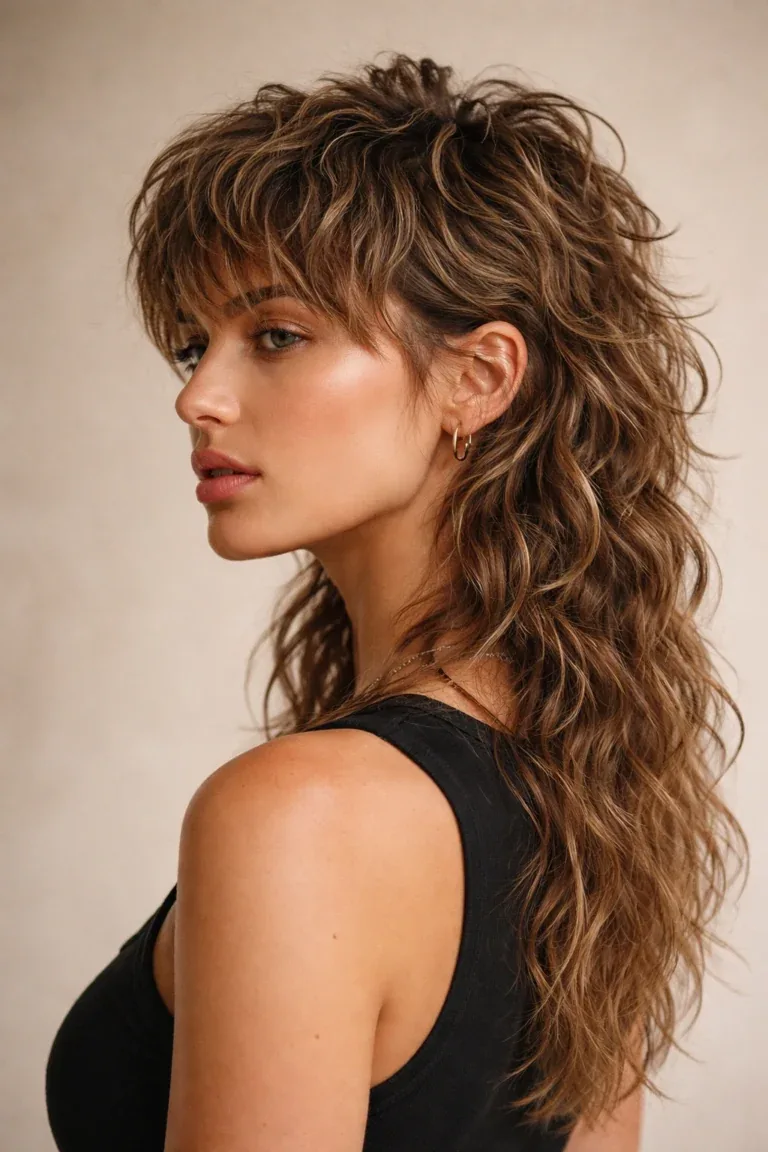
The wavy mullet is the easiest mullet to live with. Natural waves blur the layers, add volume at the crown, and make the cut look lived-in from the moment you leave the salon. It is the version that photographs best on holiday, at the beach and on second-day hair, because the whole look is built on movement rather than precision.
Styling time: two to three minutes — a little salt spray or texture spray scrunched through damp hair, then air-dry. If your waves need help, twist a few sections around a curling wand and leave the ends out. Maintenance is minimal: trims every seven to eight weeks, and the waves hide a growing fringe beautifully. Who should avoid it: very straight hair, where the waves have to be created with heat every morning.
6. The Straight Mullet
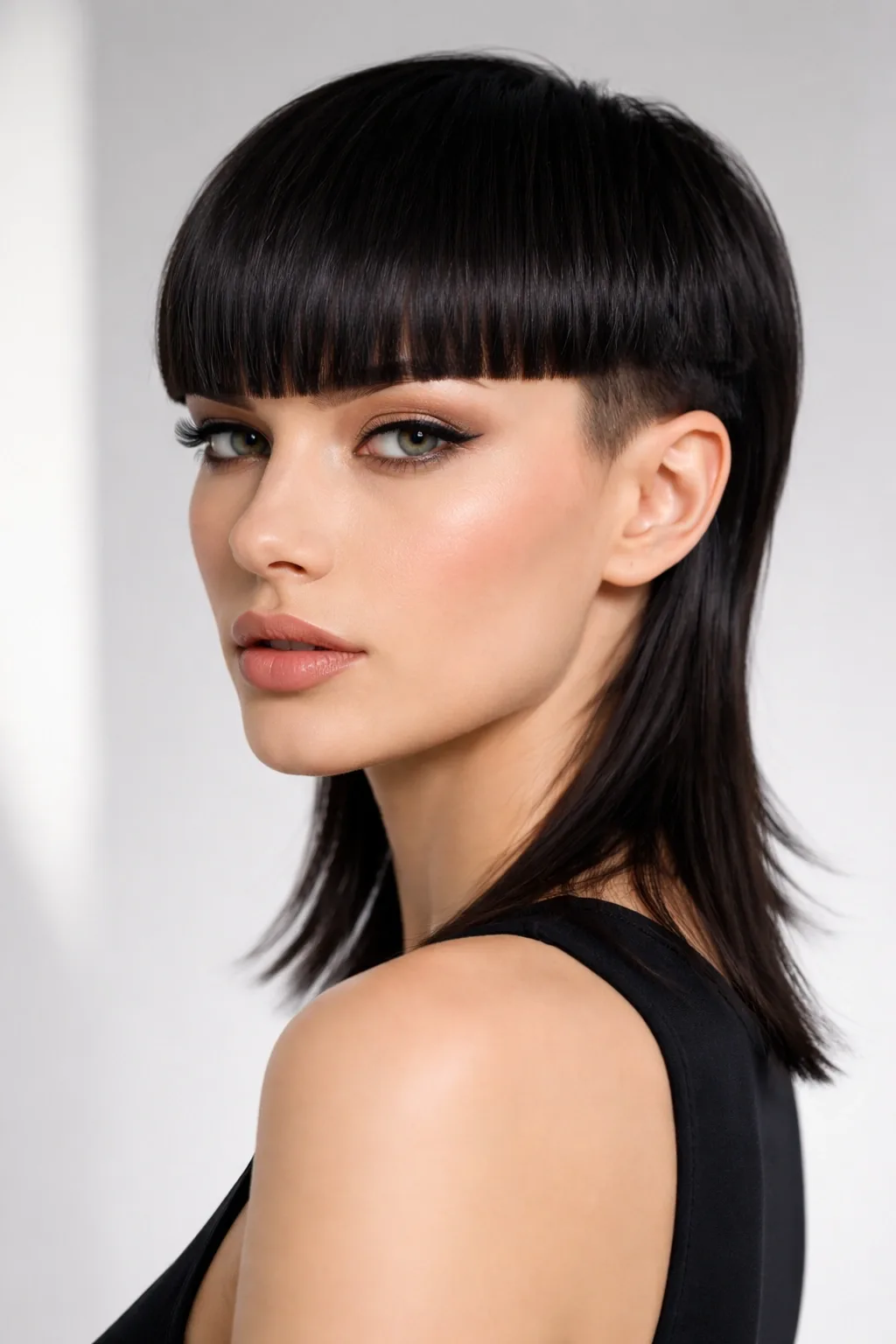
A straight mullet is sharp, graphic and modern: every layer is visible, the back falls in a clean line, and the whole cut reads as deliberate. It is the mullet for women who like clean lines and do not mind a little daily styling, because straight hair shows the shape of the cut more honestly than any other texture. Done well, it looks like a fashion editorial; done badly, it shows every uneven strand.
Styling time: five to ten minutes with a straightener or a round brush, plus a heat protectant every time. The products it needs are simple: a heat protectant, a smoothing serum, and a light hold spray. Maintenance: trims every five weeks to keep the line crisp. Who should avoid it: women who want a wash-and-go cut, because this one needs heat to look its best.
7. The Short Mullet (Baby Mullet)
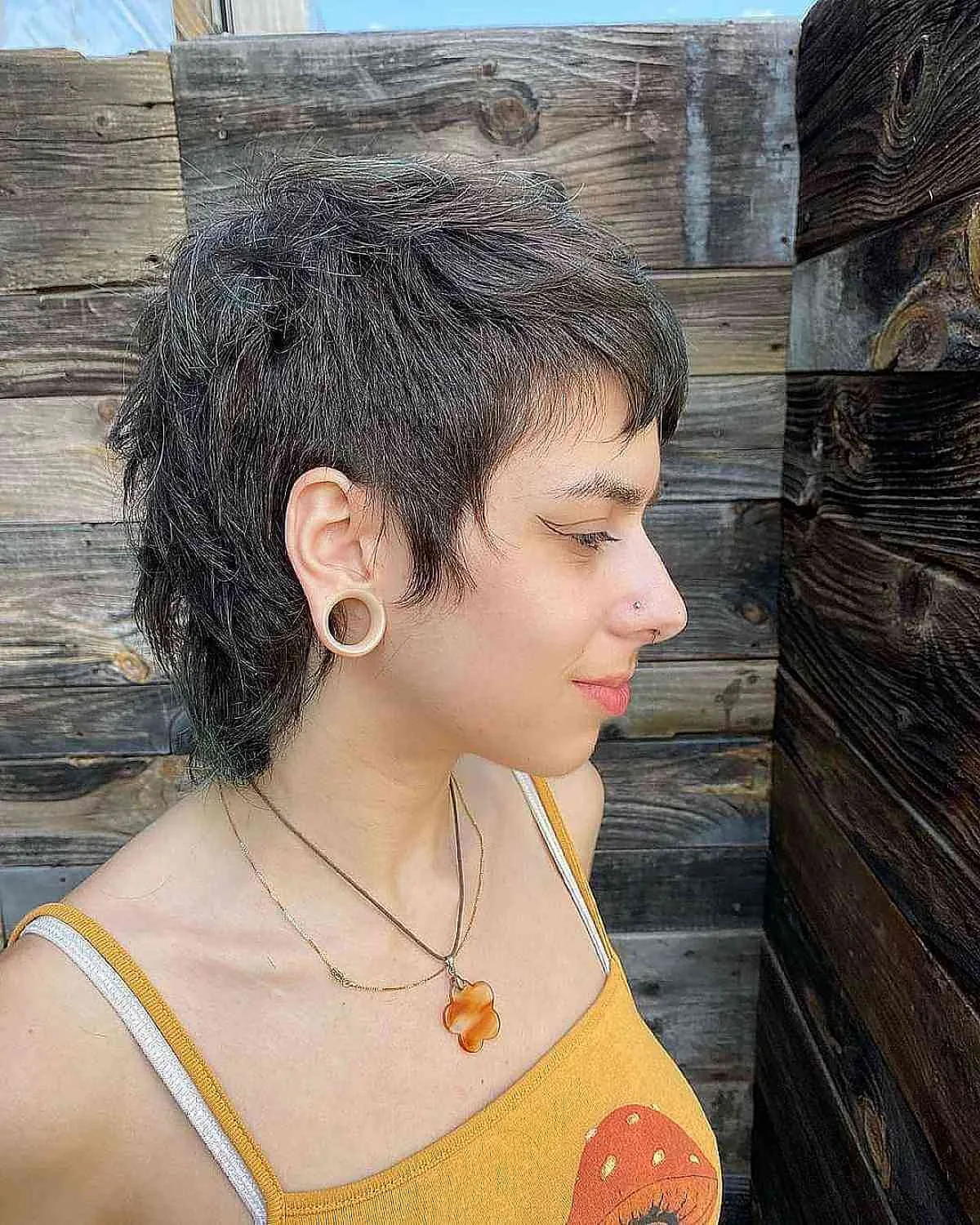
The baby mullet is the shortest version on this list: a short, textured top, a wispy fringe, and a back that only just reaches past the collar. It is the mullet for women who want the edge without the commitment of long hair at the back, and it is a good first step if you are not sure how much length you want to keep. It also suits petite women, because the proportions do not overwhelm a smaller frame.
Styling time: under three minutes — a little wax or texture paste, finger-combed into place. Maintenance is the trade-off: the short top needs a trim every four weeks to hold its shape. Who should avoid it: women who want to tie their hair up easily, because the back is too short for a proper ponytail and the top layers will fall out of any updo.
8. The Long Mullet
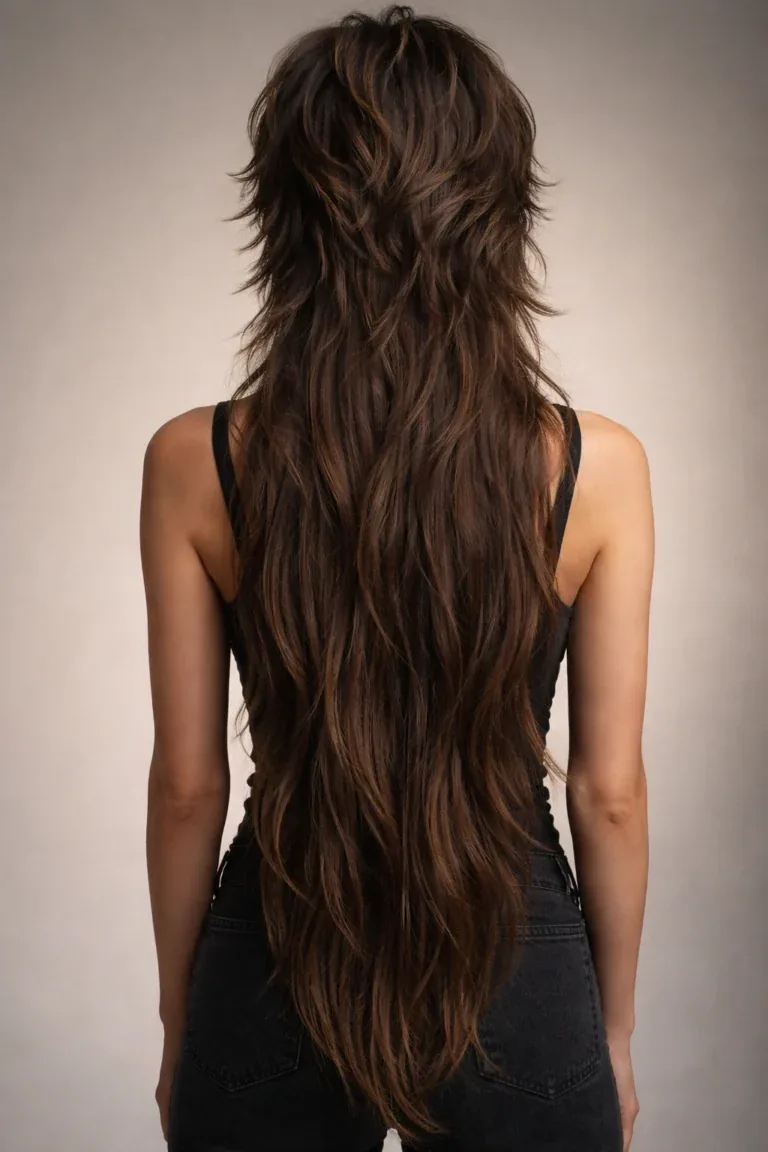
The long mullet keeps the length where it matters: a short, layered top and a back that falls to the shoulder blades or beyond. It is the most dramatic version, and the one closest to the original 80s shape, but modern blending keeps it from looking like a costume. It suits women with thick hair best, because the long back needs weight to fall well.
Styling time: five to ten minutes, depending on whether you style the back or let it air-dry. The products it needs are a leave-in conditioner for the long ends and a texture spray for the top. Maintenance: trims every eight weeks, with the back trimmed more often than the top if the ends start to look thin. Who should avoid it: very fine hair, which can look wispy at long lengths, and anyone who dislikes detangling.
9. The Mullet With Curtain Bangs
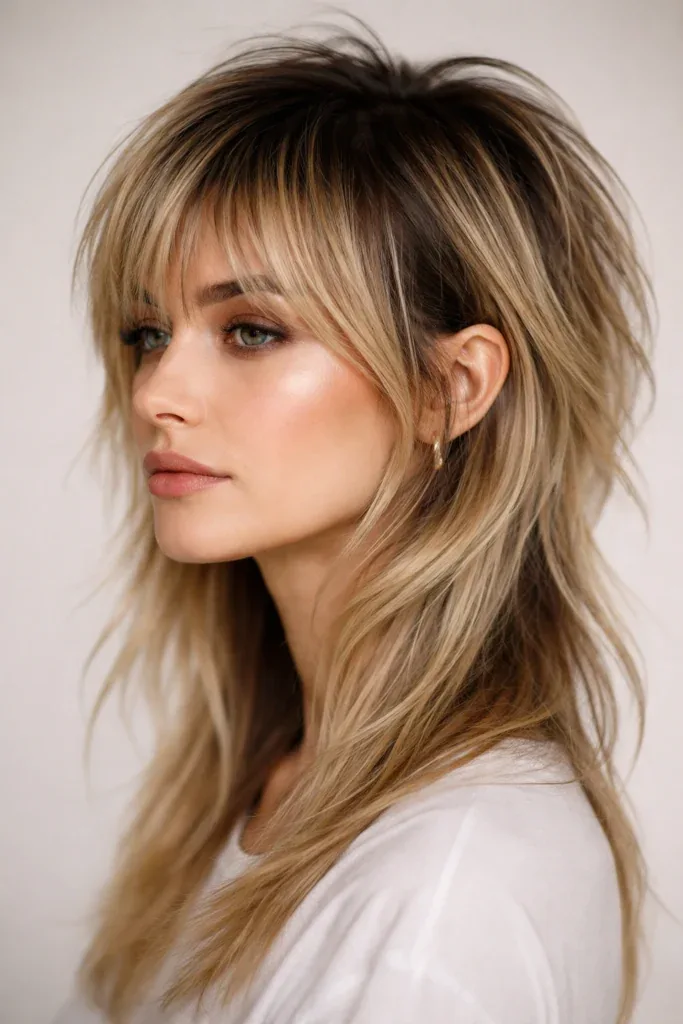
Curtain bangs parted in the middle are the softest way to wear a mullet, and they solve the one problem some women have with the cut: a short fringe can feel too blunt. The parted fringe blends into face-framing layers, so the front of the cut flows into the sides instead of stopping in a hard line. It suits almost every face shape and grows out more gracefully than any other fringe.
Styling time: about five minutes — blow-dry the bangs away from the face with a round brush, or wrap each side around a velcro roller while you do your makeup. Maintenance is light: a fringe trim every four to six weeks, and a full trim every seven to eight. Who should avoid it: very curly hair, where the parted fringe can spring up unpredictably.
10. The Mullet With a Micro Fringe
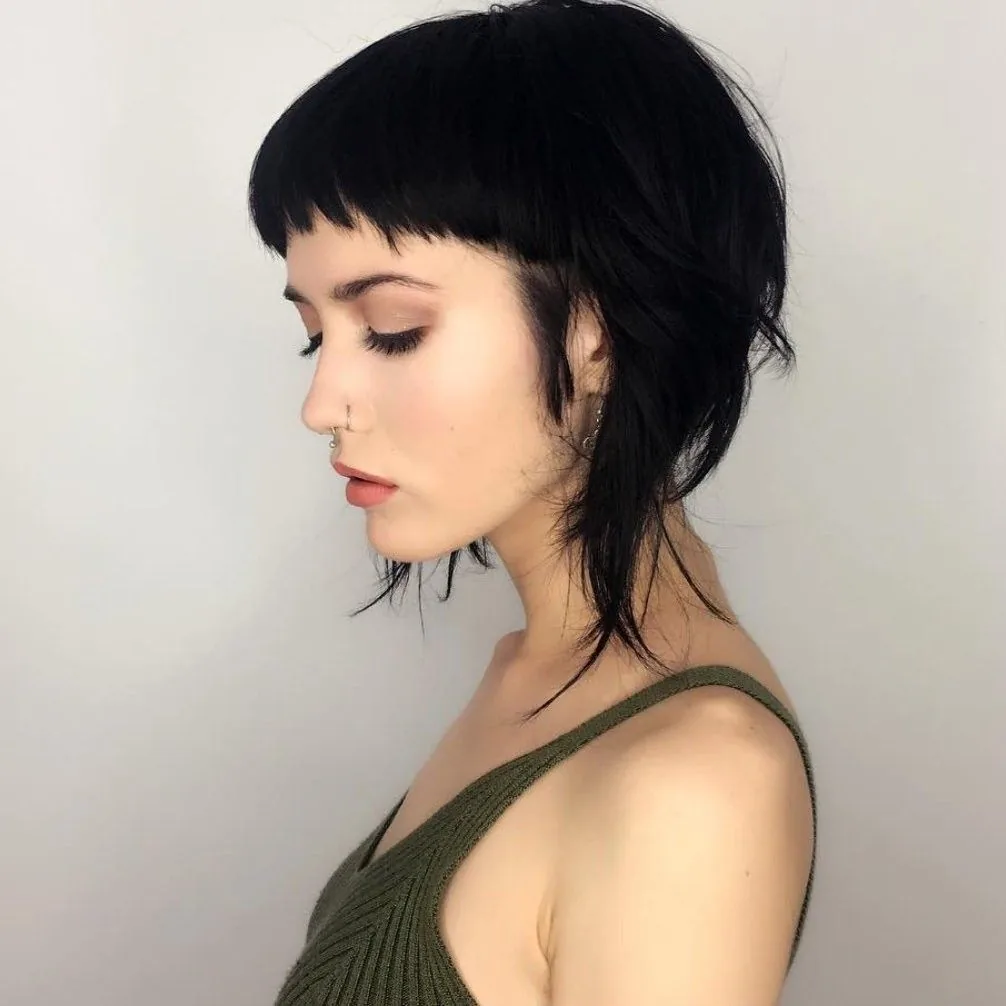
A micro fringe — baby bangs cut well above the eyebrows — turns a mullet into a full fashion statement. It opens up the face, shows off the cheekbones and eyebrows, and gives the cut a sharp, editorial edge that a longer fringe never will. It is the version for women who already like short fringes, or who want their mullet to look unmistakably intentional.
Styling time: two minutes, but the fringe needs attention most mornings — a quick blow-dry or a dab of styling cream keeps it sitting straight. Maintenance: a fringe trim every three to four weeks, because even a centimetre of growth changes the look. Who should avoid it: women with a very high forehead they prefer to cover, and anyone who is not ready for a fringe that cannot be swept aside.
11. The Mullet With an Undercut
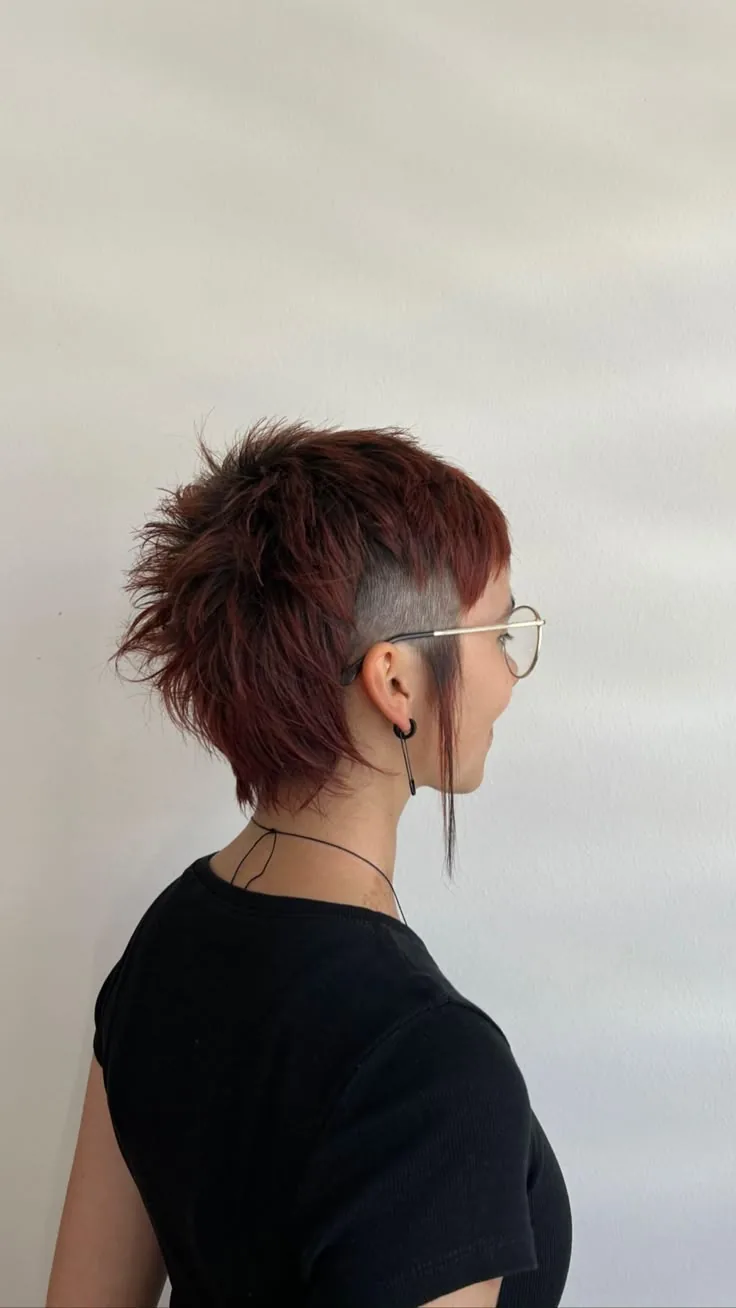
An undercut mullet is closely clipped at the sides and back of the head, with longer textured hair on top and a long back. The contrast between the short, clean undercut and the longer top makes the cut look graphic and modern, and it removes a lot of bulk, which is a gift for thick hair. It is the edgiest version on this list, and the one that reads most clearly as a choice rather than an accident.
Styling time: about five minutes — the top is the only part that needs styling, and a little texture paste is usually enough. Maintenance is the commitment: the undercut needs a trim every three weeks to stay sharp. Who should avoid it: women who want a low-maintenance cut, and anyone whose workplace frowns on shaved sides, because this one cannot be hidden.
12. The Mullet With Faded Sides
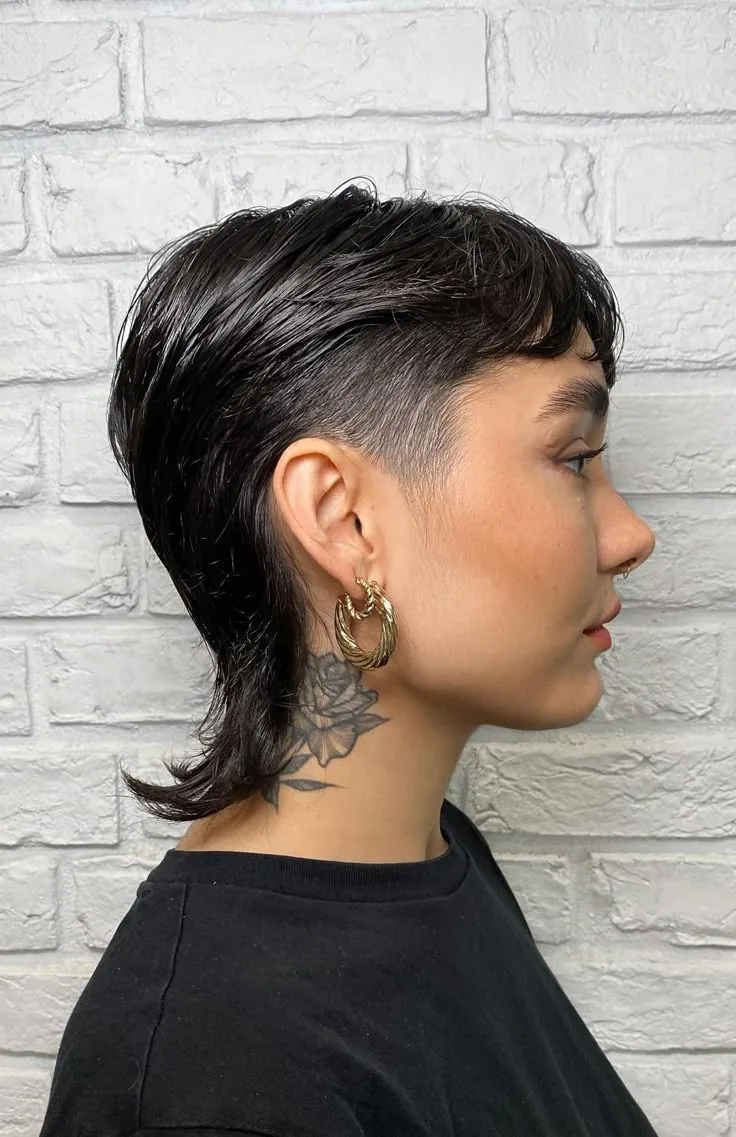
A faded mullet blends the sides from very short at the bottom to longer at the top, instead of the hard line of an undercut. The fade gives the cut a clean, barber-shop finish while the top and back stay soft and textured, which makes it a good middle ground between a classic mullet and an undercut mullet. It looks particularly good on straight and wavy hair, where the fade’s gradient is easy to see.
Styling time: about five minutes for the top, and nothing for the faded sides. Maintenance: a fade touch-up every three to four weeks, because a grown-out fade looks messy faster than a grown-out undercut. Who should avoid it: women who do not want to visit the barber often, and anyone who prefers to hide the sides of the cut under longer hair.
13. The Textured Mullet
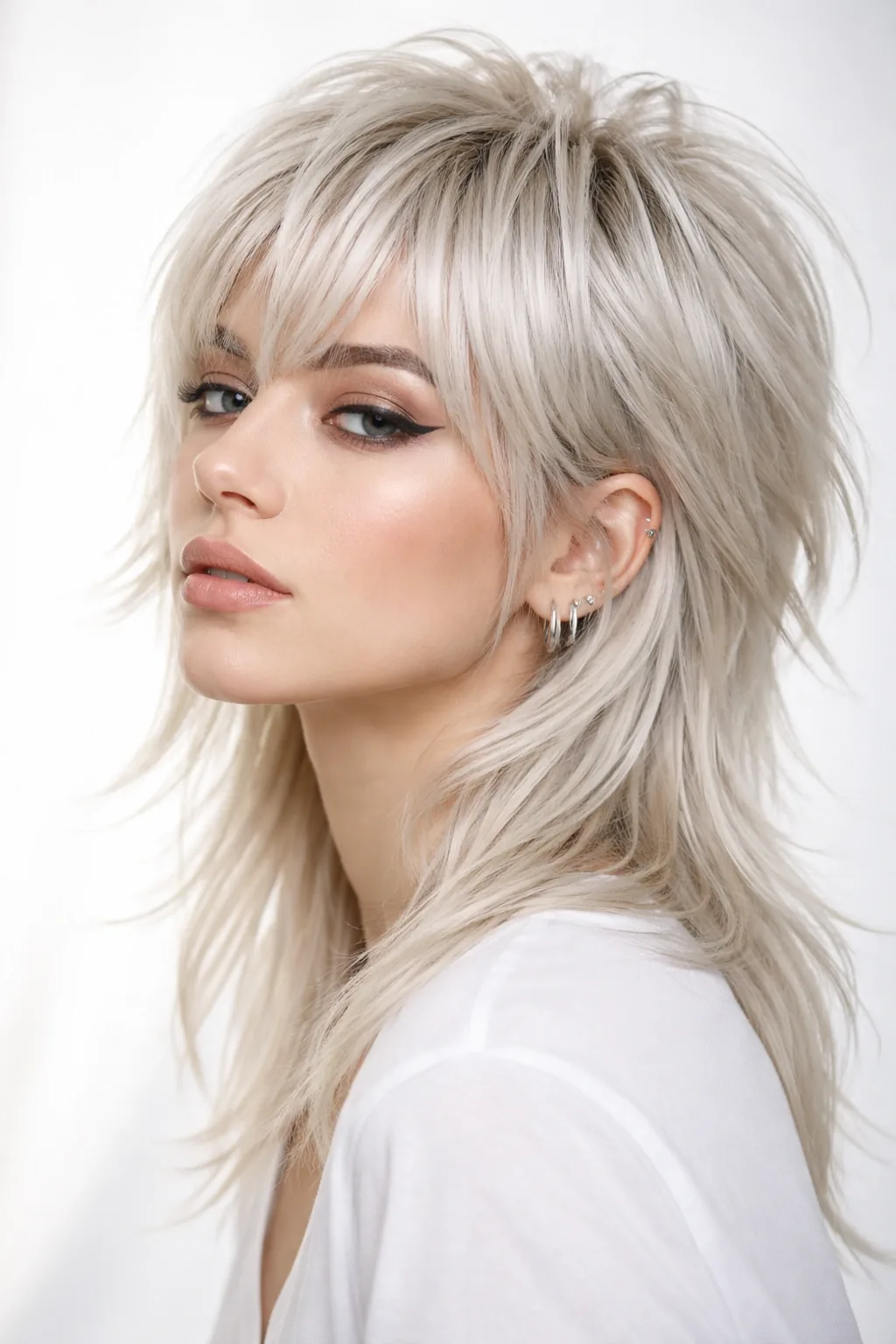
The textured mullet is all about the finish: choppy, point-cut ends, lots of movement, and a top that looks piecey rather than solid. It is the version stylists reach for when a client says her hair feels heavy or flat, because removing weight from the ends lets the roots lift and the layers move. It works on straight, wavy and curly hair, and it is one of the most forgiving mullets to grow out.
Styling time: three minutes — a little texture spray or sea-salt spray scrunched through damp hair is often enough. The products it needs are light: a texture spray and a pea-sized amount of paste for definition. Maintenance: trims every six to eight weeks. Who should avoid it: very fine hair, where too much texturising can make the ends look thin.
14. The Layered Mullet
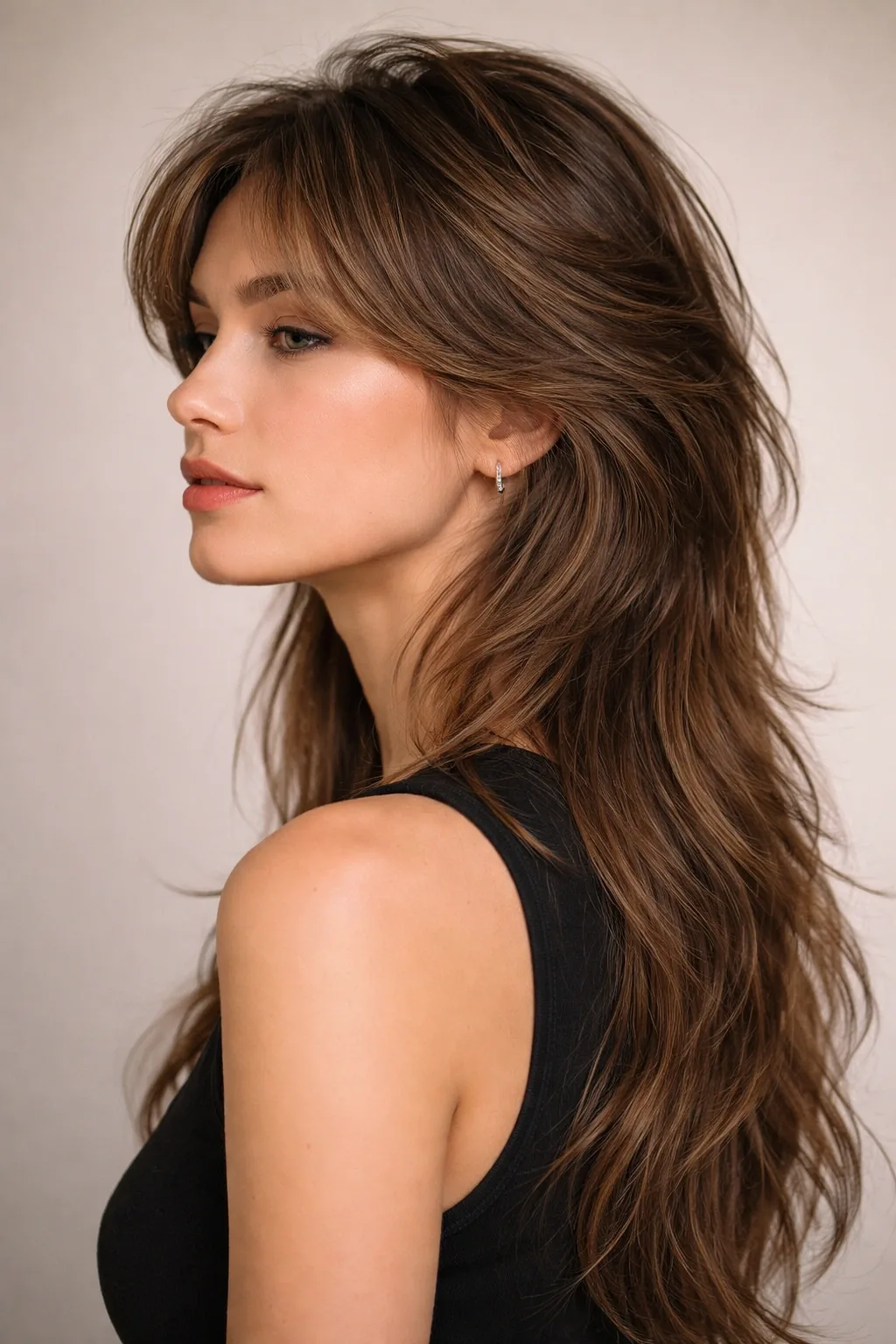
A layered mullet is built on long, blended layers that connect the short top to the long back in a smooth gradient. There is no hard step anywhere in the cut, which makes it the most wearable mullet for women who want the shape without the shock. The layers add volume at the crown and movement through the back, so the hair looks full even when it is air-dried.
Styling time: about five minutes with a round brush for a smooth finish, or two minutes air-dried with mousse for soft movement. Maintenance is forgiving: trims every seven to eight weeks, and the layers hide the awkward stages of growing out. Who should avoid it: nobody in particular — this is the mullet for women who want the look and the easy life at the same time.
15. The Mullet Bob (Bixie Mullet)
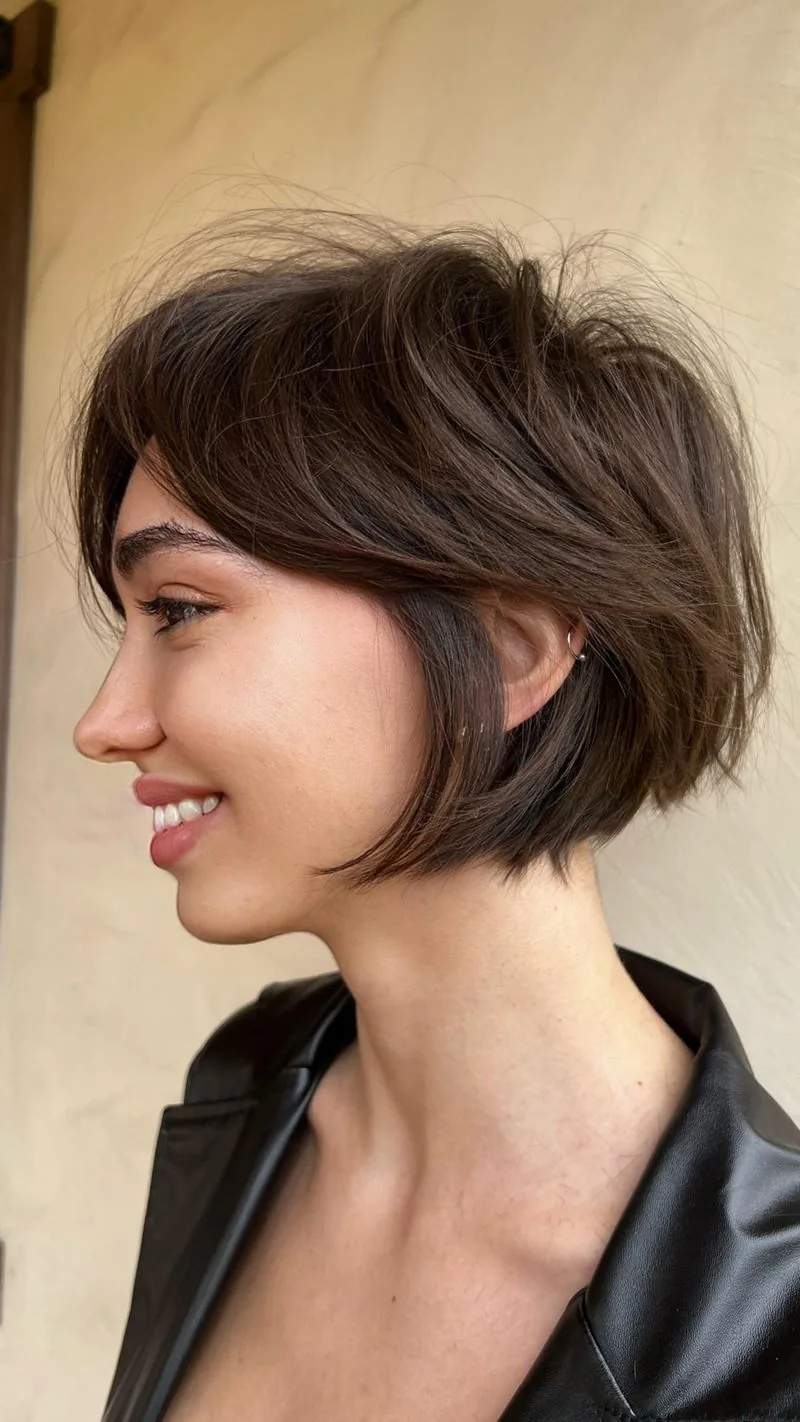
The mullet bob — sometimes called a bixie mullet — sits between a bob and a mullet: bob-length at the front, with a little extra length at the back and a textured, choppy finish. It is the shortest mullet that still reads as a mullet, and it is a good choice for women who like bobs but find them too neat. The back length is just enough to give the cut its mullet character without committing to long hair.
Styling time: three to five minutes — blow-dry with a round brush for a polished finish, or scrunch in texture spray for a messier one. Maintenance: trims every five to six weeks to keep the bob line sharp. Who should avoid it: women who want a long back, because this version deliberately keeps the length short.
16. The Mullet for Thick Hair
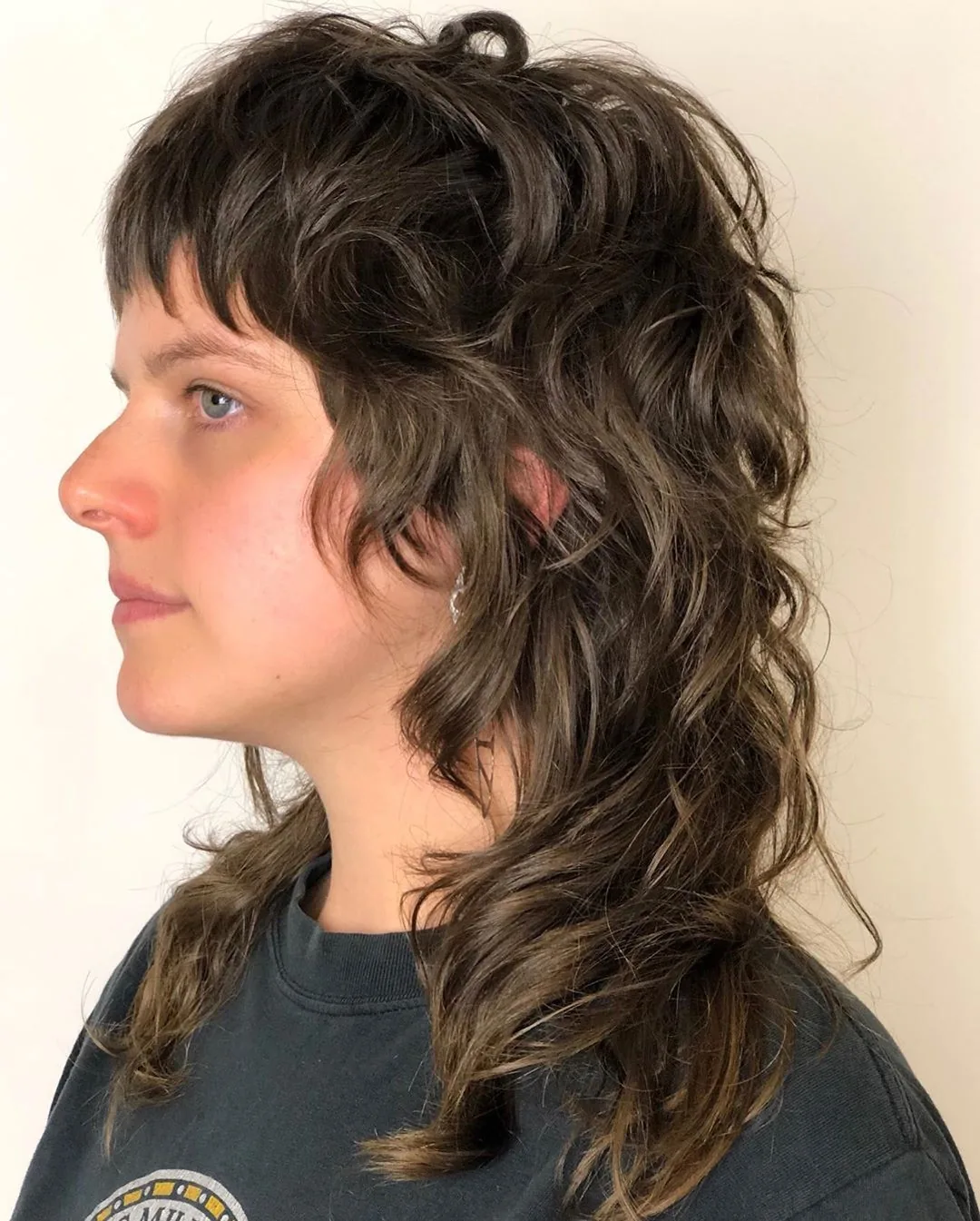
Thick hair and mullets are a natural match, because the cut removes weight exactly where thick hair needs it removed. Thinning and texturising through the top and sides takes out bulk, while the long back keeps the length and movement that thick hair does so well. The result is a cut that feels lighter, dries faster, and holds its shape better than a one-length cut on the same hair.
Styling time: five to ten minutes, mostly spent drying the long back — a leave-in conditioner helps it dry smoothly. Maintenance: trims every six to eight weeks, with texturising at each visit to keep the bulk down. Who should avoid it: nobody with thick hair — this is one of the best cuts for it, as long as the stylist thins the hair rather than just layering it.
17. The Mullet for Fine Hair
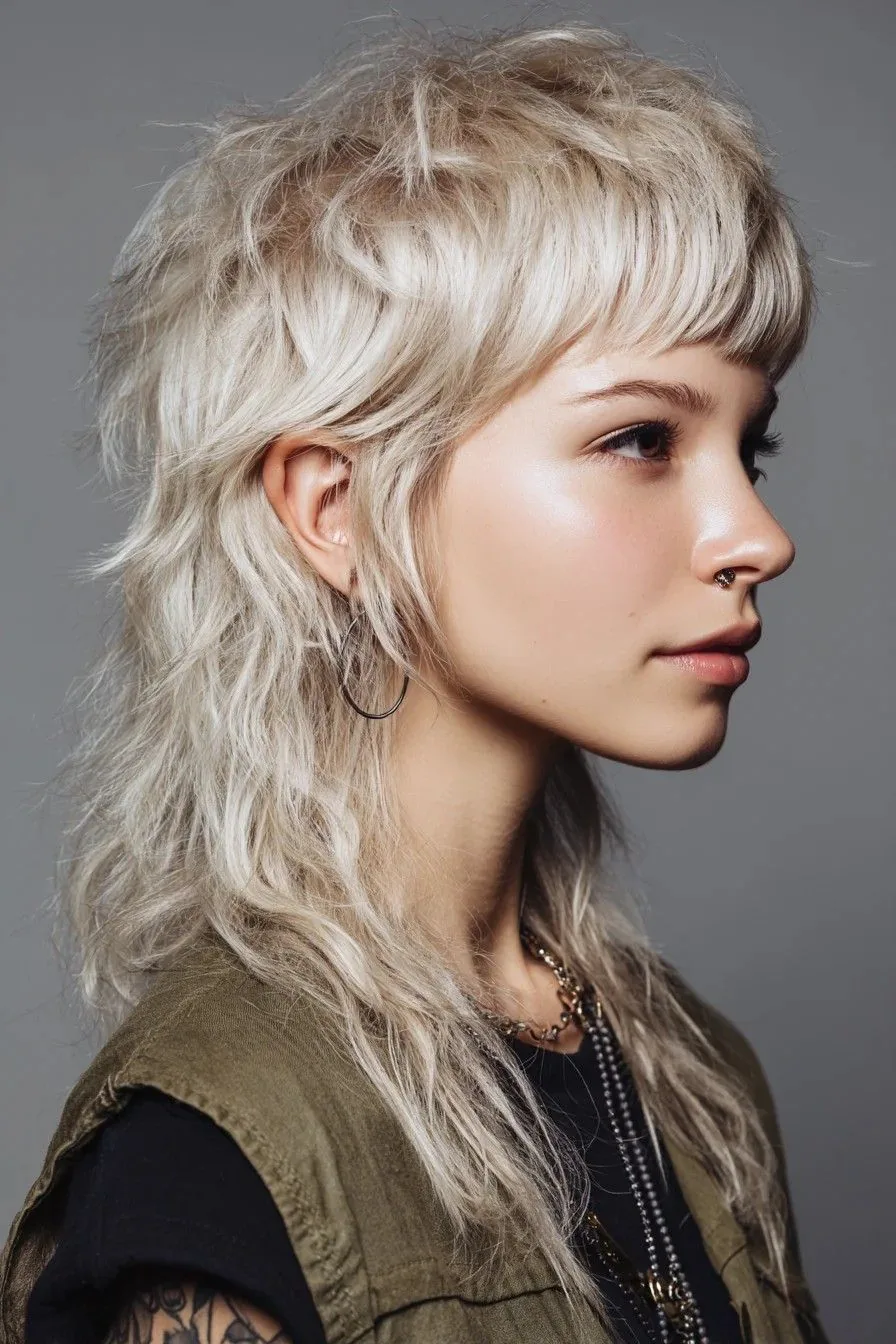
Fine hair needs a mullet cut with restraint, because too many choppy layers can make it look thinner. The trick is fewer, longer layers and a blunt-ish back, so the ends look full rather than wispy. A soft mullet with a little root lift at the crown gives fine hair the volume it needs without sacrificing the ends, and a texture spray adds grip that fine hair usually lacks.
Styling time: about five minutes — a root-lifting mousse at the crown, blow-dried with a round brush, or a velcro roller at the roots while you get dressed. The products it needs are light: mousse and a texturising spray, never a heavy cream. Maintenance: trims every six weeks to keep the ends looking full. Who should avoid it: women who want a heavily layered, shaggy mullet, because that much layering can make fine hair disappear.
18. The Mullet for a Round Face
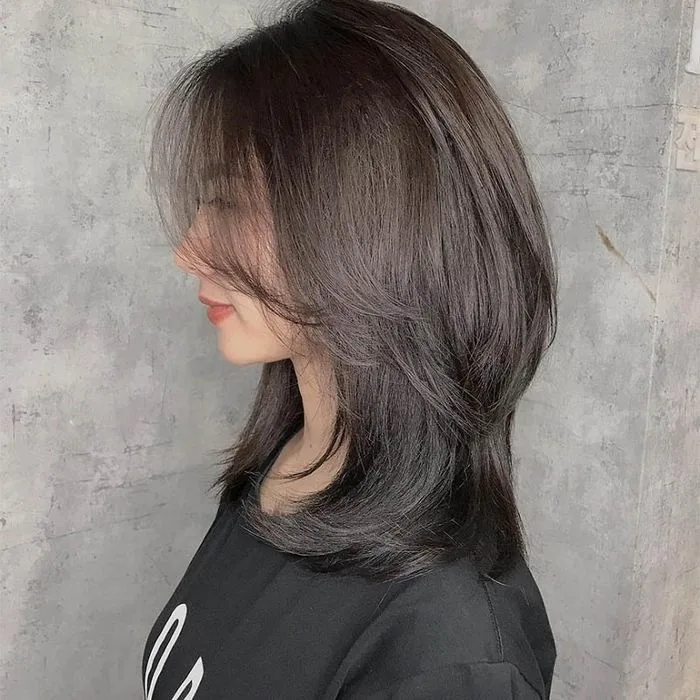
A mullet is genuinely flattering on a round face, because the shape does exactly what a round face needs: it adds height at the crown, length at the back, and face-framing layers that break up the width. The trick is to keep the top textured and lifted, not flat, and to let the front layers fall past the cheekbones rather than stopping at them, which draws the eye down and adds length.
Styling time: five minutes — a little volume at the roots, and the front layers swept slightly forward. Maintenance: the same as any mullet, trims every five to six weeks. Who should avoid it: nobody with a round face, as long as the stylist avoids a short, wide fringe, which can make the face look wider. Ask for height on top and length at the front instead.
19. The Mullet for an Oval Face
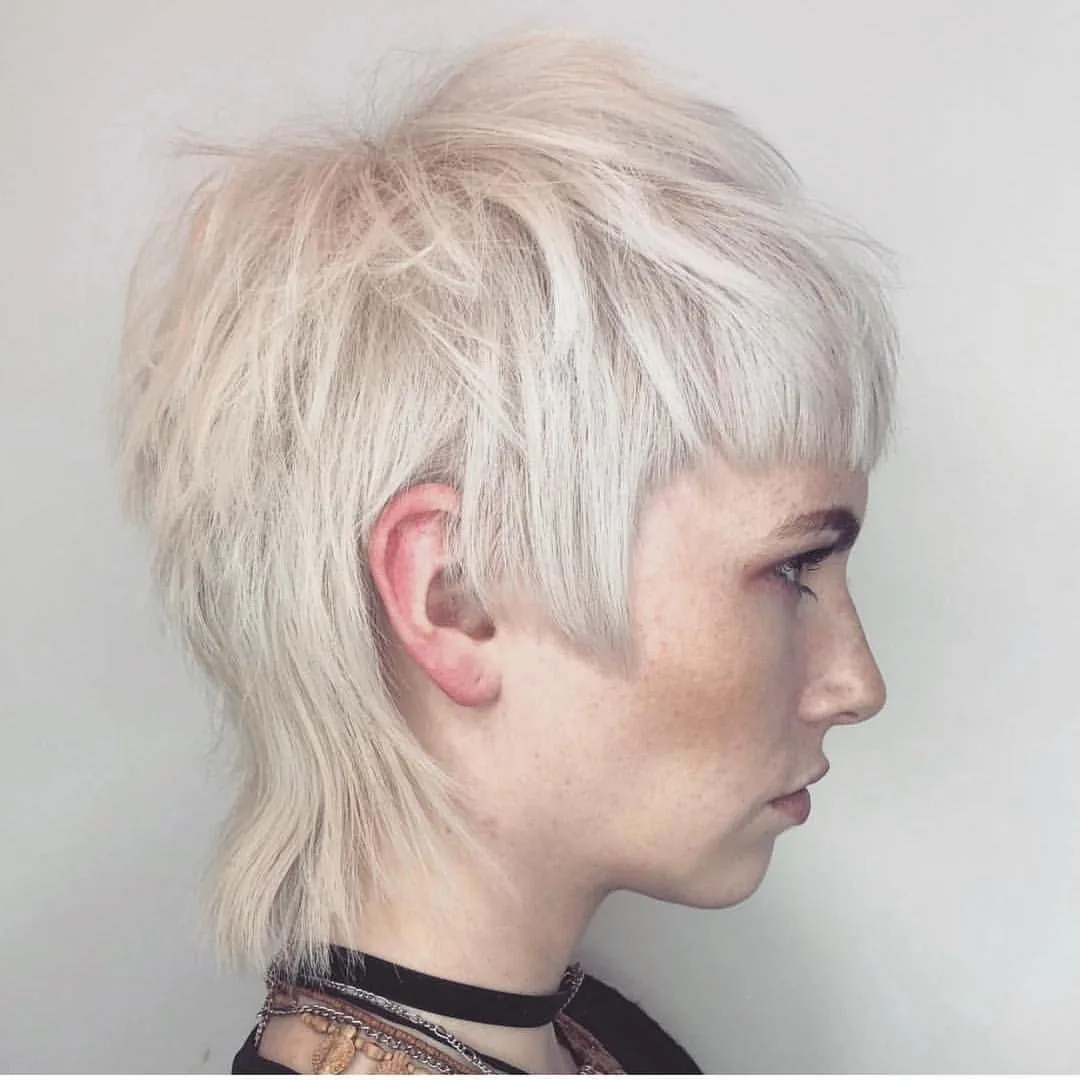
Oval faces can wear almost any mullet, which is both a gift and a trap — the freedom makes it easy to pick a version that clashes with your texture instead of your face shape. A classic modern mullet with a soft fringe is the safest choice, because it shows off the balanced proportions of an oval face without hiding them. A micro fringe also works beautifully here, because there is no width or length to correct.
Styling time: three to five minutes, depending on the version you choose. Maintenance: trims every five to six weeks. Who should avoid it: nobody — the question for an oval face is not whether a mullet suits you, but which mullet suits your hair texture and your morning routine. Choose on those, not on face shape.
20. The Mullet for a Square Face
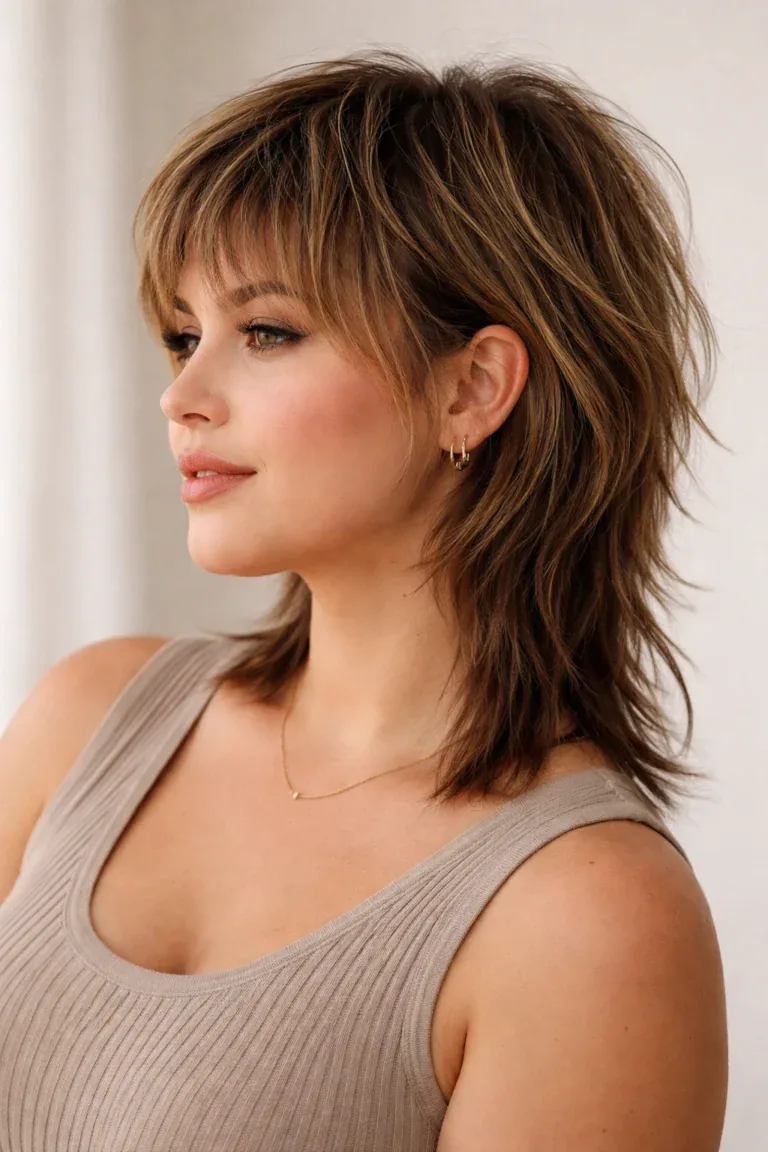
A square face has a strong jawline, and a mullet can soften it beautifully — if the layers are placed right. Soft, face-framing layers that fall past the jaw break up the angles, and a side part or curtain bangs add a diagonal line that makes the face look less square. The back length also helps, because it draws the eye down and away from the jaw.
Styling time: five minutes — sweep the front layers forward and let them curve slightly inward. Maintenance: trims every six weeks. Who should avoid it: women who want a blunt, jaw-length front, because a hard line at the jaw emphasises the angles it is meant to soften. Ask for layers that pass the jaw, not end at it.
21. The Blonde Balayage Mullet
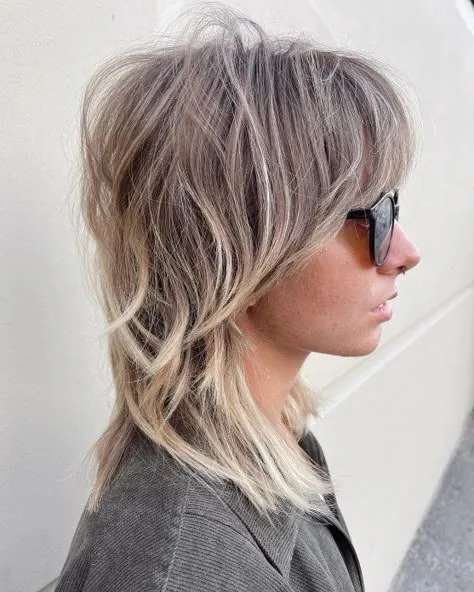
Blonde balayage on a mullet is a clever combination, because the hand-painted colour follows the layers: lighter pieces through the top and the front, softer depth underneath. The colour makes the texture of the cut visible in a way a single colour never does, and the grow-out is gentle, because balayage has no hard line at the roots.
Styling time: five minutes, the same as any mullet, but the colour adds a weekly job: a purple shampoo once a week keeps the blonde from turning yellow. Cost and time: a balayage session costs more than a cut, but you can go months between colour appointments. Who should avoid it: women who do not want any colour maintenance, because even low-maintenance blonde needs that purple shampoo.
22. The Copper Mullet

Copper is the colour that suits a mullet best, because the warmth and the edge of the cut feed each other. A rich copper, from a soft auburn to a vivid ginger, makes the layers glow and the texture look even more deliberate, and it suits a wide range of skin tones — cooler coppers for fair skin, deeper coppers for olive and darker skin. It is the colour to choose if you want your mullet to be noticed.
Styling time: five minutes, but the colour needs care — copper fades faster than most colours, so a colour-safe shampoo and a weekly colour-depositing mask keep it vivid. Maintenance: a colour refresh every six to eight weeks. Who should avoid it: women who wash their hair every day, because frequent washing strips copper faster than any other colour.
23. The Pastel Mullet
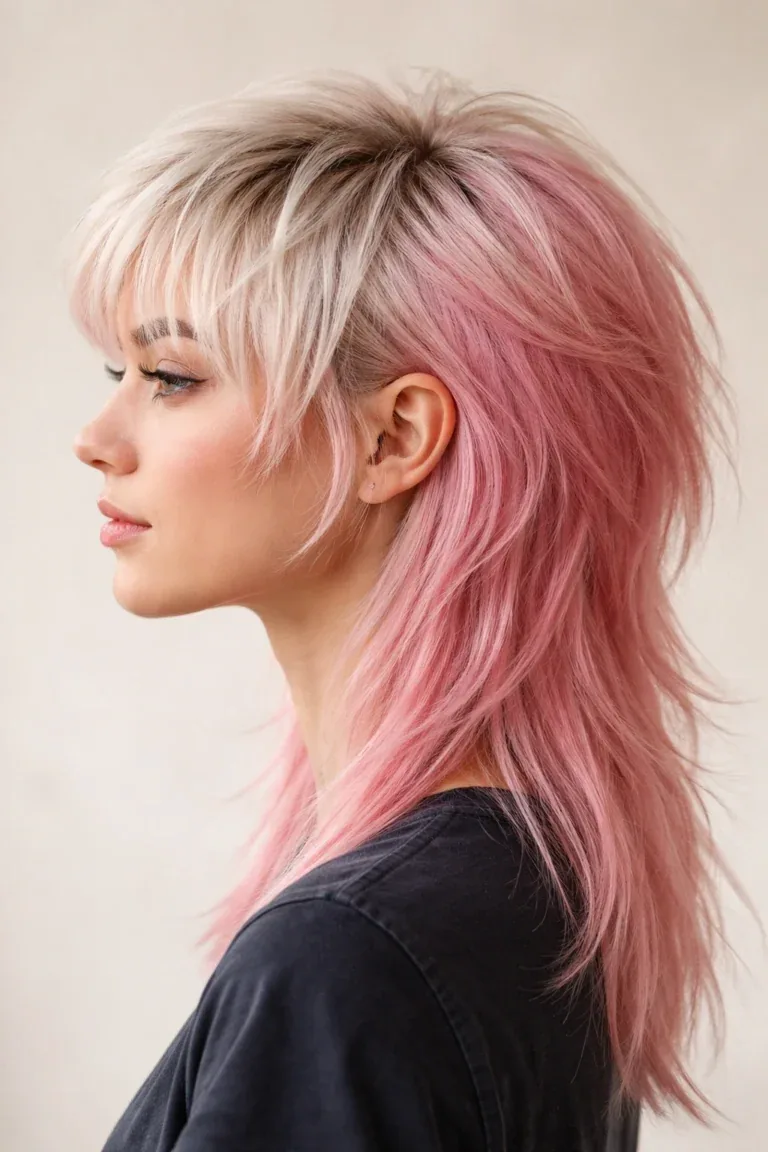
A pastel mullet — soft pink, lavender, peach or baby blue — turns the cut into a full creative statement. The pale colour shows off the layers beautifully, because every strand is visible, and the softness of the pastel balances the edge of the mullet, so the whole look feels playful rather than harsh. It works best on pre-lightened hair, which is why it is usually a salon job rather than a box-dye experiment.
Styling time: five minutes, but the colour is high-maintenance: pastels fade in a few washes, so wash in cool water, use a colour-safe shampoo, and expect a refresh every three to four weeks. Who should avoid it: women who do not want the upkeep, and anyone who needs a natural hair colour for work — pastel is a commitment, not a weekend experiment.
24. The Brunette Mullet With a Money Piece

A dark brunette mullet with a money piece — two bright face-framing strands at the front — is the lowest-commitment way to add colour to a mullet. The dark base makes the layers look rich and glossy, and the bright front pieces light up the face and draw attention to the fringe, which is the part of a mullet people look at first. It is also easy to grow out, because only the front pieces need refreshing.
Styling time: five minutes, and the colour needs almost nothing — a gloss every couple of months keeps the brunette shiny. Maintenance: a money-piece refresh every eight to ten weeks. Who should avoid it: nobody — this is the colour idea to choose if you want a change without a big commitment or a big bill.
25. The Side-Part Mullet
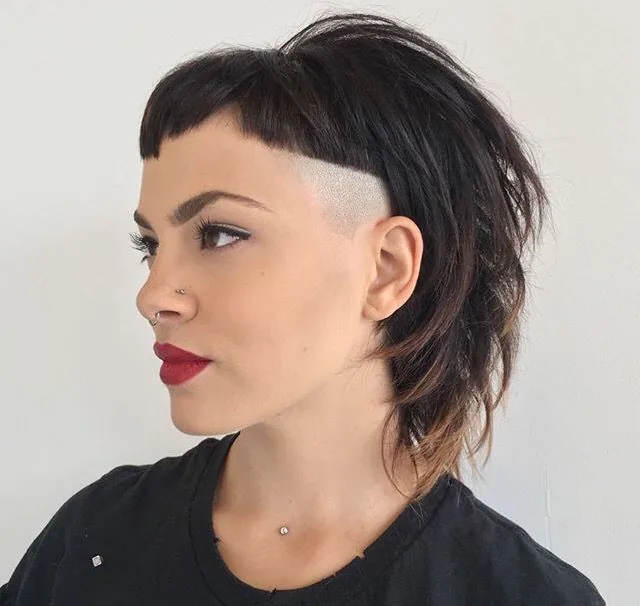
A side part changes a mullet more than you would expect: it sweeps the fringe across the forehead, adds volume on one side, and gives the cut a softer, more polished feel. It is the version to choose if a centre part feels too severe, or if your hair naturally falls to one side anyway. A deep side part also works well on round and square faces, because the diagonal line adds length.
Styling time: three to five minutes — part deeply to one side and blow-dry the sweep across, or let it fall naturally if your hair cooperates. Maintenance is the same as any mullet, trims every five to six weeks. Who should avoid it: women whose hair has a strong natural centre part that fights a side part every morning — work with your part, not against it.
26. The Centre-Part Mullet
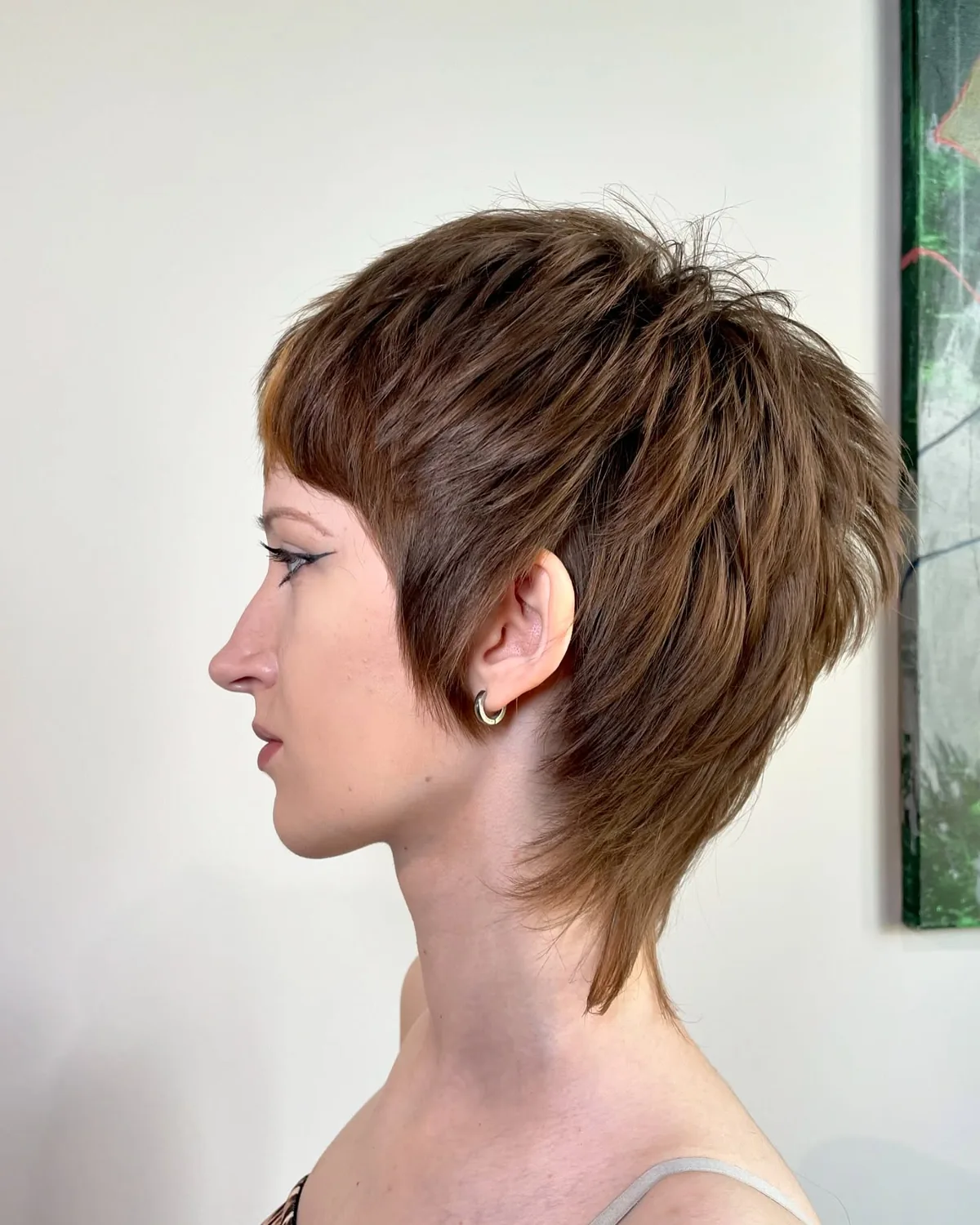
A centre part gives a mullet symmetry and a clean, editorial feel: the fringe splits evenly, the layers fall evenly on both sides, and the whole cut looks balanced from the front. It suits oval and heart-shaped faces best, and it works particularly well with curtain bangs, which are designed to part in the middle. It is also the part that shows the cut’s shape most honestly, so a good cut matters here.
Styling time: three minutes — the part does most of the work, and a little texture spray finishes it. Maintenance: trims every five to six weeks. Who should avoid it: women with a strong cowlick at the front, which can make a centre part sit unevenly, and round faces, where a centre part can emphasise width unless the front layers are long.
27. The Half-Up Mullet
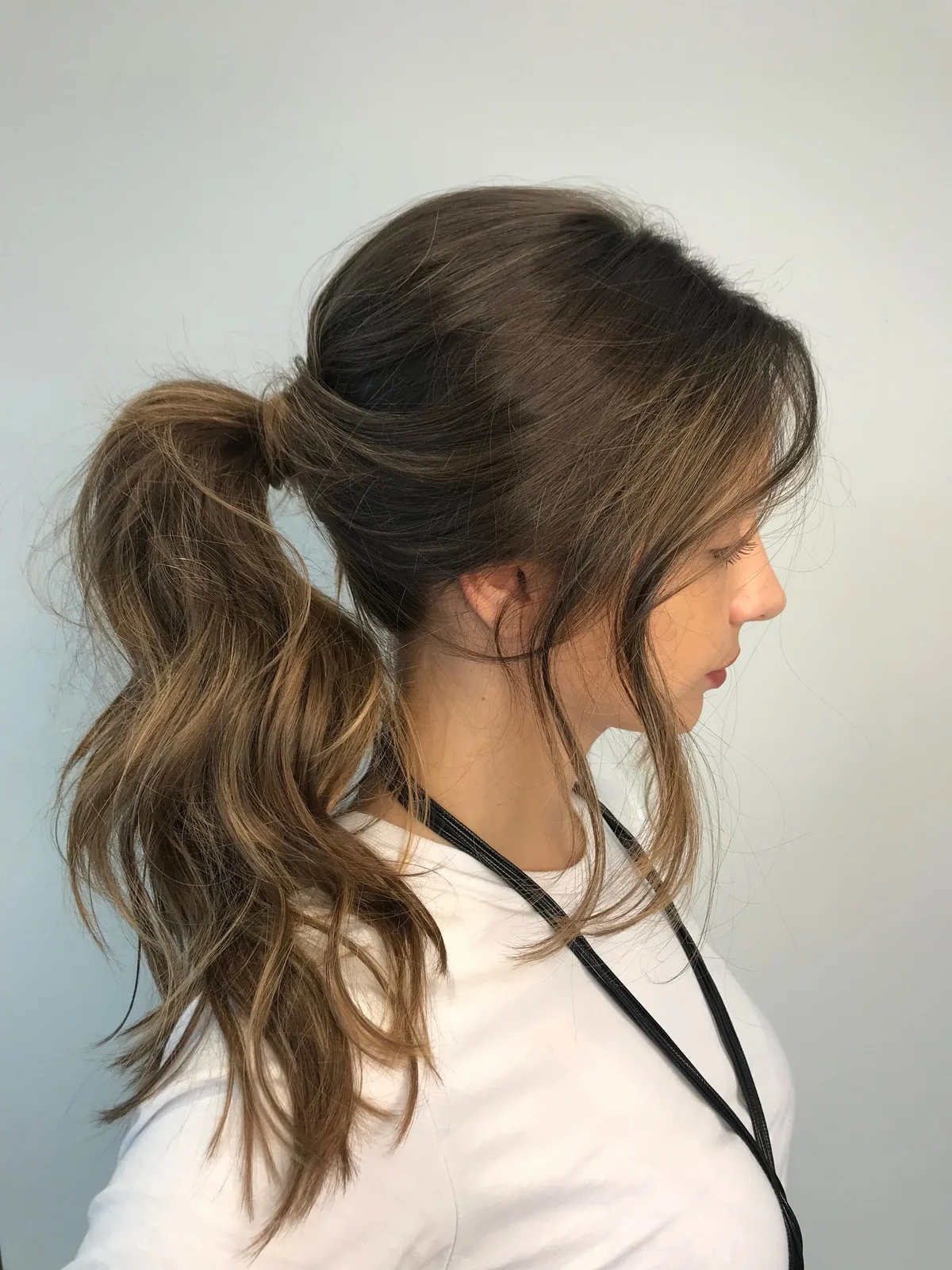
A half-up mullet is the style that proves a mullet can be practical: gather the top section into a small ponytail or bun, leave the back down, and you have hair off your face with length still showing. It works for workouts, busy mornings and days when the top is not behaving, and it suits every mullet length from a baby mullet to a long one.
Styling time: two minutes, and no products needed — a hair tie and maybe a clip. Maintenance is zero for the style itself, though the cut still needs its regular trims. Who should avoid it: nobody — but if the top layers are very short, they will fall out of the tie, so this style works best once the top has a little length.
28. The Braided Mullet
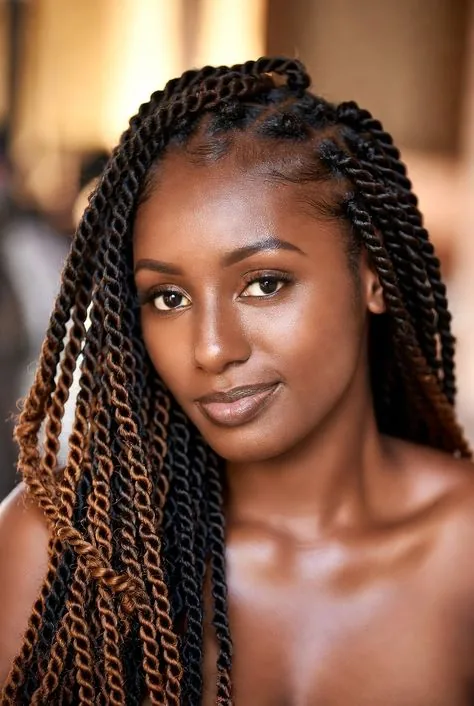
Braids on a mullet sound unlikely, and that is exactly why they work: a small braid along the front or a braid through the long back turns an edgy cut into something softer and more detailed. The long back gives you length to braid, and the short top gives you pieces to pull loose around the face, so the finished style has both structure and softness.
Styling time: five to ten minutes, depending on the braid — a simple three-strand braid takes five, a French braid a little longer. Maintenance is zero, and the style protects the long back from tangling and wind. Who should avoid it: women with a very short back, because there is not enough length to braid yet — wait for the grow-out, or braid just the front pieces instead.
29. The Pixie Mullet
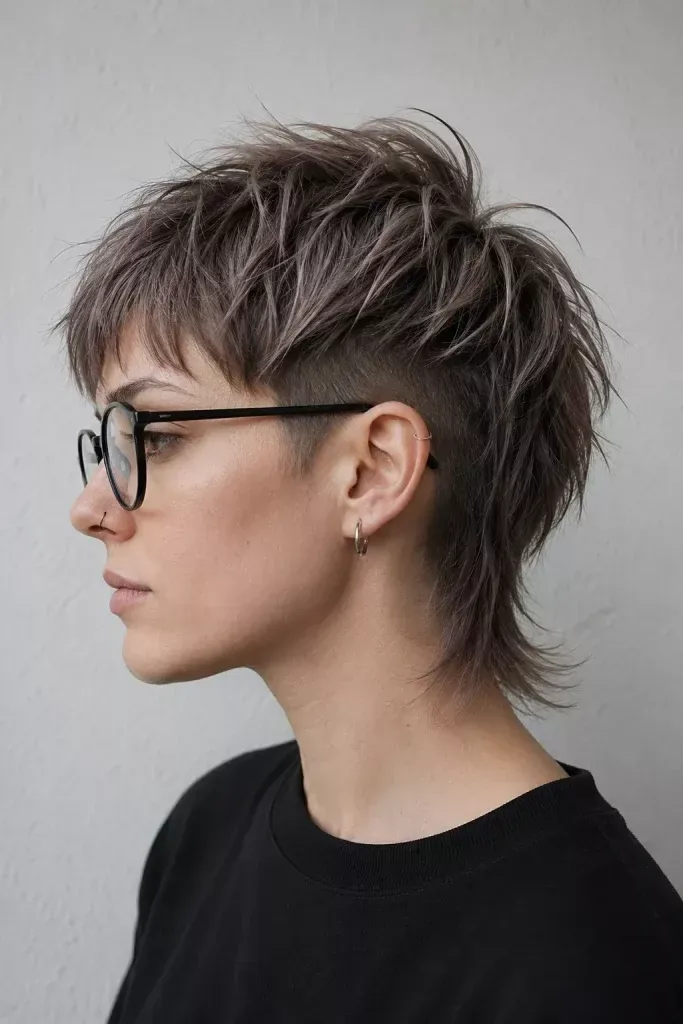
The pixie mullet is the shortest, boldest mullet that still has a back: a pixie on top, with length left at the nape. It shows off the cheekbones and the neck, and it is the version for women who love short hair but want a little more character than a plain pixie. The back length is the difference — without it, this is just a pixie; with it, it is a mullet.
Styling time: two to three minutes — a little wax or texture paste, finger-combed into place. Maintenance: trims every four weeks, because the pixie top grows out fast. Who should avoid it: women who want to tie their hair up, and anyone who is not sure about very short hair, because this cut leaves little to hide behind.
30. The Coily Mullet
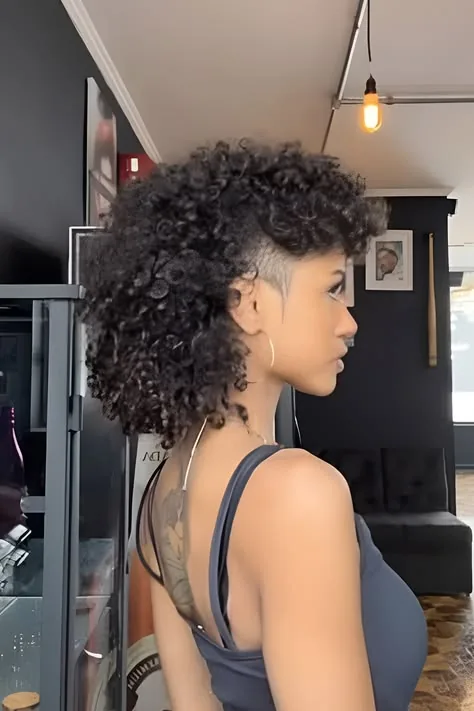
A coily mullet is one of the most beautiful versions of the cut, because tight curls give the short top real height and shape while the longer back keeps its spring and volume. The key is a stylist who understands coily hair — the cut should be shaped dry, curl by curl, with length left in, so the curls spring up to their natural length instead of being cut short and then shrinking. A good curly cut makes the difference between a mullet that looks sculpted and one that looks accidental.
Styling time: about fifteen minutes on wash day — a leave-in conditioner and curl cream on wet hair, then hands off while it dries — and almost nothing on the days after. Maintenance: a trim every eight to ten weeks, and a weekly deep-conditioning mask, because coily hair needs moisture to keep its shape. Who should avoid it: nobody, as long as the stylist knows coily hair.
31. The Punk Mullet
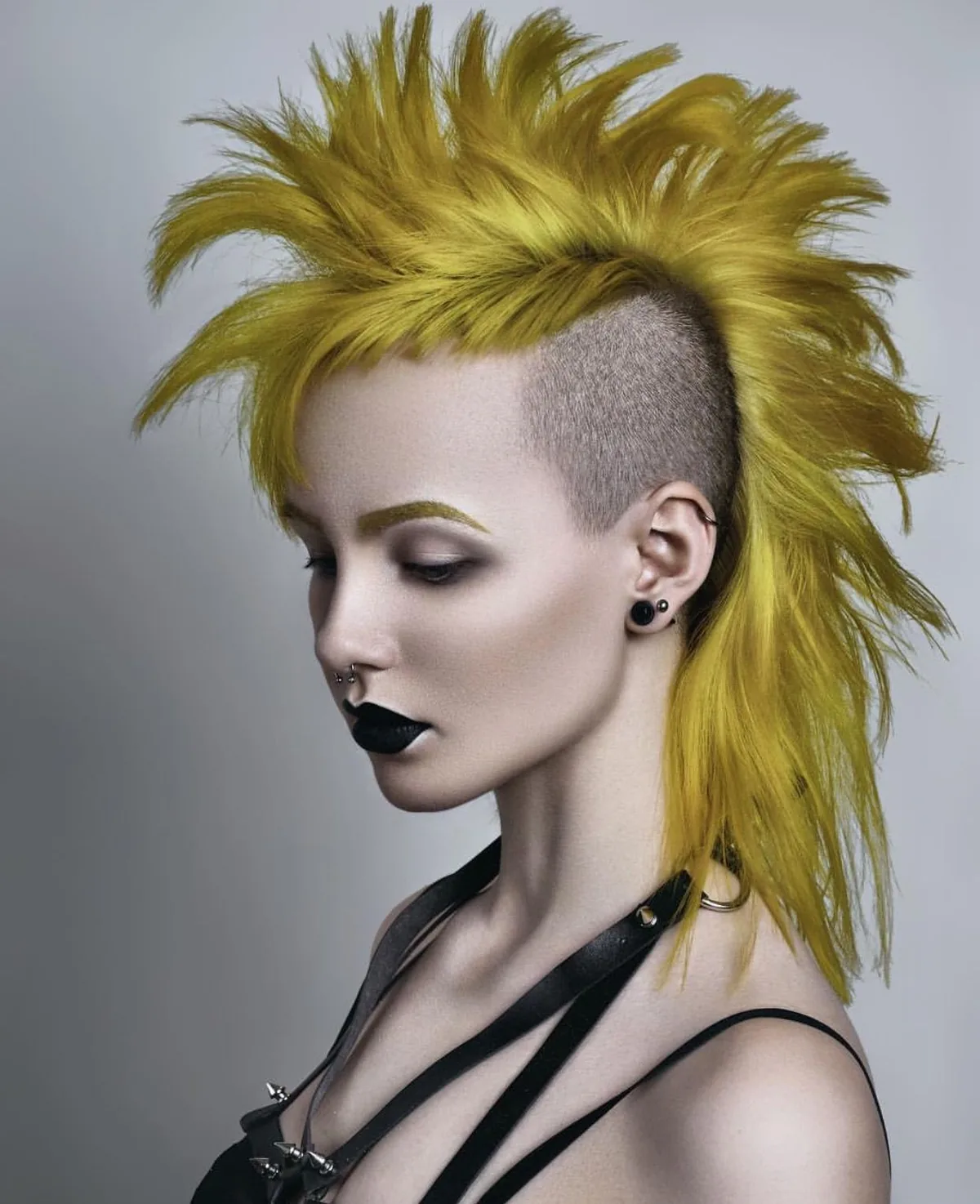
The punk mullet is the mullet with the volume turned all the way up: a spiky, textured top, a long back, and often an undercut or a shaved design on the sides. It is the version closest to the cut’s rock-and-roll roots, and it is the one to choose if you want your hair to be the first thing people notice about you. It is not subtle, and it is not trying to be.
Styling time: ten minutes — a strong-hold wax or gel, worked through the top and spiked or swept up, and a little hairspray to hold it. The products it needs are the strongest on this list: a matte wax and a firm-hold spray. Maintenance: trims every three to four weeks to keep the shape sharp. Who should avoid it: women who need a conservative look for work, because this is the mullet that cannot be dressed down.
Mullet With Bangs or a Fringe: Which One Suits You?
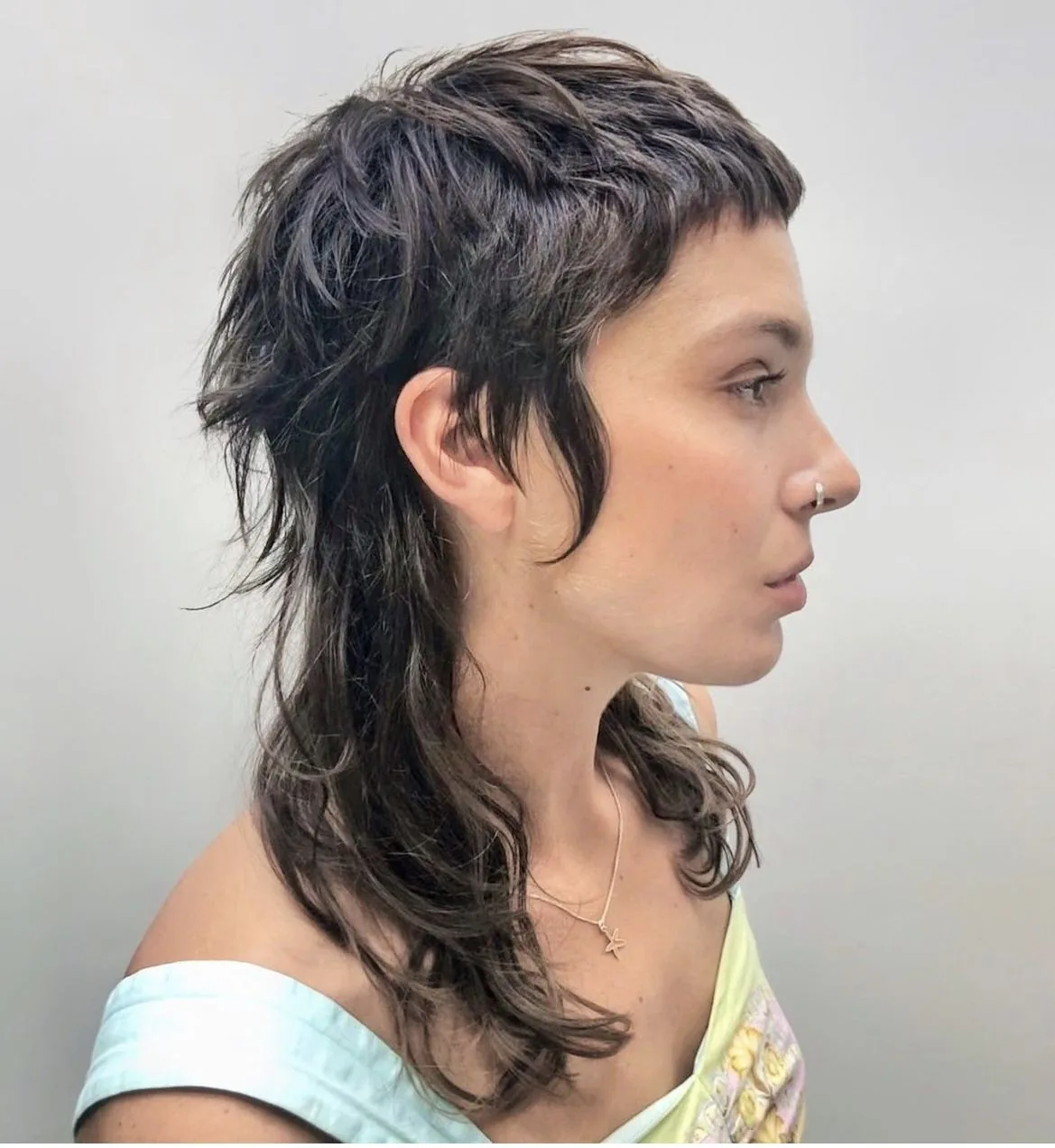
A mullet and a fringe were made for each other, because the fringe is the front of the cut and it sets the tone for everything else. A soft, wispy fringe makes the mullet gentle and wearable. Curtain bangs make it soft and face-framing. A micro fringe makes it sharp and editorial. A blunt fringe makes it bold and graphic. The fringe you choose is, in practice, the mullet you choose.
The practical test is your forehead and your mornings. If you like your forehead covered, a longer fringe is the answer; if you like it open, a micro fringe or a side-swept fringe is better. And if you hate styling a fringe every morning, choose a longer, wispy one — it can be pushed aside on lazy days, while a micro fringe cannot. Ask your stylist to cut the fringe a little longer than you think you want on the first visit; it can always be shortened.
Colour Ideas That Suit a Mullet
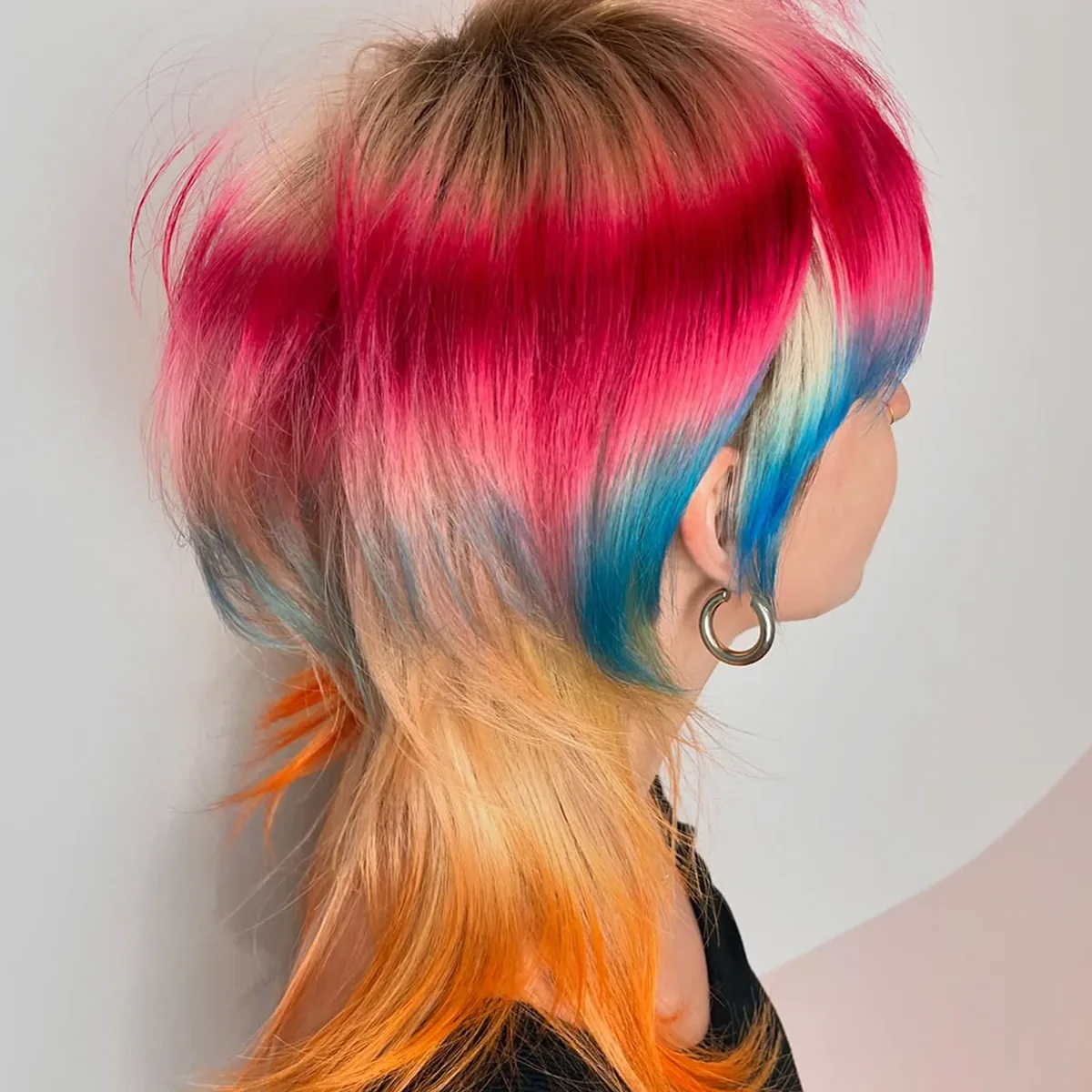
Colour and a mullet work together because the layers give colour somewhere to show. Balayage follows the layers and makes the texture visible. A solid copper or a rich brunette makes the shape look glossy and deliberate. Pastels show off every strand and turn the cut into a creative statement. And a money piece — two bright strands at the front — is the cheapest, lowest-commitment colour idea of all, because only the front needs refreshing.
The rule is to match the colour to the commitment you will actually keep. Balayage needs a refresh every few months. Copper needs a colour-safe routine and a refresh every six to eight weeks. Pastel needs cool water, colour-safe shampoo and a refresh every three to four weeks. If you are not sure, start with a gloss or a money piece — both are easy to change, and both make the mullet look more finished without a big bill.
Mullet Maintenance and Trim Schedule
A mullet is not a high-maintenance cut, but it is a regular-maintenance cut — the difference between a mullet that looks sharp and one that looks grown out is usually just a trim. Short tops and undercuts need a trim every three to four weeks. Classic and textured mullets need one every five to six weeks. Soft, layered and long mullets can stretch to seven or eight weeks, because their edges are meant to be soft.
The routine between trims is simple: wash with a shampoo that suits your hair type, condition the long back, and use a heat protectant before any hot tool. A texture spray or a little styling cream is usually the only product a mullet needs, and a clarifying shampoo once a month stops buildup from dulling the finish. Book your next trim before you leave the salon — a mullet grows out faster than it looks, and a standing appointment is the easiest way to keep it sharp.
Styling a Mullet for Work vs Weekends
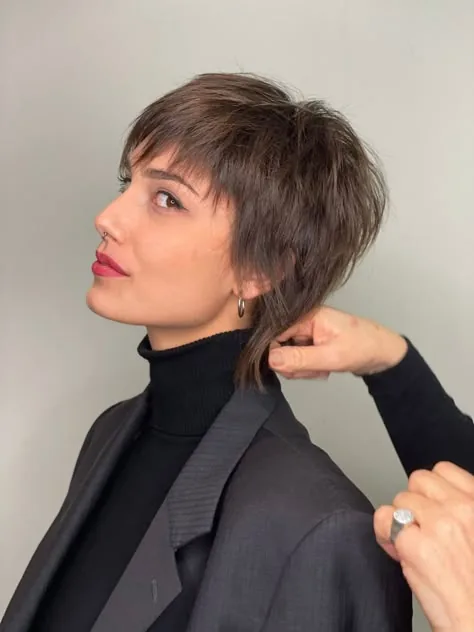
The same mullet can look like two different haircuts, depending on how you style it, and that is one of its best qualities. For work, smooth the top with a round brush or a straightener, tuck the front pieces behind the ears, and keep the back neat — the cut reads as a textured layered style, and most people will not even call it a mullet. A low, neat finish and a little smoothing serum are all it takes.
At the weekend, let the mullet be a mullet: scrunch in texture spray, let the layers fall where they want, and pull a few pieces loose around the face. The messier version is the one that shows off the cut’s character, and it takes less time than the work version. If your workplace is conservative, a soft mullet with curtain bangs is the safest starting point — it styles down for the office and up for the weekend without a second cut.
Is a mullet haircut for women still in style?
Yes — the modern mullet is very much in style, and it looks nothing like the 80s version. Today’s mullet is softer, blended and textured, with a fringe that flows into face-framing layers, and it shows up on runways, in salons and on women of all ages. The modern version is popular precisely because it can be styled soft for work and edgy at the weekend.
Will a mullet suit my face shape?
A mullet can suit most face shapes, because the layers can be placed to flatter each one. Round faces benefit from height at the crown and long front layers. Square faces suit soft layers that fall past the jaw. Oval faces can wear almost any version. The key is telling your stylist your face shape and asking for layers that flatter it, rather than copying a photo of a different face.
How long does a mullet take to style each morning?
Most mullets take three to five minutes each morning. A soft or wavy mullet can take two minutes with a little texture spray, while a straight mullet needs five to ten minutes with a straightener or round brush. Curly and coily mullets take longer on wash day — about ten to fifteen minutes — but almost nothing on the days after.
Is a mullet hard to maintain?
No, a mullet is not hard to maintain, but it does need regular trims. Short tops and undercuts need a trim every three to four weeks, classic mullets every five to six weeks, and soft or long mullets every seven to eight weeks. Between trims, the routine is simple: a suitable shampoo, conditioner for the long back, and a texture spray or styling cream.
Can I get a mullet with curly hair?
Yes — curly and coily hair make some of the best mullets, because the curls give the short top volume while the long back keeps its spring. Ask your stylist to cut curly hair dry, curl by curl, so the top does not shrink up shorter than planned. Use curl cream on wet hair and keep your hands off it while it dries to avoid frizz.
How do I ask my stylist for a mullet without regret?
Bring two or three photos of women with hair like yours, point at the parts you like — the fringe length, the side length and the back length — and say out loud what you do not want. Ask how short the top will be, how it will grow out, and how often it will need a trim. If you are nervous, ask for the softer version first; it can always be made sharper later.
How do you grow out a mullet?
Stop trimming the front and let the top layers grow while you keep the back tidy with a trim every eight weeks. The shape slowly turns into a shag and then into long layers over three to six months. Texture spray, clips, headbands and half-up styles hide the awkward middle stage, and a fringe trim can buy you another month of patience.
Can you wear a mullet to work?
Yes, in most workplaces — especially a soft mullet with curtain bangs, styled smooth with a round brush and the front pieces tucked behind the ears. The same cut can look polished for work and edgy at the weekend, depending on how you style it. A punk mullet with an undercut is the one version that may not suit a conservative office.
What is the difference between a mullet and a wolf cut?
A wolf cut is a mix of a shag and a mullet, with heavy layers and volume all over, while a mullet has a clearer contrast: short on top and at the front, long at the back. A wolf cut is usually wilder and more voluminous, while a mullet is more structured, with a defined short-to-long shape. Many modern cuts sit between the two.
Does a mullet work on fine hair?
Yes, if it is cut with restraint. Fine hair suits a soft mullet with fewer, longer layers and a blunt-ish back, so the ends look full rather than wispy. Use a root-lifting mousse and a texturising spray, and avoid heavy creams. A heavily layered, shaggy mullet can make fine hair look thinner, so ask your stylist to keep the layers long and blended.
Conclusion
The modern mullet works because it is not one haircut — it is a shape you can tune to your hair, your face and your life. A soft mullet with curtain bangs is a gentle first step. A shaggy or curly mullet is the low-maintenance choice. A straight or punk mullet is the statement. Whichever version you choose, the rules are the same: bring photos, say what you do not want as well as what you do, and ask how it will grow out before the scissors come out.
Start soft if you are unsure — a soft mullet can always be made sharper at your next appointment, and a good stylist will tell you honestly whether your texture suits the version you have in mind. Keep the trims regular, keep the styling simple, and let the cut do what it does best: give you a hairstyle with a little edge, without asking for a lot of effort in return.