S-Wave Curls: The Gentle Wave Pattern That’s Everywhere
Look around you. From the cascading hair of a trendsetter on the street to the elegant curve of a seashell, there’s a specific, soothing pattern that seems to whisper rather than shout. It’s the S-wave curl—a gentle, undulating form that sits perfectly between a straight line and a tight coil. More than just a hair texture, the S-wave is a fundamental shape in nature, art, and design, representing balance, flow, and effortless beauty. It’s the pattern you recognize instantly but might not have had a name for. Today, we’re diving deep into the world of S-wave curls, exploring why this pattern is so captivating, how to care for it on your head, and where you can spot it in the world around you.
What Exactly Are S-Wave Curls?
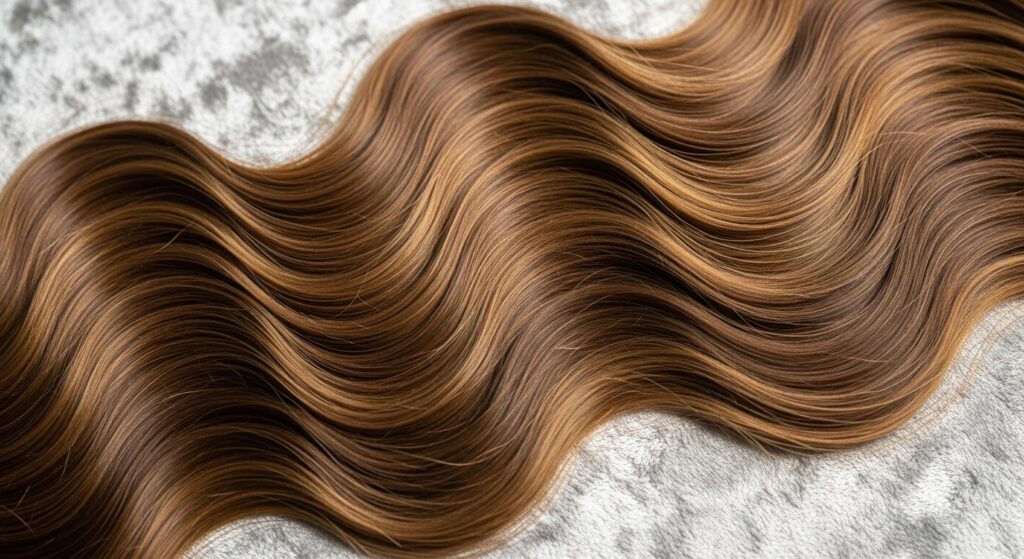
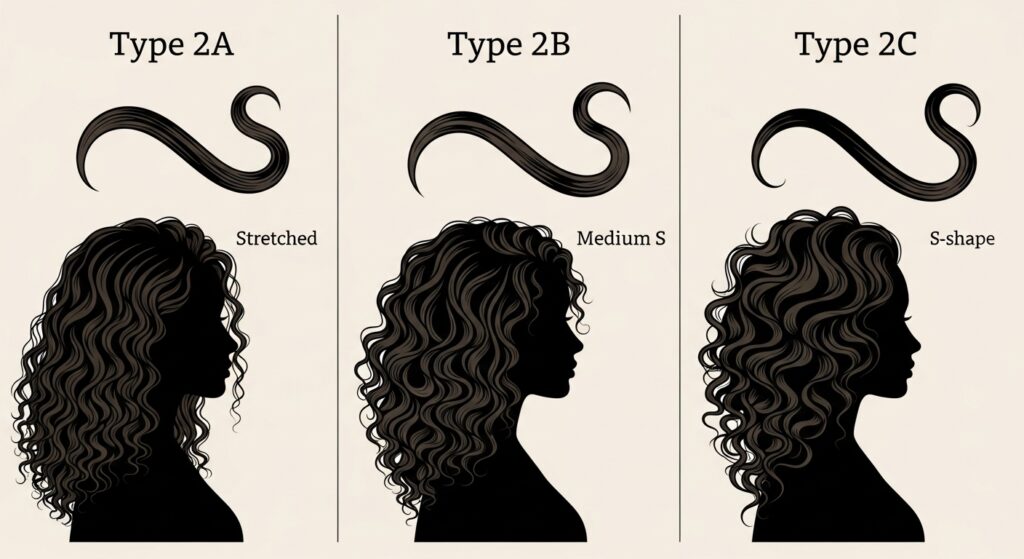
In the simplest terms, S-wave curls are hair patterns that form a distinct “S” shape along the hair shaft. Imagine drawing a series of connected, soft, lowercase “s” letters—that’s the rhythm of this curl pattern. On the hair typing spectrum (popularized by systems like Andre Walker’s), S-waves typically fall under Type 2 hair, specifically Type 2A, 2B, and 2C.
Type 2A presents as fine, loose waves that are relatively easy to straighten. Type 2B features more defined S-waves that start from the mid-lengths, often with a bit more volume and frizz potential. Type 2C is where the S-wave becomes prominent and well-defined, often starting at the roots, with thicker waves that border on loose curls. What unites them all is that gentle, rolling, sinusoidal movement. Unlike the tight corkscrews of Type 4 hair or the springy ringlets of Type 3, S-waves have a relaxed, beachy, “just-rolled-out-of-bed-with-great-hair” vibe that has been coveted for decades.
The Science and Beauty of the Sinusoidal Form
Why is the S-shape so inherently pleasing? The answer lies in both science and aesthetics. The S-wave is a sinusoidal curve, a mathematical function that describes a smooth, periodic oscillation. This is the same fundamental shape found in sound waves, light waves, and the gentle sway of a pendulum. Our brains are wired to find this natural rhythm and balance comforting and beautiful.
In art and design, the S-wave is known as the “line of beauty.” Hogarth, an 18th-century English painter, wrote extensively about this serpentine line as the key to visual grace and liveliness. It suggests movement, fluidity, and elegance without aggression. When this principle translates to hair, it creates a look that is dynamic yet soft, interesting yet wearable. It frames the face with gentle curves that catch the light in a diffused, shimmering way, unlike the sharp highlights of straight hair or the concentrated light of tight curls.
How to Enhance and Style Your S-Wave Curls
If you’re blessed with natural S-waves, the goal is to enhance their pattern while combating the common foes: frizz and lack of definition. The mantra for S-wave hair is hydration and gentle encouragement, not heavy-handed control.
Start with a moisturizing shampoo and conditioner. Avoid heavy butters or oils that can weigh down fine to medium wave patterns. Instead, look for lightweight leave-in conditioners and curl creams. The application technique is crucial: apply products to soaking wet hair, using a scrunching motion from the ends upward to encourage the S-shape to form. Plopping hair in a microfiber towel or cotton t-shirt can help absorb excess water without causing friction frizz.
For styling, diffusing on a low heat and speed setting while continuing to scrunch can create incredible volume and definition. Alternatively, for a more retro-glam wave, try braiding damp hair or using flexible foam rollers overnight. The key is to remember that S-waves thrive with movement, so avoid stiff, crunchy gels that can create a helmet-like effect. A light-hold mousse or sea salt spray can be your best friend for that perfectly imperfect, lived-in wave.

Spotting S-Waves in the Wild: From Nature to Culture
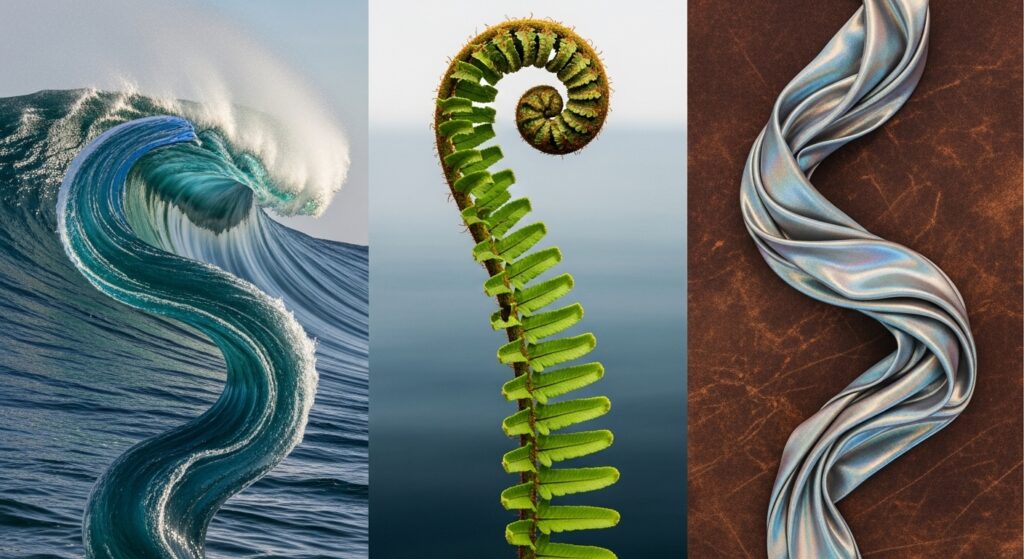
The ubiquity of the S-wave is part of its magic. Once you start looking, you’ll see it everywhere. In nature, it’s the pattern of a meandering river seen from above, the curling edge of a breaking ocean wave, the spiral of a galaxy (our own Milky Way has spiral arms that follow this form), and the elegant curve of a swan’s neck.
In human creation, the S-wave is a staple of architecture and design. Think of the swooping curves of Art Nouveau ironwork, the scrolls on a Corinthian column, or the iconic shape of a Coca-Cola bottle. In fashion, it’s the flow of a bias-cut dress or the ruffled edge of a sleeve. This pattern’s prevalence tells us something profound: we are naturally drawn to replicate the fluid, organic shapes we see in the world around us. The S-wave in hair, therefore, isn’t just a style—it’s a connection to a universal aesthetic language.

Why S-Wave Hair is Having a Major Moment
The recent surge in embracing natural hair textures has propelled S-waves into the spotlight. For years, many with this hair type felt stuck in the middle—not straight enough to be “low-maintenance,” not curly enough to fit into the tight curl narrative. Now, the “wave revolution” is celebrating this in-between texture. Social media is filled with hashtags like #wavyhair and #swavyhair (a blend of straight and wavy), where communities share tips and celebrate the versatility of the S-pattern.
Furthermore, the modern desire for effortless chic and clean-girl aesthetics aligns perfectly with S-wave hair. It looks polished yet natural, done yet undone. It works with a minimalist, low-manipulation approach to beauty, which resonates deeply in today’s wellness-focused culture. Celebrities like Alexa Chung, Gisele Bündchen, and Taylor Swift (in her natural state) have all been icons for this look, proving that these gentle waves are both red-carpet and runway-ready.
Embracing Your Pattern, Whatever It May Be
Ultimately, the journey with S-wave curls—or any hair pattern—is about embracing its unique character. The S-wave teaches us about flow, adaptability, and softness. Some days it will be perfectly defined; other days it will be a wild, frizzy blend that has a mind of its own. And that’s okay. That variability is part of its organic beauty.
Whether you were born with S-waves, achieve them with styling, or simply admire the pattern in a seashell on your walk, this gentle wave is a reminder of the elegant geometry that underpins our world. It’s a shape of harmony, a line of beauty, and a hairstyle that’s forever in vogue. So the next time you see those soft curves in your hair, in a riverbed, or in a piece of art, take a moment to appreciate the quiet, everywhere presence of the magnificent S-wave.