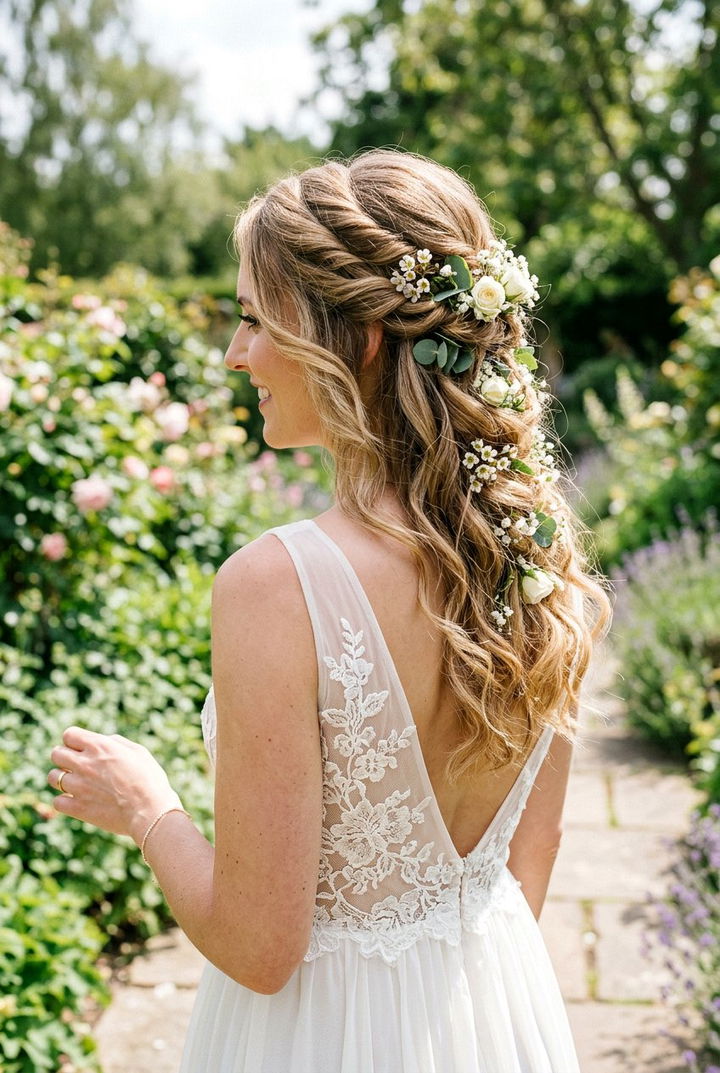
Fresh Blooms and Soft Waves: 34 Spring Wedding Hairstyles for Brides, Bridesmaids and Guests
Spring is the season weddings were made for. The gardens are in bloom, the light is soft and golden, and the air smells faintly of rain and fresh flowers. A spring wedding has a feeling no other season can copy — cherry blossom drifting across the lawn, tulips lining the aisle, and a bride walking through it all with her hair catching the light. That is why spring wedding hairstyles for women deserve their own guide: the season brings its own joys and its own challenges, from a sudden breeze on a garden lawn to a shower that arrives just as the photographs begin, and the right style is the one that looks beautiful in the bloom and still holds its shape when the weather turns.
This guide gathers 34 spring wedding hairstyles for brides, bridesmaids and guests, chosen for exactly that balance: soft enough for spring, secure enough for an outdoor ceremony, and pretty enough for photographs among the flowers. Eight guides first walk you through the ideas that matter: how to wear fresh flowers in your hair, how wind and humidity behave at a garden ceremony, how pastel and fresh colour tones work in spring hair, whether to choose a veil or a flower crown, how to plan for rain, and how to take your style from the ceremony to the reception. Whether you are the bride, a bridesmaid, or a guest, there is a style here for you — and every one of them can be done by your stylist in a single appointment, or by you at home with a few pins and a little patience.
Spring Flowers in Your Hair: Choosing Blooms That Last the Whole Day
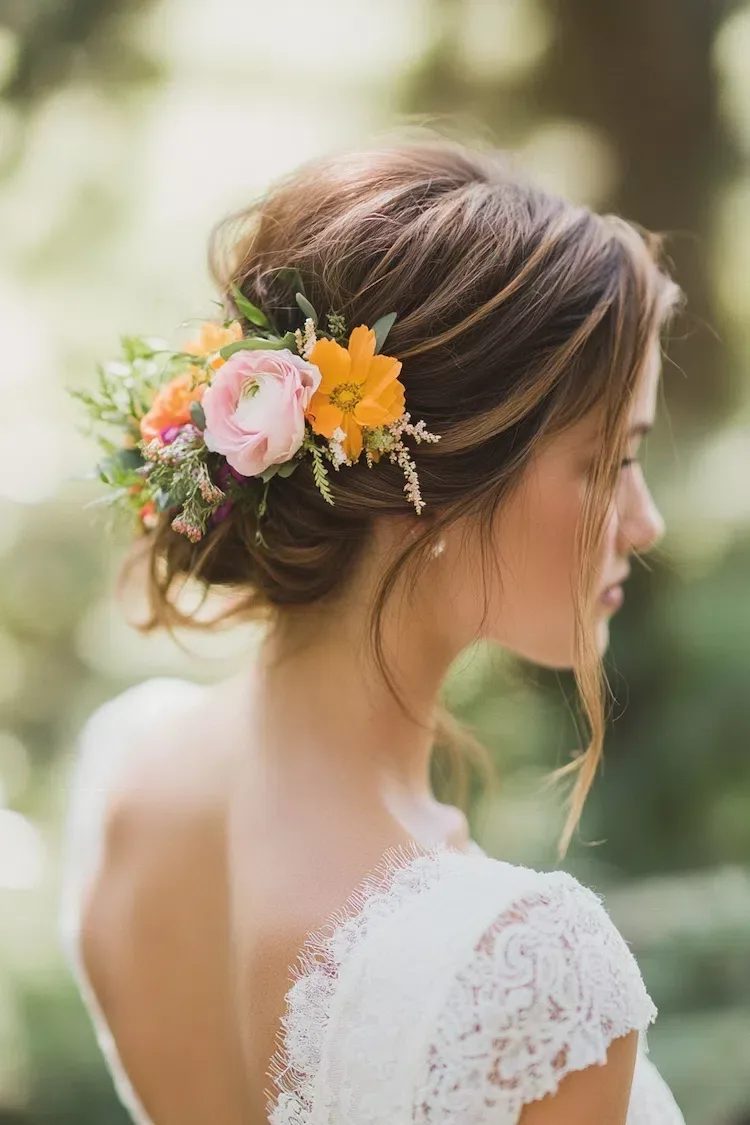
Fresh flowers are the signature of spring wedding hair, but not every bloom survives a whole wedding day. The flowers that work best are the hardy ones: baby’s breath, spray roses, lavender, ranunculus and small daisies hold their shape for hours, while delicate blossoms like cherry blossom and sweet peas wilt within an hour of being cut. Ask your florist for flowers that have been conditioned — kept in water overnight and misted before the ceremony — and have them added to your hair as late as possible, ideally after the photographs in the morning and just before you walk down the aisle.
The practical secret is placement. Tuck flowers into the pins of an updo rather than into loose hair, where they slide out, and keep them small — one or two blooms near the ear or at the side of a bun read as elegant, while a whole garden on the head reads as fancy dress. Pros: fresh flowers photograph beautifully and smell wonderful in the spring air. Cons: they wilt in a warm room, so keep a spare sprig in water at the reception. Maintenance: mist the flowers lightly with water before the ceremony, and ask your stylist to pin each stem twice so nothing slips during the first dance.
Wind, Humidity and Garden Ceremonies: Keeping Spring Hair in Place
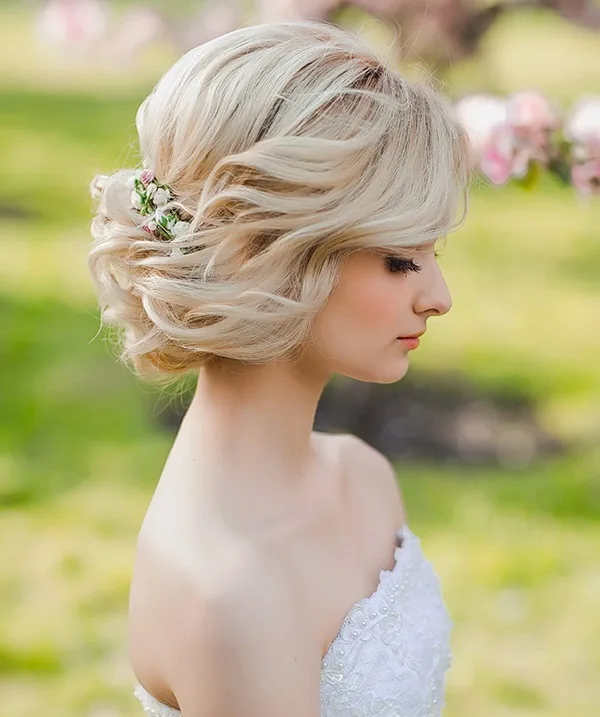
A garden ceremony is the dream of a spring wedding — and the wind is the one guest nobody invites. A spring breeze is usually gentle, but it is enough to lift loose layers across your face, tangle a long veil, and turn a soft wave into a knot by the time the vows are finished. The answer is not more hairspray; it is structure. Styles with an anchor — a low bun, a braided crown, a half-up that is pinned at three points — hold their shape in a breeze, while completely loose hair needs a braid, a twist, or a clip to keep the front sections out of your eyes.
Humidity is the other spring factor. A warm, damp afternoon will soften curls and loosen an updo, so ask your stylist for a flexible-hold spray rather than a stiff one, and carry a small travel spray and three bobby pins in your bag. Pros: a spring breeze makes loose waves and veils look magical in photographs. Cons: unsecured hair will tangle and frizz in damp air. Maintenance: check the weather the morning of the wedding, and if the forecast says wind, ask your stylist to add one extra pin at each anchor point and to keep the front pieces pinned back until after the ceremony.
Pastel and Fresh Colour Tones for Spring Wedding Hair
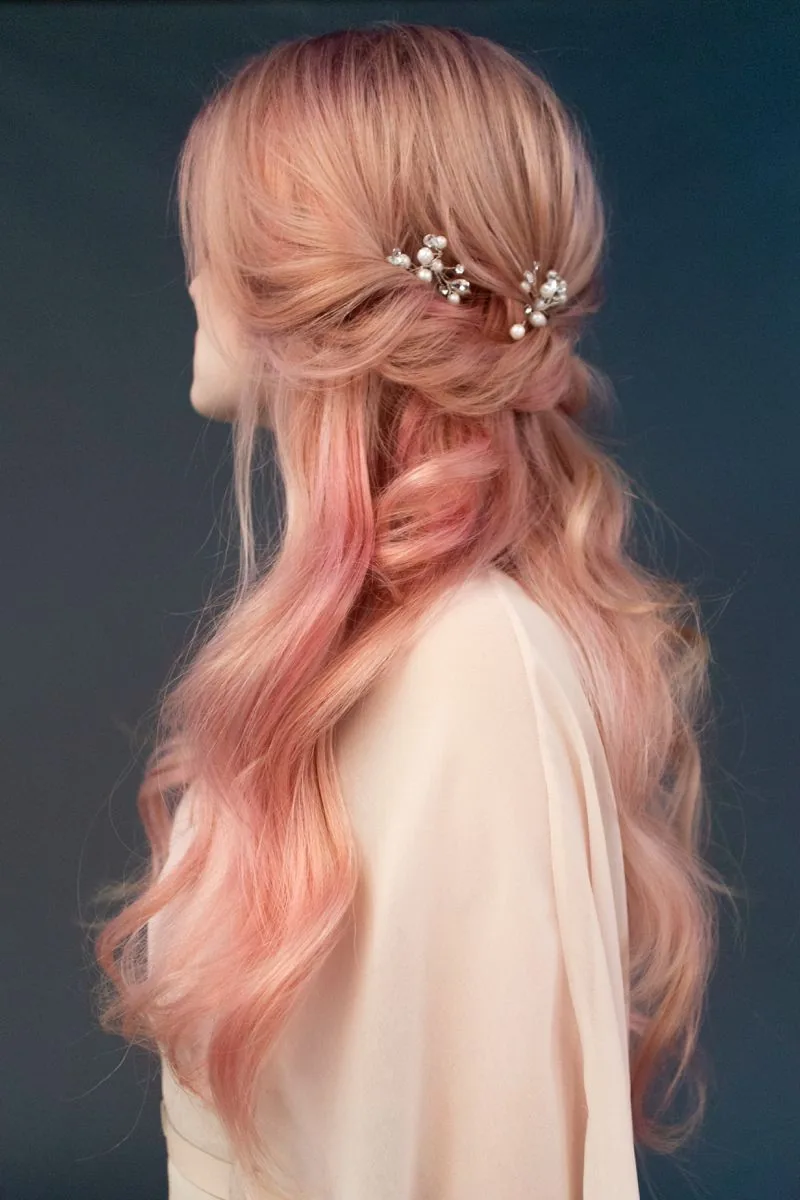
Spring is the season for fresh colour — not a dramatic change, but a softening. A gloss treatment in a warm honey or a cool ash tone adds shine that photographs beautifully in spring light, and a few face-framing highlights can lift a dark colour without changing it. The rule for spring wedding hair colour is to make the change six weeks before the wedding, never the week of it: that way the colour has time to settle, and if anything needs adjusting there is time to fix it.
Pastel tones — a whisper of rose gold, a touch of lilac, a soft peach — can be beautiful on a spring bride, but they need commitment: pastel fades fast, so it must be done by a professional and topped up with a colour-depositing conditioner in the weeks before the day. Pros: fresh, glossy colour makes every spring wedding hairstyle look more polished, and it catches the light in garden photographs. Cons: pastel fades quickly and needs upkeep, and a last-minute colour change can go wrong. Maintenance: book a gloss and a trim six weeks out, and use a colour-safe shampoo so the tone holds until the wedding.
Veil or Flower Crown: Choosing What Sits on Your Head
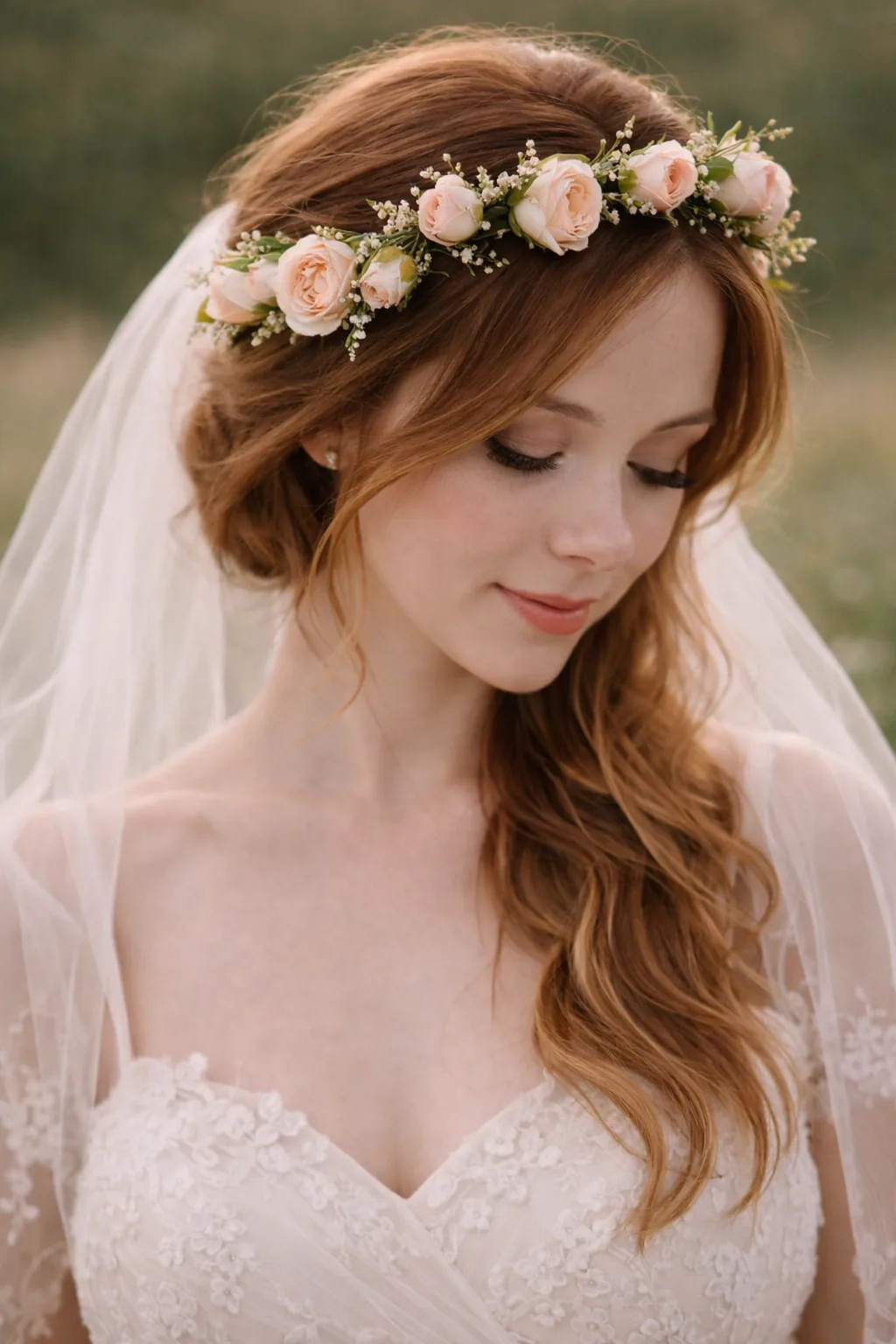
Every spring bride reaches the same choice: a veil or a flower crown. A veil is the classic — a soft tulle that catches the breeze and photographs beautifully — and it suits a formal ceremony, a church, or a bride who wants the traditional moment of lifting the veil. A flower crown is the spring alternative: fresh, romantic, and made for a garden ceremony, and it suits a bride who wants her hair to be the star rather than the veil. The good news is that you do not have to choose forever: many brides wear a veil for the ceremony and swap it for a flower crown at the reception.
The practical difference is how each one is secured. A veil needs a comb that slides into an updo or a half-up with a firm anchor, while a flower crown sits on the head and needs a style with a little grip at the crown — a braid, a twist, or a textured wave. Pros of a veil: timeless, dramatic in the wind, and easy to remove. Cons: it can tangle in a breeze and needs a secure anchor. Pros of a flower crown: fresh, romantic, and made for spring. Cons: it wilts in a warm room and can slide on very fine hair. Maintenance: try both at your hair trial, and decide which one feels like you — then make sure your stylist knows which one you have chosen before the day.
Spring Photos in Bloom: Hair That Looks Its Best Among the Flowers

Spring wedding photographs are taken among flowers — blossom trees, tulip beds, a garden in full bloom — and the hair that photographs best in that setting is hair with softness and movement. A style with a few loose pieces at the front frames the face against the flowers, and a little shine on the surface catches the light in a way that makes the whole picture glow. The styles that disappear in a garden photograph are the ones that are too flat or too tight: hair pulled back severely can look harsh against soft blossom, while hair with texture and wave belongs in the picture.
Two details make the biggest difference. The first is the front: two soft pieces framing the face will flatter you in every single picture, while a scraped-back front can look severe under a bright spring sky. The second is shine — a light serum on the surface of the hair makes the style look finished even in a quick phone snapshot. Pros: spring light is the kindest light there is, and a soft style in bloom photographs beautifully. Cons: bright midday sun can wash out very dark hair, so a little texture gives the camera something to catch. Maintenance: ask your photographer where the blossom is best at your venue, and time the couple portraits for the golden hour, when the light is soft and the hair glows.
The Rain Plan: Spring Wedding Hair When the Weather Turns
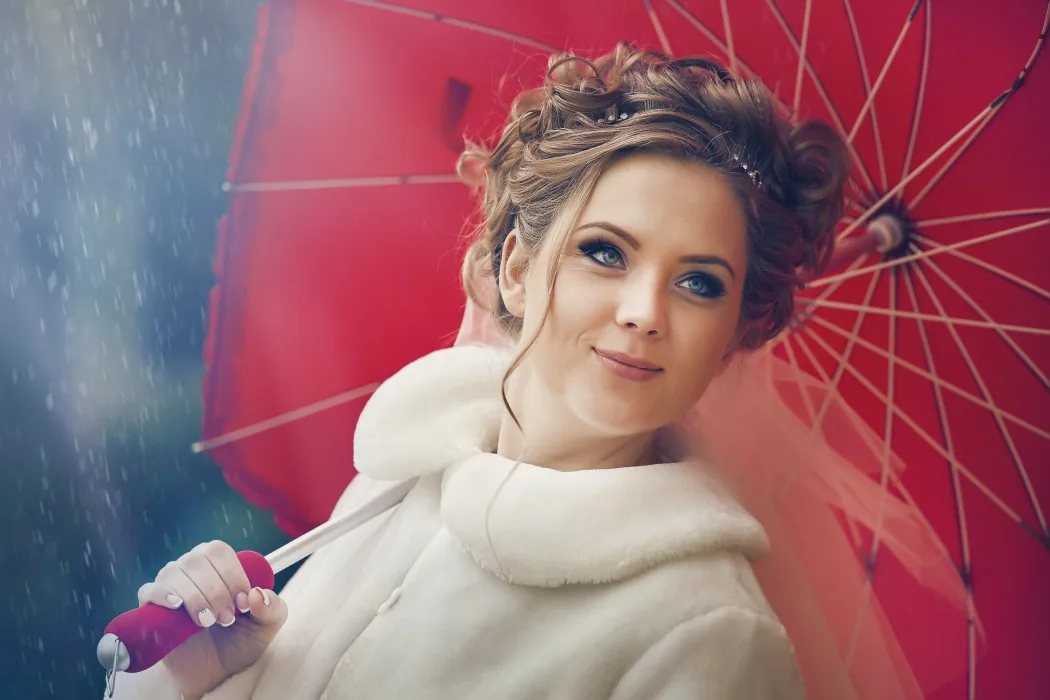
Spring weather is famously changeable, and a spring wedding needs a rain plan for hair as much as for the ceremony. The best rain-proof styles are the ones that are pinned, not loose: a low bun, a braided crown, or a half-up with a firm anchor will survive a dash from the car to the marquee, while loose curls will drop in damp air within minutes. If the forecast says rain, tell your stylist in the morning — she can add a humidity-resistant spray, pin the style a little firmer, and keep the front pieces pinned back until the rain passes.
The other half of the rain plan is the kit: a small umbrella that matches your dress, a travel hairspray, and three bobby pins in your bag. Pros: a spring shower makes the garden smell wonderful and the photographs look fresh and green. Cons: damp air will loosen curls and frizz flyaways, and a wet veil is heavy and hard to manage. Maintenance: if it rains, move the portraits under cover, keep the veil off until the rain stops, and give the roots a quick lift with your fingers and a spritz of dry shampoo when you are back inside. A rain plan is not pessimism — it is the reason a spring wedding still looks beautiful when the sky changes its mind.
Spring Hair Care Before the Big Day: A Six-Week Plan
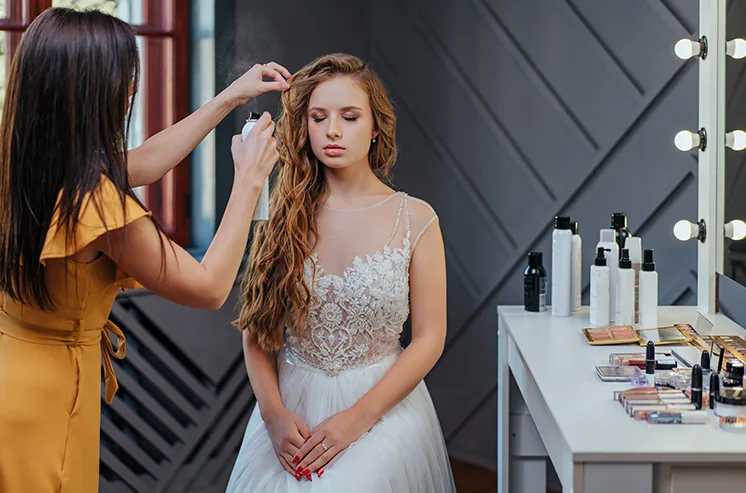
The prettiest spring wedding hair starts six weeks before the wedding, not on the morning of it. The plan is simple: a trim and a gloss treatment six weeks out, a deep-conditioning mask once a week, and a colour refresh — if you want one — four weeks out, so the tone has time to settle. In the last two weeks, stop trying new products: spring is not the time to test a new shampoo or a new styling cream, because a reaction or a bad result has no time to be fixed.
The week of the wedding is the quiet week. Wash your hair the night before, not the morning of — freshly washed hair is too slippery for an updo, while day-old hair has grip and holds a style. Pros: a six-week plan means your hair is at its healthiest and shiniest on the day, and your stylist is working with hair she knows. Cons: it takes a little planning, and a last-minute colour change is a gamble. Maintenance: keep a simple routine — a gentle shampoo, a weekly mask, and a trim — and write the plan down so you do not have to think about it in the busy final week.
From Ceremony to Reception: Transitioning Your Spring Wedding Hair
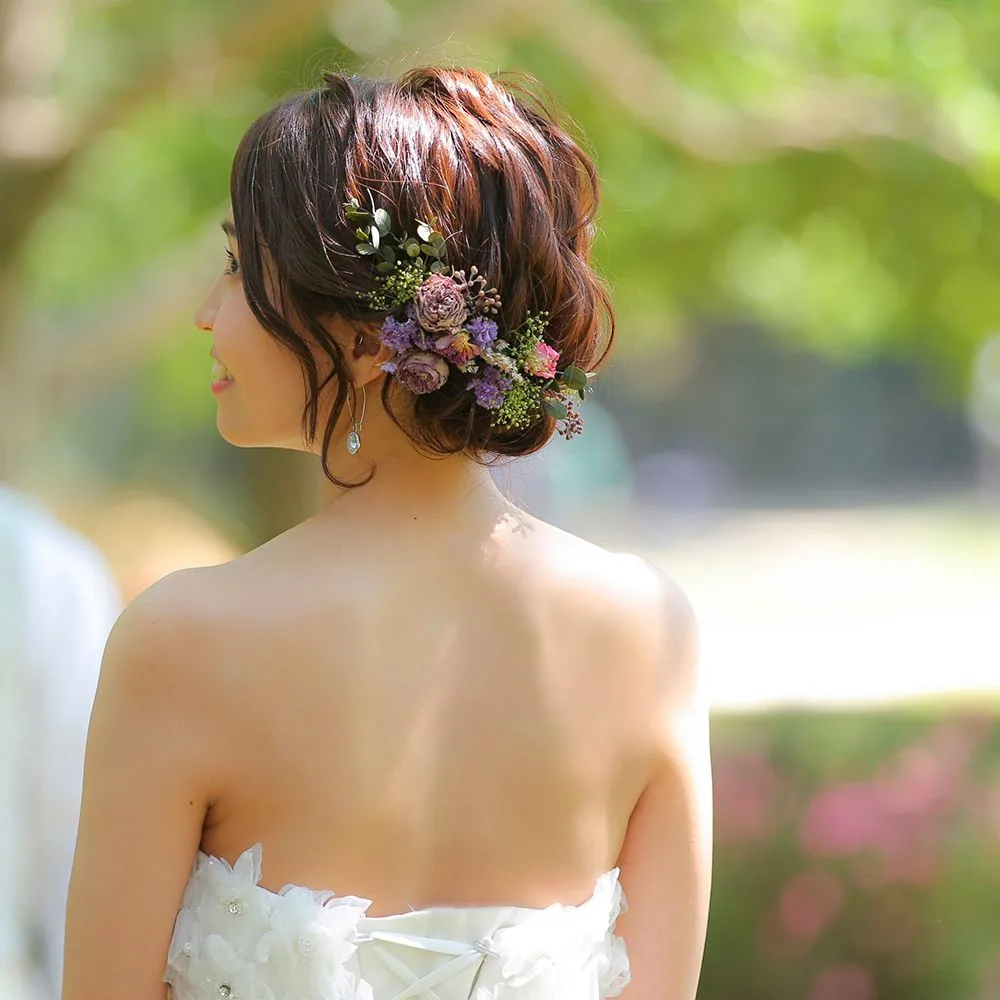
A spring wedding has two moods: the ceremony, which is formal and romantic, and the reception, which is joyful and a little bit wild. Your hair can make the journey with you, and the best way to do it is to start with a style that has a second act built in. A low bun that can be loosened into a soft knot, a half-up that can be taken down into waves, a veil that can be swapped for a flower crown — each of these is one style in the morning and a different one by the evening, with five minutes in the ladies’ room between them.
The trick is to plan the change in advance. Tell your stylist at the trial that you want a ceremony look and a reception look, and she will build the first one so it can become the second. Pros: two looks for the price of one appointment, and a reception style that is looser and more comfortable for dancing. Cons: a change takes a few minutes and a small kit — pins, a spray, and the accessory you are swapping to. Maintenance: pack the kit in a small pouch, make the change once, halfway through the evening, and then forget about your hair for the rest of the night. The reception is for dancing, not for checking the mirror.
1. Soft Low Chignon with Baby’s Breath
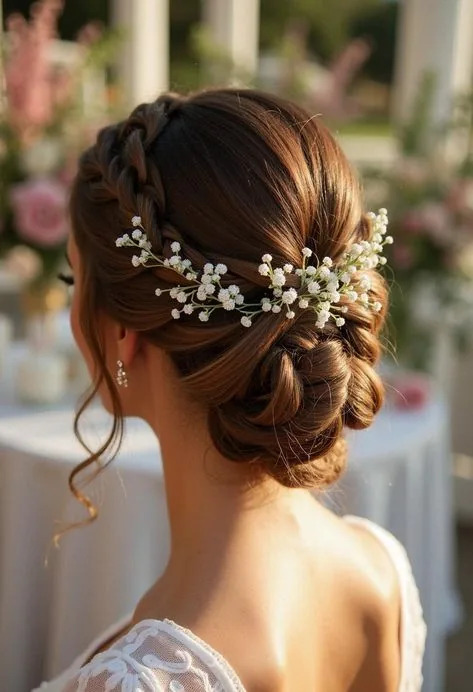
A soft low chignon with baby’s breath is the spring wedding hairstyle that never fails, because it is the most elegant thing a bride can do with her hair in a garden. The hair is swept low and coiled into a soft bun at the nape, and tiny sprigs of baby’s breath are tucked into the pins, so the style looks like a small garden of its own. It keeps the hair off the neck on a warm spring afternoon, it survives hugs and dancing, and it photographs beautifully against blossom and green lawns.
Pros: it suits every face shape, holds in a breeze, and looks lovely from behind during the vows. Cons: baby’s breath wilts in a warm room, so it should be tucked in just before the ceremony. Maintenance: carry a spare sprig in water at the reception, and ask your stylist to pin each stem twice so nothing slips during the first dance.
2. Romantic Loose Waves with Fresh Flowers
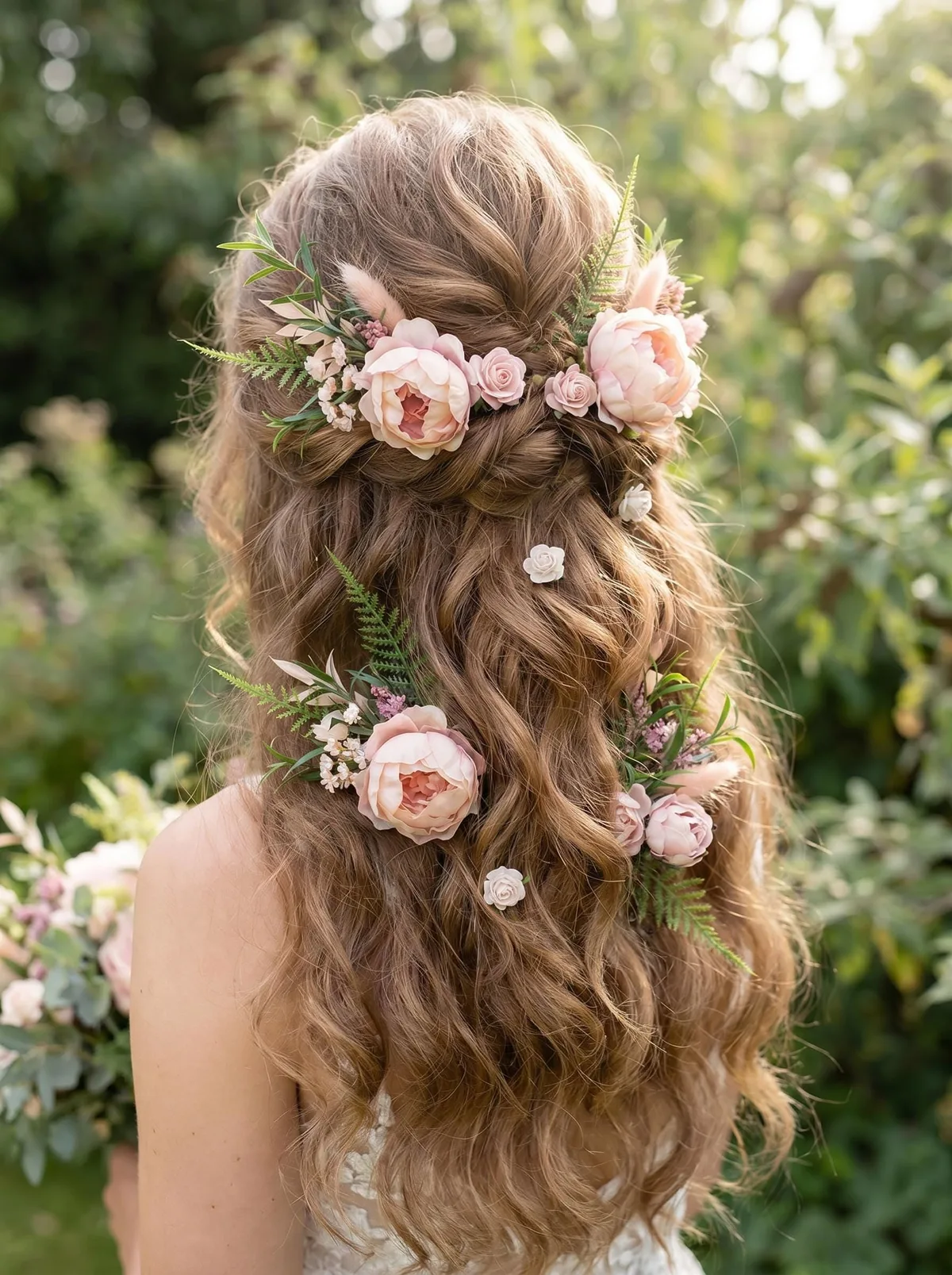
Romantic loose waves with fresh flowers are the dreamy spring wedding look — the kind of waves that belong in a garden, with small blooms tucked above one ear. The waves are large, loose, and brushed out, so they move when you move and catch the light in photographs. They are romantic without being girlish, polished without being stiff, and they suit a bride who wants to look like the best version of herself, with the flowers doing the talking.
Pros: they photograph beautifully among blossom, and the flowers add colour without any jewellery. Cons: a spring breeze can tangle loose waves, so the front sections should be pinned back during the ceremony. Maintenance: a light-hold spray keeps the shape, and a quick brush with your fingers at the reception brings the waves back to life.
3. The Garden Half-Up Twist
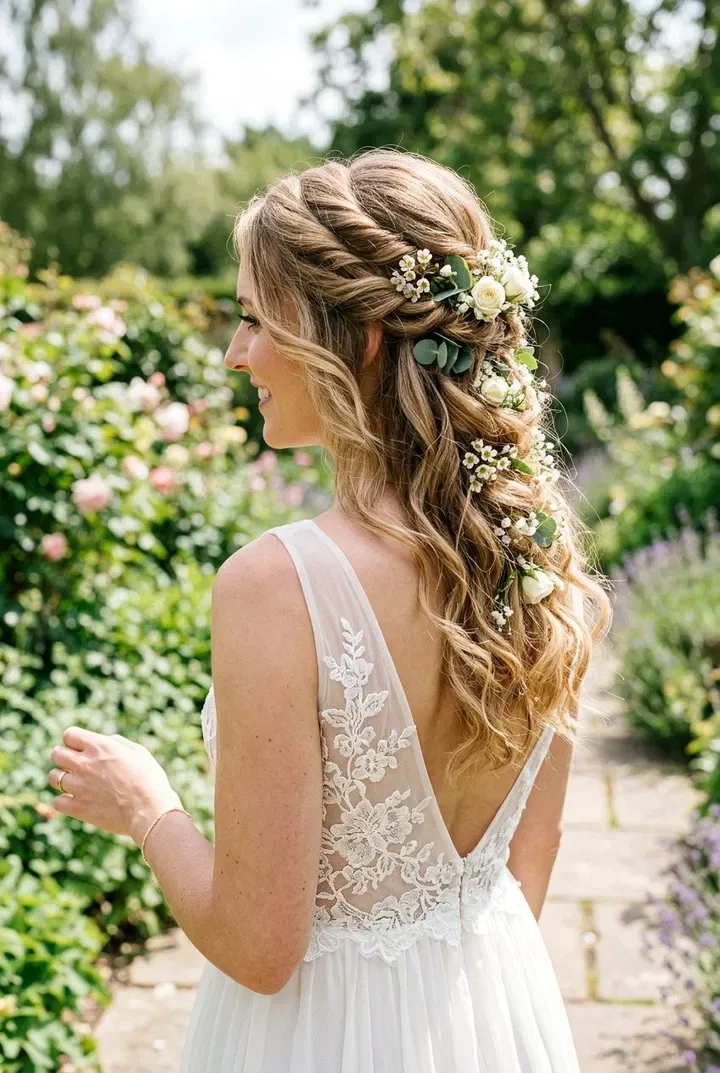
The garden half-up twist is the spring wedding style for a bride who loves her hair down but wants it out of her face for the vows. The top sections are twisted back and joined behind the head, the rest falls in soft waves, and the whole look is pretty, feminine, and completely at home on a lawn full of flowers. It is the style that looks best in the golden-hour photographs, when the light turns soft and everyone suddenly wants a picture.
Pros: it is quick, flattering, and keeps the hair clear of the face while you eat and talk. Cons: the twists can loosen in a breeze, so they need to be pinned twice for security. Maintenance: re-pin in ten seconds if a twist slips, and carry two spare pins in your bag for the reception.
4. Loose Braided Crown with Spring Blooms
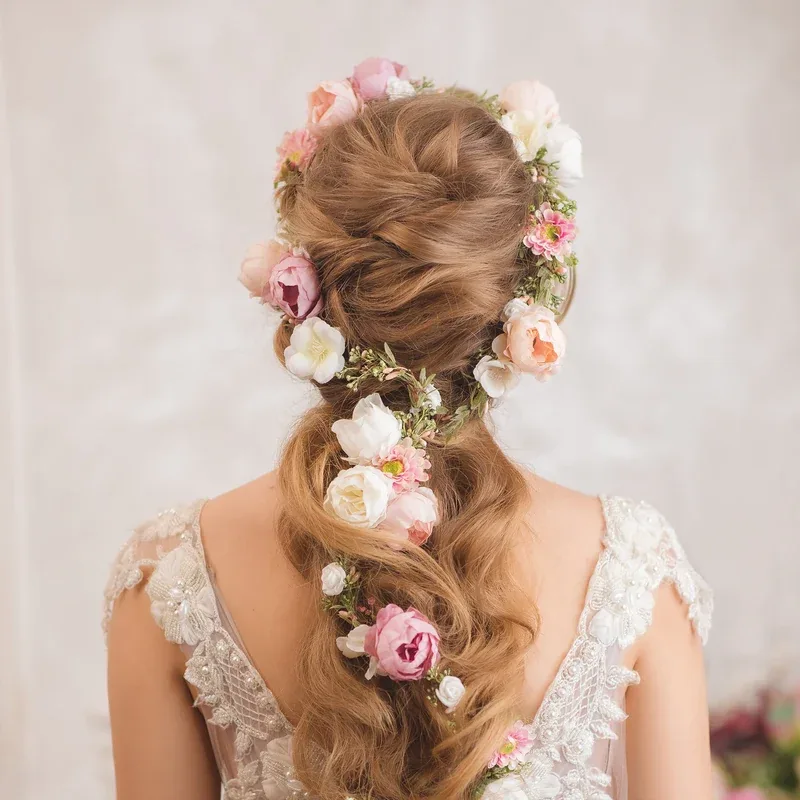
A loose braided crown with spring blooms is the romantic spring wedding style: a braid runs around the head like a crown, small flowers are tucked into it, and the whole look is soft, old-fashioned, and completely charming in a garden. It keeps every strand off the face and out of the way of hugs, it survives a breeze because it is pinned in at least four places, and it looks like something from a celebration — which is exactly what a spring wedding is.
Pros: it is the most secure loose style here, and the blooms make it unmistakably spring. Cons: it takes a skilled stylist to braid a crown that sits flat and even. Maintenance: carry two extra pins, because a braided crown is only as good as its pins, and tuck the flowers in last so they stay fresh.
5. Classic French Twist with a Floral Pin
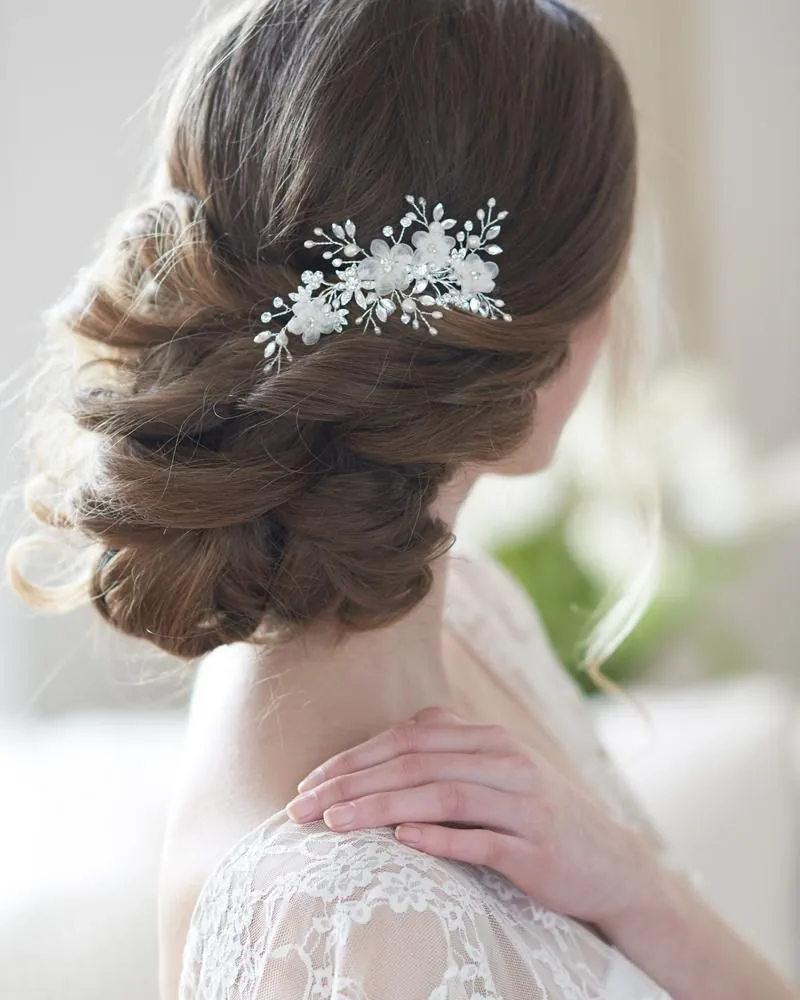
A classic French twist with a floral pin is the most polished spring wedding updo, and it is the one to choose when the ceremony is formal — a church, a ballroom, a room full of speeches. The hair is swept up and twisted into a neat vertical roll, pinned along its length, and a single floral pin finishes it, so the whole look is deliberate, refined, and touched with spring. It holds through the vows, dinner, and dancing, and it looks like you went to a salon — even though it takes ten minutes and a handful of pins.
Pros: it is elegant, secure, and shows off the neckline of the dress. Cons: a twist that is too tight looks severe, so the surface should stay smooth but the shape soft. Maintenance: a strong-hold spray keeps the surface smooth all evening, and one extra pin at the base stops the twist from loosening while you dance.
6. Soft Textured Low Bun

A soft textured low bun is the spring wedding updo for a bride who loves an updo but finds a plain bun a little too plain. The hair is loosely twisted and coiled, so the bun has texture and movement instead of a smooth, flat surface, and a few soft pieces are left out at the front to frame the face. It sits low at the nape, so it survives hugs and dancing, and it looks lovely from behind, which matters when you are standing at the altar.
Pros: it is relaxed, romantic, and only gets softer as the evening goes on. Cons: very fine hair can slip out of a soft bun, so it needs a texturising spray at the roots first. Maintenance: a few bobby pins in your hair colour will fix any loose piece in seconds, and a light mist of hairspray keeps the texture in place.
7. Flowing Hollywood Waves with a Flower Crown
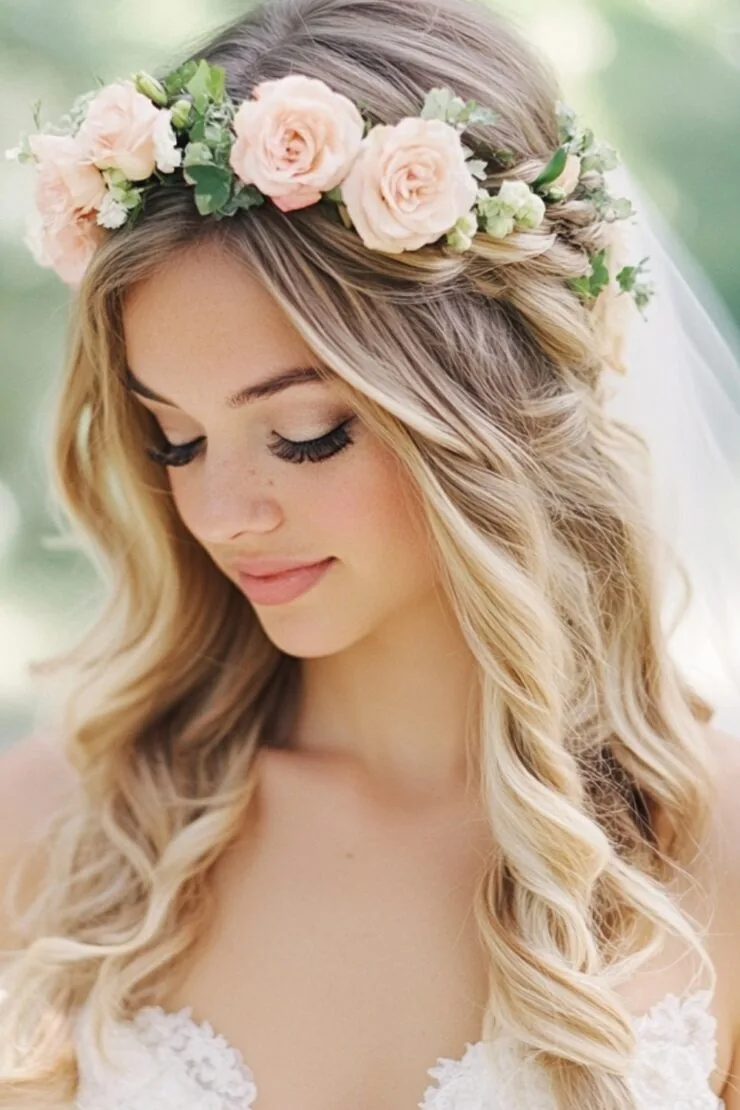
Flowing Hollywood waves with a flower crown are the glamorous spring wedding choice — deep, sculpted waves that belong on a screen siren, finished with a crown of fresh blooms. The waves are set in one direction and brushed out into a smooth, shining curtain, and the flower crown sits on top like a wreath, so the whole look is polished, dramatic, and completely unforgettable in photographs among the blossom.
Pros: it is the most glamorous style in this guide, and the crown makes it unmistakably spring. Cons: it takes about forty minutes with a stylist, and the crown can slide on very fine hair. Maintenance: a strong-hold spray keeps the waves in shape, and a couple of hidden pins will anchor the crown so it stays put through the ceremony and the first dance.
8. The Spring Low Ponytail with a Ribbon
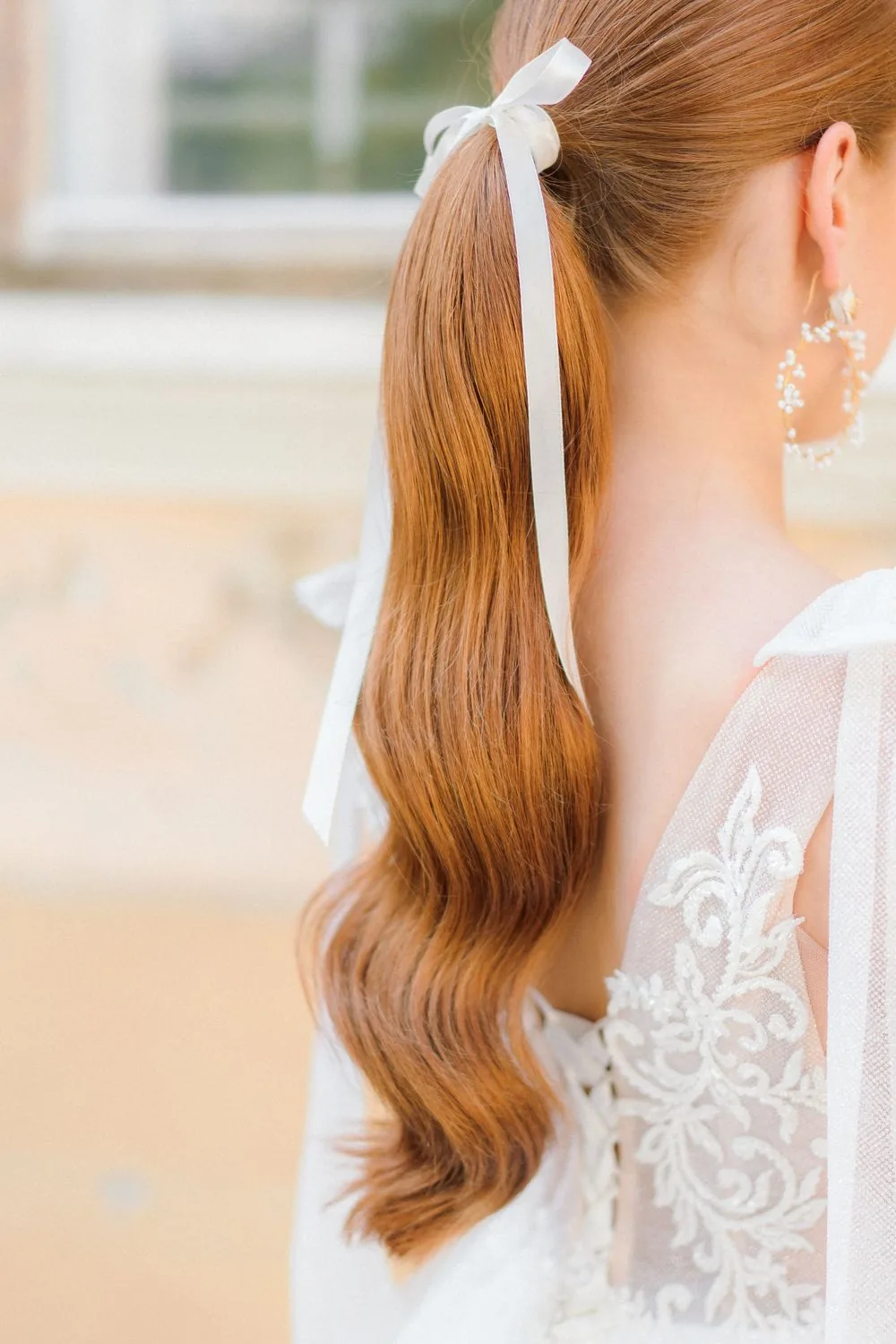
A spring low ponytail with a ribbon is the modern wedding style — clean, confident, and quietly romantic. The ponytail sits low and smooth, a pastel ribbon is tied around the base in a small bow, and the whole look reads as polished and deliberate rather than casual. It keeps the hair off the shoulders so a beautiful neckline can show, it holds through dinner and dancing, and it takes five minutes with no fuss at all.
Pros: it is neat, modern, and the ribbon adds a touch of spring colour for almost no effort. Cons: a ponytail that is too high or too tight looks daytime-sporty, so it must stay low and soft. Maintenance: pin the ribbon at the back so it cannot slip while you dance, and smooth the surface with a little serum before the photographs.
9. Braided Halo Updo with Pastel Ribbons
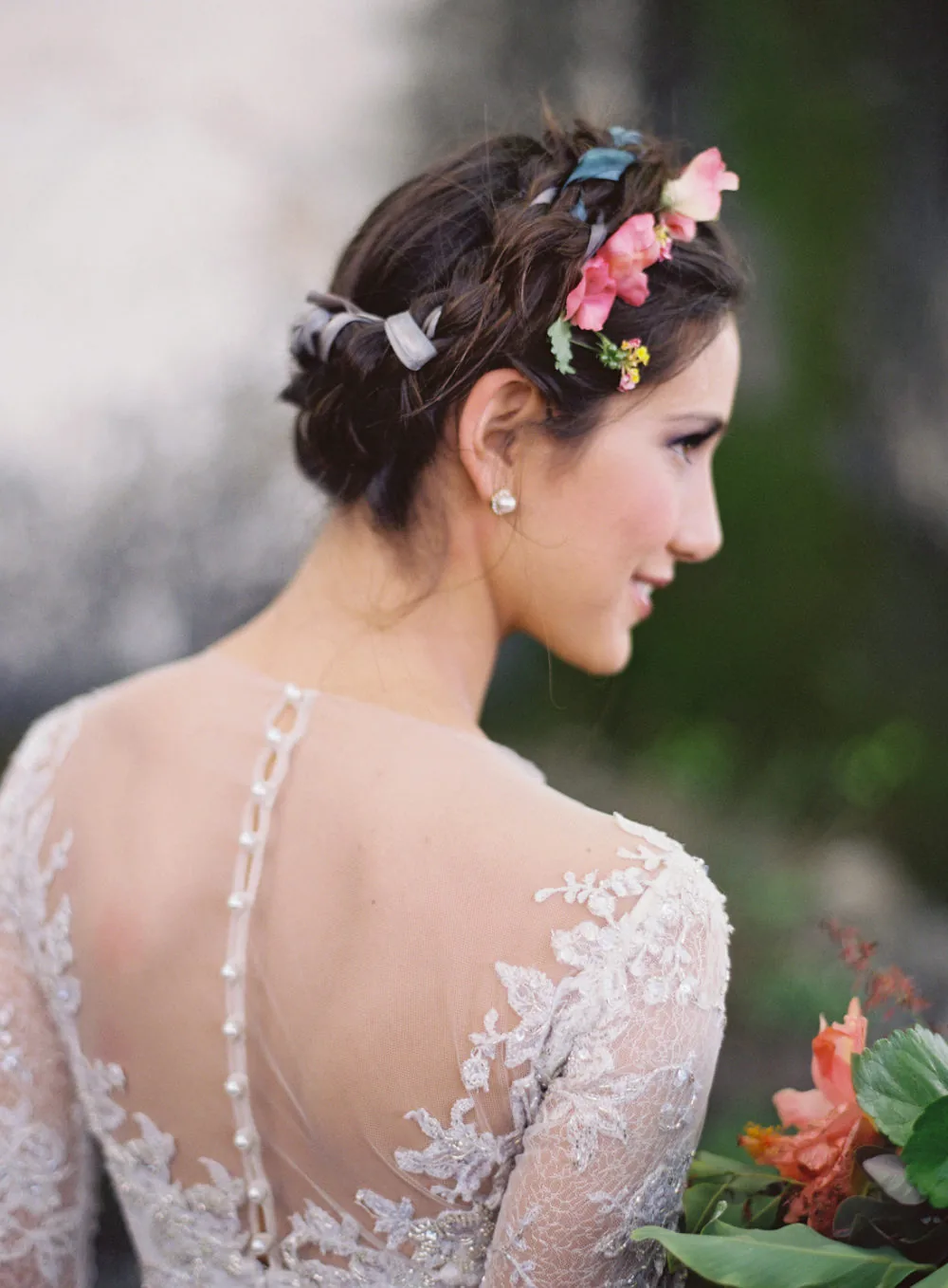
A braided halo updo with pastel ribbons is the whimsical spring wedding style: a braid is woven around the head like a halo, and thin pastel ribbons are threaded through it, so the style has colour and movement from every angle. It is more relaxed than a French twist and more interesting than a plain bun, and it holds beautifully through an evening of dancing, because every part of the braid is pinned in place.
Pros: it is secure, romantic, and the ribbons make it look like spring itself. Cons: it needs a stylist who is comfortable with braiding, and the ribbons must be tied firmly or they will loosen. Maintenance: ask your stylist to pin the braid at four points, and keep a spare ribbon in your bag in case one comes loose during the reception.
10. Messy Romantic Bun with Loose Tendrils
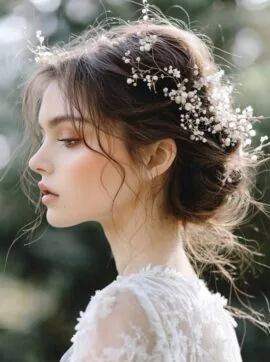
A messy romantic bun with loose tendrils is the relaxed spring wedding updo — the one for a bride who wants to look elegant without looking like she tried too hard. The bun sits low at the nape, the tendrils frame the face softly, and the looseness means the style only gets better as the evening goes on. It survives hugs, dancing, and a long dinner, and it looks just as good at midnight as it did at noon.
Pros: it is comfortable, flattering, and completely unfussy. Cons: pulling it too tight turns a relaxed bun into a severe one, so the softness must be kept. Maintenance: if a tendril falls, leave it — it is part of the look — and re-pin the bun itself only if you can feel it loosening.
11. Half-Up Curls with a Pearl Clip
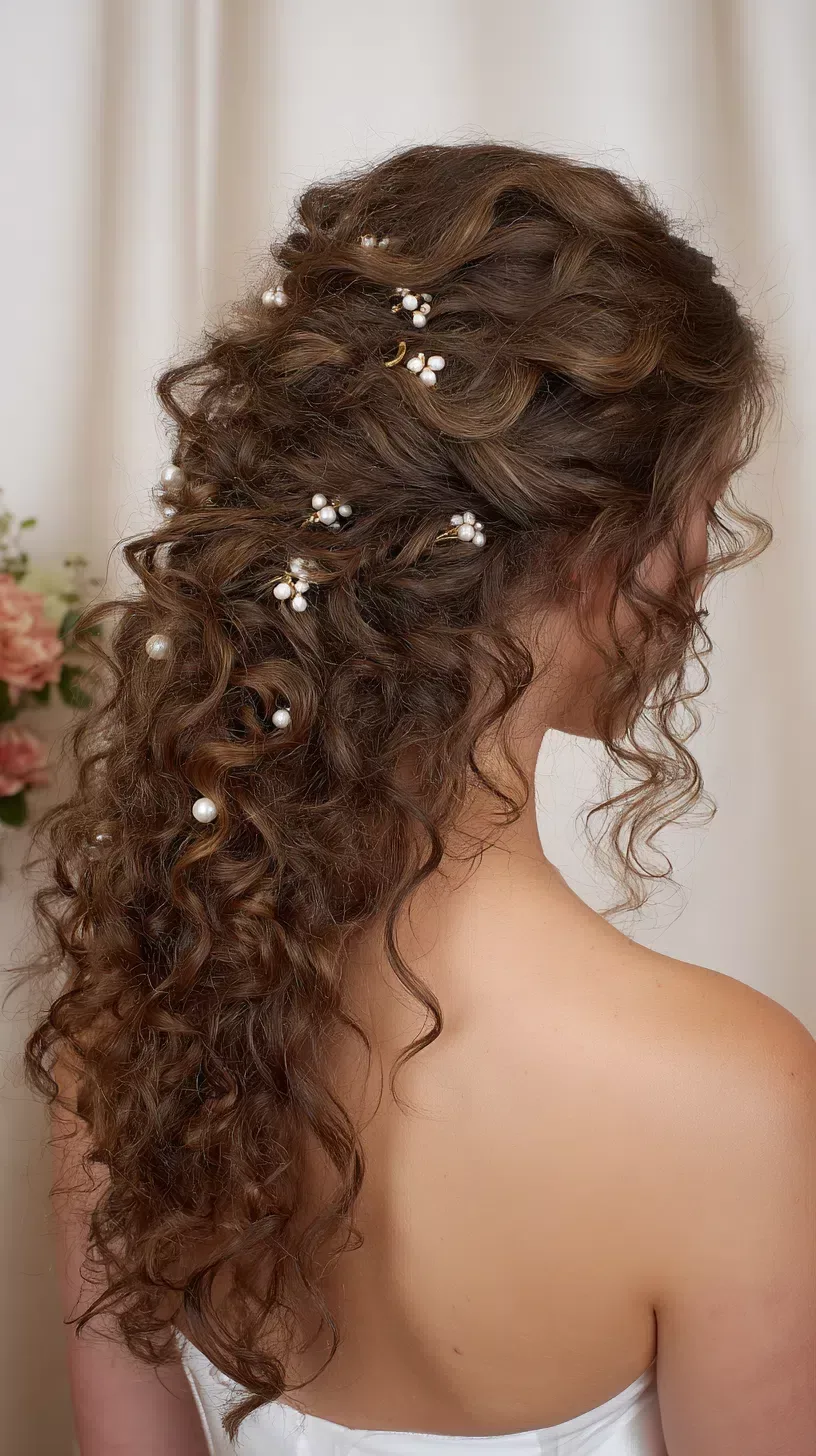
Half-up curls with a pearl clip are the fresh spring wedding style — the one that says celebration without saying too much. The top half is gathered back and pinned, the rest falls in soft curls, and a single pearl clip at the side catches the light in photographs and adds just enough polish to make the style feel special. It is the easiest way to dress up a style you already love, and it takes about two minutes to finish.
Pros: it is quick, pretty, and the pearl clip suits a spring palette perfectly. Cons: the pinned sections can loosen while dancing, so they need a second pin for security. Maintenance: choose a clip with teeth, not a flat barrette, so it grips properly, and carry a spare in your bag.
12. Elegant Side-Swept Waves
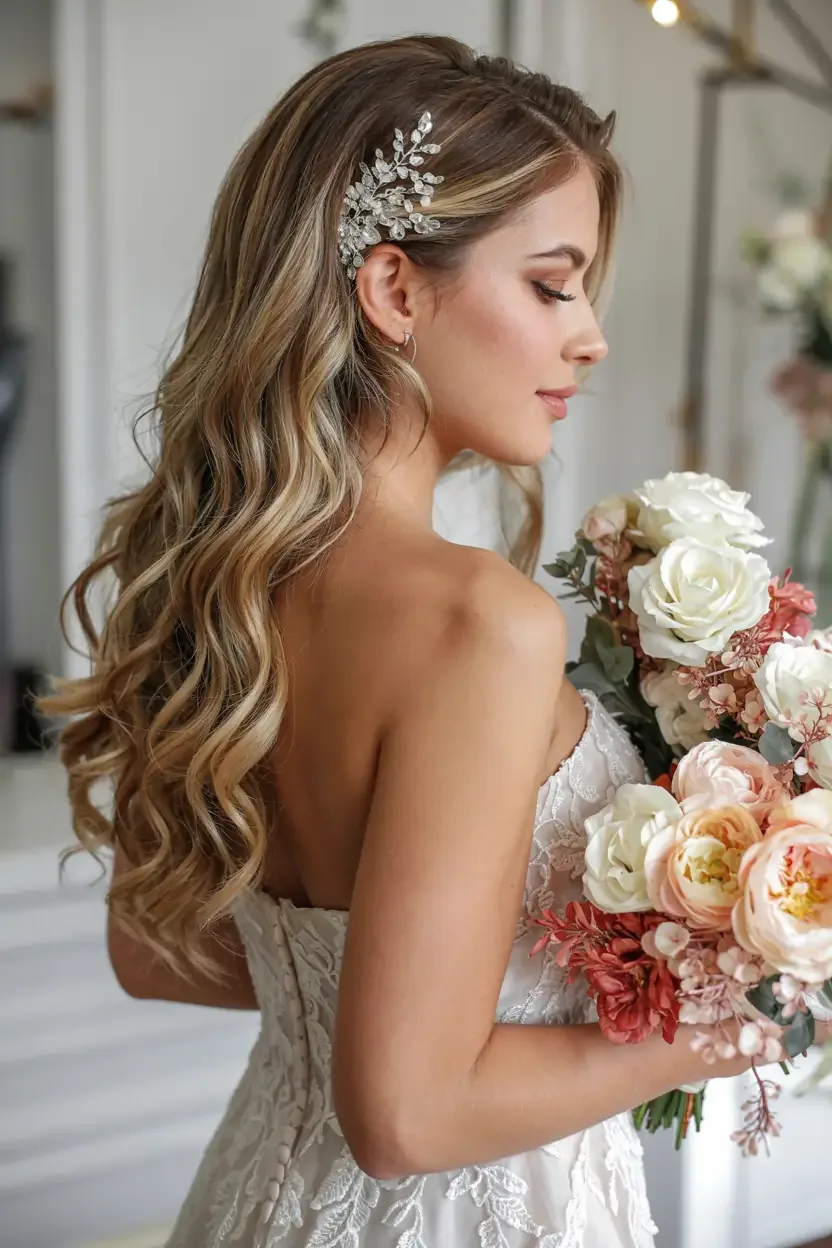
Elegant side-swept waves are the spring wedding style with a little more romance: the hair sweeps to one side, the waves fall over one shoulder, and the whole style has a soft, asymmetric shape that photographs beautifully from every angle. It is the style for a bride who loves her hair down but wants something a little less formal than a centred part — a little more movement, a little more charm.
Pros: it is romantic, flattering, and shows off a one-shoulder or strapless neckline. Cons: it needs a good pin job on the swept side to stay put while dancing. Maintenance: pin the swept side flat at the temple, and give the waves a quick shake with your fingers at the reception to bring back their shape.
13. The Dutch Braid Crown for Garden Ceremonies
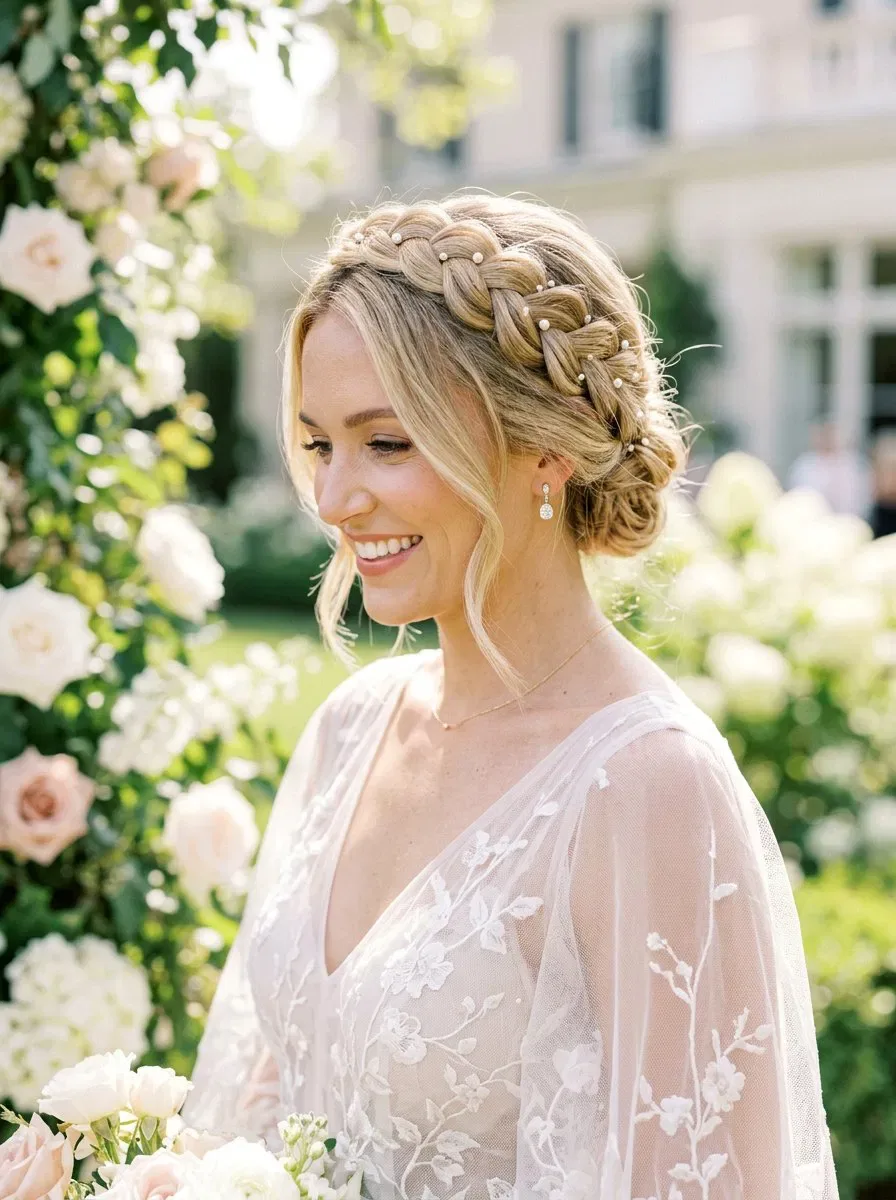
A Dutch braid crown is the garden ceremony braid: the braid sits on top of the hair like a crown, raised and visible, and it keeps every strand off the face and out of the way of the breeze. It is the style for an outdoor ceremony on a lawn, where the wind is the one guest nobody invites — a Dutch braid crown does not move, does not tangle, and looks beautiful from every angle, including from behind during the vows.
Pros: it is the most wind-proof style in this guide, and it looks stunning with a veil pinned beneath it. Cons: it takes a skilled braider, and a braid that is too tight can pull at the temples. Maintenance: ask your stylist to keep the braid soft at the front, and carry two spare pins in case a section loosens during the reception.
14. Voluminous Blowout with Soft Spring Layers
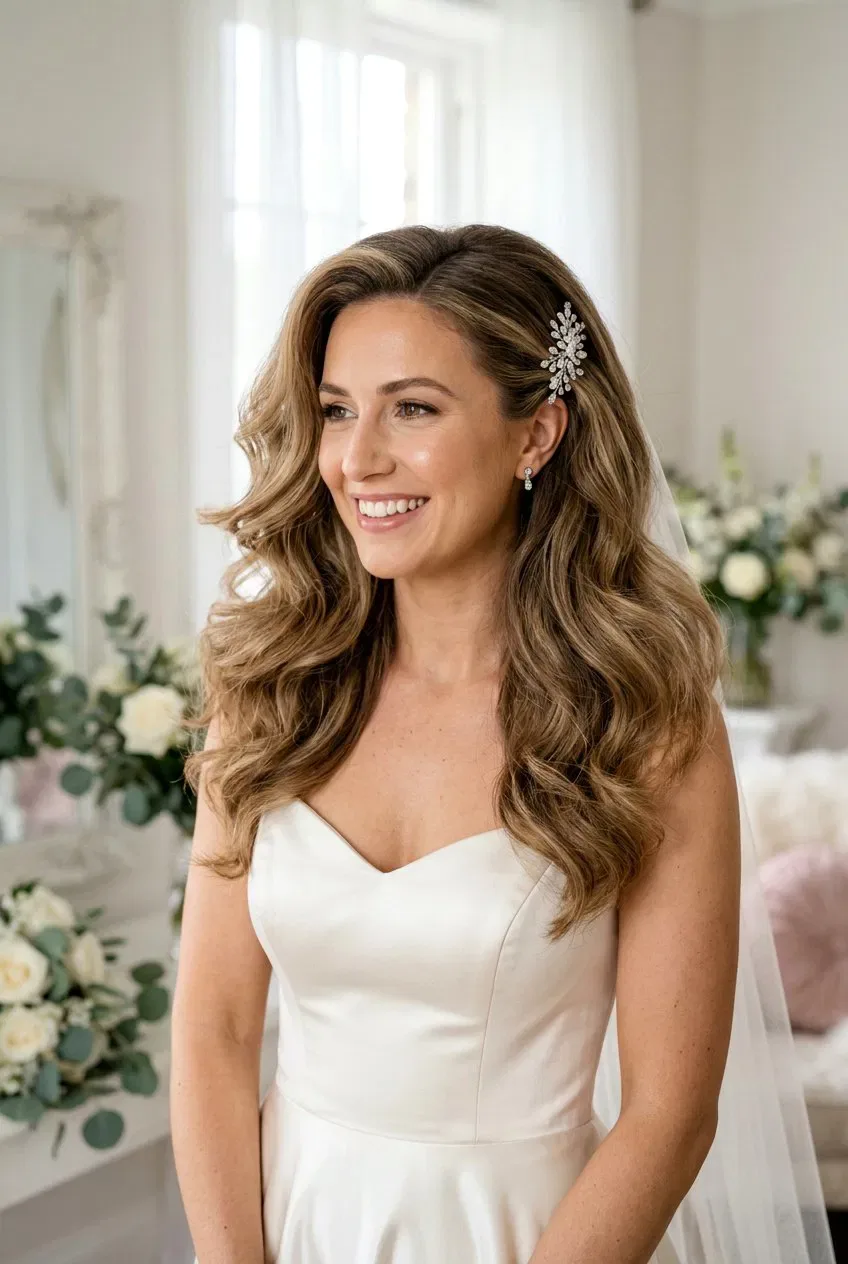
A voluminous blowout with soft spring layers is the wedding style for a bride who loves her hair down and wants it to look its absolute best. The layers are blow-dried with a round brush so they curve and move, the roots have lift, and the ends are soft instead of sharp. It is polished without being stiff, and it photographs beautifully — the volume at the crown lifts the face, and the movement in the layers catches the light in every photograph.
Pros: it looks beautiful and lasts, and the layers frame the face in the garden light. Cons: a warm, crowded room can flatten the roots, so a spritz of dry shampoo halfway through the evening brings the volume back. Maintenance: a light-hold spray is enough — too much spray will make the layers stiff and heavy.
15. Low Chignon with a Veil
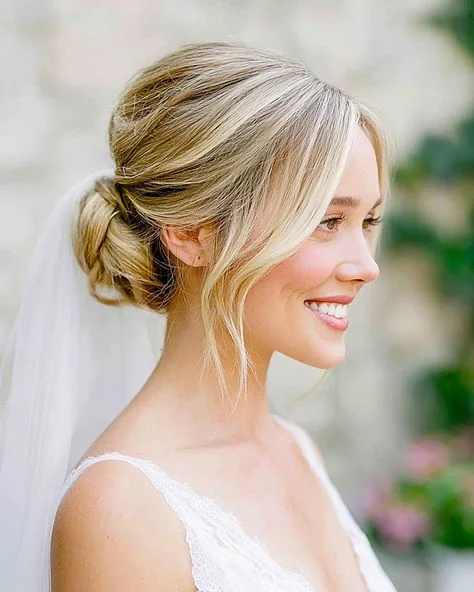
A low chignon with a veil is the classic spring wedding look: the chignon sits low at the nape, the veil comb slides into the bun, and the tulle falls softly over the shoulders and catches the breeze. It is the style for a bride who wants the traditional moment — the veil lifting, the photographs with the tulle floating — and it is the most secure way to wear a veil, because the bun gives the comb something firm to hold on to.
Pros: it is timeless, the veil is easy to remove for the reception, and the chignon holds through the whole day. Cons: a veil can tangle in a breeze, so it should be lifted and held during the walk down the aisle if the wind is strong. Maintenance: ask your stylist to pin the veil comb at two points, and remove the veil before the first dance so it cannot catch on anything.
16. Fishtail Braid over One Shoulder
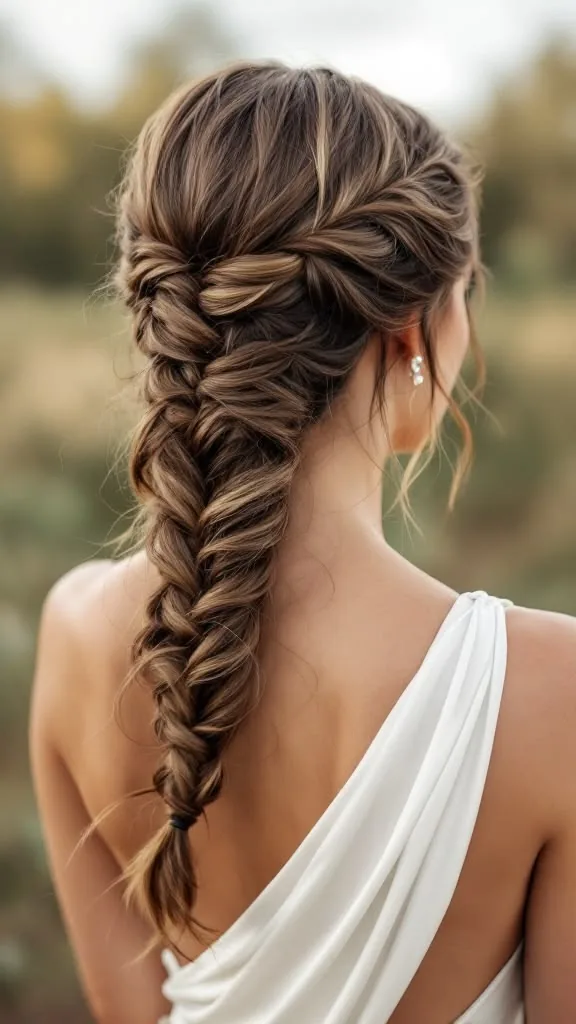
A fishtail braid over one shoulder is the soft spring wedding braid: it falls over one shoulder, out of the way of hugs and dinner, and it looks softer and more romantic than a braid worn straight down the back. The looseness is the point — a few pieces pulled out at the front frame the face, the braid moves when you move, and by the evening it has relaxed into exactly the soft, lived-in look that suits a garden celebration.
Pros: it is quick, charming, and keeps the hair completely out of the way. Cons: a very loose fishtail can slip, so the end must be secured well. Maintenance: re-tie the end and pull out a few more pieces if it tightens up, and pin the front pieces back if the wind picks up.
17. Romantic Waterfall Braid
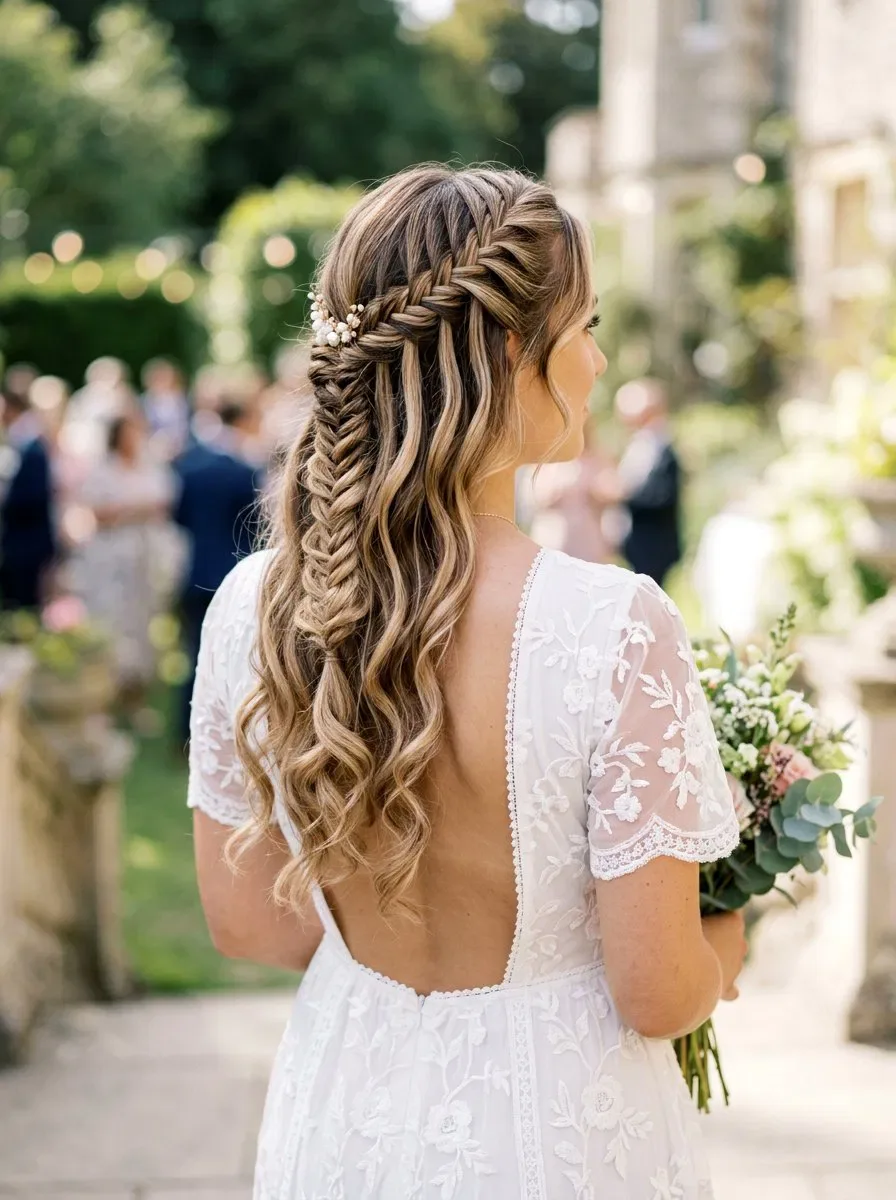
A romantic waterfall braid is the dreamy spring wedding braid: the braid runs across the back of the head, and strands of hair fall through it like a waterfall, so the style has movement and softness from every angle. It is the braid for a bride who wants her hair down but wants a braid to be part of the look — and it is made for spring, because the falling strands catch the light and the breeze in a way no other braid does.
Pros: it is pretty, romantic, and photographs beautifully among blossom. Cons: it is a delicate style, and the falling strands can tangle in a strong breeze. Maintenance: a light-hold spray on the falling strands keeps them smooth, and a few hidden pins will hold the braid in place through the ceremony.
18. Sleek Low Bun with a Fresh Flower Tucked In
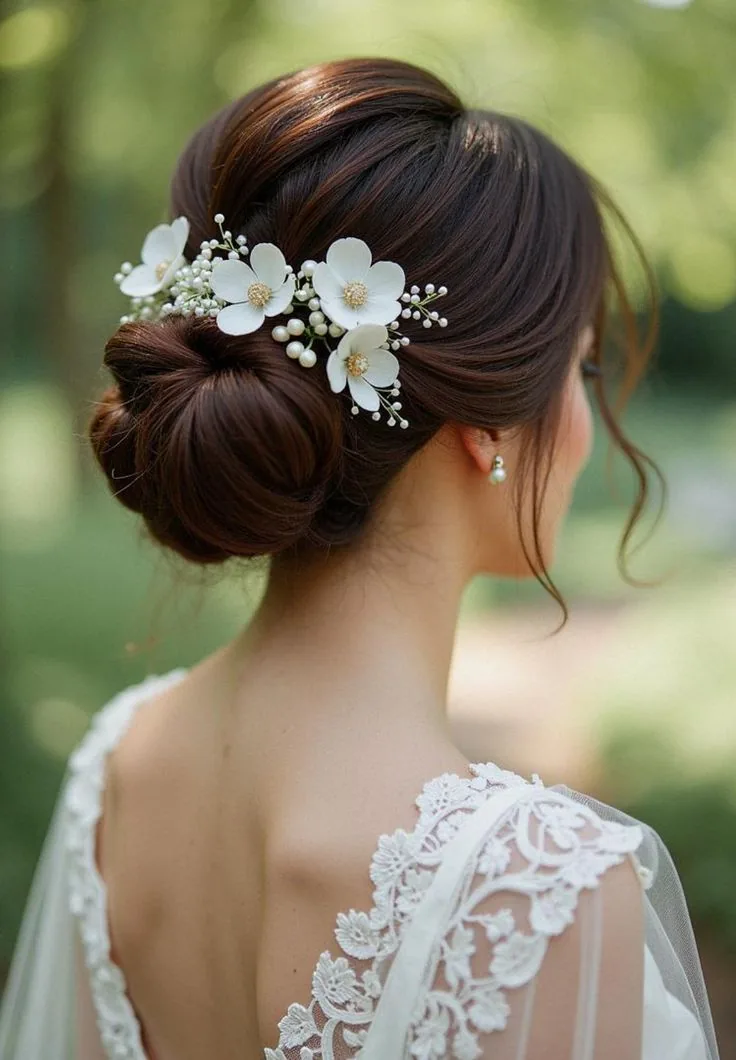
A sleek low bun with a fresh flower tucked in is the minimalist spring wedding style — clean, sharp, and completely confident, with one small bloom to prove it is spring. The bun sits low at the nape, the surface is smooth and shining, and a single flower — a spray rose, a ranunculus, a sprig of lavender — is tucked in at the side. It is the style for a bride who does not need curls or accessories to make an impression.
Pros: it is clean, secure, and the single flower makes a bigger statement than a whole crown. Cons: a sleek bun shows every flyaway, so it needs a good smoothing serum and a strong-hold spray. Maintenance: tuck the flower in just before the ceremony so it stays fresh, and carry a spare bloom in water at the reception.
19. Boho Loose Waves with a Flower Crown
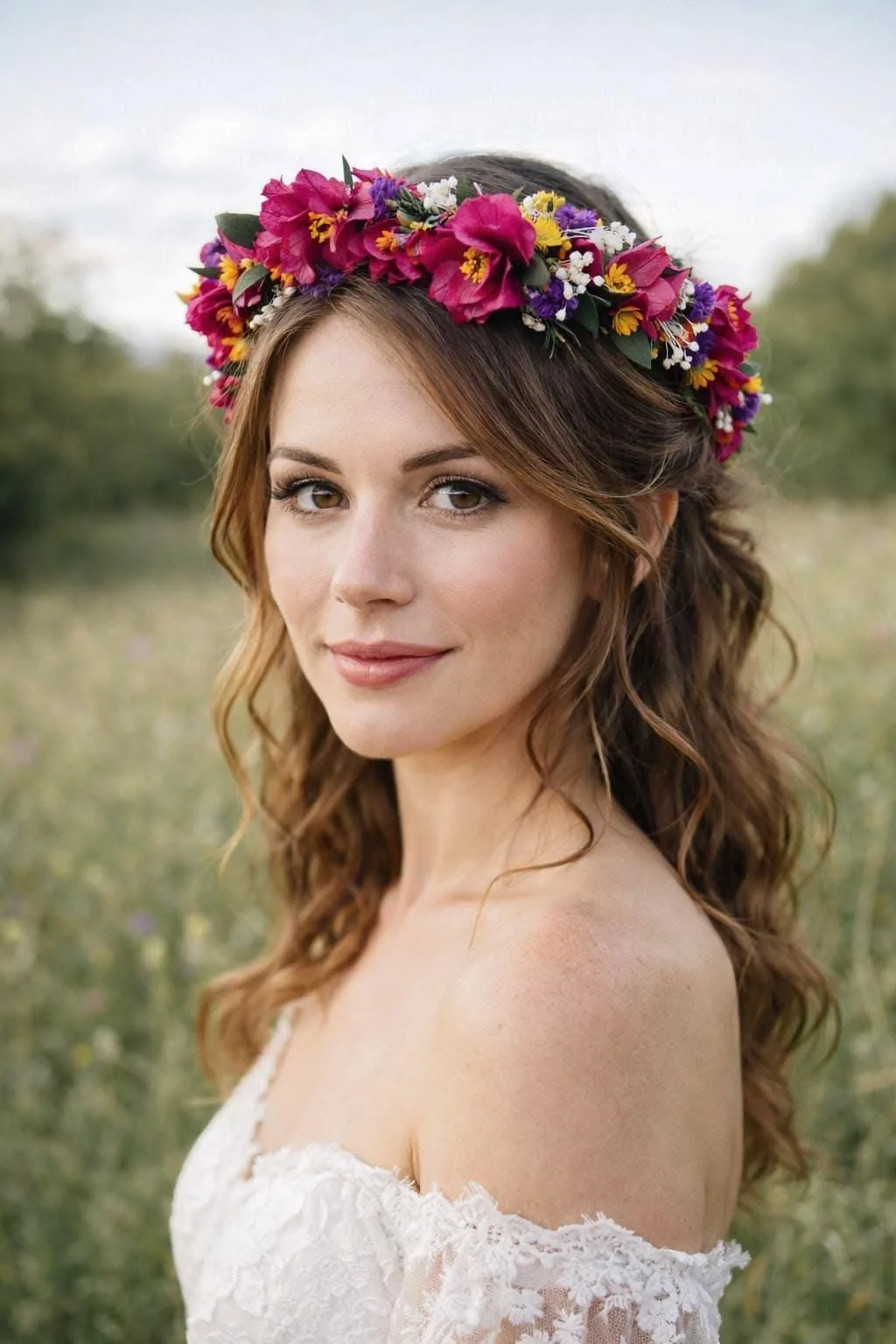
Boho loose waves with a flower crown are the free-spirited spring wedding look — the one for a garden ceremony, a barn, or a wedding under the trees. The waves are loose and undone, the crown is made of fresh blooms and greenery, and the whole look is relaxed, romantic, and completely at home outdoors. It is the style for a bride who wants her wedding to feel like a celebration in a meadow, not a ceremony in a ballroom.
Pros: it is effortless, romantic, and made for outdoor spring weddings. Cons: the crown can slide on very fine hair, and loose waves will tangle in a strong breeze. Maintenance: pin the crown at two hidden points, and brush the waves out with your fingers at the reception to keep them soft and loose.
20. Classic Ballerina Bun, Softened for Spring
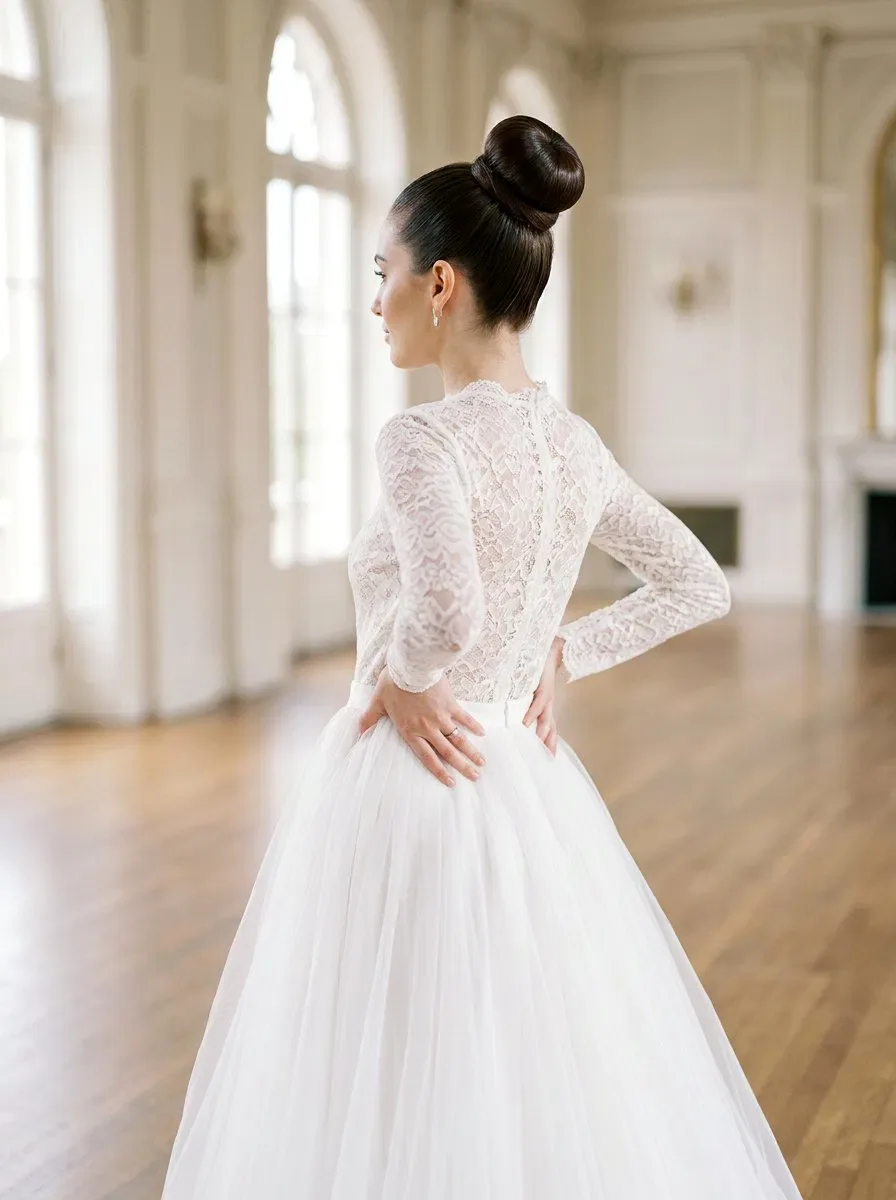
A classic ballerina bun, softened for spring, is the elegant wedding updo with a gentle twist: the bun sits high and neat, but the front is soft — a few pieces pulled out at the temples, a gentle curve at the hairline — so the style reads as romantic rather than severe. It lifts the whole face, shows off the shoulders and the neckline of the dress, and photographs beautifully from the side, where the height reads so well.
Pros: it is striking, secure, and keeps the hair completely out of the way. Cons: it does not survive leaning back or lying down, and it can feel tight after several hours. Maintenance: ask your stylist to pin, not pull, the bun, and keep it soft at the front — if it hurts, it is too tight.
21. Twisted Half-Up with Spring Blossoms
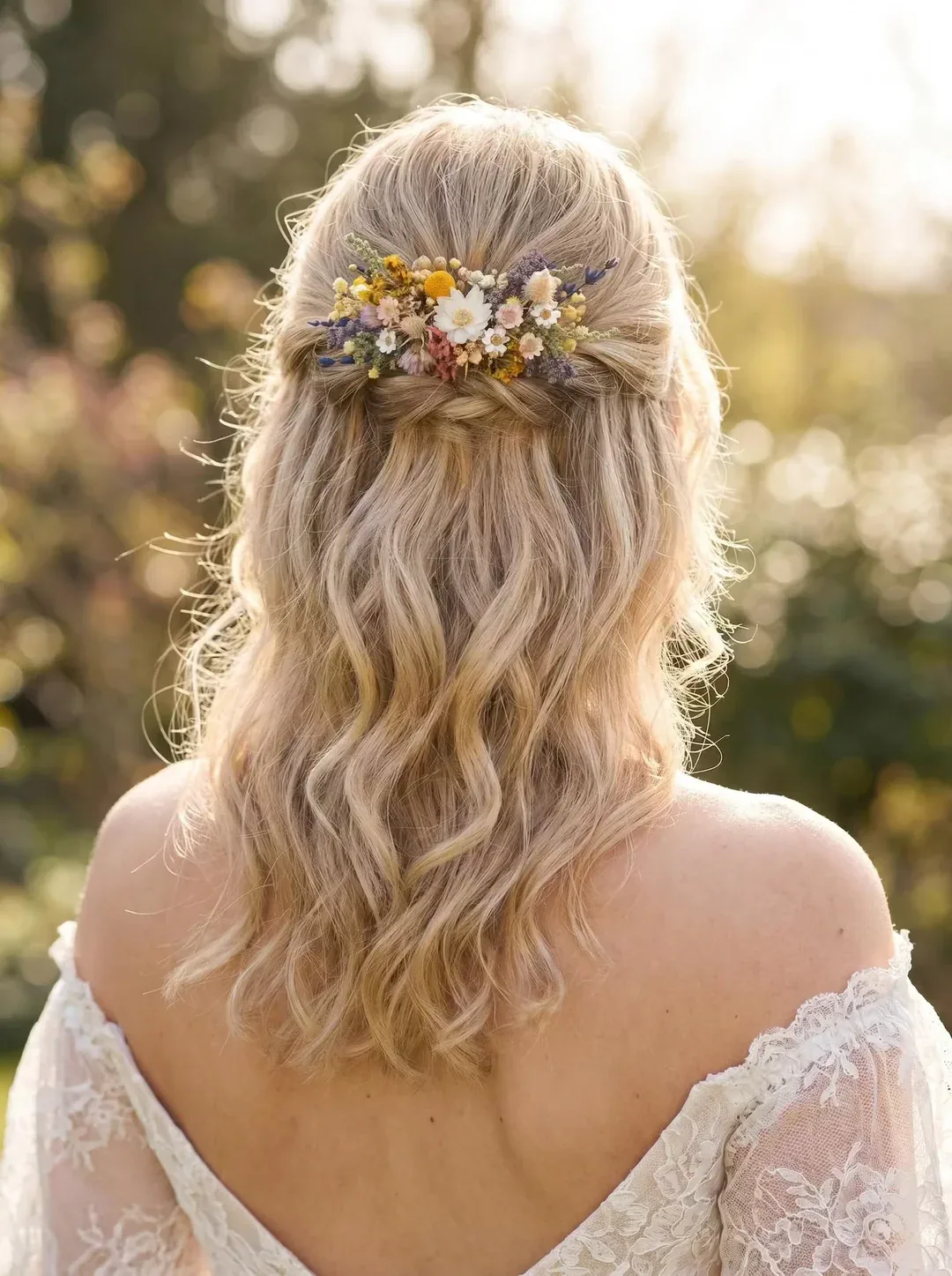
A twisted half-up with spring blossoms is the spring wedding half-up with a little more detail: the top sections are twisted back and joined behind the head, small blossoms are tucked into the twists, and the rest falls in soft waves. It frames the face, keeps the hair out of your eyes while you eat and talk, and looks beautiful in the photographs — which is when everyone at a wedding takes their pictures.
Pros: it is quick, flattering, and the blossoms make it unmistakably spring. Cons: the twists can loosen while dancing, so they need to be pinned twice. Maintenance: tuck the blossoms in after the twists are pinned, and carry two spare pins for a quick fix at the reception.
22. Soft Curled Bob for Spring Weddings
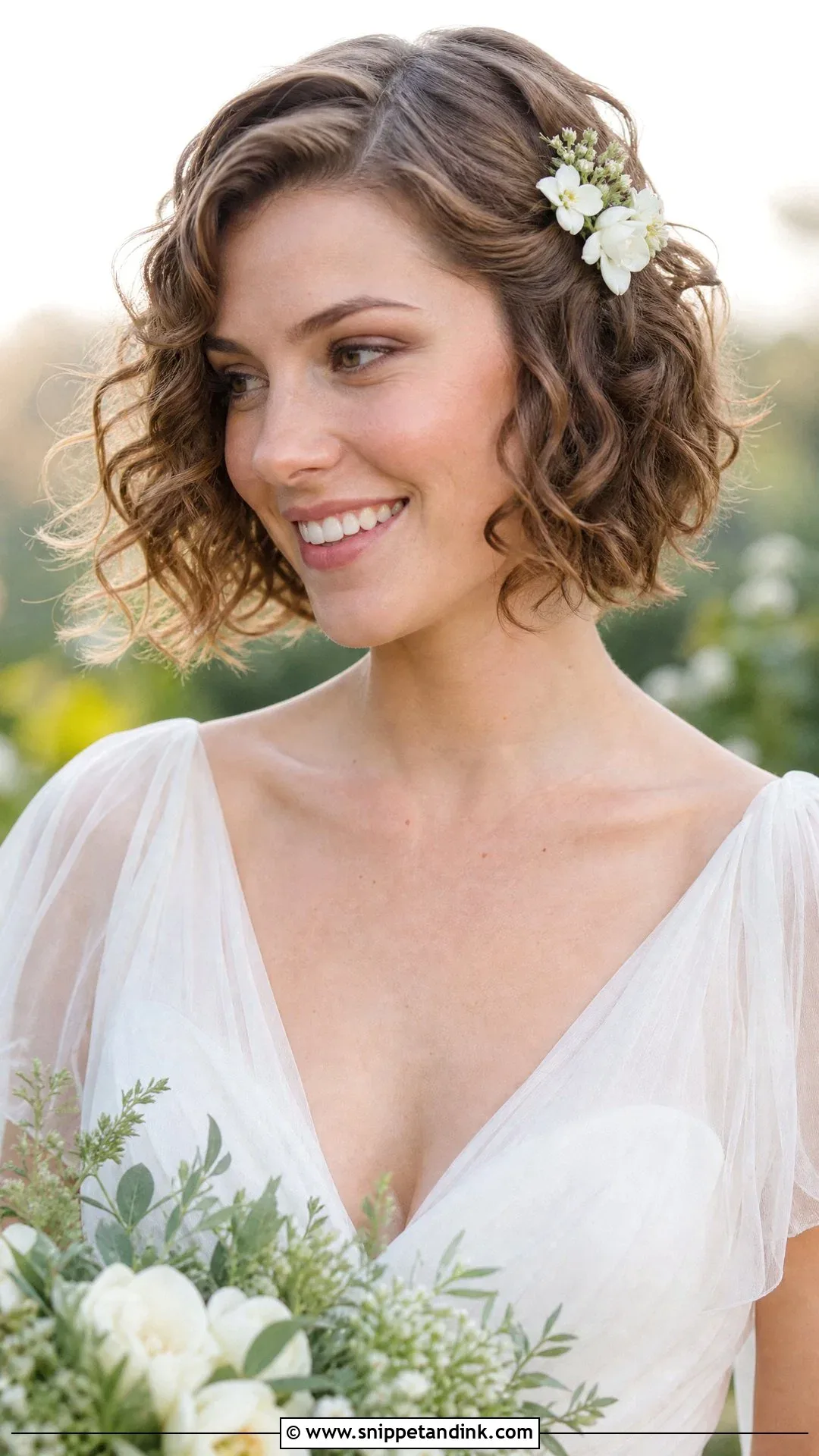
A soft curled bob is the short-hair spring wedding style that does everything: it is chic, it is cool, and it is the one style that a spring breeze, dancing, and a hundred hugs cannot do anything to. The curls are loose and brushed out, the length keeps the hair out of the way, and a little shine serum makes it look polished and deliberate. It is the haircut for a bride — or a guest — who knows that short hair is not a compromise, it is a choice.
Pros: it is effortless, cool, and completely unbothered by a long evening. Cons: it needs a regular trim to keep the shape, and very fine hair may need a texturising spray for grip. Maintenance: a shine serum and one decorative clip are all you need to make a short style feel festive.
23. The Braided Low Ponytail

A braided low ponytail is the polished spring wedding style — the one for a bride who wants a ponytail that is both elegant and interesting. A braid runs down into a low ponytail at the nape, which means the style is anchored twice: by the braid and by the ponytail. It survives hugs and dancing, it looks elegant in the photographs, and the braid’s texture catches the light in a way a plain ponytail never does.
Pros: it is polished, secure, and keeps the hair off the shoulders on a warm day. Cons: it takes ten minutes instead of two, and a braid that starts too high will pull at the temples. Maintenance: ask your stylist to start the braid low, so the ponytail sits at the nape, and smooth the surface with a little serum before the photographs.
24. Elegant Updo with a Pastel Floral Comb
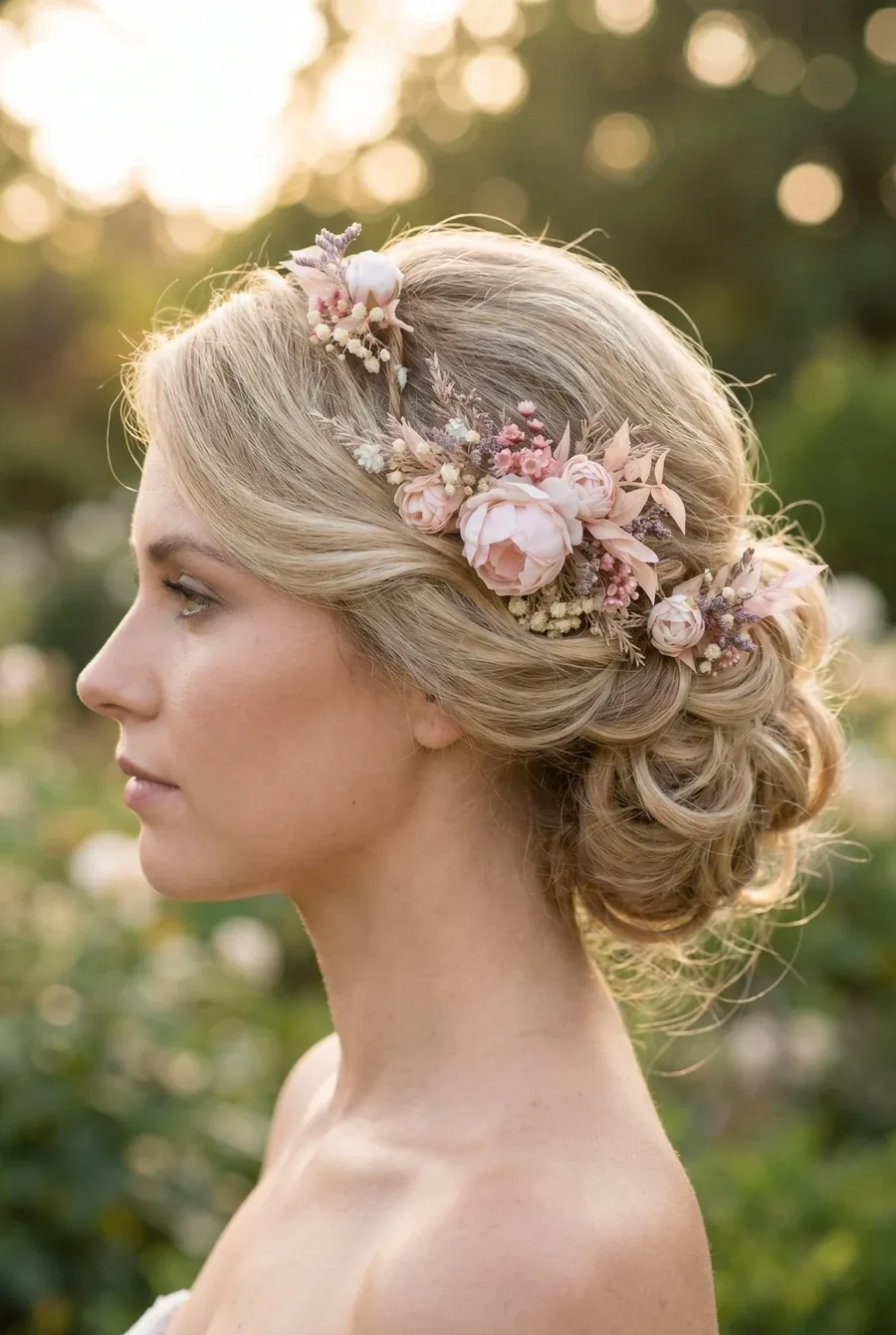
An elegant updo with a pastel floral comb is the spring wedding style that proves one small detail can change everything. The updo itself is simple — a low bun, a twist, a pinned-up half-up — and the comb is the star: pastel blooms on a gold or pearl comb, placed at the side of the bun or above the ear. It is the easiest way to make an everyday updo feel like a spring celebration.
Pros: it is quick, pretty, and the comb stays in place far better than loose flowers. Cons: a comb with too many blooms can look heavy, so one small comb is enough. Maintenance: slide the comb into the updo after the style is pinned, and check that its teeth are gripping the hair, not just sitting on the surface.
25. Loose Romantic Curls with a Centre Part
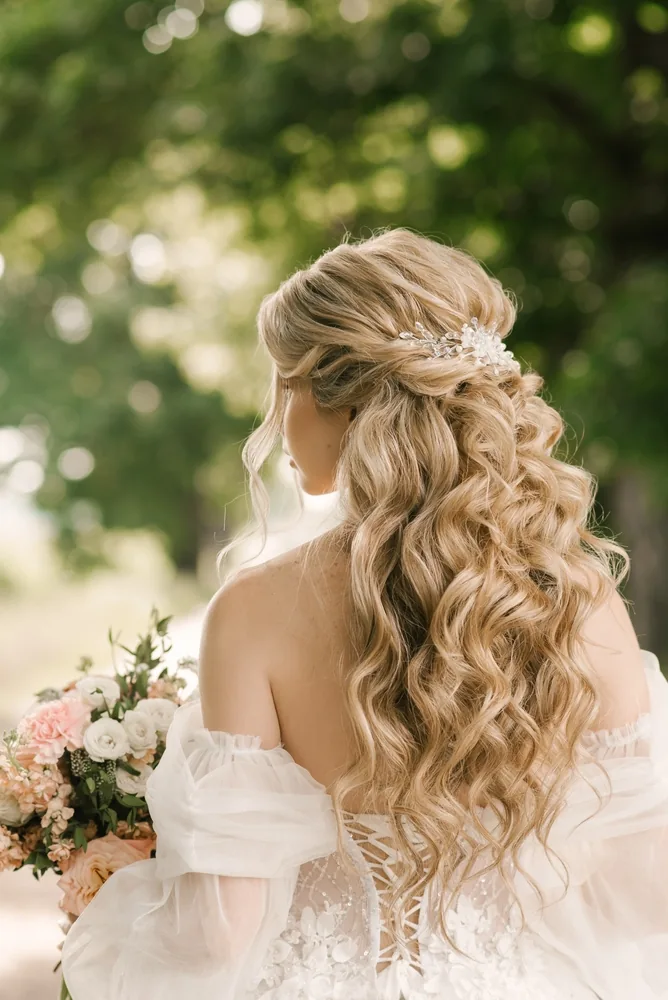
Loose romantic curls with a centre part are the sleek spring wedding look — simple, confident, and completely modern. The hair falls in soft curls on both sides of a clean centre part, and the whole style is about shine and health, not about fuss. It is the style for a bride whose hair is in beautiful condition and wants to show it off, and it needs nothing more than a good blow-dry, a curling iron, and a shine serum to look extraordinary.
Pros: it is simple, sleek, and all about the shine. Cons: a centre part on hair that is too flat at the roots can look severe, so a little volume at the crown is needed. Maintenance: a shine serum on the ends keeps the gloss all evening, and a quick shake with your fingers at the reception brings the curls back to life.
26. The Milkmaid Braid with Wildflowers
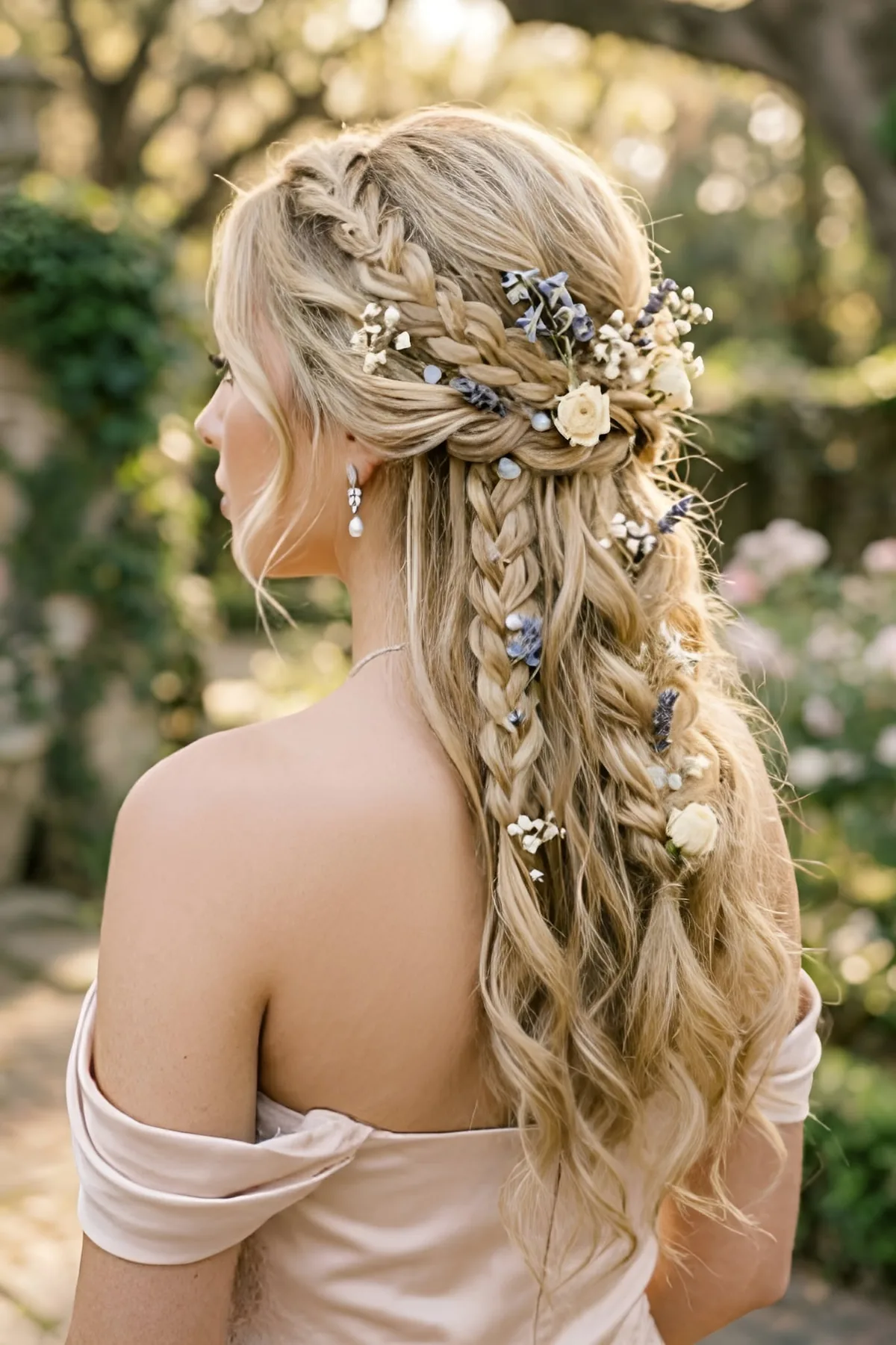
A milkmaid braid with wildflowers is the charming spring wedding style: two braids are crossed over the crown and pinned flat, and small wildflowers are tucked into them, so the hair looks like a meadow and the photographs look like a dream. It keeps every strand off the face and out of the way of hugs, it survives dancing because it is pinned in at least four places, and it is the braid for a wedding on the grass or in a garden.
Pros: it is secure, romantic, and the wildflowers make it feel fresh and natural. Cons: it needs enough length to cross the braids over the crown, and it takes a patient stylist to pin it flat. Maintenance: tuck the flowers in last, and carry two extra pins, because a milkmaid braid is only as good as its pins.
27. Wavy Lob with Fresh Floral Pins
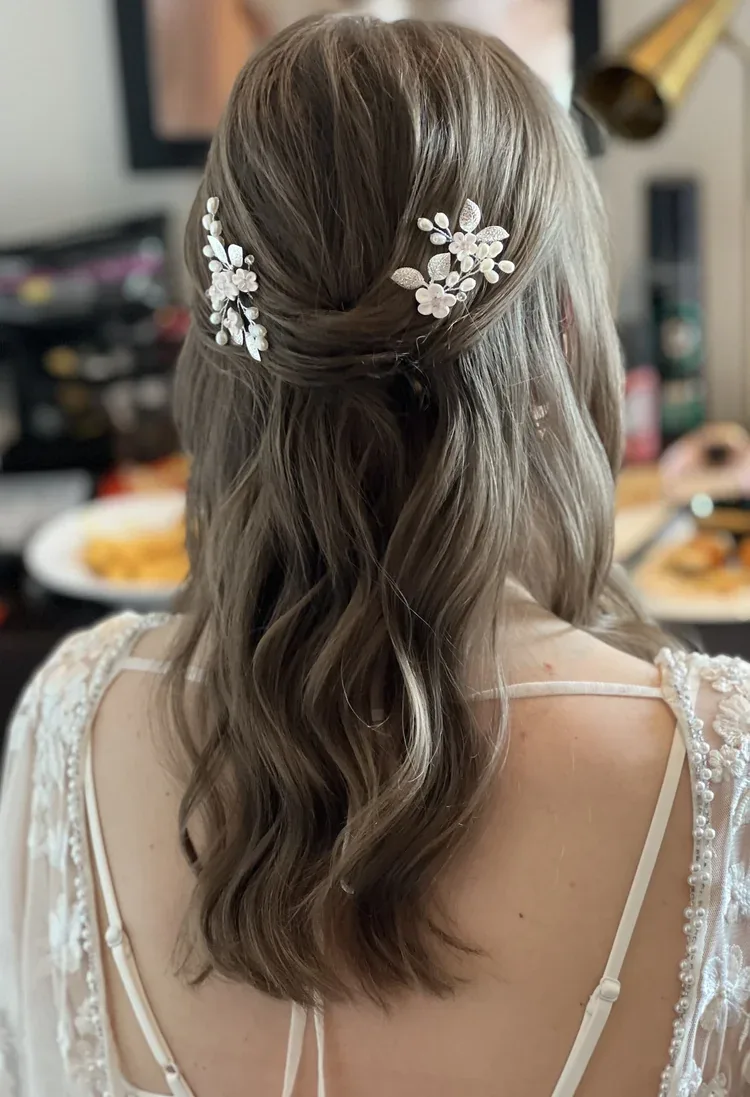
A wavy lob with fresh floral pins is the modern spring wedding cut — soft, flattering, and completely current. The waves give the lob movement, the floral pins add a touch of spring, and the whole look is youthful without trying to look young. It is the haircut for a bride — or a bridesmaid — who wants to look like herself, only a little more polished, and it needs nothing more than a little salt spray and a quick scrunch to look wedding-ready.
Pros: it is effortless and cool, and the pins are easy to remove for the reception. Cons: it needs a trim before the wedding so the waves sit right. Maintenance: work a little sea-salt spray through damp hair, scrunch the ends, and let it dry naturally — or curl a few sections and brush them out.
28. The Side Chignon with Cherry Blossoms
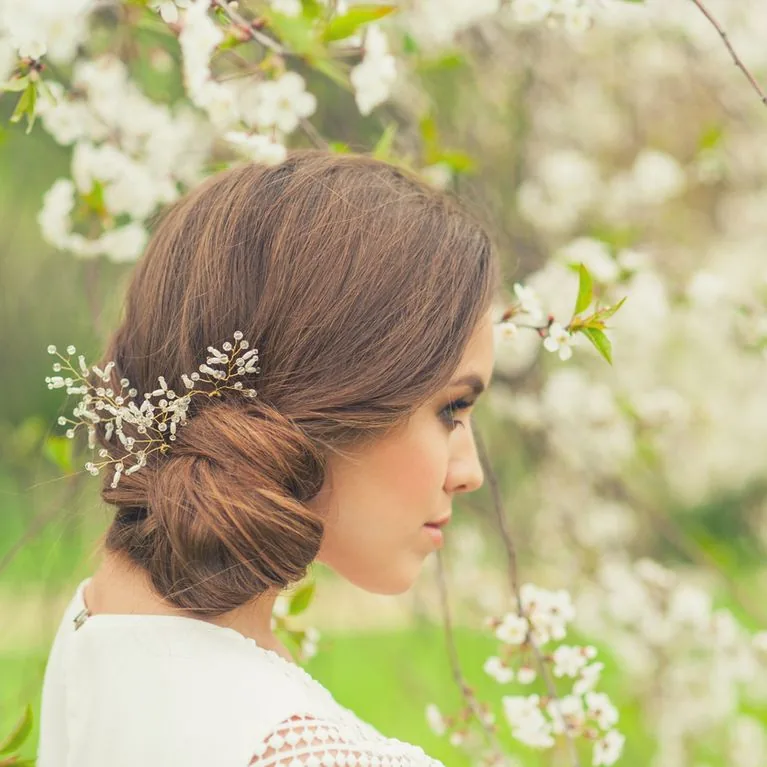
A side chignon with cherry blossoms is the chignon with a little more romance: the bun sits to one side at the nape, the hair sweeps across the front, and a few cherry blossom sprigs are tucked into the bun, so the whole style has a soft, asymmetric shape that photographs beautifully from every angle. It is the style for a bride who loves an updo but wants something a little less formal than a centred chignon — a little more movement, a little more charm.
Pros: it is romantic and flattering, and the blossoms make it unmistakably spring. Cons: it needs a good pin job to stay put while dancing, and cherry blossom wilts fast. Maintenance: tuck the blossoms in just before the ceremony, and ask your stylist to pin the bun at three points so it holds all evening.
29. Glossy Straight Hair with a Floral Crown
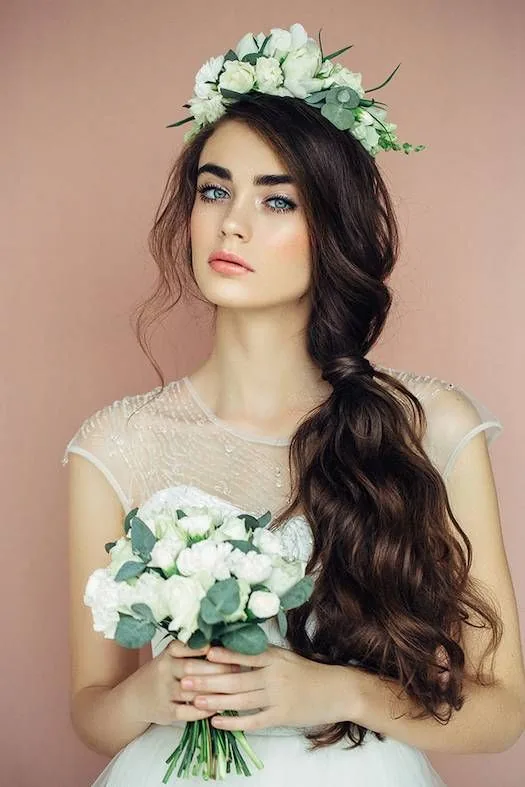
Glossy straight hair with a floral crown is the sleek spring wedding look — simple, confident, and completely modern, with a crown of fresh blooms to prove it is spring. The hair falls straight and shining on both sides, the crown sits on top, and the whole style is about shine and health, not about fuss. It is the style for a bride whose hair is in beautiful condition and wants to show it off.
Pros: it is simple, sleek, and the crown adds the spring romance. Cons: straight hair shows every flyaway, and the crown can slide on very smooth hair. Maintenance: a shine serum on the ends keeps the gloss all evening, and two hidden pins will anchor the crown so it stays put through the ceremony.
30. The Textured Top Knot for Spring Receptions
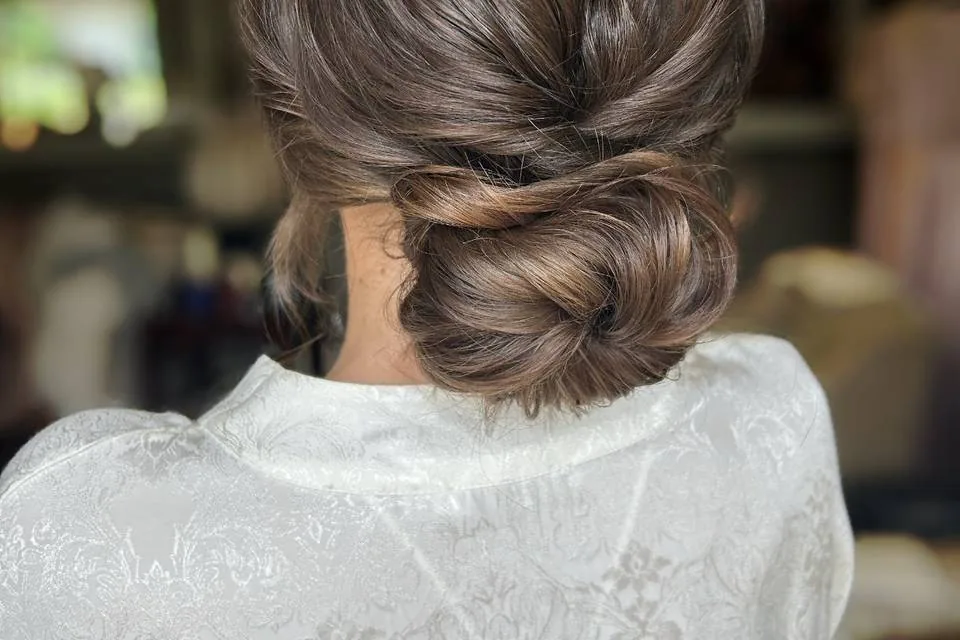
A textured top knot is the spring reception updo: the hair is swept up and coiled into a neat knot on top of the head, with texture and softness at the front, so the style is striking without being severe. It lifts the whole face, shows off the shoulders and the neckline of the dress, and it is the perfect second look — take the ceremony hair down, twist it up, and you have a reception style in three minutes.
Pros: it is striking, secure, and keeps the hair completely out of the way for dancing. Cons: it does not survive leaning back, and it can feel tight after several hours. Maintenance: build it loosely with texture, not pulled tight, and keep two spare pins in your bag for a quick fix on the dance floor.
31. Soft Finger Waves with a Vintage Touch
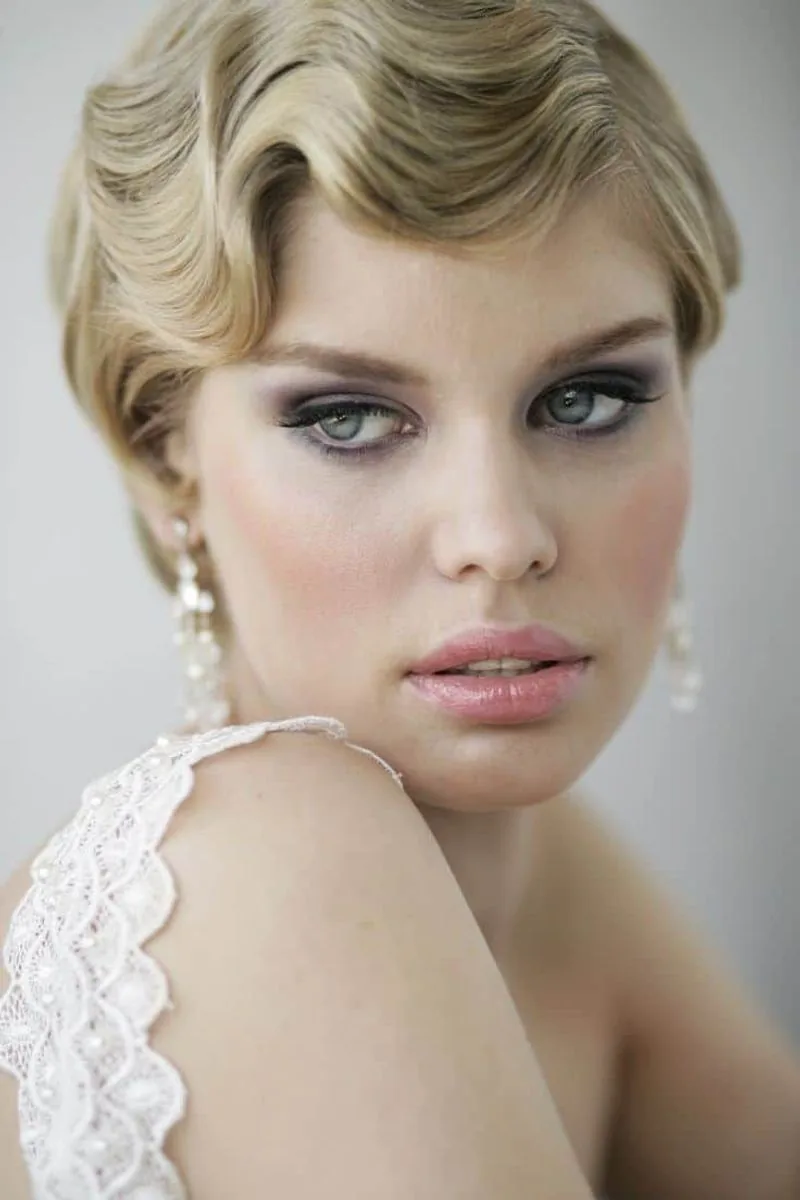
Soft finger waves with a vintage touch are the old-glamour spring wedding style: the waves are sculpted close to the head in a smooth, shining pattern, and the whole look is refined, deliberate, and completely unforgettable in photographs. It is the style for a formal spring wedding, a ballroom, a room full of speeches — and it is the one that gets the most compliments of any style in this guide.
Pros: it is elegant, timeless, and photographs beautifully. Cons: it takes about forty minutes with a stylist, and touching the waves before they set will break the pattern. Maintenance: set the waves with a comb and a strong-hold gel, working in sections, and let them set completely before touching them — patience is everything.
32. The Romantic French Braid with Ribbon

A romantic French braid with ribbon is the gentle spring wedding braid: the braid runs down the back, a pastel ribbon is woven through it, and the whole look is pretty, relaxed, and completely at home in a garden. It keeps the hair out of the way of dinner and hugs, it looks lovely in photographs, and it is the braid for a wedding where the plan is to enjoy yourself — not to babysit your hair.
Pros: it is quick, charming, and the ribbon adds a touch of spring colour. Cons: a very loose braid can slip, so the end must be secured well. Maintenance: braid loosely and pull gently at the edges to soften it, and tie the ribbon in a small bow at the end so it cannot come undone.
33. Half-Up Fishtail with Spring Flowers

A half-up fishtail with spring flowers is the spring wedding half-up with a little more detail: the top sections are fishtail-braided back and joined behind the head, small flowers are tucked into the braid, and the rest falls in soft waves. It frames the face, keeps the hair out of your eyes while you eat and talk, and looks beautiful in the photographs — which is when everyone at a wedding takes their pictures.
Pros: it is quick, flattering, and the fishtail texture makes it more interesting than a plain half-up. Cons: a fishtail takes a little longer to braid than a normal braid, and the flowers must be tucked in last. Maintenance: pin the braid at two points, and carry a spare flower in water at the reception in case one wilts.
34. The Dreamy Garden Updo with Mixed Blooms

A dreamy garden updo with mixed blooms is the style that ends this guide the way a spring wedding should end — with something pretty and a little bit magical. A low updo is pinned up softly, and small mixed blooms — daisies, baby’s breath, lavender, spray roses — are tucked into it, so the hair looks like a garden and the photographs look like a dream. It is the style for a bride who wants her wedding to feel like a celebration, not a meeting — and for the bride herself, it is the perfect finishing touch.
Pros: it is the prettiest style in this guide, and the mixed blooms make every photograph look like spring. Cons: the flowers wilt in a warm room, so they must be tucked in just before the photographs. Maintenance: ask your florist for hardy blooms, keep a spare sprig in water, and enjoy the day — your hair should be the least of your worries at a spring wedding.
What is the best hairstyle for a spring wedding?
The best hairstyle for a spring wedding is one that is soft, romantic, and secure enough for an outdoor ceremony — a soft low chignon with baby’s breath, loose waves with fresh flowers, a braided crown with spring blooms, or a half-up twist. These styles hold their shape in a breeze, look beautiful among the flowers, and photograph well in spring light. A low chignon is the safest elegant choice, loose waves with flowers are the most romantic, and a braided crown is the best for a windy garden ceremony.
Can I wear fresh flowers in my hair for a spring wedding?
Yes, you can wear fresh flowers in your hair for a spring wedding — baby’s breath, spray roses, lavender, ranunculus and small daisies hold their shape for hours, while delicate blossoms like cherry blossom wilt within an hour. Ask your florist for flowers that have been conditioned in water overnight, have them added to your hair as late as possible, and tuck them into the pins of an updo rather than into loose hair, where they slide out. Keep a spare sprig in water at the reception.
How do I keep my hair in place at an outdoor spring wedding?
Keep your hair in place at an outdoor spring wedding by choosing a style with an anchor — a low bun, a braided crown, or a half-up pinned at three points — rather than completely loose hair. Ask your stylist for a flexible-hold spray, pin the front sections back during the ceremony, and carry three bobby pins and a travel hairspray in your bag. If the forecast says wind, ask your stylist to add one extra pin at each anchor point in the morning.
What hairstyle works best with a veil in spring?
The hairstyles that work best with a veil in spring are low updos — a low chignon, a soft textured low bun, or a sleek low bun — because the bun gives the veil comb something firm to hold on to. A half-up style with a firm anchor also works well. Avoid wearing a veil with completely loose hair, where the comb has nothing to grip, and pin the veil comb at two points so a spring breeze cannot lift it.
Should I wear a flower crown or a veil?
You can wear a flower crown or a veil for a spring wedding — a veil is the classic choice for a formal ceremony, a church, or a bride who wants the traditional moment, while a flower crown is the spring alternative, fresh and romantic and made for a garden ceremony. Many brides wear a veil for the ceremony and swap it for a flower crown at the reception. Try both at your hair trial, and choose the one that feels like you.
What should I do if it rains on my spring wedding day?
If it rains on your spring wedding day, choose a pinned style — a low bun, a braided crown, or a half-up with a firm anchor — because loose curls drop in damp air within minutes. Tell your stylist in the morning so she can add a humidity-resistant spray, keep the veil off until the rain stops, and move the portraits under cover. Carry a travel hairspray and three bobby pins, and give the roots a quick lift with dry shampoo when you are back inside.
Which spring wedding hairstyles work best for bridesmaids?
The best spring wedding hairstyles for bridesmaids are soft, pretty styles that complement the bride without competing with her — a half-up twist, loose waves with a small flower, a soft low bun, or a braided crown. Bridesmaids usually wear their hair a little simpler than the bride: the same style family, but with fewer flowers and no veil. A garden half-up twist or soft romantic curls are the most popular bridesmaid choices for spring.
What hairstyle should a wedding guest wear to a spring wedding?
A wedding guest at a spring wedding should wear a soft, polished style that is pretty without stealing the spotlight — loose waves with a flower pin, a low chignon, a half-up twist, or a wavy lob with floral pins. Avoid a flower crown or a veil, which are the bride’s choices, and avoid anything too elaborate. A soft blowout with layers or a half-up with curls is the safest guest choice for a garden ceremony.
How early should I book a trial for spring wedding hair?
Book a trial for spring wedding hair at least six weeks before the wedding, and bring photographs of the styles you like, your veil or flower crown, and the hair accessories you plan to wear. The trial is where you decide between a veil and a flower crown, test how the style holds in a breeze, and check that the flowers you want will last the day. Book the appointment for the morning of the wedding, and tell your stylist if you are the bride.
Do spring wedding hairstyles work for short hair?
Yes, spring wedding hairstyles work for short hair — a soft curled bob, a wavy lob with floral pins, a sleek bob with a deep side part, and soft finger waves are all beautiful spring wedding choices. Short hair is chic, comfortable, and completely unbothered by a spring breeze. A shine serum and one floral pin or pearl clip are all you need to make a short style feel festive, and a flower crown can be pinned on to short hair with a couple of hidden pins.
Conclusion
Spring is the season weddings were made for — the gardens are in bloom, the light is soft and golden, and the air smells faintly of rain and fresh flowers. The 34 hairstyles in this guide are all chosen with that in mind: soft enough for spring, secure enough for a garden ceremony, and pretty enough for photographs among the blossom. The right spring wedding hairstyle does not demand your attention all day — it lets you forget about your hair and enjoy the people you came to celebrate with.
Start with the guides, not the gallery. Think about what your wedding actually holds — a garden ceremony or a church, a veil or a flower crown, a spring breeze or a spring shower — and pick the style family that fits it. Tell your stylist if you are the bride, book your trial six weeks out, pack the small touch-up kit, and choose the version that feels like you on your best day. Your hair should be the least of your worries at a spring wedding. Now it can be.