
Techniques 22 Algorithmic Braid Spacing Symmetrical Perfection Every Time
You know that feeling when you finish a braid and it looks… off? Like one side is tighter, the spacing is weird, and suddenly your whole vibe is thrown? I have been there way too many times. It is honestly one of the most frustrating things about doing your own hair. But here is the secret I learned after way too many YouTube deep dives: you don’t need magic hands. You just need a simple method I call algorithmic braid spacing.
Think of it like a recipe. Instead of guessing where to grab the next piece of hair, you use a repeatable pattern that guarantees even sections every single time. It sounds technical, but I promise it is actually the most relaxing way to braid. You can almost zone out once you get the rhythm down. By the end of this post, you will have a solid system for perfectly symmetrical braids, whether you are going for a casual day look or something a little more dressed up for the 2026 hairstyles trends everyone is talking about.
What Is Algorithmic Braid Spacing, Really?
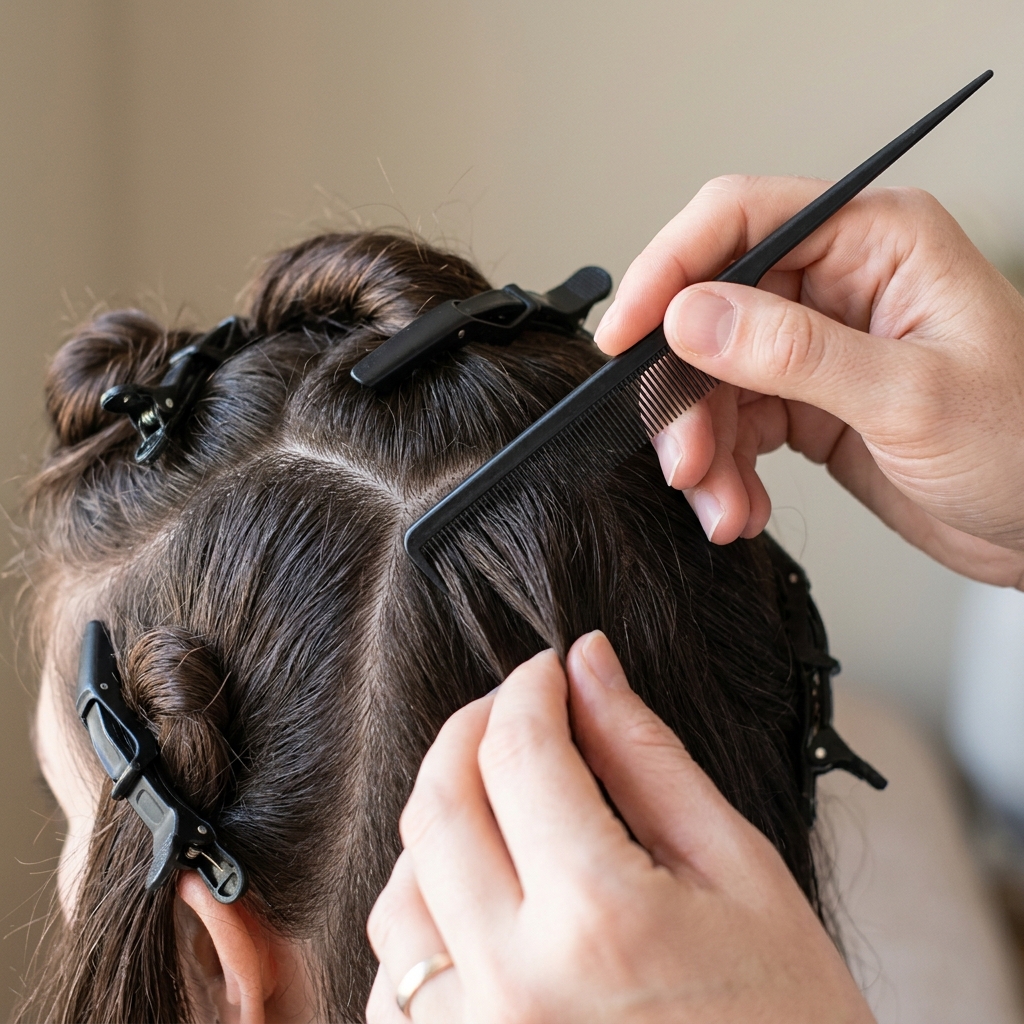
Algorithmic braid spacing is just a fancy way of saying “following a set rule for how far apart your sections are.” Instead of visually guessing, you use your fingers as measuring tools. For example, you might always grab a section that is exactly two finger-widths wide.
This removes all the guesswork. Your braid will look consistent from the nape of your neck all the way to the ends. It is the same principle behind that perfect quiet luxury bob—it is all about clean, deliberate lines rather than messy chaos.
Why Symmetrical Perfection Matters for Modern Hair
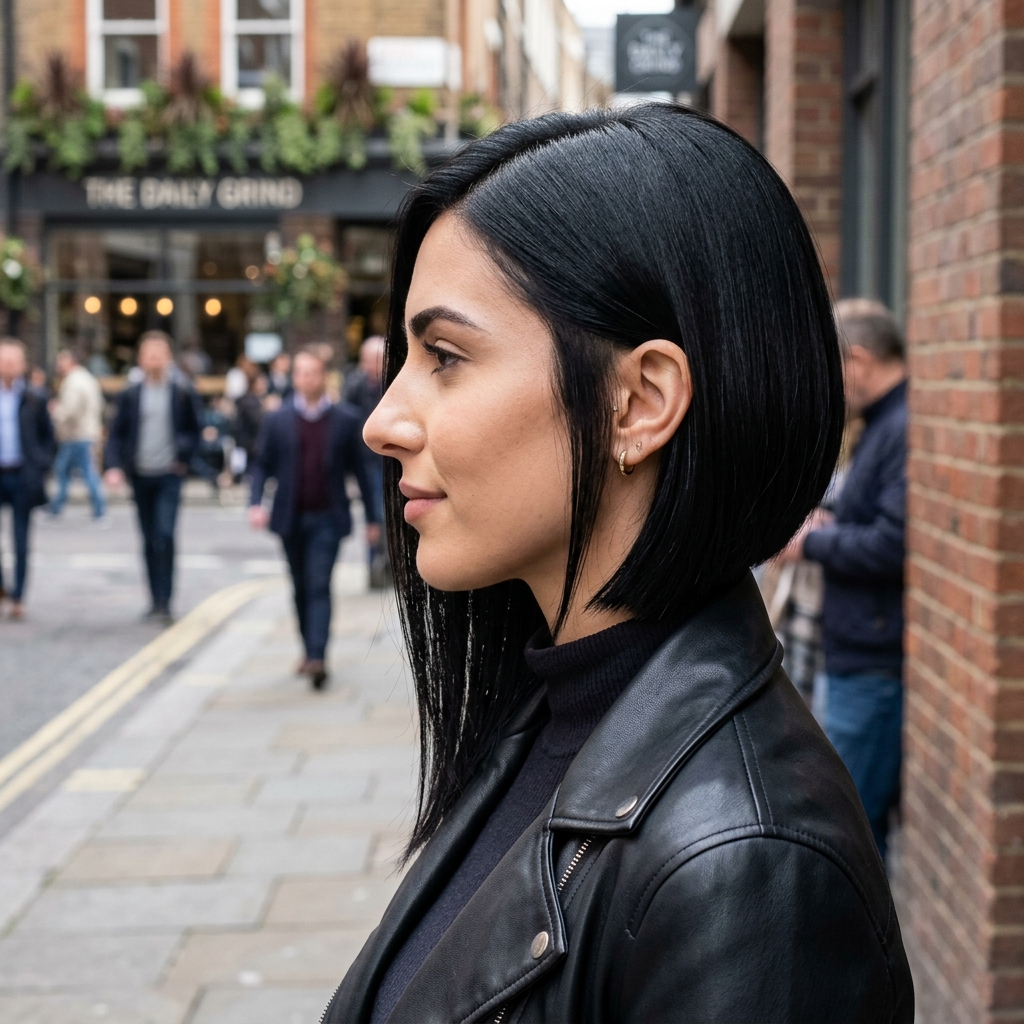
We are moving into a time where precision is huge. Look at the asymmetrical lob trend—it works because the cut is intentionally sharp. The same goes for braids. A sloppy braid can drag your whole outfit down, but a well-spaced one instantly makes you look put together.
It is not about being rigid. It is about having a foundation so solid that even when you pull a few pieces loose for that relaxed look, it still reads as intentional and polished. That is the secret sauce of old money hair.
Your Toolkit: What You Need to Start
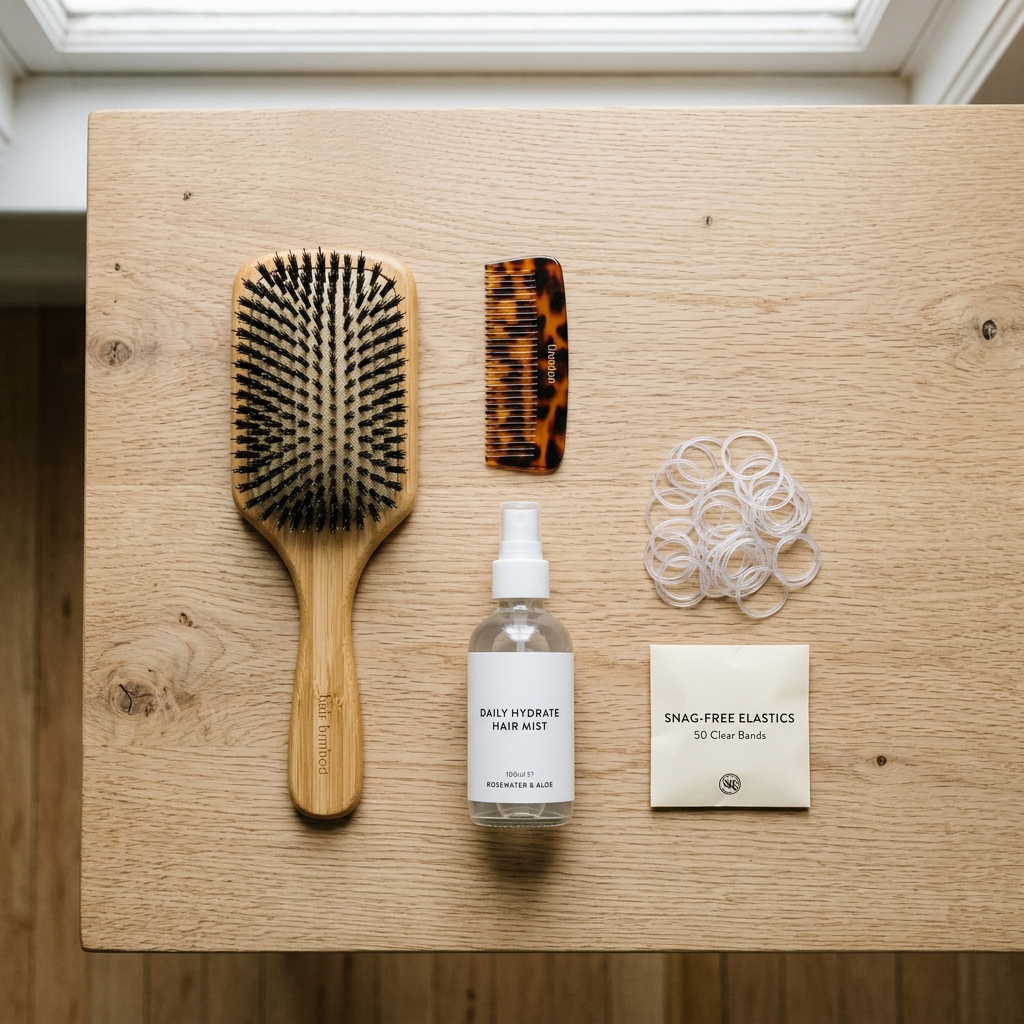
- A fine-tooth comb for clean part lines.
- Small, clear elastic bands that won’t slip.
- A spray bottle with water to smooth flyaways.
- Your fingers (they are the real measuring tool).
That is it. You do not need a ton of fancy products. The technique does the heavy lifting. Think of this like prepping for a haircut—good tools make good technique possible.
The Base Part: Getting Your Canvas Right
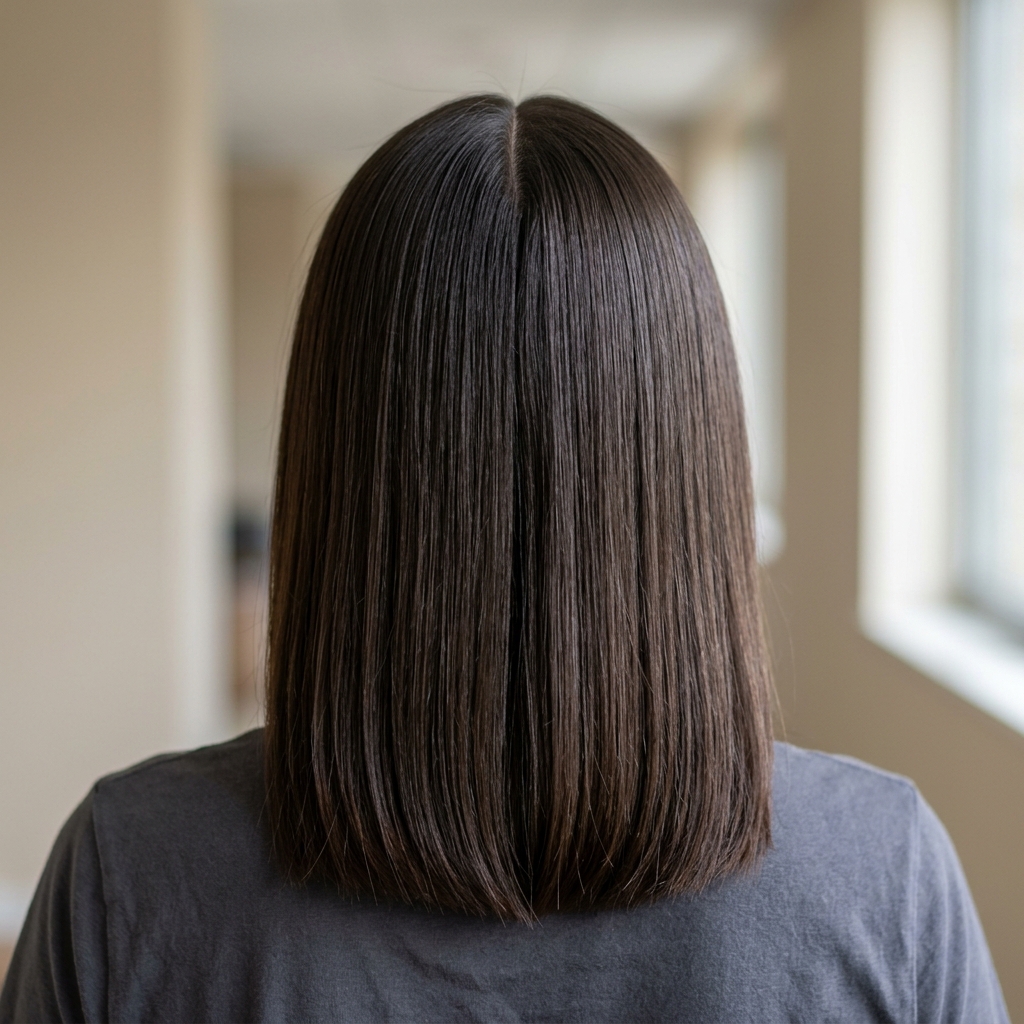
Before you even start braiding, your first part is crucial. Use the tip of your comb to draw a line from the center of your forehead to the center of your nape. This is your starting guide.
If this line is crooked, your whole braid will be crooked. Take thirty extra seconds to get it laser-straight. This is the moment you channel that quiet luxury energy—understated but flawlessly executed.
Step One: The Two-Finger Rule for Side Sections
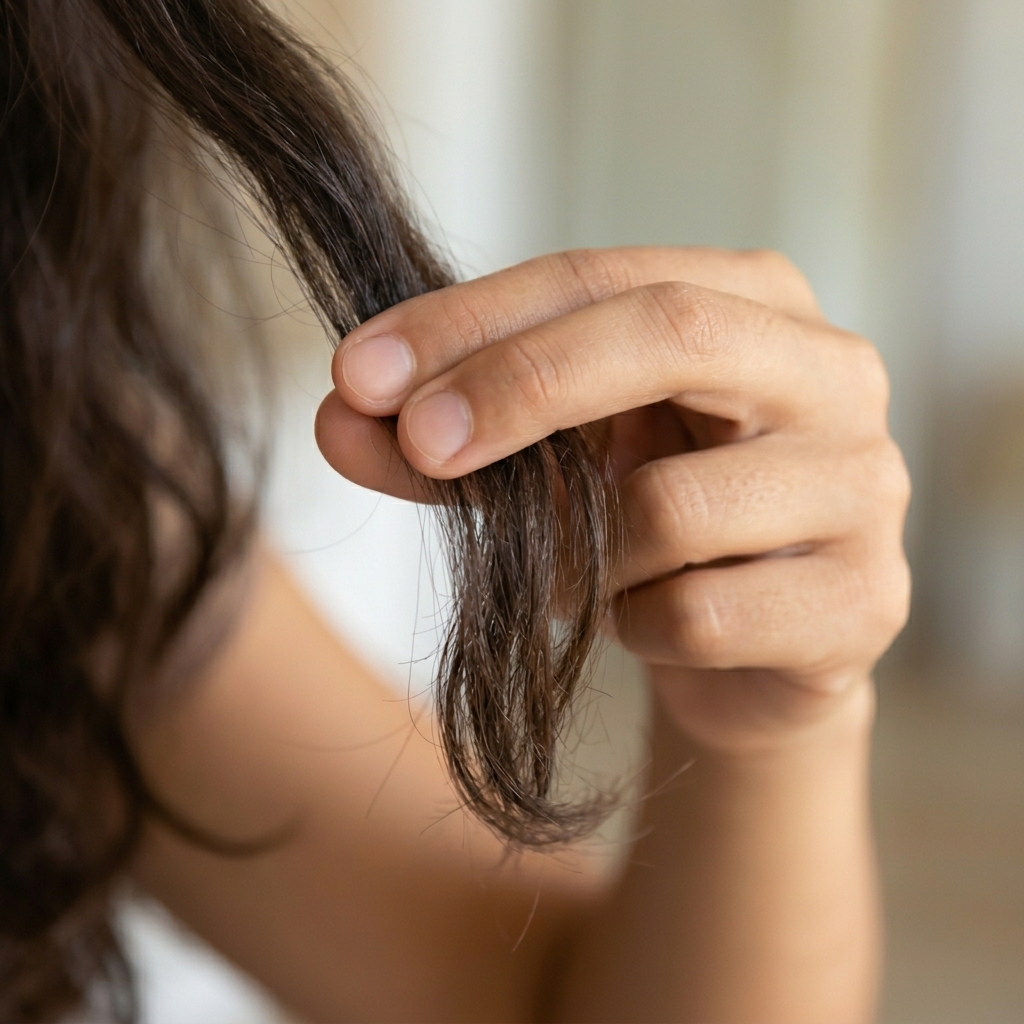
Now we get into the algorithm. Start by taking a section of hair at your temple on the left side. Use your index and middle finger to measure the width. That exact same width will be used on the right side.
Do not guess. Do not “eyeball it.” The two-finger rule is your best friend. It ensures that even if your hair is thick or thin, the spacing remains proportional to your head.
Step Two: Mirror Your Movements Exactly
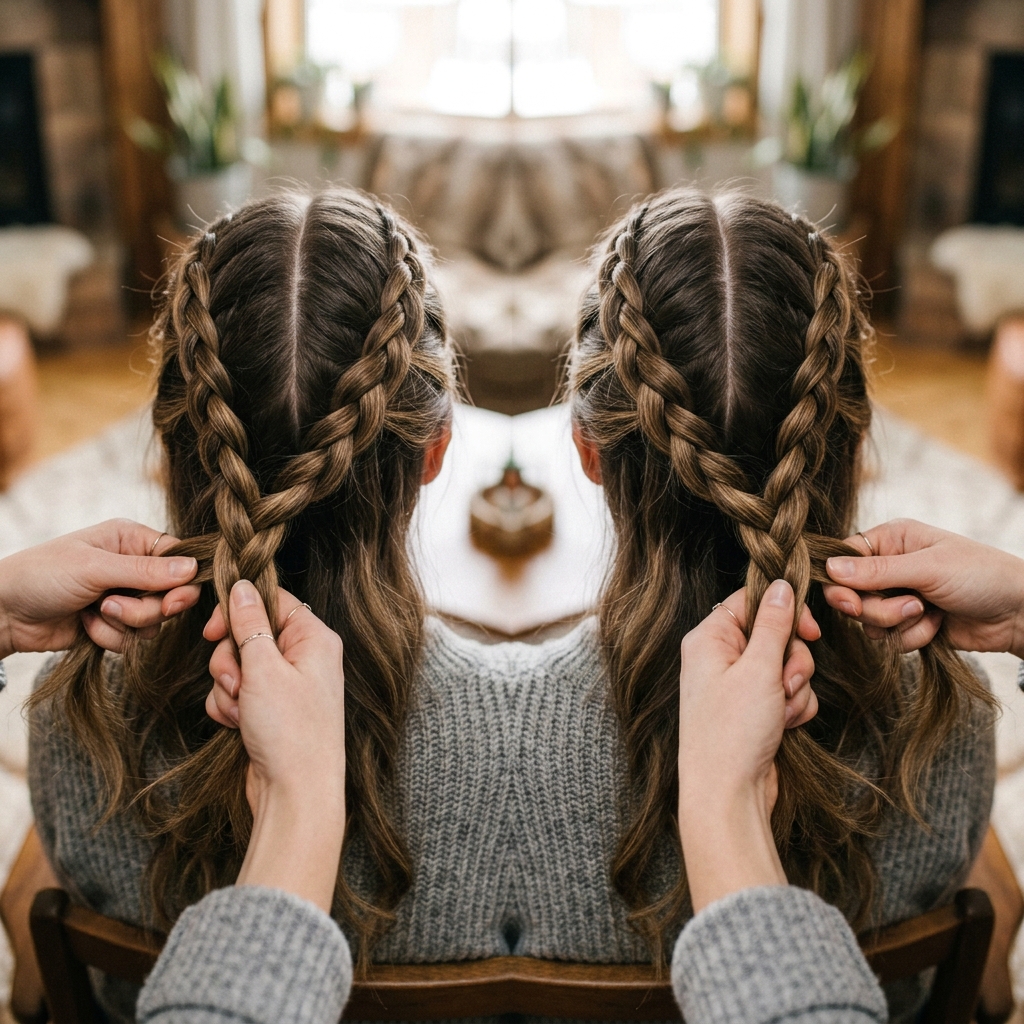
Here is where most people mess up. They grab a section on the left, then grab a random chunk on the right. It has to be a mirror image. If you grab a piece an inch wide on the left, it must be exactly an inch wide on the right.
Practice this slowly. It feels weird at first, but your muscle memory will catch up fast. This is the core of algorithmic spacing—the pattern repeats exactly on both sides.
How to Handle Thick or Thin Hair
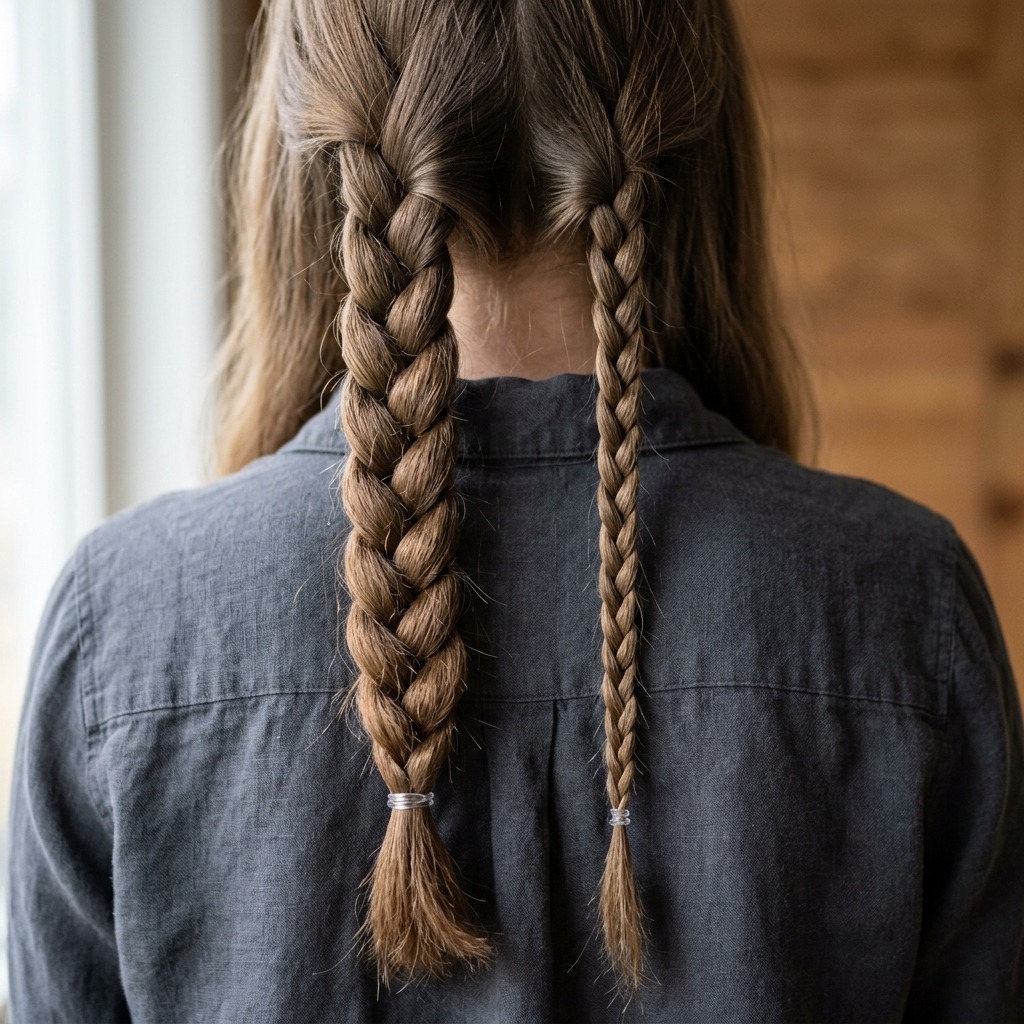
Thick hair? Use a three-finger rule instead of two. You need a slightly larger section to keep the braid from looking like a rope. Thin hair? Use one finger or even half a finger width to keep the braid full and chunky.
Adjust the algorithm to your hair type. The point is not the exact number, but that you stick to that number consistently throughout the entire braid.
Incorporating the Hime Cut Aesthetic
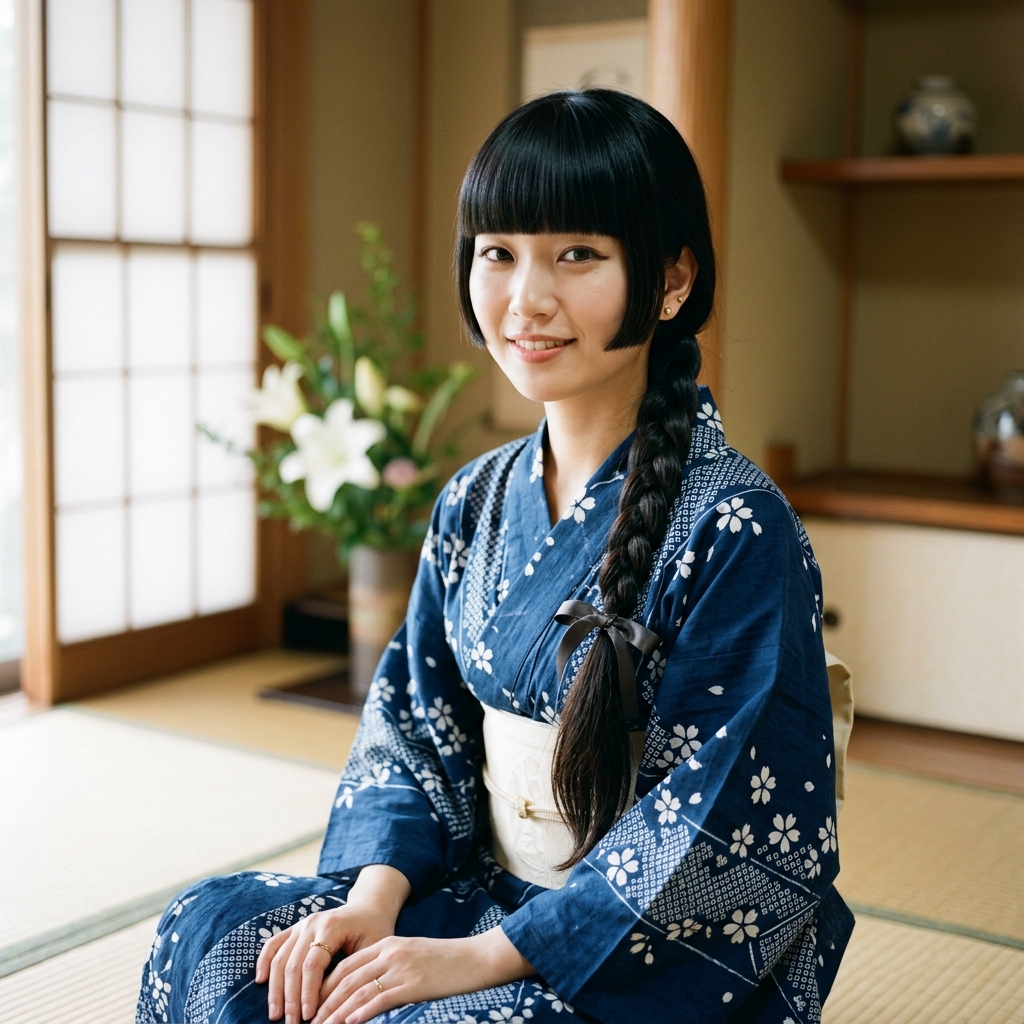
The hime cut is all about those sharp, framing pieces. If you have bangs or face-framing layers, you can still use algorithmic spacing. Just leave those front sections out of your braid entirely.
Braid the rest of your hair with your perfect spacing. When you are done, the contrast between the structured braid and the loose, blunt-cut pieces is incredibly chic. It gives major romantic goth hairstyles energy.
Fixing Common Spacing Errors Mid-Braid
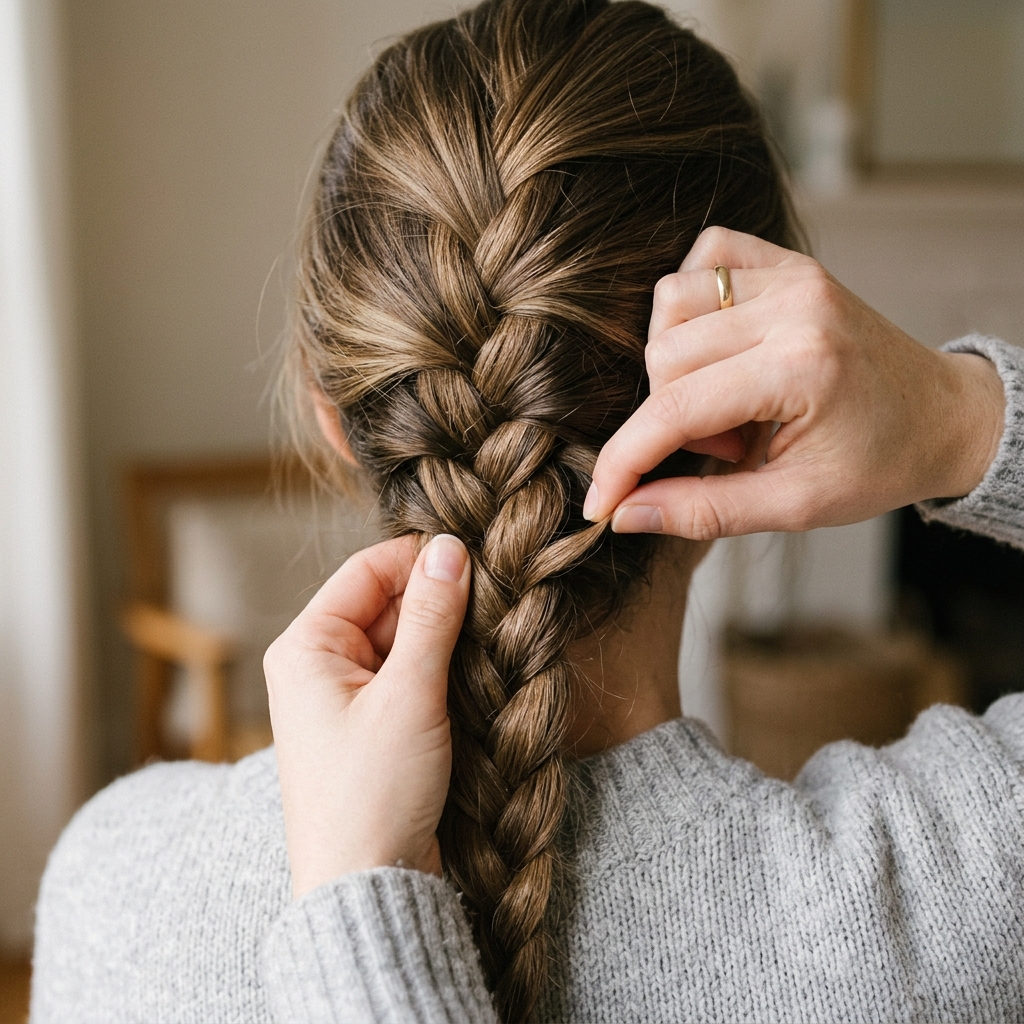
If you realize your spacing got uneven halfway through, do not undo everything. Simply pull gently on the outer edges of the tighter side to stretch it out a bit. You can also slide the band down and re-space those last few sections.
Your braid is forgiving. It wants to look good. A little downward tug on the loops can fix 90% of spacing issues without starting over.
Why Tension is Your Secret Weapon
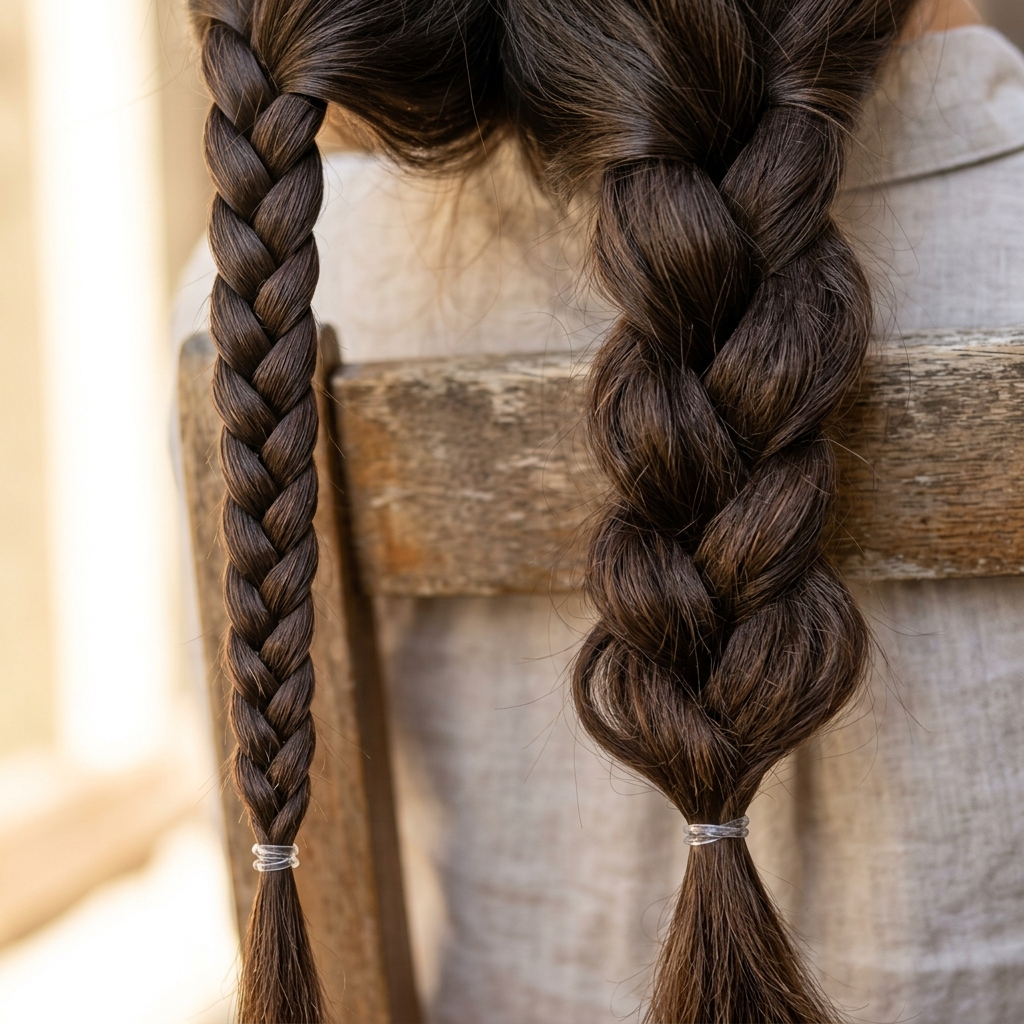
Even spacing is great, but tension is what locks it in. Keep the same level of pull on every single stitch of the braid. If you pull tight on the left and loose on the right, your braid will curve and look wonky.
This is especially important for the vampire haircut trend, where a super sleek, high-tension braid creates that sharp, dramatic silhouette.
Using Product for Grip and Control
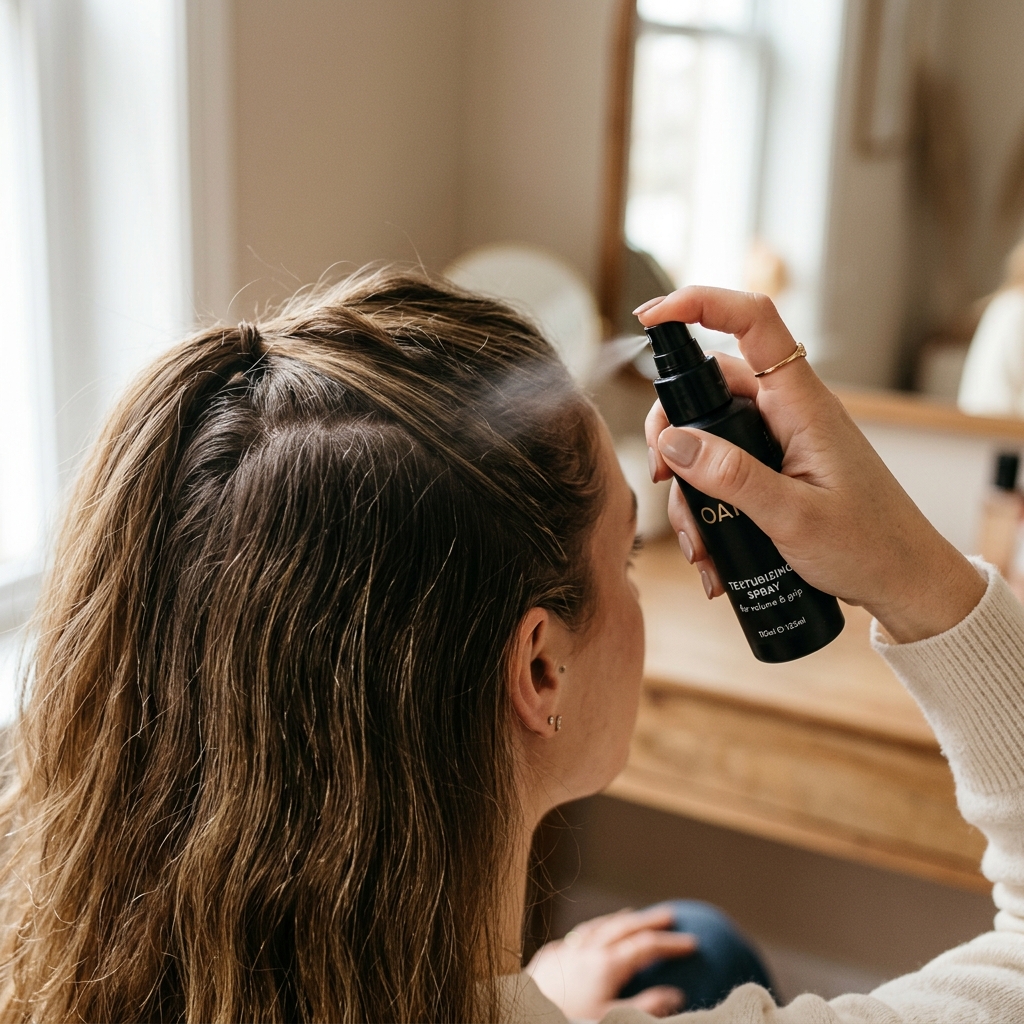
Dry, slippery hair is harder to space uniformly. A tiny bit of texture spray or dry shampoo at the roots gives your fingers something to grip. This helps you grab the exact same amount of hair every time.
If you have very fine hair, a light mousse on damp hair before blow-drying gives that same grip. It makes the algorithmic method way easier to execute.
The Night Before Trick for Perfect Braids

Braid your hair loosely before bed. In the morning, the kinks and waves will give your next braid more texture and hold. The “memory” of that first braid helps the second one stay in place perfectly.
This is a lazy-girl hack that genuinely works. Your second-day braids will always be easier to space because the hair has a natural wave pattern to follow.
Braid Maintenance: How Long Does It Last?

A well-spaced braid can easily last two to three days. Sleep on a silk pillowcase to reduce friction. In the morning, just spritz a little water and re-tighten any loose loops with your fingers.
If you have the glitchy glam hair look in mind, a slightly undone braid with perfectly maintained spacing on the crown actually looks cooler. It is intentional dishevelment.
What About Space Buns or Half-Up Styles?
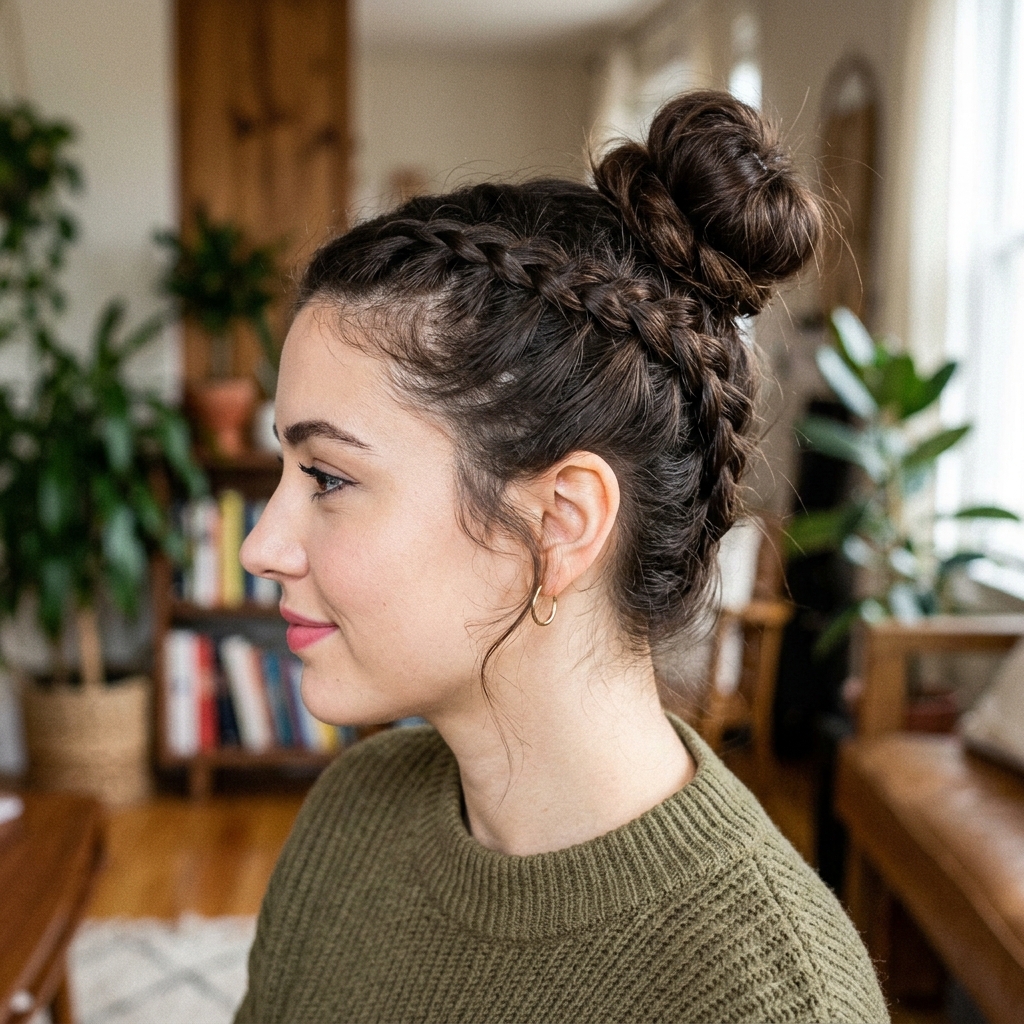
You can apply the same algorithmic spacing to half-up styles. Section off the top half of your hair using a clean horizontal part just above your ears. Then, braid that section with your two-finger rule.
This creates a beautiful, balanced crown braid that instantly elevates a simple ponytail or bun. It is a perfect everyday look that channels that 2026 hairstyles minimalist trend.
Mixing Braids with Modern Trends

The asymmetrical lob works beautifully with a single side braid. Use your algorithmic spacing to braid a thin section from the temple down, leaving the rest of the lob loose. The contrast between the structured braid and the soft, uneven cut is stunning.
It feels modern and fresh. It is not trying too hard. It is just smart styling.
Braid for Special Occasions: The Event Version
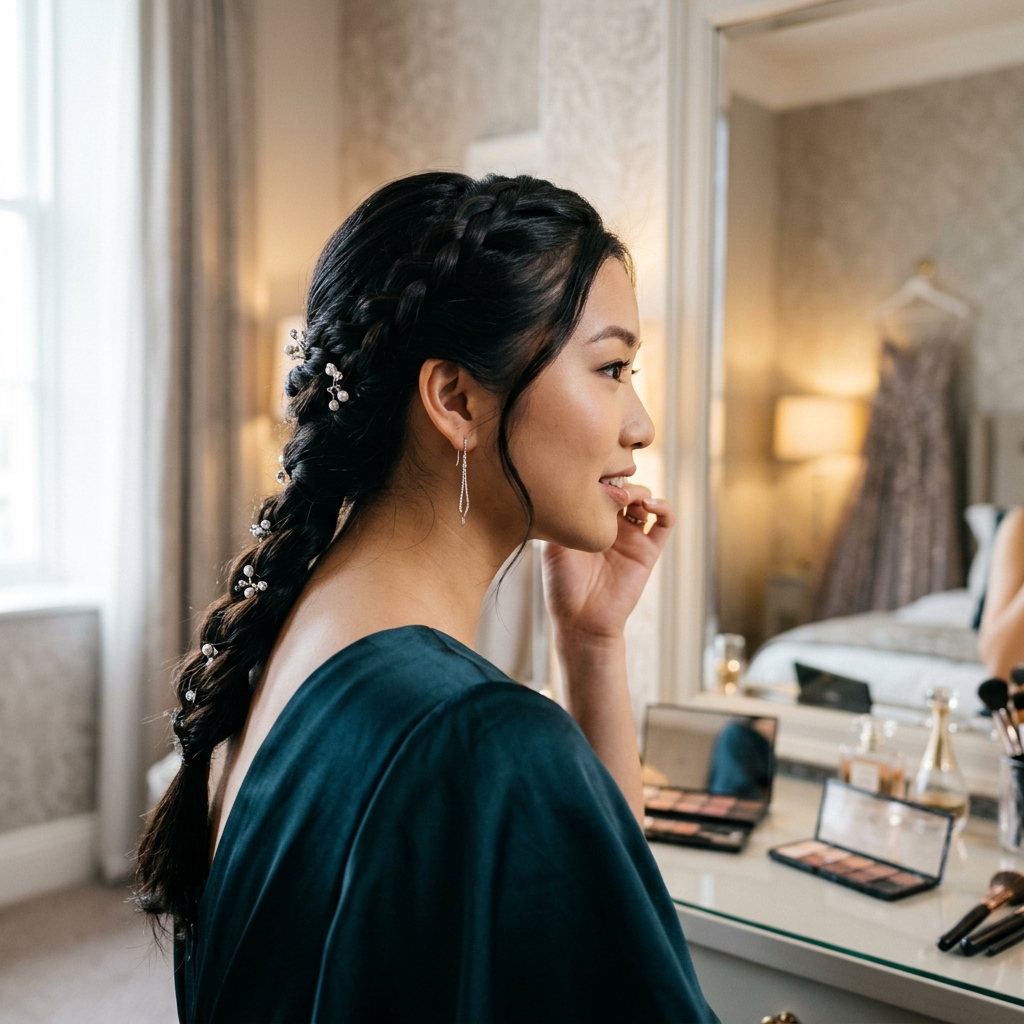
For a wedding or a nice dinner, clean up your edges with a bit of gel. Use a ribbon or a thin silk scarf threaded through the braid. The perfect spacing makes the ribbon look intentional, not like a last-minute add-on.
This is where the quiet luxury bob meets braids. It is subtle, expensive-looking, and always appropriate.
The One Tool That Changes Everything
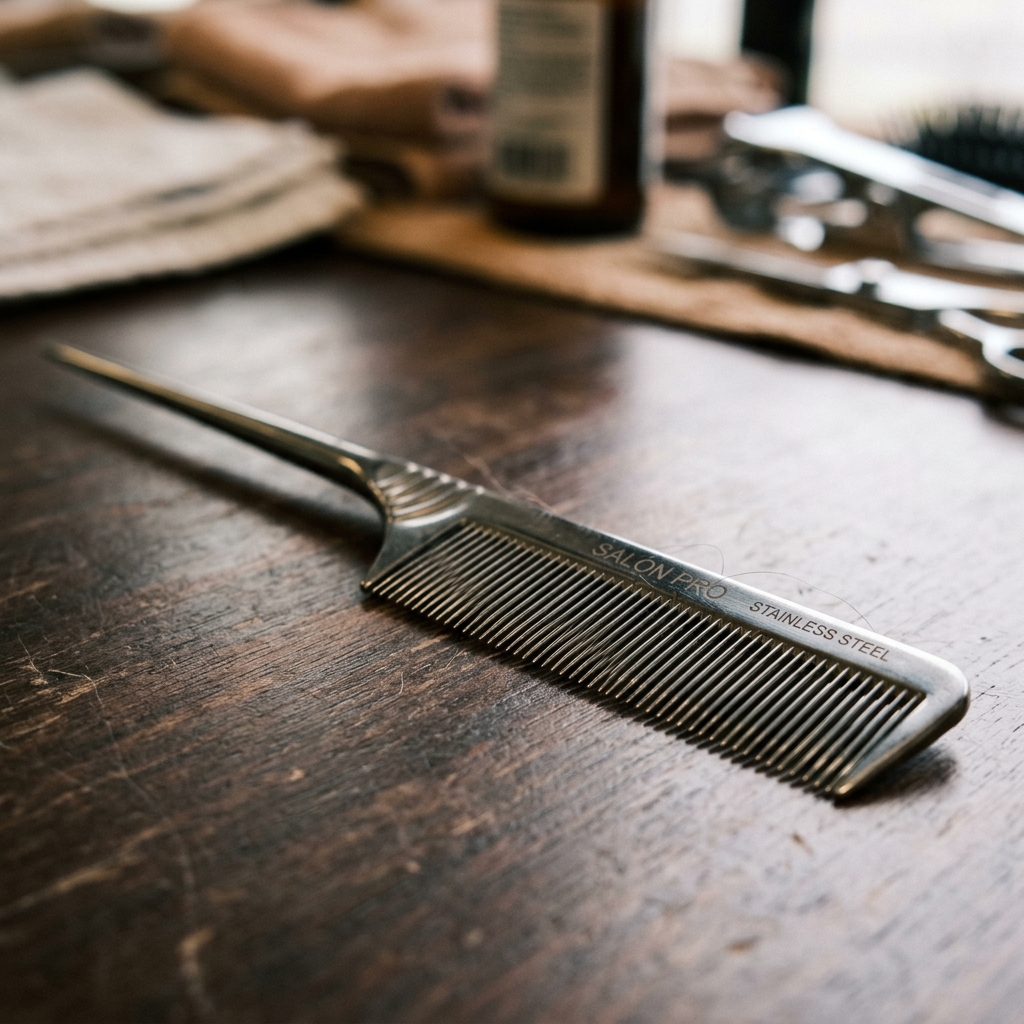
A metal tail comb is worth the investment. The sharp tail helps you create perfectly straight parts every single time. The metal glides through hair without static.
It is the one tool I tell everyone to buy. It makes algorithmic spacing feel effortless because your part lines are just right from the very start.
How to Teach This to a Friend
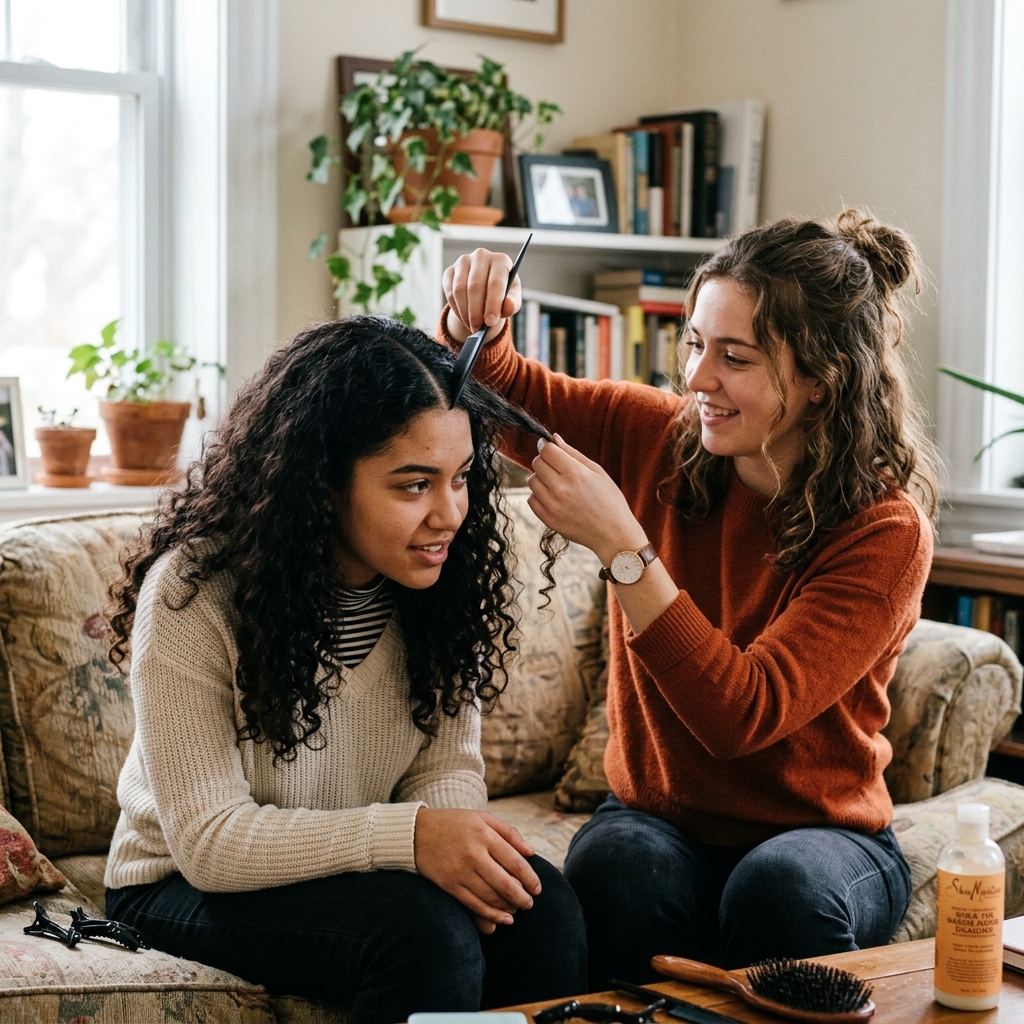
Have your friend sit with their back to you. Count out loud: “One finger, two fingers, grab.” Do this on both sides. They will feel the rhythm, and their hands will start to follow the same pattern.
Teaching it locks it into your own brain too. Next time you braid, you will hear that counting in your head. It becomes automatic.
Why Symmetry Feels So Good
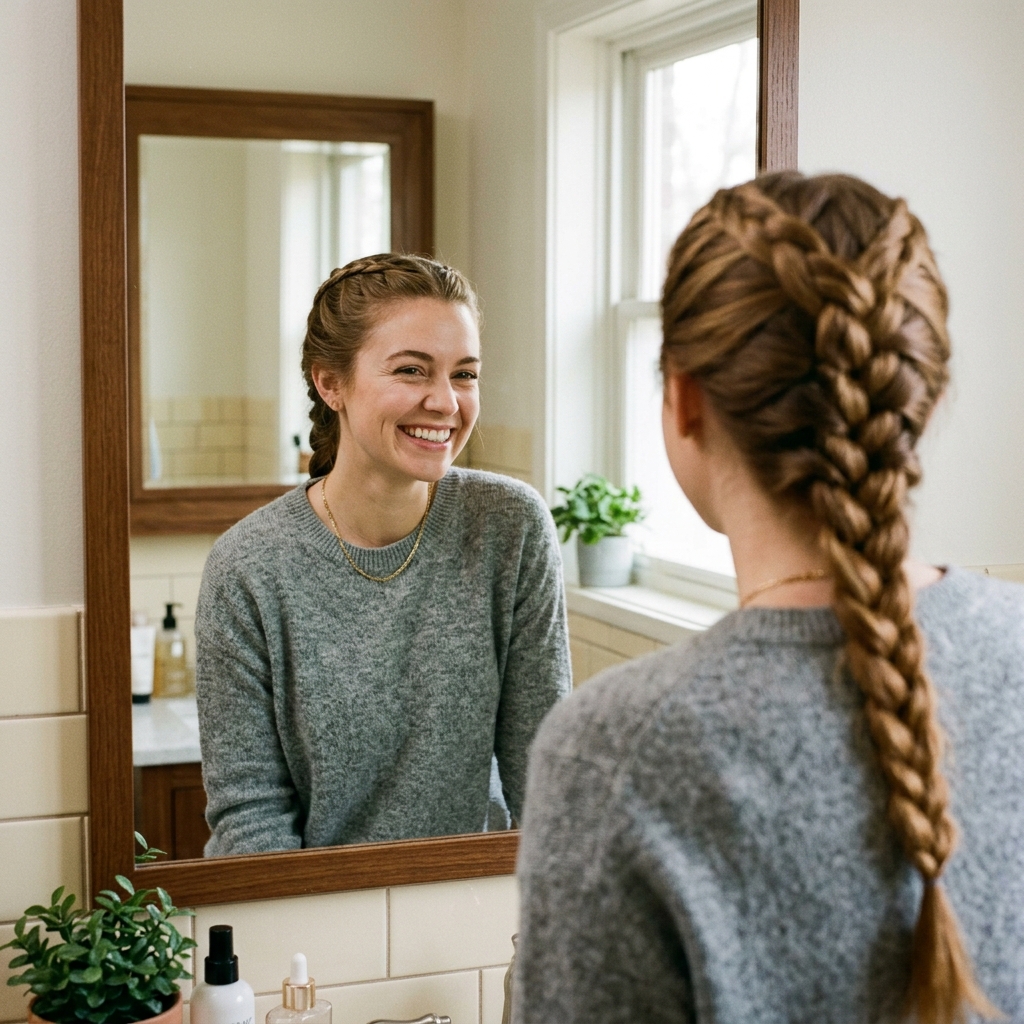
There is a reason we are drawn to symmetrical faces and patterns. It registers as safe, beautiful, and well-cared-for. A symmetrical braid gives off the same energy.
It is not about being perfect in a stiff way. It is about looking like you took the extra few minutes to care. And honestly, that feels great.
Troubleshooting: When It Still Looks Off
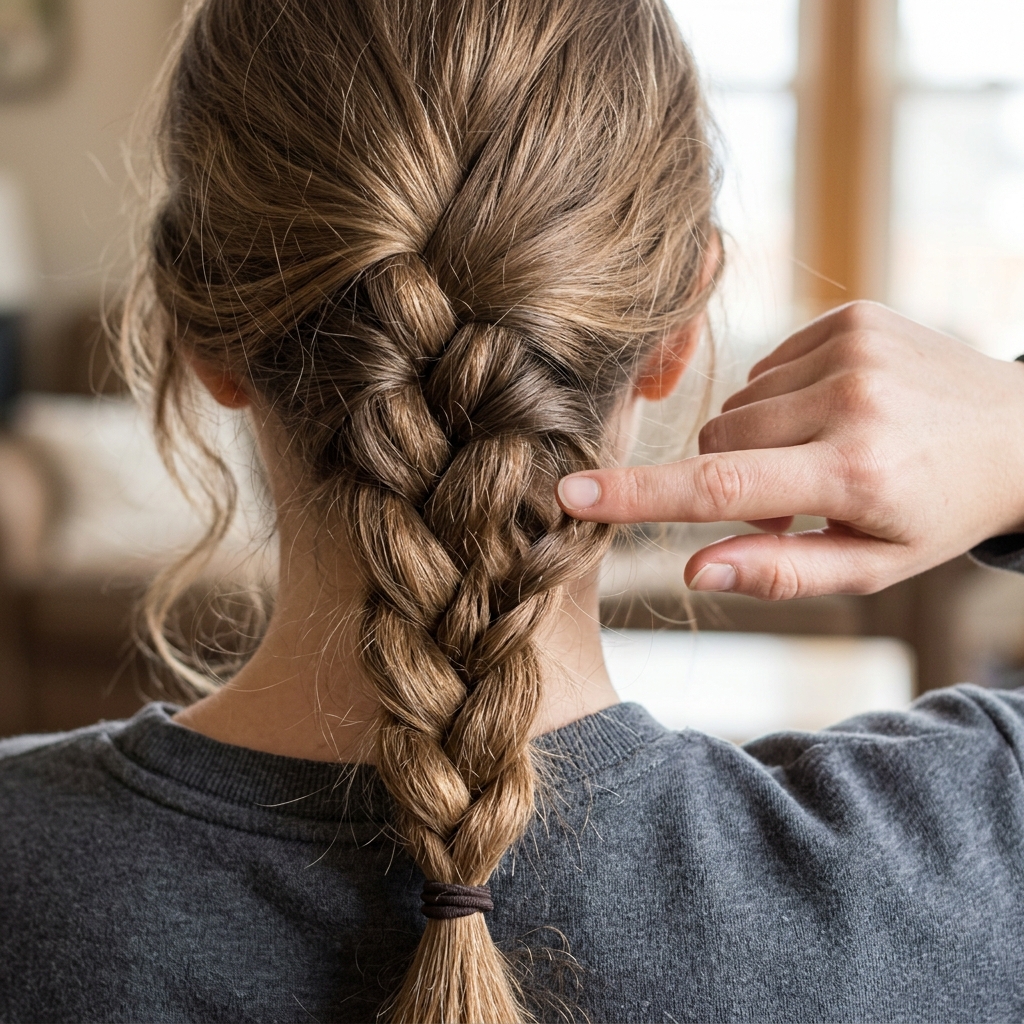
If your braid is still uneven, check your starting part. Fix that first. Then, check your hands. Are you using the same fingers on both sides? Your dominant hand might grab more hair without you noticing.
Slow down. Go back to the two-finger rule. Do it at a snail’s pace for one complete braid. Speed comes after accuracy.
A Final Thought on Practice
You will not nail this on the first try. And that is okay. Do one practice braid a day for a week. By day seven, your hands will know the spacing without you thinking about it.
It is like learning a new song on the piano. At first, it feels clunky. Then it becomes music.
I really hope this gives you a fresh way to look at braiding. It is one of those little skills that makes you feel so capable, and it honestly saves time in the long run because you stop redoing things. No more yanking out a braid in frustration because the sections look weird. You have the method now.
Save this post to Pinterest so you can come back to it the next time you are getting ready for a date night or just want to feel a little more pulled together. And tell me in the comments—what is the one hair skill you have always wanted to master? I would love to cover it next.