The Seattle Shag: Pacific Northwest Grunge Revival
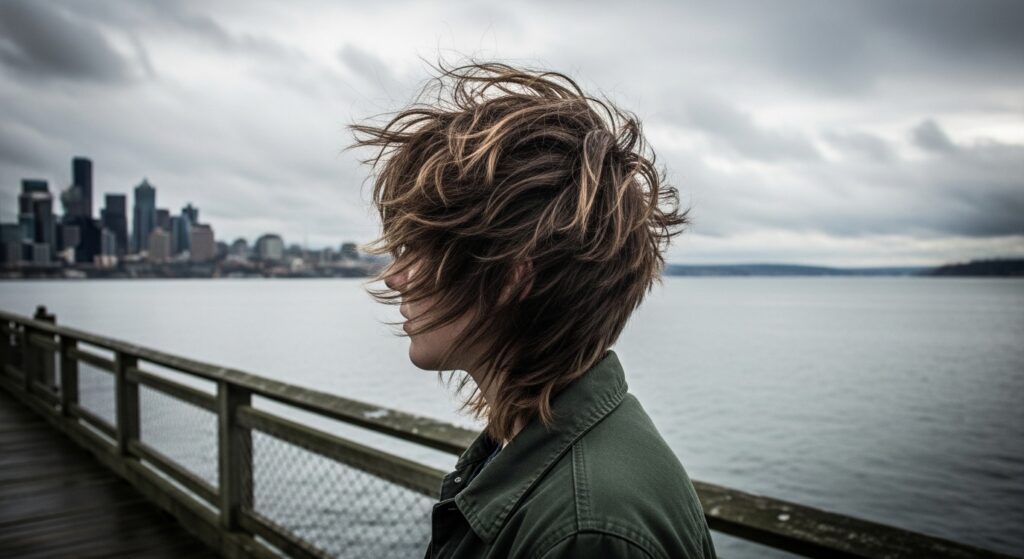
The air is damp, the coffee is strong, and the chords of a distorted guitar echo down a rain-slicked street. The spirit of 1990s Seattle—the birthplace of grunge—never truly left. It just evolved, finding new expression in fashion, attitude, and most tangibly, in hair. Enter The Seattle Shag: a modern, lived-in haircut that captures the raw, effortless, and defiantly individual energy of the Pacific Northwest’s most iconic era. This isn’t a costume; it’s a revival.
From Subculture to Salon: A Brief History of the Shag
To understand the Seattle Shag, we must first separate it from its historical namesake. The classic shag haircut, popularized in the 1970s by icons like Jane Fonda and Rod Stewart, was a symbol of liberation and rock ‘n’ roll glamour. It was layered, yes, but often retained a certain shape and volume that required upkeep.
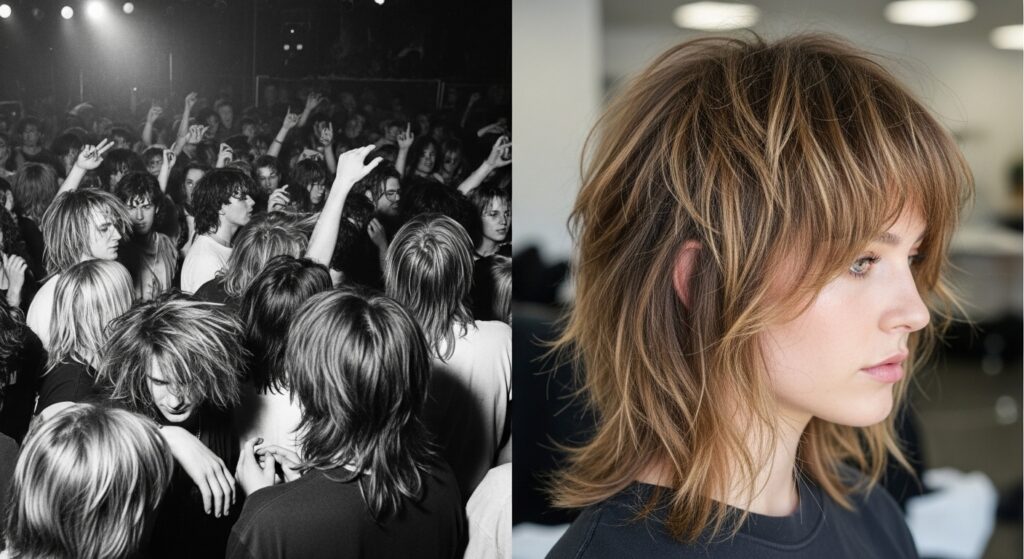
The grunge shag of the early 90s, however, was its antithesis. Born in the clubs of Seattle like The Vogue and The Crocodile, it was a DIY haircut. It was the result of friends hacking at each other’s hair with kitchen scissors, a deliberate neglect of salon standards. Bands like Hole, with Courtney Love’s platinum, torn-up pixie-shag, and Soundgarden, with Chris Cornell’s legendary curtain of tangled waves, became the unwitting style icons. This look wasn’t about looking pretty; it was about being real, being raw, and having more important things to think about than your hair.
The modern Seattle Shag is the sophisticated love child of these two eras. It takes the technical precision of contemporary hairdressing—understanding face shape, hair density, and modern coloring techniques—and applies it to achieve that iconic “I just woke up like this, after a night at a dive bar” vibe. It’s artfully crafted imperfection.
Anatomy of a Seattle Shag: The Key Features
Not every layered cut is a Seattle Shag. This style has specific DNA, born from the need to look good while defying the constant Pacific Northwest drizzle and embracing an active, urban life.
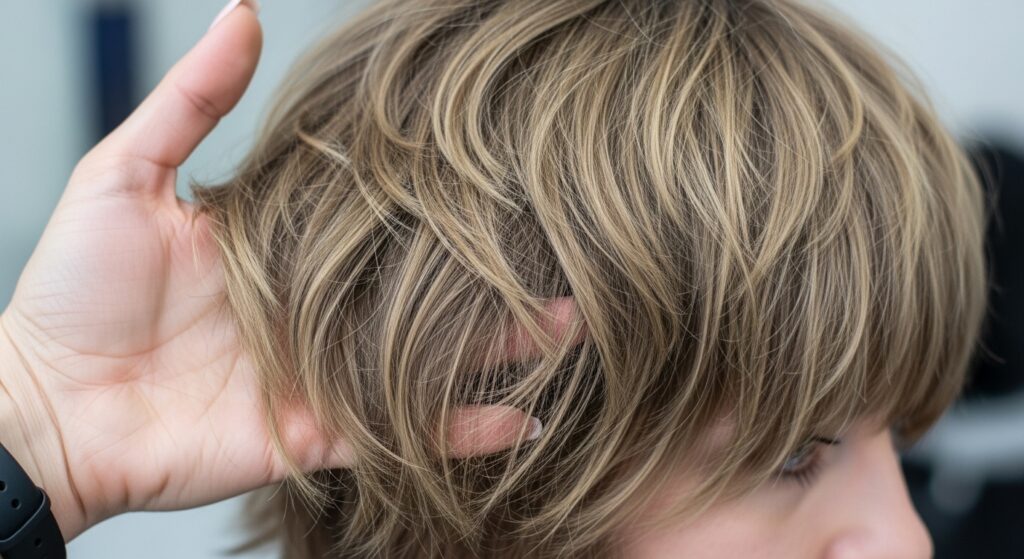
Razor-Cut Layers: The cornerstone. Unlike scissor-cut layers which can create a blunt, heavy line, razor cutting creates feathered, soft ends that remove weight and encourage piece-y, separated texture. This is what creates that signature “undone” look, where each layer seems to move independently.
The Curtain Bang (Or Something Like It): Rarely are bangs in a true Seattle Shag blunt or heavy. Instead, they are long, wispy, and often parted in the middle—a nod to the 90s curtain bang. They can be swept to the side, tucked behind an ear, or left to frame the face with a effortless, face-framing softness.
Emphasis on Texture, Not Volume: Big 80s hair this is not. The Seattle Shag seeks tactile texture—the feeling of individual strands and pieces. It’s about creating internal movement and a sense of lived-in history, rather than big, teased-out volume. This makes it perfect for the typically finer hair textures common in many people, as it creates the illusion of thickness through separation.
Disconnection and Shattered Ends: There’s often a deliberate “disconnection” between lengths, especially around the crown and the ends. The ends aren’t clean; they’re “shattered” or “chiseled,” looking almost as if they’ve been broken off naturally. This adds to the raw, rebellious character of the cut.
Styling the Unstyled: How to Wear Your Seattle Shag
The beautiful paradox of the Seattle Shag is that while it requires a skilled stylist to create, its daily maintenance is refreshingly simple. The goal is to enhance, not mask, its natural texture.
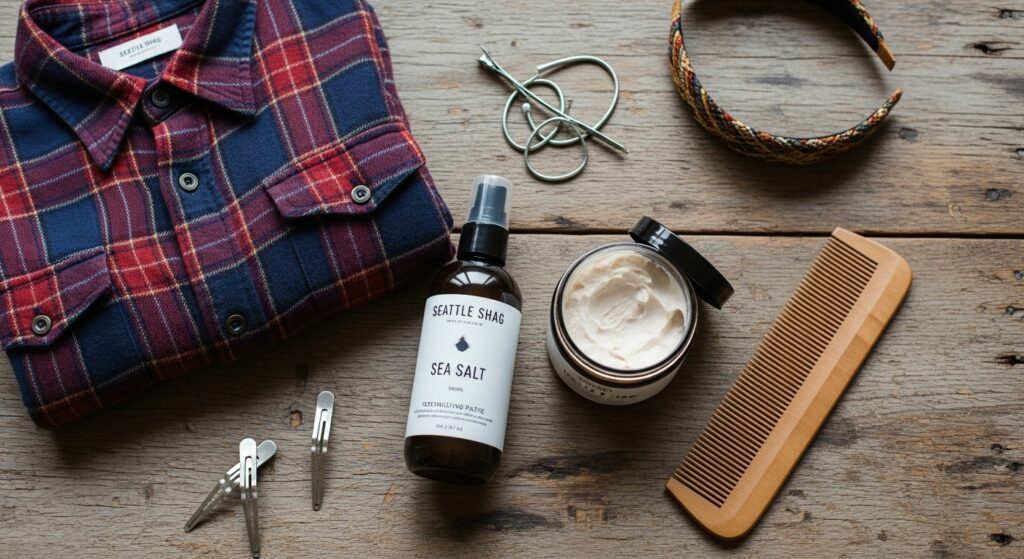
The Wash-and-Go (Almost): Start with a texturizing shampoo and conditioner. After towel-drying, apply a sea salt spray or a texturizing mousse to damp hair, focusing on the mid-lengths and ends. Scrunch your hair upwards with your hands and then… let it air dry. Diffusing with a blow dryer on low heat can enhance volume, but the air-dry method often yields the most authentic, piece-y result.
Embracing the “Second-Day” Hair: This cut truly shines on day two or three. Refresh with a dry shampoo at the roots to absorb oil and add grip, then use a light-hold texturizing paste or wax to redefine individual pieces around your face and ends. The oils from your scalp will have naturally enhanced the texture, making styling even easier.
Accessorizing the Grunge Revival: The Seattle Shag welcomes accessories that feel organic. Think thin, woven headbands, vintage silk scarves tied loosely around the head, or simple barrettes used to pin back just one side. The key is nonchalance.
Who is the Seattle Shag For? Breaking the Rules
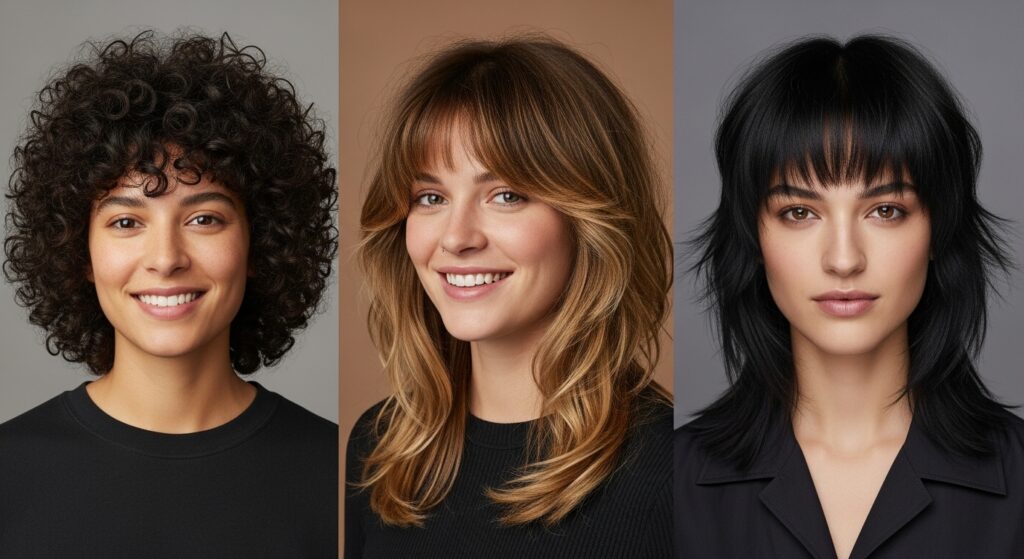
A common misconception is that this is a cut only for the young or for those with straight, fine hair. The Seattle Shag is remarkably democratic and adaptable.
For Curly and Wavy Hair: This cut is a game-changer. The razor-cut layers help to reduce bulk and encourage curl definition without creating a triangular shape. It allows curls to spring up at different lengths, creating a gorgeous, cascading effect full of volume and life.
For the Low-Maintenance Individual: If you hate spending more than 10 minutes on your hair, this is your cut. Its beauty lies in its imperfection, so there’s no need for precise styling. The less you do, often the better it looks.
For Anyone Seeking a Change in Attitude: Getting a Seattle Shag is often described as a feeling of liberation. It’s a cut that demands confidence and rewards it with a unique, head-turning style. It’s for the creative, the musician, the writer, the coffee shop philosopher, or anyone who carries a bit of rebellious spirit in their heart.
Finding Your Stylist in the Concrete Jungle
Not every stylist can execute a proper Seattle Shag. It requires a specific skill set and, more importantly, an understanding of the aesthetic. When searching for your stylist, look for portfolios that feature textured, layered cuts and a more editorial, lived-in feel. Use keywords like “texture specialist,” “razor cutting,” or “lived-in haircuts” in your search. Don’t be afraid to bring in multiple reference photos that capture not just the length, but the specific feeling of the texture you want.
The Seattle Shag is more than a trend; it’s the return of a feeling. It’s the distillation of rainy days, record store aisles, and the resonant feedback of a guitar amp into a haircut. It’s a celebration of individuality in a world of filters and uniformity. In a time of high-gloss perfection, the Seattle Shag stands as a testament to the enduring beauty of the raw, the real, and the authentically undone.
So, are you ready for the revival?