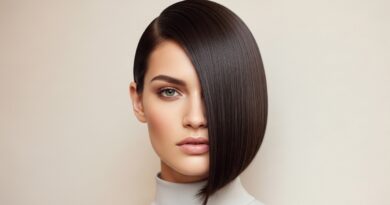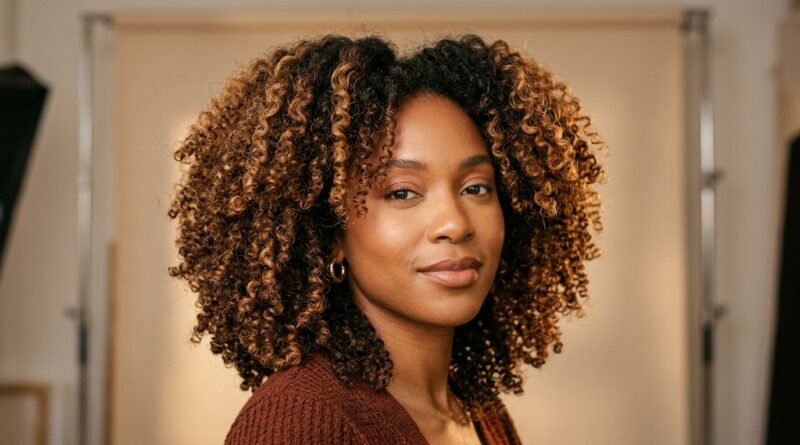
20 Hairstyles That Showcase Balayage Placement on Different Hair Lengths
Balayage is one of those things that looks completely effortless when the placement is right, and just a little off when it is not. The color itself is rarely the problem. The map is.
Here is the truth I wish more people knew: placement changes based on your length. Short hair needs light where it moves. Long hair needs light where it falls. Curly hair needs light where the curls pop. Same technique, totally different game plan.
So I rounded up 20 hairstyles that show exactly where balayage should sit on bobs, lobs, mid-lengths, and long hair. You will also see how 2026 hairstyles are leaning into soft, grown-out blends instead of harsh stripes.
Skim the ones that match your length, screenshot your favorites, and bring them to your stylist. Let’s get into it.
1. The Quiet Luxury Bob with Face-Framing Balayage
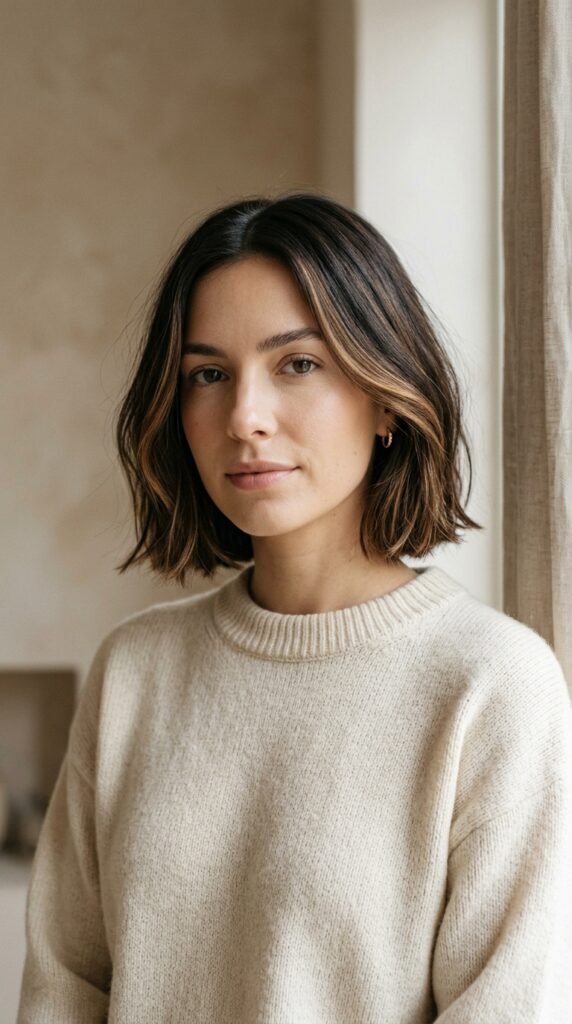
The quiet luxury bob is the poster child for 2026 hairstyles, and balayage is what makes it feel expensive. The trick is keeping all the lightness in the front two sections so your face gets the glow.
Ask your stylist for soft lightness starting around the cheekbone and drifting downward. Leave the back deeper so the shape stays solid and heavy in the best way.
- Best on: chin to jaw-length bobs
- Placement: two face-framing sections only
- Skip: heavy highlights through the crown
Low maintenance, high impact. That is the whole point.
2. French Bob with a Soft Money Piece
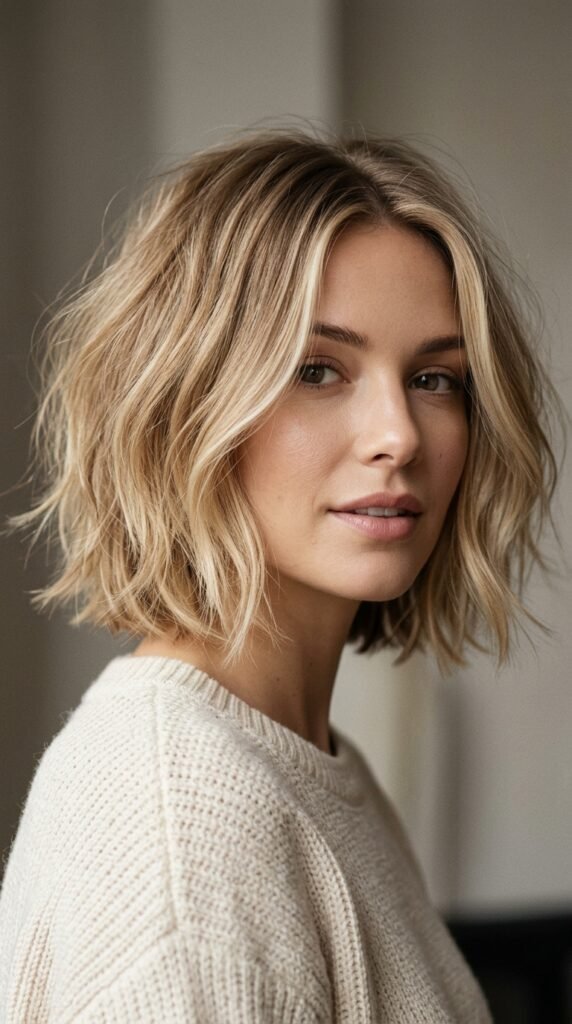
A French bob already has that undone, effortless energy. Add a money piece and it suddenly looks intentional instead of accidental.
Keep the money piece thin. One to two centimeters of lightness on each side of the part is plenty. Anything wider starts looking like chunky highlights from 2008.
- Ask for a soft money piece, not a bold one
- Blend it back about two inches into the root
- Leave the rest of the bob completely untouched
This is old money hair energy without the upkeep of a full highlight appointment.
3. Blunt Bob with Hidden Underlayer Balayage
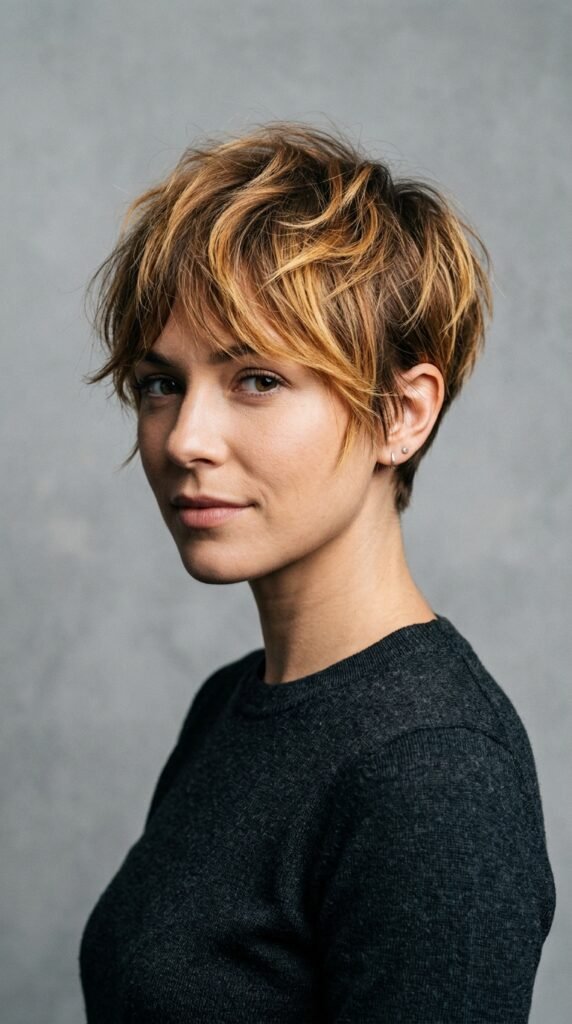
This one is sneaky and I love it. The top layer stays dark and glossy, while a lighter panel hides underneath. When you move, you get a flash of color.
It is perfect if you want dimension without looking like you have highlights. Your hair reads solid and healthy from the front, then surprises people from the side.
- Best on: blunt, one-length bobs
- Placement: underlayer only, back and sides
- Keep the top layer 100 percent natural
Such an easy way to make a simple cut feel custom.
4. Pixie with Painted Ends
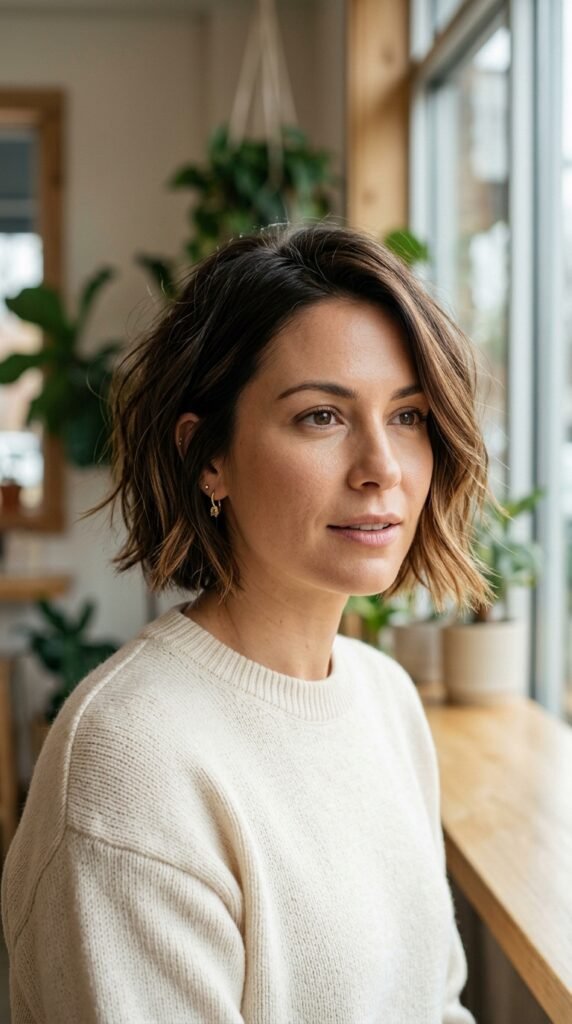
Short hair and balayage can absolutely work. You just have to stop thinking about roots and start thinking about tips.
On a pixie, all the movement lives at the ends. So that is exactly where the light should go. Think painted tips, not a full color melt.
- Placement: last one to two inches of the ends
- Keep the root and mid-shaft deep
- Ask for a soft blend, never a hard line
Bonus: it makes a grow-out way more forgiving, because the light sits where the shape naturally softens.
5. Old Money Hair on a Short Chop
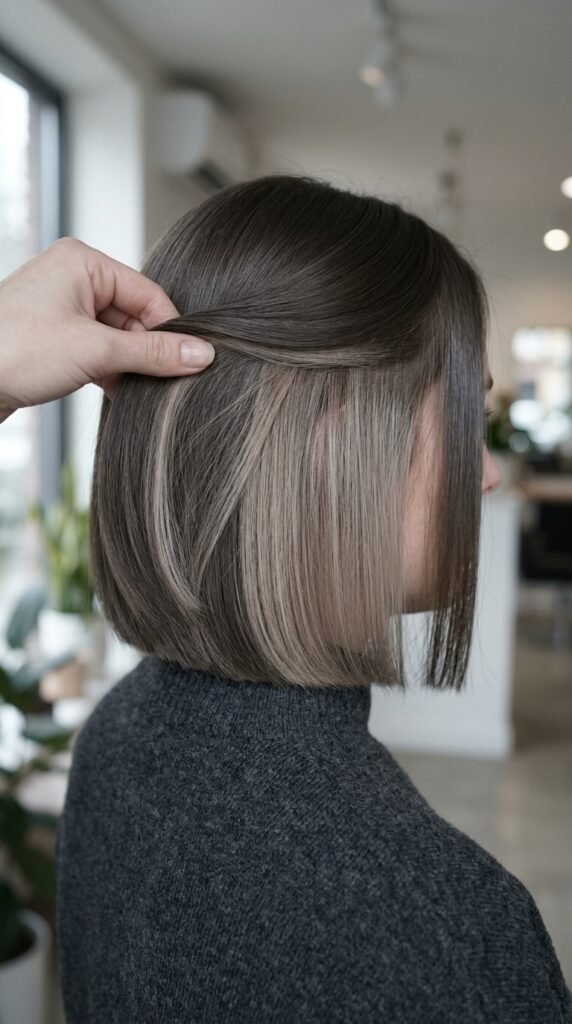
Old money hair is not about being blonde. It is about looking healthy, shiny, and like you have never once panicked about your color.
On short hair, that means a deep base with the softest touch of warmth on the ends. No obvious streaks, no visible foil lines, nothing that screams “fresh appointment.”
- Base: rich brunette or dark blonde
- Ends: half a shade to one shade lighter
- Finish: gloss everything for shine
Quiet, polished, and honestly pretty hard to mess up.
6. Asymmetrical Lob with Diagonal Balayage
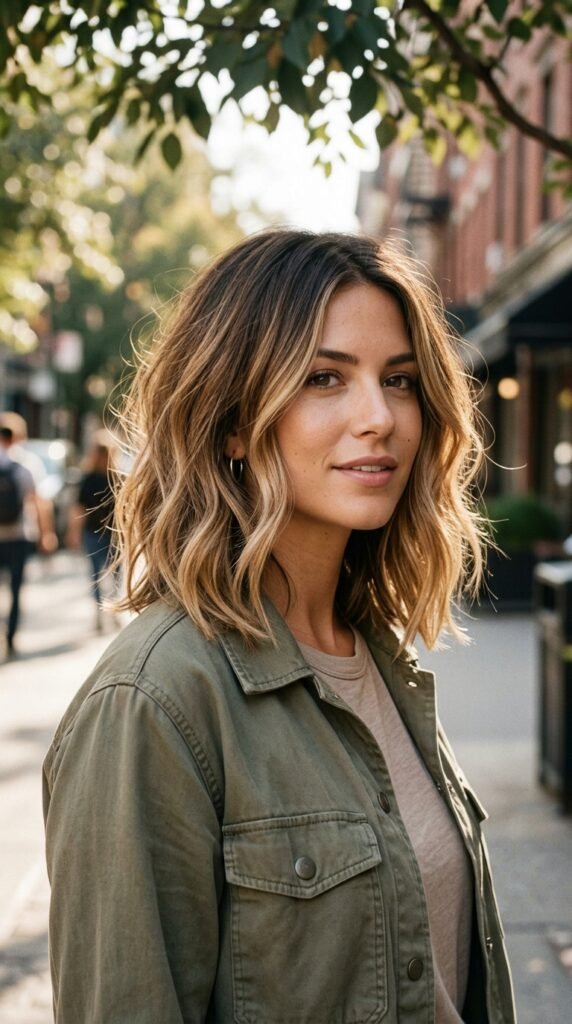
The asymmetrical lob is having a moment, and diagonal placement is what makes it sing. Your color should follow the line of the cut, not fight it.
Have your stylist angle the balayage so the shorter side stays slightly deeper and the longer side carries more lightness. It visually extends the shape.
- Map the cut first, then map the color
- Follow the diagonal line of the lob
- Blend the transition over three to four inches
It sounds technical, but the result looks completely natural and very intentional.
7. Collarbone Lob with Grown-Out Roots
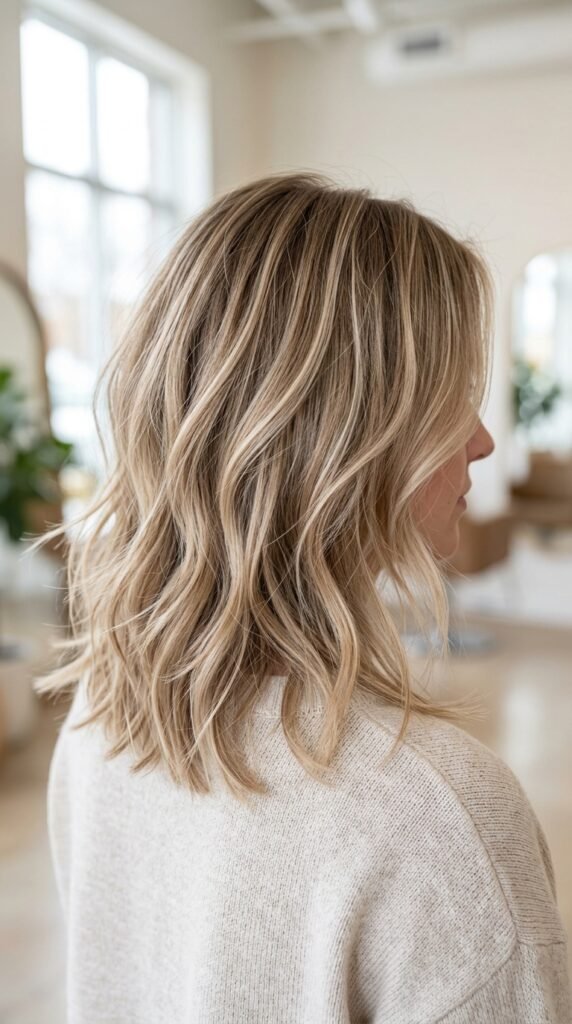
The collarbone lob is the most flattering length for most people, and balayage makes it look like you just came back from somewhere sunny.
Here, root shadow is your friend. Keep two to three inches of natural depth at the root, then melt into lightness from mid-shaft down.
- Root shadow: 2 to 3 inches
- Lightness: starts at the jawline or below
- Finish: soft, not stripey
It grows out beautifully, which means fewer appointments and less small talk. Win-win.
8. Shoulder-Length Layers with Ribbon Balayage
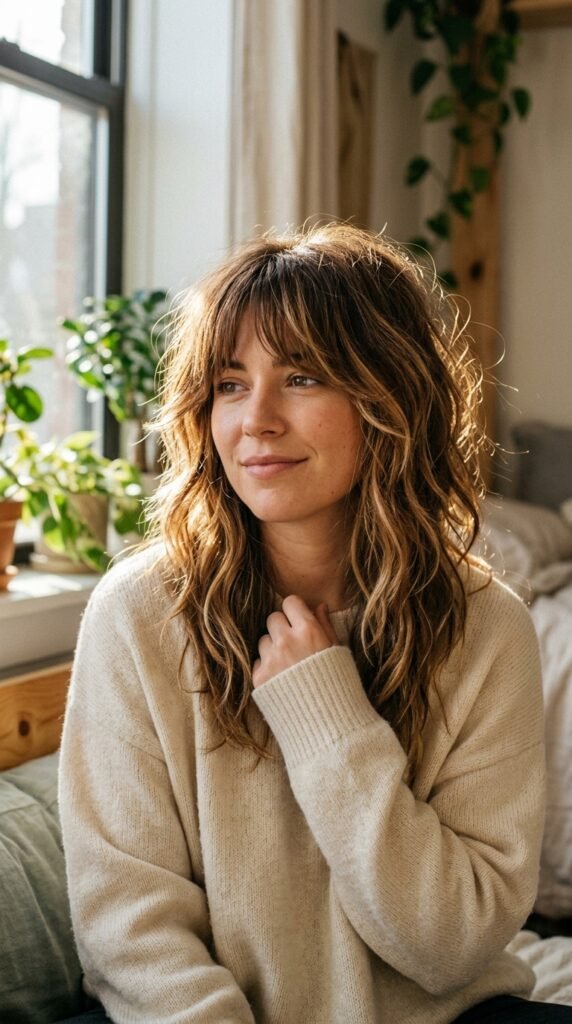
Ribbon balayage is exactly what it sounds like: thin, flowing strands of lightness that look like ribbons through the hair.
It works best on shoulder-length layers because the cut gives the color places to hide and reveal. Too short and it looks choppy. Too long and it disappears.
- Keep the strands fine, never chunky
- Place them on the outer layers only
- Blend each strand at the root
This is the technique to ask for if you want dimension that reads as natural texture, not color.
9. Mid-Length Shag with Chunky Placement
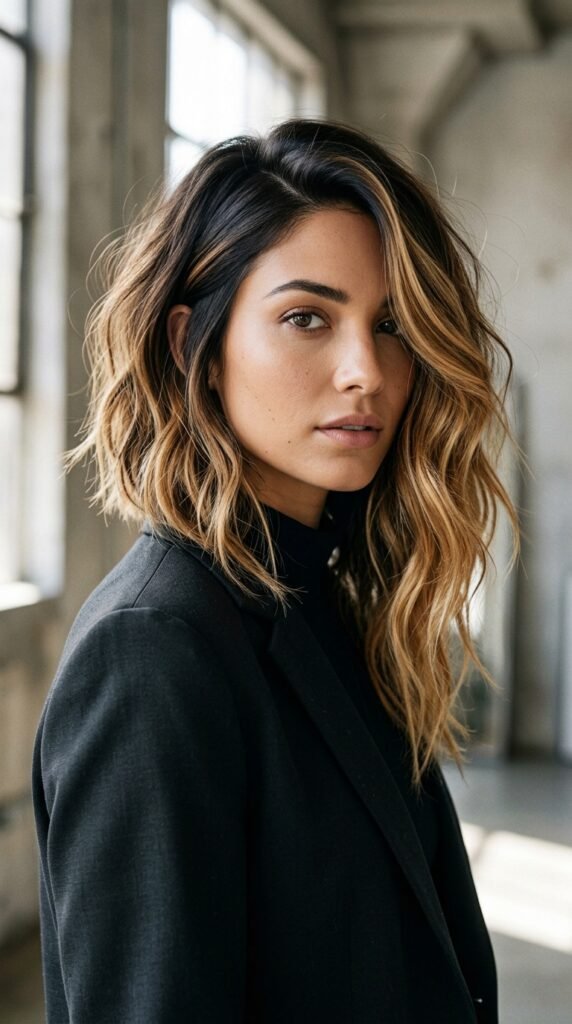
Shags are forgiving and a little rebellious, so this is the one time I say go slightly bolder with your placement.
Chunky pieces around the face and through the ends emphasize the shag’s natural movement. Thin, delicate highlights get lost in all that texture.
- Placement: around the face and through the ends
- Width: slightly wider than your usual pieces
- Texture: keep it lived-in, not perfect
Ask for a bronde blend if you want something between brown and blonde that flatters almost everyone.
10. Long Layers with Halo Balayage
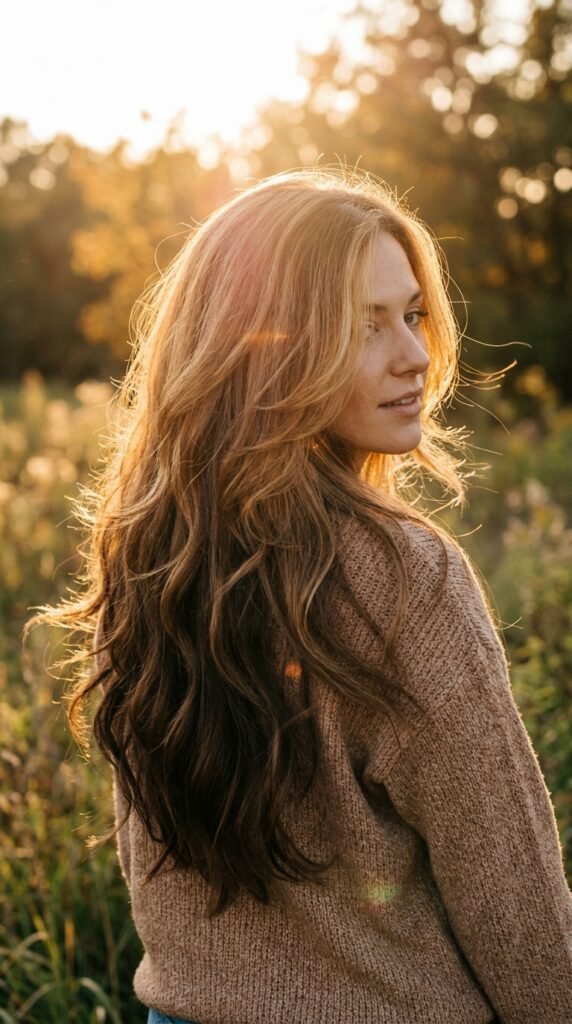
Halo balayage places the light in a ring around the head, mostly on the top layers. The result is a soft glow right where light naturally hits.
On long hair, this is genius because it keeps the bottom deep and healthy while the top stays bright and dimensional. No fried ends.
- Lightness concentrated around the crown
- Mid-lengths stay blended and soft
- Ends stay deeper and richer
Perfect if you have been growing your hair out and want it to still look alive.
11. Curtain Bangs with Balayage That Connects
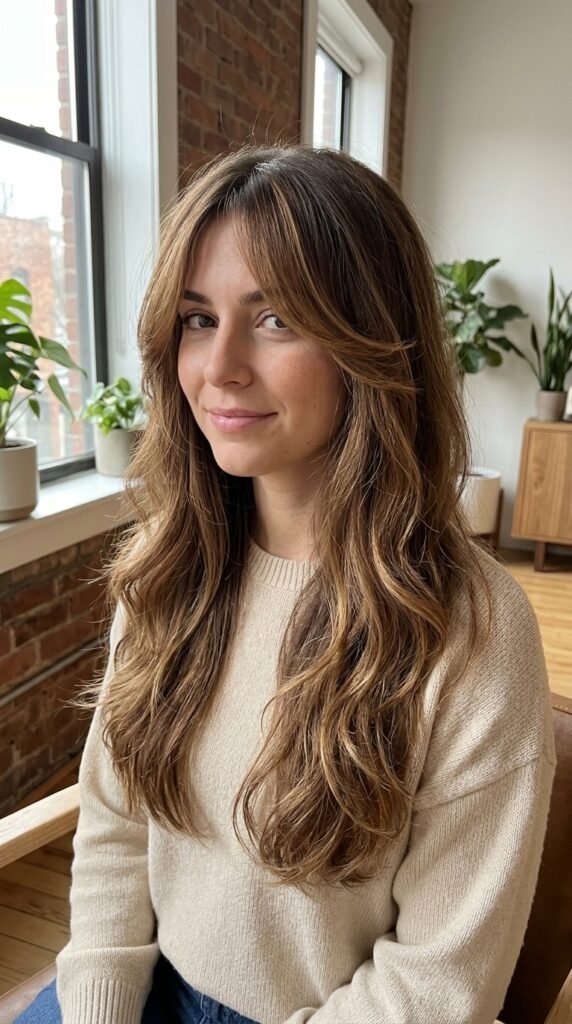
Curtain bangs are still everywhere, and the placement rule here is simple: your bangs and your balayage have to be friends.
If the bangs are dark and the rest of your hair is light, you get a visible line. Ask for the lightness to start right at the ends of the bangs and melt backward.
- Connect bangs to the face-framing pieces
- Keep the root of the bangs natural
- Blend backward, never sideways
When it is done right, it looks like the sun did it. When it is done wrong, it looks like a stripe.
12. Romantic Goth Hairstyles with Deep Shadow Roots
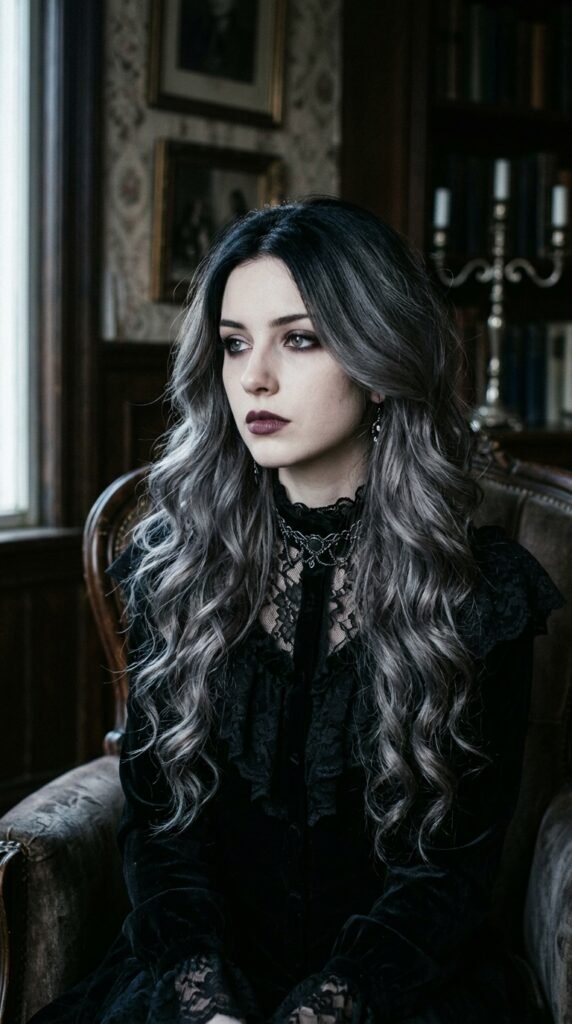
Romantic goth hairstyles are softer and more wearable than full goth, and balayage fits right in. Think velvet, not spikes.
Here, the shadow root does the heavy lifting. Keep four to five inches of deep, almost black depth, then fade into a cool ash or smoky grey.
- Root: deep black or espresso
- Mid-lengths: cool ash or smoky grey
- Avoid: warm gold or orange tones
Pair it with soft waves and you have a look that is moody but still polished enough for real life.
13. Vampire Haircut with Burgundy Balayage
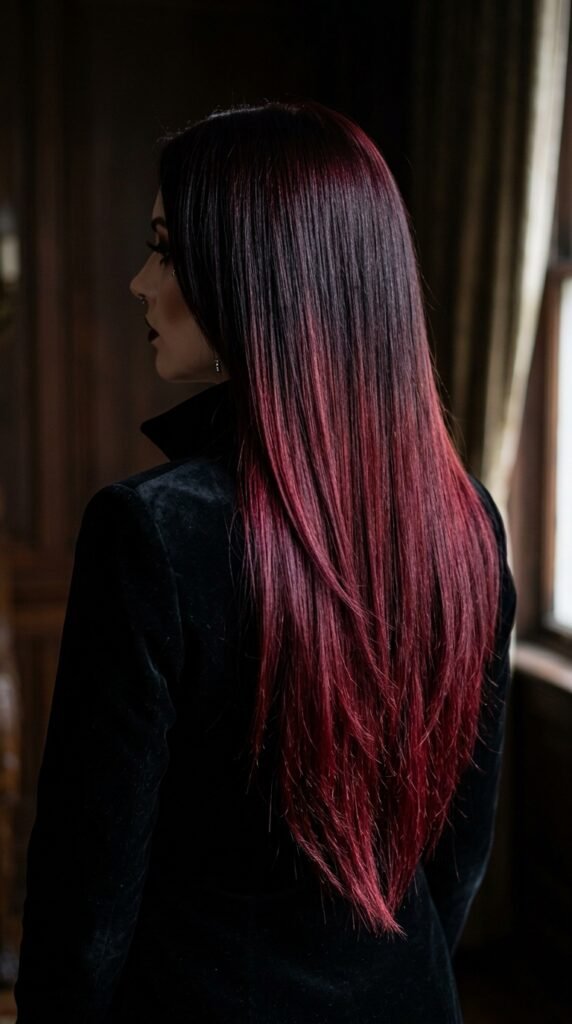
The vampire haircut is all about sharp lines, dramatic length, and a little bit of danger. Balayage makes it wearable.
Place a rich burgundy or cherry tone through the mid-lengths, keeping the root dark and the ends deep. No blonde anywhere. This is a warm, blood-toned story.
- Base: nearly black or dark brown
- Placement: mid-lengths fading down
- Shade: burgundy, cherry, or deep copper
Gorgeous on straight hair with a blunt cut. It glows without being loud.
14. Hime Cut with Blunt-Tip Balayage
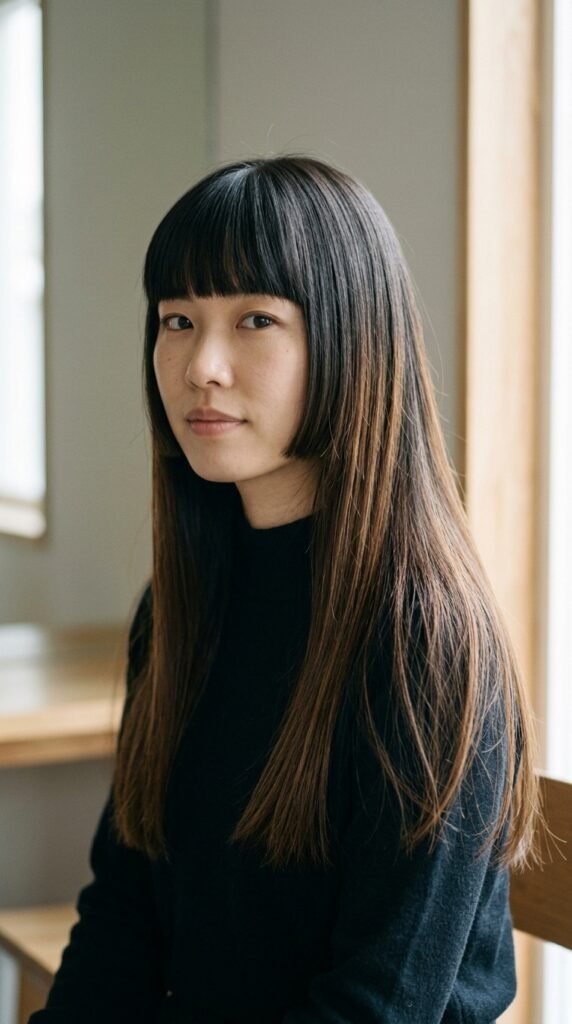
The hime cut is instantly recognizable: blunt bangs, straight face-framing pieces, and long hair in the back. It is striking and very specific.
With balayage, the rule is simple. Keep the front pieces and bangs solid. Only the long back section gets the lightness.
- Bangs and side pieces stay dark
- Balayage starts below the jaw
- Ends get the brightest placement
This keeps the sharp silhouette intact while giving the length some depth.
15. Glitchy Glam Hair with Contrast Panels
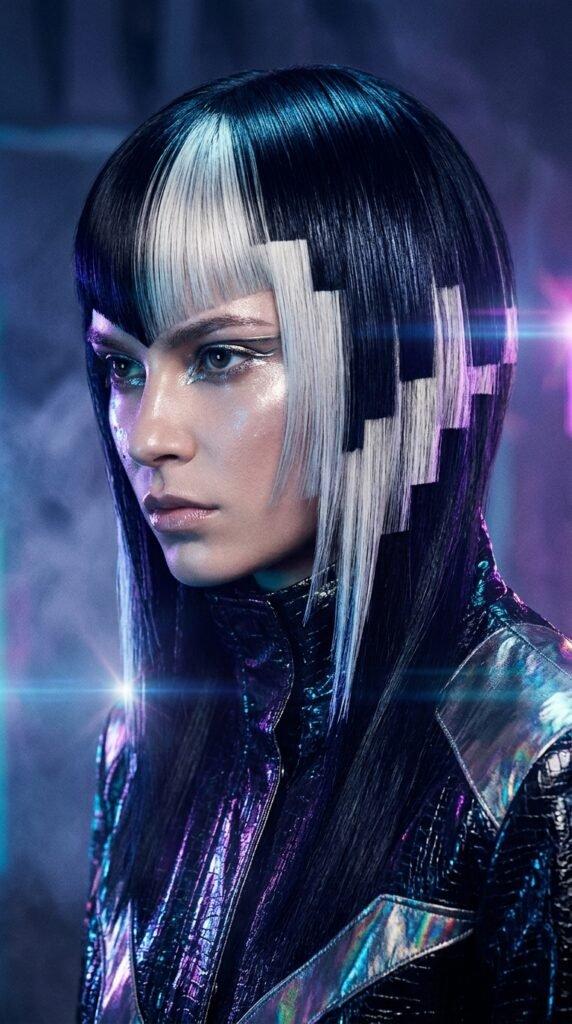
Glitchy glam hair is the fun, tech-inspired look popping up all over 2026 hairstyles. It plays with contrast on purpose.
Instead of blending everything seamlessly, you place distinct light panels against a dark base. It looks intentional, almost digital.
- Placement: one or two bold panels
- Contrast: keep it strong, not subtle
- Keep the rest of the hair deep and glossy
It works best on straight or slightly wavy mid-length hair where the panels stay clean and visible.
16. Bronde Balayage on Long Hair
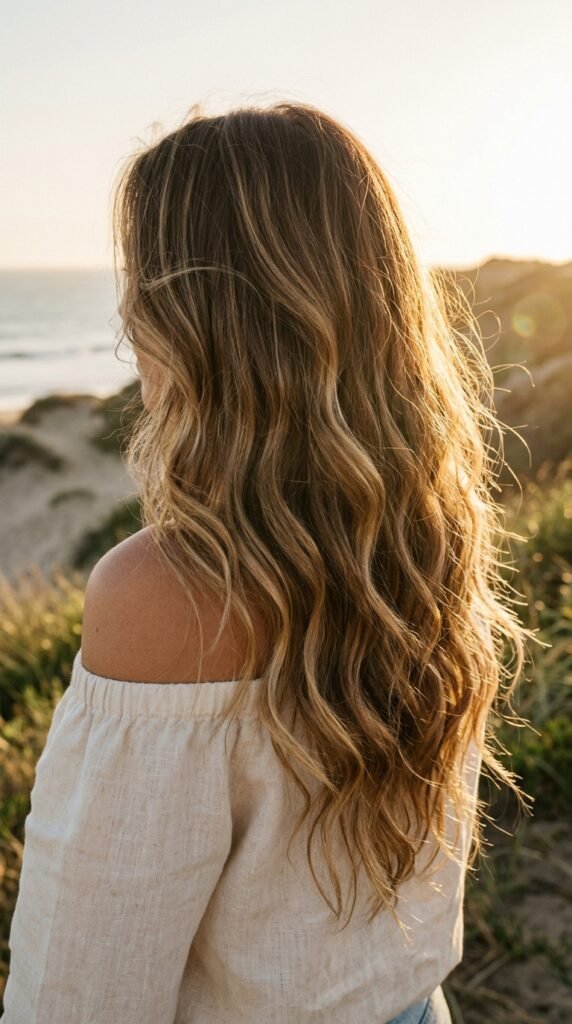
Bronde is the shade that refuses to quit, and on long hair it is basically a cheat code. It sits right between brown and blonde, so it flatters almost every skin tone.
On longer lengths, start your lightness around the chin or jaw and let it build downward. Keep it gradual.
- Start: jawline or below
- Build: gradually fuller toward the ends
- Finish: gloss for shine
The result is that sunlit, expensive look without a monthly appointment at the salon.
17. Curly Cut with Curl-Popping Balayage
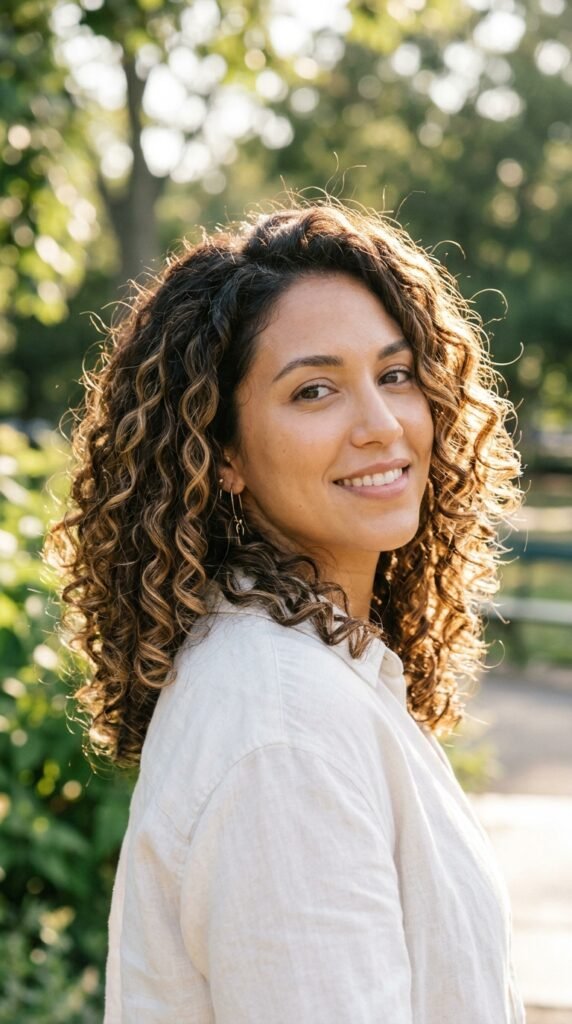
On curls, balayage should follow the curl pattern, not cut across it. That is the entire secret.
Your stylist should paint individual curls or curl clusters so the lightness spirals naturally. Horizontal placement on curly hair reads as stripes.
- Paint with the curl, never against it
- Go one to two shades lighter, max
- Keep the root area natural
You also want a stylist who knows how to dry-cut curls. It changes everything.
18. Coily Hair with Chunky Highlight Placement
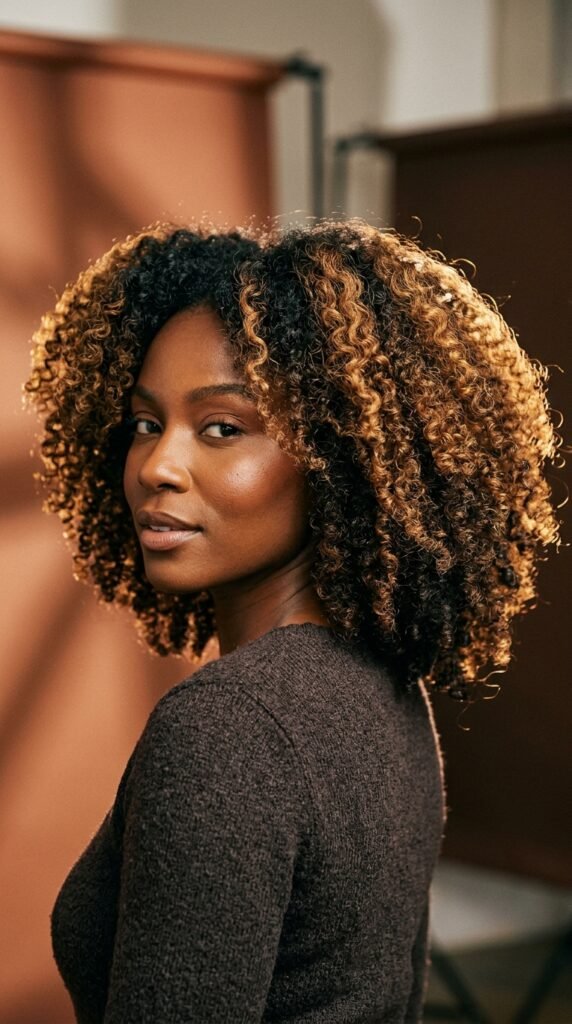
Coily hair needs a different approach because shrinkage hides so much of the color. If you place balayage underneath, you will never see it.
Go for chunkier placements on the outer layers, where the light actually lives. The pieces need to be wide enough to survive shrinkage.
- Place highlights on the outermost layers
- Keep pieces wider than you would on straight hair
- Ask for a bond-building treatment with the service
Patience and a good stylist are everything here.
19. Fine Hair with Soft Dimension Balayage
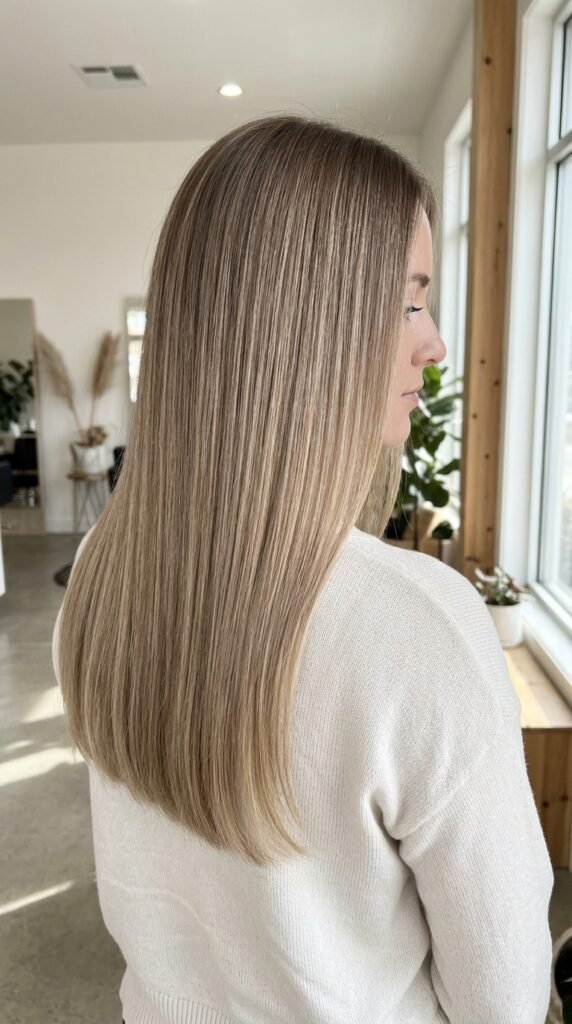
Fine hair has one job with balayage: create depth without creating damage. Less really is more.
Stick to two or three shades of difference, not five. Soft, blended pieces add the illusion of thickness, while heavy highlights can make fine hair look stringy.
- Keep the contrast gentle
- Favor babylights over chunky pieces
- Add a gloss for shine and strength
When it is done well, fine hair looks fuller and healthier almost instantly.
20. Thick Hair with Internal Balayage
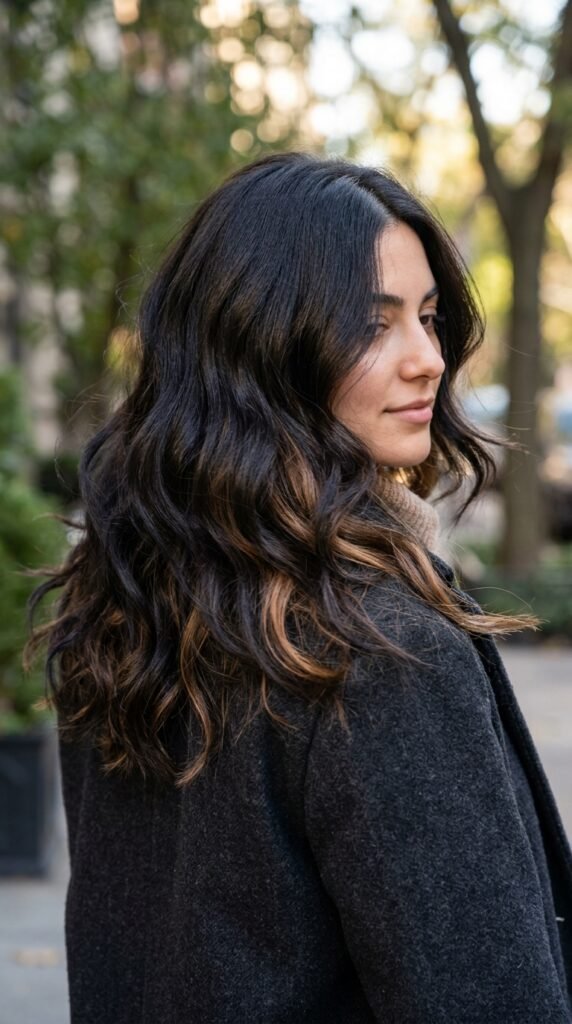
Thick hair can handle more color, but it can also turn into a heavy block of lightness fast. The fix is internal placement.
Instead of painting the whole surface, your stylist places lightness in the internal layers so it peeks through as you move. The top layer stays deep and glossy.
- Placement: internal layers and under-sections
- Top layer: keep it rich and dark
- Best on: thick, straight, or wavy hair
You get depth, movement, and zero bulk.
How to Ask Your Stylist for the Right Placement
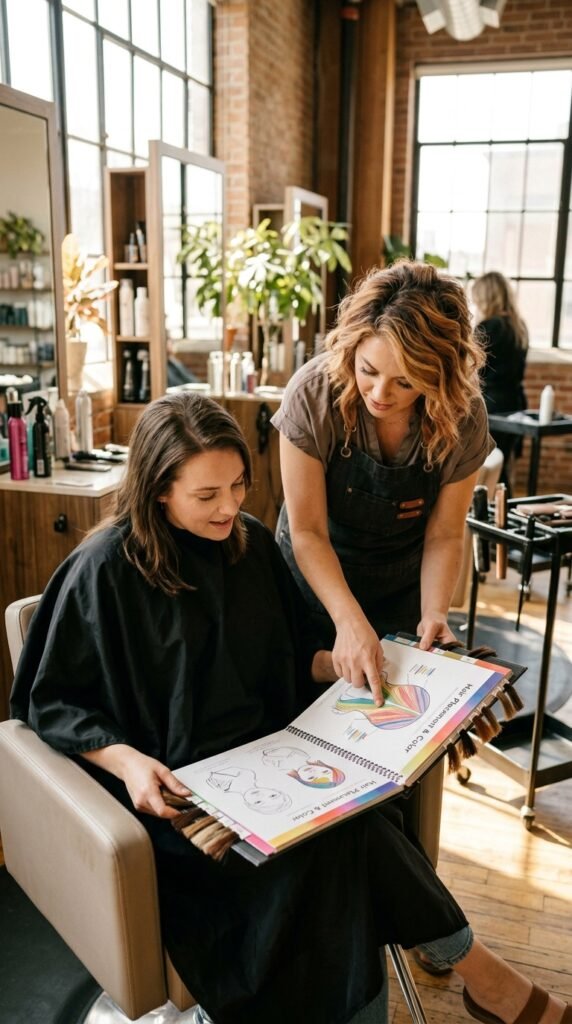
Bring photos. Not one photo, three or four. Show what you like and, just as importantly, what you do not want.
Then use plain words. Say where you want the lightness to start, how soft you want the blend, and how often you are willing to come back.
- Show pictures of your length and texture
- Say your maintenance limit out loud
- Ask how the grow-out will look in three months
Good stylists love a clear brief. It saves everyone time and money.
Keeping Balayage Fresh Between Appointments
Balayage is low maintenance, not no maintenance. A few small habits keep it looking fresh way longer.
- Use a color-safe shampoo and cool water
- Add a gloss or toning mask every few weeks
- Get a trim every ten to twelve weeks
- Use heat protectant before any hot tool
And do not skip the bond-building products, especially if you are lighter than a bronde. Your hair will thank you.
Okay, that was a lot, but I promise the takeaway is simple. Balayage placement is not one-size-fits-all, and it should never be copied straight from a photo of someone with a totally different length.
Short hair wants light at the ends and around the face. Mid-lengths want softness through the layers. Long hair wants lightness built gradually, with the ends staying healthy and rich.
Get the placement right and your color will grow out beautifully, look expensive, and feel like you. Get it wrong and you will be back in the chair in six weeks.
Save this post to Pinterest so you have it ready before your next salon visit, and tell me in the comments: what length are you working with right now? I read every single one.