
24 Protective Styling Ideas For Natural Hair Growth Journey Success
Why Protective Styling Actually Works
Protective styling is not complicated. You tuck your ends away, you keep your hands out of your hair, and you let it rest. That is the whole idea.
Your ends are the oldest and driest part of your hair. They take the most friction from pillows, coats, and daily styling. When you cover them, you keep the length you already grew.
- Less daily manipulation means less breakage
- Tucked ends hold moisture longer
- Fewer tangles means easier wash days
Two Ground Rules Before You Start
Every style below works better when you follow two rules.
- Low tension. If your scalp hurts, it is too tight. Pain is not a sign of a good style.
- Moisture first. Never install a protective style on dry hair. Moisturize, seal, then style.
- Clean scalp. Cleanse your scalp every two to three weeks, even in braids.
Follow these and almost any style on this list becomes a growth style. Skip them and even the prettiest look can set you back.
1. Two-Strand Twists

Two-strand twists are the friendliest starting point. They work on short hair, long hair, and everything in between. You can wear them loose, pinned up, or in a bun.
Mini twists last four to six weeks if you keep your scalp clean and your hands out of them. Then unravel them for a soft twist-out as a bonus style.
- Moisturize each section before twisting
- Twist small sections for longer wear
- Tuck the ends under with a pin
2. Flat Twists
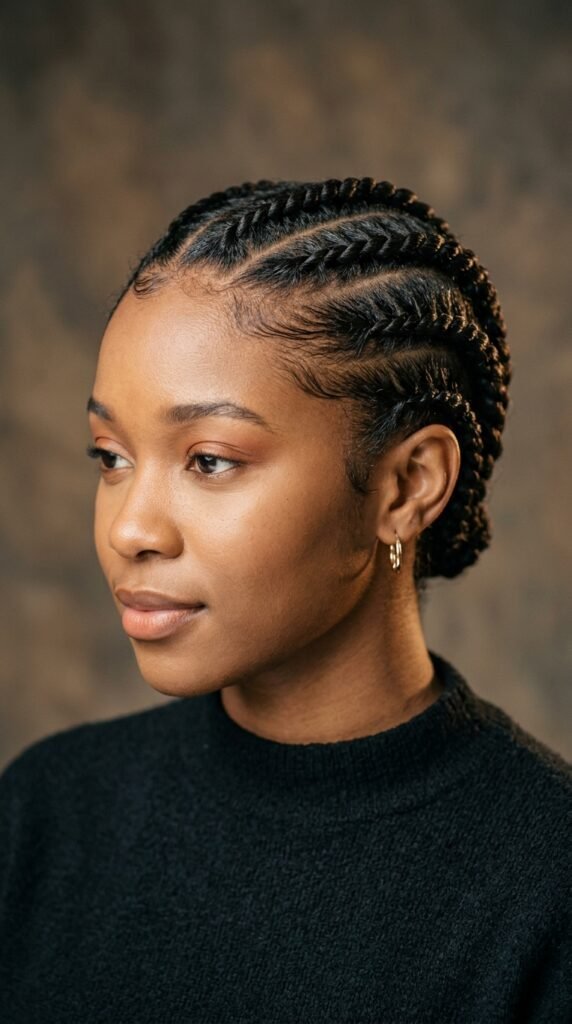
Flat twists sit close to your head, so they look polished and feel weightless. They are one of my favorite 2026 hairstyles because they work for the office, weddings, and lazy Sundays.
They also make a perfect base under a wig or a headwrap. Your ends are fully tucked and nothing is pulling on your edges.
- Great for beginners
- Lasts one to two weeks
- Unravel for defined flat twist-out curls
3. Knotless Box Braids
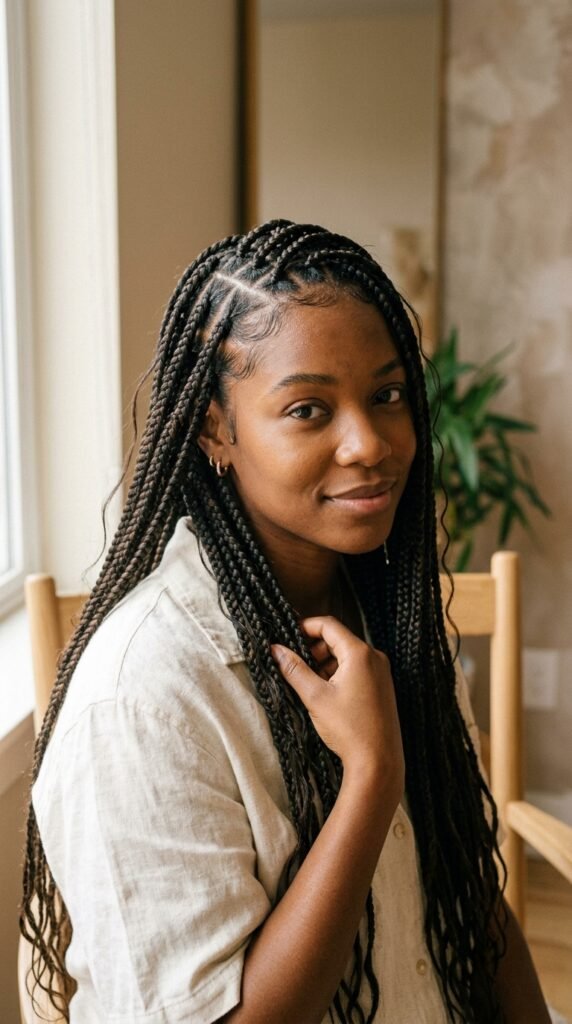
Knotless braids start with your own hair instead of a bulky knot at the root. That means less tension, less scalp soreness, and a flatter, more natural look.
Ask for medium or large parts if your goal is growth. Smaller braids are beautiful but heavier, and weight is what damages edges over time.
- Keep them in for four to six weeks
- Oil your scalp weekly
- Sleep in a satin bonnet every night
4. Cornrows
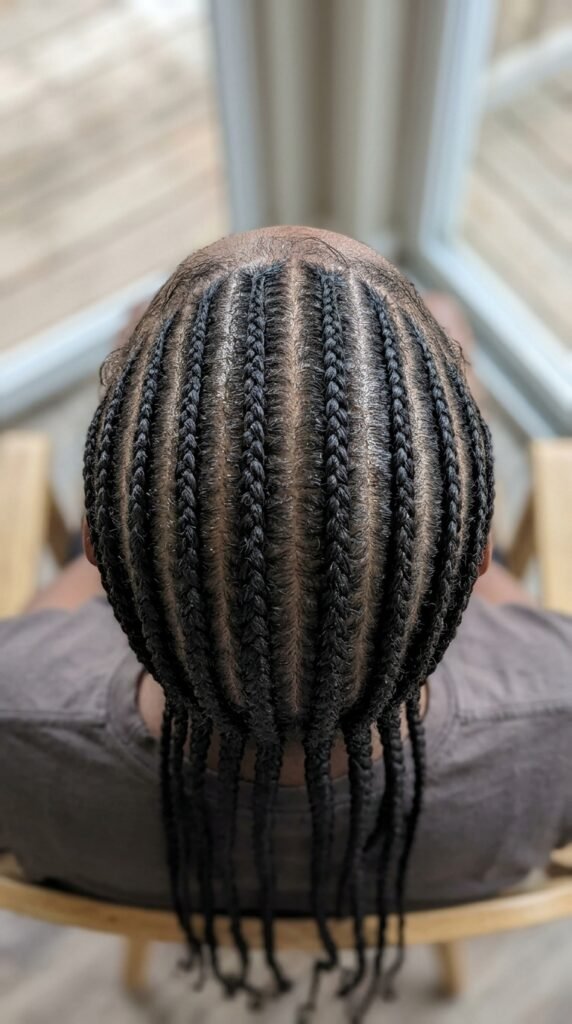
Cornrows are the original protective style. They lie flat, last two to four weeks, and hide completely under a wig or scarf.
Straight-back cornrows are the simplest version. Once you are comfortable, try curved patterns or a few feed-in rows for something more designed.
- Do not braid too tight at the hairline
- Spray with a moisture mist every few days
- Never leave them in longer than four weeks
5. Passion Twists

Passion twists use water wave hair, so they look softer and more romantic than traditional twists. They give you volume without heavy weight.
This is a great pick if you want a style that feels dressed up but still protects your ends. Perfect for weddings, trips, and photos.
- Choose lightweight hair to protect your roots
- Expect three to five weeks of wear
- Refresh with a light oil on the scalp
6. Faux Locs
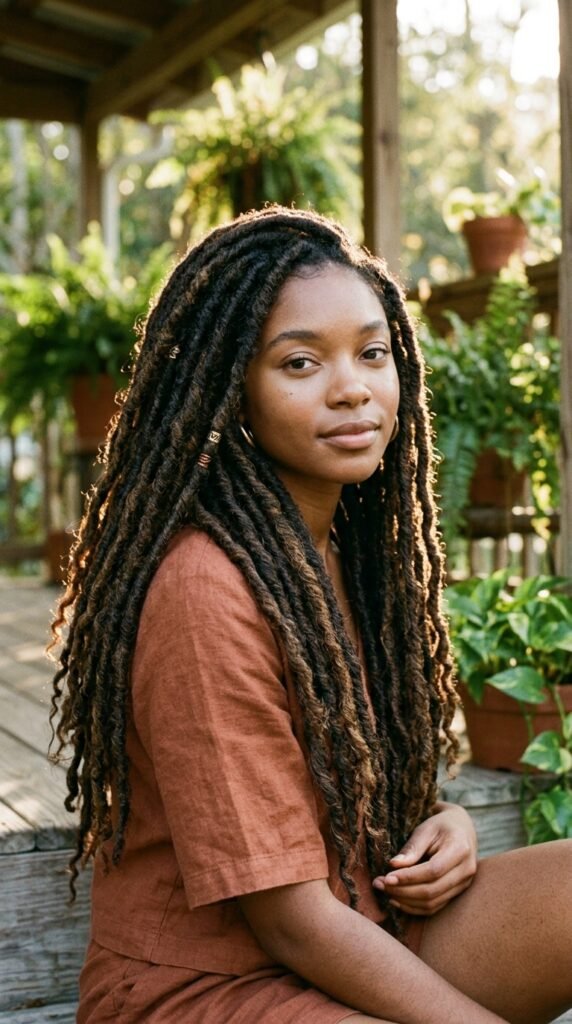
Faux locs give you the look of locs without the commitment. Your real hair is braided or twisted underneath, so your ends stay tucked and safe.
They are heavier than braids, so keep them on the larger side and do not leave them in too long.
- Best for medium to long hair
- Four to six weeks max
- Keep your scalp clean and dry
7. Bantu Knots
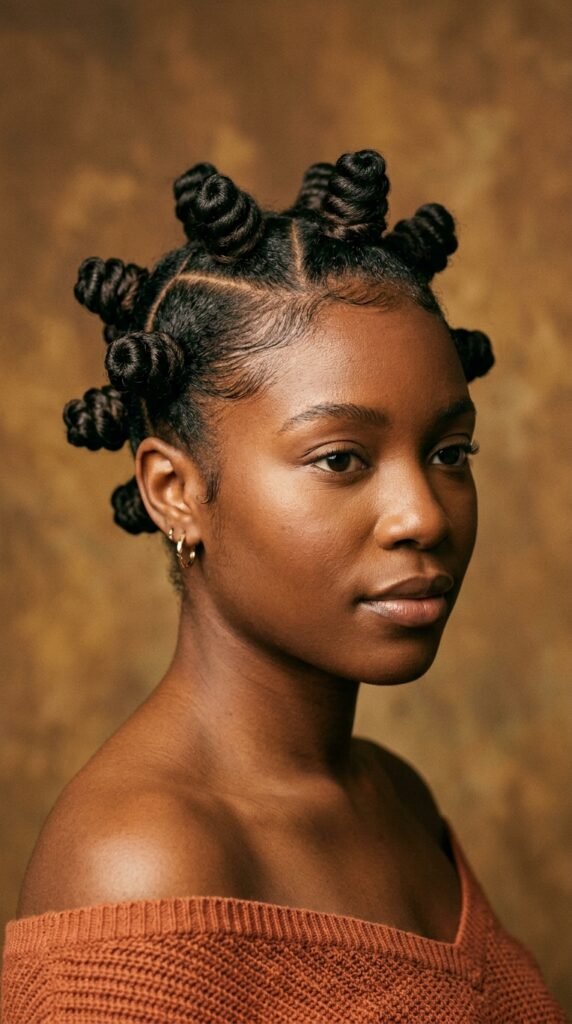
Bantu knots are a two-for-one deal. You wear the knots as a style, then take them down for a bouncy knot-out. That is two looks from one session.
They work on almost any length and keep your ends coiled and protected the whole time.
- Twist each section clockwise for neat knots
- Sleep in them for a tighter set
- Separate with oil for soft definition
8. Finger Coils
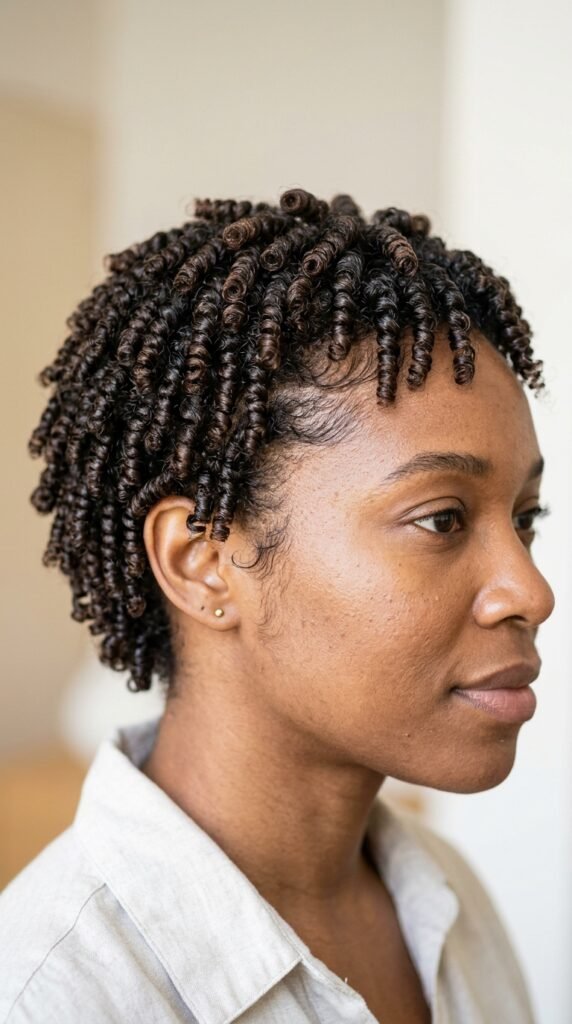
Finger coils are perfect for short hair and transitioners. They define your natural texture and keep your ends tucked into little spirals.
They take patience, but they last one to two weeks and give you a polished, intentional look with zero heat.
- Work in small sections on damp hair
- Use a gel or cream with slip
- Do not touch them while they dry
9. Mini Twists

Mini twists are the gold standard of protective styling. Small sections mean less friction, longer wear, and a beautiful twist-out when you are done.
Yes, they take hours. Put on a show, order takeout, and make it a whole thing. It is worth it.
- Last four to six weeks
- Wear them up most days to protect the ends
- Unravel for a full, fluffy twist-out
10. Halo Braid
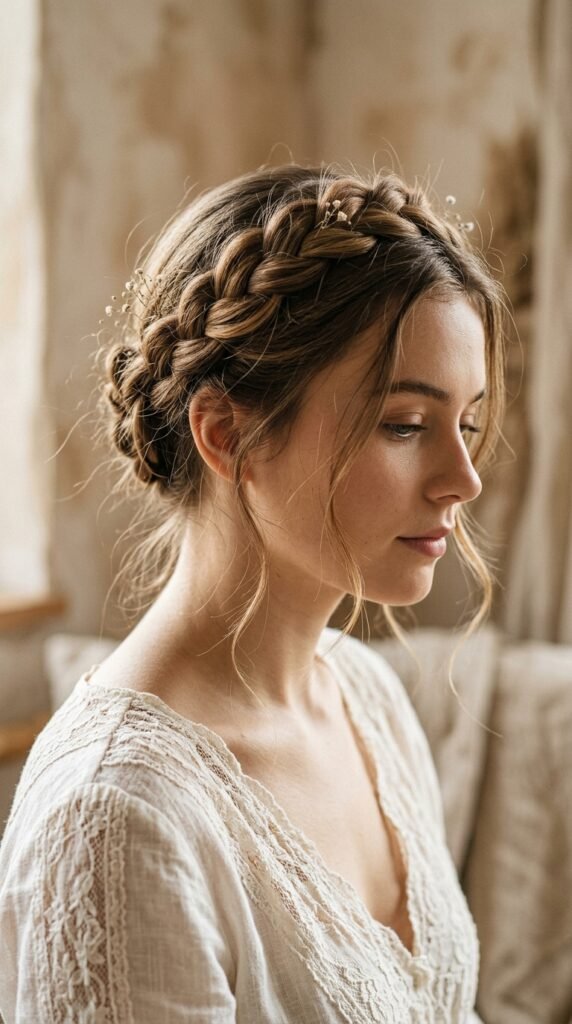
A halo braid wraps around your head like a crown, and it looks far more complicated than it is. Two braids pinned across the top and you are done.
This is my pick for old money hair energy on a budget. It reads elegant, intentional, and very put together.
- Braid two sections and cross them over
- Pin with bobby pins that match your hair
- Pull small pieces loose for softness
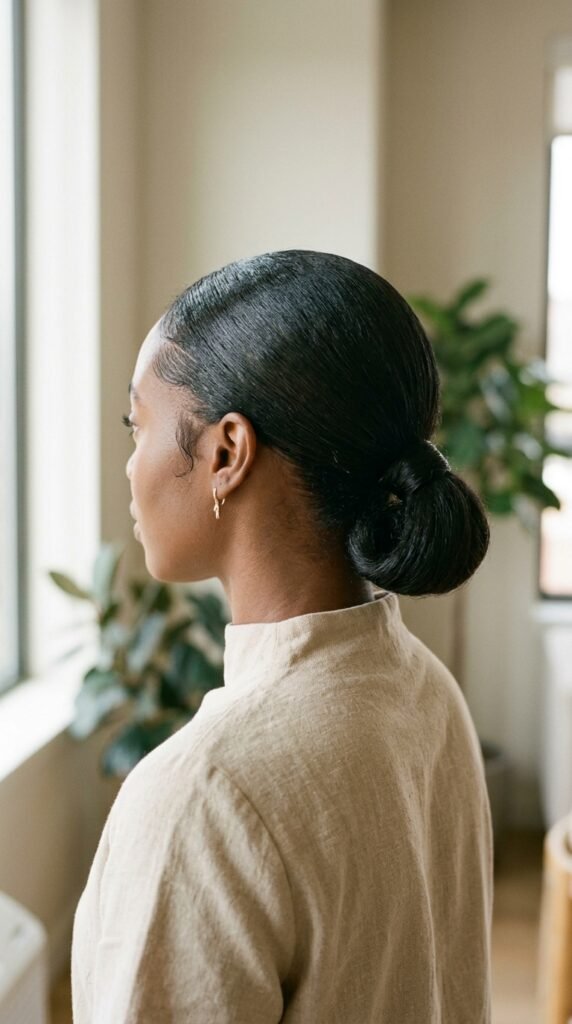
11. The Quiet Luxury Bun
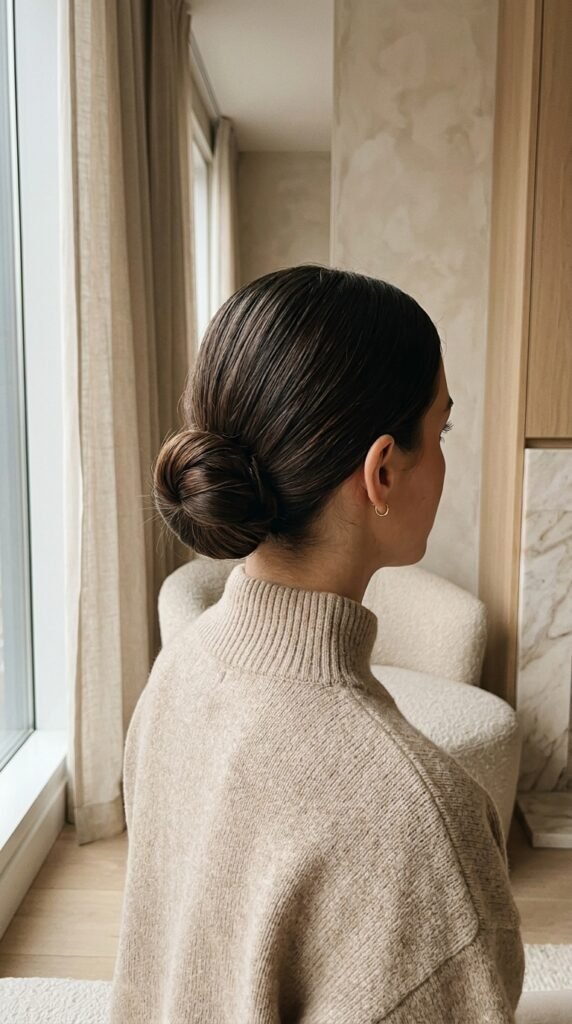
The quiet luxury bun is a low, smooth bun with every end tucked underneath. Nothing hangs, nothing rubs, and it looks expensive.
It is the easiest protective style on this list because you can do it in five minutes with a brush, a little gel, and one hair tie.
- Brush your hair back with a soft brush
- Tuck ends under the bun, never out
- Wrap with a satin scarf at night
12. The Quiet Luxury Bob

If you want the quiet luxury bob without cutting your real hair, wear one. Braid your hair flat underneath and pop on a glueless bob wig.
You get the sharp, expensive shape, and your natural hair gets complete rest.
- Braids underneath must be flat and smooth
- Choose satin-lined caps to protect your edges
- Take it off at night, always
13. The Asymmetrical Lob

The asymmetrical lob is one of the biggest 2026 hairstyles, and it works beautifully as a protective look. Longer on one side, angled on the other, with your real ends tucked away.
Wear it as a wig, or ask for a braided base that mimics the shape if you prefer your own hair.
- Keep the under-braids smooth
- Use a wide-tooth comb on the wig, not your hair
- Store it on a stand to keep the shape
14. Hime Cut Inspired Look
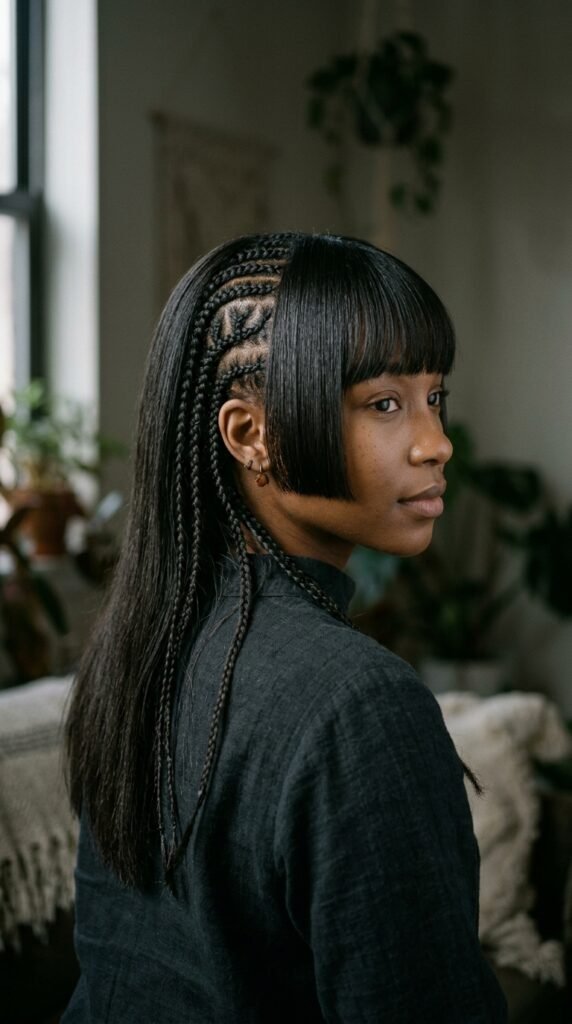
The hime cut is a Japanese style with blunt side pieces and long hair in the back. It looks striking, and you can get the vibe without cutting your own hair.
Keep your real hair braided flat underneath, then wear the shape as a wig or with clip-in pieces blended in.
- Choose pieces that match your texture
- Keep the blunt edges clean with a light trim
- Great for a bold, editorial moment
15. Romantic Goth Braided Updo
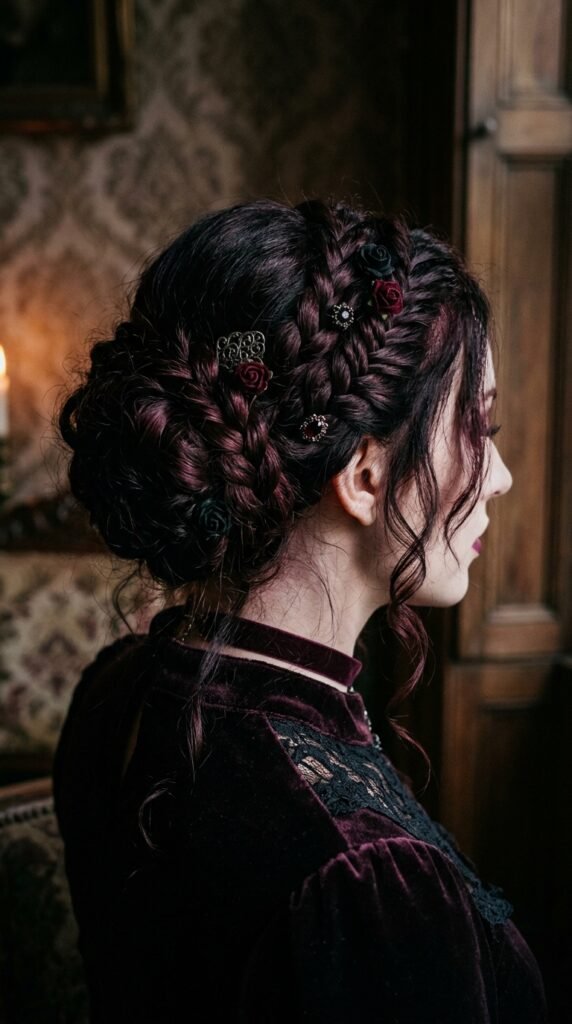
Romantic goth hairstyles are all about soft drama. Think a braided updo with loose face-framing pieces and maybe a velvet ribbon woven through.
Your ends stay pinned and protected while you look like you stepped out of a moody novel. That is a win.
- Braid two sections and pin into a low updo
- Add a ribbon or pearl pin for detail
- Set with a light mist, not heavy spray
16. Vampire Haircut Inspired Style
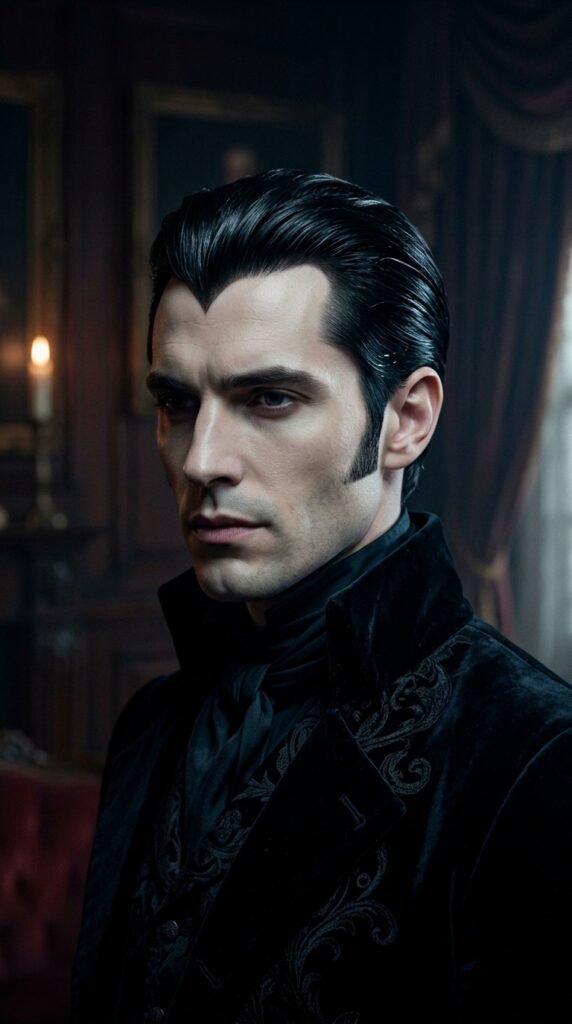
The vampire haircut is sharp, sleek, and a little dangerous in the best way. It usually means a deep side part, long layers, and a glossy finish.
You can borrow the shape without the cut. Keep your hair braided flat under a wig, or slick your own hair into a low, glossy bun with a dramatic part.
- Deep side part is the key detail
- Add shine with a light oil, not heavy gel
- Keep ends tucked to protect them
17. Glitchy Glam Hair

Glitchy glam hair is sleek, high-shine, and slightly futuristic. Picture a super smooth high ponytail with sculpted edges and a glossy finish.
It becomes protective when your ends are wrapped and tucked instead of left swinging. Wrap the tail with a satin strip and pin the ends away.
- Smooth with a soft brush and light gel
- Wrap the ponytail and tuck the ends
- Loosen at night to avoid tension
18. 2026 Sleek Low Ponytail

The sleek low ponytail is everywhere in 2026 hairstyles, and it is secretly one of the best protective looks. All you do is wrap the tail and hide the ends.
Use a satin scrunchie or a small strip of satin fabric instead of a tight elastic. Your edges will thank you.
- Wrap the tail around itself
- Tuck the ends under and pin
- Refresh the part with water and a little oil
19. Headwraps and Slip-On Beanies

A satin-lined headwrap or slip-on beanie is the fastest protective style there is. Underneath, your hair can be in twists, braids, or a simple bun.
It is perfect for busy mornings, bad hair days, and cold weather. It also protects your ends from rubbing against coats and collars.
- Always pick a satin or silk lining
- Keep the wrap snug, not tight
- Works over any style on this list
20. Crochet Braids and Crochet Faux Locs
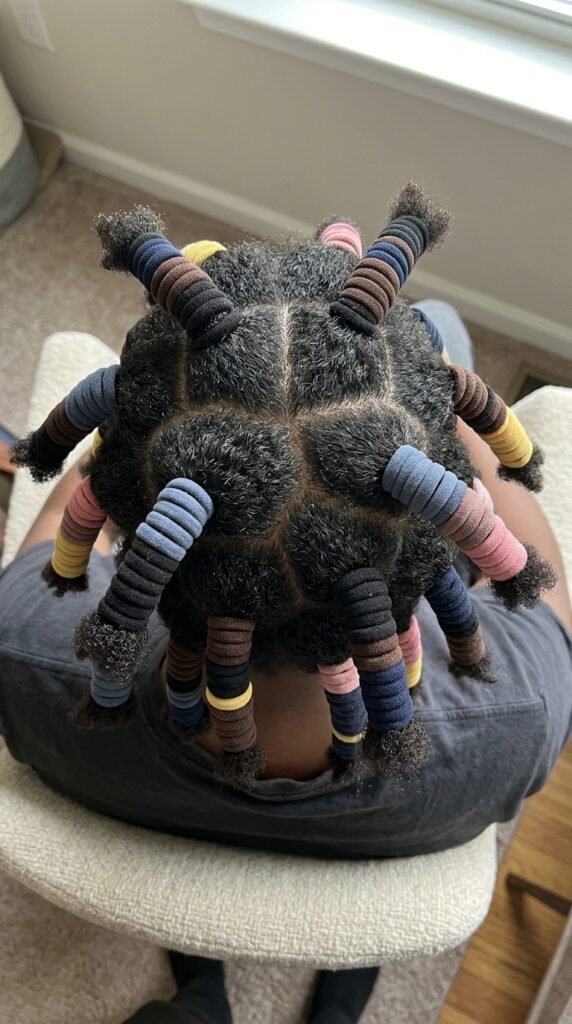
Crochet styles let you change your whole look in a couple of hours. Your hair is cornrowed underneath, and the extension hair is looped in.
It is fast, low tension, and your real ends stay hidden the entire time. Just keep the cornrows neat and moisturized.
- Cornrows underneath must not be tight
- Lasts four to six weeks
- Refresh your scalp with light oil weekly
21. Banding
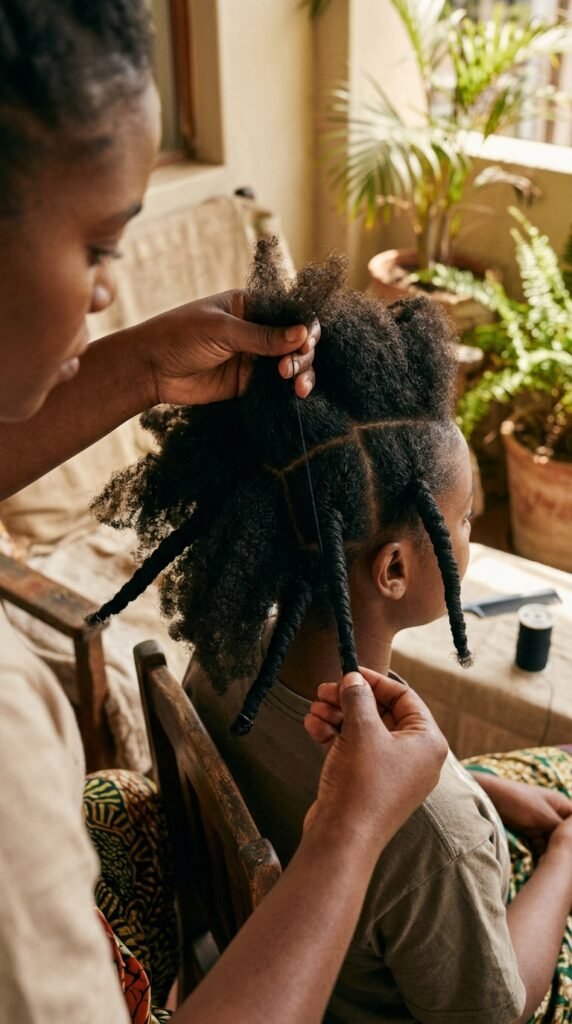
Banding is not a style you wear out, but it is a protective trick you should know. You section your hair and band it down the length to stretch it without heat.
It makes your hair easier to braid, twist, and detangle. Less tugging means less breakage.
- Use seamless or satin bands
- Do not band too tightly
- Band before bed to keep stretch overnight
22. African Threading
Threading is an old technique that stretches natural hair using only cotton thread. No heat, no pulling, and it lasts for weeks.
Your hair stays sectioned and protected, and it comes out smooth and stretched. It is one of the most underrated methods out there.
- Section hair and wrap thread down each one
- Keep tension gentle
- Great under a headwrap or wig
23. Roller Sets and Perm Rods
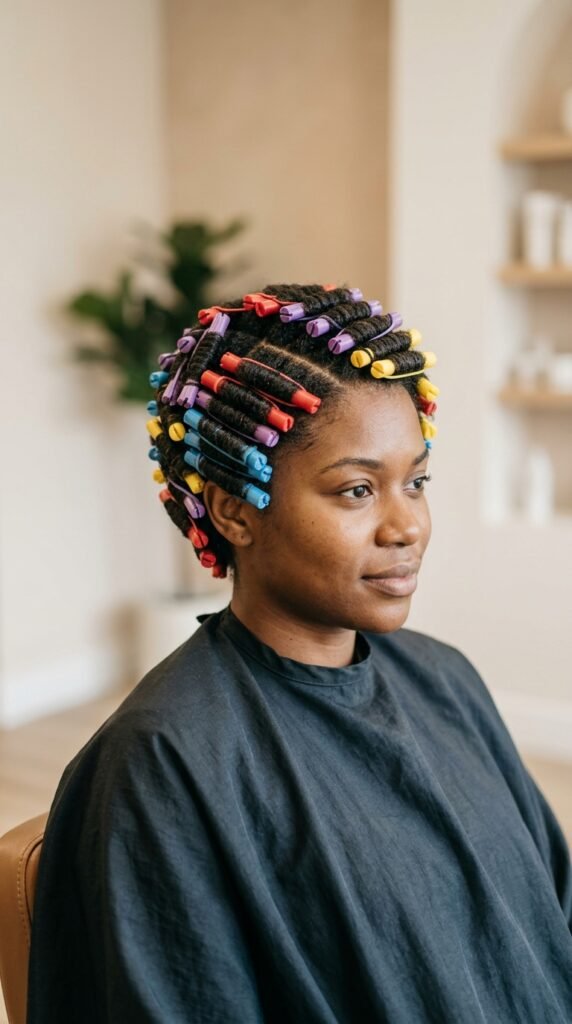
A roller or perm rod set gives you smooth, bouncy hair without direct heat. You roll damp hair, let it dry, and take it down.
Wear the curls loose for a day, then pull them into a tucked bun to protect the ends again.
- Roll on damp, moisturized hair
- Let them dry completely before removing
- Sleep on satin to protect the set
24. Glueless Wig With Braids Underneath

Glueless wigs are the most flexible protective style of all. Your hair is braided flat, the wig goes on, and you can take it off whenever you want.
You can switch between the quiet luxury bob, the asymmetrical lob, the hime cut, or a curly unit without touching your real hair once.
- Braids underneath should be smooth and flat
- Wear a satin wig cap, not a rough net
- Take the wig off every night
Your Night Routine Matters More Than The Style

Whatever style you choose, your nights decide how it holds up. Cotton pillowcases pull moisture out and create friction. Satin keeps it.
Cover your hair every single night. If you hate bonnets, use a satin pillowcase instead. Either way, do not sleep on cotton.
- Satin bonnet or scarf
- Loose pineapple if you have a ponytail
- Light scalp oil once or twice a week
Wash Day While Protective Styled
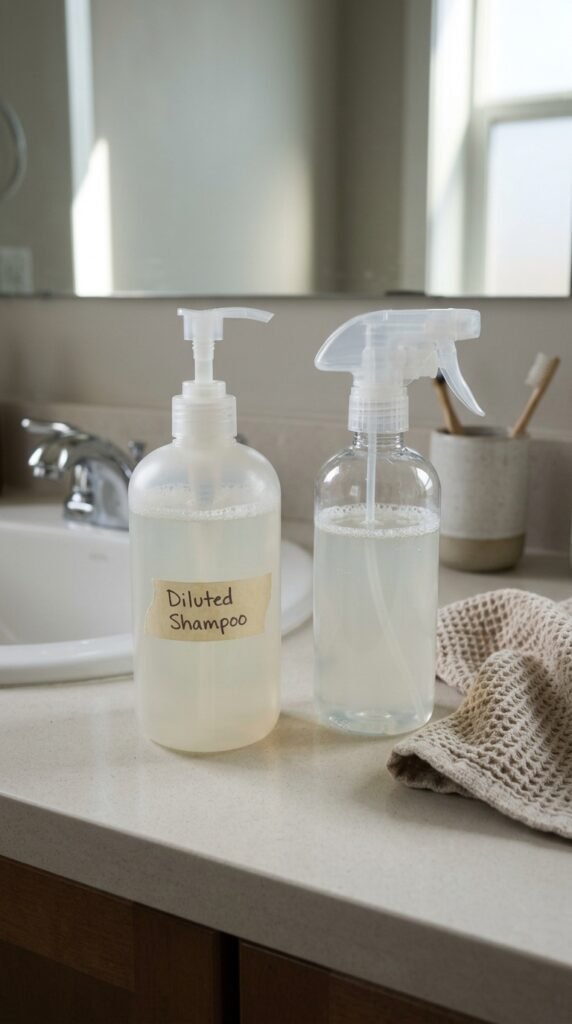
You still need to cleanse your scalp, even in braids or twists. Skipping wash day for two months is how buildup and itching start.
Use diluted shampoo in a spray bottle and focus on your scalp. Do not scrub your actual style or it will frizz, and frizz usually means breakage.
- Cleanse every two to three weeks
- Use a spray bottle to reach your scalp
- Dry fully before bed, always
Take-Down Day Done Right
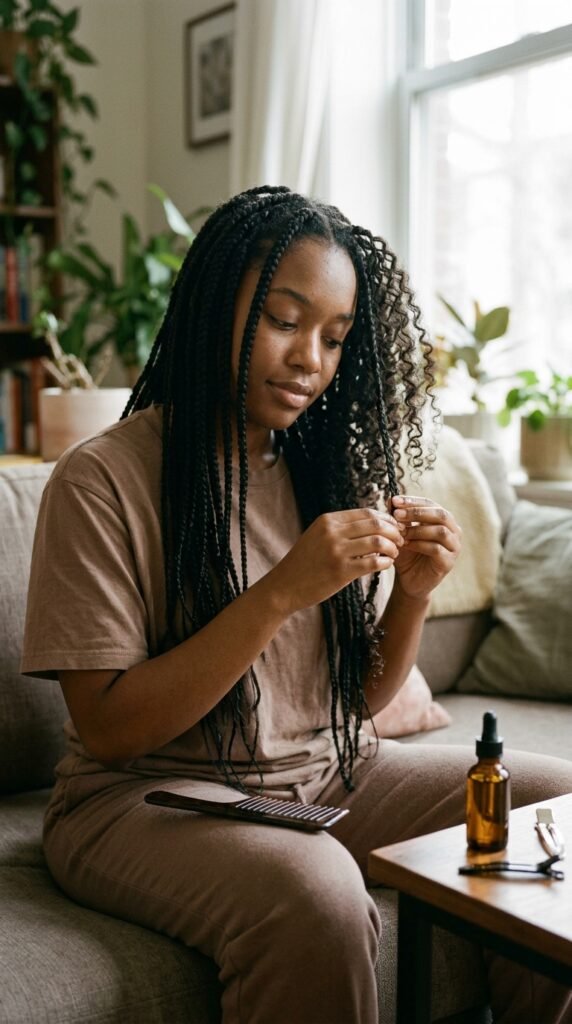
Take-down day is where a lot of length disappears. Rushing and dry detangling are the two biggest culprits.
Set aside real time. Spray sections with water and leave-in, oil your fingers, and work from the ends up with a wide-tooth comb.
- Never rush or yank
- Detangle with conditioner or leave-in, not dry
- Deep condition right after
Warning Signs To Take It Down
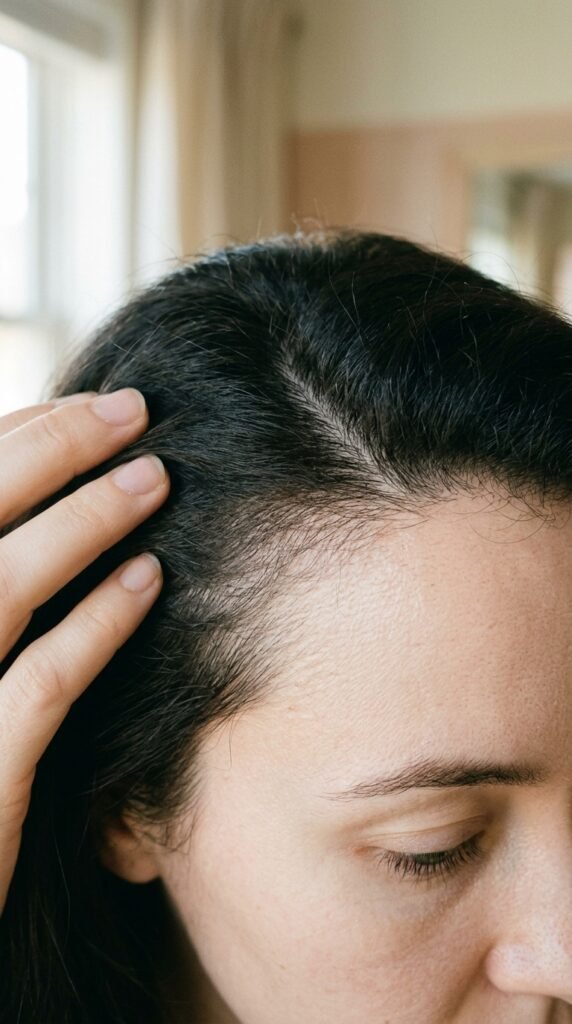
Your hair will tell you when a style has overstayed. Listen to it. A style should never leave bumps, scabs, or sore spots.
- Tenderness that lasts more than a day
- Redness or bumps along the hairline
- Itching that does not stop after cleansing
- Visible buildup or a musty smell
Take it down if you notice any of these. Growth needs a healthy scalp first.
How Long Should You Keep a Style In?

Four to six weeks is the sweet spot for most styles. Less than two weeks means your hair barely rests. More than eight weeks means buildup, matting, and breakage.
Give your hair a week or two of loose, low-manipulation wear in between styles. That rest period matters just as much as the style itself.
What Growth Actually Looks Like

Real growth is quiet. It is not a dramatic length check every month. It is lower breakage, easier detangling, and hair that feels fuller over time.
Take a length check photo every three months instead of every week. Trust the process and stop measuring so often.
You’ve Got This, And So Does Your Hair
Pick two or three styles from this list and rotate them. Keep tension low, keep your scalp clean, and keep your ends tucked. That is really the whole formula.
Your hair does not need a hundred products. It needs consistency, patience, and a break from your hands.
Start with the quiet luxury bun this week. It takes five minutes, and your ends will thank you tonight.
Save this post to Pinterest so you can find it the next time you are stuck on what to do with your hair. And tell me in the comments: which of these 24 protective styles are you trying first? I read every single one.