
28 Volumizing Tricks For Fine Hair That Actually Hold Up
I have fine hair. Not thin, not damaged, just fine. Which means I’ve spent way too many years testing every trick, tool, and late-night hack that promised volume, only to watch my hair fall flat by 11 a.m.
So I stopped guessing and started keeping notes. This list is everything that actually holds up — from salon cuts to drugstore sprays to the way you sleep on it.
You don’t need 28 products. You need a handful of habits that stack on top of each other. Pick three or four, start this week, and you’ll see a real difference.
Let’s get into it.
Why Fine Hair Falls Flat — And What Actually Helps

Fine hair simply has fewer strands per square inch, and each strand is thinner. That means it weighs down faster, shows oil sooner, and loses shape the second humidity shows up.
But here’s the good news: fine hair also responds fast. The right cut and a few smart habits show up in the mirror the same day.
Think of volume as a stack — cut, wash routine, styling, and sleep. If one layer is off, the whole thing sags.
So we’re fixing all four.
Start With a Cut That Fakes Density (Tricks 1 and 2)
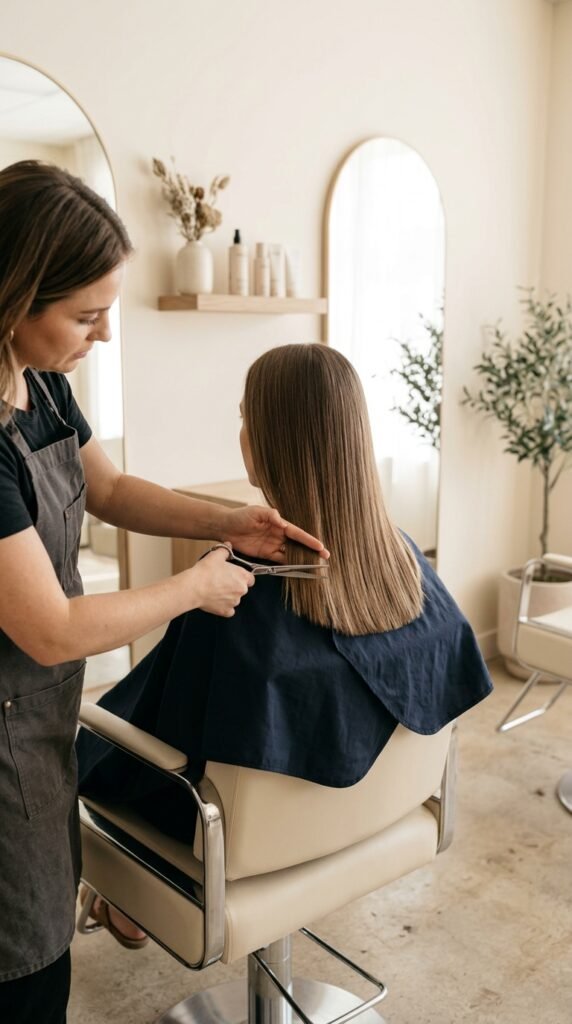
Blunt ends are your best friend. When your hair all hits the same line, it reads as thicker — like a solid wall instead of wispy strands.
Ask your stylist for:
- Trick 1: A blunt or softly blunt perimeter — no razored, shattered ends
- Trick 2: Long layers that start below the chin, never at the crown
Short layers on fine hair create thin, stringy tips. Long layers keep weight at the bottom and movement up top.
The Quiet Luxury Bob That Looks Twice as Thick (Trick 3)

The quiet luxury bob is everywhere in 2026, and it’s basically a gift for fine hair. It’s blunt, usually chin to collarbone, with almost no choppy layering.
Why it works: one clean line. Your eye reads the whole shape as a solid piece, which makes fine hair look dense.
Trick 3: Ask for a soft blunt cut with a touch of internal texture so it doesn’t sit completely flat.
Pair it with a middle part for the cleanest look, or a deep side part if you want extra lift. Style with a round brush and a light mist. That’s it.
Why an Asymmetrical Lob Is a Volume Cheat Code (Trick 4)

An asymmetrical lob is longer on one side and shorter on the other, usually landing between jaw and collarbone. That diagonal line tricks the eye into seeing more hair.
It also gives you built-in lift, because the shorter side sits lighter and springs up.
Trick 4: Ask for one side one to two inches shorter, blunt ends, and minimal layers.
Style it with a deep side part and tuck the longer side behind one ear. It’s one of those 2026 hairstyles that looks expensive with almost zero effort.
Hime Cut and Vampire Haircut: Blunt Lines, Big Payoff (Tricks 5 and 6)

Two trends are doing heavy lifting for fine hair right now.
Trick 5: The hime cut — a straight, blunt cut with short side pieces framing the face. Those blunt side sections add visible width right where fine hair usually disappears.
Trick 6: The vampire haircut — a softer, layered take with long face-framing pieces and a bit of drama. It moves, but the layers stay long enough to avoid stringiness.
Both work because blunt lines reflect light and read as density. Ask your stylist to keep the ends solid.
Wash Less, Rinse More (Trick 7)

Fine hair shows oil fast, so your instinct is to wash daily. That’s usually the opposite of what you want.
Over-washing strips your scalp, and your scalp overproduces oil to compensate. Fine hair then clings to that oil and collapses.
Trick 7: Wash every other day, or every third day if you can. On off days, just rinse with cool water and massage your scalp.
Cool water also seals the cuticle, which makes hair look smoother and fuller. Warm water does the opposite. Start with one extra day between washes and build from there.
Double Shampoo, Roots Only (Trick 8)
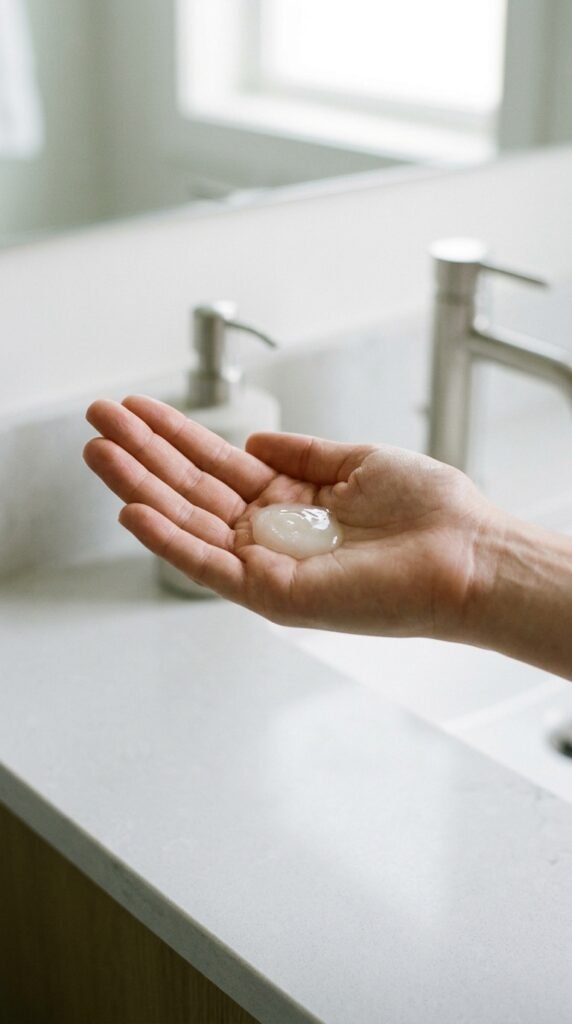
This one sounds like overkill. It isn’t.
- Shampoo with a small amount and rinse. This removes surface oil.
- Shampoo again and focus only on your roots and scalp.
Trick 8: That second wash is the one that actually cleans. The first one just gets you there.
Skip your ends entirely on the second pass — they get clean from the runoff. Then condition from mid-length down only. Your roots stay light, your ends stay soft, and volume lasts a full day longer.
Keep Conditioner Off Your Roots (Trick 9)

This is the single most common reason fine hair falls flat, and it’s the easiest fix.
Conditioner is designed to smooth and weigh hair down. That’s great for your ends and terrible for your roots.
Trick 9: Apply conditioner from your ears down. Never above them.
If your hair is very fine, try a lightweight spray conditioner instead of a cream. Same softness, way less weight.
Rinse with cool water and give it an extra few seconds. That little bit of patience makes a visible difference in how much body you keep.
Clarify Once a Week (Trick 10)
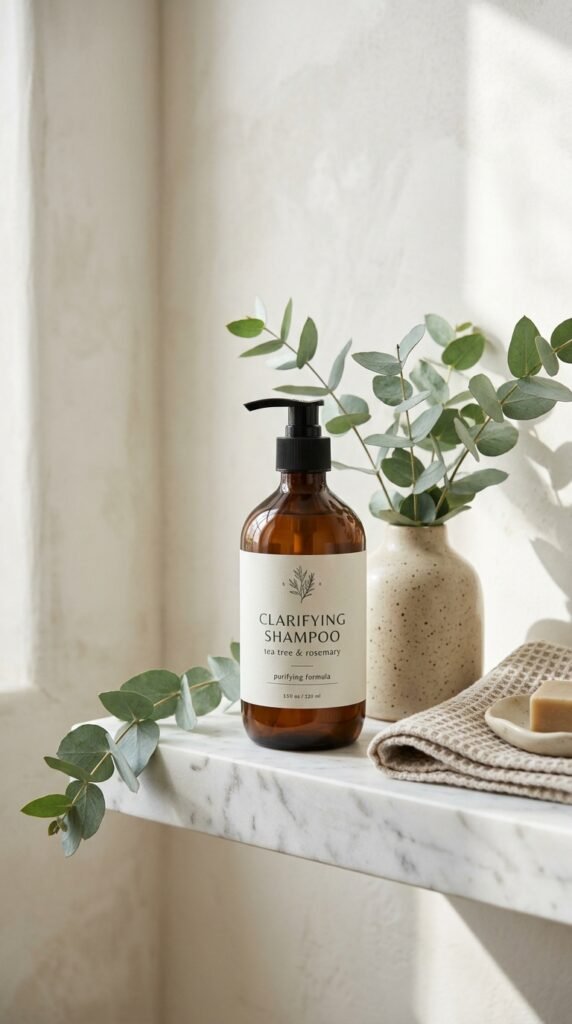
Product buildup is quiet and sneaky. Dry shampoo, texturizing spray, and leave-in mist all layer up over the week and slowly drag your hair down.
Trick 10: Use a clarifying shampoo once a week to reset everything.
You’ll notice the difference immediately — hair feels lighter, roots lift easier, and styles hold longer.
If you have a dry scalp or color-treated hair, use a gentle clarifying formula and follow with a hydrating mask on your ends only. Reset, then rebuild. That’s the rhythm.
Swap Heavy Oils for Lightweight Mists (Trick 11)

I love a good hair oil. I just don’t put it on my roots.
Heavy oils, butters, and thick creams are made for coarse or curly hair. On fine hair they flatten everything within an hour.
Trick 11: Trade oils and creams for lightweight mists, serums, and water-based leave-ins.
Look for words like “weightless,” “light,” or “mist” on the label. Apply on damp hair, mid-length to ends.
If you want shine at the roots, use a tiny drop of a lightweight serum on your palms and press it in. Never pour it directly on your scalp.
Blow Dry Upside Down First (Trick 12)
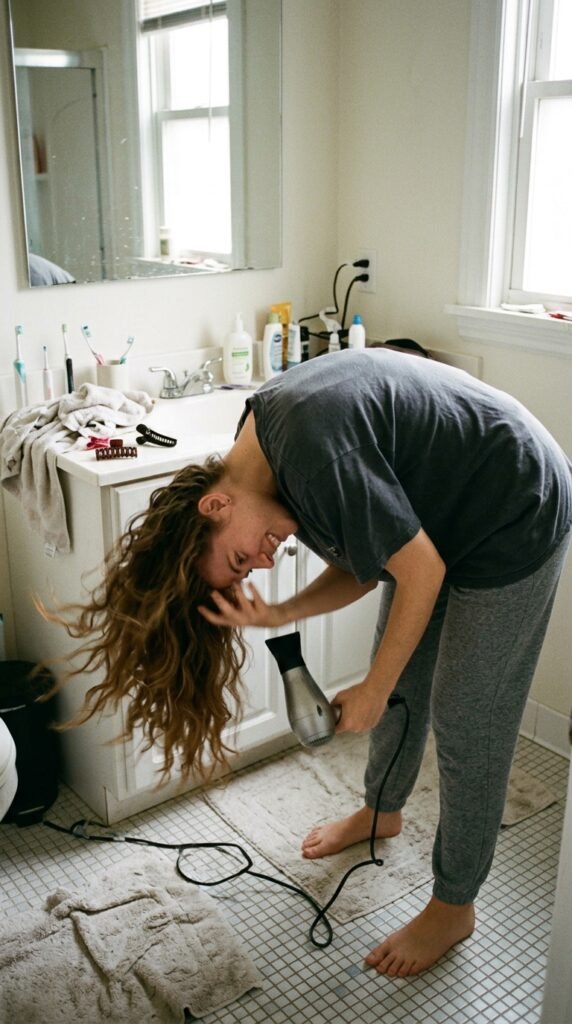
This is the oldest trick in the book and it still works.
Trick 12: Flip your head over and rough dry your roots for two to three minutes before you do anything else.
Gravity plus heat equals lift. Your roots dry in the opposite direction they normally sit, so they stand up naturally.
Then flip back, section your hair, and finish with a round brush. The lift you built stays put instead of collapsing the moment you stop.
Use medium heat and keep the dryer moving so you don’t cook one spot.
The Round Brush Root Lift (Trick 13)

This is the technique that separates “fine hair” from “flat hair.”
- Section your hair into two-inch pieces.
- Place the round brush under the root and pull upward, away from your scalp.
- Aim the dryer at the root while the brush is still lifting.
- Hold for a few seconds, then release.
Trick 13: A medium-size round brush works best. Too small creates frizz, too large won’t grip fine hair.
The key is the pause. Most people brush and move on. Hold that lift for three seconds and you’ll double the staying power.
Never Skip the Cool Shot (Trick 14)
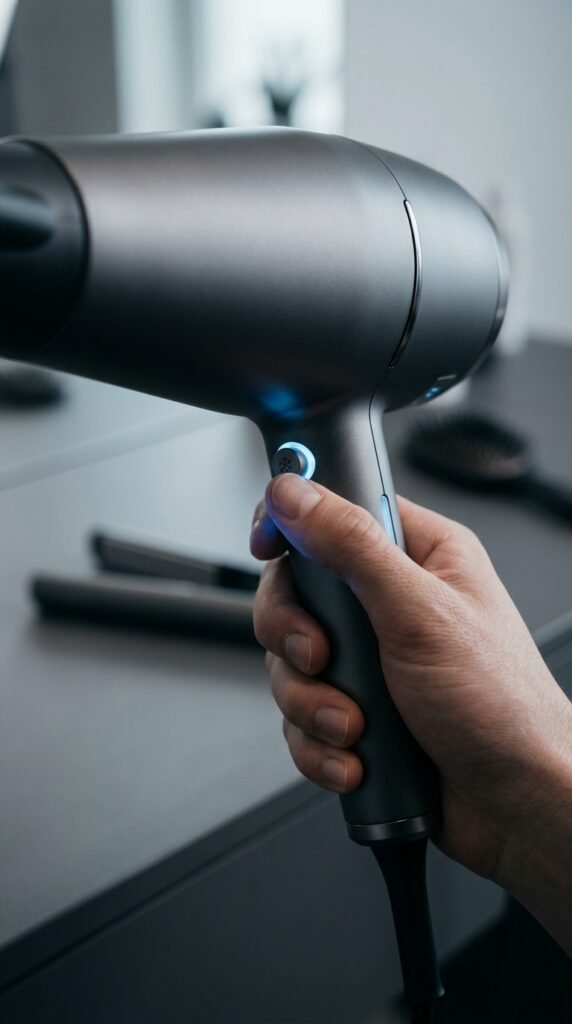
Heat shapes. Cold sets. That’s the whole rule.
Trick 14: After you lift each section with the round brush, hit it with the cool shot button for five to ten seconds before you let go.
Cool air closes the cuticle and locks the shape in place. Skip it and your volume slowly deflates over the next hour.
It adds maybe two minutes to your routine and it’s the difference between hair that holds and hair that falls.
If your dryer doesn’t have a cool shot, a quick blast from a cold setting works just as well.
Clip Your Roots While They Cool (Trick 15)

This is the trick that changed my mornings.
Trick 15: While your roots are still warm from the dryer, clip them up with volumizing clips. Leave them in while you do your makeup.
The hair cools in a lifted position, and it stays there. Take the clips out and you have real, lasting root volume — not the kind that vanishes in ten minutes.
Use two to four clips along your part line. Five minutes is plenty.
Velcro Rollers Are Back (Trick 16)

I know. But they work, and they’re cheap.
Trick 16: Roll the top section of your hair backward on a medium velcro roller, then blast it with warm air for 30 seconds and cool air for 30 seconds.
Leave it in while you finish getting ready, then take it out and brush through gently.
You get a soft, rounded lift at the crown that looks natural instead of stiff. It’s very old money hair — volume that looks like it just happened.
Dry Shampoo at Night, Not Morning (Trick 17)

Spraying dry shampoo in the morning gives you a white cast and a gritty texture. Spraying it at night gives you volume.
Trick 17: Spray it on your roots before bed, then sleep on it. The powder absorbs oil overnight while you toss and turn, which lifts the roots.
You wake up with hair that looks freshly washed and has actual body at the crown.
One note: don’t overdo it. Too much powder creates buildup, which kills volume. Two short bursts per section is plenty.
Texturizing Spray Beats Hairspray (Trick 18)
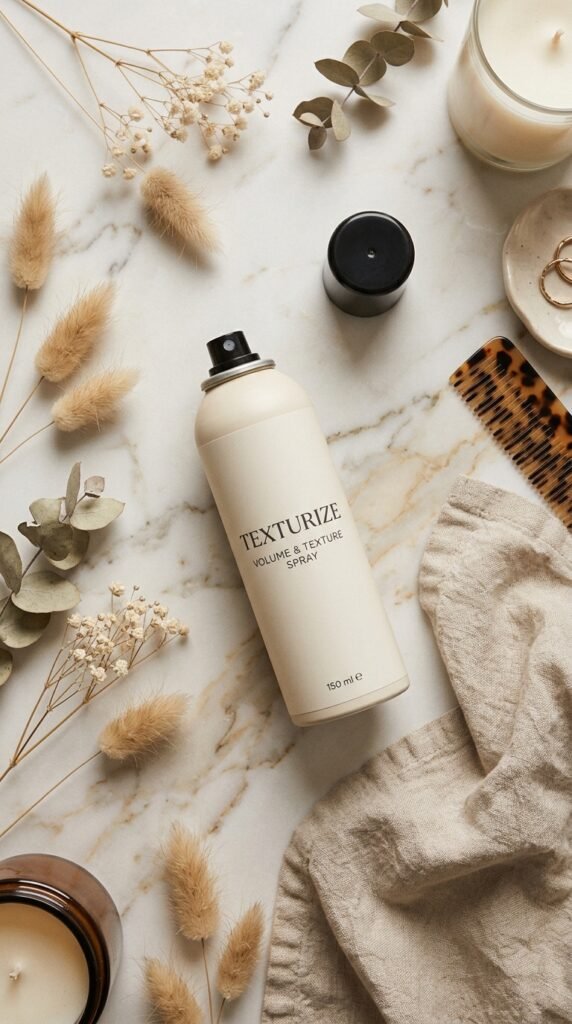
Hairspray holds hair in place. Texturizing spray gives hair something to hold onto.
That’s the difference, and it matters a lot for fine hair.
Trick 18: Spray texturizing spray at your roots and mid-lengths, then scrunch gently with your fingers. It adds grip and grit without stiffness.
If you want extra hold, finish with a light flexible hairspray — but keep it far from your scalp. Hairspray at the roots flattens everything.
Volumizing Powder: Less Is More (Trick 19)
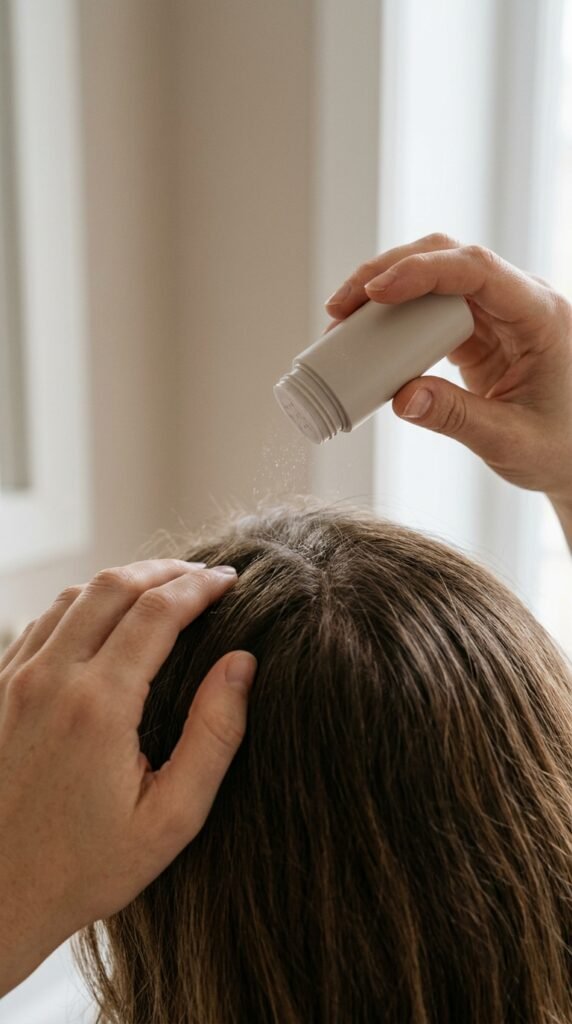
Volumizing powder is powerful and completely unforgiving.
Trick 19: Tap a tiny amount onto your roots, then work it in with your fingers. Start with less than you think you need.
Too much and your hair looks chalky, feels gritty, and actually falls flatter because of the buildup.
Use it on dry, styled hair for a quick lift, and wash it out the same day. It’s a finishing touch, not a foundation.
If you have a dry scalp, skip it and reach for texturizing spray instead.
The Gentle Tease (Trick 20)
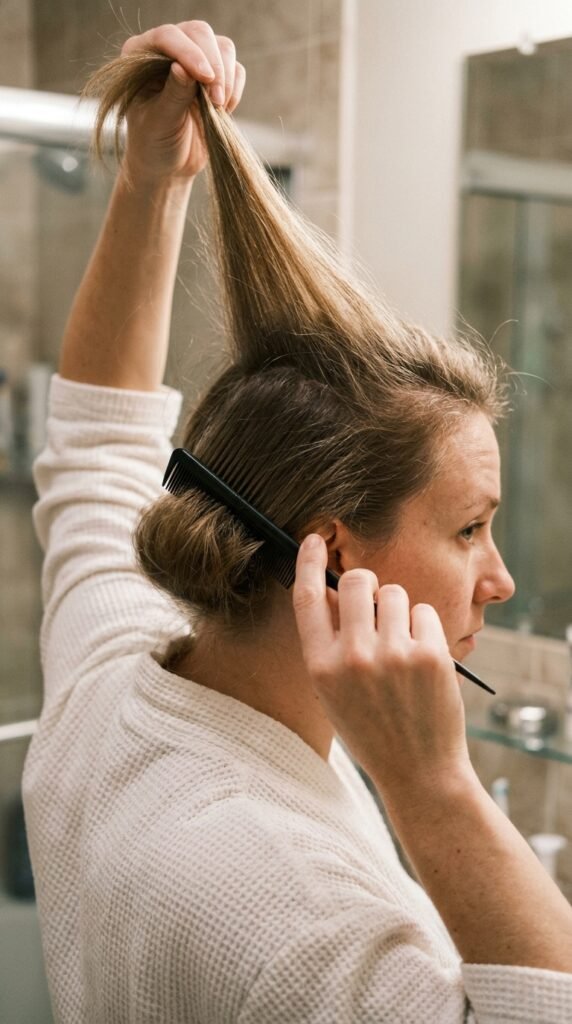
Backcombing has a bad reputation because most people do it wrong.
- Section off the top layer of hair and clip it out of the way.
- Take the layer underneath and comb downward, toward the scalp, in short gentle strokes.
- Release the top layer and smooth it over.
Trick 20: Only tease the section underneath. Never tease the visible top layer.
This gives you height without the tangles and damage. Always use a fine-tooth comb, never a brush.
Flip or Zigzag Your Part (Tricks 21 and 22)
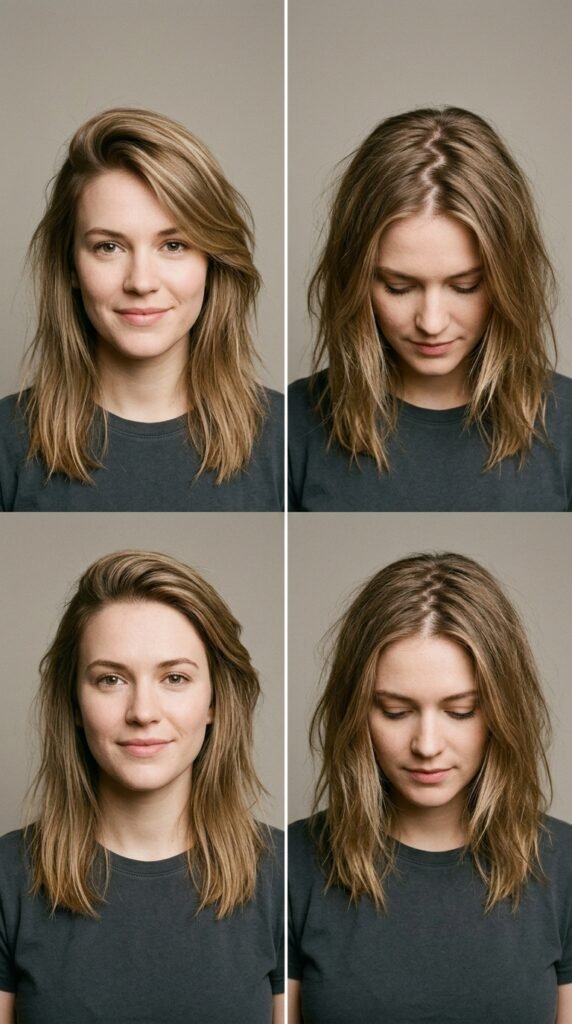
Your part controls where your volume lives.
Trick 21: Flip your part to the opposite side. Hair that’s been trained one direction for years will lift when you switch it.
Trick 22: Try a zigzag part. It hides the scalp, breaks up the flat line, and makes fine hair look fuller instantly.
Use the pointed end of a comb and move it in small zigzags from your hairline back. It takes 30 seconds.
Both tricks are free, and both work on day-two hair when nothing else does.
The Half-Up Twist Trick (Trick 23)

Half-up styles are sneaky good for fine hair because they build height right at the crown.
Trick 23: Take a section from each side of your part, twist them loosely toward the back, and pin. Then gently pull at the crown with your fingers to loosen it.
That little pull is what creates the volume. Don’t skip it.
It works on clean hair, day-two hair, and hair you didn’t have time to style. Pair it with a soft wave for a romantic, put-together look.
Romantic Goth Hairstyles With Real Root Volume (Trick 24)

Romantic goth hairstyles and fine hair are a great match — the look depends on soft, voluminous texture rather than sleekness.
Trick 24: Build your root volume first with clips or velcro rollers, then add loose waves with a curling iron and brush them out with your fingers.
Finish with a light texturizing spray and a matte finishing mist. Skip anything shiny — matte texture reads as fuller.
Soft, undone volume plus a little drama is exactly the vibe. Fine hair does this look beautifully.
Glitchy Glam Hair: Volume With an Edge (Trick 25)

Glitchy glam hair is the 2026 trend that mixes sleek and messy on purpose — sharp edges next to lived-in volume.
Trick 25: Keep the front pieces sleek and flat-ironed, then add real volume at the crown and back.
The contrast is what makes it work. If everything is smooth, it looks flat. If everything is big, it looks dated.
Use a strong-hold gel on your front pieces and a volumizing powder at the crown. It’s an easy way to make fine hair look intentional.
Old Money Hair: Soft Volume, Zero Frizz (Trick 26)

Old money hair is the opposite of big hair. It’s soft, smooth, and quietly full — like you were born with it.
Trick 26: Focus all your volume at the crown and keep the lengths smooth. Use a round brush at the roots, then brush the rest flat with a tiny bit of lightweight serum.
Frizz is the enemy here. Finish with a light mist of anti-humidity spray and smooth flyaways with your palms.
The goal is polish, not height. A little lift at the top is all you need.
Sleep Habits That Protect Volume (Trick 27)

You spend a third of your life in bed. Your hair should not be losing volume while you sleep.
Trick 27: Sleep on a silk or satin pillowcase, and tie your hair in a loose, high “pineapple” with a soft scrunchie.
Cotton creates friction, which roughens the cuticle and flattens your roots. Silk lets hair slide instead of drag.
The high loose tie keeps your crown lifted while you sleep. You’ll wake up with more body and way fewer tangles.
Scalp Care and Regular Trims (Trick 28)

Volume starts at the scalp. If your scalp is clogged or irritated, your hair grows in weaker and lies flatter.
Massage your scalp for two minutes a day with your fingertips. It boosts circulation and lifts the roots while you’re at it.
Trick 28: Book a trim every eight to ten weeks. Fine hair shows split ends fast, and split ends make the whole shape look thinner.
Small maintenance, big payoff. That’s the theme of this entire list, honestly.
One Last Thing Before You Go
You don’t need all 28 of these. Honestly, nobody does all 28. Pick three or four that fit your routine and let them stack.
If I had to choose, I’d start with the cut, the conditioner rule, and the root clips. Those three alone changed my hair more than any product ever has.
Fine hair isn’t a problem to fix. It’s just a different set of rules — and once you learn them, it’s actually the easiest hair to style.
Save this post to Pinterest so you can find it the next time your hair falls flat before noon.
And tell me in the comments: which trick are you trying first? I read every single one, and I always reply.