Wolf Cut for Women: The Shaggy, Layered Cut Everyone Is Asking For — and How to Wear It
Walk into almost any salon right now and ask for the cut everyone is talking about, and the stylist will know exactly what you mean before you finish the sentence. The wolf cut has gone from a TikTok trend to a genuine salon staple — a shaggy, layered, rock-star revival that somehow suits almost everyone who tries it.
Part of the appeal is attitude. The wolf cut looks like the hair of someone in a band: a full, textured crown, choppy layers around the face, and long lengths that move when you do. It is the haircut equivalent of a leather jacket — a little wild, very cool, and surprisingly easy to wear once you find your version.
But the wolf cut is also one of the most misunderstood requests in salons. Ask for it without a photo, and you might leave with something far choppier — or far tamer — than you imagined. That is why this guide starts with what a wolf cut actually is, how it differs from a shag and a mullet, and what to ask before the scissors come out. Then you will find 44 wolf cut variations for women, each with styling steps and the exact line to give your stylist.
What Exactly Is a Wolf Cut?
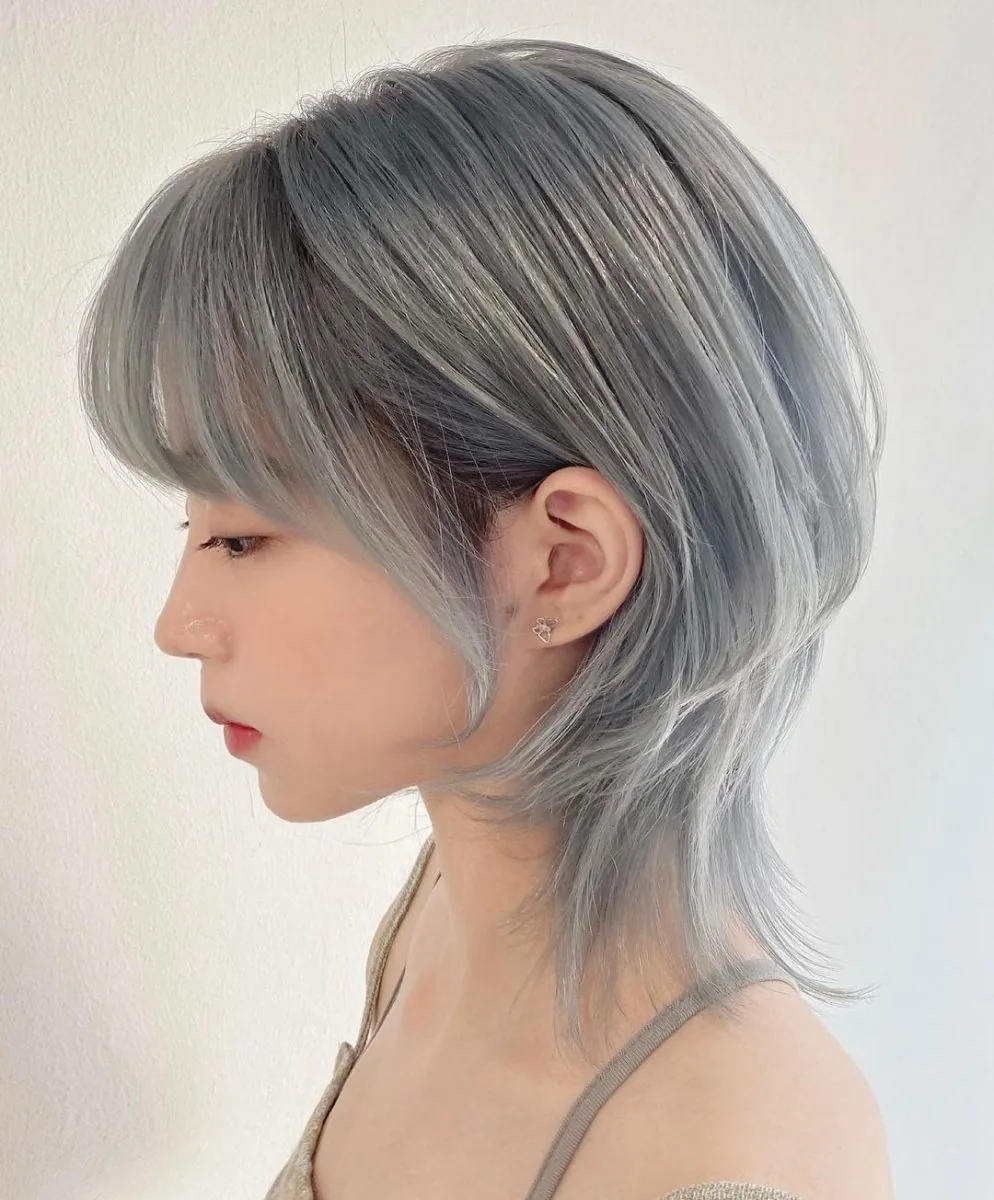
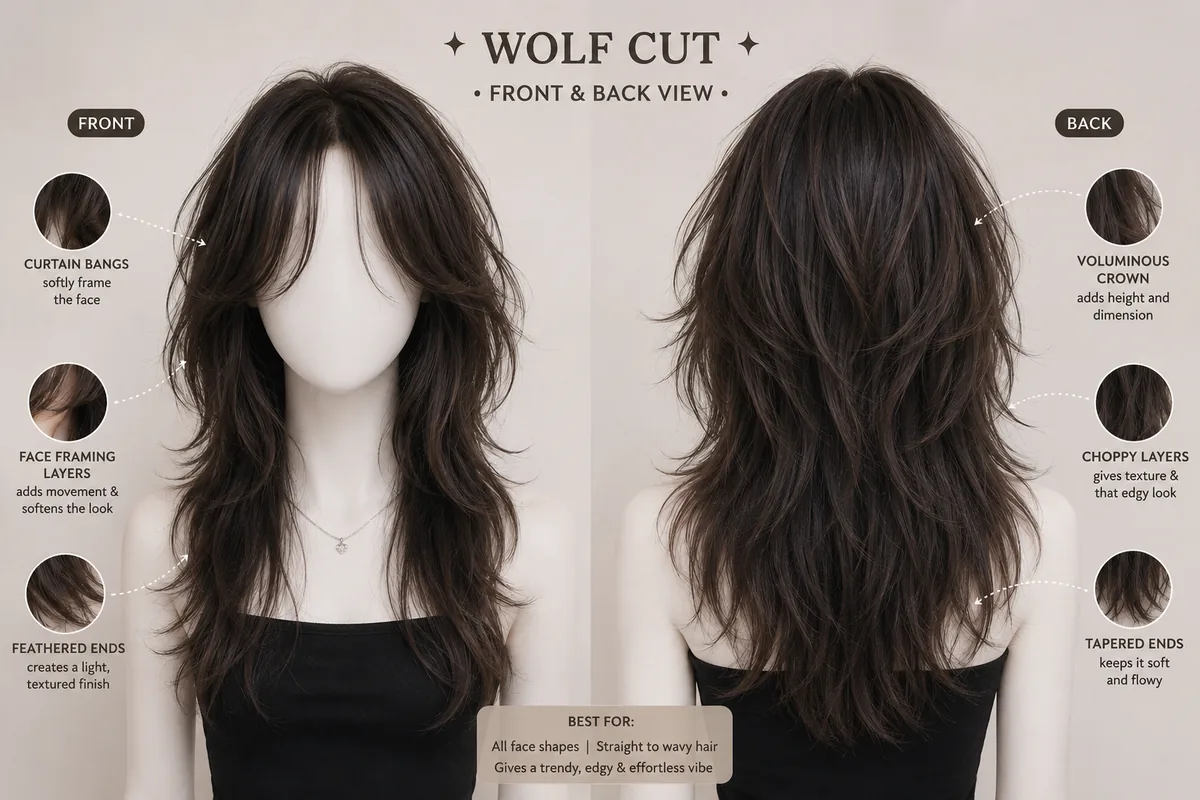
A wolf cut mixes the volume of a shag with the disconnected layers of a mullet, but it is softer and more wearable than either label suggests. The top is cut shorter and fuller, the lengths stay long, and choppy, feathered layers connect the two so the hair moves instead of sitting flat.
That shape is why it photographs so well. The crown gives lift, the face-framing pieces give movement, and the long back keeps the cut feminine and versatile. It is a salon cut with a rock-star attitude, not a costume — and it works on far more hair types than social media suggests.
- Short on top, long underneath: Volume at the crown, length at the back.
- Choppy, feathered layers: Layers are cut to move, not to sit in a neat line.
- Face-framing pieces: Shorter pieces around the face are what make it a wolf cut, not just a layered cut.
Wolf Cut vs Shag vs Mullet: What’s the Difference?
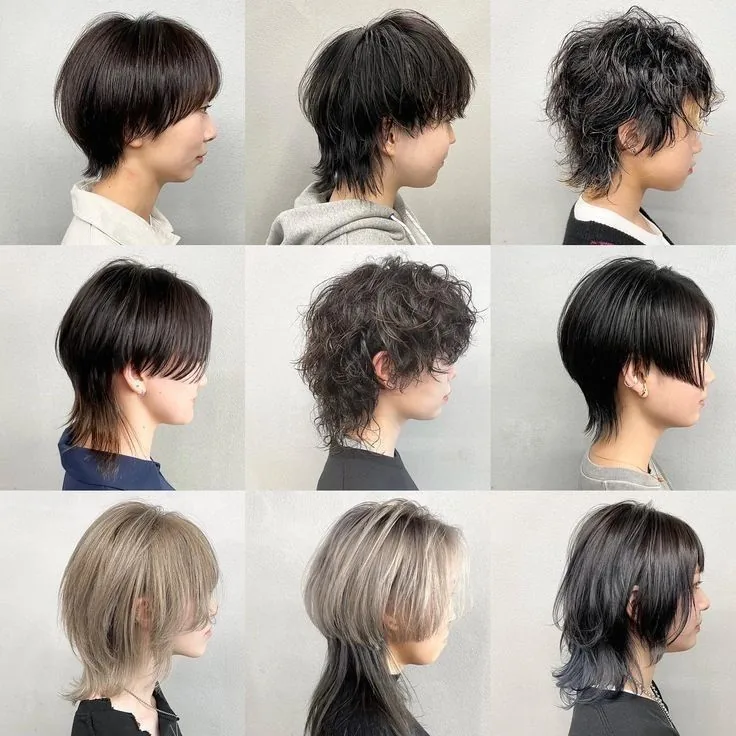
A shag is layered all over and usually softer, with texture spread evenly through the hair. A mullet is deliberately disconnected: short at the front and sides, long at the back, with a clear jump between the two. A wolf cut sits between them.
Think of it this way: the wolf cut borrows the shag’s texture and the mullet’s shape, then blends the join so it looks intentional rather than extreme. If you want the edgiest version, lean mullet. If you want the softest version, lean shag. Most women asking for a wolf cut actually want that middle ground.
- Shag: Even, all-over layers; softer and more blended.
- Mullet: A sharp contrast between short front and long back.
- Wolf cut: A shaggy top with long lengths, blended just enough to wear every day.
Choosing Your Wolf Cut Length
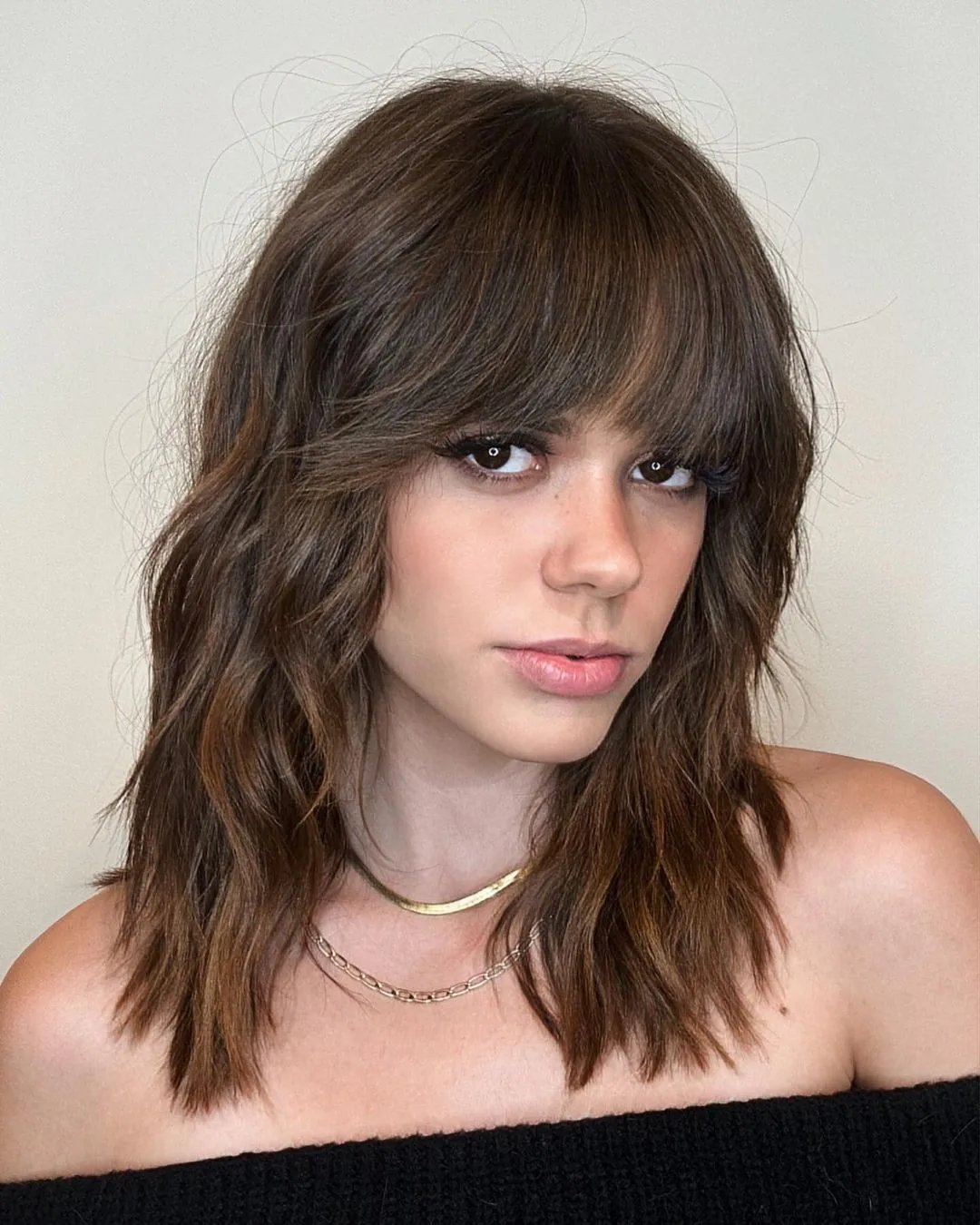
Length changes the whole attitude of a wolf cut. A short wolf cut feels bold and punky, with the texture doing most of the work. A shoulder-length version is the easiest entry point: it keeps styling quick while still showing off the layers.
A long wolf cut is the most forgiving if you are nervous. The long back means you can tie it up, braid it, or wear it wavy, and the shorter top layers still give you that wolf-cut shape. When in doubt, start longer — a stylist can always take more off, but cannot put it back.
- Short: Best for confident texture lovers and easy wash-and-go styling.
- Shoulder length: The best first wolf cut; versatile and quick to style.
- Long: The safest choice, with the most updo and wave options.
Wolf Cuts by Hair Type: Straight, Wavy, Curly and Thick
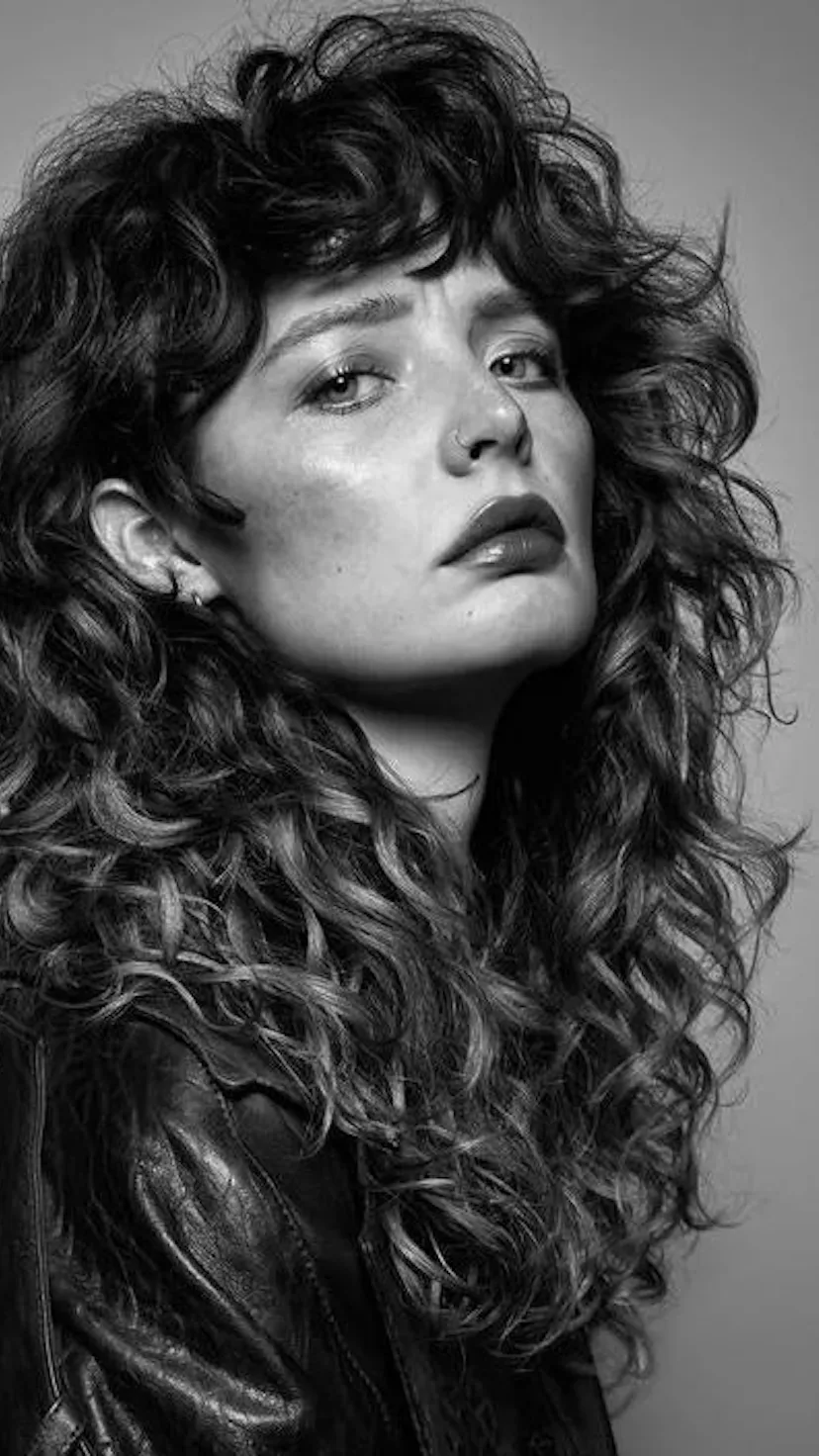
Straight hair shows the layers most clearly, so a wolf cut on straight hair needs careful point-cutting to avoid harsh steps. Wavy hair is the natural home of the wolf cut: the wave does half the styling work and the layers fall into place with very little effort.
Curly hair needs longer layers and a dry cut where possible, so the curl pattern is respected rather than fought. Thick hair benefits from internal layers that remove bulk without thinning the ends to nothing. Fine hair, meanwhile, needs fewer, blunter layers so the ends still look full.
- Straight: Ask for soft, point-cut layers, not blunt steps.
- Wavy: Let the natural wave lead; scrunch and go.
- Curly: Longer layers, cut with the curl, never against it.
- Thick: Internal layers to remove weight and add movement.
Colour and Texture That Make a Wolf Cut Pop
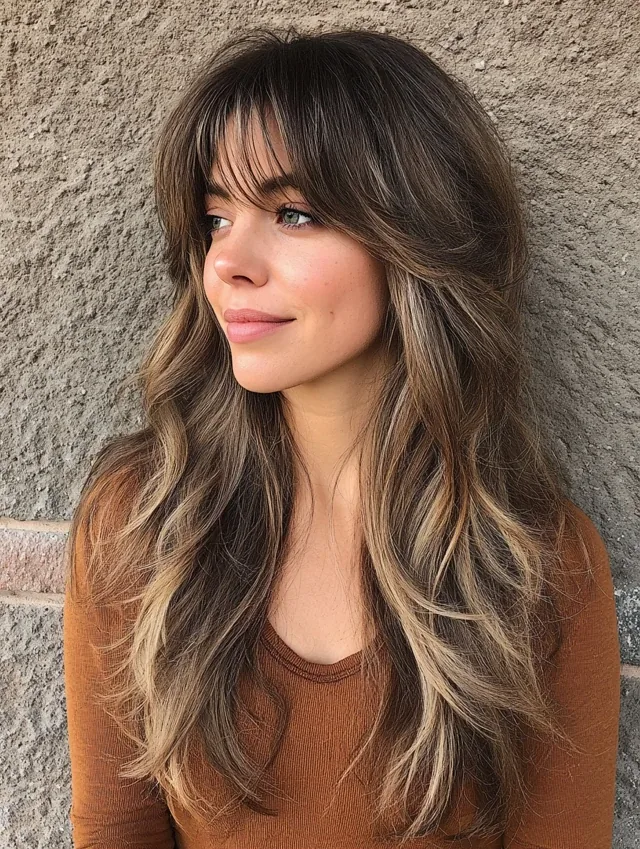
Colour is what turns a good wolf cut into a great one, because the layers create natural places for light and shadow. Balayage and face-framing highlights catch on the shorter top layers and make the texture visible even in a photograph.
You do not need a dramatic colour change. A few lighter pieces around the face, a warm copper gloss, or a cool ash tone through the lengths can all define the layers. If you go bold — pink, red, or two-tone — keep the base healthy, because choppy layers show damage faster than a blunt cut.
- Balayage: Soft dimension that follows the layers.
- Face-framing highlights: Brightness exactly where the cut is shortest.
- Gloss or toner: The low-commitment way to refresh the colour between appointments.
The Grow-Out Plan: From Wolf Cut to Next Cut
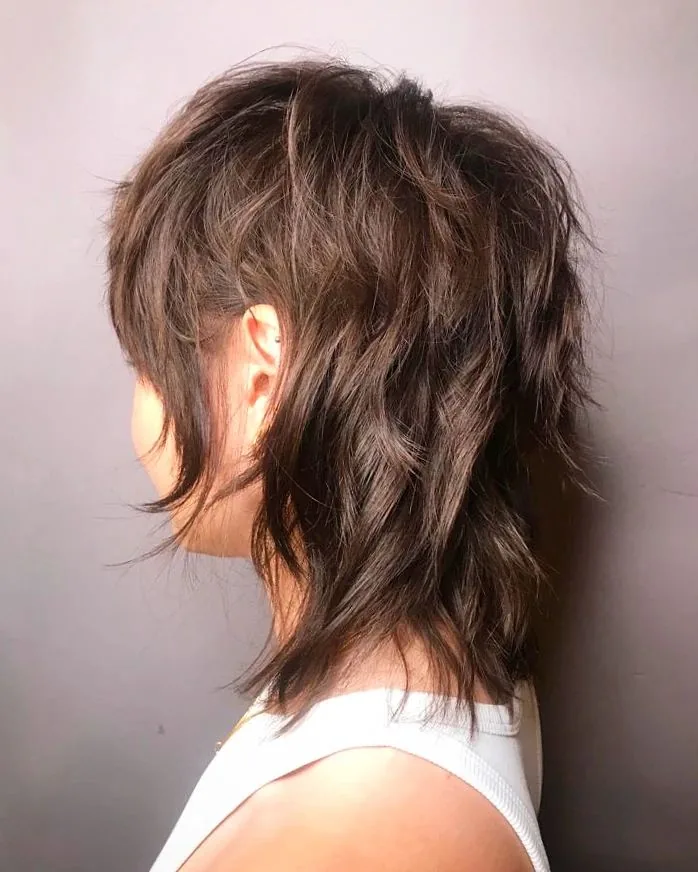
A wolf cut grows out better than most edgy cuts, because it is already a layered shape. The awkward stage usually arrives around three to four months in, when the top layers start to catch up with the lengths and the shape goes a little flat.
The fix is a light dusting trim, not a full re-cut: ask your stylist to re-shape the crown and face pieces while leaving the length alone. From there you can grow into long layers, a shag, or a blunt cut, depending on what you want next. Keep the ends healthy with regular trims and the grow-out stays intentional, not accidental.
- Months 1–2: The shape is at its best; just trim the ends.
- Months 3–4: Re-shape the crown and face pieces only.
- Months 5+: Choose your next cut — long layers, shag, or blunt.
Styling Tools and Products Worth Having
A wolf cut does not need a drawer full of tools. A good texturising spray, a lightweight cream or wax for piece definition, and a diffuser if you have waves or curls will cover almost every version in this guide.
For heat styling, a medium-barrel wand beats straighteners for wolf cuts: it adds bend without flattening the layers. A round brush helps if you want a bouncy blowout, and dry shampoo is your best friend on day two, when the crown needs lift and the lengths need a little grit.
- Texturising spray: The single most useful wolf-cut product.
- Cream or wax: For separating ends and defining pieces.
- Diffuser or wand: For waves and curls, or soft bends on straight hair.
Before You Book: Salon Questions That Save Regret
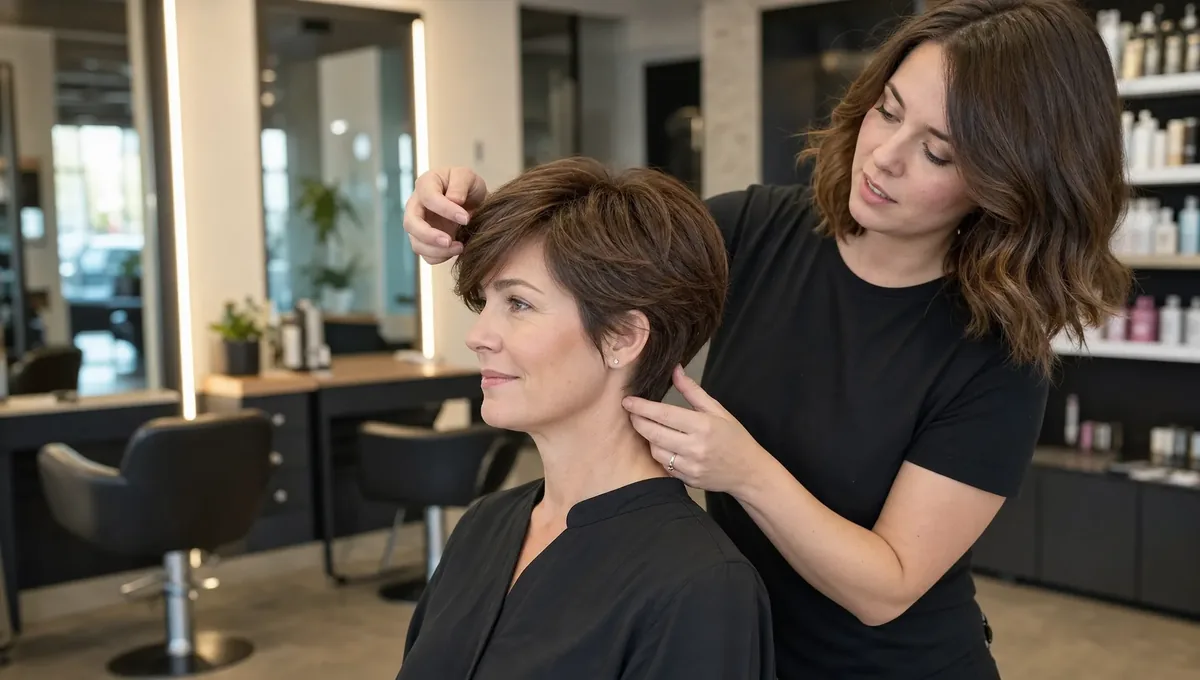
The wolf cut is one of the most misinterpreted requests in salons, so the consultation matters more than the cut itself. Bring photos of the exact version you want, on hair like yours, and be honest about how much time you will actually spend styling each morning.
Ask how the cut will look air-dried, not just blow-dried, and how it will grow out. Agree on where the shortest layer will sit before any scissors move. Five minutes of clear questions now can save months of growing out a cut you did not want.
- Where will the shortest layer sit, and how short will the face pieces be?
- How will this look air-dried, and how will it grow out?
- How often will I need a trim to keep the shape?
- What product should I use, and how much styling time does this version need?
1. Classic Long Wolf Cut
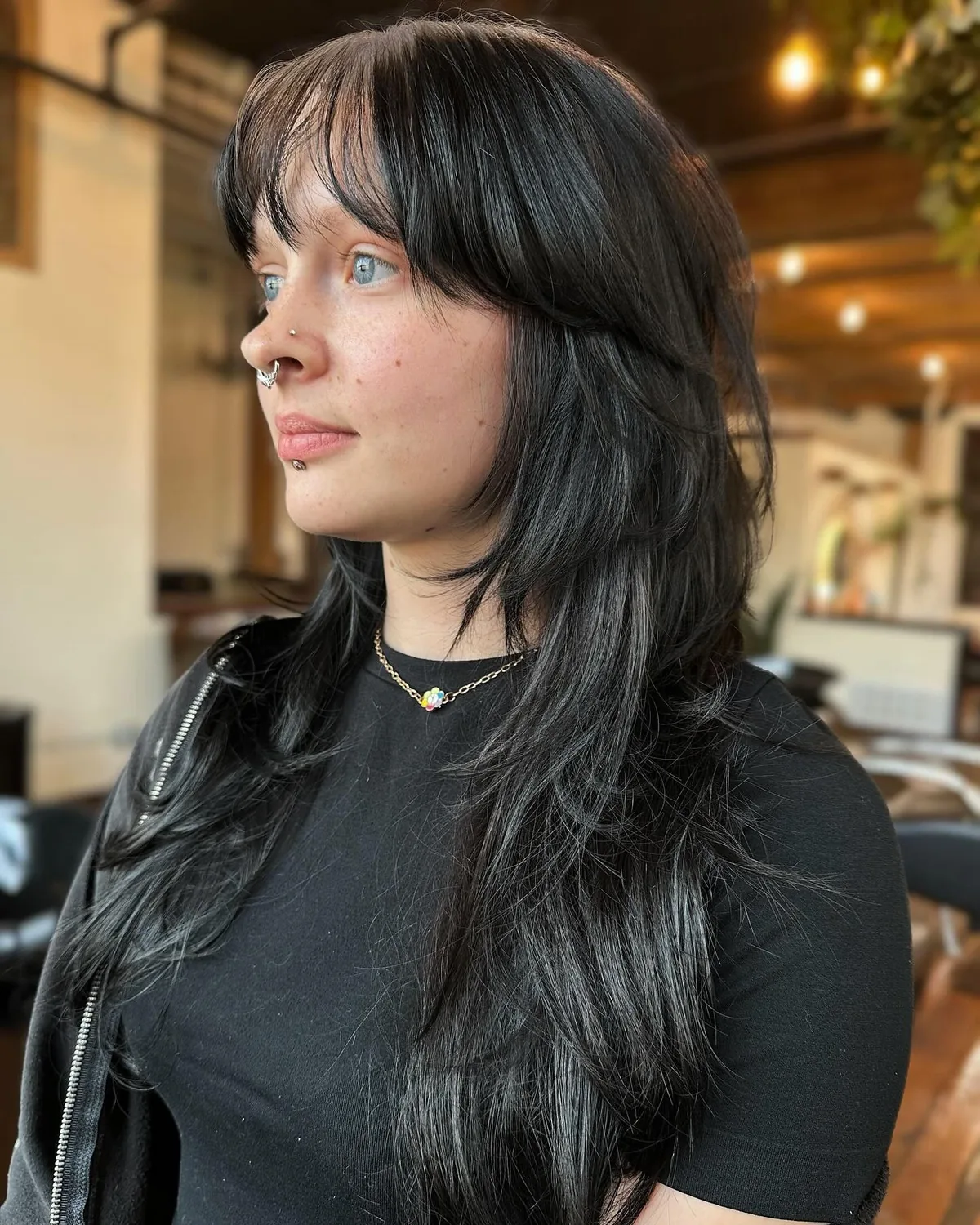
The classic long wolf cut is the version that made the cut famous: a full, textured crown, choppy face-framing layers, and long lengths that fall past the shoulders. It keeps the drama on top and the versatility underneath, so you can wear it down, wavy, or tied up.
It suits women who want the wolf-cut look without giving up length. The long back balances the short top, which makes the whole cut feel rock-inspired rather than extreme, and it grows out gracefully.
Best for: Women with medium to long hair who want a statement cut they can still tie up.
How to style:
- Apply texturising cream to damp hair.
- Diffuse or air-dry, lifting the crown with your fingers.
- Scrunch the lengths for movement.
- Piece out the ends with a little wax.
What to ask your stylist: Ask for a full crown, choppy face-framing layers, and long lengths kept past the shoulders.
2. Shoulder-Length Wolf Cut
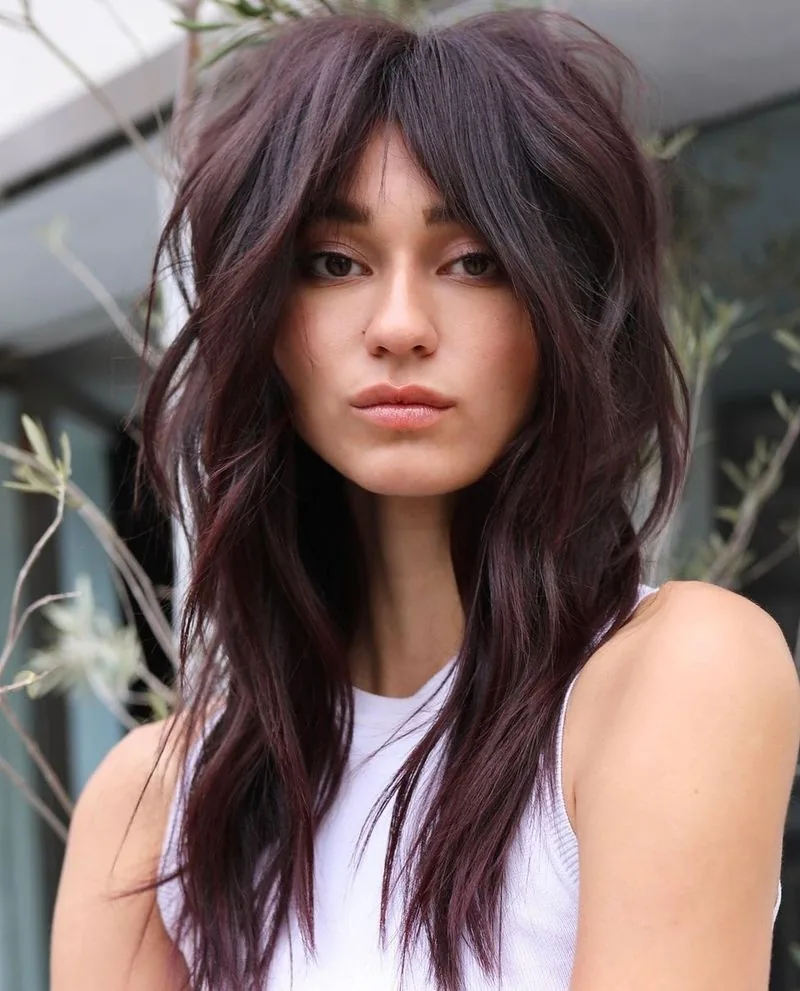
A shoulder-length wolf cut is the sweet spot for a first wolf cut. The layers sit high enough to show real texture, but the length is short enough to dry quickly and style in minutes.
It is also the easiest wolf cut to keep neat. Regular trims hold the shape, and the cut looks good both air-dried and blow-dried, which is not true of every wolf-cut length.
Best for: Women trying a wolf cut for the first time, or anyone who wants low-effort texture.
How to style:
- Apply sea salt or texturising spray to damp hair.
- Scrunch and air-dry, or diffuse on low heat.
- Flip the ends out slightly for a shaggy finish.
- Set with a light spray.
What to ask your stylist: Ask for wolf-cut layers ending at shoulder length, with the shortest face pieces at chin length.
3. Short Wolf Cut
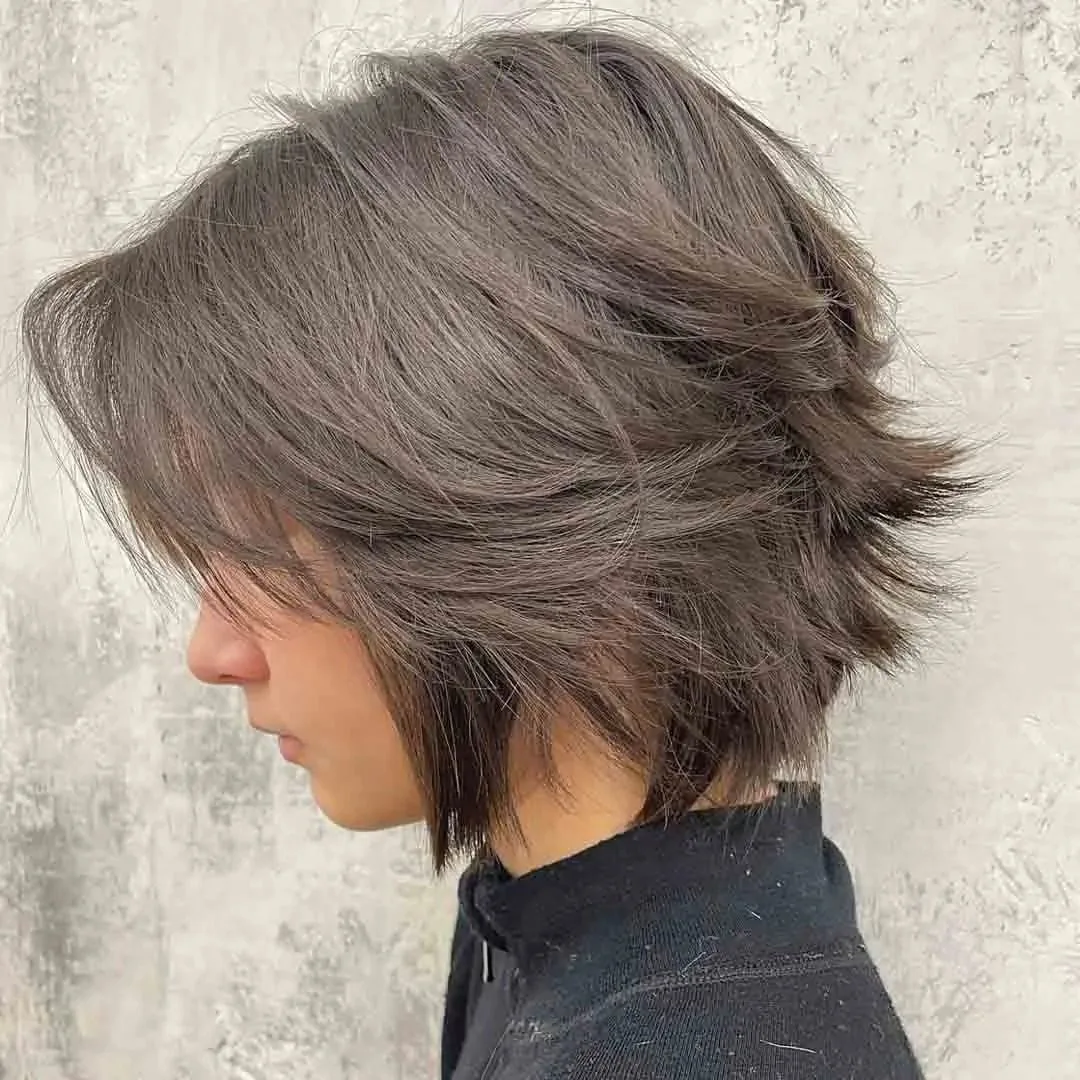
A short wolf cut is bold, choppy, and full of personality. The crown is cut close and textured, the nape stays neat, and the face pieces do the talking — this is the punky end of the wolf-cut family.
It needs confidence more than length, and it rewards women who like wash-and-go hair. Keep the texture piecey rather than fluffy, and the cut stays sharp instead of shapeless.
Best for: Confident women with fine to medium hair who want a short, edgy cut.
How to style:
- Apply a small amount of wax or pomade to damp hair.
- Tousle with your fingers while drying.
- Piece out the crown and face pieces.
- Add dry shampoo at the roots for lift.
What to ask your stylist: Ask for a short, textured wolf cut with a neat nape and piecey face-framing layers.
4. Curly Wolf Cut
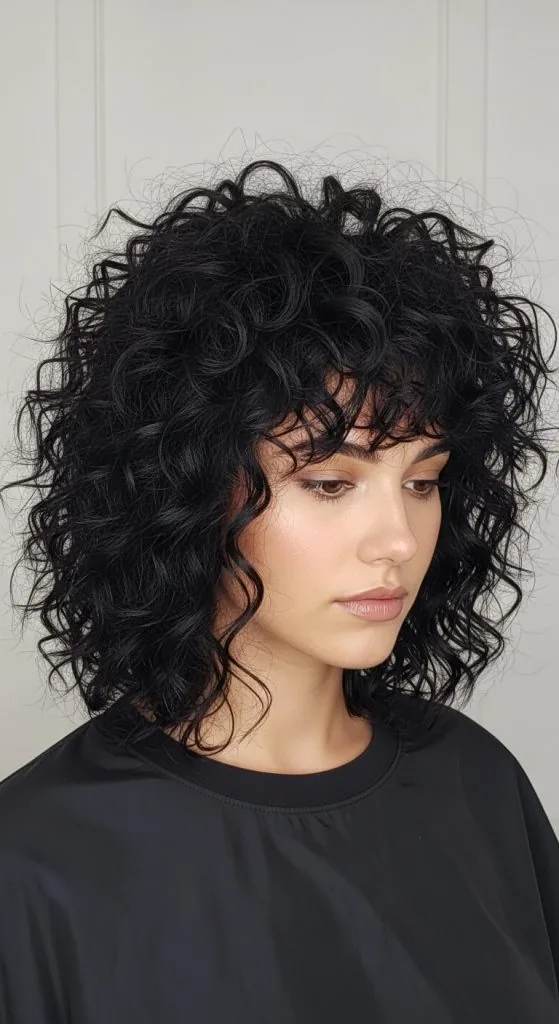
A curly wolf cut lets curls do what they do best: create volume, shape, and movement. The trick is longer, carefully placed layers that let curls stack without turning into a triangle shape.
Cut dry or with the curl pattern in mind, the wolf cut gives curly hair a shape that holds from wash day to day three. The crown gets lift, the lengths keep their curl, and the face is framed softly.
Best for: Women with naturally curly hair who want shape without losing curl definition.
How to style:
- Apply curl cream to soaking wet hair.
- Scrunch upwards and diffuse on low heat.
- Do not brush out dry curls.
- Refresh with a little water and cream between washes.
What to ask your stylist: Ask for a curly cut with long layers, cut dry where possible, and no blunt weight line.
5. Wavy Wolf Cut
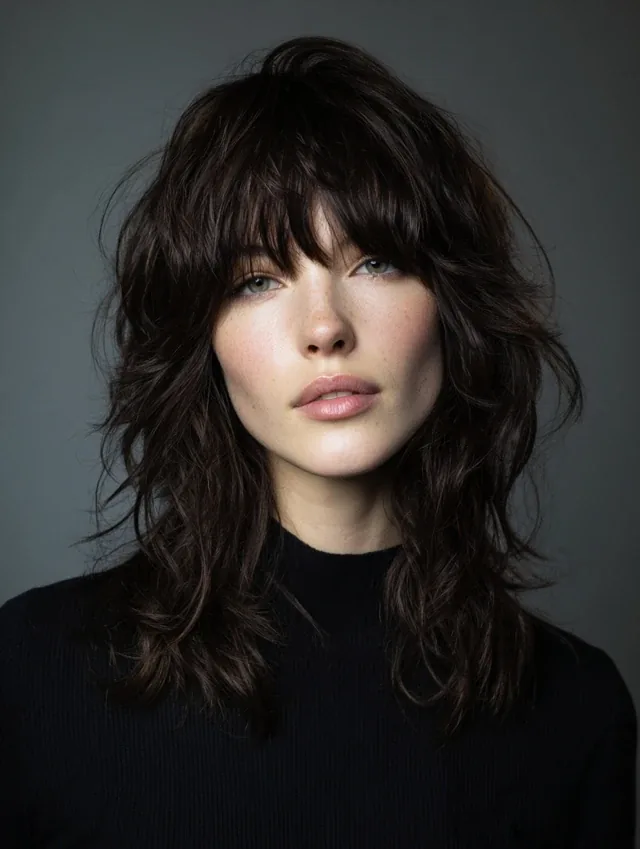
Wavy hair and wolf cuts were made for each other. The natural bend in the hair falls into the layers, so the cut looks styled even when you have done almost nothing to it.
This is the lowest-effort wolf cut of all. A little cream, a scrunch, and you are done — the waves create the texture the cut is famous for, with no heat needed.
Best for: Women with natural waves who want an easy, tousled wolf cut.
How to style:
- Apply wave cream to damp hair.
- Scrunch and air-dry or diffuse.
- Twist a few sections loosely if waves need help.
- Finish with texturising spray.
What to ask your stylist: Ask for layers that follow your natural wave, with the shortest pieces around the face.
6. Straight Hair Wolf Cut
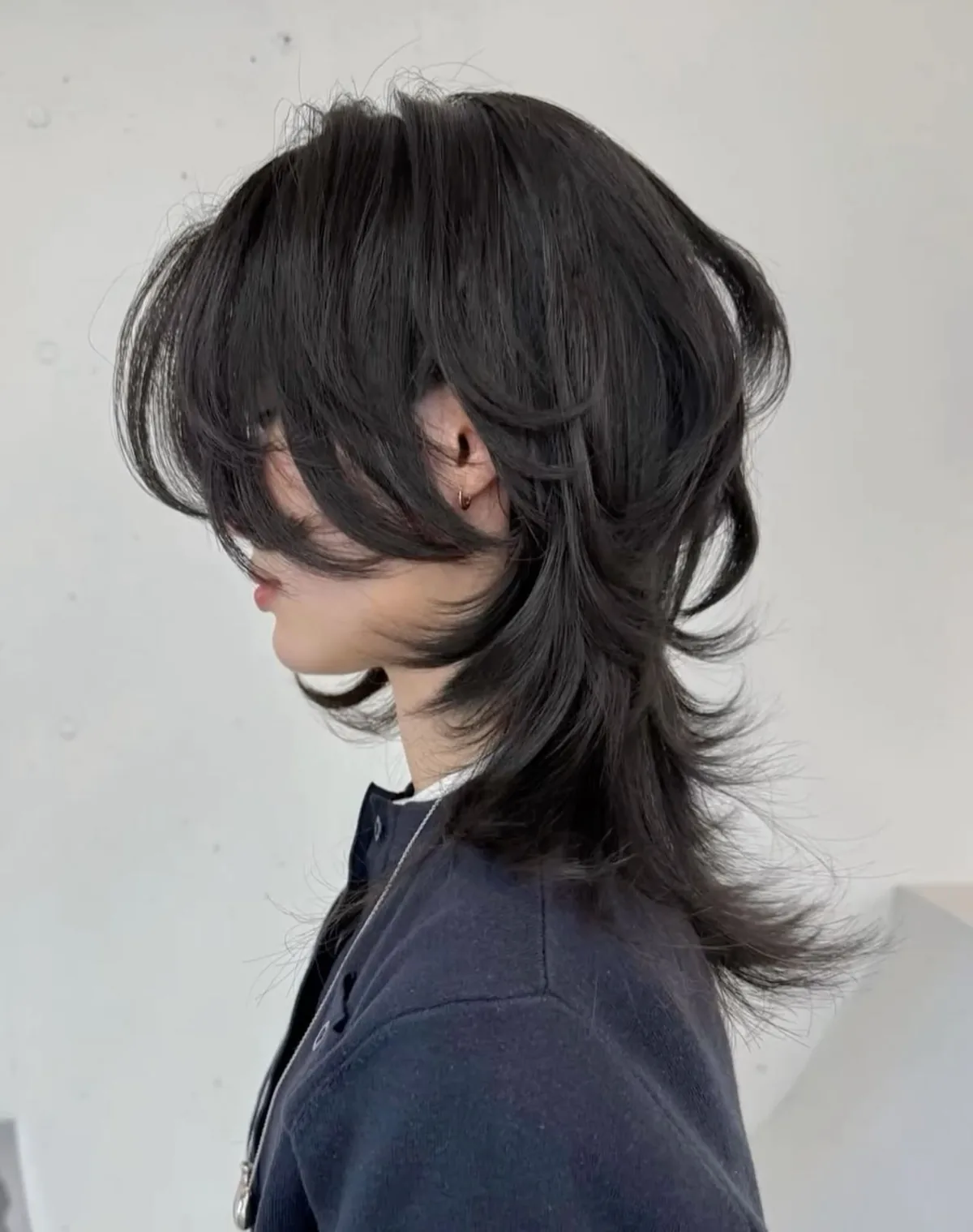
On straight hair, a wolf cut shows its architecture clearly: the layered crown, the feathered face pieces, and the long back are all visible. That clarity is beautiful, but it means the cut must be precise.
Ask for soft, point-cut layers rather than hard steps, and use a wand or round brush to add bend. Without a little movement, straight wolf cuts can look flat — with it, they look deliberately cool.
Best for: Women with straight hair who are happy to add a little bend when styling.
How to style:
- Apply heat protectant and a light cream.
- Add bends with a medium wand, alternating directions.
- Brush through gently for soft movement.
- Finish with a light texturising spray.
What to ask your stylist: Ask for soft, point-cut wolf layers on straight hair, with no harsh step between crown and lengths.
7. Wolf Cut with Curtain Bangs
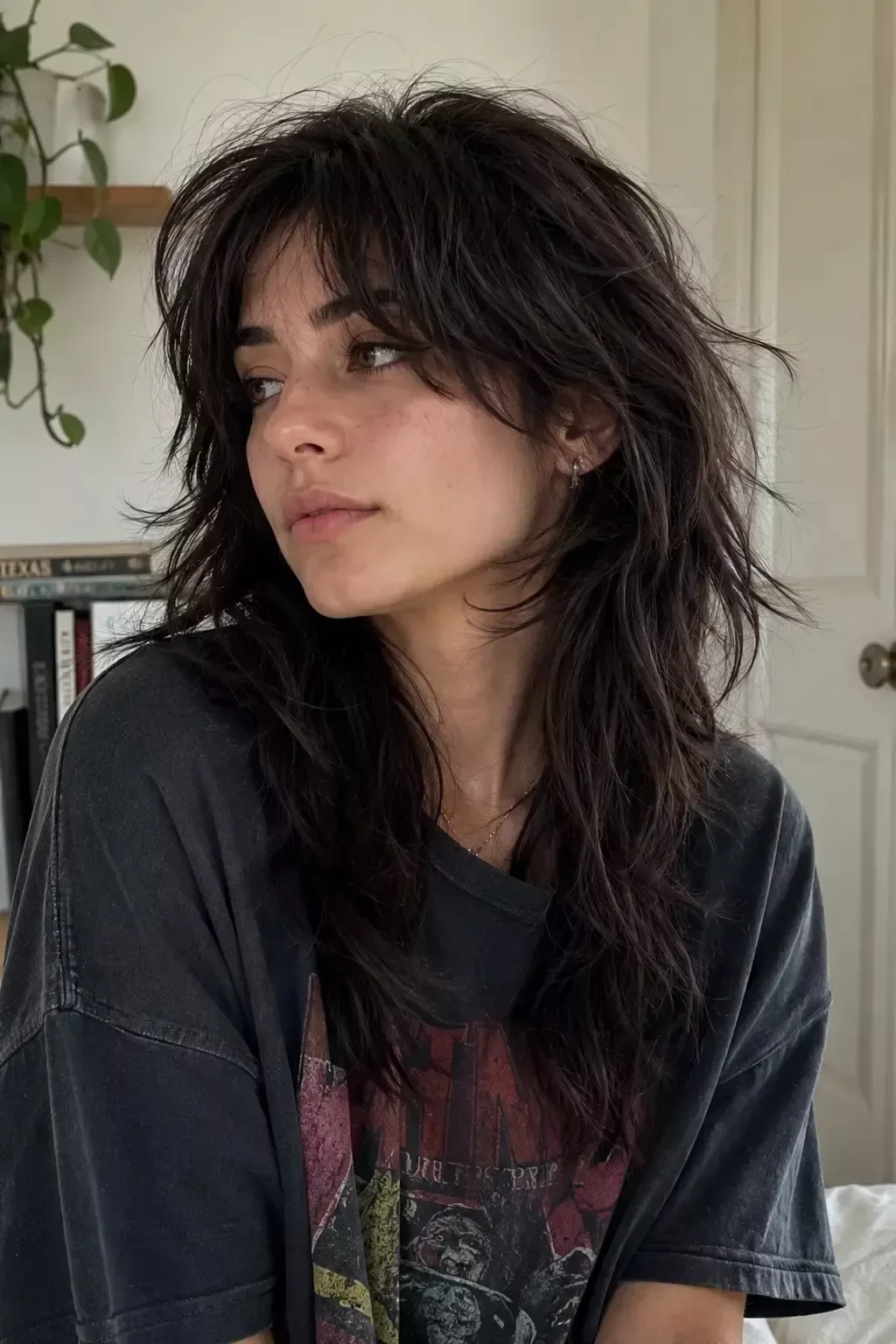
Curtain bangs are the wolf cut’s best friend. They part in the middle and sweep to each side, blending straight into the face-framing layers so the whole front of the cut flows as one shape.
This combination softens the edginess of a wolf cut and suits almost every face shape. It also grows out beautifully, because curtain bangs simply become longer face pieces.
Best for: Women who want a softer wolf cut with a face-framing fringe.
How to style:
- Blow-dry bangs forward, then sweep to each side.
- Add root lift spray at the crown.
- Bend the lengths slightly outward.
- Keep the centre part soft, not severe.
What to ask your stylist: Ask for long curtain bangs that blend into wolf-cut face-framing layers.
8. Wolf Cut with Wispy Bangs
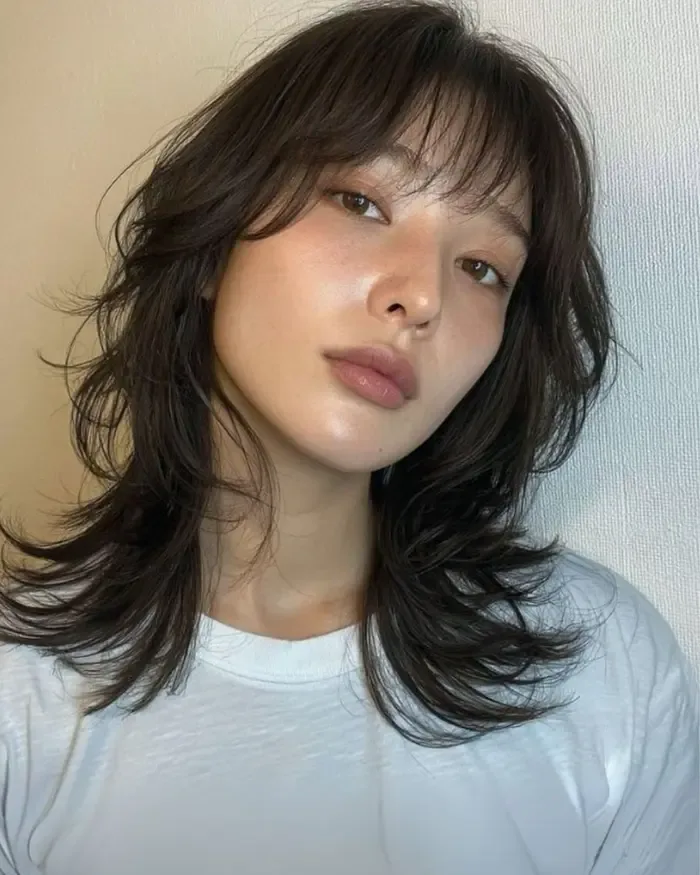
Wispy bangs keep a wolf cut light and airy. Thin, feathered pieces across the forehead soften the look without hiding the eyes, and they pair perfectly with the cut’s choppy texture.
They are also the most forgiving fringe: if they grow a little long, they just look like more face-framing layers. That makes them ideal if you are fringe-curious but not fringe-committed.
Best for: Women who want a soft fringe with a textured wolf cut.
How to style:
- Blow-dry bangs with a small round brush.
- Keep them light and separated, not a solid block.
- Add a touch of wax to the tips for definition.
- Trim lightly every three to four weeks.
What to ask your stylist: Ask for wispy, feathered bangs with a wolf cut, kept light across the forehead.
9. Wolf Cut with Micro Bangs
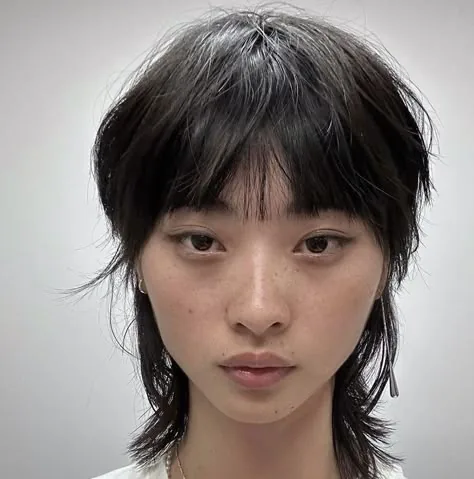
Micro bangs with a wolf cut are a full fashion statement: a short, choppy fringe above the brows against a wild, layered cut. It is editorial, punky, and unforgettable when it suits you.
This is not a low-commitment fringe. Micro bangs need regular trims and suit strong brows and a confident attitude. Pair them with a softer wolf cut underneath so the overall look stays wearable.
Best for: Bold women who love an editorial, punk-inspired look.
How to style:
- Blow-dry micro bangs straight down with a small brush.
- Keep them piecey with a tiny amount of wax.
- Style the wolf layers tousled, not neat.
- Book fringe trims every two to three weeks.
What to ask your stylist: Ask for short, choppy micro bangs with a textured wolf cut, and be clear about the exact fringe length.
10. Wolf Cut with Side-Swept Bangs

Side-swept bangs sweep diagonally across the forehead, which softens a wolf cut and adds a flattering diagonal line to the face. They blend easily into the face-framing layers on one side.
This is a great choice if you like a fringe but do not want a centre part, or if you want to soften a strong forehead or jaw. The sweep also gives the cut movement even when the rest of the hair is worn straight.
Best for: Women who want a fringe with a diagonal, face-softening line.
How to style:
- Part to one side while damp.
- Blow-dry the fringe across the forehead with a round brush.
- Smooth the lengths down.
- Set with a light spray.
What to ask your stylist: Ask for long side-swept bangs that blend into one side of the wolf cut.
11. Wolf Cut with Face-Framing Layers
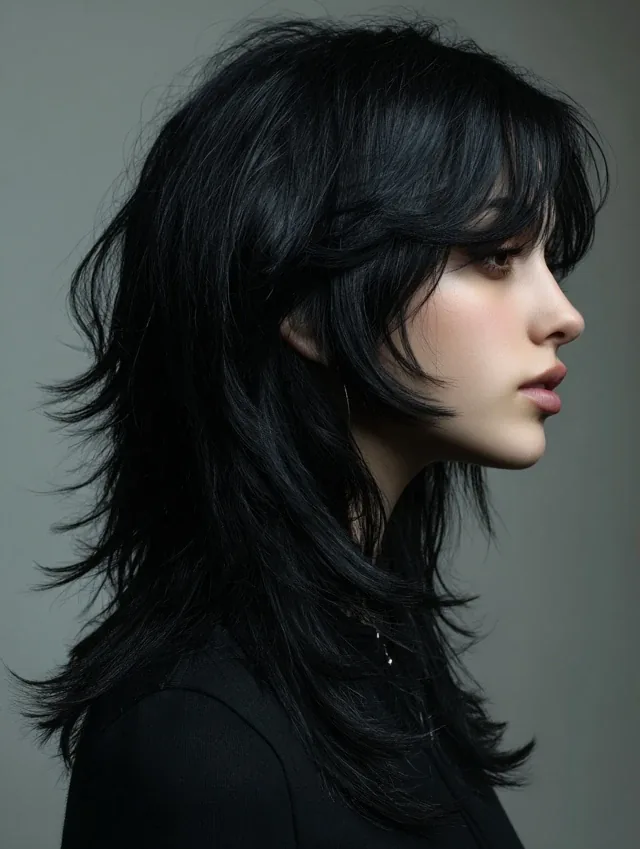
Face-framing layers are the heart of a wolf cut. Shorter pieces around the cheeks and jaw draw the eye to the face, add movement, and make even a simple ponytail look styled.
If you love the wolf-cut shape but want to keep the rest of your hair fairly simple, this is the version to ask for. The face pieces give you the look; the lengths stay easy.
Best for: Women who want the wolf-cut effect focused around the face.
How to style:
- Blow-dry face pieces forward and slightly outward.
- Add a bend with a wand if needed.
- Keep the pieces in front of the shoulders.
- Finish with a light spray.
What to ask your stylist: Ask for face-framing wolf layers starting at cheekbone or chin length, blending into long lengths.
12. Choppy Textured Wolf Cut
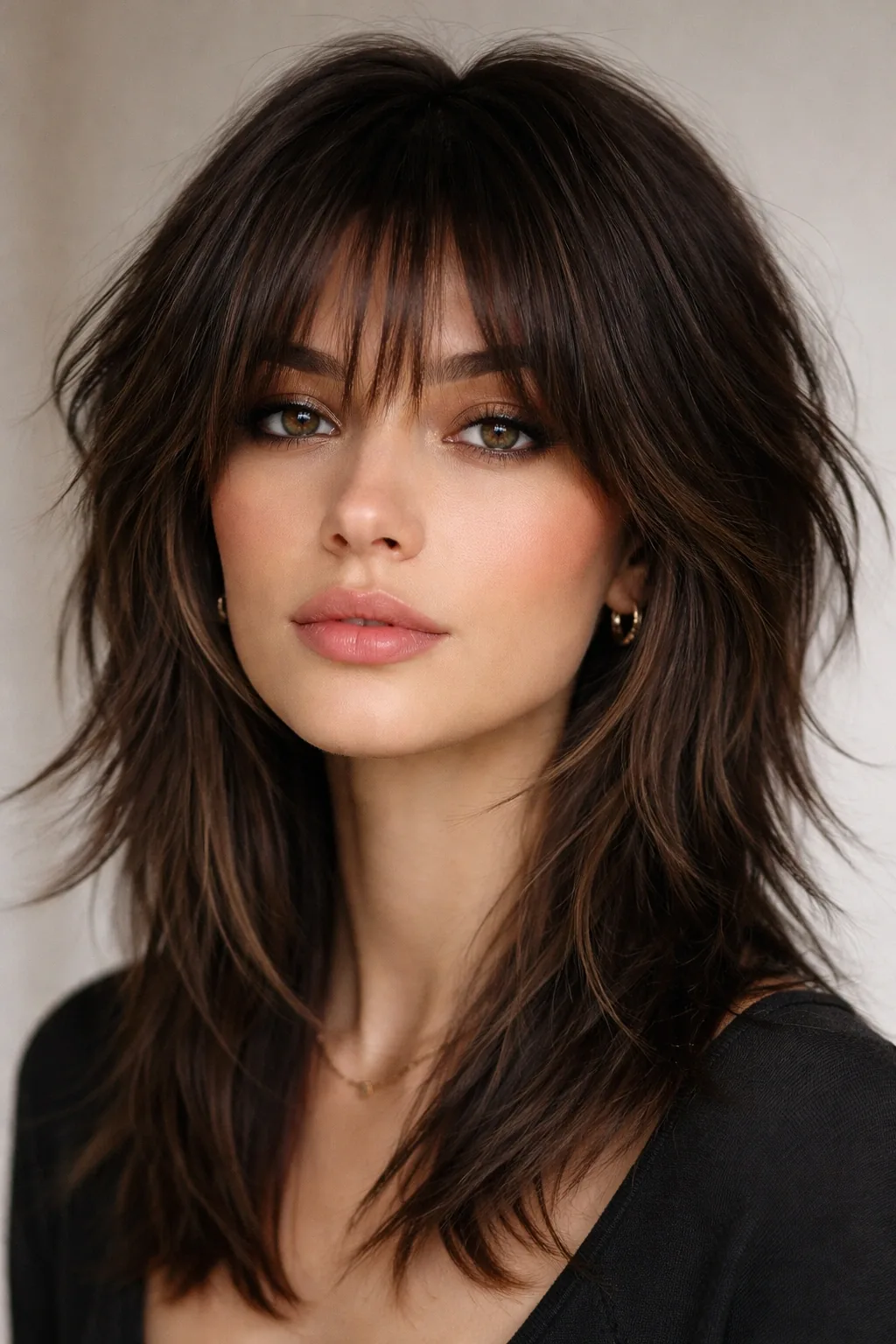
The choppy wolf cut leans into texture: point-cut ends, piecey layers, and a deliberately undone finish. Nothing about it is smooth or polished, and that is exactly the point.
It works best on hair with some natural texture or wave, and on women who like a lived-in look. Keep the ends healthy, though — choppy layers show split ends faster than a blunt cut.
Best for: Women with wavy or textured hair who love an undone, rock-inspired finish.
How to style:
- Apply texturising cream to damp hair.
- Scrunch and diffuse.
- Piece out ends with wax.
- Avoid over-brushing, which kills the texture.
What to ask your stylist: Ask for a choppy, point-cut wolf cut with piecey, textured ends.
13. Soft Blended Wolf Cut
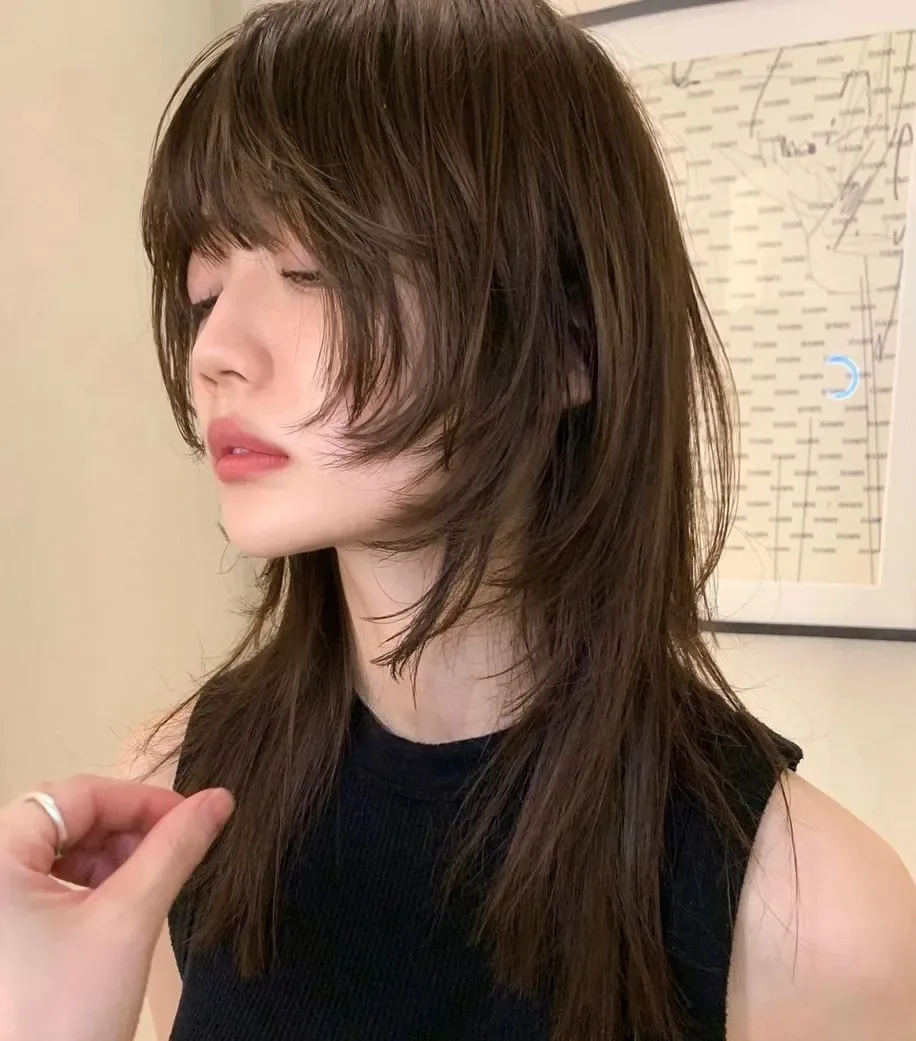
A soft wolf cut keeps the shape — volume on top, longer lengths below — but blends the layers so there is no harsh step anywhere. It is the wolf cut for women who love the silhouette but not the edge.
This version suits workplaces, weddings, and anyone who wants a trendy cut that still looks polished. It also grows out more gracefully than a choppy version, because the layers are already blended.
Best for: Women who want wolf-cut shape with a soft, polished finish.
How to style:
- Blow-dry smooth with a round brush.
- Add soft bends to the ends.
- Smooth flyaways with a little cream.
- Finish with shine spray.
What to ask your stylist: Ask for a soft, blended wolf cut with no harsh steps between layers.
14. Wolf Cut with an Undercut Nape
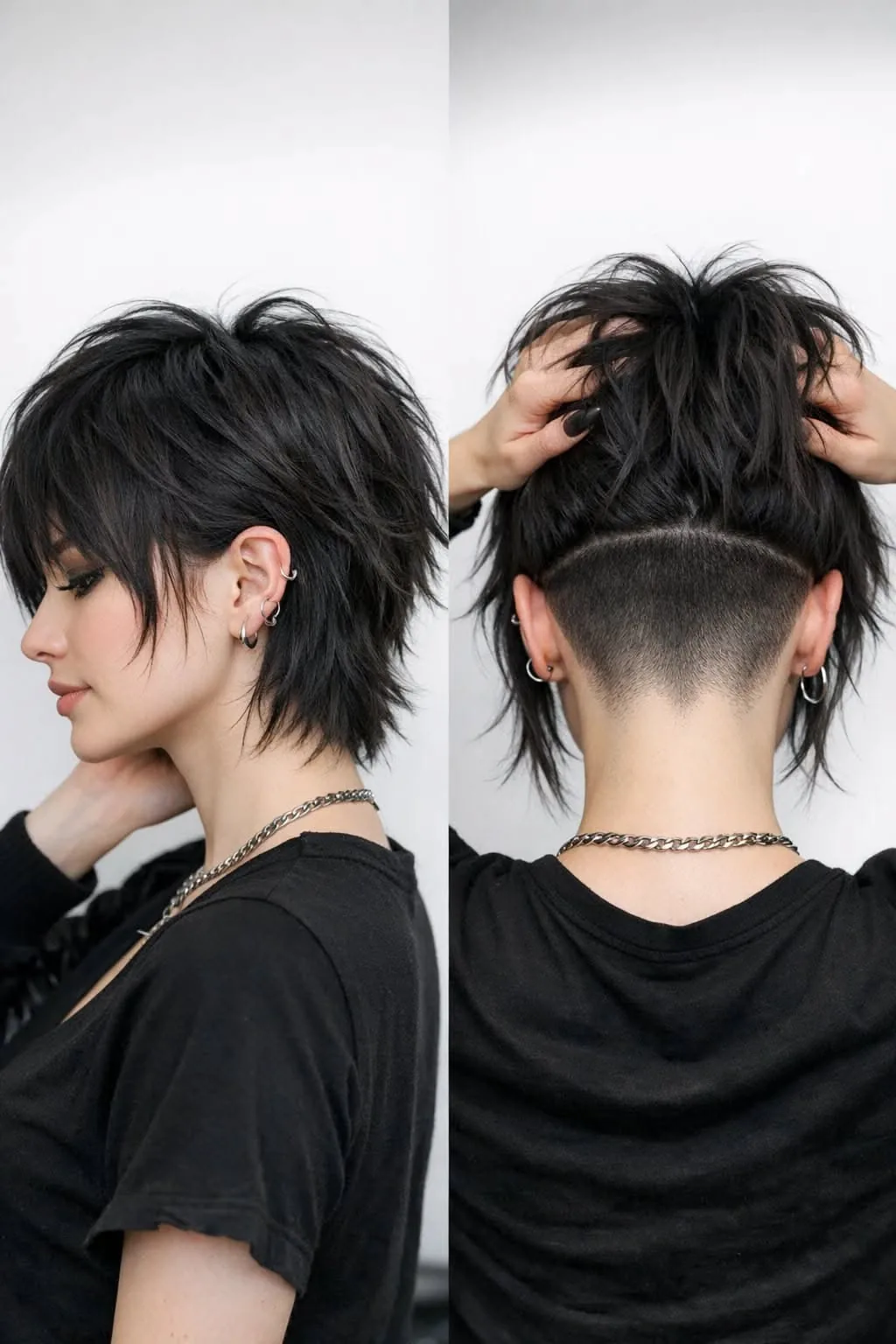
An undercut nape hides a secret edge under a wolf cut: the hair at the nape is cut short, while the longer layers fall over it. Wear it down and nobody knows; tie it up and the undercut shows.
It also removes bulk and weight at the neck, which is a real comfort win in hot weather or for very thick hair. It needs upkeep, though — the nape grows out visibly within a few weeks.
Best for: Bold women with thick hair, or anyone who wants a hidden edge.
How to style:
- Wear down for a classic wolf look, or tie up to reveal the nape.
- Keep the nape neat with trims every three to four weeks.
- Style the top layers tousled as usual.
- Use dry shampoo to keep the crown lifted.
What to ask your stylist: Ask for a wolf cut with a short, hidden undercut at the nape, covered by the longer layers.
15. Wolf Cut for Thick Hair

Thick hair can make a wolf cut look heavy if the bulk is not managed — or it can make it look incredible, with huge volume and movement. The difference is internal layering.
A good stylist will remove weight from inside the hair while keeping the outline full, so the cut moves instead of sitting like a helmet. The result is a wolf cut with real presence, and much easier drying time.
Best for: Women with thick hair who want volume they can actually manage.
How to style:
- Apply a lightweight cream, not a heavy oil.
- Diffuse or blow-dry in sections.
- Use internal layers to your advantage — shake the hair out, don’t flatten it.
- Finish with texturising spray.
What to ask your stylist: Ask for a wolf cut with internal layers to remove bulk from thick hair, keeping the outline full.
16. Wolf Cut for Fine Hair

Fine hair needs a careful wolf cut: too many layers and the ends disappear. The trick is fewer, blunter layers on top of a full base, so the cut still has shape without losing density.
Done right, a wolf cut is actually great for fine hair, because the short crown layers create lift and the illusion of volume. Keep the lengths healthy and avoid over-thinning at all costs.
Best for: Women with fine hair who want volume without losing thickness.
How to style:
- Apply volumising mousse to damp roots.
- Blow-dry upside down for lift.
- Add texture spray rather than heavy creams.
- Keep the ends blunt and healthy.
What to ask your stylist: Ask for a wolf cut for fine hair with fewer, blunter layers and no thinning of the ends.
17. Wolf Cut for Thin Hair
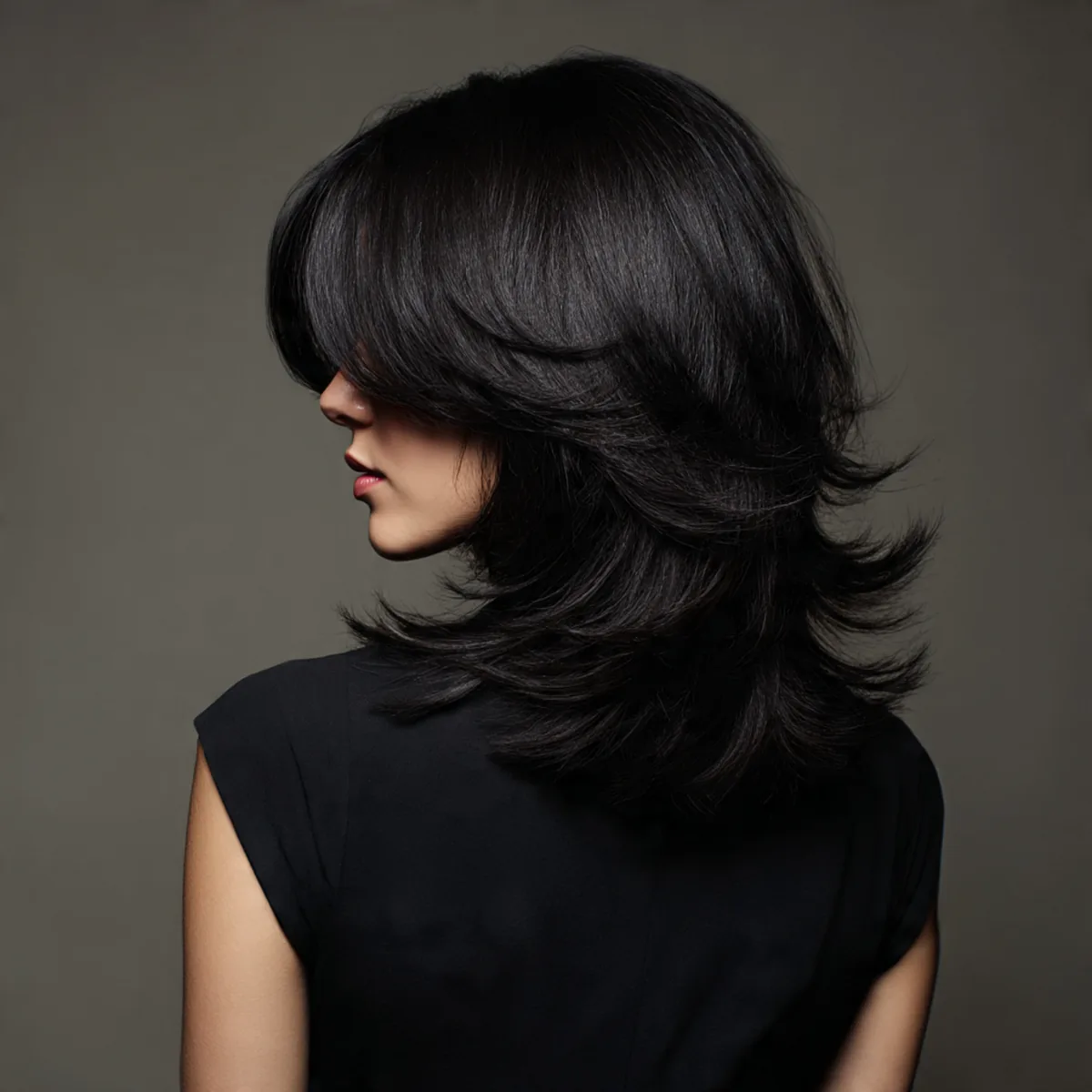
Thin hair and wolf cuts can work together, but the cut must protect what density you have. That means a soft wolf shape with long, full ends, and texture created by styling rather than by cutting lots of short layers.
Focus the layers at the crown for lift, keep the perimeter as full as possible, and use root-lifting products. The result looks fuller, not thinner — the opposite of what a badly cut wolf cut would do.
Best for: Women with thin hair who want lift and shape without sacrificing fullness.
How to style:
- Apply root-lifting spray to damp hair.
- Blow-dry the crown up and away from the face.
- Use dry shampoo for grip and volume.
- Avoid heavy oils that flatten the roots.
What to ask your stylist: Ask for a soft wolf cut for thin hair, with crown layers for lift and a full, unthinned perimeter.
18. Wolf Cut with Blonde Balayage
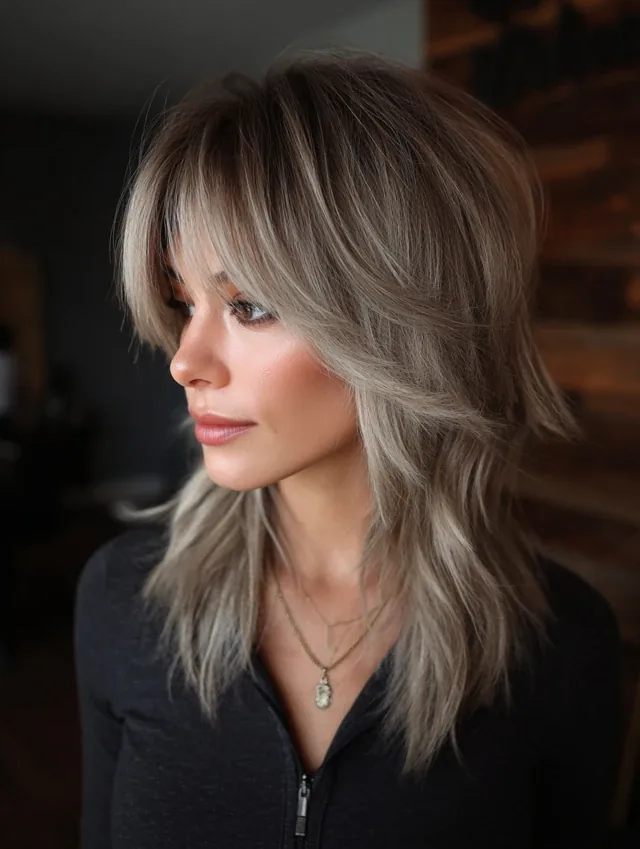
Blonde balayage on a wolf cut is a match made in heaven: the hand-painted lightness catches on every layer, so the texture is visible even from across the room.
Keep the roots darker for a lived-in grow-out, and let the blonde get brighter towards the ends and around the face. It is lower maintenance than full blonde, and it makes the wolf shape pop in photos.
Best for: Women who want dimension that shows off wolf-cut layers.
How to style:
- Apply a purple-toning shampoo once a week if needed.
- Style with waves to show the dimension.
- Use a gloss between colour appointments.
- Protect blonde ends with a leave-in treatment.
What to ask your stylist: Ask for blonde balayage through wolf-cut layers, brighter around the face and ends.
19. Copper Wolf Cut
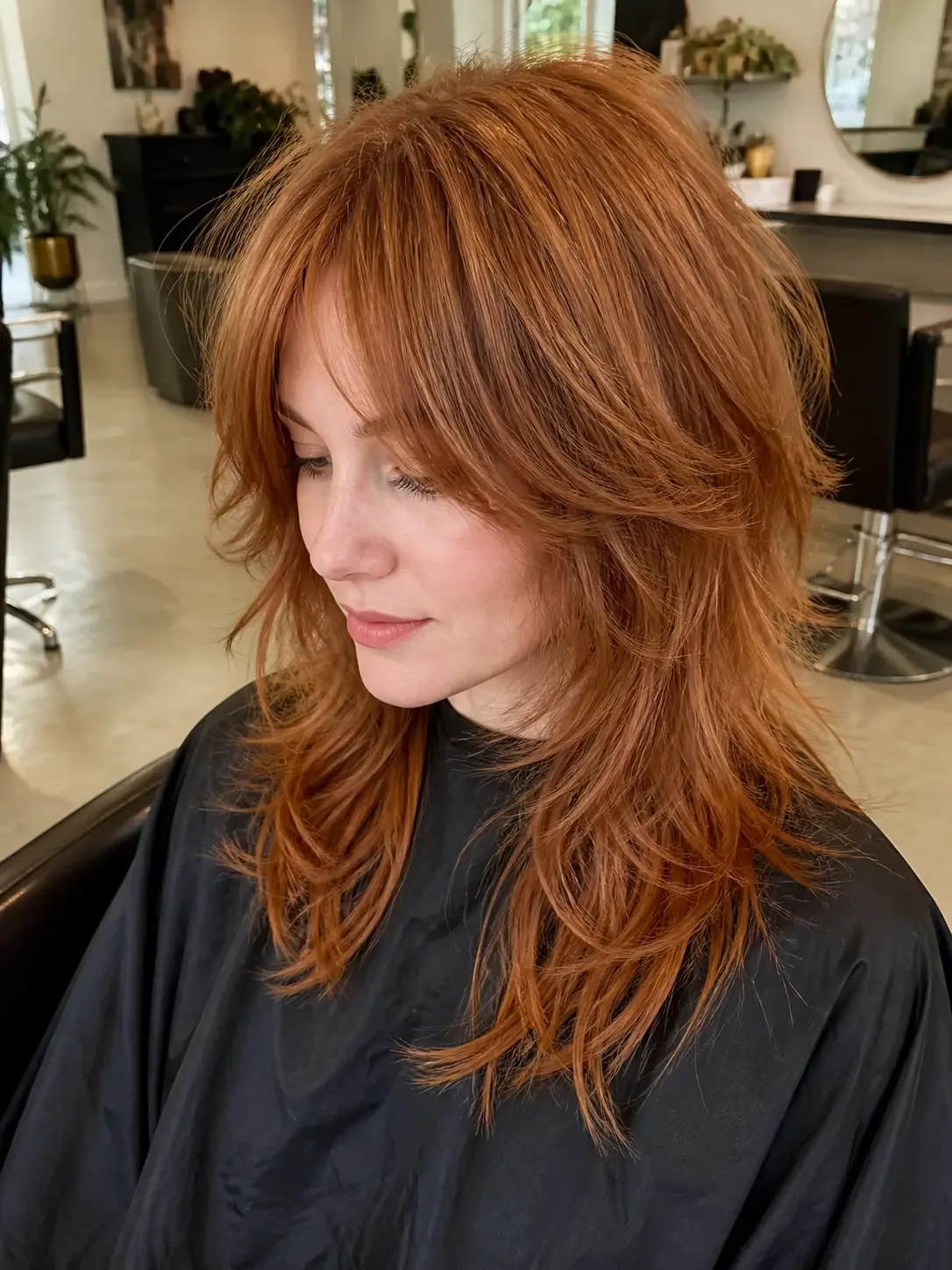
Copper is the colour that made the wolf cut go viral, and for good reason: warm, fiery tones make choppy layers look even more alive. From soft ginger to deep copper, the colour adds warmth and attitude.
Copper fades faster than most colours, so plan for gloss refreshes and colour-safe shampoo. The payoff is a cut-and-colour combination that turns heads and photographs beautifully.
Best for: Women who love warm, statement colour with a textured cut.
How to style:
- Use colour-safe shampoo and cool water.
- Refresh with a copper gloss every four to six weeks.
- Style tousled to show the warmth.
- Avoid over-washing to slow fading.
What to ask your stylist: Ask for a copper colour with a wolf cut, and a gloss plan to keep the tone rich.
20. Brunette Wolf Cut with Caramel Highlights
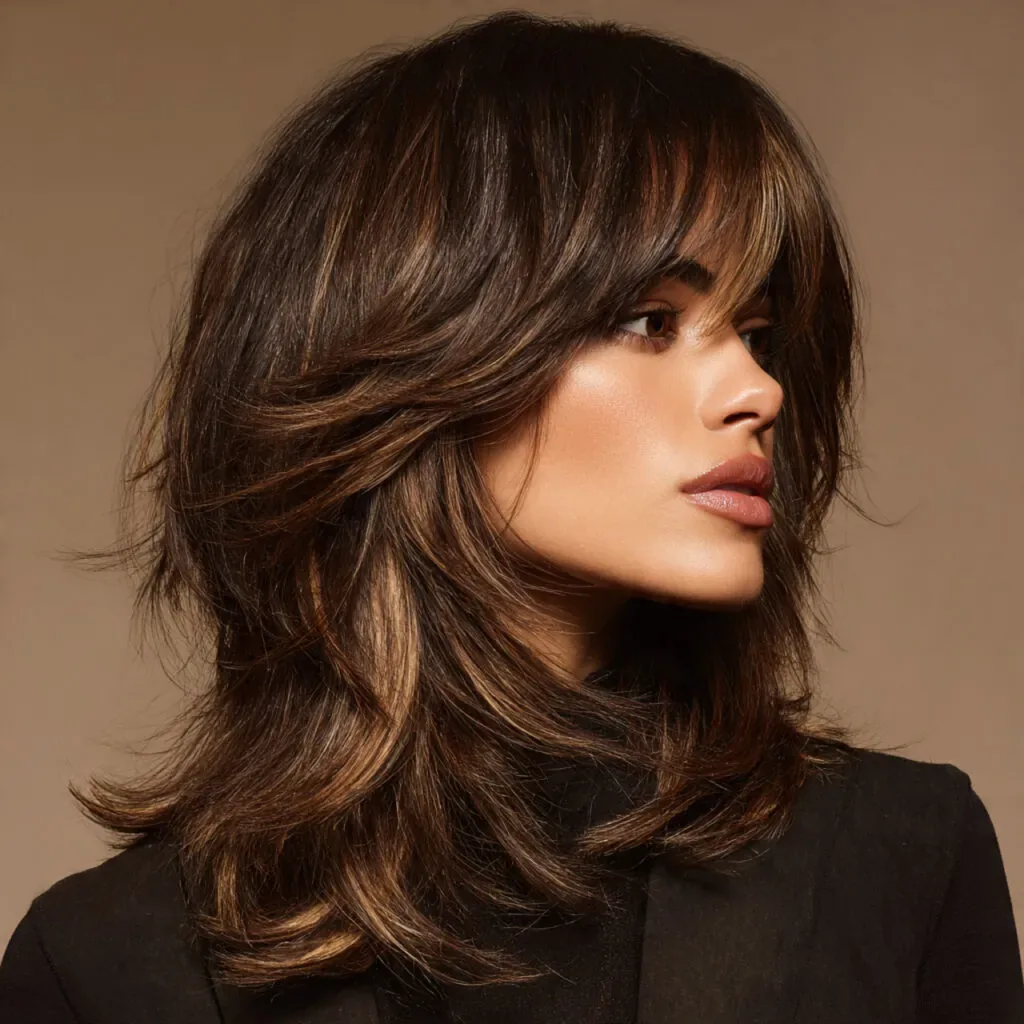
Caramel highlights on a brunette wolf cut add warmth and dimension exactly where the layers are: around the face and through the crown. The result is rich, glossy, and very wearable.
This is a great low-risk colour choice for a wolf cut. It brightens without a full colour change, grows out softly, and suits most skin tones.
Best for: Brunettes who want warm dimension in a wolf cut.
How to style:
- Style with soft waves to show the highlights.
- Use a shine serum on the lengths.
- Refresh highlights every eight to twelve weeks.
- Keep the base glossy with a clear gloss.
What to ask your stylist: Ask for caramel highlights placed through wolf-cut layers, focused around the face.
21. Wolf Cut with a Money Piece
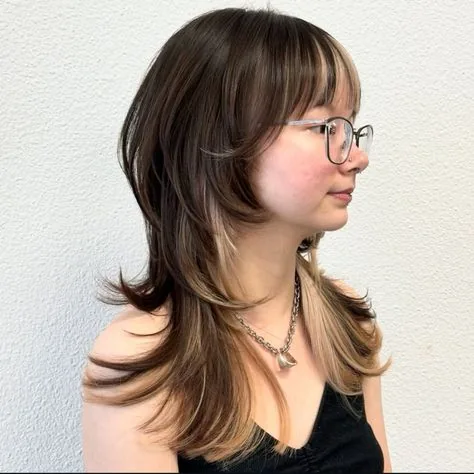
A money piece — two bright face-framing sections at the front — turns a wolf cut into a statement. The bright pieces highlight the shortest layers, which are the whole point of the cut.
It is bold, but it is also easy to maintain: only the front sections need regular brightening. Pair it with a darker base for maximum contrast, or a soft blonde for a gentler version.
Best for: Women who want a bold, face-framing colour accent on a wolf cut.
How to style:
- Style the front pieces forward so the money piece shows.
- Keep the bright sections toned and healthy.
- Use purple shampoo sparingly if the money piece is blonde.
- Refresh the front sections every six to eight weeks.
What to ask your stylist: Ask for a money piece with a wolf cut: bright front sections against a darker base.
22. Two-Tone Wolf Cut
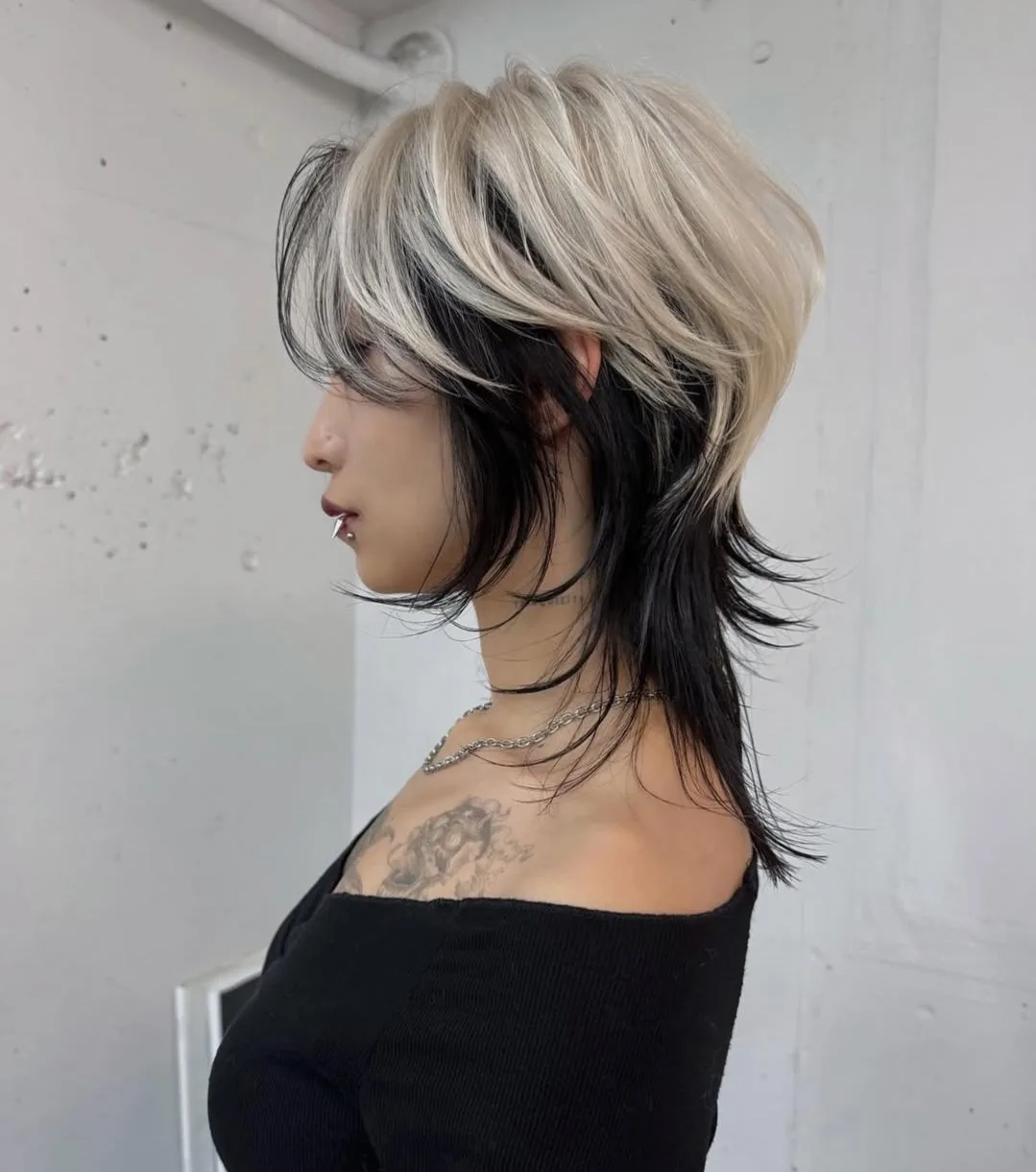
A two-tone wolf cut plays with contrast: a darker crown and lighter lengths, or a dark base with a bright underlayer that peeks through the choppy layers. The cut’s texture makes the colour change look intentional, not accidental.
This is a high-impact choice, and it needs a colourist who understands layering. Done well, every movement of the hair reveals a flash of the second tone.
Best for: Women who want a bold, creative colour with their wolf cut.
How to style:
- Style tousled so the second tone peeks through.
- Keep both tones healthy with regular treatments.
- Use colour-safe products for both shades.
- Plan touch-ups for the brighter tone.
What to ask your stylist: Ask for a two-tone colour designed around wolf-cut layers, with the contrast placed where it will show.
23. Pastel Pink Wolf Cut
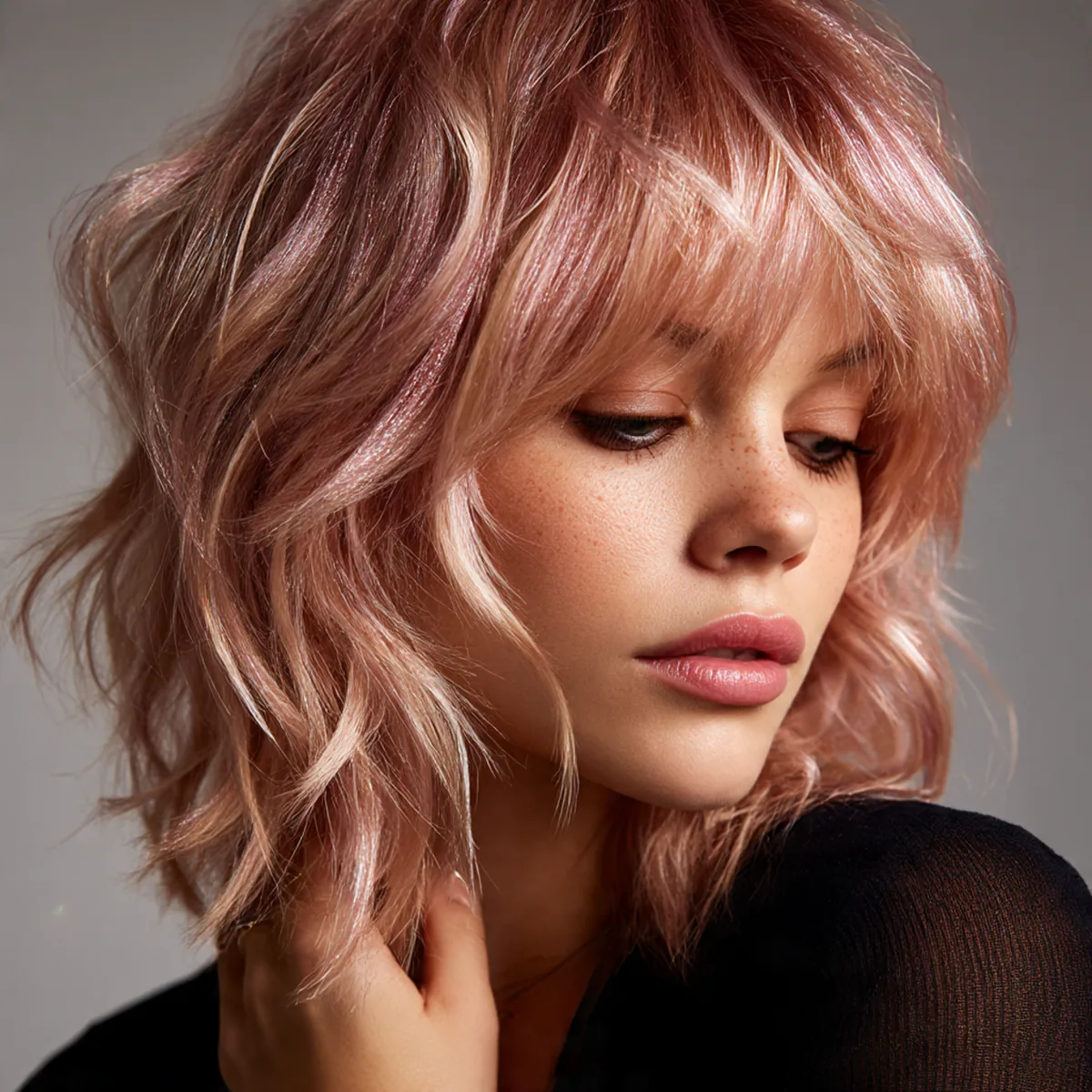
Pastel pink softens a wolf cut in the prettiest way: the choppy texture stays edgy, but the colour is dreamy and romantic. It is the wolf cut for women who love both punk and pastel.
Pastel needs a light blonde base and regular toning, so it is a commitment — but the combination of soft pink and shaggy layers is genuinely show-stopping while it lasts.
Best for: Women who love pastel colour and a textured, playful cut.
How to style:
- Start from a light blonde base for true pastel tone.
- Use colour-depositing conditioner to refresh the pink.
- Wash in cool water and wash less often.
- Style tousled for a soft, dreamy finish.
What to ask your stylist: Ask for a pastel pink wolf cut on a lightened base, with a toning plan to keep the pink fresh.
24. Wolf Cut with Feathered Ends
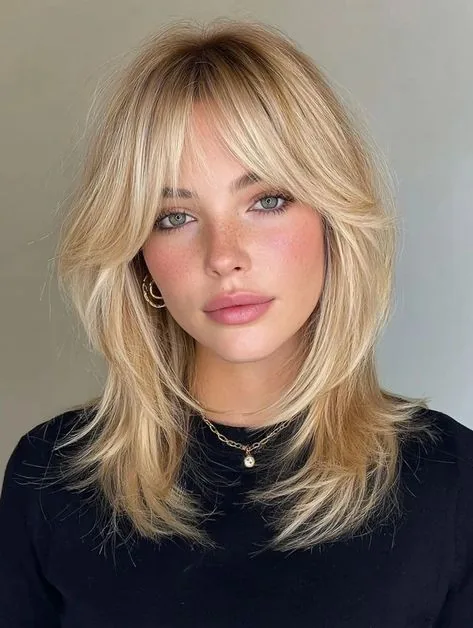
Feathered ends give a wolf cut a soft, airy finish. Instead of blunt or choppy tips, the ends taper and flick gently, so the whole cut moves like feathers in a breeze.
This version suits women who love the wolf shape but want a gentler edge. It also flatters straight and wavy hair, where feathering is most visible, and it grows out without a harsh line.
Best for: Women who want a soft, airy wolf cut with movement.
How to style:
- Blow-dry ends outward with a round brush.
- Use a light cream to separate the feathered tips.
- Avoid heavy products that weigh the ends down.
- Trim lightly to keep the feathering fresh.
What to ask your stylist: Ask for a wolf cut with feathered, tapered ends rather than blunt or heavily choppy tips.
25. Wolf Cut with Flipped-Out Ends
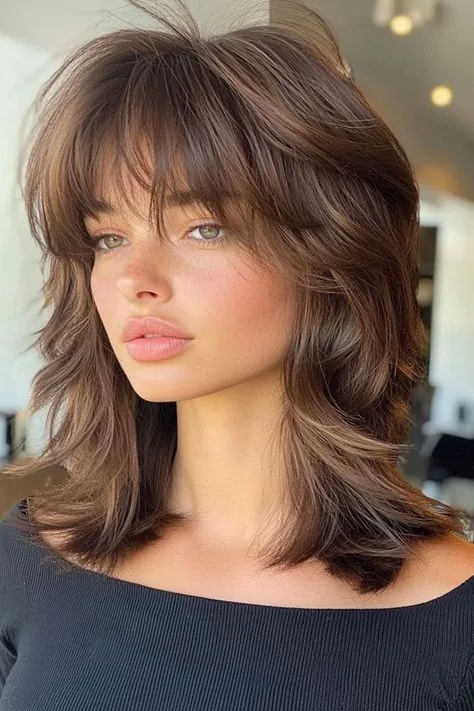
Flipped-out ends are pure retro fun: the ends of a wolf cut flick outward, giving the cut a playful, 70s-meets-punk energy. It is the finishing touch that turns a good wolf cut into a memorable one.
A round brush or a quick pass with a straightener, flicked outward, is all it takes. Keep the crown tousled and the flip will look intentional rather than accidental.
Best for: Women who love a retro, playful finish on a wolf cut.
How to style:
- Blow-dry with a round brush, flicking ends outward.
- Or pass a straightener through the ends and flick out.
- Keep the crown textured and tousled.
- Set the flips with a light spray.
What to ask your stylist: Ask for wolf-cut layers cut to flip out easily, with ends light enough to flick.
26. Messy Bedhead Wolf Cut

The messy bedhead wolf cut is the ultimate low-effort look: tousled, piecey, and deliberately undone. The cut’s layers do the work, so bedhead stops being a problem and becomes the style.
This is not the same as unbrushed hair. A little texturising product and a quick scrunch turn natural texture into intentional mess — the difference between woke-up-like-this and just woke up.
Best for: Women who want a genuinely low-maintenance, lived-in wolf cut.
How to style:
- Apply texturising spray to dry or damp hair.
- Scrunch and tousle with your fingers.
- Sleep on it for even better day-two texture.
- Add dry shampoo at the roots.
What to ask your stylist: Ask for a tousled wolf cut with piecey layers that look good messy.
27. Sleek Polished Wolf Cut
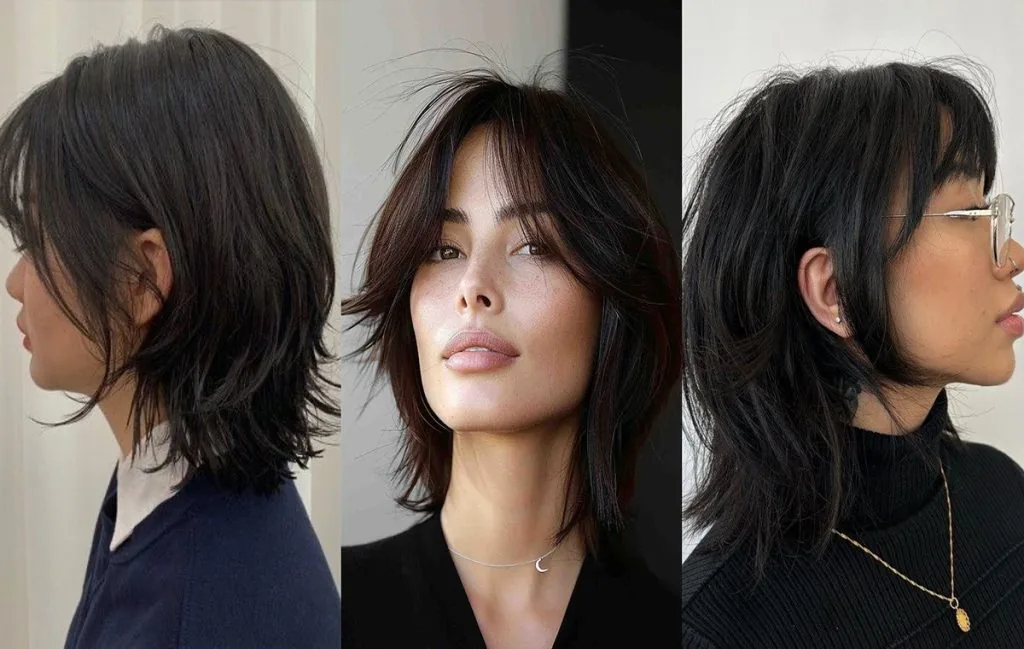
A sleek wolf cut proves the cut is not only for messy hair. Blow-dried smooth with polished ends, the layers become elegant and architectural — a wolf cut you can wear to the office or a wedding.
The key is smoothing without flattening: keep a little root lift and let the layers show as soft, curved shapes rather than a solid sheet of hair.
Best for: Women who want a wolf cut that can look polished and professional.
How to style:
- Blow-dry smooth with a paddle or round brush.
- Keep root lift with a volumising spray.
- Smooth the ends under or out softly.
- Finish with shine serum.
What to ask your stylist: Ask for a wolf cut with layers that can be blow-dried smooth and polished.
28. Wolf Cut Lob (Wolf Bob)
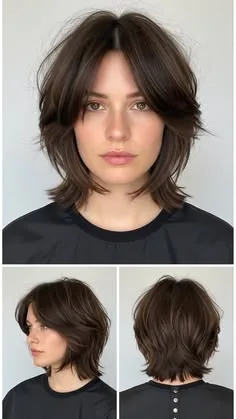
The wolf lob — a wolf cut at bob-to-lob length — is the chic, compact version of the cut. All the texture and crown volume, in a length that sits around the jaw to the shoulders.
It is a great choice if you love short hair but want more texture than a classic bob gives. The layers stop it looking boxy, and the length keeps it versatile.
Best for: Women who want wolf-cut texture at bob or lob length.
How to style:
- Apply texturising spray to damp hair.
- Scrunch or blow-dry with a round brush.
- Keep the ends piecey, not blunt.
- Add root lift for crown volume.
What to ask your stylist: Ask for a wolf lob: wolf-cut layers at jaw-to-shoulder length, with a textured finish.
29. Wolf Pixie Cut
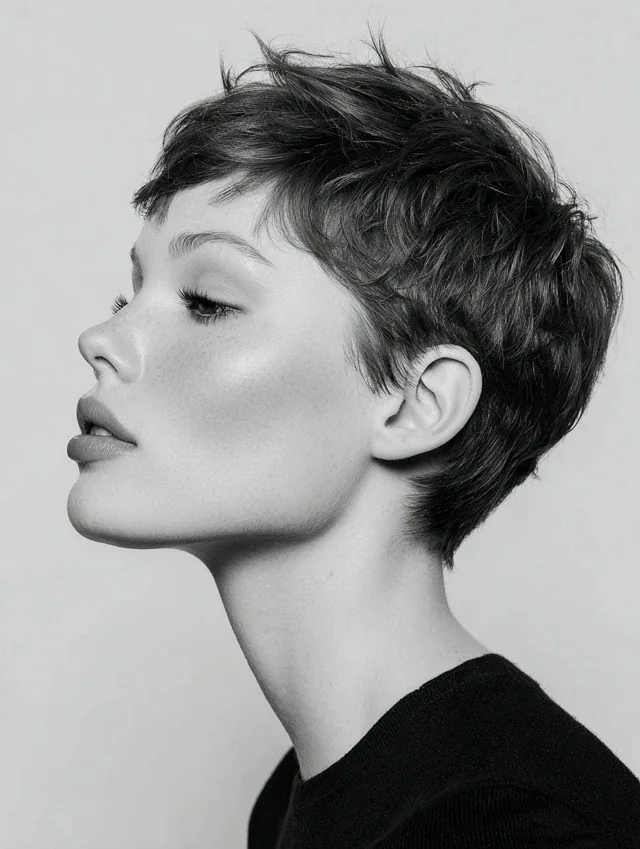
A wolf pixie takes the wolf cut’s crown volume and choppy texture and puts them on a pixie base. The result is short, spiky in the best way, and full of attitude.
It is the shortest wolf cut in this guide, and it needs regular trims to hold its shape — but it also needs almost no styling time in the morning, which is a fair trade.
Best for: Women who love short, textured, low-maintenance hair.
How to style:
- Apply a small amount of wax to damp or dry hair.
- Piece out the crown and fringe with your fingers.
- Keep the nape neat between cuts.
- Add texture spray for grip.
What to ask your stylist: Ask for a wolf pixie: a pixie with a textured, voluminous wolf-cut crown.
30. Midi Wolf Cut
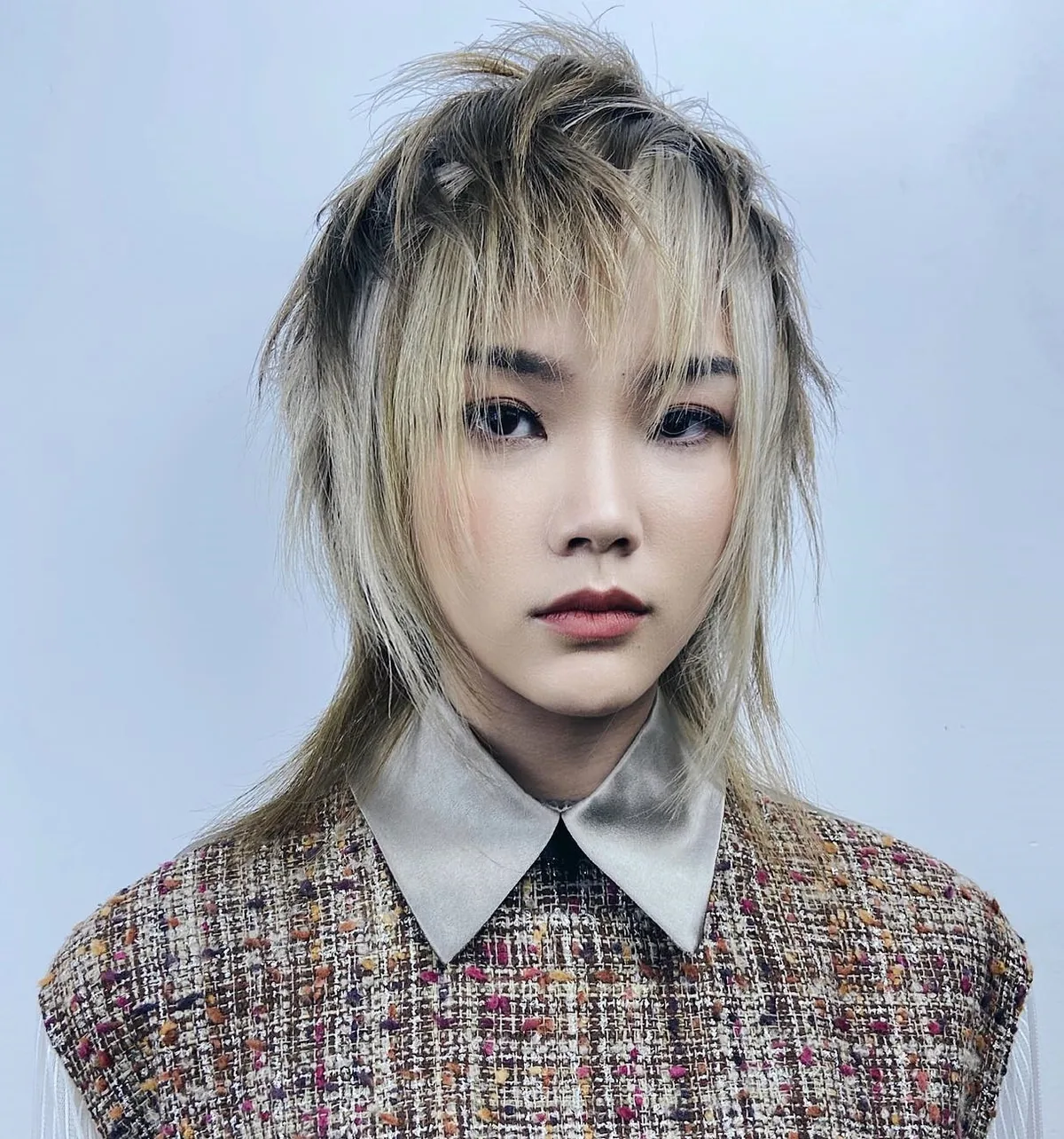
A midi wolf cut sits between the shoulders and the chest — long enough to feel feminine and versatile, short enough to dry fast and hold its shape well. It is the practical wolf cut.
This length shows off layers beautifully without the weight of very long hair pulling the crown flat. It is also easy to grow out, since the shape is already balanced.
Best for: Women who want a practical, balanced wolf-cut length.
How to style:
- Apply cream or texturising spray to damp hair.
- Air-dry or diffuse for natural texture.
- Add bends with a wand for a polished version.
- Keep the ends healthy with regular trims.
What to ask your stylist: Ask for a midi wolf cut, between shoulder and chest length, with balanced crown and face layers.
31. Wolf Cut with Long Shaggy Layers
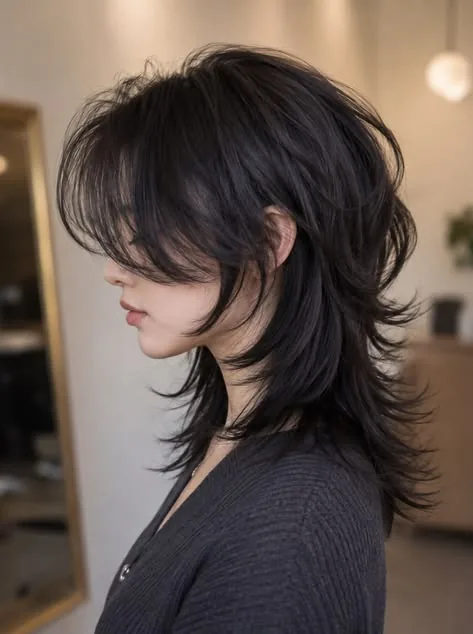
Long shaggy layers stretch the wolf cut’s texture through the whole length of the hair, not just the crown. The result is movement from top to bottom, with a wild, rock-star feel.
This version suits women with long hair who want texture everywhere, not just at the top. It also makes long hair much lighter and easier to manage.
Best for: Women with long hair who want all-over shaggy texture.
How to style:
- Apply texturising cream to damp hair.
- Scrunch and diffuse or air-dry.
- Piece out layers with wax.
- Avoid over-brushing, which flattens shaggy layers.
What to ask your stylist: Ask for a wolf cut with long shaggy layers throughout, not just at the crown.
32. Wolf Cut with Short Crown Layers

Short crown layers are what give a wolf cut its signature volume. Cut high and textured, they lift the top of the hair and create the contrast with the longer lengths below.
This is the boldest wolf-cut shape, and it suits women who love volume and do not mind a little styling at the crown each morning. Keep the crown piecey and the lengths long for the classic contrast.
Best for: Women who want maximum crown volume in a wolf cut.
How to style:
- Apply volumising mousse to the crown while damp.
- Blow-dry the crown up and away from the face.
- Backcomb lightly if extra lift is needed.
- Set with a firm but flexible spray.
What to ask your stylist: Ask for short, textured crown layers with long lengths underneath for a classic wolf shape.
33. Wolf Cut for Natural Curls
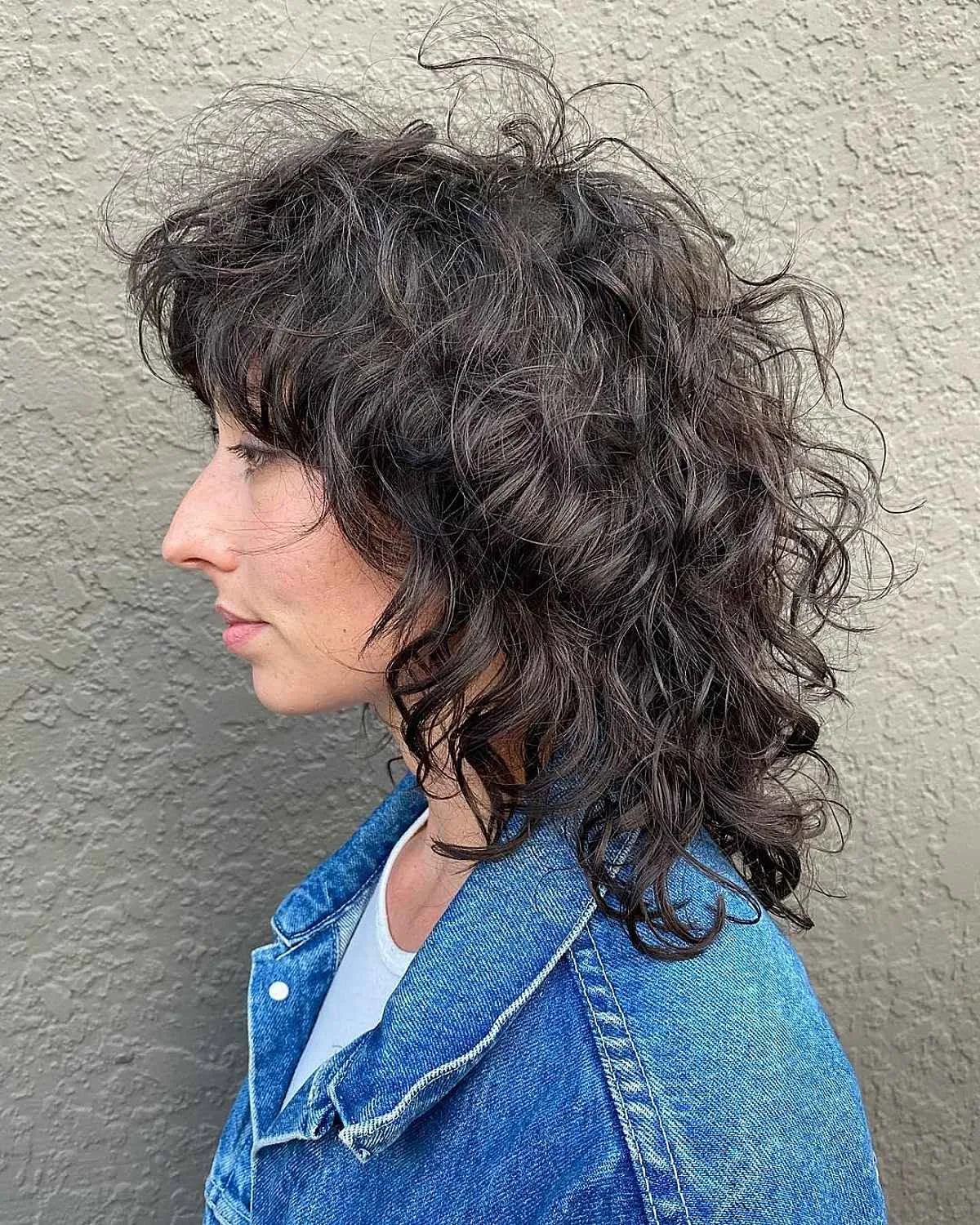
A wolf cut for natural curls respects the curl pattern first and the cut second. Layers are placed to let curls spring and stack beautifully, with volume at the crown and definition through the lengths.
The result is a shape that looks intentional on wash day and still holds on day three. Avoid razors and heavy thinning, which can turn curls frizzy and uneven.
Best for: Women with natural curls who want a shaped, voluminous cut.
How to style:
- Apply curl cream to wet hair.
- Scrunch and diffuse on low heat.
- Do not brush dry curls.
- Refresh curls with water and cream.
What to ask your stylist: Ask for a wolf cut for natural curls, cut with the curl pattern, with no razor or heavy thinning.
34. Wolf Cut with Beach Waves
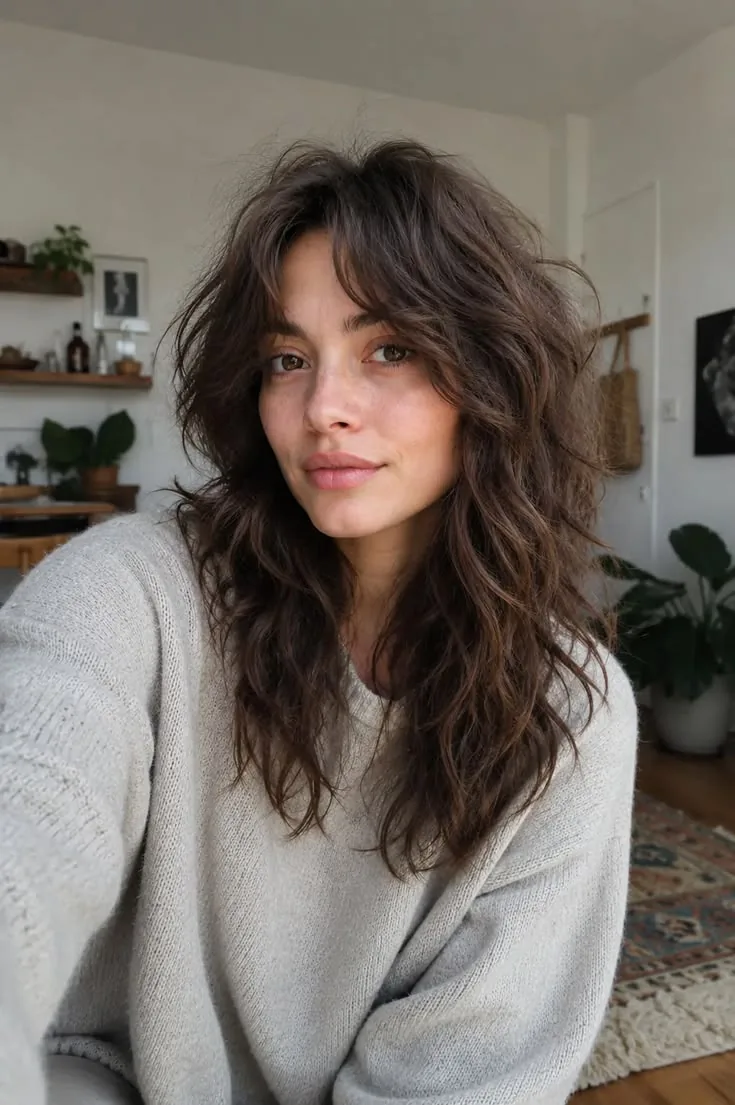
Beach waves and wolf cuts are a natural pair: the cut’s layers break up the waves so they look tousled rather than uniform, and the waves soften the cut’s edges.
This is the holiday-ready wolf cut — relaxed, sun-kissed, and easy. A little sea salt spray and a scrunch are all you need, and it looks even better on day two.
Best for: Women who want a relaxed, holiday-ready wolf cut.
How to style:
- Apply sea salt spray to damp hair.
- Scrunch and air-dry, or twist sections around a wand.
- Shake out for tousled waves.
- Finish with a light texturising spray.
What to ask your stylist: Ask for wolf-cut layers that hold beach waves, with soft, tousled ends.
35. Wolf Cut with Bottleneck Bangs
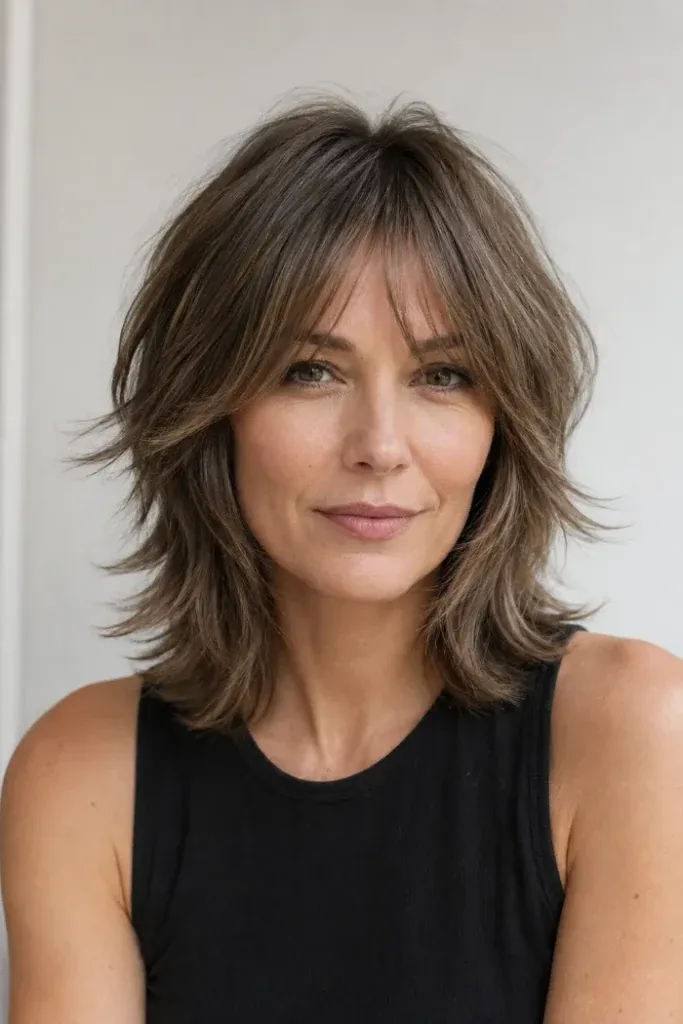
Bottleneck bangs start narrow at the centre and widen towards the cheeks, like the neck of a bottle — and they blend perfectly into wolf-cut face layers. The shape frames the eyes and cheekbones beautifully.
They are softer than micro bangs and more interesting than a standard fringe, which makes them a great match for a textured wolf cut. They also grow out into curtain bangs, so there is no awkward stage.
Best for: Women who want an interesting, face-framing fringe with a wolf cut.
How to style:
- Blow-dry bangs forward with a round brush.
- Sweep the sides out towards the cheeks.
- Keep the centre piecey and light.
- Trim every three to four weeks.
What to ask your stylist: Ask for bottleneck bangs with a wolf cut, narrow at the centre and widening at the cheeks.
36. Wolf Cut with a Deep Side Part
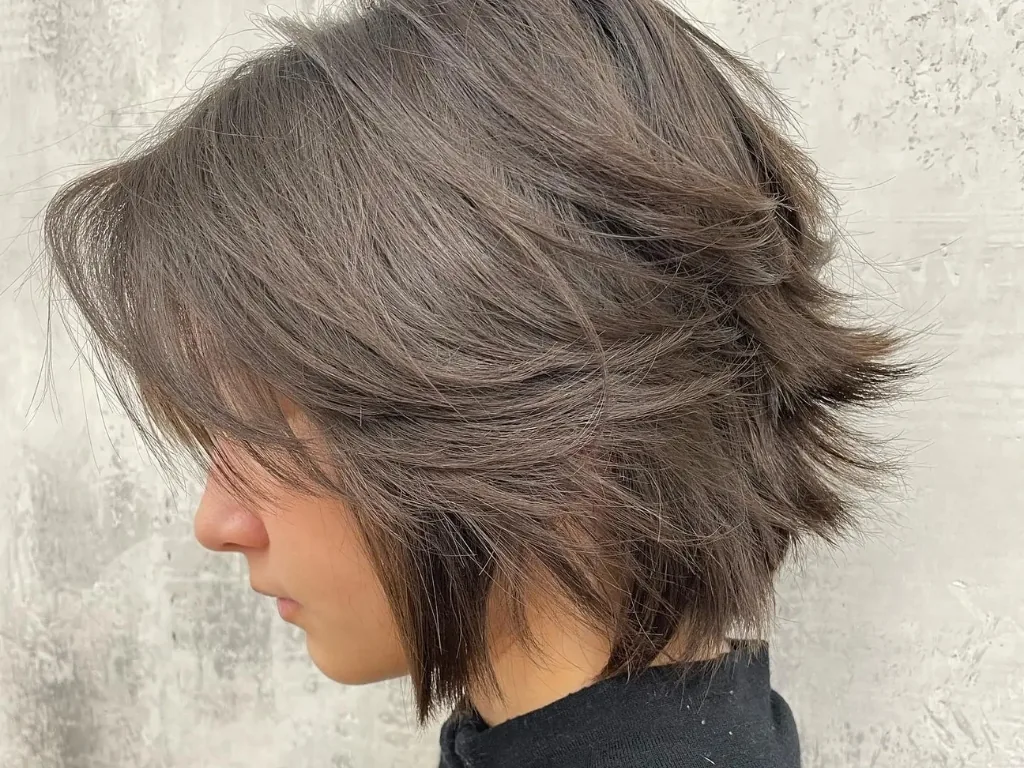
A deep side part gives a wolf cut instant glamour. The heavy sweep across the forehead adds a diagonal line, while the layers underneath keep the texture and movement.
It is a great evening version of the wolf cut, and it also works as an everyday style if you like a lot of volume on one side. The part does the styling work for you.
Best for: Women who want a glamorous, voluminous wolf cut.
How to style:
- Part deeply to one side while damp.
- Blow-dry the heavy side up and over for volume.
- Add waves or bends to the lengths.
- Set with a flexible spray.
What to ask your stylist: Ask for wolf-cut layers that support a deep side part, with the front long enough to sweep.
37. Voluminous Blowout Wolf Cut
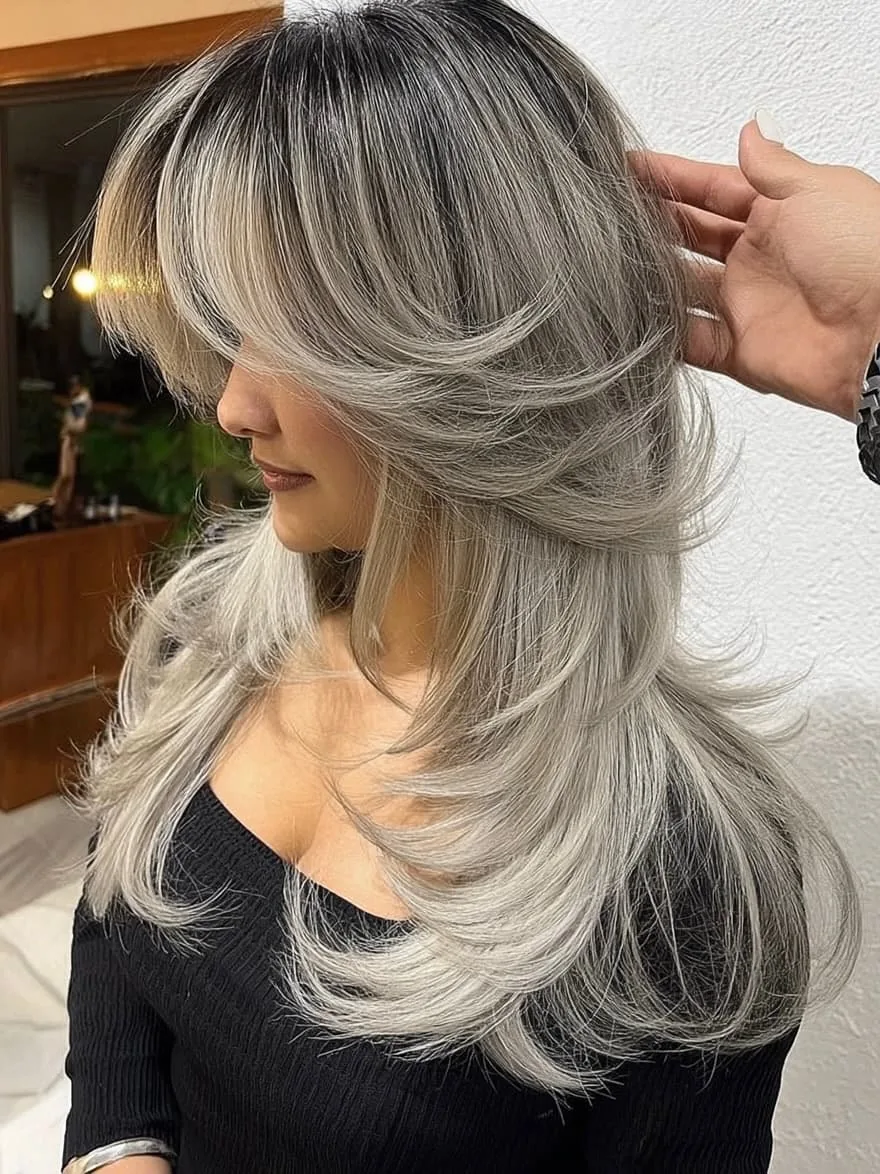
A blowout wolf cut is bouncy, full, and polished — the salon blow-dry version of the cut. The layers give the blowout natural movement, so it looks full without a lot of backcombing.
Use a round brush and a volumising mousse, and work in sections from the crown outwards. The result is a wolf cut that looks expensive and feels like a special occasion, even on a Tuesday.
Best for: Women who love a bouncy, salon-style blowout.
How to style:
- Apply volumising mousse to damp hair.
- Blow-dry in sections with a large round brush.
- Roll the crown sections up and away for lift.
- Finish with a light shine spray.
What to ask your stylist: Ask for wolf-cut layers that blow out with volume, with a full crown and soft ends.
38. Half-Up Wolf Cut
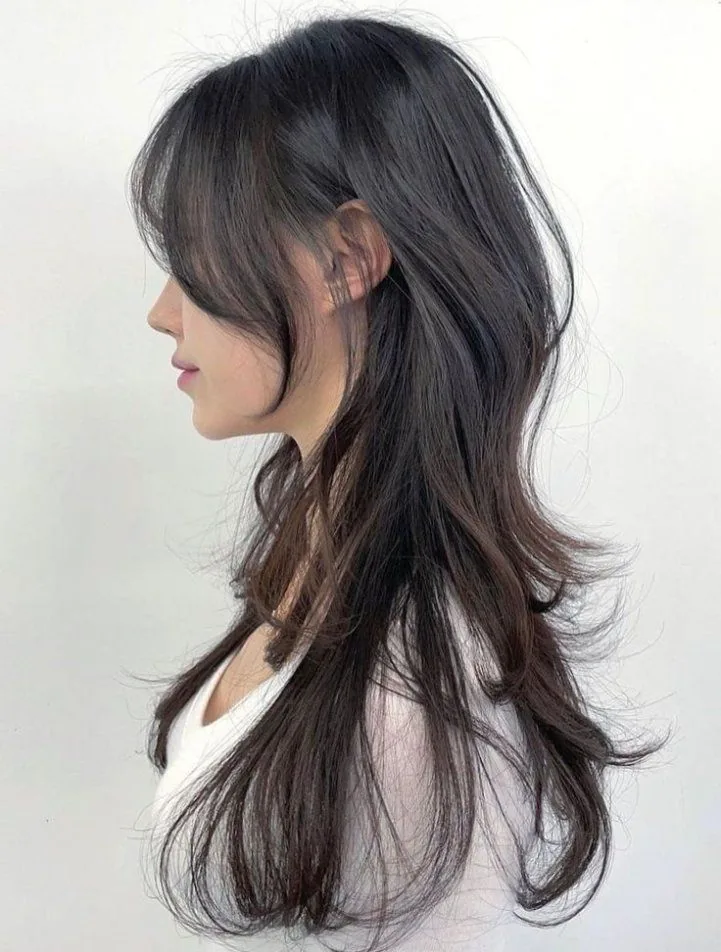
A half-up wolf cut shows off the best of both worlds: the top is pulled back to reveal the crown texture, while the long lengths and face pieces fall free around the face.
It is the easiest way to wear a wolf cut on a busy day, and it looks deliberately styled with almost no effort. Leave the face pieces out — they are what make the style look soft rather than scraped back.
Best for: Women who want an easy updo option from a wolf cut.
How to style:
- Pull the top half back loosely.
- Leave face-framing pieces out around the face.
- Secure with a clip or tie, not too tight.
- Tousle the crown lightly for volume.
What to ask your stylist: Ask for wolf-cut layers with long face pieces that work well in a half-up style.
39. Wolf Cut with Soft Vintage Curls
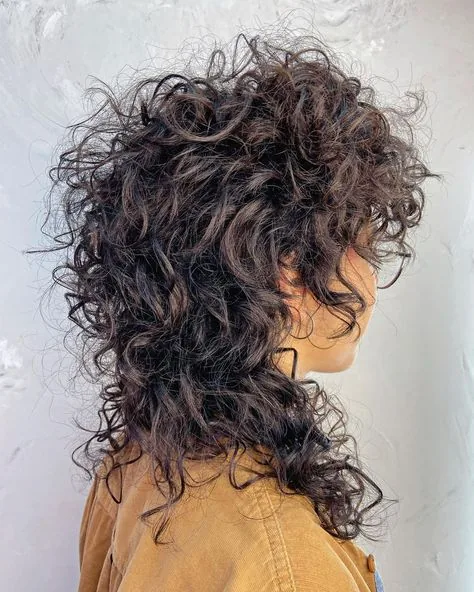
Soft vintage curls give a wolf cut a glamorous, old-Hollywood twist. The layers break up the curls so they look soft and touchable rather than stiff, and the crown volume fits the vintage shape perfectly.
Use large rollers or a large-barrel wand, brush the curls out gently, and let the layers do the rest. It is a beautiful occasion version of a cut that is usually worn messy.
Best for: Women who want a glamorous occasion version of a wolf cut.
How to style:
- Curl large sections with a large-barrel wand.
- Brush out gently into soft waves.
- Pin the crown lightly for vintage volume.
- Set with a flexible spray.
What to ask your stylist: Ask for wolf-cut layers that hold soft vintage curls, with a full crown.
40. Wolf Cut with Crimped Texture
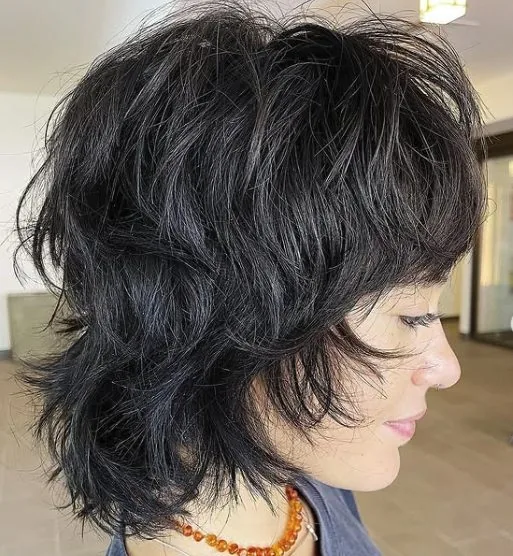
Crimped texture is the playful, 80s-inspired way to wear a wolf cut. A crimper adds zigzag texture through the layers, which makes the cut look even wilder and more voluminous.
It is not an everyday look for most women, but for a party or a photoshoot it is unforgettable — and it shows off just how much texture a wolf cut can hold.
Best for: Women who love bold, retro texture for special occasions.
How to style:
- Apply heat protectant.
- Crimp sections from mid-length to ends, not the roots.
- Shake out gently for softness.
- Finish with texturising spray.
What to ask your stylist: Ask for wolf-cut layers with enough length and texture to hold a crimped finish.
41. Ash Blonde Wolf Cut
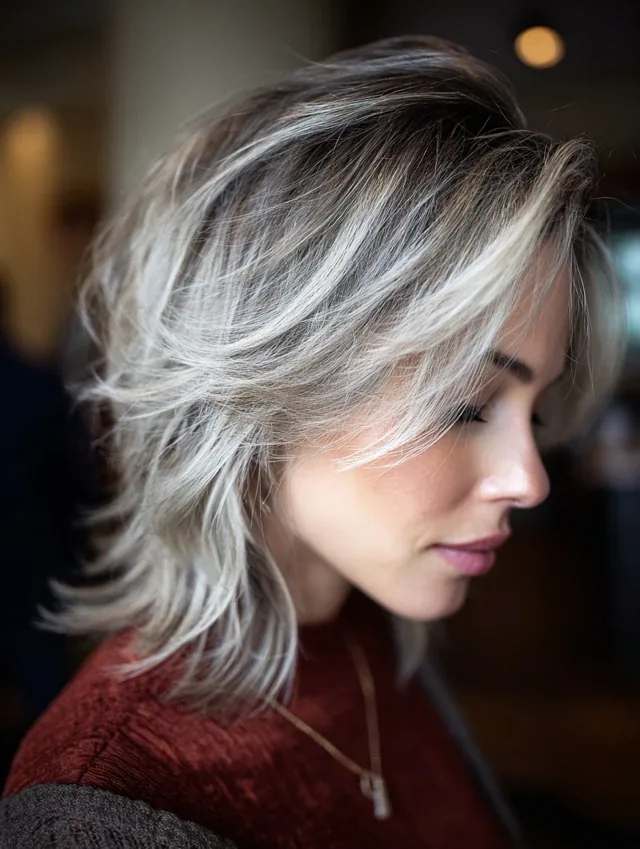
Ash blonde cools a wolf cut down beautifully. The cool, smoky tone makes the choppy layers look sleek and modern, and it suits women who prefer a cooler colour palette.
Ash tones need toning shampoo to stay cool and avoid brassiness, especially on the lighter face pieces. Keep the ends healthy, because ash blonde shows damage more than warmer tones.
Best for: Women who love cool, modern blonde with a textured cut.
How to style:
- Use purple or silver toning shampoo weekly.
- Style with soft waves to show the cool tone.
- Protect ends with a leave-in treatment.
- Refresh toner every six to eight weeks.
What to ask your stylist: Ask for an ash blonde wolf cut with cool toning, and a plan to prevent brassiness.
42. Cherry Red Wolf Cut
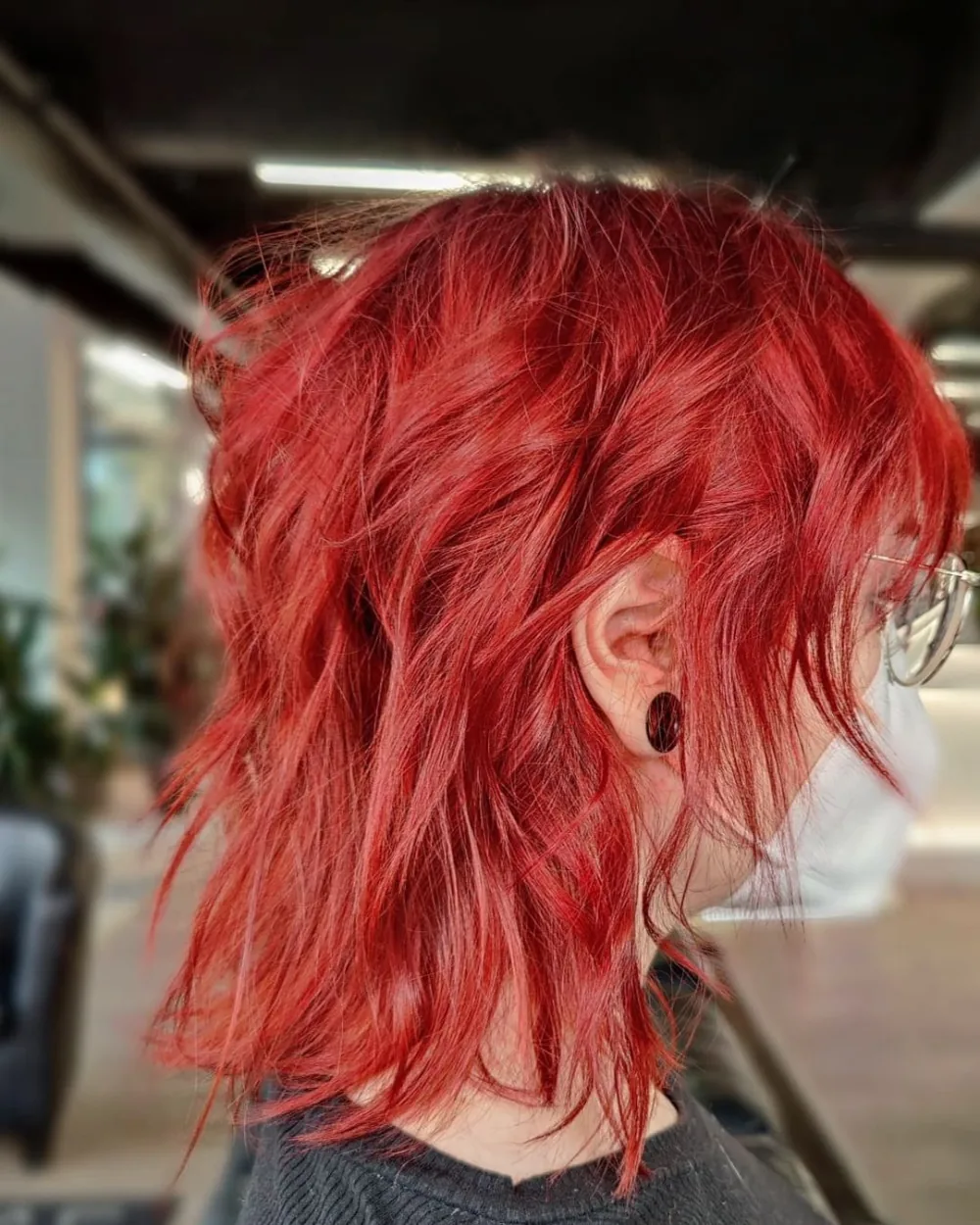
Cherry red is the boldest colour in this guide, and on a wolf cut it is electric: the choppy layers catch the red in different lights, so the colour looks dimensional rather than flat.
Red fades fast, so use colour-safe shampoo, cool water, and regular gloss refreshes. The maintenance is real, but so is the impact — this is a cut-and-colour combination nobody forgets.
Best for: Bold women who want a high-impact red with a textured cut.
How to style:
- Use colour-safe shampoo and cool water.
- Refresh with a red gloss every four weeks.
- Avoid over-washing and hot water.
- Style tousled to show the dimension.
What to ask your stylist: Ask for a cherry red wolf cut with a gloss refresh plan to keep the colour vivid.
43. Wolf Cut with Peekaboo Highlights
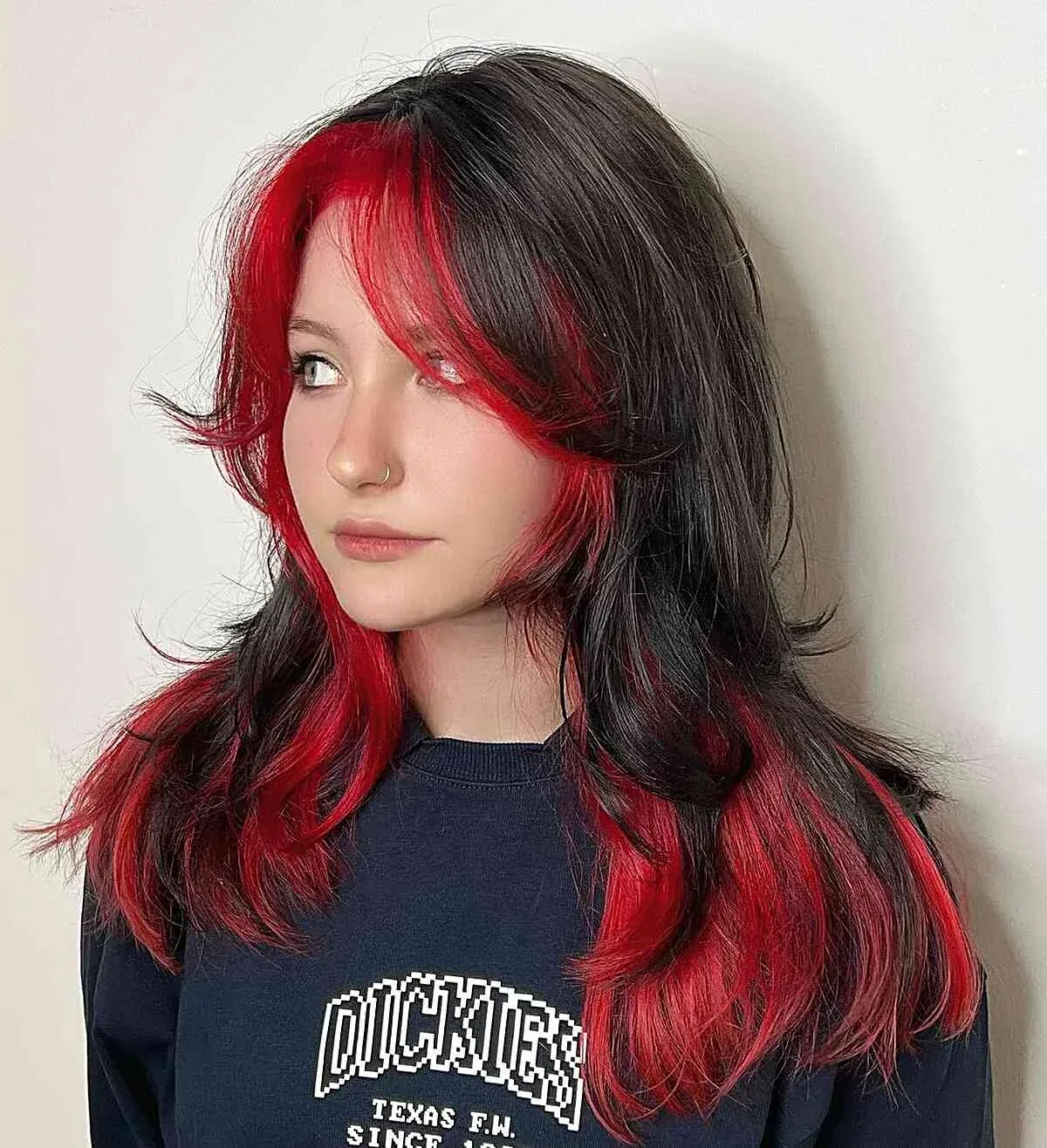
Peekaboo highlights hide bright colour underneath the top layers of a wolf cut, so it flashes only when the hair moves. It is the perfect secret-colour version of an already playful cut.
Because the colour sits underneath, grow-out is gentle and touch-ups are less frequent. Choose a bright shade for drama, or a soft pastel for a subtler reveal.
Best for: Women who want hidden, playful colour in a wolf cut.
How to style:
- Style tousled so the peekaboo colour shows when hair moves.
- Wear the top layers smooth for a hidden effect, or tousled to reveal it.
- Use colour-safe shampoo for the hidden shade.
- Refresh the underlayer every eight to ten weeks.
What to ask your stylist: Ask for peekaboo highlights under wolf-cut top layers, placed to show when the hair moves.
44. Lived-In Grown-Out Wolf Cut
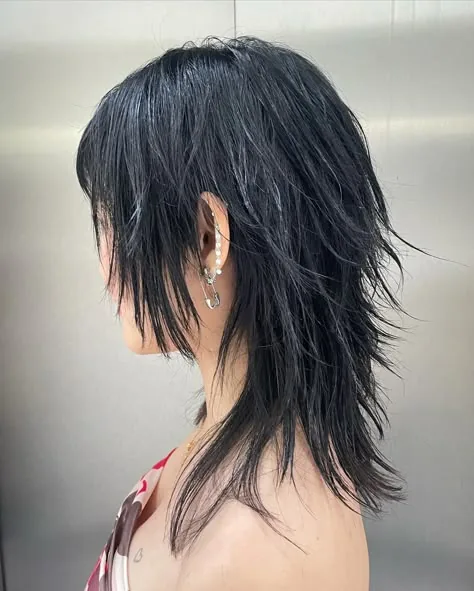
The lived-in, grown-out wolf cut is what happens when a great wolf cut matures: the layers soften, the shape relaxes, and the cut looks effortlessly cool without a fresh salon visit.
This is the version to ask for if you hate high-maintenance hair. A light trim every couple of months keeps it intentional, and the grown-out layers actually make styling easier, not harder.
Best for: Women who want a low-maintenance wolf cut that looks better as it grows.
How to style:
- Let the layers grow and soften naturally.
- Use texturising spray for lived-in texture.
- Trim lightly every eight to ten weeks to keep the shape.
- Style with minimal heat for a relaxed finish.
What to ask your stylist: Ask for a wolf cut designed to grow out well, with soft layers that relax over time.
What is a wolf cut for women?
A wolf cut for women is a layered haircut with a short, voluminous crown and long lengths underneath, connected by choppy, feathered layers and face-framing pieces. It blends the texture of a shag with the shape of a mullet, but softened so it is wearable every day.
Does a wolf cut suit all hair types?
A wolf cut can suit straight, wavy, curly, and thick hair, but the layering must be adapted to each type. Straight hair needs soft point-cut layers, curly hair needs longer layers cut with the curl, and fine hair needs fewer, blunter layers so the ends stay full.
Is a wolf cut the same as a shag?
No. A shag has even, all-over layers, while a wolf cut has a clear contrast between a short, full crown and long lengths. The wolf cut is bolder and more disconnected than a shag, but softer and more blended than a mullet.
How do I ask my stylist for a wolf cut?
Bring two or three photos of the exact wolf-cut version you want, on hair like yours. Agree where the shortest layer will sit, say how much styling time you will spend each morning, and ask how the cut will look air-dried and how it will grow out before any cutting starts.
How often should I trim a wolf cut?
Every six to eight weeks is right for most wolf cuts, to keep the crown shape and the face pieces fresh. Short wolf cuts and pixie versions may need a trim every four to six weeks, and fringes may need a light trim every three to four weeks.
Can I wear a wolf cut if I have fine hair?
Yes, if the cut is adapted for fine hair. Ask for fewer, blunter layers, a full perimeter, and crown layers for lift, and avoid thinning the ends. With root-lifting products, a wolf cut can actually make fine hair look fuller.
Does a wolf cut work for older women?
Yes. A soft, blended wolf cut works beautifully at any age, because the layers add movement and lift around the face. Choose a softer version with blended layers and a length you are comfortable with, rather than the choppiest, shortest version.
How do I style a wolf cut at home?
For most wolf cuts, apply texturising cream or spray to damp hair, scrunch or diffuse, and piece out the ends with a little wax. Straight hair may need a wand for bend, and curly hair needs curl cream and diffusing. The whole routine usually takes under ten minutes.
What is the best length for a first wolf cut?
Shoulder length is the best first wolf cut for most women. It shows the texture clearly, dries quickly, and is easy to grow out or cut shorter later. If you are nervous, start longer — a stylist can always take more off.
How does a wolf cut grow out?
A wolf cut grows out well, because it is already a layered shape. Around three to four months the crown layers start to catch up with the lengths, so ask for a light re-shape of the crown and face pieces only, and the cut will grow into long layers or a shag.
Conclusion
The wolf cut earned its fame for a reason: it gives hair movement, volume, and personality in a way few other cuts can. Whether you choose a classic long version, a short punky cut, a soft blended shape, or a bold colour, the key is finding the wolf cut that fits your hair type, your routine, and your confidence.
Save your favourite styles from this guide, take the what-to-ask line for your chosen version to your stylist, and be clear about where the shortest layer should sit. That one conversation is the difference between a wolf cut you love and one you spend months growing out.
Which of these 44 wolf cuts for women will you try next? Tell us in the comments, and share this guide with a friend who has been thinking about a wolf cut too.