How to Style a Big Forehead: 35 Haircuts and Bangs That Bring Beautiful Balance
A bigger forehead is not a flaw to fix. It is simply a proportion, and proportions can be balanced with a haircut the same way an outfit can be balanced with a belt. The goal here is not to hide your forehead. It is to choose shapes, partings and fringes that make the whole face look harmonious, so your eyes and your smile get the attention they deserve.
This guide gathers 35 hairstyles for a big forehead, from curtain bangs and side-swept fringes to layered lobs, bobs, curls and updos. For each style you will find who it suits best, how to style it at home, and exactly what to ask your stylist, so you can walk into the salon with confidence instead of a vague hope.
A Kinder Way to Think About a Big Forehead
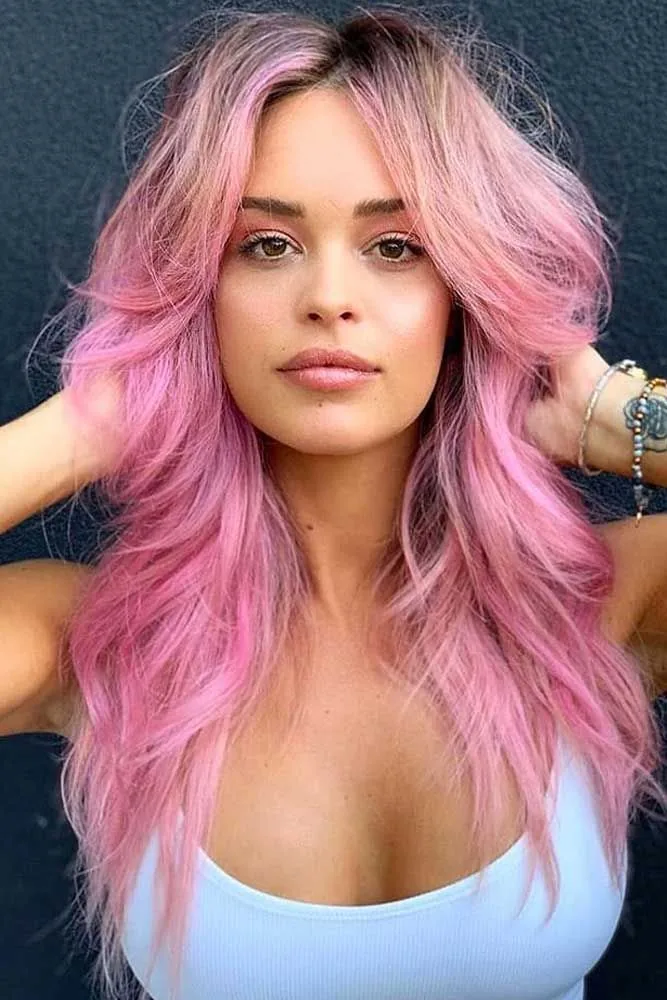
A forehead looks big when it takes up more of the face than the other features, or when the hairline sits high. That is all it is: a measurement, not a judgement. Many of the world’s most striking faces have high foreheads, and the styles that suit them tend to share one thing: they break up the forehead’s height with a fringe, a parting or some volume at the sides.
Think of it as adding interest, not coverage. A wispy fringe, a diagonal part or soft layers at the temples all give the eye somewhere interesting to land, so the forehead stops being the only thing you notice. You do not need heavy, face-covering hair to get that effect.
Why Bangs Work, and When They Don’t
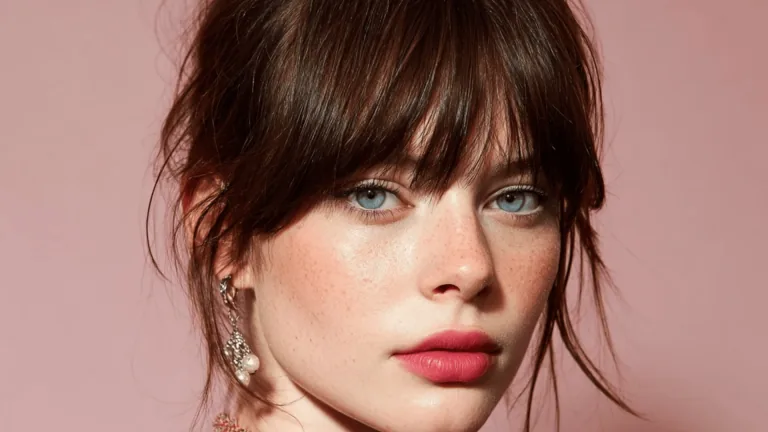
Bangs are the most direct way to shorten a forehead visually, because they literally cover part of it. Curtain bangs, side-swept bangs and wispy fringes all work well, because they soften the hairline instead of drawing a hard line across it. A heavy, blunt fringe can also work, but it needs to suit your face shape and hair texture, or it can look like a helmet.
Bangs do not work when they are cut too short, too thick or too straight for your hair type. Very curly hair, for example, needs a longer, softer fringe that can be worn curly, not a short straight one that springs up. If you are unsure, start with longer curtain bangs: they can always be shortened, and they grow out gracefully.
Partings That Change the Proportions
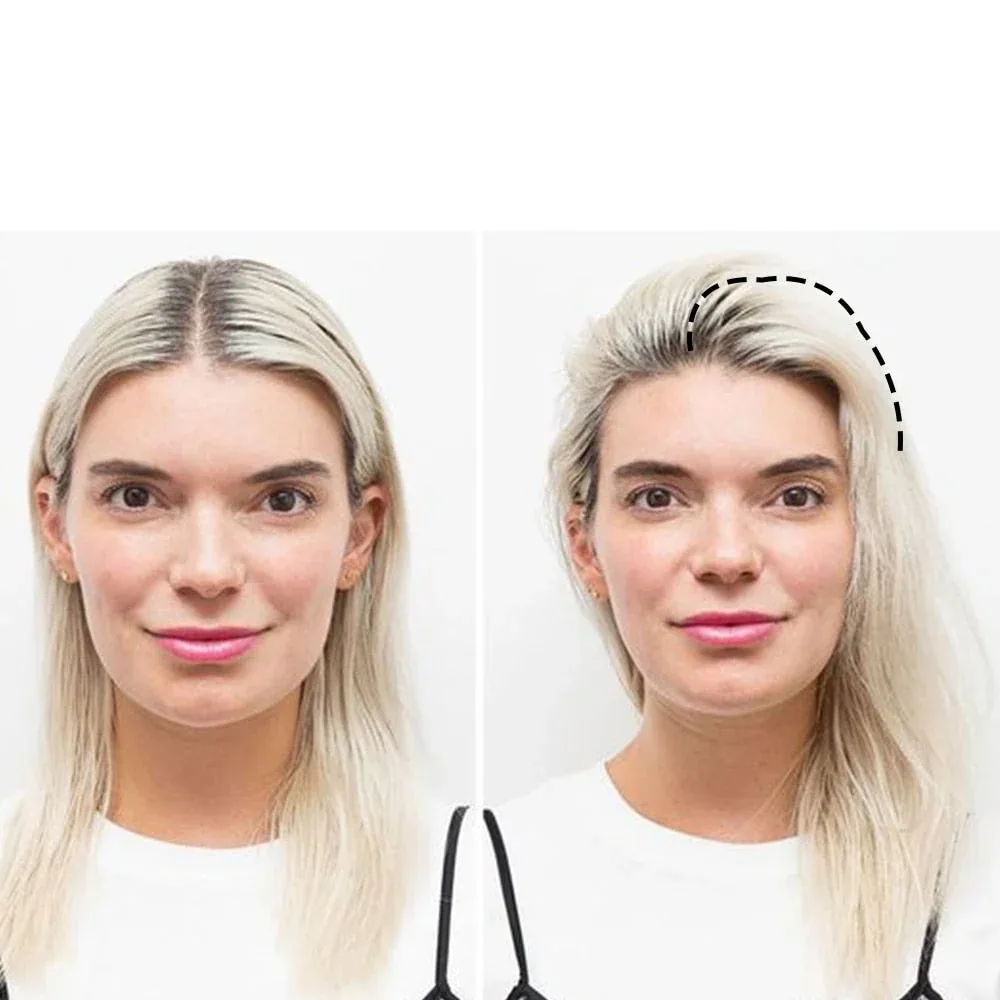
Your parting is free, instant and surprisingly powerful. A deep side part creates a diagonal across the forehead, which breaks up its height and adds asymmetry that flatters almost everyone. A soft, off-centre part does the same thing more subtly, and it suits people who do not want a dramatic sweep.
A severe centre part, on the other hand, can emphasise a high forehead by splitting it symmetrically down the middle. If you love a centre part, pair it with curtain bangs or face-framing layers, so the middle of the forehead is softened even though the part stays central.
Length by Length: What Flatters a Higher Forehead

Short hair with a big forehead works best with a fringe or a side sweep: a pixie with a long side fringe, or a bob with side-swept bangs, both balance the forehead beautifully. Without any fringe, very short hair can leave the forehead fully exposed, which is fine if that is what you want, but not if balance is the goal.
Medium hair is the sweet spot for most people: lobs, midi cuts and shoulder-length layers all give room for bangs and face-framing pieces. Long hair works too, especially with curtain bangs or long layers that start at the cheekbone and add width at the sides of the face.
1. Curtain Bangs With Long Layers
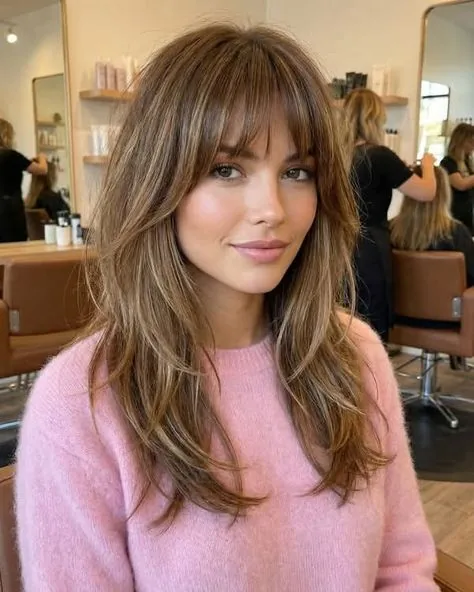
Curtain bangs part in the middle and sweep to each side, covering the upper forehead softly while leaving the eyes open. With long layers underneath, the whole face looks balanced and the forehead reads shorter without any harsh line.
Best for: Women with a high forehead who want a soft, low-commitment fringe.
How to style: Blow-dry the bangs forward, then sweep each side out with a round brush and let the lengths fall naturally.
What to ask your stylist: Ask for long curtain bangs starting at the cheekbone, blended into long layers.
2. Side-Swept Bangs With a Midi Cut
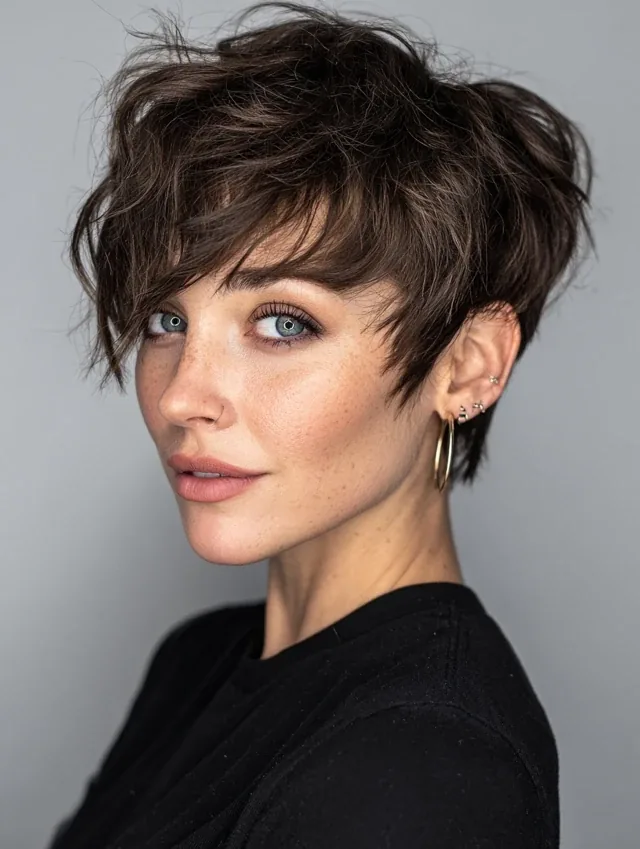
Side-swept bangs sweep diagonally across the forehead, breaking up its height with an angled line. A midi cut keeps length around the face, so the balance comes from both the fringe and the length.
Best for: Anyone who wants a fringe that is easy to grow out and style.
How to style: Blow-dry the fringe to one side with a round brush, smooth the midi cut under, and bend the ends slightly inward.
What to ask your stylist: Ask for long side-swept bangs that blend into a midi cut, never a thick blunt block.
3. Wispy Fringe With Shoulder-Length Layers
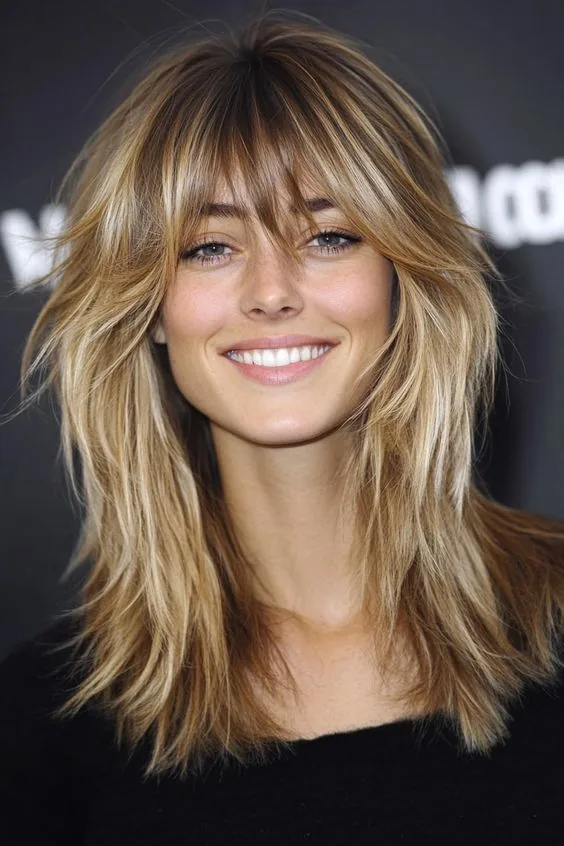
A wispy, see-through fringe softens a high forehead without hiding it completely. The lightness keeps the look modern, and shoulder-length layers add width at the sides for balance.
Best for: Fine to medium hair and anyone trying a fringe for the first time.
How to style: Blow-dry the fringe with a small round brush, add a pea-sized amount of cream, and let the layers air-dry.
What to ask your stylist: Ask for a wispy fringe cut with point-cutting, so it stays light and see-through.
4. Blunt Fringe With a Textured Lob
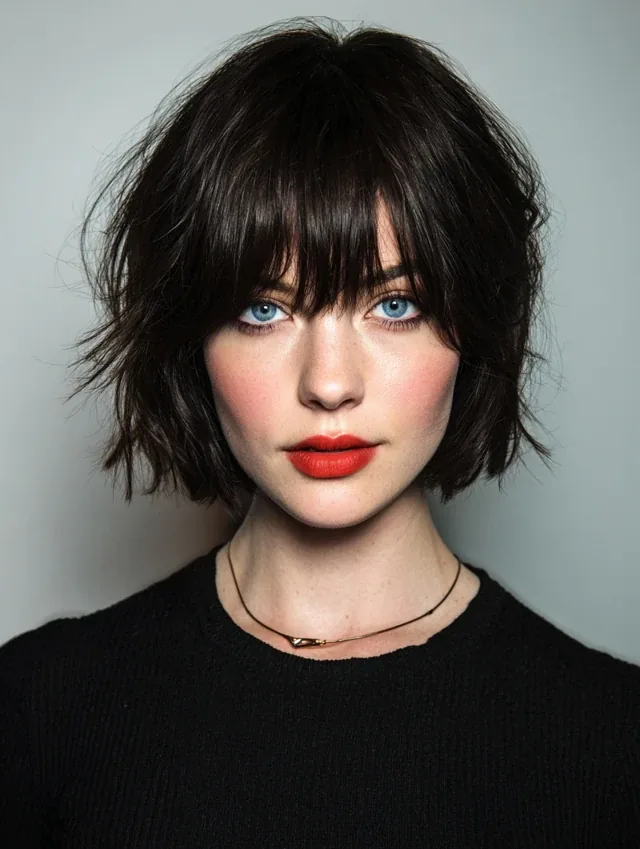
A blunt fringe is the boldest way to shorten a forehead, and it works beautifully when paired with a textured lob. The texture stops the look feeling heavy, and the lob length keeps the whole shape modern.
Best for: Straight hair and confident fringe lovers who will trim regularly.
How to style: Blow-dry the fringe straight down with a paddle brush, add texture spray to the lob, and shake out.
What to ask your stylist: Ask for a blunt fringe that ends just above the brows, with a textured lob below the jaw.
5. Bardot Bangs With Long Waves
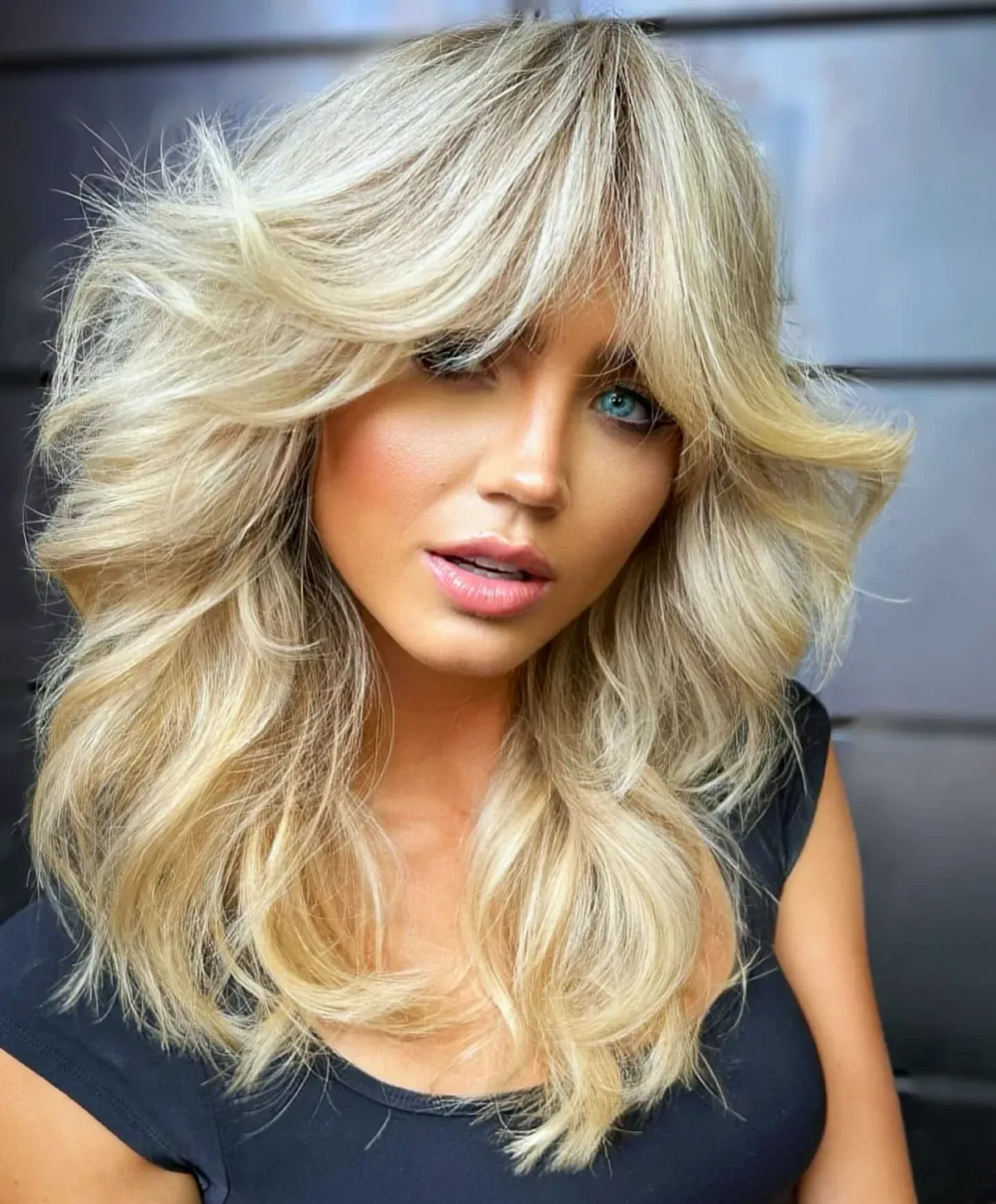
Bardot bangs are longer, parted curtain bangs with a soft, face-framing curve. They shorten the forehead gently and frame the cheekbones, while long waves add width lower down the face.
Best for: Wavy hair and anyone who likes a romantic, retro feel.
How to style: Blow-dry the bangs forward, curve each side out, and twist long sections around a wand for waves.
What to ask your stylist: Ask for long Bardot bangs that part in the middle and curve past the cheekbones.
6. Deep Side Part With Long Layers
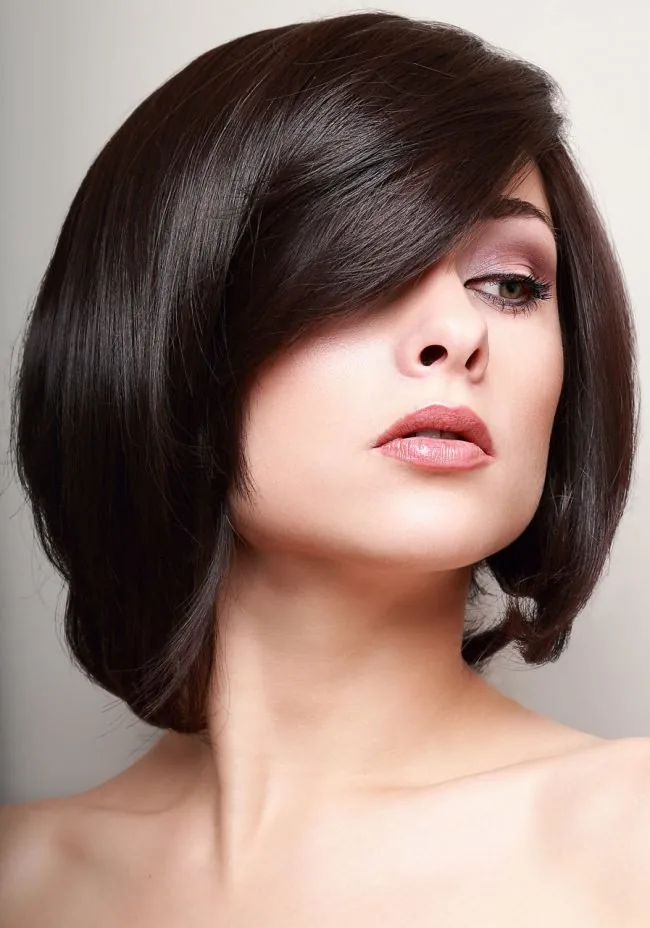
A deep side part is the simplest no-fringe way to balance a bigger forehead. The diagonal line breaks up the forehead’s height instantly, and long layers add softness around the face.
Best for: Anyone who does not want a fringe but still wants balance.
How to style: Part deeply to one side while damp, blow-dry the front pieces over to that side, and smooth the lengths.
What to ask your stylist: Ask for long layers that support a deep side part, with the front at collarbone length or longer.
7. Off-Centre Part With Face-Framing Layers
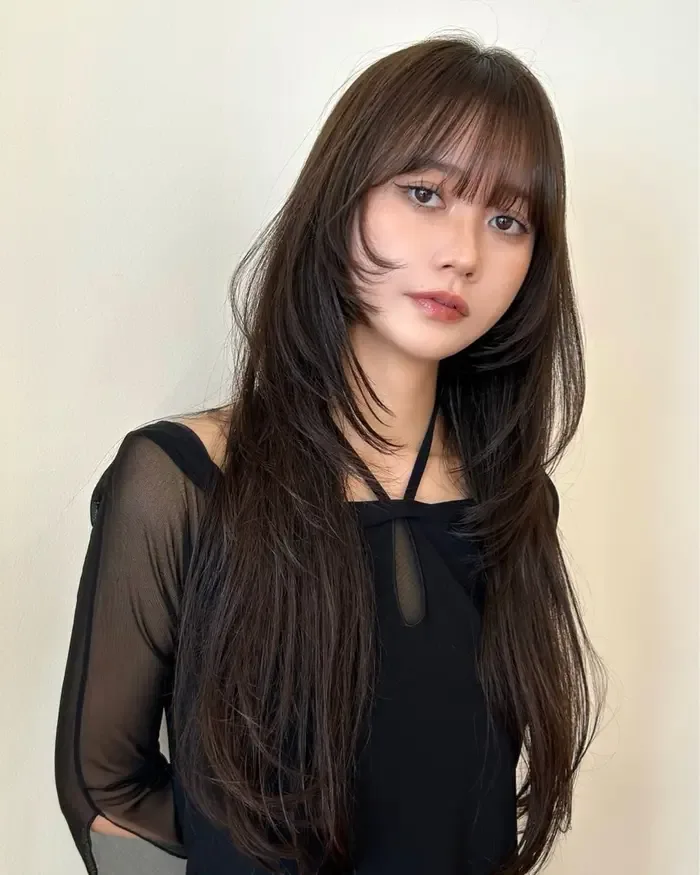
A soft off-centre part gives most of the benefit of a side part without a dramatic sweep. Face-framing layers starting at the cheekbone add width at the sides and draw the eye to the cheekbones.
Best for: Anyone who prefers a subtle change over a dramatic one.
How to style: Part slightly off-centre while damp, blow-dry the framing pieces forward and under, and finish with serum.
What to ask your stylist: Ask for face-framing layers starting at the cheekbone, with a soft off-centre part.
8. Textured Lob With Side-Swept Bangs
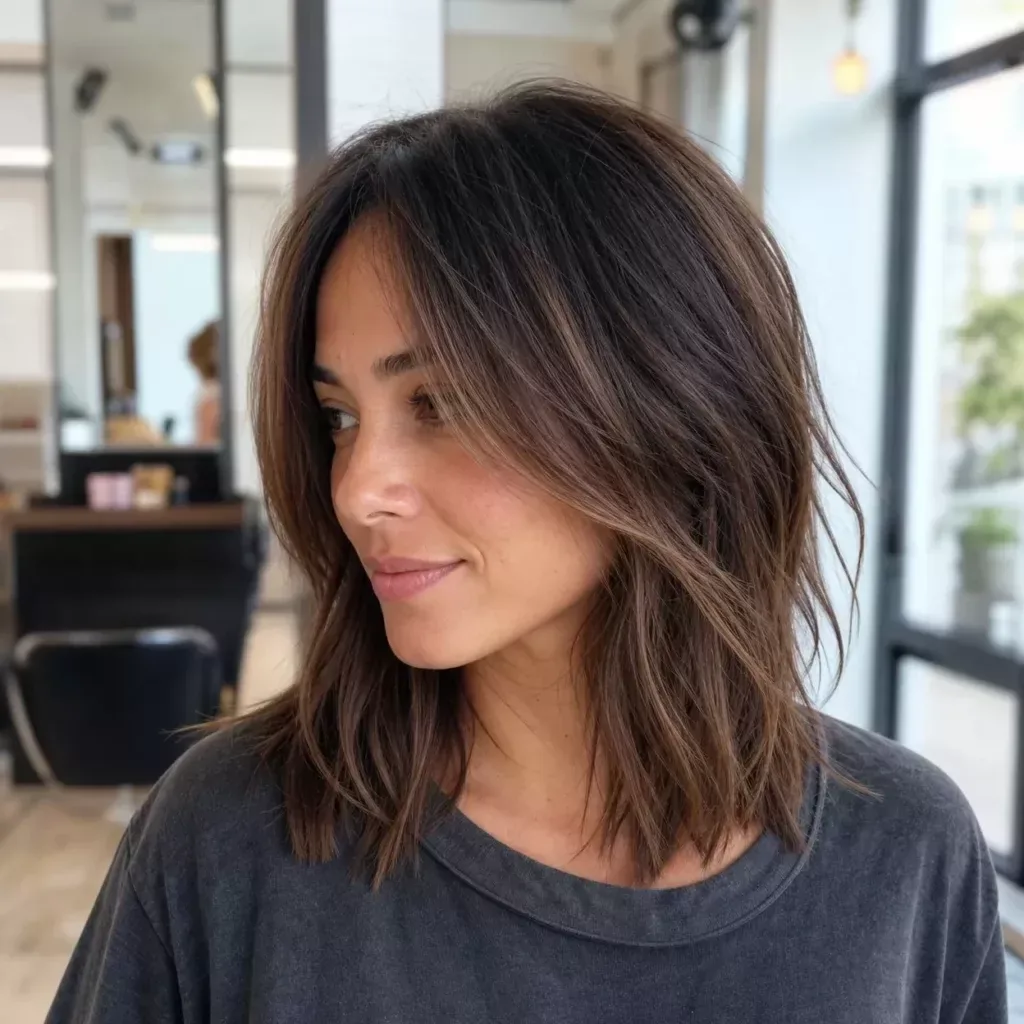
A textured lob with side-swept bangs is a modern, easy combination for a bigger forehead. The bangs do the shortening, the texture does the softening, and the lob length keeps everything wearable.
Best for: Medium hair lovers who want a fresh, current cut.
How to style: Blow-dry with a side part, add texturising spray, and sweep the bangs to one side.
What to ask your stylist: Ask for a textured lob ending below the jaw, with long side-swept bangs.
9. Wavy Bob With a Soft Fringe
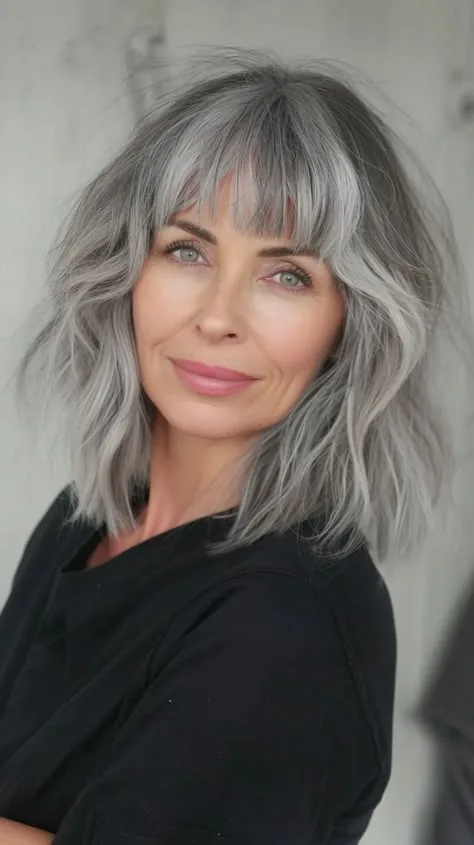
A wavy bob with a soft fringe balances a bigger forehead twice over: the fringe shortens it, and the waves add width at the sides. Keep the bob below the jaw so the shape stays soft.
Best for: Wavy hair and anyone who wants a bob with balance built in.
How to style: Apply curl cream to damp hair, twist sections around a wand, shake out, and set with flexible spray.
What to ask your stylist: Ask for a wavy bob below the jaw, with a soft, textured fringe.
10. Pixie With a Long Side Fringe
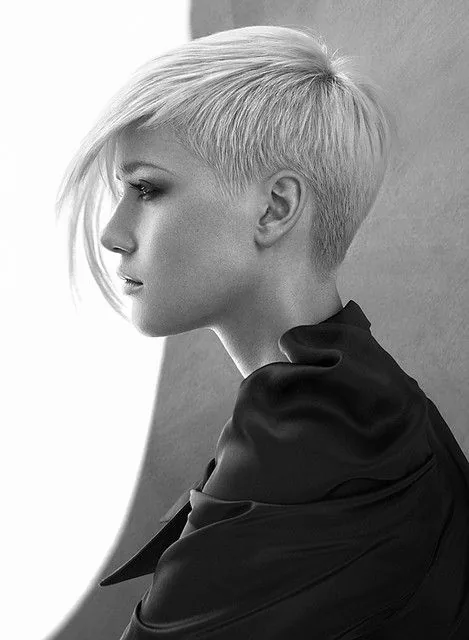
A pixie with a long side fringe is a striking choice for a bigger forehead. The long fringe sweeps diagonally across the forehead, and the short back keeps the whole cut light and confident.
Best for: Confident short-hair lovers who enjoy a bold fringe.
How to style: Blow-dry the fringe to one side, keep the sides smooth and tapered, and set with light wax.
What to ask your stylist: Ask for a pixie with a long side-swept fringe and soft, tapered sides.
11. Shag With Curtain Bangs
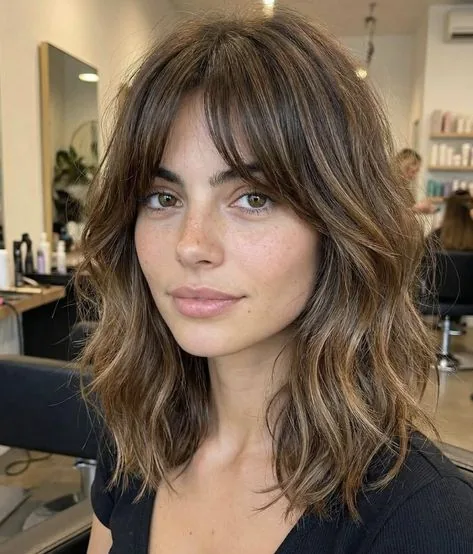
A shag with curtain bangs gives a bigger forehead both coverage and texture. The curtain bangs soften the hairline, and the shaggy layers add width and movement at the sides.
Best for: Textured or wavy hair and anyone who likes an edgy, relaxed cut.
How to style: Apply texturising cream to damp hair, diffuse, and scrunch lightly for definition.
What to ask your stylist: Ask for a soft shag with curtain bangs, keeping the shortest layers below the chin.
12. Feathered Layers With a Side Part
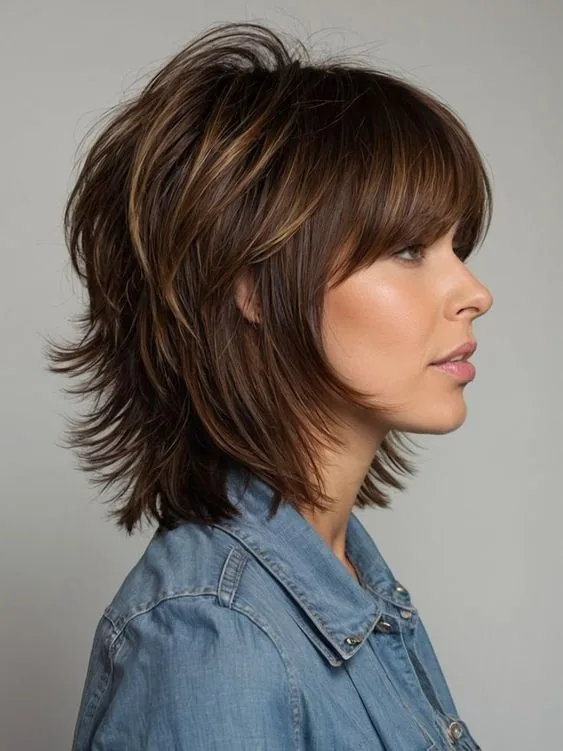
Feathered layers taper softly around the face, adding movement that distracts from forehead height without any fringe at all. A side part adds the diagonal that completes the balance.
Best for: Straight to wavy hair that wants softness without a fringe.
How to style: Blow-dry or air-dry, wrap a few sections around a wand, and brush out lightly.
What to ask your stylist: Ask for feathered layers with a soft, tapered perimeter and a side part.
13. Long Layers With Curtain Bangs
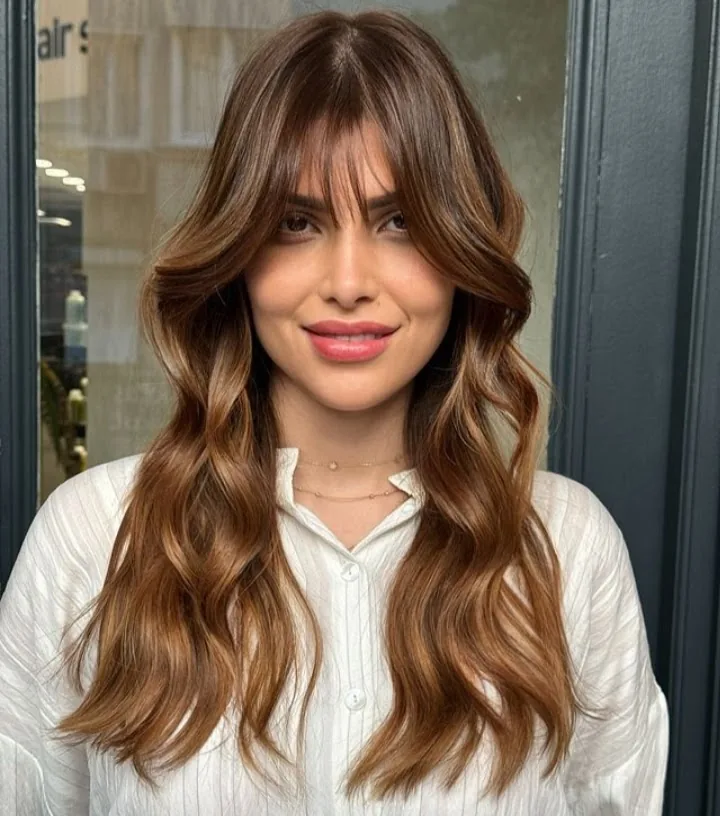
Long layers with curtain bangs are a classic for a reason: the bangs shorten the forehead, the layers add shape, and the length keeps everything feminine and versatile.
Best for: Long hair that wants balance without losing length.
How to style: Blow-dry the curtain bangs forward and out, smooth the lengths, and add root spray for lift.
What to ask your stylist: Ask for long curtain bangs blended into long layers, starting at the cheekbone.
14. Beach Waves With a Deep Side Part
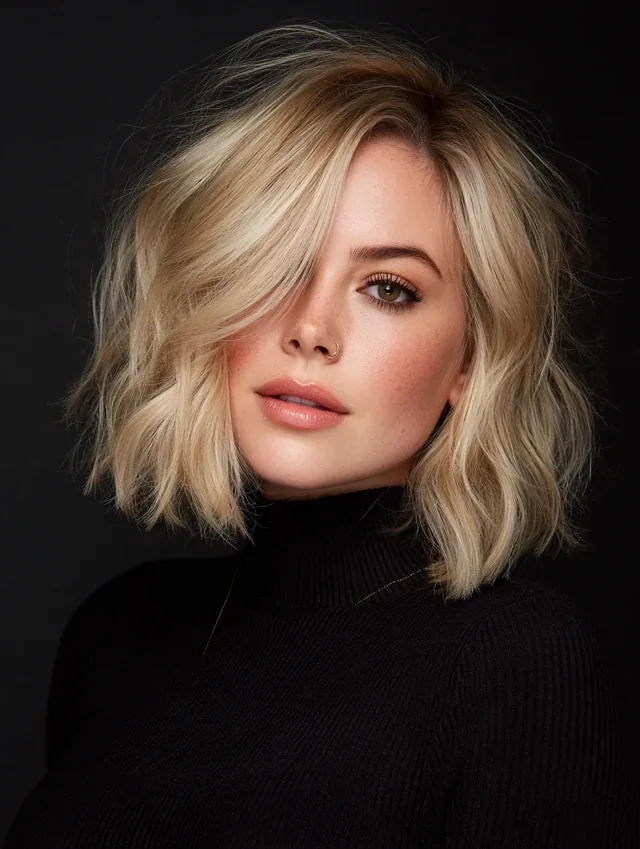
Beach waves with a deep side part balance a bigger forehead with texture and a diagonal. The waves add width at the sides, and the side part breaks up the forehead’s height.
Best for: Long hair and anyone who loves a relaxed, holiday feel.
How to style: Apply sea salt spray, braid loosely overnight or twist sections around a wand, and shake out.
What to ask your stylist: Ask for long layers that hold beach waves and a deep side part.
15. Loose Curls With a Wispy Fringe
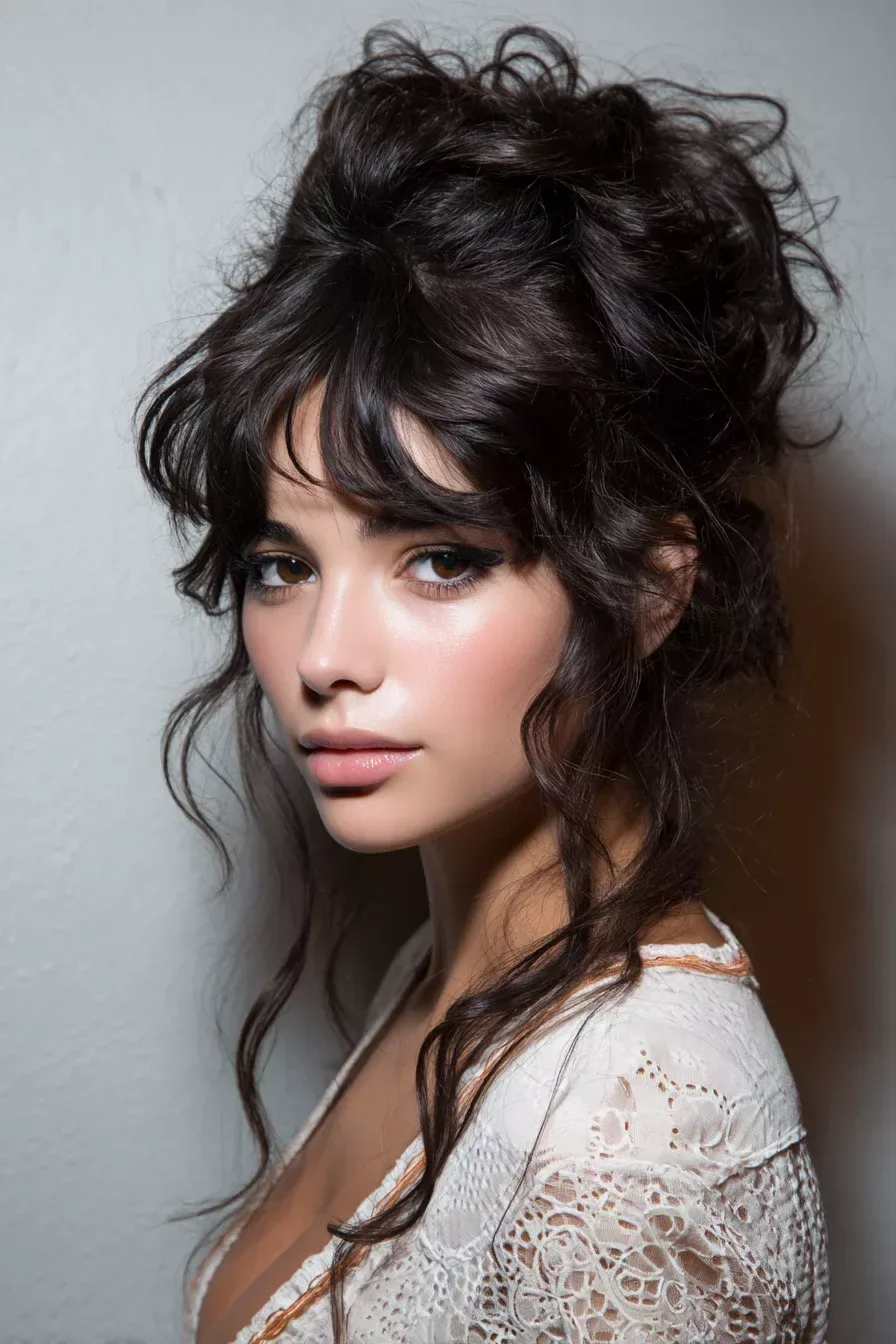
Loose curls with a wispy fringe suit a bigger forehead because the curls add width and the fringe adds softness at the top. Keep the fringe long and curly, never cut short and straight.
Best for: Naturally curly or wavy hair.
How to style: Apply curl cream, scrunch and diffuse on low heat, and let the fringe curl naturally.
What to ask your stylist: Ask for a curly cut with a long, wispy fringe, cut dry if your stylist offers it.
16. Sleek Straight Hair With Side-Swept Bangs
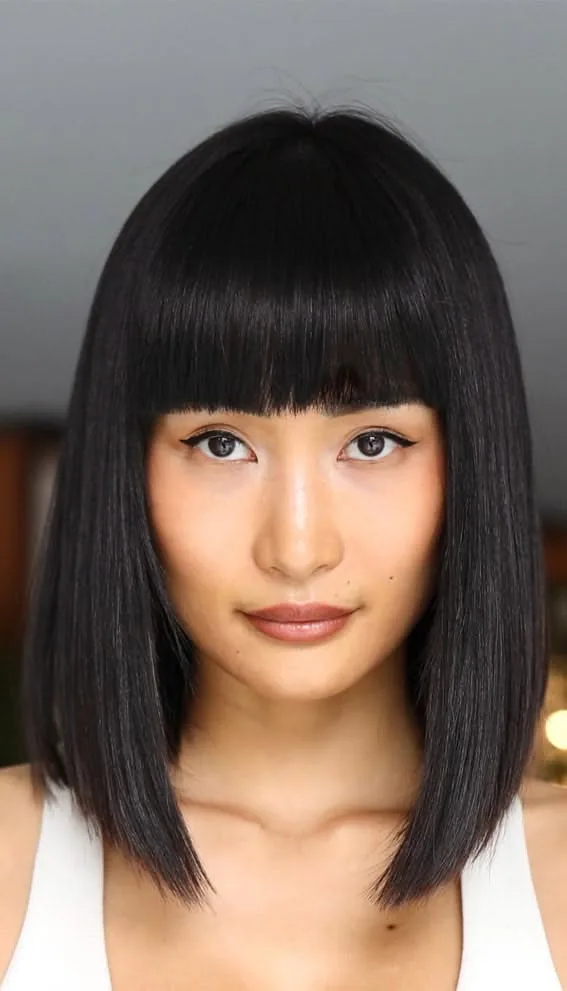
Sleek straight hair with side-swept bangs looks polished and balanced. The sleek lengths keep the look clean, while the sweeping fringe adds the diagonal that shortens the forehead.
Best for: Straight hair and lovers of a polished, professional look.
How to style: Smooth with a paddle brush, sweep the fringe to one side, and finish with shine serum.
What to ask your stylist: Ask for sleek lengths with long side-swept bangs that blend into the face layers.
17. Half-Up Style With Curtain Bangs
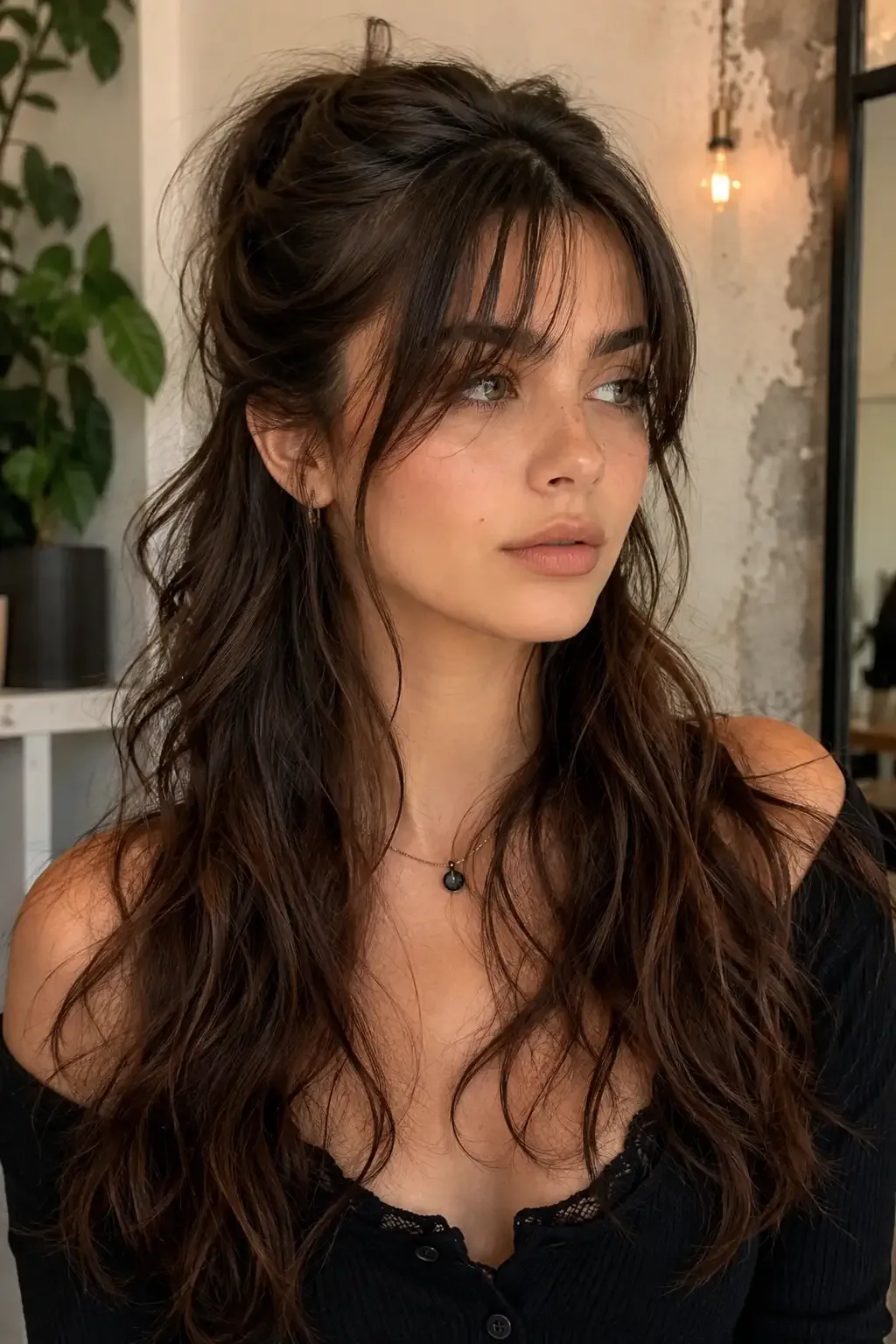
A half-up style with curtain bangs pulls the top section back while the bangs still soften the forehead. It is a lovely workday or occasion style that never leaves the forehead bare.
Best for: Anyone who likes hair off the face but still wants forehead balance.
How to style: Pull the top section back loosely, pin it, and let the curtain bangs frame the face.
What to ask your stylist: Ask for curtain bangs that work both worn down and with the top section pulled back.
18. Low Bun With a Side-Swept Fringe
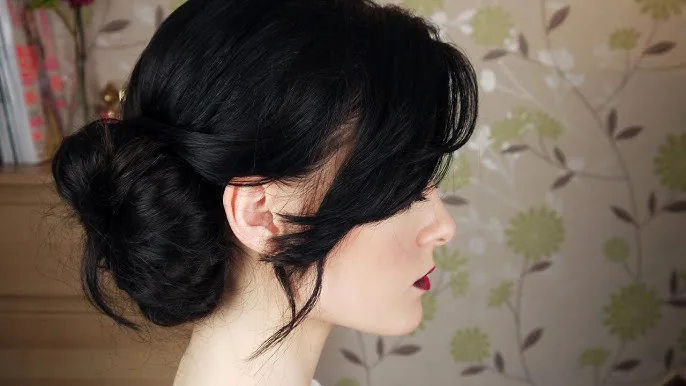
A low bun with a side-swept fringe is elegant and forehead-friendly. The fringe does the balancing, so the bun can be simple and loose, with soft pieces at the temples.
Best for: Occasion styling and anyone who wears updos often.
How to style: Gather loosely at the nape, pin softly, and sweep the fringe to one side.
What to ask your stylist: Ask for a side-swept fringe long enough to wear with updos as well as down.
19. High Ponytail With Bangs
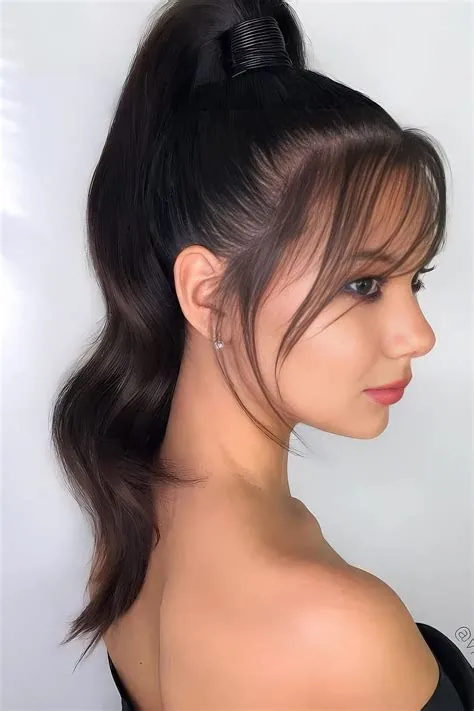
A high ponytail with bangs lifts the face while the fringe keeps the forehead balanced. Without bangs, a high ponytail can emphasise a high forehead, so the fringe is what makes this style work.
Best for: Active days and anyone who loves a ponytail but wants balance.
How to style: Keep the ponytail slightly loose, let the bangs fall naturally, and pull out soft temple pieces.
What to ask your stylist: Ask for bangs that sit well with a high ponytail, not just with hair down.
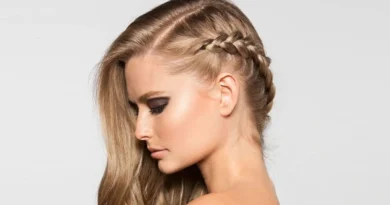
20. Loose Side Braid With a Fringe
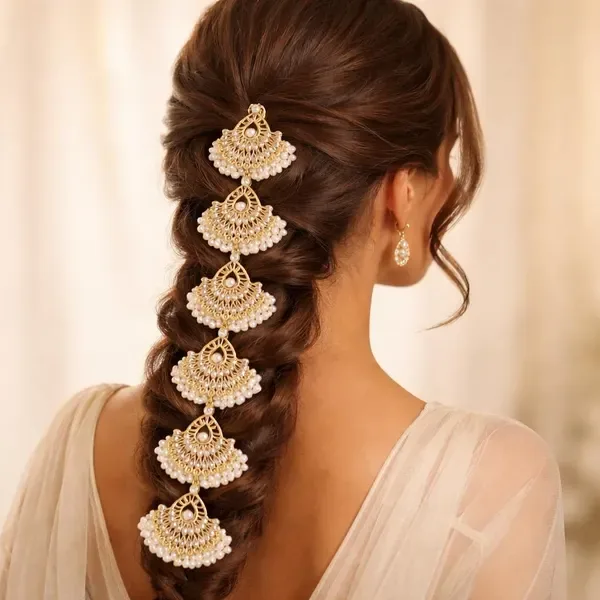
A loose side braid with a fringe sweeps hair to one side and keeps the forehead soft. The braid adds a diagonal line across the shoulder, which echoes the balance the fringe creates.
Best for: Long hair and relaxed, romantic styling.
How to style: Braid loosely over one shoulder, pull a few pieces out, and let the fringe frame the face.
What to ask your stylist: Ask for a fringe that blends into long layers, so it works in braids too.
21. French Bob With Micro Bangs, Softened
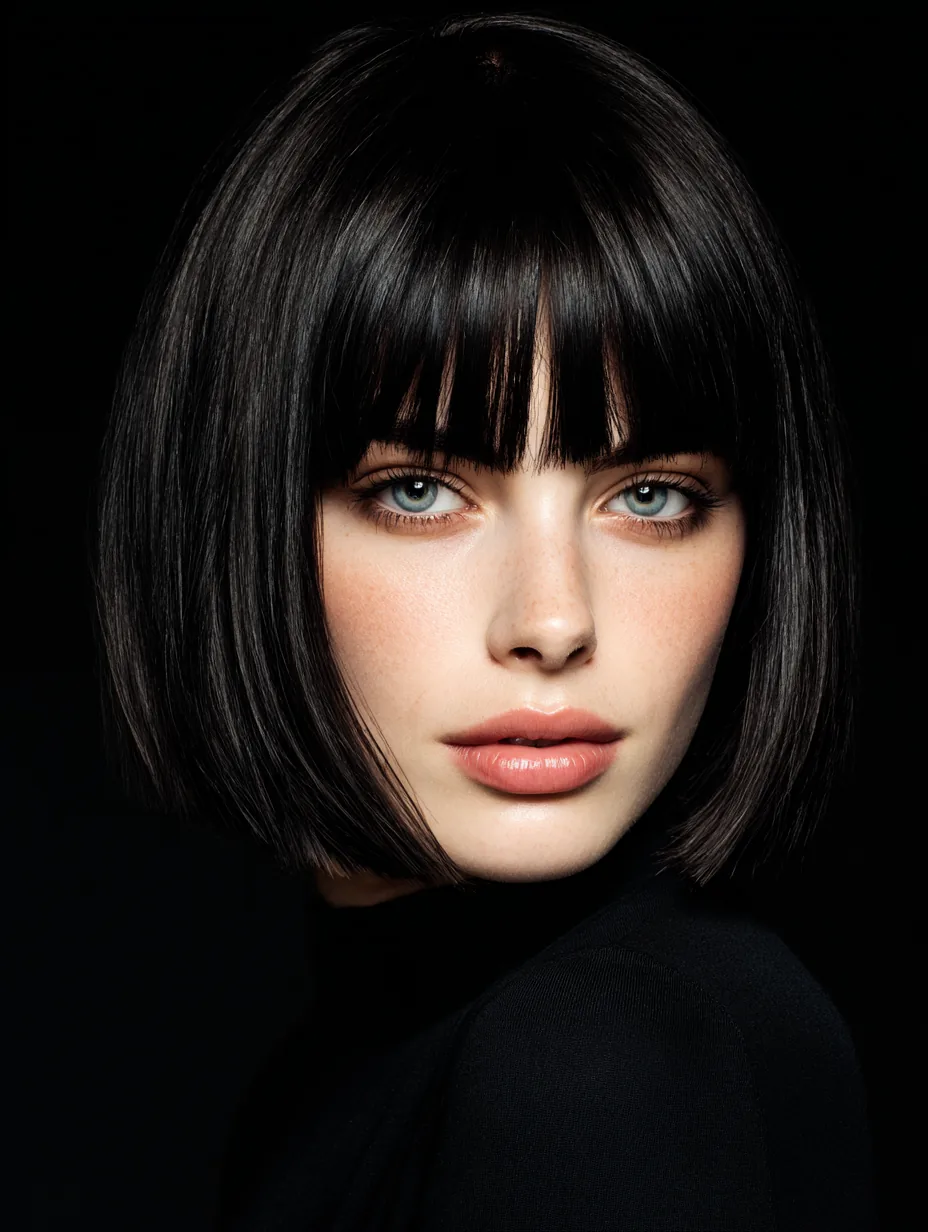
A French bob with softened micro bangs is a chic, fashion-forward choice. The micro bangs are short, so they must be soft and textured, never a hard straight line, to suit a bigger forehead.
Best for: Fashion lovers with straight hair who will maintain a short fringe.
How to style: Blow-dry the micro bangs with a small brush, add texture to the bob, and keep the ends soft.
What to ask your stylist: Ask for micro bangs cut slightly longer than the classic version, with a soft, textured edge.
22. A-Line Lob With Curtain Bangs
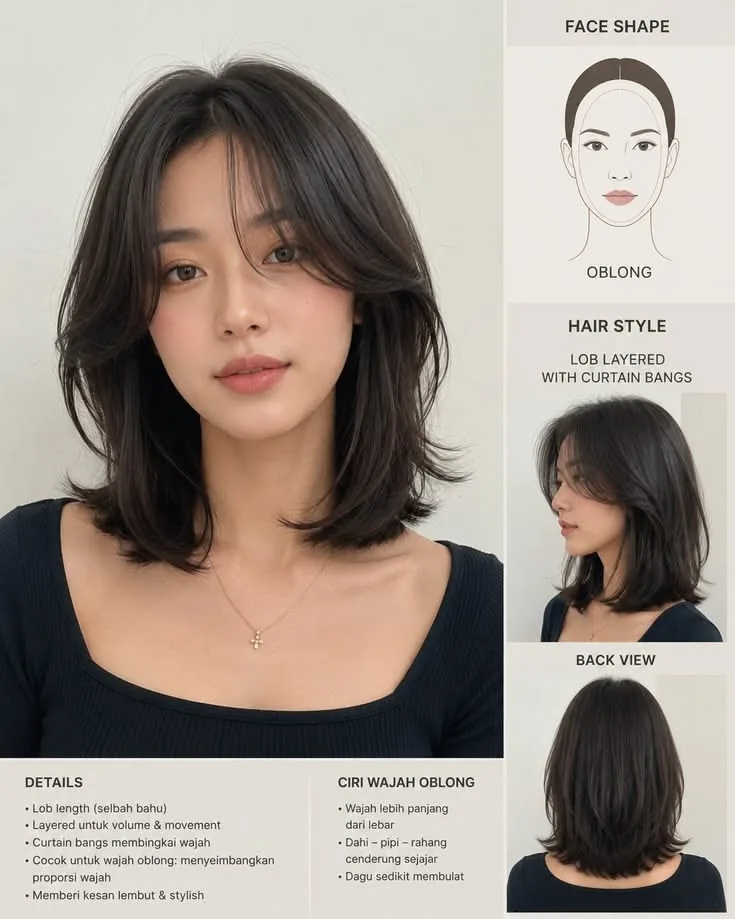
An A-line lob with curtain bangs gives a bigger forehead a defined shape with a soft top. The longer front pieces add length around the face, and the curtain bangs soften the hairline.
Best for: Anyone who wants a defined medium cut with built-in balance.
How to style: Blow-dry the front pieces forward and down, round the ends under, and sweep the bangs out.
What to ask your stylist: Ask for a soft A-line lob, longer in front, with curtain bangs.
23. Wolf Cut With a Long Fringe
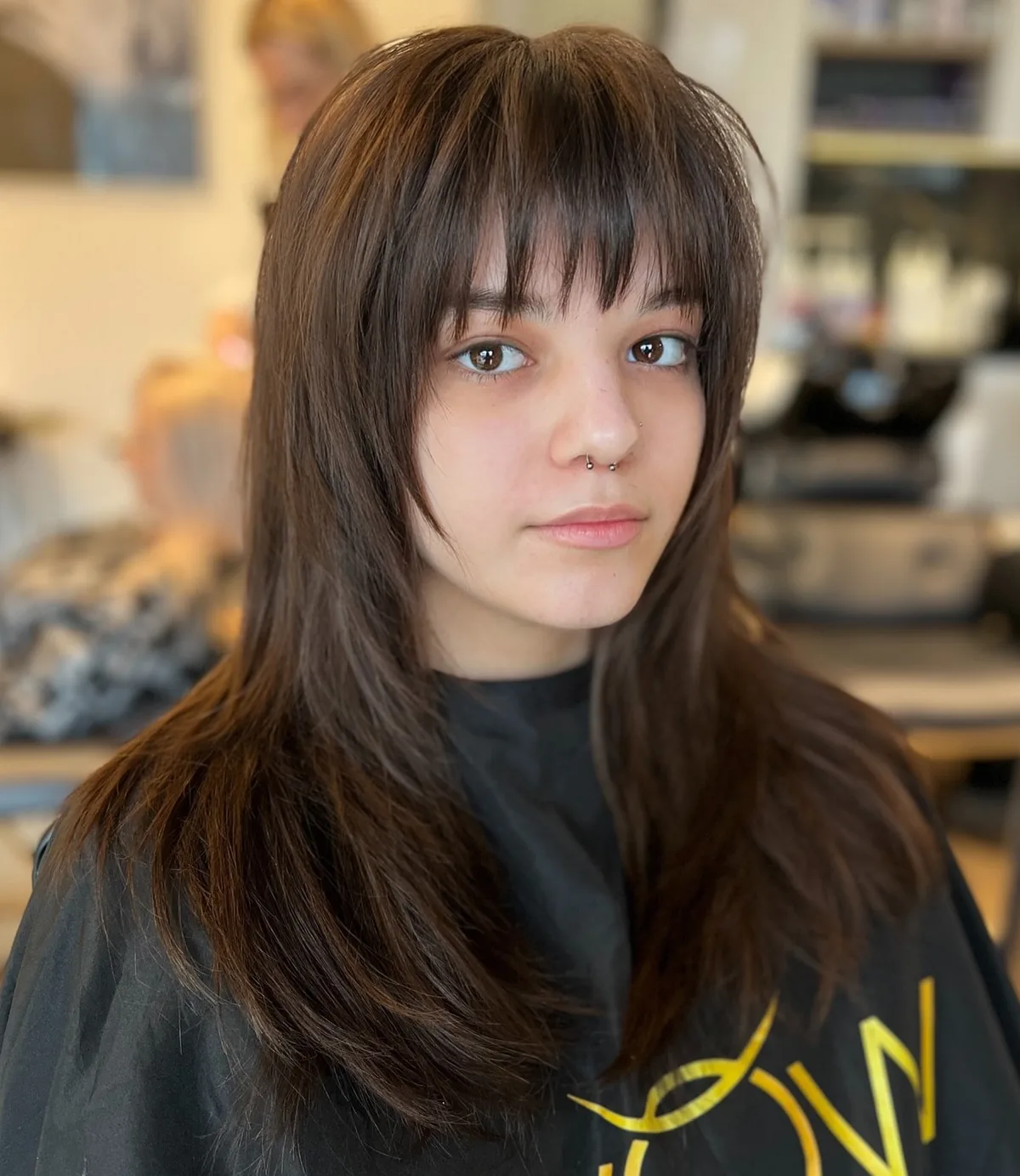
A wolf cut with a long fringe suits a bigger forehead because the fringe covers the upper forehead while the textured layers add width. Keep the fringe long and soft, not short and choppy.
Best for: Thick or wavy hair and lovers of textured, trendy cuts.
How to style: Apply texturising cream, diffuse, and scrunch the lengths for definition.
What to ask your stylist: Ask for a wolf cut with a long, soft fringe and rounded face layers.
24. Layered Midi Cut With Side Bangs
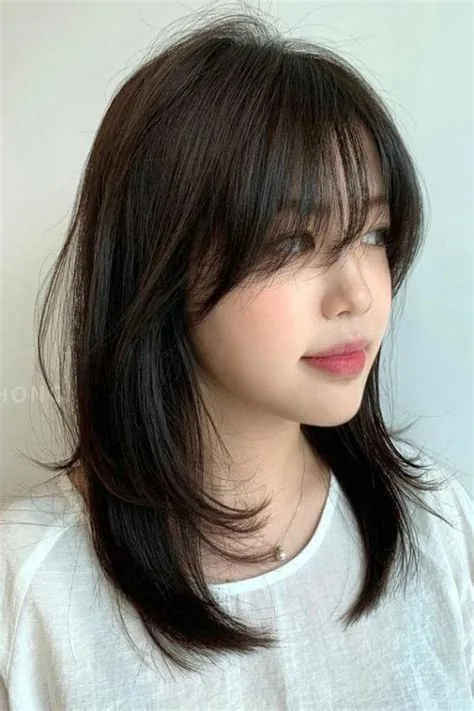
A layered midi cut with side bangs is a versatile, everyday answer to a bigger forehead. The layers add movement, the side bangs add a diagonal, and the midi length suits almost everyone.
Best for: Anyone who wants an easy, everyday cut with balance.
How to style: Blow-dry with a side part, bend the ends slightly inward, and sweep the bangs to one side.
What to ask your stylist: Ask for a layered midi cut with long side bangs that blend into the layers.
25. Fine Hair: Wispy Bangs and Light Layers
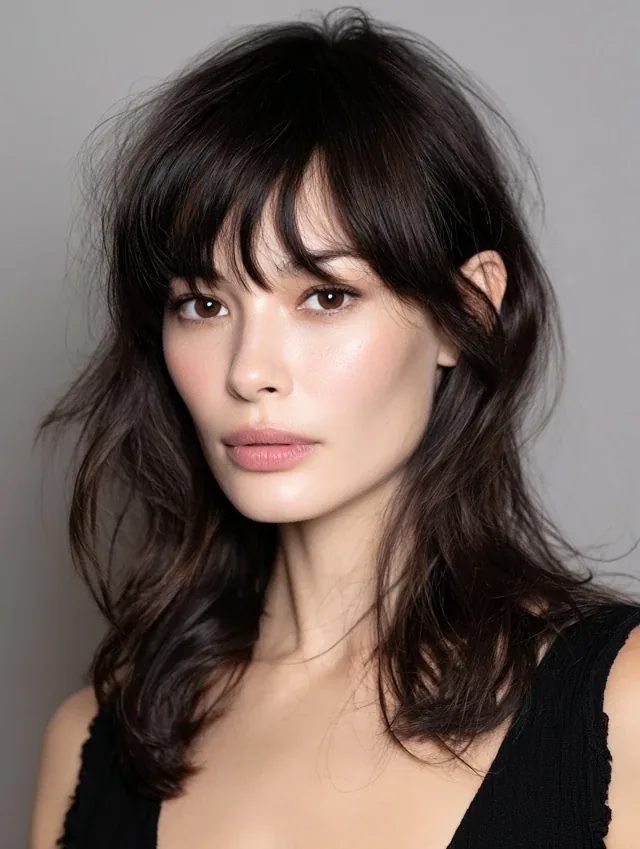
Fine hair with a bigger forehead benefits from wispy bangs and light, long layers. Heavy bangs can eat up too much fine hair, so a wispy fringe gives coverage without thinning the rest of the cut.
Best for: Fine hair and first-time fringe wearers.
How to style: Use volumising mousse at the roots, blow-dry the fringe with a small brush, and keep layers long.
What to ask your stylist: Ask for a wispy fringe and light layers, and avoid cutting the fringe too thick.
26. Thick Hair: Long Curtain Bangs and Internal Layers
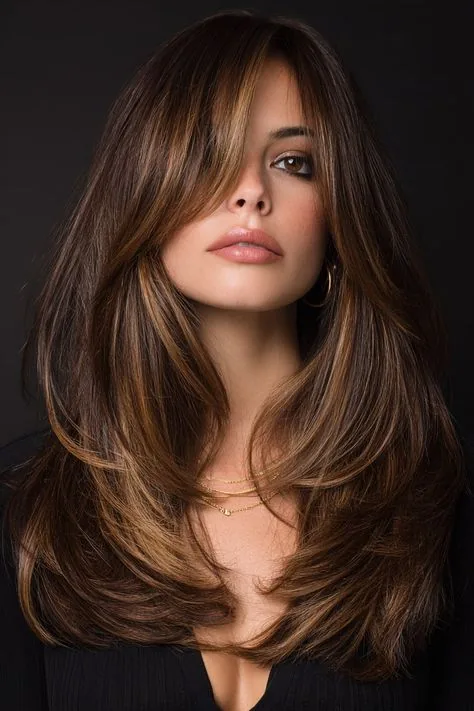
Thick hair with a bigger forehead needs curtain bangs plus internal layers, so the cut has shape without bulk at the temples. Internal layers remove weight from inside, keeping the outside full but manageable.
Best for: Thick hair that feels heavy around the face.
How to style: Blow-dry the curtain bangs out, smooth the lengths, and use a little serum on the ends.
What to ask your stylist: Ask for long curtain bangs with internal layers to reduce bulk at the temples.
27. Curly Hair: Long Layers and a Curly Fringe
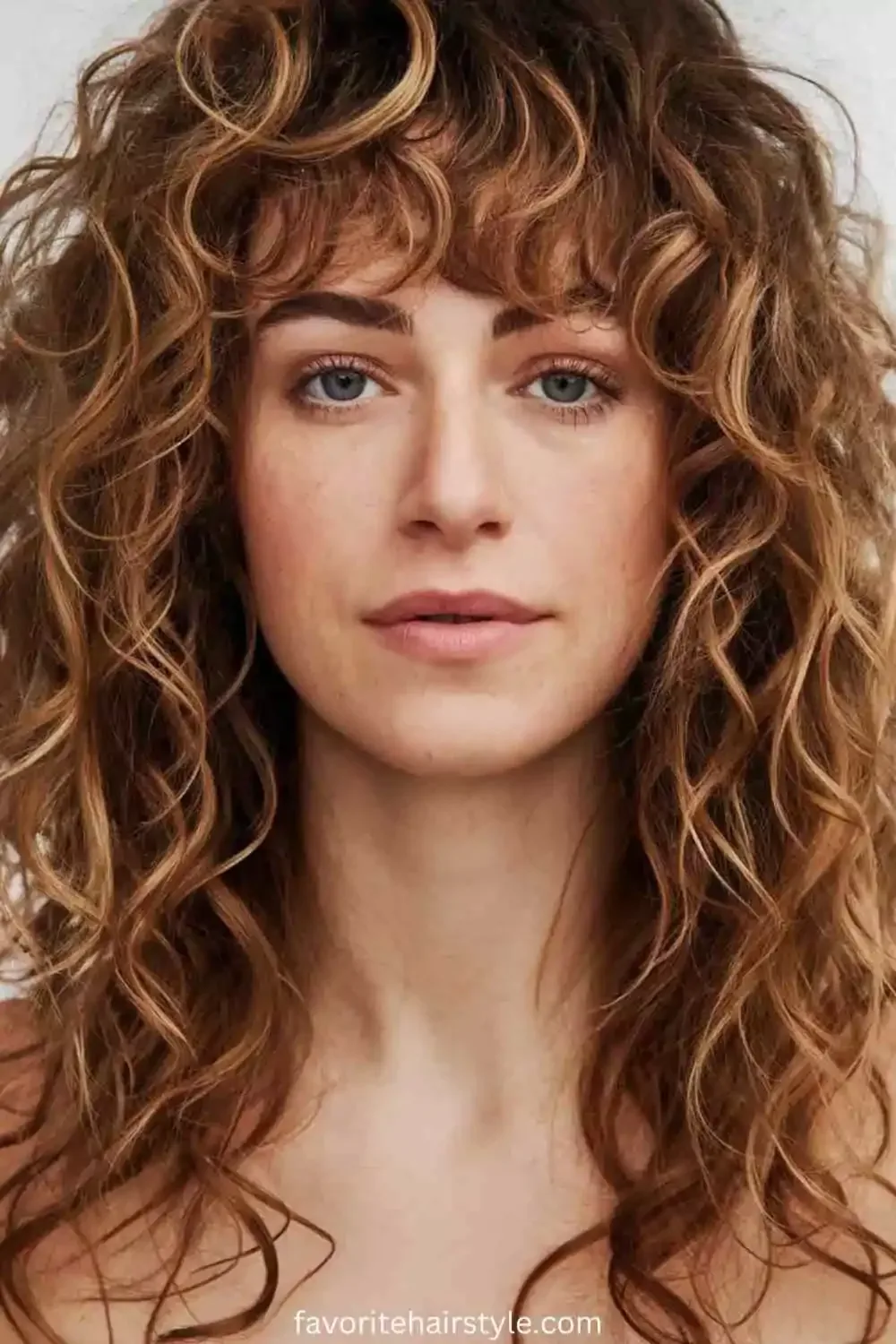
Curly hair with a bigger forehead looks wonderful with long layers and a curly fringe worn naturally. The fringe should be cut long and allowed to curl, so it softens the forehead without fighting the curl pattern.
Best for: Naturally curly hair of any length.
How to style: Apply curl cream, scrunch and diffuse, and let the fringe curl on its own.
What to ask your stylist: Ask for a curly fringe cut long, ideally cut dry, that blends into long layers.
28. Straight Hair: Blunt Lob With Bangs
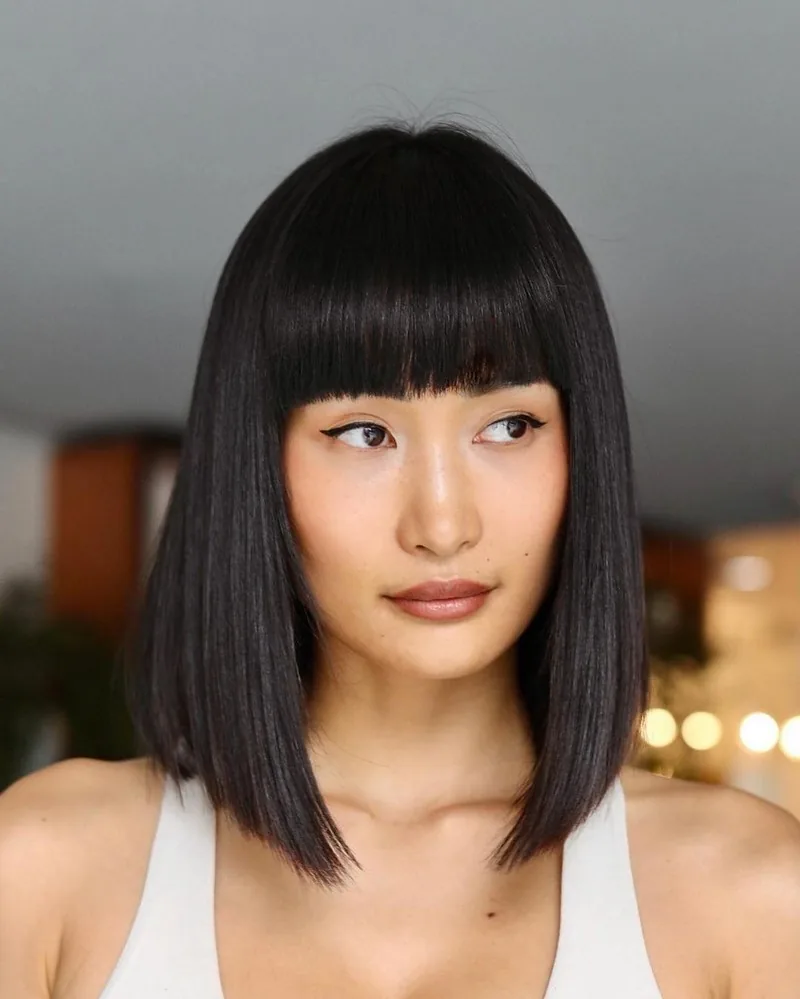
Straight hair with a bigger forehead suits a blunt lob with bangs, because the blunt ends give structure and the bangs give balance. Add a little texture to the ends so the lob never looks severe.
Best for: Straight hair that wants a clean, modern shape.
How to style: Blow-dry smooth with a paddle brush, add a touch of texture spray, and sweep or straighten the bangs.
What to ask your stylist: Ask for a blunt lob below the jaw with bangs that end just above the brows.
29. Face-Framing Highlights for a Big Forehead
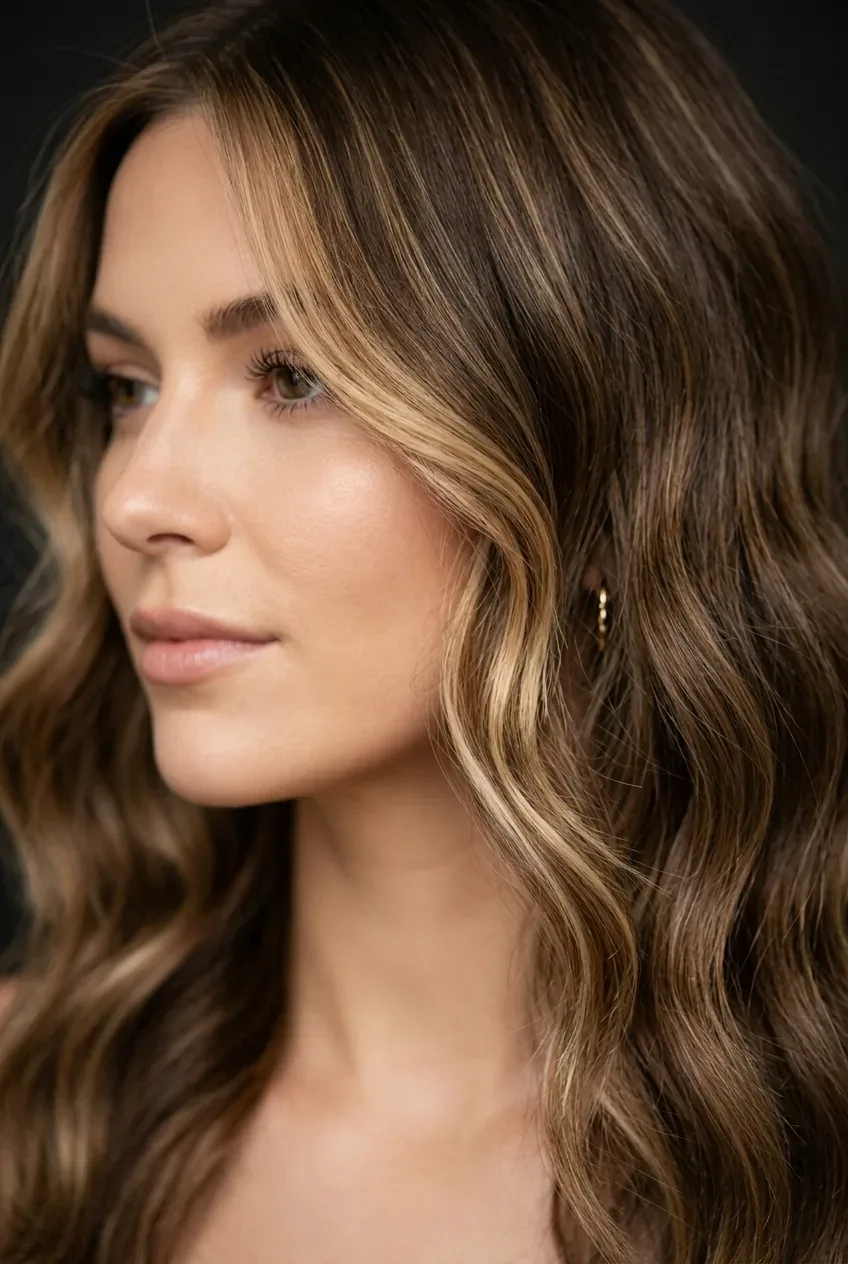
Face-framing highlights brighten the cheekbones and eyes, drawing attention downward from a bigger forehead. The lightness around the face balances the top of the face without any change to the cut.
Best for: Anyone who wants balance through colour rather than a new cut.
How to style: Style as usual, and let the highlights do the work; use purple shampoo occasionally to keep them fresh.
What to ask your stylist: Ask for soft, blended face-framing highlights, lighter around the cheekbones.
30. Balayage That Adds Weight Lower Down
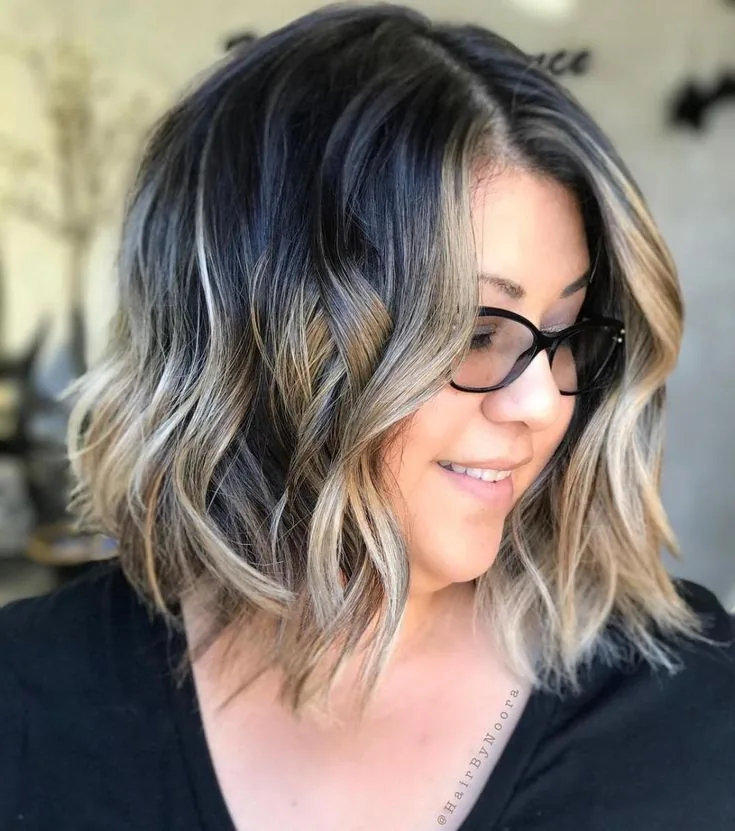
A balayage that is lighter at the ends adds visual weight lower down the face, which balances a higher forehead. The blended roots keep regrowth gentle and the whole look soft.
Best for: Long or medium hair that wants low-maintenance colour.
How to style: Style as usual; tone every 6 to 8 weeks and use colour-safe shampoo.
What to ask your stylist: Ask for a soft balayage, lighter through the ends, with blended roots.
31. Warm Copper Dimension
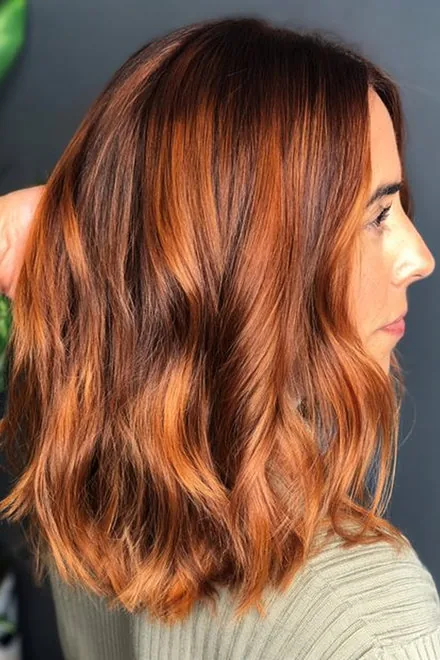
Warm copper dimension adds richness around the face and draws the eye to the cheekbones and eyes. The warmth is flattering with most skin tones and pairs beautifully with curtain bangs.
Best for: Anyone who likes warm, rich colour.
How to style: Use colour-safe shampoo, protect from sun, and refresh with a gloss every 8 weeks.
What to ask your stylist: Ask for warm copper dimension through the lengths, blended softly at the roots.
32. Espresso Brown With Soft Dimension
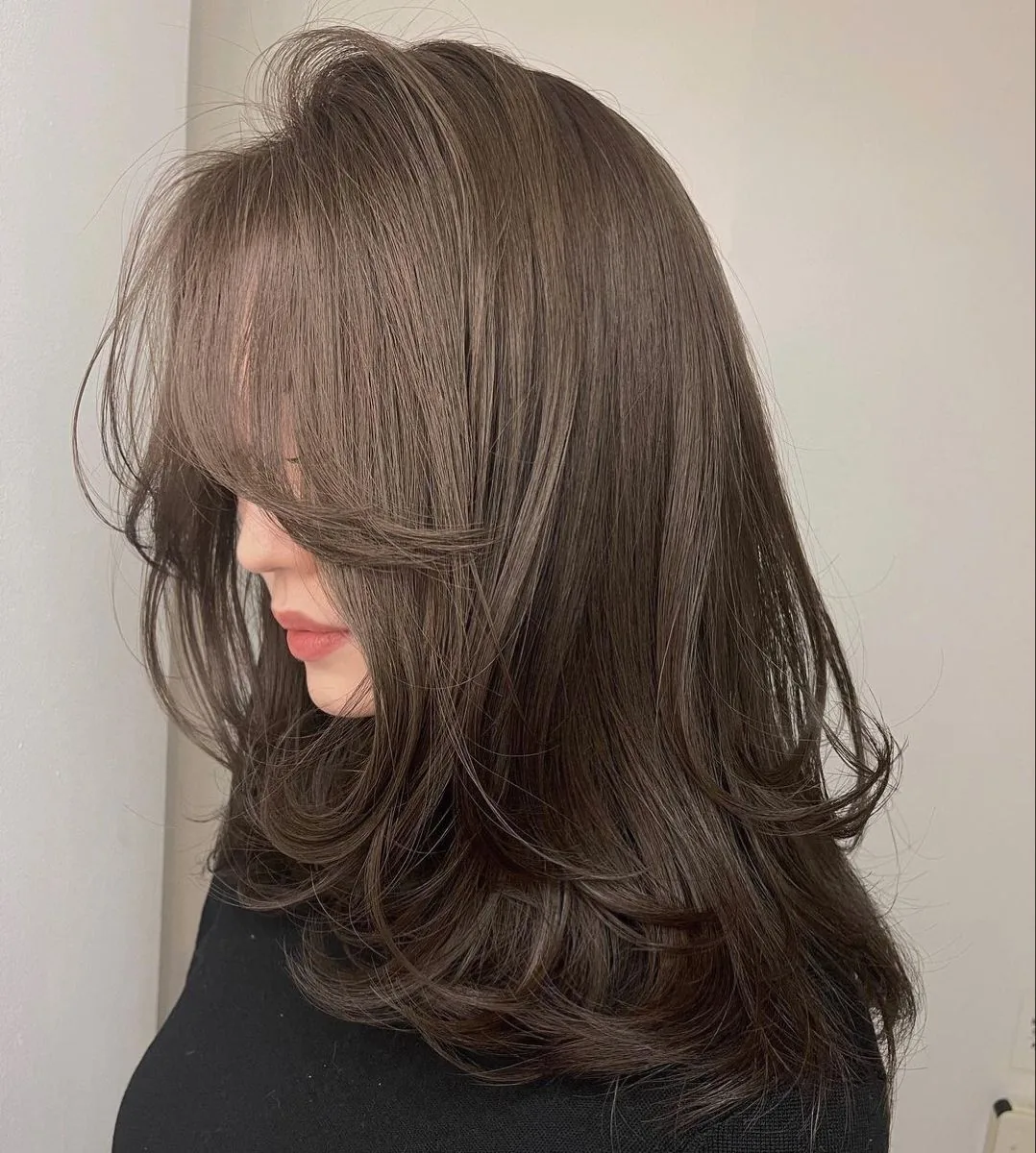
Espresso brown with soft dimension is a deep, polished colour that frames the face beautifully. The dimension stops it looking flat, and the depth makes the eyes stand out against a bigger forehead.
Best for: Dark hair lovers who want polish without high maintenance.
How to style: Use colour-safe shampoo and refresh with a gloss every 6 weeks.
What to ask your stylist: Ask for espresso brown with soft, blended dimension, not a single flat colour.
33. Vintage Waves With a Side Part
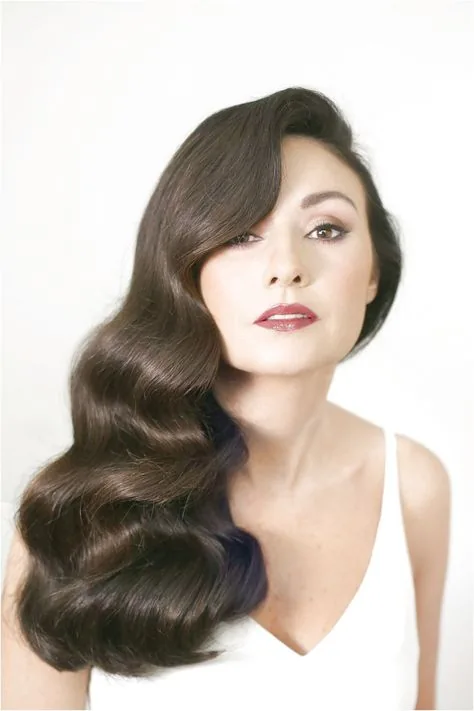
Vintage waves with a side part are a glamorous occasion style for a bigger forehead. The side part breaks up the forehead, the waves add width, and the whole look is curved and romantic.
Best for: Occasions, weddings and evenings out.
How to style: Curl large sections in one direction, brush out into waves, and set with spray.
What to ask your stylist: Ask for layers that hold a side part and vintage waves, with the front at collarbone length.
34. Tousled Midi With Curtain Bangs
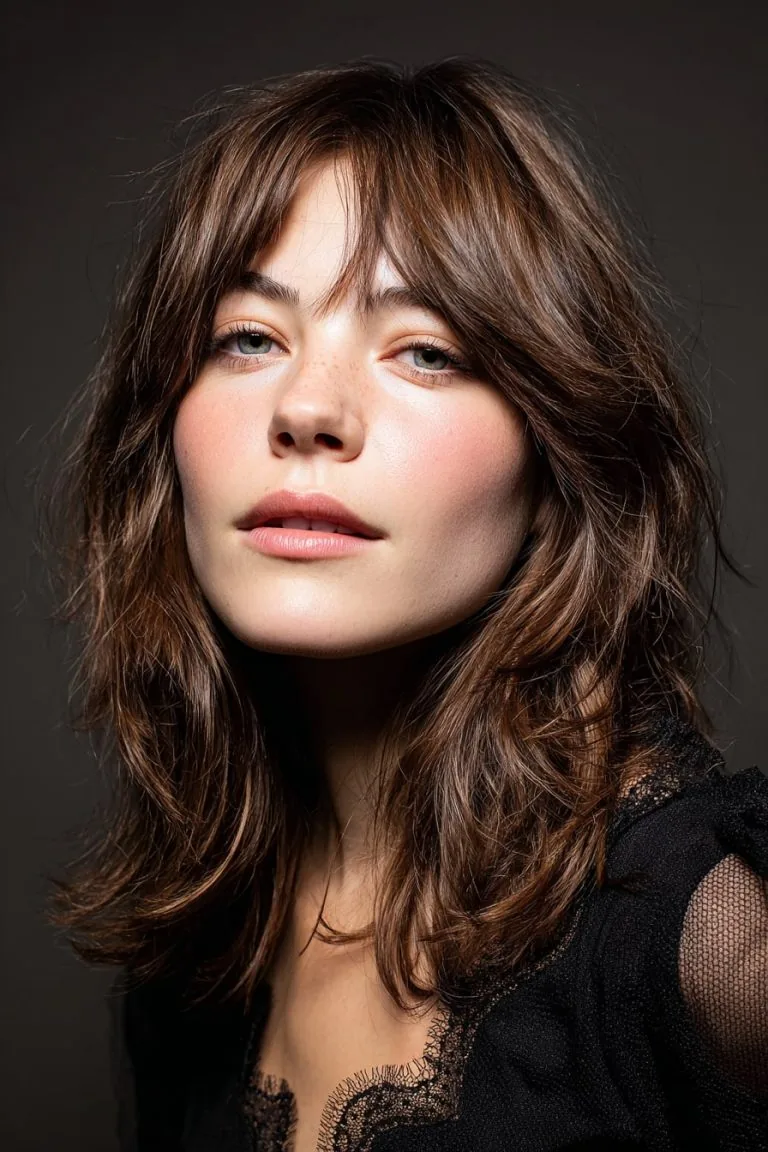
A tousled midi with curtain bangs is relaxed, modern and very forgiving. The tousle adds width, the bangs add softness at the top, and the combination never looks over-styled.
Best for: Anyone who loves effortless, textured hair.
How to style: Scrunch texturising spray into damp hair, air-dry, and sweep the bangs out.
What to ask your stylist: Ask for a tousled midi cut with curtain bangs that blend into the layers.
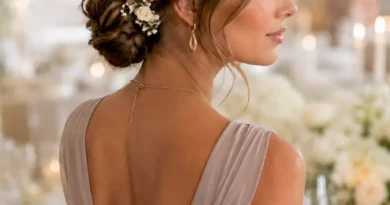
35. Soft Updo With Face-Framing Pieces
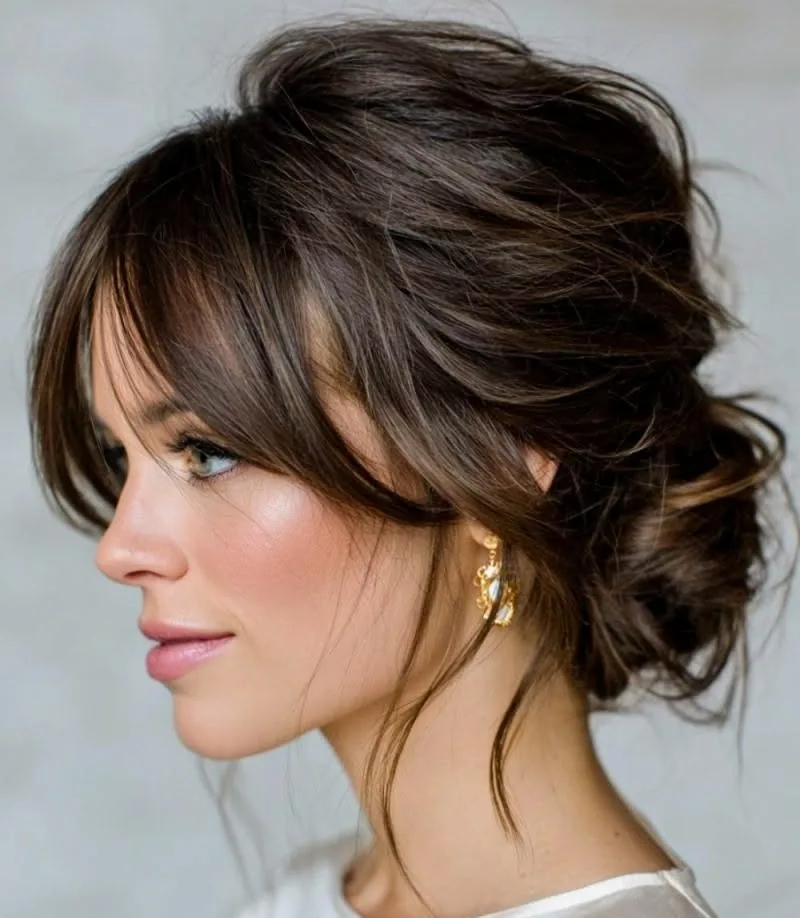
A soft updo with face-framing pieces is the occasion answer for a bigger forehead. The framing pieces soften the hairline, the updo keeps the look elegant, and nothing about it is scraped back or severe.
Best for: Weddings, parties and formal events.
How to style: Gather loosely, pin softly, and pull out framing pieces at the temples and beside the bangs.
What to ask your stylist: Ask for face-framing pieces long enough to wear loose with an updo.
Volume Tricks That Shorten the Forehead Visually
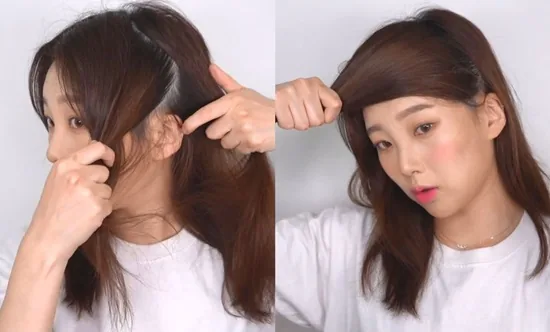
Volume at the sides of the face, rather than on top, is the trick for a bigger forehead. Waves, curls and layered ends that sit at cheek and jaw level add width where the face is narrower, which makes the forehead look more proportional. Volume only on top, by contrast, can stretch the face upward and emphasise height.
Try root lift combined with soft volume through the lengths, rather than a tall, teased crown. A round brush, a little mousse and layers that encourage movement will do more than backcombing ever will, and the result looks natural instead of constructed.
Colour Placement That Balances the Face
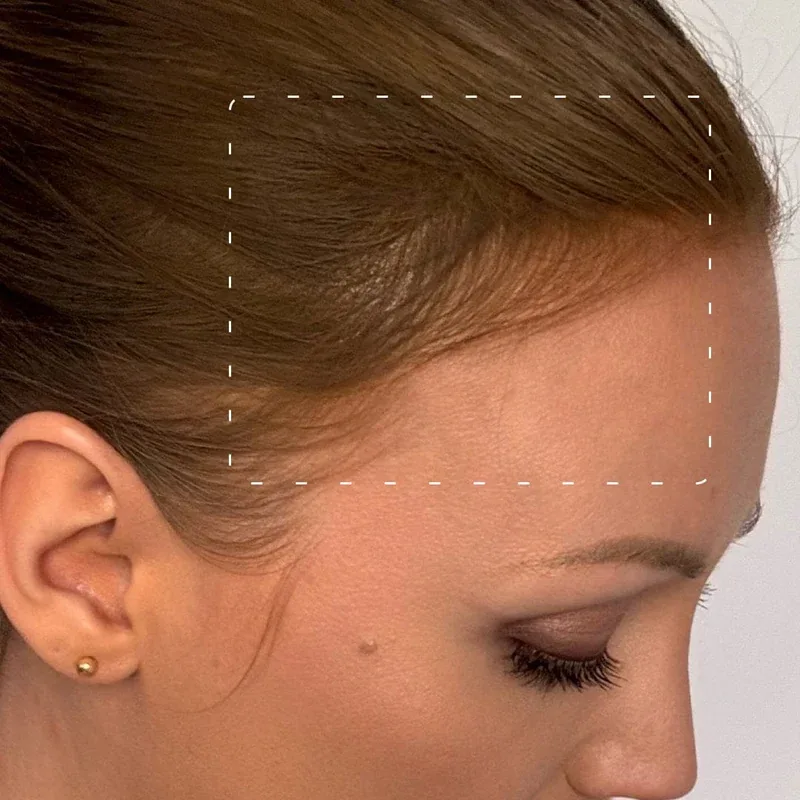
Colour can balance a forehead just as a cut can. Face-framing highlights brighten the area around the eyes and cheekbones, drawing attention downward and away from the top of the face. A soft balayage that is lighter at the ends also adds visual weight lower down, which balances a high hairline.
Avoid a very dark, flat colour right at the hairline if balance is your goal, because a harsh root line can emphasise where the hair starts. Softer, blended roots and a little dimension through the lengths keep the focus on the whole face, not just the top of it.
Everyday Styling in Under 10 Minutes
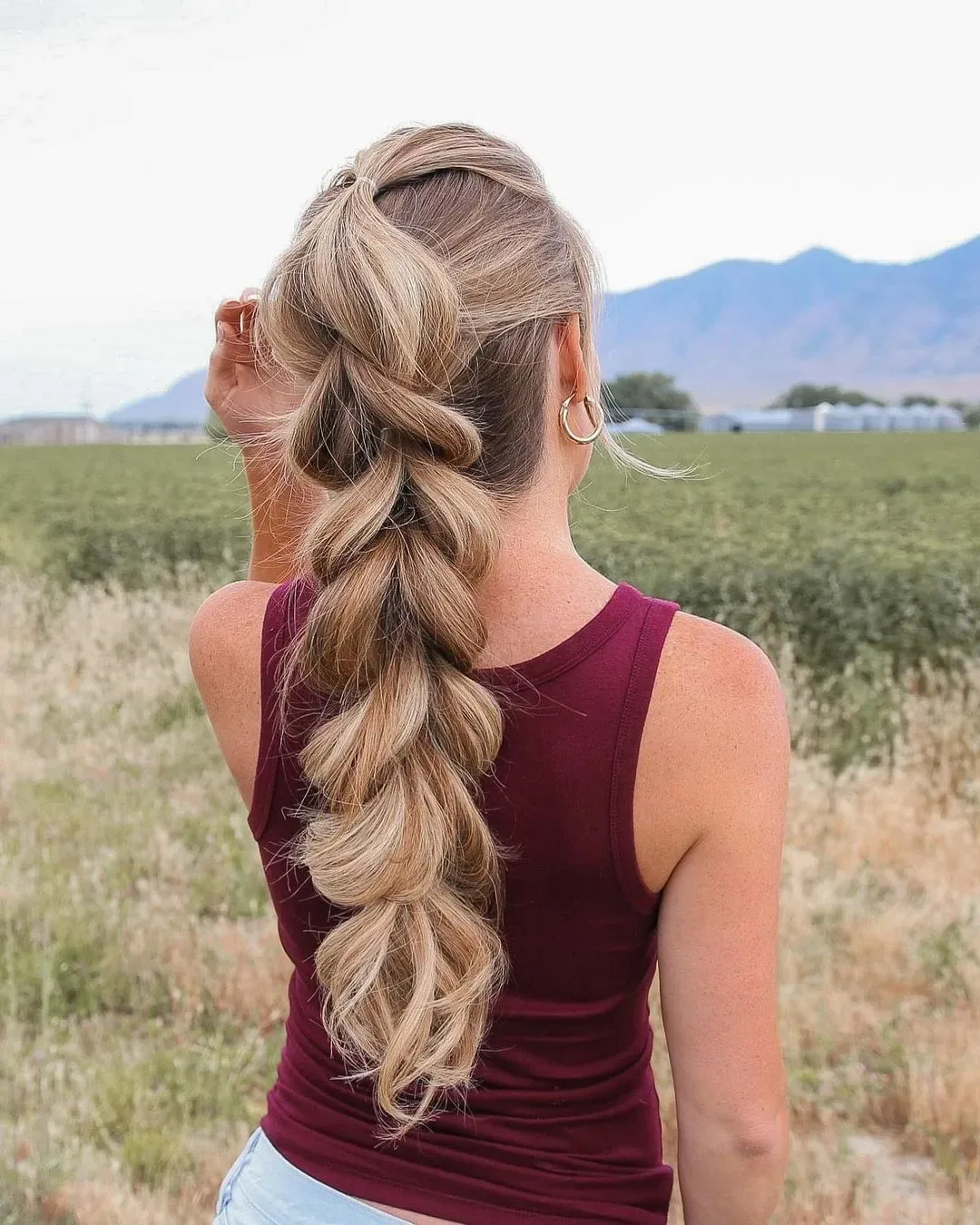
A forehead-friendly routine does not need to take long. Dry your fringe first, while it is still damp, because a fringe that dries on its own will do whatever it wants. Then set your part, add a little root lift, and let the lengths fall naturally.
Keep a small round brush and a travel-size dry shampoo by the mirror. On second-day hair, the brush revives a fringe in a minute, and dry shampoo at the roots stops a fringe looking flat against the forehead, which is the one thing that makes a fringe look tired.
Your Stylist Checklist for a Big Forehead

Show your stylist photos of fringes you like on faces similar to yours, and be honest about how much styling time you really have. A fringe that looks perfect in the salon but needs twenty minutes every morning is not a good fringe for a busy life, and a good stylist would rather know that upfront.
Ask for the fringe to be cut slightly longer than you think you want it, especially the first time. Hair shrinks as it dries, bangs especially, and a fringe that is a touch long can be trimmed in two minutes, while a fringe cut too short needs weeks to grow back.
What is the best hairstyle for a big forehead?
The best hairstyle for a big forehead is one that adds a fringe, a diagonal part or width at the sides. Curtain bangs, side-swept bangs, a deep side part and layered cuts all balance a higher forehead beautifully.
Do bangs suit a big forehead?
Yes, bangs suit a big forehead very well. Curtain bangs, side-swept bangs and wispy fringes are the most flattering, because they soften the hairline instead of drawing a hard line across it.
Can I wear my hair without bangs if I have a big forehead?
Yes, you can. A deep side part, an off-centre part, face-framing layers and waves at the sides all balance a bigger forehead without any fringe, by adding a diagonal and width lower down the face.
What is the best parting for a big forehead?
A deep side part is usually the most flattering parting for a big forehead, because it creates a diagonal that breaks up the forehead’s height. A soft off-centre part is a subtler version of the same idea.
Does short hair suit a big forehead?
Short hair suits a big forehead when it includes a fringe or a side sweep. A pixie with a long side fringe or a bob with side-swept bangs both balance the forehead; very short hair with no fringe leaves it fully exposed.
Are blunt bangs good for a big forehead?
Blunt bangs can be very good for a big forehead, especially on straight hair, because they shorten the forehead directly. They need regular trims and suit a confident, polished look; a softer, textured edge makes them more forgiving.
What hairstyles should I avoid with a big forehead?
Styles that emphasise height and symmetry tend to be less flattering: a severe centre part with scraped-back hair, a very tall teased crown with no fringe, or slicked-back hair that exposes the whole forehead.
How do I style a fringe for a big forehead?
Dry your fringe first, while it is damp, using a small round brush. Sweep curtain or side-swept bangs out to the sides, and keep a straight fringe just above the brows so it never falls into your eyes.
Does hair colour help balance a big forehead?
Yes, colour can help. Face-framing highlights draw attention to the eyes and cheekbones, and a balayage that is lighter at the ends adds visual weight lower down, both of which balance a higher forehead.
How often should I trim bangs for a big forehead?
Trim bangs every 3 to 4 weeks so they stay at the right length. A fringe that grows too long loses its shape and can fall into the eyes, while a freshly trimmed fringe keeps the balance you chose.
Conclusion
A bigger forehead is a proportion to balance, not a problem to hide. The styles in this guide all work the same gentle way: a fringe or a diagonal part to break up the height, and width or texture at the sides to bring the whole face into harmony.
Start with the easiest change that appeals to you, whether that is a deep side part, a set of long curtain bangs, or a layered cut with face-framing pieces. Show your stylist a photo, ask for the fringe a touch longer than you think you want, and give the new shape a week of real life before you judge it. Balance, like a good haircut, grows on you.