Let Your Hair Rest and Grow: 41 Protective Hairstyles for Natural Hair That Actually Protect
Protective styling is not really about the hairstyle. It is about what the hairstyle lets your hair do: rest. When your ends are tucked away, your hands are out of your hair, and you are not reaching for heat every morning, breakage slows down and the length you grow actually stays on your head. That is growth retention, and it is the quiet reason protective styles have been passed down for generations.
This guide covers 41 protective hairstyles for natural hair, from knotless braids and passion twists to faux locs, crochet styles, wigs and gentle updos. For every style you will find honest pros and cons, how to maintain it, and how long it realistically lasts, plus care notes on scalp health, moisture and edges, because a style that hurts or dries your hair out is not protecting anything.
What Makes a Style Truly Protective
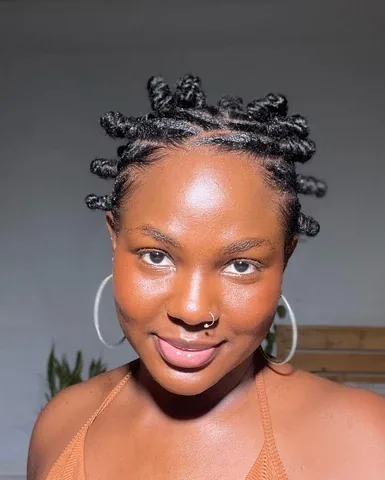
A truly protective style does three things: it keeps your ends tucked or covered, it reduces daily handling, and it does not put constant tension on your scalp or edges. If a style checks all three, it is protecting you. If it only looks neat but pulls, rubs or dries your hair, it is just a style, not a protective one.
Watch the details, too. Braids that are too small and too tight, wigs glued down every day, and updos pulled taut with gel can all cause more breakage than loose, natural hair. Protection is a balance: secure enough to last, gentle enough that your scalp stays calm and your edges stay intact.
Scalp and Moisture Care Under a Style
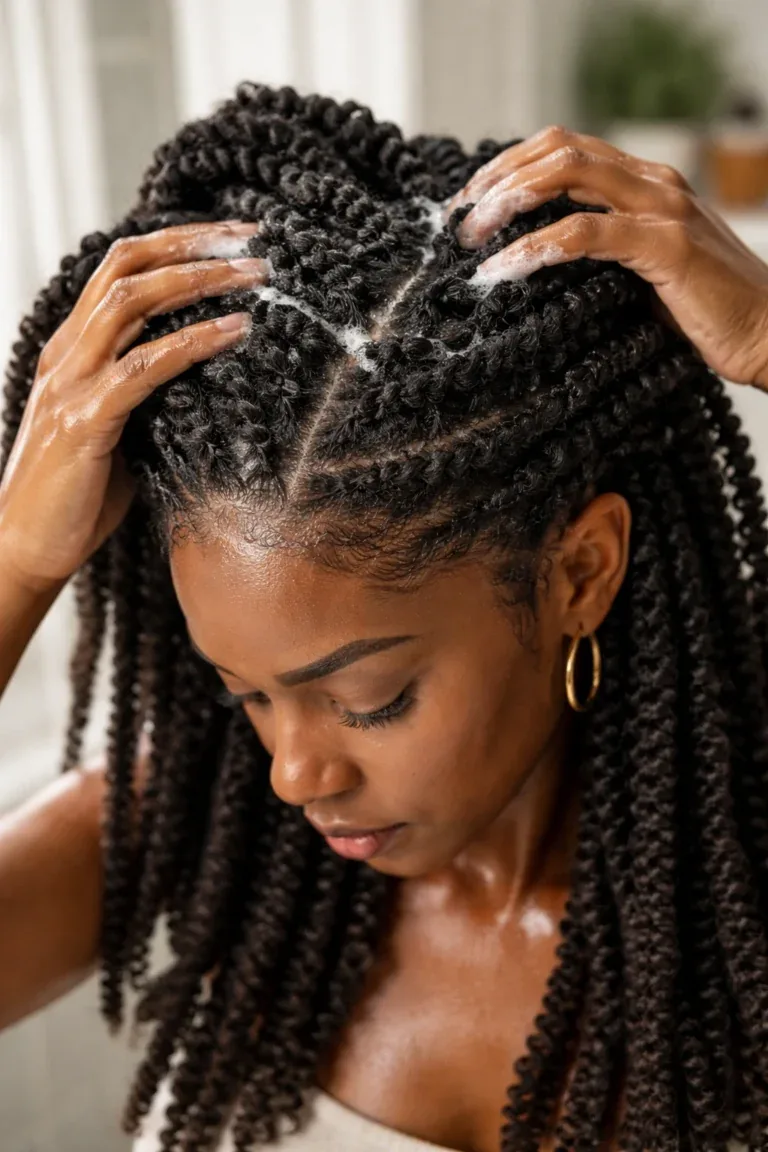
Your scalp still needs care under braids, twists or a wig. Lightly oil or mist your scalp two to three times a week, focusing on the parts and hairline, and keep products light so they do not build up. A healthy scalp itches less, flakes less, and grows hair more comfortably.
Moisture matters just as much. Spritz braids or twists with water mixed with a little leave-in conditioner, then seal the lengths lightly with oil. Do not drench the style, and let it dry fully before covering it, because trapped dampness can lead to odour and scalp irritation.
How Long to Keep a Style In
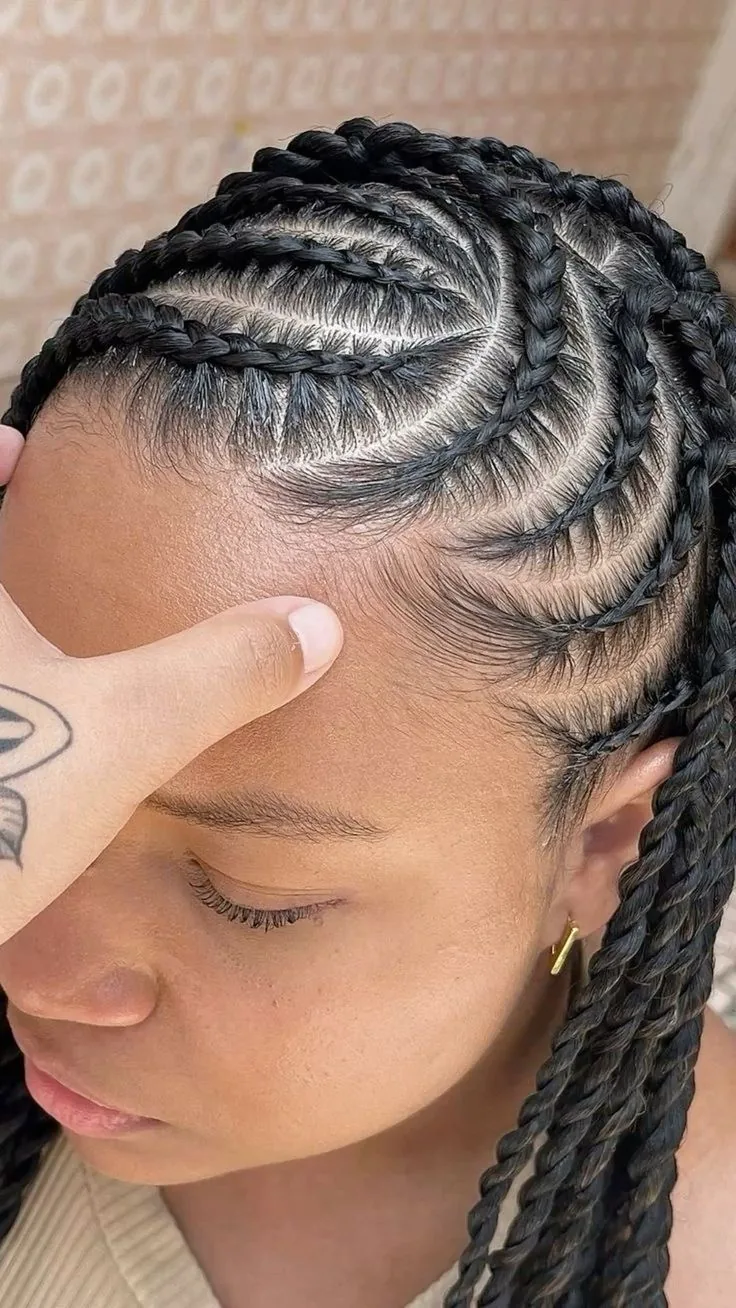
Most protective styles are best kept in for four to eight weeks, depending on the style and how fast your hair grows. Braids and twists usually sit well for four to six weeks, while wigs and crochet styles can be refreshed more often. Beyond eight weeks, new growth tangles at the roots and takedown becomes harder and riskier.
Let your hair tell you when it is time. Heavy itching that does not ease, painful bumps, slipping braids, matted roots or a style that no longer looks neat are all signs to take it down, rest your hair for a week or two, and start fresh. Keeping a style in longer does not protect more; it protects less.
Braids vs Twists vs Wigs vs Updos
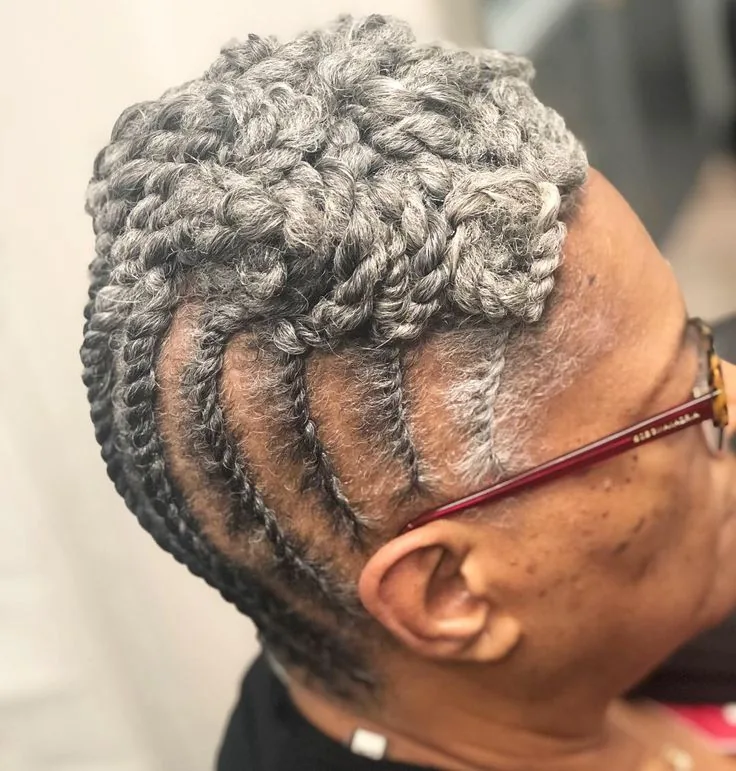
Braids last longest and need the least daily work, but they take the longest to install and can pull if braided too tightly. Twists are softer, quicker and gentler on the scalp, but they unravel faster and usually last two to four weeks. Both are excellent if the tension is right.
Wigs give you instant variety and total coverage, but only if the hair underneath is braided flat, moisturised and given breaks. Updos are the lowest-commitment option: they protect your ends for a day or a week, with no install cost, but they need re-doing and they do not shield hair from weather or friction the way braids do.
1. Knotless Box Braids
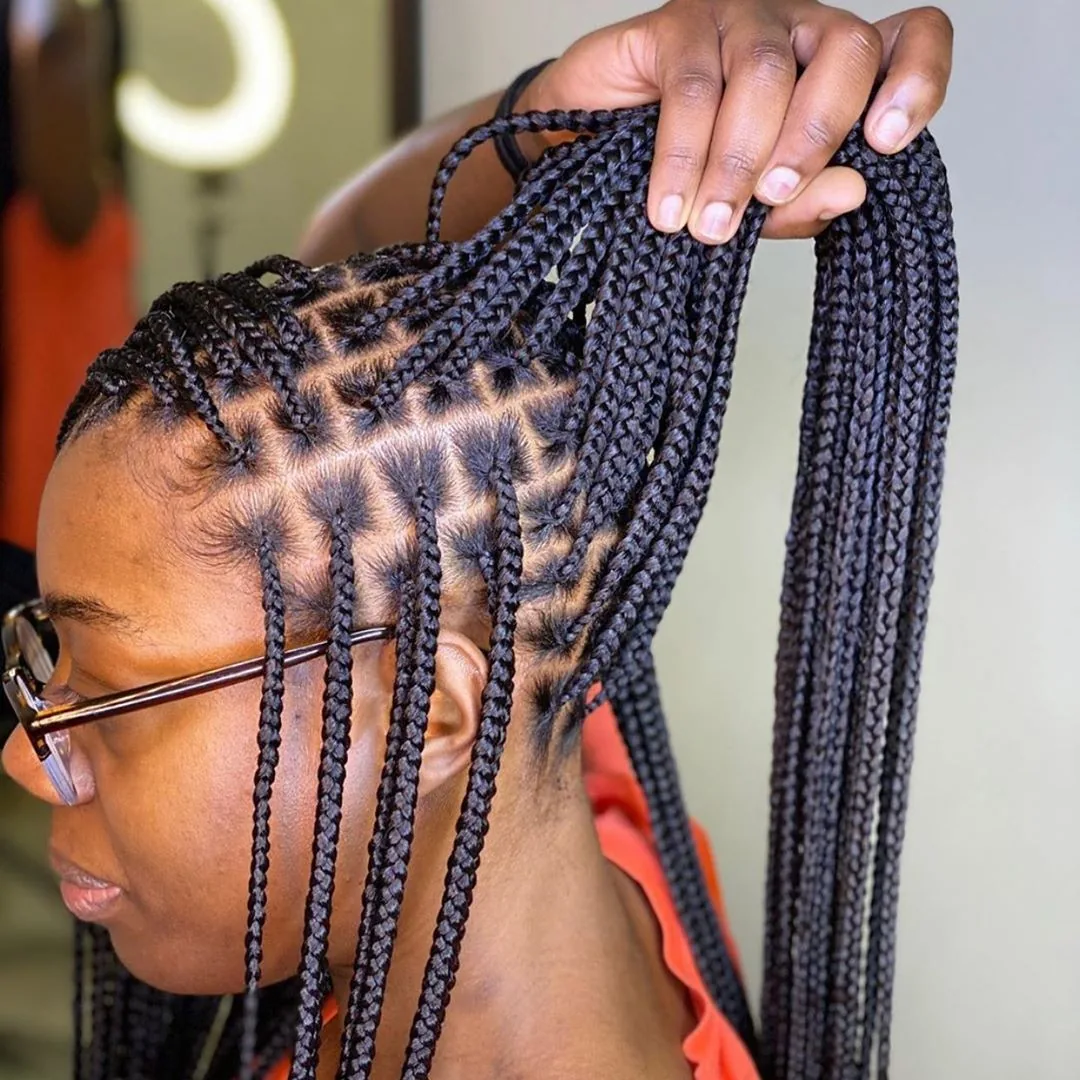
Knotless braids start with your own hair and feed in extensions gradually, so there is no tight knot pulling at the root. They lie flatter, feel lighter and are far kinder to edges than classic box braids, which is why they have become the go-to protective style for many people with natural hair.
Pros: Less tension and pain at the roots; natural, flat look; versatile for buns, ponytails and updos.
Cons / watch out for: Install takes 4 to 8 hours; can frizz faster at the roots than knotted braids.
Maintenance: Oil the scalp 2 to 3 times a week, wrap in silk at night, and refresh edges with a light gel only if needed.
How long it lasts: 4 to 6 weeks.
2. Classic Box Braids
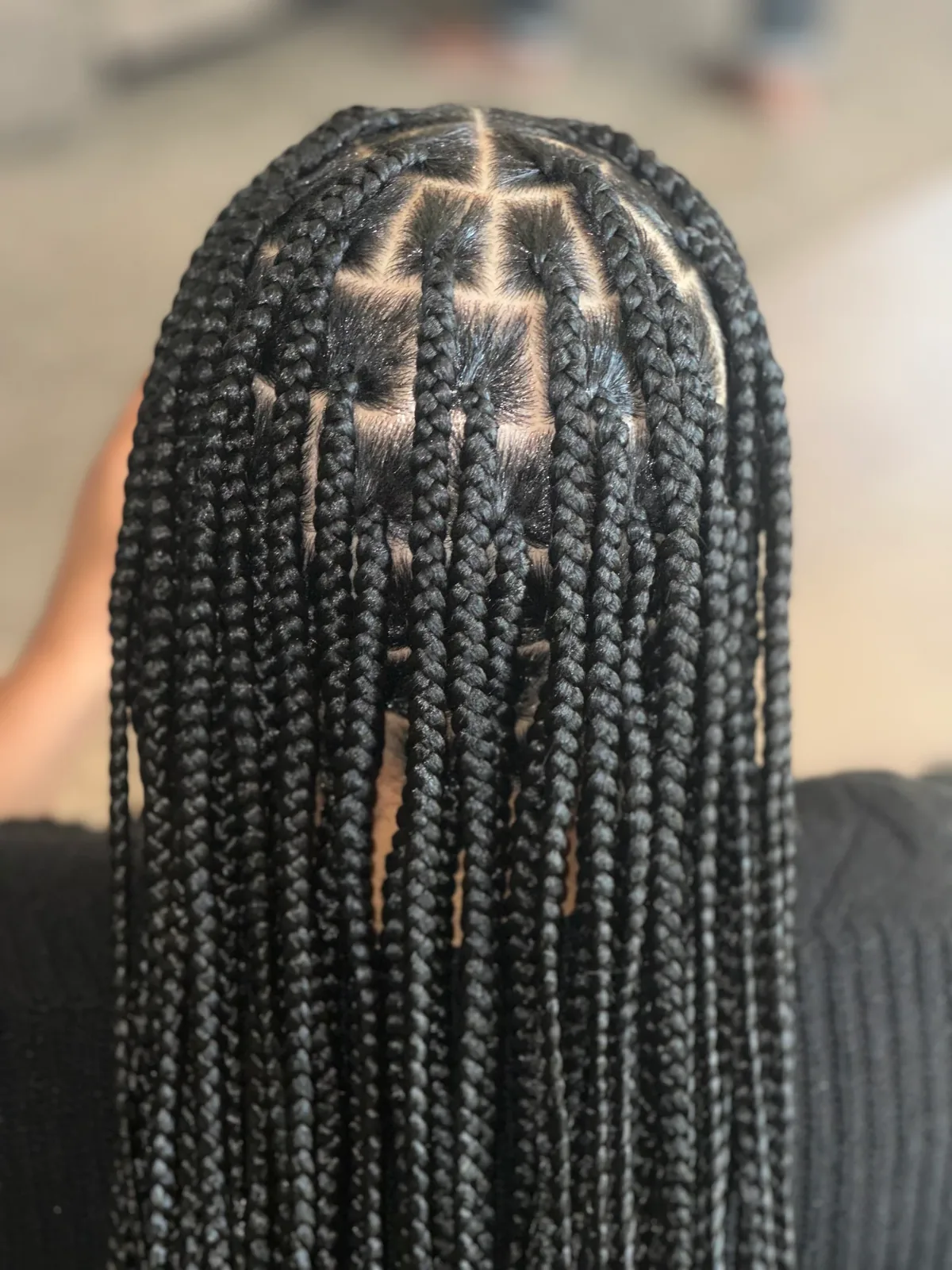
The original protective style: neat, square-parted braids that keep your hair completely tucked away. They are sturdy, low-maintenance and suit almost any length, and they are still one of the most reliable ways to give natural hair a long rest.
Pros: Very durable; endless styling options; protects ends fully.
Cons / watch out for: The starting knot can pull and cause tension if braided too tightly.
Maintenance: Moisturise the scalp regularly, avoid heavy oils that cause buildup, and cover with satin at night.
How long it lasts: 6 to 8 weeks.
3. Goddess / Boho Braids
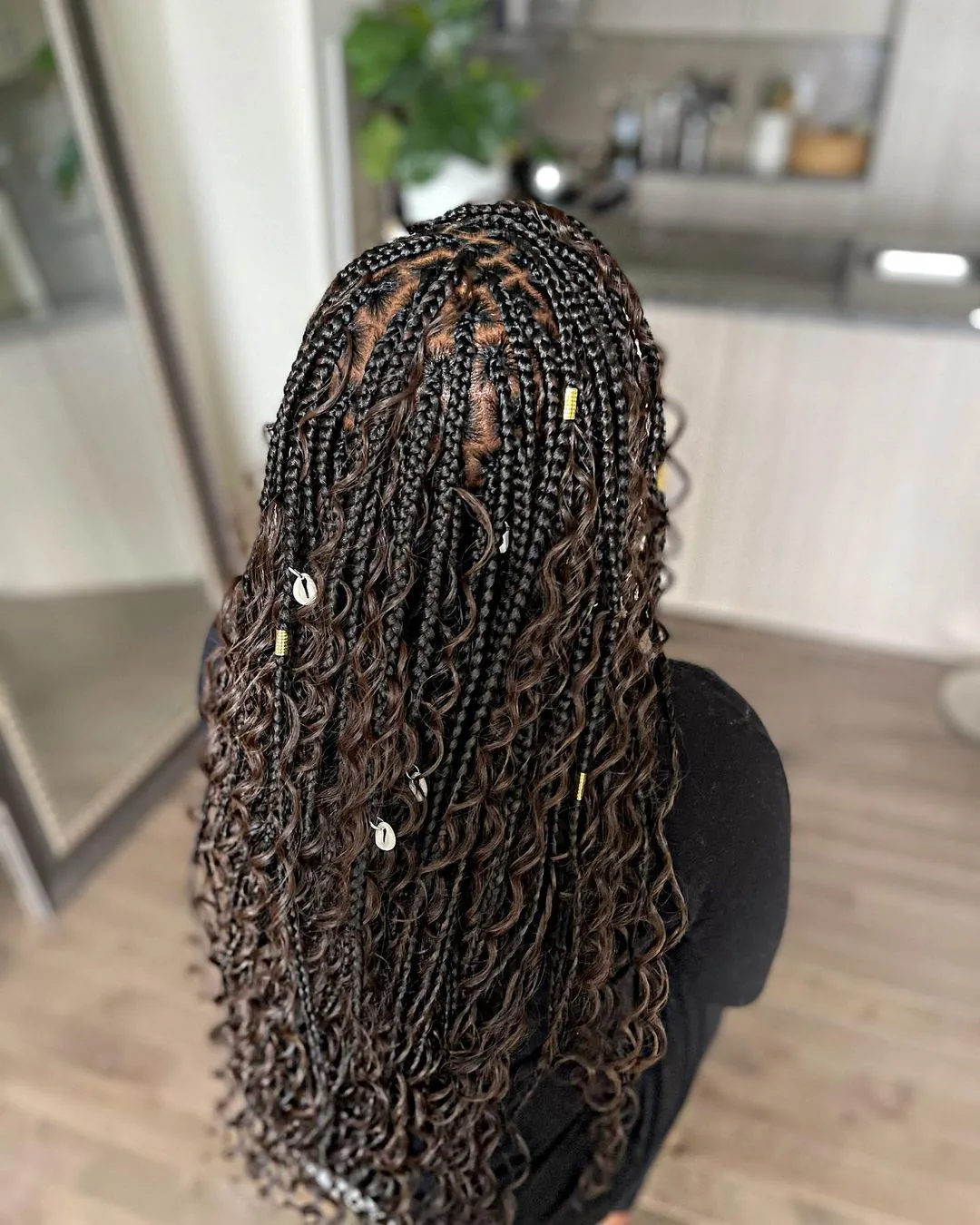
Goddess braids are box braids with loose, curly pieces left out throughout, giving a soft, romantic finish. The curls soften the look beautifully, but they do need a little more care than plain braids to stay defined.
Pros: Soft, feminine look; curls add movement and volume.
Cons / watch out for: Curly pieces tangle more easily and need regular detangling.
Maintenance: Separate curls gently with your fingers, use a light curl cream, and braid the curls loosely at night.
How long it lasts: 4 to 5 weeks.
4. Straight-Back Cornrows
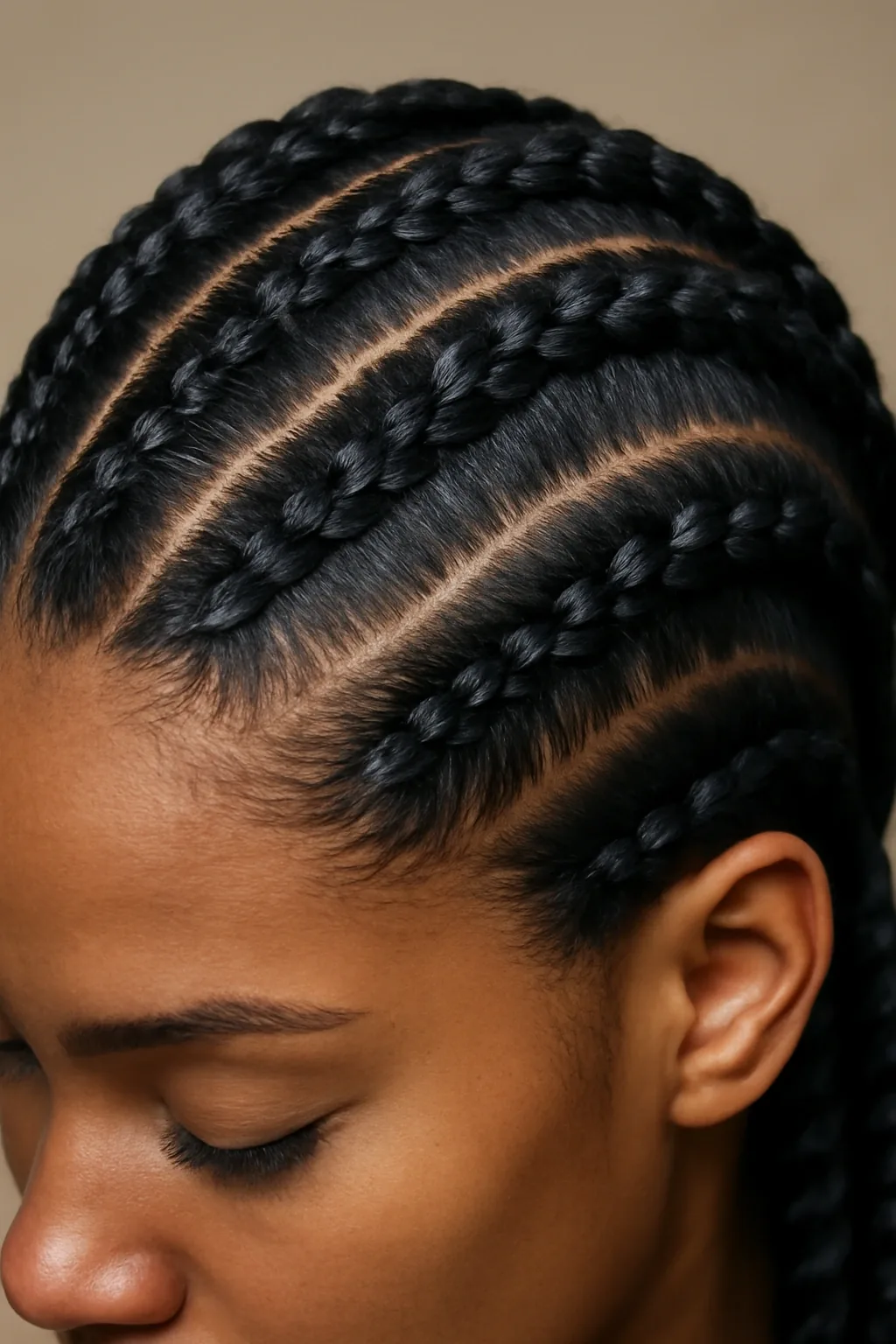
Straight-back cornrows are braided flat against the scalp in neat rows, keeping every strand protected and off your face. They are quick, affordable and an excellent base under wigs, scarves and hats.
Pros: Quick install; flat and comfortable; great wig base.
Cons / watch out for: Less styling variety on their own; tight rows can pull if braided too firmly.
Maintenance: Oil the parts, keep the style dry, and wear a satin scarf at night.
How long it lasts: 2 to 4 weeks.
5. Fulani Braids
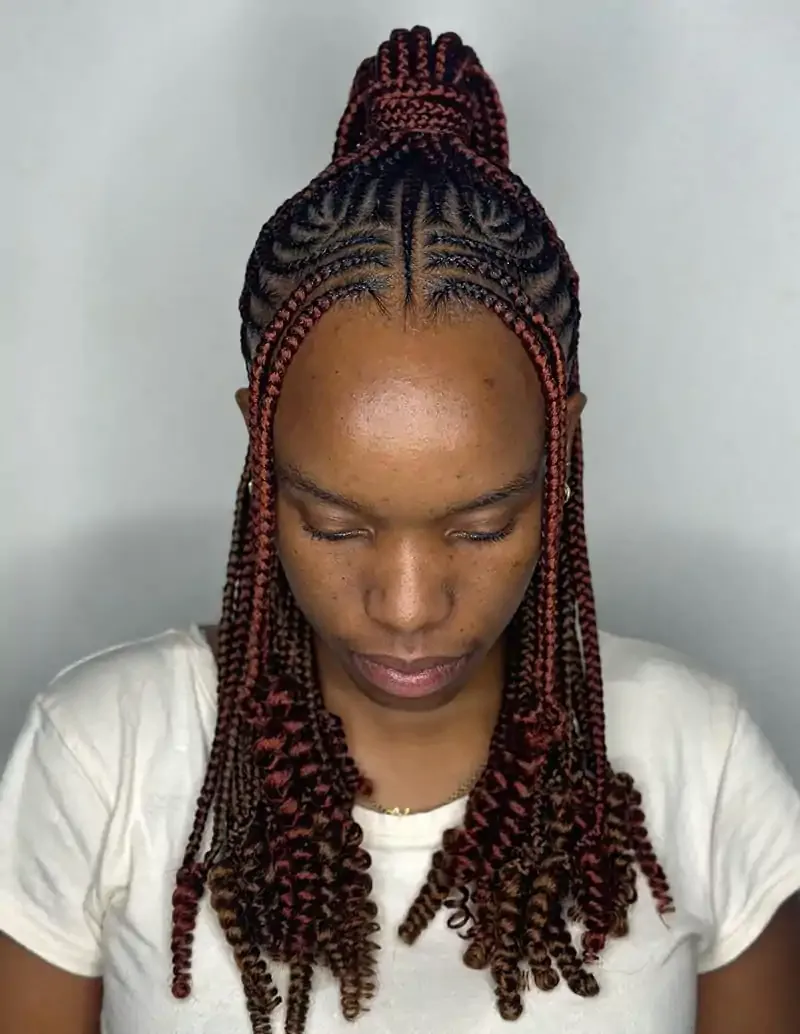
Fulani braids combine a centre cornrow with side braids and often beads or cuffs, inspired by Fulani tradition. The pattern frames the face beautifully and the braids at the back can be left loose or gathered into a bun.
Pros: Beautiful, distinctive pattern; face-framing and elegant.
Cons / watch out for: Intricate pattern takes longer and costs more; beads add weight.
Maintenance: Oil the scalp, keep beads secure, and wrap at night to stop frizz.
How long it lasts: 4 to 6 weeks.
6. Stitch Braids
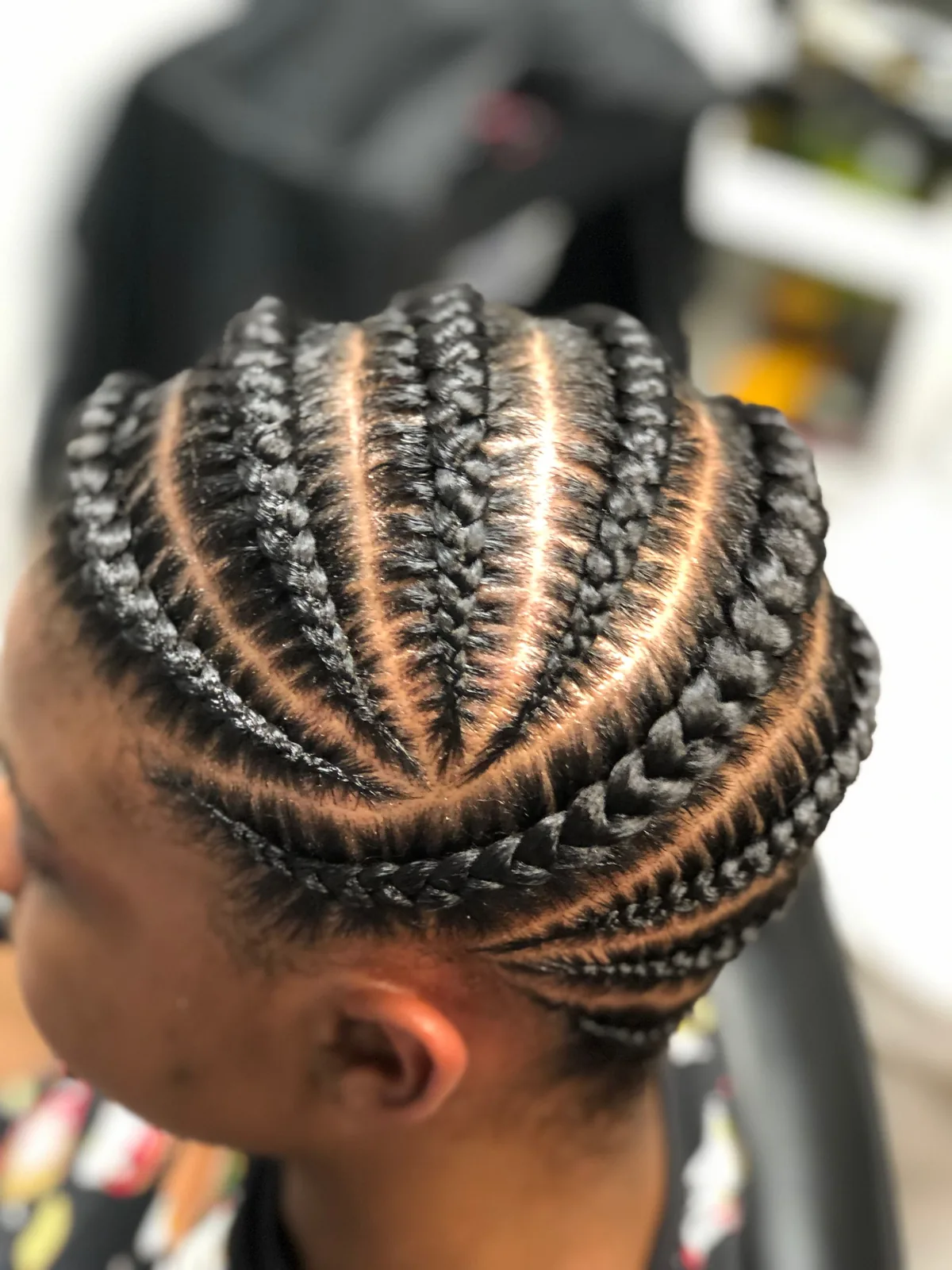
Stitch braids use a feed-in technique that creates clean, raised lines like stitching along each cornrow. The result is crisp, polished and very photogenic, and it works well as a standalone style or with a bun or ponytail.
Pros: Very neat, defined finish; looks polished for weeks.
Cons / watch out for: Needs a skilled braider; too-tight stitching can stress the scalp.
Maintenance: Avoid pulling the style taut, oil the scalp lightly, and cover at night.
How long it lasts: 3 to 5 weeks.
7. Lemonade Braids
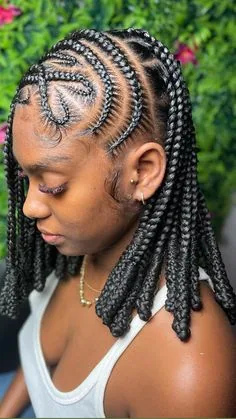
Lemonade braids sweep to one side in long cornrows, a style made famous and loved for its bold, side-swept shape. They are striking, face-framing and easy to wear up or down.
Pros: Bold, flattering side sweep; keeps hair fully protected.
Cons / watch out for: Side tension can pull at one side of the hairline if braided tightly.
Maintenance: Moisturise the scalp, alternate the sweep direction next time, and wrap at night.
How long it lasts: 4 to 6 weeks.
8. Feed-In Braided Bun
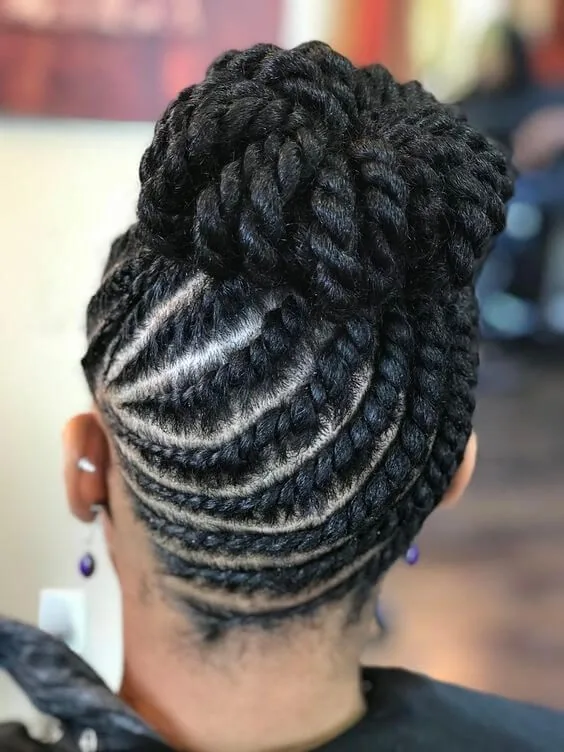
Feed-in cornrows gathered into a low or high bun give you a sleek, professional look with full protection. Your ends are completely tucked into the bun, and the style stays neat through work, workouts and busy weeks.
Pros: Sleek and work-friendly; ends fully tucked away.
Cons / watch out for: The bun can feel heavy if too much hair is added.
Maintenance: Oil the scalp, re-wrap the bun edges lightly, and cover at night.
How long it lasts: 3 to 4 weeks.
9. Jumbo Braids
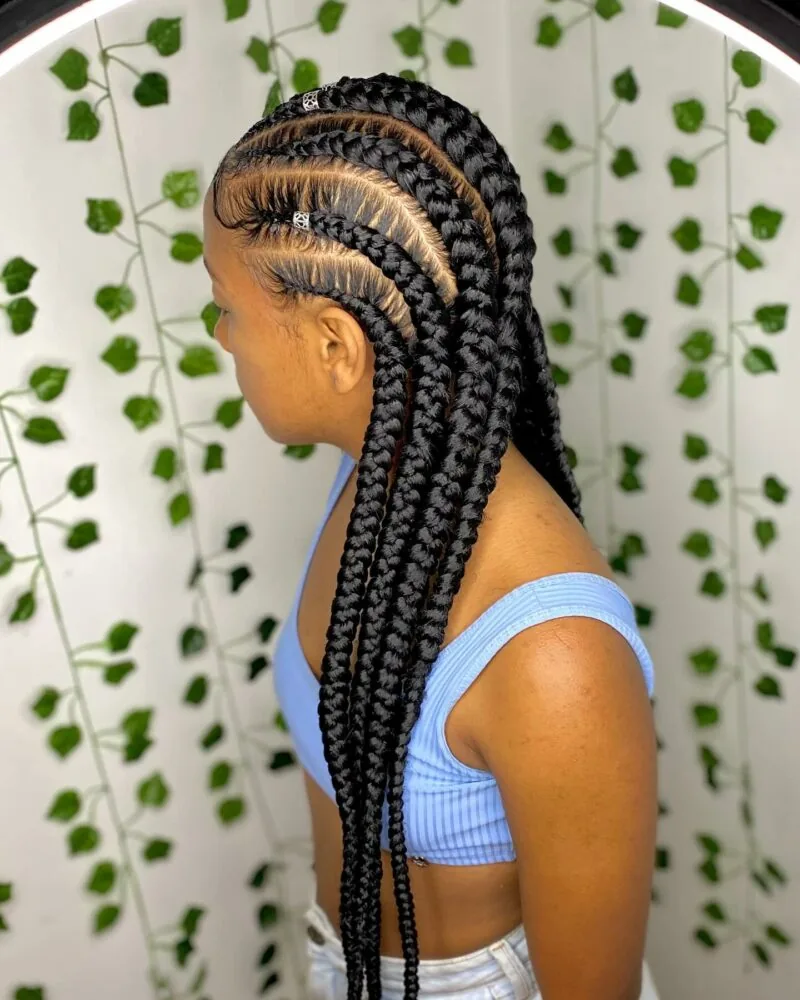
Jumbo braids use large sections and thick extensions for a bold, quick install. They are a great choice if you do not want to sit for hours, and they still protect your hair while making a statement.
Pros: Fast install, often under 3 hours; bold look.
Cons / watch out for: Large parts expose more scalp; style can feel heavy.
Maintenance: Keep the scalp moisturised, avoid heavy added hair, and wrap at night.
How long it lasts: 3 to 4 weeks.
10. Braided Bob
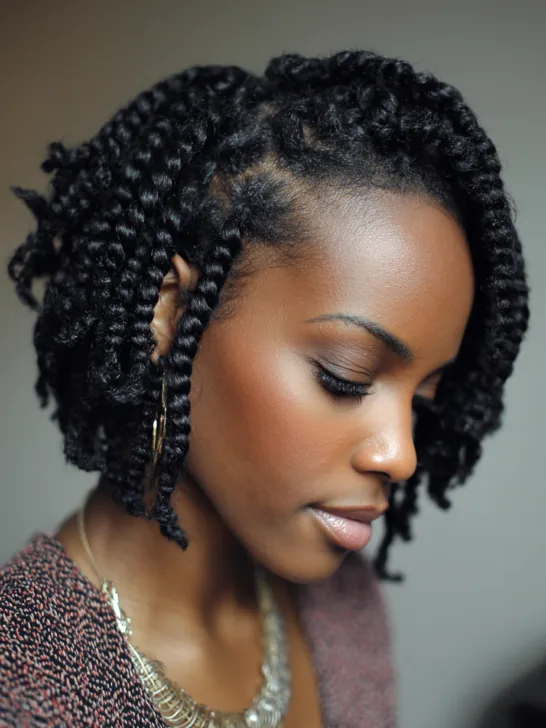
A braided bob cuts braids to chin or shoulder length for a chic, lightweight style that is easier to wash and dry than long braids. It is a refreshing option in hot weather and suits people who prefer shorter hair.
Pros: Lightweight and easy to manage; chic, modern shape.
Cons / watch out for: Shorter braids offer less updo variety.
Maintenance: Mist lightly, oil the scalp, and cover with satin at night.
How long it lasts: 4 to 5 weeks.
11. Boho Bob Braids
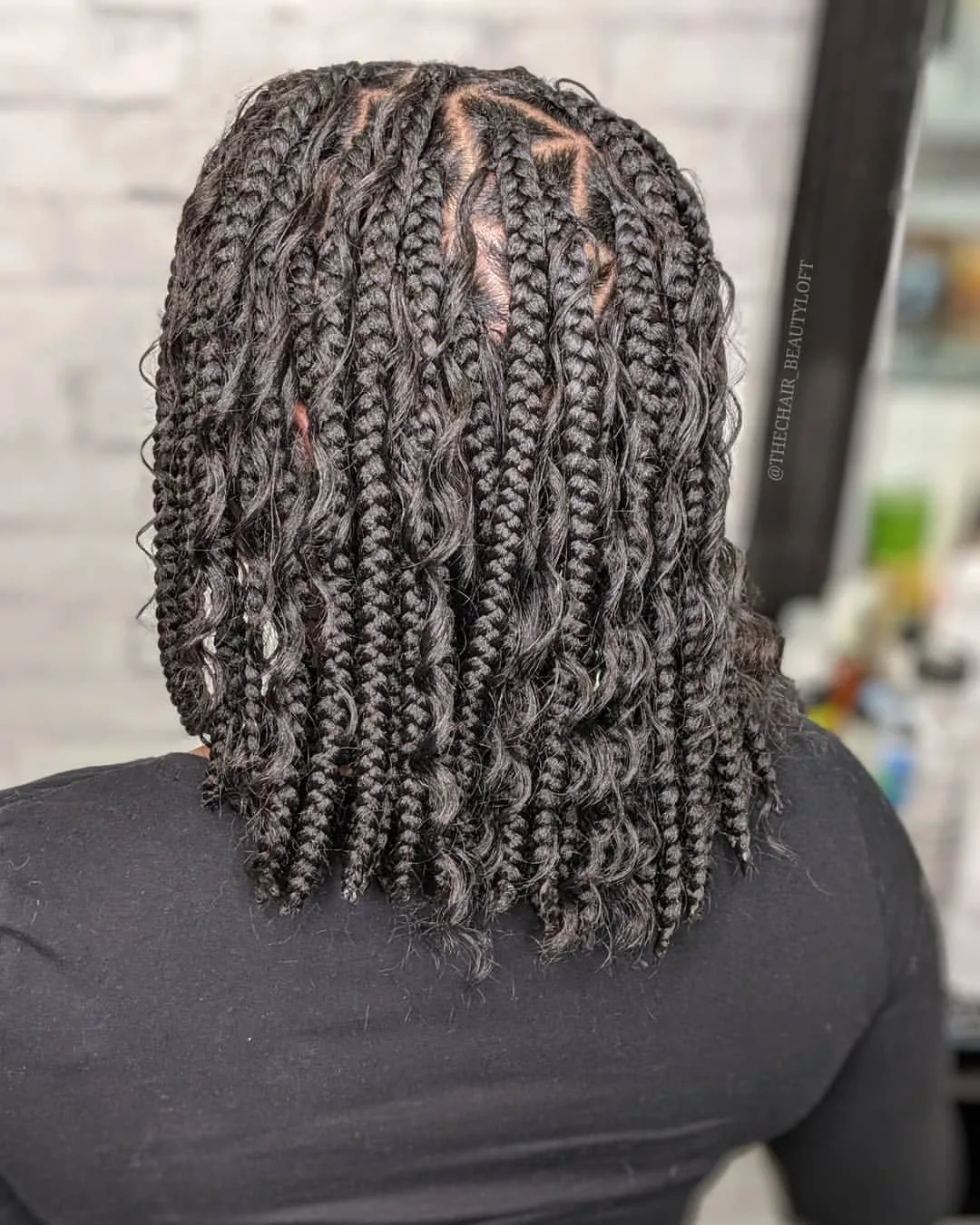
Boho bob braids combine the short, bouncy bob shape with loose curly pieces for softness and movement. They feel playful and light, and they frame the face without any heat styling.
Pros: Soft, bouncy and lightweight; no heat needed.
Cons / watch out for: Curls need gentle finger-detangling to avoid matting.
Maintenance: Separate curls daily, use light curl cream, and braid loosely at night.
How long it lasts: 3 to 4 weeks.
12. Passion Twists
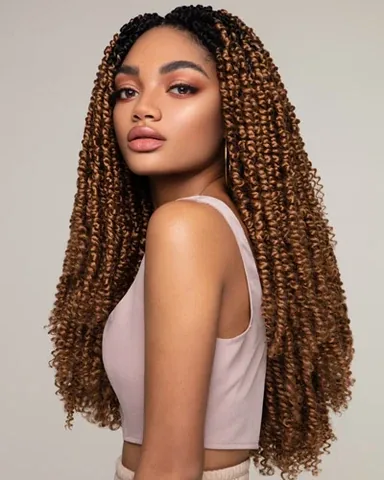
Passion twists use wavy, water-wave hair twisted into soft, boho twists that look like a twist-out that never drops. They are lighter and softer than braids, with a romantic, textured finish.
Pros: Soft, lightweight and natural-looking; gentle on the scalp.
Cons / watch out for: Can unravel at the ends; twists frizz sooner than braids.
Maintenance: Seal the ends, refresh with light mousse, and wrap at night.
How long it lasts: 3 to 4 weeks.
13. Senegalese Twists
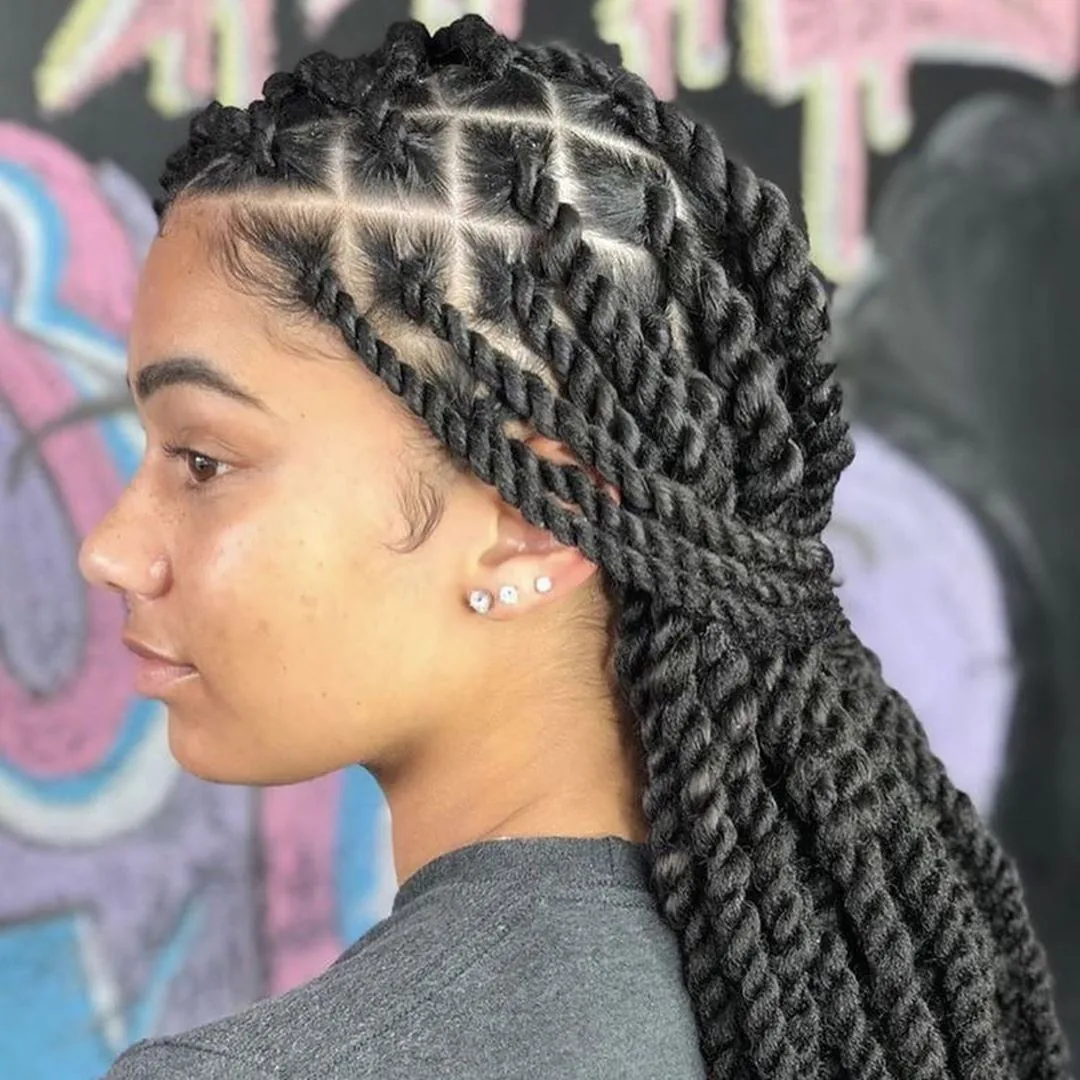
Senegalese twists are smooth, rope-like twists made with silky extension hair, giving a sleek, polished finish. They are elegant, versatile and one of the gentlest twist styles on the scalp.
Pros: Sleek and elegant; low tension; easy to style up or down.
Cons / watch out for: Smooth twists can slip and unravel if not sealed well.
Maintenance: Seal ends with hot water, oil the scalp, and cover at night.
How long it lasts: 4 to 6 weeks.
14. Marley Twists
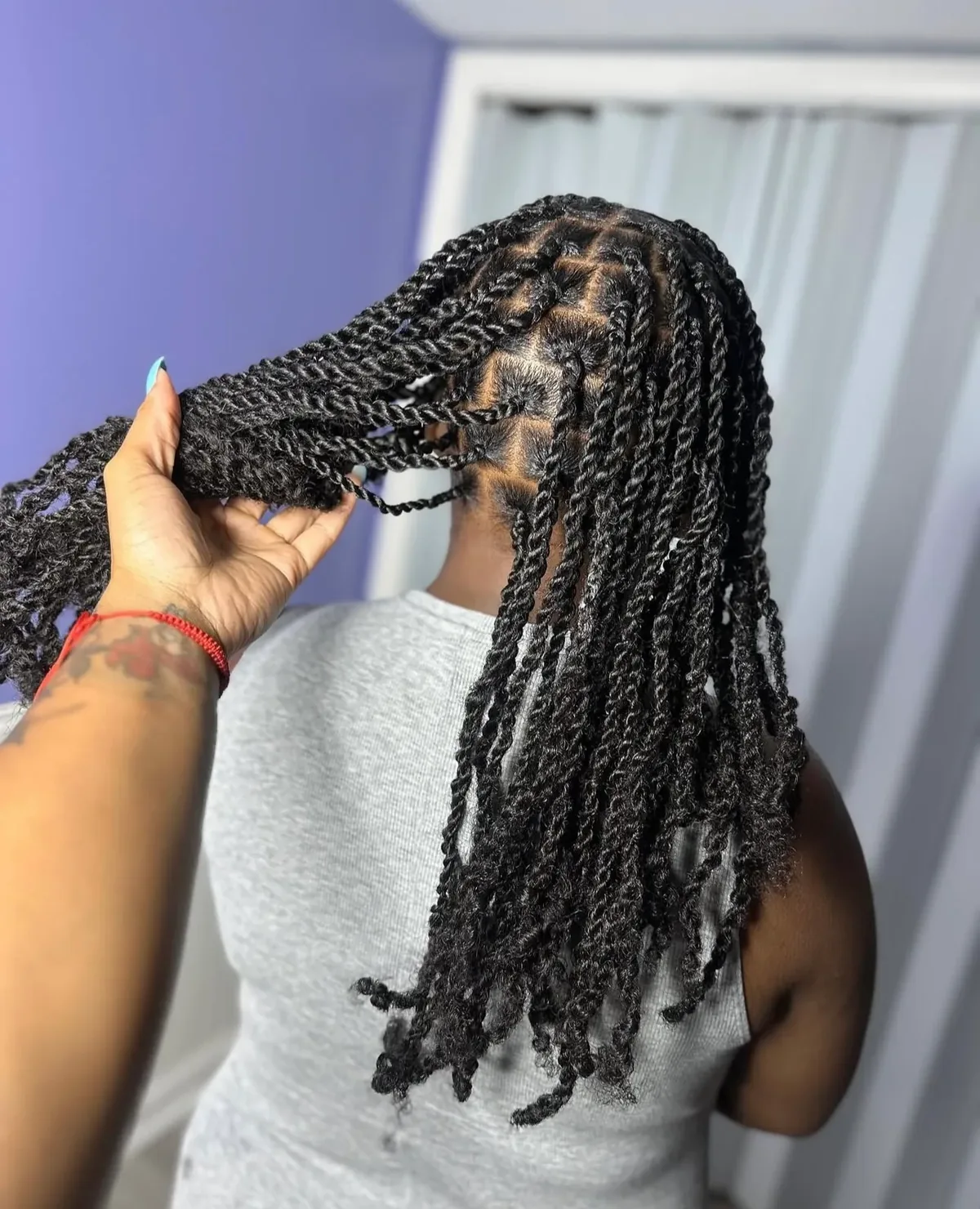
Marley twists use kinky, textured extension hair that blends beautifully with natural hair, giving a full, natural look. They are chunky, soft and forgiving, and they hide new growth well.
Pros: Blends naturally with textured hair; full, soft look.
Cons / watch out for: Heavier than silky twists; can frizz with humidity.
Maintenance: Use light oil on the scalp, avoid heavy creams, and wrap at night.
How long it lasts: 4 to 5 weeks.
15. Havana Twists
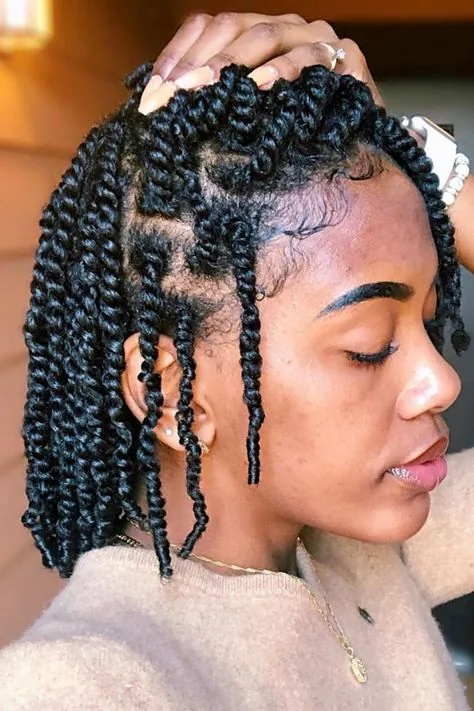
Havana twists are large, chunky twists that install quickly and give big, bold volume. They are a wonderful low-effort protective style when you want fullness without a long appointment.
Pros: Very fast install; big, bold volume.
Cons / watch out for: Large twists offer less styling detail than smaller ones.
Maintenance: Oil the scalp, keep twists dry, and cover with satin at night.
How long it lasts: 3 to 4 weeks.
16. Mini Twists
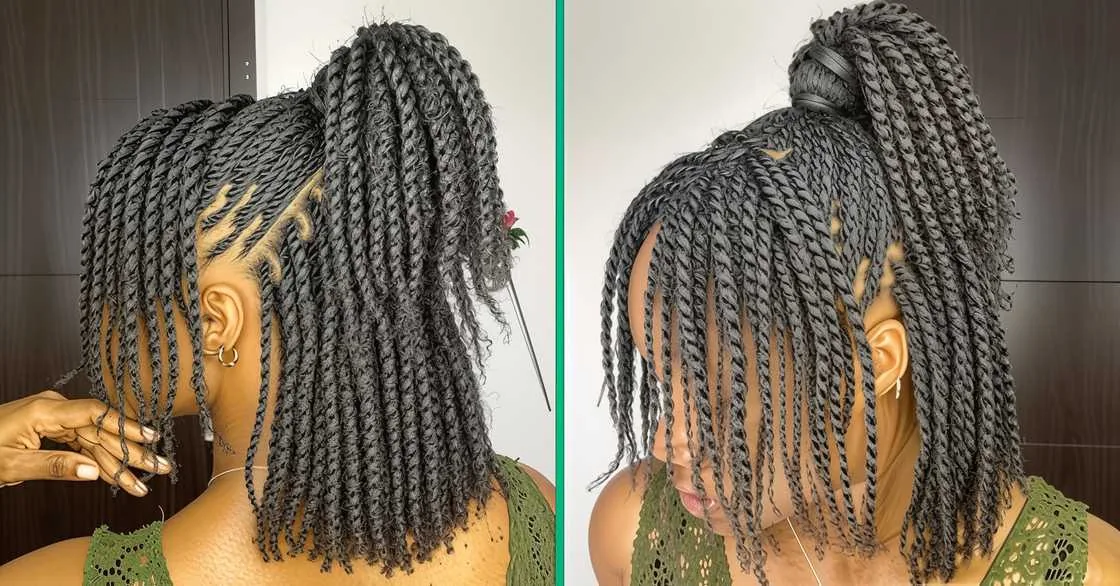
Mini twists are tiny two-strand twists worn as a protective style in their own right, not just as a set. They keep hair stretched and protected, and they unravel into a gorgeous twist-out later, giving you two styles in one.
Pros: Two styles in one; excellent stretch and protection.
Cons / watch out for: Install takes a long time; tiny twists tangle if neglected.
Maintenance: Mist lightly, oil the scalp, and take time on takedown.
How long it lasts: 3 to 6 weeks.
17. Two-Strand Twists
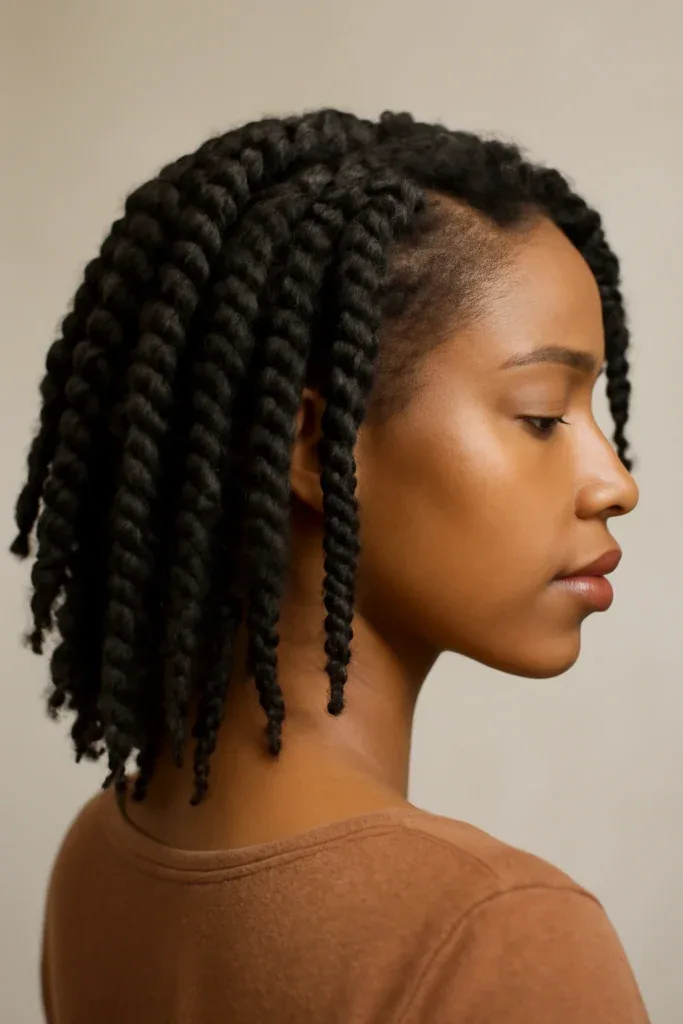
Classic two-strand twists on your own hair are the simplest protective style of all: no extensions, no salon, just twisted sections that protect your ends. They are ideal for a low-manipulation week at home.
Pros: Free, simple and extension-free; gentle and versatile.
Cons / watch out for: Unravel quickly without sealing; shorter wear time.
Maintenance: Seal ends with butter or gel, mist lightly, and re-twist frizzy sections.
How long it lasts: 1 to 2 weeks.
18. Flat Twist Updo
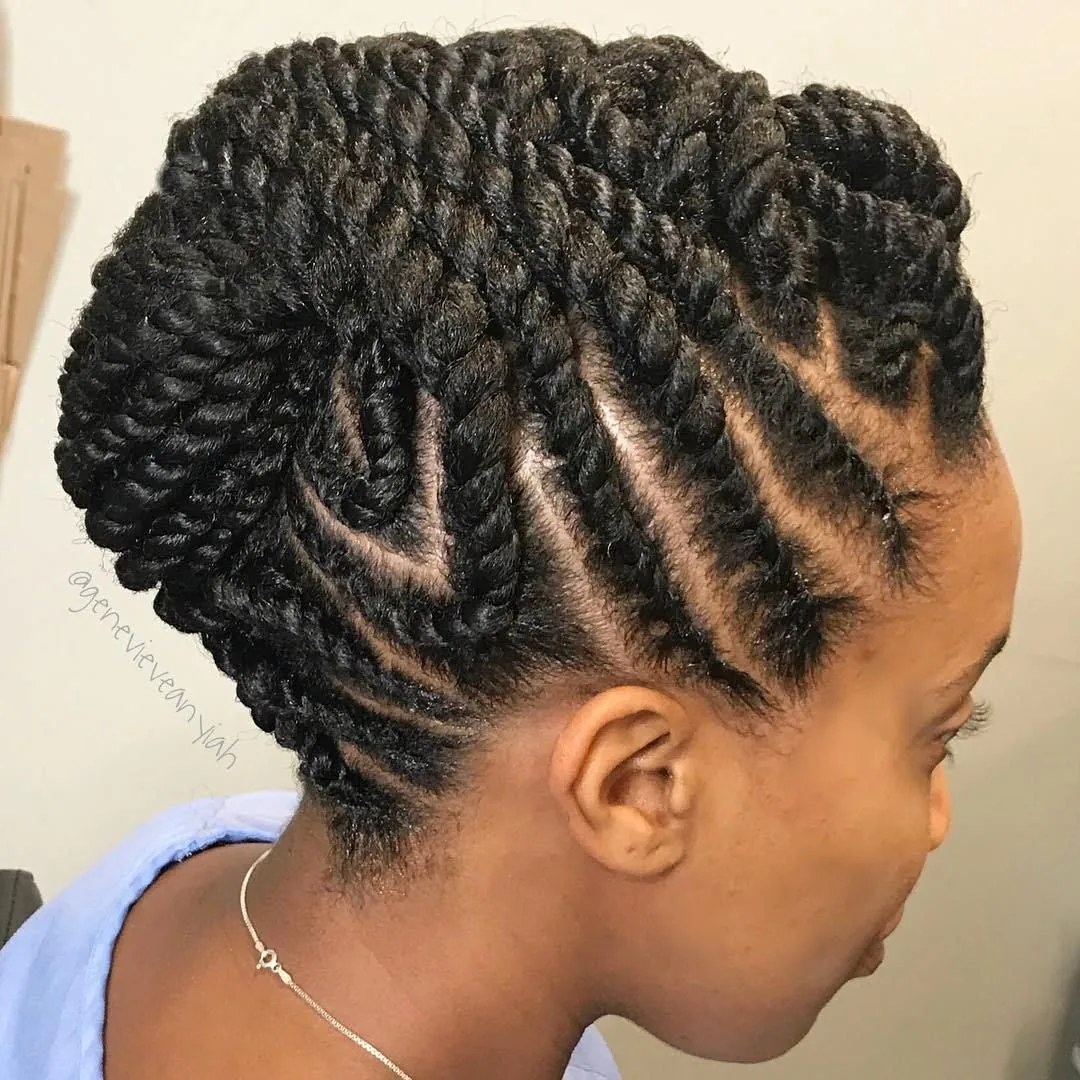
Flat twists braided flat to the scalp and pinned into an updo protect your hair while looking elegant enough for any occasion. They are quicker than cornrows and gentler, since twists pull less than braids.
Pros: Quick and gentle; elegant updo finish.
Cons / watch out for: Less durable than cornrows; may loosen in a few days.
Maintenance: Pin securely, oil the scalp, and re-pin loose twists as needed.
How long it lasts: 1 to 2 weeks.
19. Chunky Flat Twists
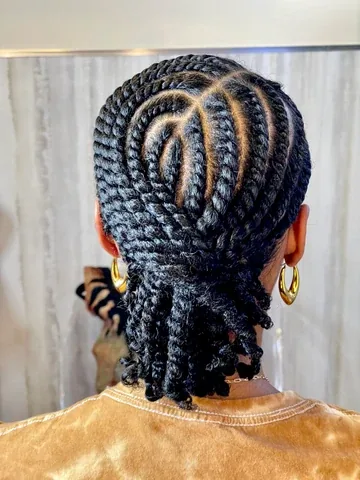
Chunky flat twists use large sections twisted flat against the head, giving a bold, textured look with very little effort. They are a great weekend protective style or a base for a twist-out.
Pros: Fast and easy; great twist-out base.
Cons / watch out for: Large sections mean less definition and shorter wear.
Maintenance: Moisturise before twisting, seal the ends, and cover at night.
How long it lasts: 1 week.
20. Bantu Knots
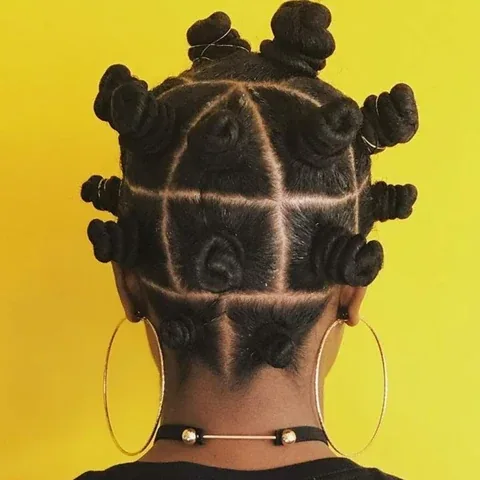
Bantu knots twist sections of hair into small coiled knots across the head, protecting the ends completely while creating a striking style. Worn out, they also give beautiful, defined curls, so one install gives two looks.
Pros: Fully protects ends; doubles as a curl set.
Cons / watch out for: Knots can feel tight if twisted too firmly; takes practice.
Maintenance: Oil the scalp, keep knots loose enough to be comfortable, and cover at night.
How long it lasts: 1 to 2 weeks.
21. Crown Braid Updo
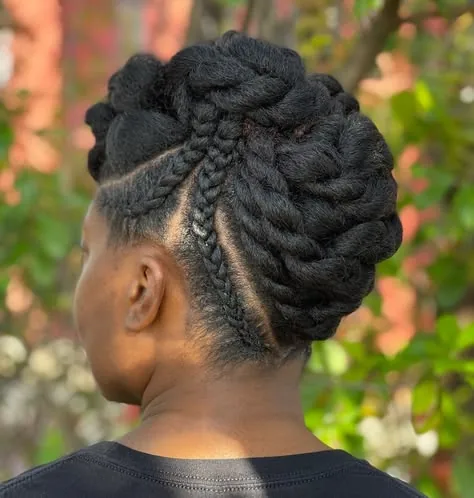
A crown braid wraps around the head like a halo, keeping every strand off the neck and face. It is regal, practical in hot weather, and fully protective for a day or a special occasion.
Pros: Keeps hair off the neck; elegant and secure.
Cons / watch out for: Needs medium to long hair; takes practice to braid evenly.
Maintenance: Pin firmly but not tightly, mist lightly, and cover at night if kept in.
How long it lasts: 1 to 3 days, or up to a week if braided in.
22. Halo Braid
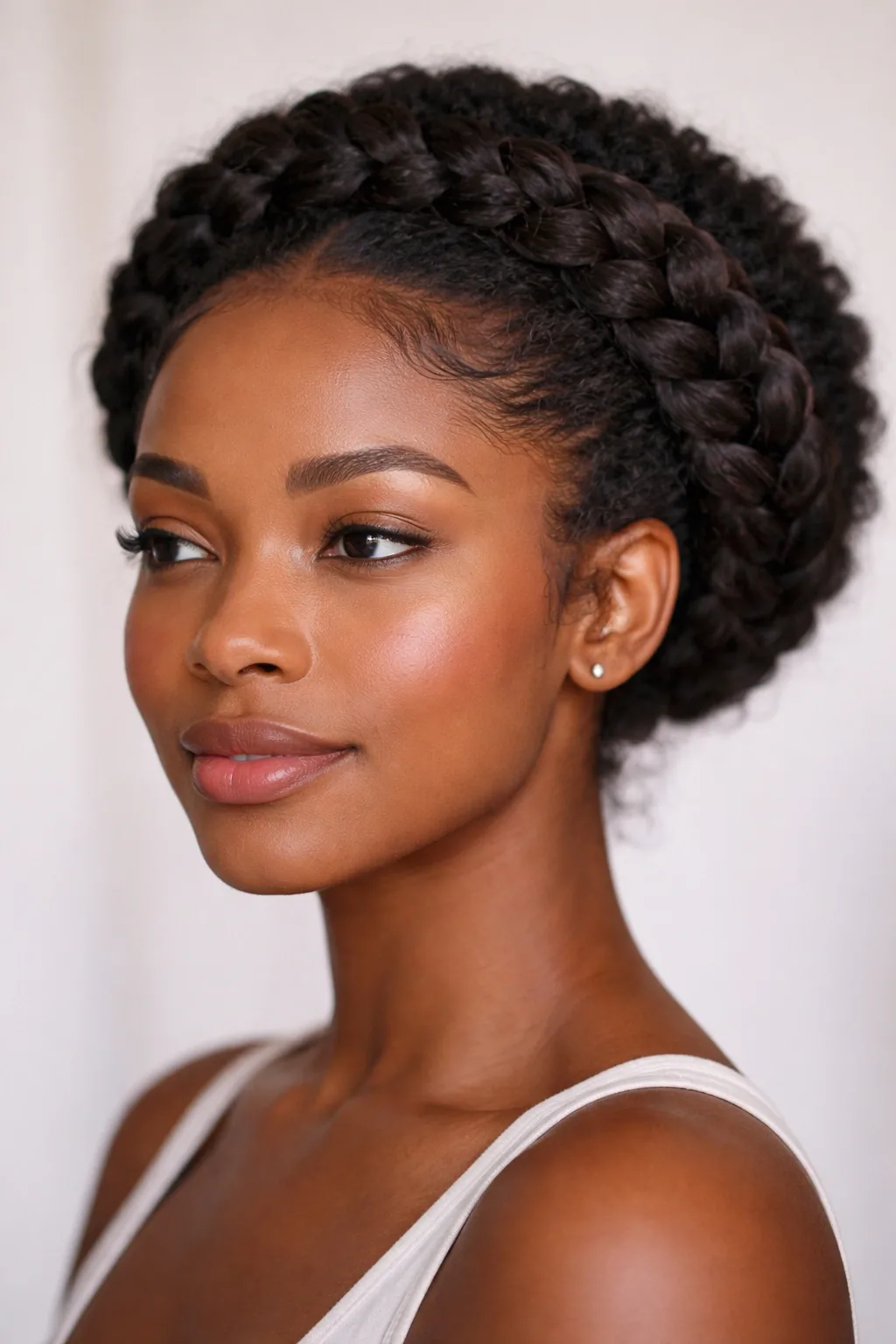
The halo braid is a single braid wrapped around the head and pinned in place, a softer cousin of the crown braid. It protects the ends, suits formal occasions, and works beautifully with extensions for extra fullness.
Pros: Soft, romantic and formal; ends fully tucked.
Cons / watch out for: Can slip if not pinned well; needs length or extensions.
Maintenance: Use plenty of pins, mist lightly, and avoid pulling the braid taut.
How long it lasts: 1 to 3 days.
23. Sleek Low Bun With a Braided Base
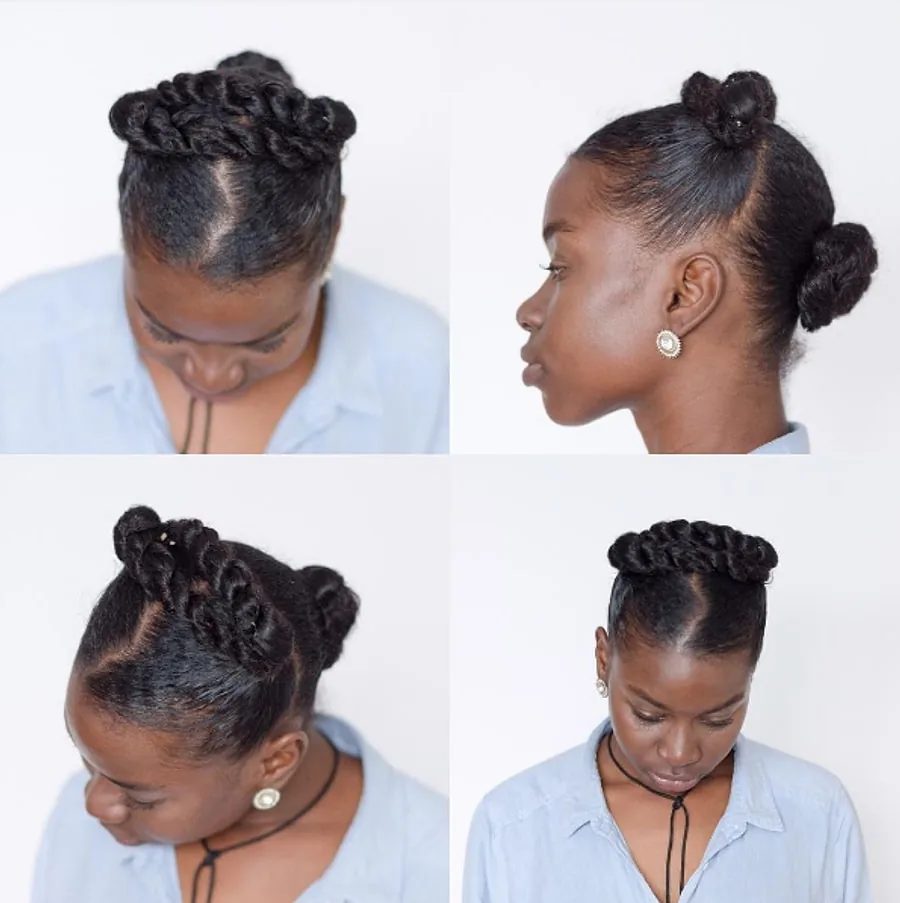
A low bun built over flat braids or twists keeps your ends tucked and your hairline smooth without daily heat. It is polished, professional and one of the easiest protective styles to maintain.
Pros: Polished and professional; ends fully protected.
Cons / watch out for: Daily re-doing can cause edge tension if pulled too tight.
Maintenance: Keep the bun loose, vary its position, and oil the edges lightly.
How long it lasts: 1 day at a time, or 1 to 2 weeks over braids.
24. High Braided Bun
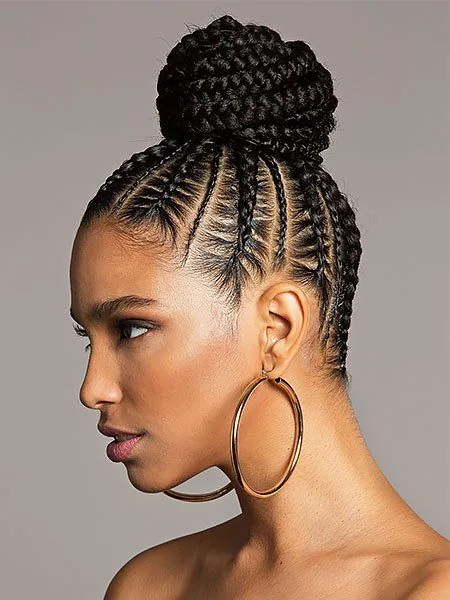
A high bun made from braids lifts the hair completely off the neck and shoulders, protecting the ends while keeping you cool. It is a favourite for workouts, hot weather and busy days.
Pros: Cool and practical; ends tucked away.
Cons / watch out for: High placement can pull the hairline if tied too tightly.
Maintenance: Keep the bun loose, do not pull the front taut, and cover at night.
How long it lasts: 1 day at a time, or weeks over braids.
25. Braided Ponytail
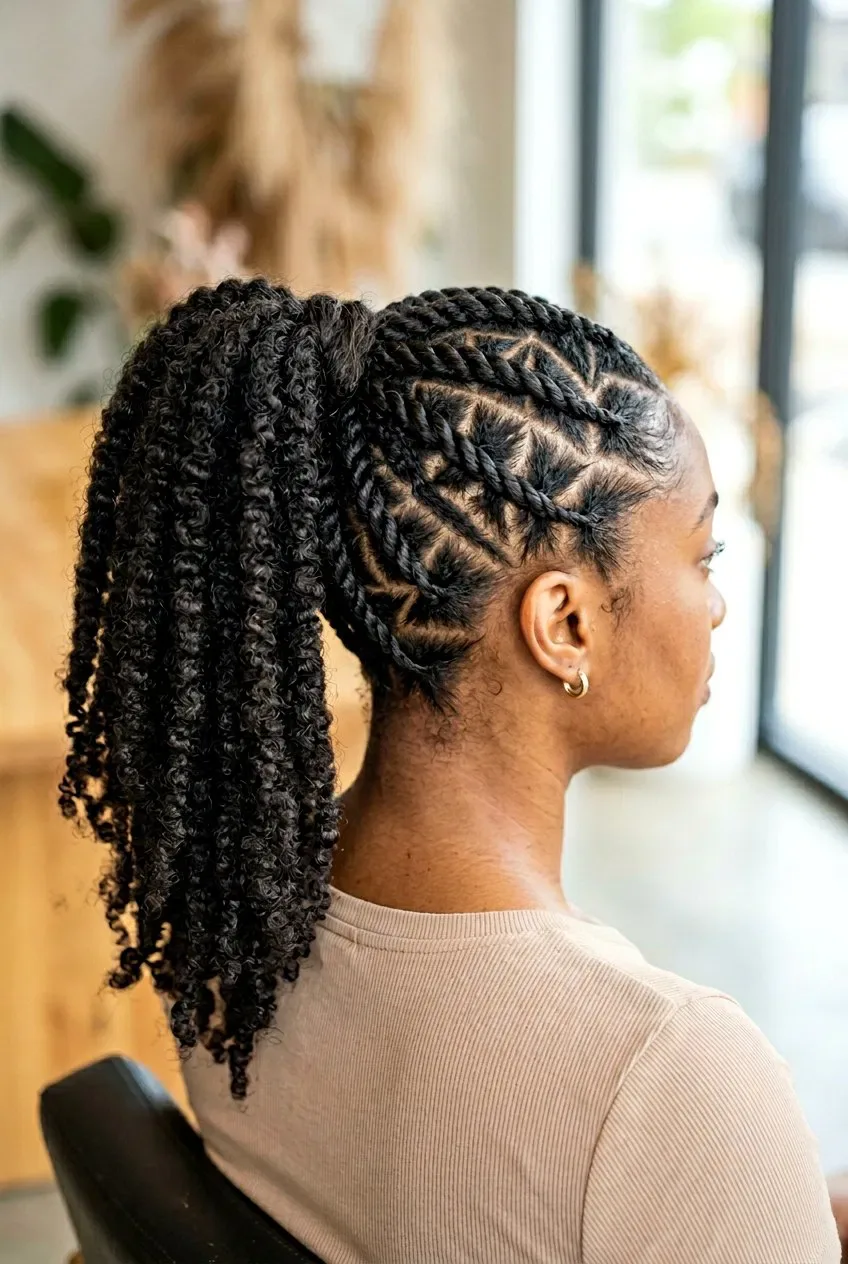
A sleek braided ponytail combines cornrows at the front with a long braided or wavy ponytail at the back. It is dramatic, secure and fully protective, and it keeps hair completely out of the way.
Pros: Dramatic and secure; keeps hair out of the way.
Cons / watch out for: The ponytail weight can pull if the base is too tight.
Maintenance: Support the ponytail weight, oil the scalp, and wrap at night.
How long it lasts: 2 to 4 weeks.
26. Cornrow Low Bun
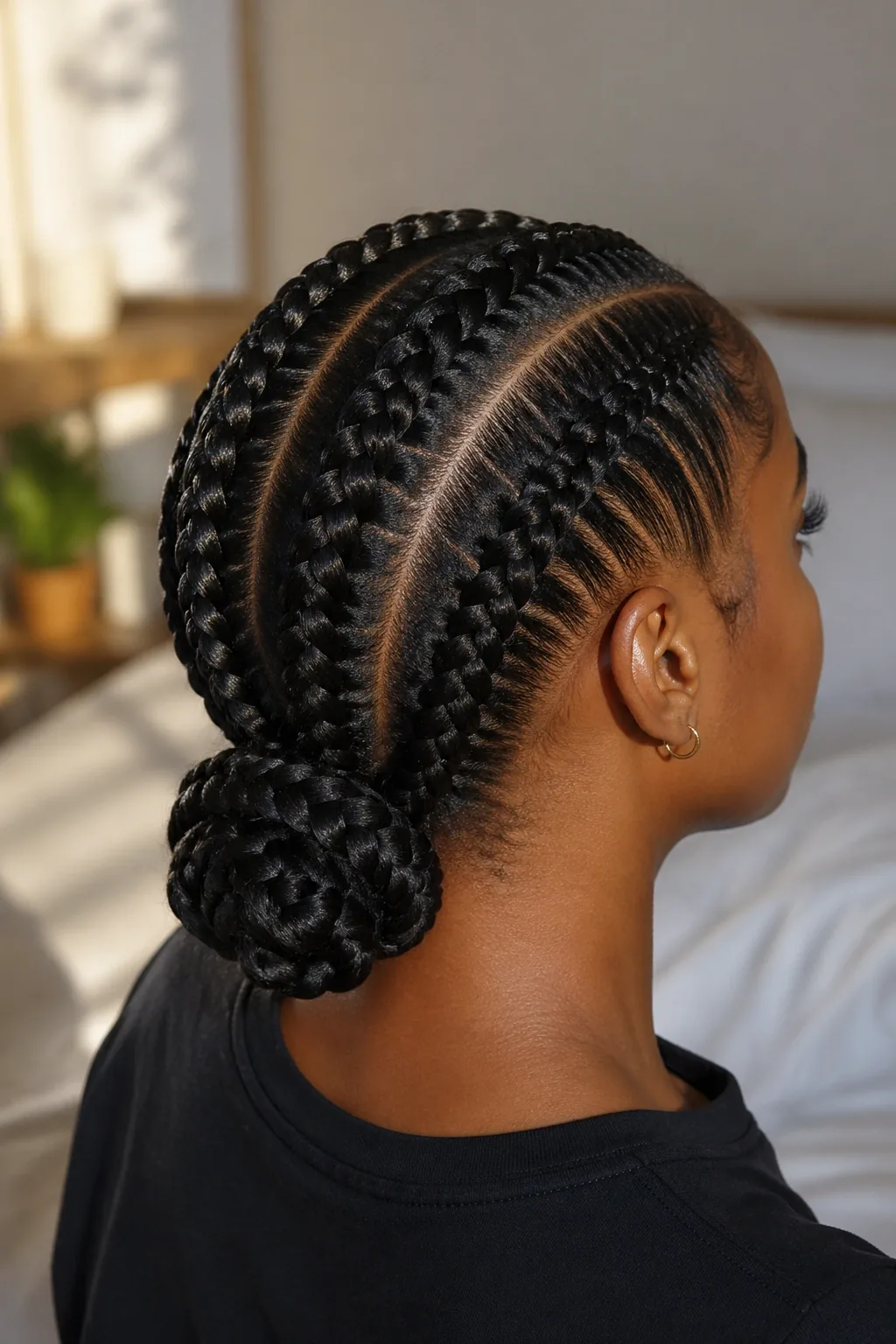
Cornrows gathered into a low bun at the nape protect the hair from end to end and look neat for weeks. It is a calm, classic style that suits work, school and formal events alike.
Pros: Neat and long-lasting; ends fully tucked.
Cons / watch out for: Less variety than loose braids.
Maintenance: Oil the scalp, keep the bun loose, and cover at night.
How long it lasts: 3 to 4 weeks.
27. Faux Locs
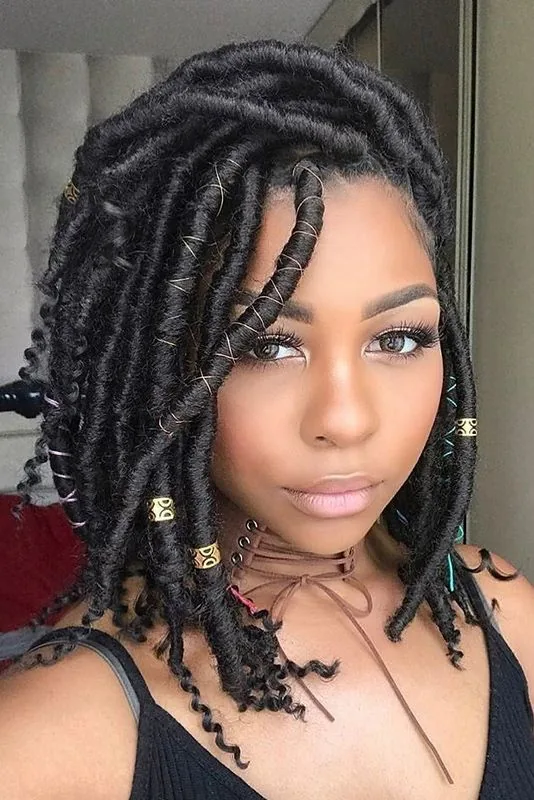
Faux locs wrap your hair in extension hair to mimic locs without any permanent commitment. They look natural, protect the hair completely, and can be styled in bobs, long lengths and updos.
Pros: Natural loc look without commitment; full protection.
Cons / watch out for: Heavy if installed too thick; takedown takes time and care.
Maintenance: Oil the scalp, avoid heavy locs, and detangle patiently at takedown.
How long it lasts: 4 to 8 weeks.
28. Soft Locs
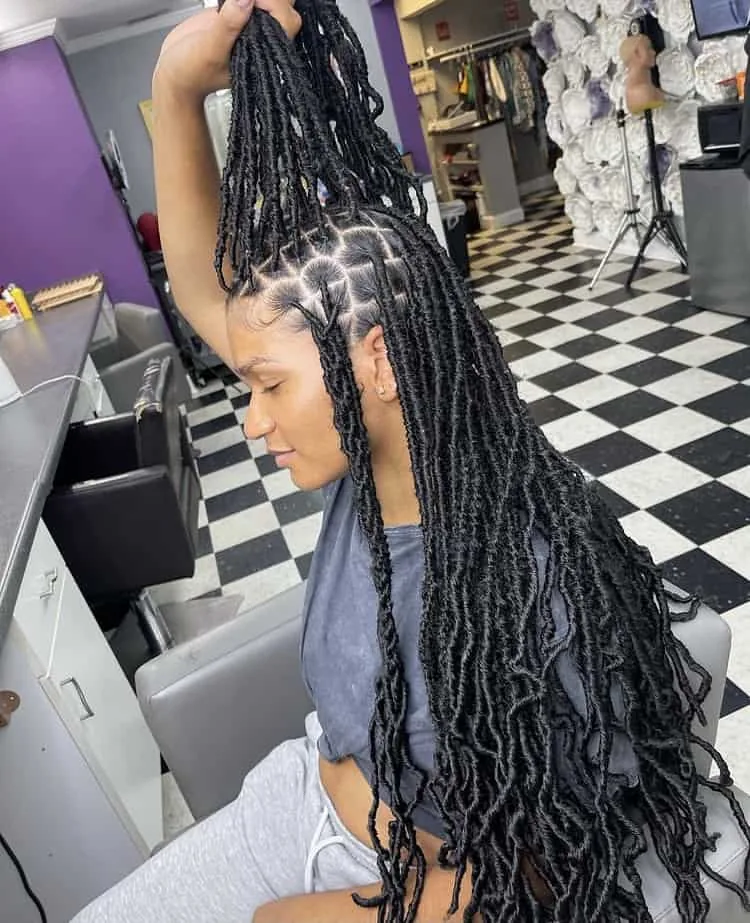
Soft locs are a lighter, more flexible version of faux locs, with a soft, slightly distressed texture. They move naturally, feel comfortable, and are kinder to the scalp than stiff, heavy locs.
Pros: Lightweight and flexible; natural movement.
Cons / watch out for: Distressed texture can frizz sooner than neat locs.
Maintenance: Use light oil, avoid heavy products, and wrap at night.
How long it lasts: 4 to 6 weeks.
29. Butterfly Locs
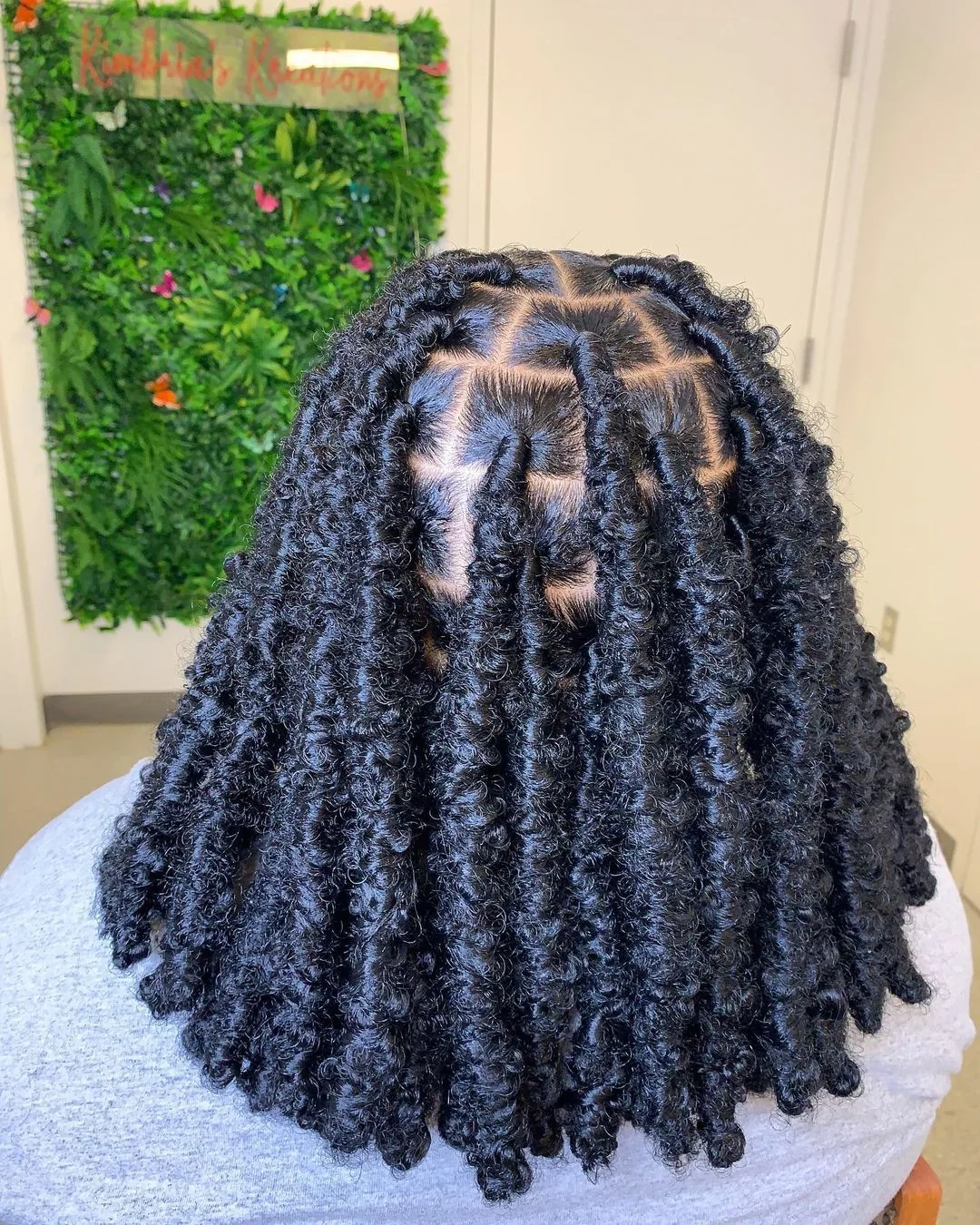
Butterfly locs have loops of hair left out along each loc, giving a textured, boho finish that looks effortlessly natural. They are softer and more relaxed than classic faux locs.
Pros: Boho, textured look; soft and lightweight.
Cons / watch out for: Loops can catch and tangle if not handled gently.
Maintenance: Handle gently, oil the scalp, and cover at night.
How long it lasts: 4 to 6 weeks.
30. Goddess Locs
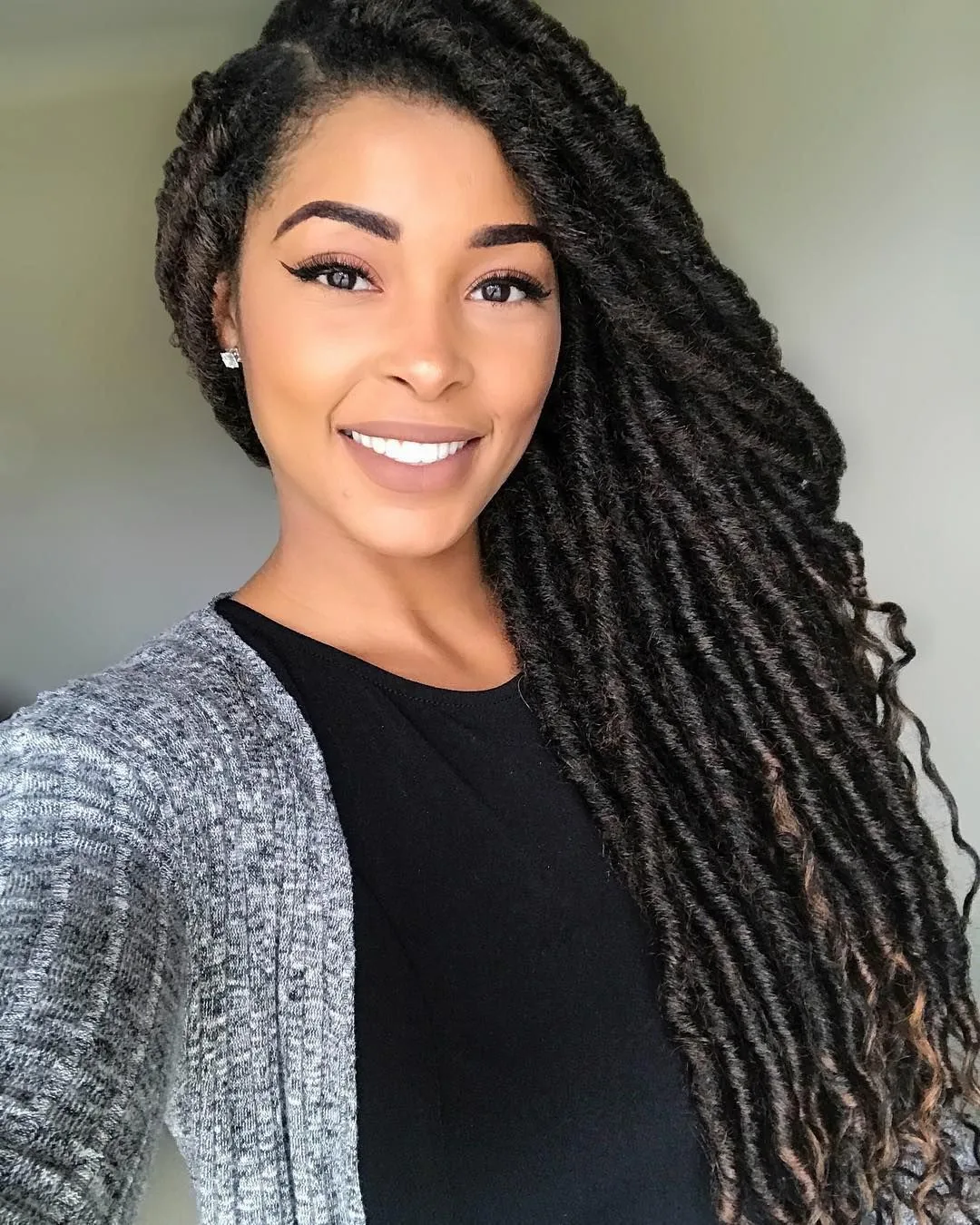
Goddess locs combine locs with loose, curly ends or pieces left out for a soft, feminine finish. They give the structure of locs with the movement of curls, and they photograph beautifully.
Pros: Loc structure plus soft curls; very versatile.
Cons / watch out for: Curly pieces need regular care to avoid tangling.
Maintenance: Separate curls with fingers, use light curl cream, and braid loosely at night.
How long it lasts: 4 to 6 weeks.
31. Crochet Braids
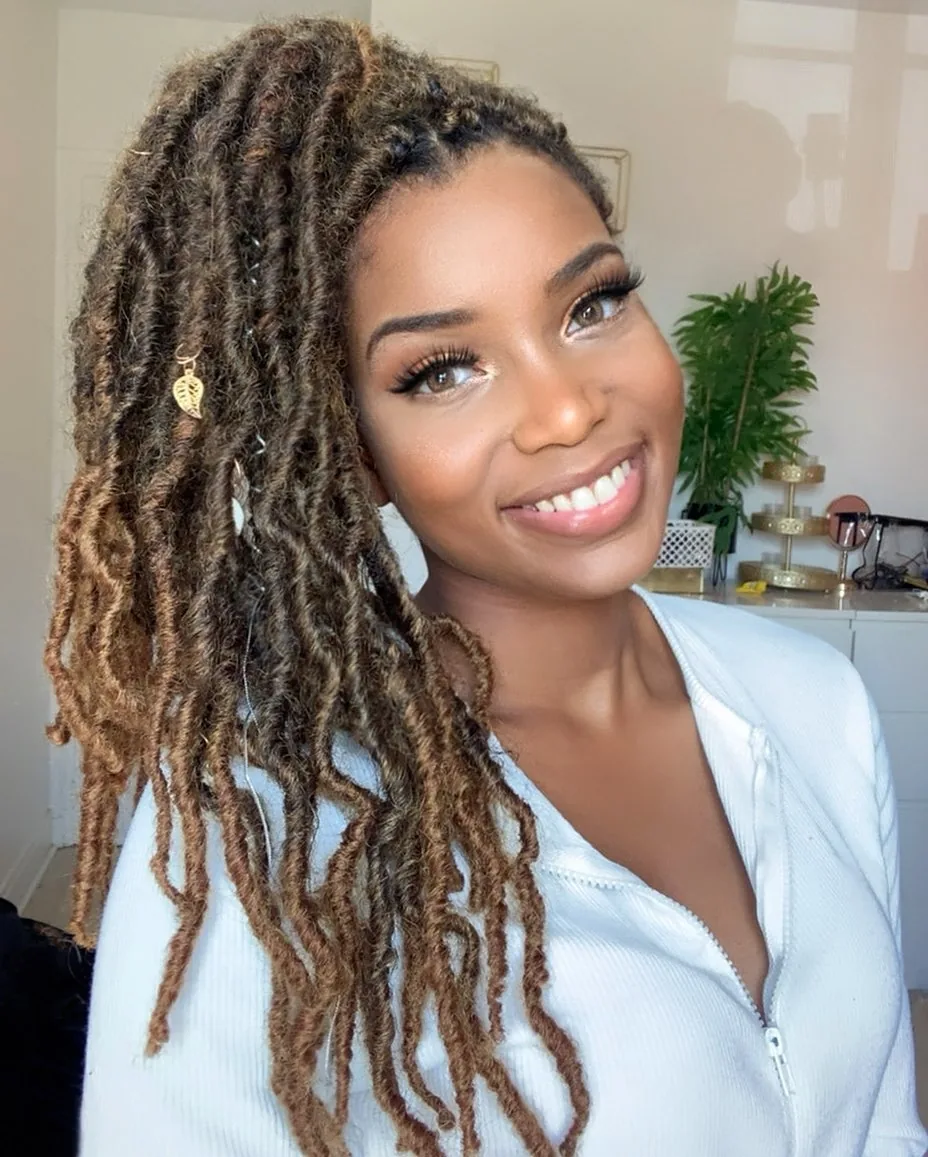
Crochet braids loop extension hair through cornrows underneath, giving full, natural-looking hair in a fraction of the time of individual braids. The cornrow base protects your own hair while the crochet hair takes all the daily wear.
Pros: Fast install; full, natural look; own hair fully protected underneath.
Cons / watch out for: Cornrow base needs care; crochet hair can tangle.
Maintenance: Oil the scalp through the parts, detangle crochet hair gently, and cover at night.
How long it lasts: 4 to 6 weeks.
32. Crochet Twists and Curls
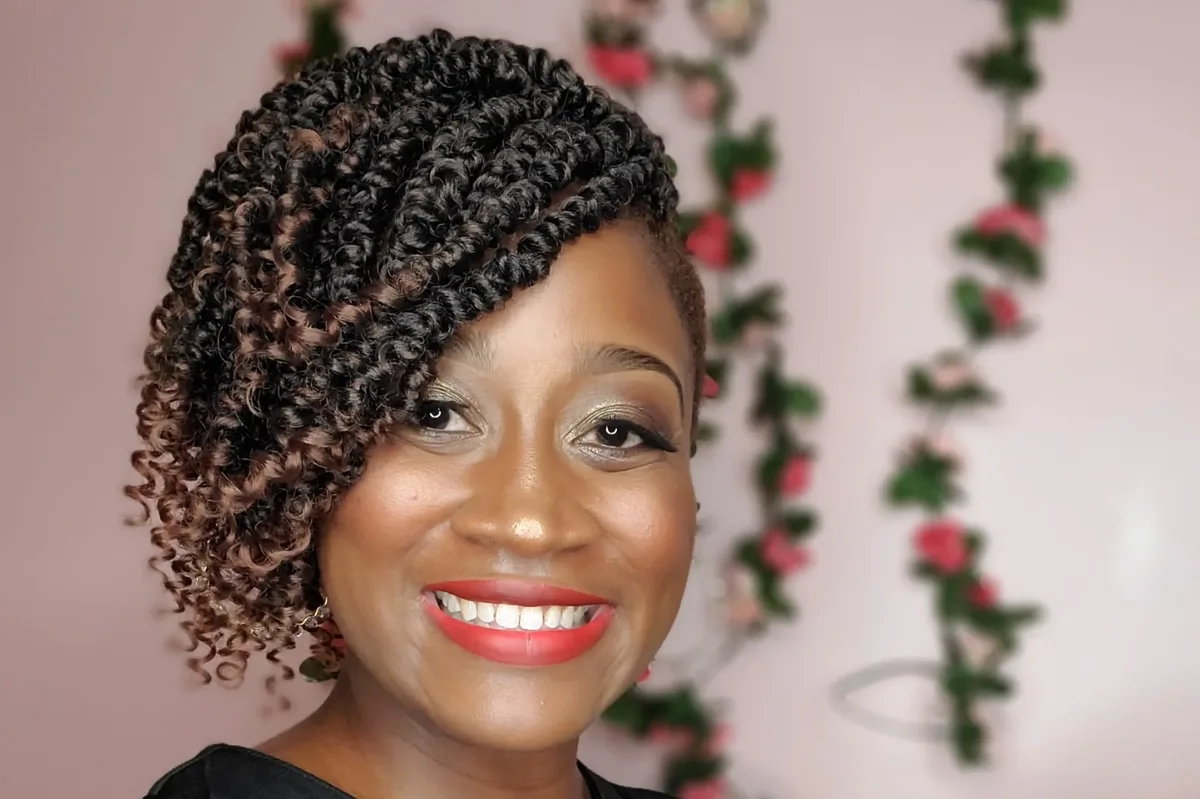
Crochet twists and curls use the same cornrow base with twisted or curly crochet hair on top, giving defined texture without hours of twisting. They are a great shortcut to a twist look with full protection underneath.
Pros: Quick twist or curl look; protected base.
Cons / watch out for: Crochet curls tangle more than straight crochet hair.
Maintenance: Finger-detangle gently, use light leave-in, and cover at night.
How long it lasts: 4 to 5 weeks.
33. Glueless Closure Wig
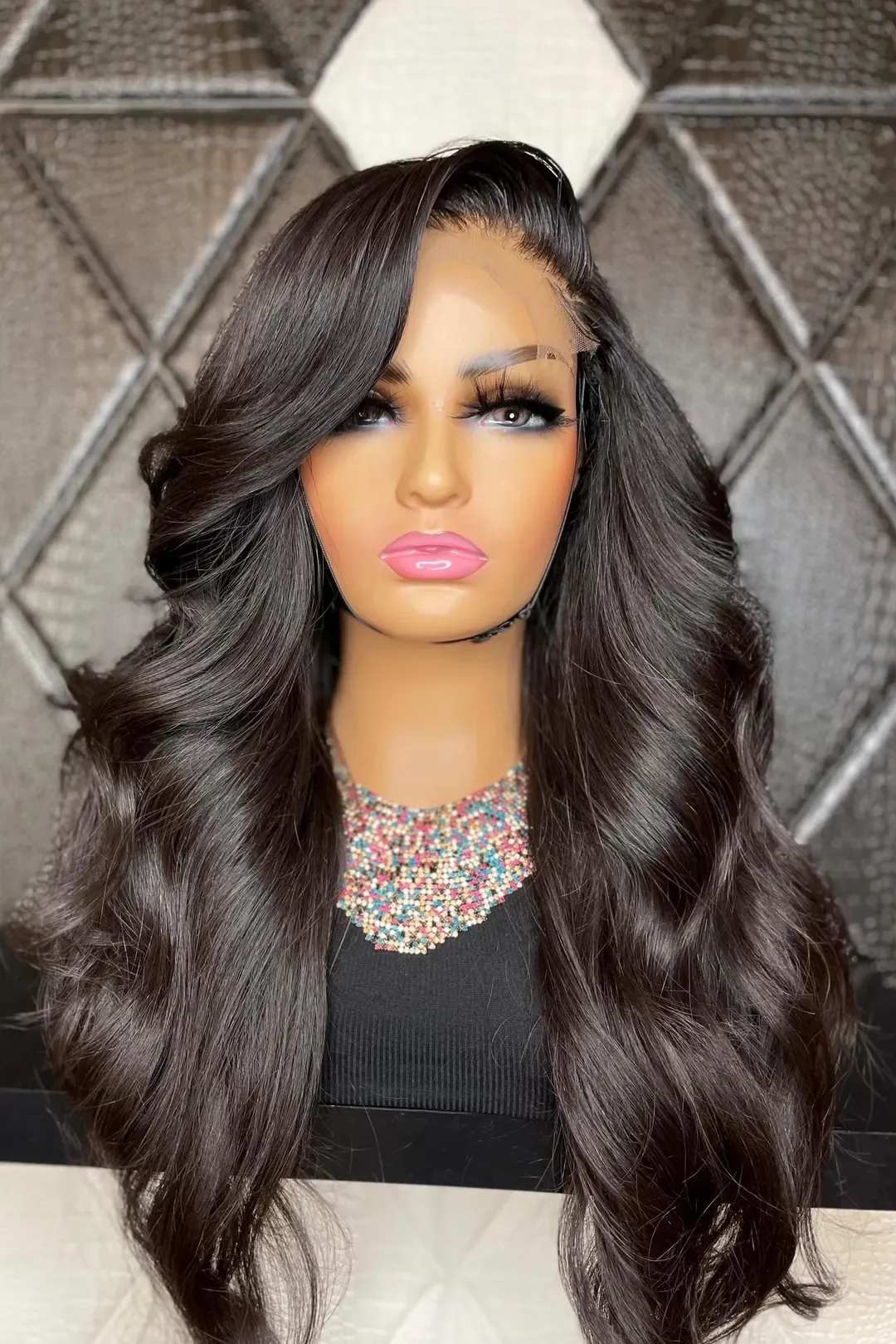
A glueless closure wig sits over flat braids with an adjustable band and combs, no glue needed. You can take it off nightly, which lets your scalp breathe and your braids rest, making it one of the healthiest wig options.
Pros: No glue damage; removable nightly; instant style change.
Cons / watch out for: Can shift if not fitted well; needs a flat braid base.
Maintenance: Braid hair flat underneath, moisturise the scalp, and remove the wig at night.
How long it lasts: Wig lasts months; braids underneath 2 to 4 weeks.
34. Headband Wig
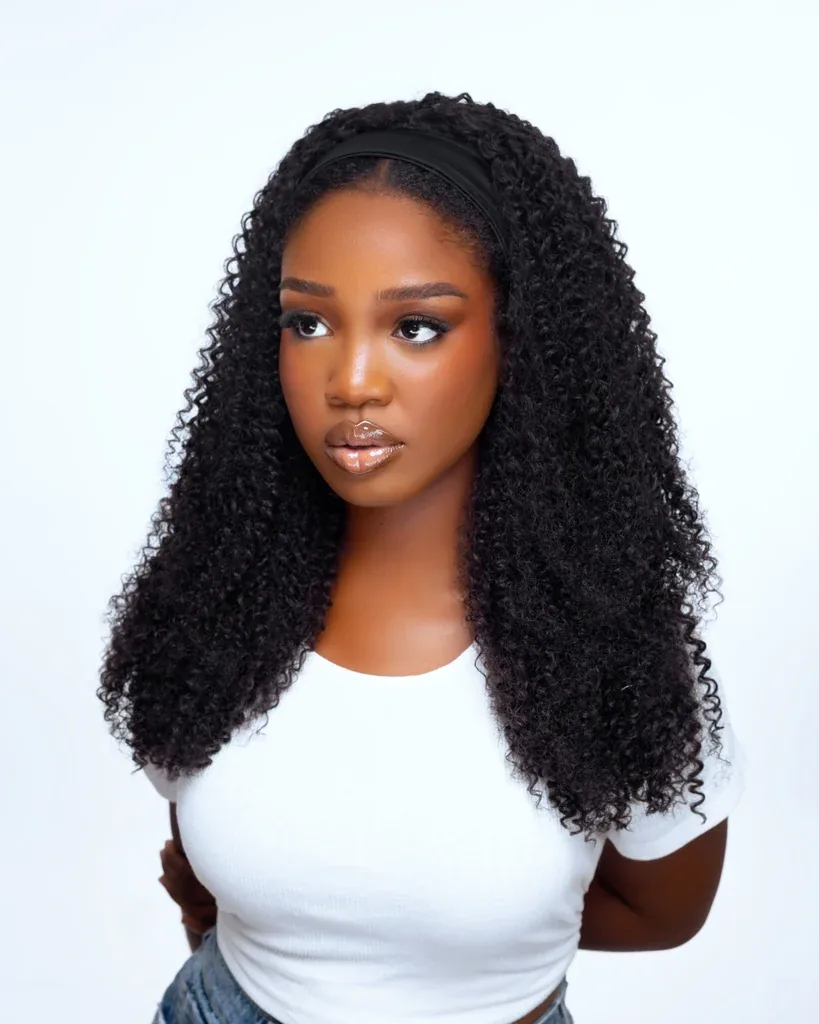
A headband wig has a soft headband sewn in at the front, so it slips on in seconds with no lace, glue or leave-out. It is the easiest wig to wear and a brilliant beginner protective style.
Pros: Easiest wig to wear; no lace or glue; quick on and off.
Cons / watch out for: Less natural hairline than a lace wig.
Maintenance: Keep braids flat underneath, vary the headband position, and remove at night.
How long it lasts: Wig lasts months; braids underneath 2 to 4 weeks.
35. U-Part Wig
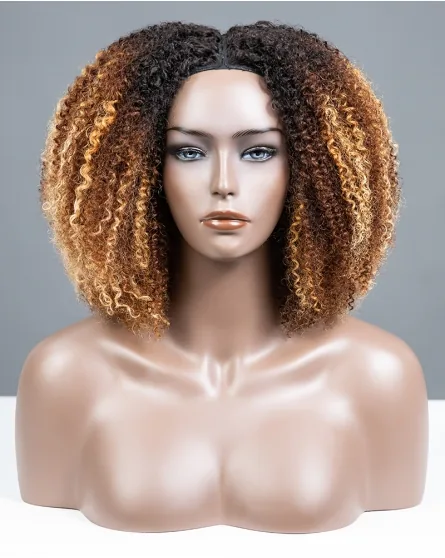
A U-part wig leaves a small U-shaped section of your own hair out at the top to blend with the wig, giving a very natural part. It protects most of your hair while letting a little of your own texture show.
Pros: Very natural blend; most hair protected.
Cons / watch out for: The leave-out section needs heat or styling to blend.
Maintenance: Protect the leave-out with heat protectant, moisturise it well, and remove the wig at night.
How long it lasts: Wig lasts months; braids underneath 2 to 4 weeks.
36. Half Wig and Drawstring Ponytail
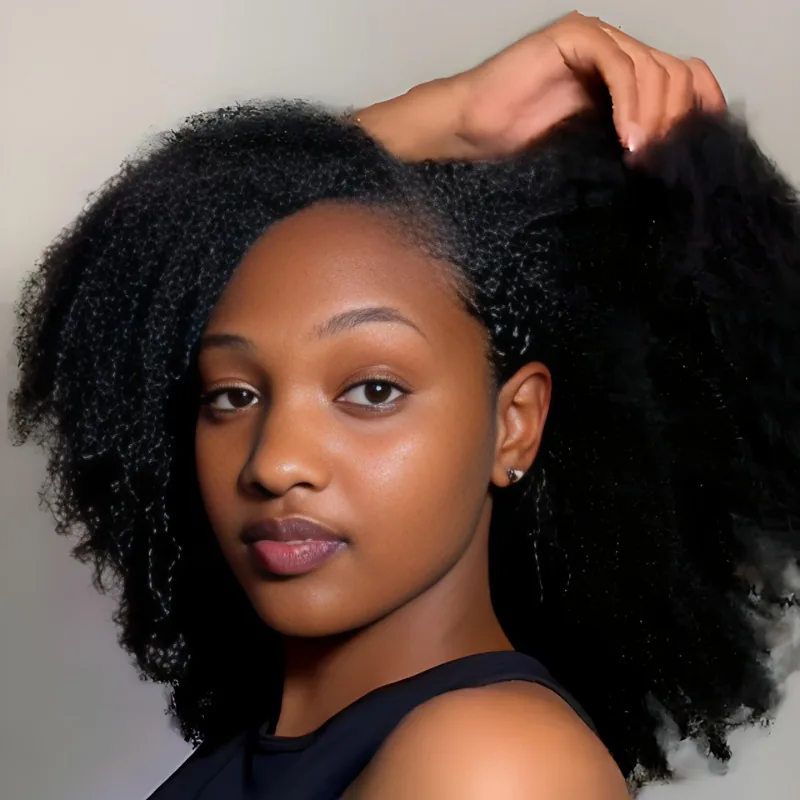
A half wig or drawstring ponytail covers the back of your head while your own front hair blends in, or adds instant length to a bun. It is quick, affordable and kind to your hair when worn loosely.
Pros: Quick length and volume; affordable.
Cons / watch out for: Drawstring can pull if tied too tightly.
Maintenance: Keep the base loose, blend the front gently, and remove at night.
How long it lasts: Wig lasts months; wear daily as needed.
37. Sew-In With a Closure
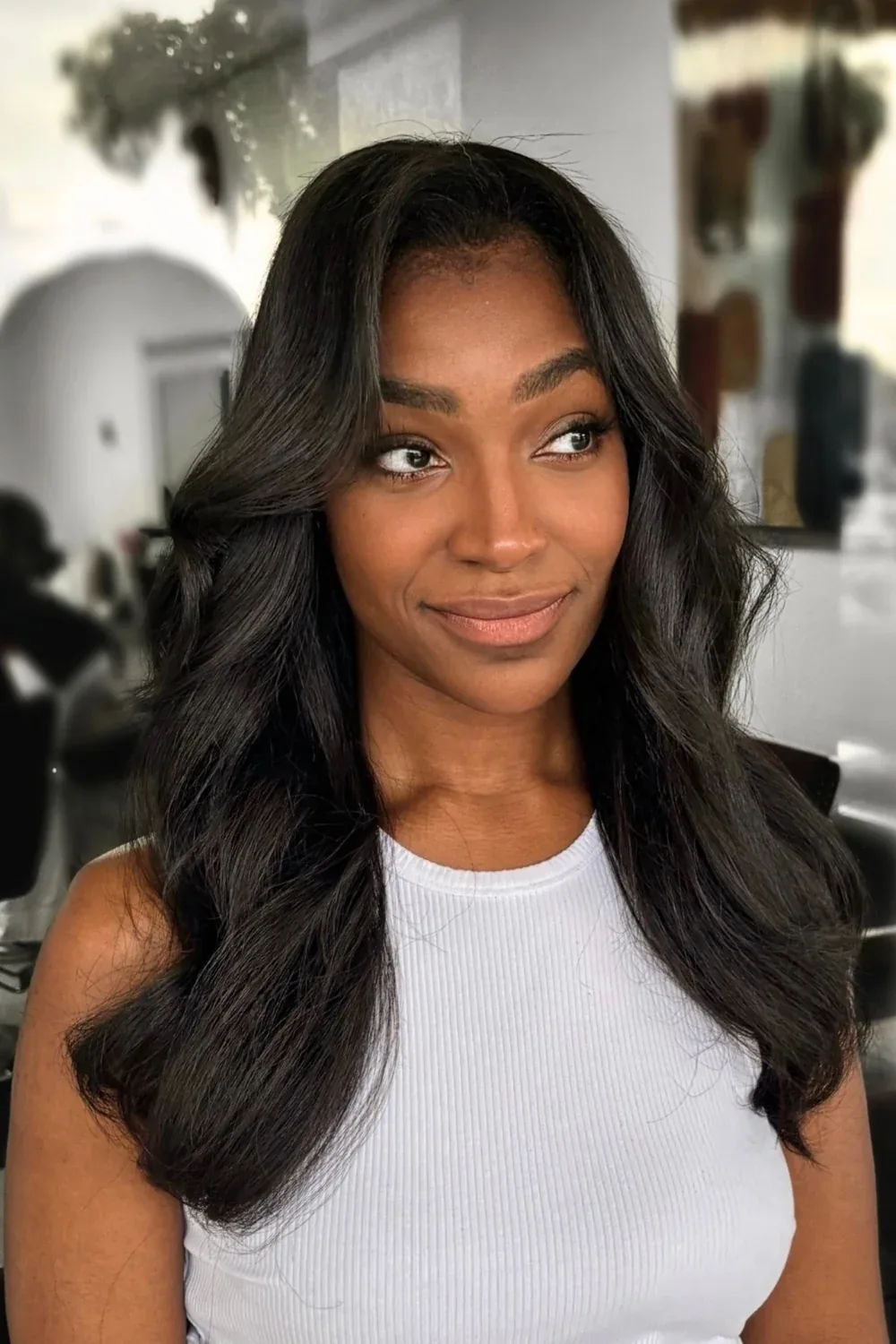
A sew-in with a closure sews wefts onto cornrows and covers the top with a closure piece, so none of your own hair is left out. Your hair rests completely underneath while you enjoy any length or texture on top.
Pros: No leave-out damage; full coverage.
Cons / watch out for: Tight sewing or heavy wefts can stress the scalp.
Maintenance: Oil the scalp through the closure, wash the scalp gently, and do not keep it in too long.
How long it lasts: 6 to 8 weeks.
38. Sew-In With Minimal Leave-Out
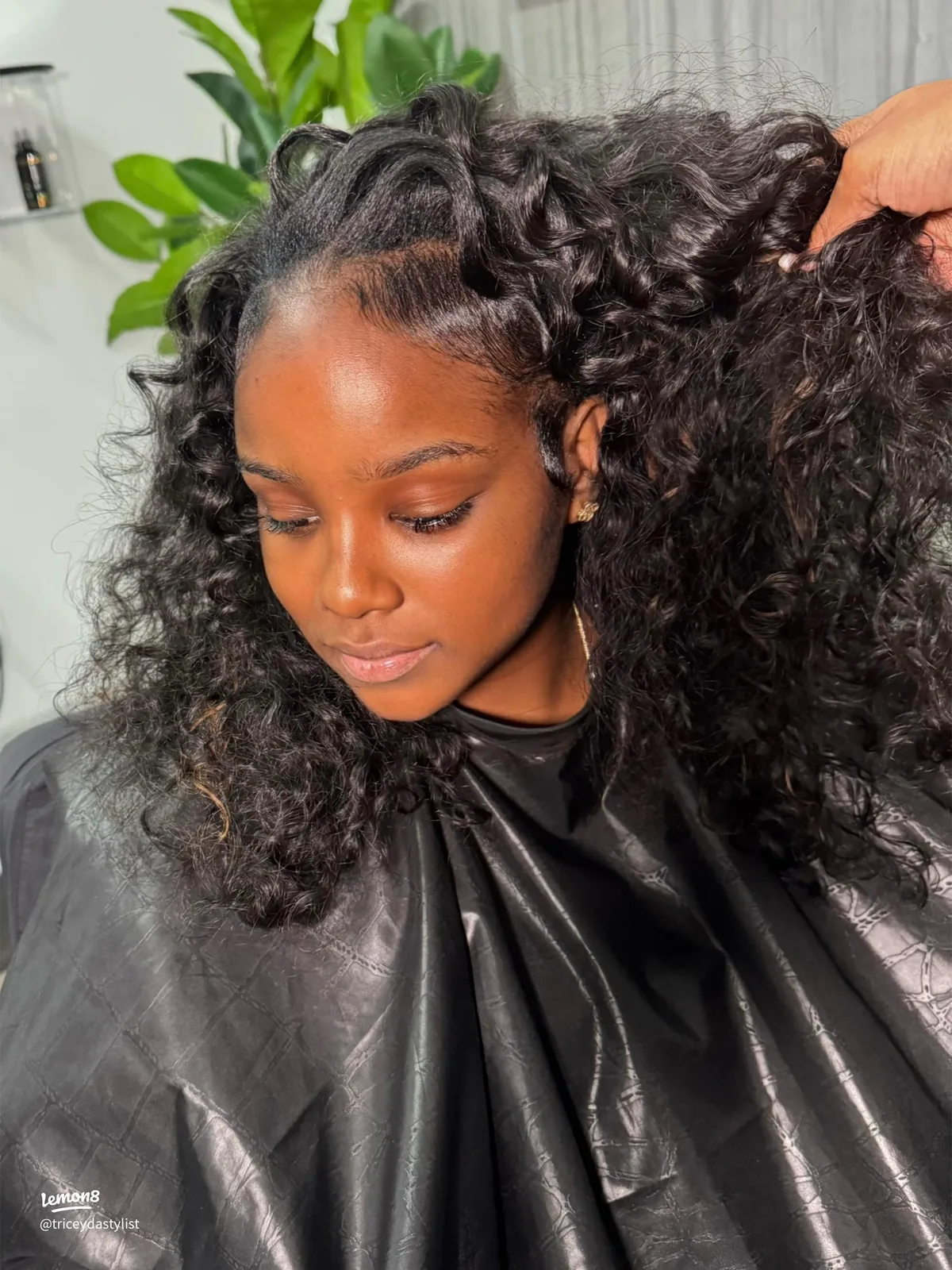
A sew-in with minimal leave-out leaves only a small section of your own hair out to blend, usually at the part or hairline. It looks very natural, but that small section needs extra care since it faces daily styling.
Pros: Very natural look; most hair protected.
Cons / watch out for: Leave-out faces heat and manipulation daily.
Maintenance: Protect the leave-out with heat protectant and moisturiser, and keep the rest braided underneath.
How long it lasts: 6 to 8 weeks.
39. Tucked Twists With Ends Hidden
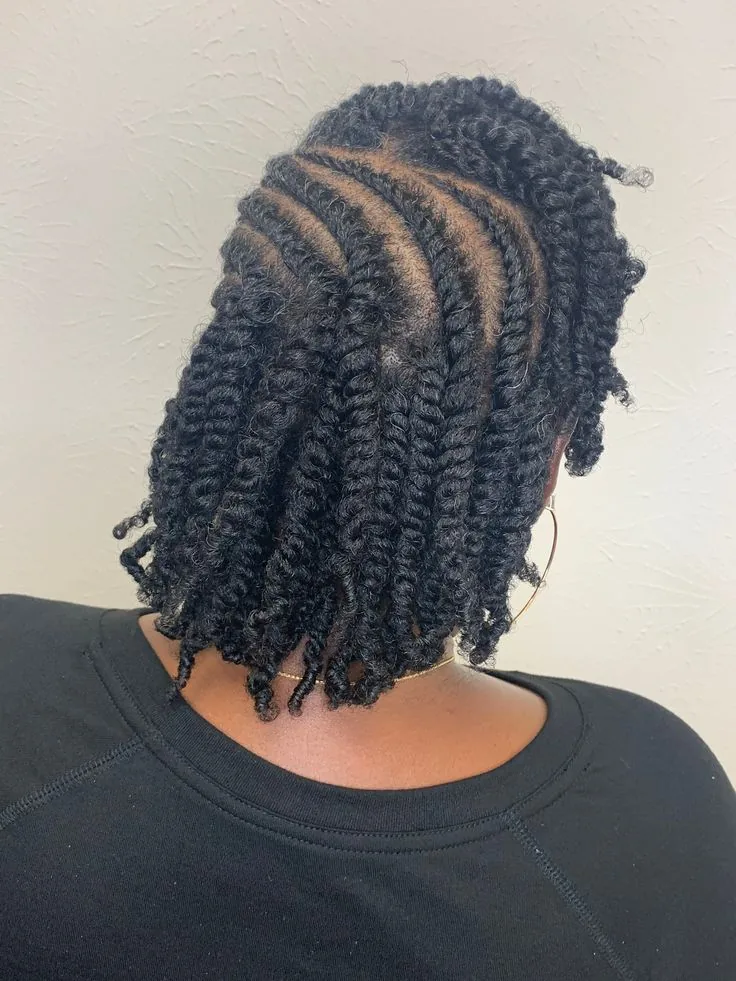
Tucked twists hide the ends inside the twist or pin them away, so the oldest, most fragile part of your hair never rubs against clothes or shoulders. It is a simple upgrade that makes any twist style more protective.
Pros: Ends fully hidden; reduces breakage and split ends.
Cons / watch out for: Tucking takes a little extra time at install.
Maintenance: Re-tuck loose ends, oil lightly, and cover at night.
How long it lasts: 2 to 4 weeks.
40. Pinned Twist Updo
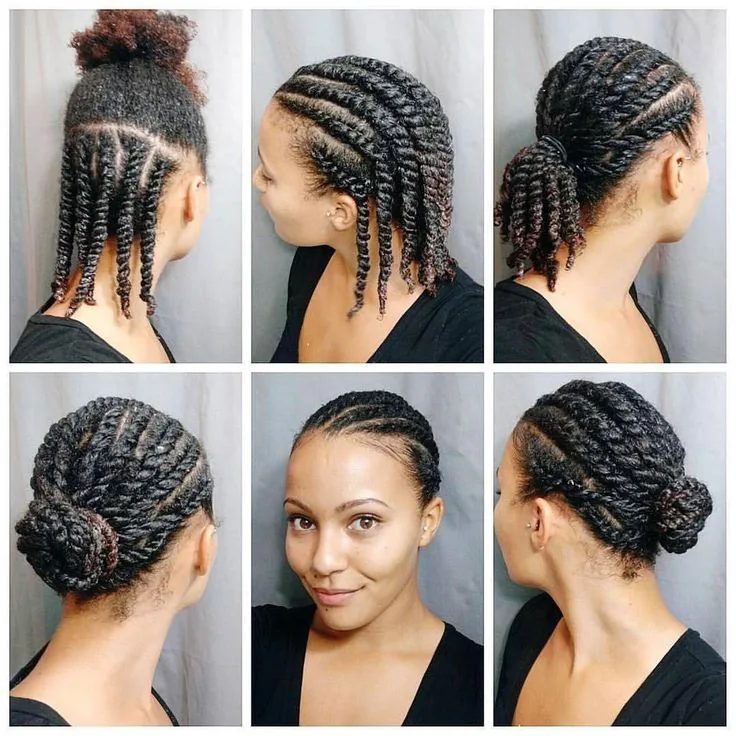
A pinned twist updo twists sections loosely and pins them up, protecting the ends while looking soft and intentional. It is a gentle, heat-free style you can create at home in under half an hour.
Pros: Heat-free and gentle; quick to create at home.
Cons / watch out for: Lasts only a few days before needing re-doing.
Maintenance: Pin loosely, mist lightly, and re-pin as needed.
How long it lasts: 2 to 5 days.
41. Cornrows Under a Wig
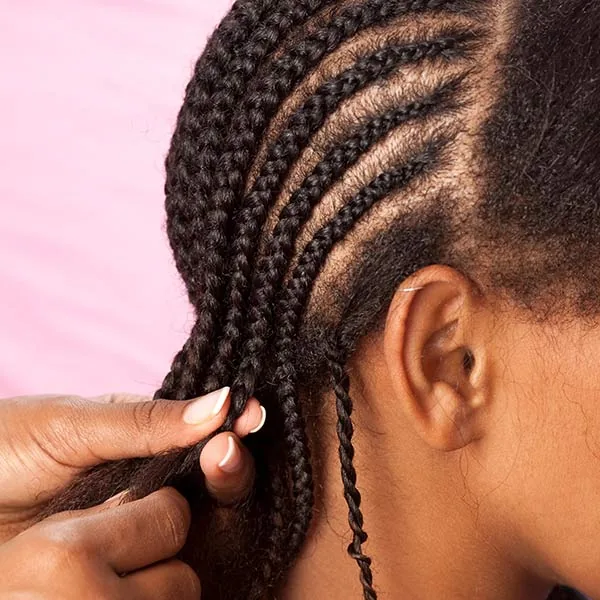
Neat cornrows worn as a base under a wig are themselves a protective style: your hair is braided flat, moisturised and completely shielded, while the wig takes all the styling, weather and friction. Change the wig, not your hair, and your natural hair keeps resting.
Pros: Your hair rests while you change looks freely.
Cons / watch out for: The base needs redoing every few weeks; a bumpy base shows through thin wigs.
Maintenance: Braid flat and not too tightly, oil the scalp, and give the hair a break between wig periods.
How long it lasts: 2 to 4 weeks per braid base.
Edges and Tension: Warning Signs to Never Ignore
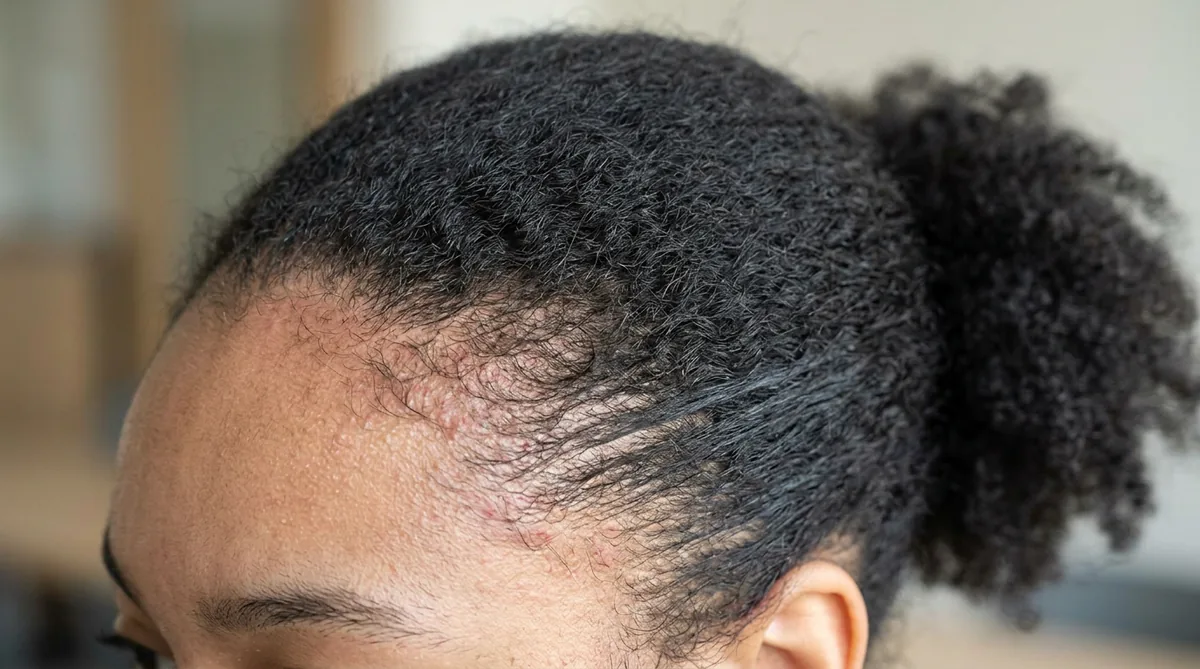
Your edges are the most fragile hair on your head, and once they are gone they are very hard to regrow. Pain during braiding is not normal, and it is not a sign that the style will last longer. If your scalp is sore, your forehead feels tight, or you see small bumps along your hairline, the style is too tight, full stop.
Protect your edges by asking for looser braids around the hairline, avoiding heavy styles that pull backward, and never combining a tight style with a tight wig, scarf or headband on top. If a style hurts, speak up in the chair. A good braider would rather redo a braid than damage your hairline.
Washing and Refreshing While Protected
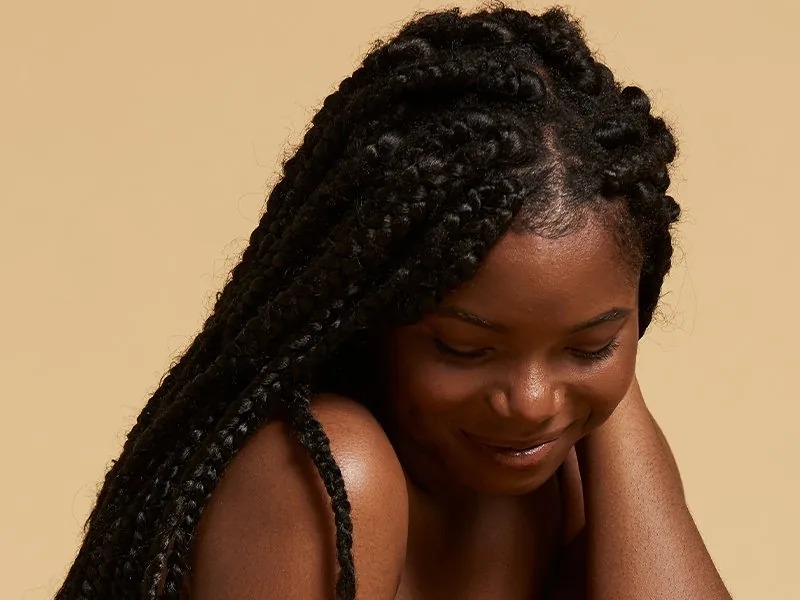
Yes, you can wash protective styles. Dilute shampoo with water, apply it mainly to the scalp with your fingertips or a nozzle bottle, rinse gently, and let the style air-dry fully. Focus on the scalp rather than scrubbing the braids or twists themselves, which frizzes them faster.
Between washes, refresh with a light scalp spray, a dry shampoo on the parts if needed, and a silk or satin scarf at night. Tie the scarf loosely, or use a bonnet, to cut friction against your pillow. A style that is washed and covered well lasts longer and smells fresher, too.
Taking a Style Down Safely
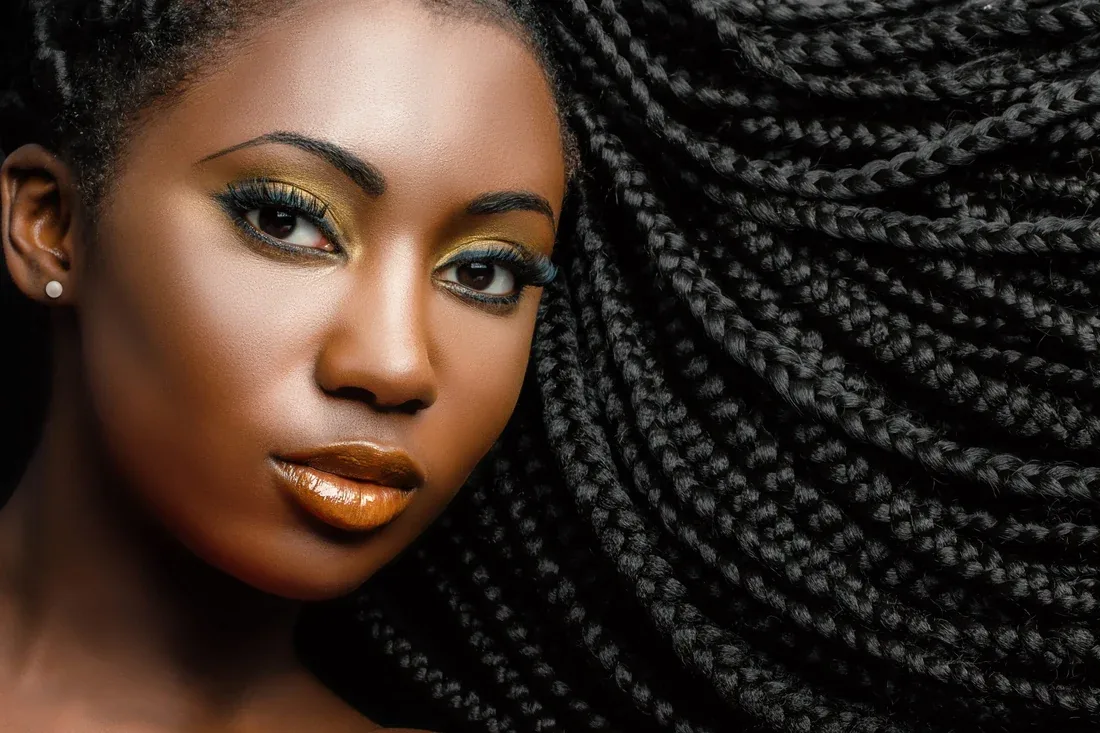
Takedown is where a lot of damage happens, so do not rush it. Work in sections, cut only the added hair, never your own hair, and unravel gently with your fingers before reaching for a comb. Keep a spray bottle nearby to dampen stubborn sections and loosen buildup.
After takedown, detangle gently from the ends up, wash with a clarifying shampoo followed by a deep conditioner, and let your hair rest for at least a few days before the next install. That rest week is part of the protective routine, not a break from it. Your scalp and ends recover during it.
Choosing a Stylist or Braider
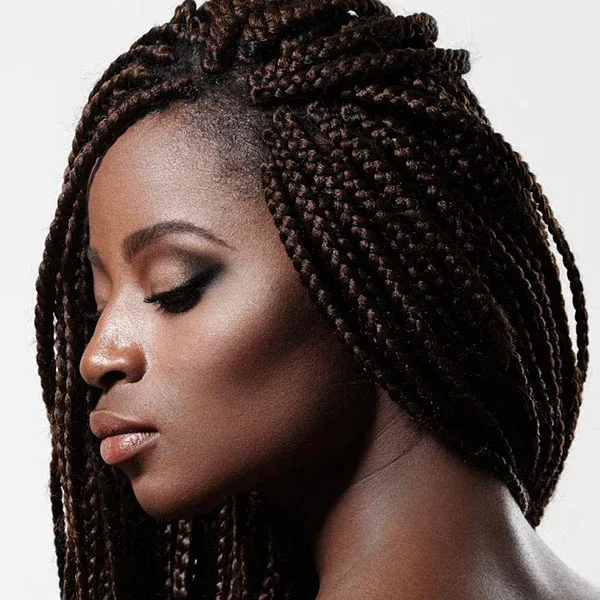
Ask to see recent work on hair like yours, and ask directly about tension, install time and how they protect edges. A good braider will talk about part size, braid size and how long the style should last, and will not rush you or dismiss pain. Reviews and word of mouth from people with similar hair are worth more than a pretty salon page.
Bring reference photos, but also be honest about your budget, your time and how you actually live. If you swim, work out, or cannot sit for eight hours, say so. The best protective style is one that fits your real life, installed by someone who respects your hair and your comfort.
What is the best protective hairstyle for natural hair?
The best protective hairstyle for natural hair is one that tucks your ends away, reduces daily handling, and does not pull your scalp. Knotless box braids, passion twists, faux locs and glueless wigs over flat braids are all excellent choices, as long as the tension is comfortable.
How long should I keep a protective style in?
Most protective styles should be kept in for four to six weeks, and rarely longer than eight weeks. Beyond that, new growth tangles at the roots, buildup increases, and takedown becomes harder and more damaging.
Do protective styles help hair grow?
Protective styles do not make hair grow faster, but they help you keep the length you grow by reducing breakage. That retention is why hair often looks longer after months of consistent, gentle protective styling.
Are braids bad for your edges?
Braids are not bad for edges when they are installed loosely, especially around the hairline. Tight braids, heavy styles and constant pulling are what damage edges, so always speak up if braiding hurts.
Can I wash my hair while wearing braids or twists?
Yes, you can wash braids or twists. Dilute shampoo, apply it mainly to the scalp, rinse gently, and let the style dry fully before covering it. Avoid scrubbing the braids themselves, which causes frizz.
How do I keep my scalp from itching under a protective style?
Keep your scalp from itching by oiling or misting it two to three times a week, washing it when it feels dirty, and avoiding heavy products that cause buildup. If itching is severe or painful, take the style down and check your scalp.
What is the difference between knotless and regular box braids?
Knotless box braids start with your own hair and feed extensions in gradually, so there is no tight knot at the root. Regular box braids start with a knot, which can pull more but often lasts a little longer.
Can I wear a wig as a protective style?
Yes, a wig is a protective style when your own hair is braided flat underneath, moisturised, and given breaks. Glueless and headband wigs are healthiest because you can remove them nightly and let your scalp breathe.
How do I take down braids without breaking my hair?
Take braids down section by section, cut only the added hair, unravel gently with your fingers, and detangle from the ends up. Follow with a wash and a deep conditioner, and rest your hair before the next install.
Should I give my hair a break between protective styles?
Yes, give your hair at least a few days, ideally one to two weeks, between protective styles. Use that time to wash, deep condition, trim split ends if needed, and let your scalp breathe before the next install.
Conclusion
Protection is not a single hairstyle; it is a habit. Tuck your ends, keep your hands out of your hair, moisturise your scalp, watch your edges, and give your hair rest between installs. Do those things consistently, and almost any style in this guide will serve you well.
Start with the style that fits your life, your budget and your comfort, not just the one that looks best in a photo. Ask for comfortable tension, take the style down gently, and enjoy the quiet benefit of protective styling: hair that is not just growing, but staying.