Locs, Styled Your Way: 34 Hairstyles for Women with Locs, From Starter Locs to Waist-Length Glamour
Locs are one of the most versatile hairstyles there is — and one of the most personal. They can be short and sharp or long enough to sit at your waist, worn loose and free or pinned into an updo that turns heads at a wedding. They carry history, culture and identity, and they reward patience: a head of locs is not a one-day transformation but a journey that changes shape month by month, from the first twists to the day your locs finally hang with weight and swing. That journey is the whole point, and every stage of it has its own beauty.
This guide collects 34 hairstyles for women with locs, from starter locs and short bob locs to waist-length glamour, buns, braids, colour, accessories and formal styles, with ideas for work, weddings and everyday life. Eight short guides answer the questions women actually ask: what locs are and how they mature, how starter locs differ from mature ones, how often to retwist, how to wash and care for locs, how to style without breakage, how to wear locs at work and formal events, the mistakes that slow a loc journey down, and how to grow locs long and healthy. Every style comes with an honest note on its pros and cons, who should think twice, and what the upkeep really costs — so you can wear your locs with confidence at every stage.
What Locs Are — and the Five Stages of the Loc Journey
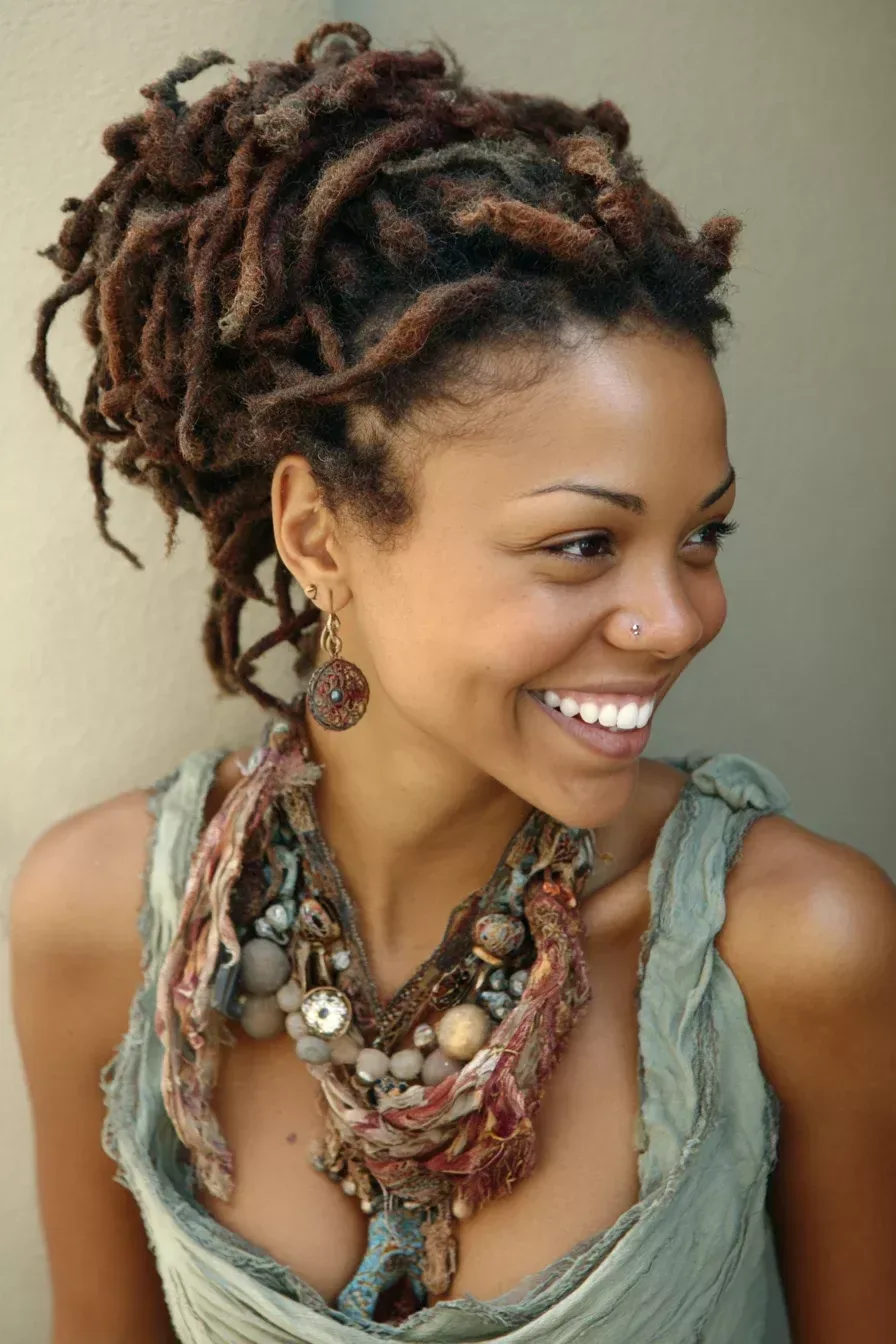
Locs form when strands of hair are encouraged to mat and lock together into ropes, rather than being combed apart. The process can start in several ways — two-strand twists, comb coils, finger coils, interlocking or braids — but the destination is the same: each section of hair becomes a single loc that grows, thickens and matures over time. Locs are a traditional hairstyle with deep roots in African and Caribbean culture, and for many women they are as much a statement of identity as a style choice.
The journey has five recognised stages. The starter stage lasts roughly the first three to six months, when the locs are soft, fuzzy and still unravelling at the ends. The budding stage follows, when the hair inside each loc starts to mesh and little knots appear. The teenage stage, around six to twelve months, is the awkward middle: locs swell, shrink, frizz and seem to have a mind of their own. The mature stage arrives at around a year to eighteen months, when the locs feel solid and hold their shape. Finally, the rooted stage is when the locs are fully settled, heavy and strong. Knowing which stage you are in takes the worry out of the process — the frizz and the shrinkage are not problems, they are the journey working.
Starter Locs vs Mature Locs: What Changes and When
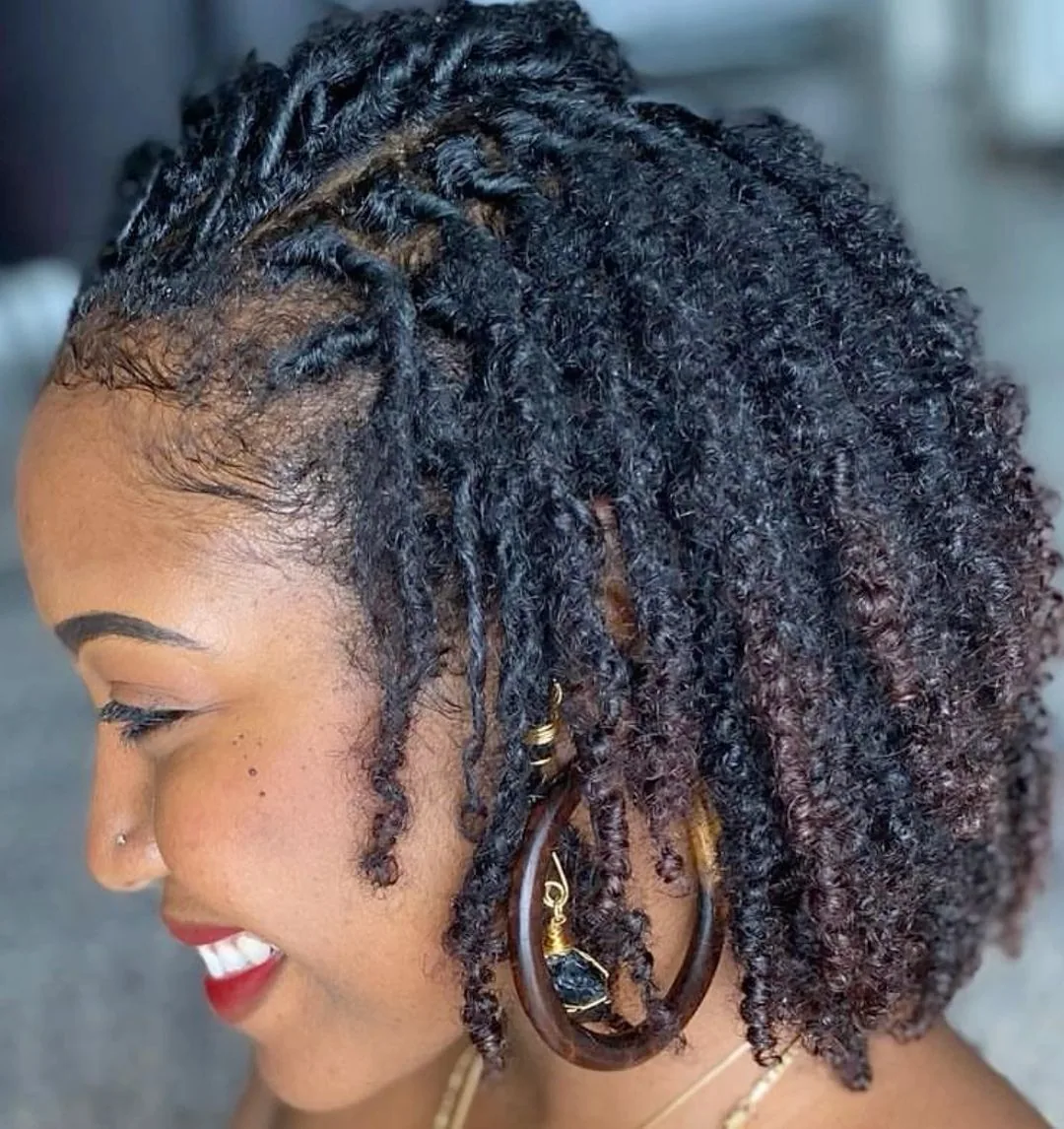
Starter locs and mature locs look and behave like two different hairstyles, and the difference is time. Starter locs are soft, light and springy; the pattern you started with — twists, coils or braids — is still visible, the ends may unravel after washing, and the locs feel more like styled hair than ropes. They need gentle handling, because the hair has not yet meshed together, and they look best in simple styles that do not pull on the roots.
Mature locs are firmer, heavier and far more versatile. They hold a shape when you pin them up, they swing when you move, and they can be braided, curled, coloured and styled in ways starter locs simply cannot manage yet. The trade-off is weight: mature locs pull more on the scalp, so styles that gather all the hair into one high bun need to be balanced and varied. Pros of the starter stage: it is the most creative time, because the locs are light and you can experiment freely. Cons: the unravelling and frizz test your patience. Quick verdict: love the stage you are in — mature locs are worth the wait, but starter locs have a soft, fresh look you will miss once it is gone.
Retwisting and Your Maintenance Schedule
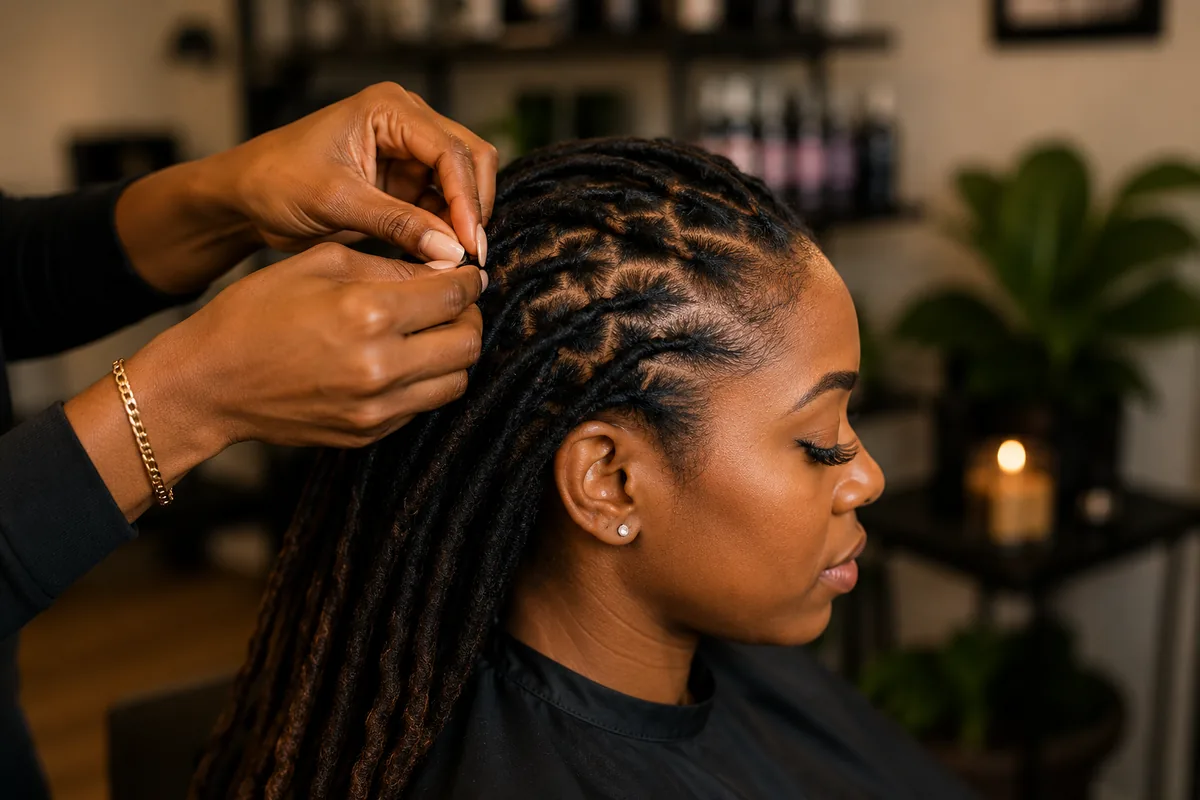
Retwisting is the maintenance that keeps locs neat: the new growth at the roots is twisted back into the loc so the parts stay clean and the locs keep their shape. Most women retwist every four to six weeks, and the appointment usually takes one to three hours depending on the number and length of locs. Between retwists, the roots grow out and soften — that is normal, and it does not mean the locs are failing.
The most important rule is not to overdo it. Retwisting too often, or pulling the roots too tight, causes thinning and traction alopecia — the slow loss of hair at the hairline and crown that is the most common loc injury. Pros of a regular schedule: clean parts, a polished look, and locs that mature evenly. Cons: it costs time and money, and tight retwists hurt. Who should space appointments out: women with fine hair or a sensitive scalp — six to eight weeks is safer than four. Common mistake: retwisting wet, freshly washed locs and then styling them tightly the same day; let the scalp rest for a day before a heavy updo.
Washing and Caring for Locs
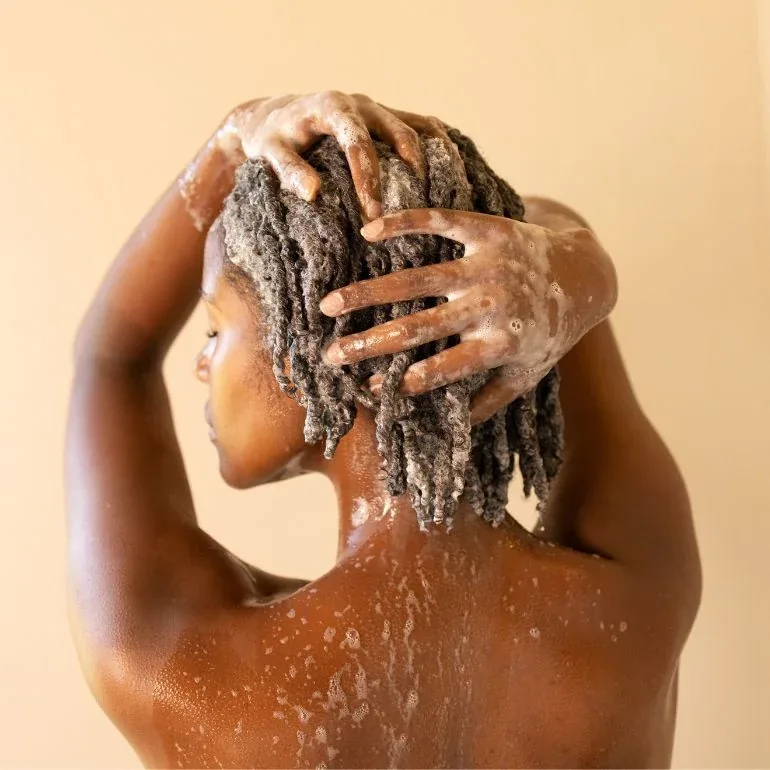
Locs do need washing — the idea that they should never be washed is a myth that leads to build-up, itching and dull hair. Wash every one to two weeks with a residue-free shampoo, working it into the scalp with your fingertips and letting the lather run down the locs rather than scrubbing the locs themselves. Rinse thoroughly, because shampoo left inside a loc dries into white residue that is very hard to remove.
After washing, dry locs properly: squeeze them gently in a towel, then let them air-dry completely or use a hooded dryer, because damp locs left tied up can develop mildew and a musty smell. Moisturise with a light water-based spray or a little oil on the scalp, and avoid heavy butters and waxes, which build up inside the loc and attract lint. Pros of a good wash routine: a healthy scalp, locs that smell fresh and shine. Cons: washing takes longer than loose hair, and drying long locs can take hours. Maintenance cost is low — a residue-free shampoo, a spray bottle and a little patience are most of what you need.
Styling Locs Without Breakage
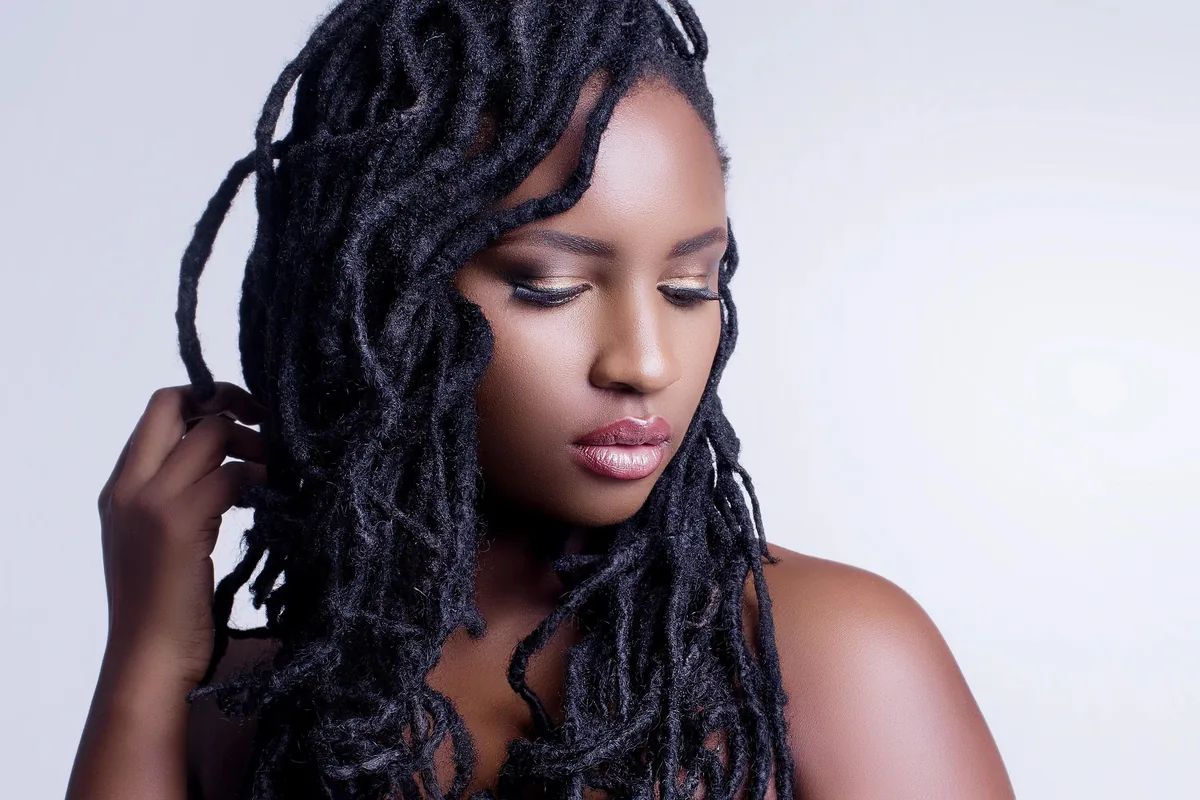
Locs are strong, but they are not indestructible, and the breakage that does happen is almost always caused by styling, not by the locs themselves. The golden rule is to vary your styles: wearing the same tight high bun every day pulls on the same roots, and over months that tension thins the hairline. Rotate between updos, loose styles, half-up looks and braids, and give your hair a few loose days each week.
Use accessories that are kind to locs — fabric-covered bands, satin scrunchies and smooth cuffs — and avoid thin rubber bands and metal clips that snag and snap the hair. When you braid or twist your locs, keep the tension gentle and never pull the front locs back so tightly that the scalp shows white. Pros of gentle styling: your locs stay thick at the roots for years. Cons: gentle styles take a little more time, and the dramatic pulled-back look has to be an occasional treat rather than a daily habit. Who should be extra careful: women with fine hair or locs that are already thinning at the edges — loose, low styles are your best friends.
Locs at Work and at Formal Events
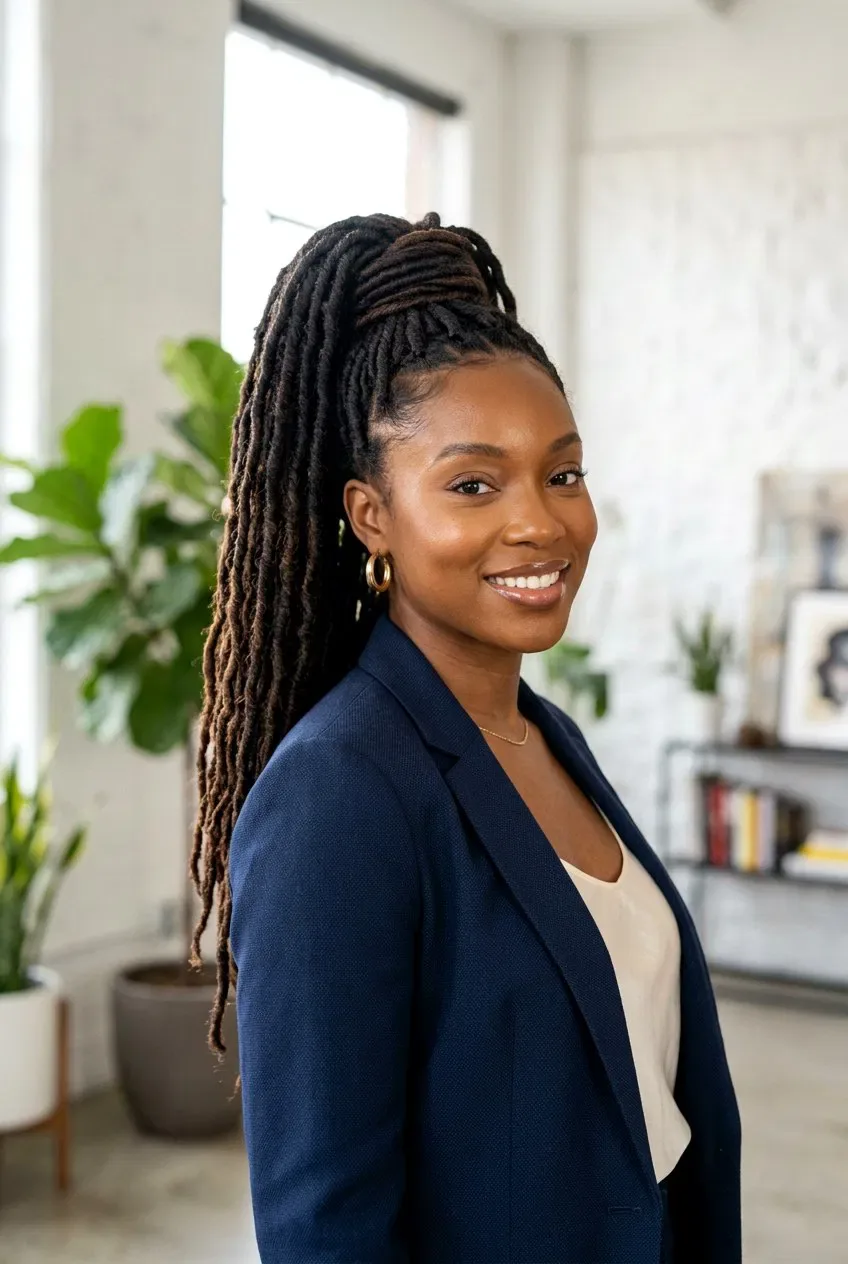
Locs are a professional hairstyle, full stop — and the styles that read as polished at work are the same ones that work at a wedding. A low bun, a neatly pinned updo, a side-swept style or locs gathered into a smooth ponytail all look deliberate and finished, and they pair beautifully with a blazer, a dress or a suit. The key is neatness at the roots: a fresh retwist and clean parts make any loc style look intentional.
For formal events, locs offer something loose hair cannot: structure. A loc updo holds its shape all evening without pins sliding out, and accessories — gold cuffs, a delicate headpiece, fresh flowers — sit securely in the locs. If your workplace has a dress code, a low, tidy style is the safest choice, and it is worth knowing that in the United States the CROWN Act protects the right to wear locs at work in many states. Pros: locs are versatile enough for any setting, and an updo takes minutes once you know it. Cons: a brand-new set of starter locs can look less polished in very formal settings, so a neat retwist before a big event is worth the appointment. Quick verdict: wear your locs proudly — the style is the statement, not an apology for it.
Common Loc Mistakes to Avoid
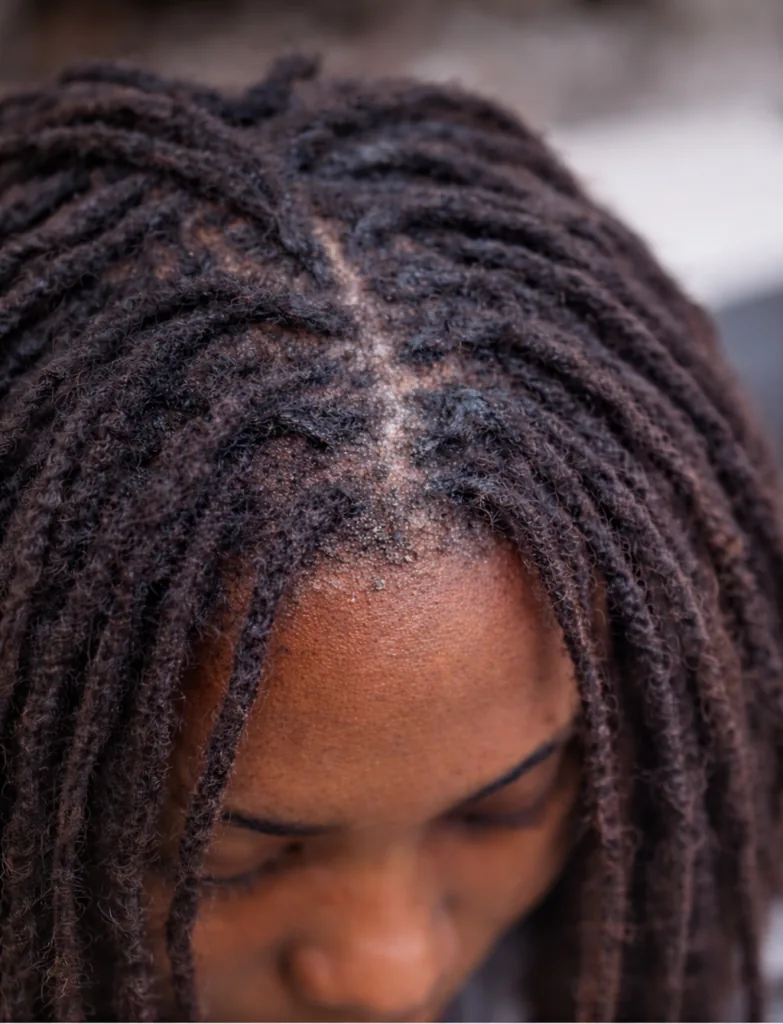
The most common loc mistake is impatience — expecting mature locs in three months and over-handling the hair to make it happen. Constant retwisting, palm-rolling every day, and re-doing styles that unravel only stress the hair and slow the locking process. Locs lock on their own schedule, and the best thing you can do in the first year is wash them, moisturise them, and leave them alone.
Other mistakes are quieter but just as costly. Heavy waxes and butters build up inside the loc and attract lint that never fully comes out. Bleaching locs without a professional lightens the hair but weakens the rope, and coloured locs that are not deep-conditioned snap more easily. Skipping washes to keep a style neat leaves the scalp itchy and the locs dull. And the biggest one of all: retwisting too tightly, too often, until the hairline starts to thin. Who should think twice about starting locs: anyone who wants a style that changes every week — locs reward commitment, and the first year asks for patience above all. The fix for almost every mistake is the same: less product, less tension, more patience.
Growing Locs Long and Healthy
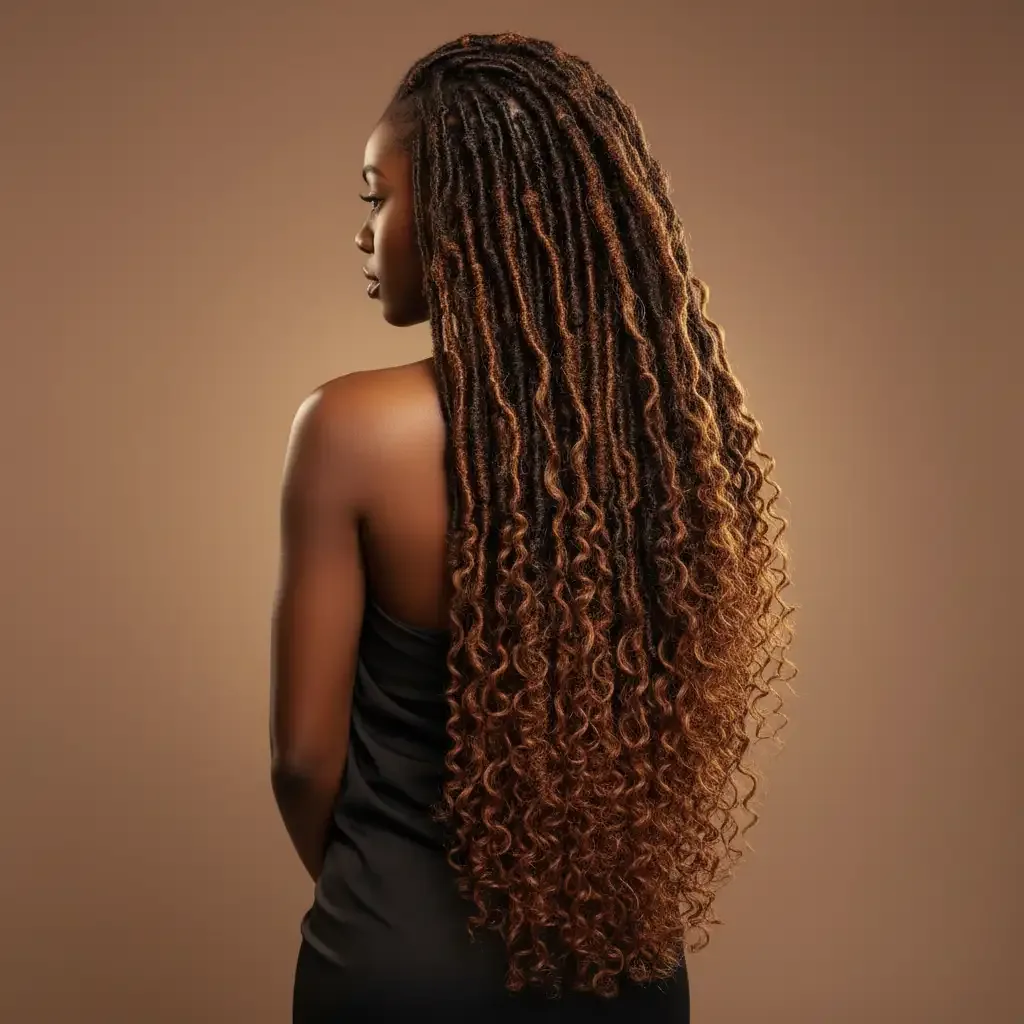
Long locs are grown, not bought — and the secret is retention, not speed. Hair grows about half an inch a month whether it is locked or loose; what makes locs long is keeping that length, and that comes down to moisture, gentle handling and a healthy scalp. Drink water, eat well, keep the scalp clean and moisturised, and protect your locs at night with a satin bonnet or pillowcase so they do not dry out and snag while you sleep.
Trimming matters too: the ends of locs can thin over years, and a small trim of the very ends keeps them full and strong. Deep-condition every few weeks, avoid over-bleaching, and give your locs a break from heavy styles. Pros of the long-loc journey: the styles get better every year, and waist-length locs are a showstopper. Cons: long locs are heavy, take hours to wash and dry, and need a loctician who knows how to handle length. Who should think twice: women who dislike spending time on hair care — long locs are low-effort day to day, but the wash day is a real commitment. Quick verdict: length is a reward for patience, and the locs will get there if you let them.
1. Two-Strand Twist Starter Locs
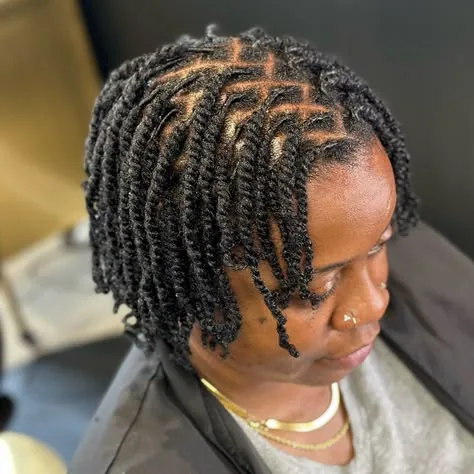
Two-strand twists are the most popular way to start locs, and for good reason: they are gentle, they work on almost every hair type, and they look like a finished style from day one. The hair is divided into sections and each section is twisted into a two-strand rope, which slowly meshes into a loc over the following months. The twists are soft and springy at first, and they gradually firm up as the hair inside them begins to lock.
Pros: the most forgiving starter method, easy to wash and style while the locs form, and the twist pattern gives early locs a beautiful texture. Cons: twists unravel more easily than other methods, especially after washing, and they need a little patience in the first few weeks. Who should avoid starting with twists: very short hair — you need at least a few inches for the twists to hold. Maintenance: keep the twists moisturised, wear a satin bonnet at night, and resist re-twisting every day; the locs need time to do their own work. Quick verdict: the classic starting point, and the one most locticians recommend for a first set of locs.
2. Comb Coil Starter Locs
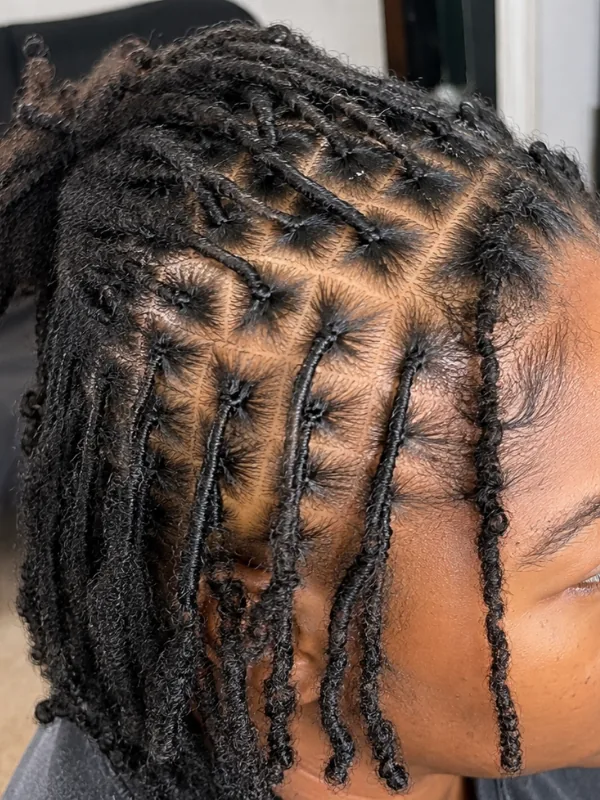
Comb coils are created by twisting small sections of hair around a fine-tooth comb, forming neat little coils that sit close to the scalp. They are the tidiest starter method, giving a very uniform look from the very first day, and they suit shorter hair than twists do — coils can be started on hair as short as two or three inches. The result is a head of small, defined coils that slowly grow into locs.
Pros: the neatest starter look, works on short hair, and the small sections give you a lot of locs, which means more styling options later. Cons: coils unravel easily in the first month, and they shrink dramatically as they lock, so the locs look much shorter than the hair you started with. Who should think twice: women with very thick, coarse hair, where coils can take longer to mesh. Common mistake: washing too soon — wait at least two to four weeks before the first wash so the coils have time to set. Maintenance is light: a little oil on the scalp, a bonnet at night, and patience.
3. Interlocked Starter Locs
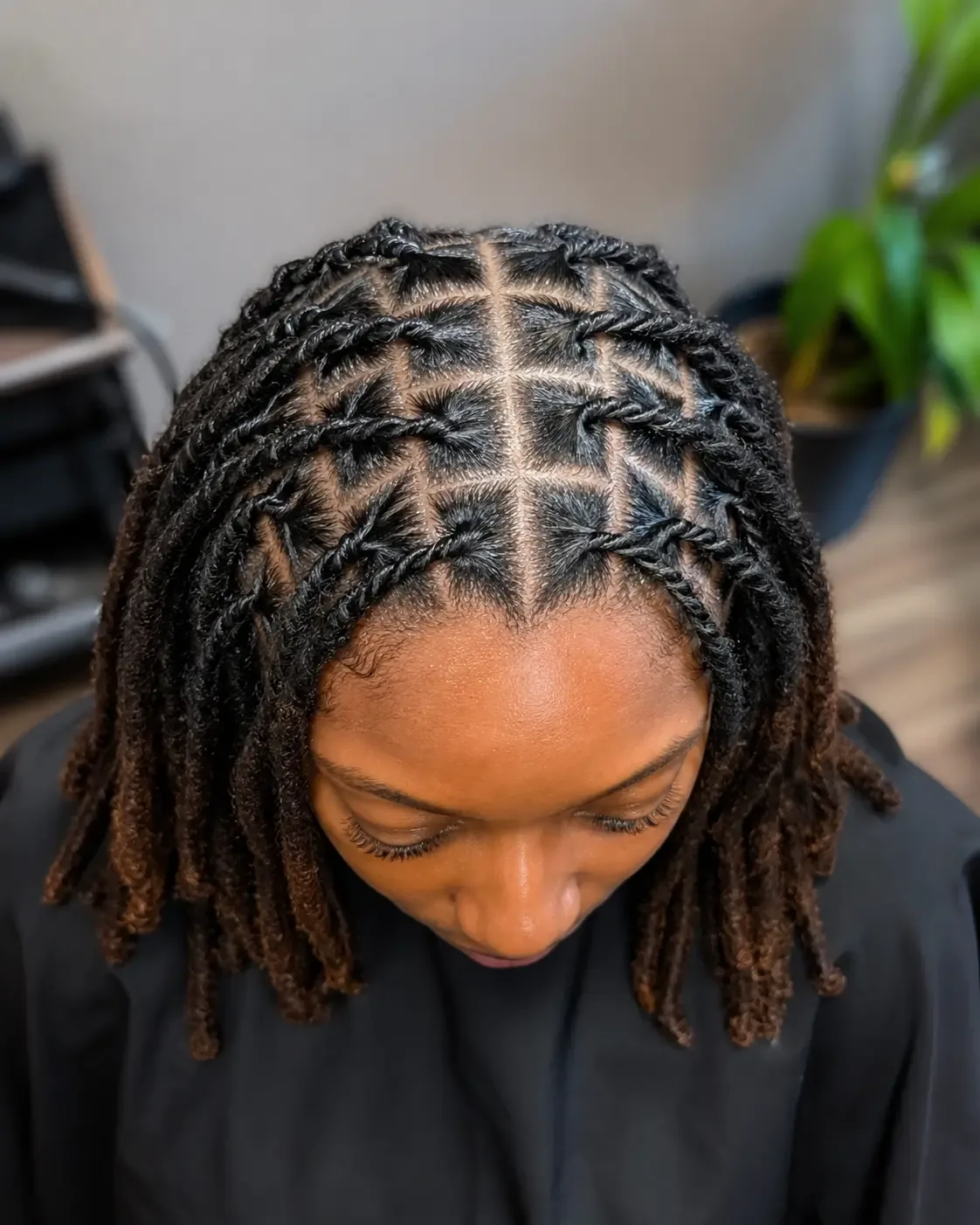
Interlocking starts locs by pulling the end of each section through its own root, creating a woven pattern that holds the loc together from day one. It is the most secure starter method — the locs will not unravel when you wash them — and it is the method many locticians recommend for active lifestyles, swimming, and women who want to wash their hair from the very first week.
Pros: wash-friendly from the start, very secure, and the parts stay crisp and clean. Cons: interlocking takes longer at the appointment, and if it is done too tightly it can thin the roots, so choose a loctician who works gently. Who should avoid it: women with very fine hair, where the interlocking tool can stress the strands. Maintenance: retighten every six to eight weeks rather than every four, and never interlock on the same rotation every time — alternating the direction keeps the roots strong. Quick verdict: the most practical starter method if you swim, work out, or simply cannot wait to wash your hair.
4. Finger Coil Starter Locs
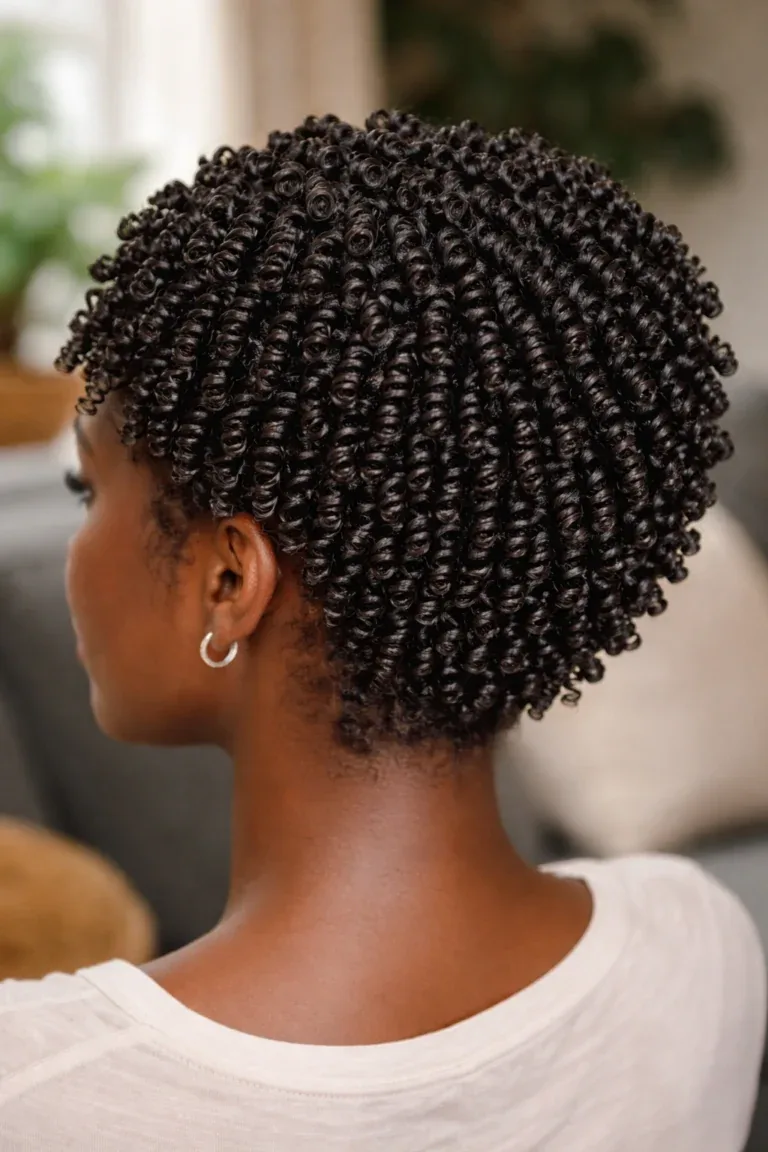
Finger coils are made by wrapping small sections of hair around a finger, one by one, until the whole head is covered in springy little spirals. They are the softest and most natural-looking starter method, and they are a favourite for women with a tight curl pattern, because the coil follows the hair’s own shape. The result is a head of defined, bouncy coils that gradually lock into slim locs.
Pros: the most natural-looking start, lovely on short hair, and the coils themselves are a beautiful style while they mature. Cons: they take the longest to install, and they are the most likely to unravel in the first weeks. Who should avoid them: women who want a wash-and-go starter — finger coils need a few weeks before the first wash. Maintenance: keep them dry and covered at night, moisturise lightly, and let the coils set before you style them. Common mistake: picking at a coil that has started to unravel — leave it, and let your loctician fix it at the next visit.
5. Short Bob Locs
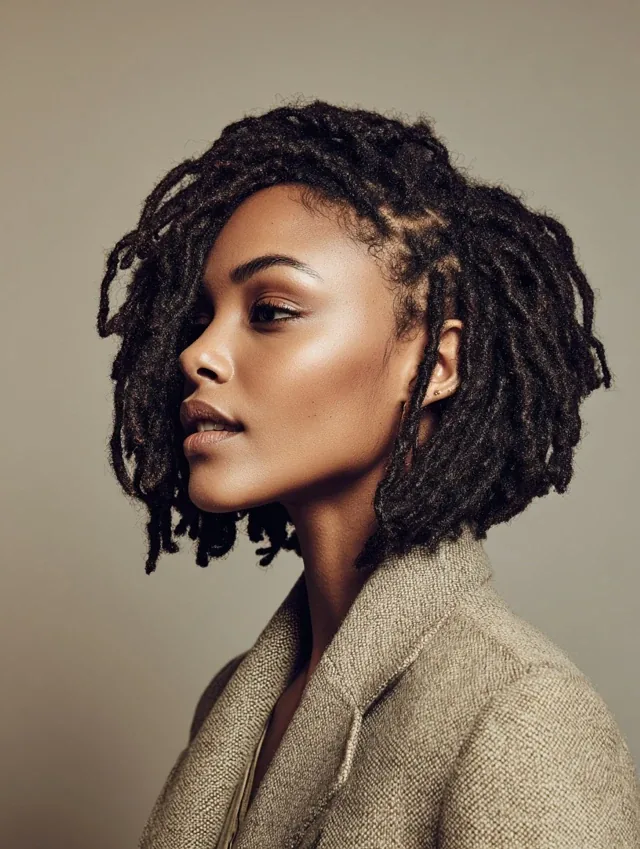
Short bob locs are locs cut to jaw or chin length, and they are one of the sharpest looks in this whole guide. The short length makes the locs swing when you move, shows off the face, and gives the style a clean, architectural shape — think of a bob, but with the texture and movement of locs. They suit almost every face shape, and they are the easiest loc length to live with day to day.
Pros: dries fast, needs almost no styling, and looks deliberate and polished with almost no effort. Cons: short locs cannot be tied up, so if you love a ponytail or a bun, this length will frustrate you. Who should avoid it: women in the first year of their loc journey — cutting locs short before they are mature can make them look sparse. Maintenance: a retwist every four to six weeks, a little oil, and nothing else. Cost and time: the cheapest loc length to maintain, in salon visits and in daily effort. Quick verdict: the loc equivalent of a little black dress — simple, sharp, and always right.
6. Shoulder-Length Locs
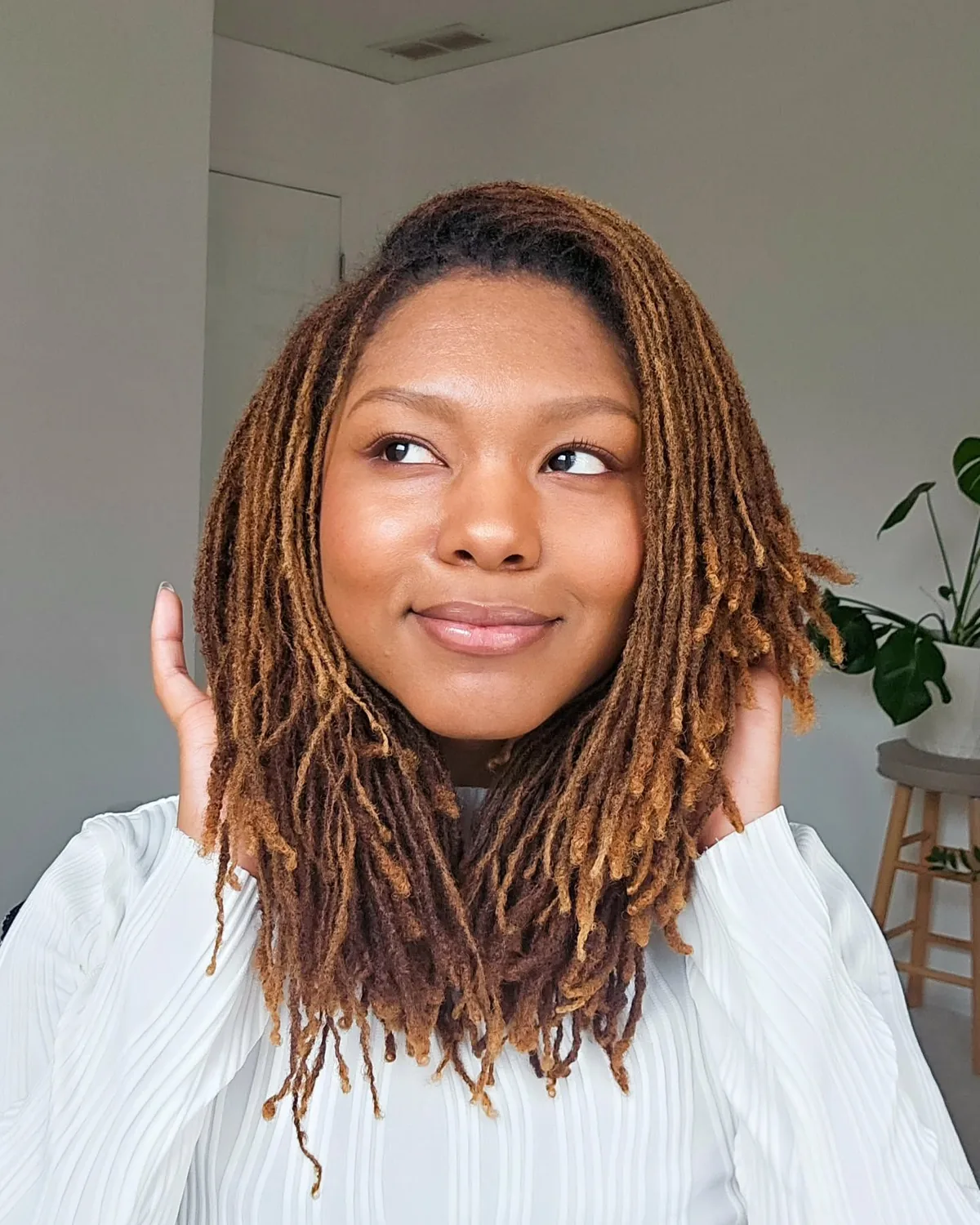
Shoulder-length locs are the sweet spot of the loc journey: long enough to tie up, short enough to dry in a reasonable time, and versatile enough for almost any style. At this length the locs have real weight, so they hang beautifully, and they are long enough for a ponytail, a low bun, a half-up style or a braid — the first length where the full styling menu opens up.
Pros: the most versatile loc length, easy to wash and dry, and long enough for updos but light enough to wear loose all day. Cons: this is the length where locs start to feel heavy in a high bun, so vary your styles. Who should love it: almost everyone — it is the length most women settle at, at least for a while. Maintenance: retwists every four to six weeks, a wash every one to two weeks, and a satin bonnet at night. Quick verdict: if you are not sure how long to grow your locs, grow them to your shoulders first and decide from there.
7. Waist-Length Locs
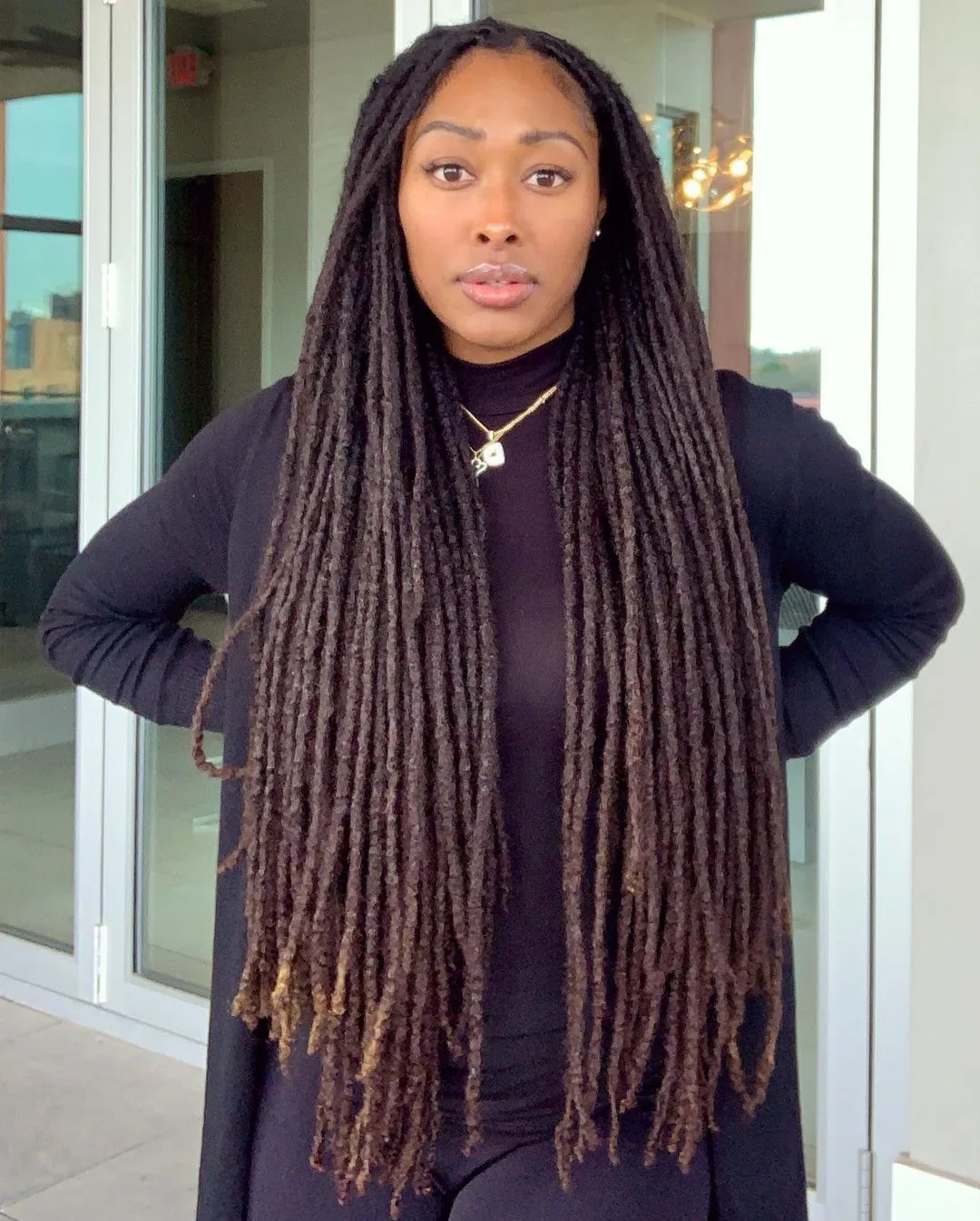
Waist-length locs are the showstopper — years of patience made visible. At this length the locs have real weight and swing, they fall past the shoulders and down the back, and they turn a simple loose style into a statement. They photograph beautifully, they hold braids and updos with drama, and they are the length that makes strangers ask how long you have been growing them.
Pros: the most dramatic loc length, endless styling options, and a look that is unmistakably yours. Cons: wash day takes hours, drying takes longer still, and the weight pulls on the scalp, so heavy updos need to be balanced and varied. Who should think twice: women who hate spending time on hair care — long locs are low-effort day to day, but wash day is a project. Maintenance: a residue-free shampoo, a thorough dry with a hooded dryer, and regular trims of the very ends to keep them full. Quick verdict: the reward for years of patience, and worth every month of the journey.
8. The High Loc Bun
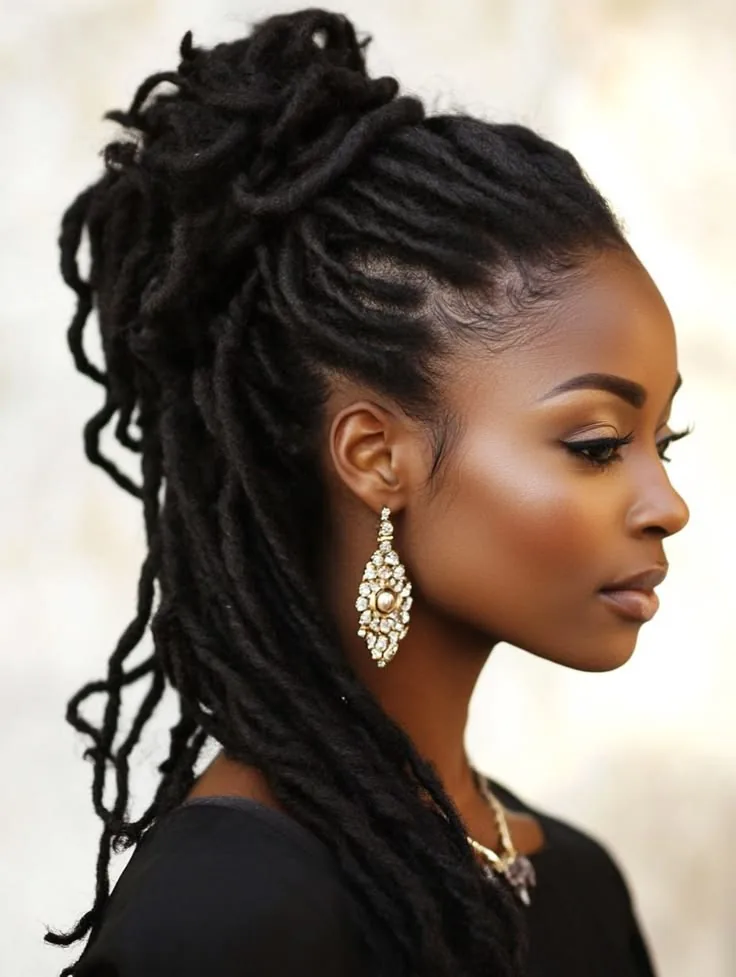
The high loc bun is the loc world’s signature updo: all the locs gathered up and coiled into a bun on top of the head, neat, sculptural and instantly polished. It keeps the hair off the neck on hot days, it looks deliberate and finished, and it works for everything from the office to a wedding. The bun can be smooth and tight or loose and textured, depending on the mood.
Pros: keeps locs out of the way, looks polished in minutes, and shows off the face and neck beautifully. Cons: worn every day, a high bun pulls on the same roots and can thin the hairline — rotate it with lower styles. Who should avoid wearing it daily: women with fine hair or locs that are already thinning at the edges. Maintenance: a fabric-covered band, a few pins, and a little edge control if you like a smooth finish. Common mistake: pulling the bun so tight that the scalp shows white — a slightly looser bun looks softer and is far kinder to your roots.
9. Low Loc Bun
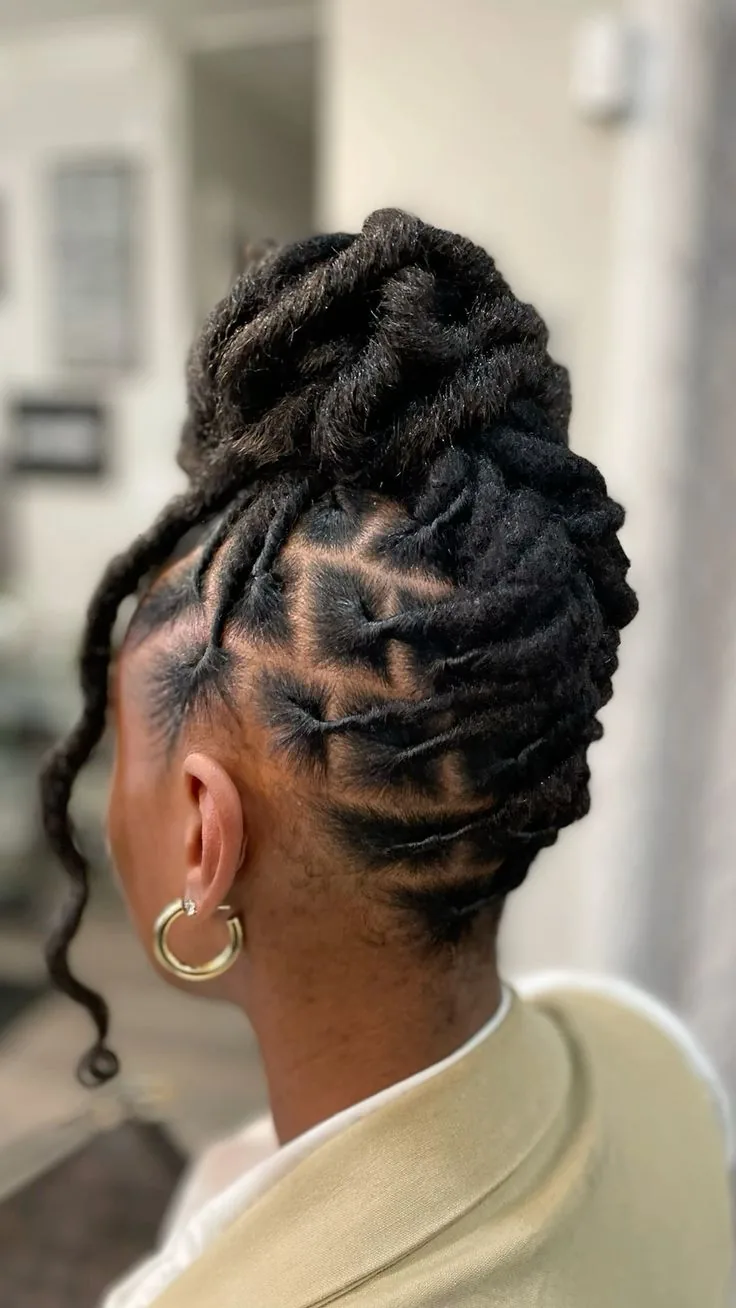
The low loc bun sits at the nape of the neck, and it is the gentlest updo in this guide. It pulls the locs back without lifting them, so there is almost no tension on the hairline, and it looks soft, elegant and grown-up — the loc equivalent of a chignon. It suits formal occasions, work, and days when you want your hair completely out of the way without a single ache at the end of the day.
Pros: the kindest updo for your roots, elegant enough for a wedding, and comfortable for hours. Cons: it is less dramatic than a high bun, and on very long locs the bun can feel heavy at the nape. Who should love it: women with thinning edges, a sensitive scalp, or a job that keeps them on their feet all day. Maintenance: a soft band, a few pins, and five minutes. Quick verdict: the updo to reach for when you want to look polished and feel comfortable at the same time.
10. Loc Ponytail
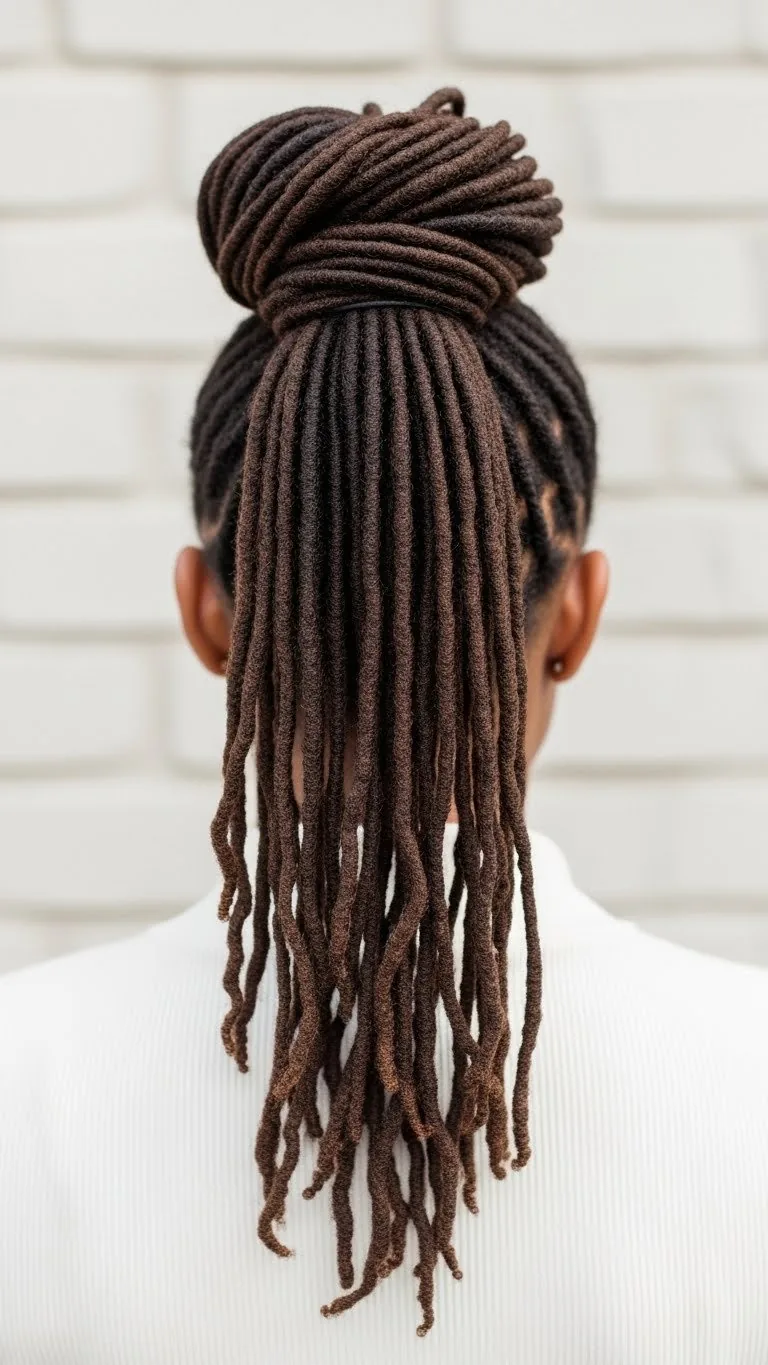
A loc ponytail is simple, sporty and surprisingly glamorous: the locs gathered into a single tail, high or low, that swings when you walk. It is the style for gym days, busy mornings and hot weather, and it takes less than a minute once your locs are long enough. A high ponytail reads youthful and energetic; a low ponytail reads sleek and polished.
Pros: the fastest loc style there is, keeps the hair off the face and neck, and works at any length past the shoulders. Cons: a tight ponytail worn daily pulls on the front hairline, so vary the height and give your edges rest days. Who should avoid a high, tight ponytail every day: women with fine hair or a receding hairline — a loose, low ponytail is the safer daily choice. Maintenance: a thick fabric band, a little edge control if you want it smooth, and nothing else. Quick verdict: the everyday hero of loc styling, and the one you will reach for most often.
11. Half Up Half Down Locs
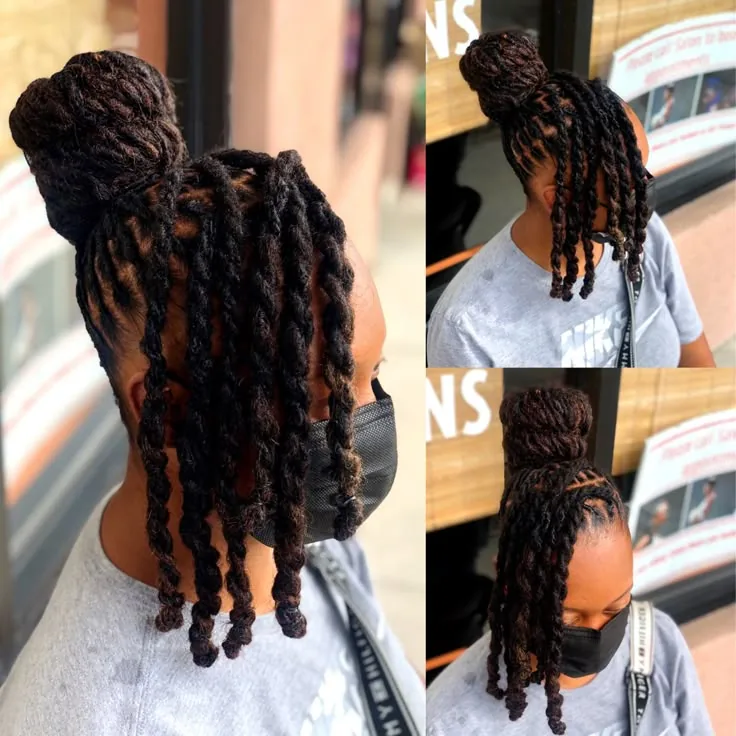
Half up, half down is the best of both worlds: the top section of locs gathered up and out of the face, the rest left loose to show off the length. It suits almost every occasion — casual, work, or a night out — and it is one of the easiest ways to make long locs look styled rather than simply worn. Add a bun, a twist or a braid to the top section and the look changes completely.
Pros: keeps the hair out of the face while showing off the length, suits every face shape, and takes two minutes. Cons: the top section pulls gently on the front roots, so do not wear it pulled tight every day. Who should love it: women with long locs who want a style that looks done without an updo. Maintenance: a band or a few pins for the top section, and a little oil on the loose locs. Common mistake: gathering too much hair into the top half, which makes the style heavy and the bottom look thin — take just the crown section and leave the rest.
12. Loc Space Buns
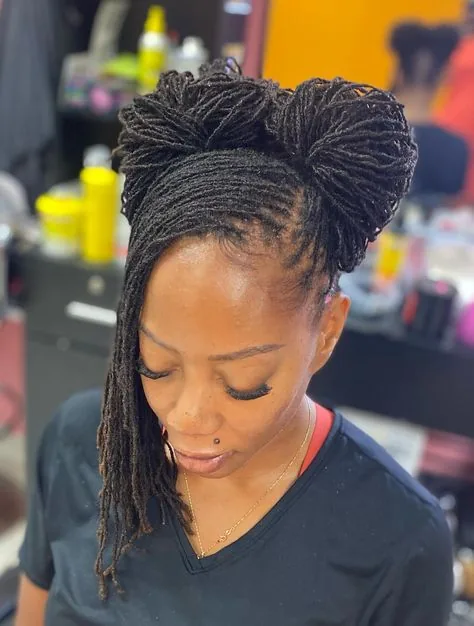
Loc space buns are two buns, one on each side of the head, and they are the most playful style in this guide. They are youthful, fun and full of personality — perfect for festivals, holidays, photoshoots and days when you want your hair to make people smile. They work best on medium to long locs, and they look wonderful with a few loose locs left framing the face.
Pros: fun, youthful, keeps all the hair up and out of the way, and photographs beautifully. Cons: not the right choice for a formal office or a job interview — save them for the weekend. Who should avoid them as a daily style: anyone who wants to be taken seriously in a conservative workplace; this is a play-day style. Maintenance: two fabric bands, a few pins, and five minutes. Quick verdict: the style that proves locs can be joyful and silly as well as elegant — wear them when you want to have fun.
13. Braided Locs
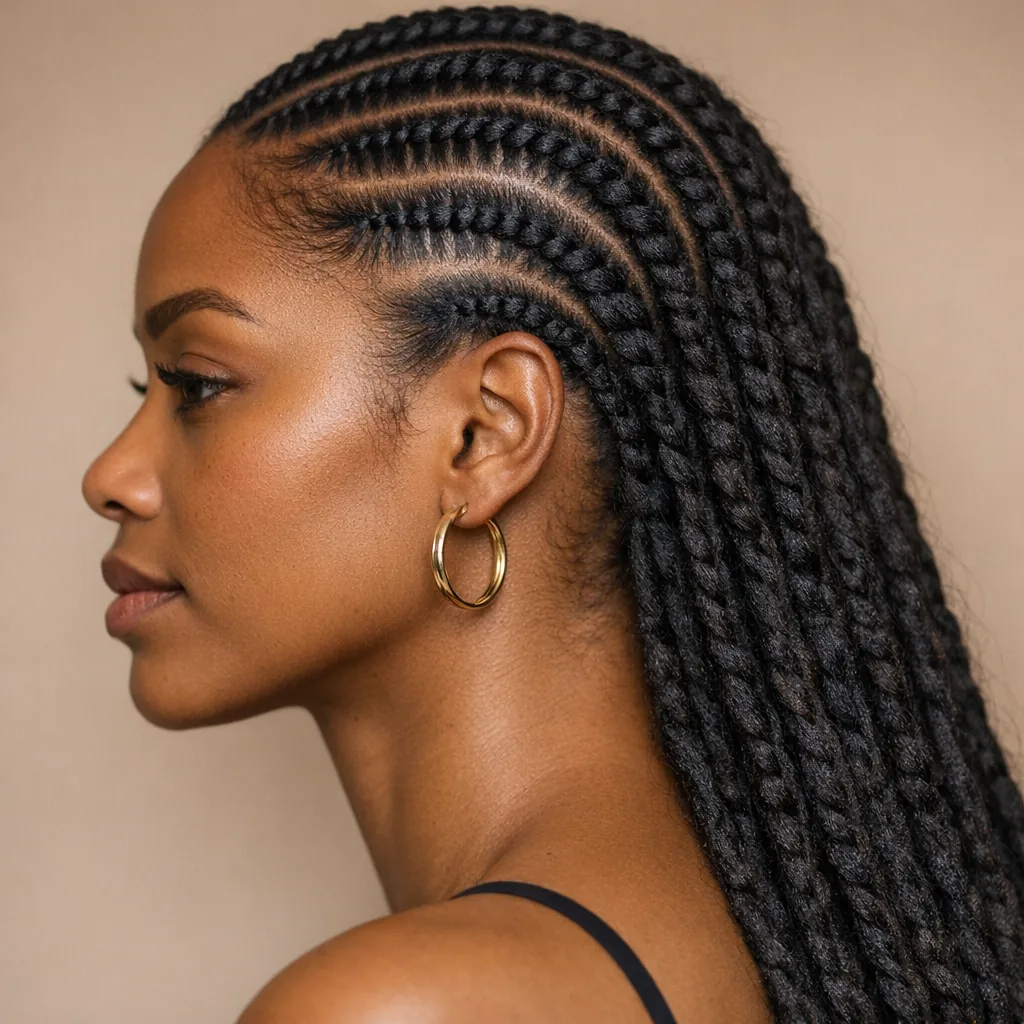
Braiding your locs — cornrowing them flat to the scalp, or braiding sections into plaits — is one of the oldest and most protective ways to wear them. The braids keep the locs tidy, protect the ends, and create a style that lasts for days or even weeks. When you take the braids out, the locs fall into beautiful waves, so one style gives you two looks for the price of one.
Pros: protective, long-lasting, and the braid-out waves afterwards are a bonus style. Cons: braiding takes time, and braids pulled too tight can damage the roots just as surely as a tight bun. Who should avoid tight cornrows: women with thinning edges — ask for gentle tension and wider sections. Maintenance: moisturise the scalp between the braids, and do not leave braids in for more than two or three weeks. Common mistake: braiding locs that are still in the starter stage, before they are firm enough to hold the braid — wait until the locs are mature.
14. Loc Crown Braid
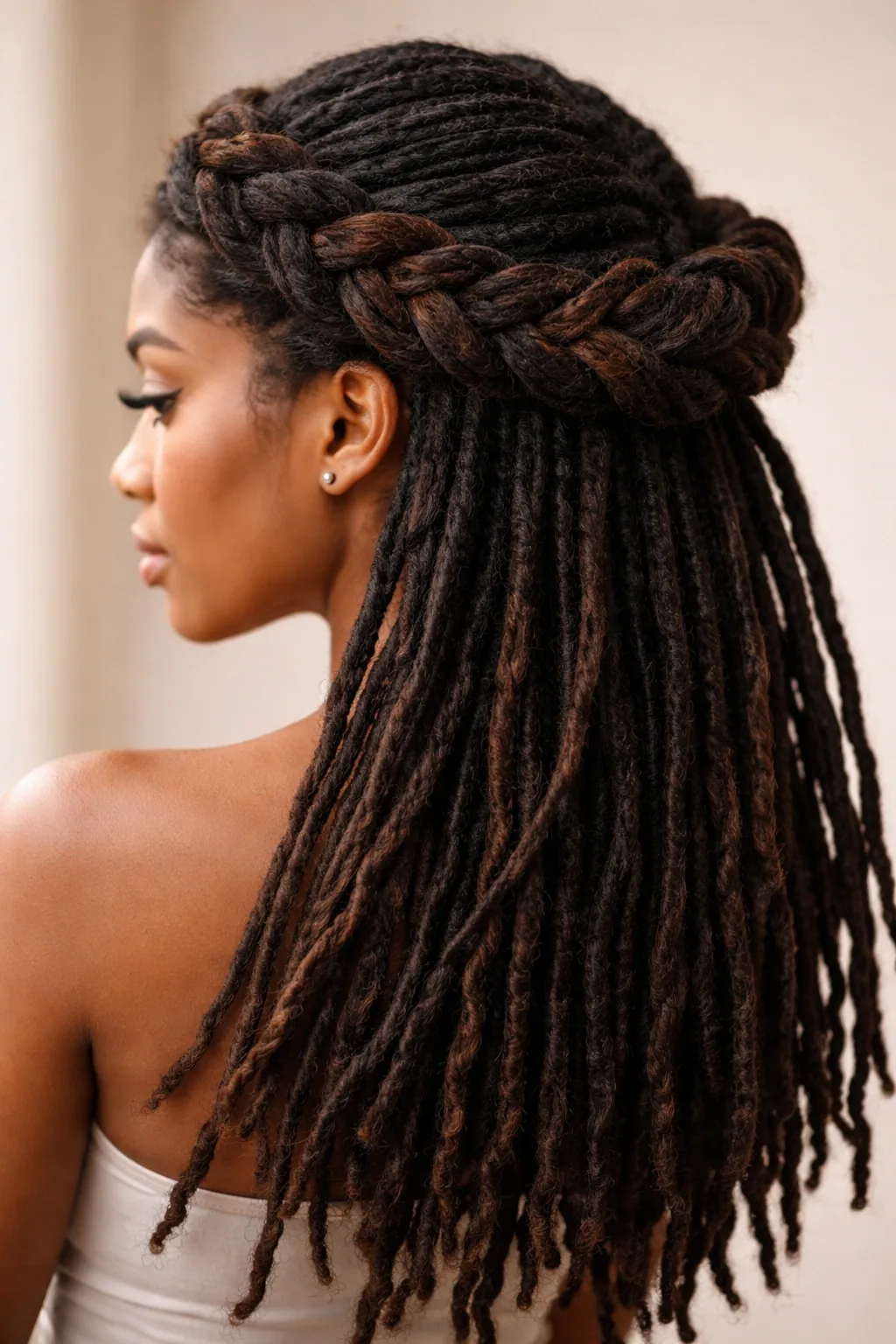
A loc crown braid wraps the locs around the head like a halo, and it is one of the most romantic styles you can wear. It looks like it took an hour, but once you know the technique it takes ten minutes: braid the locs around the hairline, pin the ends, and let a few locs fall loose at the back. It suits weddings, parties, photoshoots and any day you want to feel like royalty.
Pros: elegant, romantic, keeps the hair completely off the face, and photographs like a dream. Cons: it needs medium to long locs, and it takes a little practice to get the braid even. Who should avoid it: women with very short locs — there simply is not enough length to wrap around the head. Maintenance: a few pins, a little edge control, and a mirror. Quick verdict: the crown braid is the loc style most likely to make someone stop you and ask who did your hair.
15. Two-Strand Twist Locs
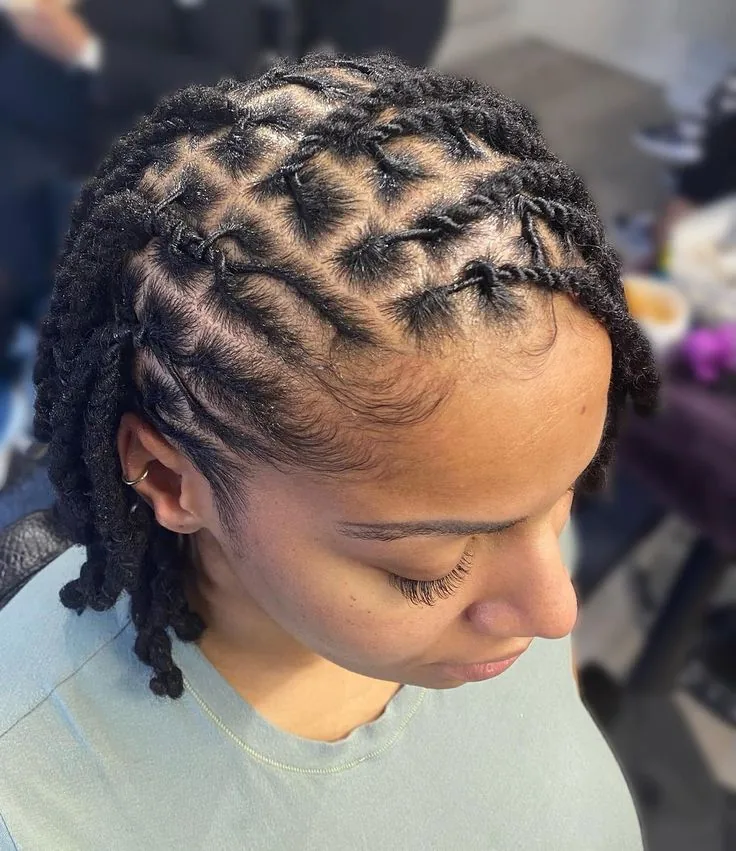
Two-strand twists on mature locs are a style, not a starter method: pairs of locs are twisted together to create a chunky, rope-like texture that looks completely different from wearing the locs loose. The twists add volume, they hold their shape for days, and when you unravel them you get a head of soft, defined waves — the loc version of a twist-out.
Pros: adds volume and texture, lasts for days, and the twist-out afterwards is a second style for free. Cons: twisting takes time, and if the twists are too tight they can stress the roots. Who should love it: women with fine locs who want more volume, or anyone who wants a change without cutting or colouring. Maintenance: twist on damp, moisturised locs, and leave them alone for a day or two before unravelling. Common mistake: twisting locs that are too dry — dry hair twists unevenly and frizzes faster, so always start with a light leave-in.
16. Loc Updo for Formal Events
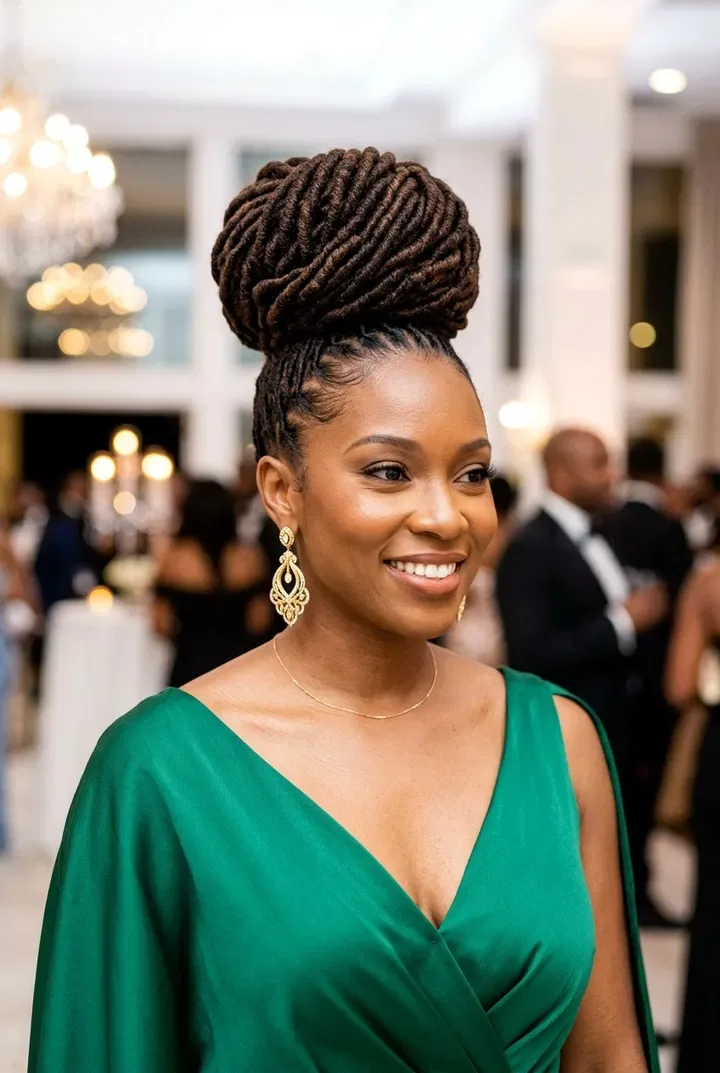
A formal loc updo is locs at their most glamorous: the locs swept up, pinned and shaped into a sculptural style that holds all evening. Because locs have structure, they hold an updo better than loose hair does — pins stay put, the shape does not collapse, and the style looks as good at midnight as it did at seven. Gold cuffs, a jeweled pin or a fresh flower finish the look.
Pros: holds its shape all evening, looks expensive, and works with a gown, a suit or a cocktail dress. Cons: a formal updo usually needs a loctician or a stylist, and it takes an hour or more to create. Who should book a professional: anyone with an important event — a wedding, a gala, a photoshoot — where the style has to be perfect. Maintenance on the night: almost none, which is the whole point. Cost and time: a salon appointment, but a style that lasts the whole event. Quick verdict: locs were made for formal updos — the structure does the work for you.
17. Side-Swept Locs
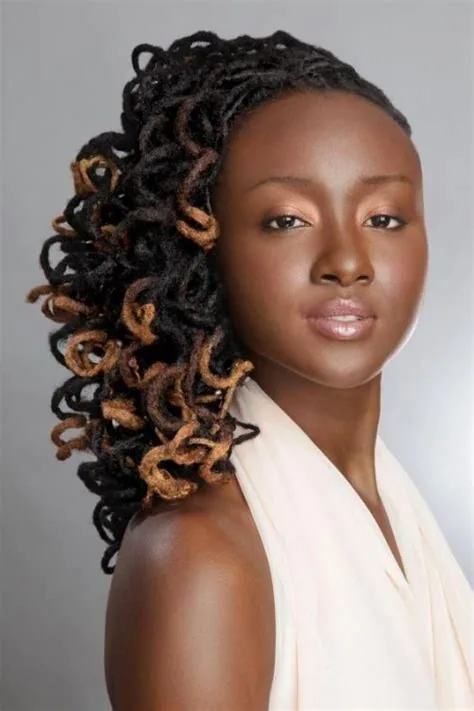
Side-swept locs are locs worn over one shoulder, and the simplicity is the point: a deep side part, the locs falling to one side, and the other side of the head neat and open. It is glamorous without trying, it shows off the face, and it is the style that photographs best, because the locs frame one side of the face and leave the other clear.
Pros: effortless, glamorous, and the most photogenic way to wear locs loose. Cons: the locs can fall back across the face in wind, so a pin or two helps on breezy days. Who should love it: women with long locs and a face they want to show off — and bridesmaids, because it looks wonderful in photographs. Maintenance: a side part, a couple of pins, and a little oil for shine. Common mistake: parting the hair in the middle and then sweeping it — start with a genuine deep side part and the locs will fall where you want them.
18. Loc Bangs
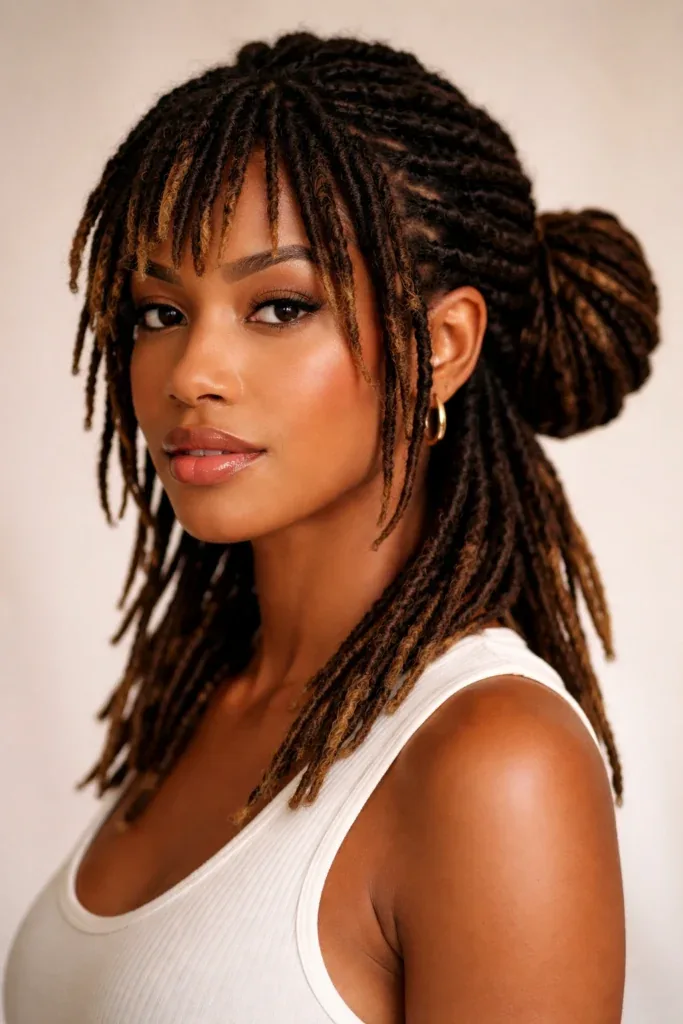
Loc bangs are a few shorter locs worn across the forehead, and they change the whole face the way a fringe changes any haircut: they soften the forehead, frame the eyes, and give the style a finished, deliberate look. They can be created by cutting a few front locs shorter, or by pinning longer locs across the forehead for a temporary fringe.
Pros: frames the face beautifully, softens a high forehead, and makes the style look intentional. Cons: cut locs do not grow back the way loose hair does, so a fringe is a commitment — try the pinned version first. Who should avoid cutting a fringe: women in the first year of their loc journey, whose locs are still maturing and changing shape. Maintenance: a trim now and then to keep the fringe at the right length, and a pin or two to keep it in place. Quick verdict: the pinned version gives you the look with no commitment, and the cut version gives you a signature style — try pinned first.
19. Honey Blonde Tipped Locs
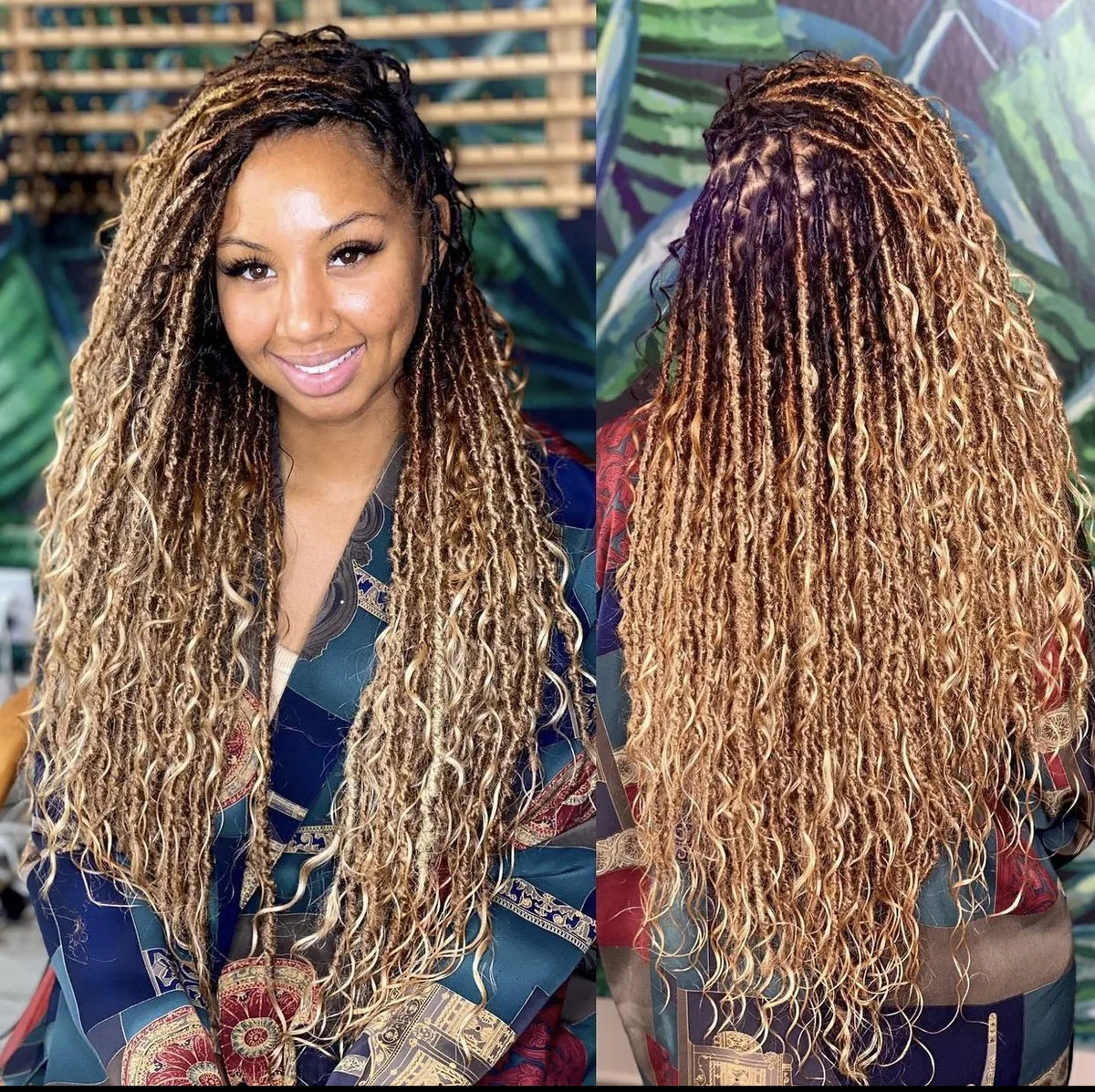
Honey blonde tips are locs lightened only at the ends, and they are the gentlest way to add colour to locs. The roots stay dark, the ends glow warm and golden, and the contrast makes the locs look longer and more dimensional. Because only the ends are bleached, the colour grows out gracefully, and the damage is limited to the part of the loc that is easiest to trim.
Pros: adds warmth and dimension, grows out gracefully, and the lightest touch on the hair. Cons: bleaching weakens the ends, so they need deep conditioning and regular trims. Who should think twice: women with very fine locs, where bleached ends can thin and snap. Maintenance: a deep-conditioning treatment every couple of weeks, a colour-safe shampoo, and a trim of the ends every few months. Common mistake: bleaching the whole loc at home — leave lightening to a professional who understands locs, and start with the tips.
20. Burgundy Locs
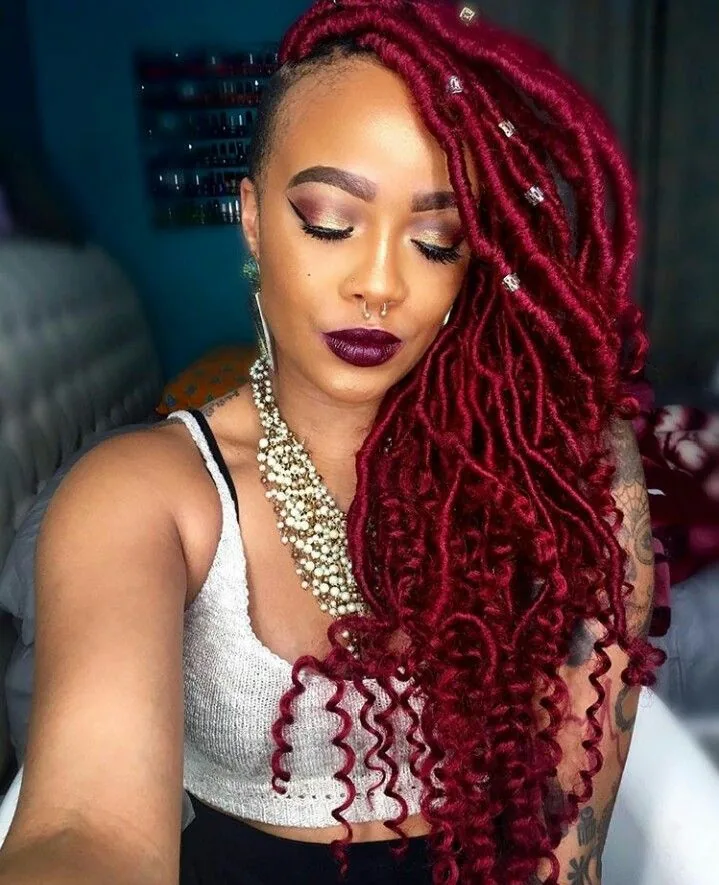
Burgundy locs are rich, wine-red locs that glow in the light and flatter almost every skin tone. The colour is bold without being loud, it works beautifully on dark hair because it does not always need heavy bleaching, and it gives the locs a depth and warmth that photographs wonderfully. It is the colour for women who want to be noticed without shouting.
Pros: flattering on most skin tones, rich and dimensional, and often achievable without full bleaching. Cons: red fades faster than other colours, so it needs regular refreshing, and it can stain pillowcases in the first week. Who should avoid it: women who wash their hair very often — frequent washing fades red fast. Maintenance: a colour-depositing conditioner, cool water when washing, and a refresh every six to eight weeks. Quick verdict: the most wearable bold colour for locs, and the one most likely to earn compliments from strangers.
21. Locs with Cuffs and Wraps
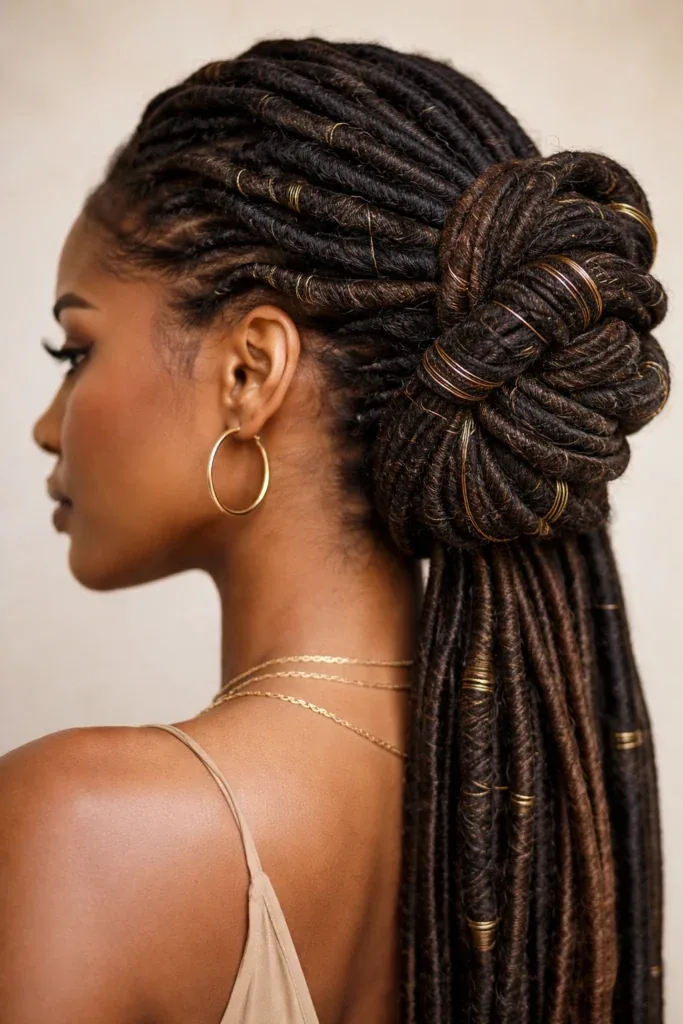
Gold cuffs, beads and wraps are the jewellery of the loc world: small metal rings slid onto the locs, beads threaded onto the ends, and thread or wire wrapped around individual locs. They add shine, colour and personality, they can mark a special occasion, and they are completely removable — the easiest way to change your look without touching the hair itself.
Pros: instant glamour, no commitment, and a wonderful way to dress locs up for an event. Cons: heavy cuffs can pull on fine locs, and cheap metal can tarnish and stain the hair. Who should be careful: women with fine locs — choose lightweight cuffs and do not wear them for weeks at a time. Maintenance: slide the cuffs off to wash, dry them before putting them back, and check the ends of the locs underneath now and then. Quick verdict: accessories are the fastest way to make locs feel new again, and a handful of gold cuffs costs less than a salon visit.
22. Loc Mohawk
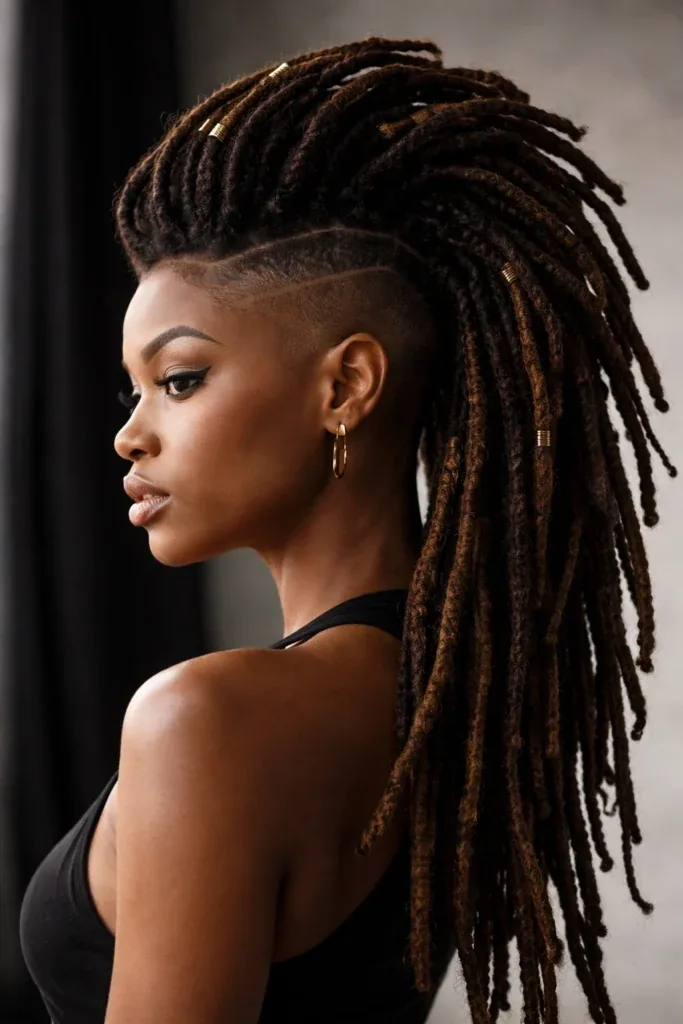
A loc mohawk sweeps the locs up into a ridge down the centre of the head, and it is the boldest style in this guide. The sides are pinned flat or braided close to the scalp, and the locs on top stand up, fall forward, or cascade down the back — a look that is part punk, part regal, and entirely unforgettable. It is a statement style, and it knows it.
Pros: dramatic, unforgettable, and a wonderful way to show off the length and volume of your locs. Cons: it takes time and a lot of pins, and it is not a style for a conservative office. Who should avoid it as a daily look: anyone who wants to blend in — this is a style for being seen. Maintenance: strong pins, a little edge control for the sides, and a mirror. Common mistake: pinning the sides so tightly that the scalp aches — the style should look fierce, not feel painful. Quick verdict: the loc mohawk is a party trick and a power move in one.
23. Curly-Ended Locs
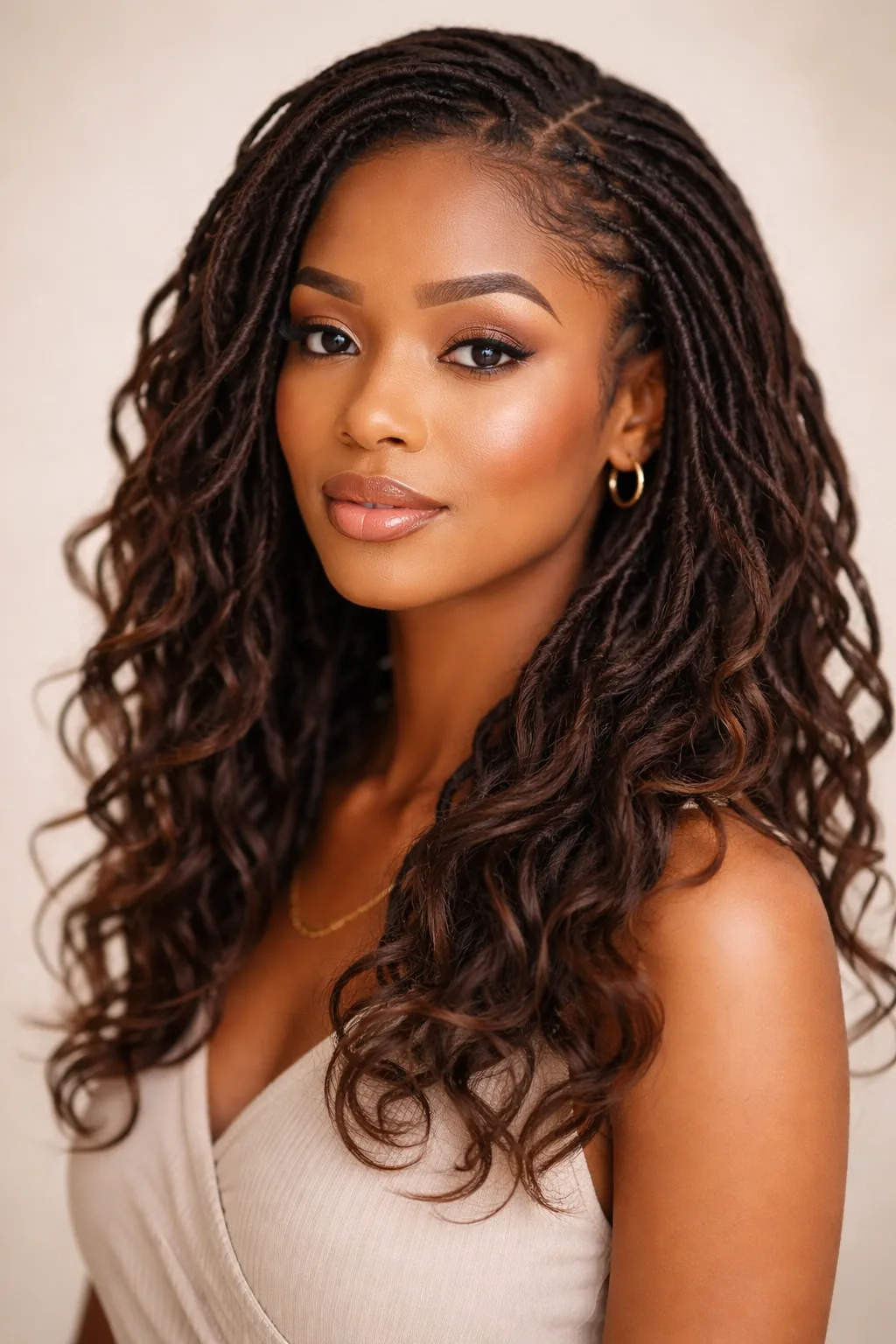
Curly-ended locs are locs with a curl at the tip — created by wrapping the ends around a roller, a rod or a flexi-rod while the locs dry. The curls soften the ends, add bounce and movement, and give the locs a romantic, feminine finish that looks wonderful on medium and long lengths. It is the easiest way to make locs look dressed up without a single pin.
Pros: soft, romantic, adds movement, and the curls last for days. Cons: setting the curls takes time, and the curl drops faster in humidity. Who should love it: women with long locs who want a change without cutting or colouring. Maintenance: set the ends on damp locs with a little mousse, let them dry completely, and unravel gently. Quick verdict: the curls are the loc equivalent of a blowout — a little effort, a lot of payoff, and a look that turns heads.
24. Loc Petal Buns
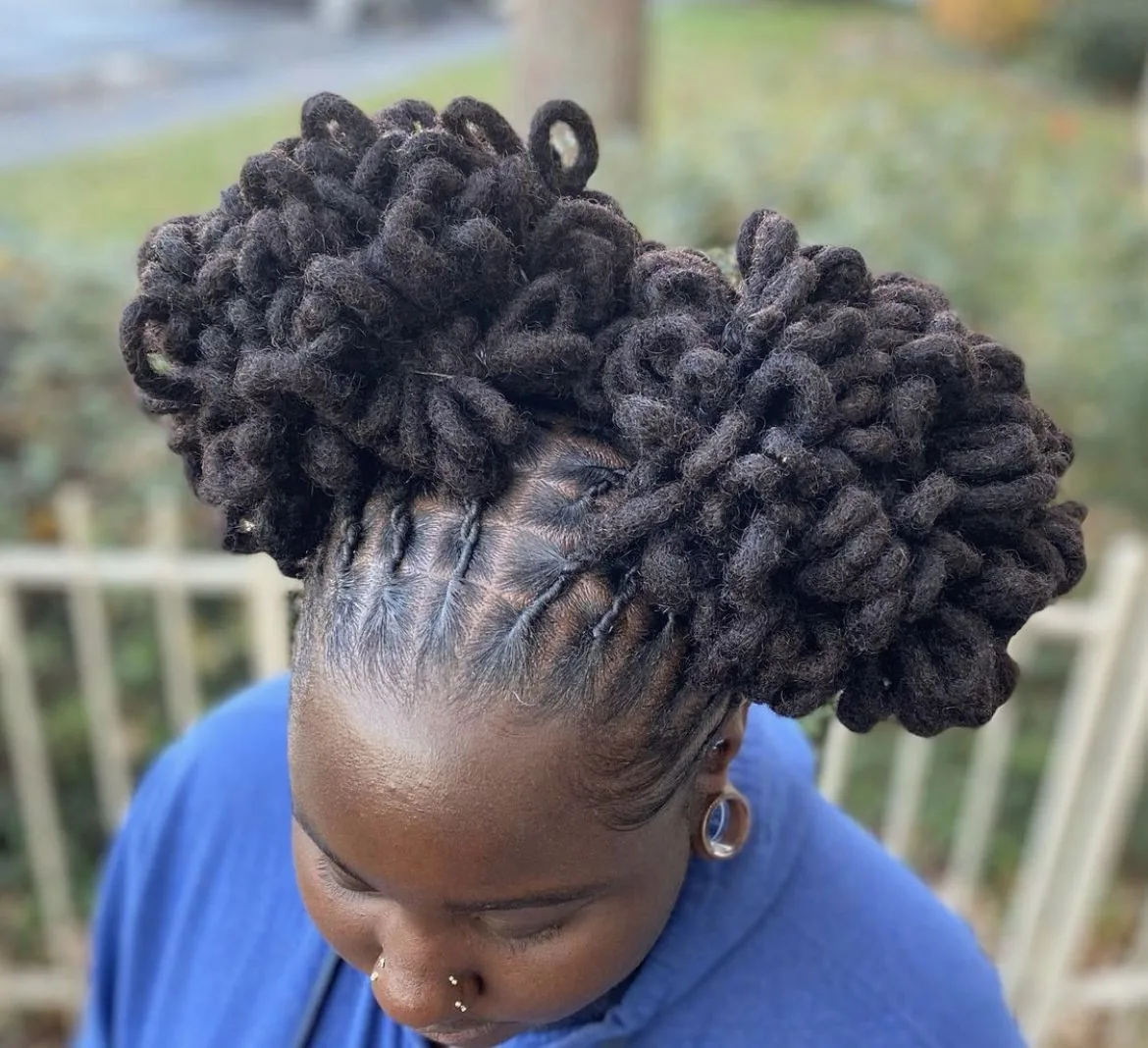
Loc petal buns — also called barrel twists — are formed by twisting sections of locs into flat, petal-shaped rolls that sit on the head like a flower. The style is sculptural and intricate, it keeps all the hair up, and it is one of the most admired protective styles in the loc community. It looks like it took a professional hours, but a skilled loctician can create it in under an hour.
Pros: stunning, protective, keeps the locs tidy for a week or more, and suits formal occasions beautifully. Cons: it usually needs a professional, and the twists can feel tight for the first day. Who should book a loctician: anyone who wants this style for a wedding or a special event — the symmetry matters, and a professional gets it right. Maintenance: a satin bonnet at night, and do not leave the style in for more than two weeks. Quick verdict: the most artistic style in this guide, and the one most likely to be photographed.
25. Loc Top Knot
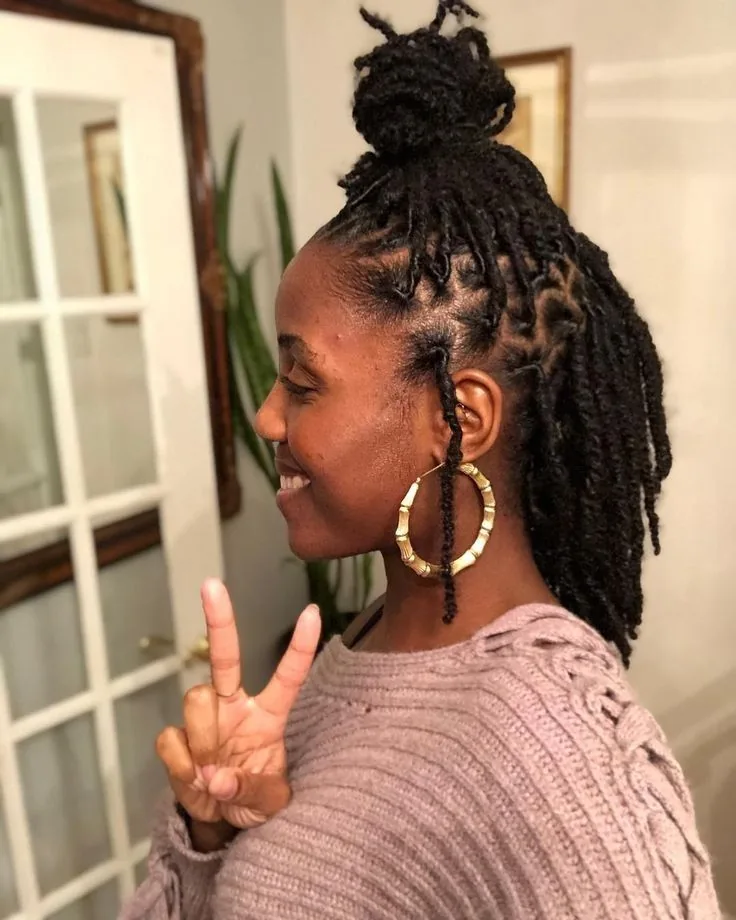
A loc top knot is a single bun sitting high on the crown, and it is the quick, chic cousin of the high bun. It is the style for busy mornings, gym sessions and days when you want your hair up and out of the way in under a minute. The top knot can be neat and smooth or loose and textured, and it pairs with everything from a tracksuit to a blazer.
Pros: the fastest updo there is, keeps the hair completely off the neck, and looks polished with almost no effort. Cons: worn daily, a top knot pulls on the same crown roots, so rotate it with lower styles. Who should avoid wearing it every day: women with fine hair or a tender scalp. Maintenance: a fabric band, a pin or two, and thirty seconds. Common mistake: wrapping the band around the locs too many times — two loops is enough, and a third will snap the band and stress the hair.
26. Locs with an Undercut
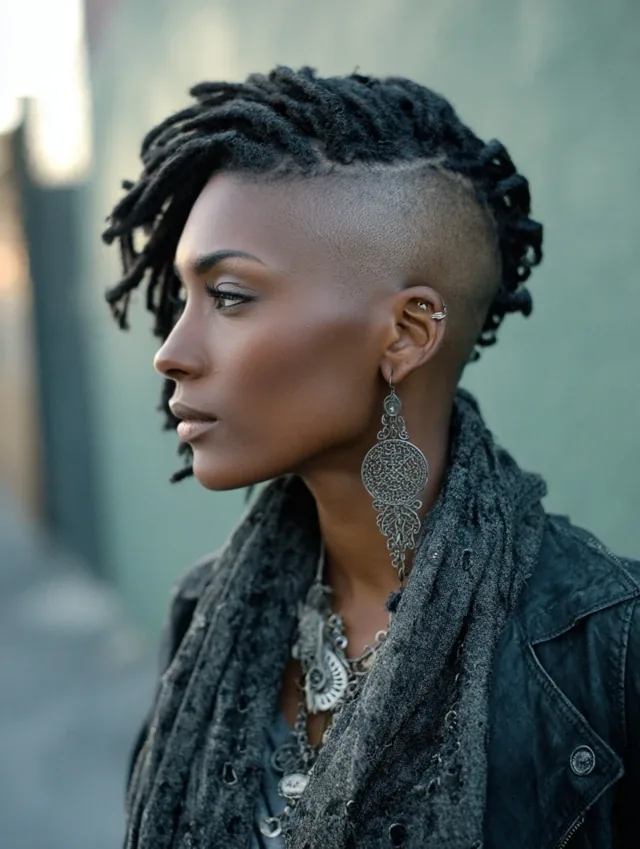
Locs with an undercut pair long locs on top with shaved or closely cut sides, and the contrast is striking: the softness of the locs against the sharpness of the cut, the length on top against the clean lines at the sides. It is a bold, modern look that suits women who want their locs to feel edgy rather than traditional, and it keeps the head cool in summer.
Pros: bold, modern, cooler in hot weather, and the undercut makes the locs on top look even longer. Cons: the undercut needs regular upkeep to stay sharp, and it is a commitment — growing it out takes months. Who should think twice: women who like to wear their locs down and loose, because the shaved sides are always visible. Maintenance: a trim of the undercut every two to three weeks, and a little oil on the shaved area. Quick verdict: the undercut is the loc style for women who want to be remembered.
27. Goddess Locs
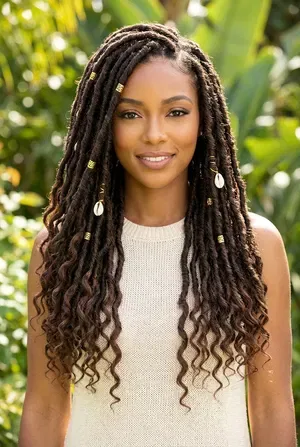
Goddess locs are locs with loose, wavy hair left flowing from the ends and throughout, giving a soft, bohemian look that is lighter and more romantic than traditional locs. The wavy pieces soften the silhouette, add movement, and make the style feel effortless and free — the loc equivalent of beach waves. They suit holidays, festivals and anyone who wants their locs to feel soft rather than structured.
Pros: soft, romantic, full of movement, and the wavy pieces make the locs look fuller. Cons: the loose wavy hair needs more care than the locs themselves, and it can tangle if it is not brushed gently. Who should love them: women who want locs but love the look of loose, flowing hair. Maintenance: a gentle brush through the wavy pieces, a light oil, and a satin bonnet at night. Common mistake: treating goddess locs like regular locs and forgetting the loose hair — it needs its own care, or it will mat.
28. Sisterlocks
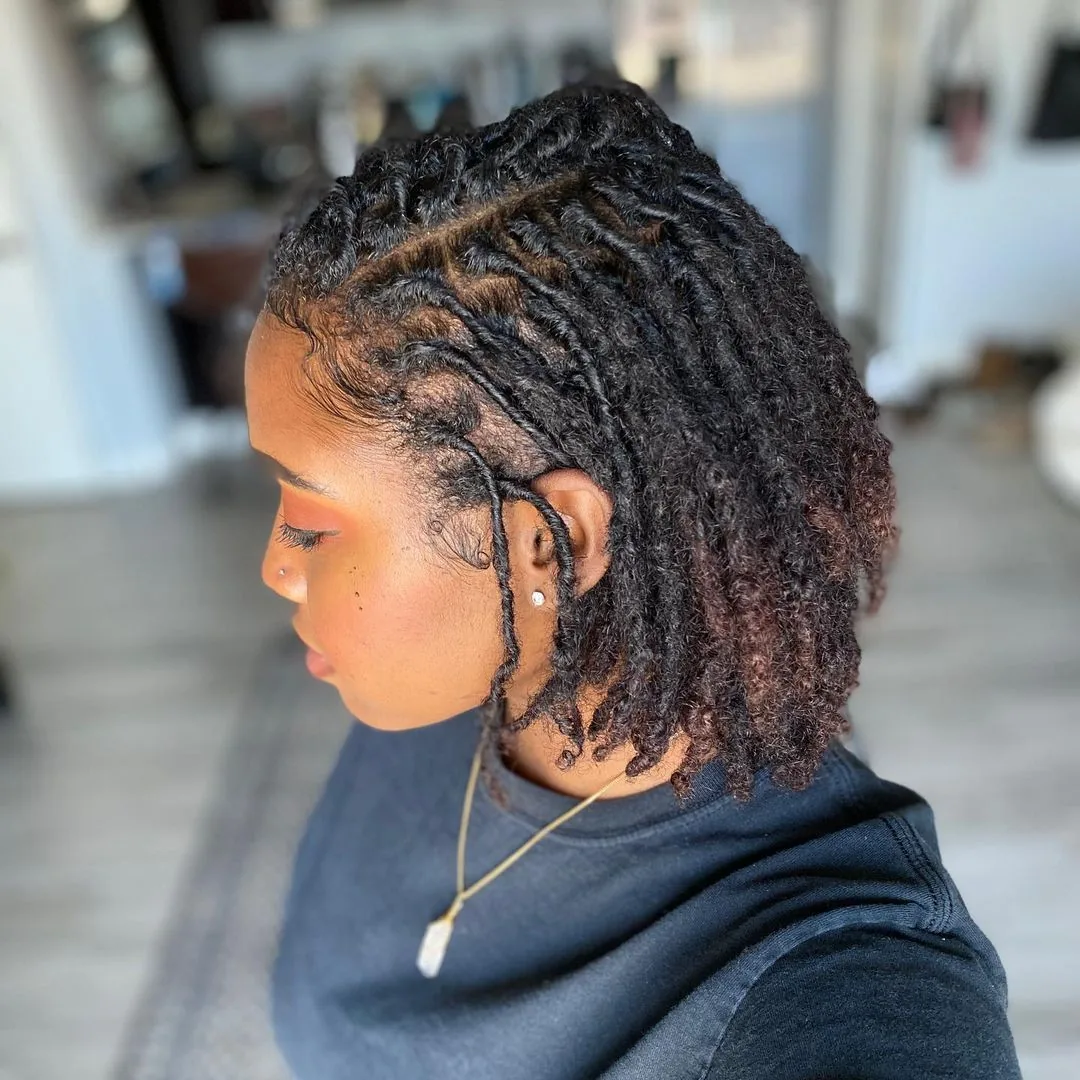
Sisterlocks are very small, fine locs created with a special interlocking tool, and they are the most versatile loc style of all. Because the locs are so small, they behave almost like loose hair: they can be curled, braided, pinned into updos, worn in a bob or a ponytail, and styled in ways that larger locs cannot manage. They are also the neatest loc style, with a precise, grid-like parting that looks immaculate.
Pros: the most styling options of any loc type, neat and precise, and they can be worn in almost any style loose hair can. Cons: installation takes a long time and costs more than other methods, and the locs need a trained Sisterlocks consultant for maintenance. Who should think twice: women who want a quick, cheap start — Sisterlocks are an investment. Maintenance: retightening every four to six weeks with a consultant, and gentle handling of the fine locs. Quick verdict: if you want locs that can do everything loose hair can do, Sisterlocks are the answer — and the price reflects it.
29. Freeform Locs
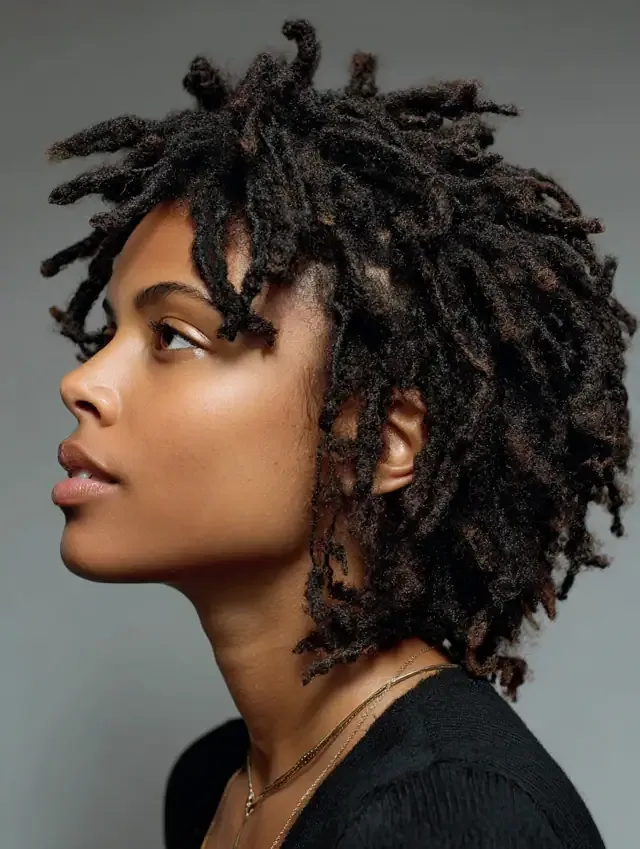
Freeform locs are locs allowed to form naturally, with no twisting, no parting and no retwisting — the hair is simply washed and left alone, and it locks itself into organic, irregular locs over time. The result is the most natural loc style there is: locs of different sizes, shapes and directions, each one unique, with a wild, beautiful energy that no salon can replicate.
Pros: the lowest-maintenance loc style, completely natural, and every head of freeform locs is one of a kind. Cons: the process is unpredictable, the locs can join together into very large ones, and the style is not for women who like neat parts and symmetry. Who should avoid them: anyone who wants a polished, uniform look — freeform locs are gloriously irregular. Maintenance: wash, separate any locs that are joining together if you want to keep them distinct, and otherwise leave them alone. Quick verdict: freeform locs are a philosophy as much as a hairstyle — trust the hair, and let it become what it wants to be.
30. Polished Low Bun for Work

The polished low bun for work is the office-ready version of the low bun: the locs smoothed back, gathered at the nape, and coiled into a neat, compact bun, with the edges laid and the parts clean. It reads as deliberate, professional and finished, and it pairs with a blazer, a suit or a dress without a second thought. It is the style to reach for on interview days, presentation days and any day you want your hair to say you mean business.
Pros: professional, polished, comfortable for a full working day, and kind to the hairline. Cons: it is a little plain for a night out — save the drama for after work. Who should love it: every woman with locs who works in an office, a classroom, a hospital or a courtroom. Maintenance: a fresh retwist before important days, a soft band, and a few pins. Quick verdict: the low bun is the loc style that opens doors — neat, confident and completely professional.
31. Wedding Locs
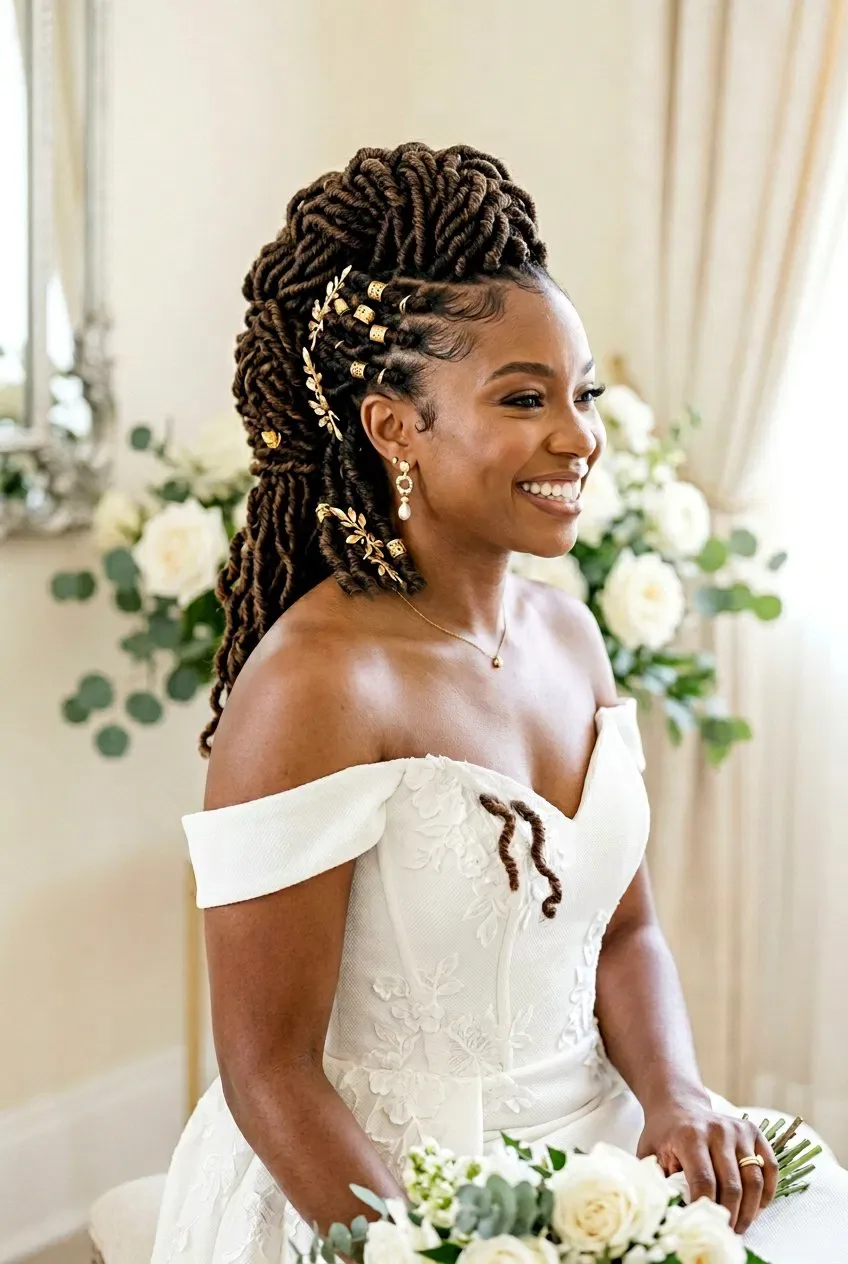
Wedding locs are locs styled for the biggest day of all, and they prove that a bride with locs needs nothing added to be bridal. A loc updo with gold cuffs and a few fresh flowers, locs swept to one side with a delicate headpiece, or a crown braid with a veil pinned into the locs — all of them photograph beautifully, hold their shape through a long day, and look like the bride herself, only more so.
Pros: holds its shape all day, photographs beautifully, and looks like you — not like a wig or a borrowed style. Cons: a bridal loc style needs a trial run, and it usually needs a loctician or a stylist who has done bridal locs before. Who should book a trial: every bride — do not leave the style to the morning of the wedding. Maintenance on the day: almost none, which is exactly what a bride needs. Cost and time: a trial and a day-of appointment, but a style that lasts from the first photograph to the last dance. Quick verdict: the most beautiful bridal hair is the hair you already love — dressed up, not replaced.
32. Loc Pigtails
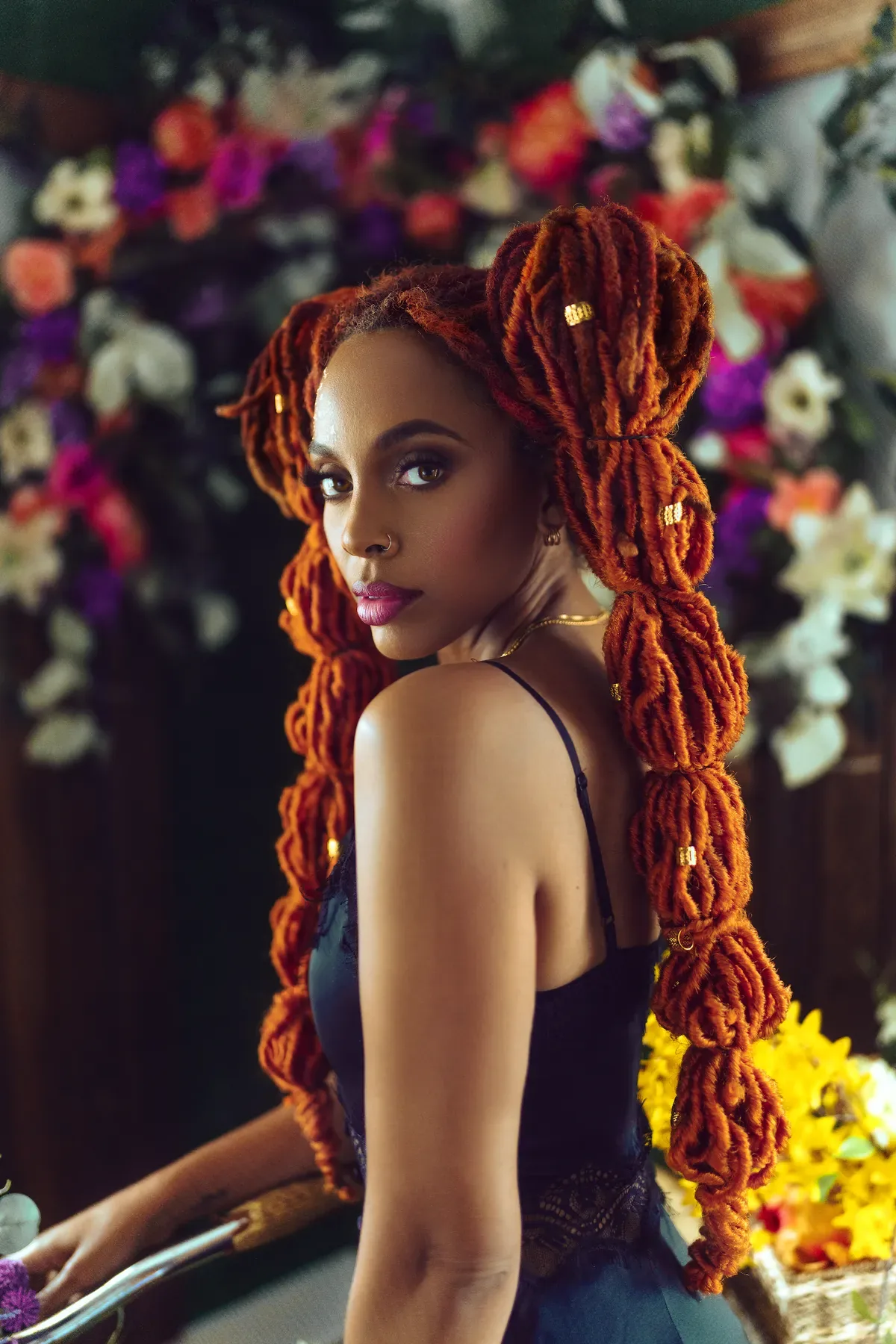
Loc pigtails are two ponytails, one on each side, and they are the most youthful style in this guide after space buns. They are playful, sporty and full of energy — perfect for the gym, a festival, a holiday or a day when you want your hair to match your mood. They work best on medium to long locs, and they look wonderful with a few loose locs left at the front to frame the face.
Pros: fun, youthful, keeps the hair off the face, and takes two minutes. Cons: not the right choice for a formal setting, and the two tails pull on the sides of the scalp, so do not wear them tight every day. Who should avoid them at work: anyone in a conservative office — save pigtails for the weekend. Maintenance: two fabric bands and a mirror. Quick verdict: pigtails prove that locs can be playful at any age — wear them when you feel like having fun.
33. Loc Fishtail Braid
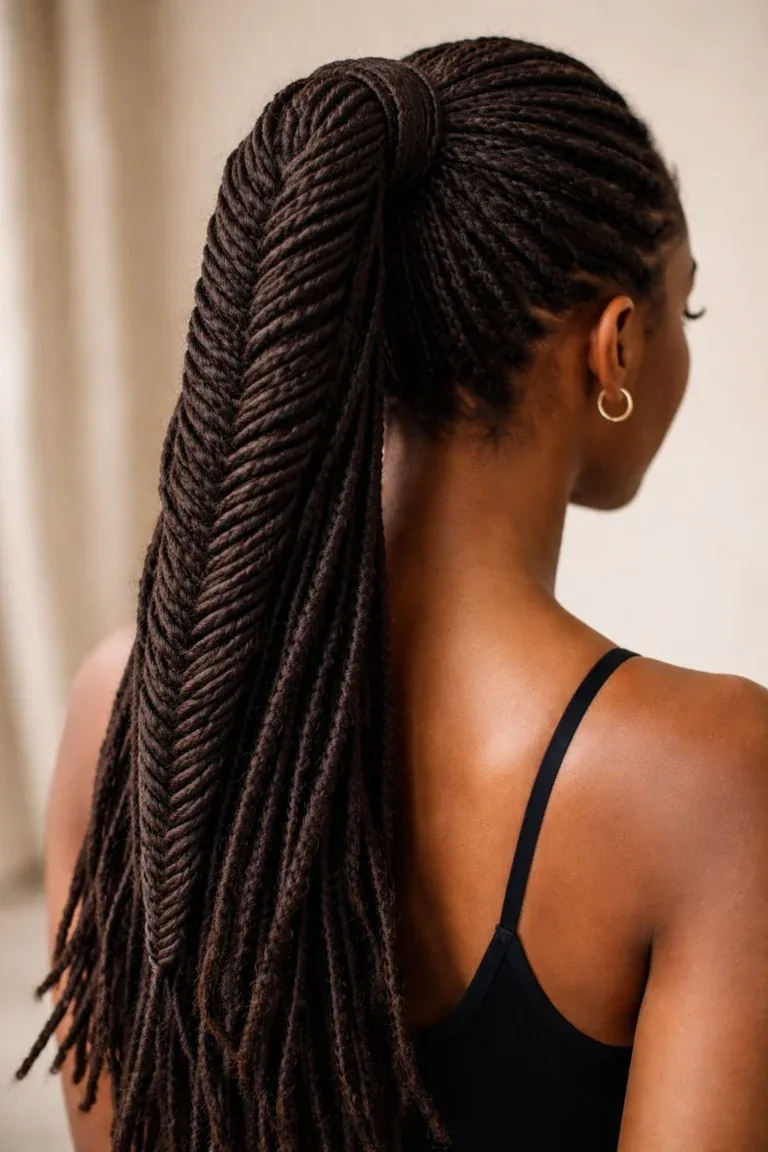
A loc fishtail braid weaves the locs into a wide, flat braid that looks intricate and expensive, and it is one of the best ways to show off long locs. The braid keeps the locs together and protected, it lasts for days, and it looks wonderful over one shoulder or down the back. It is the style for women who want a braid that is more interesting than a plain plait.
Pros: intricate and beautiful, protective, and lasts for days without re-doing. Cons: it takes practice to get the fishtail even, and it needs long locs — shoulder-length hair is too short for a proper fishtail. Who should love it: women with waist-length locs who want a style that shows off every inch. Maintenance: a band at the end, a little oil for shine, and a satin bonnet at night. Common mistake: braiding too tightly at the start — keep the tension gentle at the roots and let the braid loosen as it goes down.
34. Locs with a Headwrap

Locs with a headwrap are a classic pairing: a beautiful scarf or wrap worn over the locs, tied at the front, the side or the back, with the locs falling loose underneath or gathered into a bun. The wrap adds colour and pattern, it protects the locs from sun and dust, and it is a style with deep cultural roots — worn with pride, not as a cover-up. It is also the perfect answer to a bad hair day, a missed retwist, or a day when you simply want to look extraordinary with no effort at all.
Pros: instant style, protects the locs, adds colour and pattern, and works on any length. Cons: a wrap worn too tightly can pull on the hairline, so tie it snugly, not tightly. Who should love it: everyone — a headwrap is the most versatile accessory in the loc world. Maintenance: a silk or satin scarf for the best protection, and a quick tie that takes a minute to learn. Quick verdict: the headwrap is the loc style that never fails — beautiful, practical, and yours in every colour.
What are locs?
Locs are sections of hair that are encouraged to mat and lock together into ropes, instead of being combed apart. They can be started with two-strand twists, comb coils, finger coils, interlocking or braids, and they mature over months into firm, rope-like strands. Locs are a traditional hairstyle with deep roots in African and Caribbean culture.
How long does it take for locs to lock?
Locs usually take 12 to 18 months to fully mature, though the timeline varies with hair type and method. The starter stage lasts three to six months, the budding and teenage stages follow, and by around a year to 18 months most locs feel solid and hold their shape. Patience is part of the process — the frizz and shrinkage in the first year are normal.
How often should you retwist locs?
Most women retwist every four to six weeks. Retwisting more often, or pulling the roots too tight, can cause thinning and traction alopecia, so six to eight weeks is safer for fine hair or a sensitive scalp. Between retwists, the roots growing out and softening is completely normal.
Can you wash locs?
Yes — locs should be washed every one to two weeks with a residue-free shampoo. Work the shampoo into the scalp with your fingertips and let the lather run down the locs, then rinse thoroughly so no shampoo dries inside the locs. Dry them completely afterwards, because damp locs left tied up can develop mildew.
Do locs damage your hair?
Locs do not damage hair on their own, but tight retwisting, heavy styles worn every day, and too much product build-up can cause thinning and breakage. The keys to healthy locs are gentle tension, regular washing, light moisturising, and varying your styles so the same roots are not pulled every day.
Can you style locs for work?
Yes — locs are a professional hairstyle. A low bun, a neatly pinned updo, a side-swept style or a smooth ponytail all look polished at work, especially with a fresh retwist and clean parts. In the United States, the CROWN Act protects the right to wear locs at work in many states.
How do you grow locs long?
Hair grows about half an inch a month, so long locs are about keeping length, not speeding growth. Keep the scalp clean and moisturised, protect locs at night with a satin bonnet, deep-condition regularly, avoid over-bleaching, and trim the very ends now and then to keep them full and strong.
Can you colour locs?
Yes, locs can be coloured, but bleaching weakens the hair, so it is best done by a professional who understands locs. Colouring only the ends, like honey blonde tips, is the gentlest option. Coloured locs need deep conditioning and a colour-safe shampoo to stay strong and keep the colour from fading.
What is the difference between locs and dreadlocks?
The two terms describe the same hairstyle, but many women prefer the word locs, because dreadlocks carries negative historical associations. Locs is the respectful, modern term, and it is the one used throughout this guide.
How do you sleep with locs?
Protect your locs at night with a satin bonnet, a satin scarf or a satin pillowcase. Satin stops the locs from drying out and snagging while you sleep, keeps the style neat for longer, and reduces frizz. Never sleep with wet locs tied up, because trapped moisture can cause mildew and a musty smell.
Conclusion
Locs are a journey, not a destination — and that is what makes them so rewarding. From the first twists to waist-length locs that swing when you walk, every stage has its own beauty, its own styles and its own lessons in patience. Whether you wear a short bob, a high bun, a crown braid, burgundy locs or a headwrap on a Sunday morning, the style is yours in a way no other hairstyle quite manages: grown, tended and shaped by your own hands over months and years.
Start where you are. If you are thinking about locs, talk to a loctician, look at the starter methods, and choose the one that fits your hair and your life. If you already have locs, try a style from this list you have never worn — a crown braid, a petal bun, a fishtail, or a splash of colour at the ends. Wash them, moisturise them, vary your styles, and give them time. The locs will do the rest, and the woman in the mirror a year from now will be glad you started.