The Blunt Bob, Done Right: 41 Sharp, Sleek and Textured Cuts for Every Face Shape
There is a reason the blunt bob never leaves the salon chair: one clean, level line can do what layers, colour and styling products only promise. Cut straight across at a single length, with no graduation and no feathering to soften the edge, a blunt bob makes hair look thicker, glossier and more deliberate in a single appointment. It is the haircut for women who are tired of styles that need coaxing every morning — the line holds its shape, the silhouette reads from across a room, and the whole look says you meant it.
This guide collects 41 blunt bob haircuts for women, from the classic chin-length cut to jaw-length, shoulder-length and grown-out versions, with blunt bangs, curtain bangs, asymmetrical and inverted shapes, textured ends, and ideas for fine, thick, curly and straight hair, for round, oval, square, long and heart-shaped faces, and for every age from your twenties to your sixties and beyond. Eight guides answer the questions women actually ask before they book: what a blunt bob really is, how it differs from a layered bob, which lengths flatter which faces, how it behaves on each hair type, how to style it at home in minutes, what to tell your stylist, and the mistakes that turn a sharp line into a triangle. Every style comes with an honest note on who it suits, what it costs in time and upkeep, and what can go wrong — so the cut you leave with is the one you pictured.
What a Blunt Bob Is — One Clean Line, No Layers
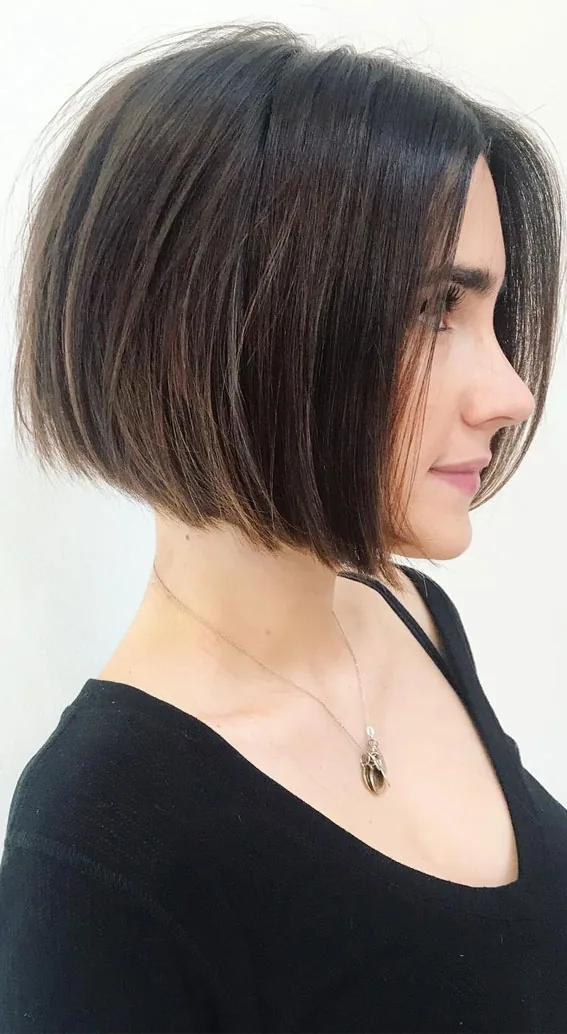
A blunt bob is a bob cut to one single length, with the ends cut straight across in a level line and no layering through the interior. The perimeter is the whole point: where a layered bob softens and thins the ends, a blunt bob keeps every hair at the same length so the edge looks solid, heavy and deliberate. The cut usually sits between the jaw and the shoulders, and the line is checked strand by strand — the stylist combs the hair straight down, cuts across, and then refines the edge so it hangs perfectly even when you turn your head.
That single line is why the blunt bob flatters so many women and intimidates a few. It makes fine hair look twice as thick, because no hair has been removed from the ends; it makes healthy hair look glossier, because the flat edge catches the light in one sweep; and it gives a face a frame that is unmistakably intentional. The trade-off is honesty: a blunt line shows uneven growth, split ends and a bad cut faster than any layered style, so it rewards women who keep their trims on schedule and their hair in good condition. If you want a cut that does the talking, this is it.
Blunt Bob vs Layered Bob: Which One Is Right for You?
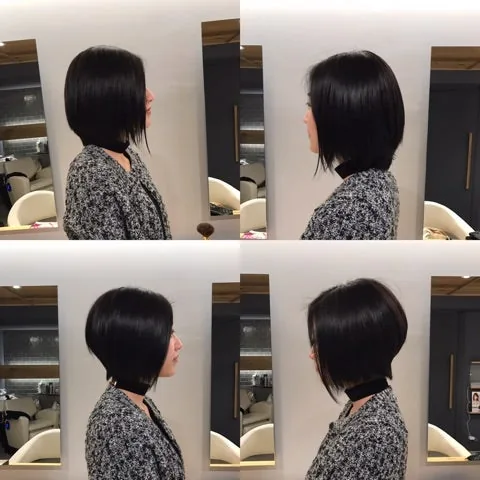
The difference between a blunt bob and a layered bob is not length — it is weight. A blunt bob keeps all the weight at the bottom, in one solid line, so the hair looks thick, sleek and graphic. A layered bob removes weight from the interior and the ends, so the hair moves more freely, dries with more volume and looks softer around the face. Put side by side, the blunt bob reads as a statement and the layered bob reads as a shrug; neither is better, but they suit very different hair and very different mornings.
Choose the blunt bob if your hair is fine or medium and you want it to look thicker, if you love a sleek, polished finish, and if you are happy to trim every five to six weeks to keep the line sharp. Choose the layered bob if your hair is very thick and a blunt line would flare into a triangle, if you want wash-and-go volume, or if you hate the feeling of a heavy edge sitting on your neck. One honest warning: a blunt bob on very thick, very curly hair can widen at the bottom unless the stylist removes some bulk from underneath, while a layered bob on very fine hair can leave the ends looking wispy. Tell your stylist your hair’s real behaviour, not the hair you wish you had, and let that decide.
The Best Blunt Bob Lengths, From Chin to Shoulder
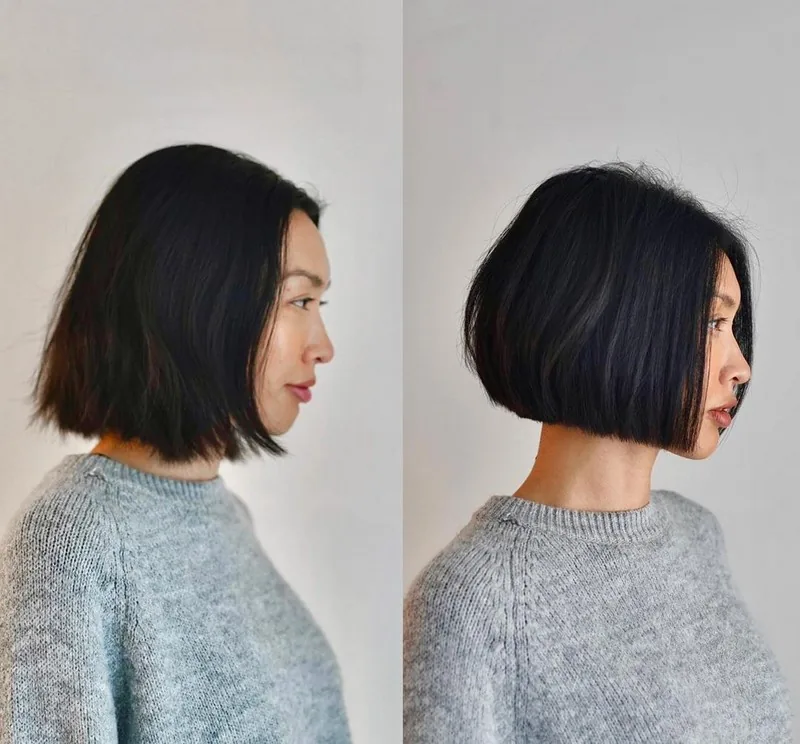
Length changes everything about a blunt bob, because the line lands on a different part of your face at each point. A chin-length blunt bob ends right at the chin and is the boldest choice: it frames the mouth and jaw, shows off the neck completely, and makes the cut the first thing anyone notices. A jaw-length bob — the classic — ends just below the jaw, which is the most forgiving spot: it lengthens a round face, softens a square one, and suits almost every hair type. A shoulder-length blunt bob, sometimes called a blunt lob, ends at the collarbone and is the gentlest entry point, because it can still be tied back on a bad day.
When you choose, think about your face and your life in equal measure. Chin-length suits oval and long faces best and women who love a strong look; jaw-length suits nearly everyone and is the length to start with if you are unsure; shoulder-length suits women who are nervous about going short, who want to keep a ponytail option, or whose hair is so thick that a shorter blunt line would flare outward. Ask your stylist to cut the bob a fraction longer than planned — hair springs up as it dries, and a blunt line cut too short cannot be fixed without waiting. Cost and time: the shorter the bob, the more often it needs trimming, so a chin-length cut means a salon visit every four to five weeks, while a shoulder-length version can stretch to seven or eight.
Blunt Bobs by Face Shape: Where the Line Should Land

A blunt bob is a strong shape, so where its line lands on your face matters more than with a softer cut. Oval faces can wear the line almost anywhere — chin, jaw or shoulder — because nothing needs correcting, and the choice comes down to how bold you want to be. Round faces suit a bob that ends just below the jaw with a middle or deep side part, because the extra length draws the eye downward and the parting breaks the circle. Square faces look softer when the line ends below the jaw and the ends are given the slightest inward bend, which rounds off the jaw instead of echoing it.
Long faces benefit most from a chin-length blunt bob with a fringe, because the horizontal line of the cut and the fringe together shorten the face visually. Heart-shaped faces suit a jaw-length bob with soft, face-framing pieces or curtain bangs, which balance a wider forehead against a narrower chin. The mistake to avoid is a chin-length blunt bob with a straight-across fringe on a round or square face — two hard horizontal lines stacked on top of each other can make the face look wider, not sharper. Bring a photo of the length on a face like yours, and ask your stylist to show you where the line will sit when your hair is dry, not wet.
Blunt Bobs by Hair Type: Fine, Thick, Curly and Straight
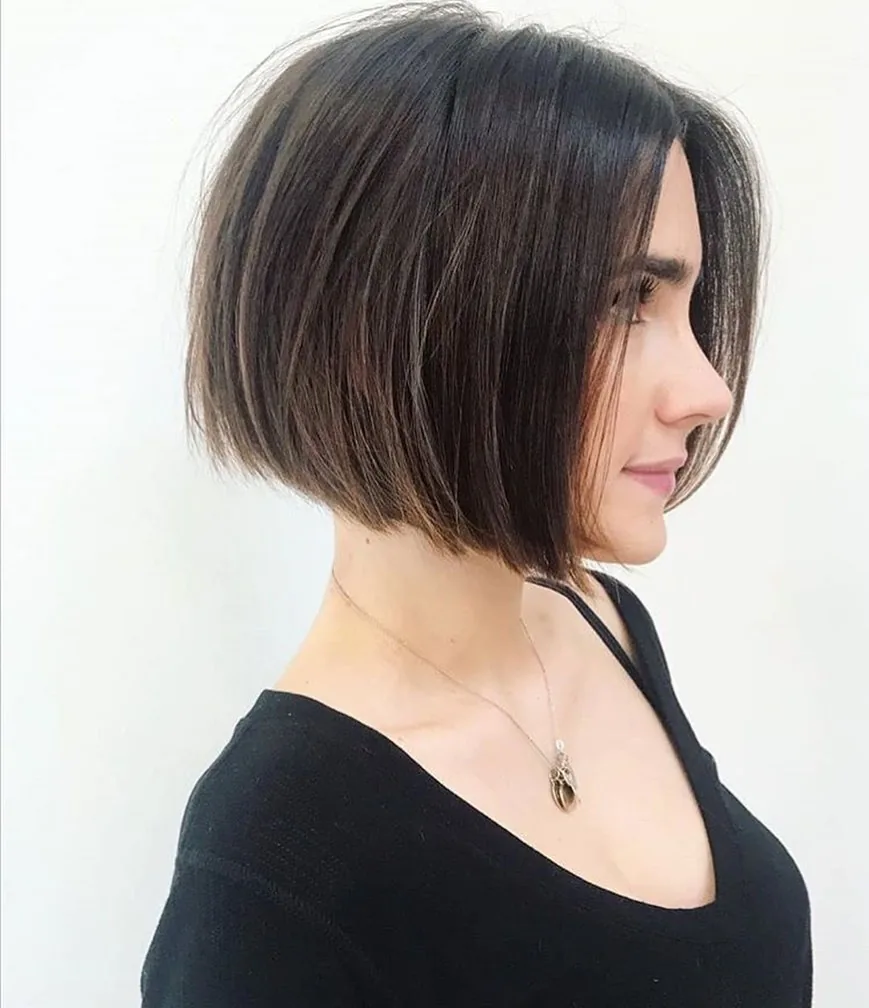
Fine hair is the blunt bob’s best friend. Because nothing is layered away, every strand counts toward the edge, and the solid line makes fine hair look full, healthy and deliberately styled rather than thin. The secret is keeping the cut truly blunt: ask for no thinning at the ends, and keep the length at or above the shoulders, where fine hair has the least weight pulling it flat. A little root lift from a volumising mousse is usually all the styling fine hair needs in a blunt bob.
Thick hair needs the opposite approach: the line stays blunt on the outside, but the stylist removes bulk from underneath so the bob does not flare into a triangle. Curly hair can wear a blunt bob beautifully, but it must be cut dry, curl by curl, and left an inch longer than planned to allow for shrinkage — a blunt line cut wet on curly hair will spring up two inches shorter when dry. Straight hair shows the blunt line at its sharpest and glossiest, which is the point, but it also shows every uneven strand, so a precise cut and a regular trim matter most here. Whatever your hair type, the rule is the same: the cut must be shaped for the hair you actually have.
How to Style a Blunt Bob at Home in Five Minutes
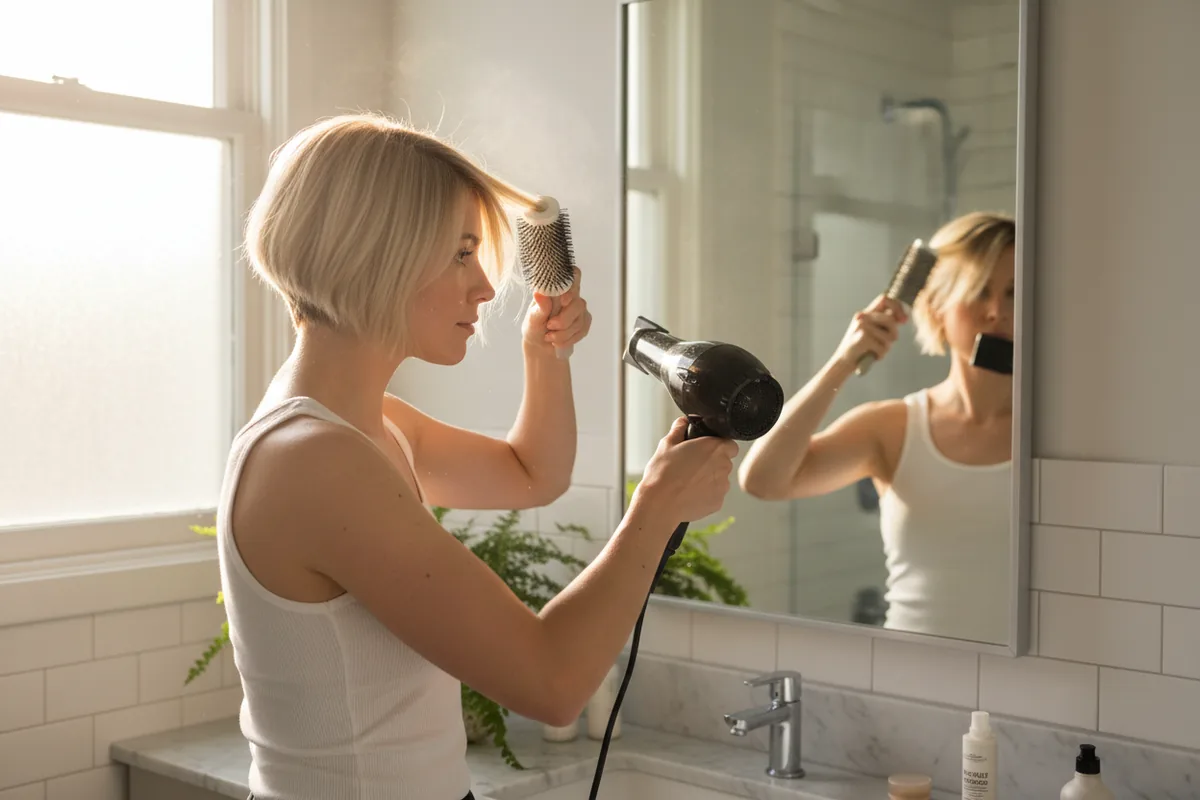
A blunt bob earns its keep in the morning, because the cut does most of the work and the styling is mostly about the ends. Start with damp hair and a pea-sized amount of smoothing cream or a light serum worked through the lengths only — never at the roots, or the crown will go flat. Blow-dry with a paddle brush, pulling the hair straight down, and finish by bending the ends very slightly under with a flat iron, one section at a time. That tiny inward bend is what keeps a blunt bob looking intentional instead of severe; without it, the line can flip outward by midday.
On a lazy day, skip the heat entirely: let the bob air-dry with a little leave-in cream, then smooth the top layer with a flat iron and tuck one side behind your ear. Pros of the routine: five minutes, one tool, no round brush required. Cons: a blunt bob does need heat on the ends most mornings, and it will not survive sleeping on it without a quick revival — a spritz of water and a pass of the iron is usually enough. Common mistake: using too much product, which makes the solid edge look greasy by lunchtime. Start with half as much as you think you need, and add more only if the ends still look dry.
What to Ask Your Stylist Before the Scissors Come Out
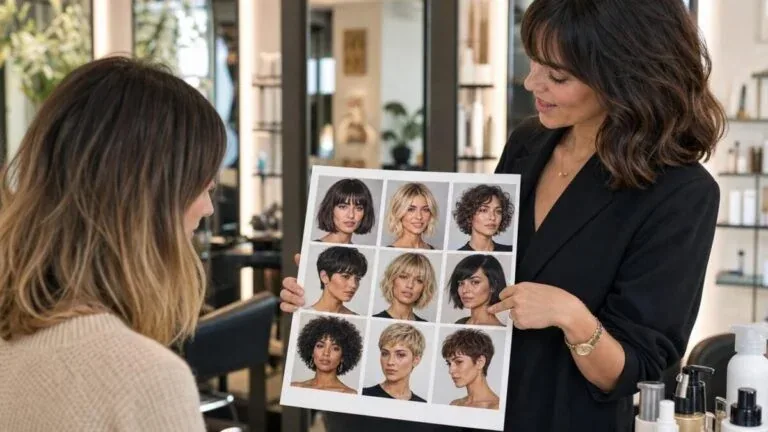
A blunt bob punishes vague instructions more than almost any other cut, because there is nowhere to hide a misunderstanding — the line is either level or it is not. Go in with two or three photos of women with hair like yours, and point at the specifics: exactly where the line should end when your hair is dry, whether the ends should be razor-sharp or given a whisper of texture, and whether you want a fringe and how long it should be. Say the words blunt bob out loud, and describe what you do not want too: no layers through the interior, no graduation at the back, no thinning at the ends.
Then ask three questions before the first cut: where will the length sit when my hair is dry, how will you keep the line level on both sides of my head, and how often will I need a trim to keep this edge? A good stylist will answer all three without hesitation, will cut the bob a touch longer than planned, and will check the line with your head held straight, then tilted, then turned. Maintenance: trims every five to six weeks, and a fringe trim in between if you have one. Quick verdict: the consultation matters more for this cut than for any layered style, because a blunt bob is defined by a single line — and a photo is worth a thousand adjectives.
Common Blunt Bob Mistakes — and How to Keep the Line Sharp
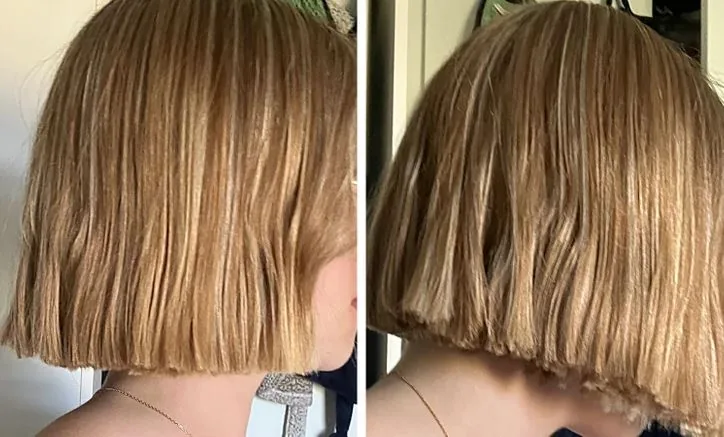
The most common blunt bob mistake is letting the line go too long between trims. A blunt edge that is three weeks overdue no longer looks sharp — it looks straggly, the ends split, and the bob starts to flip outward at the jaw. The second mistake is the opposite: cutting the bob too short on the first visit, which cannot be undone without months of growing. The third is over-thinning the ends to remove bulk, which quietly turns a blunt bob into a layered one and destroys the solid edge that was the whole point.
Other mistakes are quieter but just as real. Blow-drying the ends straight out instead of slightly under makes the bob flare into a triangle, especially on thick hair. Using heavy oils or serums at the roots weighs the crown flat and makes the line look greasy. Skipping a heat protectant before the flat iron frays the very edge you are trying to keep sharp. Who should think twice: women who visit the salon twice a year and want a cut that holds its shape for months — a blunt bob needs a trim every five to six weeks, and the schedule is not optional. The fix for almost every mistake is the same: a stylist who cuts the line level, checks it dry, and books your next trim before you leave.
1. The Classic Chin-Length Blunt Bob
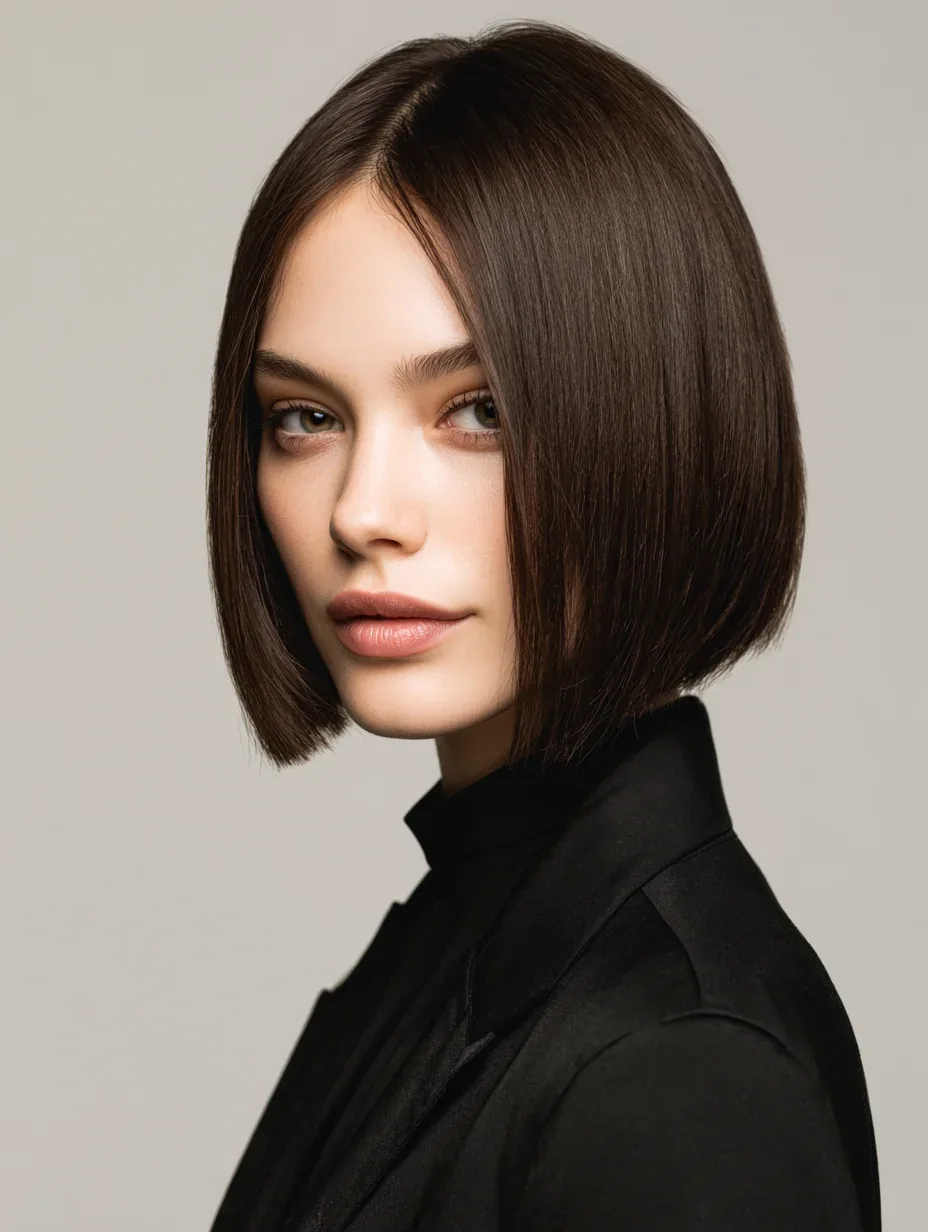
The classic chin-length blunt bob is the cut in its purest form: one level line ending exactly at the chin, no layers, no graduation, and an edge so clean it looks drawn with a ruler. It frames the mouth and the jaw in a single bold stroke, exposes the neck completely, and gives the whole head a sculpted, graphic quality that softer cuts never achieve. It is the bob for women who like their style to be noticed — the line does the talking, and everything else about the look stays quiet.
Best for: oval and long faces, fine to medium hair, and women who love a strong, polished look. How to style: blow-dry straight down with a paddle brush and bend the ends a fraction under with a flat iron; a pea-sized amount of shine serum on the ends only is enough. What to ask: for the line to sit at the chin when dry, checked on both sides with your head level. Common mistake: cutting it wet to chin length — it springs up shorter when dry, so ask your stylist to cut it a touch long and refine it dry. Quick verdict: the boldest blunt bob on this list, and the one that rewards confidence most.
2. The Jaw-Length Blunt Bob
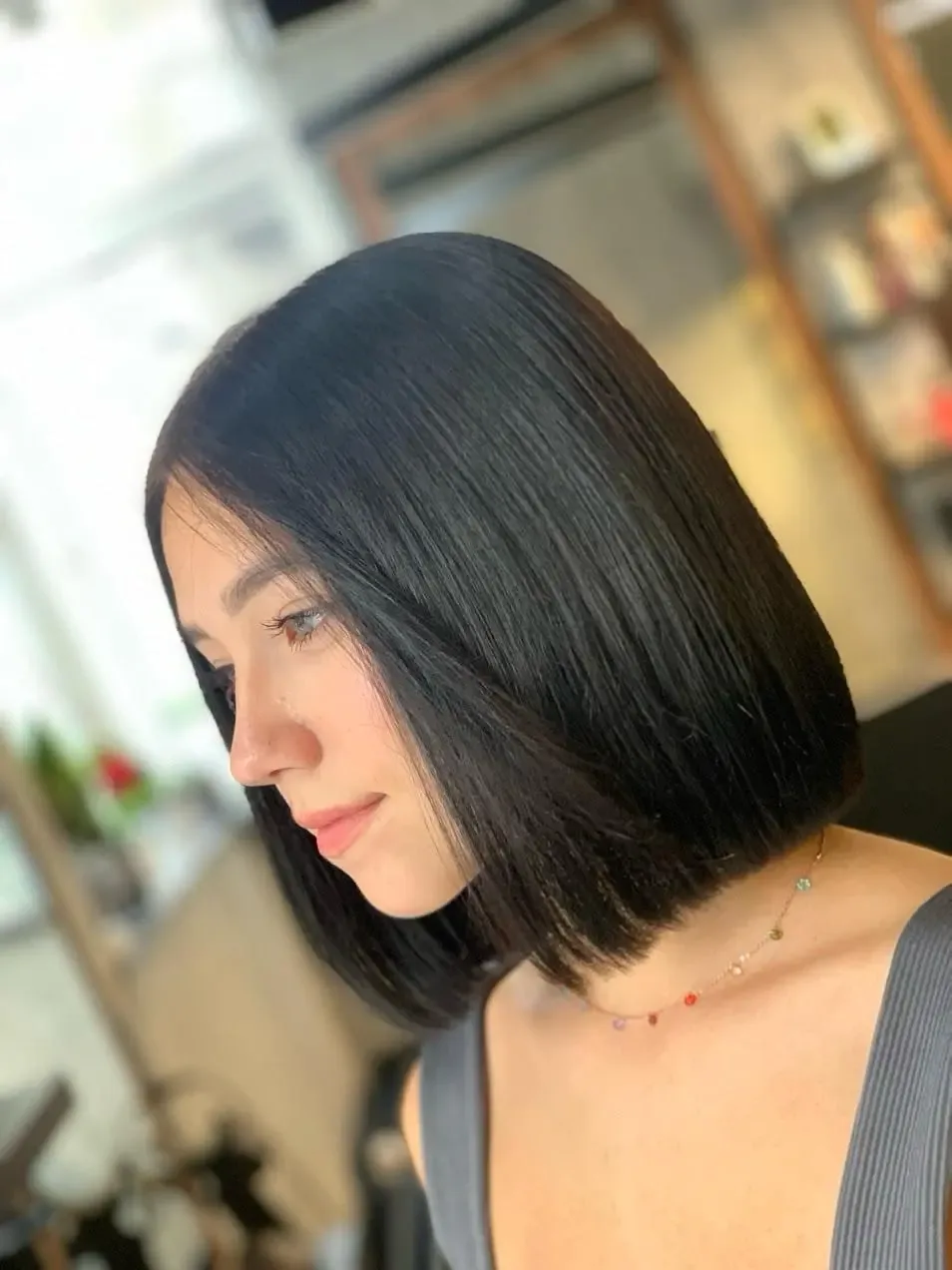
The jaw-length blunt bob is the version most women picture when they say blunt bob, and for good reason: the line lands just below the jaw, which is the most forgiving spot on almost every face. It lengthens a round face, softens a square one, and gives an oval face a clean, balanced frame. The length is short enough to feel like a real change and long enough to tuck behind the ears, which makes it the easiest blunt bob to live with day to day.
Pros: suits nearly every face shape, dries in minutes, and looks polished with almost no effort. Cons: it needs a trim every five weeks to keep the line, and it will not survive a night of sleeping on it without a quick iron pass in the morning. Who should avoid it: women who love to tie their hair up — there is nothing to gather at this length. Maintenance is light but regular: a trim every five weeks, a little smoothing cream, and a heat protectant before the flat iron. Cost and time: short salon visits, about five minutes of styling a day. Quick verdict: if you are trying a blunt bob for the first time, start here.
3. The Shoulder-Length Blunt Bob
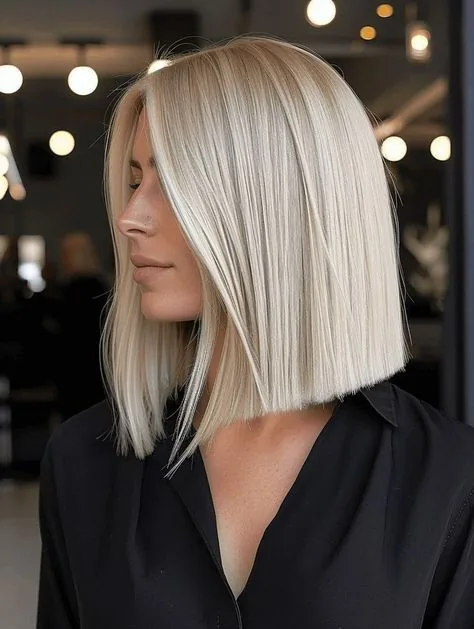
The shoulder-length blunt bob — the blunt lob — is the gentlest way into the style: the same solid, level line, but ending at the collarbone instead of the jaw. It keeps the thick, expensive look of a blunt edge while holding on to a low ponytail for the gym, a half-up style for work, and a safety net for women who are nervous about going short. It is also the blunt bob that flatters the widest range of hair types, because the extra length gives thick hair somewhere to go instead of flaring outward.
Best for: women trying a blunt cut for the first time, thick hair, and anyone who wants a ponytail option. How to style: blow-dry straight with a paddle brush, then bend the ends under; on second-day hair, a low ponytail or a half-up twist keeps it looking deliberate. What to ask: for the line to sit at the collarbone and for bulk to be removed from underneath, never from the edge itself. Common mistake: letting the back grow longer than the front, which turns the line into a slope — ask your stylist to check the line from behind. Quick verdict: the most forgiving blunt bob, and the best starting point if short hair scares you.
4. Blunt Bob With Blunt Bangs
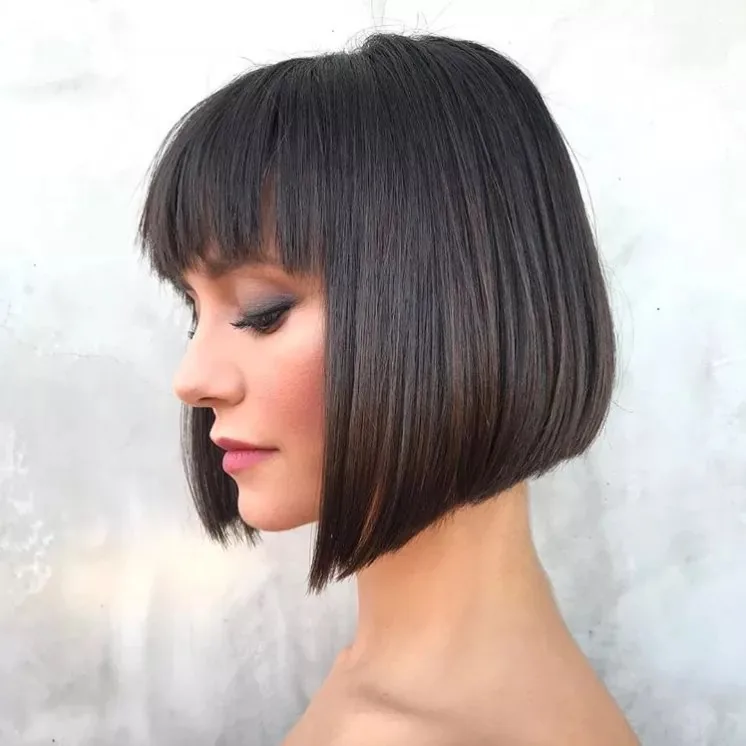
A blunt bob with blunt bangs is two straight lines working together: the level edge of the bob and a straight-across fringe that ends at or just above the brows. The combination is bold, graphic and unmistakably deliberate — it shortens the forehead, frames the eyes, and gives the whole cut a sharp, editorial quality. It suits oval and long faces best, and it is the version that photographs most strikingly, because the two lines create a frame that draws every eye to the face.
Pros: unforgettable, very flattering on long faces, and it makes the bob look intentional rather than accidental. Cons: a blunt fringe needs a trim every three to four weeks, and it cannot be hidden on a bad day. Who should avoid it: round faces, where two hard horizontal lines can make the face look wider, and anyone with a strong cowlick at the front. Maintenance: fringe trims every three to four weeks, bob trims every five. Cost and time: the most salon-dependent version on this list, but only five minutes of styling a day. Quick verdict: the blunt bob at its most dramatic — wear it only if you love being looked at.
5. Blunt Bob With Curtain Bangs

Curtain bangs soften a blunt bob without weakening it: the fringe parts in the middle, falls on either side of the face, and blends into the sides of the bob, so the sharp line of the cut is balanced by a gentle frame around the forehead. The effect is the best of both worlds — the thick, solid edge below and a soft, forgiving opening above — and it suits round, square and heart-shaped faces particularly well, because the diagonal sweep of the bangs breaks up the face’s width.
Pros: grows out gracefully, needs almost no styling, and flatters almost every face shape. Cons: curtain bangs need a trim every six weeks to keep their shape, and they can fall into the eyes if they are cut too long. Who should avoid it: very fine hair, where a curtain fringe can look thin and disappear into the bob. How to style: blow-dry the bangs pushed to the sides with your fingers, and let the bob’s line do the rest. Quick verdict: the softest fringe for a blunt bob, and the one most women end up keeping.
6. Blunt Bob With Wispy Bangs
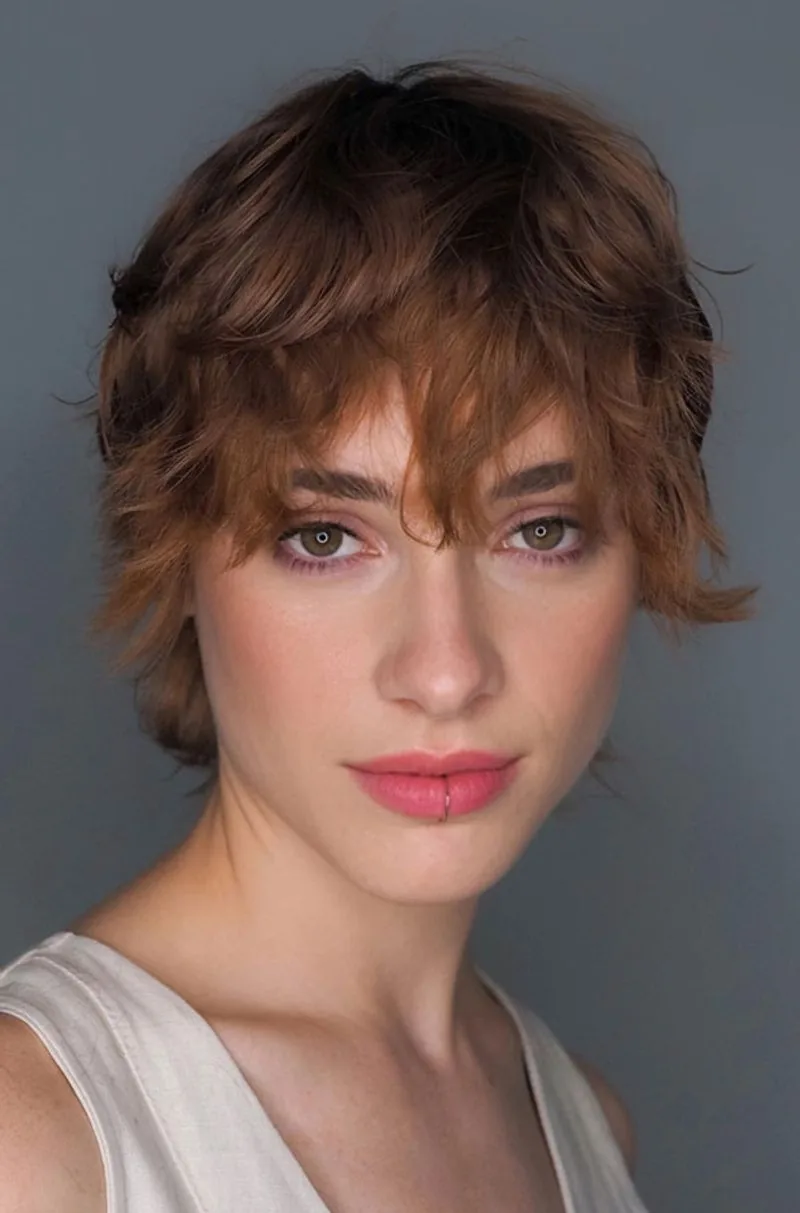
Wispy bangs are the gentlest fringe you can pair with a blunt bob: cut thin and feathered, they soften the forehead without drawing a hard line across it, and they keep the bob’s sharp edge from feeling severe. The contrast is the charm — a feather-light fringe above, a solid line below — and the combination suits women who want the polish of a blunt bob without the drama of a blunt fringe. It works beautifully on round and square faces, where the softness of the fringe takes the edge off strong angles.
Pros: low effort, grows out gracefully, and hides bad hair days better than any other fringe. Cons: a wispy fringe can disappear entirely on very thick hair, and it needs a trim every five weeks to stop it looking straggly. Who should avoid it: women with a strong cowlick at the front, where a wispy fringe has too little weight to hold it down. Maintenance is light: a trim every five to six weeks for the bob, a quick blow-dry with the fringe pushed forward. Quick verdict: the easiest fringe to live with, and the best first step if you have never had bangs.
7. Blunt Bob With Micro Bangs
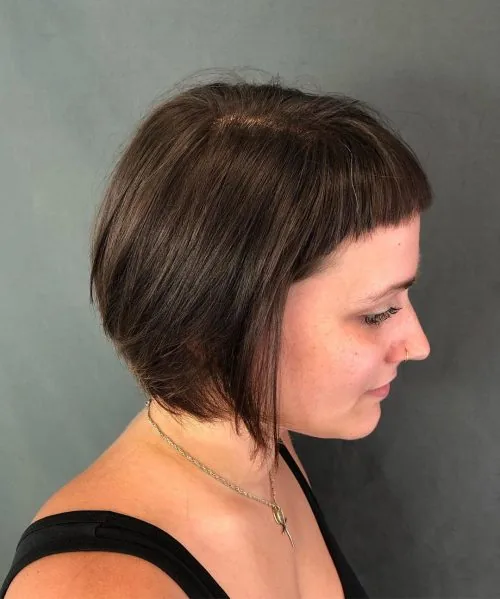
Micro bangs with a blunt bob are the boldest pairing on this list: a short, straight fringe ending well above the eyebrows, sitting above a sharp, level bob line. The two short horizontals echo each other, and the whole cut reads as deliberate, editorial and very confident. It suits long and oval faces especially well, because the open forehead is balanced by the strong line of the fringe, and it gives the bob a fashion-forward edge that a longer fringe never quite reaches.
Pros: unforgettable, very flattering on oval and long faces, and it makes the bob look like a choice rather than an accident. Cons: micro bangs are unforgiving — they need a trim every three weeks, they cannot be pinned back, and they demand confidence to wear. Who should avoid it: women with a strong cowlick, round faces, or anyone who is unsure — grow a longer fringe first and cut it shorter later. Common mistake: cutting micro bangs too wide across the forehead, which makes the face look narrower; keep them narrow and let the bob do the framing. Quick verdict: the blunt bob for women who have already worn the classic version and want something bolder.
8. The Asymmetrical Blunt Bob
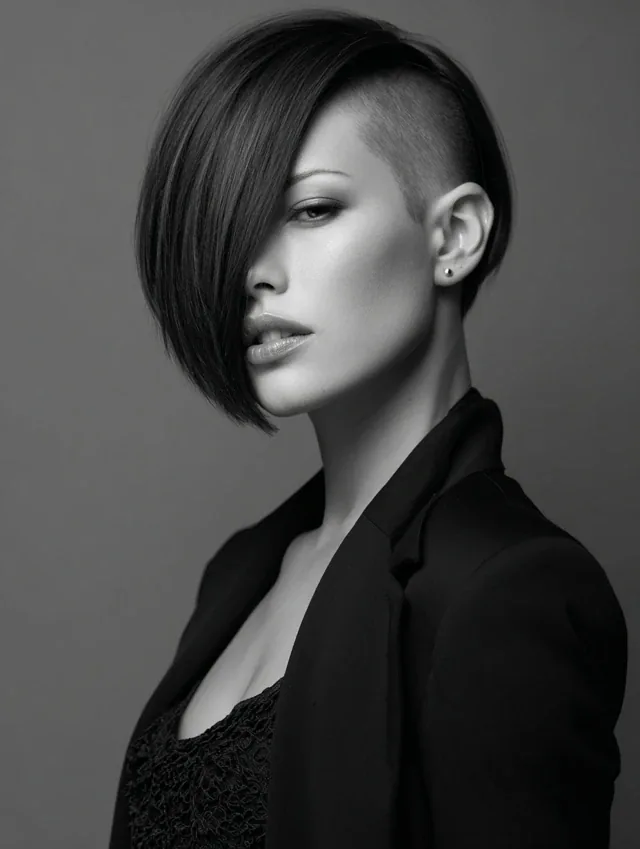
An asymmetrical blunt bob takes the classic level line and tilts it: one side sits an inch or two longer than the other, so the cut has a deliberate, off-balance energy that feels modern and a little rebellious. The longer side sweeps forward and frames the face, the shorter side shows off the jaw and the ear, and the contrast gives a familiar cut a completely new personality. It works best with a deep side part, which emphasises the asymmetry and lets the longer side fall in a sleek, glamorous sweep.
Best for: oval and heart-shaped faces, and women who love the blunt look but want something with more edge. How to style: blow-dry the longer side forward and under, tuck the shorter side behind the ear, and finish with a light serum. What to ask: for the difference to be clear but wearable — about an inch and a half — and for the line to be checked dry, because asymmetry is unforgiving when it drifts. Common mistake: letting the asymmetry grow out unevenly, so it looks accidental rather than deliberate; trims every four to five weeks keep it sharp. Quick verdict: the blunt bob for a second bob, when the classic version no longer feels like enough.
9. The Inverted Blunt Bob
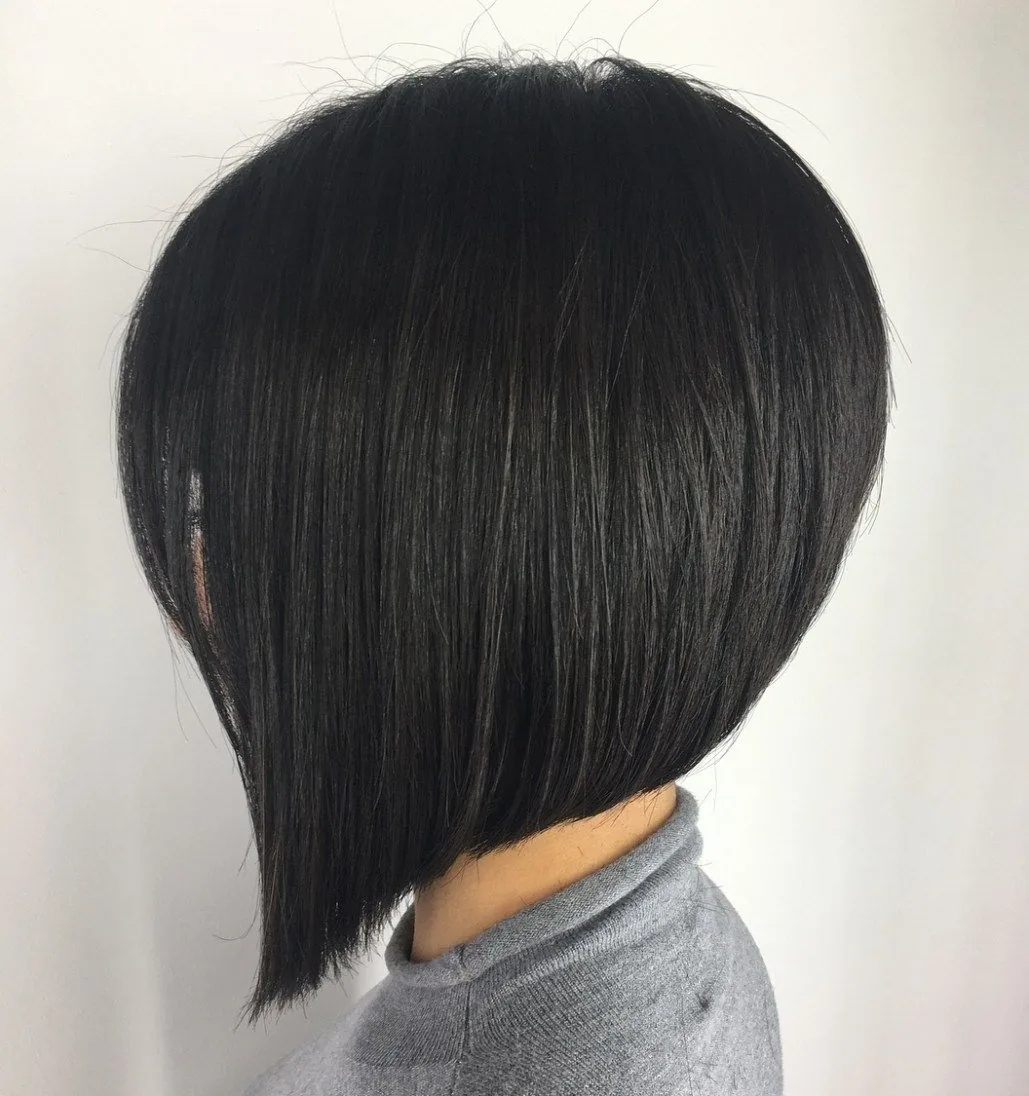
An inverted blunt bob is shorter at the back and longer at the front, with the front pieces sweeping forward to frame the face while the nape sits neatly above the collar. The shape gives the bob lift at the back and length at the front, which is flattering on round and square faces, because the long front pieces draw the eye downward and lengthen the face. It is also practical: the short back dries fast and never sits on the neck, while the front still looks long enough to feel like a bob rather than a crop.
Pros: lifts the back, lengthens the face, and dries faster than a one-length bob. Cons: the angle needs a precise cut and a trim every four to five weeks, or the back grows into the front and the shape disappears. Who should avoid it: women who want a perfectly level line — the whole point of this version is the angle. Maintenance: trims every four to five weeks, and a flat iron on the front pieces to keep them falling forward. Cost and time: a little more salon skill than a one-length bob, and about five minutes of styling a day. Quick verdict: the blunt bob with the most shape, and the best choice if a level line feels too severe on you.
10. Blunt Bob With Textured Ends
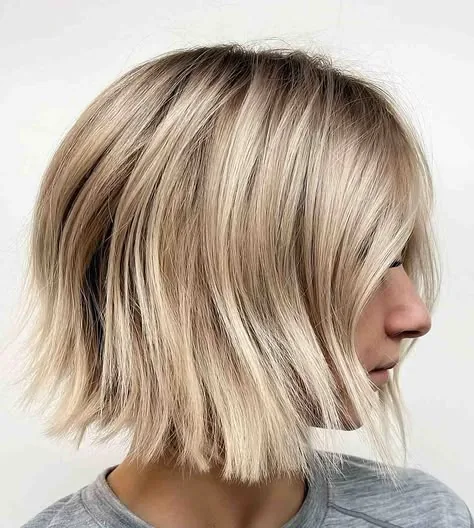
A blunt bob with textured ends keeps the solid silhouette of a blunt cut but softens the very edge: the last centimetre of hair is point-cut and feathered, so the line looks lived-in rather than razor-sharp. The result is a bob that still reads as blunt from a distance — the weight is all at the bottom — but feels lighter and moves more freely up close. It suits thick hair especially well, because the texturising takes the stiffness out of the edge without removing the thickness that makes the bob look expensive.
Pros: moves more freely than a razor-sharp edge, looks good slightly messy, and removes stiffness from thick hair. Cons: too much texturising quietly turns a blunt bob into a layered one, and the texture grows out unevenly if trims are skipped. Who should avoid heavy texturising: very fine hair — ask for the lightest possible point-cut, or none at all, so the ends stay full. What to ask: for texture only in the last centimetre, never through the interior. Common mistake: texturising the top of the head as well as the ends, which creates volume where a blunt bob should stay smooth. Quick verdict: the blunt bob for women who love the line but not the severity.
11. Blunt Bob With Flipped-Out Ends
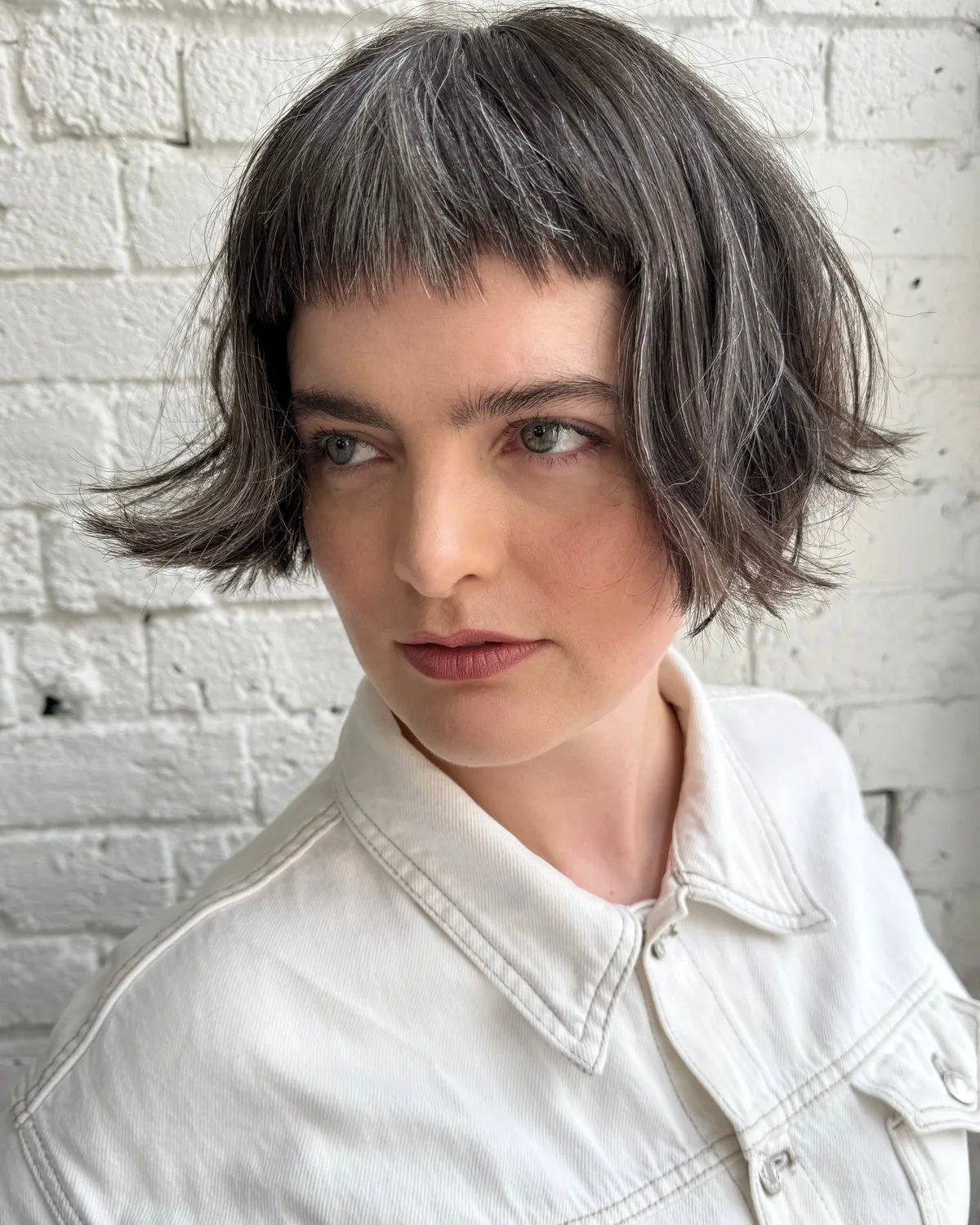
Flipped-out ends give a blunt bob a playful, retro energy: instead of bending under, the ends are bent outward, so the line kicks out at the jaw and the whole silhouette feels light, bouncy and a little bit sixties. The flip works because the blunt line is still there — the edge is simply pointing the other way — and it suits round and oval faces beautifully, because the outward flick adds width at exactly the right height. It is a styling choice rather than a different cut, which means you can wear it flipped out one day and tucked under the next.
Best for: oval and round faces, and women who want their bob to feel fun rather than severe. How to style: blow-dry with a round brush, rolling the ends outward, or bend them out with a flat iron and finish with a light hold spray. What to ask: nothing extra at the salon — this is a styling variation on your usual blunt cut. Common mistake: flipping the ends out too far, which turns the bob into a bell shape; a gentle flick, not a curl, is the look. Pros: fun, flattering, and it makes the same cut feel new. Cons: the flip needs heat every morning and falls flat in humidity. Quick verdict: the blunt bob’s party trick, and the easiest way to change the look without changing the cut.
12. The Sleek Glass-Hair Blunt Bob
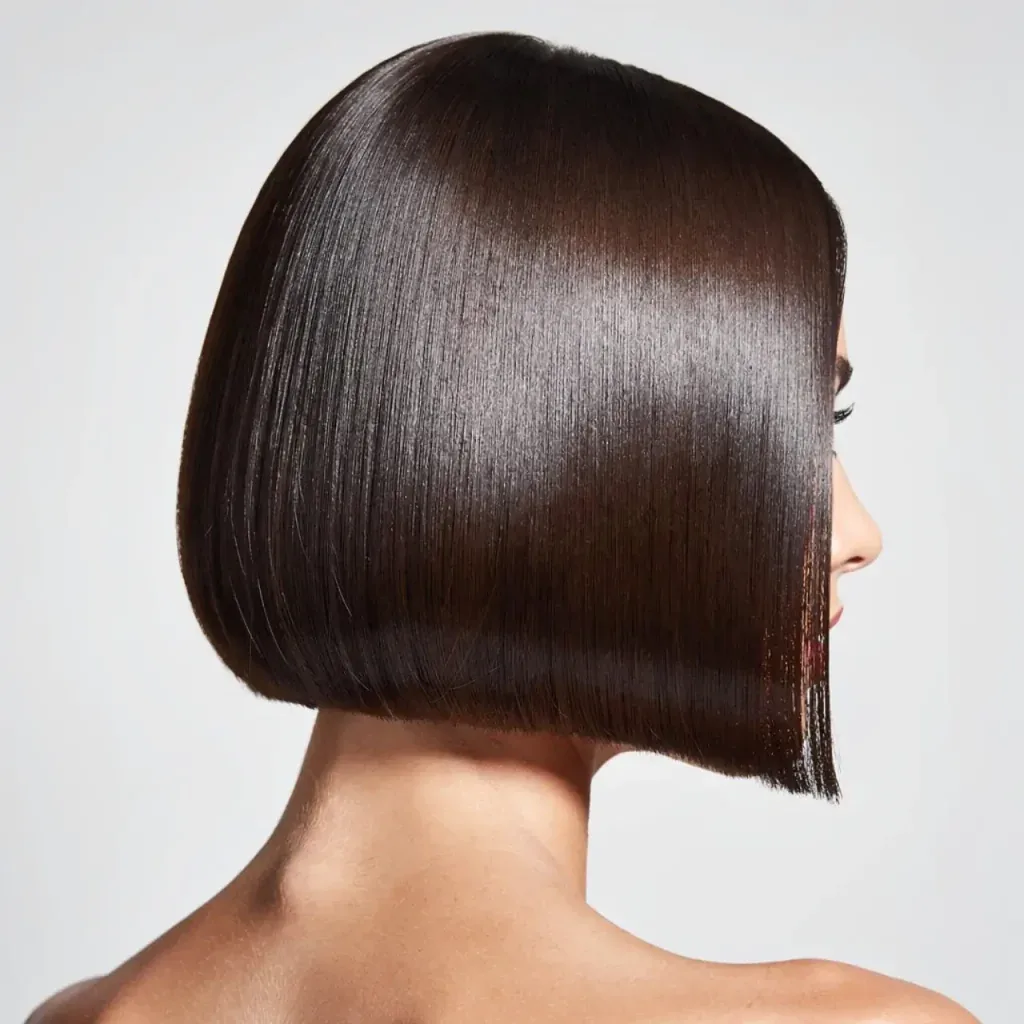
The glass-hair blunt bob is the blunt cut at its glossiest: hair so smooth, straight and reflective that the surface looks like polished glass, with the level edge catching the light in one unbroken sweep. It is a high-polish look that depends on two things — a perfectly level cut and very healthy hair — and when both are in place, the effect is extraordinary: the bob looks expensive, modern and completely deliberate. It suits straight hair best, and it is the version that photographs most beautifully under salon lighting.
Pros: the glossiest, most polished blunt bob on this list, and it makes the cut’s shape unmistakable. Cons: it takes fifteen minutes with a flat iron, needs a heat protectant and a shine serum, and it shows every split end and flyaway. Who should avoid it as a daily style: women with wavy or curly hair, where holding the glass finish takes too much heat, and anyone who wants a wash-and-go cut. Maintenance: a weekly deep-conditioning mask, a gloss treatment every couple of months, and trims every five weeks to keep the edge clean. Cost and time: the most styling time of any blunt bob, but the most glamorous result. Quick verdict: save it for occasions, or commit to the routine — halfway glass hair just looks flat.
13. Blunt Bob for Fine Hair
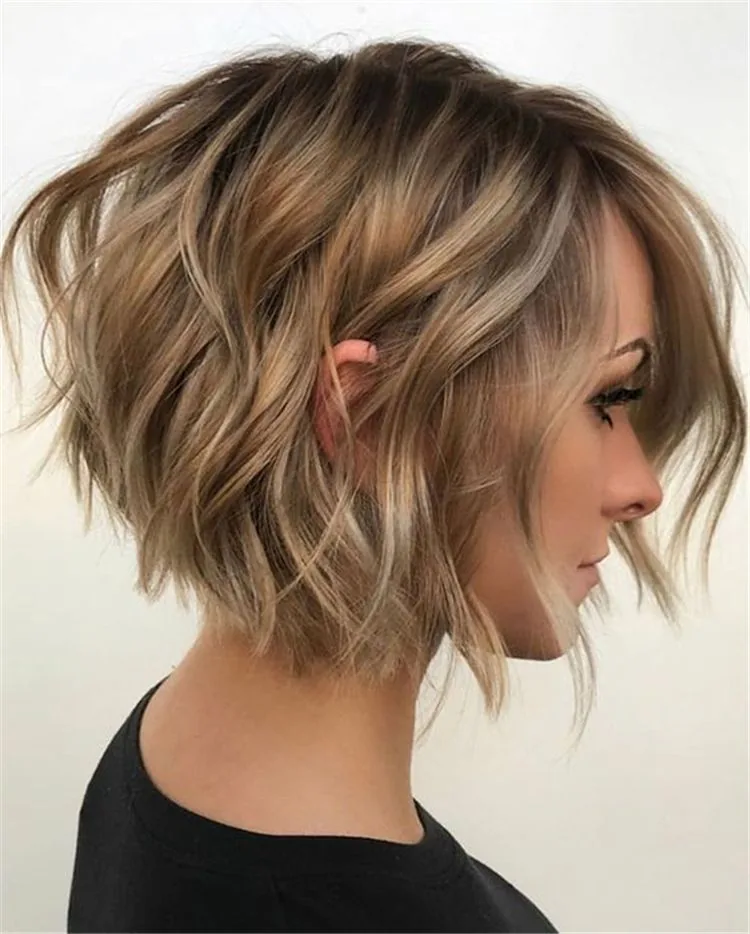
Fine hair is where the blunt bob quietly does its best work, because short hair has less weight pulling it down and a solid edge makes fine ends look thick. The trick is keeping the cut truly blunt: one clean length, no thinning at the ends, no layering through the interior, so the hair holds together in one solid shape instead of falling apart into wisps. The result is a bob that looks twice as thick as the hair it is made from, and a style that dries in minutes with almost no product.
Pros: makes fine hair look full, dries fast, and needs almost no styling. Cons: fine hair can go flat at the crown by midday, so a little dry shampoo or root spray is worth keeping in your bag. Who should avoid layering: everyone with fine hair — too many layers make the ends look thin and the bob look sparse. How to style: a volumising mousse at the roots, blow-dry with your head upside down for lift, then smooth the ends under. Maintenance: trims every five to six weeks, and a light hand with conditioner, which weighs fine hair down. Quick verdict: if your hair is fine, a blunt bob is not a compromise — it is the cut your hair was waiting for.
14. Blunt Bob for Thick Hair
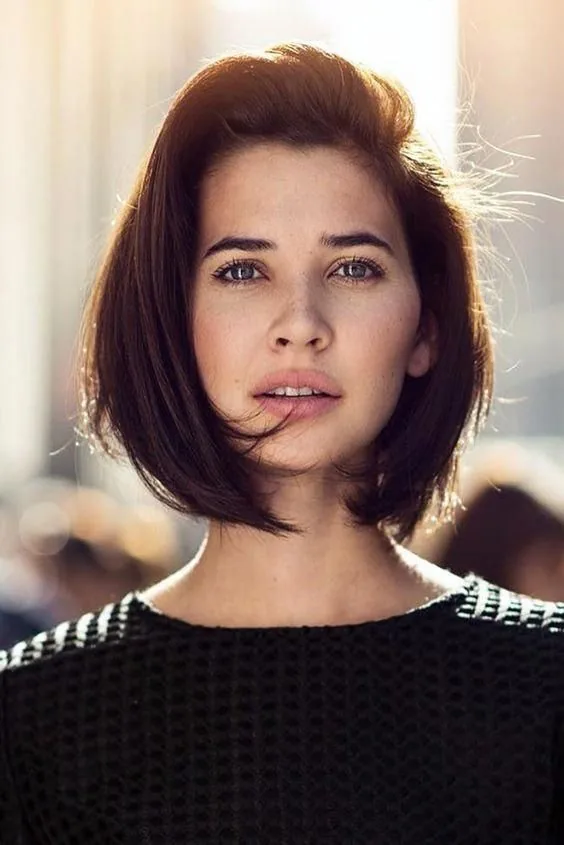
Thick hair needs a blunt bob that is cut with intention, because the same solid line that flatters fine hair can turn thick hair into a triangle — wide at the bottom, flat on top. The answer is to keep the blunt edge on the outside and remove bulk from underneath: a good stylist thins the hair beneath the top layer and leaves the surface smooth, so the bob swings instead of sitting, and the ends move instead of flaring out. Done well, thick hair holds a blunt bob’s shape better than any other hair type, and the cut looks full, expensive and completely deliberate.
Pros: holds the bob’s shape beautifully, looks full and polished, and dries with natural volume. Cons: it needs a skilled cut — a bad thinning job can leave the ends looking frayed — and a trim every five weeks to keep the shape. Who should avoid a blunt, unthinned bob: anyone with very thick hair, because the weight will push the ends outward into a triangle. Common mistake: cutting thick hair too short at the back, which makes it spring up and flare. Ask for the back to be left a touch longer than the front, and for bulk to be removed from underneath, never from the edge. Quick verdict: the blunt bob can be the best cut for thick hair, but only in skilled hands.
15. Blunt Bob for Curly Hair
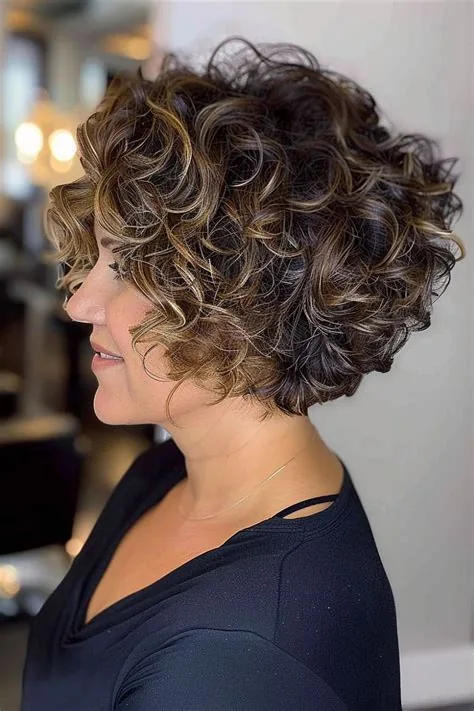
A blunt bob on curly hair is softer than it sounds: the curls break up the hard line, so the edge reads as a rounded, full shape rather than a sharp one, and the cut holds its fullness at cheek level in a way that flatters almost every face. The key is a cut that respects the curl pattern — shaped dry, curl by curl — so the front pieces do not spring up shorter than planned and the shape stays balanced. The blunt line underneath gives the curls a frame to sit in, which stops the cut looking shapeless as it grows.
Pros: the curls do the work, the cut looks full even on fine hair, and it needs almost no heat styling. Cons: a curly bob needs a trim every six to eight weeks, and the length can look dramatically different wet and dry. Who should avoid it: women who want a precise, geometric line — curls will never sit in a straight edge, and that is the point. Common mistake: cutting a curly bob wet to the same length as a straight bob, which springs up two inches shorter when dry. Ask your stylist to cut your curls dry, leave the front pieces an inch longer, and use curl cream on soaking-wet hair. Quick verdict: a blunt bob can be beautiful on curls, but only if it is cut for curls, not in spite of them.
16. Blunt Bob for Wavy Hair
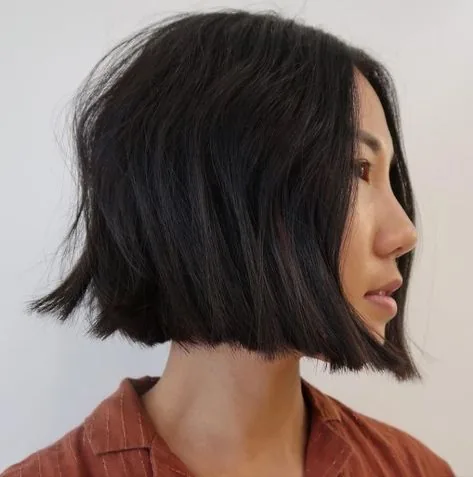
Wavy hair gives a blunt bob a relaxed, lived-in quality that straight hair cannot fake: the wave softens the hard edge, the ends bend in different directions, and the whole cut looks deliberately undone in exactly the way modern blunt bobs are meant to look. It is the version that looks best on second-day hair and on holiday, when a little salt spray and a scrunch are the whole routine. The wave also adds width, which flatters long and narrow faces by balancing their length.
Pros: almost no styling, looks better slightly messy, and the wave adds width where long faces need it. Cons: wavy hair springs up as it dries, so the bob must be cut a touch longer than planned, and the ends can flip in opposite directions on humid days. Who should avoid it: very straight hair, where the waves have to be created with heat every morning — a sleek blunt bob will save you time. Maintenance: trims every six weeks, a weekly deep-conditioning mask, and hands off while it dries — touching wavy hair while it dries is what creates frizz. Quick verdict: the blunt bob at its most effortless, and the best choice if your hair already has a wave in it.
17. Blunt Bob for Straight Hair

Straight hair shows a blunt bob at its sharpest and glossiest, because there is nothing to break up the line: the edge hangs perfectly level, the surface catches the light in one sweep, and the cut reads as pure graphic chic. It is the hair type the blunt bob was designed for, and it is also the most demanding, because straight hair shows every uneven strand, every split end and every centimetre of uneven growth. The reward for that honesty is a cut that looks immaculate with five minutes of styling and a single pass of a flat iron.
Best for: naturally straight hair, oval faces, and women who love a polished finish. How to style: blow-dry straight down with a paddle brush, bend the ends a fraction under, and finish with a pea-sized amount of shine serum. What to ask: for the line to be checked dry and level on both sides, and for no thinning at the ends. Common mistake: skipping trims, because straight hair shows uneven growth faster than any other type — five weeks is the limit. Pros: the glossiest, sharpest blunt bob possible. Cons: the least forgiving of a bad cut or a missed trim. Quick verdict: if your hair is straight, a blunt bob is your cut — just keep the appointments.
18. Blunt Bob for Round Faces
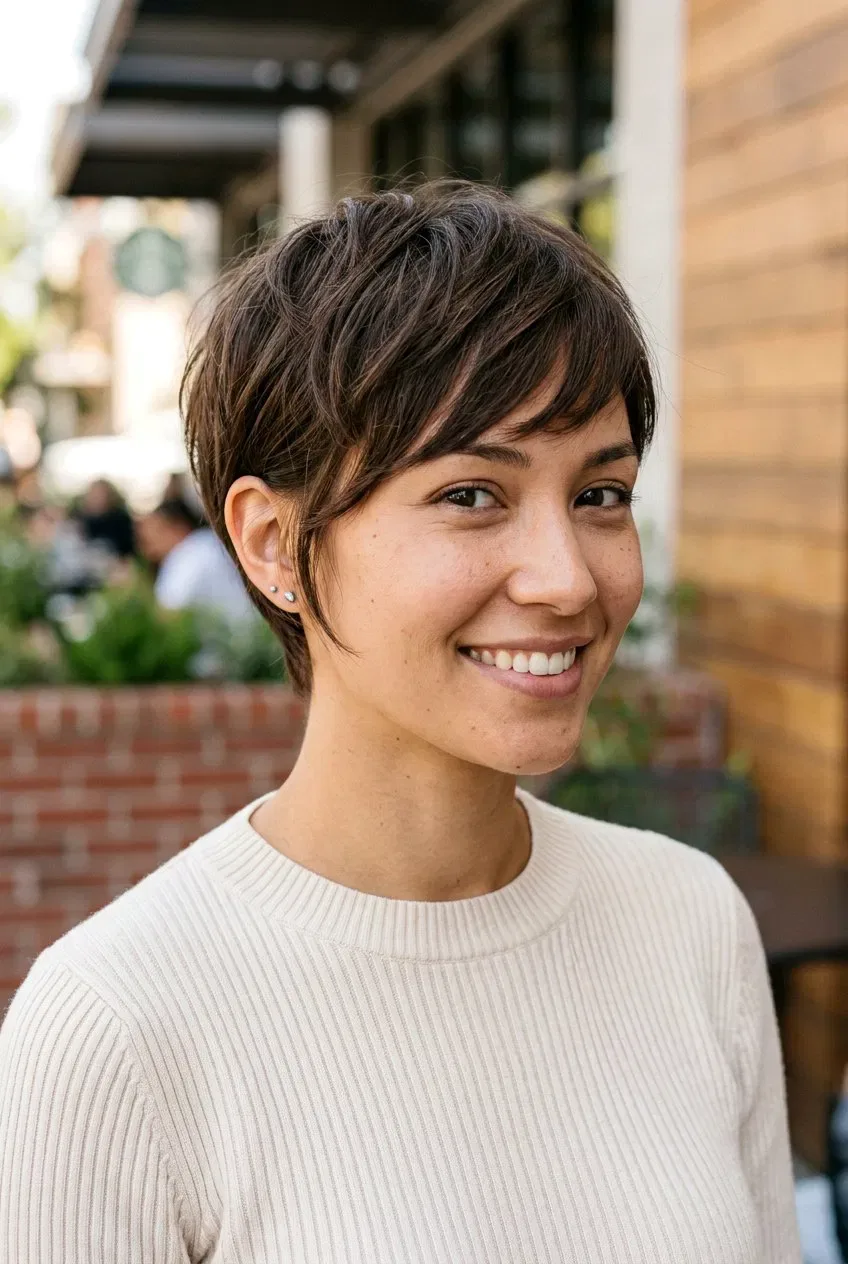
A blunt bob suits a round face better than most people expect, as long as the line lands in the right place. The trick is length and parting: a bob that ends just below the jaw, a middle or deep side part, and a longer front piece that draws the eye downward will make a round face look longer and more defined. The solid edge at the jaw also gives the face a frame, which is flattering — the mistake is only when the line lands exactly at the widest point of the cheeks, where it echoes the roundness instead of balancing it.
Pros: the length below the jaw lengthens the face, and the parting adds angles where a round face has curves. Cons: a chin-length bob with a blunt fringe can emphasise roundness, so the parting matters more than the cut itself. Who should avoid that combination: women with very round faces — choose a longer line and a side part instead. How to style: blow-dry the front pieces forward and slightly under, and keep the crown smooth. Maintenance is standard: trims every five to six weeks. Quick verdict: the blunt bob is a friend to round faces, as long as you let the length and the parting do the lengthening.
19. Blunt Bob for Oval Faces

Oval faces can wear almost any blunt bob, which is both the good news and the only problem: with no shape to correct, the choice comes down to personality. The chin-length version with a blunt fringe is the boldest starting point, and it is also the most flattering — the fringe shortens the forehead slightly, the chin-length ends frame the cheeks, and the whole cut sits in perfect proportion. A jaw-length bob, a middle part, or a glass-hair finish are all equally available, because an oval face will carry any of them.
Pros: every version works, so you can choose by mood rather than by rule. Cons: none, really — except that a bob that suits everyone can feel less special, so the details matter more. Who should avoid playing it safe: women with oval faces who have always wanted a bold cut — this is the face shape that can carry micro bangs, an asymmetrical line, or a platinum colour without a second thought. Maintenance is whatever the version you choose demands. Quick verdict: if you have an oval face, stop researching face shapes and start choosing the blunt bob you actually love.
20. Blunt Bob for Square Faces
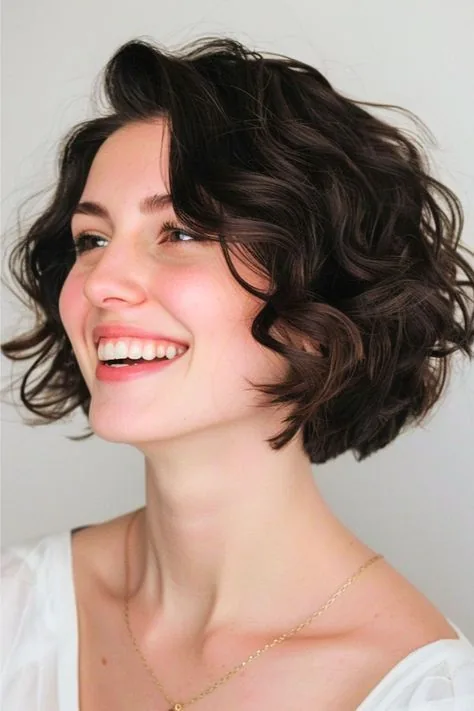
A square face and a blunt bob are a surprisingly good match, because the bob’s length and softness are exactly what a strong jawline needs — as long as the line lands below the jaw and the ends are given the slightest inward bend. The inward bend rounds off the jaw instead of echoing it, the short length keeps the eye on the cheeks rather than the jaw, and a side part or curtain bangs break the straight lines of the face with a diagonal. The result is a cut that softens without hiding, and flatters without apologising.
Pros: softens a strong jaw, and the short length makes the face look lighter. Cons: a chin-length blunt bob with a straight-across fringe can make a square face look squarer, so the fringe choice matters. Who should avoid the sharpest versions: women who want to soften their jaw — skip the chin-length cut and the blunt fringe, and choose a jaw-length bob with texture at the ends instead. Common mistake: blow-drying the bob into a smooth, rigid shape, which echoes the jaw’s straight lines. Keep the finish soft and slightly bent under, and let the ends move. Quick verdict: the blunt bob works for square faces, but the length and the bend do the work, not the line alone.
21. Blunt Bob for Long Faces
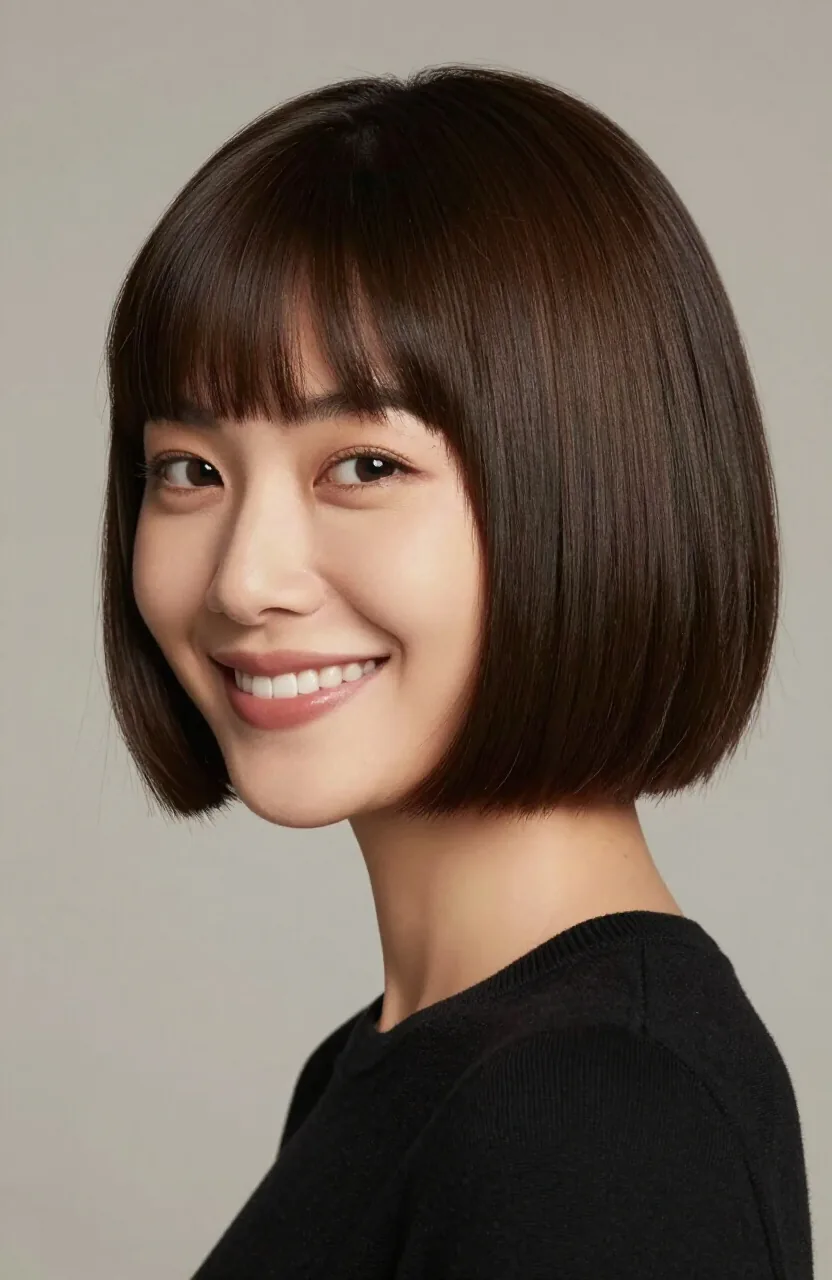
Long faces benefit most from a blunt bob, because the cut’s horizontal line is exactly what a long face needs: it breaks the face’s length in half, adds width at the cheeks, and stops the eye travelling downward. The most flattering version is chin-length with a fringe — the fringe shortens the forehead, the chin-length line shortens the lower face, and together they rebalance the whole shape. It is the rare case where the blunt bob’s severity is not a risk but the remedy.
Best for: long and narrow faces, and women who want their face to look shorter and wider. How to style: blow-dry the fringe forward and the ends under, and add a little volume at the sides with a round brush if the bob sits too flat. What to ask: for a chin-length line and a fringe that ends at the brows, never above them. Common mistake: a shoulder-length blunt bob with a middle part on a long face, which adds length where you need width — keep it short and keep a fringe. Pros: the most flattering blunt bob for long faces. Cons: the fringe needs a trim every four weeks. Quick verdict: if your face is long, the blunt bob is not just a style — it is a correction.
22. Blunt Bob for Heart Faces
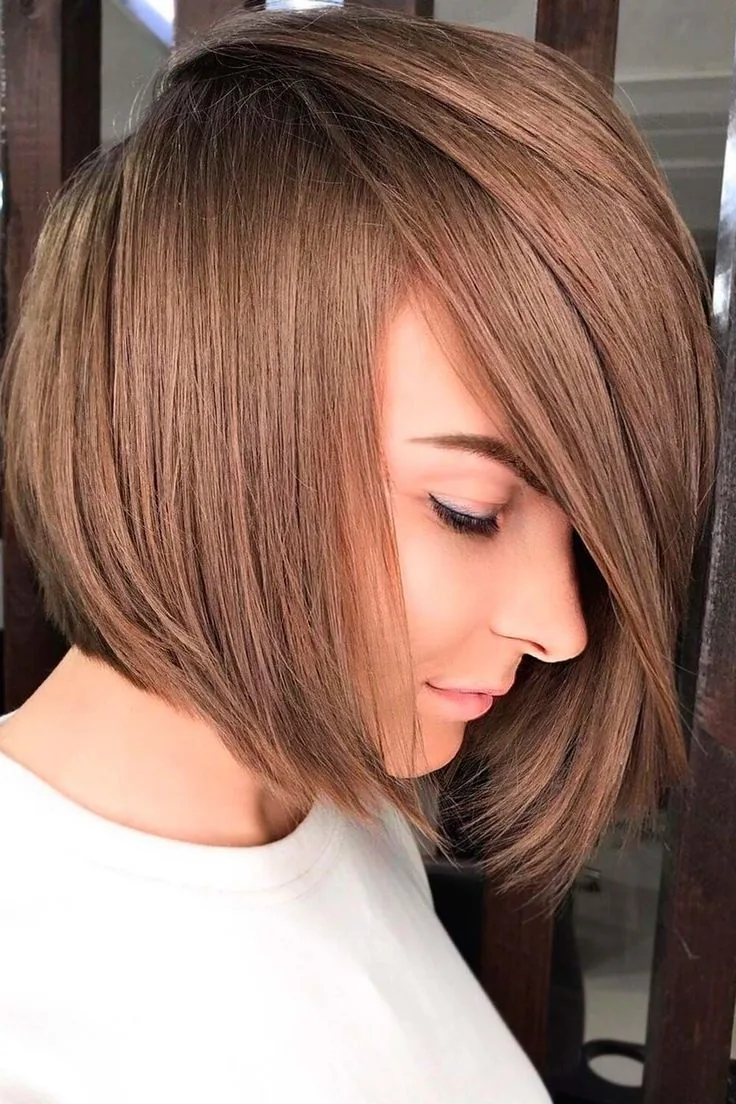
Heart-shaped faces — a wider forehead, a narrower chin — suit a blunt bob that adds fullness where the face narrows: a jaw-length line with soft, face-framing pieces or curtain bangs, which balance the forehead against the chin. The solid edge at the jaw fills out the lower face, while the curtain bangs soften the forehead, and together they bring the whole shape into balance. The length matters: a chin-length bob can make a heart face look top-heavy, while a jaw-length one lets the fullness land exactly where it is needed.
Pros: balances a wide forehead against a narrow chin, and the jaw-length line adds width where the face needs it. Cons: a blunt fringe can make the forehead look wider, so choose curtain bangs or a side part instead. Who should avoid it: nobody, really — but women with heart faces should skip the chin-length cut with a straight fringe, which is the one combination that works against them. Maintenance is standard: trims every five to six weeks, and a quick blow-dry with the bangs pushed to the sides. Quick verdict: the blunt bob is a friend to heart faces, as long as the fullness lands at the jaw and the fringe stays soft.
23. Blunt Bob With a Middle Part
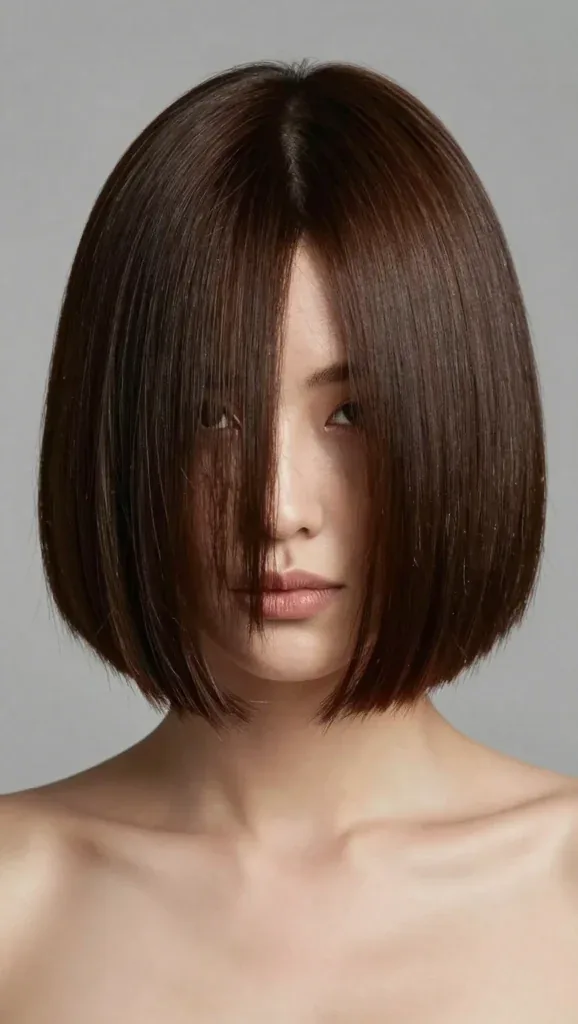
A middle part gives the blunt bob its most symmetrical, graphic frame: the hair falls evenly on both sides of the face, the level line is mirrored left and right, and the whole cut reads as clean, calm and very deliberate. It suits oval faces best, and it is the version that photographs most beautifully, because the symmetry of the part mirrors the symmetry of the cut. With curtain bangs or soft face-framing pieces, it is also one of the most forgiving ways to wear a blunt bob.
Pros: clean and classic, easy to style, and it shows off the cut’s line better than any other parting. Cons: a middle part is the least forgiving parting — it emphasises the face’s symmetry and can make a long face look longer. Who should avoid it: women with a strong natural side part, or anyone whose face is very long — a side part or a fringe will balance you better. Maintenance is minimal: no fringe to trim if you wear it without one, and a trim every six weeks for the cut. Quick verdict: the most elegant version of the blunt bob, and the easiest to grow out.
24. Blunt Bob With a Deep Side Part

A deep side part changes the whole personality of a blunt bob. Instead of the symmetrical frame of a centre part, a deep side part sweeps a heavy section of hair across the forehead, breaks up the face diagonally, and gives the bob a glamorous, slightly retro energy. It suits square and round faces particularly well, because the diagonal line softens strong angles, and it adds instant volume at the crown — the one place a blunt bob is usually flat. It is also the fastest way to make a familiar blunt bob feel new again.
Pros: no fringe needed, instant volume, and a look that works for evening as well as daytime. Cons: a deep side part needs a little product to stay in place, and it can fall flat in humidity. Who should avoid it: women with a strong natural part on the opposite side — fighting your hair’s natural fall every morning is a losing battle. Styling time is about three minutes: blow-dry the heavy side forward with your fingers, push the lighter side behind the ear, and finish with a light hold spray. Cost and time: nothing extra at the salon, and the cheapest way to make a blunt bob feel new again. Quick verdict: the blunt bob’s easiest transformation, and the one that needs no appointment at all.
25. Blunt Bob With Side-Swept Bangs
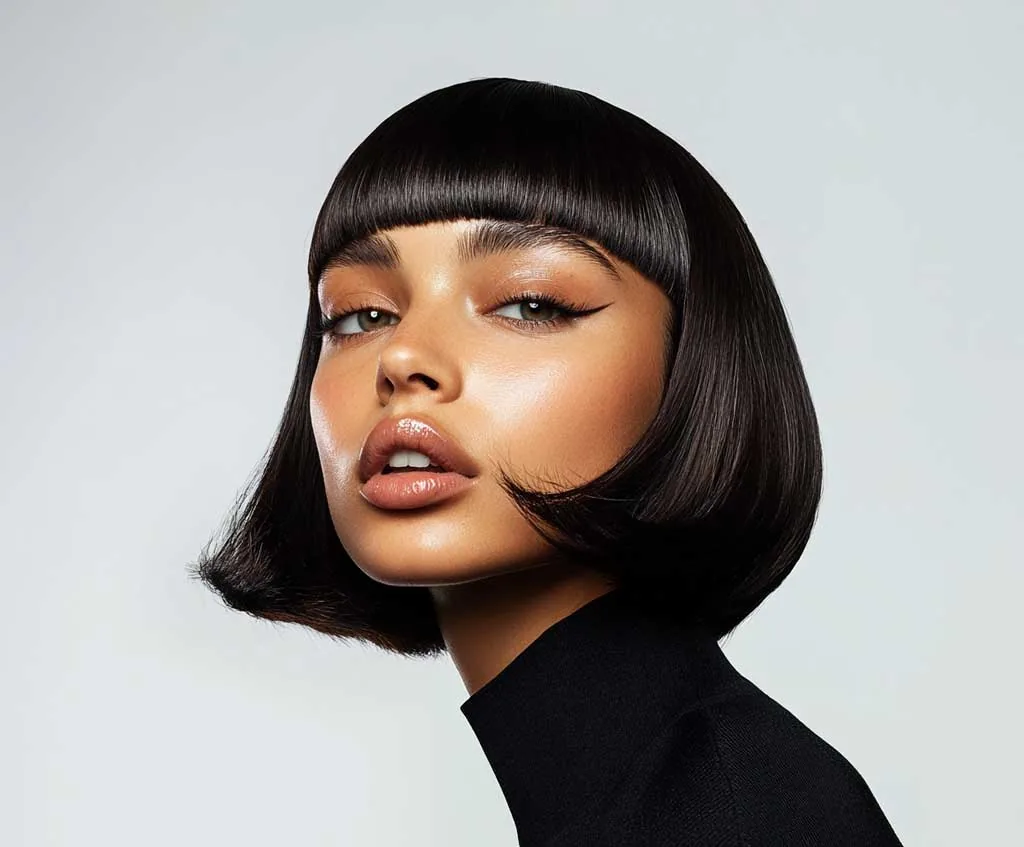
Side-swept bangs are the compromise fringe for a blunt bob: they give you the face-shortening effect of bangs without the commitment of a straight-across fringe, because the bangs sweep diagonally across the forehead and blend into the longer side of the bob. The diagonal softens the blunt line, flatters round and square faces by breaking up their width, and grows out more gracefully than any other fringe — you can push it to the side and forget it for weeks. It is the fringe for women who like bangs in theory but not in maintenance.
Best for: round and square faces, and women trying bangs for the first time. How to style: blow-dry the bangs to the side with a round brush, and let the bob’s line stay sharp below. What to ask: for the bangs to be cut long enough to sweep past the cheekbone, so they blend into the bob rather than sitting apart from it. Common mistake: cutting side-swept bangs too short, which makes them spring up and sit like a tuft. Pros: grows out gracefully, needs almost no styling. Cons: it needs a trim every six weeks to keep the sweep. Quick verdict: the blunt bob’s most forgiving fringe, and the safest way to try bangs.
26. Blunt Bob With Face-Framing Pieces
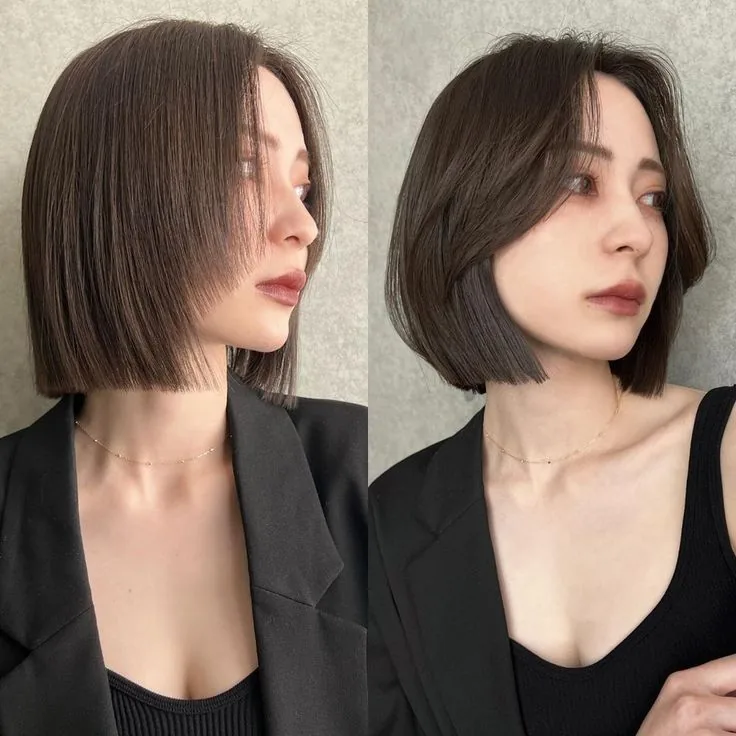
Face-framing pieces are the softest addition to a blunt bob: two slightly longer strands at the front, cut a touch longer than the rest of the line, which fall forward and frame the cheeks while the back of the bob keeps its level edge. The pieces break up the severity of the blunt line without weakening it — from behind, the bob is still a perfect level cut, but from the front, the face is framed in a way that feels gentle and intentional. It suits heart and square faces especially well, where the front pieces soften the angles.
Pros: softens the blunt line, flatters almost every face shape, and grows out gracefully. Cons: the front pieces need a trim of their own, or they grow past the line and start to look like a mistake. Who should avoid it: women who want a perfectly level line all the way around — the whole point of this version is the exception at the front. How to style: blow-dry the front pieces forward and slightly under, and let the rest of the bob fall straight. Maintenance: trims every six weeks, with the front pieces checked each time. Quick verdict: the blunt bob for women who love the line but want their face framed, not fenced in.
27. Blunt Bob With Highlights
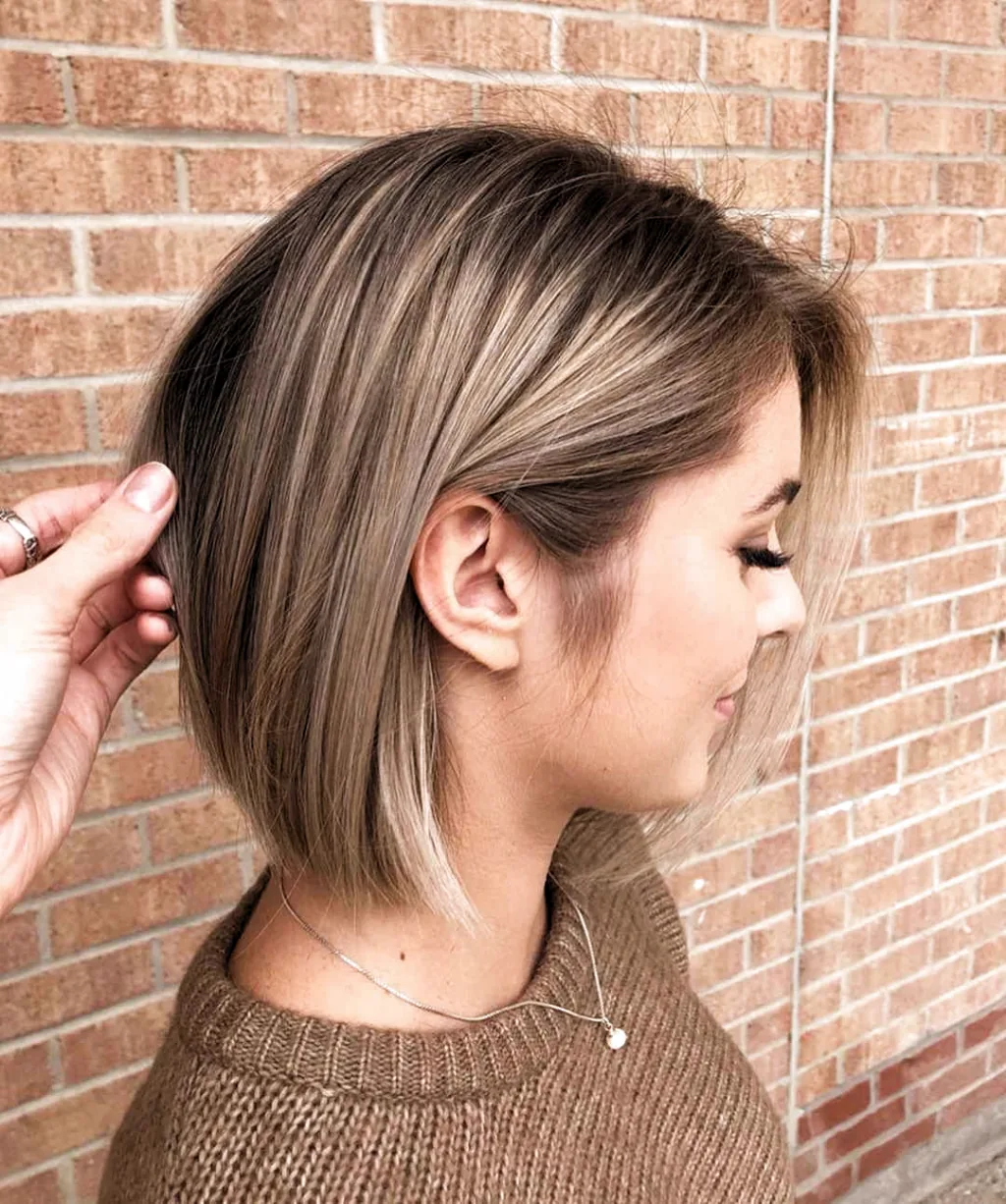
Highlights transform a blunt bob by adding dimension to a cut that is otherwise one solid shape. A few fine, face-framing highlights around the front brighten the eyes and soften the line, while a scattering through the lengths gives the short hair movement and depth. The effect is subtle — a blunt bob is not a cut for dramatic colour — but it stops the bob looking flat, and it makes the sharpness of the edge visible in a way that a single colour never quite does. The highlights also catch the light every time the bob swings, which is the cut’s best moment.
Pros: adds dimension, brightens the face, and makes the cut look more expensive. Cons: highlights need a refresh every eight to ten weeks, and they can dry the hair out if overdone. Who should avoid heavy highlights: women with very fine hair, where too much lightening can make the ends look thin. Maintenance: a colour refresh every eight to ten weeks, a weekly deep-conditioning mask, and a colour-safe shampoo. Cost and time: a highlight appointment adds thirty to forty-five minutes to a salon visit. Quick verdict: the easiest way to make a blunt bob feel new again without changing the cut.
28. Blunt Bob With Balayage
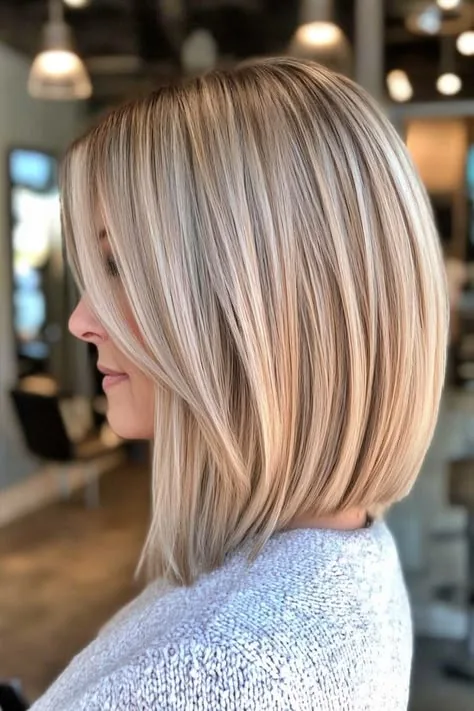
Balayage on a blunt bob is a softer, more grown-out alternative to highlights: the colour is painted on freehand, lighter at the ends and darker at the roots, so the bob has a sun-kissed, lived-in quality that looks as though it happened naturally. On short hair the effect is concentrated — the lighter ends catch the light every time the bob swings, and the blunt edge itself becomes a ribbon of lighter colour. The grow-out is so gentle that you can go months between colour appointments, which suits a cut that already demands regular trims.
Pros: grows out gracefully, needs a colour refresh only every three to four months, and looks effortless. Cons: balayage on very short hair is a skilled job, and a heavy-handed application can look stripey against a blunt edge. Who should avoid it: women who want a dramatic colour change — balayage is subtle by design, and it will not give you platinum in one sitting. Maintenance is light: a colour refresh every three to four months, a weekly mask, and a colour-safe shampoo. Common mistake: asking for balayage that is too light at the ends, which can make the blunt edge look bleached rather than sun-kissed. Ask for a soft, gradual lift. Quick verdict: the blunt bob’s most low-maintenance colour, and the one that ages best.
29. Platinum Blonde Blunt Bob
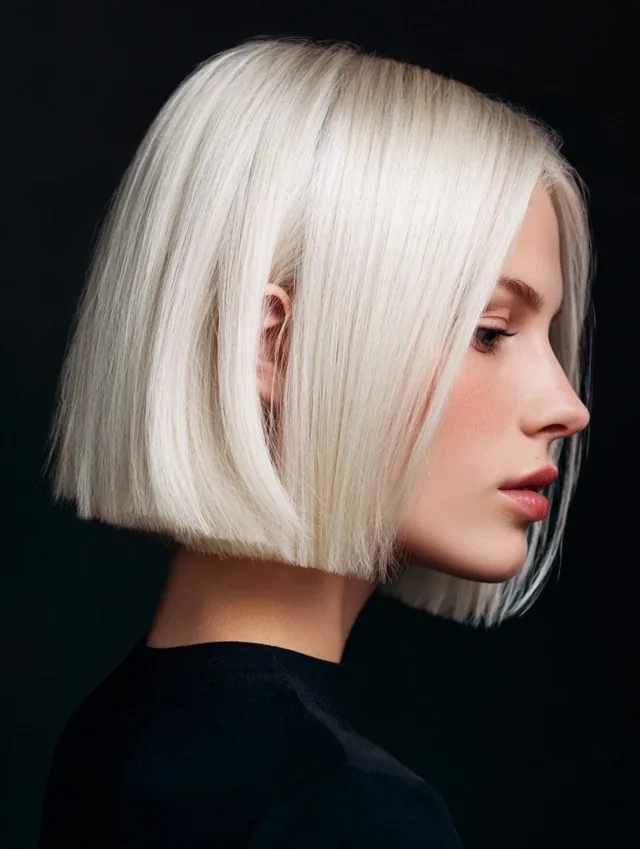
A platinum blonde blunt bob is the most striking colour you can put on this cut: the short, clean shape shows off the colour like a frame, and the icy blonde against the skin makes the whole look feel modern, deliberate and very confident. It is a high-maintenance colour on a low-maintenance cut, and that contrast is part of the appeal — the haircut is effortless, the colour is a decision, and together they look extraordinary. The blunt edge itself becomes a line of pure platinum, which is why this version photographs so well.
Pros: unforgettable, photographs beautifully, and makes the bob look intentional. Cons: platinum needs a salon refresh every four to five weeks, and the bleaching can dry the hair out — which is the enemy of a sharp blunt edge. Who should avoid it: women who are not prepared for the upkeep, and anyone whose hair is already damaged, because a blunt line shows damage faster than any layered cut. Maintenance is the heaviest on this list: a root refresh every four to five weeks, a purple shampoo twice a week, and a weekly deep-conditioning mask. Cost and time: the most expensive version of the bob, both in salon visits and in products. Quick verdict: the boldest blunt bob on this list, and the one that rewards commitment most.
30. Brunette Blunt Bob
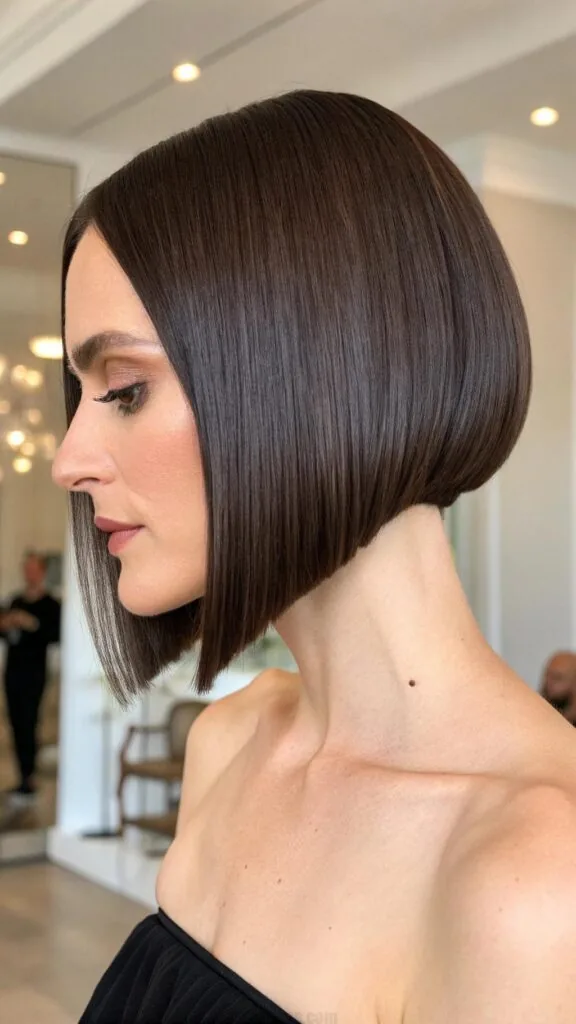
A brunette blunt bob is the cut at its most classic: rich, dark hair in a short, clean shape, with a level edge that frames the face and a finish that looks polished without trying. Dark hair shows off the bob’s line better than any other colour — the edge, the swing of the ends, the gloss of the surface — and it needs almost no colour maintenance at all, which makes it the easiest version of the bob to live with. It is the blunt bob for women who want the cut to be the statement, not the colour.
Pros: shows off the cut’s line, needs almost no colour upkeep, and looks expensive. Cons: dark hair can look flat in poor light, so a little shine spray or a gloss treatment helps. Who should avoid it: nobody — brunette is the most forgiving colour for this cut. Maintenance is minimal: trims every five to six weeks, a gloss treatment every couple of months if you want extra shine, and a weekly conditioning mask. Cost and time: the cheapest version of the bob to maintain. Quick verdict: if you want the blunt bob with the least fuss and the most polish, brunette is the answer.
31. Black Blunt Bob
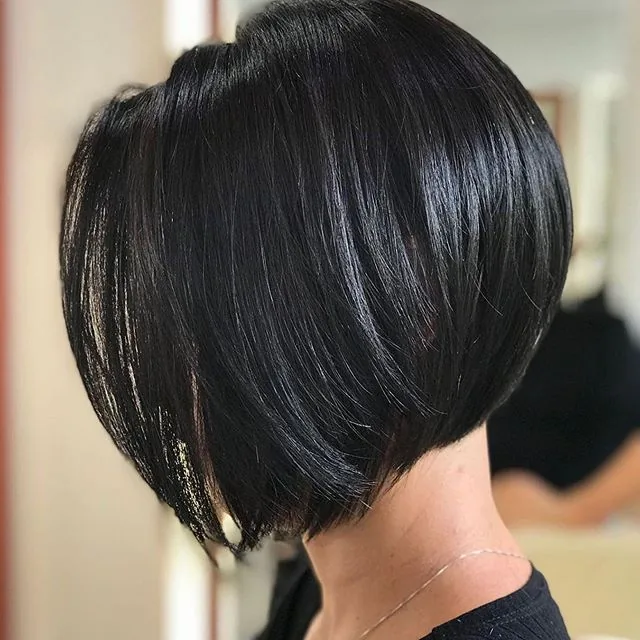
A black blunt bob is the most dramatic version of the cut: jet-black hair in a short, clean shape, with a level edge that frames the eyes and a silhouette that reads as pure graphic chic. It is the bob of silent-film stars and fashion editors, and it has a power that no other colour quite matches — the contrast between the dark hair and the skin makes the face the focus, and the short length keeps the look sharp rather than heavy. The blunt line itself becomes the star, a dark frame around the face.
Pros: dramatic, timeless, and it shows off the cut’s line perfectly. Cons: black hair shows every split end and every flyaway, so the cut needs to be precise and the hair needs to be healthy. Who should avoid it: women with very pale skin who find black hair draining — a softer dark brown will give you the same shape with less contrast. Maintenance: trims every five weeks, a gloss treatment for shine, and a weekly conditioning mask. Cost and time: the least colour maintenance of any version on this list. Quick verdict: the most powerful blunt bob on this list, and the one that needs the least colour work of all.
32. Copper Blunt Bob
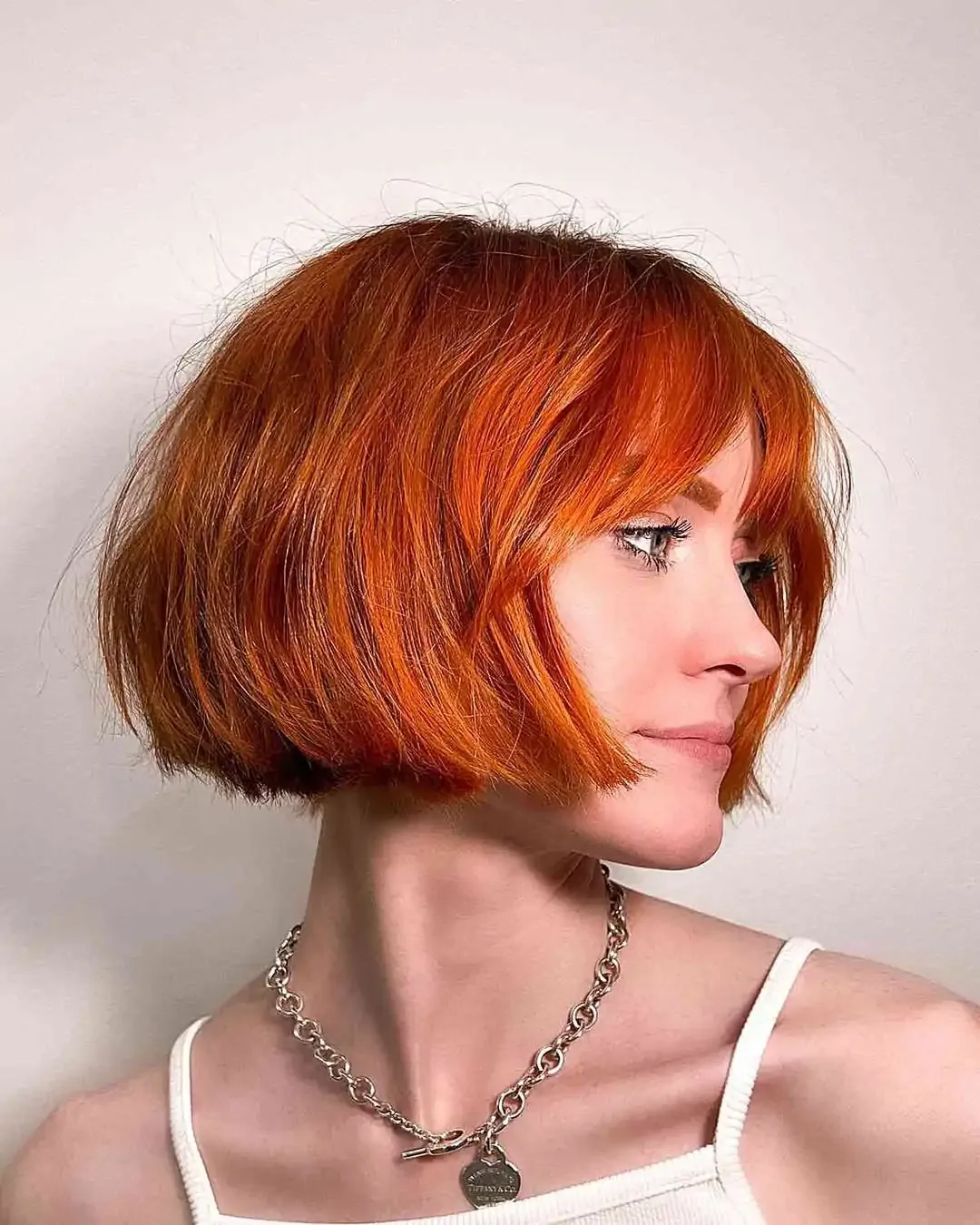
A copper blunt bob is warmth and attitude in one short cut: the rich, auburn tones catch the light every time the bob swings, and the colour gives the classic shape a modern, fiery edge. Copper suits warm skin tones beautifully, and it makes the bob feel like a choice rather than a default — a colour that says you know exactly what you are doing. It is also one of the most flattering colours for a fringe, because the warmth softens the forehead and brightens the eyes, while the blunt edge keeps the look grounded.
Pros: striking, flattering on warm skin tones, and it makes the bob feel personal. Cons: copper fades fast — it needs a colour refresh every five to six weeks, and a colour-safe shampoo is not optional. Who should avoid it: women with very cool skin tones, where copper can clash rather than complement. Maintenance: a colour refresh every five to six weeks, a colour-depositing conditioner between visits, and a weekly mask. Common mistake: going too bright on the first visit — start with a soft copper and go bolder later if you love it. Quick verdict: the blunt bob’s warmest colour, and the one that turns the most heads in sunlight.
33. Blunt Bob Over 40
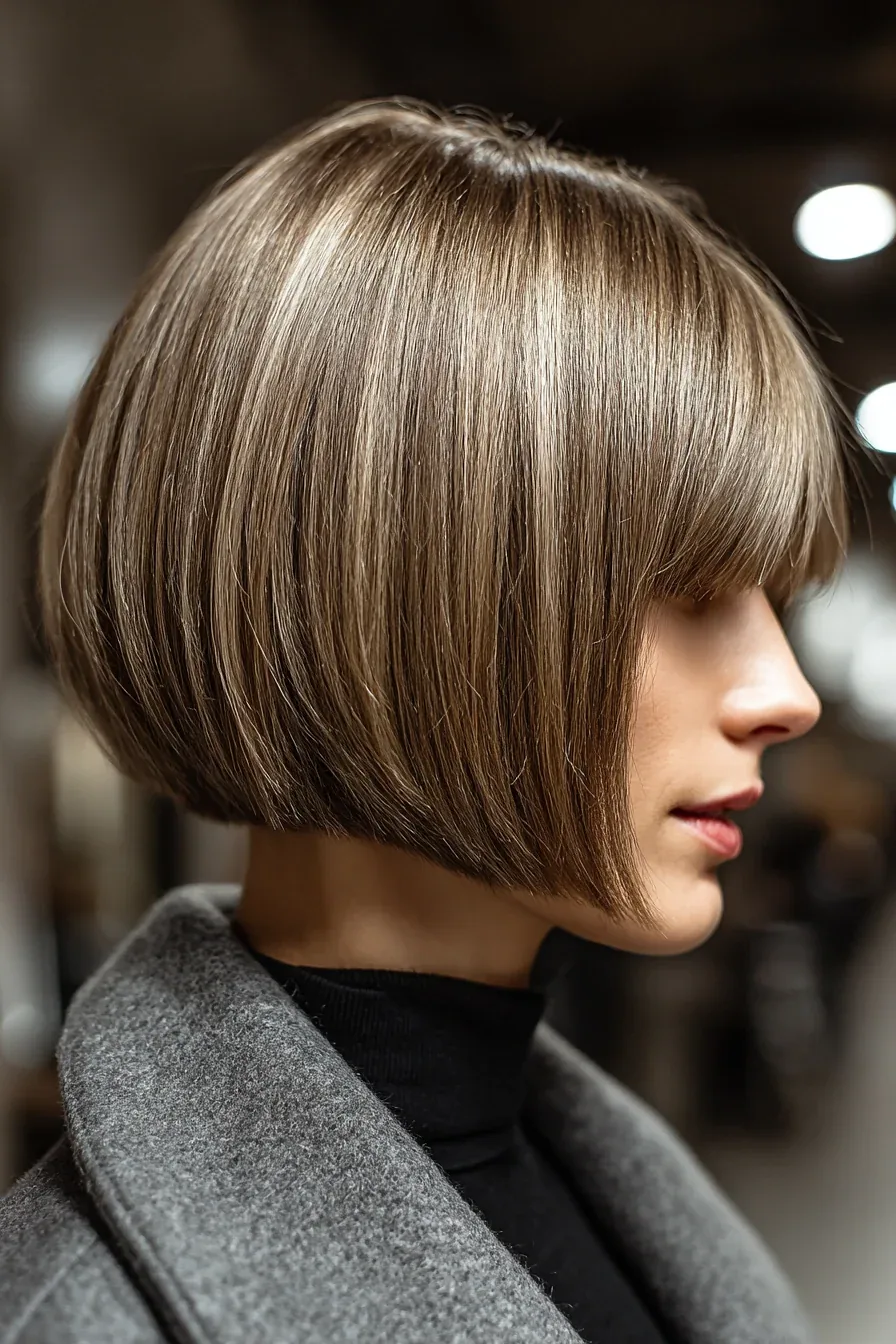
The blunt bob over forty is one of the smartest hair decisions a woman can make: it lifts the face, exposes the neck, and looks effortlessly chic in a way that long hair at this age rarely does. The short length takes years off without trying, the solid edge gives the face a clean frame, and the cut’s natural polish keeps it from looking severe. It is also practical — it dries in minutes, needs almost no product, and looks put-together on the days when you have no time at all. The blunt line, kept at the jaw, is the detail that makes it look deliberate rather than default.
Pros: youthful without trying, low maintenance, and it suits almost every hair type. Cons: it needs a trim every five weeks, and a fringe needs regular attention if you have one. Who should avoid it: women who love long hair and are only cutting it because someone told them to — the bob should be a choice, not a surrender. Maintenance is light: trims every five weeks, a little smoothing cream, and a colour refresh if you have one. Quick verdict: the blunt bob is not a young woman’s cut or an older woman’s cut. It is a confident woman’s cut, and forty is a very good age to discover it.
34. Blunt Bob Over 50

Over fifty, the blunt bob becomes something more than a haircut: it becomes a statement of intent. The short length lifts the face, the solid edge frames the cheeks, and the cut’s natural chic makes it look deliberate rather than default. It works beautifully with grey hair, with silver, and with the salt-and-pepper transition that so many women are embracing — the short lengths show off the colour instead of hiding it, and the blunt edge makes grey hair look intentional and expensive rather than neglected.
Pros: flattering, easy, and it makes grey hair look like a choice. Cons: the trim schedule is not optional at this length, and the edge needs a quick touch-up most mornings if you wear it sleek. Who should avoid it: nobody, honestly — but women with very fine hair should ask for a truly blunt edge rather than texture, so the ends look full. Common mistake: cutting the bob too short in a misguided attempt to look younger — the classic jaw length is more flattering than an ear-length crop. Maintenance: trims every five weeks, a weekly deep-conditioning mask, and a purple shampoo if you are silver or grey. Quick verdict: the blunt bob over fifty is not about looking younger. It is about looking like yourself, at your best.
35. Blunt Bob Over 60
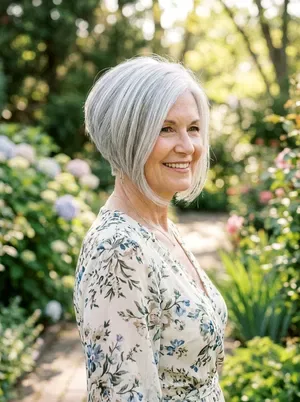
Over sixty, the blunt bob is pure elegance: short, clean, and completely unbothered by trends. The cut lifts the face, frames the eyes, and works with the hair’s natural texture rather than against it — and at this age, the bob’s famous ease becomes its greatest virtue. It dries in minutes, needs almost no product, and looks polished on the days when you have done nothing at all. With silver or white hair, it is genuinely striking: the short, clean shape shows off the colour like a frame shows off a picture, and the blunt edge gives the whole look a crispness that softer cuts lose.
Pros: the easiest version of the bob to live with, and the most elegant. Cons: it needs a trim every five weeks, and the edge needs a little attention most mornings. Who should avoid it: women who want a wash-and-go cut with no trims at all — this one needs regular salon visits. Maintenance is simple: trims every five weeks, a purple shampoo to keep silver bright, and a weekly conditioning mask. Cost and time: short salon visits, about five minutes of styling a day. Quick verdict: the blunt bob over sixty is not about looking younger. It is about looking like yourself, at your best, with a haircut that has nothing to prove.
36. Blunt Bob for a Wedding
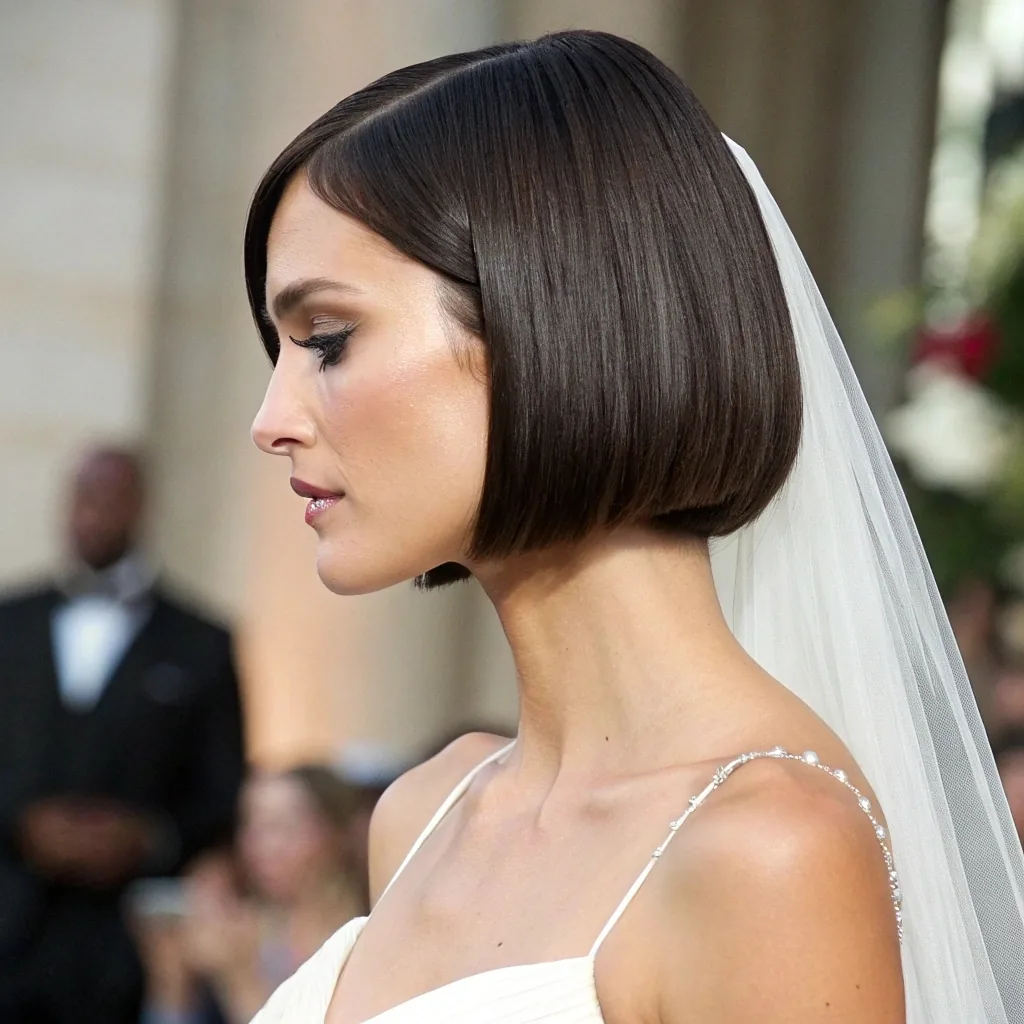
A blunt bob for a wedding is proof that short hair can be just as bridal as long hair: the cut’s clean line frames the face beautifully in photographs, the solid edge photographs like a frame, and a simple accessory — a pearl clip, a delicate headband, a small veil — turns the everyday bob into something occasion-ready. It suits brides who want to look like themselves, only more so, rather than like a different person for one day. The blunt line also holds its shape all day, which is more than most updos can promise.
Pros: photographs beautifully, needs almost no upkeep on the day, and looks like you. Cons: a blunt bob cannot be pinned up, so if you dream of an updo, this is not the cut for your wedding. Who should avoid it: brides who want to change their hair completely for the day — the bob is a statement of confidence, not a transformation. Maintenance on the day is minimal: a blow-dry, a bend of the ends under, and a clip or headband. Cost and time: a fresh trim a few days before the wedding, and a trial run with your chosen accessory. Quick verdict: the most chic bridal hair on this list, and the one that will still look good in photographs in fifty years.
37. Blunt Bob for Work
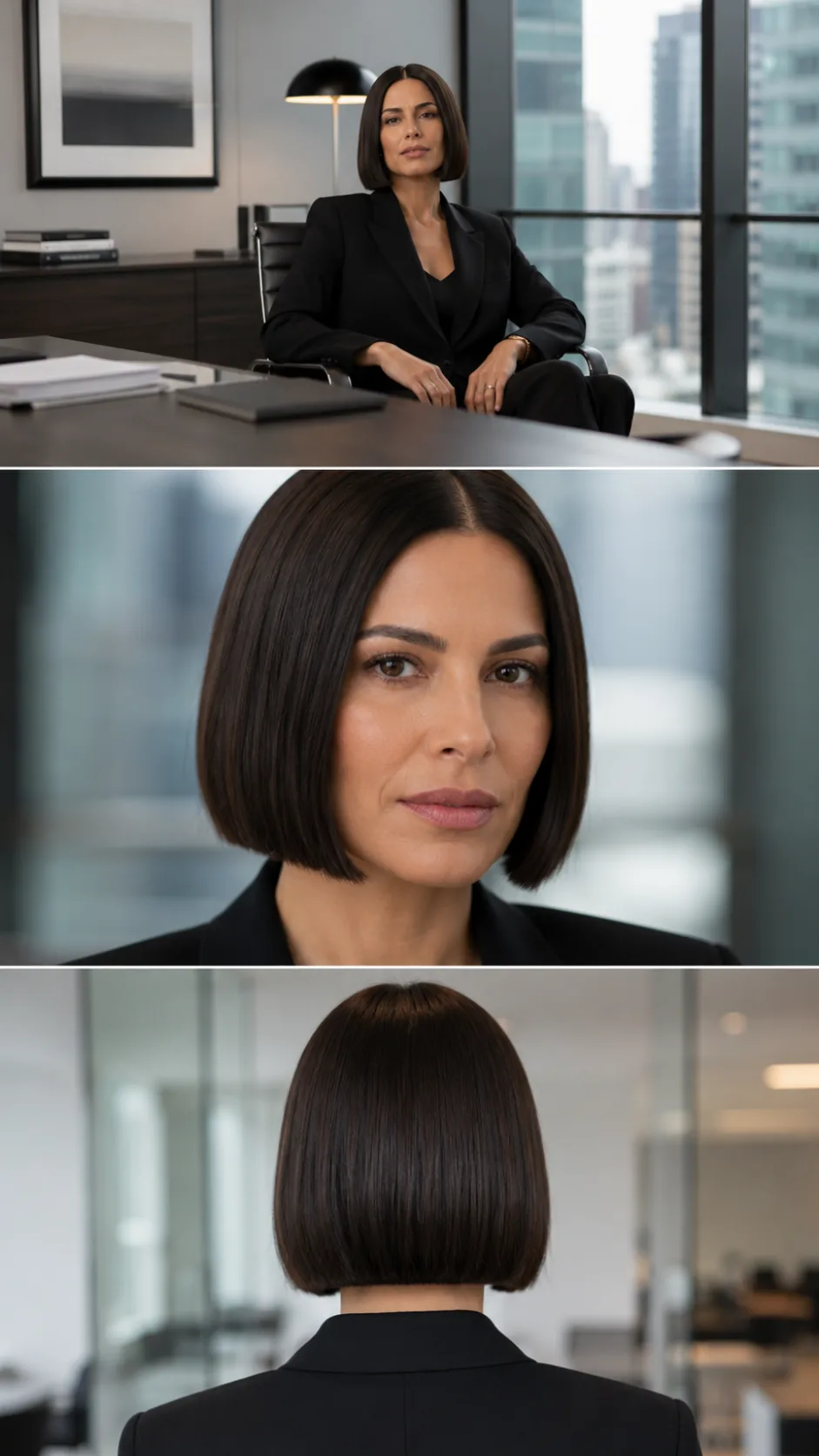
A blunt bob is the most professional short haircut a woman can wear to work: the level line reads as polished and deliberate, the length stays out of the way, and the whole cut looks put-together with five minutes of styling. It suits offices, meetings, interviews and client-facing roles, because it never looks messy, never needs adjusting during the day, and never distracts from what you are saying. The blunt edge is, in effect, a suit for your hair — clean, structured, and quietly confident.
Best for: office workers, interviews, and women who want a cut that looks professional every day. How to style: blow-dry straight and bend the ends under, or tuck one side behind the ear for a softer look; a low half-up twist works for long meetings. What to ask: for a jaw-length or shoulder-length line, which is the most office-appropriate, and for no dramatic colour if your workplace is conservative. Common mistake: a chin-length cut with micro bangs for a first interview — save the boldest version for after you have the job. Pros: polished, low effort, and it holds its shape all day. Cons: it needs a trim every five weeks to stay professional. Quick verdict: the blunt bob is the work haircut that never lets you down.
38. The Low-Maintenance Blunt Bob
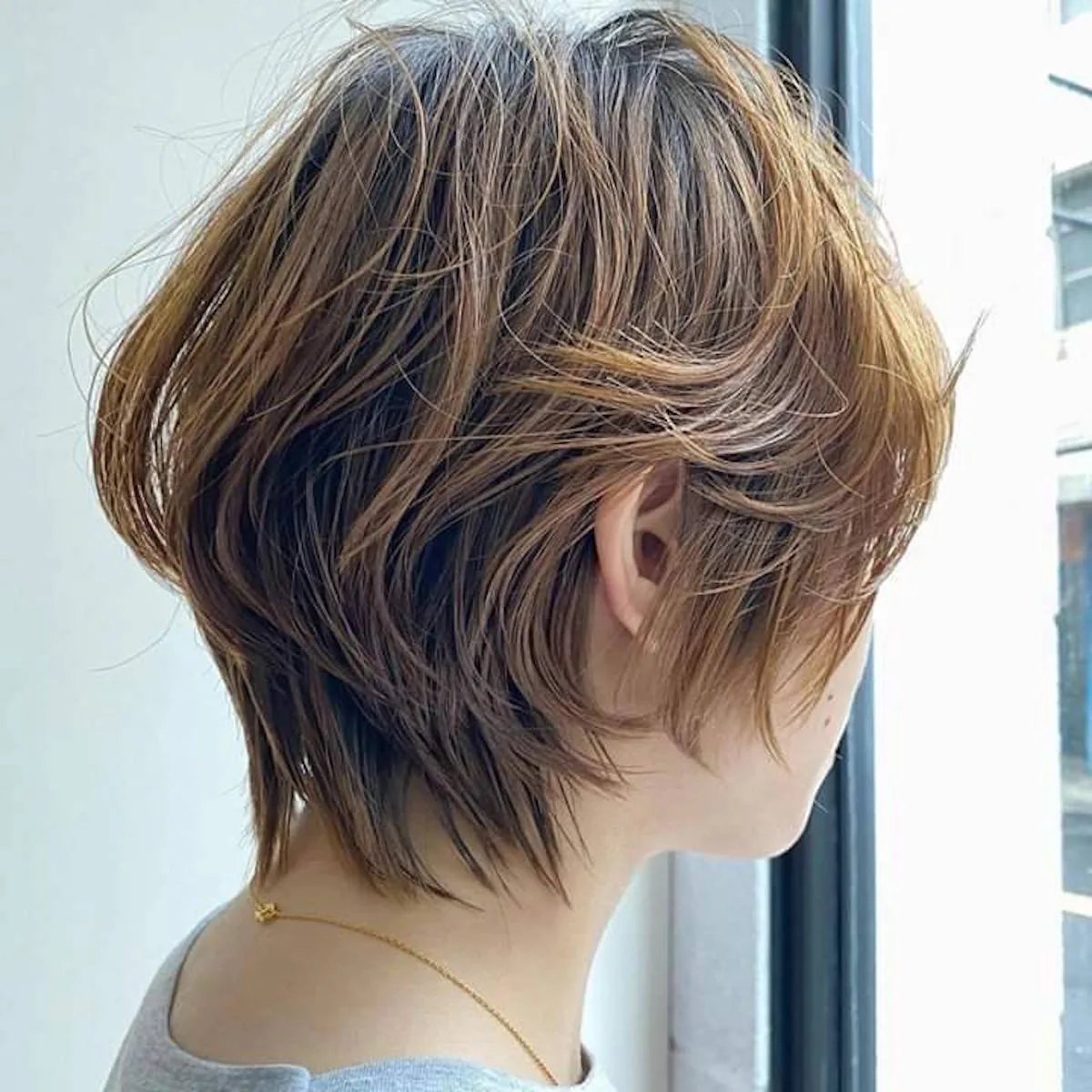
The low-maintenance blunt bob is the cut at its most honest: a slightly longer version, cut just below the jaw, with no fringe, a whisper of texture at the very ends, and a shape that looks good air-dried. It is the bob for women who want the blunt look without the blunt trim schedule — a cut that holds its shape for eight weeks, dries in minutes, and needs nothing more than a little cream on damp hair and a shake. The longer length is the secret: it gives the line room to grow without looking straggly.
Pros: the easiest blunt bob on this list, holds its shape for eight weeks, and needs almost no product. Cons: it is the least dramatic version — without a fringe or a sharp line, it can look like a plain short bob rather than a blunt one. Who should avoid it: women who want the full blunt effect — the fringe and the short length are what make the bob blunt, and this version trades both away for ease. Maintenance: trims every eight weeks, a little styling cream, and nothing else. Cost and time: the cheapest version of the bob, in salon visits and in daily effort. Quick verdict: the blunt bob for real life, and the best starting point if you are not sure you are ready for the real thing.
39. The Tucked-Behind-the-Ear Blunt Bob
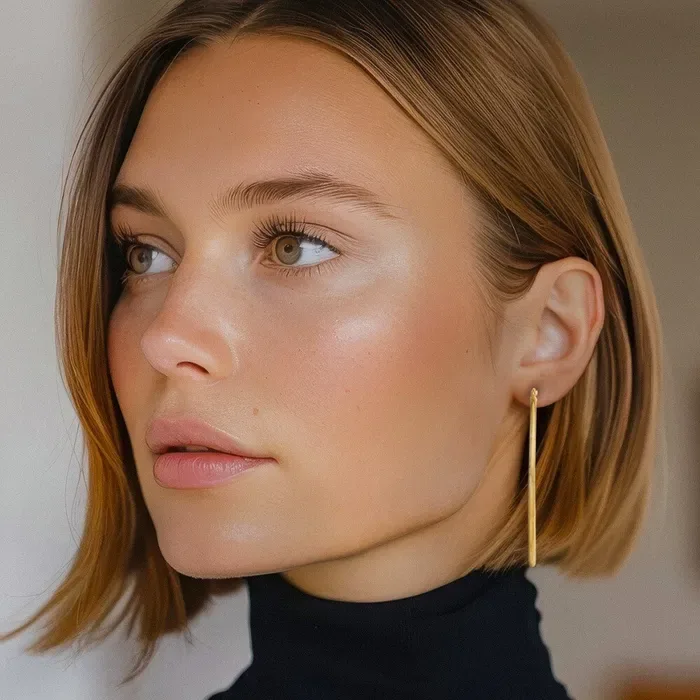
Tucking a blunt bob behind one ear is the smallest change with the biggest effect: it opens up the face, shows off an earring, and turns a symmetrical cut into an asymmetrical one in a single gesture. The tuck works because the blunt line is still there — the hair simply sits behind the ear on one side, while the other side falls forward and frames the cheek. It is the styling trick for evenings, for days when the bob feels too heavy, and for women who want their blunt cut to feel softer without cutting anything.
Best for: oval and heart-shaped faces, and anyone who wants to show off earrings. How to style: blow-dry the bob straight, tuck one side behind the ear, and let the other side fall forward; a little texture spray keeps the tuck from slipping. What to ask: nothing extra at the salon — this is a styling variation, not a different cut. Common mistake: tucking both sides, which makes the bob look like a pixie and loses the line entirely; one side only is the look. Pros: free, instant, and it changes the whole silhouette. Cons: the tuck needs a little product to stay in place, and it can fall out in wind. Quick verdict: the blunt bob’s easiest party trick, and the one you will use most.
40. Blunt Bob With a Tapered Nape
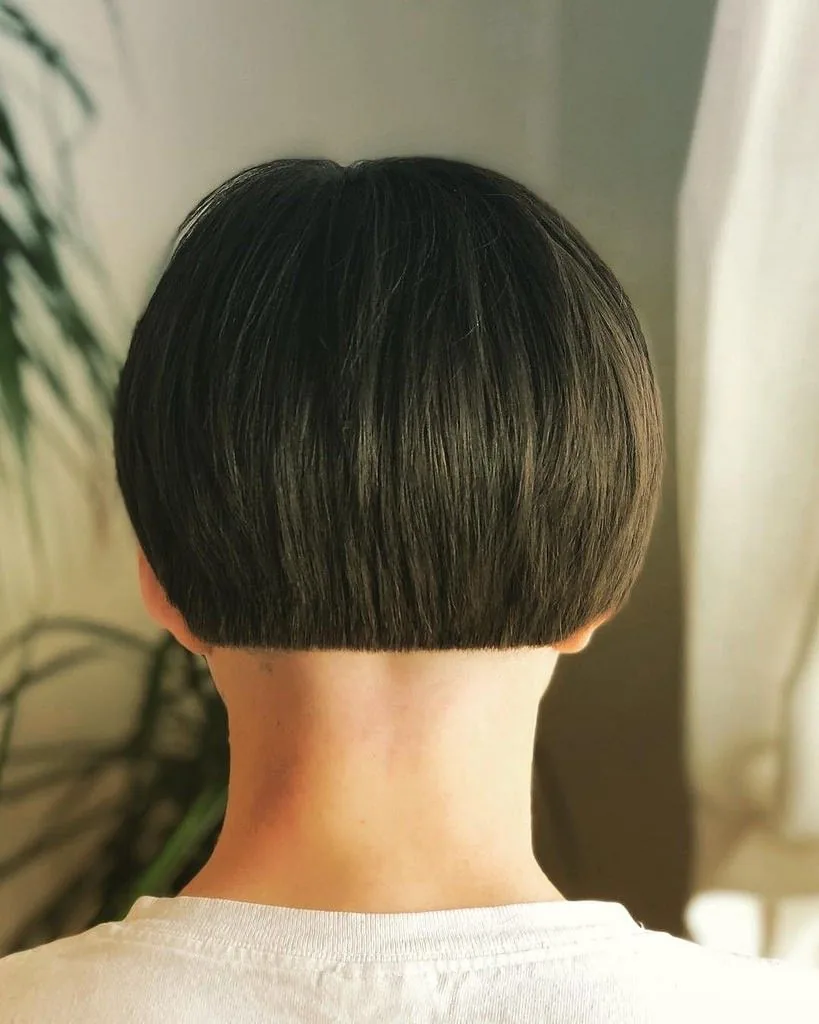
A blunt bob with a tapered nape is the cleanest version of the cut from behind: the hair at the back of the neck is cut short and close, tapering up into the longer lengths at the sides, so the bob has a neat, sculpted silhouette that shows off the neck. The front keeps its level blunt line, while the back is quietly shorter — a contrast that gives the bob a polished, salon-finished feel without losing its blunt character. It is the version for women who like their short cuts to look deliberate from every angle.
Pros: shows off the neck beautifully, looks neat from behind, and keeps the bob’s shape crisp. Cons: a tapered nape grows out fast and needs a trim every four weeks to hold its shape. Who should avoid it: women who want a low-maintenance bob — the nape is the first thing to lose its shape. Maintenance: trims every four weeks, and a quick tidy-up at the nape between visits if your salon offers it. Common mistake: tapering the nape too high, which turns the bob into a pixie at the back. Ask for a soft taper that follows the natural hairline. Quick verdict: the blunt bob at its most polished, and the best choice if you care how your hair looks from behind.
41. The Grown-Out Blunt Bob
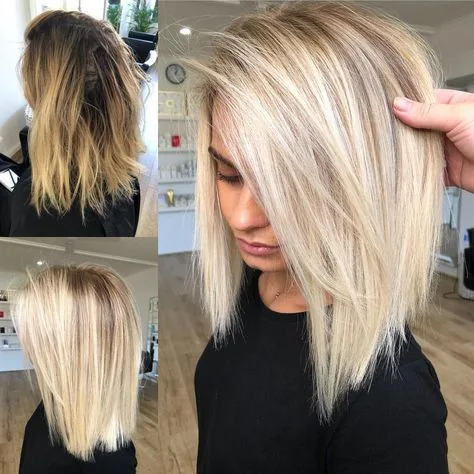
The grown-out blunt bob is what happens when you let the classic cut keep growing: the length drifts from the jaw to the chin and then to the collarbone, the blunt edge softens as the ends thin naturally, and the bob becomes a lob — longer, softer, and just as chic. It is the version for women who love the blunt bob but are not ready to commit to the trim schedule, or who are growing their hair out and want the in-between stages to look deliberate rather than accidental. The blunt line, even as it grows, keeps the shape looking intentional.
Pros: the easiest version to live with, grows out gracefully, and can be tied back once it reaches the collarbone. Cons: it is no longer a blunt bob in the strict sense — the sharpness is the style, and without it the cut loses its edge. Who should avoid it: women who want the true blunt bob — this is the version for the months between bobs, not a replacement for one. Maintenance is light: trims every eight weeks to keep the shape, and a little smoothing cream to keep the ends looking healthy. Quick verdict: the grown-out bob is a lovely haircut in its own right, and the best excuse to book your next blunt bob.
What is a blunt bob haircut?
A blunt bob is a bob cut to one single length, with the ends cut straight across in a level line and no layering through the interior. The solid edge makes hair look thicker and glossier, and the cut usually sits between the jaw and the shoulders. It is the sharpest, most graphic version of the bob.
How long does a blunt bob last between trims?
A blunt bob needs a trim every five to six weeks to keep its line sharp. A chin-length cut needs a trim every four to five weeks, while a shoulder-length version can stretch to seven or eight weeks. A blunt edge that is three weeks overdue looks straggly rather than sharp, so the trim schedule is not optional.
Does a blunt bob make hair look thicker?
Yes — a blunt bob is one of the best cuts for making hair look thicker, because nothing is layered away from the ends. Every strand counts toward the solid edge, so fine hair looks full and healthy. The effect is strongest at chin or jaw length, where the hair has the least weight pulling it flat.
What is the difference between a blunt bob and a layered bob?
A blunt bob keeps all the weight at the bottom in one solid line, so the hair looks thick, sleek and graphic. A layered bob removes weight from the interior and the ends, so the hair moves more freely and looks softer. Choose blunt for thickness and polish, and layered for volume and wash-and-go ease, especially on very thick hair.
Can you wear a blunt bob with curly hair?
Yes, but it must be cut dry, curl by curl, and left an inch longer than planned to allow for shrinkage. The curls soften the hard line into a rounded, full shape. Ask your stylist to cut your curls dry and to use curl cream on soaking-wet hair, and keep your hands off it while it dries.
Does a blunt bob suit a round face?
Yes — a blunt bob suits a round face as long as the line ends just below the jaw, with a middle or deep side part and a longer front piece that draws the eye downward. Avoid a chin-length bob with a blunt, straight-across fringe, which can make a round face look wider.
How do I style a blunt bob at home?
Blow-dry with a paddle brush, pulling the hair straight down, then bend the ends very slightly under with a flat iron. Use a pea-sized amount of smoothing cream on the lengths only, never at the roots. The whole routine takes about five minutes, and a heat protectant is essential before the flat iron.
Should I get bangs with a blunt bob?
Bangs are a classic choice with a blunt bob — a blunt fringe is the boldest pairing, while curtain bangs or side-swept bangs are softer and easier to grow out. But bangs are not compulsory: a blunt bob with a middle or deep side part gives you the same sharp silhouette with no fringe upkeep at all.
Is a blunt bob good for women over 50?
Yes — the blunt bob is one of the best haircuts for women over fifty. The short length lifts the face, the solid edge frames the cheeks, and the cut looks deliberate and chic. It works beautifully with grey and silver hair, and it dries in minutes with almost no product.
How do I ask my stylist for a blunt bob?
Bring two or three photos of women with hair like yours, and point at the specifics: exactly where the line should end when your hair is dry, and whether the ends should be razor-sharp or given a whisper of texture. Say the words blunt bob out loud, and say what you do not want too — no layers through the interior, no graduation at the back, and no thinning at the ends.
Conclusion
The blunt bob has outlasted every trend that tried to replace it for a simple reason: one clean line, cut well, does more than any amount of layering, colour or styling ever could. It makes fine hair look thick, makes healthy hair look glossier, and gives a face a frame that is unmistakably deliberate. Whether you choose the classic chin-length cut, a jaw-length bob that suits almost everyone, a shoulder-length version you can still tie back, or a platinum, copper or silver take on the same sharp shape — the cut is the same at heart: one length, one line, no apology.
Start with the jaw-length version if you are unsure, and let your stylist cut it a touch longer than you think you want — you can always take more off, and the bob will spring up as it dries. Bring photos, say what you do not want as well as what you do, and ask for the line to be checked dry, on both sides, with your head level. Then go home, bend the ends a fraction under, and walk out the door. That is the whole secret of the blunt bob: it looks effortless because, once the line is right, it actually is.