Hairstyles for Women in Their 30s: 38 Cuts and Styles That Feel Grown-Up Without Feeling Boring
Your thirties are the decade your hair stops being an experiment and starts being a signature — and that is a good thing. You know what your hair actually does by now: which side it falls on, how it behaves in humidity, whether it holds a curl past lunch. You also know your life better: early meetings, school runs, weddings that fill the calendar, date nights you actually plan, and mornings when ten minutes is all you have. The right hairstyle for your thirties is not about looking older or younger. It is about a cut that fits the life you are living now, flatters the face you have now, and still leaves room for fun.
This guide brings together 38 hairstyles for women in their 30s, from polished long layers and modern lobs to buns that survive a school run, chignons that carry a wedding, and blowouts that make a Friday night feel like an occasion. Eight guides answer the questions that actually come up in this decade: what changes about hair in your 30s, which cuts read polished without ageing you, how to choose between low-maintenance and statement styles, the best picks for your face shape, how to style in ten minutes, what to ask your stylist, the mistakes that add years, and how to grow a cut out gracefully. Every style comes with an honest note on time, cost, upkeep and who it suits best — so you can book the chair with confidence.
What Changes About Hair in Your 30s
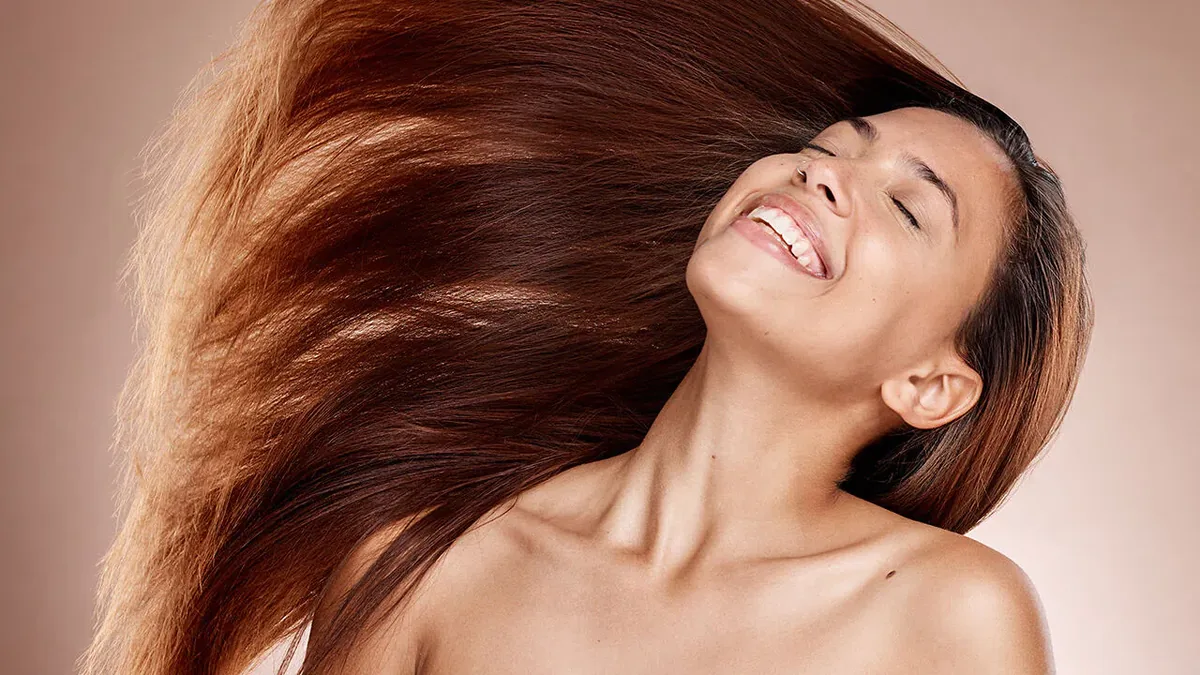
Hair in your thirties is rarely worse than it was at twenty-five — it is just different, and noticing the difference early is what keeps it looking good. The most common shift is texture: hair can get a little finer at the parting, a little drier at the ends, or a little less springy after years of heat styling, colour and the occasional bleach. Hormonal changes from pregnancy, breastfeeding or contraception can change the wave pattern, the shedding cycle and even where the hair parts. None of this means your hair is failing. It means the routine that worked at twenty-two — wash, blast it dry, forget it — needs a small upgrade.
The practical fix is simple and cheap. A trim every six to eight weeks stops thin ends before they make the whole cut look tired, a weekly mask or a light oil on the ends replaces the moisture heat styling takes away, and a heat protectant becomes non-negotiable rather than optional. If shedding worries you, give it three months before panicking: most post-pregnancy shedding settles on its own, and a stylist can thin or layer the cut so the regrowth blends in. The biggest mistake is overcorrecting — chopping everything off in frustration, or piling on heavy products that flatten fine hair. Small, consistent care beats dramatic rescue attempts every time.
Cuts That Read Polished, Not Ageing
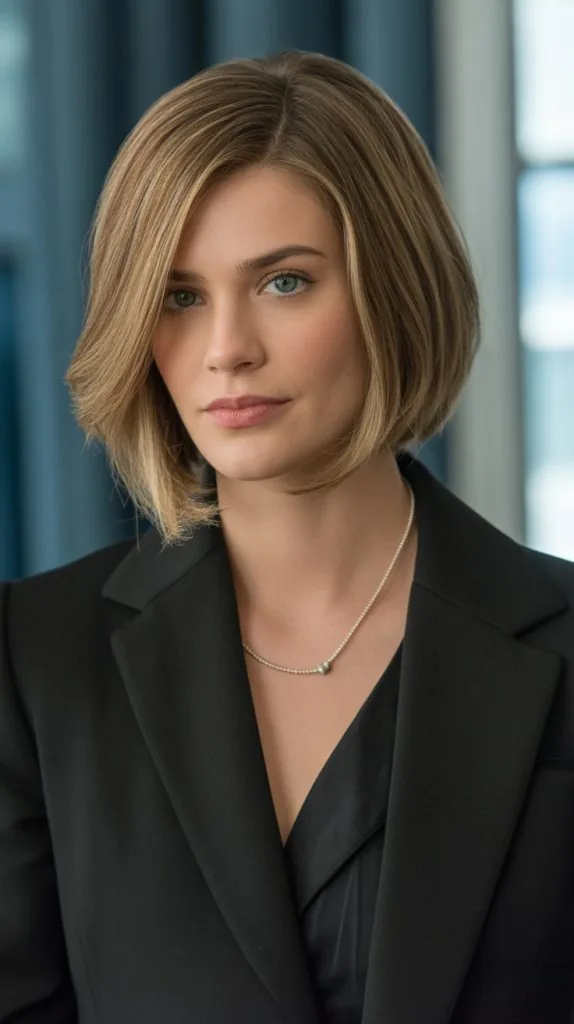
The difference between polished and ageing is almost never length — it is movement, shine and a cut that is clearly intentional. A long cut with soft, face-framing layers and healthy ends reads polished at any age, while a long cut with thin, straggly ends and no shape reads tired, not youthful. Similarly, a short cut with texture and a soft fringe reads modern and confident, while a short cut that is over-set, stiff and helmet-smooth reads dated. The rule is simple: your hair should move when you move, catch light when you turn your head, and look like you meant it.
What to ask for: layers that start at the cheekbone or chin rather than at the crown, ends that are point-cut rather than blunt-cut if your hair is fine, and a fringe that is soft and feathered rather than heavy and straight. What to skip: severe centre parts with no face framing, one-length hair with no layers at all, and perms or tight curls that belong to a different decade. Colour matters too — a soft balayage or a gloss adds dimension and shine, while flat, single-process colour can look harsh. Polished is not a code word for boring. It is a cut with shape, shine and a little life in it.
Low-Maintenance vs Statement Styles
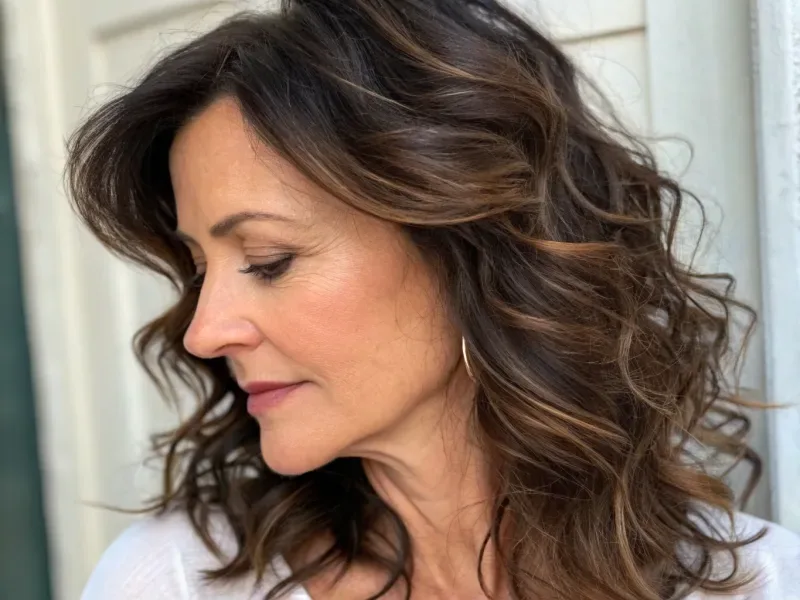
Every woman in her thirties needs to answer one honest question before choosing a cut: how many minutes will I actually spend on my hair on a normal Tuesday? If the answer is five, a statement style that needs a round brush, a curling iron and three products will fail you within a week — not because the style is bad, but because the routine does not fit your life. Low-maintenance styles are not lesser styles. A lob with soft layers, a textured midi, or a cut that air-dries well can look more expensive than a high-maintenance blowout that is always half-done because you ran out of time.
The smart move is to match the cut to your real week, and keep the statement looks for occasions. Choose a cut that looks good air-dried or with a two-minute rough dry, then learn one five-minute polished version of it for work and one ten-minute dressed-up version for evenings. That way the same cut does three jobs. Statement styles — sharp bobs, heavy fringes, platinum colour — are wonderful if you genuinely enjoy styling and will keep the appointments. Be honest with your stylist about your routine, including the days you do nothing at all. A good stylist will cut for the version of you that exists on a tired Thursday, not the version that exists on a wedding morning.
Face-Shape Picks for Your 30s
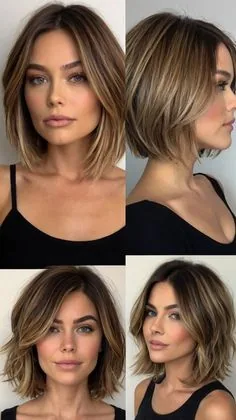
Face shape still matters in your thirties, but it matters differently than it did at twenty — now it is about balance and softness rather than rules. Oval faces can wear almost anything, so the choice comes down to lifestyle and personality. Round faces look longer with a deep side part, face-framing layers that start below the chin, or a lob that ends past the collarbone. Square faces soften with texture at the ends, a curtain fringe, and a side part that breaks the jawline’s straight lines. Long faces benefit most from a fringe, waves at cheek level, or a bob that adds width where the face is narrow.
Heart-shaped faces suit styles with volume at the jaw — a wavy lob, a textured bob, or curls that start at chin level — which balance a wider forehead and a narrower chin. The mistake to avoid is treating face-shape advice as law. Your hair texture, your parting and your willingness to style matter just as much as your bone structure, and a confident woman wearing a cut she loves will always look better than a hesitant woman wearing the theoretically correct one. Use face-shape picks as a starting point, try the cut in a photo or a consultation, and trust your own eyes in the mirror more than any diagram.
Styling in 10 Minutes Flat

Ten minutes is enough for a polished look if the cut is doing half the work — and that is the real secret of fast styling in your thirties. Start with a cut that has shape built in: layers that fall into place, a fringe that behaves, ends that bend rather than stick out. Then build a routine in three steps and stick to it. First, rough-dry with your fingers until the hair is eighty percent dry, pushing the roots up for lift. Second, smooth the front pieces and the fringe with a flat iron or a round brush — the front is what people actually see. Third, a pea-sized amount of cream or a light spray, and you are out the door.
The time-wasters to cut are the ones that feel productive but are not: blow-drying section by section when your hair is already layered, curling the back of your head that nobody sees, and re-straightening hair that was fine ten minutes ago. Keep a dry shampoo, a claw clip and a couple of bobby pins in your bag and you have a second-day plan too. A low bun, a sleek ponytail or a half-up twist takes two minutes and looks deliberate if the front pieces are smooth. The goal is not a perfect blowout every morning. It is hair that looks intentional in ten minutes, and a cut that forgives the mornings when you only have two.
What to Ask Your Stylist
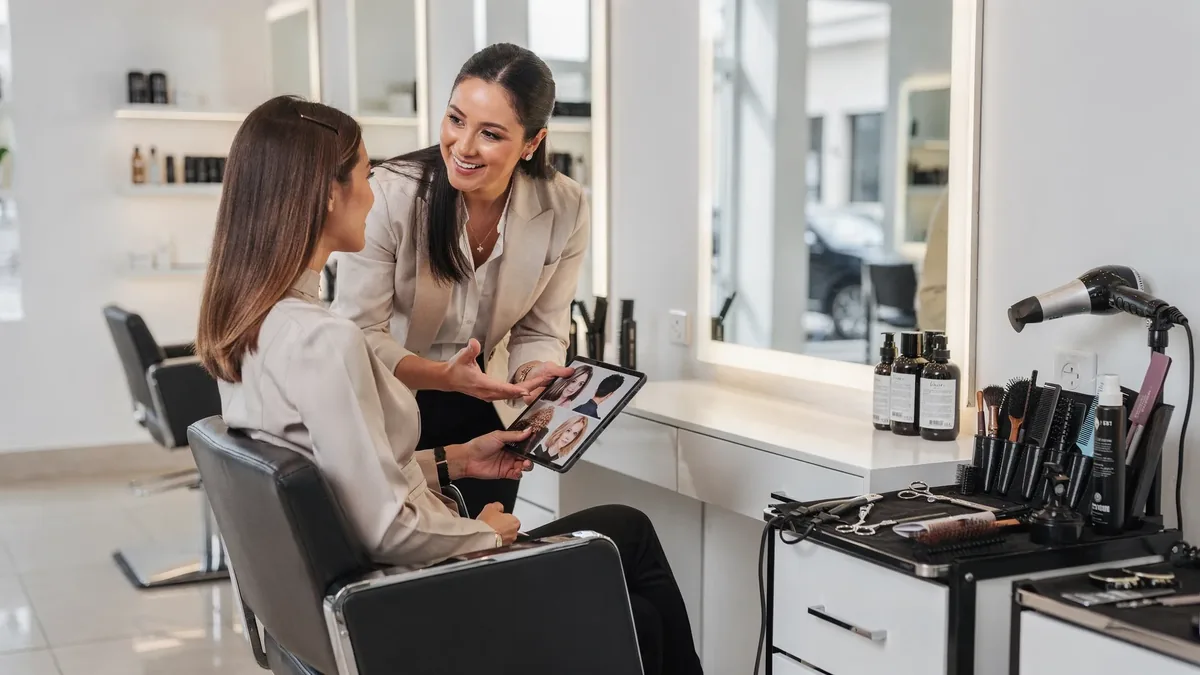
A good consultation is worth more than any photo you bring, because photos show a result and a consultation builds a plan for your hair, your face and your week. Bring two or three photos of women with hair like yours — similar thickness, similar wave, similar face shape — and point at the specifics: where the layers should start, how long the front pieces should be, whether you want a fringe and how soft it should be. Then describe your real routine honestly: how often you wash, whether you air-dry, how many minutes you will spend styling, and how often you can come back for trims.
Ask three questions before the scissors come out. First, how will this cut look when it is air-dried, not just blow-dried in the salon? Second, how will it grow out — will it still look deliberate in eight weeks, or will it need a trim in four? Third, what will the upkeep cost in time and money, including colour? A good stylist answers all three without hesitation and cuts a touch longer than planned, knowing hair springs up as it dries. Say what you do not want too: no heavy graduation at the back, no layers so short they stick out, no fringe that needs daily heat. The consultation is not small talk. It is the difference between a cut you love and a cut you grow out.
Mistakes That Age You
Most hairstyles that age a woman in her thirties do it quietly, through neglect rather than a single bad decision. The biggest one is keeping a cut long past its shape: ends that have gone thin and straggly, layers that have grown out into a triangle, a fringe that has become a curtain over the eyes. Hair that has not been trimmed in four months does not read as relaxed — it reads as tired, and tired reads older. The second mistake is the opposite: a cut that is too severe, too short and too set, with a rigid blow-dry and a heavy fringe that closes off the face.
Other ageing mistakes are easy to fix. Flat, single-process colour with no dimension makes hair look like a wig; a gloss or a few face-framing highlights bring it back to life. Over-straightening every day strips shine and makes the ends look fried. A centre part with no face framing can drag a long face down, and a severe scraped-back bun worn every day can look harsh rather than chic. None of these mean you have to cut your hair short or dye it blonde. They mean your hair needs shape, shine and a little movement — the three things that read youthful at any age, because they read healthy.
Growing Out and Upkeep
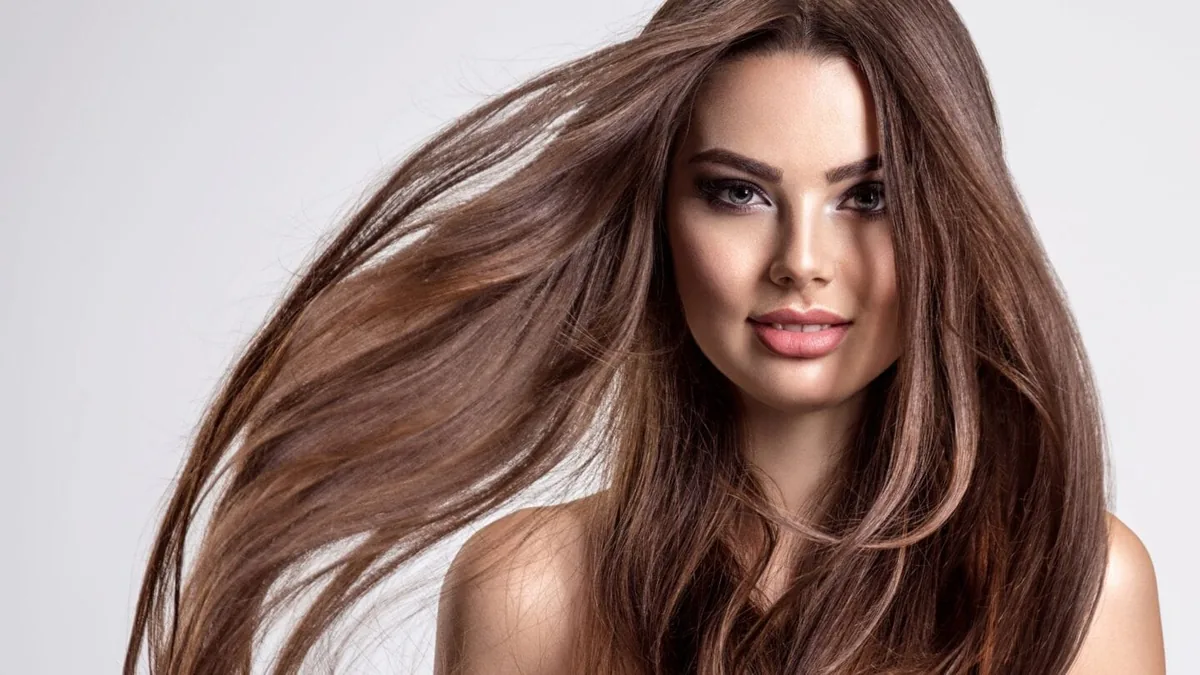
Growing out a cut in your thirties is mostly a matter of patience and a few strategic trims, not a year of hiding under hats. The trick is to keep trimming the ends every eight to ten weeks while the length catches up — a dusting of the split ends, not a real cut — so the hair stays healthy and the shape stays deliberate instead of drifting into a triangle. Ask your stylist to reshape the layers as they grow, softening the shortest pieces into face-framing layers and letting the fringe grow into a curtain fringe rather than an awkward ledge.
Upkeep while you wear any cut is simple and cheap. A trim every six to eight weeks, a weekly mask if your hair is coloured or heat-styled, and a heat protectant every single time you use a tool. Colour upkeep depends on the choice: a balayage or a gloss can go three to four months between appointments, while a solid colour or a fringe needs a refresh every five to six weeks. Budget honestly — a cut that needs a forty-pound trim every four weeks is a different commitment than one that holds its shape for ten. The best cut for your thirties is the one you can actually maintain, because a well-kept simple cut always beats a neglected complicated one.
1. The Polished Long Layers
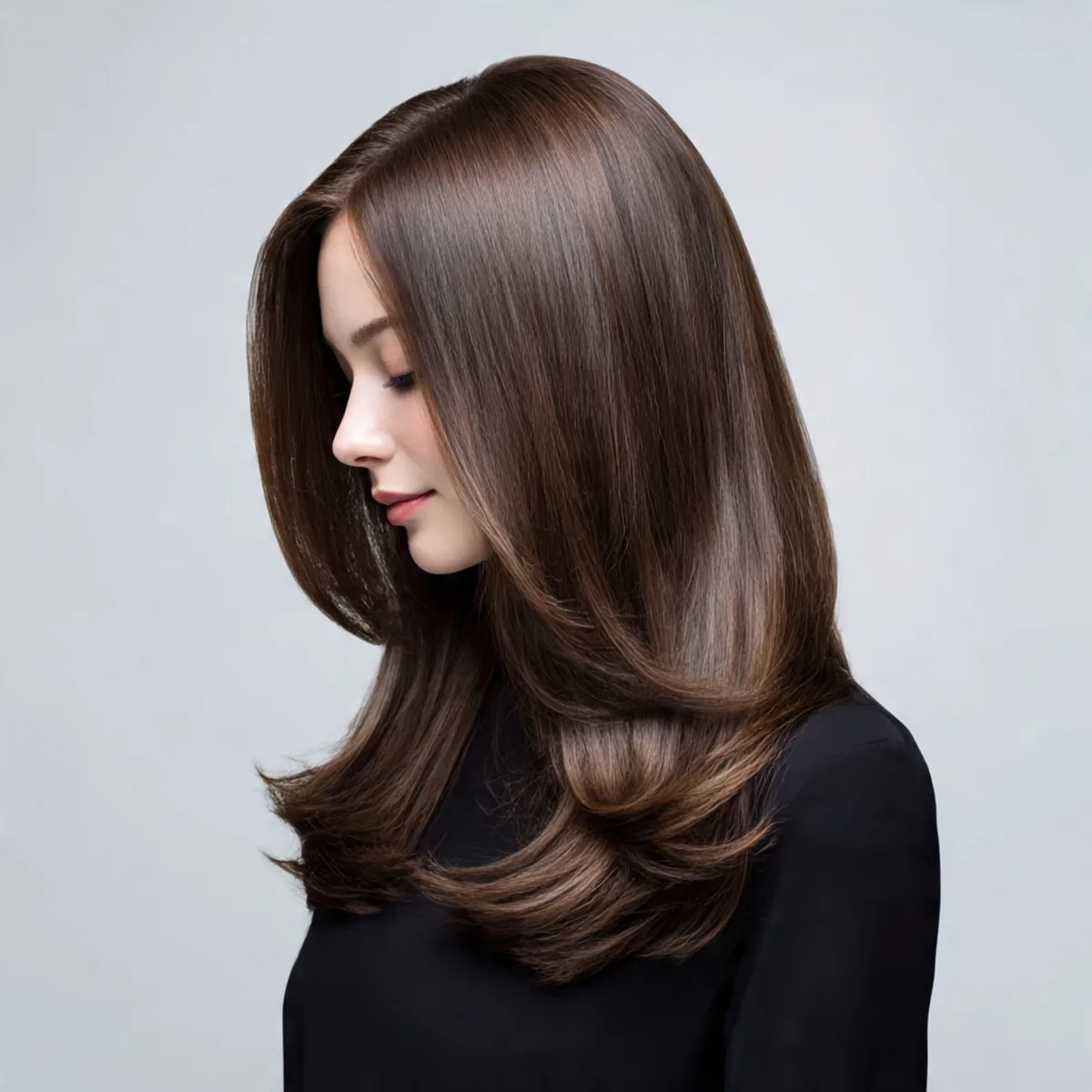
Polished long layers are the workhorse hairstyle of your thirties: long enough to feel feminine and versatile, shaped enough to look deliberate, and easy enough to wear every day without a battle. The layers start at the collarbone and fall softly, so the hair moves when you walk and frames the face without hiding it. It is the cut that works in a boardroom, at a school gate and at a wedding, with nothing more than a change of parting or a different accessory. If you have spent your twenties growing your hair out, this is the grown-up version of that length — the same hair, finally with a shape.
Best for: thick or medium hair that needs weight removed without losing length, and women who like to tie their hair up. How to style: rough-dry with a round brush on the front pieces only, or let it air-dry with a little cream on the ends. What to ask: layers that start below the chin so the front does not look choppy, and point-cut ends so the layers blend. Time and cost: trims every eight weeks, about ten minutes to style, and no colour upkeep if you keep your natural shade. Quick verdict: the safest excellent choice on this list — if you are unsure where to start, start here.
2. The Modern Lob
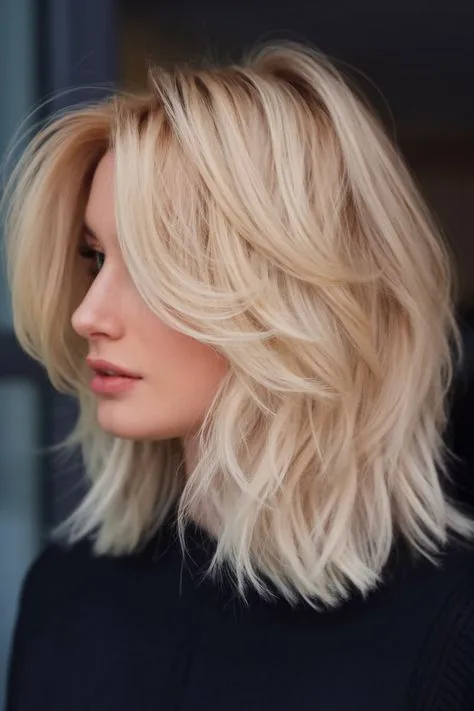
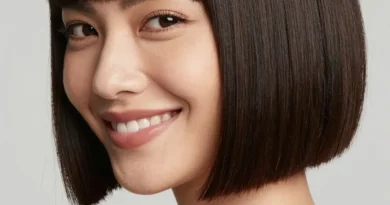
The modern lob — a long bob that ends between the chin and the collarbone — is the cut that made short hair feel safe for women who are not ready for a real bob. It is long enough to tie into a small ponytail, short enough to dry in minutes, and shaped enough to look polished with almost no effort. The modern version has soft, invisible layers and a slightly textured finish, so it never looks like the severe, one-length bobs of a decade ago. It suits almost every face shape, and it is the cut most stylists reach for when a woman in her thirties says she wants a change but is nervous about going short.
Pros: dries fast, holds a wave beautifully, and grows out gracefully into long layers. Cons: it needs a trim every six weeks to keep the shape, and it can look ordinary if the ends are not textured. Who should think twice: women with very curly hair, where a lob can spring up into a triangle unless it is cut dry and layered carefully. Maintenance is light — a trim every six weeks, a little texture spray, and a weekly mask if you colour it. Quick verdict: the lob is the most versatile cut of the decade, and the one most women in their thirties end up keeping for years.
3. The Soft Blunt Bob
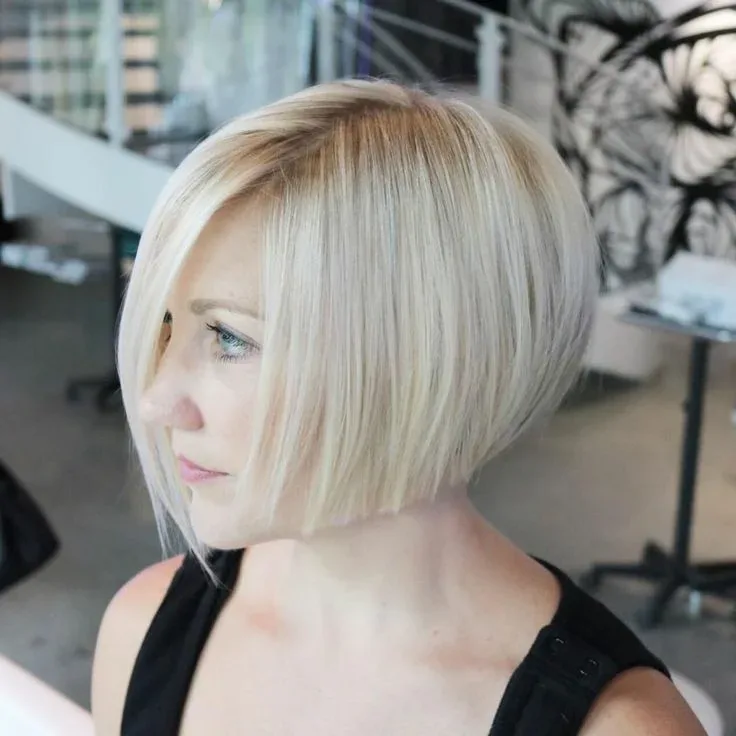
A soft blunt bob is the sharp cut with the edges taken off: one clean length at the jaw or chin, but with the ends point-cut so they move instead of sitting in a rigid line. It makes fine hair look instantly thicker, because the ends stack on top of each other in one solid shape, and it makes the whole head look lighter and more deliberate. In your thirties it reads confident rather than severe — the woman who knows what she wants and does not need a lot of hair to prove it. It is also the cut that photographs best, because the clean line frames the face in every picture.
The trade-off is the trim schedule: a blunt bob needs a trim every five weeks to stay sharp, and it shows every uneven strand. Common mistake: cutting it too long, which turns it into a heavy chin-length bob and loses the lightness. Another is blow-drying it into a rigid, helmet-smooth shape — keep the finish soft, bend the ends under with a flat iron, and let it move. Cost and time: frequent short salon visits, but almost no daily styling time. Who should avoid it: very curly hair, where a blunt edge can look triangular. Quick verdict: the chicest short cut on this list, if you will keep the appointments.
4. Curtain Bangs With Long Hair
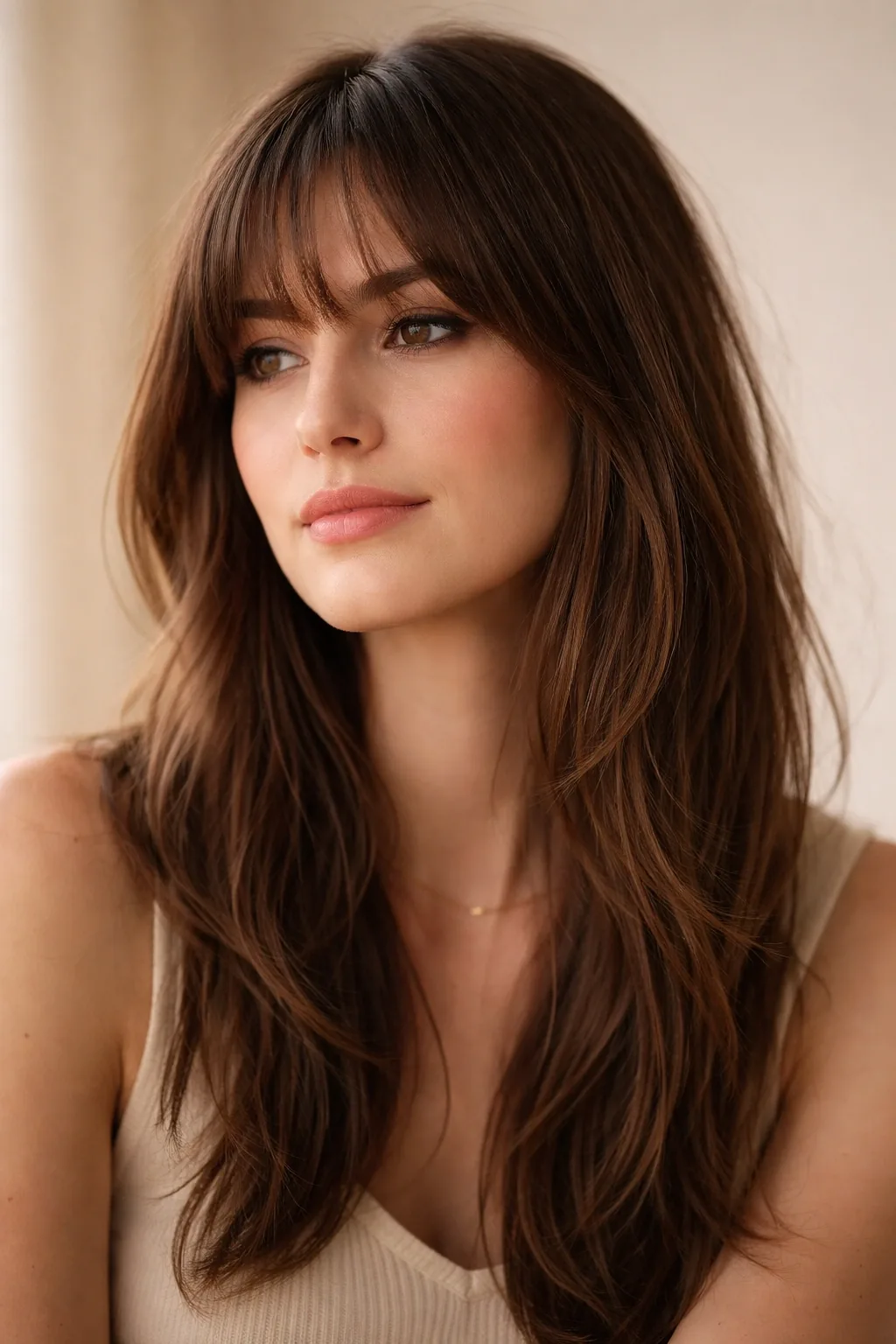
Curtain bangs with long hair are the gentlest way to change your look without losing a centimetre of length: the fringe parts in the middle, falls on either side of the face, and blends into the longest layers so smoothly that the bangs feel like part of the cut rather than an addition. The effect is softening and face-framing — the forehead looks shorter, the cheekbones look higher, and the whole style has a relaxed, seventies feel that suits almost everyone in their thirties. It is also the most forgiving fringe, because it grows out gracefully and needs almost no styling.
Best for: long faces, high foreheads, and women who want a fringe without the commitment. How to style: blow-dry the bangs forward with a round brush, then push them to the sides with your fingers — thirty seconds, no tools beyond a brush. What to ask: a fringe that starts at the cheekbone and is cut with a soft, feathered edge, not a heavy straight line. Time and cost: a fringe trim every six weeks, which many salons do free between cuts. Quick verdict: the lowest-risk transformation on this list, and the one most women wish they had tried sooner.
5. The Low Sleek Ponytail
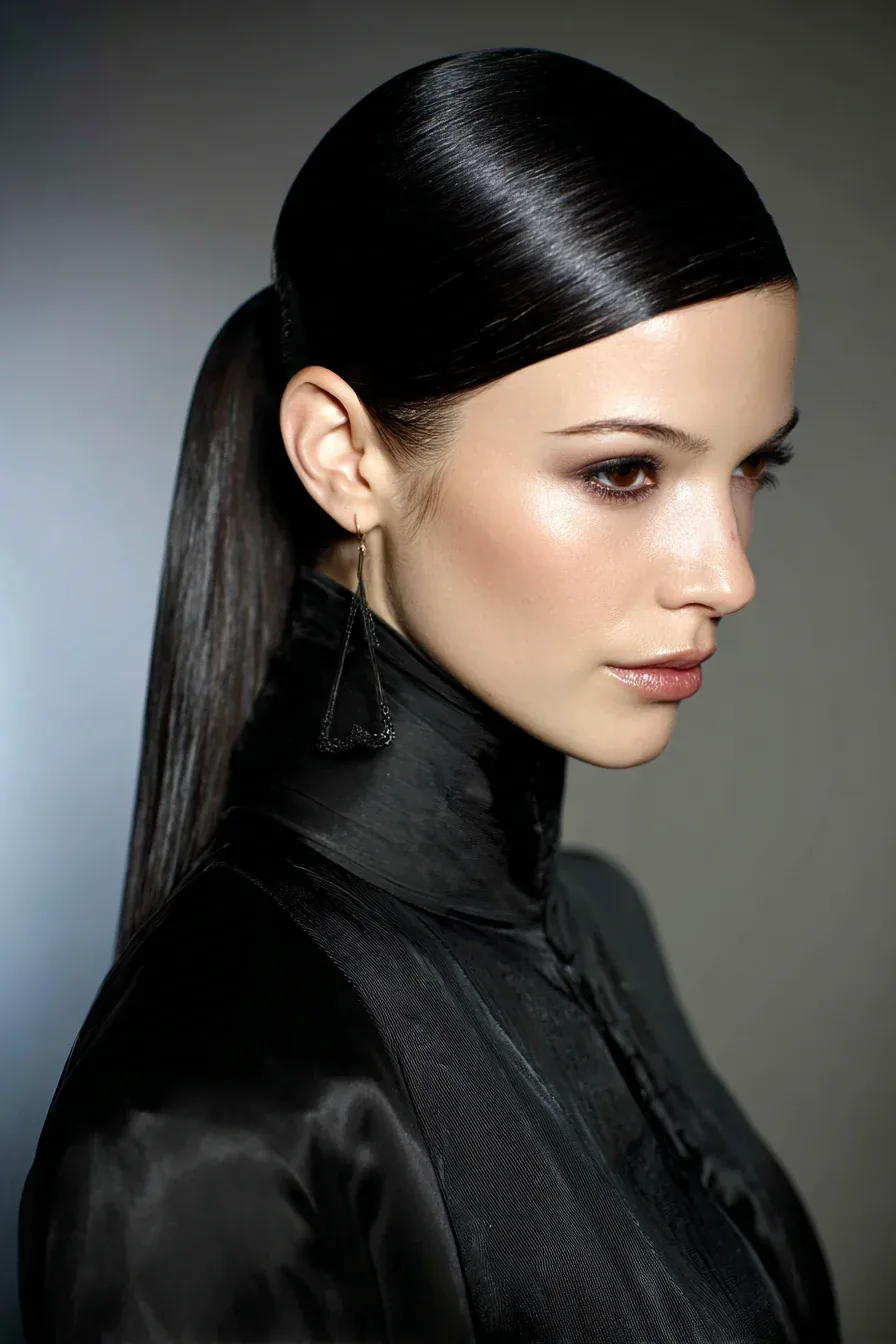
The low sleek ponytail is the hairstyle your thirties were made for: two minutes, one hair tie, and a look that is polished enough for a presentation and elegant enough for a wedding guest. The secret is in the details — a centre or deep side part, hair smoothed back with a little cream or gel, the tie hidden with a wrapped strand of hair, and the front pieces left soft rather than scraped flat. Done well, it looks expensive and intentional. Done carelessly, with flyaways and a visible elastic, it looks like you gave up — so the five minutes of smoothing are the whole style.
Pros: the fastest polished style on this list, keeps hair off your face all day, and suits every hair type. Cons: a tight ponytail worn every day can cause breakage at the hairline, so vary the position and use a soft tie. Who should avoid a severe version: women with a very round face, where a scraped-back ponytail can emphasise width — leave two soft face-framing pieces out. Maintenance is nothing: no trim schedule beyond your normal cut, and no products beyond a smoothing cream. Quick verdict: learn this one properly and you will never have a bad hair day again.
6. The Textured Pixie for Busy Mornings
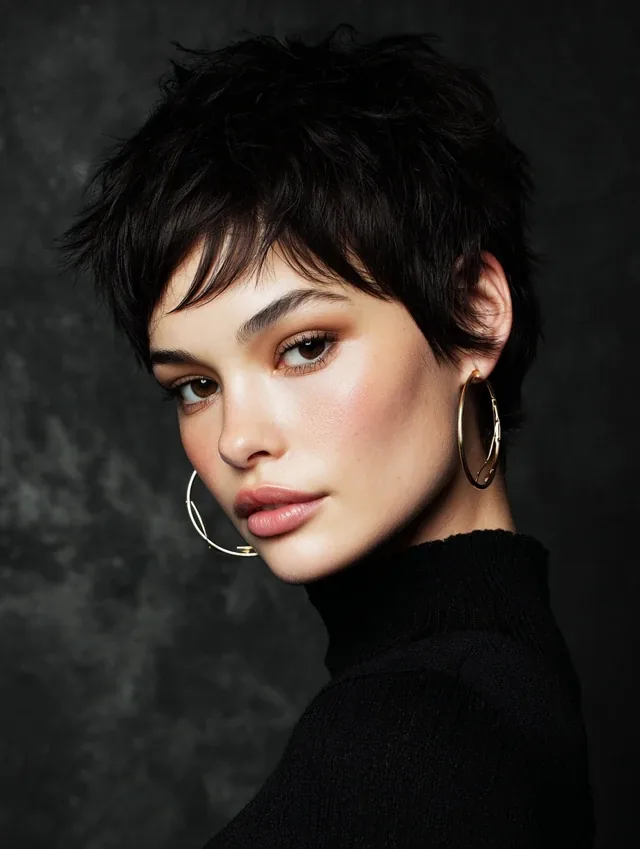
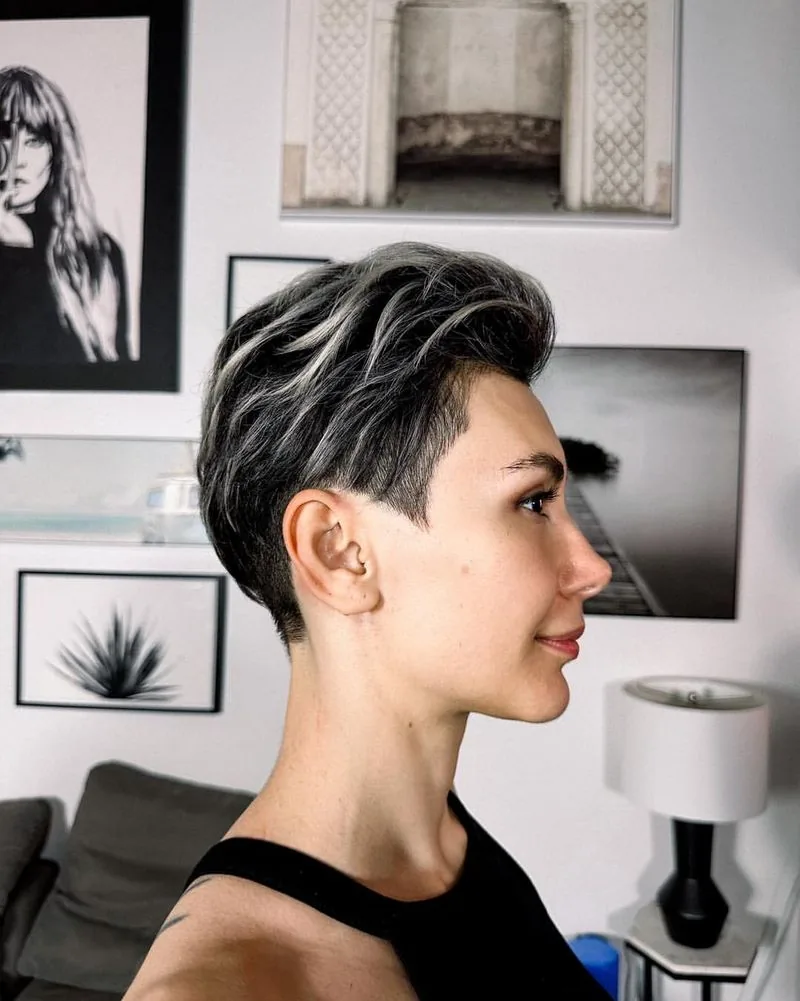
A textured pixie in your thirties is not a dare — it is a decision, and a very practical one. Short, choppy layers on top, soft texture at the sides, and a fringe that can be swept to the side or pushed forward give you a cut that takes two minutes to style and looks deliberate every single day. It is the cut for the woman who is done fighting her hair: the new mum who showers at 6 a.m., the commuter who dries her hair on the train, the woman who would rather spend her mornings on anything else. It also shows off your face, your earrings and your cheekbones in a way no long cut can.
The honest trade-off is the salon schedule — a pixie needs a trim every four weeks to hold its shape, and growing it out takes patience. Common mistake: cutting it too short at the back, which makes it look severe rather than soft. Ask for texture through the top and a soft, longer fringe you can play with. Cost and time: frequent short visits, but almost no daily styling and almost no product. Who should think twice: women who love to tie their hair up, or who hide behind their hair — a pixie puts your face front and centre. Quick verdict: the boldest low-effort cut on this list, and the one that frees up the most mornings.
7. The Side-Parted Midi Cut
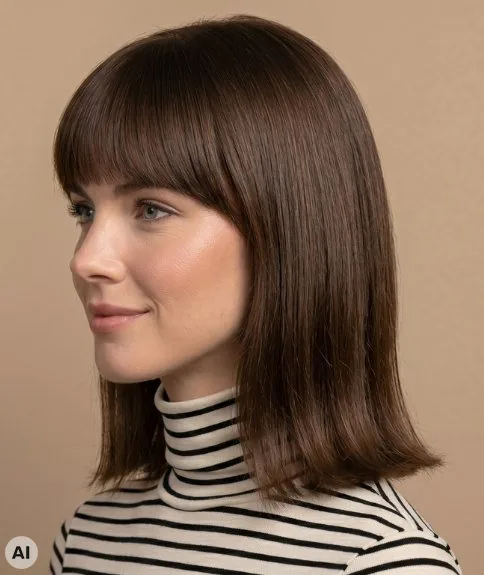
The side-parted midi is the quiet overachiever of thirties hair: medium length, a deep side part, and soft layers that fall to the collarbone. The deep part does the styling for you — it adds instant volume at the crown, sweeps a heavy section of hair across the forehead, and gives the whole cut a glamorous, slightly retro energy without any effort. It suits square and round faces particularly well, because the diagonal line of the part softens strong angles, and it suits fine hair too, because the part creates the illusion of fullness where a centre part would fall flat.
Best for: fine hair that needs volume, and women who want a cut that looks different from every angle. How to style: blow-dry the heavy side forward with your fingers, push the lighter side behind the ear, and finish with a light hold spray — about three minutes. What to ask: layers that start at the cheekbone, and a part that follows your hair’s natural fall rather than fighting it. Time and cost: trims every seven weeks, no colour upkeep. Quick verdict: the cheapest way to make a familiar cut feel new again — sometimes all you need is to move the part.
8. The Voluminous Blowout
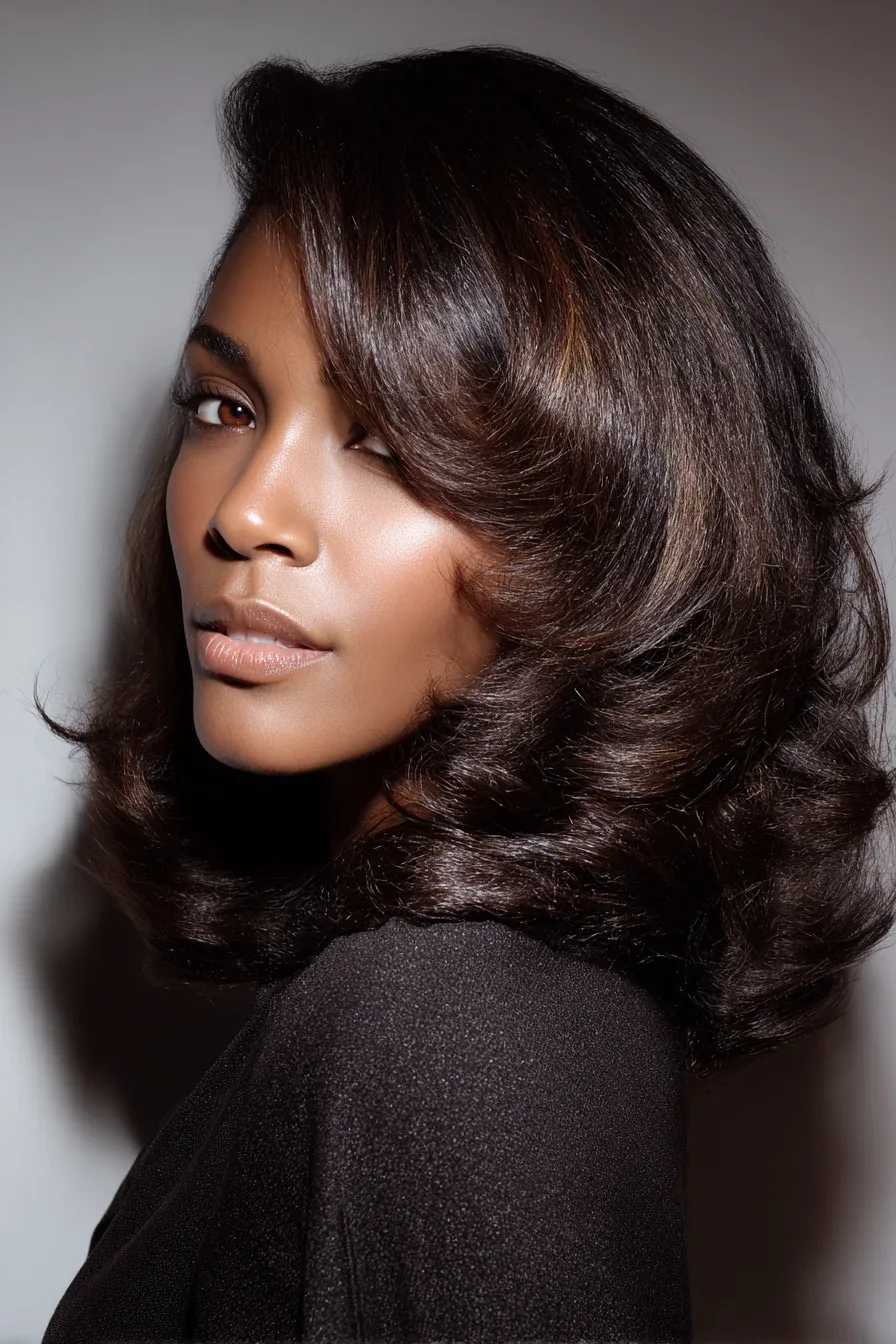
The voluminous blowout is the Friday-night hairstyle: big, bouncy, glossy hair that makes an ordinary outfit feel like an occasion. The trick is not the products but the technique — rough-dry until the hair is eighty percent dry, then work through it in sections with a large round brush, rolling the ends under and lifting the roots as you go. The result is movement and shine, and a cut that looks twice as thick as it is. In your thirties, a blowout is the style you learn once and use for a decade: job interviews, dates, weddings, and every evening when you want to feel like the best version of yourself.
Pros: makes any cut look expensive, lasts two days with dry shampoo, and suits every face shape. Cons: it takes fifteen to twenty minutes, and it falls flat in humidity. Who should avoid doing it daily: women with very fine hair that drops within an hour — save the blowout for occasions and wear your cut soft day to day. Common mistake: using too much serum, which makes the hair look greasy by midday; a pea-sized amount on the ends only. Cost and time: a salon blowout is a treat, not a routine — learn the home version and keep the salon for special days. Quick verdict: the most glamorous skill on this list, and worth the practice.
9. The French Twist for Weddings
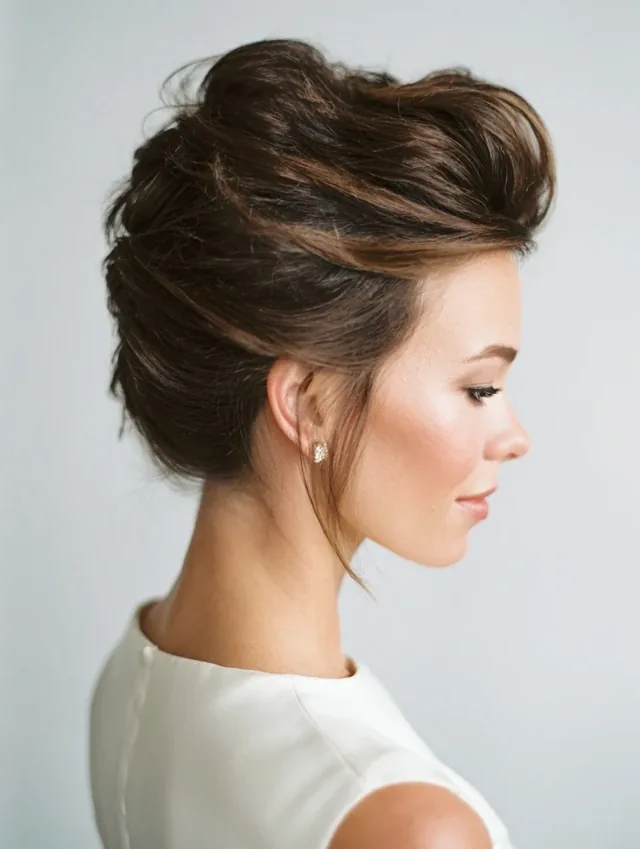
A French twist is the updo that never dates: hair swept up and tucked into a smooth vertical roll, with soft pieces left out at the front to keep it from looking severe. It is the hairstyle for the weddings, christenings and black-tie evenings that fill your thirties, because it photographs beautifully, stays put through a whole day of dancing, and looks elegant from every angle. It suits long and medium hair best, and it works with a veil, a headband or a simple pearl clip. The key is the softness — a French twist that is pulled too tight looks like a costume, while one with a little looseness at the front looks modern and relaxed.
Best for: formal occasions, and women with medium to long hair who want an updo without a lot of pins. How to style: gather the hair low, twist it up, pin it in place, and pull out two soft face-framing pieces. What to ask: if you are having it done at a salon, bring a photo and arrive with day-old hair, which holds better than freshly washed hair. Time and cost: twenty minutes at home with practice, or a salon appointment for the real thing. Quick verdict: the most elegant updo on this list, and the one that will still look good in photographs in thirty years.
10. The Messy Bun That Looks Intentional
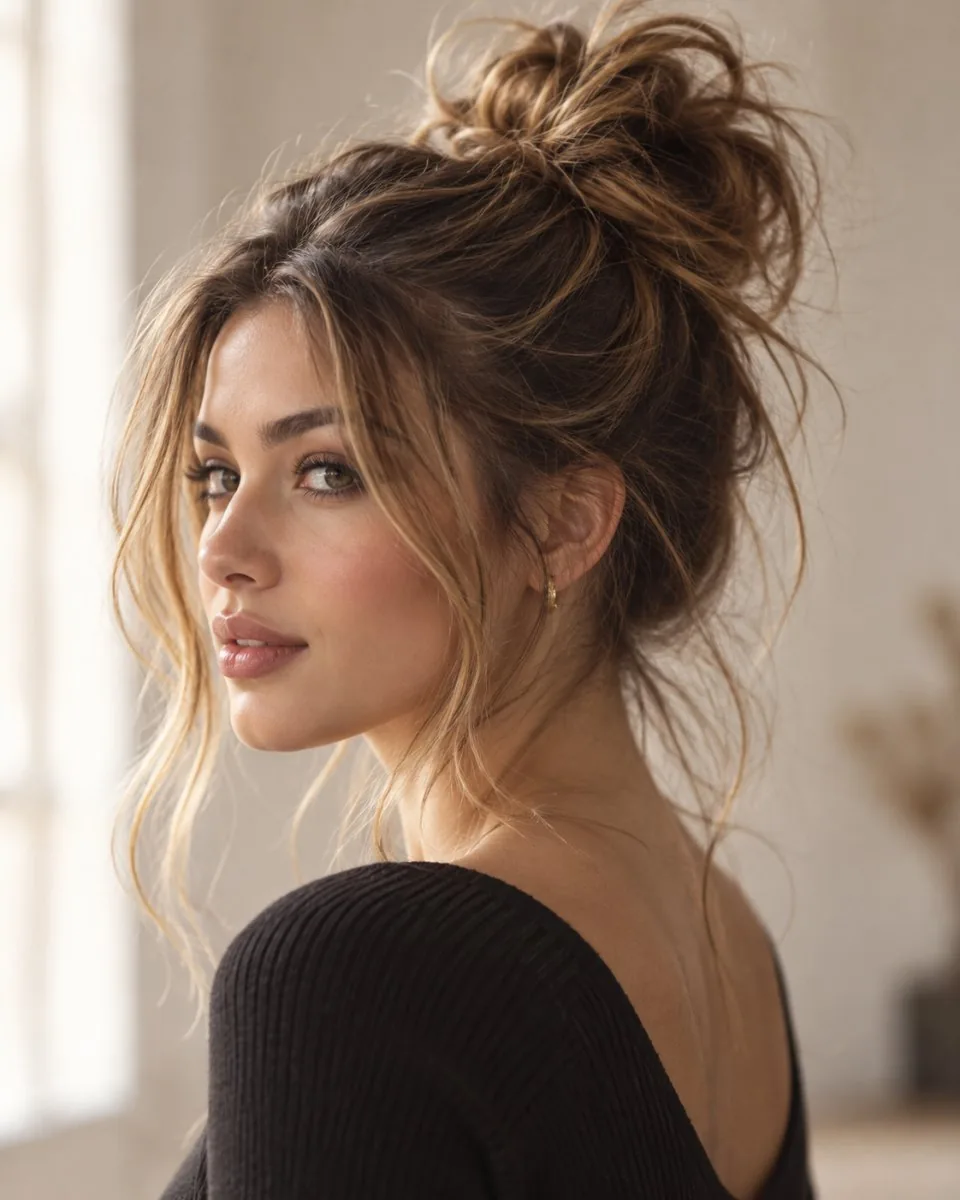
There is a messy bun that looks like you gave up, and a messy bun that looks like a choice — and the difference is about ninety seconds of attention. The intentional version sits high or at the nape, has a smooth base with no lumps, a few soft pieces pulled out at the front, and a bun that is pinned rather than knotted into a ball. It is the hairstyle for school runs, work-from-home days and weekends, because it keeps your hair out of the way while still looking like you thought about it. In your thirties, when a bun is often a necessity rather than a style, learning the intentional version is genuinely life-changing.
Pros: two minutes, keeps hair off your face, and works on second- and third-day hair. Cons: a bun worn tight every day can cause breakage, so vary the position and use a soft tie or a claw clip. Common mistake: making the bun too high and too tight, which looks severe — soften it by pulling out the front pieces and loosening the crown. Who should avoid a scraped-back version: women with a very round face, where a soft, low bun flatters more. Maintenance is nothing. Quick verdict: the most useful style on this list — master it and you will wear it three times a week.
11. The Shoulder-Grazing Shag
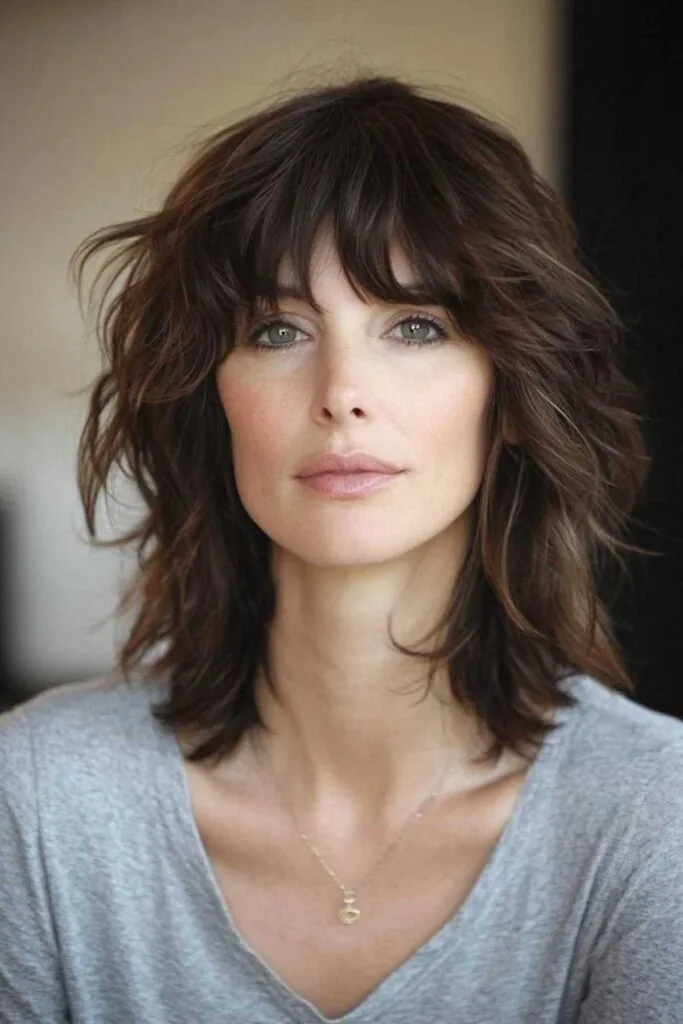
The shoulder-grazing shag is the cool cut for women who want their hair to look effortless rather than done: choppy layers, a curtain fringe, and ends that flick and bend in different directions. It suits wavy and straight hair equally well, because the layers create movement where there was none, and it is the cut that looks best on second-day hair — a little texture spray, a scrunch, and you are done. In your thirties it reads modern and confident, not try-hard, because the shag’s whole point is that it refuses to look perfect.
Pros: the most low-maintenance textured cut on this list, grows out gracefully, and adds volume to fine hair. Cons: too many short layers can make thick hair look wide, and the cut needs a stylist who understands texture — a bad shag is hard to fix. Who should think twice: women who want a sleek, polished finish every day, because a shag will never sit smooth. Maintenance: trims every seven to eight weeks, a little texture spray, and hands off while it dries. Quick verdict: the cut for women who want to look like they have great hair without trying — because with a shag, you mostly do not have to.
12. The Classic Chignon
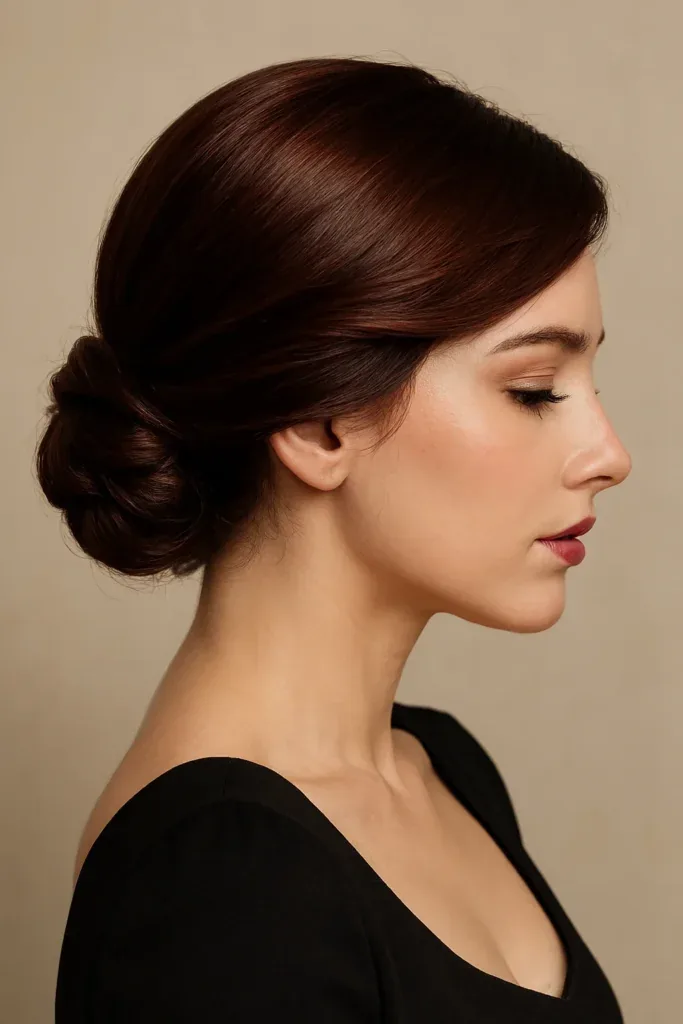
The classic chignon is the low bun, done properly: hair gathered at the nape, twisted or coiled into a neat knot, and pinned so it holds all day without a single strand escaping. It is the hairstyle for job interviews, court appearances, formal dinners and every occasion when you need to look serious and elegant at the same time. It suits every face shape, works on medium and long hair, and looks better with a little texture in the hair — day-old hair holds a chignon far better than freshly washed, slippery hair. A few soft pieces at the front keep it from looking severe.
Best for: work, formal occasions, and hot days when you want your hair completely off your neck. How to style: gather low, twist, coil and pin — five minutes with practice, and a little hairspray to finish. What to ask: nothing at the salon, unless you want it done professionally for an event. Time and cost: free, apart from a few pins. Common mistake: pulling it too tight, which gives you a headache and a severe look — keep the front soft. Quick verdict: the most reliable elegant style on this list, and the one every woman in her thirties should be able to do in her sleep.
13. Face-Framing Layers
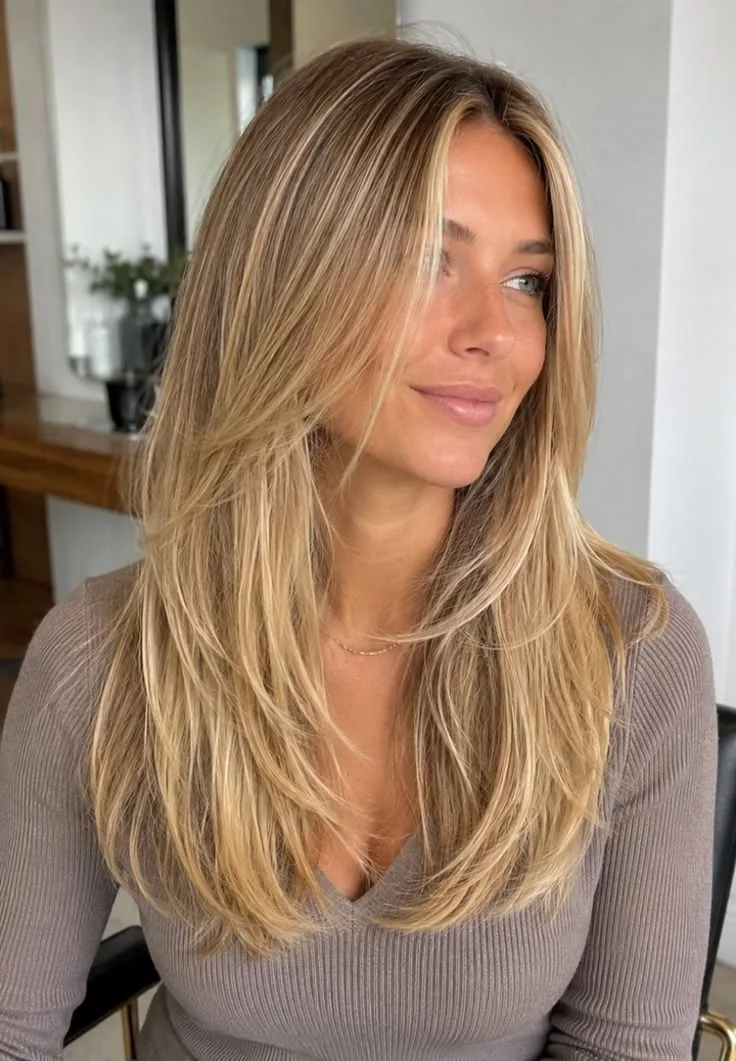
Face-framing layers are the smallest change with the biggest return: two or three soft layers that start at the cheekbone and fall down the front of the face, while the rest of the hair stays long and untouched. They soften the jawline, highlight the cheekbones, and make a long cut look shaped rather than simply grown out. They are also the best fix for hair that feels boring without being wrong — you keep the length you love, and you get the movement and polish you were missing. For women in their thirties who are not ready for a real cut, this is the half-step that feels like a full one.
Pros: keeps your length, suits every face shape, and grows out without an awkward stage. Cons: layers that are cut too short can stick out and look choppy — they need to start at the cheekbone or below, never at the chin on short hair. Who should avoid very short face-framing pieces: women with very curly hair, where short pieces can spring up. Maintenance is light: trims every eight weeks, and the layers blend in as they grow. Cost and time: the cheapest transformation on this list, because it is a trim, not a cut. Quick verdict: if you love your long hair but it bores you, ask for this first.
14. The Bouncy Curly Cut
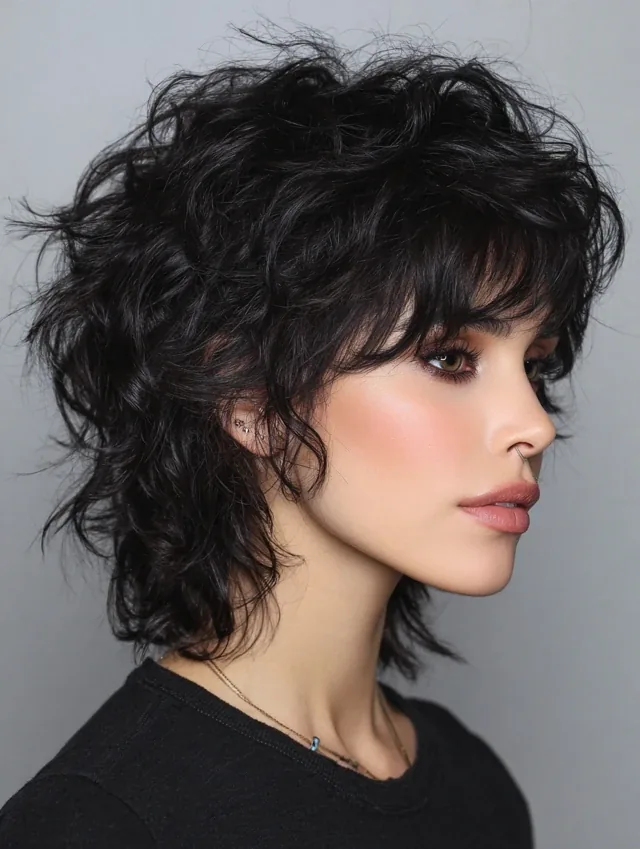
A bouncy curly cut in your thirties is about working with your curls instead of fighting them: layers cut to let the curls spring up and sit in a rounded, balanced shape, with the front pieces left a little longer so they do not shrink up to the forehead. The result is volume at the right height, curls that frame the face in soft spirals, and a cut that looks joyful rather than severe. The key is a cut that respects the curl pattern — shaped dry, curl by curl — so the length looks the same wet and dry, and the shape stays balanced as it grows.
Best for: natural curls and waves that need shape rather than length. How to style: curl cream on soaking-wet hair, scrunch, and keep your hands off it while it dries — touching curly hair while it dries is what creates frizz. What to ask: a dry cut, layers that follow your curl pattern, and front pieces left an inch longer to allow for shrinkage. Time and cost: trims every eight weeks, a weekly deep-conditioning mask, and almost no heat styling. Quick verdict: the cut that makes curly hair look like a choice rather than an accident — and the one that frees you from the straightener.
15. The Sleek Straight Lob
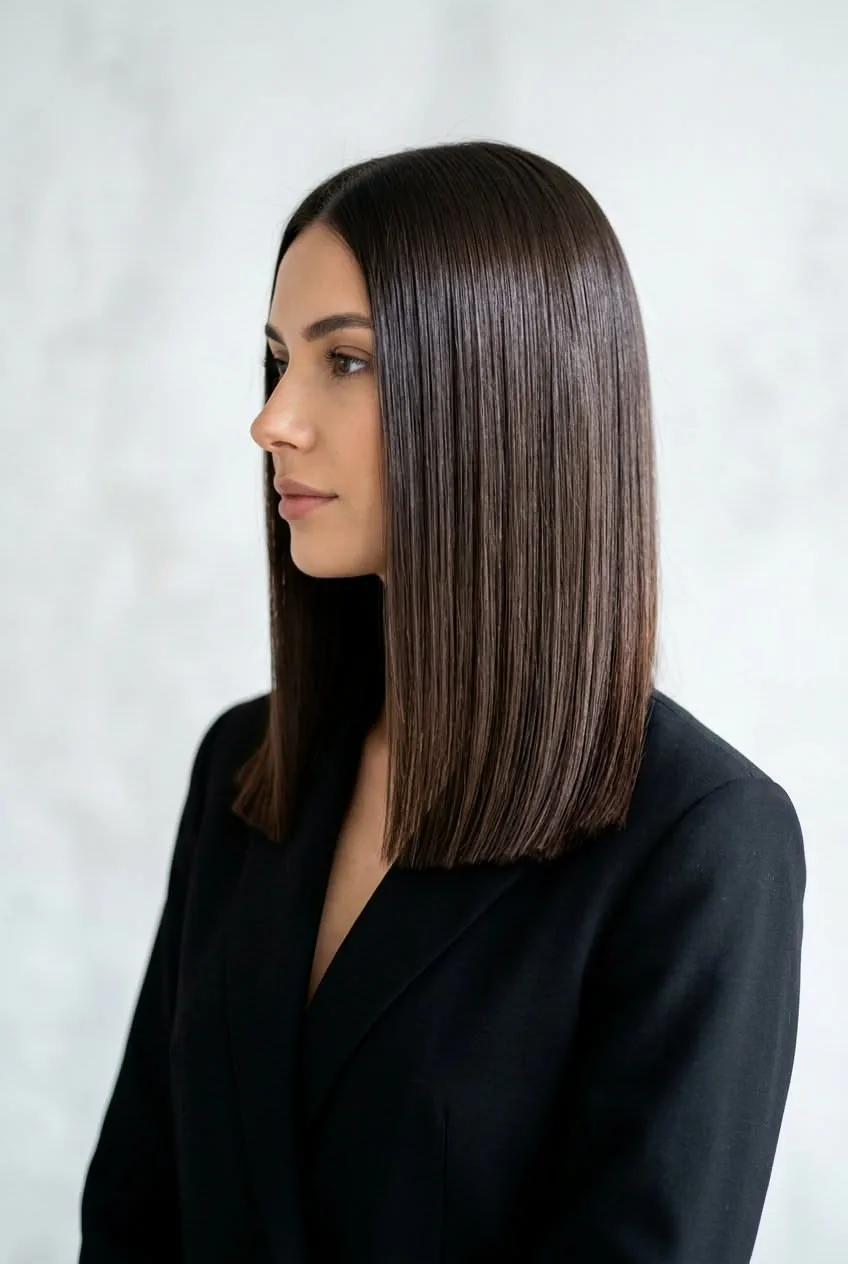
The sleek straight lob is the minimalist cut for women who like their hair to look expensive with almost no visible effort: a long bob, cut to one clean length, blow-dried or straightened smooth, with ends that curve very slightly under. It makes the hair look thick and glossy, and it gives the whole head a graphic, modern quality that softer cuts do not have. In your thirties it reads polished and professional — the cut of a woman who has a meeting at nine and a dinner at seven, and whose hair works for both without a change.
Pros: looks polished with almost no effort, makes fine hair look thicker, and photographs beautifully. Cons: it shows every uneven strand, so it needs a precise cut and a trim every five weeks, and it falls flat in humidity. Common mistake: using too much serum, which makes the short lengths look greasy — a pea-sized amount on the ends only. Who should avoid it: very curly hair, where a sleek finish needs heat every morning. Maintenance: a heat protectant is essential, and a weekly mask keeps the ends healthy. Quick verdict: the most polished cut on this list, if you will keep the trim schedule.
16. The Half-Up Twist
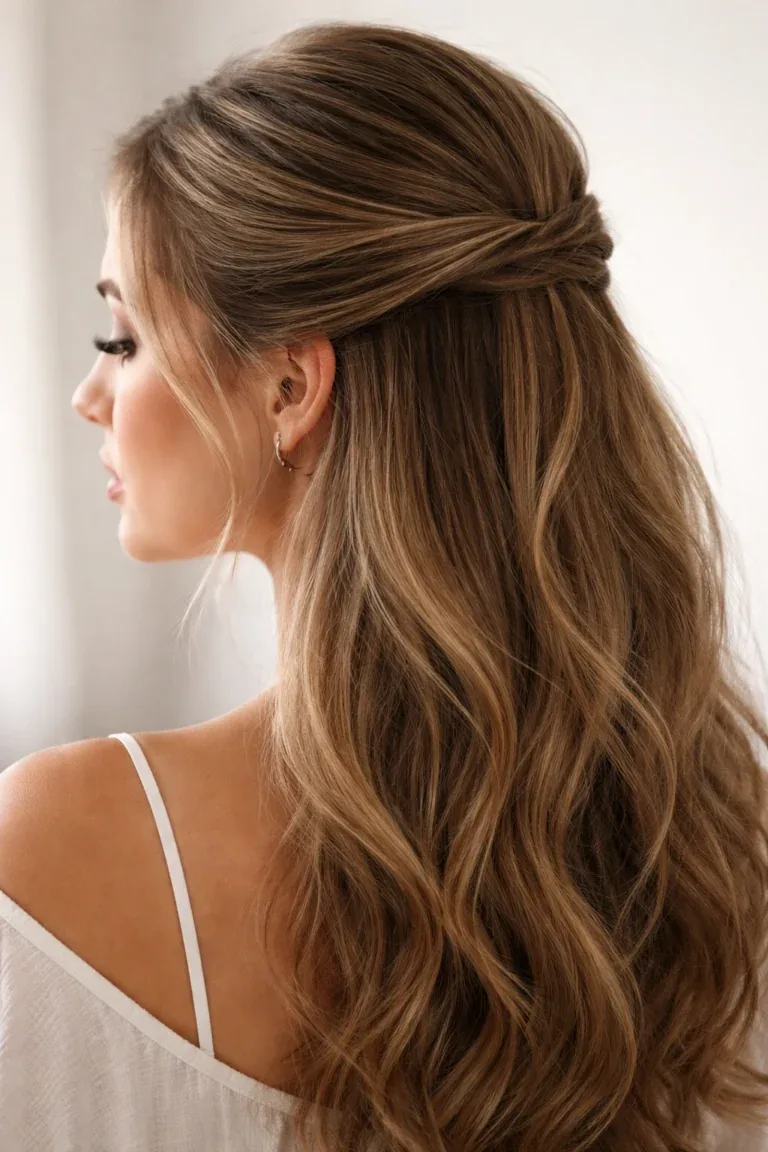
The half-up twist is the hairstyle that solves the most common thirties problem: hair that is too long to leave down on a busy day, but too pretty to tie all the way up. Two sections from the front are twisted back and pinned at the crown, the rest falls loose, and the whole thing takes three minutes. It keeps hair out of your face while you work, it shows off length and waves, and it works for a wedding guest, a date night or a day at the office with nothing more than a different pin. It is the style that looks like you tried, when you barely did.
Best for: medium to long hair, and days when you want polish without commitment. How to style: take a section from each temple, twist them back, cross them at the crown and pin — then pull out two soft pieces at the front. What to ask: nothing at the salon; this is a styling trick, not a cut, though face-framing layers make it look better. Time and cost: three minutes, one or two pins. Common mistake: pulling it too tight, which flattens the crown — loosen the twists slightly after pinning. Quick verdict: the most versatile three-minute style on this list, and the one you will reach for most often.
17. The Wavy Lob for Fine Hair

Fine hair in your thirties needs a cut that creates the illusion of fullness, and a wavy lob does it better than almost anything: the length ends at the collarbone, so there is less weight pulling the hair flat, and soft waves through the lengths add width and movement that straight fine hair never has on its own. The trick is keeping the cut simple — one clean length, a few long layers, and almost no thinning — so the hair holds together in one solid shape instead of falling apart into wisps. A little texture spray at the roots does the rest.
Pros: makes fine hair look twice as thick, dries fast, and needs almost no product. Cons: fine hair can go flat at the crown by midday, so keep a dry shampoo in your bag. Who should avoid heavy layering: everyone with fine hair — too many layers make the ends look thin and the lob look sparse. Maintenance: trims every six weeks, a volumising mousse at the roots, and a light hand with conditioner, which weighs fine hair down. Cost and time: the cheapest version of the lob to maintain, and the fastest to style. Quick verdict: if your hair is fine, this is the cut to ask for first.
18. The Braided Crown
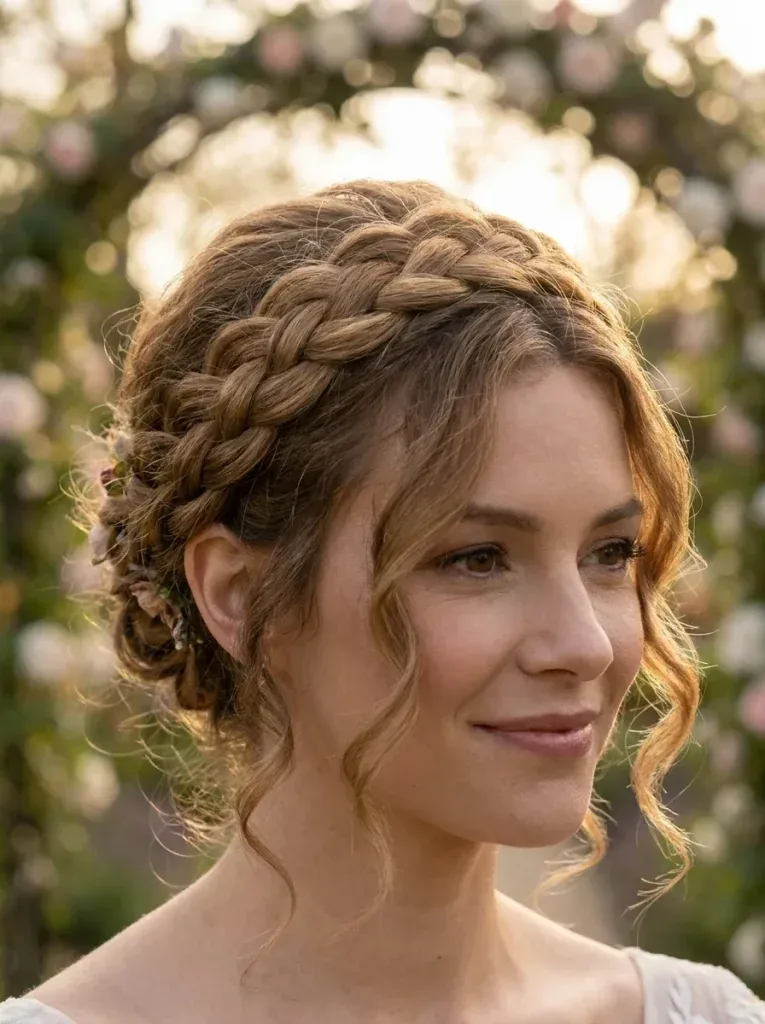
A braided crown is the romantic style for the occasions that fill your thirties: weddings, garden parties, christenings and summer evenings when you want your hair up but not severe. Two braids are wrapped around the head and pinned into a crown, with soft pieces left out at the front to keep it from looking like a costume. It works on medium and long hair, it holds all day without a single pin slipping, and it looks far more complicated than it is — ten minutes with a mirror, or a salon appointment if you want it perfect. The looseness is the key: a braided crown that is pulled too tight looks like a schoolgirl, while one with a little softness looks like a woman.
Best for: weddings, parties and hot days, and women with medium to long hair. How to style: braid two sections from behind each ear, wrap them over the crown, pin, and pull out soft pieces at the front. What to ask: a stylist can do it in fifteen minutes if you are not confident doing it yourself. Time and cost: ten minutes at home, or a salon blow-dry appointment. Common mistake: making the braids too neat — loosen them slightly with your fingers for a softer finish. Quick verdict: the most romantic updo on this list, and the one that gets the most compliments.
19. The Deep Side Part Glamour Wave
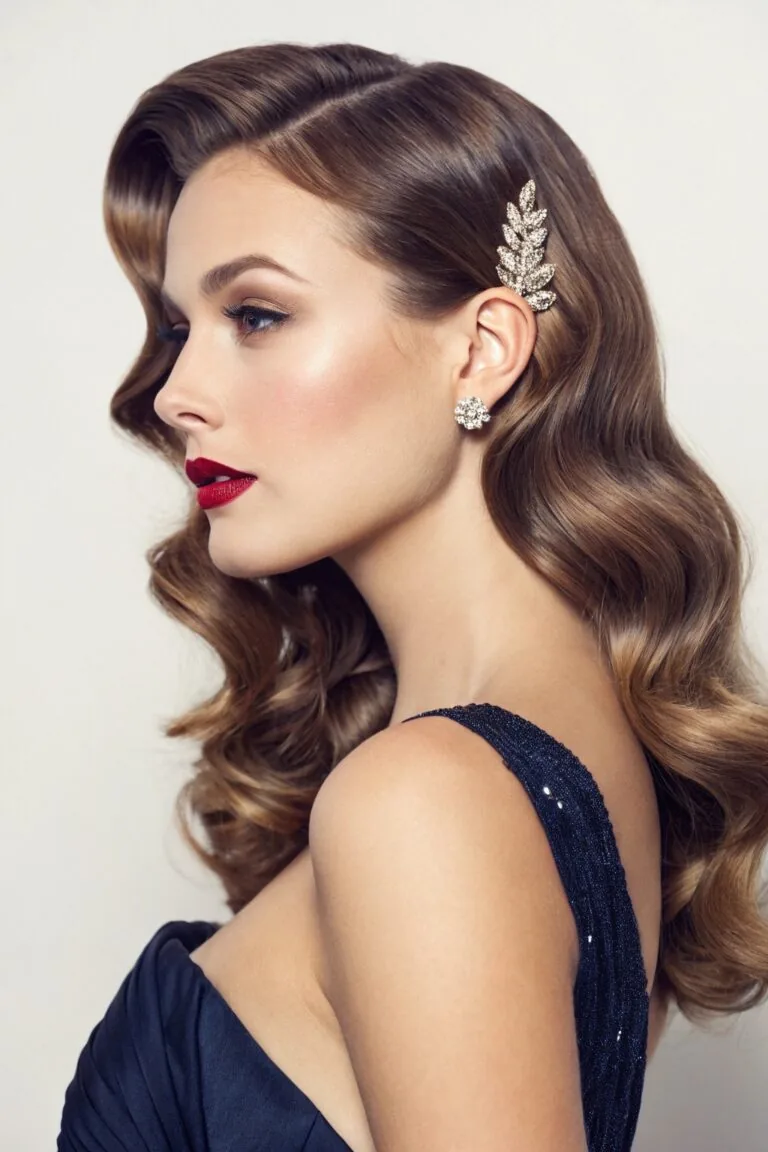
The deep side part glamour wave is old Hollywood, updated for a woman in her thirties: a heavy sweep of hair across the forehead, soft waves that fall over one shoulder, and a finish that is polished without being stiff. It is the hairstyle for evenings — dates, dinners, weddings, and every night when you want to feel like the most glamorous version of yourself. The deep part does the work: it adds volume at the crown, breaks up the face diagonally, and gives the waves a direction that makes them look deliberate rather than accidental.
Pros: glamorous, suits every face shape, and photographs beautifully. Cons: it takes twenty minutes with a curling iron, and it needs a little product to stay in place. Who should avoid it daily: women with a strong natural part on the opposite side — fighting your hair’s natural fall every morning is a losing battle. Styling time is about twenty minutes: curl in large sections, brush through for soft waves, and finish with a light hold spray. Cost and time: a salon blowout for the real thing, or a curling iron and patience at home. Quick verdict: the most glamorous evening style on this list, and worth learning for the nights that matter.
20. The Low Chignon for the Office

The low chignon for the office is the professional version of the classic bun: neat, low at the nape, and smooth enough to look serious without being severe. It keeps your hair completely out of the way through a long day, it survives a commute, a meeting and a lunch without needing attention, and it looks polished with a blazer in a way that loose hair sometimes does not. The trick is the softness at the front — two face-framing pieces, or a deep side part, keep the chignon from looking like a uniform. It is the hairstyle of a woman who has somewhere to be and no time to think about her hair.
Best for: work, interviews and long days, and women with medium to long hair. How to style: smooth the hair back, gather low, twist and pin — five minutes, and a little hairspray to finish. What to ask: nothing at the salon, unless you want a cut with face-framing layers that make the chignon look softer. Time and cost: five minutes, a few pins. Common mistake: pulling it so tight it gives you a headache — a chignon should be secure, not painful. Quick verdict: the most professional style on this list, and the one that makes a blazer look like it cost twice as much.
21. The Wispy Fringe Lob
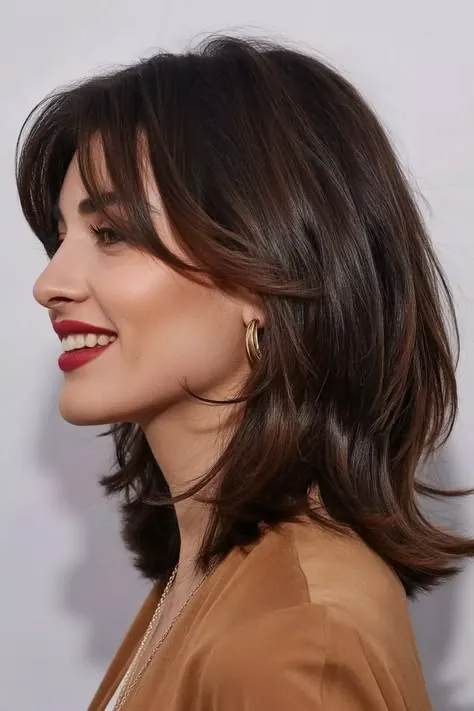
A wispy fringe on a lob is the gentlest fringe you can wear: cut thin and feathered, it softens the forehead without drawing a hard line across it, and it blends into the lob so naturally that the fringe feels like part of the cut rather than an addition. It is the fringe for women who want the face-shortening effect of bangs without committing to a heavy one, and it suits round and square faces beautifully, because the softness of the fringe takes the edge off strong angles. It also hides a multitude of sins — a bad night’s sleep, a long week, a forehead you would rather not think about.
Pros: low effort, grows out gracefully, and hides tired days better than any other fringe. Cons: a wispy fringe can disappear entirely on very thick hair, and it needs a trim every five weeks to stop it looking straggly. Who should avoid it: women with a strong cowlick at the front, where a wispy fringe has too little weight to hold it down. Maintenance is light: a trim every five to six weeks, a quick blow-dry with the fringe pushed forward, and a little texture spray. Quick verdict: the easiest fringe to live with, and the best first step if you have never had bangs.
22. The High Ponytail That Means Business
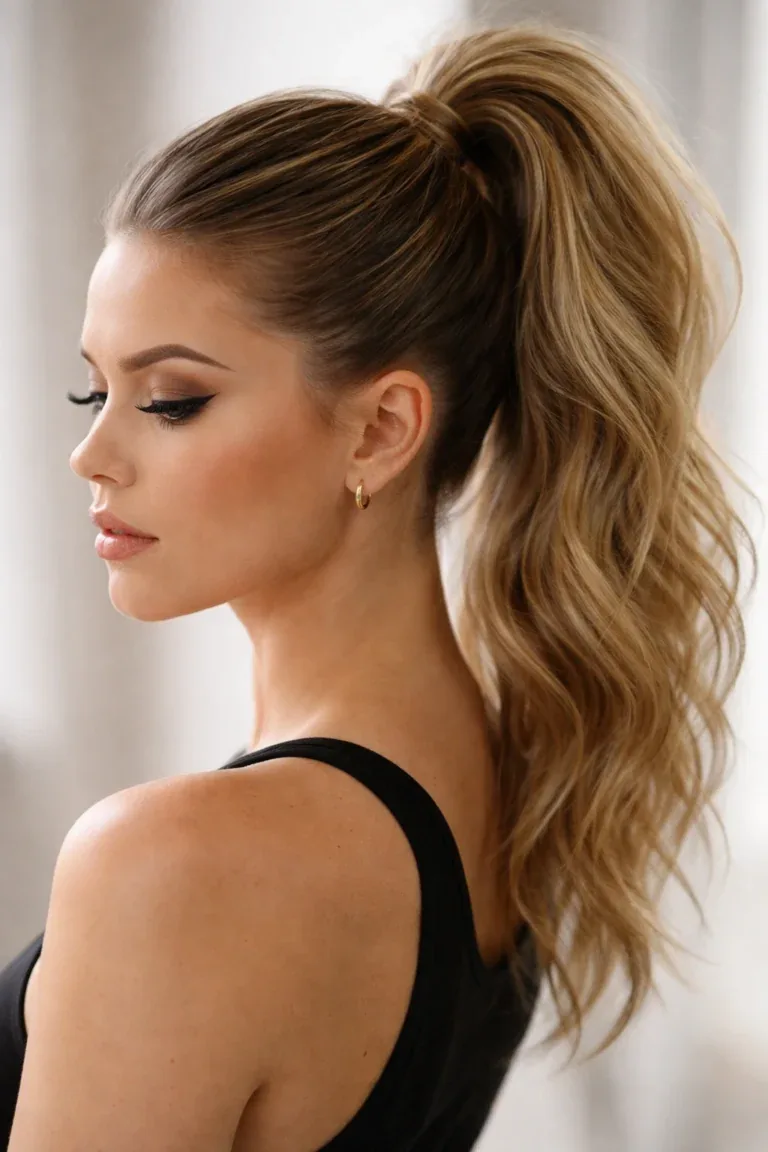
A high ponytail in your thirties is not the gym ponytail of your twenties — it is a deliberate, polished style with a smooth base, a wrapped tie, and a ponytail that swings rather than flops. It lifts the face, shows off the cheekbones, and looks confident in a way that loose hair sometimes does not. It is the hairstyle for presentations, for days when you want to look sharp, and for evenings when you want your hair completely out of the way without looking like you gave up. The secret is volume at the crown and a little texture through the ponytail itself, so it looks like a style rather than a solution.
Best for: presentations, workouts that turn into errands, and women with thick hair that holds a ponytail well. How to style: smooth the hair up with a brush, secure high, wrap a strand around the tie, and backcomb the ponytail lightly for fullness. What to ask: face-framing layers make a high ponytail look softer — a blunt cut with no layers can look severe. Time and cost: three minutes, one tie. Common mistake: wearing it too tight every day, which can cause breakage at the hairline — vary the position. Quick verdict: the most confident ponytail on this list, and the one that makes a simple outfit look intentional.
23. The Airy Butterfly Cut
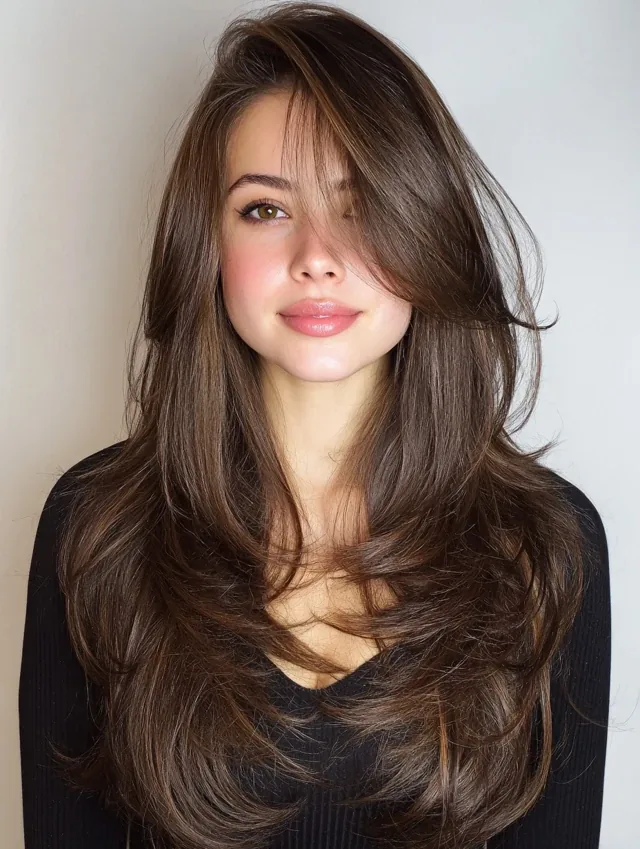
The butterfly cut is the layered cut that went viral for a reason: short, bouncy layers on top that flick out like wings, with longer layers underneath that keep the length. The effect is volume and movement without losing a centimetre — the top layers give you the lift of a short cut, the bottom layers give you the versatility of long hair. In your thirties it works beautifully, because it flatters the face, adds body to fine hair, and looks good with a blowout or air-dried. It is the cut for women who want their hair to look full and alive, not flat and obedient.
Pros: adds volume to fine hair, looks good air-dried or blow-dried, and grows out without an awkward stage. Cons: the short top layers need a trim every six weeks, and the cut needs a stylist who understands layering — a bad butterfly cut can look like two different haircuts stacked together. Who should think twice: women with very curly hair, where the short layers can spring up unpredictably. Maintenance: trims every six weeks, a round brush for the top layers, and a light mousse. Quick verdict: the most flattering layered cut on this list for fine hair, and the one that photographs best in motion.
24. The Soft Curls for Date Night
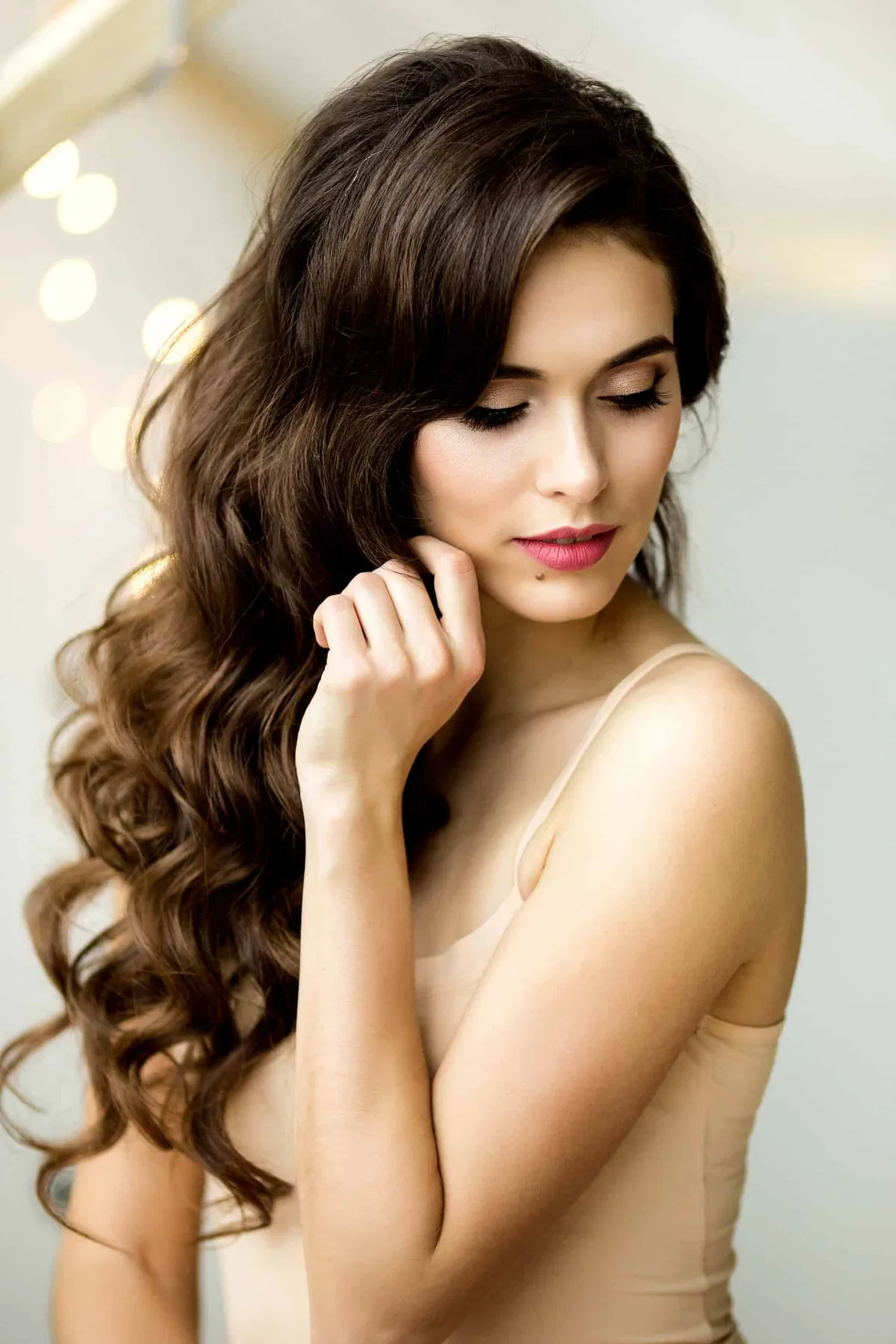
Soft curls for date night are the romantic style that never fails: loose, brushed-out curls that fall over the shoulders, with a deep side part and a finish that is touchable rather than stiff. The curls should look like they happened naturally — large sections, curled away from the face, brushed through with your fingers until they soften into waves. It is the hairstyle for the evenings when you want to look like the best version of yourself, not a different person, and it works on medium and long hair, on a lob, and on almost any cut with a little length to play with.
Best for: date nights, anniversaries and evenings out, and women with medium to long hair. How to style: curl in large sections with a wide-barrel iron, let the curls cool, then brush through with your fingers and finish with a light hold spray. What to ask: long layers make soft curls look better, because they stop the curls clumping into one heavy shape. Time and cost: twenty minutes at home, or a salon blowout. Common mistake: using too much hairspray, which makes the curls stiff — the whole point is that they move. Quick verdict: the most romantic style on this list, and the one that takes the least skill to get right.
25. The Graduated Bob
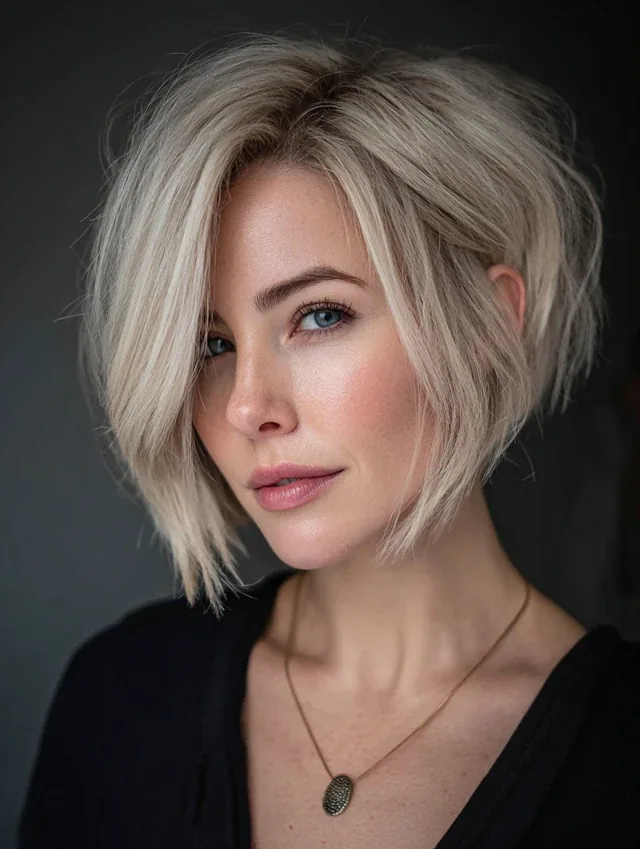
A graduated bob is the structured version of the short cut: shorter at the back, longer at the front, with a stacked shape that gives the hair volume and a clean, deliberate silhouette. It suits women who like their short cuts to look polished from every angle, and it gives fine hair the fullness it needs without a lot of styling. In your thirties it reads confident and professional — the cut of a woman who knows her angles and is not afraid of a strong shape. The key is the graduation: too much and it becomes a wedge, too little and it is just a bob with a short back.
Pros: gives fine hair volume, looks neat from behind, and holds its shape well. Cons: a graduated bob grows out fast and needs a trim every four to five weeks to hold the shape. Who should avoid it: women who want a low-maintenance bob — the back is the first thing to lose its shape. Maintenance: trims every four to five weeks, and a quick blow-dry with a round brush at the back. Common mistake: graduating the back too high, which turns the bob into a pixie at the back. Quick verdict: the most structured short cut on this list, and the one that rewards regular salon visits.
26. The Effortless Air-Dried Waves
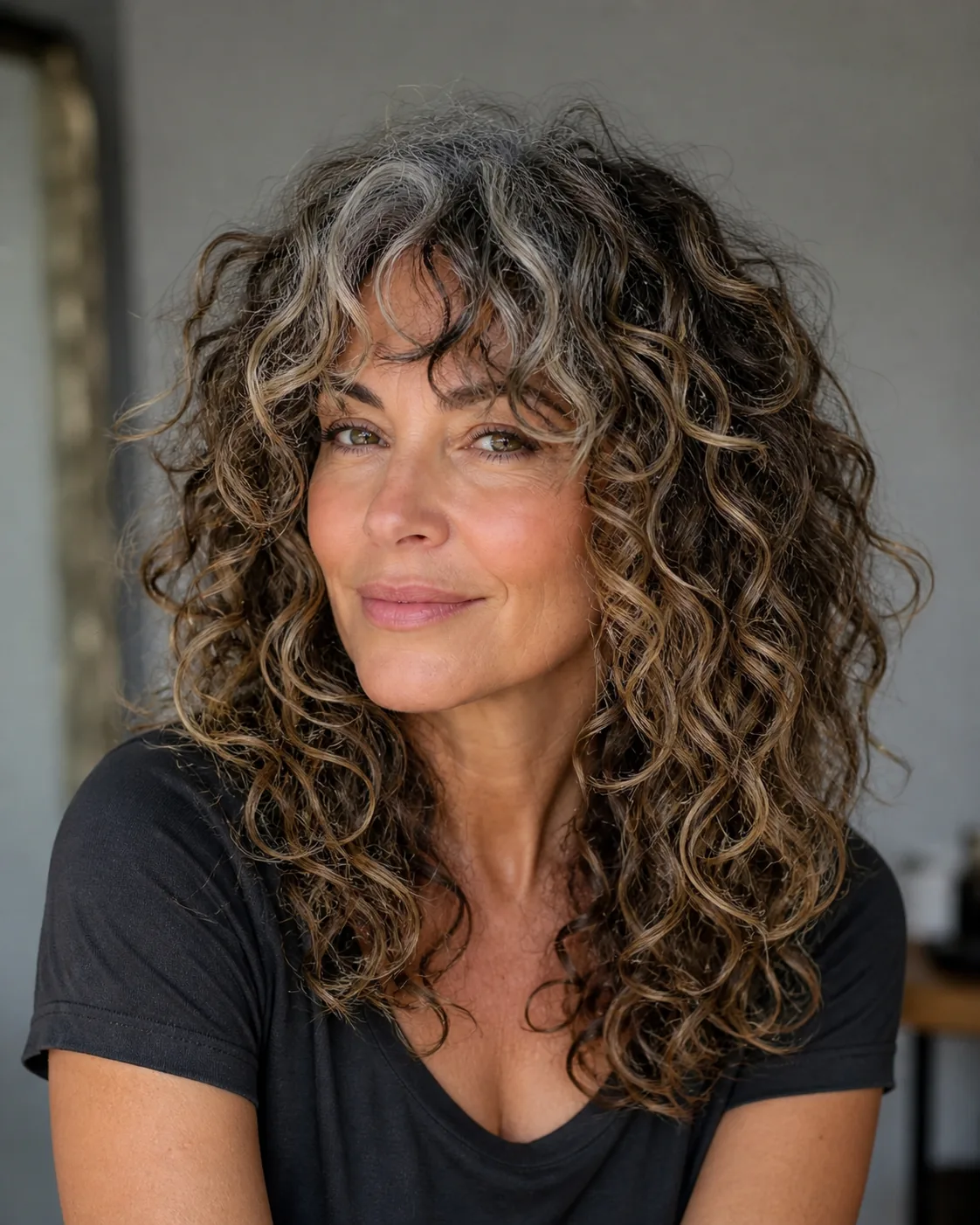
Air-dried waves are the hairstyle for the woman who has stopped fighting her hair: wash, scrunch in a little cream or sea-salt spray, and let it dry on its own while you get on with your morning. The result is soft, natural waves with a texture that no curling iron can quite copy, and a look that suits the school run, the weekend and the work-from-home day equally well. The secret is the cut — long layers that encourage the wave, a fringe that behaves without heat, and ends that are textured rather than blunt, so the hair moves instead of sitting in a solid shape.
Pros: the easiest style on this list, no heat damage, and looks better slightly messy than perfectly set. Cons: air-dried hair can look flat at the crown, so a little root spray or a quick scrunch at the roots helps. Who should avoid it: very straight hair, where air-drying gives you straight hair, not waves — a textured cut with a bend at the ends will save you time. Maintenance: trims every eight weeks, a weekly mask, and hands off while it dries. Quick verdict: the most honest style on this list — it works with your hair, not against it, and it gives you your mornings back.
27. The Sleek Bun for New Mums
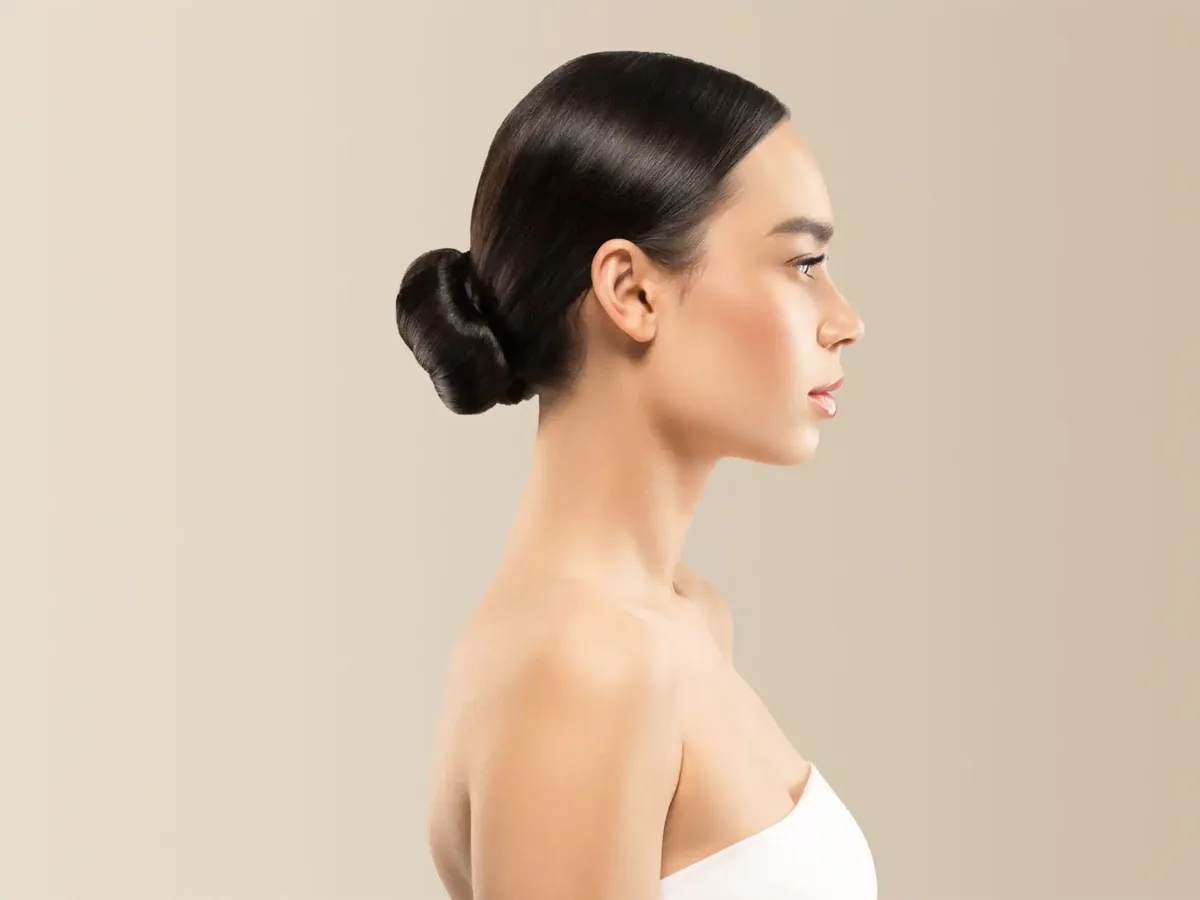
The sleek bun for new mums is the hairstyle that understands your life: a baby on one hip, a coffee in the other hand, and hair that needs to stay out of the way for twelve hours without a single thought. The trick is making it look intentional rather than desperate — smooth the hair back with a little cream, gather it low or at the crown, twist it into a neat bun, and leave two soft pieces at the front so it looks like a style rather than a surrender. It works on second- and third-day hair, it survives a nap, a feed and a walk to the park, and it takes two minutes.
Best for: new mums, and anyone whose mornings are not their own. How to style: smooth back with cream, gather, twist, pin — and pull out the front pieces. What to ask: a cut with face-framing layers makes a bun look softer, and a lob is the easiest length to gather. Time and cost: two minutes, a few pins. Common mistake: pulling it so tight it gives you a headache and a severe look — a bun should be secure, not painful. Quick verdict: the most useful style in this whole guide for the first year of motherhood, and the one that will make you feel like yourself again.
28. The Textured Midi With Curtain Fringe
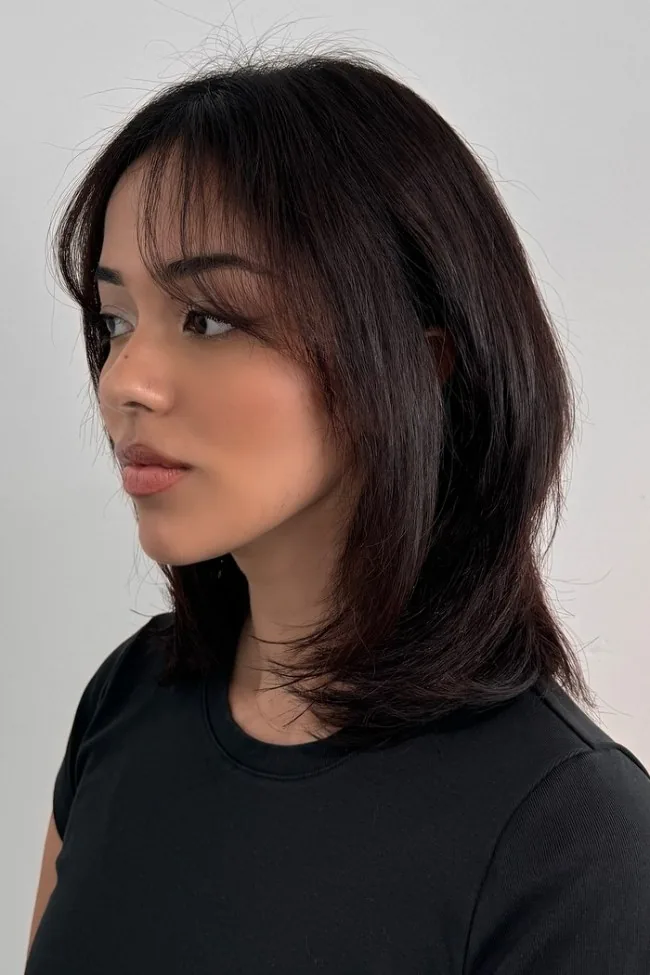
A textured midi with a curtain fringe is the cut for women who want everything at once: medium length, movement, a fringe, and almost no styling. The midi ends at the collarbone, the texture through the lengths makes it look good air-dried, and the curtain fringe frames the face and shortens the forehead without any daily effort. It is the cut that suits almost every face shape and almost every hair type, because the texture does the work that a perfect blow-dry used to do. In your thirties, when time is the scarcest resource, a cut that styles itself is not a compromise — it is a strategy.
Pros: low maintenance, grows out gracefully, and suits almost everyone. Cons: too much texture can make fine hair look thin at the ends, so ask for long, blended texture rather than short, choppy layers. Who should think twice: women who want a sleek, polished finish every day — a textured midi will never sit smooth. Maintenance: trims every seven to eight weeks, a little texture spray, and a quick blow-dry on the fringe. Quick verdict: the most versatile medium cut on this list, and the one most stylists recommend when a woman says she has no time.
29. The Old-Money Blowout
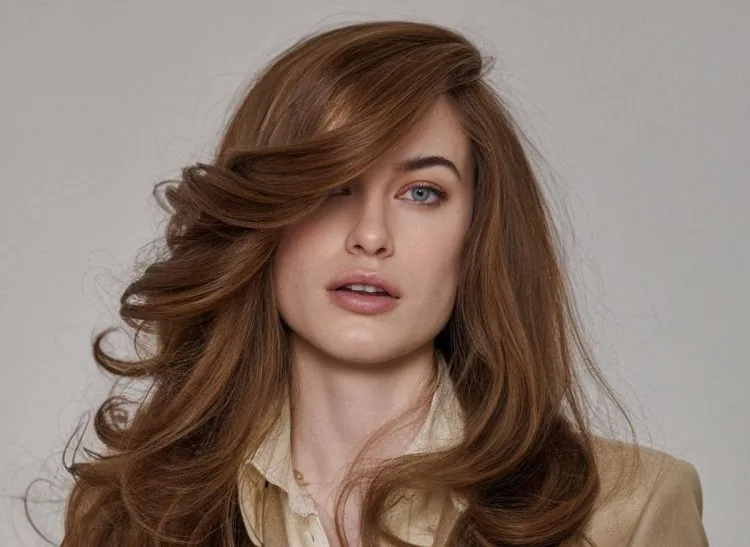
The old-money blowout is the quiet-luxury hairstyle: smooth, glossy, bouncy hair with soft layers and a finish that looks expensive without looking done. There is no visible effort — no tight curls, no stiff hairspray, no dramatic volume — just hair that swings, catches the light, and looks like it has always been this good. The trick is layers that start at the chin and a blow-dry that bends the ends under, with a gloss or a shine spray to finish. It is the hairstyle for weddings, for work events, and for every day when you want to look polished without looking like you tried.
Best for: medium to long hair, and women who want a polished look that lasts two days. How to style: rough-dry, then work through in sections with a large round brush, bending the ends under and lifting the roots. What to ask: long layers, a gloss treatment for shine, and ends that are point-cut so they move. Time and cost: fifteen to twenty minutes at home, or a salon blowout for the real thing. Common mistake: using too much product, which weighs the hair down — start with half as much as you think you need. Quick verdict: the most expensive-looking style on this list, and the one that makes any outfit look like it cost more.
30. The Loose Braid for Weekends
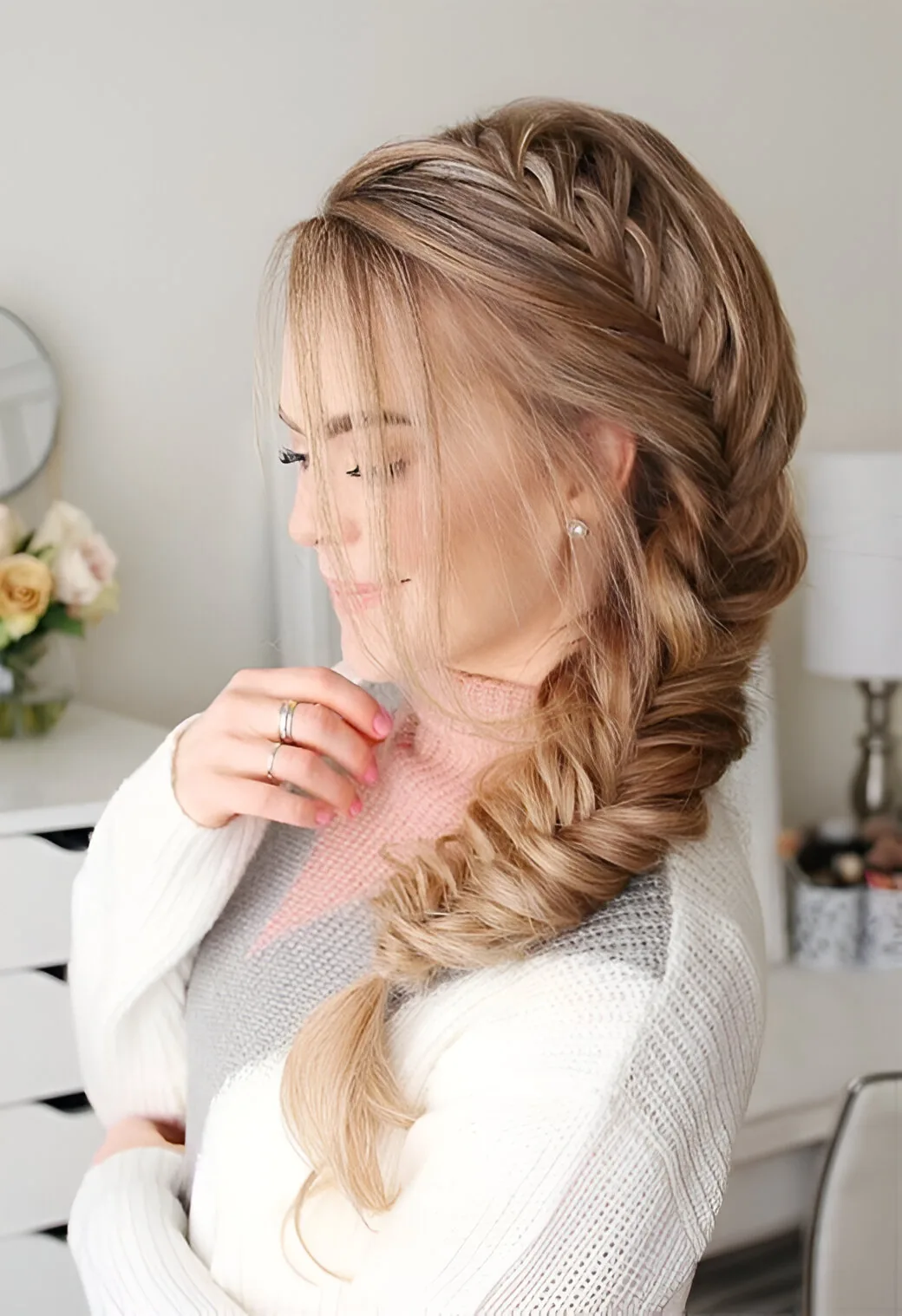
A loose braid is the weekend hairstyle that looks like a holiday: a soft, slightly undone braid over one shoulder, with pieces pulled out at the front and a finish that is relaxed rather than neat. It keeps your hair out of the way on a walk, a market trip or a day with the kids, and it looks better as the day goes on — the braid loosens, the pieces fall out, and the whole thing gets softer. It works on medium and long hair, it takes three minutes, and it is the style that makes a plain t-shirt and jeans look like an outfit.
Pros: three minutes, keeps hair tidy all day, and looks better as it loosens. Cons: a braid worn tight every day can cause breakage, so keep it loose and vary the side. Who should avoid a very neat braid: women who want a polished look — a loose braid is a weekend style, not a work style. Maintenance is nothing: no trim schedule, no products beyond a tie. Common mistake: braiding too tightly, which looks severe and pulls at the hairline. Quick verdict: the most relaxing style on this list, and the one that makes a Saturday feel like a Saturday.
31. The Asymmetrical Lob
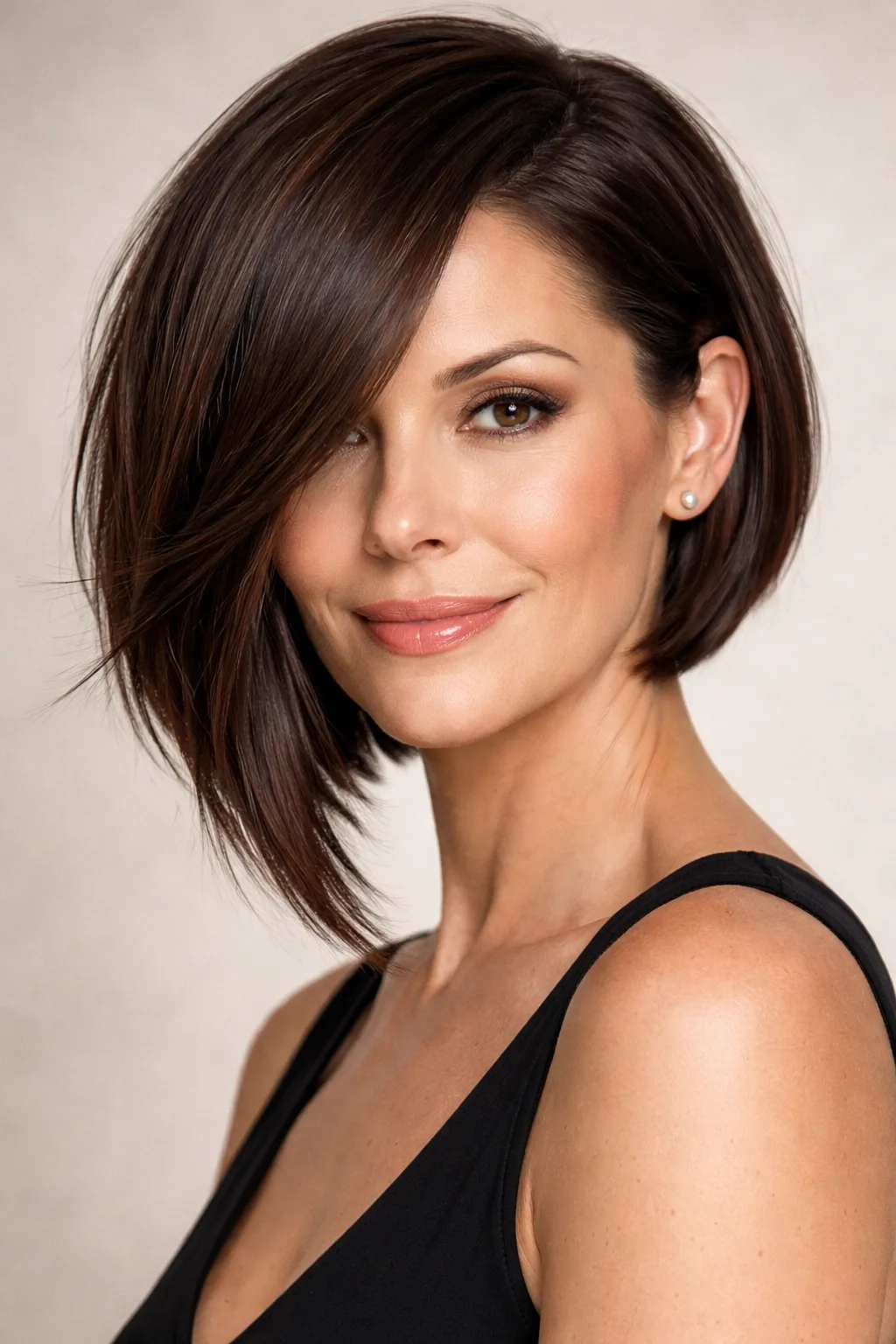
An asymmetrical lob takes the classic long bob and tilts it: one side sits an inch or two longer than the other, so the cut has a deliberate, off-balance energy that feels modern and a little bit rebellious. It suits women who love the lob’s versatility but want something with more edge, and it works beautifully with a deep side part, which emphasises the asymmetry and gives the longer side a sweeping, glamorous fall. In your thirties it reads confident rather than quirky — the woman who has already had the classic lob and is ready for something with a point of view.
Pros: distinctive, modern, and it makes the lob feel personal rather than generic. Cons: the asymmetry needs a precise cut and a trim every five weeks to stay deliberate rather than accidental. Who should avoid it: women who want a symmetrical, classic look — the whole point of this version is that it is not symmetrical. Maintenance: trims every five weeks, and a little styling on the longer side to keep it falling the right way. Quick verdict: the lob for women who have already had the classic version and want something new.
32. Defined Curls With Layers
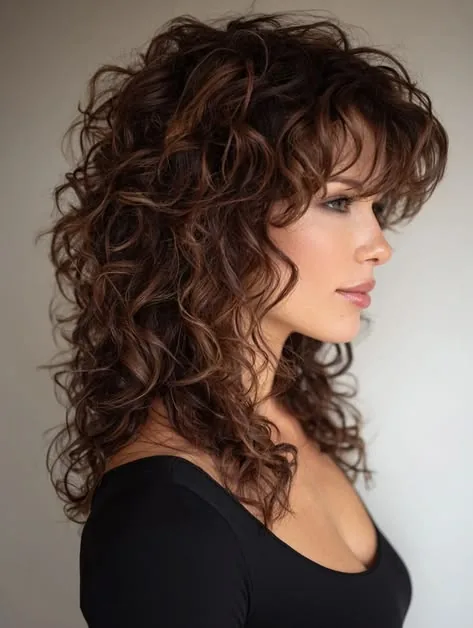
Defined curls with layers are the curly-haired woman’s answer to the thirties: layers that let each curl spring up and sit where it wants to, a shape that is rounded and balanced, and a cut that looks deliberate rather than accidental. The layers stop the curls clumping into one heavy triangle, and they give the hair movement and air. The key is a cut that follows your curl pattern — shaped dry, curl by curl — and front pieces left a little longer, so they do not shrink up to the forehead. The result is curls that look like a choice, not a compromise.
Best for: natural curls that need shape rather than length. How to style: curl cream on soaking-wet hair, scrunch, and diffuse on low heat or let it air-dry. What to ask: a dry cut, layers that follow your curl pattern, and a weekly deep-conditioning mask. Time and cost: trims every eight weeks, almost no heat styling, and a little product. Common mistake: cutting curly hair wet to the same length as straight hair, which springs up two inches shorter when dry. Quick verdict: the cut that makes curly hair look like the best thing about you — because it is.
33. The Romantic Updo for Occasions
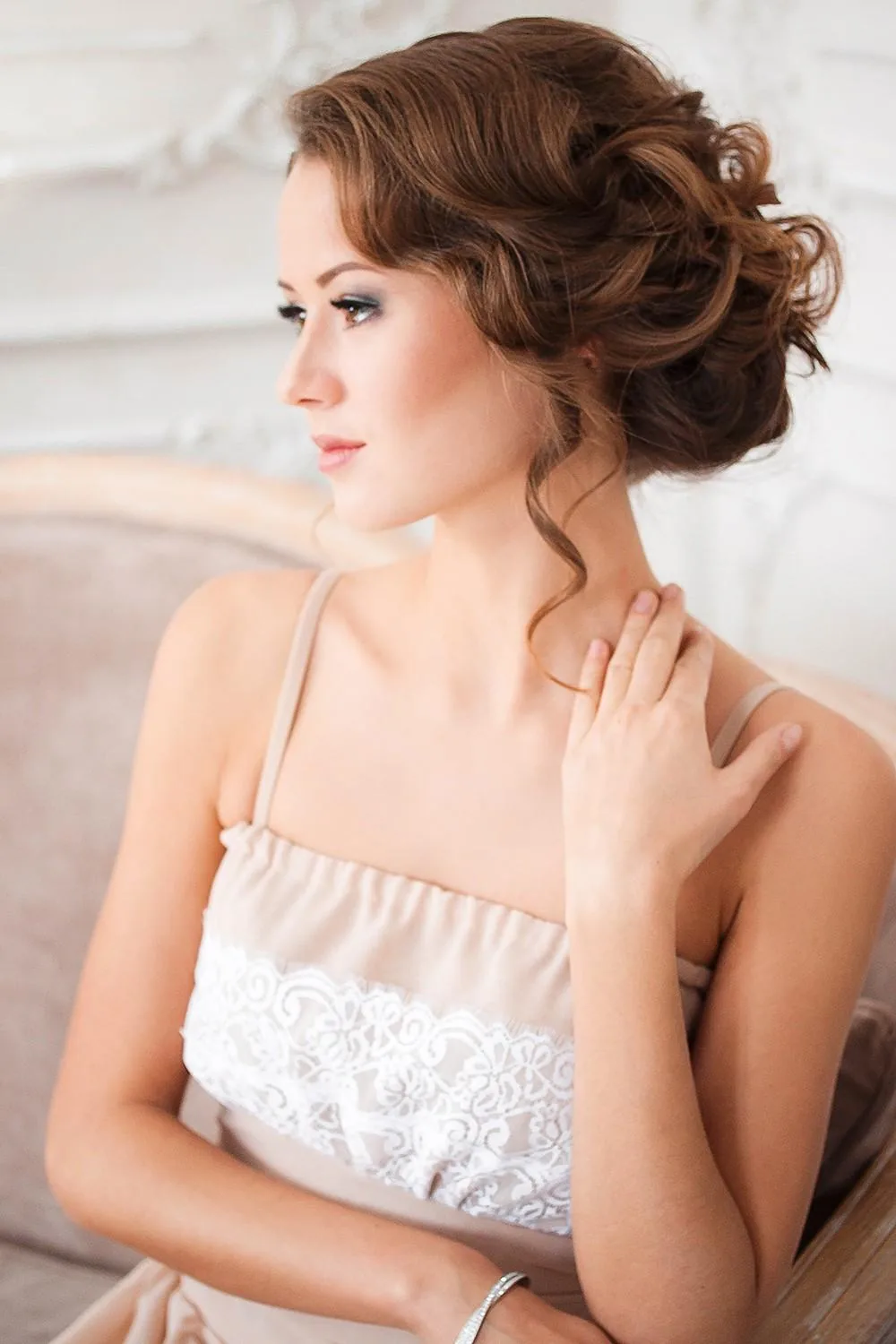
A romantic updo is the soft, loose updo for the occasions that fill your thirties: weddings, anniversaries, christenings and summer parties. Unlike a severe chignon, it is built on texture — soft curls pinned loosely at the nape or crown, with pieces left out at the front and a finish that looks like it might come undone at any moment, in the best way. It suits medium and long hair, it photographs beautifully, and it is the updo that looks like you, only more so, rather than like a different person for one day.
Pros: soft, romantic, and it suits every face shape. Cons: a loose updo needs more pins than a tight one, and it can loosen over a long evening — bring spare pins. Who should avoid it: women who want a style that will not move all day — a classic chignon is the safer choice. Styling time is twenty to thirty minutes at home, or a salon appointment for the real thing. What to ask: bring a photo, and arrive with day-old hair, which holds pins better. Quick verdict: the most romantic updo on this list, and the one that will make you feel like the occasion, not just a guest at it.
34. The Slicked-Back Low Bun
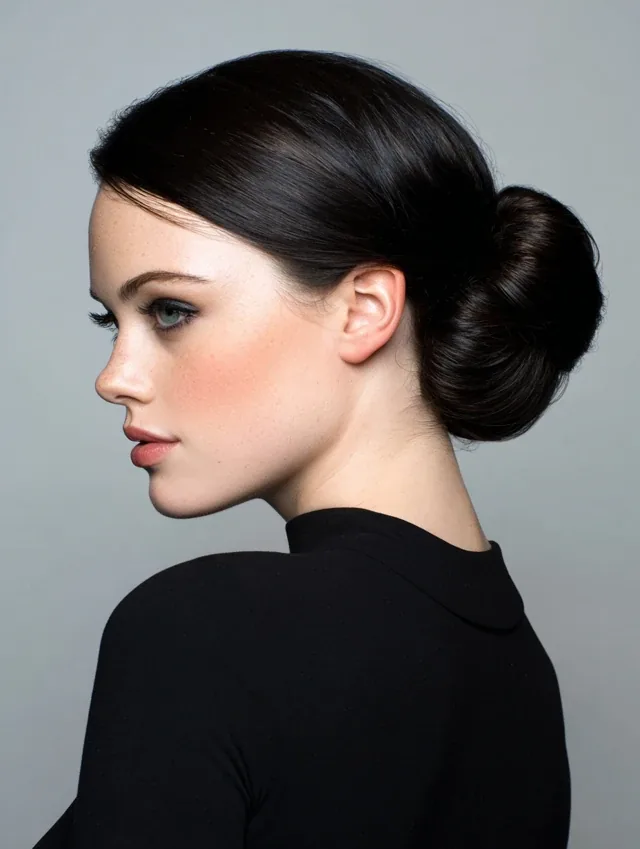
The slicked-back low bun is the fashion-forward version of the classic chignon: hair smoothed back with gel or cream, gathered low at the nape, and coiled into a neat, glossy knot. It is the hairstyle for evenings, for fashion events, and for days when you want to look sharp and modern — the clean lines show off your cheekbones, your earrings and your jawline in a way that loose hair never can. The secret is the finish: the hair should look wet and glossy, not dry and scraped, so a little gel and a shine spray are the whole style.
Best for: evenings, fashion events and hot days, and women who like a clean, modern look. How to style: smooth back with gel, gather low, twist and pin, and finish with a shine spray. What to ask: a cut with no short layers at the front, so nothing escapes the slicked-back finish. Time and cost: five minutes, a little gel. Common mistake: using too much gel, which makes the hair look stiff — start with a small amount and add more. Who should avoid a severe version: women with a very round face, where a softer bun flatters more. Quick verdict: the most modern bun on this list, and the one that makes a simple dress look like a statement.
35. The Layered Cut for Thick Hair
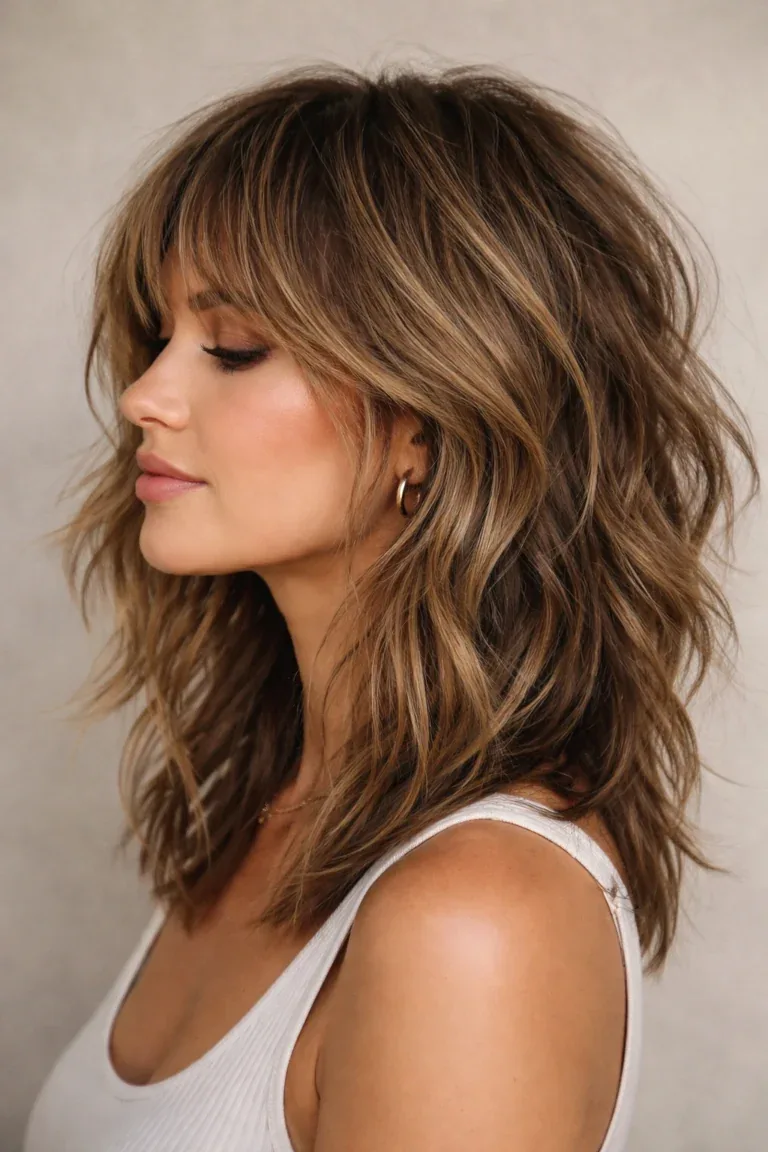
Thick hair in your thirties needs a cut that removes bulk without removing length, and a layered cut does exactly that: long layers through the lengths, a little interior texturising underneath, and a shape that swings instead of sitting in a solid block. The result is hair that moves, dries faster, and holds a wave instead of fighting it. The key is a stylist who thins the hair from underneath and leaves the top layer smooth, so the cut looks full and expensive rather than frayed. A bad texturising job can leave the ends looking thin, so choose your stylist carefully.
Pros: thick hair holds a layered cut beautifully, the cut looks full and expensive, and it dries with natural volume. Cons: it needs a skilled cut and a trim every six to seven weeks to keep the shape. Who should avoid a blunt, untextured cut: anyone with very thick hair, because the weight of the hair will push the ends outward into a triangle. Maintenance: trims every six to seven weeks, a weekly mask, and a light leave-in conditioner. Common mistake: cutting thick hair too short at the back, which makes it spring up and flare. Quick verdict: the cut that makes thick hair feel like a gift rather than a chore.
36. The Chin-Length Bob With Movement
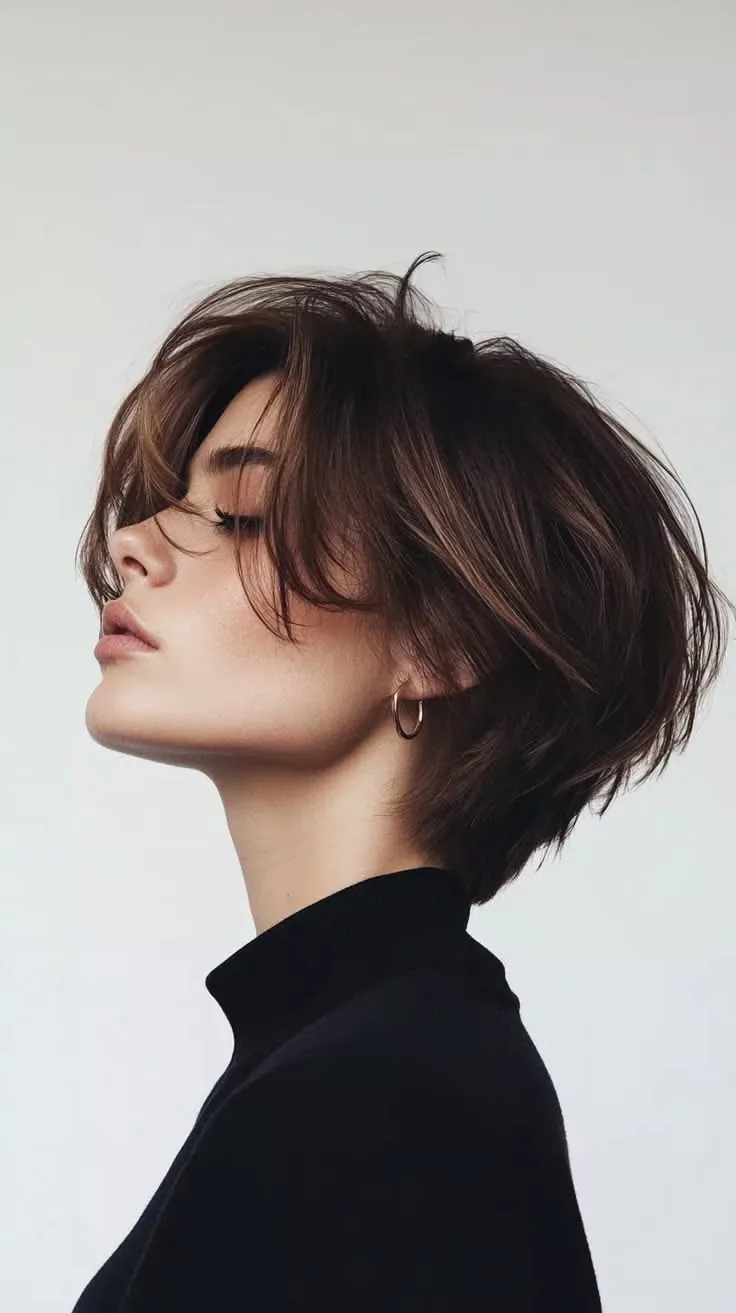
A chin-length bob with movement is the short cut for women who want the polish of a bob without the severity: the length ends at the chin, but the ends are textured and the finish is soft, so the bob swings and bends instead of sitting in a rigid line. It suits fine hair beautifully, because the short ends stack up and look thick, and it suits round faces too, because the length draws the eye down. In your thirties it reads modern and confident — the cut of a woman who has stopped apologising for short hair and started enjoying it.
Best for: fine hair, round faces, and women who want a short cut that still moves. How to style: rough-dry with your fingers, bend the ends under with a flat iron, and finish with a little texture spray — five minutes. What to ask: ends that are point-cut, not blunt-cut, and a soft texture through the lengths. Time and cost: trims every five to six weeks, almost no daily styling. Common mistake: blow-drying it into a smooth, rigid shape, which kills the movement that makes it work. Quick verdict: the most wearable short bob on this list, and the one that looks good on the most women.
37. The Soft Balayage Layers
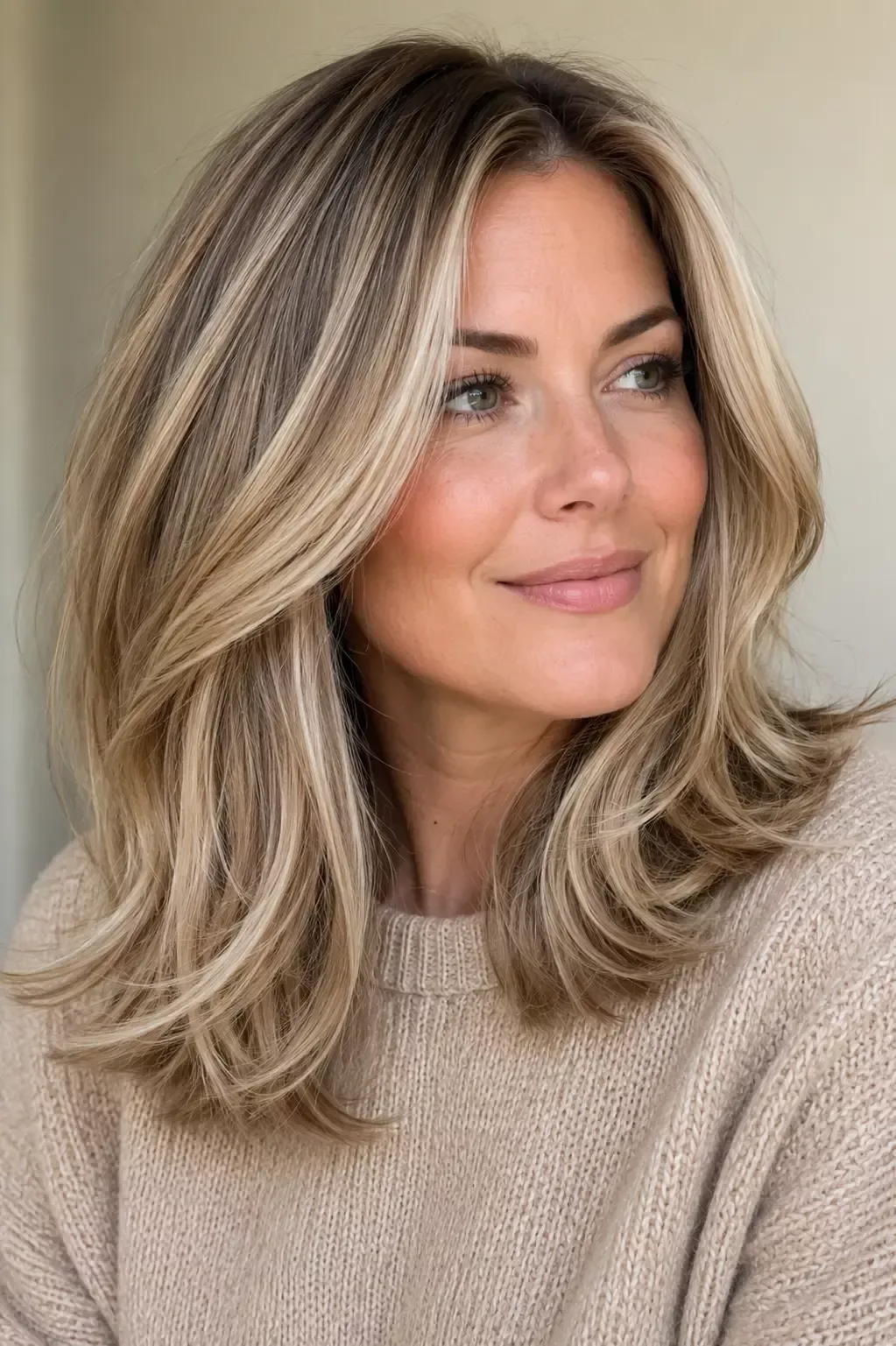
Soft balayage on layered hair is the colour that makes a cut look three-dimensional: lighter pieces painted through the lengths, brighter at the ends and softer at the roots, so the hair catches the light every time it moves. On long layers the effect is concentrated — the lighter ends show off the shape of the cut, and the grow-out is so gentle you can go months between colour appointments. It is the colour for women in their thirties who want dimension without the commitment of a full colour, and the cut for women who want their hair to look sun-kissed rather than salon-made.
Pros: grows out gracefully, needs a colour refresh only every three to four months, and looks effortless. Cons: balayage is a skilled job, and a heavy-handed application can look stripey. Who should avoid it: women who want a dramatic colour change — balayage is subtle by design. Maintenance: a colour refresh every three to four months, a weekly mask, and a colour-safe shampoo. Cost and time: a colour appointment adds an hour to a salon visit, but the grow-out is the cheapest on this list. Quick verdict: the easiest way to make long layers feel new again without changing the cut.
38. The Grow-Out Friendly Cut
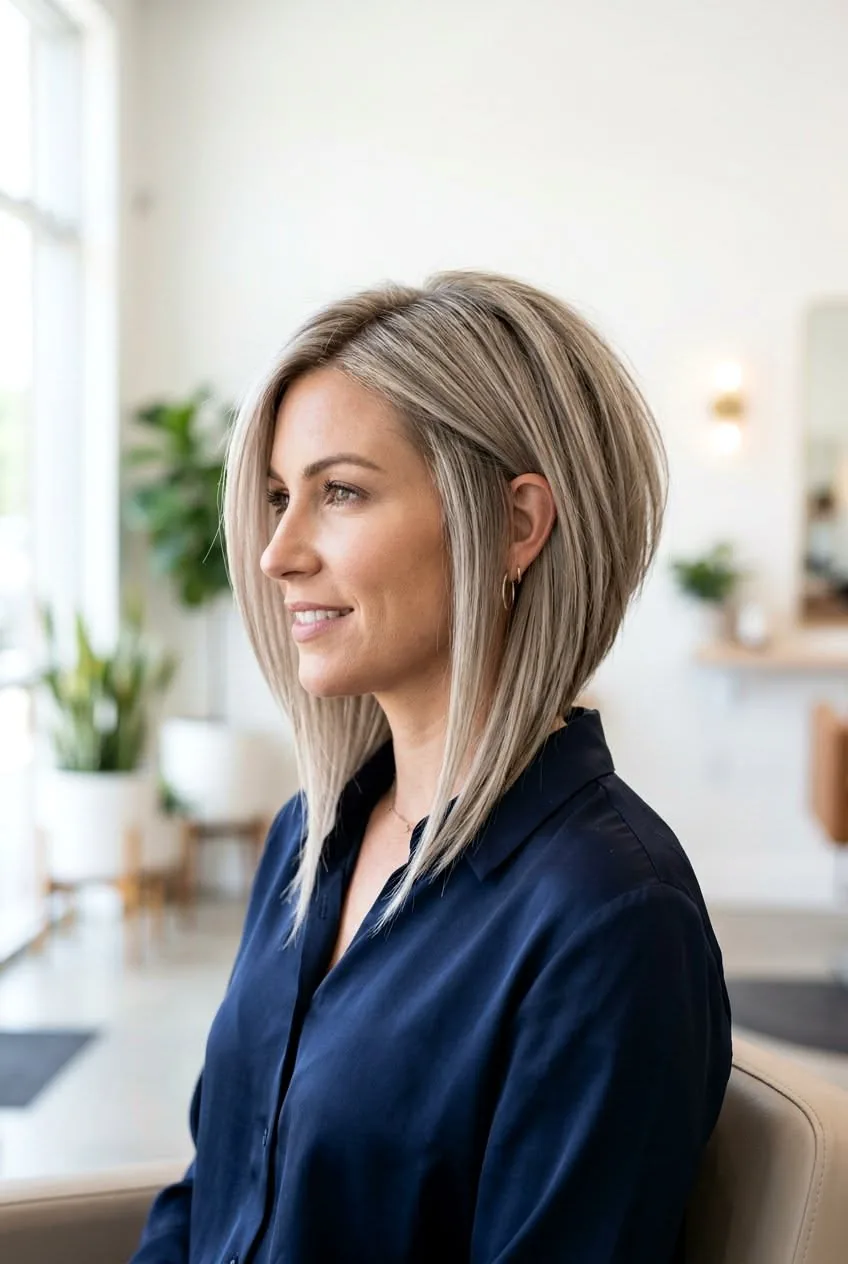
The grow-out friendly cut is the cut for the woman who is growing her hair out and wants every stage to look deliberate: long layers, a soft fringe that is growing into face-framing pieces, and a shape that holds together for ten weeks between trims instead of falling apart in four. The trick is layers that are long and blended, so they grow out without ledges, and ends that are point-cut, so they do not look blunt as they get longer. It is the cut that respects the fact that growing your hair out takes a year, and that you still have to look good every week of it.
Pros: the easiest cut to live with, holds its shape for ten weeks, and can be tied back once it reaches the collarbone. Cons: it is the least dramatic cut on this list — without a fringe or a sharp line, it can look like a plain long cut rather than a style. Who should avoid it: women who want a bold change — this is the cut for the months between changes, not a replacement for one. Maintenance: trims every ten weeks, a weekly mask, and a little cream on the ends. Quick verdict: the most patient cut on this list, and the best excuse to enjoy the journey instead of rushing the destination.
What is the best hairstyle for a woman in her 30s?
The best hairstyle for a woman in her 30s is one that fits her real life: a polished long layered cut or a modern lob suits most women, because both look good with ten minutes of styling, grow out gracefully, and work for work, weddings and weekends. The right choice depends on your hair texture, your face shape and how much time you will actually spend styling — a cut that fits your routine will always look better than a theoretically perfect one you never style.
What is the most low-maintenance hairstyle for women in their 30s?
The most low-maintenance hairstyles for women in their 30s are a textured midi with a curtain fringe, a lob with soft layers, or long layers that air-dry well. All three look good with a two-minute rough dry or no styling at all, hold their shape for seven to ten weeks between trims, and grow out without an awkward stage. The key is a cut with shape built in, so the hair falls into place on its own.
Why is my hair thinning in my 30s?
Hair can thin in your 30s because of hormonal changes, post-pregnancy shedding, stress, or years of heat styling and colour. Most post-pregnancy shedding settles within three to six months on its own. A cut with blunt ends, soft layers and a little texture makes fine hair look fuller, while a weekly mask, a heat protectant and a trim every six to eight weeks keep the hair you have looking its best. If shedding is sudden or severe, speak to a doctor before trying supplements.
What haircut suits a round face in your 30s?
A round face in your 30s suits a lob that ends past the collarbone, a deep side part, or face-framing layers that start below the chin — all three draw the eye downward and make the face look longer. A curtain fringe or soft side-swept bangs help too. Avoid a centre-parted bob with a blunt, straight-across fringe, which can make a round face look rounder.
How often should a woman in her 30s trim her hair?
A woman in her 30s should trim her hair every six to eight weeks for most cuts, every four to five weeks for a short bob or a pixie, and every eight to ten weeks for long layers or a grow-out cut. Regular trims stop split ends before they travel up the hair and make the whole cut look tired. A fringe needs a trim every four to six weeks, which many salons do free between cuts.
Can I keep long hair in my 30s?
Yes — long hair looks wonderful in your thirties, as long as it has shape. Long hair with soft, face-framing layers, healthy ends and a little dimension from balayage or a gloss reads polished and modern at any age. Long hair with thin, straggly ends and no shape reads tired, not youthful. Keep the length you love, but keep it trimmed, layered and healthy.
What is the best wedding guest hairstyle for a woman in her 30s?
The best wedding guest hairstyles for a woman in her 30s are a French twist, a romantic updo, a low chignon, or soft curls with a deep side part. All four photograph beautifully, stay put through a whole day of dancing, and look elegant without upstaging the bride. Choose based on your dress: an updo suits a high neckline, while soft curls suit a dress with an open back or bare shoulders.
What are the best hairstyles for new mums?
The best hairstyles for new mums are a sleek low bun, a textured lob, a low ponytail, or a textured pixie — all four take two to five minutes, keep hair out of the way, and look intentional rather than desperate. A lob is the most versatile choice, because it can be tied back, worn down, or pinned up. Avoid a cut that needs daily heat styling, and keep a claw clip and dry shampoo in your bag.
Should I get bangs in my 30s?
Bangs can look wonderful in your thirties, and the safest choices are curtain bangs or a wispy fringe, both of which grow out gracefully and need almost no styling. A soft, brow-skimming fringe suits long faces and high foreheads, while a side-swept fringe softens square and round faces. Avoid a heavy, blunt fringe if you have a strong cowlick or hate touching your hair before coffee — a side part with long face-framing pieces gives you the same softness with no upkeep.
How can I make my hair look thicker in my 30s?
To make hair look thicker in your 30s, choose a cut with blunt ends and soft layers — a lob, a soft blunt bob, or long layers with point-cut ends — because short, solid ends stack up and look full. Add volume with a volumising mousse at the roots, a little dry shampoo, and a deep side part. Avoid heavy conditioner on the roots, too many short layers that thin the ends, and over-straightening, which flattens the hair and strips its shine.
Conclusion
Your thirties are not the decade to stop experimenting with your hair — they are the decade to experiment with purpose. You know your hair, you know your life, and you know how much time you will actually spend styling on a normal Tuesday. The best hairstyle for a woman in her thirties is the one that fits all three: a cut with shape built in, a routine you will actually keep, and a little room for the occasions that make the decade memorable. Whether you choose polished long layers, a modern lob, a textured pixie, or a bun that survives a school run, the cut is only half the story — the other half is keeping it trimmed, healthy and shiny.
Start with the cut that fits your real week, not the cut you wish you had time for, and let your stylist cut it a touch longer than you think you want — you can always take more off. Bring photos, say what you do not want as well as what you do, and ask how the cut will look air-dried and how it will grow out. Then go home, shake your hair dry, and walk out the door. That is the whole secret of great hair in your thirties: a cut that works with your life, not against it, and hair that looks like you — only more so.