The Bixie Is the Bob-Pixie Hybrid Everyone Is Asking For — 31 Ways to Wear It
Somewhere between a bob and a pixie lives the haircut everyone is suddenly asking for by name: the bixie. It has the length of a bob — long enough to tuck behind an ear, sweep into a side part, or pin back on a bad-hair day — with the texture and lightness of a pixie, so it never feels heavy or high-maintenance. It is the cut for women who love short hair but are not ready for a full pixie, and for bob lovers who want something with more movement and less blow-drying. In short, it is the compromise that somehow became the main event.
This guide brings together 31 ways to wear a bixie, from the classic textured cut and curtain-bang versions to curly, sleek, asymmetrical and grown-out takes, with options for thick hair, fine hair, round faces, square faces and women over 50. Eight guides answer the questions women actually ask before booking the appointment: what a bixie really is, how it differs from a pixie and a bob, which version suits your face shape, how to style one in under five minutes, how it behaves on curly, wavy and straight hair, how to grow a pixie into a bixie, how often it needs trimming, and the exact words to use at the salon. Every style notes who should try it, who should skip it, and what it grows into — so you can choose a bixie you will still love in three months.
What a Bixie Actually Is: Bob + Pixie, Explained
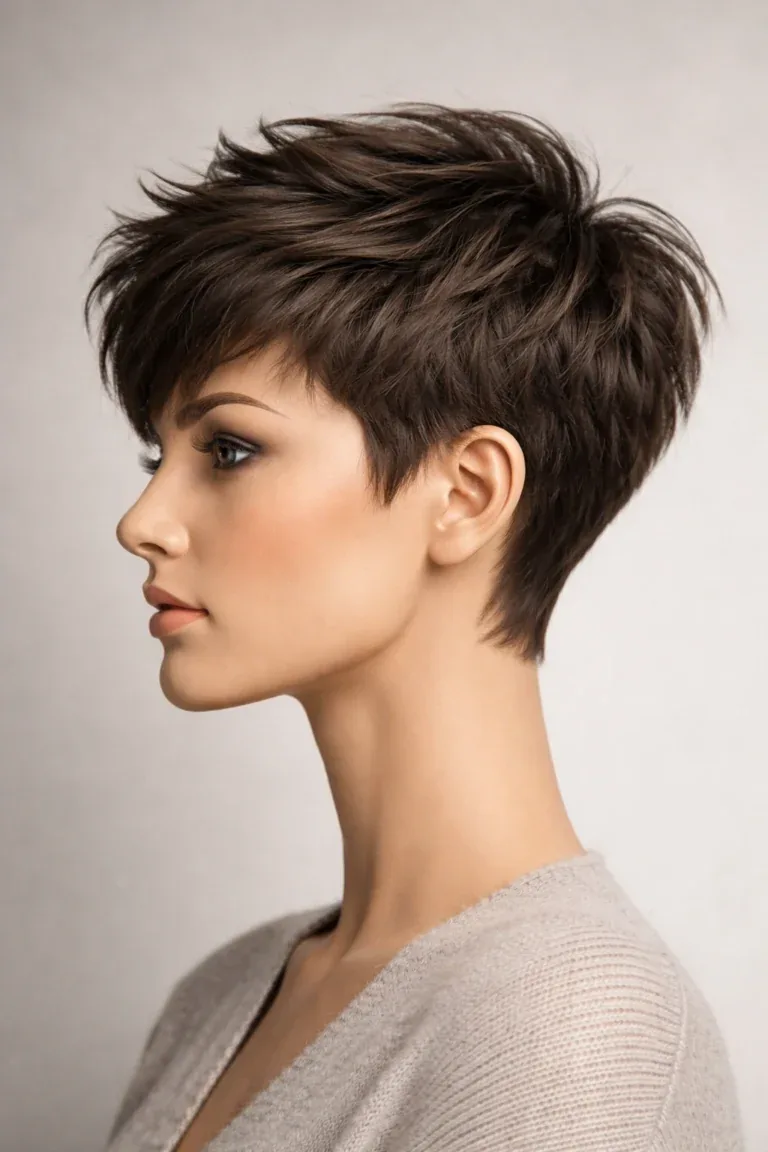
A bixie is exactly what the name promises: a bob and a pixie blended into one cut. It is longer than a pixie — the back usually reaches the nape, the sides fall somewhere between the ear and the jaw, and the top keeps enough length to sweep, part or tousle — but shorter and lighter than a bob, with the weight taken out through layers and texture. The result is a cut that frames the face like a pixie and moves like a bob. It is not a bob that grew out, and it is not a pixie that was left too long: it is cut on purpose, with the length placed where a bob would have it and the texture placed where a pixie would have it.
The reason the bixie took off is that it solves the two problems women have with short hair. A pixie can feel like a commitment — one bad cut and there is nowhere to hide, and growing it out is a months-long awkward phase. A bob can feel heavy, need daily blow-drying, and fall flat on fine hair. The bixie sits between them: it has enough length to be forgiving, enough texture to style itself, and enough shape to look deliberate even when you do nothing to it. If you have ever said you want short hair but not that short, the bixie is the cut you were describing.
Bixie vs Pixie vs Bob: How to Tell Them Apart
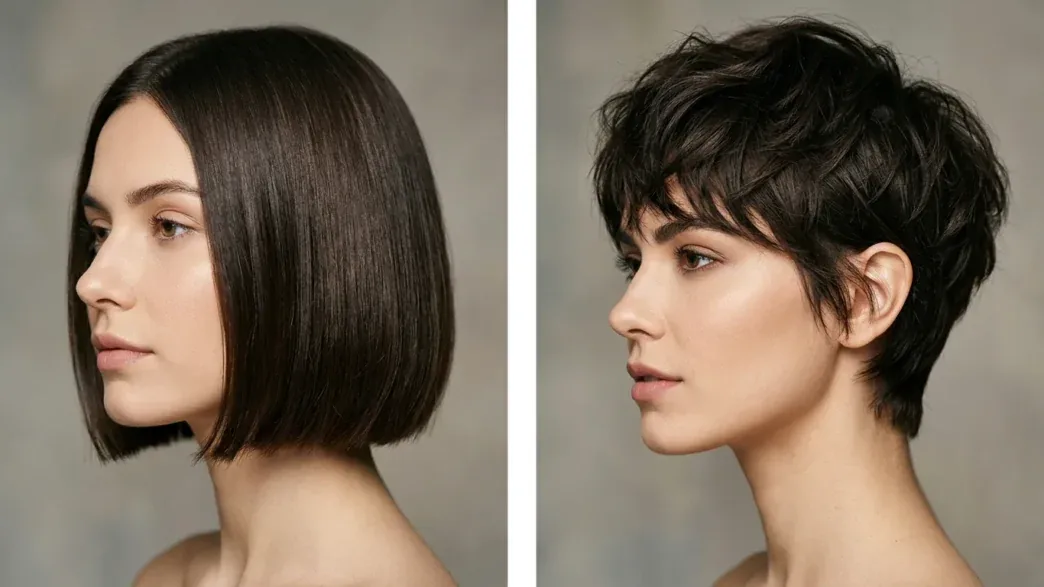
The easiest way to tell a bixie from a pixie and a bob is to look at the back and the sides. A pixie is cropped close at the back and sides, with most of the length on top — it is the shortest of the three and the most exposed around the ears and neck. A bob has a solid, even perimeter: the hair ends in a clear line, usually at the jaw or chin, all the way around. A bixie falls between them: the back is longer than a pixie but the perimeter is softer and more broken up than a bob, with layers that make the ends wispy instead of blunt. If you can tuck the sides behind your ears and still have hair left to play with, you are looking at a bixie.
The styling tells the same story. A pixie needs product and finger-styling every morning, because there is so little hair that the cut has to do all the work. A bob usually needs a blow-dry or a flat iron to look finished, because a solid perimeter shows every bend and kink. A bixie is the most forgiving of the three: rough-dry it, add a little texture spray, and the layers fall into place on their own. The trade-off is the trim schedule — a bixie loses its shape faster than a bob, so it needs a tidy-up every five to seven weeks, where a bob can often go eight to ten.
The Best Bixie for Your Face Shape
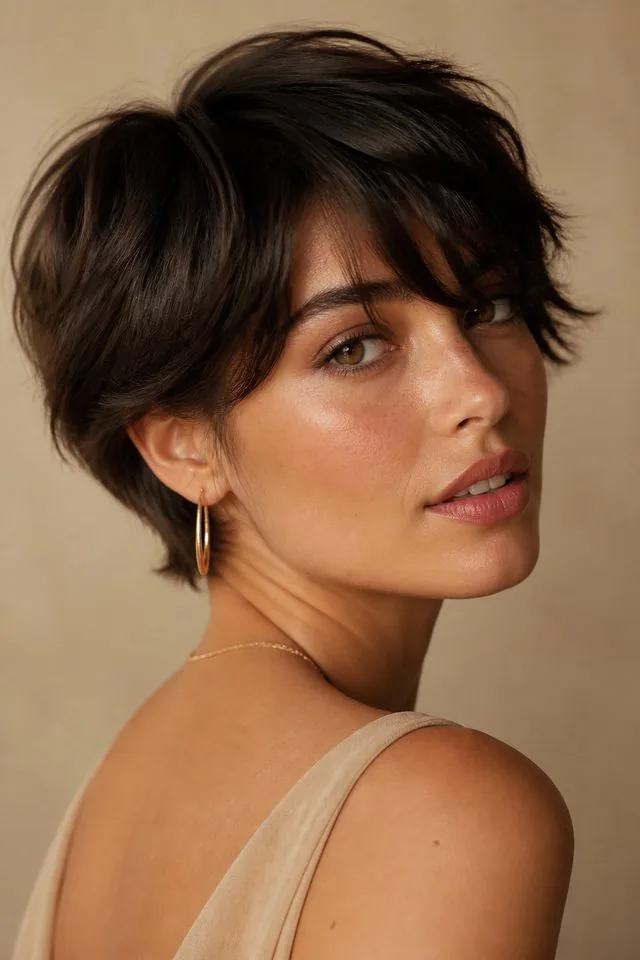
The bixie is unusually forgiving across face shapes, because the cut can be tuned in so many directions — but the tuning matters. For a round face, ask for height on top and length at the sides: a bixie with volume at the crown and face-framing pieces that fall past the cheekbone makes the face look longer. For a square face, softness is everything — wispy layers, a side-swept fringe and textured ends break up the jawline instead of echoing it. For a long face, width helps: a bixie with volume at the sides, or a fringe that cuts across the forehead, shortens the face visually. For an oval face, almost any bixie works, so choose by hair texture instead of face shape.
For a heart-shaped face, a bixie with volume at the jaw — longer pieces at the sides, or ends that flick out — balances a wider forehead and a narrower chin. The fringe is the other lever you can pull: a curtain fringe softens a broad forehead, a side-swept fringe slims a round face, and a wispy fringe suits almost everyone because it never draws a hard line across the face. The honest rule is that the cut matters more than the category — bring photos of women whose face shape resembles yours, and ask your stylist which version of the bixie they would cut for that face, not just for the photo.
How to Style a Bixie in Under 5 Minutes

A bixie is one of the fastest short cuts to style, because the texture is built into the cut rather than created by tools. Start with damp hair and a pea-sized amount of styling cream or mousse worked through with your fingers — not a brush, which flattens the layers. Rough-dry with your fingers, lifting the roots at the crown as you go, and stop when the hair is about ninety percent dry. Then add a small amount of texturising paste or pomade, rubbing it between your palms first, and pinch the ends to separate them. That is the whole routine: cream, rough-dry, paste, pinch. Two to five minutes, depending on how much you fuss.
On second-day hair, skip the wash and go straight to dry shampoo at the roots, then reshape the fringe and the crown with a little paste. If the ends look flat, a single pass of a flat iron — just a bend, not a straighten — brings the shape back. The mistake most women make with a bixie is over-styling it: too much product weighs the layers down, and too much heat irons out the texture the cut was built for. A bixie looks best slightly undone, so if it looks a little messy, it is probably right. Save the polished blow-dry for the days you actually want one.
Bixie on Curly, Wavy and Straight Hair
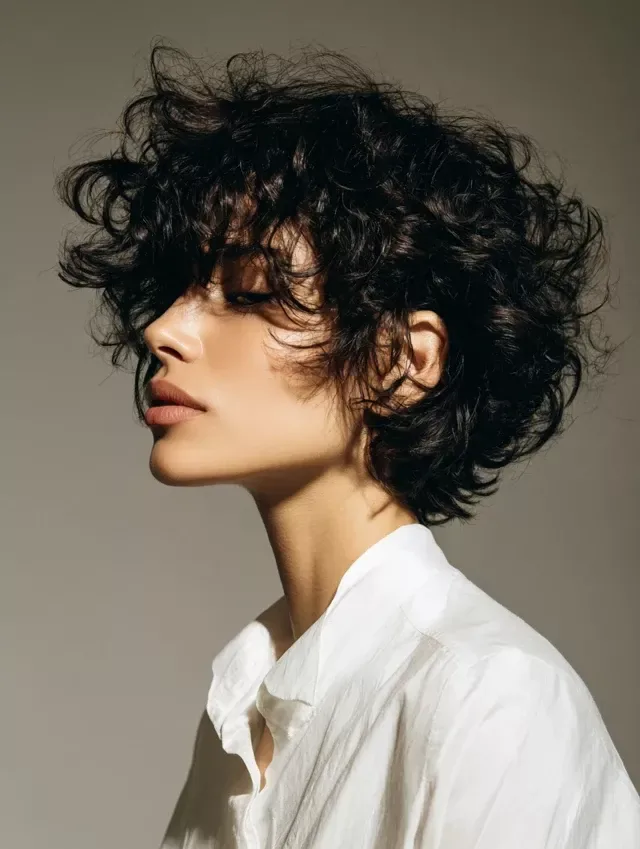
A bixie behaves differently on every hair texture, and the version you choose should match what your hair does on its own. On curly hair, the bixie becomes a rounded, voluminous shape — the curls give it natural height and the layers stop it turning into a triangle, but it must be cut dry or curl-by-curl, because curls shrink and a wet cut will come out shorter than planned. On wavy hair, the bixie is at its easiest: the natural wave gives the layers movement with almost no styling, and air-drying with a little cream is genuinely enough. On straight hair, the bixie depends on the cut itself — choppy layers and point-cut ends create the movement that straight hair will not make on its own.
The honest trade-off is control versus effort. Curly bixies have the most volume and the most personality, but they need a stylist who understands curls and a little curl cream every morning. Wavy bixies are the lowest-effort version and the most forgiving as they grow out. Straight bixies look the sharpest and most polished, but they show a bad cut immediately and need the most precise trimming. Whichever texture you have, tell your stylist how you actually dry your hair — air-dry, rough-dry or blow-dry — because a bixie cut for blow-drying will not behave the same way air-dried, and the other way round.
Growing Out a Pixie Into a Bixie
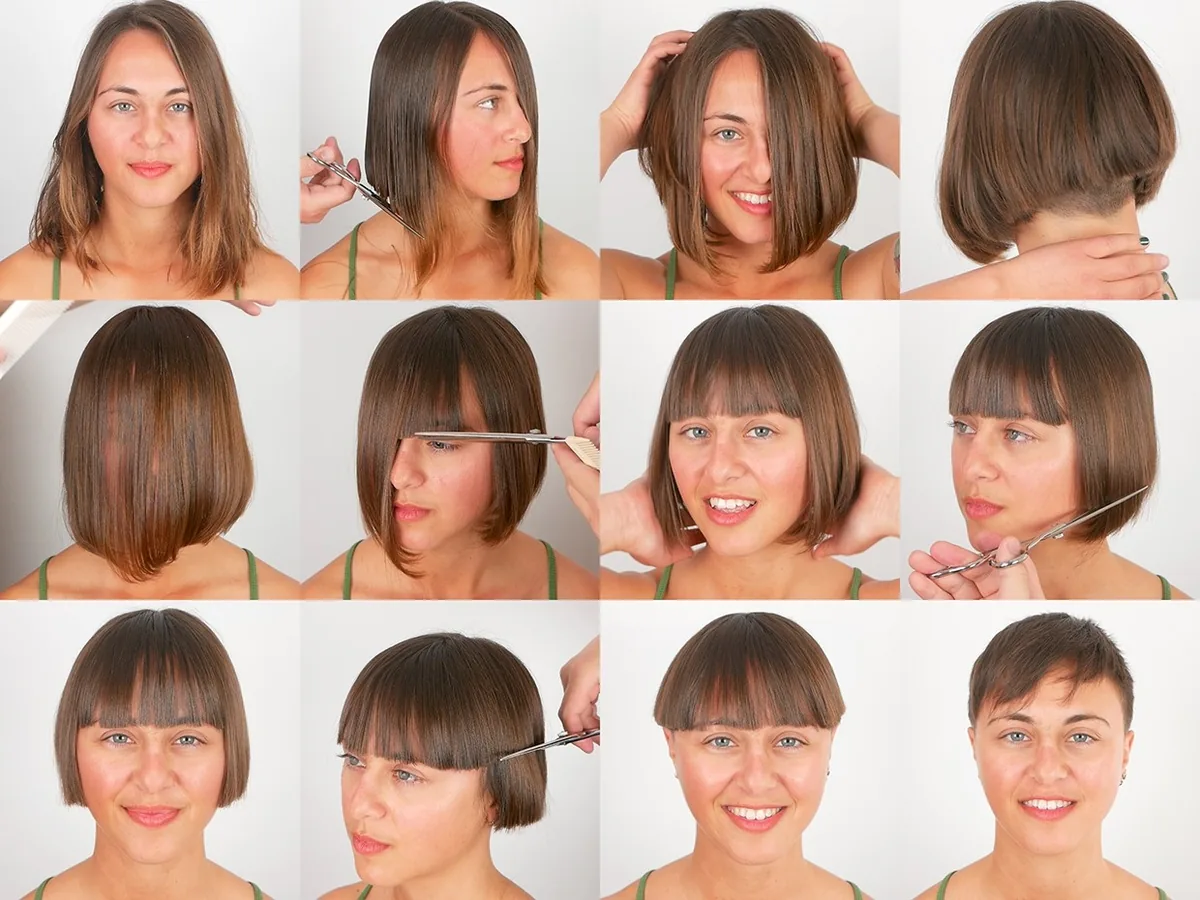
Growing a pixie into a bixie is the easiest grow-out in short hair, because the bixie is the natural halfway point — and it is the reason many stylists suggest the bixie as the destination rather than a bob. The awkward stage of a pixie grow-out is the top: the fringe gets too long to spike and too short to tuck, and the sides stick out. The bixie fixes both, because it keeps the length on top and lets the sides grow to ear length, so the hair starts to look like a cut again instead of a grow-out. Most women reach a bixie from a pixie in about two to three months, with one or two shaping trims along the way.
The shaping trims are what make the difference between a grow-out that looks deliberate and one that looks neglected. Every four to six weeks, ask your stylist to tidy the nape and the neckline, blend the top into the sides, and keep the shape balanced — but to leave the length alone. Do not let anyone cut the top short again to match the sides; the whole point is to let the top lead. A little styling cream and a side part hide a multitude of sins during the in-between weeks, and headbands, clips and a texturising spray are your best friends. Once the sides reach the jaw, you are in bixie territory — and from there, a bob is only a few more months away if you want it.
Bixie Maintenance and Trim Schedule

A bixie needs more frequent trims than a bob, because its shape lives in the layers — and layers grow out faster than a solid perimeter. Plan on a trim every five to seven weeks to keep the shape, with six weeks the sweet spot for most women. Between trims, the nape is the first thing to go: it grows out and starts to look scruffy, so a quick nape tidy at four weeks can buy you another two or three weeks before a full cut. If you colour the bixie, book the colour and the cut together, because a fresh cut always makes the colour look better and the stylist can place the colour around the new shape.
At home, the maintenance is light. Wash every two or three days rather than daily — short hair gets oily faster at the roots, but dry shampoo handles that, and over-washing strips the texture. Use a light conditioner only on the mid-lengths and ends, never heavy masks at the roots, or the layers will fall flat. A pea-sized amount of styling product is enough; more than that weighs a bixie down and makes it look greasy rather than textured. And keep the heat low: a bixie should not need a flat iron every day, and the less heat you use, the longer the cut holds its shape between appointments.
What to Ask Your Stylist For (With Exact Wording)
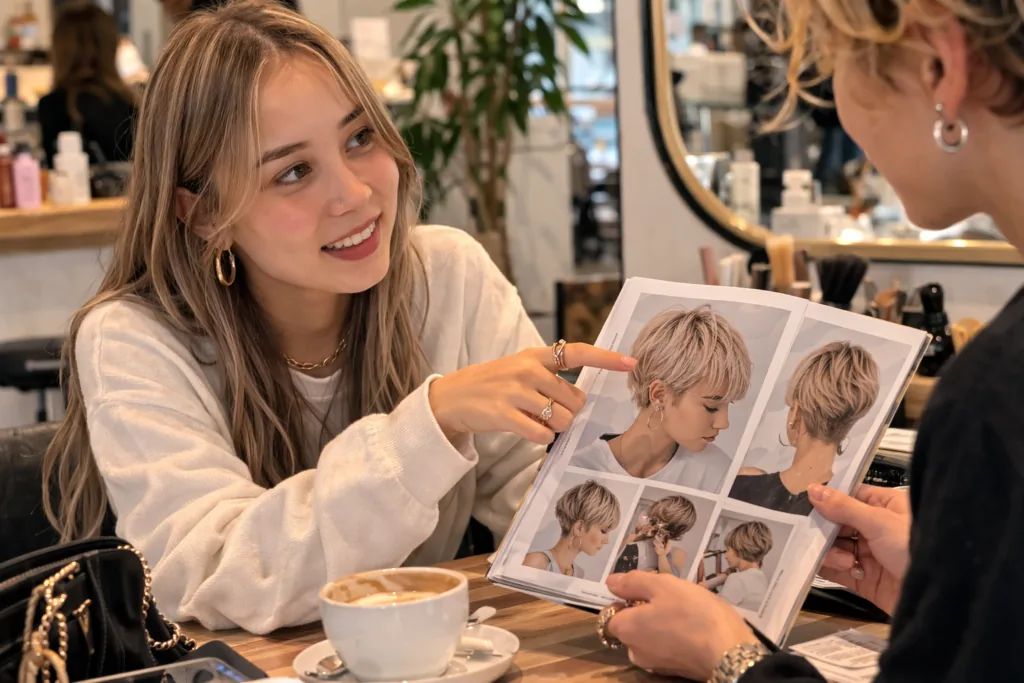
The bixie is a new enough word that not every stylist will picture the same cut when you say it, so bring photos — and use words that describe the cut, not just the name. Say this: “I want a bixie — longer than a pixie, shorter than a bob, with the back reaching the nape and the sides falling between my ear and my jaw, with lots of texture and layers so it moves.” Then point at the photo and name the specifics: how long you want the fringe, whether you want it side-swept or curtain-style, and how much volume you want on top.
Ask four questions before the scissors come out. First: “Will you cut this dry or wet, and does my hair texture change the plan?” Second: “How will this look when I air-dry it, not just when you blow-dry it?” Third: “How often will I need to come back to keep this shape?” Fourth: “What will this look like in two months if I do nothing?” A good stylist will answer all four, and will adjust the cut to your answers — a stylist who just says “sure, a bixie” and picks up the scissors is the one to be careful of. The right bixie is the one cut for your hair, your face and your mornings, not the one in the photo.
1. Classic Textured Bixie
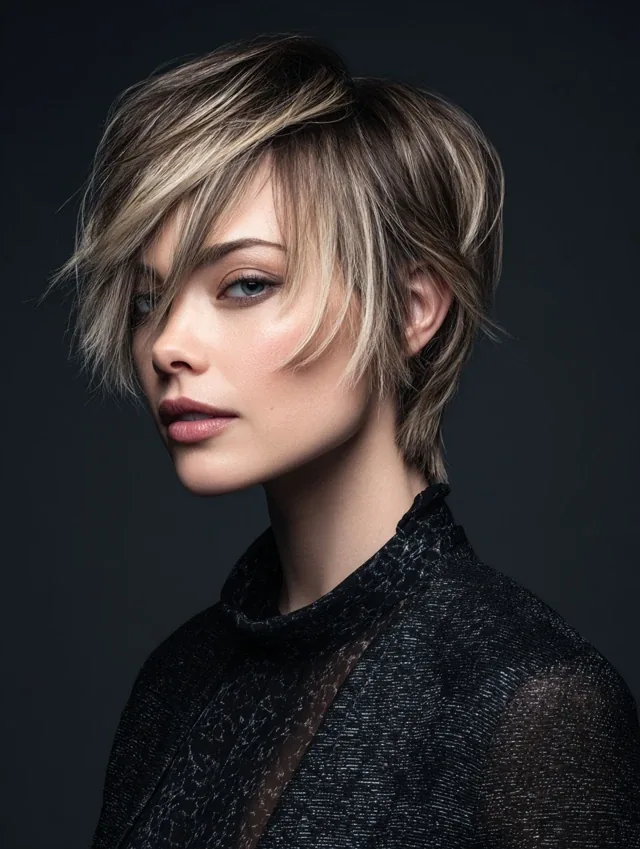
The classic textured bixie is the version that started it all: soft layers through the top and sides, a fringe that can be swept to either side, and ends that are point-cut so they fall in pieces rather than a solid line. It is the bixie in its purest form — no gimmicks, no extreme lengths, just a well-cut short style that moves when you do. The texture is what makes it work on so many women: it gives fine hair the illusion of thickness, takes the weight out of thick hair, and lets wavy hair do what it wants to do anyway.
Who should try it: almost anyone trying a bixie for the first time — it is the safest, most versatile version, and it suits straight, wavy and lightly curly hair. Who should skip it: women who want a sharp, graphic shape, or a cut that looks identical every morning — this one is deliberately a little undone. Grow-out plan: it grows into a soft, layered bob in about three months, and the grow-out looks good the whole way, because the layers blend into each other as they lengthen.
2. Bixie with Curtain Bangs
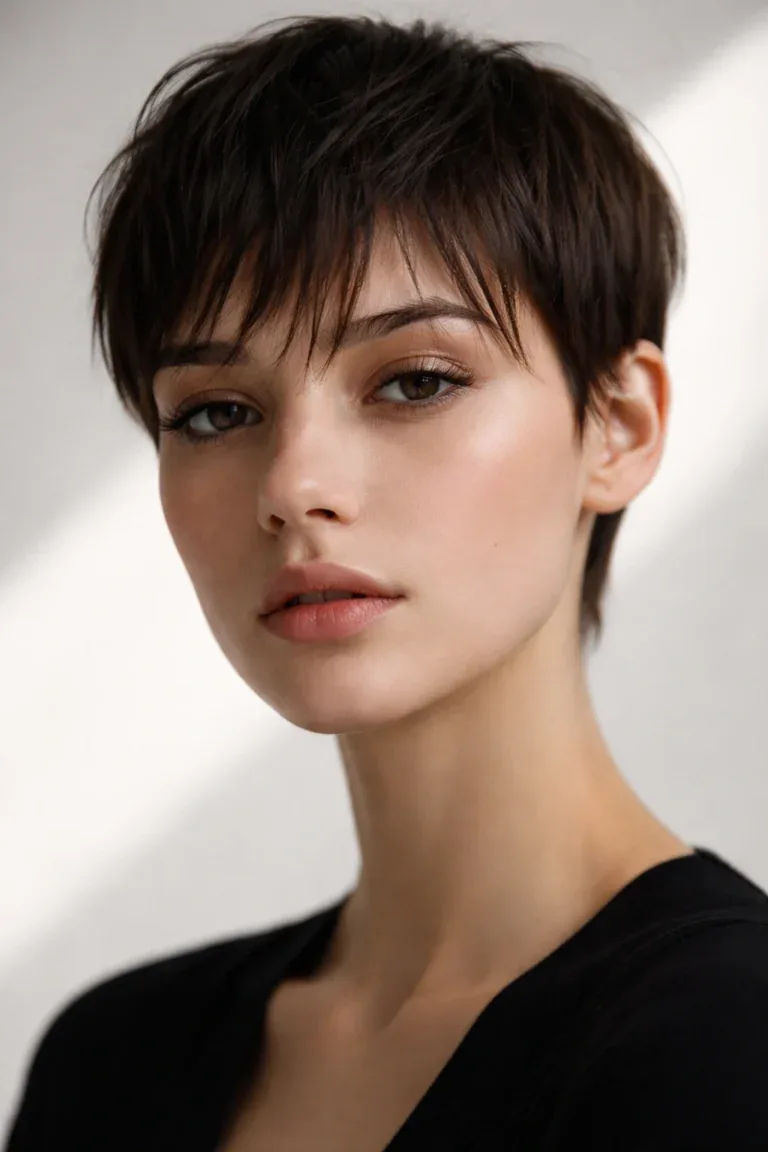
A bixie with curtain bangs pairs the hybrid cut with the fringe that flatters nearly everyone: a centre-parted fringe that sweeps to each side and frames the eyes and cheekbones. On a bixie, curtain bangs do something clever — they add softness around the face while the rest of the cut stays short and textured, so the whole look reads feminine rather than severe. The bangs are also the lightest part of the hair, so they draw the eye straight to the face, and because they part in the middle, they grow out gracefully instead of turning into an awkward ledge.
Who should try it: women with long or oval faces, or anyone who wants a fringe without committing to a blunt one. Who should skip it: women with a strong cowlick at the front hairline, or very curly hair that will not sit in a centre part. Grow-out plan: the bangs blend into face-framing layers within six to eight weeks, and the cut becomes a longer, softer bixie with pieces around the face — no awkward stage.
3. Choppy Layered Bixie
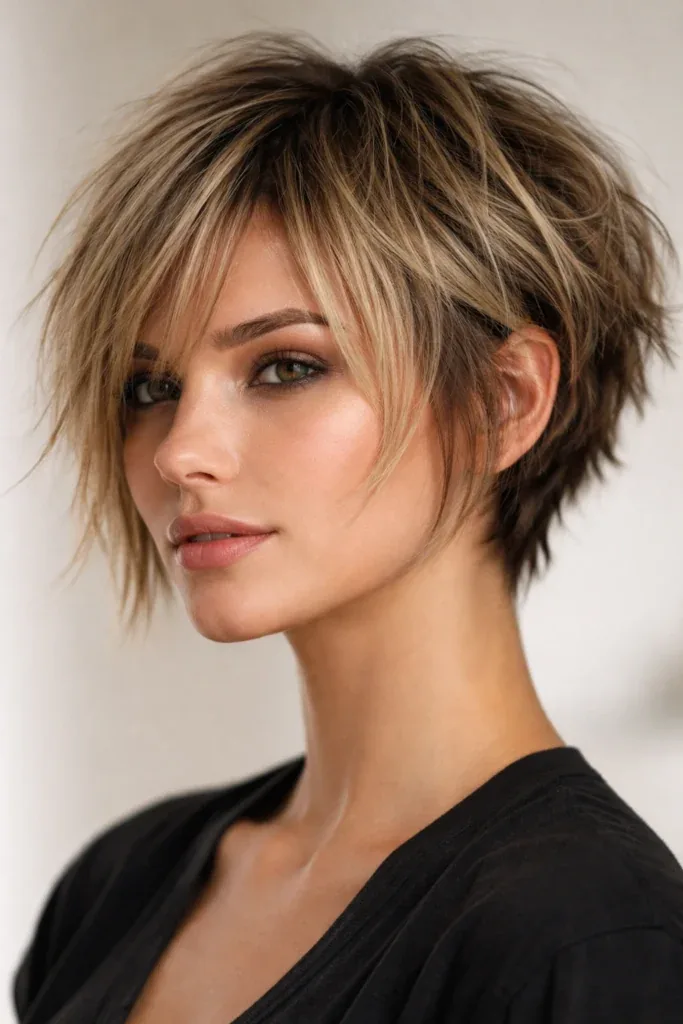
The choppy layered bixie is the bixie with the volume turned up: short, uneven layers stacked through the crown, with pieces cut at different lengths so the hair has lift, movement and a deliberately piecey finish. It is the most rock-and-roll version of the cut, and it suits women who like their hair to look like it has a personality. The choppiness also does real work — it removes bulk from thick hair, creates the illusion of thickness in fine hair, and gives wavy hair a shape it can hold all day.
Who should try it: women with thick or wavy hair, and anyone who loves an edgy, undone finish. Who should skip it: women with very fine, straight hair that will not hold the piecey texture, or anyone who prefers a smooth, polished look. Grow-out plan: the layers grow into a shaggy bob in about three months; the in-between stage looks like a shag, which is a style in its own right, so the grow-out is genuinely wearable.
4. Sleek Straight Bixie
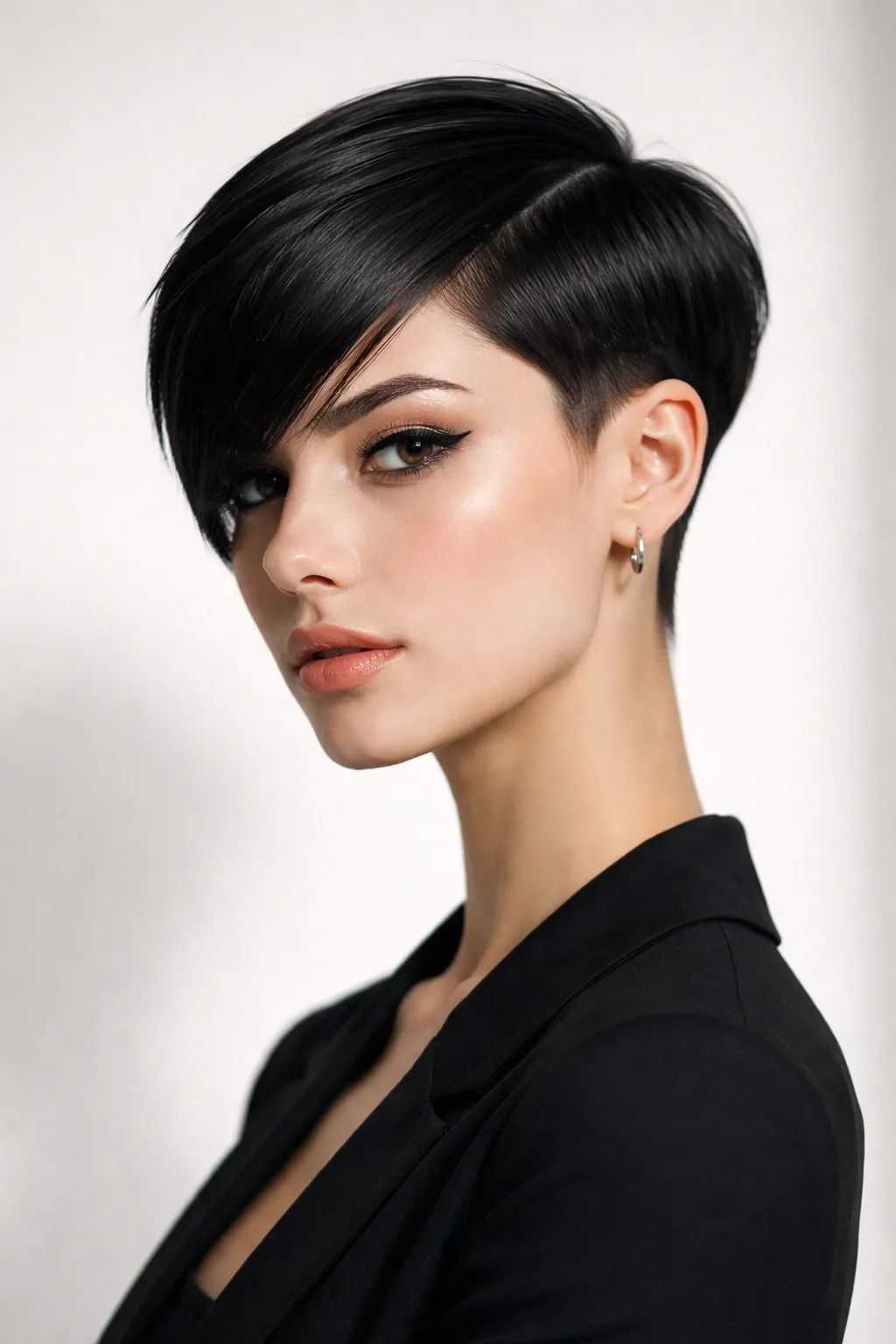
A sleek straight bixie is the polished end of the spectrum: the same bob-pixie length, but worn smooth, with a clean part and ends that fall in a neat, controlled line. It is the bixie for women who love minimal, editorial hair — the cut does the talking, and the styling is almost invisible. The sleekness shows off the shape of the cut more than any other version, which means the cut has to be precise, and it is also the version that photographs best, because the smooth surface catches the light in one unbroken sheet.
Who should try it: women with naturally straight hair, and anyone who loves a clean, minimal, low-fuss look. Who should skip it: women with wavy or curly hair who do not want to flat-iron every morning, or anyone who dislikes precision cuts that show every millimetre of grow-out. Grow-out plan: it grows into a sleek bob in two to three months, and the grow-out stays tidy because the shape is controlled — just keep the nape trimmed.
5. Curly Bixie
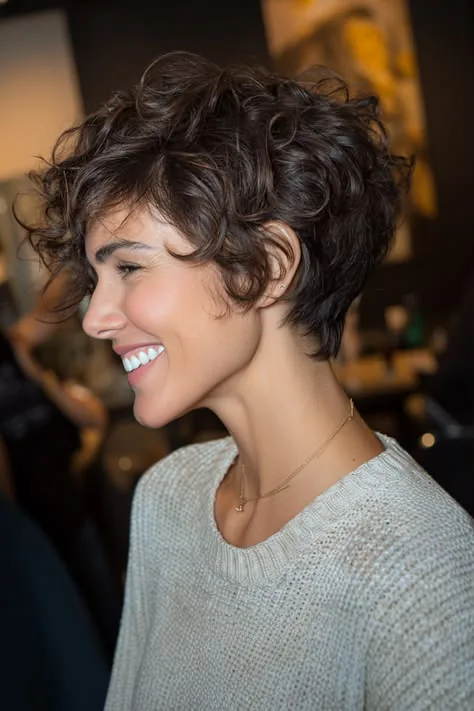
A curly bixie is the cut that lets curls be the whole point: a rounded, voluminous shape that sits between the ear and the jaw, with layers cut to follow the curl pattern so the curls fall in a shape rather than a triangle. On curly hair, the bixie is more forgiving than a pixie — there is enough length for the curls to form properly — and more flattering than a bob, because the layers keep the volume where you want it instead of letting it spread sideways. It is also one of the most joyful bixies there is: bouncy, full of movement, and impossible to ignore.
Who should try it: women with natural curls from loose waves to tight coils, especially anyone whose curls have felt shapeless in a bob. Who should skip it: women who straighten their hair most days, or anyone whose curls are very tight and will shrink the cut much shorter than planned. Grow-out plan: it grows into a curly bob in three to four months, with the shape holding well — just ask for curl-by-curl trims so the shape stays balanced as it lengthens.
6. Wavy Bixie with Soft Layers
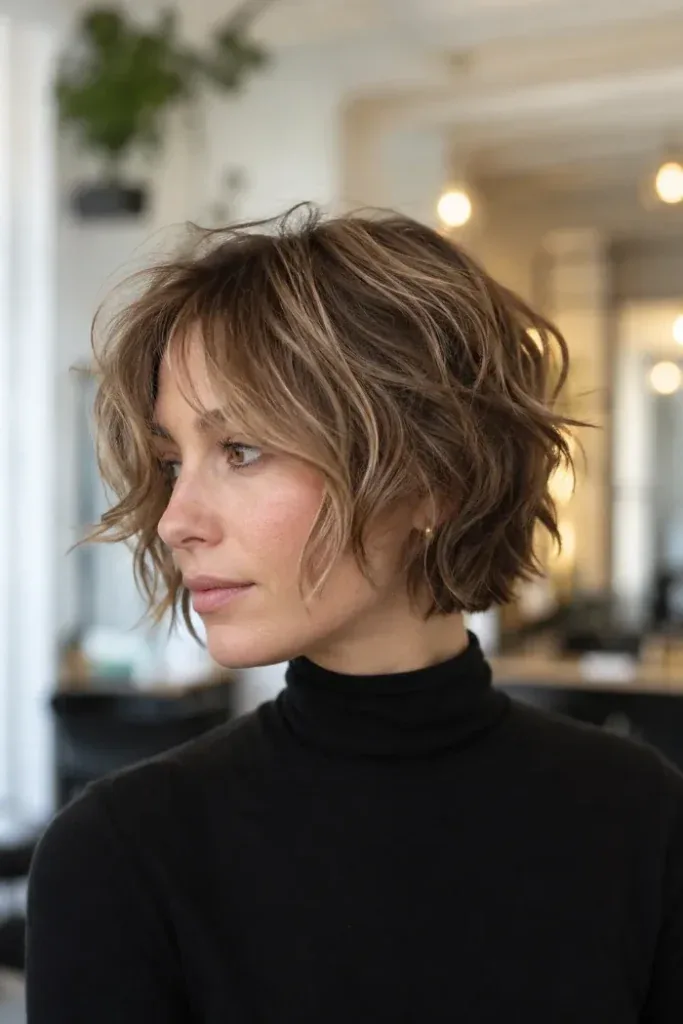
A wavy bixie with soft layers is the easiest bixie to live with, because the hair does most of the work itself. The natural wave gives the layers movement, the soft layering stops the wave turning into bulk, and the whole cut air-dries into something that looks styled. This is the bixie for women who want to wash their hair, shake it dry, and walk out the door — and it is also the version that looks most like the bixies in the photos, because most of those photos are wavy hair, whether the caption says so or not.
Who should try it: women with natural waves, and anyone who wants the lowest-effort bixie there is. Who should skip it: women with very straight hair who expect waves to appear on their own, or anyone who wants a sharp, defined shape. Grow-out plan: it grows into a wavy lob in about four months, and the grow-out is the easiest of all the bixies — the waves hide the lengthening layers completely.
7. Bixie with Micro Bangs
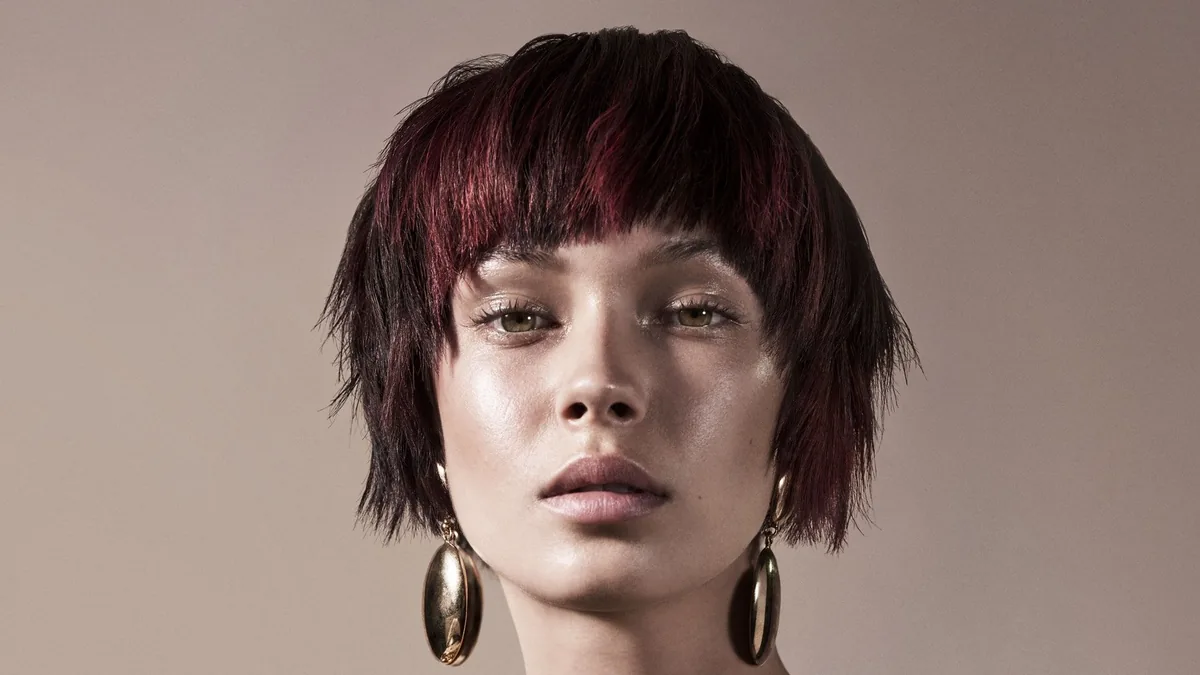
A bixie with micro bangs is the boldest fringe pairing on this list: a short, straight fringe that sits well above the eyebrows, against the soft, textured length of the bixie. The contrast is the point — the tiny fringe makes the eyes the focus of the whole face, and the bixie keeps the rest of the look soft enough that the fringe reads as fashion-forward rather than severe. It is a high-fashion look that has filtered down to the salon, and it suits women who like their hair to make a statement before they say a word.
Who should try it: women with oval or heart-shaped faces, and anyone who loves a bold, editorial edge. Who should skip it: women with a high forehead they prefer to cover, a strong cowlick, or a round face — a micro fringe can shorten the face visually. Grow-out plan: the fringe grows into a wispy, brow-skimming fringe in six to eight weeks, and then into curtain bangs — so the bold stage is short, and the grow-out is gentle.
8. Side-Swept Bixie
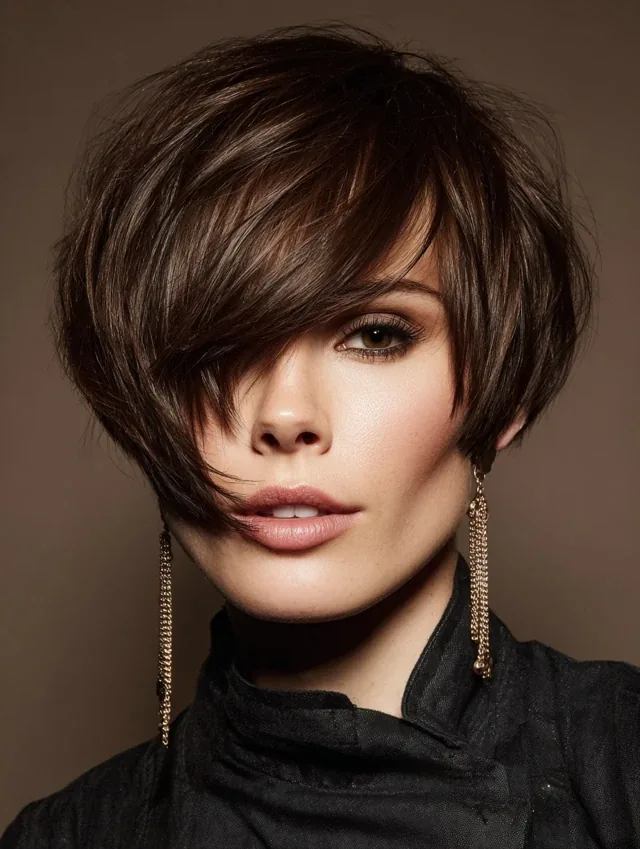
A side-swept bixie is the most versatile version of the cut, because the deep side part does so much work: it creates volume at the roots on one side, a heavy, glossy sweep of hair across the forehead, and a shape that can be dressed up or down without changing the cut. The side sweep also flatters almost every face shape, because it breaks up the symmetry of the face and draws the eye diagonally. It is the bixie to choose if you want one cut that can look polished at work and undone at the weekend.
Who should try it: almost everyone — especially women with round or square faces, where the diagonal line is genuinely flattering. Who should skip it: women with a natural centre part they refuse to fight, or very curly hair that will not stay swept to one side. Grow-out plan: it grows into a side-parted bob in about three months, and the sweep keeps working the whole way — just keep the fringe trimmed so it does not fall into the eyes.
9. Bixie with an Undercut
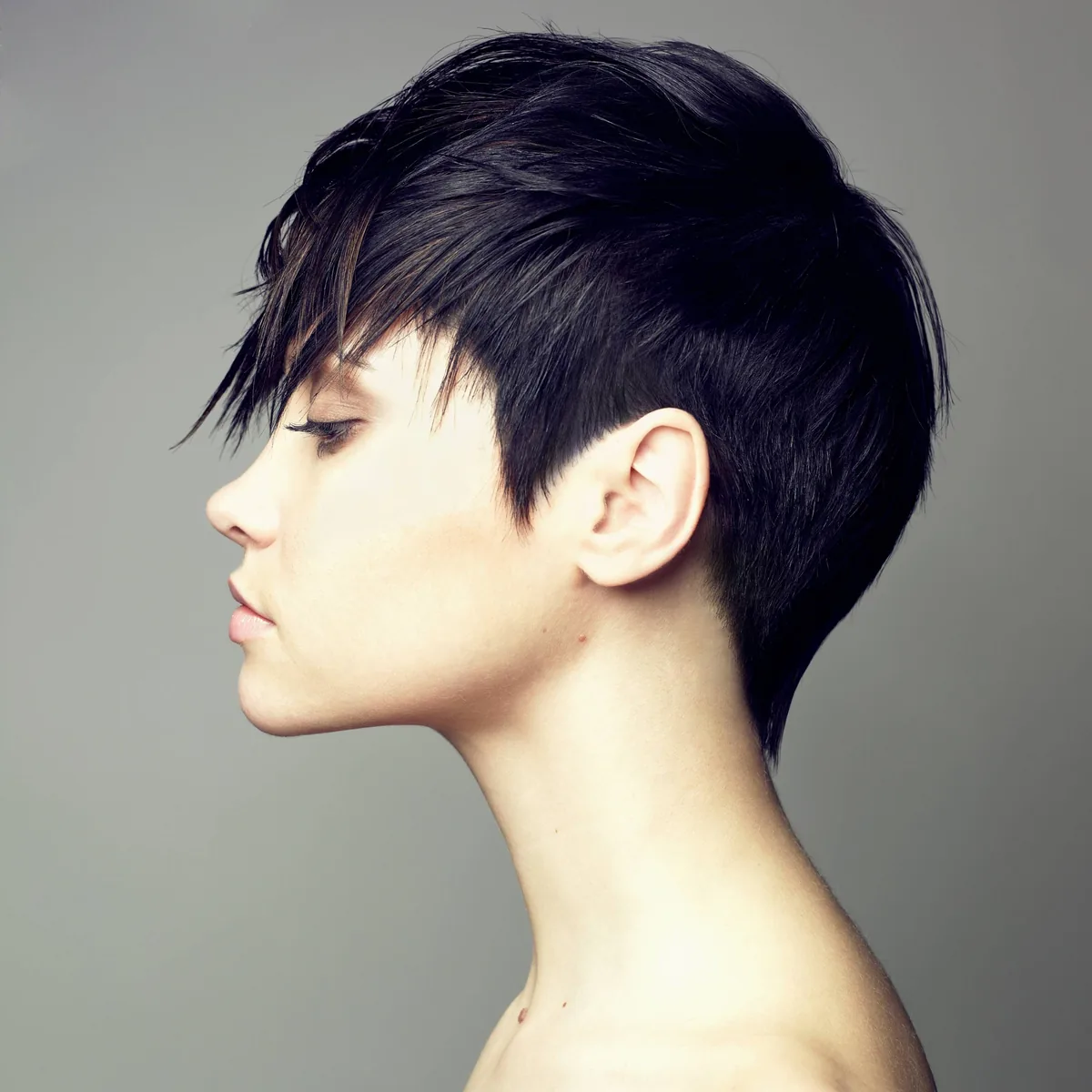
A bixie with an undercut keeps the textured length on top and takes the hair short — sometimes clipper-short — underneath, at the nape or on one side. The undercut does two things: it removes weight and bulk, so thick hair finally feels light, and it adds an edge that makes the soft bixie feel modern rather than safe. It is also a practical cut in hot weather, and a hidden one if you want it to be — keep the top layer long and nobody knows the undercut is there until you tuck the hair back.
Who should try it: women with very thick hair, and anyone who wants an edgy detail they can hide or show. Who should skip it: women with fine hair that needs all the volume it can get, or anyone who dislikes the feeling of very short hair at the nape. Grow-out plan: the undercut grows out in about two months and will need either a tidy-up or a decision to grow it into the rest of the cut — it is the one bixie that needs a plan for the underneath as well as the top.
10. Shaggy Bixie
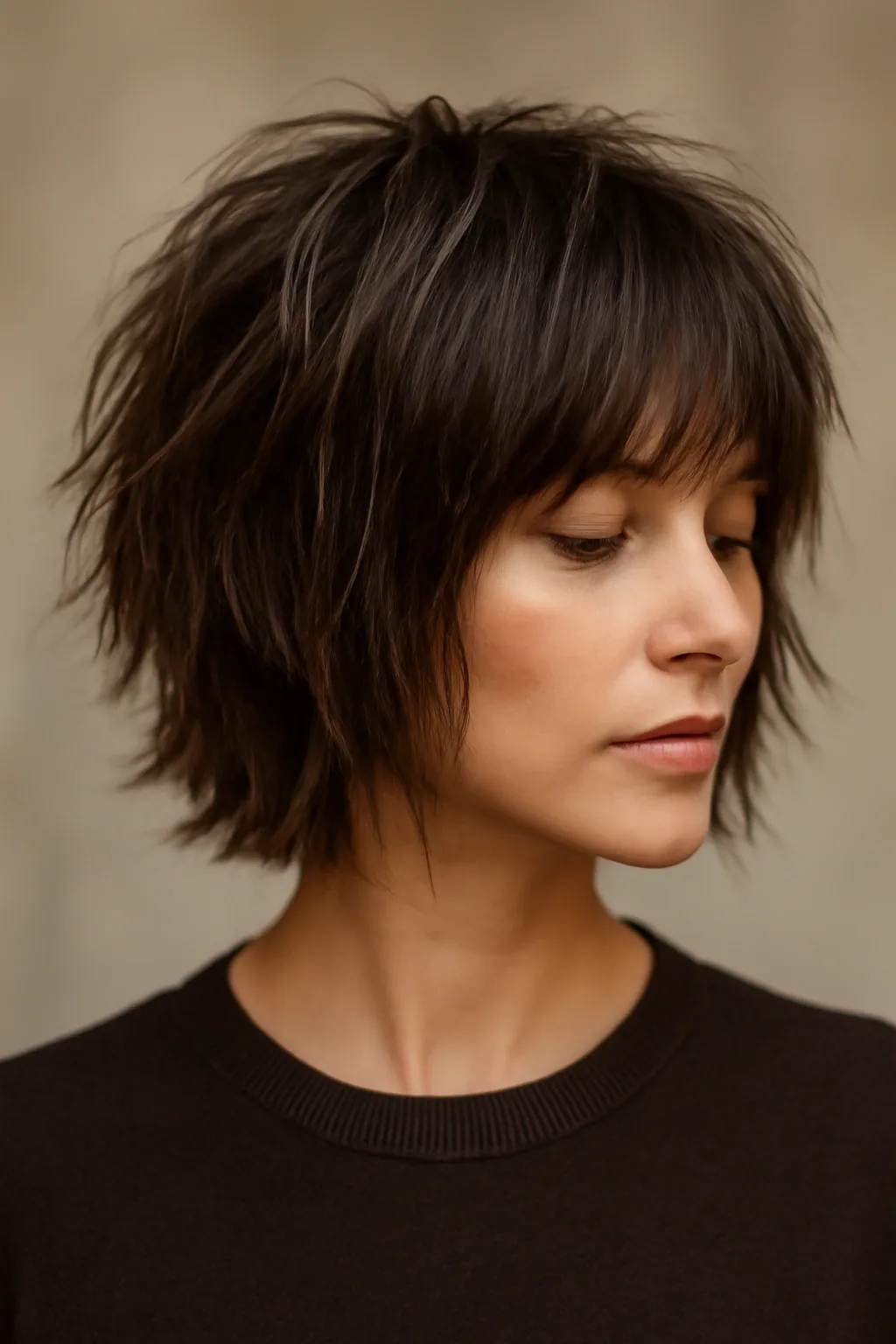
The shaggy bixie is the bixie crossed with a shag: choppy layers, a soft fringe, texture everywhere, and a finish that is deliberately a little messy. It is the most lived-in version of the cut, and it suits women who want their hair to look like it has been lived in rather than styled. The shaggy layers also do the most work of any bixie variation — they remove weight from thick hair, create movement in straight hair, and give wavy hair a shape that holds all day without product.
Who should try it: women with wavy or thick hair, and anyone who loves a retro, rock-and-roll edge. Who should skip it: women who prefer a smooth, polished finish, or anyone with very fine hair that will look thinner with too many choppy layers. Grow-out plan: it grows into a full shag in three to four months, and the grow-out is one of the best of any bixie — the shaggy shape just gets longer and softer.
11. Bixie with Long Face-Framing Pieces
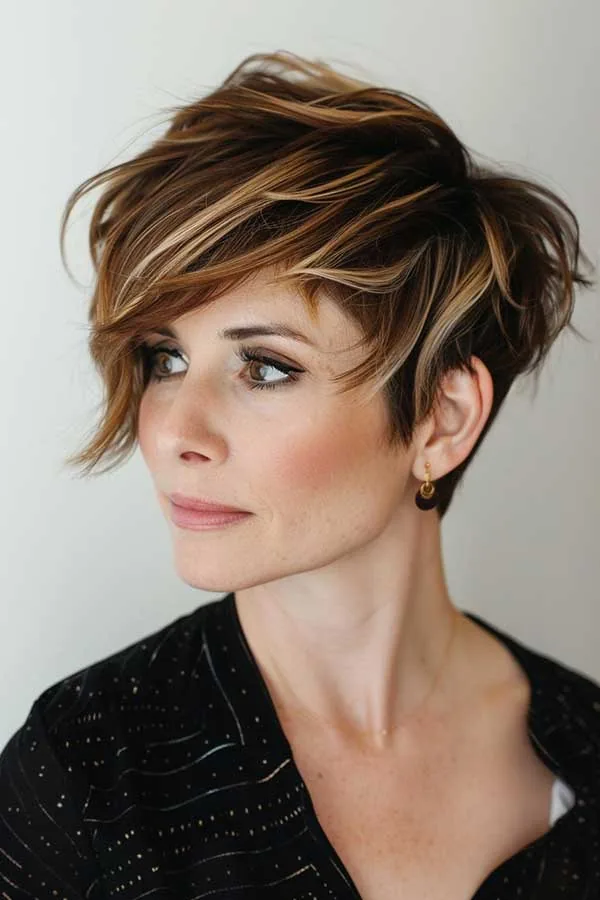
A bixie with long face-framing pieces keeps the back and crown short and textured, but leaves two longer pieces at the front that fall past the cheekbone, sometimes as far as the jaw. Those pieces do the framing work of a much longer cut: they soften the face, draw the eye down, and give the style a shape that feels longer than it is. It is the bixie for women who are nervous about going short, because the front pieces are a safety net — the face still feels framed, even though the back is a pixie.
Who should try it: women going short for the first time, and anyone with a round or square face who wants softening around the jaw. Who should skip it: women who want the hair completely off the face, or anyone who dislikes pieces falling forward. Grow-out plan: the front pieces grow into a jaw-length bob at the front while the back catches up, so the cut gradually becomes a layered bob with face-framing layers — a genuinely flattering grow-out.
12. Bixie with a Wispy Fringe
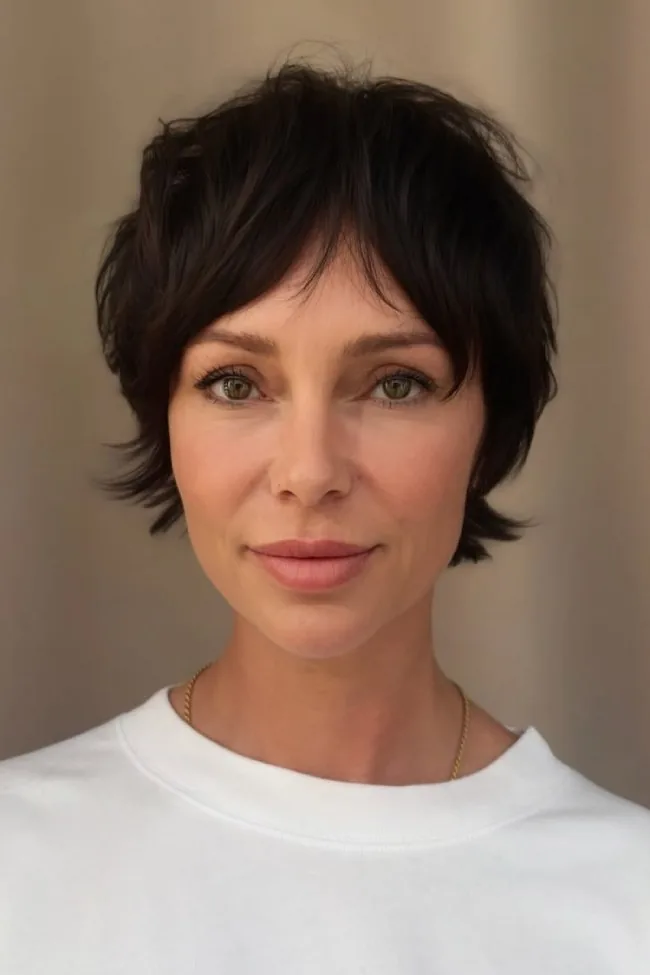
A bixie with a wispy fringe is the softest fringe pairing there is: a light, feathery, see-through fringe that softens the forehead without hiding it, and that moves with the rest of the cut instead of sitting like a separate piece. The wispiness is what makes it work on a bixie — the fringe is cut with the same textured technique as the rest of the hair, so the whole cut reads as one piece. It is also the most forgiving fringe, because it grows out gracefully and needs almost no styling.
Who should try it: almost everyone, especially women trying a fringe for the first time and women with fine hair. Who should skip it: women who want a strong, defined fringe line, or anyone with a cowlick that pushes the fringe sideways. Grow-out plan: the fringe blends into the rest of the hair in four to six weeks and becomes a side-swept fringe, then a face-framing layer — there is no awkward stage at all.
13. Bixie for Thick Hair

A bixie for thick hair is a rescue cut: thick hair in a bob can feel like a helmet, and in a pixie it can feel unmanageable, but a bixie takes the weight out from the inside with internal layers and thinning, while keeping enough length to look like a style. The result is thick hair that finally moves — the layers let the hair fall in pieces instead of one heavy block, and the volume stays where you want it, at the crown, instead of spreading sideways. It is the cut that makes thick hair feel light for the first time.
Who should try it: women with thick, heavy hair who are tired of bobs that feel like a helmet. Who should skip it: women with fine hair — this cut is built around removing weight, and fine hair has none to spare. Grow-out plan: it grows into a layered bob in three to four months, and the internal layers keep the grow-out light and manageable — just ask for the weight to be thinned again at each trim.
14. Bixie for Fine Hair
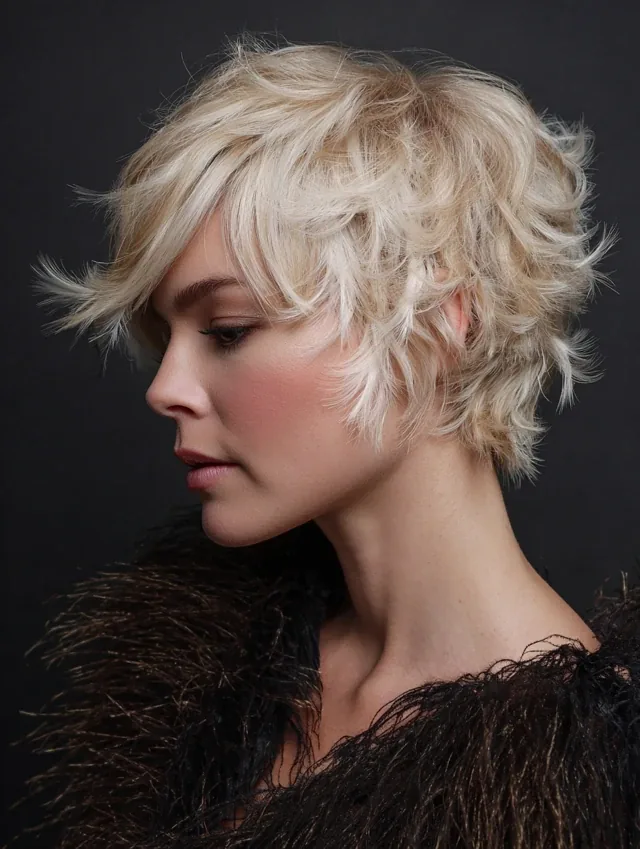
A bixie for fine hair is cut the opposite way from a bixie for thick hair: instead of removing weight, the stylist keeps the ends blunt and solid so the hair stacks up and looks full, and adds texture only on top, where it creates lift. The result is fine hair that looks thicker than it is — the short length means the hair is not weighed down, the blunt ends look dense, and the textured crown gives volume that fine hair in a longer cut can never hold. It is one of the best short cuts there is for fine hair.
Who should try it: women with fine or thinning hair who want volume without extensions or teasing. Who should skip it: women with thick hair, or anyone who wants a lot of visible layering — this version deliberately keeps the layers subtle. Grow-out plan: it grows into a fine-haired bob in about three months, and the grow-out stays flattering as long as the ends are kept blunt — ask for a dusting of the ends rather than a full trim.
15. Blunt-End Bixie
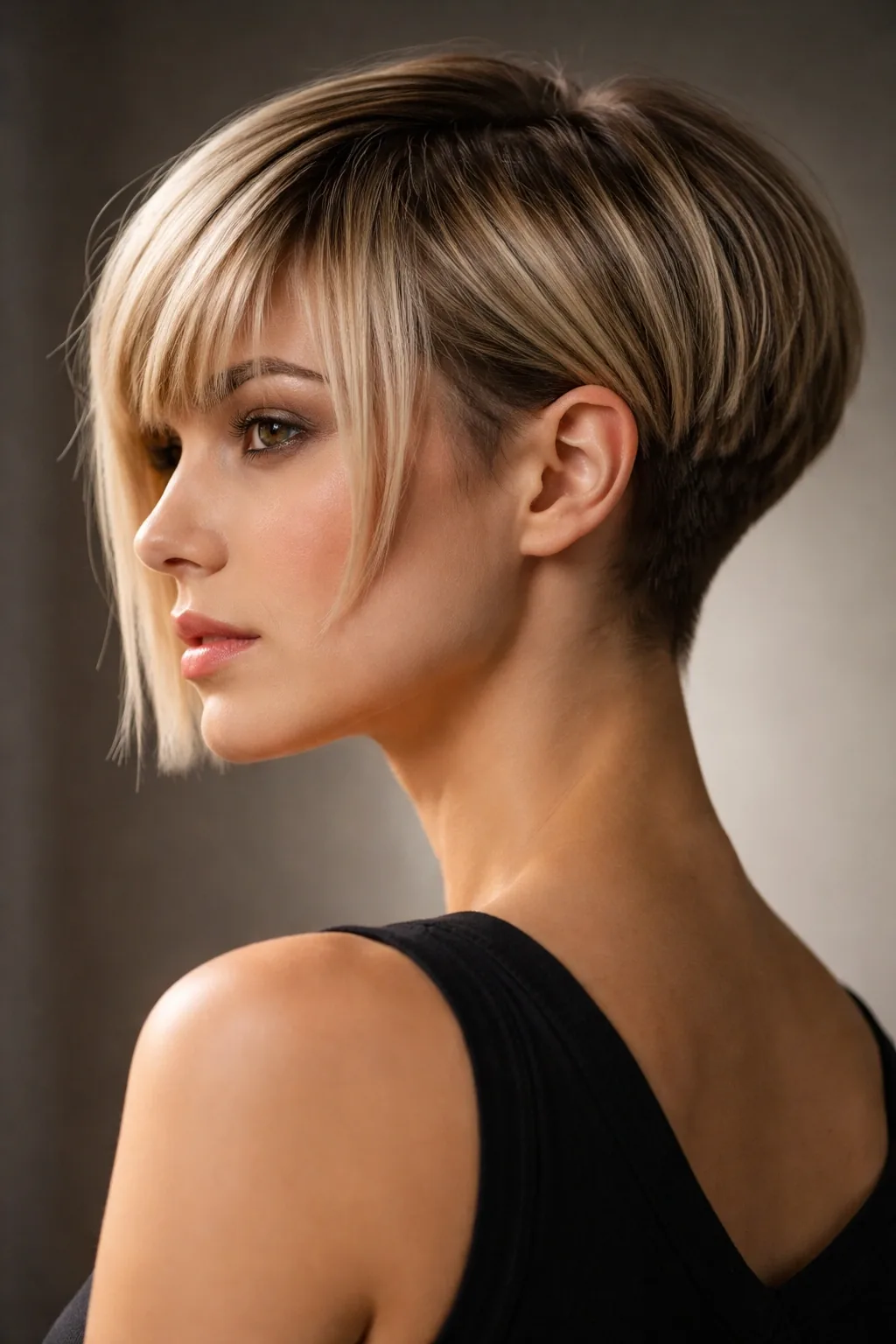
The blunt-end bixie is the most graphic version of the cut: the perimeter is cut in a clean, solid line, like a bob, while the top and crown keep the texture and lightness of a pixie. The contrast is striking — a sharp edge at the bottom, soft movement on top — and it makes the hair look thicker and the cut look more deliberate than any other bixie. It is the bixie for women who like clean lines but do not want a bob, and it is also the version that holds its shape the longest between trims.
Who should try it: women with fine to medium straight hair, and anyone who loves a sharp, architectural shape. Who should skip it: women with very curly or wavy hair, where a blunt line will look uneven, or anyone who wants a soft, blended finish. Grow-out plan: it grows into a blunt bob in two to three months, and the grow-out is the tidiest of all the bixies — the blunt line simply moves down, and the shape stays clean.
16. Asymmetrical Bixie
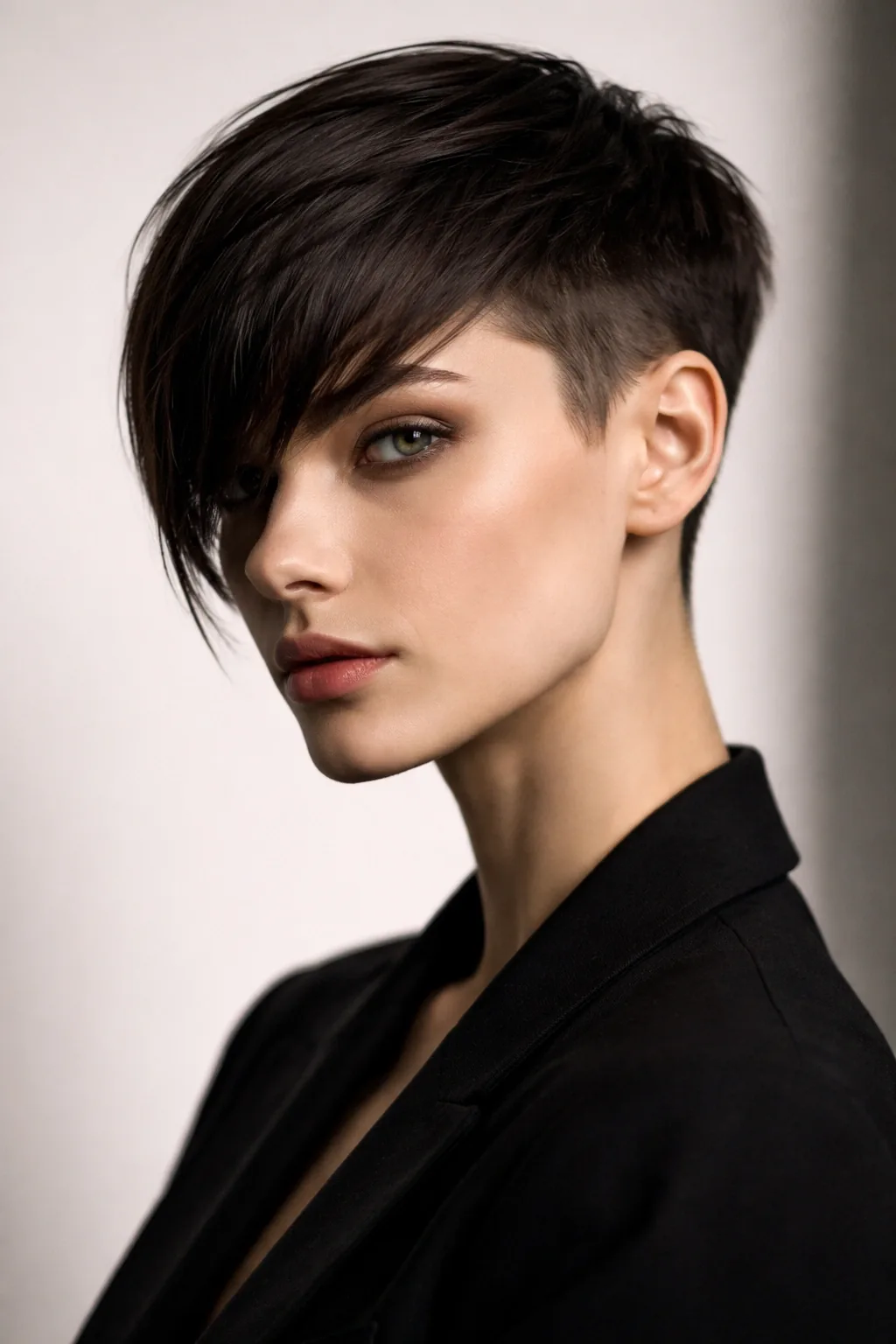
An asymmetrical bixie is longer on one side than the other, so the hair falls in a diagonal line that looks deliberate, modern and a little bit daring. The asymmetry gives the cut a direction and a movement that a symmetrical bixie does not have, and it is one of the best bixies for fine hair, because the diagonal line creates the illusion of fullness. It is also a flattering cut for round faces, because the longer side draws the eye down and makes the face look longer.
Who should try it: women who want a modern, architectural cut, and anyone with a round face or fine hair. Who should skip it: women who part their hair in the centre and want symmetry, or anyone who dislikes a cut that needs regular trims to hold its line. Grow-out plan: the asymmetry softens as it grows, and the cut becomes a longer, uneven bob in about three months — keep the shorter side trimmed if you want to hold the shape, or let it even out into a regular bob.
17. Voluminous Crown Bixie
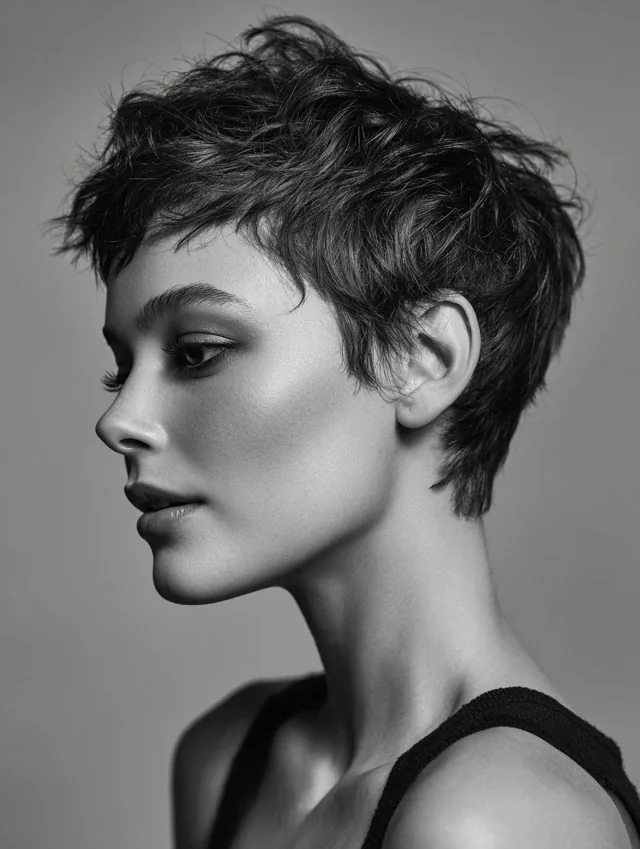
A voluminous crown bixie is built around height: short layers stacked at the crown, with the sides kept close, so the top of the hair has lift and the whole shape is taller than it is wide. The volume is what makes this bixie flattering on round faces and on women with fine hair — it lengthens the face and gives fine hair a shape it can hold. It is also the most glamorous bixie, the one that looks best with a little styling, a little root lift, and a night out.
Who should try it: women with round faces, fine hair, or anyone who loves volume and height. Who should skip it: women with long faces, where extra height can make the face look longer, or anyone who wants a wash-and-go cut. Grow-out plan: the crown layers grow into a layered bob in about three months; the volume softens gradually, so the grow-out looks like a softer, longer version of the same cut.
18. Tapered-Nape Bixie
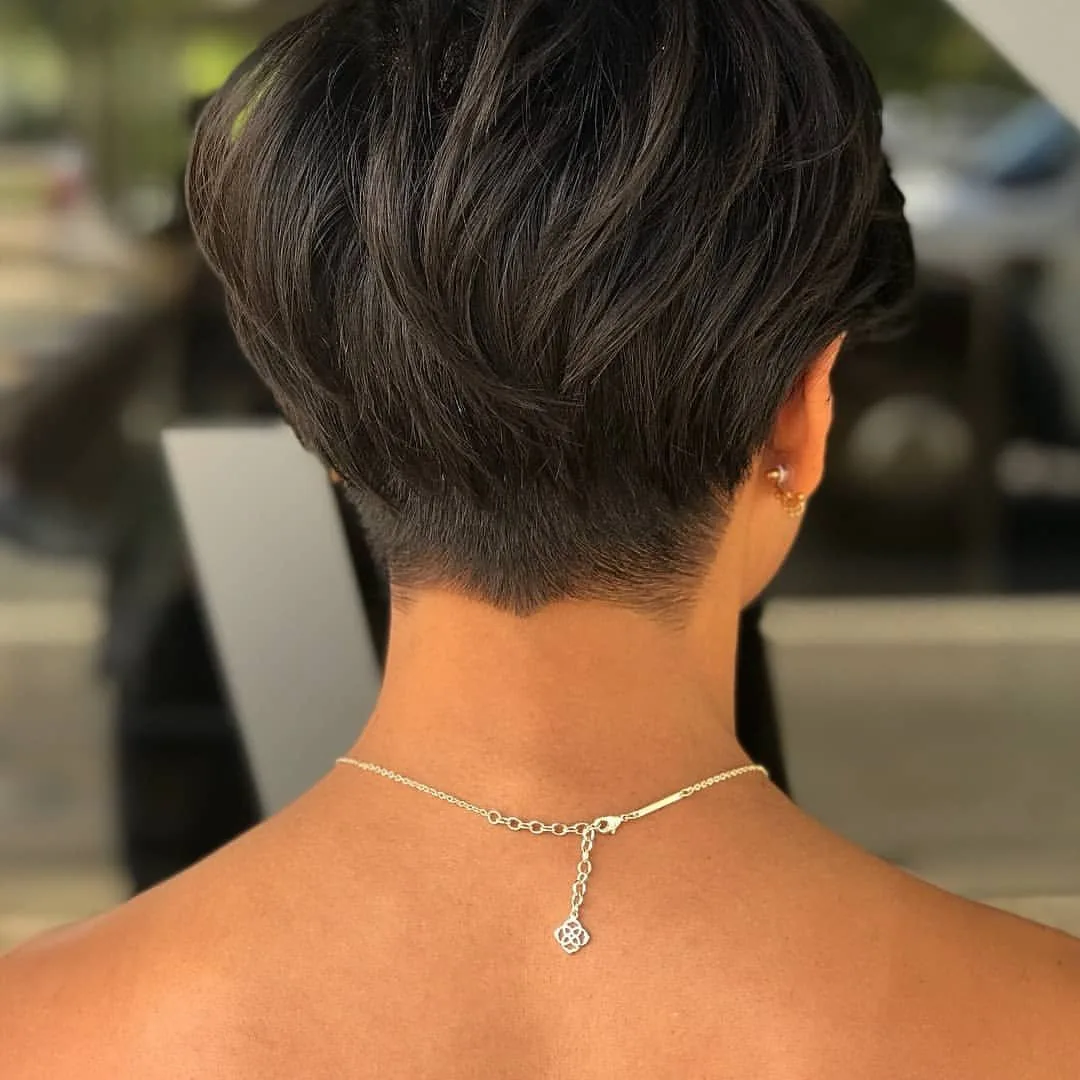
A tapered-nape bixie is the neatest version of the cut: the hair at the nape is cut short and tapered so it hugs the neck, while the top keeps its length and texture. The taper is what makes the cut look clean from behind, and it is the detail that separates a professionally cut bixie from a grown-out pixie. It is also the most practical bixie in hot weather, because the neck stays cool and the hair does not stick to the skin — and it is the version that looks most polished with the least styling.
Who should try it: women who love a clean, tailored finish, and anyone who wears their hair up often. Who should skip it: women who dislike very short hair at the neck, or anyone who wants a soft, shaggy nape. Grow-out plan: the nape grows out first and needs a tidy-up every four weeks to stay neat; left alone, the cut grows into a longer bixie with a softer nape in about three months.
19. Grown-Out Long Bixie

Who should try it: women growing a pixie into a bob, and anyone who wants short hair with options. Who should skip it: women who want the lightness and wash-and-go ease of a short bixie — this one needs a little more styling. Grow-out plan: it is already a grow-out, so the next step is a bob, about two months away — or keep it at this length with a trim every six weeks, because it is a genuinely good length in its own right.
20. Short Cropped Bixie
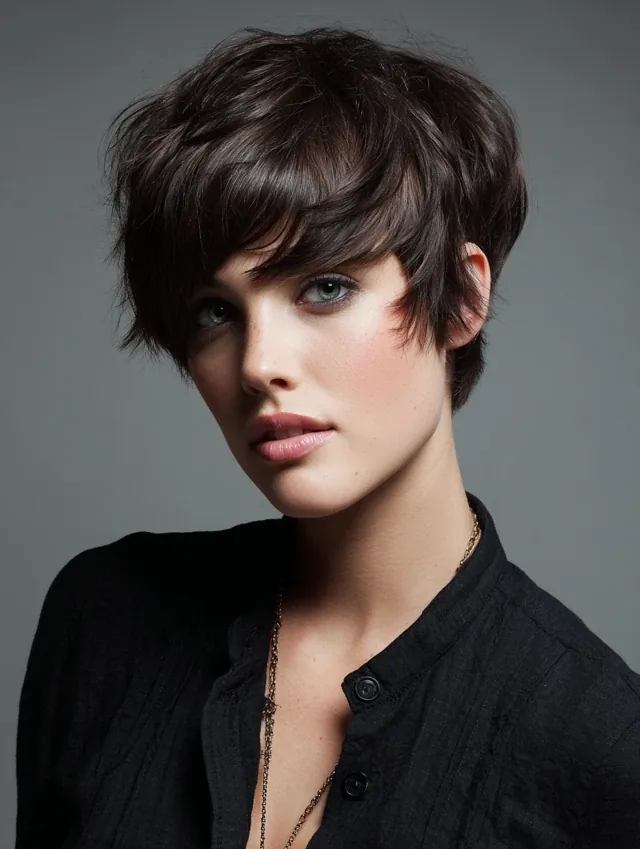
The short cropped bixie sits as close to a pixie as a bixie can get: the back is short, the sides are close, and only the top keeps enough length to sweep or tousle. It is the bixie for women who almost want a pixie but are not quite ready — the extra length on top is the safety net, and it is what makes the cut feel like a bixie rather than a pixie. The styling is the fastest of any bixie: a little paste, a rough-dry, and you are done in two minutes.
Who should try it: women who want the shortest possible bixie, and anyone with an oval or heart-shaped face. Who should skip it: women who want to tuck their hair behind their ears, or anyone who is nervous about short hair — this is the least forgiving version. Grow-out plan: it grows into a classic bixie in about two months, which is the easiest grow-out on this list — the cut simply gets longer and softer, with no awkward stage.
21. Balayage Bixie
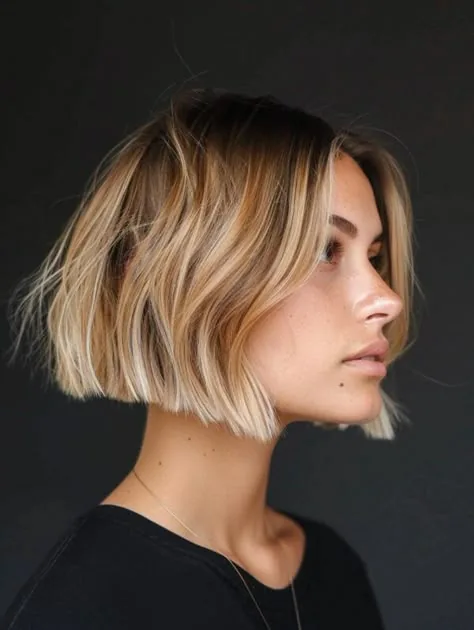
A balayage bixie pairs the hybrid cut with hand-painted colour: lightness swept through the top layers and around the face, darker roots underneath, so the colour moves with the cut. The balayage is what makes a bixie look expensive, because the dimension catches the light in the layers and makes the texture visible — without colour, a bixie can look flat in photographs, and with balayage, every layer shows. It is also the lowest-maintenance coloured bixie, because the roots are left darker on purpose and grow out softly.
Who should try it: women who want dimension and brightness without the upkeep of all-over colour. Who should skip it: women who want a single, solid colour, or anyone who dislikes the cost of balayage on short hair. Grow-out plan: the colour grows out softly for three to four months without a visible root line, and the cut grows into a balayage bob — just ask for a gloss at each trim to keep the lightness bright.
22. Platinum Bixie
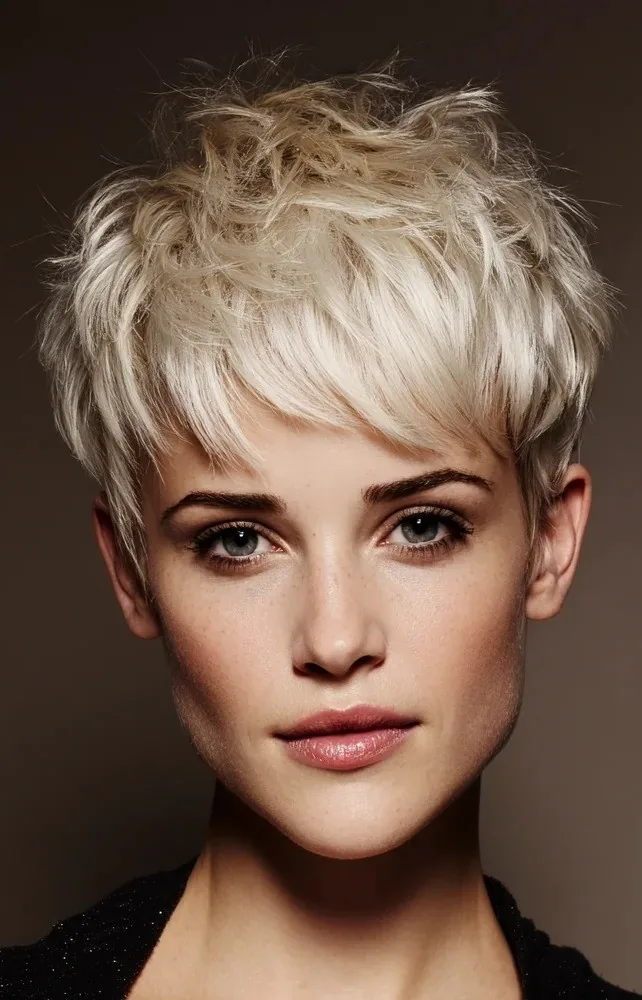
A platinum bixie is the boldest colour pairing on this list: an icy, almost-white blonde on the shortest, most textured cut. With so little hair, the colour becomes the whole story, and platinum on a bixie reads as pure confidence — sharp, modern and completely unforgettable. The short length is also practical: platinum needs less product and less time in the chair on short hair, and the grow-out is fast enough that you can change the tone every few weeks if you like.
Who should try it: women with cool skin tones, and anyone who loves a bold, high-impact look. Who should skip it: women with warm skin tones who dislike cool colour, or anyone who does not want the toning appointments platinum demands. Grow-out plan: the roots show in three to four weeks, so the colour needs regular toning — but the cut grows into a platinum bob in about three months, and the colour makes the grow-out look deliberate rather than neglected.
23. Bixie with a Deep Side Part
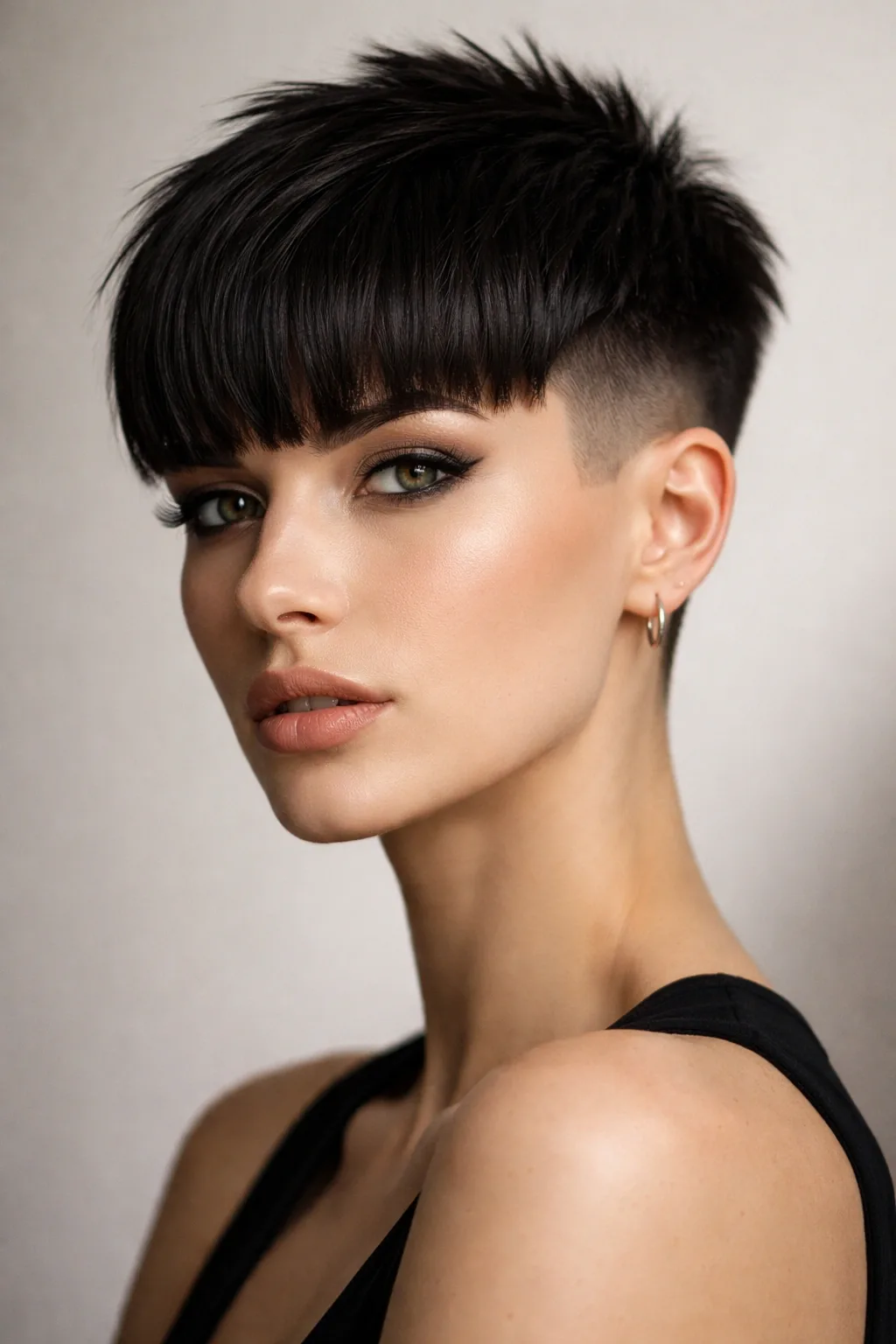
A bixie with a deep side part is the glamorous end of the cut: the hair is parted deeply on one side, swept across the forehead in a heavy, glossy wave, and the whole look has a polished, old-Hollywood edge. The deep part creates volume at the roots on one side and a curtain of hair on the other, and on a bixie it works even better than on a bob, because the textured layers keep the sweep from looking stiff. It is the bixie for evenings, for photographs, and for any occasion where you want to make an entrance.
Who should try it: women with fine to medium straight hair, and anyone who wants a bixie that reads glamorous rather than casual. Who should skip it: women with very curly hair that will not hold a deep part, or anyone who dislikes styling their hair every morning. Grow-out plan: it grows into a deep-parted bob in about three months, and the sweep keeps working the whole way — just keep the fringe trimmed so it sweeps cleanly.
24. Feathered Bixie
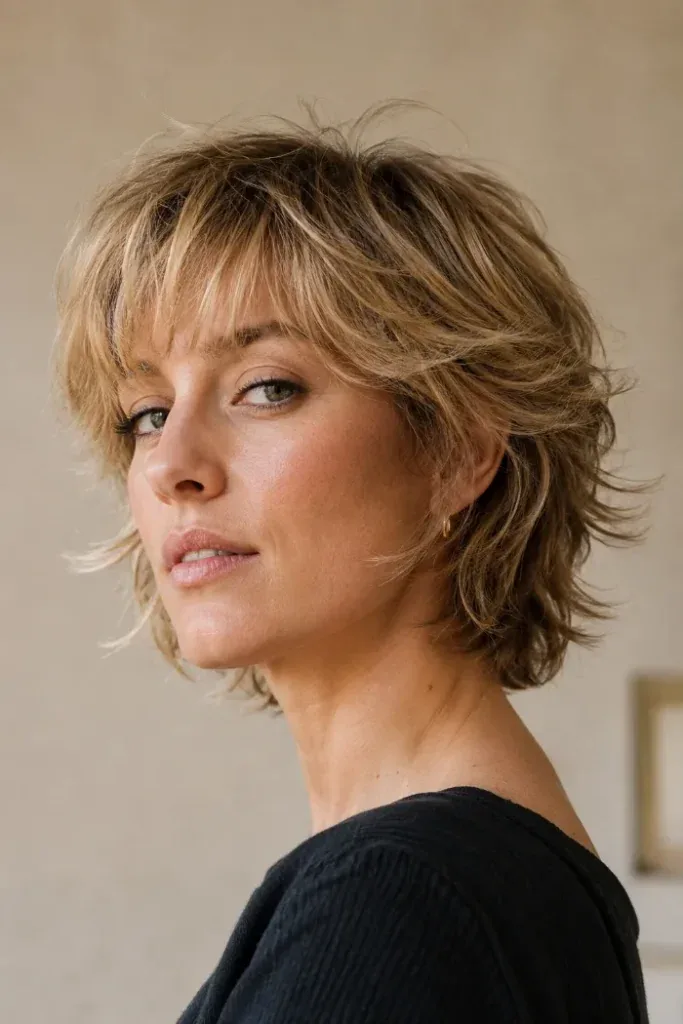
The feathered bixie is the soft, retro version of the cut: layers that are cut to flick outwards at the ends, like feathers, with a soft fringe and a shape that has movement in every direction. It is the bixie with the most seventies energy, and it suits women who love a soft, feminine short cut that still has personality. The feathering also does real work — it removes bulk, creates movement in straight hair, and gives the cut a lightness that a blunt bixie never has.
Who should try it: women with straight to wavy hair, and anyone who loves a soft, retro, feminine finish. Who should skip it: women with very curly hair, where feathering can look uneven, or anyone who wants a sharp, modern shape. Grow-out plan: the feathered ends grow into a soft, layered bob in about three months, and the grow-out is gentle — the feathers just get longer and softer, with no harsh lines appearing.
25. Bixie for Round Faces
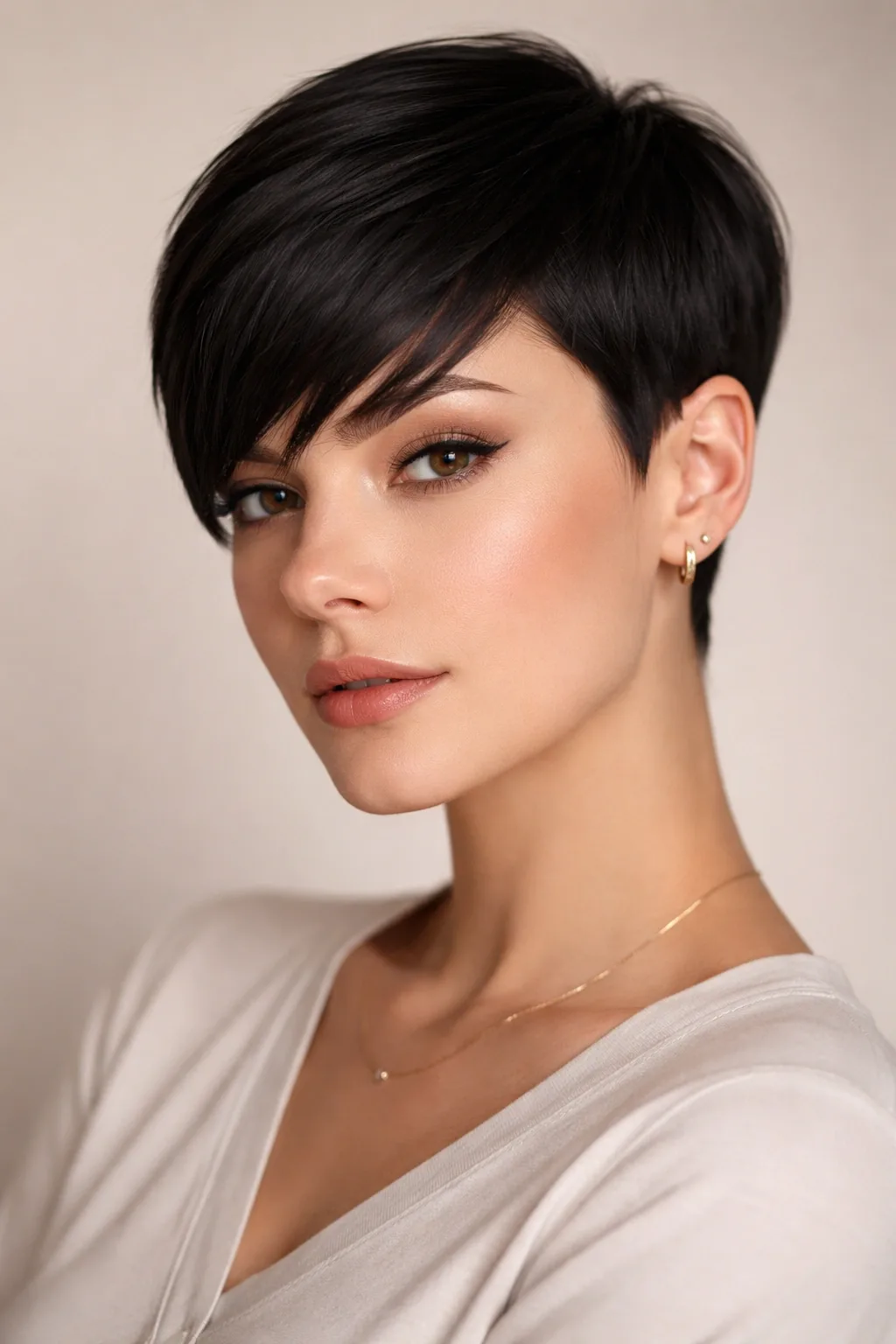
A bixie for round faces is cut with one goal: length. Height on top, longer pieces at the sides, and a side-swept fringe all work together to make the face look longer and narrower, while the short back keeps the cut light. The key is avoiding volume at the sides — a bixie that puffs out at cheek level makes a round face look rounder — and instead keeping the width at the crown, where it draws the eye up. It is the most flattering short cut there is for a round face, precisely because it can be tuned so precisely.
Who should try it: women with round faces who have been told short hair does not suit them — it does, cut this way. Who should skip it: women who want volume at the sides, or a centre part with equal length on both sides. Grow-out plan: it grows into a longer bixie with face-framing pieces in about three months, and the lengthening sides keep flattering the face — just keep the crown volume in the styling as it grows.
26. Bixie for Oval Faces
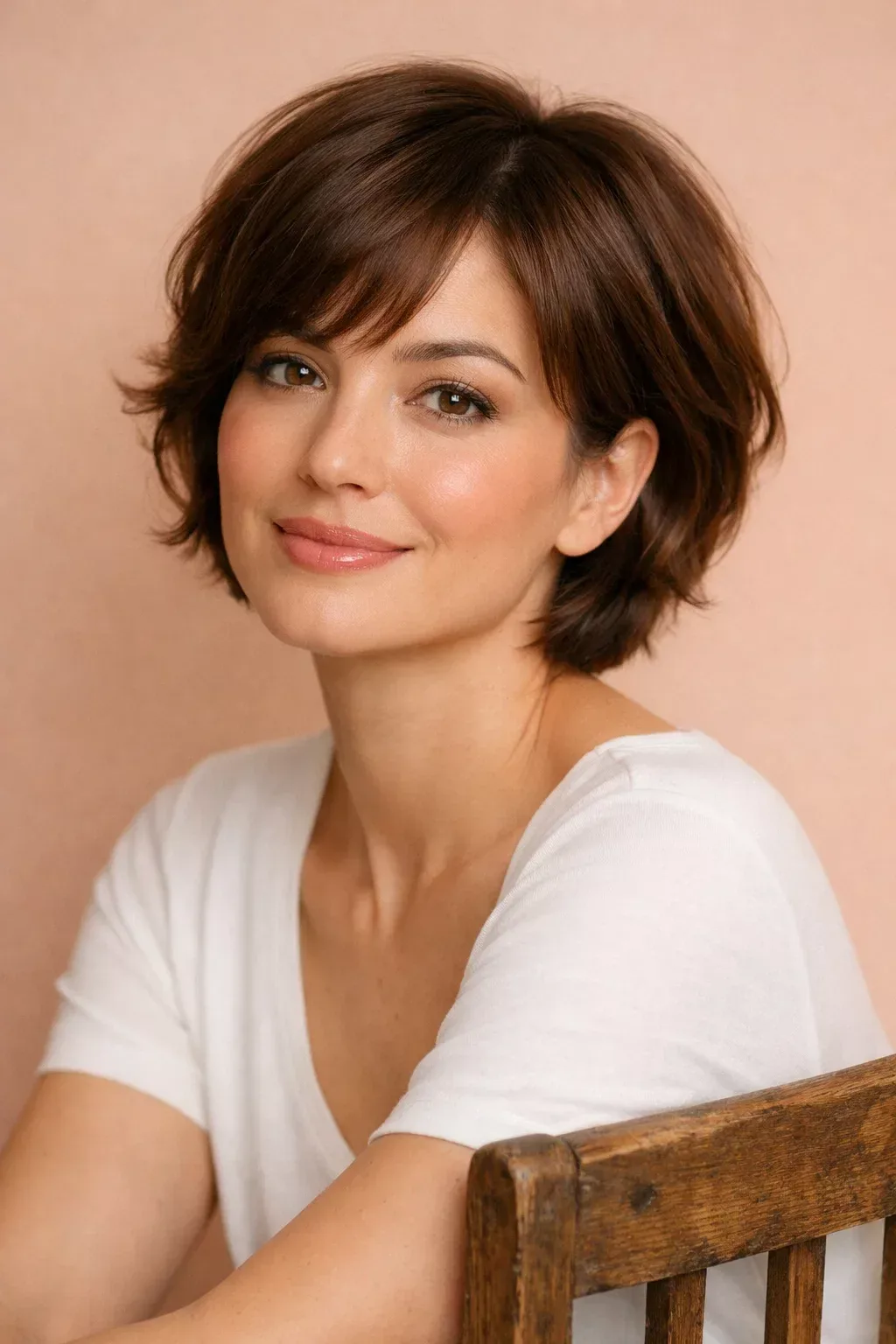
A bixie for oval faces is the easiest choice on this list, because an oval face suits almost every version of the cut — the only decision is which one you like best. The classic textured bixie, the curtain-bang version, the sleek version and the choppy version all work, so the choice should come from your hair texture and your mornings rather than your face shape. If you have an oval face, you have the luxury of choosing a bixie for its personality rather than its geometry — pick the one that feels most like you.
Who should try it: anyone with an oval face — genuinely, almost any bixie will work. Who should skip it: nobody, though women with oval faces who want the most flattering option should still ask their stylist to check the fringe length against their forehead. Grow-out plan: any bixie grows into a bob in two to four months, and on an oval face the grow-out is flattering at every stage — there is no bad length for this face shape.
27. Bixie for Square Faces
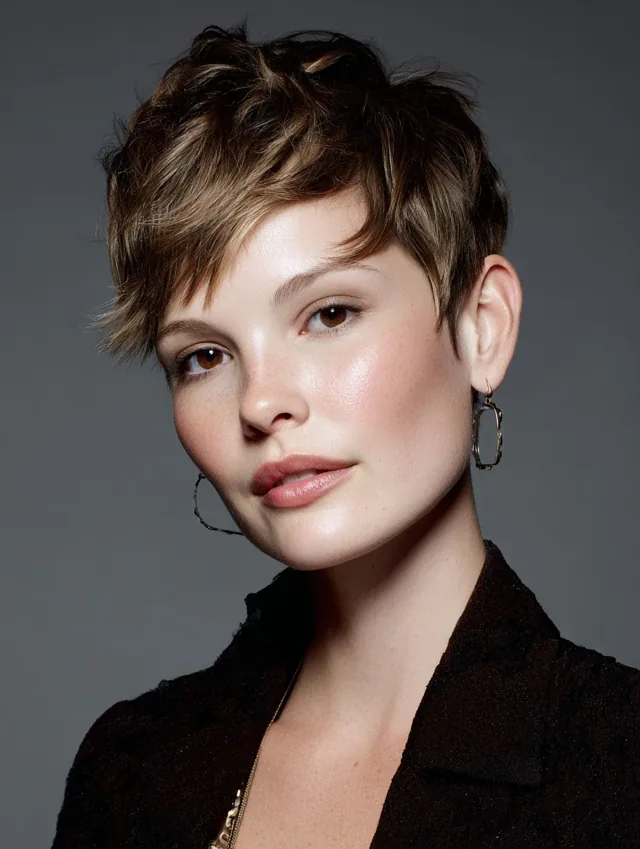
A bixie for square faces is cut for softness: wispy layers, a side-swept fringe, textured ends and length at the sides that falls past the jaw, all working to break up the strong line of the jaw rather than echo it. The mistake to avoid is a blunt, straight-across bixie with a heavy fringe, which mirrors the jawline and makes the face look harder. The right bixie does the opposite — it introduces curves and diagonal lines, and the face looks softer for it, while the cut still reads as confident and modern.
Who should try it: women with square or strong jawlines who want a short cut that softens rather than sharpens. Who should skip it: women who want a blunt, graphic shape, or anyone who loves a heavy straight fringe. Grow-out plan: the soft layers grow into a layered bob in about three months, and the grow-out stays soft — just keep the ends textured at each trim so no blunt line appears.
28. Bixie for Women Over 50
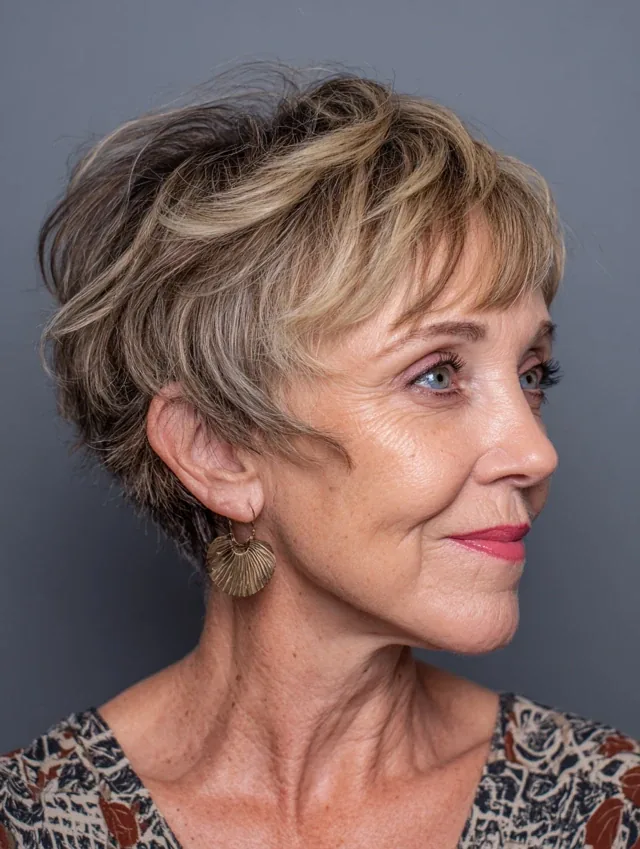
A bixie for women over 50 is one of the most flattering short cuts there is at this age, because it does three things at once: it lifts the face, it adds volume where hair is starting to thin, and it looks modern without trying too hard. The texture at the crown gives lift, the soft layers around the face soften lines, and the length is short enough to be easy but long enough to feel feminine. It is also a cut that works beautifully with grey, silver and salt-and-pepper hair, where the texture shows off the natural dimension.
Who should try it: women over 50 who want lift, volume and a modern shape — especially anyone whose hair is thinning. Who should skip it: women who love long hair and are only cutting short because someone told them to — a bixie should be a choice, not a concession. Grow-out plan: it grows into a soft bob in about three months, and the grow-out is graceful — keep the crown textured at each trim and the shape holds.
29. Air-Dried Textured Bixie
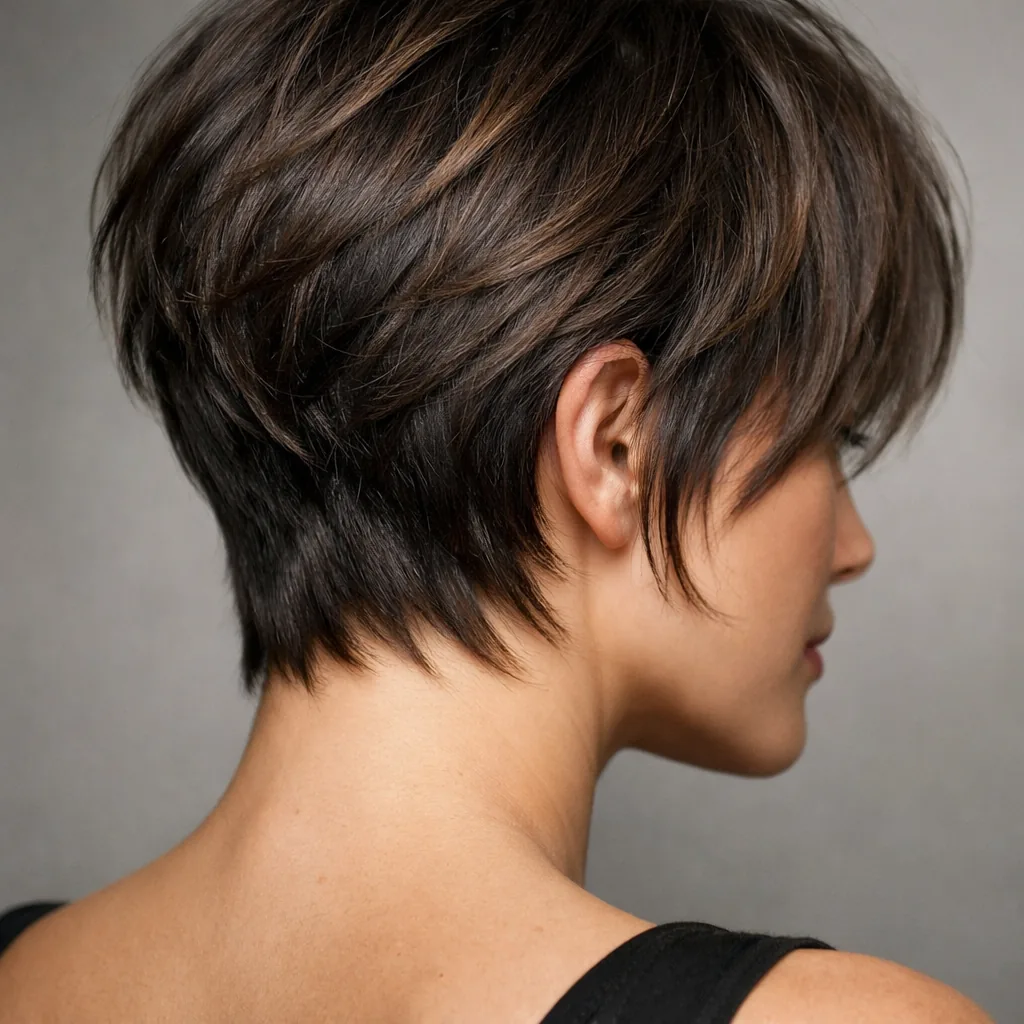
An air-dried textured bixie is the bixie for women who do not own a round brush and never intend to: a cut that is designed to be washed, scrunched with a little cream, and left alone. The texture is cut into the hair so the natural wave or bend does the styling, and the result is a cut that looks better the less you do to it. It is the lowest-effort bixie there is, and it is also the healthiest, because it needs almost no heat — which means the hair stays in better condition for longer.
Who should try it: women with natural wave or bend in their hair, and anyone who wants a genuinely wash-and-go cut. Who should skip it: women with very straight hair that dries flat, or anyone who blow-dries every morning anyway — this cut is built for air-drying. Grow-out plan: it grows into a textured lob in about four months, and the grow-out is the easiest of all — the air-dried texture hides the lengthening layers completely.
30. Copper Bixie

A copper bixie is the colour to choose if you want your short cut to be noticed: warm, rich copper running through the textured layers, catching the light with every movement. Copper suits a bixie particularly well, because the short length means the colour stays bright and even, and the layers give the copper somewhere to show its dimension — the top layers catch the light, the under-layers stay deeper, and the whole cut glows. It is a warm, confident colour, and it flatters warm skin tones beautifully.
Who should try it: women with warm or fair skin, and anyone who wants a bold colour that still looks natural. Who should skip it: women with cool skin tones who dislike warm colour, or anyone who does not want the upkeep — copper fades faster than most colours. Grow-out plan: the colour needs a gloss every six to eight weeks to stay rich, and the cut grows into a copper bob in about three months — the colour makes the grow-out look deliberate.
31. Bixie with Chunky Highlights
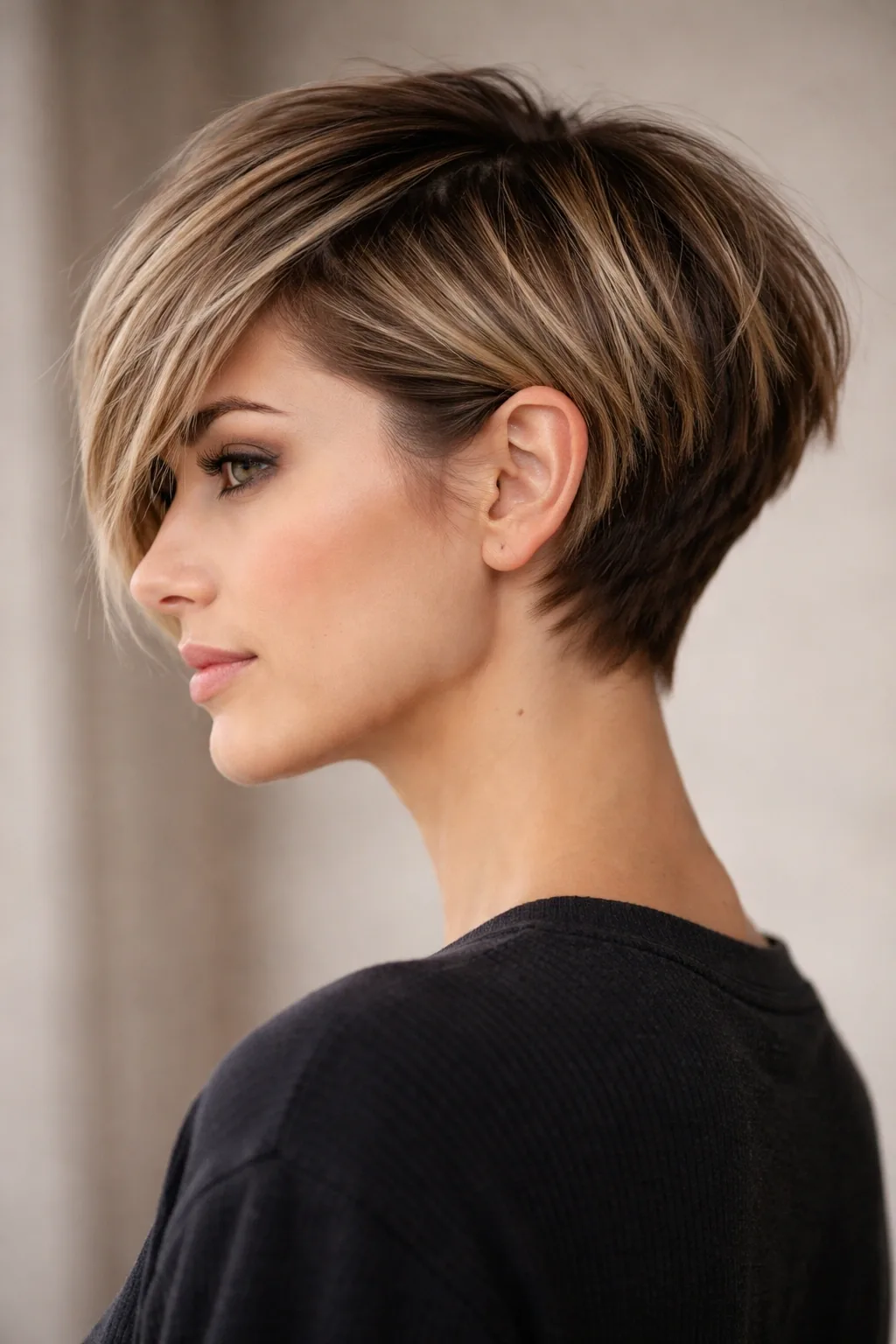
A bixie with chunky highlights is the boldest colour pairing on this list after platinum: thick, visible pieces of lighter colour woven through the top layers, so the texture of the cut and the dimension of the colour work together. The highlights make the layers visible — without them, a dark bixie can look flat, and with them, every piece of texture shows. It is a retro-nineties idea that has come back with a softer, more blended finish, and on a bixie it looks modern rather than dated.
Who should try it: women with dark hair who want dimension without a full colour, and anyone who loves a bold, visible highlight. Who should skip it: women who want a subtle, natural-looking colour, or anyone with very fine hair — chunky highlights can look stripey on fine hair. Grow-out plan: the highlights grow out softly in two to three months and can be refreshed at the crown only, and the cut grows into a highlighted bob — just ask for a toner at each trim to keep the highlights from turning brassy.
What is a bixie haircut?
A bixie haircut is a hybrid of a bob and a pixie: longer than a pixie, with the back reaching the nape and the sides falling between the ear and the jaw, but shorter and lighter than a bob, with layers and texture that make it move. It is cut on purpose as a blend of the two, not a bob that grew out or a pixie left too long.
Is a bixie the same as a pixie bob?
Yes — a pixie bob and a bixie are the same cut, just two names for the same bob-pixie hybrid. Bixie is the shorter, trendier name, and pixie bob is the older, more descriptive one. If your stylist knows one term and not the other, bring a photo and describe the length: longer than a pixie, shorter than a bob, with texture.
Who does a bixie suit?
A bixie suits most women, because the cut can be tuned to the face: height on top for round faces, softness and side-swept layers for square faces, width at the sides for long faces, and almost any version for oval faces. It suits straight, wavy and curly hair, and it is one of the best short cuts for fine hair, because the short length and blunt ends create volume.
Is a bixie high maintenance?
A bixie is medium maintenance: it styles in under five minutes most mornings, with just cream and a rough-dry, but it needs a trim every five to seven weeks to hold its shape, which is more often than a bob. The daily routine is easy; the salon schedule is the part that needs commitment.
How long does a bixie take to grow out?
A bixie grows into a bob in about three to four months, and the grow-out is one of the easiest in short hair, because the layers blend into each other as they lengthen. The awkward stage is minimal, and shaping trims every four to six weeks — tidying the nape and blending the top — keep it looking deliberate the whole way.
Can you get a bixie with curly hair?
Yes — a curly bixie is one of the best versions of the cut, because the curls give it natural volume and the layers stop it turning into a triangle. It must be cut dry or curl-by-curl, because curls shrink when they dry and a wet cut will come out shorter than planned, so choose a stylist who understands curly hair.
How do I style a bixie at home?
Work a pea-sized amount of styling cream through damp hair with your fingers, rough-dry while lifting the roots at the crown, then add a little texturising paste and pinch the ends to separate them. That is the whole routine — two to five minutes. On second-day hair, use dry shampoo at the roots and reshape the fringe with a little paste.
What should I ask for at the salon for a bixie?
Say: “I want a bixie — longer than a pixie, shorter than a bob, with the back reaching the nape and the sides between my ear and my jaw, with lots of texture so it moves.” Then name the specifics: the fringe style, how much volume you want on top, and how it should look air-dried. Bring photos of women with a similar face shape and hair texture to yours.
Is a bixie good for thin hair?
Yes — a bixie is one of the best cuts for thin or fine hair, because the short length is not weighed down, the blunt ends stack up and look full, and the textured crown creates lift that longer hair cannot hold. Ask for blunt ends and texture on top only, rather than heavy layering throughout, which can make fine hair look thinner.
How often should a bixie be trimmed?
A bixie should be trimmed every five to seven weeks, with six weeks the sweet spot for most women. The nape grows out first and can be tidied at four weeks to buy extra time, but the layers lose their shape faster than a bob’s solid perimeter, so stretching past eight weeks usually means the cut starts to look like a grow-out rather than a style.
Conclusion
The bixie works because it refuses to choose. It is short without being severe, textured without being messy, and easy without being boring — and it is the rare haircut that flatters almost every face shape and hair texture, because the cut can be tuned in so many directions. Whether you choose the classic textured version, a curly bixie, a sleek bixie or a grown-out long bixie, the principle is the same: enough length to be forgiving, enough texture to style itself, and enough shape to look deliberate on the days you do nothing at all.
Start with your hair texture and your mornings, not with a photo. Bring pictures of women whose face shape and hair resemble yours, use the exact wording in the guide above, and ask your stylist how the cut will look air-dried and how it will grow out. Then go home, rough-dry it with your fingers, pinch the ends, and walk out the door — because a bixie that looks good in two minutes is a bixie you will still love in three months, when it has grown into a bob and you are deciding whether to cut it all over again.