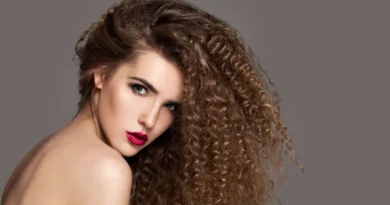
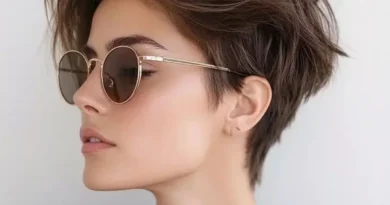
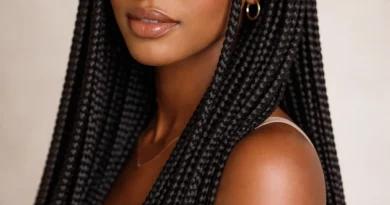
One Side Longer: 40 Asymmetrical Bob Haircuts That Add Instant Drama
There is a haircut that does the work of a whole outfit: the asymmetrical bob. One side sits longer than the other, the line sweeps across the jaw, and suddenly a plain bob has movement, attitude and a focal point. It is the cut for women who find a classic bob a little too safe but are not ready for a pixie — a single diagonal line changes everything, and it changes it in the most flattering way possible. The longer side draws the eye down, lengthens the neck, and frames the face, while the shorter side keeps the whole thing light and modern.
This guide gathers 40 asymmetrical bob haircuts for women, from the barely-there one-inch difference to the dramatic chin-to-shoulder sweep, from curly and wavy versions to stacked, undercut and colour-played ones — plus eight guides on choosing your angle, matching the cut to your face shape and hair type, asking your stylist for exactly what you want, and keeping the asymmetry sharp between trims. One honest note before you book: an asymmetrical bob is a precision cut, so it rewards a good stylist and regular trims — but on the right face it is the easiest drama you will ever wear.
What Is an Asymmetrical Bob — And Why One Side Longer Works So Well
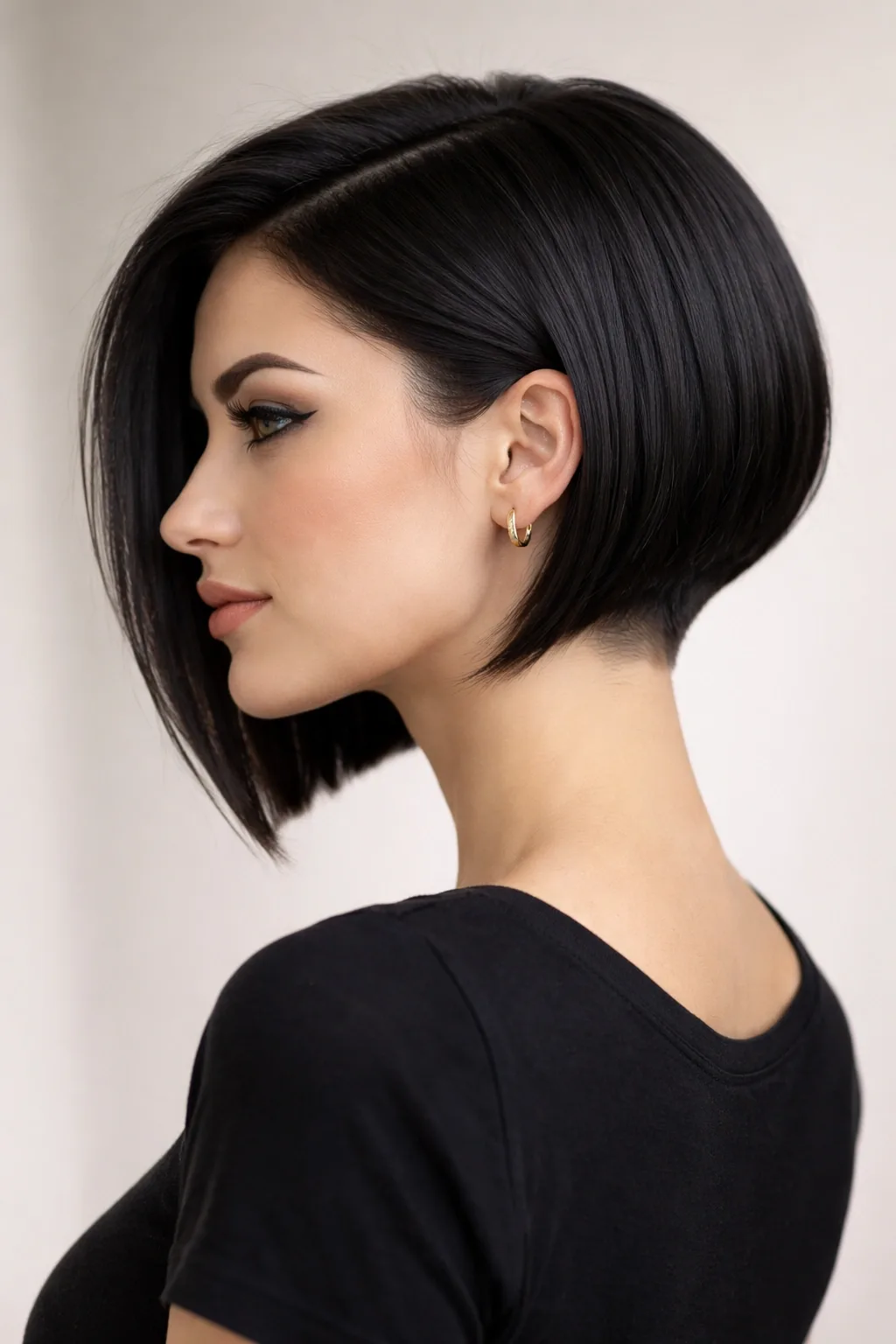
An asymmetrical bob is a bob haircut in which one side is cut noticeably longer than the other. The difference can be as small as an inch or as large as several inches, and the line between the two sides can be a clean diagonal, a soft curve or a sharp step. The longer side usually falls to the front, framing the face, while the shorter side sits higher at the back or on the opposite side, giving the cut its signature sweep. It is not a mistake or a grow-out accident — it is a deliberate, measured angle, and it is what makes the cut feel modern.
What makes the asymmetry so flattering is that it breaks the symmetry of the face in a controlled way. A diagonal line across the jaw softens a strong jaw, adds length to a round face, and gives fine hair the illusion of movement it would never have in a blunt, even bob. The longer side also does practical work: it can be tucked behind the ear on one side and left long on the other, it gives you a side to play with when the rest of the cut is short, and it photographs beautifully from every angle because there is always a line to follow. Quick verdict: if a classic bob bores you, the asymmetrical bob is the smallest change with the biggest payoff.
How Much Asymmetry Should You Go For? Choosing Your Length Difference
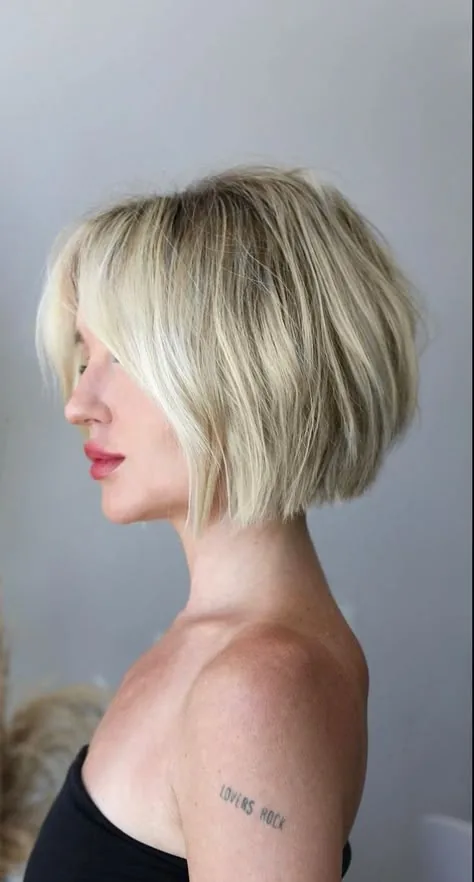
The single most important decision in an asymmetrical bob is how big the difference between the two sides should be. A subtle asymmetry — about one to two inches — reads as elegant and wearable: colleagues will notice something is different without being able to say exactly what, and the cut grows out gracefully. A medium difference of two to four inches is the sweet spot for most women: the angle is unmistakable, the longer side frames the face clearly, and the cut still looks intentional from the back. A dramatic difference of four inches or more is a statement cut — chin length on one side, shoulder length on the other — and it needs confidence and commitment.
Think about your life as well as your face when you choose. A subtle angle suits a conservative office and a first-time asymmetrical cut, because you can always go shorter next time. A medium angle suits most face shapes and most hair types, and it is the easiest to style at home. A dramatic angle is best for thick hair, which can carry the weight difference, and for women who style their hair every day, because the longer side needs a little smoothing to look deliberate rather than accidental. Cost and time: the cut itself costs the same as any bob, but a dramatic angle means trims every four to five weeks instead of six to eight, or the difference slowly disappears. Common mistake: asking for a dramatic angle on a first visit and then regretting it — start medium, live with it for six weeks, and go bolder at the next appointment.
Which Face Shapes Suit an Asymmetrical Bob?
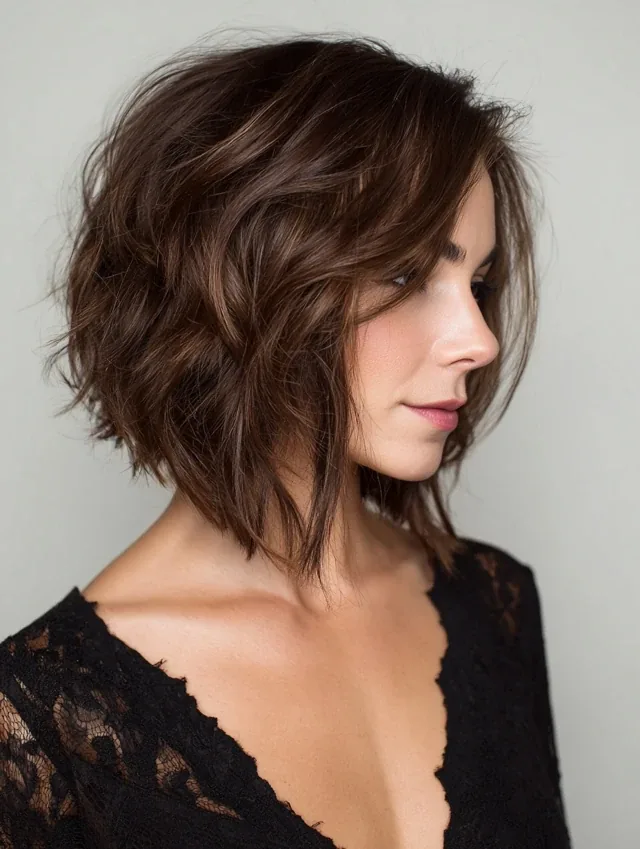
An asymmetrical bob is one of the most forgiving cuts there is, because the diagonal line can be placed to flatter almost any face — but the placement matters. Round faces benefit most: the longer side draws the eye downward, the diagonal breaks up the width of the cheeks, and a little height at the crown lengthens the whole face. Oval faces can wear almost any version, from subtle to dramatic, because the proportions are already balanced. Square faces suit a softer asymmetry with a curved, sweeping line rather than a sharp step, which softens a strong jaw instead of echoing it.
Heart-shaped faces do well with a longer side that falls past the chin, which balances a wider forehead and a narrower chin, while a short, sharp asymmetry can make a pointed chin look even sharper. Long faces need care: a very long side with no width at the sides can make the face look longer still, so ask for volume at the sides or a fringe to break up the length. Who should be cautious: women with a very strong cowlick on the longer side, where the hair refuses to fall forward, and women who always wear their hair scraped back — an asymmetrical bob only earns its keep when it is worn down. What to ask your stylist for: point to the side you want longer and say exactly where you want it to end — chin, jaw or collarbone — because ‘asymmetrical’ alone can mean anything.
Asymmetrical Bobs by Hair Type: Straight, Wavy, Curly, Thick and Fine
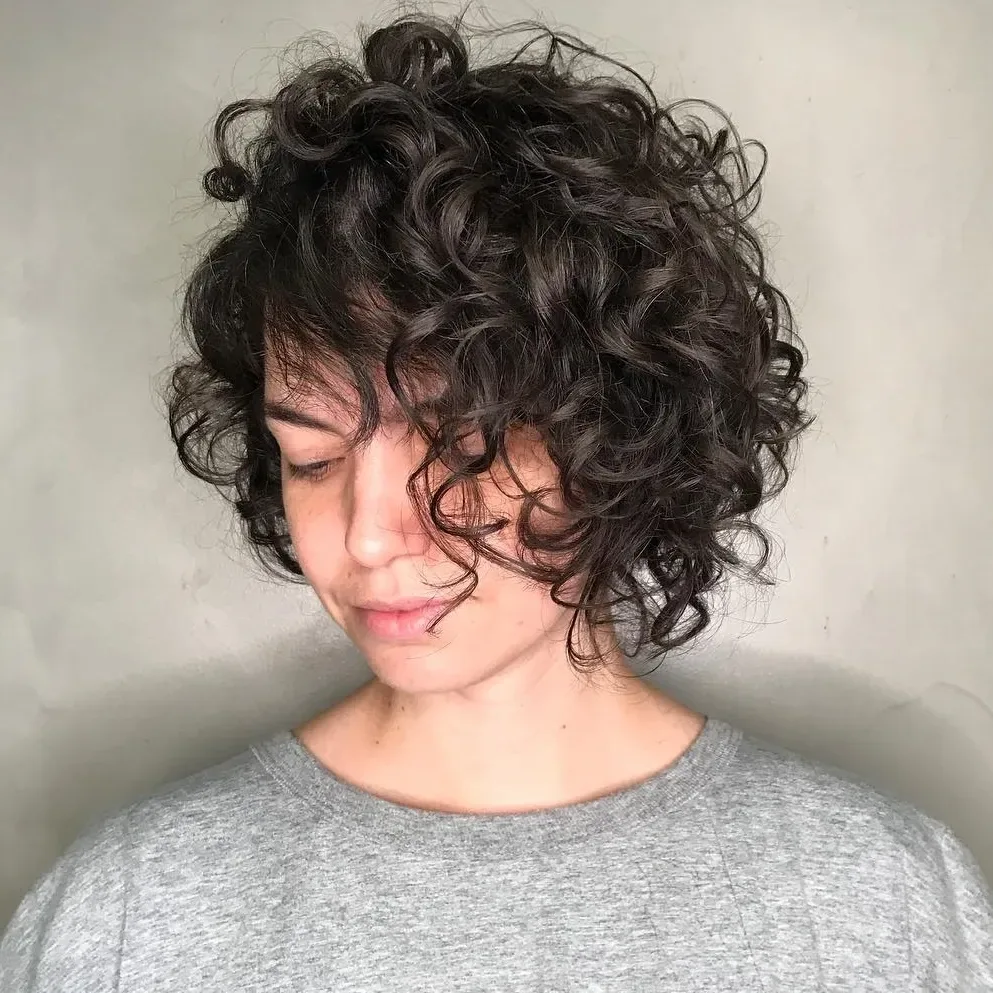
Straight hair shows an asymmetrical bob at its sharpest: the angle is clean, the line is visible, and the cut looks like a piece of geometry. It is the easiest hair type to style, because a quick pass with a flat iron is all the longer side needs, but it is also the least forgiving — an uneven angle shows immediately, so the cut has to be precise. Wavy hair softens the angle into a sweep, which many women prefer, because the wave hides small imperfections and the longer side falls in a natural curve. The trade-off is that the asymmetry looks less dramatic, so go a little bolder with the difference if your hair is wavy.
Curly hair makes a beautiful asymmetrical bob, but it must be cut dry, curl by curl, because curls spring up when they dry and a wet cut will end up shorter — and more uneven — than planned. Thick hair carries a dramatic angle well and holds the shape, though the shorter side may need thinning so it does not puff out. Fine hair needs the opposite approach: a subtle angle, blunt ends and no thinning, because the weight of the longer side is what gives fine hair its movement. Pros and cons in one line: straight hair shows the cut best, wavy hair wears it easiest, curly hair needs a curl specialist, thick hair can go bold, and fine hair should stay subtle. Maintenance: curly and wavy versions need the least daily styling, straight versions need the most.
How to Ask Your Stylist for an Asymmetrical Bob (And Get What You Want)
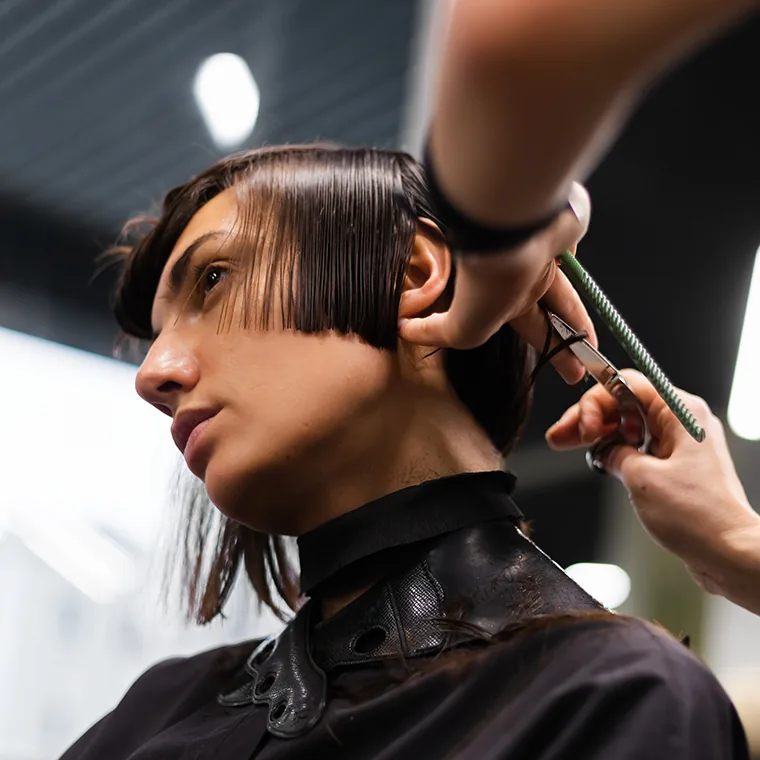
The words ‘asymmetrical bob’ mean different things to different stylists, so the appointment starts before you sit in the chair. Bring two or three photos of the exact cut you want — from the front and from the side — and point to the longer side in each photo. Say where you want the longer side to end (chin, jaw, collarbone or shoulder) and where you want the shorter side to end, in inches or by pointing at your own face. Tell the stylist which side you part your hair on, because the longer side should usually fall on the side you part away from, so it sweeps across the face rather than fighting your parting.
Ask the stylist to cut the longer side first, then match the angle, and to show you the back in a mirror before you leave — the back of an asymmetrical bob should still look intentional, with a clean line, not like a cut that was forgotten halfway. If you are nervous, ask for a ‘soft asymmetry’ first and say you will go bolder next time; a good stylist would rather undercut the angle than overcut it. What to ask: ‘Can you show me how to style the longer side at home?’ and ‘How often should I come back to keep the angle sharp?’ Time and cost: the cut takes 45 to 60 minutes and costs the same as a standard bob cut, plus styling. Common mistake: describing the cut in words only and being surprised by the result — photos are not optional for this cut.
Styling an Asymmetrical Bob at Home: Sleek, Wavy and Air-Dried
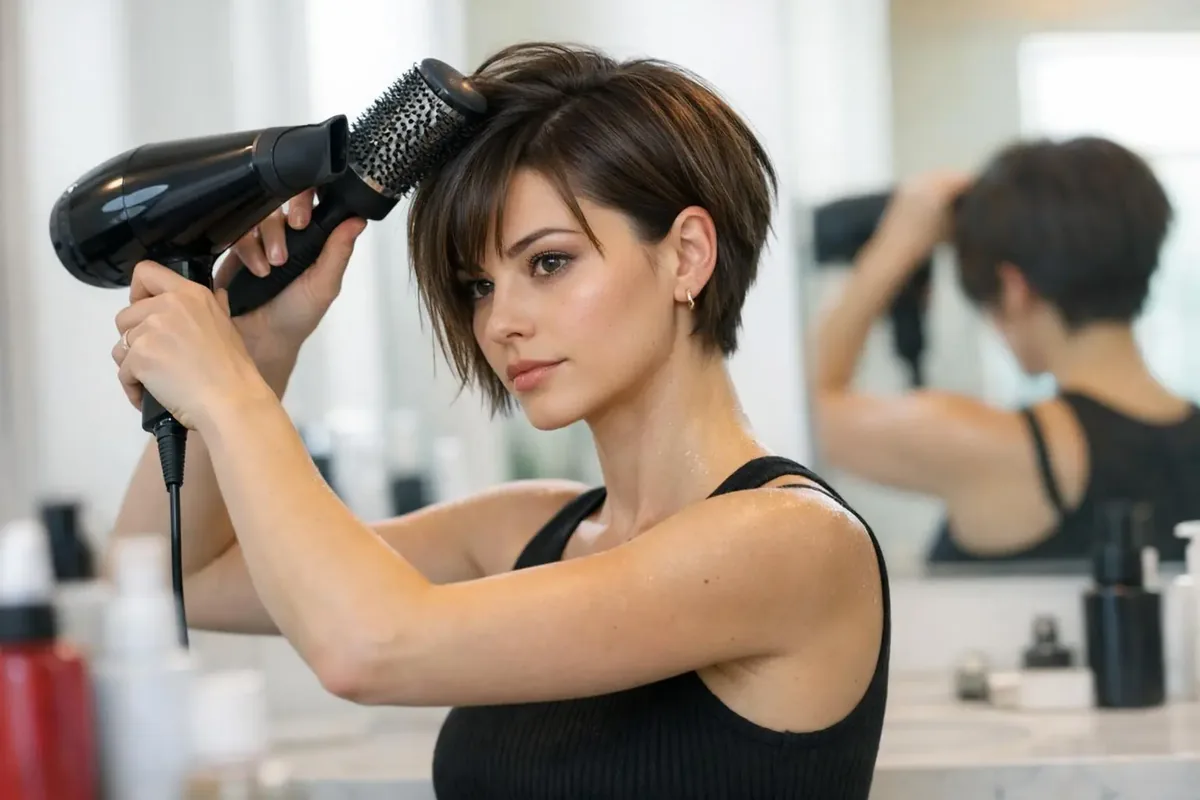
An asymmetrical bob is a ten-minute style at home, once you know which side is which. For the sleek look, blow-dry with a round brush, directing the longer side forward and under, and finish with a flat iron on the ends only — the goal is a smooth, swinging line, not a helmet. For a wavy finish, wrap the longer side around a curling wand away from the face, leave the ends out for a modern finish, and shake the shorter side out with your fingers so the two sides have different textures. For air-drying, apply a little leave-in cream, part the hair where you want it, and let the longer side fall forward on its own; wavy and curly hair does most of the work itself.
The one rule that matters: always style the longer side last, because it is the side everyone looks at. A pea-sized amount of smoothing serum on the longer side keeps it from frizzing, and a light-hold spray holds the angle without stiffness. Best for: women who style their hair in the morning and want it to last all day — the asymmetry holds its shape better than a symmetrical bob, because the weight of the longer side anchors it. Common mistake: straightening both sides identically, which flattens the angle and makes the cut look like a regular bob. Let the longer side be the star and keep the shorter side a little more textured. Time: five minutes for air-dried, ten for sleek, fifteen for waved.
Maintenance, Trims and the Grow-Out Plan
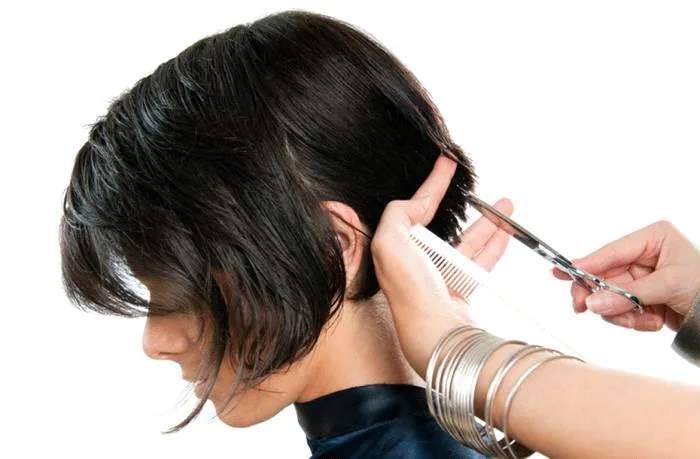
An asymmetrical bob is not a cut you can forget about — the angle is the whole point, and the angle is the first thing to go. Plan on a trim every four to six weeks for a subtle angle, and every four to five weeks for a dramatic one, because hair grows about half an inch a month and a one-inch difference can vanish in eight weeks. Between trims, the longer side will start to look like a regular bob that has grown out, so book the next appointment before you leave the salon. The good news is that a trim for an asymmetrical bob is quick — often a fifteen-minute tidy-up of the line rather than a full cut — and many salons charge less for it.
If you decide to grow the cut out, you have two honest options. The first is to let the shorter side catch up, which takes three to four months of patience and a few awkward weeks in the middle, when the two sides are almost — but not quite — even. The second is to even the cut up into a classic bob at your next appointment, which is instant and painless. Maintenance between appointments: a little dry shampoo at the roots keeps the shorter side from going flat, and a weekly deep-conditioning mask keeps the longer side — which takes the most heat styling — from drying out. Cost: budget for a trim every five weeks, and the cut stays sharp all year. Quick verdict: the maintenance is real, but it is the price of a cut that always looks deliberate.
Common Mistakes That Ruin an Asymmetrical Bob
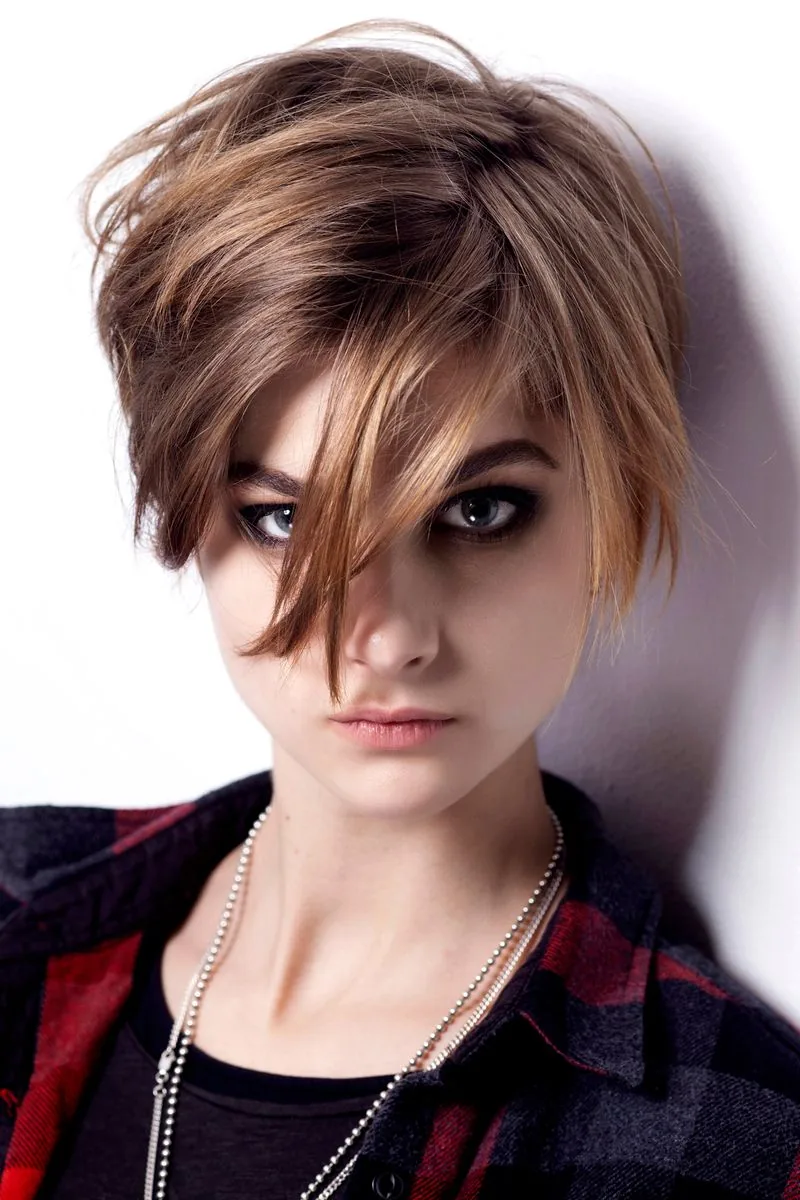
The most common mistake with an asymmetrical bob is choosing the wrong longer side. If your hair naturally falls to the left, making the right side longer means fighting your hair every morning — the longer side will keep flipping back, and the angle will never sit right. The second mistake is going too steep too fast: a very dramatic angle on fine hair looks stringy on the long side and puffy on the short side, because there is not enough hair to carry the difference. The third is cutting it wet on curly hair, which springs up unevenly when it dries and leaves the two sides at different lengths than planned.
Other mistakes are smaller but just as visible. Thinning the longer side too much makes it wispy and weak, while leaving the shorter side too thick makes it stick out sideways. Parting the hair in the middle with a strong asymmetry can look accidental, because the two sides frame the face unevenly with no sweep to connect them. And skipping trims is the slowest mistake of all: the angle fades, the cut looks like a grow-out, and the drama disappears. Who should avoid the cut altogether: anyone who hates styling their hair in the morning, because an asymmetrical bob needs two minutes of direction every day — without them, it looks unfinished. Fix it fast: if the angle is wrong, a good stylist can usually rebalance it in one appointment without taking much length off.
1. The Classic Asymmetrical Bob
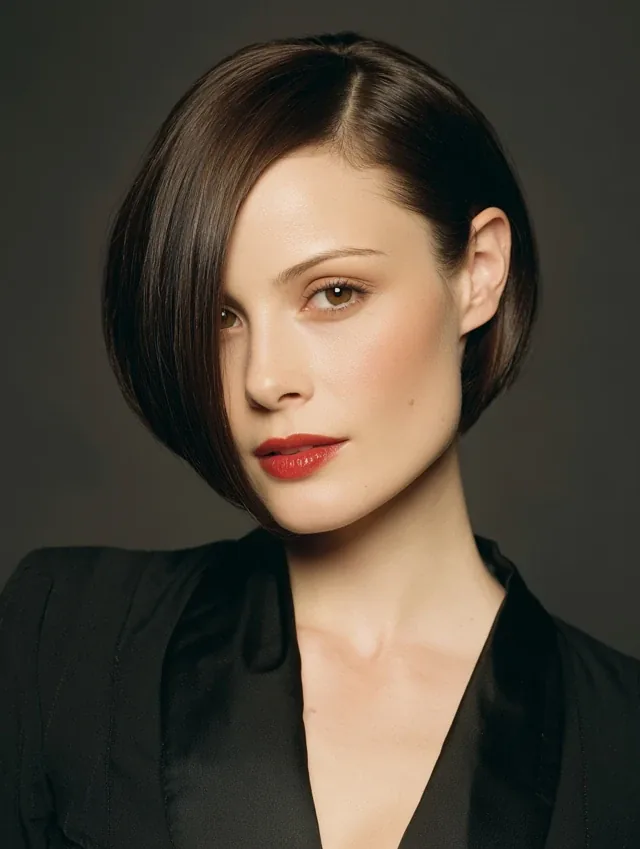
The classic asymmetrical bob is where it all starts: a chin-length bob with one side cut about two inches longer than the other, the line sweeping gently from the shorter side across to the longer one. It is the version most women picture when they hear the name — clean, wearable, and just bold enough to be interesting. The longer side brushes the jaw or the chin, the shorter side sits neatly at the ear, and the whole cut moves when you turn your head, which is exactly why it photographs so well.
Best for: first-timers, oval and round faces, and straight or slightly wavy hair. How to style it: blow-dry with a round brush, tuck the shorter side behind the ear, and let the longer side fall forward. Pros and cons: it grows out gracefully and suits almost every occasion, but the angle is subtle enough that some people will not notice it — if you want drama, go bolder. Time: ten minutes to style. Cost: a standard bob cut. Quick verdict: the safe, beautiful starting point for asymmetrical hair.
2. The Dramatic Long-to-Short Asymmetrical Bob
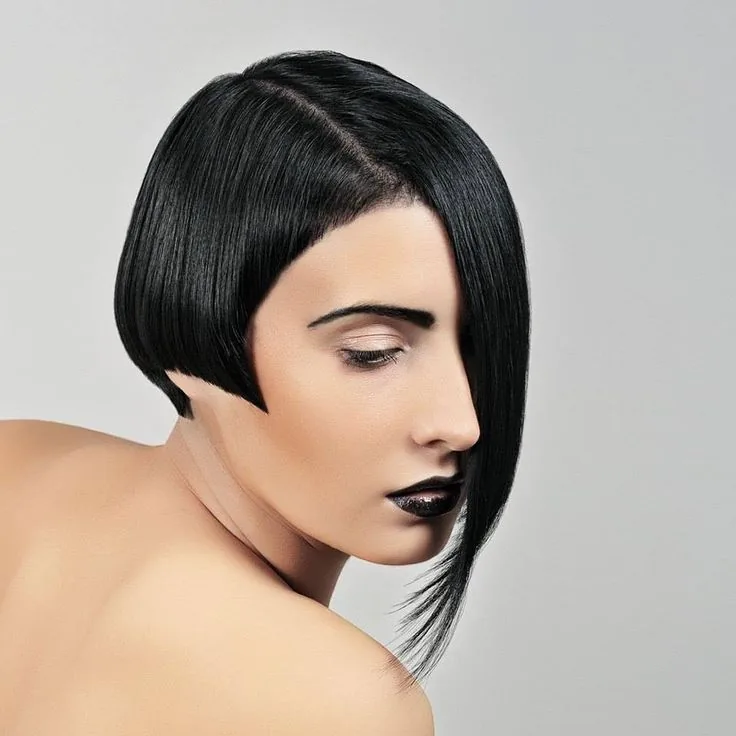
This is the asymmetrical bob at full volume: one side falls to the shoulder or collarbone while the other sits at the ear or above it, a difference of four inches or more. The line between the two sides is a sharp, unmistakable diagonal, and the cut is a statement before you say a word. It is the version celebrities wear on red carpets and the one that gets stopped on the street — not because it is loud, but because the geometry is so clean that the eye cannot help following it.
Best for: confident wearers, thick straight hair, and oval or heart-shaped faces. How to style it: flat-iron the longer side smooth so the line stays visible, and keep the shorter side slightly textured so it does not look severe. Who should avoid it: fine hair, which can look stringy on the long side, and anyone who wants a low-maintenance cut. Maintenance: trims every four weeks, or the angle softens fast. Common mistake: making the short side too short on the first visit — start with a medium difference and go dramatic next time if you love it. Quick verdict: maximum drama, maximum commitment, maximum payoff.
3. The Subtle Slightly-Longer-Side Bob
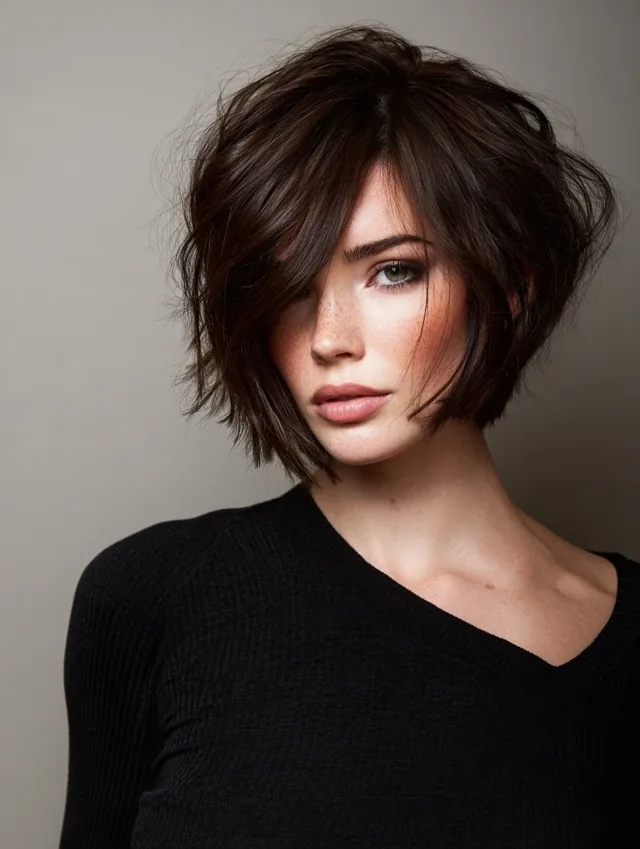
Not every asymmetrical bob needs to shout. The subtle version keeps the difference to about an inch, so the cut reads as a beautiful bob with something intriguing about it rather than an obvious angle. It is the version for offices, for weddings, for women who want the movement and the face-framing without the statement. The longer side kisses the chin a fraction lower, the shorter side lifts a fraction higher, and the whole effect is elegance with a secret.
Best for: conservative workplaces, fine hair, and women trying asymmetry for the first time. How to style it: exactly like a normal bob — blow-dry, tuck, go. Pros and cons: it grows out beautifully and needs trims only every six to eight weeks, but it can be so subtle that the asymmetry disappears in photographs. Cost and time: the cheapest asymmetrical bob to maintain, and the quickest to style. What to ask your stylist for: ‘one inch longer on the left, please — just enough to notice.’ Quick verdict: the quiet luxury version of the cut.
4. The Asymmetrical Bob with Side-Swept Bangs
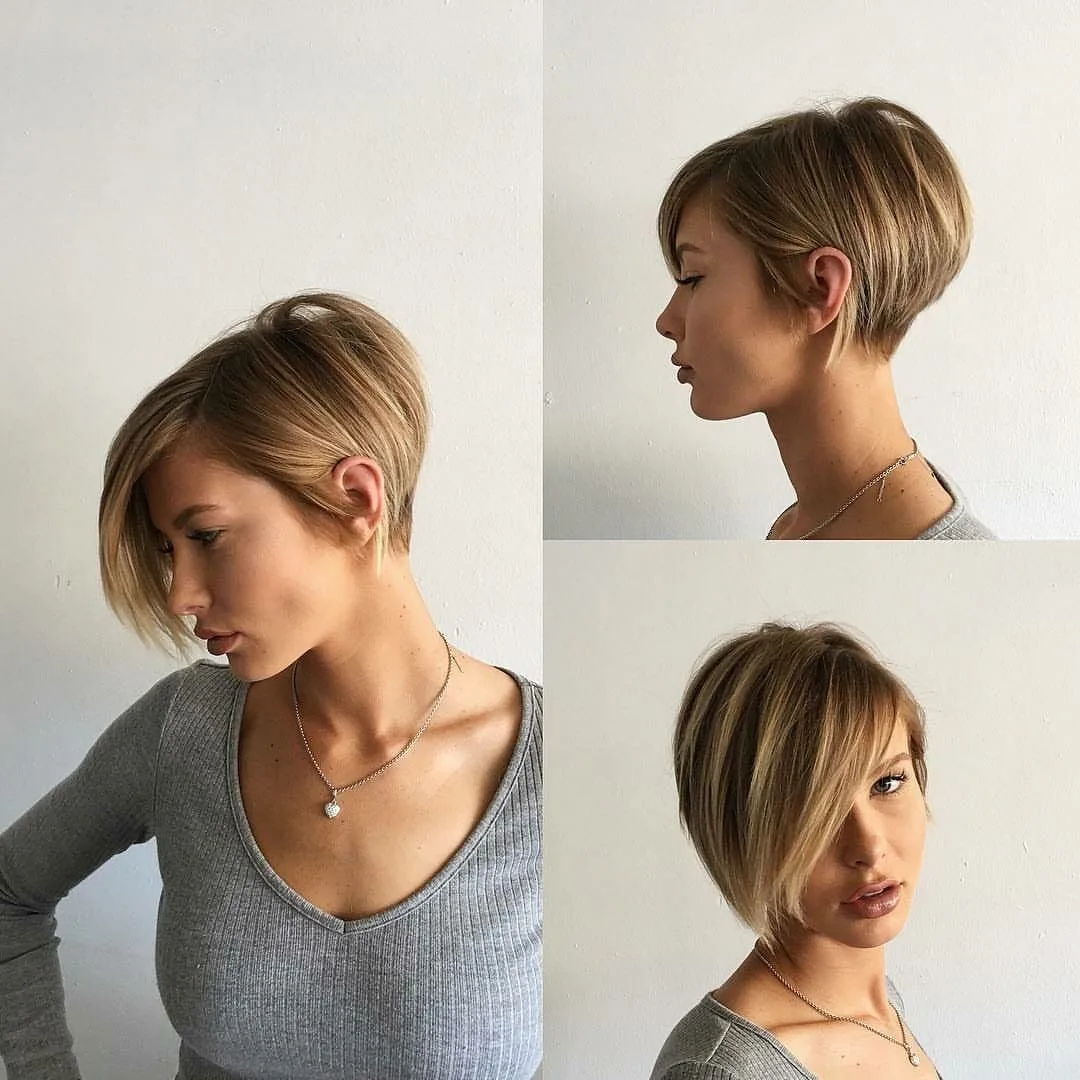
Side-swept bangs and an asymmetrical bob were made for each other: the fringe sweeps in the same direction as the longer side, so the whole cut flows in one long diagonal from the forehead to the chin. The bangs soften the forehead, the longer side frames the cheek, and the shorter side keeps the back light. It is the most romantic version of the cut, and the most forgiving, because the fringe hides a multitude of sins — a high forehead, a strong parting, a bad hair day.
Best for: long and oval faces, and anyone who wants a softer asymmetrical bob. How to style it: blow-dry the fringe to the side with a round brush, following the direction of the longer side, and keep the ends of the longer side slightly under. Maintenance: the fringe needs a trim every three to four weeks, even when the bob does not. Common mistake: cutting the fringe too short, which makes it stand up instead of sweeping — ask for a fringe that reaches the cheekbone. Time: twelve minutes. Quick verdict: the softest, most flattering asymmetrical bob there is.
5. The Asymmetrical Bob with Blunt Bangs
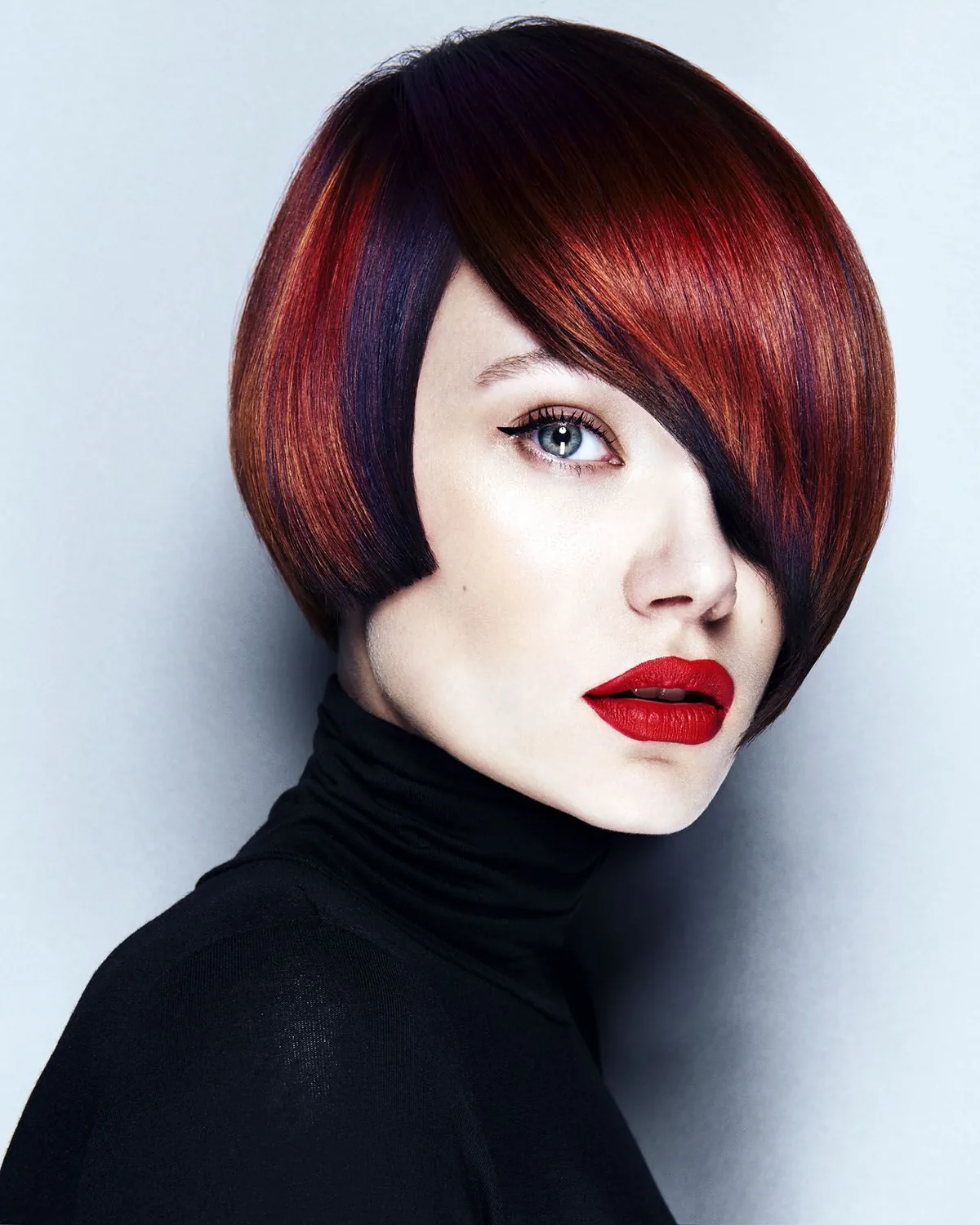
Blunt bangs change the whole mood of an asymmetrical bob: the straight, heavy fringe gives the cut a graphic, editorial edge, while the diagonal length keeps it from looking severe. It is the version for women who like structure — the fringe is a clean horizontal line, the bob is a clean diagonal line, and the two lines together make the cut look like it was designed rather than grown. It suits a fashion-forward wardrobe and a confident attitude, and it photographs like a magazine cover.
Best for: oval and heart-shaped faces, straight hair, and women who love a bold fringe. How to style it: flat-iron the fringe straight down, keep the longer side smooth, and let the shorter side sit neatly behind the ear. Who should avoid it: round faces, where a blunt fringe can shorten the face, and curly hair, where a blunt fringe rarely stays blunt. Maintenance: the fringe needs trimming every three weeks to stay sharp. Pros and cons: unforgettable when it works, high-maintenance when it does not. Quick verdict: the editorial, fashion-week version of the asymmetrical bob.
6. The Curly Asymmetrical Bob
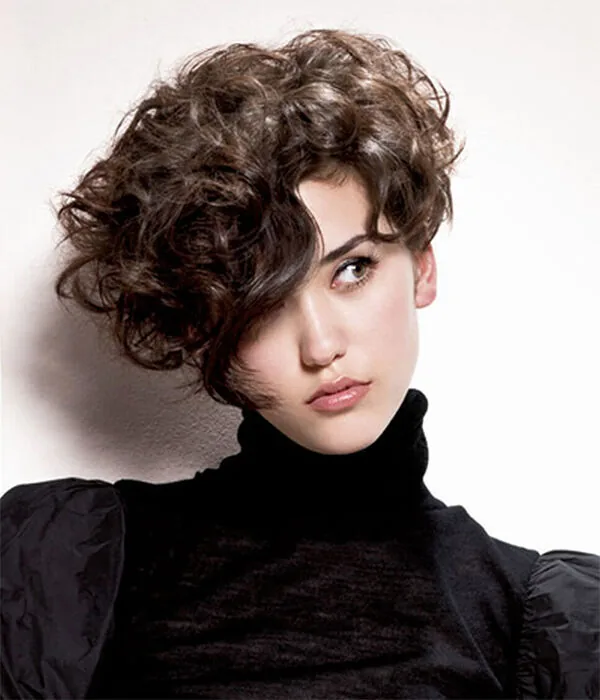
A curly asymmetrical bob is one of the most beautiful versions of the cut, because the curls soften the angle into a cascade and the longer side falls in a wave of curls past the jaw. The key is the cut: it must be done dry, curl by curl, by a stylist who understands curly hair, because curls spring up when they dry and a wet cut will end up shorter — and more uneven — than anyone planned. Done right, the asymmetry looks effortless, as if the curls simply decided to fall that way.
Best for: naturally curly and coily hair, round and oval faces, and women who want volume with shape. How to style it: apply curl cream to damp hair, scrunch, and let it air-dry or diffuse — the less you touch it, the better the asymmetry sits. Pros and cons: it needs almost no daily styling, but it needs a curl specialist to cut it and a trim every six to eight weeks to keep the shape. Common mistake: cutting it wet, or straightening it to ‘check’ the length — both ruin the balance. What to ask your stylist for: a dry cut, curl by curl, with the longer side at least two inches longer dry. Quick verdict: the most natural, joyful asymmetrical bob.
7. The Wavy Asymmetrical Bob
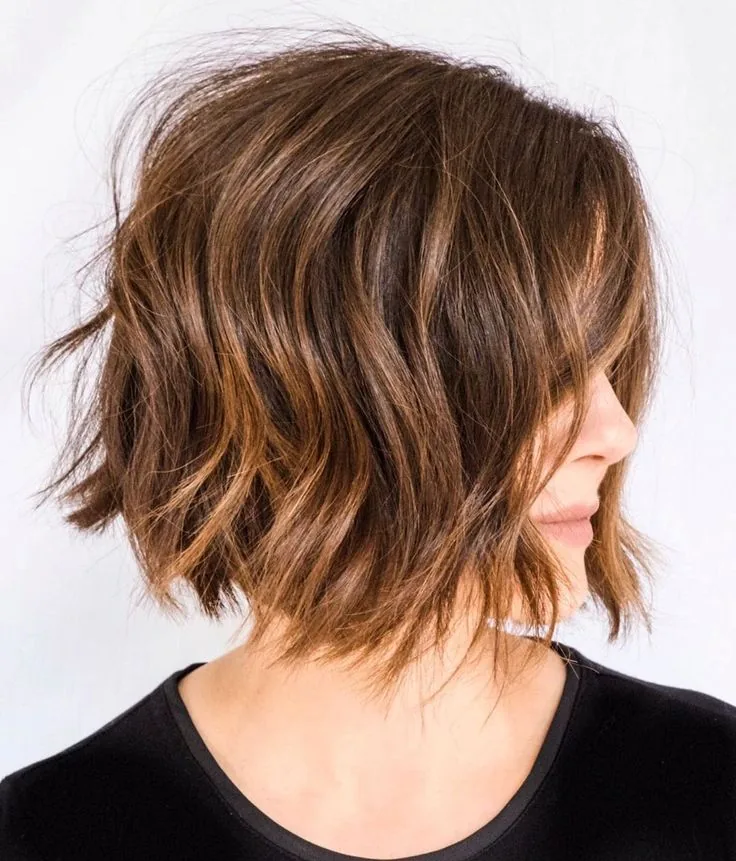
Wavy hair gives the asymmetrical bob a relaxed, beachy softness that straight hair cannot match. The angle is still there, but the wave turns it into a sweep rather than a line, so the cut looks lived-in and effortless — the kind of hair that looks good on a Sunday morning with no styling at all. The longer side falls in a soft wave past the chin, the shorter side tucks easily behind the ear, and the whole cut has movement even when you are standing still.
Best for: naturally wavy hair, and women who air-dry their hair. How to style it: scrunch in a little sea-salt spray or curl cream, let it air-dry, and shake the longer side forward once it is dry. Maintenance: the easiest asymmetrical bob to live with — trims every six to eight weeks, and the wave hides the grow-out. Pros and cons: it looks effortless, but the asymmetry can disappear when the waves are at their fullest, so ask for a slightly bolder difference than you think you need. Time: five minutes. Cost: a standard bob cut. Quick verdict: the low-effort, high-reward asymmetrical bob.
8. The Stacked Asymmetrical Bob
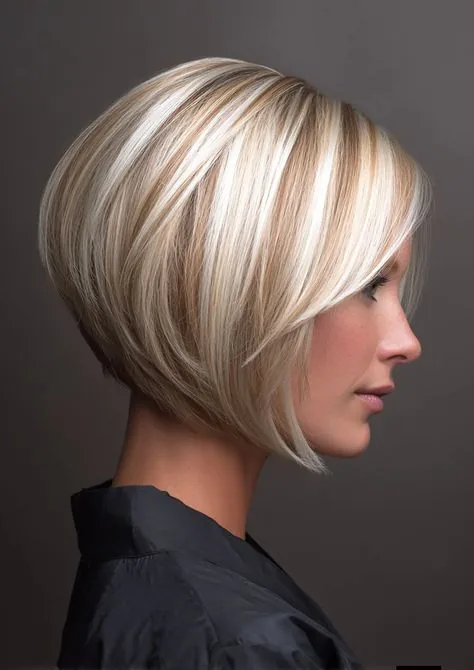
The stacked asymmetrical bob combines two classic cuts: the stacked bob’s graduated layers at the back, which build volume and lift, and the asymmetrical bob’s longer front, which frames the face. The back is short and full, the front sweeps long on one side, and the contrast between the two is what makes the cut so striking. It is the version for women who want volume at the back and length at the front — the best of both worlds, in a single cut.
Best for: thick hair, and women who want volume without length. How to style it: blow-dry the back with a round brush for lift, and smooth the longer front section forward with a flat iron. Pros and cons: the volume is spectacular, but the cut is the most technical of all asymmetrical bobs and needs a skilled stylist. Maintenance: trims every five weeks, because the stacked back grows out into a wedge fast. Who should avoid it: fine hair, which can look thin at the front when the back is stacked high. What to ask your stylist for: graduated layers at the back, and a front that is at least three inches longer on one side. Quick verdict: volume at the back, drama at the front.
9. The Graduated Asymmetrical Bob
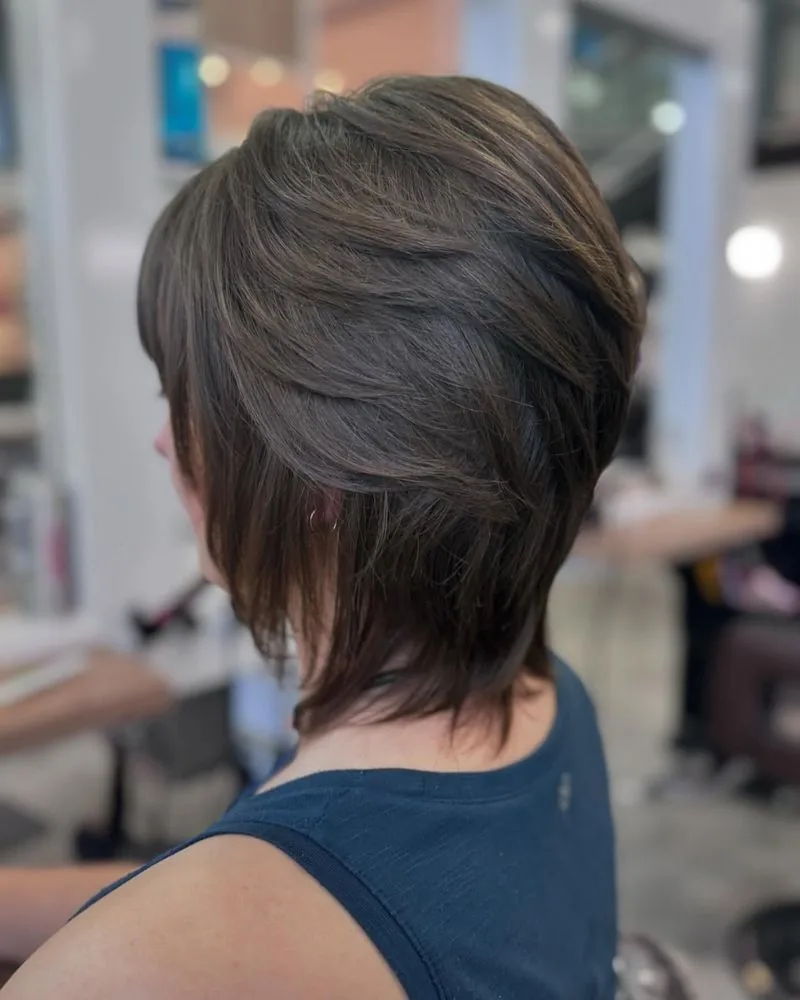
The graduated asymmetrical bob is the stacked bob’s quieter cousin: the back is cut in soft, graduated layers that curve under, while the front falls longer on one side in a smooth diagonal. There is no sharp step anywhere — the whole cut flows from short at the nape to long at the front, and the asymmetry is the final flourish on an already elegant shape. It is the version for women who want the angle but also want the cut to look polished from the back.
Best for: straight and slightly wavy hair, and women who wear their hair from the back as much as the front. How to style it: blow-dry the back under with a round brush, and let the longer front fall forward naturally. Maintenance: trims every five to six weeks. Common mistake: graduating the back too high, which makes the cut look dated rather than modern — ask for a soft graduation, not a sharp wedge. Cost and time: a standard bob cut, ten minutes to style. Pros and cons: beautiful from every angle, but less dramatic from the front than a straight-across asymmetrical bob. Quick verdict: the most polished, grown-up asymmetrical bob.
10. The Inverted Asymmetrical Bob
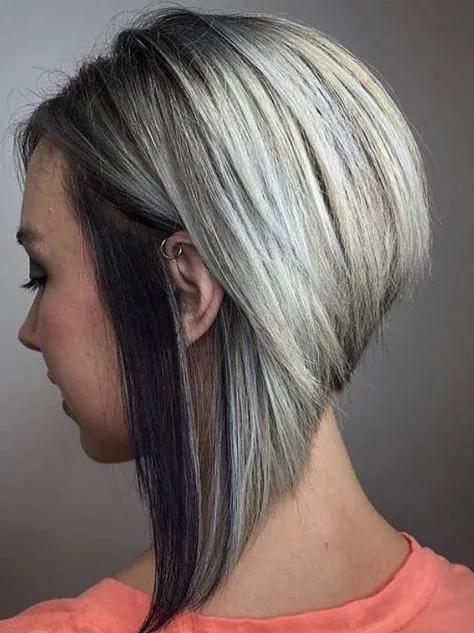
The inverted asymmetrical bob takes the classic inverted bob — short at the back, longer at the front — and adds the asymmetry on top, so one front section is longer than the other. The result is a cut with two diagonals at once: the back-to-front slope and the side-to-side difference. It is dramatic, architectural, and unmistakably modern, and it is the version that gets the most compliments, because the shape is interesting from every angle, not just the front.
Best for: straight hair, oval and heart-shaped faces, and women who love a sharp silhouette. How to style it: flat-iron the front sections smooth and slightly under, and blow-dry the back with lift so the inversion stays visible. Who should avoid it: curly hair, where the inversion gets lost, and anyone who dislikes short hair at the nape. Maintenance: trims every four to five weeks — the inversion grows out fast. Time: fifteen minutes to style. What to ask your stylist for: a short stacked back, a longer front, and one side two to three inches longer than the other. Quick verdict: the most architectural asymmetrical bob.
11. The A-Line Asymmetrical Bob
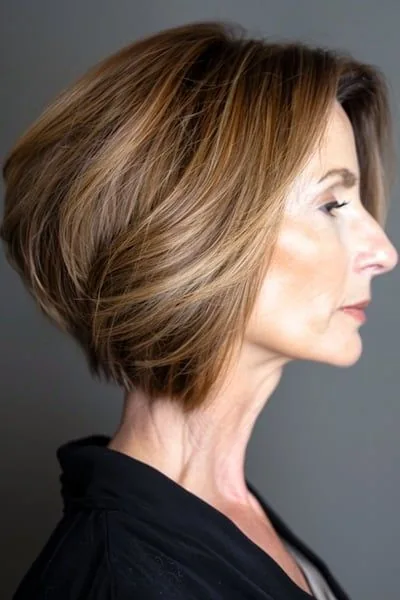
The A-line asymmetrical bob is the cleanest version of the cut: the hair is shorter at the back and angles forward on both sides, but one side angles further than the other, so the longer side becomes the focal point. The shape is a perfect letter A from the front — narrow at the top, wider at the bottom — with the asymmetry adding a twist that a regular A-line does not have. It is the version for women who like precision and clean lines.
Best for: straight hair and oval faces. How to style it: blow-dry the front sections forward and slightly under, so the A shape stays crisp. Pros and cons: the shape is striking and easy to maintain, but the angle can look severe if the difference is too big — two to three inches is the sweet spot. Maintenance: trims every five to six weeks. Common mistake: cutting the back too short, which makes the A-line look like a wedge instead of a bob. Cost: a standard bob cut. Quick verdict: the most geometric, precise asymmetrical bob.
12. The Chin-Length Asymmetrical Bob
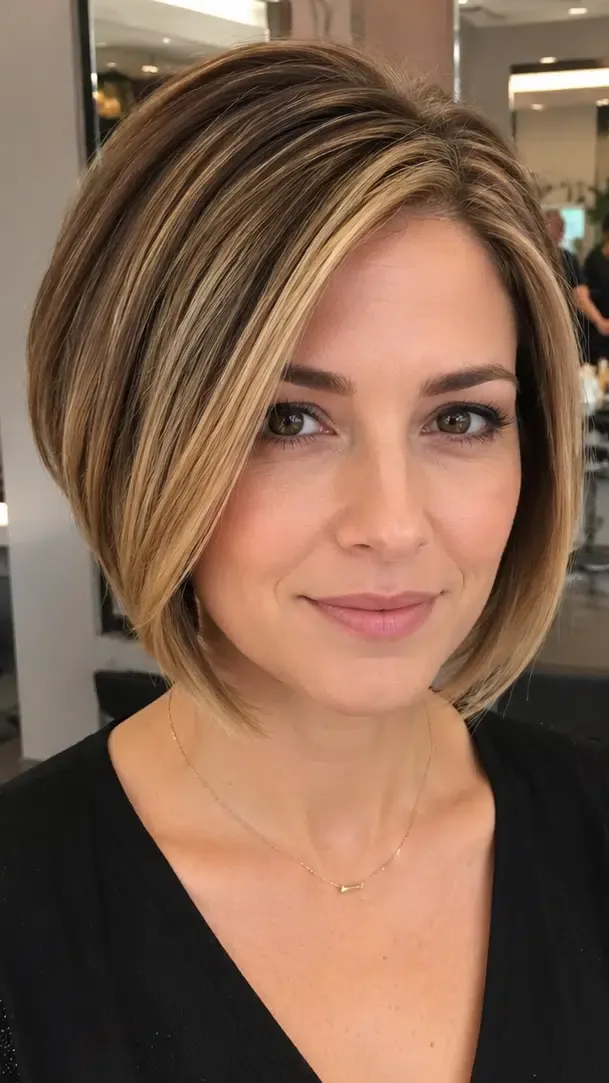
The chin-length asymmetrical bob is the shortest wearable version of the cut: the shorter side sits at the ear or the cheekbone, the longer side brushes the chin, and the whole cut frames the face like a picture frame. It is bold, because there is nowhere to hide — the face is fully on show — but it is also incredibly flattering, because the chin-length line draws attention to the jaw and the cheekbones. It is the version for women who want a short cut with a twist.
Best for: oval, heart-shaped and long faces, and women with strong cheekbones. How to style it: tuck the shorter side behind the ear, let the longer side fall forward, and add a little texture spray for movement. Who should avoid it: round faces, where a chin-length line can emphasise width, and anyone who is growing their hair out. Maintenance: trims every four weeks — at this length, a week of growth changes the shape. Time: five minutes to style. Quick verdict: short, sharp, and beautifully face-framing.
13. The Shoulder-Length Asymmetrical Bob
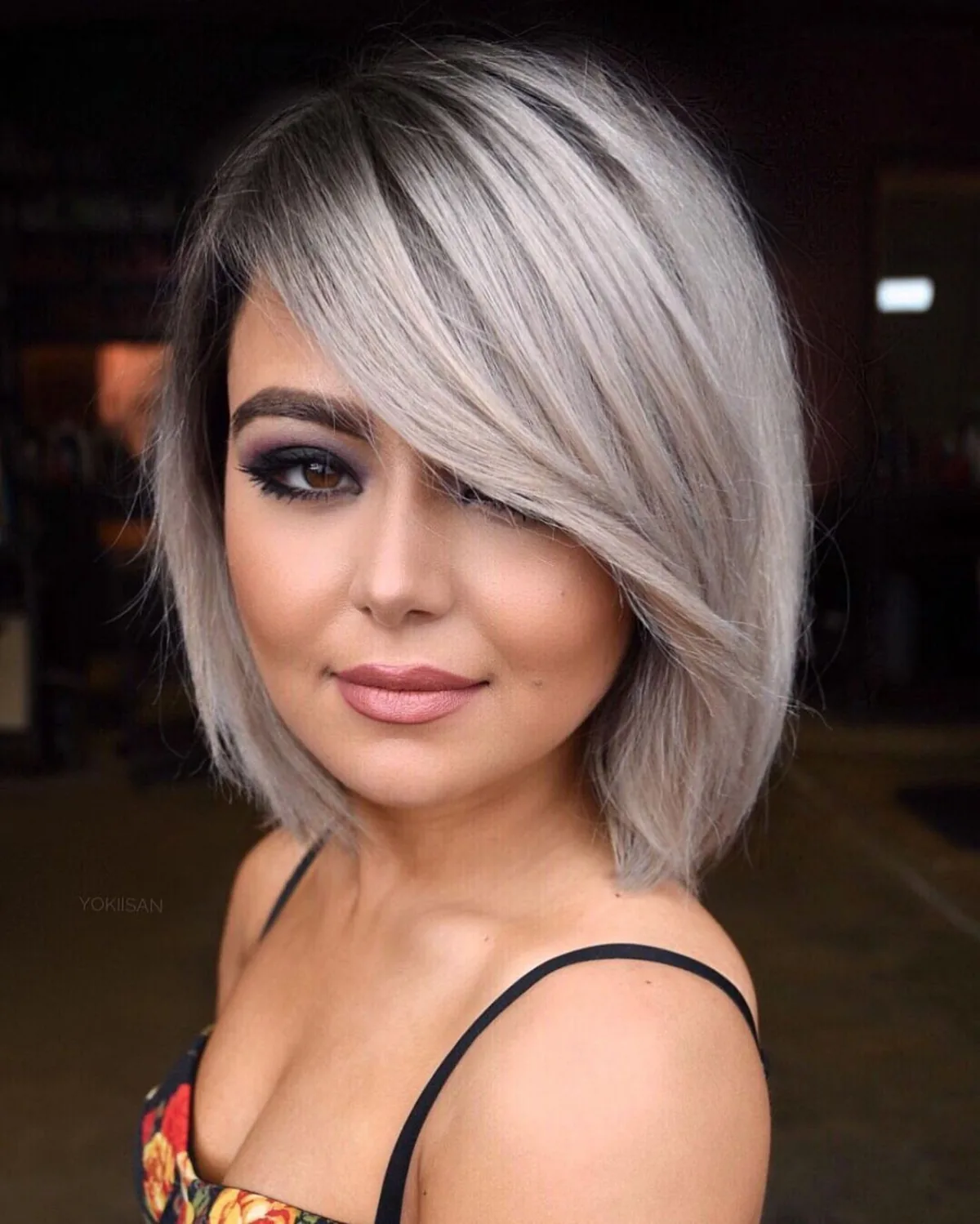
The shoulder-length asymmetrical bob is the most versatile version of the cut: long enough to tie back on a bad hair day, short enough to feel like a bob, and with an asymmetry that is visible without being extreme. The longer side brushes the collarbone, the shorter side sits at the jaw, and the cut works with straight, wavy and curly hair alike. It is the version for women who want the drama of asymmetry without giving up their length.
Best for: almost everyone — it is the safest length for a first asymmetrical bob. How to style it: wear it straight for a polished look, or add loose waves for a relaxed one. Pros and cons: it grows out gracefully and can be tied up, but the asymmetry is less dramatic at this length, so ask for a clear three-inch difference. Maintenance: trims every six to eight weeks. Cost and time: a standard cut, ten minutes to style. What to ask your stylist for: ‘shoulder length on the long side, jaw length on the short side.’ Quick verdict: the most wearable asymmetrical bob of all.
14. The Long Asymmetrical Bob (Lob)
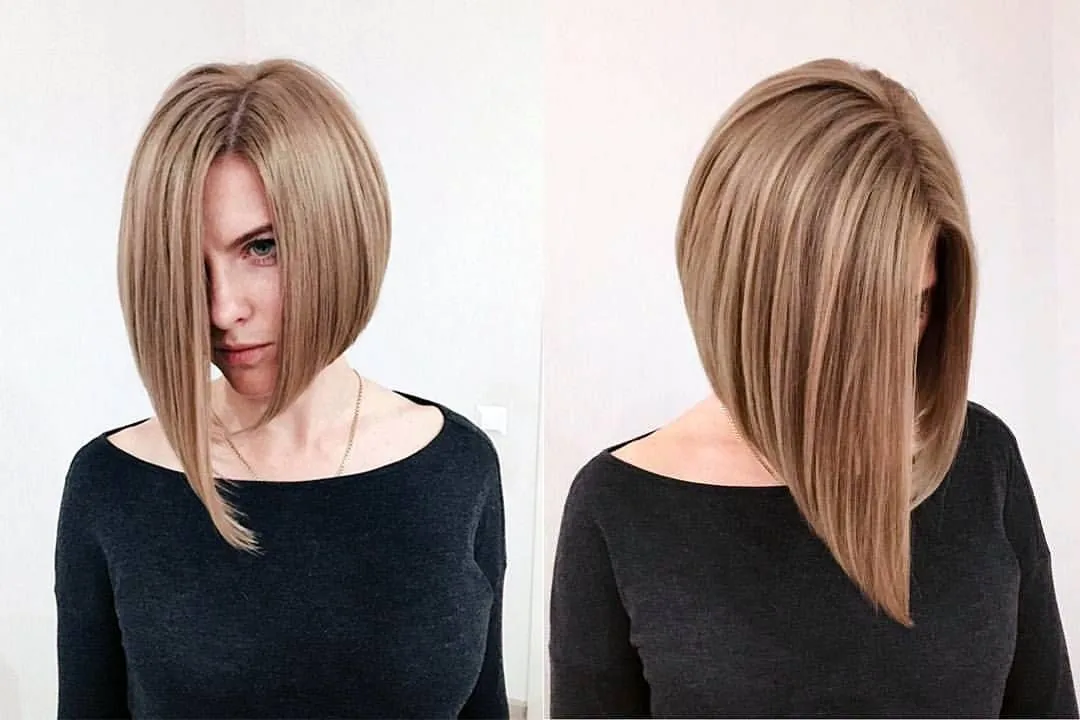
The long asymmetrical bob — the lob with a twist — keeps the length past the shoulders on one side while the other side sits at the collarbone. It is the version for women who love long hair but want a change, because it keeps the length they are attached to while adding the movement and the angle of a bob. The longer side can be waved, curled or worn straight, and the shorter side keeps the cut from feeling heavy.
Best for: long faces, thick hair, and women transitioning from long hair to a bob. How to style it: curl the longer side away from the face for a glamorous finish, or wear it straight for a sleek one. Maintenance: the easiest asymmetrical bob to maintain — trims every eight weeks, because the difference fades slowly at this length. Pros and cons: it is the least committing version, but also the least dramatic — the asymmetry can read as a long bob with a side part if the difference is too small. Common mistake: a difference of less than two inches, which disappears entirely. Quick verdict: the gentle introduction to asymmetrical hair.
15. The Short Pixie-Bob Asymmetrical Cut
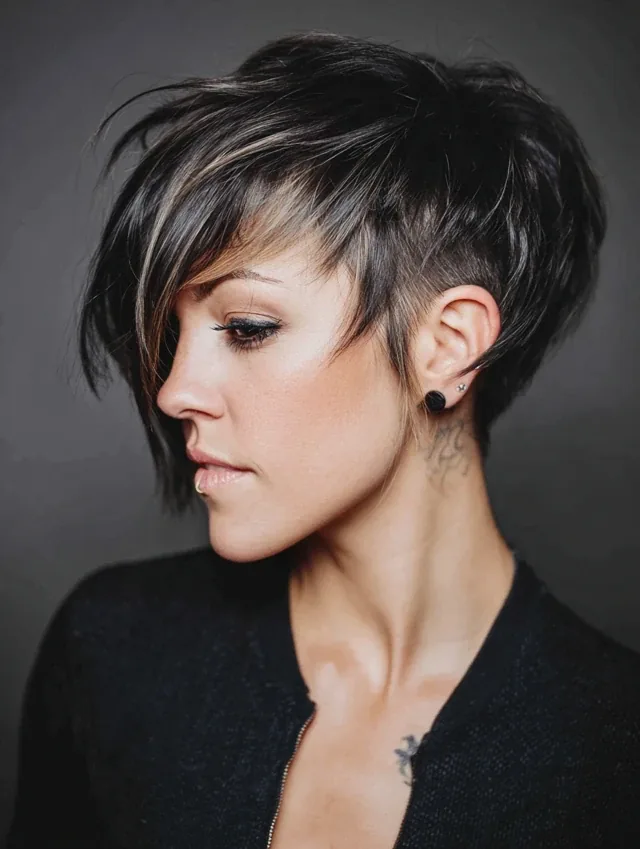
The pixie-bob asymmetrical cut is the boldest short version: the back and one side are cropped close, almost pixie-short, while the other side sweeps long across the forehead and past the cheek. It is part pixie, part bob, and entirely attitude — the kind of cut that changes how a woman carries herself. The long side can be tucked, swept, curled or slicked, so the cut has several personalities in one, and the short side keeps it light and modern.
Best for: confident wearers, oval and heart-shaped faces, and straight or wavy hair. How to style it: use a little pomade on the short side for texture, and blow-dry the long side across the forehead. Who should avoid it: anyone who is not ready for very short hair at the back, and round faces, where the short side can emphasise width. Maintenance: trims every three to four weeks — at this length, growth shows fast. Cost: a standard short cut. Quick verdict: the most daring asymmetrical bob — not for the faint-hearted, unforgettable on the right woman.
16. The Asymmetrical Bob with an Undercut
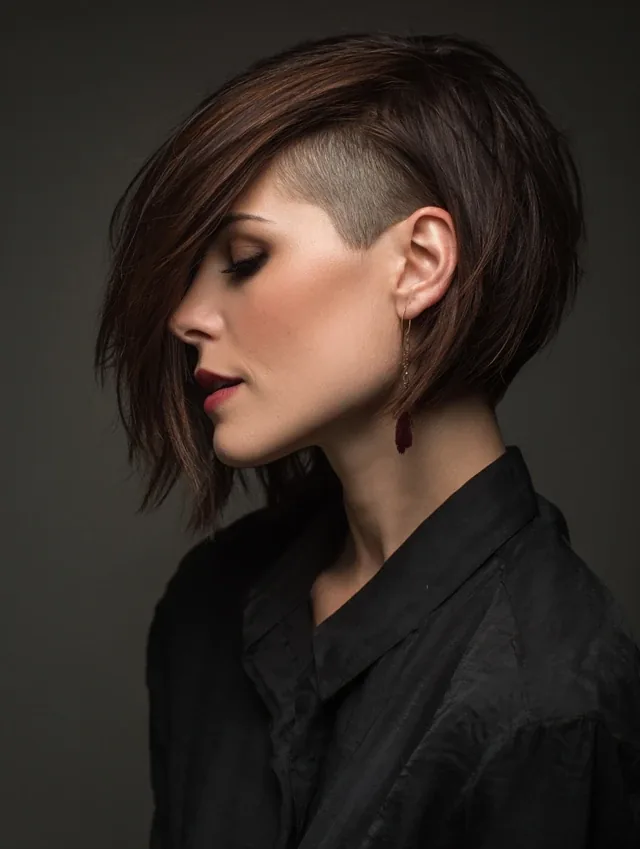
The undercut asymmetrical bob hides its boldest feature underneath: one side is shaved or closely clipped beneath the longer top layer, so the cut looks like a normal asymmetrical bob from the front and reveals its edge only when the hair moves. The undercut removes weight from thick hair, keeps the neck cool in summer, and gives the longer side more swing, because there is less bulk underneath it. It is the version for women who want an edge they can hide at work and show at the weekend.
Best for: thick hair, and women who want to remove bulk without losing length. How to style it: wear the longer side forward to hide the undercut, or tuck it behind the ear to show it off. Pros and cons: it makes thick hair far easier to manage, but it needs upkeep every three to four weeks or the undercut grows into a fuzzy patch. Common mistake: undercutting too high, which shows even when the hair is down. What to ask your stylist for: a low undercut on the shorter side only, hidden under the top layer. Quick verdict: the secret-edge asymmetrical bob.
17. The Asymmetrical Bob with a Shaved Side
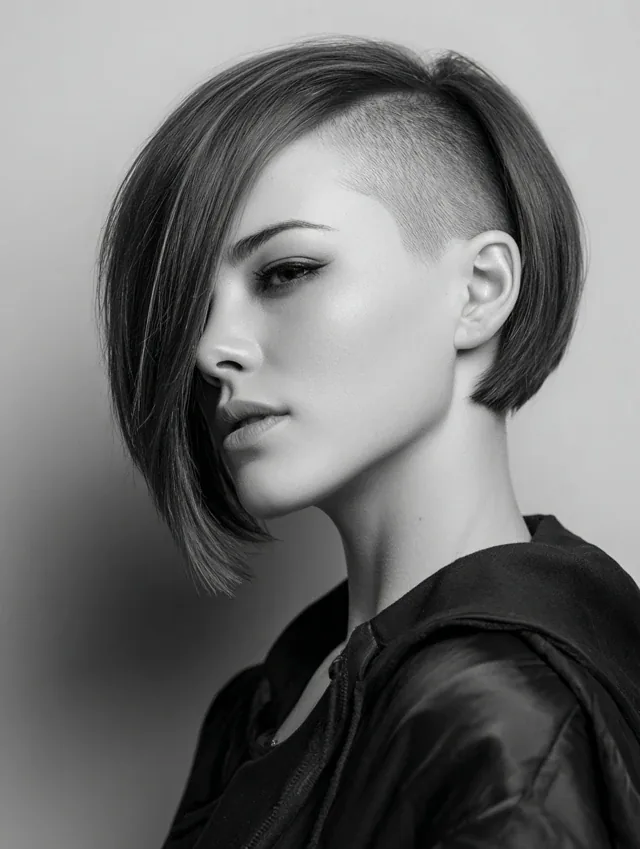
The shaved-side asymmetrical bob does not hide its edge at all: one side is shaved close to the head, while the other side falls long past the chin, and the contrast is the whole point. It is the most punk, most editorial version of the cut, and it is not for everyone — but on the right woman, with the right attitude, it is extraordinary. The shaved side shows off the shape of the head and any earrings, while the long side gives the cut its softness and its swing.
Best for: confident, fashion-forward wearers with straight hair and oval faces. How to style it: slick the long side over to one side for maximum contrast, or add waves for a softer take. Who should avoid it: conservative workplaces, and anyone who is not prepared for daily comments — this cut gets noticed. Maintenance: the shaved side needs a trim every two to three weeks to stay sharp. Cost: a standard cut plus regular shave-ups. Common mistake: shaving too much of the side on the first visit — start with a narrow section and widen it later if you love it. Quick verdict: the boldest asymmetrical bob there is.
18. The Asymmetrical Bob for Thick Hair
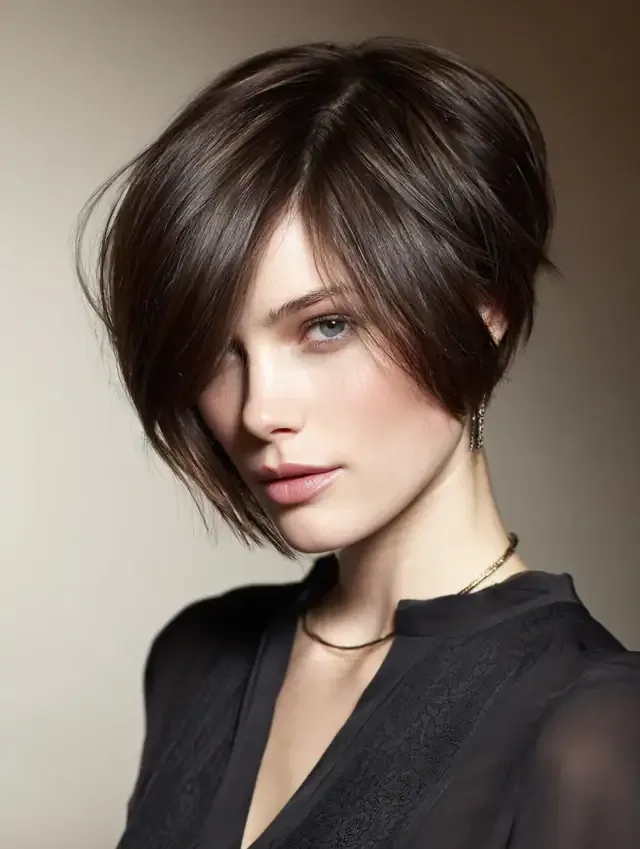
Thick hair and asymmetrical bobs are a perfect match, because thick hair can carry a dramatic angle without going limp, and the asymmetry removes bulk exactly where thick hair needs it removed. The shorter side is thinned and texturised so it does not puff out, the longer side keeps its weight so it falls in a smooth, heavy line, and the whole cut has a swing that fine hair can only dream of. It is the version that looks most expensive, because the hair itself does half the work.
Best for: thick, coarse and wavy hair. How to style it: blow-dry with a large round brush, and use a smoothing serum on the longer side to keep it sleek. Pros and cons: the cut holds its shape all day and the angle stays visible for weeks, but it needs internal thinning or the shorter side will stick out. Maintenance: trims every five to six weeks. What to ask your stylist for: thinning on the shorter side only, and a longer side that keeps its weight. Time: fifteen minutes to style. Quick verdict: the cut thick hair was made for.
19. The Asymmetrical Bob for Fine Hair
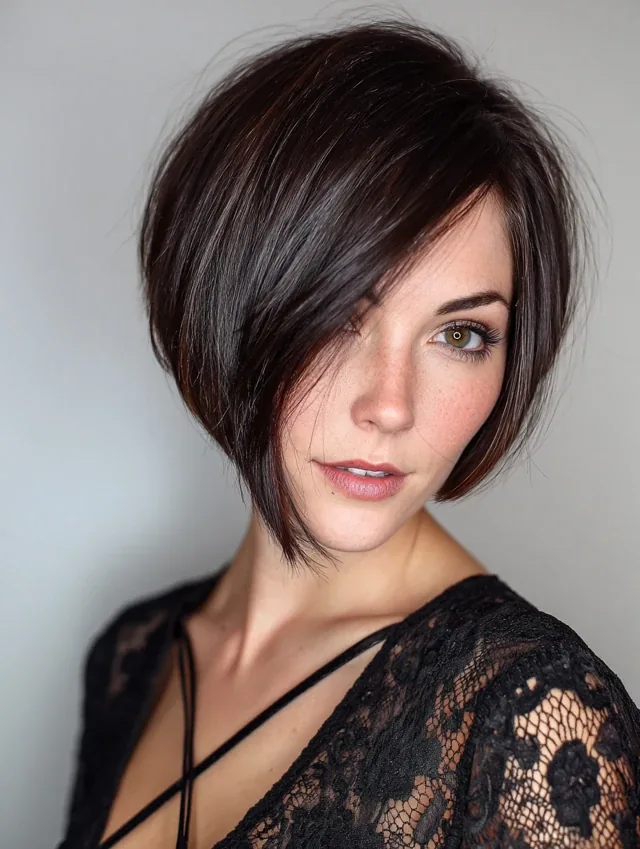
Fine hair needs a different kind of asymmetrical bob: a subtle angle, blunt ends, and no thinning at all. The weight of the blunt ends is what gives fine hair its movement, and the asymmetry adds the interest that a blunt bob on its own can lack. The longer side should be only one to two inches longer than the shorter side, because a big difference on fine hair looks stringy on the long side and sparse on the short side. Done right, the cut makes fine hair look thicker than it is, because the diagonal line tricks the eye into seeing volume.
Best for: fine, straight hair and women who want their hair to look fuller. How to style it: blow-dry with a volumising mousse, and keep the ends blunt — no razoring, no thinning. Common mistake: asking for a dramatic angle, or letting the stylist thin the hair ‘to remove weight’ — on fine hair, that weight is the whole point. Maintenance: trims every six weeks to keep the blunt ends sharp. Pros and cons: it adds the illusion of volume, but it needs daily styling to look its best. Quick verdict: subtle asymmetry, blunt ends, maximum fullness.
20. The Asymmetrical Bob for Straight Hair
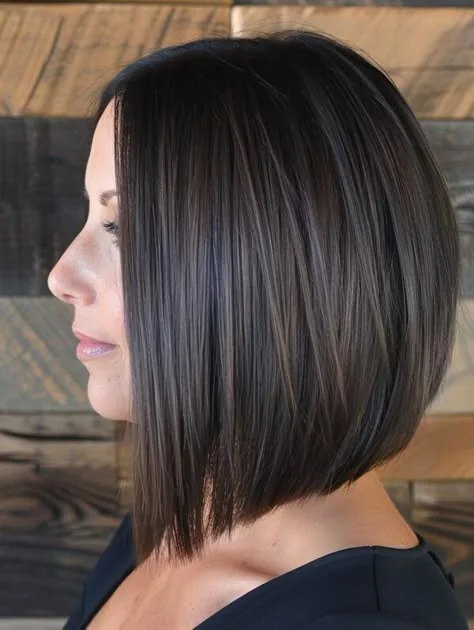
Straight hair shows an asymmetrical bob at its sharpest, because there is no wave or curl to soften the line. The angle is a clean diagonal, the ends are a clean edge, and the cut looks like it was drawn with a ruler. It is the most precise version of the cut, and the most rewarding to style, because a single pass with a flat iron is all it takes to make the line perfect. It is also the least forgiving: an uneven angle shows immediately, so the cut has to be exact.
Best for: naturally straight hair and women who love a polished finish. How to style it: flat-iron the longer side smooth, and finish with a shine serum for a glass-like line. Pros and cons: the cut looks incredible when it is styled, but it can look flat and severe when it is not — straight hair needs the daily ten minutes. Maintenance: trims every five weeks to keep the line sharp. Who should avoid it: anyone who never styles their hair, because an unstyled straight asymmetrical bob can look unfinished. What to ask your stylist for: a precise, blunt-cut angle, checked with the hair dry. Quick verdict: the sharpest, sleekest asymmetrical bob.
21. The Asymmetrical Bob for a Round Face
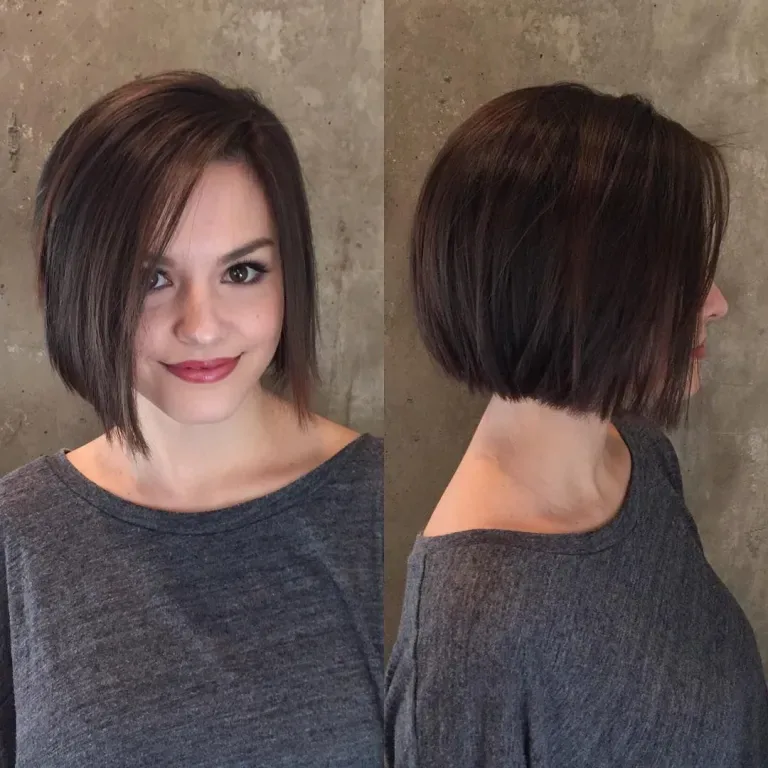
The asymmetrical bob is one of the best cuts for a round face, because the diagonal line does exactly what a round face needs: it breaks up the width, draws the eye downward, and adds length. The longer side should fall past the chin — at least to the jaw, ideally to the collarbone — and the cut should have a little height at the crown, which lengthens the face further. The shorter side should sit above the cheekbone, so the width of the cheeks is not echoed by the hair.
Best for: round faces, full cheeks, and women who want their face to look longer. How to style it: keep the longer side smooth and forward, and add volume at the crown with a round brush. Common mistake: a chin-length asymmetry on both sides, which frames the widest part of the face and makes it look rounder. Who should avoid the short version: anyone with a round face who wants a chin-length cut — go longer on the long side instead. Maintenance: trims every five to six weeks. Quick verdict: the face-slimming asymmetrical bob.
22. The Asymmetrical Bob for an Oval Face
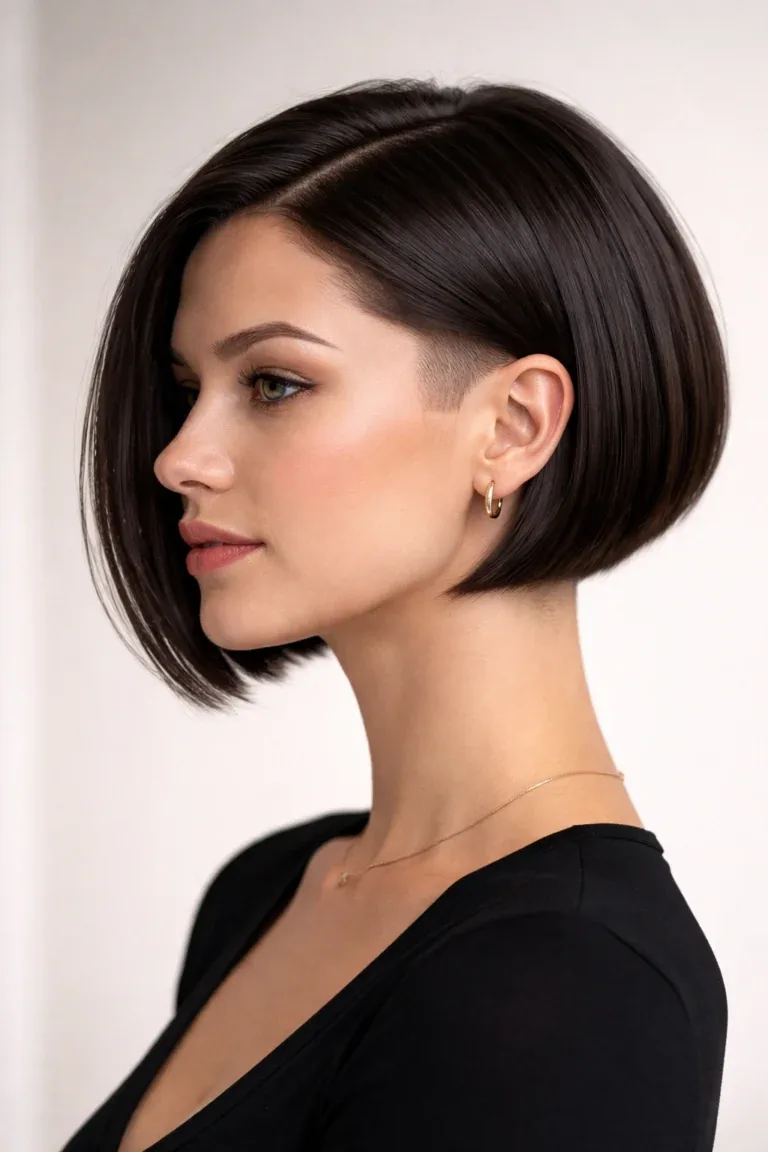
Oval faces can wear almost any asymmetrical bob, because the proportions are already balanced and the cut cannot really go wrong. The only decision is how bold to go: a subtle angle looks elegant and classic, a dramatic angle looks editorial and modern, and both suit an oval face equally well. The longer side can end anywhere from the chin to the shoulder, the shorter side anywhere from the ear to the jaw, and the result will still be flattering — which is why oval-faced women are the ones stylists love to experiment on.
Best for: oval faces and first-time asymmetrical cuts, because there is almost no risk. How to style it: any way you like — sleek, wavy, tucked or loose, the cut carries it all. Pros and cons: the freedom is wonderful, but it can also make the choice harder — if you cannot decide, go medium, live with it for six weeks, and adjust. Cost and time: a standard bob cut, ten minutes to style. What to ask your stylist for: the boldest version you are comfortable with, because your face can carry it. Quick verdict: the lucky-face asymmetrical bob — everything works.
23. The Asymmetrical Bob for a Square Face
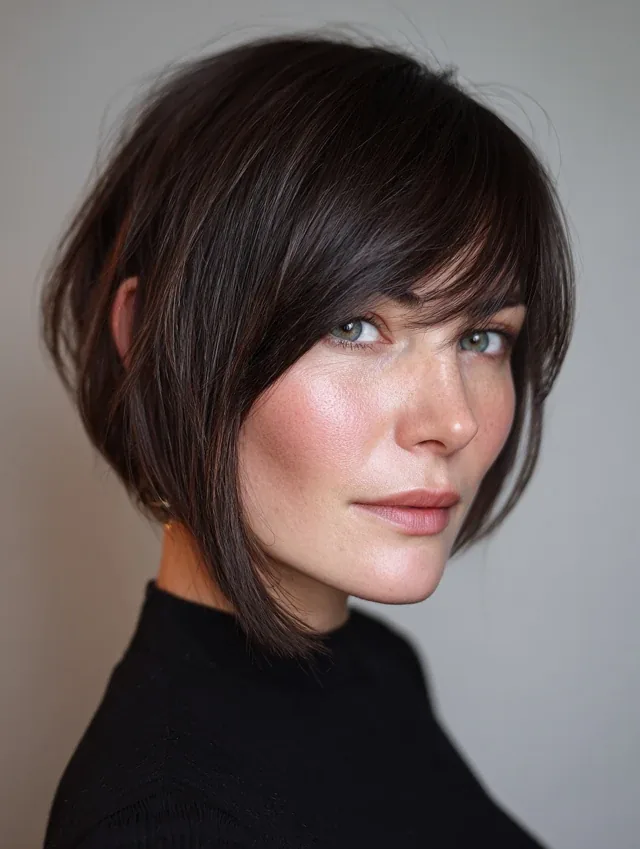
A square face needs an asymmetrical bob with a soft touch: a curved, sweeping line rather than a sharp step, a longer side that falls past the jaw, and a little texture at the ends to break up the angles. The diagonal of the asymmetry softens a strong jaw by drawing the eye across it rather than along it, and the longer side adds length that balances the width of the forehead. The wrong version — a sharp, chin-length angle with blunt ends — echoes the jaw instead of softening it, so the curve matters more than the length.
Best for: square and strong-jawed faces. How to style it: add soft waves to the longer side, and keep the ends textured rather than blunt. Common mistake: a sharp, geometric angle that mirrors the jawline — ask for a curved sweep instead. Maintenance: trims every five to six weeks. Who should avoid the severe version: anyone with a very strong jaw who wants to soften it — the soft, wavy version is the right choice. Time: fifteen minutes to style with waves. Quick verdict: the jaw-softening asymmetrical bob.
24. The Asymmetrical Bob for a Heart-Shaped Face
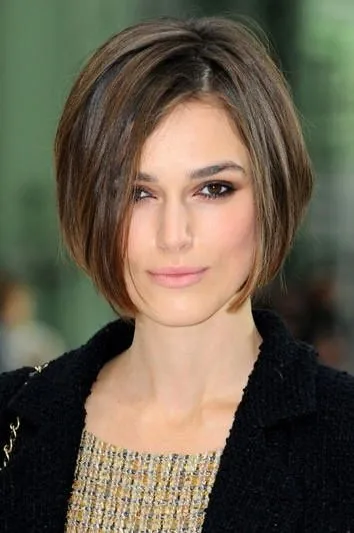
Heart-shaped faces — a wider forehead, a narrower chin — suit an asymmetrical bob whose longer side falls past the chin, because the length at the jaw balances the width at the forehead. The shorter side should not be too short, or the pointed chin is left exposed with nothing to balance it. A little volume at the sides, around the cheekbones, fills out the narrower lower face, and a soft wave on the longer side adds the width exactly where it is needed.
Best for: heart-shaped faces and women with a pointed chin. How to style it: curl the ends of the longer side outward slightly, to add width at the jaw. Pros and cons: it balances the face beautifully, but a very short asymmetry can make the chin look sharper — keep the long side long. Maintenance: trims every six weeks. What to ask your stylist for: a longer side that ends below the chin, with volume at the sides. Common mistake: pairing the cut with a blunt fringe, which adds width at the forehead where it is not needed. Quick verdict: the balancing asymmetrical bob for heart-shaped faces.
25. The Asymmetrical Bob with Balayage
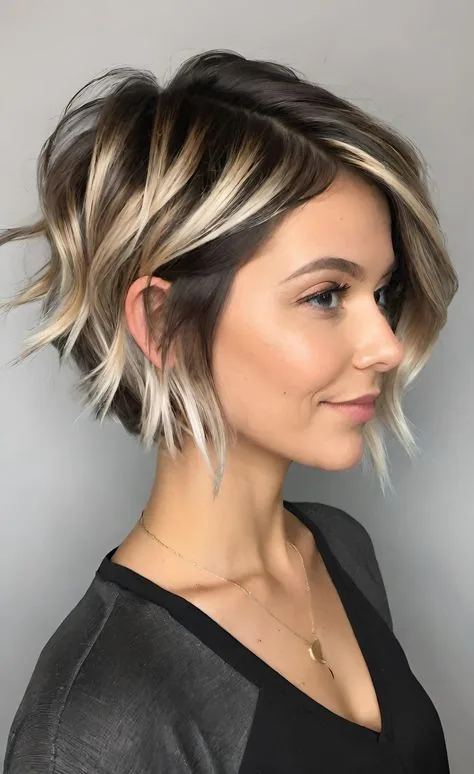
Balayage and an asymmetrical bob are a perfect pairing, because the hand-painted colour follows the angle of the cut: lighter pieces on the longer side, softer pieces on the shorter side, and the diagonal line of the cut becomes a diagonal line of light as well. The colour adds dimension to a cut that can otherwise look flat in a single shade, and it makes the asymmetry even more visible, because the eye follows the lighter pieces down the longer side. It is the version for women who want their haircut and their colour to work together.
Best for: women who already colour their hair, and medium to dark base colours where balayage shows best. How to style it: wear it wavy, so the balayage catches the light in the bends of the hair. Cost and time: balayage adds an hour to the appointment and a higher price, but it grows out softly and needs a refresh only every three to four months. Maintenance: a purple shampoo once a week keeps blonde balayage from going brassy. Common mistake: painting the balayage evenly on both sides, which hides the asymmetry — ask for more lightness on the longer side. Quick verdict: the most dimensional asymmetrical bob.
26. The Asymmetrical Bob with Highlights
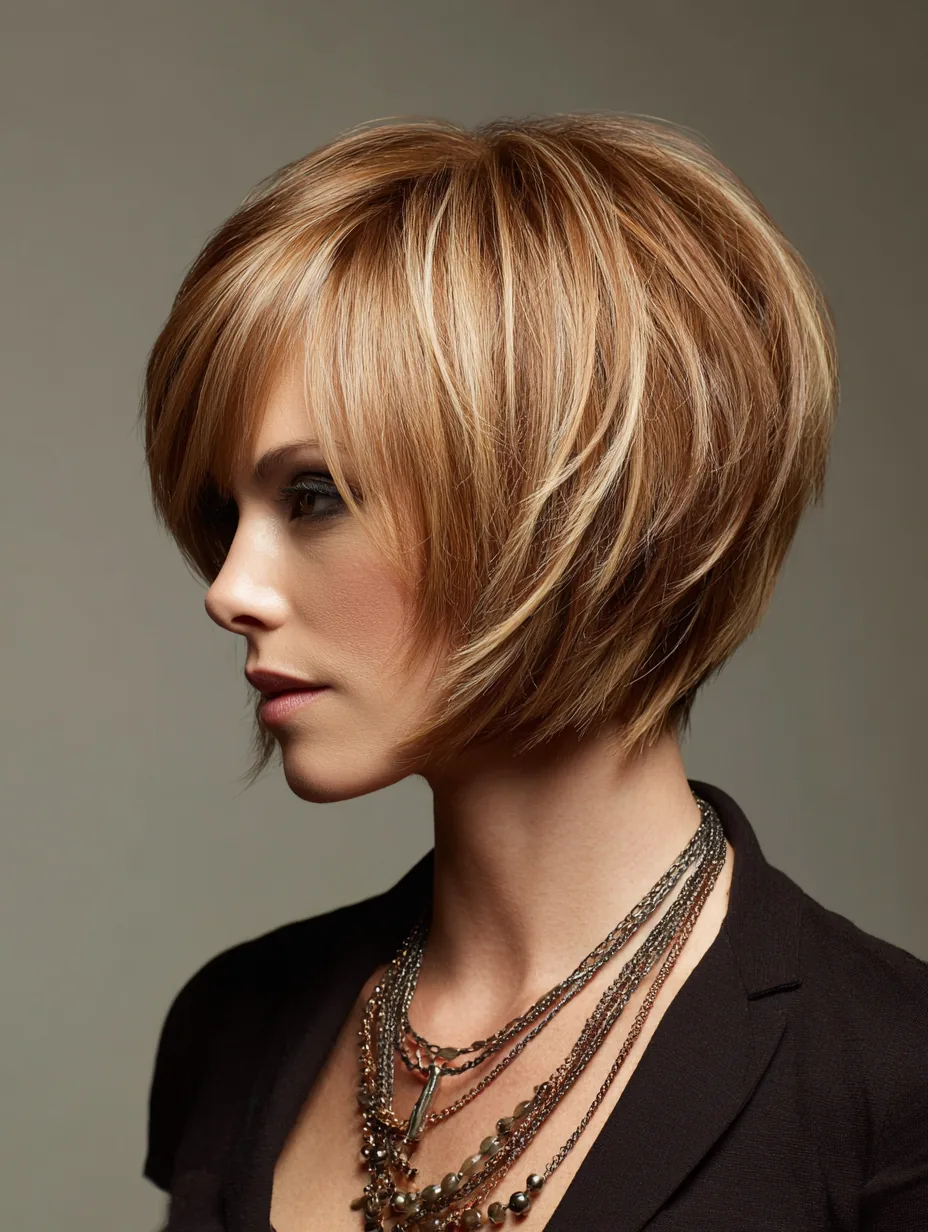
Highlights bring an asymmetrical bob to life in a different way from balayage: fine, woven highlights through the longer side add sparkle and movement, while the shorter side stays a little darker, so the contrast between the two sides is even stronger. Face-framing highlights on the longer side brighten the whole face, and the shorter side provides the depth that makes the highlights pop. It is the version for women who want brightness without a full colour change.
Best for: brunettes and dark blondes who want dimension. How to style it: sleek and smooth, so the highlights read as clean lines rather than a blur. Pros and cons: highlights need a touch-up every six to eight weeks, but they make the asymmetry unmistakable. Cost: a partial highlight service on top of the cut. Maintenance: a colour-safe shampoo and a gloss treatment every couple of months keep the highlights fresh. Who should avoid it: anyone who wants a truly low-maintenance cut — highlights are a commitment. Quick verdict: the brightest, most eye-catching asymmetrical bob.
27. The Platinum Blonde Asymmetrical Bob
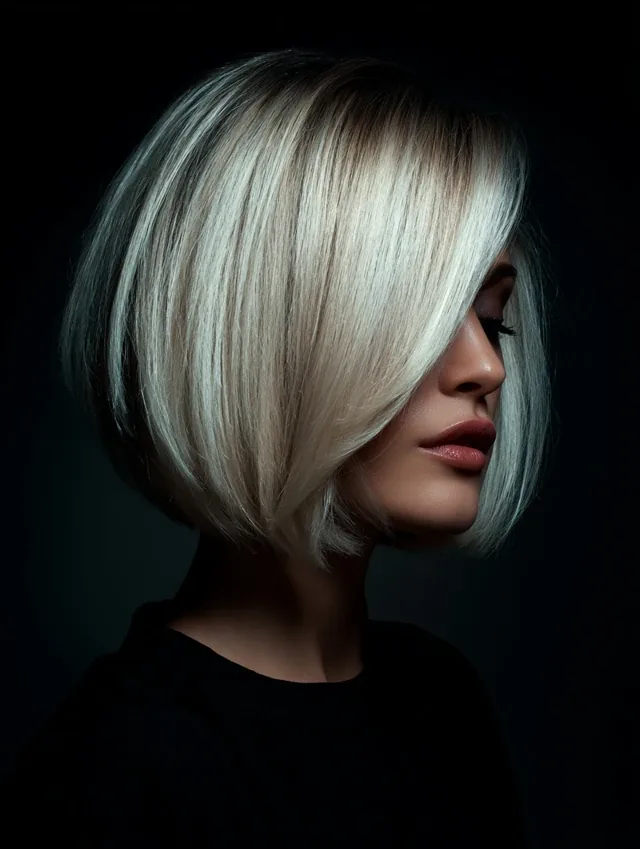
A platinum blonde asymmetrical bob is pure statement: the icy, almost-white colour turns the geometric cut into a piece of sculpture, and the diagonal line reads even more clearly in a single pale shade than it does in a dark one. It is the version for women who want to be noticed, and it works best on straight hair, where the colour and the cut are both at their sharpest. The combination is high-impact, high-maintenance, and unforgettable.
Best for: cool skin tones, straight hair, and confident wearers. How to style it: sleek and smooth, with a shine serum to show off the icy colour. Maintenance: this is the highest-maintenance version in the guide — root touch-ups every three to four weeks, purple shampoo twice a week, and a deep-conditioning mask weekly, because platinum is the hardest colour on the hair. Cost: the most expensive version, in both the salon and the upkeep. Who should avoid it: anyone who is not prepared for the upkeep, or with very dark hair that would need heavy bleaching. Quick verdict: the most striking asymmetrical bob — and the most demanding.
28. The Brunette Asymmetrical Bob
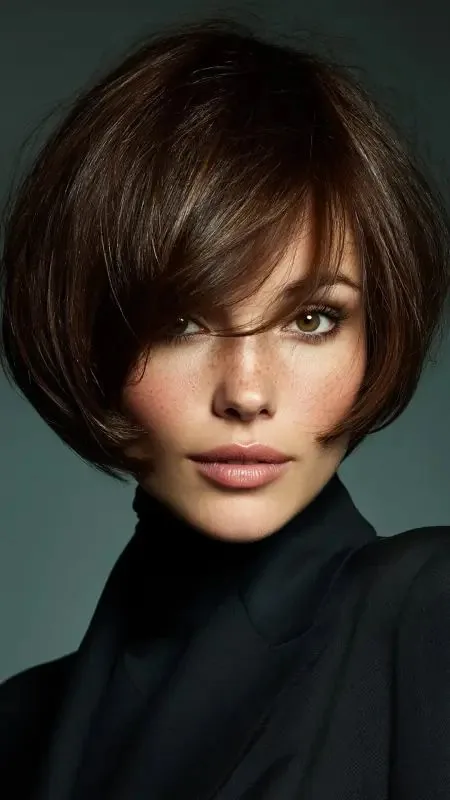
The brunette asymmetrical bob is the quiet classic of the guide: rich, glossy brown hair cut in a clean diagonal, with the shine of the colour showing off the precision of the cut. Dark hair makes the angle look sharper than light hair does, because the silhouette reads clearly against the skin, and a brunette bob with a shine serum looks expensive in a way that no other colour quite matches. It is the version for women who want drama from the cut, not the colour.
Best for: all skin tones, and women who want a low-maintenance colour. How to style it: sleek with a shine spray, or with soft waves for a relaxed take. Pros and cons: the colour needs almost no upkeep — a gloss every couple of months is enough — and the cut does all the talking. Maintenance: trims every five to six weeks, and a weekly mask to keep the shine. Cost and time: the cheapest colour version, and ten minutes to style. Common mistake: letting brunette hair go dull — a gloss treatment twice a year keeps the colour rich. Quick verdict: the most elegant, lowest-effort coloured asymmetrical bob.
29. The Black Asymmetrical Bob
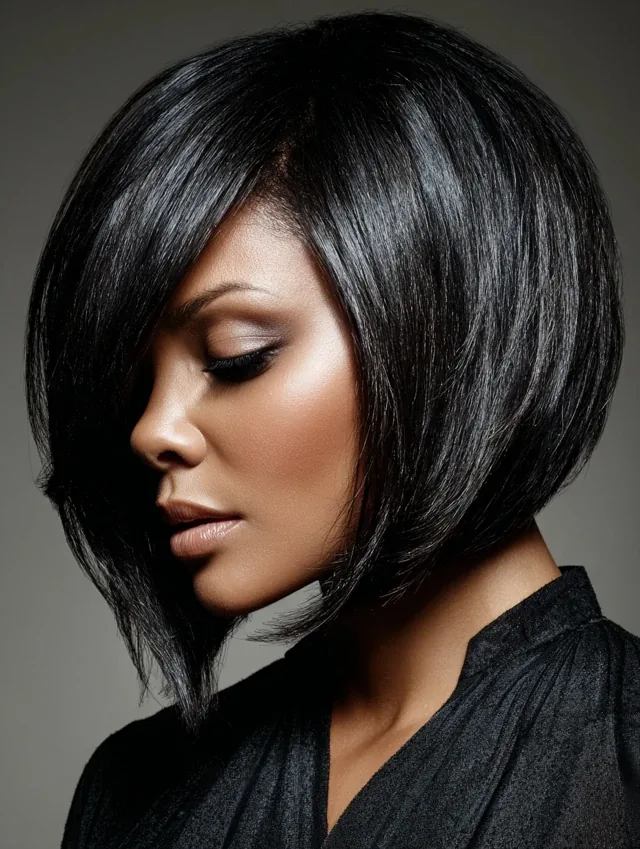
Jet-black hair turns an asymmetrical bob into a graphic statement: the dark silhouette against the skin makes the diagonal line unmistakable, and the shine of black hair gives the cut a lacquered, polished finish. It is the version for women who love a bold, defined look, and it suits straight hair best, where the line stays clean. Black hair also shows the shape of the cut more clearly than any other colour, so the asymmetry reads from across the room.
Best for: straight hair, and women with strong features who want a defined frame. How to style it: flat-iron the longer side for a mirror shine, and keep the shorter side tucked behind the ear. Pros and cons: the look is dramatic and the colour is low-maintenance, but black hair shows every split end, so trims matter more. Maintenance: trims every five weeks, and a shine serum after every wash. Who should avoid it: anyone with very fair skin who finds black hair too harsh — a softer dark brown may suit better. Quick verdict: the boldest, glossiest asymmetrical bob.
30. The Red and Copper Asymmetrical Bob
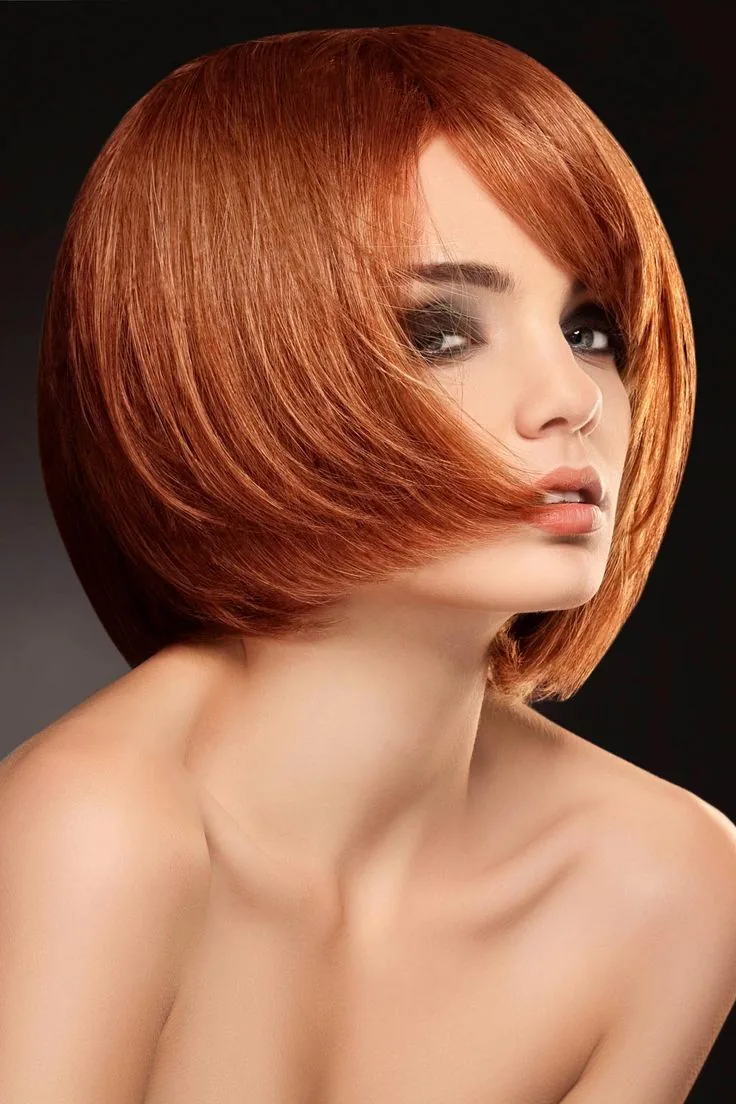
Red and copper hair gives an asymmetrical bob a warmth that no other colour has: the fiery shade makes the diagonal line glow, and the cut looks alive in a way that cooler colours cannot match. Copper suits warm skin tones beautifully, and the colour catches the light as the longer side swings, so the asymmetry is visible in motion as well as in stillness. It is the version for women who want their hair to be the warmest thing in the room.
Best for: warm skin tones, fair skin with freckles, and straight or wavy hair. How to style it: wear it wavy, so the copper catches the light in the bends. Maintenance: red fades faster than any other colour, so a colour-safe shampoo, cool water, and a colour-depositing mask every couple of weeks are essential. Cost: a colour service every six weeks to keep the copper vivid. Common mistake: washing red hair in hot water, which strips the colour fast. Pros and cons: unforgettable colour, but the highest-fading colour of all. Quick verdict: the warmest, most head-turning asymmetrical bob.
31. The Asymmetrical Bob with Peekaboo Colour
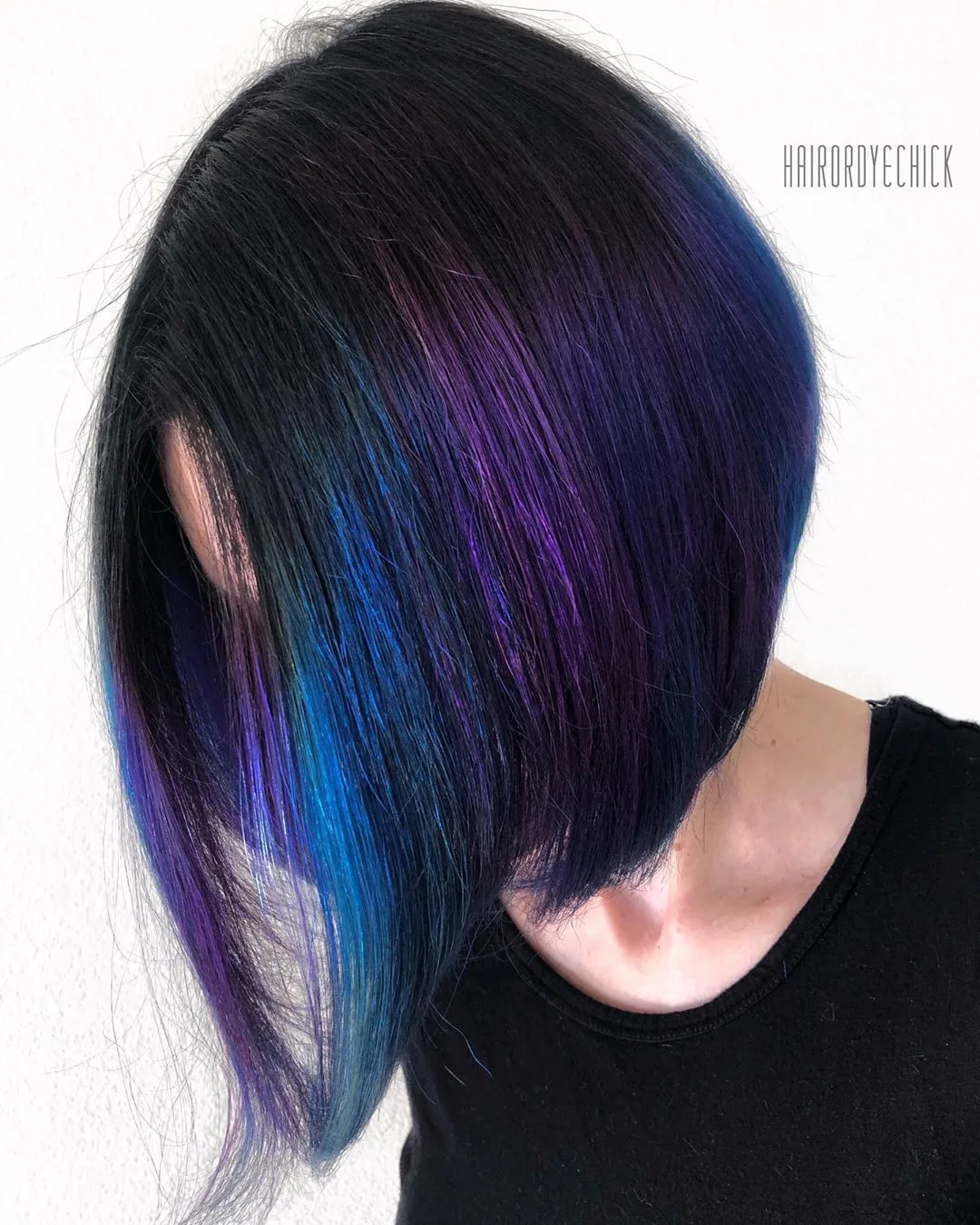
Peekaboo colour is the playful secret of the asymmetrical bob: a bright or pastel shade hidden in the underlayer of the longer side, so it flashes into view when the hair moves and disappears again when it settles. The longer side is the perfect place for it, because it moves the most, and the contrast between the peekaboo colour and the top colour makes the asymmetry even more dramatic. It is the version for women who want colour with an off switch.
Best for: women who want bright colour without the commitment, and workplaces where visible colour is frowned upon. How to style it: wear the longer side forward and let it swing, so the colour flashes as you move. Pros and cons: it is fun, reversible, and easy to hide, but it needs a colour refresh every six weeks as it fades. Maintenance: a colour-safe shampoo and a touch-up appointment every six weeks. Cost: a partial colour service on top of the cut. Common mistake: choosing a peekaboo shade too close to the top colour, so it never shows — go bold, or do not bother. Quick verdict: the most playful asymmetrical bob.
32. The Sleek Glass-Hair Asymmetrical Bob
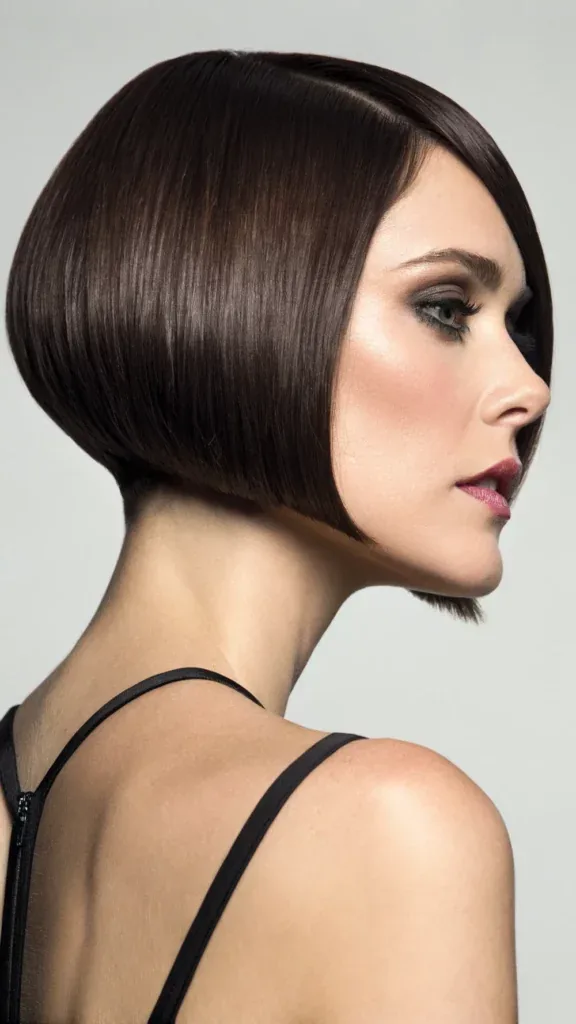
Glass hair — hair so smooth and shiny it looks like glass — takes an asymmetrical bob to its most polished extreme. The longer side is flat-ironed to a mirror finish, the shorter side is tucked neatly away, and the diagonal line is so clean it looks drawn on. It is the version for special occasions, photoshoots, and women who love a high-gloss finish, and it is the most demanding version to style, because glass hair shows every kink, every flyaway, and every uneven inch.
Best for: straight, healthy hair and special occasions. How to style it: blow-dry smooth, flat-iron in small sections, and finish with a shine serum and a light-hold spray. Time: twenty minutes — this is not a five-minute style. Pros and cons: the finish is extraordinary, but it lasts only until the first hint of humidity. Maintenance: a weekly deep-conditioning mask and regular trims keep the ends healthy enough to shine. Who should avoid it: curly and wavy hair, where glass hair is a daily battle. Quick verdict: the glossiest, most polished asymmetrical bob.
33. The Textured Choppy Asymmetrical Bob
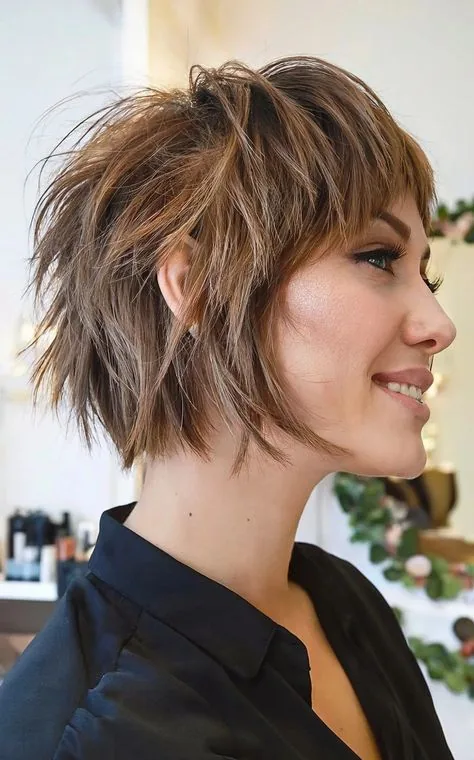
The choppy asymmetrical bob is the relaxed, rock-and-roll cousin of the sleek version: the ends are point-cut into uneven, textured pieces, the longer side falls in choppy layers, and the whole cut has a piecey, lived-in feel. It is the version for women who hate a ‘done’ look and love a cut that looks better the messier it gets. The texture also makes the cut more forgiving — small imperfections in the angle disappear into the choppiness, and the grow-out is graceful.
Best for: wavy and straight hair, and women who want a low-maintenance edge. How to style it: scrunch in a texturising spray, shake it out, and go — the messier, the better. Pros and cons: it needs almost no styling and grows out beautifully, but it can look scruffy in a formal setting. Maintenance: trims every six to eight weeks. Cost and time: a standard bob cut, five minutes to style. Common mistake: over-texturising fine hair, which makes it look thin — ask for texture at the ends only. Quick verdict: the coolest, most effortless asymmetrical bob.
34. The Messy Asymmetrical Bob
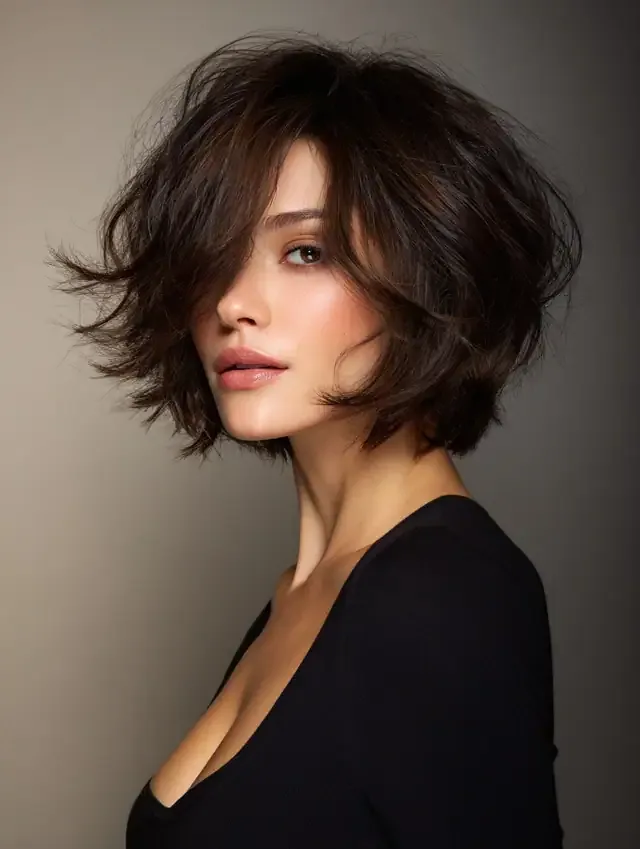
The messy asymmetrical bob is the ‘I woke up like this’ version of the cut: tousled, textured, and deliberately undone, with the longer side falling in a soft tangle past the chin and the shorter side kicked out behind the ear. It looks effortless, but the cut underneath is precise — the mess is a styling choice, not an accident, and it only works because the asymmetry gives the mess a shape. It is the version for weekends, holidays, and women who want their hair to look like they never tried.
Best for: wavy hair and second-day hair. How to style it: sleep on it, or scrunch in dry shampoo and texturising spray and shake it out. Pros and cons: it is the fastest style in the guide — two minutes — but it can tip into ‘unkempt’ if the cut itself is not sharp. Maintenance: trims every six weeks keep the shape under the mess. Who should avoid it: formal occasions, where the mess reads as unfinished rather than relaxed. Time: two minutes. Quick verdict: the most relaxed asymmetrical bob — messy on purpose.
35. The Asymmetrical Bob with Curls at the Ends
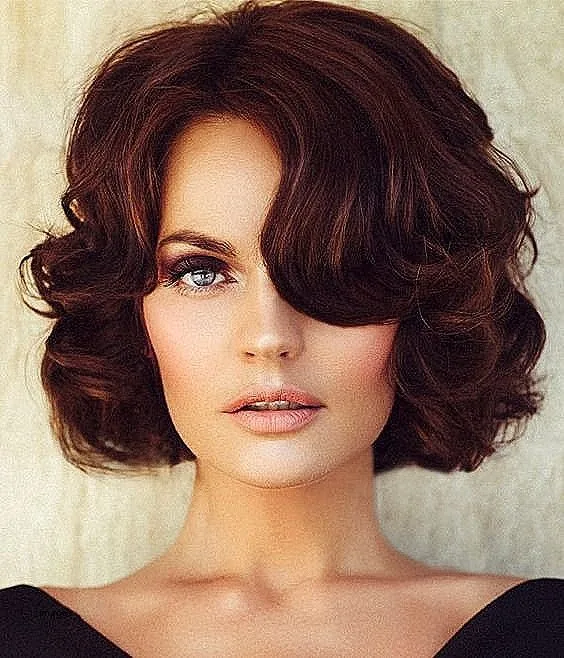
Curling just the ends of an asymmetrical bob gives the cut a vintage, almost 1960s feel: the longer side flips out at the chin, the shorter side kicks out at the cheek, and the whole cut has a swing that a straight bob never has. It is the version for women who love a retro touch without committing to a full vintage style, and it works beautifully for parties, dates, and photographs, where the flipped ends catch the light and the movement.
Best for: straight and slightly wavy hair, and special occasions. How to style it: wrap the ends around a large curling wand, flipping them outward, and finish with a light-hold spray. Time: fifteen minutes. Pros and cons: the finish is glamorous and fun, but it falls out in humidity, so it is not an all-day style in summer. Maintenance: trims every five to six weeks to keep the ends healthy enough to curl. Common mistake: curling the whole length, which turns the bob into a wave — curl the ends only. Quick verdict: the most glamorous, retro asymmetrical bob.
36. The Wedding and Formal Asymmetrical Bob

An asymmetrical bob can be a wedding hairstyle — for the bride, a bridesmaid, or a guest — when it is styled with intent. The longer side is curled softly and pinned with a pearl or crystal accessory, the shorter side is tucked behind the ear to show off an earring, and the whole cut looks deliberate and elegant rather than casual. It is the version for women who want short hair at a formal occasion without feeling underdressed, and it photographs beautifully, because the angle gives the camera something to follow.
Best for: weddings, galas, and formal evenings. How to style it: curl the longer side in soft waves, add a pearl pin where the two sides meet, and finish with a strong-hold spray. What to ask your stylist for: a trial run before the event, with the accessory you plan to wear. Time and cost: the styling takes thirty to forty-five minutes, and a salon styling session is worth it for a formal event. Maintenance: a single pin check in the evening is all it needs. Common mistake: leaving the cut unstyled for a formal event — an asymmetrical bob needs its ten minutes, even at a wedding. Quick verdict: the most elegant short-haired formal look.
37. The Asymmetrical Bob for Work

The work asymmetrical bob is the polished, professional version of the cut: a subtle angle, a smooth finish, and no drama that would distract in a meeting. The longer side falls to the chin or the jaw, the shorter side sits neatly at the ear, and the whole cut reads as deliberate and neat — exactly the way a good haircut should read in an office. It keeps the hair off the face and neck through a long day, it does not need touching up between meetings, and it looks as good at 5 p.m. as it did at 9 a.m.
Best for: office work, teaching, healthcare, and any job where the hair needs to stay put. How to style it: blow-dry smooth in the morning, tuck the shorter side behind the ear, and go. Pros and cons: it is professional without being boring, but the angle should stay subtle — one to two inches — or the cut can read as too fashion-forward for a conservative office. Maintenance: trims every six weeks. Time: ten minutes to style. Cost: a standard bob cut. Common mistake: a dramatic angle for a conservative workplace — save the drama for the weekend. Quick verdict: the most professional asymmetrical bob.
38. The Low-Maintenance Grow-Out Asymmetrical Bob
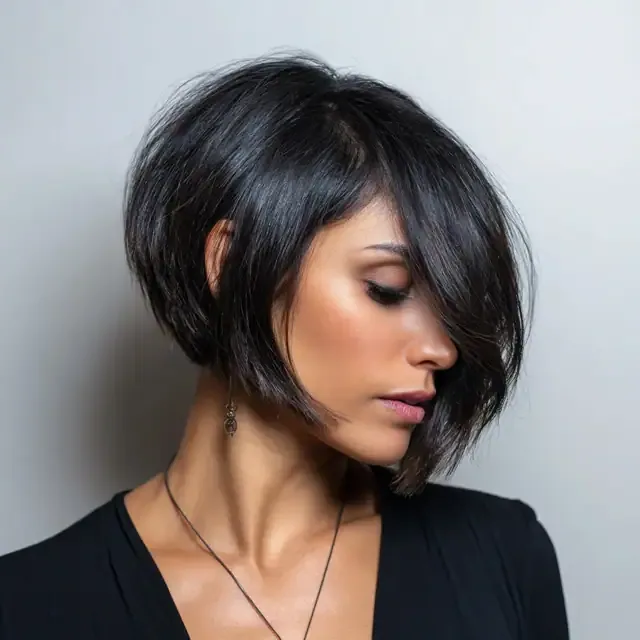
Not every asymmetrical bob needs a trim every month. The low-maintenance version starts with a subtle angle and a shoulder-length long side, so the cut grows out into a long bob rather than into a mess, and the asymmetry fades slowly instead of disappearing overnight. It is the version for busy women, new mothers, and anyone who cannot get to the salon every five weeks — a cut that still looks intentional at eight weeks, and still looks good at twelve.
Best for: busy schedules, and women who hate frequent salon visits. How to style it: air-dry with a little leave-in cream, and let the longer side fall where it wants. Pros and cons: it needs trims only every eight to ten weeks, but the asymmetry is subtle by design, so it never has the drama of a sharper version. Maintenance: a weekly mask keeps the ends healthy as they grow. Cost: the cheapest asymmetrical bob to maintain over a year. What to ask your stylist for: a subtle angle and a long side that reaches the shoulder. Quick verdict: the easiest asymmetrical bob to live with.
39. The Asymmetrical Bob with a Middle Part
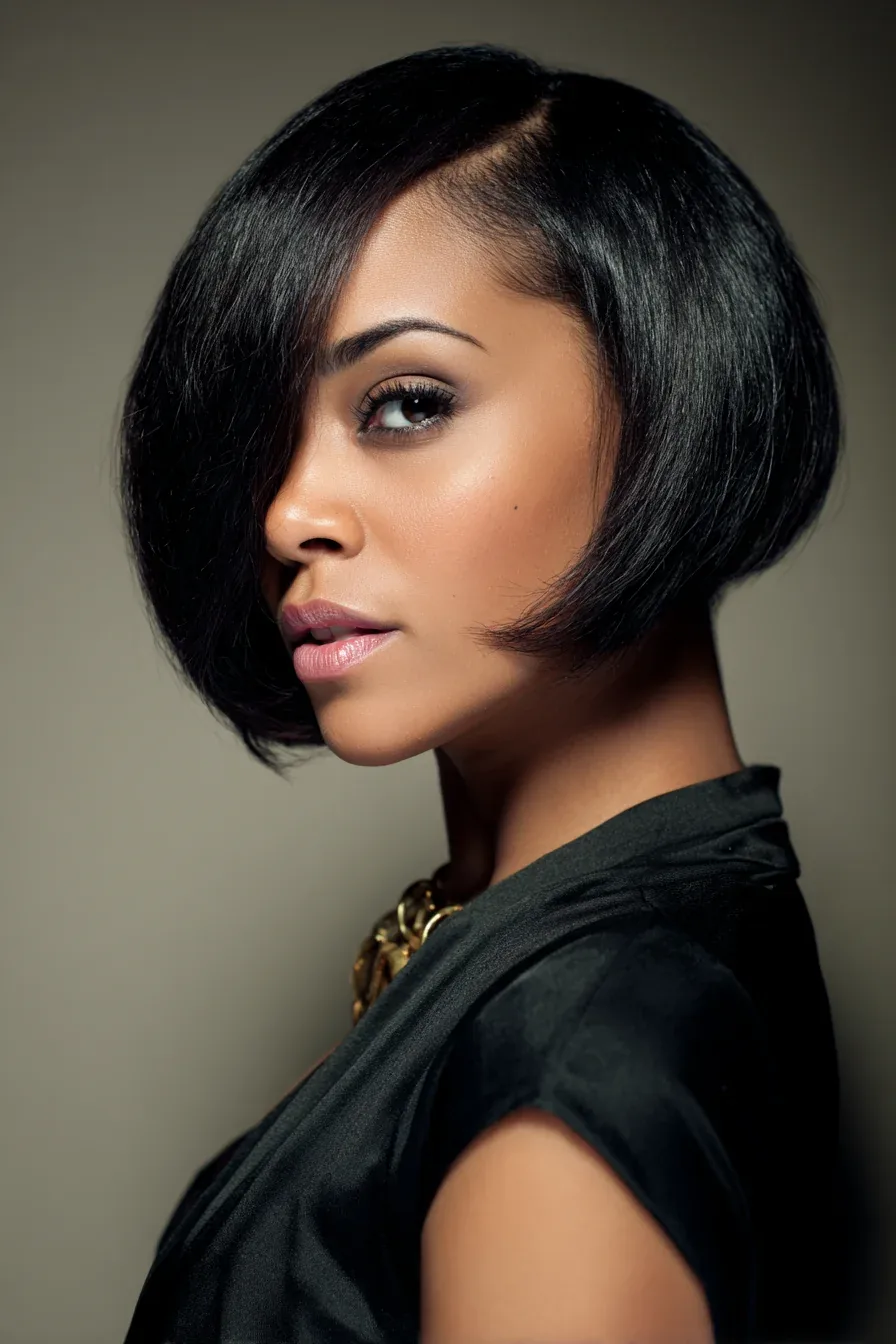
A middle part with an asymmetrical bob sounds like a contradiction, but it works: the hair is parted in the centre, and the two sides fall at different lengths, so the face is framed unevenly in a way that looks modern and a little bit offbeat. The middle part keeps the cut balanced at the top, while the asymmetry does its work at the bottom, and the result is a cut that looks intentional rather than accidental. It is the version for women who love a centre parting and do not want to give it up.
Best for: oval and heart-shaped faces, and women who always part their hair in the middle. How to style it: part the hair dead centre while it is damp, blow-dry each side forward, and let the lengths speak for themselves. Common mistake: a very dramatic difference with a middle part, which can look lopsided rather than stylish — keep the difference to two or three inches. Pros and cons: it is striking and modern, but it needs the hair to fall evenly on both sides, so it suits straight hair best. Maintenance: trims every five to six weeks. Quick verdict: the most modern, offbeat asymmetrical bob.
40. The Asymmetrical Bob with a Deep Side Part
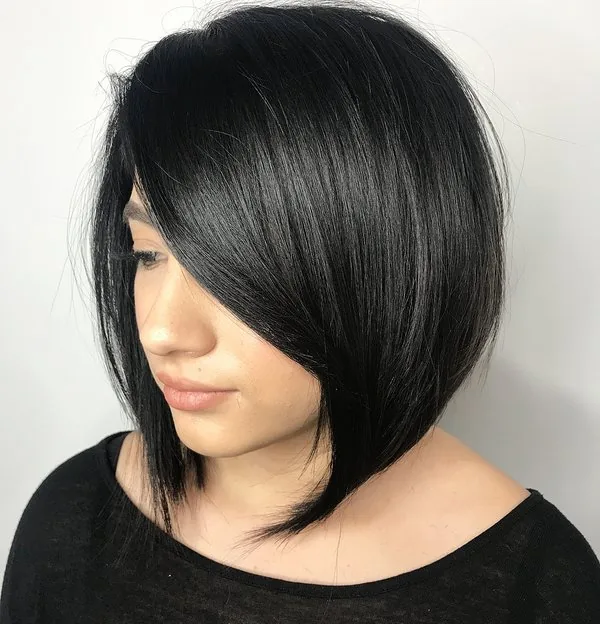
The deep side part is the final flourish on an asymmetrical bob: the hair is parted far to one side, the longer side sweeps across the forehead and past the cheek in a long, dramatic curtain, and the shorter side is tucked neatly behind the ear. The parting and the asymmetry work in the same direction, so the whole cut flows in one long diagonal from the parting to the chin, and the effect is glamorous, old-Hollywood, and unmistakably deliberate. It is the version that turns heads in a restaurant and photographs like a portrait.
Best for: oval, round and heart-shaped faces, and evening occasions. How to style it: part the hair deeply while it is damp, blow-dry the longer side across the forehead with a round brush, and finish with a shine serum. Pros and cons: the sweep is gorgeous, but it needs a little product to stay in place, and it can fall into the eyes if the longer side is not long enough. Maintenance: trims every five weeks, and a root touch-up if the parting shows regrowth. Time: fifteen minutes. What to ask your stylist for: a deep side part on the opposite side from the longer length, so the sweep crosses the face. Quick verdict: the most glamorous asymmetrical bob of all.
What is an asymmetrical bob haircut?
An asymmetrical bob is a bob haircut in which one side is cut longer than the other. The difference can be as small as one inch or as large as several inches, and the longer side usually falls at the front, framing the face, while the shorter side sits higher. It is a deliberate, measured angle — not a mistake — and it adds movement, drama and face-framing to a classic bob.
How long does my hair need to be for an asymmetrical bob?
Your hair needs to reach at least chin length for an asymmetrical bob, because the longer side needs enough length to show the difference from the shorter side. Chin-length hair works for a subtle version, shoulder-length hair works for almost every version, and longer hair suits the long asymmetrical bob. Hair shorter than chin length is better suited to a pixie-bob, where the asymmetry is created with a long sweeping fringe instead.
Does an asymmetrical bob suit a round face?
Yes, an asymmetrical bob is one of the best cuts for a round face. The diagonal line breaks up the width of the cheeks, the longer side draws the eye downward, and a little height at the crown lengthens the face. For the most flattering result, make the longer side fall past the chin, keep the shorter side above the cheekbone, and avoid a chin-length cut on both sides, which can emphasise roundness.
How do I style an asymmetrical bob at home?
To style an asymmetrical bob at home, blow-dry with a round brush, directing the longer side forward and slightly under, and tuck the shorter side behind the ear. For a sleek finish, flat-iron the longer side only; for waves, wrap the longer side around a curling wand away from the face. Finish with a little smoothing serum on the longer side and a light-hold spray, and always style the longer side last, because it is the side everyone looks at.
How often do I need to trim an asymmetrical bob?
An asymmetrical bob needs a trim every four to six weeks, depending on how dramatic the angle is. A subtle angle lasts six to eight weeks, a medium angle needs a trim every five to six weeks, and a dramatic angle needs one every four to five weeks, because hair grows about half an inch a month and the difference between the two sides fades as it grows. Many salons offer a quick fifteen-minute tidy-up of the line between full cuts.
Can I have an asymmetrical bob with curly hair?
Yes, you can have an asymmetrical bob with curly hair, and it looks beautiful — but it must be cut dry, curl by curl, by a stylist who understands curly hair. Curls spring up when they dry, so a wet cut will end up shorter and more uneven than planned. Ask for a dry cut with the longer side at least two inches longer when dry, and style it with curl cream and a diffuser or by air-drying.
Is an asymmetrical bob high maintenance?
An asymmetrical bob is medium maintenance. It needs about ten minutes of styling in the morning — blow-drying the longer side forward and tucking the shorter side — and a trim every four to six weeks to keep the angle sharp. The subtle, shoulder-length versions are the easiest to maintain, needing trims only every six to eight weeks, while dramatic and very short versions need the most upkeep.
What is the difference between an asymmetrical bob and an A-line bob?
An A-line bob is shorter at the back and longer at the front on both sides, so the two front sections are the same length. An asymmetrical bob is longer on one side than the other, so the two front sections are different lengths. Many asymmetrical bobs are also A-line bobs — they combine the back-to-front slope with the side-to-side difference — but an A-line bob on its own is symmetrical, while an asymmetrical bob is not.
Can I get an asymmetrical bob with fine hair?
Yes, but keep the angle subtle — one to two inches — and ask for blunt ends with no thinning. The weight of the blunt ends gives fine hair its movement, and the asymmetry adds the interest a blunt bob can lack. A dramatic angle on fine hair can look stringy on the long side, so start subtle, use a volumising mousse when blow-drying, and keep the ends blunt to make the hair look as full as possible.
How do I grow out an asymmetrical bob?
To grow out an asymmetrical bob, let the shorter side catch up, which takes three to four months, and have your stylist trim the longer side lightly at each appointment so the two sides meet gradually. Expect a few awkward weeks in the middle, when the sides are almost — but not quite — even. If you want it over quickly, ask your stylist to even the cut into a classic bob at your next appointment, which is instant and painless.
Conclusion
An asymmetrical bob is the smallest change with the biggest payoff: one side longer, one diagonal line, and a plain bob becomes a haircut with movement, attitude and a point of view. Every style in this guide is a variation on that single idea — subtle or dramatic, curly or sleek, stacked or undercut, platinum or brunette — and the right version depends on your face, your hair and how much drama you want to wear on an ordinary Tuesday. The cut rewards a good stylist and regular trims, but it pays you back every morning, because ten minutes of styling is all it takes to look deliberate.
Start with the version that feels like you. If you are nervous, start subtle — a one-inch difference, a shoulder-length long side — and go bolder at the next appointment, because an asymmetrical bob is easy to deepen and hard to undo. Bring photos, point to the side you want longer, and say exactly where you want it to end. Then wear it: tuck the short side behind your ear, let the long side swing, and enjoy the cut that does the work of a whole outfit. One side longer is all it takes.