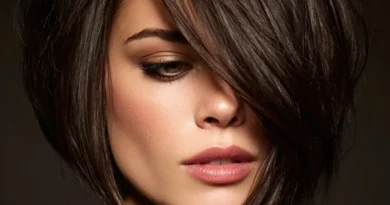
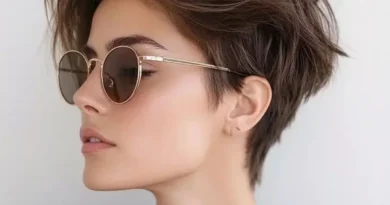
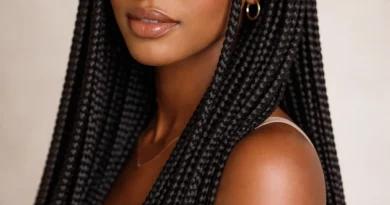
The Modern Perm Is Not Your Grandma’s Perm: 34 Soft, Lived-In Curls for Women
Say the word perm and many women still picture the tight, frizzy curls of the 1980s — a wall of springy ringlets, a cloud of hairspray, and a style that looked the same on everyone. The modern perm is nothing like that. Today’s perms are soft, loose and lived-in: gentle body waves that move when you walk, beach waves that look like you spent a day by the sea, spiral curls that fall in defined ribbons, and root perms that simply lift flat hair at the crown. The goal is no longer maximum curl. It is texture, movement and volume that looks like your hair, only better.
This guide gathers 34 modern perm hairstyles for women, from the soft body-wave perm and the beach-wave perm to spiral, root, digital and lived-in curls — plus versions for short, medium and long hair, fine and thick hair, bobs and layers, blondes and brunettes, weddings and workdays. Eight guides explain what a modern perm really is, how the main types compare, whether your hair is ready for one, what it costs and how long it lasts, how to prepare, and how to care for your curls afterwards. One honest note first: a perm is a chemical service, so the stylist, the rod size and the health of your hair matter far more than the name of the perm — choose those well, and the curls will look effortless.
What Is a Modern Perm — And How It Differs From the 1980s Perm
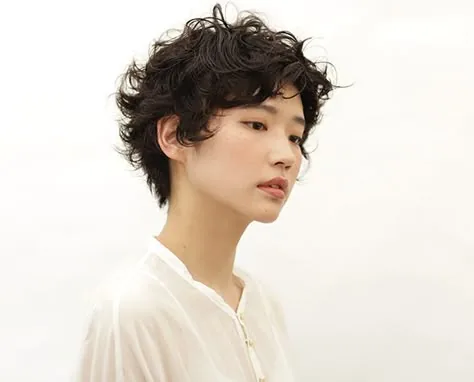
A modern perm is a chemical treatment that reshapes the hair into lasting waves or curls, just like the perms of the past — but everything about the technique has changed. Instead of tiny rods wound tight from root to tip, stylists now use large rods, soft wraps and varied rod sizes, and they often perm only the mid-lengths and ends, or alternate rod sizes, so the curl pattern looks uneven and natural. The result is movement rather than a uniform spiral: waves that start lower down, curls that loosen as they grow out, and hair that still swings. Many modern perms also use gentler, acid-balanced solutions and add conditioning treatments during the service, so the hair feels softer afterwards than an old-fashioned perm ever did.
The biggest difference is the finish. An 1980s perm was designed to be a hairstyle in itself — big, high and unmistakable. A modern perm is designed to be a base: hair that air-dries into a wave, holds a blow-dry for days, and needs only a little cream or mousse to look finished. Quick verdict: if you want curls that look done without looking permed, the modern perm is the one to ask for — and if a stylist shows you a wall of tiny rods and promises tight curls, you are in the wrong chair for this look.
Types of Modern Perms Compared: Body Wave, Spiral, Digital, Root and More
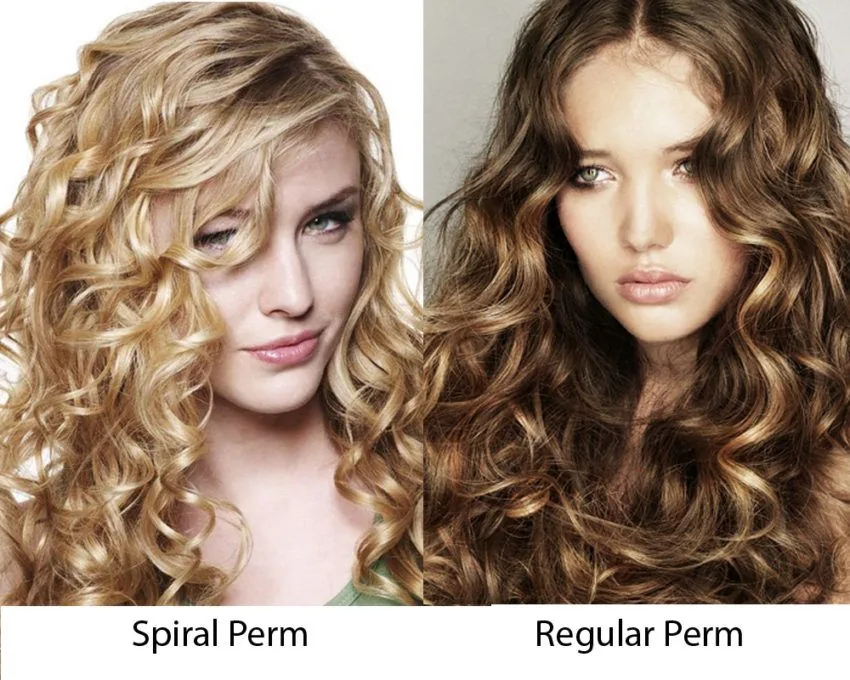
The names on a salon menu can be confusing, because several perm types overlap. A body-wave perm uses the largest rods to create loose, S-shaped waves and volume — the most popular modern choice. A beach-wave perm is a looser, more uneven version, often wound on varied rods so the waves look wind-blown. A spiral perm uses smaller rods wound vertically for defined, springy curls that hold their shape. A digital perm uses heated rods, controlled by a machine, to create soft, bouncy curls that look best when blow-dried, and it works especially well on thick or straight Asian hair. A root perm treats only the first few inches at the scalp, lifting flat hair without curling the lengths at all.
Which one suits you depends on what you want the hair to do every morning. Want wash-and-go waves? Ask for a body wave or beach wave. Want visible, defined curls? A spiral perm is the honest choice. Want curls that look polished after a blow-dry? Consider a digital perm. Want volume without curl? A root perm gives lift for months with almost no styling change. Pros and cons: larger rods mean softer, more natural results but curls that relax sooner; smaller rods mean longer-lasting curls but a bolder look. Bring photos, and ask the stylist which rod size they would use on your hair — that answer tells you more than the perm’s name.
Is a Modern Perm Right for Your Hair Type? The Honest Hair-Health Check
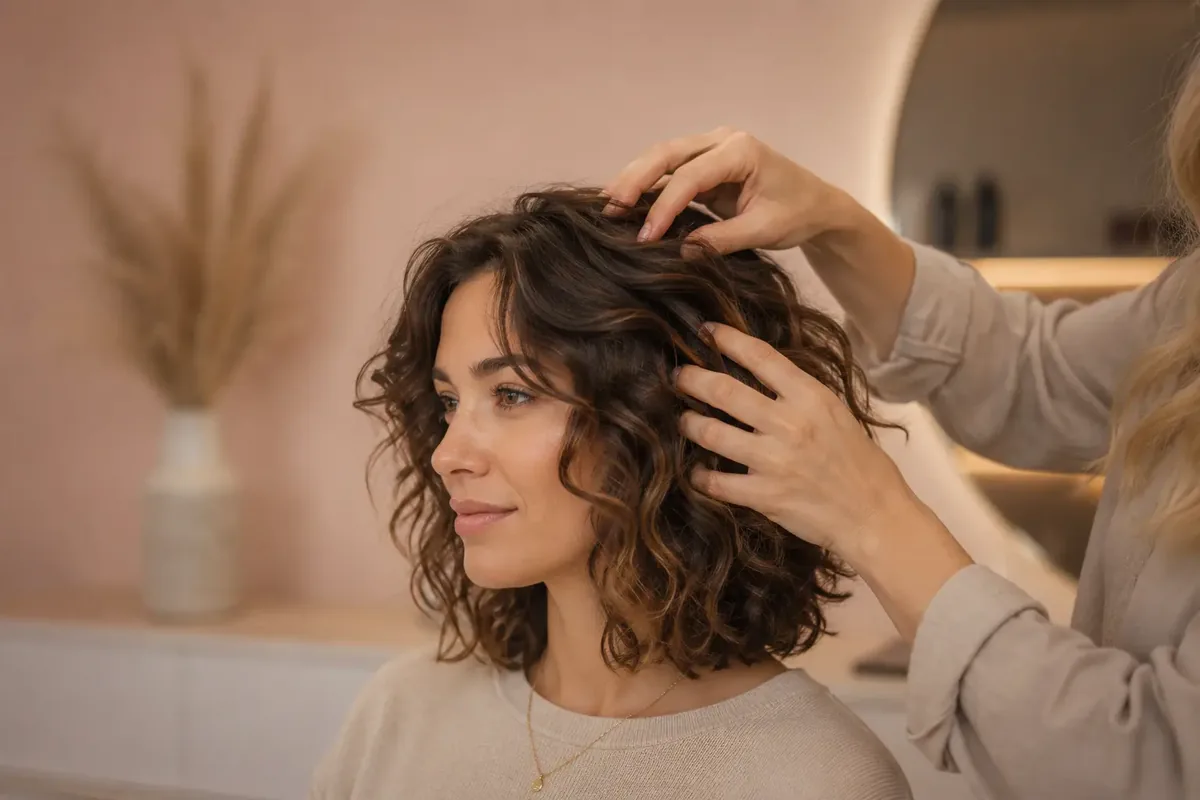
A perm works best on virgin or lightly coloured hair that is in good condition — strong, elastic and not already over-processed. Hair that stretches a little when wet and springs back is ready; hair that stretches and stays stretched, snaps easily, or feels mushy when wet is not, and a perm on it will only make things worse. Bleached, highlighted or heavily lightened hair can usually still be permed, but only with a gentler solution, a strand test first, and a stylist who is honest about the risk. Very fine hair can take a perm beautifully, because the curl adds the volume fine hair lacks — but the rods must be chosen carefully, or the curl can overwhelm the hair.
Before you book, ask for a consultation and a strand test: a good stylist will test a small hidden section, check how your hair reacts, and tell you plainly if the answer is no. Who should avoid a perm for now: anyone with very damaged, gummy or breaking hair, anyone who has just had a relaxer or a keratin treatment, and anyone whose scalp is irritated or sunburned. Common mistake: booking a perm the same week as a colour appointment. Space them out — colour first, then wait at least two weeks, or perm first and colour two weeks later — so the hair is never hit with two chemical services at once.
How Long Does a Modern Perm Last? Cost, Salon Time and Grow-Out
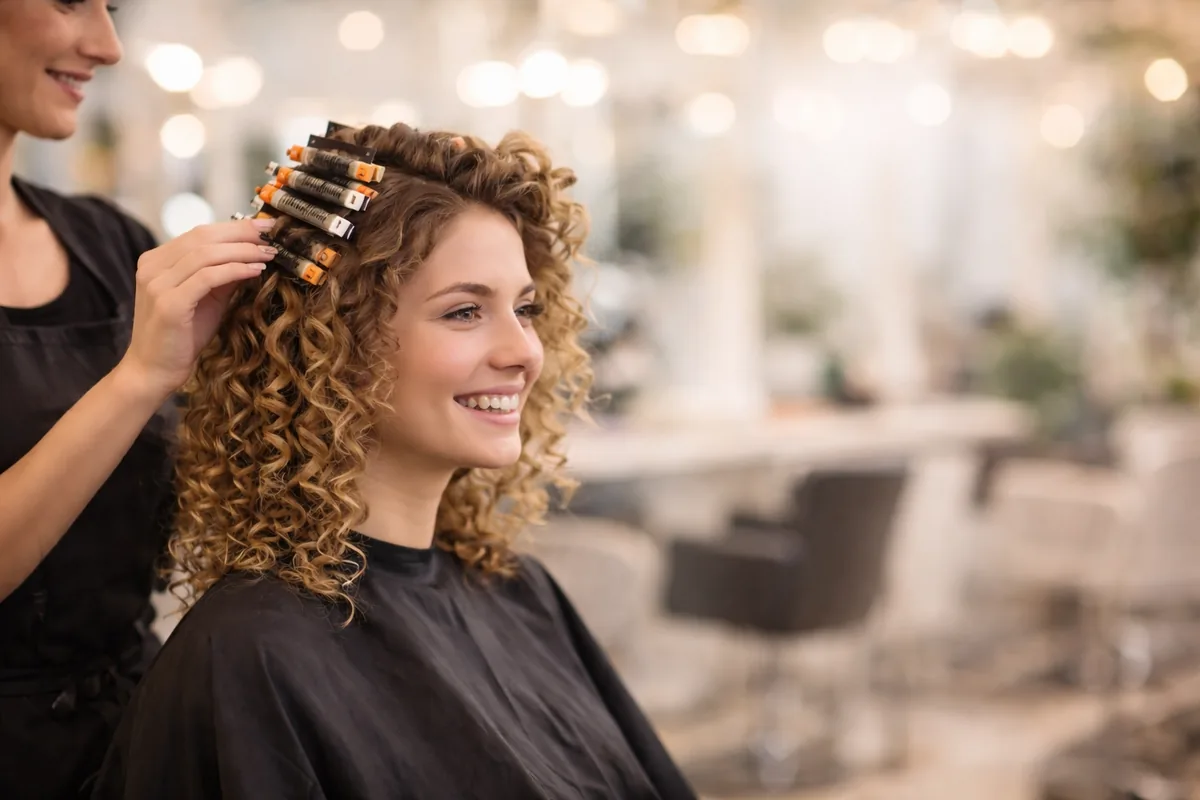
A modern perm usually lasts three to six months, depending on the curl size, your hair’s texture and how you care for it. Tight spiral curls hold longest; loose body waves relax first, often softening into a gentle wave after two or three months — which many women actually prefer, because the grow-out looks intentional rather than awkward. Because modern perms are wound loosely and unevenly, they grow out far more gracefully than old perms did: there is no harsh line where the curl stops, just a gradual loosening from the roots down. Expect to spend two to four hours in the salon, depending on your hair’s length and thickness.
Cost varies widely by city and salon, but as a rough guide a modern perm typically runs from about $80 to $250 or more, with long or thick hair at the higher end. What to ask: does the price include the cut, the conditioning treatment and the styling lesson afterwards? Maintenance: a perm is not a one-and-done service — plan for a trim every eight to ten weeks to keep the ends healthy, and a fresh perm when the roots have grown out enough that the top looks flat while the ends still curl. Quick verdict: budget for the perm and one follow-up trim, and judge the value by how many good-hair mornings it buys you, not by the price alone.
How to Prepare for Your Perm Appointment
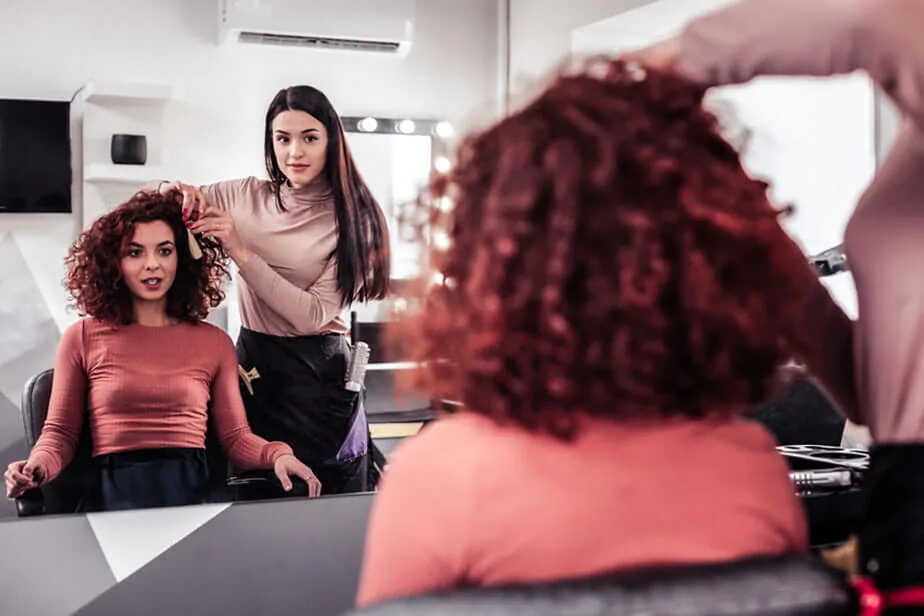
Good preparation makes a better perm. Arrive with clean, product-free hair — wash it the day before, not the morning of, and skip heavy oils, silicone serums and dry shampoo, which can block the solution from working evenly. Do not arrive with your hair freshly coloured or freshly straightened; give the hair at least two weeks after any chemical service. Bring photos of the curl you want and, just as usefully, photos of curls you do not want — a stylist learns as much from the no pile as from the yes pile. Wear a top you do not mind getting damp, and clear your afternoon: a perm cannot be rushed, and a stylist who hurries the processing time is cutting corners.
What to ask at the appointment: which solution strength suits your hair, what rod size will be used and why, and how long the processing will take. A good stylist will explain the strand test, section your hair before starting, and check the curl as it develops rather than leaving it to a timer alone. Common mistake: arriving with second-week dirty hair full of dry shampoo and expecting an even result. Clean hair takes the solution evenly, and even processing is what keeps one side from curling tighter than the other.
Aftercare: How to Wash, Dry and Keep Permed Curls Soft
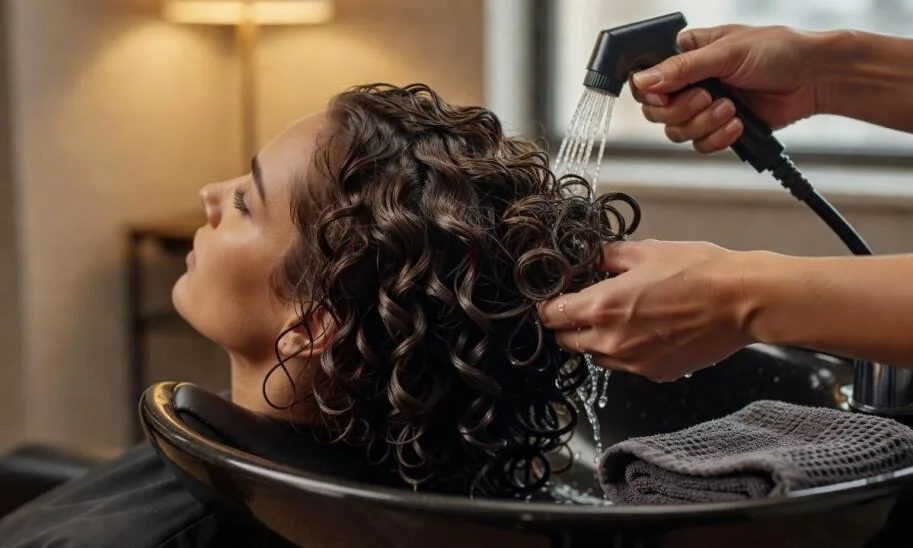
The first 48 hours matter most. Do not wash your hair, get it wet, tie it up tightly or tuck it behind your ears for two days after a perm, while the new curl pattern sets. After that, wash less often — two or three times a week is plenty — with a sulfate-free shampoo, and always follow with conditioner, concentrating on the mid-lengths and ends. Rinse with lukewarm water, not hot, and never rub the hair dry with a towel; squeeze it gently with a microfibre towel or an old cotton T-shirt instead. A weekly deep-conditioning mask keeps permed hair soft, and a leave-in cream or curl cream applied to damp hair defines the wave without stiffness.
How to dry it: for the softest result, let the hair air-dry most of the way, scrunching in a little curl cream, then finish with a diffuser on low heat if you want more volume. Avoid brushing dry curls — it breaks the pattern and turns waves into frizz. Instead, detangle gently with a wide-tooth comb while the hair is wet and conditioned. Maintenance: sleep on a silk or satin pillowcase, or loosely pineapple the hair on top of your head at night, and refresh second-day curls with a light mist of water mixed with a drop of leave-in conditioner, scrunched back into shape.
Styling a Modern Perm Day to Day: From Wash-and-Go to Polished
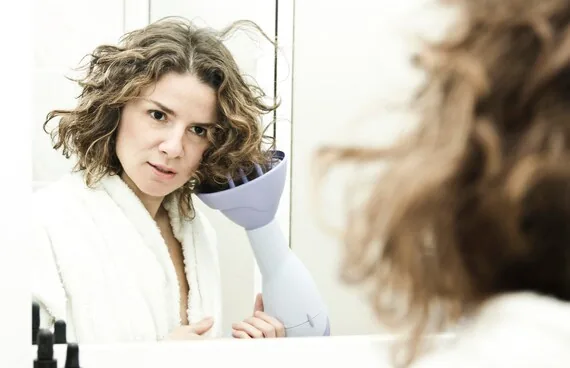
The best thing about a modern perm is how little it asks of you in the morning. On a wash day, apply curl cream or mousse to damp hair, scrunch upward, and either air-dry or diffuse — that is the whole routine, and it takes about five minutes of hands-on time. On a non-wash day, mist the hair lightly, scrunch in a pea-sized amount of cream, and the waves come back. If you want a more polished finish, blow-dry with a round brush on the top sections only, leaving the ends to curl naturally, which gives smoothness at the roots and movement at the ends. A little texture spray at the roots adds lift without disturbing the curl pattern.
For different occasions, the same perm can be dressed up or down: wear it loose and scrunched for a casual day, smooth the top and pin one side back for work, or gather it into a low, loose bun with face-framing curls for an evening out. What to avoid: heavy waxes and oils, which weigh the curl down, and flat irons used daily, which will gradually relax the perm. Quick verdict: a modern perm earns its keep on the mornings you do almost nothing — the curl is already there, and your job is simply not to undo it.
Common Perm Mistakes — And How to Avoid Them
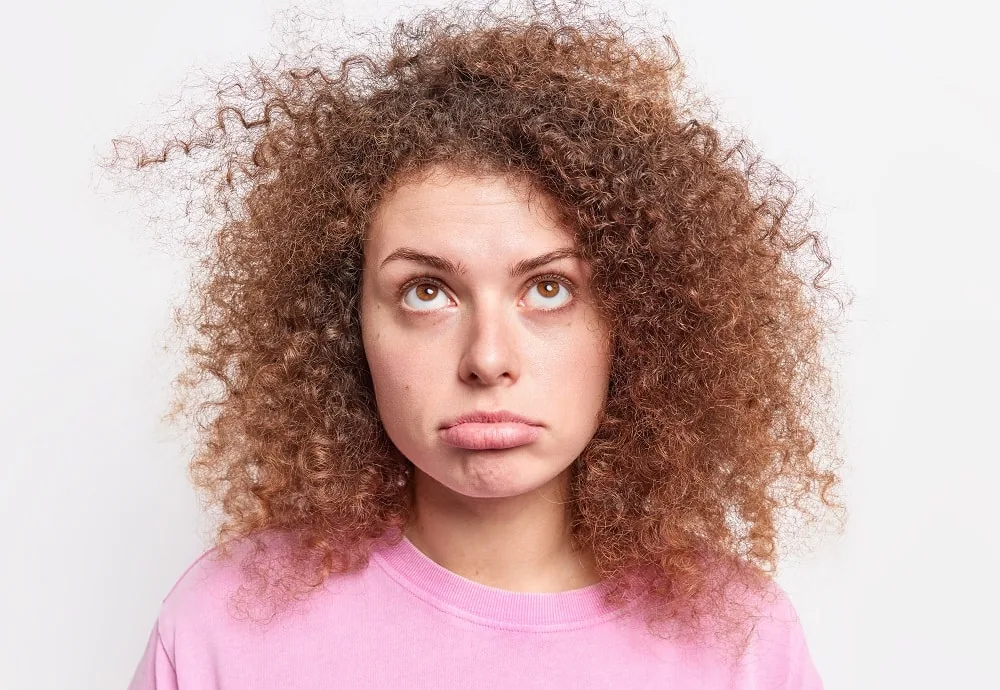
The most common perm mistake is choosing the wrong curl size: rods that are too small give tight, dated curls, while rods that are too large on very straight, heavy hair may barely hold at all. The second is skipping the consultation — booking a perm without a strand test, without discussing your hair history, and without saying what you actually want. The third is aftercare: washing too soon, brushing dry curls, or using a harsh shampoo that strips the curl within weeks. And the fourth is expecting a perm to fix hair that is already damaged; a perm adds stress, so it should only go on hair that is healthy enough to take it.
How to avoid them all: bring photos, insist on a strand test, be honest about every chemical service your hair has had in the last year, and follow the 48-hour no-wash rule. If the result comes out tighter than you wanted, do not panic — perms relax noticeably in the first two weeks, and a good stylist can soften them with a conditioning treatment. If it comes out too loose, tell the salon within a few days; most reputable salons will adjust or re-perm at a reduced cost. Who should avoid it: anyone who straightens their hair every single day — a perm and a daily flat iron are working against each other, and one of them will lose.
1. The Soft Body-Wave Perm
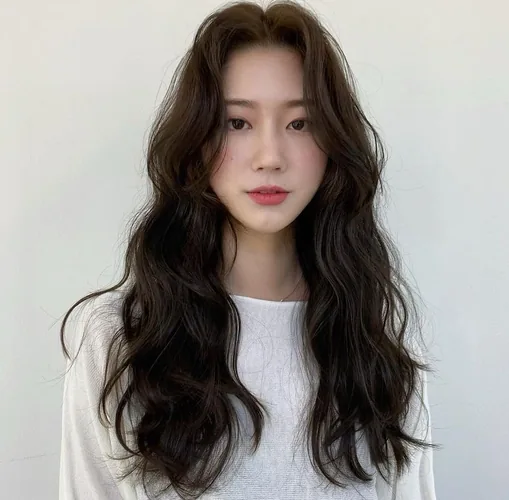
The soft body-wave perm is the modern perm most women ask for first, and for good reason: large rods create loose, S-shaped waves that give the hair movement, body and volume without an obvious curl pattern. The waves start around the cheekbones or mid-lengths and flow down, so the hair looks like it has been styled with a large-barrel curling iron — except it holds for months. It is the perm for women who want their hair to look effortlessly styled every morning, and it suits almost every length from shoulder-length down.
Best for: straight or slightly wavy hair that falls flat, and anyone who wants volume without a visible curl. How to style it: scrunch in curl cream on damp hair and air-dry, or blow-dry with a round brush for a smoother, salon-finished wave. Cost and time: usually two to three hours in the salon, and it lasts three to five months. Quick verdict: the safest, most flattering first perm — if you are only going to try one, try this one.
2. The Beach-Wave Perm
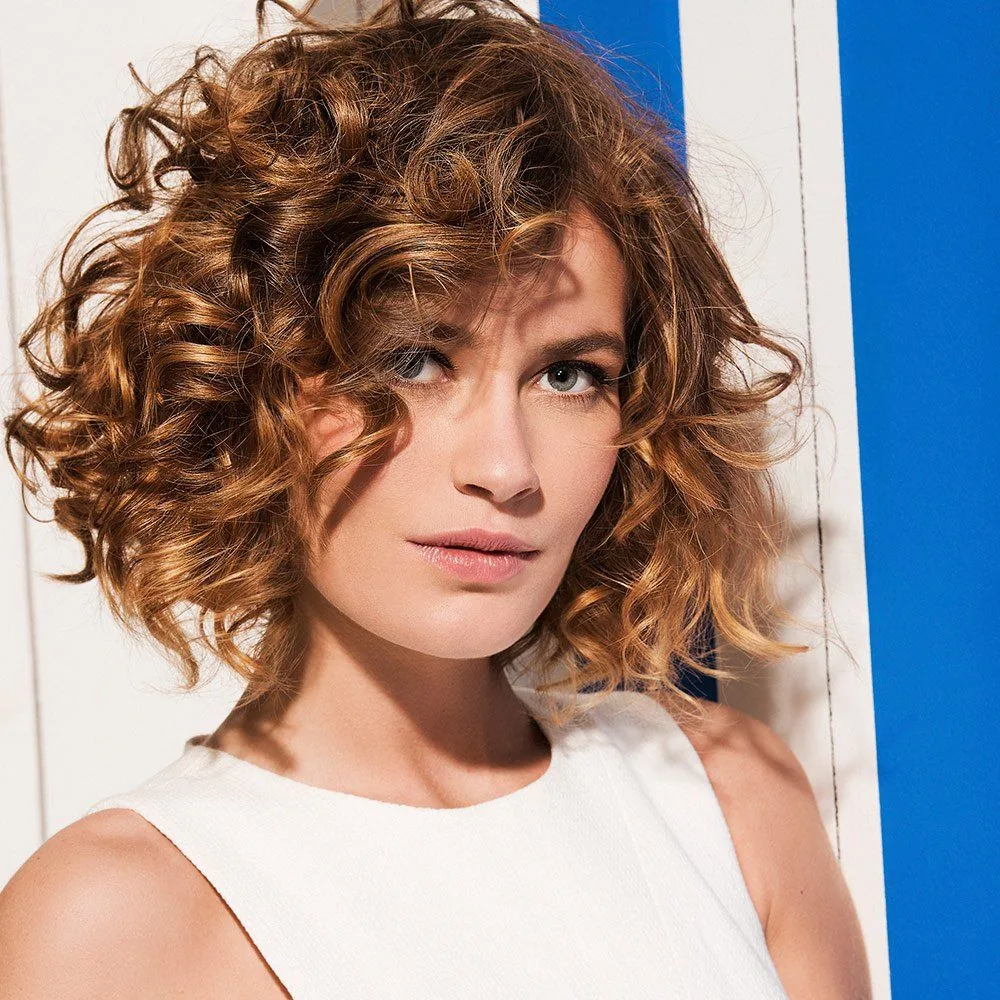
The beach-wave perm is the body wave’s more relaxed sister: the rods are varied in size and wound unevenly, so the waves look wind-blown and slightly messy, like hair that has dried in sea air. Some pieces curl, some only bend, and the overall effect is texture rather than pattern. It is the perm for women who like their hair a little undone, and it is especially forgiving as it grows out, because the uneven pattern hides the regrowth line completely.
Best for: casual, low-effort style and medium to long hair. How to style it: a spritz of salt spray or texture spray on damp hair, scrunched and left to air-dry, is genuinely all it needs. Pros and cons: it is the easiest perm to live with and the most forgiving grow-out, but the waves are the loosest of all, so very straight, heavy hair may need a slightly smaller rod to hold the wave. Common mistake: over-styling it — the more you fuss with a beach-wave perm, the less beachy it looks.
3. The Spiral Perm
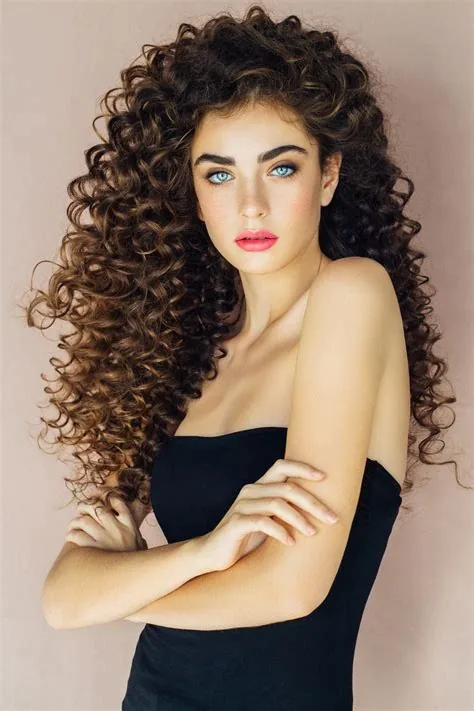
The spiral perm is the boldest modern perm: hair is wound vertically around long, thin rods, so the curls fall in defined, springy spirals that hold their shape all day. Modern spiral perms use larger rods and better conditioning than the tight perms of the past, so the curls are bouncy rather than frizzy, and they look deliberate and glamorous rather than dated. This is the perm for women who want visible curls — not just waves — and who love a full, voluminous silhouette.
Best for: long hair, thick hair, and anyone who wants a statement curl. How to style it: curl cream and a diffuser give definition without frizz; finger-comb the curls apart gently once dry for softness. Maintenance: spiral curls need the most moisture of any perm, so a weekly mask is not optional. Who should avoid it: women who want a subtle change — a spiral perm is a commitment, and it will be obvious. Quick verdict: the most dramatic modern perm, and the longest-lasting one too.
4. The Root Perm: Lift Without Curl
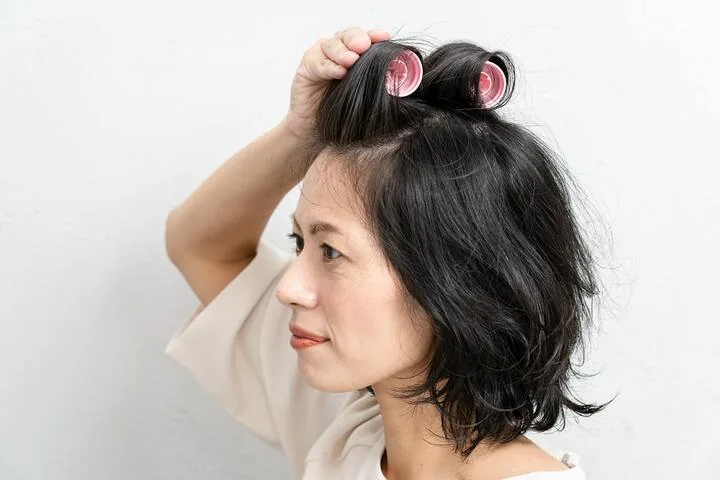
A root perm is the quiet genius of the perm world: only the first two or three inches of hair at the scalp are permed, so the roots lift and the rest of the hair stays exactly as it is. The result is volume where flat hair needs it most — at the crown — with no curl in the lengths at all. It is perfect for women who love their straight hair but hate how it lies flat against the head by midday, and it is also the gentlest perm, because only a small section of hair is treated.
Best for: fine, straight hair that collapses at the roots, and short to medium styles that need lift. How to style it: blow-dry the roots upward with a round brush, or simply let them air-dry — the lift is built in. Pros and cons: it is quick, subtle and grows out invisibly, but it does not add texture to the lengths, so it will not help hair that is limp all over. Cost and time: often under two hours and cheaper than a full perm. Quick verdict: the perm for women who do not want to look permed at all.
5. The Digital Perm
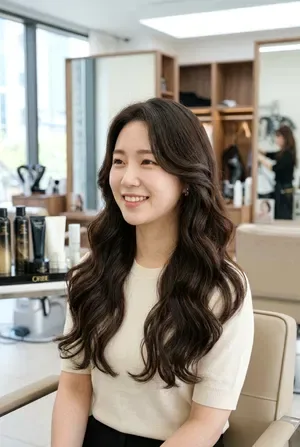
The digital perm uses heated rods connected to a machine that controls the temperature precisely, creating soft, large, bouncy curls that look their best when blow-dried. It was developed for straight, resistant hair — particularly Asian hair that shrugs off ordinary perms — and it produces curls that are looser and more natural-looking than a cold perm, with a smooth, almost blow-dried finish. The curls are soft rather than springy, and they fall in a way that looks like a professional blow-out that never quite drops.
Best for: thick, straight or resistant hair, and women who blow-dry regularly. How to style it: this perm rewards a blow-dry — use a round brush and the curls will look polished and bouncy. If you air-dry it, the curls will be looser and more relaxed. Maintenance: digital perms need heat protection whenever you blow-dry, and they suit women who enjoy styling their hair rather than leaving it alone. Who should avoid it: anyone who never blow-dries — a digital perm’s best look needs the dryer. Quick verdict: the salon-polished perm, for women who like a finished look.
6. Lived-In Perm Curls
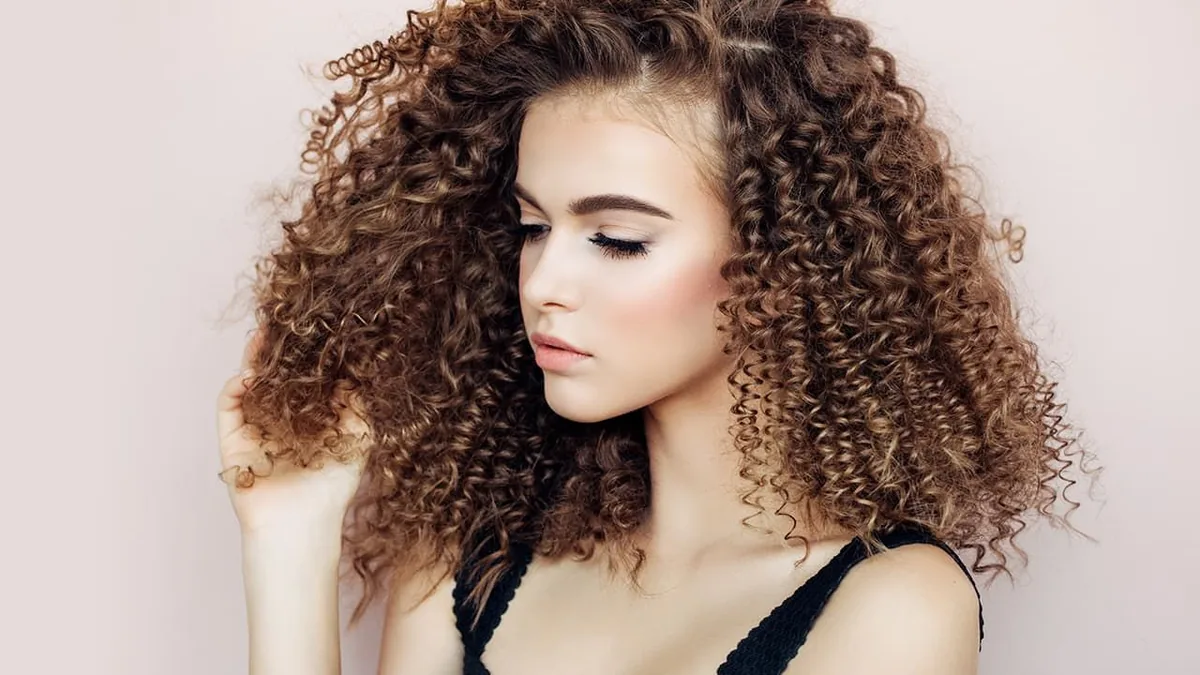
Lived-in perm curls are the perm equivalent of lived-in colour: the curl pattern is deliberately uneven, softer at the roots and stronger at the ends, so the hair looks like it grew that way. The stylist varies the rod sizes, leaves the roots smoother, and sometimes perms only the mid-lengths and ends, which means the grow-out is almost invisible and the style looks good for months without a touch-up. It is the most natural-looking perm in this guide, and the one most likely to make people ask whether your hair is naturally curly.
Best for: anyone who wants curls without the commitment of a full perm look, and wavy hair that needs a little help. How to style it: almost nothing — curl cream on damp hair, air-dry, and go. Common mistake: asking for perfectly even curls; the whole point of a lived-in perm is the unevenness. Pros and cons: the most forgiving grow-out and the easiest maintenance, but the softest curl, so it will relax sooner than a spiral perm. Quick verdict: the perm that looks least like a perm — and for many women, that is exactly the point.
7. The Loose-Wave Perm
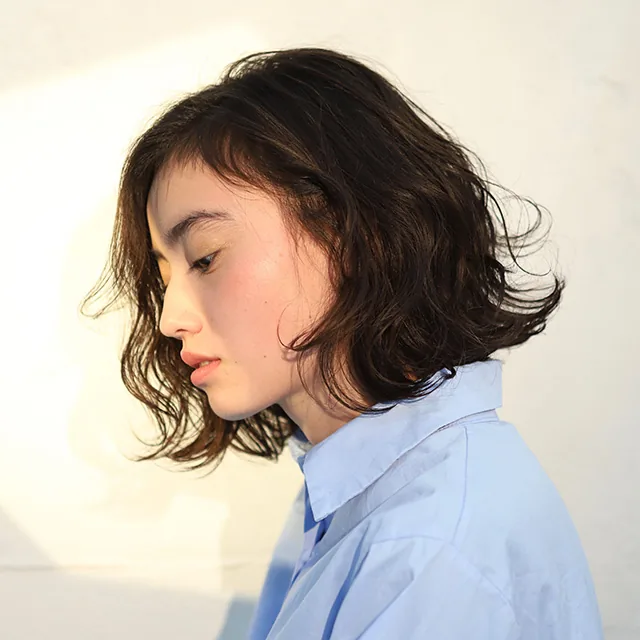
The loose-wave perm sits between a body wave and a beach wave: the waves are soft, wide and regular enough to read as a style, but loose enough to move naturally. It is the perm for women who want their hair to look styled every day without a curling iron, and it works beautifully on shoulder-length hair, where the wave has room to form without weighing itself down. The finish is smooth, polished and romantic, and it photographs beautifully.
Best for: medium-length hair and women who want a polished everyday wave. How to style it: blow-dry with a large round brush for smoothness, or scrunch with mousse for a softer wave. Maintenance: a trim every eight weeks keeps the ends from looking thin as the wave grows out. Who should avoid it: very short hair — the wave needs length to form, and on a pixie it will read as curl rather than wave. Quick verdict: the everyday perm, polished enough for work and soft enough for the weekend.
8. The Perm With Curtain Bangs
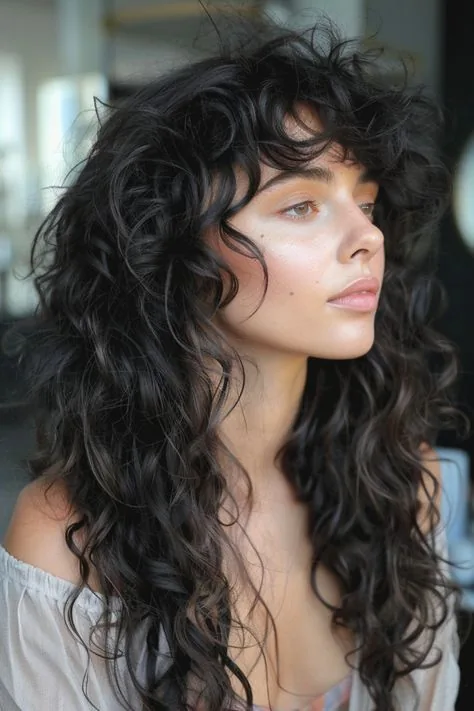
Curtain bangs and a perm are a natural pair: the bangs are left longer and parted in the middle, so they fall in soft, face-framing waves on either side of the forehead, while the rest of the hair curls around them. The bangs soften the face, the perm gives them body so they do not fall flat, and together they create the relaxed, seventies-inspired look that is everywhere right now. Ask the stylist to perm the bangs on the largest rods, or to leave them only lightly waved, so they stay soft rather than springy.
Best for: long and oval faces, and anyone who wants bangs without the commitment of a blunt fringe. How to style it: blow-dry the bangs forward with a round brush, then sweep them to the sides while still warm. Common mistake: perming the bangs on the same small rods as the rest of the hair — they will curl up short and look like a fringe you did not ask for. Pros and cons: the bangs make the whole style look intentional and current, but they need a trim every four to six weeks to keep their length. Quick verdict: the most fashionable perm pairing in this guide.
9. The Perm for Long Hair
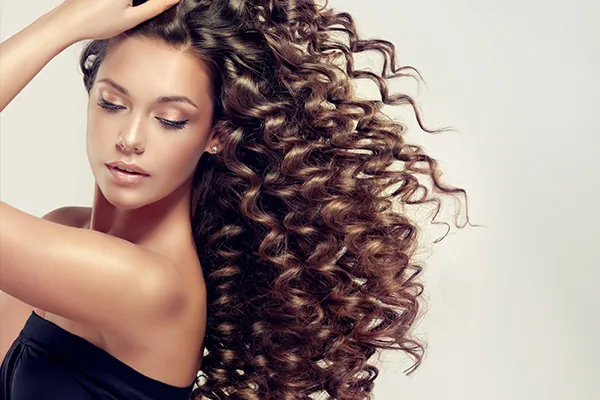
Long hair and a perm are a dramatic combination: the length lets the curls fall in long, flowing ribbons, and the weight of the hair stretches the curl slightly, so the result is waves and curls that move like water. A body-wave or spiral perm on long hair gives the kind of volume and movement that takes an hour with hot tools — and it holds for months. The key is rod choice: larger rods for waves, smaller for defined curls, and a stylist who sections carefully so the curl is even from the crown to the ends.
Best for: long hair that is healthy and strong enough for a full-head service. How to style it: curl cream on damp hair, diffused or air-dried, then a light oil on the ends for shine. Maintenance: long permed hair needs regular trims and deep conditioning, because the ends are the oldest and most fragile part. Cost and time: the longest and most expensive perm in this guide — plan for up to four hours. Quick verdict: the most glamorous perm, and the one that saves the most styling time every morning.
10. The Perm for Medium Hair
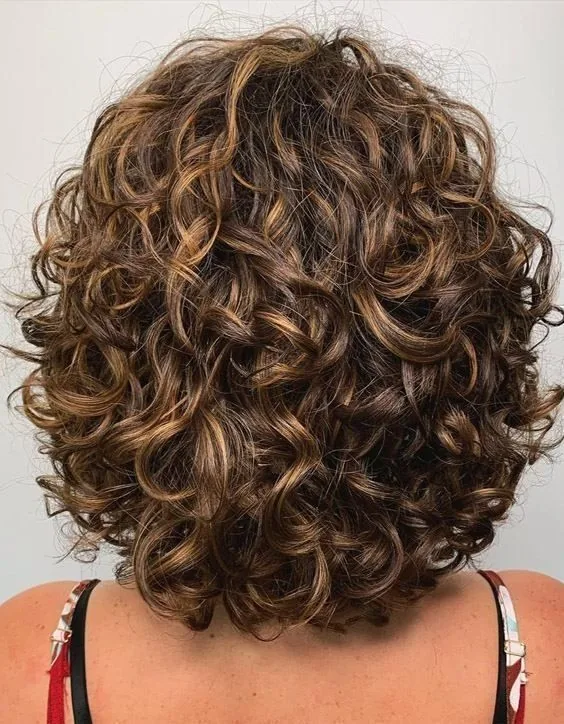
Medium hair is the sweet spot for a modern perm: there is enough length for the waves to form properly, but not so much weight that the curl is pulled out. A body-wave or loose-wave perm on shoulder-length hair gives bouncy, full waves that frame the face and make the hair look thicker than it is. It is also the easiest length to maintain — the perm grows out gracefully, and a trim every couple of months keeps the shape fresh without losing the curl.
Best for: shoulder-length to collarbone-length hair, and first-time perm wearers. How to style it: mousse on damp hair, scrunched and air-dried, gives a soft wave; a diffuser adds volume at the roots. Pros and cons: the most versatile length for a perm, and the quickest salon service, but the waves will relax a little faster than on longer hair because there is less weight to hold them. Quick verdict: if your hair is medium length, a perm is almost always a good idea — this is the length it was made for.
11. The Short-Hair Perm
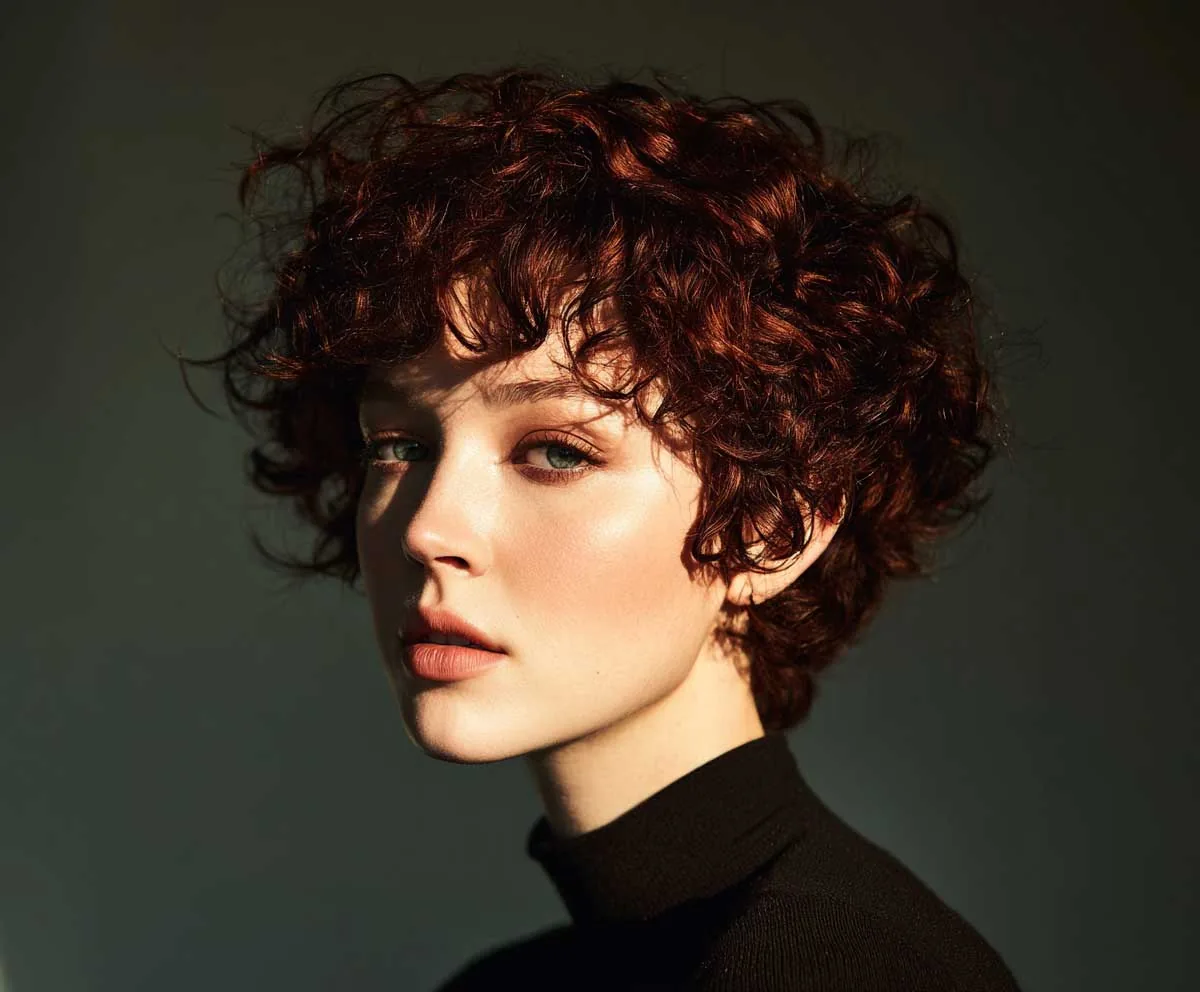
A perm on short hair is all about texture and lift: small to medium rods create soft curls or waves that give a pixie or short crop volume, movement and a lived-in finish. It is the perm for women who are tired of flat short hair and want their cut to do more of the work. The curls are shorter and springier than on long hair, so the look is bolder — but on a well-shaped cut, it reads as modern and chic, not dated. Ask for larger rods if you want waves, smaller if you want defined curls.
Best for: pixies, short crops and women who want wash-and-go volume. How to style it: a dab of curl cream or texture paste, scrunched into damp hair, and you are done in two minutes. Common mistake: perming short hair on rods that are too small — the curl can shrink the hair by several inches, so tell the stylist how much length you are willing to lose. Maintenance: short perms need re-perming sooner, every two to three months, because the grow-out shows faster. Quick verdict: the highest-impact perm for the least daily effort.
12. The Permed Bob
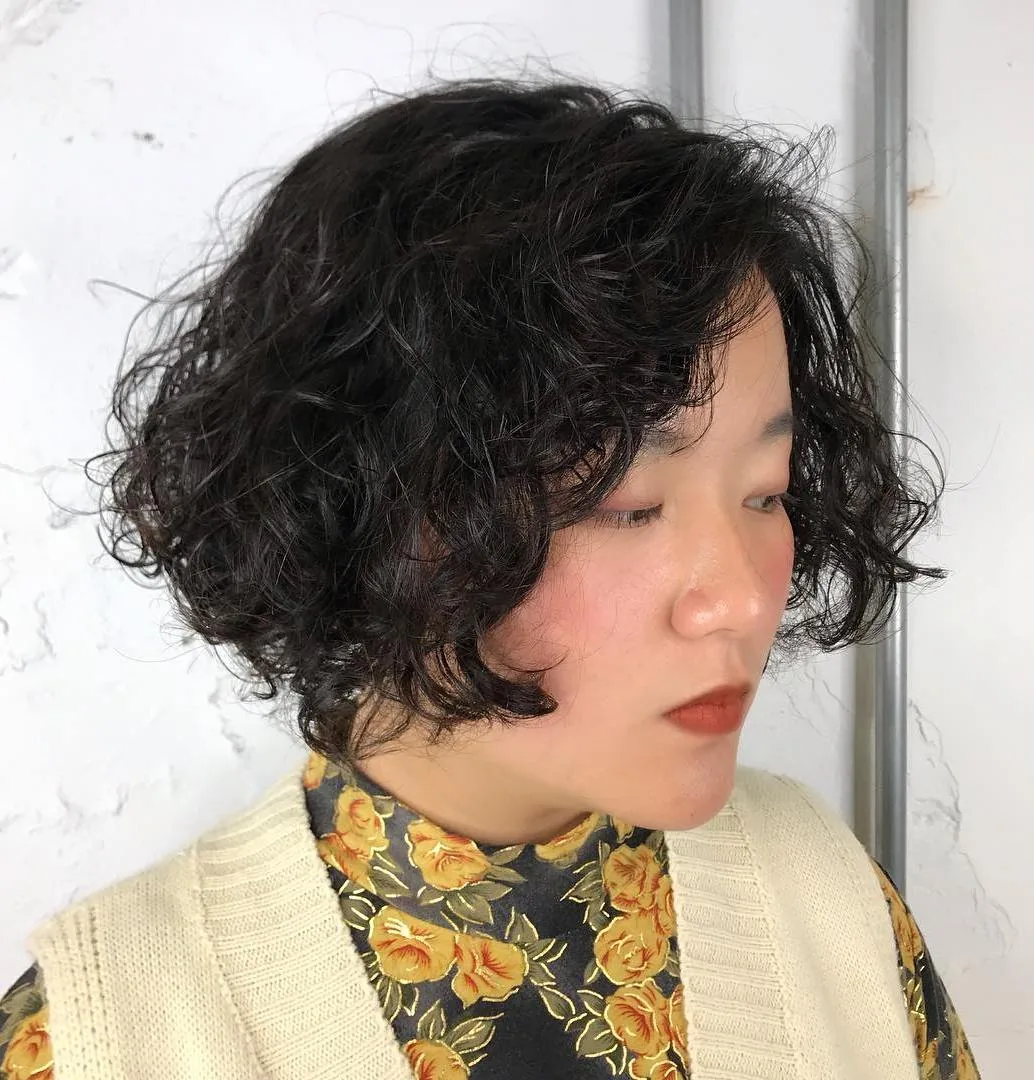
The permed bob is one of the most flattering modern perm styles: a chin- or jaw-length bob with soft waves or curls that give it volume, movement and a romantic, French feel. The perm stops the bob from looking flat or severe, and it means the bob styles itself — no round brush, no curling iron, just curl cream and air-drying. It works as a classic bob, a French bob with a soft fringe, or a longer lob with waves that flick out at the ends.
Best for: bobs and lobs, and fine hair that needs volume at the ends. How to style it: scrunch in curl cream, let it air-dry, then shake the roots with your fingers for lift. What to ask: ask for the largest rods that will still hold a wave on your hair, so the bob waves rather than curls. Pros and cons: the bob grows out beautifully and the perm keeps it looking styled, but the curl will shorten the bob by an inch or two — plan the cut length accordingly. Quick verdict: the chicest short perm, and the easiest bob you will ever own.
13. The Perm for Fine Hair
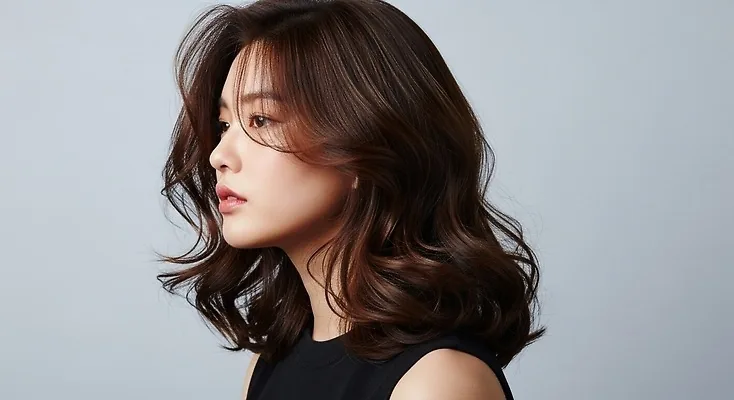
Fine hair is often the hair that benefits most from a perm, because the curl adds exactly what fine hair lacks: volume, texture and grip. A body-wave perm on fine hair makes it look twice as thick, holds a style for days, and means the hair no longer slides flat against the head by lunchtime. The key is a gentle solution and the right rod size — rods that are too small will overwhelm fine hair, while the largest rods give soft, believable volume. A strand test is essential here, because fine hair processes faster than thick hair.
Best for: fine, straight hair that will not hold a curl with hot tools. How to style it: a lightweight mousse, not a heavy cream, so the waves are not weighed down. Maintenance: fine permed hair needs protein-light conditioning — too much heavy conditioner will flatten the volume you just paid for. Who should avoid it: anyone whose fine hair is also very damaged or bleached — the perm will add stress the hair cannot afford. Quick verdict: the best volume treatment fine hair can get, when the stylist gets the rod size right.
14. The Perm for Thick Hair
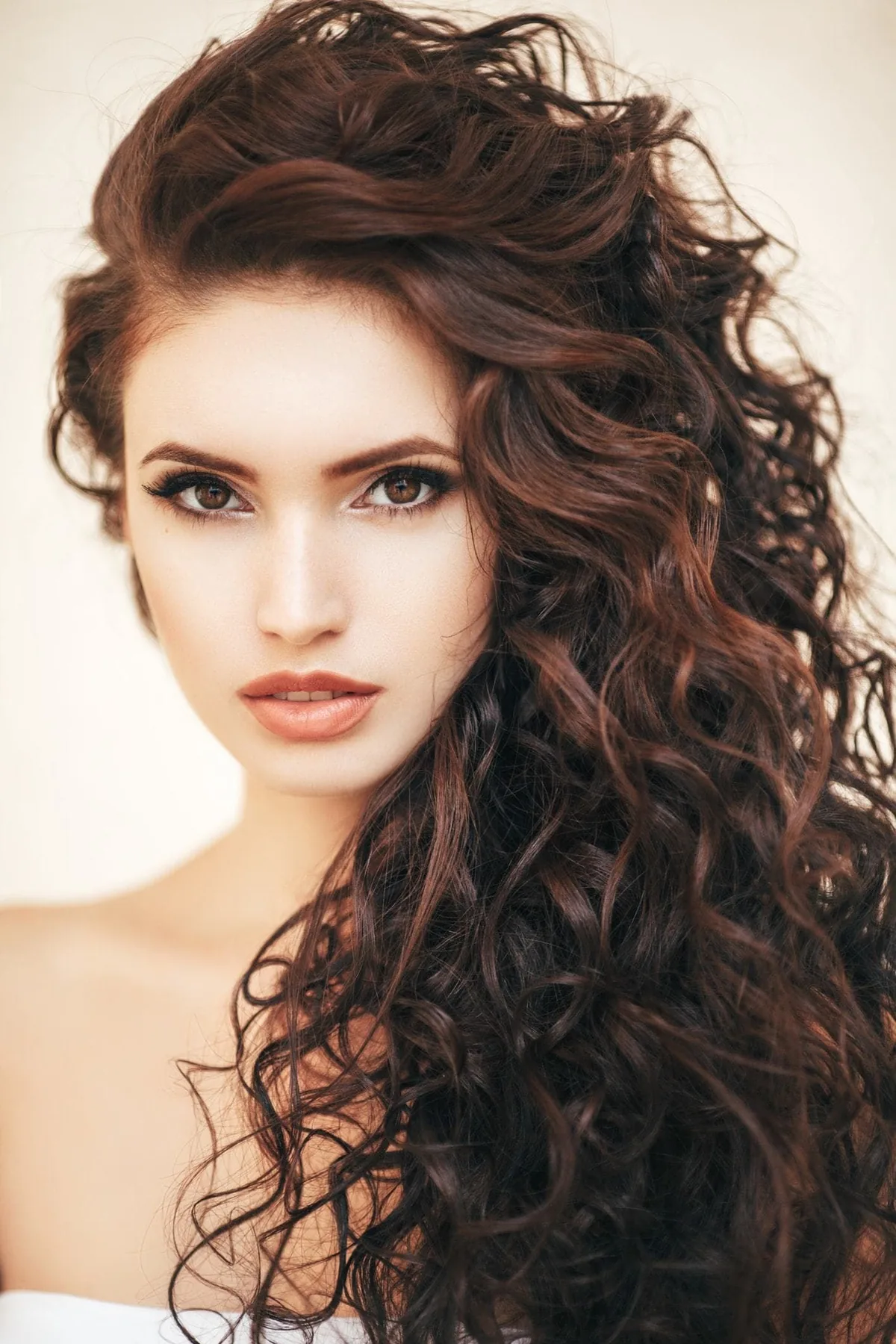
Thick hair takes a perm beautifully, because there is plenty of hair to curl and the curls hold their shape for months. A spiral or body-wave perm on thick hair gives big, bouncy, voluminous curls that look glamorous and full — the kind of hair that turns heads. The challenge is time: thick hair takes longer to wind, longer to process and longer to dry, so plan for a long salon visit. The stylist may also thin or layer the hair first, so the curls are not weighed down by their own bulk.
Best for: thick, heavy hair that needs shape and movement. How to style it: curl cream and a diffuser, section by section, so every layer dries with definition. Maintenance: thick permed hair drinks conditioner — use a rich mask weekly, and a leave-in cream on the ends daily. Cost and time: expect the longest appointment and the highest price in the salon, because of the sheer amount of hair. Quick verdict: the most dramatic transformation in this guide — thick hair was made for a perm.
15. The Layered Perm
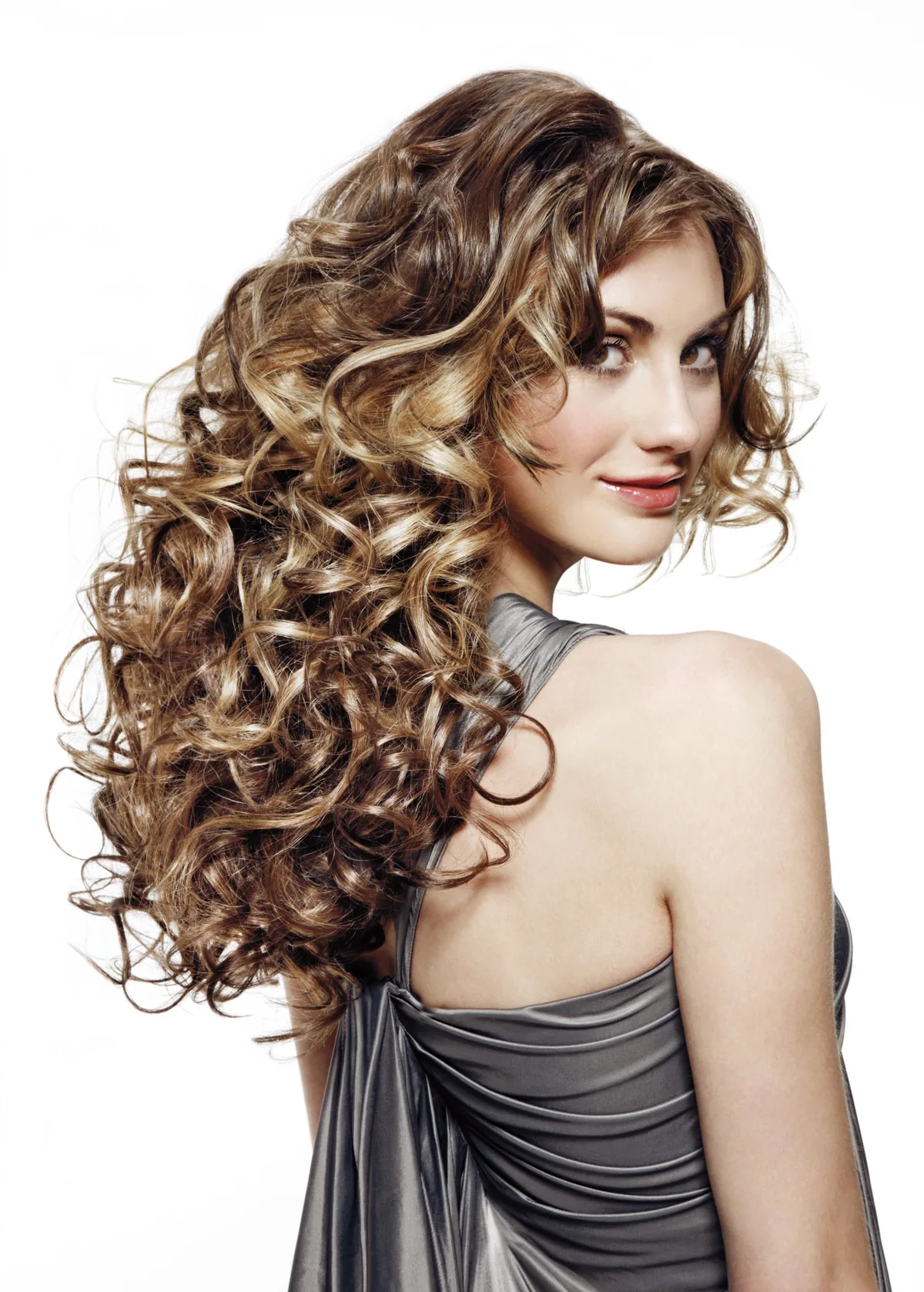
Layers and a perm are made for each other: the layers give the curls somewhere to fall, so the hair moves in tiers instead of one heavy curtain, and the perm gives the layers the volume and texture they need to show. A layered perm looks lighter, bouncier and more modern than a perm on one-length hair, and it grows out better too, because the layers disguise the regrowth. Ask for long layers rather than short, choppy ones — the curl will shorten the layers, and short layers on a perm can look frizzy.
Best for: medium to long hair that feels heavy or shapeless. How to style it: scrunch in curl cream, then lift the roots with a diffuser for volume. What to ask: ask the stylist to cut the layers before the perm, so the rod size can be matched to each layer’s length. Pros and cons: the layers make the perm look expensive and intentional, but they need a trim every eight weeks to keep their shape. Quick verdict: the perm to ask for if your hair has ever felt like a curtain.
16. The Perm With Face-Framing Layers
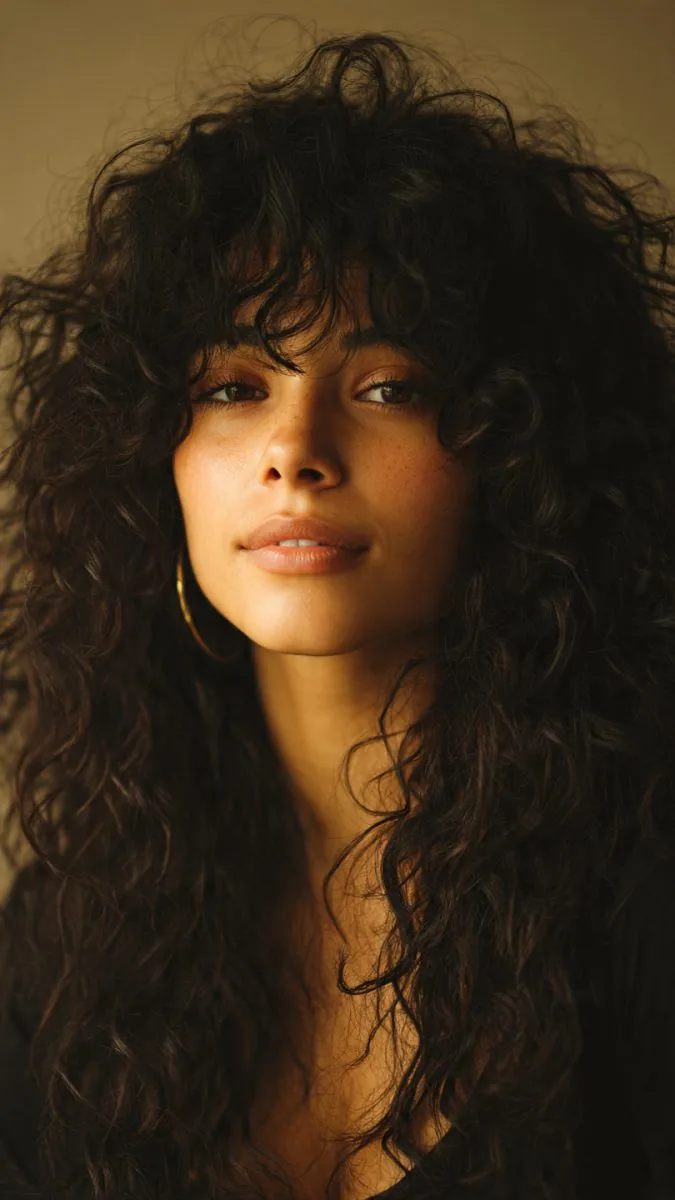
Face-framing layers are the soft, shorter pieces at the front of the hair that fall around the cheeks and jaw, and on a perm they curl gently inward, drawing attention to the eyes and cheekbones. They soften the whole style, make the perm look custom-cut rather than one-size-fits-all, and they are the pieces that move when you turn your head — the most flattering part of the style. They also grow out gracefully, because they are longer than a fringe and blend into the rest of the hair.
Best for: anyone who wants their perm to flatter their face, especially round and square faces. How to style it: blow-dry the front pieces forward with a small round brush, then let them fall naturally. Common mistake: cutting the face-framing pieces too short before the perm — the curl will spring them up further, so leave them longer than you think. Maintenance: a quick trim of the front pieces every six weeks keeps them at the right length. Quick verdict: the small detail that makes a perm look like it was designed for you.
17. The Perm for a Round Face
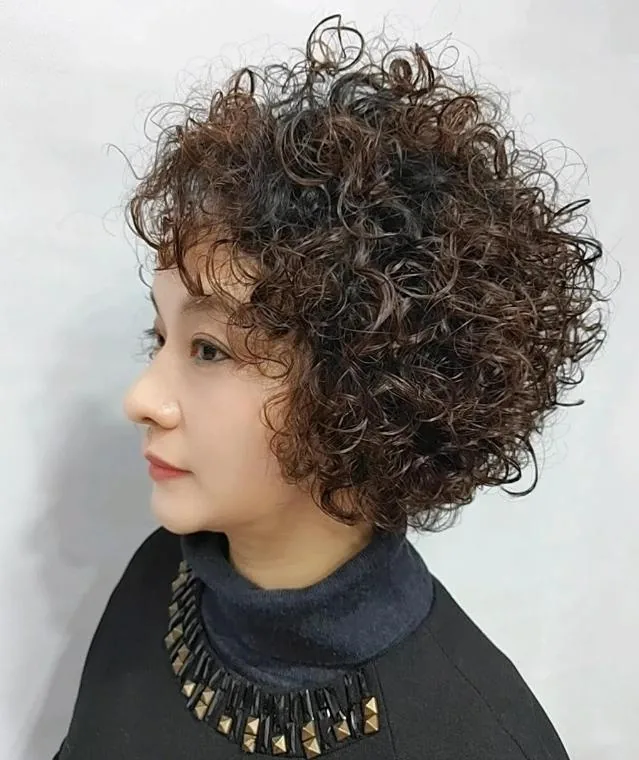
For a round face, the right perm is one that adds length and height rather than width: long, loose waves that fall past the chin, volume at the crown, and face-framing layers that draw the eye downward. A body-wave or lived-in perm with the curl starting below the cheekbones is ideal, because it elongates the face instead of widening it. Avoid tight curls at cheek level, which add width exactly where a round face least needs it, and ask for a side part, which breaks up the symmetry and slims the face.
Best for: round faces that want length and definition. How to style it: a side part, volume at the roots, and waves that fall past the shoulders. What to ask: ask for the curl to start lower down, and for layers that are longest at the front. Who should avoid it: tight spiral curls at cheek length — they will make a round face look rounder. Quick verdict: the perm is not the problem for a round face; the curl placement is — get that right, and a perm is wonderfully flattering.
18. The Perm for an Oval Face
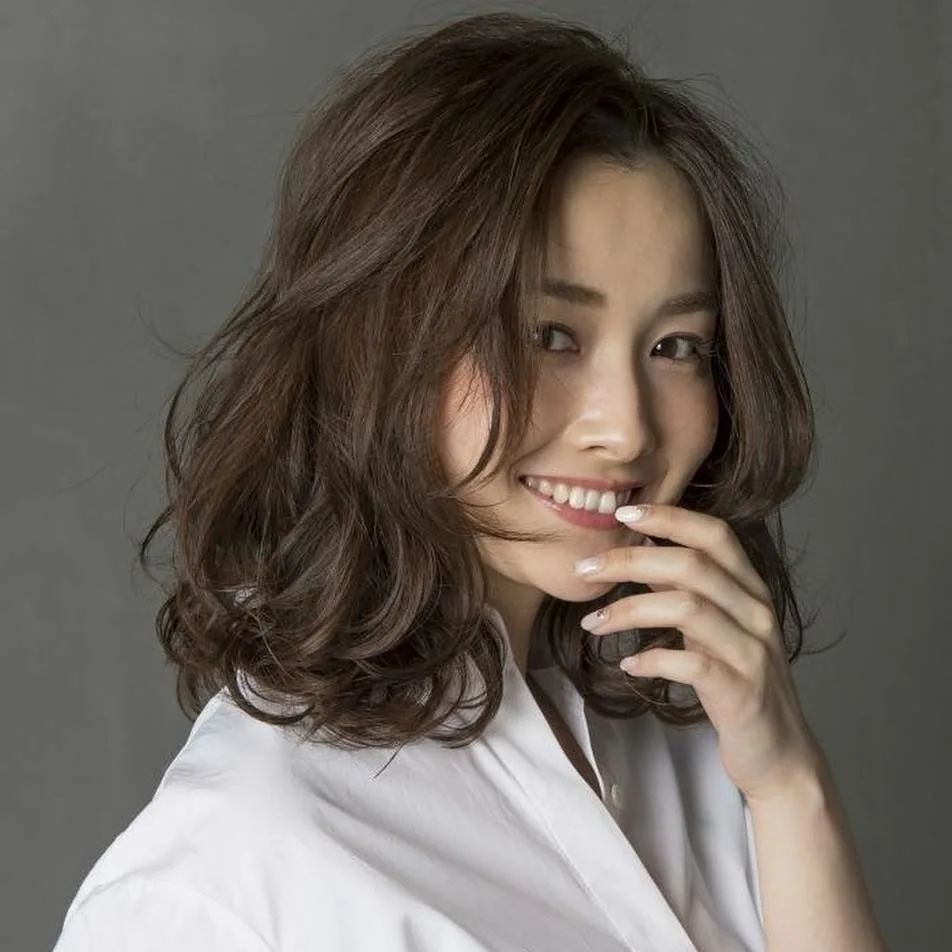
An oval face is the easiest face shape to perm, because almost every curl size and length suits it — the balanced proportions can take volume at the sides, curls at the cheeks, or long waves without looking out of proportion. That freedom means the choice comes down to personality rather than rules: a spiral perm for drama, a body wave for softness, a permed bob for chic, or a beach wave for ease. The only real guidance is to choose the perm you love, not the one you think you should have.
Best for: oval faces, which suit every perm in this guide. How to style it: any way you like — try a centre part for symmetry, or a side part for a little asymmetry and movement. Pros and cons: the freedom is wonderful, but it can make the choice harder — bring three photos you love and ask the stylist which one suits your hair’s texture best. Quick verdict: if you have an oval face, the perm is yours to choose — enjoy having every option open.
19. The Perm for a Square Face
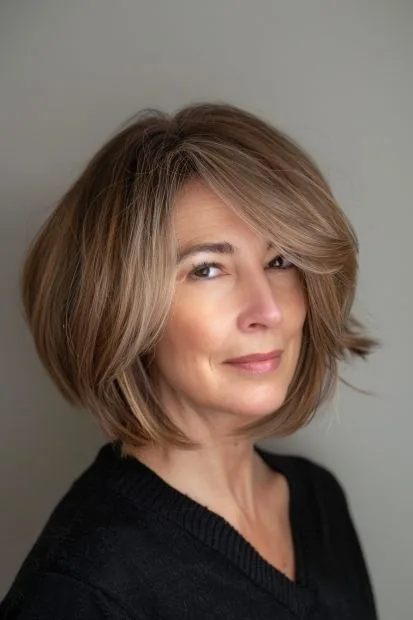
A square face has a strong jawline and a broad forehead, and the right perm softens both: soft, loose curls that fall around the jaw, waves that start at the cheekbones, and face-framing layers that blur the angles. A body-wave or lived-in perm is ideal, because the softness of the wave contrasts with the structure of the face. A centre part with waves falling on both sides is especially flattering, because it frames the face symmetrically and draws the eye to the centre.
Best for: square faces that want softness without losing their strong features. How to style it: waves that curl inward at the ends, softening the jawline. What to ask: ask for curls that fall past the jaw, not tight curls that end at the jawline. Who should avoid it: very short, tight curls that add width at the jaw — they will emphasise the squareness. Quick verdict: the perm that turns a strong jawline into a soft frame.
20. The Balayage Perm
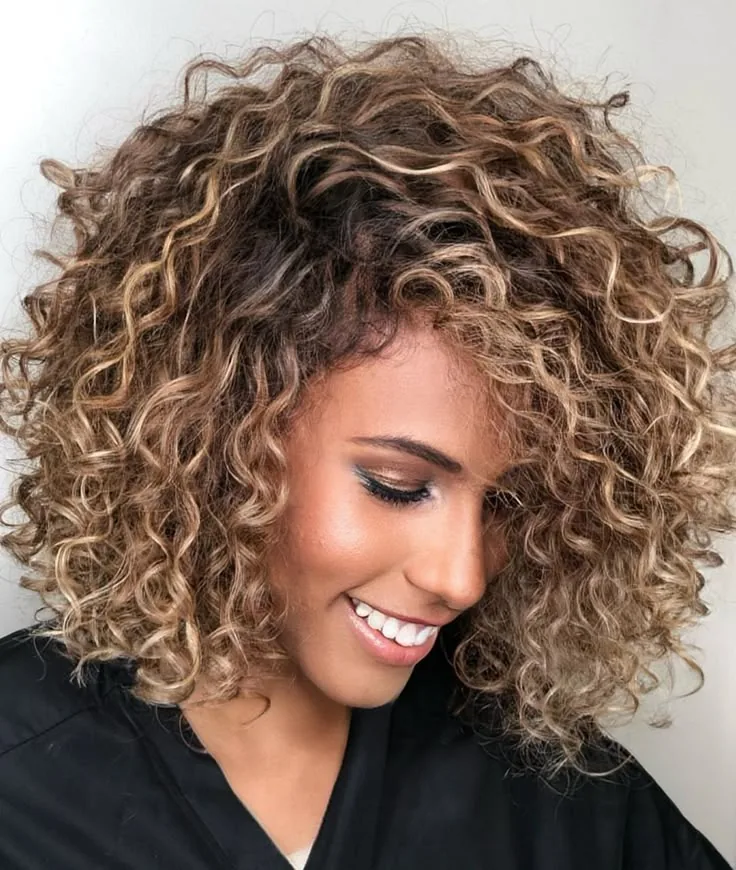
A balayage perm combines two of the most popular salon services: hand-painted highlights that lighten the ends, and a perm that curls them. The colour makes the curls visible — light catches the bends and turns of each wave, so the curl pattern looks deeper and more dimensional than it would on one-colour hair. The combination is stunning, but it is also the most demanding on the hair, because colour and perm are both chemical services, so they must be spaced out and the hair must be in good condition.
Best for: women who want dimensional, sun-kissed curls. How to style it: curl cream and a diffuser, so the colour and the curl both show. Common mistake: getting the balayage and the perm in the same week — space them at least two weeks apart, colour first. Maintenance: colour-safe, sulfate-free shampoo, a purple toning treatment if the blonde turns brassy, and a weekly mask. Cost and time: the most expensive combination in this guide, and a long day in the salon. Quick verdict: the prettiest perm in this guide — and the one that needs the most care.
21. The Brunette Perm
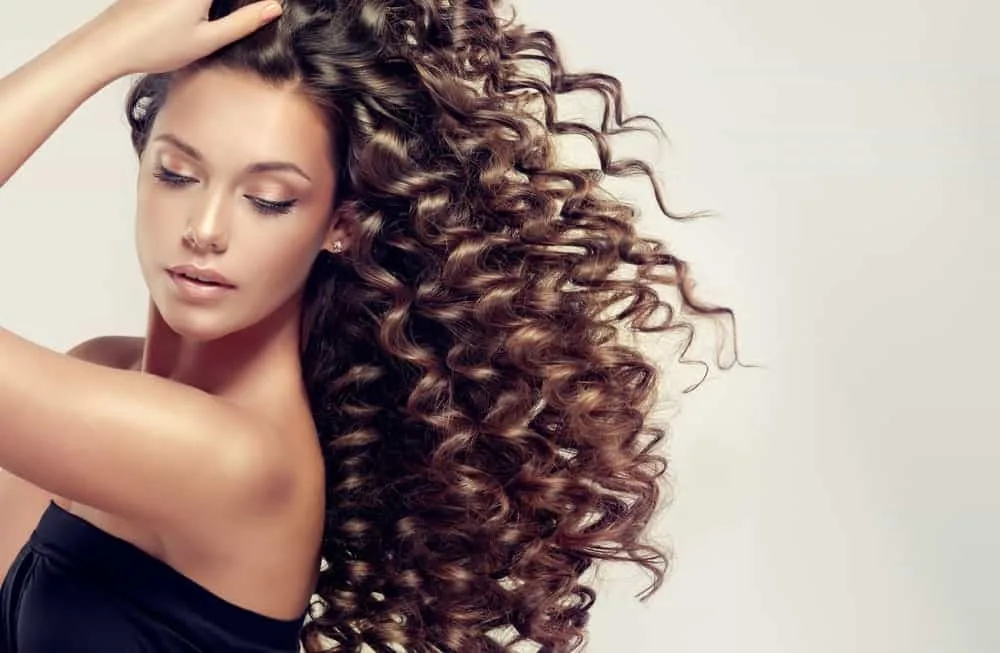
Brunette hair shows off a perm beautifully, because the dark colour gives the curls depth and shine, and the waves catch the light as they move. A body-wave or spiral perm on brunette hair looks rich, glossy and expensive, especially with a shine serum or gloss treatment afterwards. The dark colour also makes the curl pattern easy to see, so even a loose wave reads clearly. Add a few subtle caramel highlights and the curls gain even more dimension, without the damage of a full blonde service.
Best for: dark brown and black hair that wants shine and movement. How to style it: a light shine oil on the ends, applied after the curl cream, gives a glossy finish. Pros and cons: brunette perms look the glossiest of all, and the colour hides frizz better than blonde — but the perm will fade a little of the colour’s richness, so a gloss treatment every couple of months helps. Quick verdict: the richest-looking perm, and one of the lowest-maintenance colours to pair with it.
22. The Blonde Perm
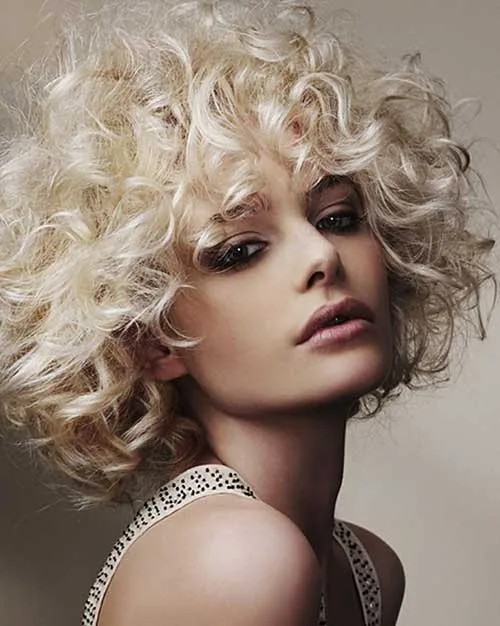
Blonde hair and a perm can be a beautiful combination — soft, beachy waves on light hair look sun-kissed and effortless — but blonde hair is also the most delicate candidate for a perm, because bleaching has already stressed it. A perm on blonde hair needs a gentle solution, a strand test, and a stylist who is honest about whether the hair can take it. If the hair is healthy, a loose body-wave perm is the safest choice; tight spiral curls on bleached hair are a risk. The reward is worth the caution: blonde curls catch the light in a way no other colour does.
Best for: healthy blonde hair that wants soft waves. How to style it: curl cream and air-drying, with a purple shampoo once a week to keep the blonde from turning brassy. Who should avoid it: anyone whose blonde hair is already dry, stretchy or breaking — a perm will make it worse, and a good stylist will say so. Maintenance: a bond-building treatment and a weekly mask are essential, not optional. Quick verdict: the sunniest perm in this guide — beautiful, but only on hair strong enough to carry it.
23. The Perm to Enhance Natural Waves
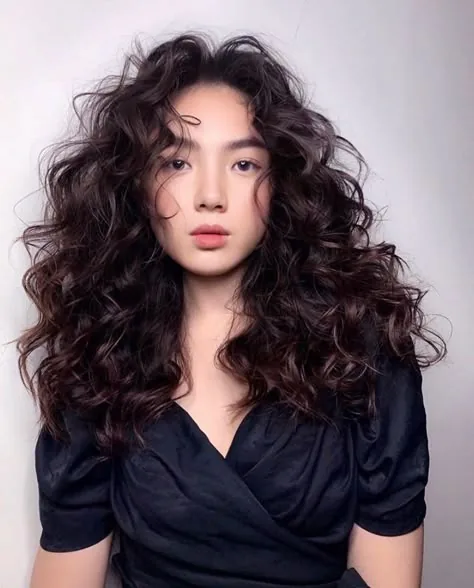
Some women already have waves — they are just uneven, with straight pieces at the top and curls at the ends, or waves that drop out by midday. A perm to enhance natural waves does not replace the natural pattern; it evens it out, strengthens it and makes it hold. The stylist perms the straighter sections on rods that match the natural curl, so the finished hair looks like your own waves, only better and more consistent. It is the subtlest perm in this guide, and the one most likely to be mistaken for natural hair.
Best for: naturally wavy hair that is inconsistent or falls flat. How to style it: exactly as you styled your natural waves, only now they will hold — curl cream, scrunch, air-dry. Pros and cons: the most natural result of any perm, and the easiest grow-out, because the perm and the natural wave blend together — but if your natural wave is very loose, the perm may need a smaller rod than you expect. Common mistake: asking for a completely different curl pattern instead of enhancing the one you have. Quick verdict: the perm for women who like their own hair, and just want more of it.
24. The Bridal Soft Perm
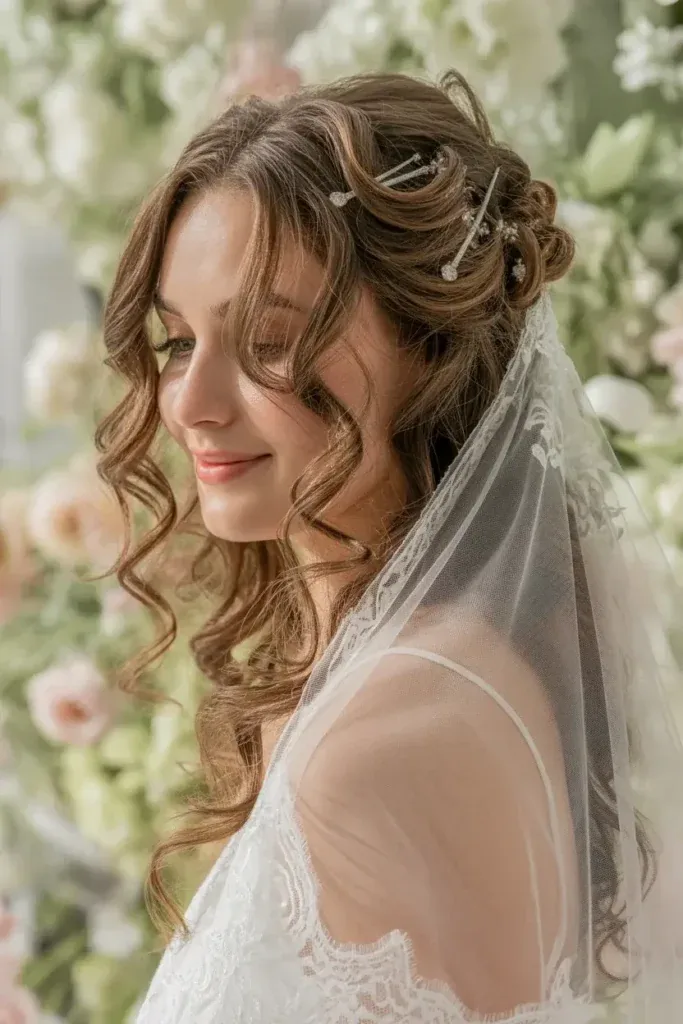
A bridal soft perm is a perm booked months before the wedding, so the curls have time to settle into soft, romantic waves by the big day. The bride’s hair is permed with large rods, giving loose waves that hold an updo, half-up style or loose curls for hours without hot tools — and without the risk of curls dropping halfway through the reception. It is the perm for brides who want their hair to look effortless in photos and still look good at midnight. Book the perm at least six weeks before the wedding, so there is time to adjust if the curl is tighter than expected.
Best for: brides who want lasting, romantic waves. How to style it: on the day, curl cream and a diffuser, then the hair can be left loose, half-up, or swept into a low bun with face-framing curls. What to ask: ask for a trial run of the wedding style on permed hair, so you know how the curls will behave. Cost and time: plan the perm, a trial and the wedding-day styling as three separate appointments. Quick verdict: the most practical bridal hair decision — the curls are done before the day even starts.
25. The Office Perm
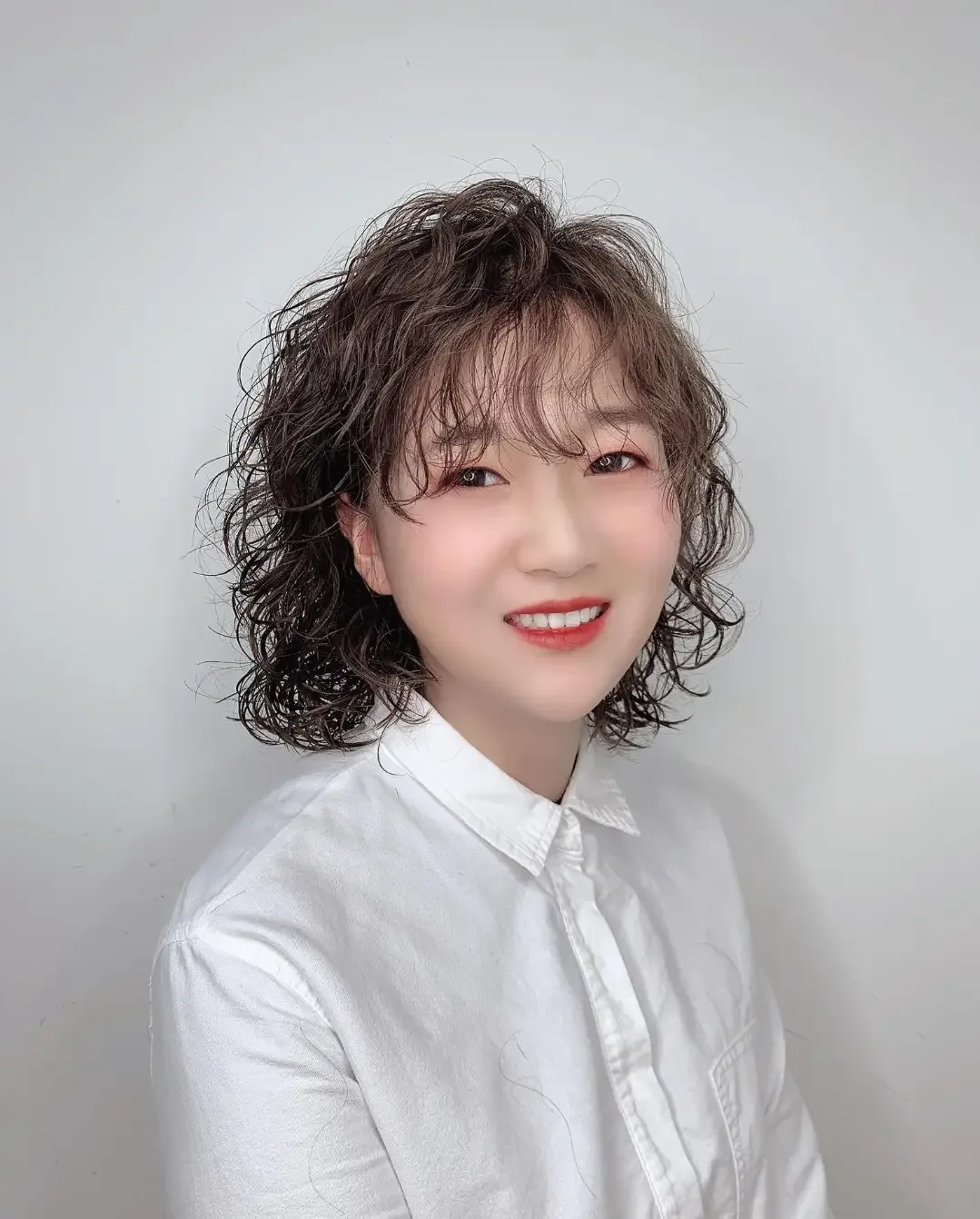
The office perm is a perm designed to look polished, not party-ready: soft body waves that are smooth at the roots, neat at the ends, and easy to keep looking professional all day. It is the perm for women who want to stop blow-drying every morning but still need to look put-together in meetings. The waves are loose enough to read as a blow-dry, and they hold their shape from the morning commute to the evening, with no touch-ups needed. A side part and smooth top sections keep it looking deliberate and professional.
Best for: work, professional settings, and women who want a low-effort polished look. How to style it: blow-dry the top sections smooth with a round brush, and let the ends wave naturally. Maintenance: a trim every eight weeks keeps the ends neat, and a silk pillowcase keeps the waves smooth overnight. Pros and cons: the most professional-looking perm, and the biggest time-saver on work mornings — but it does need a blow-dry on the top sections to look its best. Quick verdict: the perm that pays for itself in saved mornings.
26. The Low-Maintenance Perm
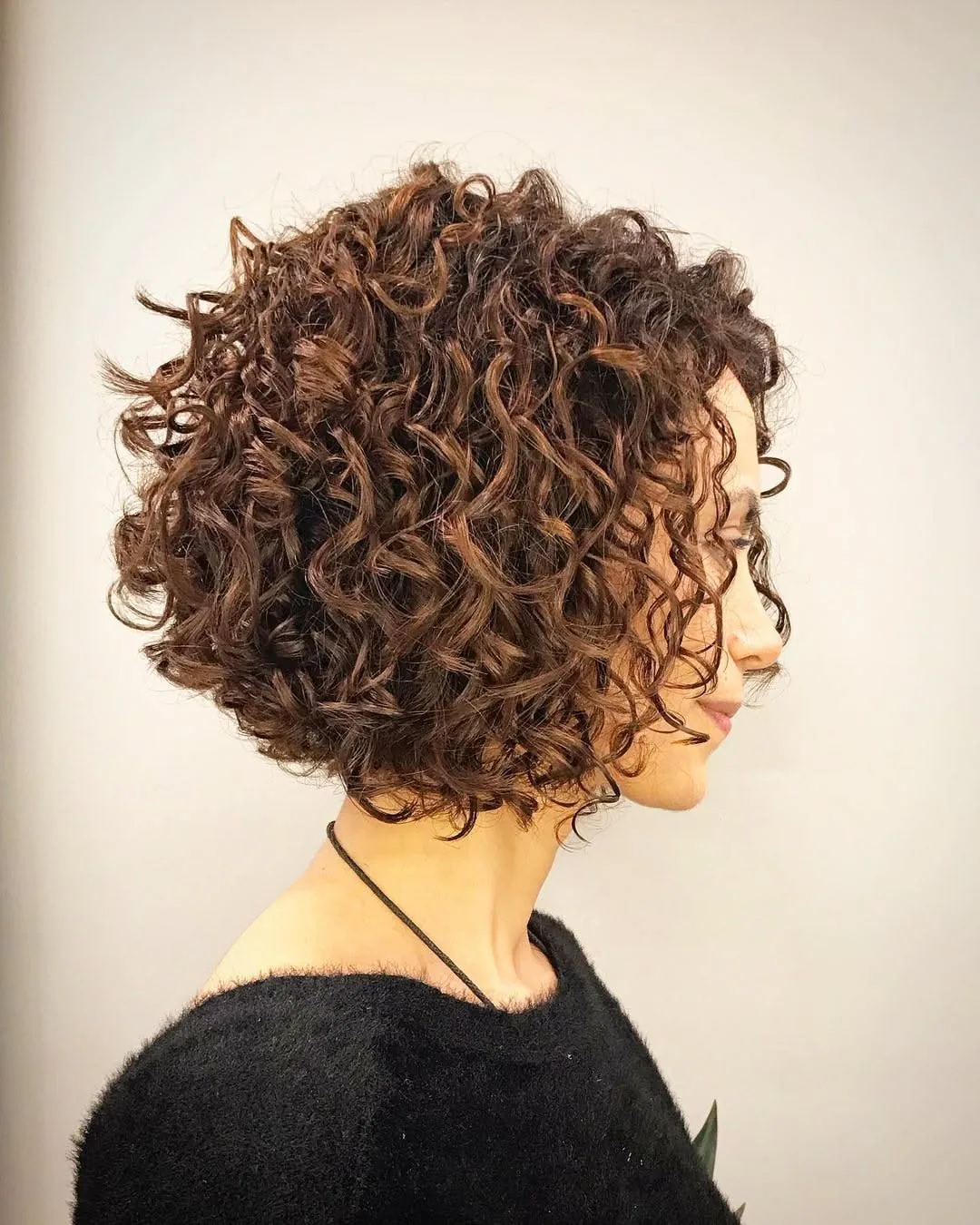
The low-maintenance perm is not a specific technique — it is a perm chosen with maintenance in mind. That means large rods, a loose wave, a lived-in pattern that grows out invisibly, and a cut that works with the curl rather than against it. The result is hair that needs almost nothing: wash it, scrunch in a little cream, let it dry, and go. No diffuser, no round brush, no daily styling. It is the perm for busy women, new mothers, and anyone who wants good hair without a routine.
Best for: busy schedules and women who do not enjoy styling their hair. How to style it: curl cream on damp hair, air-dry, done. What to ask: tell the stylist you want the lowest-maintenance perm they can give you, and ask for the largest rods that will hold on your hair. Pros and cons: the easiest perm to live with, and the most forgiving grow-out — but the waves will be the loosest, and they will relax sooner than a tighter perm. Quick verdict: the perm for women who want to forget they have a perm — until someone compliments their hair.
27. The Perm With a Deep Side Part
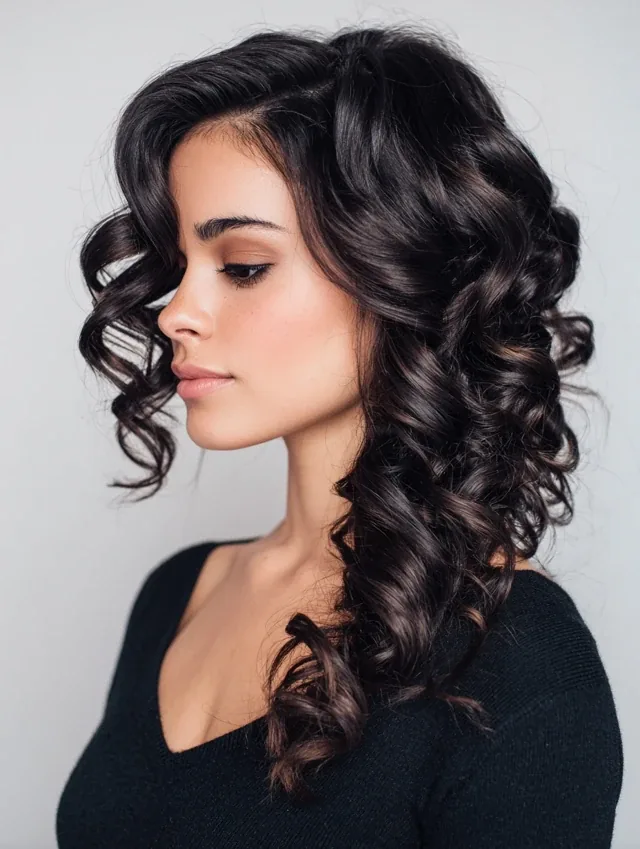
A deep side part changes a perm completely: the hair sweeps across the forehead in a dramatic wave, the volume piles up on one side, and the whole style looks glamorous and intentional. It is the perm for evenings out, for photos, and for women who like a little drama in their hair. The side part also adds lift at the roots, because the hair is being pushed against its natural fall, and it suits a body-wave or spiral perm equally well. Ask the stylist to perm the hair with the part in mind, so the curl falls in the right direction.
Best for: evenings, events, and anyone who wants a glamorous perm. How to style it: part the hair deeply while damp, blow-dry the roots in the direction of the part, and let the curls fall. Common mistake: switching the part daily — the perm sets with a memory of the part it was wound with, so pick a side and stick to it. Maintenance: a little root-lifting spray keeps the volume up. Quick verdict: the most glamorous way to wear a perm, and the easiest way to make it look expensive.
28. The Perm With a Centre Part
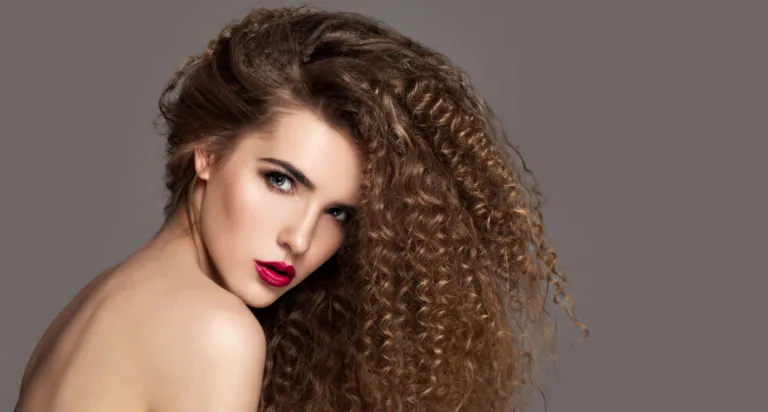
A centre part and a perm give a balanced, symmetrical look: the waves fall evenly on both sides of the face, framing it like a curtain, and the style feels calm, classic and a little bit seventies. It suits long and medium hair best, where the waves have room to fall, and it works especially well with face-framing layers that curl inward on both sides. The centre part also shows off the curl pattern most clearly, because there is no sweep hiding half of it.
Best for: symmetrical faces, long hair, and a classic, balanced look. How to style it: part the hair in the middle while damp, scrunch in curl cream, and let it air-dry. Pros and cons: the most balanced and timeless way to wear a perm, but it is also the most revealing — a centre part shows any unevenness in the curl, so it needs a careful stylist. Who should avoid it: anyone whose face is very asymmetrical — a side part will flatter it more. Quick verdict: the calmest, most classic perm parting, and the one that photographs most symmetrically.
29. Long Layers With Soft Permed Ends
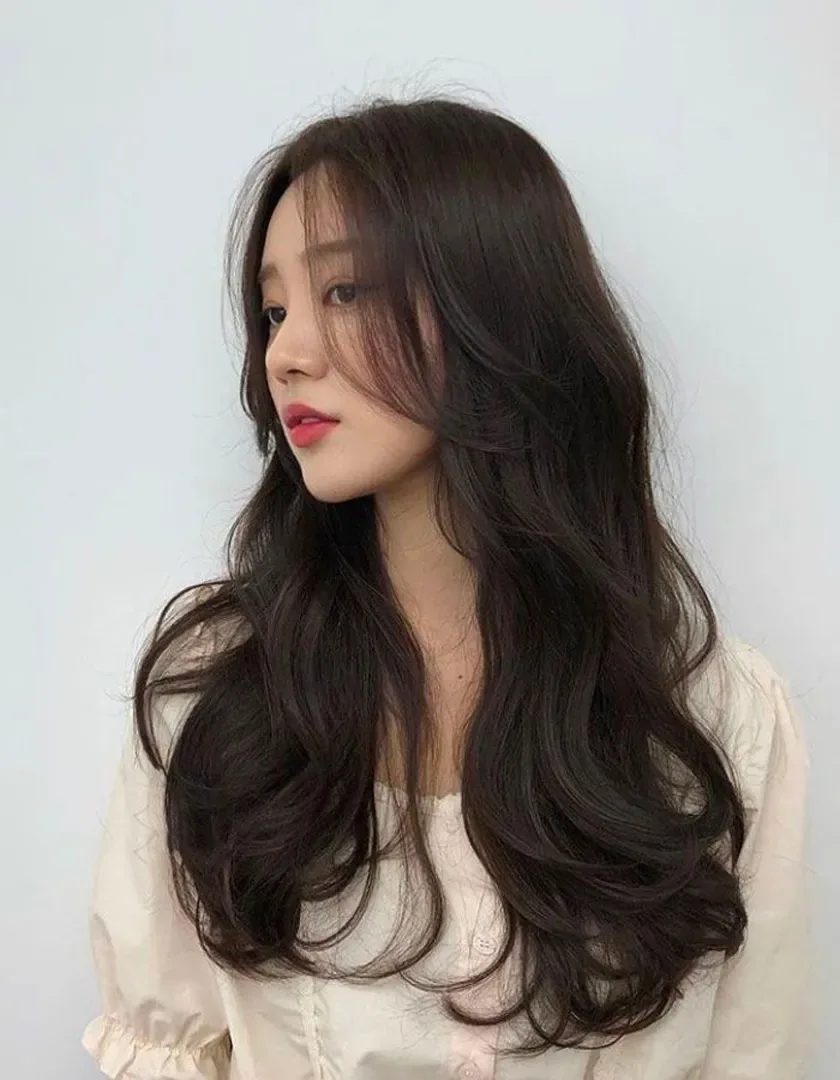
This is the perm for women who want the movement of a perm without curling the whole head: the top of the hair stays smooth and straight, the long layers fall softly, and only the ends are permed into gentle curls. The effect is like a blow-dry that never drops — smooth at the roots, bouncy at the ends — and it is the most subtle perm in this guide. It suits long hair best, where the smooth-to-curly transition has room to happen gradually, and it grows out beautifully, because the roots were never permed at all.
Best for: long hair, and women who want a subtle first perm. How to style it: blow-dry the top smooth, and scrunch the ends with curl cream. What to ask: ask for the perm to start at chin level or below, so the top stays smooth. Pros and cons: the most natural-looking and easiest-to-grow-out perm, but also the least dramatic — if you want visible curls, this is not the one. Quick verdict: the perm for women who are perm-curious but not perm-committed.
30. The Soft Perm for Women Over 50
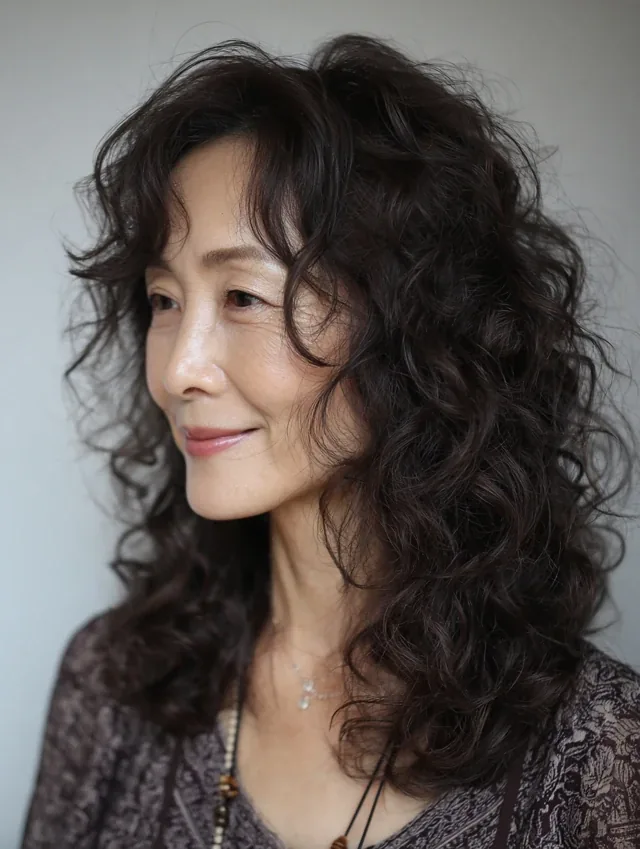
A soft perm is one of the best hairstyles for women over 50, because it adds the volume and softness that hair naturally loses with age. The key is softness: large rods, loose waves, a length that sits at or above the shoulders, and face-framing curls that soften the features. A tight, short perm can look dated, but a soft, modern perm looks fresh, youthful and effortless — and it is far easier to maintain than a daily blow-dry. Many women over 50 find that a perm gives them back the body their hair had twenty years ago.
Best for: mature hair that has thinned or lost volume. How to style it: curl cream and a diffuser, or simply air-dry and shake the roots. Maintenance: keep the length manageable — shoulder-length or shorter — and trim regularly, because permed ends on older hair can look dry if they are left too long. What to ask: ask for the softest, loosest wave the stylist can give you, and bring a photo of the look you want. Quick verdict: the most flattering volume treatment for mature hair, when it is kept soft.
31. The Perm for Thin Hair That Needs Volume
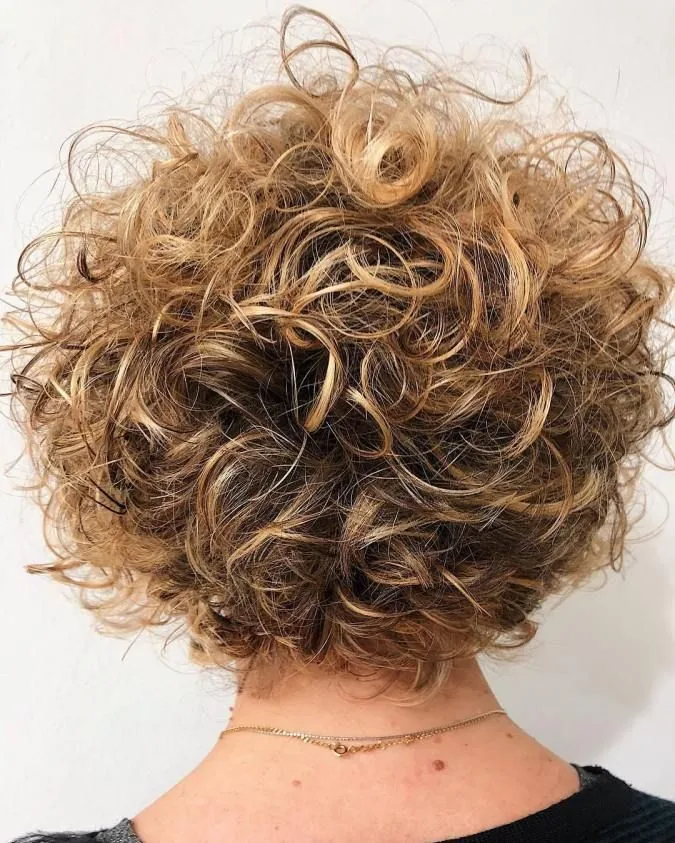
Thin hair and a perm are a classic pairing, because the curl does what no volumising spray can: it makes each strand take up more space. A body-wave perm on thin hair gives bounce, lift and the illusion of thickness, and it means the hair finally holds a style instead of falling flat within an hour. The rods must be chosen carefully — too small and the curl will overwhelm the hair, too large and it will not hold — and the solution must be gentle, because thin hair processes quickly. A root perm combined with a body wave is often the best answer for thin hair.
Best for: thin, flat hair that will not hold volume. How to style it: lightweight mousse at the roots, scrunched through damp hair, and air-dried. Common mistake: using heavy creams and oils on thin permed hair — they will flatten the volume you just paid for. Maintenance: wash with a volumising, sulfate-free shampoo, and avoid heavy conditioners on the roots. Who should avoid it: anyone whose thin hair is also very fragile — get the strand test first, and listen to the answer. Quick verdict: the best thickness illusion thin hair can buy.
32. The Textured Shag Perm
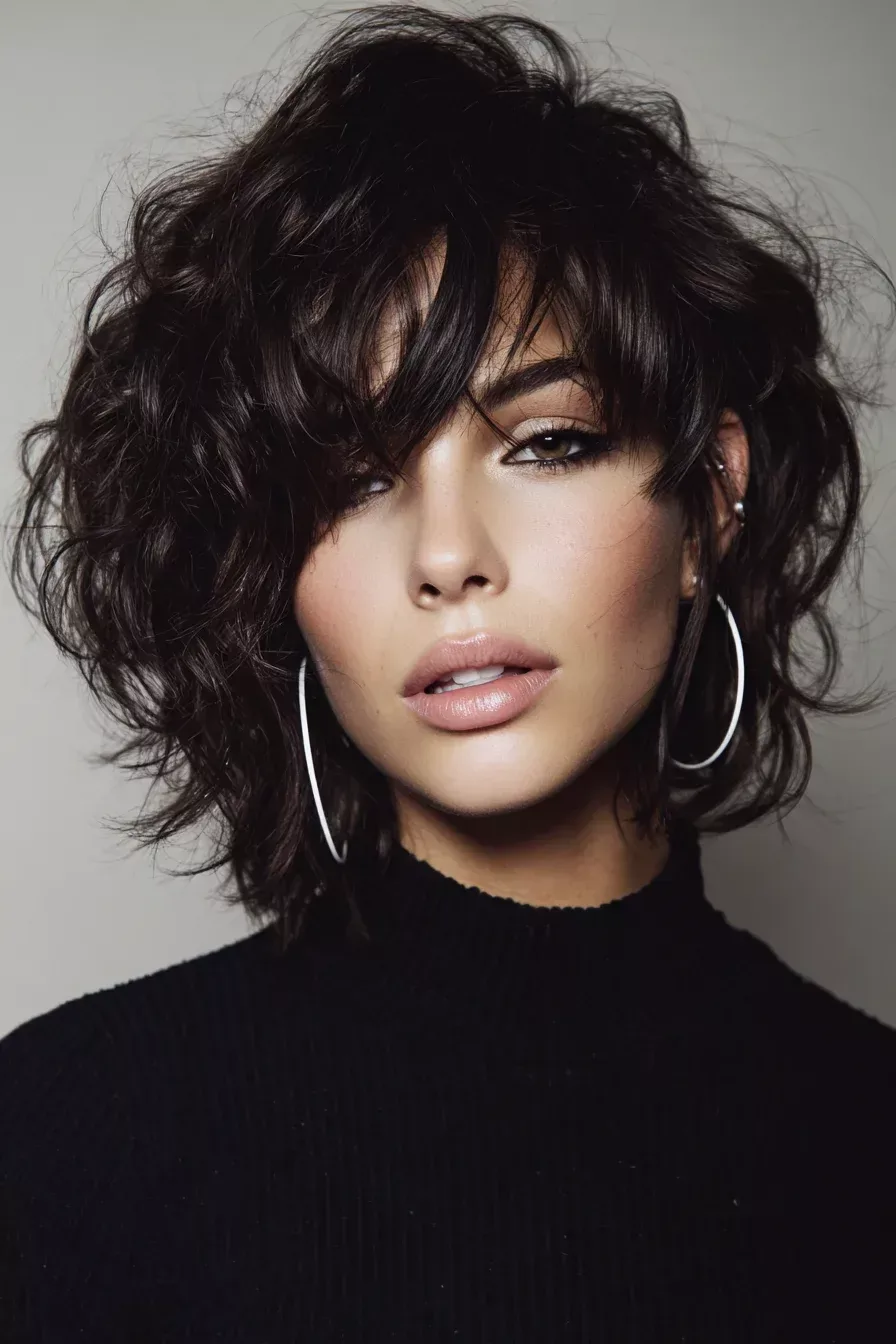
The shag perm is the coolest perm in this guide: a shag haircut — choppy layers, a textured fringe, lots of movement — with a perm that gives every layer a curl or a bend. The result is rock-and-roll hair: messy, textured, full of life, and completely un-boring. It suits women who like an edgy, lived-in look, and it is wonderfully low-maintenance, because the shag is designed to look a little undone. The perm and the cut work together: the layers make the curls fall in different directions, and the curls make the layers visible.
Best for: edgy, textured style and medium-length hair. How to style it: texture spray or salt spray, scrunched into damp hair, and air-dried — the messier, the better. What to ask: ask for a shag cut first, then a perm on varied rod sizes, so the curl pattern is as uneven as the cut. Pros and cons: the most characterful perm in this guide, and one of the easiest to maintain — but it is a bold look, and it will not suit a conservative workplace. Quick verdict: the perm for women who want their hair to have personality.
33. The Glossy Perm
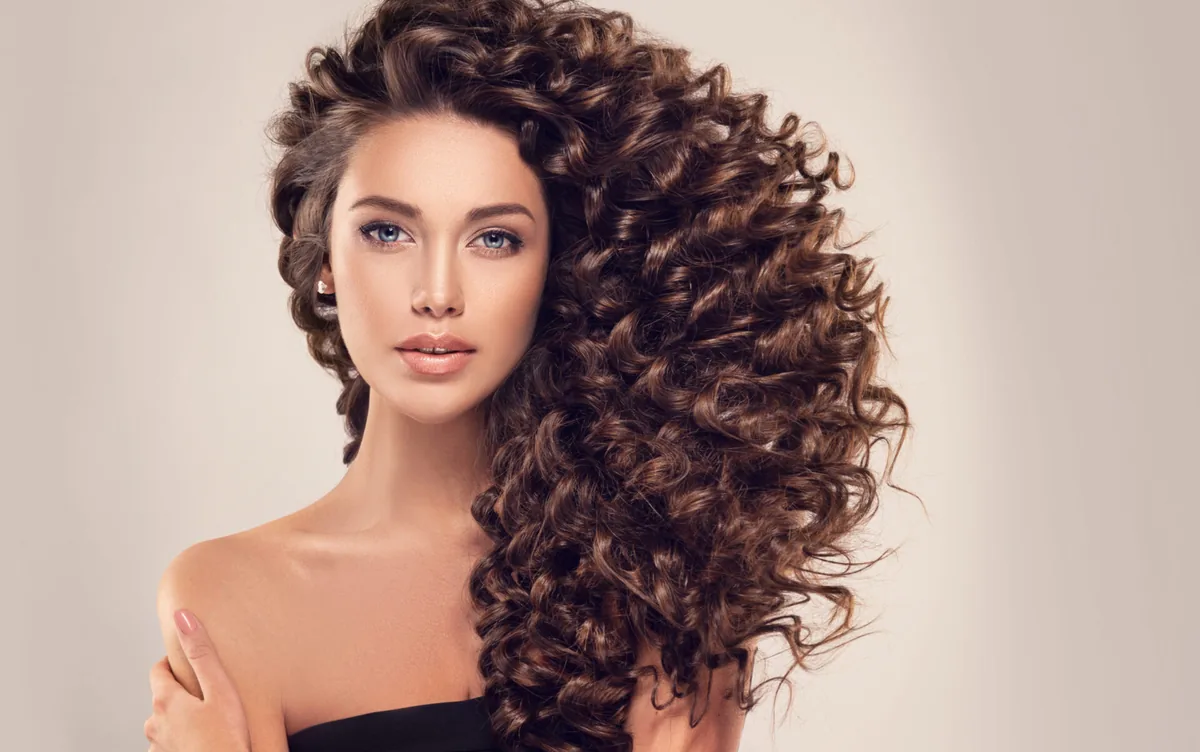
The glossy perm is all about shine: healthy hair, a gentle perm, and a gloss treatment afterwards, so the curls look smooth, hydrated and reflective rather than dry or frizzy. Perms have a reputation for drying the hair out, but a modern perm followed by a glossing treatment and proper aftercare can leave the hair looking shinier than before — because the waves catch the light in a way straight hair does not. The key is condition: this perm only works on healthy hair, and it needs a weekly mask to stay glossy.
Best for: healthy hair that wants shine and movement. How to style it: curl cream, then a drop of shine oil smoothed over the ends once the hair is dry. Maintenance: a gloss treatment every six to eight weeks, a weekly deep-conditioning mask, and heat protection whenever you blow-dry. Common mistake: skipping the mask — glossy curls are hydrated curls, and hydration is a habit, not a one-time treatment. Quick verdict: the shiniest perm in this guide, and proof that a perm does not have to mean dry hair.
34. The Perm With Highlights
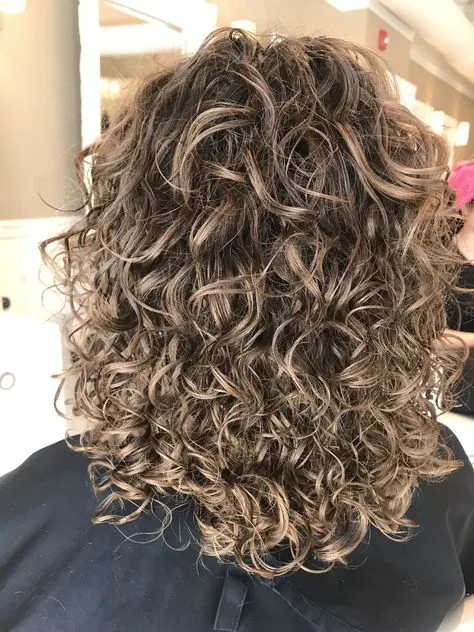
Highlights and a perm are a natural partnership: the highlights lighten the bends of each curl, so the curl pattern looks deeper, more defined and more dimensional. A few face-framing highlights make the curls around the face glow, while highlights through the lengths give the whole style movement and light. Like the balayage perm, this combination needs care — the highlights and the perm must be spaced at least two weeks apart, and the hair must be healthy enough for both — but the result is one of the most beautiful perms in this guide.
Best for: women who want dimensional, light-catching curls. How to style it: curl cream and a diffuser, so the highlights and the curl both show. What to ask: ask for the highlights first, then the perm two weeks later, and ask the stylist to place the highlights where the curls will bend. Maintenance: a toning shampoo to keep the highlights from turning brassy, and a weekly mask. Cost and time: two separate appointments, so budget for both. Quick verdict: the perm that looks most expensive — because the light does half the styling for you.
What is a modern perm?
A modern perm is a chemical treatment that reshapes the hair into lasting waves or curls, using large rods, varied rod sizes and gentler solutions than the perms of the 1980s. The result is soft, loose, lived-in waves or curls — body waves, beach waves, spiral curls, root lift or digital curls — that look natural and grow out gracefully, rather than tight, uniform ringlets.
How long does a modern perm last?
A modern perm usually lasts three to six months. Loose body waves relax first, often softening into a gentle wave after two or three months, while tighter spiral curls hold longest. How long it lasts depends on the rod size, your hair’s texture, and how you care for it — sulfate-free shampoo, less washing and regular conditioning all help it last longer.
Does a modern perm damage your hair?
A perm is a chemical service, so it does stress the hair, but a modern perm on healthy hair, done by a skilled stylist with a strand test first, should leave the hair in good condition. The risk is highest on hair that is already bleached, damaged or over-processed. A good stylist will refuse to perm hair that is not strong enough, and you should listen to them.
How much does a modern perm cost?
A modern perm typically costs about $80 to $250 or more, depending on your city, the salon, and the length and thickness of your hair. Long or thick hair costs more, because it takes more time and product. Ask whether the price includes the cut, the conditioning treatment and the styling lesson, so you are comparing like with like.
Can I get a perm with fine or thin hair?
Yes — fine and thin hair often benefit most from a perm, because the curl adds volume and texture that fine hair lacks. The key is a gentle solution, the right rod size and a strand test first, because fine hair processes faster than thick hair. A body-wave perm or a root perm is usually the best choice for fine hair.
How soon can I wash my hair after a perm?
Wait at least 48 hours before washing your hair after a perm, while the new curl pattern sets. Do not get the hair wet, tie it up tightly or tuck it behind your ears during those two days. After that, wash two or three times a week with a sulfate-free shampoo, and always follow with conditioner.
Can I straighten permed hair?
Yes, you can straighten permed hair with a flat iron, but doing it every day will gradually relax the perm and dry the hair out. Use heat protection every time, keep the iron on a moderate temperature, and save straightening for special occasions rather than making it a daily habit. If you straighten your hair every day, a perm is probably not the right choice for you.
Will a perm work on short hair?
Yes, a perm works on short hair, including pixies and bobs — it adds volume, texture and lift that short hair often lacks. The curl will shorten the hair by an inch or two, so tell the stylist how much length you are willing to lose, and ask for larger rods if you want waves rather than tight curls. Short perms need re-perming every two to three months, because the grow-out shows faster.
How do I keep my perm curls looking good overnight?
Sleep on a silk or satin pillowcase, which reduces frizz, or loosely gather the hair on top of your head in a pineapple — a loose, high ponytail with a soft scrunchie — so the curls are not crushed. In the morning, mist the hair lightly with water mixed with a drop of leave-in conditioner, scrunch it back into shape, and the curls will come back without washing.
How do I grow out a perm?
A modern perm grows out gracefully, because the curl is loose and uneven, so there is no harsh line where the curl stops. As the roots grow in straight, the curl gradually loosens from the top down. You can let it grow out completely, trim the ends regularly to remove the permed hair bit by bit, or get a fresh perm when the roots have grown out enough that the top looks flat. There is no need to cut it all off, and you do not need a chemical treatment to remove a perm.
Conclusion
The modern perm is not your grandma’s perm — and that is exactly the point. The tight, uniform curls of the past have given way to soft body waves, beach waves, spiral curls, root lift and digital curls that look like your hair, only better: hair with movement, volume and texture that holds for months and asks for almost nothing in the morning. Every style in this guide is a variation on the same simple idea — a lasting wave, chosen for your hair, your face and your life — and the right one is the one you will actually enjoy living with.
Start with a consultation, not a booking: bring photos, ask for a strand test, and be honest about your hair’s history. Then choose the curl that matches the mornings you want — a body wave for effortless volume, a beach wave for ease, a spiral for drama, a root perm for lift, or a lived-in curl for the most natural result of all. Look after it with gentle washing, regular conditioning and a little curl cream, and it will look after you. And when someone asks how your hair looks so good every day, you can tell them the truth: you had it permed — the modern way.