The Tapered Cut, Tailored: 33 Short and Curly Tapered Haircuts for Women
A tapered haircut is the quiet genius of short hair: the sides and back are cut gradually shorter as they travel down toward the neckline and the ears, while the top keeps its length, its curl or its volume — so the whole cut looks clean, shaped and deliberate, without ever looking severe. It is the difference between a short cut that grows out into a shapeless puff and a short cut that keeps its silhouette for weeks. The taper does the framing: it hugs the nape, opens up the neck, sharpens the jawline, and lets whatever is happening on top — curls, a pixie sweep, a textured crop — take the spotlight.
This guide gathers 33 tapered haircuts for women, from the classic tapered pixie and the curly tapered cut to the tapered afro, the low taper, the high taper, the tapered bob and the tapered nape — plus versions for thick, fine, wavy and grey hair, and looks for work, for summer, for older women and for a night out. Eight guides cover what a taper really is, how it differs from a fade and an undercut, low taper versus high taper, which face shapes it flatters, exactly what to ask your stylist for, how to style it at home, how to keep it fresh between appointments, and the mistakes that make a taper look choppy instead of clean. One honest note before you begin: a tapered cut is a precision cut, and it lives or dies on the blending — so bring photos, ask for the taper height by name, and book the next trim before you leave the chair.
What Is a Tapered Haircut — And Why It Flatters Almost Everyone
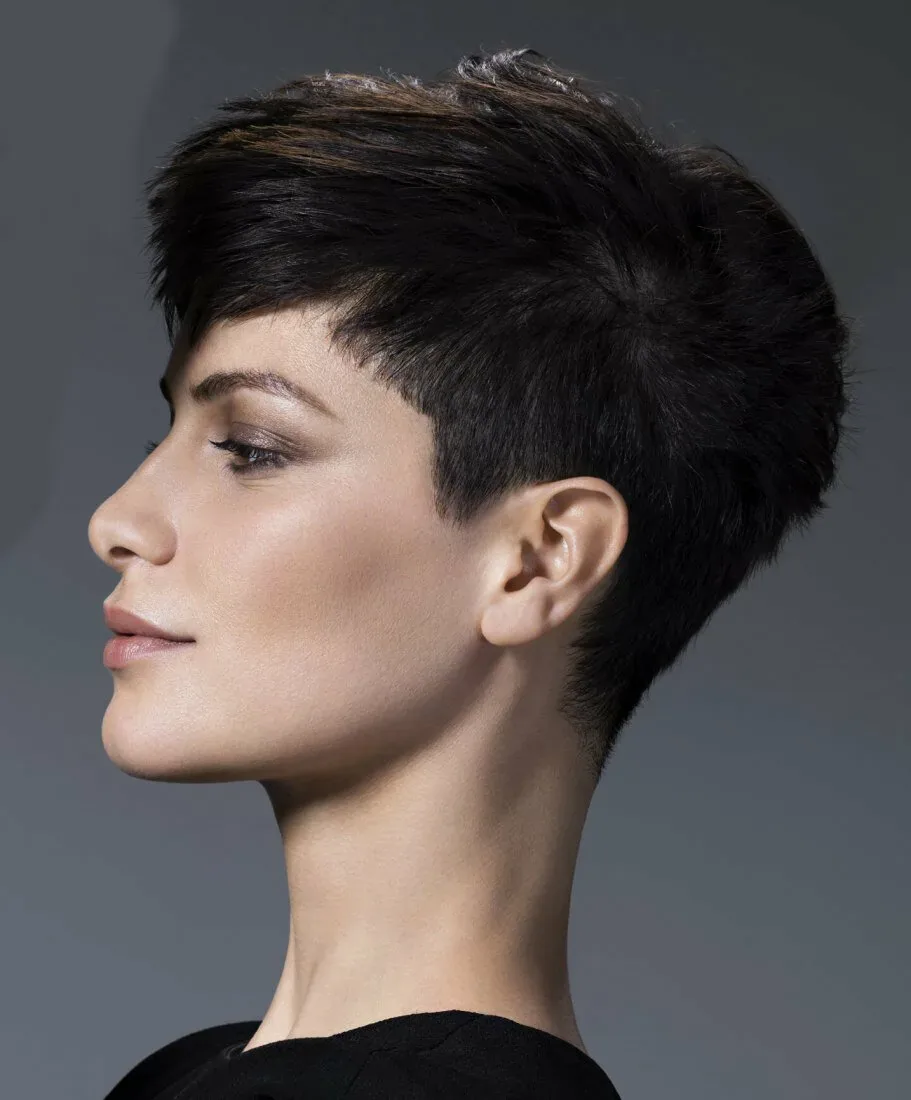
A tapered haircut is a cut in which the hair gradually gets shorter from the top of the head down toward the neckline and the ears, with no harsh line where one length ends and the next begins. The top keeps its length — long enough to curl, sweep, spike or fall — while the sides and back are blended down in smooth steps, usually with scissors or clippers, until the shortest hair sits neatly at the nape and around the ears. The result is a silhouette that is full on top and clean at the edges, like a good suit: structured where it counts, soft where it matters.
What makes a taper so flattering is that it does two jobs at once. It removes bulk and weight exactly where hair tends to puff out — at the sides and the nape — so the head looks smaller and the neck looks longer, and it leaves the length on top, so the cut still has movement, texture and personality. A taper suits straight, wavy and curly hair, thick and fine hair, and almost every face shape, because the taper height and the top length can both be adjusted to the person wearing it. It is the rare short cut that looks intentional from every angle, and the reason so many women who try a taper never go back to a blunt short cut.
Taper vs Fade vs Undercut — What Is the Difference?
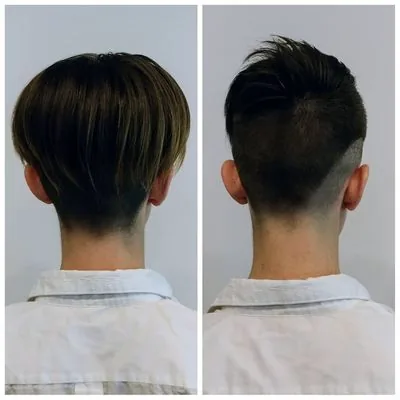
The three cuts look similar from across the room, but they are built differently, and the difference matters when you sit in the chair. A taper is a gradual blend: the hair gets shorter in smooth steps toward the nape and ears, and the skin is never fully exposed — there is always hair, just shorter hair. A fade is more dramatic: the hair blends all the way down to the skin, so the sides disappear into bare skin at the bottom. An undercut is a contrast cut: the sides and back are cut very short all at once, with a sharp disconnect where the long top begins, and there is no blending at all.
Which one should you choose? If you want a clean, professional cut that grows out gracefully, choose a taper — it is the softest of the three, the most forgiving as it grows, and the easiest to wear to work. If you want a bolder, edgier look with a sharp finish, choose a fade — but know that a fade shows growth within a week and needs a trim every two weeks to stay sharp. If you want drama and contrast — long curls on top with shaved sides — choose an undercut, but expect a visible line as it grows out. For most women trying a short cut for the first time, the taper is the safest and most versatile starting point: it gives you the clean edges of a fade without the commitment.
Low Taper vs High Taper — Which One Suits You?
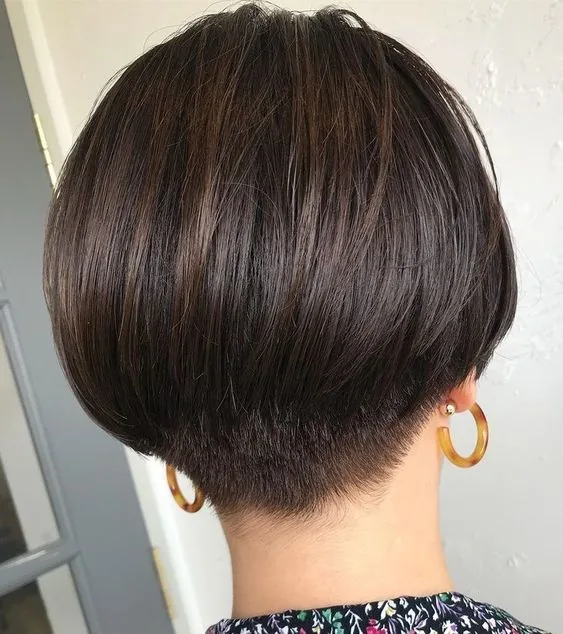
The height of a taper is where the shortest hair begins, and it changes the whole character of the cut. A low taper starts short only near the bottom — around the nape and just above the ears — so most of the sides keep their length and the cut looks soft, subtle and natural. A high taper starts higher, around the temples, so much more of the sides are short, and the cut looks sharper, bolder and more sculpted. In between sits the mid taper, which starts at about the middle of the head and is the most popular choice, because it is clean without being dramatic.
The right height depends on your face, your hair and your life. A low taper suits women who want a gentle change, who wear their hair to work in a conservative office, or who have a round face — because keeping length at the sides balances the width. A high taper suits women with thick hair that puffs out at the sides, because it removes the bulk where it matters most, and it suits oval and heart-shaped faces, where the sharper line shows off the cheekbones. If you are unsure, ask for a mid taper first: it is the easiest to adjust at the next appointment, up or down, once you have lived with it for a few weeks.
Face Shapes and Tapered Cuts — How to Pick Yours
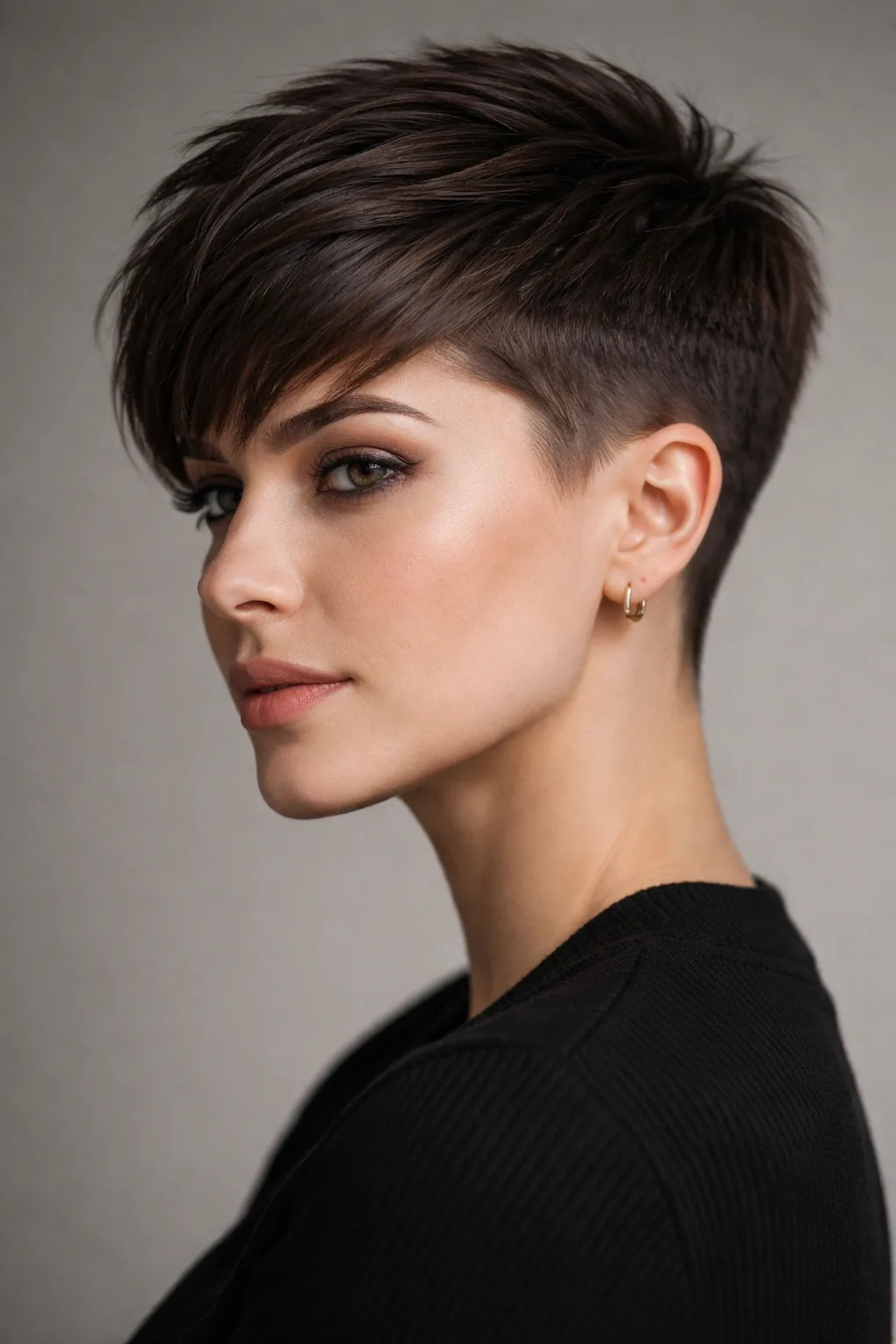
A tapered cut can be tuned to almost any face shape, because the two variables — how high the taper goes, and how much length stays on top — change the proportions of the whole head. For a round face, the trick is height on top: a longer, textured top with a low taper draws the eye upward and lengthens the face, while a high taper with a flat top can make a round face look rounder. For an oval face, almost any taper works — it is the most versatile face shape — so choose by hair type and lifestyle rather than by face shape. For a square face, a softer taper with a side-swept top softens the jaw, and a hard part or a sharp line should be used sparingly, or it will emphasise the angles.
For a heart-shaped face, a tapered cut with volume at the sides — a low taper, or a tapered bob — balances a wider forehead and a narrower chin. For a long face, the opposite applies: keep the top shorter and the sides a little fuller, so the cut adds width rather than height. The practical rule is simple: a taper adds neatness at the edges, and the top adds the shape — so tell your stylist your face shape, and let the top do the correcting while the taper does the cleaning up. And remember that a good stylist will adjust the taper to your head shape as well as your face shape, because a taper that follows the curve of your skull always looks better than one cut to a template.
How to Ask Your Stylist for a Tapered Cut — And Get What You Want
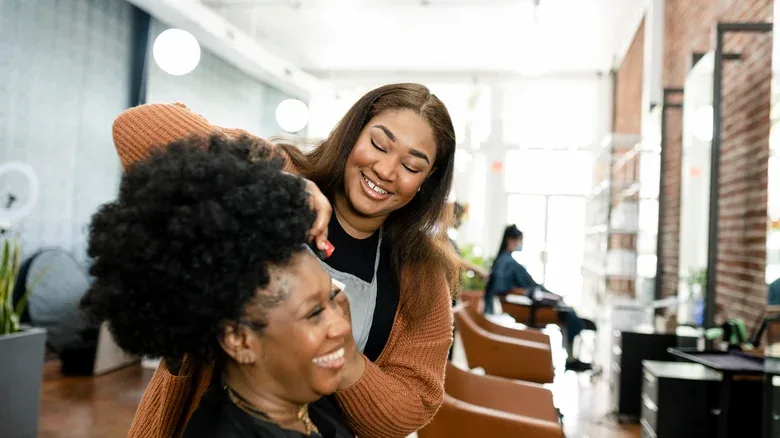
The single most important thing you can do before a tapered cut is bring photos — three of them, ideally: one of the taper height you want, one of the top length you want, and one of a cut you do not want. A taper is a visual cut, and words like short or neat mean different things to different people, but a photo means the same thing to everyone. Show the stylist the photos before they pick up the scissors, point at the parts you love, and say the words that matter: taper height (low, mid or high), top length in inches, and whether you want the edges soft or sharp.
The second thing is to talk about your life, not just your hair. Tell the stylist how often you are willing to come back for a trim — every three weeks or every six — because a high taper that you can only maintain every six weeks will disappoint you. Tell them how you style your hair at home, honestly: if you never blow-dry, say so, and the cut should be designed to air-dry well. And ask the stylist to show you the taper in a mirror from the back before you leave the chair, so you can see the blend. A good stylist will welcome the conversation; a rushed one will not, and that tells you something too.
Styling a Tapered Cut at Home — Five Minutes, Every Morning

A tapered cut is designed to be easy at home, because the shape is in the cut, not in the styling — but a few habits make the difference between a taper that looks sharp and one that looks tired. The first habit is to style the top while it is damp: work a small amount of product through — pomade for definition, mousse for volume, curl cream for curls — and shape the top with your fingers, not a brush, because fingers keep the texture that a brush flattens. The second habit is to leave the tapered sides alone: they need no product and no heat, and adding product there only makes them look greasy.
The third habit is about drying: if you have a pixie or a textured top, rough-dry with your fingers and a hairdryer on low, lifting the roots as you go, and stop while the hair is still slightly damp, so it settles naturally. If you have curls, diffuse on low heat or air-dry, and never touch the curls while they dry. And the fourth habit is the cheapest of all: a clean neckline. A tapered nape grows out in a week, and a quick tidy with a trimmer at home — or a five-minute salon visit — keeps the whole cut looking fresh for an extra two weeks. Five minutes in the morning, and the taper does the rest.
Maintenance and Grow-Out — Keeping a Taper Fresh
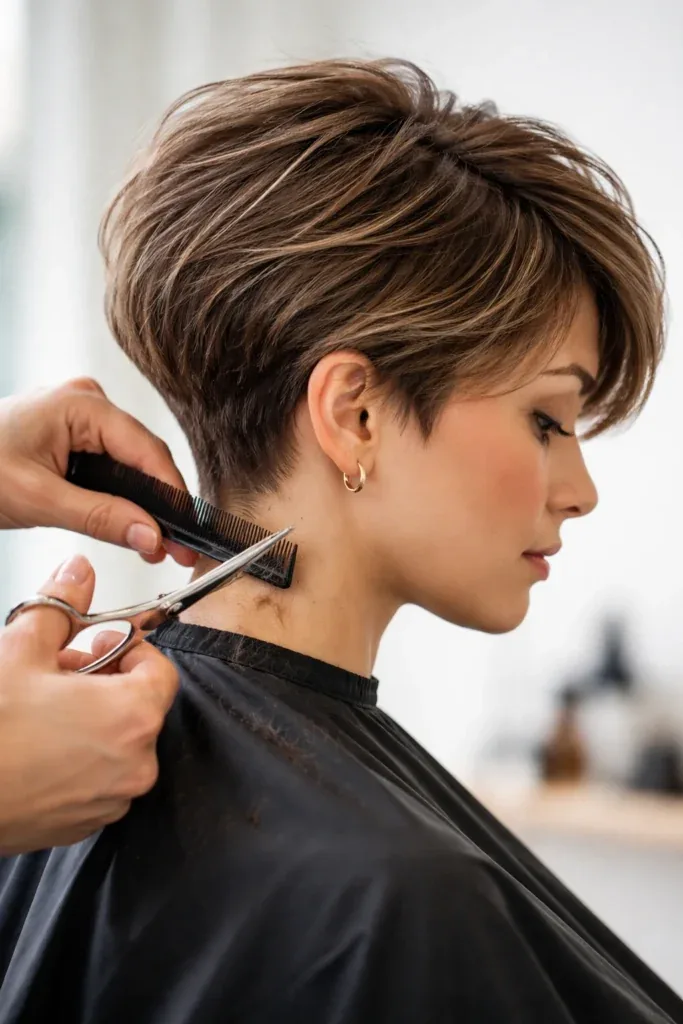
A tapered cut is a precision cut, and precision fades as hair grows — so maintenance is part of the deal, not an afterthought. A low taper needs a trim every five to six weeks, a mid taper every four weeks, and a high taper every two to three weeks, because the shorter the taper, the faster the growth shows. The good news is that a taper trim is quick — often fifteen minutes — and many salons offer a reduced-price tidy-up between full cuts, just for the nape and the edges. Book the next appointment before you leave the salon, and the taper will never get the chance to look overgrown.
Growing a taper out is easier than growing out a fade or an undercut, because the blend is gradual — but it still needs a plan. Let the top grow first while the taper is trimmed less and less often, so the sides catch up with the top, and use the awkward stage to try a new shape: a tapered bob, a longer pixie, a textured crop. If the grow-out feels shapeless, ask your stylist for a reshaping cut rather than a trim — a cut that redistributes the length instead of just shortening it. And remember that a taper is the easiest short cut to grow out gracefully, which is one more reason it is the best short cut to start with.
Common Tapered Cut Mistakes and How to Fix Them
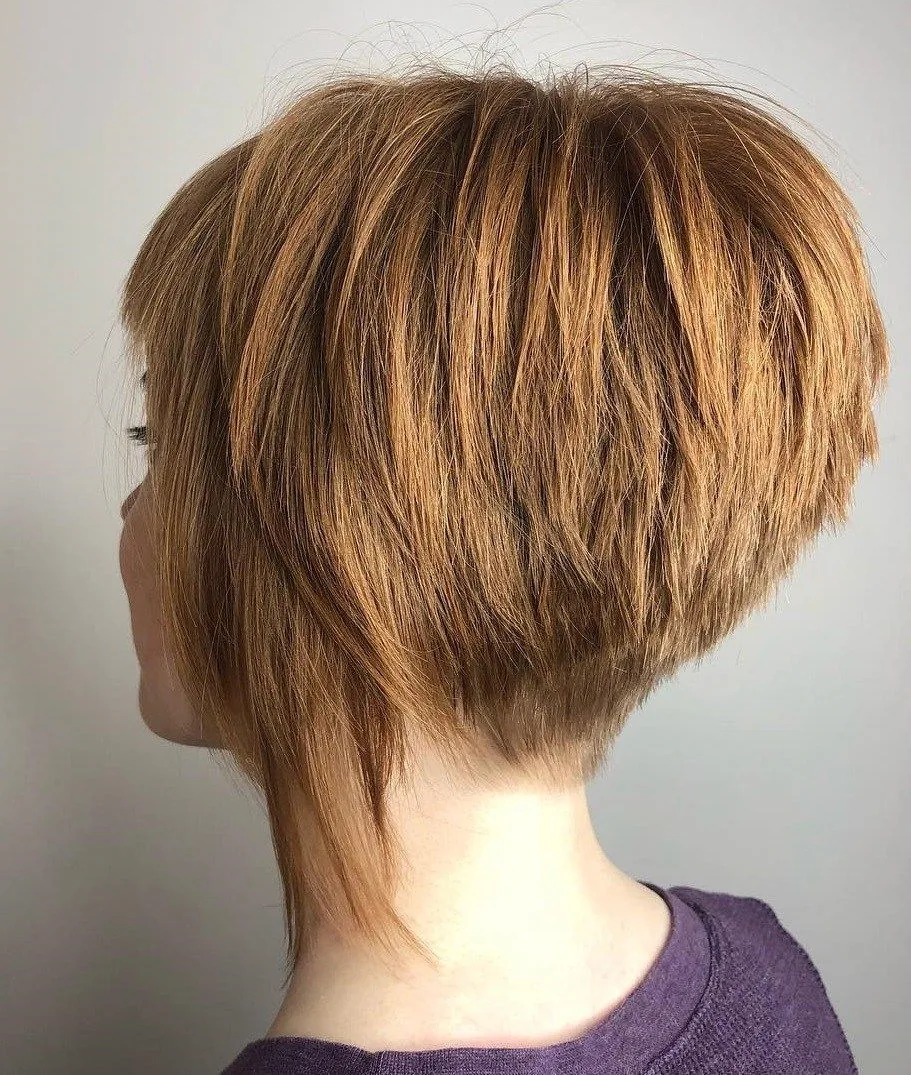
The most common tapered cut mistake is a taper that is too high for the face or the lifestyle — a high taper chosen from a photo, without thinking about the three-week trim schedule it demands, or about how it will look on a round face. The fix is to start lower than you think: a low or mid taper is easy to take higher at the next appointment, while a high taper can only be grown out. The second mistake is a taper with no blending — visible steps or a harsh line where the clipper guard changed — which is a cutting problem, not a hair problem. If you can see the steps, ask the stylist to blend them with thinning shears, or find a stylist who specialises in short cuts.
The other mistakes are about the top. A top that is too short for the taper looks severe, because there is nothing to balance the short sides — leave the top long enough to style, at least two inches for most women. A top that is cut blunt instead of point-cut looks like a cap, so ask for texture. And the mistake that costs the most is over-styling the taper itself: product on the tapered sides makes them look greasy and weighed down, when they should look clean and bare. Keep the product on the top, keep the sides clean, and let the taper do what it was cut to do.
1. The Classic Tapered Pixie
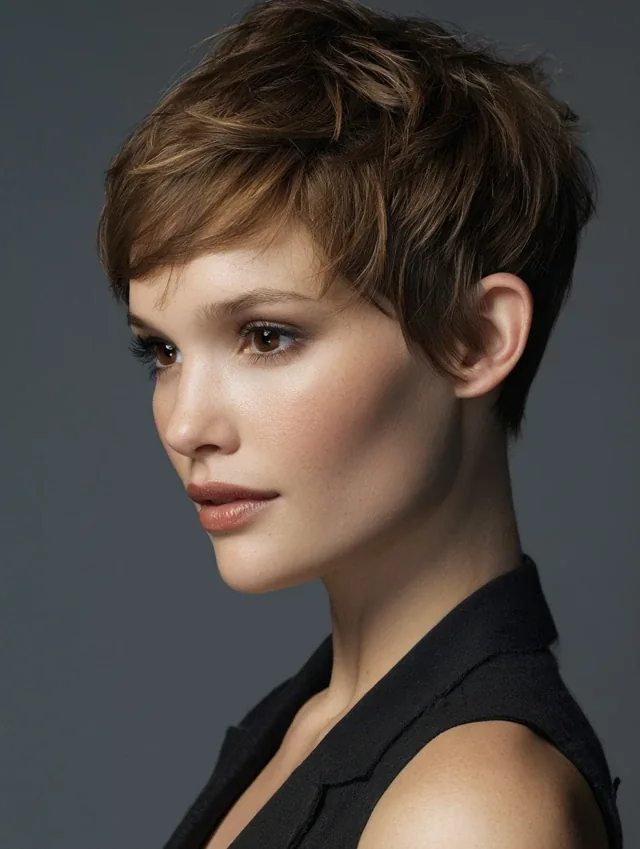
The classic tapered pixie is the cut that made the taper famous: a short pixie with length on top — long enough to sweep, piece or tousle — and sides and back that taper smoothly down to a neat nape and tidy ears. It is short without being severe, polished without being fussy, and it has been worn by everyone from film stars to grandmothers because it suits so many faces and so many lives. The taper is what keeps the pixie from looking like a bowl cut: it gives the short hair a shape, a silhouette and a finish.
Best for: oval and heart-shaped faces, and for women who want a genuinely short cut that still looks soft and feminine. How to style it: work a pea-sized amount of pomade or texturising cream through damp hair, sweep the top forward or to the side with your fingers, and let it air-dry — the taper needs no styling at all, which is half the point. Time and cost: five minutes at home each morning, and a trim every four to five weeks to keep the taper crisp. Quick verdict: if you want one tapered cut to try first, this is it — the classic that never looks dated.
2. The Tapered Pixie with a Long Top
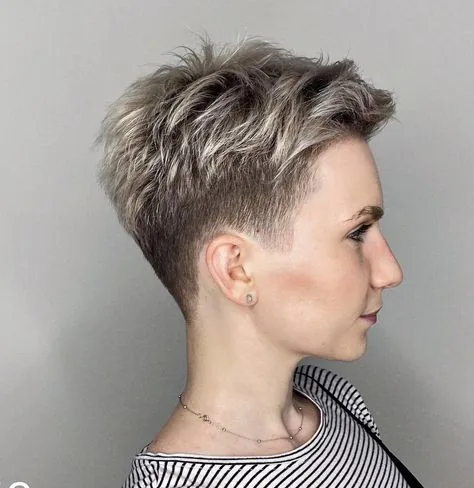
The tapered pixie with a long top is the pixie for women who are not quite ready to go fully short: the sides and back are tapered neatly, but the top is left long — four or five inches — so it can be swept to the side, pushed back, curled, or worn with a fringe. It is the most versatile short cut there is, because the long top gives you options every morning: sleek one day, tousled the next, pinned back the day after. The taper keeps the whole thing from looking overgrown, even while the top grows.
Best for: thick hair, which needs the weight removed at the sides, and for women growing out a very short cut. What to ask your stylist for: a low to mid taper on the sides and back, with the top left long and point-cut for texture, so it moves instead of sitting like a cap. Pros and cons: the long top is wonderfully flexible, but it needs a little styling each morning — a round brush or a flat iron for five minutes — or it can look flat. Maintenance: trim the taper every four weeks, and the top every six to eight. Quick verdict: the tapered pixie with the most styling freedom.
3. The Curly Tapered Cut
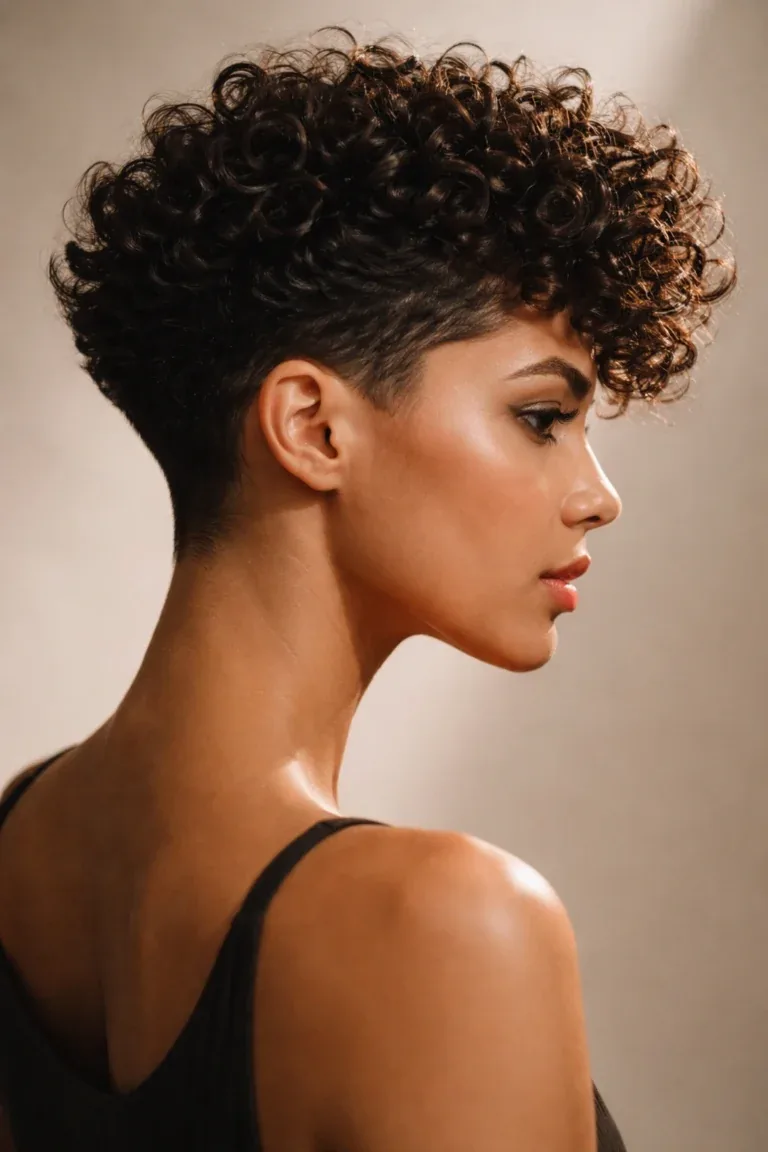
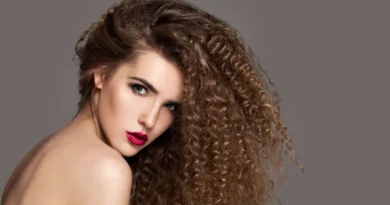
The curly tapered cut is the taper at its most joyful: the sides and back are tapered down, and the curls on top are left to do what curls do — spring, coil and take up space. The taper is what makes curly short hair work: without it, a short curly cut grows out into a triangle, wide at the bottom and flat at the top, but with a taper the shape stays balanced, the curls sit high, and the nape stays clean. It is the cut that lets curly hair be short without losing its character.
Best for: naturally curly and coily hair of every curl pattern, from loose waves to tight coils. How to style it: apply curl cream to soaking wet hair, scrunch, and diffuse or air-dry — never brush dry curls, or the taper will disappear under frizz. Common mistake: cutting curly hair too short at the sides while wet, because curls spring up as they dry and the taper can end up higher than planned — always cut curly hair dry, or with plenty of length left as a margin. Quick verdict: if you have curls and you want them short, the tapered cut is the way in.
4. The Tapered Afro
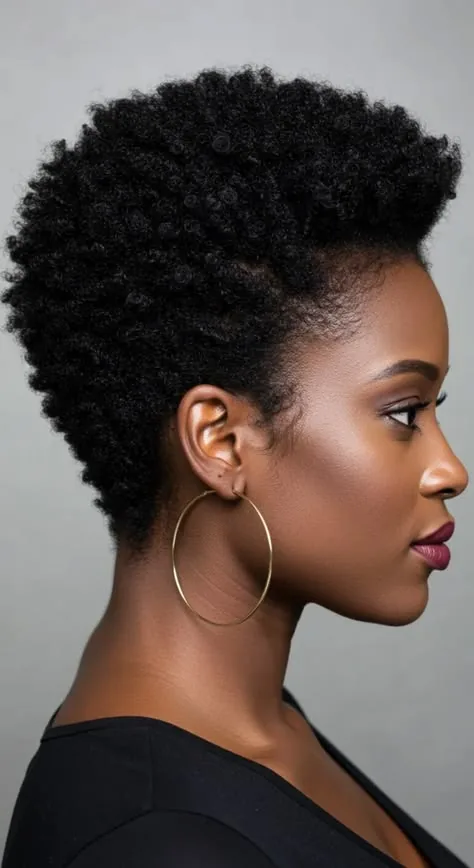
The tapered afro is one of the most striking short cuts there is: a rounded afro on top, full and sculpted, with the sides and back tapered down close to the head, so the afro becomes a shape rather than a cloud. The taper gives the afro its architecture — it defines the outline, shows off the cheekbones, and keeps the cut looking deliberate for weeks. It is bold, beautiful and deeply flattering, and it works on every length of afro, from a short cropped shape to a fuller, taller one.
Best for: natural afro-textured hair, and for women who want a short cut with real presence. How to style it: pick the afro out with a wide-tooth comb or an afro pick, shape it with your hands, and moisturise daily — a tapered afro needs moisture more than it needs styling. Pros and cons: the shape is stunning and the cut lasts well, but the taper needs a trim every two to three weeks to stay sharp, because afro hair grows out visibly fast. Who should avoid it: nobody, though if you want to keep maximum length, a full afro without a taper is the better choice. Quick verdict: the tapered afro is a statement — wear it like one.
5. The Tapered Bob
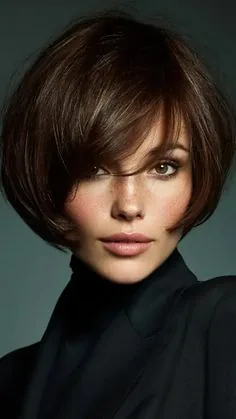
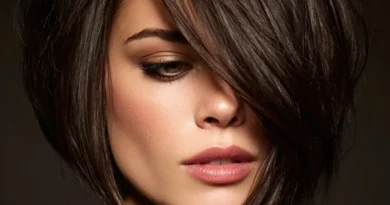
The tapered bob is the bob with a quiet upgrade: instead of a blunt, even hem all the way around, the back is tapered — shorter at the nape, gradually longer toward the front — so the bob has movement, a curved silhouette, and a neckline that looks finished rather than chopped. It is the bob for women who find a blunt bob too heavy at the back, or too boxy, and it is one of the easiest bobs to live with, because the taper removes the weight that makes a bob flip out at the ends.
Best for: straight and slightly wavy hair, and for women who want a bob that looks polished with almost no effort. How to style it: blow-dry with a round brush, tucking the ends under, or let it air-dry with a little smoothing cream — the tapered back dries neatly on its own. Time and cost: ten minutes of styling, and a trim every six weeks. Maintenance: the taper at the nape grows out first, so book the next trim when the back starts to feel thick. Common mistake: asking for a taper that is too high on a bob — a low taper is all a bob needs. Quick verdict: the most wearable bob in this guide.
6. The Tapered Nape with a Bob
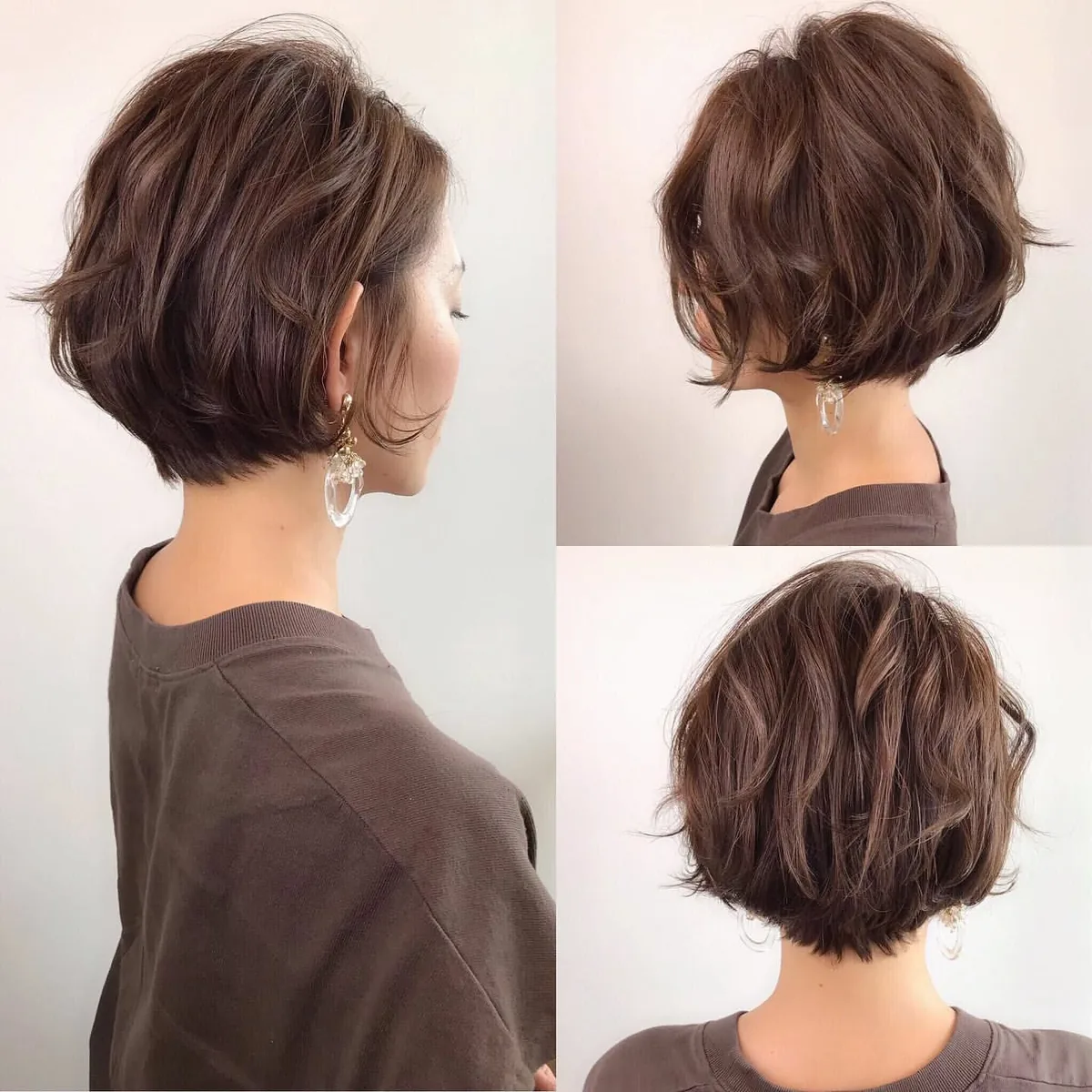
The tapered nape is a detail that transforms a bob: the hair at the very back of the neck is tapered down to a soft, clean point or curve, so the bob sits neatly on the neck instead of sticking out, and the whole cut looks finished from behind. It is a small thing — a few centimetres of hair — but it changes how the bob feels in summer, how it looks from the back, and how long it keeps its shape. Women who have had a tapered nape once usually ask for it again, every time.
Best for: anyone with a bob or a lob who hates the feeling of hair on the neck, and for hot weather. What to ask your stylist for: a soft taper at the nape — not a shave, not a fade — blended into the back of the bob, with the nape shaped to follow your neckline. Pros and cons: the nape stays neat and cool, and the bob grows out more gracefully, but a tapered nape needs a tidy-up every three to four weeks or it loses its line. Cost: a nape tidy-up is usually a quick, inexpensive salon visit. Quick verdict: the smallest change in this guide, and one of the most satisfying.
7. The Low Taper Cut
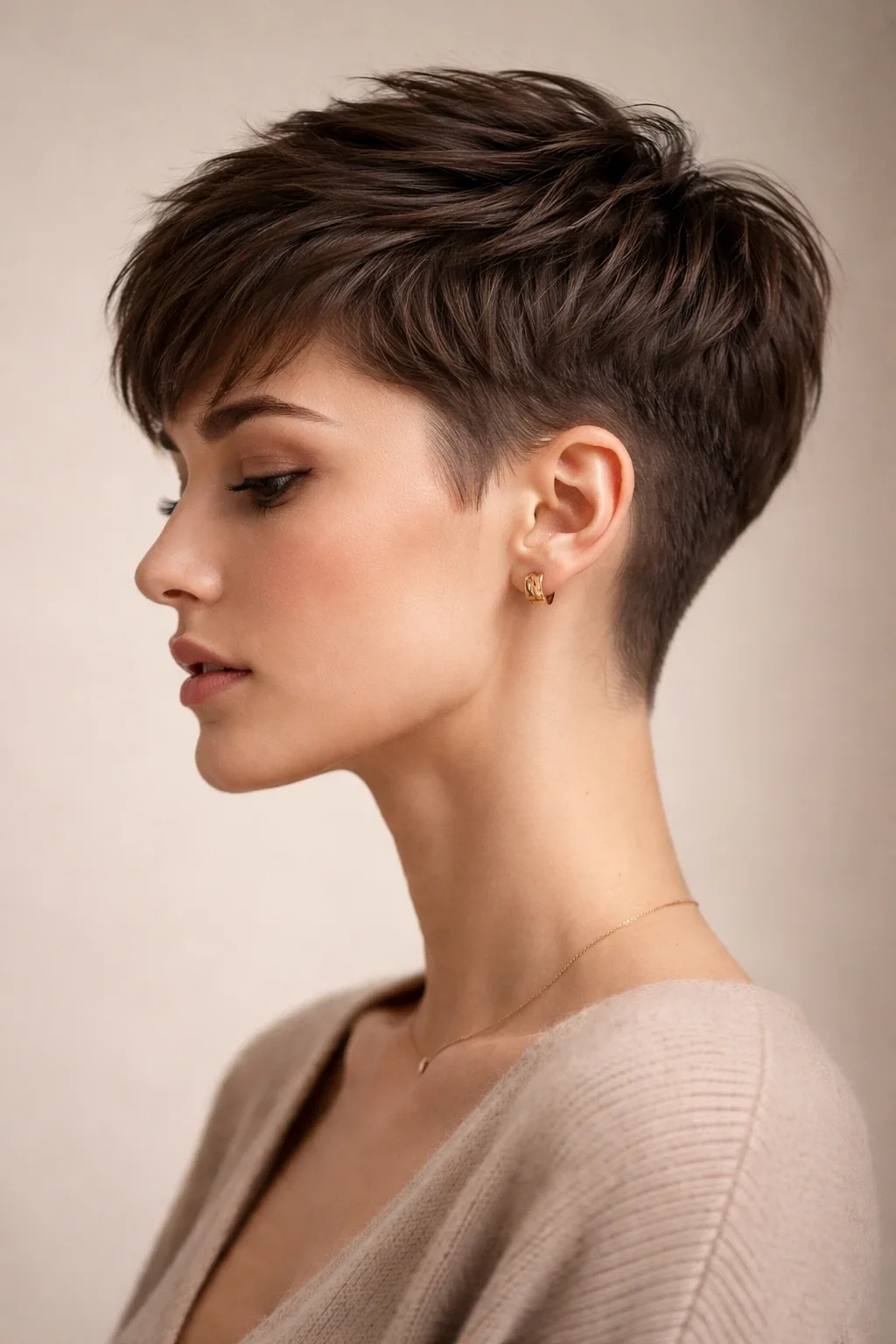
The low taper cut is the gentlest taper there is: the shortest hair sits only at the very bottom, around the nape and just above the ears, while the rest of the sides keep their length and the cut looks soft, natural and barely-there. It is the taper for women who want a clean finish without a dramatic change — the colleague who notices your hair looks great but cannot say why, the cut that looks like you simply have very neat hair. It is also the best first taper, because it is the easiest to grow out if you change your mind.
Best for: first-timers, conservative workplaces, and round faces, where keeping length at the sides balances the width. How to style it: almost nothing — the low taper needs no daily styling, and a little texturising cream on the top is enough. Maintenance: a trim every five to six weeks keeps the nape neat, and the taper grows out so gracefully that a missed appointment barely shows. Who should avoid it: women with very thick hair that puffs out at the sides may need a mid or high taper to remove enough bulk. Quick verdict: the taper that whispers instead of shouts.
8. The High Taper Cut
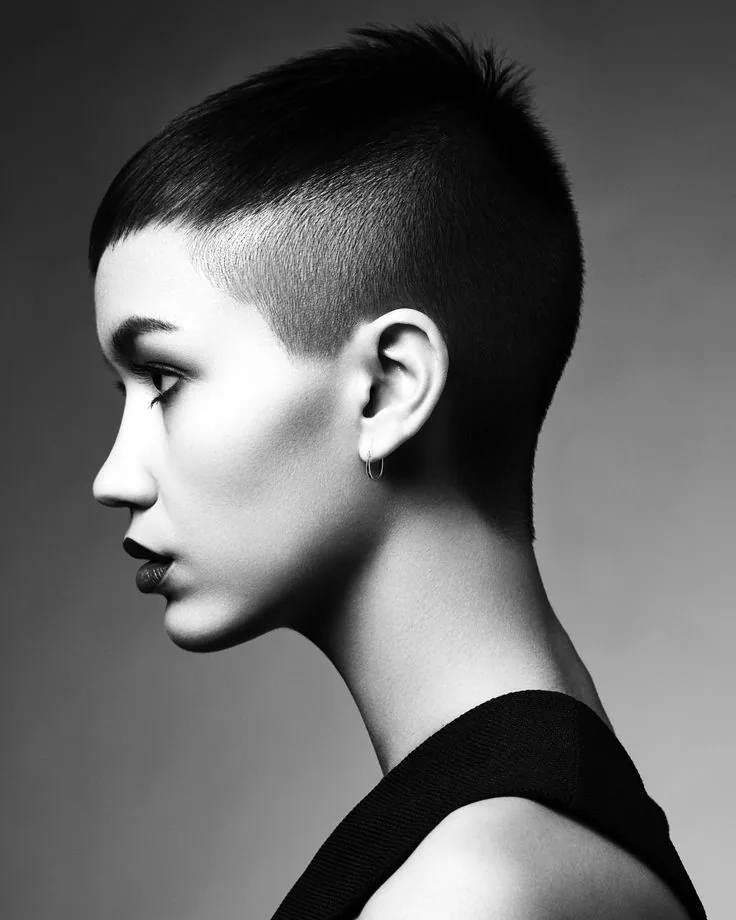
The high taper cut is the boldest taper: the short hair starts high, around the temples, so most of the sides are closely tapered and the top stands out in sharp contrast — long, full and unmistakably the star of the cut. It is a sculpted, confident look, and it shows off the bone structure like nothing else: the cheekbones, the jaw, the curve of the skull. It is the taper for women who know what they want and are not afraid of a short cut that looks short.
Best for: oval and heart-shaped faces, and thick hair that needs serious bulk removed at the sides. Pros and cons: the shape is striking and the cut stays cool in summer, but a high taper shows growth within two weeks and needs a trim every three weeks to stay sharp — it is the highest-maintenance taper in this guide. Common mistake: pairing a high taper with a flat top, which can look severe — keep the top textured and a little tousled to soften the contrast. Quick verdict: the taper for women who want their short hair to make a statement.
9. The Tapered Pixie with Side-Swept Fringe
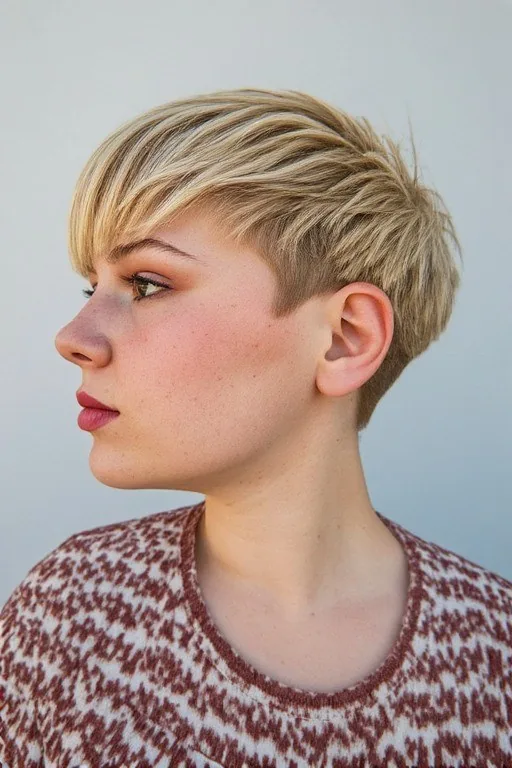
The tapered pixie with a side-swept fringe is the pixie with a softening secret: a long fringe swept across the forehead, over one eye or across the brow, takes the edge off the short sides and gives the cut a feminine, almost romantic line. The fringe is the part people notice first, and it changes the whole feeling of the cut — from sharp to soft, from severe to stylish — while the taper underneath keeps everything neat. It is the pixie for women who love short hair but want a little mystery in it.
Best for: square and heart-shaped faces, where the diagonal sweep breaks up strong lines, and for women with a high forehead. How to style it: blow-dry the fringe to the side with a small round brush, or let it fall naturally with a little texturising cream — the fringe should move, not sit stiff. Maintenance: the fringe needs a trim every three to four weeks, or it starts to fall into the eyes. Common mistake: cutting the fringe too short, which defeats the purpose — a side-swept fringe should reach at least to the brow. Quick verdict: the softest, most flattering tapered pixie.
10. The Tapered Cut with an Undercut Detail
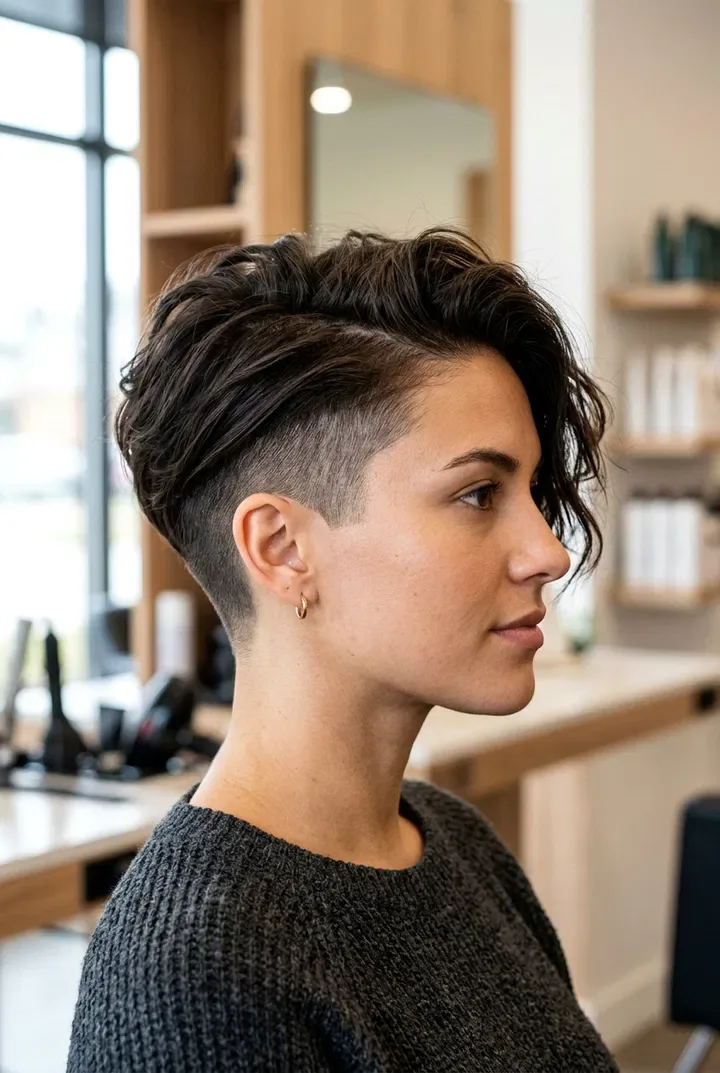
The tapered cut with an undercut detail is the taper with a little rebellion in it: the taper blends smoothly on one side, while the other side — or a small section at the nape — is cut as a true undercut, closely shaved with a sharp disconnect. It is a small area of contrast, not a full undercut, so the cut still reads as a taper, but with an edge that makes people look twice. It is the cut for women who want a taper but also want something nobody else in the office has.
Best for: thick hair, which can hide or reveal the undercut depending on how the top falls, and for women who like an edgy detail they can cover up. Pros and cons: the detail is striking and surprisingly easy to hide — just let the top fall over it — but an undercut section grows out with a visible line, so it needs a trim every two to three weeks. What to ask your stylist for: a tapered cut with a small undercut panel at one side or at the nape, blended into the taper so it looks deliberate, not accidental. Quick verdict: the taper with a secret.
11. The Tapered Shag
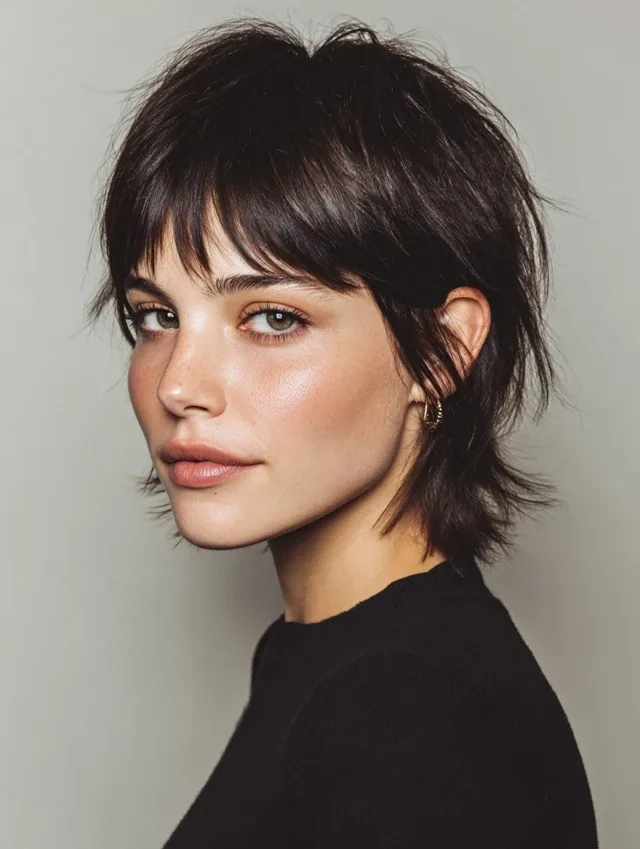
The tapered shag is the shag haircut, shortened and sharpened: choppy, textured layers on top, a fringe that falls where it likes, and sides and back that taper down instead of sitting heavy. The shag’s famous messiness gets a frame from the taper, so the cut looks lived-in rather than unkempt, and the layers have somewhere to go. It is the cut for women who love texture, who hate spending time on their hair, and who want a short cut that looks better the less they do to it.
Best for: wavy and textured hair, which makes the shag’s layers look effortless, and for oval faces. How to style it: scrunch in a little mousse or sea-salt spray, rough-dry with your fingers, and stop — the shag should never look finished. Maintenance: a trim every six weeks, because the shag grows out more gracefully than most tapered cuts. Who should avoid it: women with very fine, straight hair may find the shag looks thin — the layers need texture to work. Quick verdict: the most low-effort tapered cut in this guide.
12. The Tapered Cut for Thick Hair
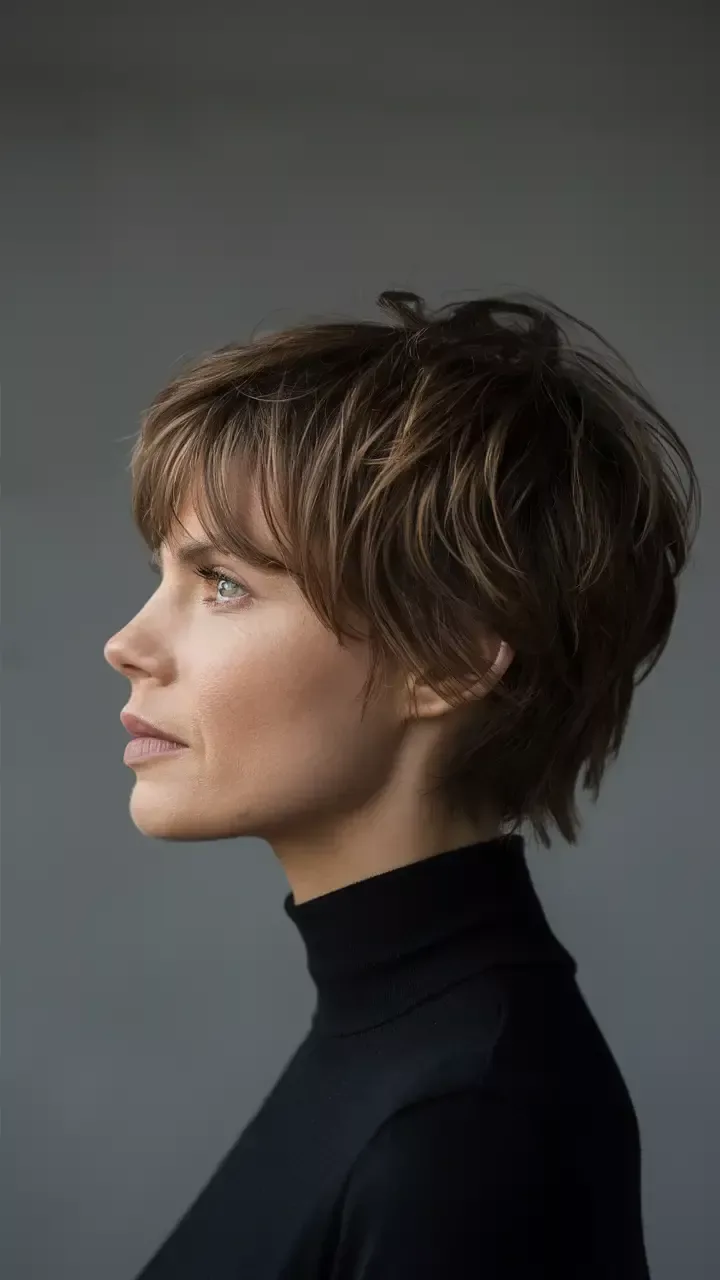
The tapered cut for thick hair is the cut that solves thick hair’s biggest problem: the sides that puff out, the back that grows into a shelf, the weight that makes a short cut look wide instead of neat. A taper removes the bulk exactly where it gathers — at the sides and the nape — while the top keeps its fullness, so thick hair finally looks shaped instead of simply big. It is the reason so many women with thick hair switch to a taper and never look back.
Best for: thick, dense hair of any texture, and for women whose short cuts always seem to grow out wide. What to ask your stylist for: a mid to high taper, with thinning shears used through the top to remove weight without losing length, and a tapered nape to keep the back flat. Pros and cons: the cut is cooler, lighter and far easier to manage, but it needs a trim every three to four weeks, because thick hair shows growth fast. Time: ten minutes of styling at most — thick hair holds a tapered shape well. Quick verdict: thick hair’s best friend.
13. The Tapered Cut for Fine Hair
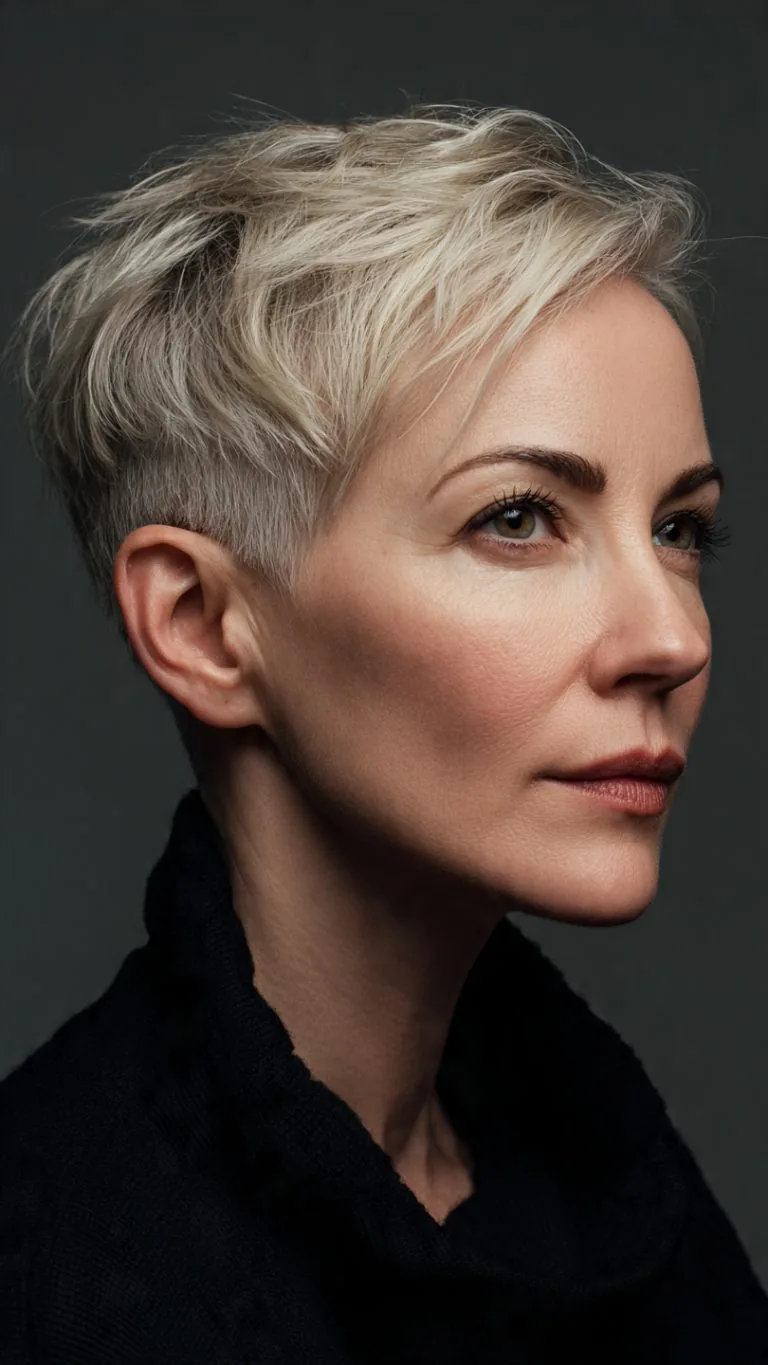
The tapered cut for fine hair is proof that a taper is not only for thick hair: with the right approach, fine hair makes a beautiful tapered cut with its own kind of elegance — neat, light and full of movement. The key is to keep the top long enough to create volume, and to taper the sides gently, because a high taper on fine hair can make the sides look sparse. A low or mid taper, with a textured top and a little root lift, gives fine hair a shape it rarely gets from a blunt cut.
Best for: fine, low-density hair, and for women who have been told a short cut will make their hair look thinner. How to style it: apply volumising mousse at the roots, blow-dry with your fingers lifting the top, and finish with a light texturising spray — never a heavy pomade, which flattens fine hair. Common mistake: tapering too high, which exposes the scalp at the sides. Ask for a low taper and a textured top, and the cut will look full. Quick verdict: fine hair can wear a taper — it just needs a gentle one.
14. The Tapered Cut for Wavy Hair
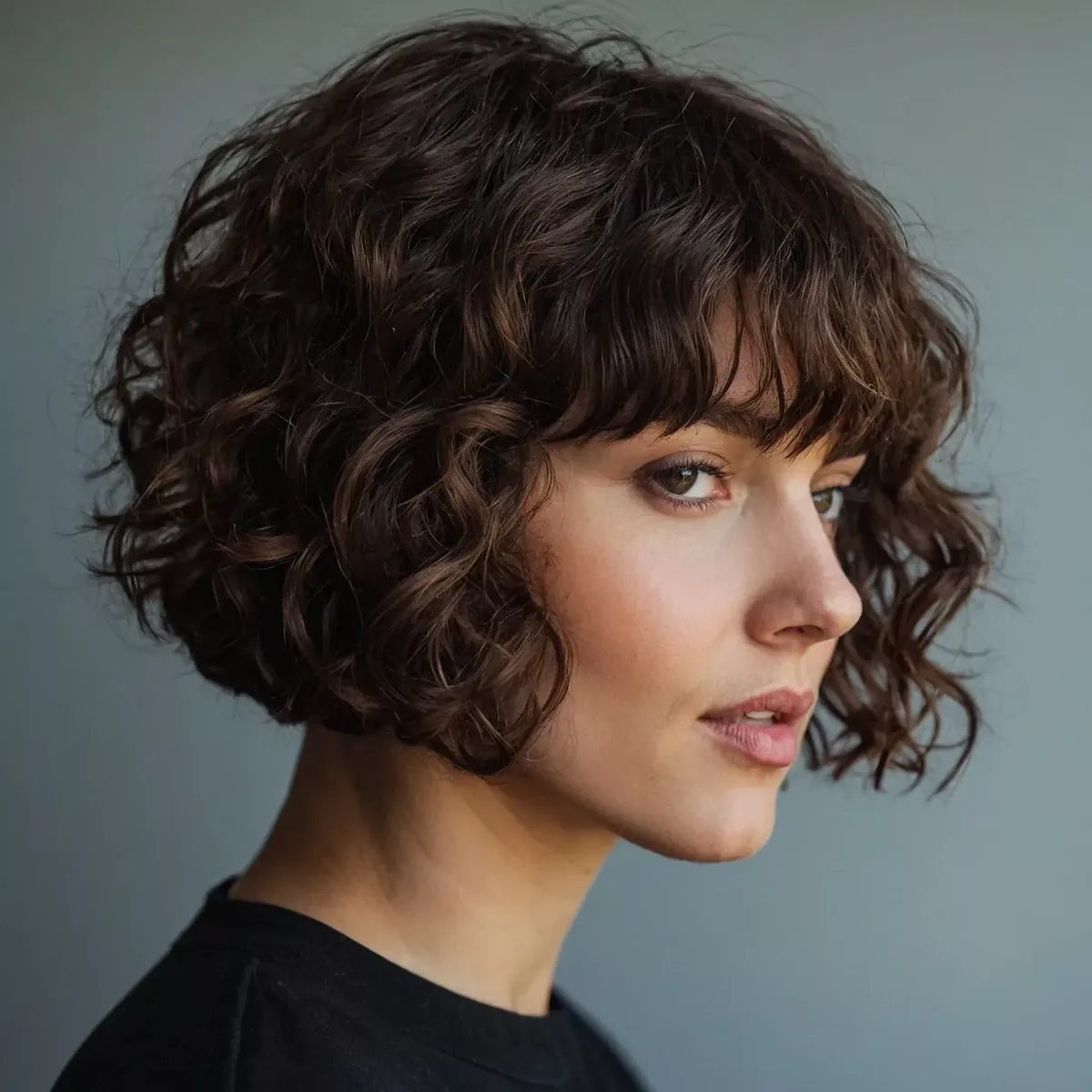
The tapered cut for wavy hair is the cut that lets waves be waves: the sides taper down, the top keeps its natural wave, and the whole cut has a soft, tousled, beachy quality that straight hair has to fake with a curling iron. Wavy hair is the easiest hair type for a tapered cut, because the wave gives the top texture for free, the taper gives the sides shape, and the two together look effortless. It is the cut that looks best on the days you do nothing to it.
Best for: naturally wavy hair, and for women who want a short cut that air-dries well. How to style it: scrunch in a little curl cream or sea-salt spray, let it air-dry, and break up the waves with your fingers once dry. Maintenance: a trim every five weeks, and almost no daily styling. Pros and cons: the cut is wonderfully low-effort, but wavy hair can frizz in humidity — a drop of smoothing oil on the top tames it. Who should avoid it: nobody, though very tight curls need the curly tapered cut in section 3 instead. Quick verdict: the easiest tapered cut to live with.
15. The Tapered Cut with Curls on Top
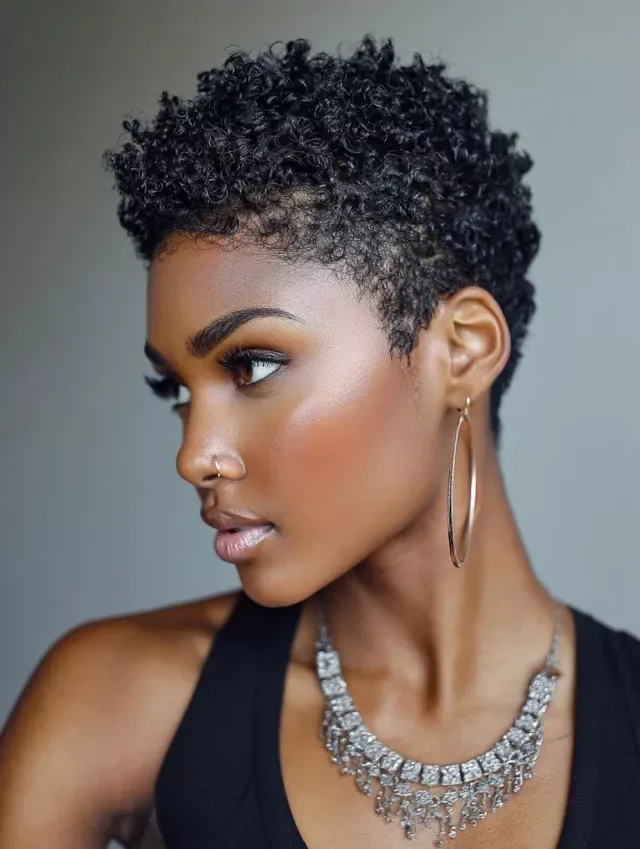
The tapered cut with curls on top is the party version of the curly taper: the sides are tapered close and clean, and the top is a crown of curls — tight or loose, big or small — that sits high and proud, like a celebration on top of a neat frame. The contrast is the point: the short, tidy sides make the curls look even fuller, and the curls make the short sides look deliberate rather than plain. It is a joyful cut, and it photographs beautifully.
Best for: curly hair with a defined curl pattern, and for women who want their curls to be the star. How to style it: define the curls with curl cream on wet hair, diffuse on low heat, and pick the roots gently for height — never brush the curls dry. Time and cost: ten minutes of styling, and a trim every four weeks to keep the taper crisp. Common mistake: cutting the top curls too short while wet, because they spring up as they dry — always cut curly tops with length to spare. Quick verdict: the most joyful tapered cut.
16. The Tapered Cut with Bangs
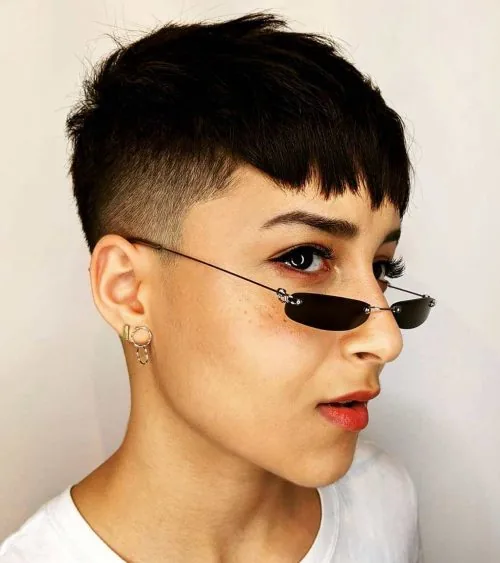
The tapered cut with bangs is the short cut with a frame: a fringe — blunt, wispy or side-swept — falls across the forehead while the sides taper away, so the face is framed twice, once by the fringe and once by the taper. The bangs soften the short sides, they hide a high forehead, and they give the cut a youthful, playful quality that a bare forehead never quite manages. They can be changed at every appointment — longer, shorter, straighter, softer — so the same taper feels new each time.
Best for: long and oval faces, where a fringe shortens the forehead and balances the length. How to style it: blow-dry the bangs with a small round brush, or let them fall naturally with a little cream — the rest of the cut needs nothing. Maintenance: the bangs need a trim every three weeks, or they fall into the eyes; many salons offer a free fringe trim between appointments. Who should avoid it: women with very curly bangs may find the fringe hard to control — a side-swept fringe is the easier choice for curly hair. Quick verdict: the most versatile way to soften a taper.
17. The Short Tapered Crop
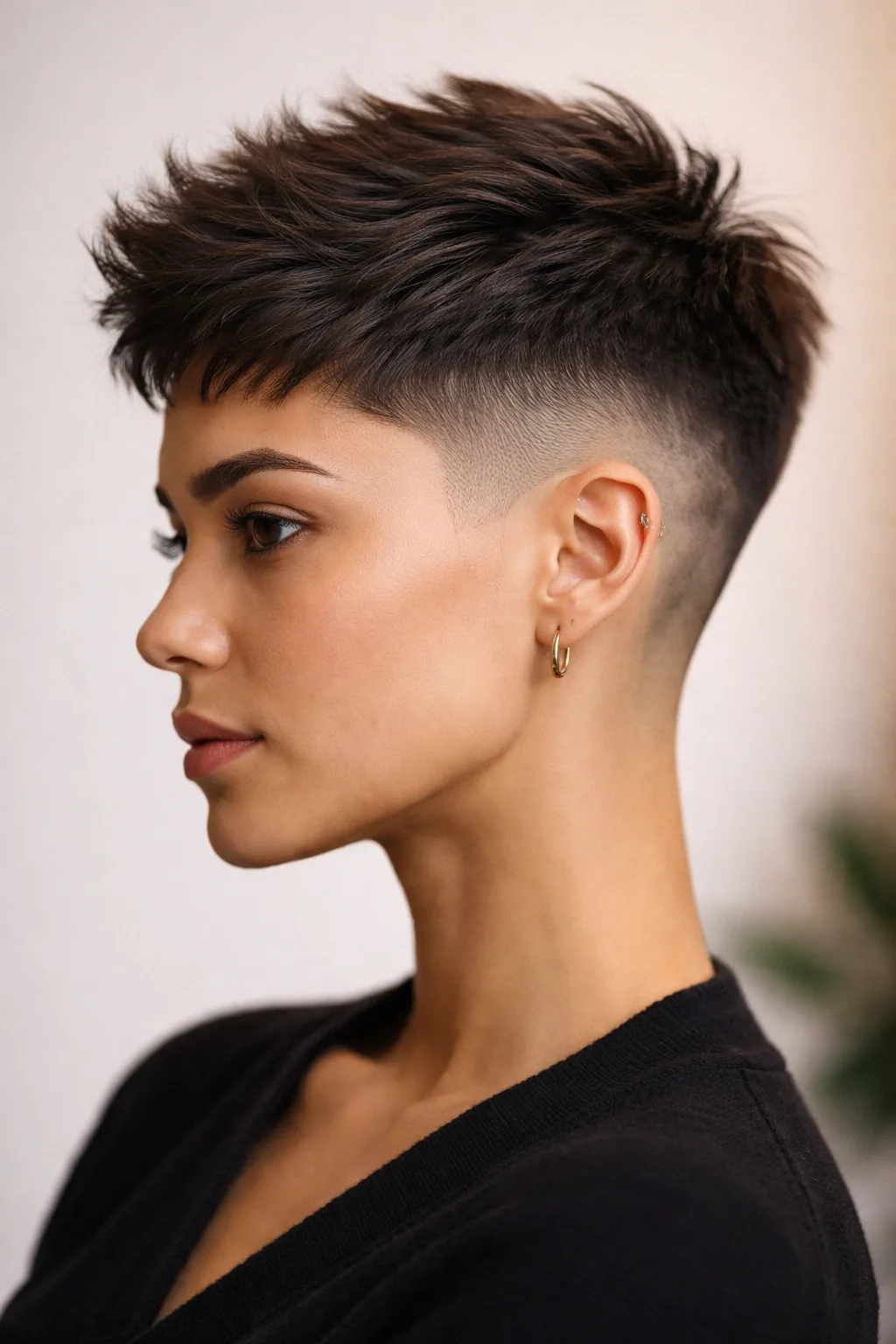
The short tapered crop is the shortest cut in this guide: a close, neat crop with a tapered finish all the way around, the top just long enough to show texture, and the sides and back tapered down to a clean, sculpted silhouette. It is the cut for women who want to be done with long hair entirely — no ponytails, no styling time, no bad hair days — and it is liberating in a way no other cut is. It shows off the face completely, and it suits women who are confident about their features.
Best for: oval faces and strong bone structure, and for women who want the lowest-maintenance cut possible. How to style it: a fingertip of pomade, thirty seconds, done — or nothing at all. Pros and cons: the freedom is real, and the cut grows out gracefully for a month, but it needs a trim every three weeks to stay a crop rather than a pixie, and it leaves the face fully exposed, so it is not for the shy. Cost: a short cut is usually the cheapest salon visit. Quick verdict: the boldest, freest cut in this guide.
18. The Tapered Cut with a Hard Part
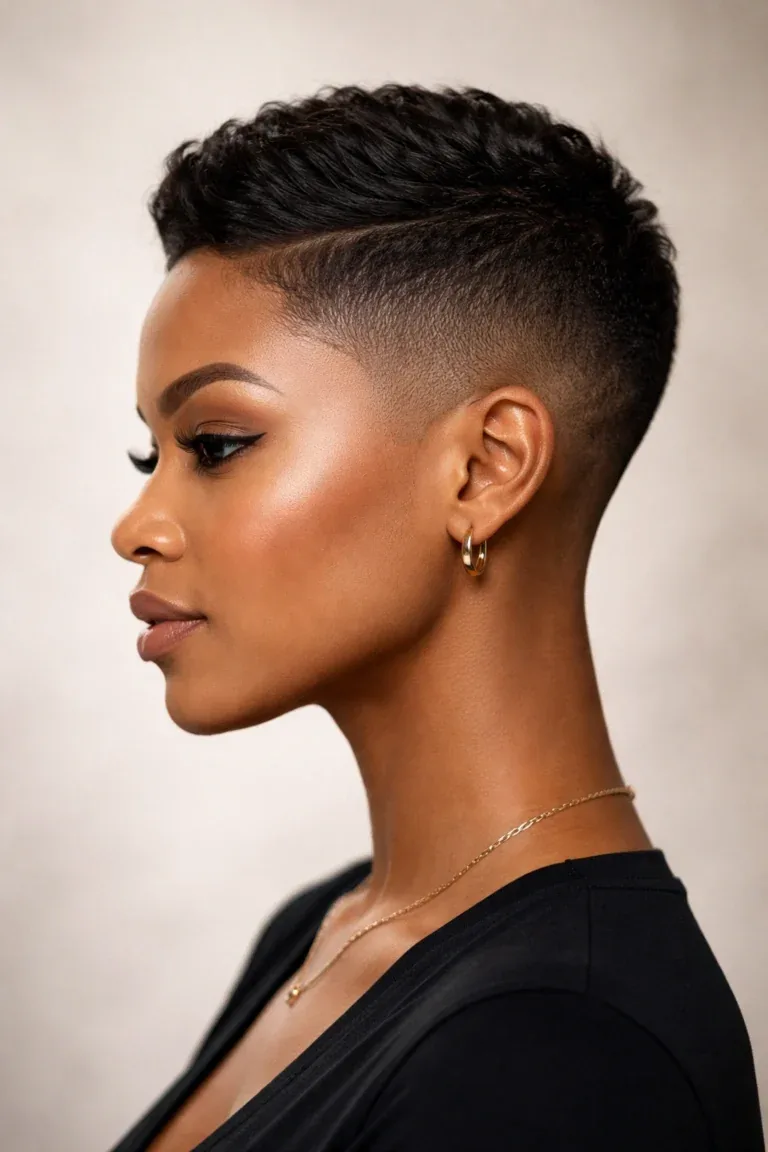
The tapered cut with a hard part is the taper with a line drawn in it — literally: a shaved line, cut with a razor or trimmer, that marks the parting and gives the cut a sharp, graphic, almost architectural quality. The hard part turns a neat taper into a statement, and it is the detail that makes a tapered cut look like it was done by someone who knows exactly what they are doing. It is precise, it is polished, and it is surprisingly wearable.
Best for: straight hair, where the line shows cleanly, and for women who like a sharp, defined finish. What to ask your stylist for: a mid taper with a hard part cut into the natural parting, and ask them to show you how to keep the line visible at home. Maintenance: the line grows out in about two weeks, so it needs a tidy-up every fortnight to stay sharp — it is the highest-maintenance detail in this guide. Who should avoid it: women with very curly hair, where a shaved line can look uneven as the curls grow. Quick verdict: the sharpest detail you can add to a taper.
19. The Tapered Fade for Women
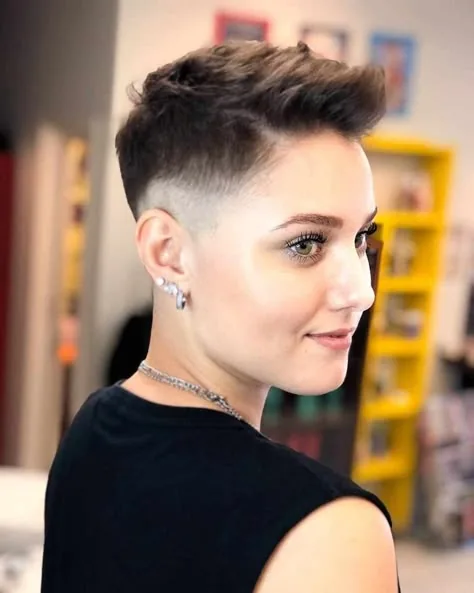
The tapered fade for women is the soft fade: the sides blend down from the taper into a very short finish — not quite skin, but close — so the cut has the clean, sculpted look of a fade with the softness of a taper. It is the cut at the edge of the taper family, for women who want the sharpest possible sides without going fully bald at the edges, and it is one of the most modern short cuts there is. It looks extraordinary with a textured or curly top, because the contrast between the faded sides and the full top is the whole point.
Best for: thick hair and defined curls, where the contrast shows best, and for women who are comfortable with a bold short cut. Pros and cons: the finish is exceptionally clean and modern, but a fade shows growth within a week and needs a trim every two weeks — it is a commitment, not a casual choice. Common mistake: asking for a fade when you really want a taper — if you are unsure, start with a taper and take it shorter next time. Quick verdict: the taper’s bolder cousin — beautiful, but demanding.
20. The Tapered Cut with Volume on Top
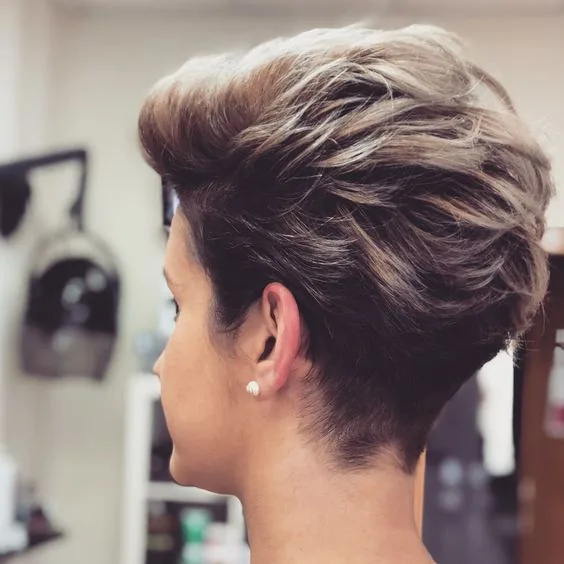
The tapered cut with volume on top is the cut that gives short hair height: the sides taper away, and the top is cut and styled for lift — root lift, texture, a little backcombing, a quiff if you like — so the whole silhouette is tall, proud and full of presence. Volume on top lengthens the face, it adds drama, and it turns a neat taper into a look with real attitude. It is the cut for women who want their short hair to take up space.
Best for: round faces, where height on top lengthens the proportions, and for fine hair, where volume is the whole game. How to style it: apply volumising mousse at the roots, blow-dry the top upward with your fingers or a round brush, and finish with a light-hold spray. Time and cost: ten minutes of styling each morning, and a trim every four weeks. Common mistake: weighing the top down with heavy product — volume needs light products, not pomade. Quick verdict: the tallest, proudest tapered cut.
21. The Tapered Cut for Round Faces
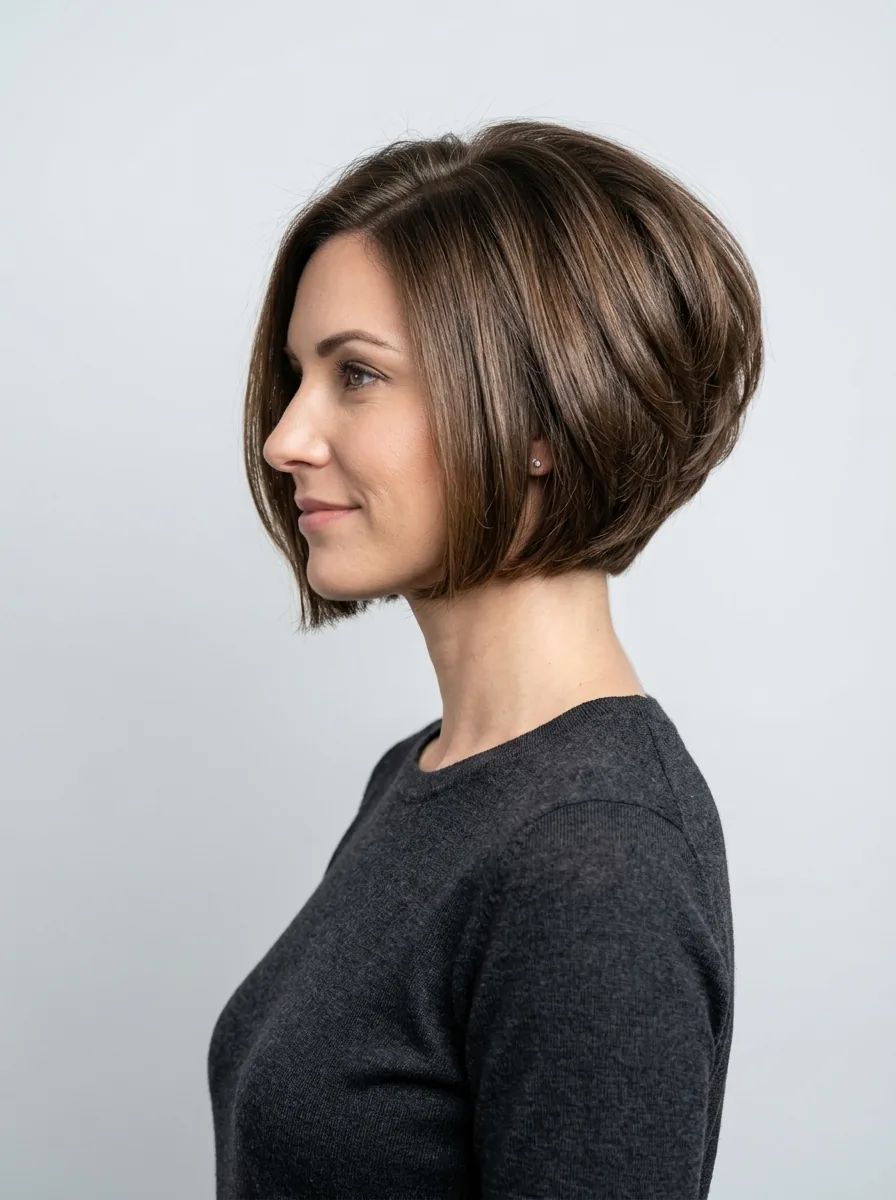
The tapered cut for round faces is built around one idea: height. A round face needs length added at the top and neatness at the sides, and a taper delivers both — the sides taper away so the face looks narrower, and the top is left long and textured so the eye travels upward. Add a side-swept fringe, and the diagonal line breaks up the roundness even further. It is one of the most flattering short cuts for a round face, and it is far more forgiving than a blunt bob, which can emphasise width.
Best for: round and full faces, and for women who have been told short hair will not suit them — it will, with the right taper. What to ask your stylist for: a low to mid taper, a textured top with at least three inches of length, and a side-swept fringe. Pros and cons: the cut is very flattering and easy to style, but a high taper with a flat top will make a round face look rounder — avoid that combination. Maintenance: a trim every four to five weeks. Quick verdict: the short cut round faces have been waiting for.
22. The Tapered Cut for Oval Faces
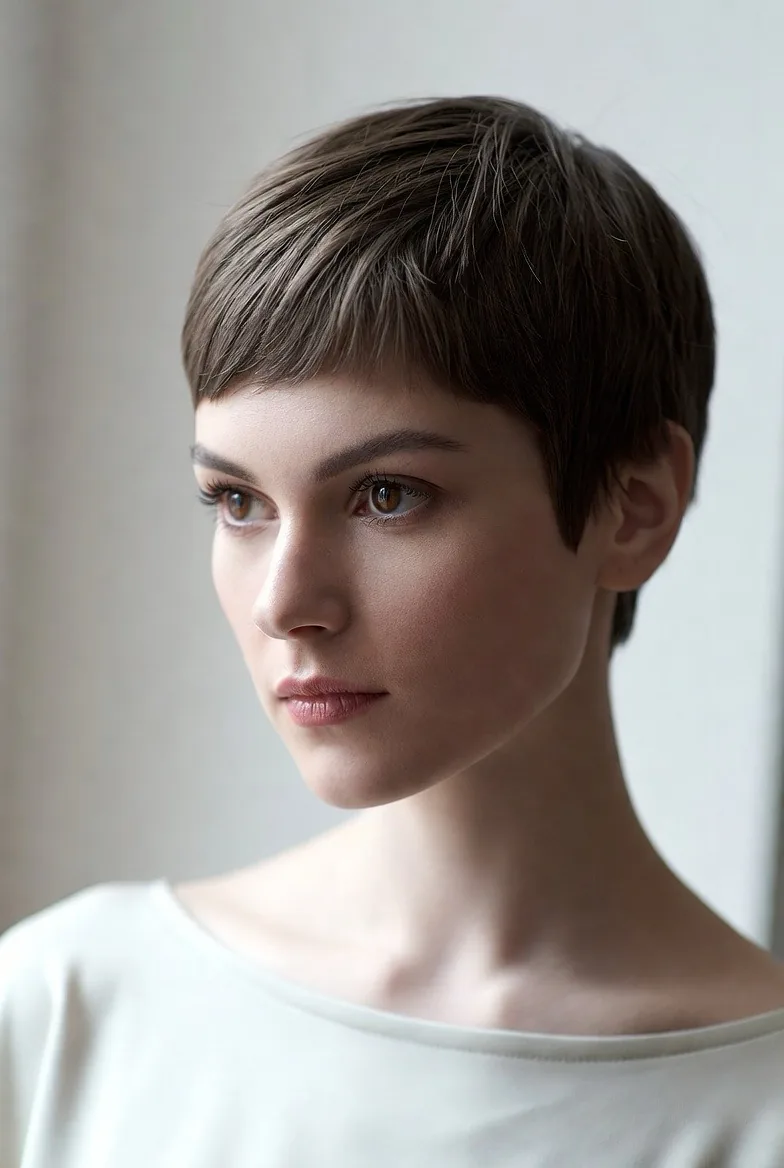
The tapered cut for oval faces is the cut with the fewest rules: an oval face is the most versatile face shape, and almost any taper — low, mid or high, with any top length — will suit it. That freedom is the point: women with oval faces can choose their tapered cut by hair type and lifestyle rather than by face shape, and the cut will still flatter them. A high taper with a textured top, a low taper with a side fringe, a curly taper, a tapered afro — all of them work, because the oval face has no proportions that need correcting.
Best for: oval faces, obviously — and for women who want to choose a cut for fun rather than for correction. How to style it: however you like, because the face will carry it. Time and cost: the same as any taper — five minutes at home, a trim every four weeks. Common mistake: playing it too safe. An oval face can carry the boldest taper in this guide, so if you have always wanted a high taper or a short crop, this is your face shape to try it with. Quick verdict: the face shape that can wear any taper — so wear the one you love.
23. The Tapered Cut for Square Faces
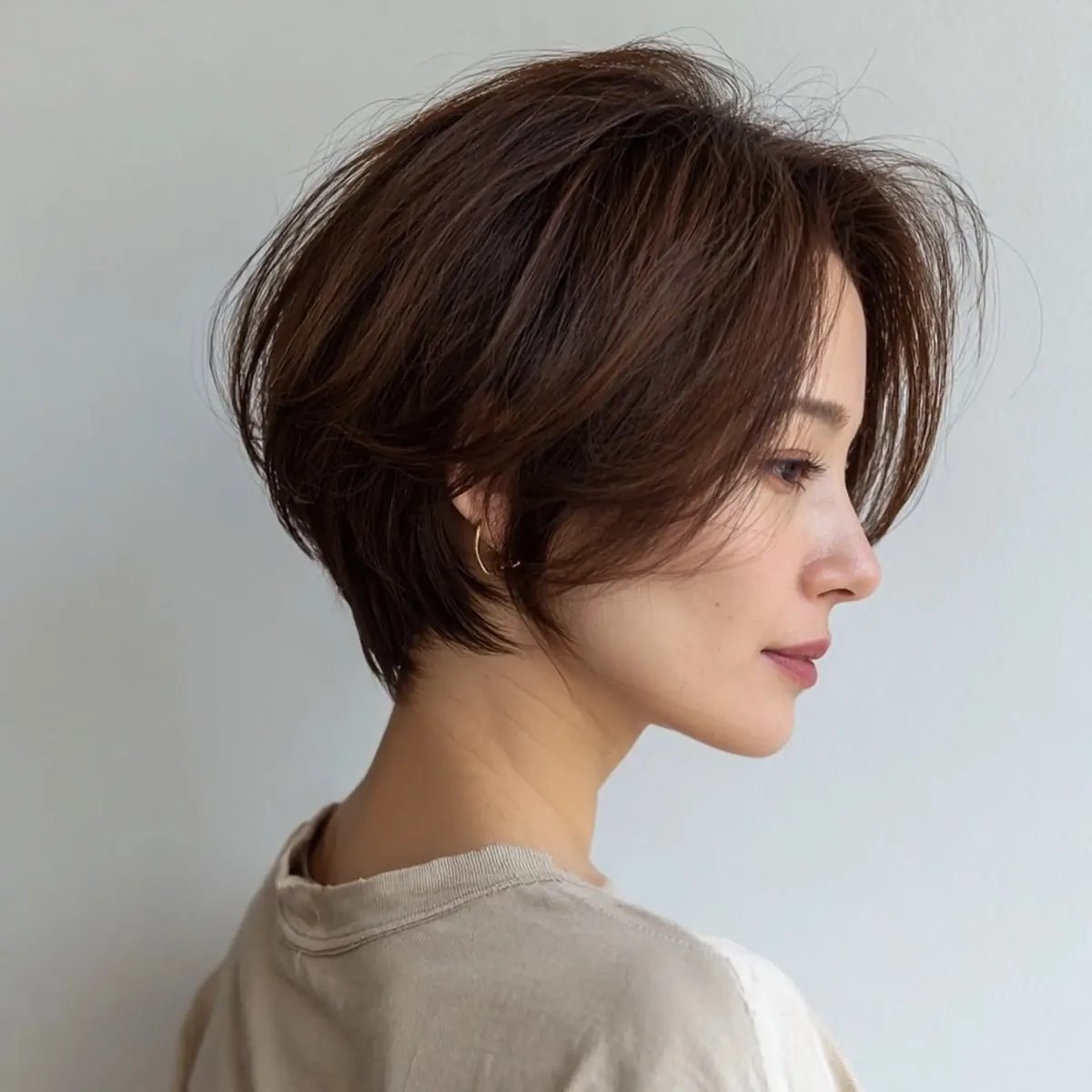
The tapered cut for square faces is the cut that softens: a square face has a strong jaw and a broad forehead, and the right taper — soft at the edges, with a side-swept top and no hard lines — balances those angles instead of emphasising them. The taper keeps the sides neat, the side-swept top creates a diagonal that breaks up the symmetry, and a little texture on top keeps the whole cut from looking severe. It is a short cut that flatters a strong face without hiding it.
Best for: square and strong-jawed faces, and for women who want a short cut that softens rather than sharpens. What to ask your stylist for: a low to mid taper with soft, blended edges, a side-swept top, and no hard part — the lines should be gentle, not graphic. Pros and cons: the cut is very flattering, but a high taper with a hard part will emphasise the jaw, so avoid that combination. Maintenance: a trim every four weeks. Quick verdict: the taper that lets a strong face look soft.
24. The Tapered Cut for Older Women
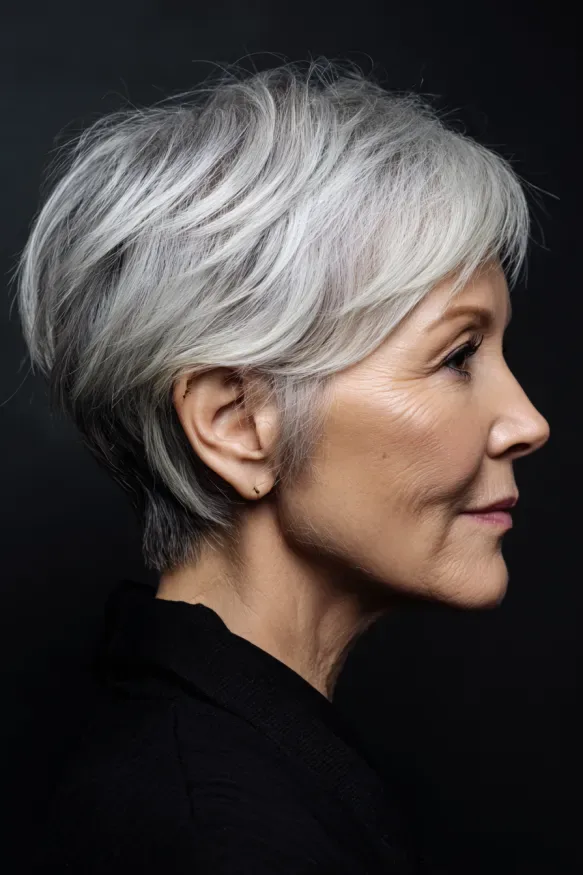
The tapered cut for older women is the cut that proves short hair has no age limit: a neat, tapered pixie or crop with a soft top, a clean nape and tidy ears, that looks polished, modern and completely effortless. It is the cut that so many women over sixty choose, not because they are giving up on their hair, but because a taper is the easiest way to look put-together every single day — no styling, no fuss, and a shape that holds for weeks. It frames the face, it opens up the neck, and it looks wonderful with glasses.
Best for: women over sixty, and for anyone whose hair has thinned with age and needs a shape that adds fullness. How to style it: a little texturising cream, a quick finger-comb, and you are done — the taper does the work. Time and cost: five minutes at home, and a trim every four to five weeks. Common mistake: cutting the top too short, which can look severe on an older face — keep the top soft and a little longer, with texture. Quick verdict: the most elegant low-effort cut for older women.
25. The Tapered Cut with Grey and Silver Hair
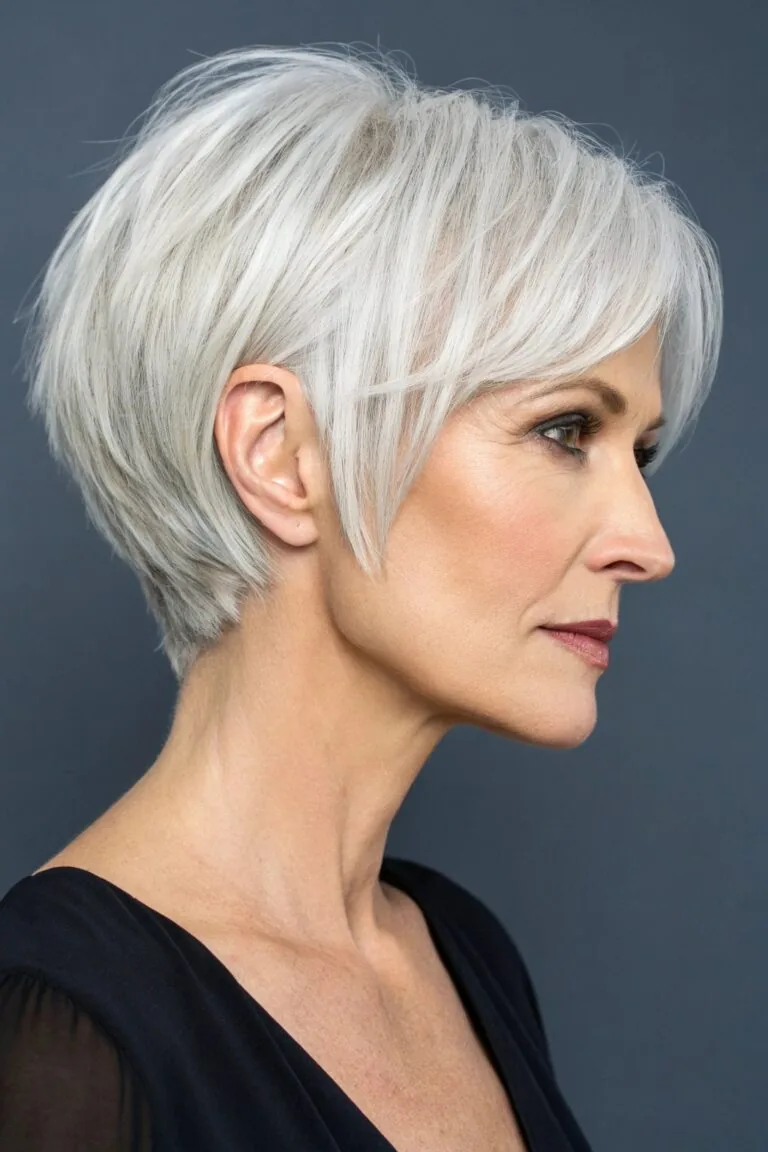
The tapered cut with grey and silver hair is a combination made in heaven: silver hair has a natural shine and a beautiful texture, and a tapered cut shows it off like a frame shows a picture. The taper keeps the sides neat and the silver on top catches the light, so the whole cut looks luminous — and silver hair is often thicker and more wiry than pigmented hair, which means it holds a tapered shape beautifully. It is the cut for women who have stopped colouring and discovered that their natural silver is the best colour they have ever had.
Best for: naturally grey or silver hair, and for women growing out their colour. How to style it: use a purple shampoo once a week to keep the silver bright, and a little smoothing cream to tame the wiriness — the taper needs nothing else. Pros and cons: the colour is stunning and the cut is low-maintenance, but silver hair can go yellow in the sun, so a hat or a UV spray helps in summer. Maintenance: a trim every four to five weeks. Quick verdict: the cut that makes silver hair look like a choice, not an accident.
26. The Tapered Cut for Black Women
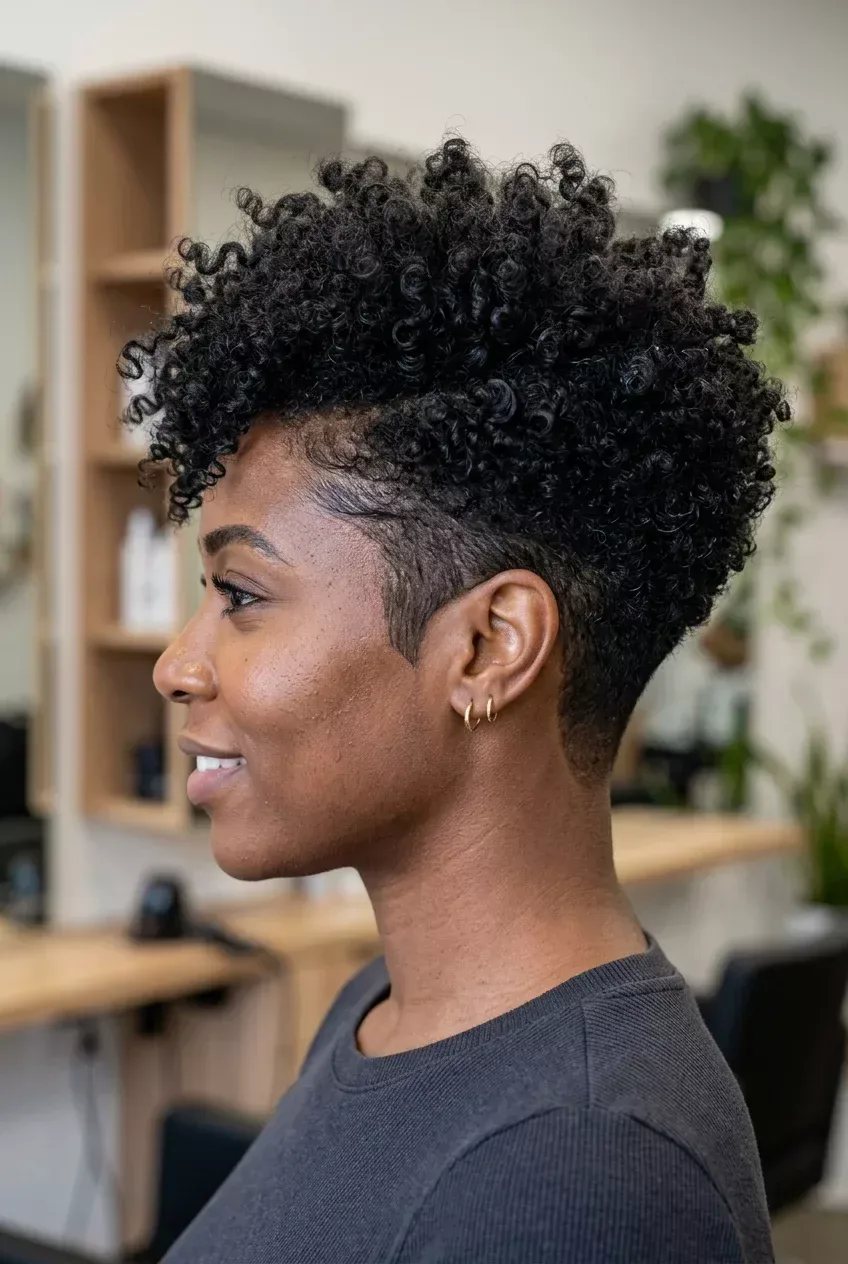
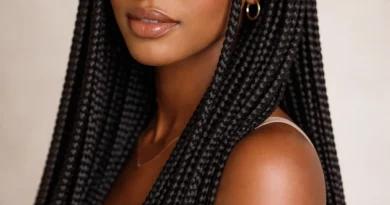
The tapered cut for Black women is one of the most popular short cuts for natural hair, and for good reason: it works with the hair instead of against it. The sides taper down close, the top keeps its natural texture — curls, coils, a sculpted afro, finger waves — and the cut has a clean, defined shape that lasts for weeks. It is versatile too: the same taper can be worn with a picked-out afro top, with defined curls, with a side part, or with a design shaved into the taper. It is a cut with roots in Black hair culture, and it looks extraordinary.
Best for: natural, coily and curly Black hair, and for women who want a short cut that celebrates their texture. How to style it: moisturise daily — natural hair needs moisture more than it needs styling — define the top with curl cream or gel, and pick the roots for height. Maintenance: a trim every two to three weeks keeps the taper sharp, because coily hair grows out visibly fast. Common mistake: cutting the taper too high on the first visit — start with a mid taper and take it higher once you have lived with it. Quick verdict: a classic for a reason.
27. The Tapered Cut with Blonde Balayage
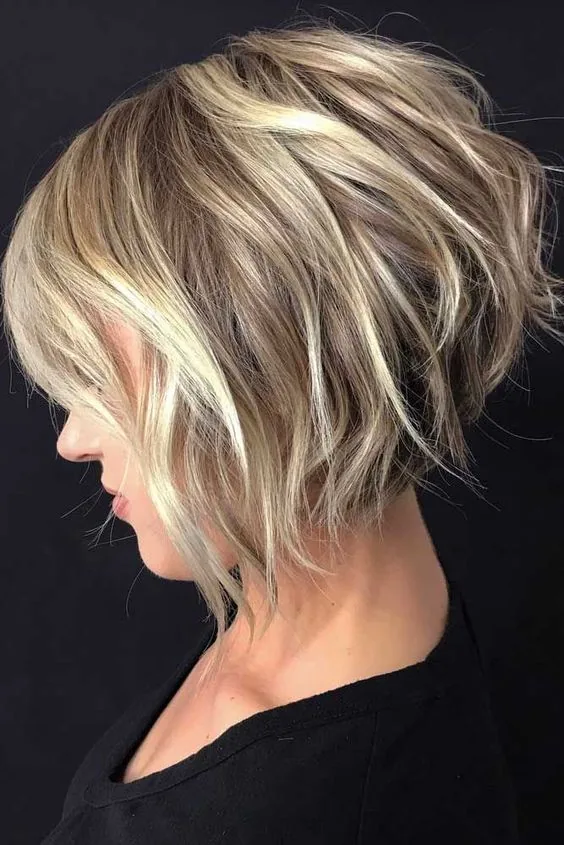
The tapered cut with blonde balayage is the short cut with a sun-kissed finish: the taper keeps the sides neat, and the top is painted with soft blonde balayage — lighter at the ends, darker at the roots — so the texture of the cut catches the light and the whole head glows. Balayage is perfect for a tapered cut, because the colour sits on the longest hair — the top — and the short tapered sides stay darker, which makes the blonde look even brighter by contrast. It is the cut for women who want their short hair to look like summer.
Best for: women who already have blonde or light brown hair, and for anyone who wants dimension without a full colour commitment. What to ask your stylist for: a mid taper with a textured top, and a soft balayage on the top only — the tapered sides should stay natural. Time and cost: the cut is a normal salon visit, and the balayage is a colour session every eight to twelve weeks. Maintenance: a purple shampoo keeps the blonde from going brassy. Quick verdict: the sunniest tapered cut.
28. The Tapered Cut with a Design
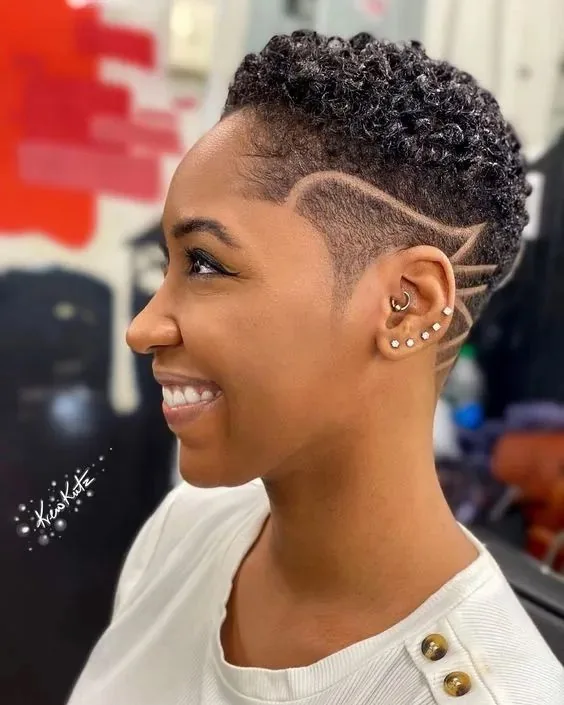
The tapered cut with a design is the taper as a canvas: a line, a curve, a star or a geometric pattern shaved into the tapered sides with a trimmer, so the short hair becomes a piece of art. The design can be subtle — a single curved line behind the ear — or bold, with a pattern across the whole side, and it can be changed at every appointment, so the cut never gets boring. It is the taper for women who treat their hair as self-expression, and it is far more wearable than it sounds, because the top covers the design whenever you want it to.
Best for: thick, dark hair, where a shaved design shows most clearly, and for women who like a detail with personality. Pros and cons: the design is unique and endlessly changeable, but it grows out in about two weeks and needs a trim to stay sharp — it is a commitment to regular appointments. What to ask your stylist for: a mid to high taper with a simple design to start — one line, one curve — and build up from there. Cost: a design adds a little to the price of a cut. Quick verdict: the most creative taper in this guide.
29. The Tapered Cut for the Office

The tapered cut for the office is the taper at its most polished: a low to mid taper, a neat top that can be swept to the side or smoothed back, no designs, no hard lines, no drama — just a clean, deliberate short cut that looks like you mean business. It is professional without being severe, and it is practical in exactly the way office hair needs to be: it stays off the face, it holds all day, it needs no touching up between meetings, and it looks the same at five in the evening as it did at nine in the morning. It is the short cut for women who want their hair to be the least of their worries.
Best for: office work, teaching, healthcare and any job where the hair needs to stay neat all day. How to style it: smooth the top with a little cream, sweep it to the side, and go — five minutes, no heat needed. Maintenance: a trim every four to five weeks, and the low taper grows out gracefully. Common mistake: choosing a high taper or a fade for a conservative office — a low taper is the safe, polished choice. Quick verdict: the most practical tapered cut — neat, comfortable and all-day reliable.
30. The Edgy Tapered Cut with a Longer Fringe
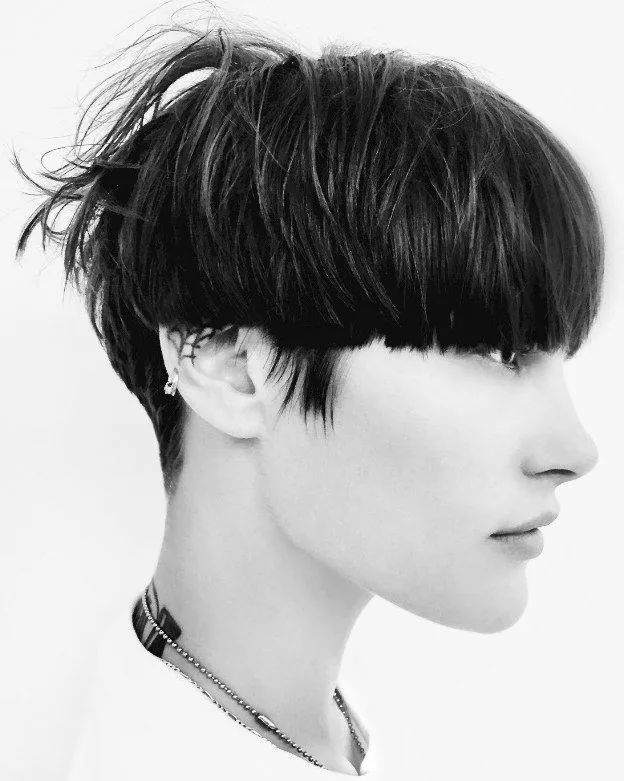
The edgy tapered cut with a longer fringe is the taper with attitude: the sides are tapered short and sharp, and the fringe is left long — falling over one eye, or sweeping across the face — so the cut has a dramatic, asymmetric line that looks like it belongs on a runway. The contrast between the short sides and the long fringe is the whole point, and it gives the cut a modern, fashion-forward feeling that a neat pixie never quite manages. It is the taper for women who want their hair to say something.
Best for: oval and heart-shaped faces, and for women who like a bold, editorial look. How to style it: blow-dry the fringe to one side with a round brush, or let it fall naturally with a little texturising cream — the fringe should have movement, not stiffness. Pros and cons: the look is striking and very photogenic, but the long fringe needs a trim every three weeks or it falls into the eyes. Who should avoid it: women who need their hair completely out of the way for work — a long fringe is not a practical choice for them. Quick verdict: the most fashion-forward taper.
31. The Tapered Cut with a Textured Top
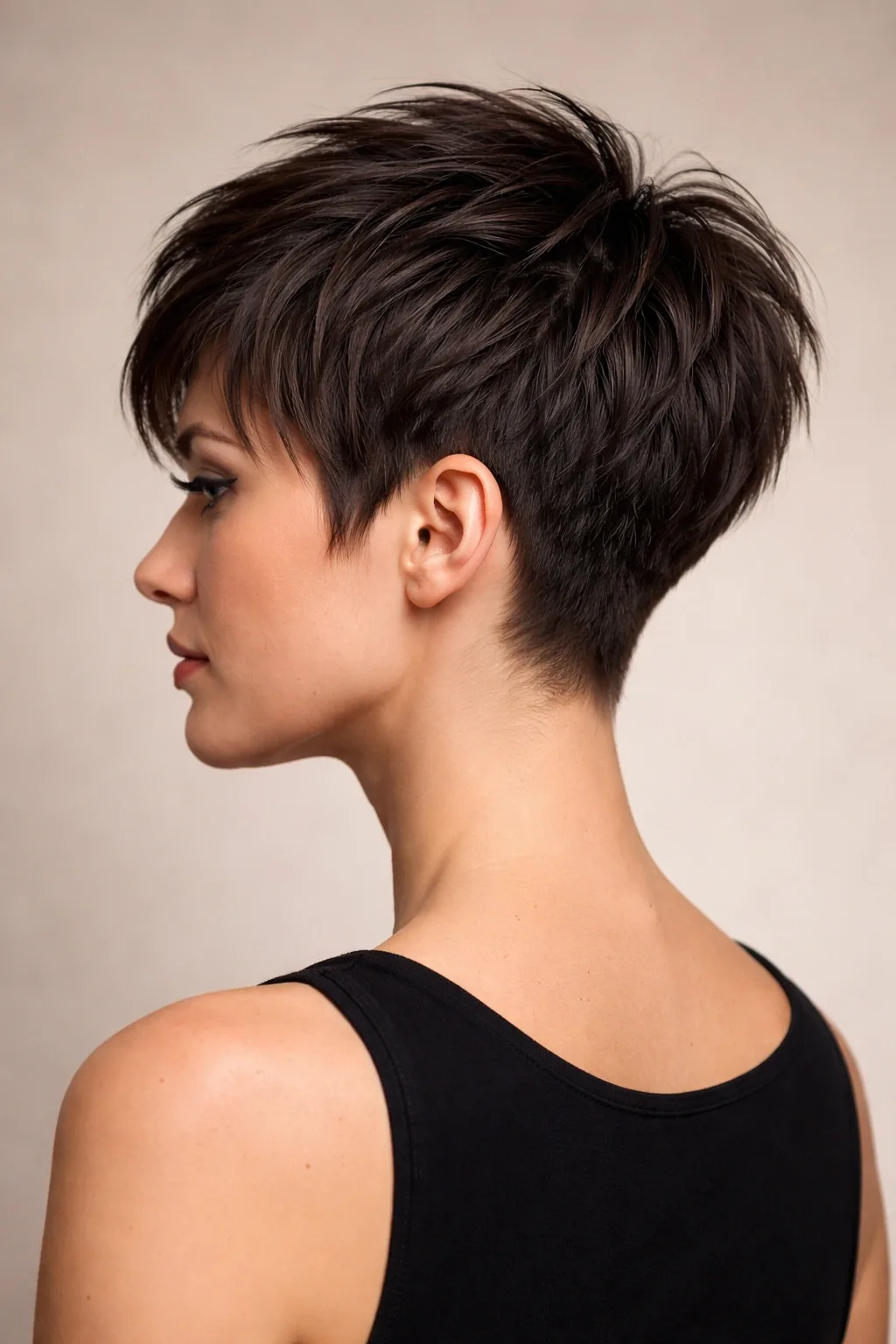
The tapered cut with a textured top is the taper for women who love movement: the top is point-cut into choppy, piecey layers, so it has texture, separation and a slightly undone quality, while the sides taper away cleanly underneath. The texture is what makes the cut look modern — it catches the light, it moves when you move, and it never looks flat or helmet-like, which is the risk with a short cut that has no texture. It is the cut that looks best on the days you do the least to it, because the texture is in the cut, not in the styling.
Best for: straight and wavy hair, which shows texture most clearly, and for women who hate spending time on their hair. How to style it: work a little texturising cream or pomade through the top with your fingers, piece it out, and stop — the cut does the rest. Maintenance: a trim every four to five weeks, because texture grows out into shapelessness faster than a blunt top. Common mistake: over-styling the textured top with a flat iron, which flattens the very texture you paid for. Quick verdict: the most modern, most effortless tapered cut.
32. The Tapered Cut for Summer

The tapered cut for summer is the cut that makes hot weather bearable: the sides and back are tapered short, the nape is clean, the neck is bare, and the top is short enough to dry in minutes after a swim. It is the coolest short cut there is — literally — and it is the cut so many women choose in May and keep until September, because once you have felt a tapered nape in a heatwave, a long bob feels like a blanket. It is also the easiest summer cut to look after: no frizz management, no ponytail, no hair sticking to your neck.
Best for: hot climates, holidays, and anyone who swims or exercises regularly. How to style it: almost nothing — a little cream on the top, and the cut air-dries in minutes. Pros and cons: it is wonderfully cool and low-maintenance, but a tapered nape needs a tidy-up every three weeks in summer, because growth shows fast in the heat. Time and cost: five minutes a day, and a quick trim is inexpensive. Who should avoid it: nobody, though if you sunburn easily, remember that a short taper leaves the neck and ears exposed — sunscreen matters. Quick verdict: the coolest cut in this guide, in every sense.
33. The Grown-Out Tapered Cut
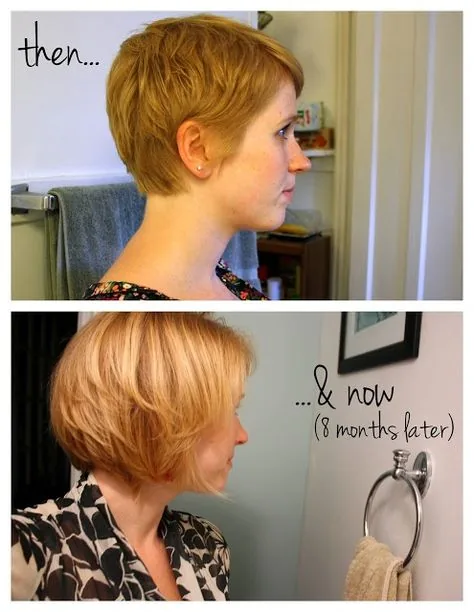
The grown-out tapered cut is the taper in transition: the cut you wear while a short taper grows into something longer — a pixie, a bob, a textured crop — and it deserves its own place in this guide, because growing out a taper is a stage every short-haired woman goes through. The trick is to let the top grow while the taper is trimmed less and less often, so the sides catch up, and to use the awkward stage to try new shapes: a longer pixie first, then a tapered bob, then a lob. A good stylist can reshape a growing taper at every appointment, so there is never a truly bad stage.
Best for: anyone growing out a short cut, and for women who want to change their look without starting from scratch. How to style it: use the growing top to try new parts and new textures — a side part, a sweep, a little curl — and keep the taper tidy with a light trim every six weeks instead of four. Maintenance: the grow-out takes three to six months, and a reshaping cut every six weeks keeps it looking deliberate. Common mistake: letting the taper grow wild with no reshaping — a grown-out taper without a plan looks shapeless, while one with a plan looks like a choice. Quick verdict: the taper that grows with you.
What is a tapered haircut for women?
A tapered haircut for women is a short cut in which the hair gradually gets shorter from the top of the head down toward the neckline and the ears, with no harsh line between the lengths. The top keeps its length — for curls, a sweep or a textured crop — while the sides and back are blended down smoothly, usually with scissors or clippers, until the shortest hair sits neatly at the nape and around the ears. The result is a clean, shaped silhouette that is full on top and tidy at the edges.
What is the difference between a taper and a fade?
The difference between a taper and a fade is how short the sides go. In a taper, the hair gets gradually shorter toward the nape and ears, but there is always hair — the skin is never fully exposed. In a fade, the hair blends all the way down to the skin, so the sides disappear into bare skin at the bottom. A taper is softer, more forgiving as it grows out, and easier to wear to work, while a fade is bolder and needs a trim every two weeks to stay sharp.
Does a tapered haircut suit curly hair?
Yes, a tapered haircut suits curly hair very well — it is one of the best short cuts for curls. The taper removes bulk at the sides and the nape, so a short curly cut keeps its shape instead of growing out into a triangle, wide at the bottom and flat at the top. The curls on top are left to spring and coil, while the tapered sides keep the cut neat. Always have curly hair cut dry, or with plenty of length left as a margin, because curls spring up as they dry.
How often do I need to trim a tapered haircut?
How often you need to trim a tapered haircut depends on the taper height. A low taper needs a trim every five to six weeks, a mid taper every four weeks, and a high taper every two to three weeks, because the shorter the taper, the faster the growth shows. Many salons offer a quick, reduced-price tidy-up between full cuts, just for the nape and the edges, which keeps the taper looking fresh for an extra two weeks.
Will a tapered haircut suit a round face?
Yes, a tapered haircut suits a round face, as long as the top has height. Choose a low to mid taper with a long, textured top — at least three inches — and a side-swept fringe, so the eye travels upward and the face looks longer and narrower. Avoid a high taper with a flat top, which can make a round face look rounder. The height on top is what flatters a round face, and the taper does the cleaning up at the edges.
Can I get a tapered haircut with long hair?
You can get a tapered cut with longer hair, but the taper itself is a short-cut technique — it works best when the sides and back are short. If you want to keep length, ask for a tapered bob or a tapered nape with a bob, where the back is tapered and the front keeps its length. A full tapered cut needs the sides short enough to blend, so if you want to keep long hair all over, a layered cut with tapered ends is the closer option.
How do I style a tapered haircut at home?
To style a tapered haircut at home, work a small amount of product through damp hair — pomade for definition, mousse for volume, curl cream for curls — and shape the top with your fingers, not a brush, because fingers keep the texture. Leave the tapered sides alone: they need no product and no heat. Rough-dry the top with your fingers and a hairdryer on low, lifting the roots, and stop while the hair is still slightly damp so it settles naturally. The whole routine takes about five minutes.
Does a tapered haircut work on thin or fine hair?
Yes, a tapered haircut works on thin or fine hair, as long as the taper is gentle. Choose a low or mid taper, keep the top long enough to create volume, and ask for a textured top with root lift. Avoid a high taper, which can make fine hair look sparse at the sides. With volumising mousse at the roots and a light texturising spray, a tapered cut can make fine hair look fuller than a blunt cut does, because the shape gives it structure.
How long does it take to grow out a tapered haircut?
It takes about three to six months to grow out a tapered haircut into a pixie or a bob, depending on how short the taper was and how fast your hair grows. Let the top grow first while the taper is trimmed less and less often, so the sides catch up with the top, and ask your stylist for a reshaping cut every six weeks rather than a plain trim. A taper grows out more gracefully than a fade or an undercut, because the blend is gradual and there is no harsh line to grow through.
Is a tapered haircut good for older women?
Yes, a tapered haircut is very good for older women — it is one of the most popular short cuts for women over sixty. A neat tapered pixie or crop with a soft top looks polished and modern, it is easy to style in five minutes, and it holds its shape for weeks. It frames the face, opens up the neck, and works beautifully with grey and silver hair. Keep the top soft and a little longer, with texture, rather than cutting it very short, which can look severe.
Conclusion
The tapered cut is not the flashiest haircut — it does not shout, it does not need a colour or a curl to make its point — but it is the cut that makes every other short cut work. The taper is the shape underneath the style: the clean nape, the tidy ears, the gradual blend that keeps a pixie from looking like a bowl, a curly cut from growing into a triangle, and a bob from going boxy at the back. Every style in this guide is a variation on the same simple idea: length on top, a gradual taper at the sides and back, and a finish that looks deliberate from every angle.
Start with a low or mid taper, if you are not sure — bring three photos to your stylist, say the taper height by name, and ask for the top long enough to style. Wear it for a month, and you will see why so many women who try a taper never go back to a blunt short cut: it is cooler in summer, neater at work, easier in the morning, and it grows out more gracefully than any other short cut. Then make it yours — take the taper higher, add curls on top, try a design, let the silver shine. The taper is yours to wear however you like, and it will keep its shape while you decide.