Gajra, Jhoomar and Dupatta-Proof Hair: 42 Hairstyles for a Mehndi Night That Last Till the Last Song
A mehndi night is loud, joyful and wonderfully messy in the best way. There is henna on hands, marigolds everywhere, music that starts soft and ends with everyone on the dance floor, and a dupatta that needs to stay in place through all of it. Your hair has to do a lot on this one night: hold flowers, sit neatly under a jhoomar, survive hugs, selfies and hours of dancing, and still look fresh in the last photograph. That is why choosing from the right hairstyles for a mehndi night matters so much more than picking something merely pretty. A style that looks perfect in the mirror at home can still slip, flatten or tangle once the henna, the dupatta, the dancing and the warm evening air all play their part, so it pays to plan for the whole night, not just the first photograph.
This guide brings together 42 styles that were made for exactly that evening, from classic braids wrapped in gajra to jhoomar-friendly updos, dupatta-safe buns and soft waves that suit yellow and green outfits. Whether you are the bride, a sister, a cousin, a guest or a mother of the bride, you will find a style that fits your outfit, your hair length and how long you plan to dance. Each idea comes with practical styling notes, so you can take it straight to your stylist or try it at home with confidence. You will also find honest guidance on what holds up under a dupatta, what survives hours of dancing, and which styles suit short hair, curly hair and long hair, so the style you choose feels like you, only more festive.
What Makes a Mehndi-Night Hairstyle Different
A mehndi-night hairstyle is not the same as a wedding-day hairstyle. The mood is brighter, more relaxed and far more active, so hair needs grip, movement and staying power rather than stiff formality. Styles are built to hold fresh flowers, sit comfortably under a jhoomar or maang tikka, and stay put while you dance, eat and greet dozens of relatives. Softness matters too, because the evening is photographed up close and in warm, yellow light.
Think in layers when you plan: a secure base, a flower or jewel that is pinned properly, and a finish that can be refreshed in two minutes. A braid, a low bun or a half-up style gives you that base, while loose curls alone often fall flat by midnight. Choose a style you can sit, dance and eat in comfortably, and you will enjoy the night instead of fussing with your hair.
Matching Your Hair to Yellow, Green and Bright Mehndi Outfits
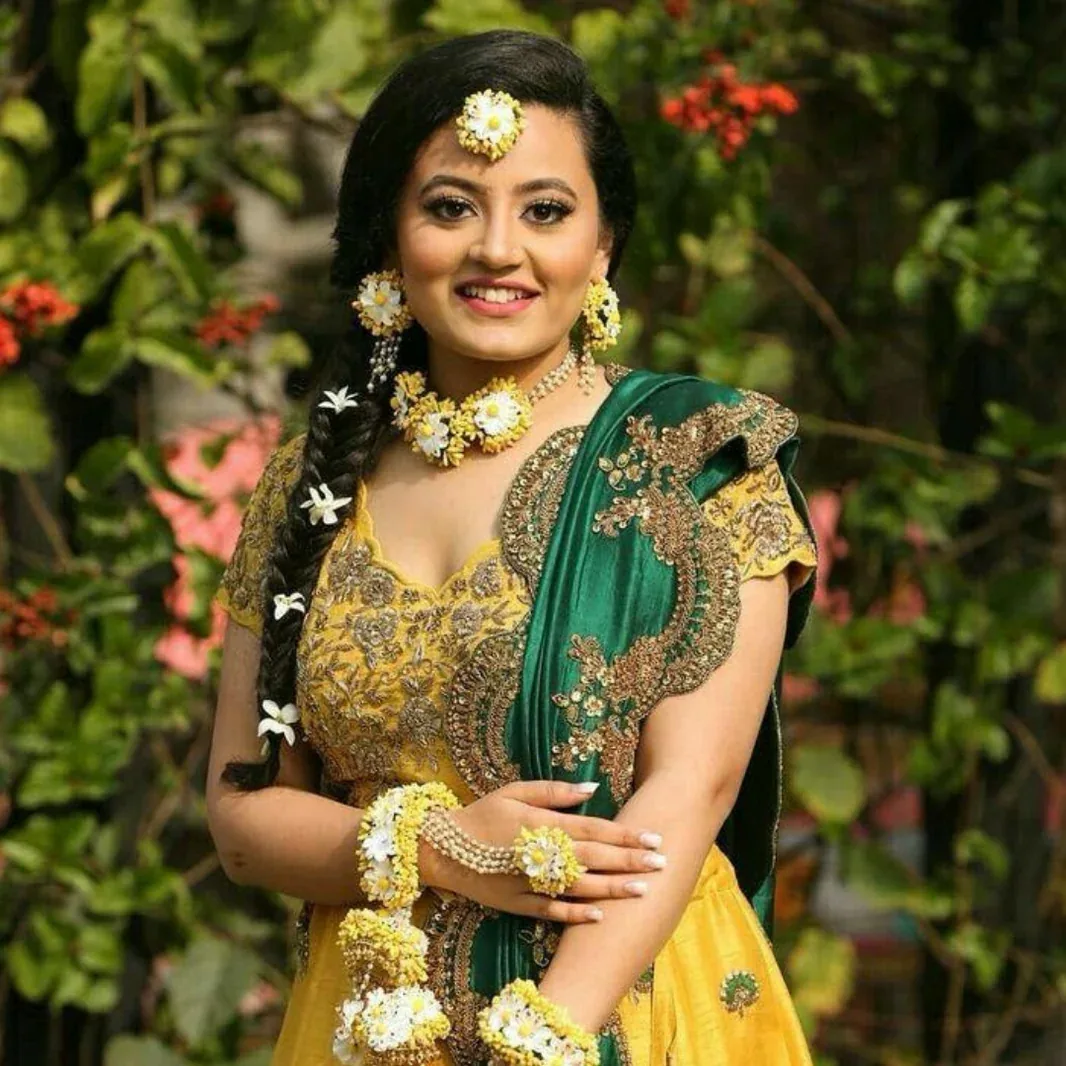
Yellow and green are the colours of a mehndi, and your hair should balance them rather than compete with them. With a bright yellow outfit, a deep braid, a low bun or dark, glossy hair creates a beautiful contrast, while white gajra and small orange marigolds pick up the warmth of the outfit. With green, warm gold pins, fresh jasmine and soft curls stop the look from feeling too cool or flat.
If your outfit is heavily embroidered or has a busy print, keep the hair simpler and let one flower or jewel do the talking. If your outfit is plain, you can afford a more detailed braid or a fuller updo. A quick mirror test helps: hold the dupatta and the flowers against your hair before the event, and check that nothing disappears into the same colour family.
Gajra, Fresh Flowers and Jhoomar: Pinning Them So They Stay Put
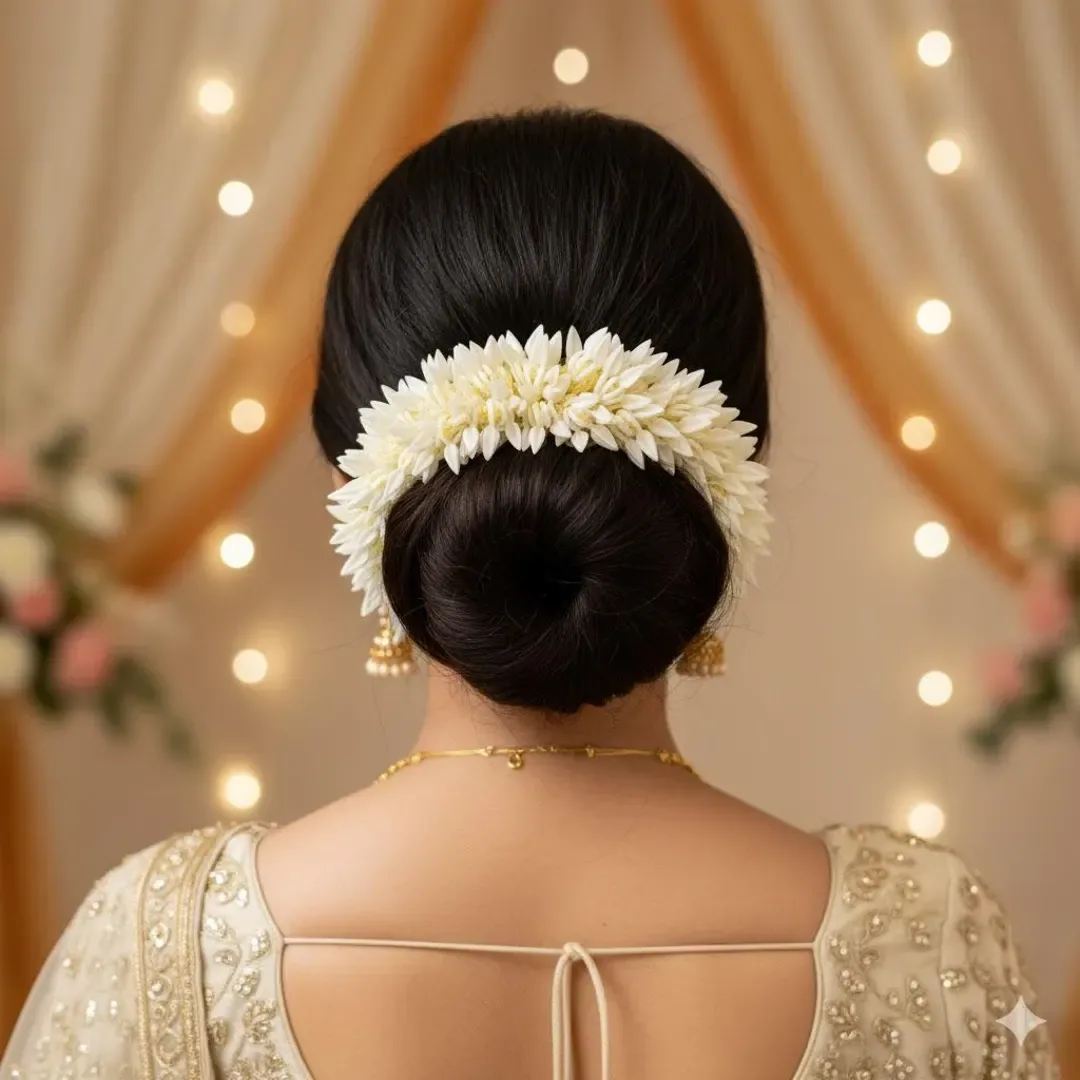
Fresh gajra looks dreamy for about ten minutes and then starts to slip if it is only tucked in. The trick is to pin through the gajra string itself, not just around it, using two or three U-shaped pins that cross over each other. Anchor the pins into the braid or bun, not into loose hair, and hide the pin ends under a flower so nothing shows in photographs.
A jhoomar needs a different kind of support. It should be pinned to a firm section of hair near the parting, with a small cushion of backcombing or a braid underneath to stop it sliding forward. Ask your stylist to test it by asking you to tilt your head gently from side to side. If it moves, add one more hidden pin before the event, not after the dancing starts.
Dupatta-Safe Styles: What Holds Under a Dupatta and What Slips
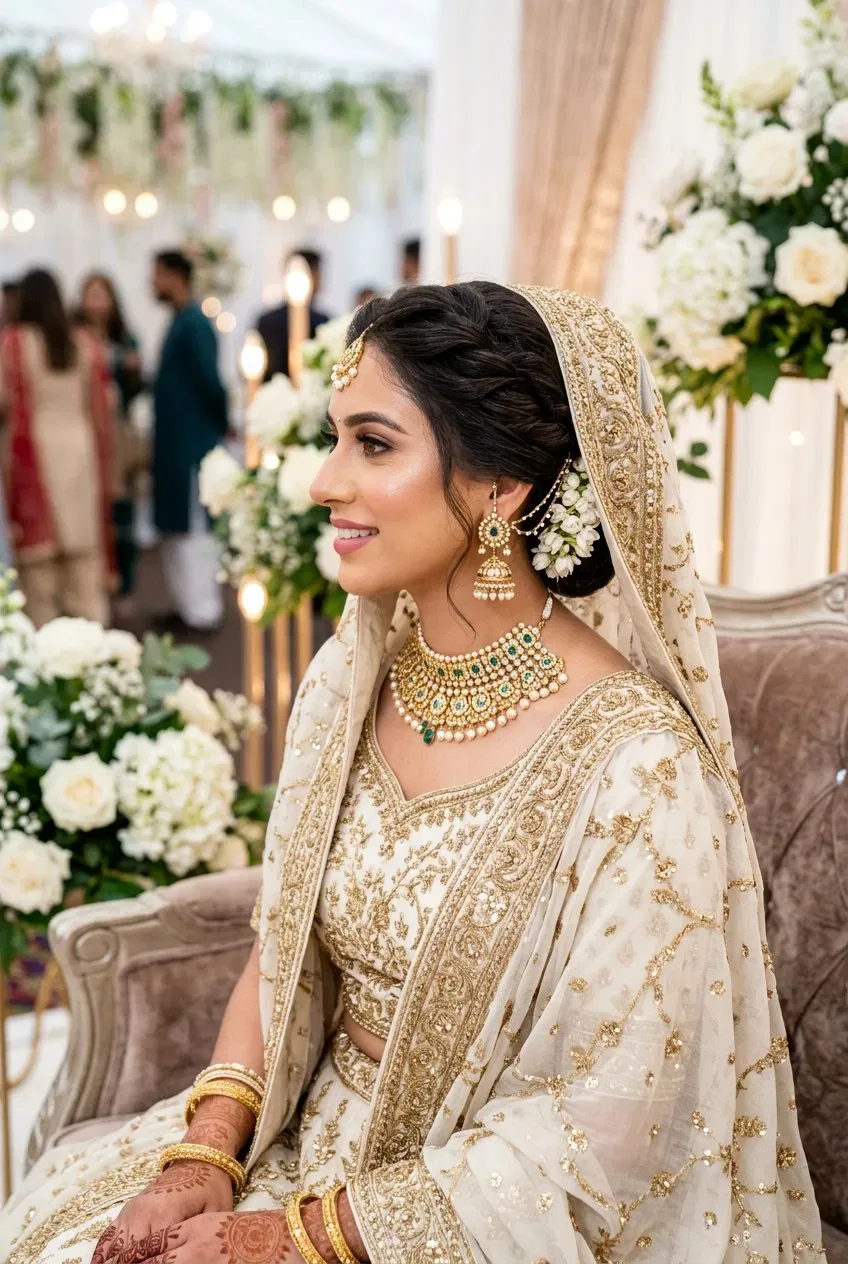
A dupatta changes everything about a hairstyle. High, wide buns push it forward, very loose waves get caught in its border, and anything too tall makes the dupatta sit awkwardly. Low buns, side braids, low ponytails and sleek half-up styles work best, because the dupatta can rest flat over the crown without crushing the shape underneath.
If you plan to drape the dupatta over your head for the henna ceremony and take it off for dancing, choose a style that looks good both ways. A low chignon or a side braid does exactly that. Pin the dupatta to the hair with two small safety pins at the sides, never to the flowers, and carry one spare pin in your clutch for quick fixes.
Bride, Guest or Family: Who Wears What at a Mehndi
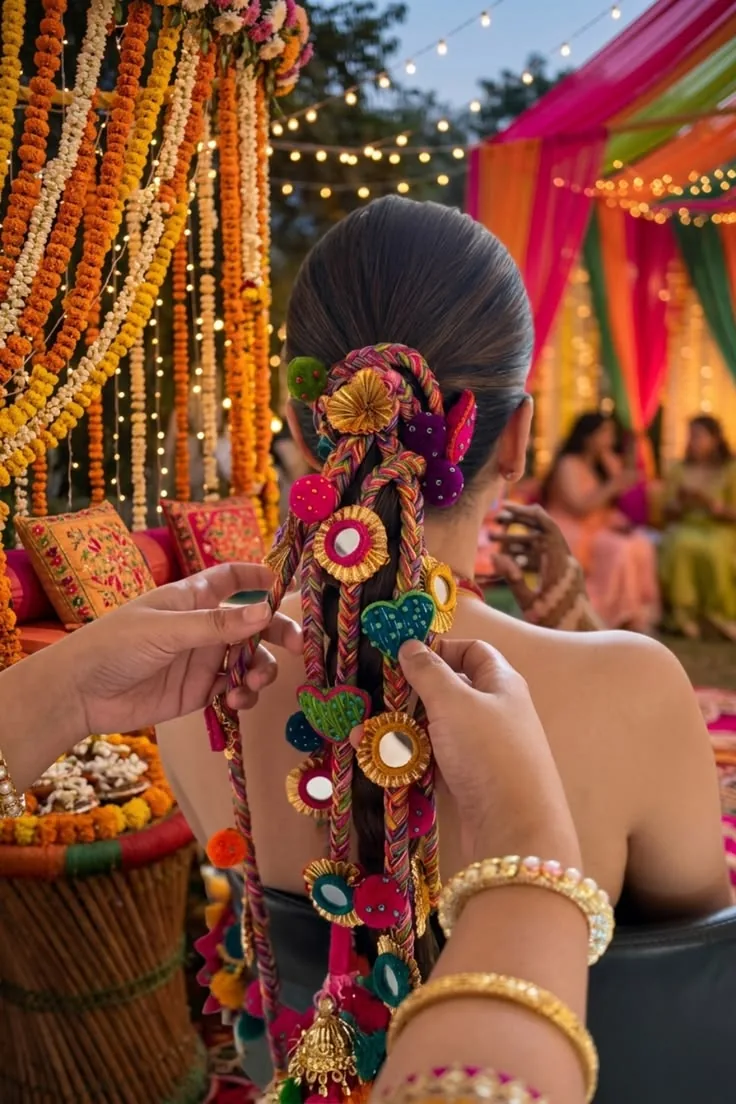
The bride can go biggest at a mehndi: a full gajra braid, a jhoomar, fresh flowers and a detailed updo all belong to her. Sisters and close family can wear a softer version of the same idea, perhaps a braid with smaller flowers or a half-up style with a few pins, so the family looks connected without matching exactly. Guests look best in polished but simpler styles that feel festive without overshadowing the bride.
Mothers and aunties often prefer comfort and elegance over drama. A low bun, a soft chignon or a neat side sweep with pearl pins photographs beautifully and stays comfortable for a long evening. Whatever your role, match the scale of your hair to the scale of your jewellery: if the jhoomar is large, keep the hair calmer, and if the jewellery is light, let the braid or flowers take centre stage.
Henna-Proof Hair: Keeping Mehndi Off Your Hair and Clothes
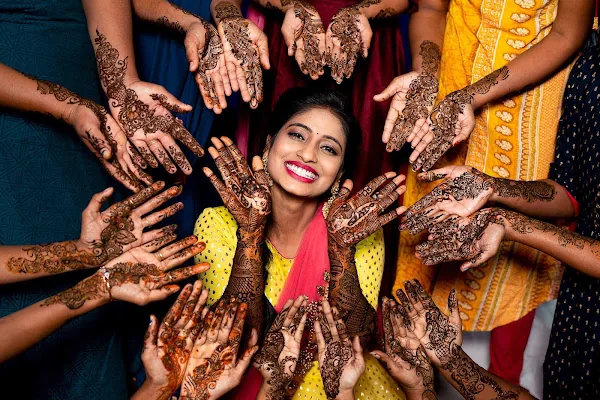
Wet henna and loose hair are a bad combination. While the henna is being applied and drying, keep your hair fully pinned back or braided away from your hands and face. A low bun or a side braid is ideal, because it keeps every strand behind your shoulders and away from your palms. Avoid touching your hair at all until the henna is dry and sealed.
Choose a darker dupatta or one you do not mind staining, and drape it so it does not brush your hands. If a little henna does touch your hair, do not rub it; let it dry, brush it out gently, and wash that section later. A quick coat of hairspray before the henna starts also makes stray strands less likely to fall forward onto your hands.
Dance-Floor Proof: Styles That Survive Hours of Dancing
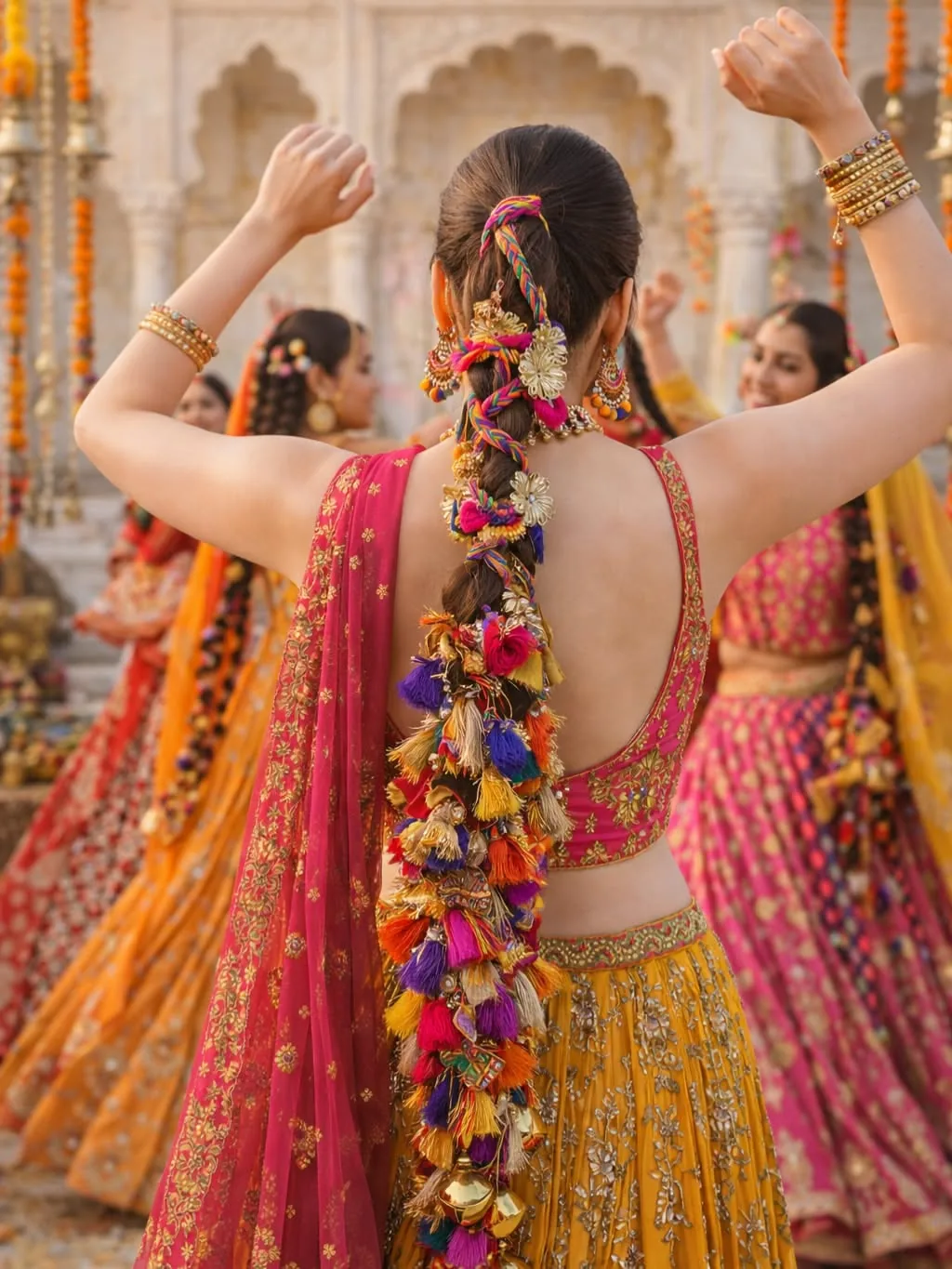
Mehndi dancing is the real test of a hairstyle. Jumping, spinning and hair flips will undo anything held by a single clip or a light spray. Braids, twisted buns and pinned-up styles survive best, because the hair is locked into itself rather than balanced on top of your head. Ask for extra pins at the nape and the sides, where movement pulls hardest.
Use a strong-hold hairspray in light layers rather than one heavy coat, and finish with a flexible spray so the style can move without cracking. If you love loose hair, a half-up style with the top section firmly braided or twisted gives you movement at the ends and security at the crown. Keep a small comb and two pins in your bag, and you can fix a loose tendril in seconds.
What to Tell Your Stylist Before a Mehndi Night
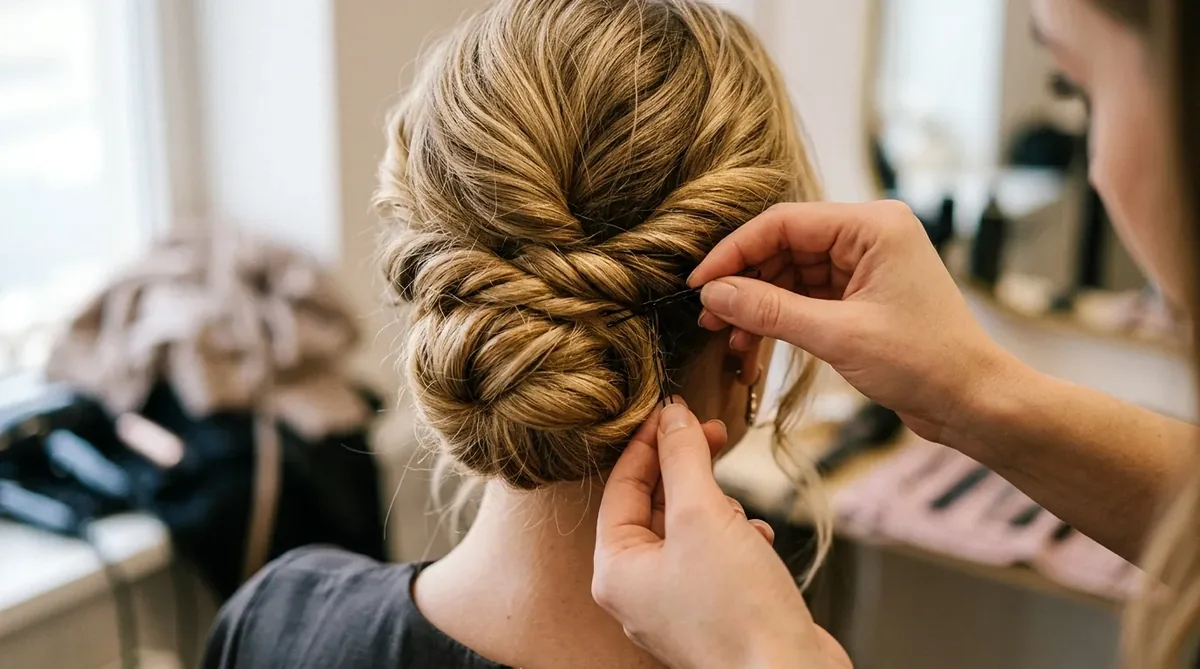
Book a trial if you can, and bring photographs of your outfit, dupatta and jewellery, not just the hairstyle. Tell your stylist how long the event lasts, whether you will dance, and whether you will wear the dupatta on your head. Those three facts change the pins, the products and the height of the style more than any picture can.
Ask how the gajra or jhoomar will be attached, how long the style should take, and what you should do if it loosens. Bring your own flowers if they are fresh, and arrive with clean, dry hair unless your stylist asks otherwise. A clear ten-minute conversation before the styling starts saves an hour of fixing later in the evening.
The Classic Braid with Gajra
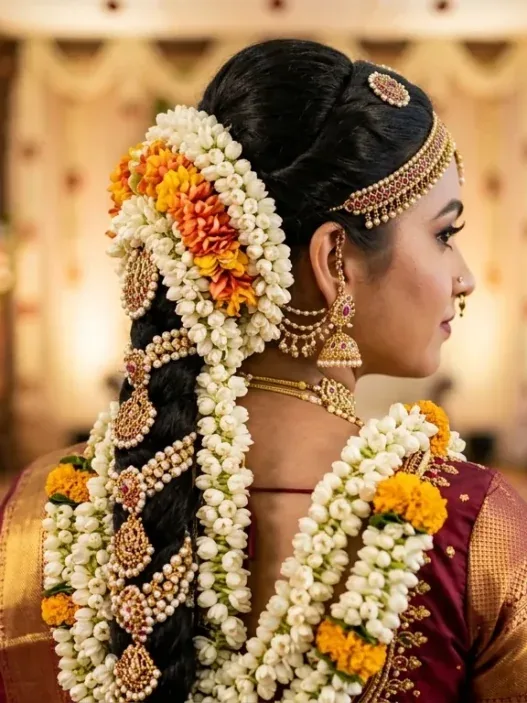
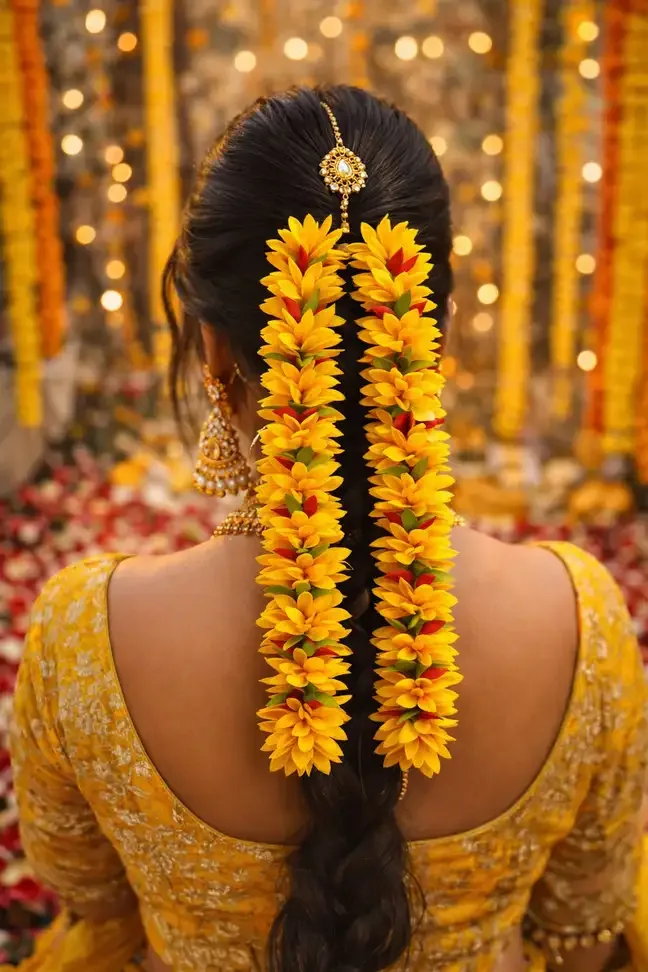
Best for: brides, sisters and anyone who wants a timeless mehndi look that photographs beautifully from every angle. The classic braid is the safest choice on this list, because it holds its shape for hours, keeps hair off your face while henna dries, and gives the gajra a long, even surface to wrap around. It suits yellow, green and multicolour outfits alike.
How to style: start with a side or centre part, braid loosely from the nape downwards, and gently pull the edges of the braid wider for softness. Wrap the gajra in a spiral around the braid and pin it at the top, middle and end, hiding each pin under a flower. Finish with a light spray and a small bow or tassel at the tip if your outfit has one.
Quick verdict: if you only remember one style from this guide, make it this one. It is comfortable, dance-proof, dupatta-friendly and unmistakably mehndi. Cost and time: about 20 to 30 minutes at a salon, or 15 minutes at home once you know the braid.
Fishtail Braid Wrapped in Gajra
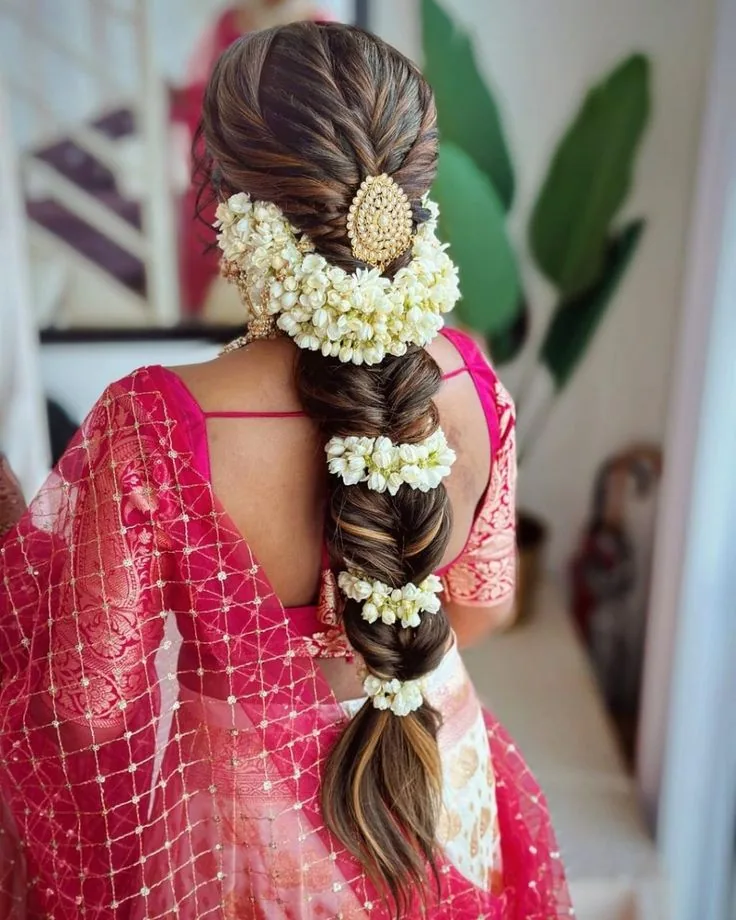
Best for: guests and bridesmaids who want something a little more detailed than a plain braid without going fully bridal. A fishtail looks intricate and expensive, yet it is surprisingly secure, because the small crossed sections lock together. It works best on medium to long hair and looks lovely over one shoulder with a jhoomar.
How to style: gather the hair to one side, split it in two, and cross small pieces from each side to the other until you reach the end. Loosen the braid slightly for texture, then wind the gajra around it in a loose spiral. Pin the gajra at intervals and add a few tiny fresh flowers near the top for a soft, romantic finish.
Common mistake: braiding too tightly at the start, which makes the fishtail look stiff and flat. Keep the first few crosses loose, and pull the braid wider as you go down. Maintenance: a quick spray at the crown before you leave is enough; the braid itself needs no attention all evening.
Dutch Braid Crown with Fresh Flowers
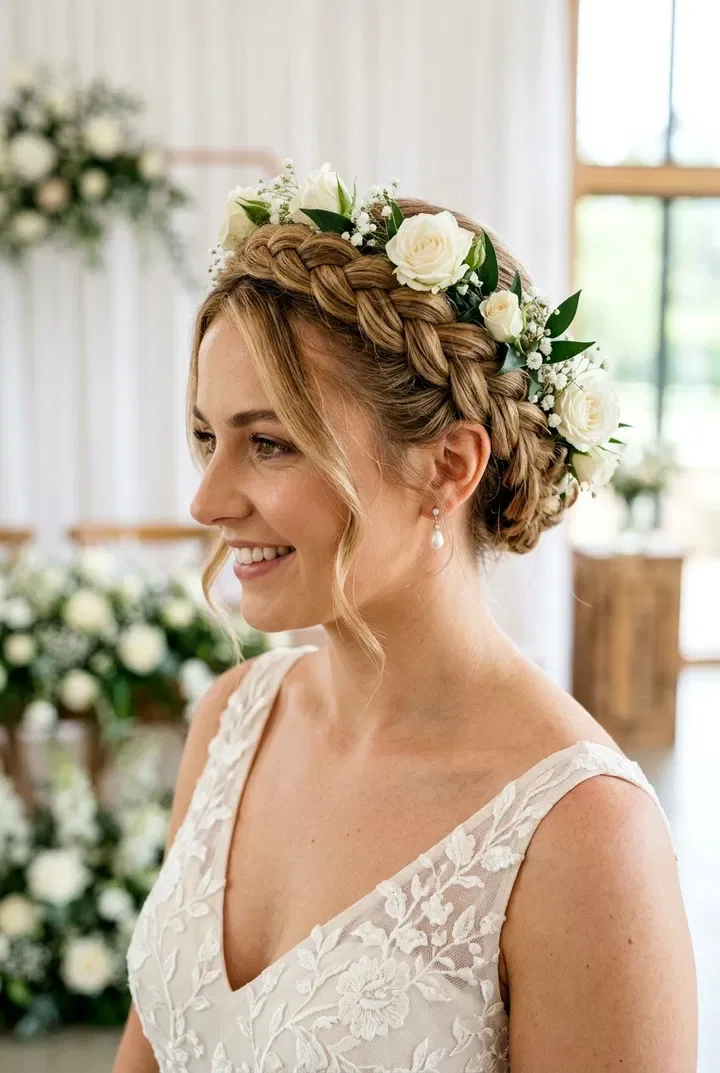
Best for: the bride or a close sister who wants her hair up and off her neck but still soft and floral. The Dutch braid sits on top of the hair like a crown, so it frames the face, holds a jhoomar beautifully, and keeps the back cool during a long, warm evening of dancing.
What to ask your stylist: ask for the braid to run from one ear, across the crown and down the other side, with the flowers tucked into the braid rather than glued on top. Fresh roses, jasmine or small marigolds all work, but keep the colours to two at most so the crown does not look busy.
Pros and cons: it stays put for hours and looks stunning in photographs, but it takes a skilled hand and about 40 minutes. Who should avoid it: anyone with very short or very fine hair, unless extensions or a braided hairpiece are added for grip and volume.
Low Bun Framed with Gajra
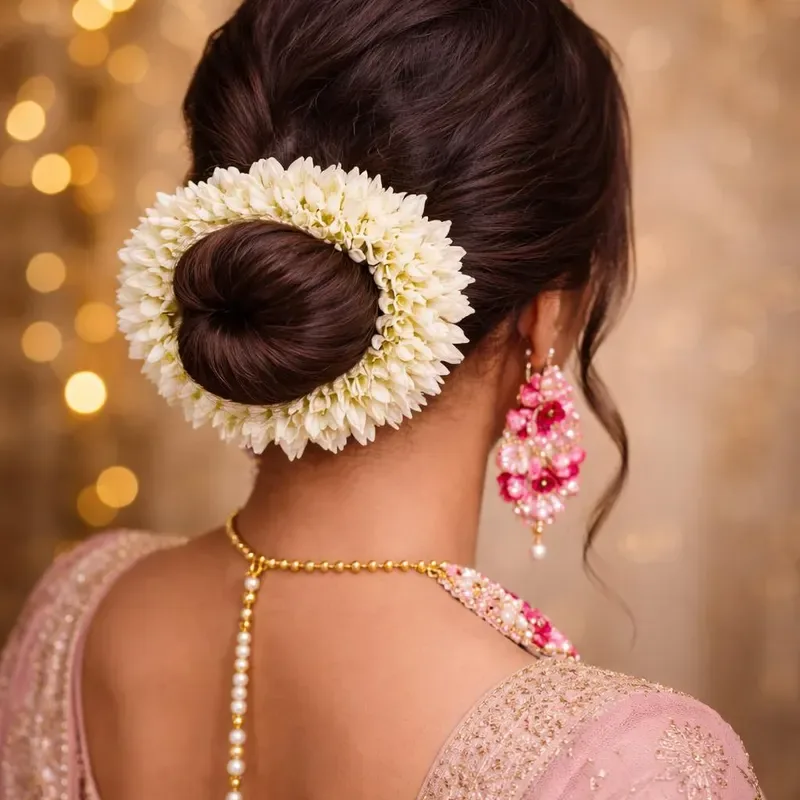
Best for: brides who will wear a dupatta over their head, and mothers who want an elegant style that lasts all night. A low bun sits at the nape, so the dupatta drapes flat over it, and a ring of gajra around the bun adds colour exactly where the camera will see it. It is calm, polished and very comfortable.
How to style: smooth the hair back into a low ponytail, twist it into a bun and pin it firmly at the nape. Wrap the gajra around the base of the bun and pin it in three places. Leave two soft face-framing strands at the front, curl them lightly, and set everything with a medium-hold spray.
Maintenance: almost none. Check the gajra once after the henna ceremony and once before dancing. Cost and time: 20 to 25 minutes at a salon, and it is one of the easiest bridal buns to recreate at home.
Messy Bun with Marigold Flowers
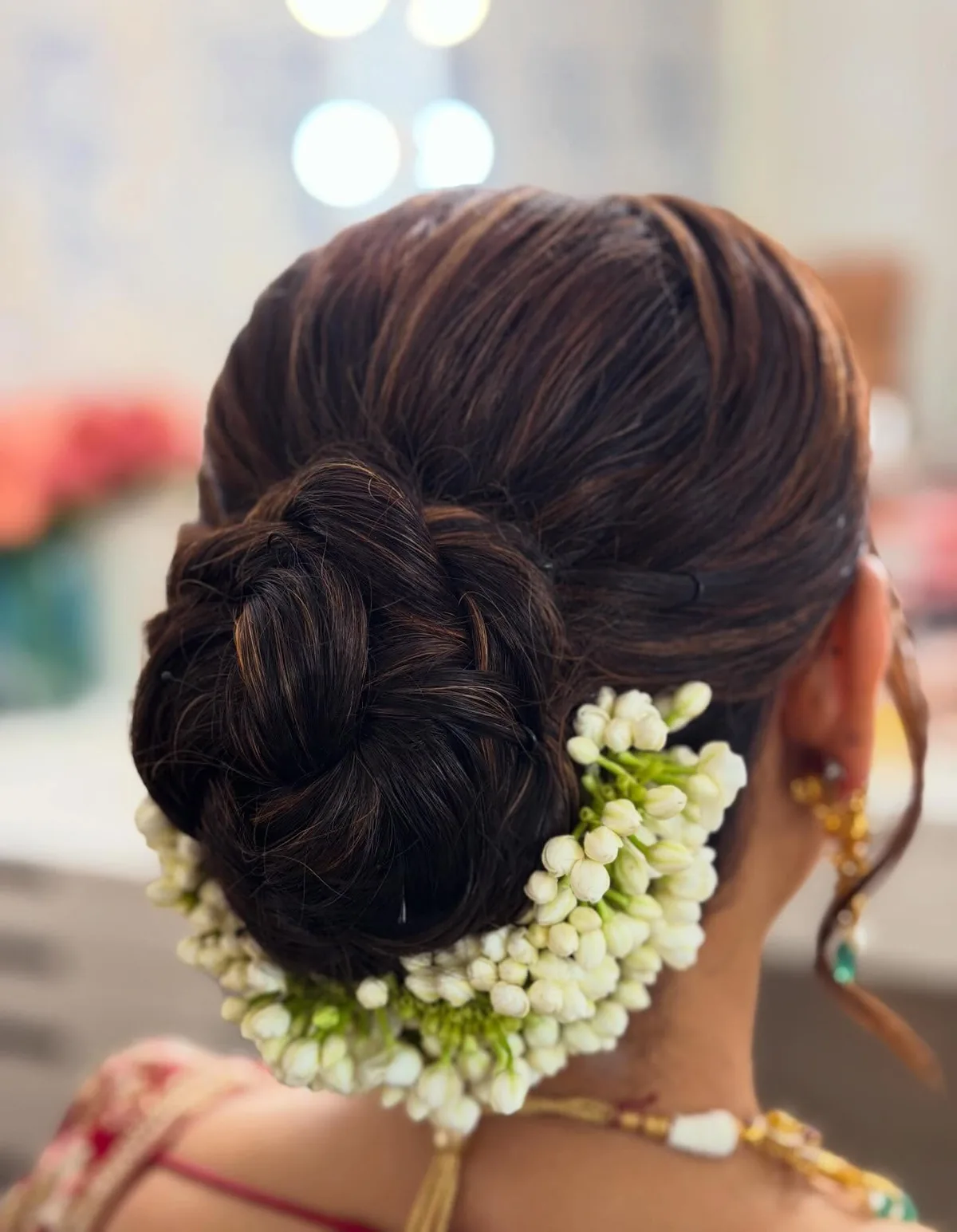
Best for: a fun, relaxed mehndi where you want colour and personality rather than formality. The orange of marigolds pops beautifully against yellow and green outfits, and a messy bun feels joyful and effortless. It suits guests, cousins and brides who prefer a playful look over a perfect one.
How to style: gather the hair into a high or mid bun, leaving the texture loose and a few strands out at the front. Tuck small marigolds and a few green leaves into the bun at different angles, pinning each flower through its base. Do not aim for symmetry; the charm of this style is that it looks freshly gathered, not sculpted.
Common mistake: making the bun too neat, which turns a playful style into an ordinary one, or using flowers that are too large and heavy. Quick verdict: bright, cheerful and very mehndi. Use fresh flowers on the day, and keep the bun loose enough to dance in.
High Bun Made for a Jhoomar
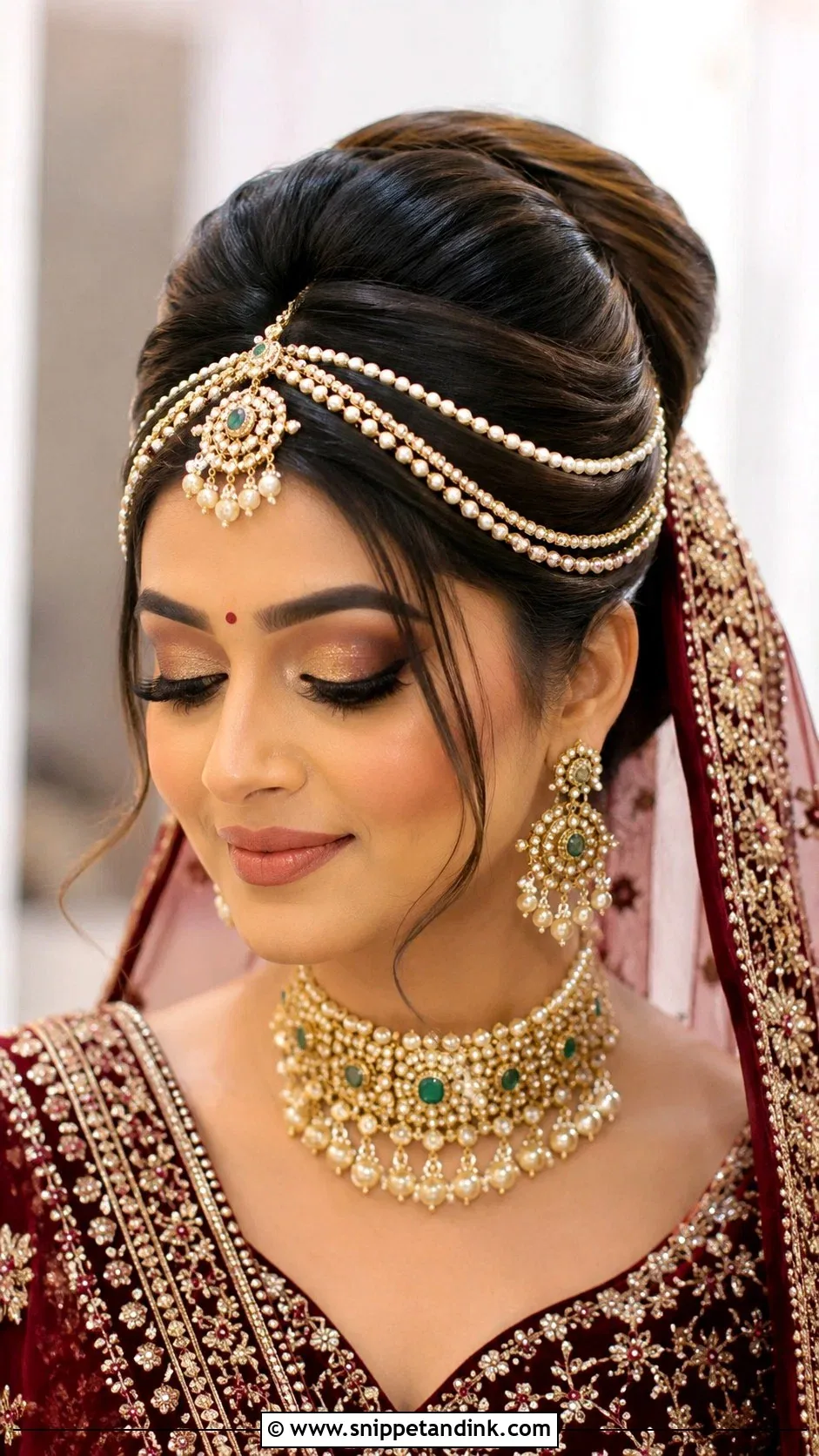
Best for: the bride, especially with a heavy jhoomar that needs a tall, firm anchor. A high bun gives the jhoomar something solid to rest against, lifts the face, and keeps the neckline clear for a statement necklace. It also photographs beautifully from the side, where the bun and the jhoomar meet.
What to ask your stylist: ask for a bun built over a hair donut or padding, pinned at the crown, with the jhoomar attached to the bun itself rather than to loose hair. Test the balance by turning your head slowly. If the bun pulls, ask for more pins at the base, not tighter hair at the front.
Pros and cons: it is regal and secure, but it can feel heavy after several hours. Who should avoid it: anyone with a sensitive scalp or very fine hair, unless the bun is built lower and lighter. Take the jhoomar off for the last dance if your head feels tired.
Side-Swept Curls with a Jhoomar
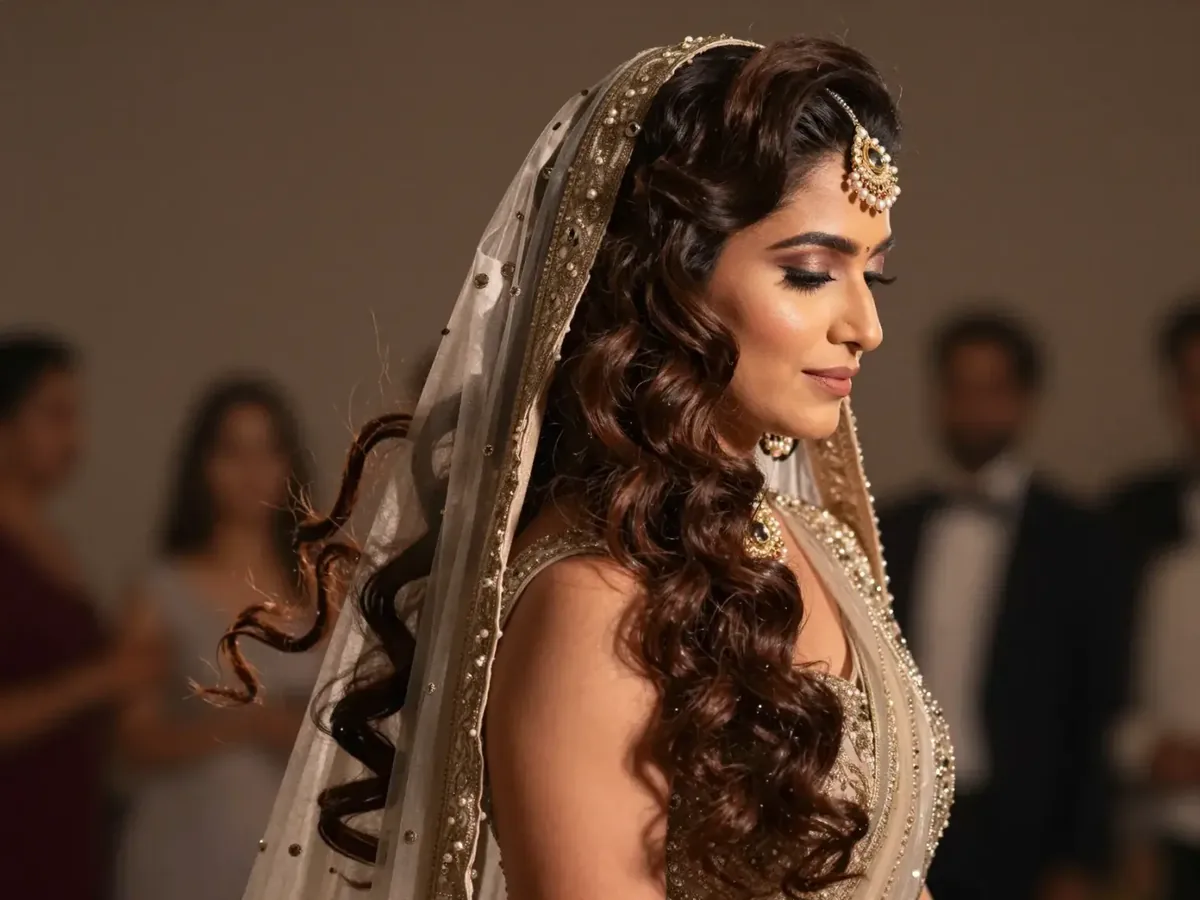
Best for: brides and guests who love soft, glamorous hair but still want to wear a jhoomar. Sweeping all the curls to one side leaves the other side clear for the jhoomar, so both the jewellery and the hair get their moment. It suits long hair best and looks wonderful in yellow light.
How to style: curl the hair in large sections away from the face, brush the curls out gently for soft waves, and sweep everything over one shoulder. Pin the hair behind the opposite ear, attach the jhoomar above that pin, and secure the sweep at the nape so it does not slide back during dancing.
Maintenance: carry a small comb and re-sweep the curls once mid-evening. Common mistake: curling too tightly, which makes the sweep look stiff. Let the curls cool completely before brushing them out, and use a light spray only.
Half-Up, Half-Down with Gajra
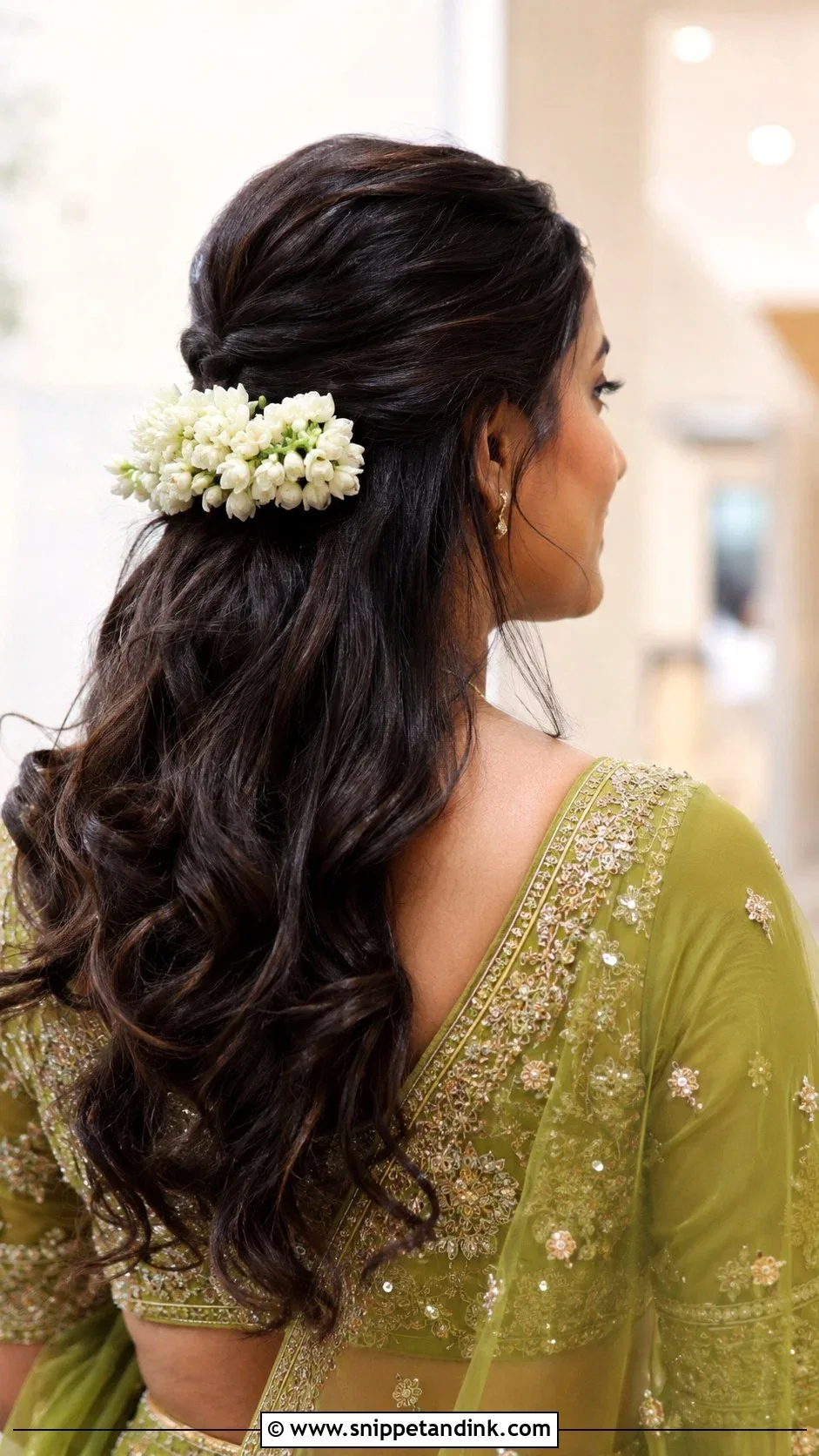
Best for: almost everyone, which is why it is one of the most popular mehndi styles. The top half is pinned up and decorated with gajra, so your face stays clear and the flowers are visible, while the bottom half flows in soft curls or waves. It is romantic without being fussy, and it suits both brides and guests.
How to style: take the top section from temple to temple, twist or braid it lightly, and pin it at the back of the crown. Tuck the gajra across the pinned section and curl the loose hair underneath in large, soft sections. Add two small pins at the sides so the top section cannot slip while you dance.
Pros and cons: it flatters most face shapes and works with a dupatta worn over one shoulder, but the loose half can tangle in a heavy dupatta border. Quick verdict: a safe, pretty middle ground if you cannot decide between up and down.
Waterfall Braid with Tiny Flowers
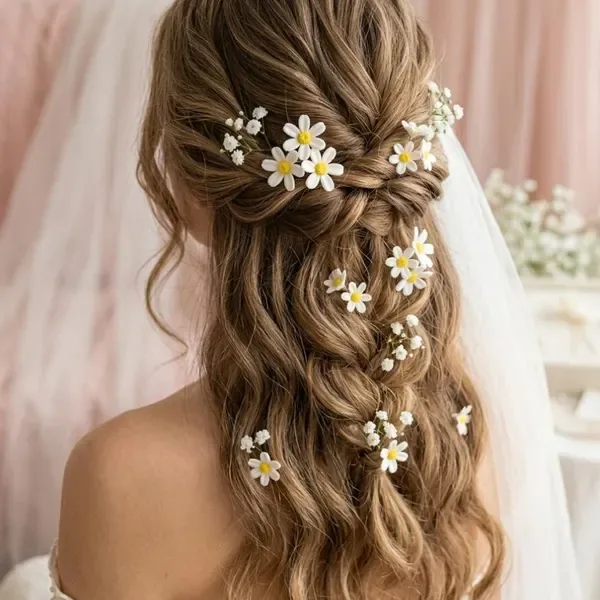
Best for: younger guests, bridesmaids and anyone with long hair who wants a delicate, feminine detail. The waterfall braid lets strands fall through the braid like a curtain, and tiny flowers tucked into each drop make it look as if the hair is blooming. It is at its best in photographs taken from behind.
How to style: braid across the back of the head, dropping the bottom strand each time and picking up a new one, so the dropped strands fall softly. Tuck a tiny flower or bud into every second or third drop, pinning each one lightly. Curl the falling strands gently so they move together.
Who should avoid it: anyone planning to wear a dupatta over the head, because the dupatta will hide and crush the waterfall effect. Cost and time: 30 to 40 minutes, and it needs a stylist who has done a waterfall braid before, so ask to see a photo of their work.
Double French Braids with Gajra
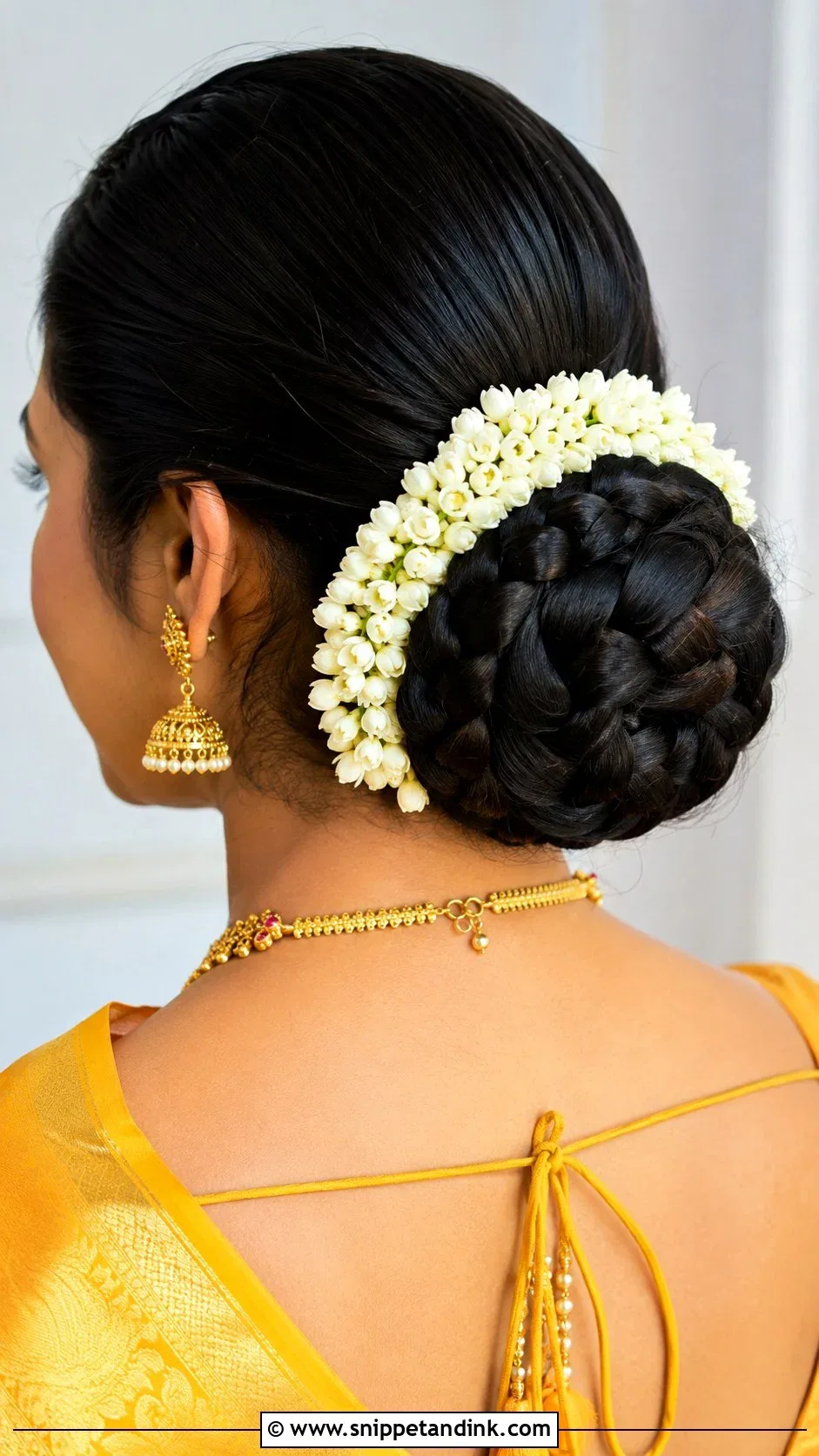
Best for: energetic dancers, younger cousins and guests who want their hair completely out of the way. Two French braids hold every strand close to the head, so nothing falls into the henna or onto your face while you dance. Wrapped with gajra, they stop looking sporty and start looking festive.
How to style: part the hair down the centre, French braid each side from the hairline to the nape, then continue as ordinary braids and tie them off. Wrap a thin gajra string around each braid, or join the two braids into one low bun at the back and ring the bun with flowers.
Maintenance: none at all once it is done, which is the whole point. Common mistake: braiding too loosely at the hairline, where the braid will loosen first. Start firmly at the front, then relax the braid as you move down, and finish with a light spray.
Braided Crown for a Yellow Outfit
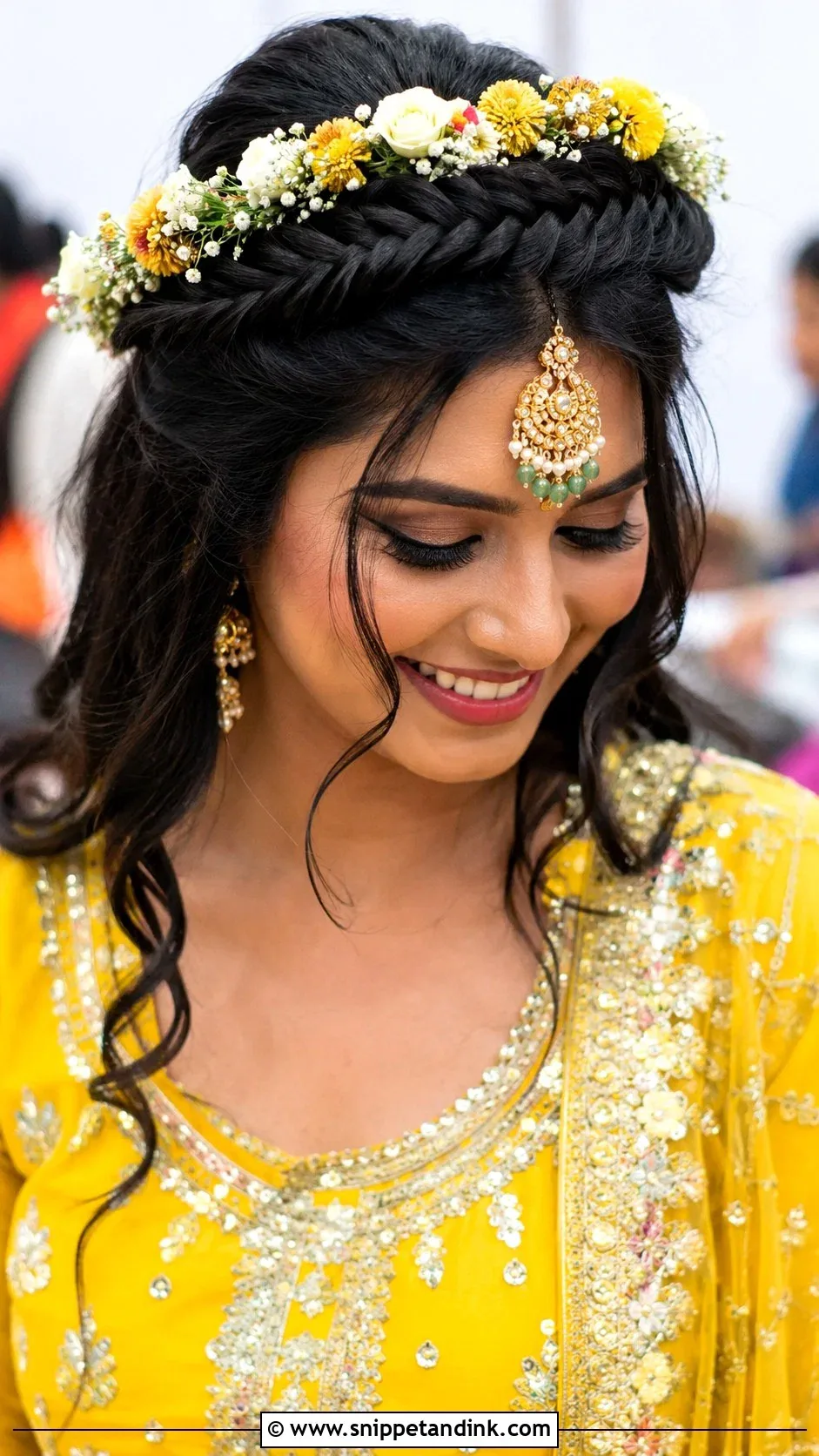
Best for: anyone in yellow, because the braid itself becomes the contrast. A crown braid in dark hair frames the face like a headband, and small white or orange flowers keep it firmly in mehndi territory. It is especially flattering if your outfit has a high neckline or a heavy dupatta border.
How to style: braid from one side of the head, around the crown and down the other side, pinning the end underneath the start so the circle is complete. Pull the braid gently wider for softness, and tuck flowers at the front and at one side only, so the crown does not look crowded.
Pros and cons: it is secure, elegant and dupatta-friendly, but it needs medium to long hair. What to ask your stylist: ask whether your hair is long enough to circle the head, or whether a braided extension piece would help. A trial run is worth it for this one.
Loose Waves with a Green Outfit
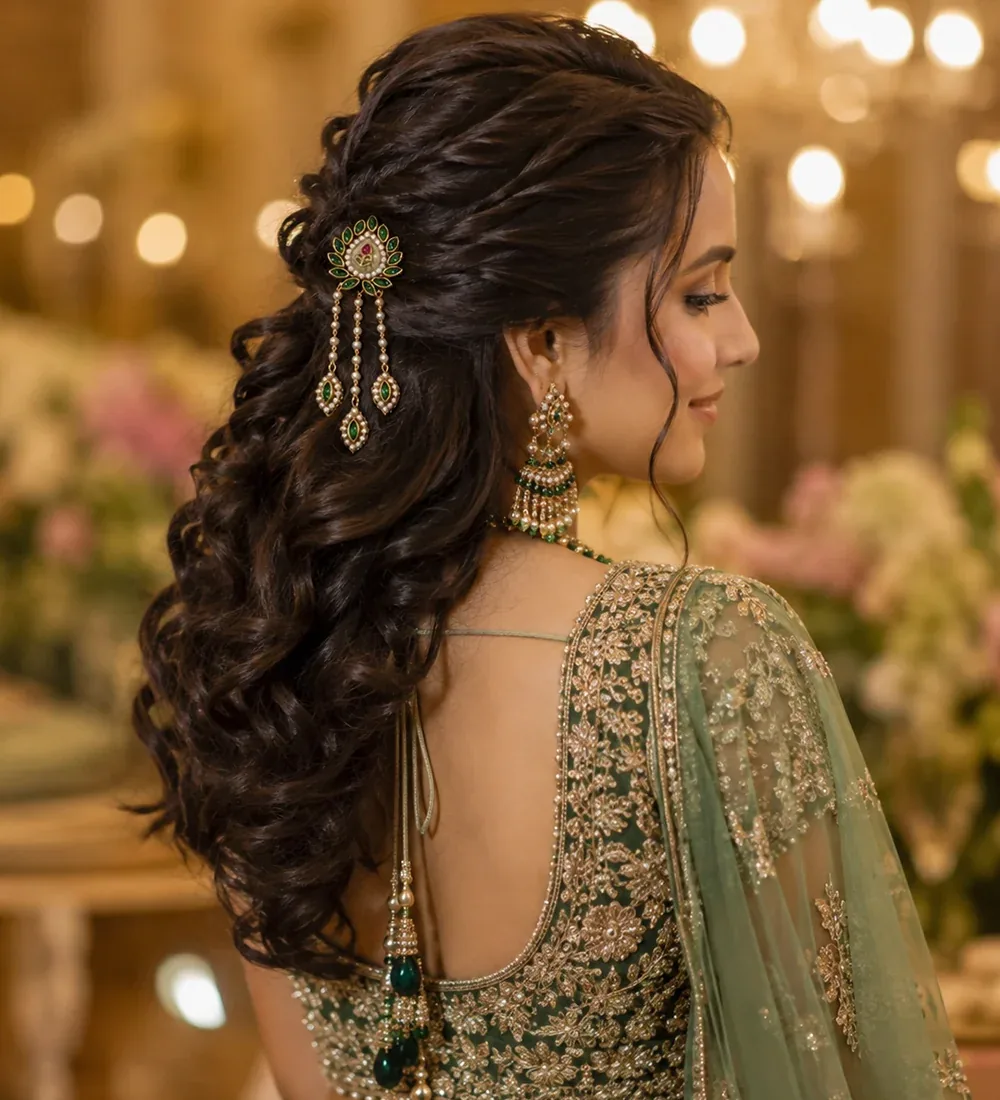
Best for: guests who want an easy, modern look that still feels dressed up. Loose waves soften a green outfit, which can otherwise feel quite strong, and they move beautifully on the dance floor. This is a good choice if you are not wearing a jhoomar and want your hair, rather than your jewellery, to carry the look.
How to style: curl the hair in large sections, alternating the direction, then brush through with your fingers for loose waves. Add a centre or side part, a little volume at the crown, and a few small flower pins on one side. Keep the waves soft, not tight, so they do not turn into curls by midnight.
Maintenance: a light texturising spray at the roots helps the waves last, and a quick finger-comb refreshes them. Who should avoid it: anyone who will wear a dupatta over the head for long, because the waves will flatten. Wear the dupatta over one shoulder instead.
Sleek Low Ponytail Under a Dupatta
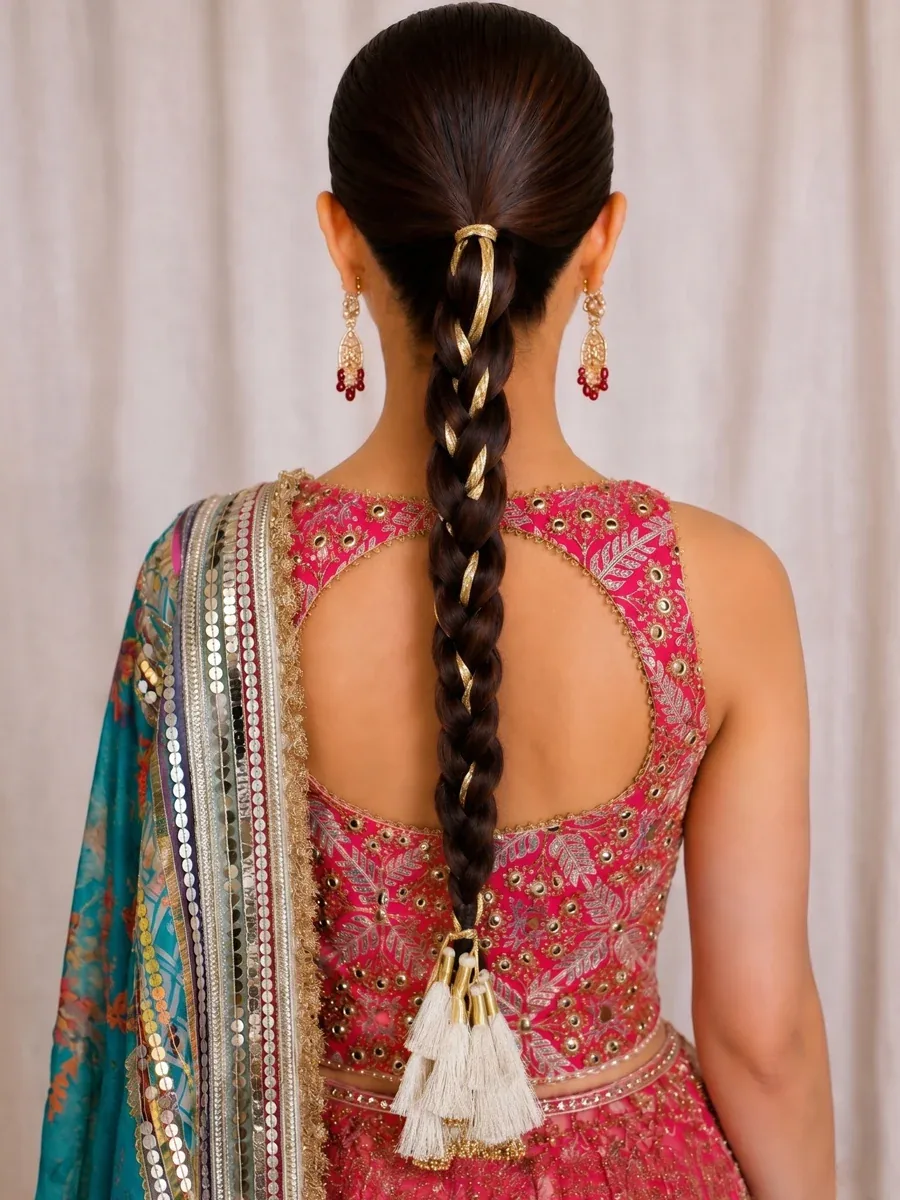
Best for: a polished, modern guest or a sister who will be busy helping all evening. A sleek low ponytail is practical, elegant and completely dupatta-safe, because the dupatta can sit flat over the crown and the ponytail hangs neatly below it. It also keeps hair away from wet henna.
How to style: smooth the hair back with a brush and a little serum, secure it low at the nape, and wrap a small strand of hair around the elastic to hide it. Add a gajra ring where the ponytail starts, or a slim gold cuff, and straighten the ponytail so it falls cleanly. Finish with a shine spray.
Common mistake: pulling the ponytail too tight, which causes a headache by the second hour. Quick verdict: simple, smart and reliable. It will not steal attention from the bride, but it will look immaculate in every photograph.
Side Braid with a Tasselled Dupatta
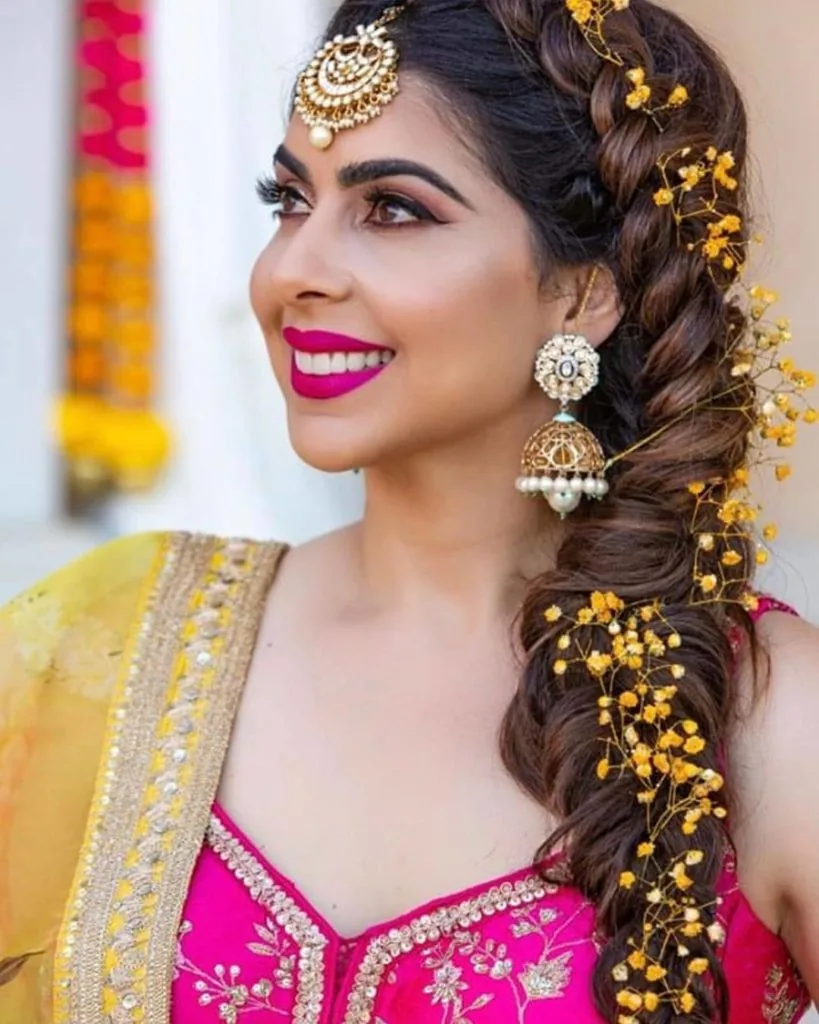
Best for: guests and family members whose dupatta has tassels, embroidery or a heavy border that deserves to be seen. A side braid keeps the hair on one side, so the dupatta can be draped and displayed on the other without tangling. It is relaxed, pretty and very easy to wear.
How to style: sweep all the hair over one shoulder, braid it loosely, and tie it with a ribbon that matches your outfit. Tuck a few small flowers into the top of the braid and let the tassels of the dupatta fall beside it. Keep the braid loose enough to move, but pin the top section so it does not slide.
Pros and cons: it is comfortable and shows off the dupatta, but a very loose braid can unravel while dancing. Maintenance: tie the end firmly, carry a spare hair tie, and check the braid once before the dancing starts. That is all it needs.
Bubble Braid with Colourful Ribbons
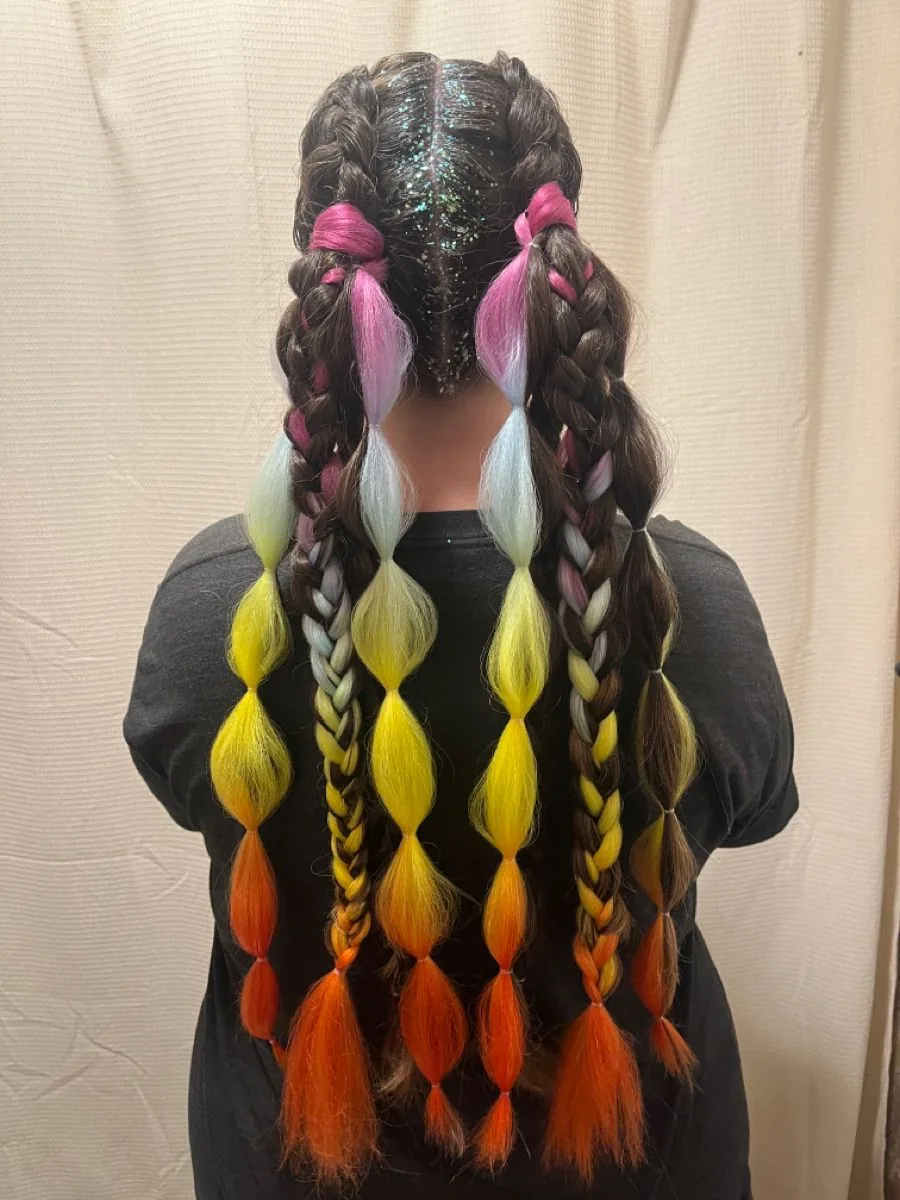
Best for: a fun, youthful mehndi, especially for teenagers, younger cousins and bridesmaids. The bubble braid is playful and full of colour, and ribbons in yellow, pink, green and orange pick up the colours of the decorations. It photographs brilliantly and needs no jewellery at all.
How to style: tie the hair into a low ponytail, add elastics every few inches down its length, and gently pull each section wider to form bubbles. Weave a thin ribbon through the elastics, or tie a small bow at each one. Keep the bubbles even in size so the braid looks intentional, not accidental.
Cost and time: 15 to 20 minutes, and it is easy to do at home. Who should avoid it: anyone wanting a formal or bridal look, because this style is deliberately playful. It is perfect for the sangeet-style dancing that often follows the henna.
Twisted Low Chignon with Pearl Pins
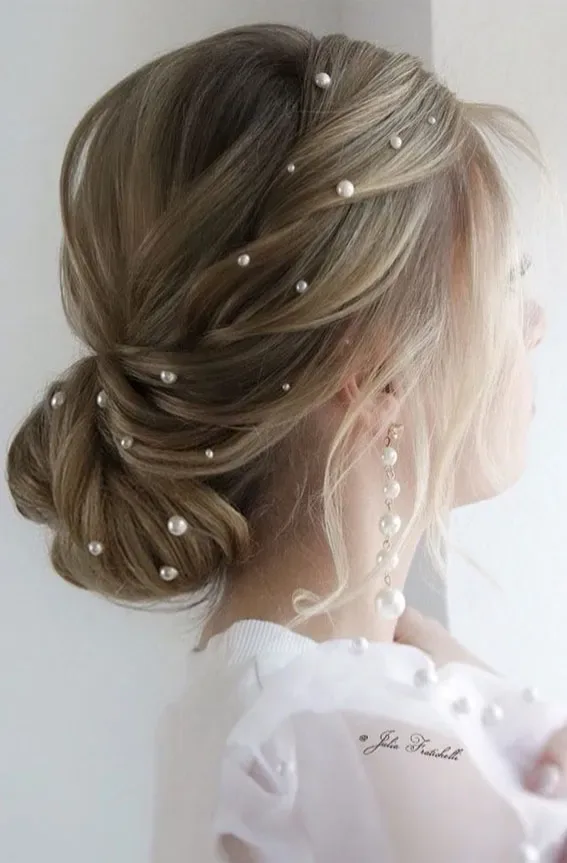
Best for: mothers, aunties and guests who want quiet elegance. A twisted chignon is softer than a tight bun, and pearl pins add a gentle shine that suits both yellow and green outfits. It sits low enough for a dupatta, and it stays comfortable through a long evening of sitting and greeting.
How to style: divide the hair into two sections, twist each one towards the centre, and coil them together into a low chignon at the nape. Pin firmly, then slide pearl pins into the twists at an angle so they catch the light. Leave one soft strand at each side of the face.
What to ask your stylist: ask for the twists to be pinned, not just tucked, because twists loosen faster than braids. Quick verdict: understated, graceful and very forgiving. It suits most hair types and most ages, and it never looks overdone.
Voluminous Blowout for a Mehndi Night
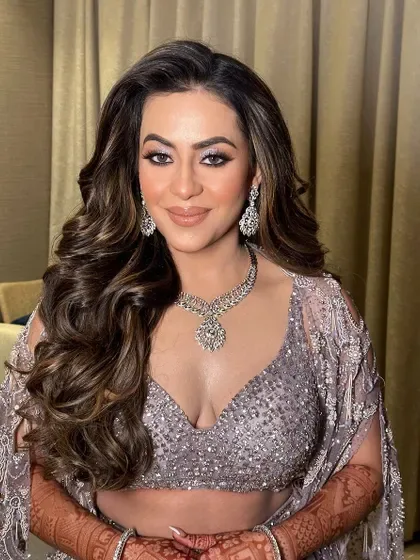
Best for: guests with medium to long hair who love big, bouncy hair and are not wearing a dupatta over their head. A blowout gives movement, shine and volume, and it looks wonderful in photographs, especially with a side part and a few flower pins. It is glamorous without needing a single braid.
How to style: blow-dry the hair in sections with a large round brush, lifting at the roots for volume and curling the ends under. Add a volumising spray at the crown, brush the hair out softly, and finish with a light-hold spray. Pin one side back with a decorative clip if you want a little structure.
Maintenance: humidity is the enemy, so a light anti-frizz serum helps, and a quick root lift mid-evening restores the volume. Common mistake: using too much product, which weighs the blowout down. Less is more, and a second light layer of spray beats one heavy one.
Curly Half-Up Style with Flower Pins
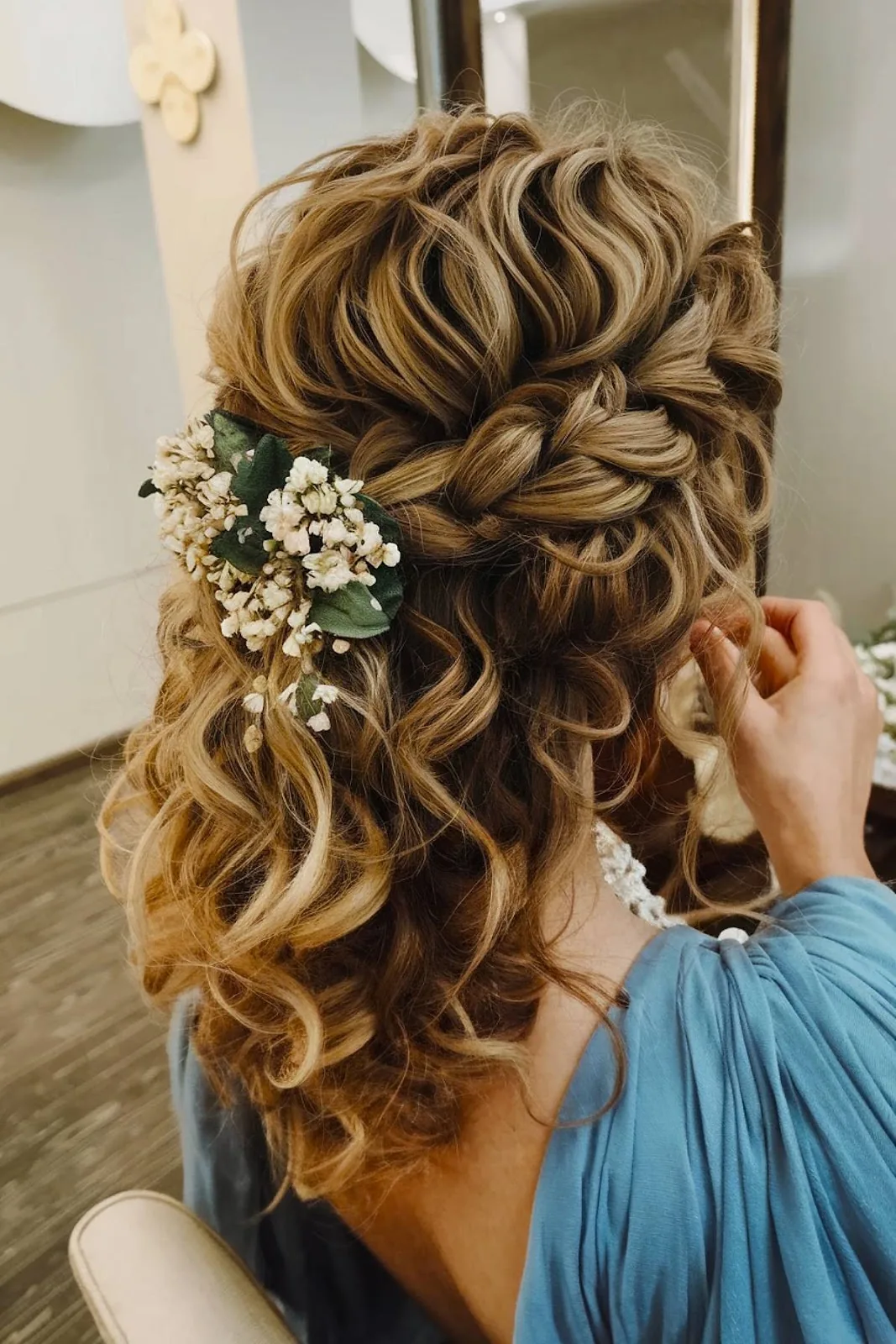
Best for: anyone with natural curls who wants to celebrate them rather than straighten them away. The top half is pinned up, so the curls frame the face without falling into the henna, and small flower pins add colour without weighing the curls down. It is joyful, natural and very mehndi.
How to style: define the curls with a little curl cream, take the top section from each temple and pin it at the back with crossed pins. Place flower pins along the pinned section, not in the loose curls, so they stay visible. Let the remaining curls fall naturally, and do not brush them out.
Pros and cons: it is easy, comfortable and suits the occasion perfectly, but pins can slip in very smooth curls. Maintenance: a small amount of curl cream on your fingertips will revive any flattened curls. Avoid hairspray, which can make curls crunchy.
Straight Hair with a Centre Part and Jhoomar
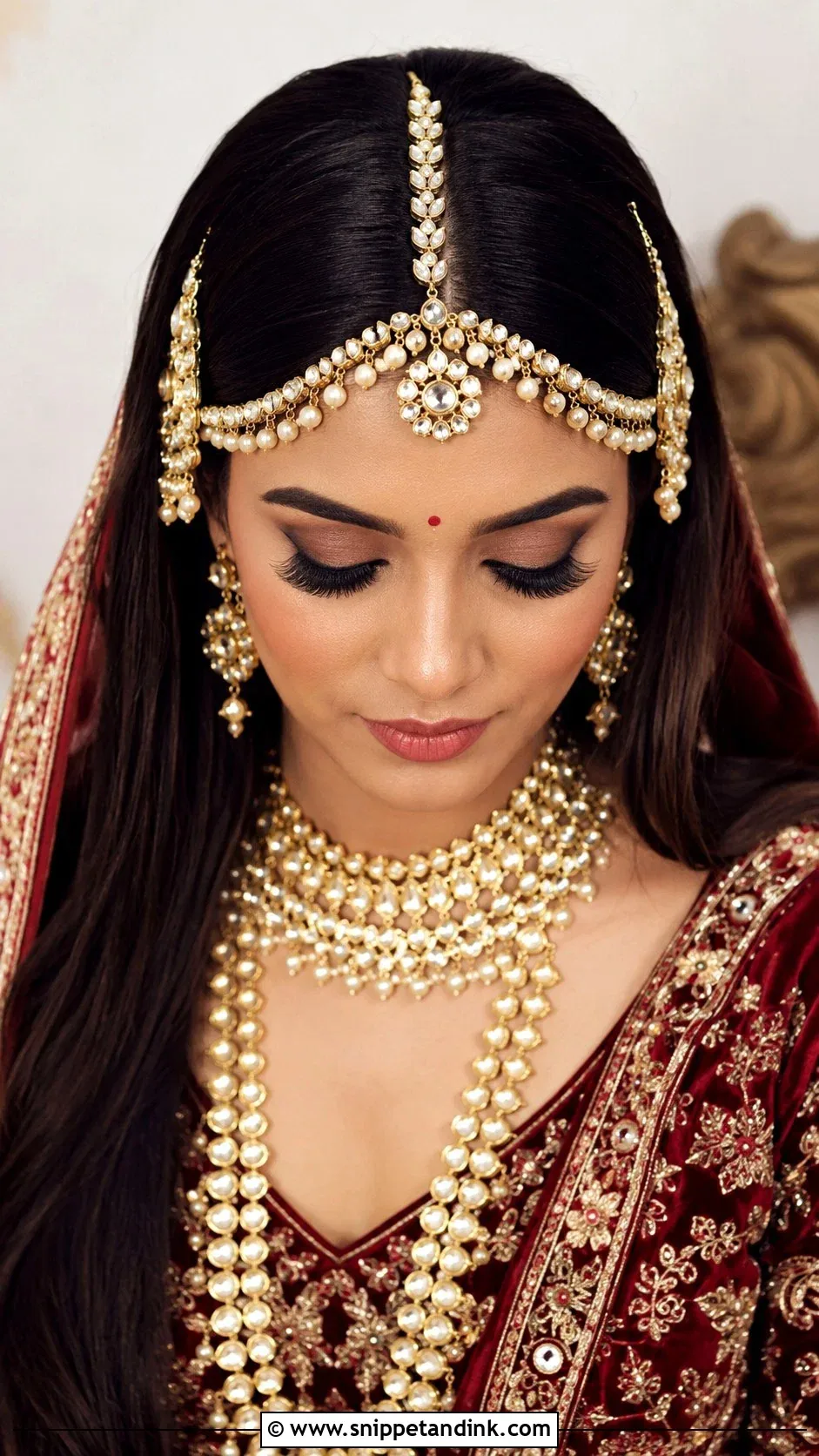
Best for: the bride who loves a clean, classic look. Straight hair with a centre part is the perfect canvas for a jhoomar, because nothing competes with the jewellery. It feels calm and regal, and it suits a heavily embroidered outfit where the hair should stay simple.
How to style: straighten the hair in thin sections, part it precisely in the centre, and add a shine serum for a smooth finish. Pin the jhoomar at the parting with two hidden pins, and tuck the hair behind the ears so the jhoomar and earrings are fully visible. Keep the ends neat and even.
Common mistake: skipping the heat protectant, which leaves the hair dull, or straightening over damp hair. Quick verdict: if your jhoomar is the star, let it shine. This style gives it a clear stage and looks timeless in photographs.
Messy Low Bun with a Draped Dupatta
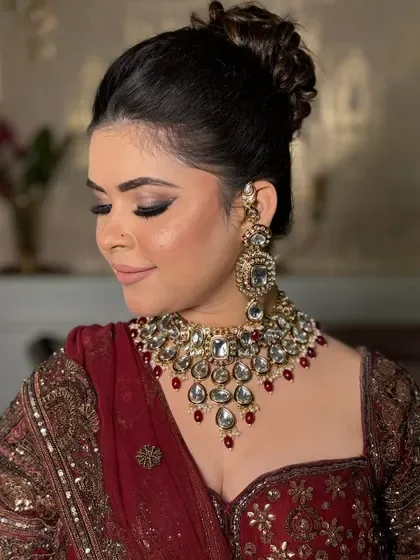
Best for: brides and guests who will keep the dupatta on their head for most of the evening. A messy low bun is low enough to sit under the dupatta without pushing it up, and its soft texture stops the dupatta from sliding off smooth hair. It looks relaxed, romantic and effortless.
How to style: gather the hair loosely at the nape, twist it into a soft bun and pin it with U-pins, leaving a few wisps out at the front and nape. Drape the dupatta over the crown and pin it to the hair at the sides, above the bun. Add a few small flowers at the front edge of the bun.
What to ask your stylist: ask for texture at the crown before the bun is formed, so the dupatta has something to grip. Maintenance: check the dupatta pins once after the ceremony. The bun itself will hold without any attention.
Braid Woven with Fresh Jasmine
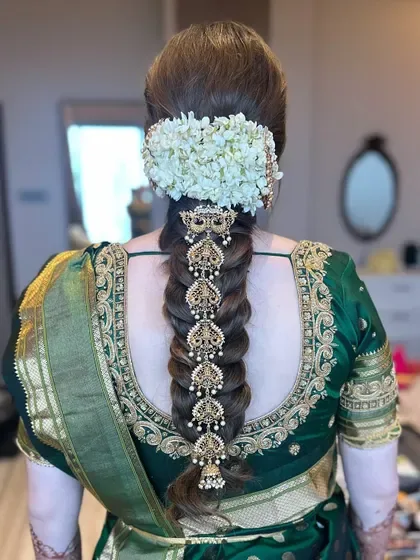
Best for: anyone who loves fragrance as much as looks. Fresh jasmine smells wonderful all evening, looks delicate against dark hair, and suits both yellow and green outfits. It is a beautiful choice for the bride, and a lighter version works just as well for sisters and guests.
How to style: braid the hair loosely, then weave a jasmine string through the braid as you go, or lay it along the braid afterwards and pin it at intervals. Keep the jasmine fresh in water until the last moment, and add a few buds near the top where they will be seen in photographs.
Pros and cons: the scent and the softness are lovely, but jasmine wilts faster than gajra. Cost and time: the braid takes 20 minutes, and the jasmine should be added in the final ten minutes before you leave. Carry a spare string in a cool bag if the evening is long.
Pinned-Back Curls with a Maang Tikka
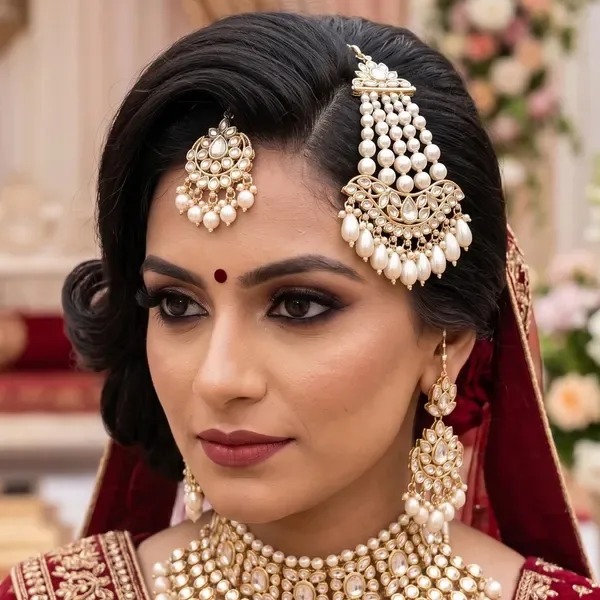
Best for: guests and bridesmaids who want to wear a maang tikka without a full updo. The curls are pinned back from the face, so the tikka sits cleanly on the parting, and the curls fall softly behind the shoulders. It is pretty, practical and easy to dance in.
How to style: curl the hair in medium sections, pin the front sections back behind the ears, and place the maang tikka on the parting, pinning its chain to the hair at the crown. Leave the curls loose at the back, and add a flower pin on one side to balance the tikka.
Common mistake: pinning the tikka only to the chain, which lets it slide forward. Maintenance: check the tikka pin once before dancing. A second pin, hidden under the hair at the crown, will hold it steady all night.
High Ponytail with a Wrapped Braid Base
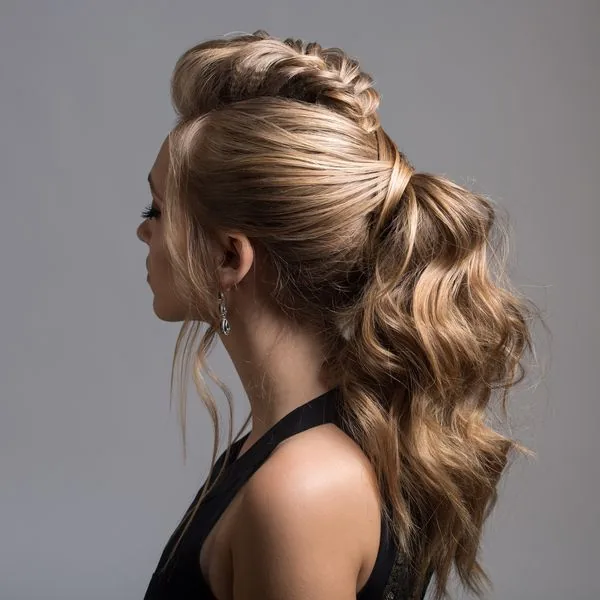
Best for: confident dancers who want their hair up, out of the way and full of movement. A high ponytail swings beautifully when you dance, and a braid wrapped around its base turns a simple ponytail into a mehndi style. It suits long hair and looks great with a sleeveless or short-sleeved outfit.
How to style: gather the hair high at the crown, secure it firmly, and take a small section from underneath to braid and wrap around the base, pinning the end underneath. Curl the ponytail in large sections, and add a few small flowers or a ribbon at the base.
Who should avoid it: anyone with a tender scalp, because a high ponytail pulls all day. Quick verdict: fun, flirty and very dance-friendly. Loosen it slightly once the formal photographs are done, and it will feel comfortable for the rest of the night.
Romantic Updo with Loose Tendrils
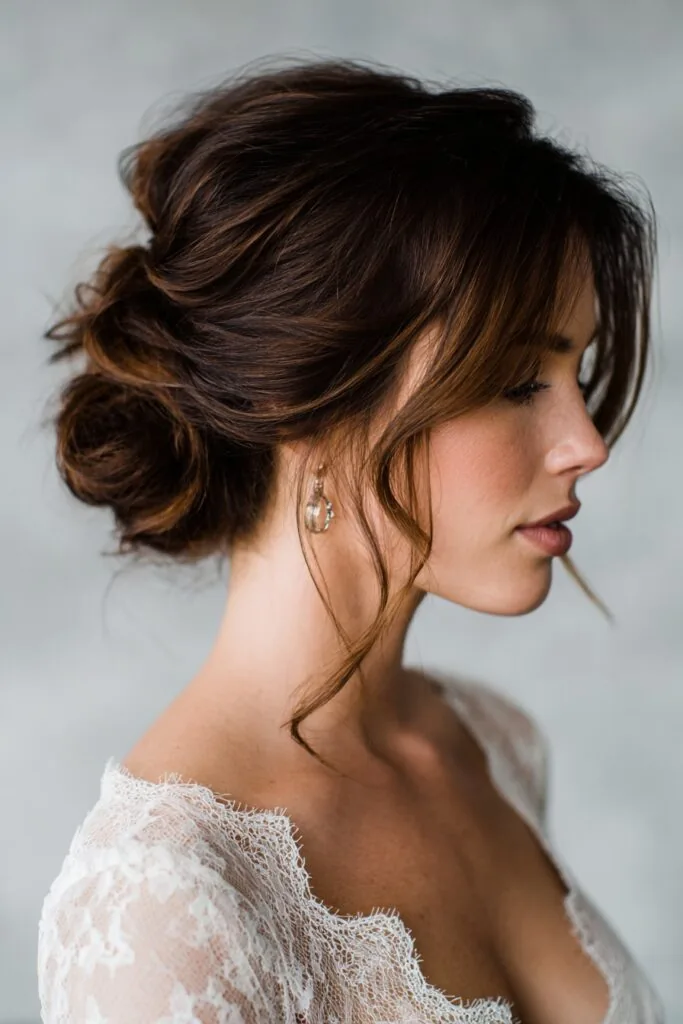
Best for: the bride who wants softness rather than structure. This updo is gathered loosely at the back, with tendrils left out to frame the face and a few flowers tucked into the twists. It feels romantic and gentle, and it photographs beautifully in warm, golden light.
How to style: curl the hair first, then gather it loosely into a low or mid updo, pinning sections in place rather than pulling them tight. Pull out two tendrils at the front and one at each side, curl them lightly, and tuck small flowers into the pinned sections. Finish with a flexible-hold spray.
Pros and cons: it is flattering and feminine, but tendrils can fall flat in humidity. What to ask your stylist: ask for the tendrils to be curled with a smaller barrel than the rest of the hair, so they hold their shape longer. Keep a pin handy to tuck one back if it bothers you.
Side-Part Sleek Bun with Pearls
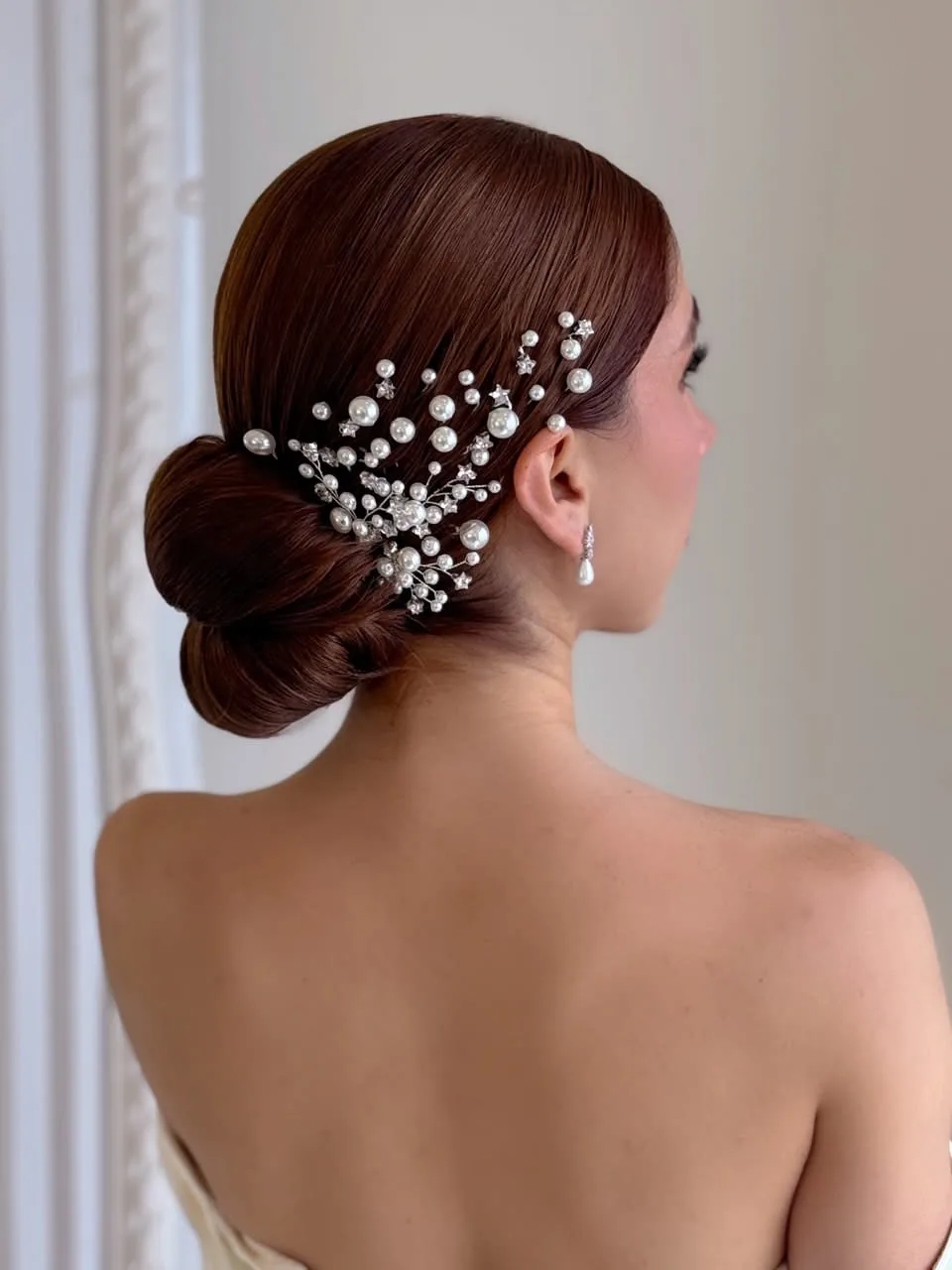
Best for: a polished guest or a mother of the bride who wants a refined, modern look. The deep side part adds drama, the sleek bun adds polish, and pearl pins add just enough sparkle for a mehndi without competing with the bride. It suits straight and wavy hair equally well.
How to style: part the hair deeply on one side, smooth it back with a brush and a little serum, and form a neat bun low at the nape on the opposite side. Slide pearl pins into the bun in a small cluster, and set the part with a light spray so it does not move during the evening.
Maintenance: almost none, which is why this style is so popular with busy family members. Cost and time: 20 minutes at a salon, or 15 minutes at home if you are comfortable with a sleek finish. A clean part is the detail that makes it look expensive.
Boho Braid with Colourful Threads
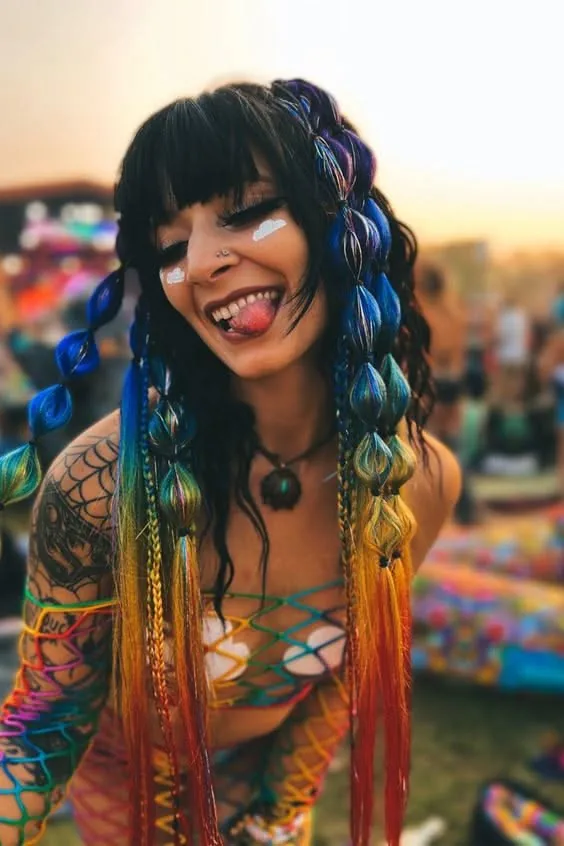
Best for: a relaxed, outdoor or daytime mehndi, and for younger guests who love colour. Threads in pink, yellow, green and orange are woven through a loose braid, picking up the colours of the henna, the marigolds and the outfits around you. It is cheerful, creative and completely unique.
How to style: braid the hair loosely to one side, weaving two or three coloured threads through the sections as you go. Tie the threads off with the braid, add a few small beads or flowers, and pull the braid wider for a soft, boho texture. Keep the threads light so they do not pull the braid down.
Common mistake: using too many colours, which makes the braid look busy. Quick verdict: pick two or three threads that match your outfit, and let the braid do the rest. It is an easy at-home style that still looks thoughtfully put together.
Textured Lob for a Mehndi Guest
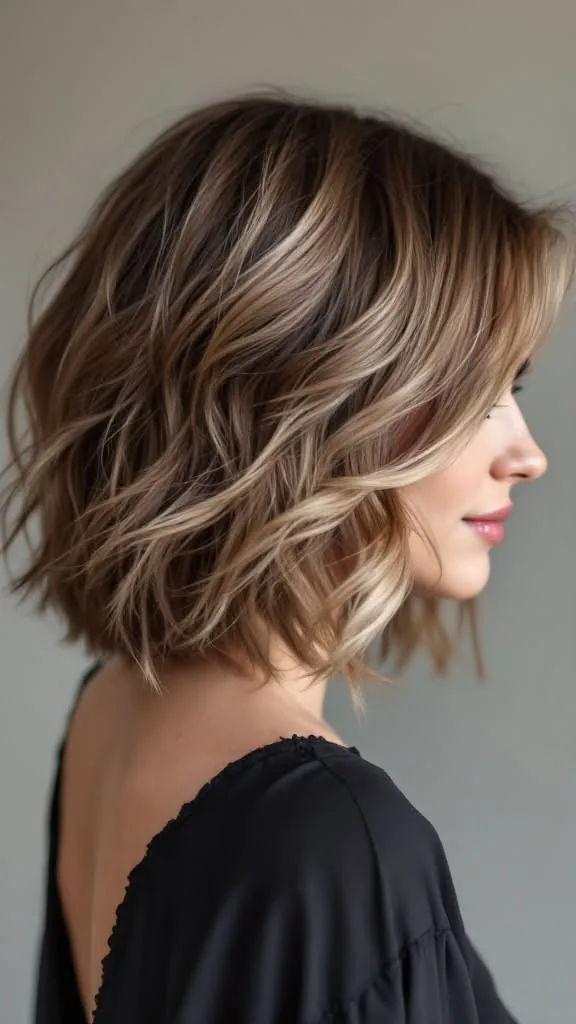
Best for: guests with shoulder-length hair who sometimes feel left out of long-hair styles. A textured lob, cut to sit just above the shoulders, can be waved, tucked and pinned just like longer hair, and it is cooler and lighter on a warm evening. Add flower pins and it is instantly mehndi-ready.
How to style: add loose waves with a straightener or curling iron, tousle them with a little texturising spray, and tuck one side behind the ear with a decorative pin. A small braid at the front, pinned back, adds a festive detail without needing length. Keep the ends textured, not blunt.
Pros and cons: it is fresh, modern and easy to wear, but it cannot hold a full gajra braid. Who should avoid it: no one, really. If your hair is shorter than a lob, the bob with flowers in section 41 is your match instead.
Long Layers with Soft Curls
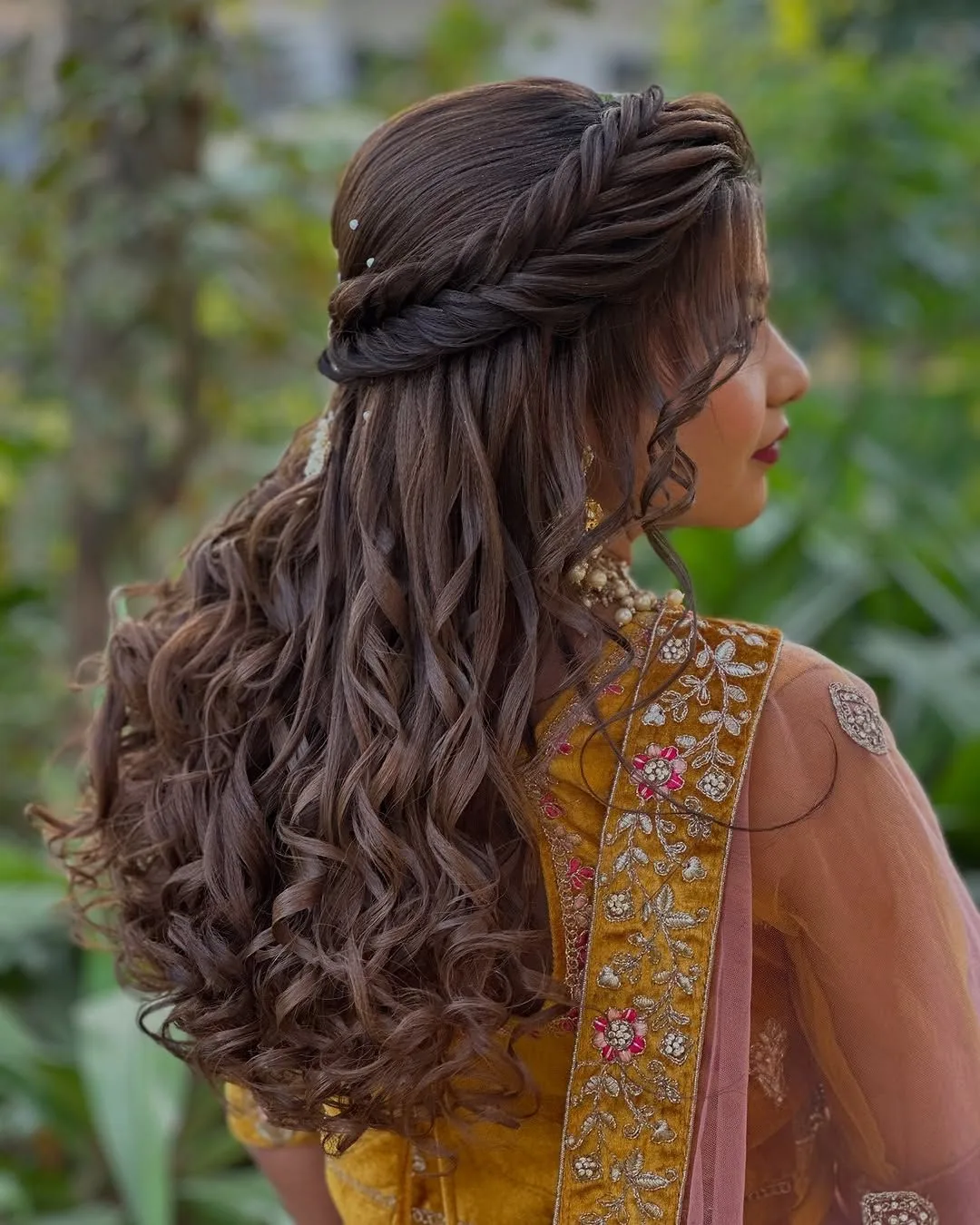
Best for: guests with long hair who want to wear it down without it looking plain. Long layers give the curls shape and movement, so the hair falls in soft, separate waves rather than one heavy curtain. It suits a side part, a centre part and a dupatta worn over one shoulder.
How to style: curl the layers in large sections, starting the curl halfway down the hair so the roots stay smooth. Brush the curls out gently, add a little shine serum to the ends, and pin a few small flowers on one side. The layers will do most of the work for you.
Maintenance: a quick shake and finger-comb refreshes the curls after dancing. What to ask your stylist: ask for the curls to be set with rollers or pins while they cool, so they last longer. Avoid a heavy spray, which can make long layers look stiff.
Braided Bun with Marigolds
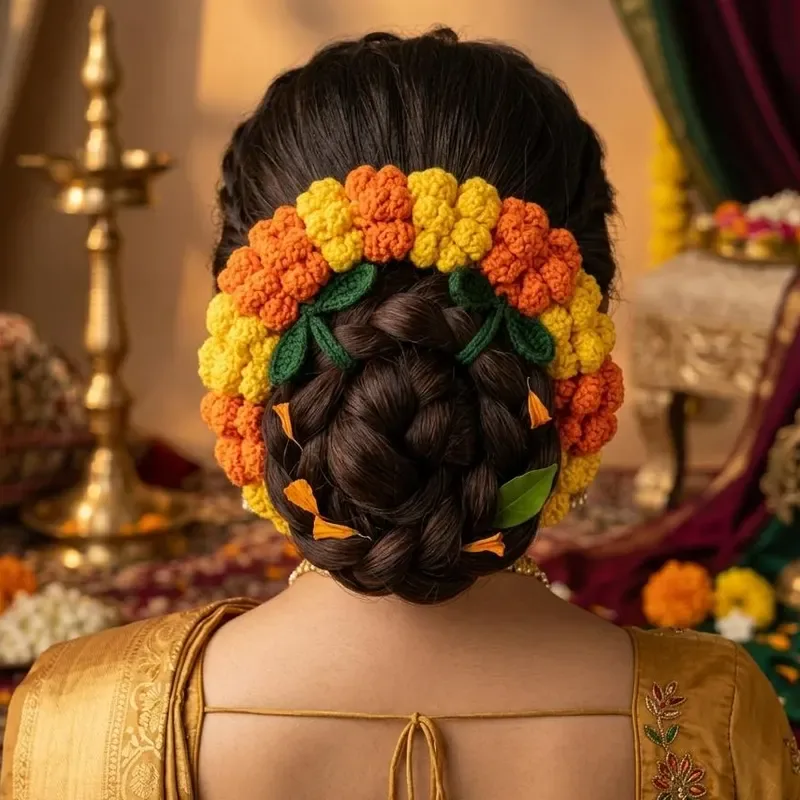
Best for: the bride or a sister who wants a bun with more detail than a plain twist. Braiding the hair first, then coiling it into a bun, gives the bun texture and pattern, and marigolds tucked into the coils add bright, festive colour. It is secure, striking and very photogenic.
How to style: braid the hair into one or two braids, coil them around each other into a bun at the nape or crown, and pin firmly. Tuck small marigolds into the coils at intervals, and add a ring of gajra around the base if you want extra colour. Leave the front smooth with a centre or side part.
Cost and time: 35 to 45 minutes, because the braid and the bun are two steps. Common mistake: using marigolds that are too large for the bun, which makes it look top-heavy. Choose small, fresh flowers and pin each one through its base.
Low Twisted Bun for a Green Dupatta
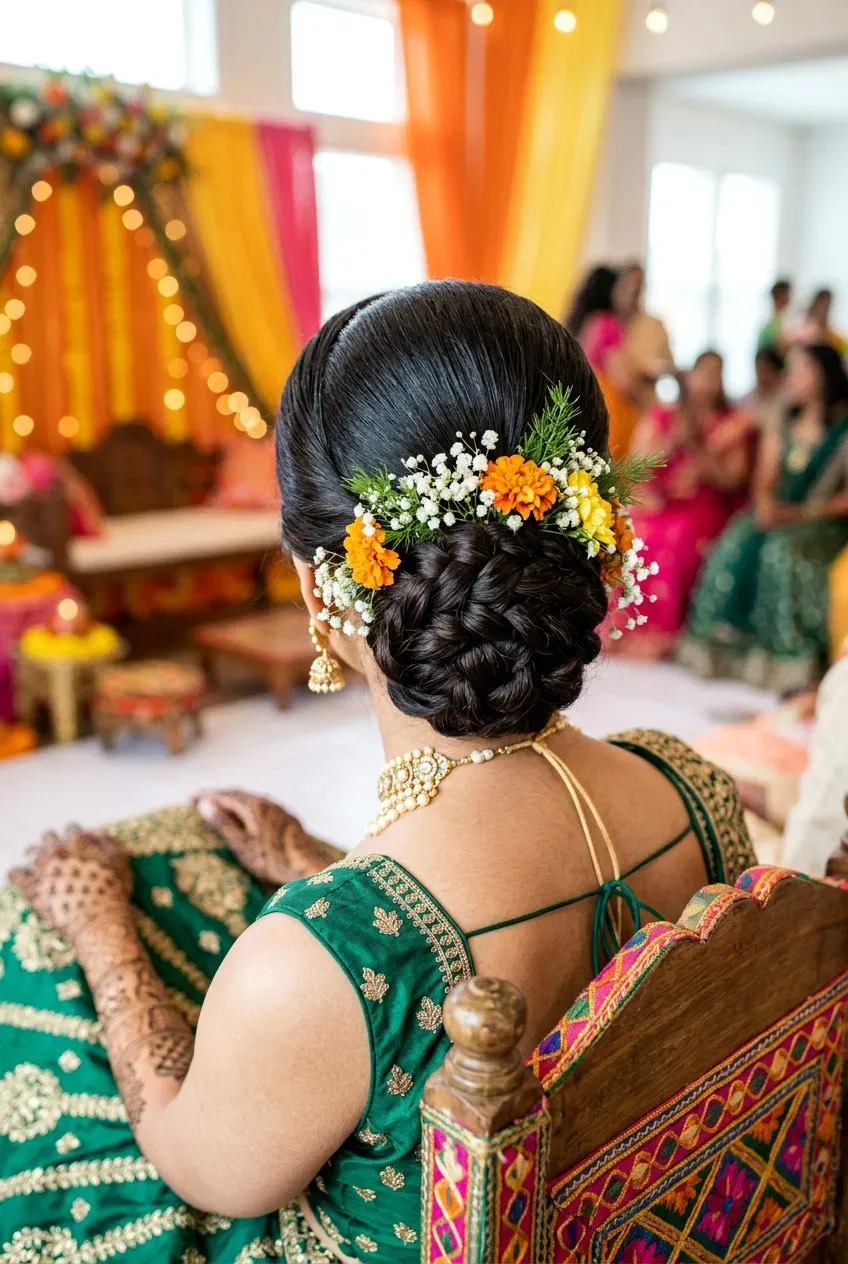
Best for: anyone in green, because the twisted texture and a few gold or pearl pins warm up the coolness of the colour. The bun sits low, so a green dupatta drapes neatly over it, and the twists catch the light in photographs. It is elegant without being formal.
How to style: part the hair in the centre or on the side, twist the hair from each side towards the nape, and coil the twists into a low bun. Pin the bun firmly, add gold or pearl pins along the twists, and smooth the front with a light serum. The dupatta can be pinned above the bun.
Pros and cons: it is comfortable, dupatta-safe and flattering, but twists need more pins than a braid. Maintenance: check the pins once after the henna ceremony. If a twist loosens, a single U-pin pushed through its centre will hold it again.
Soft Waves with a Side Sweep
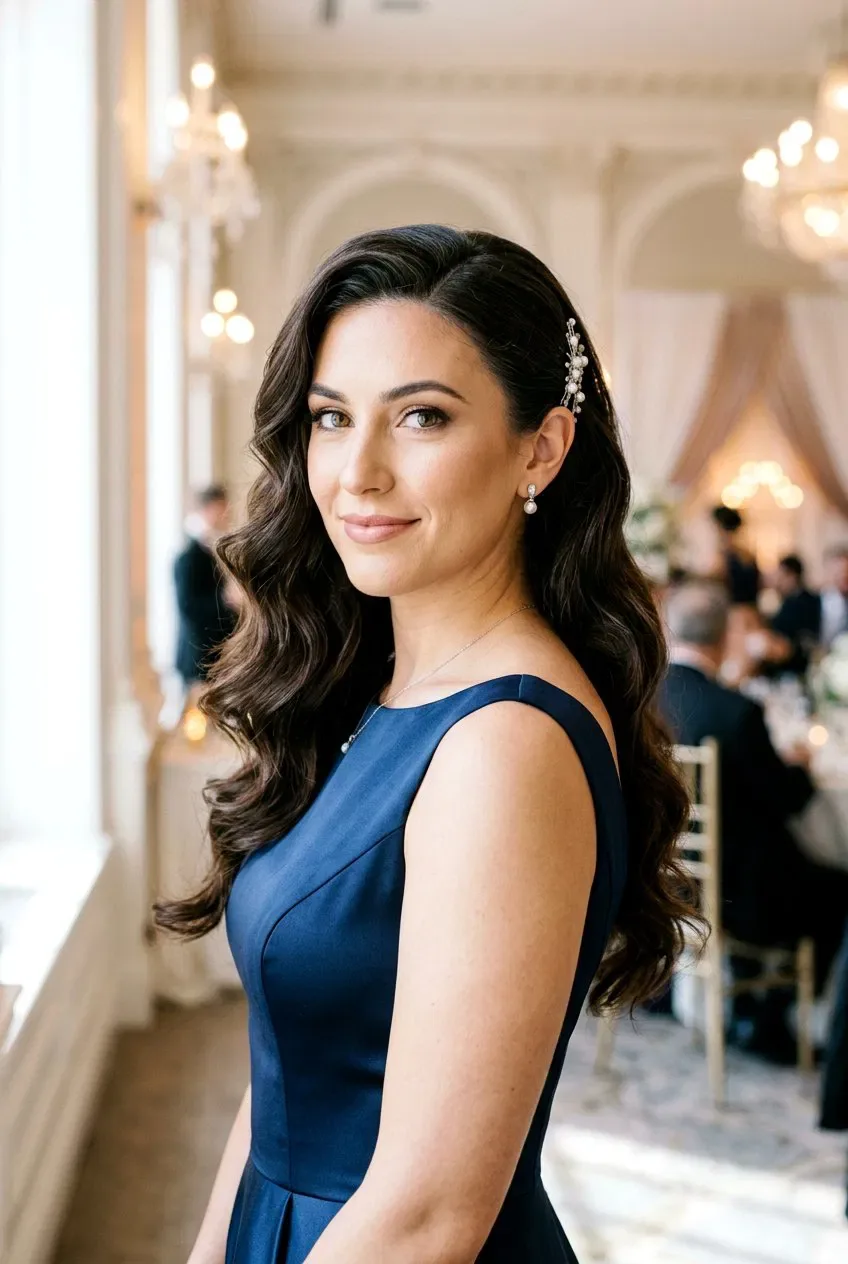
Best for: guests who want a gentle, romantic look that is easy to wear all evening. Soft waves swept to one side frame the face, show off an earring, and keep the hair off one shoulder so a dupatta or a necklace can be seen. It suits most face shapes and most outfits.
How to style: create soft waves with a large curling iron, brush them out, and sweep the hair over one shoulder. Pin the hair behind the opposite ear with a small decorative clip, and secure the sweep at the nape with two crossed pins. Finish with a light, flexible spray.
Common mistake: sweeping the hair too far, so it keeps falling back. Quick verdict: pin the sweep at the nape, not just at the ear, and it will stay put through dinner and dancing. A flower pin at the ear adds a festive touch.
Double Braid into a Low Bun
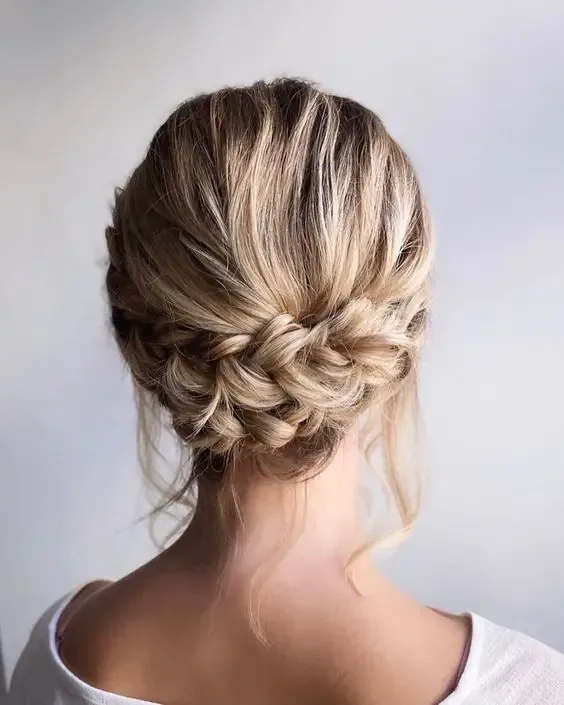
Best for: brides and dancers who want the security of braids and the elegance of a bun in one style. Two braids run from the front to the nape and join into a low bun, so the hair is held at every point and nothing can slip. It is one of the most dance-proof styles in this guide.
How to style: part the hair in the centre, braid each side from the hairline to the nape, then gather both braids together and coil them into a low bun. Pin the bun firmly, wrap gajra around its base, and leave two soft strands at the front. The braids give the bun a beautiful patterned edge.
Maintenance: none. Cost and time: 30 to 40 minutes at a salon. Ask your stylist to start the braids close to the hairline, because that is where the style gets its grip, and to keep the bun low so a dupatta can sit over it comfortably.
Sleek Centre Part with a Gajra Braid
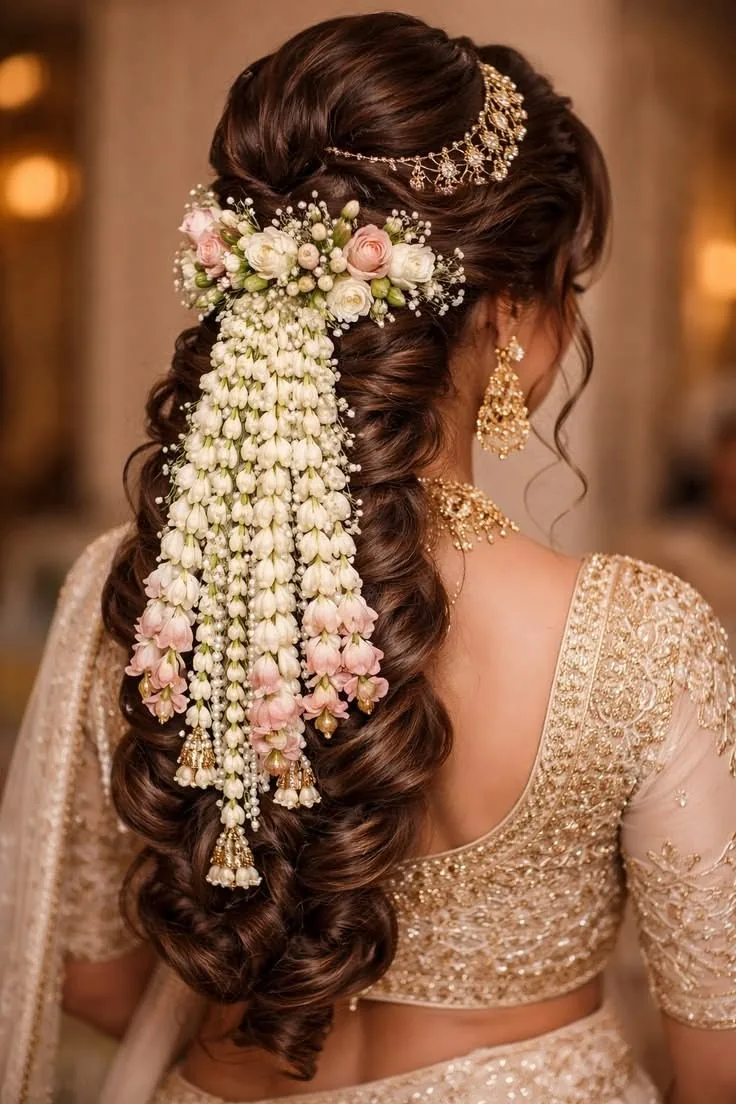
Best for: the bride who loves a clean, symmetrical look. A sleek centre part frames the face evenly, and a single gajra braid running down the back adds tradition without clutter. It is calm, classic and very flattering in formal photographs.
How to style: part the hair precisely in the centre, smooth the front sections back with serum, and braid the hair from the nape downwards. Wrap the gajra around the braid in an even spiral, pin it at the top and bottom, and finish with a shine spray. Keep the front completely smooth.
Pros and cons: it is timeless and secure, but it shows every flyaway. Common mistake: skipping a smoothing serum or using too much of it. A pea-sized amount, worked through the front sections only, gives shine without grease. A clean toothbrush can tame any last flyaways.
Fishtail Side Braid for the Bride
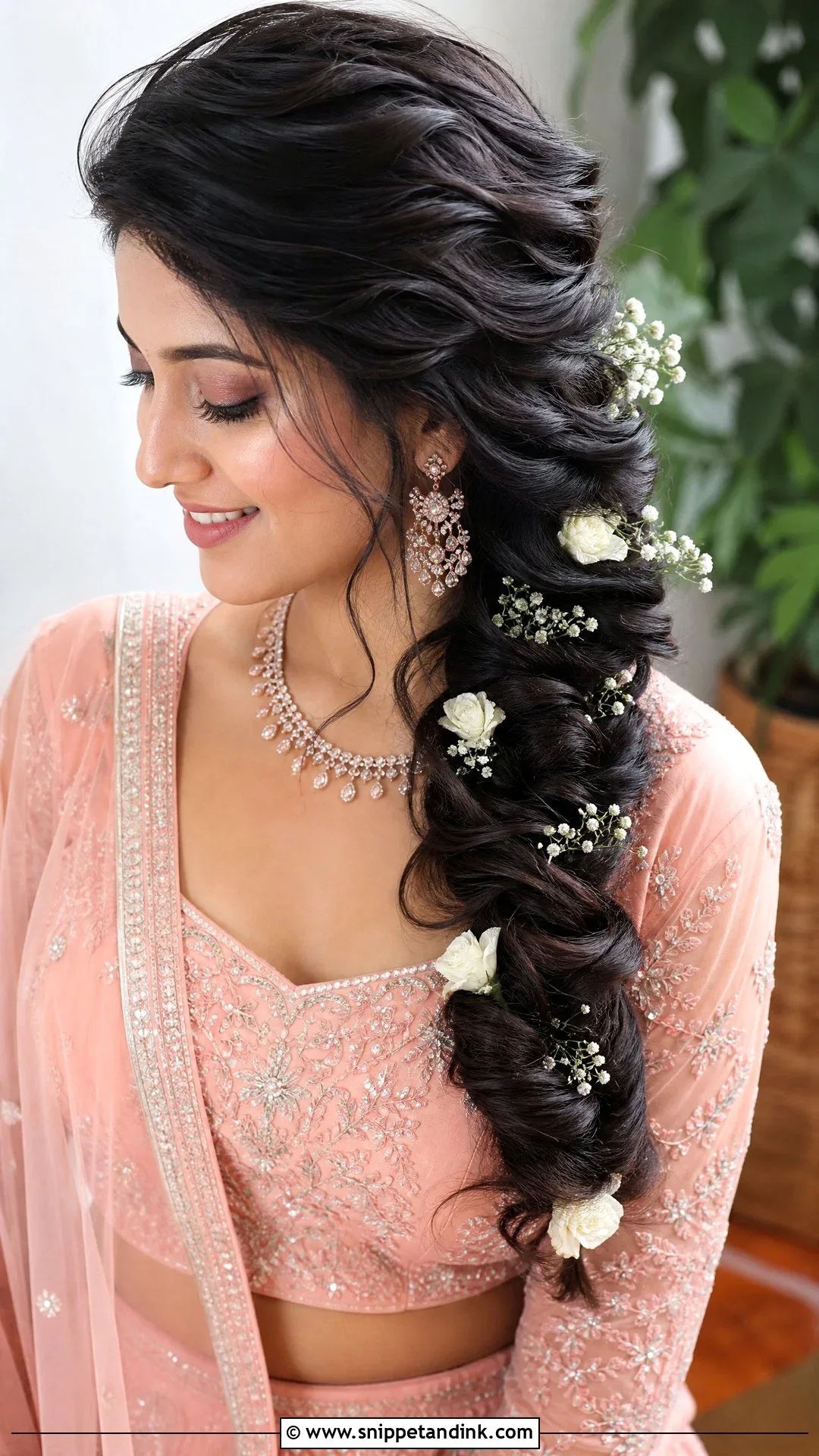
Best for: a bride who wants her braid visible in front-facing photographs. A fishtail worn over one shoulder sits where the camera, the guests and the henna artist can all see it, and it pairs beautifully with a jhoomar on the opposite side. It is detailed, romantic and unmistakably bridal.
How to style: sweep the hair over one shoulder, fishtail braid it loosely, and pull the edges wider as you go for a full, soft shape. Weave gajra or small fresh flowers through the top half of the braid, and tie the end with a ribbon that matches your outfit. Pin the braid at the shoulder so it does not slide back.
What to ask your stylist: ask for the braid to be started high enough that it is visible from the front, not hidden behind the shoulder. Quick verdict: one of the prettiest bridal braids, and it survives dancing because the fishtail locks itself together.
Curly Updo with a Jhoomar
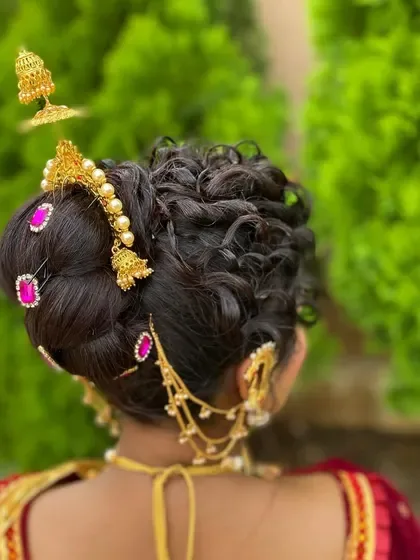
Best for: brides with natural curls who want an updo that works with their texture, not against it. Curls give an updo natural volume and softness, so it does not need padding or backcombing, and a jhoomar sits beautifully against the curls at the crown. It feels joyful and alive.
How to style: define the curls with cream, gather them loosely into a high or mid updo, and pin sections in place rather than pulling them smooth. Leave a few curls out at the front and nape, attach the jhoomar to a firm pinned section, and finish with a light spray that will not make the curls crunchy.
Maintenance: a little curl cream on the fingertips revives any flattened curls. Who should avoid it: anyone who wants a perfectly smooth finish, because this style celebrates texture. If your curls are very tight, ask your stylist to stretch them slightly with a large curling iron first.
Wavy Half-Up Twist
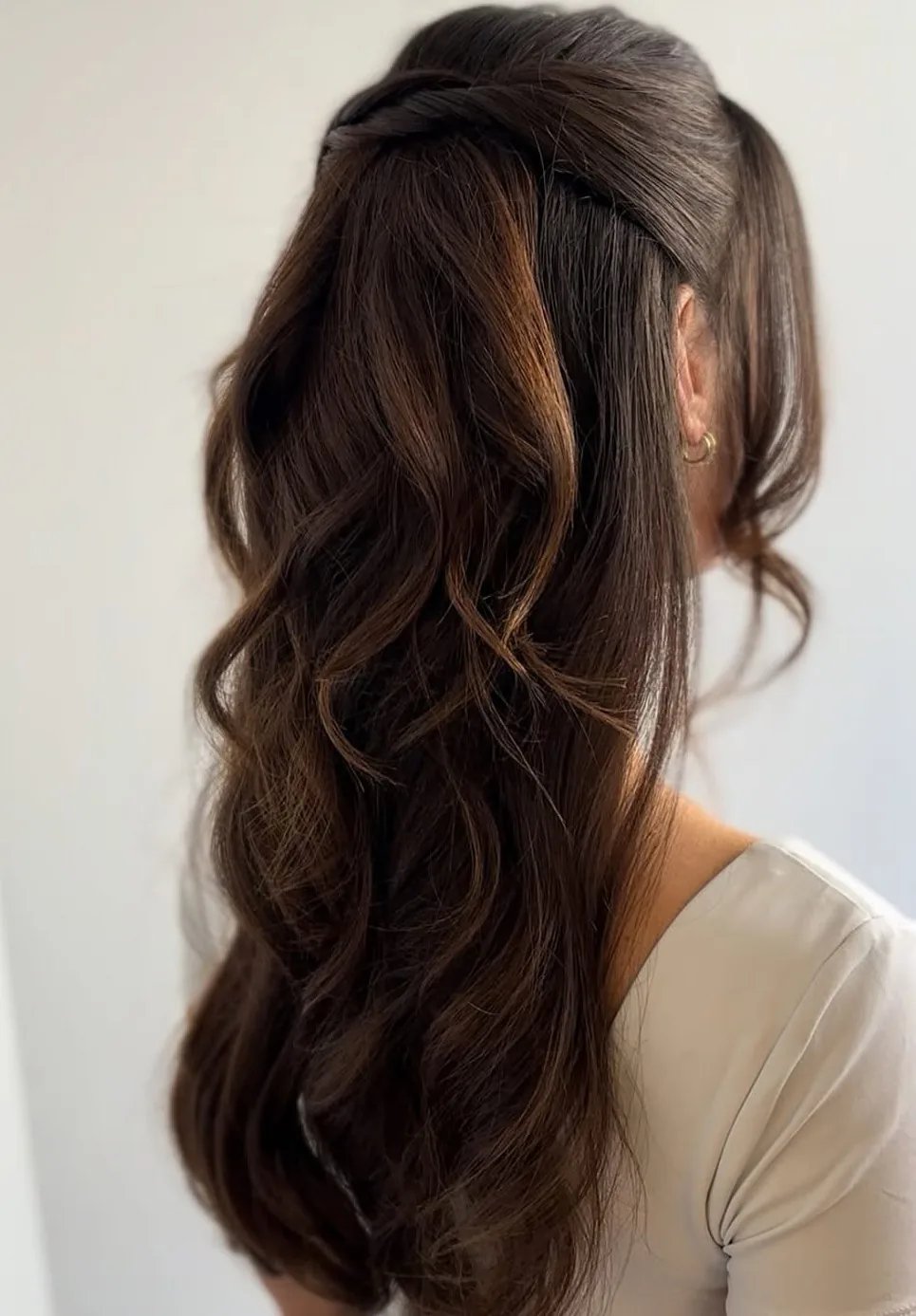
Best for: guests who want something quick, pretty and a little different from a plain half-up style. Two twisted sections meet at the back and are pinned together, so the top half is secure while the waves below move freely. It takes minutes, looks thoughtful, and suits almost every outfit.
How to style: add loose waves to the hair, take a section from each temple, twist each one towards the back, and pin them together at the crown with crossed pins. Add a small flower or a decorative pin where the twists meet, and let the waves fall naturally underneath.
Cost and time: 10 to 15 minutes at home, once the waves are done. Common mistake: twisting the sections too tightly, which pulls the hair flat at the crown. Keep the twists loose, and add a little volume at the crown before you pin them.
Classic Chignon with Fresh Flowers
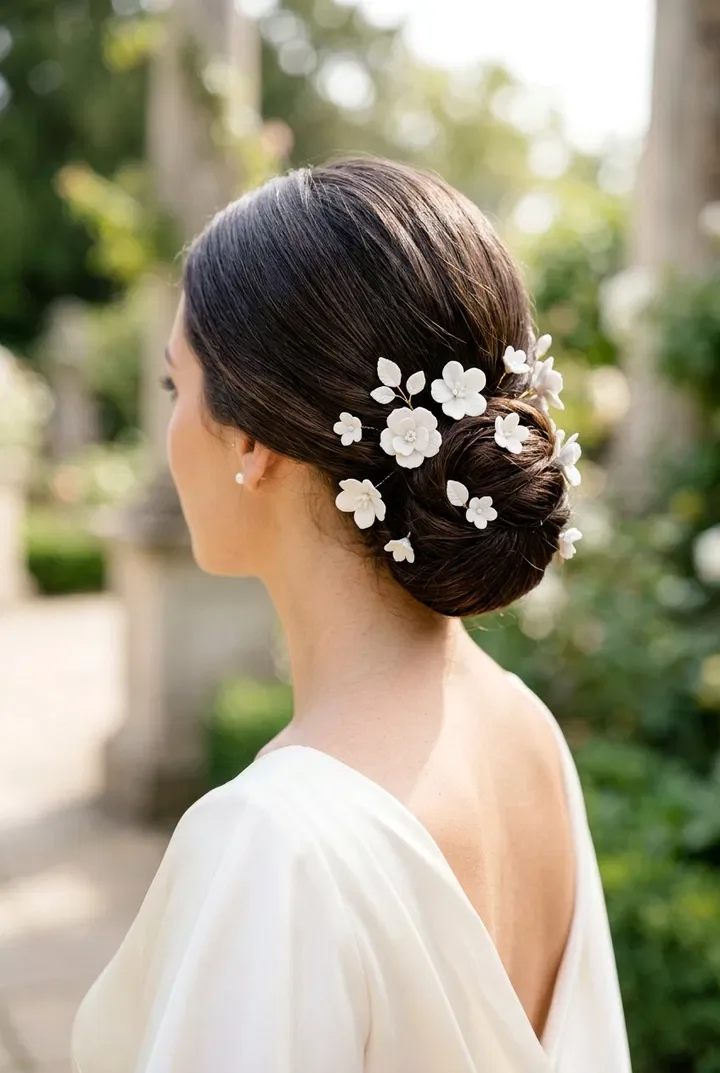
Best for: a formal mehndi, a mother of the bride, or a guest who prefers timeless elegance. A chignon is a low, coiled bun that sits neatly at the nape, and fresh flowers tucked into its folds make it festive without making it fussy. It is one of the most comfortable updos to wear for hours.
How to style: smooth the hair back, twist it into a low coil at the nape, and pin it firmly in a neat, rounded shape. Tuck small fresh flowers into the top and sides of the coil, and leave the front smooth with a centre or side part. Finish with a medium-hold spray.
Pros and cons: it is elegant, secure and dupatta-friendly, but it needs smooth hair to look its best. Maintenance: check the flowers once mid-evening. If a flower wilts, remove it rather than leaving it in place, and the chignon will still look complete.
Braid Crown with a Maang Tikka
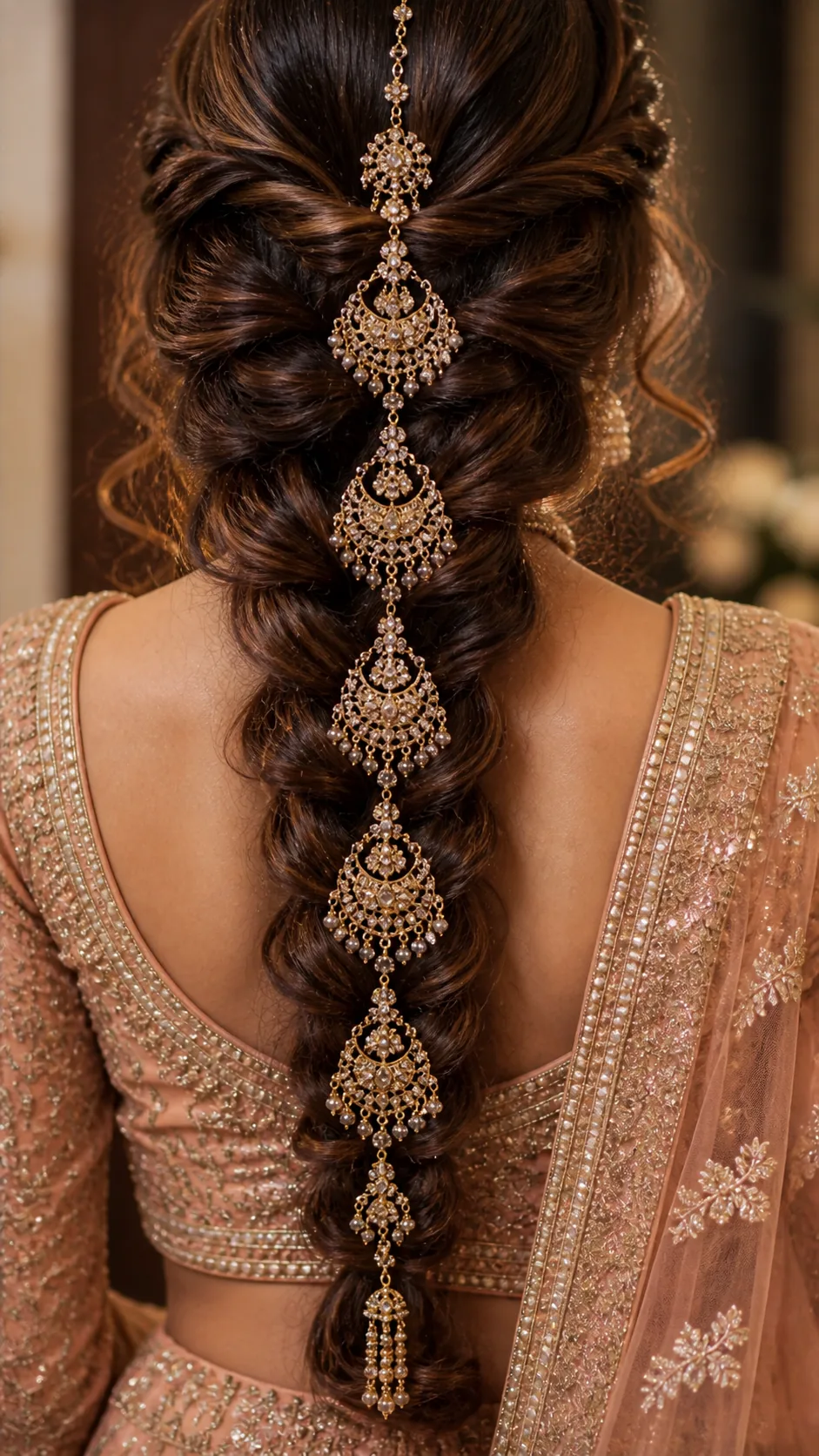
Best for: brides and bridesmaids who want to wear both a braid and a maang tikka. The braid crown frames the face and gives the tikka a firm, textured base to rest on, so the tikka does not slide. It is a complete, polished look that needs very little else.
How to style: braid around the crown from one ear to the other, pinning the end underneath the start. Place the maang tikka on the parting, pin its chain to the braid at the crown, and add a few small flowers along the braid. Keep the rest of the hair in soft waves or a low bun.
What to ask your stylist: ask for the tikka to be pinned to the braid itself, not just to loose hair. Quick verdict: if you love traditional jewellery, this style lets you wear it with confidence. Test it by nodding gently before you leave the salon.
Low Ponytail with Soft Curls
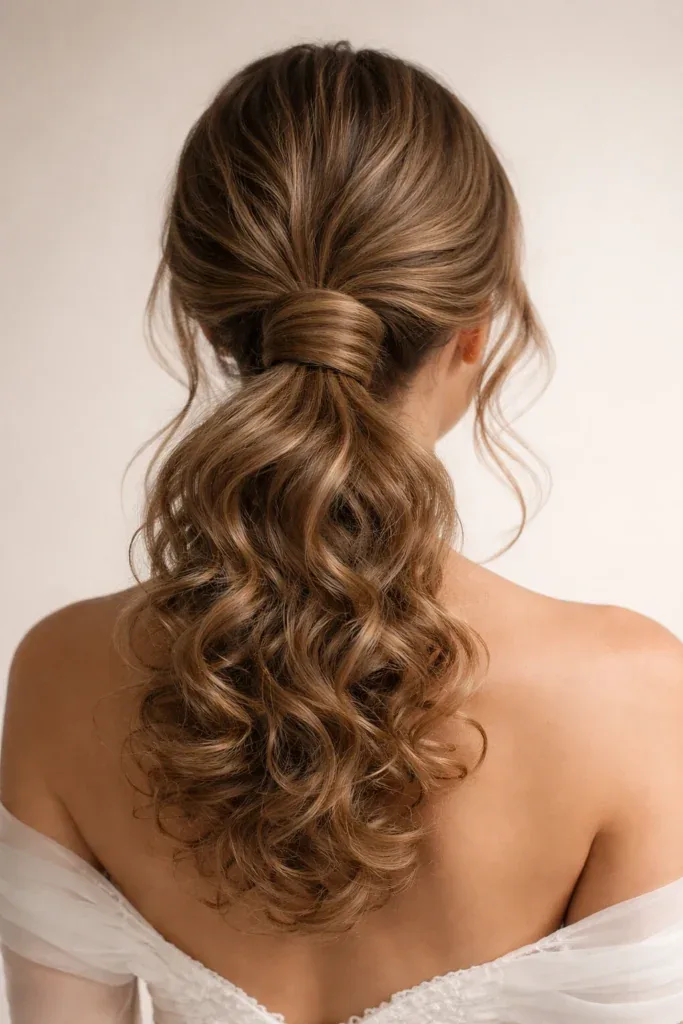
Best for: guests who want a soft, feminine style that is easy to wear and easy to fix. A low ponytail with curled ends is relaxed and romantic, keeps the hair off your face, and works beautifully with a dupatta worn over one shoulder. It suits most hair types and most ages.
How to style: gather the hair low at the nape, secure it loosely, and curl the ponytail in large sections. Wrap a strand of hair around the elastic, add a flower pin at the base, and pull out two soft strands at the front. Keep the top smooth but not tight.
Maintenance: a quick re-curl of the ends is all it needs, and most guests never bother. Common mistake: tying the ponytail too high, which turns a soft style into a sporty one. Keep it at the nape, and let the curls do the talking.
Vintage-Inspired Mehndi Updo
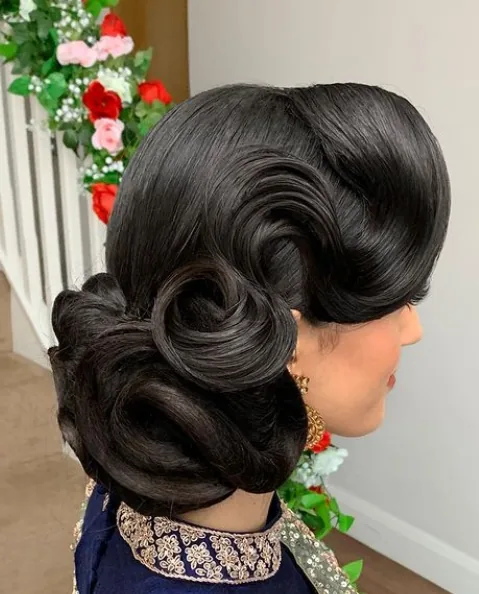
Best for: a bride or guest who loves old-film glamour and wants a mehndi look with a story. Soft rolls, a gentle wave at the front and a few fresh flowers give this updo a vintage feel, while the pinned structure keeps it secure for dancing. It suits a heavily embroidered outfit beautifully.
How to style: set the hair in large rollers or curl it in sections, then roll and pin the hair into a low updo, leaving a soft wave across the forehead. Tuck flowers into the rolls and finish with a medium-hold spray. Keep the silhouette soft and rounded, not sharp.
Cost and time: 45 to 60 minutes, so book extra time with your stylist. Who should avoid it: anyone in a hurry, or anyone who dislikes a structured style. This one rewards patience, and it looks better the more carefully it is pinned.
Short Hair, Mehndi Ready: Bob with Flowers
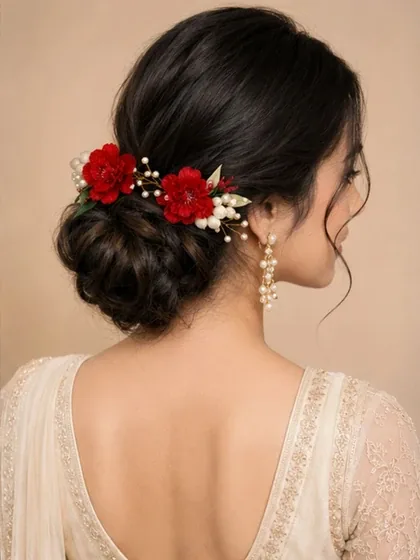
Best for: guests with a bob or short hair who want to feel festive without extensions. A bob can be waved, tucked, pinned and decorated just like longer hair, and small flowers make it instantly mehndi-ready. It is cool, light and very easy to dance in.
How to style: add soft waves with a straightener, tuck one side behind the ear, and pin small flowers or a decorative clip along the tucked side. Add a little texture at the crown, and finish with a light spray. A maang tikka can also work on a bob if it is pinned firmly to the parting.
Pros and cons: it is fresh, comfortable and low-maintenance, but it cannot hold a long gajra braid. Quick verdict: short hair is not a limitation at a mehndi. A few flowers, a good wave and a confident tuck are all you need.
Elegant Updo for Mothers and Aunties
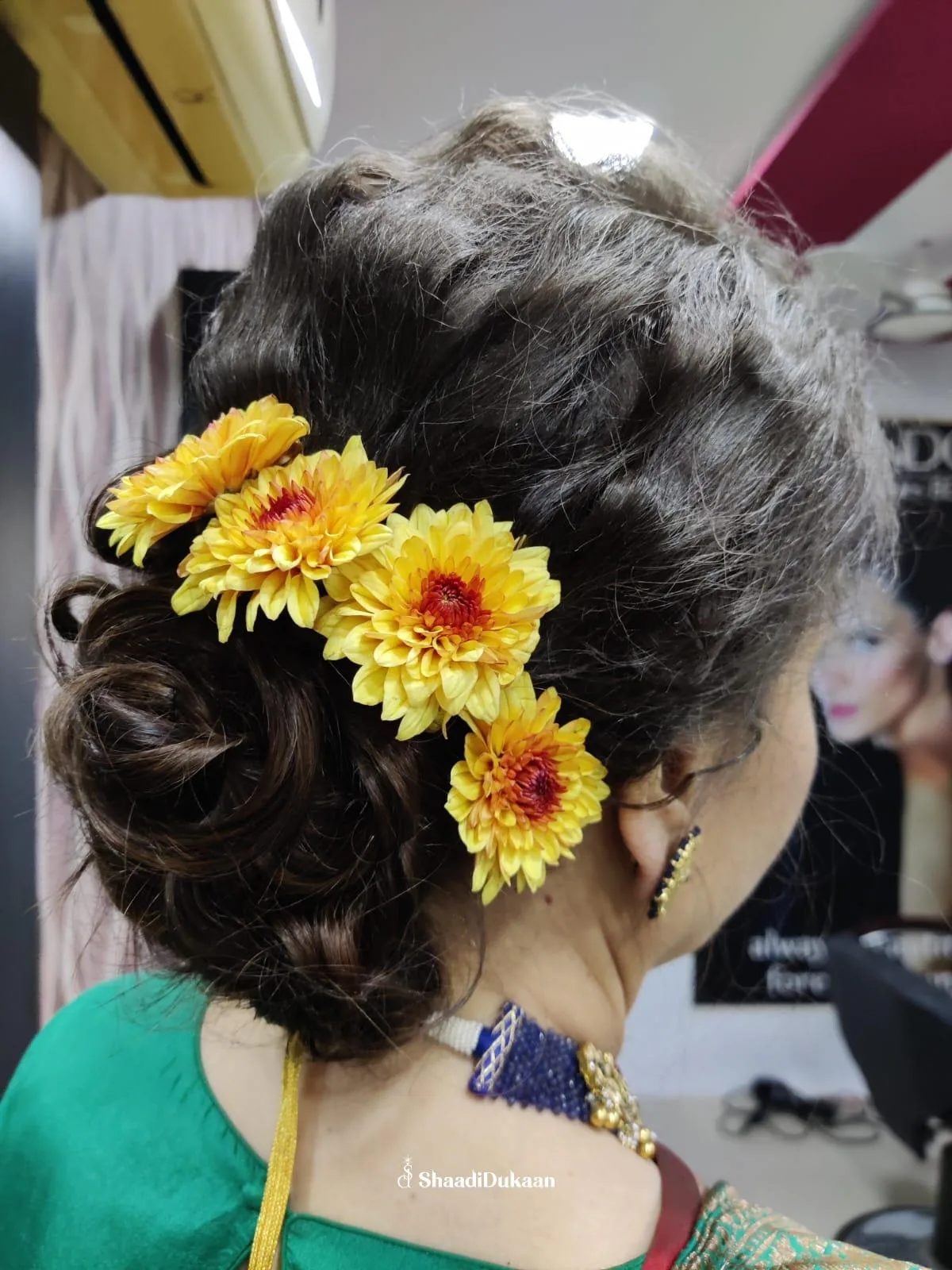
Best for: mothers, aunties and grandmothers who want to look elegant and feel comfortable all evening. This updo is soft, secure and low, with gentle volume at the crown and a few pearl or flower pins. It suits a dupatta, a sari drape and a long evening of sitting, greeting and photographs.
How to style: add gentle volume at the crown, gather the hair into a low, soft updo at the nape, and pin it in sections so it feels light, not tight. Add pearl pins or small fresh flowers, leave one soft strand at each side of the face, and finish with a flexible-hold spray.
Maintenance: none, once it is pinned. What to ask your stylist: ask for comfort first: no pulling at the hairline, no heavy pins, and a style that can be loosened in seconds at the end of the night. Elegance should never hurt.
What is the best hairstyle for a mehndi night?
The best hairstyle for a mehndi night is a braid with gajra or a low bun, because both hold flowers securely, stay put while you dance, and work under a dupatta. Brides often choose a gajra braid or a jhoomar-friendly updo, while guests look great in a half-up style, a side braid or soft waves with flower pins.
Can I wear my hair down at a mehndi?
Yes, you can wear your hair down at a mehndi, especially as a guest. Choose soft waves or curls with the front sections pinned back, so your hair stays out of the henna and off your face. Avoid wearing it fully loose if you will wear a dupatta over your head, because the dupatta will flatten the style.
How do I keep gajra from slipping out of my hair?
Pin through the gajra string itself with U-shaped pins, crossing two pins over each other for grip. Anchor the pins into a braid or bun, not into loose hair, and pin the gajra at the top, middle and end. A little backcombing underneath also gives the pins something firm to hold on to.
Which hairstyle suits a yellow mehndi outfit?
A braided crown, a classic gajra braid or a low bun suits a yellow mehndi outfit best, because dark hair and white gajra contrast beautifully with yellow. Add small orange marigolds for warmth, and keep the style neat so the bright outfit, rather than messy hair, takes centre stage in photographs.
What hairstyle should a mehndi bride choose?
A mehndi bride should choose a style that holds a jhoomar and gajra securely for hours, such as a gajra braid, a high bun made for a jhoomar, or a fishtail side braid. Pick a style that works with your dupatta and lets you dance comfortably, and do a trial run with your actual flowers and jewellery before the day.
How do I stop my dupatta from ruining my hairstyle?
Choose a low bun, side braid or low ponytail, which lets the dupatta sit flat without crushing the style. Pin the dupatta to your hair at the sides with small safety pins, and avoid high buns or very loose waves under a dupatta. Check the pins once after the ceremony and carry a spare pin.
Can I do a mehndi hairstyle at home without a stylist?
Yes, many mehndi hairstyles are easy at home, including a classic gajra braid, a low bun, a bubble braid and a wavy half-up twist. Practise once before the event, keep fresh flowers and pins ready, and use a mirror to check the back. Save complex styles like a Dutch braid crown for a stylist.
What hairstyles work for short hair at a mehndi?
Short hair works well with a waved bob decorated with small flowers, a textured lob with a front braid, or a half-up twist with flower pins. Tuck one side behind the ear with a decorative clip, add volume at the crown, and use fresh flowers or pearls to make the style feel festive and complete.
How do I keep my hairstyle intact while dancing?
Choose a braided or pinned-up style, use extra pins at the nape and sides, and set it with strong-hold spray in light layers. Avoid styles held by a single clip, and carry two spare pins and a small comb in your bag. A half-up style with a braided top section is a good compromise if you love loose hair.
Should I wash my hair on the day of the mehndi?
It is usually better to wash your hair the night before a mehndi, not on the day, because slightly lived-in hair holds braids, pins and curls better than freshly washed hair. If you must wash on the day, use a volumising shampoo, dry it fully, and add a little texturising spray before styling.
Conclusion
The right hairstyle lets you enjoy your mehndi night instead of worrying about it, and the best choice is always the one that fits your outfit, your jewellery and how you plan to spend the evening. A gajra braid, a low bun or a jhoomar-friendly updo will carry you from the henna ceremony to the last dance without a second thought, while a softer half-up style or loose waves are perfect if you prefer a relaxed, romantic feel. Whatever you choose from these hairstyles for a mehndi night, pin your flowers properly, test your dupatta before you leave, and keep two spare pins in your bag. If you can, try the full look once before the day, with your outfit, jewellery and flowers together, so there are no surprises when the music starts. Then forget about your hair, and enjoy the music, the henna and the people around you.