Turmeric, Marigolds and Dancing: 38 Hairstyles for a Haldi Ceremony That Survive the Paste, the Photos and the Party
Haldi is the messiest, happiest morning of an Indian or Pakistani wedding — and the hardest on your hair. One minute you are sitting pretty in a yellow outfit while family smears turmeric paste on your cheeks, the next you are dancing with marigolds in your hair, sweating under a marquee, and posing for a hundred photos. A hairstyle that looks perfect in the mirror at 9 a.m. can slide, frizz or fall apart by 11. That is why the best hairstyles for a haldi ceremony are chosen for survival first and beauty second: they hold through paste, petals, humidity and dancing, and they still photograph beautifully when the yellow powder settles.
This guide gathers 38 hairstyles for a haldi ceremony — from the bride’s gajra-wrapped bun to quick guest styles you can do yourself — plus eight short guides on the questions that actually matter: how turmeric behaves near hair, which flowers stay put, how to match a style to a yellow outfit, and what to wash out afterwards. Whether you are the bride, a sister, a cousin or a guest, and whether your hair is long, short, curly or fine, you will find a style that lasts from the first smear of haldi to the last dance.
How Turmeric Paste Changes What Your Hair Must Survive
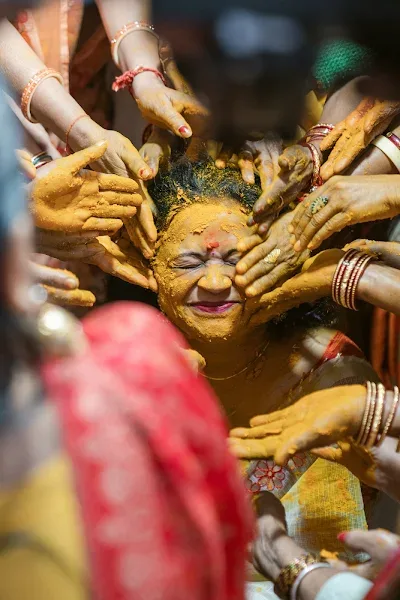
Turmeric paste is not like ordinary makeup. It is thick, oily, yellow and applied with enthusiastic hands — and it gets everywhere: on cheeks, on necks, on shoulders, and very often on the hairline. Loose strands near the face are the first casualty. They pick up paste, turn yellow at the ends, and then stick to the skin. That is the single biggest reason haldi hair looks different from wedding-day hair: the front of the style has to be sealed away from the paste, not left loose and romantic.
The practical fix is simple. Pull the hairline back — a centre part with the front sections pinned behind the ears, a braid that starts at the temples, or a low bun with no face-framing tendrils at all. If you love soft tendrils, save them for the sangeet the next evening. And whatever you do, do not wash the paste out of the hairline mid-ceremony with water: wet turmeric spreads and stains further. Blot it with a damp cloth and leave the real wash for later.
Quick verdict: if your style cannot survive a handful of turmeric paste near the hairline, it is not a haldi style. Choose containment over looseness, and your photos will thank you.
Marigolds, Gajra and Flowers: What Actually Stays Put
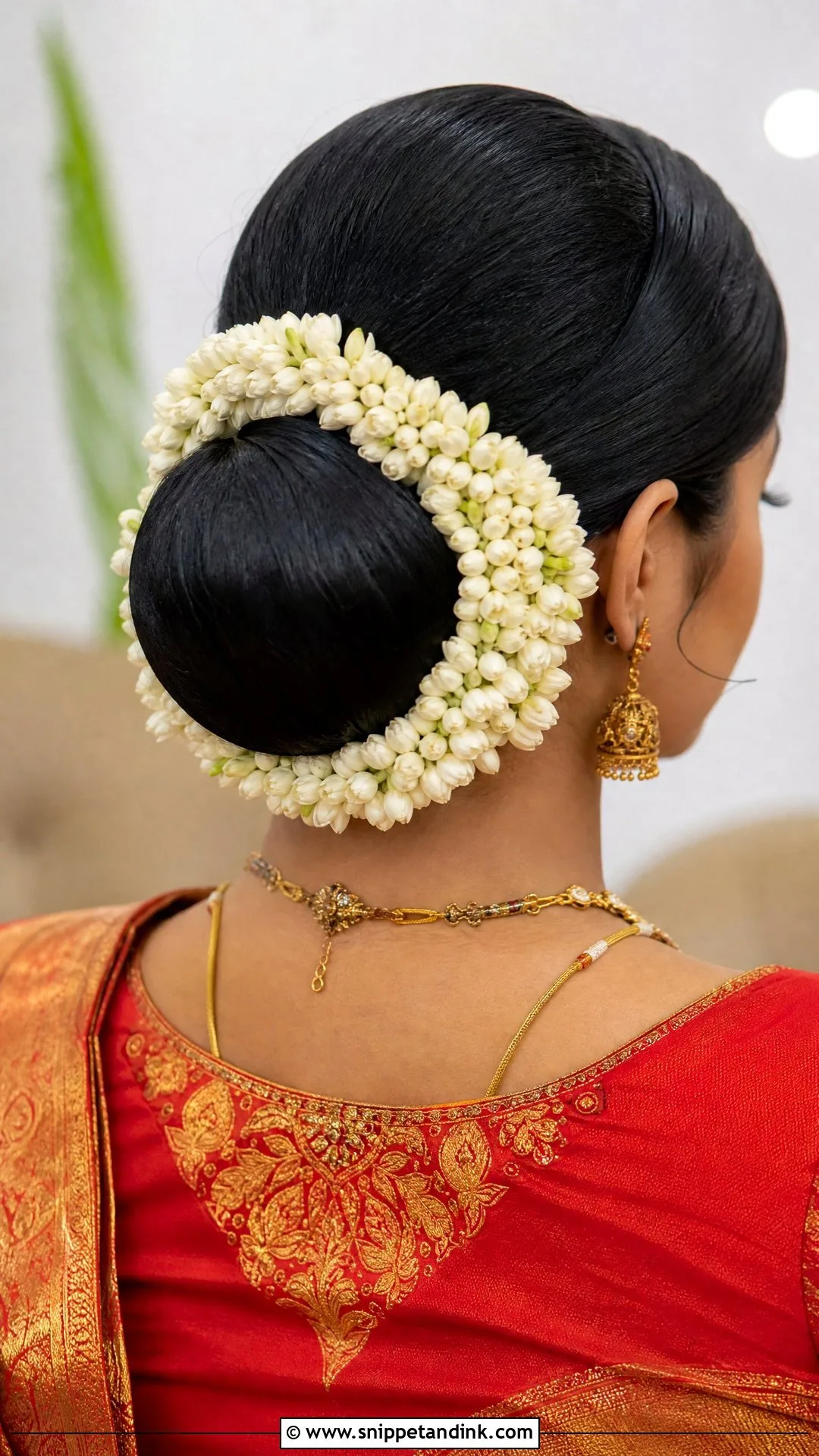
Nothing says haldi like marigolds. They are cheap, bright, fragrant and everywhere — in garlands, on the décor, and in the hair. But fresh flowers are heavy and slippery, and a marigold tucked loosely into open hair will be on the floor within twenty minutes of dancing. Gajra, the strung jasmine or marigold garland, works better because it wraps around a bun and can be pinned at four or five points, so it stays even when the wearer is moving.
For the best hold, pin flowers into the structure of the style, not onto the surface. Slide bobby pins through the centre of a marigold and into the bun itself, crossing two pins in an X so the flower cannot rotate. For gajra, wrap it twice around a low bun and anchor it at the top, bottom and both sides. And keep flowers away from the very front of the hairline — that is where the turmeric goes, and yellow paste on yellow petals just looks messy.
Common mistake: using fresh marigolds with wet stems. The moisture makes pins slide. Pat the stems dry, or ask your florist for a garland made the same morning and kept in the shade.
Choosing a Style for Yellow, Orange and Green Outfits
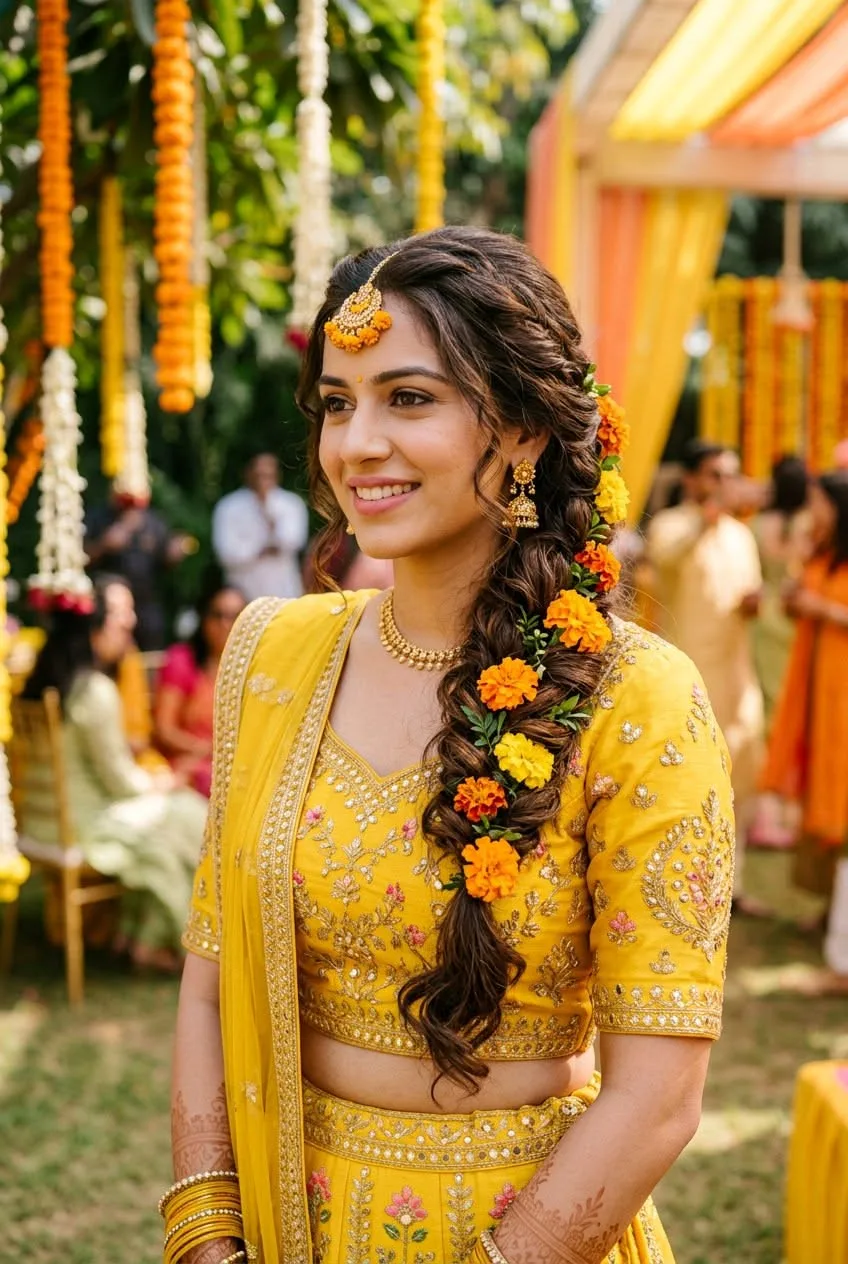
Haldi outfits are almost always yellow, orange, lime green or a combination of the three — and the hair has to work with that palette rather than fight it. Yellow and orange flowers against a yellow outfit can disappear into one block of colour, which is why the most photographed haldi looks add a contrast: white jasmine gajra against a yellow lehenga, deep orange marigolds against a green outfit, or gold hair pins against yellow fabric.
The cut of the outfit matters too. A heavy dupatta draped over the head needs a low, flat bun or the fabric will slide off a high one. A backless or deep-back blouse shows off a side braid or loose waves far better than a bun that covers the neckline. And if the outfit has a lot of embroidery around the neck, keep the hair off the shoulders so the work is visible.
What to ask: ask your stylist to look at a photo of the outfit, not just your hair. A five-minute look at the neckline and dupatta drape changes the whole plan.
Bridal, Guest or Family: Who Should Wear What
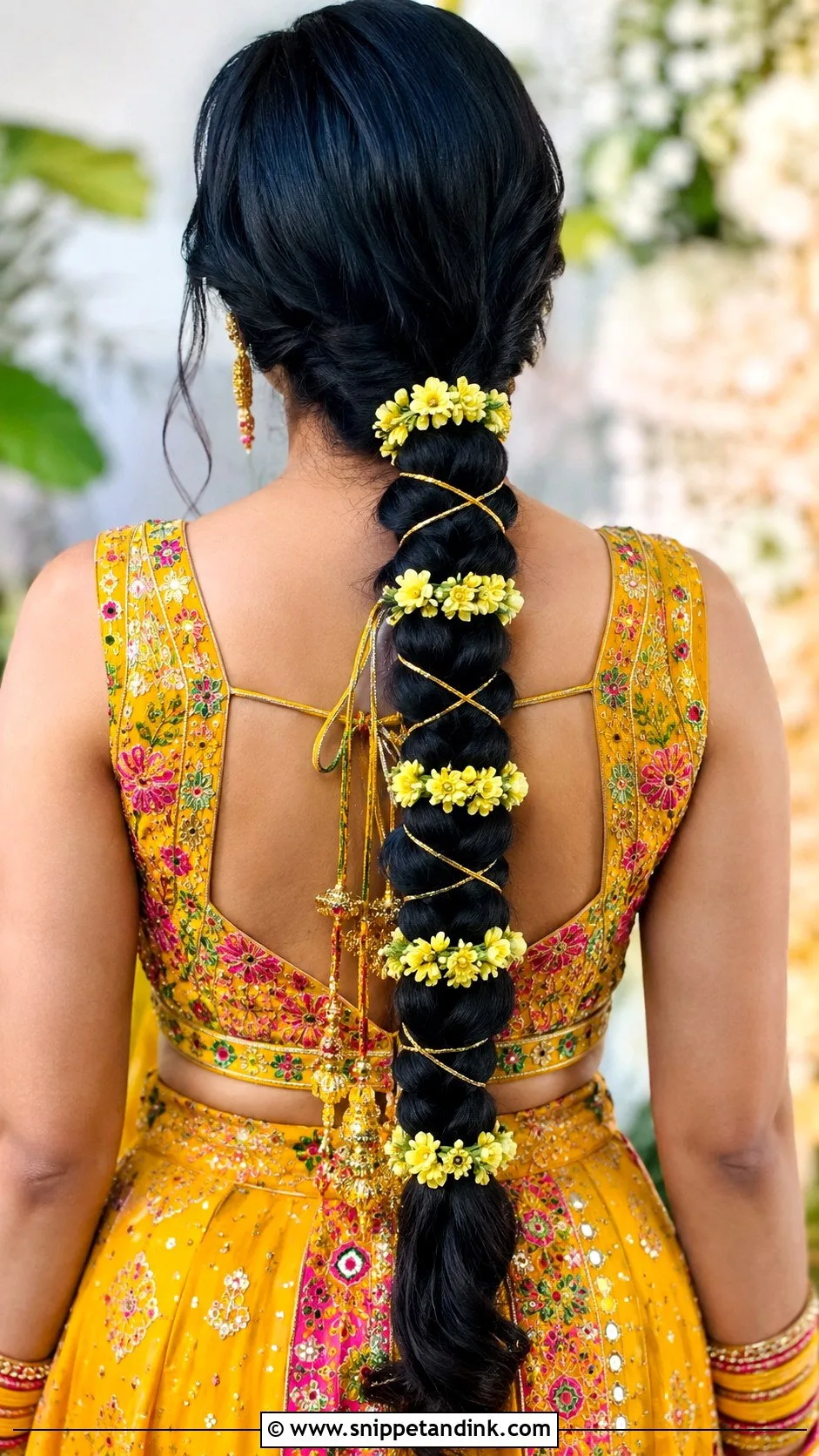
Haldi has an unwritten dress code for hair, and getting it wrong is awkward. The bride wears the biggest, most decorated style — the gajra bun, the full flower crown, the most elaborate braid. Sisters and close family sit one step below: pretty and polished, but not competing with the bride. Guests keep it simpler still: neat, secure and photogenic, but not bridal.
The rule of thumb is scale. If you are the bride, go big — a full gajra wrap, marigolds, gold pins. If you are her sister, one flower accent or a single gajra strand is plenty. If you are a guest, skip the gajra entirely and use a single marigold pin or a plain braid. Nobody will think less of your style for being simpler, but a guest in a full bridal bun photographs badly next to the bride.
Who should avoid it: guests should avoid anything that reads bridal — a maang tikka with a bun, a full flower crown, or a gajra-wrapped updo. Save those for the bride.
Hair Prep the Night Before Haldi
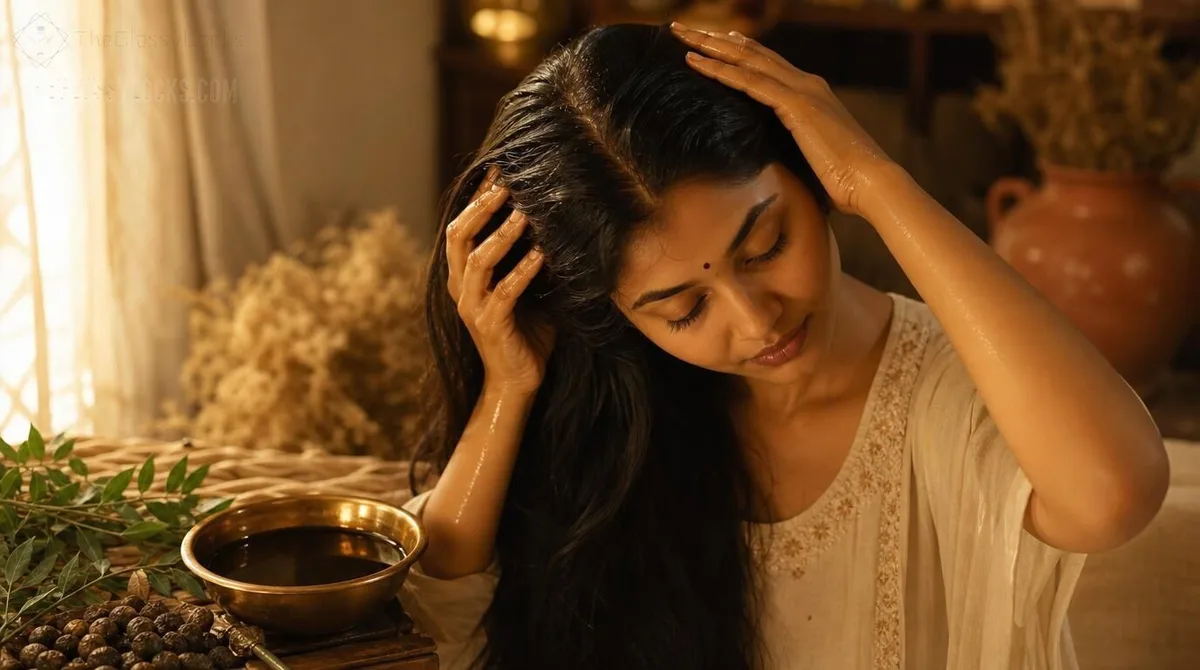
The night before haldi is when the style is really decided. Hair that has been freshly washed that morning is too clean and slippery to hold a bun or a braid; hair washed the night before, with a little natural oil back in it, grips pins and holds texture far better. If you oil your hair, do it the night before and wash it out properly — oil left in the roots will make turmeric paste stick and stain more.
Do not try a brand-new style on haldi morning. Do a trial the evening before: put the bun or braid in, wear it for an hour, dance around the room, and see what slips. That one rehearsal catches most disasters — a bun that is too heavy, a braid that pulls, pins that show. It also tells you exactly how many pins you need, so you are not guessing while the ceremony is starting.
Maintenance note: sleep on a silk or satin pillowcase the night before. Cotton rubs the hair into frizz overnight, and haldi humidity will only make it worse.
Sweat, Dancing and Humidity: Keeping a Style Intact for Hours
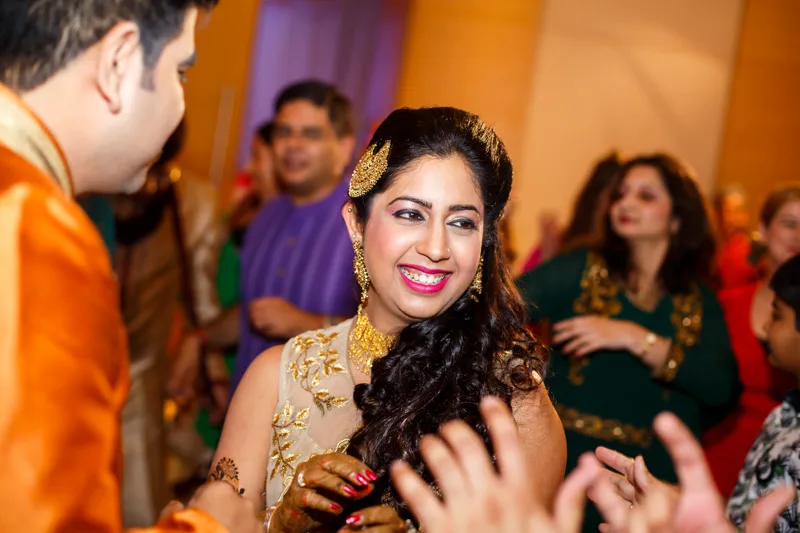
A haldi ceremony is not a photo shoot — it is a party. There is dancing, there are crowds, and in summer there is serious heat. Sweat at the nape of the neck is the quiet enemy of every updo: it loosens the pins, softens the hairspray and lets the whole style sag. Styles that sit high on the head suffer most, because heat rises and the crown is where sweat gathers first.
The defences are unglamorous but they work. A strong-hold hairspray applied in light layers, not one heavy coat, survives sweat better than a single drenching. A few extra bobby pins — crossed in an X — at the nape and behind the ears hold the weight when the spray gives up. And a small pack of blotting papers in your clutch does more for the hairline than any touch-up spray: blot the sweat before it reaches the style, and the style lasts an extra hour.
Pros and cons: a high bun keeps hair off a sweaty neck but shows every slip; a low bun hides slips better and survives dancing longer. In peak summer, low wins.
Turmeric Stains on Hair: What to Expect and How to Wash It Out
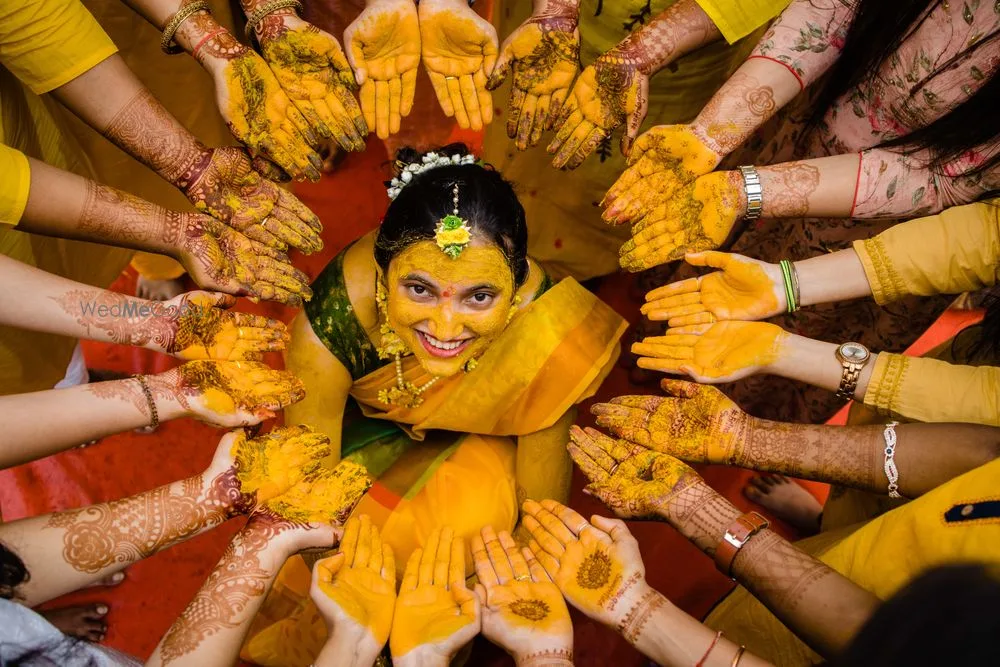
Here is the honest news: turmeric stains hair, and it stains light hair worst. On dark brown or black hair, a smear of paste washes out with one good shampoo and leaves no trace. On blonde, light brown or grey hair, the yellow can linger for two or three washes, and on bleached ends it can hang on for a week. It is not damage — it is just colour sitting on the hair shaft — but it is worth knowing before the ceremony.
The wash-out is straightforward. Rinse first with plain lukewarm water to get the paste off, then shampoo twice with a clarifying shampoo, working it through the stained sections. A diluted apple cider vinegar rinse (one part vinegar to four parts water) helps lift the last of the yellow, and a purple shampoo takes the edge off any remaining tint on blonde hair. Do not scrub the scalp raw — the paste comes off with patience, not force.
Who should avoid it: anyone with freshly bleached or platinum hair should keep the hairline fully covered during the ceremony, or accept that the ends will carry a yellow tint for a few days.
What to Ask Your Stylist (and What to Pack in a Touch-Up Kit)
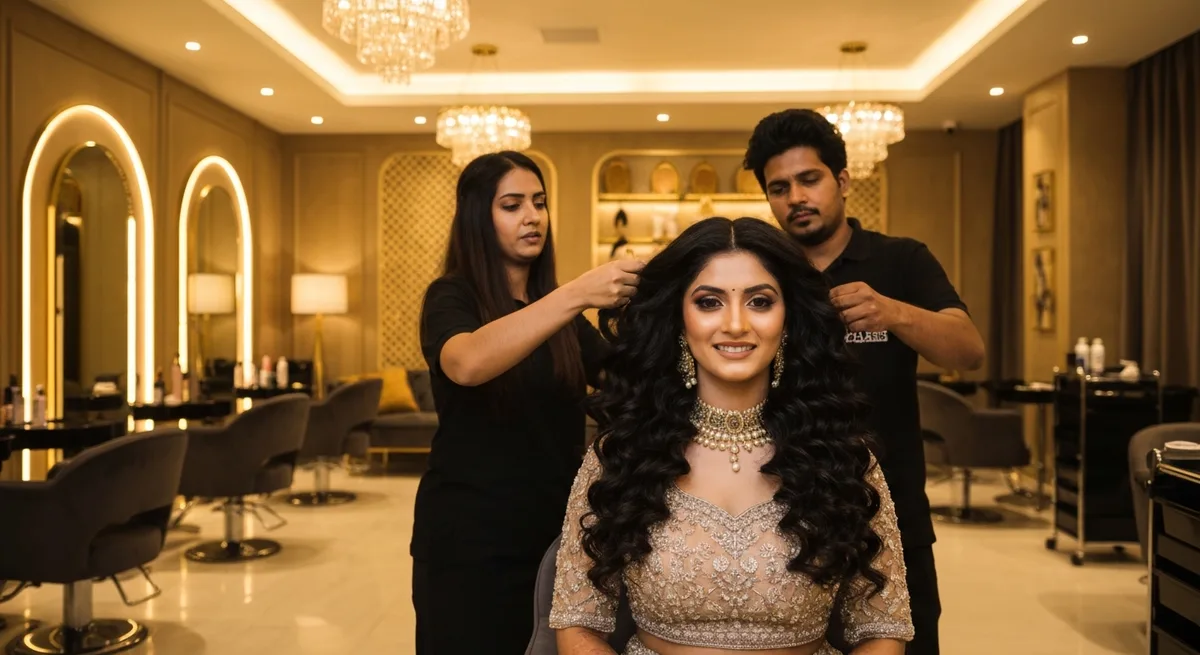
A good haldi stylist is not the same as a good wedding-day stylist. Wedding hair is built for photographs; haldi hair is built for a mess. Ask your stylist three things before you book: have you done haldi hair before, how do you protect the hairline from paste, and will you stay for touch-ups or leave a kit behind? If the answer to the first question is no, keep looking.
Your touch-up kit fits in a small pouch: ten bobby pins in your hair colour, two U-pins, a travel hairspray, blotting papers, a few spare marigolds or a spare gajra strand, and a silk scrunchie for the moment you give up and tie it all back. Give the kit to a sister or a friend, not the bride — the bride has enough to carry.
Cost and time: a professional haldi updo takes 45 minutes to an hour and costs roughly the same as a party updo. A trial the day before is worth every rupee, because haldi morning has no time for experiments.
1. The Classic Low Bun with Gajra
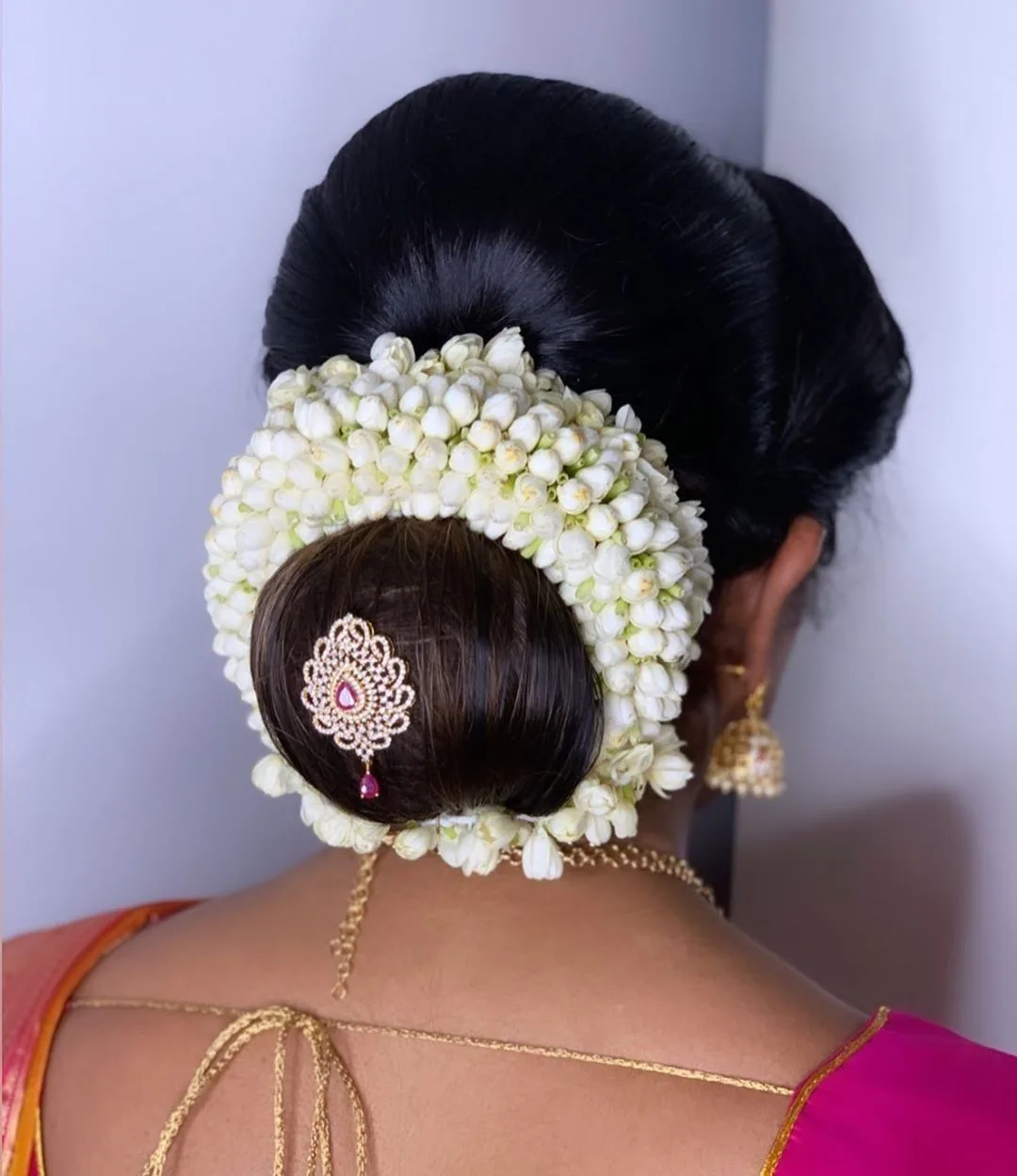
The low bun with gajra is the haldi look every other haldi look is measured against. It sits at the nape, it holds a full jasmine garland wrapped twice around it, and it does not move — not through the paste, not through the dancing, not through three hours of relatives pulling the bride in for photographs. It is the safest choice a bride can make, and the most photogenic.
Best for: brides, long or medium hair, and anyone whose ceremony will run long. How to style: gather the hair low, twist it into a firm bun, pin it flat against the head, then wrap the gajra around it and anchor it with U-pins at four points. What to ask: ask your stylist to pin the gajra before the paste goes on, so the flowers are already secure when the ceremony starts.
2. Braided Crown with Marigolds
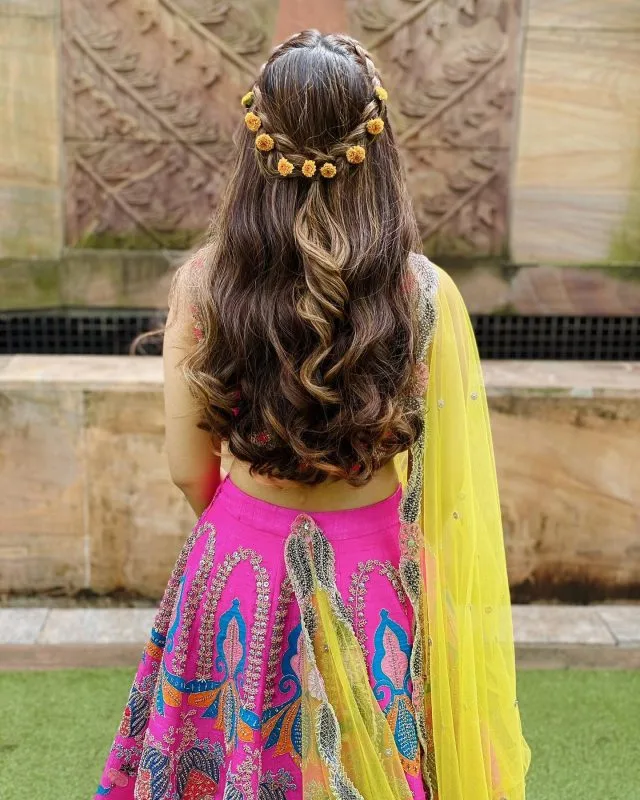
A braided crown does two jobs at once: it keeps every strand off the face, and it gives the marigolds somewhere to live. The braid runs around the head like a halo, and small marigolds are pinned into it at intervals, so the flowers look like they grew there. It is softer than a bun and more romantic, but just as secure.
The trick is the braid itself. A Dutch braid — woven under rather than over — sits proud of the head and shows the flowers better than a flat French braid. Start at one temple, work around the back, and finish by tucking the tail under the braid at the other side. Pin each marigold through its centre with two crossed bobby pins. The style takes about 40 minutes, so build in time, and it holds best on hair that is at least shoulder length.
Pros: keeps the hairline completely clear of turmeric; photographs beautifully from every angle. Cons: heavy with flowers, and it can ache by the end of a long ceremony — ask for the braid to sit loosely rather than pulled tight.
3. Messy Low Bun with Yellow Roses
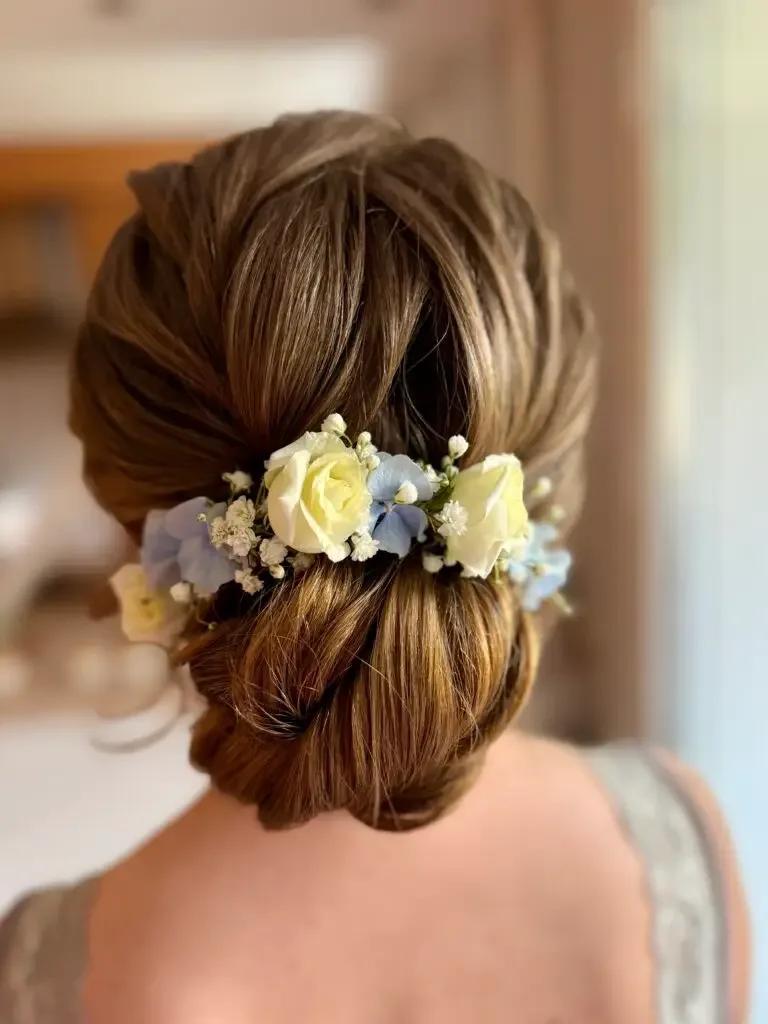
Not every haldi look has to be formal. A messy low bun with yellow roses is the relaxed cousin of the classic gajra bun — same low, secure base, but with soft texture, a few loose pieces at the nape, and small yellow roses instead of a full garland. It suits sisters and close family who want to look polished without looking bridal.
Texture is what makes this work. Backcomb the crown lightly, twist the hair loosely, and pin it in place without smoothing everything down — the slight unevenness is the point. Tuck three or four small roses into the top and sides of the bun, and leave two thin strands at the nape for softness. The roses are lighter than marigolds, so they stay put with a single pin each.
Who should avoid it: anyone with very fine hair will struggle to get the volume this style needs without a lot of backcombing. On fine hair, add a small hair donut inside the bun for shape.
4. Side-Swept Waves with a Marigold Pin
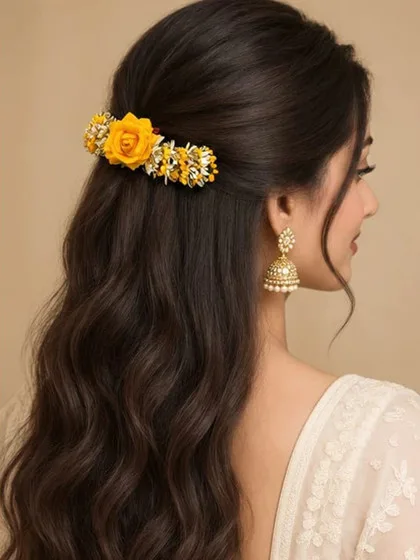
Side-swept waves are the easiest haldi style in this whole list, and one of the prettiest. The hair is parted deeply on one side, curled in loose waves, and swept over one shoulder, with a single marigold pinned above the ear on the bare side. It takes twenty minutes, needs no stylist, and works beautifully for guests.
The one risk is the turmeric. Loose hair near the face will catch paste, so this style needs a small adjustment for haldi: pin the front section on the bare side back tightly, and keep the waves behind the shoulders rather than in front of them. A light-hold spray and a couple of hidden pins at the nape stop the sweep from falling forward during dancing. On humid days, start with a smoothing serum — waves plus humidity plus sweat is a frizz recipe.
Quick verdict: perfect for guests and for the sangeet, very good for haldi if you pin the front back. Brides should pick something more secure.
5. Dutch Braid into a Low Bun
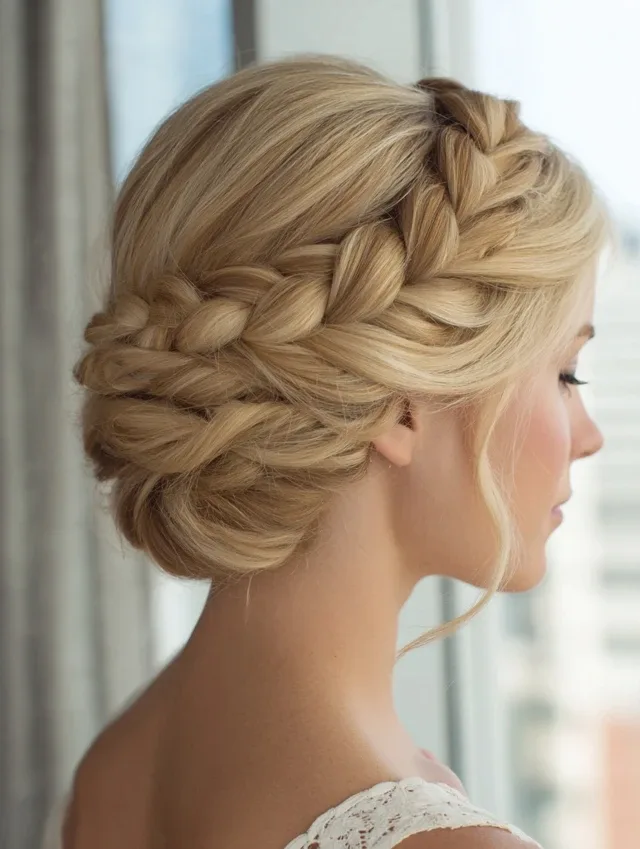
This is the workhorse of haldi hair. A Dutch braid starts at the crown, runs down the back of the head, and feeds into a low bun at the nape. The braid locks the front of the hair away from the turmeric, the bun anchors the weight, and the whole thing survives dancing that would destroy a loose style in minutes.
Best for: brides and sisters with long hair, outdoor ceremonies, and anyone who plans to dance hard. How to style: braid from the hairline back, keeping the sections tight at the front and looser as you go down, then twist the tail into a bun and pin it flat. A gajra strand wrapped around the bun turns it bridal in seconds. Maintenance: almost none — this is a set-it-and-forget-it style, which is exactly what haldi needs.
Common mistake: braiding too loosely at the hairline. The front sections are the ones that meet the paste, so they need to be the tightest part of the braid.
6. Fishtail Braid with Gajra Woven In
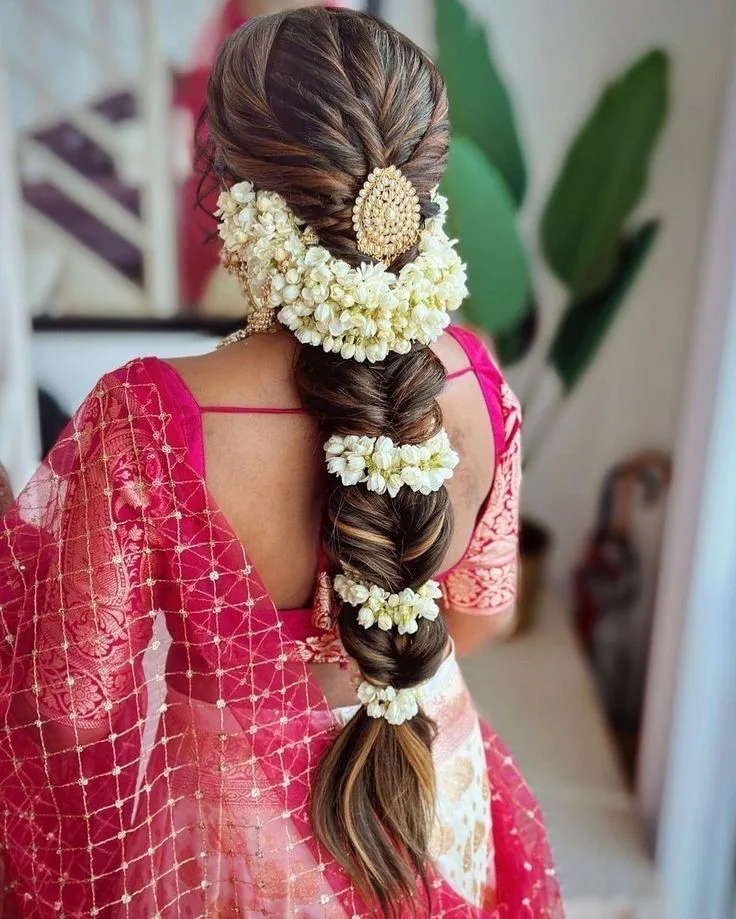
A fishtail braid looks far more complicated than it is, and that is exactly its charm. The fine, woven texture catches the light beautifully in photographs, and when a thin gajra strand is woven through it, the whole braid looks like it was made for the ceremony. It is a showpiece style — best for the bride or her sister.
Weave the gajra in as you braid, not after: lay the strand along one side of the braid and pick it up with every second crossover, so it sits inside the weave rather than on top of it. The braid should sit over one shoulder for the photographs, but keep it behind the shoulder during the paste ceremony — turmeric and a braid over the chest do not mix. It takes patience, about 30 to 40 minutes, and it holds best on long, thick hair.
Pros: stunning in photos, very secure, and the gajra looks intentional rather than added on. Cons: heavy, and it is not a style you can redo yourself mid-ceremony if it loosens.
7. High Bun with a Marigold Wrap
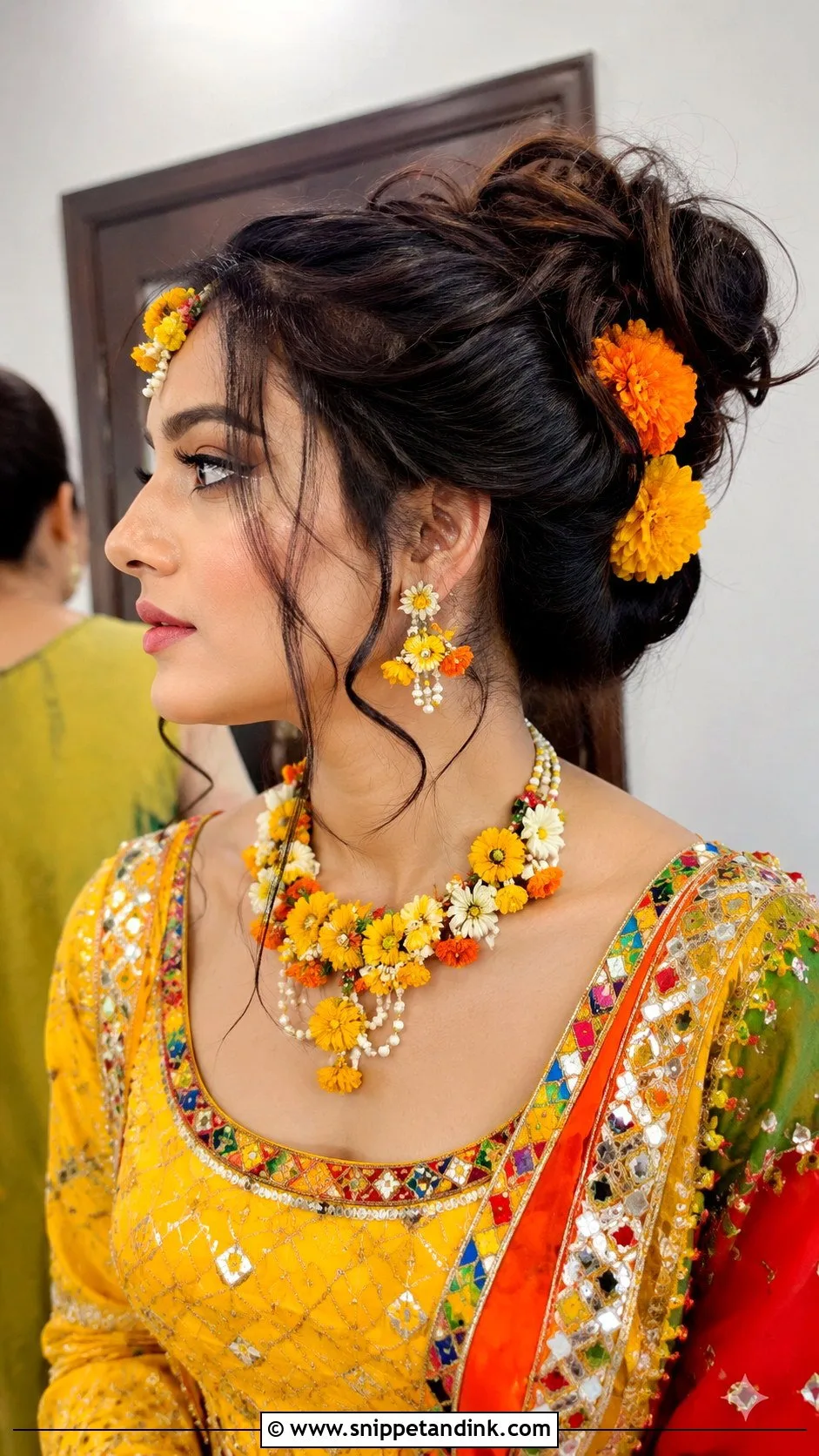
A high bun is the boldest silhouette at a haldi — tall, regal, and impossible to miss. Wrapped in marigolds, it becomes a crown in its own right. It suits brides who want drama, and it photographs wonderfully against a yellow outfit because the bun and the flowers sit high in the frame.
There are two catches. First, a high bun is the first style to feel the heat: sweat gathers at the crown, and a heavy bun pulls on the hairline as the day goes on. Anchor it with a hair donut and at least six pins, and keep the base tight. Second, a high bun and a dupatta draped over the head do not work together — the fabric slides off. If your outfit needs a head drape, choose a low bun instead.
Who should avoid it: anyone with a sensitive hairline or a long ceremony ahead. By hour three, a heavy high bun starts to ache, and haldi ceremonies run long.
8. Half-Up Twisted Crown
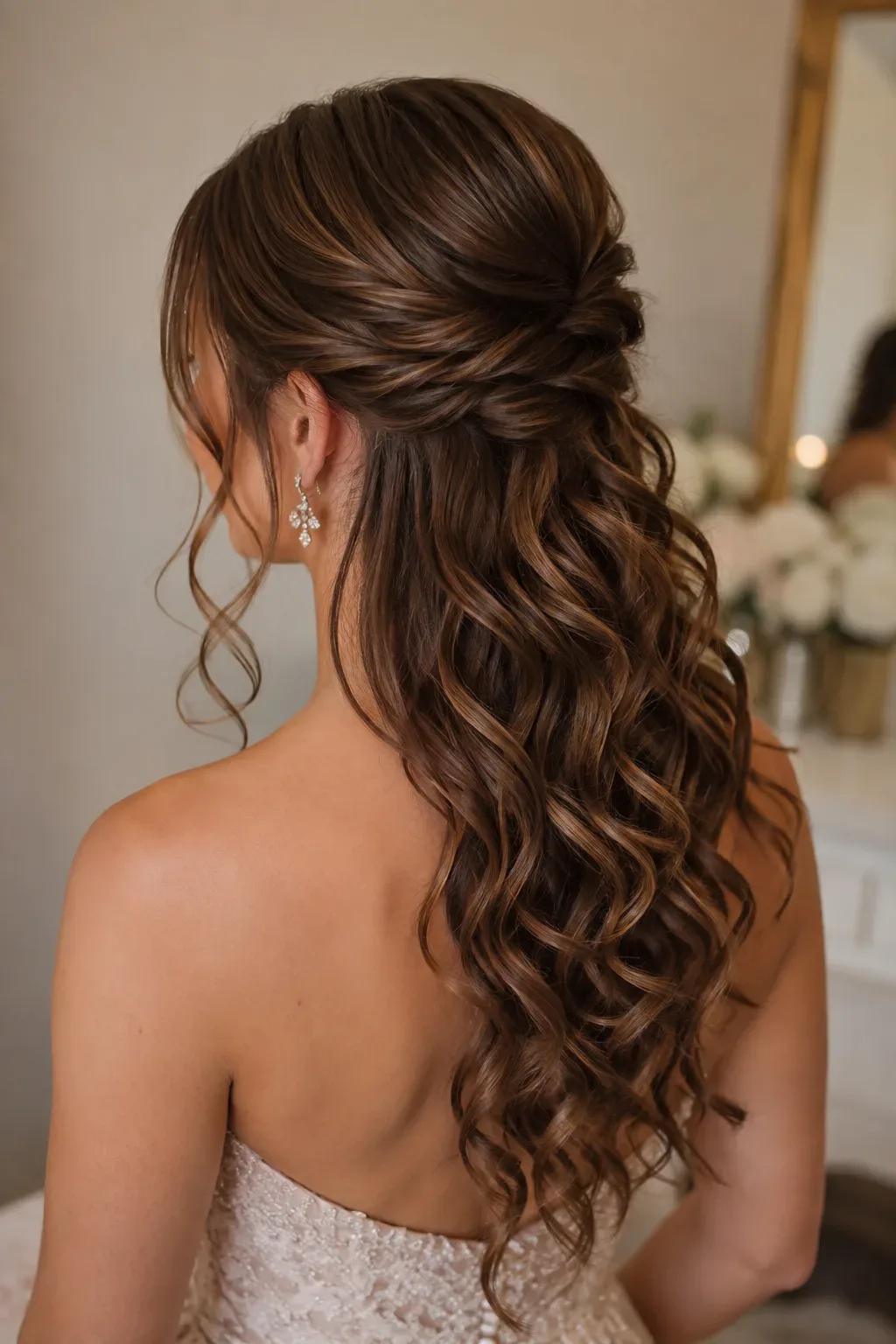
The half-up twisted crown is the compromise style: the front is pulled back and secured, so the hairline stays clear of turmeric, but the rest of the hair flows free down the back. Two twisted sections meet at the back of the head and are pinned together, sometimes with a small marigold at the join. It is pretty, it is quick, and it is the best half-up option for haldi because the twists actually hold.
Twist each front section away from the face and pin them where they meet, crossing the pins for grip. The loose hair behind should be curled lightly so it does not look flat next to the structured front. It works on medium and long hair, straight or wavy, and it is one of the few open styles that survives a haldi — provided the front twists are pinned properly and the loose hair stays behind the shoulders.
Maintenance: carry two spare pins. The twists are the weak point, and if one slips, the whole front opens up. A quick re-pin takes ten seconds if you have the pins ready.
9. Loose Curls with a Flower Tiara
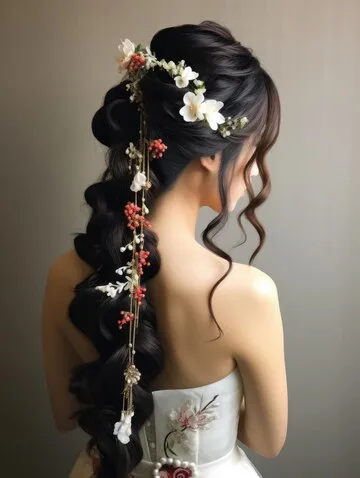
Loose curls and a flower tiara sound like a recipe for a haldi disaster, but with the right tiara they work. The secret is a tiara that is wired, not elastic: a thin wire base with small marigolds and jasmine that can be pinned at three or four points into the hair, so it grips rather than slides. The curls fall soft around the shoulders, and the tiara sits like a crown.
Best for: the sangeet and the haldi photo session afterwards, rather than the paste ceremony itself. How to style: curl the hair in large sections, brush them out into soft waves, then set the tiara a couple of centimetres behind the hairline and pin it at both ends and the centre. What to ask: ask your florist for a wired tiara made the same morning — a floppy one will not survive the dancing.
Turmeric-proofing tip: wear the tiara slightly further back than usual, so the front hairline is clear and the paste has nothing to catch on.
10. Sleek Middle-Part Low Ponytail
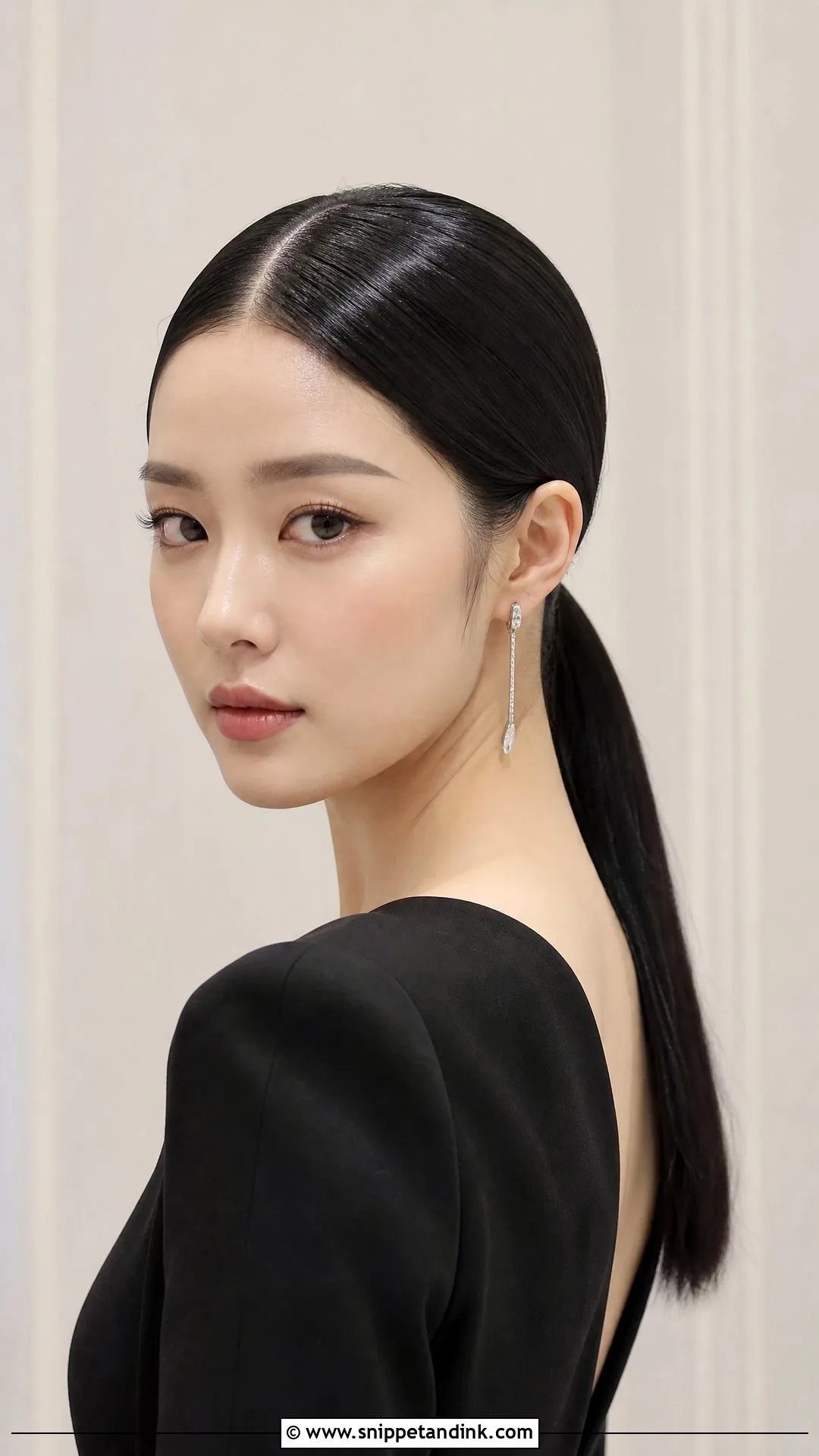
There is a quiet confidence to a sleek low ponytail: a clean middle part, glass-smooth hair, and a ponytail tied low at the nape with a strand of hair wrapped around the tie. It is the most modern look in this list, and it suits guests who want to look expensive without trying too hard.
The smoothness is everything. Straighten the hair in small sections, smooth it with a light serum, and brush it back without a single bump — a fine-tooth comb and a little hairspray on the brush will get you there. Wrap a strand around the elastic and pin it underneath. For haldi, add one small marigold at the base of the ponytail, and the whole look goes from office to ceremony in a second.
Pros: fast, elegant, and the hairline is completely sealed from paste. Cons: it shows every flyaway, so it needs a smoothing product and a dry day — or a very good hairspray.
11. Braided Low Ponytail with Ribbon
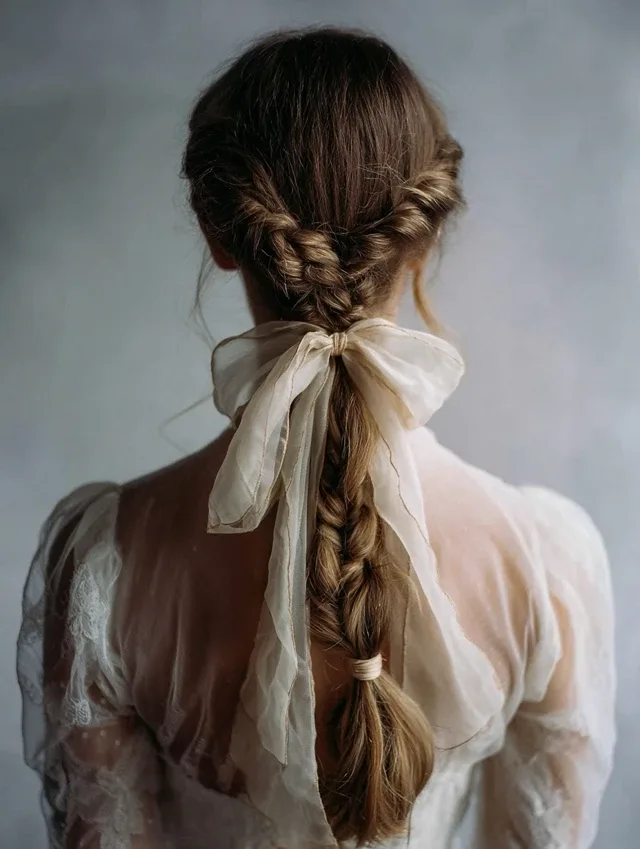
A low ponytail with a braid running down its length and a yellow ribbon tied at the end is one of the prettiest guest styles at a haldi, and it is almost impossible to ruin. The braid keeps the ponytail from tangling during dancing, the ribbon adds the haldi colour, and the whole thing can be redone in two minutes if it loosens.
Braid the ponytail loosely — a three-strand braid is fine, a fishtail is fancier — and tie the ribbon in a small bow at the end rather than a big one, so it does not swing into the paste. Yellow or gold ribbon matches the ceremony; white ribbon looks fresh against a green outfit. This is also a wonderful style for younger sisters and teenage guests, because it reads festive without reading bridal.
Cost and time: ten minutes, no stylist needed, and the only cost is a ribbon. If you can braid your own hair, you can do this in the car.
12. Bubble Braid with Marigolds
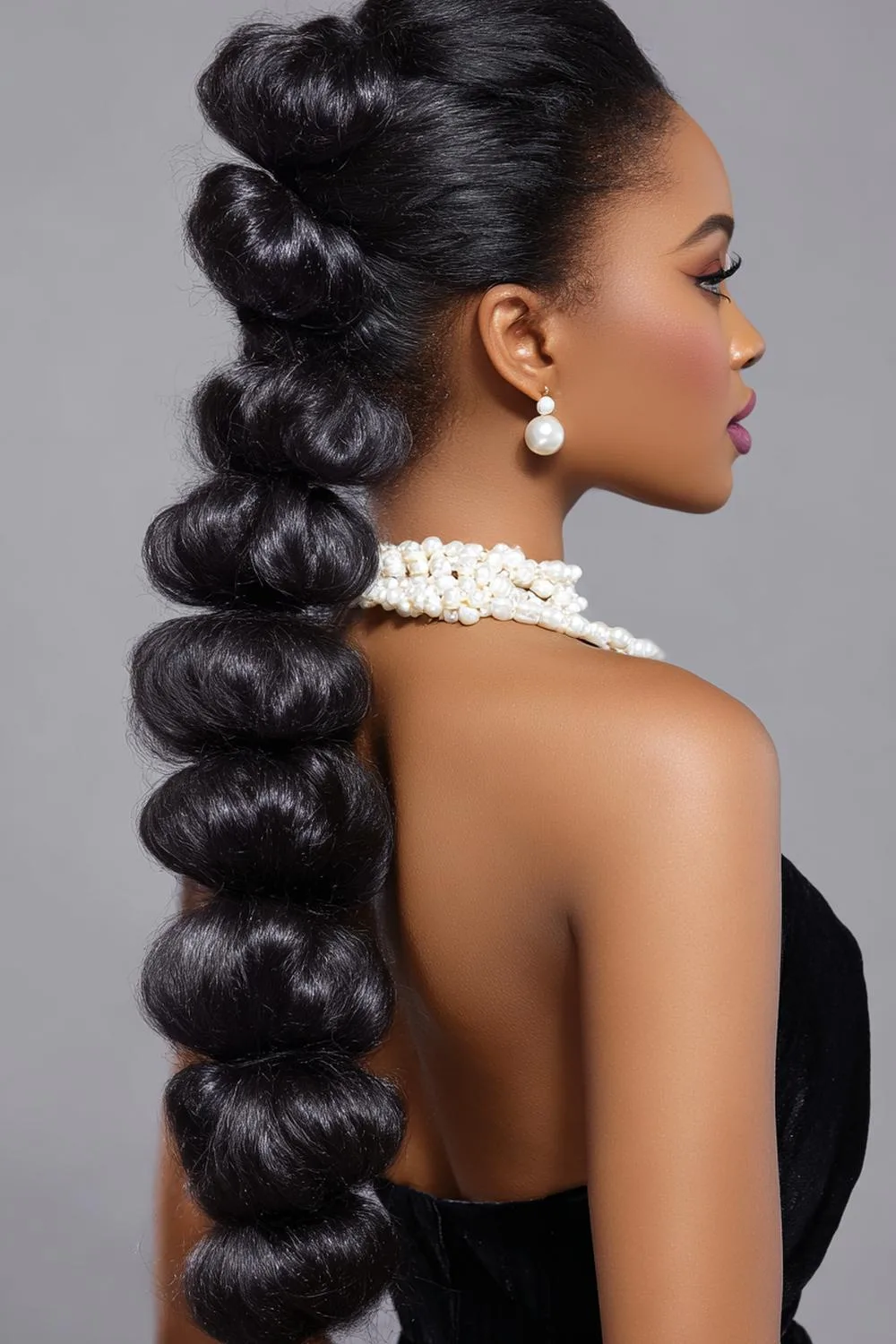
The bubble braid is the fun one — a ponytail divided into puffs with elastics, each puff gently pulled out to make a bubble, with a tiny marigold tucked at each elastic. It is playful, it photographs like a dream, and it is surprisingly secure, because every elastic is another anchor point.
Start with a high or mid ponytail, add elastics every few centimetres down the length, and tease each section out into a round bubble. Pin a small marigold at every second elastic so the flowers run down the braid like a garland. It works best on long, thick hair, but a bubble braid on medium hair still looks wonderful — the bubbles just sit closer together. Keep the top smooth and the bubbles even, or the whole thing looks lopsided in photos.
Who should avoid it: brides who want a classic look — this is festive and modern, not traditional. Sisters and guests, though, will love it.
13. Soft Chignon with Jasmine
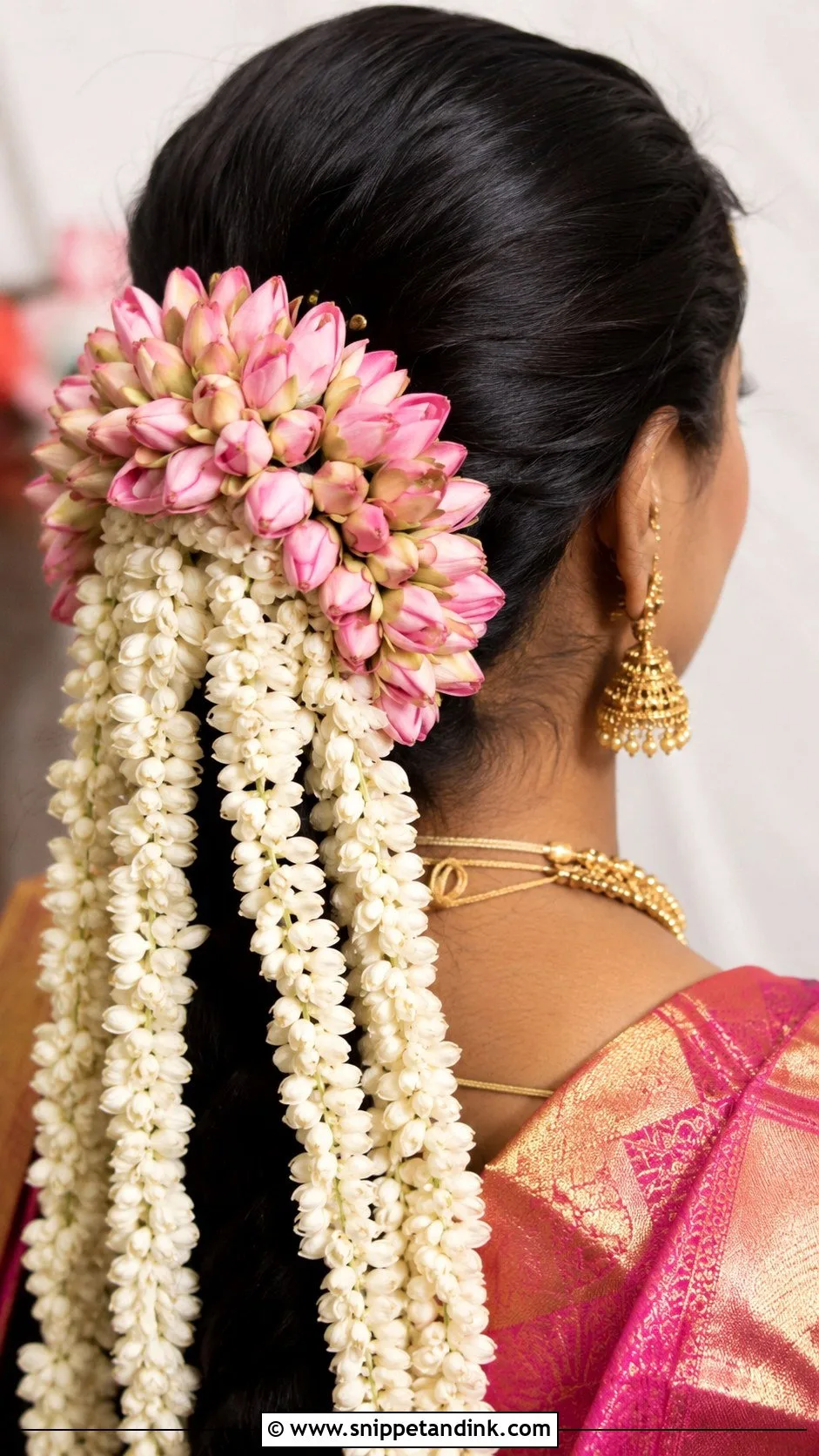
A soft chignon is the French answer to the low bun: same low position, but rolled rather than twisted, with a looser, softer finish. Tucked with white jasmine instead of marigolds, it looks delicate against a yellow outfit — the white flowers pop beautifully against the yellow fabric and the dark hair.
Best for: brides who want something softer than a gajra bun, and mothers of the bride who want elegance without fuss. How to style: roll the hair up from the ends, pin the roll flat at the nape, and tuck small jasmine sprigs into the top edge of the roll. Maintenance: low — the roll is pinned at several points and the jasmine is light, so nothing much can fall out.
Common mistake: making the chignon too tight. The softness is the point. If you pull it smooth, it becomes a plain bun and loses its charm.
14. Side Braid Over One Shoulder
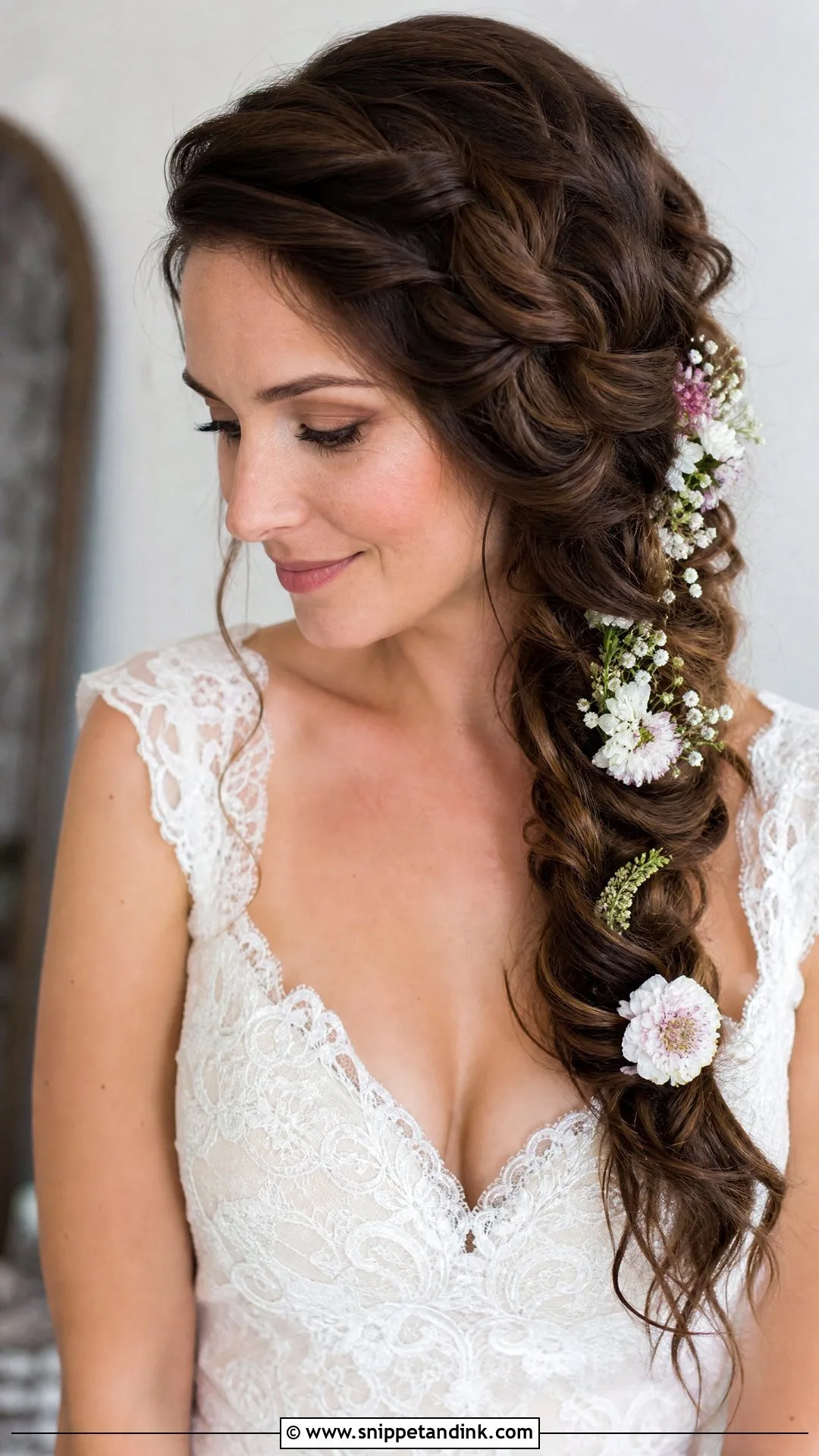
A side braid over one shoulder is the simplest style in this guide, and sometimes the simplest is the smartest. It keeps the hair completely off the back — no sweat, no sticking to a damp neck — and it puts the braid where the cameras are. Add a marigold at the top of the braid and a small one at the end, and it is ceremony-ready.
The braid itself can be anything: a three-strand braid for a clean look, a fishtail for texture, or a Dutch braid for drama. The key detail is the part — a deep side part makes the braid look intentional rather than accidental. During the paste ceremony, swing the braid behind the shoulder so it stays clear of the turmeric, then bring it forward again for photos.
Quick verdict: the best low-effort haldi style there is. If you have five minutes and a hair tie, this is your style.
15. Voluminous Blowout with a Gajra Side Pin
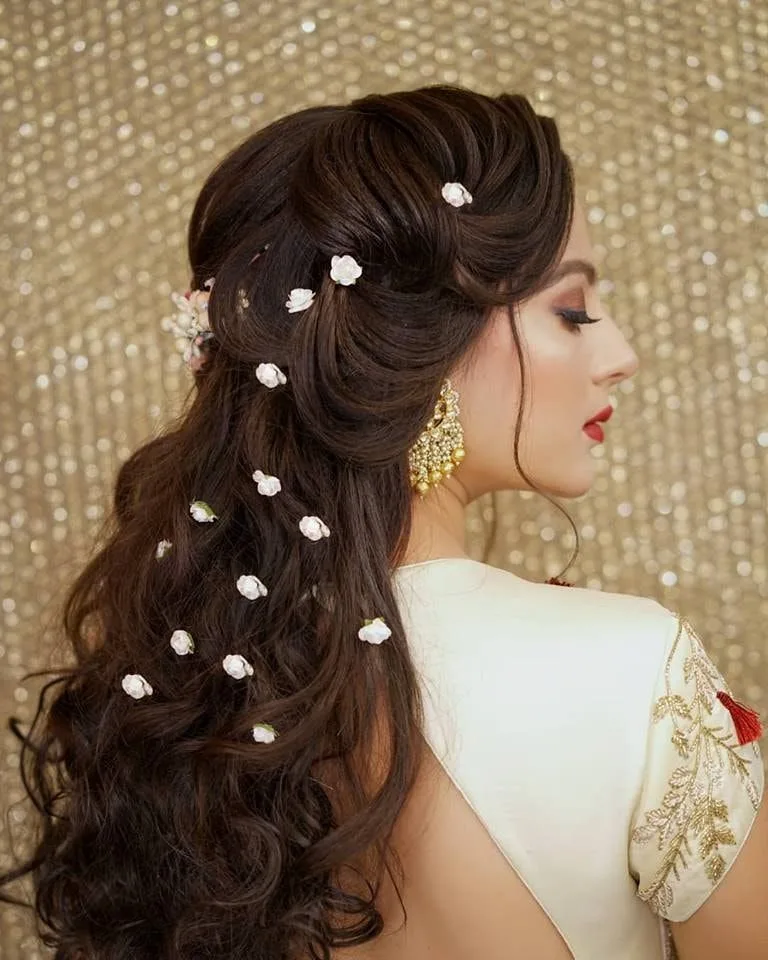
A big, bouncy blowout is a glamour statement, and a single gajra pin on one side turns it into a haldi look. The volume frames the face beautifully in photographs, and the pin adds the ceremony detail without committing to a full updo. It is a wonderful choice for the bride’s sister or a close cousin.
Volume is the whole game here, so build it properly: blow-dry with a round brush, lifting at the roots, and set each section with a velcro roller while it cools. The gajra pin goes on the side with the deeper part, tucked just above the ear. But be honest about the weather — in high humidity, a blowout drops within the hour, and no amount of spray saves it. On a humid day, pick a braid instead.
Pros and cons: gorgeous in the first hour, fragile after that. If your ceremony is short and indoors, go for it. If it is a long outdoor haldi, choose something pinned up.
16. Double Braids with Yellow Thread
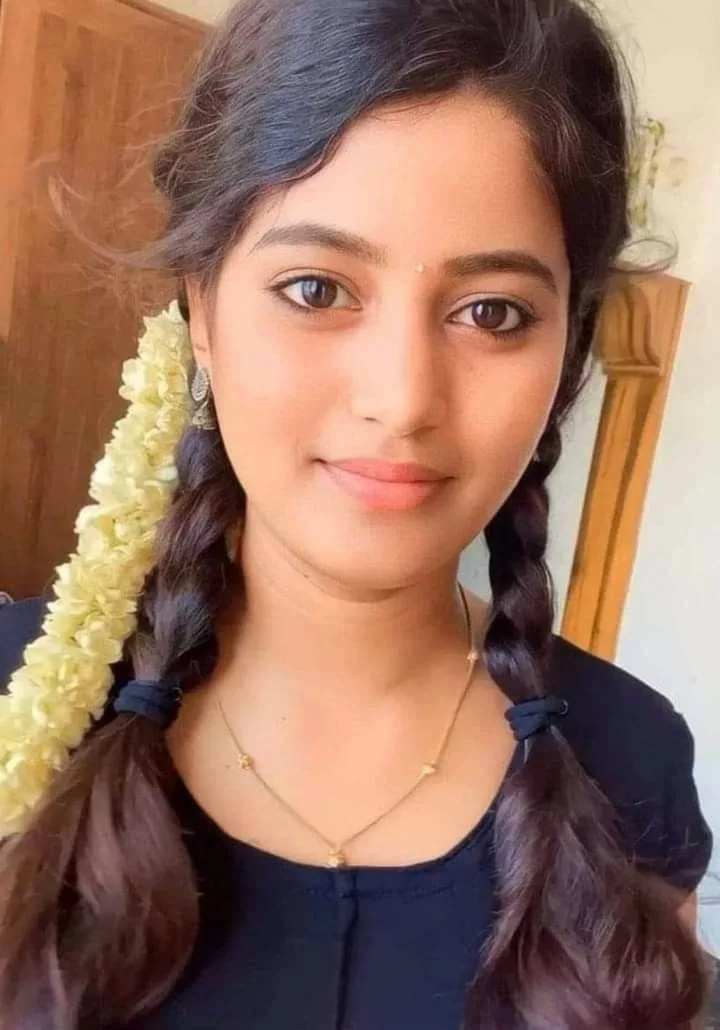
Double braids — one on each side, meeting at the back or worn over the shoulders — are youthful, festive and very haldi. Woven with yellow thread, they pick up the colour of the ceremony and look like they were planned for it, not borrowed from another event. This is a lovely style for younger guests, teenage sisters and anyone who wants a playful look.
Weave the thread in as you braid, running it along the outside of each braid so the yellow shows in every crossover. Tie the ends with small bows, and add a tiny marigold at the top of each braid. The style is secure, it keeps the hairline clear, and it survives dancing better than almost anything else here — two braids share the weight, so neither pulls.
Who should avoid it: anyone who wants a formal or bridal look. Double braids read young and casual, which is their charm and their limit.
17. Messy Top Knot with Marigold Pins
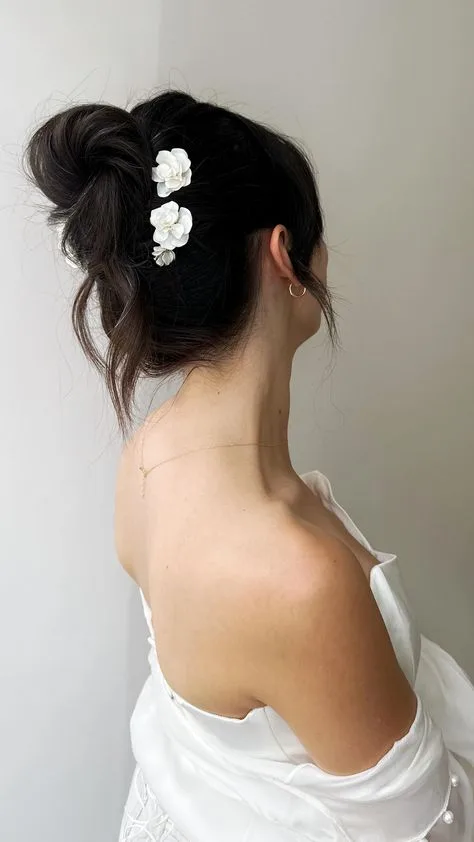
A messy top knot is the most relaxed style in this list, and it has a secret advantage: it keeps the hair completely off the neck, which matters more than most people realise on a hot haldi morning. Add three or four small marigold pins around the base of the knot, and the whole thing looks deliberate rather than thrown together.
Best for: guests, outdoor ceremonies, and anyone with thick hair that is heavy when worn down. How to style: gather the hair high, twist it loosely, wrap it around its own base and pin it without smoothing it flat — the texture is the style. What to ask: if a stylist does it, ask for the knot to sit slightly forward, not dead centre, so it photographs better.
Common mistake: making the knot too neat. A top knot that is perfectly smooth is just a ballerina bun. The messiness is what makes it modern.
18. Waterfall Braid with Loose Curls
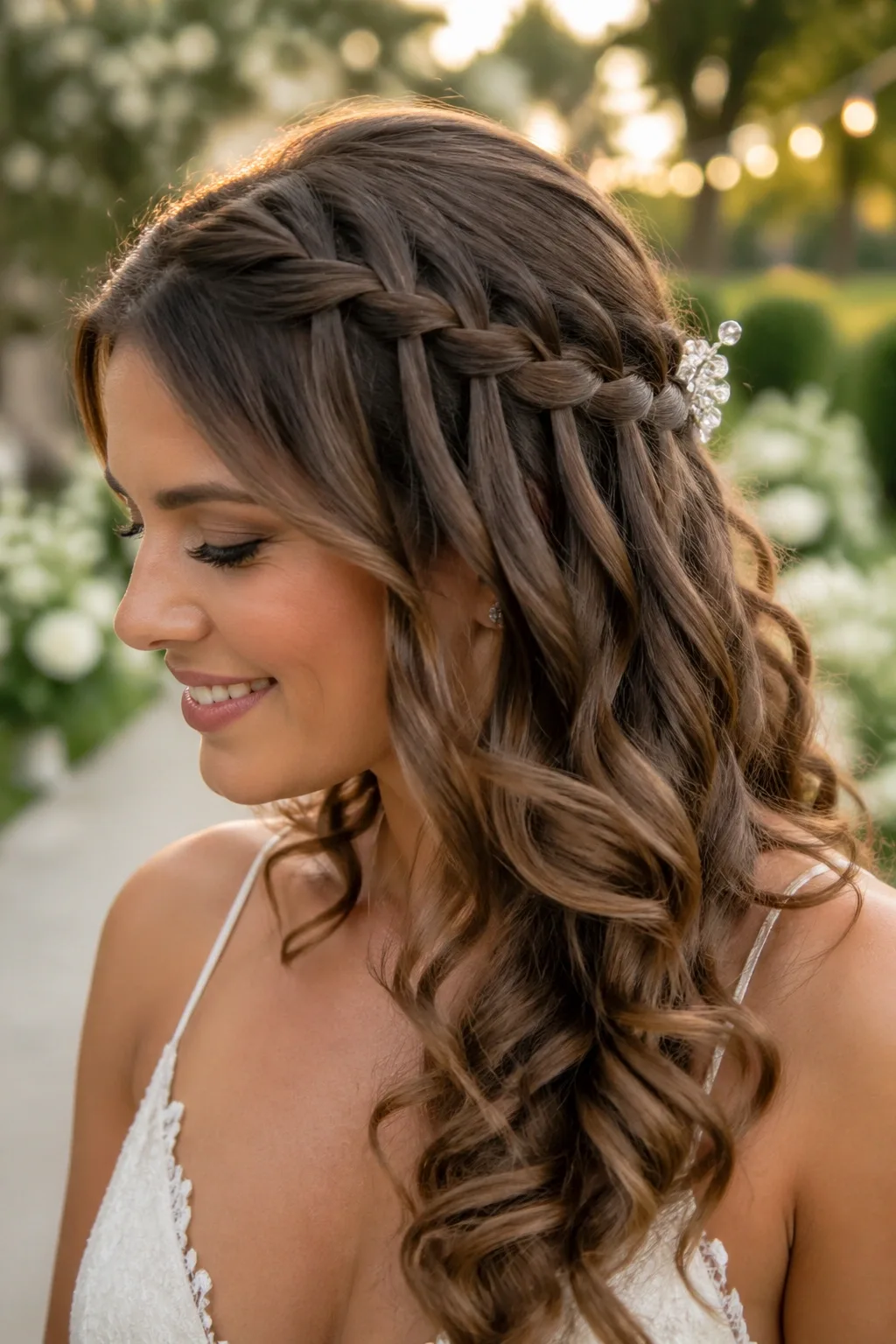
A waterfall braid is pure romance: a braid that runs across the back of the head, dropping strands through it like water, with the rest of the hair falling in loose curls below. It is one of the most photographed styles at any wedding event, and at a haldi it works best for the photo session and the dancing afterwards.
The braid itself is the anchor, so build it well — start above one ear, work across the back, and pin the end securely behind the other ear. Curl the loose hair in large sections and brush it out so the curls fall softly. The honest warning is that this is an open style, and open styles meet turmeric. Wear it for the photos, but pin the curls up during the paste ceremony, or accept that the ends will need a wash.
Pros: breathtaking in photos. Cons: the most turmeric-vulnerable style in this guide. Choose it with your eyes open.
19. Low Twisted Bun with a Dupatta Drape
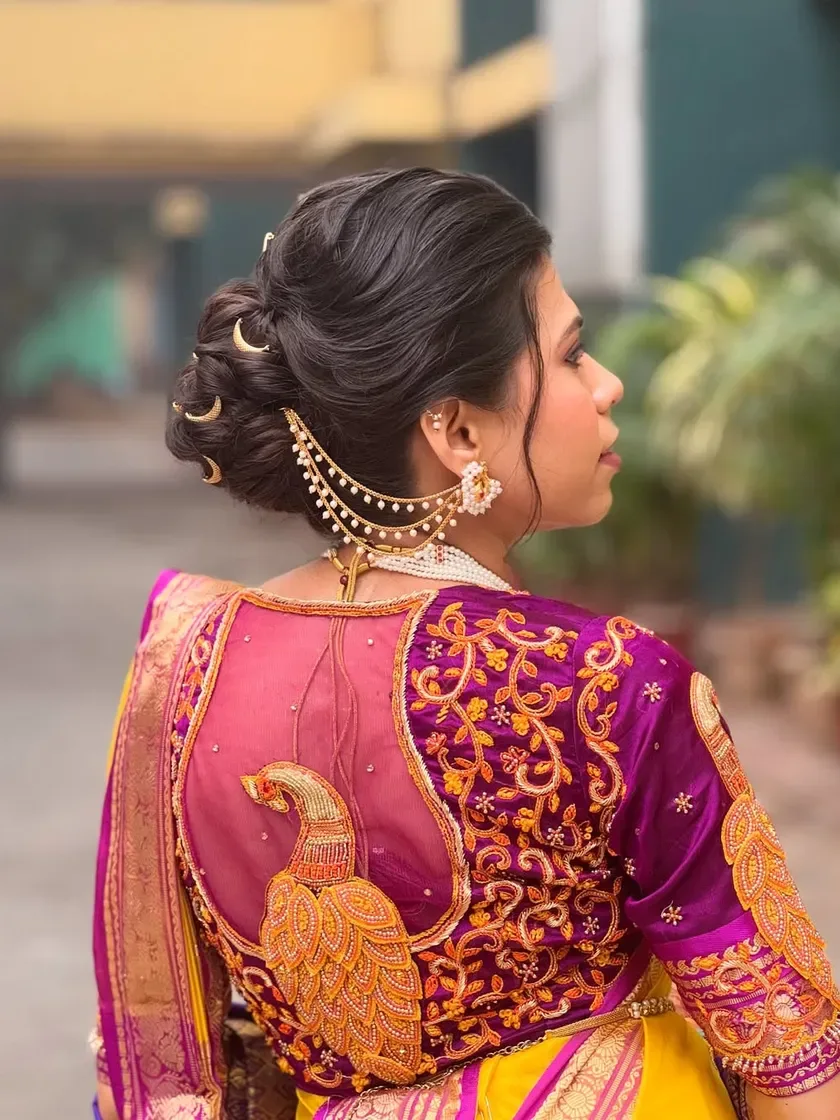
Many brides wear a dupatta over their head for haldi, and the hair underneath has to cooperate. A low twisted bun is the answer: it is flat enough that the dupatta sits smoothly over it, low enough that the fabric does not slide off, and secure enough that the whole arrangement stays put when the dupatta is adjusted for photographs.
Twist the hair into a flat bun at the nape — not a round ball, but a wide, flat twist pinned close to the head. Drape the dupatta over the crown and pin it to the hair at both temples with small, hidden pins. The pins are the difference between a drape that stays and one that slides off every ten minutes, so do not skip them.
Maintenance: check the drape pins after every round of dancing. They loosen with movement, and a slipping dupatta in the middle of a photo is the one thing you will notice afterwards.
20. Curly Half-Up with Flower Clips
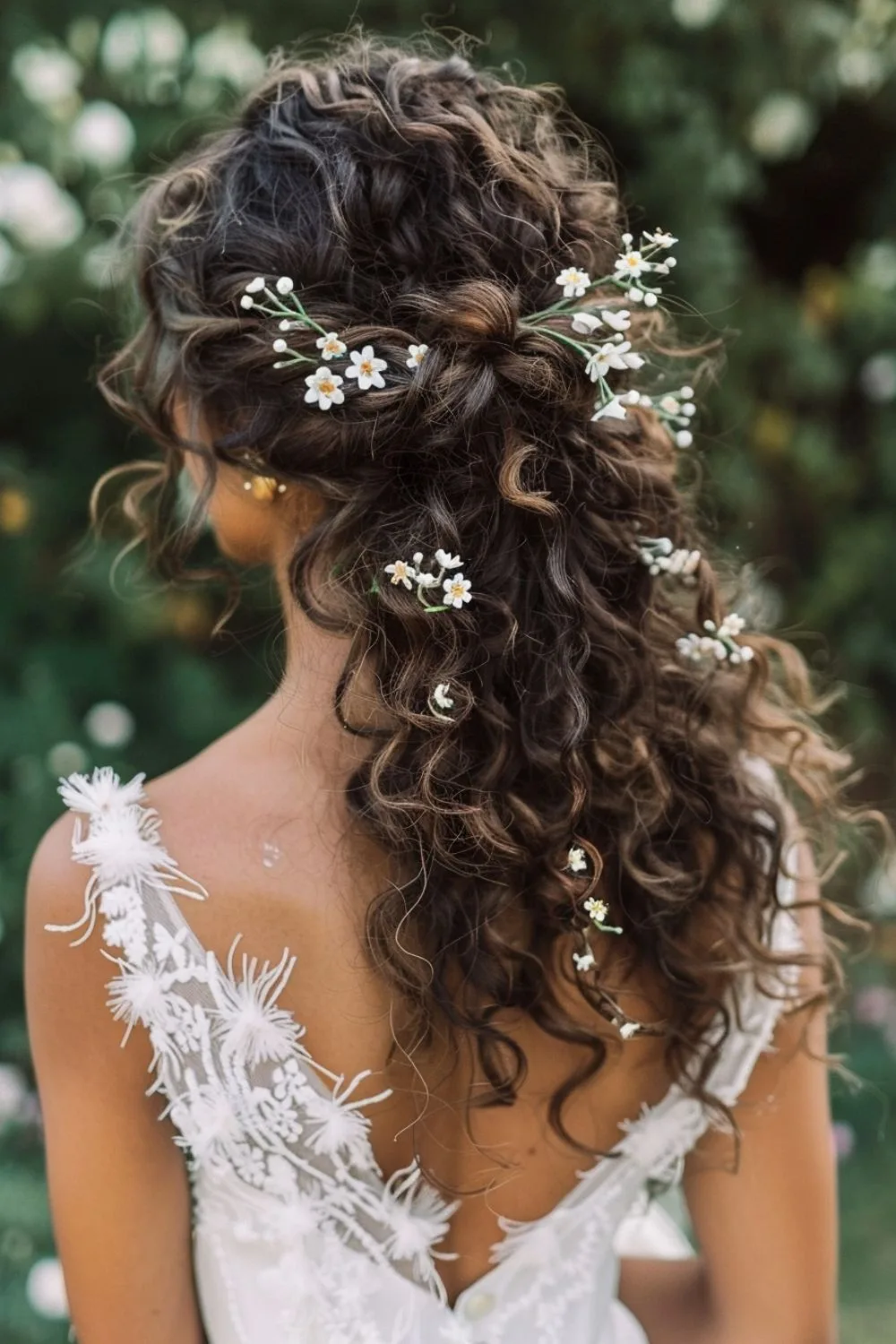
Curly hair has a natural advantage at haldi: it holds pins, grips braids and keeps texture without much product. A curly half-up — the front sections pulled back and clipped, the curls falling free behind — shows off the curls while keeping the hairline safe from paste. Small flower clips at the join add the ceremony detail.
Best for: naturally curly and wavy hair, and anyone who wants their texture to be the feature. How to style: define the curls with a light cream, pull the two front sections back and clip them where they meet, and let the rest fall. Turmeric-proofing tip: keep the clips metal-free if you can — plastic or fabric-covered clips do not heat up in the sun the way metal ones do.
Who should avoid it: nobody, really — but if your curls are very tight, the half-up section may need more pins than you expect to stay put.
21. Sleek Bun with a Maang Tikka
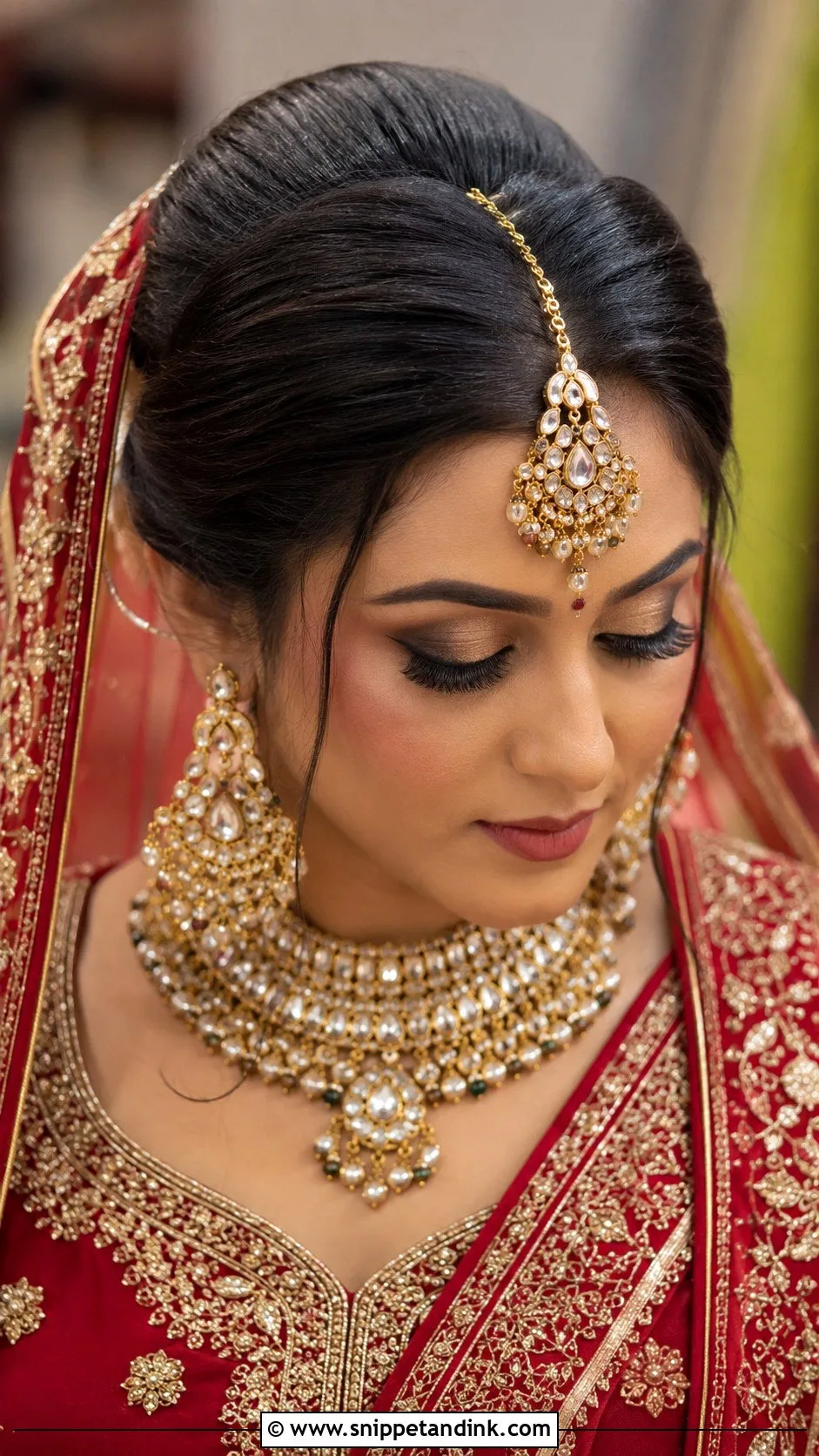
A sleek bun with a maang tikka is the most traditional bridal look in this guide, and it demands precision. The hair is smoothed back without a single bump, the bun sits low and tight, and the maang tikka hangs from the centre part down the forehead. It is regal, it is unmistakably bridal, and it photographs like a portrait.
The maang tikka needs an anchor: pin its chain into the hair at the crown with two crossed bobby pins, hidden under the part, so it cannot slide forward when the bride moves. The bun itself should be wrapped smooth, with a strand of hair covering the elastic. This is a bride-only style — a guest in a maang tikka and a sleek bun will look like she is dressed for the wrong role.
Cost and time: about an hour with a professional, including the jewellery placement. Do a trial, because a maang tikka that sits too low or too high changes the whole face.
22. French Braid Crown for Short Hair
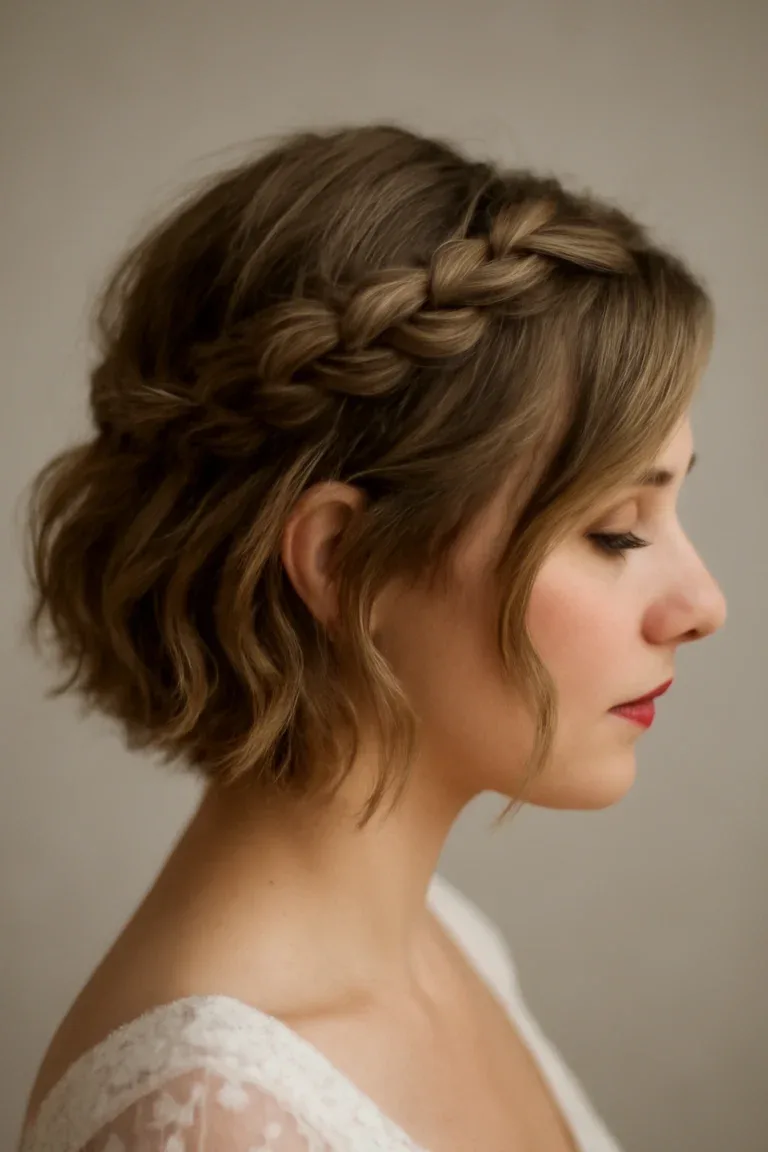
Short hair is often left out of haldi guides, which is a shame, because a French braid crown works beautifully on a bob or a lob. The braid runs around the head like a headband, keeping the front completely clear, and a single marigold pinned into it finishes the look. It is the best haldi option for short hair, full stop.
Short hair needs a different technique: braid close to the scalp and pick up small sections, so the braid grips even where the hair is short. Use a little texturising spray first, because clean short hair slips out of braids. Tuck the tail under with a pin, and do not worry if a few ends escape — on short hair, a little looseness looks intentional.
Pros and cons: secure, quick, and it needs no extensions. The only limit is length — below chin length, the braid will not reach all the way around, so braid across the front only and pin the ends behind the ears.
23. Wavy Lob with a Marigold Tuck
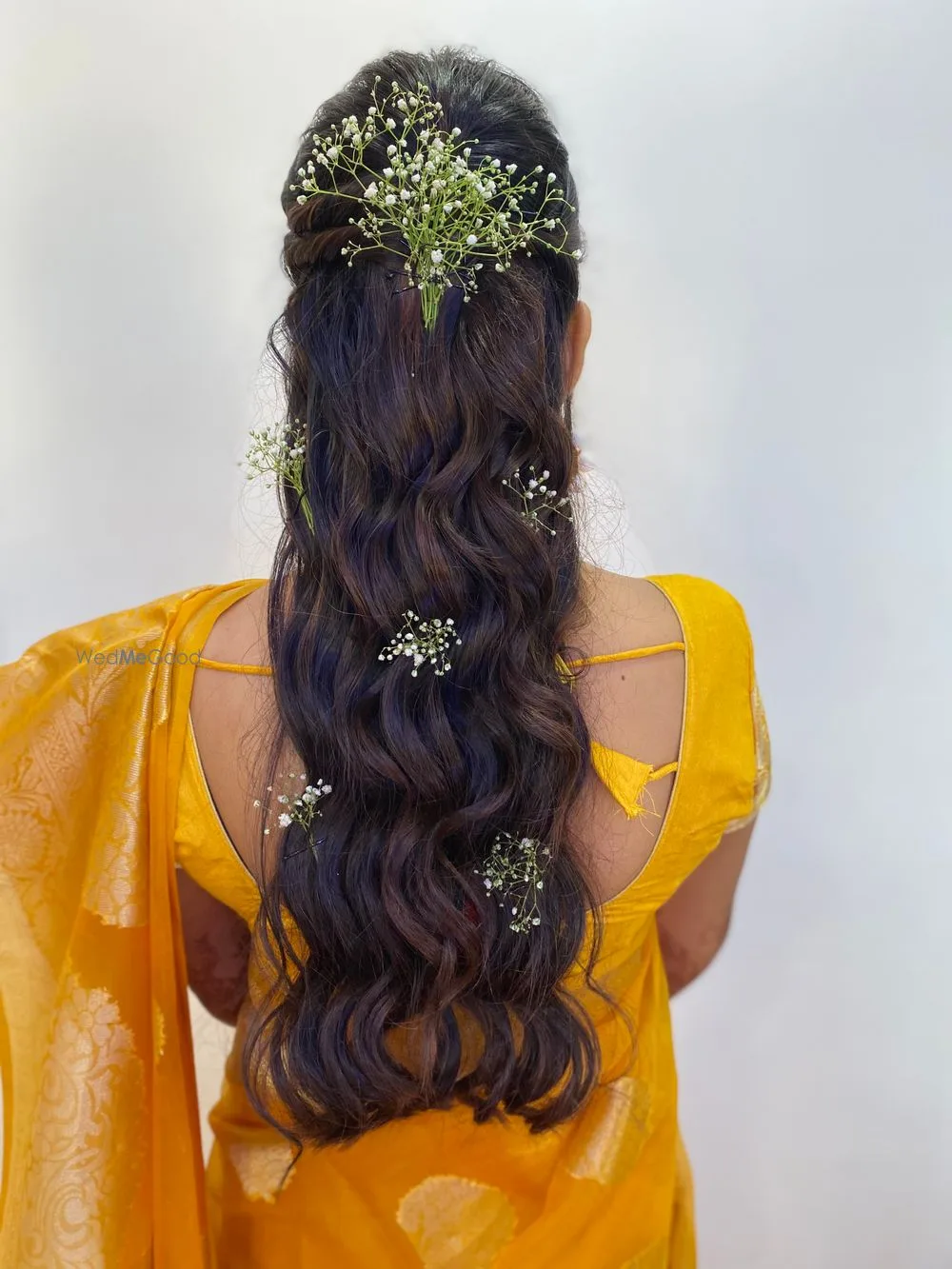
The wavy lob — a long bob with soft waves — is the most modern short style at a haldi, and it needs almost nothing to be ceremony-ready: waves, a side part, and one marigold tucked behind the ear. It is effortless in the best sense, and it suits guests who want to look polished without a trip to the stylist.
Best for: guests and sisters with shoulder-length hair. How to style: curl the hair in large sections away from the face, brush out the curls into waves, and tuck one side behind the ear with a marigold pinned at the tuck. Maintenance: one pin holds the tuck, so carry a spare — if the tuck falls, the whole asymmetry of the style goes with it.
Turmeric-proofing tip: keep the tucked side pinned tightly. A loose tuck lets the hair fall forward into the paste zone.
24. Braided Bun with Gold Accessories
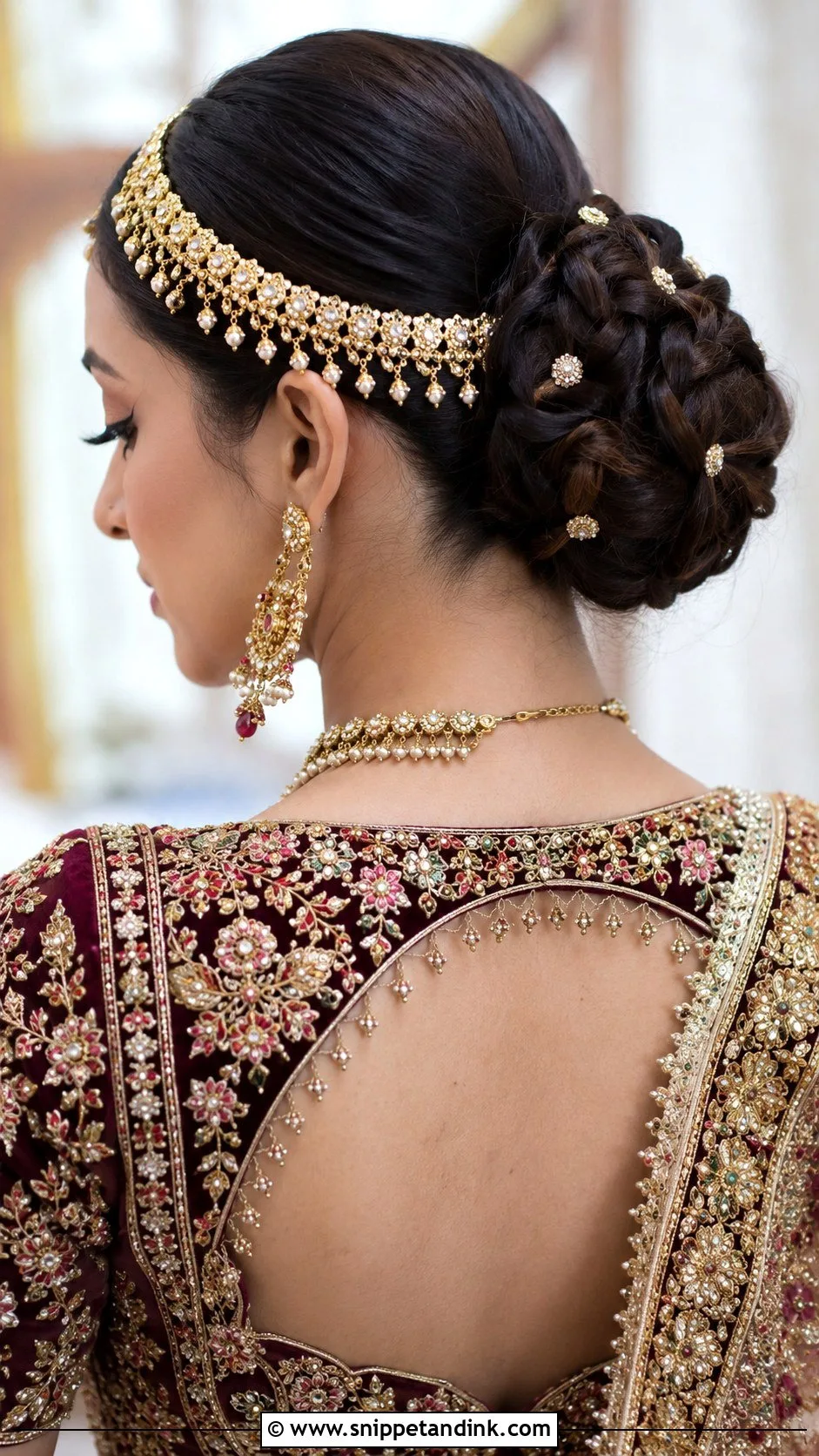
Gold against yellow is the richest colour combination at a haldi, and a braided bun with gold accessories uses it to full effect. The bun is braided rather than twisted, so the texture shows, and small gold pins, a gold chain or a gold hair cuff are woven through the braid. It catches the light in every photograph.
Less is more with gold: three or four pieces, placed deliberately, look expensive; ten pieces look like a costume. Place one gold pin at the top of the bun, one at each side, and let the braid do the rest. The bun itself should be low and firm — gold is heavy, and a loose bun will sag under it.
Who should avoid it: guests, mostly. Gold hair accessories read bridal at a haldi, and they compete with the bride’s own jewellery in group photos.
25. Loose Side Ponytail with Curls
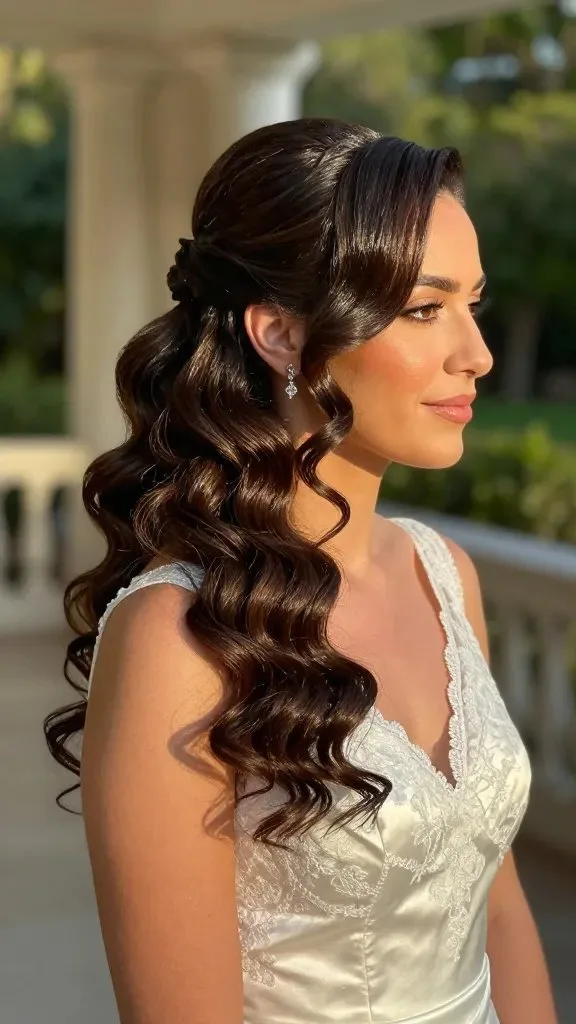
A loose side ponytail with curls is the relaxed guest style that always works. The hair is swept to one side, tied low, and curled in soft waves that fall over the shoulder. It is romantic without being formal, and it takes about fifteen minutes with a curling iron.
Best for: guests with medium to long hair. How to style: curl the lengths first, then gather the hair to one side and tie it loosely — a fabric-covered elastic, not a bare one, so the curls are not dented. Pull a few face-framing pieces out for softness, but keep them behind the ears during the paste ceremony. What to ask: nothing — this is a do-it-yourself style, and that is its charm.
Common mistake: tying the ponytail too high. A high side ponytail swings into the paste and the food. Low is safer and prettier.
26. Boho Braids with Tiny Marigolds
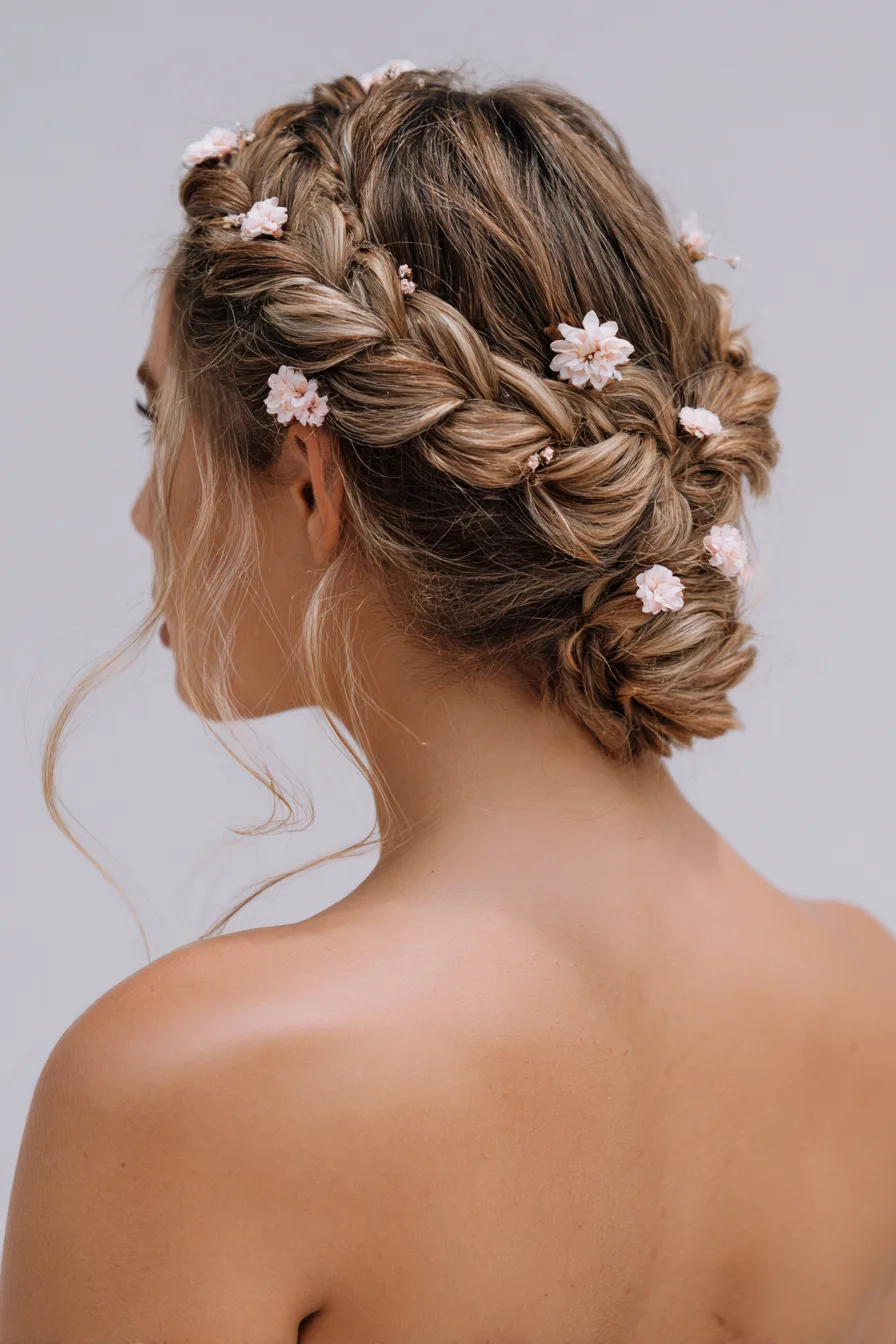
Boho braids are the free-spirited option: several thin braids scattered through loose, wavy hair, each one finished with a tiny marigold. The effect is festival-meets-wedding, and it is wonderful for the dancing part of the day, when the formality drops and the party takes over.
The braids are the structure, so make them count. Braid three or four thin sections — one at each temple, one or two at the back — and tie them with clear elastics. Tuck a tiny marigold into the top of each braid with a single pin. The loose hair around them should be wavy, not straight, or the braids look stuck-on rather than part of the style.
Pros: fun, photogenic, and it survives dancing better than plain loose hair. Cons: the loose hair still meets turmeric, so wear this for the party, not the paste.
27. Classic French Twist with Flowers
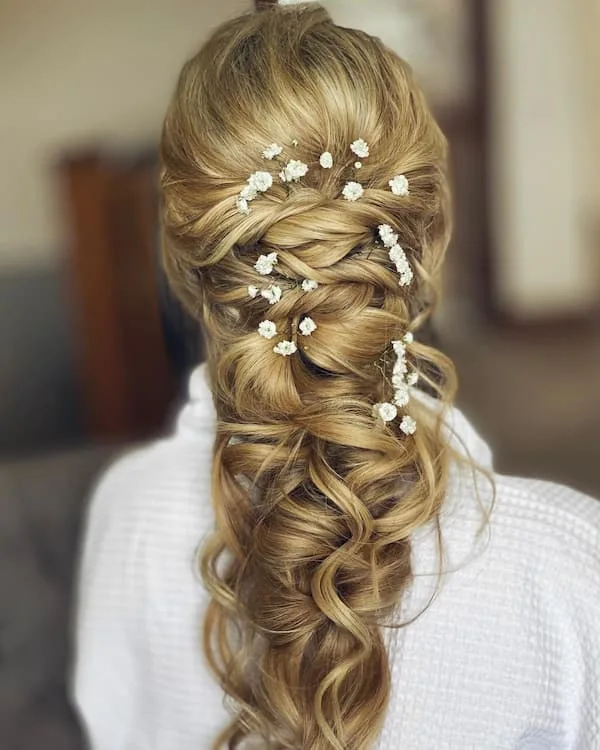
The French twist is the most elegant updo ever invented, and it deserves its place at a haldi — especially for mothers of the bride and groom, who want something timeless. The hair is swept up and tucked into a vertical roll, and small flowers are pinned along the seam of the twist.
A French twist lives or dies on its pins. Use French twist pins or large U-pins, inserted along the roll, not bobby pins, which are too short to hold the weight. The roll should sit slightly off-centre for a modern feel. Tuck the flowers — jasmine or small marigolds — into the top of the twist, where they are visible from the front.
Maintenance: very low once it is in. A French twist is one of the most secure updos there is, which is why it has survived a hundred years of weddings.
28. High Ponytail with a Braided Base
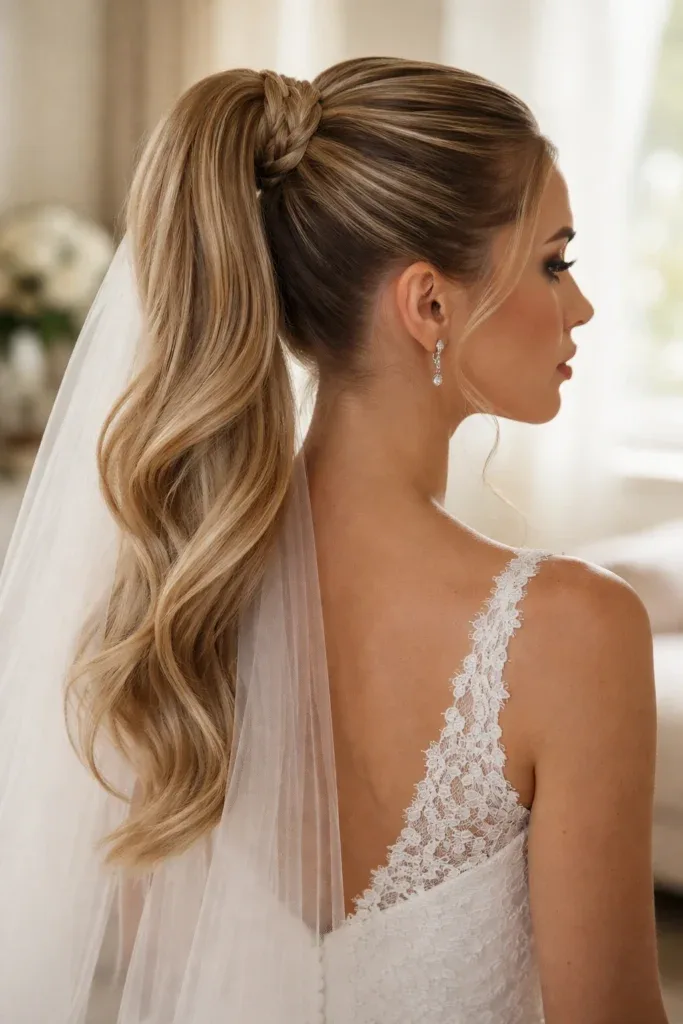
A high ponytail with a braided base is the energetic style — the one for the cousin who will be dancing for three hours straight. The ponytail sits high and swings, but a braid wrapped around its base keeps it anchored, and the height keeps the hair completely off the neck in the heat.
Best for: younger guests, dancers, and outdoor ceremonies. How to style: gather the hair high and tie it firmly, then take a small section from underneath, braid it, and wrap it around the elastic, pinning the end underneath. Add a marigold at the base for the ceremony. Turmeric-proofing tip: the height is the protection — paste is applied to the face, and a high ponytail is nowhere near it.
Who should avoid it: anyone with fine hair or a tender scalp. A high ponytail pulls, and three hours of pulling is a headache waiting to happen.
29. Pin-Up Curls with a Yellow Flower
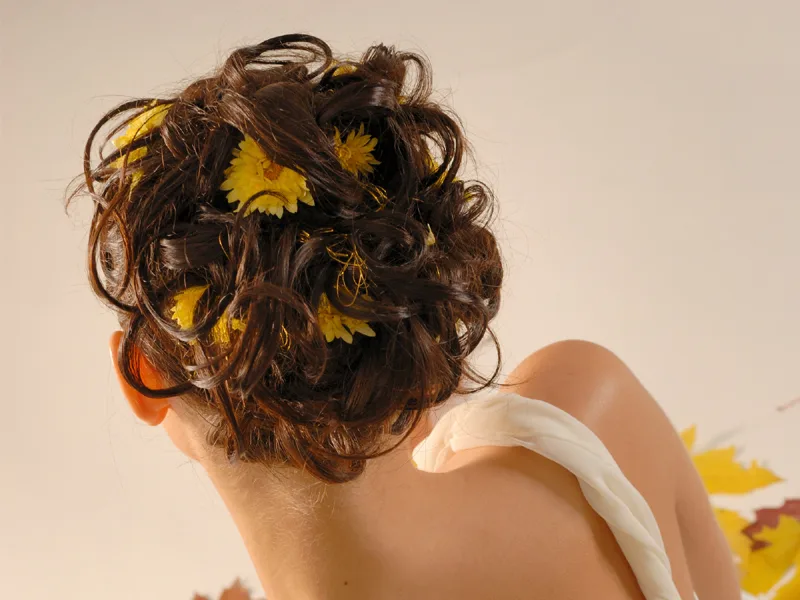
Pin-up curls bring a vintage sparkle to a haldi: structured, sculpted curls pinned into place, with a single yellow flower above one ear. It is a statement look — retro, glamorous and completely different from every braid and bun in the room — and it suits guests who love vintage style.
The curls need to be set properly: pin curls or hot rollers, cooled completely before brushing out, then shaped with a soft brush and set with a firm-hold spray. The yellow flower goes on the side with the deeper wave, pinned through its centre. This is not a quick style — allow an hour — but the result holds for the whole day, because set curls are the most durable curls there are.
Cost and time: an hour with a stylist who knows vintage sets. Do not attempt pin curls for the first time on haldi morning.
30. Textured Low Bun with Loose Tendrils
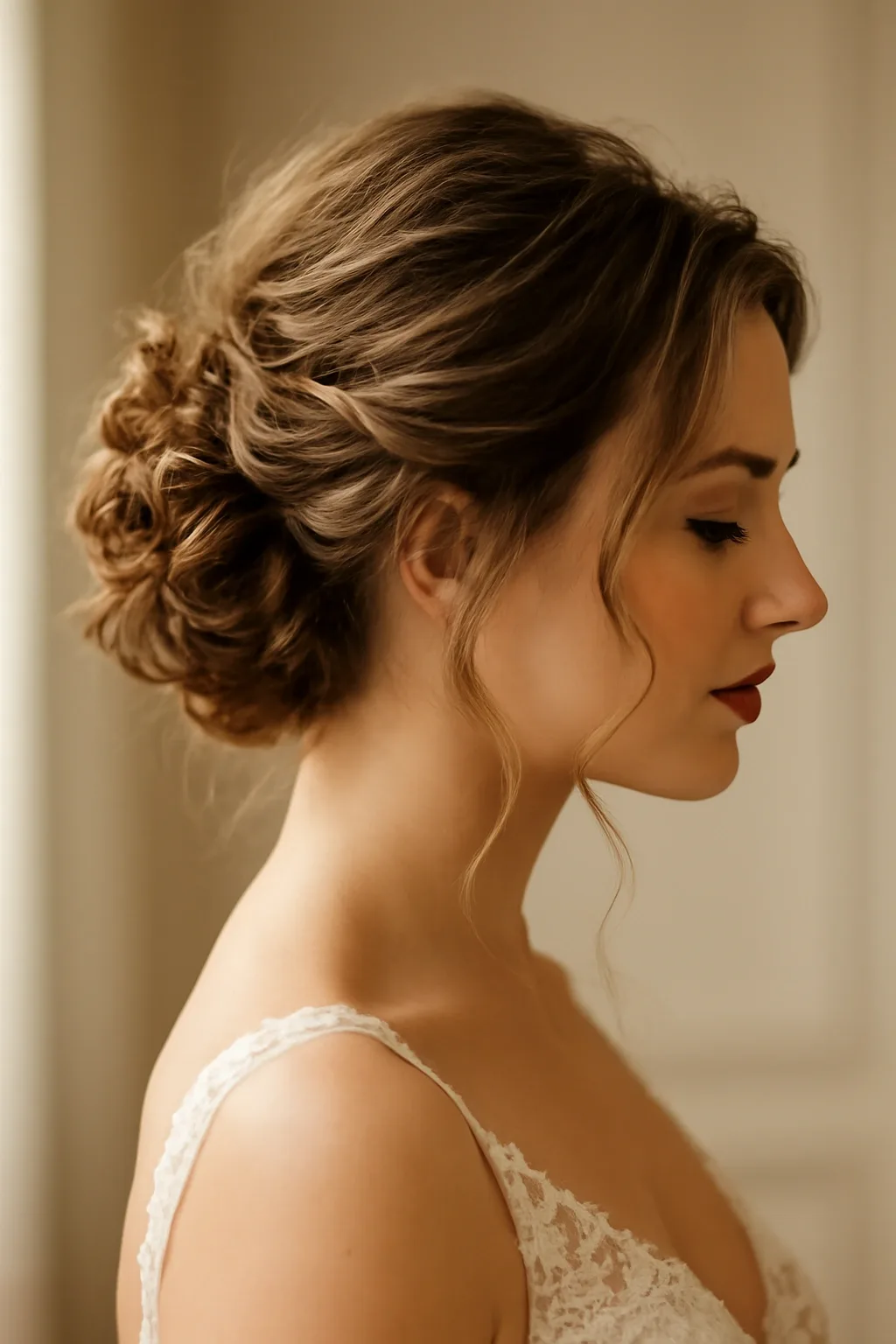
A textured low bun with loose tendrils is the softer sister of the classic gajra bun. The bun itself is loose and textured rather than smooth, and two thin tendrils frame the face. It is romantic, it is modern, and it is the style most brides actually ask for when they say “something soft”.
The tendrils are the risk, so manage them. Keep them thin — no wider than a pencil — and pin them behind the ears during the paste ceremony, letting them out again for photographs. The bun should be built on textured hair, so add a texturising spray before you start, and pin the bun loosely rather than pulling it tight.
Pros and cons: the prettiest low bun in this guide, and the most vulnerable to turmeric. The tendril trick — pinned back for the paste, out for the photos — is what makes it workable.
31. Halo Braid with Gajra
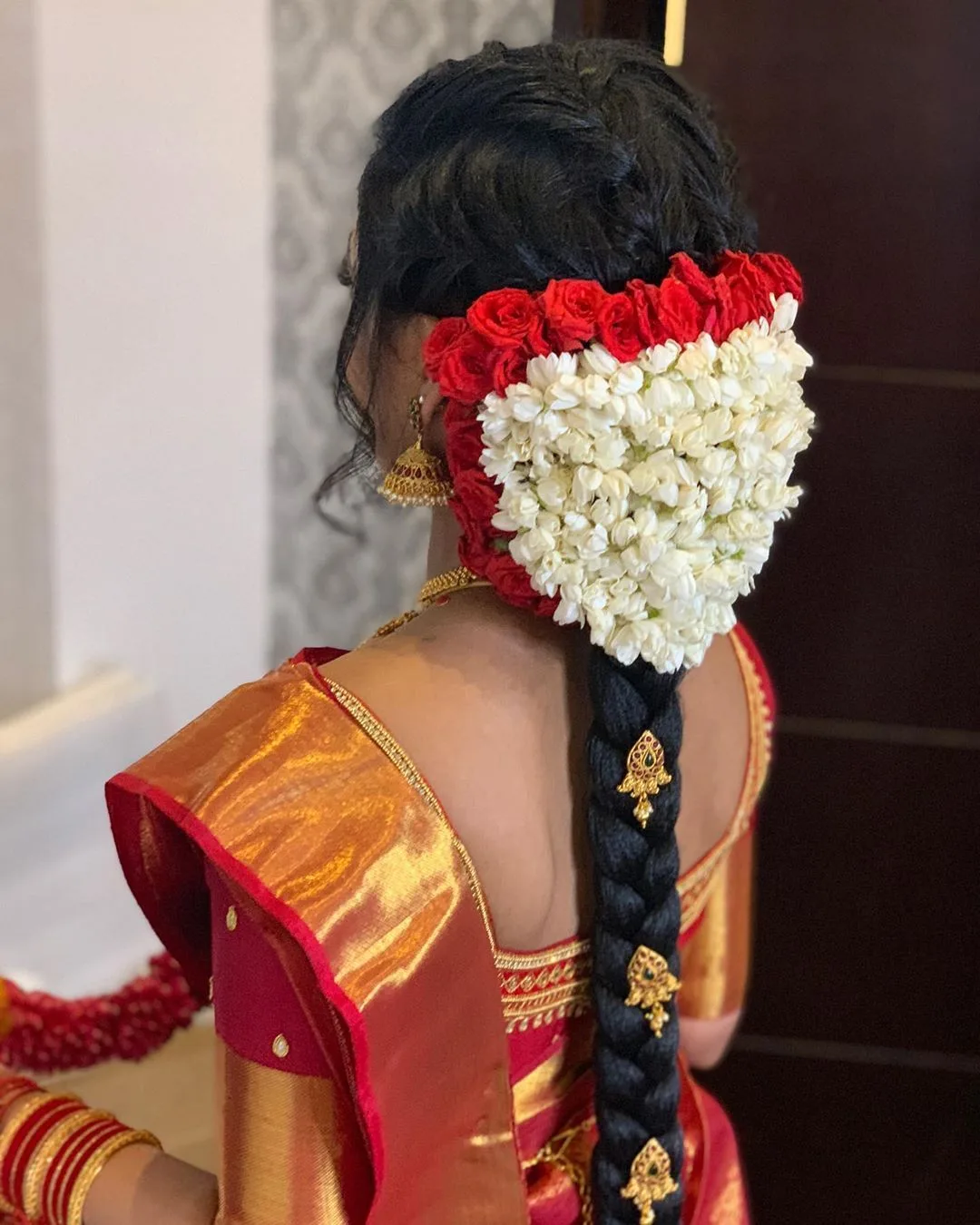
A halo braid with gajra is the crown braid’s bridal cousin: a braid that circles the whole head, with a gajra strand woven through it instead of loose flowers. The effect is a flower crown made of hair and jasmine, and it is one of the most striking bridal looks at any haldi.
Best for: brides with long, thick hair. How to style: braid around the head in a full circle, pinning as you go, then weave the gajra through the braid’s outer edge and pin it at four points. The rest of the hair can be gathered into a low bun at the back or left in a braid. Maintenance: almost none — a halo braid is self-anchoring, which is why it survives dancing so well.
Common mistake: braiding too tightly. A halo braid that pulls gives you a headache by the second hour, and haldi ceremonies do not end in two hours.
32. Short Bob with a Marigold Clip
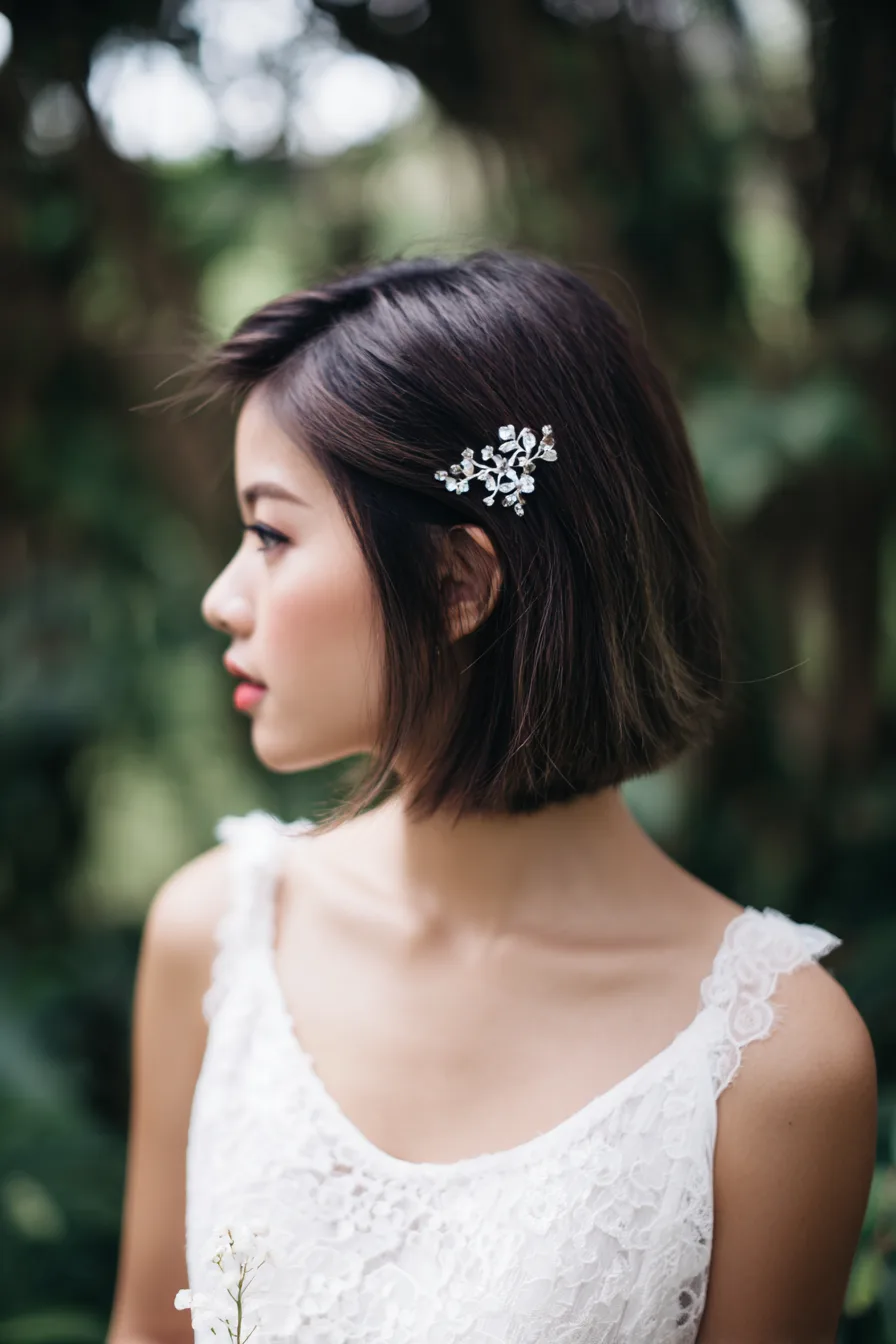
Short hair does not need a complicated style to look ceremony-ready. A well-cut bob, blow-dried smooth with a slight bend at the ends, and one marigold clip above the ear, is all it takes. It is chic, it is fast, and it is completely turmeric-proof, because there is nothing near the face to catch paste.
The cut does the work here, so the styling is minimal: a round brush blow-dry, a little smoothing serum, and the clip. If the bob is very straight, add a slight wave with a flat iron for movement. The marigold clip should be small — one flower, not a cluster — because a big flower overwhelms a short cut.
Quick verdict: the lowest-effort haldi style in this guide, and one of the smartest. Five minutes, one clip, done.
33. Side-Swept Fishtail for Guests
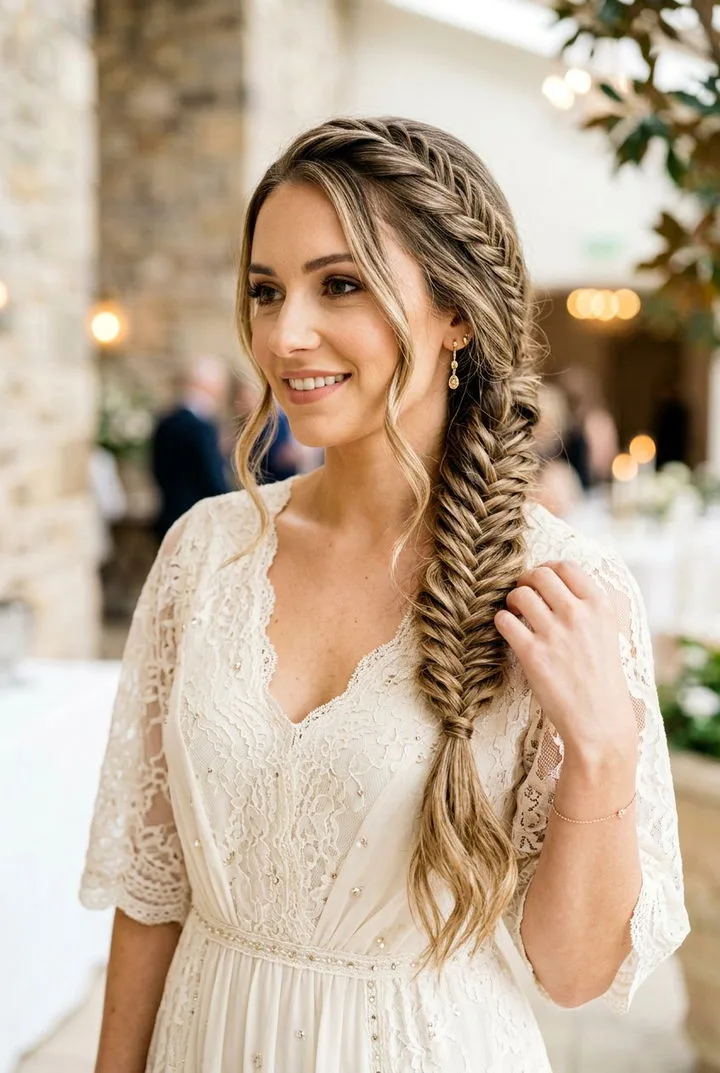
A side-swept fishtail is the guest style that looks like it took an hour and actually took fifteen minutes. The fishtail texture is intricate enough to look special, the side sweep keeps it relaxed, and a small marigold at the top finishes it. It is the best fishtail option for guests because it does not try to compete with the bride’s braid.
Best for: guests with medium to long hair. How to style: sweep the hair to one side, fishtail it loosely, and gently pull the edges out to widen the braid — the pancaking is what makes a fishtail look full. Tie it with a clear elastic and hide the elastic with a strand of hair. Maintenance: low. A fishtail loosens gracefully rather than falling apart, so it still looks good at the end of the day.
Turmeric-proofing tip: wear the braid over the shoulder during the paste ceremony, then swing it forward for photos. The swing takes one second and keeps the braid clean.
34. Romantic Updo with Pearl Pins
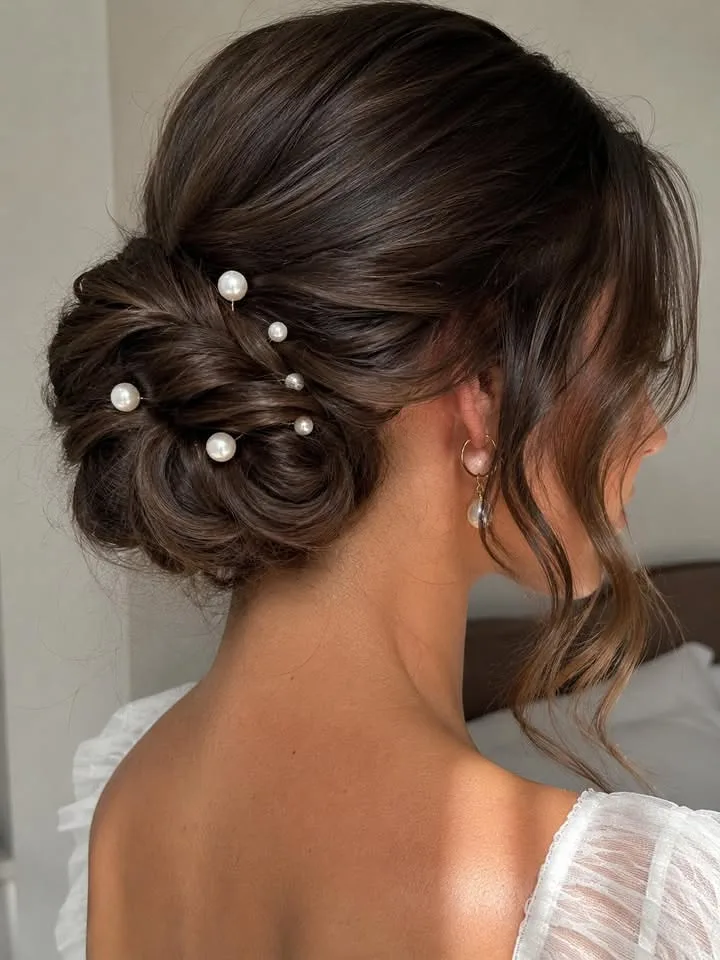
Pearl pins in a soft updo are the quiet luxury of haldi hair. The updo itself is loose and romantic — a low, textured roll with soft pieces at the sides — and the pearl pins catch the light without competing with the marigolds and the yellow outfit. It is a beautiful choice for the bride’s sister or a close family member.
Place the pins in a loose cluster on one side of the updo rather than spreading them evenly — a cluster looks intentional, scattered pins look accidental. Five or six pins is plenty. The updo should be pinned softly, with the texture showing, because pearls against a rock-hard bun look wrong.
Pros and cons: elegant, photogenic, and the pins are light so they do not pull. The only downside is that pearl pins slide on very smooth hair, so add a little texturising spray first.
35. Braided Headband with Open Waves
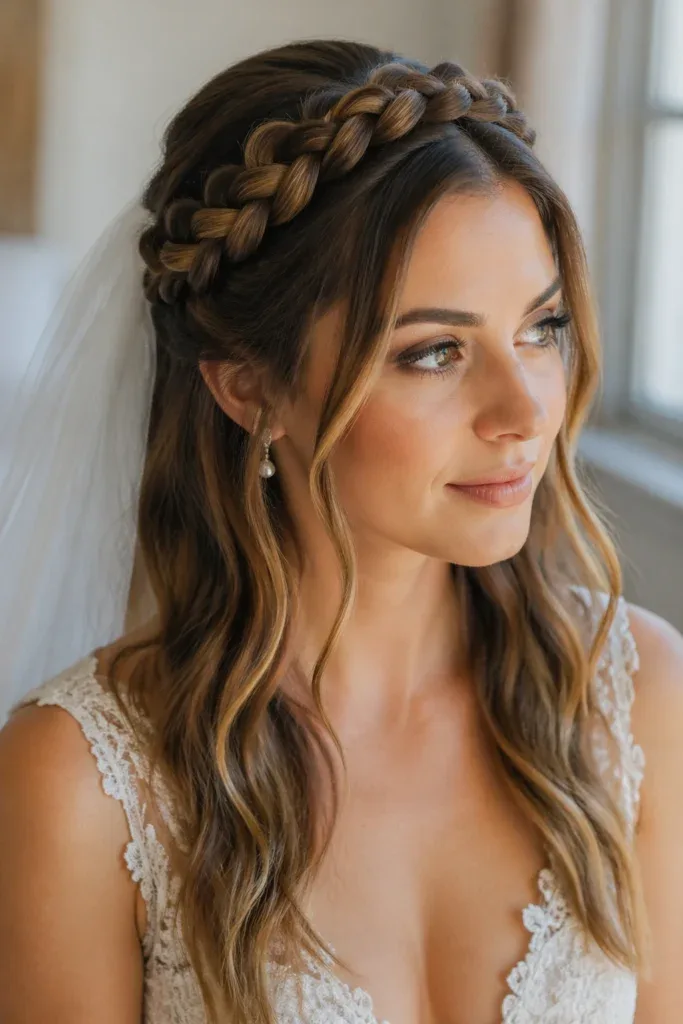
A braided headband with open waves is the halo braid’s relaxed cousin: a single braid across the front of the head, acting as a headband, with the rest of the hair worn down in waves. It keeps the hairline clear and the face framed, while the waves give you the open-hair look.
Best for: guests who love wearing their hair down but need the front controlled. How to style: braid a section from one temple across to the other, pinning the end behind the ear, then curl the loose hair in large sections. What to ask: if your hair is fine, ask for the braid to be pancaked — pulled wider — so it reads as a headband rather than a thin line.
Common mistake: braiding the headband too far back. It should sit at the hairline, not in the middle of the crown, or it looks like a random braid rather than a headband.
36. Messy Braid with a Yellow Scarf
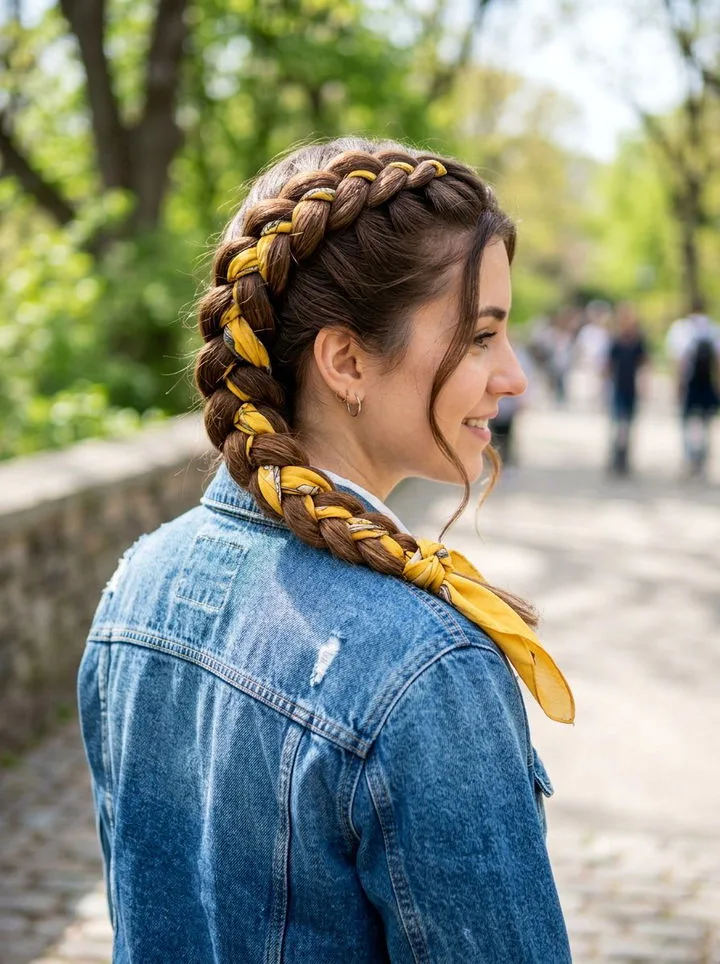
A messy braid with a yellow scarf tied through it is the most fun style in this guide, and the easiest to personalise. The braid is loose and textured, the scarf is woven through the last few crossovers and tied in a bow at the end, and the whole thing looks like a celebration. It is perfect for the dancing, when the formality drops.
Choose a light scarf — silk or chiffon, not cotton — so it does not weigh the braid down. Weave it through the braid rather than just tying it at the end, so the yellow shows along the whole length. The braid itself should be loose: pull the edges out, let a few strands escape, and do not worry about perfection. The scarf is the star.
Who should avoid it: brides. A scarf braid is festive and casual, and it belongs to the guests and the dancers, not the bride.
37. Sleek Straight Hair with a Flower Crown
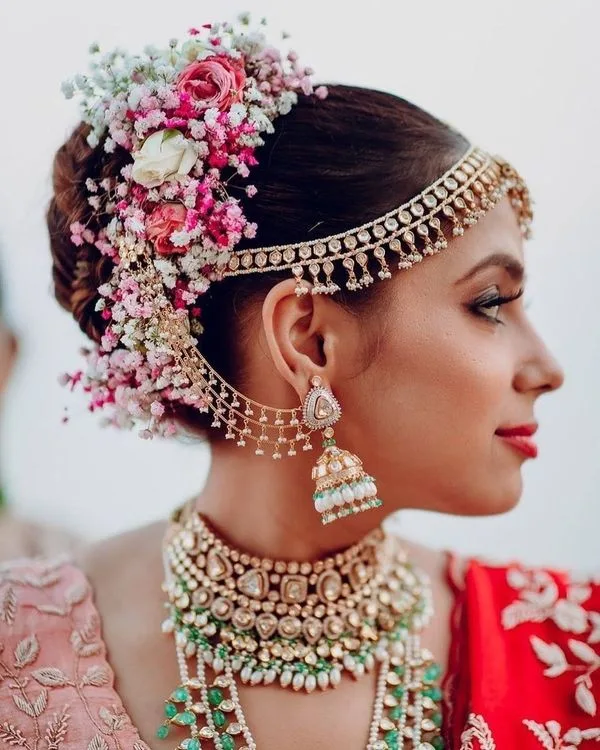
Sleek, straight hair with a flower crown is the minimalist haldi look: glass-smooth lengths, a clean centre part, and a crown of small marigolds and jasmine sitting on top. The contrast between the severe, straight hair and the soft, wild flowers is what makes it work.
The straightening has to be perfect — any wave or kink breaks the effect. Straighten in small sections, finish with a shine serum, and set the crown slightly back from the hairline, pinning it at both sides and the centre. The crown should be light: small flowers, not big marigolds, or it will slide forward as the day goes on.
Maintenance: carry a small comb. Straight hair shows every tangle, and a quick comb-through between the ceremony and the photos keeps it looking fresh.
38. The Bridal Haldi Bun with Marigolds and Gajra
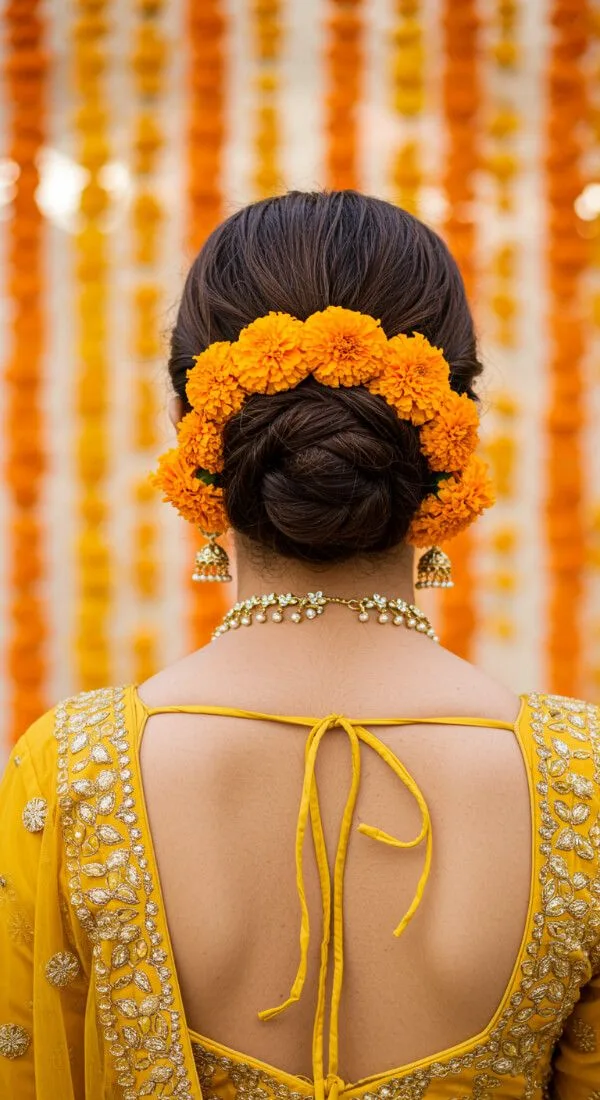
We end where haldi hair ends: the bridal bun, dressed in everything the ceremony has to offer. A low, firm bun, wrapped twice in gajra, ringed with marigolds, and finished with gold pins — the full picture. It is the most decorated style in this guide, and it belongs to the bride alone.
Best for: the bride, and only the bride. How to style: build the bun first and make it perfect — smooth, firm, pinned flat. Then add the decoration in layers: gajra wrapped twice around the bun, marigolds pinned into the top edge, gold pins at the sides. Each layer is pinned separately, so if one flower loosens, the rest holds. What to ask: ask your stylist to finish the bun a full hour before the ceremony, so the pins settle and you can test it by moving, bending and dancing before the paste arrives.
Quick verdict: this is the haldi look. Everything else in this guide is a variation on it — simpler, looser, or quieter — but this is the one the photographs will remember.
What is the best hairstyle for a haldi ceremony?
The best hairstyle for a haldi ceremony is a low bun with gajra, because it keeps the hairline clear of turmeric paste, holds flowers securely, and survives hours of dancing and photographs. If you want something softer, a Dutch braid into a low bun or a braided crown with marigolds offers the same protection with a more romantic finish.
How do I keep turmeric paste out of my hair at a haldi?
Keep turmeric paste out of your hair by pulling the hairline back completely — a centre part with the front pinned behind the ears, a braid that starts at the temples, or a low bun with no loose tendrils. Avoid face-framing pieces during the paste ceremony, and blot any paste off with a damp cloth rather than washing it, because water spreads the stain.
Can I wear my hair down for a haldi ceremony?
Yes, you can wear your hair down for a haldi ceremony, but it is the riskiest choice, because loose hair near the face catches turmeric paste and frizzes in the humidity. If you wear it down, keep the front sections pinned back, keep the lengths behind your shoulders during the paste, and choose a style with a braided headband or half-up twists for control.
Which flowers are best for haldi hair?
Marigolds and gajra are the best flowers for haldi hair. Marigolds are bright, cheap and match the yellow ceremony palette, while gajra — strung jasmine or marigold — wraps around a bun and can be pinned at several points, so it stays put through dancing. White jasmine also works beautifully as a contrast against a yellow outfit.
How do I wash turmeric out of my hair after haldi?
Wash turmeric out of your hair by rinsing first with plain lukewarm water, then shampooing twice with a clarifying shampoo. A diluted apple cider vinegar rinse — one part vinegar to four parts water — helps lift the last of the yellow, and a purple shampoo removes any remaining tint on blonde or light hair. On dark hair, one good wash is usually enough.
Does turmeric stain blonde hair?
Yes, turmeric stains blonde and light hair, and the yellow tint can last for two or three washes, or up to a week on bleached ends. It is not damage — just colour sitting on the hair shaft. If you have blonde or bleached hair, keep your hairline fully covered during the ceremony, or accept a temporary yellow tint on the ends.
What hairstyle should a haldi guest wear?
A haldi guest should wear a neat, secure style that is not bridal — a side braid, a low ponytail, a half-up twist, or loose waves with a single marigold pin. Skip the gajra, the maang tikka and the full flower crown, which belong to the bride, and choose something that survives dancing and photographs well without competing with her.
How long does a haldi hairstyle take?
A haldi hairstyle takes 15 minutes for a simple guest style like a side braid or a low ponytail, 30 to 45 minutes for a braided bun or a braided crown, and about an hour for a full bridal bun with gajra and marigolds. Always add a trial the day before for a bridal style, because haldi morning has no time for experiments.
Can I do a haldi hairstyle myself?
Yes, many haldi hairstyles are easy to do yourself, including a side braid, a low ponytail with a braid, a messy top knot with marigold pins, and a half-up twisted crown. Bridal styles — a gajra bun, a halo braid, or a sleek bun with a maang tikka — are best left to a professional, because they need precise pinning to survive the ceremony.
What should I pack in a haldi hair touch-up kit?
Pack ten bobby pins in your hair colour, two U-pins, a travel hairspray, blotting papers, a few spare marigolds or a spare gajra strand, and a silk scrunchie for the moment you give up and tie it all back. Give the kit to a sister or a friend, not the bride, so it is easy to reach during the ceremony.
Conclusion: Choose a Style That Survives the Ceremony, Not Just the Mirror
Haldi is not a photo shoot — it is a joyful mess, and the best hairstyles for a haldi ceremony are the ones that understand that. A style that looks perfect in the mirror but falls apart at the first handful of turmeric paste has failed at its one job. The styles that work — the low gajra bun, the braided crown, the Dutch braid into a bun, the halo braid — all share the same secret: they keep the hairline clear, they anchor the flowers into the structure of the style, and they are built to survive dancing, sweat and three hours of relatives.
So choose for the ceremony you are actually going to, not the one in your head. If you are the bride, go big and go secure — the full bun, the gajra, the marigolds. If you are a guest, keep it neat and let the bride shine. Do a trial the day before, pack your touch-up kit, and then stop worrying about your hair. The paste will wash out, the flowers will wilt, and the photographs will last — and in every one of them, the best hairstyle will be the one that was still standing at the end of the dance.