Hairstyles for a Summer Camp: 36 Tangle-Proof, Swim-Ready Styles Kids and Teens Will Actually Love
Picture the first morning at camp: the cabin is buzzing, the breakfast bell is about to ring, there is one small mirror shared between eight bunks, and a head of hair that spent the night pressed against a pillow in a sleeping bag. That is the real test of hairstyles for a summer camp — not how pretty they look in a salon chair, but how they hold up through a lake swim, a dusty hike, an afternoon craft session and a campfire singalong, all without a hairdryer in sight. The styles that win at camp are the ones that stay put, dry fast, keep tangles away and can be redone in five minutes on a cabin porch.
This guide gathers 36 practical hairstyles for a summer camp, made for kids and teens of every hair length and texture, plus eight guides that cover the unglamorous side of camp hair: what to pack, how to beat tangles, what to do before and after swimming, and how to check for lice without making a fuss. Every style includes honest notes on how long it takes, how it survives water and heat, who it suits best and what usually goes wrong, so parents can practise at home and campers can fix their own hair when no adult is around.
What to Pack in a Camp Hair Kit
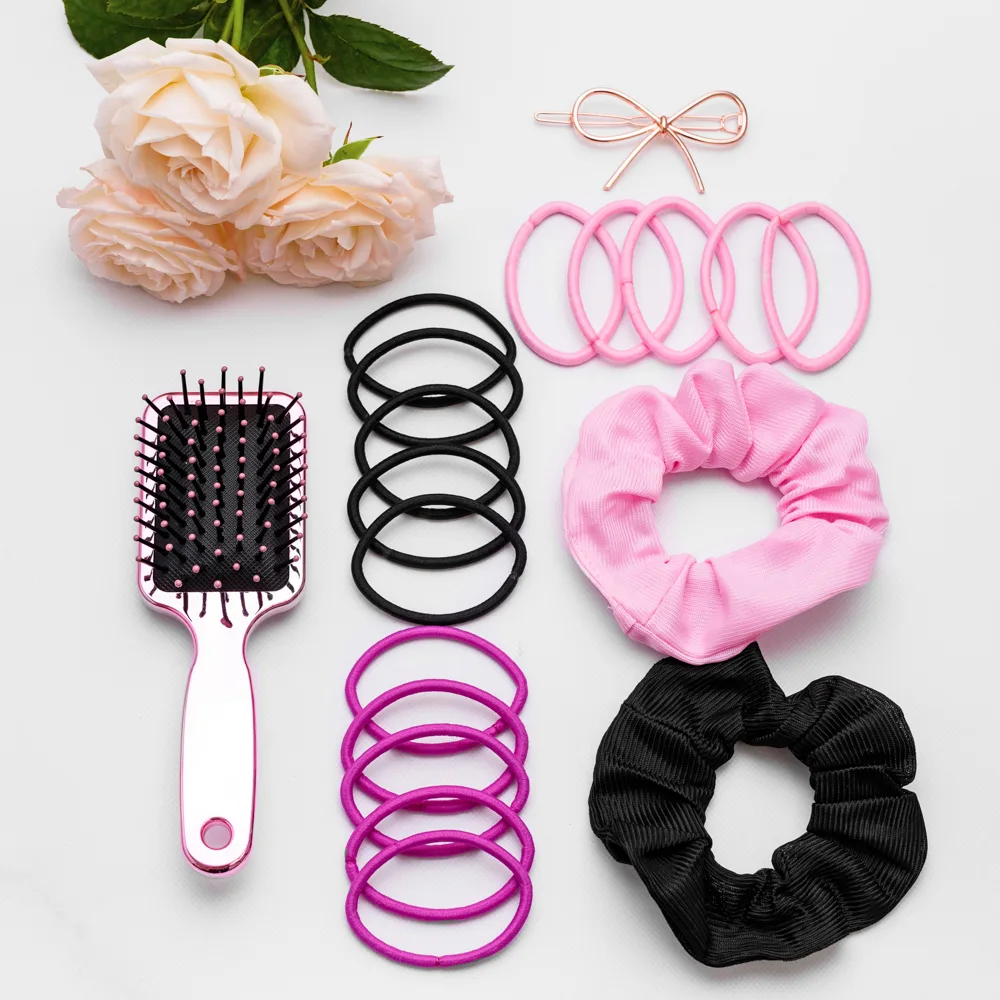
A camp hair kit does not need to be big, but it does need to be complete, because the camp shop will not stock the right brush and nobody wants to borrow a stranger’s hair tie. Pack a wide-tooth comb for detangling, a paddle brush for mornings, ten or more snag-free elastics, a handful of bobby pins, a few claw clips, a spray bottle for water, a small bottle of leave-in conditioner, and a swim cap if your camper will be in the lake every day. A zip-lock bag keeps it all together in a duffel, and a second small bag holds the spares that always go missing by day three.
Best for: every camper, whatever their hair type. Common mistake: packing only one hair tie and a fancy brush that cannot handle knots. Maintenance: label the kit with your camper’s name, because hair supplies are the first things to wander off in a shared cabin. Cost: a full kit costs less than a single salon visit, and most of it can be bought at a supermarket. Quick verdict: pack it once, pack it right, and hair stops being a daily camp problem.
How to Keep Hair Tangle-Free at Camp
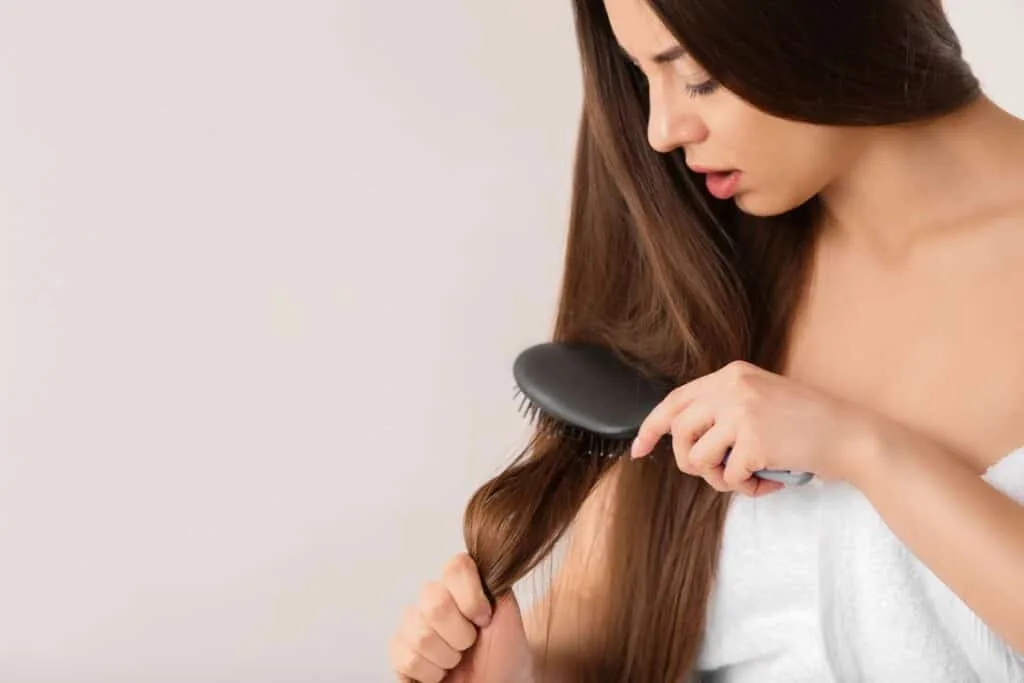
Tangles are the number-one camp hair complaint, and they come from the same three things every time: wind on a hike, water in the lake, and hair rubbing against a pillow all night. The fix is prevention, not rescue. Braid hair before any activity where it can blow around, sleep with it in a loose braid, and never let wet hair dry loose in the wind. A pea-sized amount of leave-in conditioner worked through the ends each morning makes strands slide past each other instead of knotting, and a wide-tooth comb is far kinder than a brush on damp, tangled hair.
Best for: long, fine or curly hair, which tangles fastest outdoors. How to do it: detangle from the ends upward in small sections, never from the roots down. Common mistake: ripping a brush through a knot, which snaps hair and makes the tangle tighter. Who should avoid it: nobody — every camper benefits, though short hair can skip the conditioner. Quick verdict: five minutes of prevention at night saves twenty painful minutes of detangling in the morning.
Swim-Day Hair Care: Before and After the Lake
Lake and pool water are hard on hair: chlorine dries it out, lake water leaves it gritty, and wet hair tangles the moment it starts to dry in the sun. The trick campers rarely know is to wet hair with clean water before getting in, because hair that is already soaked absorbs far less chlorinated or lake water. A tight braid or bun keeps it contained while swimming, and a swim cap is the simplest protection of all for campers who swim every day. After swimming, rinse with fresh water as soon as possible, even if a full wash has to wait until the evening shower.
Best for: daily swimmers and kids with colour-treated or very dry hair. Maintenance: a weekly deep-conditioning rinse at home after camp restores softness. Common mistake: leaving chlorine in hair all day and then brushing it dry, which causes breakage. Pros: hair stays softer, tangles less and smells better. Cons: it takes two extra minutes before and after every swim. Quick verdict: rinse before, braid during, rinse after — the whole routine fits in a lunch break.
Braiding Basics for Beginners
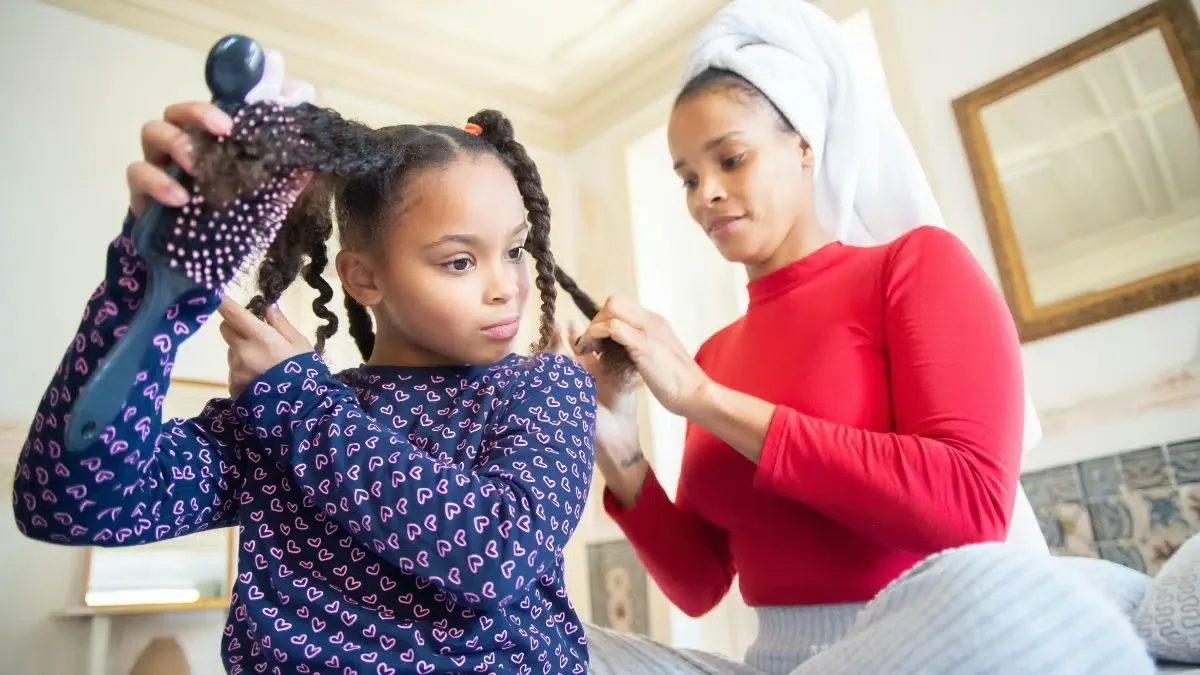
Most camp hairstyles start with a braid, and the good news is that parents do not need to master a French braid before camp — a simple three-strand braid covers most of the styles in this guide, and a Dutch braid is the same braid done in reverse. Practise for ten minutes a night in the week before camp, on dry hair with a little leave-in conditioner for grip, and let your child practise on a doll or on your own hair. Campers who can braid their own hair, even roughly, gain real independence at camp, and counsellors will always help with the finishing touches.
How to style it: divide hair into three equal sections, cross the right strand over the middle, then the left over the middle, and repeat. Time: a basic braid takes about three minutes once the hands learn the rhythm. Common mistake: starting too high on the head and pulling too tight, which hurts and gives a headache by lunchtime. Who should avoid it: nobody, though very short hair may need clips instead of braids. Quick verdict: one braid, learned properly, unlocks half the styles in this guide.
Hair Care for Curly and Coily Hair at Camp
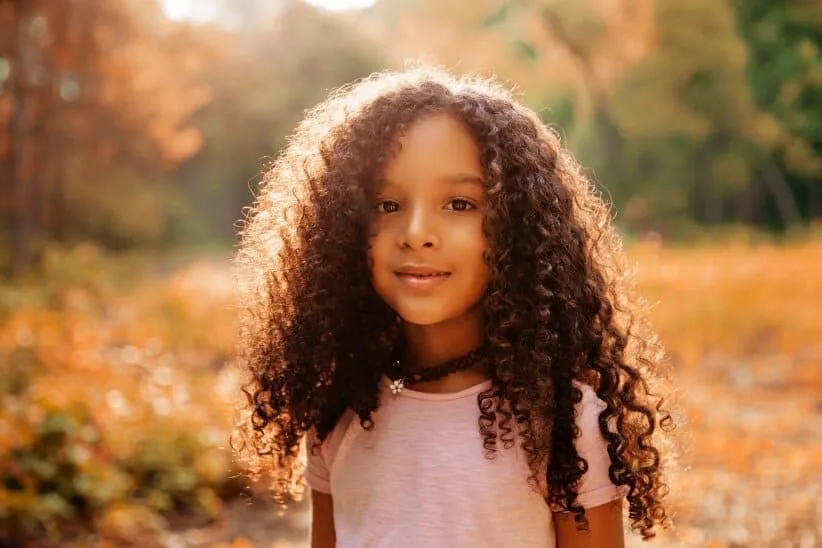
Curly and coily hair needs a different camp plan, because it dries out faster, tangles more easily and shrinks when it gets wet. The camp routine that works is simple: moisturise, protect, and leave it alone. A leave-in conditioner or light curl cream applied to damp hair in the morning, a protective style such as twists, braids or a puff for the day, and a satin bonnet or satin pillowcase at night will keep curls defined and pain-free all week. Never brush curly hair dry at camp — it turns into frizz and tears — and detangle only when the hair is damp and coated with conditioner.
Best for: curls, coils and waves of every length. Pros: protective styles last two or three days, so mornings get faster as the week goes on. Cons: the right products take up a little more bag space, and a satin bonnet can feel odd the first night. Common mistake: treating curly hair like straight hair and brushing it out dry. Quick verdict: moisture plus a protective style is the whole secret, and it works at camp exactly as it works at home.
Lice Prevention and Hair Checks at Camp
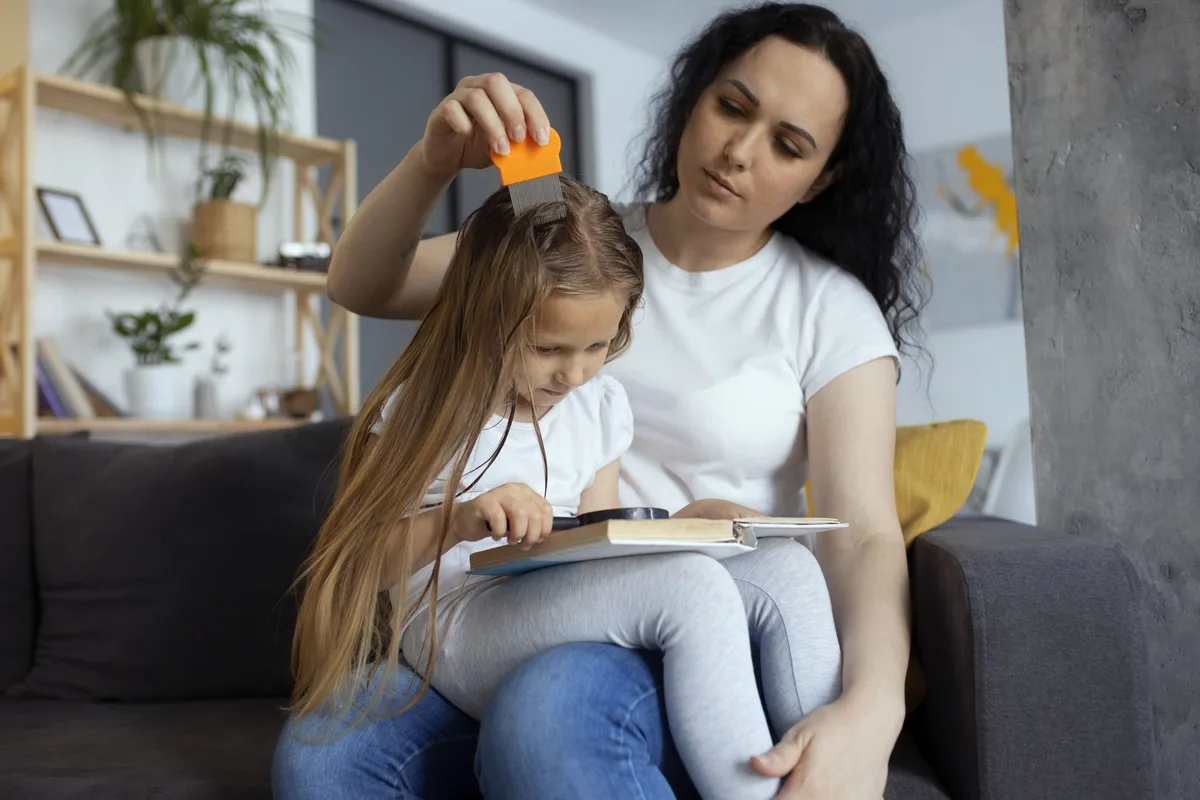
Lice are the part of camp nobody likes to talk about, and they are also the part that is easiest to prevent. Lice spread through direct head-to-head contact and shared hats, brushes and hair accessories, so the camp rules are simple: do not share hats, brushes, hair ties or pillows, and keep hair tied back during close-contact games. A weekly check at home before camp and another when your child comes home is enough for most families, and a fine-tooth comb run through damp, conditioned hair is the most reliable way to check. If lice do appear, tell the camp nurse straight away — it happens to careful families too, and early treatment keeps it small.
Best for: every camper, especially in shared cabins and bunk rooms. How to check: comb damp hair section by section in bright light, looking close to the scalp. Common mistake: panicking and cutting hair short, which does not prevent lice at all. What to pack: your child’s own brush, comb and hair ties, labelled with their name. Quick verdict: tied-back hair and no sharing is a quiet, practical defence that costs nothing.
Sun Protection for Hair and Scalp
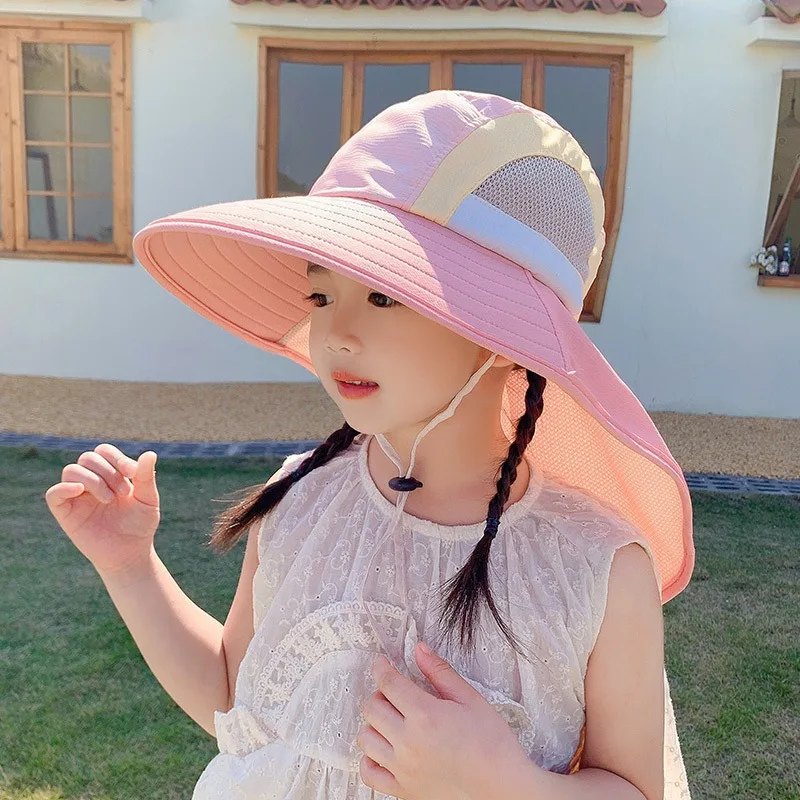
Sunburn is not just for shoulders — scalps burn, especially along part lines, and sun dries hair out until it feels like straw by the end of the week. The easiest protection is a hat: a wide-brimmed hat or a baseball cap shades the scalp and keeps hair out of the face, and the styles in this guide that sit low, like low braids and low buns, fit comfortably underneath one. Sunscreen along the part line protects exposed scalp on days when a hat will not stay on, and a light leave-in conditioner with UV protection helps hair itself. Rinsing hair after a long sunny day washes away sweat and sunscreen residue before it builds up.
Best for: fair-haired campers, kids with thin hair, and anyone spending all day outdoors. Pros: a hat is the cheapest hair protection there is, and it doubles as sun safety. Cons: hats flatten volume, which is why low styles pair best with them. Common mistake: forgetting the part line, which is the first place to burn. Quick verdict: hat on, part line covered, hair braided low — three small habits that save a week of sun damage.
A Quick 5-Minute Morning Hair Routine for Camp
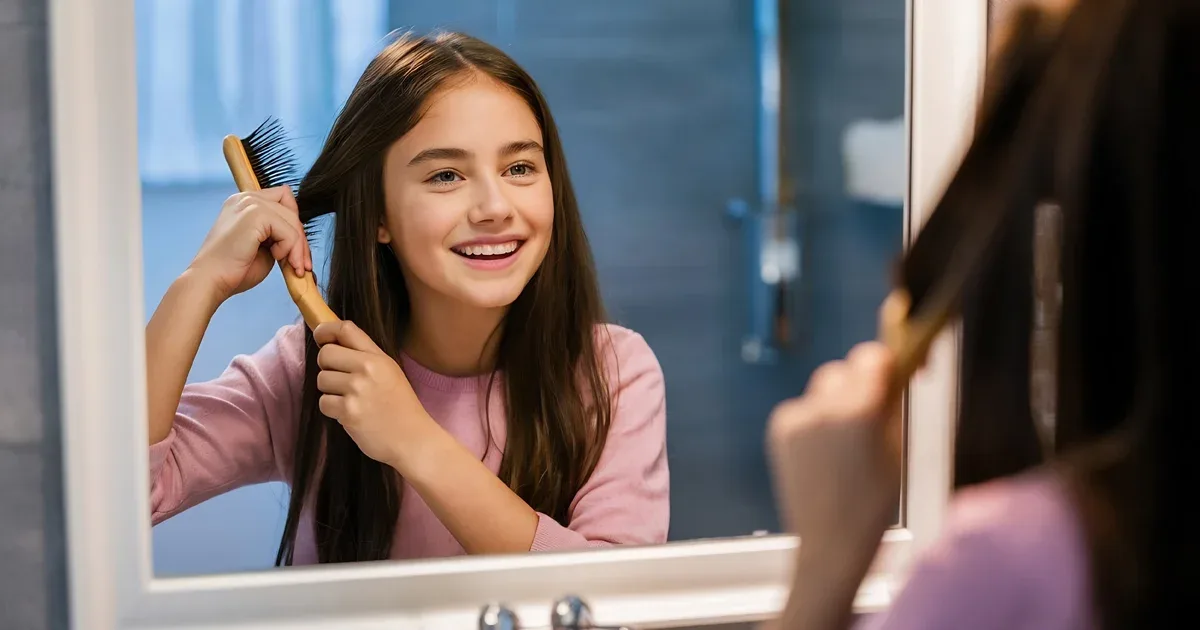
Camp mornings are loud, rushed and short on mirrors, so the morning hair routine needs to fit into five minutes and work without a second pair of hands. The routine is the same every day: spray hair lightly with water, smooth leave-in conditioner through the ends, detangle quickly with a wide-tooth comb, and put it into the day’s style — a braid for a hike, a bun for crafts, a ponytail for sports. On the second and third day, yesterday’s braid can simply be refreshed with a little water and re-secured, which takes even less time. The goal is not a perfect style, it is a comfortable one that survives until lunch.
How to do it: lay out the brush, ties and clips the night before, so nothing is hunted for in the morning rush. Time: five minutes for most styles, two minutes for a refresh. Common mistake: trying a brand-new style on a busy camp morning instead of practising it at home first. Who should avoid it: nobody — even campers with very short hair benefit from a quick comb-through and a dab of product. Quick verdict: same routine, same spot, same five minutes, every single morning.
1. Classic High Ponytail
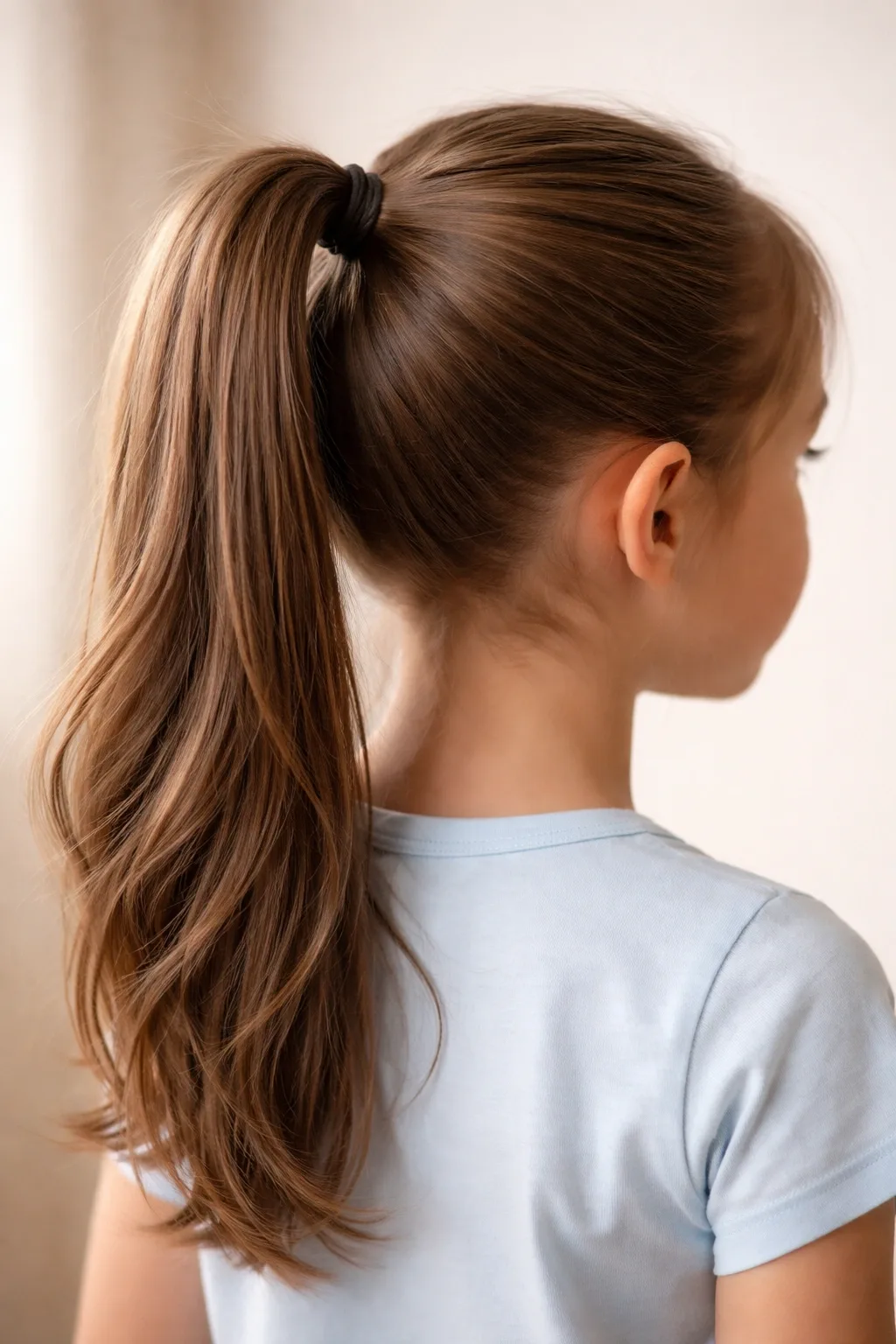
The classic high ponytail is the first hairstyle most kids learn, and at camp it earns its place all over again: it takes two minutes, keeps hair off the neck on a hot hike, and works for almost every hair type. Brush hair up to the crown, smooth the sides with a little water or leave-in conditioner, and secure it with a snag-free elastic. For a neater finish, wrap a small strand of hair around the elastic and pin it underneath. It is the style to reach for on sports day, on the climbing wall, and on any morning when time is short.
Best for: sports, hiking and hot afternoons. How to style it: flip the head upside down to gather hair high, then smooth the front with a brush. Pros: fast, cool and easy to redo without a mirror. Cons: it can slip during swimming and may give a headache if pulled too tight. Common mistake: using a thin elastic that snaps, or pulling the ponytail so high it tugs at the hairline. Quick verdict: the most reliable two-minute style at camp, and the one every camper should be able to do alone.
2. Double Dutch Braids
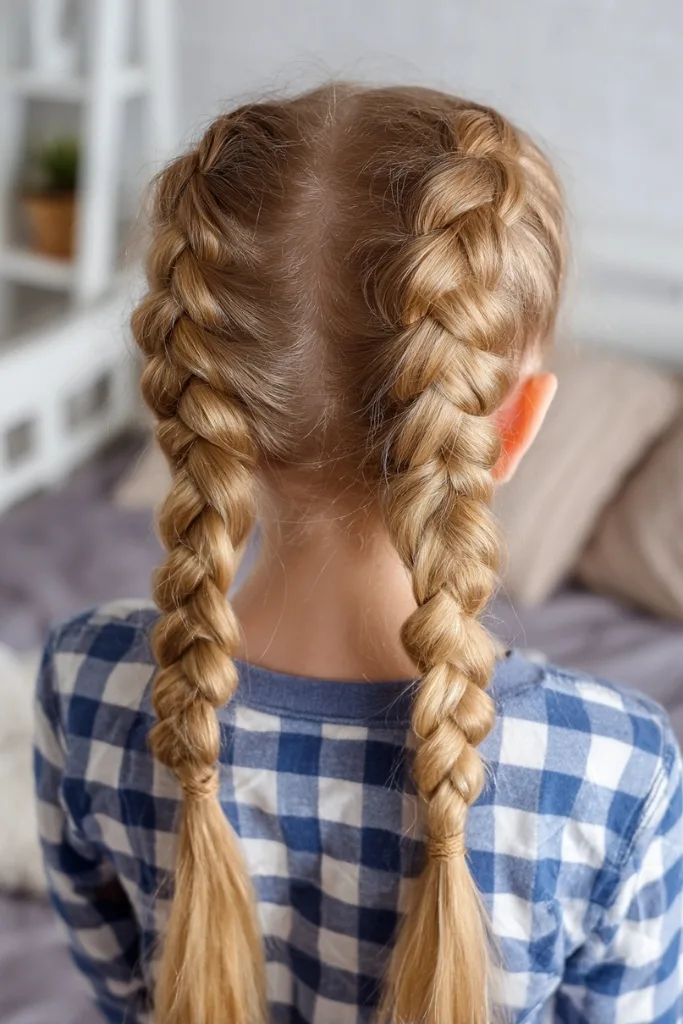
Double Dutch braids are the camp classic for a reason: they hold through swimming, hiking and sleeping, they keep every strand out of the face, and they look neat from breakfast until lights-out. Part hair down the middle, braid each side from the front hairline to the nape using the underhand Dutch technique, and secure with small elastics. The braids can be worn loose down the back or tucked into buns for extra security. They take a little practice, but once learned they are the style parents reach for on the first day of camp.
Best for: long days, swim days and kids who hate hair in their face. Time: about ten minutes for both braids. Pros: lasts all day, survives water, and gives lovely waves when taken out at night. Cons: needs a second pair of hands for younger kids. Common mistake: braiding too loosely at the front, so the braids slip by midday. Quick verdict: if you learn one style before camp, make it this one.
3. French Braid Crown
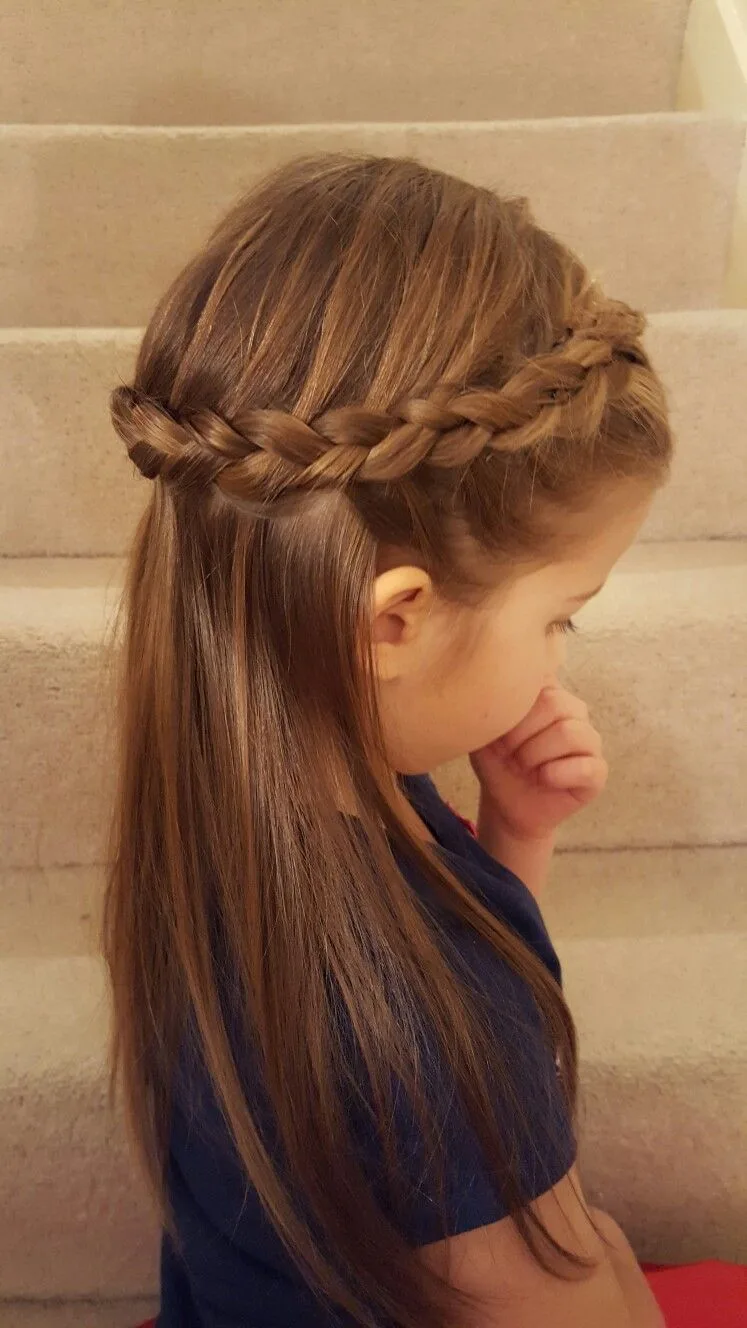
A French braid crown wraps a single braid around the head like a halo, keeping hair completely off the face and neck while looking far fancier than the effort it takes. Start at one ear, braid around the hairline picking up sections as you go, and pin the end where you started. It is perfect for campfire evenings, camp photos and talent-show nights, when a camper wants to look special without spending half an hour in front of a mirror. It also holds up remarkably well overnight, so it can be a two-day style with a morning refresh.
Best for: evening events, camp photos and hot days. How to style it: keep the braid close to the hairline and use bobby pins at the nape to anchor it. Pros: elegant, secure and cool. Cons: the trickiest braid in this guide, so practise at home first. Who should avoid it: very short hair, which will not reach all the way around. Quick verdict: the prettiest way to keep hair up at camp, once the hands learn the path around the head.
4. Bubble Braid Ponytail
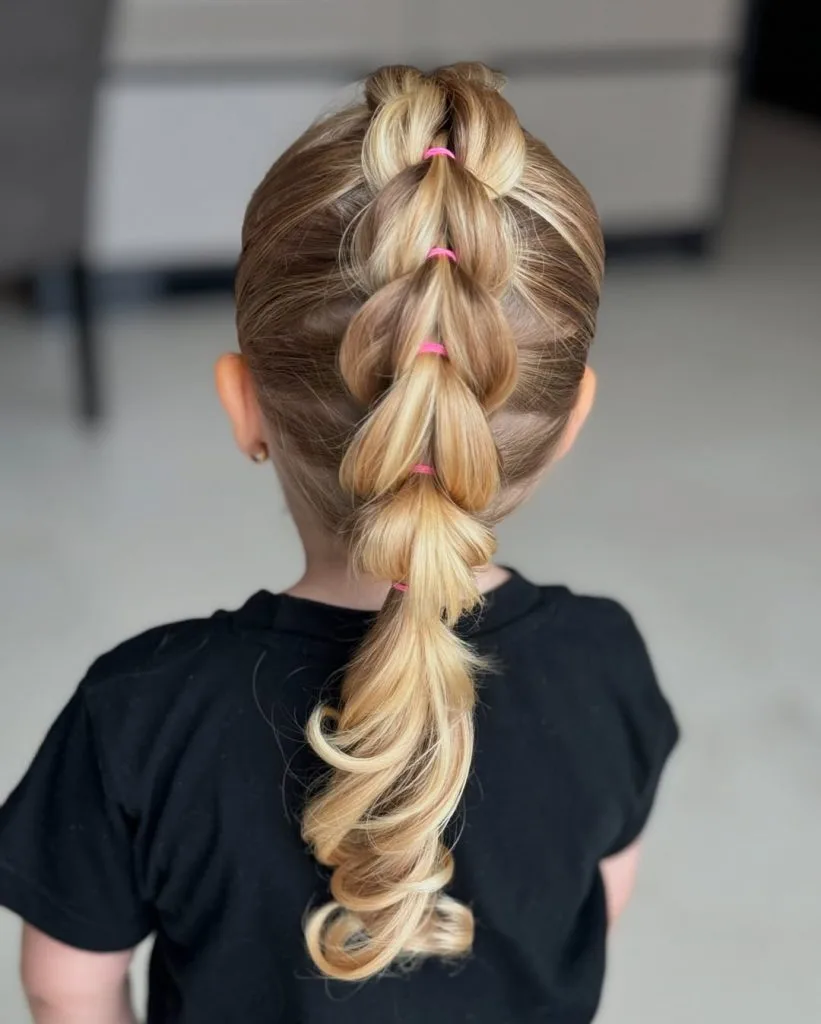
The bubble braid ponytail looks like a complicated braid but is really just a ponytail with extra elastics, which makes it perfect for campers who cannot braid yet. Tie a high ponytail, add elastics every few inches down its length, and gently pull each section outwards to puff it into a bubble. It holds through sports, survives a swim better than loose hair, and younger campers love it because it feels fun and looks impressive. Use colourful elastics for camp spirit days, or plain ones for a quieter look.
Best for: beginners, younger campers and spirit days. Time: about five minutes. Pros: no braiding skill needed, holds well, and looks great in photos. Cons: the bubbles can flatten after swimming, so refresh them with a quick tug. Common mistake: spacing the elastics unevenly, which makes the bubbles lopsided. Quick verdict: maximum wow for minimum skill — the best first “fancy” style a camper can do alone.
5. Messy Top Knot Bun
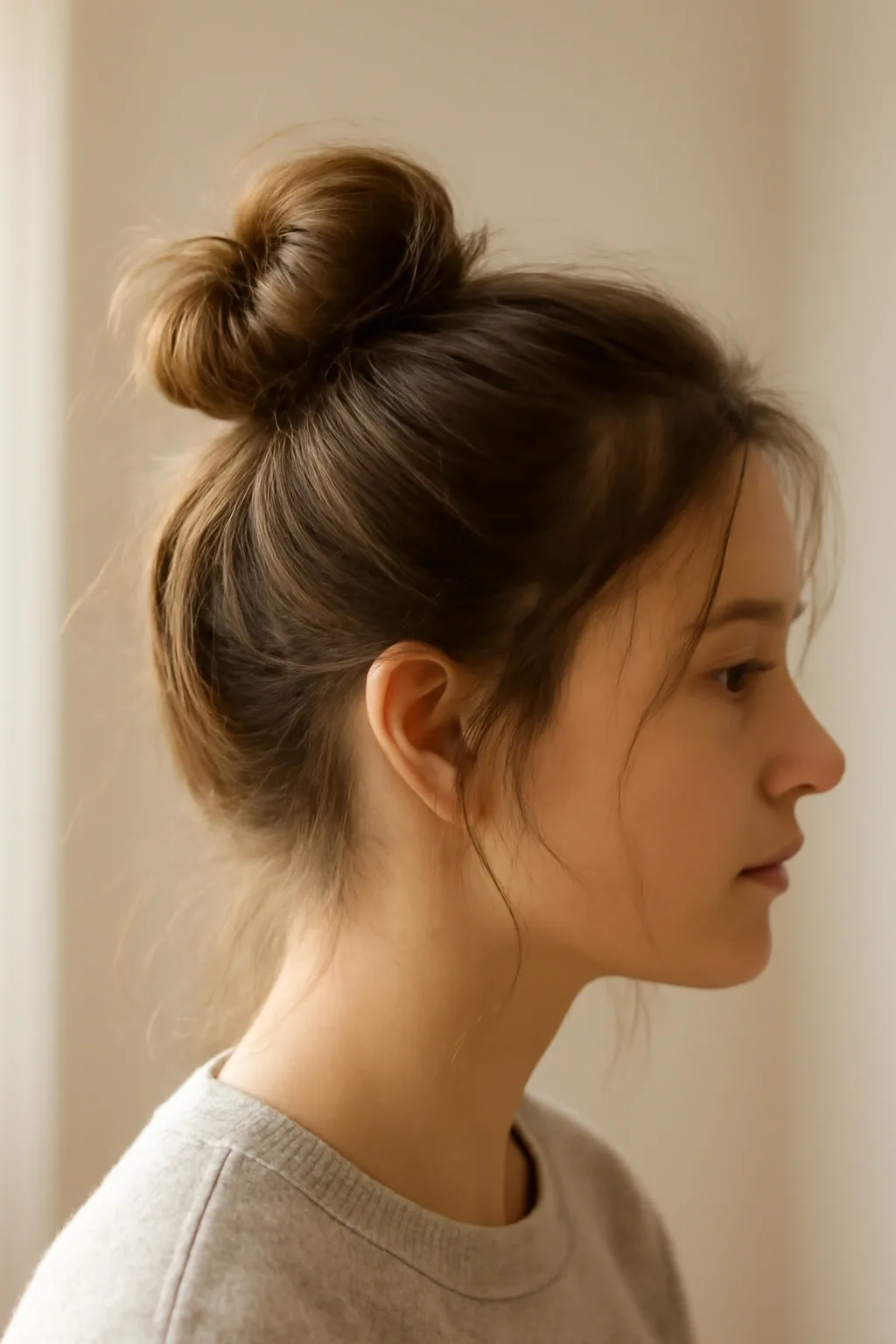
A messy top knot bun is the camp answer to hair that will not behave: gather it high, twist it, wrap it, pin it, and let the loose pieces do what they want. It keeps hair completely off the neck on the hottest afternoons, works brilliantly for craft sessions where hair must stay out of glue and paint, and takes about ninety seconds from start to finish. A scrunchie or a thick elastic holds it best, and a few bobby pins at the base stop it wobbling during a game of capture the flag.
Best for: hot days, crafts and second-day hair. How to style it: flip the head forward, gather hair at the crown, twist and coil it, then secure. Pros: the fastest updo here, and it hides unwashed hair well. Cons: it can feel heavy on very thick hair, and it slips if the elastic is too loose. Common mistake: making it too neat — a top knot is supposed to look relaxed. Quick verdict: the style for every camper who has ever said “I just need my hair out of the way.”
6. Low Braided Pigtails
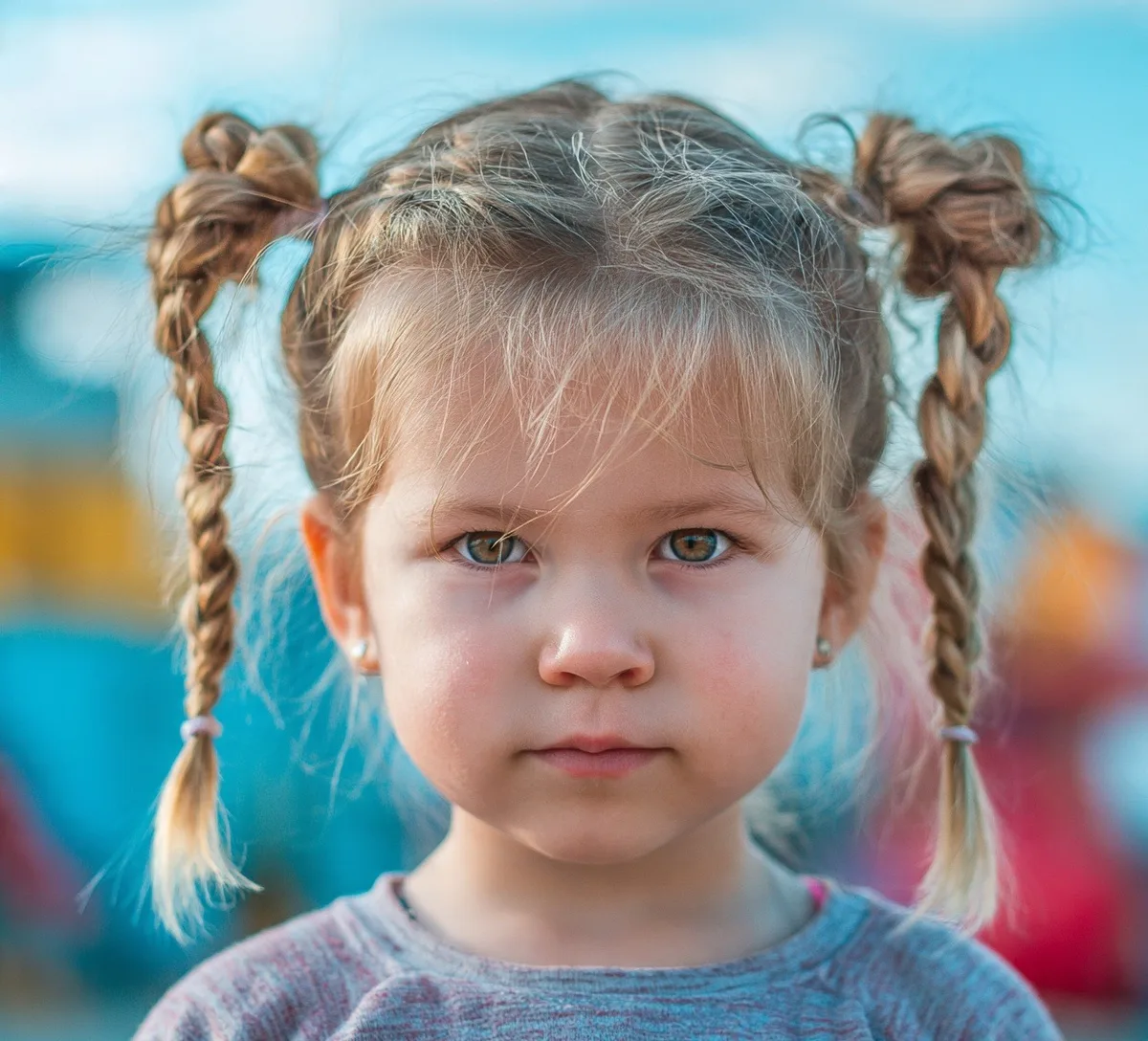
Low braided pigtails are the gentler cousin of the classic high pigtails: two braids that start low at the nape, sit comfortably under a hat, and never pull at the hairline. They suit younger campers especially well, because they are easy for a parent or counsellor to do quickly and easy for the child to leave alone all day. The braids stay tidy through naps, bus rides and quiet games, and they give soft waves when taken out in the evening. Add small ribbons at the ends for camp photos, or leave them plain for everyday wear.
Best for: younger campers, hat days and quiet activities. Time: about six minutes for both braids. Pros: comfortable, hat-friendly and kind to the scalp. Cons: less secure than Dutch braids during rough play. Who should avoid it: older teens may find the look too young, though the style itself works at any age. Quick verdict: sweet, simple and dependable — a solid everyday camp style.
7. Fishtail Side Braid
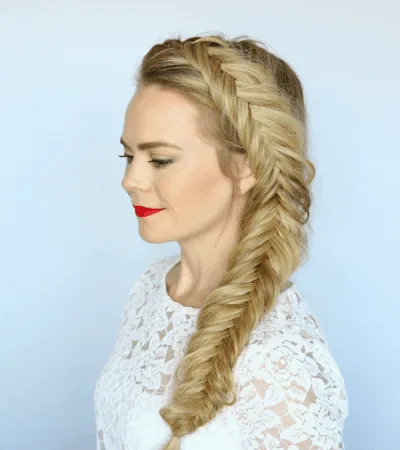
A fishtail side braid looks intricate, with its fine woven pattern, but it is really just two sections of hair crossed over each other again and again. Swept over one shoulder, it keeps hair out of the way during archery, canoeing and other activities where hair falling forward is a nuisance, and it photographs beautifully at golden hour by the lake. It works best on long hair with a little texture, so a spritz of water or leave-in conditioner before braiding helps the fine strands grip each other.
Best for: long hair, lakeside photos and calm activities. How to style it: sweep hair to one side, split into two sections, and pass a thin strand from the outside of one section to the inside of the other, alternating sides. Time: about eight minutes. Common mistake: taking strands that are too thick, which makes the braid look like a normal three-strand braid. Quick verdict: the most impressive-looking braid for the least extra effort.
8. Half-Up Claw Clip Twist
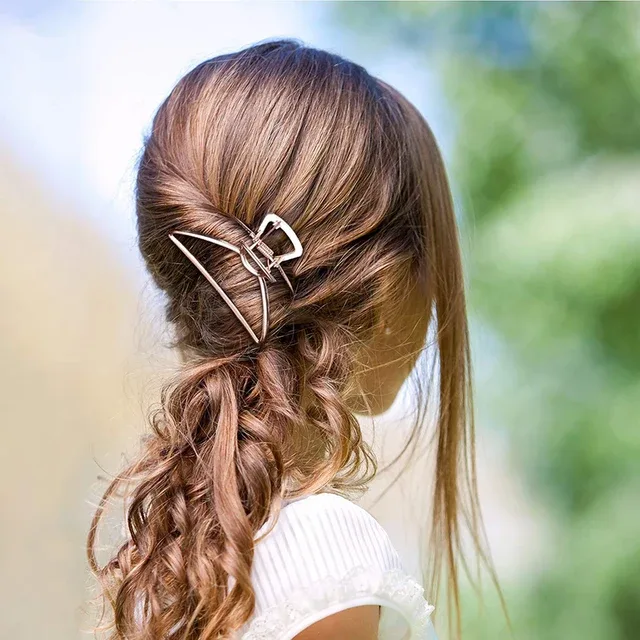
The half-up claw clip twist is the thirty-second fix for hair that is too hot to wear down but too short to tie up properly. Gather the top half of the hair, twist it once or twice, fold it up and clip it in place with a claw clip, leaving the rest loose. It keeps the front out of the eyes during reading time and meals, works on medium and long hair, and needs no elastic at all — which means no elastic to lose in the grass. Pack two clips, because one always disappears by Wednesday.
Best for: medium hair, meals, reading and lazy mornings. Pros: the fastest style in this guide, and it is gentle on hair. Cons: the clip can slip on very fine or silky hair, so choose one with teeth. Maintenance: check the clip after swimming, as wet hair makes it heavier. Quick verdict: the camp equivalent of rolling up your sleeves — quick, practical and done.
9. Space Buns
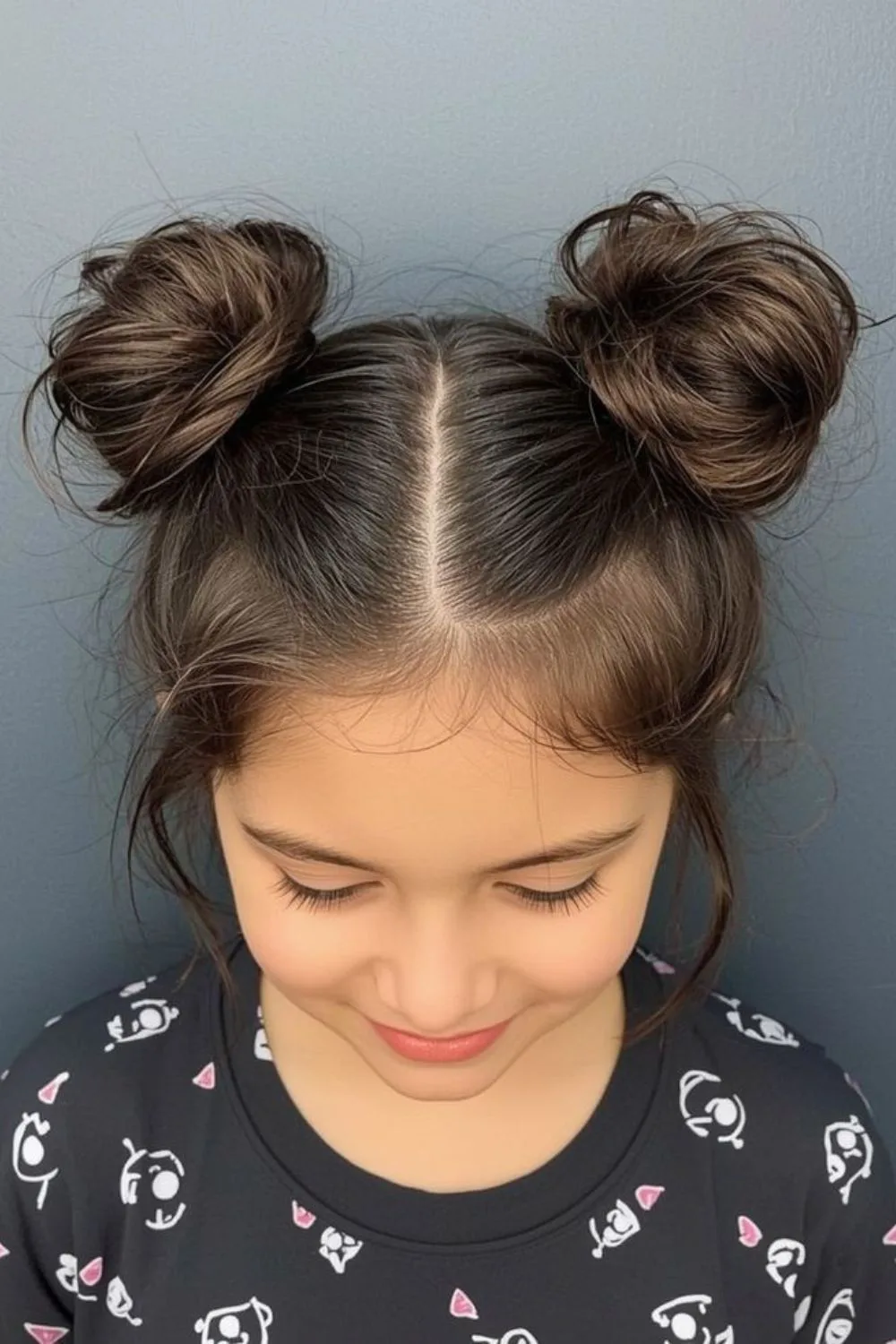
Space buns are two high buns, one on each side of the head, and they are the most fun style at camp — perfect for dance nights, talent shows and camp spirit days. Part hair down the middle, make two high ponytails, twist each into a bun and pin it in place. They hold well during dancing and games, keep hair completely off the neck, and look cheerful in every camp photo. Younger campers adore them, and older teens wear them with braided sections or face-framing strands for a more grown-up version.
Best for: dance nights, spirit days and photos. Time: about eight minutes. Pros: secure, playful and cool on hot days. Cons: they can feel tight if the parting is uneven or the buns are pulled too high. Common mistake: making one bun bigger than the other — use a mirror or a friend to check. Quick verdict: the happiest hairstyle at camp, and one that survives a whole evening of dancing.
10. Rope Twist Ponytail
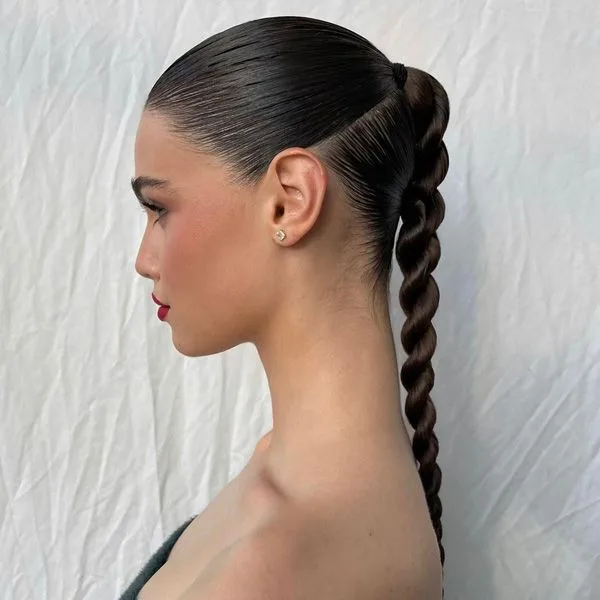
A rope twist ponytail takes the everyday ponytail and gives it a twist — literally. Split a low or high ponytail into two sections, twist each section in the same direction, then wind them around each other in the opposite direction and secure the end. The result is a neat, rope-like ponytail that holds its shape far better than a plain one, resists tangling during a hike, and looks tidy in camp photos. It is a great next step for campers who can tie a ponytail but have not learned to braid.
Best for: hiking, sports and campers learning beyond the ponytail. Time: about four minutes. Pros: easy to learn, holds well, and untangles easily at night. Cons: it can unravel if the end is not secured tightly. Common mistake: twisting both sections and winding them in the same direction, which makes the twist fall apart. Quick verdict: two twists, one wind, and a ponytail that behaves itself all day.
11. Braided Headband
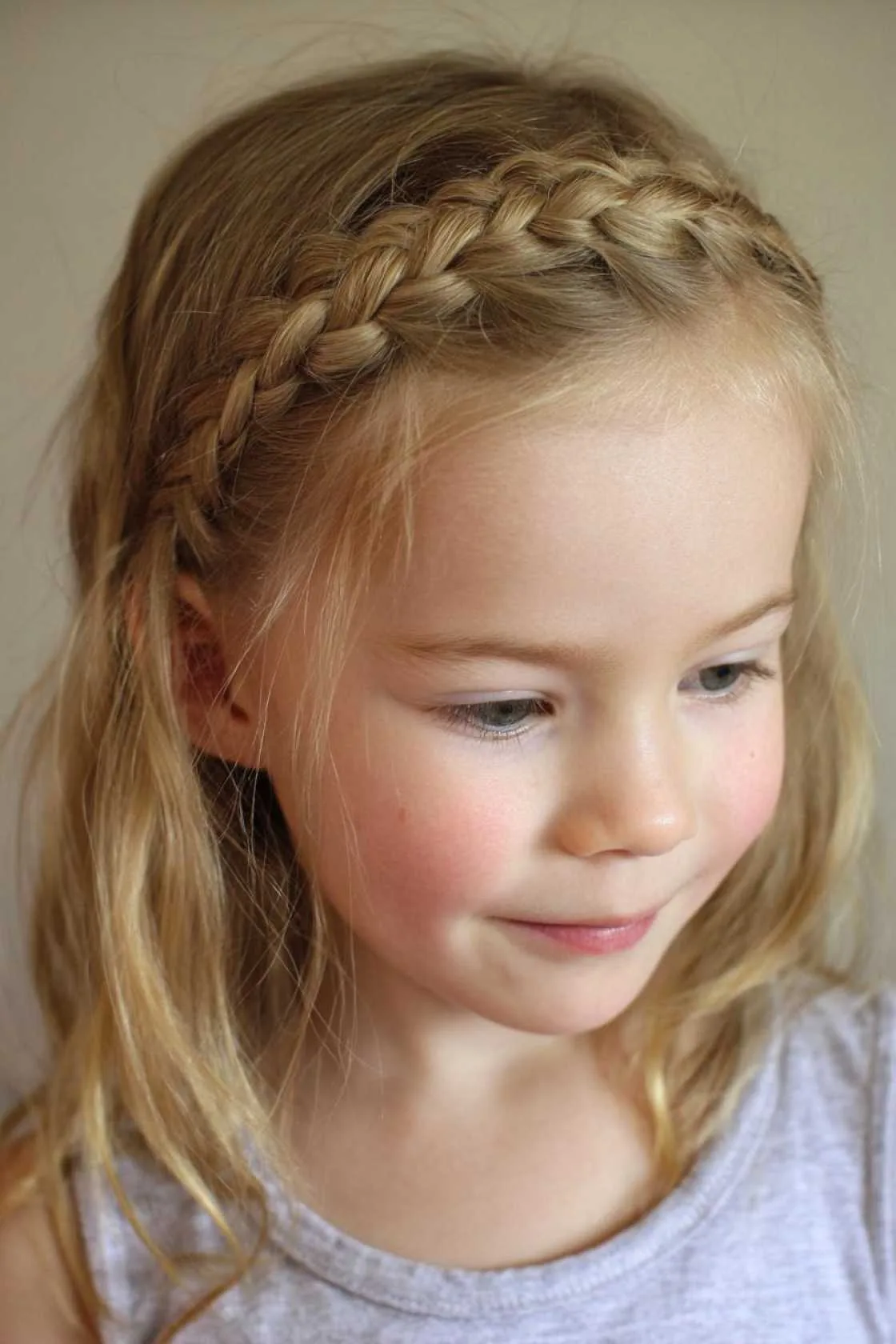
A braided headband uses the camper’s own hair as the headband: a small braid taken from behind one ear, brought across the front of the head and pinned behind the other ear. It keeps the fringe and front layers out of the eyes without any plastic headband to lose, and it works with hair worn down, in a ponytail or in a bun. It is ideal for campers with growing-out bangs, and it adds a finished touch to an otherwise simple style on photo day or at the campfire.
Best for: growing-out bangs, photo days and campfire evenings. How to style it: braid a thin section from behind the ear, bring it across the hairline, and pin it securely. Pros: no extra accessory needed, and it stays put better than a shop-bought headband. Cons: it needs a little practice to sit flat. Who should avoid it: very short hair, which will not reach across. Quick verdict: a clever little trick that solves the bang problem with nothing but hair and two pins.
12. Low Messy Bun
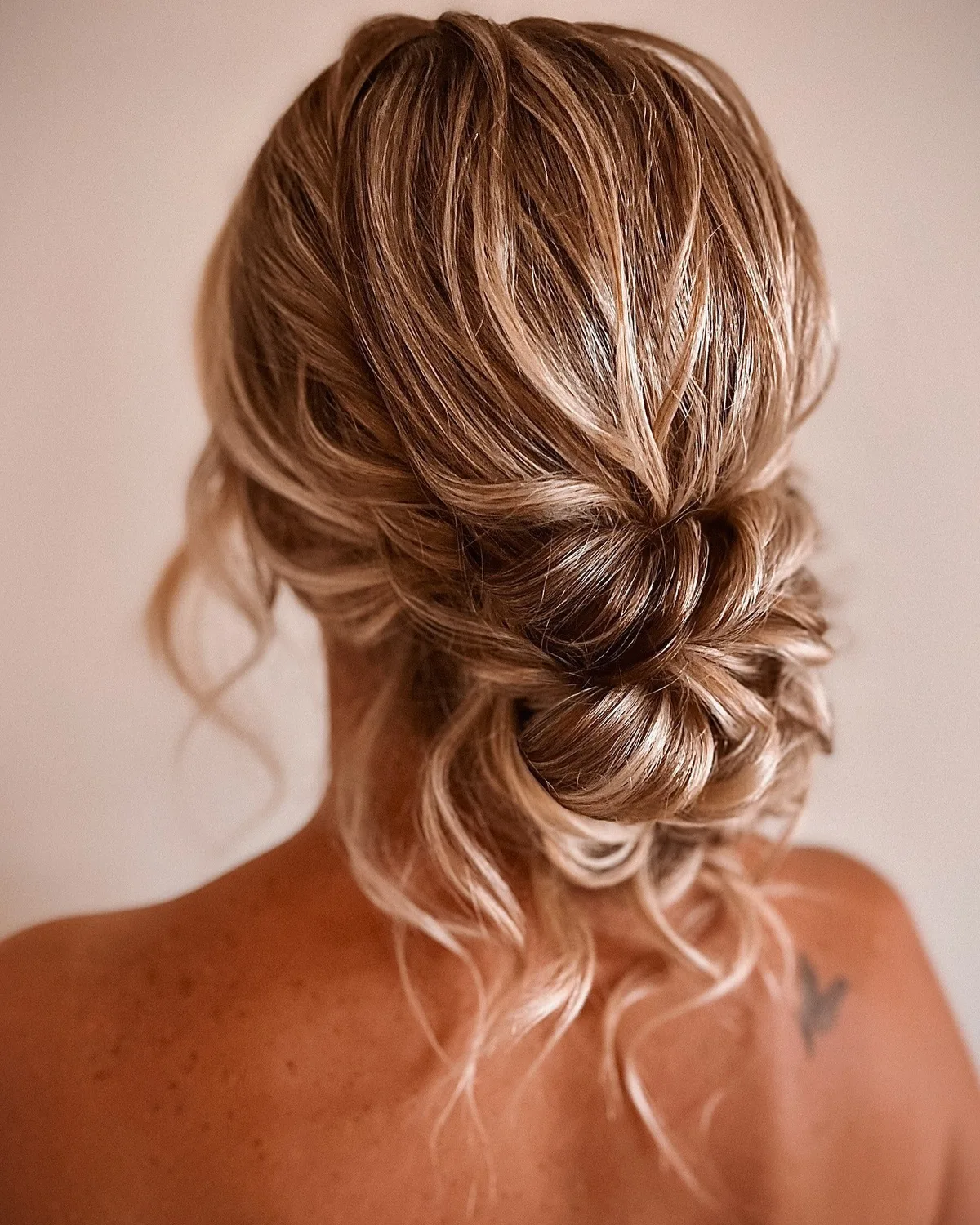
A low messy bun sits at the nape, which makes it the most comfortable bun at camp: it does not pull, it does not wobble, it fits under a hat, and it is kind to lie on during rest hour. Gather hair low, twist it loosely, coil it and pin it, leaving a few soft strands around the face. It is the style for quiet afternoons, library time and evening campfires, when comfort matters more than a polished look. On thick hair, use two elastics and a few extra pins; on fine hair, a little texture from yesterday’s braid helps it hold.
Best for: rest hour, reading, campfires and hat days. Time: about three minutes. Pros: comfortable, hat-friendly and easy to redo without a mirror. Cons: it can loosen during active games, so save it for calmer hours. Common mistake: pulling it too tight, which defeats the point of a relaxed bun. Quick verdict: the comfiest updo at camp, and the one to choose when the day slows down.
13. Side Swept Braid
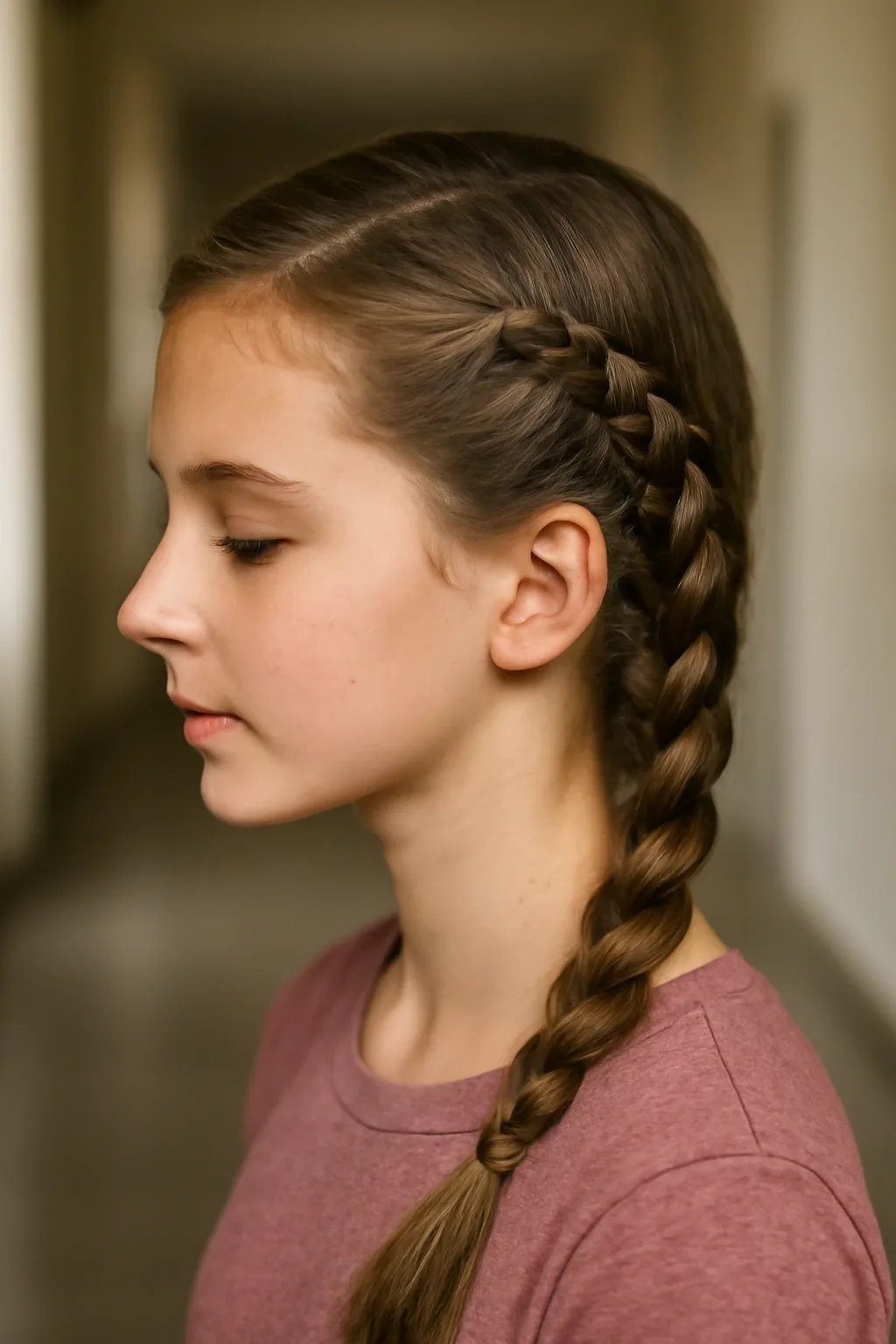
A side swept braid is a single loose braid that falls over one shoulder, and it is the camp style for days when a camper wants their hair down but out of the way. Sweep all the hair to one side, braid it loosely from behind the ear, and secure the end with an elastic. It keeps hair off the back on hot days, stops it catching on backpack straps, and works beautifully on the walk to the lake or the evening meal. Loosen the braid slightly with the fingers for a soft, relaxed look, or keep it tight for sports.
Best for: walks, meals and relaxed camp days. How to style it: part hair on the opposite side from the braid, so the sweep feels natural. Pros: quick, comfortable and easy to redo. Cons: the braid can slip forward during running games. Common mistake: starting the braid too high, which pulls uncomfortably at the neck. Quick verdict: the easiest way to wear a braid when you do not want to think about your hair at all.
14. Mini Braid Accents
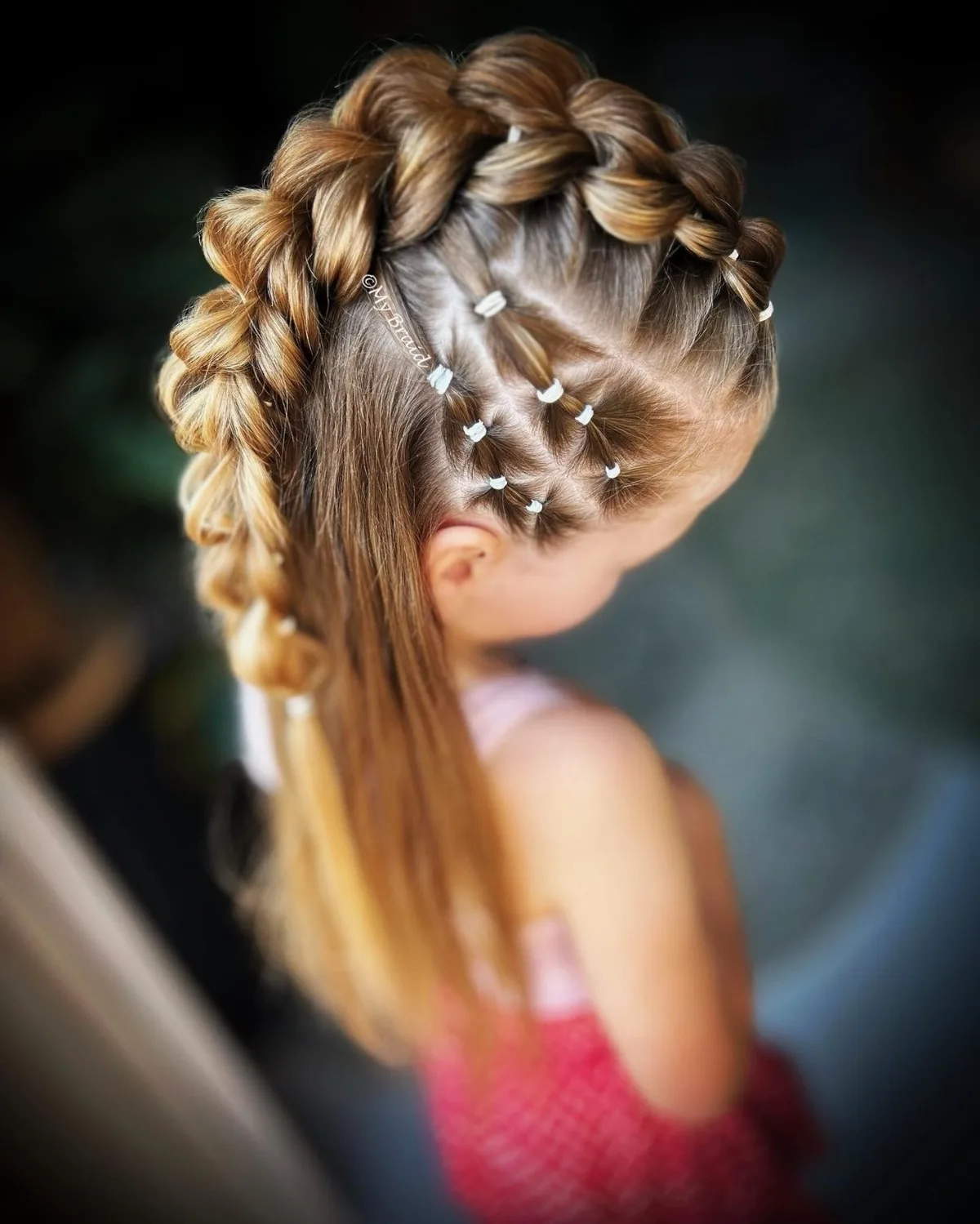
Mini braid accents are tiny braids woven into otherwise loose or tied-up hair — one or two thin braids near the face, or a few scattered through the lengths. They add personality to a plain ponytail, keep front layers out of the eyes, and take only a minute each, so a camper can add one in the morning and another after lunch. They are also the perfect first braiding project for a child learning to braid, because a tiny braid is far less daunting than a full head of braids. Add a bead at the end for camp-craft flair, if the camp allows it.
Best for: beginners, craft days and adding flair to simple styles. Time: one minute per braid. Pros: quick, fun and endlessly customisable. Cons: tiny braids can tangle if left in for days, so take them out each night. Maintenance: undo them before bed and brush the section gently. Quick verdict: small braids, big personality — the easiest way to make a simple style feel special.
15. Pineapple Puff
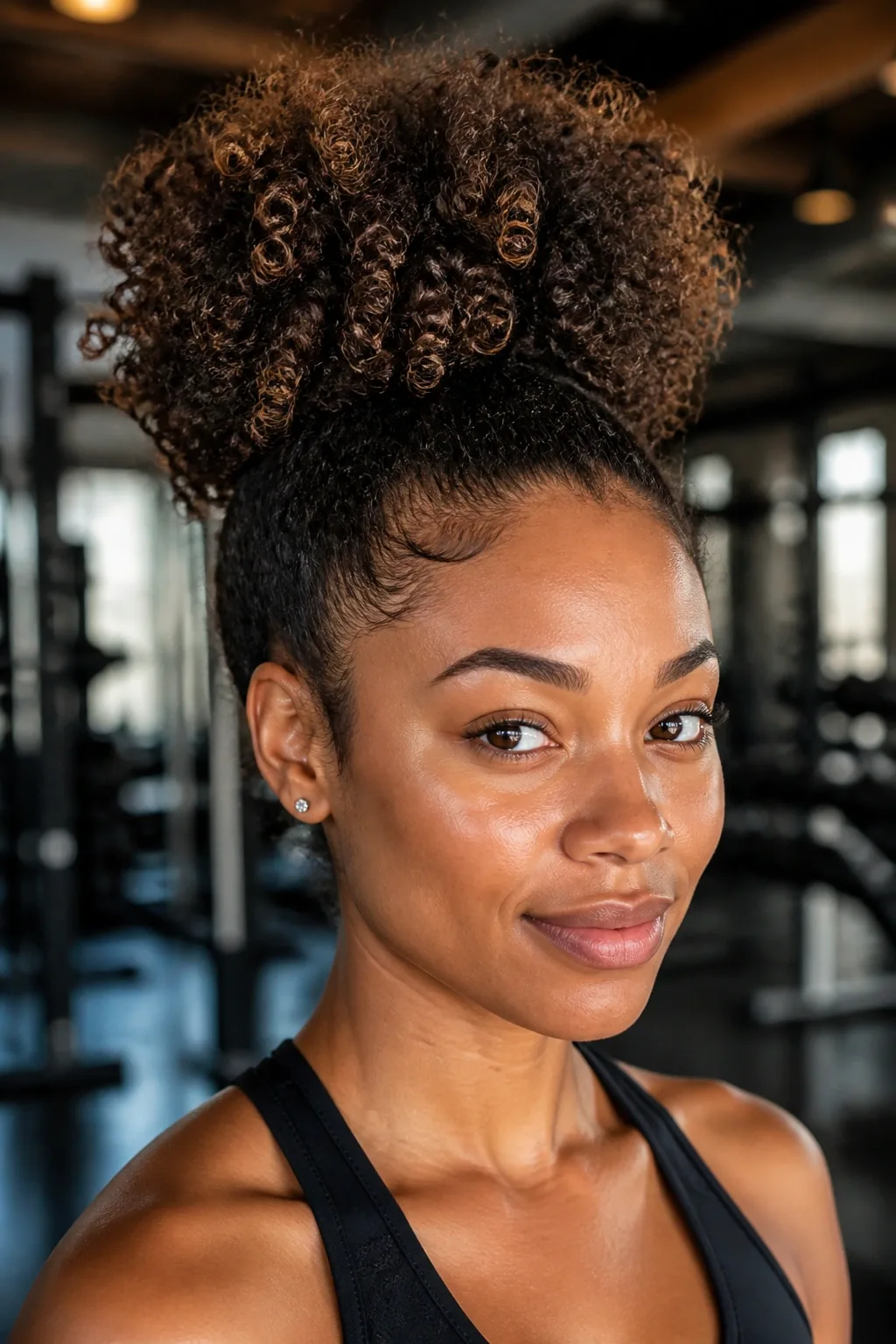
The pineapple puff is the go-to style for curly hair at camp: all the curls gathered high on top of the head, secured loosely with a satin scrunchie or a wide elastic, so the curls sit up like a pineapple top. It keeps curls off the neck, protects the curl pattern overnight, and takes about a minute to do. For daytime, it is a cheerful, bouncy style that survives games and hikes; at night, the same puff, worn a little looser with a satin bonnet, stops curls flattening against the pillow.
Best for: curly and coily hair, hot days and overnight curl protection. How to style it: gather curls loosely at the very top of the head — never pull them tight, or the curls lose their shape. Pros: fast, protective and full of personality. Cons: it may not hold on very short curls. Common mistake: using a tight elastic, which dents the curls and causes breakage. Quick verdict: one minute, one scrunchie, and curls that stay happy until bedtime.
16. Cornrows
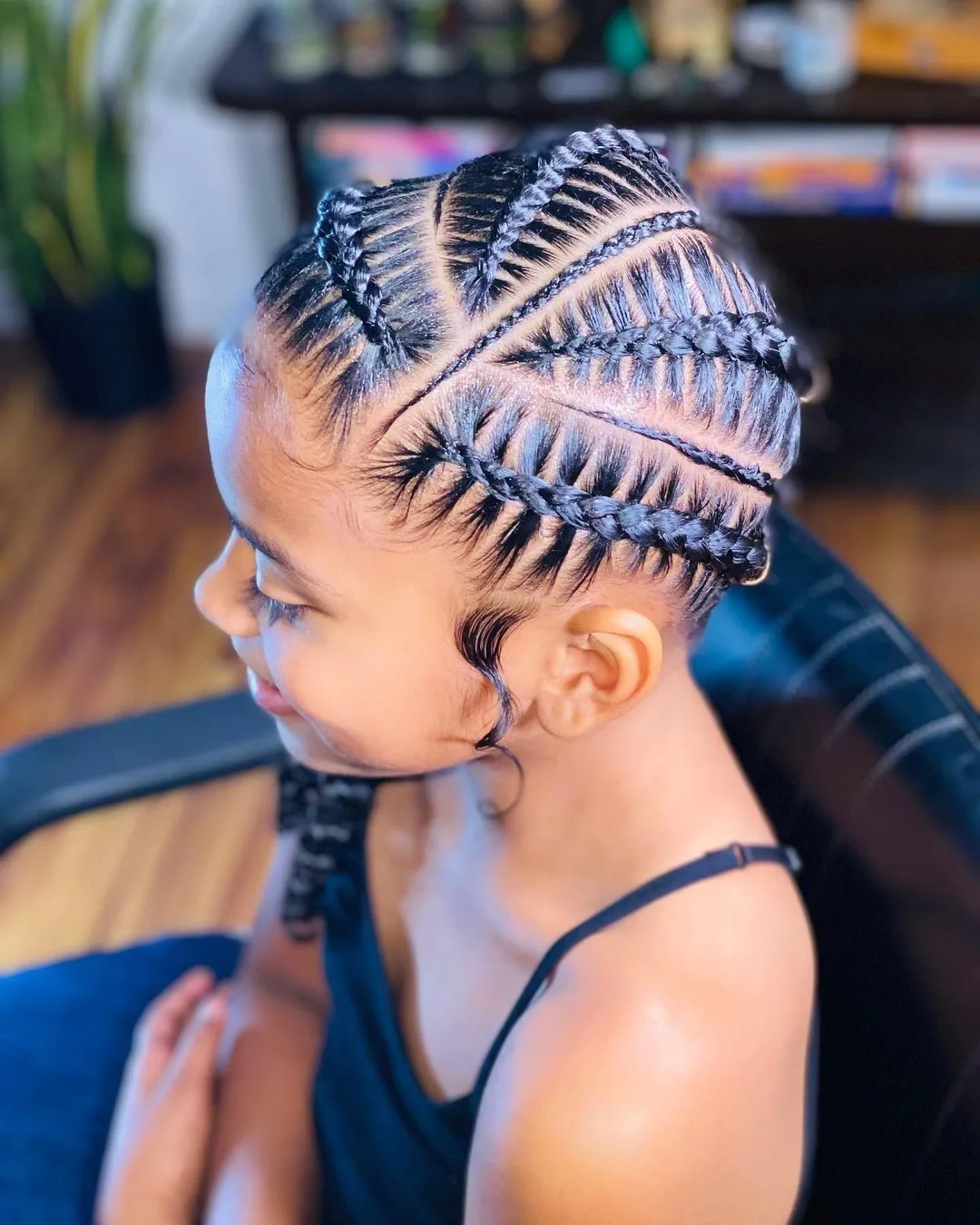
Cornrows are braids worked close to the scalp in neat rows, and for camp they are one of the most practical protective styles there is: they last for days, survive swimming and sleeping, keep hair completely contained, and need almost no morning maintenance. They are best done before camp by someone experienced, in straight rows or a simple curved pattern, and finished with a little edge control and a satin bonnet at night. At camp, the camper only needs to rinse, moisturise the scalp lightly, and tie a scarf or bonnet at bedtime.
Best for: multi-day camp, daily swimmers and low-maintenance mornings. Time: done before camp, then nearly zero daily styling. Pros: lasts for days, swim-friendly and protective. Cons: needs an experienced braider and a few hours to install. Who should avoid it: anyone with a tender scalp should ask for looser rows. Quick verdict: the ultimate set-and-forget camp style, if it is installed properly before the trip.
17. Box Braids
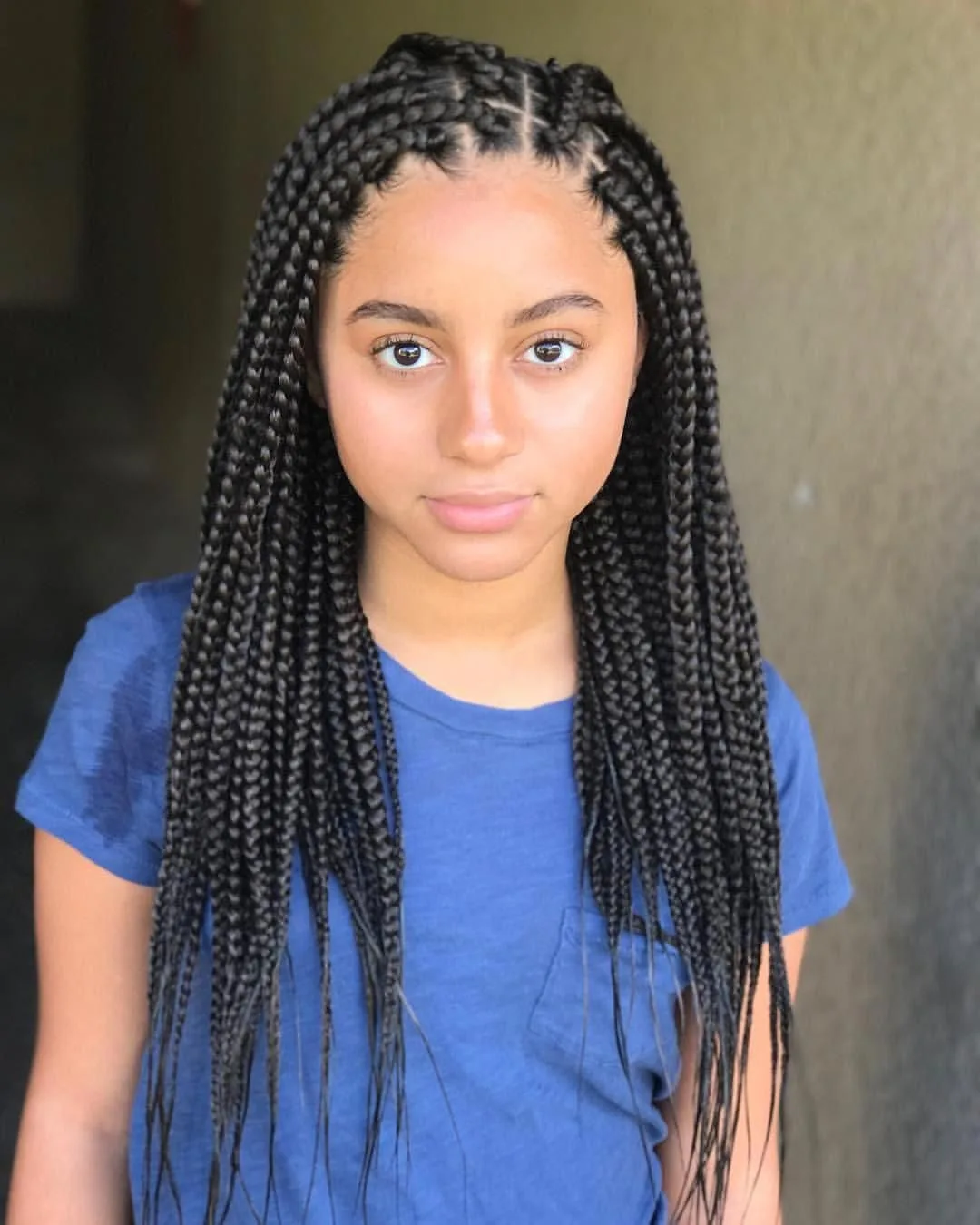
Box braids divide the hair into small square sections and braid each one from root to tip, creating a style that can be worn loose, tied up, or bunched into a ponytail — and that lasts the whole camp session. They protect the hair from sun, wind and water, they need no heat and no daily styling, and they look wonderful with beads or coloured thread at the ends. They are installed before camp, not at camp, so book the appointment a few days before departure, and pack a satin bonnet and a light scalp oil for the week.
Best for: full-session camp, protective styling and swimmers. Maintenance: rinse after swimming, oil the scalp lightly, and sleep in a bonnet. Pros: lasts the whole session and styles in seconds each morning. Cons: installation takes hours and can feel heavy at first. Common mistake: making the braids too tight at the hairline, which causes soreness. Quick verdict: the longest-lasting style in this guide, and the easiest camp mornings of all.
18. Two-Strand Twists
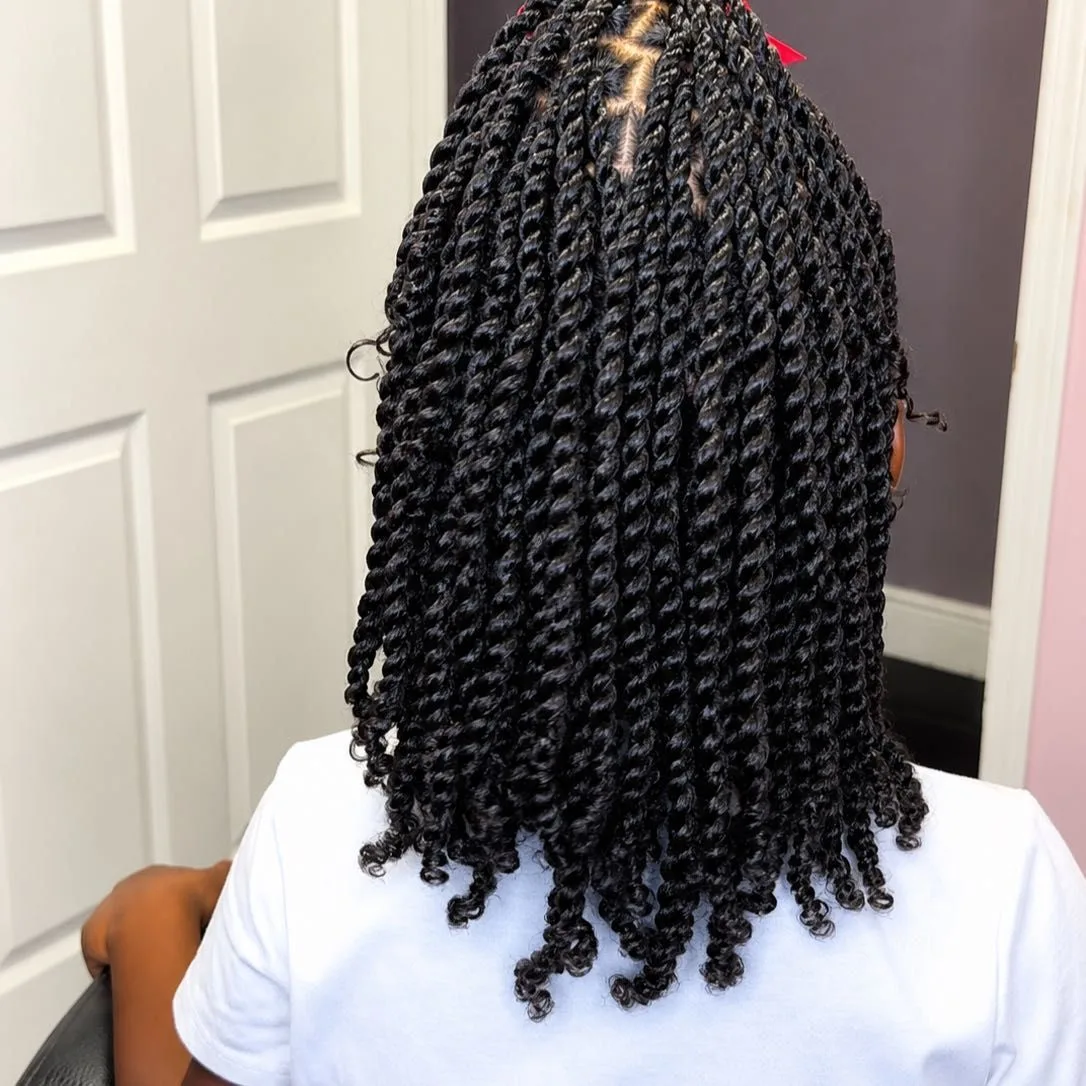
Two-strand twists are exactly what they sound like: sections of hair twisted around each other, two strands at a time, from root to tip. They are gentler and quicker to install than braids, they work beautifully on curly and coily hair, and they double as a style and a treatment — worn for a few days, then unravelled for a head of soft twist-out curls. At camp, they keep hair protected during swimming and hiking, and they need only a little moisturiser and a bonnet at night to stay fresh all week.
Best for: curly and coily hair, protective styling and twist-out curls. Time: quicker to install than box braids, and easy to refresh. Pros: gentle on the scalp, versatile and low-maintenance. Cons: twists can unravel at the ends if they are not sealed well. Common mistake: twisting on dry hair, which causes frizz — always twist on damp, moisturised hair. Quick verdict: the gentlest protective style here, and the one that gives you a second style for free when you take it out.
19. Sleek Low Ponytail
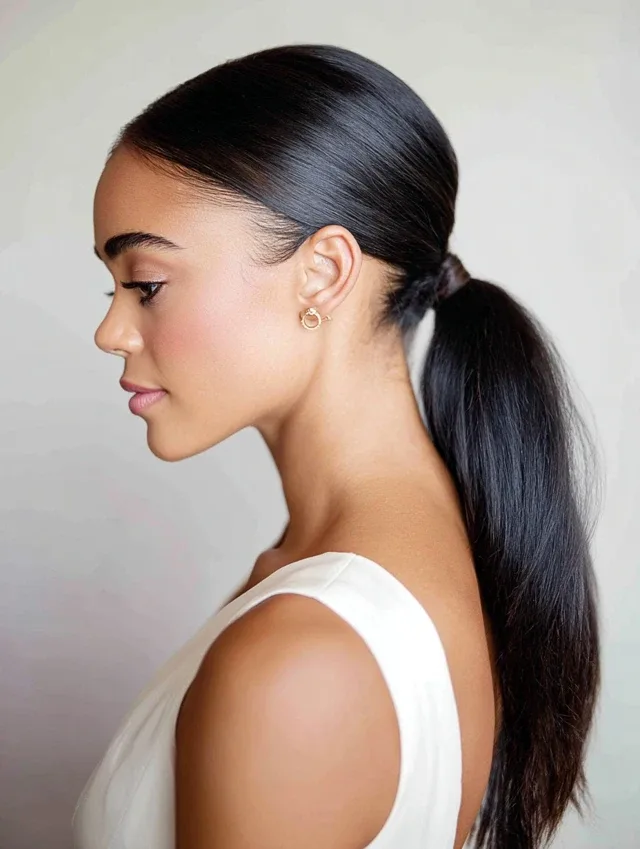
The sleek low ponytail is the grown-up camp style: hair brushed smooth, gathered low at the nape, and secured with a neat elastic, with a strand wrapped around the base for a polished finish. It looks tidy in camp photos and at evening events, it fits comfortably under a hat, and it is far more secure than it looks — a low ponytail barely moves during a hike. A little gel or leave-in conditioner smooths flyaways, and a centre or side part changes the whole feel of the style.
Best for: evening events, photos and hat days. How to style it: brush hair back with a little product, secure low, and wrap a strand around the elastic. Pros: neat, comfortable and quick. Cons: flyaways return in humidity, so carry a small brush. Who should avoid it: very curly hair may prefer a puff or twists for the same neat effect. Quick verdict: the simplest way to look put-together at camp without trying hard.
20. Waterfall Braid
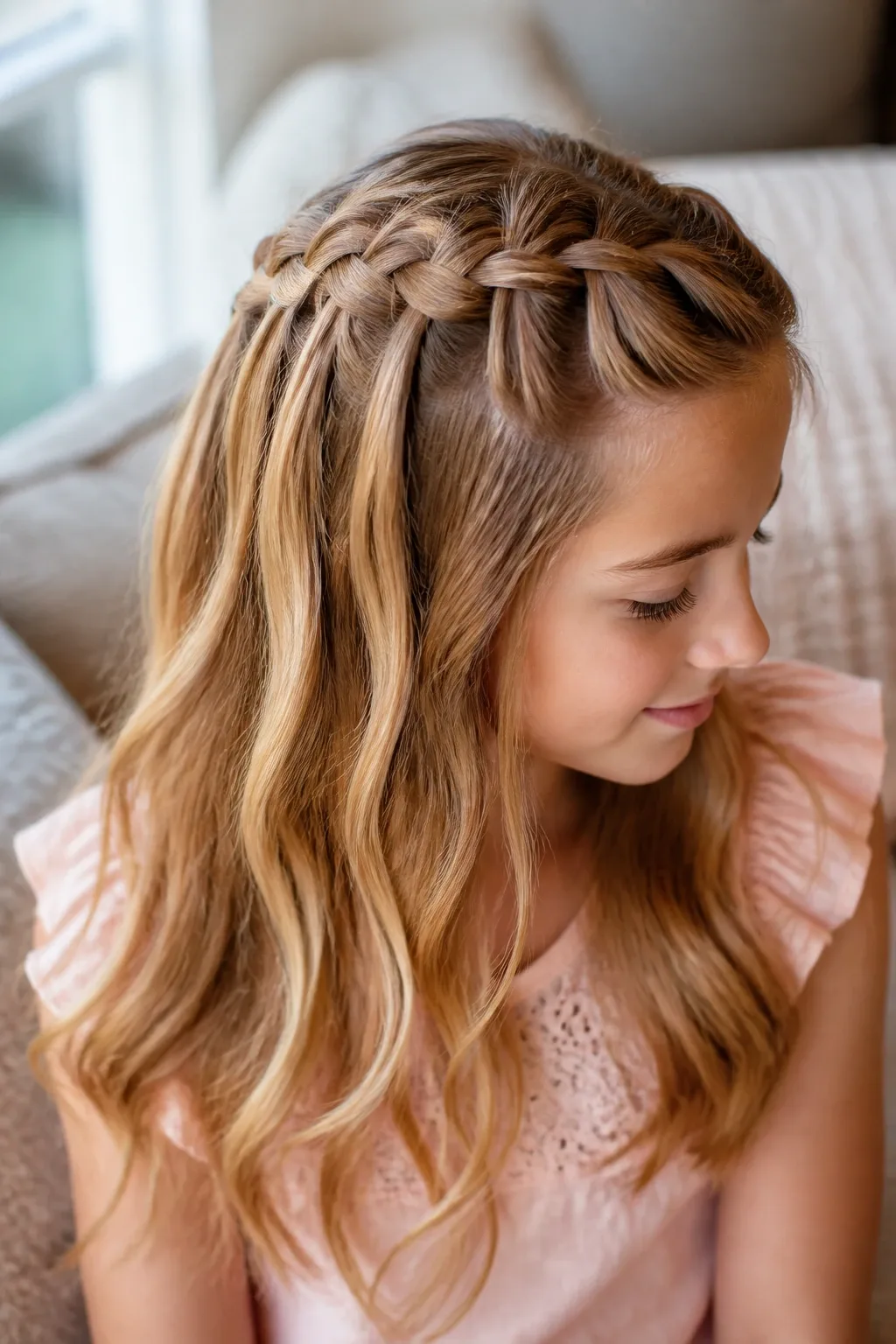
A waterfall braid is a half-up braid that lets strands of hair fall through it like water over a ledge, while the rest of the hair flows loose underneath. It is the prettiest half-up style at camp, made for evening campfires, talent shows and photo days, and it keeps the front tidy while showing off long hair. It takes practice, so learn it at home before camp: braid across the back of the head, dropping the bottom strand each time and picking up a new one from below.
Best for: evenings, photos and long hair. Time: about twelve minutes with practice. Pros: beautiful, romantic and surprisingly secure once pinned. Cons: it unravels faster than a full braid during active games. Common mistake: pulling the dropped strands too tight, which kills the waterfall effect. Quick verdict: the most beautiful half-up style in this guide — save it for the evenings.
21. Bandana Wrap Ponytail
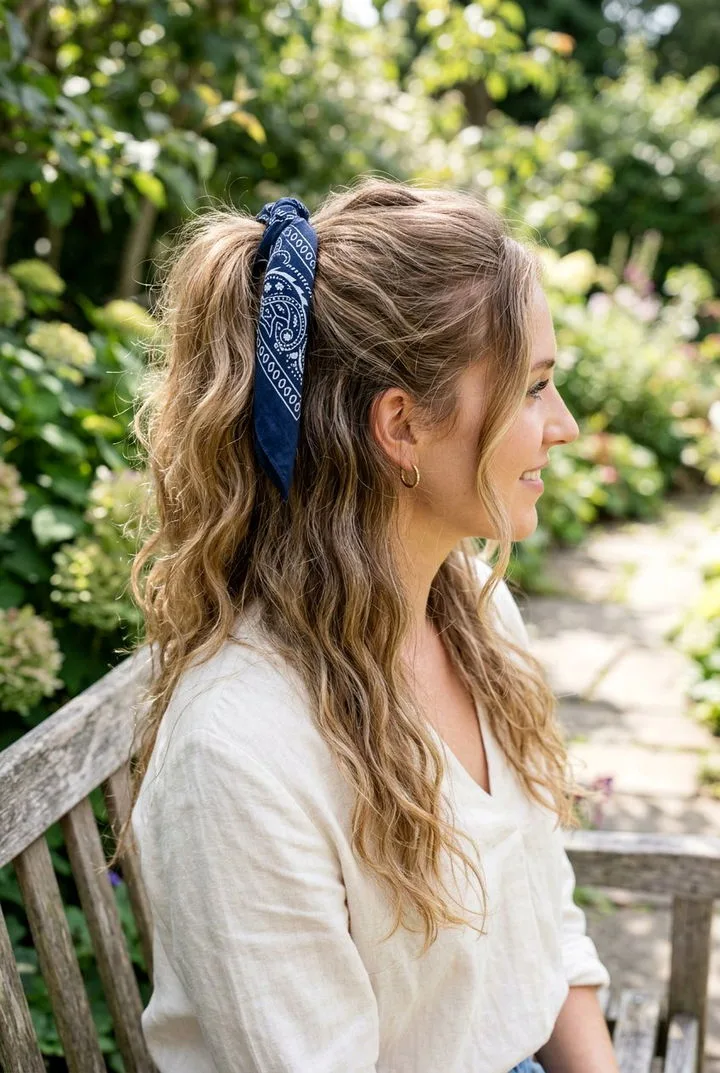
A bandana wrap ponytail is a high or low ponytail with a bandana tied around its base, and it is pure camp spirit: the bandana soaks up sweat on a hike, keeps flyaways under control, adds a pop of colour, and doubles as a headband, a neckerchief or a washcloth when needed. Fold the bandana into a triangle, roll it into a band, wrap it around the ponytail base and tie it in a knot or a bow. Campers can match the bandana to their cabin team colours, and it costs almost nothing.
Best for: hikes, sports days and team colours. Time: two minutes plus the bandana. Pros: practical, colourful and multi-purpose. Cons: the bandana can slip on silky hair, so tie it snugly. Maintenance: rinse the bandana at night and it is ready for the next day. Quick verdict: the cheapest style upgrade at camp, and the one that does three jobs at once.
22. Scarf Braid
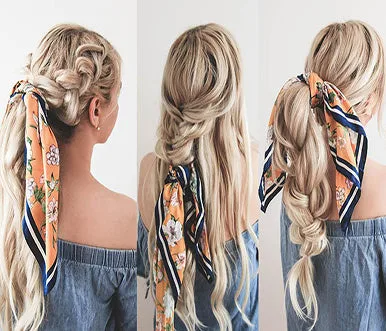
A scarf braid weaves a thin silk scarf into a regular three-strand braid, so the colour runs through the hair like a ribbon. It is a lovely camp-craft crossover: the scarf can be tie-dyed at camp, bought in cabin colours, or chosen to match an outfit for photo day. Braid the scarf in as the third strand, or tie it at the end of a normal braid and let it trail. It looks far more complicated than it is, and it keeps the braid itself neater by giving the strands something to grip.
Best for: photo days, craft days and camp spirit. How to style it: fold the scarf into a thin strip, attach it at the top of the braid, and braid it in as one strand. Pros: colourful, easy and surprisingly secure. Cons: the scarf can slide out if it is too silky — a cotton scarf grips better. Common mistake: using a scarf that is too wide, which swallows the braid. Quick verdict: a braid with a built-in accessory, and a style that starts conversations.
23. Hat-Friendly Low Braids
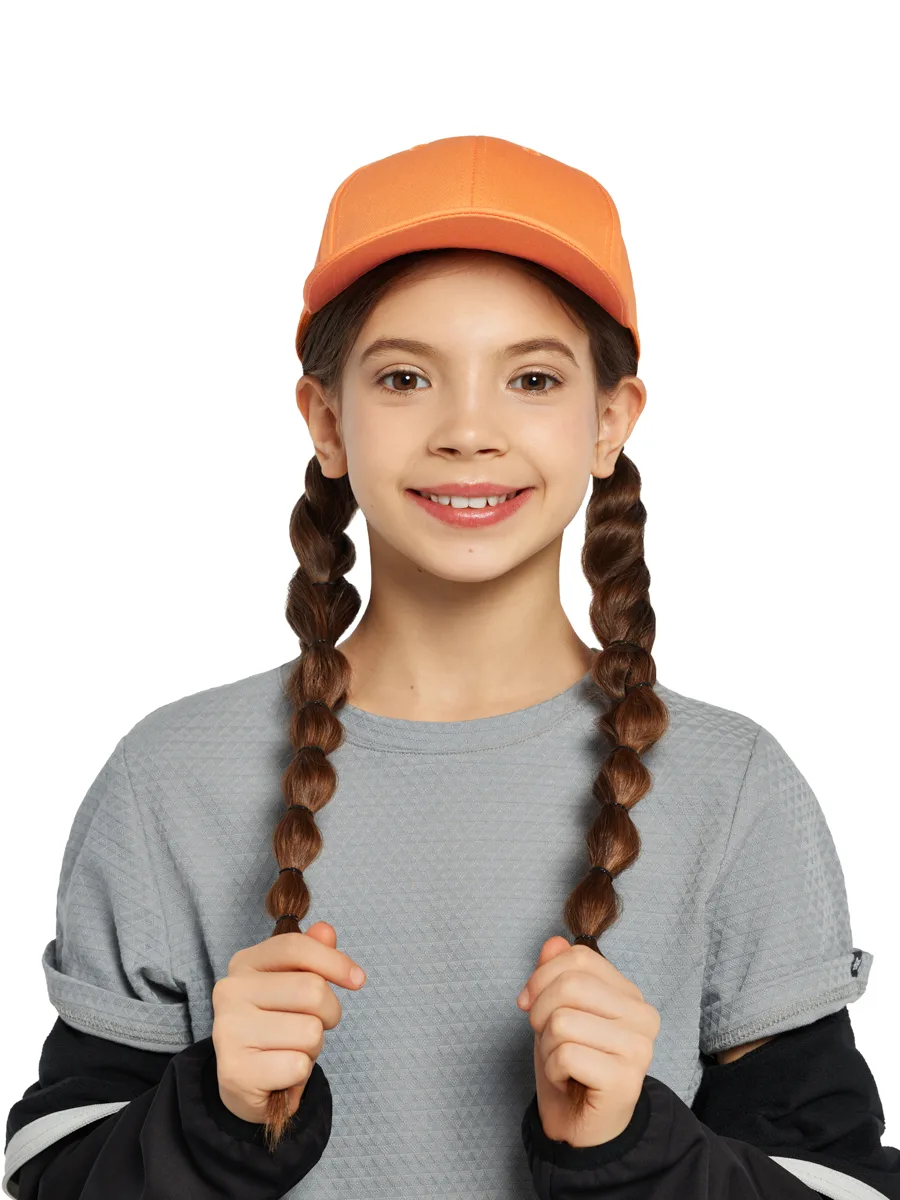
Hat-friendly low braids are two simple braids that start low at the nape and sit flat, so any hat — a baseball cap, a sun hat or a beanie on a chilly morning — fits over them without a bump. They are the style for the sunniest and the rainiest camp days alike, because the hat does the protecting and the braids do the holding. Part hair down the middle, braid each side low, and secure with small elastics. The braids stay tidy all day, and the hat keeps the scalp safe from sunburn.
Best for: sun hats, rainy days and all-day hikes. Time: about six minutes. Pros: comfortable under any hat, sun-safe and secure. Cons: the braids can kink where the hat band presses, though the waves look nice when taken out. Common mistake: starting the braids too high, so the hat sits awkwardly on top. Quick verdict: if a hat is going on, the braids should start low — that is the whole trick.
24. Wet-Hair Slick Back
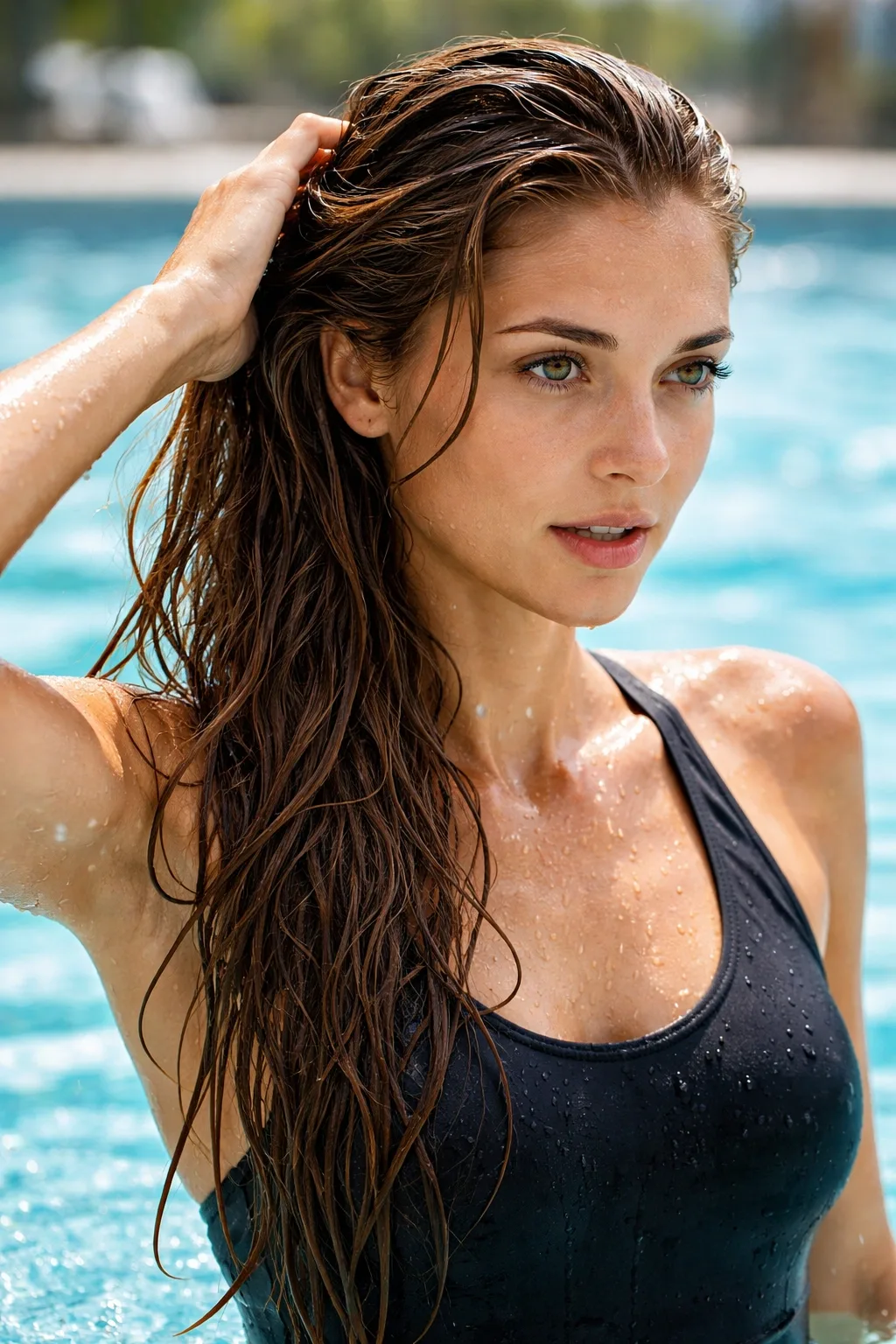
The wet-hair slick back is less a hairstyle than a survival move: after a swim, comb wet hair straight back, smooth it with a little leave-in conditioner, and secure it in a low ponytail or bun until it dries. It stops wet hair sticking to the face, prevents the worst post-swim tangles, and looks deliberately sleek rather than accidentally soggy. It is also the fastest possible post-swim style — sixty seconds, no mirror, no fuss — which is exactly what a camper needs when lunch is in ten minutes.
Best for: straight after swimming, lake days and rushed lunches. How to style it: comb back from the hairline, smooth with product, and tie low. Pros: the fastest post-swim fix, and it protects wet hair from tangling. Cons: it looks wet until it dries, which is fine at camp. Common mistake: brushing wet hair hard from the roots, which snaps it — use a wide-tooth comb instead. Quick verdict: not glamorous, just smart — the style that saves every swim day.
25. Double Bubble Pigtails
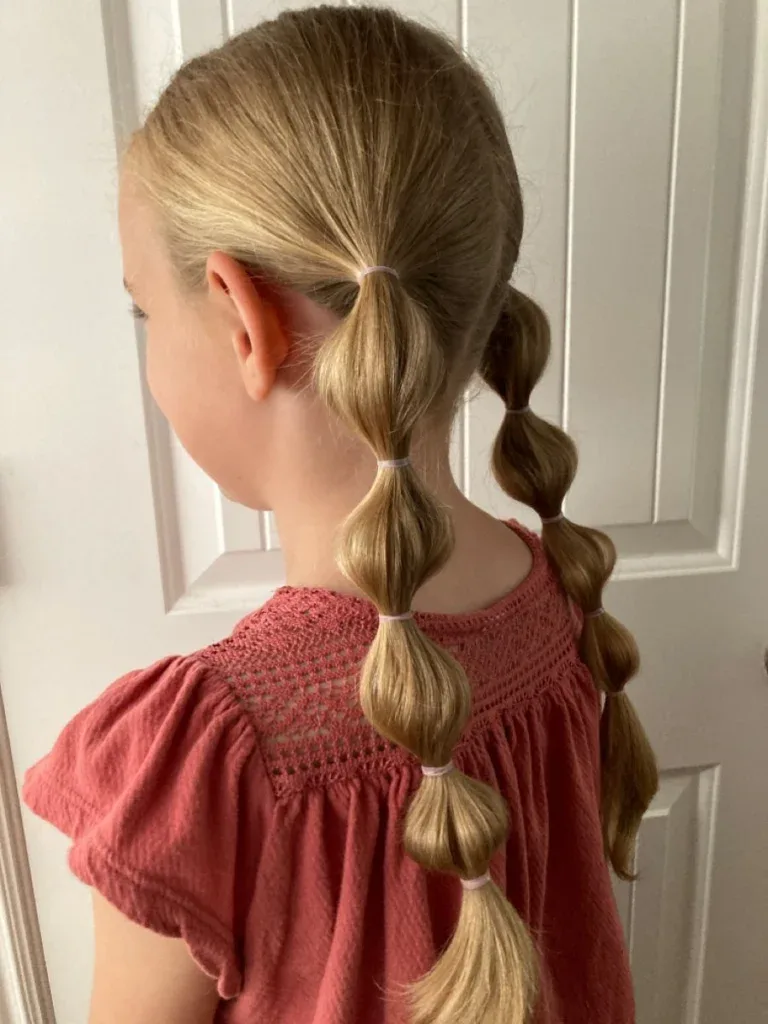
Double bubble pigtails are two pigtails turned into bubbles: tie two ponytails, add elastics down each one, and puff each section out. They are bouncy, cheerful and very secure, which makes them a favourite with younger campers, and they hold up well during games because each bubble is anchored by its own elastic. Use bright elastics for spirit day, or matching ones for a tidier look. The style takes about six minutes and needs no braiding at all.
Best for: younger campers, games and spirit days. Time: about six minutes. Pros: no braiding needed, very secure and full of fun. Cons: the bubbles flatten after swimming, so puff them again afterwards. Common mistake: pulling the bubbles too hard and making them uneven. Quick verdict: pigtails with extra bounce — the style younger campers ask for by name.
26. Braided Bun
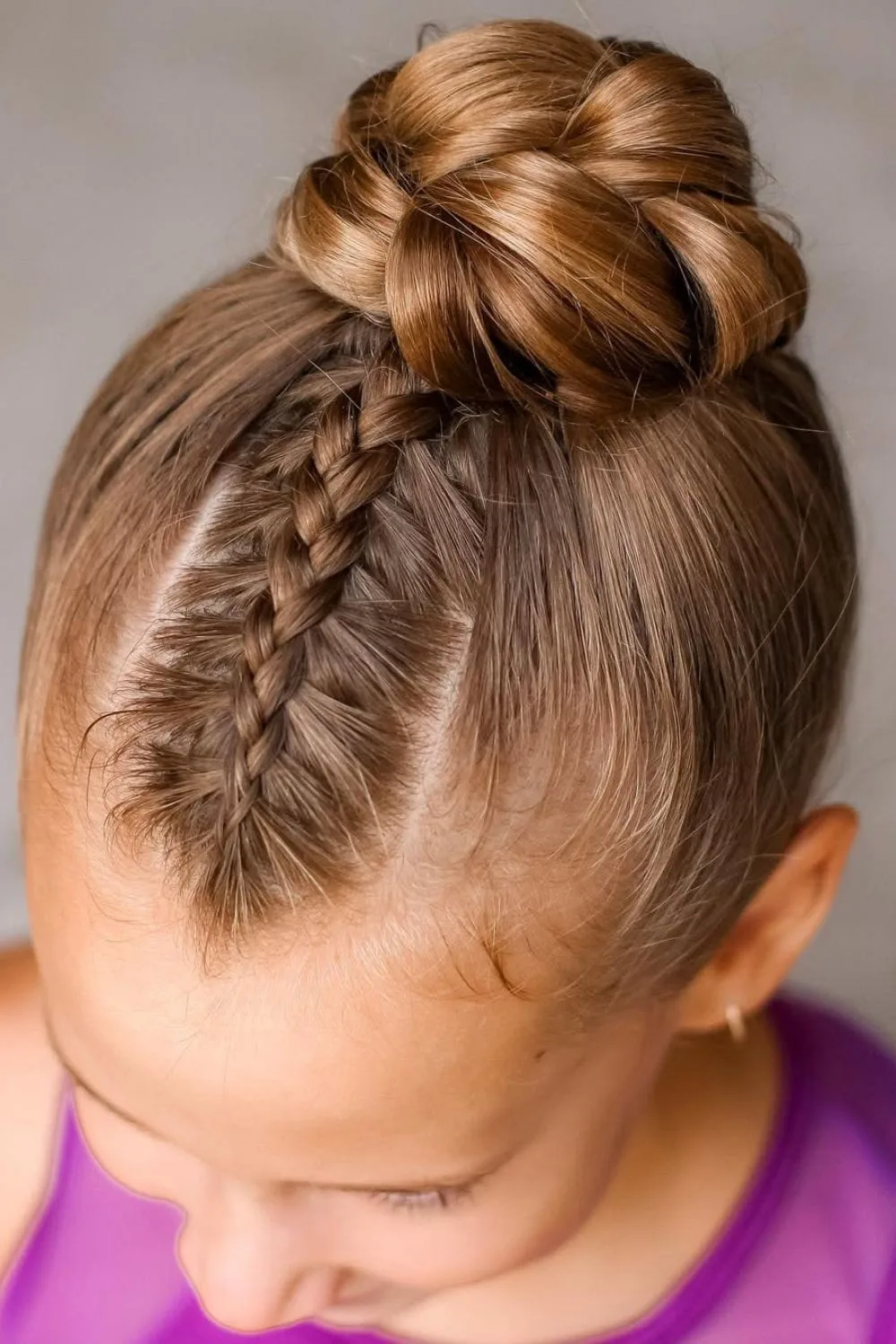
A braided bun combines the two most secure camp styles into one: braid the hair first, then coil the braid into a bun and pin it. The result stays put through swimming, climbing and sleeping, and it looks neat enough for evening events too. It is the style for the longest, busiest camp days, when there will be no time to redo hair before dinner. A single braid coiled into a low bun is the most comfortable version; two braids coiled together make a fuller bun for thick hair.
Best for: long active days, swimming and evening events. How to style it: braid, coil the braid around its base, and pin it in several places. Time: about eight minutes. Pros: the most secure bun in this guide. Cons: it takes longer than a plain bun, and it needs pins. Common mistake: coiling too tightly, which pulls at the scalp. Quick verdict: a braid plus a bun is camp hair at its toughest.
27. Braided Bangs
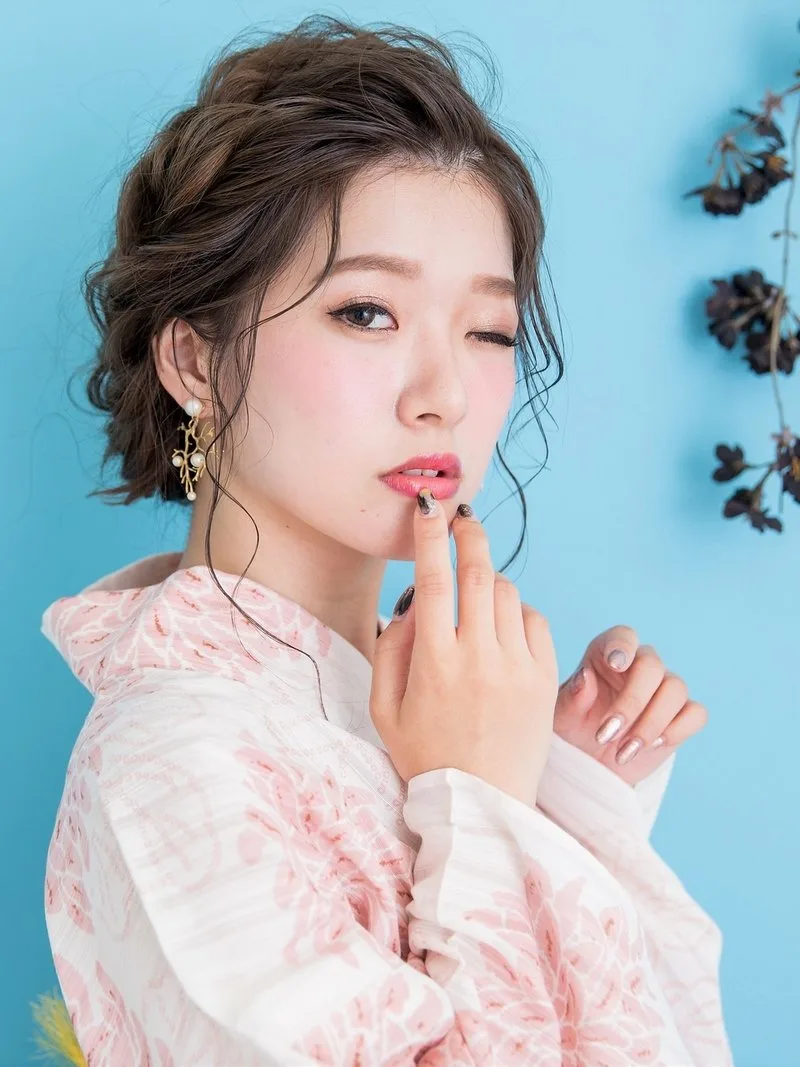
Braided bangs solve the camp fringe problem: bangs that fall into the eyes during archery, drip sweat during sports, and stick to a sun-creamed forehead by midday. Take a small section of fringe, braid it to one side, and pin it flat against the head, blending the end into the rest of the hair. It works with hair worn down or tied up, it takes about two minutes, and it keeps the face clear without a headband or clips that can fall out in the grass.
Best for: growing-out bangs, sports and hot days. Time: about two minutes. Pros: quick, secure and invisible in the best way. Cons: it needs bangs long enough to braid, so very short fringes will need clips instead. Who should avoid it: nobody with long enough bangs. Quick verdict: two minutes, two pins, and the fringe stops being a problem all day.
28. Curly Puff with a Headband
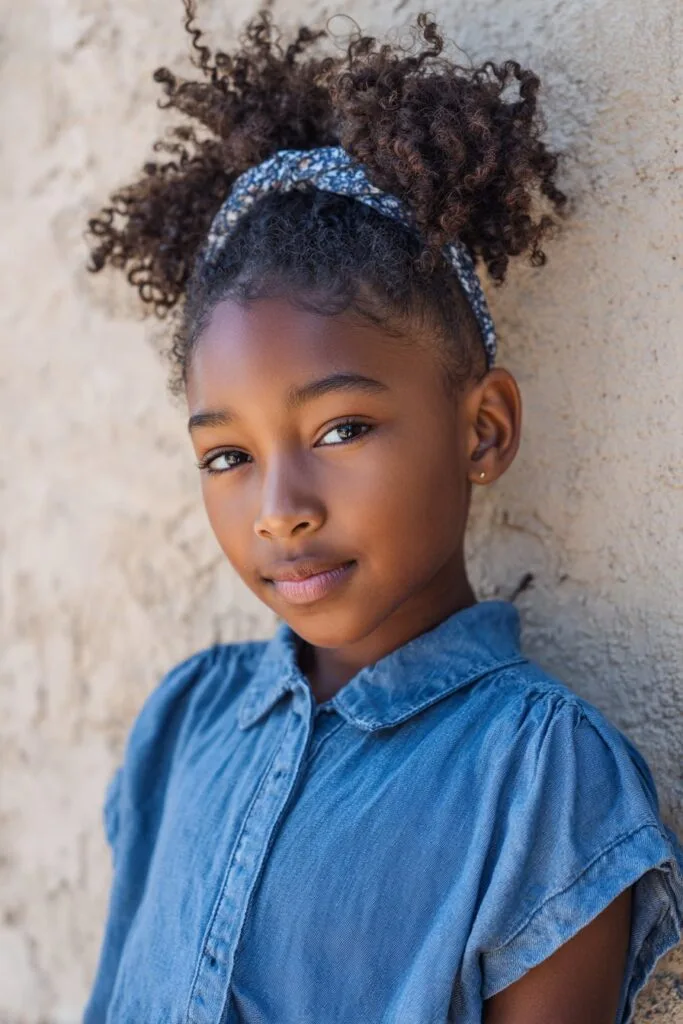
A curly puff with a headband is the curly-haired camper’s everyday style: curls gathered into a high, loose puff, with a soft fabric headband keeping the front tidy and absorbing sweat. The headband stops the puff sliding forward during games, and a satin-lined one is kindest to curls. It takes two minutes, it works on the second and third day after a wash, and it looks cheerful and neat in every camp photo. Pack two headbands, because one will end up in the lake.
Best for: curly hair, sports and everyday camp wear. How to style it: gather curls loosely with a satin scrunchie, then slide the headband into place. Pros: fast, comfortable and curl-friendly. Cons: a tight headband can dent curls and cause a headache. Common mistake: pulling the puff too tight — loose is both kinder and prettier. Quick verdict: a puff, a headband, two minutes, and curly hair is sorted for the day.
29. Beach Waves with a Braid
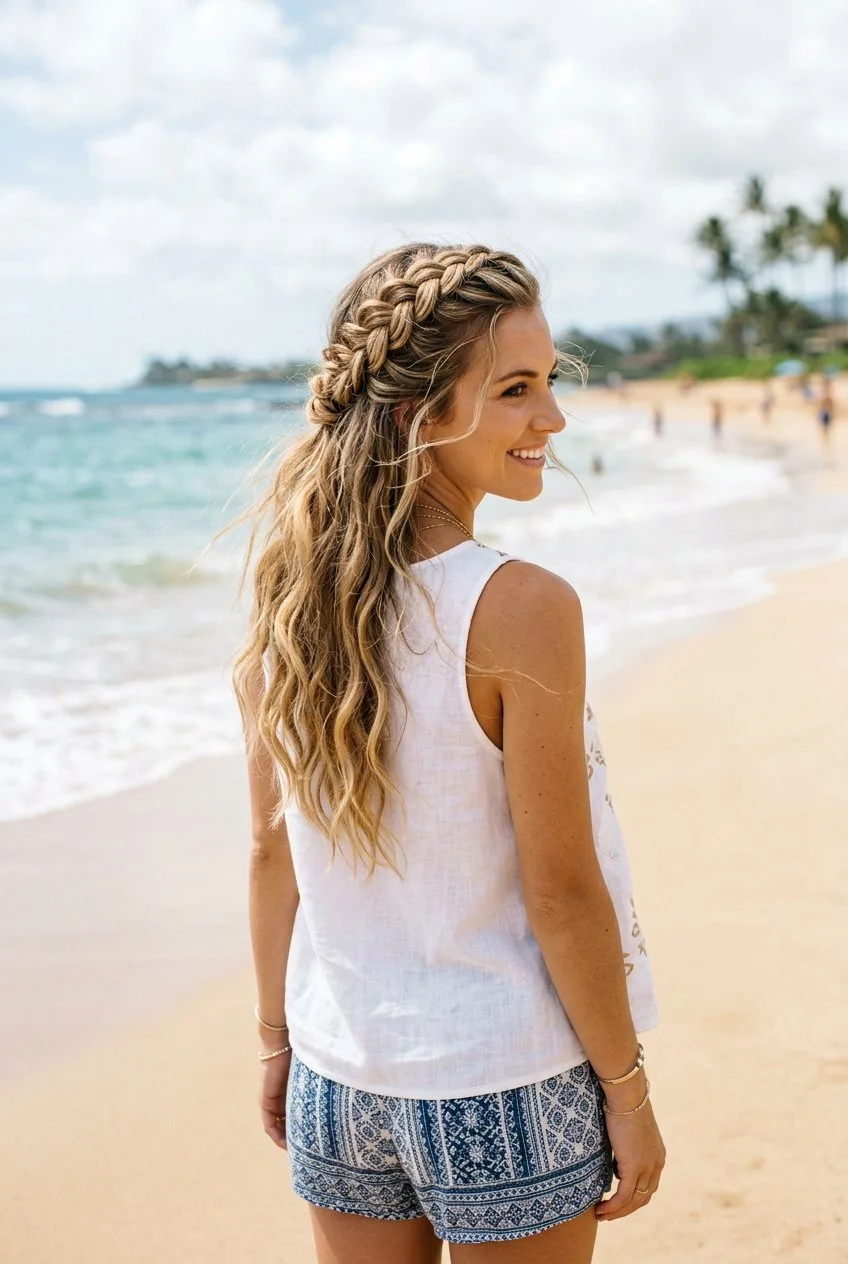
Beach waves with a braid is the style that makes lake hair look intentional: sleep with damp hair in a loose braid, take it out in the morning for soft natural waves, and add one small braid at the front to keep the face clear. No heat, no product beyond a little leave-in conditioner, and the waves get better the more the hair is worn this way. It is the relaxed, end-of-the-day look that suits campfire evenings and lazy afternoons by the water, and it works best on hair that already has a natural wave.
Best for: evenings, lakeside days and wavy hair. How to style it: braid damp hair loosely before bed, undo it in the morning, and add a thin front braid. Pros: no heat, no effort in the morning, and it improves with practice. Cons: straight hair may not hold the wave for long. Common mistake: braiding too tightly overnight, which gives crimps instead of waves. Quick verdict: sleep in a braid, wake up with waves — the laziest good hair at camp.
30. Four-Strand Braid
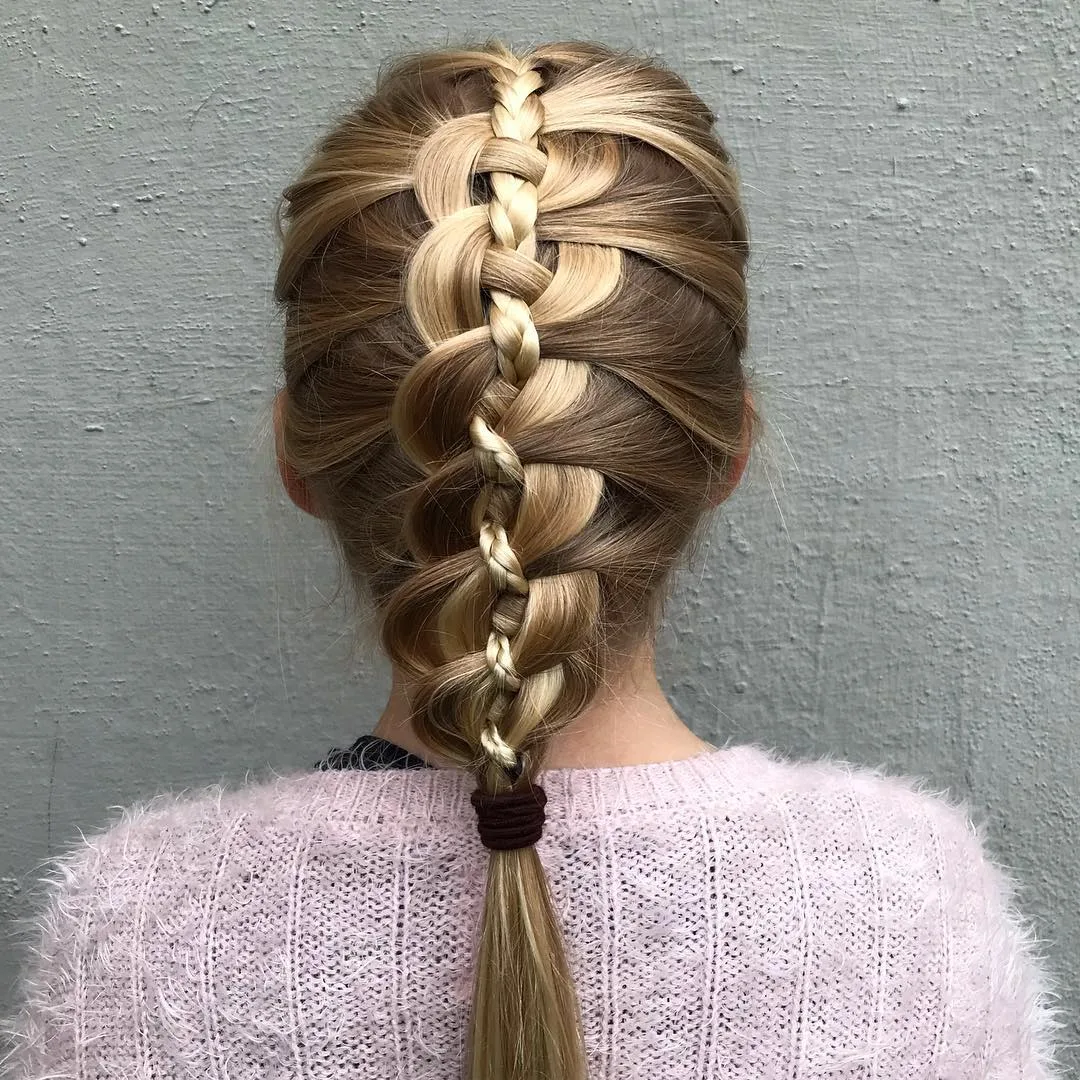
A four-strand braid uses four sections of hair instead of three, which gives a wider, flatter braid with a beautiful woven pattern that looks far more advanced than it is. It is the show-off braid for camp talent nights and photo days, and it holds up well during the day because the extra strand locks the braid together. It takes practice, so learn it at home with a ribbon or a strand of yarn standing in for the fourth section until the hands know the rhythm.
Best for: photo days, talent shows and long hair. Time: about ten minutes with practice. Pros: striking, secure and a real conversation starter. Cons: the hardest braid in this guide to learn. Common mistake: losing track of the strands — keep them in order and go slowly. Quick verdict: four strands, one beautiful braid, and a skill worth showing off at camp.
31. Pull-Through Braid
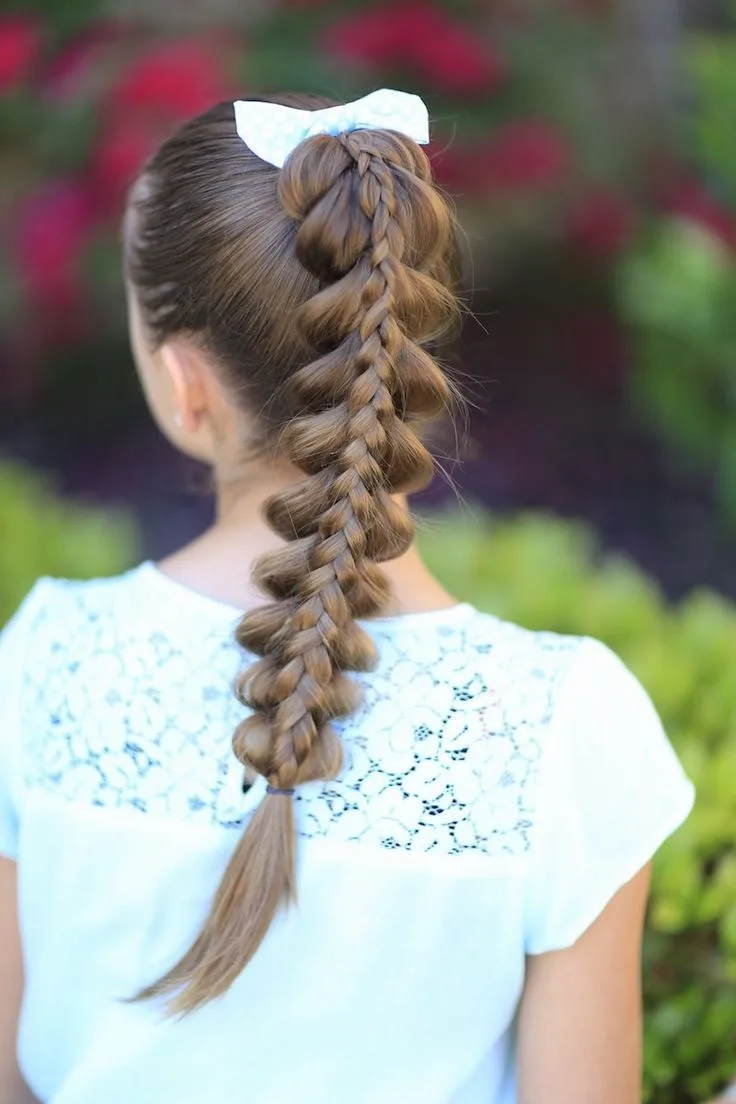
A pull-through braid looks like a chunky Dutch braid, but it is made from a series of small ponytails pulled through each other, so it needs no braiding skill at all. Tie a small ponytail at the crown, tie another below it, split the first ponytail in two, pull the second through the gap, and repeat down the head. The result is a thick, dramatic braid that holds its shape through swimming and games, and it works brilliantly on thick hair that is hard to braid normally.
Best for: thick hair, beginners and dramatic looks. Time: about ten minutes. Pros: no braiding needed, very secure and looks impressive. Cons: it uses a lot of elastics, so pack spares. Common mistake: pulling the sections too tight, which makes the braid stiff instead of soft and full. Quick verdict: the braid for people who cannot braid — and nobody will ever guess.
32. Twisted Crown
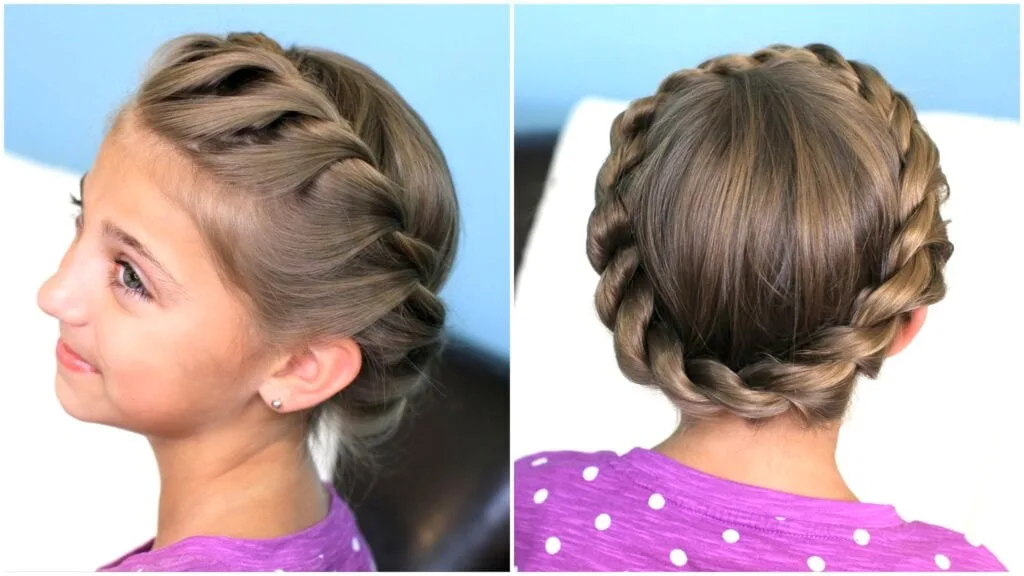
A twisted crown is the easier cousin of the French braid crown: instead of braiding around the head, twist two strands of hair together as you travel around the hairline, picking up new hair as you go. It gives the same halo effect with half the skill, it keeps hair completely off the face and neck, and it looks lovely at campfire evenings and on photo day. Pin the end where you started, tuck in any loose pieces, and the style will hold until bedtime.
Best for: evenings, photos and campers who can twist but not braid. Time: about eight minutes. Pros: easier than a braid crown, secure and elegant. Cons: twists can loosen faster than braids, so pin generously. Who should avoid it: very short hair, which will not reach around. Quick verdict: all the grace of a crown braid, with a technique a beginner can learn in one evening.
33. Low Side Bun
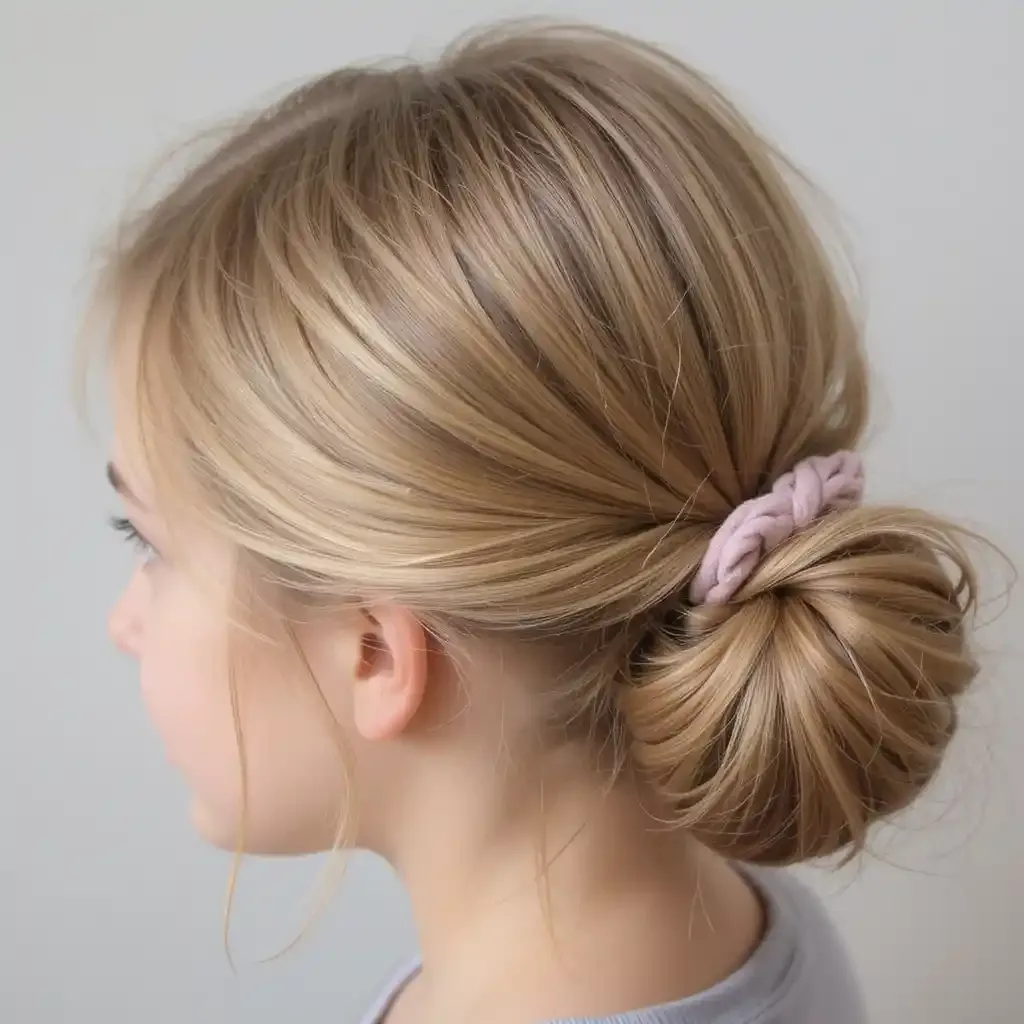
A low side bun gathers the hair into a bun that sits low and to one side, just behind the ear, which makes it comfortable to lie on during rest hour and pretty enough for evening events. Sweep hair to one side, twist it loosely, coil it and pin it, leaving a few soft strands around the face. It suits medium and long hair, it pairs well with a summer dress for the camp dance, and it takes about five minutes from start to finish.
Best for: camp dances, evening events and rest hour. Time: about five minutes. Pros: comfortable, pretty and easy to redo. Cons: it can slide during very active games, so save it for calmer hours. Common mistake: placing the bun too high, which turns it into a side ponytail bun that pulls. Quick verdict: the dressiest comfortable style at camp, and the one to choose for the last night.
34. Braided Pigtails with Ribbons
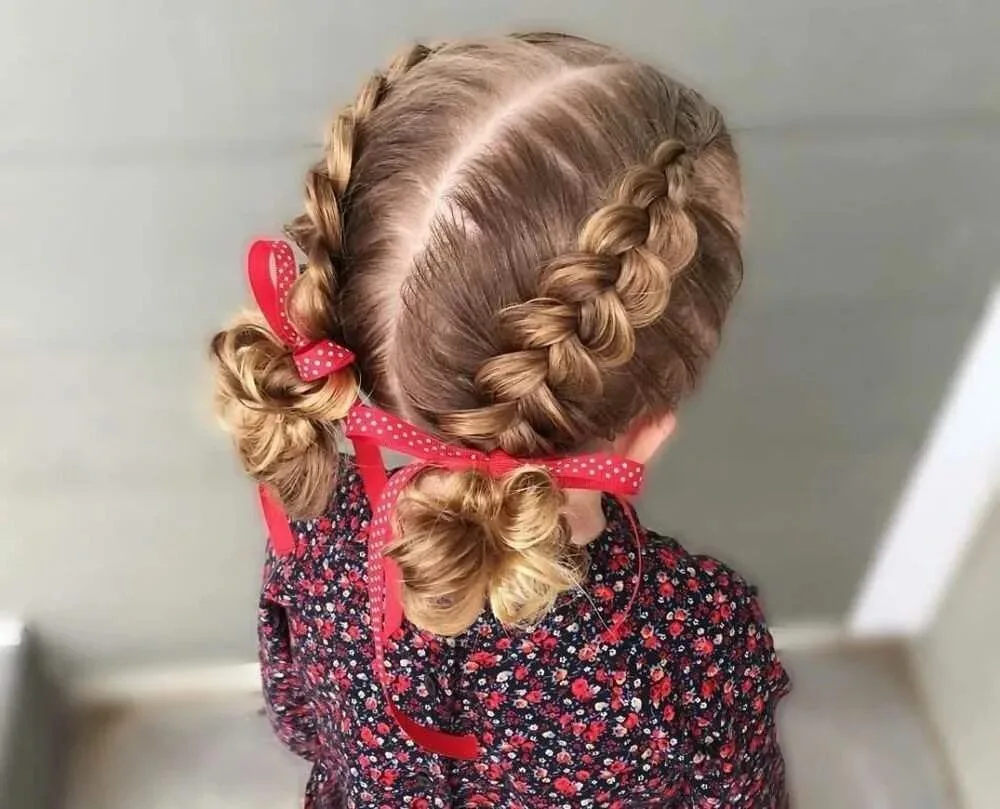
Braided pigtails with ribbons are the classic camp style with a finishing touch: two braids tied with ribbons in cabin colours, which makes them perfect for spirit days, camp photos and the final-day parade. The ribbons also serve a practical purpose, marking the ends of the braids so they are easy to find and redo, and they can be tied in bows that stay put better than elastics alone. Choose ribbons that match the camp t-shirt, and the whole outfit comes together.
Best for: spirit days, camp photos and younger campers. Time: about eight minutes. Pros: cheerful, secure and easy to customise. Cons: ribbons can come undone during swimming, so use elastics underneath. Common mistake: tying the ribbon too loosely, so it slides off the braid. Quick verdict: two braids, two ribbons, and the most camp-spirited style in this guide.
35. Pixie Cut with a Headband
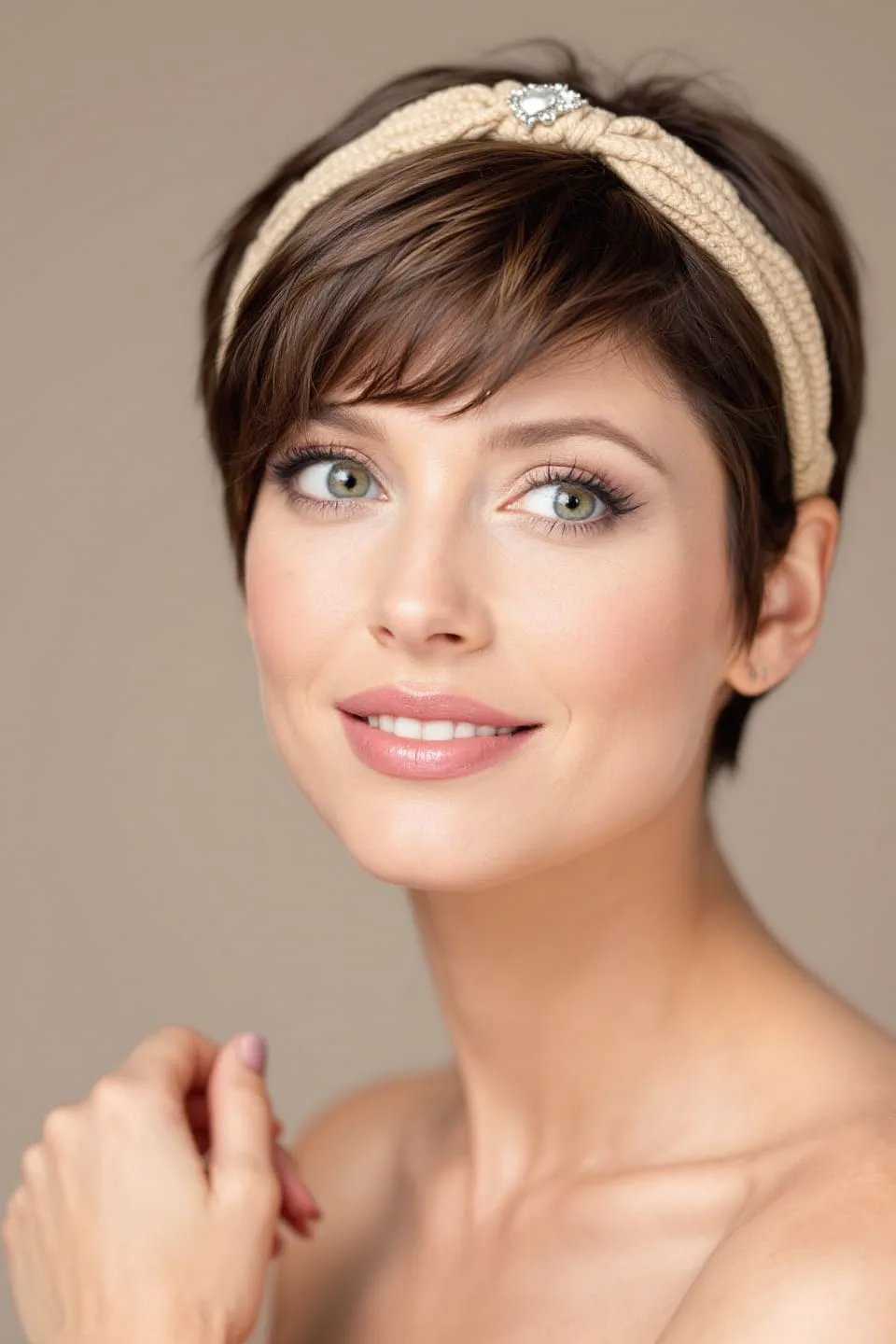
Short hair has its own camp advantage: it dries fast, tangles rarely, and needs almost no morning work. A pixie cut with a headband is the finishing touch — a soft fabric headband keeps the fringe out of the eyes during sports and swimming, adds a splash of colour, and takes five seconds to put on. For very short hair, a little water and a dab of leave-in conditioner is the whole morning routine, and a baseball cap covers the rest on sunny days.
Best for: short hair, swimmers and zero-fuss mornings. Time: seconds. Pros: the fastest-drying, lowest-maintenance hair at camp. Cons: fewer styling options, so accessories do the work. Maintenance: a quick trim before camp keeps the shape tidy all week. Quick verdict: short hair plus a headband is camp hair at its simplest — and simplest is often best.
36. Swim-Proof Braided Ponytail
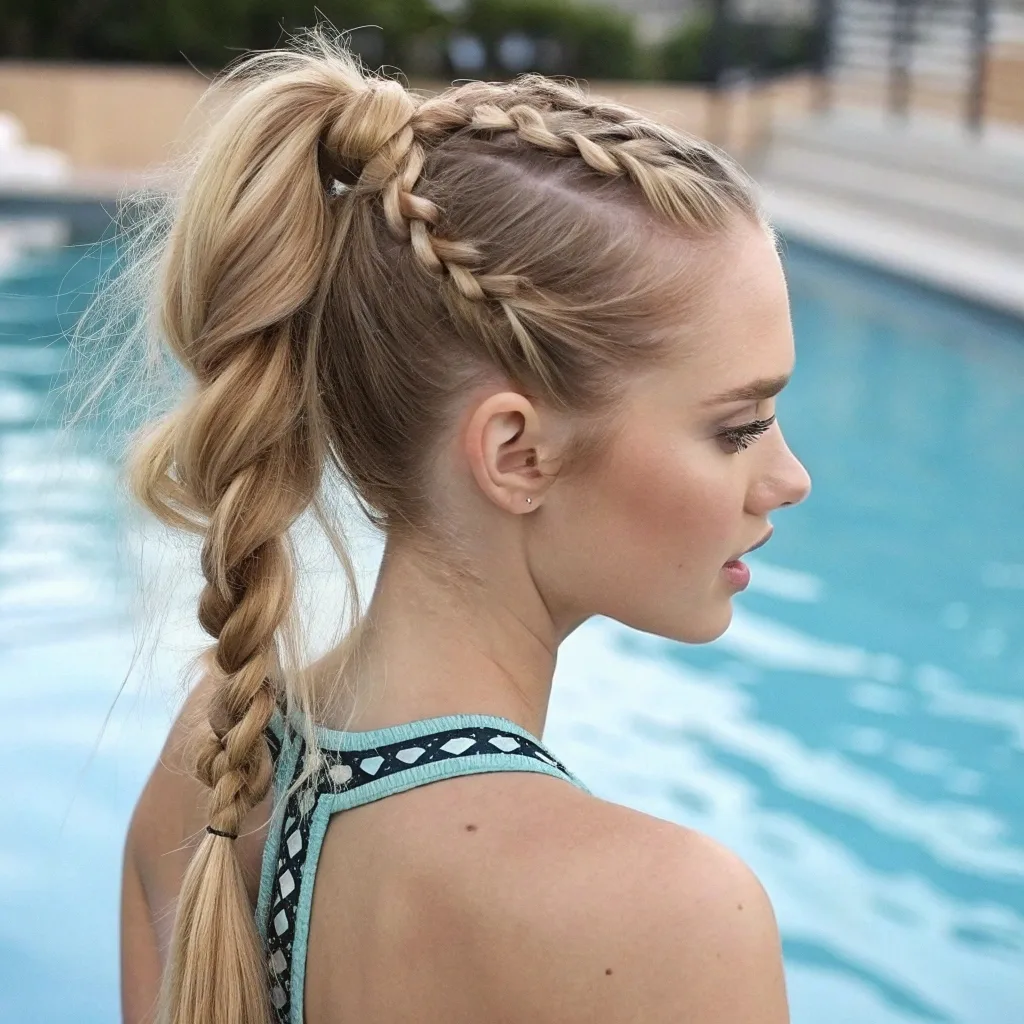
The swim-proof braided ponytail is the style built for the lake: a high ponytail that is then braided all the way down, so the hair is contained from root to tip and cannot tangle in the water. Wet the hair first, smooth on a little leave-in conditioner, tie the ponytail high, braid it tightly, and secure the end with two elastics for safety. It survives laps, dives and canoeing, it dries into soft waves when taken out, and it is the style swim instructors quietly recommend to every long-haired camper.
Best for: swimming, canoeing and all water activities. Time: about five minutes. Pros: the most tangle-proof swim style here, and it doubles as a wave-maker overnight. Cons: a wet braid is heavy, so tie it high to keep it off the shoulders. Common mistake: braiding too loosely, so the braid unravels in the water. Quick verdict: the last style in this guide, and the first one to use on swim day.
What are the best hairstyles for a summer camp?
The best hairstyles for a summer camp are braids, buns and ponytails that stay secure through swimming, hiking and games. Double Dutch braids, braided ponytails and braided buns last the longest, while high ponytails and messy buns are the quickest for busy mornings.
How do I keep my child’s hair tangle-free at camp?
Braid hair before activities, sleep with it loosely braided, and use a little leave-in conditioner each morning. Detangle with a wide-tooth comb from the ends upward, never with a brush pulled from the roots through a knot.
What hairstyle is best for swimming at camp?
A swim-proof braided ponytail or double Dutch braids work best for swimming, because the hair is fully contained and cannot tangle in the water. Wet hair with clean water first, braid it tightly, and rinse with fresh water afterwards.
How long do camp braids last?
A well-done Dutch braid or cornrows can last one to three days, while a simple three-strand braid usually lasts a day. Refresh braids each morning with a little water and leave-in conditioner, and re-braid them after swimming.
What should I pack for my child’s hair at camp?
Pack a wide-tooth comb, a brush, ten or more snag-free elastics, bobby pins, claw clips, a spray bottle, leave-in conditioner, and a swim cap if your child swims daily. Label everything with your child’s name.
Can kids with curly hair manage their hair at camp?
Yes. Curly hair does best with a protective style such as twists, braids or a pineapple puff, plus leave-in conditioner and a satin bonnet at night. Never brush curly hair dry at camp — detangle only when it is damp and coated with conditioner.
How do I protect my child’s hair from the sun at camp?
Use a hat, apply sunscreen along the part line, and choose low styles such as low braids and low buns that fit comfortably under a hat. A light leave-in conditioner with UV protection also helps.
What is the quickest hairstyle for camp mornings?
A high ponytail takes about two minutes, a messy top knot about ninety seconds, and a half-up claw clip twist about thirty seconds. Lay out the brush, ties and clips the night before to save even more time.
Do I need to worry about lice at summer camp?
Lice spread through head-to-head contact and shared hats, brushes and hair accessories, so teach your child not to share them and to keep hair tied back. Check hair with a fine-tooth comb before camp and again when your child comes home.
What hairstyle works best under a hat at camp?
Low braids, low buns and sleek low ponytails work best under a hat, because they sit flat at the nape and do not create a bump. Start braids low, keep buns at the nape, and the hat will fit comfortably all day.
Conclusion
The best hairstyles for a summer camp are not the fanciest ones — they are the ones that survive the lake, the hike and the campfire, and still look good in the photo at the end of the day. Braids hold, buns stay put, ponytails take two minutes, and a little preparation at home — a practised braid, a packed hair kit, a satin bonnet — makes the whole week easier. Pick three or four favourites from this guide, practise them before departure, and let your camper choose each morning. Camp is for making memories, not for fighting hair, and with the right style, hair is one thing nobody has to think about.